The Girl Who Learned to Cook
サラは料理ができない girl でした。mom はよく言いました。「あなたは girl なのに、どうして料理を覚えないの?」
ある日サラは言いました。「Mom、私、学びたい。」
mom は嬉しそうに言いました。「今日は eggs から始めましょう。」
サラは mom が cast iron pan を取るのを見ました。「まず add oil してね」と mom。サラはボトルから少し oil を added して pan に入れました。
「pan を温めて、それから egg を割るのよ」と mom。サラは注意深く egg を割りましたが、少し殻が pan に落ちてしまいました。
「大丈夫よ」と mom は笑いました。「誰でも間違えるもの。取り除けばいいの。」
次の日、彼女たちは beef soup を作りました。「まず水を boil するのよ」と mom。「それから add beef と少しの corn、塩を入れるの。」
「Mom、どれくらい boil すればいいの?」とサラ。
「beef が柔らかくなるまでよ。chew してみて、簡単に chew できたら出来上がり。」
1週間後、サラは milk でお茶を作ることを学びました。「milk boil しすぎないで、焦げちゃうから」と mom が注意しました。
サラはよく見ていました。すると milk が沸き上がり始めました。「Mom!Mom!」と叫ぶと、Mom が来て pan を動かしました。
「ほら、少し burnt ね」と mom。「でも大丈夫。そうやって学ぶの。」
1か月後、サラは mom を驚かせようと思いました。彼女は cake を作ることにしました。
eggs、milk、小麦粉、砂糖を用意し、ボウルで混ぜて added し、pan に filled して oven に入れました。
Mom がキッチンに来て言いました。「何をしているの?」
「待って、mom。サプライズよ。」とサラ。
30分後、oven bell が鳴りました。サラは cake を取り出しました。完璧に見えました!
Mom は一口 bite しました。「マシャアッラー!こんな美味しい cake 作ったの?誇りに思うわ!」
「Mom、あなたが教えてくれたのよ」とサラ。「egg のこと、burnt milk、しょっぱすぎた soup 覚えてる?」
「覚えてるわ」と mom。「でも諦めなかったでしょ。それが大事なの。」
何年も後、サラは有名なシェフになりました。人々が聞きました。「どうやって学んだの?」
サラは答えました。「Mom が教えてくれたの。egg の割り方、boil soup の仕方、いつ add oil を pan に入れるか、cake を oven にどのくらい入れるか。でも一番大事なことは、何かを burn しても、失敗しても諦めないこと。すべての burnt pan、間違った bite、失敗した pie が教えてくれるの。」
彼女はレストランを開きました。メニューには伝統的な beef soup、自家製の pie、新鮮な cake がありました。どの料理にも mom の愛と教えが込められていました。
ある日、若い girl が来て言いました。「料理人になりたいけど、全部 burn しちゃいそうで怖いの。」
サラは笑って言いました。「おいで、egg の割り方を教えるわ。私の mom が教えてくれたことを伝えるの。cast iron pan と少しの oil、そして忍耐から始めましょう。きっと何かを burn するし、soup に塩を add しすぎることもあるし、oven bell をセットし忘れるかもしれない。でも大丈夫。そうやってすべての girl が素晴らしい料理人になるの。一つの egg、一つの pan、一度の burnt milk ずつね。」
そしてその girl も、サラのように自分の道を歩き始めました。なぜなら、すべての偉大なシェフは mom、pan、そしていくつかの eggs を burn する勇気から始まるのです。
|
絵文字
|
単語 | Images | 翻訳 | 過去 | 過去分詞 | 三人称単数 | 動名詞 | 意味 | 例文 | 例文の翻訳 | 表現例 | 表現例の意味 | 表現例の翻訳 | 同義語 | 対義語 | コロケーション | ニーモニック |
|---|---|---|---|---|---|---|---|---|---|---|---|---|---|---|---|---|---|
|
➕
••••••
|
/æd/
verb
(アッド)
••••••
|

|
追加する
tsuika suru
••••••
|
added
アディッド
••••••
|
added
アディッド
••••••
|
adds
アッズ
••••••
|
adding
アディング
••••••
|
To put together or combine with something else; to increase the number, amount, or value.
••••••
|
He decided to add more details to the report.
彼はレポートに詳細を追加することを決定しました。
••••••
|
彼はレポートに詳細を追加することを決定しました。
Kare wa repo-to ni shousai wo tsuika suru koto wo kettei shimashita.
••••••
|
add fuel to the fire
火に油を注ぐ
••••••
|
To make a bad situation worse.
••••••
|
火に油を注ぐ
Hi ni abura wo sosogu
••••••
|
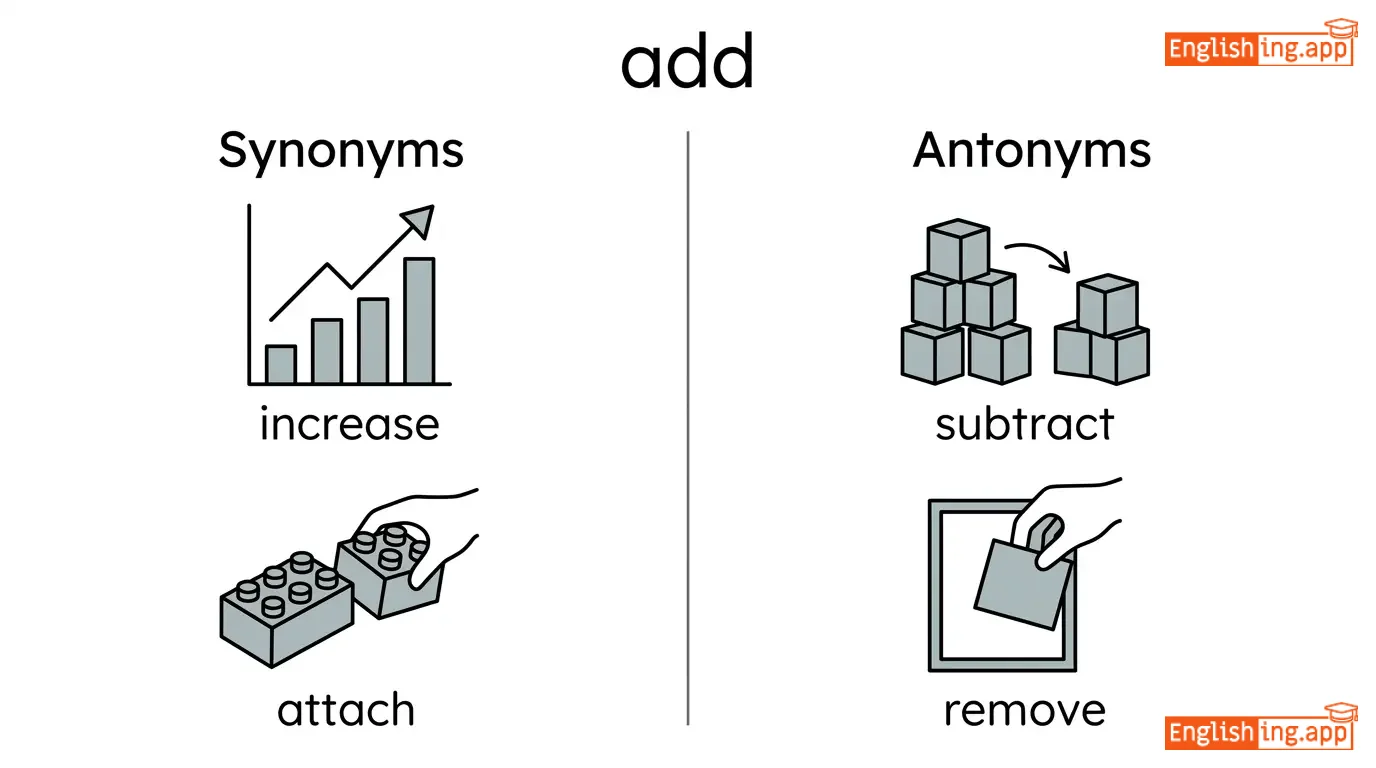
increase, attach, include, combine, augment
••••••
|
subtract, remove, deduct
••••••
|
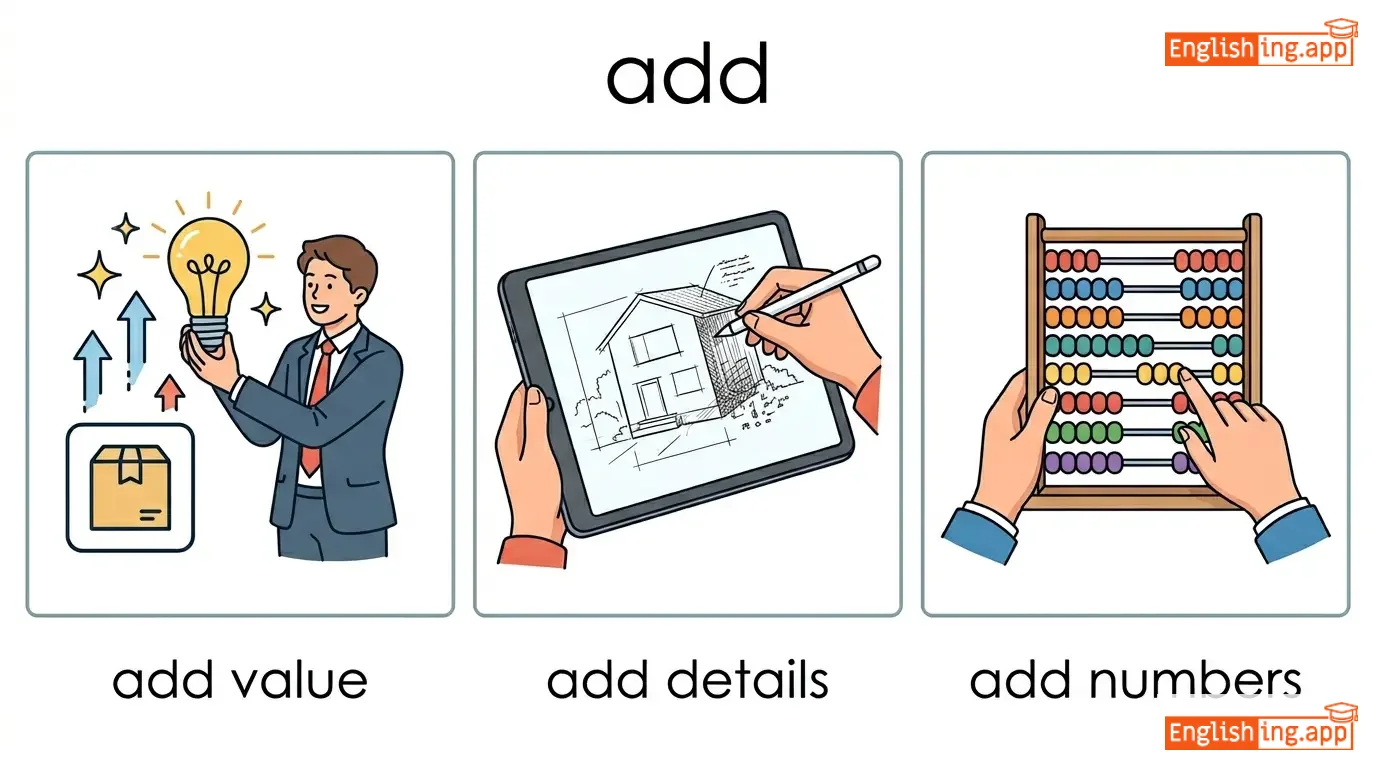
add value, add details, add numbers, add weight
••••••
|
追加することは、何かを足して全体をより豊かにすることです。
••••••
|
|
🥩
••••••
|
/biːf/
noun
(ビーフ)
••••••
|
- •••••• |
牛肉
gyūniku
••••••
|
- •••••• | - •••••• | - •••••• | - •••••• |
the flesh of a cow, bull, or ox, used as food; also a complaint or dispute
••••••
|
He ordered a plate of grilled beef for dinner. |
彼は夕食にグリルした牛肉のプレートを注文しました。
Kare wa yūshoku ni guriru shita gyūniku no purēto o chūmon shimashita.
••••••
|
have a beef with someone |
to have a complaint or dispute with someone
••••••
|
誰かと争いを持つ
dareka to arasoi o motsu
••••••
|
meat, steak, flesh, complaint, dispute
••••••
|
poultry, peace, harmony
••••••
|
beef steak, roast beef, beef burger, beef curry
••••••
|
Beef は牛肉 🍖 を意味します — '雄牛のように怒る' を覚えて理解しましょう!
••••••
|
|
🔔
••••••
|
/bɛl/
noun
••••••
|
- •••••• | - •••••• | - •••••• | - •••••• | - •••••• | - •••••• |
a hollow object, usually made of metal, that makes a ringing sound when struck
••••••
|
The school bell rang loudly at noon. |
- •••••• |
saved by the bell |
to be rescued from difficulty at the last moment
••••••
|
- •••••• |
chime, gong, buzzer, alarm
••••••
|
silence, quiet
••••••
|
ring the bell, church bell, door bell, alarm bell
••••••
|
No •••••• |
|
🦷
••••••
|
/baɪt/
verb
(バイト)
••••••
|
|
噛む
kamu
••••••
|
bit
ビット
••••••
|
bitten
ビトン
••••••
|
bites
バイツ
••••••
|
biting
バイティング
••••••
|
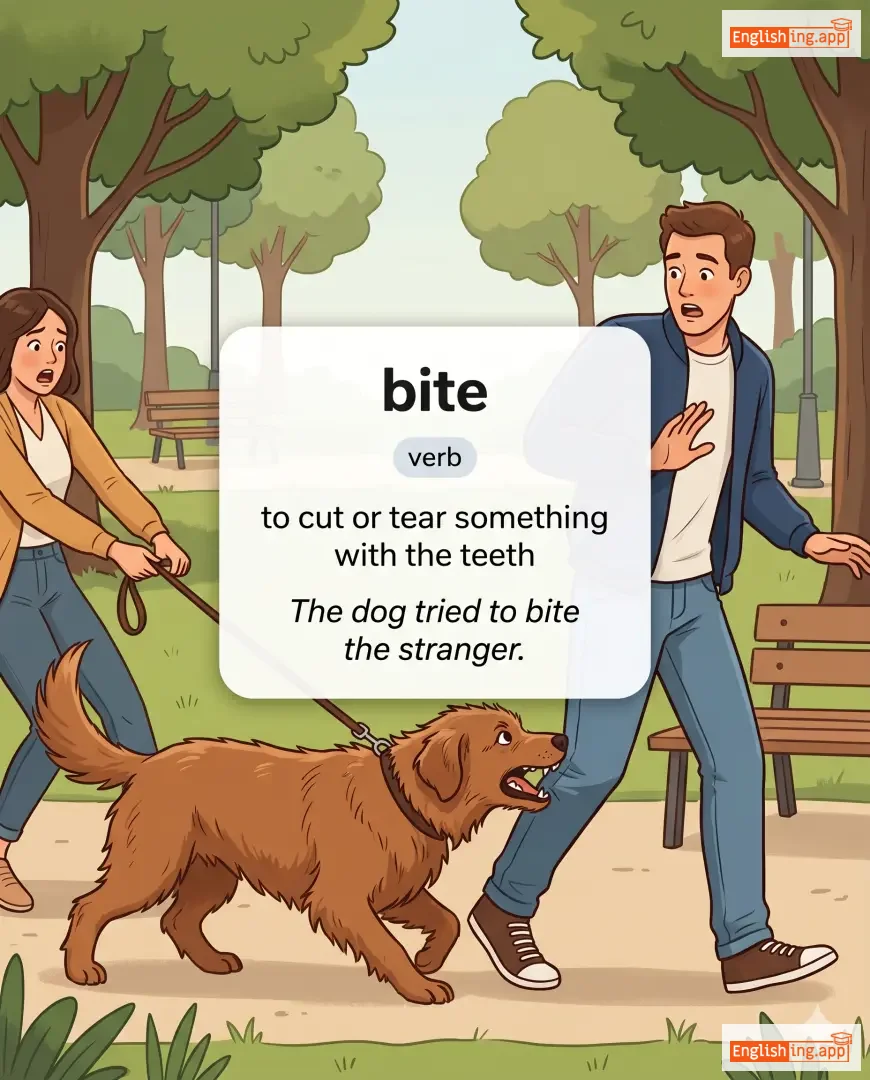
to cut or tear something with the teeth
••••••
|
The dog tried to bite the stranger.
犬は見知らぬ人を噛もうとした。
••••••
|
犬は見知らぬ人を噛もうとした。
Inu wa mishiranu hito o kamou to shita.
••••••
|
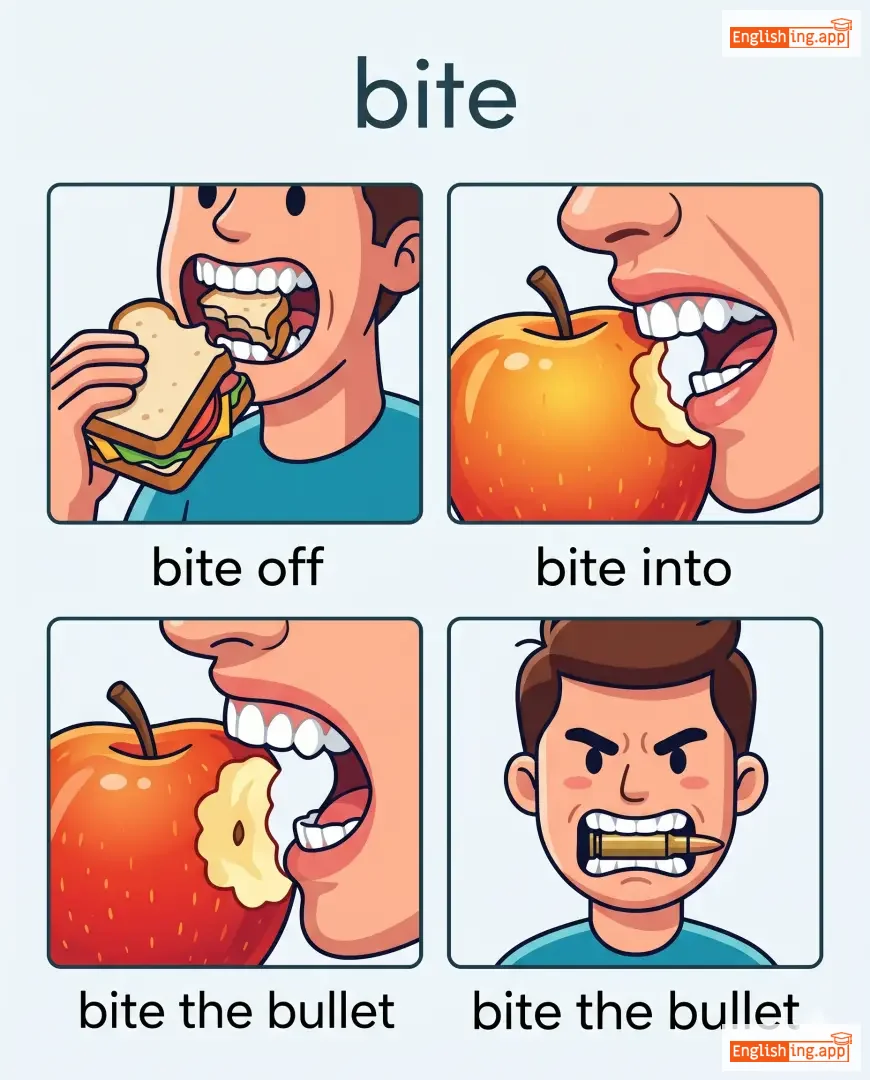
bite the bullet
bite the bullet
••••••
|
to face a painful or difficult situation with courage
••••••
|
困難な状況を勇気を持って直面する
konnan na joukyou o yuuki o motte chokumen suru
••••••
|
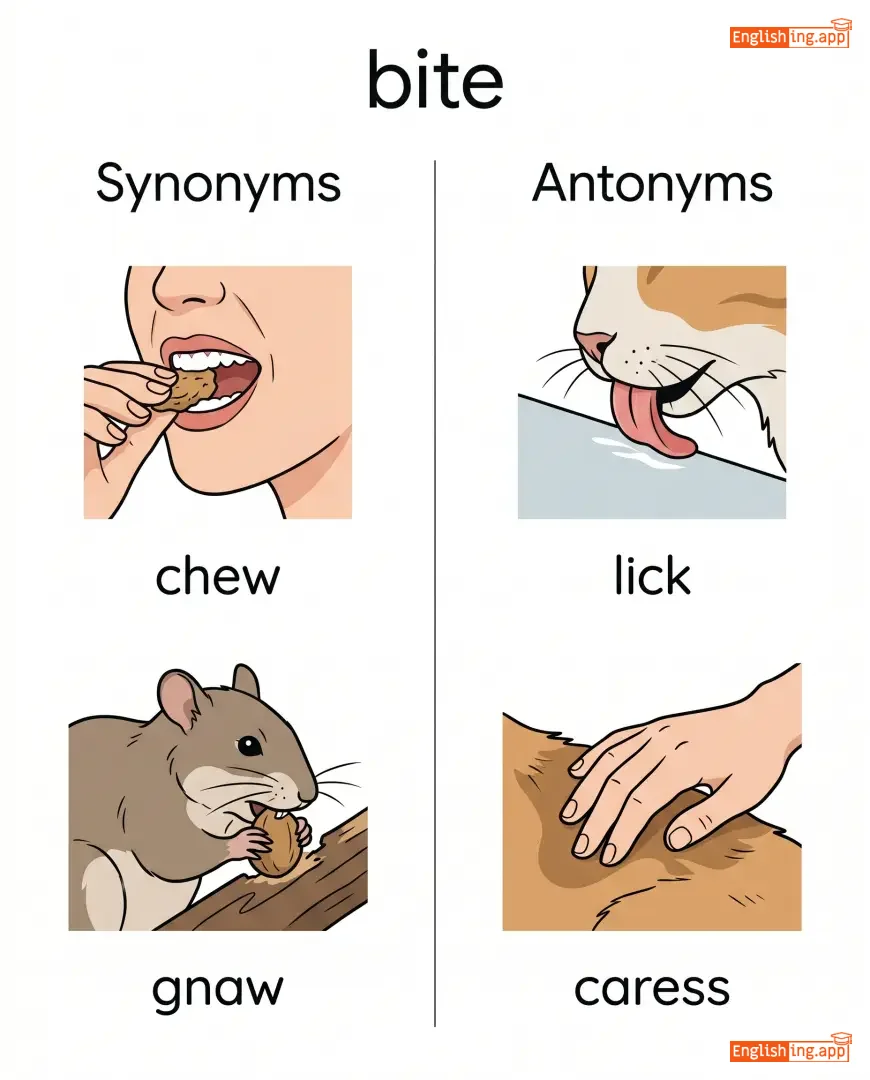
chew, gnaw, snap, nip
••••••
|
lick, caress
••••••
|
bite off, bite into, bite the bullet, bite back
••••••
|
Bite(噛む)- それはまるで犬が噛むようなものです!
••••••
|
|
🥘
••••••
|
/bɔɪl/
verb
••••••
|
- •••••• | - •••••• |
boiled
••••••
|
boiled
••••••
|
boils
••••••
|
boiling
••••••
|
to heat a liquid until it starts to bubble and turn into vapor.
••••••
|
Please boil some water for tea. |
- •••••• |
boil over |
to overflow or to become uncontrollable (emotionally or physically).
••••••
|
- •••••• |
heat, simmer, steam, cook
••••••
|
freeze, chill
••••••
|
boil water, boil eggs, bring to a boil, hard boil
••••••
|
No •••••• |
|
🔥
••••••
|
/bɜːrn/
verb
(バン)
••••••
|
|
燃やす
moyasu
••••••
|
burned
バンド
••••••
|
burned
バンド
••••••
|
burns
バンズ
••••••
|
burning
バーンイング
••••••
|
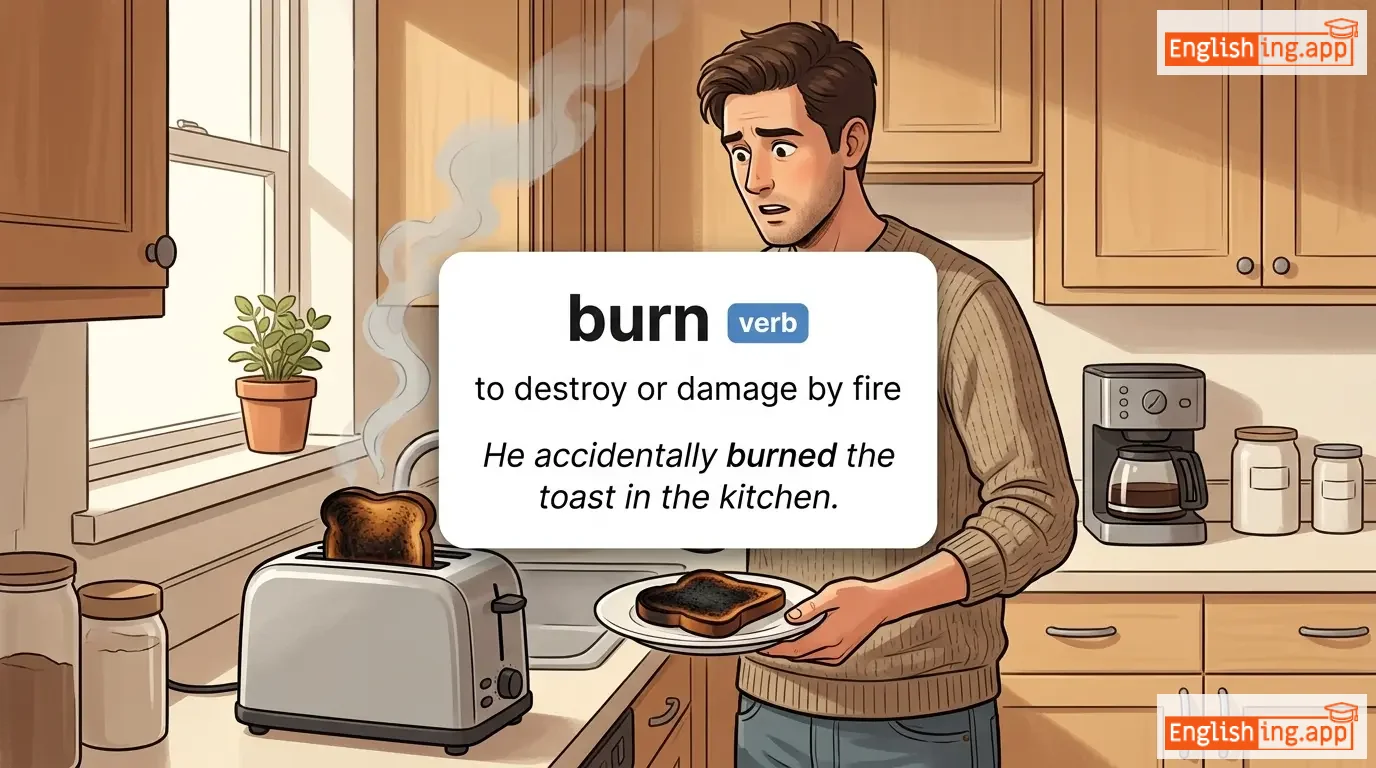
to destroy or damage by fire
••••••
|
He accidentally burned the toast in the kitchen.
彼はキッチンでトーストをうっかり焼きすぎました。
••••••
|
彼はキッチンでトーストをうっかり焼きすぎました。
Kare wa kicchin de tōsuto o ukkari yakisugimashita.
••••••
|
burn the midnight oil
真夜中の油を焼く
••••••
|
to work late into the night
••••••
|
夜遅くまで働く
yoru osoku made hataraku
••••••
|
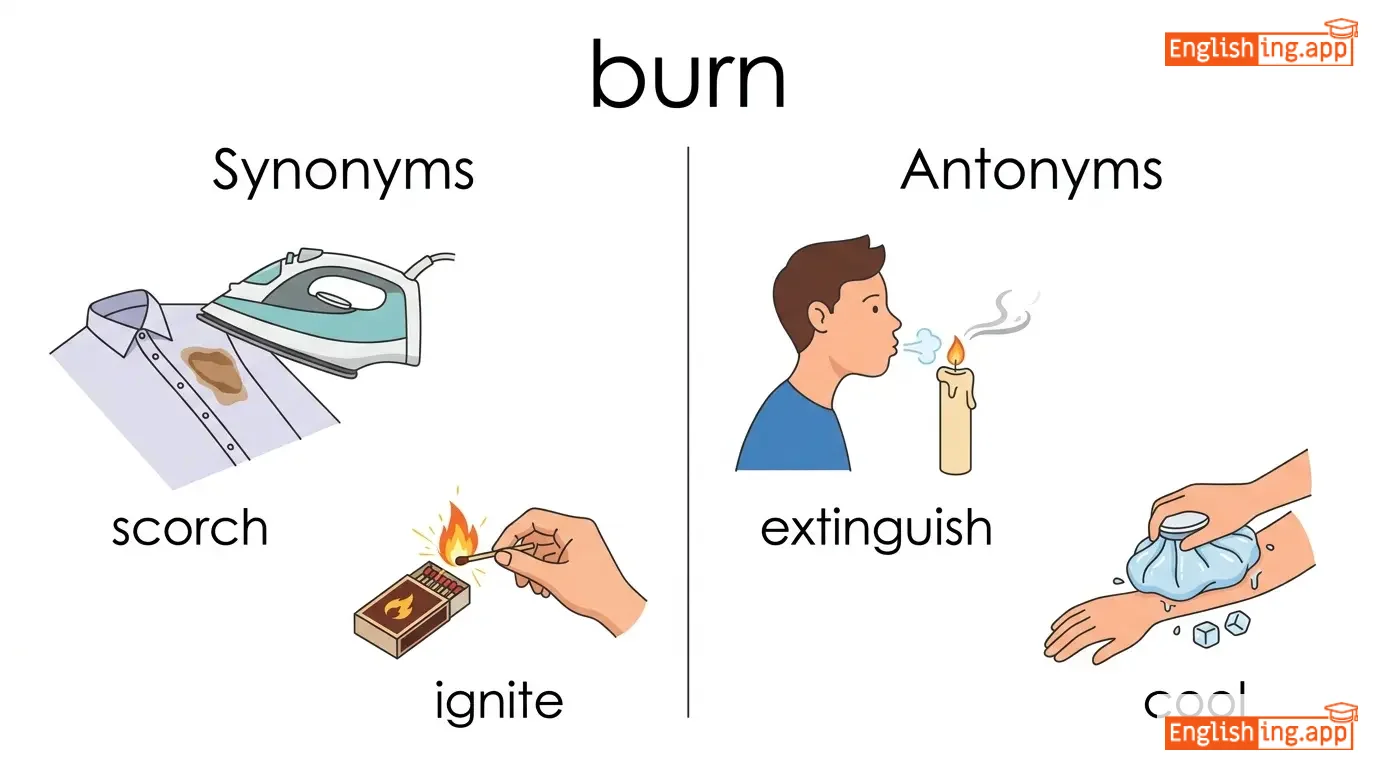
scorch, ignite, blaze, flame, char
••••••
|
extinguish, cool, put out
••••••
|
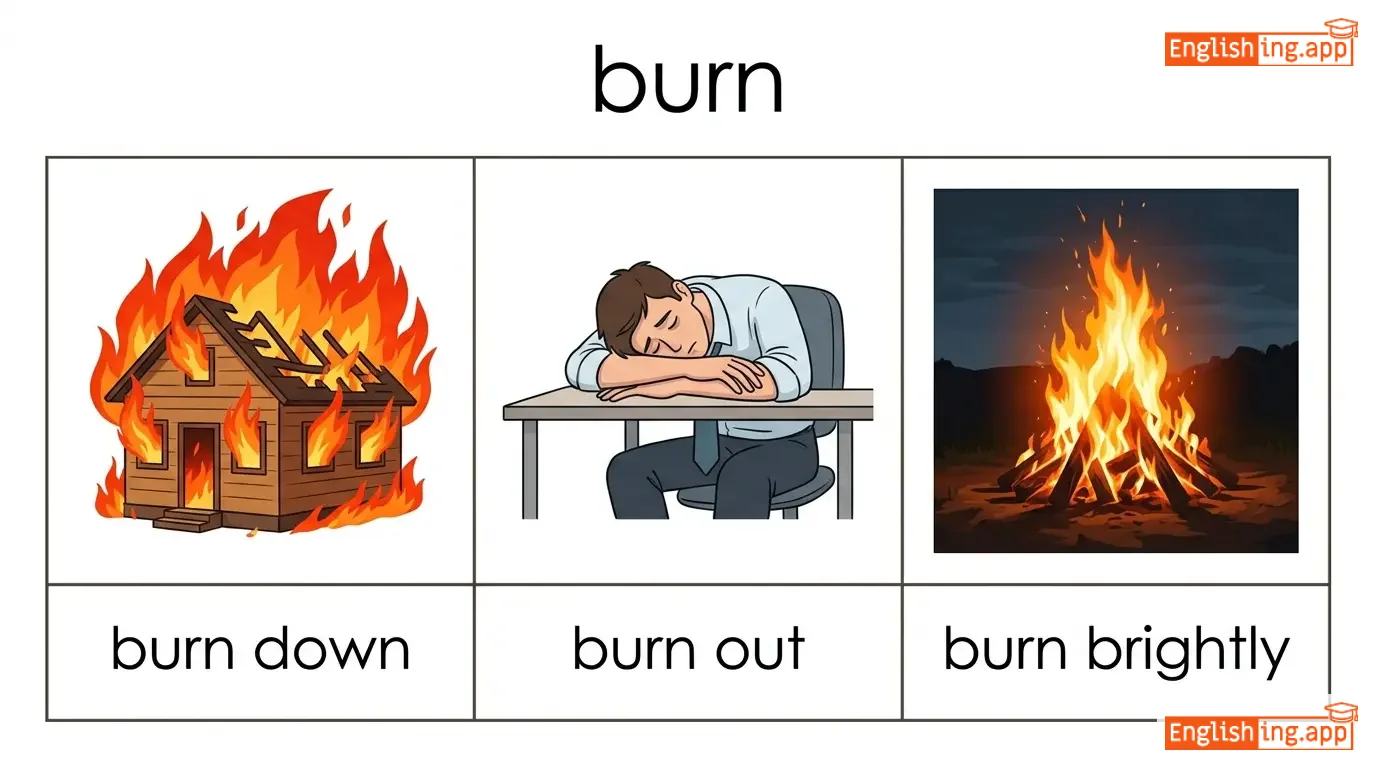
burn down, burn out, burn brightly, burn with anger
••••••
|
Burn は燃やすを意味します - トーストを焼きすぎて夜遅くまで働いています。
••••••
|
|
🍰
••••••
|
/keɪk/
noun
(ケーキ)
••••••
|
- •••••• |
ケーキ
keeki
••••••
|
- •••••• | - •••••• | - •••••• | - •••••• |
a sweet baked food made from flour, sugar, and other ingredients
••••••
|
She baked a chocolate cake for her friend's birthday. |
彼女は友達の誕生日のためにチョコレートケーキを焼きました。
Kanojo wa tomodachi no tanjōbi no tame ni chokorēto kēki o yakimashita.
••••••
|
a piece of cake |
something that is very easy to do
••••••
|
お茶の子さいさい
ocha no ko saisaa
••••••
|
pastry, dessert, sponge, confection
••••••
|
meal, savory
••••••
|
birthday cake, wedding cake, chocolate cake, bake a cake
••••••
|
ケーキを食べるのは幸せで、何かが簡単だときには「お茶の子さいさい」と言います。
••••••
|
|
🎭
••••••
|
/kæst/
verb/noun
(キャスト)
••••••
|
|
投げる、俳優陣
nageru, haiyūjin
••••••
|
cast
キャスト
••••••
|
cast
キャスト
••••••
|
casts
キャストス
••••••
|
casting
キャスティング
••••••
|
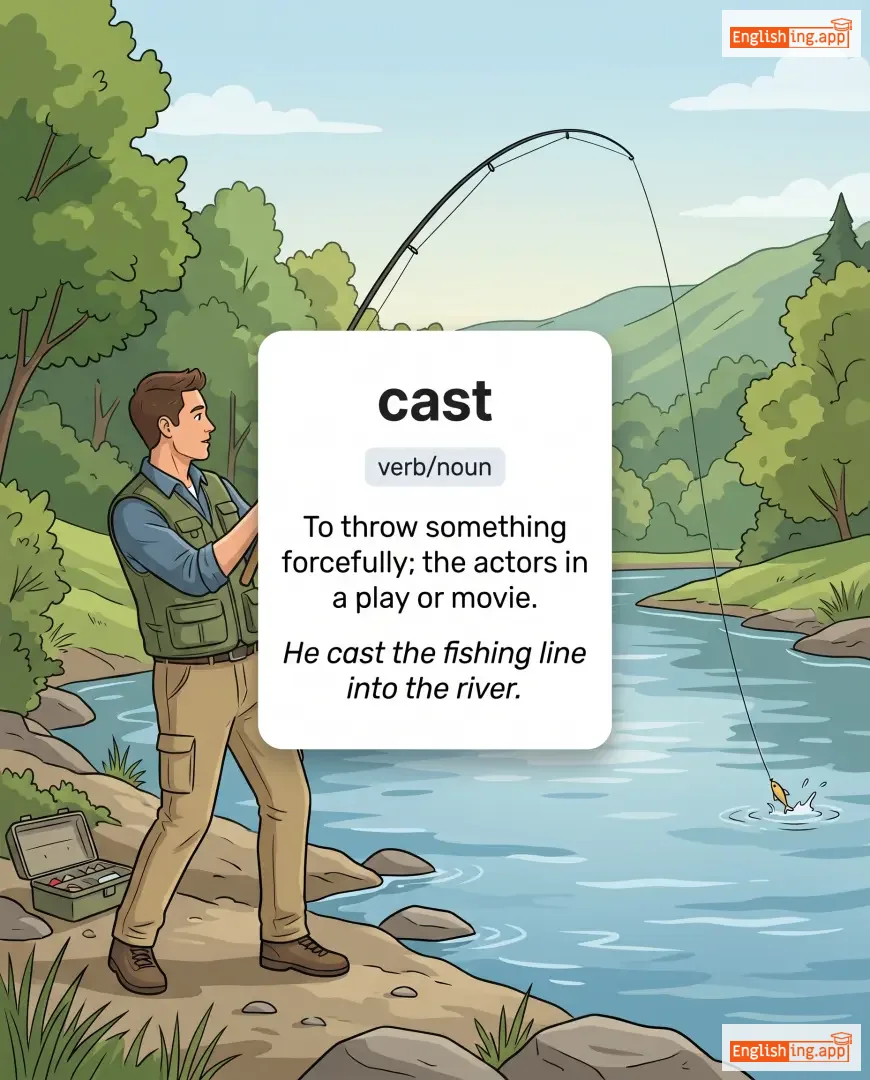
To throw something forcefully; the actors in a play or movie.
••••••
|
He cast the fishing line into the river.
彼は釣り糸を川に投げた。
••••••
|
彼は釣り糸を川に投げた。
Kare wa tsuri ito o kawa ni nageta.
••••••
|
cast a spell
呪文をかける
••••••
|
To use magic to influence someone or something.
••••••
|
呪文をかける
jumon o kakeru
••••••
|
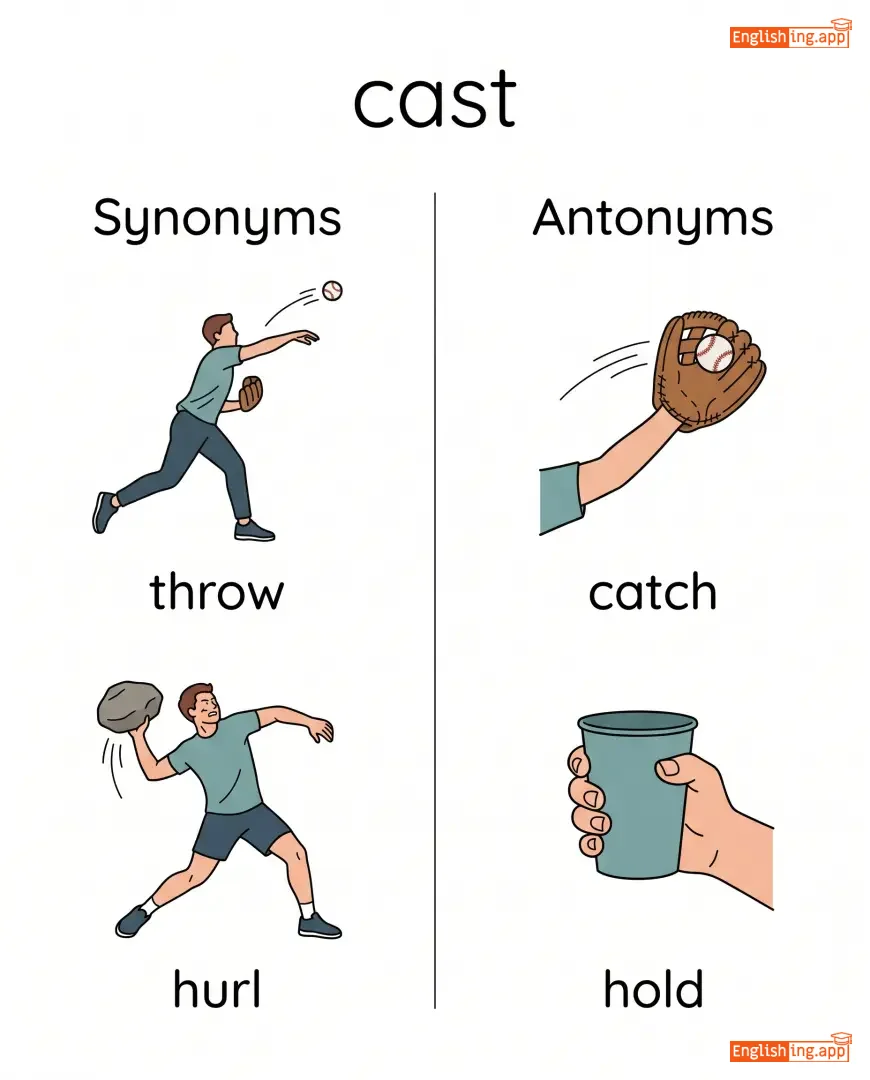
throw, hurl, fling, assign, shape
••••••
|
catch, hold, retain
••••••
|
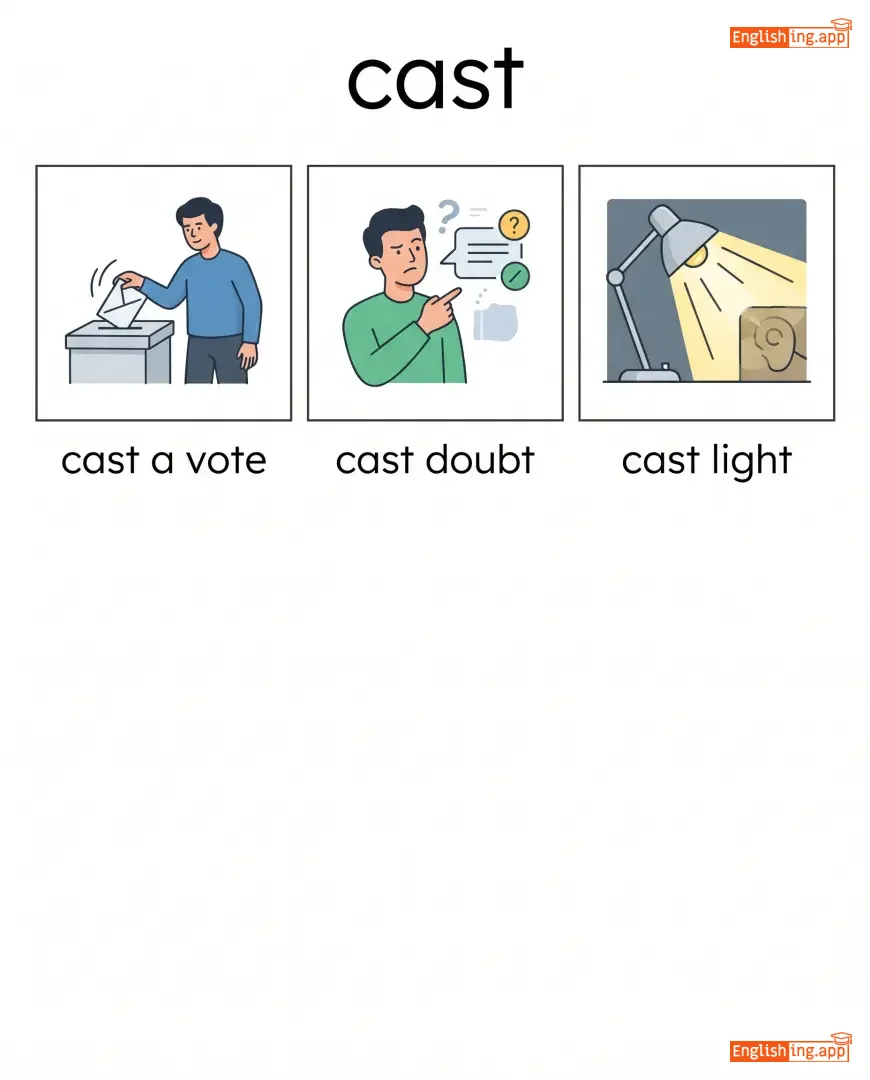
cast a vote, cast doubt, cast light, movie cast
••••••
|
Castとは、映画や劇で俳優を選ぶことや物を投げることです。
••••••
|
|
🦷
••••••
|
/tʃuː/
verb
(ハピネス)
••••••
|
- •••••• |
幸せ
shiawase
••••••
|
chewed
••••••
|
chewed
••••••
|
chews
••••••
|
chewing
••••••
|
to bite food into smaller pieces with your teeth before swallowing it
••••••
|
You should chew your food properly to help with digestion. |
彼女は賞を受け取ったとき、自分の幸せを隠せませんでした。
Kanojo wa shō o uketotta toki, jibun no shiawase o kakusemasen deshita.
••••••
|
chew the fat |
to chat or talk in a friendly and informal way
••••••
|
幸せを追い求める
shiawase o oimotomeru
••••••
|
munch, bite, gnaw, chomp, grind
••••••
|
swallow, gulp
••••••
|
chew gum, chew slowly, chew food, chew thoroughly
••••••
|
幸せは太陽のように、隠すことはできません!
••••••
|
|
🌽
••••••
|
/kɔːrn/
noun
(コーン)
••••••
|
- •••••• |
トウモロコシ
toumorokoshi
••••••
|
- •••••• | - •••••• | - •••••• | - •••••• |
a type of grain, often yellow, eaten as food
••••••
|
They harvested corn in the summer. |
彼らは夏にトウモロコシを収穫しました。
Karera wa natsu ni toumorokoshi o shūkaku shimashita.
••••••
|
ear of corn |
the part of a corn plant containing the kernels
••••••
|
トウモロコシの穂
toumorokoshi no ho
••••••
|
maize, grain, cereal, crop, kernel
••••••
|
meat, protein, animal food
••••••
|
corn field, corn bread, corn syrup, sweet corn
••••••
|
Corn 🌽 はトウモロコシ、穂に粒が詰まっているよ。
••••••
|
|
🥚
••••••
|
/ɛɡ/
noun
(エッグ)
••••••
|
- •••••• |
卵
tamago
••••••
|
- •••••• | - •••••• | - •••••• | - •••••• |
an oval or round object laid by a female bird, often eaten as food
••••••
|
She had a boiled egg for breakfast. |
彼女は朝食にゆで卵を食べました。
Kanojo wa choushoku ni yude tamago o tabemashita.
••••••
|
put all your eggs in one basket |
to risk everything on a single plan or opportunity
••••••
|
すべての卵を一つのバスケットに入れないで
Subete no tamago o hitotsu no basuketto ni irenaide
••••••
|
ovum, embryo, yolk, shell
••••••
|
sperm, chick
••••••
|
boiled egg, fried egg, egg yolk, egg shell
••••••
|
Egg 🥚 は卵、'朝食に卵'を覚えておこう。
••••••
|
|
🫗
••••••
|
/fɪl/
verb
(フィル)
••••••
|
|
満たす
mitasu
••••••
|
filled
フィルド
••••••
|
filled
フィルド
••••••
|
fills
フィルス
••••••
|
filling
フィリング
••••••
|
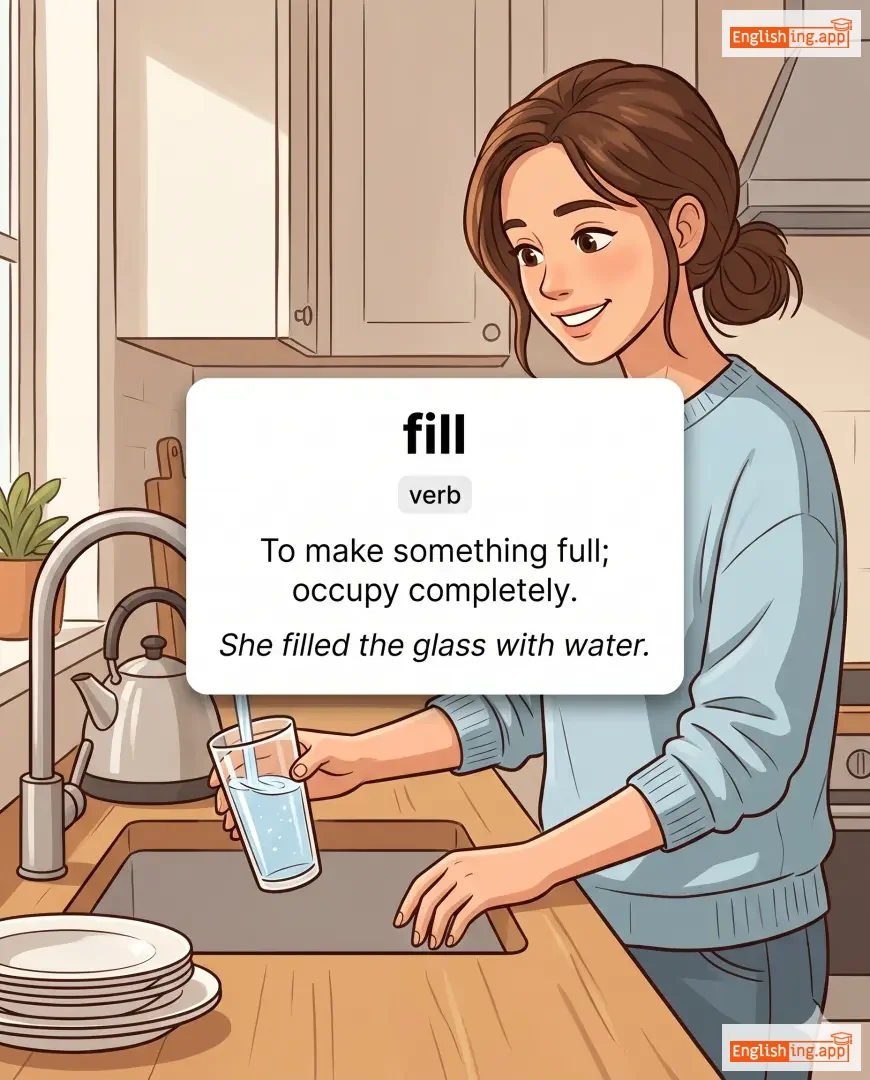
To make something full; occupy completely.
••••••
|
She filled the glass with water.
彼女はグラスに水を満たしました。
••••••
|
彼女はグラスに水を満たしました。
Kanojo wa gurasu ni mizu o mitashimashita.
••••••
|
fill the gap
隙間を埋める
••••••
|
To supply something missing.
••••••
|
隙間を埋める
sukima o umeru
••••••
|
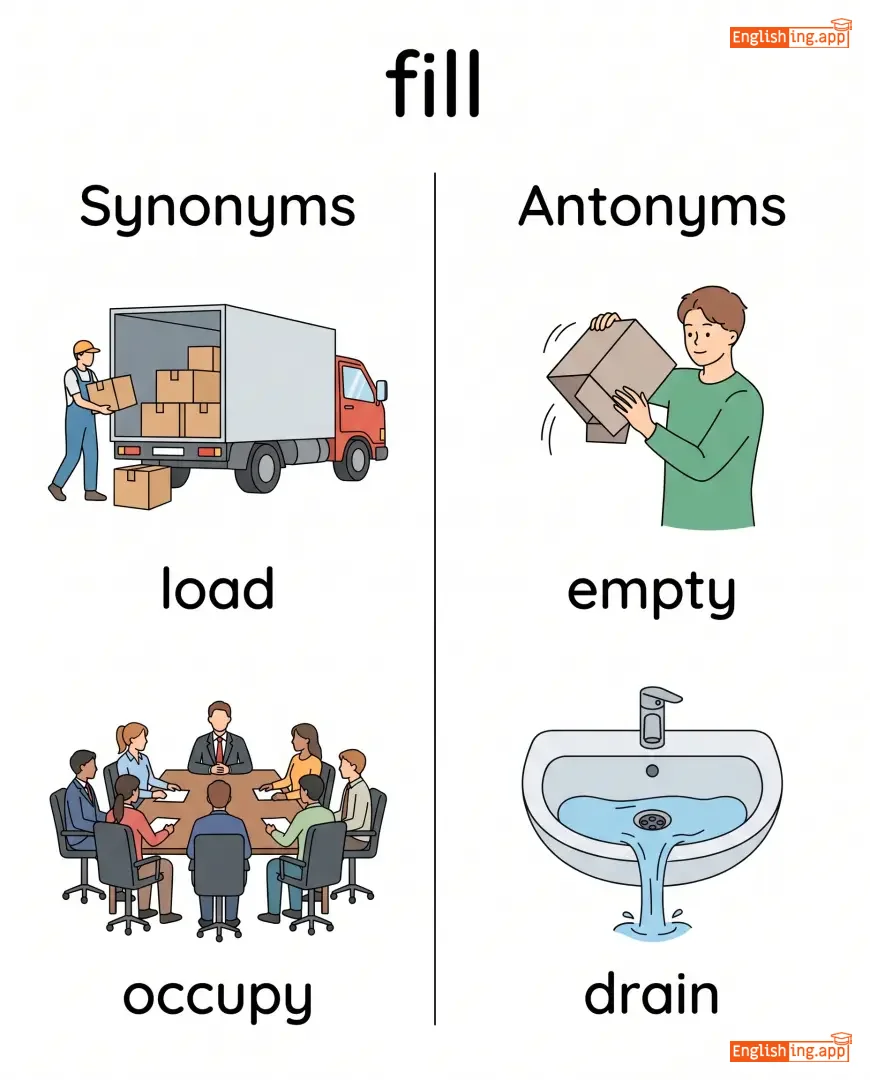
load, occupy, replenish, stuff, supply
••••••
|
empty, drain, vacate
••••••
|
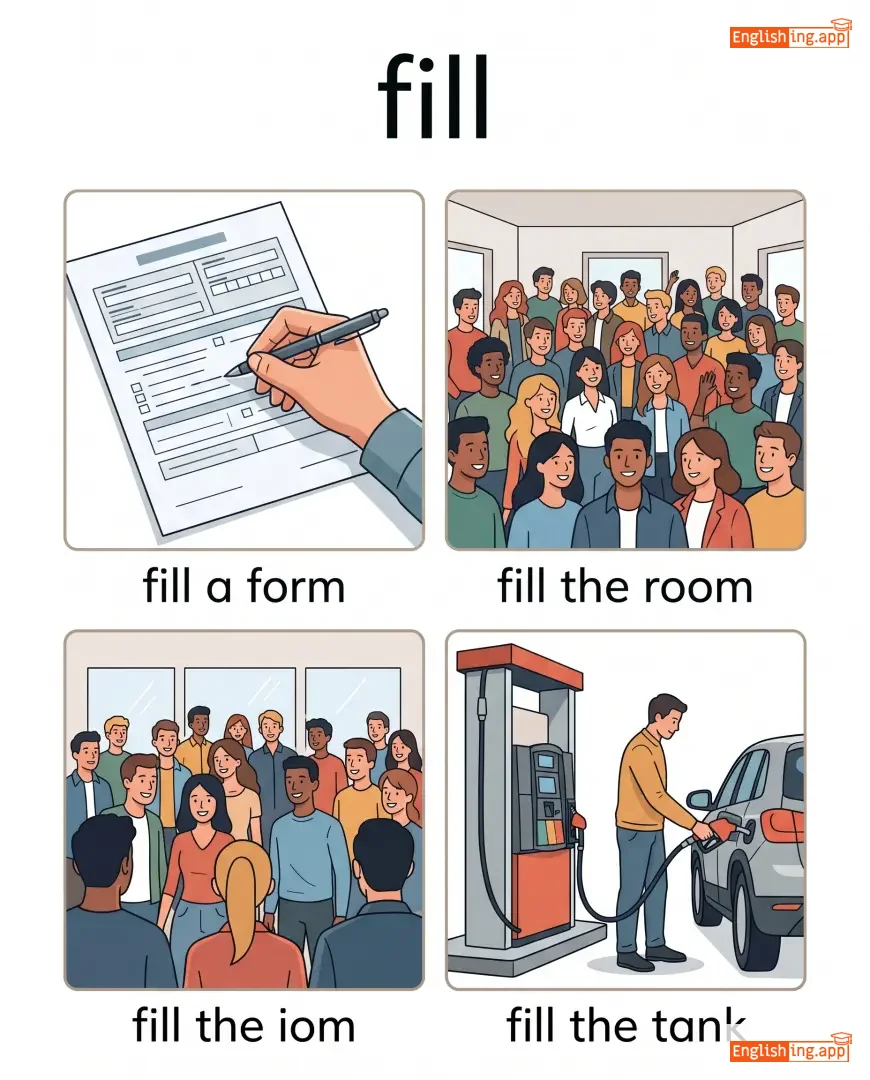
fill a form, fill the room, fill the tank, fill the position
••••••
|
満たすは、グラスを水で満たすように満たすことを意味します。
••••••
|
|
👧
••••••
|
/ɡɜːrl/
noun
(ガール)
••••••
|
- •••••• |
女の子
onnanoko
••••••
|
- •••••• | - •••••• | - •••••• | - •••••• |
a female child or young woman
••••••
|
The girl was playing with her friends in the park. |
その女の子は公園で友達と遊んでいました。
Sono onnanoko wa kōen de tomodachi to asonde imashita.
••••••
|
girls' night out |
an evening when female friends go out together socially
••••••
|
女子会
joshikai
••••••
|
young woman, lass, maiden, miss
••••••
|
boy, man
••••••
|
school girl, little girl, young girl, girl group
••••••
|
Girl 👧 とは女の子 - 公園で遊んでいる女の子を思い浮かべてください。
••••••
|
|
🥛
••••••
|
/mɪlk/
noun, verb
(ハピネス)
••••••
|
- •••••• |
幸せ
shiawase
••••••
|
milked
••••••
|
milked
••••••
|
milks
••••••
|
milking
••••••
|
noun: a white liquid produced by female mammals for feeding their young; verb: to draw milk from an animal
••••••
|
She milked the cow early in the morning. |
彼女は朝早くに牛を搾った。
Kanojo wa asa hayaku ni ushi o shibotta.
••••••
|
milk it |
to exploit a situation for as much advantage as possible
••••••
|
最大限に活用する
saidaigen ni katsuyou suru
••••••
|
dairy, extract, exploit, drain, squeeze
••••••
|
feed, nurture
••••••
|
glass of milk, milk the cow, milk products
••••••
|
幸せ = 幸せな牛乳
••••••
|
|
👩👧
••••••
|
/mɑːm/
noun
(ママ)
••••••
|
- •••••• |
ママ
mama
••••••
|
- •••••• | - •••••• | - •••••• | - •••••• |
an informal word for mother
••••••
|
My mom makes the best homemade food. |
私のママは一番美味しい手作り料理を作る。
Watashi no mama wa ichiban oishii tezukuri ryouri wo tsukuru.
••••••
|
mom and pop |
a small family-owned business
••••••
|
ママとパパ
mama to papa
••••••
|
mother, mama, mum, mommy, ma
••••••
|
father, dad
••••••
|
mom said, new mom, working mom, mom and dad
••••••
|
ママ = いつも優しい、心温まる存在。
••••••
|
|
🛢️
••••••
|
/ɔɪl/
noun
(ハピネス)
••••••
|
- •••••• |
油
abura
••••••
|
- •••••• | - •••••• | - •••••• | - •••••• |
a viscous liquid derived from petroleum or plants, used for cooking or fuel
••••••
|
Heat the oil in a pan before adding the vegetables. |
野菜を加える前にフライパンで油を温めます。
Yasai o kuwaeru mae ni furaipan de abura o atatamemasu.
••••••
|
- •••••• | - •••••• | - •••••• |
fat, grease
••••••
|
water
••••••
|
cooking oil, olive oil, vegetable oil, oil pan
••••••
|
油 (abura) means oil in Japanese – perfect for stir-fry cooking!
••••••
|
|
🔥
••••••
|
/ˈʌv.ən/
noun
(オーブン)
••••••
|
- •••••• |
オーブン
obun
••••••
|
- •••••• | - •••••• | - •••••• | - •••••• |
an enclosed compartment used for heating, baking, or drying food
••••••
|
She baked cookies in the oven for thirty minutes.
彼女はオーブンで三十分間クッキーを焼きました。
••••••
|
彼女はオーブンで三十分間クッキーを焼きました。
Kanojo wa obun de sanjuppunkan kukkii wo yakimashita.
••••••
|
- •••••• | - •••••• | - •••••• |
stove, range, kiln
••••••
|
refrigerator, freezer
••••••
|
gas oven, electric oven, microwave oven, convection oven
••••••
|
オーブンで美味しいクッキーを焼ける。
••••••
|
|
🍳
••••••
|
/pæn/
noun, verb
(パン)
••••••
|
- •••••• |
フライパン, 鍋
furaipan, nabe
••••••
|
panned
パンデ
••••••
|
panned
パンデ
••••••
|
pans
パンス
••••••
|
panning
パンニング
••••••
|
a shallow container used for cooking; also means to criticize severely (verb)
••••••
|
She cooked the eggs in a frying pan.
彼女はフライパンで卵を調理した。
••••••
|
彼女はフライパンで卵を調理した。
Kanojo wa furaipan de tamago o chōri shita.
••••••
|
pan out
パンアウと
••••••
|
to turn out or result in a certain way
••••••
|
うまくいく
umaku iku
••••••
|
frying pan, skillet, criticize, roast
••••••
|
praise, compliment
••••••
|
frying pan, pan out, pan for gold, roasting pan
••••••
|
フライパンを使うように、計画も'pan out'するようにする
••••••
|
|
🥧
••••••
|
/paɪ/
noun
(パイ)
••••••
|
- •••••• |
パイ
pai
••••••
|
- •••••• | - •••••• | - •••••• | - •••••• |
a baked dish typically consisting of a pastry crust and filling
••••••
|
She baked an apple pie for dessert. |
彼女はデザートにアップルパイを焼きました。
Kanojo wa dezaato ni appuru pai o yakimashita.
••••••
|
- •••••• | - •••••• | - •••••• |
tart, pastry, dessert, quiche
••••••
|
savory dish, entrée
••••••
|
apple pie, pie crust, fruit pie
••••••
|
パイ (pie) は、サクサクと甘い満足を提供してくれます!
••••••
|
|
🍲
••••••
|
/suːp/
noun
(スープ)
••••••
|
- •••••• |
スープ
suupu
••••••
|
- •••••• | - •••••• | - •••••• | - •••••• |
a liquid food made by boiling meat, vegetables, or other ingredients in water
••••••
|
I had a bowl of chicken soup for lunch.
私は昼食にチキンスープを一杯食べました。
••••••
|
私は昼食にチキンスープを一杯食べました。
watashi wa chūshoku ni chikinsūpu o ippai tabemashita
••••••
|
- •••••• | - •••••• | - •••••• |
broth, stew, consommé
••••••
|
solid food, dry food
••••••
|
chicken soup, vegetable soup, tomato soup, soup bowl, soup spoon
••••••
|
スープで心温まる
••••••
|

