The Path to Peace
拉哈特和他的兄弟索黑尔多年没有说话。他们过去常常不断地 fight,为小事 argue,用充满 anger 的 shout loud 言语。家人都非常 sad、worried。
有一天,他们的母亲 fell 重病。在医院里,两兄弟终于 met。但即便如此,他们之间仍有 silence,guilt 填满了他们的 hearts,还有多年的 fighting 所带来的 shame。
“我 heard 你 worried 妈妈,”索黑尔 quietly 说。拉哈特点头,他的眼神 sad,充满未流出的泪水。他 wanted cry,但 pride 让他保持 silent。
当母亲看到他们在一起时,她虚弱地微笑着说:“我很 glad 你们来了,但如果你们能和好,我会更 glad、更 proud,你们要学会 peace。”
拉哈特 felt guilt 压倒了他。“我 sorry,”他突然说道,声音颤抖。“这些年的 loud shouts、anger、fights——我真的 sorry。我 swear,我不是故意伤害你的。”
索黑尔 shocked hear 这些话。他的 heart 里也充满了 guilt。“我也 sorry,”他 replied,声音 quiet 却真诚。“我 believe 我们都犯了错。我们的 pride 和 anger 毁了关系。”
日子过去,母亲慢慢康复。在那些日子里,拉哈特和索黑尔真正地交谈了多年第一次。没有 loud arguments,没有 angry shouts,只有从 heart 发出的 quiet 对话。
“我一直 worried 你,”拉哈特承认。“即使我们 fighting,我也 worried。但 pride 和 anger 不让我表达出来。”
“我知道,”索黑尔说。“我也 felt 一样。我很 sad,但 shame 阻止我主动。我以为你不会 believe 我如果我说 sorry。”
母亲从病床上看着他们,眼里含着喜悦的泪水。“我很 glad,”她说。“很 proud。你们找到了 peace。记住,peace 只有当我们克服 anger,承认 guilt,真诚地说出 sorry 时才会到来。”
“Thank you 妈妈,”兄弟俩一起说。“Thank you 教会我们。”
多年后,当有人问起他们的故事时,索黑尔说:“我们曾经 fight、argue loudly、在 anger 中 shout。我们的 hearts 充满了 guilt 和 shame。家人都 sad、worried。但危机教会了我们。我们学会了 pride 会导致 fights,anger 会带来 sadness,但当你说 sorry、从 heart 去 hear、去创造 peace 时,一切都会 changes。我不 proud 我们的 fights,我 proud 我们的和解。我不 glad 那些 anger,我 glad 我们找到了 peace。我 swear,最好的决定是克服 shame,说 sorry,并 believe 宽恕。如果你正 fighting 某人,不要让 anger 获胜。不要 shout loud 让自己后悔的话。不要 quiet,当你应该从 heart 说话时。说 sorry,hear 他们的 sorry,并找到 peace。因为生命太短,不该浪费在 guilt 上,太珍贵,不该困在 sadness 里,太有价值,不该被 fights 毁掉。Thank 那些 teach 你宽恕的人,为选择 peace 而 proud。”
拉哈特和索黑尔从 anger 到 peace 的旅程激励着许多家庭——那些 suffer 于冲突、fight 却仍然 worry 彼此、想说 sorry 却被 shame 阻止的人。他们的故事证明,永远不晚去 heal、去 forgive、去找到 peace。
|
表情符号
|
单词 | Images | 翻译 | 过去时 | 过去分词 | 第三人称单数 | 动名词 | 含义 | 例句 | 例句翻译 | 示例表达 | 示例表达含义 | 示例表达翻译 | 同义词 | 反义词 | 搭配词 | 助记符 |
|---|---|---|---|---|---|---|---|---|---|---|---|---|---|---|---|---|---|
|
😡
••••••
|
/ˈæŋɡər/
noun
(āngěr)
••••••
|
- •••••• |
愤怒
fèn nù
••••••
|
- •••••• | - •••••• | - •••••• | - •••••• |
A strong feeling of displeasure or hostility.
••••••
|
He couldn't control his anger after the argument. |
他在争吵后无法控制自己的愤怒。
Tā zài zhēngchǎo hòu wúfǎ kòngzhì zìjǐ de fèn nù.
••••••
|
fit of anger |
a sudden, intense outburst of anger
••••••
|
愤怒爆发
fèn nù bào fā
••••••
|
rage, fury, irritation, resentment, wrath
••••••
|
calm, peace, happiness
••••••
|
express anger, control anger, suppress anger, anger management
••••••
|
Anger代表愤怒 - ANGry的人经常愤怒。
••••••
|
|
🗣️
••••••
|
/ˈɑːrɡjuː/
verb
(ārgīu)
••••••
|


|
争论
zhēnglùn
••••••
|
argued
ārgīud
••••••
|
argued
ārgīud
••••••
|
argues
ārgīus
••••••
|
arguing
ārgīuīng
••••••
|
to give reasons for or against something; to dispute or debate
••••••
|
They often argue about politics during dinner.
他们常在晚餐时就政治问题争论。
••••••
|
他们常在晚餐时就政治问题争论。
Tāmen cháng zài wǎncān shí jiù zhèngzhì wèntí zhēnglùn.
••••••
|
argue the toss
争论投掷
••••••
|
to dispute or complain about a decision that has already been made
••••••
|
争论已做的决定
zhēnglùn yǐ zuò de juédìng
••••••
|
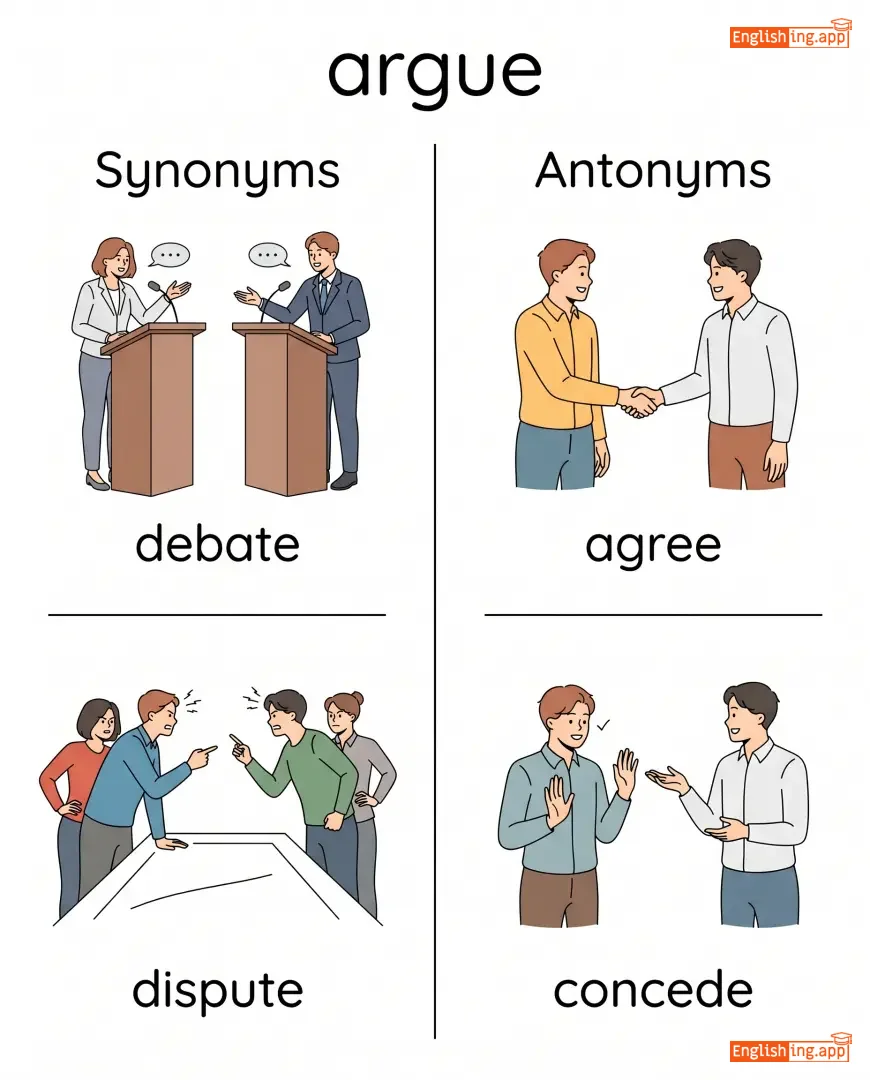
debate, dispute, contend, reason, quarrel
••••••
|
agree, concede, accept
••••••
|
argue strongly, argue convincingly, argue against, argue about
••••••
|
争论就是争议,像 argyu 在英文中一样。
••••••
|
|
🙏
••••••
|
/bɪˈliːv/
verb
(bɪˈlɪv)
••••••
|


|
相信
xiāngxìn
••••••
|
believed
bɪˈlɪvd
••••••
|
believed
bɪˈlɪvd
••••••
|
believes
bɪˈlɪvz
••••••
|
believing
bɪˈlɪvɪŋ
••••••
|
To accept something as true; to have faith or confidence in.
••••••
|
She believes in the power of kindness.
她相信善良的力量。
••••••
|
她相信善良的力量。
Tā xiāngxìn shànliáng de lìliàng.
••••••
|
believe in
相信
••••••
|
To have confidence or trust in someone or something.
••••••
|
相信
xiāngxìn
••••••
|
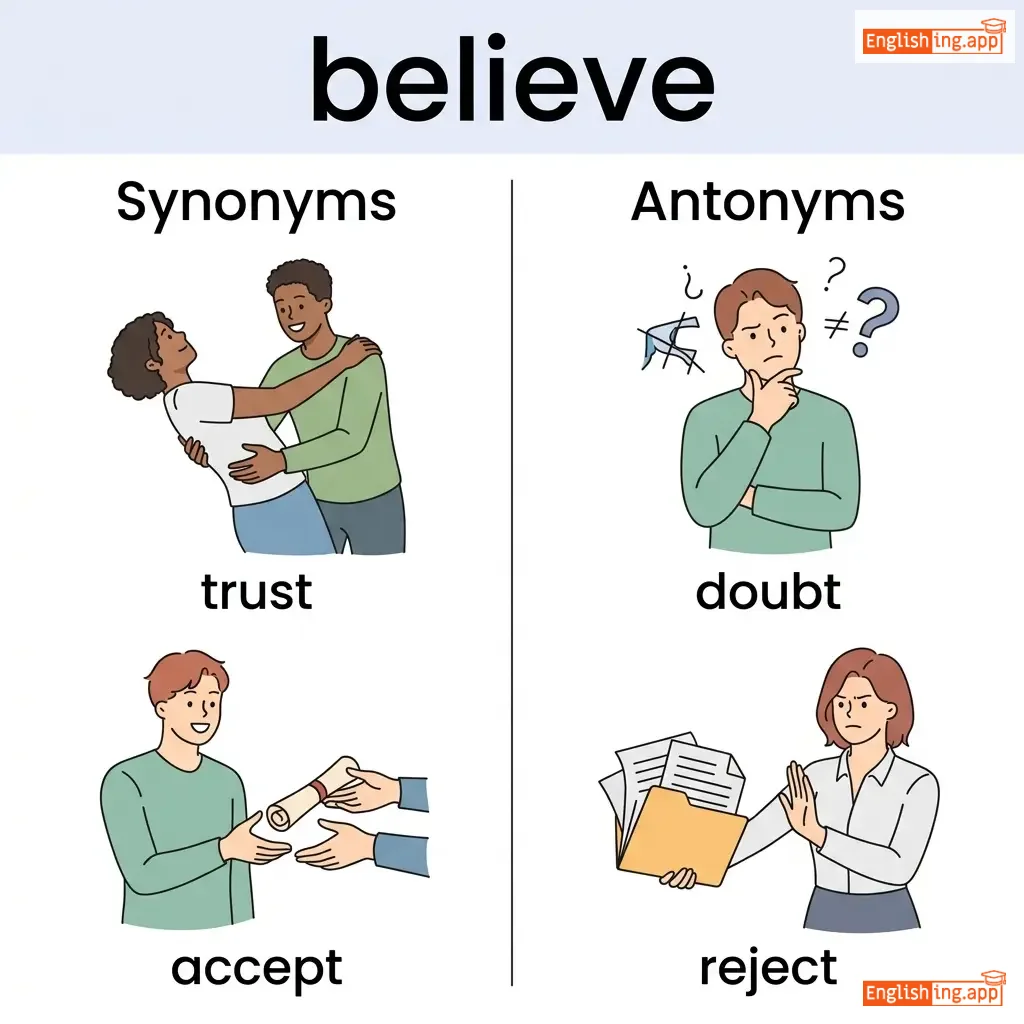
trust, accept, credit, rely on, be convinced
••••••
|
doubt, reject, distrust
••••••
|
believe in God, believe the story, hard to believe, believe strongly
••••••
|
相信 = 小心心—如果你相信,心中会有力量。
••••••
|
|
😢
••••••
|
/kraɪ/
verb, noun
••••••
|
- •••••• | - •••••• |
cried
••••••
|
cried
••••••
|
cries
••••••
|
crying
••••••
|
To shed tears as an expression of emotion such as sadness or pain; also a loud call or shout.
••••••
|
The baby began to cry when she was hungry. |
- •••••• |
cry over spilled milk |
To waste time worrying about something that has already happened and cannot be changed.
••••••
|
- •••••• |
weep, sob, wail, scream, yell
••••••
|
laugh, smile, rejoice
••••••
|
cry out, cry for help, cry with joy, loud cry
••••••
|
No •••••• |
|
🥊
••••••
|
/faɪt/
verb
(fai)
••••••
|
- •••••• |
打斗
da dou
••••••
|
fought
fot
••••••
|
fought
fot
••••••
|
fights
fai-ts
••••••
|
fighting
fighting
••••••
|
to take part in a violent struggle or to try hard to achieve something
••••••
|
They had to fight for their rights.
他们必须为自己的权利而战。
••••••
|
他们必须为自己的权利而战。
Tamen bixu wei ziji de quanli er zhan.
••••••
|
fight tooth and nail
全力以赴地战斗
••••••
|
to fight or argue with great determination
••••••
|
全力以赴地战斗
quan li yi fu de zhan dou
••••••
|
battle, combat, struggle, conflict, clash
••••••
|
peace, surrender, agreement
••••••
|
fight back, fight against, fight for, fight with, fight hard
••••••
|
Fight 的意思是打斗 – 🥊 打斗获得权利 (权利)
••••••
|
|
😊
••••••
|
/ɡlæd/
verb
(快乐)
••••••
|

|
高兴
gaoxing
••••••
|
gladded
快乐的
••••••
|
gladded
快乐的
••••••
|
glads
快乐的
••••••
|
gladding
快乐的
••••••
|
feeling pleased or happy; to make someone happy
••••••
|
I'm glad you could make it to the party.
我很高兴你能来参加派对。
••••••
|
我很高兴你能来参加派对。
Wǒ hěn gāoxìng nǐ néng lái cānjiā pàiduì.
••••••
|
- •••••• | - •••••• | - •••••• |
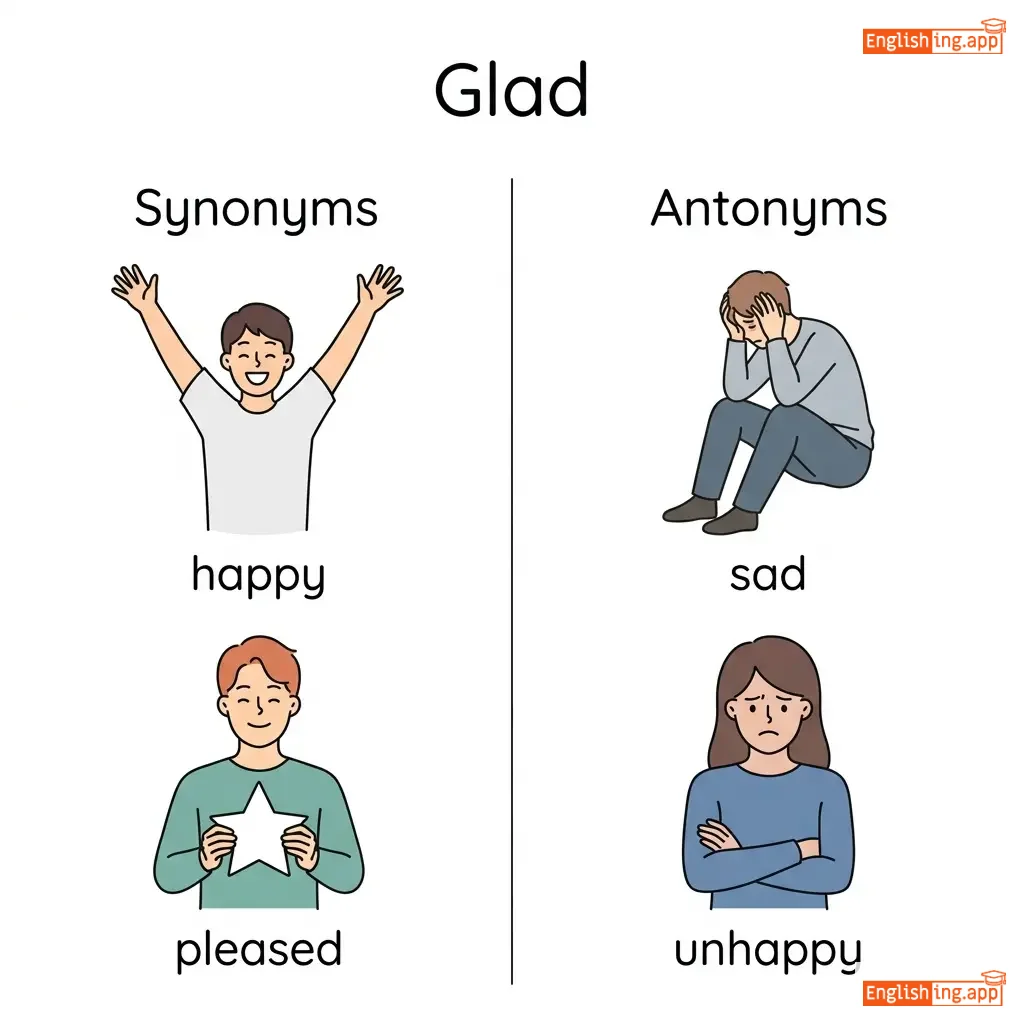
happy, pleased, delighted, joyful
••••••
|
sad, unhappy, disappointed, upset
••••••
|
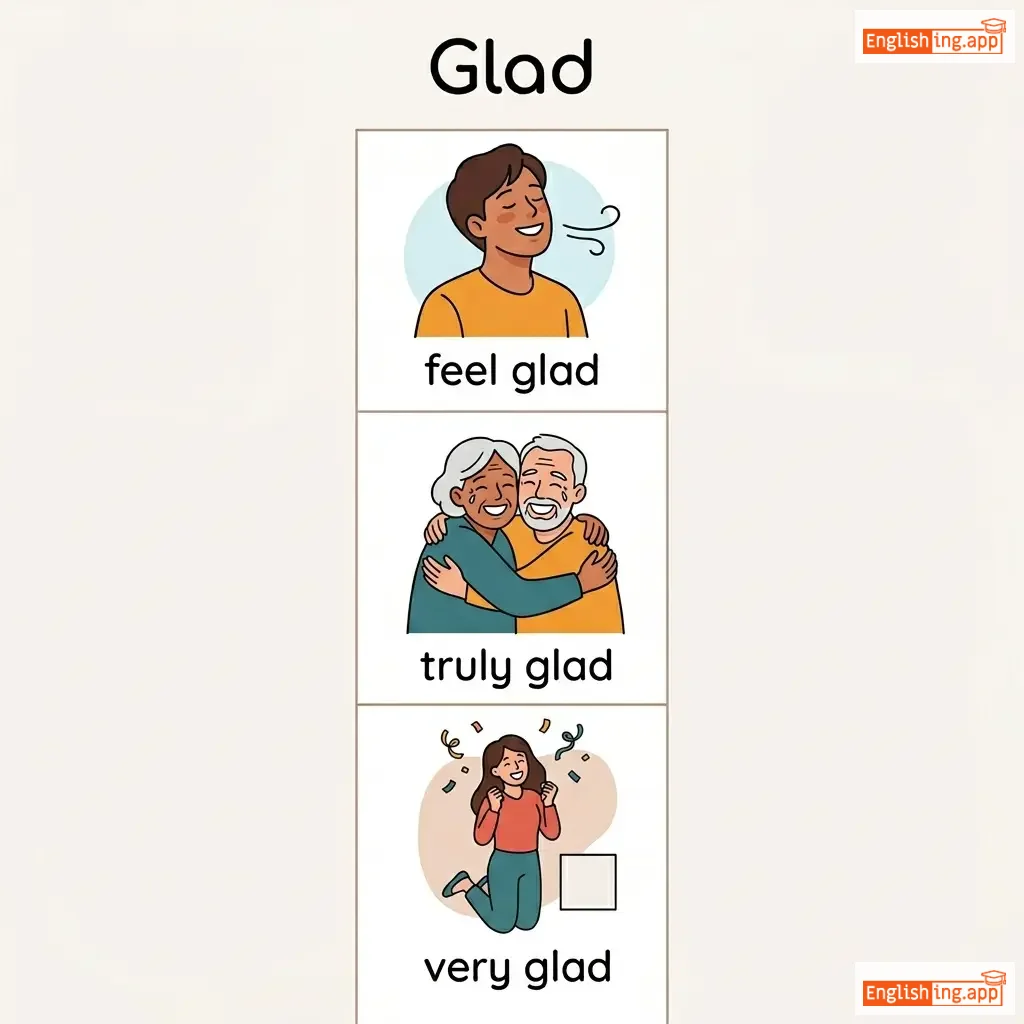
feel glad, truly glad, very glad, so glad, really glad
••••••
|
Happy to feel glad in Chinese
••••••
|
|
😔
••••••
|
/ɡɪlt/
noun
(gilt)
••••••
|
- •••••• |
罪恶感
zuì è gǎn
••••••
|
- •••••• | - •••••• | - •••••• | - •••••• |
A feeling of responsibility or remorse for an offense or wrongdoing
••••••
|
She felt deep guilt after lying to her friend. |
她在撒谎后感到深深的罪恶感。
Tā zài sāhuǎng hòu gǎndào shēnshēn de zuì è gǎn.
••••••
|
guilty conscience |
a feeling of guilt for wrongdoing
••••••
|
负罪感
fù zuì gǎn
••••••
|
remorse, shame, regret, fault
••••••
|
innocence, blamelessness
••••••
|
feel guilt, deep guilt, sense of guilt
••••••
|
Guilt 转换为 '罪恶感' 在中文里,想象你内心感受到的沉重罪恶感。
••••••
|
|
👂
••••••
|
/hɪr/
verb
(xir)
••••••
|
|
听见
tīngjiàn
••••••
|
heard
herd
••••••
|
heard
herd
••••••
|
hears
hirs
••••••
|
hearing
xīrīng
••••••
|
To perceive sound with the ear.
••••••
|
I can hear birds singing outside.
Wǒ kěyǐ tīngdào wàimiàn de niǎo chànggē.
••••••
|
我可以听到外面的鸟在唱歌。
Wǒ kěyǐ tīngdào wàimiàn de niǎo chànggē.
••••••
|
hear from someone
cóng rén huì tīngdào
••••••
|
to receive news or communication from someone
••••••
|
从某人那里听到
cóng mǒurén nàlǐ tīngdào
••••••
|
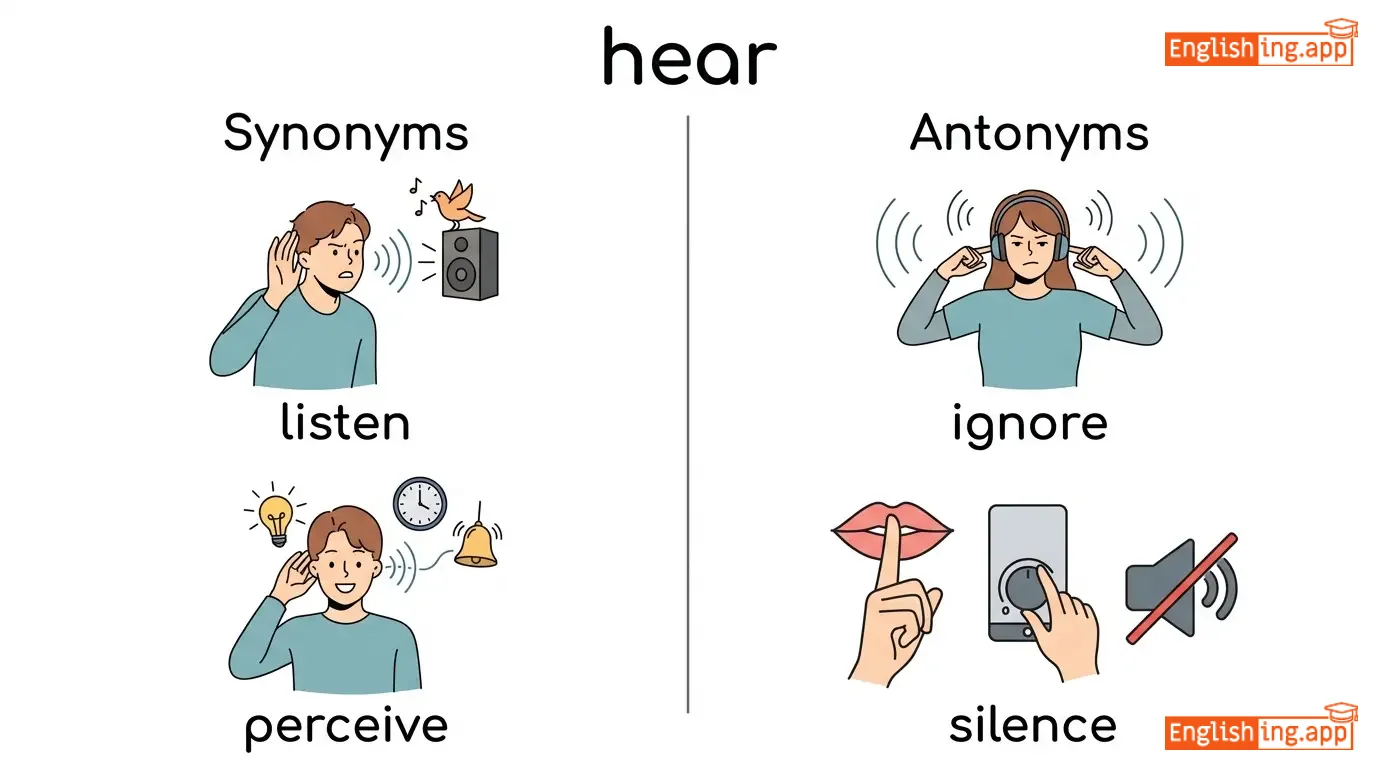
listen, perceive, detect, notice, overhear
••••••
|
ignore, silence
••••••
|
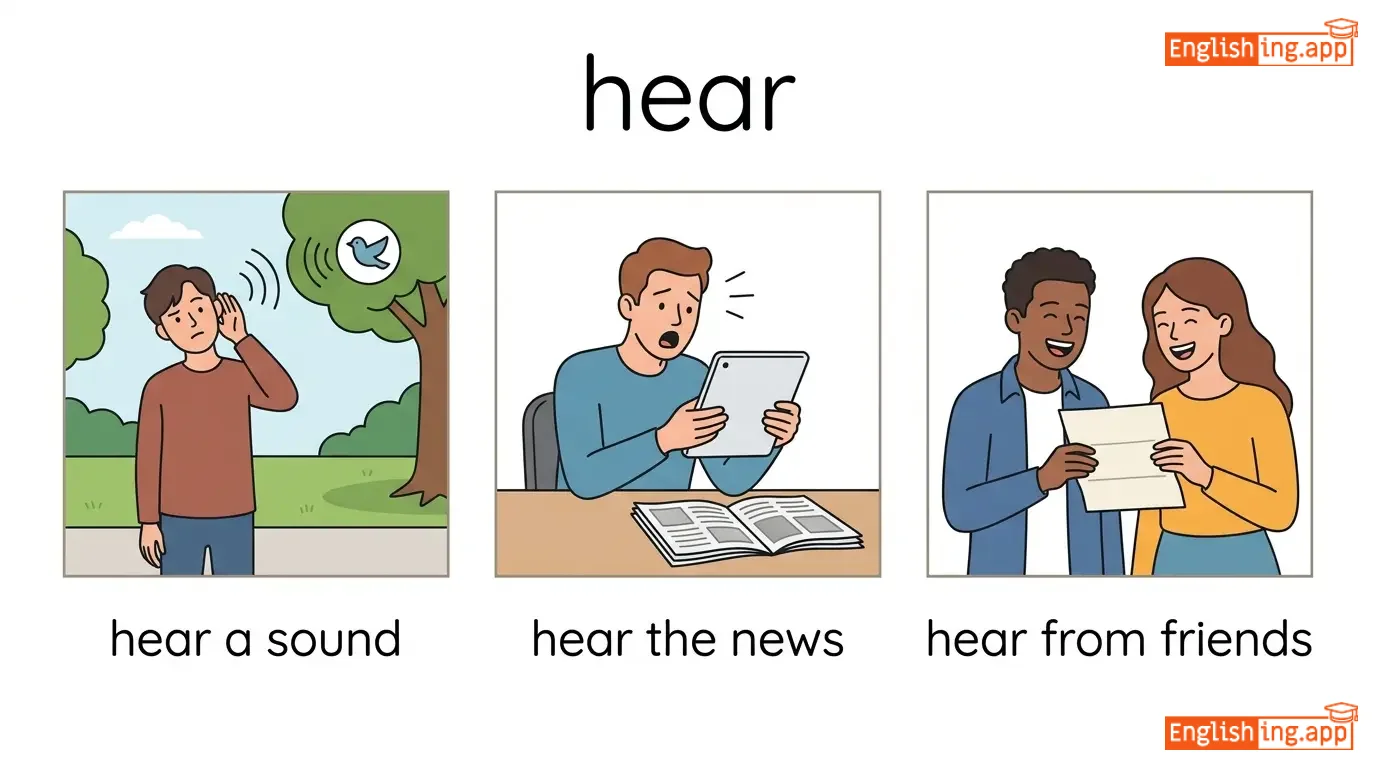
hear a sound, hear the news, hear from friends, hear clearly
••••••
|
听见就是用耳朵听声音。
••••••
|
|
❤️
••••••
|
/hɑːrt/
noun
(hɑːrt)
••••••
|
- •••••• |
心脏
xīnzàng
••••••
|
- •••••• | - •••••• | - •••••• | - •••••• |
the organ that pumps blood through the body; also the center of emotions
••••••
|
Her heart was beating fast with excitement.
她的心因兴奋而快速跳动。
••••••
|
她的心因兴奋而快速跳动。
Tā de xīn yīn xīngfèn ér kuàisù tiàodòng.
••••••
|
at heart
从心底
••••••
|
in essence or fundamentally
••••••
|
从心底
cóng xīndǐ
••••••
|
core, center, emotion, spirit, soul
••••••
|
mind, brain
••••••
|
heart attack, broken heart, kind heart, follow your heart
••••••
|
心脏 ❤️ 意味着心脏 – 爱和情感来自心脏
••••••
|
|
🔊
••••••
|
/laʊd/
adjective/adverb
(laʊd)
••••••
|
- •••••• |
响亮
xiangliang
••••••
|
- •••••• | - •••••• | - •••••• | - •••••• |
Producing or capable of producing much noise.
••••••
|
The music was too loud to concentrate. |
音乐太响了,无法集中注意力。
Yīnyuè tài xiǎngle, wúfǎ jízhōng zhùyì lì.
••••••
|
loud and clear |
understood perfectly without any doubt
••••••
|
清晰响亮
qīngxī xiǎngliàng
••••••
|
noisy, boisterous, deafening, clamorous
••••••
|
quiet, silent, soft
••••••
|
speak loud, loud noise, loud voice, loud music
••••••
|
Loud 就像喇叭一样发出响亮的声音
••••••
|
|
☮️
••••••
|
/piːs/
noun
(pī sī)
••••••
|
- •••••• |
和平
heping
••••••
|
- •••••• | - •••••• | - •••••• | - •••••• |
a state of tranquility or quiet, freedom from disturbance
••••••
|
They hope for peace in the region.
他们希望在该地区实现和平。
••••••
|
他们希望在该地区实现和平。
Tāmen xīwàng zài gāi dìqū shíxiàn hépíng.
••••••
|
- •••••• | - •••••• | - •••••• |
calm, serenity, harmony, tranquility
••••••
|
conflict, war
••••••
|
world peace, peace of mind, peace treaty, keep the peace
••••••
|
和平是内心的安宁。
••••••
|
|
🦚
••••••
|
/praʊd/
adjective
(pɹaʊd)
••••••
|
- •••••• |
骄傲
jiaoao
••••••
|
- •••••• | - •••••• | - •••••• | - •••••• |
Feeling deep pleasure or satisfaction as a result of achievements or qualities.
••••••
|
She felt proud of her son's accomplishments. |
她为儿子的成就感到骄傲。
Tā wèi érzi de chéngjiù gǎndào jiāoào.
••••••
|
proud as a peacock |
extremely proud or arrogant
••••••
|
骄傲如孔雀
Jiāoào rú kǒngquè
••••••
|
pleased, honored, satisfied, delighted
••••••
|
ashamed, humble
••••••
|
proud of, feel proud, proud moment, proud parent
••••••
|
Proud意味着为自己或他人的成就而感到骄傲。
••••••
|
|
🤫
••••••
|
/ˈkwaɪət/
adjective
(kuaiyet)
••••••
|
- •••••• |
安静
anjing
••••••
|
- •••••• | - •••••• | - •••••• | - •••••• |
Making little or no noise; free from disturbance.
••••••
|
The library is a very quiet place to study. |
图书馆是一个非常安静的学习场所。
Túshūguǎn shì yīgè fēicháng ānjìng de xuéxí chǎngsuǒ.
••••••
|
keep quiet |
to stop talking or remain silent
••••••
|
保持安静
bǎochí ānjìng
••••••
|
silent, calm, peaceful, hushed, still
••••••
|
loud, noisy, rowdy
••••••
|
quiet place, quiet voice, quiet night, keep quiet
••••••
|
Quiet 意思是安静 – 在考试时,老师说'keep quiet',意思是保持安静。
••••••
|
|
😢
••••••
|
/sæd/
adjective
(萨德)
••••••
|
- •••••• |
伤心
shangxin
••••••
|
- •••••• | - •••••• | - •••••• | - •••••• |
feeling or showing sorrow; unhappy
••••••
|
She felt sad after hearing the bad news. |
听到坏消息后,她感到伤心。
Tīng dào huài xiāoxī hòu, tā gǎndào shāngxīn.
••••••
|
sad but true |
something that is unfortunate but factual
••••••
|
伤心但真实
shāngxīn dàn zhēnshí
••••••
|
unhappy, sorrowful, depressed, gloomy
••••••
|
happy, joyful, cheerful
••••••
|
sad face, sad story, feel sad, sad news
••••••
|
Sad 意味着伤心—当你听到坏消息时,你会伤心。
••••••
|
|
😔
••••••
|
/ʃeɪm/
noun
(shēm)
••••••
|
- •••••• |
羞耻
xiūchǐ
••••••
|
- •••••• | - •••••• | - •••••• | - •••••• |
a painful feeling of humiliation or distress caused by the consciousness of wrong or foolish behavior
••••••
|
He felt deep shame after lying to his friend. |
他在对朋友撒谎后感到深深的羞耻。
Tā zài duì péngyǒu sāhuǎng hòu gǎndào shēnshēn de xiūchǐ.
••••••
|
crying shame |
something that is very unfortunate
••••••
|
哭泣的羞耻
kūqì de xiūchǐ
••••••
|
embarrassment, guilt, humiliation, disgrace
••••••
|
pride, honor
••••••
|
feel shame, bring shame, deep shame, public shame
••••••
|
羞耻是当你做错事时的感觉,像是‘Shame!’
••••••
|
|
📢
••••••
|
/ʃaʊt/
verb
(shaot)
••••••
|
- •••••• |
喊叫
hanjiao
••••••
|
shouted
shaoted
••••••
|
shouted
shaoted
••••••
|
shouts
shaots
••••••
|
shouting
shaoting
••••••
|
to say something very loudly
••••••
|
He shouted at the top of his lungs to get their attention.
他尽可能大声地喊叫,以引起他们的注意。
••••••
|
他尽可能大声地喊叫,以引起他们的注意。
Ta jin keneng dasheng de hanjiao, yi yinqi tamen de zhuyi.
••••••
|
Shout from the rooftops
从屋顶大喊
••••••
|
To tell everyone about something in a very public way
••••••
|
从屋顶喊出来
Cong wuting han chulai
••••••
|
yell, scream, holler, cry
••••••
|
whisper, mumble
••••••
|
shout loudly, shout angrily, shout for help
••••••
|
喊出来,大家都会知道!
••••••
|
|
😔
••••••
|
/ˈsɔːri/
adjective
(对不起)
••••••
|
- •••••• |
对不起
duìbuqǐ
••••••
|
- •••••• | - •••••• | - •••••• | - •••••• |
feeling regret or sympathy
••••••
|
She felt sorry for what had happened. |
她为发生的事情感到抱歉。
Tā wèi fāshēng de shìqíng gǎndào bàoqiàn.
••••••
|
I'm sorry! |
an expression of apology or regret
••••••
|
对不起!
Duìbuqǐ!
••••••
|
apologetic, regretful, remorseful, contrite
••••••
|
happy, glad
••••••
|
sorry for, sorry about, deeply sorry
••••••
|
SORRY, she feels regret and apologizes.
••••••
|
|
🗣️
••••••
|
/swɛər/
verb
(斯威尔)
••••••
|


|
发誓
fā shì
••••••
|
swore
斯沃尔
••••••
|
sworn
斯沃恩
••••••
|
swears
斯威尔兹
••••••
|
swearing
斯威林
••••••
|
To make a solemn statement or promise; to use offensive language.
••••••
|
He swore to tell the truth in court.
他在法庭上发誓说出真相。
••••••
|
他发誓在法庭上说出真相。
Tā fā shì zài fǎ tíng shàng shuō chū zhēn xiàng.
••••••
|
swear by
发誓
••••••
|
To have great confidence in something.
••••••
|
信任
xìn rèn
••••••
|
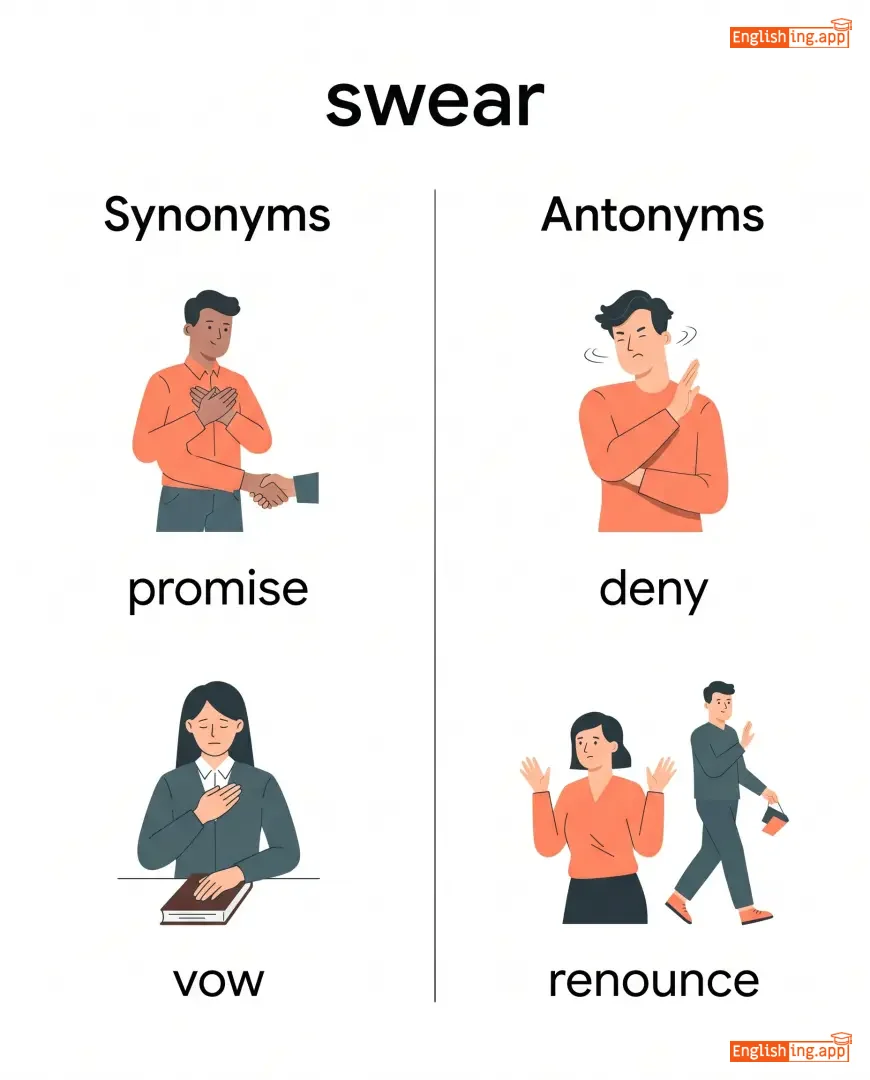
promise, vow, curse, pledge, affirm
••••••
|
deny, renounce, retract
••••••
|
swear an oath, swear allegiance, swear in, swear by
••••••
|
Swear 代表发誓 – 法庭上宣誓说真话。
••••••
|
|
🙏
••••••
|
/θæŋk/
verb
(thæŋk)
••••••
|
|
感谢
gǎnxiè
••••••
|
thanked
thæŋkt
••••••
|
thanked
thæŋkt
••••••
|
thanks
θæŋks
••••••
|
thanking
θæŋkɪŋ
••••••
|
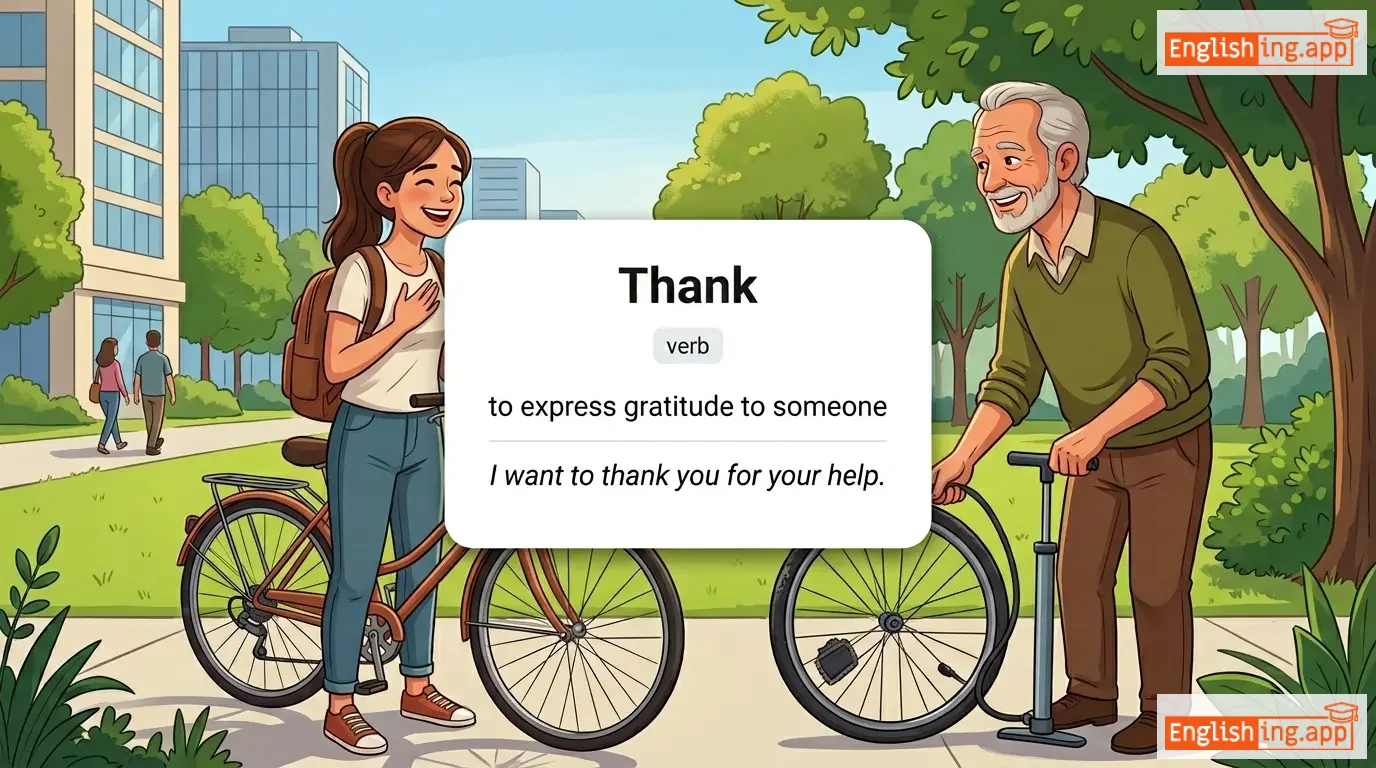
to express gratitude to someone
••••••
|
I want to thank you for your help.
我想感谢你提供的帮助。
••••••
|
我想感谢你提供的帮助。
Wǒ xiǎng gǎnxiè nǐ tígōng de bāngzhù.
••••••
|
Thank you
谢谢
••••••
|
expression of gratitude
••••••
|
谢谢
Xièxiè
••••••
|
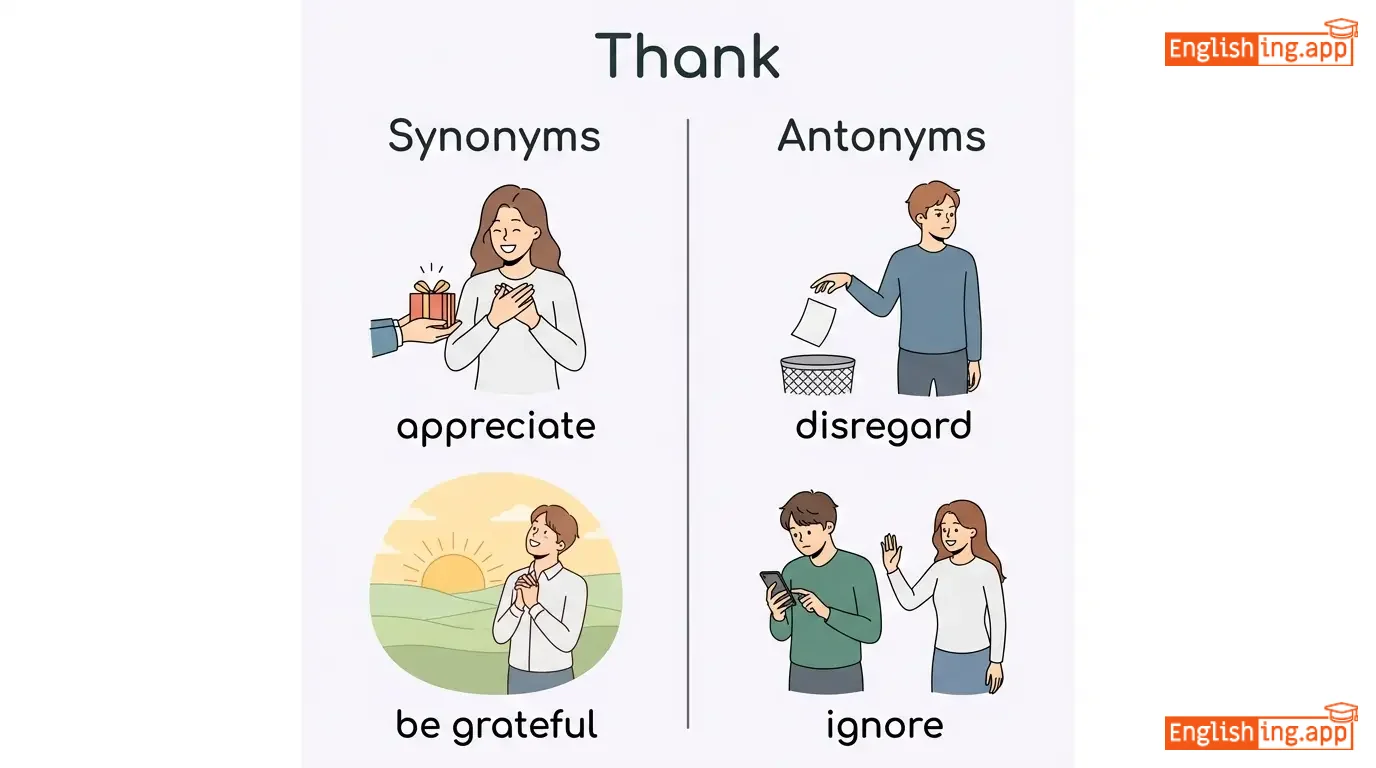
appreciate, be grateful, acknowledge, express thanks
••••••
|
disregard, ignore, neglect
••••••
|
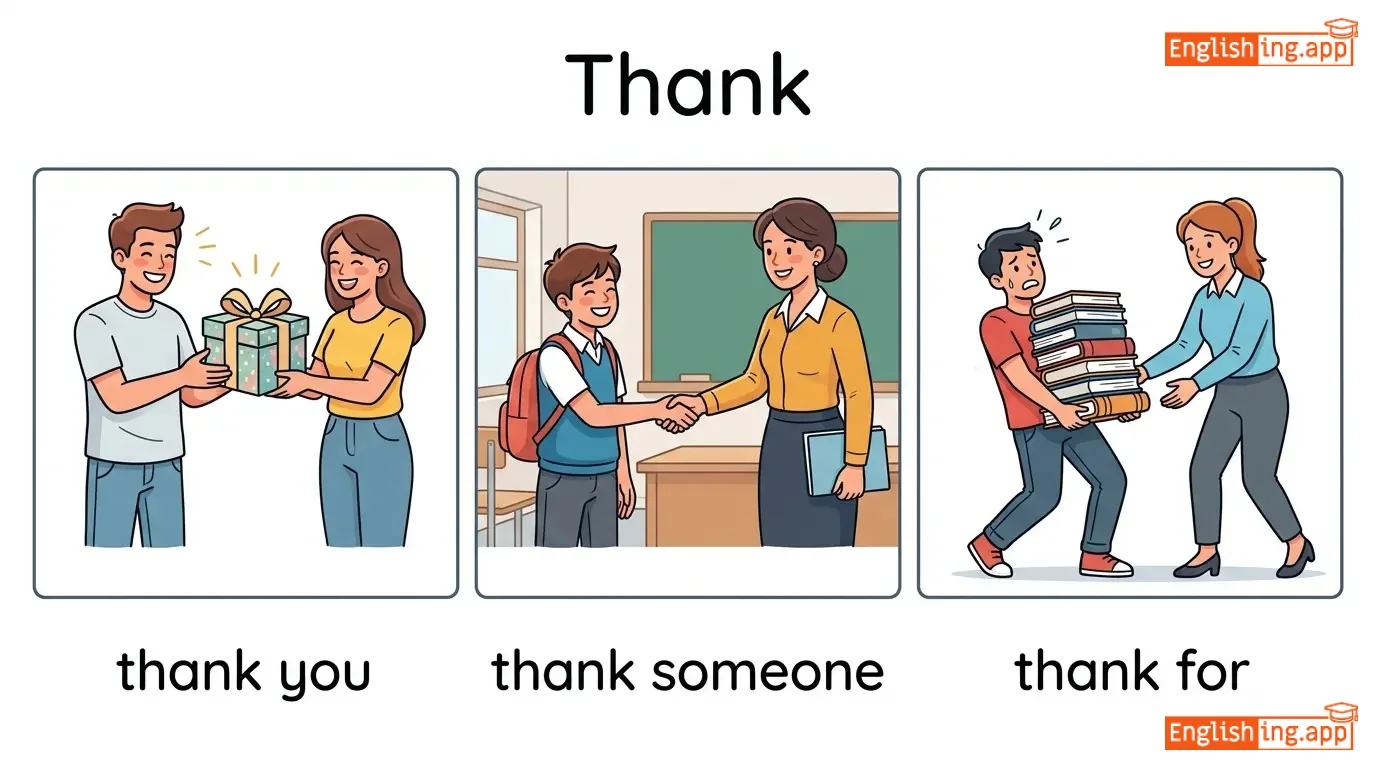
thank you, thank someone, thank for, thanking you
••••••
|
Thank you for helping – 谢谢 (Xièxiè) for your kindness
••••••
|
|
😟
••••••
|
/ˈwʌri/
verb
••••••
|
- •••••• | - •••••• |
worried
••••••
|
worried
••••••
|
worries
••••••
|
worrying
••••••
|
to feel anxious or concerned about something
••••••
|
Don’t worry, everything will be okay. |
- •••••• |
Worrying about something is like paying interest on a debt you may never owe. |
Worrying about things that may never happen is not helpful.
••••••
|
- •••••• |
anxiety, concern, stress, fret
••••••
|
calm, ease, peace
••••••
|
worry about, cause worry, don’t worry, make worry
••••••
|
No •••••• |

