Получите неограниченный доступ ко всем словам с подпиской Pro
Обновить до ProПолучите неограниченный доступ ко всем предложениям с подпиской Pro
Обновить до Pro|
Эмодзи
|
Слово | Images | Перевод | Прошедшее | Причастие прошедшего времени | Третье лицо единственного числа | Герундий | Значение | Пример предложения | Перевод примера предложения | Пример выражения | Значение примера выражения | Перевод примера выражения | Синонимы | Антонимы | Коллокации | Мнемоника |
|---|---|---|---|---|---|---|---|---|---|---|---|---|---|---|---|---|---|
|
👌
••••••
|
/ˈriːzənəbl/
adjective
(rizənəbl)
••••••
|
- •••••• |
разумный
razumnyy
••••••
|
- •••••• | - •••••• | - •••••• | - •••••• |
Fair and sensible; having sound judgment; not extreme or excessive.
••••••
|
The price of the meal was quite reasonable.
Цена еды была довольно разумной.
••••••
|
Цена еды была довольно разумной.
Tsená yedy byla dovol'no razumnoy.
••••••
|
within reason
в пределах разумного
••••••
|
to a fair and sensible extent
••••••
|
в пределах разумного
v predelakh razumnogo
••••••
|
fair, sensible, rational, logical, moderate
••••••
|
unreasonable, unfair, excessive
••••••
|
reasonable price, reasonable doubt, reasonable explanation, reasonable request
••••••
|
Разумный – это разум +ный → что-то разумное и осуществимое.
••••••
|
|
⚖️
••••••
|
/ˈriː.zən.ə.bli/
adverb
(rizonabli)
••••••
|
- •••••• |
разумно; в разумных пределах;
razumno; v razumnykh predelakh;
••••••
|
- •••••• | - •••••• | - •••••• | - •••••• |
in a sensible way; fairly; to a moderate degree
••••••
|
The hotel room was reasonably priced for the location. |
Номер в отеле был разумно оценен для этого местоположения.
Nomer v otele byl razumno otsenen dlya etogo mestopolozheniya.
••••••
|
- •••••• | - •••••• | - •••••• |
fairly, moderately, sensibly, logically
••••••
|
unreasonably, extremely, irrationally
••••••
|
reasonably priced, reasonably good, reasonably sure
••••••
|
In Russian, 'razumno' means rational or reasonable, reminding you of reasonable.
••••••
|
|
🤔
••••••
|
/ˈriːzənɪŋ/
noun
(rizoning)
••••••
|
- •••••• |
рассуждение
rassuzhdeniye
••••••
|
- •••••• | - •••••• | - •••••• | - •••••• |
the process of thinking about something in a logical way in order to form a conclusion or judgment
••••••
|
Her reasoning for leaving was clear and logical. |
Её рассуждения по поводу ухода были ясными и логичными.
Yeyo rassuzhdeniya po povodu ukhoda byli yasnymi i logichnymi.
••••••
|
- •••••• | - •••••• | - •••••• |
thinking, logic, judgment, deduction
••••••
|
ignorance, irrationality
••••••
|
logical reasoning, sound reasoning, reasoning ability
••••••
|
Используй рассуждения для принятия логичных решений, как при формировании вывода
••••••
|
|
🤗
••••••
|
/ˌriːəˈʃʊr/
verb
(riashur)
••••••
|
- •••••• |
успокаивать
uspokaivat'
••••••
|
reassured
riashurd
••••••
|
reassured
riashurd
••••••
|
reassures
riashur
••••••
|
reassuring
riashuring
••••••
|
to say or do something to remove someone's doubts or fears
••••••
|
The teacher reassured the students before the exam.
Учитель успокоил учеников перед экзаменом.
••••••
|
Учитель успокоил учеников перед экзаменом.
Uchitel' uspokoil uchenikov pered ekzamenom.
••••••
|
- •••••• | - •••••• | - •••••• |
comfort, encourage, console, support, calm
••••••
|
alarm, worry, upset
••••••
|
reassure someone, reassured by, reassured that
••••••
|
Reassure означает 'успокаивать'—учитель успокоил учеников перед экзаменом.
••••••
|
|
✊
••••••
|
/ˈreb.əl/
noun, verb
(ребел)
••••••
|
- •••••• |
бунтарь / восставать
buntar' / vosstavat'
••••••
|
rebelled
ревельд
••••••
|
rebelled
ревельд
••••••
|
rebels
ревелс
••••••
|
rebelling
ревеллинг
••••••
|
a person who resists authority or control; to resist or fight against authority
••••••
|
The students rebelled against the new dress code.
Студенты восстали против нового дресс-кода.
••••••
|
Студенты восстали против нового дресс-кода.
Studenty vosstali protiv novogo dress-koda.
••••••
|
rebel at heart
бунтарь в душе
••••••
|
someone who naturally resists control or rules
••••••
|
бунтарь в душе
buntar' v dushe
••••••
|
revolt, resist, defy, insurgent, protest
••••••
|
obey, comply, submit
••••••
|
rebel group, rebel army, rebel leader, rebel movement
••••••
|
Rebel означает 'Против правил' — кто не следует правилам, тот бунтарь.
••••••
|
|
⚔️
••••••
|
/rɪˈbel.jən/
noun
(революция)
••••••
|
- •••••• |
восстание
vostanie
••••••
|
- •••••• | - •••••• | - •••••• | - •••••• |
an act of armed resistance to an established government or leader
••••••
|
The rebellion against the king lasted for three years.
Революция против короля длилась три года.
••••••
|
Революция против короля длилась три года.
Revolyutsiya protiv korolya dlyilas' tree goda.
••••••
|
- •••••• | - •••••• | - •••••• |
revolt, uprising, insurrection
••••••
|
obedience, submission, compliance
••••••
|
armed rebellion, suppress rebellion, lead rebellion
••••••
|
Восстание = Воля + Сопротивление (борьба за волю)
••••••
|
|
🏗️
••••••
|
/ˌriːˈbɪld/
verb
(ribildu)
••••••
|
- •••••• |
восстанавливать
vosstanavlivat
••••••
|
rebuilt
ribilt
••••••
|
rebuilt
ribilt
••••••
|
rebuilds
ribilts
••••••
|
rebuilding
ribilding
••••••
|
to build something again after it has been damaged or destroyed
••••••
|
The villagers worked together to rebuild the bridge after the flood.
Деревенские жители работали вместе, чтобы восстановить мост после наводнения.
••••••
|
Деревенские жители работали вместе, чтобы восстановить мост после наводнения.
Derevenskie zhiteli rabotali vmeste, chtoby vosstanovit' most posle navodneniya.
••••••
|
- •••••• | - •••••• | - •••••• |
restore, reconstruct, renovate, repair, remake
••••••
|
destroy, demolish
••••••
|
rebuild the bridge, rebuild confidence, rebuild home, rebuild life
••••••
|
ReBUILD — восстановить, как снова строить разрушенное.
••••••
|
|
🧠
••••••
|
/rɪˈkɔːl/
verb
(rikol)
••••••
|
- •••••• |
вспоминать
vspominat
••••••
|
recalled
rikold
••••••
|
recalled
rikold
••••••
|
recalls
rikols
••••••
|
recalling
rikoling
••••••
|
to bring (a memory, fact, or situation) back into one's mind
••••••
|
I can't recall the last time we met.
Я не могу вспомнить последний раз, когда мы встречались.
••••••
|
Я не могу вспомнить последний раз, когда мы встречались.
Ya ne mogu vspomnit posledniy raz, kogda my vstrechalis.
••••••
|
- •••••• | - •••••• | - •••••• |
remember, recollect, retrieve, summon
••••••
|
forget, ignore, overlook
••••••
|
recall a memory, recall an event, recall a fact
••••••
|
Recall - Вспомнить то, что ты видел.
••••••
|
|
📩
••••••
|
/rɪˈsiːv/
verb
(risiv)
••••••
|
|
получать
poluchat'
••••••
|
received
risivd
••••••
|
received
risivd
••••••
|
receives
risivz
••••••
|
receiving
risiving
••••••
|
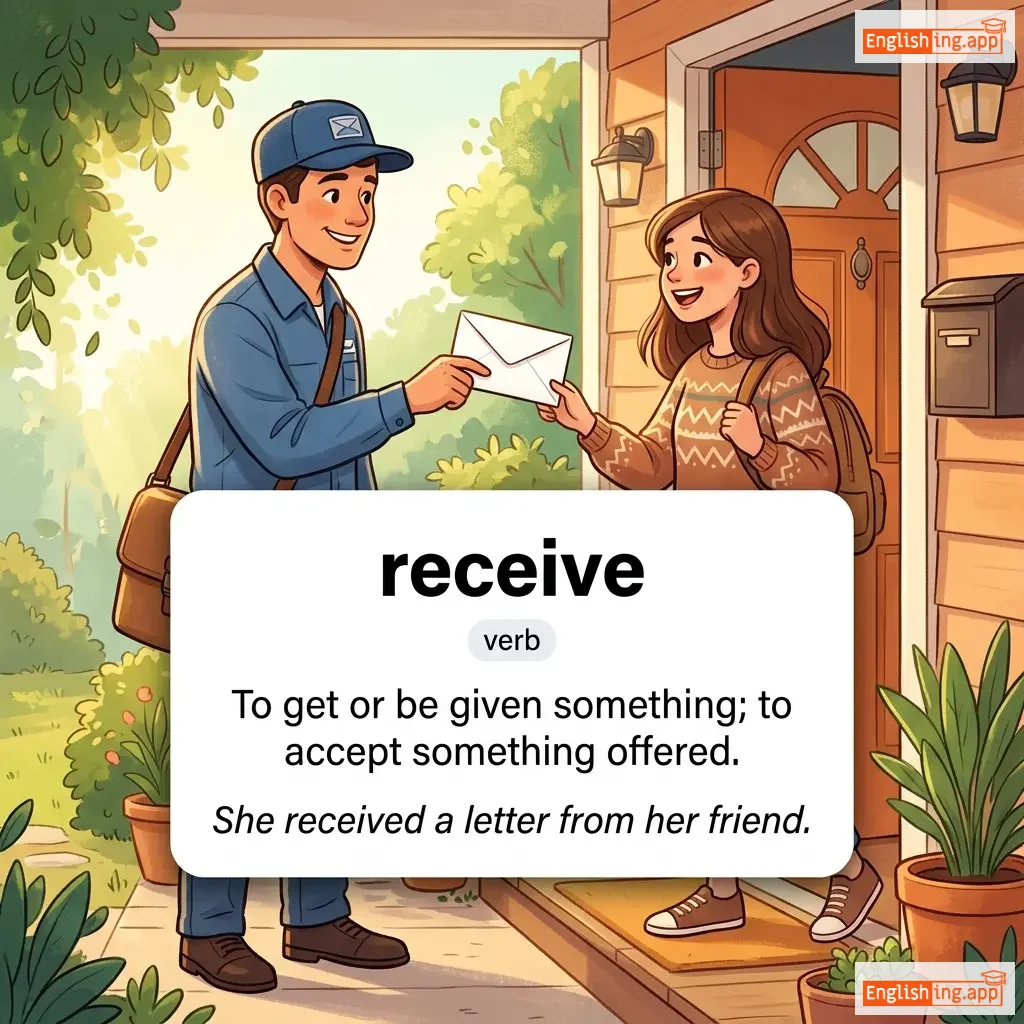
To get or be given something; to accept something offered.
••••••
|
She received a letter from her friend.
Shi risivd a letter from her frend.
••••••
|
Она получила письмо от своей подруги.
Ona poluchila pismo ot svoey podrugi.
••••••
|
receive with open arms
risiv widh open arms
••••••
|
to welcome someone warmly
••••••
|
принять с распростёртыми объятиями
prinyat' s rasprostyornymi ob'yatyiyami
••••••
|
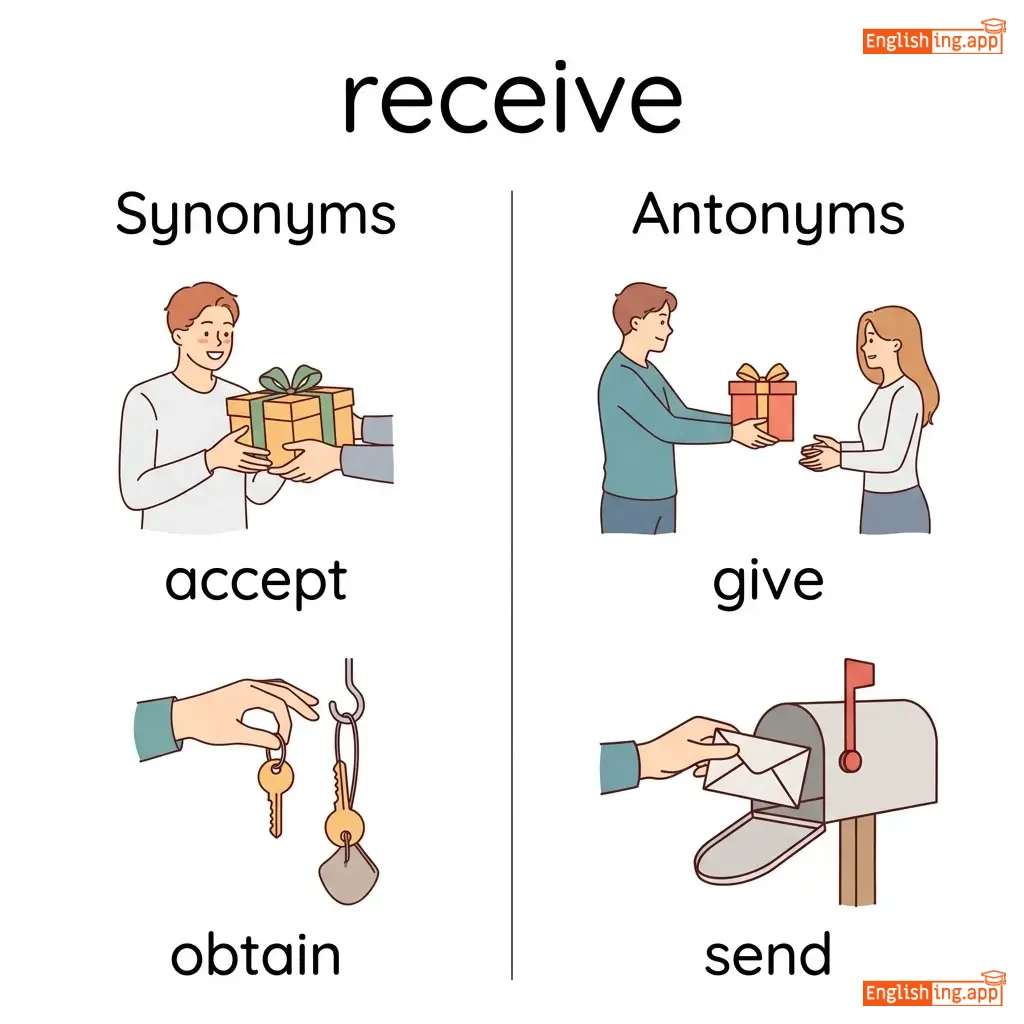
accept, obtain, acquire, collect, welcome
••••••
|
give, send, refuse
••••••
|
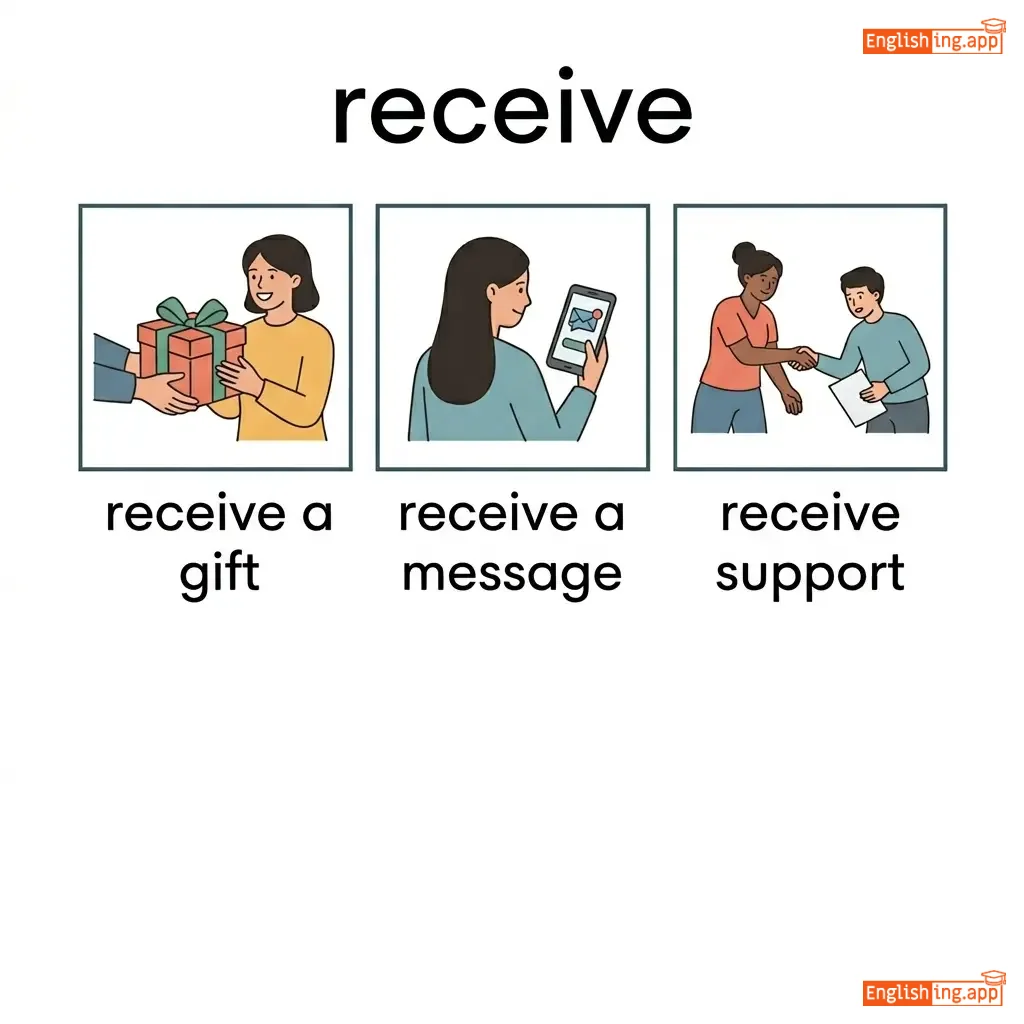
receive a gift, receive a message, receive support, receive payment
••••••
|
Получать значит получить подарок 🎁 или письмо.
••••••
|
|
📞
••••••
|
/rɪˈsiː.vər/
noun
(рисивер)
••••••
|
- •••••• |
приемник
priemyannik
••••••
|
- •••••• | - •••••• | - •••••• | - •••••• |
a person or thing that receives something; the part of a telephone containing the earpiece and mouthpiece
••••••
|
She picked up the receiver to answer the phone call.
Она подняла трубку, чтобы ответить на телефонный звонок.
••••••
|
Она подняла трубку, чтобы ответить на телефонный звонок.
Ona podnyala trubku, chtoby otvetit' na telefonnij zvonok.
••••••
|
- •••••• | - •••••• | - •••••• |
recipient, beneficiary, addressee
••••••
|
sender, transmitter, giver
••••••
|
phone receiver, radio receiver, pick up receiver
••••••
|
Приемник получает звонок, как телефонный приемник.
••••••
|
|
🕒
••••••
|
/ˈriː.sənt/
adjective
(рисент)
••••••
|
- •••••• |
недавний; новый; актуальный;
niedavniy; novyy; aktual'nyy;
••••••
|
- •••••• | - •••••• | - •••••• | - •••••• |
happening not long ago; new; current;
••••••
|
The recent changes in weather patterns concern scientists. |
Недавние изменения в погодных паттернах беспокоят ученых.
Nedavniye izmeneniya v pogodnykh patternakh bespoko'yut uchenykh.
••••••
|
- •••••• | - •••••• | - •••••• |
new, latest, current, fresh
••••••
|
old, ancient, past, former
••••••
|
recent developments, recent studies, recent events, recent news
••••••
|
Все изменения, которые мы видим, это недавно
••••••
|
|
🕐
••••••
|
/ˈriː.sənt.li/
adverb
(рисентли)
••••••
|
- •••••• |
недавно
nedavno
••••••
|
- •••••• | - •••••• | - •••••• | - •••••• |
in the recent past; not long ago
••••••
|
I recently moved to a new apartment.
ай рисентли мувд ту э нью апартмент
••••••
|
Я недавно переехал в новую квартиру.
Ya nedavno pereekhal v novuyu kvartiru
••••••
|
- •••••• | - •••••• | - •••••• |
lately, newly, freshly
••••••
|
formerly, previously, long ago
••••••
|
recently discovered, recently published, recently developed
••••••
|
Recently = недавно — both describe something done not long ago.
••••••
|
|
📉
••••••
|
/rɪˈsɛʃən/
noun
(рецессия)
••••••
|
|
рецессия
retsessiya
••••••
|
- •••••• | - •••••• | - •••••• | - •••••• |
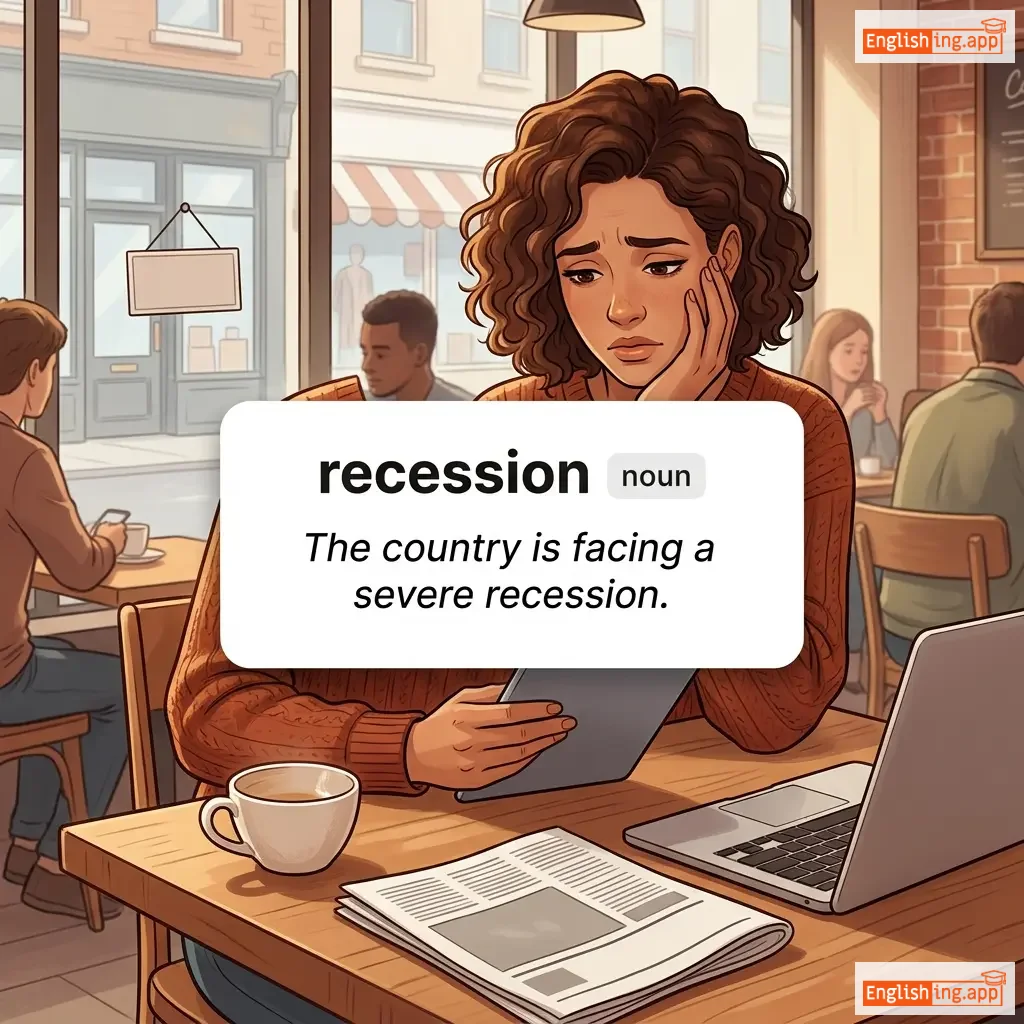
A period of temporary economic decline during which trade and industrial activity are reduced.
••••••
|
The country is facing a severe recession.
Страна сталкивается с тяжёлой рецессией.
••••••
|
Страна сталкивается с тяжёлой рецессией.
Strana stalkivaetsya s tyazhyoloy retsessiyey
••••••
|
economic recession
экономическая рецессия
••••••
|
a period of economic decline in general
••••••
|
экономическая рецессия
ekonomicheskaya retsessiya
••••••
|
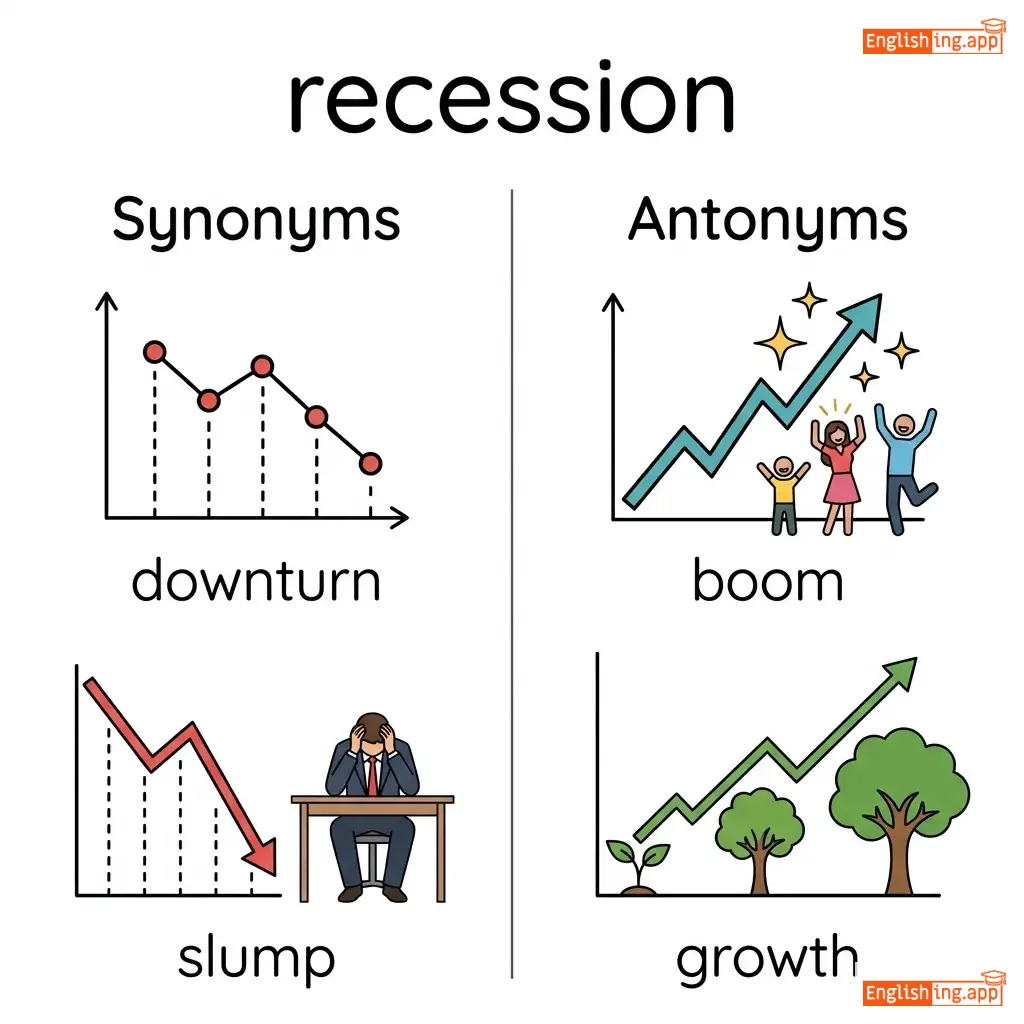
downturn, slump, slowdown, depression, stagnation
••••••
|
boom, growth, prosperity
••••••
|
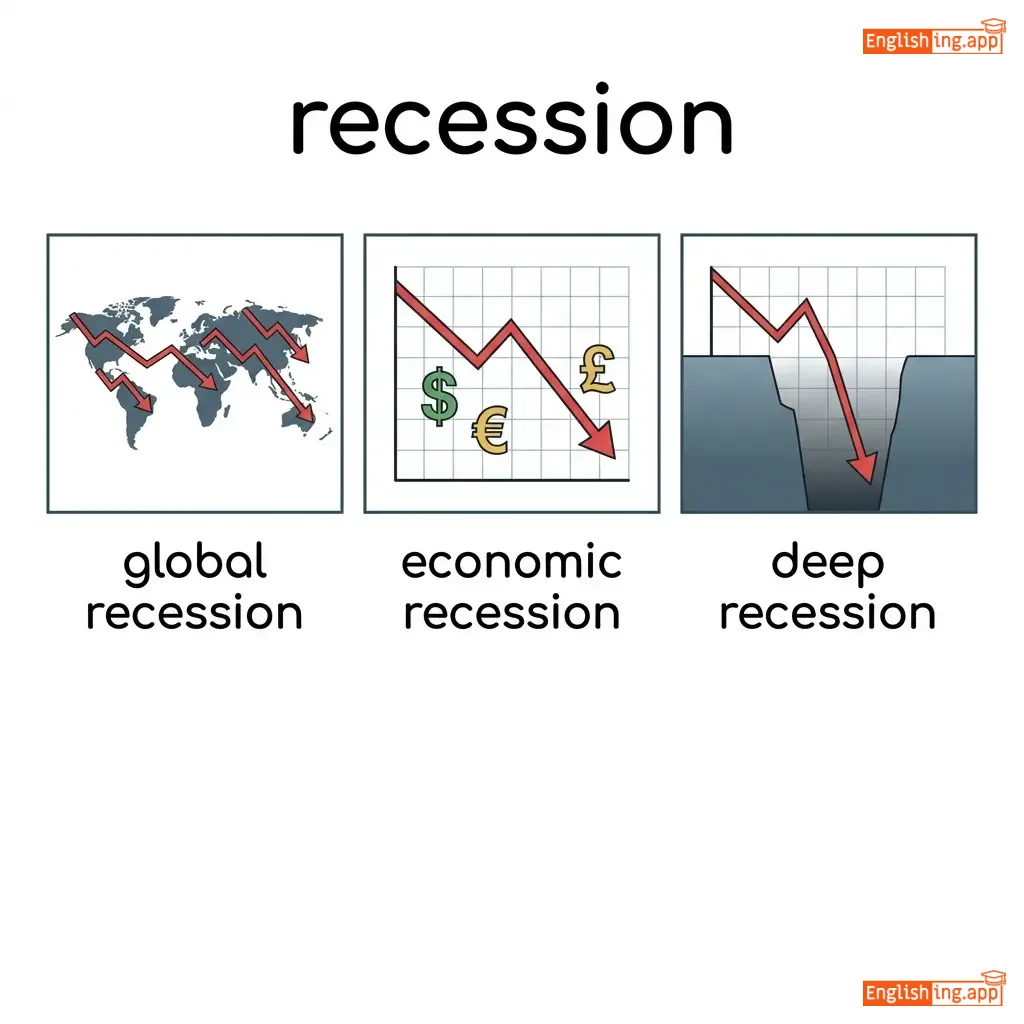
global recession, economic recession, deep recession, severe recession
••••••
|
РЕЦЕССИЯ: Recession Экономика Сжимается, Сохраняй Деньги Инвестируй Осторожно
••••••
|
|
🍰
••••••
|
/ˈrɛsɪpi/
noun
(рецепт)
••••••
|
- •••••• |
рецепт
retsept
••••••
|
- •••••• | - •••••• | - •••••• | - •••••• |
a set of instructions for preparing a particular dish, including a list of the ingredients required
••••••
|
I found a great recipe for chocolate cake.
Я нашел отличный рецепт шоколадного торта.
••••••
|
Я нашел отличный рецепт шоколадного торта.
Ya nashel otlichnyy retsept shokoladnogo torta.
••••••
|
- •••••• | - •••••• | - •••••• |
formula, method, instructions, procedure
••••••
|
improvisation, guesswork
••••••
|
recipe for disaster, secret recipe, traditional recipe
••••••
|
The RECIPE for success in the kitchen is making delicious food - remember it as 'Retsept'!
••••••
|
|
🎁
••••••
|
/rɪˈsɪp.i.ənt/
noun
(rɪˈsɪpɪənt)
••••••
|
- •••••• |
получатель
poluchatel
••••••
|
- •••••• | - •••••• | - •••••• | - •••••• |
a person who receives something
••••••
|
She was the recipient of the prestigious award. |
Она была получателем престижной премии.
Ona byla poluchatelem prestizhnoy premii
••••••
|
- •••••• | - •••••• | - •••••• |
receiver, beneficiary, addressee
••••••
|
donor, giver, sender
••••••
|
award recipient, scholarship recipient, organ recipient
••••••
|
Recipient = получатель (Recipient = poluchatel)
••••••
|
|
🗣️
••••••
|
/rɪˈsaɪt/
verb
(risaɪt)
••••••
|
- •••••• |
декламировать
deklamirovat
••••••
|
recited
risaited
••••••
|
recited
risaited
••••••
|
recites
risaits
••••••
|
reciting
risaiting
••••••
|
To say aloud something learned, especially poetry or text, from memory.
••••••
|
The child recited a poem in front of the class.
de chaild risaited a poem in front of de clas.
••••••
|
Ребёнок декламировал стих перед классом.
Rebyonok dekli mi roval stikh pered klassom.
••••••
|
recite by heart
risait bai jart
••••••
|
To say something from memory without reading.
••••••
|
декламировать наизусть
deklamirovat naizust
••••••
|
repeat, recount, declaim, deliver, narrate
••••••
|
forget, silence
••••••
|
recite a poem, recite by heart, recite a prayer, recite lines
••••••
|
Deklamirovat - это когда ты рассказываешь наизусть стихотворение.
••••••
|
|
📜
••••••
|
/rɪˈsaɪtər/
noun
(рисайтер)
••••••
|
- •••••• |
чтец
chtets
••••••
|
- •••••• | - •••••• | - •••••• | - •••••• |
a person who recites or repeats something aloud from memory, especially poetry, prayers, or formal texts
••••••
|
The reciter delivered the poem with clarity and emotion.
Рисайтер delivered the poem with clarity and emotion.
••••••
|
Чтец прочитал стихотворение с ясностью и чувством.
chtets prochital stikhotvorenie s yasnostyu i chuvstvom
••••••
|
- •••••• | - •••••• | - •••••• |
orator, declaimer, speaker, narrator, reader
••••••
|
listener, audience
••••••
|
poem reciter, Quran reciter, skilled reciter, public reciter
••••••
|
Чтец читает—reciter याद रखो।
••••••
|
|
🤔
••••••
|
/ˈrɛkən/
verb
(рɛкэн)
••••••
|
- •••••• |
полагать
polagat'
••••••
|
reckoned
рɛконд
••••••
|
reckoned
рɛконд
••••••
|
reckons
рɛкɔнс
••••••
|
reckoning
рɛкэнин
••••••
|
To think, believe, or expect something; to calculate or estimate.
••••••
|
I reckon it will rain later today.
Я полагаю, что сегодня позже будет дождь.
••••••
|
Я полагаю, что сегодня позже будет дождь.
Ya polagayû, chto segodnya pozhe budet dozhd'.
••••••
|
reckon with
считать с
••••••
|
To deal with or consider seriously.
••••••
|
считаться с
schitat'sya s
••••••
|
think, believe, consider, calculate, suppose
••••••
|
ignore, disregard, neglect
••••••
|
reckon that, reckon with, I reckon, reckon up
••••••
|
Reckon звучит как предположить или оценить, как когда что-то считаешь.
••••••
|
|
🏆
••••••
|
/ˌrek.əɡˈnɪʃ.ən/
noun
(рекогнишн)
••••••
|

|
признание; идентификация
priznanie; identifikatsiya
••••••
|
- •••••• | - •••••• | - •••••• | - •••••• |
acknowledgment of the existence, validity, or legality of something
••••••
|
His hard work finally received recognition from the management. |
Его усердная работа наконец получила признание от руководства.
Yego usyerdnaya rabota nakonechno poluchila priznanie ot rukovodstva.
••••••
|
- •••••• | - •••••• | - •••••• |
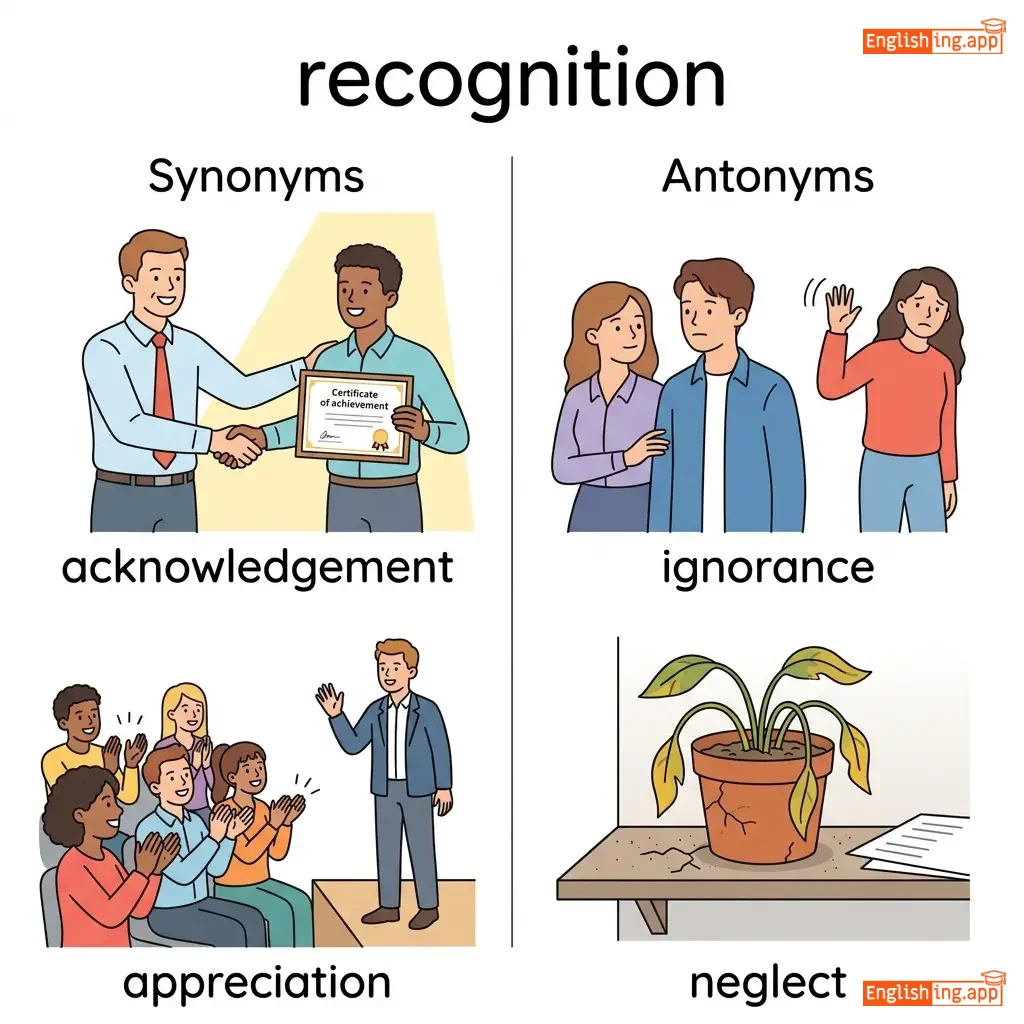
acknowledgment, appreciation, acceptance
••••••
|
ignorance, denial, rejection
••••••
|
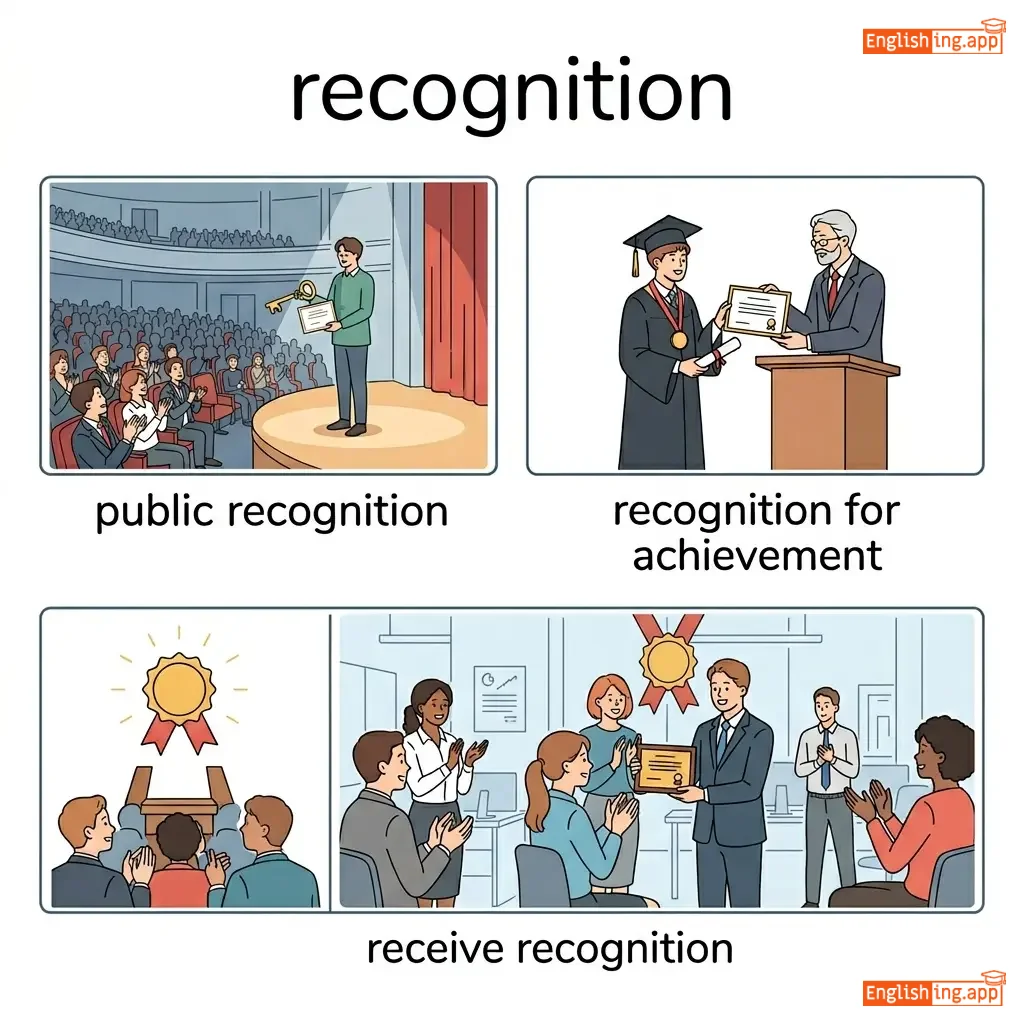
gain recognition, facial recognition, public recognition
••••••
|
In Russian, 'priznanie' means recognition, giving acknowledgment to someone's efforts.
••••••
|
|
👀
••••••
|
/ˈrɛkəɡnaɪz/
verb
••••••
|
- •••••• | - •••••• |
recognized
••••••
|
recognized
••••••
|
recognizes
••••••
|
recognizing
••••••
|
To identify someone or something seen before; to acknowledge or accept.
••••••
|
She did not recognize him in the crowd. |
- •••••• |
recognize the importance |
To acknowledge the value or significance of something.
••••••
|
- •••••• |
identify, acknowledge, accept, admit, spot
••••••
|
ignore, neglect, overlook
••••••
|
recognize someone, recognize importance, recognize authority
••••••
|
No •••••• |
|
💡
••••••
|
/ˌrɛkəˈmɛnd/
verb
(рекоммендовать)
••••••
|
- •••••• |
рекомендовать
rekomendovat'
••••••
|
recommended
рекомендовал
••••••
|
recommended
рекомендовал
••••••
|
recommends
рекомендует
••••••
|
recommending
рекомендуя
••••••
|
to suggest or advise something as being good or suitable
••••••
|
I recommend trying the new restaurant downtown.
Я рекомендую попробовать новый ресторан в центре города.
••••••
|
Я рекомендую попробовать новый ресторан в центре города.
Ya rekomenduyu poprobovat' novyy restoran v tsentre goroda.
••••••
|
- •••••• | - •••••• | - •••••• |
suggest, advise, propose, endorse
••••••
|
discourage, oppose
••••••
|
recommend highly, recommend a product, strongly recommend
••••••
|
When you RECOMMEND something, you're the RECOGNIZER of good things - 'Rekomendovat'!
••••••
|
|
👍
••••••
|
/ˌrek.ə.menˈdeɪ.ʃən/
noun
(рекомендация)
••••••
|
- •••••• |
рекомендация
rekomendatsiya
••••••
|
- •••••• | - •••••• | - •••••• | - •••••• |
a suggestion that someone or something would be good or suitable for a particular job or purpose
••••••
|
I got this job based on a recommendation from my professor.
Я получил эту работу по рекомендации моего профессора.
••••••
|
Я получил эту работу по рекомендации моего профессора.
Ya poluchil etu rabotu po rekomendatsii moyego professora.
••••••
|
- •••••• | - •••••• | - •••••• |
suggestion, advice, endorsement, proposal
••••••
|
warning, discouragement, disapproval
••••••
|
make a recommendation, follow recommendations, letter of recommendation
••••••
|
Рекомендации ведут к успеху.
••••••
|
|
🏗️
••••••
|
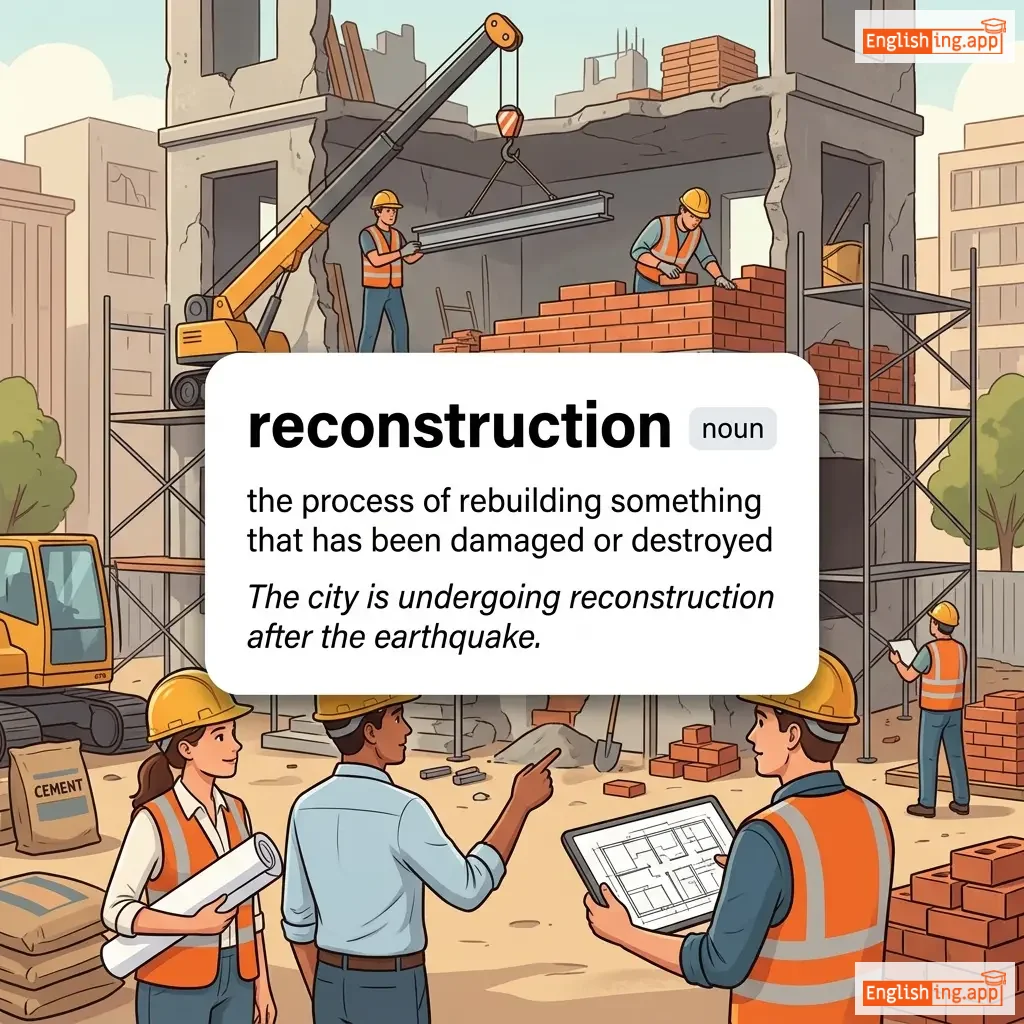
/ˌriːkənˈstrʌkʃən/
noun
(rikonstraktsiya)
••••••
|
|
реконструкция
rekonstruktsiya
••••••
|
- •••••• | - •••••• | - •••••• | - •••••• |
the process of rebuilding something that has been damaged or destroyed
••••••
|
The city is undergoing reconstruction after the earthquake. |
Город проходит реконструкцию после землетрясения.
Gorod prokhodit rekonstruktsiyu posle zemletryaseniya.
••••••
|
- •••••• | - •••••• | - •••••• |
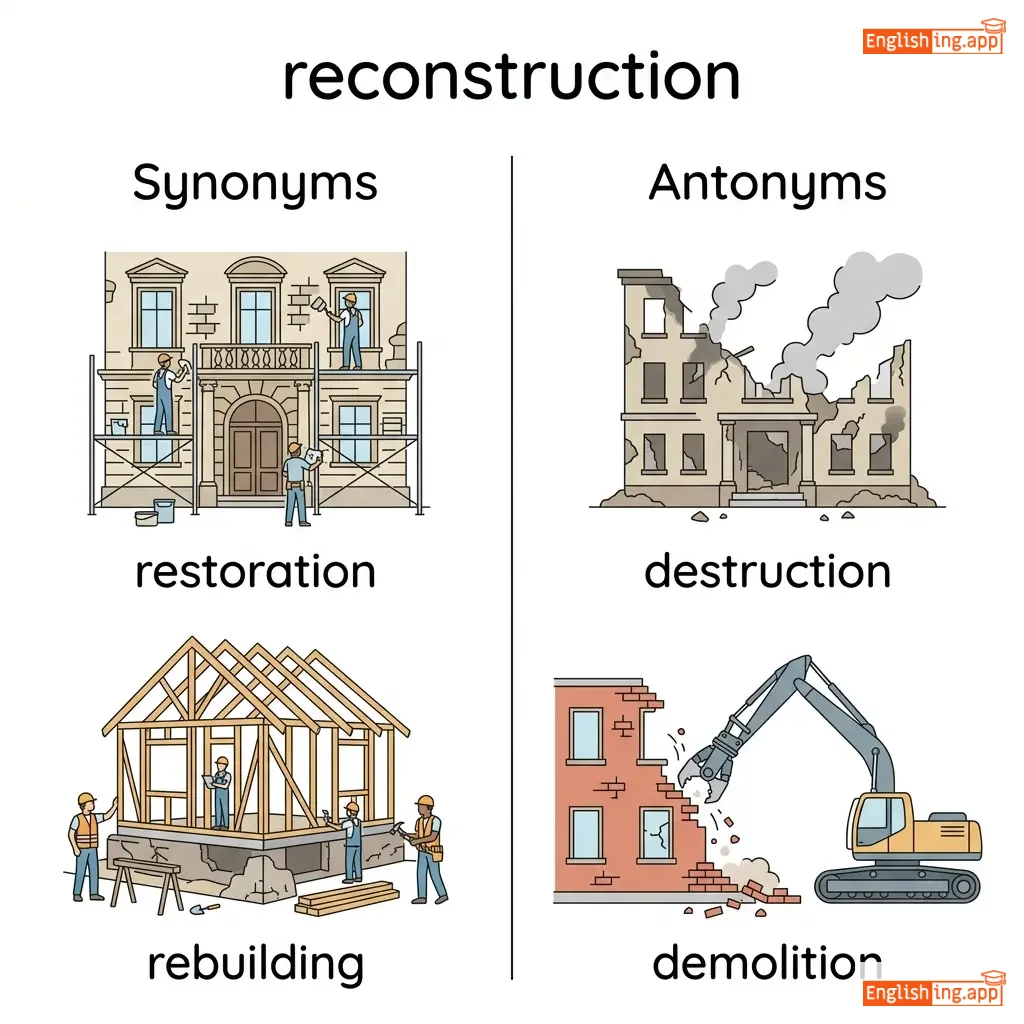
restoration, rebuilding, renewal, refurbishment
••••••
|
destruction, demolition
••••••
|
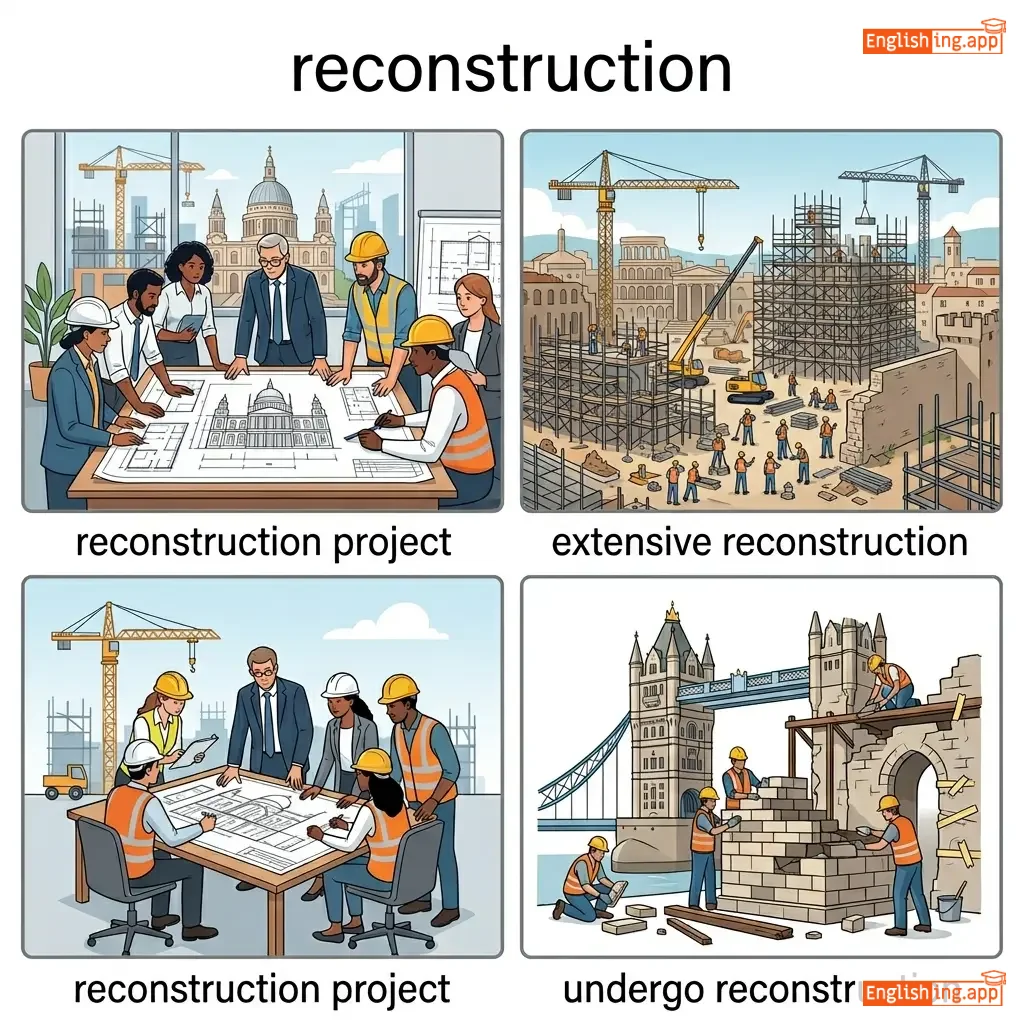
reconstruction project, extensive reconstruction, undergo reconstruction
••••••
|
Реконструкция — это восстановление после разрушений, как 'ре' для восстановления.
••••••
|
|
📖
••••••
|
/ˈrɛkɔːd/
noun
(рекорд)
••••••
|
- •••••• |
учет
uchet
••••••
|
- •••••• | - •••••• | - •••••• | - •••••• |
a written or spoken account of something
••••••
|
I kept a record of all the meetings.
Я вел учет всех встреч.
••••••
|
Я вел учет всех встреч.
Ya vel uchety vsekh vstrech.
••••••
|
- •••••• | - •••••• | - •••••• |
document, log, file, report
••••••
|
forget, erase
••••••
|
keep a record, maintain a record, record data
••••••
|
Для записи используйте учет (Dlya zapisi ispol'zuyte uchet)
••••••
|
|
🎙️
••••••
|
/rɪˈkɔːdɪŋ/
noun
(рекординг)
••••••
|
- •••••• |
запись
zapic
••••••
|
- •••••• | - •••••• | - •••••• | - •••••• |
the act or process of recording something
••••••
|
The recording of the interview was clear and loud. |
Запись интервью была ясной и громкой.
Zapic interv'yu byla yasnoy i gromkoy.
••••••
|
- •••••• | - •••••• | - •••••• |
taping, capturing, documenting, logging
••••••
|
erasing, deleting
••••••
|
make a recording, listen to the recording, audio recording
••••••
|
Запись звука напоминает о микрофоне
••••••
|
|
📖
••••••
|
/rɪˈkaʊnt/
verb
(rikàunt)
••••••
|
- •••••• |
рассказывать
rasskazyvat'
••••••
|
recounted
rikàunted
••••••
|
recounted
rikàunted
••••••
|
recounts
rikàunts
••••••
|
recounting
rikàunting
••••••
|
to narrate or tell the details of an event or experience
••••••
|
She recounted her adventures during the summer trip.
Она рассказала о своих приключениях во время летнего путешествия.
••••••
|
Она рассказала о своих приключениях во время летнего путешествия.
Ona rasskazala o svoikh priklyuchenyakh vo vremya letnego puteshestviya.
••••••
|
- •••••• | - •••••• | - •••••• |
narrate, describe, relate, tell, detail
••••••
|
conceal, suppress
••••••
|
recount a story, recount events, recount experiences, recount details
••••••
|
Рассказывать — это то же самое, что пересказать старую историю, как если бы ты снова пересчитывал.
••••••
|
|
💪
••••••
|
/rɪˈkʌvər/
verb
(rikóvər)
••••••
|
|
восстановить, поправиться
vosstanovit', popravit'sya
••••••
|
recovered
rikóvərd
••••••
|
recovered
rikóvərd
••••••
|
recovers
rikóvərs
••••••
|
recovering
rikóvəring
••••••
|
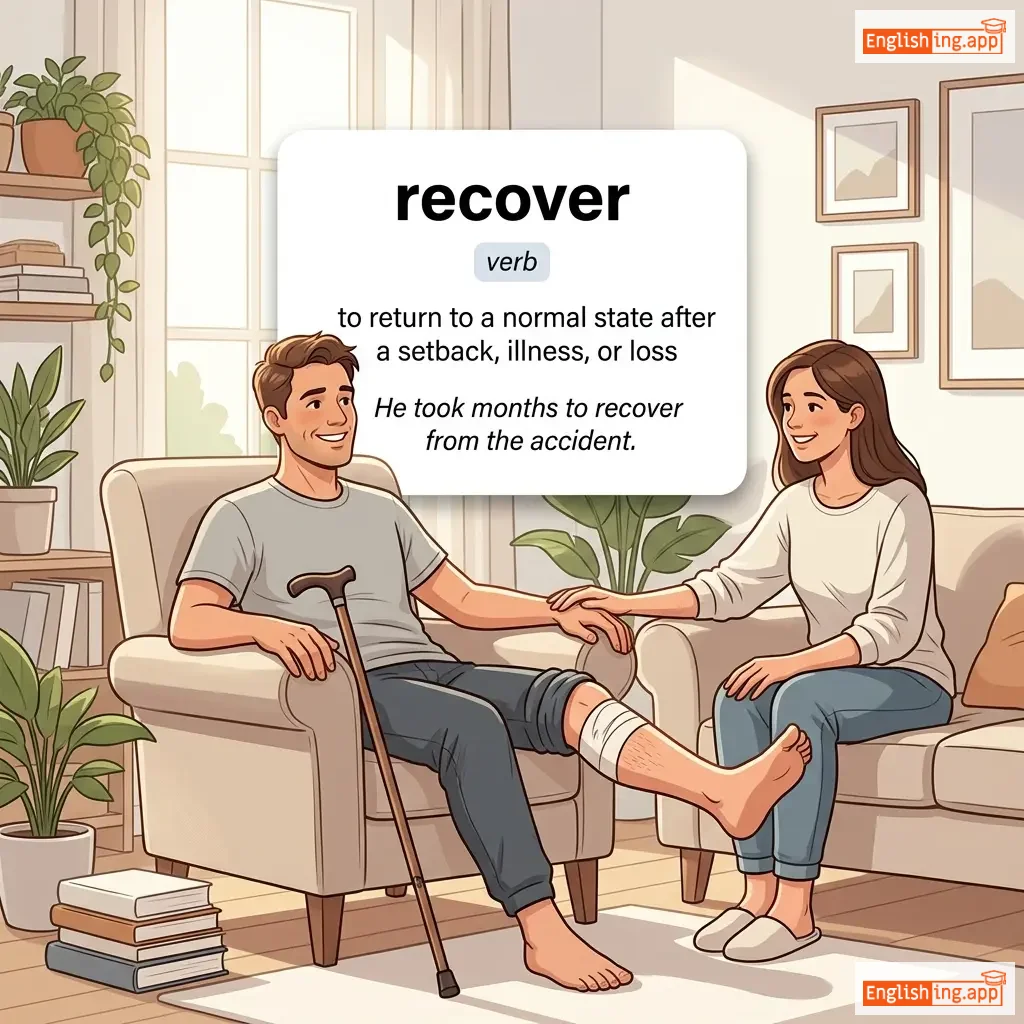
to return to a normal state after a setback, illness, or loss
••••••
|
He took months to recover from the accident.
хи тюк мэнс ту рикóвэр фром ди эксидэнт.
••••••
|
Ему потребовались месяцы, чтобы оправиться после аварии.
Emu potrebovalis' mesyatsy, chtoby opravit'sya posle avarii.
••••••
|
recover one's strength
рикóвэр уан'с стрэнгс
••••••
|
to regain energy or health
••••••
|
восстановить силы
vosstanovit' sily
••••••
|
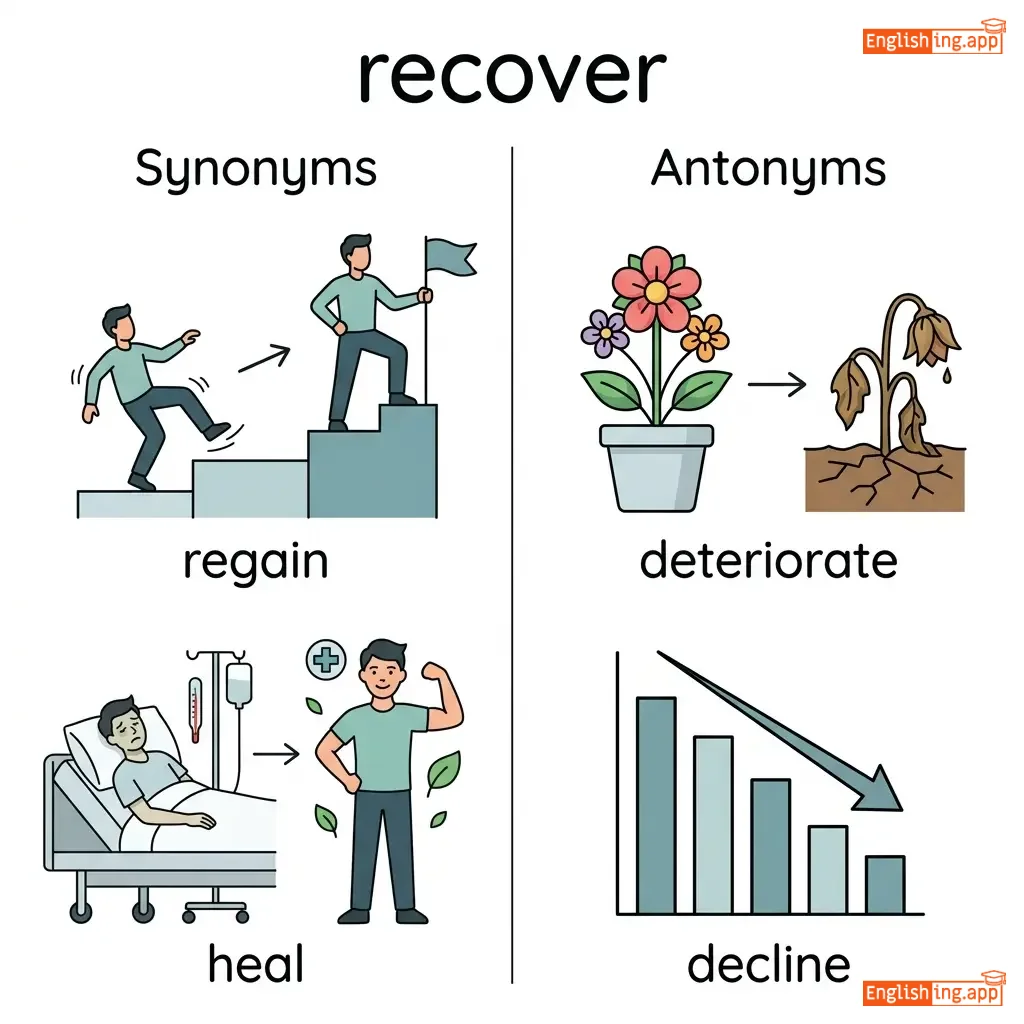
regain, heal, restore, bounce back
••••••
|
deteriorate, decline, worsen
••••••
|
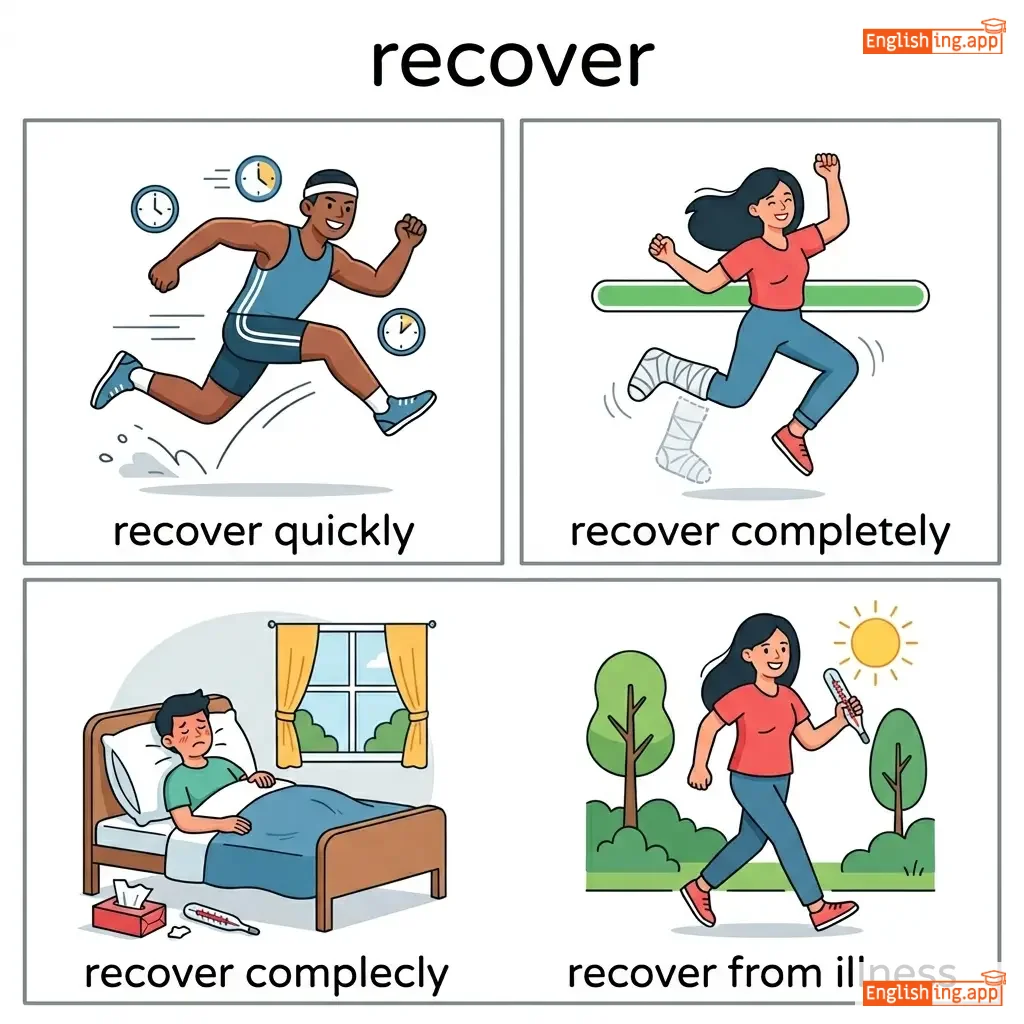
recover quickly, recover completely, recover from illness, recover lost
••••••
|
Recover означает вернуться, чтобы снова встать, выйти из болезни
••••••
|
|
🛌
••••••
|
/rɪˈkʌvəri/
noun
(рековери)
••••••
|
- •••••• |
восстановление
vosstanovlenie
••••••
|
- •••••• | - •••••• | - •••••• | - •••••• |
the process of recovering or returning to a normal state
••••••
|
The patient is in recovery after the surgery.
Пациент находится на восстановлении после операции.
••••••
|
Пациент находится на восстановлении после операции.
Patsiyent nakhoditsya na vosstanovlenii posle operatsii.
••••••
|
- •••••• | - •••••• | - •••••• |
restoration, rehabilitation, healing
••••••
|
decline, deterioration
••••••
|
make a recovery, in recovery, full recovery
••••••
|
Восстановление - это возвращение к нормальному состоянию (Vosstanovlenie - eto vozvrashchenie k normal'nomu sostoyaniyu)
••••••
|
|
🧑💼
••••••
|
/rɪˈkruːt/
verb
(rikrut)
••••••
|
- •••••• |
рекрутировать
rekrutirovat
••••••
|
recruited
rikruted
••••••
|
recruited
rikruted
••••••
|
recruits
rikruts
••••••
|
recruiting
rikruting
••••••
|
to enlist or hire people for a job, service, or membership
••••••
|
The company is trying to recruit more software engineers.
Компания пытается нанять больше инженеров-программистов.
••••••
|
Компания пытается нанять больше инженеров-программистов.
Kompaniya pytayetsya nanyat' bol'she inzhenerov-programmistov.
••••••
|
recruit talent
нанимать таланты
••••••
|
to attract and hire skilled people
••••••
|
нанимать таланты
nanimat' talanty
••••••
|
enlist, hire, enroll, draft, engage
••••••
|
dismiss, fire, reject
••••••
|
recruit staff, recruit volunteers, recruit new members, recruit soldiers
••••••
|
Рекрутировать – это как искать таланты и привлекать их в свою команду.
••••••
|
|
💼
••••••
|
/rɪˈkruːtmənt/
noun
(рекрутмент)
••••••
|


|
набор
nabor
••••••
|
- •••••• | - •••••• | - •••••• | - •••••• |
the process of finding new people to join an organization or become employees
••••••
|
The company's recruitment process is very thorough. |
Процесс набора в компании очень тщательный.
Protsess nabora v kompanii ochen' tshchatel'nyy.
••••••
|
- •••••• | - •••••• | - •••••• |
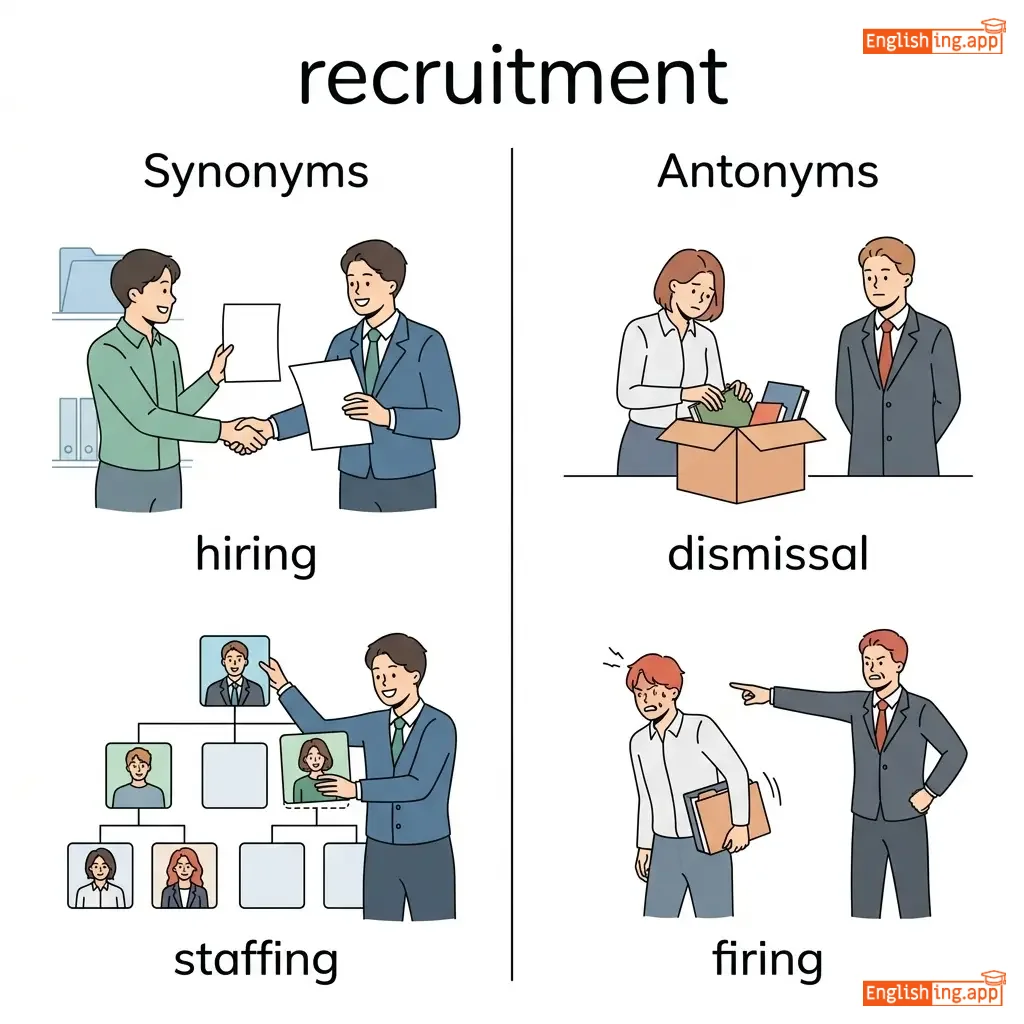
hiring, staffing, employment, enlistment
••••••
|
dismissal, firing
••••••
|
recruitment agency, recruitment process, staff recruitment
••••••
|
Набор — это процесс найма новых сотрудников, как если бы вы 'набирали' их в команду.
••••••
|
|
🔴
••••••
|
/red/
adjective
(red)
••••••
|
- •••••• |
красный
krasny
••••••
|
- •••••• | - •••••• | - •••••• | - •••••• |
having the color of blood or fire; of the color red
••••••
|
She wore a beautiful red dress to the party.
Она носила красивое красное платье на вечеринку.
••••••
|
Она носила красивое красное платье на вечеринку.
Ona nosila krasivoye krasnoye plat'ye na vecherinku.
••••••
|
- •••••• | - •••••• | - •••••• |
scarlet, crimson, cherry, ruby
••••••
|
green, blue, white
••••••
|
red rose, red carpet, red light, red wine
••••••
|
Красный, как кровь и огонь.
••••••
|
|
➖
••••••
|
/rɪˈdjuːs/
verb
(редуцировать)
••••••
|
|
уменьшать
umenshat
••••••
|
reduced
редуцировал
••••••
|
reduced
редуцировал
••••••
|
reduces
редуцирует
••••••
|
reducing
редуцируя
••••••
|
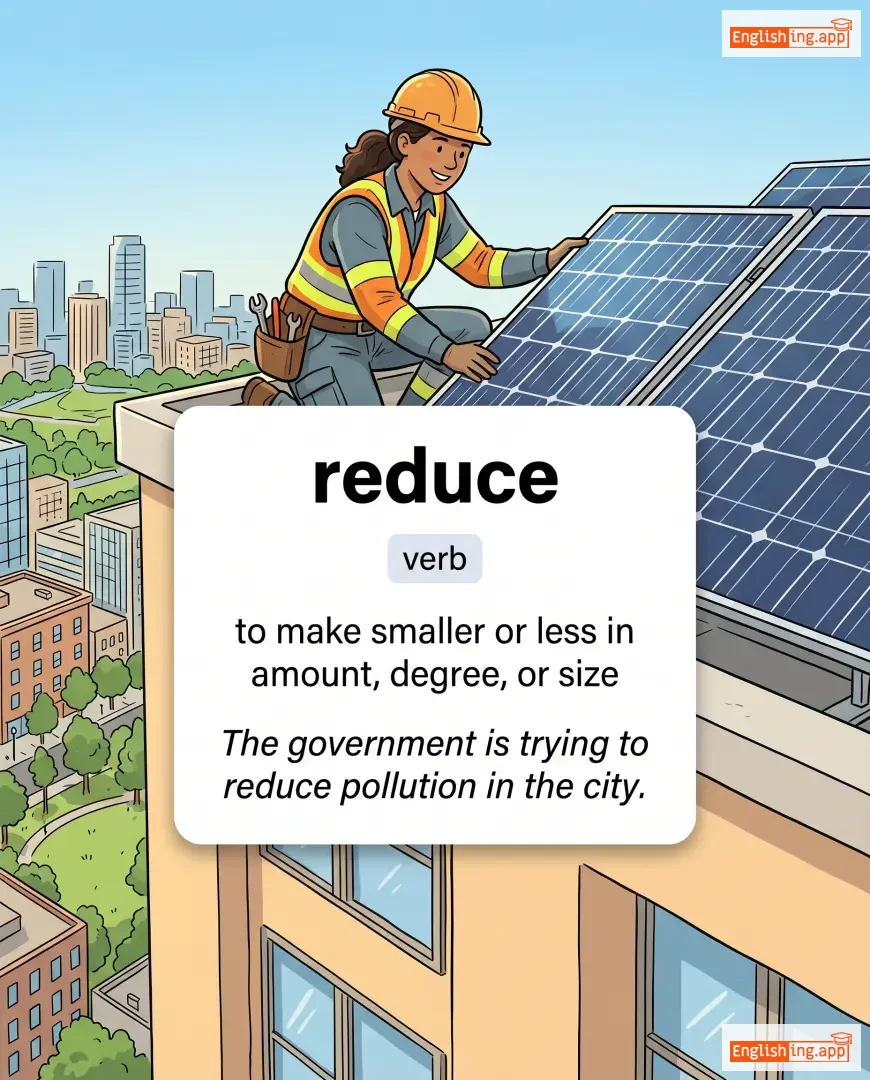
to make smaller or less in amount, degree, or size
••••••
|
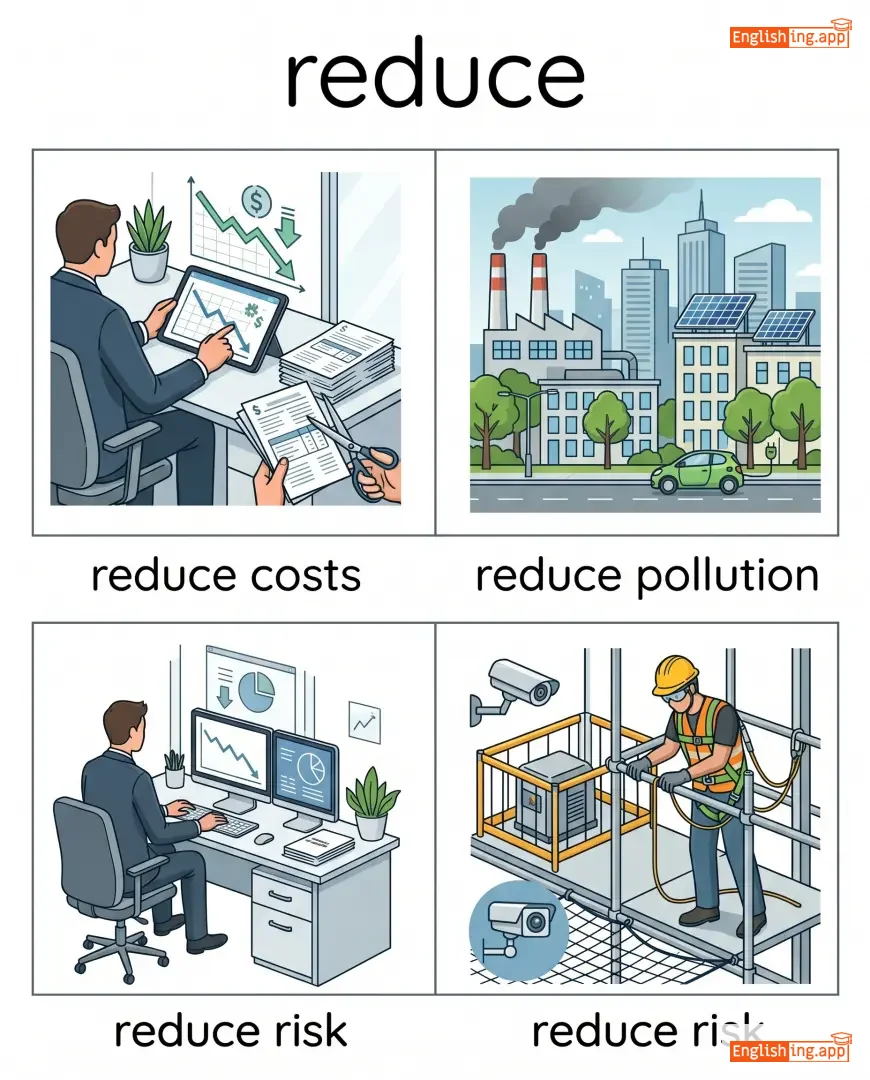
The government is trying to reduce pollution in the city.
Правительство пытается уменьшить загрязнение в городе.
••••••
|
Правительство пытается уменьшить загрязнение в городе.
Pravitel'stvo pytayetsya umenshit' zagryazneniye v gorode.
••••••
|
reduce to tears
редуцировать до слез
••••••
|
to make someone cry
••••••
|
сделать кого-то плачущим
sdelat' kogo-to plachushchim
••••••
|
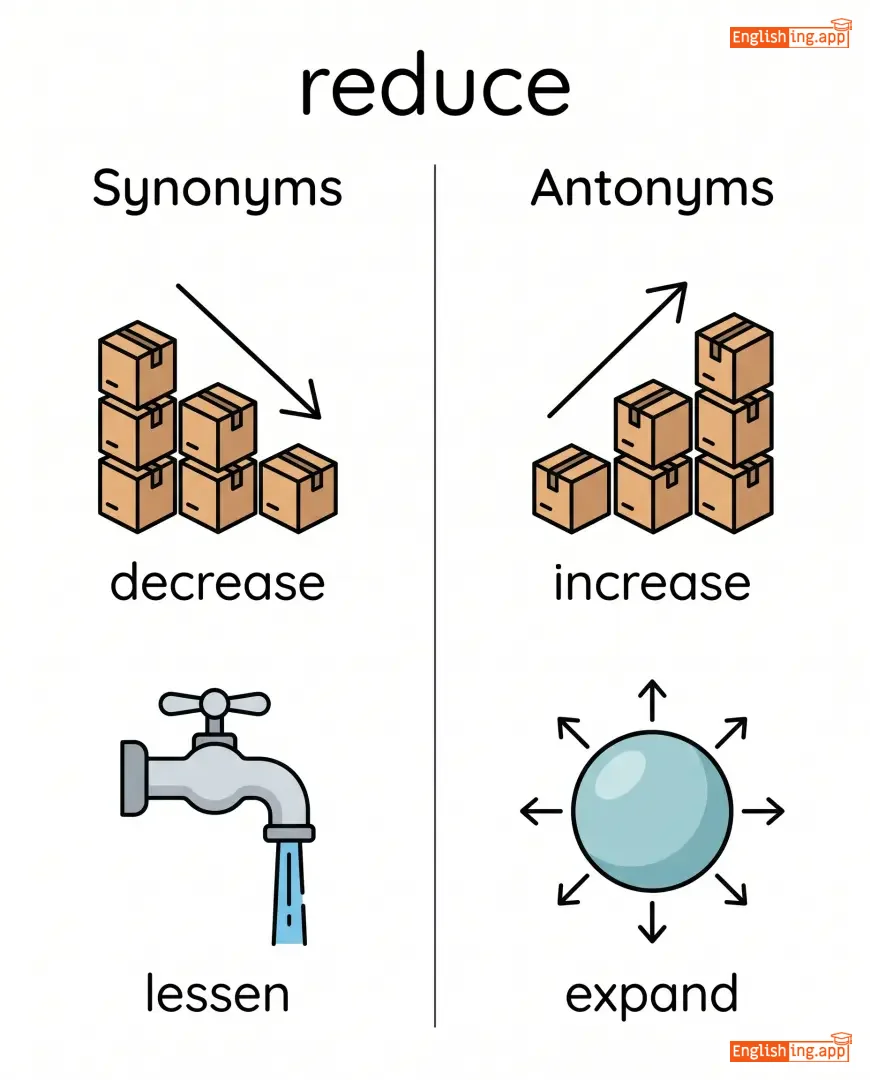
decrease, lessen, diminish, cut, lower
••••••
|
increase, expand, enlarge
••••••
|
reduce costs, reduce pollution, reduce risk, reduce stress
••••••
|
Reduce означает уменьшить—'Редуцировать стресс помогает чувствовать себя лучше.'
••••••
|
|
📉
••••••
|
/rɪˈdʌk.ʃən/
noun
(ридакшн)
••••••
|
|
уменьшение
umenshenie
••••••
|
- •••••• | - •••••• | - •••••• | - •••••• |
the action or fact of making a specified thing smaller or less in amount, degree, or size
••••••
|
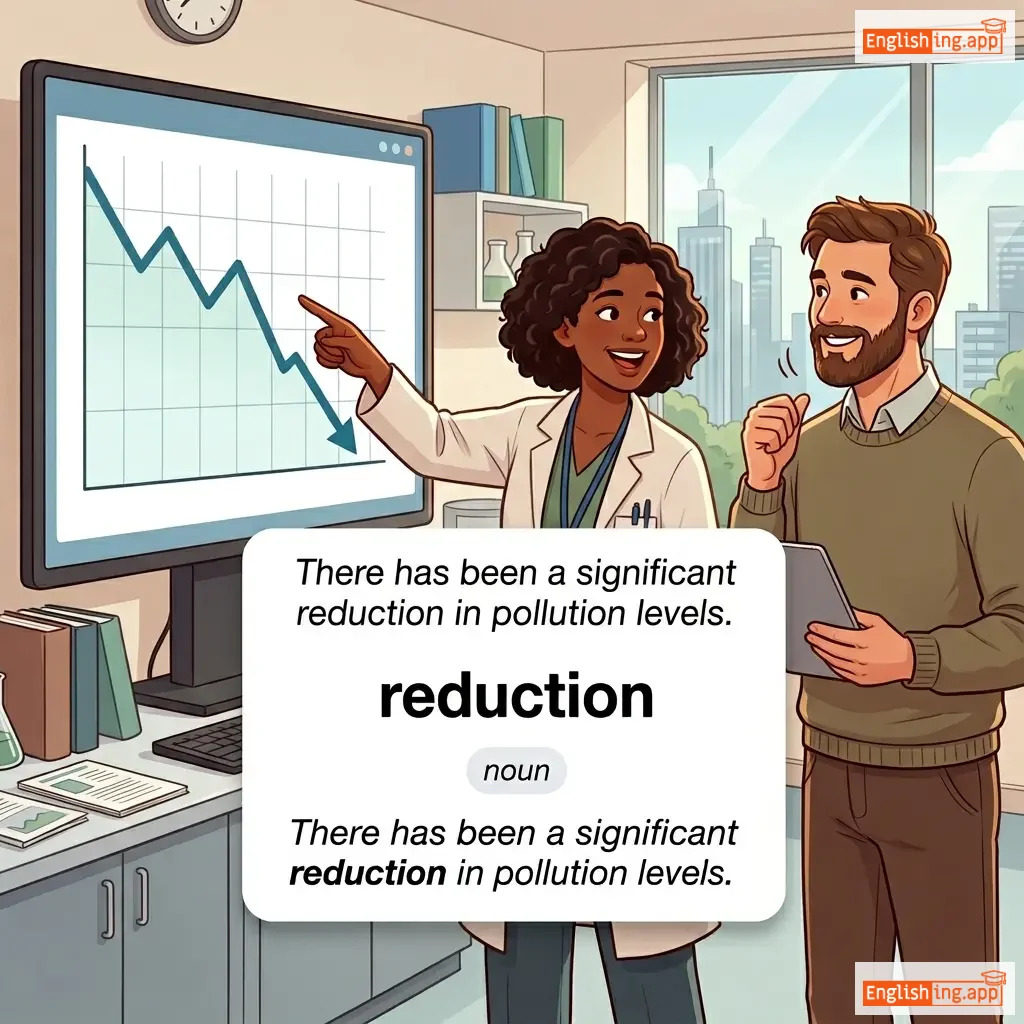
The company announced a reduction in staff to cut costs.
Компания объявила о сокращении штатов для снижения затрат.
••••••
|
Компания объявила о сокращении штатов для снижения затрат.
Kompaniya obyavila o sokrashchenii shtatov dlya snizheniya zatrat.
••••••
|
- •••••• | - •••••• | - •••••• |
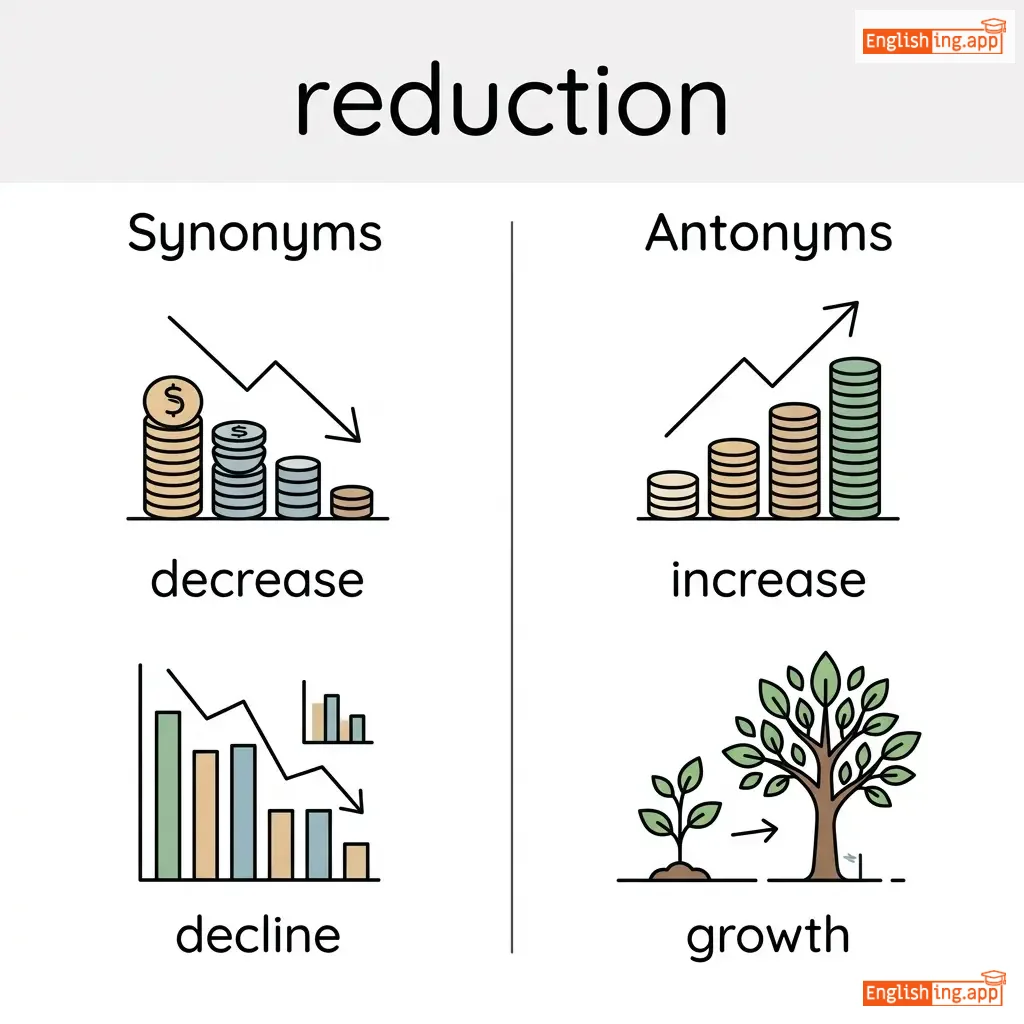
decrease, cut, decline, diminution
••••••
|
increase, growth, expansion, enlargement
••••••
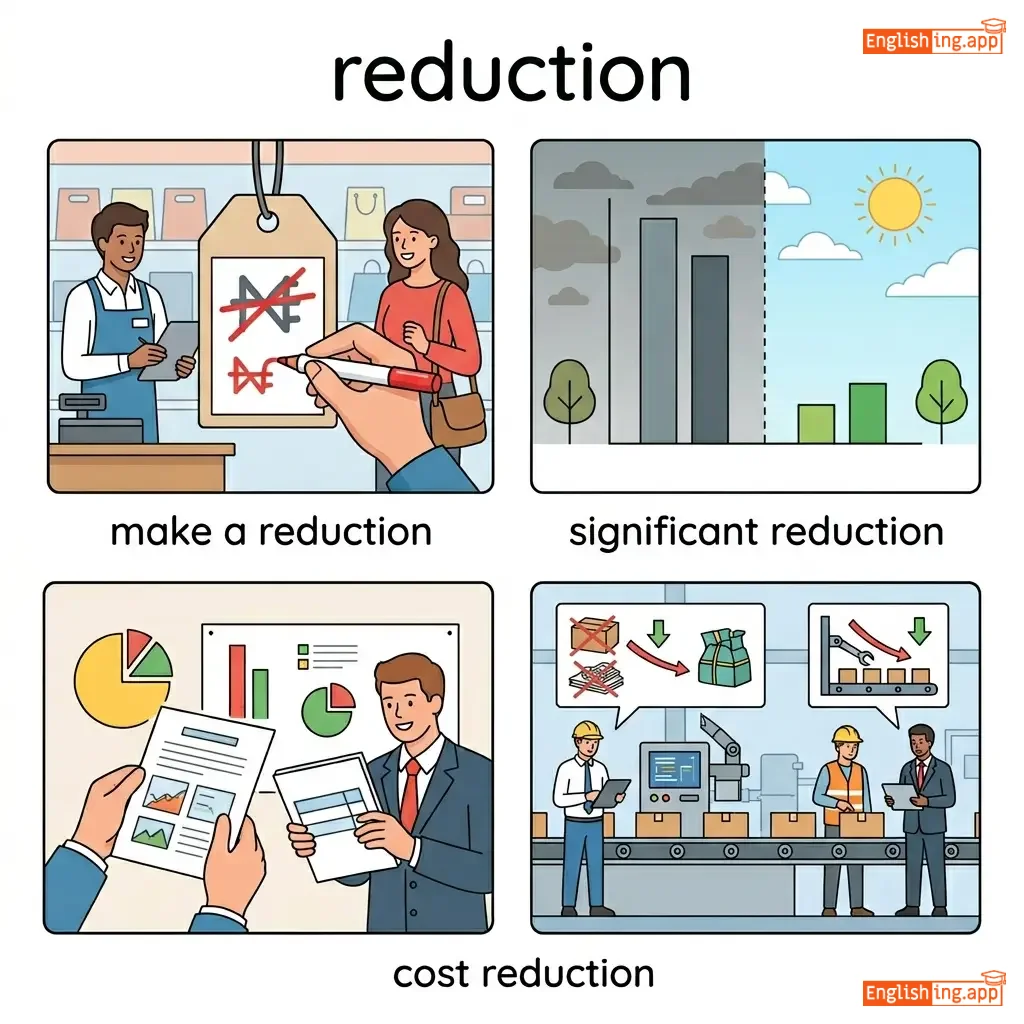
|
cost reduction, price reduction, reduction in size
••••••
|
REDUCTION = REDUCE + SHENIE; REDUCE means уменьшать, SHENIE hints the ending -enie, so it helps remember уменьшение
••••••
|
|
📑
••••••
|
/rɪˈfɜːr/
verb
(реферировать)
••••••
|
|
направлять
napravlyat
••••••
|
referred
реферировал
••••••
|
referred
реферировал
••••••
|
refers
реферирует
••••••
|
referring
реферируя
••••••
|
to direct someone to another source of help, information, or decision
••••••
|
The doctor will refer you to a specialist.
Доктор направит вас к специалисту.
••••••
|
Доктор направит вас к специалисту.
Doktor napravit vas k spetsialistu.
••••••
|
refer to
ссылаться на
••••••
|
to mention or speak about something
••••••
|
ссылаться на
ssylat'sya na
••••••
|
direct, mention, cite, allude, recommend
••••••
|
ignore, neglect
••••••
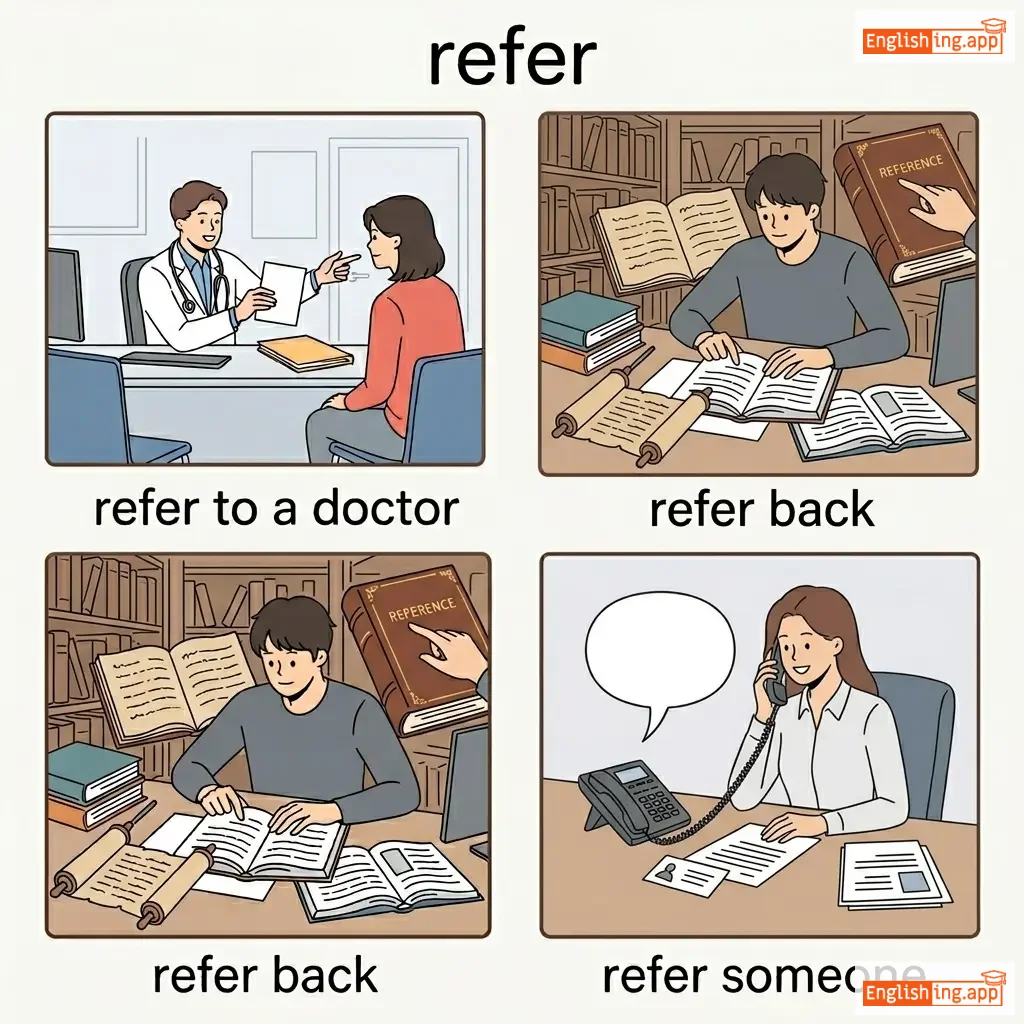
|
refer to a doctor, refer back, refer someone, refer directly
••••••
|
Реферировать, как Referral, направить или упомянуть.
••••••
|
|
⚽
••••••
|
/ˌrɛfəˈriː/
noun
(ref-e-ri)
••••••
|
- •••••• |
судья
sud'ya
••••••
|
- •••••• | - •••••• | - •••••• | - •••••• |
a person who oversees a game or match to ensure the rules are followed
••••••
|
The referee stopped the game after a foul. |
Судья остановил игру после нарушения.
Sud'ya ostanovil igru posle narusheniya.
••••••
|
blow the whistle |
to stop play or call out a foul in sports
••••••
|
подуть в свисток
podut' v svistok
••••••
|
umpire, judge, arbiter, mediator
••••••
|
player, participant
••••••
|
football referee, official referee, match referee
••••••
|
Судья на футболе подует в свисток (podut' v svistok), чтобы остановить игру.
••••••
|
|
📚
••••••
|
/ˈref.ər.əns/
noun
(референс)
••••••
|
- •••••• |
ссылка
ssylka
••••••
|
- •••••• | - •••••• | - •••••• | - •••••• |
the action of mentioning or alluding to something; a source of information
••••••
|
Please provide references to support your research claims. |
Пожалуйста, предоставьте ссылки для поддержки ваших исследовательских утверждений.
Pozhaluysta, predostav'te ssylki dlya podderzhki vashikh issledovatelskikh utverzhdeniy.
••••••
|
- •••••• | - •••••• | - •••••• |
citation, source, mention, allusion
••••••
|
ignorance, omission, exclusion, disregard
••••••
|
make reference to, reference book, character reference
••••••
|
Ссылка помогает подтвердить ваши исследования.
••••••
|
|
🗳️
••••••
|
/ˌrɛfəˈrɛndəm/
noun
(референдум)
••••••
|
- •••••• |
референдум
referendum
••••••
|
- •••••• | - •••••• | - •••••• | - •••••• |
a general vote by the population on a single political issue
••••••
|
The government held a referendum on the new constitution.
Правительство провело референдум по новому конституционному проекту.
••••••
|
Правительство провело референдум по новому конституционному проекту.
Pravitel'stvo provelo referendum po novomu konstitutsionnomu proyektu.
••••••
|
- •••••• | - •••••• | - •••••• |
plebiscite, ballot, vote, poll
••••••
|
dictate, decree
••••••
|
national referendum, hold a referendum, referendum result
••••••
|
Референдум — это когда правительство спрашивает народ, как на голосовании.
••••••
|
|
🪞
••••••
|
/rɪˈflɛkt/
verb
(рефлект)
••••••
|

|
отражать
otrazhat
••••••
|
reflected
рефлектид
••••••
|
reflected
рефлектид
••••••
|
reflects
рефлектс
••••••
|
reflecting
рефлектинг
••••••
|
to show an image as in a mirror, or to think deeply about something
••••••
|
The mirror reflects her smiling face.
Зеркало отражает её улыбающееся лицо.
••••••
|
Зеркало отражает её улыбающееся лицо.
Zerkalo otrazhaet yejo ulybayushcheesya litso.
••••••
|
reflect on
размышлять о
••••••
|
to think carefully about something
••••••
|
размышлять о
razmishlyat' o
••••••
|
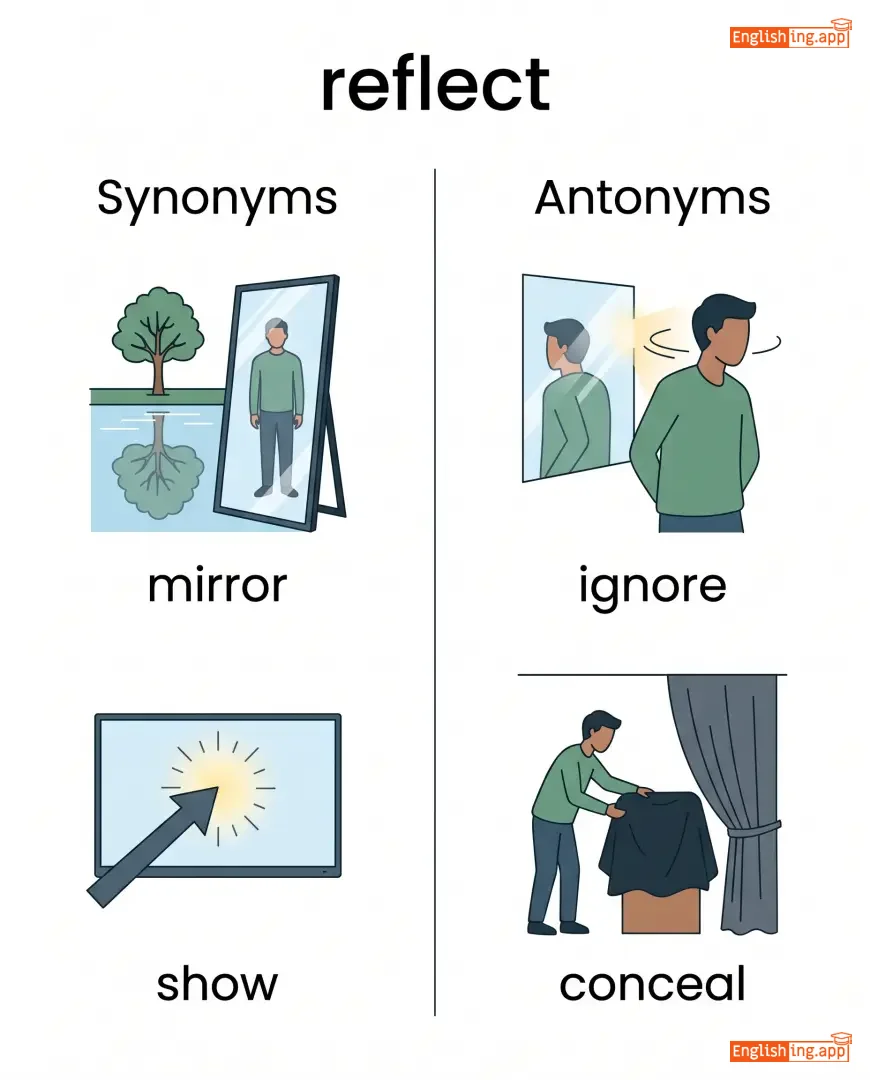
mirror, show, indicate, reveal, ponder
••••••
|
ignore, conceal, absorb
••••••
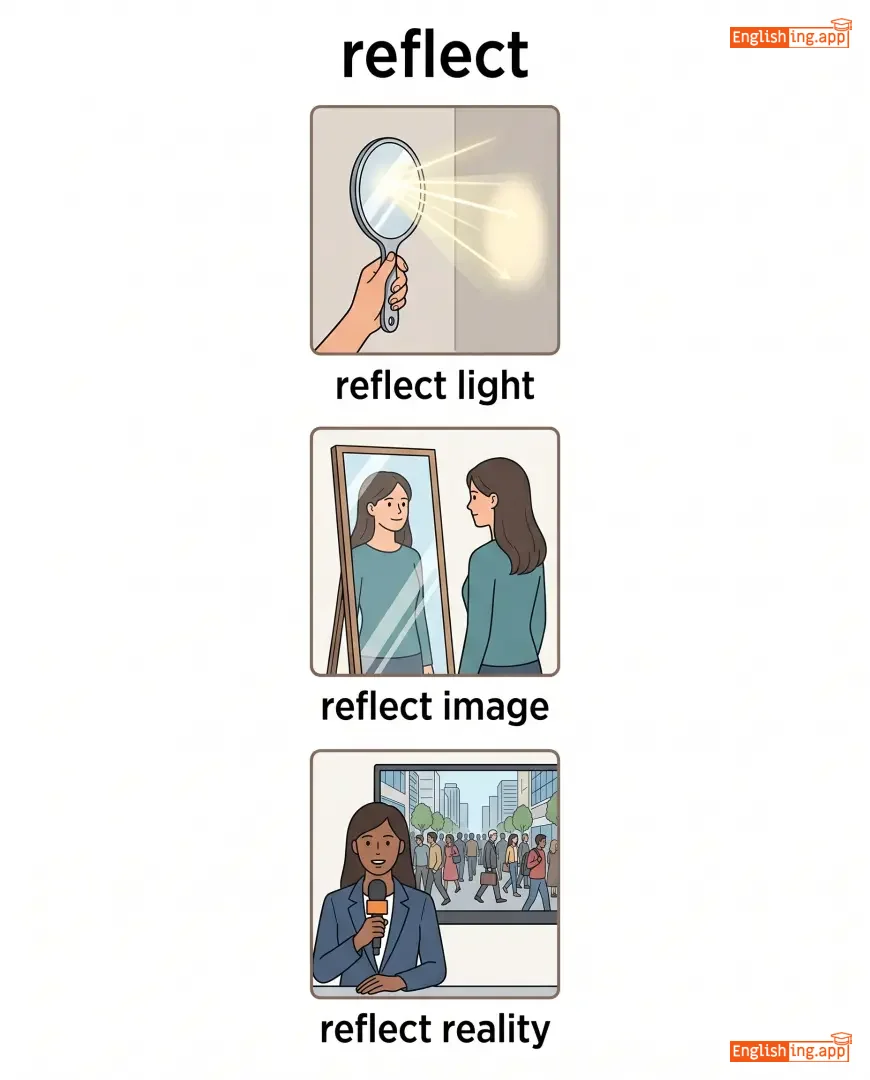
|
reflect light, reflect image, reflect reality, reflect values
••••••
|
Зеркало отражает, и мы размышляем.
••••••
|
|
🔮
••••••
|
/rɪˈflɛkʃən/
noun
(рɪˈфлɛкшн)
••••••
|

|
отражение
otrazhenie
••••••
|
- •••••• | - •••••• | - •••••• | - •••••• |
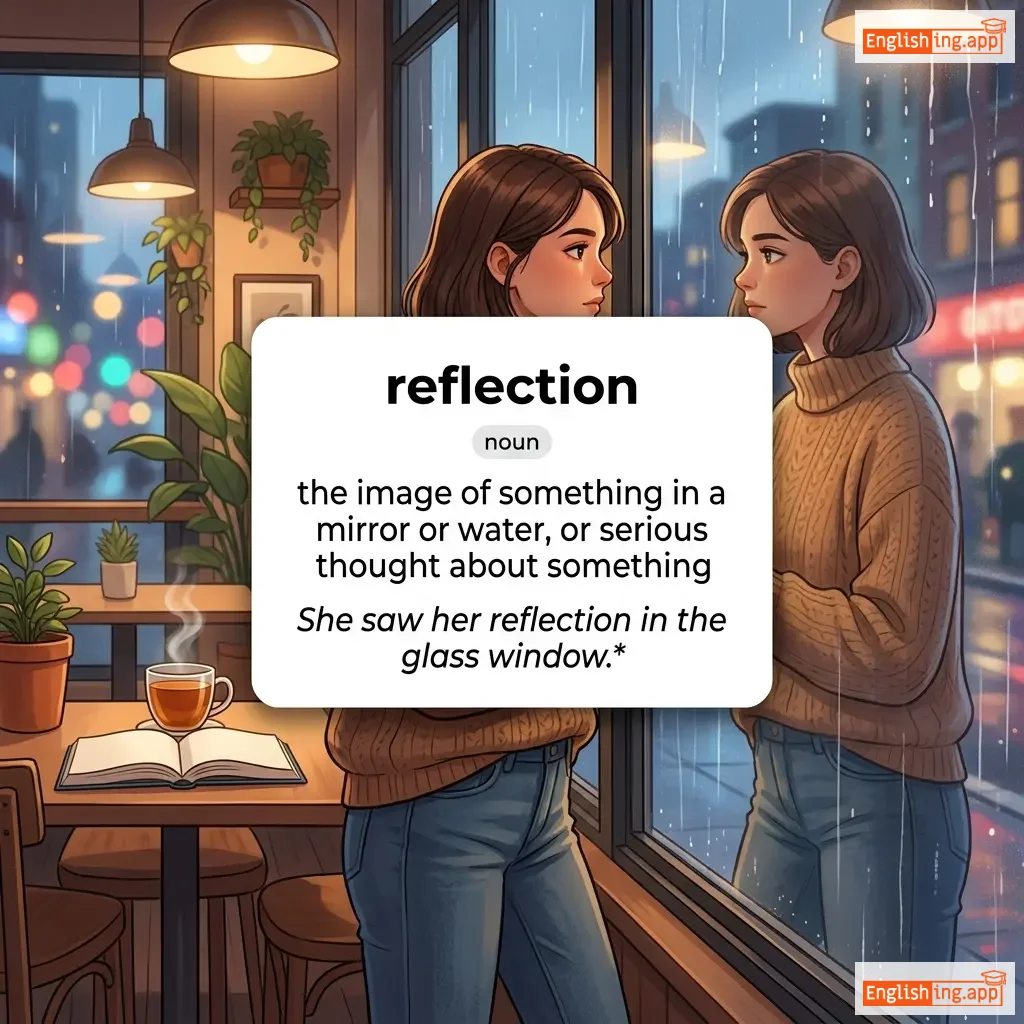
the image of something in a mirror or water, or serious thought about something
••••••
|
She saw her reflection in the glass window. |
Она увидела свое отражение в стеклянном окне.
Ona uvidela svoe otrazhenie v steklyannom okne.
••••••
|
a moment of reflection |
a short time spent thinking deeply
••••••
|
момент размышлений
moment razmyshleniy
••••••
|
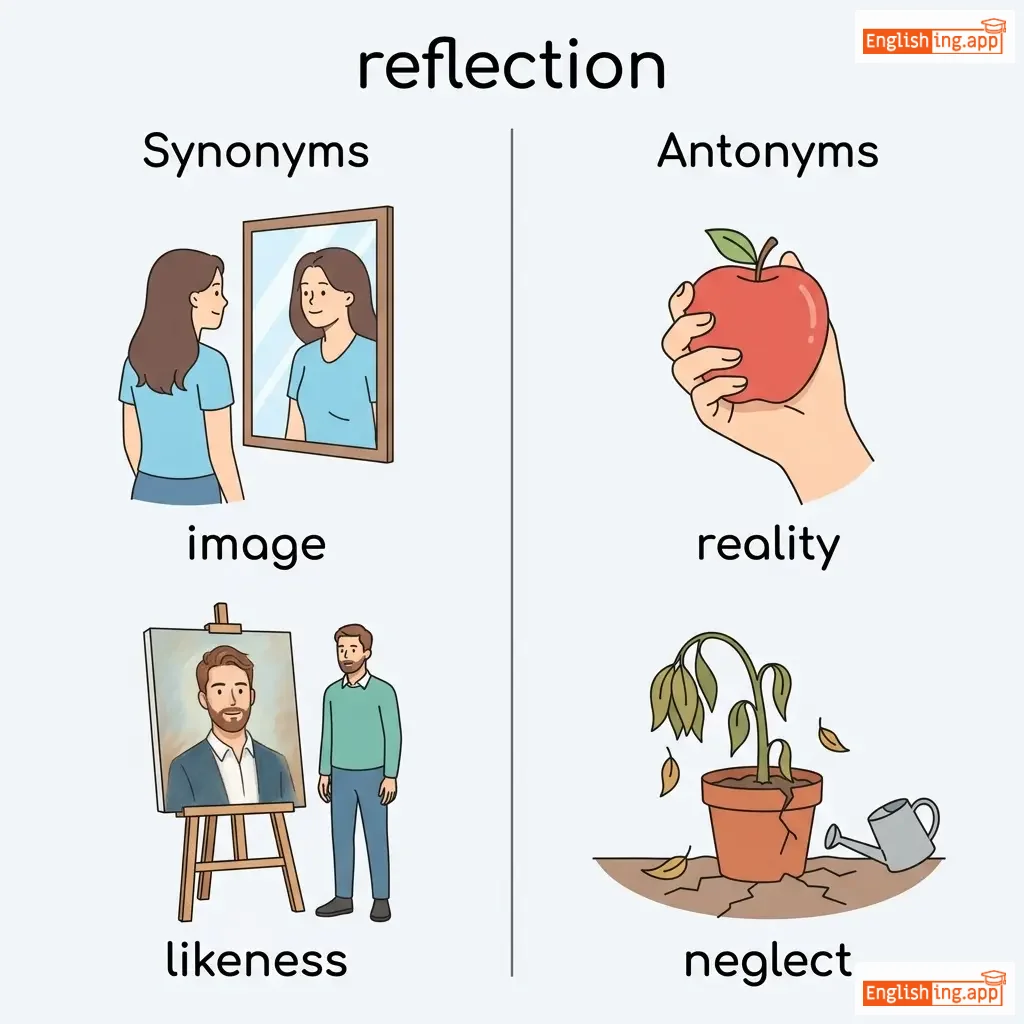
image, likeness, contemplation, thought, consideration
••••••
|
reality, neglect, disregard
••••••
|
reflection in the mirror, reflection of light, reflection on life
••••••
|
Отражение — это как видеть свою картину в зеркале, но также это время глубоких размышлений.
••••••
|
|
♻️
••••••
|
/rɪˈfɔːrm/
verb
(реформ)
••••••
|

|
реформировать
reformirovat
••••••
|
reformed
реформированный
••••••
|
reformed
реформированный
••••••
|
reforms
реформирует
••••••
|
reforming
реформируя
••••••
|
To make changes to improve something, usually a system, law, or practice.
••••••
|
The government plans to reform the healthcare system.
Правительство планирует реформировать систему здравоохранения.
••••••
|
Правительство планирует реформировать систему здравоохранения.
Pravitel'stvo planiroval reformirovat' sistemy zdravookhraneniya.
••••••
|
reform school
реформаторская школа
••••••
|
An institution for young offenders to correct behavior
••••••
|
реформаторская школа
reformatorskaya shkola
••••••
|
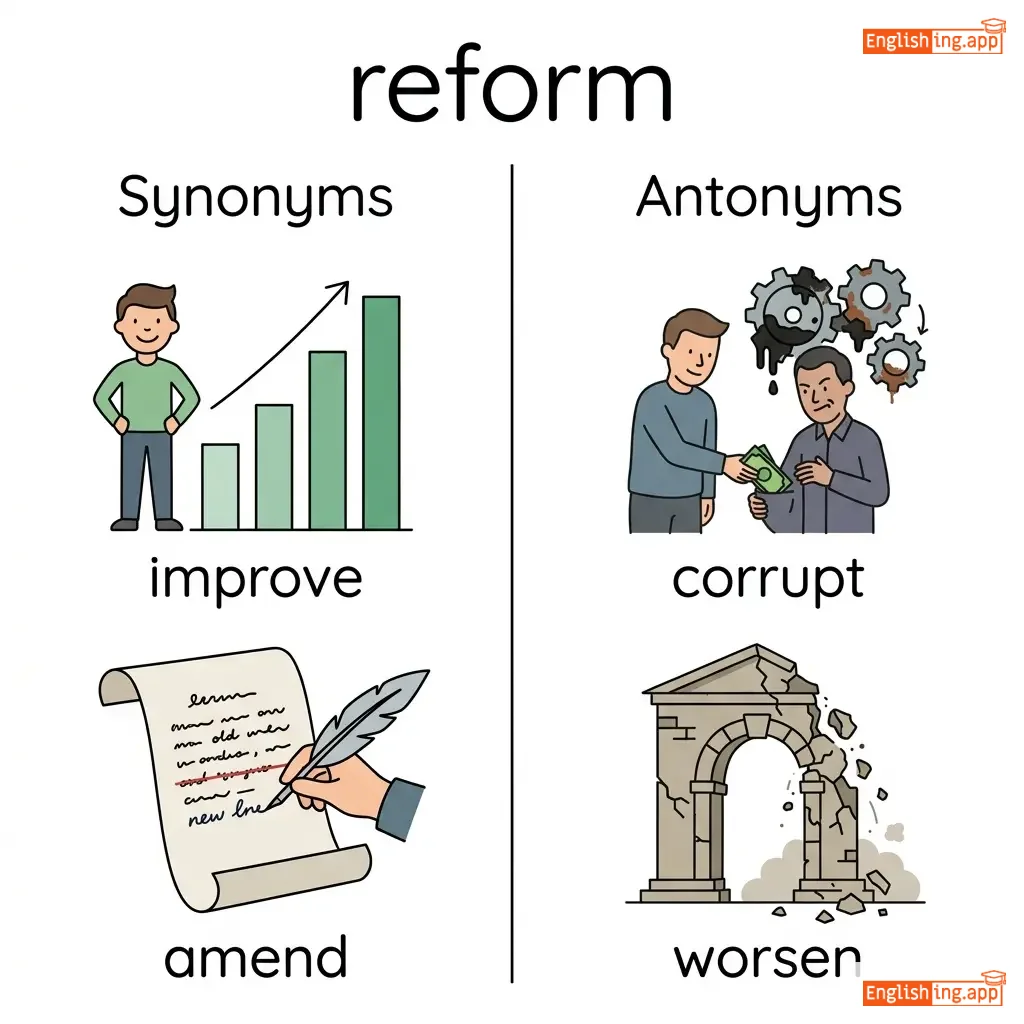
improve, amend, reorganize, change, transform
••••••
|
corrupt, worsen, damage
••••••
|
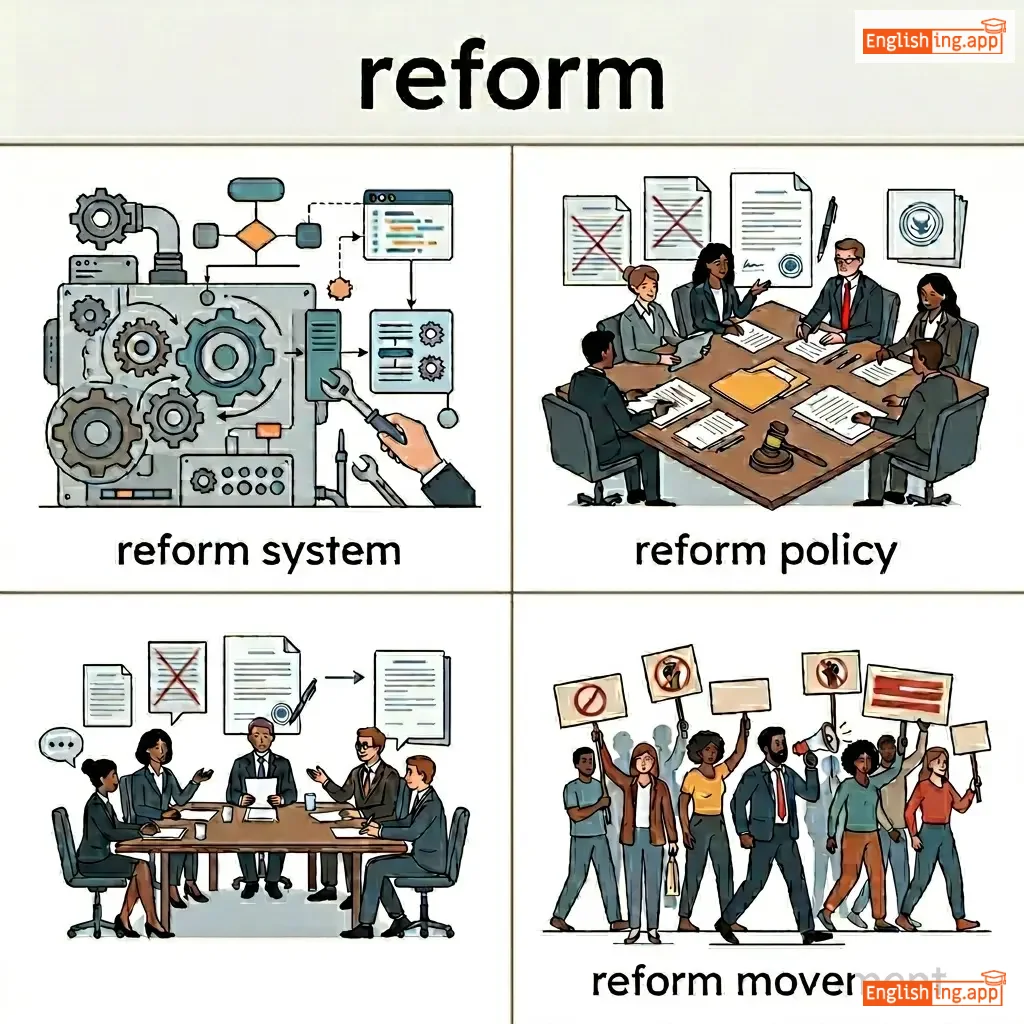
reform system, reform policy, reform movement, social reform
••••••
|
Re-form = преобразование в лучшую сторону.
••••••
|
|
🧊❄️
••••••
|
/rɪˈfrɪdʒ.ər.eɪ.tər/
noun
(холодильник)
••••••
|
- •••••• |
холодильник
kholodilnik
••••••
|
- •••••• | - •••••• | - •••••• | - •••••• |
an appliance for keeping food and drinks cold
••••••
|
Please put the milk in the refrigerator to keep it fresh.
Пожалуйста, положите молоко в холодильник, чтобы оно оставалось свежим.
••••••
|
Пожалуйста, положите молоко в холодильник, чтобы оно оставалось свежим.
Pozhaluysta, polozhite moloko v kholodilnik, chtoby ono ostavalos' svezhim.
••••••
|
- •••••• | - •••••• | - •••••• |
fridge, icebox, cooler
••••••
|
oven, heater
••••••
|
refrigerator door, refrigerator compartment, energy-efficient refrigerator
••••••
|
Холодильник is like ‘cold’ – a cold place for your milk!
••••••
|
|
🏚️
••••••
|
/ˈrɛfjuːdʒ/
noun
(ref-yuʒ)
••••••
|
- •••••• |
убежище
ubezhishche
••••••
|
- •••••• | - •••••• | - •••••• | - •••••• |
a place that provides shelter or protection from danger or distress
••••••
|
The villagers took refuge in the temple during the storm. |
Жители деревни нашли убежище в храме во время бури.
Zhiteli derevni nashli ubezhishche v khrame vo vremya buri.
••••••
|
take refuge in |
to seek safety or comfort in something
••••••
|
найти убежище в
nayti ubezhishche v
••••••
|
shelter, sanctuary, haven, asylum, retreat
••••••
|
danger, exposure, threat
••••••
|
seek refuge, take refuge, offer refuge, find refuge
••••••
|
Убежище = refuge, деревня в поисках защиты от бури.
••••••
|
|
🏠
••••••
|
/ˌref.jʊˈdʒiː/
noun
(рефюжи)
••••••
|
- •••••• |
беженец
bezhenets
••••••
|
- •••••• | - •••••• | - •••••• | - •••••• |
a person who has been forced to leave their country in order to escape war, persecution, or natural disaster
••••••
|
The refugee camp provided temporary shelter for thousands of displaced families. |
Лагерь беженцев предоставил временное укрытие тысячам перемещенных семей.
Lagier bezhentsev predostavil vremennoye ukrytiye tysyacham peremeshchennykh semey
••••••
|
- •••••• | - •••••• | - •••••• |
asylum seeker, displaced person, exile, migrant
••••••
|
citizen, resident, native
••••••
|
refugee camp, refugee crisis, political refugee, refugee status
••••••
|
Беженец = убегающий от бедствий и войн
••••••
|
|
🚫
••••••
|
/rɪˈfjuːzəl/
noun
(refyuzal)
••••••
|
- •••••• |
отказ
otkaz
••••••
|
- •••••• | - •••••• | - •••••• | - •••••• |
An act of saying or showing that one will not do or accept something.
••••••
|
Her refusal to cooperate delayed the project.
Её отказ сотрудничать задержал проект.
••••••
|
Её отказ сотрудничать задержал проект.
Eё otkaz sotrudnichat' zaderzhal proyekt.
••••••
|
point-blank refusal
категорический отказ
••••••
|
a direct and absolute rejection
••••••
|
категорический отказ
kategoricheskiy otkaz
••••••
|
denial, rejection, declination, noncompliance
••••••
|
acceptance, agreement
••••••
|
strong refusal, outright refusal, firm refusal
••••••
|
Refuse = отказ, как отказ 🚫
••••••
|
|
♻️
••••••
|
/rɪˈfjuːz/ (verb), /ˈrɛfjuːs/ (noun)
verb, noun
••••••
|
- •••••• | - •••••• |
refused
••••••
|
refused
••••••
|
refuses
••••••
|
refusing
••••••
|
As a verb: to say no to something offered or requested; as a noun: waste material; rubbish.
••••••
|
He refused to answer the question, and the street was full of refuse. |
- •••••• |
refuse to budge |
to not change one’s opinion or position
••••••
|
- •••••• |
decline, reject, deny, rubbish, garbage
••••••
|
accept, approve, agree
••••••
|
refuse offer, refuse entry, refuse treatment, household refuse
••••••
|
No •••••• |
|
🔁
••••••
|
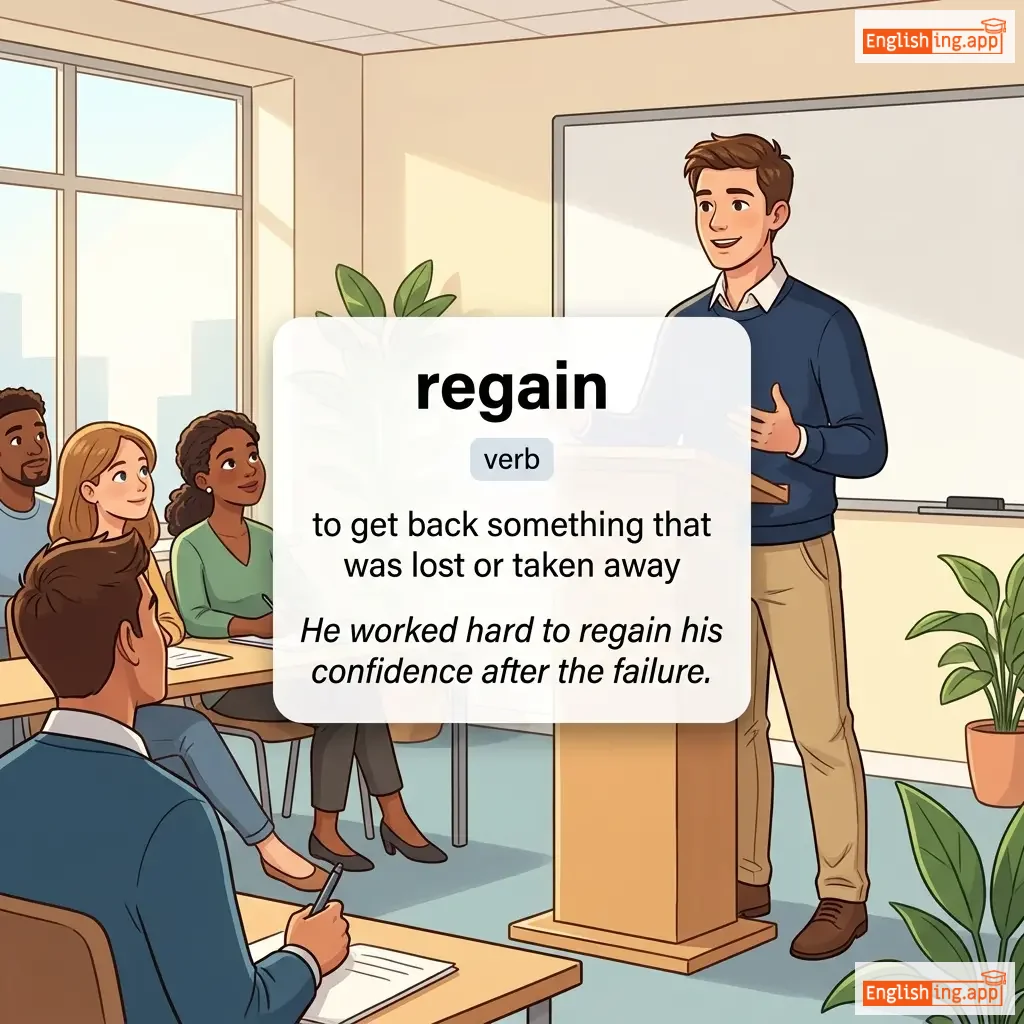
/rɪˈɡeɪn/
verb
(ree-gein)
••••••
|
|
восстановить
vosstanovit
••••••
|
regained
ree-geind
••••••
|
regained
ree-geind
••••••
|
regains
ree-geins
••••••
|
regaining
ree-geining
••••••
|
to get back something that was lost or taken away
••••••
|
He worked hard to regain his confidence after the failure.
Он усердно работал, чтобы вернуть уверенность после неудачи.
••••••
|
Он усердно работал, чтобы вернуть уверенность после неудачи.
On usyerdno rabotal, chtoby vernut' uverennost' posle neudachi.
••••••
|
regain consciousness
восстановить сознание
••••••
|
to wake up or become aware again after fainting
••••••
|
восстановить сознание
vosstanovit soznanie
••••••
|
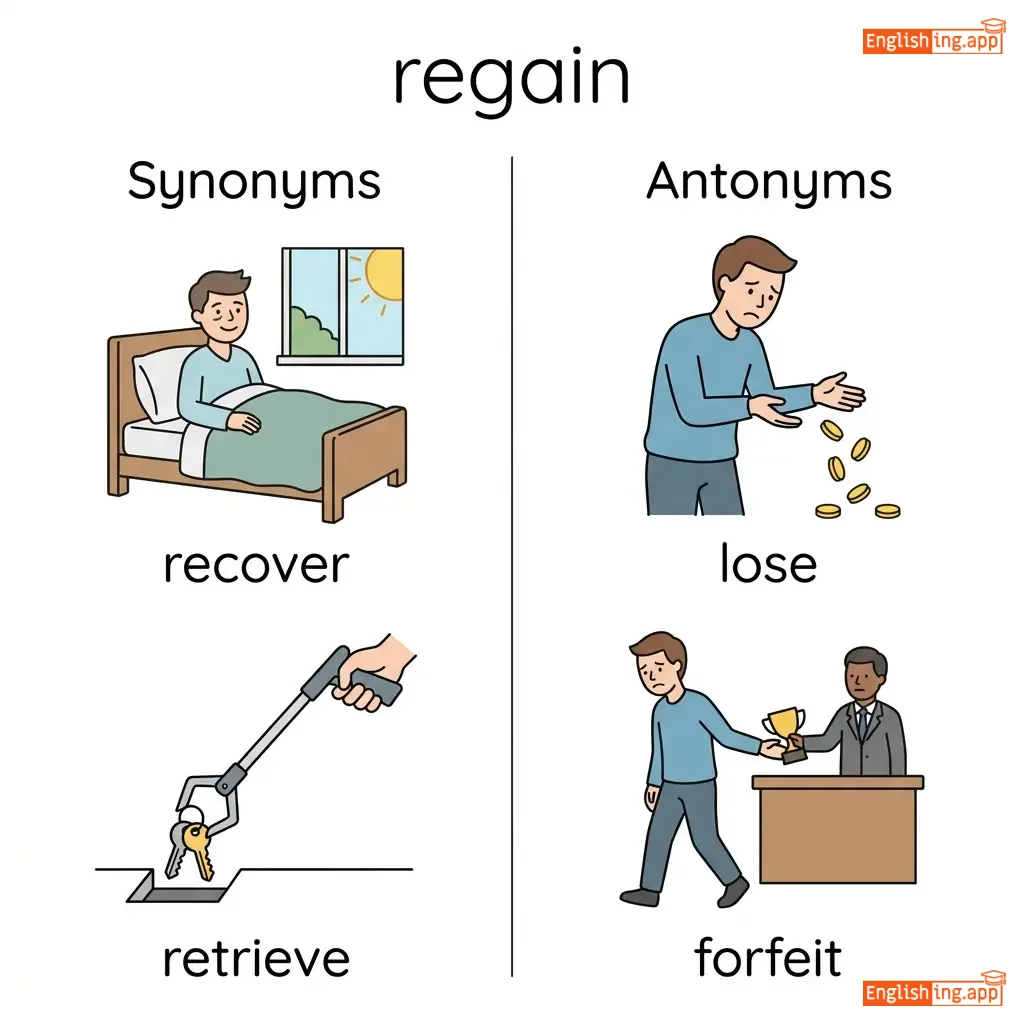
recover, retrieve, recapture, reclaim
••••••
|
lose, forfeit, surrender
••••••
|
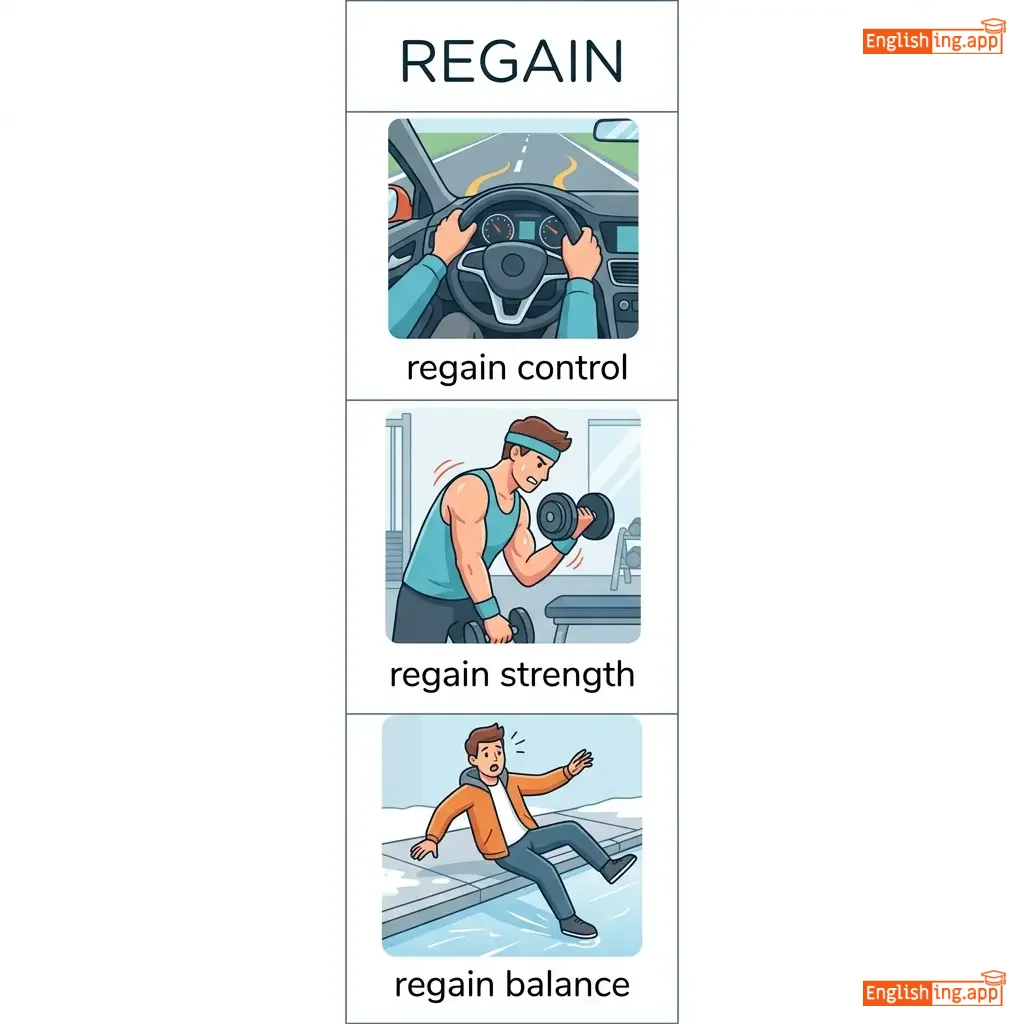
regain control, regain strength, regain balance, regain confidence
••••••
|
Regain означает снова получить — верни, что потерял!
••••••
|
|
👀
••••••
|
/rɪˈɡɑrd/
noun/verb
(ригард)
••••••
|
- •••••• |
уважение, внимание
uvazhenie, vnimanie
••••••
|
regarded
ригардед
••••••
|
regarded
ригардед
••••••
|
regards
ригардс
••••••
|
regarding
ригардинг
••••••
|
consider or think of in a specified way
••••••
|
She regarded him as her mentor.
Она считала его своим наставником.
••••••
|
Она считала его своим наставником.
Ona schitala ego svoim nastavnikom.
••••••
|
With regard to
в отношении
••••••
|
concerning or in relation to
••••••
|
в отношении
v otnoshenii
••••••
|
respect, consider, view, esteem
••••••
|
disregard, ignore
••••••
|
regard highly, hold in regard, with regard to, in regard to
••••••
|
'Regard' звучит как 'уважение' на русском.
••••••
|
|
📜
••••••
|
/rɪˈɡɑrdɪŋ/
preposition
(рɪˈɡɑрдɪнɡ)
••••••
|
- •••••• |
относительно
otnositel'no
••••••
|
- •••••• | - •••••• | - •••••• | - •••••• |
concerning or relating to
••••••
|
The decision regarding the meeting will be made tomorrow. |
Решение относительно встречи будет принято завтра.
Reshenie otnositel'no vstrechi budet prinyato zavtra.
••••••
|
- •••••• | - •••••• | - •••••• |
concerning, about, in relation to
••••••
|
- •••••• |
regarding the matter, regarding the issue, regarding the project
••••••
|
Относительно обсуждения решение будет принято
••••••
|
|
🚶
••••••
|
/rɪˈɡɑrdləs/
adverb
(рɪˈɡɑrdлэс)
••••••
|
- •••••• |
независимо от
nezavisimo ot
••••••
|
- •••••• | - •••••• | - •••••• | - •••••• |
without paying attention to the current situation or condition
••••••
|
She will go to the party regardless of the weather. |
Она пойдет на вечеринку, независимо от погоды.
Ona poydyot na vecherinku, nezavisimo ot pogody.
••••••
|
Regardless of |
despite any obstacles or conditions
••••••
|
Независимо от
nezavisimo ot
••••••
|
anyway, nonetheless, in spite of, no matter
••••••
|
considering, depending
••••••
|
regardless of the consequences, regardless of the weather
••••••
|
Независимо от всего, легко запомнить 'независимо от ситуации'
••••••
|

