|
表情符号
|
单词 | Images | 翻译 | 过去时 | 过去分词 | 第三人称单数 | 动名词 | 含义 | 例句 | 例句翻译 | 示例表达 | 示例表达含义 | 示例表达翻译 | 同义词 | 反义词 | 搭配词 | 助记符 |
|---|---|---|---|---|---|---|---|---|---|---|---|---|---|---|---|---|---|
|
👌
••••••
|
/ˈriːzənəbl/
adjective
(rízənəbl)
••••••
|
- •••••• |
合理
heli
••••••
|
- •••••• | - •••••• | - •••••• | - •••••• |
Fair and sensible; having sound judgment; not extreme or excessive.
••••••
|
The price of the meal was quite reasonable.
这顿饭的价格相当合理。
••••••
|
这顿饭的价格相当合理。
Zhe dun fan de jiage xiangdang heli.
••••••
|
within reason
在合理范围内
••••••
|
to a fair and sensible extent
••••••
|
在合理范围内
Zai heli fanwei nei
••••••
|
fair, sensible, rational, logical, moderate
••••••
|
unreasonable, unfair, excessive
••••••
|
reasonable price, reasonable doubt, reasonable explanation, reasonable request
••••••
|
合理就像是合理 + able → 一切都显得合理且可行。
••••••
|
|
⚖️
••••••
|
/ˈriː.zən.ə.bli/
adverb
(rì zé nà bù lì)
••••••
|
- •••••• |
合理地; 合适地;
heli de; he shi de;
••••••
|
- •••••• | - •••••• | - •••••• | - •••••• |
in a sensible way; fairly; to a moderate degree
••••••
|
The hotel room was reasonably priced for the location. |
酒店房间根据位置的合理定价。
jiudian fangjian genju weizhi de heli dingjia.
••••••
|
- •••••• | - •••••• | - •••••• |
fairly, moderately, sensibly, logically
••••••
|
unreasonably, extremely, irrationally
••••••
|
reasonably priced, reasonably good, reasonably sure
••••••
|
In Chinese, 'heli' means reasonable, like 'reasonable'.
••••••
|
|
🤔
••••••
|
/ˈriːzənɪŋ/
noun
(rízoning)
••••••
|
- •••••• |
推理
tuili
••••••
|
- •••••• | - •••••• | - •••••• | - •••••• |
the process of thinking about something in a logical way in order to form a conclusion or judgment
••••••
|
Her reasoning for leaving was clear and logical. |
她离开的推理是清晰和合逻辑的。
Tā líkāi de tuīlǐ shì qīngxī hé hé luójí de.
••••••
|
- •••••• | - •••••• | - •••••• |
thinking, logic, judgment, deduction
••••••
|
ignorance, irrationality
••••••
|
logical reasoning, sound reasoning, reasoning ability
••••••
|
通过推理,你可以做出有逻辑的决定,就像通过判断做出结论
••••••
|
|
🤗
••••••
|
/ˌriːəˈʃʊr/
verb
(rì'āxǔ'ěr)
••••••
|
- •••••• |
安慰
ānwèi
••••••
|
reassured
rì'āxǔ'ěr de
••••••
|
reassured
rì'āxǔ'ěr de
••••••
|
reassures
rì'āxǔ'ěr
••••••
|
reassuring
rì'āxǔ'ěr zhèngzài
••••••
|
to say or do something to remove someone's doubts or fears
••••••
|
The teacher reassured the students before the exam.
老师在考试前安慰了学生。
••••••
|
老师在考试前安慰了学生。
Lǎoshī zài kǎoshì qián ānwèi le xuéshēng.
••••••
|
- •••••• | - •••••• | - •••••• |
comfort, encourage, console, support, calm
••••••
|
alarm, worry, upset
••••••
|
reassure someone, reassured by, reassured that
••••••
|
Reassure 意味着安慰—老师安慰学生以减少考试前的紧张。
••••••
|
|
✊
••••••
|
/ˈreb.əl/
noun, verb
(叛逆者)
••••••
|
- •••••• |
叛逆者 / 反抗
pànnì zhě / fǎnkàng
••••••
|
rebelled
叛逆
••••••
|
rebelled
叛逆
••••••
|
rebels
叛逆者
••••••
|
rebelling
叛逆
••••••
|
a person who resists authority or control; to resist or fight against authority
••••••
|
The students rebelled against the new dress code.
学生们反抗了新的着装规范。
••••••
|
学生们反抗了新的着装规范。
Xuéshēngmen fǎnkàngle xīn de zhuózhuāng guīfàn.
••••••
|
rebel at heart
内心叛逆
••••••
|
someone who naturally resists control or rules
••••••
|
内心叛逆
nèi xīn pànnì
••••••
|
revolt, resist, defy, insurgent, protest
••••••
|
obey, comply, submit
••••••
|
rebel group, rebel army, rebel leader, rebel movement
••••••
|
Rebel 意思是 '反对规则' — 不遵守规则的人是叛逆者。
••••••
|
|
⚔️
••••••
|
/rɪˈbel.jən/
noun
(起义)
••••••
|
- •••••• |
起义
qiyi
••••••
|
- •••••• | - •••••• | - •••••• | - •••••• |
an act of armed resistance to an established government or leader
••••••
|
The rebellion against the king lasted for three years.
反抗国王的起义持续了三年。
••••••
|
反抗国王的起义持续了三年。
Fankang guowang de qiyi chixu le san nian.
••••••
|
- •••••• | - •••••• | - •••••• |
revolt, uprising, insurrection
••••••
|
obedience, submission, compliance
••••••
|
armed rebellion, suppress rebellion, lead rebellion
••••••
|
起义 = 战斗 + 抗议 (反抗的行动)
••••••
|
|
🏗️
••••••
|
/ˌriːˈbɪld/
verb
(ribildu)
••••••
|
- •••••• |
重建
chongjian
••••••
|
rebuilt
ribilt
••••••
|
rebuilt
ribilt
••••••
|
rebuilds
ribilts
••••••
|
rebuilding
ribilding
••••••
|
to build something again after it has been damaged or destroyed
••••••
|
The villagers worked together to rebuild the bridge after the flood.
村民们一起努力,在洪水后重建了桥梁。
••••••
|
村民们一起努力,在洪水后重建了桥梁。
Cunminmen yiqi nuli, zai hongshui hou chongjianle qiaoliang.
••••••
|
- •••••• | - •••••• | - •••••• |
restore, reconstruct, renovate, repair, remake
••••••
|
destroy, demolish
••••••
|
rebuild the bridge, rebuild confidence, rebuild home, rebuild life
••••••
|
ReBUILD 就是重新建造 — 就像把被摧毁的东西重建起来
••••••
|
|
🧠
••••••
|
/rɪˈkɔːl/
verb
(ríkóu)
••••••
|
- •••••• |
回忆
huiyi
••••••
|
recalled
ríkóu dé
••••••
|
recalled
ríkóu dé
••••••
|
recalls
ríkóu sī
••••••
|
recalling
ríkóu líng
••••••
|
to bring (a memory, fact, or situation) back into one's mind
••••••
|
I can't recall the last time we met.
我记不得我们上次见面是什么时候。
••••••
|
我记不得我们上次见面是什么时候。
Wǒ jì bù dé wǒmen shàng cì jiàn miàn shì shén me shí hòu.
••••••
|
- •••••• | - •••••• | - •••••• |
remember, recollect, retrieve, summon
••••••
|
forget, ignore, overlook
••••••
|
recall a memory, recall an event, recall a fact
••••••
|
Recall - 记住你曾经见过的事情。
••••••
|
|
📩
••••••
|
/rɪˈsiːv/
verb
(rísīf)
••••••
|

|
接收
jiēshōu
••••••
|
received
rísīfd
••••••
|
received
rísīfd
••••••
|
receives
rísīvs
••••••
|
receiving
rísīvīng
••••••
|
To get or be given something; to accept something offered.
••••••
|
She received a letter from her friend.
Shī rísīfd ā létēr fróm hēr frēnd.
••••••
|
她收到了朋友的一封信。
Tā shōu dào le péngyǒu de yī fēng xìn.
••••••
|
receive with open arms
rísīv widh ópen ārmz
••••••
|
to welcome someone warmly
••••••
|
张开双臂接纳
zhāng kāi shuāng bì jiē nà
••••••
|
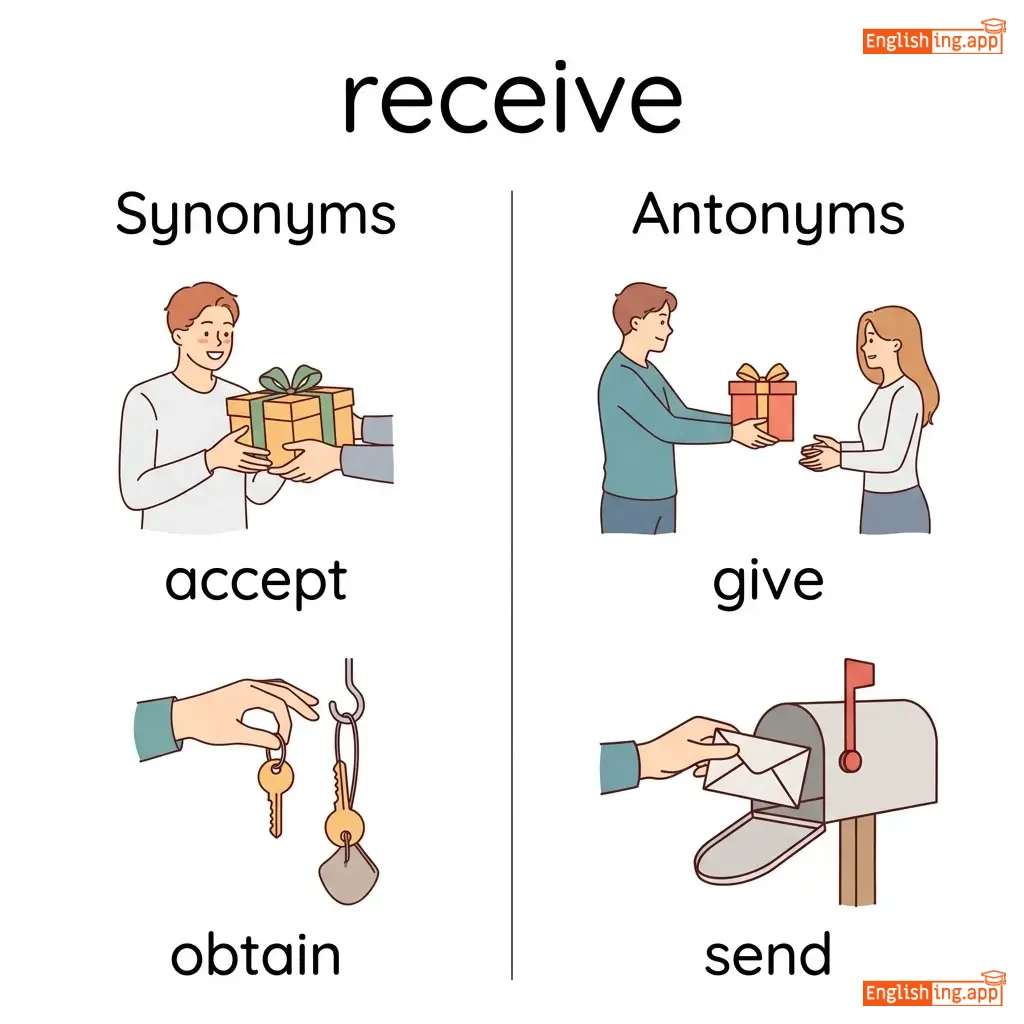
accept, obtain, acquire, collect, welcome
••••••
|
give, send, refuse
••••••
|
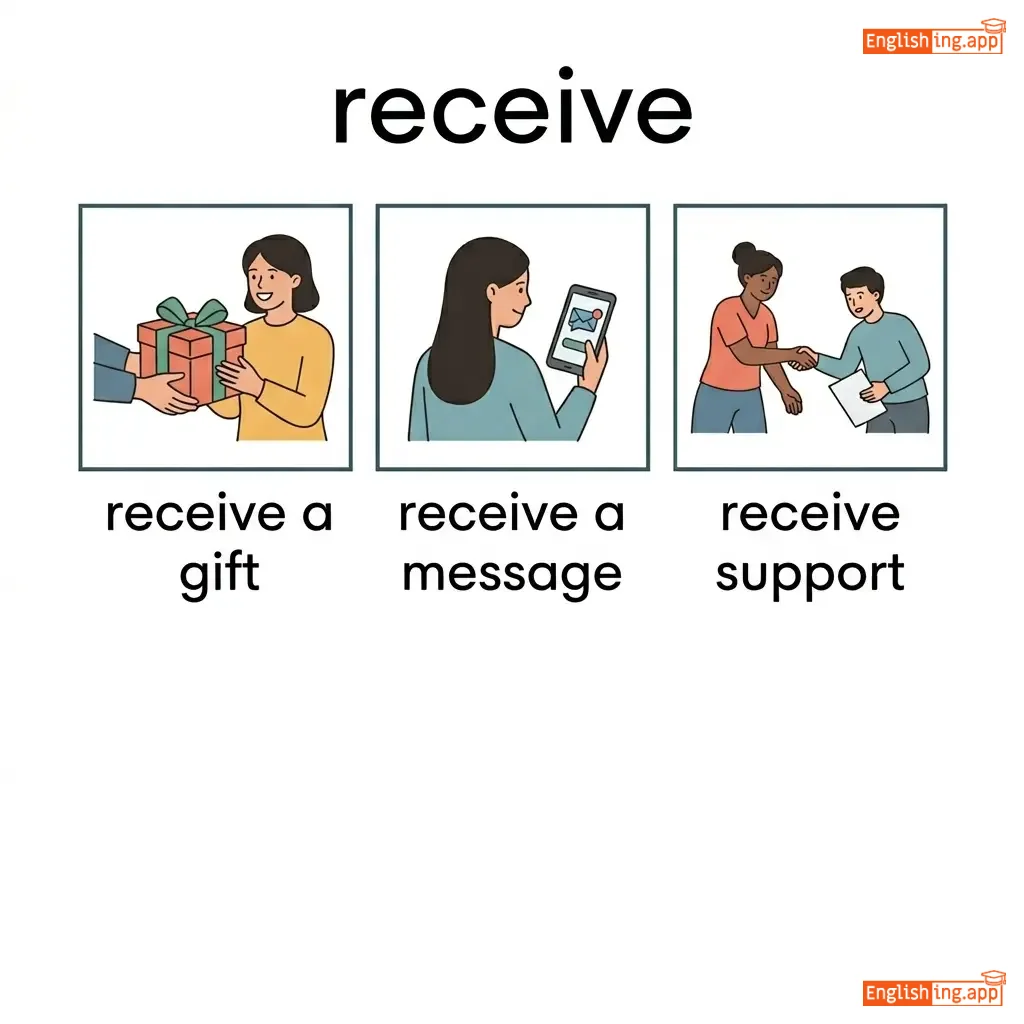
receive a gift, receive a message, receive support, receive payment
••••••
|
接收就像收到包裹 📦 或信件。
••••••
|
|
📞
••••••
|
/rɪˈsiː.vər/
noun
(接收器)
••••••
|
- •••••• |
接收器
jieshouqi
••••••
|
- •••••• | - •••••• | - •••••• | - •••••• |
a person or thing that receives something; the part of a telephone containing the earpiece and mouthpiece
••••••
|
She picked up the receiver to answer the phone call.
她拿起听筒接听电话。
••••••
|
她拿起听筒接听电话。
Ta naqi tingtong jieting dianhua.
••••••
|
- •••••• | - •••••• | - •••••• |
recipient, beneficiary, addressee
••••••
|
sender, transmitter, giver
••••••
|
phone receiver, radio receiver, pick up receiver
••••••
|
接收器就像接收电话一样,接收所有的通讯。
••••••
|
|
🕒
••••••
|
/ˈriː.sənt/
adjective
(rìsènt)
••••••
|
- •••••• |
最近的; 新的; 当前的;
zuìjìn de; xīn de; dāngqián de;
••••••
|
- •••••• | - •••••• | - •••••• | - •••••• |
happening not long ago; new; current;
••••••
|
The recent changes in weather patterns concern scientists. |
最近天气模式的变化让科学家感到担忧。
Zuìjìn tiānqì móshì de biànhuà ràng kēxuéjiā gǎndào dānyōu.
••••••
|
- •••••• | - •••••• | - •••••• |
new, latest, current, fresh
••••••
|
old, ancient, past, former
••••••
|
recent developments, recent studies, recent events, recent news
••••••
|
最近的事是新鲜的、最有趣的
••••••
|
|
🕐
••••••
|
/ˈriː.sənt.li/
adverb
(瑞森特利)
••••••
|
- •••••• |
最近
zuijin
••••••
|
- •••••• | - •••••• | - •••••• | - •••••• |
in the recent past; not long ago
••••••
|
I recently moved to a new apartment.
艾 瑞森特利 穆夫德 图 啊 纽 阿帕特门特
••••••
|
我最近搬到了一个新公寓。
wo zuijin bandao le yi ge xin gongyu
••••••
|
- •••••• | - •••••• | - •••••• |
lately, newly, freshly
••••••
|
formerly, previously, long ago
••••••
|
recently discovered, recently published, recently developed
••••••
|
Recently = 最近 (zuijin) — both show 'recent time'.
••••••
|
|
📉
••••••
|
/rɪˈsɛʃən/
noun
••••••
|

|
- •••••• | - •••••• | - •••••• | - •••••• | - •••••• |
A period of temporary economic decline during which trade and industrial activity are reduced.
••••••
|
The country is facing a severe recession. |
- •••••• |
economic recession |
a period of economic decline in general
••••••
|
- •••••• |
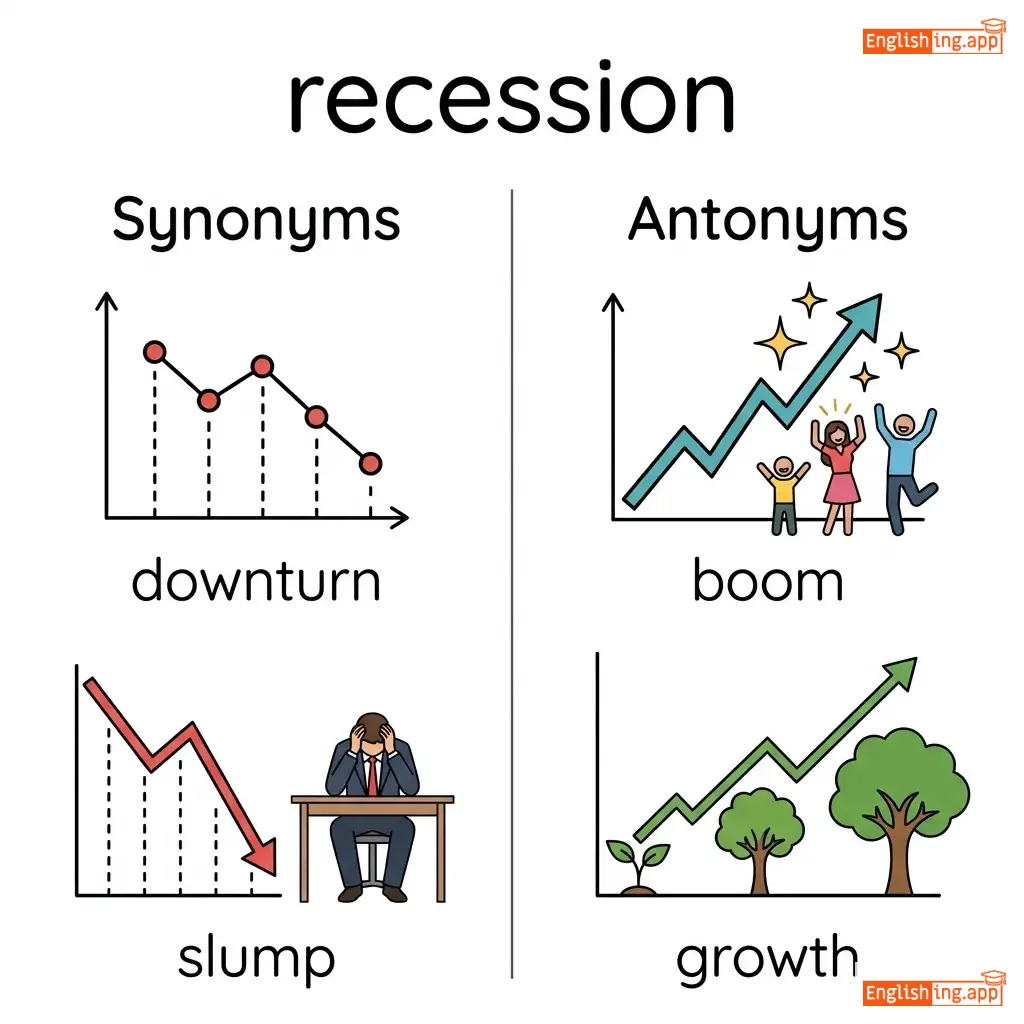
downturn, slump, slowdown, depression, stagnation
••••••
|
boom, growth, prosperity
••••••
|
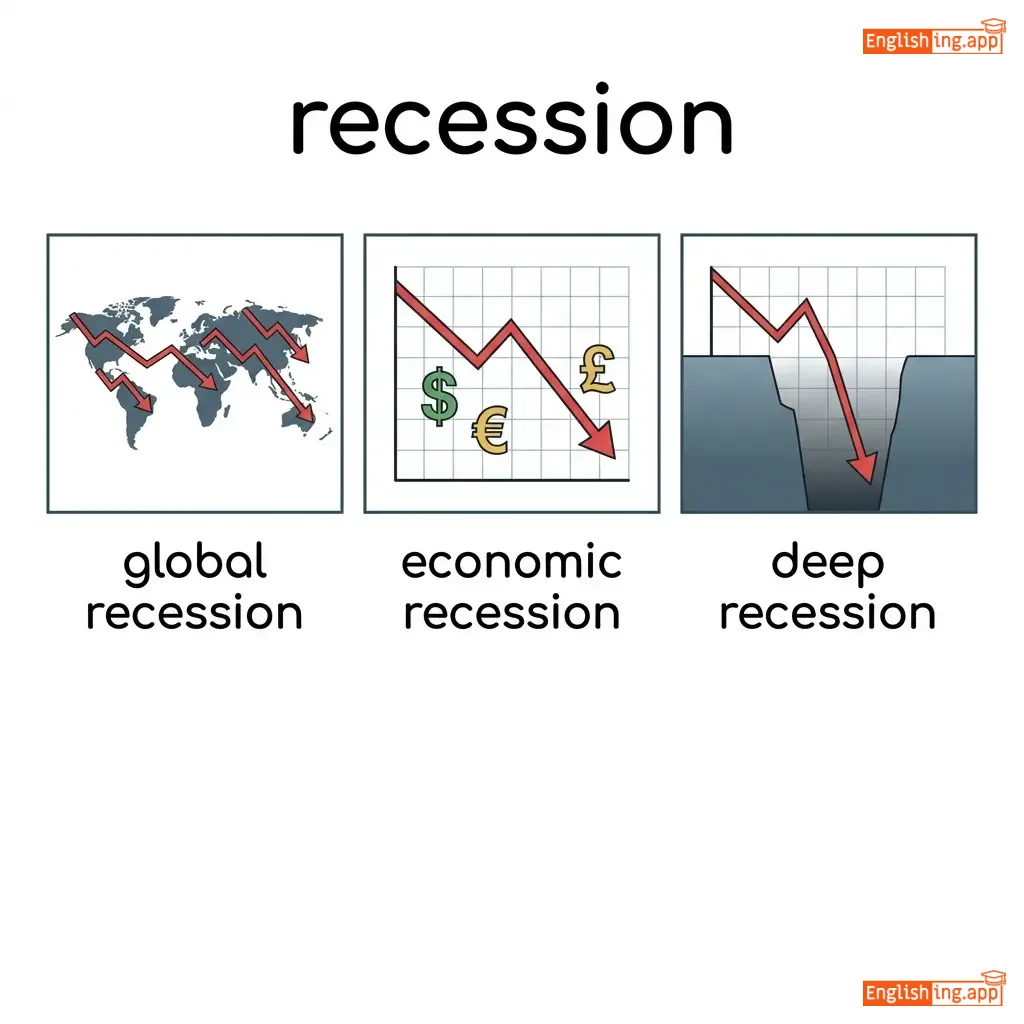
global recession, economic recession, deep recession, severe recession
••••••
|
No •••••• |
|
🍰
••••••
|
/ˈrɛsɪpi/
noun
(食谱)
••••••
|
- •••••• |
食谱
shipu
••••••
|
- •••••• | - •••••• | - •••••• | - •••••• |
a set of instructions for preparing a particular dish, including a list of the ingredients required
••••••
|
I found a great recipe for chocolate cake.
我找到了一个很棒的巧克力蛋糕食谱。
••••••
|
我找到了一个很棒的巧克力蛋糕食谱。
Wo zhaodao le yige hen bang de qiaokeli dangao shipu.
••••••
|
- •••••• | - •••••• | - •••••• |
formula, method, instructions, procedure
••••••
|
improvisation, guesswork
••••••
|
recipe for disaster, secret recipe, traditional recipe
••••••
|
The RECIPE for success in the kitchen is making delicious food - remember it as 'Shipu'!
••••••
|
|
🎁
••••••
|
/rɪˈsɪp.i.ənt/
noun
(rɪˈsɪpɪənt)
••••••
|
- •••••• |
接收者
jieshouzhe
••••••
|
- •••••• | - •••••• | - •••••• | - •••••• |
a person who receives something
••••••
|
She was the recipient of the prestigious award. |
她是这个著名奖项的接收者。
Ta shi zhege zhuming jiangxiang de jieshouzhe
••••••
|
- •••••• | - •••••• | - •••••• |
receiver, beneficiary, addressee
••••••
|
donor, giver, sender
••••••
|
award recipient, scholarship recipient, organ recipient
••••••
|
Recipient = 接收者 (Recipient = Jieshouzhe)
••••••
|
|
🗣️
••••••
|
/rɪˈsaɪt/
verb
(risaɪt)
••••••
|
- •••••• |
背诵
bèisòng
••••••
|
recited
risaited
••••••
|
recited
risaited
••••••
|
recites
risaits
••••••
|
reciting
risaiting
••••••
|
To say aloud something learned, especially poetry or text, from memory.
••••••
|
The child recited a poem in front of the class.
de chaild risaited a poem in front of de clas.
••••••
|
孩子在班级前朗诵了一首诗。
Háizi zài bānjí qián lǎngsòngle yī shǒu shī.
••••••
|
recite by heart
risait bai jart
••••••
|
To say something from memory without reading.
••••••
|
背诵
bèisòng
••••••
|
repeat, recount, declaim, deliver, narrate
••••••
|
forget, silence
••••••
|
recite a poem, recite by heart, recite a prayer, recite lines
••••••
|
背诵就是像背书一样背出记忆中的内容。
••••••
|
|
📜
••••••
|
/rɪˈsaɪtər/
noun
(里赛特)
••••••
|
- •••••• |
朗诵者
lang song zhe
••••••
|
- •••••• | - •••••• | - •••••• | - •••••• |
a person who recites or repeats something aloud from memory, especially poetry, prayers, or formal texts
••••••
|
The reciter delivered the poem with clarity and emotion.
里赛特 delivered the poem with clarity and emotion.
••••••
|
朗诵者清晰而富有感情地朗诵了这首诗。
lang song zhe qingxi er fuyou ganqing di lang song le zhe shou shi
••••••
|
- •••••• | - •••••• | - •••••• |
orator, declaimer, speaker, narrator, reader
••••••
|
listener, audience
••••••
|
poem reciter, Quran reciter, skilled reciter, public reciter
••••••
|
朗诵者=recite的人。
••••••
|
|
🤔
••••••
|
/ˈrɛkən/
verb
(rè kèn)
••••••
|
- •••••• |
推测
tuī cè
••••••
|
reckoned
rè kòng
••••••
|
reckoned
rè kòng
••••••
|
reckons
rè kènsī
••••••
|
reckoning
rè kèníng
••••••
|
To think, believe, or expect something; to calculate or estimate.
••••••
|
I reckon it will rain later today.
我猜今天稍后会下雨。
••••••
|
我猜今天稍后会下雨。
Wǒ cāi jīntiān shāo hòu huì xià yǔ.
••••••
|
reckon with
算计
••••••
|
To deal with or consider seriously.
••••••
|
认真对待
rènzhēn duìdài
••••••
|
think, believe, consider, calculate, suppose
••••••
|
ignore, disregard, neglect
••••••
|
reckon that, reckon with, I reckon, reckon up
••••••
|
Reckon听起来像是猜测,像估算未来的事情。
••••••
|
|
🏆
••••••
|
/ˌrek.əɡˈnɪʃ.ən/
noun
(rèkèngníshén)
••••••
|

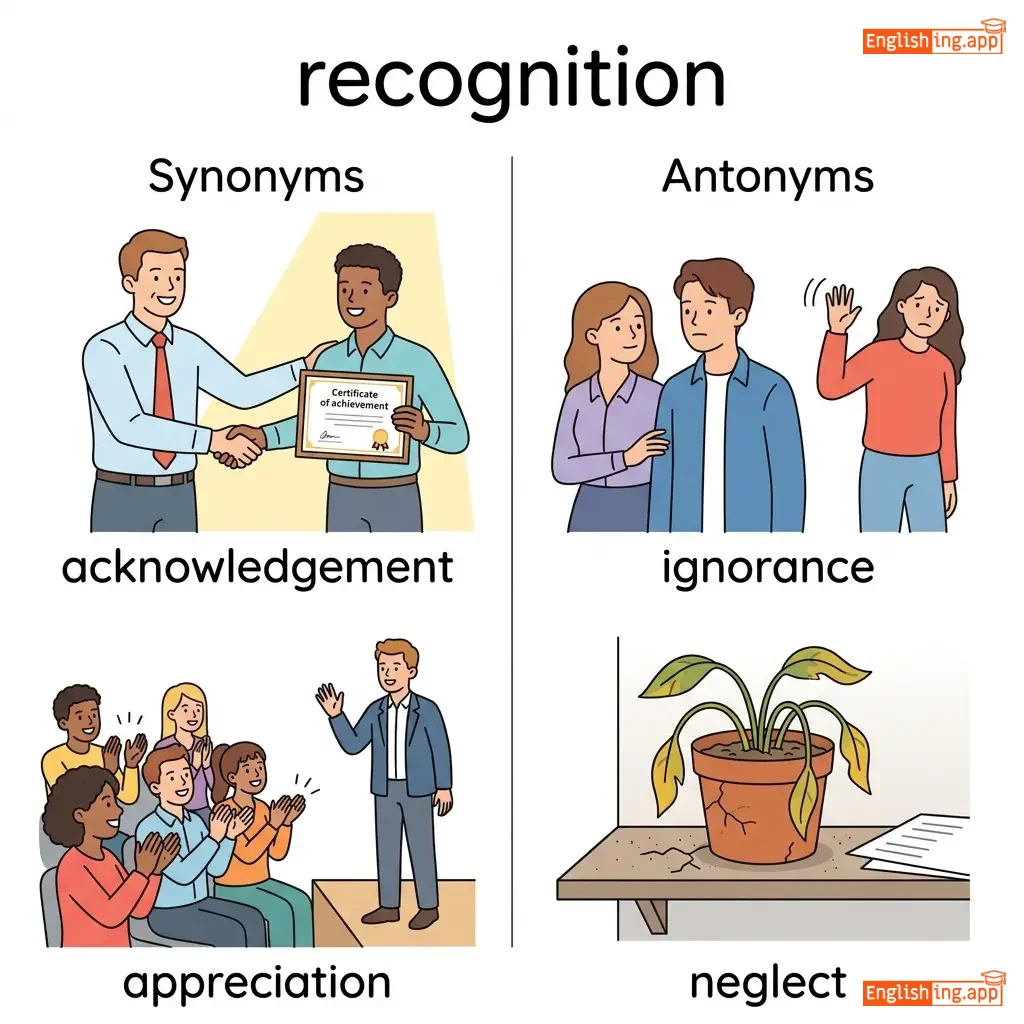
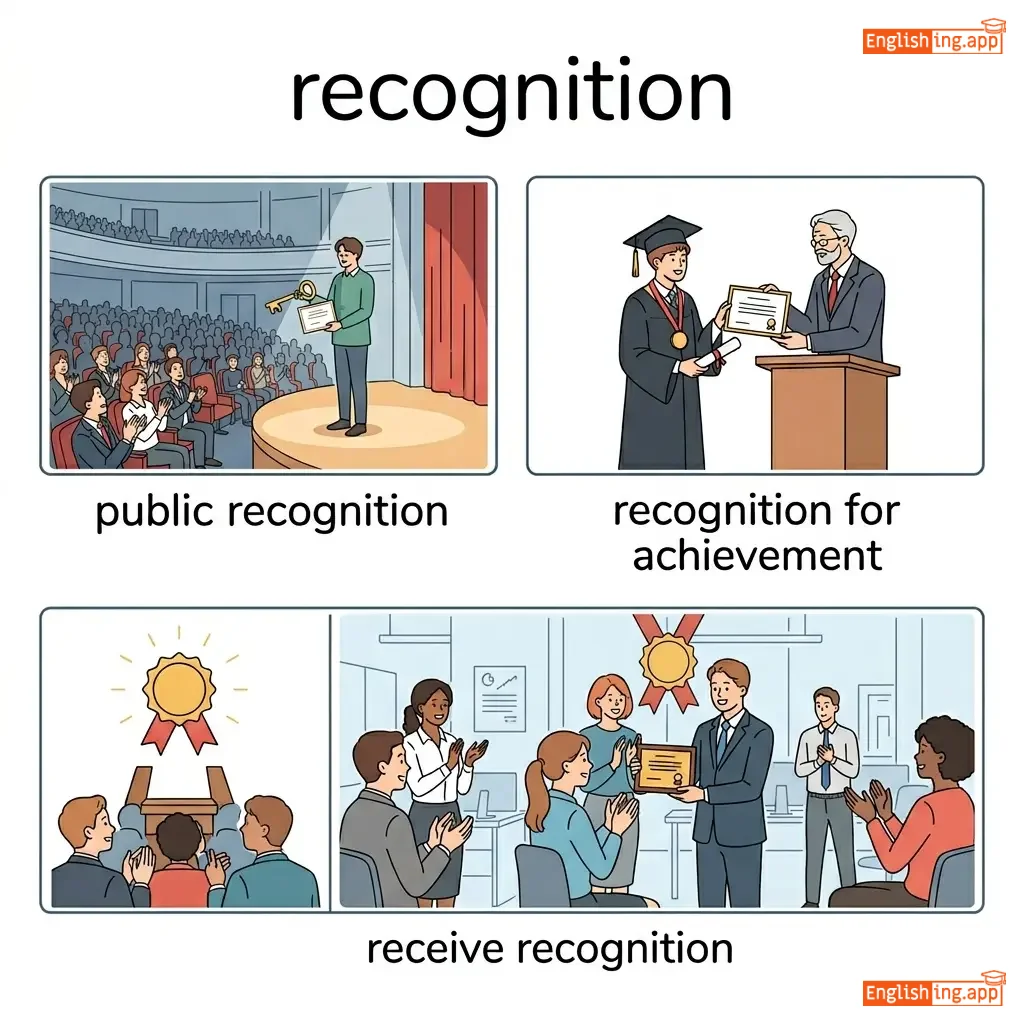
|
认可; 识别
renke; shibie
••••••
|
- •••••• | - •••••• | - •••••• | - •••••• |
acknowledgment of the existence, validity, or legality of something
••••••
|
His hard work finally received recognition from the management. |
他的辛勤工作终于得到了管理层的认可。
Tā de xīnqín gōngzuò zhōngyú dédàole guǎnlǐcéng de rènkě.
••••••
|
- •••••• | - •••••• | - •••••• |
acknowledgment, appreciation, acceptance
••••••
|
ignorance, denial, rejection
••••••
|
gain recognition, facial recognition, public recognition
••••••
|
In Chinese, '认可' means recognition, acknowledging something important.
••••••
|
|
👀
••••••
|
/ˈrɛkəɡnaɪz/
verb
••••••
|
- •••••• | - •••••• |
recognized
••••••
|
recognized
••••••
|
recognizes
••••••
|
recognizing
••••••
|
To identify someone or something seen before; to acknowledge or accept.
••••••
|
She did not recognize him in the crowd. |
- •••••• |
recognize the importance |
To acknowledge the value or significance of something.
••••••
|
- •••••• |
identify, acknowledge, accept, admit, spot
••••••
|
ignore, neglect, overlook
••••••
|
recognize someone, recognize importance, recognize authority
••••••
|
No •••••• |
|
💡
••••••
|
/ˌrɛkəˈmɛnd/
verb
(推荐)
••••••
|
- •••••• |
推荐
tuījiàn
••••••
|
recommended
推荐的
••••••
|
recommended
推荐的
••••••
|
recommends
推荐
••••••
|
recommending
推荐中
••••••
|
to suggest or advise something as being good or suitable
••••••
|
I recommend trying the new restaurant downtown.
我推荐尝试市中心的新餐馆。
••••••
|
我推荐尝试市中心的新餐馆。
Wǒ tuījiàn chángshì shì zhōngxīn de xīn cānguǎn.
••••••
|
- •••••• | - •••••• | - •••••• |
suggest, advise, propose, endorse
••••••
|
discourage, oppose
••••••
|
recommend highly, recommend a product, strongly recommend
••••••
|
RECOMMEND it, because it is great - 'Tuījiàn!'
••••••
|
|
👍
••••••
|
/ˌrek.ə.menˈdeɪ.ʃən/
noun
(推荐)
••••••
|
- •••••• |
推荐
tuījiàn
••••••
|
- •••••• | - •••••• | - •••••• | - •••••• |
a suggestion that someone or something would be good or suitable for a particular job or purpose
••••••
|
I got this job based on a recommendation from my professor.
我通过教授的推荐得到了这份工作。
••••••
|
我通过教授的推荐得到了这份工作。
Wǒ tōngguò jiàoshòu de tuījiàn dédàole zhè fèn gōngzuò.
••••••
|
- •••••• | - •••••• | - •••••• |
suggestion, advice, endorsement, proposal
••••••
|
warning, discouragement, disapproval
••••••
|
make a recommendation, follow recommendations, letter of recommendation
••••••
|
推荐让你走向成功。
••••••
|
|
🏗️
••••••
|
/ˌriːkənˈstrʌkʃən/
noun
(ríkènsītruòkèxīn)
••••••
|
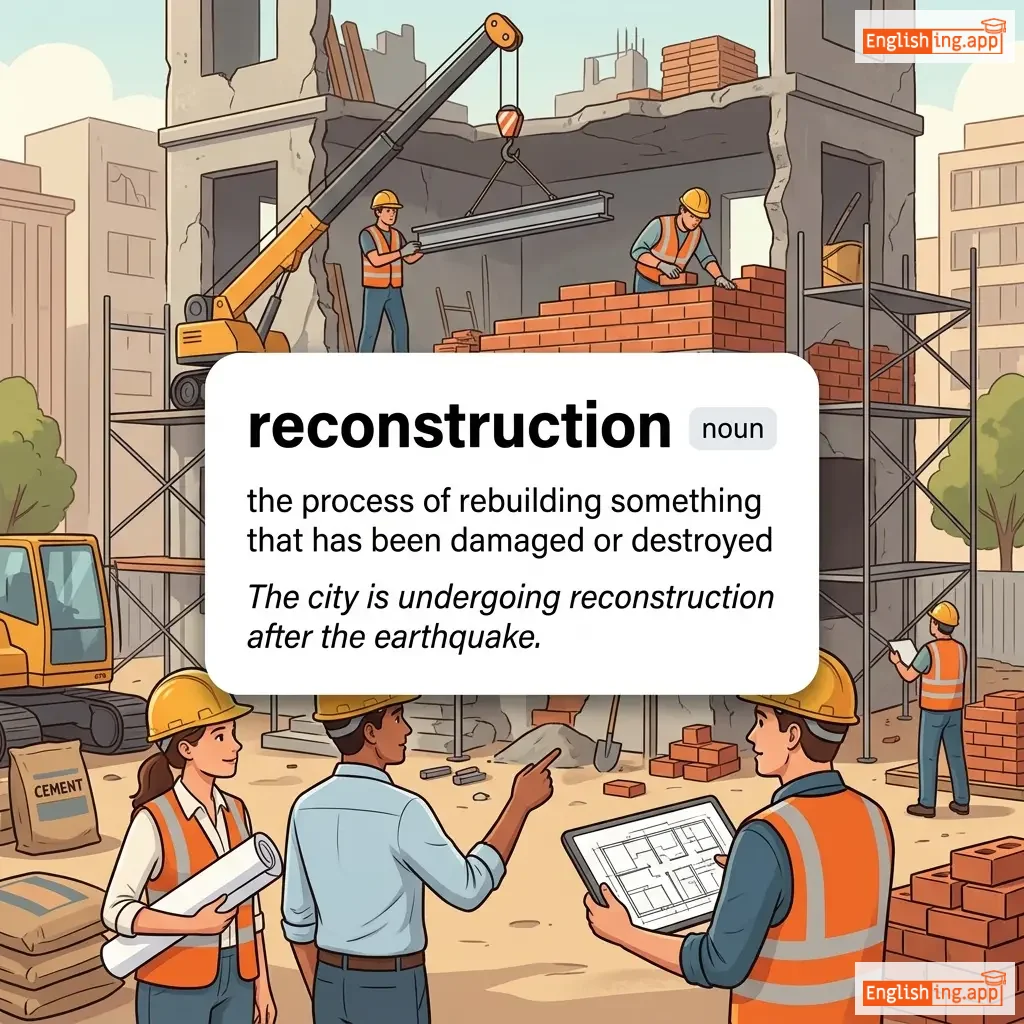
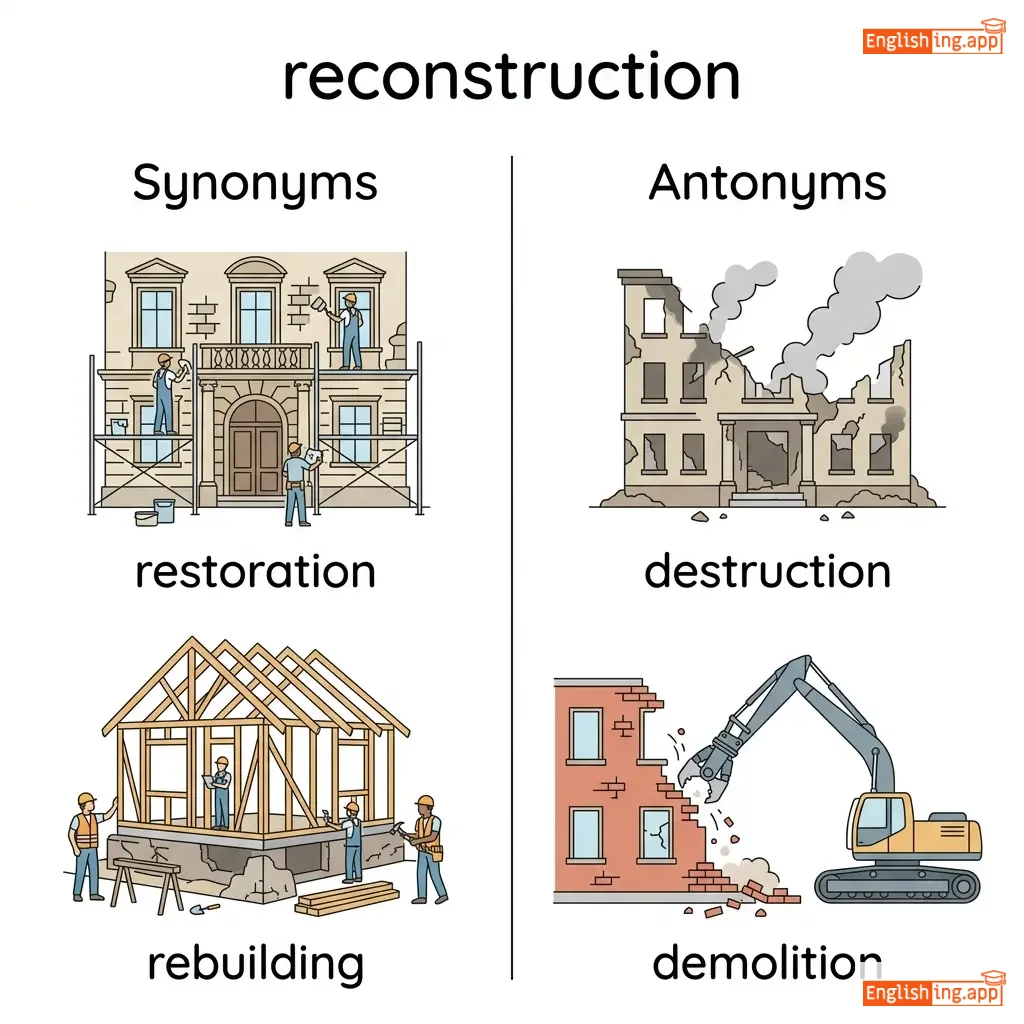
|
重建
chóngjiàn
••••••
|
- •••••• | - •••••• | - •••••• | - •••••• |
the process of rebuilding something that has been damaged or destroyed
••••••
|
The city is undergoing reconstruction after the earthquake. |
城市在地震后正在进行重建。
Chéngshì zài dìzhèn hòu zhèngzài jìnxíng chóngjiàn.
••••••
|
- •••••• | - •••••• | - •••••• |
restoration, rebuilding, renewal, refurbishment
••••••
|
destruction, demolition
••••••
|
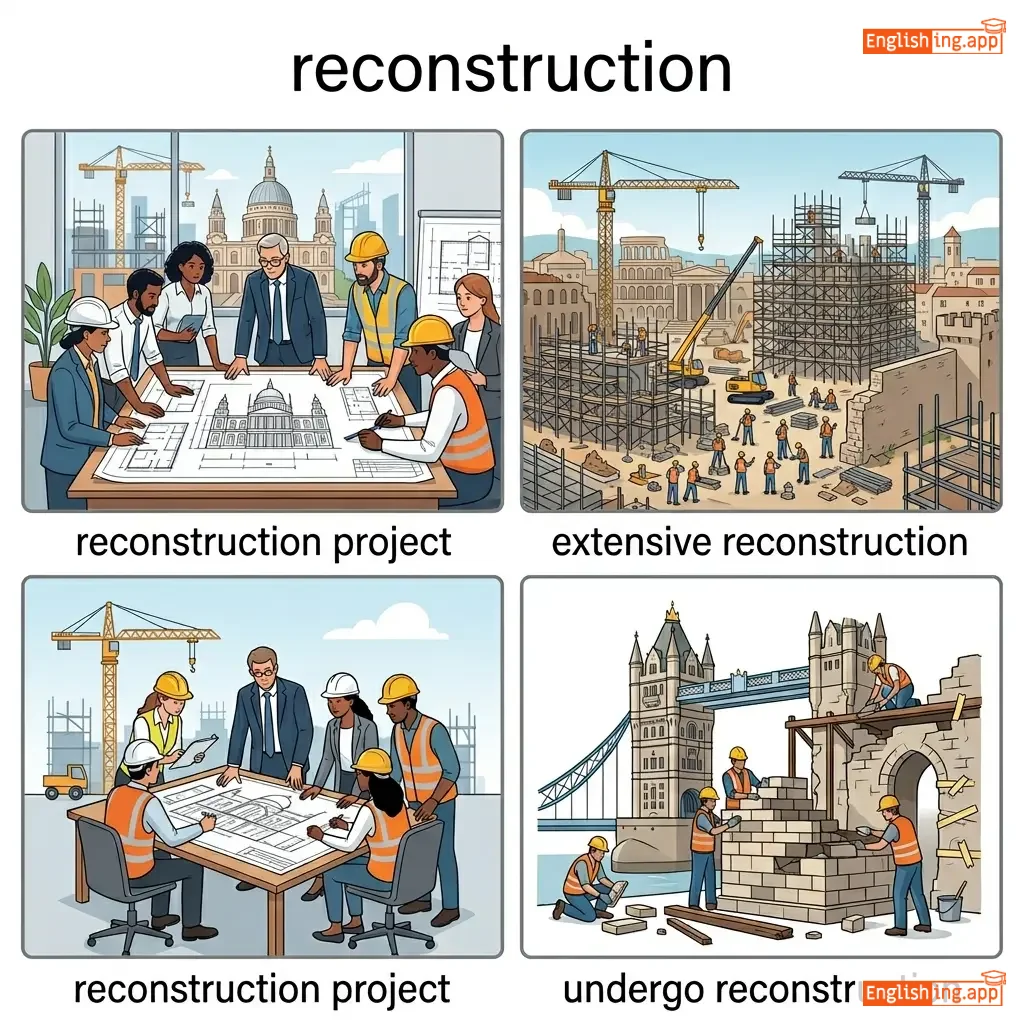
reconstruction project, extensive reconstruction, undergo reconstruction
••••••
|
重建就是在破坏后再造,'重' 就是重新建立的意思。
••••••
|
|
📖
••••••
|
/ˈrɛkɔːd/
noun
(记录)
••••••
|
- •••••• |
记录
jilu
••••••
|
- •••••• | - •••••• | - •••••• | - •••••• |
a written or spoken account of something
••••••
|
I kept a record of all the meetings.
我记录了所有的会议。
••••••
|
我记录了所有的会议。
Wǒ jìlùle suǒyǒu de huìyì.
••••••
|
- •••••• | - •••••• | - •••••• |
document, log, file, report
••••••
|
forget, erase
••••••
|
keep a record, maintain a record, record data
••••••
|
记录所有会议,帮助你回忆 (Jìlù suǒyǒu huìyì, bāngzhù nǐ huíyì)
••••••
|
|
🎙️
••••••
|
/rɪˈkɔːdɪŋ/
noun
(录音)
••••••
|
- •••••• |
录音
luyin
••••••
|
- •••••• | - •••••• | - •••••• | - •••••• |
the act or process of recording something
••••••
|
The recording of the interview was clear and loud. |
采访的录音清晰且响亮。
Cǎifǎng de lùyīn qīngxī qiě xiǎngliàng.
••••••
|
- •••••• | - •••••• | - •••••• |
taping, capturing, documenting, logging
••••••
|
erasing, deleting
••••••
|
make a recording, listen to the recording, audio recording
••••••
|
录音让我们想起了录音机
••••••
|
|
📖
••••••
|
/rɪˈkaʊnt/
verb
(rikàunt)
••••••
|
- •••••• |
叙述
xùshù
••••••
|
recounted
rikàunted
••••••
|
recounted
rikàunted
••••••
|
recounts
rikàunts
••••••
|
recounting
rikàunting
••••••
|
to narrate or tell the details of an event or experience
••••••
|
She recounted her adventures during the summer trip.
她讲述了她在夏季旅行中的冒险。
••••••
|
她讲述了她在夏季旅行中的冒险。
Tā jiǎngshù le tā zài xiàjì lǚxíng zhōng de màoxiǎn.
••••••
|
- •••••• | - •••••• | - •••••• |
narrate, describe, relate, tell, detail
••••••
|
conceal, suppress
••••••
|
recount a story, recount events, recount experiences, recount details
••••••
|
叙述像你再次数一个故事,重温每个细节。
••••••
|
|
💪
••••••
|
/rɪˈkʌvər/
verb
••••••
|

|
- •••••• |
recovered
••••••
|
recovered
••••••
|
recovers
••••••
|
recovering
••••••
|
to return to a normal state after a setback, illness, or loss
••••••
|
He took months to recover from the accident. |
- •••••• |
recover one's strength |
to regain energy or health
••••••
|
- •••••• |
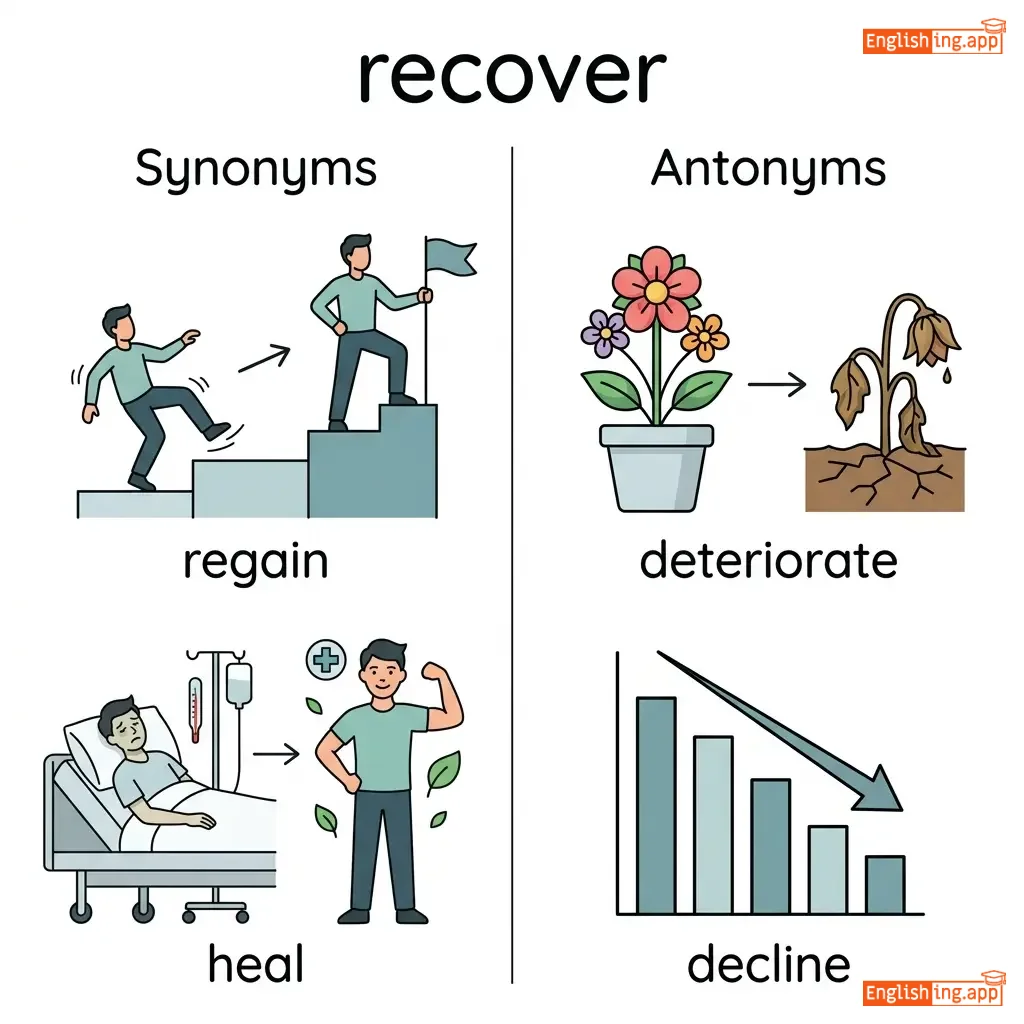
regain, heal, restore, bounce back
••••••
|
deteriorate, decline, worsen
••••••
|
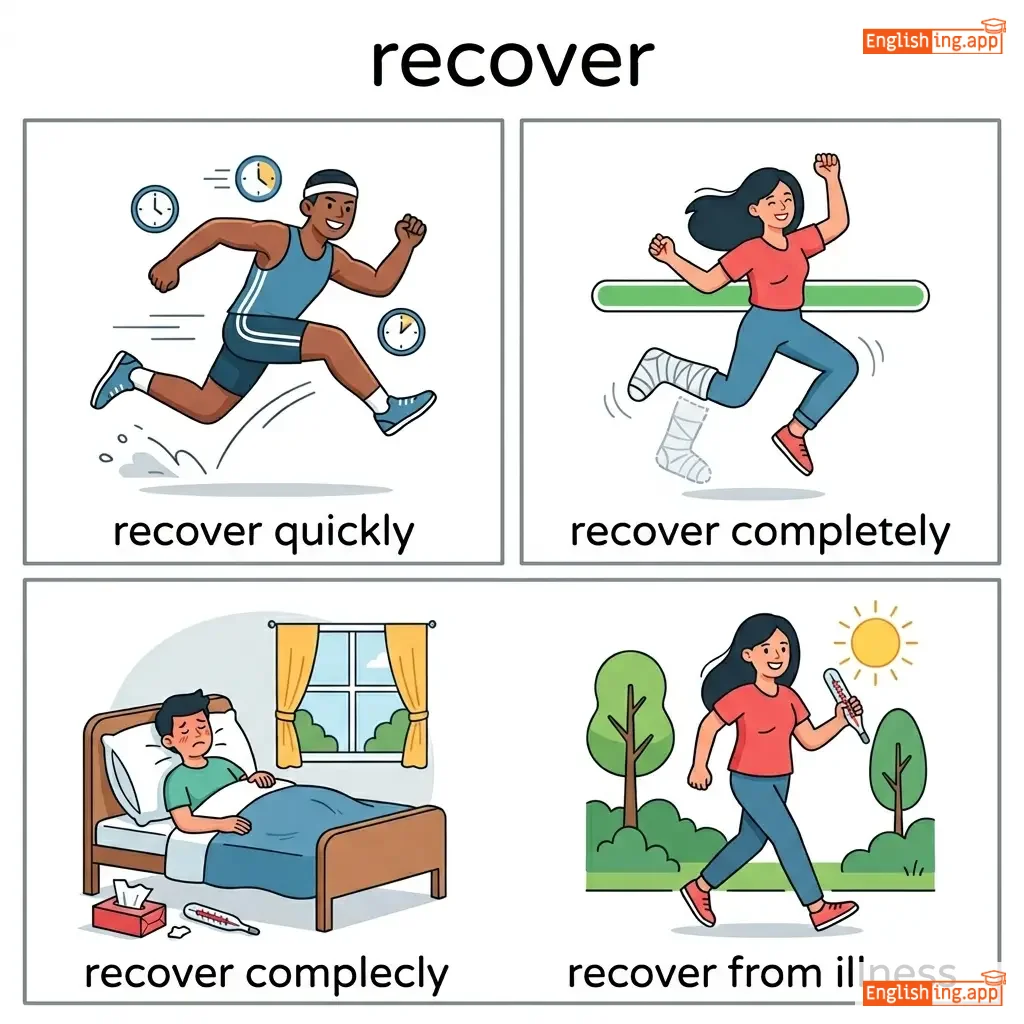
recover quickly, recover completely, recover from illness, recover lost
••••••
|
No •••••• |
|
🛌
••••••
|
/rɪˈkʌvəri/
noun
(恢复)
••••••
|
- •••••• |
恢复
huifu
••••••
|
- •••••• | - •••••• | - •••••• | - •••••• |
the process of recovering or returning to a normal state
••••••
|
The patient is in recovery after the surgery.
患者在手术后正在恢复中。
••••••
|
患者在手术后正在恢复中。
Huanzhe zai shoushu hou zhengzai huifu zhong.
••••••
|
- •••••• | - •••••• | - •••••• |
restoration, rehabilitation, healing
••••••
|
decline, deterioration
••••••
|
make a recovery, in recovery, full recovery
••••••
|
恢复就像恢复身体健康一样 (Huifu jiu xiang huifu shenti jiankang yiyang)
••••••
|
|
🧑💼
••••••
|
/rɪˈkruːt/
verb
(ríkè lù tè)
••••••
|
- •••••• |
招募
zhaomu
••••••
|
recruited
ríkè lù tè dé
••••••
|
recruited
ríkè lù tè dé
••••••
|
recruits
ríkè lù tè sī
••••••
|
recruiting
ríkè lù tè yīng
••••••
|
to enlist or hire people for a job, service, or membership
••••••
|
The company is trying to recruit more software engineers.
这家公司正在努力招募更多的软件工程师。
••••••
|
这家公司正在努力招募更多的软件工程师。
Zhe jia gongsi zhengzai nuli zhaomu gengduo de ruanjian gongchengshi.
••••••
|
recruit talent
招募人才
••••••
|
to attract and hire skilled people
••••••
|
招募人才
zhaomu rencai
••••••
|
enlist, hire, enroll, draft, engage
••••••
|
dismiss, fire, reject
••••••
|
recruit staff, recruit volunteers, recruit new members, recruit soldiers
••••••
|
招募就像招贤纳士一样,寻找并雇佣合适的人才。
••••••
|
|
💼
••••••
|
/rɪˈkruːtmənt/
noun
(recruitment)
••••••
|


|
招聘
zhaopin
••••••
|
- •••••• | - •••••• | - •••••• | - •••••• |
the process of finding new people to join an organization or become employees
••••••
|
The company's recruitment process is very thorough. |
公司的招聘过程非常详细。
Gongsi de zhaopin guocheng feichang xiangxi.
••••••
|
- •••••• | - •••••• | - •••••• |
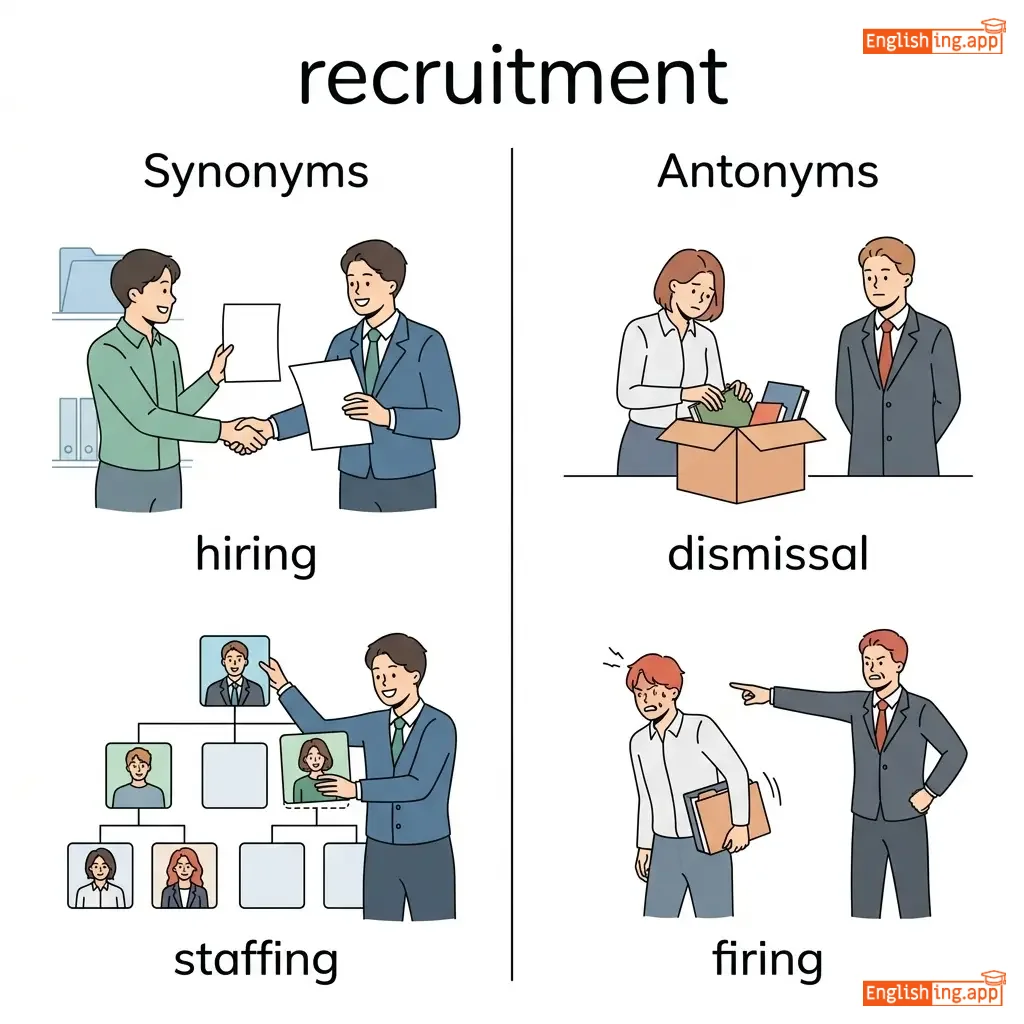
hiring, staffing, employment, enlistment
••••••
|
dismissal, firing
••••••
|
recruitment agency, recruitment process, staff recruitment
••••••
|
招聘是一个通过'招募'新成员加入团队的过程。
••••••
|
|
🔴
••••••
|
/red/
adjective
(red)
••••••
|
- •••••• |
红色
hongse
••••••
|
- •••••• | - •••••• | - •••••• | - •••••• |
having the color of blood or fire; of the color red
••••••
|
She wore a beautiful red dress to the party.
她穿了一件漂亮的红色裙子参加派对。
••••••
|
她穿了一件漂亮的红色裙子参加派对。
Tā chuānle yī jiàn piàoliang de hóngsè qúnzi cānjiā pàiduì.
••••••
|
- •••••• | - •••••• | - •••••• |
scarlet, crimson, cherry, ruby
••••••
|
green, blue, white
••••••
|
red rose, red carpet, red light, red wine
••••••
|
红色是血液和火焰的颜色。
••••••
|
|
➖
••••••
|
/rɪˈdjuːs/
verb
(减少)
••••••
|
|
减少
jiǎnshǎo
••••••
|
reduced
减少了
••••••
|
reduced
减少了
••••••
|
reduces
减少
••••••
|
reducing
减少中
••••••
|
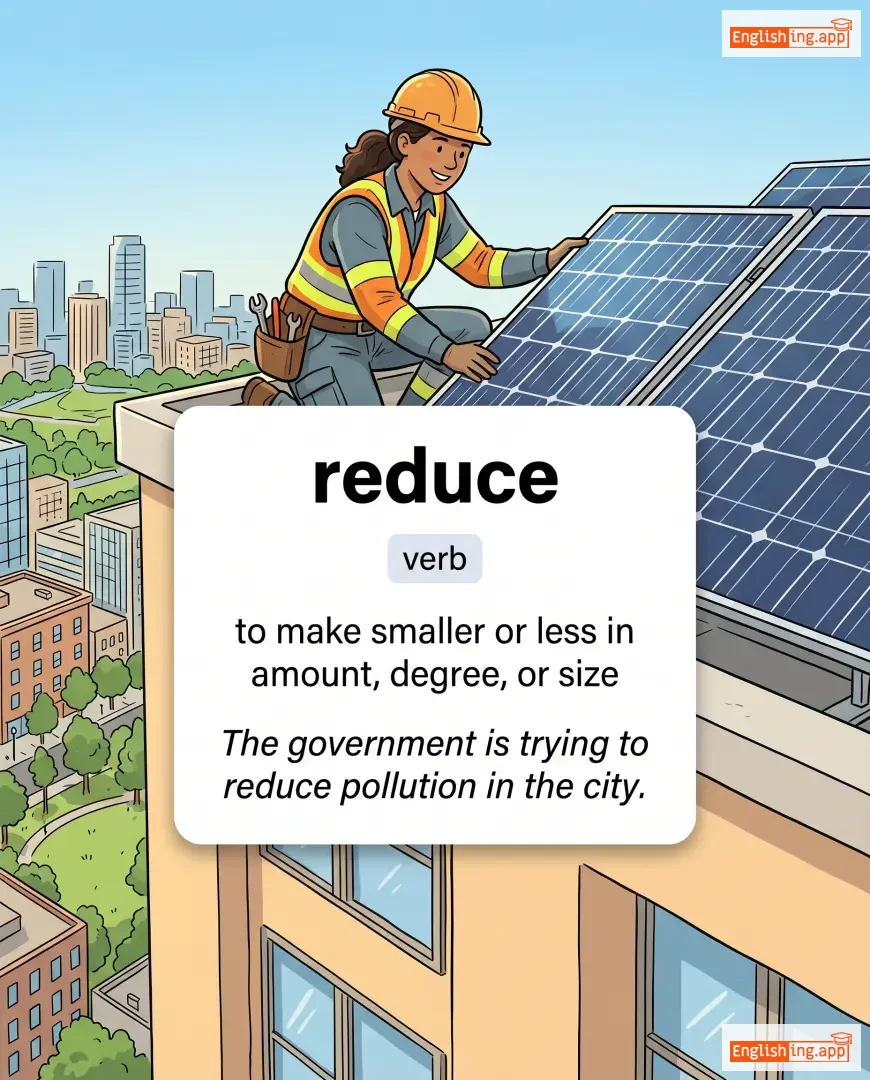
to make smaller or less in amount, degree, or size
••••••
|
The government is trying to reduce pollution in the city.
政府正在努力减少城市的污染。
••••••
|
政府正在努力减少城市的污染。
Zhèngfǔ zhèngzài nǔlì jiǎnshǎo chéngshì de wūrǎn.
••••••
|
reduce to tears
减少到眼泪
••••••
|
to make someone cry
••••••
|
减少到眼泪
jiǎnshǎo dào yǎnlèi
••••••
|
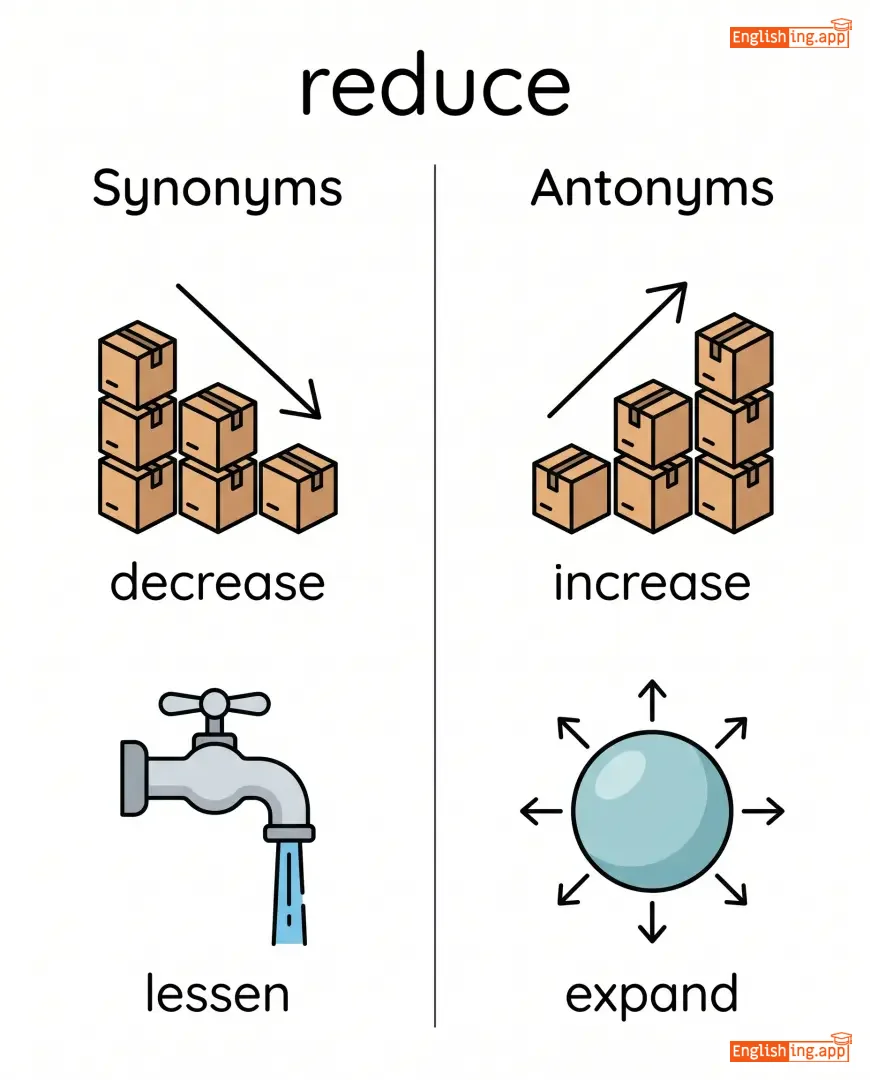
decrease, lessen, diminish, cut, lower
••••••
|
increase, expand, enlarge
••••••
|
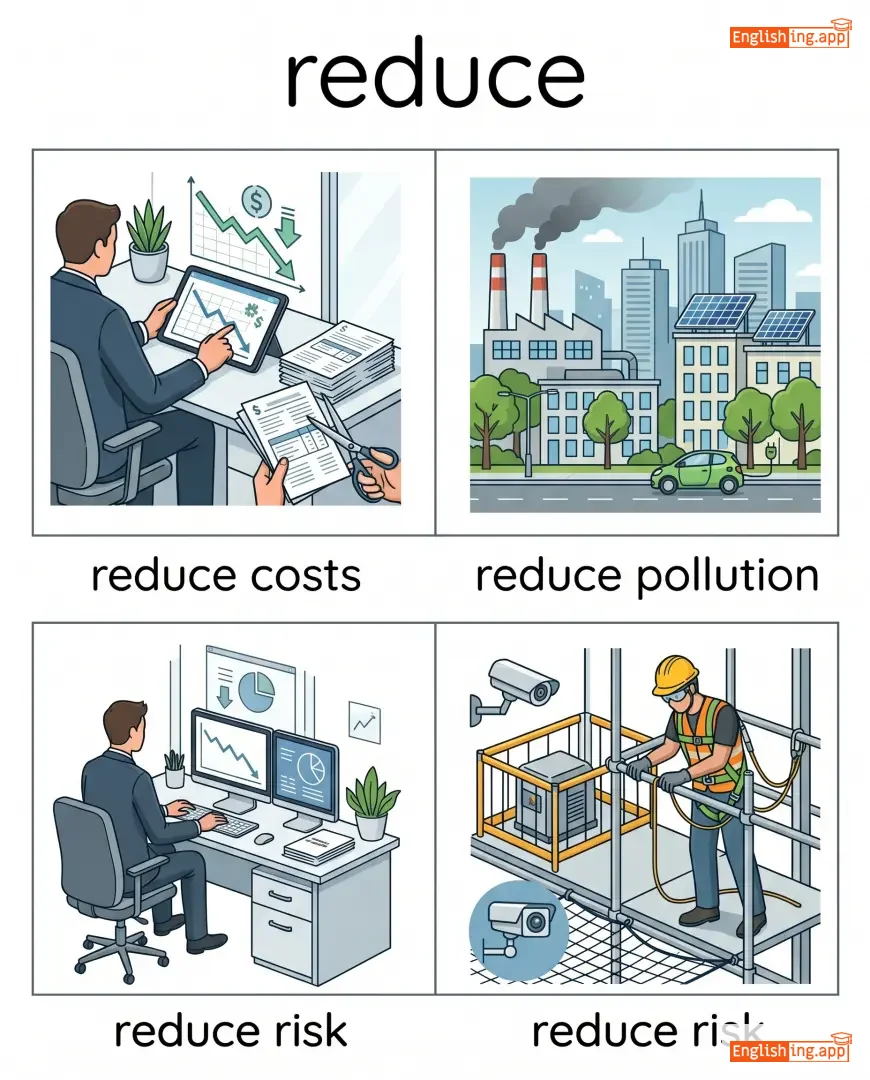
reduce costs, reduce pollution, reduce risk, reduce stress
••••••
|
Reduce 意味着减少—'减少负担可以让生活更轻松。'
••••••
|
|
📉
••••••
|
/rɪˈdʌk.ʃən/
noun
(里杜克申)
••••••
|
|
减少
ri du ke shun
••••••
|
- •••••• | - •••••• | - •••••• | - •••••• |
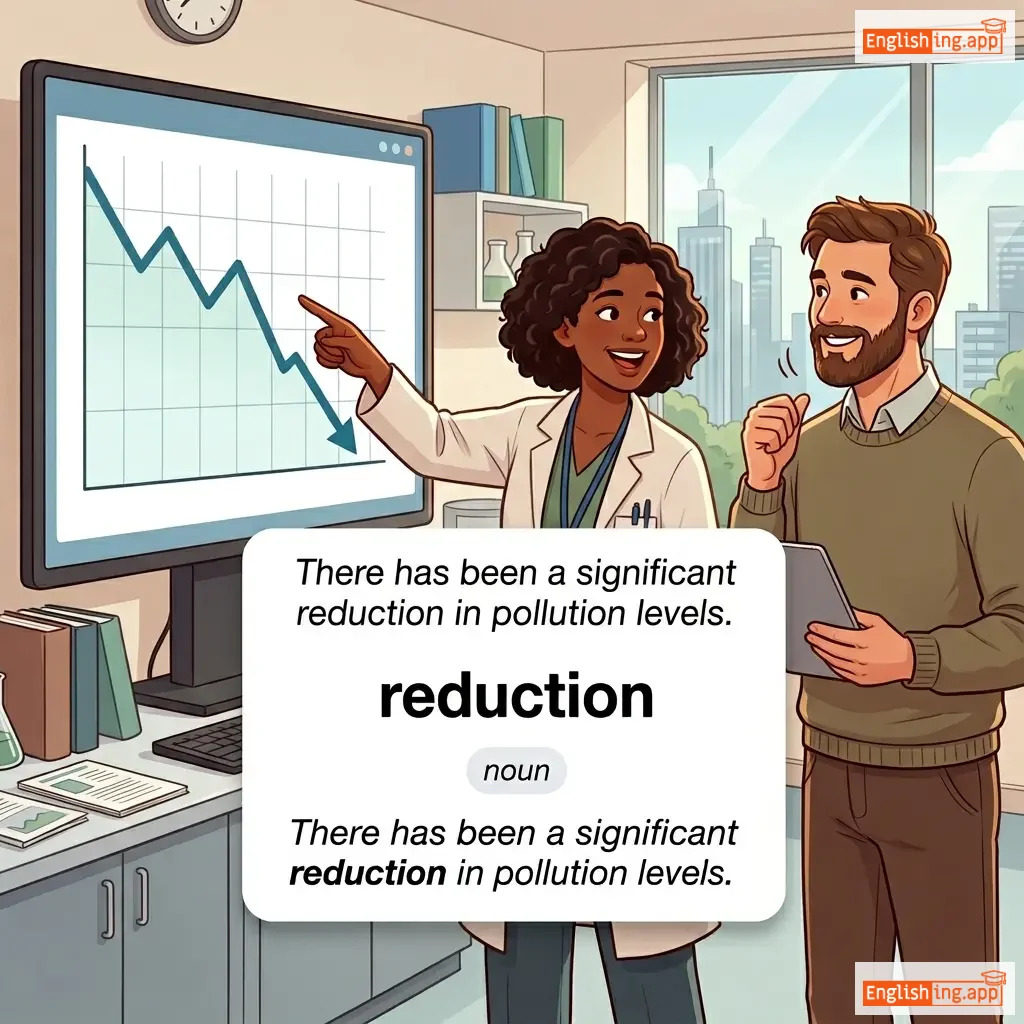
the action or fact of making a specified thing smaller or less in amount, degree, or size
••••••
|
The company announced a reduction in staff to cut costs.
公司宣布裁员以降低成本。
••••••
|
公司宣布裁员以降低成本。
gongsi xuanbu caiyuan yi jiangdi chengben
••••••
|
- •••••• | - •••••• | - •••••• |
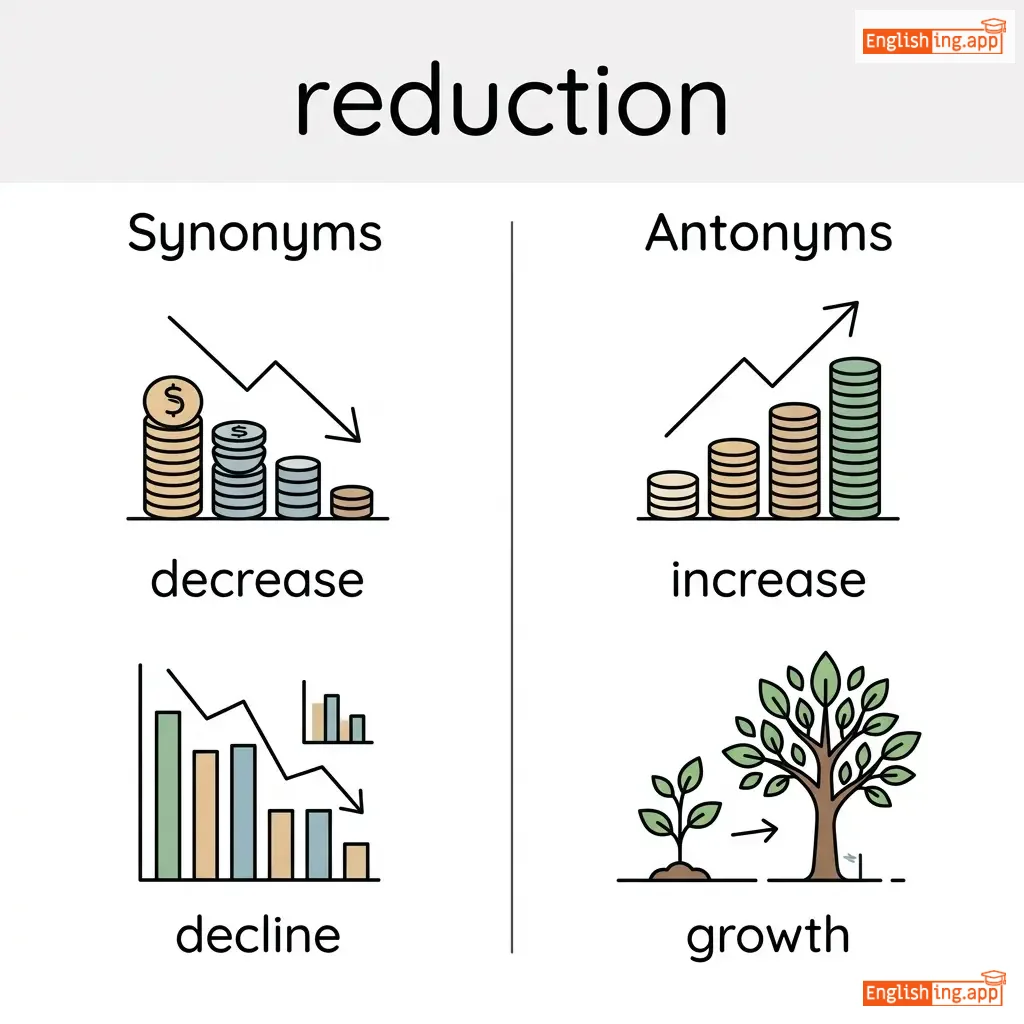
decrease, cut, decline, diminution
••••••
|
increase, growth, expansion, enlargement
••••••
|
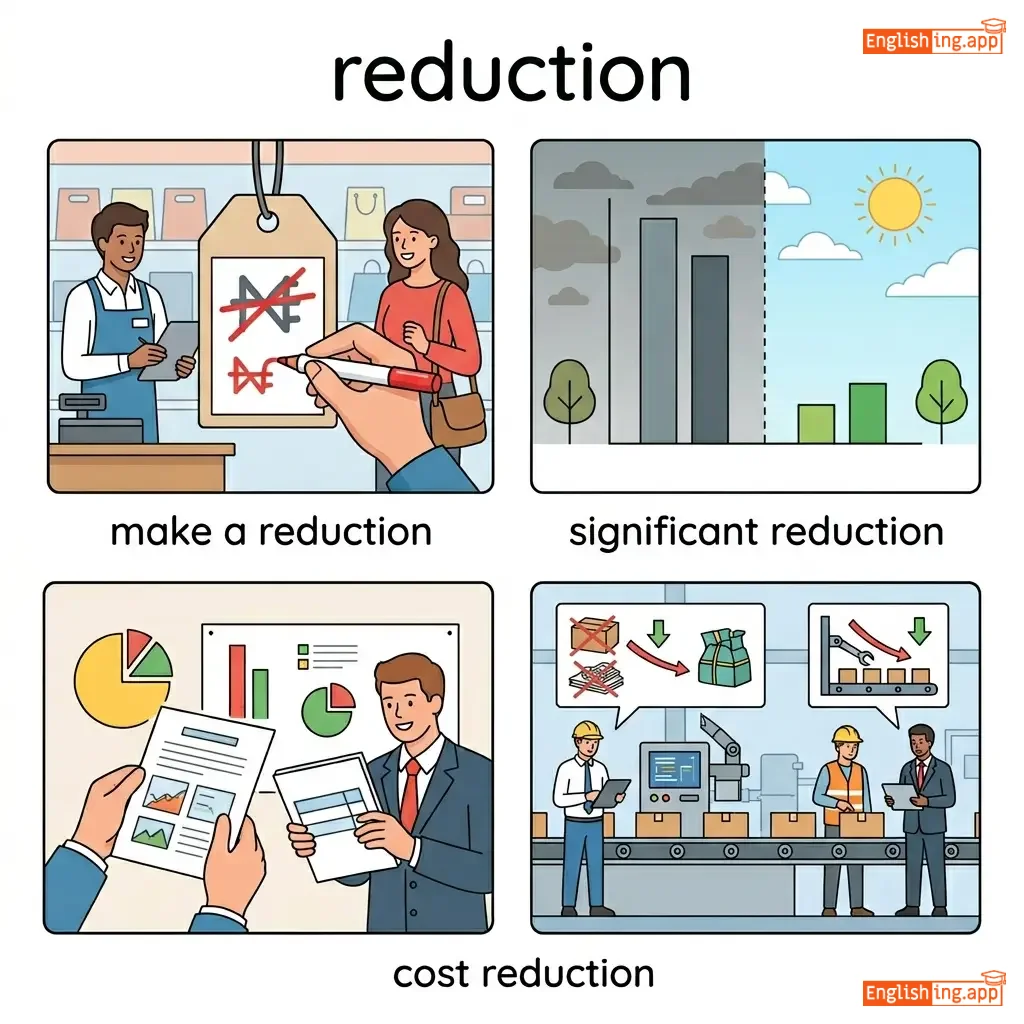
cost reduction, price reduction, reduction in size
••••••
|
Re + duction = 再减, 想象成本被再一次减下去的画面
••••••
|
|
📑
••••••
|
/rɪˈfɜːr/
verb
(参考)
••••••
|
|
转介
zhuǎnjiè
••••••
|
referred
参考过
••••••
|
referred
参考过
••••••
|
refers
参考
••••••
|
referring
参考中
••••••
|
to direct someone to another source of help, information, or decision
••••••
|
The doctor will refer you to a specialist.
医生会把你转介给专家。
••••••
|
医生会把你转介给专家。
Yīshēng huì bǎ nǐ zhuǎnjiè gěi zhuānjiā.
••••••
|
refer to
参考于
••••••
|
to mention or speak about something
••••••
|
参考于
cānkǎo yú
••••••
|
direct, mention, cite, allude, recommend
••••••
|
ignore, neglect
••••••
|
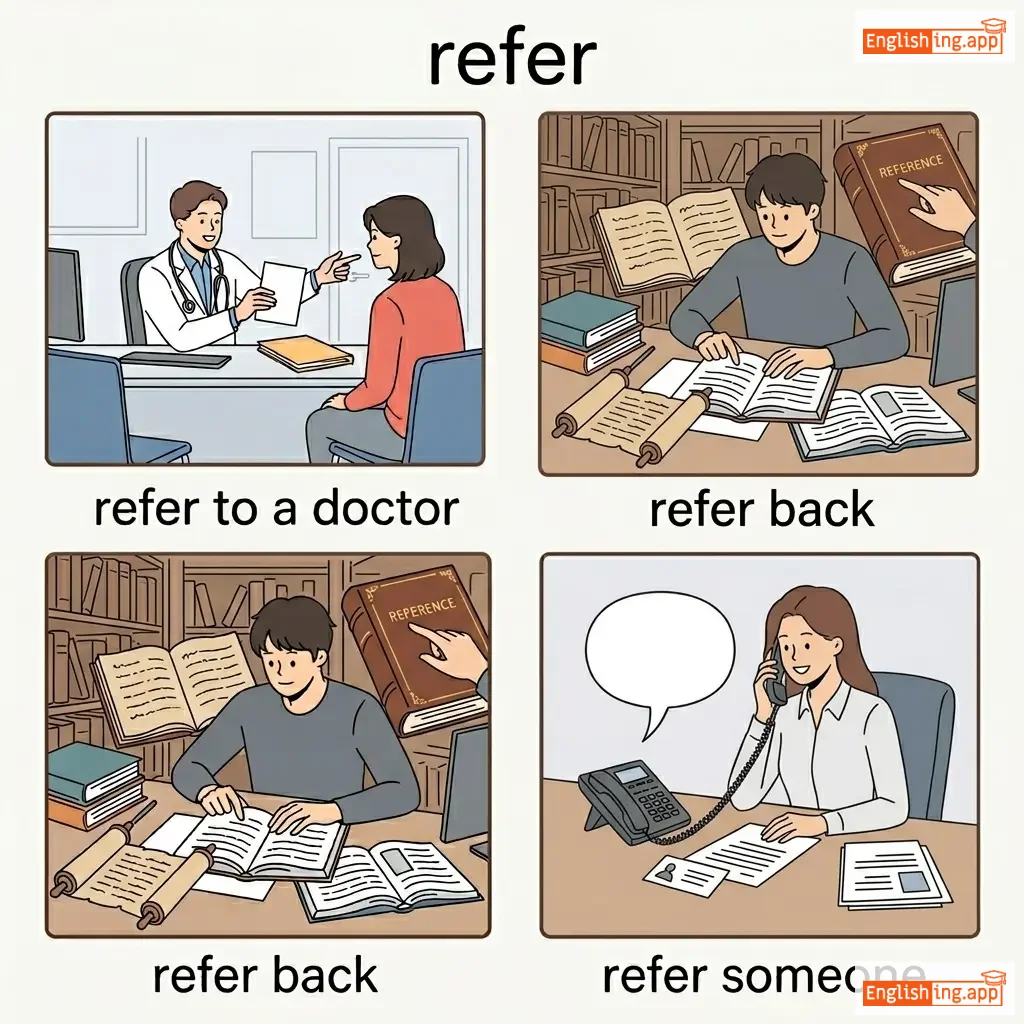
refer to a doctor, refer back, refer someone, refer directly
••••••
|
Refer 就像 Referral,转介或提到。
••••••
|
|
⚽
••••••
|
/ˌrɛfəˈriː/
noun
(ref-er-i)
••••••
|
- •••••• |
裁判
caipan
••••••
|
- •••••• | - •••••• | - •••••• | - •••••• |
a person who oversees a game or match to ensure the rules are followed
••••••
|
The referee stopped the game after a foul. |
裁判在犯规后暂停了比赛。
Caipan zai fanguihou zan ting le bisai.
••••••
|
blow the whistle |
to stop play or call out a foul in sports
••••••
|
吹哨
chui shao
••••••
|
umpire, judge, arbiter, mediator
••••••
|
player, participant
••••••
|
football referee, official referee, match referee
••••••
|
足球比赛中的裁判会吹哨 (chui shao) 来暂停比赛。
••••••
|
|
📚
••••••
|
/ˈref.ər.əns/
noun
(参考)
••••••
|
- •••••• |
参考资料
cānkǎo zīliào
••••••
|
- •••••• | - •••••• | - •••••• | - •••••• |
the action of mentioning or alluding to something; a source of information
••••••
|
Please provide references to support your research claims. |
请提供参考资料以支持您的研究声明。
qǐng tígōng cānkǎo zīliào yǐ zhīchí nín de yánjiū shēngmíng.
••••••
|
- •••••• | - •••••• | - •••••• |
citation, source, mention, allusion
••••••
|
ignorance, omission, exclusion, disregard
••••••
|
make reference to, reference book, character reference
••••••
|
参考资料为研究提供支持,帮助理解。
••••••
|
|
🗳️
••••••
|
/ˌrɛfəˈrɛndəm/
noun
(公投)
••••••
|
- •••••• |
公投
gongtou
••••••
|
- •••••• | - •••••• | - •••••• | - •••••• |
a general vote by the population on a single political issue
••••••
|
The government held a referendum on the new constitution.
政府就新宪法举行了公投。
••••••
|
政府就新宪法举行了公投。
Zhengfu jiu xin xianfa juxingle gongtou.
••••••
|
- •••••• | - •••••• | - •••••• |
plebiscite, ballot, vote, poll
••••••
|
dictate, decree
••••••
|
national referendum, hold a referendum, referendum result
••••••
|
公投(gongtou)是一个让所有人投票决定政治问题的过程。
••••••
|
|
🪞
••••••
|
/rɪˈflɛkt/
verb
(rǐfú lēkt)
••••••
|

|
反射
fǎnshè
••••••
|
reflected
rǐfú lēktéd
••••••
|
reflected
rǐfú lēktéd
••••••
|
reflects
rǐfú lēkts
••••••
|
reflecting
rǐfú lēkting
••••••
|
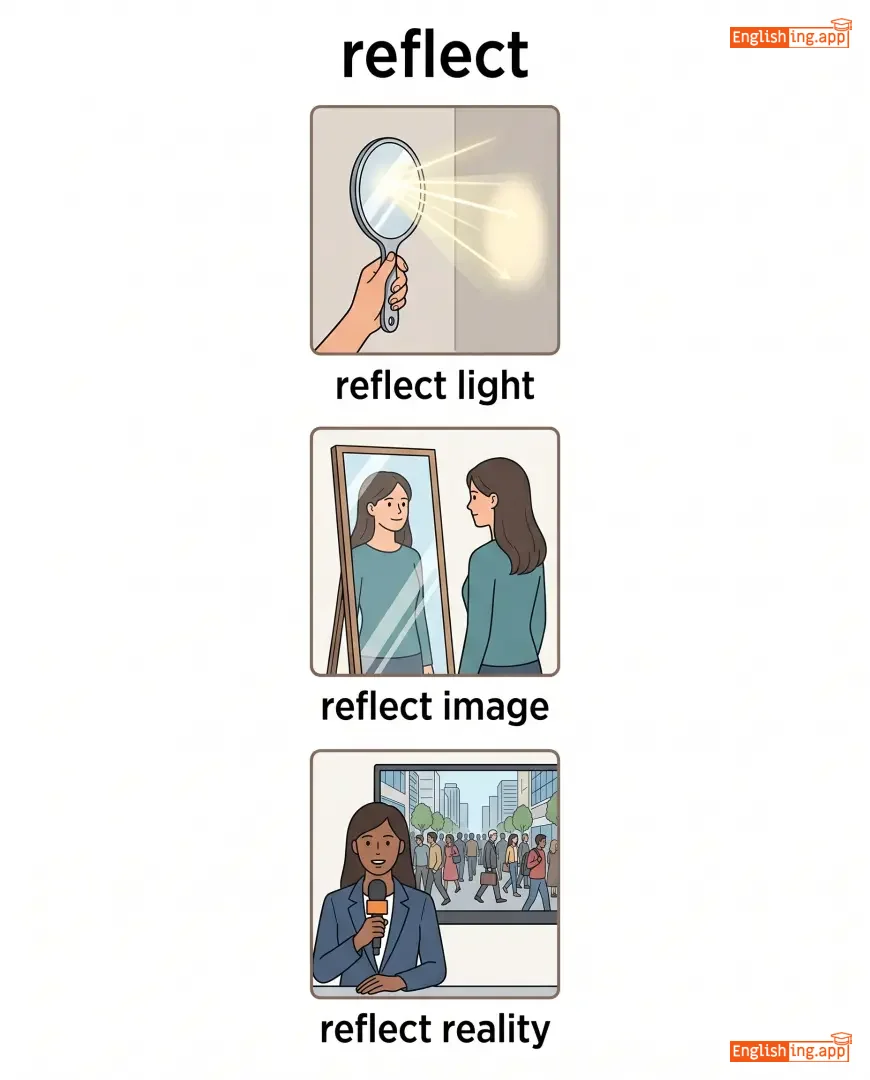
to show an image as in a mirror, or to think deeply about something
••••••
|
The mirror reflects her smiling face.
镜子反射出她微笑的脸。
••••••
|
镜子反射出她微笑的脸。
Jìngzi fǎnshè chū tā wēixiào de liǎn.
••••••
|
reflect on
反思
••••••
|
to think carefully about something
••••••
|
反思
fǎnsī
••••••
|
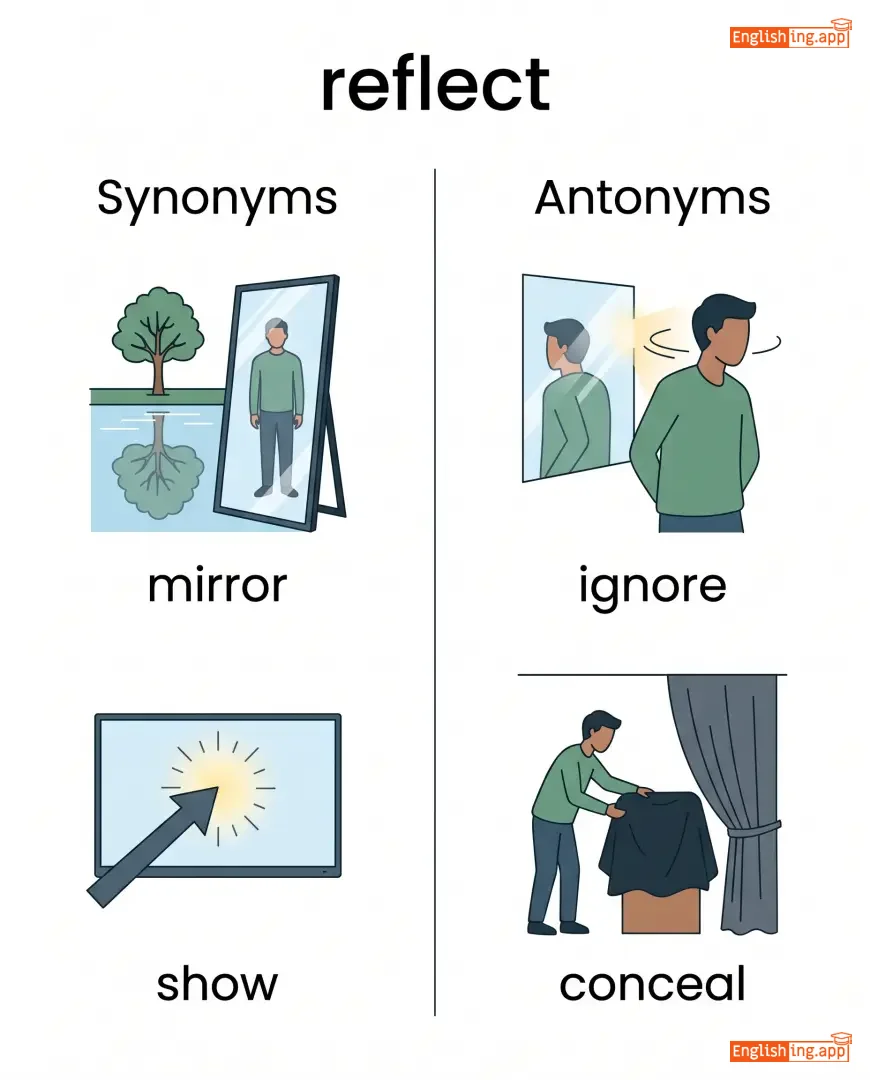
mirror, show, indicate, reveal, ponder
••••••
|
ignore, conceal, absorb
••••••
|
reflect light, reflect image, reflect reality, reflect values
••••••
|
镜子反射,我们反思。
••••••
|
|
🔮
••••••
|
/rɪˈflɛkʃən/
noun
(rɪˈflɛkʃən)
••••••
|

|
反射
fǎnshè
••••••
|
- •••••• | - •••••• | - •••••• | - •••••• |
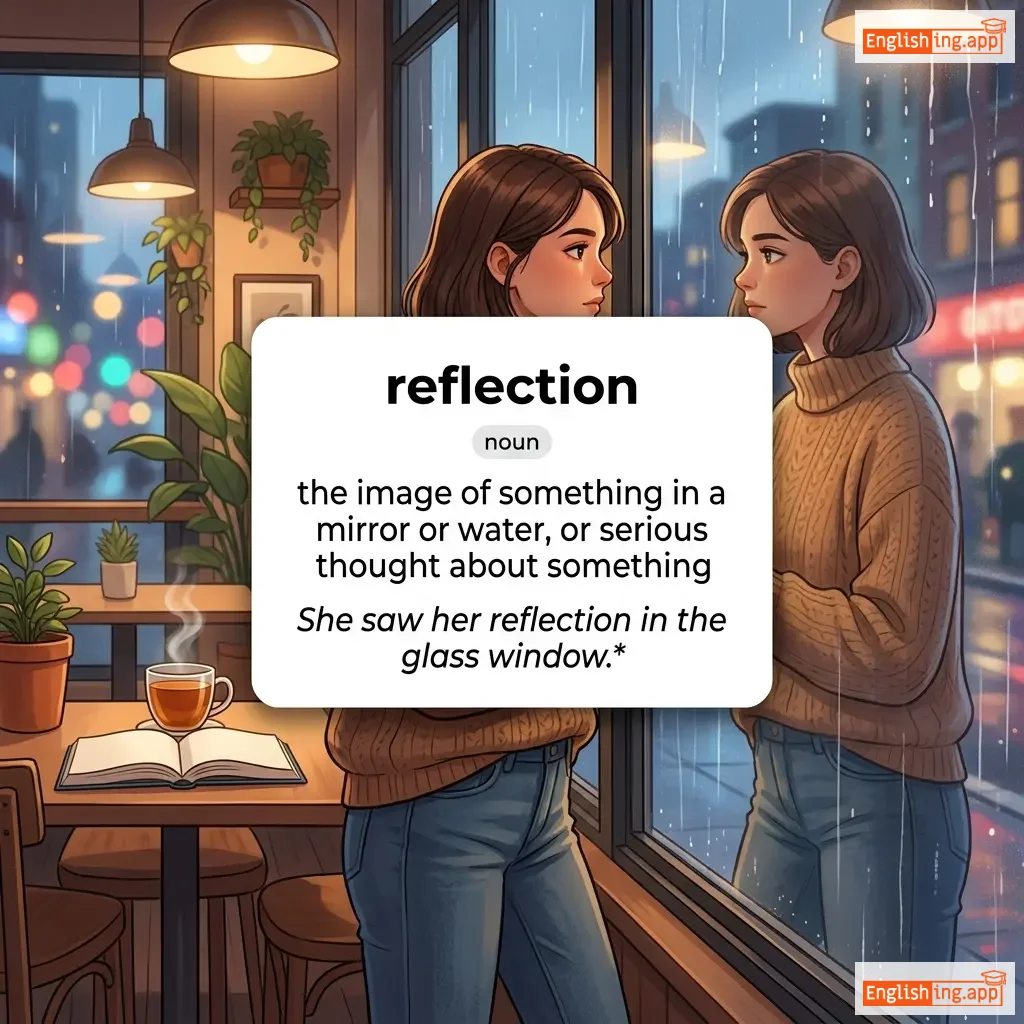
the image of something in a mirror or water, or serious thought about something
••••••
|
She saw her reflection in the glass window. |
她在玻璃窗中看到了自己的倒影。
Tā zài bōlí chuāng zhōng kàn dào le zìjǐ de dǎoyǐng.
••••••
|
a moment of reflection |
a short time spent thinking deeply
••••••
|
反思的时刻
fǎnsī de shíkè
••••••
|
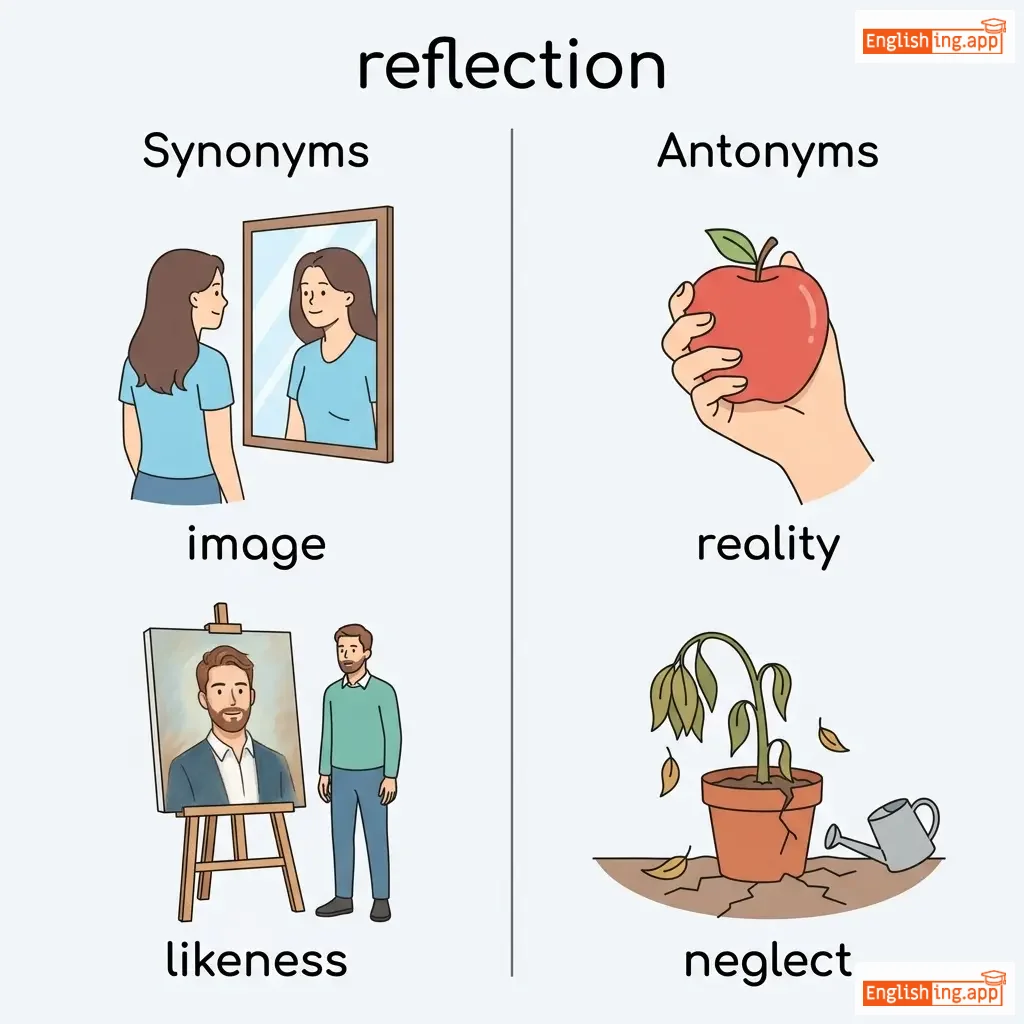
image, likeness, contemplation, thought, consideration
••••••
|
reality, neglect, disregard
••••••
|
reflection in the mirror, reflection of light, reflection on life
••••••
|
Reflection 就像在镜子里看到自己的样子,也意味着深入思考的时刻。
••••••
|
|
♻️
••••••
|
/rɪˈfɔːrm/
verb
(瑞福姆)
••••••
|
|
改革
gaige
••••••
|
reformed
瑞福姆德
••••••
|
reformed
瑞福姆德
••••••
|
reforms
瑞福姆斯
••••••
|
reforming
瑞福姆英
••••••
|
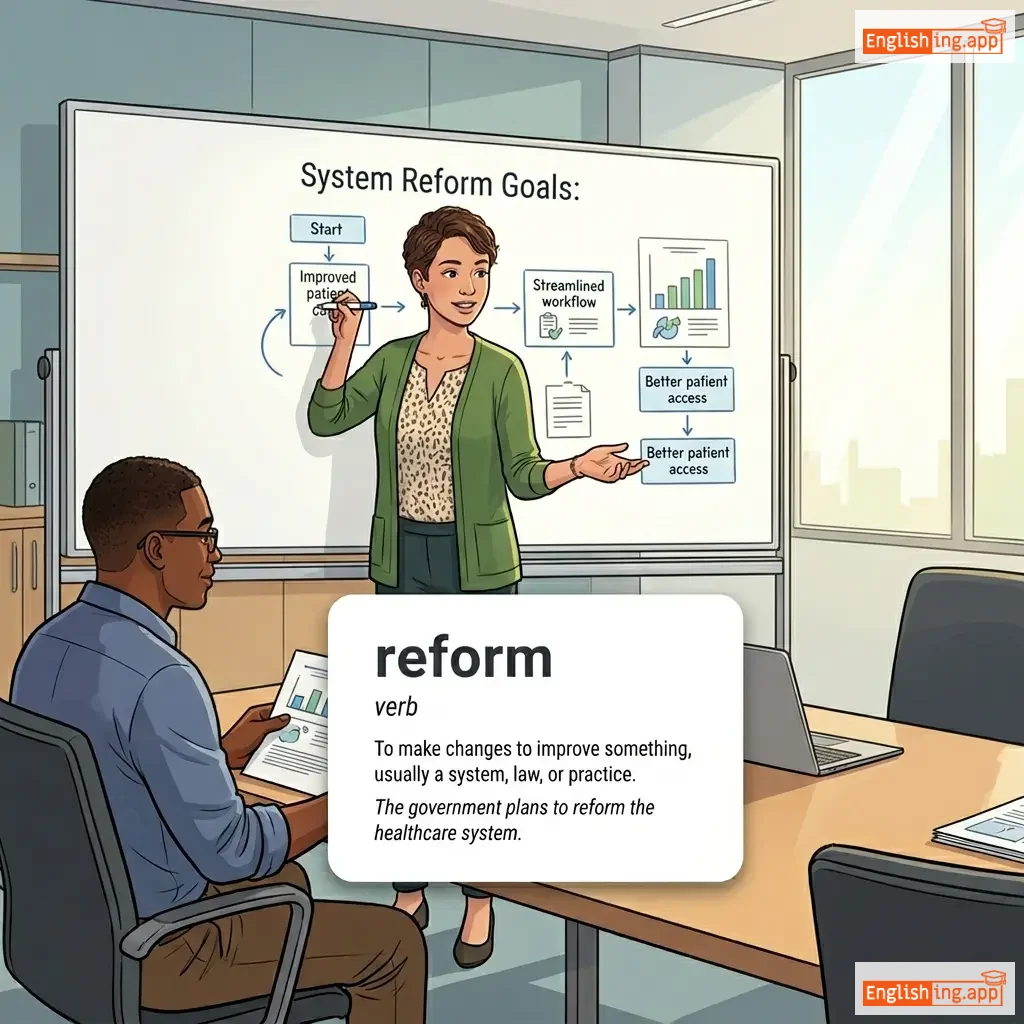
To make changes to improve something, usually a system, law, or practice.
••••••
|
The government plans to reform the healthcare system.
政府计划改革医疗保健系统。
••••••
|
政府计划改革医疗保健系统。
zheng fu ji hua gai ge yi liao bao jian xi tong.
••••••
|
reform school
改革学校
••••••
|
An institution for young offenders to correct behavior
••••••
|
改革学校
gai ge xue xiao
••••••
|
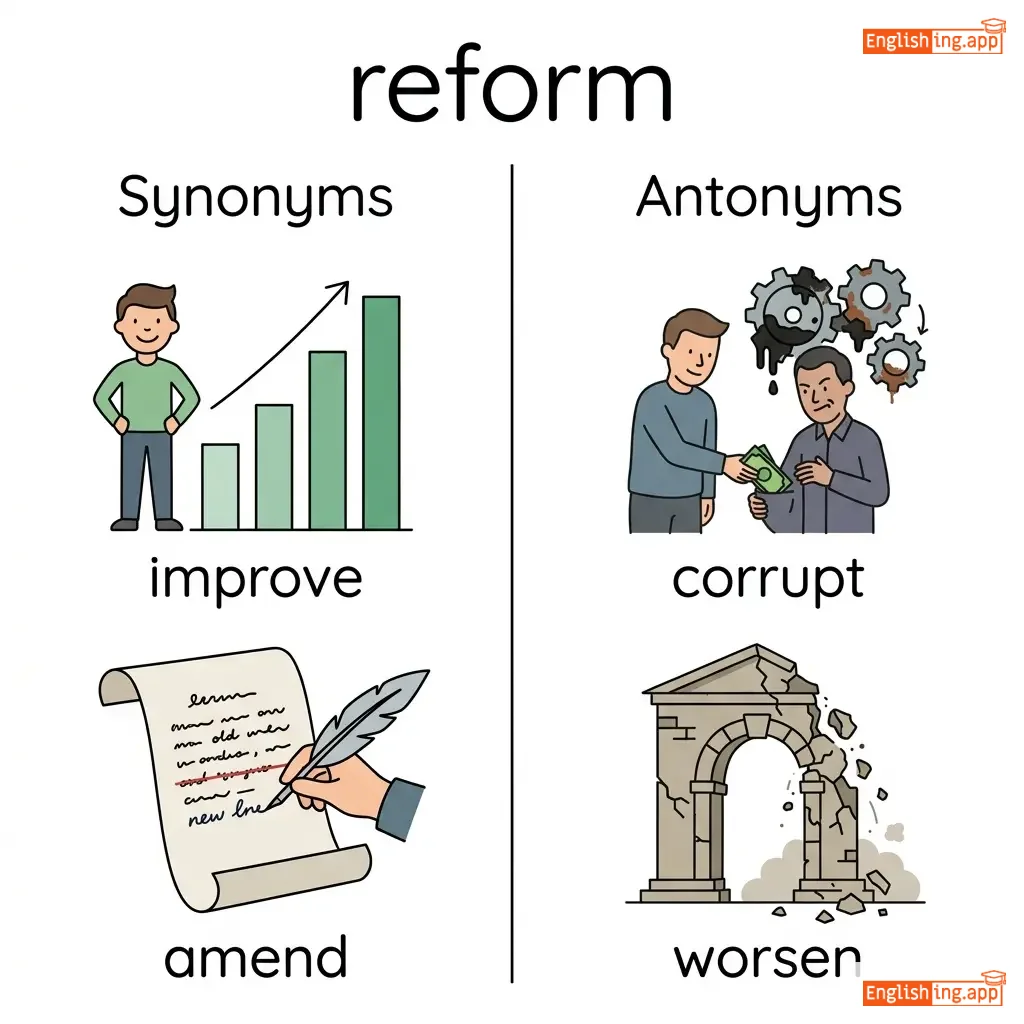
improve, amend, reorganize, change, transform
••••••
|
corrupt, worsen, damage
••••••
|
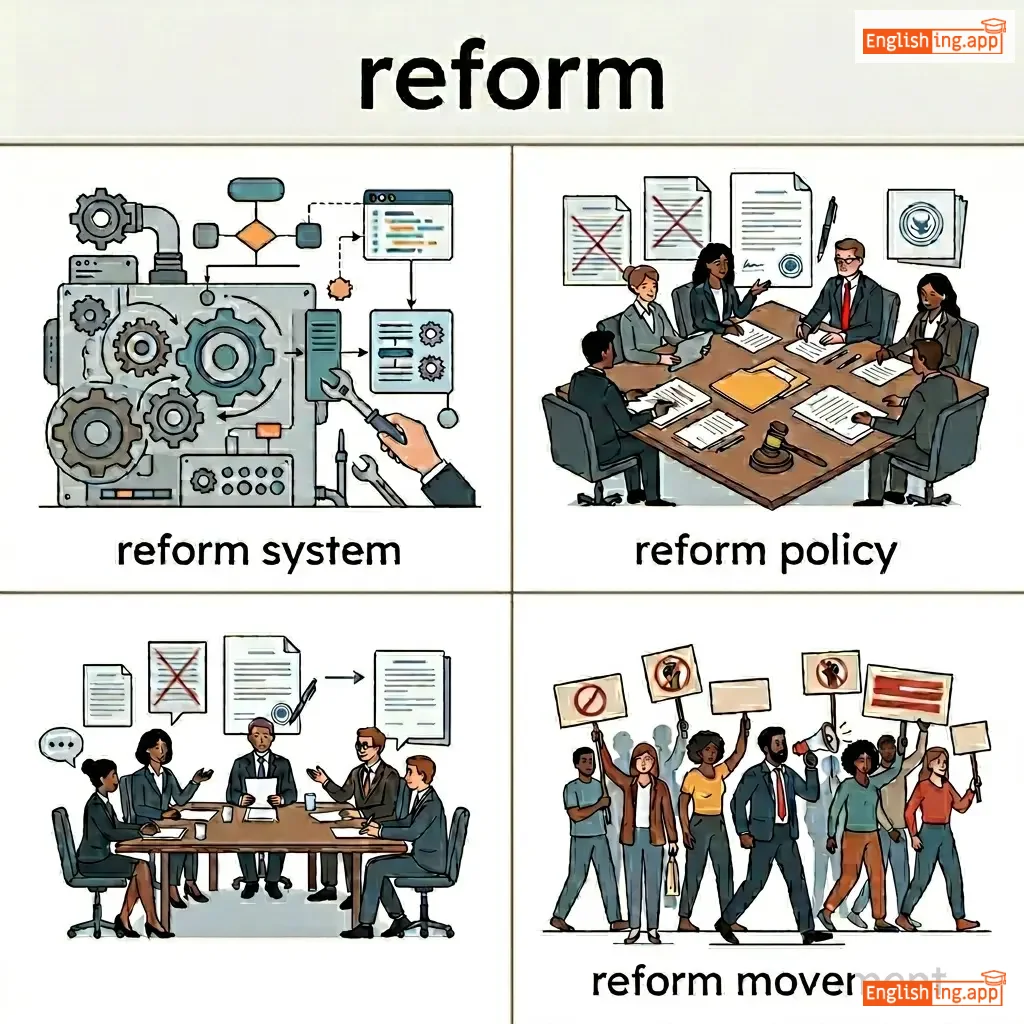
reform system, reform policy, reform movement, social reform
••••••
|
Re-form = 再次构建,意即改革或改进。
••••••
|
|
🧊❄️
••••••
|
/rɪˈfrɪdʒ.ər.eɪ.tər/
noun
(冰箱)
••••••
|
- •••••• |
冰箱
bīngxiāng
••••••
|
- •••••• | - •••••• | - •••••• | - •••••• |
an appliance for keeping food and drinks cold
••••••
|
Please put the milk in the refrigerator to keep it fresh.
请把牛奶放进冰箱里保持新鲜。
••••••
|
请把牛奶放进冰箱里保持新鲜。
qǐng bǎ niúnǎi fàng jìn bīngxiāng lǐ bǎochí xīnxiān.
••••••
|
- •••••• | - •••••• | - •••••• |
fridge, icebox, cooler
••••••
|
oven, heater
••••••
|
refrigerator door, refrigerator compartment, energy-efficient refrigerator
••••••
|
冰箱 (bīngxiāng) sounds like ‘ice’ – it’s a cool place for your milk!
••••••
|
|
🏚️
••••••
|
/ˈrɛfjuːdʒ/
noun
(rèf-yú)
••••••
|
- •••••• |
避难所
bìnàn suǒ
••••••
|
- •••••• | - •••••• | - •••••• | - •••••• |
a place that provides shelter or protection from danger or distress
••••••
|
The villagers took refuge in the temple during the storm. |
村民们在风暴期间躲进了寺庙避难。
Cūnmínmen zài fēngbào qījiān duǒ jìnle sìmiào bìnàn.
••••••
|
take refuge in |
to seek safety or comfort in something
••••••
|
寻找避难所
xúnzhǎo bìnàn suǒ
••••••
|
shelter, sanctuary, haven, asylum, retreat
••••••
|
danger, exposure, threat
••••••
|
seek refuge, take refuge, offer refuge, find refuge
••••••
|
避难所 = refuge, 风暴中的庇护所
••••••
|
|
🏠
••••••
|
/ˌref.jʊˈdʒiː/
noun
(难民)
••••••
|
- •••••• |
难民
nanmin
••••••
|
- •••••• | - •••••• | - •••••• | - •••••• |
a person who has been forced to leave their country in order to escape war, persecution, or natural disaster
••••••
|
The refugee camp provided temporary shelter for thousands of displaced families. |
难民营为成千上万的流离失所的家庭提供了临时庇护。
Nanmin ying wei chengqian shangwan de liuli shisuo de jiating tigong le linshi bihu
••••••
|
- •••••• | - •••••• | - •••••• |
asylum seeker, displaced person, exile, migrant
••••••
|
citizen, resident, native
••••••
|
refugee camp, refugee crisis, political refugee, refugee status
••••••
|
难民 = 离开家园,寻找庇护
••••••
|
|
🚫
••••••
|
/rɪˈfjuːzəl/
noun
(rìfūzā)
••••••
|
- •••••• |
拒绝
jujue
••••••
|
- •••••• | - •••••• | - •••••• | - •••••• |
An act of saying or showing that one will not do or accept something.
••••••
|
Her refusal to cooperate delayed the project.
她拒绝合作延误了项目。
••••••
|
她拒绝合作延误了项目。
Ta jujue hezuo yanwu le xiangmu.
••••••
|
point-blank refusal
直接拒绝
••••••
|
a direct and absolute rejection
••••••
|
直接拒绝
Zhi jie jujue
••••••
|
denial, rejection, declination, noncompliance
••••••
|
acceptance, agreement
••••••
|
strong refusal, outright refusal, firm refusal
••••••
|
Refuse = 拒绝,直接拒绝 🚫
••••••
|
|
♻️
••••••
|
/rɪˈfjuːz/ (verb), /ˈrɛfjuːs/ (noun)
verb, noun
••••••
|
- •••••• | - •••••• |
refused
••••••
|
refused
••••••
|
refuses
••••••
|
refusing
••••••
|
As a verb: to say no to something offered or requested; as a noun: waste material; rubbish.
••••••
|
He refused to answer the question, and the street was full of refuse. |
- •••••• |
refuse to budge |
to not change one’s opinion or position
••••••
|
- •••••• |
decline, reject, deny, rubbish, garbage
••••••
|
accept, approve, agree
••••••
|
refuse offer, refuse entry, refuse treatment, household refuse
••••••
|
No •••••• |
|
🔁
••••••
|
/rɪˈɡeɪn/
verb
(ree-gein)
••••••
|
|
恢复
huifu
••••••
|
regained
ree-geind
••••••
|
regained
ree-geind
••••••
|
regains
ree-geins
••••••
|
regaining
ree-geining
••••••
|
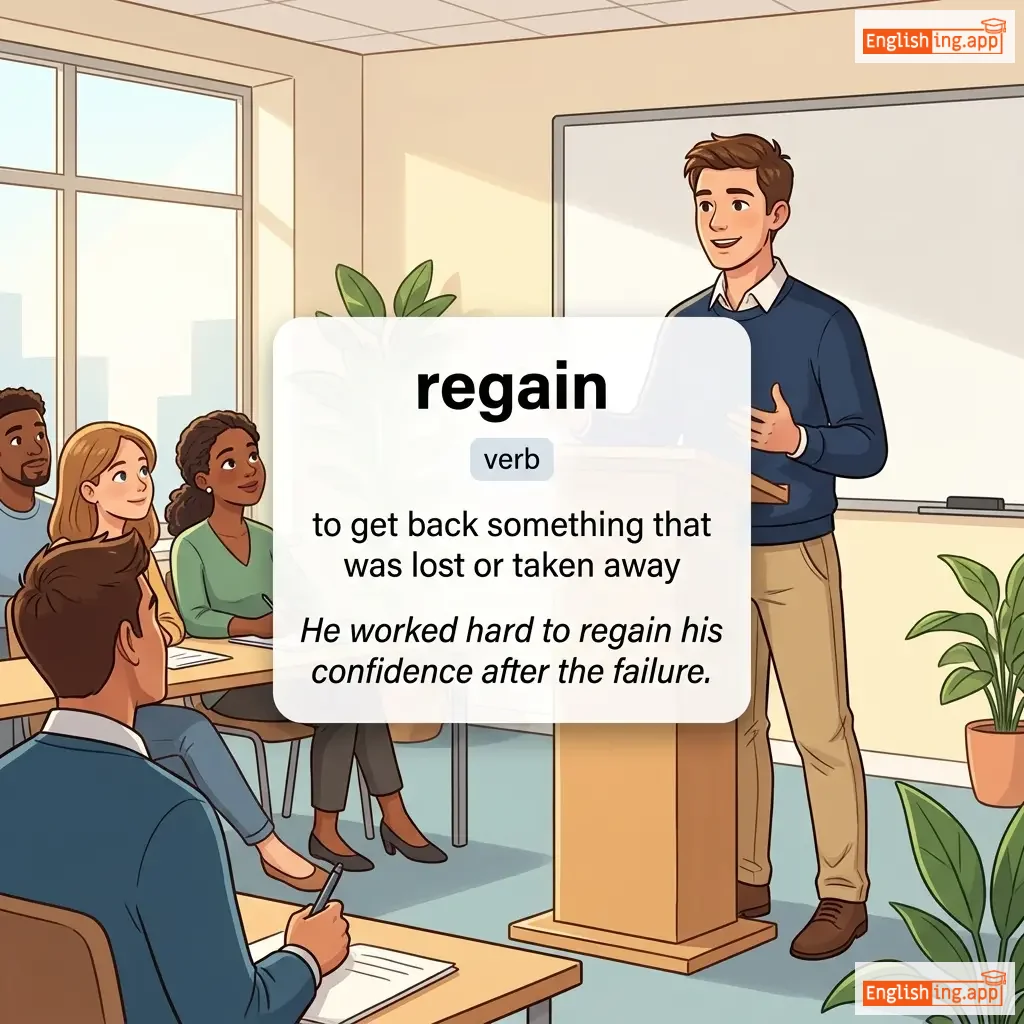
to get back something that was lost or taken away
••••••
|
He worked hard to regain his confidence after the failure.
他在失败后努力恢复自信。
••••••
|
他在失败后努力恢复自信。
Ta zai shibai hou nuli huifu zixin.
••••••
|
regain consciousness
恢复意识
••••••
|
to wake up or become aware again after fainting
••••••
|
恢复意识
huifu yishi
••••••
|
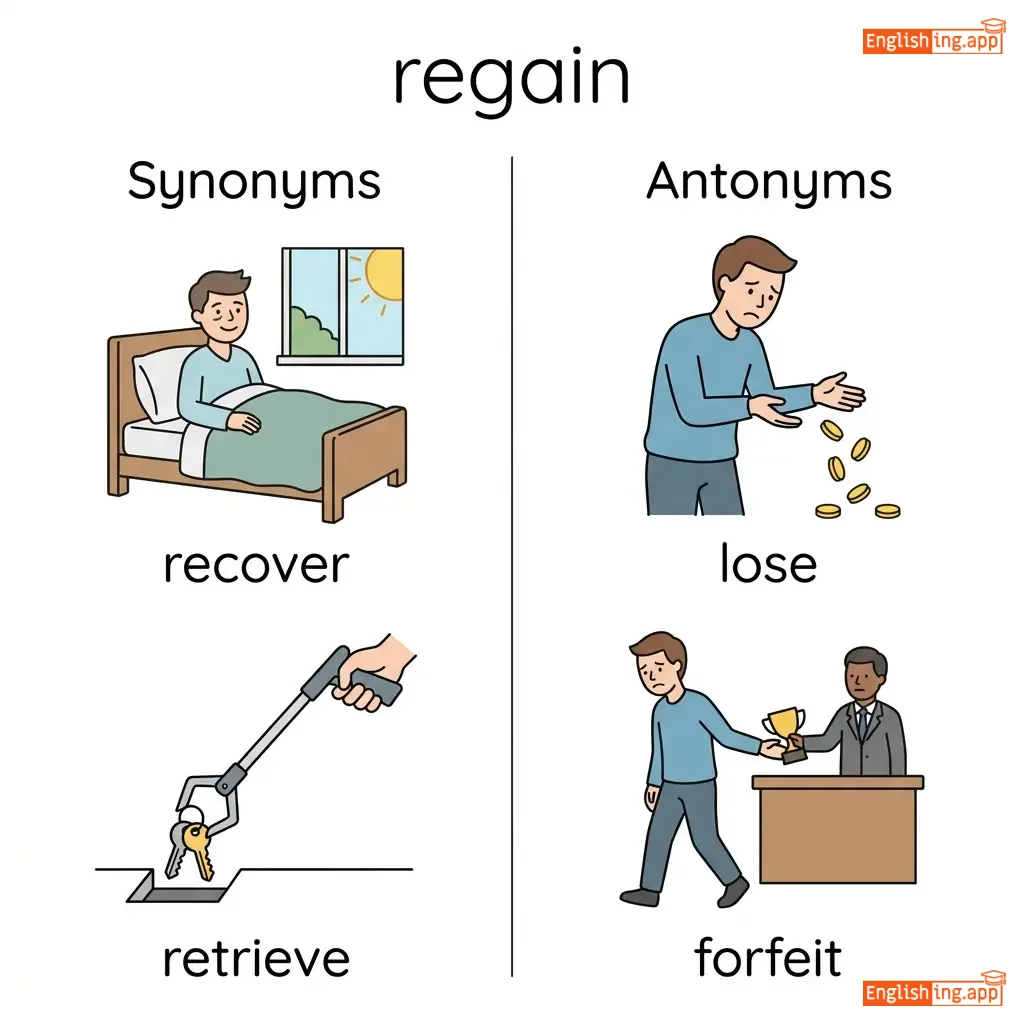
recover, retrieve, recapture, reclaim
••••••
|
lose, forfeit, surrender
••••••
|
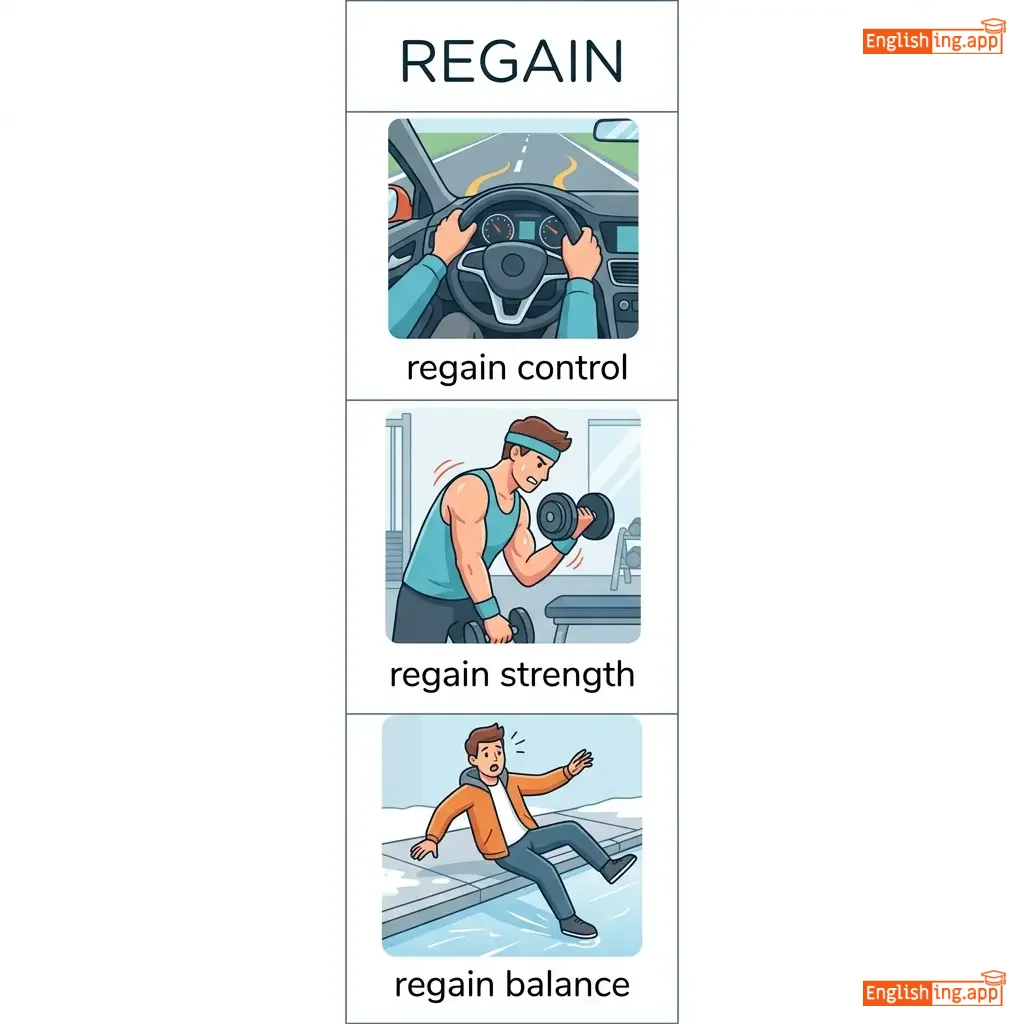
regain control, regain strength, regain balance, regain confidence
••••••
|
Regain 意味着重新获得 — 恢复失去的东西!
••••••
|
|
👀
••••••
|
/rɪˈɡɑrd/
noun/verb
(瑞格德)
••••••
|
- •••••• |
尊敬,考虑
zunjing, kelao
••••••
|
regarded
瑞格德
••••••
|
regarded
瑞格德
••••••
|
regards
瑞格兹
••••••
|
regarding
瑞格丁
••••••
|
consider or think of in a specified way
••••••
|
She regarded him as her mentor.
她把他看作她的导师。
••••••
|
她把他视为她的导师。
Ta ba ta shi wei ta de daoshi.
••••••
|
With regard to
关于
••••••
|
concerning or in relation to
••••••
|
关于
guanyu
••••••
|
respect, consider, view, esteem
••••••
|
disregard, ignore
••••••
|
regard highly, hold in regard, with regard to, in regard to
••••••
|
'Regard' 在中文中是'尊敬',记住它!
••••••
|
|
📜
••••••
|
/rɪˈɡɑrdɪŋ/
preposition
(rɪˈɡɑrdɪŋ)
••••••
|
- •••••• |
关于
guanyu
••••••
|
- •••••• | - •••••• | - •••••• | - •••••• |
concerning or relating to
••••••
|
The decision regarding the meeting will be made tomorrow. |
关于会议的决定将在明天做出。
Guanyu huiyi de jueding jiang zai mingtian zuochu.
••••••
|
- •••••• | - •••••• | - •••••• |
concerning, about, in relation to
••••••
|
- •••••• |
regarding the matter, regarding the issue, regarding the project
••••••
|
关于会议的决定将在明天做出
••••••
|
|
🚶
••••••
|
/rɪˈɡɑrdləs/
adverb
(rɪˈɡɑrdləs)
••••••
|
- •••••• |
不管
bùguǎn
••••••
|
- •••••• | - •••••• | - •••••• | - •••••• |
without paying attention to the current situation or condition
••••••
|
She will go to the party regardless of the weather. |
她将去派对,不管天气如何。
Tā jiāng qù pàiduì, bùguǎn tiānqì rúhé.
••••••
|
Regardless of |
despite any obstacles or conditions
••••••
|
不管
bùguǎn
••••••
|
anyway, nonetheless, in spite of, no matter
••••••
|
considering, depending
••••••
|
regardless of the consequences, regardless of the weather
••••••
|
不管天气如何,总是记得‘不管任何情况’
••••••
|

