語彙集

英単語辞書 | 単語の意味、定義、例文

adjective/verb C1
/ˈleɪ.bərd/
苦労した (kurou shita)

done with great effort and difficulty; or past tense of labor

"He gave a labored explanation that confused the audience."

"彼は観客を混乱させた苦しげな説明をした。" (Kare wa kankyaku o konran saseta kurushige na setsumei o shita.)
adjective C1
/ləˈbɔːr.i.əs/
骨の折れる (hone no oreru)

requiring considerable effort and time; difficult and hard-working

"Writing the long report was a laborious task."
"長いレポートを書くことは骨の折れる仕事でした。" (Nagai repōto o kaku koto wa hone no oreru shigoto deshita.)
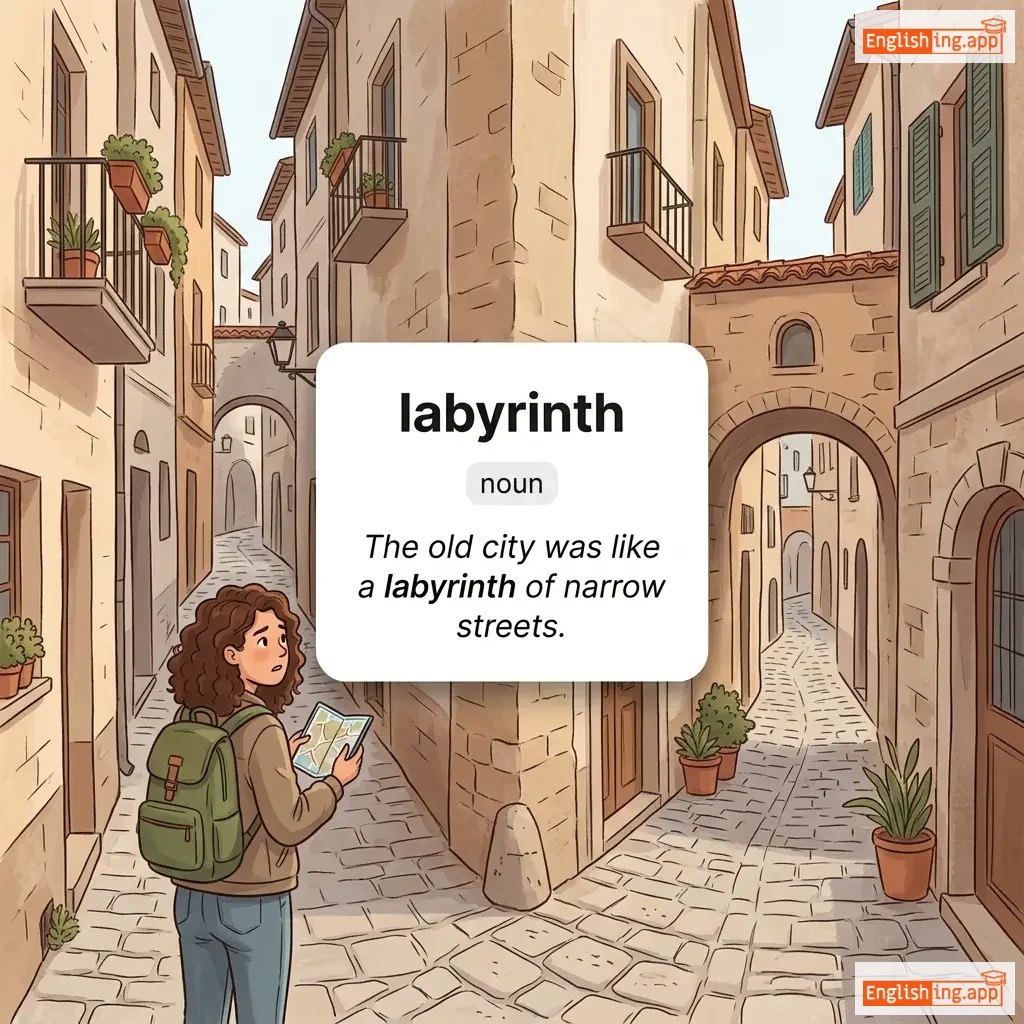
labyrinth definition card — visual illustration of the meaning
noun C1
/ˈlæb.ə.rɪnθ/
迷路 (meiro)

a complex, confusing network of paths or passages; something very intricate or confusing

"The old city was like a labyrinth of narrow streets."
"古い街は狭い通りの迷路のようでした。" (Furui machi wa semai tōri no meiro no yō deshita.)
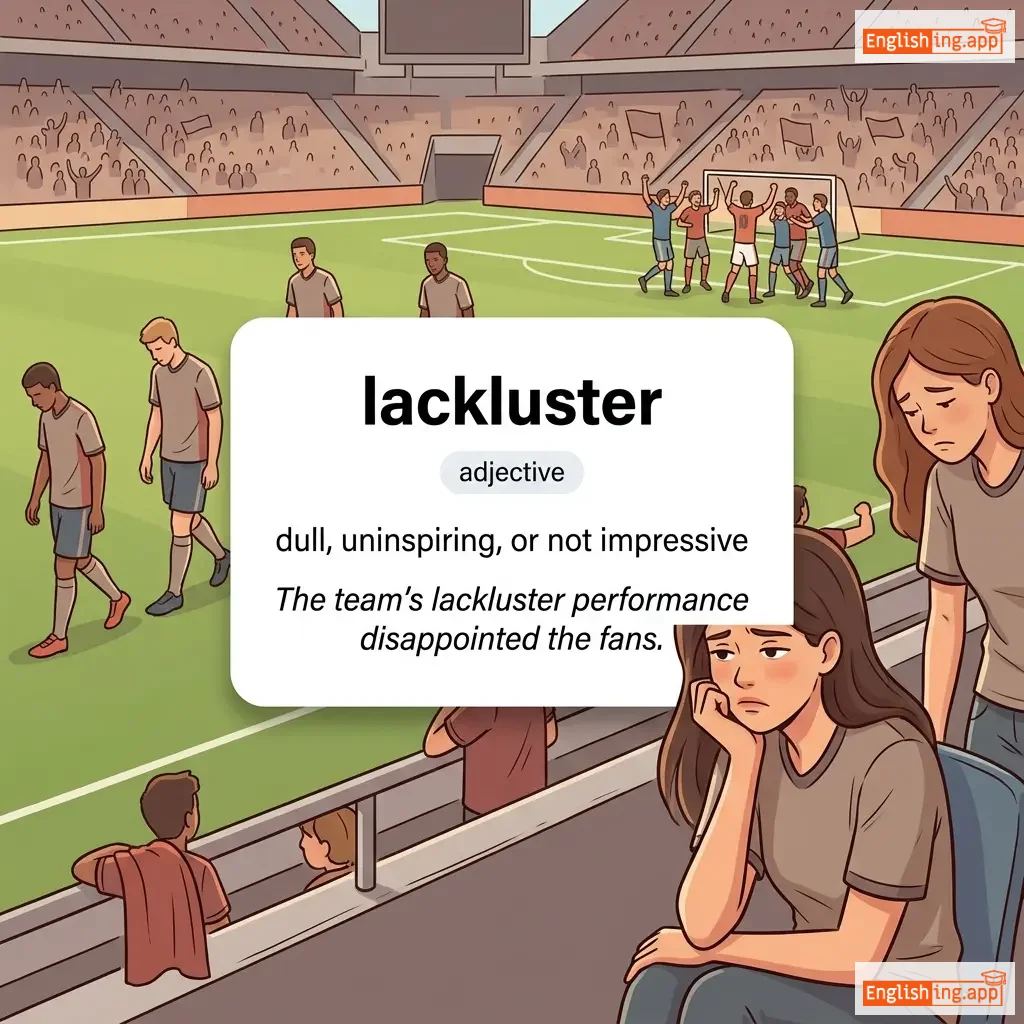
lackluster definition card — visual illustration of the meaning
adjective C1
/ˈlækˌlʌstər/
冴えないまたはインスピレーションのない (saenai matawa insupirēshon no nai)

dull, uninspiring, or not impressive

"The team's lackluster performance disappointed the fans."

"チームの冴えないパフォーマンスはファンを失望させました。" (Chīmu no saenai pafōmansu wa fan o shitsubō sasemashita.)
adjective C1
/ˈlæk.tɪk/
乳または乳酸に関連する (nyū mata wa nyūsann ni kanren suru)

Relating to milk or lactic acid.

"Intense exercise can lead to a buildup of lactic acid in the muscles."

"激しい運動は筋肉に乳酸が蓄積される原因となることがあります。" (Hageshii undō wa kinniku ni nyūsann ga chikuseki sareru gen'in to naru koto ga arimasu.)
noun C1
/ˈlæd.i/
若い男の子 (wakai otokonoko)

A young boy or lad.

"The old man gave the young laddie a kind smile."
"老人は若い男の子に親切な笑顔をくれました。" (Rojin wa wakai otokonoko ni shinsetsu na egao o kuremashita.)
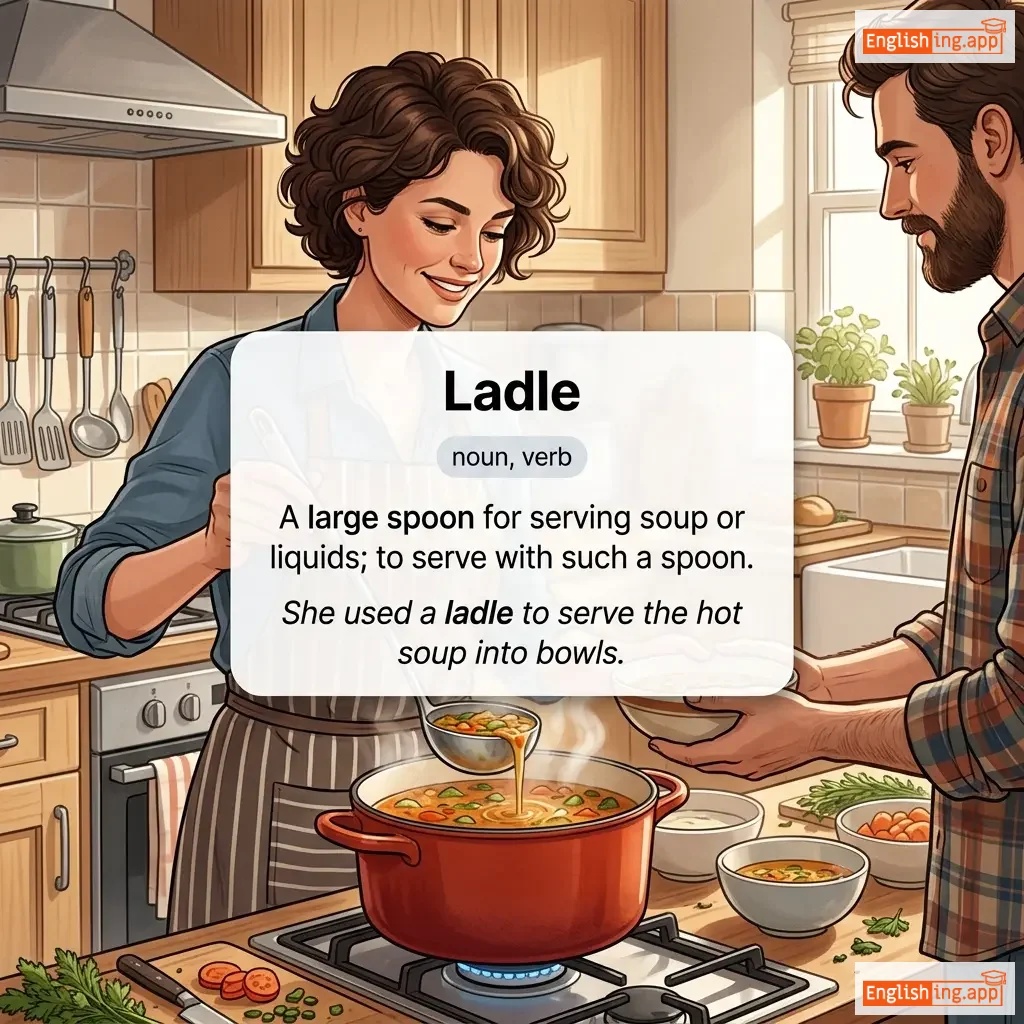
Ladle definition card — visual illustration of the meaning
noun, verb C1
/ˈleɪ.dl̩/
幸せ (shiawase)

A large spoon for serving soup or liquids; to serve with such a spoon.

"She used a ladle to serve the hot soup into bowls."

"彼女は賞を受け取ったとき、自分の幸せを隠すことができませんでした。" (Kanojo wa shō o uketotta toki, jibun no shiawase o kakusu koto ga dekimasen deshita.)
verb, noun C1
/læɡ/
遅れるまたは遅延する (okureru mata wa chien suru)

To fall behind in movement, progress, or development; a delay or period of falling behind.

"The old computer tends to lag when running new software."

"古いコンピューターは新しいソフトウェアを実行するときにラグが発生しやすい。" (Furui konpyu-ta wa atarashii sofutouea wo jikkou suru toki ni ragu ga hassei shiyasui.)
noun C1
/ləˈɡuːn/
ラグーン (ragūn)

A shallow body of water separated from the sea by sandbars or reefs.

"We swam in the calm waters of the lagoon."
"私たちはラグーンの穏やかな水で泳ぎました。" (Watashitachi wa ragūn no odayakana mizu de oyogimashita.)
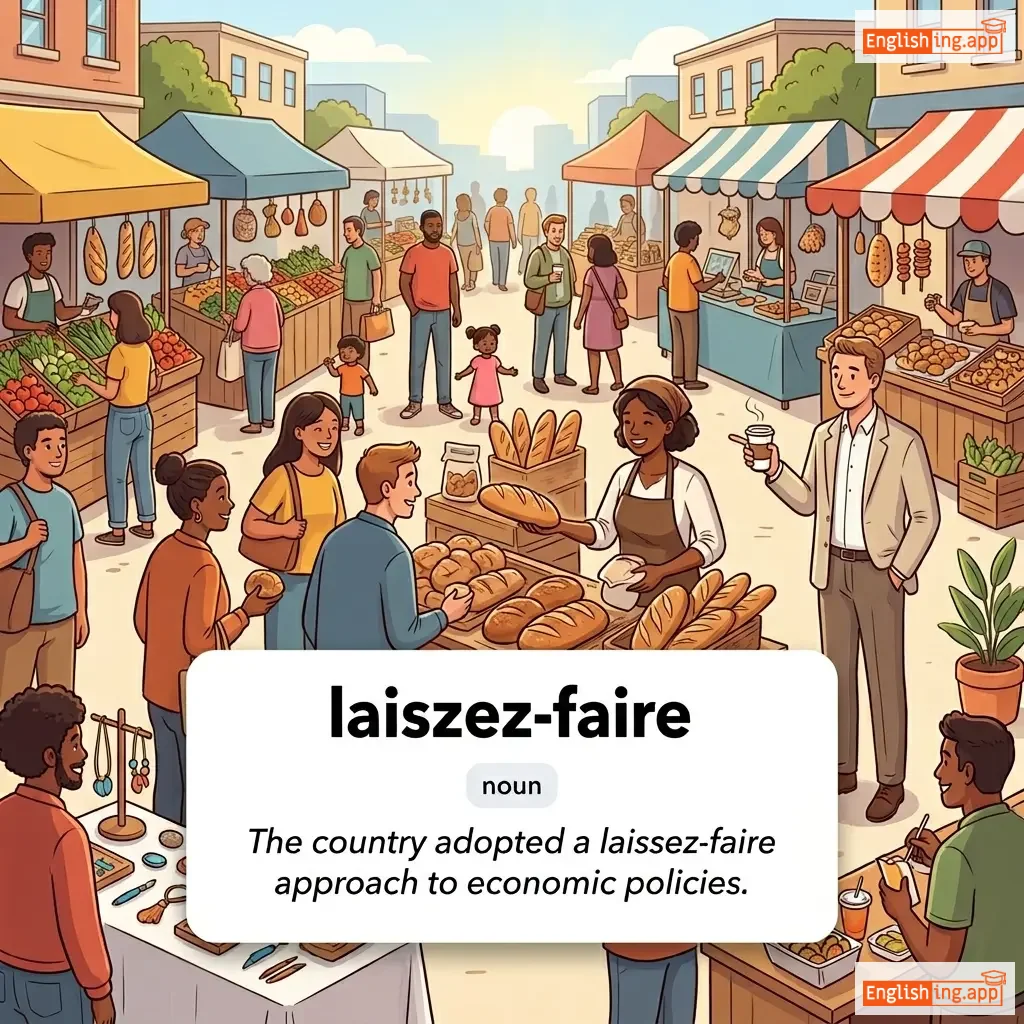
laissez-faire definition card — visual illustration of the meaning
noun C1
/ˌlɛ.seɪˈfɛər/
不干渉政策 (fukan-shou seisaku)

A free-market policy of minimal government intervention in economic affairs, characterized by non-interventionism and capitalism.

"The country adopted a laissez-faire approach to economic policies."
"その国は経済政策においてレセフェールアプローチを採用した。" (Sono kuni wa keizai seisaku ni oite reseferu apurōchi o sai-yō shita.)
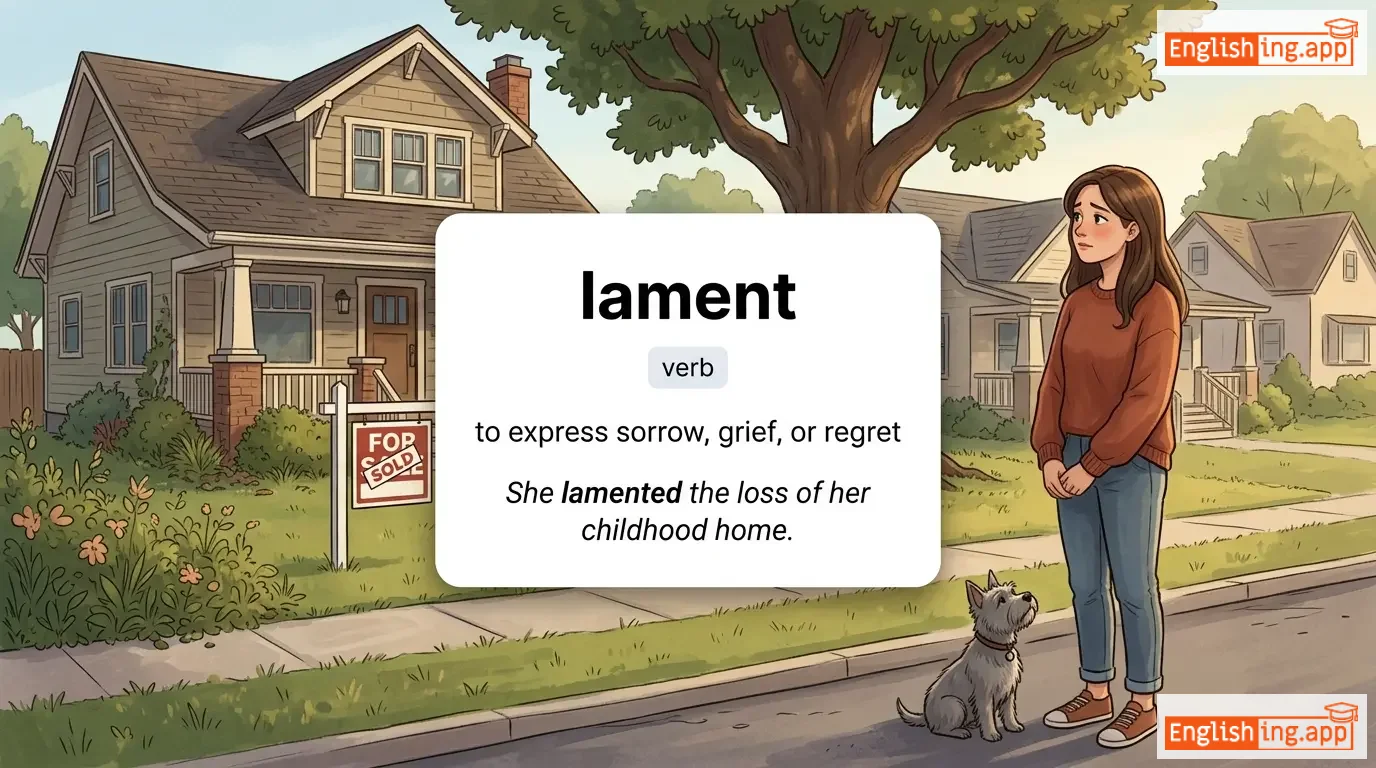
lament definition card — visual illustration of the meaning
verb C1
/ləˈmɛnt/
嘆く (nageku)

to express sorrow, grief, or regret

"She lamented the loss of her childhood home."

"彼女は幼少期の家の喪失を嘆いた。" (Kanojo wa youshouki no ie no soushitsu o nageita.)
verb C1
/ˈlæmɪˌneɪt/
ラミネート (ramineeto)

to cover or enclose something with a protective layer, usually plastic

"She laminated her important documents to protect them from damage."
"彼女は重要な書類をダメージから守るためにラミネートしました。" (Kanojo wa jūyō na shorui o damēji kara mamoru tame ni ramineeto shimashita.)
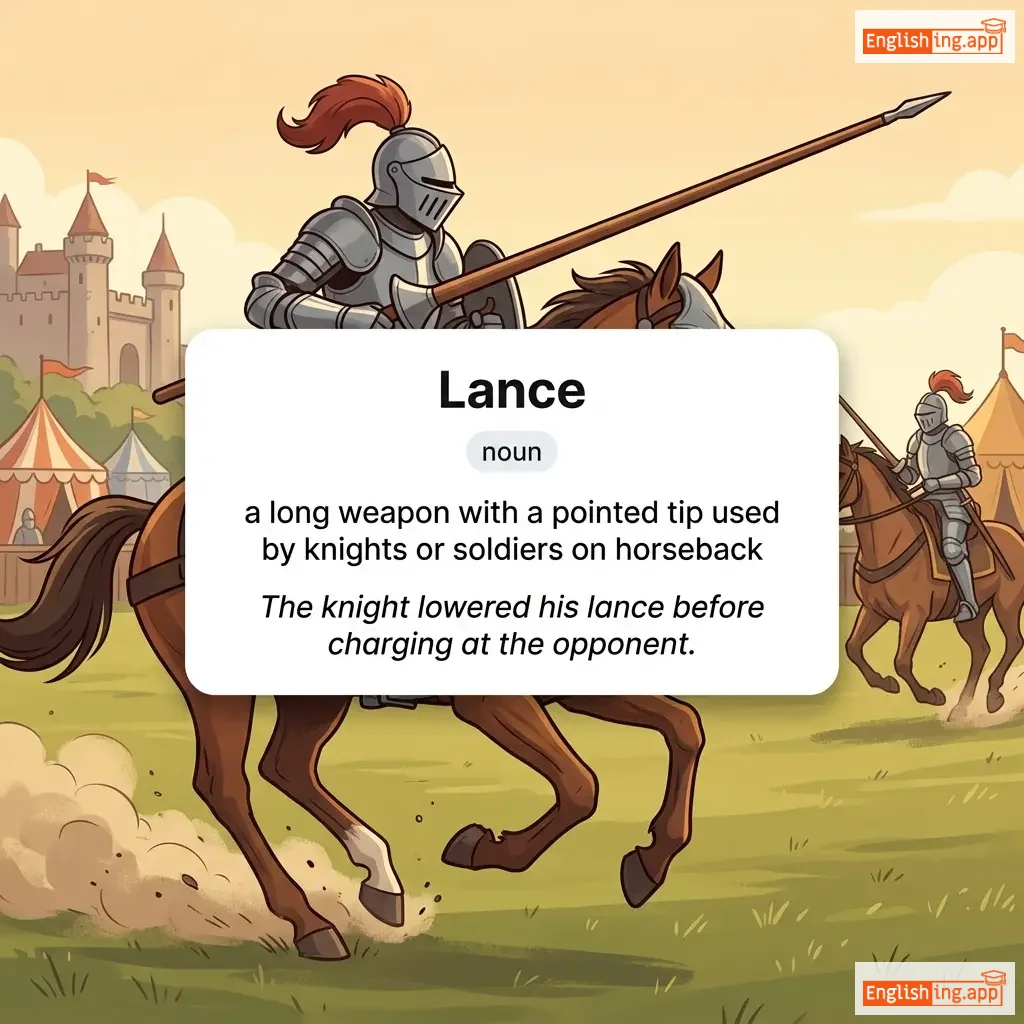
Lance definition card — visual illustration of the meaning
noun C1
/læns/
(yari)

a long weapon with a pointed tip used by knights or soldiers on horseback

"The knight lowered his lance before charging at the opponent."
"騎士は対戦相手に突進する前に槍を下ろした。" (Kishi wa taisen aite ni toshin suru mae ni yari o oroshita.)
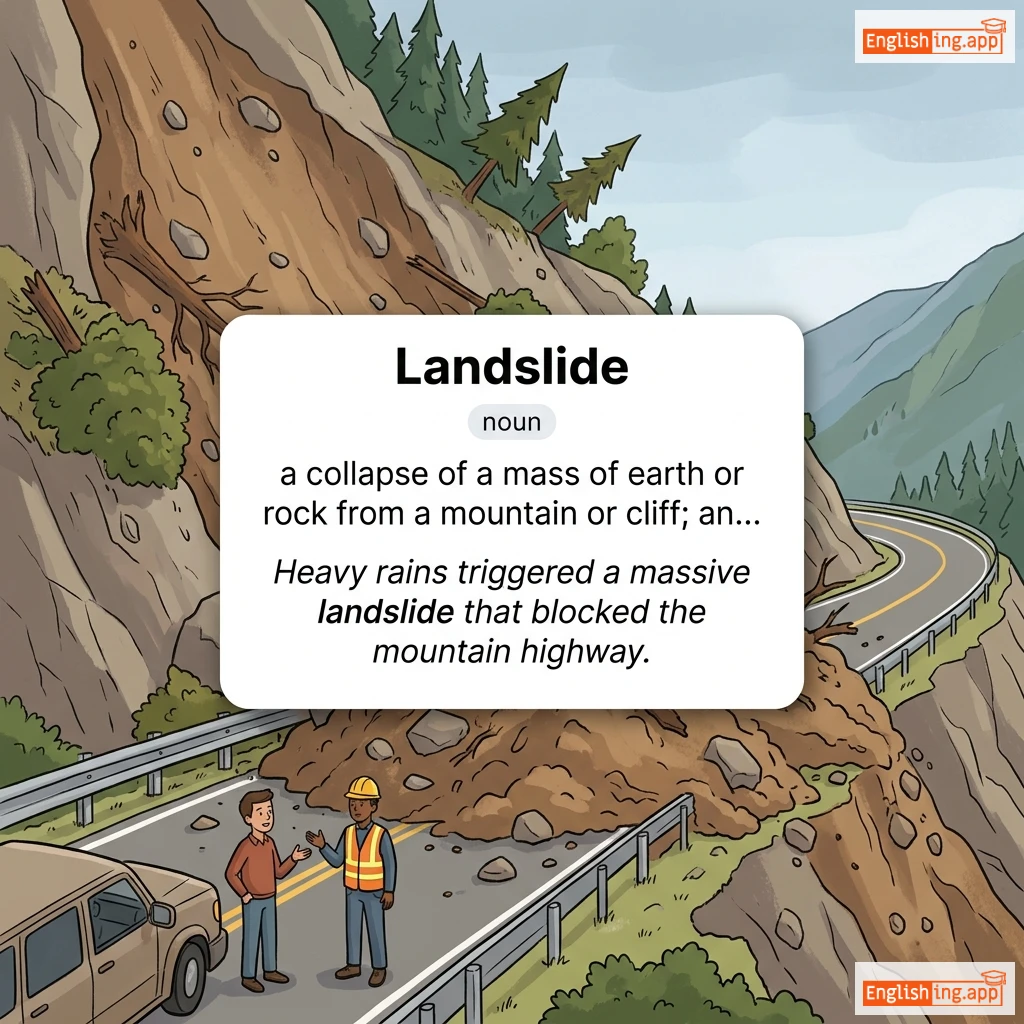
Landslide definition card — visual illustration of the meaning
noun C1
/ˈlænd.slaɪd/
地すべり (jisuberi)

a collapse of a mass of earth or rock from a mountain or cliff; an overwhelming victory in an election

"Heavy rains triggered a massive landslide that blocked the mountain highway."
"大雨が大規模な地すべりを引き起こし、山道をふさいだ。" (ooame ga daikibo na jisuberi o hikiokoshi, yamamichi o fusaida.)
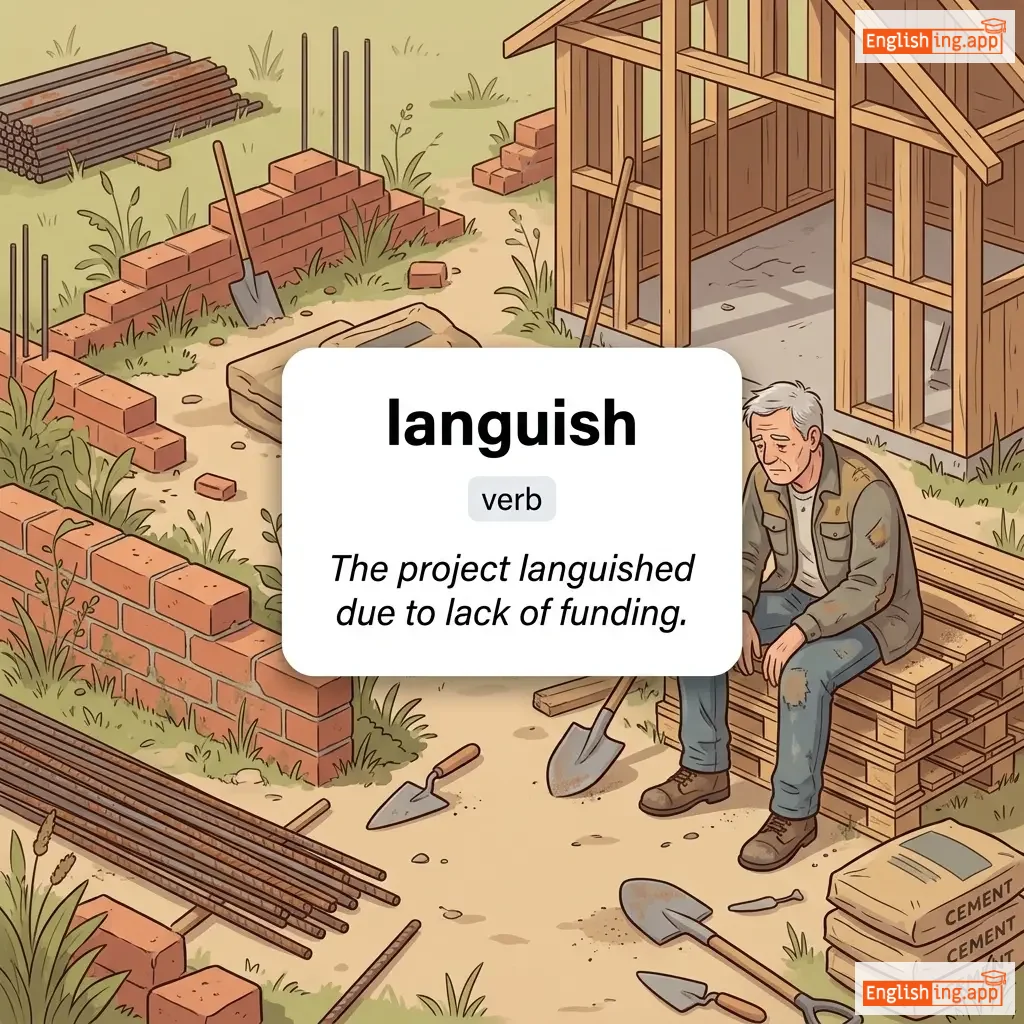
languish definition card — visual illustration of the meaning
verb C1
/ˈlæŋɡwɪʃ/
衰弱する / 無視される (suijaku suru / mushi sareru)

To become weak or feeble; to suffer neglect or remain in an unpleasant situation for a long time.

"The project languished due to lack of funding."
"プロジェクトは資金不足で停滞しました。" (Purojekuto wa shikin fusoku de teitai shimashita.)
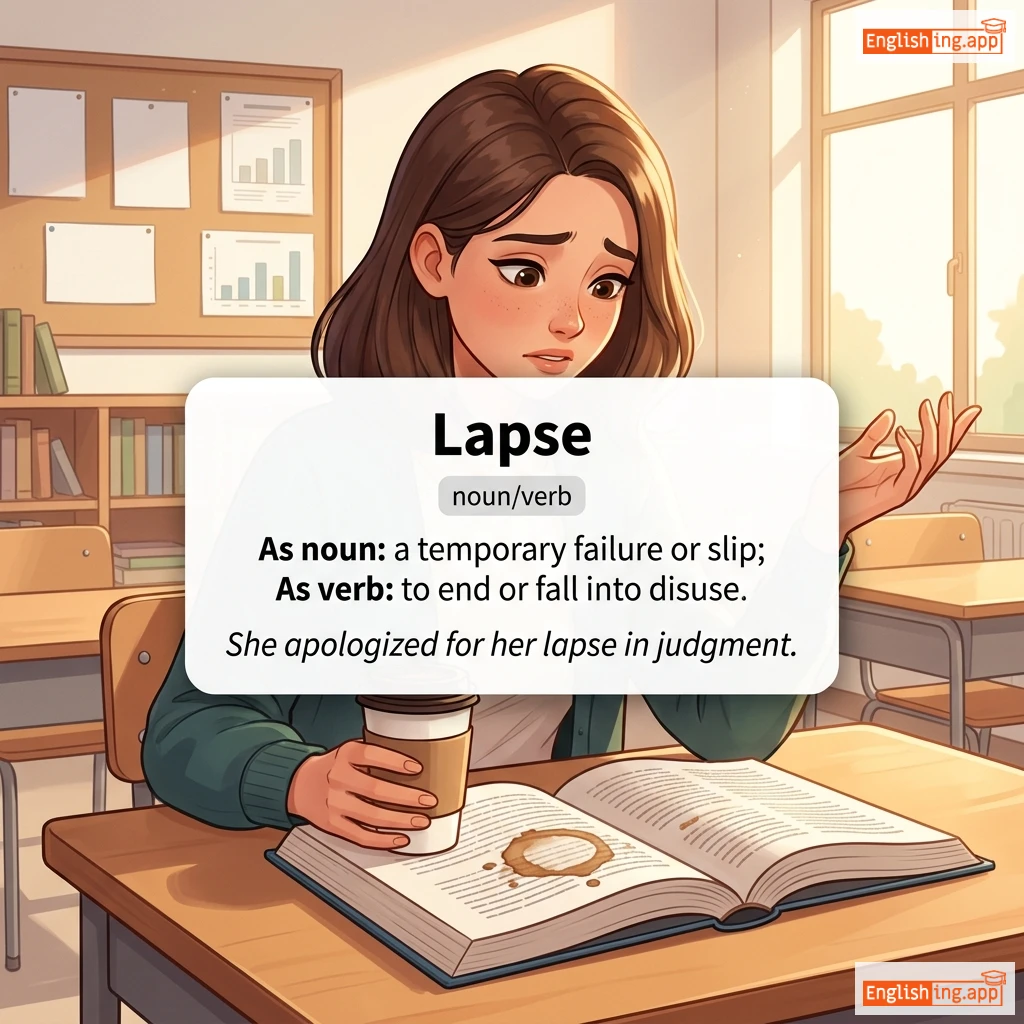
Lapse definition card — visual illustration of the meaning
noun/verb C1
/læps/
誤り (ayamari)

As noun: a temporary failure or slip; As verb: to end or fall into disuse.

"She apologized for her lapse in judgment."
"彼女は判断の誤りについて謝罪しました。" (Kanojo wa handan no ayamari ni tsuite shazai shimashita.)
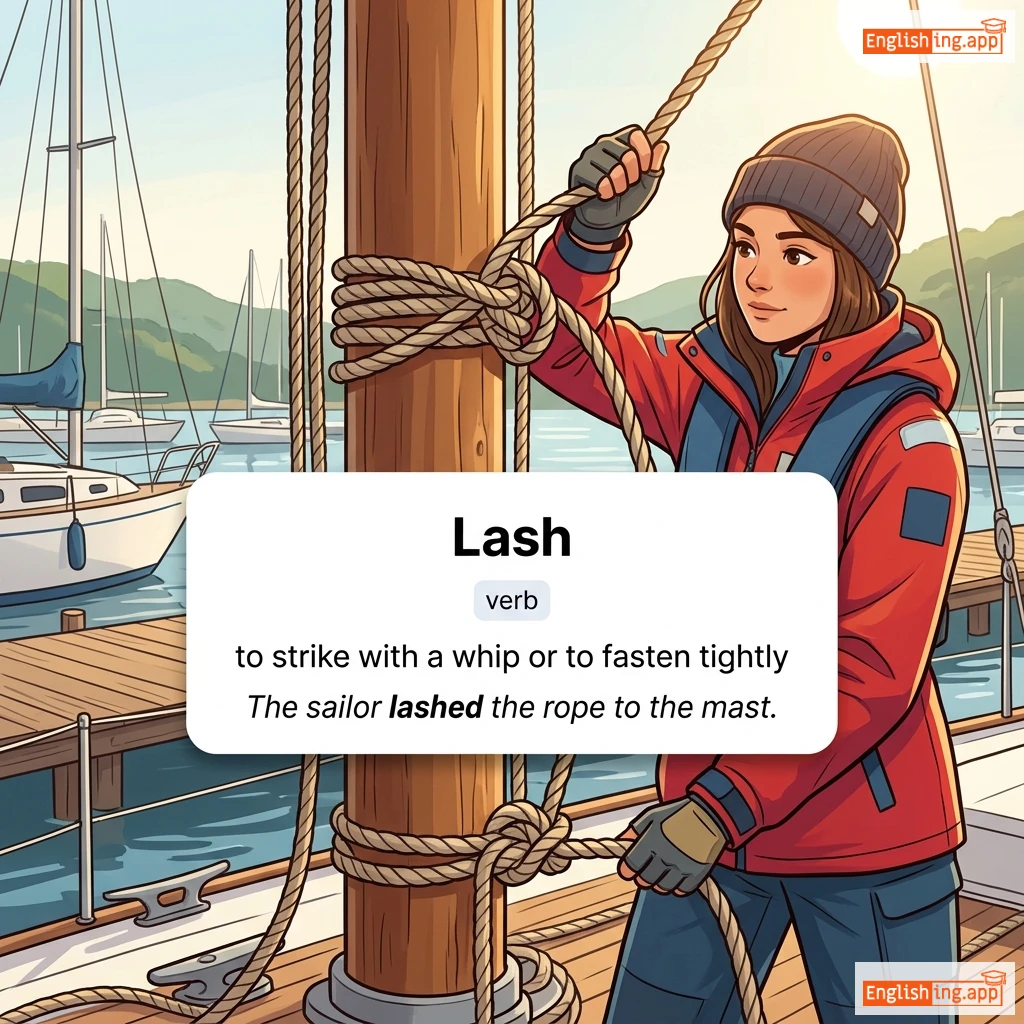
Lash definition card — visual illustration of the meaning
verb C1
/læʃ/
むち打つ/縛る (muchiutsu/shibaru)

to strike with a whip or to fasten tightly

"The sailor lashed the rope to the mast."

"船員はロープをマストに縛り付けた。" (Sen'in wa rōpu o masuto ni shibari tsuketa.)
verb C1
/lætʃ/
ラッチで閉める (ratchi de shimeru)

to fasten or close something with a latch

"She latched the door before leaving the house."
"彼女は家を出る前にドアをラッチで閉めた。" (Kanojo wa ie o deru mae ni doa o ratchi de shimeta.)
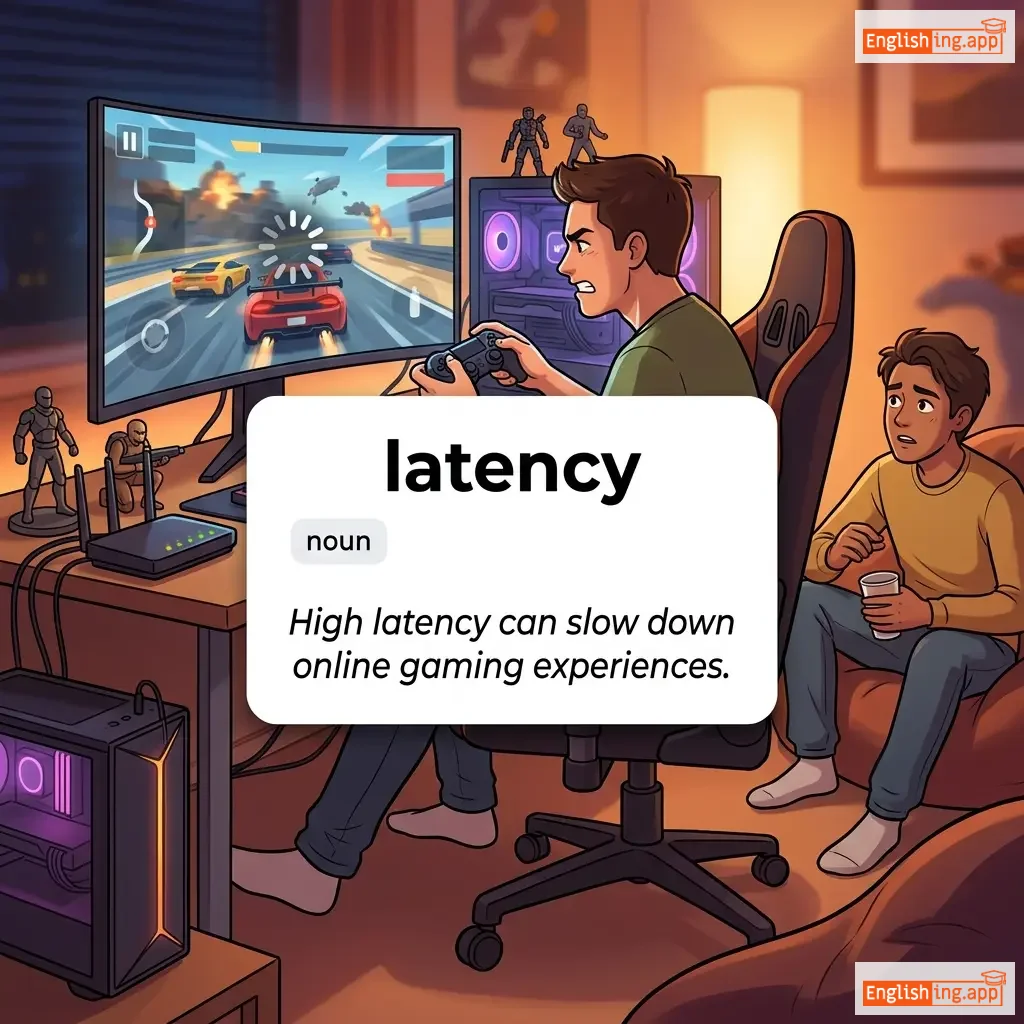
latency definition card — visual illustration of the meaning
noun C1
/ˈleɪtənsi/
レイテンシ (reitenshi)

The delay before a transfer of data begins following an instruction for its transfer.

"High latency can slow down online gaming experiences."

"高いレイテンシはオンラインゲームの体験を遅くする可能性があります。" (Takai reitenshi wa onrain gēmu no taiken o osoku suru kanōsei ga arimasu.)
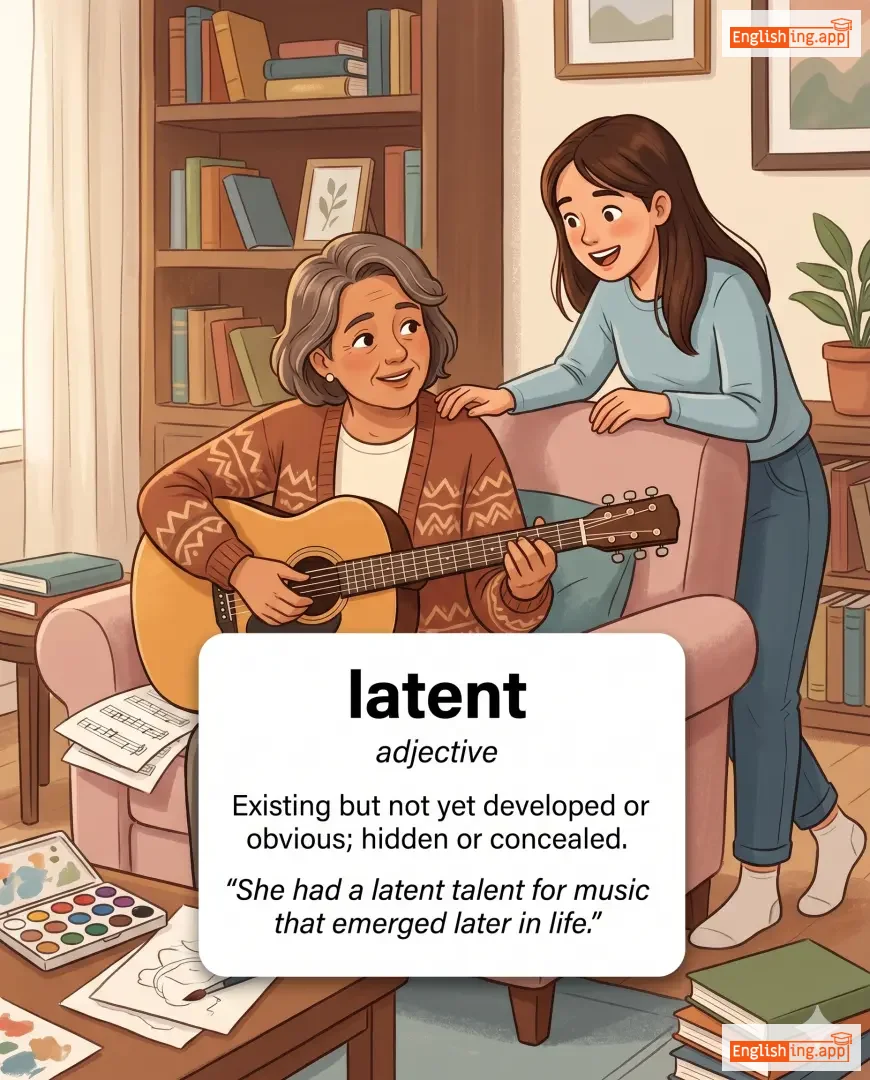
latent definition card — visual illustration of the meaning
adjective C1
/ˈleɪtənt/

Existing but not yet developed or obvious; hidden or concealed.

"She had a latent talent for music that emerged later in life."

adjective C1
/ˈlætərəl/
側面 (sokumen)

Relating to the side or sideways movement.

"The football player made a quick lateral pass."
"サッカー選手は素早い側面パスをしました。" (sakkā senshu wa subayai sokumen pasu o shimashita.)
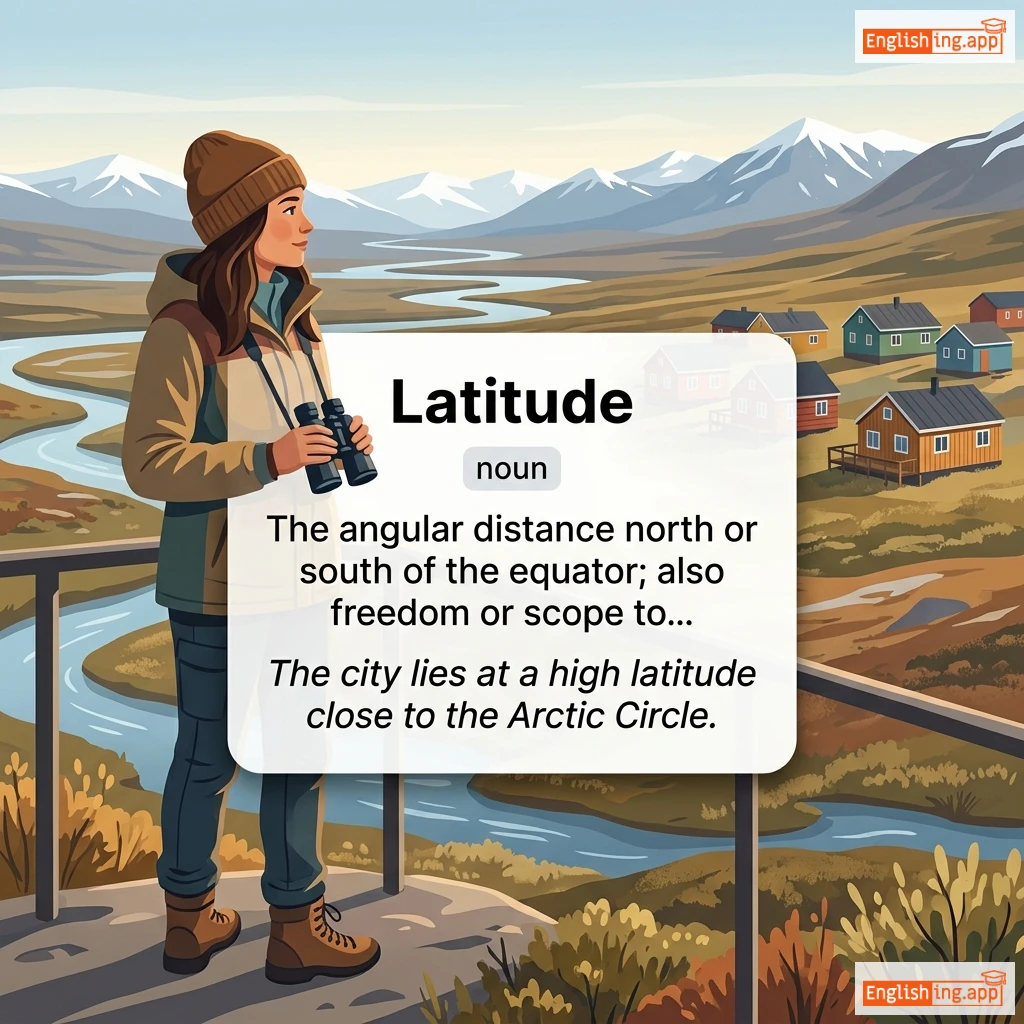
Latitude definition card — visual illustration of the meaning
noun C1
/ˈlætɪˌtjuːd/
緯度 (ido)

The angular distance north or south of the equator; also freedom or scope to act.

"The city lies at a high latitude close to the Arctic Circle."

"この都市は北極圏に近い高い緯度に位置しています。" (Kono toshi wa hokkyokuken ni chikai takai ido ni ichi shiteimasu.)
adjective C1
/ˈlɔː.də.bəl/
称賛に値する (shōsan ni atai suru)

Deserving praise and admiration.

"Her efforts to help the poor are truly laudable."

"貧しい人々を助けるための彼女の努力は本当に称賛に値します。" (Mazushī hitobito o tasukeru tame no kanojo no doryoku wa hontō ni shōsan ni atai shimasu.)
verb C1
/ˈlɔːndər/
洗濯する / 不法に得たお金の出所を隠す (sentaku suru / fuhou ni eta okane no shussou wo kakusu)

to wash clothes, linens, etc.; or to conceal the origins of money obtained illegally

"She laundered all the dirty clothes on Sunday."

"彼女は日曜日にすべての汚れた衣服を洗いました。" (Kanojo wa nichiyoubi ni subete no yogoreta ifuku wo araimashita.)
noun C1
/ˈlɔːriət/
受賞者 (jushousha)

A person honored with an award for outstanding achievement in a field, especially the arts or sciences.

"The Nobel laureate gave an inspiring lecture on peace."

"ノーベル賞受賞者は平和について感動的な講演を行いました。" (Nōberu shō jushōsha wa heiwa ni tsuite kandō-teki na kōen o okonai mashita.)
adjective, verb C1
/ˈlævɪʃ/
贅沢な、豪華な (lavish)

Rich, elaborate, or luxurious; to bestow something in generous or extravagant quantities.

"They gave her a lavish wedding reception with hundreds of guests."

"彼らは何百人ものゲストを招待して豪華な結婚式のレセプションを開いた。" (Karera wa nanbyakunin mo no gesuto o shoutai shite gōkana kekkonshiki no resepushon o hiraita.)
adjective C1
/ˈlɔː.fəl/
合法的; 正当な; 有効; 公正; (gōhō-teki; seitōna; yūkō; kōsei;)

legal; legitimate; valid; just

"The judge confirmed that their actions were lawful and proper."

"裁判官は彼らの行動が合法で適切であることを確認しました。" (Saibankan wa karera no kōdō ga gōhō de tekisetsu de aru koto o kakunin shimashita.)
adjective C1
/ˈlɔː.ləs/
無法; 無政府主義; 無秩序; 犯罪者 (muhō; muzōfushugi; muchitsujo; hanzai-sha)

without law; anarchic; unruly; criminal

"The frontier town was known for its lawless behavior and chaos."
"その国境の町は無法行為と混乱で知られていた。" (Sono kokkyō no machi wa muhō kōi to konran de shirarete ita.)
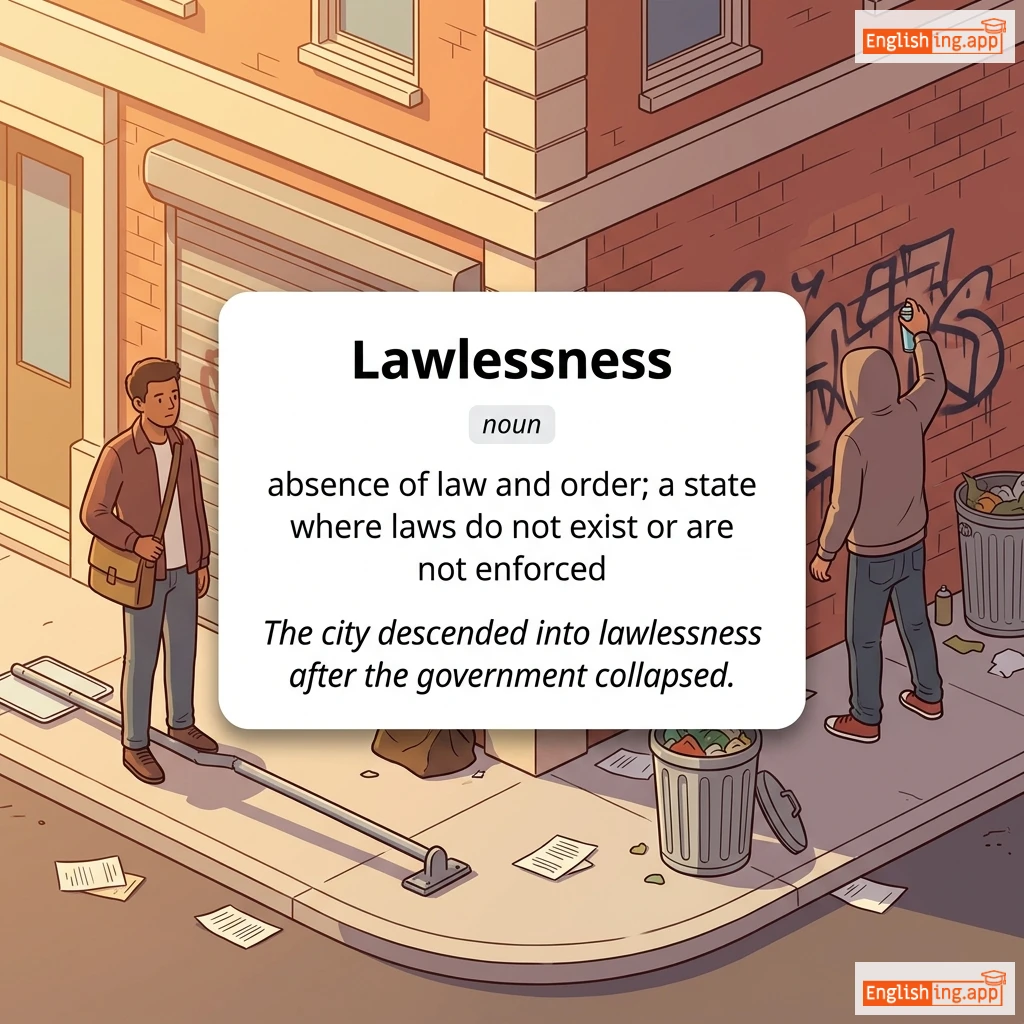
Lawlessness definition card — visual illustration of the meaning
noun C1
/ˈlɔː.ləs.nəs/
無法状態 (muhou joutai)

absence of law and order; a state where laws do not exist or are not enforced

"The city descended into lawlessness after the government collapsed."
"政府の崩壊後、都市は無法状態に陥った。" (seifu no hōkai go, toshi wa muhō jōtai ni ochitta)
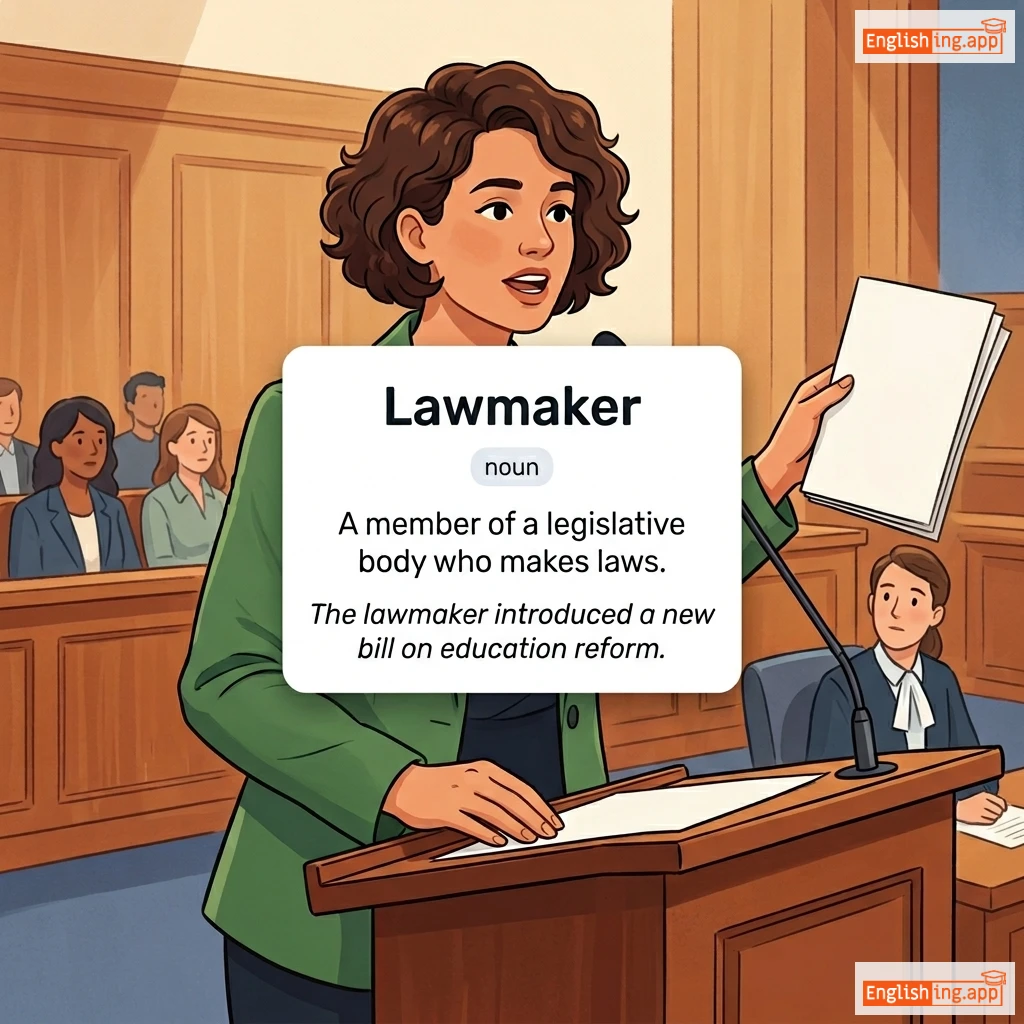
Lawmaker definition card — visual illustration of the meaning
noun C1
/ˈlɔːˌmeɪkər/
立法者 (rippousha)

A member of a legislative body who makes laws.

"The lawmaker introduced a new bill on education reform."
"立法者は教育改革に関する新しい法案を提出しました。" (Rippousha wa kyōiku kaizen ni kansuru atarashī hōan o teishutsu shimashita.)
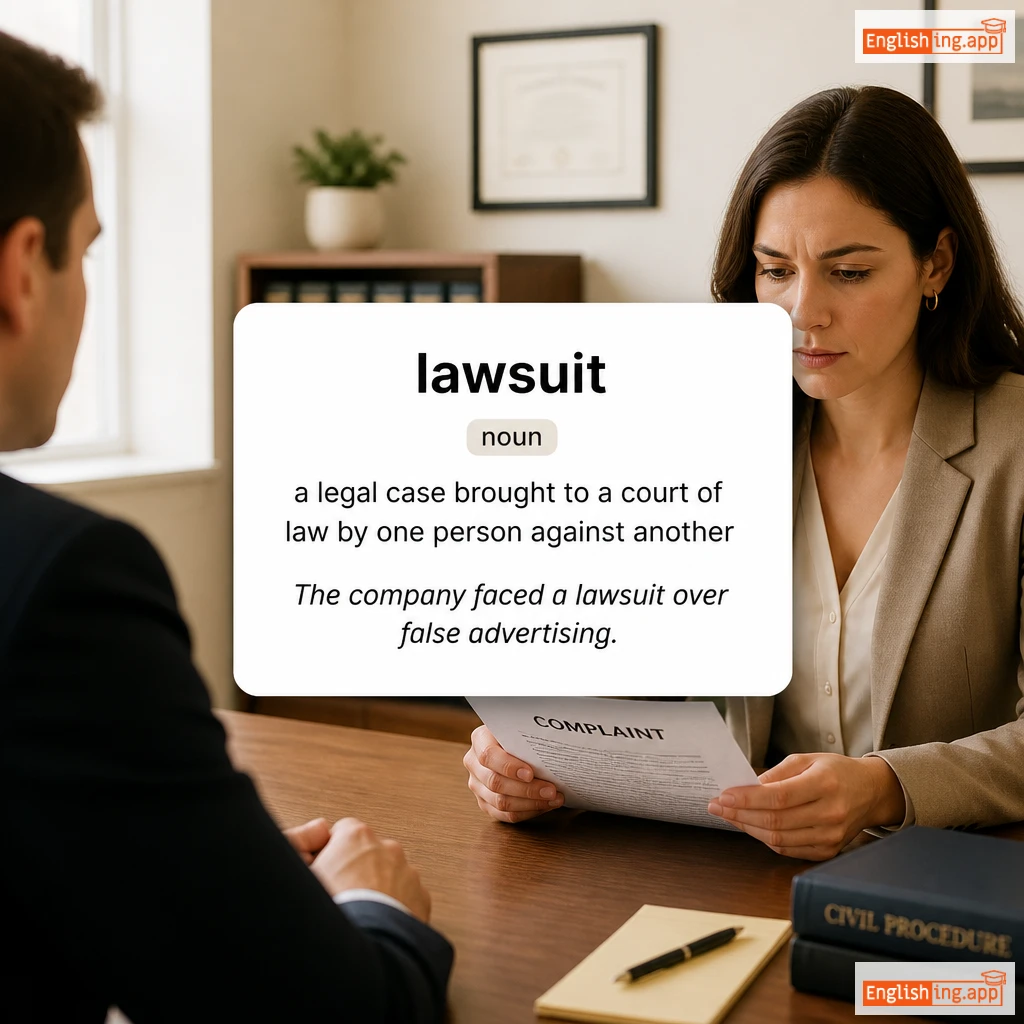
lawsuit definition card — visual illustration of the meaning
noun C1
/ˈlɔːsuːt/
訴訟 (soshō)

a legal case brought to a court of law by one person against another

"The company faced a lawsuit over false advertising."

"その会社は虚偽広告に関する訴訟に直面した。" (sono kaisha wa kyogi kōkoku ni kansuru soshō ni chokumen shita.)
adjective C1
/læks/
緩い, だらしない (lax)

Not strict, severe, or careful; negligent or careless.

"The security at the airport was surprisingly lax."

"空港のセキュリティは驚くほど緩かった。" (Kūkō no sekyuriti wa odoroku hodo yurukatta.)
noun, adjective C1
/ˈlæksətɪv/
下剤 (gezai)

A medicine or substance that stimulates bowel movements; tending to loosen or relieve constipation.

"The doctor prescribed a mild laxative for her condition."
"医者は彼女の状態のために軽い下剤を処方しました。" (Isha wa kanojo no joudai no tame ni karui gezai wo shohou shimashita.)
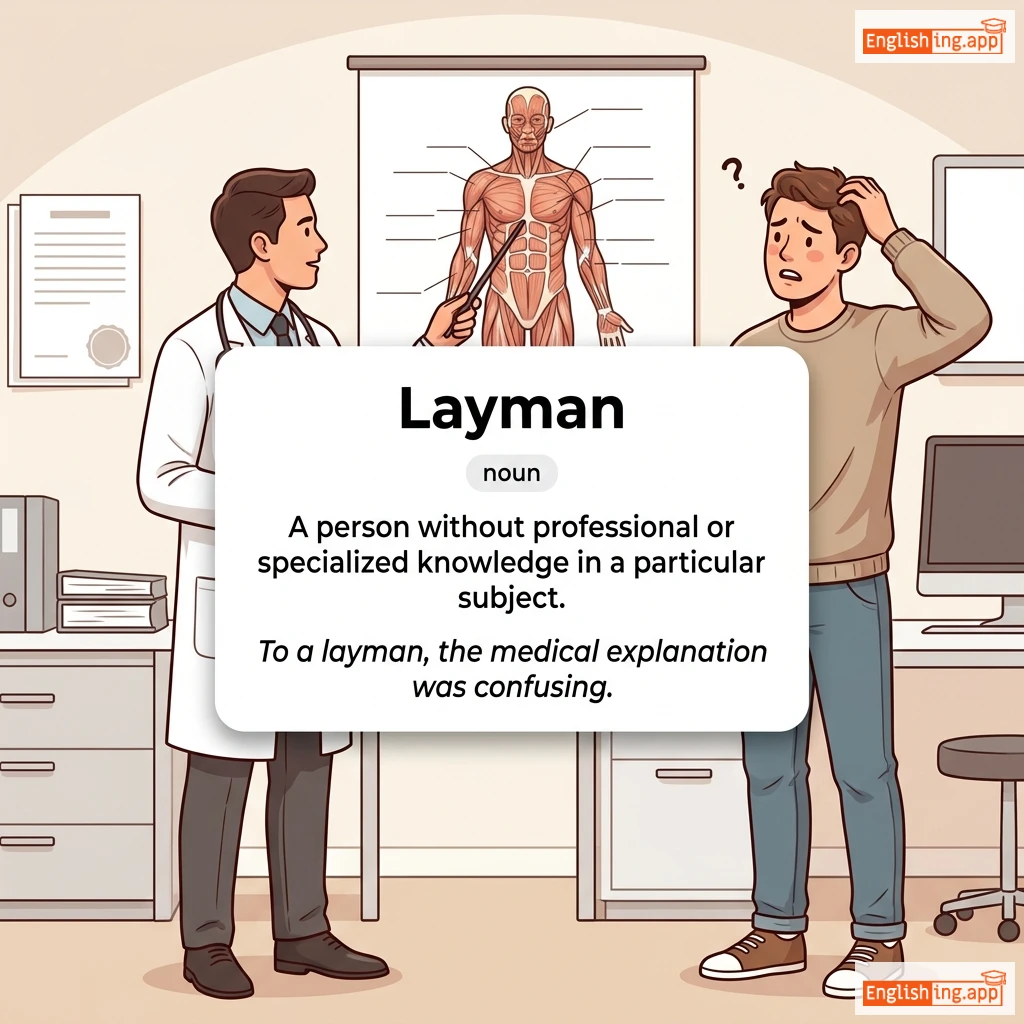
Layman definition card — visual illustration of the meaning
noun C1
/ˈleɪmən/
素人 (shirouto)

A person without professional or specialized knowledge in a particular subject.

"To a layman, the medical explanation was confusing."

"素人にとって、医学の説明は混乱していた。" (shirouto ni totte, igaku no setsumei wa konran shite ita.)
noun C1
/ˈleɪˌpɜːrsən/
素人 (shirouto)

A person who is not a member of the clergy or does not have specialized knowledge in a subject.

"The judge explained the law so that the layperson could understand."

"裁判官は法を説明し、素人でも理解できるようにしました。" (Saibankan wa hō o setsumei shi, shirouto demo rikai dekiru yō ni shimashita.)
adjective C1
/ˈliːf.ləs/
葉のない; 裸 (ha no nai; hara)

without leaves; bare

"The leafless trees looked bare in winter."

"冬には葉のない木々が裸に見えました。" (fuyu ni wa ha no nai kigi ga hara ni miemashita.)
Lease definition card — visual illustration of the meaning
noun C1
/liːs/
リース契約 (ri-su)

a contract by which one party conveys land, property, services, etc. to another for a specified time, usually in return for a periodic payment

"They signed a two-year lease for the apartment."

"彼らはアパートメントのために2年間のリース契約に署名しました。" (Karera wa apātomento no tame ni 2-nenkan no rīsu keiyaku ni shomei shimashita.)
noun/verb C1
/liːʃ/
リード (rīdo)

a strap or cord used to control or guide an animal; to restrain or control

"The dog was on a leash during the walk."
"散歩中に犬はリードにつながれていました。" (Sanpo-chū ni inu wa rīdo ni tsunagarete imashita.)
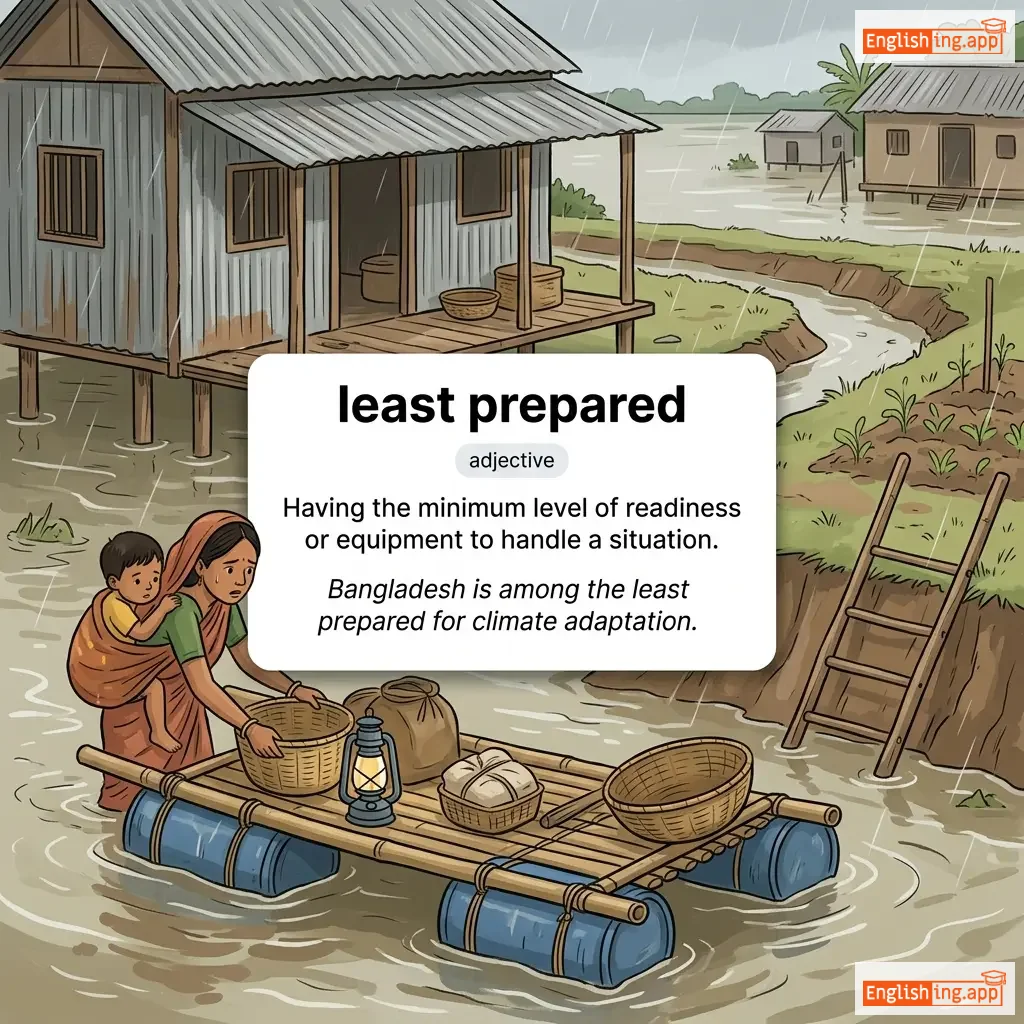
least prepared definition card — visual illustration of the meaning
adjective C1
liːst prɪˈpeərd
最も準備ができていない (mottomo junbi ga dekite inai)

Having the minimum level of readiness or equipment to handle a situation.

"Bangladesh is among the least prepared for climate adaptation."

"バングラデシュは気候変動適応のために最も準備ができていない国の一つです。" (Bangladesh wa kikou hendou tekiou no tame ni mottomo junbi ga dekite inai kuni no hitotsu desu.)
noun C1
/ˈliːvˌteɪ.kɪŋ/
お別れ (owakare)

an act of saying goodbye; farewell

"His leave-taking from his friends was emotional."

"彼の友達へのお別れは感動的でした。" (Kare no tomodachi e no owakare wa kandō-teki deshita.)
noun C1
/ˈlɛktən/
lectern (rekutā)

A tall stand with a sloping top used to support a book, notes, or script during a speech or lecture.

"The professor placed her notes on the lectern before starting her lecture."

"教授は講義を始める前にレクタウンにノートを置きました。" (Kyōju wa kōgi o hajimeru mae ni rekutā ni nōto o okimashita.)
Ledger definition card — visual illustration of the meaning
noun C1
/ˈledʒ.ər/
元帳 (genchou)

a book or other collection of financial accounts of a particular type

"The accountant updated the company ledger daily."

"会計士は毎日会社の元帳を更新しました。" (Kaikeishi wa mainichi kaisha no genchou o kōshin shimashita.)
Leech definition card — visual illustration of the meaning
noun C1
/liːt͡ʃ/
ヒル (hiru)

a blood-sucking worm that lives in water or moist ground

"The doctor used a medical leech to reduce swelling after surgery."

"医者は手術後の腫れを減らすために医療用ヒルを使いました。" (Isha wa shujutsugo no hare o herasu tame ni iryouyou hiru o tsukaimashita)
noun C1
/ˈliːweɪ/
余裕 (yoyū)

Freedom to act within certain limits; extra space or time.

"The manager gave the team some leeway to finish the project."
"マネージャーはチームにプロジェクトを終了するための余裕を与えました。" (Manējā wa chīmu ni purojekuto o shūryō suru tame no yoyū o ataemashita.)
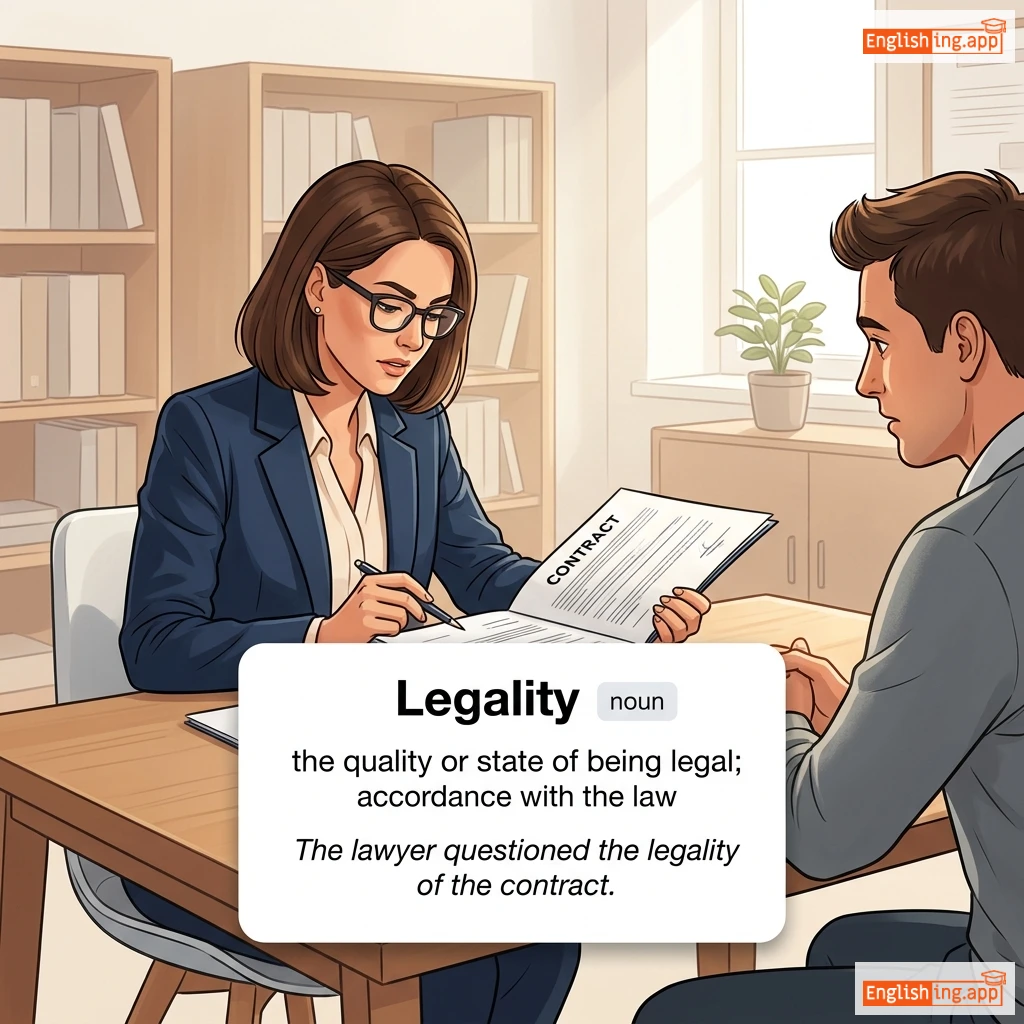
Legality definition card — visual illustration of the meaning
noun C1
/lɪˈɡæl.ə.ti/
合法性 (gōhō-sei)

the quality or state of being legal; accordance with the law

"The lawyer questioned the legality of the contract."

"弁護士は契約の合法性について疑問を呈しました。" (Bengoshi wa keiyaku no gōhō-sei ni tsuite gimon o teishimashita.)
verb C1
/ˈliːɡəlaɪz/
合法化する (gōhōka suru)

To make something lawful by official approval.

"The government decided to legalize online businesses."

"政府はオンラインビジネスを合法化することを決定しました。" (Seifu wa onrain bijinesu o gōhōka suru koto o kettei shimashita.)
noun C1
/ˈlɛɡɪŋ/
タイツ (taitsu)

tight-fitting stretch pants, typically worn by women for exercise or casual wear

"She bought a new pair of black leggings for the gym."

"彼女はジム用に新しい黒いレギンスを買った。" (Kanojo wa jimu you ni atarashii kuroi reginsu o katta.)
adjective C1
/ˈlɛdʒəbl/
読みやすい (yomiyasui)

clear enough to read

"Her handwriting was barely legible."

"彼女の手書きはほとんど読めなかった。" (Kanojo no tegaki wa hotondo yomenakatta.)
noun C1
/ˈliːdʒən/
大規模な人々のグループ、特に兵士; 大量 (daikibona hitobito no guruupu, tokuni heishi; tairyou)

a large group of people, especially soldiers; a great number

"The Roman army was divided into legions."

"ローマ軍は軍団に分かれていました。" (Ro-ma gun wa gundan ni wakarete imashita.)
verb C1
/ˈlɛdʒɪsˌleɪt/
立法する (rippou suru)

to make or enact laws

"The government plans to legislate new safety standards."

"政府は新しい安全基準を制定する計画です。" (Seifu wa atarashī anzen kijun o seitei suru keikaku desu.)