Vocabulary Videos
130 videos available.
 en
en
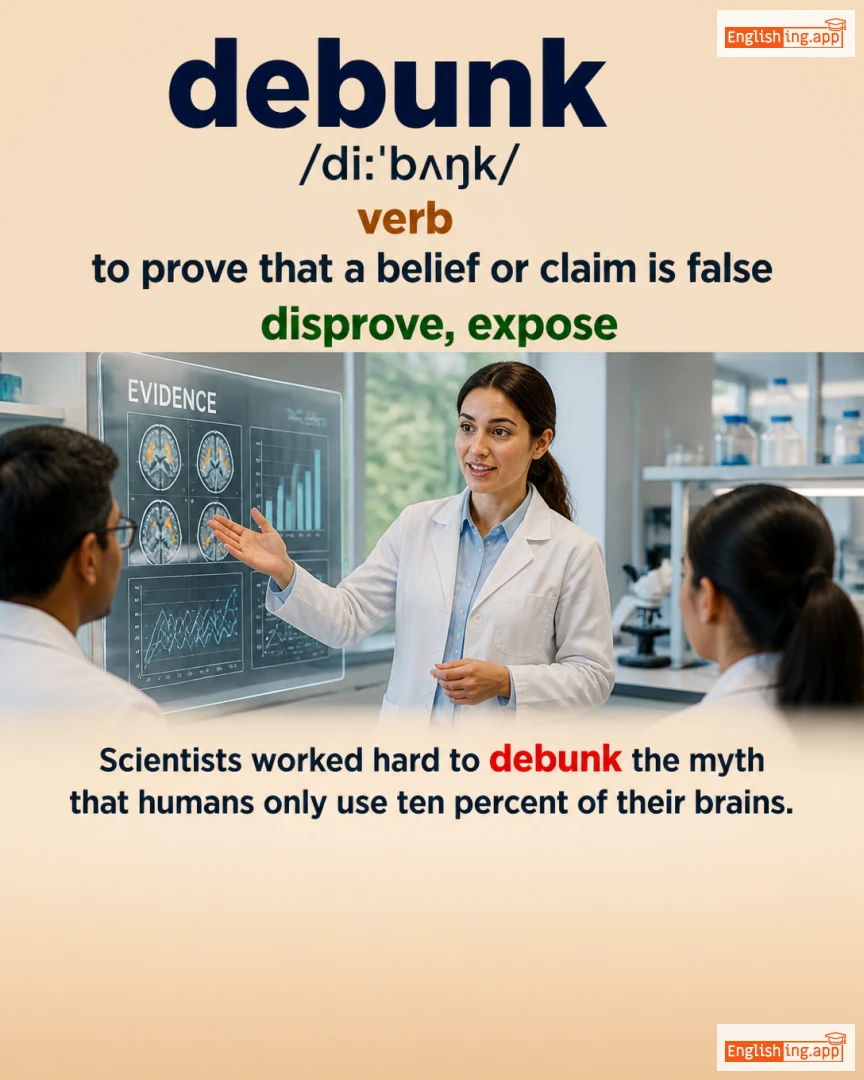
Debunk: English vocabulary meaning and example
Learn the English word "Debunk".
Meaning: Pronounced dee-BUNK. This is a To debunk something means to prove that a popular belief, myth, or claim is actually false or exaggerated. You expose the truth and show that an idea simply isn't real. Two close synonyms are disprove and expose. For example: Scientists worked hard to debunk the myth that humans only use ten percent of their brains.
#LearnEnglish #EnglishVocabulary #Englishing
 en
en
Arbitrary: English vocabulary meaning and example
Learn the English word "Arbitrary".
Meaning: Pronounced AR-bi-trer-ee. This is an It describes a choice or rule that's based on personal whim or random impulse, rather than on any clear reason, system, or fairness. When something feels arbitrary, it seems decided by chance or mood, not by logic. Two close synonyms are random and capricious. For example: The teacher's arbitrary grading left students confused and frustrated.
#LearnEnglish #EnglishVocabulary #Englishing
 en
en
Garrulous: English vocabulary meaning and example
Learn the English word "Garrulous".
Meaning: Pronounced GAIR-uh-luhs. It's an Use it for someone who just can't stop talking — endlessly chatty about small, unimportant things, often more than anyone wants to hear. Synonyms include talkative and chatty. For example: The garrulous taxi driver told us his entire life story before we reached the airport.
#LearnEnglish #EnglishVocabulary #Englishing
 en
en
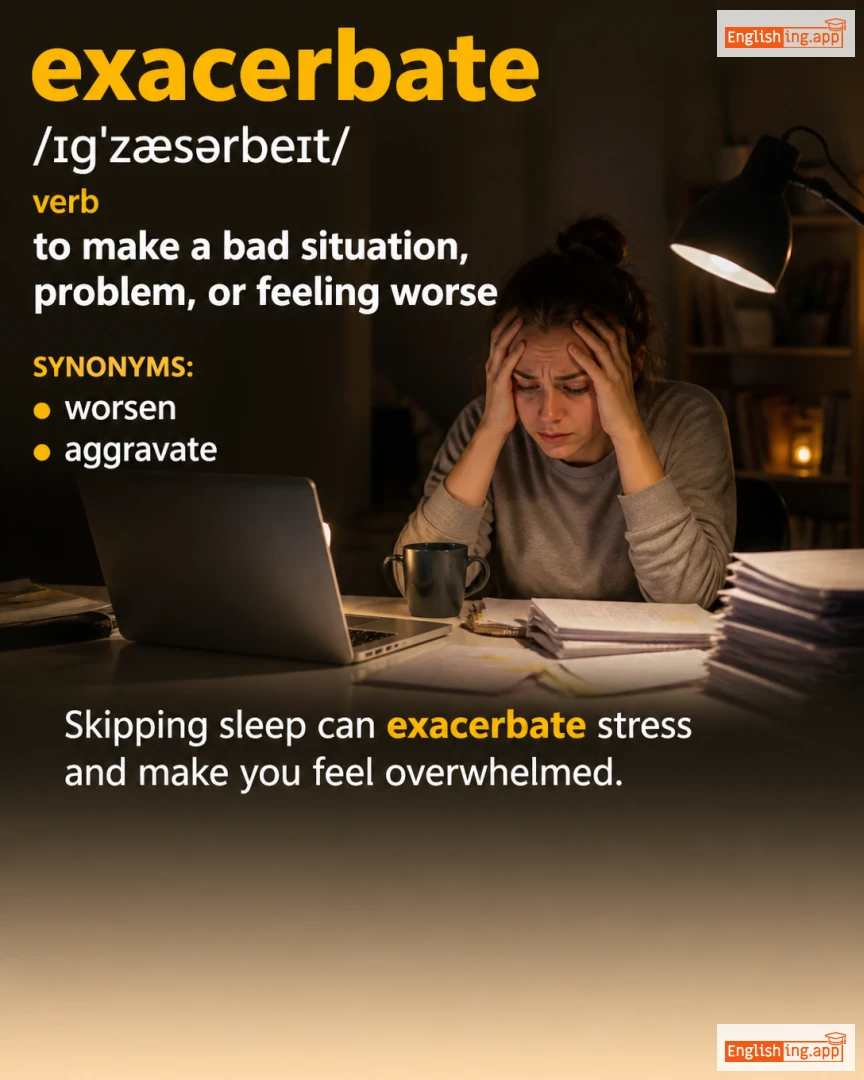
Exacerbate: English vocabulary meaning and example
Learn the English word "Exacerbate".
Meaning: Pronounced ig-ZAS-er-bayt. This is a To exacerbate something means to make a bad situation, problem, or feeling even worse than it already was. Think of pouring fuel on a fire — it doesn't start the trouble, it just makes it more intense. Synonyms include worsen and aggravate. For example: Skipping sleep can exacerbate stress and make you feel overwhelmed.
#LearnEnglish #EnglishVocabulary #Englishing
 en
en
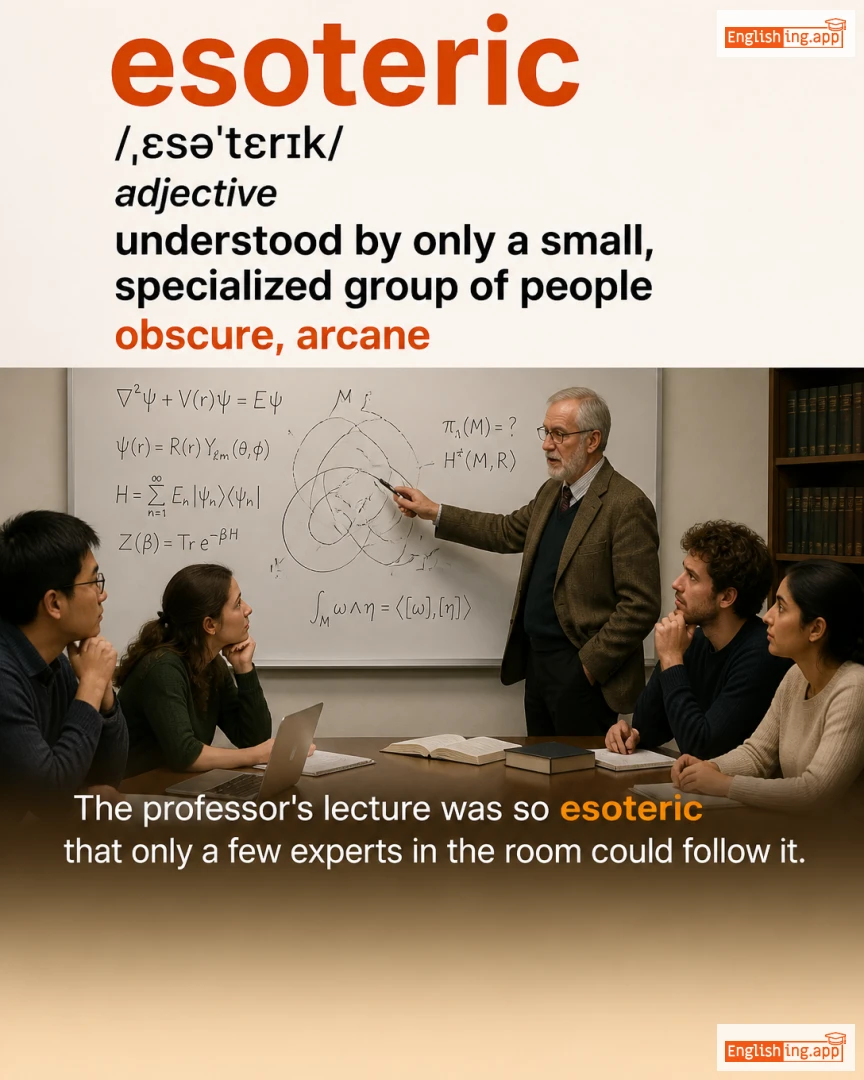
Esoteric: English vocabulary meaning and example
Learn the English word "Esoteric".
Meaning: Esoteric, pronounced eh-suh-TERR-ik, is an It describes knowledge or ideas that are understood by only a small group of people with special interest or training — the kind of deep, specialized stuff that feels mysterious or confusing to everyone else. Think rare hobbies, advanced theories, or insider topics. Two close synonyms are obscure and arcane. For example: The professor's lecture was so esoteric that only a few experts in the room could follow it.
#LearnEnglish #EnglishVocabulary #Englishing
 en
en
Erudite: English vocabulary meaning and example
Learn the English word "Erudite".
Meaning: Pronounced er-yoo-dyte. This is an It describes a person who has deep, wide knowledge gained from years of reading and serious study — the kind of thoughtful, well-read mind that seems to know something about almost every subject. Two close synonyms are scholarly and learned. For example: The erudite professor could discuss ancient history, physics, and poetry with equal ease.
#LearnEnglish #EnglishVocabulary #Englishing
 en
en
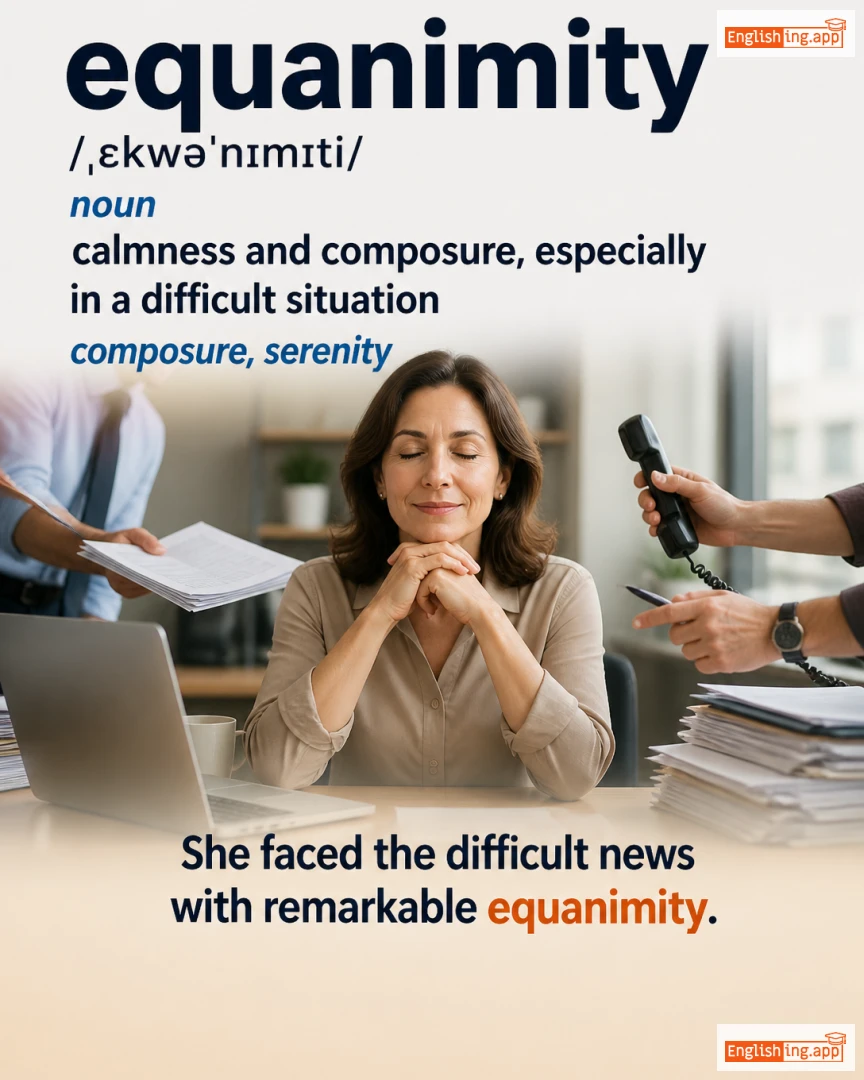
Equanimity: English vocabulary meaning and example
Learn the English word "Equanimity".
Meaning: Pronounced ek-wuh-NIM-uh-tee. It's a Equanimity is that steady, balanced calm you keep even when life gets stressful or things go wrong — your mind stays even and unbothered instead of panicking. Two close synonyms are composure and serenity. For example: She faced the difficult news with remarkable equanimity.
#LearnEnglish #EnglishVocabulary #Englishing
 en
en
Enigmatic: English vocabulary meaning and example
Learn the English word "Enigmatic".
Meaning: Pronounced en-ig-MAT-ik. This is an It describes someone or something that's mysterious and hard to understand — the kind of person or thing that leaves you puzzled, full of secrets you can't quite figure out. For example: Her enigmatic smile made everyone wonder what she was thinking.
#LearnEnglish #EnglishVocabulary #Englishing
 en
en
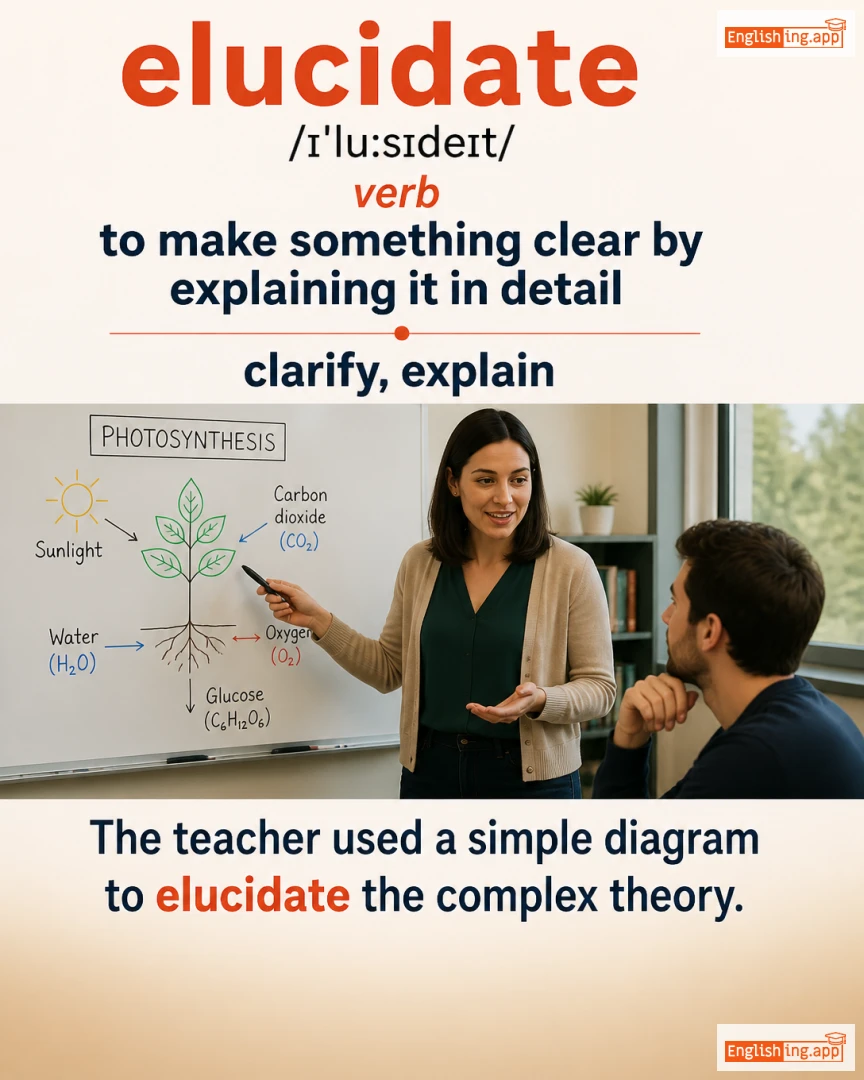
Elucidate: English vocabulary meaning and example
Learn the English word "Elucidate".
Meaning: Pronounced ih-LOO-si-dayt. It's a When you elucidate something, you make a confusing or difficult idea clear by explaining it in detail, almost like shining a light on something dark so people can finally understand it. Synonyms include clarify and explain. For example: The teacher used a simple diagram to elucidate the complex theory.
#LearnEnglish #EnglishVocabulary #Englishing
 en
en
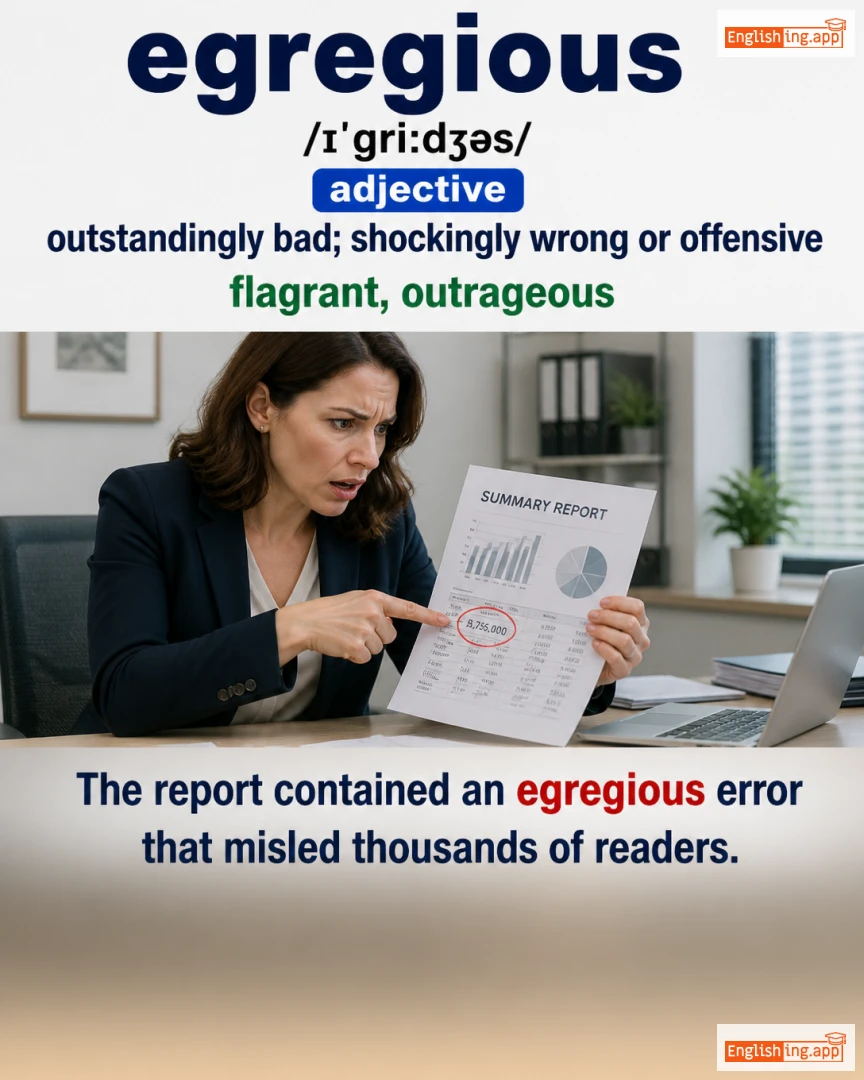
Egregious: English vocabulary meaning and example
Learn the English word "Egregious".
Meaning: Pronounced ih-GREE-jus. This is an It describes something that is outstandingly bad — so shockingly wrong or offensive that it stands out and can't be ignored. We usually use it for serious mistakes, errors, or behavior. Synonyms include flagrant and outrageous. For example: The report contained an egregious error that misled thousands of readers.
#LearnEnglish #EnglishVocabulary #Englishing
 en
en
Ebullient: English vocabulary meaning and example
Learn the English word "Ebullient".
Meaning: Pronounced ih-BUL-yuhnt. It's an Picture someone bursting with happy energy — cheerful, lively, and overflowing with excitement that they just can't keep inside. People who are ebullient light up a room with their bubbly enthusiasm. A nice synonym would be exuberant or bubbly. For example: The ebullient host greeted every guest with a huge smile and contagious laughter.
#LearnEnglish #EnglishVocabulary #Englishing
 en
en
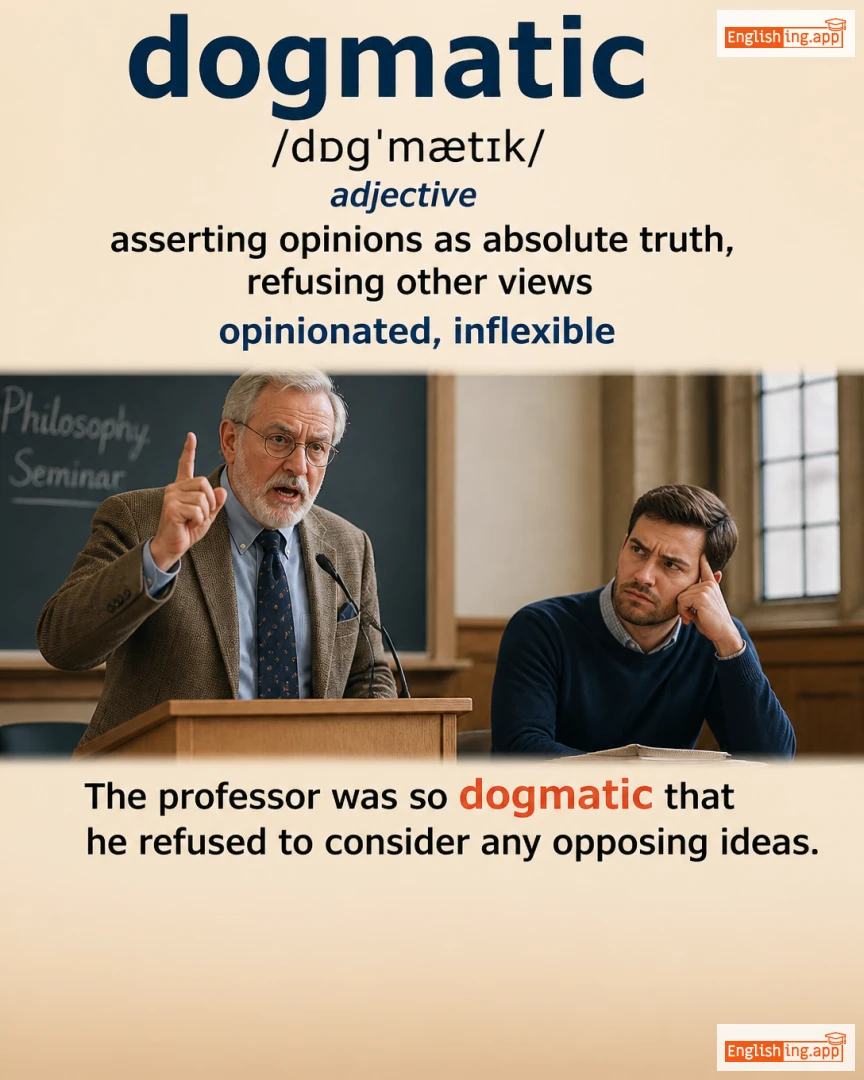
Dogmatic: English vocabulary meaning and example
Learn the English word "Dogmatic".
Meaning: Dogmatic, spelled D-O-G-M-A-T-I-C, pronounced dog-MAT-ik. This is an It describes someone who states their opinions as if they were absolute facts, refusing to consider any other point of view or accept that they could be wrong. Two close synonyms are opinionated and inflexible. For example: The professor was so dogmatic that he refused to consider any opposing ideas.
#LearnEnglish #EnglishVocabulary #Englishing
 en
en
Disseminate: English vocabulary meaning and example
Learn the English word "Disseminate".
Meaning: Pronounced di-SEM-uh-nayt. It's a To disseminate means to spread information, ideas, or knowledge widely so that they reach as many people as possible. Think of a news team or a teacher sharing facts far and wide. Synonyms include spread and distribute. For example: The organization used social media to disseminate health information to thousands of families.
#LearnEnglish #EnglishVocabulary #Englishing
 en
en
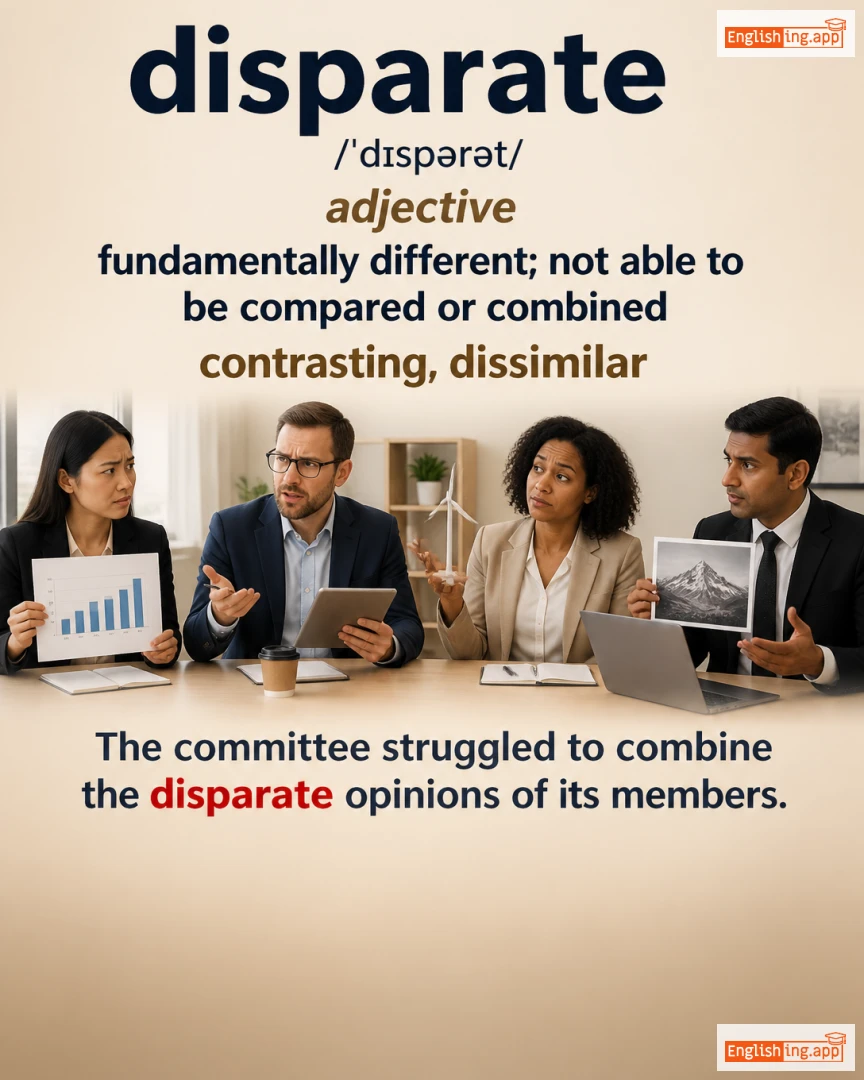
Disparate: English vocabulary meaning and example
Learn the English word "Disparate".
Meaning: Pronounced DISS-puh-rut. This is an It describes things that are so fundamentally different from one another that they don't really fit together or compare easily. Think of a group of items or ideas that have nothing in common — that's disparate. Two close synonyms are contrasting and dissimilar. For example: The committee struggled to combine the disparate opinions of its members.
#LearnEnglish #EnglishVocabulary #Englishing
 en
en
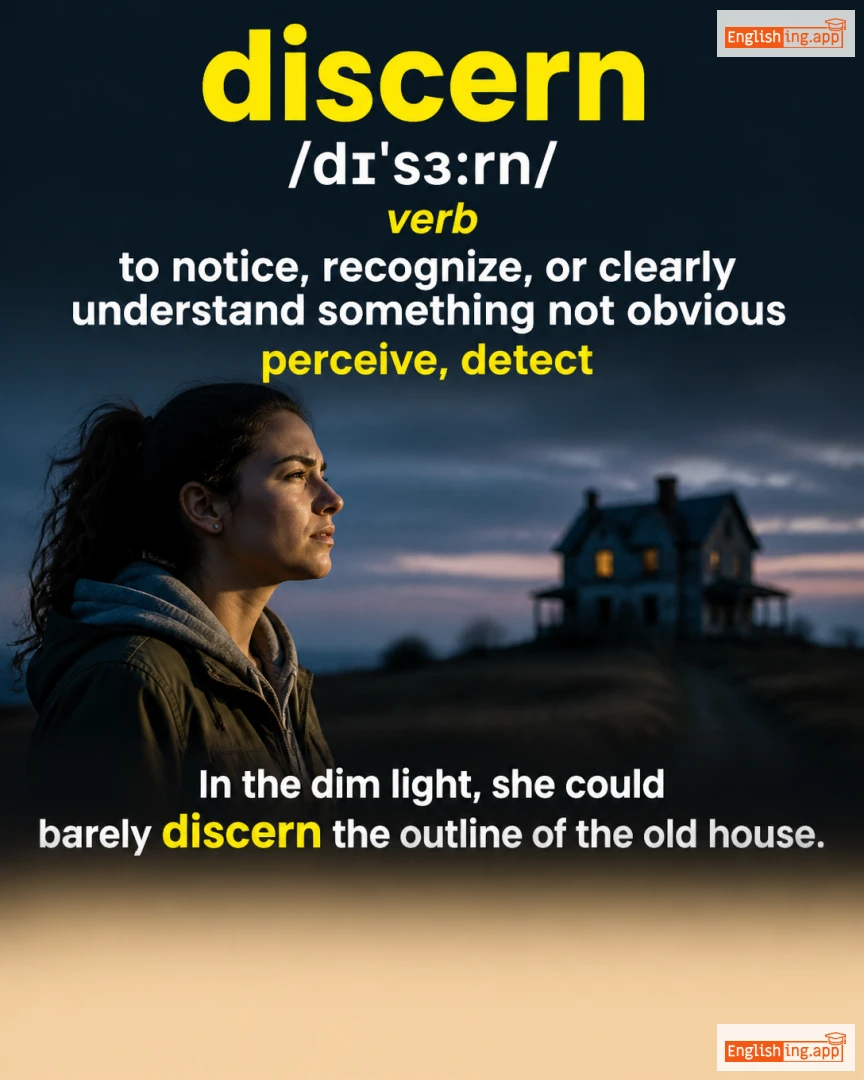
Discern: English vocabulary meaning and example
Learn the English word "Discern".
Meaning: Pronounced dih-SURN. This is a To discern means to notice, recognize, or clearly understand something that isn't obvious at first — it's about perceiving fine details or differences that most people might miss. People often use it when something takes real attention or careful judgment to figure out. Two close synonyms are perceive and detect. For example: In the dim light, she could barely discern the outline of the old house.
#LearnEnglish #EnglishVocabulary #Englishing
 en
en
Digress: English vocabulary meaning and example
Learn the English word "Digress".
Meaning: Pronounced die-GRESS. It's a To digress means to wander away from your main topic when you're speaking or writing, drifting off into a side point before coming back. Two close synonyms are deviate and stray. For example: The professor often began to digress, sharing stories that had nothing to do with the lesson.
#LearnEnglish #EnglishVocabulary #Englishing
 en
en
Diffident: English vocabulary meaning and example
Learn the English word "Diffident".
Meaning: Pronounced DIF-i-duhnt. It's an Diffident describes someone who lacks confidence in themselves — a shy, hesitant person who holds back and doubts their own abilities, often unsure whether to speak up or step forward. You might say someone is timid or self-doubting. For example: The diffident intern hesitated before sharing her brilliant idea.
#LearnEnglish #EnglishVocabulary #Englishing
 en
en
Derivative: English vocabulary meaning and example
Learn the English word "Derivative".
Meaning: Pronounced dih-RIV-uh-tiv. This word can be an adjective or a When something is derivative, it isn't really original — it's copied or borrowed from something that already exists, so it feels like an imitation rather than a fresh idea. Two close synonyms are unoriginal and imitative. For example: Critics called the new film derivative of older superhero movies.
#LearnEnglish #EnglishVocabulary #Englishing
 en
en
Denigrate: English vocabulary meaning and example
Learn the English word "Denigrate".
Meaning: Pronounced den-i-grayt. It's a To denigrate someone or something means to criticize them unfairly, to talk them down and make them seem worthless or unimportant. People often do it to damage another person's reputation. Synonyms include belittle and disparage. For example: He tried to denigrate her achievements in front of the whole team.
#LearnEnglish #EnglishVocabulary #Englishing
 en
en
Demagogue: English vocabulary meaning and example
Learn the English word "Demagogue".
Meaning: Pronounced 'DEM-uh-gog'. This is a A demagogue is a political leader who wins support by appealing to people's emotions, fears, and prejudices rather than using honest, reasoned arguments. Think of someone who whips up a crowd with anger and easy promises just to gain power. Two close synonyms are rabble-rouser and agitator. Here's an example: The demagogue stirred up the crowd with fiery promises he could never keep.
#LearnEnglish #EnglishVocabulary #Englishing
 en
en
Deleterious: English vocabulary meaning and example
Learn the English word "Deleterious".
Meaning: Pronounced del-ih-TEER-ee-us. This is an It describes something that quietly causes harm or damage, often slowly and over time, even when it doesn't seem dangerous at first. Think of habits or substances that gradually hurt your health or well-being. Two close synonyms are harmful and damaging. Here's an example: Years of smoking had a deleterious effect on his lungs.
#LearnEnglish #EnglishVocabulary #Englishing
 en
en
Decorum: English vocabulary meaning and example
Learn the English word "Decorum".
Meaning: Pronounced dih-KOR-uhm. It's a Decorum refers to polite, proper, and dignified behavior that fits the occasion — knowing how to act correctly and respectfully in a formal or public setting. Two close synonyms are propriety and etiquette. For example: The guests maintained perfect decorum throughout the ceremony.
#LearnEnglish #EnglishVocabulary #Englishing
 en
en
Cursory: English vocabulary meaning and example
Learn the English word "Cursory".
Meaning: Pronounced KUR-suh-ree. It's an It describes something done quickly and without much attention to detail — a fast, surface-level look that skips over the deeper parts. Two close synonyms are hasty and superficial. For example: She gave the report only a cursory glance before signing it.
#LearnEnglish #EnglishVocabulary #Englishing
 en
en
Credulous: English vocabulary meaning and example
Learn the English word "Credulous".
Meaning: Pronounced KREJ-uh-luhs. It's an It describes a person who is too quick to believe things, someone who trusts and accepts claims without asking for real proof. A credulous person is easily fooled because they rarely stop to question what they're told. Synonyms include gullible and naive. For example: The credulous investor handed over his savings after hearing one smooth promise.
#LearnEnglish #EnglishVocabulary #Englishing