|
絵文字
|
単語 | Images | 翻訳 | 過去 | 過去分詞 | 三人称単数 | 動名詞 | 意味 | 例文 | 例文の翻訳 | 表現例 | 表現例の意味 | 表現例の翻訳 | 同義語 | 対義語 | コロケーション | ニーモニック |
|---|---|---|---|---|---|---|---|---|---|---|---|---|---|---|---|---|---|
|
🚀
••••••
|
/ˈvɛntʃər/
noun/verb
(ベンチャー)
••••••
|
|
リスクのある事業
risuku no aru jigyō
••••••
|
ventured
ベンチャード
••••••
|
ventured
ベンチャード
••••••
|
ventures
ベンチャーズ
••••••
|
venturing
ベンチャリング
••••••
|
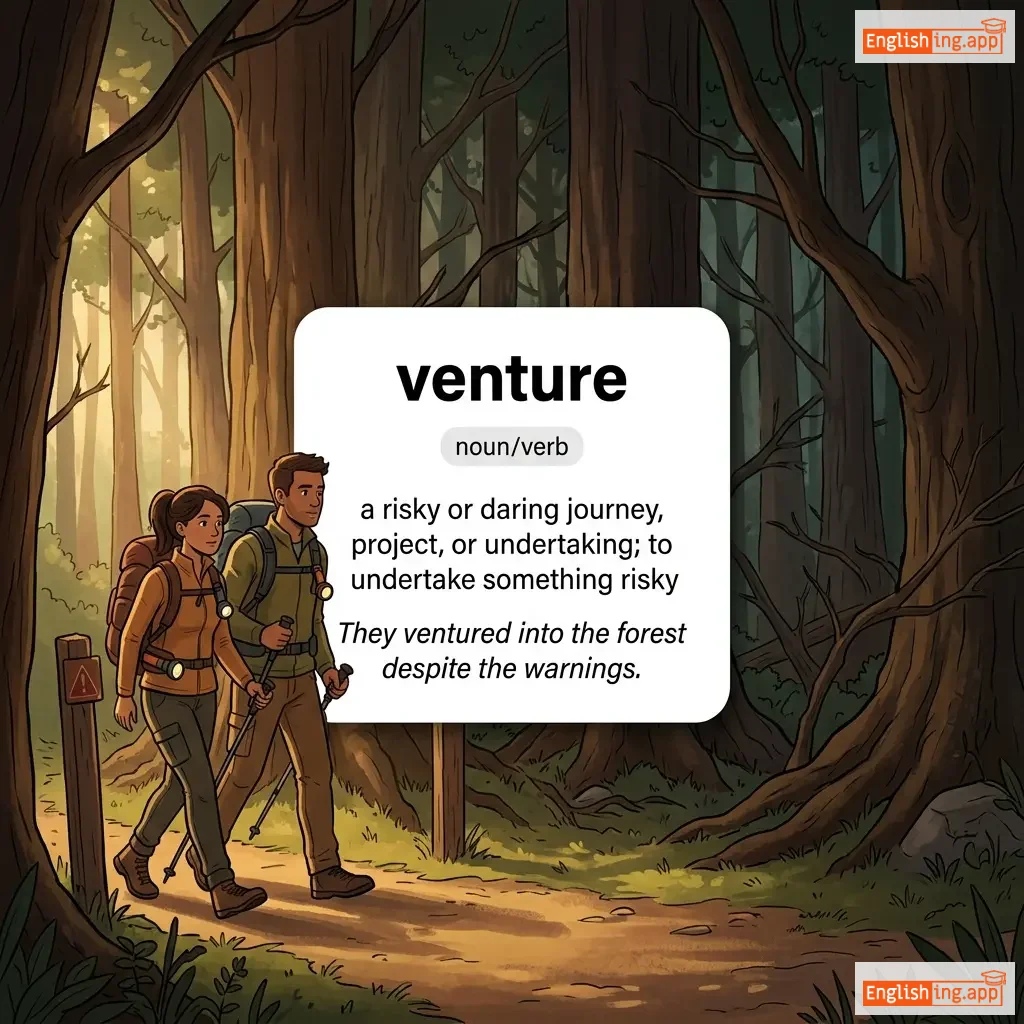
a risky or daring journey, project, or undertaking; to undertake something risky
••••••
|
They ventured into the forest despite the warnings.
彼らは警告にもかかわらず森に踏み込んだ。
••••••
|
彼らは警告にもかかわらず森に踏み込んだ。
Karera wa keikoku ni mo kakawarazu mori ni fumikonda.
••••••
|
nothing ventured, nothing gained
リスクを取らなければ得られない
••••••
|
without taking risks, one cannot achieve success
••••••
|
リスクを取らなければ得られない
Risuku o toranakereba erarenai
••••••
|
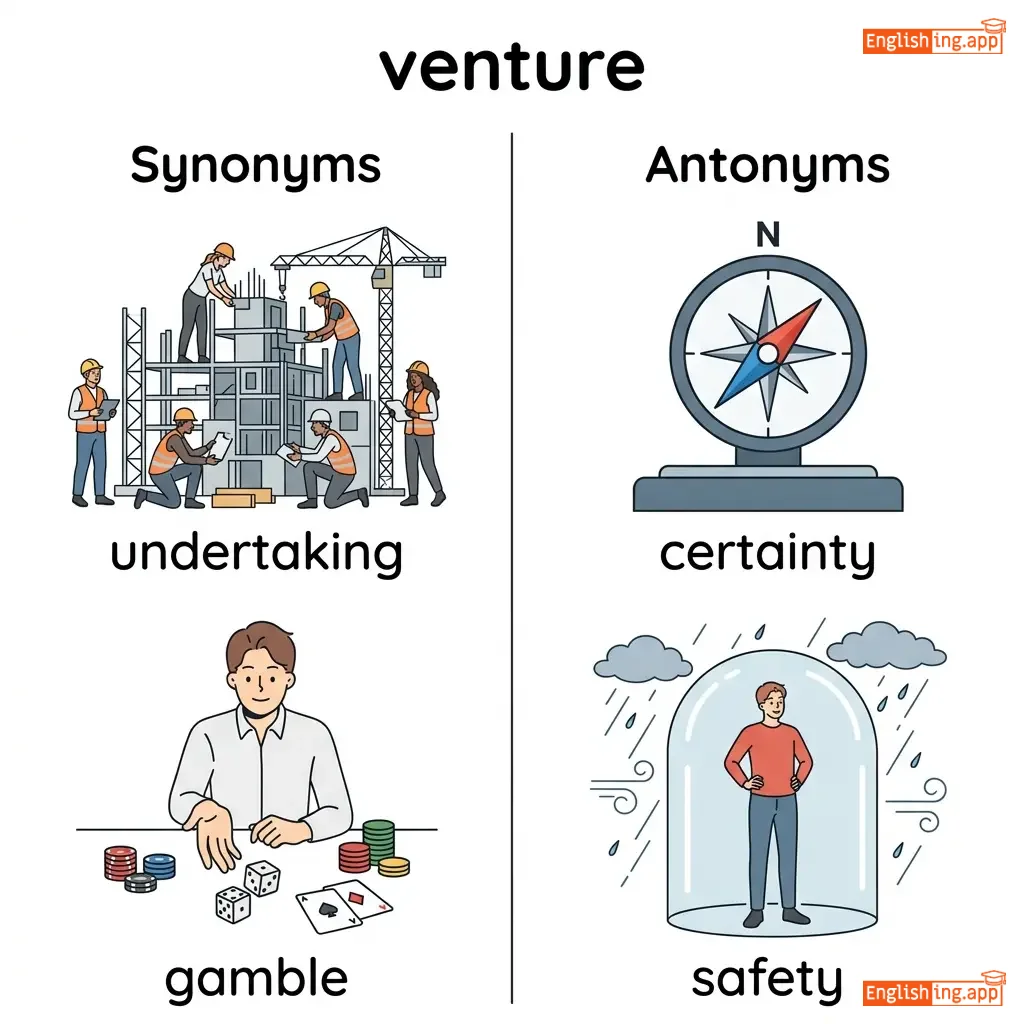
undertaking, gamble, risk, enterprise, project
••••••
|
certainty, safety, security
••••••
|
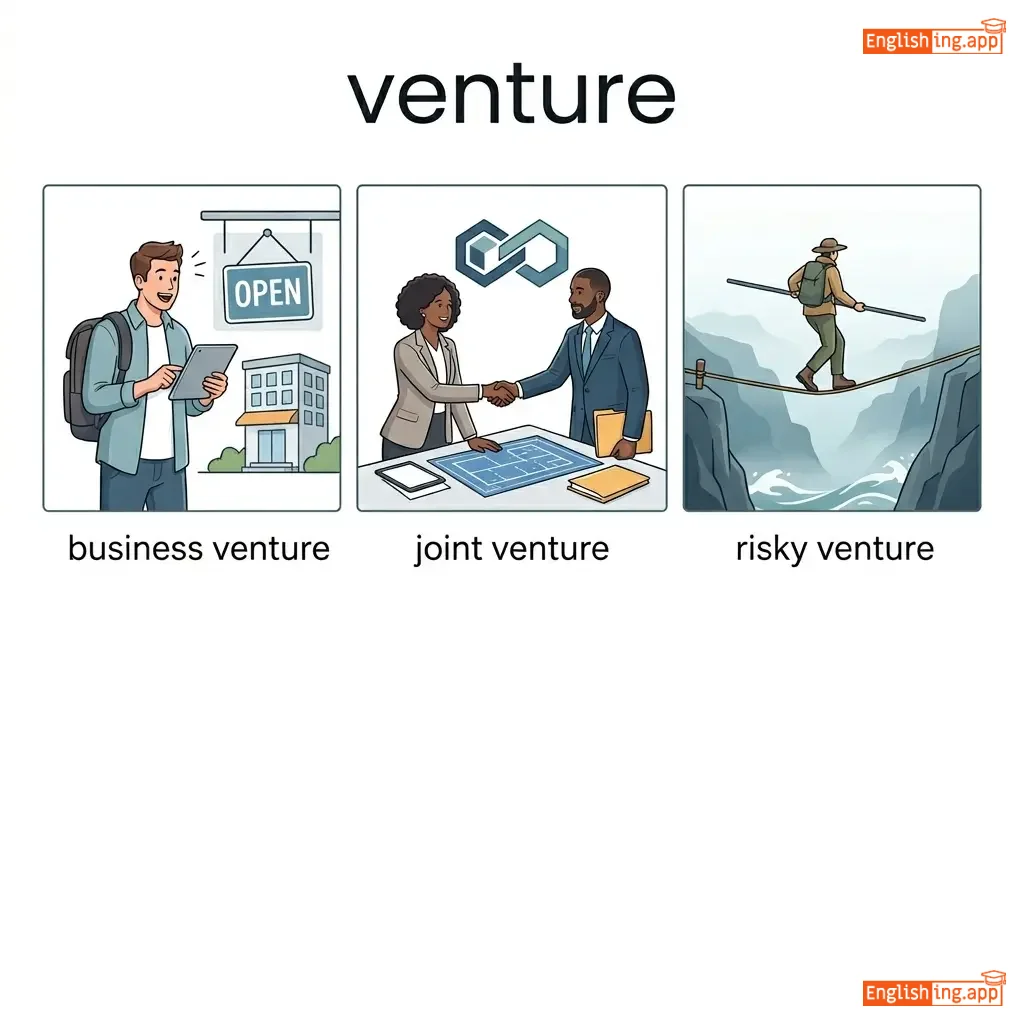
business venture, joint venture, risky venture, venture capital
••••••
|
Venture = リスク 🚀— ビジネスのベンチャー = リスクのある事業
••••••
|
|
🔄
••••••
|
/ˈvɜːrʒən/
noun
(バージョン)
••••••
|
- •••••• |
バージョン
bājon
••••••
|
- •••••• | - •••••• | - •••••• | - •••••• |
A particular form or variant of something.
••••••
|
The software has a new version with added features. |
ソフトウェアには新しいバージョンがあり、追加機能が搭載されています。
Sofutowea ni wa atarashī bājon ga ari, tsuika kinō ga tōsai sareteimasu.
••••••
|
the latest version |
The most recent form or release of something.
••••••
|
最新バージョン
Saishin bājon
••••••
|
edition, variation, release, form, variant
••••••
|
original, prototype
••••••
|
new version, old version, software version, version control
••••••
|
Versionは「バージョン」を意味します。バージョンを変更すると、機能が増えます。
••••••
|
|
⚔️
••••••
|
/ˈvɜːsəs/
preposition
(バーサス)
••••••
|
- •••••• |
対
tai
••••••
|
- •••••• | - •••••• | - •••••• | - •••••• |
against (in a competition or conflict)
••••••
|
The team is playing versus their biggest rivals. |
チームは最大のライバルと対戦しています。
Chīmu wa saidai no raibaru to taisen shiteimasu.
••••••
|
- •••••• | - •••••• | - •••••• |
against, in opposition to
••••••
|
- •••••• |
team versus team, player versus player, man versus nature
••••••
|
Versus means competition - Think of two players going against each other in a game!
••••••
|
|
⬆️
••••••
|
/ˈvɜːrtɪkl/
adjective
(ヴァーティカル)
••••••
|
- •••••• |
垂直
suichoku
••••••
|
- •••••• | - •••••• | - •••••• | - •••••• |
Standing or pointing straight up; perpendicular to the ground.
••••••
|
The skyscraper has a perfectly vertical design. |
その超高層ビルは完璧な垂直デザインを持っています。
Sono chōkōsō biru wa kanpeki na suichoku dezain o motteimasu.
••••••
|
vertical integration |
The combination of two or more stages of production in one company.
••••••
|
垂直統合
suichoku tōgō
••••••
|
upright, perpendicular, erect, steep, straight
••••••
|
horizontal, flat
••••••
|
vertical line, vertical design, vertical structure, vertical growth
••••••
|
垂直は上に向かって直立していること、地面からのまっすぐな線を想像してみてください。
••••••
|
|
⬆️
••••••
|
/ˈver.i/
adverb
(ベリ)
••••••
|
- •••••• |
非常に; 極端に; とても
hijōni; kyokutōni; totemo
••••••
|
- •••••• | - •••••• | - •••••• | - •••••• |
to a high degree; extremely; greatly
••••••
|
She is very intelligent and works very hard. |
彼女は非常に賢く、非常に一生懸命働いています。
Kanojo wa hijōni kashikoku, hijōni isshōkenmei hataraiteimasu.
••••••
|
- •••••• | - •••••• | - •••••• |
extremely, highly, greatly, exceptionally, remarkably
••••••
|
slightly, barely, hardly, somewhat
••••••
|
very good, very bad, very much, very well, very important
••••••
|
成功するためには非常に努力することが大切
••••••
|
|
🚢
••••••
|
/ˈvɛsəl/
noun
(ヴェッセル)
••••••
|

|
船 / 容器
fune / youki
••••••
|
- •••••• | - •••••• | - •••••• | - •••••• |
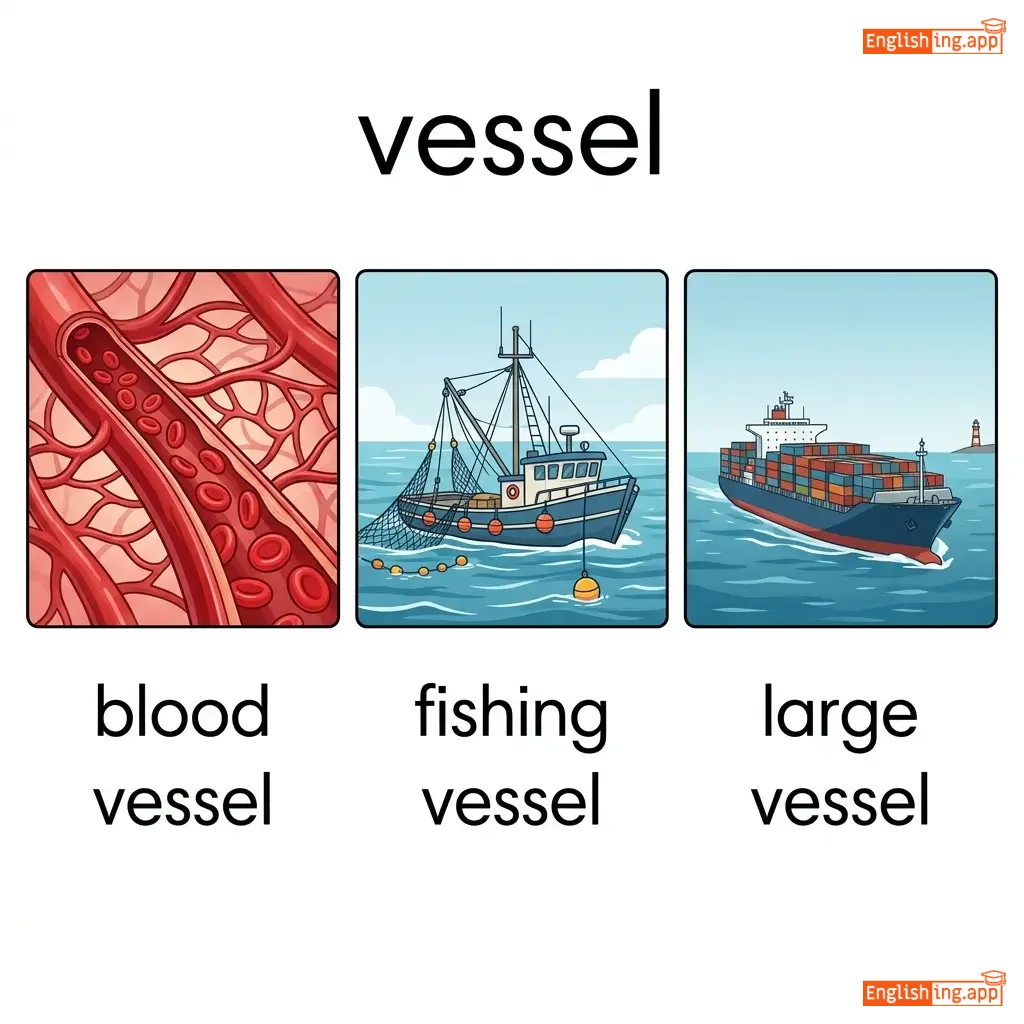
A ship or large boat; also a container for holding liquids or a tube in the body that carries blood.
••••••
|
The fishing vessel returned safely to the harbor. |
漁船は安全に港に戻った。
Gyosen wa anzen ni minato ni modotta.
••••••
|
blood vessel |
A tubular structure in the body that carries blood.
••••••
|
血管
kekkan
••••••
|
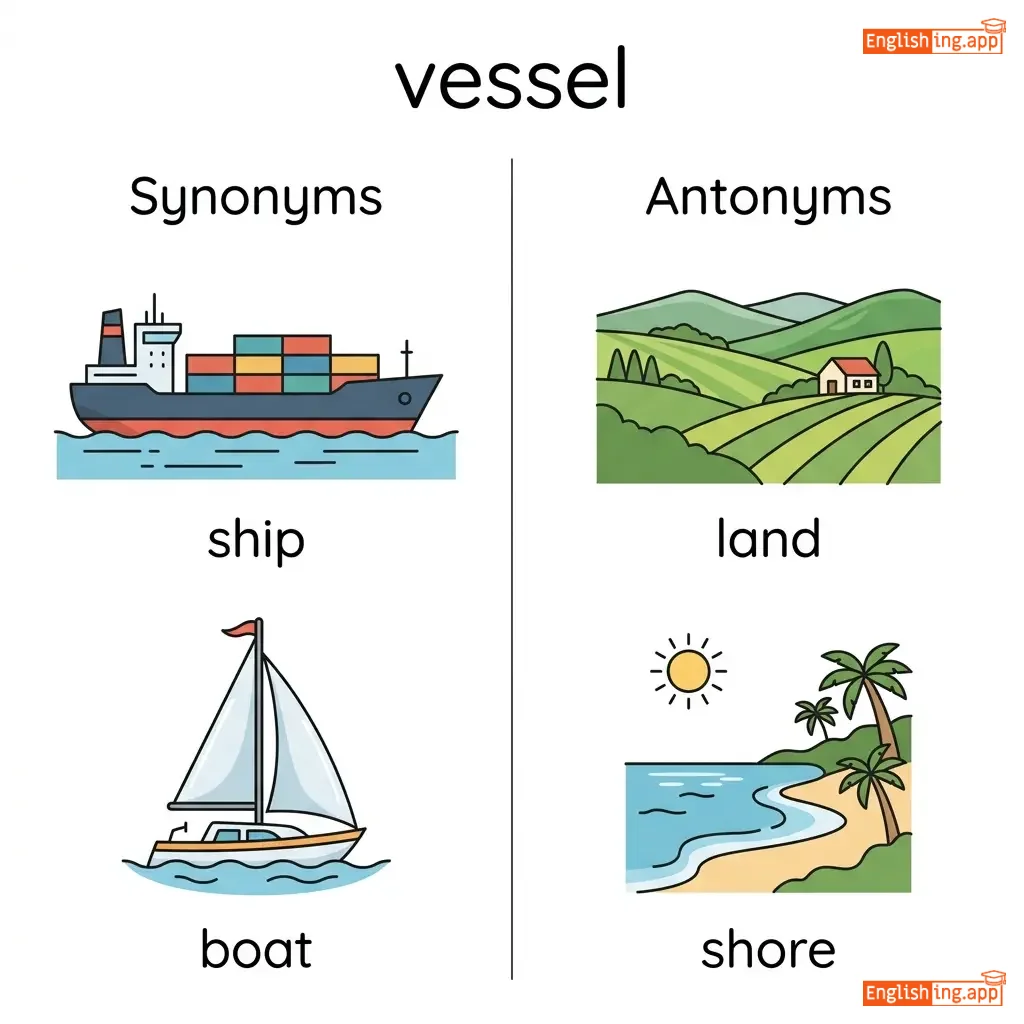
ship, boat, craft, container, receptacle
••••••
|
land, shore
••••••
|
blood vessel, fishing vessel, large vessel, sea vessel
••••••
|
Vessel は🚢 船または血管のこと。船と血液を覚えて!
••••••
|
|
🎖️
••••••
|
/ˈvɛtərən/
noun
(ベテラン)
••••••
|
- •••••• |
経験豊富な人 / 退役軍人
keiken hōfu na hito / taiki gunjin
••••••
|
- •••••• | - •••••• | - •••••• | - •••••• |
a person who has long experience in a particular field or an ex-member of the armed forces
••••••
|
He is a veteran of the software industry. |
彼はソフトウェア業界のベテランです。
Kare wa sofutowea gyōkai no beteran desu
••••••
|
war veteran |
a person who has served in a war
••••••
|
戦争のベテラン
sensō no beteran
••••••
|
experienced, expert, old-timer, ex-soldier
••••••
|
novice, beginner, recruit
••••••
|
war veteran, military veteran, veteran player, industry veteran
••••••
|
Veteranは非常に訓練されたことを意味します - 経験豊富な人または退役軍人
••••••
|
|
➡️
••••••
|
/ˈvaɪə/ or /ˈviːə/
preposition
(ヴィア)
••••••
|
- •••••• |
経由で
keiyu de
••••••
|
- •••••• | - •••••• | - •••••• | - •••••• |
through, by way of, or using a particular route or means
••••••
|
She sent the documents via email. |
彼女はメールを通じて書類を送った。
Kanojo wa mēru o tōjite shorui o okutta.
••••••
|
- •••••• | - •••••• | - •••••• |
through, by, using, across, along
••••••
|
without, beyond
••••••
|
via email, via phone, via internet, travel via, communicate via
••••••
|
ヴィアは経由して進むこと、特定の道を通るイメージです。
••••••
|
|
😈
••••••
|
/vaɪs/
noun
(vais)
••••••
|
- •••••• |
悪習
akushu
••••••
|
- •••••• | - •••••• | - •••••• | - •••••• |
immoral or wicked behavior; a weakness in someone's character
••••••
|
Greed is a vice that can destroy lives. |
貪欲は人生を破壊する悪習です。
Dōyoku wa jinsei o hakai suru akushu desu.
••••••
|
A vice grip |
a very tight or firm hold
••••••
|
悪習のグリップ
Akushu no gurippu
••••••
|
immorality, wickedness, evil, depravity
••••••
|
virtue, morality, goodness
••••••
|
moral vice, addictive vice, commit a vice
••••••
|
悪習は人生を破壊する!
••••••
|
|
😈
••••••
|
/ˈvɪʃəs/
adjective
(vishas)
••••••
|
- •••••• |
vicious
vicious
••••••
|
- •••••• | - •••••• | - •••••• | - •••••• |
Deliberately cruel, violent, or immoral.
••••••
|
The dog gave a vicious growl when the stranger approached. |
犬は見知らぬ人が近づいたとき、ひどくうなった。
Inu wa mishiranu hito ga chikaduita toki, hidoku unatta.
••••••
|
vicious cycle |
A sequence of problems that reinforce or worsen each other.
••••••
|
悪循環
akujunkan
••••••
|
cruel, brutal, savage, malicious, fierce
••••••
|
kind, gentle, benevolent
••••••
|
vicious attack, vicious circle, vicious cycle, vicious rumor
••••••
|
VICIOUSは非常に危険な意味です - VICIOUSな犬、非常に危険な犬を想像してみてください 🐕
••••••
|
|
😢
••••••
|
/ˈvɪk.tɪm/
noun
(ヴィクティム)
••••••
|
- •••••• |
犠牲者
giseisha
••••••
|
- •••••• | - •••••• | - •••••• | - •••••• |
a person who suffers harm, injury, or death as a result of an event or action
••••••
|
The victim was taken to the hospital immediately. |
犠牲者はすぐに病院に運ばれました。
Giseisha wa sugu ni byōin ni hakobaremashita.
••••••
|
- •••••• | - •••••• | - •••••• |
casualty, sufferer, target, prey
••••••
|
perpetrator, aggressor, attacker
••••••
|
crime victim, accident victim, victim support
••••••
|
The Japanese word '犠牲者' (giseisha) sounds similar to 'victim' and means the same.
••••••
|
|
🏆
••••••
|
/ˈvɪktəri/
noun
(vikutorī)
••••••
|
|
勝利
shōri
••••••
|
- •••••• | - •••••• | - •••••• | - •••••• |
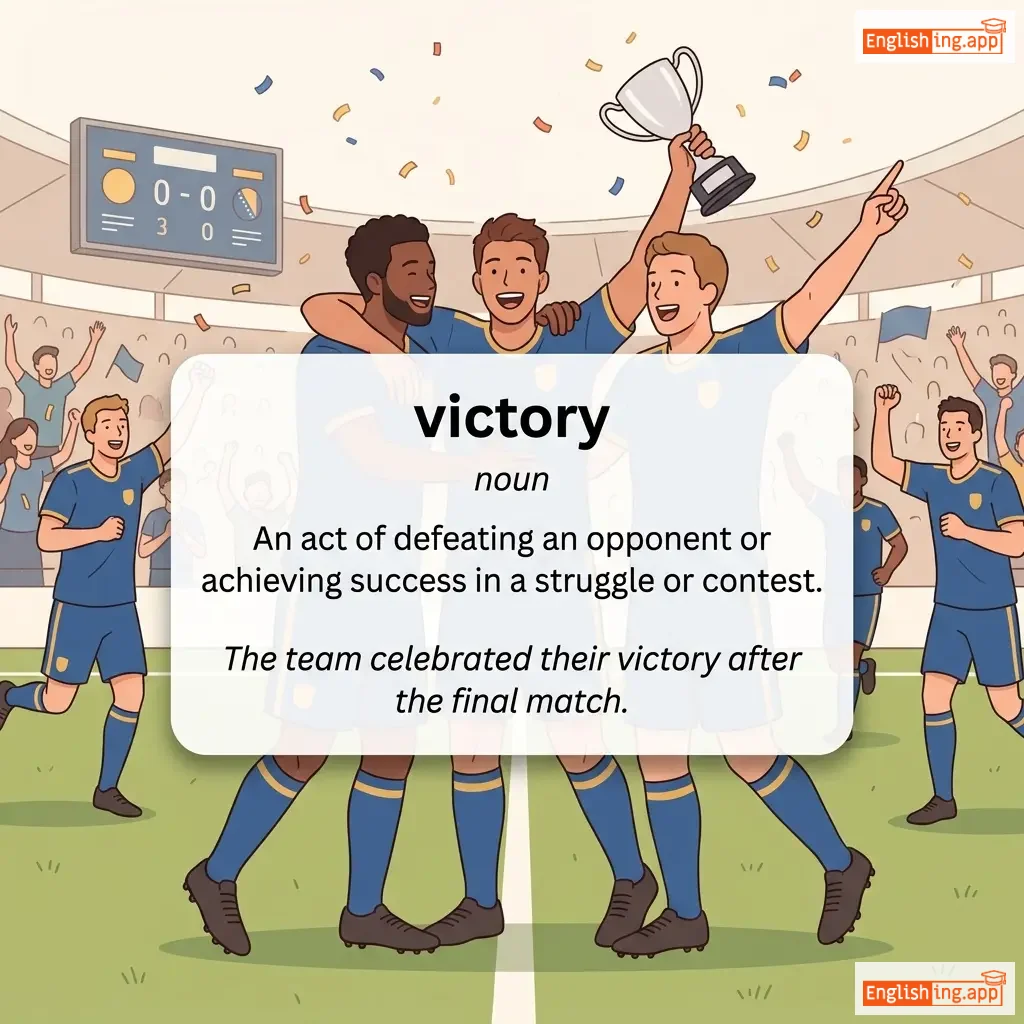
An act of defeating an opponent or achieving success in a struggle or contest.
••••••
|
The team celebrated their victory after the final match. |
チームは最終試合の後、勝利を祝いました。
chīmu wa saishū shiai no ato, shōri o iwai mashita.
••••••
|
sweet victory |
a satisfying or well-deserved success
••••••
|
甘い勝利
amai shōri
••••••
|
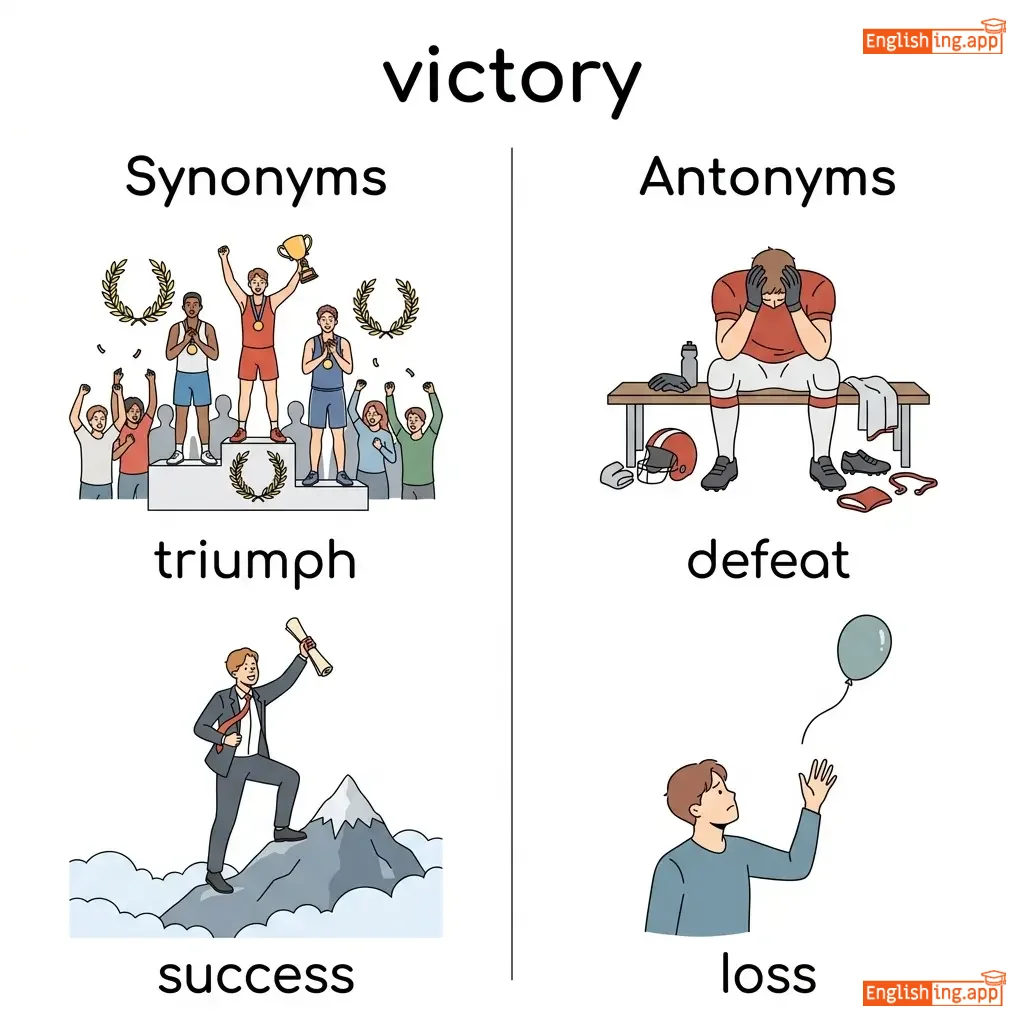
triumph, success, win, conquest
••••••
|
defeat, loss, failure
••••••
|
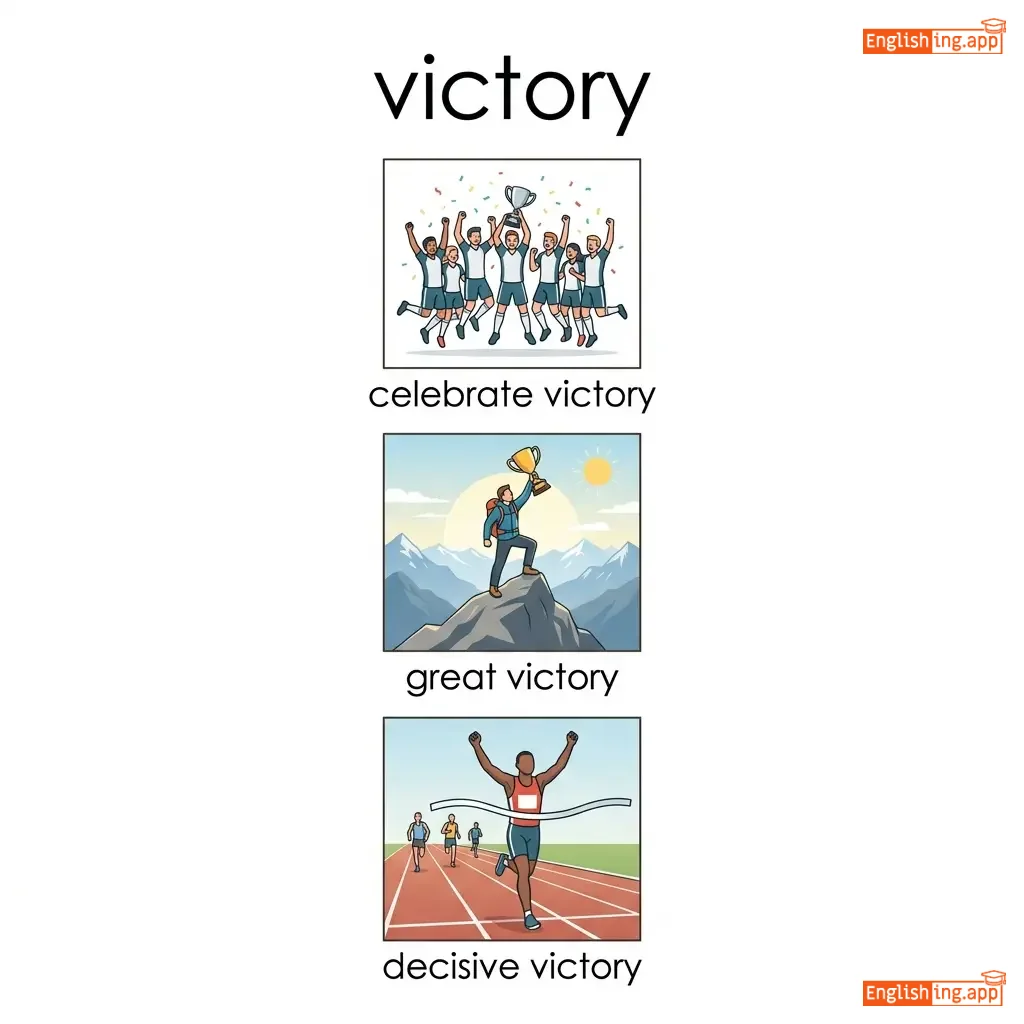
celebrate victory, great victory, decisive victory
••••••
|
VICTORYは日本語で'勝利'、つまり勝つことを意味します!
••••••
|
|
🎥
••••••
|
/ˈvɪdiəʊ/
noun
(ビデオ)
••••••
|
- •••••• |
ビデオ
bideo
••••••
|
- •••••• | - •••••• | - •••••• | - •••••• |
a recording of moving visual images made digitally or on film
••••••
|
She watched the video of her favorite concert online. |
彼女はオンラインでお気に入りのコンサートのビデオを見ました。
Kanojo wa onrain de okiniiri no konsato no bideo o mimashita.
••••••
|
- •••••• | - •••••• | - •••••• |
film, clip, recording, footage
••••••
|
audio, still image
••••••
|
watch a video, upload a video, video file, educational video
••••••
|
ビデオを見る、動く視覚を楽しむ!(Bideo o miru, ugoku shikaku o tanoshimu!)
••••••
|
|
⚔️
••••••
|
/vaɪ/
verb
(ヴァイ)
••••••
|
- •••••• |
争う
arasou
••••••
|
vied
ヴァイド
••••••
|
vied
ヴァイド
••••••
|
vies
ヴァイズ
••••••
|
vying
ヴァイング
••••••
|
To compete eagerly with someone in order to do or achieve something.
••••••
|
Several companies are vying for the contract.
いくつかの企業が契約を争っています。
••••••
|
いくつかの企業が契約を争っています。
Ikutsuka no kigyō ga keiyaku o arasotteimasu.
••••••
|
vie with
〜と競争する
••••••
|
To compete against someone or something.
••••••
|
〜と競争する
〜to kyōsō suru
••••••
|
compete, contend, rival, strive
••••••
|
yield, surrender
••••••
|
vie for, vie with, vying to, vying against
••••••
|
VIEは争う意味です。競争中の人物を思い浮かべてください!
••••••
|
|
👀
••••••
|
/vjuː/
noun/verb
(ビュー)
••••••
|
- •••••• |
ビュー
byu
••••••
|
viewed
ビュード
••••••
|
viewed
ビュード
••••••
|
views
ビューズ
••••••
|
viewing
ビューイング
••••••
|
the act of seeing or observing something, or an area of sight
••••••
|
She had a great view of the sunset from her balcony.
彼女はバルコニーから素晴らしい夕日の景色を眺めていました。
••••••
|
彼女はバルコニーから素晴らしい夕日の景色を眺めていました。
Kanojo wa barukonī kara subarashī yūhi no keshiki o nagamete imashita.
••••••
|
in view of
ビューオブ
••••••
|
considering or due to something
••••••
|
ビューオブ
byū obu
••••••
|
sight, observation, panorama, outlook
••••••
|
blindness, ignorance
••••••
|
take a view, have a view, beautiful view, view from the window
••••••
|
ビュー - 見るためにあなたが望んでいるものを探してください (Byū - miru tame ni anata ga nozonde iru mono o sagashite kudasai)
••••••
|
|
👁️
••••••
|
/ˈvɪərər/
noun
(ビューアー)
••••••
|
- •••••• |
視聴者
shichōsha
••••••
|
- •••••• | - •••••• | - •••••• | - •••••• |
a person who watches something, especially television or video content
••••••
|
The viewer is able to switch channels with the remote control. |
視聴者はリモコンでチャンネルを切り替えることができます。
Shichōsha wa rimokon de channeru o kirikaeru koto ga dekimasu.
••••••
|
- •••••• | - •••••• | - •••••• |
observer, watcher, spectator, audience
••••••
|
participant, actor
••••••
|
TV viewer, movie viewer, loyal viewer, viewer discretion
••••••
|
視聴者はテレビを見る (Shichōsha wa terebi o miru)
••••••
|
|
👀
••••••
|
/ˈvjuːpɔɪnt/
noun
(ビュー・ポイント)
••••••
|
- •••••• |
視点
shiten
••••••
|
- •••••• | - •••••• | - •••••• | - •••••• |
a particular attitude or way of considering a matter
••••••
|
From his viewpoint, the situation was hopeless.
彼の視点から見ると、その状況は絶望的でした。
••••••
|
彼の視点から見ると、その状況は絶望的でした。
Kare no shiten kara miru to, sono jōkyō wa zetsubō-teki deshita.
••••••
|
point of view
視点
••••••
|
the position from which something is considered or evaluated
••••••
|
視点
shiten
••••••
|
perspective, outlook, angle, stance
••••••
|
misunderstanding, confusion
••••••
|
different viewpoint, personal viewpoint, from my viewpoint
••••••
|
視点のように、すべてが明確に見える!
••••••
|
|
🏘️
••••••
|
/ˈvɪlɪdʒ/
noun
(ヴィレッジ)
••••••
|
- •••••• |
村
mura
••••••
|
- •••••• | - •••••• | - •••••• | - •••••• |
a small community or group of houses in a rural area
••••••
|
They live in a small village surrounded by mountains. |
彼らは山に囲まれた小さな村に住んでいます。
Karera wa yama ni kakomareta chiisana mura ni sundeimasu.
••••••
|
village green |
a grassy area in a village, often used for recreation
••••••
|
村の広場
mura no hiroba
••••••
|
hamlet, town, settlement, community
••••••
|
city, metropolis
••••••
|
village life, village community, small village, remote village
••••••
|
村は静かで自然に満ちた場所です (Mura wa shizuka de shizen ni michita basho desu)
••••••
|
|
🌿
••••••
|
/vaɪn/
noun
(ヴァイン)
••••••
|
- •••••• |
つる植物
tsuru shokubutsu
••••••
|
- •••••• | - •••••• | - •••••• | - •••••• |
a climbing or trailing plant with long stems; a plant that produces grapes
••••••
|
The vine climbed up the wall and covered it with green leaves.
ザ ヴァイン クライムド アップ ザ ウォール アンド カバード イット ウィズ グリーン リーブス。
••••••
|
そのつる植物は壁を登り、緑の葉で覆った。
sono tsuru shokubutsu wa kabe o nobori, midori no ha de ootta
••••••
|
hear it through the grapevine
ヒア イット スルー ザ グレープヴァイン
••••••
|
to learn information informally or through rumors
••••••
|
うわさで聞く
uwasa de kiku
••••••
|
creeper, climber, grapevine, trailing plant
••••••
|
tree, bush
••••••
|
grape vine, climbing vine, vine leaves, vine growth
••••••
|
VINE=つる、つるっと伸びるヴァイン
••••••
|
|
🚫
••••••
|
/ˈvaɪ.ə.leɪt/
verb
(ワイオレイト)
••••••
|
|
違反する
ihan suru
••••••
|
violated
ワイオレイテッド
••••••
|
violated
ワイオレイテッド
••••••
|
violates
ワイオレイツ
••••••
|
violating
ワイオレイティング
••••••
|
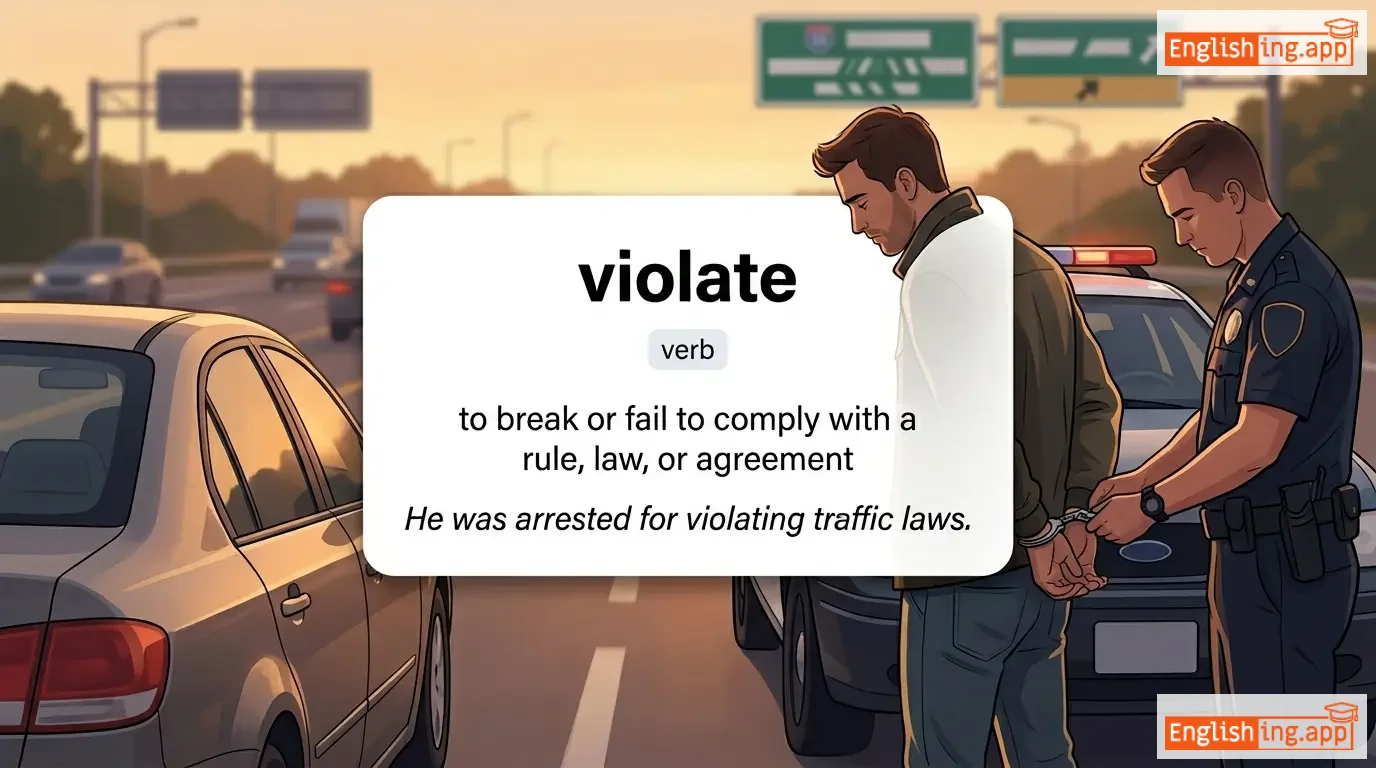
to break or fail to comply with a rule, law, or agreement
••••••
|
He was arrested for violating traffic laws.
彼は交通法を違反して逮捕された。
••••••
|
彼は交通法を違反して逮捕された。
Kare wa kōtsūhō o ihan shite taiho sareta.
••••••
|
violate human rights
人権を侵害する
••••••
|
to act against the basic rights that every human deserves
••••••
|
人権を侵害する
jinken o shingai suru
••••••
|
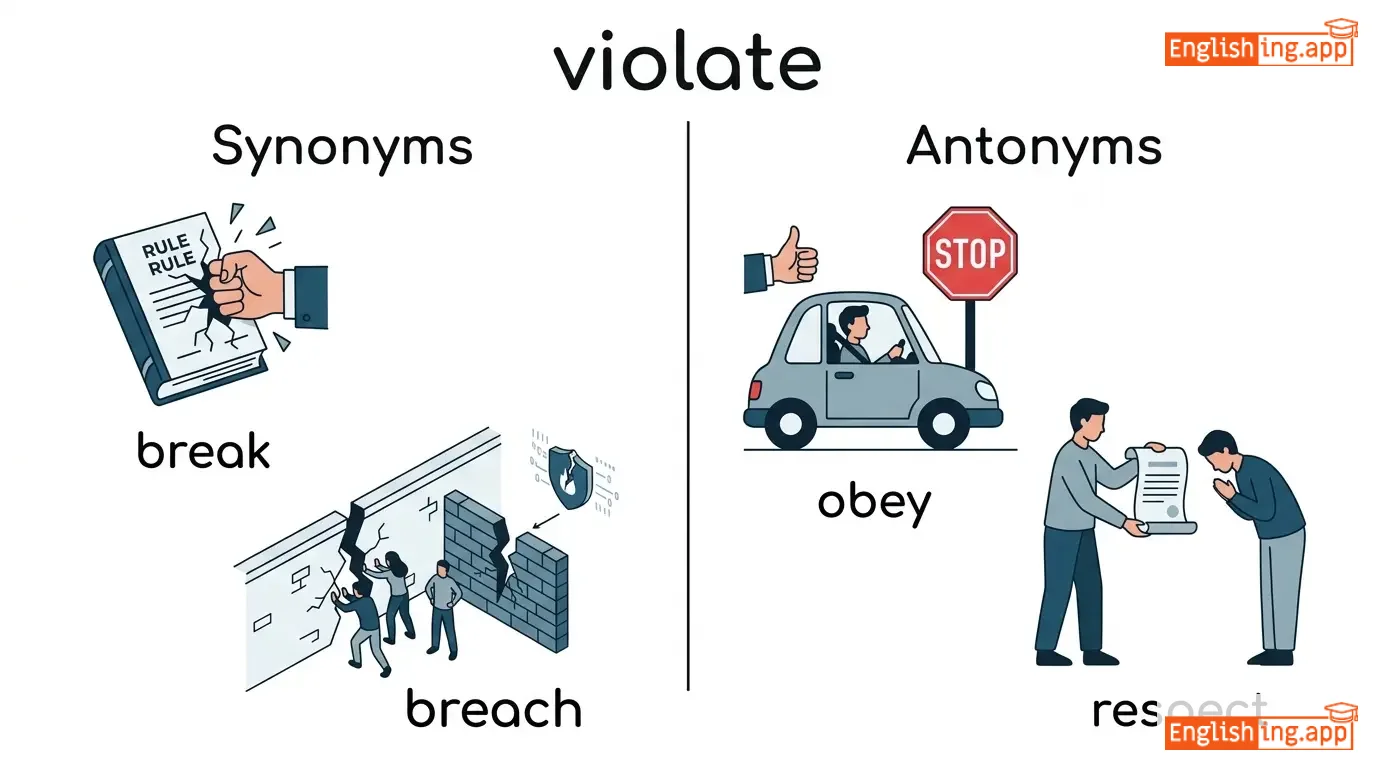
break, breach, disobey, infringe, transgress
••••••
|
obey, respect, follow
••••••
|
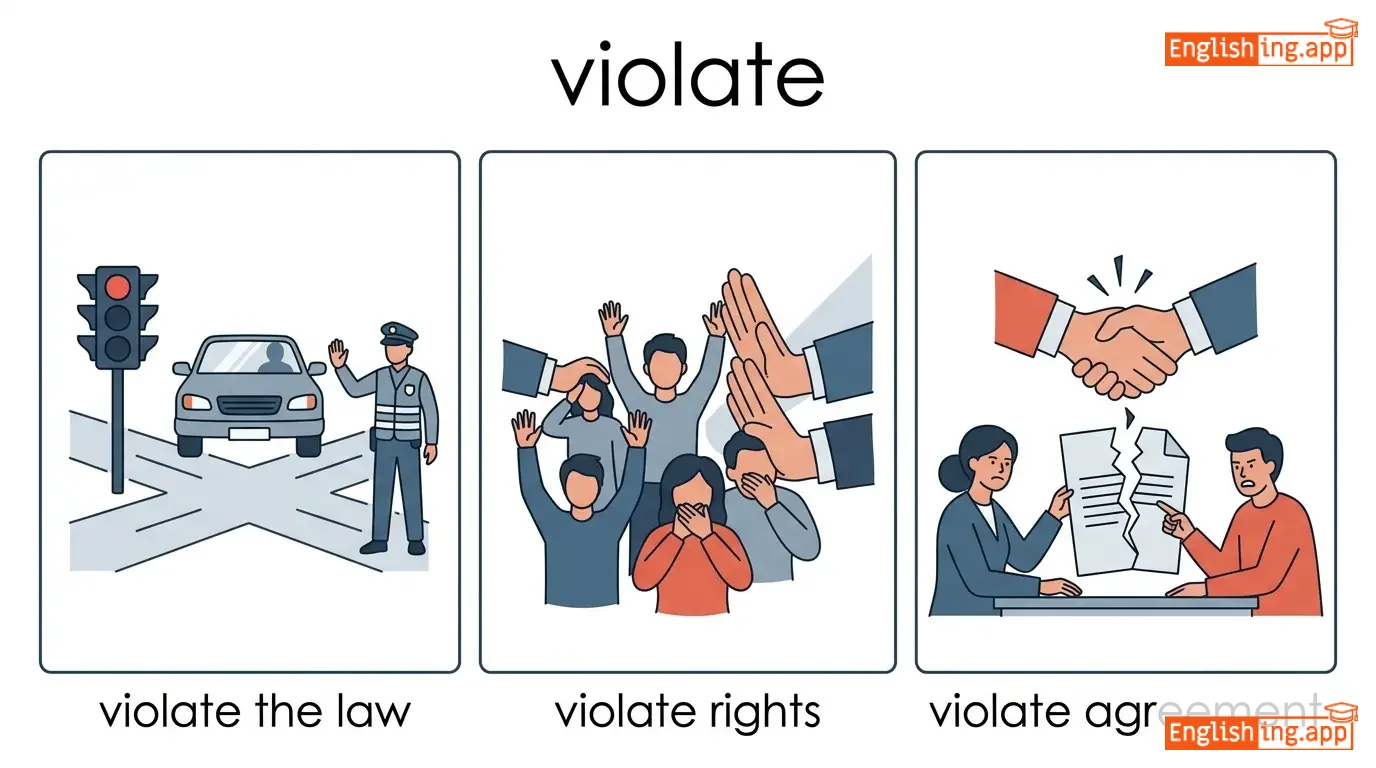
violate the law, violate rights, violate agreement, violate privacy
••••••
|
‘違反’することはルールを壊すこと、つまり違法!
••••••
|
|
🚫
••••••
|
/ˌvaɪəˈleɪʃən/
noun
(vai-ō-reishon)
••••••
|
- •••••• |
違反
ihan
••••••
|
- •••••• | - •••••• | - •••••• | - •••••• |
The act of breaking or disregarding a law, rule, or agreement.
••••••
|
Driving without a license is a violation of the law. |
免許なしで運転することは法律違反です。
Menkyo nashi de unten suru koto wa hōritsu ihan desu.
••••••
|
in violation of |
contrary to; against
••••••
|
違反して
ihan shite
••••••
|
breach, infringement, offense, transgression, misconduct
••••••
|
compliance, obedience, adherence
••••••
|
serious violation, law violation, human rights violation, violation of rules
••••••
|
Violation = 規則を破る 🚫
••••••
|
|
💥
••••••
|
/ˈvaɪ.ə.ləns/
noun
(ヴァイオレンス)
••••••
|
- •••••• |
暴力
bōryoku
••••••
|
- •••••• | - •••••• | - •••••• | - •••••• |
behavior involving physical force intended to hurt or damage
••••••
|
The protest turned into an act of violence.
抗議は暴力行為に変わった。
••••••
|
抗議は暴力行為に変わった。
Kōgi wa bōryoku kōi ni kawatta.
••••••
|
domestic violence
家庭内暴力
••••••
|
violence or abuse within a household, often between partners
••••••
|
家庭内暴力
kateinai bōryoku
••••••
|
aggression, brutality, force, cruelty, assault
••••••
|
peace, calm, harmony
••••••
|
use violence, outbreak of violence, act of violence, prevent violence
••••••
|
‘暴力’は violence、戦いと大きな音💥を想像して、それが暴力だ!
••••••
|
|
🔥
••••••
|
/ˈvaɪ.ə.lənt/
adjective
(ヴァイオレント)
••••••
|
- •••••• |
暴力的
bōryokuteki
••••••
|
- •••••• | - •••••• | - •••••• | - •••••• |
using or involving physical force intended to hurt or damage
••••••
|
He became violent after hearing the bad news. |
悪いニュースを聞いた後、彼は暴力的になった。
Warui nyūsu o kiita ato, kare wa bōryokuteki ni natta.
••••••
|
turn violent |
to become aggressive or start using physical force
••••••
|
暴力的になる
bōryokuteki ni naru
••••••
|
aggressive, brutal, fierce, forceful, savage
••••••
|
peaceful, gentle, calm
••••••
|
violent attack, violent crime, violent reaction, become violent
••••••
|
Violent は暴力的な行動 🔥 — ‘暴力的’ は突然爆発するようなものです!
••••••
|
|
💻
••••••
|
/ˈvɜː.tʃu.ə.li/
adverb
(ヴァーチュアリー)
••••••
|
- •••••• |
ほとんど, バーチャル
hotondo, bācharu
••••••
|
- •••••• | - •••••• | - •••••• | - •••••• |
almost or nearly, but not completely; by means of computer technology
••••••
|
The meeting was held virtually due to travel restrictions. |
旅行制限のため、会議はバーチャルで行われました。
Ryokō seigen no tame, kaigi wa bācharu de okonawaremashita.
••••••
|
virtually impossible |
almost impossible to do or achieve
••••••
|
ほとんど不可能
hotondo fukanō
••••••
|
almost, nearly, practically, effectively, essentially
••••••
|
completely, totally, physically
••••••
|
virtually impossible, virtually all, held virtually, virtually unchanged
••••••
|
Virtually はオンラインまたはほとんど — ‘virtual class’ は実際にオンラインクラスを意味します 💻
••••••
|
|
✨
••••••
|
/ˈvɜːrtʃuəs/
adjective
(ヴァーチュアス)
••••••
|
- •••••• |
徳のある
toku no aru
••••••
|
- •••••• | - •••••• | - •••••• | - •••••• |
Having or showing high moral standards.
••••••
|
She is known as a virtuous woman who helps the poor. |
彼女は貧しい人々を助ける徳のある女性として知られています。
Kanojo wa mazushī hitobito o tasukeru toku no aru josei toshite shirareteimasu.
••••••
|
virtue is its own reward |
Doing good is rewarding in itself.
••••••
|
徳はそれ自身の報酬である
Toku wa sore jishin no hōshū de aru
••••••
|
moral, righteous, honest, noble, pure
••••••
|
immoral, corrupt, wicked
••••••
|
virtuous life, virtuous character, virtuous conduct
••••••
|
Virtuous → Virtue + ous = 徳 (Toku)
••••••
|
|
🦠
••••••
|
/ˈvaɪrəs/
noun
(ヴァイラス)
••••••
|
- •••••• |
ウイルス
uirusu
••••••
|
- •••••• | - •••••• | - •••••• | - •••••• |
A tiny infectious agent that can replicate only inside the living cells of an organism.
••••••
|
The computer was infected with a dangerous virus. |
コンピュータは危険なウイルスに感染していました。
Konpyūta wa kiken na uirusu ni kansen shite imashita.
••••••
|
spread like a virus |
Something that spreads quickly and uncontrollably.
••••••
|
ウイルスのように広がる
Uirusu no yō ni hirogaru
••••••
|
pathogen, germ, bug, infection
••••••
|
antidote, cure
••••••
|
computer virus, deadly virus, spread virus
••••••
|
ウイルスは火のように広がります!
••••••
|
|
🛂
••••••
|
/ˈviːzə/
noun
(ビザ)
••••••
|
- •••••• |
ビザ
biza
••••••
|
- •••••• | - •••••• | - •••••• | - •••••• |
an official authorization or permission to enter, leave, or stay in a country
••••••
|
She applied for a visa to study abroad. |
彼女は留学するためにビザを申請しました。
Kanojo wa ryūgaku suru tame ni biza o shinsei shimashita.
••••••
|
- •••••• | - •••••• | - •••••• |
permit, authorization, clearance, pass
••••••
|
ban, restriction
••••••
|
visa application, visa approval, travel visa
••••••
|
ビザは海外に行くための許可証!
••••••
|
|
👀
••••••
|
/ˈvɪzəbl/
adjective
(ヴィジブル)
••••••
|
- •••••• |
可視的
kashiteki
••••••
|
- •••••• | - •••••• | - •••••• | - •••••• |
able to be seen; perceptible by the eye
••••••
|
The stars were clearly visible in the night sky.
星は夜空ではっきりと見えました。
••••••
|
星は夜空ではっきりと見えました。
Hoshi wa yozora de hakkiri to miemashita.
••••••
|
make oneself visible
自分を可視化する
••••••
|
to ensure others can see or notice you
••••••
|
自分を可視化する
Jibun o kashika suru
••••••
|
apparent, noticeable, perceptible, observable, evident
••••••
|
invisible, hidden
••••••
|
visible light, visible mark, visible difference, clearly visible
••••••
|
Visibleは、目で見ることができるものです。
••••••
|
|
👁️
••••••
|
/ˈvɪʒən/
noun
(ハピネス)
••••••
|


|
幸せ
shiawase
••••••
|
- •••••• | - •••••• | - •••••• | - •••••• |
the ability to see or a mental image of something
••••••
|
She had a clear vision of her future. |
彼女は賞を受け取ったとき、自分の幸せを隠すことができませんでした。
Kanojo wa shou o uketotta toki, jibun no shiawase o kakusu koto ga dekimasen deshita.
••••••
|
- •••••• | - •••••• | - •••••• |
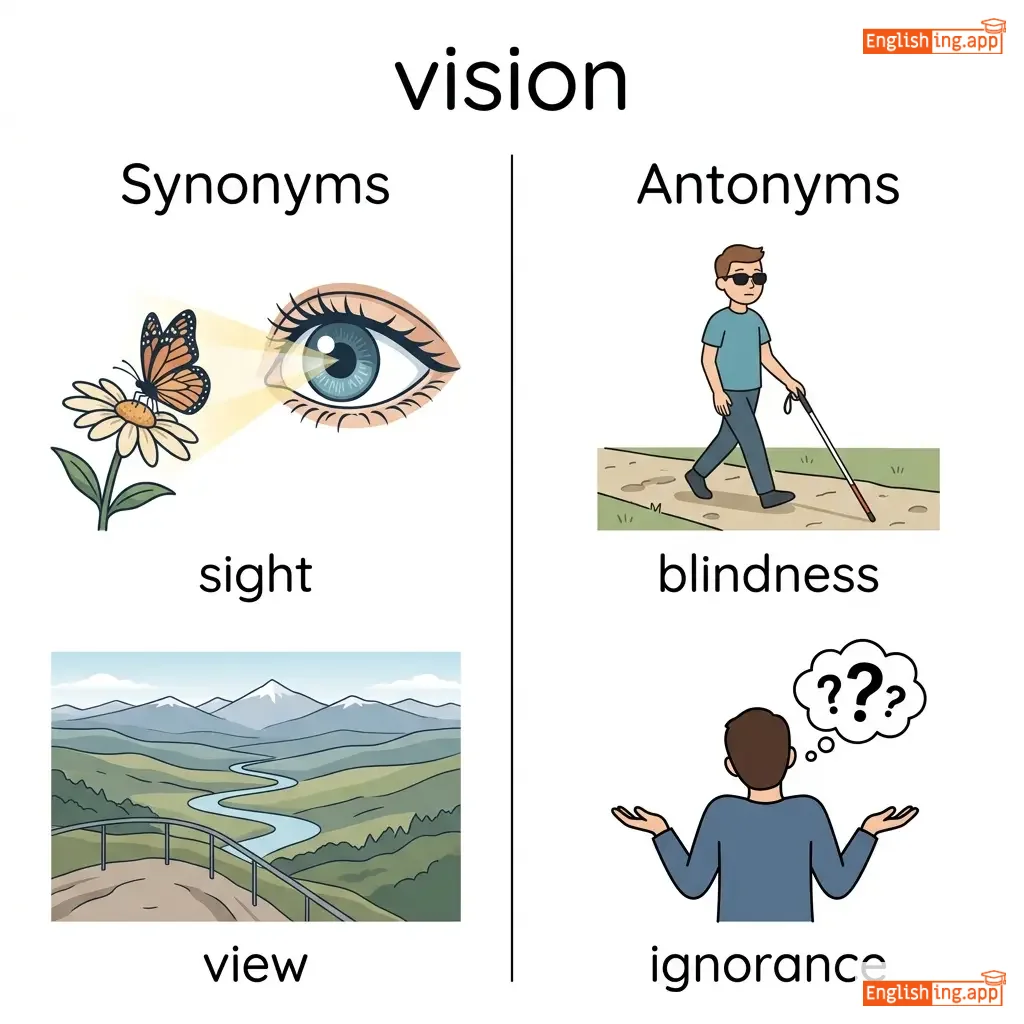
sight, view, perception, foresight
••••••
|
blindness, ignorance, darkness
••••••
|
clear vision, vivid vision, future vision
••••••
|
Happiness - 幸せは人生の中で最も大切なもの
••••••
|
|
🏛️
••••••
|
/ˈvɪzɪt/
verb
(ビジット)
••••••
|
|
訪れる
otozureru
••••••
|
visited
ビジテッド
••••••
|
visited
ビジテッド
••••••
|
visits
ビジッツ
••••••
|
visiting
ビジティング
••••••
|
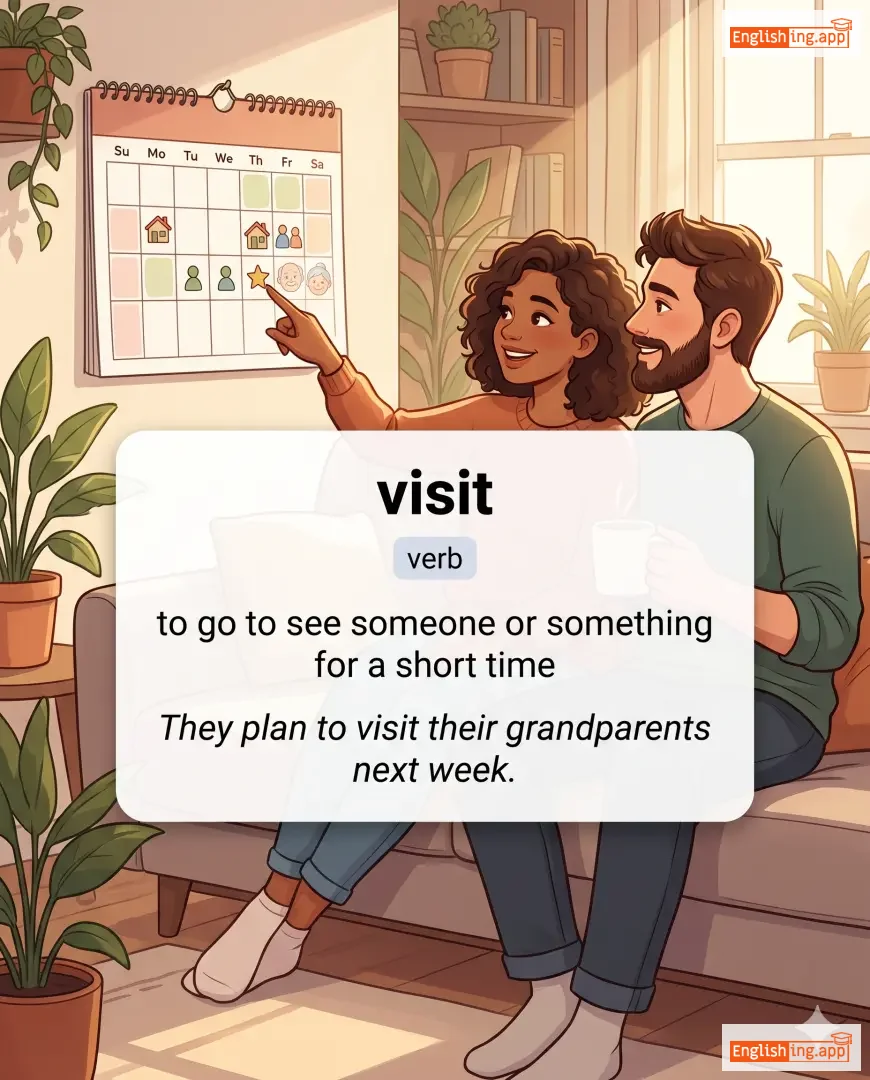
to go and see someone or somewhere; to pay a call
••••••
|
We plan to visit the museum this weekend.
私たちは今週末に博物館を訪れる予定です。
••••••
|
私たちは今週末に博物館を訪れる予定です。
Watashitachi wa konshūmatsu ni hakubutsukan o otozureru yotei desu.
••••••
|
- •••••• | - •••••• | - •••••• |
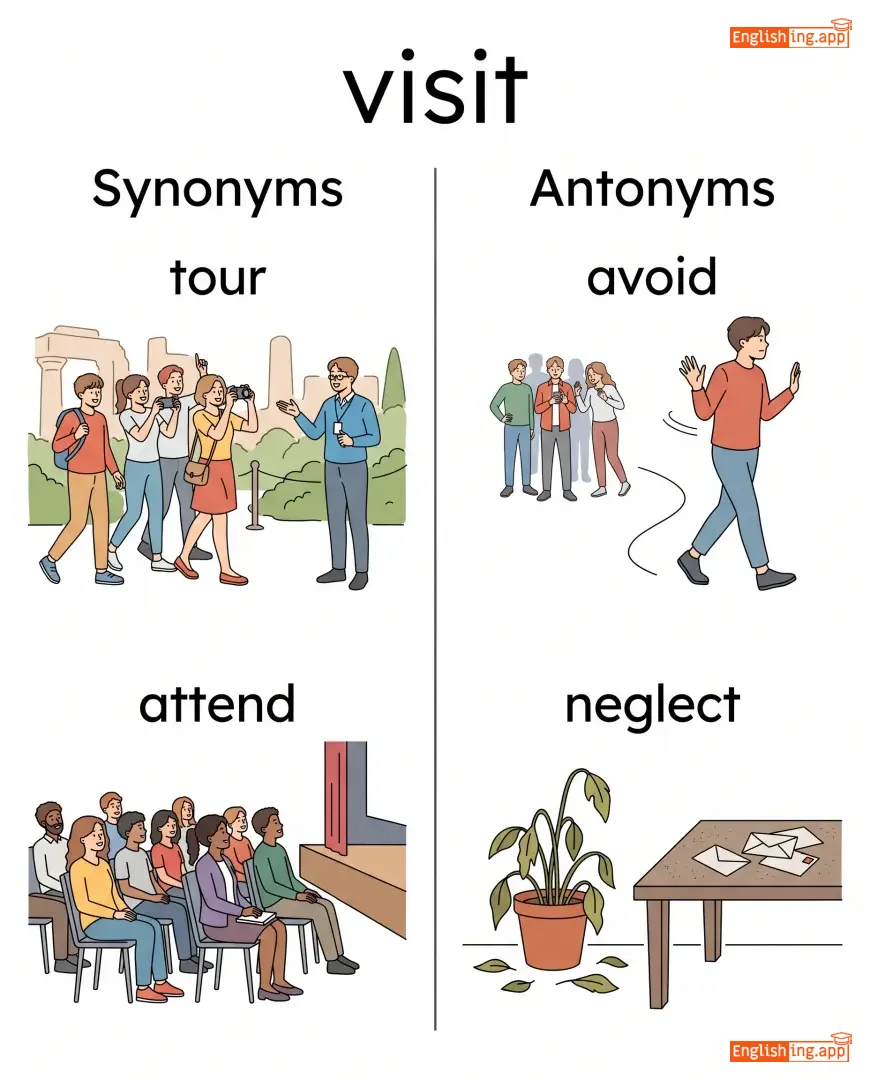
see, call on, drop by, tour, explore
••••••
|
avoid, shun, stay away, leave
••••••
|
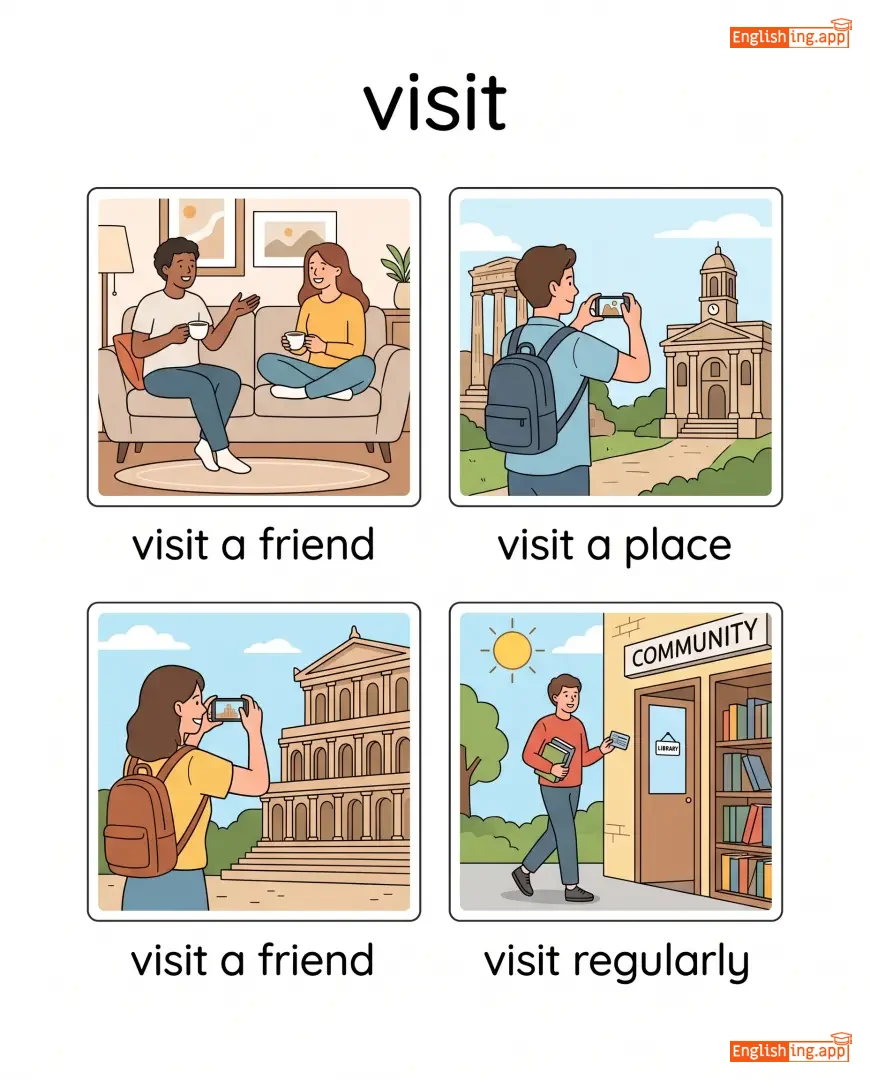
visit friends, visit family, regularly visit, frequently visit, rarely visit
••••••
|
訪れることは新しい場所を発見する冒険です。
••••••
|
|
🚶♂️
••••••
|
/ˈvɪzɪtər/
noun
(ビジター)
••••••
|
- •••••• |
訪問者
hōmonsha
••••••
|
- •••••• | - •••••• | - •••••• | - •••••• |
a person who goes to see a place or someone for a short time
••••••
|
The museum had many visitors last weekend. |
博物館には先週末、多くの訪問者がいました。
Hakubutsukan ni wa senshūmatsu, ōku no hōmonsha ga imashita.
••••••
|
- •••••• | - •••••• | - •••••• |
guest, caller, tourist, attendee
••••••
|
resident, local
••••••
|
welcome visitors, regular visitor, museum visitor
••••••
|
VISITOR - 訪問者 (visitor) のように、来て、そして去る人。
••••••
|
|
👁️
••••••
|
/ˈvɪʒuəl/
adjective
(ビジュアル)
••••••
|
- •••••• |
視覚的
shikakuteki
••••••
|
- •••••• | - •••••• | - •••••• | - •••••• |
Relating to seeing or sight.
••••••
|
The movie was praised for its stunning visual effects. |
その映画は素晴らしい視覚的効果で賞賛されました。
Sono eiga wa subarashī shikakuteki kōka de shōsan saremashita.
••••••
|
- •••••• | - •••••• | - •••••• |
optical, graphic, pictorial, observable
••••••
|
invisible, abstract
••••••
|
visual effect, visual aid, visual representation, visual art
••••••
|
視覚的は目で見えるものに関係しています。
••••••
|
|
💪
••••••
|
/ˈvaɪtl/
adjective
(ヴァイタル)
••••••
|
- •••••• |
不可欠
fukaketsu
••••••
|
- •••••• | - •••••• | - •••••• | - •••••• |
essential or necessary for life or success
••••••
|
It's vital to stay hydrated during the summer. |
夏の間に水分補給をすることは不可欠です。
Natsu no aida ni suibun hokyū o suru koto wa fukaketsu desu.
••••••
|
- •••••• | - •••••• | - •••••• |
crucial, essential, necessary, important
••••••
|
unimportant, trivial
••••••
|
vital organs, vital information, vital role
••••••
|
VITAL - 生命に不可欠 (vital - seimei ni fukaketsu)
••••••
|
|
❤️
••••••
|
/ˈvaɪtəli/
adverb
(ヴァイタリー)
••••••
|
- •••••• |
極めて重要に
kiwamete juuyo ni
••••••
|
- •••••• | - •••••• | - •••••• | - •••••• |
in an extremely important or essential way; in a manner relating to life or vitality
••••••
|
Access to clean water is vitally important for public health.
アクセス トゥ クリーン ウォーター イズ ヴァイタリー インポータント フォー パブリック ヘルス。
••••••
|
清潔な水へのアクセスは公衆衛生にとって極めて重要です。
Seiketsu na mizu e no akusesu wa koshu eisei ni totte kiwamete juuyo desu
••••••
|
vitally important
ヴァイタリー インポータント
••••••
|
extremely important or essential
••••••
|
極めて重要
kiwamete juuyo
••••••
|
crucially, essentially, critically, importantly, fundamentally
••••••
|
insignificantly, trivially, unimportantly
••••••
|
vitally important, vitally necessary, vitally concerned, vitally affected
••••••
|
Vital = バイタル, vitally = バイタル級に重要
••••••
|
|
📚
••••••
|
/vəˈkæbjʊləri/
noun
(ボキャブラリー)
••••••
|
- •••••• |
語彙
goi
••••••
|
- •••••• | - •••••• | - •••••• | - •••••• |
the set of words known and used by a person, group, or language; the words used in a particular field or subject
••••••
|
Reading every day helps improve your vocabulary.
リーディング エブリ デイ ヘルプス インプルーブ ユア ボキャブラリー。
••••••
|
毎日読むことは語彙力を高めます。
mainichi yomu koto wa goiryoku o takamemasu
••••••
|
basic vocabulary
ベーシック ボキャブラリー
••••••
|
the most essential and commonly used words of a language
••••••
|
基本語彙
kihon goi
••••••
|
lexicon, word stock, terminology, diction
••••••
|
silence, inarticulateness
••••••
|
expand vocabulary, rich vocabulary, basic vocabulary, vocabulary list, vocabulary skills
••••••
|
Vocabulary=語彙、ボキャで覚える!
••••••
|
|
🎤
••••••
|
/ˈvoʊkəl/
adjective
(ボーカル)
••••••
|
- •••••• |
発声
hatsusei
••••••
|
- •••••• | - •••••• | - •••••• | - •••••• |
expressing opinions or feelings freely and loudly; relating to the voice
••••••
|
She was very vocal about her dissatisfaction.
彼女は自分の不満について非常にボーカルでした。
••••••
|
彼女は自分の不満について非常に発声していました。
Kanojo wa jibun no fuman ni tsuite hijou ni hatsusei shite imashita.
••••••
|
vocal supporter
ボーカル支持者
••••••
|
a person who strongly and openly supports something
••••••
|
発声支持者
hatsusei shijisha
••••••
|
outspoken, expressive, loud, verbal, articulate
••••••
|
silent, quiet
••••••
|
vocal cords, vocal expression, vocal critic, vocal supporter
••••••
|
Vocalは声を出すこと — 発声する支持者!
••••••
|
|
🗣️
••••••
|
/vɔɪs/
noun
(boisu)
••••••
|
- •••••• |
声
koe
••••••
|
- •••••• | - •••••• | - •••••• | - •••••• |
the sound produced by the vocal cords; the ability to speak or express oneself
••••••
|
She has a beautiful voice that captivates the audience. |
彼女には観客を魅了する美しい声があります。
Kanojo ni wa kankyaku o miryō suru utsukushī koe ga arimasu.
••••••
|
find your voice |
to begin expressing your thoughts or opinions
••••••
|
自分の声を見つける
jibun no koe o mitsukeru
••••••
|
sound, speech, tone, vocalization
••••••
|
silence, muteness
••••••
|
loud voice, soft voice, speak with voice
••••••
|
VOICE - 自分の声を見つける (voice - jibun no koe o mitsukeru) 自分を表現しよう
••••••
|
|
🏐
••••••
|
/ˈvɒlibɔːl/
noun
(バレーボール)
••••••
|
- •••••• |
バレーボール
bareebooru
••••••
|
- •••••• | - •••••• | - •••••• | - •••••• |
a team sport in which players hit a ball over a high net using their hands
••••••
|
She plays volleyball with her friends every weekend.
彼女は毎週末友だちとバレーボールをします。
••••••
|
彼女は毎週末友だちとバレーボールをします。
kanojo wa maishuumatsu tomodachi to bareebooru o shimasu
••••••
|
- •••••• | - •••••• | - •••••• |
volleyball game, indoor volleyball, beach volleyball, volley game
••••••
|
solo sport, individual sport
••••••
|
play volleyball, beach volleyball, volleyball court, volleyball team, volleyball match
••••••
|
バレー + ボール = バレーボール、ネットの上で打つ
••••••
|
|
🔊
••••••
|
/ˈvɒl.juːm/
noun
(ボリューム)
••••••
|
- •••••• |
体積
taisei
••••••
|
- •••••• | - •••••• | - •••••• | - •••••• |
the amount of space that a substance or object occupies, or that is enclosed within a container
••••••
|
The volume of water in the tank increased after the rain. |
雨の後、タンクの水の体積が増えました。
Ame no ato, tanku no mizu no taisei ga fuemashita.
••••••
|
- •••••• | - •••••• | - •••••• |
amount, quantity, size, magnitude
••••••
|
smallness, limitation
••••••
|
high volume, volume control, sound volume, large volume
••••••
|
体積を測る、タンクの水のように。
••••••
|
|
🙌
••••••
|
/ˈvɑːlənteri/
adjective
••••••
|
- •••••• | - •••••• | - •••••• | - •••••• | - •••••• | - •••••• |
done willingly and without being forced
••••••
|
She does a lot of voluntary work for local charities. |
- •••••• |
voluntary service |
work done freely without payment
••••••
|
- •••••• |
optional, willing, discretionary, self-imposed, deliberate
••••••
|
forced, compulsory
••••••
|
voluntary work, voluntary donation, voluntary service, voluntary action
••••••
|
No •••••• |
|
🤝
••••••
|
/ˌvɒl.ənˈtɪə/
noun/verb
(ボランティア)
••••••
|
- •••••• |
ボランティア
borantia
••••••
|
volunteered
ボランティアした
••••••
|
volunteered
ボランティアした
••••••
|
volunteers
ボランティアする人たち
••••••
|
volunteering
ボランティアする
••••••
|
a person who does something, especially helping other people, willingly and without being paid
••••••
|
She decided to volunteer at the local animal shelter.
彼女は地元の動物保護施設でボランティアをすることに決めた。
••••••
|
彼女は地元の動物保護施設でボランティアをすることに決めた。
Kanojo wa jimoto no dōbutsu hogo shisetsu de borantia o suru koto ni kimeta.
••••••
|
- •••••• | - •••••• | - •••••• |
helper, contributor, supporter, participant
••••••
|
recipient, beneficiary
••••••
|
volunteer work, volunteer for, volunteer program, volunteer at
••••••
|
ボランティアは無償で助ける。
••••••
|
|
🤮
••••••
|
/ˈvɒmɪt/
verb
(ヴォミット)
••••••
|
|
嘔吐する
outo suru
••••••
|
vomited
ヴォミテッド
••••••
|
vomited
ヴォミテッド
••••••
|
vomits
ヴォミッツ
••••••
|
vomiting
ヴォミッティング
••••••
|
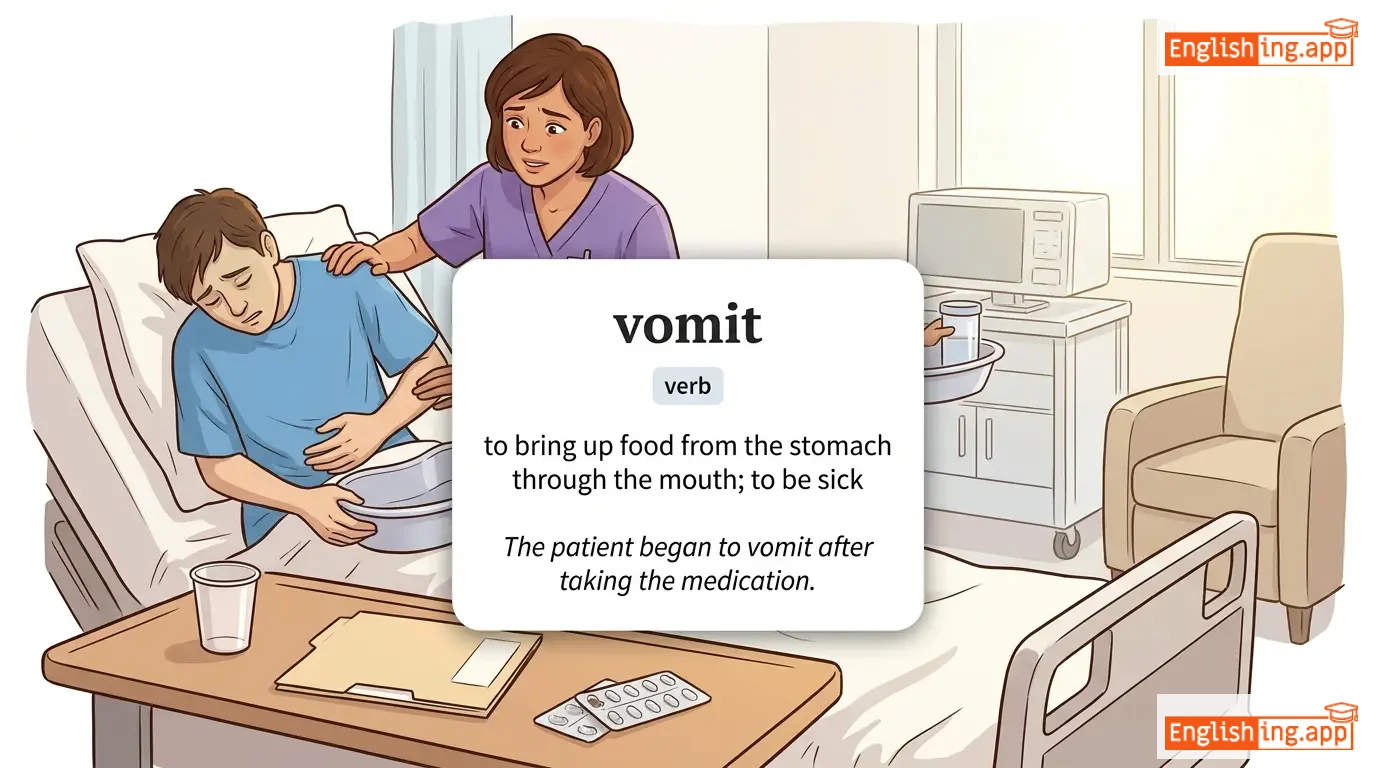
to bring up food from the stomach through the mouth; to be sick
••••••
|
The patient began to vomit after taking the medication.
患者は薬を服用後、嘔吐し始めました。
••••••
|
患者は薬を服用後、嘔吐し始めました。
Kanja wa kusuri o fukuyougo, outo shihajimemashita.
••••••
|
- •••••• | - •••••• | - •••••• |
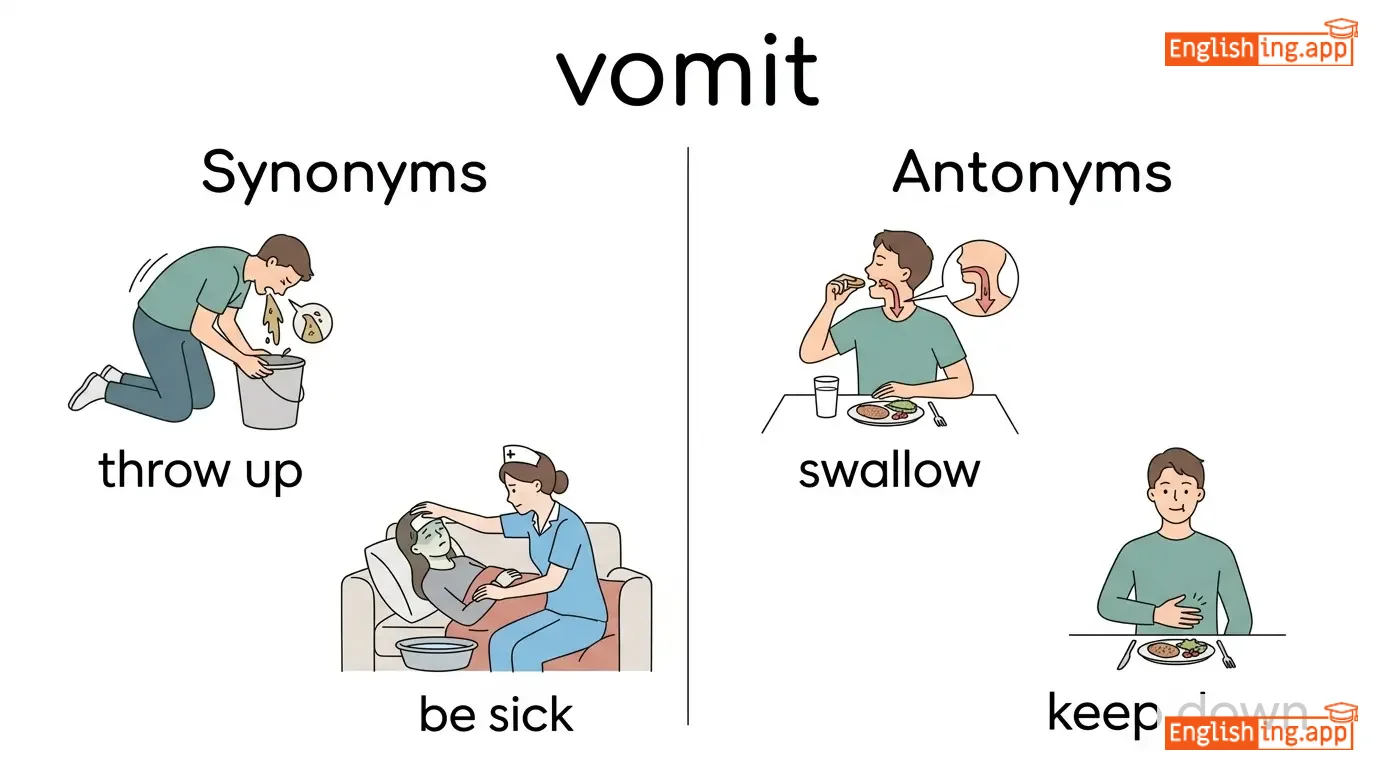
throw up, be sick, regurgitate, puke
••••••
|
swallow, keep down, digest
••••••
|
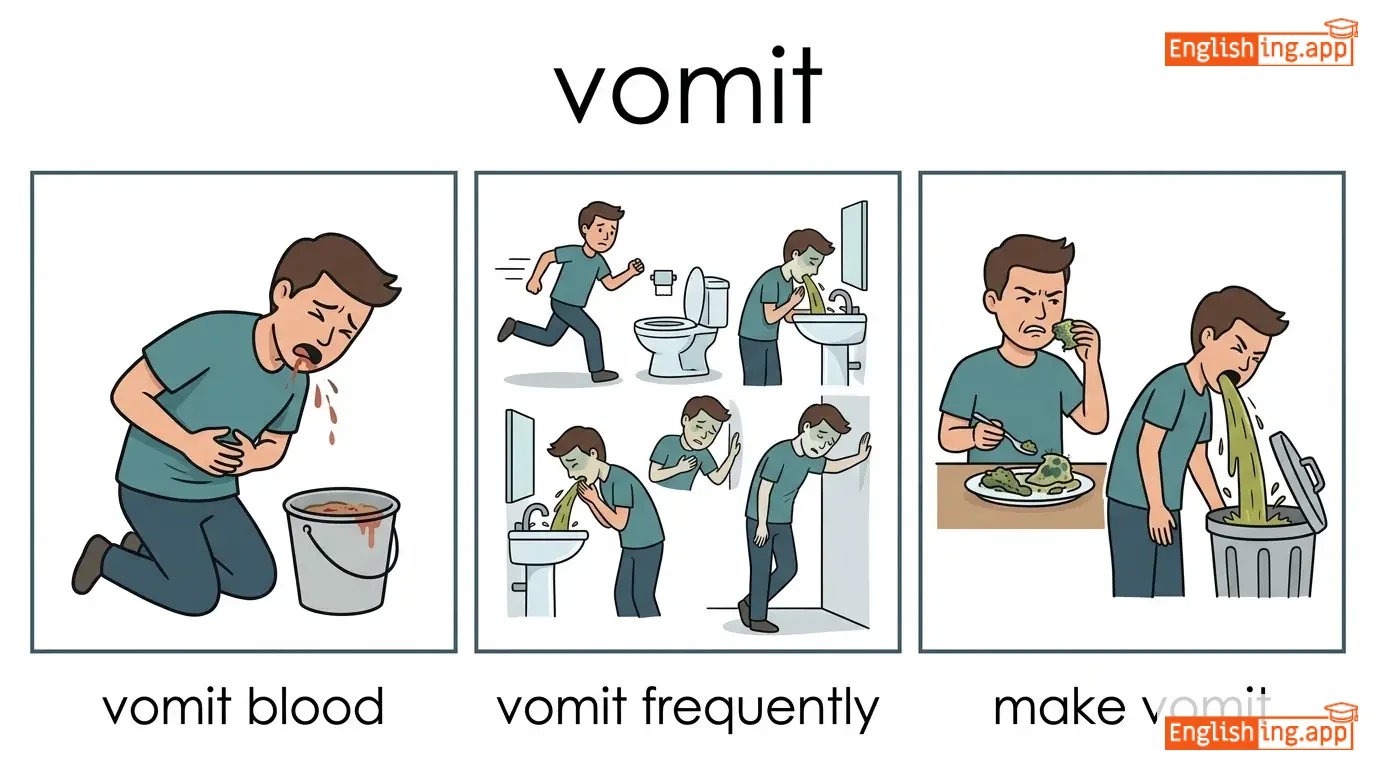
vomit blood, vomit frequently, make vomit, feel like vomiting
••••••
|
No •••••• |
|
🗳️
••••••
|
/voʊt/
verb
(ボート)
••••••
|
|
投票する
tōhyō suru
••••••
|
voted
ボーテッド
••••••
|
voted
ボーテッド
••••••
|
votes
ボーツ
••••••
|
voting
ボーティング
••••••
|
to make a choice in an election; to express preference
••••••
|
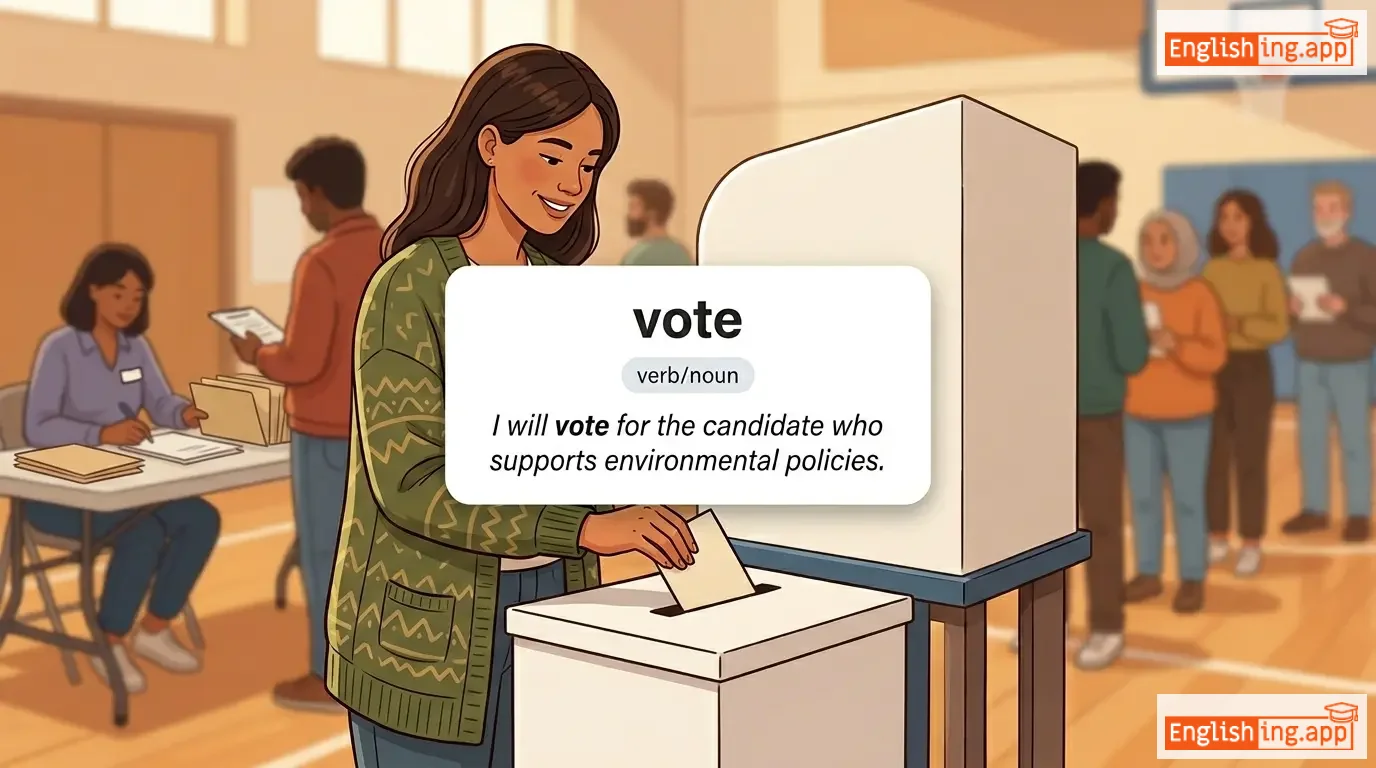
Citizens vote to choose their representatives.
市民は代表者を選ぶために投票します。
••••••
|
市民は代表者を選ぶために投票します。
Shimin wa daihyōsha o erabu tame ni tōhyō shimasu.
••••••
|
- •••••• | - •••••• | - •••••• |
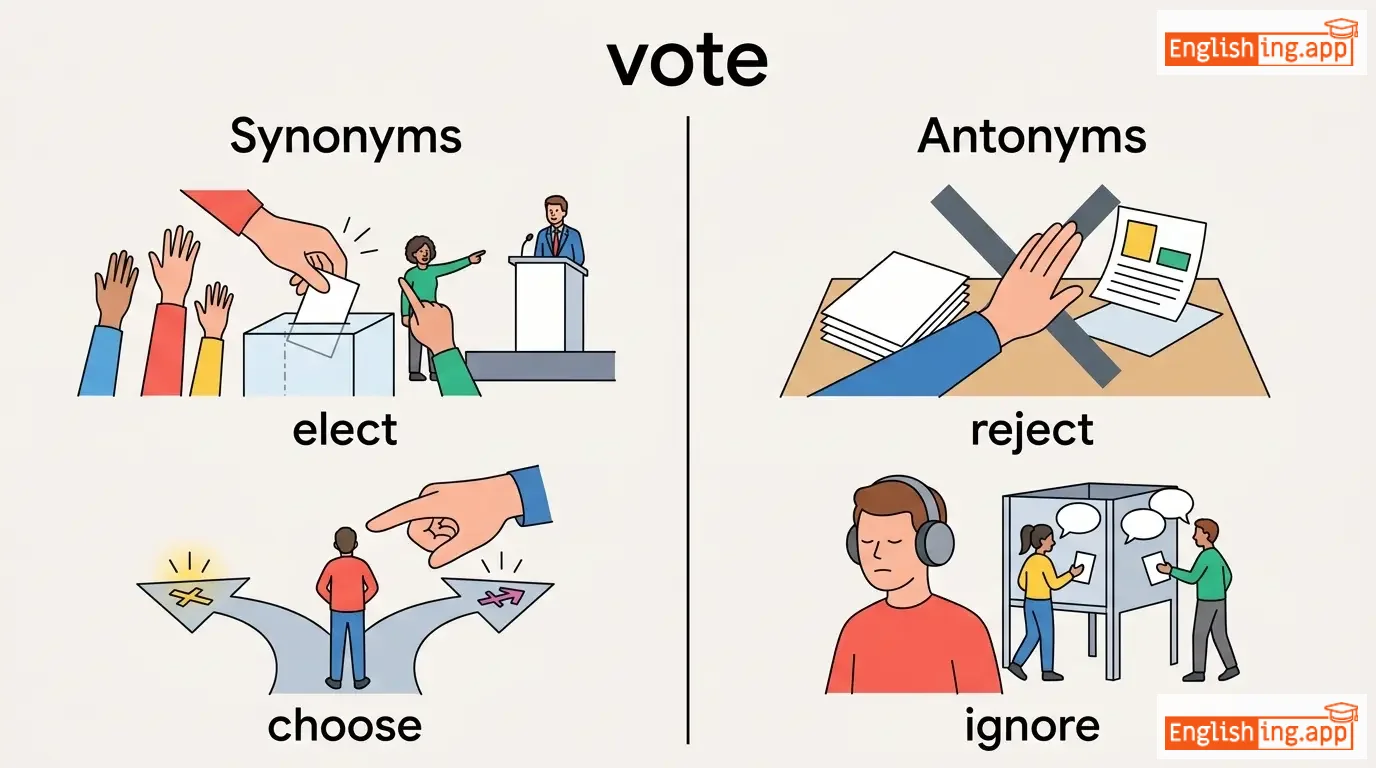
elect, choose, select, ballot, poll
••••••
|
abstain, boycott, refuse
••••••
|
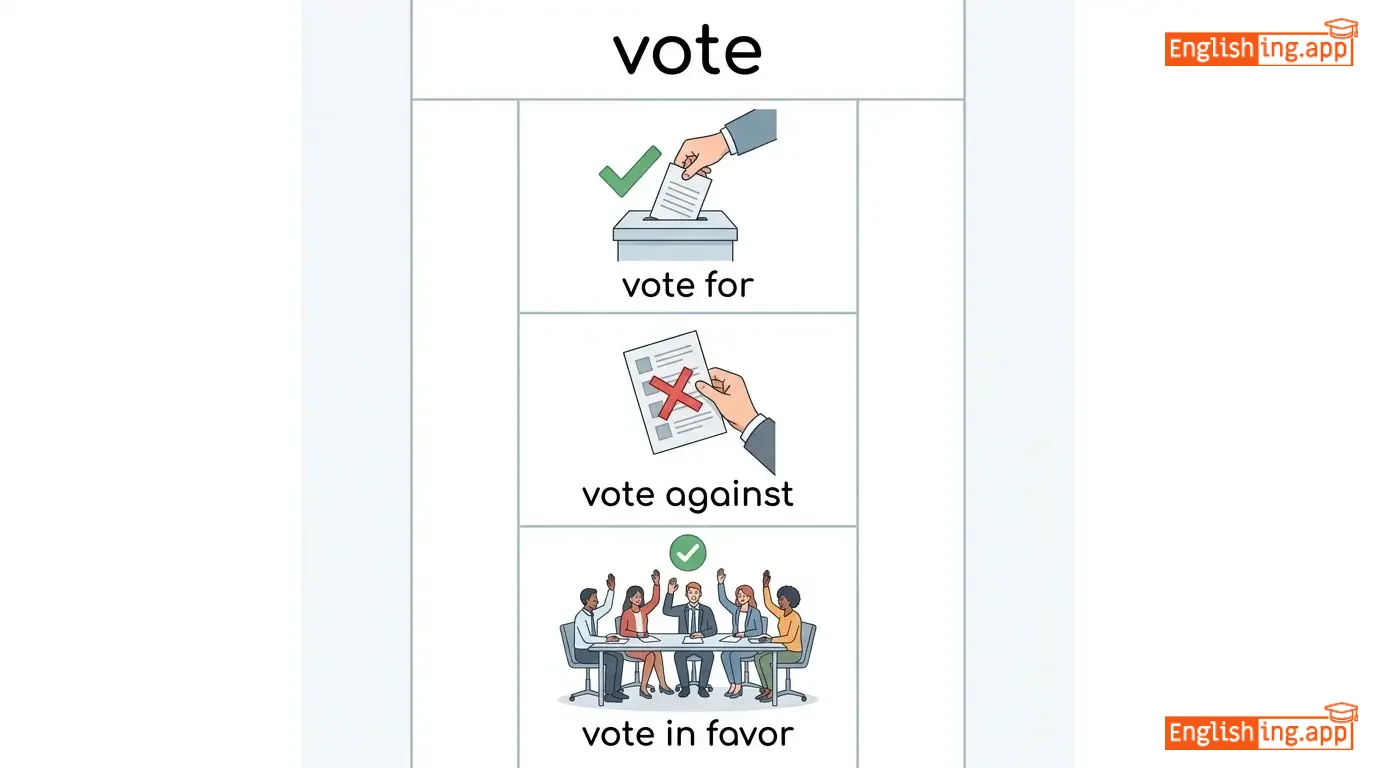
vote for, vote against, vote on, cast a vote
••••••
|
投票する (tōhyō suru) は代表者を選ぶことです。
••••••
|
|
🗳️
••••••
|
/ˈvəʊtə/
noun
(ヴォーター)
••••••
|
- •••••• |
有権者
yūken-sha
••••••
|
- •••••• | - •••••• | - •••••• | - •••••• |
a person who votes in an election
••••••
|
Voters lined up outside the polling station to cast their ballots. |
有権者は投票所の外で列を作り、投票を行いました。
Yūken-sha wa tōhyōjo no soto de retsu o tsukuri, tōhyō o okonaimashita.
••••••
|
- •••••• | - •••••• | - •••••• |
elector, constituent, citizen
••••••
|
non-voter, abstainer
••••••
|
eligible voter, registered voter, voting rights, active voter
••••••
|
有権者—選挙で投票することで未来を選ぶ人。
••••••
|
|
🗳️
••••••
|
/ˈvoʊtɪŋ/
noun
(投票)
••••••
|
- •••••• |
投票
touhyou
••••••
|
- •••••• | - •••••• | - •••••• |
voting
投票
••••••
|
the act of making a choice in an election or decision by casting a vote
••••••
|
Voting is an important part of a democratic society.
投票は民主主義社会の重要な部分です。
••••••
|
投票は民主主義社会の重要な部分です。
Touhyou wa minshu shugi shakai no juuyou na bubun desu.
••••••
|
voting rights
投票権
••••••
|
the legal rights to participate in elections by voting
••••••
|
投票権
touhyouken
••••••
|
balloting, election, poll, suffrage
••••••
|
abstaining, disenfranchisement
••••••
|
voting rights, voting system, voting booth, voting process
••••••
|
投票で未来を選ぼう!
••••••
|
|
🤝
••••••
|
/vaʊ/
verb
(バウ)
••••••
|

|
誓う
chikau
••••••
|
vowed
バウド
••••••
|
vowed
バウド
••••••
|
vows
バウズ
••••••
|
vowing
バウイング
••••••
|
to make a serious promise; to pledge solemnly
••••••
|
They vowed to love each other forever.
彼らは永遠に愛し合うことを誓いました。
••••••
|
彼らは永遠に愛し合うことを誓いました。
Karera wa eien ni aishi au koto o chikaimashita.
••••••
|
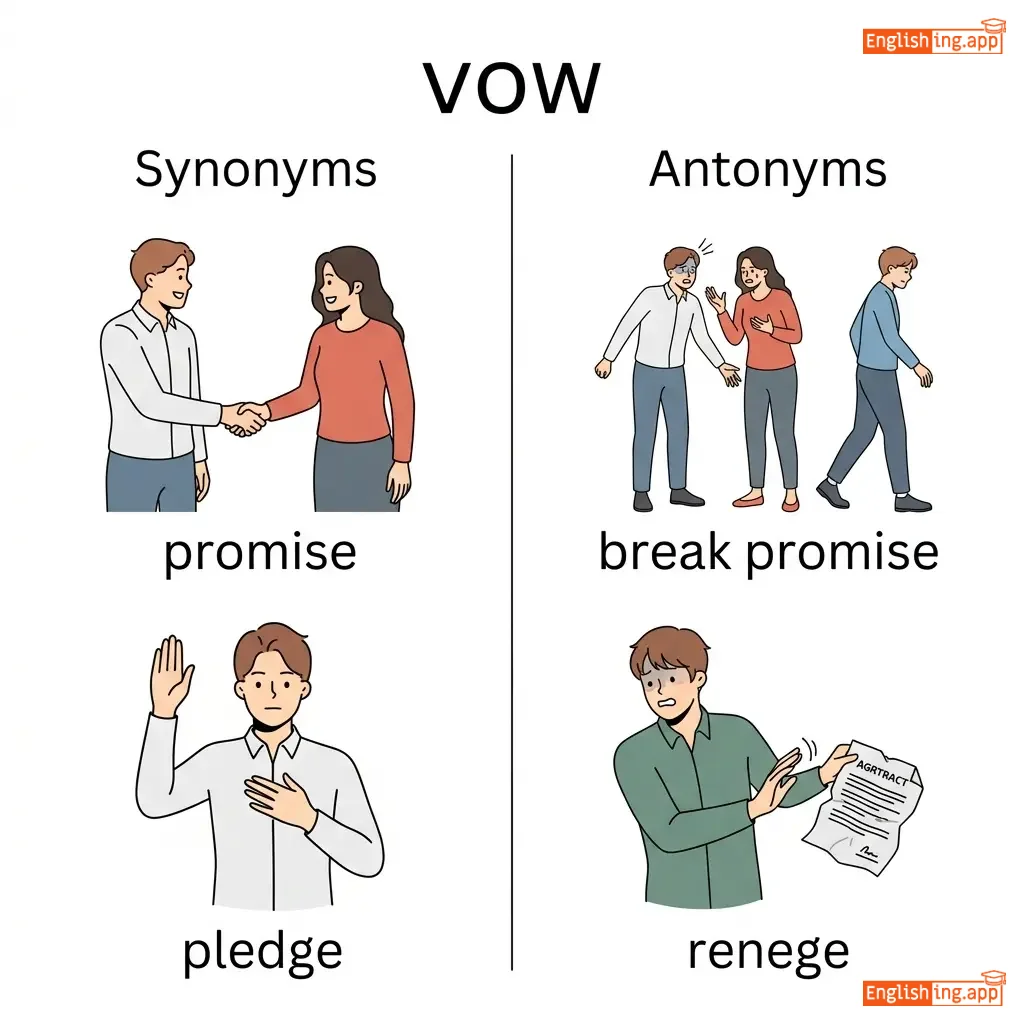
- •••••• | - •••••• | - •••••• |
promise, pledge, swear, commit, declare
••••••
|
break promise, renege, withdraw
••••••
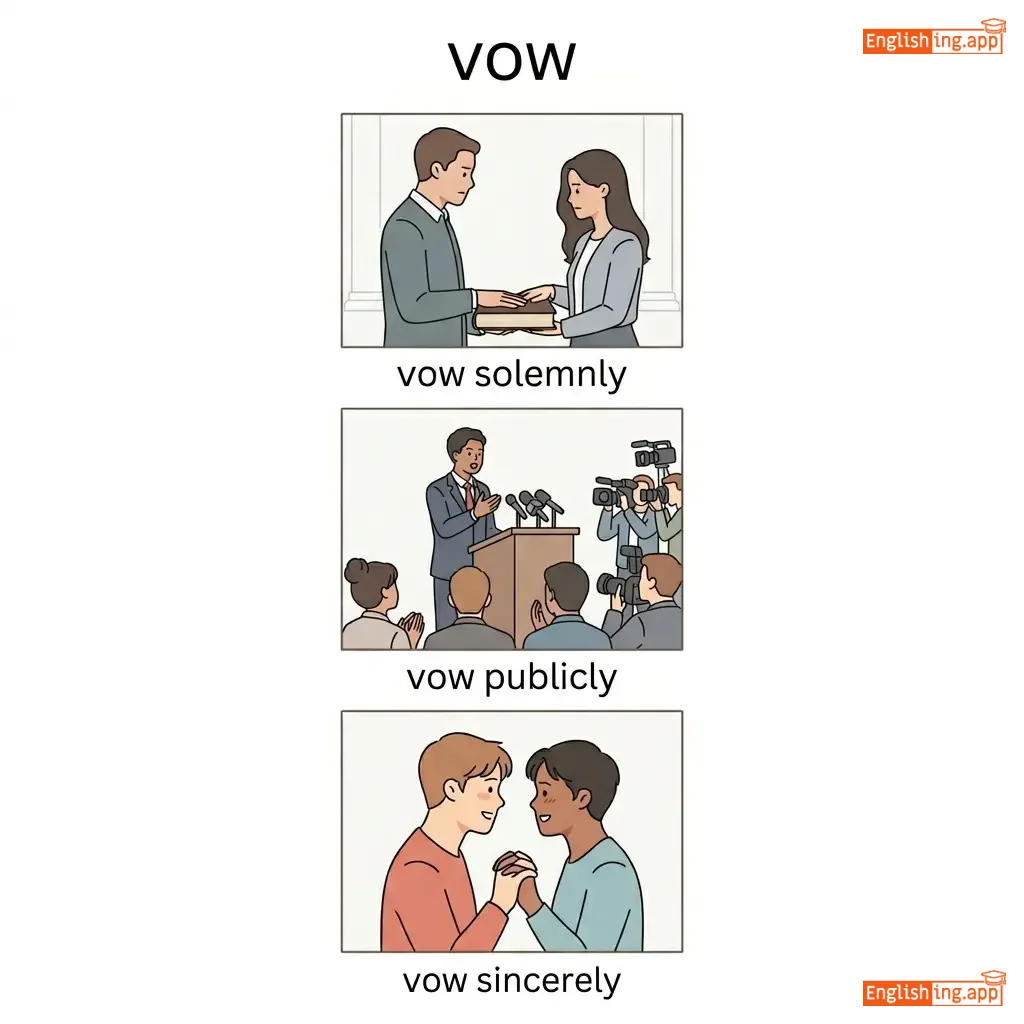
|
vow solemnly, vow publicly, vow sincerely, vow eternally, vow secretly
••••••
|
誓いは真剣な約束です
••••••
|
|
⚔️
••••••
|
/vərsəs/
abbreviation
(バーサス)
••••••
|
- •••••• |
対
tai
••••••
|
- •••••• | - •••••• | - •••••• | - •••••• |
used to indicate opposition or contrast between two things
••••••
|
The match was Brazil vs Argentina in the final. |
試合はブラジル対アルゼンチンの決勝戦でした。
Shiai wa Burajiru tai Aruzenchin no kesshōsen deshita.
••••••
|
- •••••• | - •••••• | - •••••• |
against, versus, compared to
••••••
|
with
••••••
|
vs each other, A vs B, team vs team, person vs person
••••••
|
VS (versus) - 2つの選択肢があるときに言う'VS'。
••••••
|
|
⚠️
••••••
|
/ˌvʌlnərəˈbɪləti/
noun
(バルネラビリティ)
••••••
|
|
脆弱性
seijakusei
••••••
|
- •••••• | - •••••• | - •••••• | - •••••• |
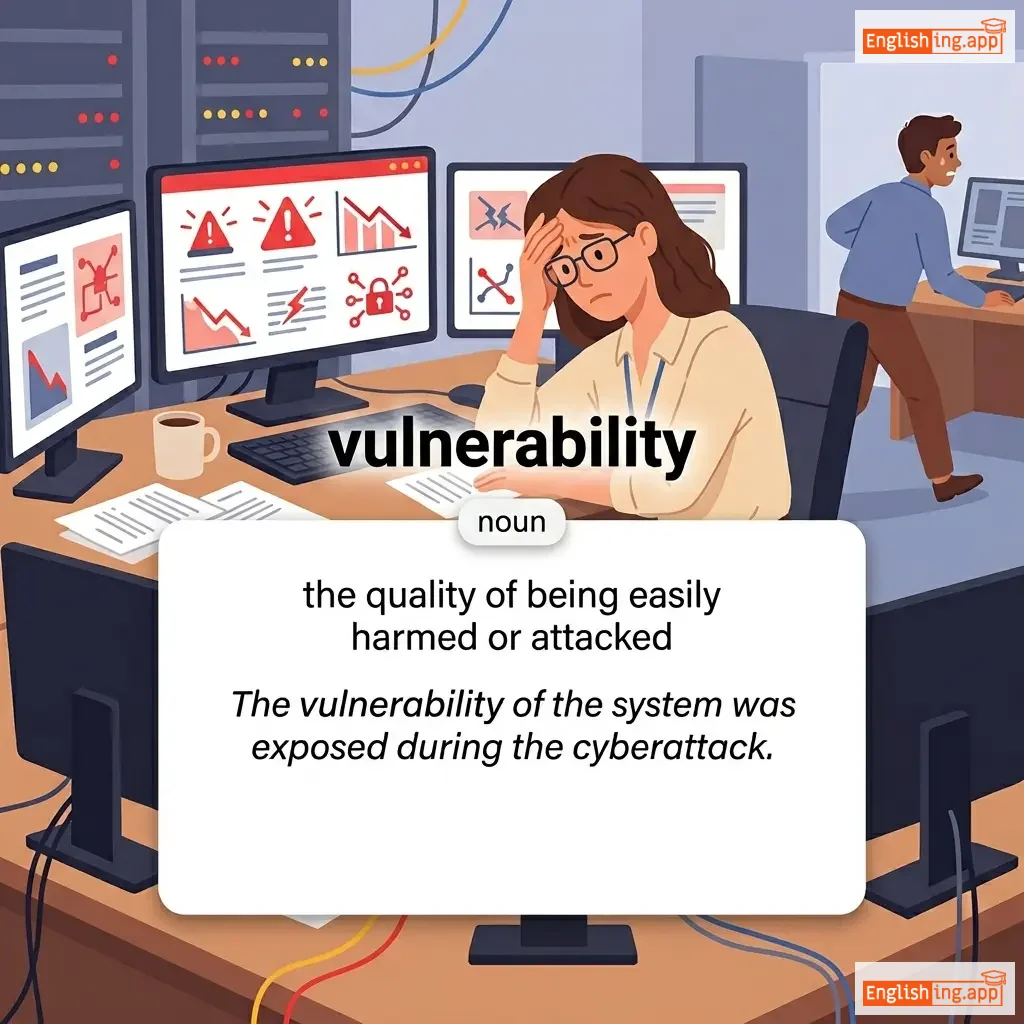
the quality of being easily harmed or attacked
••••••
|
The vulnerability of the system was exposed during the cyberattack. |
システムの脆弱性はサイバー攻撃中に暴露されました。
Shisutemu no seijakusei wa saibā kōgeki chū ni bakuro saremashita.
••••••
|
- •••••• | - •••••• | - •••••• |
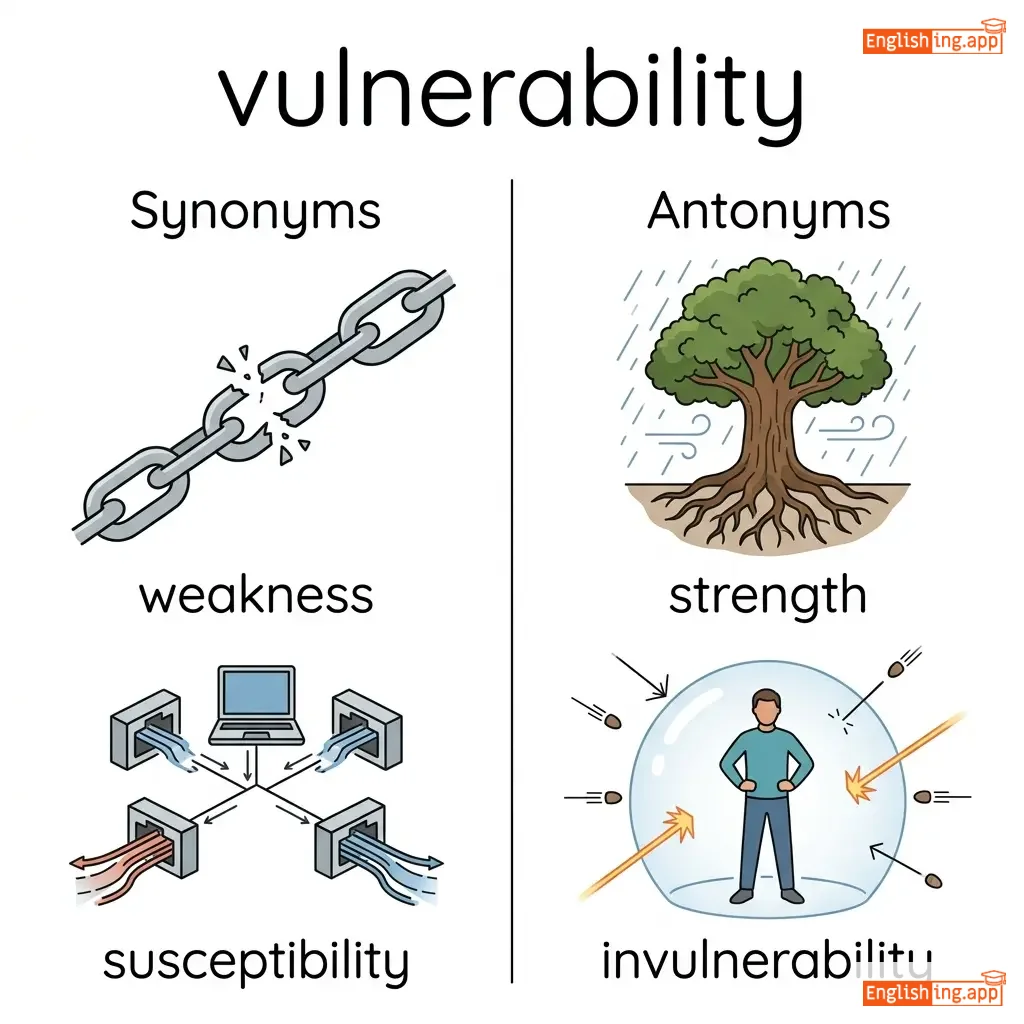
weakness, susceptibility, sensitivity, fragility
••••••
|
strength, invulnerability, protection
••••••
|
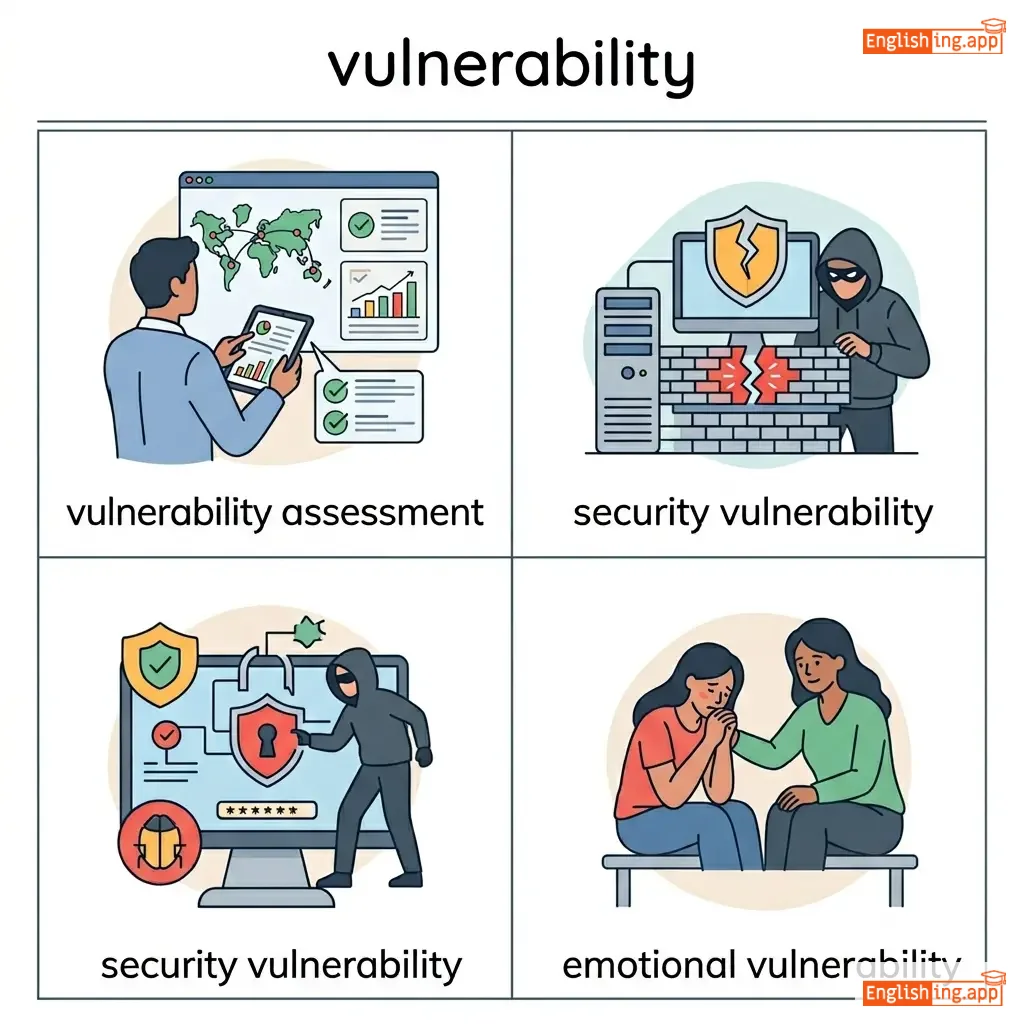
vulnerability assessment, security vulnerability, emotional vulnerability
••••••
|
脆弱性 sounds like 'seijakusei', reminding you of 'seijaku' meaning weakness or vulnerability.
••••••
|
|
🛡️
••••••
|
/ˈvʌl.nər.ə.bəl/
adjective
(ヴァルネラブル)
••••••
|
- •••••• |
脆弱
zōjaku
••••••
|
- •••••• | - •••••• | - •••••• | - •••••• |
susceptible to physical or emotional harm
••••••
|
Children are often the most vulnerable in times of crisis.
子供たちは危機の際に最も脆弱な存在です。
••••••
|
子供たちは危機の際に最も脆弱な存在です。
Kodomo-tachi wa kiki no sai ni mottomo zōjaku na sonzai desu.
••••••
|
vulnerable position
脆弱な立場
••••••
|
a situation of weakness or exposure to harm
••••••
|
脆弱な立場
zōjaku na tachiba
••••••
|
defenseless, exposed, weak, fragile, unprotected
••••••
|
strong, secure, protected
••••••
|
vulnerable groups, vulnerable people, vulnerable position
••••••
|
Vulnerableは'Val Na Roble' - 'ヴァルナロブレ'で脆弱になれる
••••••
|
|
💰
••••••
|
/weɪdʒ/
noun/verb
••••••
|
- •••••• | - •••••• |
waged
••••••
|
waged
••••••
|
wages
••••••
|
waging
••••••
|
payment for work or services, usually on a daily or weekly basis; also to engage in or carry on (a war, campaign, or struggle)
••••••
|
The workers demanded a fair wage for their labor. |
- •••••• |
wage war |
to engage in a serious struggle or conflict
••••••
|
- •••••• |
salary, pay, compensation, earnings, stipend
••••••
|
unemployment, volunteer
••••••
|
minimum wage, wage increase, wage gap, wage war
••••••
|
No •••••• |

