|
絵文字
|
単語 | Images | 翻訳 | 過去 | 過去分詞 | 三人称単数 | 動名詞 | 意味 | 例文 | 例文の翻訳 | 表現例 | 表現例の意味 | 表現例の翻訳 | 同義語 | 対義語 | コロケーション | ニーモニック |
|---|---|---|---|---|---|---|---|---|---|---|---|---|---|---|---|---|---|
|
👥
••••••
|
/skwɒd/
noun
(スクワッド)
••••••
|
- •••••• |
チーム
chiimu
••••••
|
- •••••• | - •••••• | - •••••• | - •••••• |
a small group of people organized for a specific purpose or task, often in the military or sports
••••••
|
The football squad trained hard before the championship match. |
サッカーチームはチャンピオンシップの試合の前に一生懸命練習した。
Sakkaa chiimu wa chanpionship no shiai no mae ni isshoukenmei renshuu shita.
••••••
|
squad goals |
an ideal or admirable group of friends or team that others aspire to be like
••••••
|
チーム目標
chiimu mokuhyou
••••••
|
team, crew, group, unit, party
••••••
|
individual, loner
••••••
|
football squad, police squad, squad member, training squad
••••••
|
チーム = 一緒に働くグループ、サッカーチームのように。
••••••
|
|
🔲
••••••
|
/skwɛə(r)/
noun
(スクエア)
••••••
|
- •••••• |
四角形
shikakkei
••••••
|
- •••••• | - •••••• | - •••••• | - •••••• |
a shape with four equal straight sides and four right angles
••••••
|
The table has a square shape. |
テーブルは四角い形をしています。
Tēburu wa shikakai katachi o shiteimasu.
••••••
|
- •••••• | - •••••• | - •••••• |
rectangle, quadrilateral
••••••
|
circle, triangle
••••••
|
square shape, square table, square room
••••••
|
Square = 四つの等しい辺、部屋の四隅のように!
••••••
|
|
🤏
••••••
|
/skwiːz/
verb
(スクイーズ)
••••••
|
- •••••• |
絞る
shiboru
••••••
|
squeezed
スクイーズド
••••••
|
squeezed
スクイーズド
••••••
|
squeezes
スクイーズズ
••••••
|
squeezing
スクイージング
••••••
|
to press something firmly, especially from all sides in order to extract or compress it
••••••
|
She squeezed the toothpaste to get the last bit.
彼女は歯磨き粉のチューブを絞って、最後の一滴を出しました。
••••••
|
彼女は歯磨き粉のチューブを絞って、最後の一滴を出しました。
Kanojo wa hamigakiko no chūbu o shibotte, saigo no itteki o dashimashita.
••••••
|
- •••••• | - •••••• | - •••••• |
press, compress, crush, squish
••••••
|
release, loosen, uncompress
••••••
|
squeeze the juice, squeeze in, squeeze the life out of
••••••
|
歯磨き粉を絞って、最後の一滴を出す - Squeeze the last bit of toothpaste!
••••••
|
|
🔪
••••••
|
/stæb/
verb, noun
(スタブ)
••••••
|
- •••••• |
刺す
sasu
••••••
|
stabbed
スタブド
••••••
|
stabbed
スタブド
••••••
|
stabs
スタブス
••••••
|
stabbing
スタビング
••••••
|
to pierce or wound with a pointed weapon or object
••••••
|
He was stabbed in the back during the altercation.
彼は口論中に背中を刺されました。
••••••
|
彼は口論中に背中を刺されました。
Kare wa kōron-chū ni senaka o sasarimashita.
••••••
|
- •••••• | - •••••• | - •••••• |
pierce, wound, jab, cut
••••••
|
heal, fix
••••••
|
stab wound, stabbed in the back, stabbed with a knife
••••••
|
刺すはナイフで刺す、覚えておいて!
••••••
|
|
⚖️
••••••
|
/stəˈbɪl.ə.ti/
noun
(スタビリティ)
••••••
|
- •••••• |
安定性
anteisei
••••••
|
- •••••• | - •••••• | - •••••• | - •••••• |
the state of being stable; firmness; steadiness
••••••
|
Political stability is essential for economic growth.
政治的安定は経済成長にとって重要です。
••••••
|
政治的安定は経済成長にとって重要です。
Seijiteki antei wa keizai seichou ni totte juuyou desu.
••••••
|
- •••••• | - •••••• | - •••••• |
steadiness, firmness, balance, security
••••••
|
instability, unsteadiness, volatility
••••••
|
financial stability, political stability, emotional stability, job stability
••••••
|
安定性が経済成長に欠かせない要素です。
••••••
|
|
⚖️
••••••
|
/ˈsteɪ.bə.laɪz/
verb
(ステイビライズ)
••••••
|
- •••••• |
安定させる
antei saseru
••••••
|
stabilized
ステイビライズド
••••••
|
stabilized
ステイビライズド
••••••
|
stabilizes
ステイビライズズ
••••••
|
stabilizing
ステイビライズイング
••••••
|
to make something steady, secure, or unlikely to change suddenly
••••••
|
The government took measures to stabilize the economy.
政府は経済を安定させるための措置を講じた。
••••••
|
政府は経済を安定させるための措置を講じた。
seifu wa keizai o antei saseru tame no sochi o kōjita.
••••••
|
stabilize the situation
状況を安定させる
••••••
|
to bring a situation under control or make it steady
••••••
|
状況を安定させる
jōkyō o antei saseru
••••••
|
steady, secure, balance, fix, support
••••••
|
destabilize, weaken, disrupt
••••••
|
stabilize economy, stabilize situation, stabilize prices, stabilize market
••••••
|
Stable + eyes → 目(eyes)があればすべて安定(antei)する
••••••
|
|
🏠
••••••
|
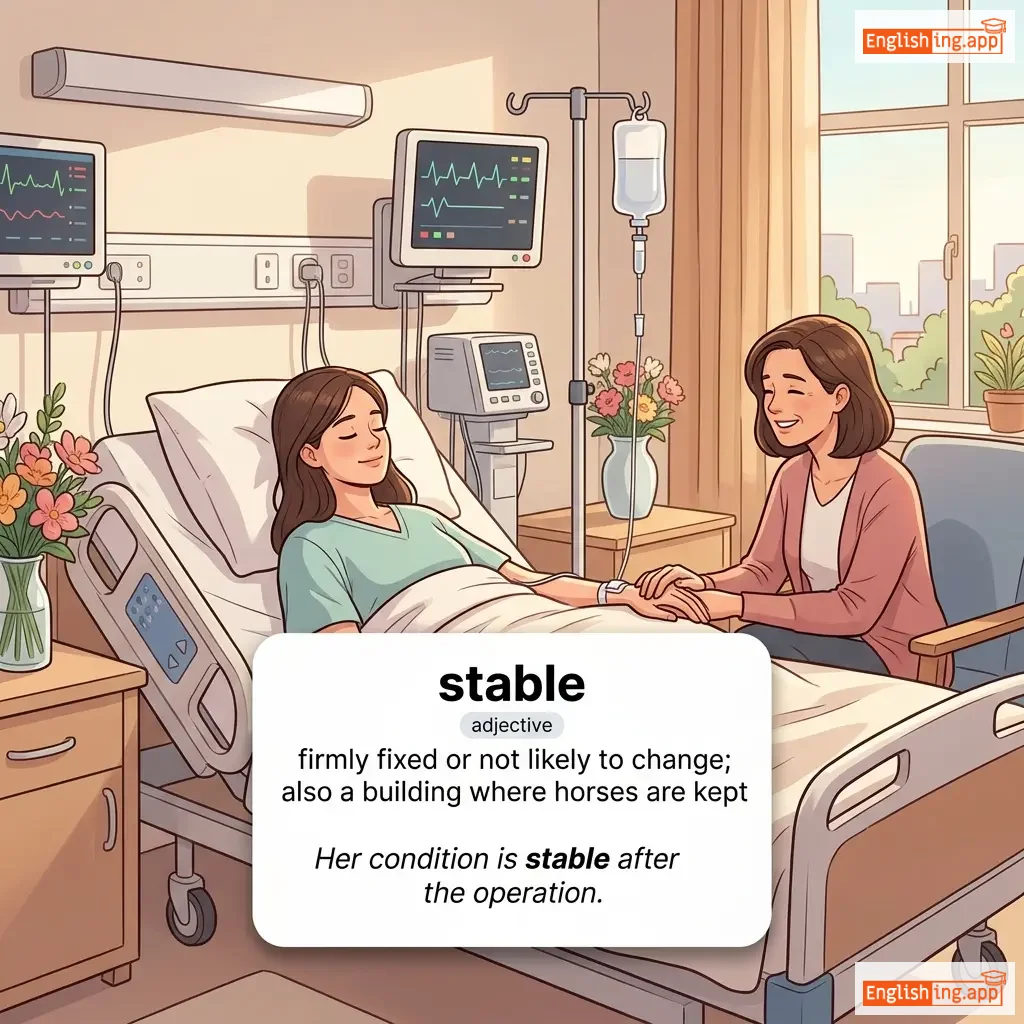
/ˈsteɪ.bəl/
adjective
(ステイブル)
••••••
|
|
安定した / 馬小屋
antei shita / uma koya
••••••
|
- •••••• | - •••••• | - •••••• | - •••••• |
firmly fixed or not likely to change; also a building where horses are kept
••••••
|
Her condition is stable after the operation. |
手術後、彼女の状態は安定しています。
Shujutsu go, kanojo no jōtai wa antei shiteimasu.
••••••
|
stable condition |
a state of being steady and not worsening
••••••
|
安定した状態
antei shita jōtai
••••••
|
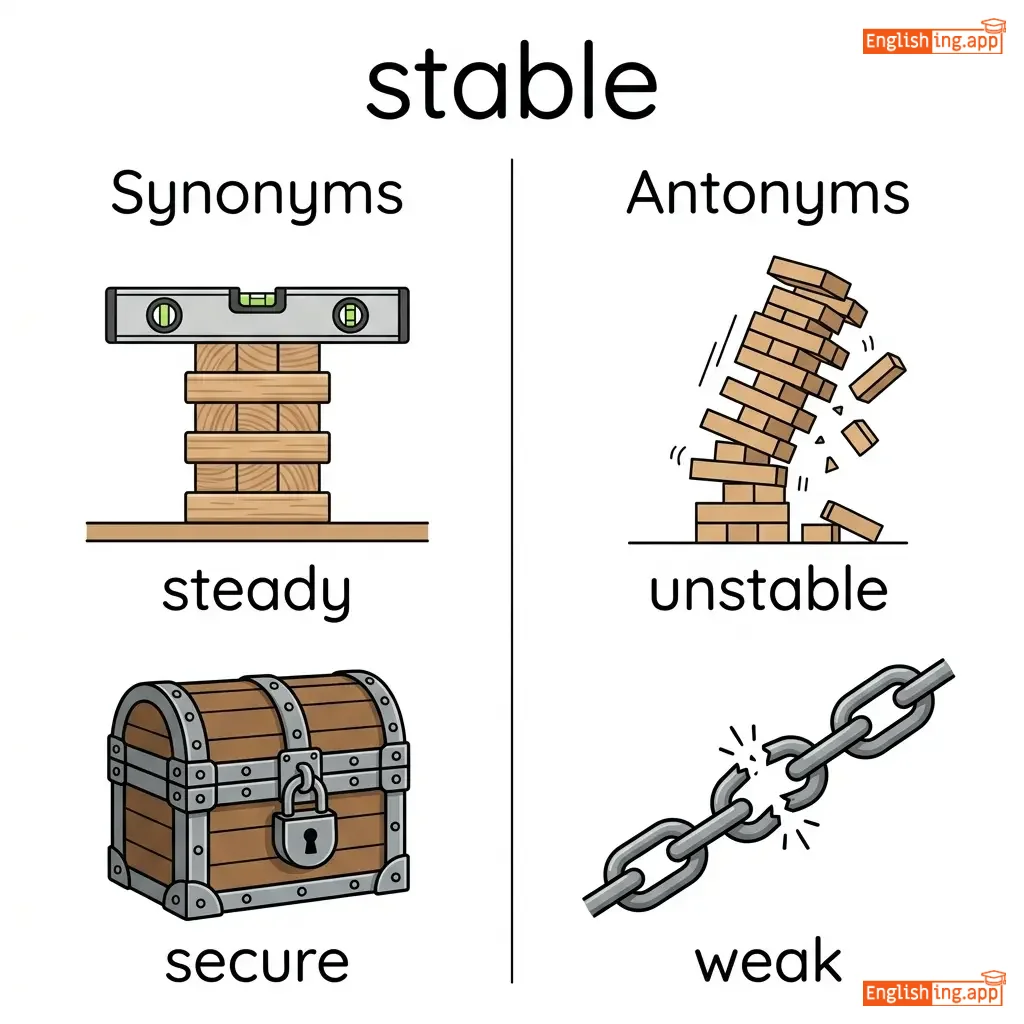
steady, secure, firm, constant, balanced
••••••
|
unstable, weak, shaky
••••••
|
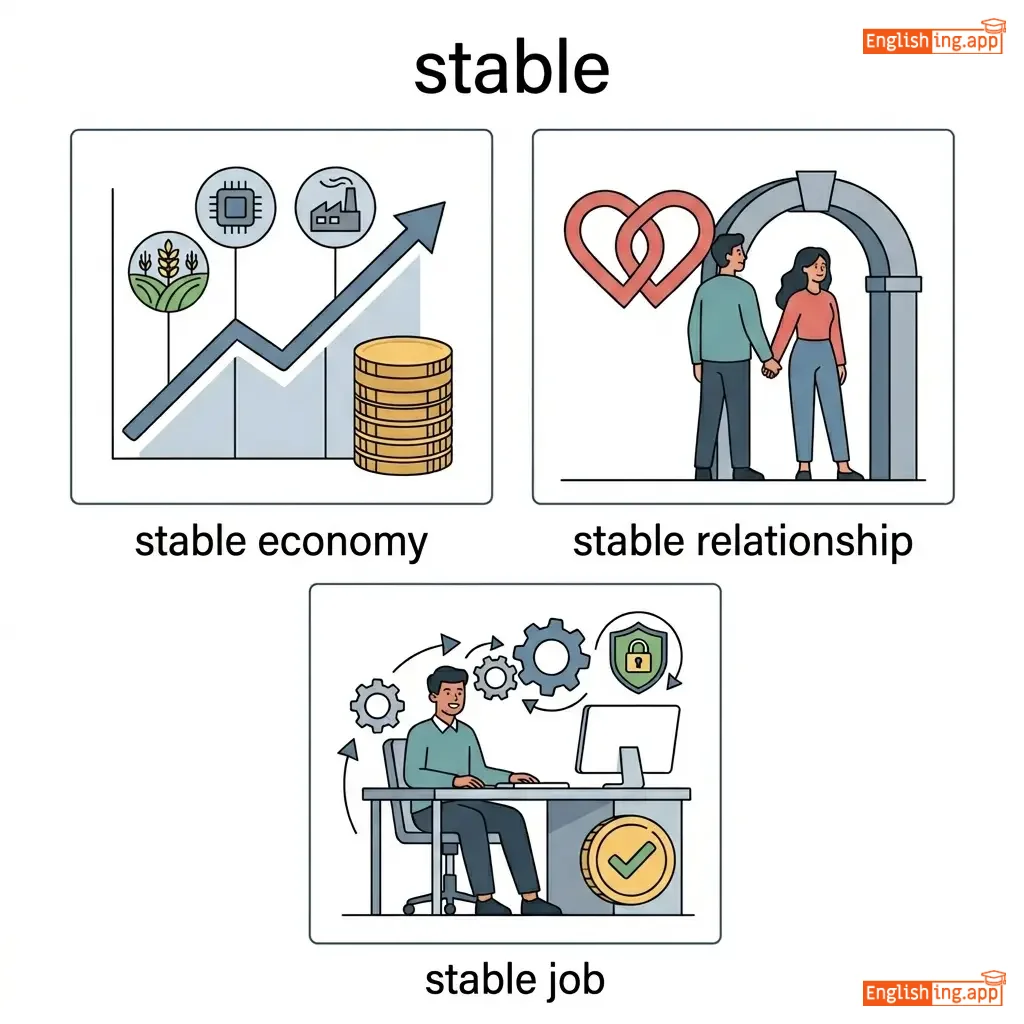
stable economy, stable relationship, stable job, stable environment
••••••
|
Stableは安定したという意味で、馬小屋のように馬が安定している場所です。
••••••
|
|
👩💼
••••••
|
/stæf/
noun
(スタッフ)
••••••
|
- •••••• |
スタッフ
sutaffu
••••••
|
- •••••• | - •••••• | - •••••• | - •••••• |
a group of employees working together in an organization
••••••
|
The staff at the hospital are very helpful. |
病院のスタッフはとても役に立ちます。
Byōin no sutaffu wa totemo yaku ni tachimasu.
••••••
|
- •••••• | - •••••• | - •••••• |
employees, team, workforce, personnel
••••••
|
employer, boss
••••••
|
staff members, staff meeting, hospital staff
••••••
|
スタッフは、医療従事者 - Staff means healthcare workers!
••••••
|
|
🎭
••••••
|
/steɪdʒ/
noun
(ステージ)
••••••
|
- •••••• |
ステージ
suteeji
••••••
|
- •••••• | - •••••• | - •••••• | - •••••• |
a raised platform or area for performances or presentations
••••••
|
The actor stepped onto the stage to deliver his speech. |
俳優は演説をするためにステージに上がった。
Haiyū wa enzetsu o suru tame ni suteeji ni agatta.
••••••
|
- •••••• | - •••••• | - •••••• |
platform, podium, stage area
••••••
|
audience, ground
••••••
|
on stage, stage performance, stage presence
••••••
|
ステージはパフォーマンスの場所 – Suteeji wa pafōmansu no basho!
••••••
|
|
🪜
••••••
|
/stɛə/
noun
(ステア)
••••••
|
- •••••• |
階段
kaidan
••••••
|
- •••••• | - •••••• | - •••••• | - •••••• |
a step or set of steps leading from one level to another
••••••
|
He tripped on the stair and fell down. |
彼は階段でつまずいて転んだ。
Kare wa kaidan de tsumazuite koronda.
••••••
|
- •••••• | - •••••• | - •••••• |
step, staircase, flight of stairs
••••••
|
elevator, lift
••••••
|
climb the stairs, fall down the stairs
••••••
|
階段、私たちが階を上ったり下りたりする場所 – Stair means kaidan!
••••••
|
|
📈
••••••
|
/steɪk/
noun, verb
(sutēki)
••••••
|
- •••••• |
株式, リスク
kabushiki, risuku
••••••
|
staked
sutēkudo
••••••
|
staked
sutēkudo
••••••
|
stakes
sutēkusu
••••••
|
staking
sutēkingu
••••••
|
A share or interest in a business or venture; to risk or support something of value.
••••••
|
He has a major stake in the new company.
彼は新しい会社に大きな利害関係を持っています。
••••••
|
彼は新しい会社に大きな利害関係を持っています。
Kare wa atarashī kaisha ni ōkina rigai kankei o motteimasu.
••••••
|
at stake
危機に瀕して
••••••
|
at risk; in danger of being lost
••••••
|
危機に瀕して
kiki ni hin shite
••••••
|
share, investment, risk, interest, bet
••••••
|
security, certainty, safety
••••••
|
stake in, at stake, high stakes, stake money
••••••
|
Stake をかけると、すべてがリスクにさらされます。
••••••
|
|
🛑
••••••
|
/stɔːl/
verb, noun
(ストール)
••••••
|
- •••••• |
止める, 屋台
tomeru, yatai
••••••
|
stalled
ストールド
••••••
|
stalled
ストールド
••••••
|
stalls
ストールス
••••••
|
stalling
ストーリング
••••••
|
to stop or cause to stop temporarily; a small shop or stand
••••••
|
The car stalled on the way to the office.
車はオフィスに向かう途中で停まった。
••••••
|
車はオフィスに向かう途中で停まった。
Kuruma wa ofisu ni mukau tochu de tomatta.
••••••
|
- •••••• | - •••••• | - •••••• |
delay, stop, halt, linger
••••••
|
move, proceed
••••••
|
stall a car, market stall, food stall, engine stalled
••••••
|
Stallは車を止めるか、マーケットの屋台です!
••••••
|
|
📮
••••••
|
/stæmp/
verb
••••••
|
- •••••• | - •••••• |
stamped
••••••
|
stamped
••••••
|
stamps
••••••
|
stamping
••••••
|
To bring down (one's foot) heavily on the ground; to imprint a mark or seal.
••••••
|
She stamped her foot in frustration. |
- •••••• |
stamp out |
To put an end to something harmful or undesirable.
••••••
|
- •••••• |
imprint, seal, stomp, crush
••••••
|
erase, remove
••••••
|
stamp out, stamp duty, stamp collector, stamp approval
••••••
|
No •••••• |
|
🧍
••••••
|
/stæns/
noun
(スタンス)
••••••
|
- •••••• |
立場
tachiba
••••••
|
- •••••• | - •••••• | - •••••• | - •••••• |
a person's attitude, opinion, or position on an issue
••••••
|
The company took a strong stance on environmental protection. |
その会社は環境保護に強い立場を取った。
Sono kaisha wa kankyō hogo ni tsuyoi tachiba o totta.
••••••
|
take a stance |
to adopt a definite position or opinion on a subject
••••••
|
立場を取る
tachiba o toru
••••••
|
position, viewpoint, attitude, perspective, opinion
••••••
|
neutrality, indecision
••••••
|
firm stance, political stance, defensive stance, moral stance
••••••
|
Stance は立場を意味する、今すぐあなたの立場を取ろう!
••••••
|
|
🧍
••••••
|
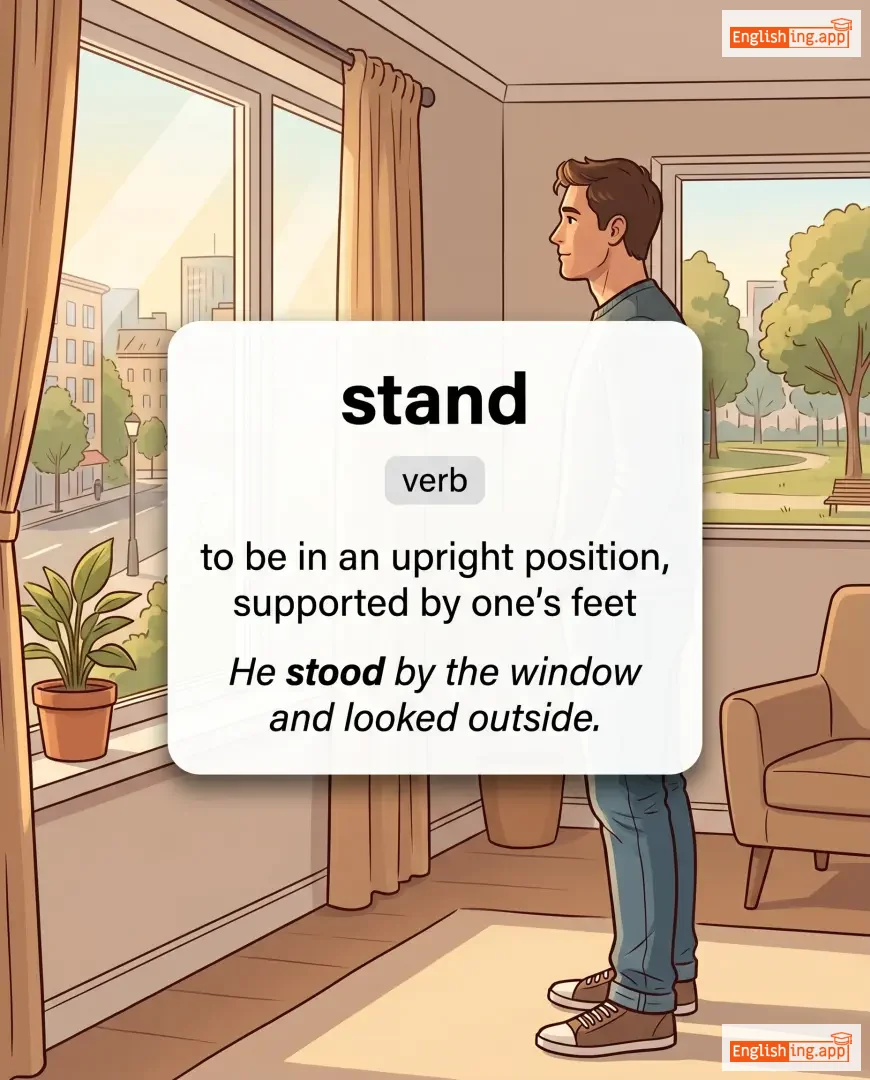
/stænd/
verb
(立つ)
••••••
|
|
立つ
tatsu
••••••
|
stood
立った
••••••
|
stood
立った
••••••
|
stands
立つ
••••••
|
standing
立っている
••••••
|
to be in an upright position; to tolerate or endure
••••••
|
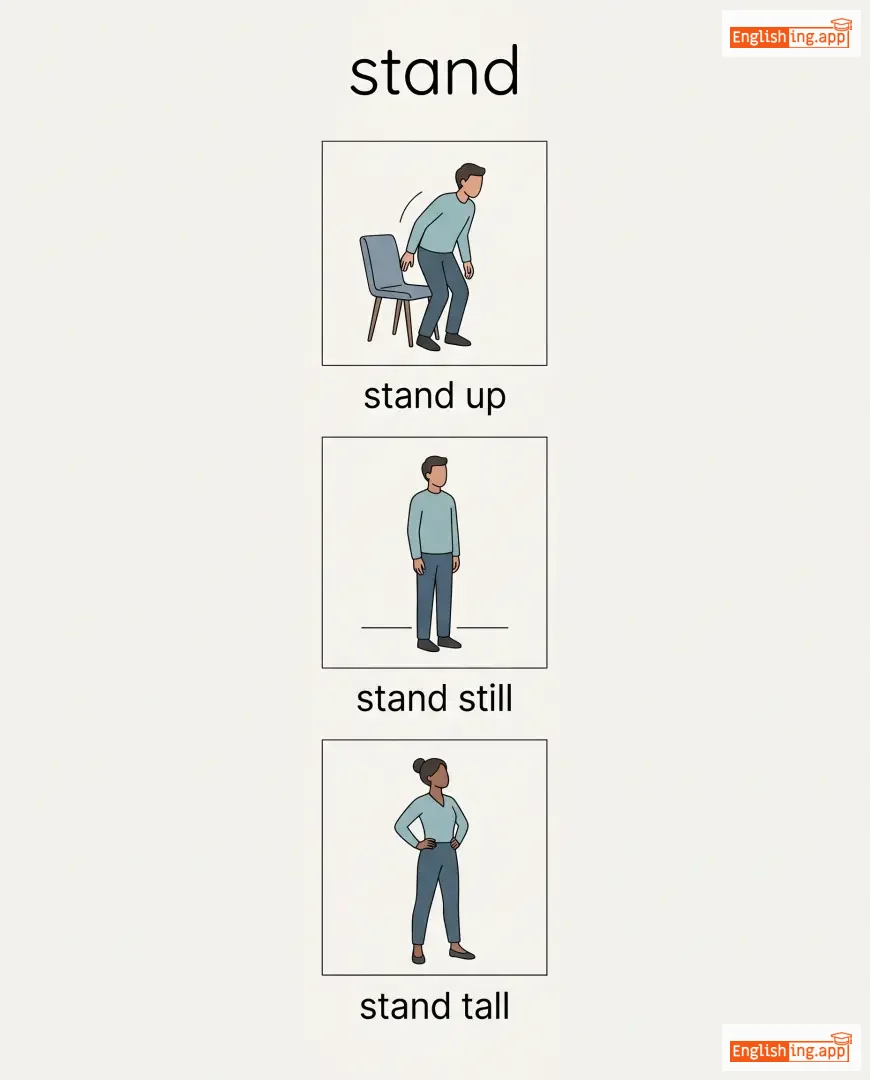
Please stand up when the teacher enters.
先生が入る時に立ってください。
••••••
|
先生が入る時に立ってください。
Sensei ga hairu toki ni tatte kudasai.
••••••
|
- •••••• | - •••••• | - •••••• |
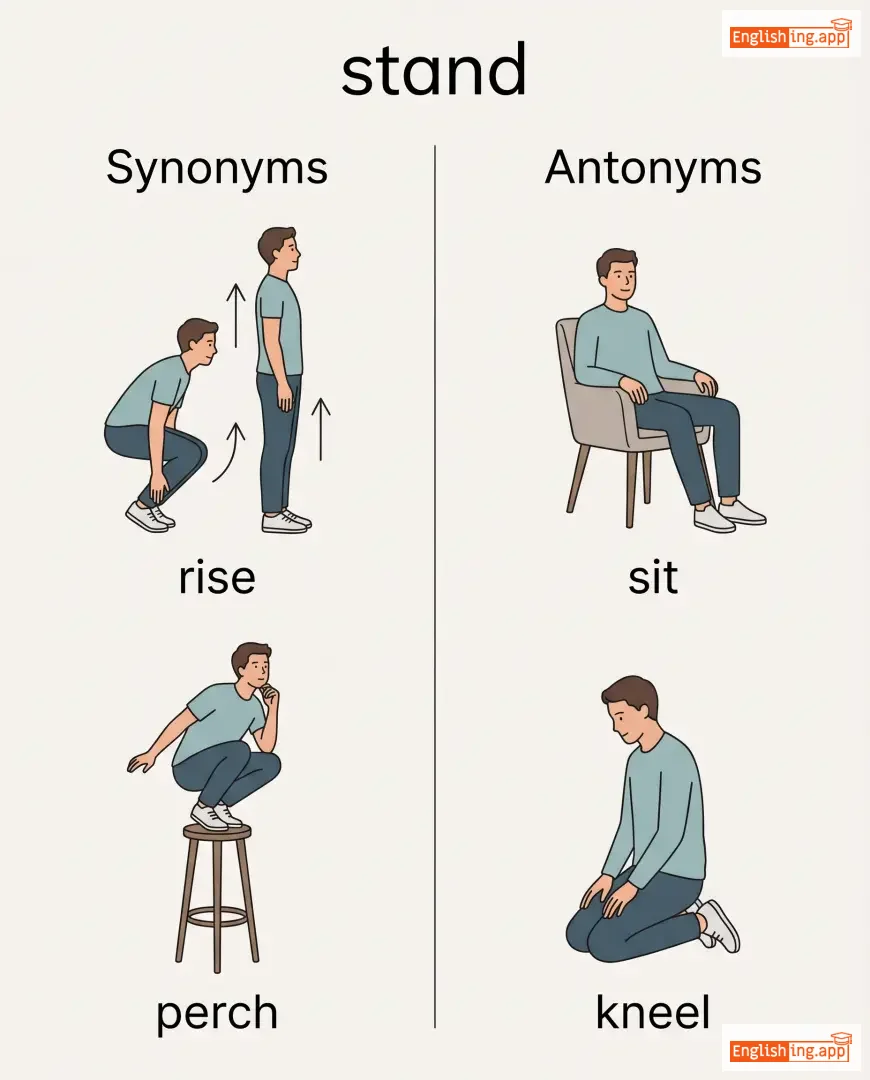
rise, upright, endure, tolerate
••••••
|
sit, lie, fall, collapse
••••••
|
stand up, stand still, stand by, stand for, take a stand
••••••
|
立つ!兵士のように忍耐強く。
••••••
|
|
📏
••••••
|
/ˈstændərd/
noun
••••••
|
- •••••• | - •••••• | - •••••• | - •••••• | - •••••• | - •••••• |
a level of quality or achievement, or a measure of comparison
••••••
|
This car meets all the safety standards. |
- •••••• | - •••••• | - •••••• | - •••••• |
norm, criterion, benchmark, measure
••••••
|
exception, anomaly
••••••
|
high standard, industry standard, minimum standard
••••••
|
No •••••• |
|
🧍
••••••
|
/ˈstændɪŋ/
noun/adjective
(スタンディング)
••••••
|
- •••••• |
地位 / 評判
chii / hyoban
••••••
|
- •••••• | - •••••• | - •••••• | - •••••• |
status, reputation, or position; also the act of being upright on the feet
••••••
|
He has high standing in the community for his charity work. |
彼はその慈善活動のため、コミュニティで高い評価を得ています。
Kare wa sono jizen katsudou no tame, komyuniti de takai hyouka wo eteimasu.
••••••
|
of good standing |
having a good reputation or status
••••••
|
良い評価
yoi hyouka
••••••
|
status, reputation, position, rank, stature
••••••
|
disrepute, dishonor, disgrace
••••••
|
social standing, legal standing, good standing, standing order
••••••
|
Standing は立っていることを意味し、また社会での評価や地位にも関連しています。
••••••
|
|
⭐
••••••
|
/stɑːr/
noun
(スター)
••••••
|
- •••••• |
星
hoshi
••••••
|
- •••••• | - •••••• | - •••••• | - •••••• |
a luminous point in the night sky, a famous person
••••••
|
The movie star smiled for the cameras. |
映画スターはカメラに向かって微笑みました。
Eiga sutā wa kamera ni mukatte bishōmimashita.
••••••
|
a shooting star |
a meteor that appears to move rapidly across the sky
••••••
|
流れ星
nagareboshi
••••••
|
celebrity, icon, luminary, celebrity
••••••
|
nobody, unknown
••••••
|
movie star, film star, shooting star
••••••
|
星は映画スターのように輝いています!
••••••
|
|
⚫
••••••
|
/stɑːrk/
adjective
(スターク)
••••••
|
- •••••• |
厳しい、鋭い
kibishii, surudoi
••••••
|
- •••••• | - •••••• | - •••••• | - •••••• |
Severe, sharp, or clearly defined; plain and without any decoration.
••••••
|
The stark contrast between poverty and wealth was evident in the city.
貧困と富の間の鮮明な対比は街中で明らかだった。
••••••
|
貧困と富の間の鮮明な対比は街中で明らかだった。
Hinkon to tomi no aida no senmei na taibi wa machi naka de akiraka datta.
••••••
|
stark reality
厳しい現実
••••••
|
The harsh or unpleasant truth.
••••••
|
厳しい現実
Kibishii genjitsu
••••••
|
severe, harsh, bleak, plain, absolute
••••••
|
soft, mild, decorated
••••••
|
stark contrast, stark difference, stark reality, stark warning
••••••
|
スタークは白と黒の強い対比のように感じる。
••••••
|
|
🚀
••••••
|
/stɑːrt/
verb
(スタート)
••••••
|
|
始める
hajimeru
••••••
|
started
スターテッド
••••••
|
started
スターテッド
••••••
|
starts
スターツ
••••••
|
starting
スターティング
••••••
|
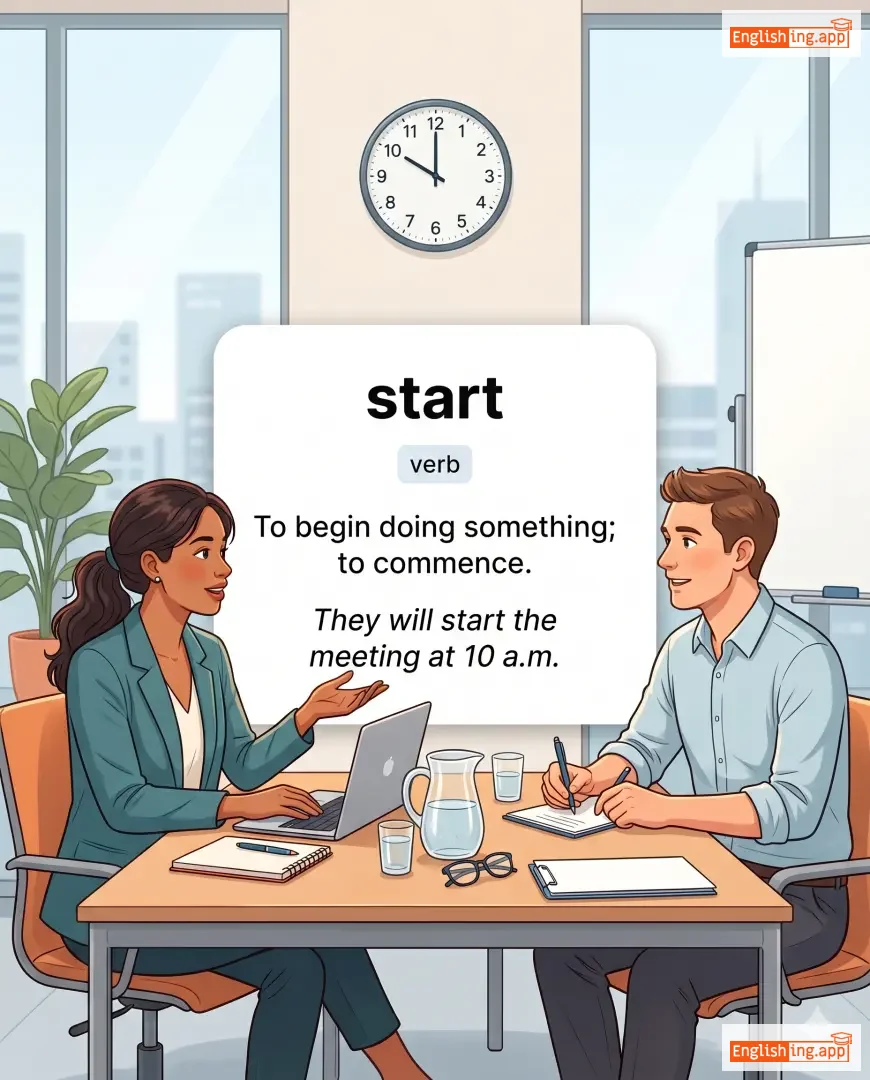
To begin doing something; to commence.
••••••
|
They will start the meeting at 10 a.m.
彼らは午前10時に会議を始めます。
••••••
|
彼らは午前10時に会議を始めます。
Karera wa gozen 10-ji ni kaigi o hajimemasu.
••••••
|
start from scratch
ゼロから始める
••••••
|
To begin again from nothing.
••••••
|
ゼロから始める
Zero kara hajimeru
••••••
|
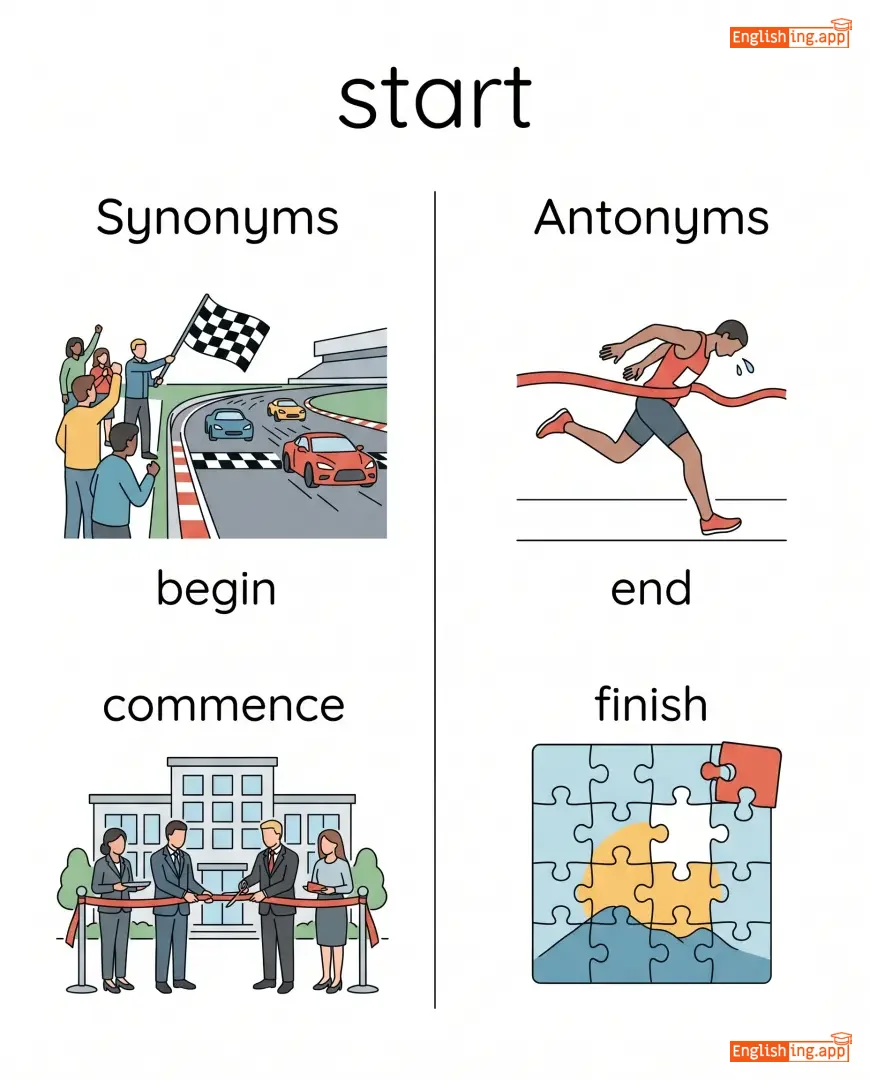
begin, commence, initiate, launch, open
••••••
|
end, finish, stop
••••••
|
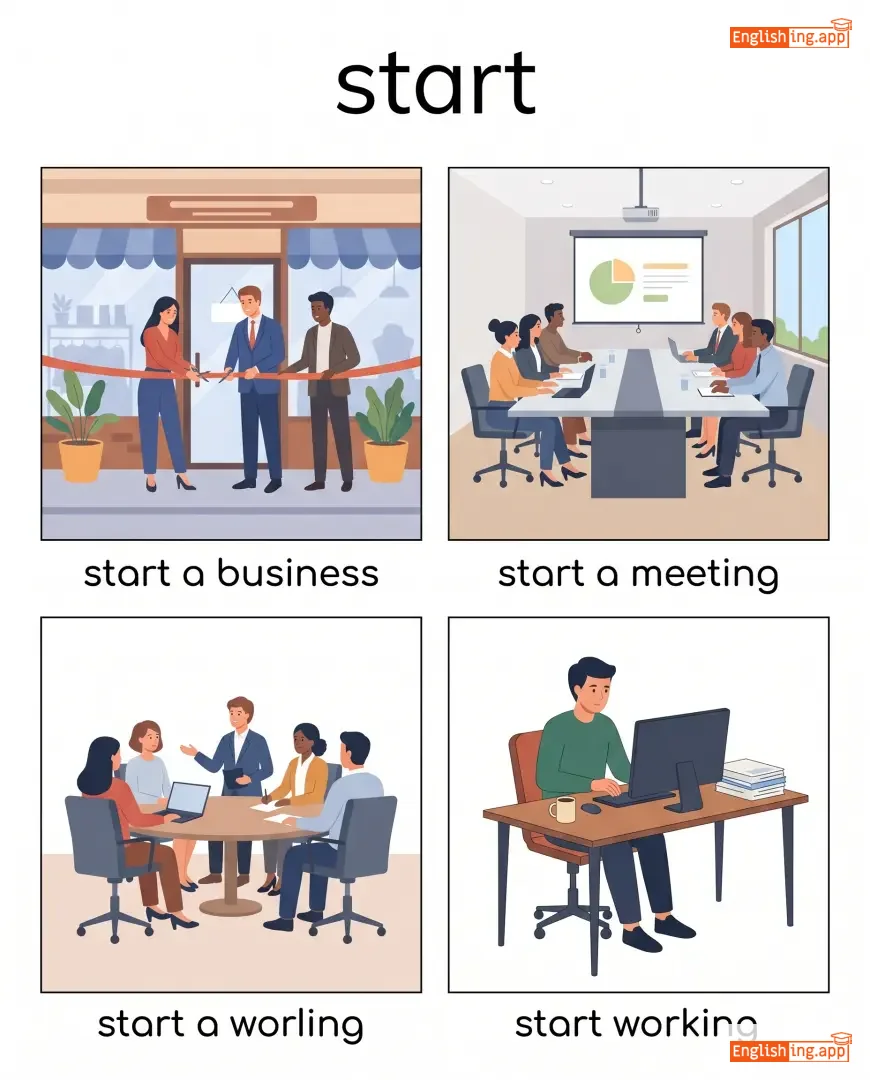
start a business, start a meeting, start working, start again
••••••
|
'START'ボタンを押して始めましょう
••••••
|
|
🏛️
••••••
|
/steɪt/
noun
(ステイト)
••••••
|
|
状態
joutai
••••••
|
- •••••• | - •••••• | - •••••• | - •••••• |
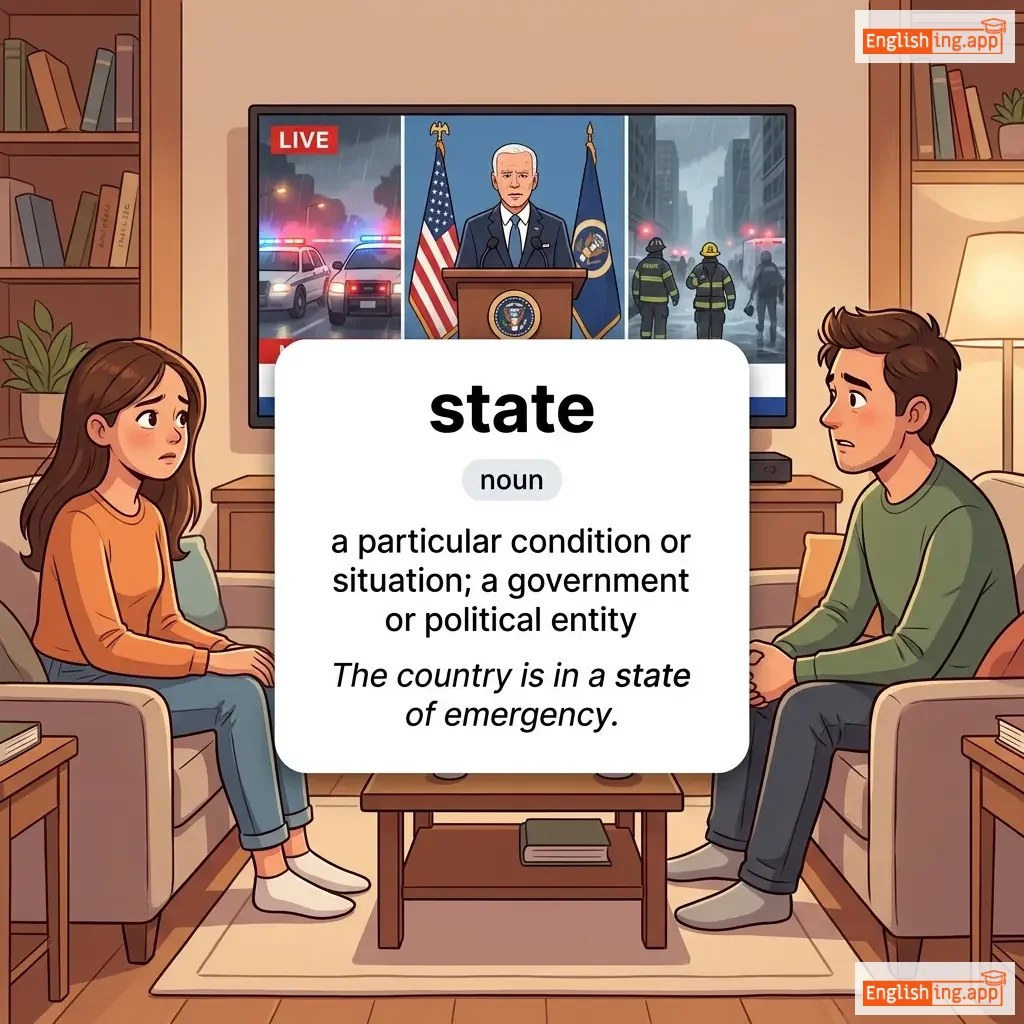
a particular condition or situation; a government or political entity
••••••
|
The country is in a state of emergency. |
その国は非常事態にあります。
Sono kuni wa hijoujitai ni arimasu.
••••••
|
- •••••• | - •••••• | - •••••• |
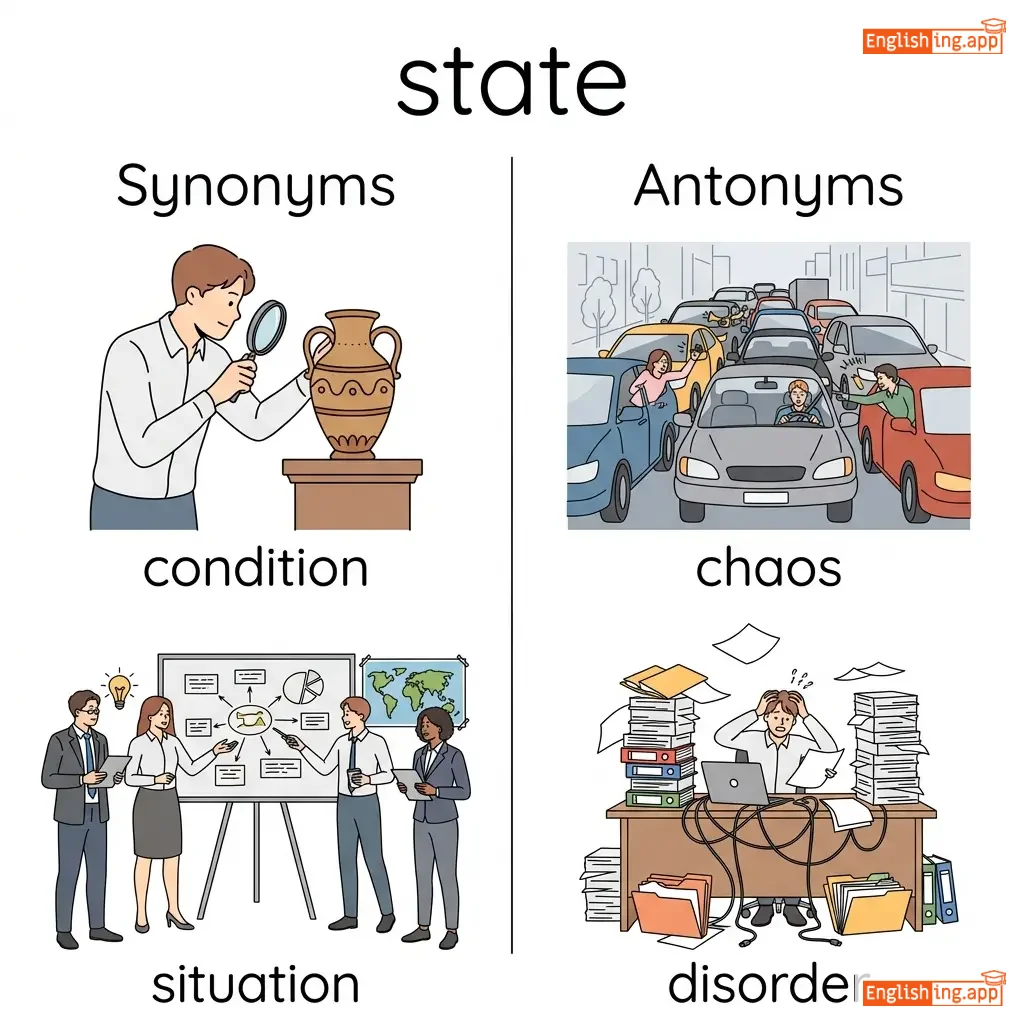
condition, situation, phase, territory
••••••
|
chaos, disorder
••••••
|
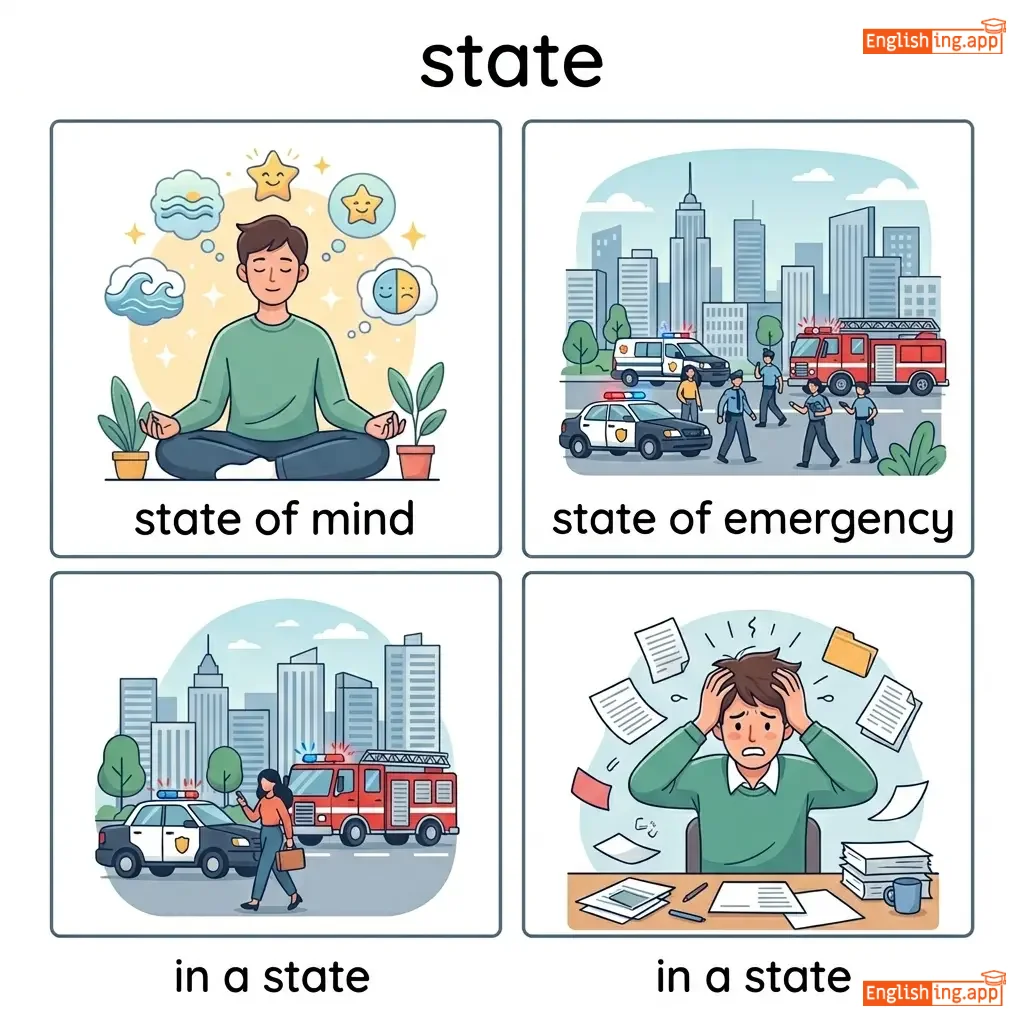
state of mind, state of emergency, in a state
••••••
|
State means a country or condition - like the 'state' of emergency!
••••••
|
|
📄
••••••
|
/ˈsteɪt.mənt/
noun
(sutētomento)
••••••
|
- •••••• |
声明
seimei
••••••
|
- •••••• | - •••••• | - •••••• | - •••••• |
a definite or clear expression of something in speech or writing; an official account of facts
••••••
|
The CEO issued a statement about the company's future plans. |
CEOは会社の将来計画についての声明を発表しました。
CEO wa kaisha no shourai keikaku ni tsuite no seimei o happyou shimashita.
••••••
|
- •••••• | - •••••• | - •••••• |
declaration, announcement, report, account
••••••
|
silence, concealment
••••••
|
official statement, press statement, financial statement, witness statement
••••••
|
声明 = statement, CEOは将来計画についての声明を発表しました。
••••••
|
|
🚉
••••••
|
/ˈsteɪʃən/
noun
••••••
|
- •••••• | - •••••• | - •••••• | - •••••• | - •••••• | - •••••• |
a place where a particular service is provided, especially for transportation
••••••
|
We arrived at the station just in time for the train. |
- •••••• | - •••••• | - •••••• | - •••••• |
terminal, depot, stop, hub
••••••
|
wilderness, desolate place
••••••
|
train station, bus station, police station, gas station
••••••
|
No •••••• |
|
📊
••••••
|
/stəˈtɪstɪkəl/
adjective
(統計的)
••••••
|
- •••••• |
統計的
tokeiteki
••••••
|
- •••••• | - •••••• | - •••••• | - •••••• |
relating to the use or analysis of numerical data
••••••
|
The report provides statistical data about population growth. |
報告書は人口増加に関する統計データを提供しています。
Hōkokusho wa jinkō zōka ni kansuru tōkei dēta o teikyō shiteimasu.
••••••
|
- •••••• | - •••••• | - •••••• |
numerical, analytical, quantitative, data-based
••••••
|
qualitative, subjective
••••••
|
statistical analysis, statistical data, statistical method, statistical model
••••••
|
統計は数字に関するもの、だから statistical はその分析 📊
••••••
|
|
📊
••••••
|
/stəˈtɪstɪks/
noun
(スタティスティックス)
••••••
|
- •••••• |
統計
tōkei
••••••
|
- •••••• | - •••••• | - •••••• | - •••••• |
the practice or science of collecting and analyzing numerical data
••••••
|
The statistics showed an increase in the number of users last year.
統計は昨年のユーザー数の増加を示しました。
••••••
|
統計は昨年のユーザー数の増加を示しました。
Tōkei wa sakunen no yūzā-sū no zōka o shimeshimashita.
••••••
|
- •••••• | - •••••• | - •••••• |
data, figures, analytics, metrics
••••••
|
anecdote, singular, outlier
••••••
|
statistical analysis, statistical data, statistical model, collection of statistics
••••••
|
統計は数字データを使って分析を行う科学です。
••••••
|
|
🗽
••••••
|
/ˈstætʃuː/
noun
(スタチュー)
••••••
|
- •••••• |
像
zō
••••••
|
- •••••• | - •••••• | - •••••• | - •••••• |
a carved or cast figure of a person or animal, especially one that is life-size or larger
••••••
|
They built a statue of the national hero in the city square. |
彼らは都市広場に国民的英雄の像を建てました。
Karera wa toshi kōba ni kokumin-teki eiyū no zō o tatemashita.
••••••
|
as still as a statue |
completely motionless
••••••
|
像のように静止した
zō no yō ni seishi shita
••••••
|
sculpture, figure, effigy, monument, idol
••••••
|
none, living being
••••••
|
statue of liberty, bronze statue, marble statue, giant statue
••••••
|
Statue means statue of liberty 🗽 — 像はいつも静止している!
••••••
|
|
🔝
••••••
|
/ˈsteɪtəs/
noun
(ステータス)
••••••
|
- •••••• |
地位
chii
••••••
|
- •••••• | - •••••• | - •••••• | - •••••• |
the social or professional position or condition of someone or something
••••••
|
His social status improved after the promotion. |
昇進後、彼の社会的地位は向上しました。
Shoushingo, kare no shakaiteki chii wa koujou shimashita.
••••••
|
- •••••• | - •••••• | - •••••• |
rank, position, standing, condition
••••••
|
low status, insignificance
••••••
|
high status, social status, professional status
••••••
|
ステータスは社会の中でのあなたの位置を示します
••••••
|
|
🏠
••••••
|
/steɪ/
verb
(sutē)
••••••
|

|
滞在
taizai
••••••
|
stayed
sutēdo
••••••
|
stayed
sutēdo
••••••
|
stays
sutēzu
••••••
|
staying
sutēingu
••••••
|
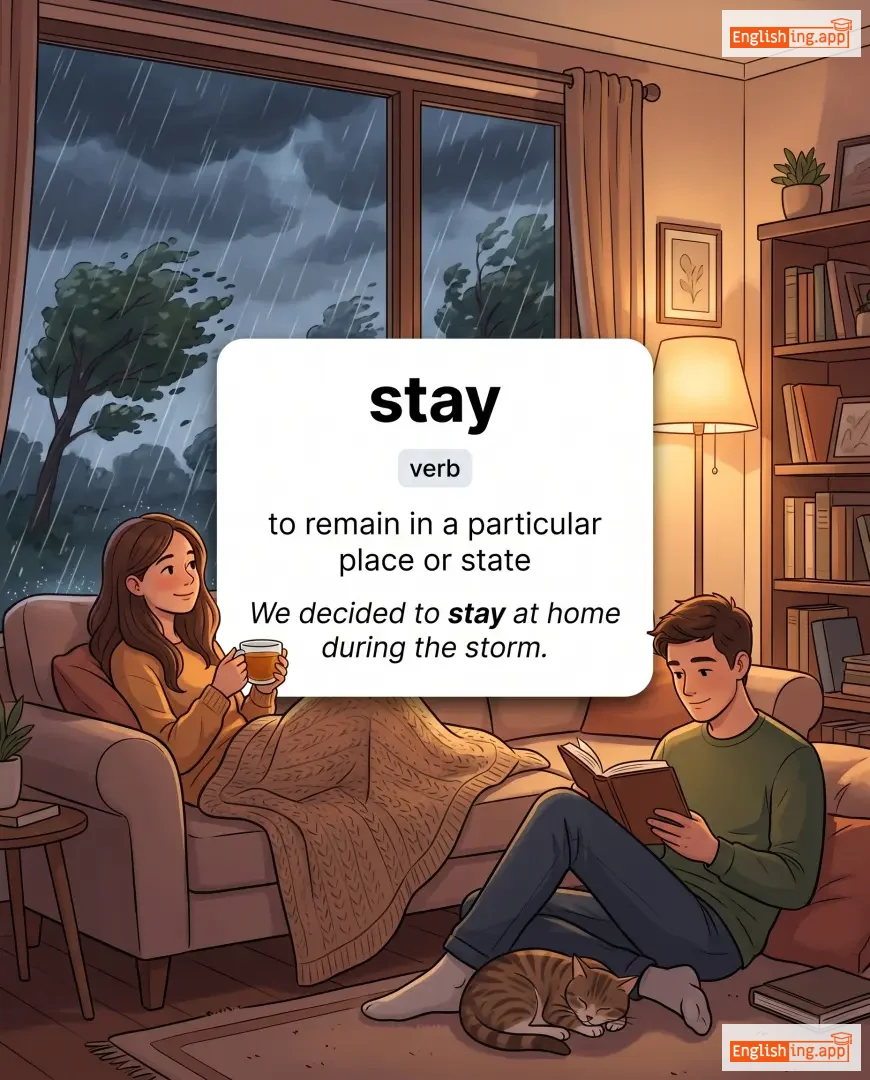
to remain in the same place; to continue being
••••••
|
Please stay here until I return.
どうぞ、私が戻るまでここにいてください。
••••••
|
どうぞ、私が戻るまでここにいてください。
Dōzo, watashi ga modoru made koko ni ite kudasai.
••••••
|
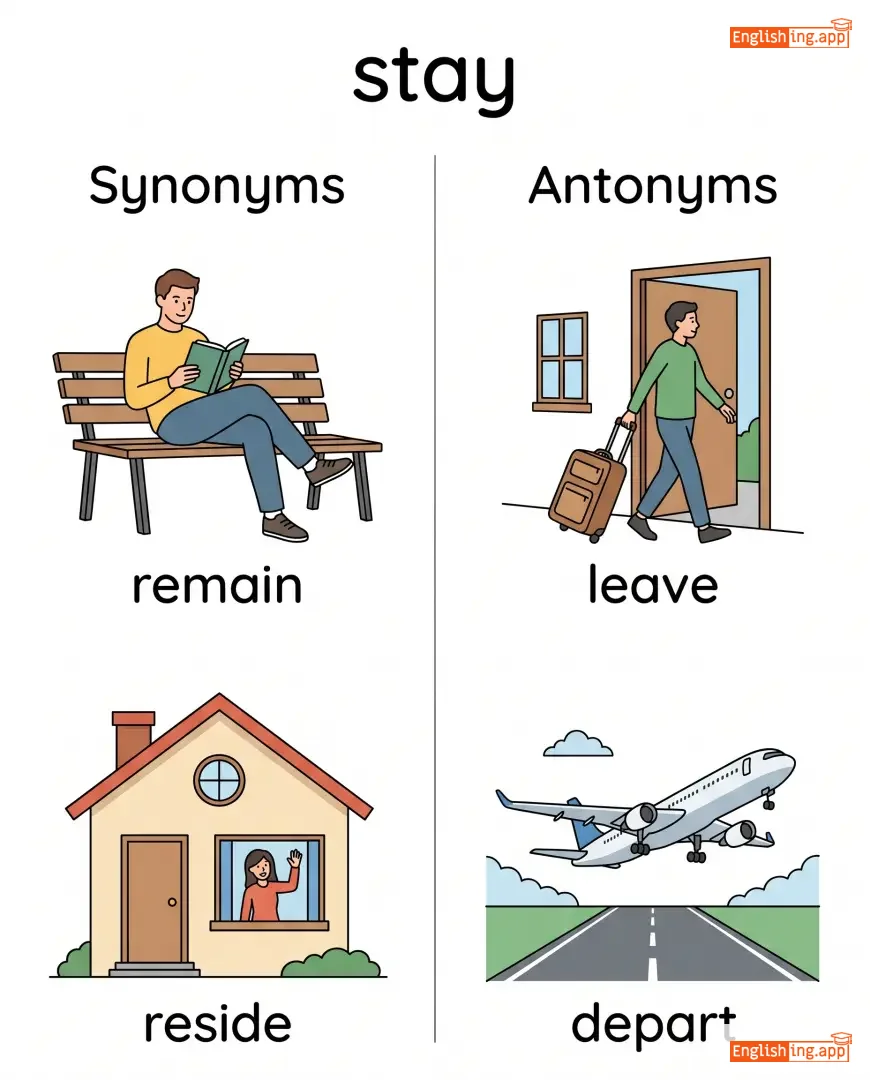
- •••••• | - •••••• | - •••••• |
remain, continue, wait, linger
••••••
|
leave, go, depart, move
••••••
|
stay home, stay calm, stay away, stay up, stay put
••••••
|
Stay in Japanese, just like 'taizai' for stay!
••••••
|
|
📈
••••••
|
/ˈstɛdɪli/
adverb
(ステディリー)
••••••
|
- •••••• |
着実に
chakujitsu ni
••••••
|
- •••••• | - •••••• | - •••••• | - •••••• |
in a regular and continuous way; without stopping or changing
••••••
|
The company's profits have been increasing steadily. |
会社の利益は着実に増加しています。
Kaisha no rieki wa chakujitsu ni zōka shiteimasu.
••••••
|
- •••••• | - •••••• | - •••••• |
consistently, gradually, continuously, regularly
••••••
|
suddenly, irregularly, inconsistently
••••••
|
grow steadily, increase steadily, rise steadily, work steadily
••••••
|
Steady は安定を意味する — だから steadily は着実にという意味です 📈
••••••
|
|
⚖️
••••••
|
/ˈstɛdi/
adjective
(ステディ)
••••••
|
- •••••• |
安定
antei
••••••
|
- •••••• | - •••••• | - •••••• | - •••••• |
firm, stable, and not likely to change suddenly
••••••
|
He kept his hand steady while painting the picture.
彼は絵を描いている間、手を安定させていました。
••••••
|
彼は絵を描いている間、手を安定させていました。
Kare wa e o kaite iru aida, te o antei sasete imashita.
••••••
|
steady as a rock
岩のように安定している
••••••
|
extremely stable and reliable
••••••
|
岩のように安定している
iwa no yō ni antei shite iru
••••••
|
stable, firm, constant, fixed, reliable
••••••
|
unstable, unsteady, shaky
••••••
|
steady job, steady growth, steady hand, steady pace
••••••
|
steadyは安定を意味します → 安定した手、安定した絵
••••••
|
|
🕵️♂️
••••••
|
/stiːl/
verb
(スティール)
••••••
|

|
盗む
nusumu
••••••
|
stole
ストール
••••••
|
stolen
ストーレン
••••••
|
steals
スティールズ
••••••
|
stealing
スティーリング
••••••
|
to take something without permission or right
••••••
|
He tried to steal my wallet while I wasn't looking.
彼は私が見ていない間に財布を盗もうとしました。
••••••
|
彼は私が見ていない間に財布を盗もうとしました。
Kare wa watashi ga mite inai aida ni saifu o nusumou to shimashita.
••••••
|
steal someone's heart
誰かの心を盗む
••••••
|
to charm or captivate someone
••••••
|
誰かの心を盗む
Dareka no kokoro o nusumu
••••••
|
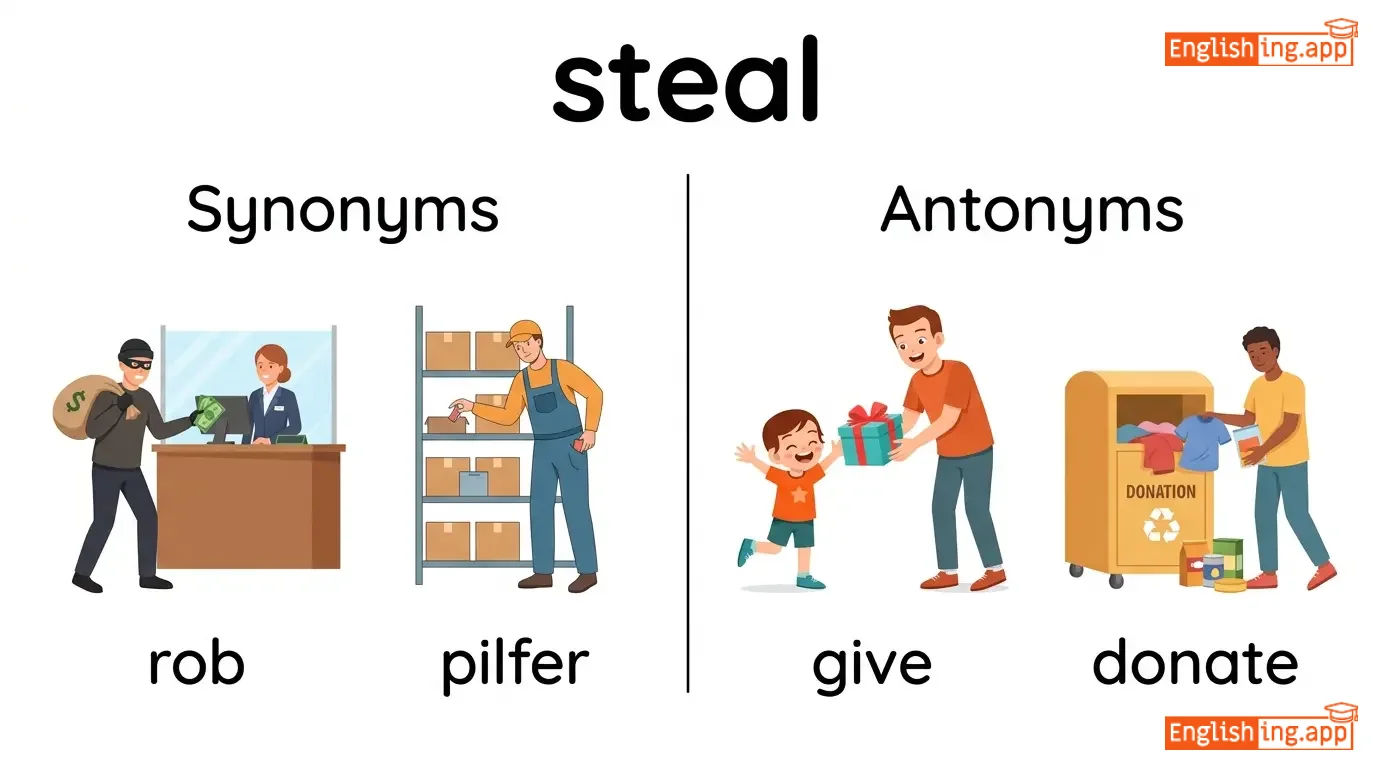
rob, pilfer, loot, snatch
••••••
|
give, donate, return
••••••
|
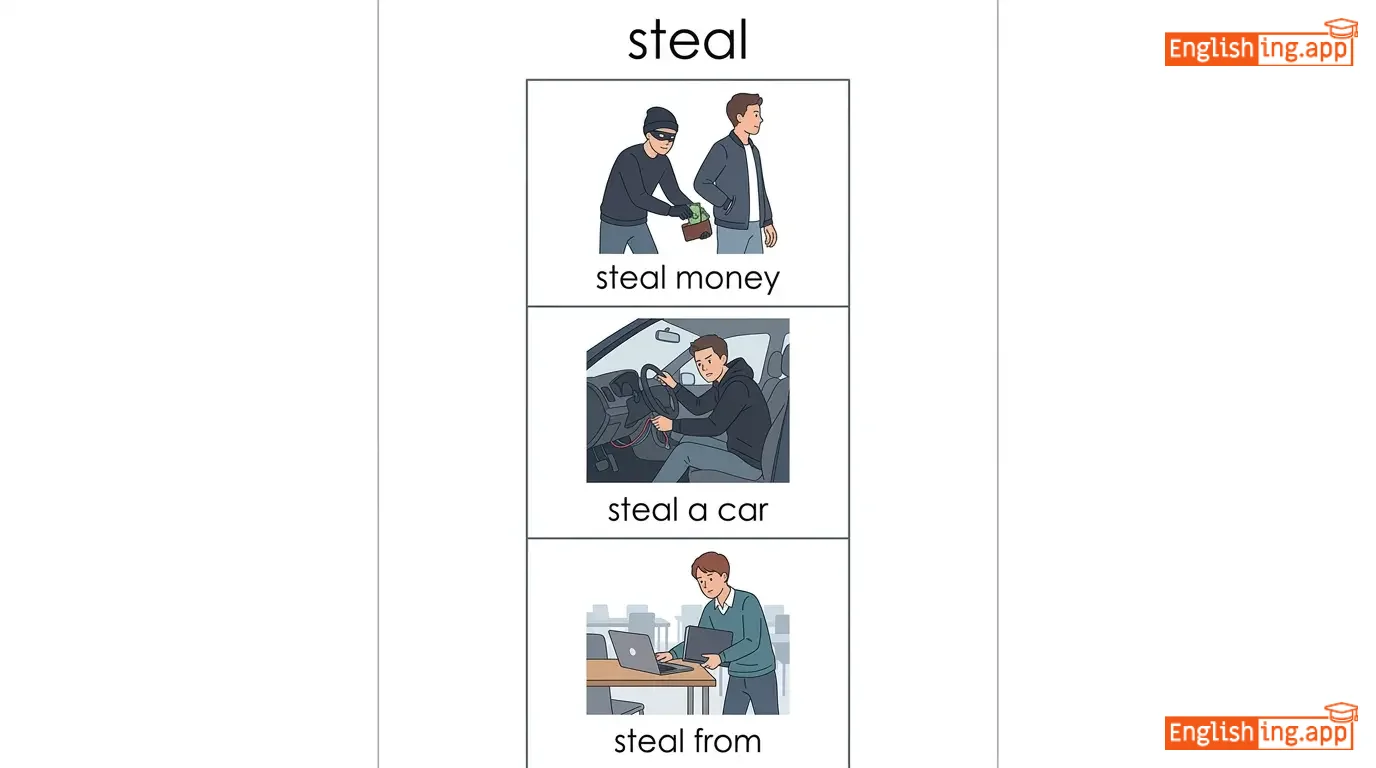
steal money, steal a car, steal from, steal away
••••••
|
盗む = 心を盗む
••••••
|
|
💨
••••••
|
/stiːm/
noun, verb
(スティーム)
••••••
|
- •••••• |
蒸気
jouki
••••••
|
steamed
スティームド
••••••
|
steamed
スティームド
••••••
|
steams
スティームス
••••••
|
steaming
スティーミング
••••••
|
the vapor into which water is converted when heated; to emit or treat with steam
••••••
|
The kettle was steaming on the stove.
ケトルはストーブで蒸気を発生させていた。
••••••
|
ケトルはストーブで蒸気を発生させていた。
Kettoru wa sutoobu de jouki wo hasse sasete ita.
••••••
|
let off steam
スチームを放出する
••••••
|
to release pent-up energy or emotions
••••••
|
たまったエネルギーや感情を放出する
tamatta enerugii ya kanjou wo houshutsu suru
••••••
|
vapor, mist, fume, moisture, fog
••••••
|
ice, freeze
••••••
|
steam engine, steam room, steam bath, hot steam
••••••
|
お茶を飲むとき、蒸気を感じてリラックス。
••••••
|
|
🏗️
••••••
|
/stiːl/
noun
(スチール)
••••••
|
- •••••• |
スチール
suchiiru
••••••
|
- •••••• | - •••••• | - •••••• | - •••••• |
a strong, hard metal made of iron and carbon
••••••
|
The building was made from steel to ensure its durability. |
その建物は耐久性を確保するためにスチールで作られました。
Sono tatemono wa taikyū-sei o kakuho suru tame ni suchiiru de tsukuraremashita.
••••••
|
- •••••• | - •••••• | - •••••• |
iron, alloy, metal
••••••
|
wood, plastic
••••••
|
steel structure, steel bar, stainless steel, steel frame
••••••
|
スチールは強くて硬い - スチール = 強い
••••••
|
|
⛰️
••••••
|
/stiːp/
adjective
(スティープ)
••••••
|
- •••••• |
急な, 高すぎる
kyū na, takasugiru
••••••
|
- •••••• | - •••••• | - •••••• | - •••••• |
Having a sharp inclination or high slope; also can mean excessive (as in price).
••••••
|
The hikers climbed a steep mountain trail. |
ハイカーたちは急な山道を登った。
Haikā-tachi wa kyū na yamamichi o nobotta.
••••••
|
a steep price |
Very high or excessive cost.
••••••
|
高すぎる価格
takasugiru kakaku
••••••
|
sharp, precipitous, abrupt, high, costly
••••••
|
gentle, flat, moderate
••••••
|
steep hill, steep slope, steep climb, steep price
••••••
|
Steepはsteep hill = 急な坂、steep price = 高すぎる価格です。
••••••
|
|
🛞
••••••
|
/stɪə(r)/
verb
(スティア)
••••••
|
- •••••• |
操縦する
soujusu
••••••
|
steered
スティアード
••••••
|
steered
スティアード
••••••
|
steers
スティアーズ
••••••
|
steering
スティアリング
••••••
|
to guide or control the movement of a vehicle, vessel, or person
••••••
|
He steered the car carefully through the narrow street.
彼は狭い通りを慎重に車をステアしました。
••••••
|
彼は狭い通りを慎重に車をステアしました。
Kare wa semai toori wo shinchou ni kuruma wo sutea shimashita.
••••••
|
steer clear of
クリアステア
••••••
|
to avoid someone or something
••••••
|
避ける
sakeru
••••••
|
guide, direct, navigate, control, pilot
••••••
|
neglect, ignore
••••••
|
steer the ship, steer the conversation, steer direction
••••••
|
操縦は運転のようなものです — 操縦する時に、あなたは道を示しています 🚗
••••••
|
|
🌱
••••••
|
/stɛm/
noun, verb
(ステム)
••••••
|
- •••••• |
茎 / 食い止める
kuki / kuitomeru
••••••
|
stemmed
ステムド
••••••
|
stemmed
ステムド
••••••
|
stems
ステムス
••••••
|
stemming
ステミング
••••••
|
Noun: The main stalk of a plant. Verb: To stop or restrict the flow or development of something.
••••••
|
The gardener cut the stem of the rose; New policies aim to stem the flow of pollution.
庭師はバラの茎を切りました; 新しい政策は汚染の流れを食い止めることを目指しています。
••••••
|
庭師はバラの茎を切りました; 新しい政策は汚染の流れを食い止めることを目指しています。
Niwa-shi wa bara no kuki o kirimashita; atarashī seisaku wa osen no nagare o kuitomeru koto o mezashiteimasu.
••••••
|
stem the tide
潮流を食い止める
••••••
|
To stop or reduce something from increasing or spreading.
••••••
|
潮流を食い止める
chōryū o kuitomeru
••••••
|
stalk, trunk, branch, stop, halt
••••••
|
root, allow, encourage
••••••
|
stem of a flower, stem cells, stem from, stem the tide
••••••
|
Stem は茎 🌱 を意味し、動詞では流れを食い止めることを意味します。
••••••
|
|
👣
••••••
|
/stɛp/
noun
••••••
|
- •••••• | - •••••• | - •••••• | - •••••• | - •••••• | - •••••• |
a movement made by lifting one foot and putting it down in a new position
••••••
|
She took a step towards the door. |
- •••••• |
take a step forward |
to make progress or move ahead
••••••
|
- •••••• |
stride, pace, move, footstep
••••••
|
halt, stop
••••••
|
step forward, step down, take a step, step by step
••••••
|
No •••••• |
|
🧠
••••••
|
/ˈstɛriəˌtaɪp/
noun
(ステレオタイプ)
••••••
|
- •••••• |
ステレオタイプ
sutereotaipu
••••••
|
- •••••• | - •••••• | - •••••• | - •••••• |
A widely held but oversimplified and fixed idea of a particular type of person or thing.
••••••
|
It is a stereotype that all gamers are antisocial. |
すべてのゲーマーが反社会的だというのはステレオタイプです。
Subete no geemaa ga hanshakai-teki da to iu no wa sutereotaipu desu.
••••••
|
- •••••• | - •••••• | - •••••• |
cliché, generalization, label, prejudice, bias
••••••
|
individuality, uniqueness
••••••
|
cultural stereotype, gender stereotype, break stereotypes
••••••
|
ステレオタイプは、同じ曲を繰り返し再生するステレオのようなものです。
••••••
|
|
🖊️
••••••
|
/stɪk/
verb
(スティック)
••••••
|
- •••••• |
くっつく
kuttsuku
••••••
|
stuck
スタック
••••••
|
stuck
スタック
••••••
|
sticks
スティックス
••••••
|
sticking
スティキング
••••••
|
to adhere or attach something to a surface
••••••
|
The glue will stick to the paper.
グルーは紙にくっつくでしょう。
••••••
|
グルーは紙にくっつくでしょう。
Guru wa kami ni kuttsuku deshou.
••••••
|
stick to the plan
計画を守る
••••••
|
to follow the plan without changing course
••••••
|
計画を守る
Keikaku o mamoru
••••••
|
adhere, cling, fasten, bond
••••••
|
detach, remove
••••••
|
stick to, stick with, stick out, stick together
••••••
|
くっつくもののように、計画も変更せずに守らなければならない。
••••••
|
|
🟫
••••••
|
/ˈstɪki/
adjective
(スティッキー)
••••••
|
- •••••• |
べたつく
betatsuku
••••••
|
- •••••• | - •••••• | - •••••• | - •••••• |
having the quality of adhering or clinging; difficult to remove or deal with
••••••
|
The candy is too sticky to eat with your hands.
キャンディは手で食べるにはあまりにもスティッキーです。
••••••
|
キャンディは手で食べるにはあまりにもべたつくです。
kyandi wa te de taberu ni wa amari ni mo betatsuku desu.
••••••
|
stick to your guns
信念を貫く
••••••
|
to remain firm in your beliefs or decisions
••••••
|
信念を貫く
shinnen o tsuranuku
••••••
|
tacky, adhesive, clingy, gooey
••••••
|
slippery, smooth
••••••
|
sticky note, sticky situation, sticky surface, sticky fingers
••••••
|
べたつく candy sticks to your fingers like Japanese glue.
••••••
|
|
🪵
••••••
|
/stɪf/
adjective
(スティフ)
••••••
|
- •••••• |
硬い
katai
••••••
|
- •••••• | - •••••• | - •••••• | - •••••• |
rigid, difficult to bend or move
••••••
|
After the long run, his legs felt very stiff. |
長いランニングの後、彼の足はとても硬く感じられた。
Nagai ranningu no ato, kare no ashi wa totemo kataku kanjirareta.
••••••
|
stiff competition |
strong or difficult competition
••••••
|
厳しい競争
Kibishii kyousou
••••••
|
rigid, firm, inflexible, hard, tense
••••••
|
flexible, loose, relaxed
••••••
|
stiff neck, stiff muscles, stiff resistance, stiff competition
••••••
|
スティフは硬い意味 – 曲がらない棒のように
••••••
|
|
🕊️
••••••
|
/stɪl/
adjective
(スティル)
••••••
|
- •••••• |
静かな
shizukana
••••••
|
- •••••• | - •••••• | - •••••• | - •••••• |
not moving or making a sound
••••••
|
The water was still, reflecting the sky. |
水は静かで、空を反射していた。
Mizu wa shizuka de, sora wo hansha shiteita.
••••••
|
still waters run deep |
quiet or calm people often have deep thoughts or feelings
••••••
|
静かな水は深い
shizukana mizu wa fukai
••••••
|
motionless, calm, quiet, serene
••••••
|
moving, noisy, restless
••••••
|
still life, still water, still moment, still image
••••••
|
静かな水のように、静かにして深く考えよう。
••••••
|
|
💡
••••••
|
/ˈstɪmjʊˌleɪt/
verb
(刺激する)
••••••
|
|
刺激する, 活性化する
shigeki suru, katsusei suru
••••••
|
stimulated
刺激した
••••••
|
stimulated
刺激した
••••••
|
stimulates
刺激する
••••••
|
stimulating
刺激している
••••••
|
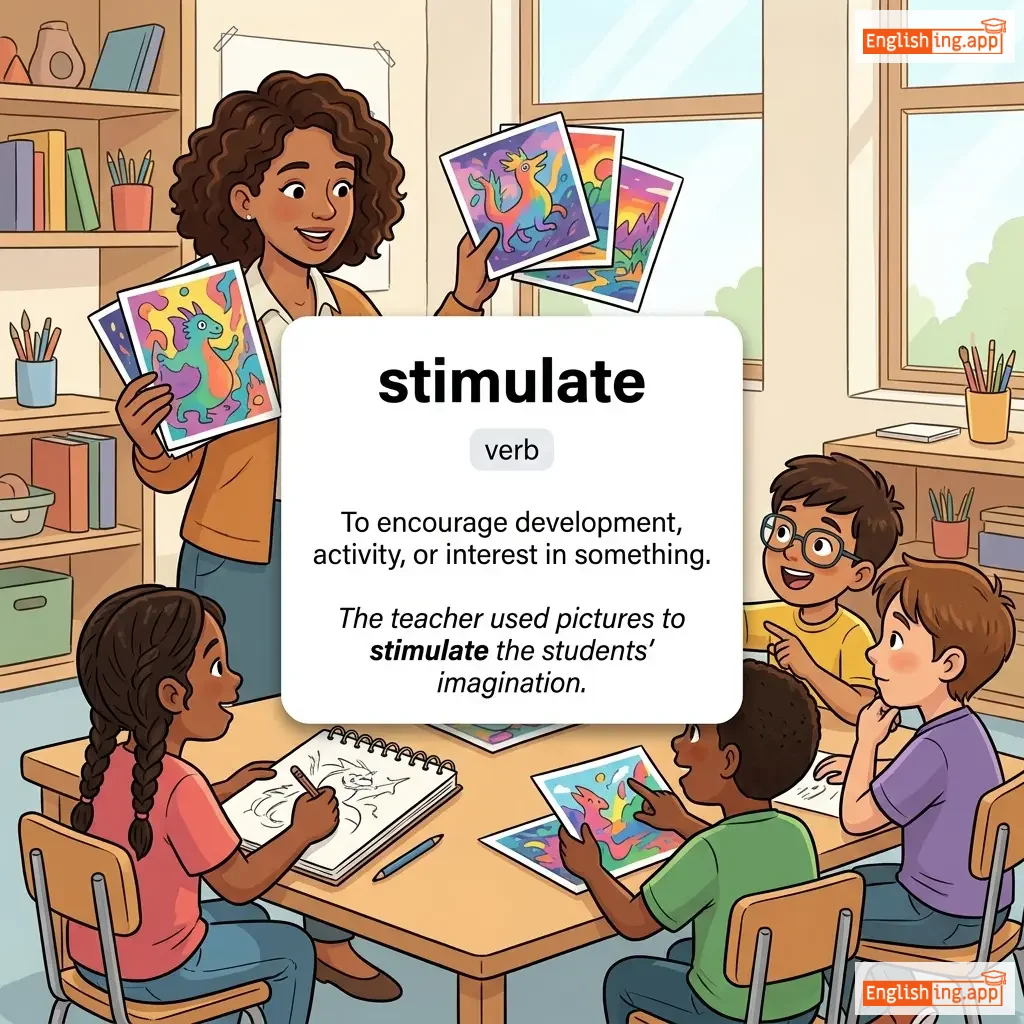
To encourage development, activity, or interest in something.
••••••
|
The teacher used pictures to stimulate the students' imagination.
先生は絵を使って生徒の想像力を刺激しました。
••••••
|
先生は絵を使って生徒の想像力を刺激しました。
Sensei wa e o tsukatte seito no sōzōryoku o shigeki shimashita.
••••••
|
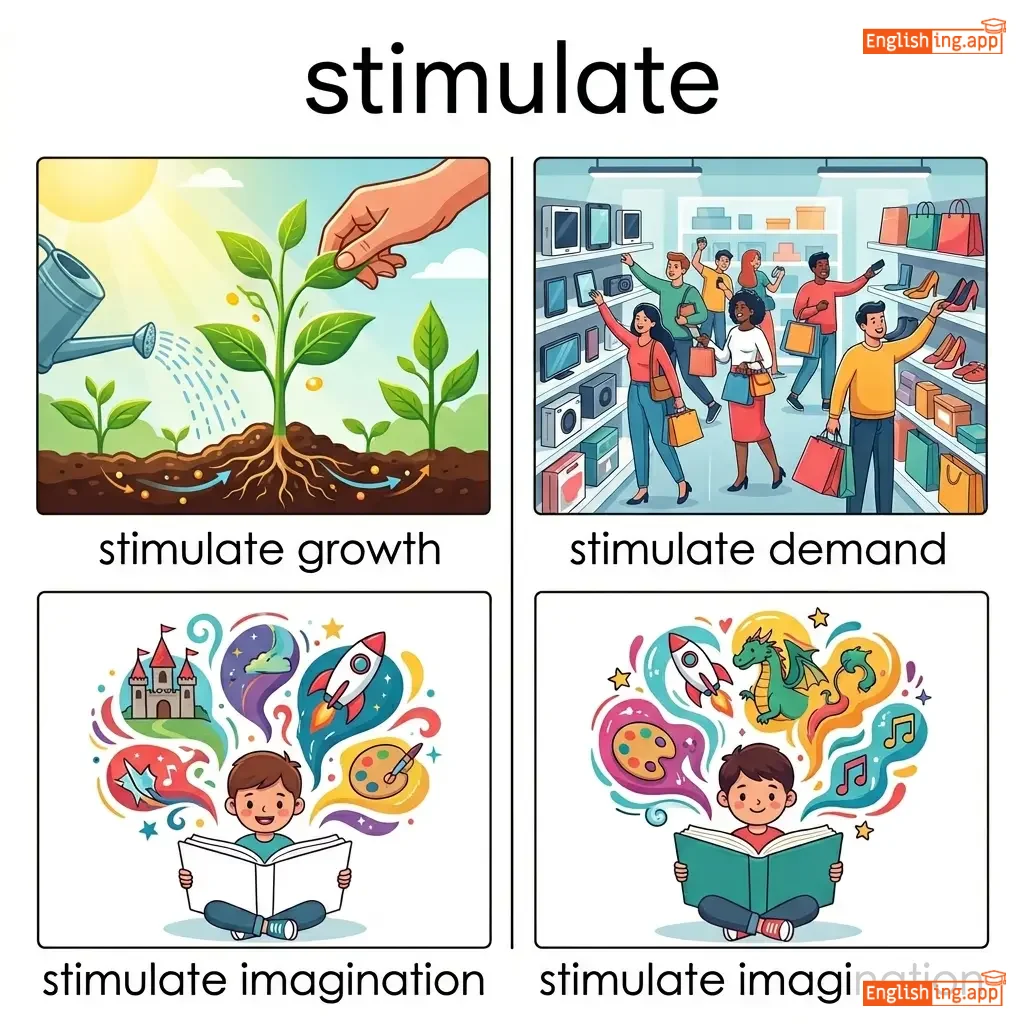
stimulate growth
成長を刺激する
••••••
|
to encourage development or increase
••••••
|
成長を刺激する
seichō o shigeki suru
••••••
|
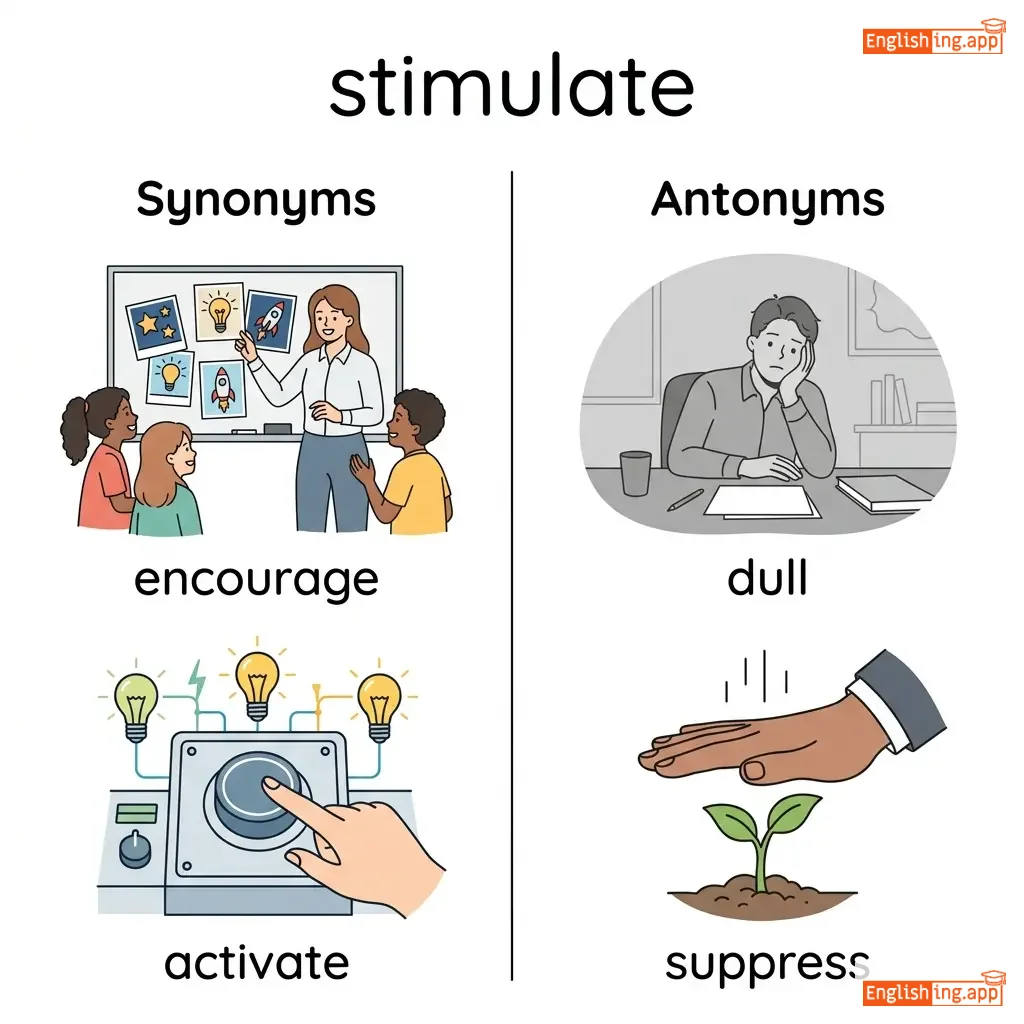
encourage, activate, motivate, inspire, excite
••••••
|
dull, suppress, discourage
••••••
|
stimulate growth, stimulate demand, stimulate imagination, stimulate interest
••••••
|
Stimulate → 刺激する (アイディアを引き出す)
••••••
|
|
🚀
••••••
|
/ˈstɪmjʊləs/
noun
(スティミュラス)
••••••
|
|
反応、活動、または成長を引き起こすもの、刺激
hannou, katsudou, matawa seichou wo hikiokosu mono, shigeki
••••••
|
- •••••• | - •••••• | - •••••• | - •••••• |
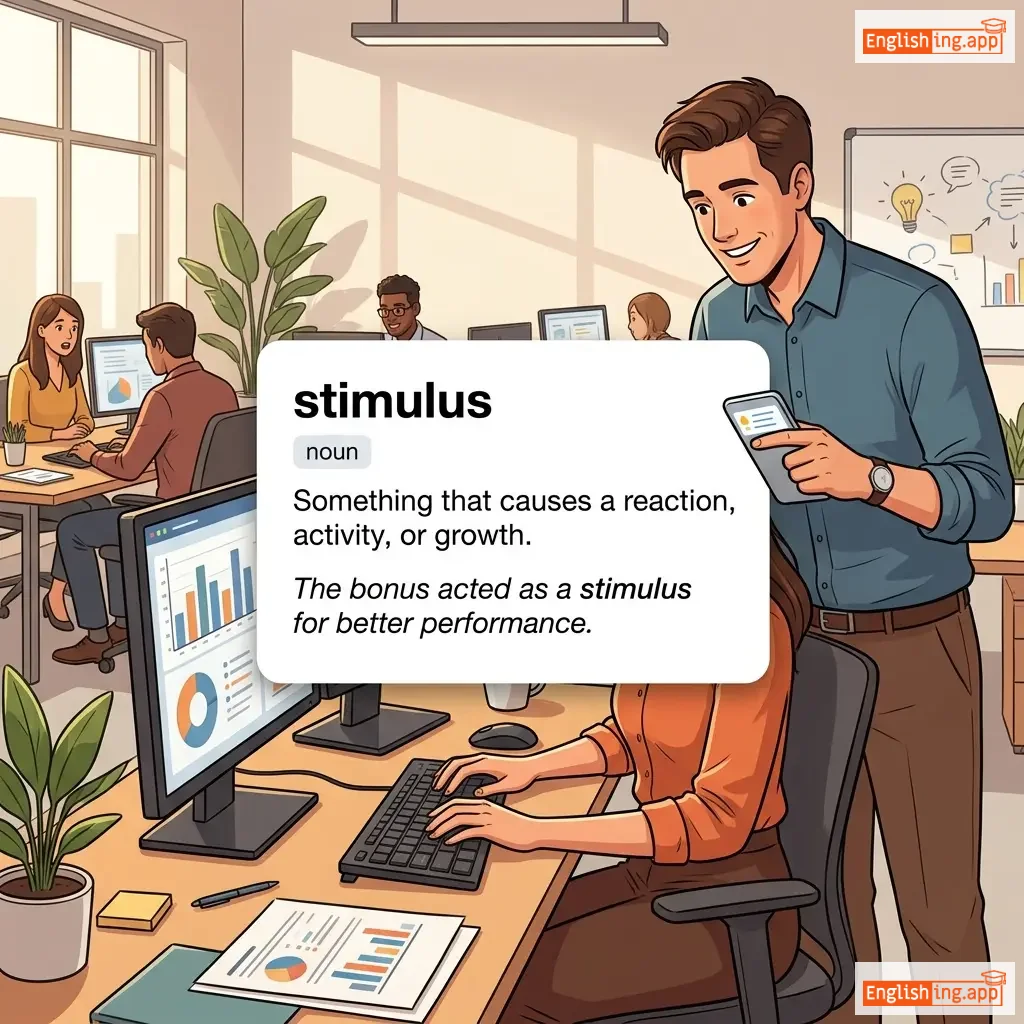
Something that causes a reaction, activity, or growth.
••••••
|
The bonus acted as a stimulus for better performance. |
ボーナスはより良いパフォーマンスのための刺激となった。
Bōnasu wa yori yoi pafōmansu no tame no shigeki to natta.
••••••
|
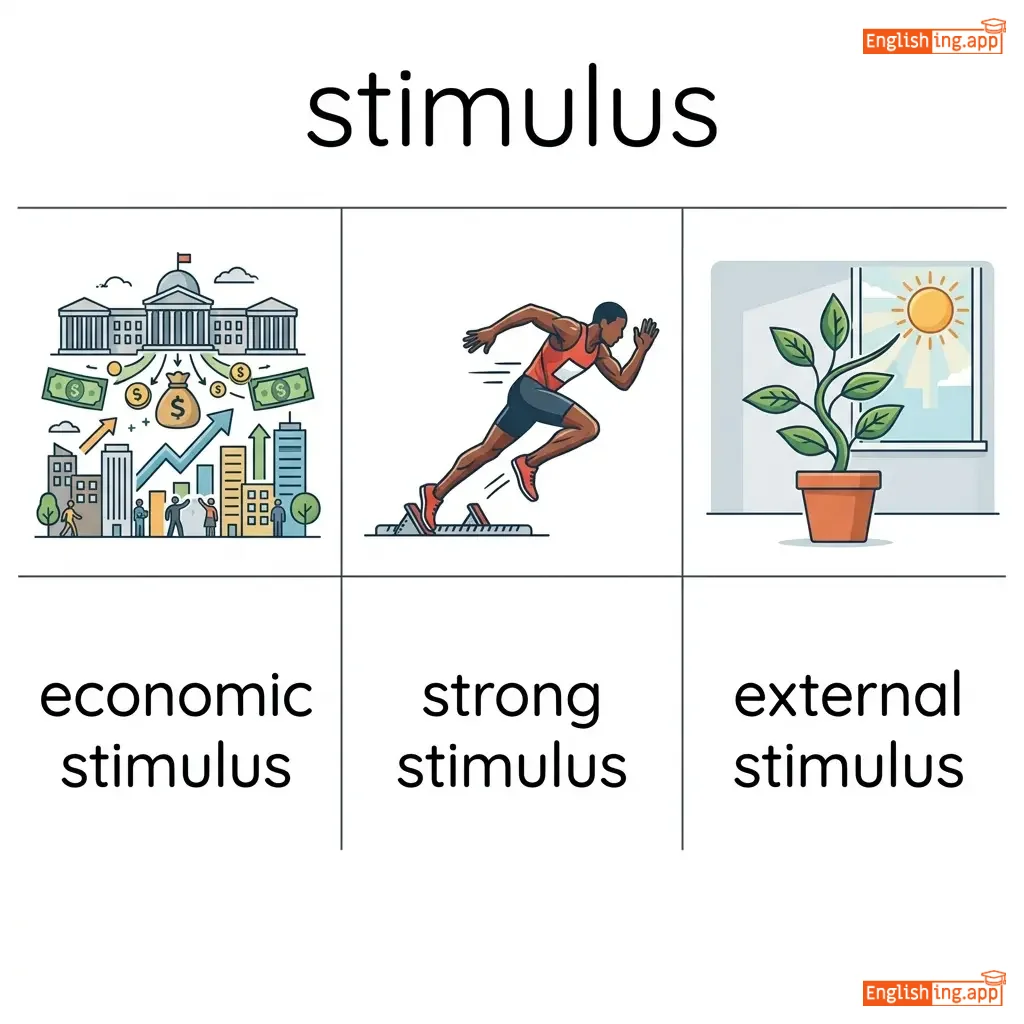
economic stimulus |
government actions to encourage economic growth
••••••
|
経済刺激
keizai shigeki
••••••
|
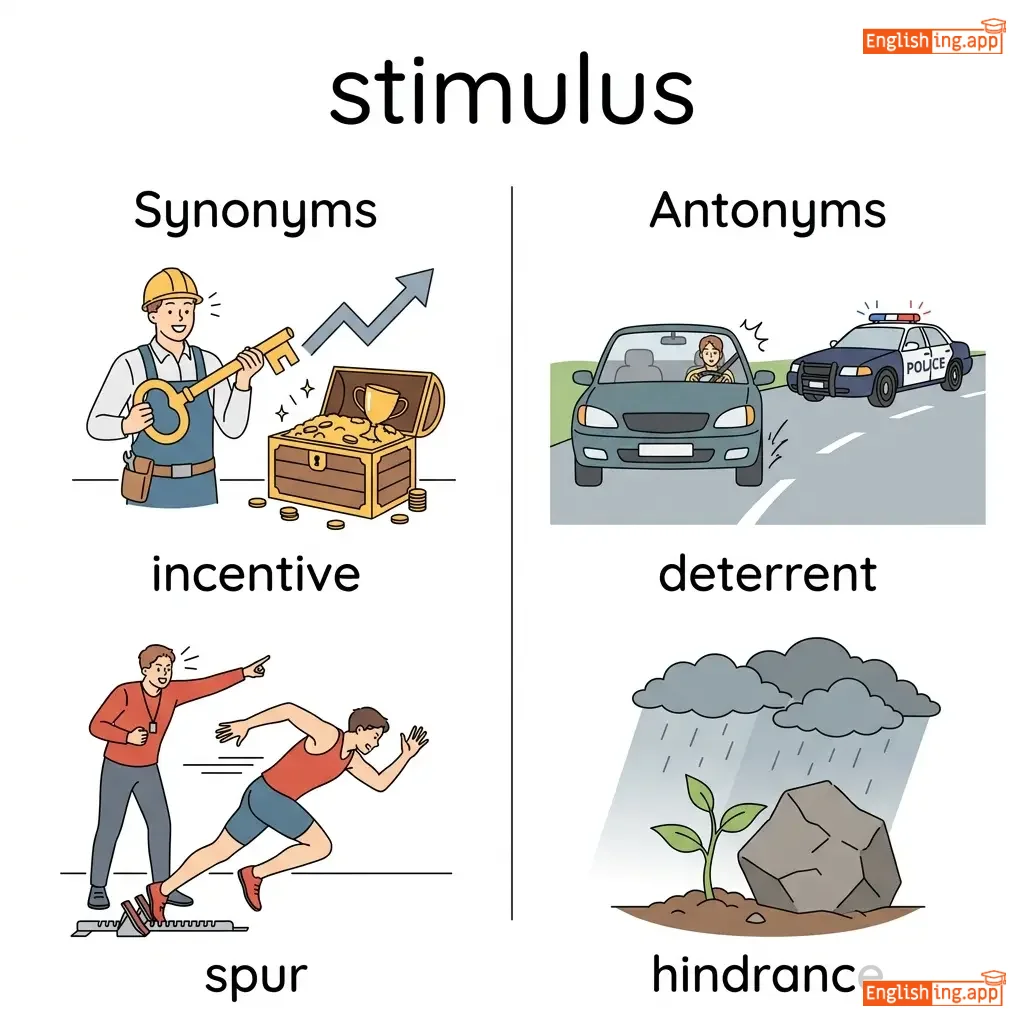
incentive, spur, motivation, encouragement, trigger
••••••
|
deterrent, hindrance
••••••
|
economic stimulus, strong stimulus, external stimulus, direct stimulus
••••••
|
Stimulus = 刺激 🚀 → ボーナスは、モチベーションを与える刺激です
••••••
|
|
🐝
••••••
|
/stɪŋ/
verb
(スティング)
••••••
|
|
刺す
sasu
••••••
|
stung
スティング
••••••
|
stung
スティング
••••••
|
stings
スティングズ
••••••
|
stinging
スティンギング
••••••
|
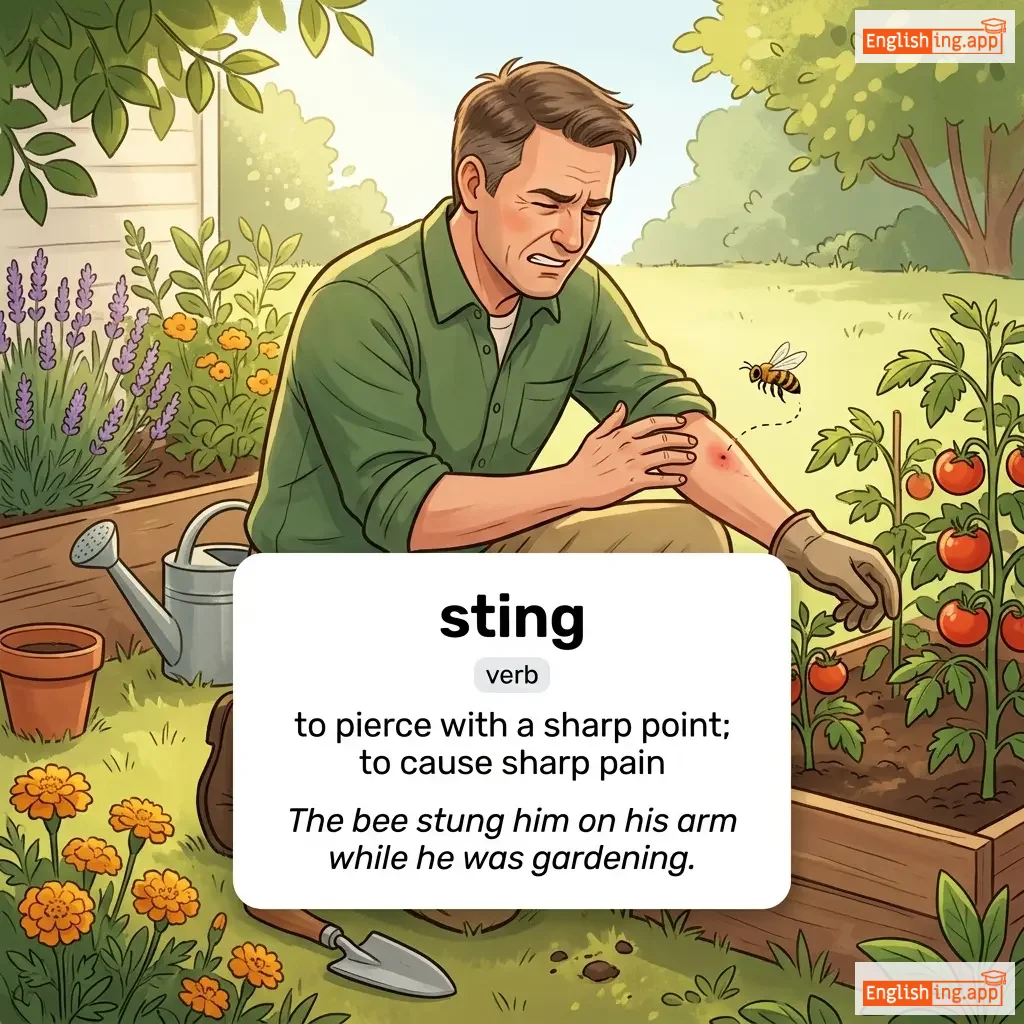
to pierce with a sharp point; to cause sharp pain
••••••
|
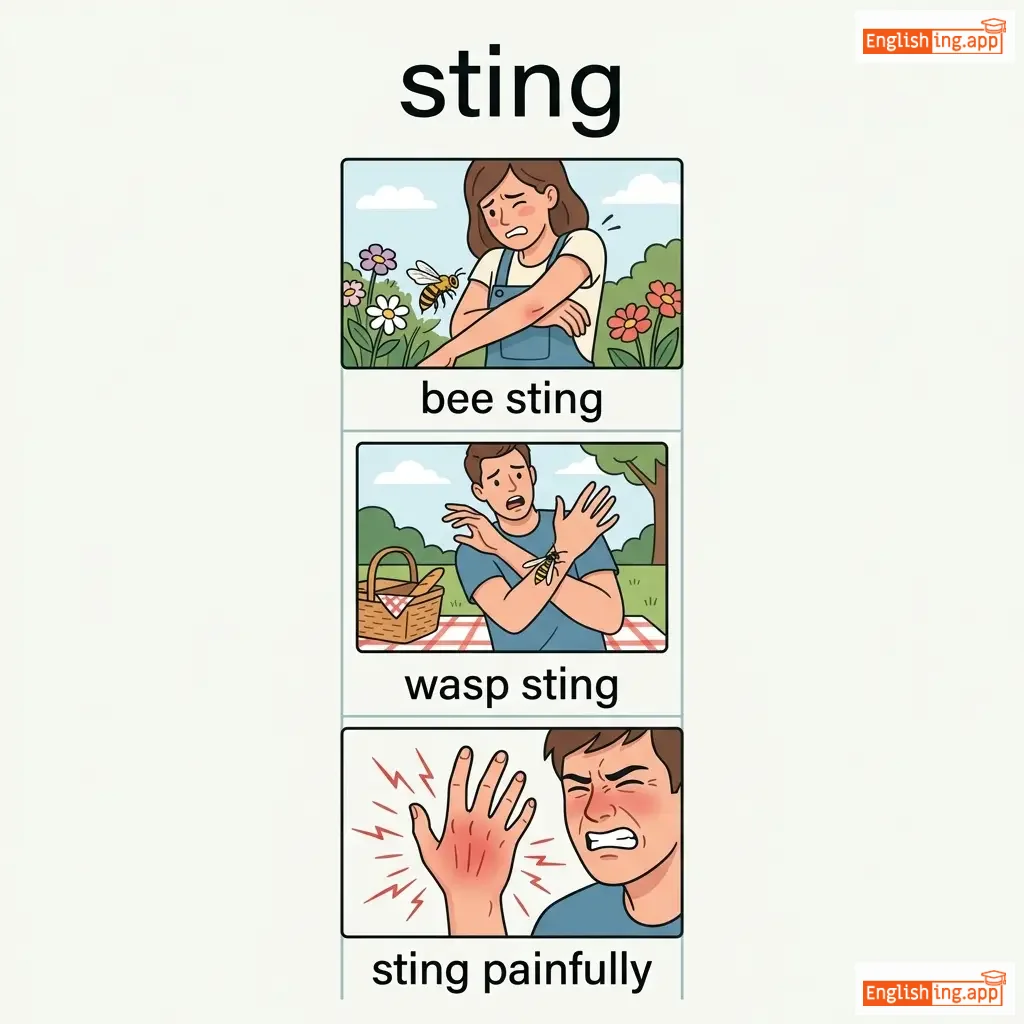
The bee stung him on his arm while he was gardening.
ザ・ビー・スティング・ヒム・オン・ヒズ・アーム・ワイル・ヒ・ワズ・ガーデニング。
••••••
|
蜂は彼が庭仕事をしているときに彼の腕を刺しました。
Hachi wa kare ga niwashigoto o shite iru toki ni kare no ude o sashimashita
••••••
|
- •••••• | - •••••• | - •••••• |
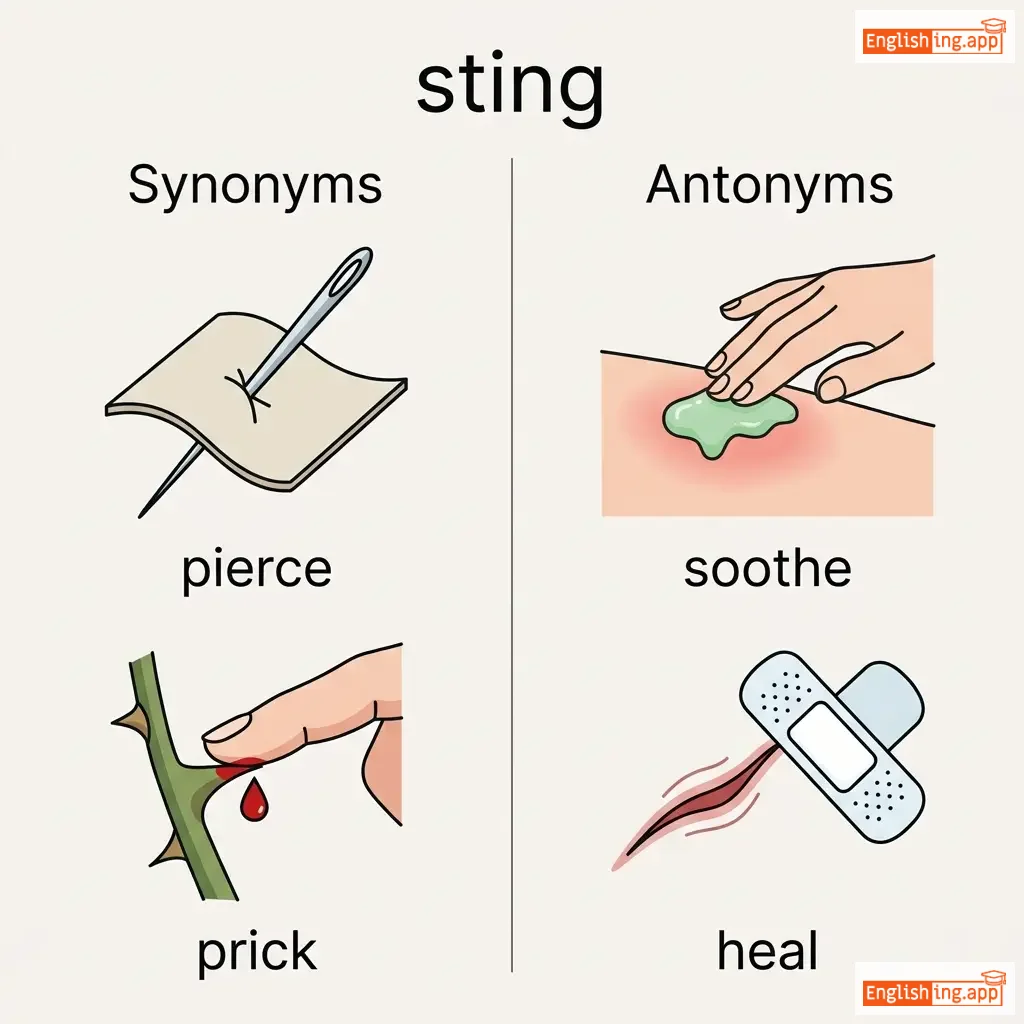
pierce, prick, bite, hurt
••••••
|
soothe, heal, comfort, relieve
••••••
|
bee sting, wasp sting, sting painfully, sting sharply, nettle sting
••••••
|
蜂に刺された痛みを思い出してみて
••••••
|
|
🍲
••••••
|
/stɜːr/
verb
(スティア)
••••••
|
- •••••• |
かき混ぜる
kakimazeru
••••••
|
stirred
スティアード
••••••
|
stirred
スティアード
••••••
|
stirs
スティアーズ
••••••
|
stirring
スティアリング
••••••
|
to mix or move something in a circular motion, especially in liquid
••••••
|
She stirred the soup to make sure it didn't burn.
彼女はスープをかき混ぜて、焦げないようにした。
••••••
|
彼女はスープをかき混ぜて、焦げないようにした。
Kanojo wa suupu o kakimazete, kogenai you ni shita.
••••••
|
- •••••• | - •••••• | - •••••• |
mix, agitate, shake, blend
••••••
|
settle, still, calm
••••••
|
stir the soup, stir the pot, stir emotions
••••••
|
スープをかき混ぜる時は 'Stir' (かき混ぜる) - Stir to mix.
••••••
|

