|
絵文字
|
単語 | Images | 翻訳 | 過去 | 過去分詞 | 三人称単数 | 動名詞 | 意味 | 例文 | 例文の翻訳 | 表現例 | 表現例の意味 | 表現例の翻訳 | 同義語 | 対義語 | コロケーション | ニーモニック |
|---|---|---|---|---|---|---|---|---|---|---|---|---|---|---|---|---|---|
|
🥜
••••••
|
/nʌt/
noun
(ナット)
••••••
|
- •••••• |
ナッツ
nattsu
••••••
|
- •••••• | - •••••• | - •••••• | - •••••• |
a hard-shelled fruit that contains a seed, or a small metal piece used in machinery
••••••
|
She ate a peanut, which is a type of nut. |
彼女はピーナッツを食べました、それはナッツの一種です。
Kanojo wa pīnattsu wo tabemashita, sore wa nattsu no isshu desu.
••••••
|
- •••••• | - •••••• | - •••••• |
seed, kernel, shell
••••••
|
fruit, vegetable
••••••
|
eat nuts, nut shell, nutcracker
••••••
|
Nut is like a nattsu, tough to crack but worth the effort!
••••••
|
|
🥦
••••••
|
/ˈnjuː.tri.ənt/
noun
(ニュートリエント)
••••••
|
|
栄養素
eiyouso
••••••
|
- •••••• | - •••••• | - •••••• | - •••••• |
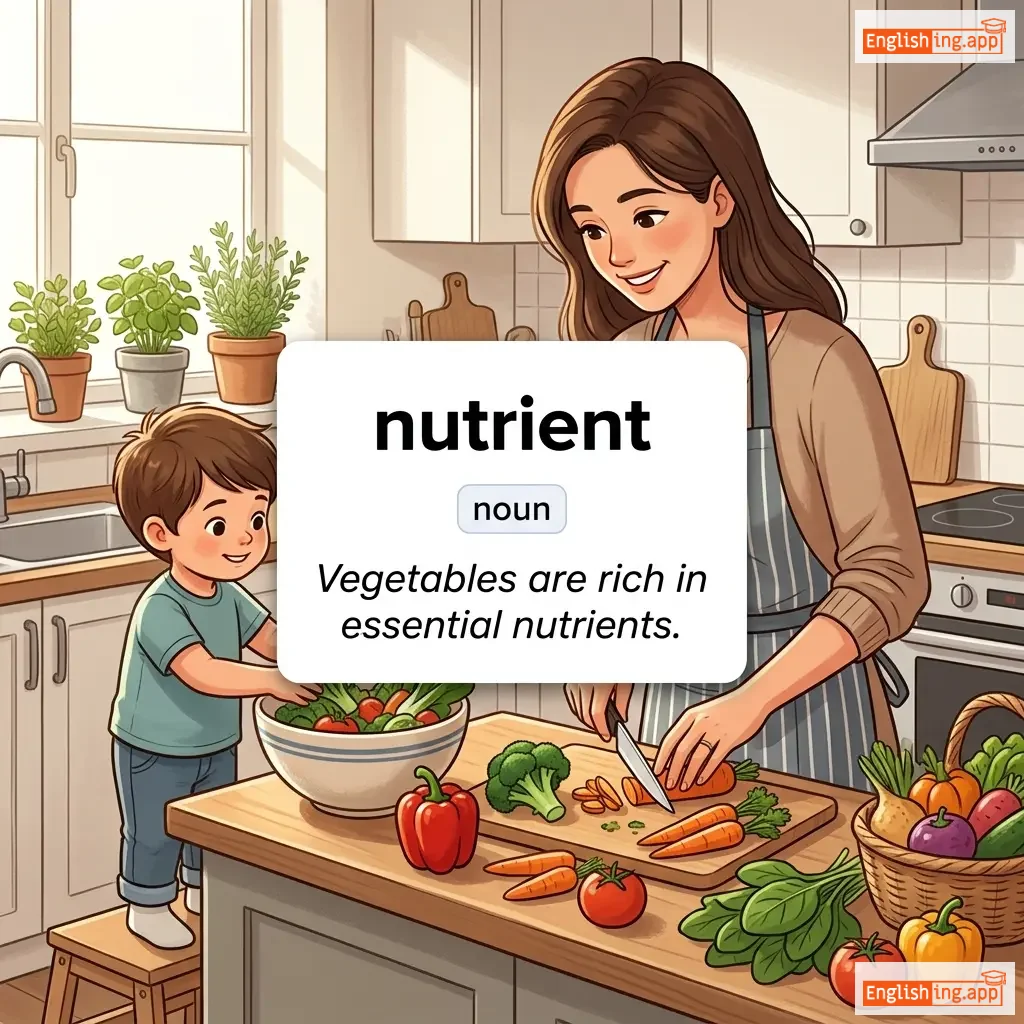
A substance that provides nourishment essential for growth and the maintenance of life.
••••••
|
Vegetables are rich in essential nutrients. |
野菜は重要な栄養素が豊富です。
Yasai wa juuyou na eiyouso ga houfu desu.
••••••
|
- •••••• | - •••••• | - •••••• |
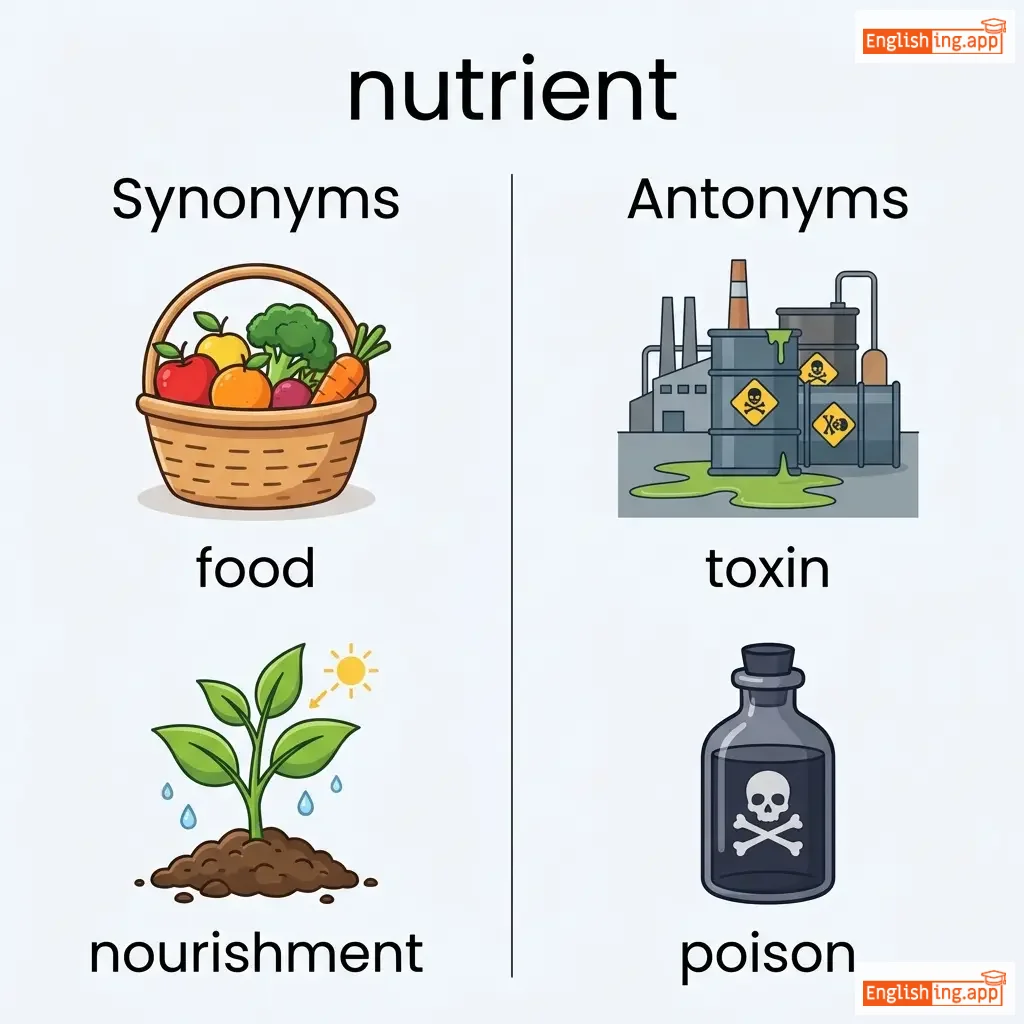
food, nourishment, sustenance, vitamin, mineral
••••••
|
toxin, poison
••••••
|
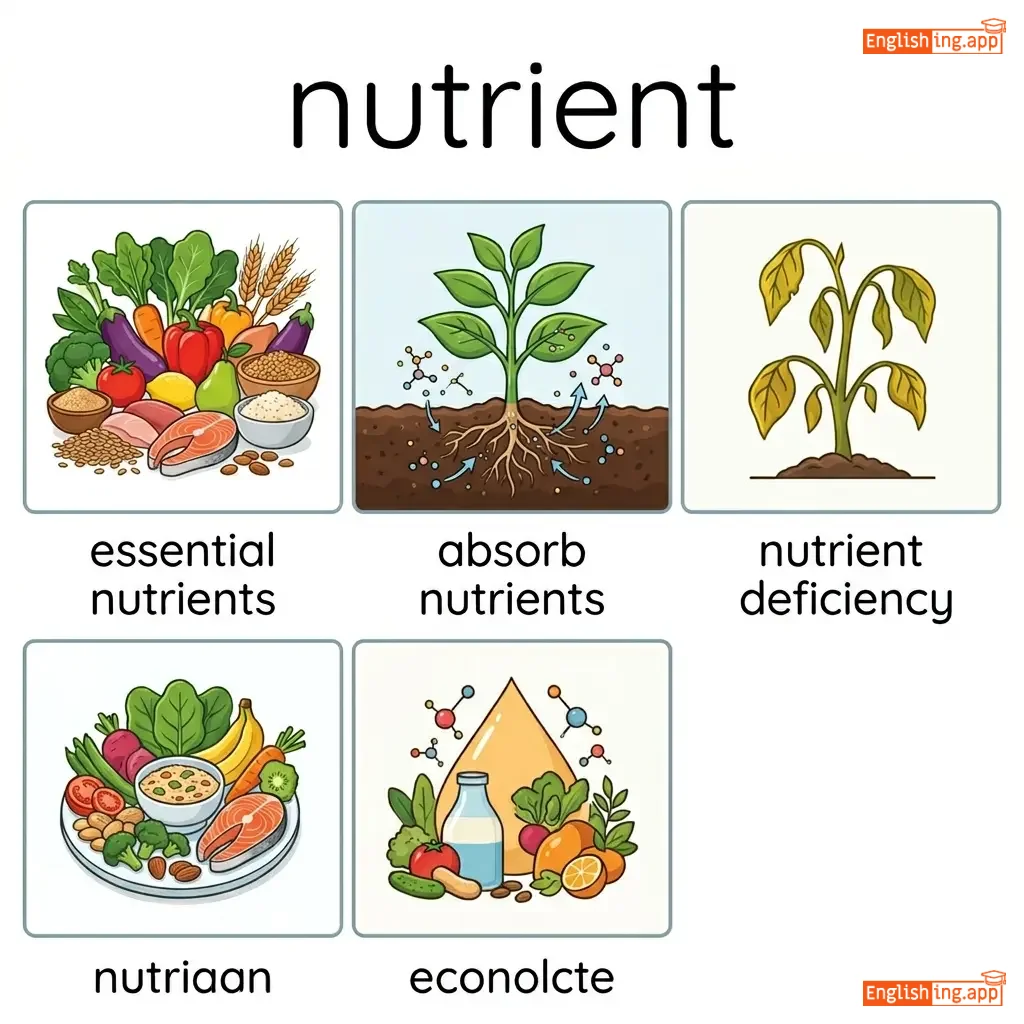
essential nutrients, absorb nutrients, nutrient deficiency, nutrient intake
••••••
|
NutriENT = Nutri + ENT (エンターテイメント), 食べ物に栄養素があれば、体は楽しむ。
••••••
|
|
🍎
••••••
|
/njuːˈtrɪʃ.ən/
noun
(ニュートリション)
••••••
|
- •••••• |
栄養
eiyou
••••••
|
- •••••• | - •••••• | - •••••• | - •••••• |
The process of providing or obtaining the food necessary for health and growth.
••••••
|
Good nutrition is vital for a healthy life. |
良い栄養は健康的な生活にとって重要です。
Yoi eiyou wa kenkou-teki na seikatsu ni totte juuyou desu.
••••••
|
balanced nutrition |
having the right proportions of nutrients in the diet
••••••
|
バランスの取れた栄養
Baransu no toreta eiyou
••••••
|
nourishment, sustenance, diet, feeding, dietetics
••••••
|
malnutrition, starvation
••••••
|
good nutrition, proper nutrition, nutrition plan, nutrition education
••••••
|
Nutrition = 栄養、体の健康に気をつけることから始めよう。
••••••
|
|
🥗
••••••
|
/njuːˈtrɪʃ.əs/
adjective
(ニュートリシャス)
••••••
|
- •••••• |
栄養価の高い
nyuutorishasu
••••••
|
- •••••• | - •••••• | - •••••• | - •••••• |
containing substances that help the body grow and stay healthy; nourishing
••••••
|
Eating nutritious food helps maintain good health.
栄養価の高い食べ物を摂ることは、健康を保つのに役立ちます。
••••••
|
栄養価の高い食べ物を摂ることは、健康を保つのに役立ちます。
Eiyouka no takai tabemono o toru koto wa kenkou o tamotsu no ni yakudachimasu
••••••
|
- •••••• | - •••••• | - •••••• |
healthy, nourishing, wholesome, beneficial
••••••
|
unhealthy, junk, harmful
••••••
|
nutritious food, nutritious diet, nutritious meal
••••••
|
New You To Ri Sha Su 栄養豊富な food を想像して覚える
••••••
|
|
🍔
••••••
|
/oʊˈbiːsəti/
noun
(オビシティ)
••••••
|

|
肥満
himan
••••••
|
- •••••• | - •••••• | - •••••• | - •••••• |
The condition of being very overweight, especially to a degree that it is harmful to health.
••••••
|
Obesity is a growing health problem in many countries. |
肥満は多くの国々で増加している健康問題です。
Himan wa ooku no kuniguni de zouka shiteiru kenkou mondai desu.
••••••
|
- •••••• | - •••••• | - •••••• |
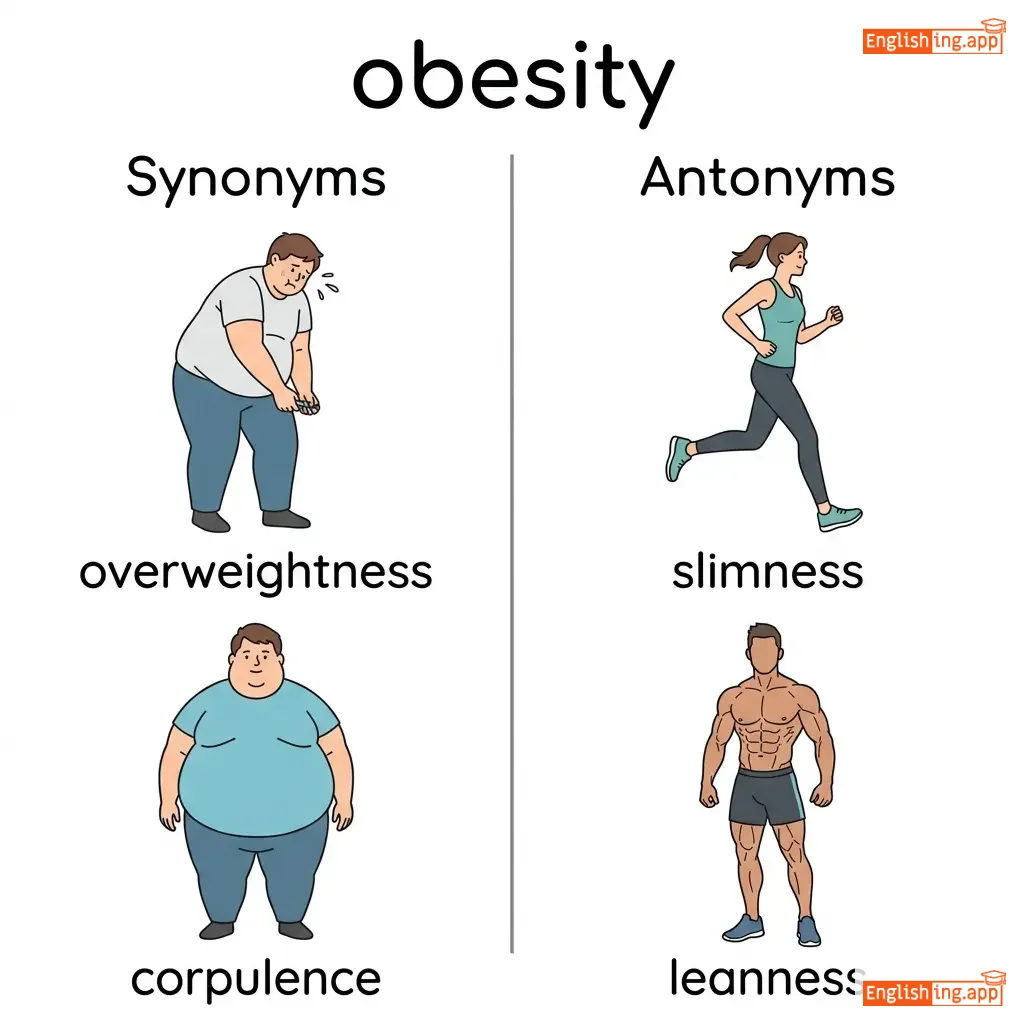
overweightness, corpulence, fatness, heaviness
••••••
|
slimness, leanness
••••••
|
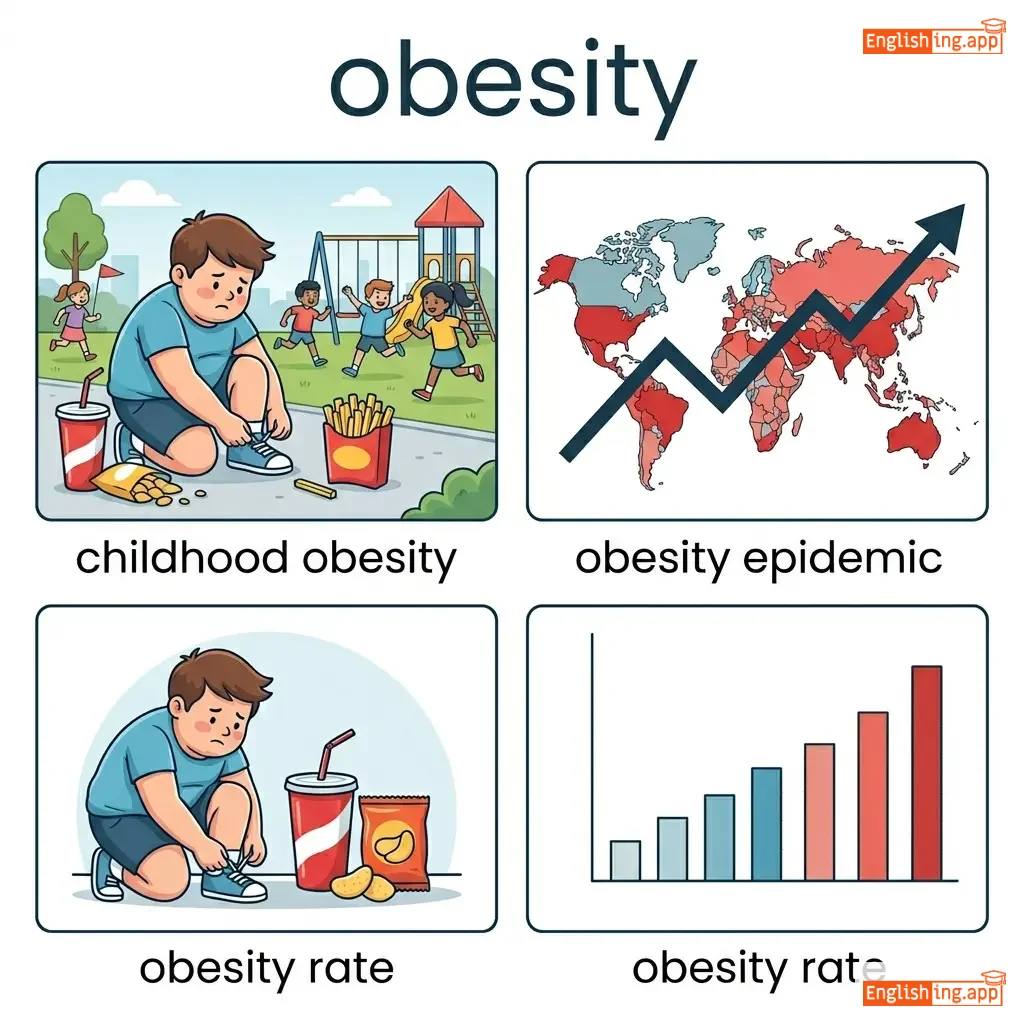
childhood obesity, obesity epidemic, obesity rate, obesity problem
••••••
|
Obesity = Obese + ity → Obeseは肥満を意味します。
••••••
|
|
📦
••••••
|
/ˈɒbdʒɪkt/
noun
(オブジェクト)
••••••
|
- •••••• |
物体
buttai
••••••
|
- •••••• | - •••••• | - •••••• | - •••••• |
a thing that can be seen and touched
••••••
|
The table is an object in the room.
テーブルは部屋の中のオブジェクトです。
••••••
|
テーブルは部屋の中の物体です。
Tēburu wa heya no naka no buttai desu.
••••••
|
- •••••• | - •••••• | - •••••• |
item, thing, article, entity
••••••
|
subject, person
••••••
|
inanimate object, physical object, move object, object to
••••••
|
物体は見ることができ、触れることができるものです。
••••••
|
|
✋
••••••
|
/əbˈdʒɛkʃən/
noun
(オブジェクション)
••••••
|
- •••••• |
異議
igi
••••••
|
- •••••• | - •••••• | - •••••• | - •••••• |
an expression or feeling of disapproval or opposition
••••••
|
The lawyer raised an objection during the trial.
弁護士は裁判中に異議を申し立てました。
••••••
|
弁護士は裁判中に異議を申し立てました。
Bengoshi wa saiban-chuu ni igi wo moushitatemashita.
••••••
|
raise an objection
異議を申し立てる
••••••
|
to express disapproval or disagreement formally
••••••
|
異議を申し立てる
igi wo moushateru
••••••
|
protest, complaint, opposition, dissent, disagreement
••••••
|
approval, consent, agreement
••••••
|
strong objection, raise an objection, legal objection, no objection, objection letter
••••••
|
Objection は異議の意味です — 裁判所で ‘異議あり!’ ✋ それは反対を意味します!
••••••
|
|
🎯
••••••
|
/əbˈdʒɛktɪv/
noun, adjective
(オブジェクティブ)
••••••
|
|
目標 / 客観的な
mokuhyou / kyakkanteki na
••••••
|
- •••••• | - •••••• | - •••••• | - •••••• |
As a noun: a goal or aim. As an adjective: not influenced by personal feelings; unbiased.
••••••
|
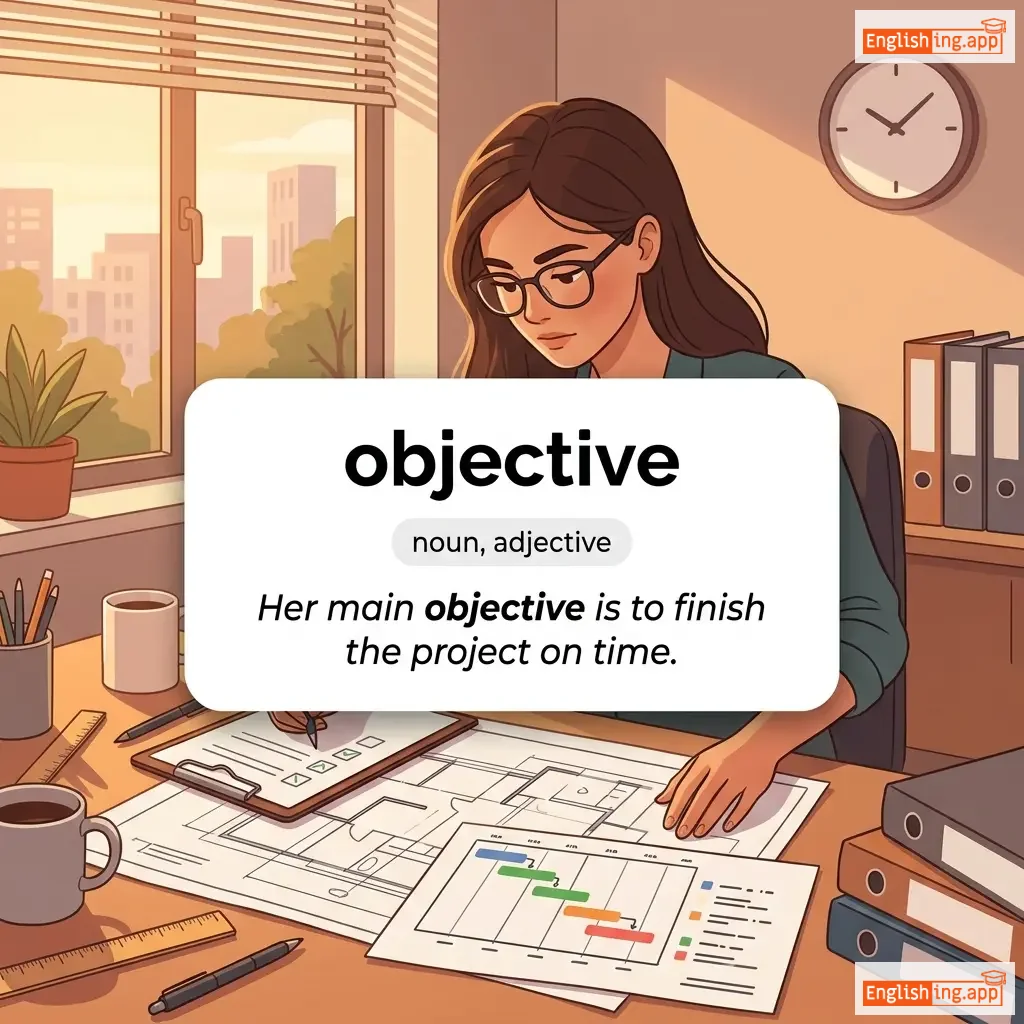
Her main objective is to finish the project on time. |
彼女の主な目標はプロジェクトを時間通りに終わらせることです。
Kanojo no omona mokuhyou wa purojekuto o jikan dōri ni owaraseru koto desu.
••••••
|
objective reality |
Reality that exists independent of personal feelings or opinions
••••••
|
客観的現実
kyakkanteki genjitsu
••••••
|
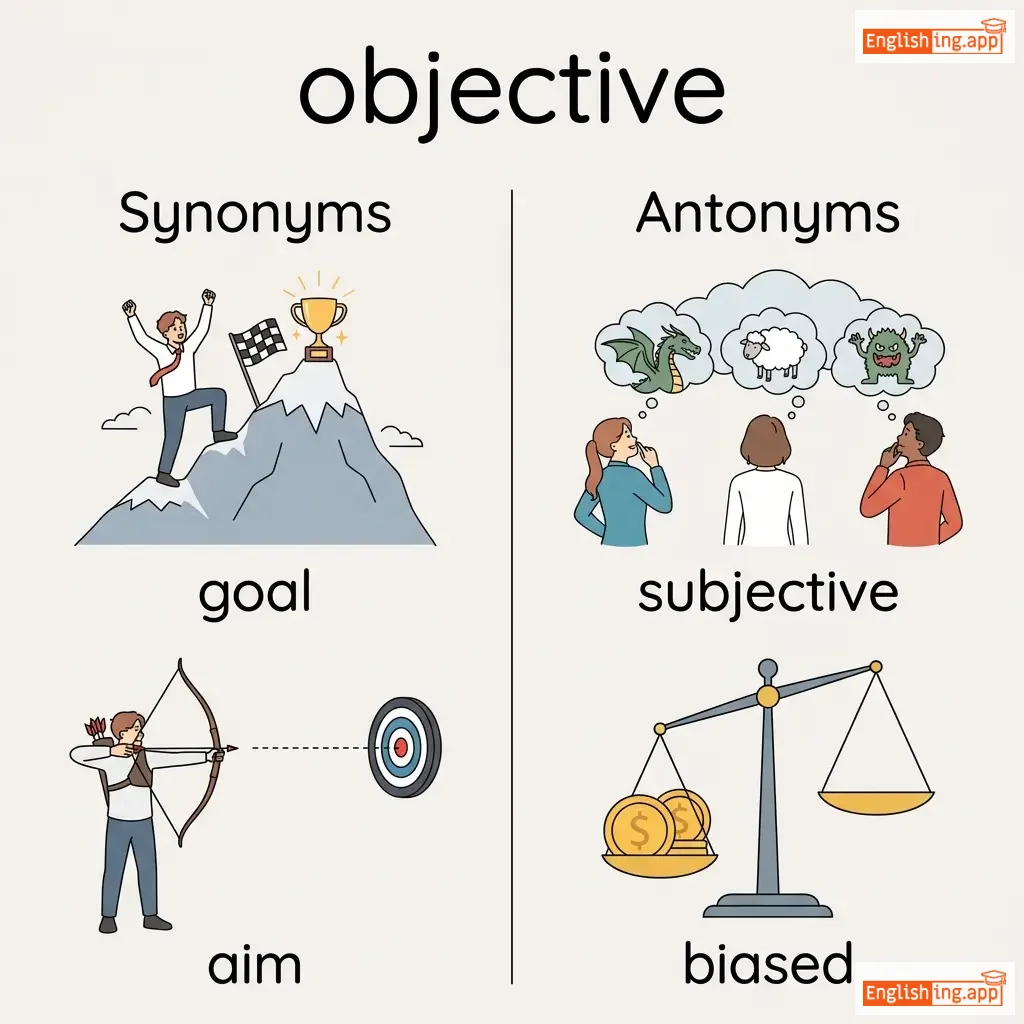
goal, aim, target, purpose, impartial
••••••
|
subjective, biased
••••••
|
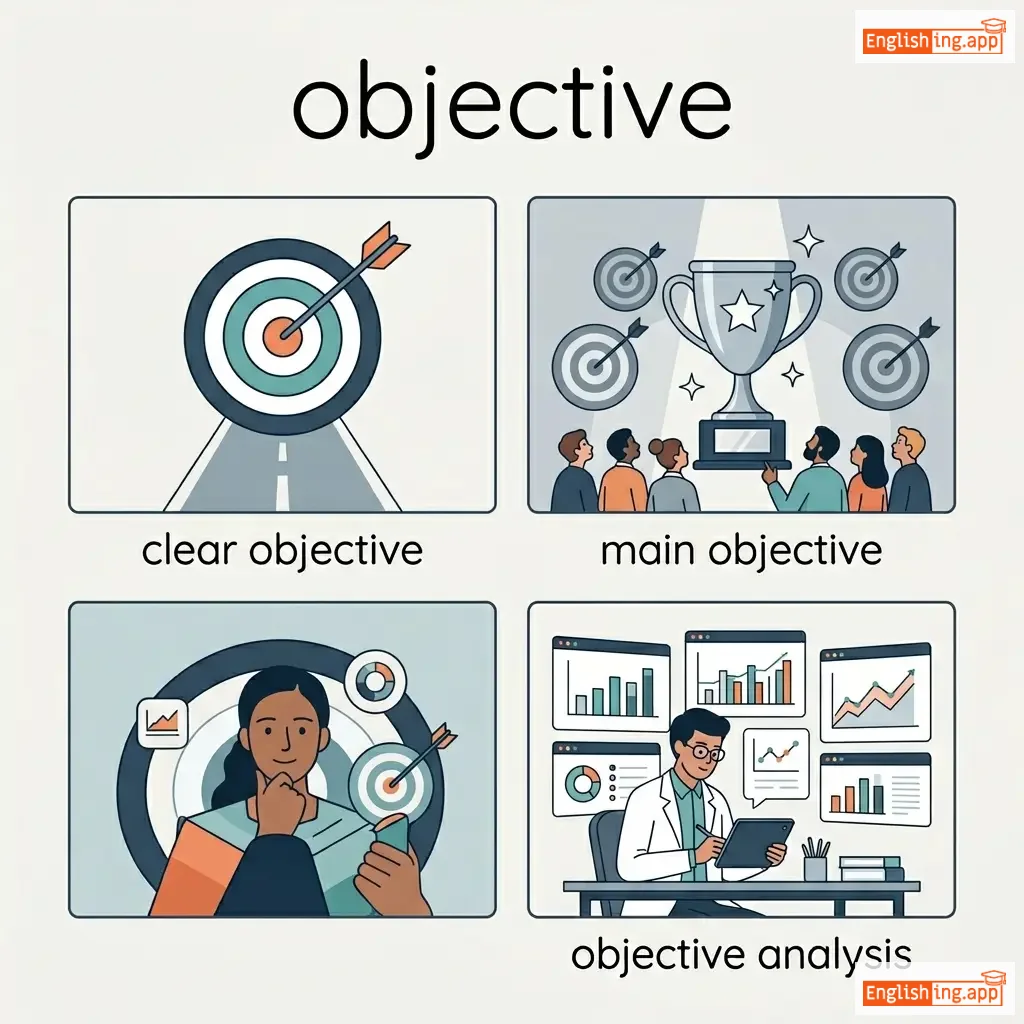
clear objective, main objective, objective analysis
••••••
|
Objective は 🎯 目標を意味する - まるで試験の選択問題のように、公正に答えなければならない。
••••••
|
|
📜
••••••
|
/ˈɑːblɪˌɡeɪt/
verb
(オブリゲート)
••••••
|
- •••••• |
強制する
kyousei suru
••••••
|
obligated
オブリゲイテッド
••••••
|
obligated
オブリゲイテッド
••••••
|
obligates
オブリゲイツ
••••••
|
obligating
オブリゲイティング
••••••
|
to bind legally or morally; to compel someone to do something
••••••
|
The contract obligates the company to provide timely service.
契約は会社にタイムリーなサービスを提供することを義務付けます。
••••••
|
契約は会社にタイムリーなサービスを提供することを義務付けます。
Keiyaku wa kaisha ni taimurī na sābisu o teikyō suru koto o gimu zukemasu.
••••••
|
- •••••• | - •••••• | - •••••• |
bind, compel, require, force
••••••
|
free, release, exempt
••••••
|
legally obligate, morally obligate, obligate by contract
••••••
|
Obligate は 'obligation' から来ており、誰かに何かをさせることを意味します。
••••••
|
|
📝
••••••
|
/ˌɑb.lɪˈɡeɪ.ʃən/
noun
(オブリゲーション)
••••••
|
- •••••• |
義務
gimu
••••••
|
- •••••• | - •••••• | - •••••• | - •••••• |
a duty or commitment; something that must be done legally or morally
••••••
|
Parents have an obligation to care for their children.
親は子供の世話をする義務がある。
••••••
|
親は子供の世話をする義務がある。
oya wa kodomo no sewa o suru gimu ga aru
••••••
|
- •••••• | - •••••• | - •••••• |
duty, responsibility, commitment, requirement
••••••
|
freedom, choice, option, liberty
••••••
|
legal obligation, moral obligation, meet obligation
••••••
|
親は子供の世話をすることが道徳的および法的義務です。
••••••
|
|
🤝
••••••
|
/əˈblaɪdʒ/
verb
(オブライジ)
••••••
|
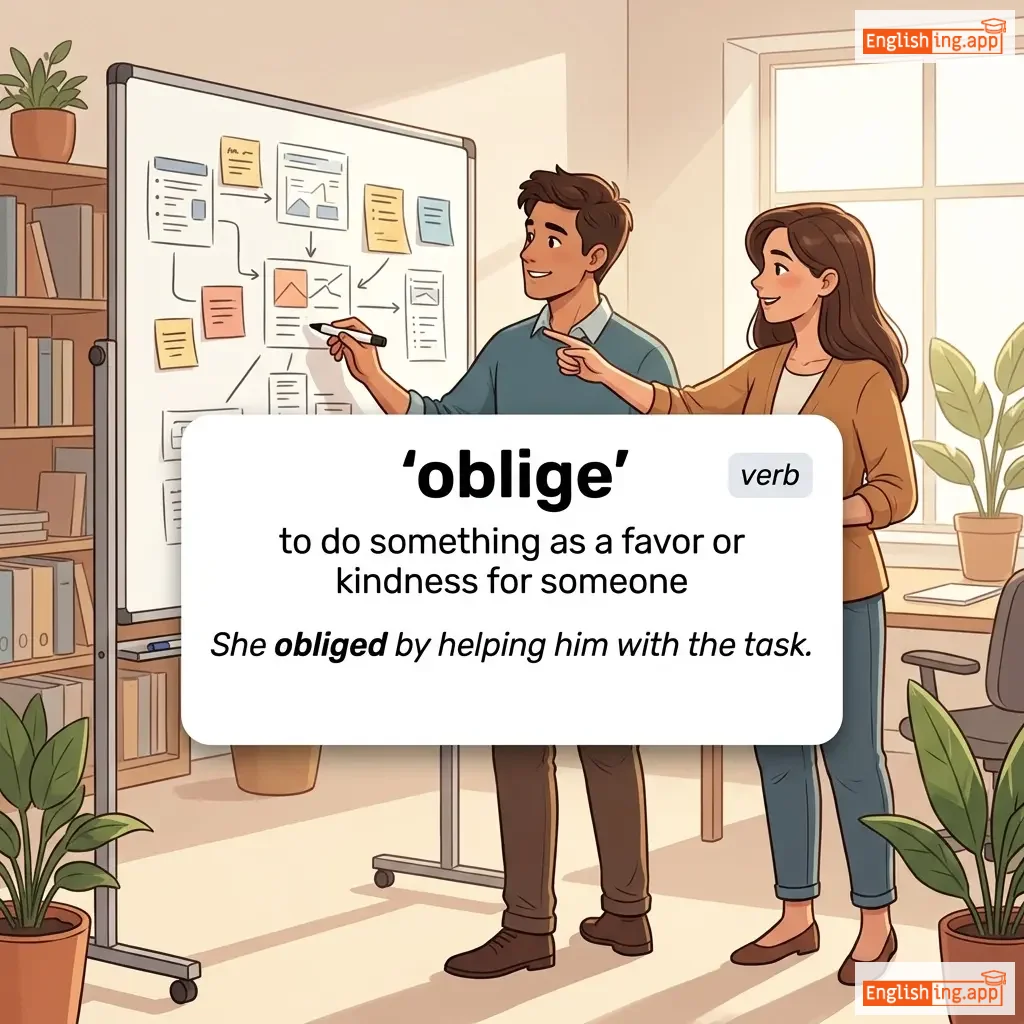
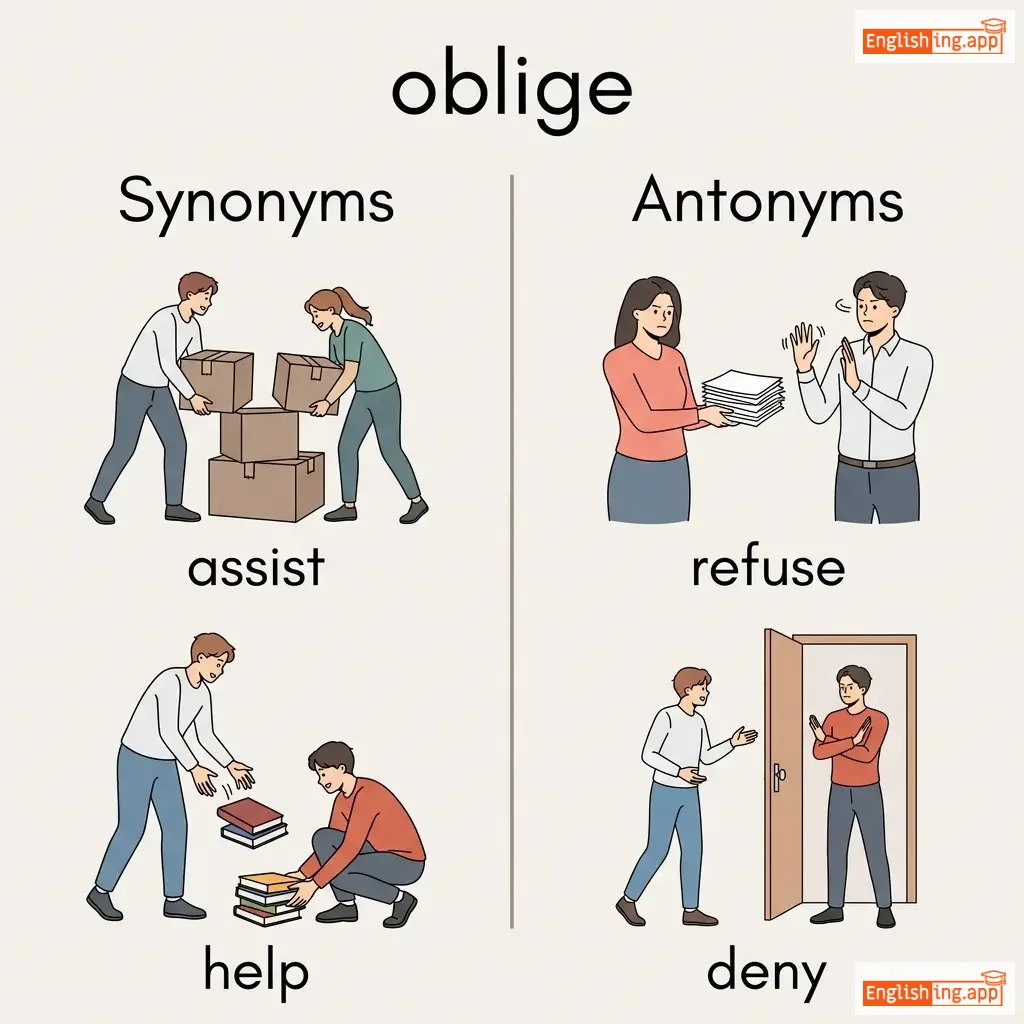
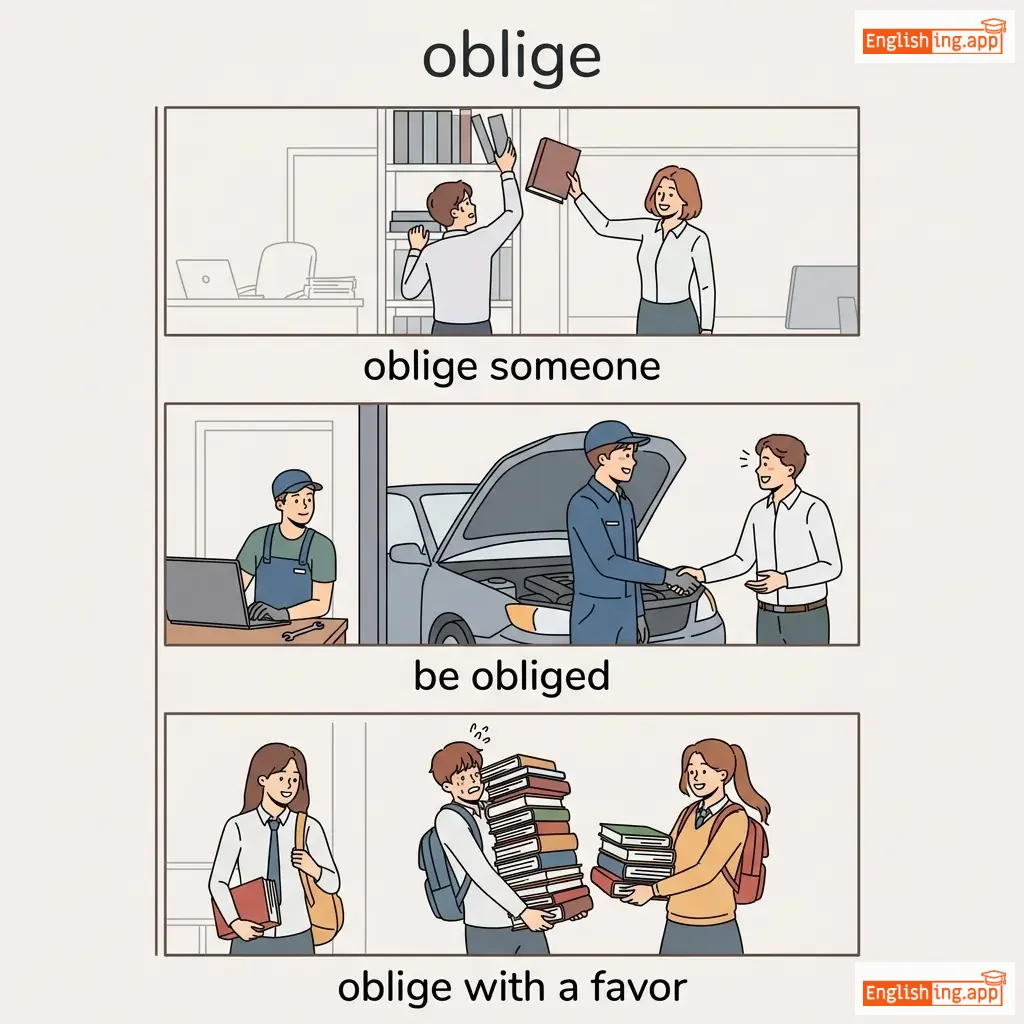
|
義務付ける
gimu zukeru
••••••
|
obliged
オブライジド
••••••
|
obliged
オブライジド
••••••
|
obliges
オブライジズ
••••••
|
obliging
オブライジング
••••••
|
to compel or require someone to do something; to help or do a favor
••••••
|
I would be happy to oblige you with the information you need.
アイ ウッド ビー ハッピー トゥ オブライジ ユー ウィズ ザ インフォメーション ユー ニード。
••••••
|
必要な情報を提供してお手伝いできれば嬉しいです。
Hitsuyou na jouhou o teikyou shite otetsudai dekireba ureshii desu.
••••••
|
- •••••• | - •••••• | - •••••• |
compel, require, help, assist
••••••
|
free, release, refuse, deny
••••••
|
happily oblige, oblige someone, oblige with, willing to oblige, greatly oblige, kindly oblige
••••••
|
‘Oblige’ feels like Japanese ‘gimu zukeru’ — both mean to be duty-bound to help.
••••••
|
|
👀
••••••
|
/ˌɑb.zɚˈveɪ.ʃən/
noun
(オブザーベーション)
••••••
|
- •••••• |
観察
kansatsu
••••••
|
- •••••• | - •••••• | - •••••• | - •••••• |
the action of watching something carefully; a comment or remark
••••••
|
The scientist made careful observations of the experiment.
科学者は実験を慎重に観察しました。
••••••
|
科学者は実験を慎重に観察しました。
Kagakusha wa jikken o shinchou ni kansatsu shimashita.
••••••
|
- •••••• | - •••••• | - •••••• |
watching, monitoring, examination, remark
••••••
|
ignorance, neglect, inattention, oversight
••••••
|
careful observation, direct observation, under observation
••••••
|
科学者は実験の観察を慎重に行います。
••••••
|
|
👀
••••••
|
/əbˈzɜːvər/
noun
(オブザーバー)
••••••
|
- •••••• |
観察者
kansatsusha
••••••
|
- •••••• | - •••••• | - •••••• | - •••••• |
a person who watches or notices something
••••••
|
The observer took notes during the meeting. |
観察者は会議中にメモを取った。
Kansatsusha wa kaigi chū ni memo o totta.
••••••
|
- •••••• | - •••••• | - •••••• |
spectator, watcher, viewer, onlooker
••••••
|
participant, actor
••••••
|
passive observer, keen observer, careful observer
••••••
|
Observer - ‘オブ’と‘サーバ’を組み合わせて、観察者が何かを見ていることを覚えやすい。
••••••
|
|
🌀
••••••
|
/əbˈsɛs/
verb
••••••
|
- •••••• | - •••••• |
obsessed
••••••
|
obsessed
••••••
|
obsesses
••••••
|
obsessing
••••••
|
To preoccupy or fill the mind of someone continually and to an excessive degree.
••••••
|
She tends to obsess over small details. |
- •••••• |
obsess over |
To think about something too much and not let go of it
••••••
|
- •••••• |
preoccupy, fixate, dwell, consume, dominate
••••••
|
ignore, neglect
••••••
|
obsess over, obsess with, obsess about, obsess constantly
••••••
|
No •••••• |
|
🔥
••••••
|
/əbˈsɛʃən/
noun
(オブセッション)
••••••
|
- •••••• |
執着
shūchaku
••••••
|
- •••••• | - •••••• | - •••••• | - •••••• |
An idea, thought, or concern that continually preoccupies or intrudes on a person's mind.
••••••
|
His obsession with success drove him to work day and night. |
成功への執着が彼を昼夜働かせた。
Seikou e no shūchaku ga kare o chūya hatarakaseta.
••••••
|
an obsession with |
Being overly concerned or preoccupied with something
••••••
|
への執着
e no shūchaku
••••••
|
fixation, preoccupation, compulsion, mania, craze
••••••
|
indifference, apathy
••••••
|
obsession with, obsession about, unhealthy obsession, lifelong obsession
••••••
|
執着とは、考えが頭を離れない状態のことです。
••••••
|
|
🚧
••••••
|
/ˈɒbstəkəl/
noun
(obusutakuru)
••••••
|
- •••••• |
障害
shōgai
••••••
|
- •••••• | - •••••• | - •••••• | - •••••• |
something that blocks your way or prevents progress
••••••
|
Lack of money was the main obstacle to his success. |
お金の不足は彼の成功への主要な障害でした。
okane no fusoku wa kare no seikō e no shuyō na shōgai deshita.
••••••
|
overcome an obstacle |
to deal with and successfully get past a problem or barrier
••••••
|
障害を克服する
shōgai o kokufuku suru
••••••
|
barrier, hurdle, hindrance, block, difficulty
••••••
|
aid, help, support
••••••
|
major obstacle, face an obstacle, overcome obstacle, obstacle course, create obstacle
••••••
|
障害 = 進行を妨げるもの 🚧
••••••
|
|
📜
••••••
|
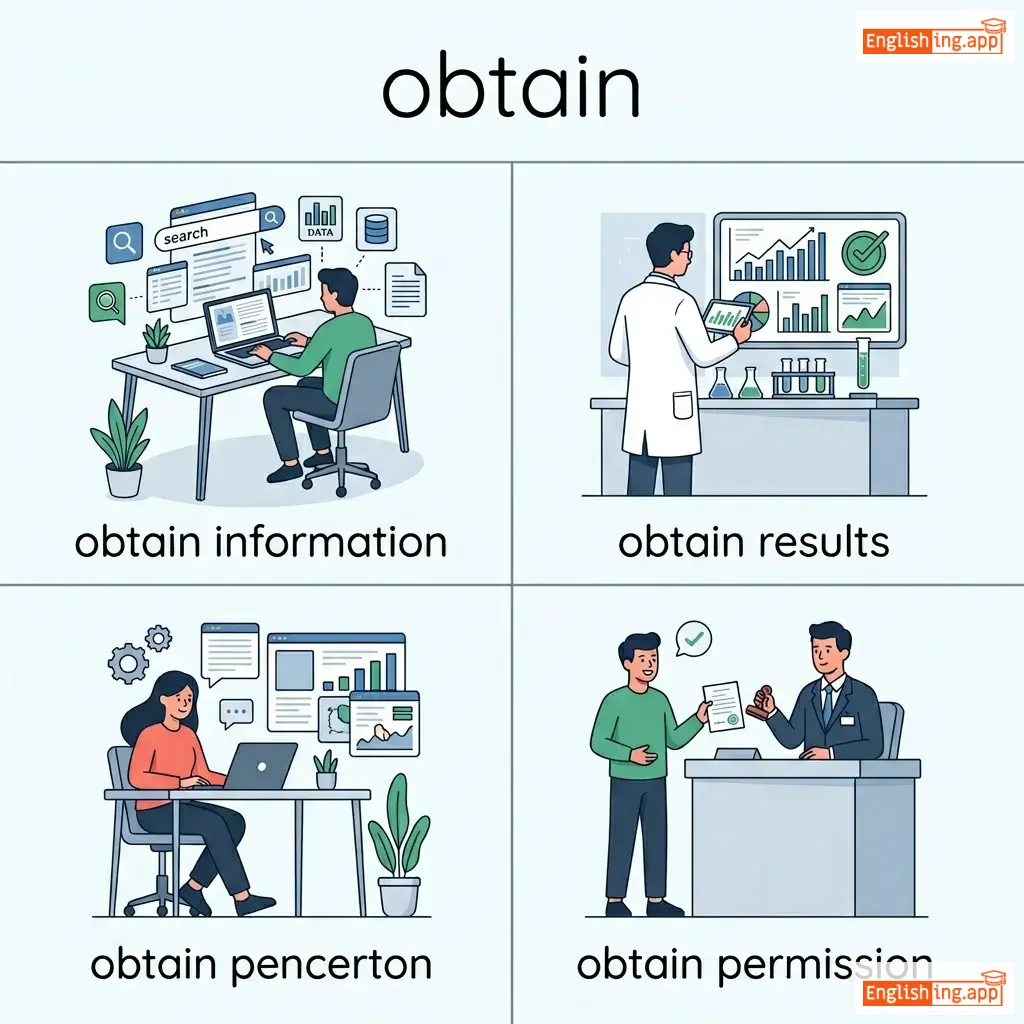
/əbˈteɪn/
verb
(オブテイン)
••••••
|

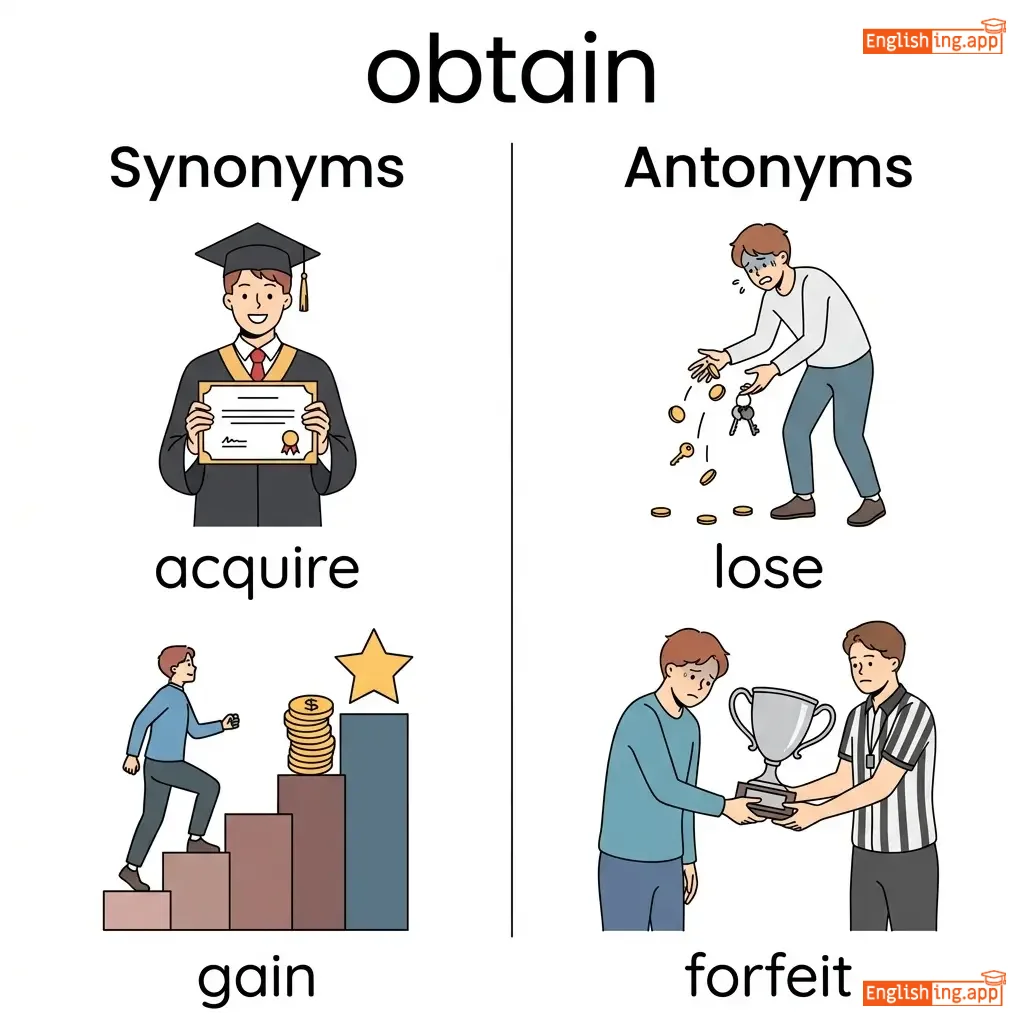
|
得る
eru
••••••
|
obtained
オブテインド
••••••
|
obtained
オブテインド
••••••
|
obtains
オブテインズ
••••••
|
obtaining
オブテイニング
••••••
|
to get, acquire, or secure something
••••••
|
She managed to obtain a scholarship for her studies.
彼女は学業のために奨学金を得ることができました。
••••••
|
彼女は学業のために奨学金を得ることができました。
Kanojo wa gakugyō no tame ni shōgakukin o eru koto ga dekimashita.
••••••
|
obtain permission
許可を得る
••••••
|
to get approval or consent to do something
••••••
|
許可を得る
kyoka o eru
••••••
|
acquire, gain, secure, procure, receive
••••••
|
lose, forfeit, give up
••••••
|
obtain information, obtain results, obtain permission
••••••
|
Obtain = OBTain = Obtaining (得る) something with effort
••••••
|
|
👀
••••••
|
/ˈɒb.vi.əs/
adjective
(オブヴィアス)
••••••
|
- •••••• |
明白
meihaku
••••••
|
- •••••• | - •••••• | - •••••• | - •••••• |
easily perceived or understood; clear and apparent
••••••
|
It was obvious that she was upset after the meeting. |
会議後、彼女が動揺していることは明白でした。
Kaigi go, kanojo ga douyou shiteiru koto wa meihaku deshita.
••••••
|
the obvious choice |
something that is the most evident or suitable option
••••••
|
明白な選択
meihaku na sentaku
••••••
|
clear, evident, apparent, noticeable, plain
••••••
|
hidden, unclear, obscure
••••••
|
obvious reason, obvious fact, obvious mistake, obvious difference
••••••
|
明白 = 明らか、簡単にわかる。
••••••
|
|
🙄
••••••
|
/ˈɒbviəsli/
adverb
(オブヴィアスリー)
••••••
|
- •••••• |
明らかに
akirakani
••••••
|
- •••••• | - •••••• | - •••••• | - •••••• |
in a way that is easily perceived or understood; clearly
••••••
|
Obviously, he didn’t read the instructions.
もちろん、彼は指示を読まなかった。
••••••
|
もちろん、彼は指示を読まなかった。
Mochiron, kare wa shiji o yomanakatta.
••••••
|
- •••••• | - •••••• | - •••••• |
clearly, evidently, unmistakably, plainly
••••••
|
ambiguously, unclearly
••••••
|
obviously wrong, obviously clear, obviously upset
••••••
|
明らかにわかりやすい!
••••••
|
|
🎉
••••••
|
/əˈkeɪʒən/
noun
(オケージョン)
••••••
|
- •••••• |
機会
kikai
••••••
|
- •••••• | - •••••• | - •••••• | - •••••• |
A particular time or event; a special or important happening.
••••••
|
Her wedding was a joyful occasion for the whole family. |
彼女の結婚式は家族全員にとって楽しい機会でした。
Kanojo no kekkonshiki wa kazoku zen'in ni totte tanoshī kikai deshita.
••••••
|
on occasion |
sometimes, occasionally
••••••
|
時々
tokidoki
••••••
|
event, moment, incident, celebration, affair
••••••
|
routine, ordinary, regularity
••••••
|
special occasion, on occasion, festive occasion, grand occasion
••••••
|
Occasionの意味は特別な機会 - 時々、特別な機会に大切なことが起こります。
••••••
|
|
🌦️
••••••
|
/əˈkeɪʒənəl/
adjective
(オケイジョナル)
••••••
|
- •••••• |
時々の
tokidoki no
••••••
|
- •••••• | - •••••• | - •••••• | - •••••• |
happening or done sometimes but not regularly or often
••••••
|
He makes occasional visits to his hometown. |
彼は時々故郷に訪れます。
Kare wa tokidoki furusato ni otozuremasu.
••••••
|
occasional table |
a small table used when needed
••••••
|
時々使うテーブル
tokidoki tsukau tēburu
••••••
|
infrequent, irregular, periodic, sporadic, intermittent
••••••
|
regular, constant, frequent
••••••
|
occasional visit, occasional rain, occasional use, occasional meeting
••••••
|
時々のように時々降る雨 – 時々だけ 🌧️
••••••
|
|
🔄⏰
••••••
|
/əˈkeɪʒənəli/
adverb
(オケイジョネリー)
••••••
|
- •••••• |
時々; たまに;
tokidoki; tamani
••••••
|
- •••••• | - •••••• | - •••••• | - •••••• |
sometimes; from time to time; not regularly
••••••
|
I occasionally visit my grandmother on weekends. |
私は時々週末に祖母を訪ねます。
Watashi wa tokidoki shūmatsu ni sobo o tazunemasu.
••••••
|
- •••••• | - •••••• | - •••••• |
sometimes, from time to time, periodically, sporadically
••••••
|
always, never, constantly, regularly
••••••
|
occasionally visit, occasionally happens, very occasionally
••••••
|
時々祖母を訪ねる
••••••
|
|
💼
••••••
|
/ˌɑk.jəˈpeɪ.ʃən/
noun
(オキュペーション)
••••••
|
- •••••• |
職業; 仕事; 占領
shokugyo; shigoto; senryo
••••••
|
- •••••• | - •••••• | - •••••• | - •••••• |
a job or profession; the action of taking control of a place
••••••
|
Teaching is her chosen occupation. |
教えることは彼女の選んだ職業です。
Oshieru koto wa kanojo no eranda shokugyo desu.
••••••
|
- •••••• | - •••••• | - •••••• |
profession, job, career, work
••••••
|
unemployment, leisure, vacation, freedom
••••••
|
full-time occupation, main occupation, military occupation
••••••
|
職業を選ぶことで幸福を見つけよう
••••••
|
|
🚫
••••••
|
/ˈɒkjʊpaɪd/
adjective; verb (past participle)
(オキュパイド)
••••••
|
- •••••• |
使用中の;占領された
shiyouchuu no; senryou sareta
••••••
|
occupied
オキュパイド
••••••
|
occupied
オキュパイド
••••••
|
occupies
オキュパイズ
••••••
|
occupying
オキュパイング
••••••
|
being in use or taken; filled or lived in; controlled or held by force
••••••
|
The room is occupied, so please wait outside.
ザ ルーム イズ オキュパイド、ソー プリーズ ウェイト アウトサイド。
••••••
|
その部屋は使用中なので、外で待ってください。
Sono heya wa shiyouchuu nanode, soto de matte kudasai
••••••
|
occupied territory
オキュパイド テリトリー
••••••
|
an area controlled by foreign or military forces
••••••
|
占領地
senryouchi
••••••
|
busy, taken, engaged, inhabited, seized
••••••
|
vacant, free, empty
••••••
|
occupied room, occupied seat, fully occupied, military occupied, occupied territory
••••••
|
Occupied=使用中—ドアに表示があれば入れない。
••••••
|
|
🏠
••••••
|
/ˈɒkjʊpaɪ/
verb
(オキュパイ)
••••••
|
|
占める / 占有する / 居住する
okyupai
••••••
|
occupied
オキュパイド
••••••
|
occupied
オキュパイド
••••••
|
occupies
オキュパイズ
••••••
|
occupying
オキュパイング
••••••
|
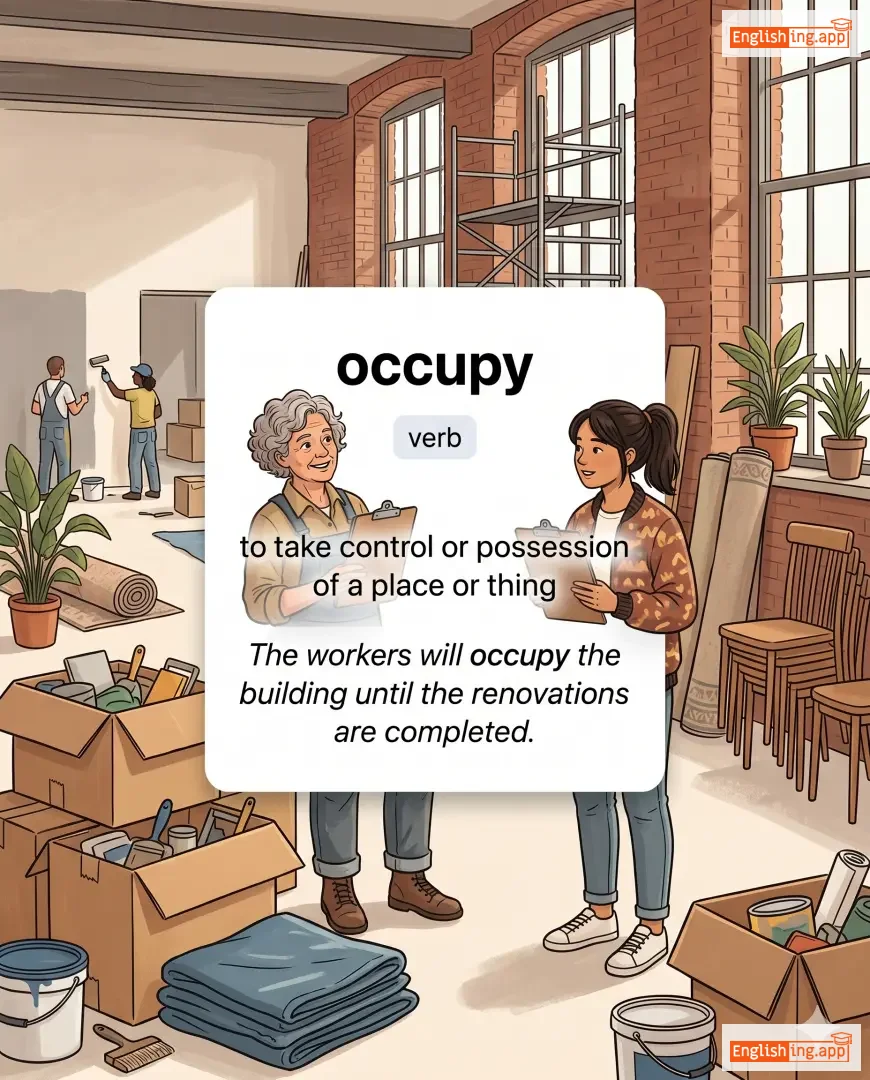
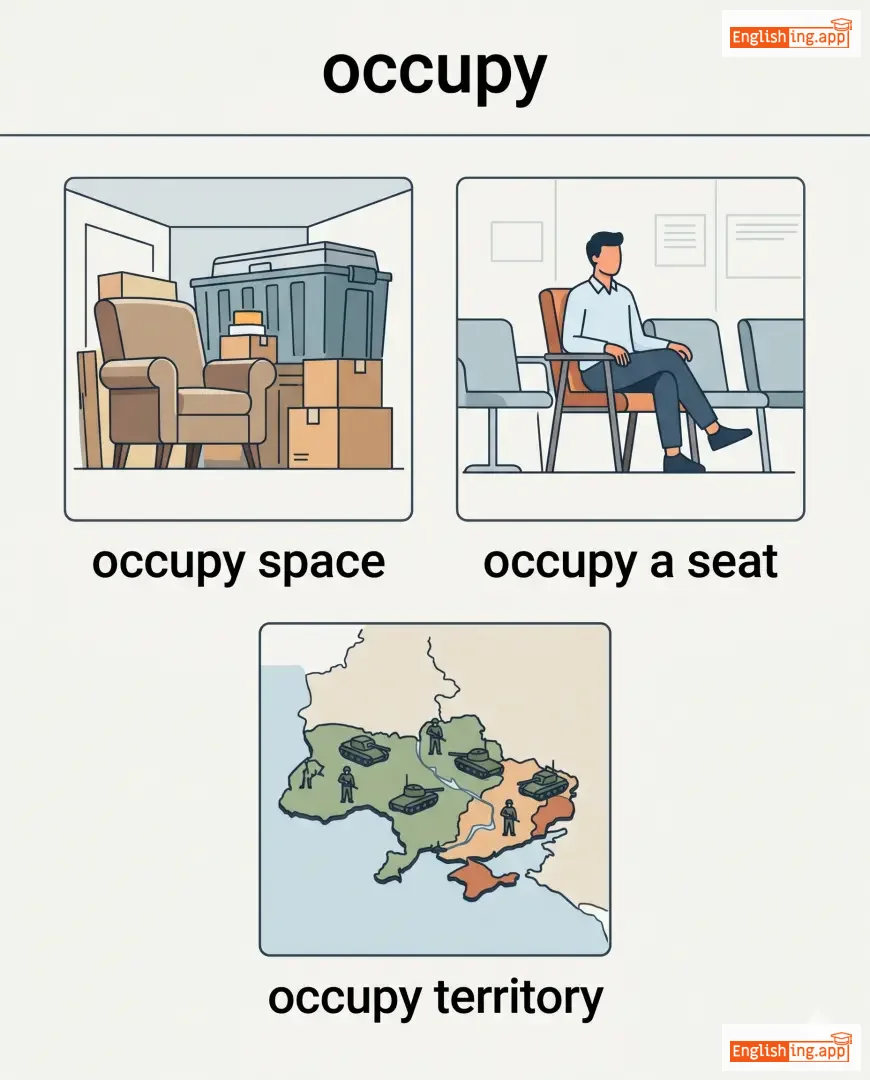
to take up space or time; to live or work in a place
••••••
|
The new family will occupy the house next month.
新しい家族は来月その家に入居する予定です。
••••••
|
新しい家族は来月その家に入居する予定です。
Atarashii kazoku wa raigetsu sono ie ni nyuukyo suru yotei desu.
••••••
|
- •••••• | - •••••• | - •••••• |
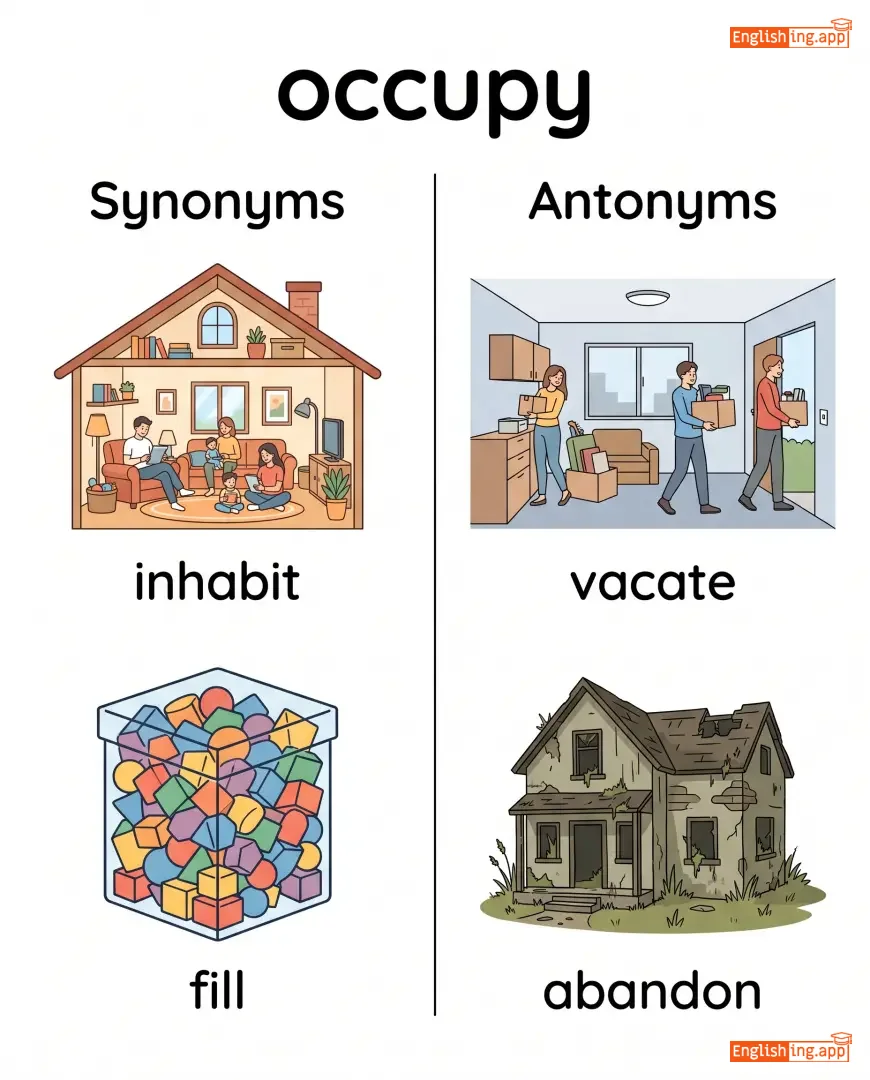
inhabit, reside, fill, take up
••••••
|
vacate, leave, abandon, evacuate
••••••
|
occupy space, occupy time, occupy position, occupy territory
••••••
|
oku-kyu-pai: imagine a cozy room where a pie fills the space, so you occupy it
••••••
|
|
⚡
••••••
|
/əˈkɜːr/
verb
(発生する)
••••••
|
|
発生する
hassuru
••••••
|
occurred
発生した
••••••
|
occurred
発生した
••••••
|
occurs
発生する
••••••
|
occurring
発生している
••••••
|
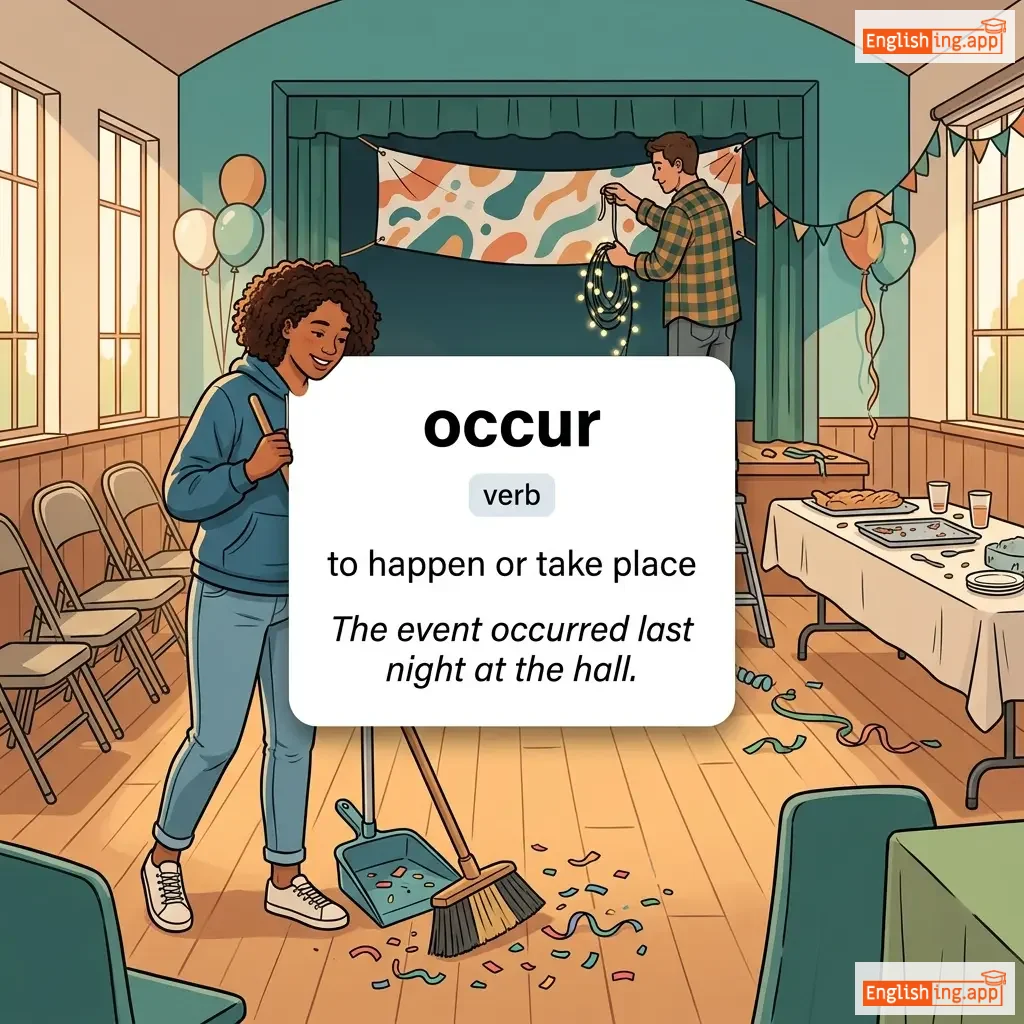
to happen or take place; to be found or present
••••••
|
The accident occurred at the intersection during rush hour.
事故はラッシュアワーの交差点で発生しました。
••••••
|
事故はラッシュアワーの交差点で発生しました。
Jiko wa rasshu awa no kōsaten de hassei shimashita.
••••••
|
- •••••• | - •••••• | - •••••• |
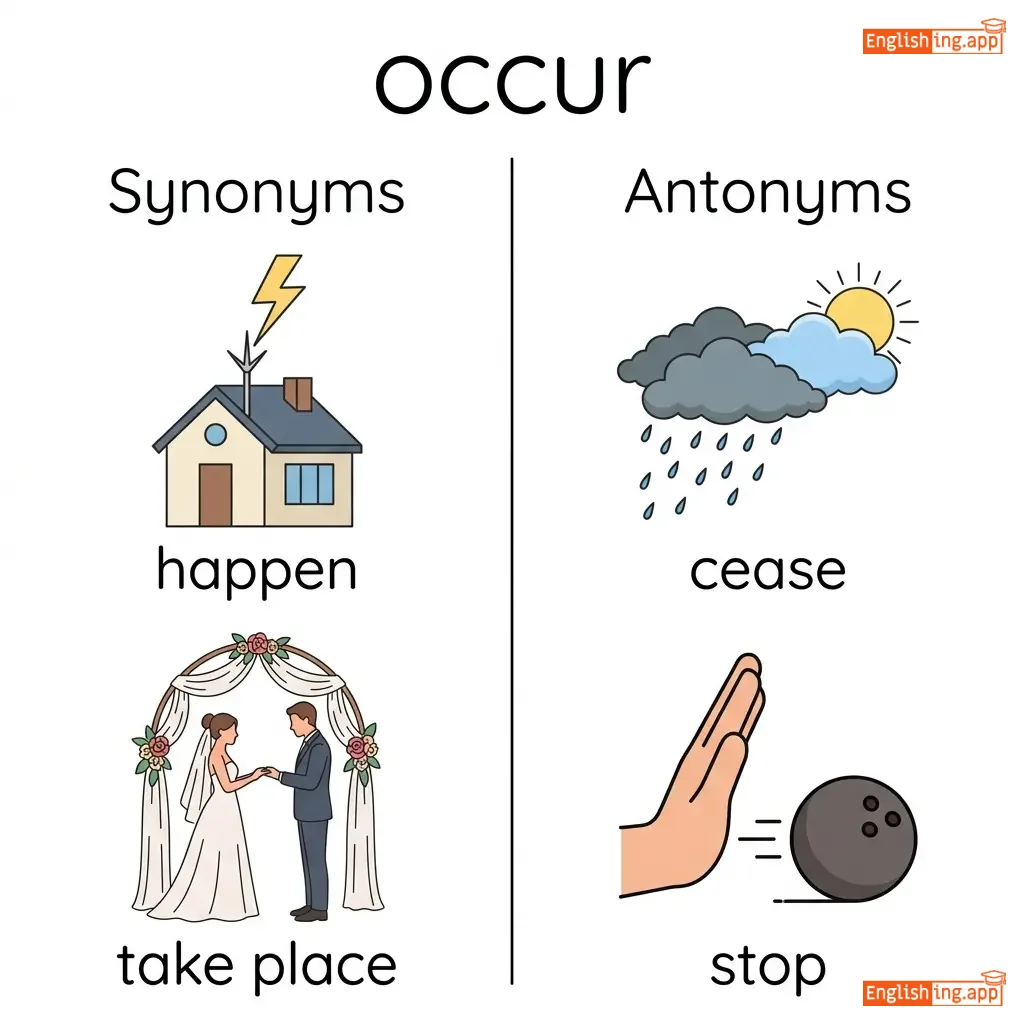
happen, take place, arise, transpire
••••••
|
prevent, avoid, cease, stop
••••••
|
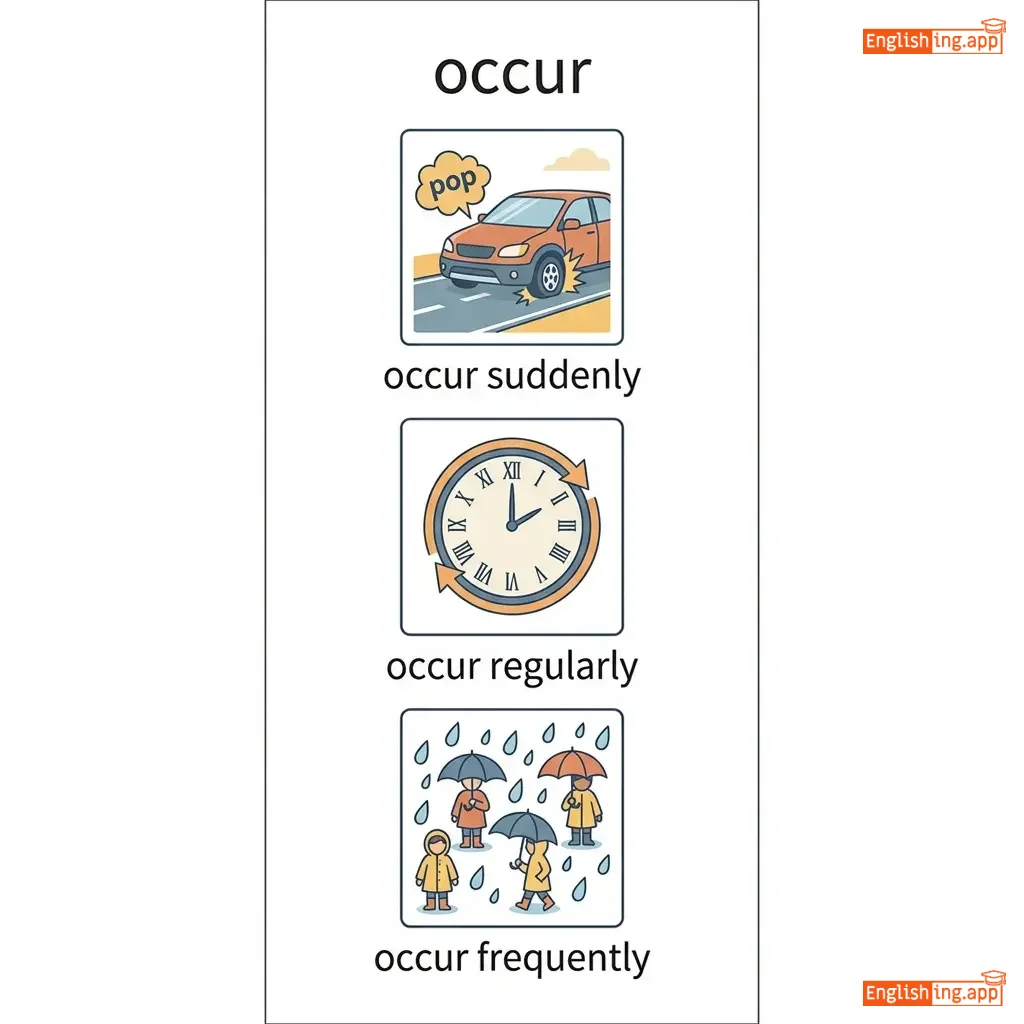
occur naturally, occur frequently, occur suddenly, rarely occur, occur simultaneously
••••••
|
発生するは、何かが突然起きることを示す言葉です。それが「発生」することです。
••••••
|
|
⚡
••••••
|
/əˈkɜr.əns/
noun
(okurensu)
••••••
|
- •••••• |
出来事
dekigoto
••••••
|
- •••••• | - •••••• | - •••••• | - •••••• |
an instance or event of something happening; the fact of occurring
••••••
|
The occurrence of earthquakes is common in this region. |
この地域では地震の出来事が一般的です。
Kono chiiki dewa jishin no dekigoto ga ippanteki desu.
••••••
|
- •••••• | - •••••• | - •••••• |
event, incident, happening, instance
••••••
|
absence, non-occurrence, prevention
••••••
|
rare occurrence, frequent occurrence, natural occurrence
••••••
|
出来事 (dekigoto) = occurrence
••••••
|
|
🌊
••••••
|
/ˈoʊ.ʃən/
noun
(オーシャン)
••••••
|
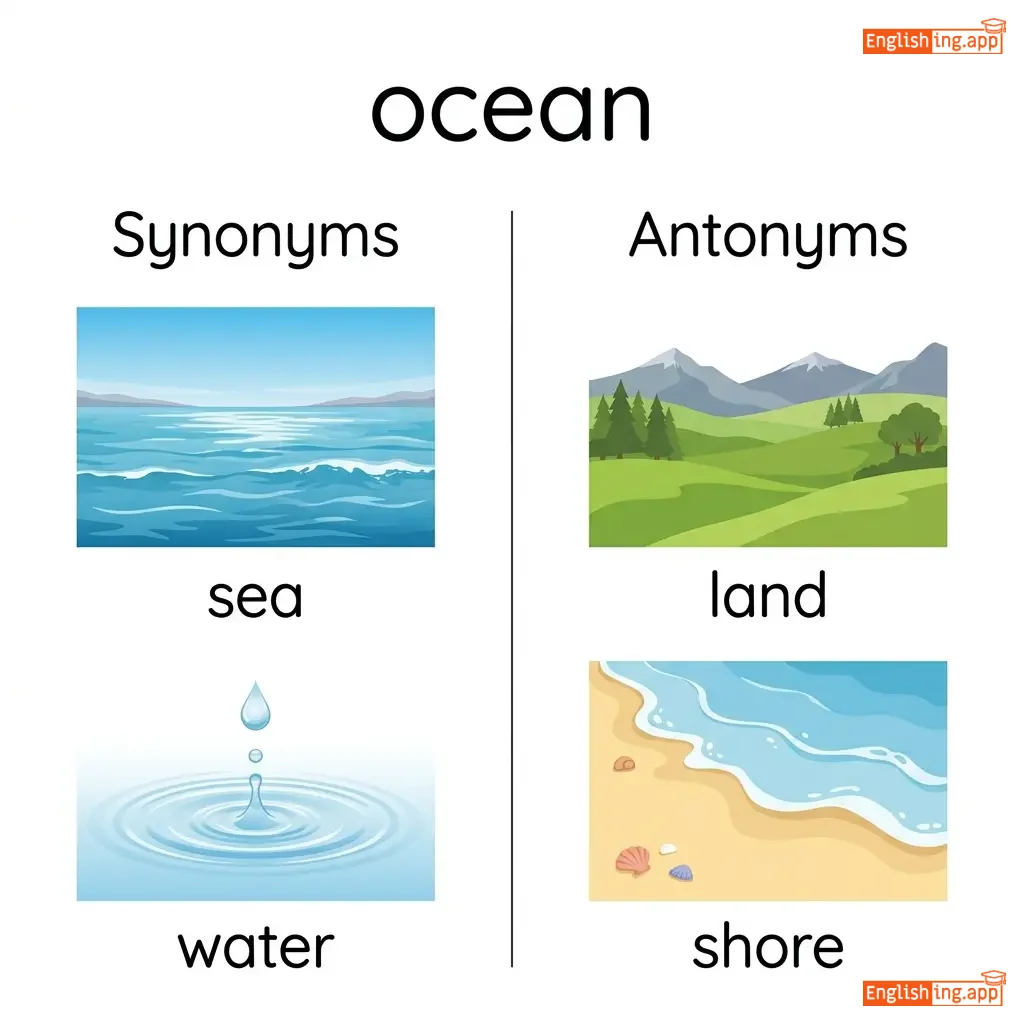
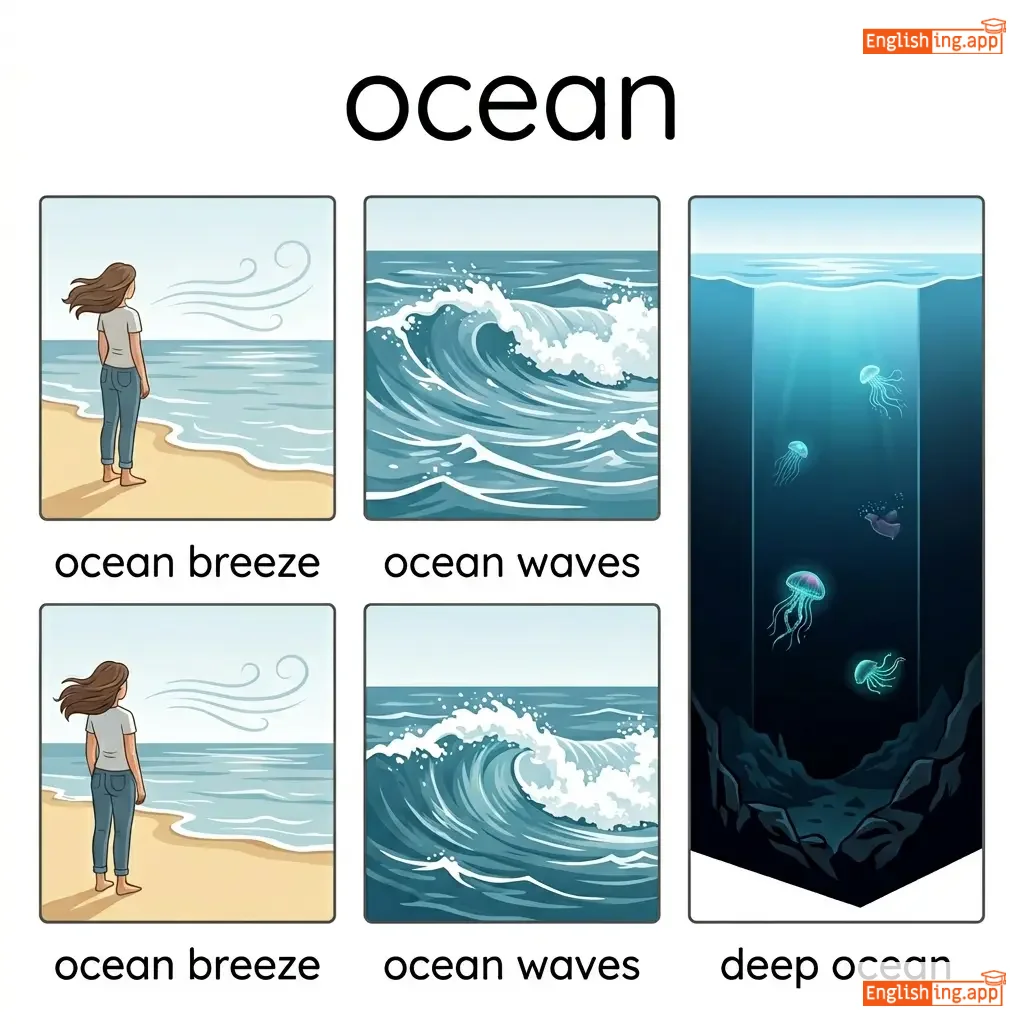
|
海洋
kaiyō
••••••
|
- •••••• | - •••••• | - •••••• | - •••••• |
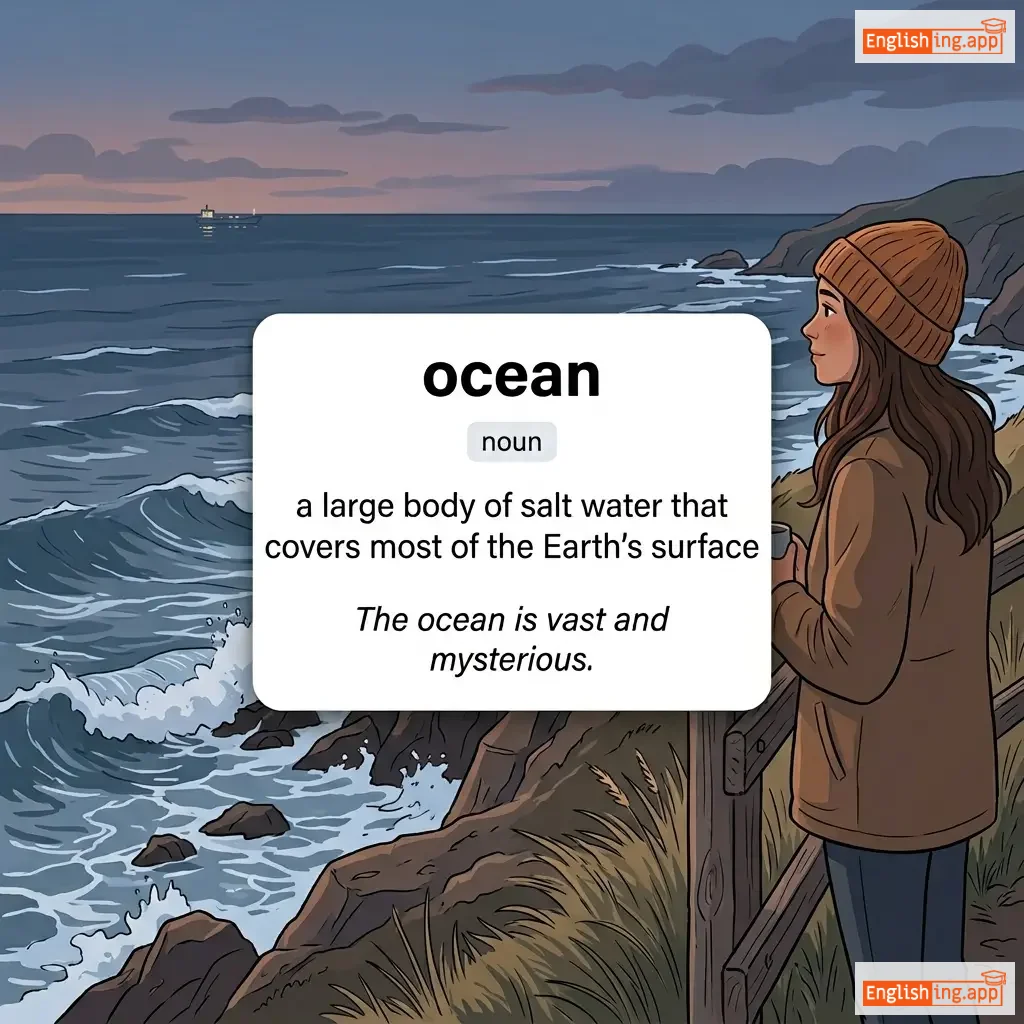
a very large expanse of sea; a large quantity of something
••••••
|
The Pacific Ocean is the largest ocean in the world.
太平洋は世界で最も大きな海洋です。
••••••
|
太平洋は世界で最も大きな海洋です。
Taiheiyō wa sekai de mottomo ōkina kaiyō desu.
••••••
|
- •••••• | - •••••• | - •••••• |
sea, marine, waters, deep
••••••
|
land, continent, desert, mountain
••••••
|
deep ocean, ocean floor, cross ocean
••••••
|
海洋の広がりは果てしない。
••••••
|
|
🍁
••••••
|
/ɒkˈtoʊbər/
noun
(オクトーバー)
••••••
|
- •••••• |
10月
juugatsu
••••••
|
- •••••• | - •••••• | - •••••• | - •••••• |
the tenth month of the year in the Gregorian calendar
••••••
|
The weather becomes cooler in October.
ザ ウェザー ビカムズ クーラー イン オクトーバー。
••••••
|
10月になると天気が涼しくなります。
juugatsu ni naru to tenki ga suzushiku narimasu
••••••
|
October Revolution
十月革命
••••••
|
the 1917 Russian revolution that led to the rise of the Soviet government
••••••
|
十月革命
juugatsu kakumei
••••••
|
tenth month, fall month, autumn month
••••••
|
april, may
••••••
|
early October, late October, October festival, October weather
••••••
|
October = オクトーバー、10月だから10を連想
••••••
|
|
🤔
••••••
|
/ɒd/
adjective
(オッド)
••••••
|
- •••••• |
奇妙
kimyou
••••••
|
- •••••• | - •••••• | - •••••• | - •••••• |
different from what is usual or expected; strange or peculiar
••••••
|
He has some odd habits that surprise everyone. |
彼は皆を驚かせる奇妙な習慣を持っています。
Kare wa mina wo odokaseru kimyou na shuukan wo motteimasu.
••••••
|
odd one out |
something or someone that is different from the rest
••••••
|
黒い羊
kuroi hitsuji
••••••
|
strange, unusual, peculiar, weird, irregular
••••••
|
normal, usual, regular
••••••
|
odd number, odd job, odd behavior, odd coincidence
••••••
|
Oddは奇妙を意味します (kimyou); Odd = 奇妙。
••••••
|
|
🤔
••••••
|
/ˈɒdli/
adverb
(オッドリー)
••••••
|
- •••••• |
奇妙に
kimyouni
••••••
|
- •••••• | - •••••• | - •••••• | - •••••• |
in a strange or unusual way; unexpectedly
••••••
|
Oddly, he didn’t seem upset by the bad news.
オッドリー、ヒー ディドゥント シーム アプセット バイ ザ バッド ニュース。
••••••
|
奇妙に、彼は悪い知らせにも動揺していなかった。
Kimyouni, kare wa warui shiraseni mo douyou shite inakatta
••••••
|
oddly enough
オッドリー イナフ
••••••
|
used to say that something is surprising or unexpected
••••••
|
不思議なことに
fushigi na koto ni
••••••
|
strangely, unusually, peculiarly, bizarrely
••••••
|
normally, typically, ordinarily
••••••
|
oddly enough, oddly shaped, oddly quiet, oddly familiar
••••••
|
Odd = 奇妙 → 奇妙に
••••••
|
|
🎲
••••••
|
/ɒdz/
noun
(オッズ)
••••••
|
- •••••• |
確率
kakuritsu
••••••
|
- •••••• | - •••••• | - •••••• | - •••••• |
the likelihood or probability of something happening; chances for or against something
••••••
|
The odds of winning the lottery are very low.
宝くじに当選する確率は非常に低いです。
••••••
|
宝くじに当選する確率は非常に低いです。
Takarakuji ni tousen suru kakuritsu wa hijou ni hikui desu.
••••••
|
against all odds
あらゆる困難を乗り越えて
••••••
|
succeeding despite great difficulties
••••••
|
すべての困難を乗り越えて
Subete no konnan o norikoete
••••••
|
chances, probability, likelihood, prospects, possibility
••••••
|
certainty, inevitability
••••••
|
long odds, betting odds, odds are, against all odds
••••••
|
オッズは確率を意味します—宝くじのオッズは常に低いです。
••••••
|
|
🔗
••••••
|
/ʌv/
preposition
(オブ)
••••••
|
- •••••• |
の
no
••••••
|
- •••••• | - •••••• | - •••••• | - •••••• |
expressing the relationship between a part and a whole
••••••
|
The book is on the table, in front of the window. |
本はテーブルの上にあり、窓の前にあります。
Hon wa tēburu no ue ni ari, mado no mae ni arimasu.
••••••
|
- •••••• | - •••••• | - •••••• |
from, about, concerning
••••••
|
none
••••••
|
part of, full of, kind of, out of
••••••
|
Of は日本語では「の」と訳され、部分と全体の関係を示す
••••••
|
|
⏹️
••••••
|
/ɔːf/
adverb
(オフ)
••••••
|
- •••••• |
オフ
ofu
••••••
|
- •••••• | - •••••• | - •••••• | - •••••• |
away from a place, position, or time; not functioning
••••••
|
He turned off the light before leaving the room. |
彼は部屋を出る前に電気をオフにしました。
Kare wa heya wo deru mae ni denki wo ofu ni shimashita.
••••••
|
off the record |
something said privately and not intended for publication
••••••
|
オフ・ザ・レコード
ofu za rekodo
••••••
|
away, removed, disconnected, distant
••••••
|
on, connected, attached
••••••
|
turn off, switch off, go off, keep off
••••••
|
オフは、光を消すように、すべてが暗くなることを意味します。
••••••
|
|
⚠️
••••••
|
/əˈfens/
noun
(オフェンス)
••••••
|
- •••••• |
違反; 犯罪
ihan; hanzai
••••••
|
- •••••• | - •••••• | - •••••• | - •••••• |
a breach of law or rule; an annoyance or resentment
••••••
|
Stealing is a serious offence punishable by law. |
窃盗は法律で罰せられる重大な違反です。
Settō wa hōritsu de bassareru jūdaina ihan desu.
••••••
|
- •••••• | - •••••• | - •••••• |
crime, violation, wrongdoing, transgression
••••••
|
compliance, obedience, lawfulness, virtue
••••••
|
criminal offence, minor offence, commit offence
••••••
|
‘Offence’ in Japanese sounds like ‘ihan’, which is related to legal violation.
••••••
|
|
😠
••••••
|
/əˈfɛnd/
verb
(オフェンド)
••••••
|
- •••••• |
侮辱する
bujoku suru
••••••
|
offended
オフェンデッド
••••••
|
offended
オフェンデッド
••••••
|
offends
オフェンズ
••••••
|
offending
オフェンディング
••••••
|
to cause someone to feel upset, insulted, or annoyed
••••••
|
She didn’t mean to offend anyone with her remarks.
彼女は自分のコメントで誰かを怒らせるつもりはなかった。
••••••
|
彼女は自分のコメントで誰かを怒らせるつもりはなかった。
Kanojo wa jibun no komento de dareka o okoraseru tsumori wa nakatta.
••••••
|
take offense
不快に思う
••••••
|
to feel insulted or hurt
••••••
|
不快に思う
fukai ni omou
••••••
|
insult, upset, irritate, annoy, disrespect
••••••
|
please, satisfy, comfort
••••••
|
offend someone, deeply offend, intentionally offend, offend against
••••••
|
侮辱すると心が痛む。
••••••
|
|
🚔
••••••
|
/əˈfɛndər/
noun
(オフェンダー)
••••••
|
- •••••• |
犯罪者
hanzai-sha
••••••
|
- •••••• | - •••••• | - •••••• | - •••••• |
a person who commits a crime or does something wrong
••••••
|
The police caught the offender quickly. |
警察はすぐに犯罪者を捕まえました。
Keisatsu wa sugu ni hanzai-sha o tsukamaemashita.
••••••
|
repeat offender |
a person who commits the same crime more than once
••••••
|
常習犯
jōshū-han
••••••
|
criminal, culprit, wrongdoer, lawbreaker, transgressor
••••••
|
victim, innocent
••••••
|
first-time offender, repeat offender, serious offender, juvenile offender
••••••
|
Offenderは犯罪者、法を破る人👮
••••••
|
|
😠
••••••
|
/əˈfɛnsɪv/
adjective
(オフェンシブ)
••••••
|
- •••••• |
攻撃的
kougekiteki
••••••
|
- •••••• | - •••••• | - •••••• | - •••••• |
Causing hurt, anger, or annoyance; also relating to attacking in sports or war.
••••••
|
His offensive remarks upset everyone at the meeting. |
彼の攻撃的な発言は、会議にいた全員を不快にさせました。
Kare no kougekiteki na hatsugen wa, kaigi ni ita zen'in o fukai ni sasemashita.
••••••
|
take offense |
To feel hurt or insulted by something said or done.
••••••
|
気を悪くする
Ki o warukusuru
••••••
|
insulting, rude, disrespectful, abusive
••••••
|
polite, respectful, pleasant
••••••
|
offensive remark, offensive language, offensive strategy, take offense
••••••
|
Offensiveは攻撃的-攻撃的な発言。
••••••
|
|
🤲
••••••
|
/ˈɔːfər/
verb
(オファー)
••••••
|

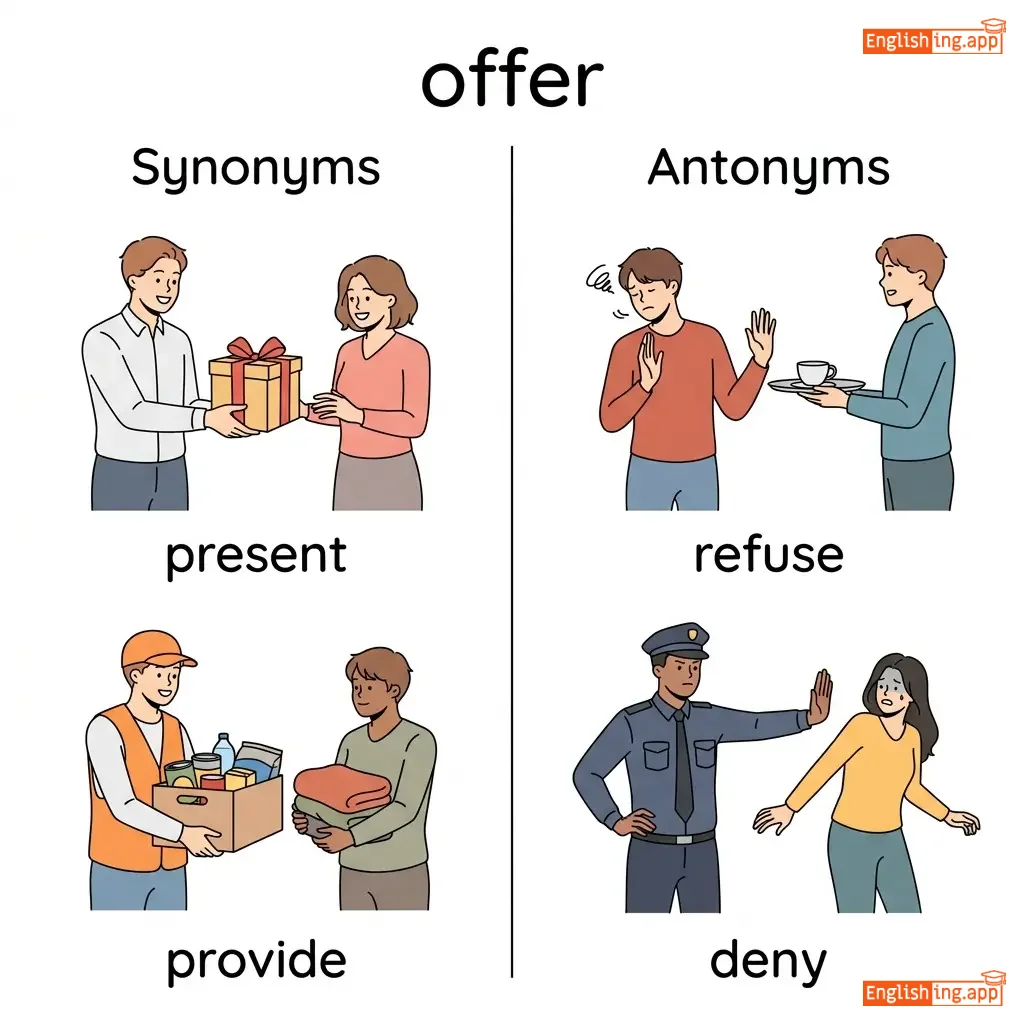
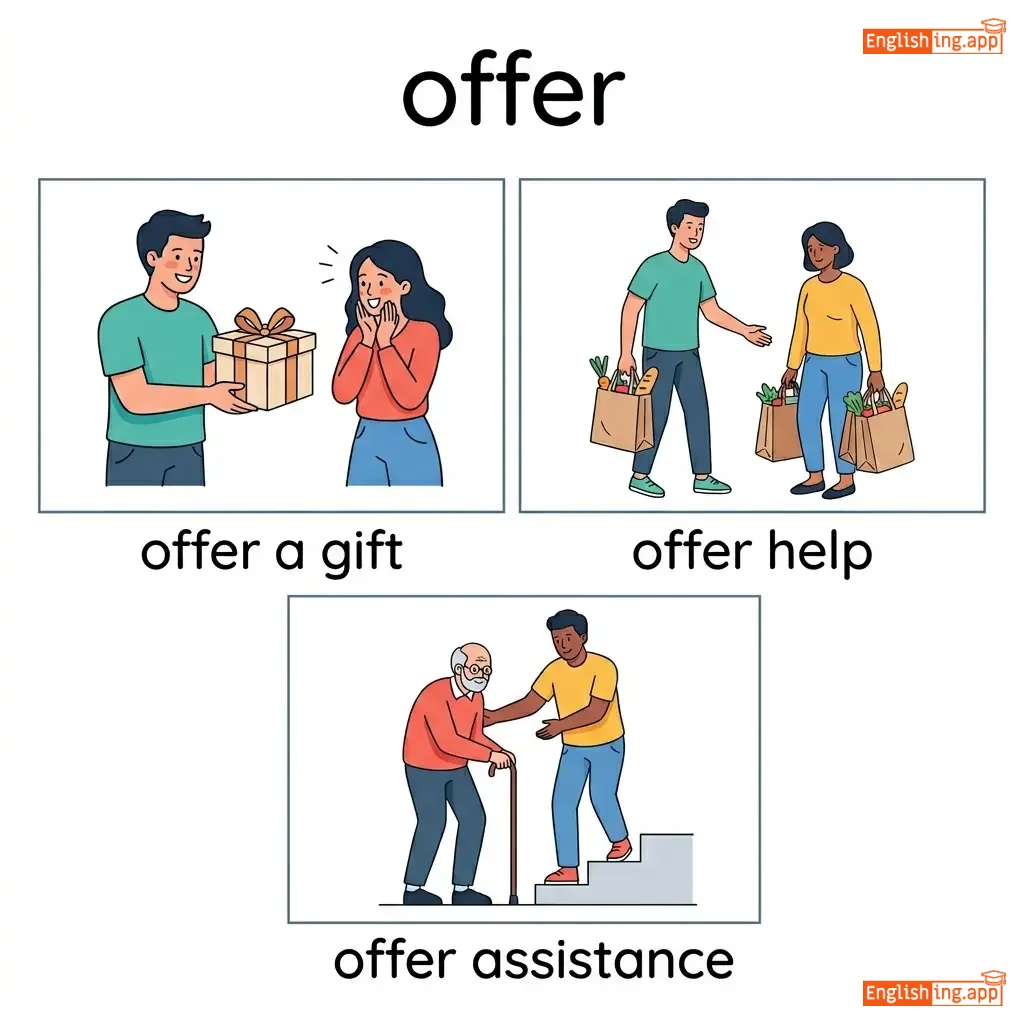
|
申し出る
moshideru
••••••
|
offered
オファード
••••••
|
offered
オファード
••••••
|
offers
オファーズ
••••••
|
offering
オファーリング
••••••
|
to present something for acceptance or rejection; to propose
••••••
|
She offered to help with the project.
シー オファード トゥ ヘルプ ウィズ ザ プロジェクト。
••••••
|
彼女はプロジェクトを手伝うと申し出た。
kanojo wa purojekuto o tetsudau to moshideta
••••••
|
- •••••• | - •••••• | - •••••• |
propose, present, provide, suggest
••••••
|
withdraw, refuse, deny, withhold
••••••
|
offer help, offer advice, offer support, make an offer, generous offer
••••••
|
Offer = オファー (ofaa) — same sound, means to make a proposal or offer help.
••••••
|
|
🎁
••••••
|
/ˈɒfərɪŋ/
noun
(オファリング)
••••••
|
- •••••• |
オファリング
ofaringu
••••••
|
- •••••• | - •••••• | - •••••• | - •••••• |
something that is given, especially as a gift or contribution
••••••
|
The company’s latest offering is an eco-friendly car.
会社の最新のオファリングは、エコフレンドリーな車です。
••••••
|
会社の最新のオファリングは、エコフレンドリーな車です。
Kaisha no saishin no ofaringu wa, ekofurendorī na kuruma desu.
••••••
|
peace offering
平和の贈り物
••••••
|
something given to show a desire for peace or reconciliation
••••••
|
平和の贈り物
heiwa no okurimono
••••••
|
gift, contribution, donation, present, sacrifice
••••••
|
refusal, withdrawal
••••••
|
make an offering, religious offering, peace offering, product offering
••••••
|
Offering は何かを提供すること、例えば提案や平和の贈り物
••••••
|
|
🏢
••••••
|
/ˈɒf.ɪs/
noun
(オフィス)
••••••
|
- •••••• |
オフィス
ofisu
••••••
|
- •••••• | - •••••• | - •••••• | - •••••• |
a room or building where people work, usually at desks
••••••
|
She left the office early to attend a family event.
彼女は家族のイベントに出席するために早くオフィスを出ました。
••••••
|
彼女は家族のイベントに出席するために早くオフィスを出ました。
Kanojo wa kazoku no ibento ni shusseki suru tame ni hayaku ofisu wo demashita.
••••••
|
hold office
役職に就く
••••••
|
to be in a position of authority or responsibility
••••••
|
役職に就く
yakushoku ni tsuku
••••••
|
workplace, bureau, department, agency, company
••••••
|
home, outdoors
••••••
|
office building, office hours, office desk, office staff
••••••
|
オフィスは仕事の場所;オフィスで人々はいつも働きます。
••••••
|
|
👮
••••••
|
/ˈɔːfɪsər/
noun
(オフィサー)
••••••
|
- •••••• |
警官
keikan
••••••
|
- •••••• | - •••••• | - •••••• | - •••••• |
a person in a position of authority, especially in law enforcement
••••••
|
The officer gave him a ticket for speeding. |
警官はスピード違反で彼にチケットを渡した。
Keikan wa supīdo ihan de kare ni chiketto o watashita.
••••••
|
- •••••• | - •••••• | - •••••• |
agent, constable, policeman, lawman
••••••
|
civilian, criminal
••••••
|
police officer, military officer, security officer
••••••
|
警官, まるで警察官 - 権力を持つ人
••••••
|
|
📜
••••••
|
/əˈfɪʃəl/
adjective
(オフィシャル)
••••••
|
- •••••• |
公式
kōshiki
••••••
|
- •••••• | - •••••• | - •••••• | - •••••• |
relating to or connected with an authority or public office
••••••
|
He is the official spokesperson for the company.
彼は会社の公式なスポークスマンです。
••••••
|
彼は会社の公式なスポークスマンです。
Kare wa kaisha no kōshiki na supōkusuman desu.
••••••
|
- •••••• | - •••••• | - •••••• |
authorized, formal, legitimate, recognized
••••••
|
unofficial, informal, unofficial
••••••
|
official statement, official announcement, official document, official role
••••••
|
公式(kōshiki)は常に権限を持つ人物に関連している。
••••••
|
|
👶
••••••
|
/ˈɒf.sprɪŋ/
noun
(オフスプリング)
••••••
|
- •••••• |
子孫
shison
••••••
|
- •••••• | - •••••• | - •••••• | - •••••• |
a person's child or children; an animal's young
••••••
|
The bird carefully fed its offspring.
その鳥は注意深く自分の子孫に餌を与えました。
••••••
|
その鳥は注意深く自分の子孫に餌を与えました。
Sono tori wa chūi bukaku jibun no shison ni esa o ataemashita.
••••••
|
- •••••• | - •••••• | - •••••• |
children, progeny, descendants, young
••••••
|
parent, ancestor
••••••
|
human offspring, animal offspring, produce offspring, healthy offspring
••••••
|
Offspring = 'off' (外) + 'spring' (春) → 新しい生命の始まり → 子孫
••••••
|
|
🔁
••••••
|
/ˈɔːfən/
adverb
(オフテン)
••••••
|
- •••••• |
しばしば
shibashiba
••••••
|
- •••••• | - •••••• | - •••••• | - •••••• |
frequently, many times
••••••
|
I often visit my grandparents on weekends.
私は週末にしばしば祖父母を訪れます。
••••••
|
私は週末にしばしば祖父母を訪れます。
Watashi wa shūmatsu ni shibashiba sofubo o otozuremasu.
••••••
|
- •••••• | - •••••• | - •••••• |
frequently, regularly, repeatedly, commonly
••••••
|
rarely, seldom, never
••••••
|
often visit, often see, often talk, often hear
••••••
|
オフィスでしばしば (often) 会議があります。
••••••
|
|
😮
••••••
|
/oʊ/
interjection
(オー)
••••••
|
- •••••• |
オー
oo
••••••
|
- •••••• | - •••••• | - •••••• | - •••••• |
used to express surprise, realization, or understanding
••••••
|
Oh, I didn't know you were here! |
オー、あなたがここにいるとは思わなかった!
Oo, anata ga koko ni iru to wa omowanakatta!
••••••
|
- •••••• | - •••••• | - •••••• |
wow, ah, oh my, oops
••••••
|
- •••••• |
oh no, oh wow, oh my, oh dear
••••••
|
オー、びっくり!(Oh, what a surprise!)
••••••
|
|
🛢️
••••••
|
/ɔɪl/
noun
(ハピネス)
••••••
|
- •••••• |
油
abura
••••••
|
- •••••• | - •••••• | - •••••• | - •••••• |
a viscous liquid derived from petroleum or plants, used for cooking or fuel
••••••
|
Heat the oil in a pan before adding the vegetables. |
野菜を加える前にフライパンで油を温めます。
Yasai o kuwaeru mae ni furaipan de abura o atatamemasu.
••••••
|
- •••••• | - •••••• | - •••••• |
fat, grease
••••••
|
water
••••••
|
cooking oil, olive oil, vegetable oil, oil pan
••••••
|
油 (abura) means oil in Japanese – perfect for stir-fry cooking!
••••••
|

