Получите неограниченный доступ ко всем словам с подпиской Pro
Обновить до ProПолучите неограниченный доступ ко всем предложениям с подпиской Pro
Обновить до Pro|
Эмодзи
|
Слово | Images | Перевод | Прошедшее | Причастие прошедшего времени | Третье лицо единственного числа | Герундий | Значение | Пример предложения | Перевод примера предложения | Пример выражения | Значение примера выражения | Перевод примера выражения | Синонимы | Антонимы | Коллокации | Мнемоника |
|---|---|---|---|---|---|---|---|---|---|---|---|---|---|---|---|---|---|
|
🥜
••••••
|
/nʌt/
noun
(нэт)
••••••
|
- •••••• |
орех
orekh
••••••
|
- •••••• | - •••••• | - •••••• | - •••••• |
a hard-shelled fruit that contains a seed, or a small metal piece used in machinery
••••••
|
She ate a peanut, which is a type of nut. |
Она съела арахис, который является видом ореха.
Ona syela arakhis, kotoryy yavyayetsya vidom oreha.
••••••
|
- •••••• | - •••••• | - •••••• |
seed, kernel, shell
••••••
|
fruit, vegetable
••••••
|
eat nuts, nut shell, nutcracker
••••••
|
Nut is like an orekh, tough on the outside but satisfying when cracked!
••••••
|
|
🥦
••••••
|
/ˈnjuː.tri.ənt/
noun
(нютриент)
••••••
|

|
питательное вещество
pitatel'noe veshchestvo
••••••
|
- •••••• | - •••••• | - •••••• | - •••••• |
A substance that provides nourishment essential for growth and the maintenance of life.
••••••
|
Vegetables are rich in essential nutrients. |
Овощи богаты важными питательными веществами.
Ovoschi bogaty vazhnymi pitatel'nymi veshchestvami.
••••••
|
- •••••• | - •••••• | - •••••• |
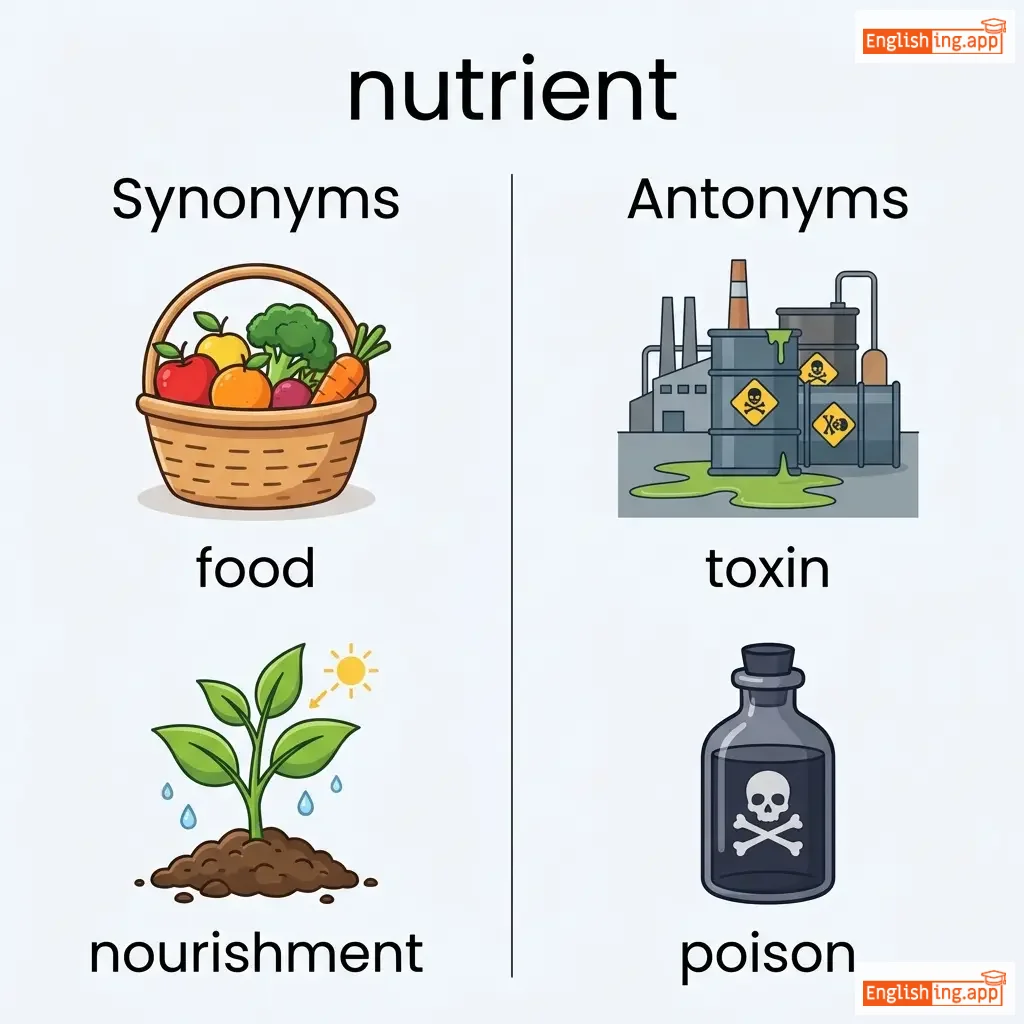
food, nourishment, sustenance, vitamin, mineral
••••••
|
toxin, poison
••••••
|
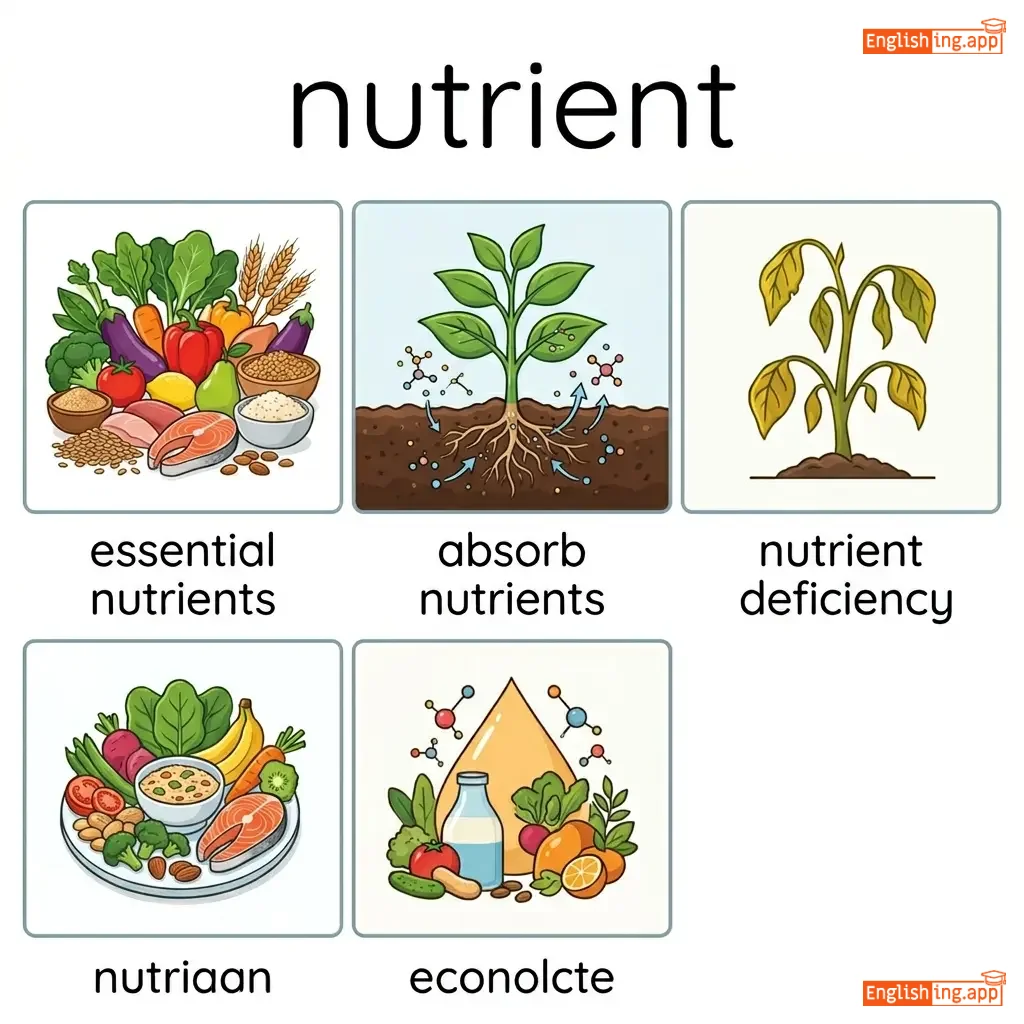
essential nutrients, absorb nutrients, nutrient deficiency, nutrient intake
••••••
|
NutriENT = Nutri + ENT (Развлечение), если в пище есть питательные вещества, тело развлекается.
••••••
|
|
🍎
••••••
|
/njuːˈtrɪʃ.ən/
noun
(nyutrishn)
••••••
|
- •••••• |
питание
pitaniye
••••••
|
- •••••• | - •••••• | - •••••• | - •••••• |
The process of providing or obtaining the food necessary for health and growth.
••••••
|
Good nutrition is vital for a healthy life. |
Хорошее питание важно для здоровой жизни.
Khoroshee pitaniye vazhno dlya zdorovoy zhizni.
••••••
|
balanced nutrition |
having the right proportions of nutrients in the diet
••••••
|
сбалансированное питание
sbalansirovannoye pitaniye
••••••
|
nourishment, sustenance, diet, feeding, dietetics
••••••
|
malnutrition, starvation
••••••
|
good nutrition, proper nutrition, nutrition plan, nutrition education
••••••
|
Nutrition = питание, забота о теле для хорошего здоровья.
••••••
|
|
🥗
••••••
|
/njuːˈtrɪʃ.əs/
adjective
(Ньютришиас)
••••••
|
- •••••• |
питательный
nyutriushus
••••••
|
- •••••• | - •••••• | - •••••• | - •••••• |
containing substances that help the body grow and stay healthy; nourishing
••••••
|
Eating nutritious food helps maintain good health.
Употребление питательной пищи помогает поддерживать хорошее здоровье.
••••••
|
Питательная пища помогает поддерживать хорошее здоровье.
Upotrebleniepitatelnoipishchipomogaetpodderzhivatkhorosheezdorovye
••••••
|
- •••••• | - •••••• | - •••••• |
healthy, nourishing, wholesome, beneficial
••••••
|
unhealthy, junk, harmful
••••••
|
nutritious food, nutritious diet, nutritious meal
••••••
|
nyutriushus запомни: nutritious = питательный; nyutriushus напоминает nutrition — питательный
••••••
|
|
🍔
••••••
|
/oʊˈbiːsəti/
noun
(обезитэти)
••••••
|

|
ожирение
ozhireniye
••••••
|
- •••••• | - •••••• | - •••••• | - •••••• |
The condition of being very overweight, especially to a degree that it is harmful to health.
••••••
|
Obesity is a growing health problem in many countries. |
Ожирение — это растущая проблема со здоровьем во многих странах.
Ozhirenie — eto rastushchaya problema so zdorov'yem vo mnogikh stranakh.
••••••
|
- •••••• | - •••••• | - •••••• |
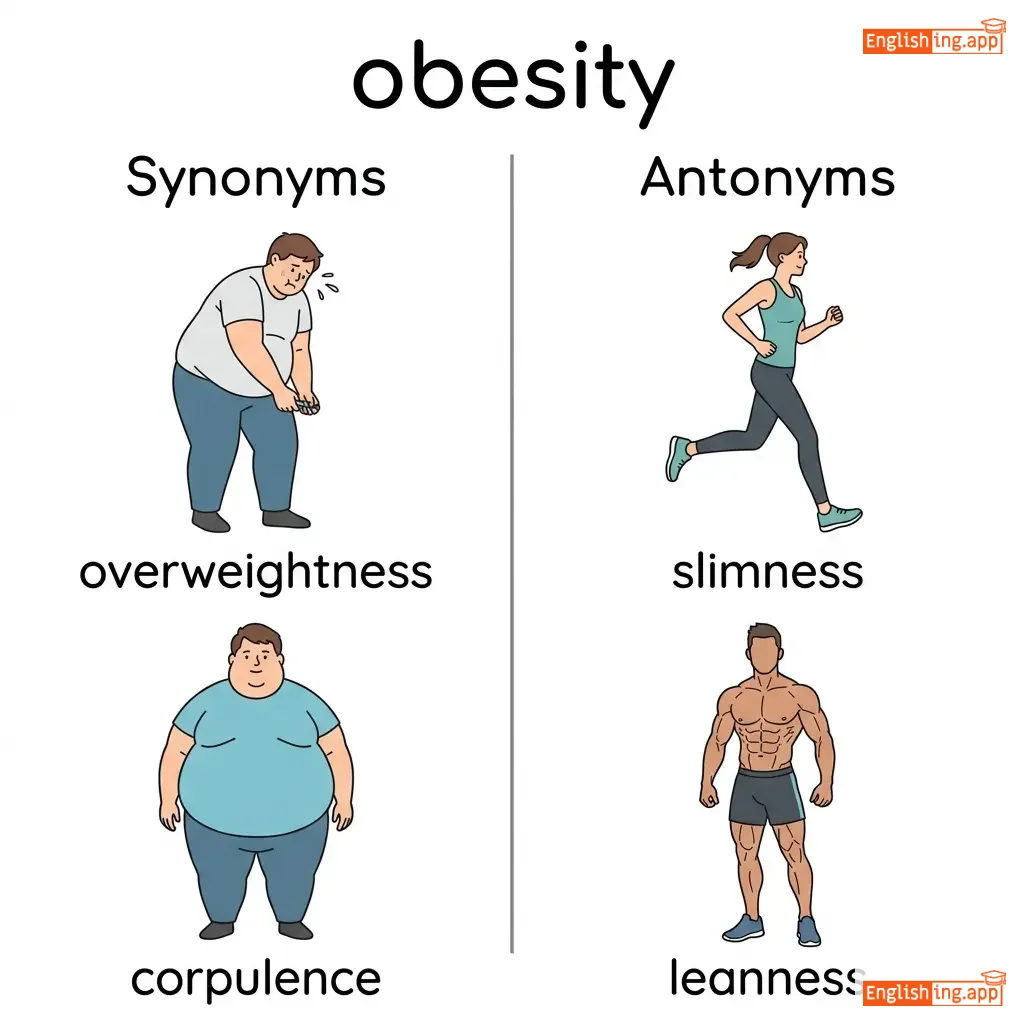
overweightness, corpulence, fatness, heaviness
••••••
|
slimness, leanness
••••••
|
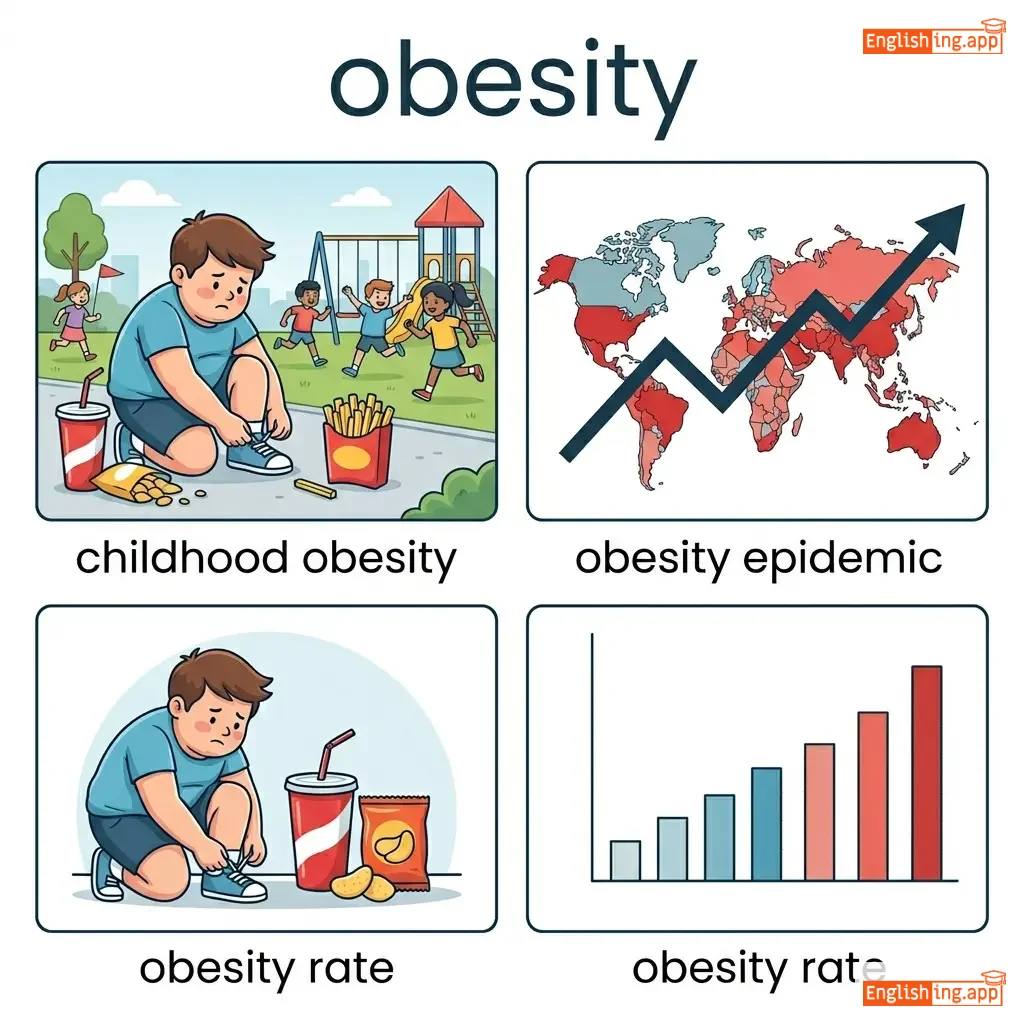
childhood obesity, obesity epidemic, obesity rate, obesity problem
••••••
|
Obesity = Obese + ity → Обезит означает ожирение.
••••••
|
|
📦
••••••
|
/ˈɒbdʒɪkt/
noun
(обжект)
••••••
|
- •••••• |
объект
ob'ekt
••••••
|
- •••••• | - •••••• | - •••••• | - •••••• |
a thing that can be seen and touched
••••••
|
The table is an object in the room.
Стол — это объект в комнате.
••••••
|
Стол — это объект в комнате.
Stol — eto ob'ekt v komnate.
••••••
|
- •••••• | - •••••• | - •••••• |
item, thing, article, entity
••••••
|
subject, person
••••••
|
inanimate object, physical object, move object, object to
••••••
|
Объект — это вещь, которую вы можете увидеть и потрогать.
••••••
|
|
✋
••••••
|
/əbˈdʒɛkʃən/
noun
(обжекция)
••••••
|
- •••••• |
возражение
vozrazhenie
••••••
|
- •••••• | - •••••• | - •••••• | - •••••• |
an expression or feeling of disapproval or opposition
••••••
|
The lawyer raised an objection during the trial.
Адвокат поднял обжекцию во время судебного разбирательства.
••••••
|
Адвокат поднял возражение во время судебного разбирательства.
Advokat podnyal vozrazhenie vo vremya sudebnogo razbiraetel'stva.
••••••
|
raise an objection
поднять обжекцию
••••••
|
to express disapproval or disagreement formally
••••••
|
поднять возражение
podnyat' vozrazhenie
••••••
|
protest, complaint, opposition, dissent, disagreement
••••••
|
approval, consent, agreement
••••••
|
strong objection, raise an objection, legal objection, no objection, objection letter
••••••
|
Objection значит возражение — в суде вы услышите ‘Возражение!’ ✋ это означает несогласие!
••••••
|
|
🎯
••••••
|
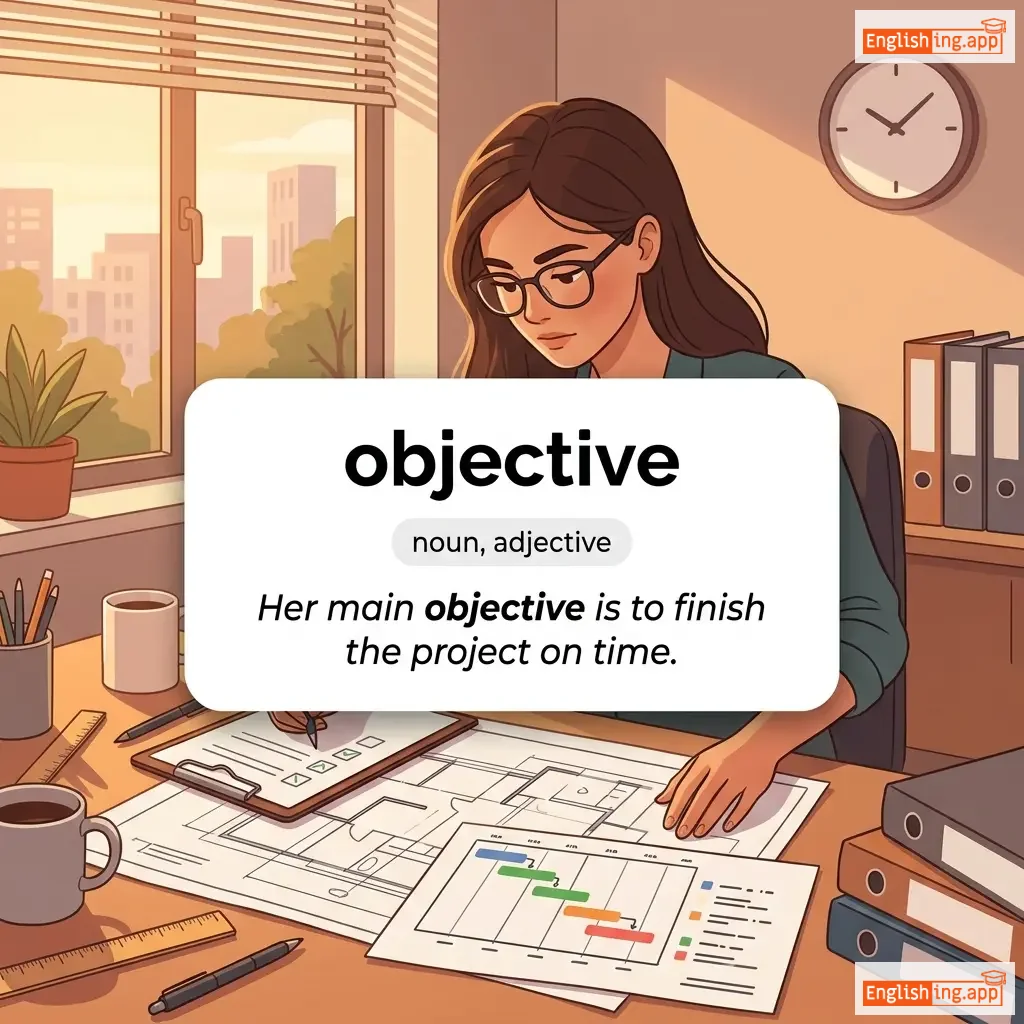
/əbˈdʒɛktɪv/
noun, adjective
(ob-zhek-tiv)
••••••
|

|
цель / объективный
tsjel / ob'jektivnyj
••••••
|
- •••••• | - •••••• | - •••••• | - •••••• |
As a noun: a goal or aim. As an adjective: not influenced by personal feelings; unbiased.
••••••
|
Her main objective is to finish the project on time. |
Её главная цель — закончить проект вовремя.
Yejo glavnya tsjel' — zakonchit' proyekt vovremya.
••••••
|
objective reality |
Reality that exists independent of personal feelings or opinions
••••••
|
объективная реальность
ob'jektivnaja real'nost'
••••••
|
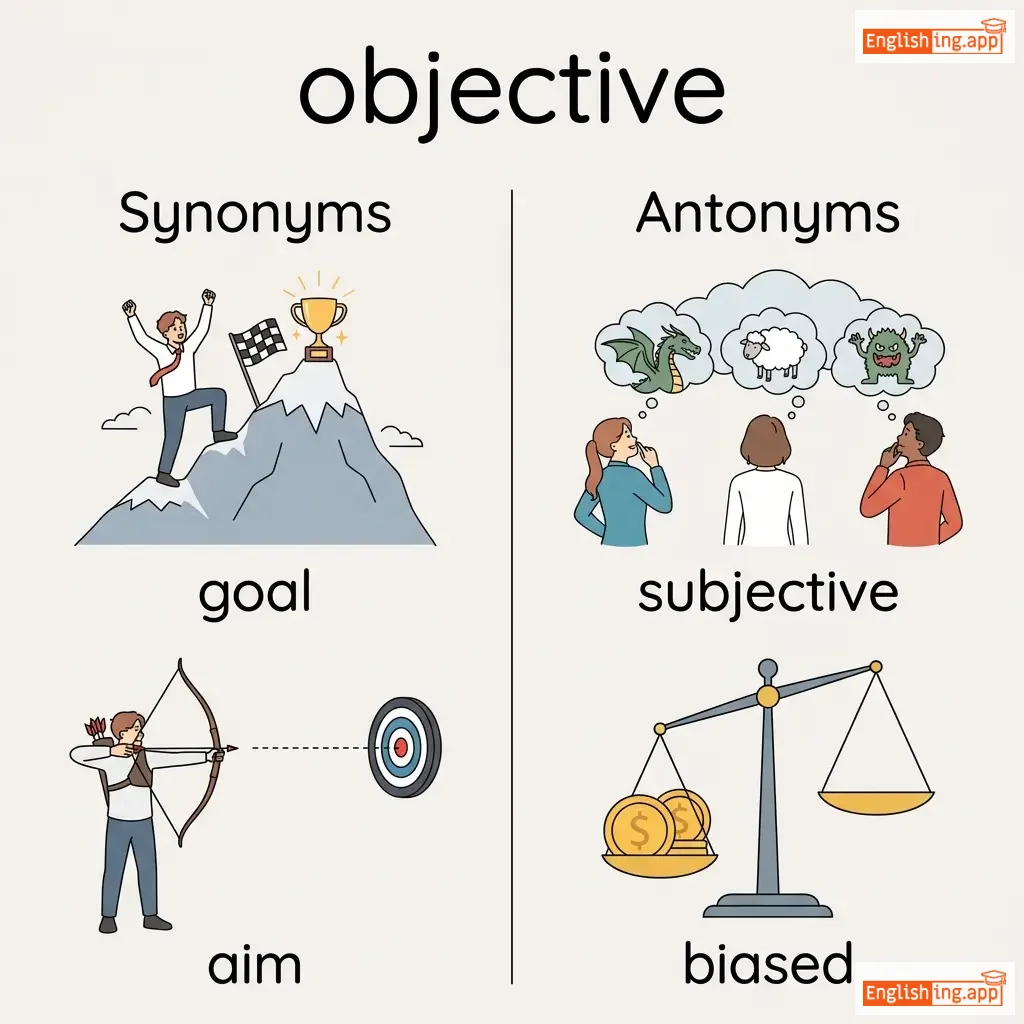
goal, aim, target, purpose, impartial
••••••
|
subjective, biased
••••••
|
clear objective, main objective, objective analysis
••••••
|
Objective означает 🎯 цель — как вопросы с выбором ответа на экзаменах, на которые нужно отвечать беспристрастно.
••••••
|
|
📜
••••••
|
/ˈɑːblɪˌɡeɪt/
verb
(облигейт)
••••••
|
- •••••• |
обязывать
obyazyvat
••••••
|
obligated
облигейтед
••••••
|
obligated
облигейтед
••••••
|
obligates
облигейтс
••••••
|
obligating
облигейтинг
••••••
|
to bind legally or morally; to compel someone to do something
••••••
|
The contract obligates the company to provide timely service.
Контракт обязывает компанию предоставлять своевременное обслуживание.
••••••
|
Контракт обязывает компанию предоставлять своевременное обслуживание.
Kontrakt obyayet kompaniyu predostavlyat' svoevremennoe obsluzhivanie.
••••••
|
- •••••• | - •••••• | - •••••• |
bind, compel, require, force
••••••
|
free, release, exempt
••••••
|
legally obligate, morally obligate, obligate by contract
••••••
|
Obligate означает 'обязанность', то есть заставить кого-то что-то делать.
••••••
|
|
📝
••••••
|
/ˌɑb.lɪˈɡeɪ.ʃən/
noun
(облигация)
••••••
|
- •••••• |
обязанность
obyazannost
••••••
|
- •••••• | - •••••• | - •••••• | - •••••• |
a duty or commitment; something that must be done legally or morally
••••••
|
Parents have an obligation to care for their children.
Родители обязаны заботиться о своих детях.
••••••
|
Родители обязаны заботиться о своих детях.
roditeli obyazany zabotit'sya o svoikh detyakh
••••••
|
- •••••• | - •••••• | - •••••• |
duty, responsibility, commitment, requirement
••••••
|
freedom, choice, option, liberty
••••••
|
legal obligation, moral obligation, meet obligation
••••••
|
Родители имеют моральную и юридическую обязанность заботиться о своих детях.
••••••
|
|
🤝
••••••
|
/əˈblaɪdʒ/
verb
(облайдж)
••••••
|
|
обязывать
obyazyvat
••••••
|
obliged
облайджд
••••••
|
obliged
облайджд
••••••
|
obliges
облайджес
••••••
|
obliging
облайджинг
••••••
|
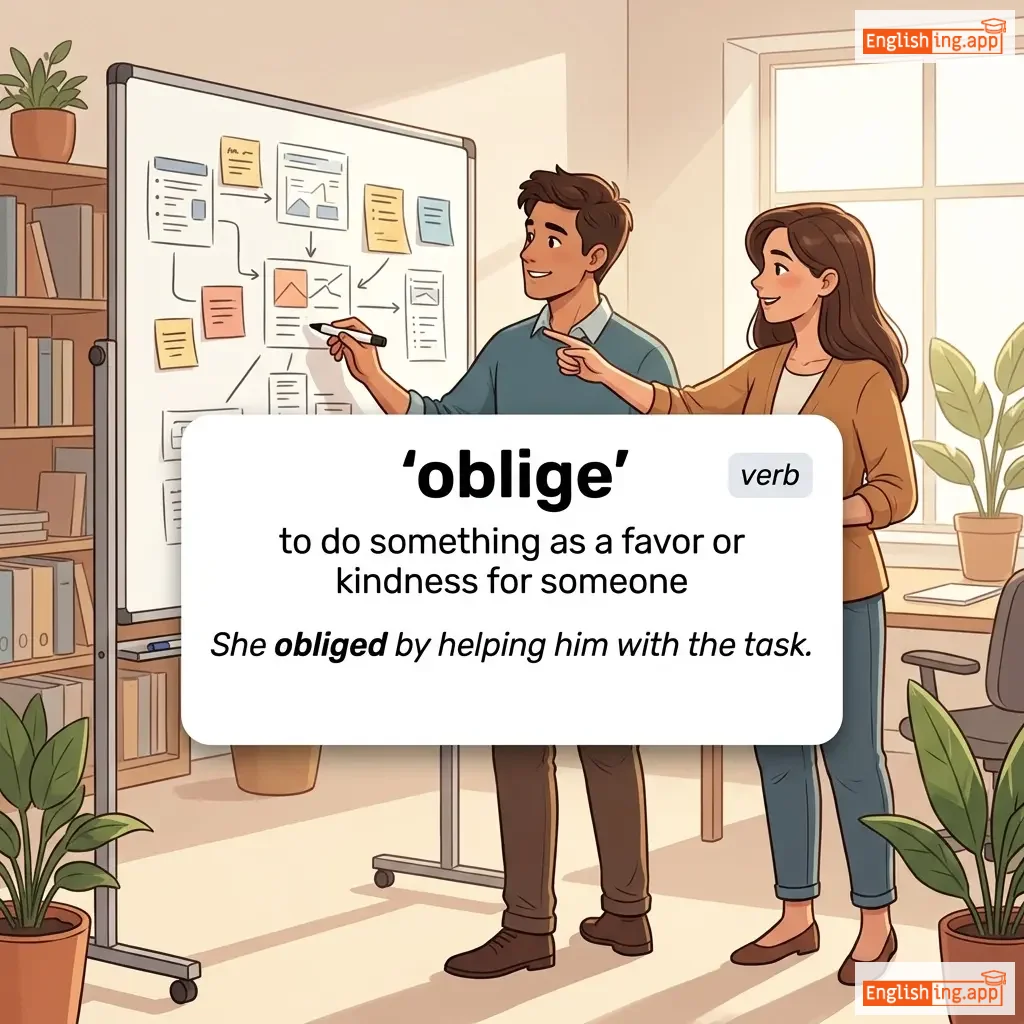
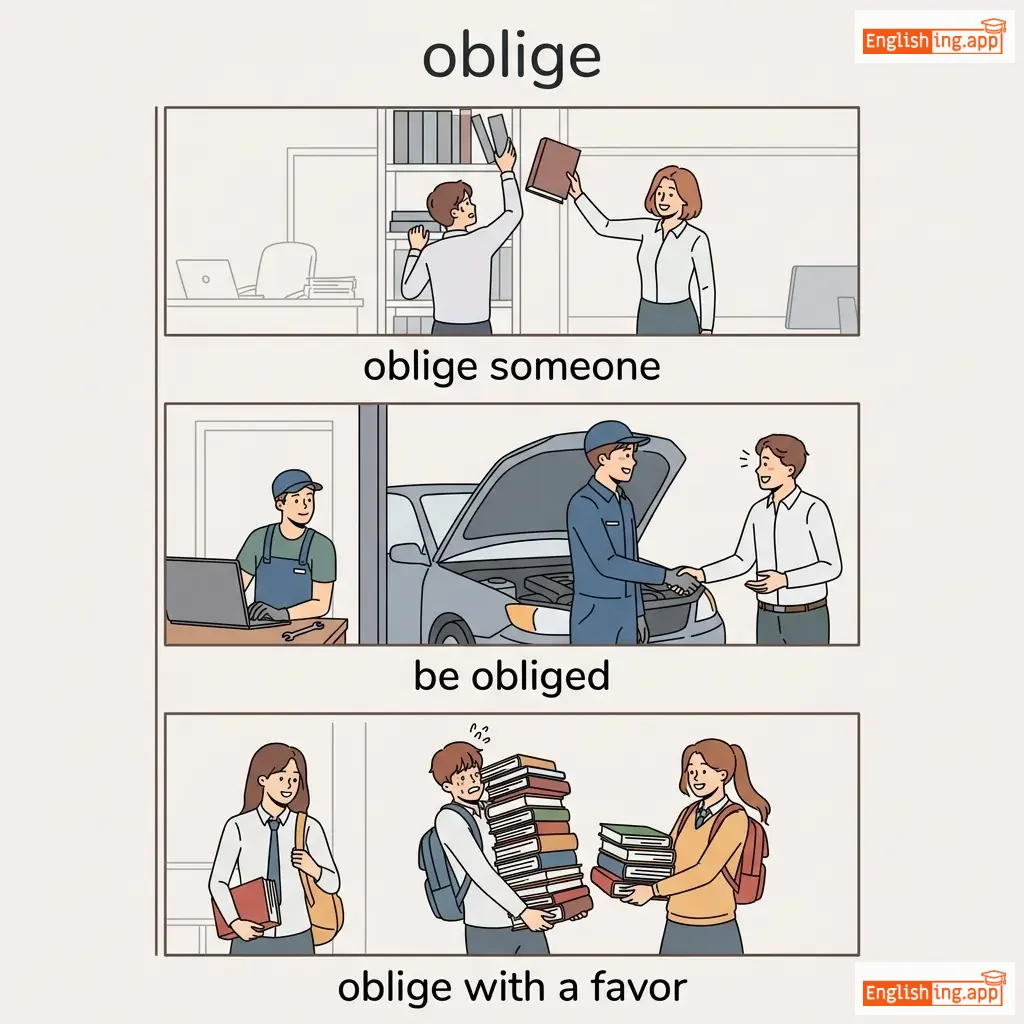
to compel or require someone to do something; to help or do a favor
••••••
|
I would be happy to oblige you with the information you need.
ай вуд би хэппи ту облайдж ю уиз зэ информейшн ю ни́д.
••••••
|
Я был бы рад помочь вам с необходимой информацией.
Ya byl by rad pomoch vam s neobkhodimoy informatsiey.
••••••
|
- •••••• | - •••••• | - •••••• |
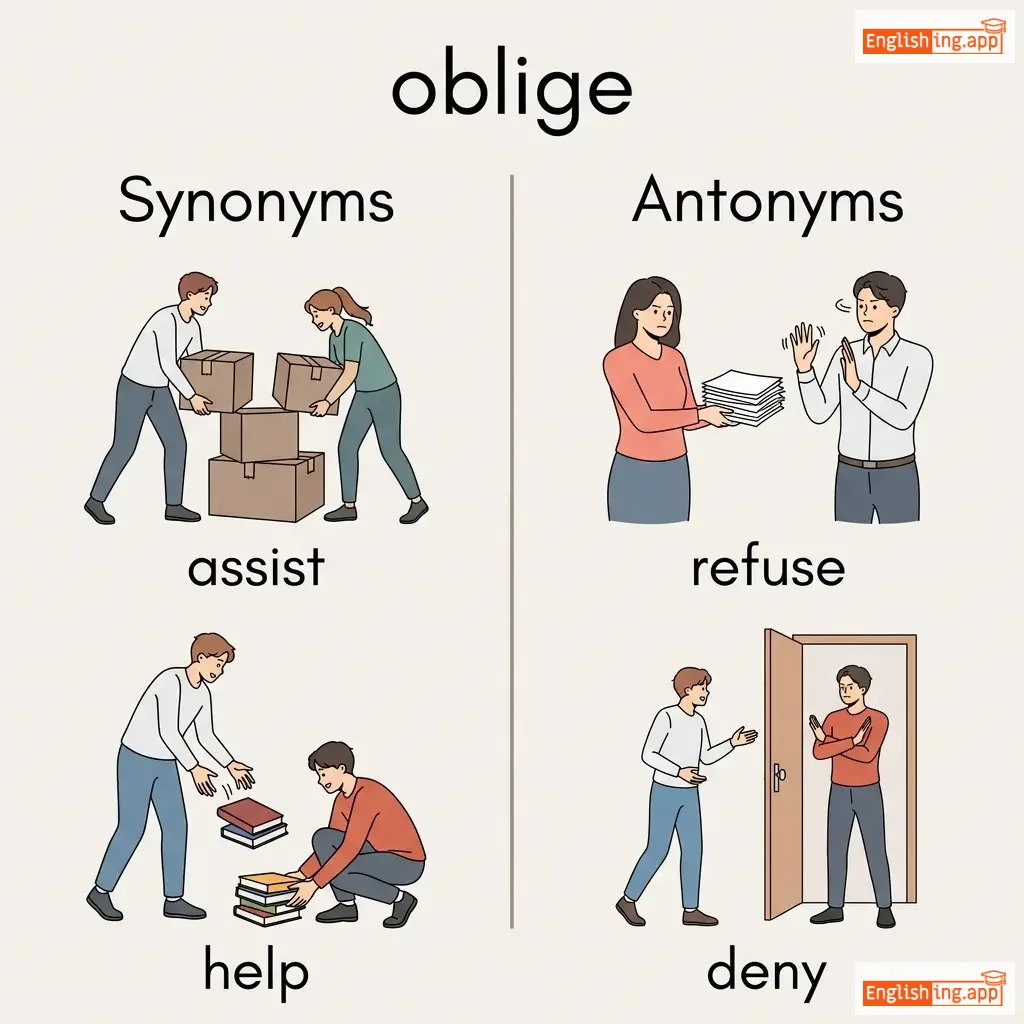
compel, require, help, assist
••••••
|
free, release, refuse, deny
••••••
|
happily oblige, oblige someone, oblige with, willing to oblige, greatly oblige, kindly oblige
••••••
|
‘Oblige’ sounds like Russian ‘obyazyvat’ — both mean to compel or help out of duty.
••••••
|
|
👀
••••••
|
/ˌɑb.zɚˈveɪ.ʃən/
noun
(обзерˈвеɪшн)
••••••
|
- •••••• |
наблюдение
nablyudenie
••••••
|
- •••••• | - •••••• | - •••••• | - •••••• |
the action of watching something carefully; a comment or remark
••••••
|
The scientist made careful observations of the experiment.
Учёный тщательно наблюдал за экспериментом.
••••••
|
Учёный тщательно наблюдал за экспериментом.
Uchënyy tchatel'no nablyudal za eksperimentom.
••••••
|
- •••••• | - •••••• | - •••••• |
watching, monitoring, examination, remark
••••••
|
ignorance, neglect, inattention, oversight
••••••
|
careful observation, direct observation, under observation
••••••
|
Учёный внимательно следит за экспериментом.
••••••
|
|
👀
••••••
|
/əbˈzɜːvər/
noun
(ob-zɨr-ver)
••••••
|
- •••••• |
наблюдатель
nablyudatel
••••••
|
- •••••• | - •••••• | - •••••• | - •••••• |
a person who watches or notices something
••••••
|
The observer took notes during the meeting. |
Наблюдатель сделал заметки во время встречи.
Nablyudatel sdelal zametki vo vremya vstrechi.
••••••
|
- •••••• | - •••••• | - •••••• |
spectator, watcher, viewer, onlooker
••••••
|
participant, actor
••••••
|
passive observer, keen observer, careful observer
••••••
|
Observer - ‘наб’ и ‘людатель’, напоминание о том, что кто-то наблюдает.
••••••
|
|
🌀
••••••
|
/əbˈsɛs/
verb
(обсесс)
••••••
|
- •••••• |
одержимость
odyerzhiomost'
••••••
|
obsessed
обсессед
••••••
|
obsessed
обсессед
••••••
|
obsesses
обсессес
••••••
|
obsessing
обсессинг
••••••
|
To preoccupy or fill the mind of someone continually and to an excessive degree.
••••••
|
She tends to obsess over small details.
Она склонна зацикливаться на мелочах.
••••••
|
Она склонна зацикливаться на мелочах.
Ona sklonna zaklikivatsya na melochakh.
••••••
|
obsess over
обсессировать
••••••
|
To think about something too much and not let go of it
••••••
|
обсессировать
obssesirovat'
••••••
|
preoccupy, fixate, dwell, consume, dominate
••••••
|
ignore, neglect
••••••
|
obsess over, obsess with, obsess about, obsess constantly
••••••
|
Обсесс = Обсессия, когда мысли не могут уйти, как застрявшая мысль в голове.
••••••
|
|
🔥
••••••
|
/əbˈsɛʃən/
noun
(обсессия)
••••••
|
- •••••• |
одержимость
oderzhimost
••••••
|
- •••••• | - •••••• | - •••••• | - •••••• |
An idea, thought, or concern that continually preoccupies or intrudes on a person's mind.
••••••
|
His obsession with success drove him to work day and night. |
Его одержимость успехом заставляла его работать день и ночь.
Yego oderzhimost' uspekhom zastavlyala yego rabotat' den' i noch'.
••••••
|
an obsession with |
Being overly concerned or preoccupied with something
••••••
|
одержимость чем-то
oderzhimost' chem-to
••••••
|
fixation, preoccupation, compulsion, mania, craze
••••••
|
indifference, apathy
••••••
|
obsession with, obsession about, unhealthy obsession, lifelong obsession
••••••
|
Одержимость — когда одна мысль не покидает, как зацикленная мысль.
••••••
|
|
🚧
••••••
|
/ˈɒbstəkəl/
noun
(obstakel)
••••••
|
- •••••• |
препятствие
prepyatstvie
••••••
|
- •••••• | - •••••• | - •••••• | - •••••• |
something that blocks your way or prevents progress
••••••
|
Lack of money was the main obstacle to his success. |
Отсутствие денег было главным препятствием для его успеха.
Otsutstvie deneg bylo glavnym prepyatstviem dlya yego uspekha.
••••••
|
overcome an obstacle |
to deal with and successfully get past a problem or barrier
••••••
|
преодолеть препятствие
preodolety prepyatstvie
••••••
|
barrier, hurdle, hindrance, block, difficulty
••••••
|
aid, help, support
••••••
|
major obstacle, face an obstacle, overcome obstacle, obstacle course, create obstacle
••••••
|
Препятствие = Blockade des Weges 🚧
••••••
|
|
📜
••••••
|
/əbˈteɪn/
verb
(обтэйн)
••••••
|

|
получить
poluchit
••••••
|
obtained
обтейнд
••••••
|
obtained
обтейнд
••••••
|
obtains
обтейнс
••••••
|
obtaining
обтейнинг
••••••
|
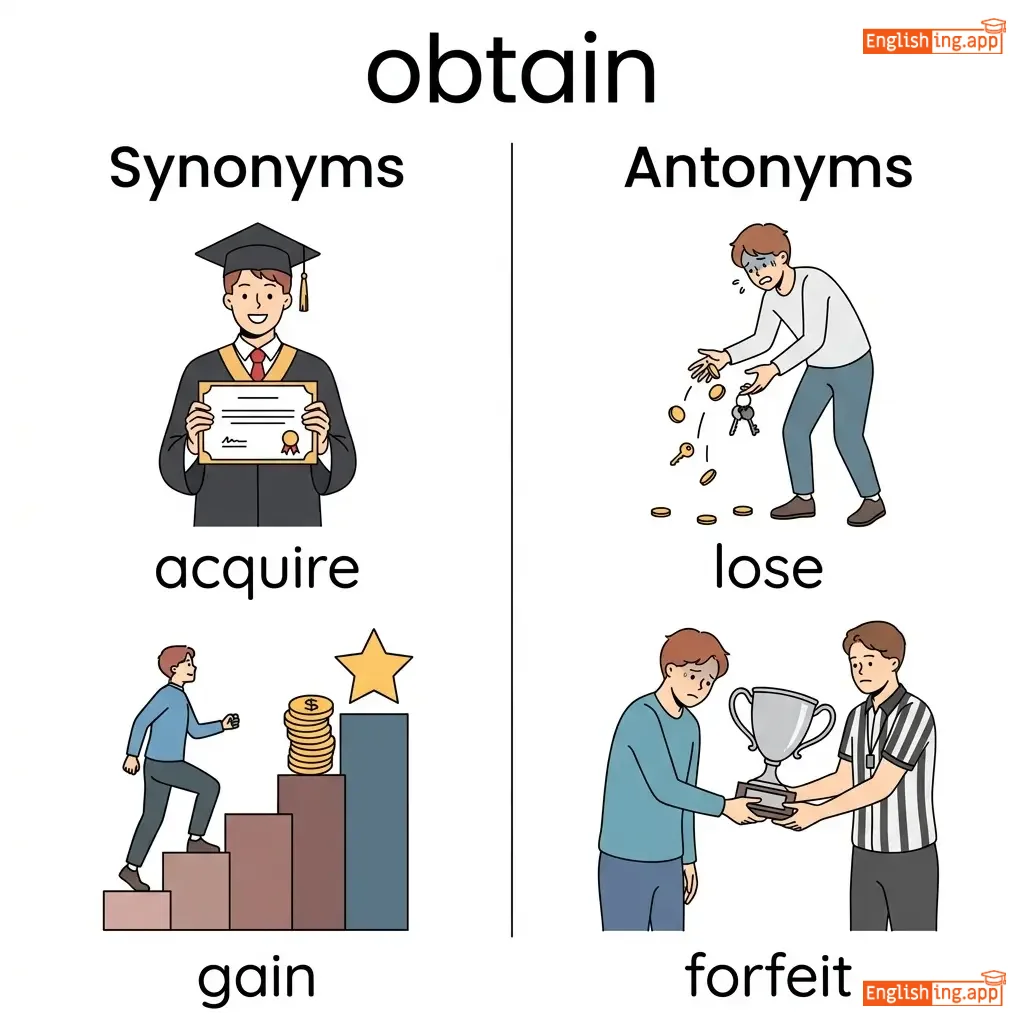
to get, acquire, or secure something
••••••
|
She managed to obtain a scholarship for her studies.
Она смогла получить стипендию для учебы.
••••••
|
Она смогла получить стипендию для учебы.
Ona smogla poluchit stipendiyu dlya ucheby.
••••••
|
obtain permission
получить разрешение
••••••
|
to get approval or consent to do something
••••••
|
получить разрешение
poluchit razreshenie
••••••
|
acquire, gain, secure, procure, receive
••••••
|
lose, forfeit, give up
••••••
|
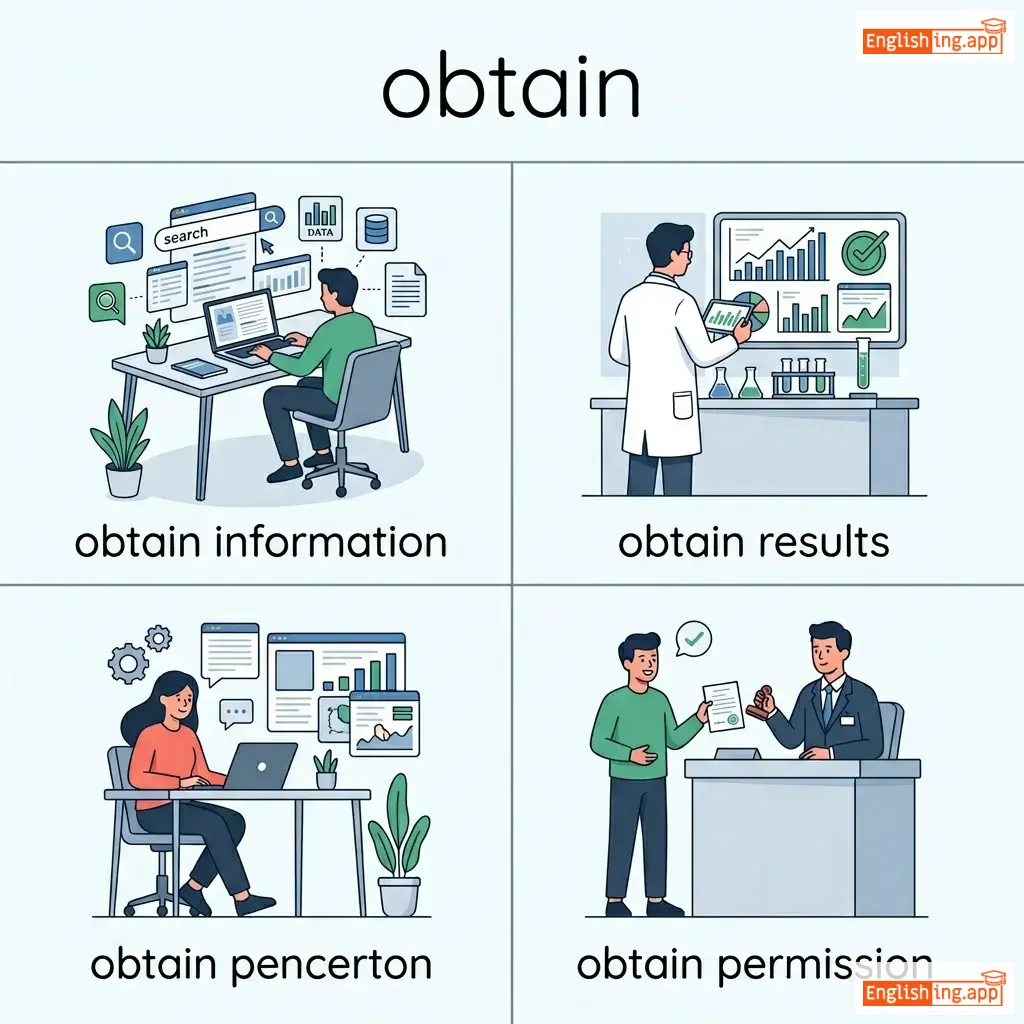
obtain information, obtain results, obtain permission
••••••
|
Obtain = OBTain (обтейн) = получение чего-то
••••••
|
|
👀
••••••
|
/ˈɒb.vi.əs/
adjective
(обвиэс)
••••••
|
- •••••• |
очевидный
ochevidny
••••••
|
- •••••• | - •••••• | - •••••• | - •••••• |
easily perceived or understood; clear and apparent
••••••
|
It was obvious that she was upset after the meeting. |
Было очевидно, что она была расстроена после встречи.
Bylo ochevidno, chto ona byla rasstroena posle vstrechi.
••••••
|
the obvious choice |
something that is the most evident or suitable option
••••••
|
очевидный выбор
ochevidnyy vybor
••••••
|
clear, evident, apparent, noticeable, plain
••••••
|
hidden, unclear, obscure
••••••
|
obvious reason, obvious fact, obvious mistake, obvious difference
••••••
|
Очевидный = очевидно, как очевидное решение.
••••••
|
|
🙄
••••••
|
/ˈɒbviəsli/
adverb
(obviyesli)
••••••
|
- •••••• |
очевидно
ochevidno
••••••
|
- •••••• | - •••••• | - •••••• | - •••••• |
in a way that is easily perceived or understood; clearly
••••••
|
Obviously, he didn’t read the instructions.
Очевидно, он не прочитал инструкции.
••••••
|
Очевидно, он не прочитал инструкции.
Ochevidno, on ne prochital instruktsii.
••••••
|
- •••••• | - •••••• | - •••••• |
clearly, evidently, unmistakably, plainly
••••••
|
ambiguously, unclearly
••••••
|
obviously wrong, obviously clear, obviously upset
••••••
|
Очевидно, все ясно!
••••••
|
|
🎉
••••••
|
/əˈkeɪʒən/
noun
(окейжн)
••••••
|
- •••••• |
случай
sluchay
••••••
|
- •••••• | - •••••• | - •••••• | - •••••• |
A particular time or event; a special or important happening.
••••••
|
Her wedding was a joyful occasion for the whole family. |
Ее свадьба была радостным случаем для всей семьи.
Eyo svad'ba byla radostnym sluchayem dlya vsej sem'i.
••••••
|
on occasion |
sometimes, occasionally
••••••
|
иногда
inogda
••••••
|
event, moment, incident, celebration, affair
••••••
|
routine, ordinary, regularity
••••••
|
special occasion, on occasion, festive occasion, grand occasion
••••••
|
Случай - это момент, когда случаются важные события - Время от времени случаются радостные моменты.
••••••
|
|
🌦️
••••••
|
/əˈkeɪʒənəl/
adjective
(окэйжнэл)
••••••
|
- •••••• |
случайный
sluchayny
••••••
|
- •••••• | - •••••• | - •••••• | - •••••• |
happening or done sometimes but not regularly or often
••••••
|
He makes occasional visits to his hometown. |
Он делает случайные визиты в свой родной город.
On delaet sluchaynye vizity v svoy rodnoy gorod.
••••••
|
occasional table |
a small table used when needed
••••••
|
случайный стол
sluchayny stol
••••••
|
infrequent, irregular, periodic, sporadic, intermittent
••••••
|
regular, constant, frequent
••••••
|
occasional visit, occasional rain, occasional use, occasional meeting
••••••
|
Случайный как случайный дождь – иногда 🌧️
••••••
|
|
🔄⏰
••••••
|
/əˈkeɪʒənəli/
adverb
(akézhənəli)
••••••
|
- •••••• |
иногда; время от времени;
inogda; vremya ot vremeni
••••••
|
- •••••• | - •••••• | - •••••• | - •••••• |
sometimes; from time to time; not regularly
••••••
|
I occasionally visit my grandmother on weekends. |
Я иногда навещаю свою бабушку по выходным.
Ya inogda naveshchayu svoyu babushku po vykhodnym
••••••
|
- •••••• | - •••••• | - •••••• |
sometimes, from time to time, periodically, sporadically
••••••
|
always, never, constantly, regularly
••••••
|
occasionally visit, occasionally happens, very occasionally
••••••
|
Посещай бабушку иногда
••••••
|
|
💼
••••••
|
/ˌɑk.jəˈpeɪ.ʃən/
noun
(оккупация)
••••••
|
- •••••• |
профессия; занятие; захват
professiya; zanyatiye; zakhvat
••••••
|
- •••••• | - •••••• | - •••••• | - •••••• |
a job or profession; the action of taking control of a place
••••••
|
Teaching is her chosen occupation. |
Преподавание - это ее избранная профессия.
Prepodavaniye - eto yeye izbrannaya professiya.
••••••
|
- •••••• | - •••••• | - •••••• |
profession, job, career, work
••••••
|
unemployment, leisure, vacation, freedom
••••••
|
full-time occupation, main occupation, military occupation
••••••
|
Поиск профессии через занятия.
••••••
|
|
🚫
••••••
|
/ˈɒkjʊpaɪd/
adjective; verb (past participle)
(окьюпайд)
••••••
|
- •••••• |
занятый; оккупированный
zanyatyi; okkupirovannyi
••••••
|
occupied
окьюпайд
••••••
|
occupied
окьюпайд
••••••
|
occupies
окьюпайз
••••••
|
occupying
окьюпайинг
••••••
|
being in use or taken; filled or lived in; controlled or held by force
••••••
|
The room is occupied, so please wait outside.
Зе рум из окьюпайд, со плиз уэйт аутсайд.
••••••
|
Комната занята, пожалуйста, подождите снаружи.
Komnata zanyata, pozhaluysta, podozhdite snaruzhi
••••••
|
occupied territory
окьюпайд тeрритори
••••••
|
an area controlled by foreign or military forces
••••••
|
оккупированная территория
okkupirovannaya territoriya
••••••
|
busy, taken, engaged, inhabited, seized
••••••
|
vacant, free, empty
••••••
|
occupied room, occupied seat, fully occupied, military occupied, occupied territory
••••••
|
Occupied = занятый—если место занято, оно occupied.
••••••
|
|
🏠
••••••
|
/ˈɒkjʊpaɪ/
verb
(okyupai)
••••••
|
|
занимать
zanimat
••••••
|
occupied
okyupayd
••••••
|
occupied
okyupayd
••••••
|
occupies
okyupayt
••••••
|
occupying
okyupayying
••••••
|
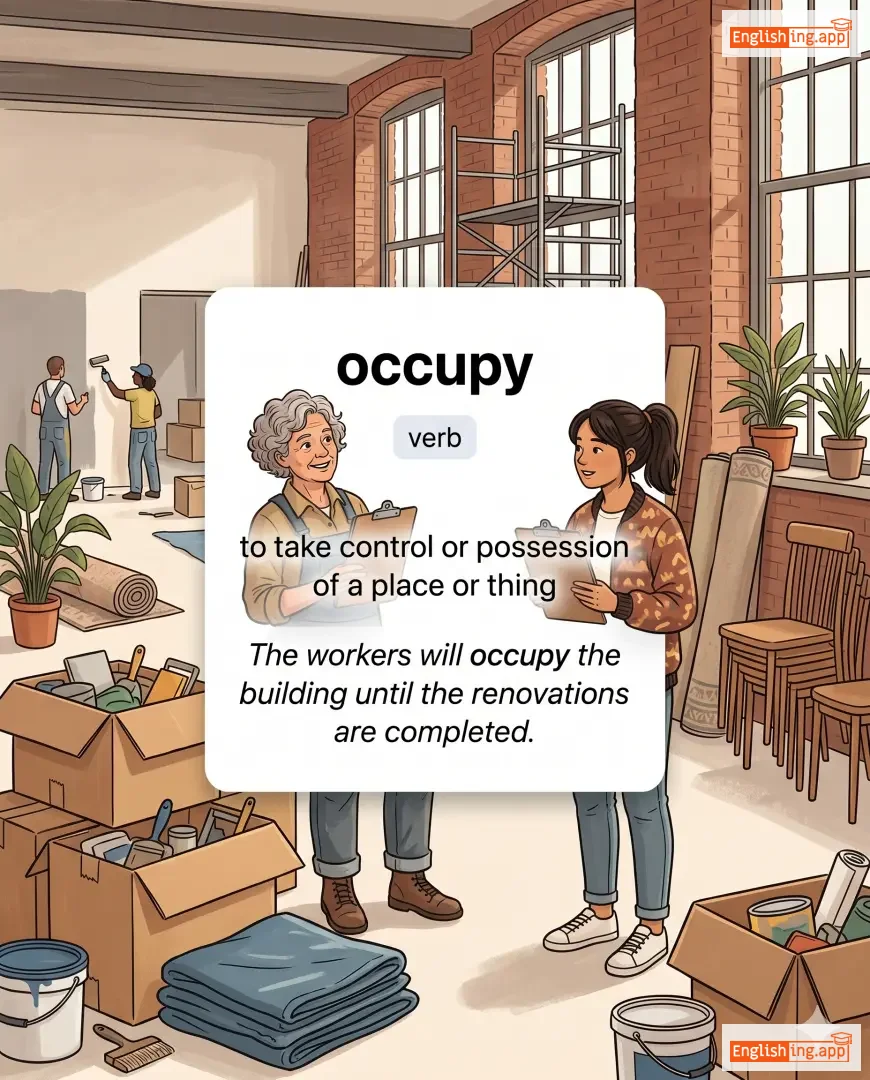
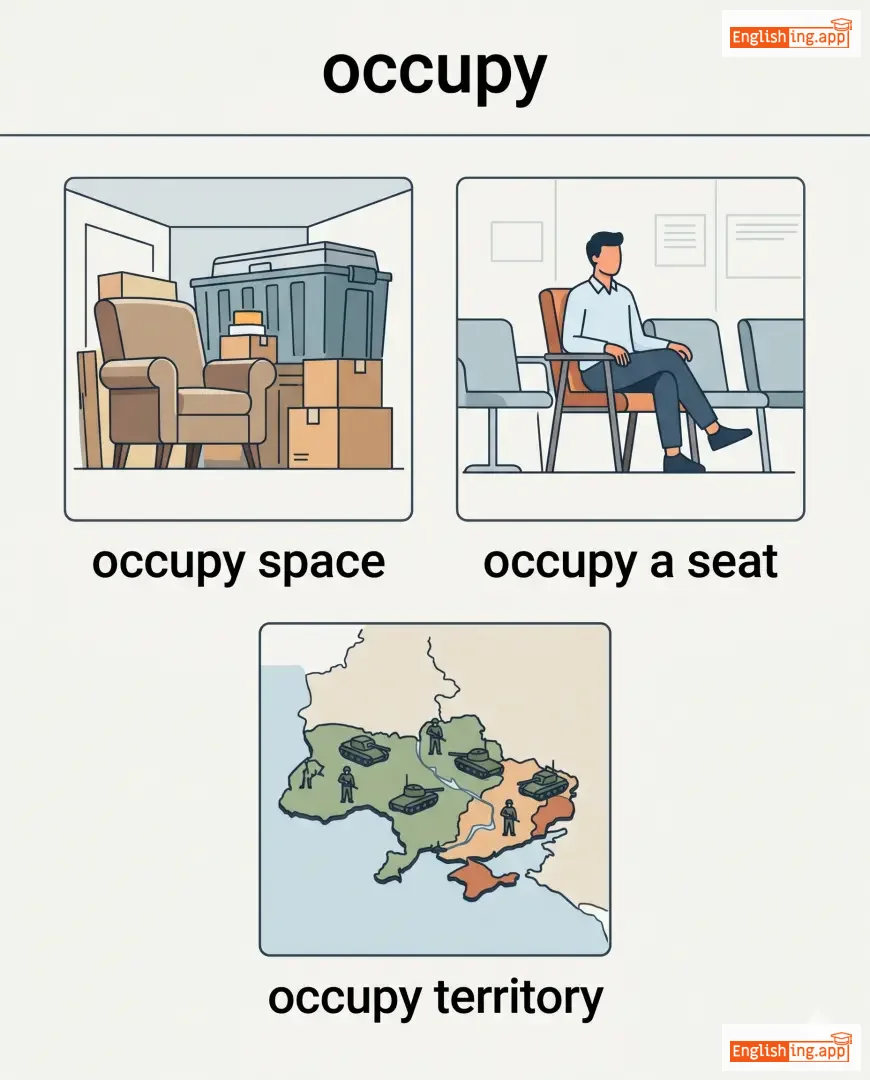
to take up space or time; to live or work in a place
••••••
|
The new family will occupy the house next month.
Новая семья займёт дом в следующем месяце.
••••••
|
Новая семья займёт дом в следующем месяце.
Novaya sem'ya zaymyot dom v sleduyushchem mesyatse.
••••••
|
- •••••• | - •••••• | - •••••• |
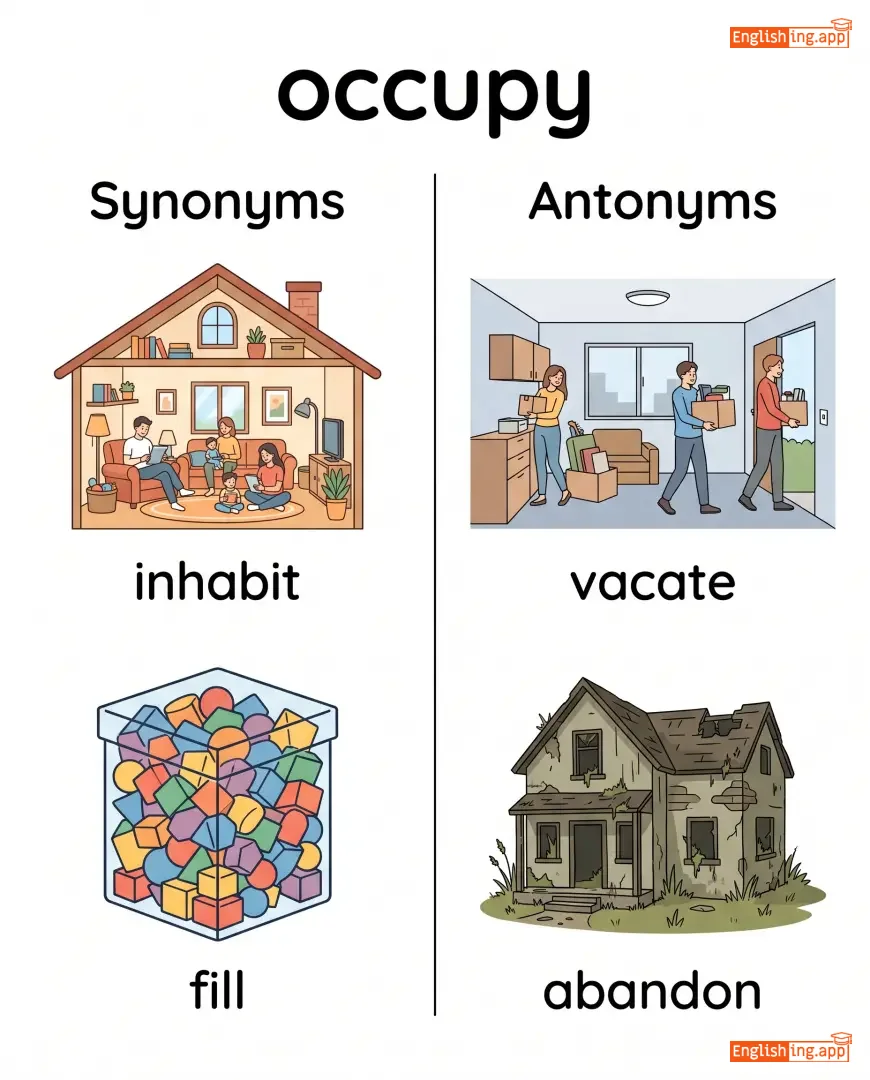
inhabit, reside, fill, take up
••••••
|
vacate, leave, abandon, evacuate
••••••
|
occupy space, occupy time, occupy position, occupy territory
••••••
|
Занимать - это когда ты берешь пространство или время, как когда ты заселяешь новый дом.
••••••
|
|
⚡
••••••
|
/əˈkɜːr/
verb
(случиться)
••••••
|
|
случаться
sluchatsya
••••••
|
occurred
случилось
••••••
|
occurred
случившийся
••••••
|
occurs
случается
••••••
|
occurring
случаясь
••••••
|
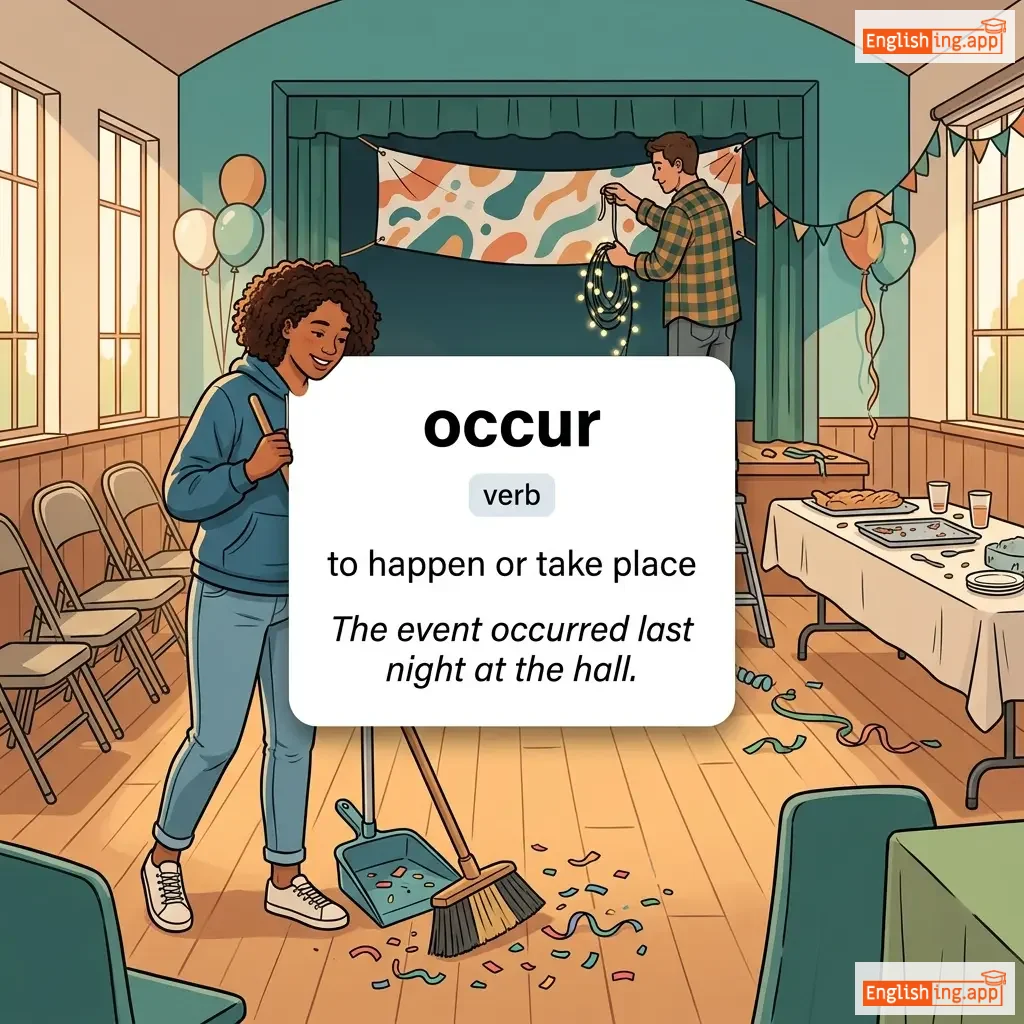
to happen or take place; to be found or present
••••••
|
The accident occurred at the intersection during rush hour.
Авария произошла на перекрестке в час пик.
••••••
|
Авария произошла на перекрестке в час пик.
Avariya proizoshla na perekrestke v chas pik.
••••••
|
- •••••• | - •••••• | - •••••• |
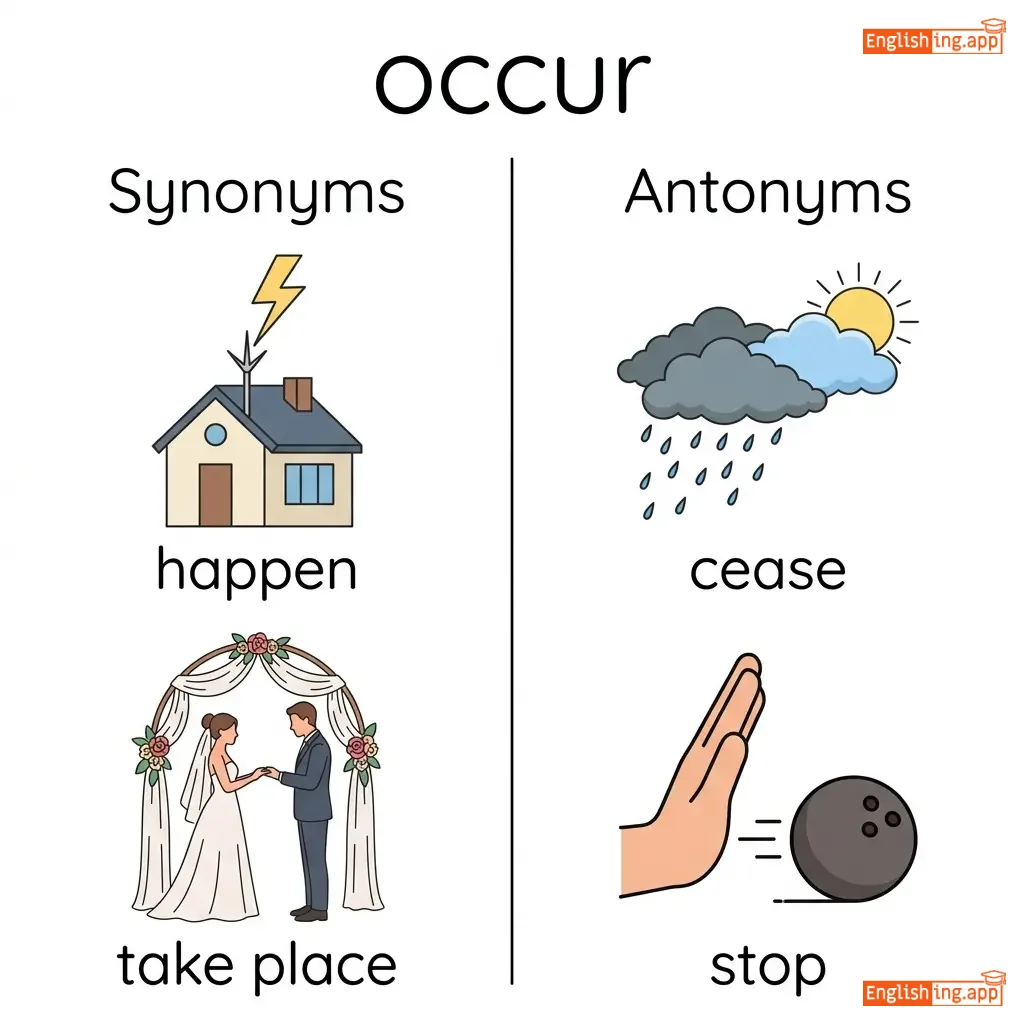
happen, take place, arise, transpire
••••••
|
prevent, avoid, cease, stop
••••••
|
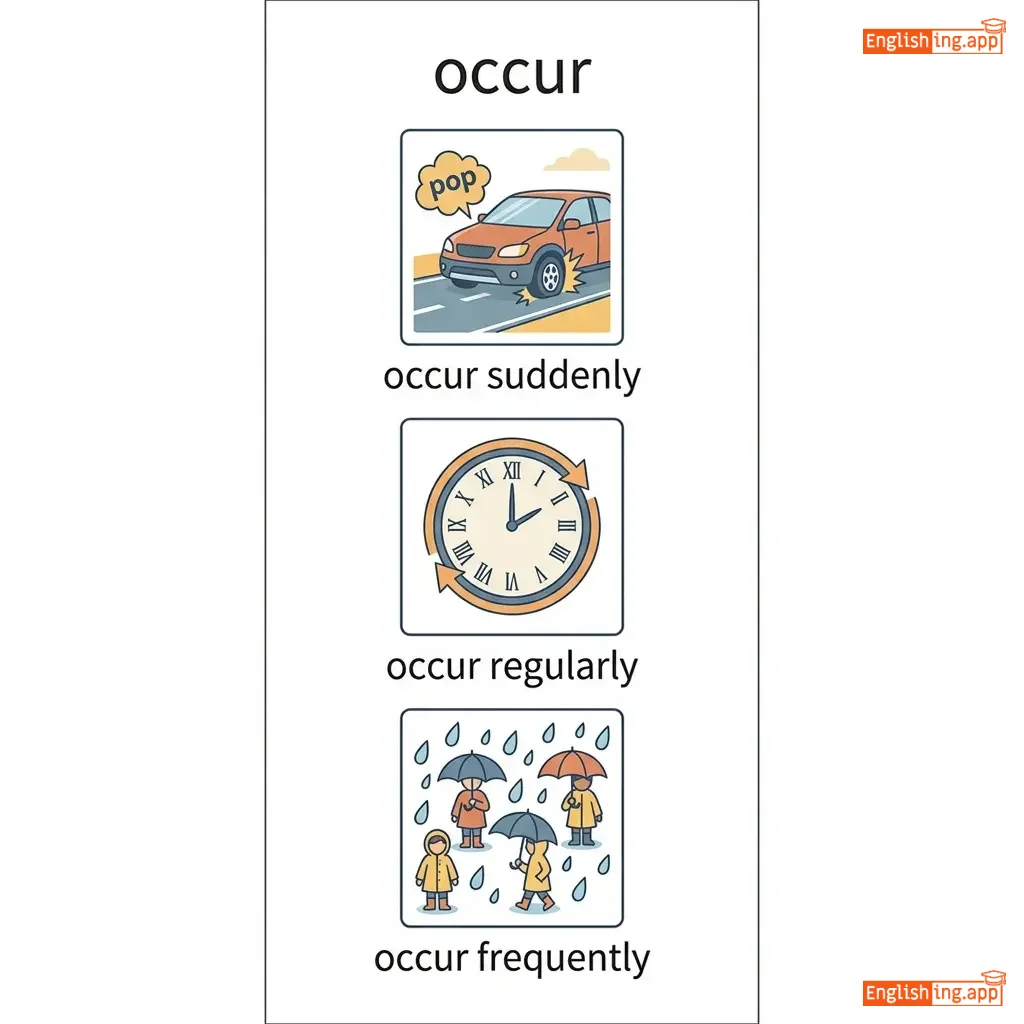
occur naturally, occur frequently, occur suddenly, rarely occur, occur simultaneously
••••••
|
Случиться — это как что-то случается неожиданно, как если бы 'случилось' произошло в нужный момент.
••••••
|
|
⚡
••••••
|
/əˈkɜr.əns/
noun
(ɪkʊrɛns)
••••••
|
- •••••• |
случай
sluchay
••••••
|
- •••••• | - •••••• | - •••••• | - •••••• |
an instance or event of something happening; the fact of occurring
••••••
|
The occurrence of earthquakes is common in this region. |
Происшествия землетрясений распространены в этом регионе.
Proisshestviya zemletryaseniya rasprostraneny v etom regione.
••••••
|
- •••••• | - •••••• | - •••••• |
event, incident, happening, instance
••••••
|
absence, non-occurrence, prevention
••••••
|
rare occurrence, frequent occurrence, natural occurrence
••••••
|
случай (sluchay) = occurrence
••••••
|
|
🌊
••••••
|
/ˈoʊ.ʃən/
noun
(óushen)
••••••
|
|
океан
okean
••••••
|
- •••••• | - •••••• | - •••••• | - •••••• |
a very large expanse of sea; a large quantity of something
••••••
|
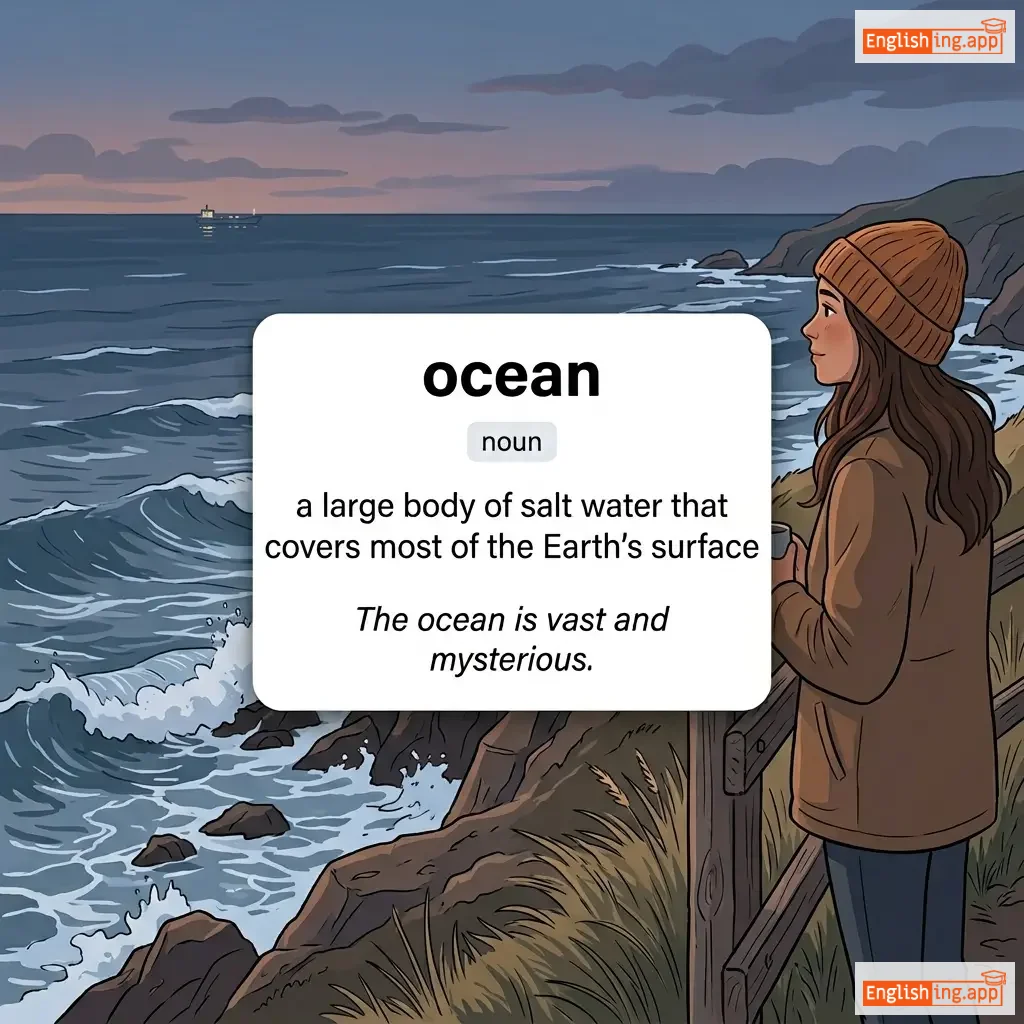
The Pacific Ocean is the largest ocean in the world.
Тихий океан — крупнейший океан в мире.
••••••
|
Тихий океан — крупнейший океан в мире.
Tikhiy okean — krupneyshiy okean v mire.
••••••
|
- •••••• | - •••••• | - •••••• |
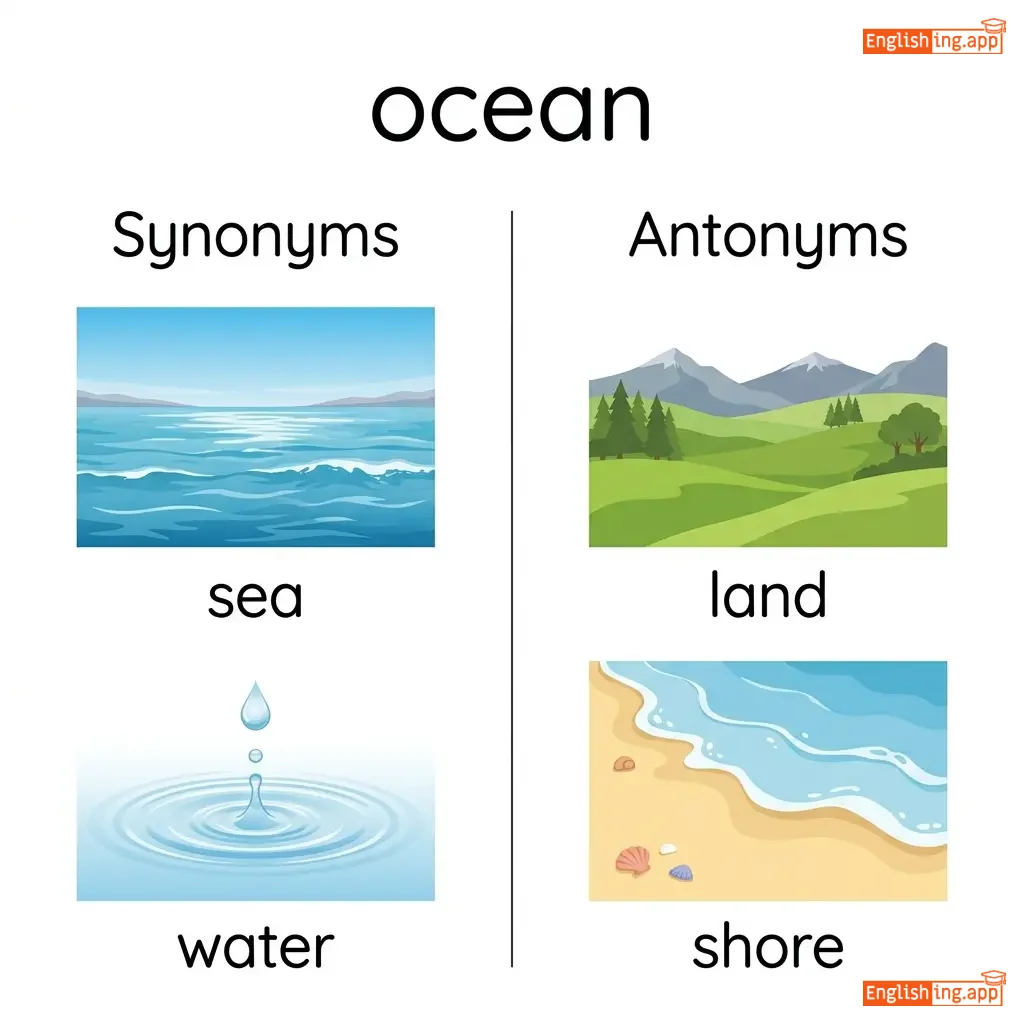
sea, marine, waters, deep
••••••
|
land, continent, desert, mountain
••••••
|
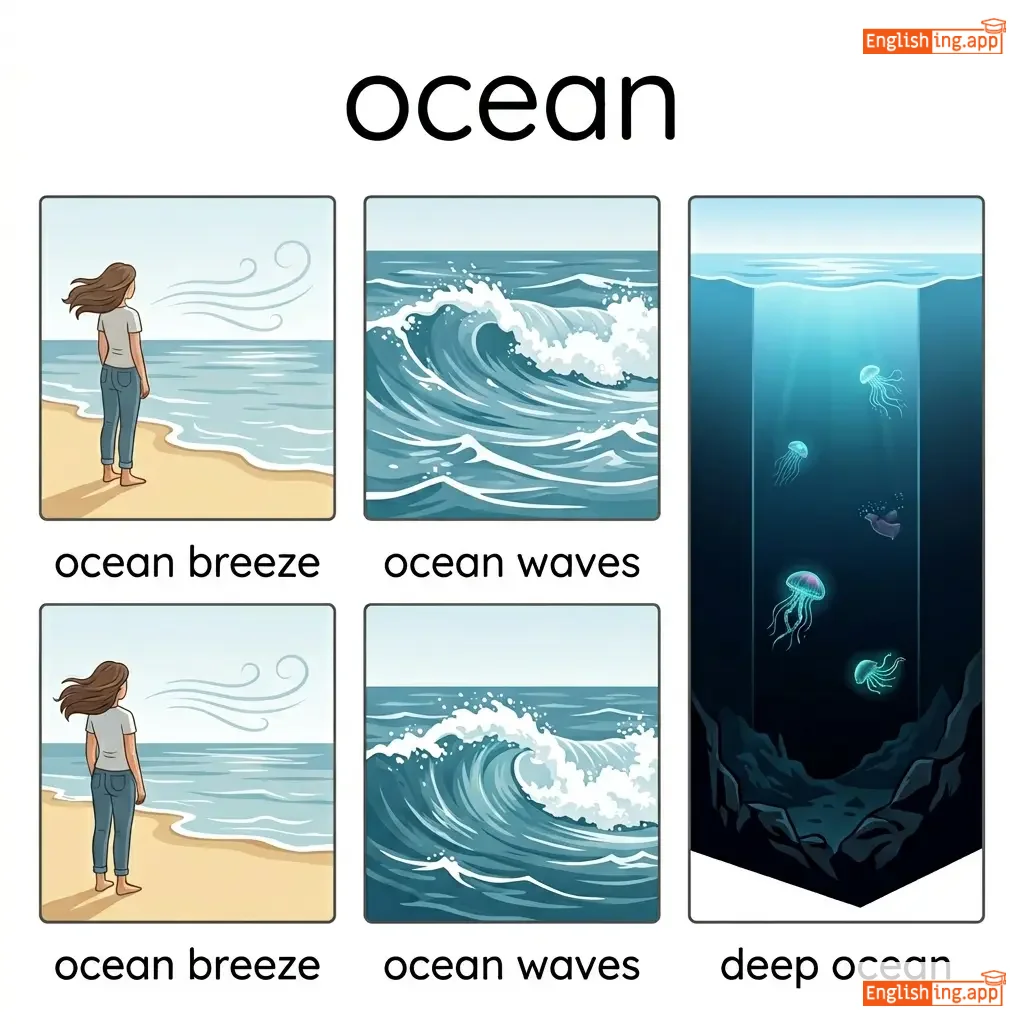
deep ocean, ocean floor, cross ocean
••••••
|
Океан — безбрежное море, как вечность.
••••••
|
|
🍁
••••••
|
/ɒkˈtoʊbər/
noun
(октоубер)
••••••
|
- •••••• |
октябрь
oktyabr
••••••
|
- •••••• | - •••••• | - •••••• | - •••••• |
the tenth month of the year in the Gregorian calendar
••••••
|
The weather becomes cooler in October.
Зе уэзэр бикомз кулэр ин Октобэр.
••••••
|
В октябре погода становится прохладнее.
v oktyabre pogoda stanovitsya prokhladnee
••••••
|
October Revolution
Октябрьская революция
••••••
|
the 1917 Russian revolution that led to the rise of the Soviet government
••••••
|
Октябрьская революция
oktyabrskaya revolyutsiya
••••••
|
tenth month, fall month, autumn month
••••••
|
april, may
••••••
|
early October, late October, October festival, October weather
••••••
|
October = октябрь, осенний месяц
••••••
|
|
🤔
••••••
|
/ɒd/
adjective
(одд)
••••••
|
- •••••• |
странный
strannyy
••••••
|
- •••••• | - •••••• | - •••••• | - •••••• |
different from what is usual or expected; strange or peculiar
••••••
|
He has some odd habits that surprise everyone. |
У него есть несколько странных привычек, которые удивляют всех.
U nego yest' neskol'ko strannykh privychek, kotorye udivlyayut vsekh.
••••••
|
odd one out |
something or someone that is different from the rest
••••••
|
чёрная овца
chornaya ovtsa
••••••
|
strange, unusual, peculiar, weird, irregular
••••••
|
normal, usual, regular
••••••
|
odd number, odd job, odd behavior, odd coincidence
••••••
|
Odd означает странный; Odd = странно.
••••••
|
|
🤔
••••••
|
/ˈɒdli/
adverb
(оддли)
••••••
|
- •••••• |
странно
stranno
••••••
|
- •••••• | - •••••• | - •••••• | - •••••• |
in a strange or unusual way; unexpectedly
••••••
|
Oddly, he didn’t seem upset by the bad news.
Оддли, хи диднт сим апсет бай зэ бэд ньюз.
••••••
|
Странно, но его не расстроила плохая новость.
Stranno, no ego ne rasstroila plokhaya novost
••••••
|
oddly enough
оддли инаф
••••••
|
used to say that something is surprising or unexpected
••••••
|
как ни странно
kak ni stranno
••••••
|
strangely, unusually, peculiarly, bizarrely
••••••
|
normally, typically, ordinarily
••••••
|
oddly enough, oddly shaped, oddly quiet, oddly familiar
••••••
|
Odd = странный → странно
••••••
|
|
🎲
••••••
|
/ɒdz/
noun
(оддс)
••••••
|
- •••••• |
вероятность
veroyatnost
••••••
|
- •••••• | - •••••• | - •••••• | - •••••• |
the likelihood or probability of something happening; chances for or against something
••••••
|
The odds of winning the lottery are very low.
Шансы выиграть в лотерею очень низки.
••••••
|
Шансы выиграть в лотерею очень низки.
Shansy viigrat v lotereyu ochen nizki.
••••••
|
against all odds
против всех шансов
••••••
|
succeeding despite great difficulties
••••••
|
несмотря на все трудности
nesmotrya na vse trudnosti
••••••
|
chances, probability, likelihood, prospects, possibility
••••••
|
certainty, inevitability
••••••
|
long odds, betting odds, odds are, against all odds
••••••
|
Odds означает вероятность—шансы выиграть в лотерею всегда низки.
••••••
|
|
🔗
••••••
|
/ʌv/
preposition
(оф)
••••••
|
- •••••• |
от
ot
••••••
|
- •••••• | - •••••• | - •••••• | - •••••• |
expressing the relationship between a part and a whole
••••••
|
The book is on the table, in front of the window. |
Книга на столе, перед окном.
Kniga na stole, pered oknom.
••••••
|
- •••••• | - •••••• | - •••••• |
from, about, concerning
••••••
|
none
••••••
|
part of, full of, kind of, out of
••••••
|
Of переводится как 'от', как в отношении 'от' чего-то
••••••
|
|
⏹️
••••••
|
/ɔːf/
adverb
(оф)
••••••
|
- •••••• |
выключено
vyklyucheno
••••••
|
- •••••• | - •••••• | - •••••• | - •••••• |
away from a place, position, or time; not functioning
••••••
|
He turned off the light before leaving the room. |
Он выключил свет перед тем, как выйти из комнаты.
On vyklyuchil svet pered tem, kak vyjti iz komnaty.
••••••
|
off the record |
something said privately and not intended for publication
••••••
|
off the record
off the record
••••••
|
away, removed, disconnected, distant
••••••
|
on, connected, attached
••••••
|
turn off, switch off, go off, keep off
••••••
|
Off значит выключено, как когда ты выключаешь свет, и становится темно.
••••••
|
|
⚠️
••••••
|
/əˈfens/
noun
(офенс)
••••••
|
- •••••• |
проступок; нарушение закона
prostoopok; narushenie zakona
••••••
|
- •••••• | - •••••• | - •••••• | - •••••• |
a breach of law or rule; an annoyance or resentment
••••••
|
Stealing is a serious offence punishable by law. |
Кража — это серьёзный проступок, подлежащий наказанию по закону.
Krazha — eto seryoznyy prostoopok, podlezhaschiy nakazaniyu po zakonu.
••••••
|
- •••••• | - •••••• | - •••••• |
crime, violation, wrongdoing, transgression
••••••
|
compliance, obedience, lawfulness, virtue
••••••
|
criminal offence, minor offence, commit offence
••••••
|
‘Offense’ in Russian reminds you of ‘narushenie zakona’, linking to law.
••••••
|
|
😠
••••••
|
/əˈfɛnd/
verb
(офенд)
••••••
|
- •••••• |
обидеть
obidet
••••••
|
offended
офендед
••••••
|
offended
офендед
••••••
|
offends
офендс
••••••
|
offending
офендийнг
••••••
|
to cause someone to feel upset, insulted, or annoyed
••••••
|
She didn’t mean to offend anyone with her remarks.
Она не хотела обидеть кого-либо своими замечаниями.
••••••
|
Она не хотела обидеть кого-либо своими замечаниями.
Ona ne khotela obidet' kogo-libo svoimi zamechaniyami.
••••••
|
take offense
воспринять как обиду
••••••
|
to feel insulted or hurt
••••••
|
воспринять как обиду
vosprinyat' kak obidu
••••••
|
insult, upset, irritate, annoy, disrespect
••••••
|
please, satisfy, comfort
••••••
|
offend someone, deeply offend, intentionally offend, offend against
••••••
|
Обидеть — это причинить боль через слова.
••••••
|
|
🚔
••••••
|
/əˈfɛndər/
noun
(оффендер)
••••••
|
- •••••• |
правонарушитель
prava-narushitel
••••••
|
- •••••• | - •••••• | - •••••• | - •••••• |
a person who commits a crime or does something wrong
••••••
|
The police caught the offender quickly. |
Полиция быстро поймала правонарушителя.
Policiya bystro pojmala pravonarushitelya.
••••••
|
repeat offender |
a person who commits the same crime more than once
••••••
|
рецидивист
retsidivist
••••••
|
criminal, culprit, wrongdoer, lawbreaker, transgressor
••••••
|
victim, innocent
••••••
|
first-time offender, repeat offender, serious offender, juvenile offender
••••••
|
Offender в русском это правонарушитель – тот, кто нарушает закон 🚓
••••••
|
|
😠
••••••
|
/əˈfɛnsɪv/
adjective
(офенсив)
••••••
|
- •••••• |
оскорбительный
oskorbitel'nyj
••••••
|
- •••••• | - •••••• | - •••••• | - •••••• |
Causing hurt, anger, or annoyance; also relating to attacking in sports or war.
••••••
|
His offensive remarks upset everyone at the meeting. |
Его оскорбительные замечания огорчили всех на встрече.
Ego oskorbitelnye zamechaniya ogorchili vsekh na vstreche.
••••••
|
take offense |
To feel hurt or insulted by something said or done.
••••••
|
оскорбиться
oskorbitsya
••••••
|
insulting, rude, disrespectful, abusive
••••••
|
polite, respectful, pleasant
••••••
|
offensive remark, offensive language, offensive strategy, take offense
••••••
|
Offensive означает оскорблять - оскорбительные замечания.
••••••
|
|
🤲
••••••
|
/ˈɔːfər/
verb
(офер)
••••••
|

|
предлагать
predlagat
••••••
|
offered
оферд
••••••
|
offered
оферд
••••••
|
offers
оферс
••••••
|
offering
оферинг
••••••
|
to present something for acceptance or rejection; to propose
••••••
|
She offered to help with the project.
ши оферд ту хэлп виз зэ проджект.
••••••
|
Она предложила помочь с проектом.
Ona predlozhila pomoch s proektom
••••••
|
- •••••• | - •••••• | - •••••• |
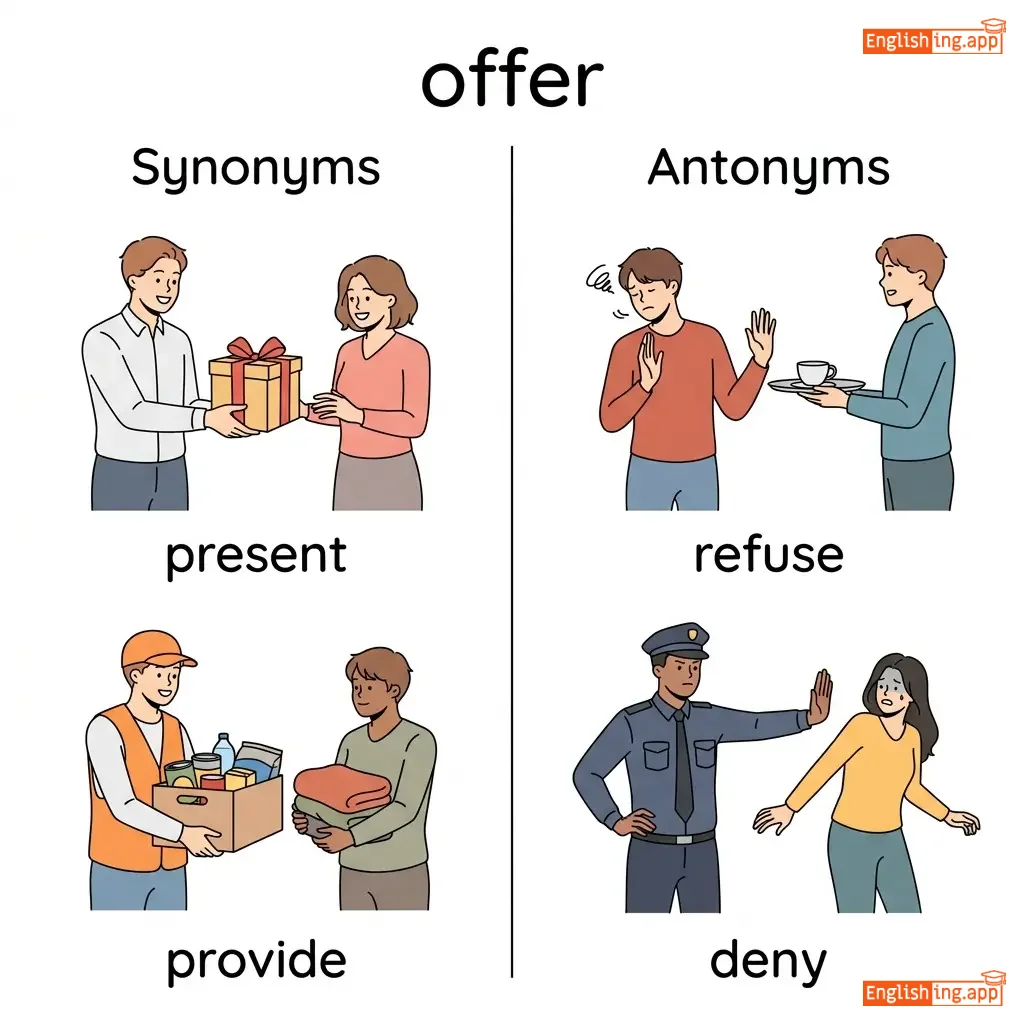
propose, present, provide, suggest
••••••
|
withdraw, refuse, deny, withhold
••••••
|
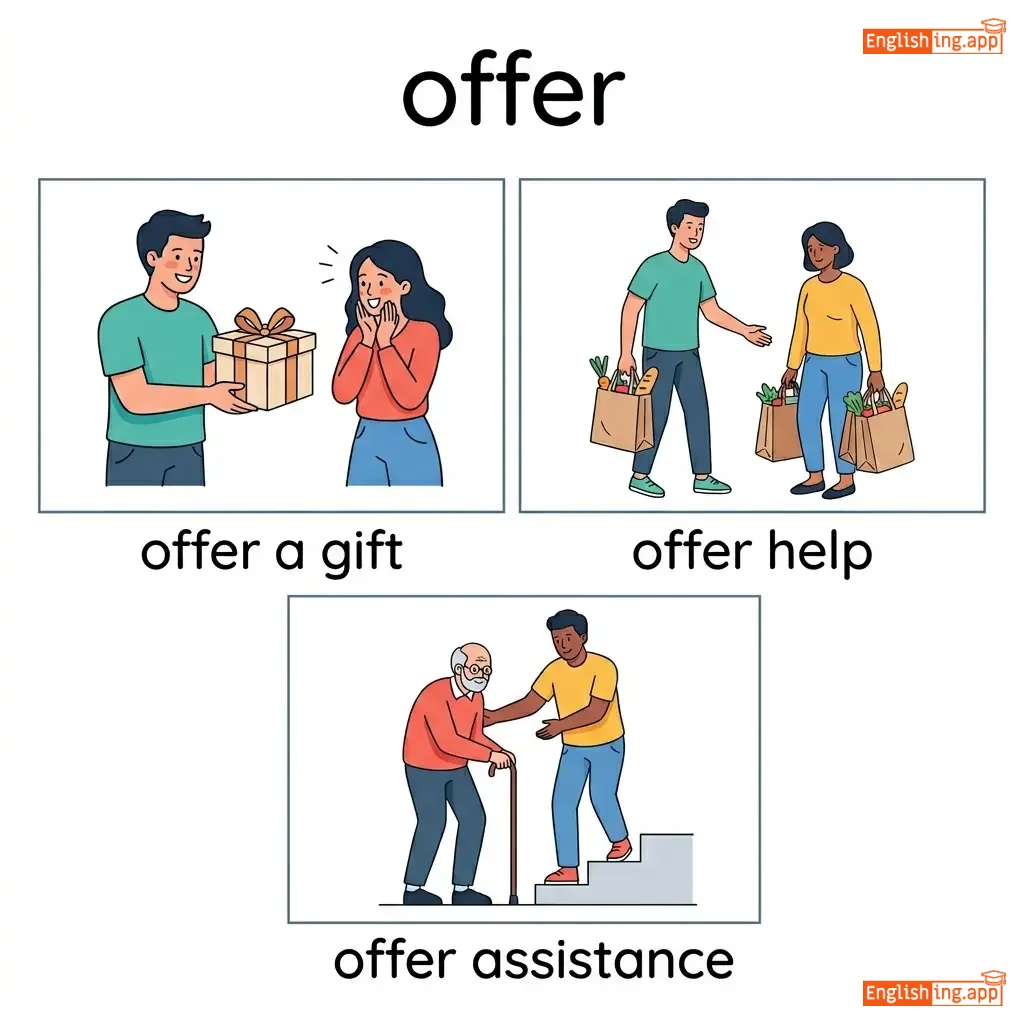
offer help, offer advice, offer support, make an offer, generous offer
••••••
|
Offer pohoge to 'predlagat' yaad rakho – dono ka matlab hai kuch dena ya propose karna.
••••••
|
|
🎁
••••••
|
/ˈɒfərɪŋ/
noun
(оферинг)
••••••
|
- •••••• |
предложение
predlozhenie
••••••
|
- •••••• | - •••••• | - •••••• | - •••••• |
something that is given, especially as a gift or contribution
••••••
|
The company’s latest offering is an eco-friendly car.
Последнее предложение компании - это экологически чистый автомобиль.
••••••
|
Последнее предложение компании - это экологически чистый автомобиль.
Poslednee predlozhenie kompanii - eto ekologicheski chisty avto.
••••••
|
peace offering
мирная жертва
••••••
|
something given to show a desire for peace or reconciliation
••••••
|
мирная жертва
mirnaya zhertva
••••••
|
gift, contribution, donation, present, sacrifice
••••••
|
refusal, withdrawal
••••••
|
make an offering, religious offering, peace offering, product offering
••••••
|
Offering означает что-то данное, как предложение или мирная жертва
••••••
|
|
🏢
••••••
|
/ˈɒf.ɪs/
noun
(ofis)
••••••
|
- •••••• |
офис
ofis
••••••
|
- •••••• | - •••••• | - •••••• | - •••••• |
a room or building where people work, usually at desks
••••••
|
She left the office early to attend a family event.
Она ушла из офиса рано, чтобы посетить семейное мероприятие.
••••••
|
Она ушла из офиса рано, чтобы посетить семейное мероприятие.
Ona ushla iz ofisa rano, chtoby posetit' semeynoe meropriyatie.
••••••
|
hold office
занимать пост
••••••
|
to be in a position of authority or responsibility
••••••
|
занимать пост
zanimat' post
••••••
|
workplace, bureau, department, agency, company
••••••
|
home, outdoors
••••••
|
office building, office hours, office desk, office staff
••••••
|
Офис - это место для работы; в офисе люди всегда работают.
••••••
|
|
👮
••••••
|
/ˈɔːfɪsər/
noun
(офицер)
••••••
|
- •••••• |
офицер
ofitser
••••••
|
- •••••• | - •••••• | - •••••• | - •••••• |
a person in a position of authority, especially in law enforcement
••••••
|
The officer gave him a ticket for speeding. |
Офицер выписал ему штраф за превышение скорости.
Ofitser vypisal yemu shtraf za prevysheniye skorosti.
••••••
|
- •••••• | - •••••• | - •••••• |
agent, constable, policeman, lawman
••••••
|
civilian, criminal
••••••
|
police officer, military officer, security officer
••••••
|
Офицер, как полицейский - человек с властью и полномочиями
••••••
|
|
📜
••••••
|
/əˈfɪʃəl/
adjective
(ofitsial)
••••••
|
- •••••• |
официальный
ofitsial'nyy
••••••
|
- •••••• | - •••••• | - •••••• | - •••••• |
relating to or connected with an authority or public office
••••••
|
He is the official spokesperson for the company.
Он официальный представитель компании.
••••••
|
Он официальный представитель компании.
On ofitsial'nyy predstavitel' kompanii.
••••••
|
- •••••• | - •••••• | - •••••• |
authorized, formal, legitimate, recognized
••••••
|
unofficial, informal, unofficial
••••••
|
official statement, official announcement, official document, official role
••••••
|
Официальный (ofitsial'nyy) всегда связан с властью или ролью в обществе.
••••••
|
|
👶
••••••
|
/ˈɒf.sprɪŋ/
noun
(оф-спринг)
••••••
|
- •••••• |
потомство
potomstvo
••••••
|
- •••••• | - •••••• | - •••••• | - •••••• |
a person's child or children; an animal's young
••••••
|
The bird carefully fed its offspring.
Птица осторожно кормит свое потомство.
••••••
|
Птица осторожно кормит свое потомство.
Ptitsa ostorozhno kormit svoe potomstvo.
••••••
|
- •••••• | - •••••• | - •••••• |
children, progeny, descendants, young
••••••
|
parent, ancestor
••••••
|
human offspring, animal offspring, produce offspring, healthy offspring
••••••
|
Offspring = 'off' (вне) + 'spring' (весна) → новый цикл жизни → потомство.
••••••
|
|
🔁
••••••
|
/ˈɔːfən/
adverb
(офтен)
••••••
|
- •••••• |
часто
chasto
••••••
|
- •••••• | - •••••• | - •••••• | - •••••• |
frequently, many times
••••••
|
I often visit my grandparents on weekends.
Я часто посещаю своих бабушку и дедушку на выходных.
••••••
|
Я часто посещаю своих бабушку и дедушку на выходных.
Ya chasto poseschayu svoikh babushku i dedushku na vykhodnykh.
••••••
|
- •••••• | - •••••• | - •••••• |
frequently, regularly, repeatedly, commonly
••••••
|
rarely, seldom, never
••••••
|
often visit, often see, often talk, often hear
••••••
|
На работе часто (often) проходят встречи.
••••••
|
|
😮
••••••
|
/oʊ/
interjection
(Ох)
••••••
|
- •••••• |
Ох
oh
••••••
|
- •••••• | - •••••• | - •••••• | - •••••• |
used to express surprise, realization, or understanding
••••••
|
Oh, I didn't know you were here! |
Ох, я не знал, что ты здесь!
Oh, ya ne znal, chto ty zdes'!
••••••
|
- •••••• | - •••••• | - •••••• |
wow, ah, oh my, oops
••••••
|
- •••••• |
oh no, oh wow, oh my, oh dear
••••••
|
Ох, ты что! (Oh, what are you!)
••••••
|
|
🛢️
••••••
|
/ɔɪl/
noun
(хэппинесс)
••••••
|
- •••••• |
масло
maslo
••••••
|
- •••••• | - •••••• | - •••••• | - •••••• |
a viscous liquid derived from petroleum or plants, used for cooking or fuel
••••••
|
Heat the oil in a pan before adding the vegetables. |
Нагрейте масло в сковороде перед тем, как добавить овощи.
Nagreyte maslo v skovorode pered tem, kak dobavit' ovochi.
••••••
|
- •••••• | - •••••• | - •••••• |
fat, grease
••••••
|
water
••••••
|
cooking oil, olive oil, vegetable oil, oil pan
••••••
|
Maslo is oil in Russian – use it to fry your favorite dish!
••••••
|

