|
表情符号
|
单词 | Images | 翻译 | 过去时 | 过去分词 | 第三人称单数 | 动名词 | 含义 | 例句 | 例句翻译 | 示例表达 | 示例表达含义 | 示例表达翻译 | 同义词 | 反义词 | 搭配词 | 助记符 |
|---|---|---|---|---|---|---|---|---|---|---|---|---|---|---|---|---|---|
|
🥜
••••••
|
/nʌt/
noun
(ナット)
••••••
|
- •••••• |
坚果
jian guo
••••••
|
- •••••• | - •••••• | - •••••• | - •••••• |
a hard-shelled fruit that contains a seed, or a small metal piece used in machinery
••••••
|
She ate a peanut, which is a type of nut. |
她吃了一颗花生,这是坚果的一种。
Tā chīle yī kē huāshēng, zhè shì jiānguǒ de yī zhǒng.
••••••
|
- •••••• | - •••••• | - •••••• |
seed, kernel, shell
••••••
|
fruit, vegetable
••••••
|
eat nuts, nut shell, nutcracker
••••••
|
Nut is like a jianguo, tough but full of reward when you crack it!
••••••
|
|
🥦
••••••
|
/ˈnjuː.tri.ənt/
noun
(纽特里恩特)
••••••
|

|
营养物质
yingyang wuzhi
••••••
|
- •••••• | - •••••• | - •••••• | - •••••• |
A substance that provides nourishment essential for growth and the maintenance of life.
••••••
|
Vegetables are rich in essential nutrients. |
蔬菜富含必要的营养物质。
Shucai fuhan bixiao de yingyang wuzhi.
••••••
|
- •••••• | - •••••• | - •••••• |
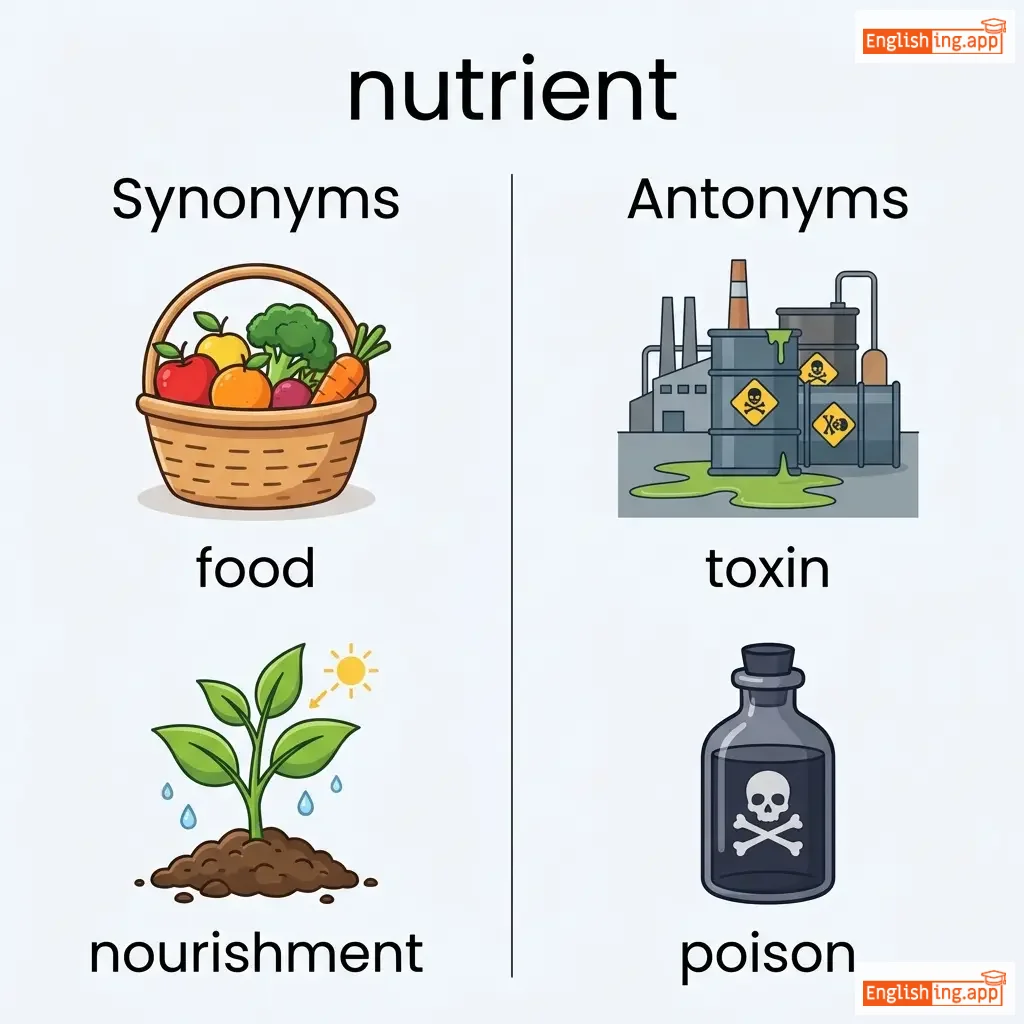
food, nourishment, sustenance, vitamin, mineral
••••••
|
toxin, poison
••••••
|
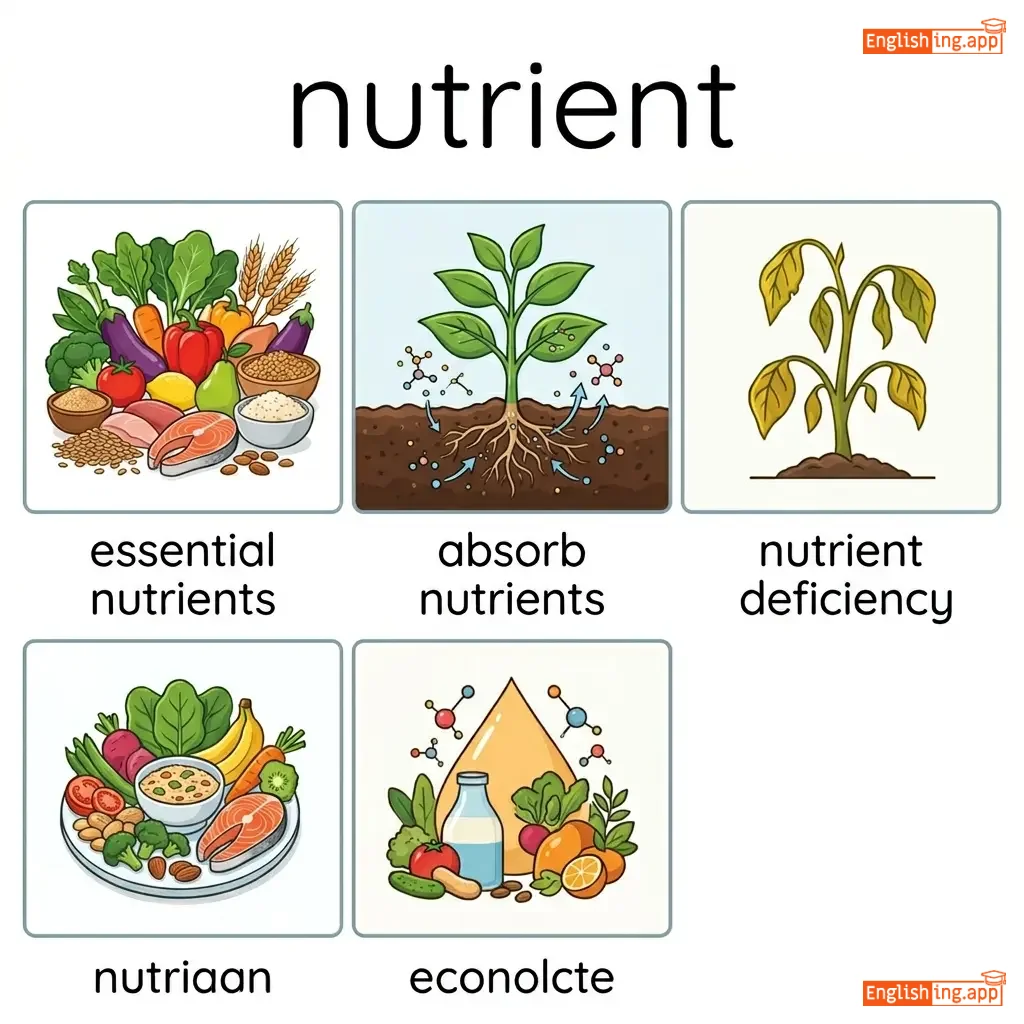
essential nutrients, absorb nutrients, nutrient deficiency, nutrient intake
••••••
|
NutriENT = Nutri + ENT (娱乐), 吃了富含营养的食物,身体会感到娱乐。
••••••
|
|
🍎
••••••
|
/njuːˈtrɪʃ.ən/
noun
(niutrisheun)
••••••
|
- •••••• |
营养
yingyang
••••••
|
- •••••• | - •••••• | - •••••• | - •••••• |
The process of providing or obtaining the food necessary for health and growth.
••••••
|
Good nutrition is vital for a healthy life. |
良好的营养对健康生活至关重要。
Lianghao de yingyang dui jiankang shenghuo zhiguang zhongyao.
••••••
|
balanced nutrition |
having the right proportions of nutrients in the diet
••••••
|
均衡营养
junheng yingyang
••••••
|
nourishment, sustenance, diet, feeding, dietetics
••••••
|
malnutrition, starvation
••••••
|
good nutrition, proper nutrition, nutrition plan, nutrition education
••••••
|
Nutrition = 营养,关心自己,保持健康的生活方式。
••••••
|
|
🥗
••••••
|
/njuːˈtrɪʃ.əs/
adjective
(纽特里修斯)
••••••
|
- •••••• |
有营养的
nyutrishus
••••••
|
- •••••• | - •••••• | - •••••• | - •••••• |
containing substances that help the body grow and stay healthy; nourishing
••••••
|
Eating nutritious food helps maintain good health.
吃有营养的食物有助于保持身体健康。
••••••
|
吃有营养的食物有助于保持身体健康。
chiyouyingyangdeshiwuyouzhuyubaochishentijiankang
••••••
|
- •••••• | - •••••• | - •••••• |
healthy, nourishing, wholesome, beneficial
••••••
|
unhealthy, junk, harmful
••••••
|
nutritious food, nutritious diet, nutritious meal
••••••
|
Nutritious 记作 纽特里修斯, 吃 有营养 的 食物 Nourish your body, health up, 生活更 bright.
••••••
|
|
🍔
••••••
|
/oʊˈbiːsəti/
noun
(欧比斯提)
••••••
|

|
肥胖
feipang
••••••
|
- •••••• | - •••••• | - •••••• | - •••••• |
The condition of being very overweight, especially to a degree that it is harmful to health.
••••••
|
Obesity is a growing health problem in many countries. |
肥胖是许多国家日益严重的健康问题。
Feipang shi xuduo guojia riyi yanzhong de jiankang wenti.
••••••
|
- •••••• | - •••••• | - •••••• |
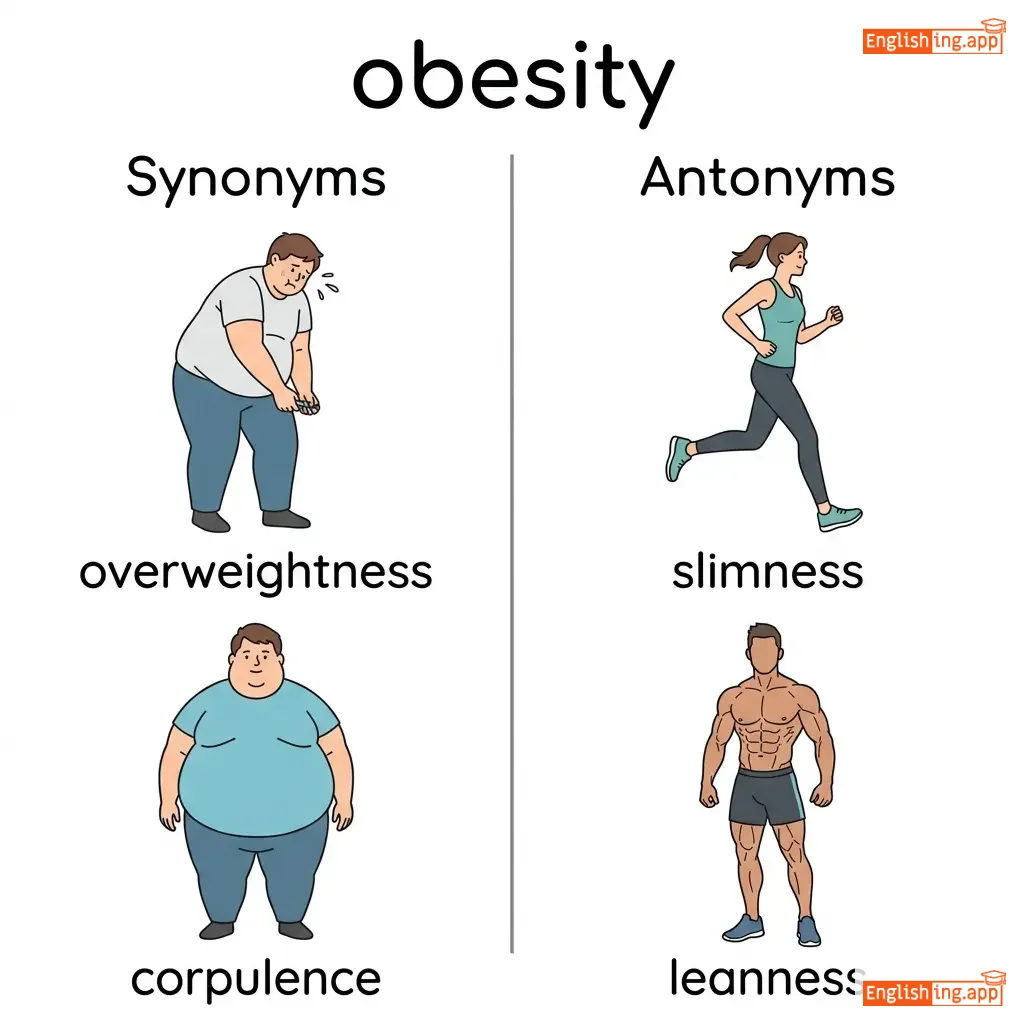
overweightness, corpulence, fatness, heaviness
••••••
|
slimness, leanness
••••••
|
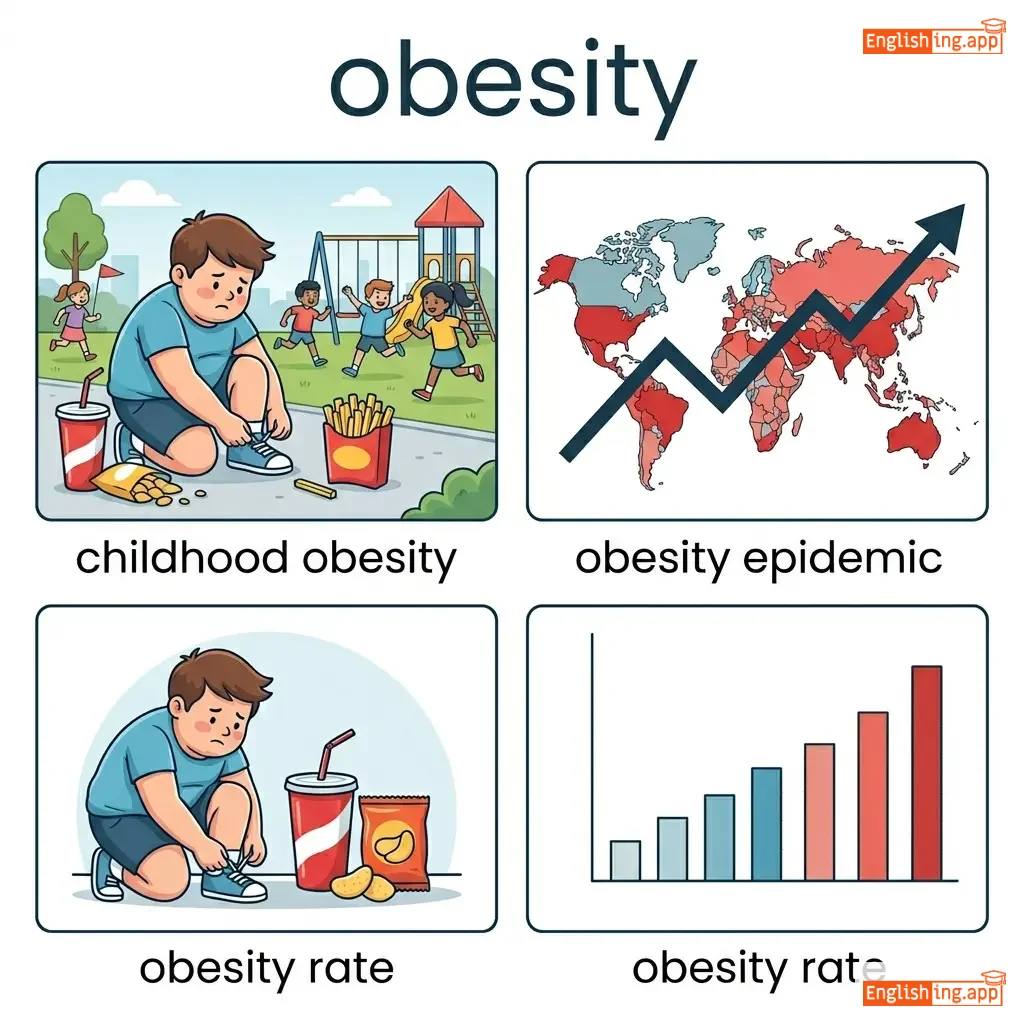
childhood obesity, obesity epidemic, obesity rate, obesity problem
••••••
|
Obesity = Obese + ity → Obese的意思是肥胖。
••••••
|
|
📦
••••••
|
/ˈɒbdʒɪkt/
noun
(ɒbdʒɛkt)
••••••
|
- •••••• |
物体
wùtǐ
••••••
|
- •••••• | - •••••• | - •••••• | - •••••• |
a thing that can be seen and touched
••••••
|
The table is an object in the room.
桌子是房间里的一个物体。
••••••
|
桌子是房间里的一个物体。
Zhuōzi shì fángjiān lǐ de yī gè wùtǐ.
••••••
|
- •••••• | - •••••• | - •••••• |
item, thing, article, entity
••••••
|
subject, person
••••••
|
inanimate object, physical object, move object, object to
••••••
|
物体是你可以看到和触摸的东西。
••••••
|
|
✋
••••••
|
/əbˈdʒɛkʃən/
noun
(反对)
••••••
|
- •••••• |
异议
yiyi
••••••
|
- •••••• | - •••••• | - •••••• | - •••••• |
an expression or feeling of disapproval or opposition
••••••
|
The lawyer raised an objection during the trial.
律师在审判中提出了异议。
••••••
|
律师在审判中提出了异议。
Lüshi zai shenpan zhong tichu le yiyi.
••••••
|
raise an objection
提出异议
••••••
|
to express disapproval or disagreement formally
••••••
|
提出异议
tichu yiyi
••••••
|
protest, complaint, opposition, dissent, disagreement
••••••
|
approval, consent, agreement
••••••
|
strong objection, raise an objection, legal objection, no objection, objection letter
••••••
|
Objection 意味着异议 — 在法庭上你会听到‘异议!’ ✋ 这意味着反对!
••••••
|
|
🎯
••••••
|
/əbˈdʒɛktɪv/
noun, adjective
(ob-jie-kti-fu)
••••••
|


|
目标 / 客观的
mùbiāo / kèguān de
••••••
|
- •••••• | - •••••• | - •••••• | - •••••• |
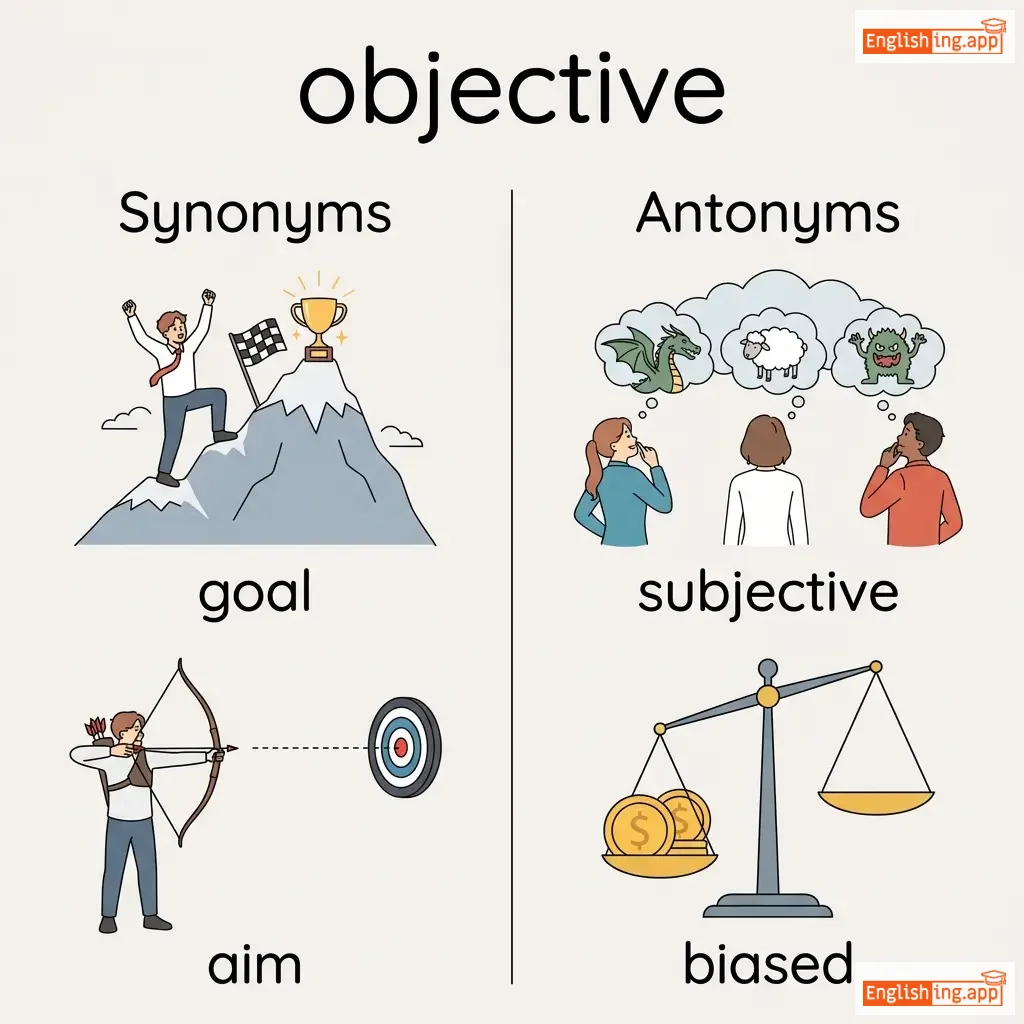
As a noun: a goal or aim. As an adjective: not influenced by personal feelings; unbiased.
••••••
|
Her main objective is to finish the project on time. |
她的主要目标是按时完成这个项目。
Tā de zhǔyào mùbiāo shì àn shí wánchéng zhège xiàngmù.
••••••
|
objective reality |
Reality that exists independent of personal feelings or opinions
••••••
|
客观现实
kèguān xiànshí
••••••
|
goal, aim, target, purpose, impartial
••••••
|
subjective, biased
••••••
|
clear objective, main objective, objective analysis
••••••
|
Objective 意味着 🎯 目标 —— 就像考试中的选择题,你必须公正地回答。
••••••
|
|
📜
••••••
|
/ˈɑːblɪˌɡeɪt/
verb
(obligate)
••••••
|
- •••••• |
强迫
qiǎngpò
••••••
|
obligated
obligated
••••••
|
obligated
obligated
••••••
|
obligates
obligates
••••••
|
obligating
obligating
••••••
|
to bind legally or morally; to compel someone to do something
••••••
|
The contract obligates the company to provide timely service.
合同使公司有义务提供及时服务。
••••••
|
合同使公司有义务提供及时服务。
Hétóng shǐ gōngsī yǒu yìwù tígōng jíshí fúwù.
••••••
|
- •••••• | - •••••• | - •••••• |
bind, compel, require, force
••••••
|
free, release, exempt
••••••
|
legally obligate, morally obligate, obligate by contract
••••••
|
Obligate 意味着 'obligation', 即强迫某人做某事。
••••••
|
|
📝
••••••
|
/ˌɑb.lɪˈɡeɪ.ʃən/
noun
(义务)
••••••
|
- •••••• |
义务
yiwu
••••••
|
- •••••• | - •••••• | - •••••• | - •••••• |
a duty or commitment; something that must be done legally or morally
••••••
|
Parents have an obligation to care for their children.
父母有责任照顾他们的孩子。
••••••
|
父母有责任照顾他们的孩子。
fumu you zeren zhaogu tamen de haizi
••••••
|
- •••••• | - •••••• | - •••••• |
duty, responsibility, commitment, requirement
••••••
|
freedom, choice, option, liberty
••••••
|
legal obligation, moral obligation, meet obligation
••••••
|
父母有责任照顾他们的孩子,法律和道德要求如此。
••••••
|
|
🤝
••••••
|
/əˈblaɪdʒ/
verb
(奥布莱基)
••••••
|
|
迫使
poshi
••••••
|
obliged
奥布莱基德
••••••
|
obliged
奥布莱基德
••••••
|
obliges
奥布莱吉斯
••••••
|
obliging
奥布莱金
••••••
|
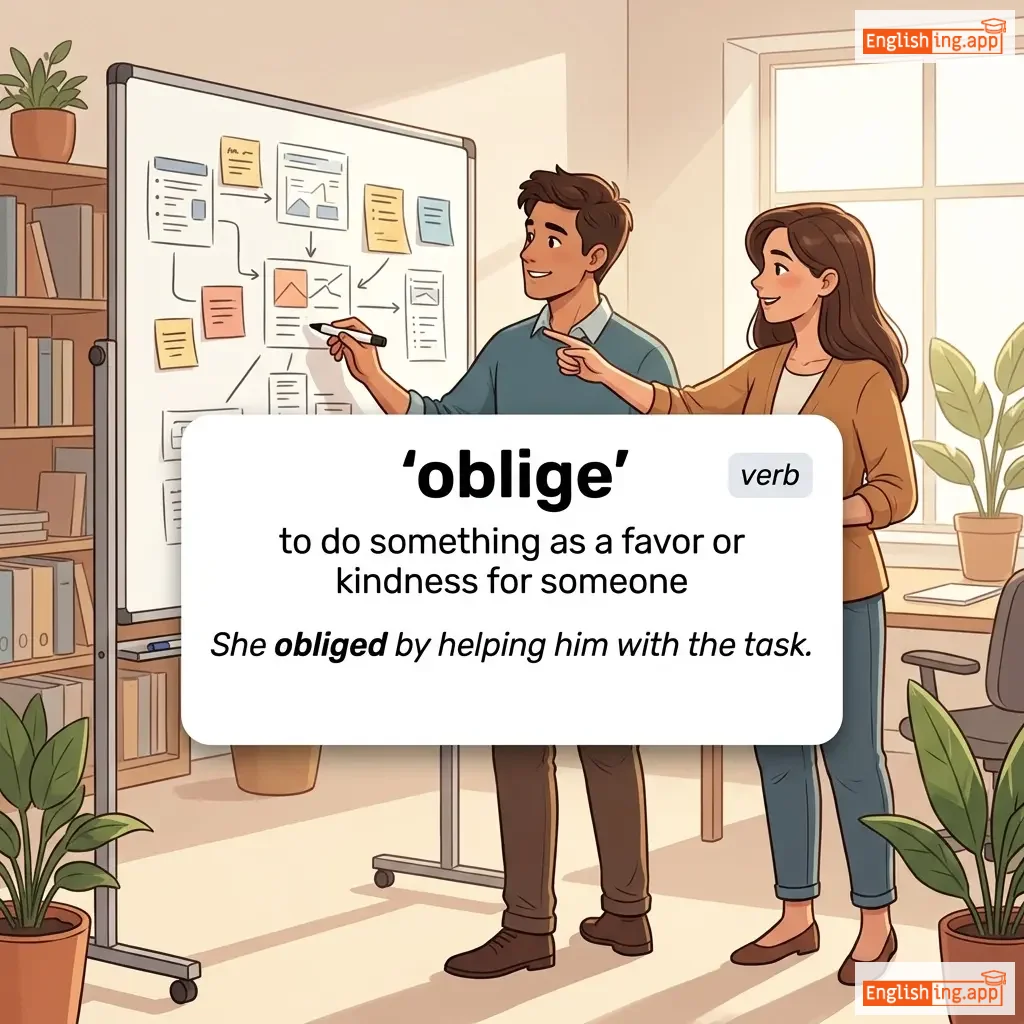
to compel or require someone to do something; to help or do a favor
••••••
|
I would be happy to oblige you with the information you need.
我会很高兴地奥布莱基你提供你需要的信息。
••••••
|
我很乐意为你提供所需的信息。
Wo hen leyi wei ni tigong suoxu de xinxi.
••••••
|
- •••••• | - •••••• | - •••••• |
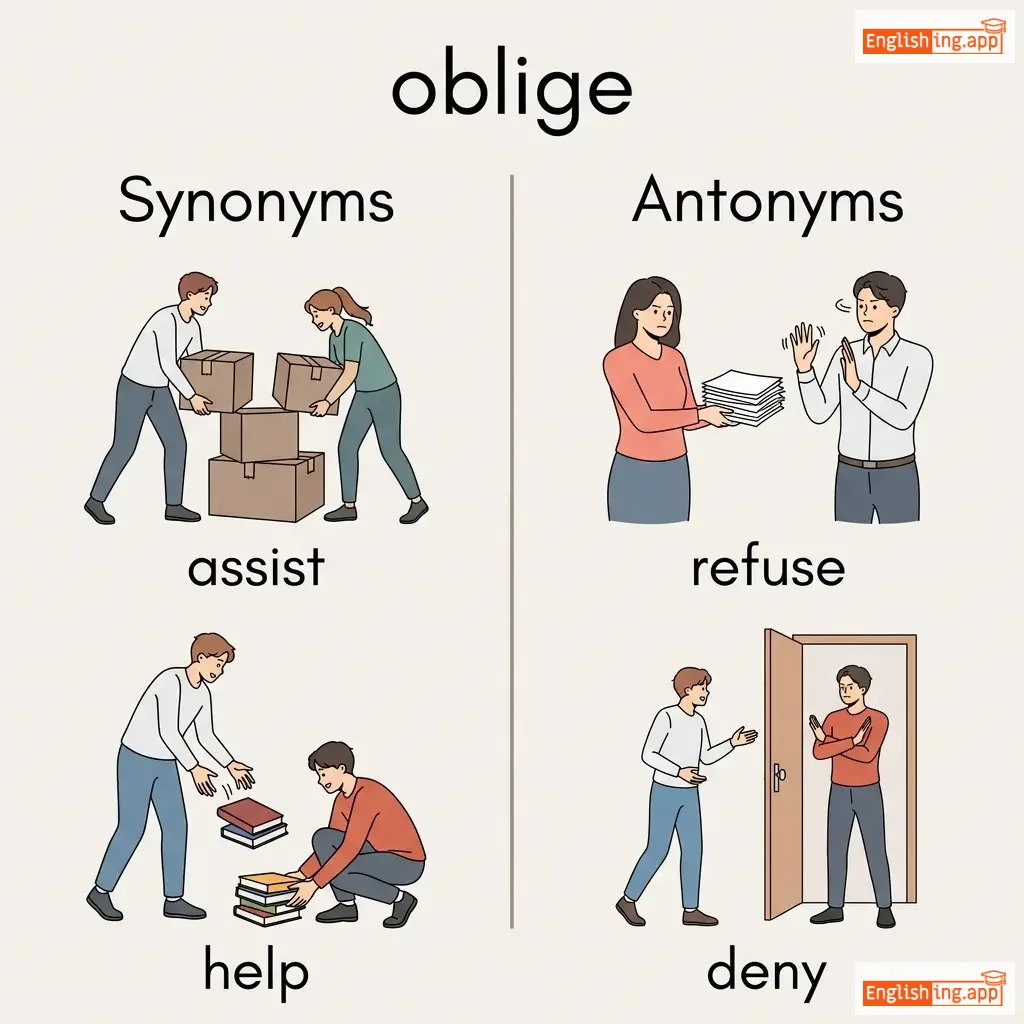
compel, require, help, assist
••••••
|
free, release, refuse, deny
••••••
|
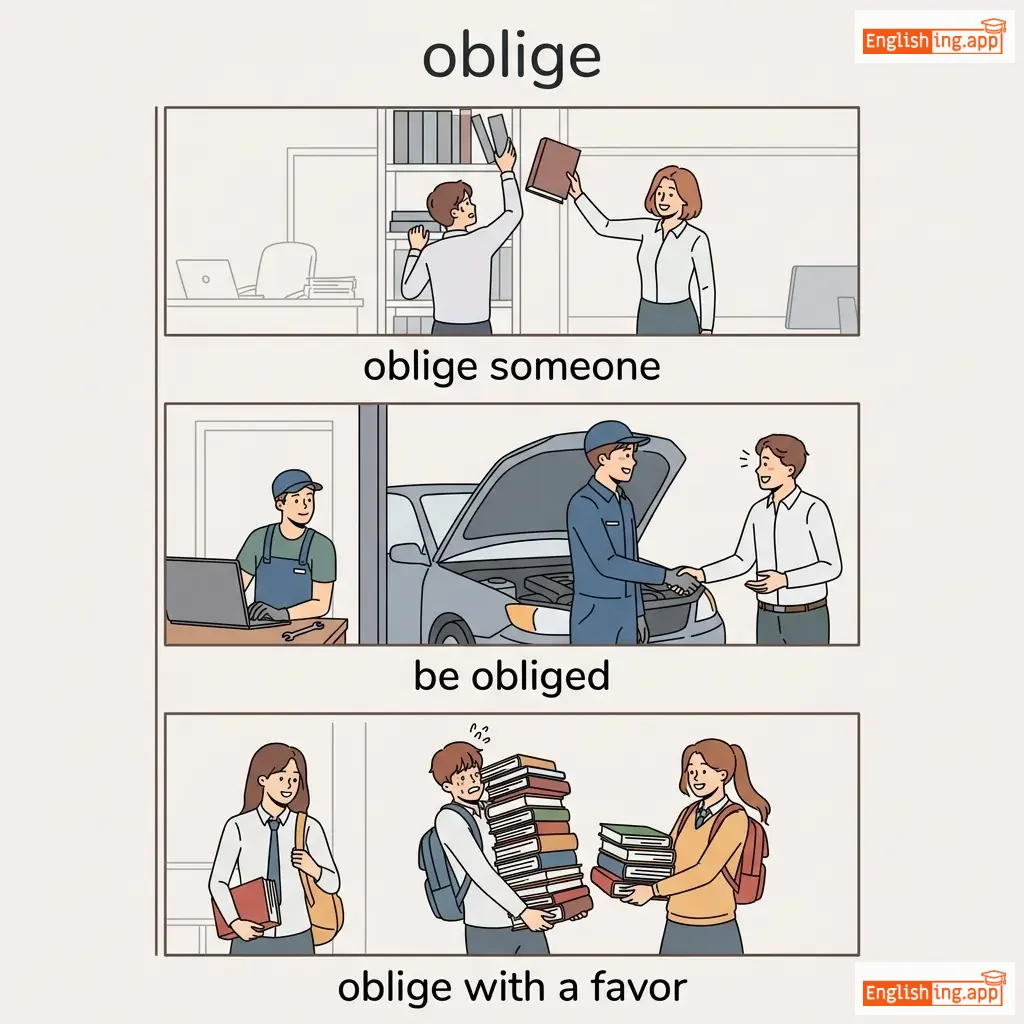
happily oblige, oblige someone, oblige with, willing to oblige, greatly oblige, kindly oblige
••••••
|
Oblige means ‘poshi’ (迫使) — to compel or kindly assist in Chinese.
••••••
|
|
👀
••••••
|
/ˌɑb.zɚˈveɪ.ʃən/
noun
(观察)
••••••
|
- •••••• |
观察
guancha
••••••
|
- •••••• | - •••••• | - •••••• | - •••••• |
the action of watching something carefully; a comment or remark
••••••
|
The scientist made careful observations of the experiment.
科学家仔细观察了实验。
••••••
|
科学家仔细观察了实验。
Kexuejia zixi guancha le shiyan.
••••••
|
- •••••• | - •••••• | - •••••• |
watching, monitoring, examination, remark
••••••
|
ignorance, neglect, inattention, oversight
••••••
|
careful observation, direct observation, under observation
••••••
|
科学家认真观察实验中的每个细节。
••••••
|
|
👀
••••••
|
/əbˈzɜːvər/
noun
(óu-bú-zhè-fú-ěr)
••••••
|
- •••••• |
观察者
guānchá zhě
••••••
|
- •••••• | - •••••• | - •••••• | - •••••• |
a person who watches or notices something
••••••
|
The observer took notes during the meeting. |
观察者在会议期间做了笔记。
Guānchá zhě zài huìyì qījiān zuò le bǐjì.
••••••
|
- •••••• | - •••••• | - •••••• |
spectator, watcher, viewer, onlooker
••••••
|
participant, actor
••••••
|
passive observer, keen observer, careful observer
••••••
|
Observer - ‘观’和‘察’意味着一个观察者,在中文中记住它很容易。
••••••
|
|
🌀
••••••
|
/əbˈsɛs/
verb
••••••
|
- •••••• | - •••••• |
obsessed
••••••
|
obsessed
••••••
|
obsesses
••••••
|
obsessing
••••••
|
To preoccupy or fill the mind of someone continually and to an excessive degree.
••••••
|
She tends to obsess over small details. |
- •••••• |
obsess over |
To think about something too much and not let go of it
••••••
|
- •••••• |
preoccupy, fixate, dwell, consume, dominate
••••••
|
ignore, neglect
••••••
|
obsess over, obsess with, obsess about, obsess constantly
••••••
|
No •••••• |
|
🔥
••••••
|
/əbˈsɛʃən/
noun
(obsession)
••••••
|
- •••••• |
痴迷
chimi
••••••
|
- •••••• | - •••••• | - •••••• | - •••••• |
An idea, thought, or concern that continually preoccupies or intrudes on a person's mind.
••••••
|
His obsession with success drove him to work day and night. |
他对成功的痴迷促使他日夜工作。
Ta dui chenggong de chimi cucishi ta riye gongzuo.
••••••
|
an obsession with |
Being overly concerned or preoccupied with something
••••••
|
痴迷于
chimi yu
••••••
|
fixation, preoccupation, compulsion, mania, craze
••••••
|
indifference, apathy
••••••
|
obsession with, obsession about, unhealthy obsession, lifelong obsession
••••••
|
痴迷是指无法摆脱的思绪,就像反复不断地循环。
••••••
|
|
🚧
••••••
|
/ˈɒbstəkəl/
noun
(obuseutai)
••••••
|
- •••••• |
障碍
zhàng'ài
••••••
|
- •••••• | - •••••• | - •••••• | - •••••• |
something that blocks your way or prevents progress
••••••
|
Lack of money was the main obstacle to his success. |
缺钱是他成功的主要障碍。
quē qián shì tā chénggōng de zhǔyào zhàng'ài.
••••••
|
overcome an obstacle |
to deal with and successfully get past a problem or barrier
••••••
|
克服障碍
kèfú zhàng'ài
••••••
|
barrier, hurdle, hindrance, block, difficulty
••••••
|
aid, help, support
••••••
|
major obstacle, face an obstacle, overcome obstacle, obstacle course, create obstacle
••••••
|
障碍 = 障碍物,阻止进程 🚧
••••••
|
|
📜
••••••
|
/əbˈteɪn/
verb
(获得)
••••••
|

|
获得
huo de
••••••
|
obtained
获得
••••••
|
obtained
获得
••••••
|
obtains
获得
••••••
|
obtaining
获得中
••••••
|
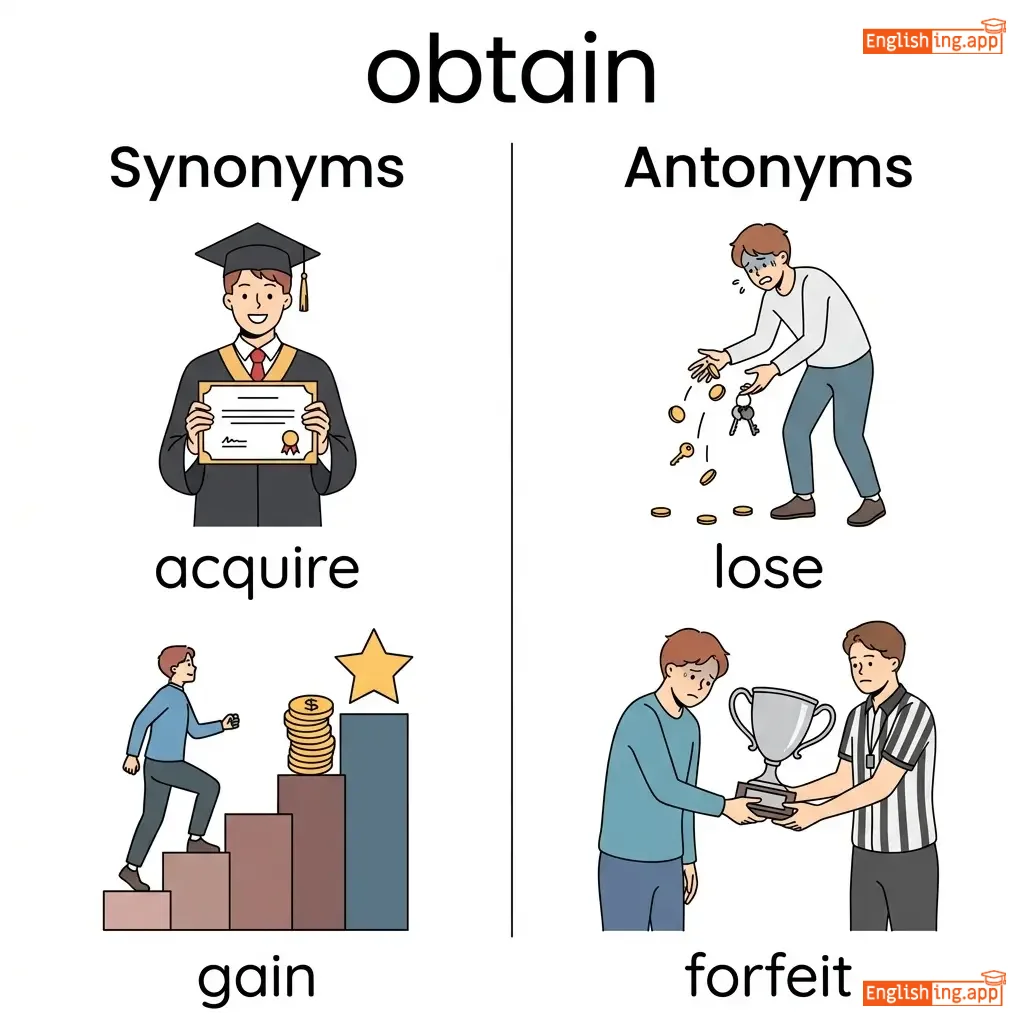
to get, acquire, or secure something
••••••
|
She managed to obtain a scholarship for her studies.
她成功地获得了奖学金。
••••••
|
她成功地获得了奖学金。
Tā chénggōng de huò dé le jiǎngxuéjīn.
••••••
|
obtain permission
获得许可
••••••
|
to get approval or consent to do something
••••••
|
获得许可
huò dé xǔkě
••••••
|
acquire, gain, secure, procure, receive
••••••
|
lose, forfeit, give up
••••••
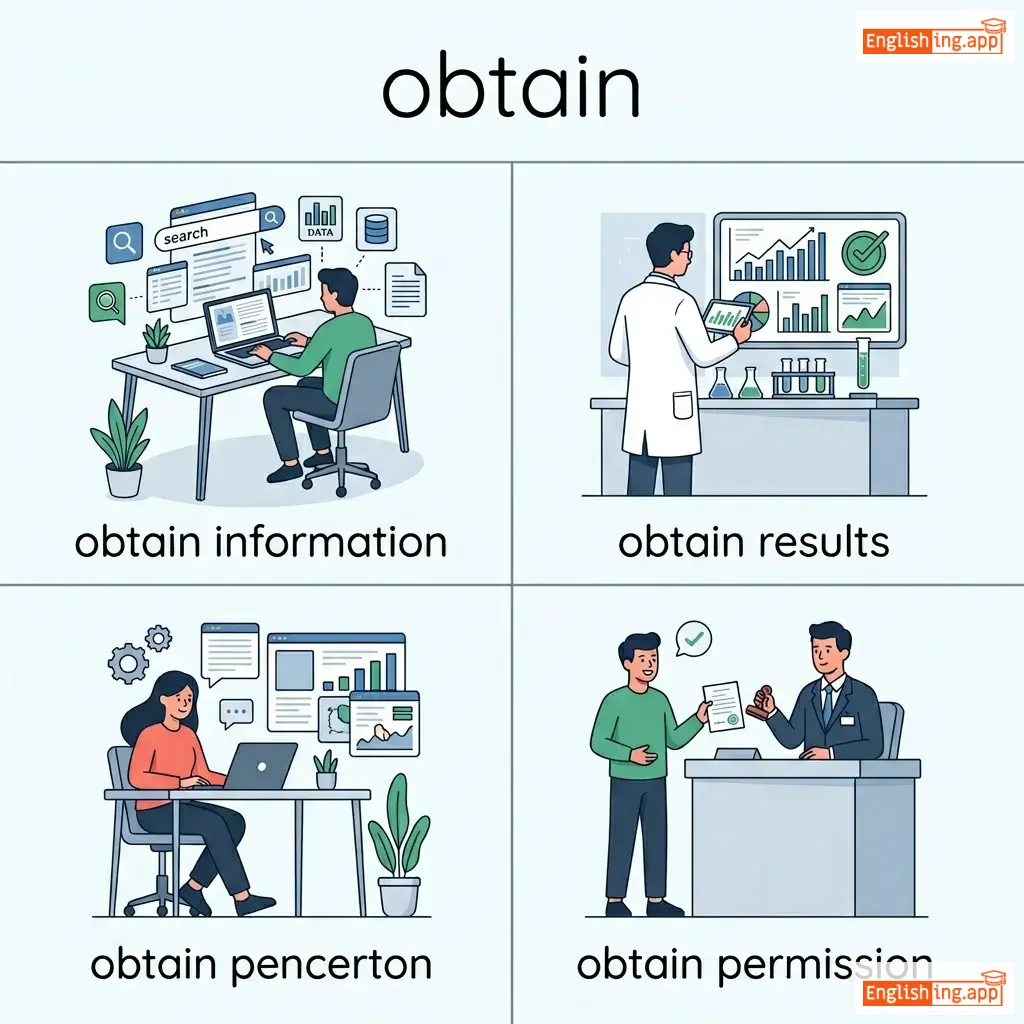
|
obtain information, obtain results, obtain permission
••••••
|
Obtain = OBTain (获得) = 一起(起)获得
••••••
|
|
👀
••••••
|
/ˈɒb.vi.əs/
adjective
(奥比厄斯)
••••••
|
- •••••• |
显而易见
xian er yi jian
••••••
|
- •••••• | - •••••• | - •••••• | - •••••• |
easily perceived or understood; clear and apparent
••••••
|
It was obvious that she was upset after the meeting. |
开会后很明显她感到不安。
Kai hui hou hen ming xian ta gan dao bu an.
••••••
|
the obvious choice |
something that is the most evident or suitable option
••••••
|
显而易见的选择
xian er yi jian de xuan ze
••••••
|
clear, evident, apparent, noticeable, plain
••••••
|
hidden, unclear, obscure
••••••
|
obvious reason, obvious fact, obvious mistake, obvious difference
••••••
|
显而易见 = 明显的,易于看到。
••••••
|
|
🙄
••••••
|
/ˈɒbviəsli/
adverb
(obviəsli)
••••••
|
- •••••• |
显然
xianran
••••••
|
- •••••• | - •••••• | - •••••• | - •••••• |
in a way that is easily perceived or understood; clearly
••••••
|
Obviously, he didn’t read the instructions.
显然,他没有读说明书。
••••••
|
显然,他没有读说明书。
Xianran, ta meiyou du shuoming shu.
••••••
|
- •••••• | - •••••• | - •••••• |
clearly, evidently, unmistakably, plainly
••••••
|
ambiguously, unclearly
••••••
|
obviously wrong, obviously clear, obviously upset
••••••
|
显而易见,清晰明了!
••••••
|
|
🎉
••••••
|
/əˈkeɪʒən/
noun
(ōu kēi zhēn)
••••••
|
- •••••• |
场合
changhe
••••••
|
- •••••• | - •••••• | - •••••• | - •••••• |
A particular time or event; a special or important happening.
••••••
|
Her wedding was a joyful occasion for the whole family. |
她的婚礼是全家人的一个欢乐场合。
Tā de hūnlǐ shì quánjiārén de yīgè huānlè chǎnghé.
••••••
|
on occasion |
sometimes, occasionally
••••••
|
偶尔
ǒu'ěr
••••••
|
event, moment, incident, celebration, affair
••••••
|
routine, ordinary, regularity
••••••
|
special occasion, on occasion, festive occasion, grand occasion
••••••
|
Occasion 在中文里是场合,意味着特殊的时刻 - 在重要的场合,我们常常庆祝。
••••••
|
|
🌦️
••••••
|
/əˈkeɪʒənəl/
adjective
(奥凯珍尔)
••••••
|
- •••••• |
偶尔的
ǒu'ěr de
••••••
|
- •••••• | - •••••• | - •••••• | - •••••• |
happening or done sometimes but not regularly or often
••••••
|
He makes occasional visits to his hometown. |
他偶尔访问他的家乡。
Tā ǒu'ěr fǎngwèn tā de jiāxiāng.
••••••
|
occasional table |
a small table used when needed
••••••
|
偶尔桌子
ǒu'ěr zhuōzi
••••••
|
infrequent, irregular, periodic, sporadic, intermittent
••••••
|
regular, constant, frequent
••••••
|
occasional visit, occasional rain, occasional use, occasional meeting
••••••
|
偶尔就像偶尔下的雨 – 偶尔才有 🌧️
••••••
|
|
🔄⏰
••••••
|
/əˈkeɪʒənəli/
adverb
(okéʒənəli)
••••••
|
- •••••• |
偶尔; 有时;
ǒu ěr; yǒu shí
••••••
|
- •••••• | - •••••• | - •••••• | - •••••• |
sometimes; from time to time; not regularly
••••••
|
I occasionally visit my grandmother on weekends. |
我偶尔在周末去看望我的祖母。
Wǒ ǒu ěr zài zhōumò qù kànwàng wǒ de zǔmǔ.
••••••
|
- •••••• | - •••••• | - •••••• |
sometimes, from time to time, periodically, sporadically
••••••
|
always, never, constantly, regularly
••••••
|
occasionally visit, occasionally happens, very occasionally
••••••
|
偶尔去看望祖母
••••••
|
|
💼
••••••
|
/ˌɑk.jəˈpeɪ.ʃən/
noun
(职业)
••••••
|
- •••••• |
职业; 工作; 占领
zhiye; gongzuo; zhanling
••••••
|
- •••••• | - •••••• | - •••••• | - •••••• |
a job or profession; the action of taking control of a place
••••••
|
Teaching is her chosen occupation. |
教学是她选择的职业。
Jiaoxue shi ta xuanze de zhiye.
••••••
|
- •••••• | - •••••• | - •••••• |
profession, job, career, work
••••••
|
unemployment, leisure, vacation, freedom
••••••
|
full-time occupation, main occupation, military occupation
••••••
|
通过职业寻找幸福
••••••
|
|
🚫
••••••
|
/ˈɒkjʊpaɪd/
adjective; verb (past participle)
(奥丘派德)
••••••
|
- •••••• |
被占用的;被占领的
bei zhanyong de; bei zhanling de
••••••
|
occupied
奥丘派德
••••••
|
occupied
奥丘派德
••••••
|
occupies
奥丘派兹
••••••
|
occupying
奥丘派英
••••••
|
being in use or taken; filled or lived in; controlled or held by force
••••••
|
The room is occupied, so please wait outside.
德 如姆 伊兹 奥丘派德,索 普利兹 韦特 奥特赛德。
••••••
|
房间被占用,请在外面等候。
Fangjian bei zhanyong, qing zai waimian denghou
••••••
|
occupied territory
奥丘派德 特瑞托瑞
••••••
|
an area controlled by foreign or military forces
••••••
|
被占领的领土
bei zhanling de lingtu
••••••
|
busy, taken, engaged, inhabited, seized
••••••
|
vacant, free, empty
••••••
|
occupied room, occupied seat, fully occupied, military occupied, occupied territory
••••••
|
Occupied=被占用—房间被用着就是 occupied。
••••••
|
|
🏠
••••••
|
/ˈɒkjʊpaɪ/
verb
(奥克尤派)
••••••
|
|
占据
okjuupai
••••••
|
occupied
奥克尤派德
••••••
|
occupied
奥克尤派德
••••••
|
occupies
奥克尤派斯
••••••
|
occupying
奥克尤派英
••••••
|
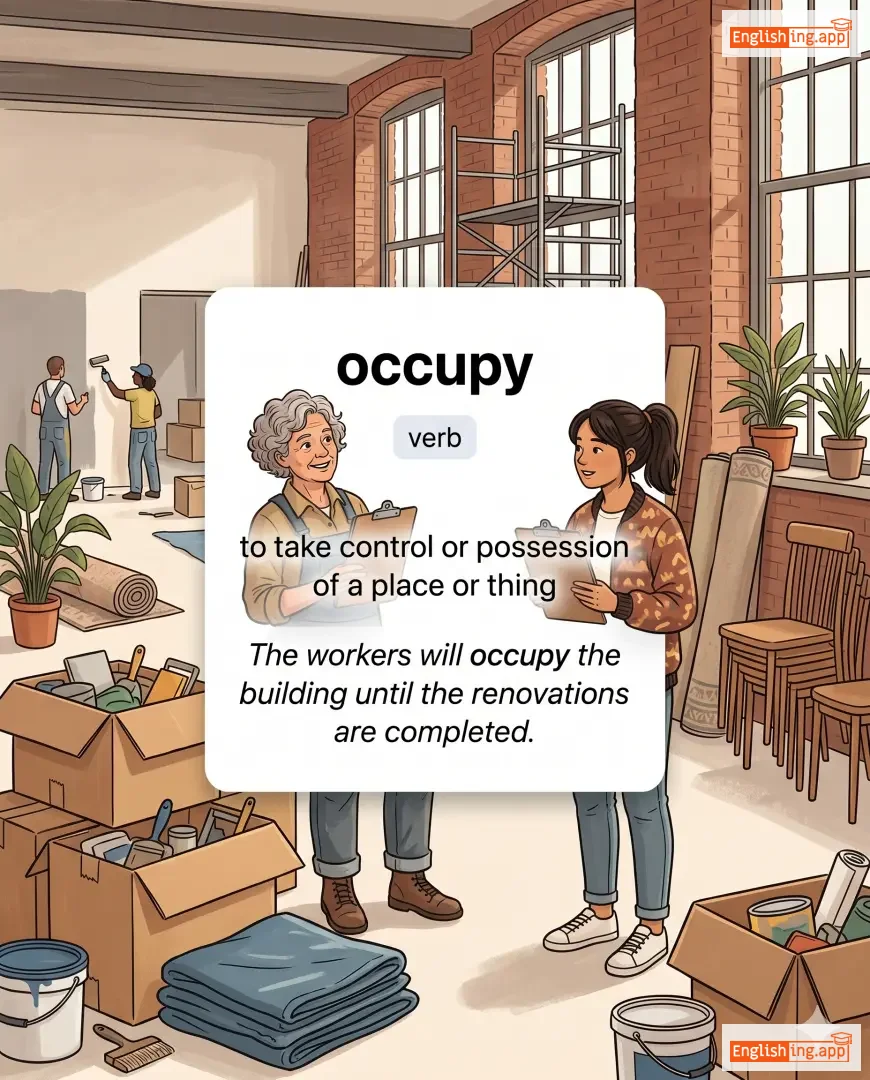
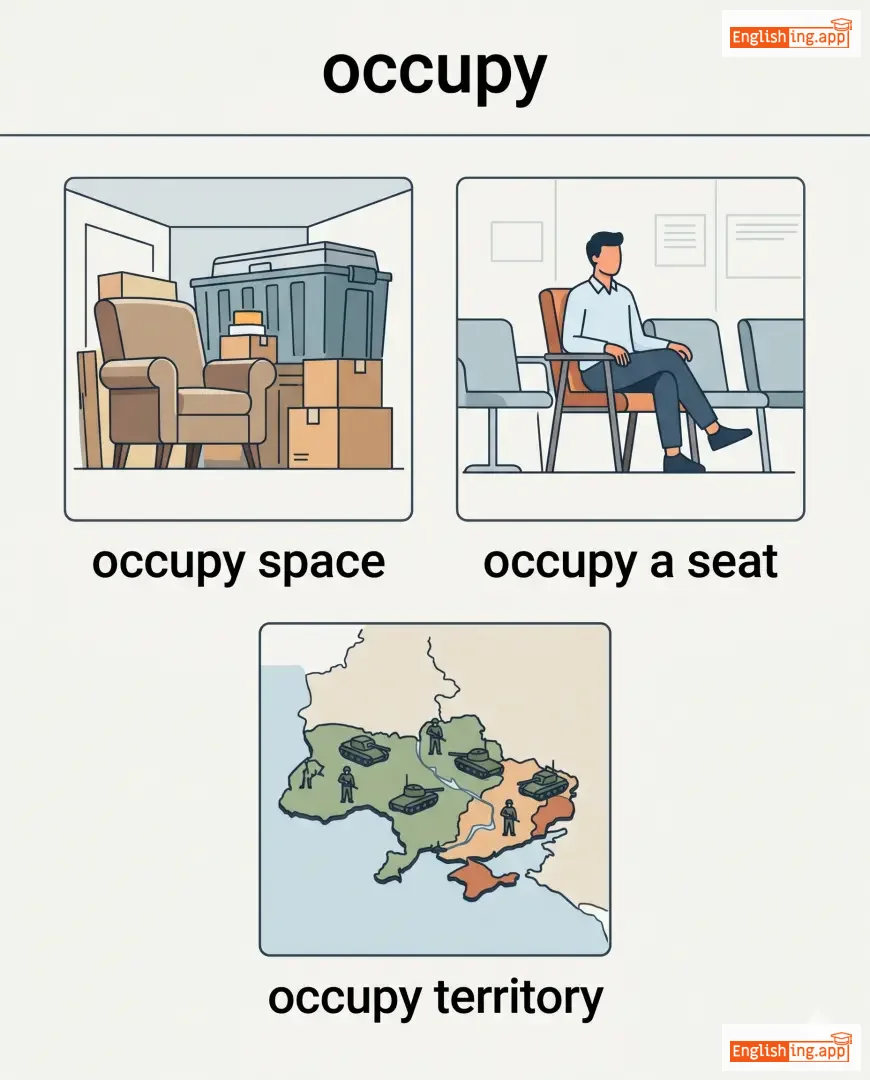
to take up space or time; to live or work in a place
••••••
|
The new family will occupy the house next month.
这个新家庭将于下个月入住这所房子。
••••••
|
新家庭将于下个月入住这所房子。
xin jiating jiang yu xia ge yue ru zhu zhe suo fangzi
••••••
|
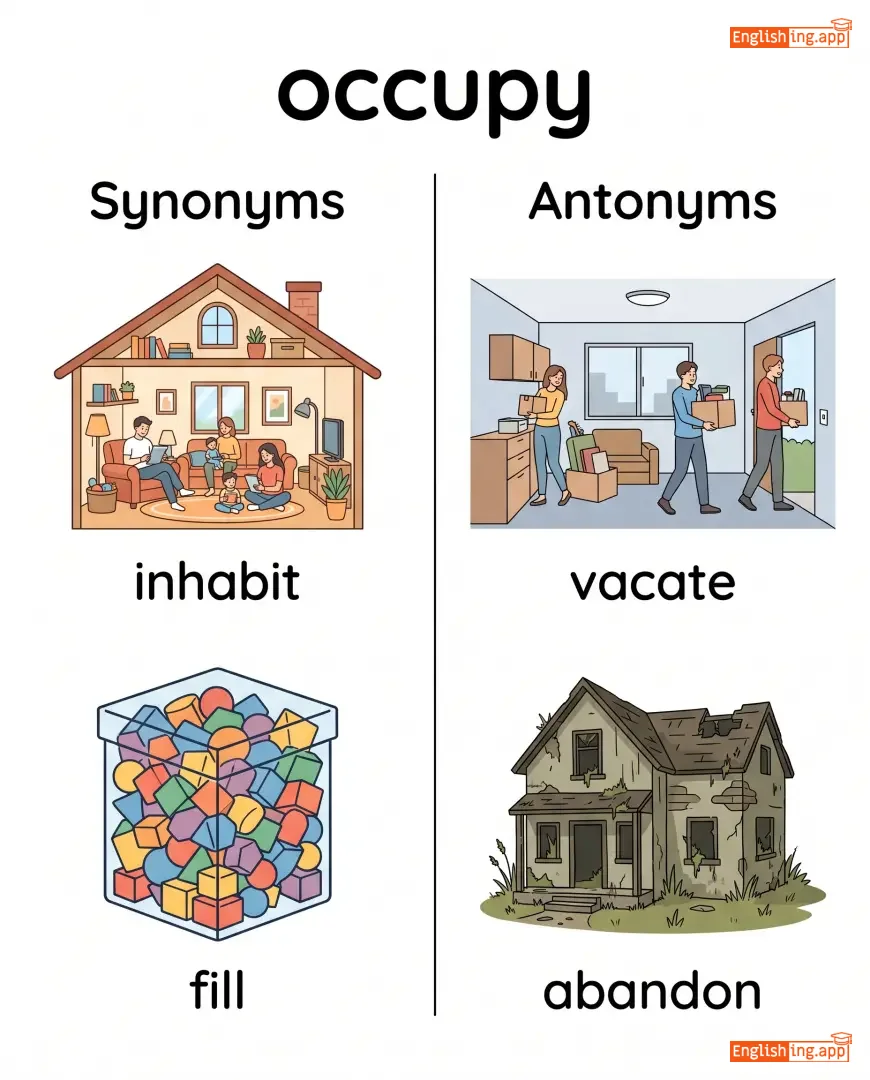
- •••••• | - •••••• | - •••••• |
inhabit, reside, fill, take up
••••••
|
vacate, leave, abandon, evacuate
••••••
|
occupy space, occupy time, occupy position, occupy territory
••••••
|
OC CUP Y 将 cup 放进 O 里面 空间就属于你 occupy 就是 占据
••••••
|
|
⚡
••••••
|
/əˈkɜːr/
verb
(发生)
••••••
|
|
发生
fasheng
••••••
|
occurred
发生了
••••••
|
occurred
发生了
••••••
|
occurs
发生
••••••
|
occurring
发生中
••••••
|
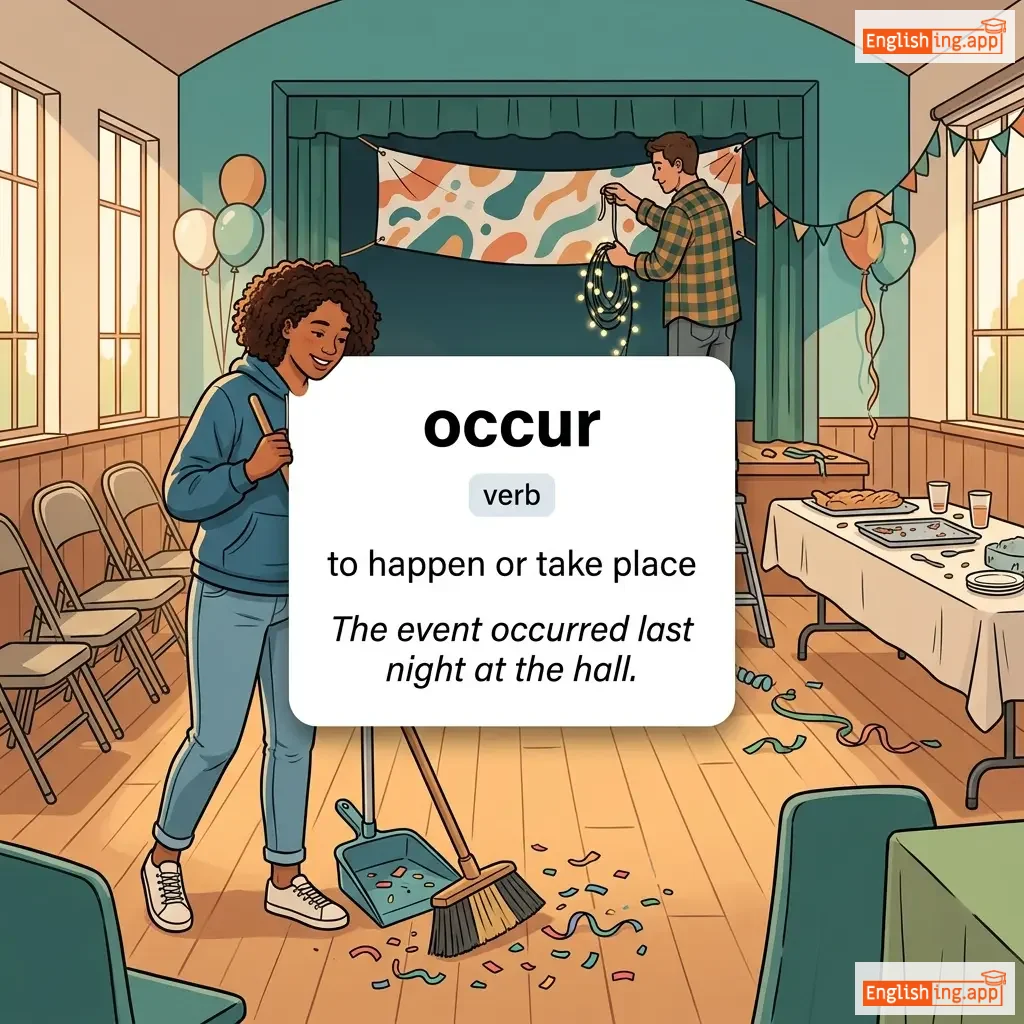
to happen or take place; to be found or present
••••••
|
The accident occurred at the intersection during rush hour.
事故发生在高峰时段的交叉口。
••••••
|
事故发生在高峰时段的交叉口。
Shigu fasheng zai gaofeng shiduan de jiaochakou.
••••••
|
- •••••• | - •••••• | - •••••• |
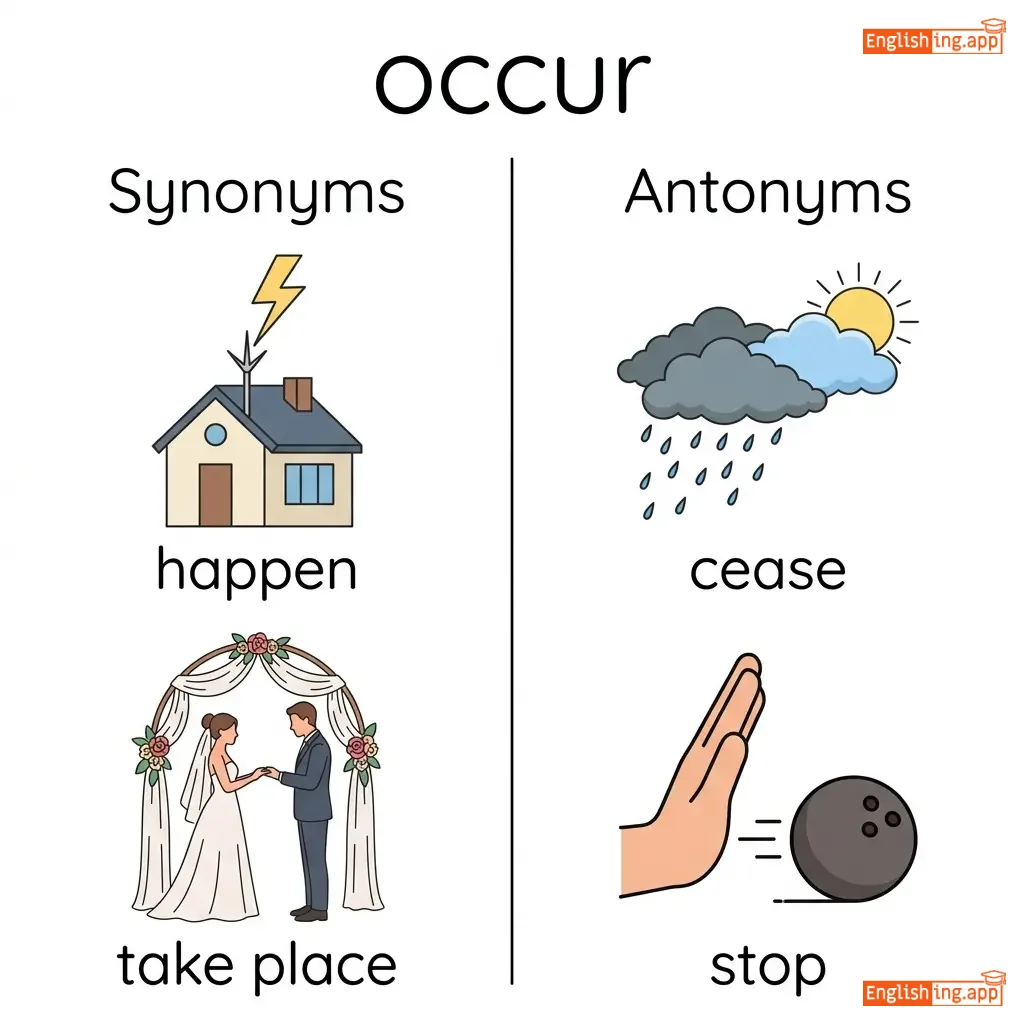
happen, take place, arise, transpire
••••••
|
prevent, avoid, cease, stop
••••••
|
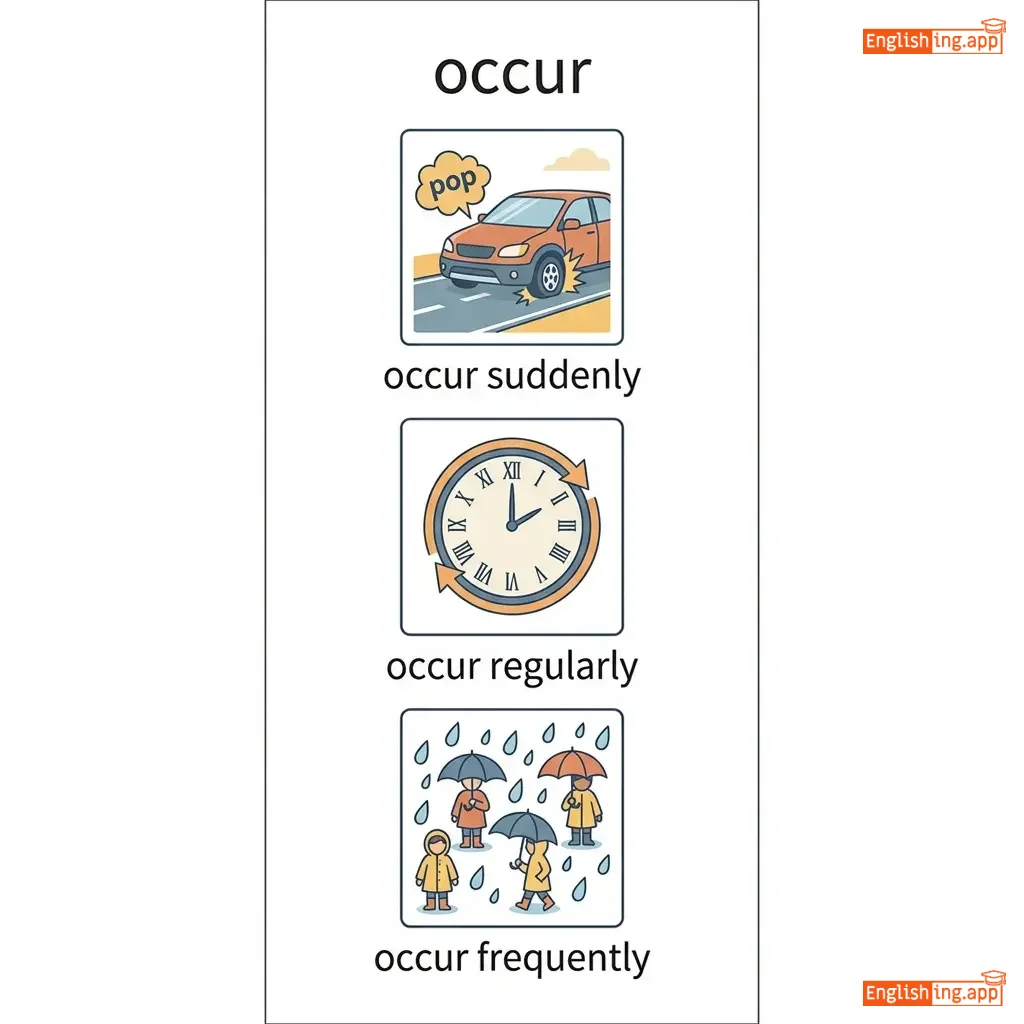
occur naturally, occur frequently, occur suddenly, rarely occur, occur simultaneously
••••••
|
发生是一个事件发生的标志,像发生了某件事,带来新的启示。
••••••
|
|
⚡
••••••
|
/əˈkɜr.əns/
noun
(ǒukèrénsī)
••••••
|
- •••••• |
事件
shìjiàn
••••••
|
- •••••• | - •••••• | - •••••• | - •••••• |
an instance or event of something happening; the fact of occurring
••••••
|
The occurrence of earthquakes is common in this region. |
地震的发生在这个地区很常见。
Dìzhèn de fāshēng zài zhège dìqū hěn chángjiàn.
••••••
|
- •••••• | - •••••• | - •••••• |
event, incident, happening, instance
••••••
|
absence, non-occurrence, prevention
••••••
|
rare occurrence, frequent occurrence, natural occurrence
••••••
|
事件 (shìjiàn) = occurrence
••••••
|
|
🌊
••••••
|
/ˈoʊ.ʃən/
noun
(hǎi pí nísī)
••••••
|

|
海洋
hǎiyáng
••••••
|
- •••••• | - •••••• | - •••••• | - •••••• |
a very large expanse of sea; a large quantity of something
••••••
|
The Pacific Ocean is the largest ocean in the world.
太平洋是世界上最大的海洋。
••••••
|
太平洋是世界上最大的海洋。
Tàipíngyáng shì shìjiè shàng zuì dà de hǎiyáng.
••••••
|
- •••••• | - •••••• | - •••••• |
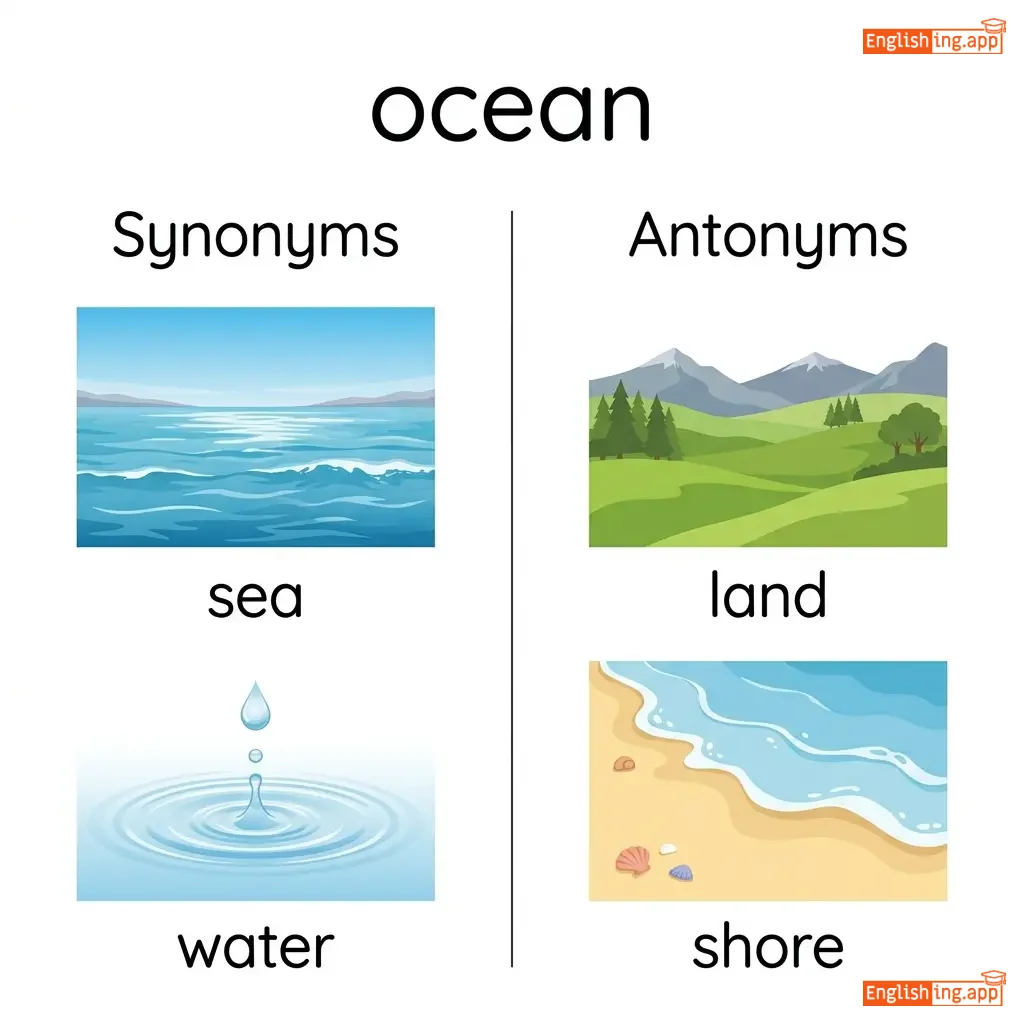
sea, marine, waters, deep
••••••
|
land, continent, desert, mountain
••••••
|
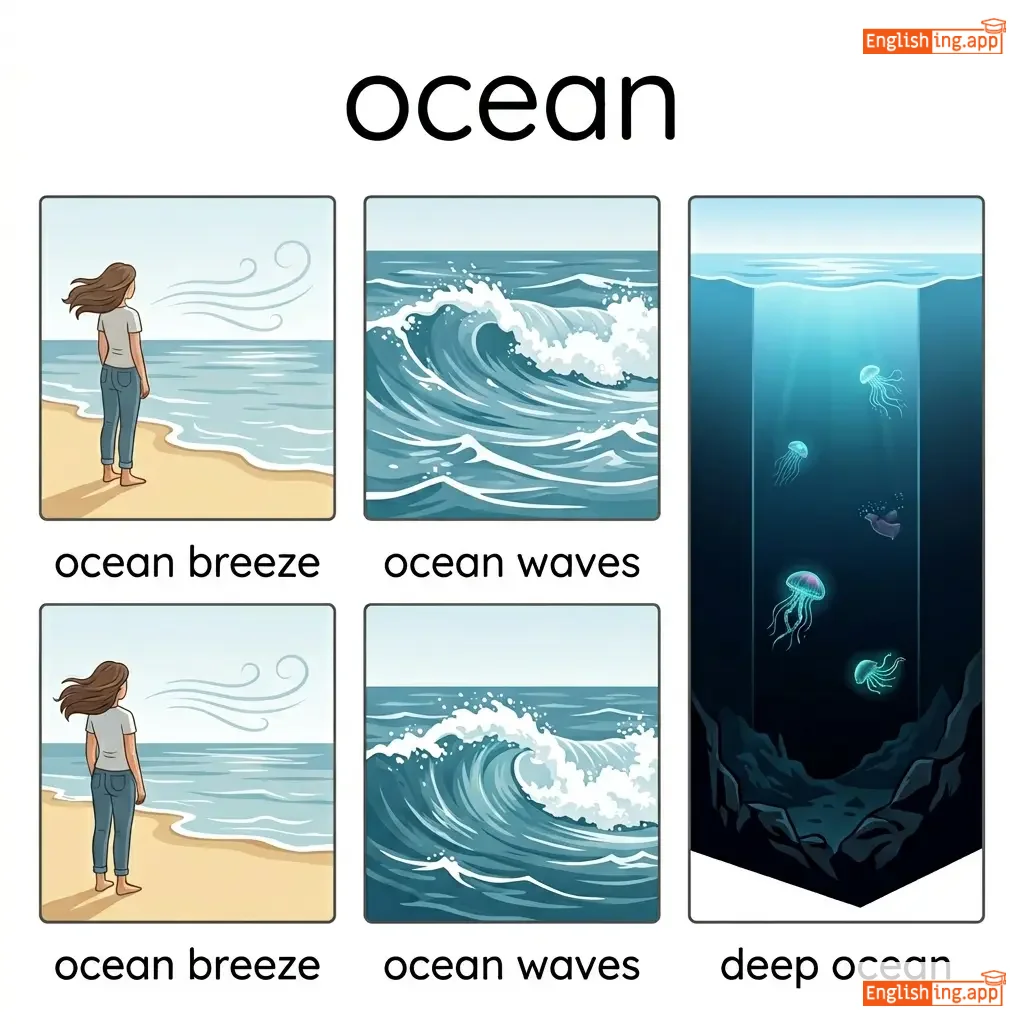
deep ocean, ocean floor, cross ocean
••••••
|
海洋如无边的浩瀚星空。
••••••
|
|
🍁
••••••
|
/ɒkˈtoʊbər/
noun
(奥克托伯)
••••••
|
- •••••• |
十月
shi yue
••••••
|
- •••••• | - •••••• | - •••••• | - •••••• |
the tenth month of the year in the Gregorian calendar
••••••
|
The weather becomes cooler in October.
泽 威泽 比卡姆斯 库勒 因 奥克托伯。
••••••
|
十月天气开始变凉。
shi yue tianqi kaishi bian liang
••••••
|
October Revolution
十月革命
••••••
|
the 1917 Russian revolution that led to the rise of the Soviet government
••••••
|
十月革命
shi yue geming
••••••
|
tenth month, fall month, autumn month
••••••
|
april, may
••••••
|
early October, late October, October festival, October weather
••••••
|
October 是十月,十=ten 对应第10个月
••••••
|
|
🤔
••••••
|
/ɒd/
adjective
(od)
••••••
|
- •••••• |
奇怪
qiguai
••••••
|
- •••••• | - •••••• | - •••••• | - •••••• |
different from what is usual or expected; strange or peculiar
••••••
|
He has some odd habits that surprise everyone. |
他有一些奇怪的习惯,令人感到惊讶。
Ta you yixie qiguai de xiguan, lingren gandao jingya.
••••••
|
odd one out |
something or someone that is different from the rest
••••••
|
格格不入
gege buru
••••••
|
strange, unusual, peculiar, weird, irregular
••••••
|
normal, usual, regular
••••••
|
odd number, odd job, odd behavior, odd coincidence
••••••
|
Odd 是奇怪的 (qiguai); Odd = 奇怪的。
••••••
|
|
🤔
••••••
|
/ˈɒdli/
adverb
(奥德利)
••••••
|
- •••••• |
奇怪地
qiguaide
••••••
|
- •••••• | - •••••• | - •••••• | - •••••• |
in a strange or unusual way; unexpectedly
••••••
|
Oddly, he didn’t seem upset by the bad news.
奥德利,他对这个坏消息似乎并不难过。
••••••
|
奇怪的是,他似乎并没有因为坏消息而难过。
Qiguaide shi, ta sihu bing mei you yinwei huai xiaoxi er nanguo
••••••
|
oddly enough
奥德利 伊纳夫
••••••
|
used to say that something is surprising or unexpected
••••••
|
说来也怪
shuo lai ye guai
••••••
|
strangely, unusually, peculiarly, bizarrely
••••••
|
normally, typically, ordinarily
••••••
|
oddly enough, oddly shaped, oddly quiet, oddly familiar
••••••
|
Odd = 奇怪 → 奇怪地
••••••
|
|
🎲
••••••
|
/ɒdz/
noun
(奥兹)
••••••
|
- •••••• |
可能性
kenengxing
••••••
|
- •••••• | - •••••• | - •••••• | - •••••• |
the likelihood or probability of something happening; chances for or against something
••••••
|
The odds of winning the lottery are very low.
中彩票的机会非常小。
••••••
|
中彩票的机会非常小。
Zhongcai de jihui feichang xiao.
••••••
|
against all odds
逆境中的胜利
••••••
|
succeeding despite great difficulties
••••••
|
尽管面临所有困难
Jinguan mianlin suoyou kunnan
••••••
|
chances, probability, likelihood, prospects, possibility
••••••
|
certainty, inevitability
••••••
|
long odds, betting odds, odds are, against all odds
••••••
|
Odds意味着可能性—中彩票的可能性总是非常低。
••••••
|
|
🔗
••••••
|
/ʌv/
preposition
(of)
••••••
|
- •••••• |
的
de
••••••
|
- •••••• | - •••••• | - •••••• | - •••••• |
expressing the relationship between a part and a whole
••••••
|
The book is on the table, in front of the window. |
书在桌子上,在窗户前。
Shu zai zhuozi shang, zai chuanghu qian.
••••••
|
- •••••• | - •••••• | - •••••• |
from, about, concerning
••••••
|
none
••••••
|
part of, full of, kind of, out of
••••••
|
Of 在中文中翻译为 '的',如同表示 '的' 之间的关系
••••••
|
|
⏹️
••••••
|
/ɔːf/
adverb
(阿夫)
••••••
|
- •••••• |
关
guan
••••••
|
- •••••• | - •••••• | - •••••• | - •••••• |
away from a place, position, or time; not functioning
••••••
|
He turned off the light before leaving the room. |
他在离开房间之前关掉了灯。
ta zai likai fangjian zhijiang guan diao le deng.
••••••
|
off the record |
something said privately and not intended for publication
••••••
|
off the record
off the record
••••••
|
away, removed, disconnected, distant
••••••
|
on, connected, attached
••••••
|
turn off, switch off, go off, keep off
••••••
|
Off意味着关掉,就像你关掉灯,一切变暗。
••••••
|
|
⚠️
••••••
|
/əˈfens/
noun
(欧芬斯)
••••••
|
- •••••• |
罪行; 侵犯法规
zuìxíng; qīnfàn fǎguī
••••••
|
- •••••• | - •••••• | - •••••• | - •••••• |
a breach of law or rule; an annoyance or resentment
••••••
|
Stealing is a serious offence punishable by law. |
盗窃是严重的罪行,依法可追究。
daoqie shi yanzhong de zuixing, yifa ke zhuiqiu.
••••••
|
- •••••• | - •••••• | - •••••• |
crime, violation, wrongdoing, transgression
••••••
|
compliance, obedience, lawfulness, virtue
••••••
|
criminal offence, minor offence, commit offence
••••••
|
‘Offence’ in Chinese sounds like ‘zuìxíng’, related to crime and law.
••••••
|
|
😠
••••••
|
/əˈfɛnd/
verb
(阿芬德)
••••••
|
- •••••• |
冒犯
màofàn
••••••
|
offended
阿芬德德
••••••
|
offended
阿芬德德
••••••
|
offends
阿芬德斯
••••••
|
offending
阿芬丁
••••••
|
to cause someone to feel upset, insulted, or annoyed
••••••
|
She didn’t mean to offend anyone with her remarks.
她不想用她的评论冒犯任何人。
••••••
|
她不想用她的评论冒犯任何人。
Tā bùxiǎng yòng tā de pínglùn màofàn rènhé rén.
••••••
|
take offense
感到冒犯
••••••
|
to feel insulted or hurt
••••••
|
感到冒犯
gǎndào màofàn
••••••
|
insult, upset, irritate, annoy, disrespect
••••••
|
please, satisfy, comfort
••••••
|
offend someone, deeply offend, intentionally offend, offend against
••••••
|
冒犯人心会让人心生不快。
••••••
|
|
🚔
••••••
|
/əˈfɛndər/
noun
(奥芬德)
••••••
|
- •••••• |
违法者
wéifǎ zhě
••••••
|
- •••••• | - •••••• | - •••••• | - •••••• |
a person who commits a crime or does something wrong
••••••
|
The police caught the offender quickly. |
警察迅速抓住了违法者。
Jǐngchá xùnsù zhuā zhùle wéifǎ zhě.
••••••
|
repeat offender |
a person who commits the same crime more than once
••••••
|
惯犯
guàn fàn
••••••
|
criminal, culprit, wrongdoer, lawbreaker, transgressor
••••••
|
victim, innocent
••••••
|
first-time offender, repeat offender, serious offender, juvenile offender
••••••
|
Offender意味着违法者,做坏事的人 🔒
••••••
|
|
😠
••••••
|
/əˈfɛnsɪv/
adjective
(冒犯)
••••••
|
- •••••• |
冒犯的
maofan de
••••••
|
- •••••• | - •••••• | - •••••• | - •••••• |
Causing hurt, anger, or annoyance; also relating to attacking in sports or war.
••••••
|
His offensive remarks upset everyone at the meeting. |
他的冒犯性言论让会议上的每个人都不高兴。
Tade maofanxing yanlun rang huiyi shang de meigeren dou bu gaoxing.
••••••
|
take offense |
To feel hurt or insulted by something said or done.
••••••
|
感到冒犯
Gandao maofan
••••••
|
insulting, rude, disrespectful, abusive
••••••
|
polite, respectful, pleasant
••••••
|
offensive remark, offensive language, offensive strategy, take offense
••••••
|
Offensive 意味着冒犯 - 冒犯的言论。
••••••
|
|
🤲
••••••
|
/ˈɔːfər/
verb
(奥弗)
••••••
|

|
提供
tigong
••••••
|
offered
奥弗德
••••••
|
offered
奥弗德
••••••
|
offers
奥弗斯
••••••
|
offering
奥弗林
••••••
|
to present something for acceptance or rejection; to propose
••••••
|
She offered to help with the project.
她奥弗德去帮助这个项目。
••••••
|
她提出帮助这个项目。
ta tichu bangzhu zhege xiangmu
••••••
|
- •••••• | - •••••• | - •••••• |
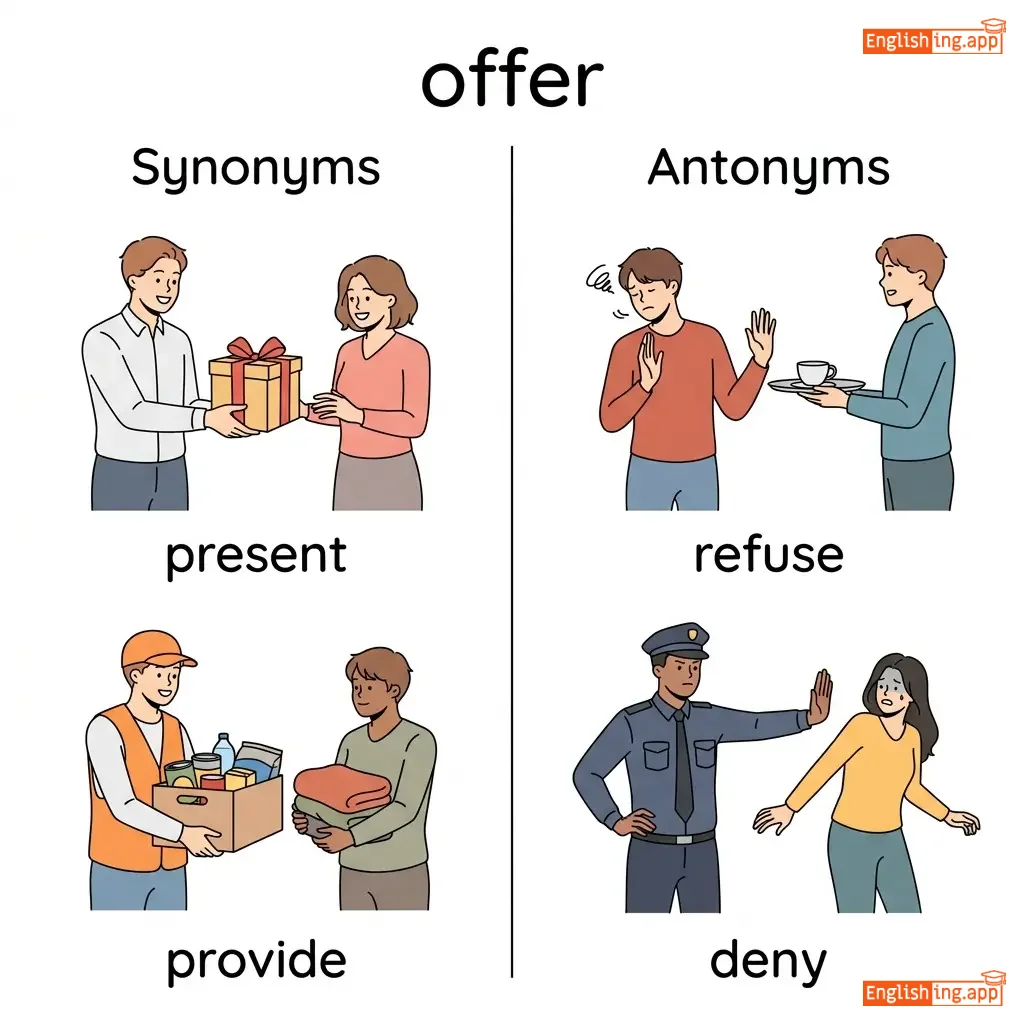
propose, present, provide, suggest
••••••
|
withdraw, refuse, deny, withhold
••••••
|
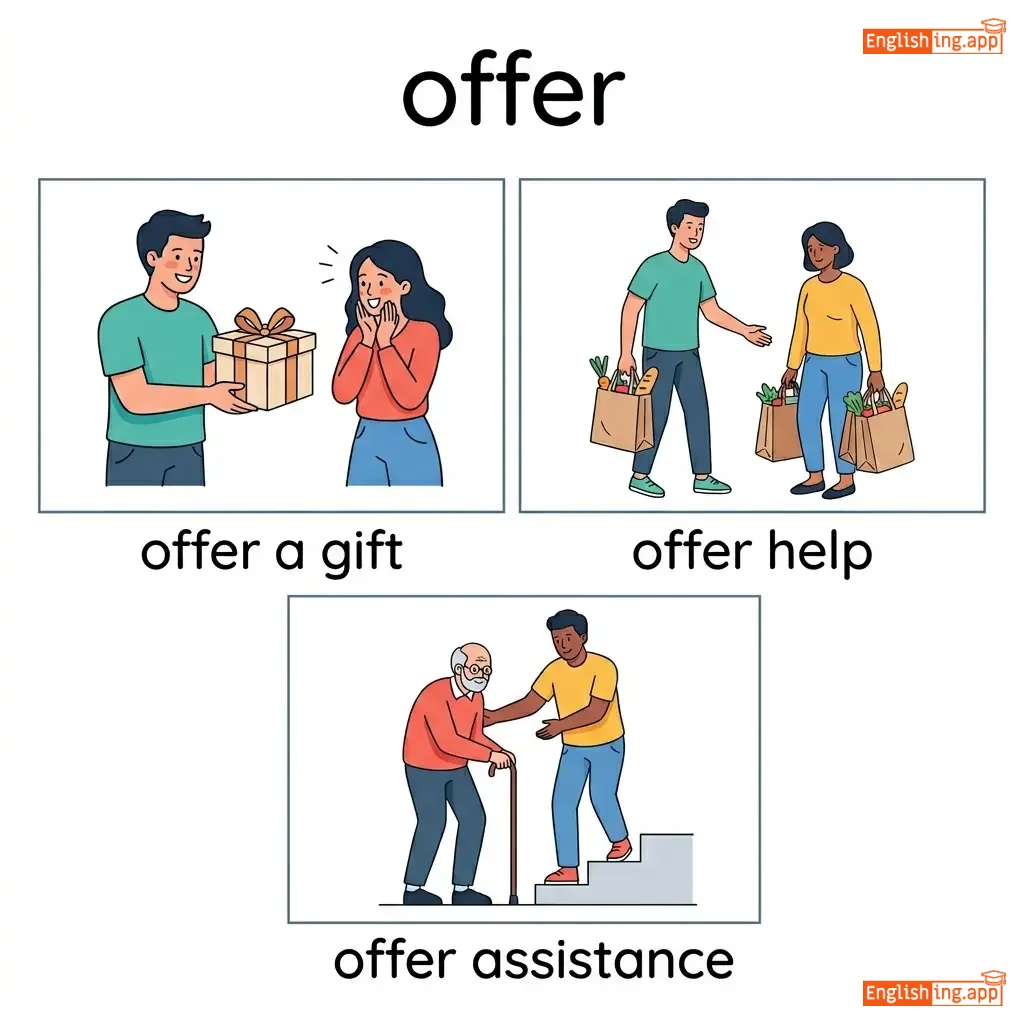
offer help, offer advice, offer support, make an offer, generous offer
••••••
|
Offer = 提供 (tigong) — both mean to present or give something.
••••••
|
|
🎁
••••••
|
/ˈɒfərɪŋ/
noun
(Offering)
••••••
|
- •••••• |
提供
tigong
••••••
|
- •••••• | - •••••• | - •••••• | - •••••• |
something that is given, especially as a gift or contribution
••••••
|
The company’s latest offering is an eco-friendly car.
公司的最新产品是一款环保汽车。
••••••
|
公司的最新产品是一款环保汽车。
Gongsi de zui xin chanpin shi yi kuan huanbao qiche.
••••••
|
peace offering
和平礼物
••••••
|
something given to show a desire for peace or reconciliation
••••••
|
和平礼物
heping liwu
••••••
|
gift, contribution, donation, present, sacrifice
••••••
|
refusal, withdrawal
••••••
|
make an offering, religious offering, peace offering, product offering
••••••
|
Offering 意味着提供东西,像是一个提议或和平礼物
••••••
|
|
🏢
••••••
|
/ˈɒf.ɪs/
noun
(办公室)
••••••
|
- •••••• |
办公室
bàngōngshì
••••••
|
- •••••• | - •••••• | - •••••• | - •••••• |
a room or building where people work, usually at desks
••••••
|
She left the office early to attend a family event.
她提前离开办公室去参加家庭活动。
••••••
|
她提前离开办公室去参加家庭活动。
Tā tíqián líkāi bàngōngshì qù cānjiā jiātíng huódòng.
••••••
|
hold office
担任职务
••••••
|
to be in a position of authority or responsibility
••••••
|
担任职务
dānrèn zhíwù
••••••
|
workplace, bureau, department, agency, company
••••••
|
home, outdoors
••••••
|
office building, office hours, office desk, office staff
••••••
|
办公室是工作场所;在办公室里人们总是工作。
••••••
|
|
👮
••••••
|
/ˈɔːfɪsər/
noun
(警官)
••••••
|
- •••••• |
警官
jingguan
••••••
|
- •••••• | - •••••• | - •••••• | - •••••• |
a person in a position of authority, especially in law enforcement
••••••
|
The officer gave him a ticket for speeding. |
警官因超速给了他一张罚单。
Jingguan yin chaosu geile ta yi zhang fadan.
••••••
|
- •••••• | - •••••• | - •••••• |
agent, constable, policeman, lawman
••••••
|
civilian, criminal
••••••
|
police officer, military officer, security officer
••••••
|
警官, 就像是警察 - 具有权威的人
••••••
|
|
📜
••••••
|
/əˈfɪʃəl/
adjective
(àofēixì'āo)
••••••
|
- •••••• |
官方
guānfāng
••••••
|
- •••••• | - •••••• | - •••••• | - •••••• |
relating to or connected with an authority or public office
••••••
|
He is the official spokesperson for the company.
他是公司的官方发言人。
••••••
|
他是公司的官方发言人。
Tā shì gōngsī de guānfāng fāyánrén.
••••••
|
- •••••• | - •••••• | - •••••• |
authorized, formal, legitimate, recognized
••••••
|
unofficial, informal, unofficial
••••••
|
official statement, official announcement, official document, official role
••••••
|
官方(guānfāng)总是有权力的代表。
••••••
|
|
👶
••••••
|
/ˈɒf.sprɪŋ/
noun
(奥夫-斯普林)
••••••
|
- •••••• |
后代
hòudài
••••••
|
- •••••• | - •••••• | - •••••• | - •••••• |
a person's child or children; an animal's young
••••••
|
The bird carefully fed its offspring.
那只鸟小心地喂养了它的后代。
••••••
|
那只鸟小心地喂养了它的后代。
Nà zhī niǎo xiǎoxīn de wèiyǎngle tā de hòudài.
••••••
|
- •••••• | - •••••• | - •••••• |
children, progeny, descendants, young
••••••
|
parent, ancestor
••••••
|
human offspring, animal offspring, produce offspring, healthy offspring
••••••
|
Offspring = 'off' (离开) + 'spring' (春天) → 新的生命开始 → 后代
••••••
|
|
🔁
••••••
|
/ˈɔːfən/
adverb
(奥夫滕)
••••••
|
- •••••• |
经常
jīngcháng
••••••
|
- •••••• | - •••••• | - •••••• | - •••••• |
frequently, many times
••••••
|
I often visit my grandparents on weekends.
我经常在周末拜访我的祖父母。
••••••
|
我经常在周末拜访我的祖父母。
Wǒ jīngcháng zài zhōumò bàifǎng wǒ de zǔfùmǔ.
••••••
|
- •••••• | - •••••• | - •••••• |
frequently, regularly, repeatedly, commonly
••••••
|
rarely, seldom, never
••••••
|
often visit, often see, often talk, often hear
••••••
|
在办公室里经常 (often) 开会。
••••••
|
|
😮
••••••
|
/oʊ/
interjection
(哦)
••••••
|
- •••••• |
哦
oh
••••••
|
- •••••• | - •••••• | - •••••• | - •••••• |
used to express surprise, realization, or understanding
••••••
|
Oh, I didn't know you were here! |
哦,我不知道你在这里!
Oh, wǒ bù zhīdào nǐ zài zhèlǐ!
••••••
|
- •••••• | - •••••• | - •••••• |
wow, ah, oh my, oops
••••••
|
- •••••• |
oh no, oh wow, oh my, oh dear
••••••
|
哦,真的?(Oh, really?)
••••••
|
|
🛢️
••••••
|
/ɔɪl/
noun
(hǎipínèis)
••••••
|
- •••••• |
油
you
••••••
|
- •••••• | - •••••• | - •••••• | - •••••• |
a viscous liquid derived from petroleum or plants, used for cooking or fuel
••••••
|
Heat the oil in a pan before adding the vegetables. |
在加菜之前先把油加热。
Zai jia cai zhi qian xian ba you jia re.
••••••
|
- •••••• | - •••••• | - •••••• |
fat, grease
••••••
|
water
••••••
|
cooking oil, olive oil, vegetable oil, oil pan
••••••
|
油 (you) is oil in Chinese – essential in every cooking!
••••••
|

