|
絵文字
|
単語 | Images | 翻訳 | 過去 | 過去分詞 | 三人称単数 | 動名詞 | 意味 | 例文 | 例文の翻訳 | 表現例 | 表現例の意味 | 表現例の翻訳 | 同義語 | 対義語 | コロケーション | ニーモニック |
|---|---|---|---|---|---|---|---|---|---|---|---|---|---|---|---|---|---|
|
🪄
••••••
|
/ˈmædʒɪk/
noun
(マジック)
••••••
|
- •••••• |
魔法
mahou
••••••
|
- •••••• | - •••••• | - •••••• | - •••••• |
the use of mysterious or supernatural powers to influence events
••••••
|
The magician amazed the crowd with his magic. |
マジシャンは彼のマジックで観客を驚かせました。
Majishan wa kare no majikku de kankyaku o odorokasemashita.
••••••
|
black magic |
the use of evil supernatural power
••••••
|
黒魔法
kuro mahou
••••••
|
sorcery, wizardry, enchantment, spell, charm
••••••
|
reality, science, logic
••••••
|
do magic, black magic, magic trick, magic spell
••••••
|
魔法 = マジシャンが驚かせるために使う力
••••••
|
|
✨
••••••
|
/ˈmædʒɪkəl/
adjective
••••••
|
- •••••• | - •••••• | - •••••• | - •••••• | - •••••• | - •••••• |
having or producing the charm, beauty, or power of magic
••••••
|
The sunset over the mountains was a magical sight. |
- •••••• | - •••••• | - •••••• | - •••••• |
enchanting, mesmerizing, mystical, otherworldly
••••••
|
ordinary, mundane
••••••
|
magical experience, magical powers, magical moment
••••••
|
No •••••• |
|
🪄
••••••
|
/məˈdʒɪʃən/
noun
(マジシャン)
••••••
|
- •••••• |
マジシャン
majishan
••••••
|
- •••••• | - •••••• | - •••••• | - •••••• |
A person who performs tricks and illusions for entertainment or one believed to have magical powers.
••••••
|
The magician pulled a rabbit out of his hat. |
マジシャンは帽子からウサギを取り出しました。
Majishan wa bōshi kara usagi o toridashimashita.
••••••
|
like magic |
something happening surprisingly easily or quickly
••••••
|
魔法のように
mahō no yō ni
••••••
|
sorcerer, wizard, illusionist, conjurer, enchanter
••••••
|
mortal, realist
••••••
|
stage magician, street magician, great magician
••••••
|
マジシャンは魔法を使う人です。
••••••
|
|
⚖️
••••••
|
/ˈmædʒɪstreɪt/
noun
(マジストレイト)
••••••
|
- •••••• |
裁判官
saibankan
••••••
|
- •••••• | - •••••• | - •••••• | - •••••• |
A civil officer who administers the law, often with limited judicial authority.
••••••
|
The magistrate presided over the minor criminal case.
マジストレイトは軽犯罪の事件を審理しました。
••••••
|
裁判官は軽犯罪の事件を審理しました。
Saibankan wa keihanzai no jiken o shinri shimashita.
••••••
|
- •••••• | - •••••• | - •••••• |
judge, justice, arbiter, adjudicator, official
••••••
|
criminal, offender
••••••
|
magistrate court, local magistrate, chief magistrate, before the magistrate
••••••
|
裁判官 (saibankan) は法律の 'マスター' - 法律の支配者。
••••••
|
|
🧲
••••••
|
/mæɡˈnɛtɪk/
adjective
(マグネティック)
••••••
|
- •••••• |
磁気
jiki
••••••
|
- •••••• | - •••••• | - •••••• | - •••••• |
having the power to attract metal objects or to attract people or things in a strong way
••••••
|
The magnetic field of the Earth protects us from harmful solar radiation.
地球の磁場は有害な太陽放射から私たちを守ります。
••••••
|
地球の磁場は有害な太陽放射から私たちを守ります。
Chikyū no jiba wa yūgaina taiyō hōsha kara watashitachi o mamorimasu.
••••••
|
magnetic personality
魅力的な個性
••••••
|
a charming and attractive character that draws people in
••••••
|
魅力的な個性
miryokuteki na kosei
••••••
|
attractive, alluring, captivating, charismatic, fascinating
••••••
|
repulsive, unappealing, dull
••••••
|
magnetic field, magnetic force, magnetic attraction, magnetic energy
••••••
|
磁石のように、磁気はすべてを引き寄せます。
••••••
|
|
🌄
••••••
|
/mæɡˈnɪfɪsənt/
adjective
(マグニフィセント)
••••••
|
- •••••• |
素晴らしい
subarashii
••••••
|
- •••••• | - •••••• | - •••••• | - •••••• |
extremely beautiful, impressive, or splendid
••••••
|
The view from the mountain was truly magnificent.
山からの景色は本当に素晴らしかった。
••••••
|
山からの景色は本当に素晴らしかった。
Yama kara no keshiki wa hontou ni subarashikatta.
••••••
|
in magnificent style
素晴らしいスタイルで
••••••
|
to do something in an impressive or splendid way
••••••
|
素晴らしいスタイルで
subarashii sutairu de
••••••
|
splendid, glorious, majestic, superb, wonderful
••••••
|
awful, ordinary, poor
••••••
|
magnificent view, magnificent palace, magnificent effort
••••••
|
Magnificent = 素晴らしい = 驚くべき景色。
••••••
|
|
📏
••••••
|
/ˈmæɡnɪtuːd/
noun
(マグニチュード)
••••••
|
- •••••• |
規模
kibo
••••••
|
- •••••• | - •••••• | - •••••• | - •••••• |
the great size, extent, or importance of something
••••••
|
The magnitude of the earthquake shocked the nation. |
地震の規模は国を驚かせました。
Jishin no kibo wa kuni o odorokasemashita.
••••••
|
of great magnitude |
something of great size or importance
••••••
|
大規模な
daikibona
••••••
|
extent, scale, size, importance, intensity
••••••
|
triviality, insignificance, smallness
••••••
|
earthquake magnitude, magnitude of problem, magnitude scale
••••••
|
Magnitudeは大きな地震のように — 大きな影響やサイズ。
••••••
|
|
📬
••••••
|
/meɪl/
noun/verb
(メイル)
••••••
|
- •••••• |
郵便 / 手紙
yūbin / tegami
••••••
|
mailed
メイルド
••••••
|
mailed
メイルド
••••••
|
mails
メイルズ
••••••
|
mailing
メイリング
••••••
|
Letters, packages, or email messages sent or delivered to someone.
••••••
|
I received an important letter in the mail.
私は郵便で重要な手紙を受け取りました。
••••••
|
私は郵便で重要な手紙を受け取りました。
Watashi wa yūbin de jūyōna tegami o uketorimashita.
••••••
|
snail mail
スネイルメール
••••••
|
traditional postal mail as opposed to email
••••••
|
伝統的な郵便
dentōteki na yūbin
••••••
|
post, letter, package, parcel, email
••••••
|
email (in contrast to snail mail), direct delivery
••••••
|
send mail, check mail, junk mail, mail service
••••••
|
郵便は配達員が届ける、mailは郵便です。
••••••
|
|
⭐
••••••
|
/meɪn/
adjective
(メイン)
••••••
|
- •••••• |
主要な
shuyō na
••••••
|
- •••••• | - •••••• | - •••••• | - •••••• |
most important; chief in size, extent, or importance
••••••
|
The main reason for his success is hard work. |
彼の成功の主な理由は、努力したことです。
kare no seikō no omona riyū wa, doryoku shita koto desu.
••••••
|
main attraction |
the most important or interesting feature
••••••
|
主要な観光名所
shuyō na kankō meisho
••••••
|
chief, primary, principal, central, major
••••••
|
minor, secondary, trivial
••••••
|
main reason, main point, main idea, main street
••••••
|
Mainは主要な、Main Streetは最も重要な通りです。
••••••
|
|
🌍
••••••
|
/ˈmeɪnˌlænd/
noun
••••••
|
- •••••• | - •••••• | - •••••• | - •••••• | - •••••• | - •••••• |
the principal landmass of a country or continent, as opposed to the surrounding islands
••••••
|
The mainland of Australia is home to most of its population. |
- •••••• | - •••••• | - •••••• | - •••••• |
continent, land, territory, country
••••••
|
island, archipelago
••••••
|
mainland China, mainland Europe, mainland United States
••••••
|
No •••••• |
|
🎯
••••••
|
/ˈmeɪn.li/
adverb
(メインリー)
••••••
|
- •••••• |
主に; おもに
omoni; omoni
••••••
|
- •••••• | - •••••• | - •••••• | - •••••• |
for the most part; chiefly; primarily
••••••
|
The conference was mainly about environmental protection and climate change.
会議は主に環境保護と気候変動についてでした。
••••••
|
会議は主に環境保護と気候変動についてでした。
kaigi wa omoni kankyō hogo to kikō hendō ni tsuite deshita
••••••
|
- •••••• | - •••••• | - •••••• |
chiefly, primarily, mostly, principally
••••••
|
secondarily, slightly, minimally
••••••
|
mainly because, mainly due to, mainly focused
••••••
|
主に = 物事の主たる部分、環境が最も重要な部分です。
••••••
|
|
🌊
••••••
|
/ˈmeɪnstriːm/
noun
(メインストリーム)
••••••
|
- •••••• |
主流
shuryuu
••••••
|
- •••••• | - •••••• | - •••••• | - •••••• |
the ideas, attitudes, or activities that are regarded as normal or conventional; the dominant trend in opinion or fashion
••••••
|
Social media has become a mainstream source of news for many people. |
ソーシャルメディアは多くの人々にとって主流のニュースソースとなった。
Sōsharumedia wa ōku no hitobito ni totte shuryū no nyūsu sōsu to natta.
••••••
|
go mainstream |
to become widely accepted or popular among the general public
••••••
|
主流になる
shuryuu ni naru
••••••
|
conventional, popular, dominant, prevalent, established
••••••
|
unorthodox, alternative, fringe
••••••
|
mainstream media, mainstream culture, mainstream society, go mainstream
••••••
|
Mainstreamは社会で最も受け入れられている流れです。
••••••
|
|
⚙️
••••••
|
/meɪnˈteɪn/
verb
(メインテイン)
••••••
|
|
維持する
iji suru
••••••
|
maintained
メインテンド
••••••
|
maintained
メインテンド
••••••
|
maintains
メインテインズ
••••••
|
maintaining
メインテイニング
••••••
|
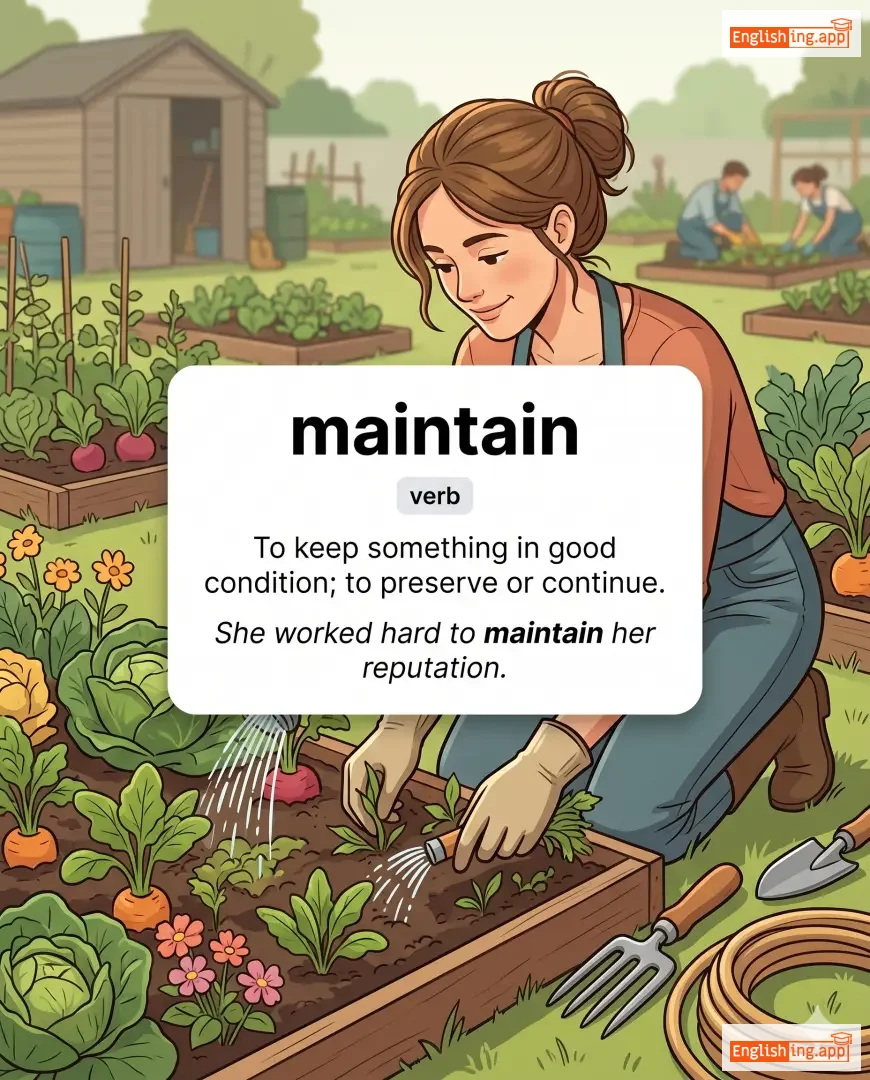
To keep something in good condition; to preserve or continue.
••••••
|
She worked hard to maintain her reputation.
彼女は評判を維持するために一生懸命働きました。
••••••
|
彼女は評判を維持するために一生懸命働きました。
Kanojo wa hyōban o iji suru tame ni isshōkenmei hatarakimashita.
••••••
|
maintain composure
冷静を保つ
••••••
|
To stay calm and in control under pressure
••••••
|
冷静を保つ
reisei o tamotsu
••••••
|
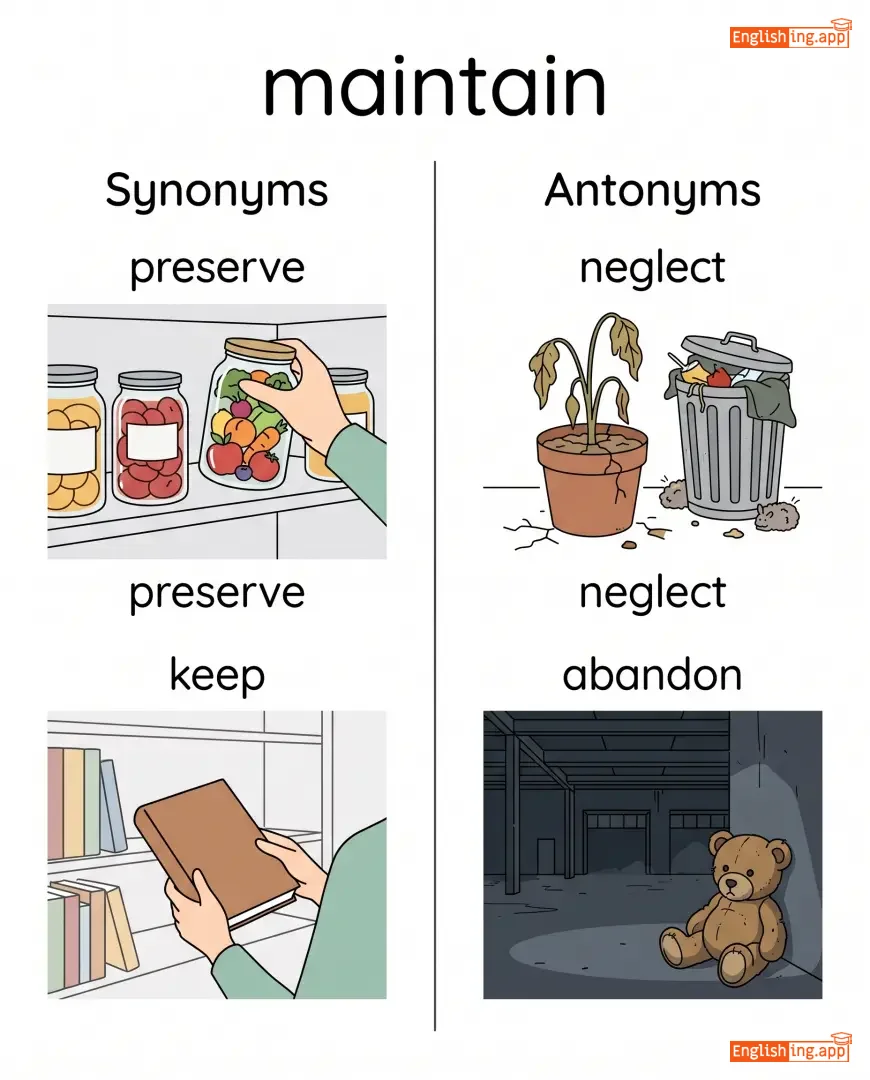
preserve, keep, sustain, uphold, continue
••••••
|
neglect, abandon, destroy
••••••
|
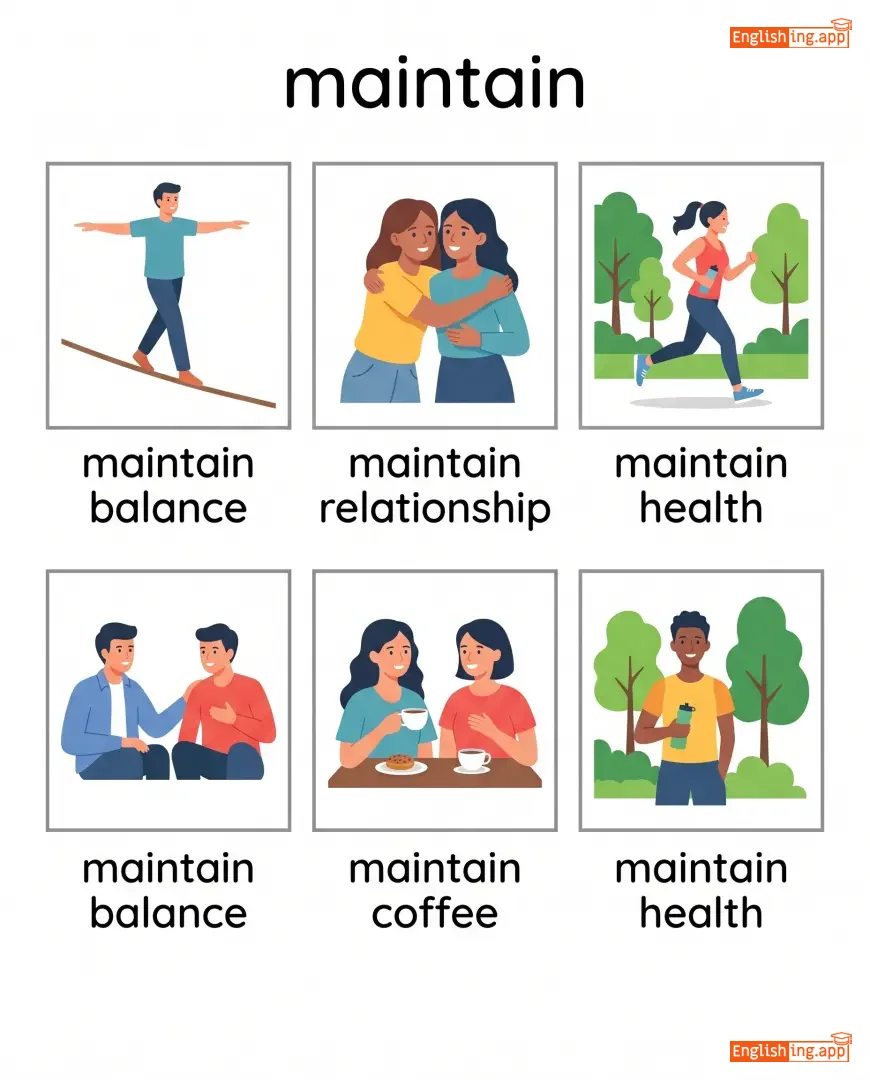
maintain balance, maintain relationship, maintain health, maintain order
••••••
|
MaintainはMain + Tain (保持) = 保持するまたは続ける
••••••
|
|
🛠️
••••••
|
/ˈmeɪntənəns/
noun
(メンテナンス)
••••••
|
|
メンテナンス
mentenansu
••••••
|
- •••••• | - •••••• | - •••••• | - •••••• |
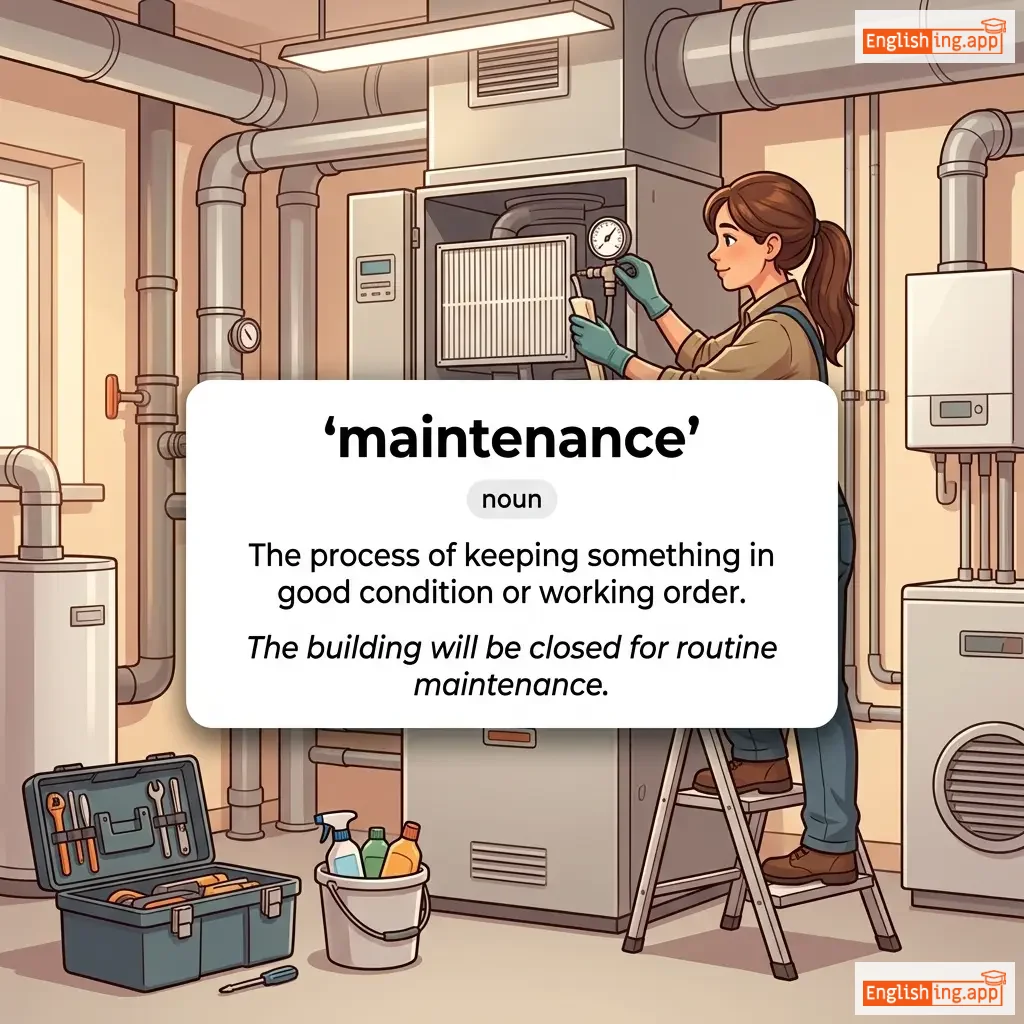
The process of keeping something in good condition or working order.
••••••
|
The building will be closed for routine maintenance. |
その建物は定期的なメンテナンスのために閉鎖されます。
Sono tatemono wa teikiteki na mentenansu no tame ni heisa saremasu.
••••••
|
maintenance work |
Regular work done to preserve or repair something
••••••
|
メンテナンス作業
mentenansu sagyō
••••••
|
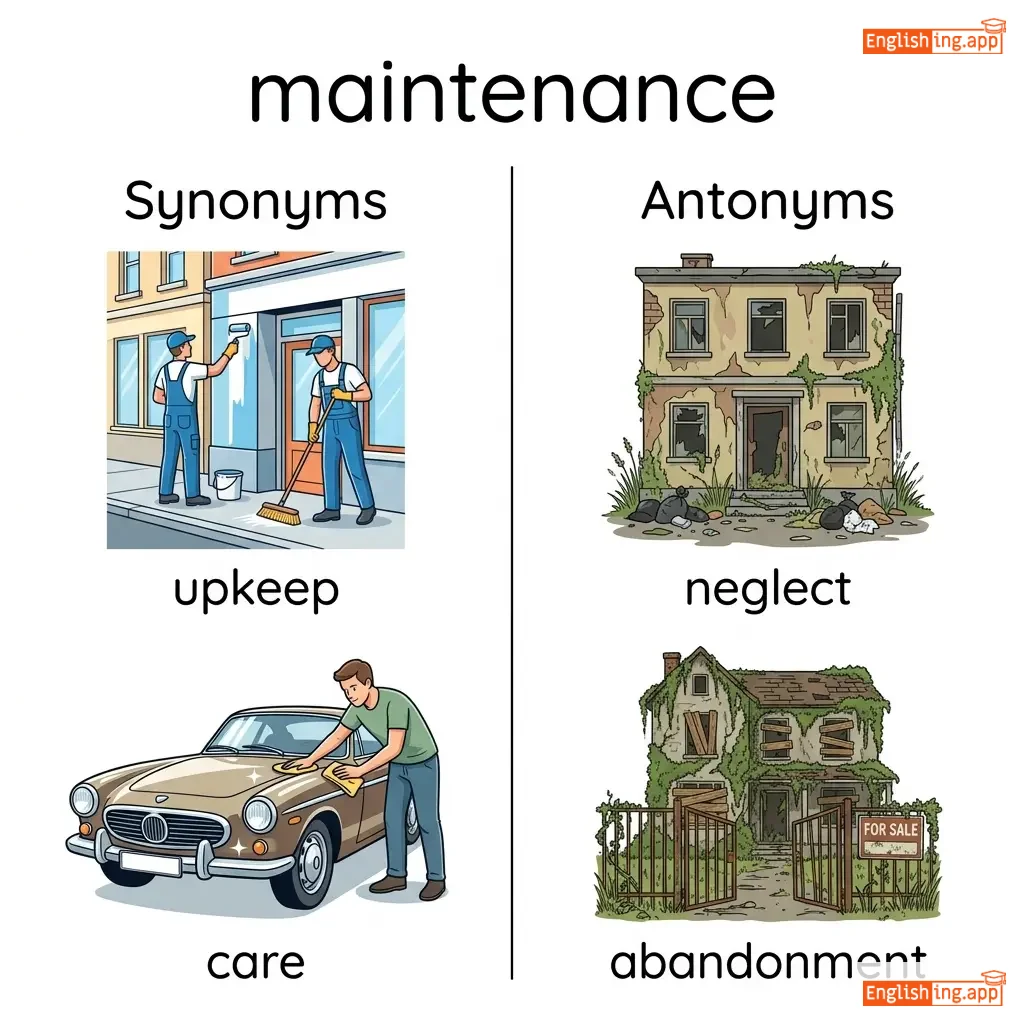
upkeep, care, preservation, repair, servicing
••••••
|
neglect, abandonment
••••••
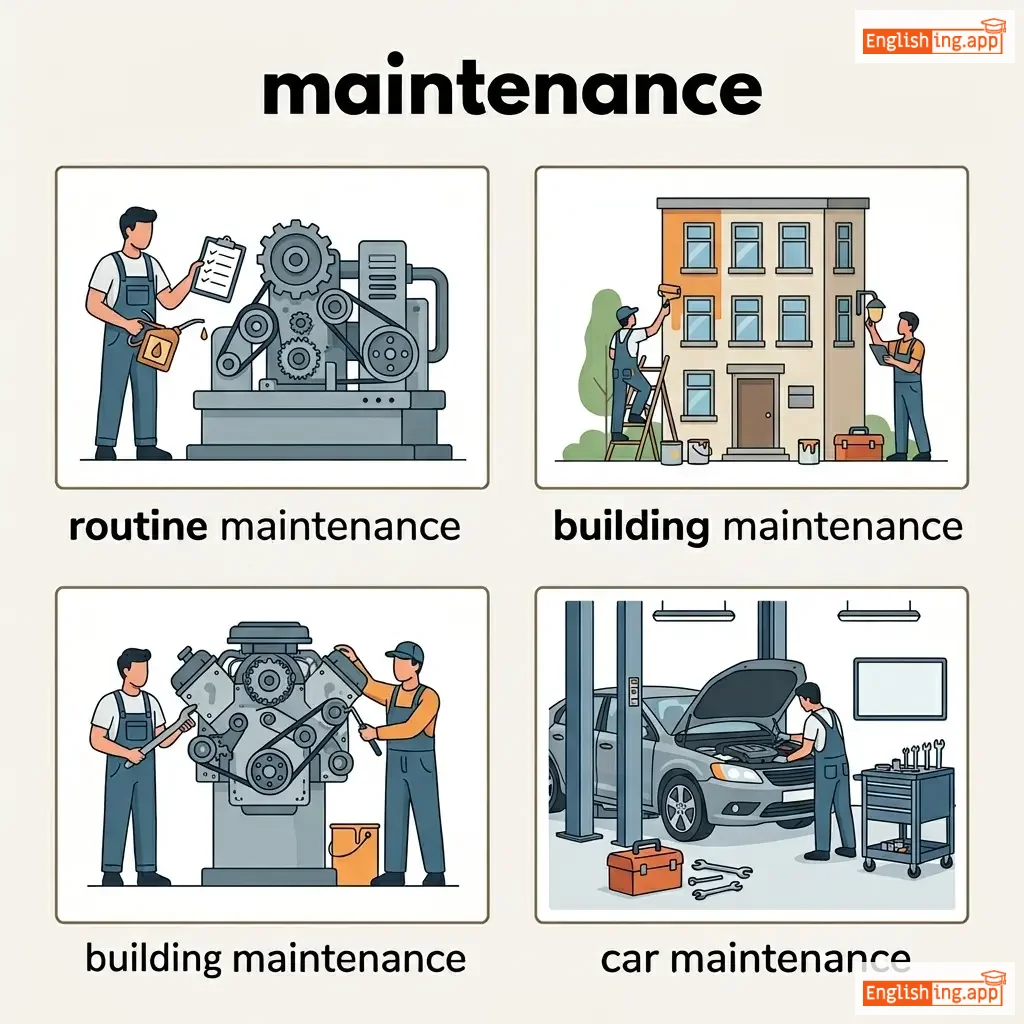
|
routine maintenance, building maintenance, car maintenance, maintenance cost
••••••
|
Maintenance は物を正しく動かすための手助け
••••••
|
|
🏆
••••••
|
/ˈmeɪdʒər/
adjective
(メジャー)
••••••
|
- •••••• |
重要な
jūyōna
••••••
|
- •••••• | - •••••• | - •••••• | - •••••• |
important, serious, or significant
••••••
|
Climate change is a major concern for the world. |
気候変動は世界にとって重大な懸念事項です。
kikō hendō wa sekai ni totte jūdaina shinpai jikō desu.
••••••
|
major breakthrough |
an important discovery or development
••••••
|
重要な突破口
jūyōna toppakō
••••••
|
significant, important, serious, substantial
••••••
|
minor, insignificant
••••••
|
major issue, major role, major problem, major impact
••••••
|
Majorは重要、深刻、または意義深いを意味します。
••••••
|
|
📊
••••••
|
/məˈdʒɒrəti/
noun
(meijoriti)
••••••
|
|
多数
tasuu
••••••
|
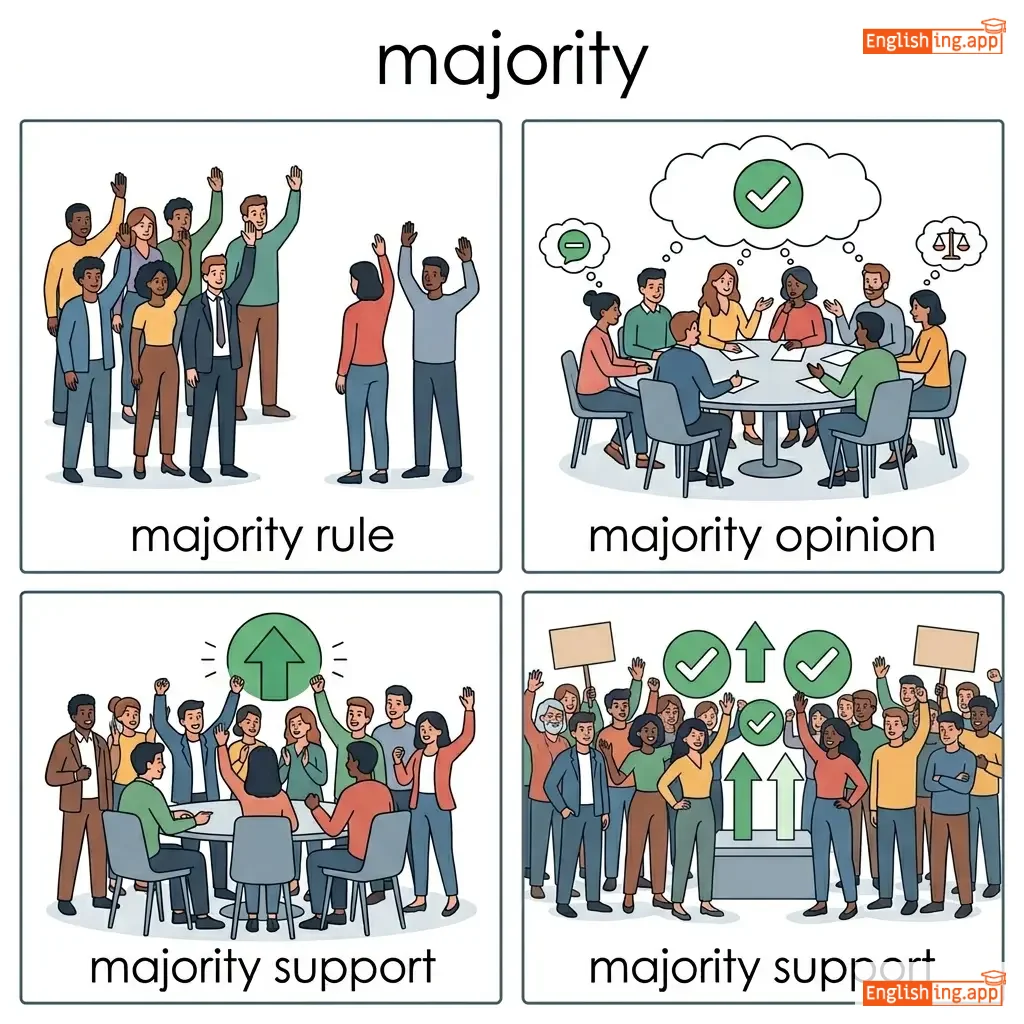
- •••••• | - •••••• | - •••••• | - •••••• |
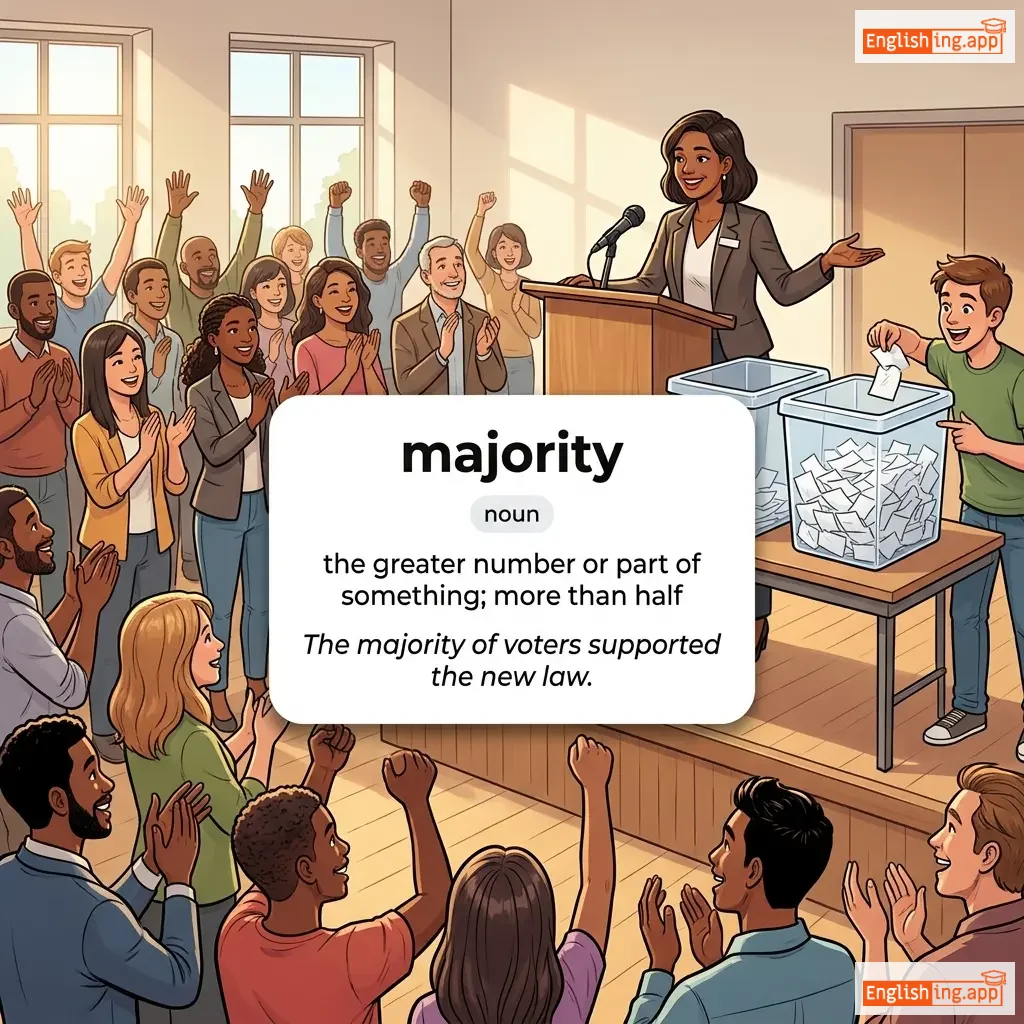
the greater number or part of something; more than half
••••••
|
The majority of voters supported the new law. |
有権者の多数が新しい法律を支持しました。
Yuken-sha no tasuu ga atarashii houritsu o shiji shimashita.
••••••
|
silent majority |
a large group of people who do not express their opinions publicly
••••••
|
沈黙の多数
Chinmoku no tasuu
••••••
|
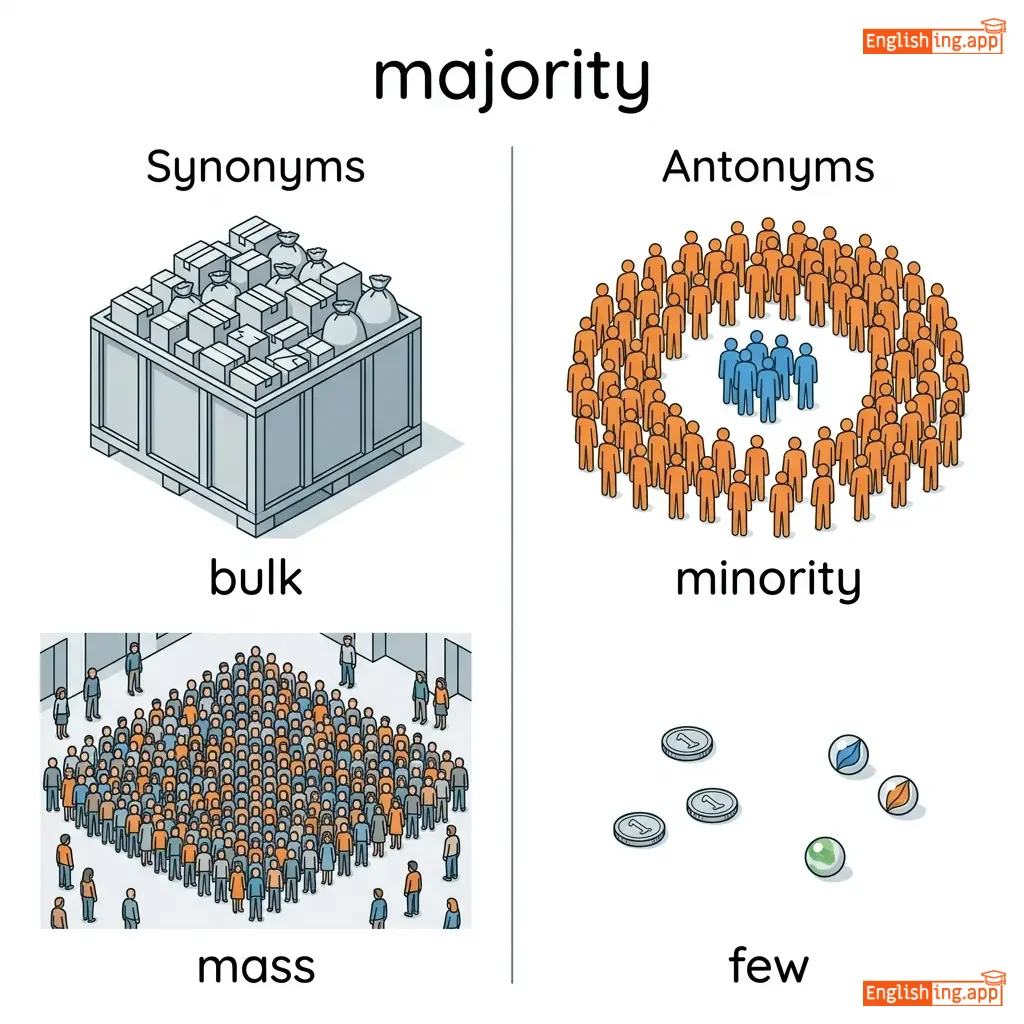
bulk, mass, most, plurality, dominance
••••••
|
minority, few
••••••
|
majority rule, majority opinion, majority support, majority party
••••••
|
多数はより大きな部分を意味します - 多数は半分以上です!
••••••
|
|
🛠️
••••••
|
/meɪk/
verb
(meik)
••••••
|
- •••••• |
作る
tsukuru
••••••
|
made
meid
••••••
|
made
meid
••••••
|
makes
meiks
••••••
|
making
meiking
••••••
|
to create, build, or cause something to happen
••••••
|
She can make delicious cakes.
彼女は美味しいケーキを作れます。
••••••
|
彼女は美味しいケーキを作れます。
Kanojo wa oishii keeki o tsukuremasu.
••••••
|
make a difference
違いを作る
••••••
|
to have a significant effect
••••••
|
違いを作る
chigai o tsukuru
••••••
|
create, build, produce, prepare, construct
••••••
|
destroy, ruin, break
••••••
|
make money, make a decision, make friends, make progress
••••••
|
Makeは作ること、Maker(作り手)と同じです。
••••••
|
|
🛠️
••••••
|
/ˈmeɪkər/
noun
(メイカー)
••••••
|
- •••••• |
創造者
sozo-sha
••••••
|
- •••••• | - •••••• | - •••••• | - •••••• |
a person or thing that makes or produces something
••••••
|
He is a famous movie maker in Hollywood.
彼はハリウッドの有名な映画製作者です。
••••••
|
彼はハリウッドの有名な映画製作者です。
kare wa hariruddo no yuumei na eiga seisakusha desu.
••••••
|
decision maker
意思決定者
••••••
|
a person who has the authority to make decisions
••••••
|
意思決定者
ishikettei-sha
••••••
|
creator, builder, producer, manufacturer
••••••
|
destroyer, breaker
••••••
|
movie maker, money maker, policy maker, tool maker
••••••
|
Maker は創造者を意味します — 何かを作り出す人、例えば映画製作者。
••••••
|
|
💄
••••••
|
/ˈmeɪkʌp/
noun
(メイクアップ)
••••••
|
- •••••• |
化粧
keshou
••••••
|
- •••••• | - •••••• | - •••••• | - •••••• |
cosmetics used to enhance or alter appearance
••••••
|
She applied makeup before the party. |
彼女はパーティーの前に化粧をした。
Kanojo wa pātī no mae ni keshou o shita.
••••••
|
makeup test |
an additional test to make up for one missed earlier
••••••
|
再試験
saishiken
••••••
|
cosmetics, foundation, powder, lipstick, beauty products
••••••
|
bare face, natural
••••••
|
apply makeup, makeup kit, makeup artist, makeup remover
••••••
|
Make + Up = 顔を美しくする化粧 💄
••••••
|
|
🎬
••••••
|
/ˈmeɪkɪŋ/
noun
(メイキング)
••••••
|
- •••••• |
制作
seisaku
••••••
|
- •••••• | - •••••• | - •••••• | - •••••• |
the process of producing or constructing something
••••••
|
The making of the movie took over two years. |
映画の制作には2年以上かかりました。
Eiga no seisaku ni wa 2-nen ijō kakarimashita.
••••••
|
- •••••• | - •••••• | - •••••• |
creation, production, construction, forming
••••••
|
destruction, dismantling
••••••
|
making a decision, making progress, making money
••••••
|
Makingは制作を意味します - Making means making something!
••••••
|
|
👨
••••••
|
/meɪl/
noun/adjective
(メイル)
••••••
|
- •••••• |
男性
dansei
••••••
|
- •••••• | - •••••• | - •••••• | - •••••• |
a man or boy; relating to men or boys
••••••
|
The school has more male teachers than female teachers.
学校には女性の教師よりも男性の教師が多い。
••••••
|
学校には女性の教師よりも男性の教師が多い。
Gakkou ni wa josei no kyoushi yori mo dansei no kyoushi ga ooi.
••••••
|
male dominance
男性支配
••••••
|
a situation where men hold more power
••••••
|
男性支配
dansei shihai
••••••
|
man, boy, masculine, gentleman
••••••
|
female, woman
••••••
|
male student, male voice, male member, male worker
••••••
|
男性(Dansei)は男らしいことを意味します。
••••••
|
|
🏬
••••••
|
/mɔːl/ or /mæl/
noun
(モール)
••••••
|
- •••••• |
ショッピングモール
shoppingu mōru
••••••
|
- •••••• | - •••••• | - •••••• | - •••••• |
a large building or series of connected buildings containing shops and restaurants
••••••
|
They went to the mall to buy new clothes. |
彼らは新しい服を買うためにショッピングモールに行きました。
Karera wa atarashī fuku o kau tame ni shoppingu mōru ni ikimashita.
••••••
|
shopping mall |
a large complex with many retail stores
••••••
|
ショッピングモール
shoppingu mōru
••••••
|
shopping center, plaza, marketplace, arcade
••••••
|
small shop, kiosk
••••••
|
shopping mall, mall culture, mall security, mall parking
••••••
|
Mall はショッピングモール。ショッピングのために行く場所。
••••••
|
|
👨
••••••
|
/mæn/
noun
(マン)
••••••
|
- •••••• |
男性
dansei
••••••
|
- •••••• | - •••••• | - •••••• | - •••••• |
an adult human male
••••••
|
The man helped the child cross the street.
ザ・マンヘルプトゥ・ザ・チャイルド・クロス・ザ・ストリート。
••••••
|
その男性は子供が通りを渡るのを手伝いました。
Sono dansei wa kodomo ga tōri o wataru no o tetsudaimashita.
••••••
|
man's best friend
マン'ズ・ベスト・フレンド
••••••
|
a phrase often used to describe dogs, emphasizing their loyalty to humans
••••••
|
男の最良の友達
otoko no sairyō no tomodachi
••••••
|
male, gentleman, guy, fellow, bloke
••••••
|
woman, female
••••••
|
young man, old man, real man, man of honor
••••••
|
Man 男性 - マン = 男性
••••••
|
|
🛠️
••••••
|
/ˈmænɪdʒ/
verb
(マネージ)
••••••
|
|
管理する
kanri suru
••••••
|
managed
マネージド
••••••
|
managed
マネージド
••••••
|
manages
マネージェス
••••••
|
managing
マネージング
••••••
|
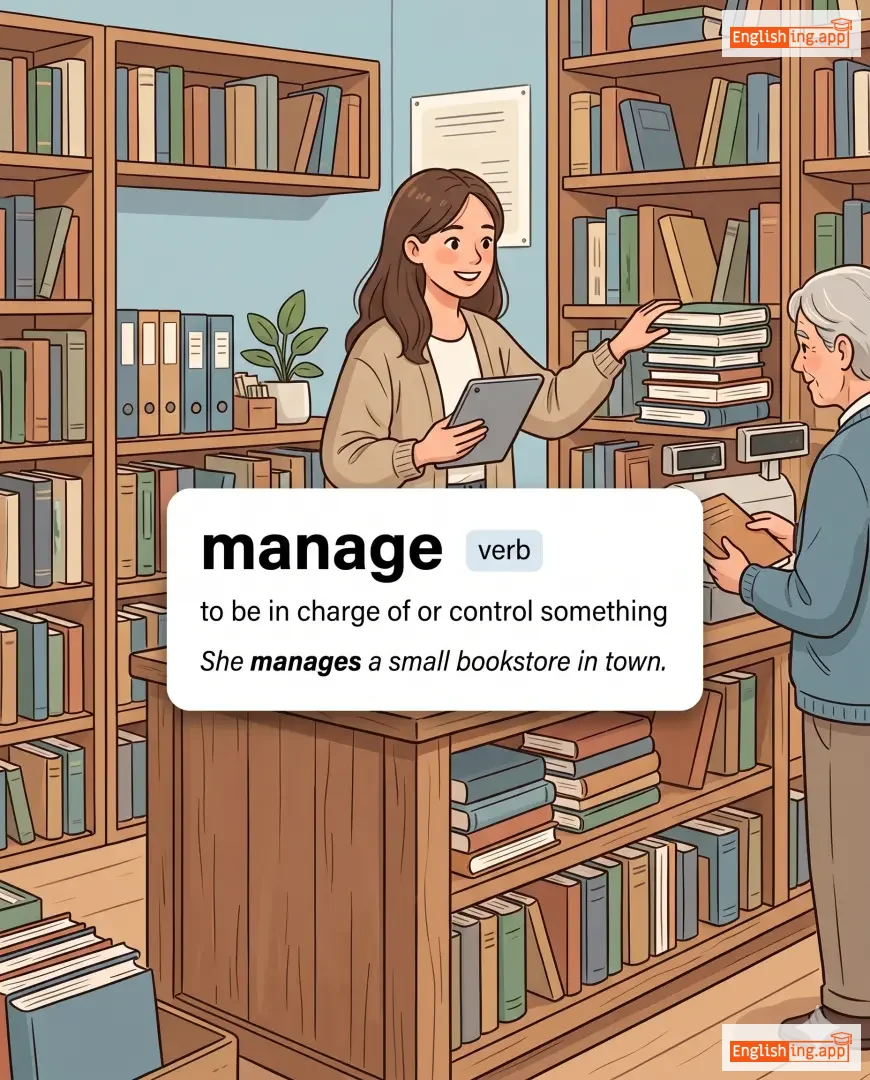
to be in charge of or control something
••••••
|
She manages a small bookstore in town.
彼女は町の小さな書店を経営しています。
••••••
|
彼女は町の小さな書店を経営しています。
Kanojo wa machi no chiisana shoten o keiei shiteimasu.
••••••
|
manage to do
何とかしてする
••••••
|
succeed in doing something, especially with difficulty
••••••
|
何とかしてする
nantoka shite suru
••••••
|
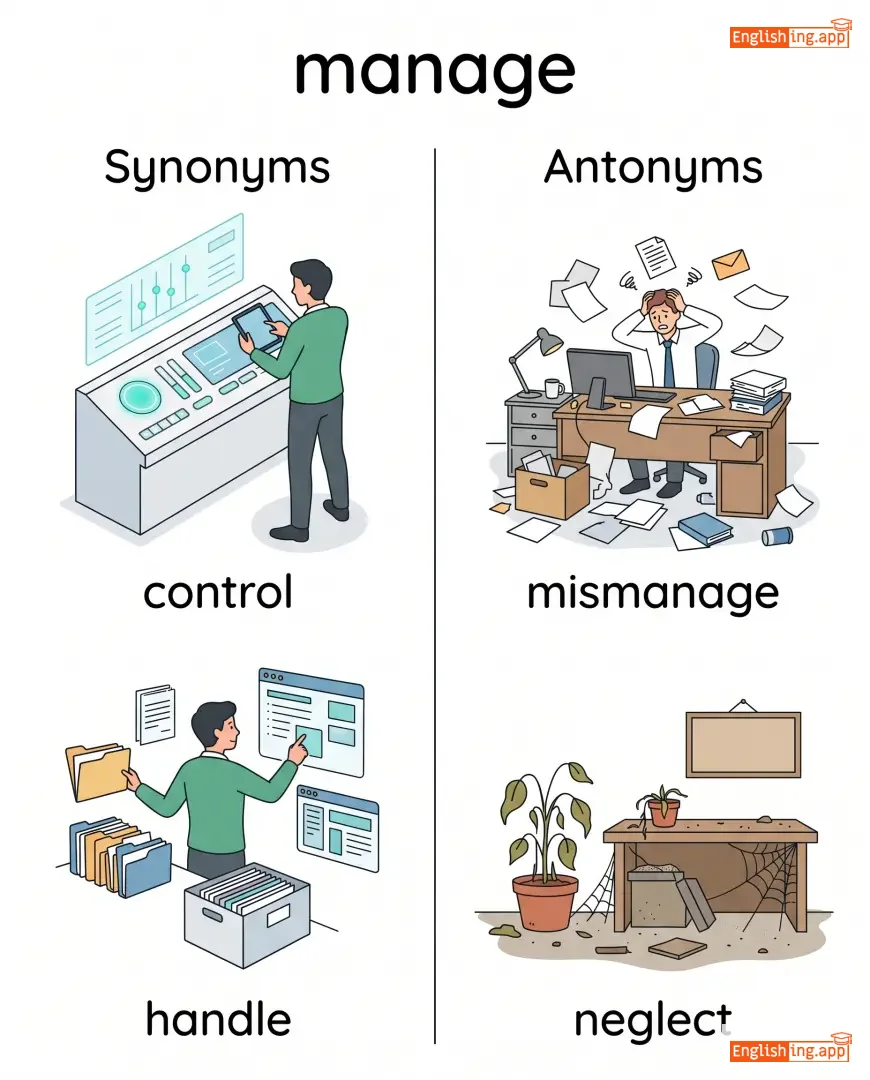
control, handle, supervise, oversee, direct
••••••
|
mismanage, neglect
••••••
|
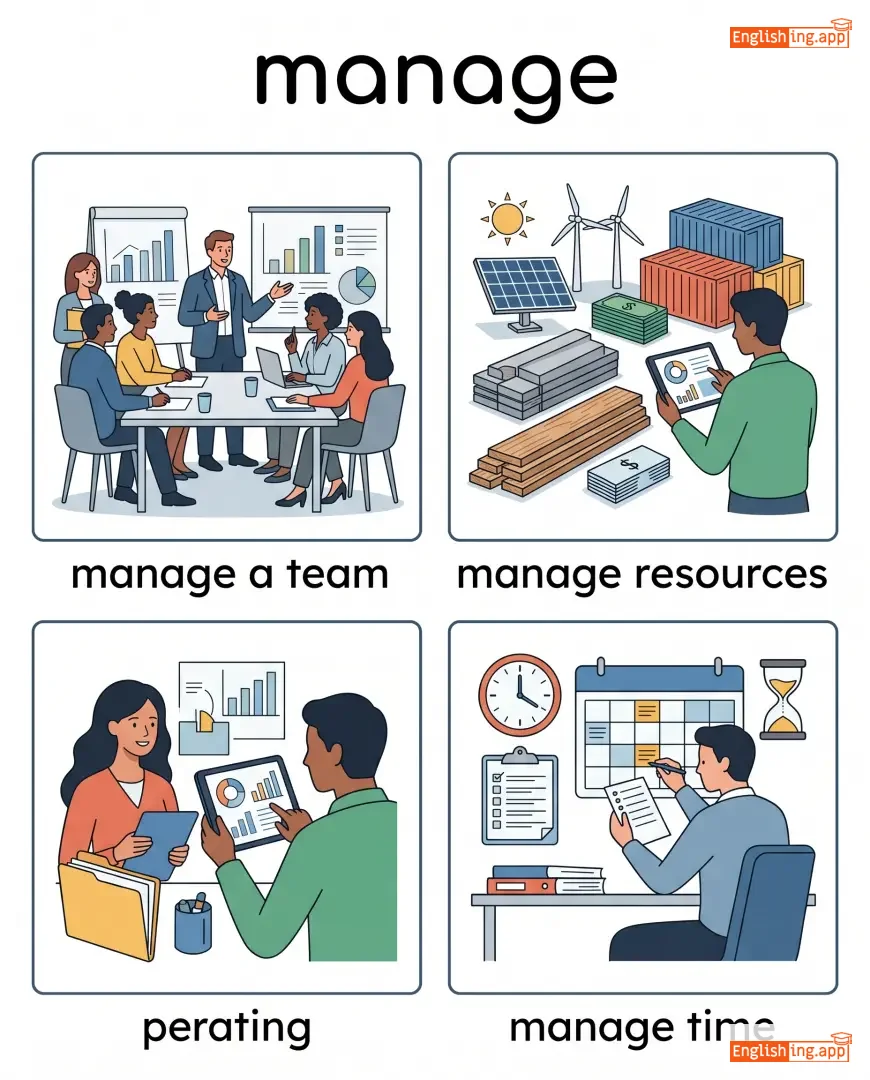
manage a team, manage resources, manage time, manage business
••••••
|
マネージャーはすべてを管理します!
••••••
|
|
📊
••••••
|
/ˈmænɪdʒmənt/
noun
(マネジメント)
••••••
|

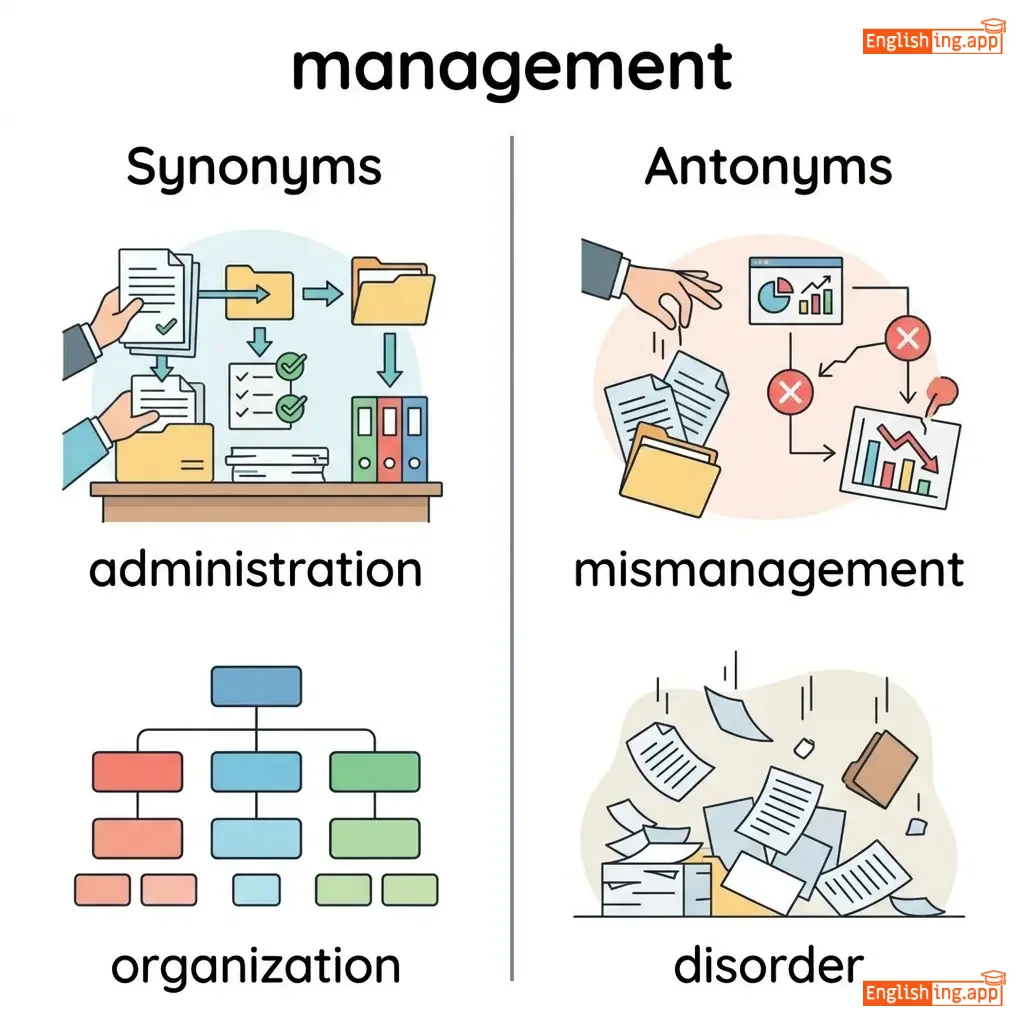
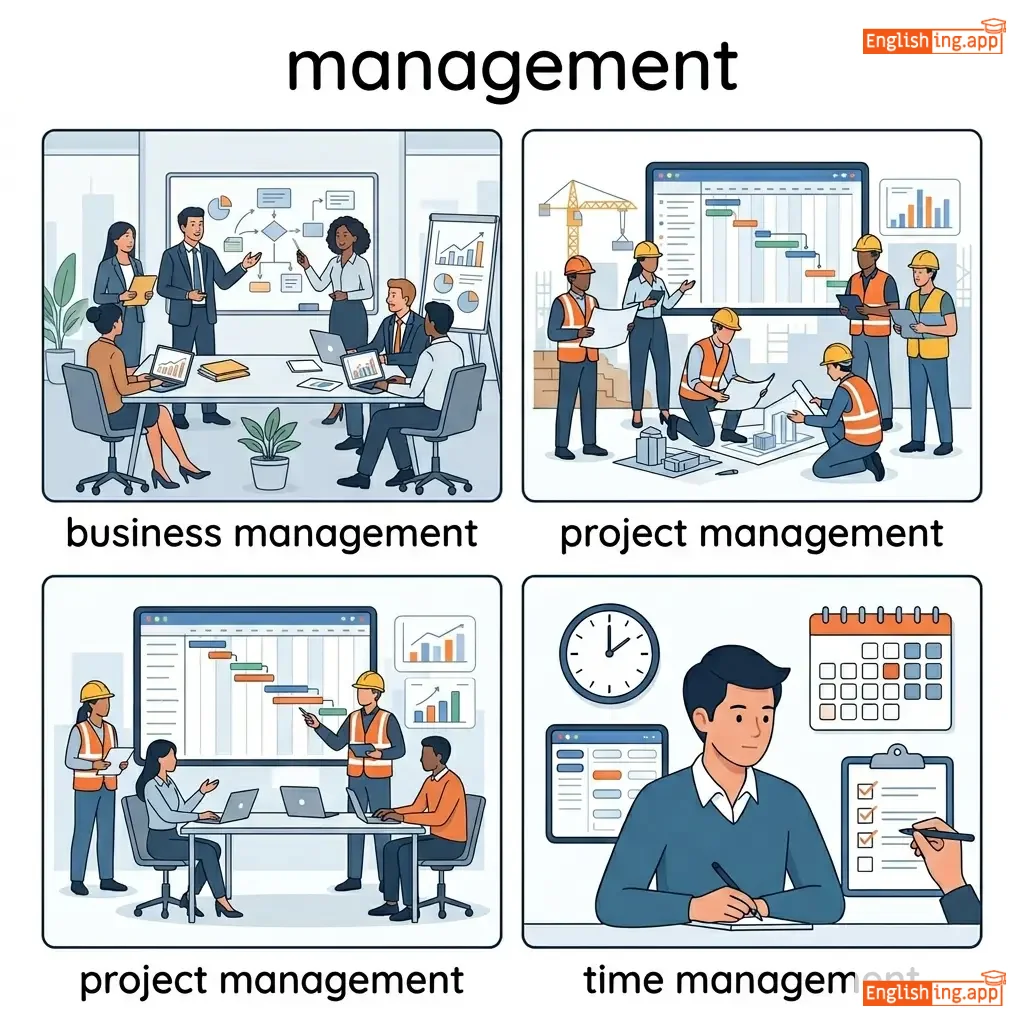
|
マネジメント
manejimento
••••••
|
- •••••• | - •••••• | - •••••• | - •••••• |
the process of dealing with or controlling things or people
••••••
|
Good management is crucial for the success of any business.
良いマネジメントは、どんなビジネスにも成功のために重要です。
••••••
|
良いマネジメントは、どんなビジネスにも成功のために重要です。
Yoi manejimento wa, donna bijinesu ni mo seikou no tame ni juuyou desu.
••••••
|
- •••••• | - •••••• | - •••••• |
administration, organization, control, supervision, direction
••••••
|
mismanagement, disorder
••••••
|
business management, project management, time management, management team
••••••
|
マネジメントはすべてを整理し、効率よく管理することです。
••••••
|
|
👔
••••••
|
/ˈmænɪdʒər/
noun
(マネージャー)
••••••
|
- •••••• |
マネージャー
manējā
••••••
|
- •••••• | - •••••• | - •••••• | - •••••• |
a person responsible for controlling or administering an organization or group of staff
••••••
|
The manager approved the new project plan. |
マネージャーは新しいプロジェクト計画を承認しました。
Manējā wa atarashī purojekuto keikaku o shōnin shimashita.
••••••
|
- •••••• | - •••••• | - •••••• |
supervisor, director, administrator, boss
••••••
|
employee, worker
••••••
|
project manager, team manager, general manager, sales manager
••••••
|
マネージャー - 管理する人
••••••
|
|
📜
••••••
|
/ˈmæn.deɪt/
noun, verb
(マンダト)
••••••
|
- •••••• |
マンダト
mandato
••••••
|
mandated
マンダテッド
••••••
|
mandated
マンダテッド
••••••
|
mandates
マンダッツ
••••••
|
mandating
マンダティング
••••••
|
an official order or command; to give someone authority to act in a certain way
••••••
|
The government issued a mandate to reduce carbon emissions.
政府は炭素排出削減のためのマンダトを発行した。
••••••
|
政府は炭素排出削減のためのマンダトを発行した。
Seifu wa tanso haishutsu sakugen no tame no mandato o hakko shita.
••••••
|
carry out a mandate
マンダトを実行する
••••••
|
to fulfill an official order or duty
••••••
|
マンダトを実行する
mandato o jikkō suru
••••••
|
order, directive, command, decree, instruction
••••••
|
request, suggestion, option
••••••
|
government mandate, official mandate, mandate authority, mandate power
••••••
|
マンダトは政府の指示で、必ず実行するものです。
••••••
|
|
⚖️
••••••
|
/ˈmæn.dəˌtɔːr.i/
adjective
(マンダトリー)
••••••
|
- •••••• |
義務的な
gimuteki na
••••••
|
- •••••• | - •••••• | - •••••• | - •••••• |
required by law or rules; compulsory
••••••
|
Wearing seat belts is mandatory in most countries. |
ほとんどの国でシートベルトの着用は義務的です。
Hotondo no kuni de shītoberuto no chakuyō wa gimuteki desu.
••••••
|
- •••••• | - •••••• | - •••••• |
compulsory, required, obligatory, enforced
••••••
|
optional, voluntary, discretionary
••••••
|
mandatory rule, mandatory training, mandatory law, mandatory requirement
••••••
|
Mandatoryは日本語で義務的なことを意味します、義務としてやらなければならないこと。
••••••
|
|
✨
••••••
|
/ˈmænɪˌfɛst/
verb, adjective
(マニフェスト)
••••••
|
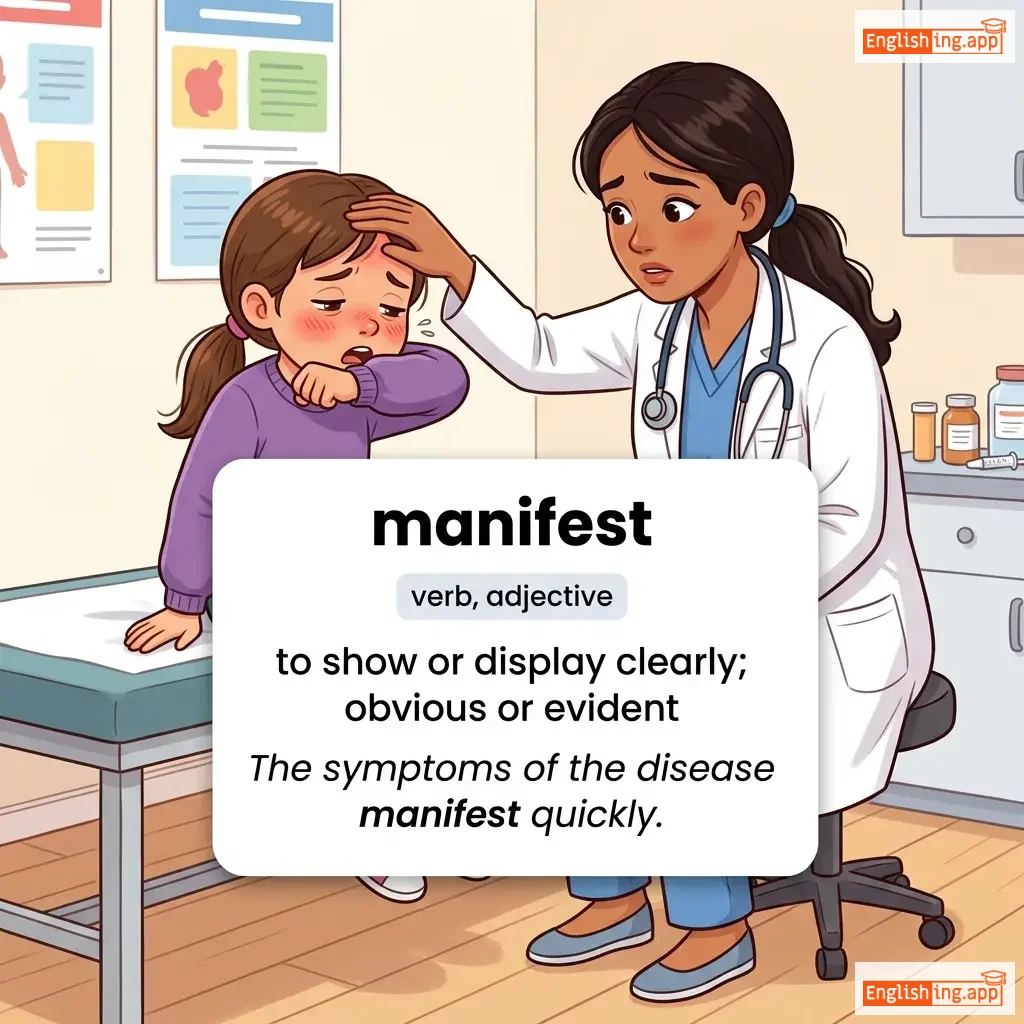
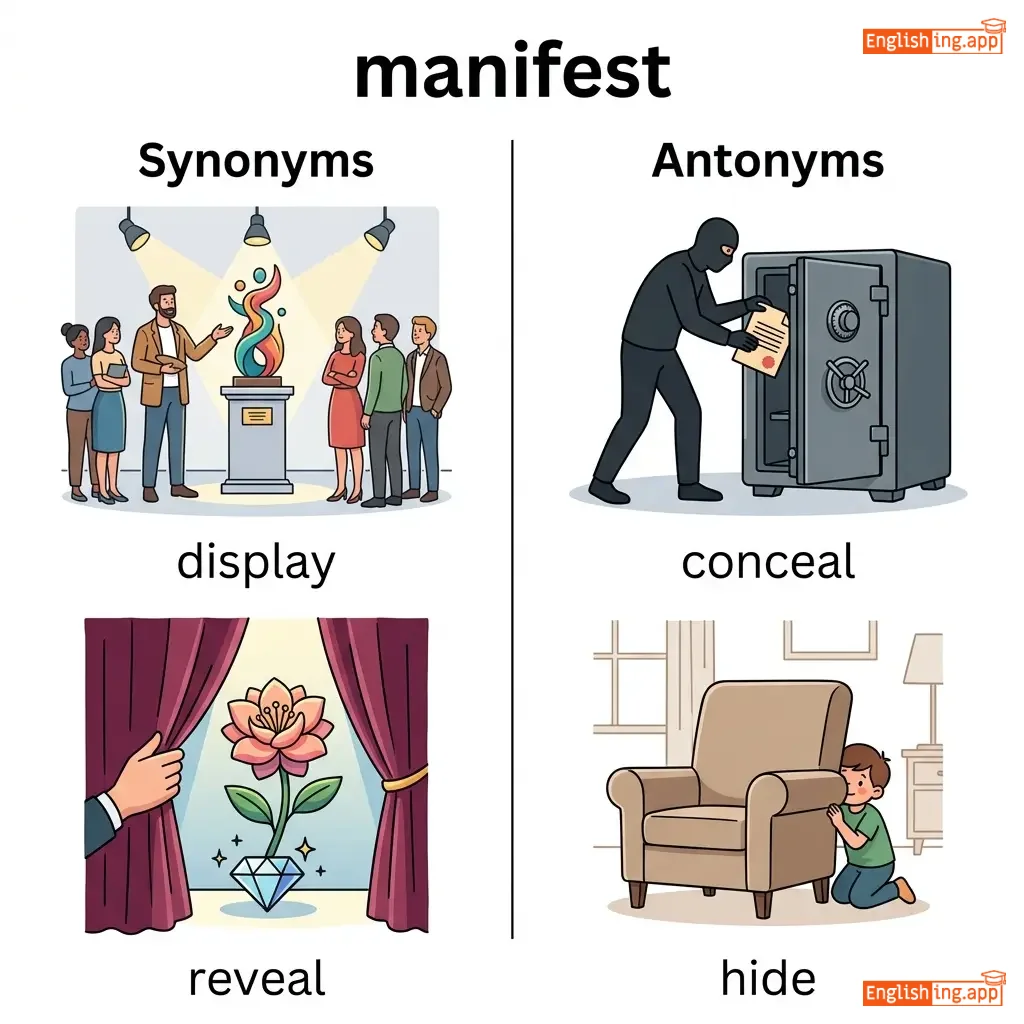
|
現れる
arawareru
••••••
|
manifested
マニフェステッド
••••••
|
manifested
マニフェステッド
••••••
|
manifests
マニフェスツ
••••••
|
manifesting
マニフェスティング
••••••
|
to show or display clearly; obvious or evident
••••••
|
The symptoms of the disease manifest quickly.
病気の症状はすぐに現れます。
••••••
|
病気の症状はすぐに現れます。
Byouki no shoujou wa sugu ni arawaremasu.
••••••
|
manifest destiny
マニフェスト・デスティニー
••••••
|
the belief in the inevitable expansion of the U.S. across the American continent
••••••
|
マニフェスト・デスティニー
manifest destiny
••••••
|
display, reveal, demonstrate, exhibit, express
••••••
|
conceal, hide, obscure
••••••
|
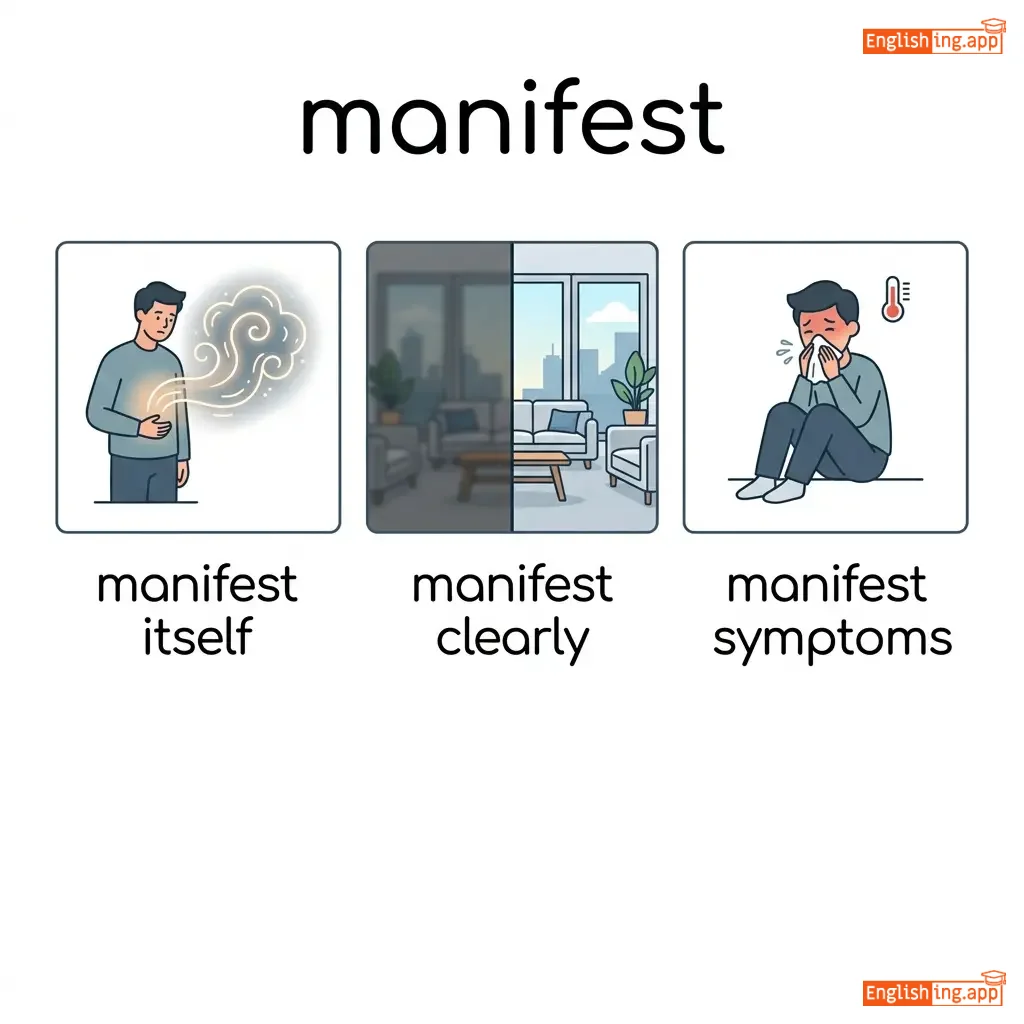
manifest itself, manifest clearly, manifest symptoms, manifest injustice
••••••
|
実際に(manifest)現れる事実を示す
••••••
|
|
🕹️
••••••
|
/məˈnɪpjəˌleɪt/
verb
••••••
|
- •••••• | - •••••• |
manipulated
••••••
|
manipulated
••••••
|
manipulates
••••••
|
manipulating
••••••
|
to control or influence someone or something cleverly or unfairly
••••••
|
He tried to manipulate the results in his favor. |
- •••••• |
manipulate the strings |
to control or influence events or people secretly
••••••
|
- •••••• |
control, influence, exploit, maneuver, handle
••••••
|
mismanage, neglect, ignore
••••••
|
manipulate data, manipulate results, manipulate people
••••••
|
No •••••• |
|
🎭
••••••
|
/məˌnɪpjʊˈleɪʃən/
noun
••••••
|
|
- •••••• | - •••••• | - •••••• | - •••••• | - •••••• |
the action of controlling or influencing something or someone cleverly or unfairly
••••••
|
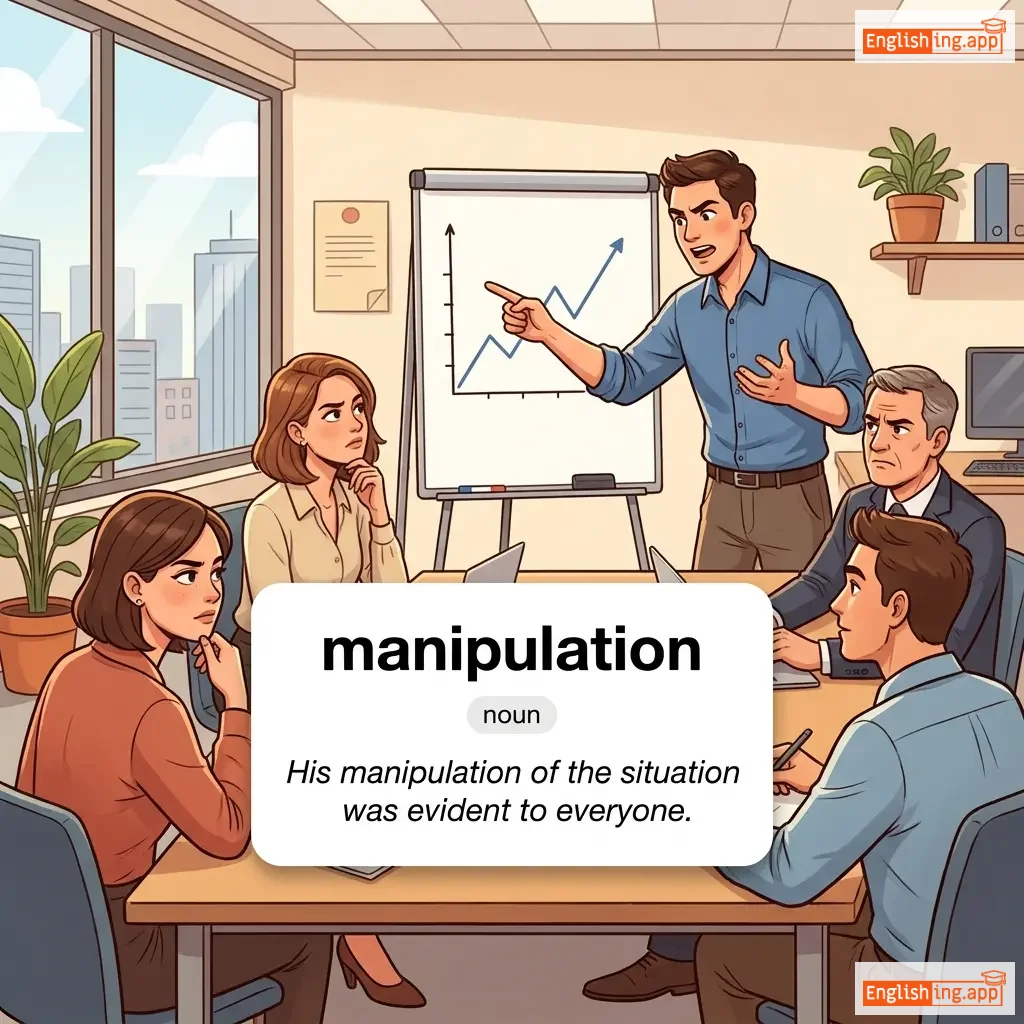
His manipulation of the situation was evident to everyone. |
- •••••• | - •••••• | - •••••• | - •••••• |
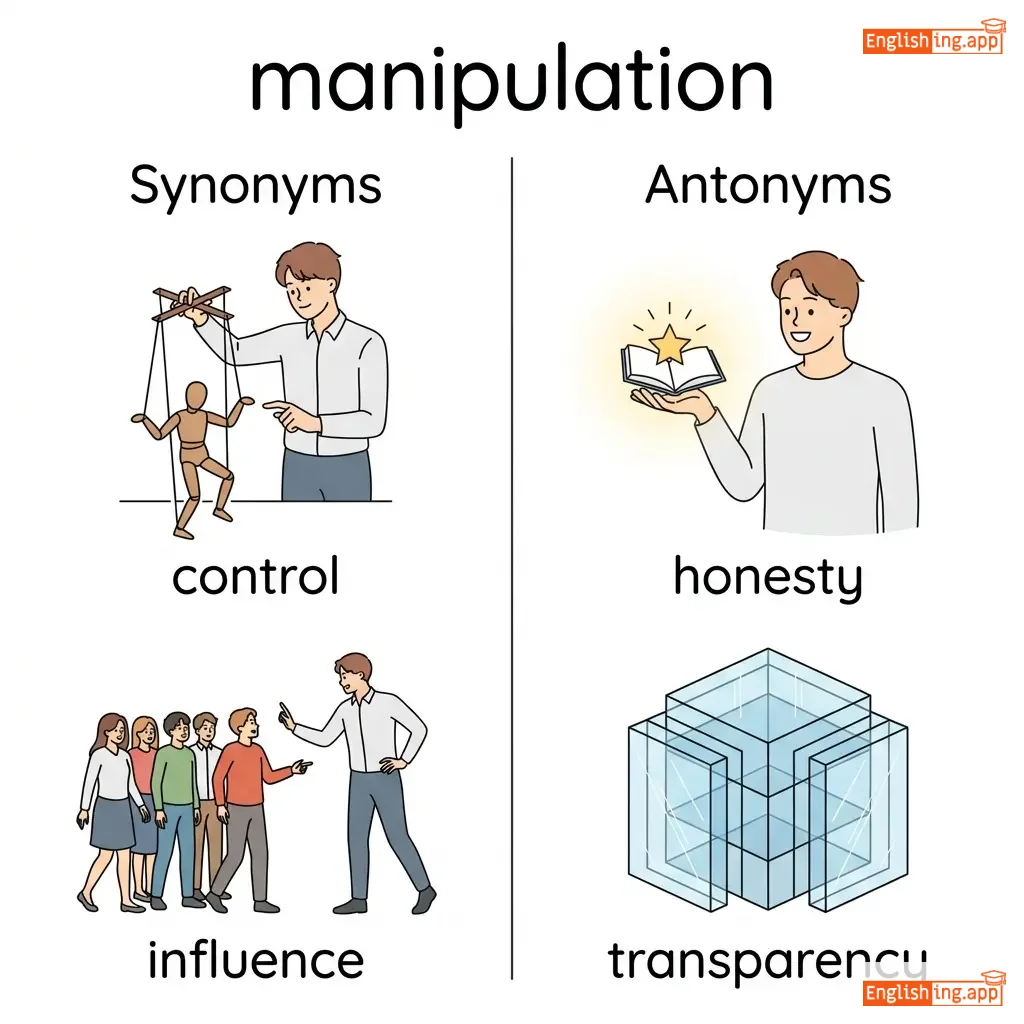
control, influence, handling, exploitation
••••••
|
honesty, transparency
••••••
|
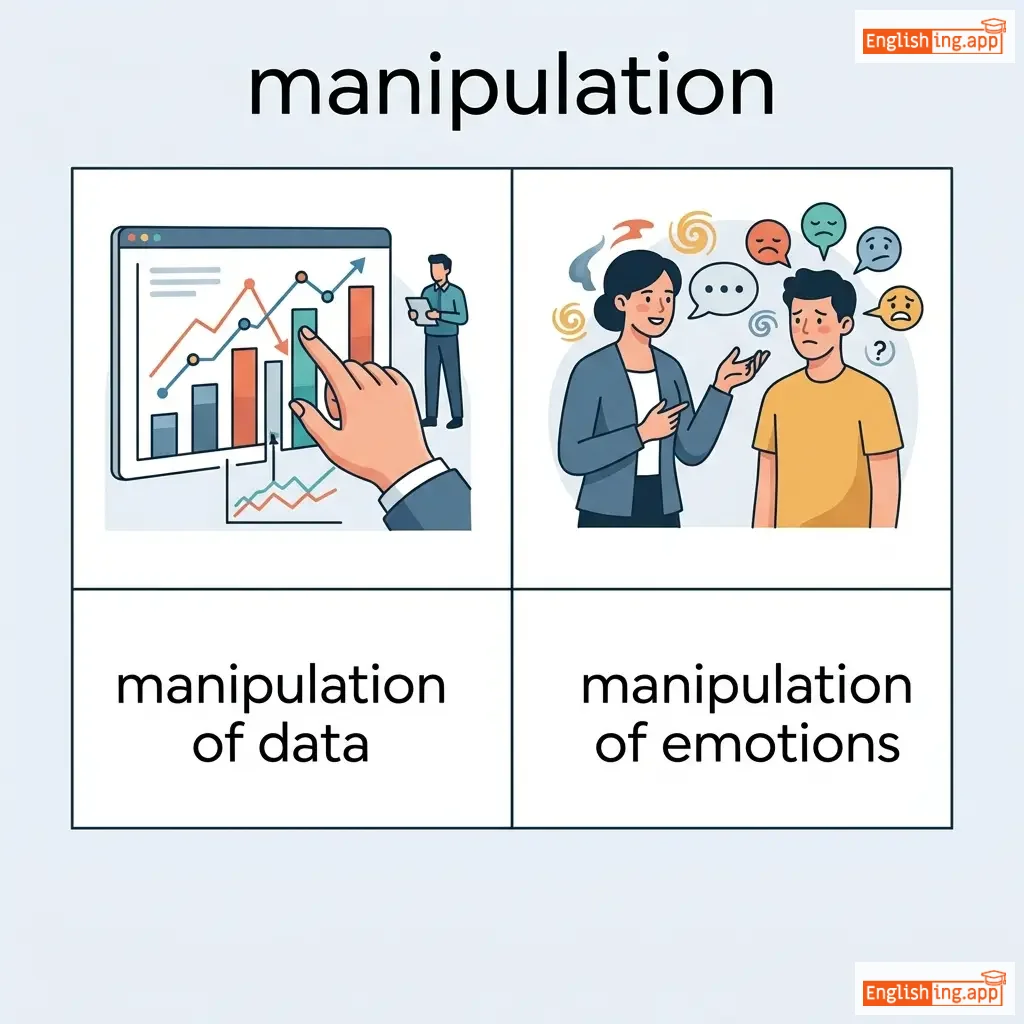
manipulation of data, manipulation of emotions
••••••
|
No •••••• |
|
🗣️
••••••
|
/ˈmænər/
noun
(マナー)
••••••
|
- •••••• |
マナー / 方法
manā / hōhō
••••••
|
- •••••• | - •••••• | - •••••• | - •••••• |
a way in which something is done or happens
••••••
|
He spoke in a polite manner. |
彼は礼儀正しく話しました。
Kare wa reigi tadashiku hanashimashita.
••••••
|
in a manner of speaking |
in a certain sense or way
••••••
|
話し方の一つ
hanashikata no hitotsu
••••••
|
way, style, method, fashion, approach
••••••
|
disorder, chaos
••••••
|
polite manner, proper manner, rude manner, in this manner
••••••
|
Manner はマナーや方法を意味します - 礼儀正しく話す
••••••
|
|
🏭
••••••
|
/ˌmænjʊˈfæktʃər/
verb
(マニュファクチャー)
••••••
|
|
製造
seizō
••••••
|
manufactured
マニュファクチャード
••••••
|
manufactured
マニュファクチャード
••••••
|
manufactures
マニュファクチャーズ
••••••
|
manufacturing
マニュファクチャリング
••••••
|
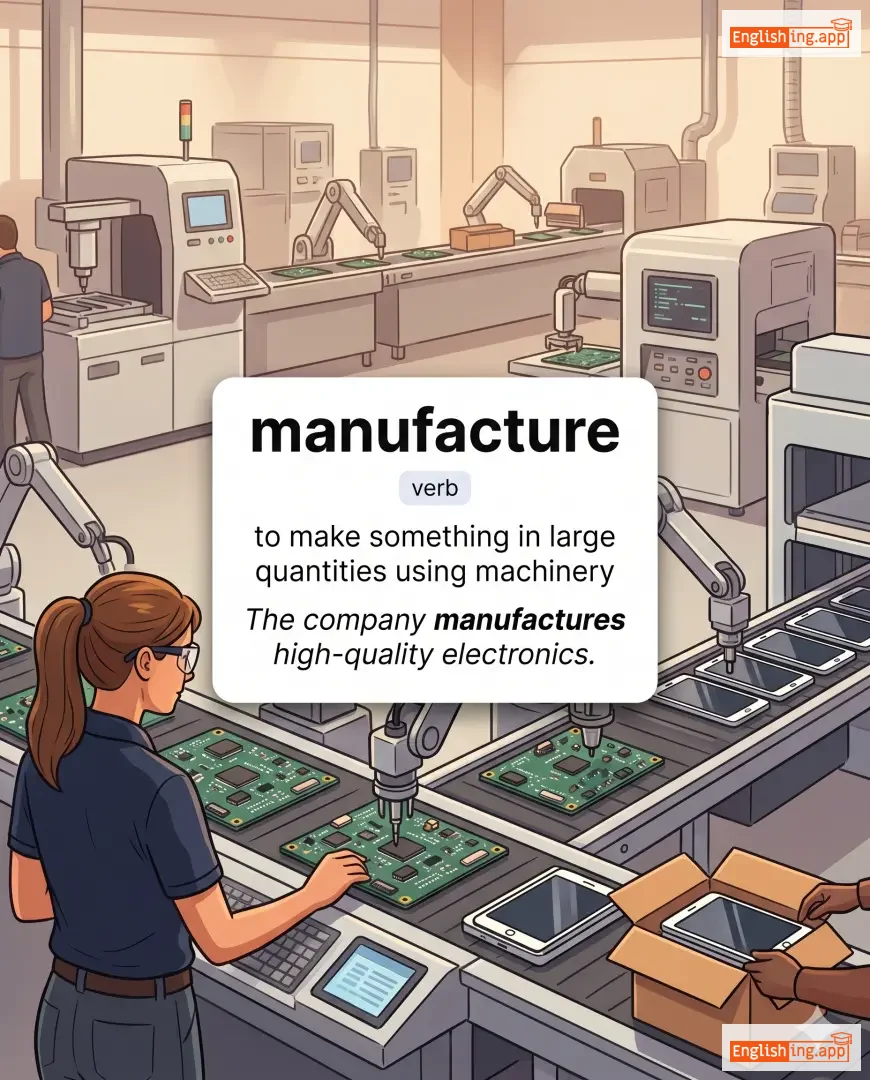
to produce goods in large quantities using machinery; to make or create something
••••••
|
The company manufactures electronic devices for global markets.
その会社はグローバル市場向けに電子機器を製造しています。
••••••
|
その会社はグローバル市場向けに電子機器を製造しています。
Sono kaisha wa gurōbaru shijō muke ni denshi kikō o seizō shiteimasu.
••••••
|
- •••••• | - •••••• | - •••••• |
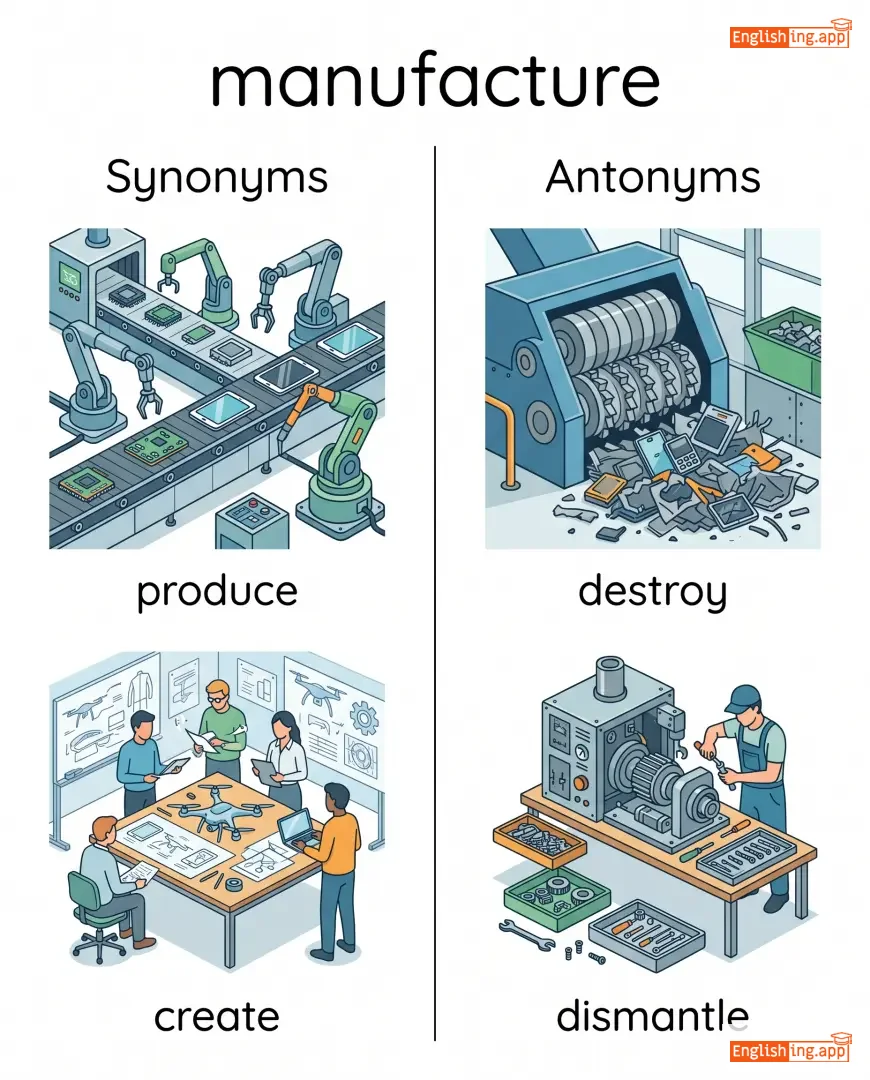
produce, make, create, fabricate
••••••
|
destroy, dismantle, demolish, break
••••••
|
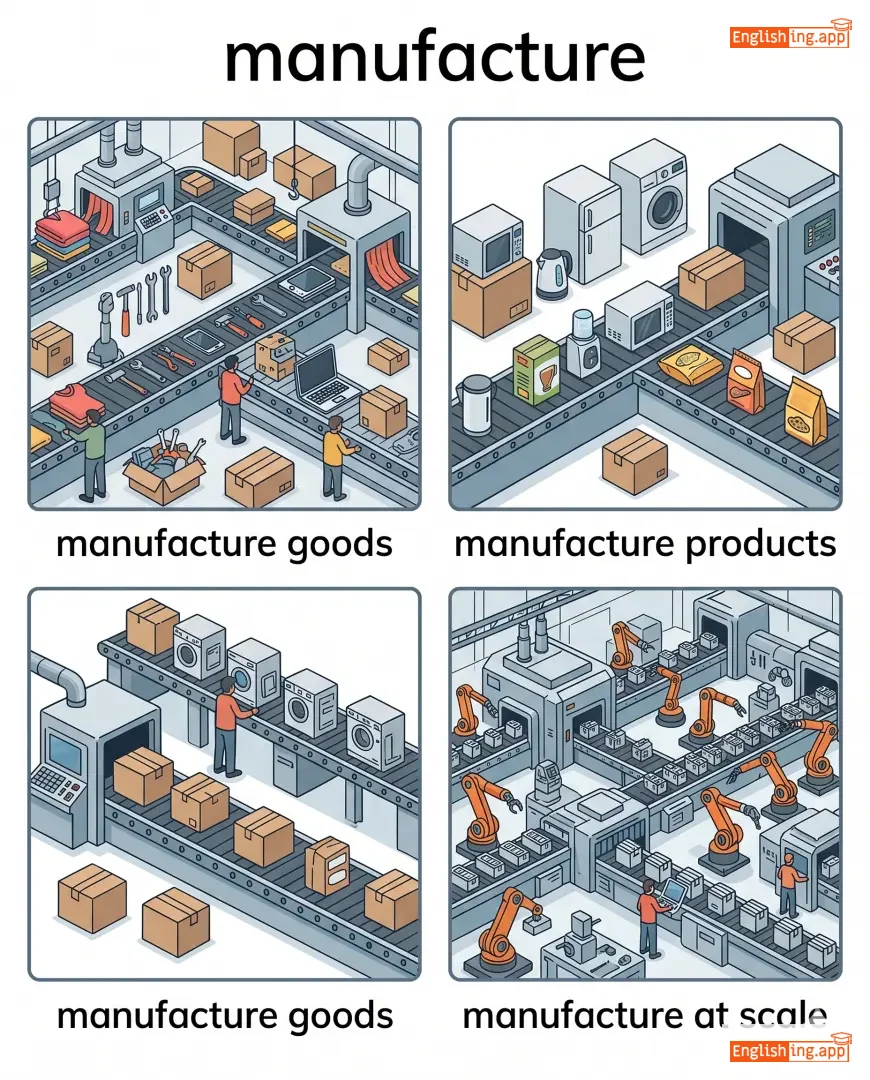
manufacture goods, manufacture products, manufacture cars, mass manufacture
••••••
|
製造は大規模に物を作ることで、工場で製品を作ることと同じです。
••••••
|
|
🏭
••••••
|
/ˌmænjəˈfæktʃərər/
noun
(マニュファクチュアラー)
••••••
|
- •••••• |
製造業者
seizōgyōsha
••••••
|
- •••••• | - •••••• | - •••••• | - •••••• |
A person or company that makes goods in large quantities.
••••••
|
The manufacturer produces cars for the global market.
製造業者はグローバル市場向けに車を生産しています。
••••••
|
製造業者はグローバル市場向けに車を生産しています。
Seizōgyōsha wa gurōbaru shijō muke ni kuruma o seisan shiteimasu.
••••••
|
original manufacturer
オリジナル製造業者
••••••
|
The main company that first makes and sells a product.
••••••
|
オリジナル製造業者
Orijinaru seizōgyōsha
••••••
|
producer, maker, creator, builder, fabricator
••••••
|
consumer, buyer, user
••••••
|
car manufacturer, leading manufacturer, original manufacturer, manufacturer warranty
••••••
|
製造業者: 製造 + 業者 → 商品を作る人
••••••
|
|
🏭
••••••
|
/ˌmænjəˈfæktʃərɪŋ/
noun
(マニュファクチャリング)
••••••
|
- •••••• |
製造業
seizōgyō
••••••
|
- •••••• | - •••••• | - •••••• | - •••••• |
the process of making products on a large scale using machinery
••••••
|
The country is investing heavily in the manufacturing sector. |
その国は製造業に大規模に投資しています。
sono kuni wa seizōgyō ni daikibo ni tōshi shiteimasu.
••••••
|
manufacturing hub |
a place where a large amount of manufacturing occurs
••••••
|
製造拠点
seizō kyoten
••••••
|
production, fabrication, assembly, creation, making
••••••
|
consumption, destruction
••••••
|
manufacturing industry, manufacturing process, manufacturing sector, manufacturing plant
••••••
|
製造業は大量の製品を作る仕事です
••••••
|
|
📜
••••••
|
/ˈmæn.juˌskrɪpt/
noun
(マヌスクリプト)
••••••
|
- •••••• |
手稿
shukou
••••••
|
- •••••• | - •••••• | - •••••• | - •••••• |
a handwritten or typed document, especially a writer’s draft before publication
••••••
|
The author submitted her manuscript to the publisher. |
作家は彼女の手稿を出版社に提出しました。
Sakka wa kanojo no shukou o shuppansha ni teishutsu shimashita.
••••••
|
- •••••• | - •••••• | - •••••• |
draft, document, text, script, paper
••••••
|
print, publication, copy
••••••
|
ancient manuscript, submit manuscript, manuscript copy
••••••
|
手書きの手稿、マヌスクリプト
••••••
|
|
🔢
••••••
|
/ˈmɛni/
adjective
(meni)
••••••
|
- •••••• |
多くの
ooku no
••••••
|
- •••••• | - •••••• | - •••••• | - •••••• |
a large number of
••••••
|
Many students attended the lecture. |
多くの学生が講義に参加しました。
Ooku no gakusei ga kougi ni sanka shimashita.
••••••
|
many a time |
very often
••••••
|
何度も
nandomo
••••••
|
numerous, countless, several, various, multiple
••••••
|
few, little
••••••
|
many people, many years, many times, many ways
••••••
|
Many は多くの (ooku no)
••••••
|
|
🗺️
••••••
|
/mæp/
noun
(マップ)
••••••
|
- •••••• |
地図
chizu
••••••
|
- •••••• | - •••••• | - •••••• | - •••••• |
a drawing that shows the features of an area of land or sea
••••••
|
He studied the map before starting his journey. |
彼は旅を始める前に地図を調べました。
Kare wa tabi o hajimeru mae ni chizu o shirabemashita.
••••••
|
put on the map |
to make someone or something famous or important
••••••
|
地図に載せる
chizu ni noseru
••••••
|
chart, plan, diagram, blueprint
••••••
|
disorder, chaos
••••••
|
world map, road map, city map, draw a map
••••••
|
地図 = 地図 (map = chizu)
••••••
|
|
🏃♀️
••••••
|
/ˈmærəθən/
noun
(マラソン)
••••••
|
- •••••• |
マラソン
marason
••••••
|
- •••••• | - •••••• | - •••••• | - •••••• |
a long-distance running race, typically 42.195 kilometers (26.2 miles)
••••••
|
She completed the marathon in under four hours. |
彼女は4時間以内にマラソンを完走しました。
Kanojo wa 4 jikan inai ni marason o kansou shimashita.
••••••
|
- •••••• | - •••••• | - •••••• |
race, event, competition, endurance
••••••
|
sprint, short race
••••••
|
run a marathon, marathon training, marathon winner
••••••
|
Marathon runs forever - マラソンは終わらない!
••••••
|
|
🚶♂️
••••••
|
/mɑːrtʃ/
verb
••••••
|
- •••••• | - •••••• |
marched
••••••
|
marched
••••••
|
marches
••••••
|
marching
••••••
|
to walk in a regular, rhythmic way, often in step with others; to proceed with determination
••••••
|
The soldiers marched across the field. |
- •••••• |
march to the beat of your own drum |
to act independently and follow your own ideas or path
••••••
|
- •••••• |
walk, stride, parade, proceed, advance
••••••
|
stop, halt, retreat
••••••
|
march forward, peace march, protest march, march together
••••••
|
No •••••• |
|
📊
••••••
|
/ˈmɑːrdʒɪn/
noun
(マージン)
••••••
|
- •••••• |
マージン、限界、境界
maajin, genkai, kyoukai
••••••
|
- •••••• | - •••••• | - •••••• | - •••••• |
The edge or border of something; the amount by which something is won or falls short.
••••••
|
The company increased its profit margin last year. |
その会社は昨年、利益率を増加させました。
Sono kaisha wa sakunen, rieki-ritu o zouka sasemashita.
••••••
|
on the margins |
existing at the edge of society or outside the mainstream
••••••
|
境界線上
Kyoukaisenjou
••••••
|
edge, border, boundary, allowance, leeway
••••••
|
center, core, middle
••••••
|
profit margin, narrow margin, winning margin, margin of error
••••••
|
Profit marginは利益率を指します。ショップのマージンも同じようなものです。
••••••
|
|
📏
••••••
|
/ˈmɑːr.dʒɪ.nəl/
adjective
(マージナル)
••••••
|
- •••••• |
周辺の; 最小の; わずかな
maajinaru
••••••
|
- •••••• | - •••••• | - •••••• | - •••••• |
relating to or situated at the edge; minimal; slight
••••••
|
The marginal improvement in sales was barely noticeable. |
売上のわずかな改善はほとんど気づかれませんでした。
Uriage no wazukana kaizen wa hotondo kidzukaremasen deshita.
••••••
|
- •••••• | - •••••• | - •••••• |
minimal, slight, borderline, peripheral
••••••
|
central, significant, substantial, major
••••••
|
marginal improvement, marginal cost, marginal benefit
••••••
|
わずかな進歩、しかし十分に目立つ。
••••••
|
|
🌊
••••••
|
/məˈriːn/
adjective
(マリーン)
••••••
|
|
海洋の
kaiyō no
••••••
|
- •••••• | - •••••• | - •••••• | - •••••• |
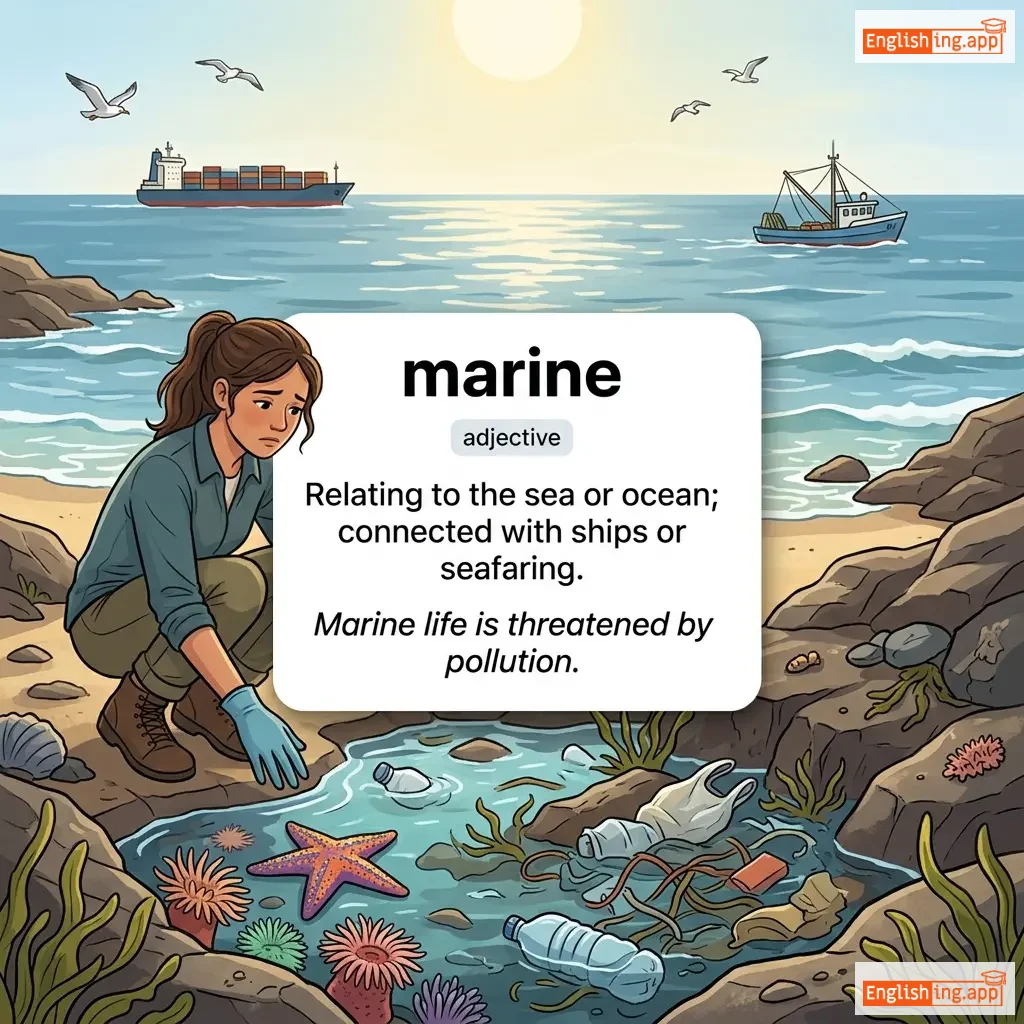
Relating to the sea or ocean; connected with ships or seafaring.
••••••
|
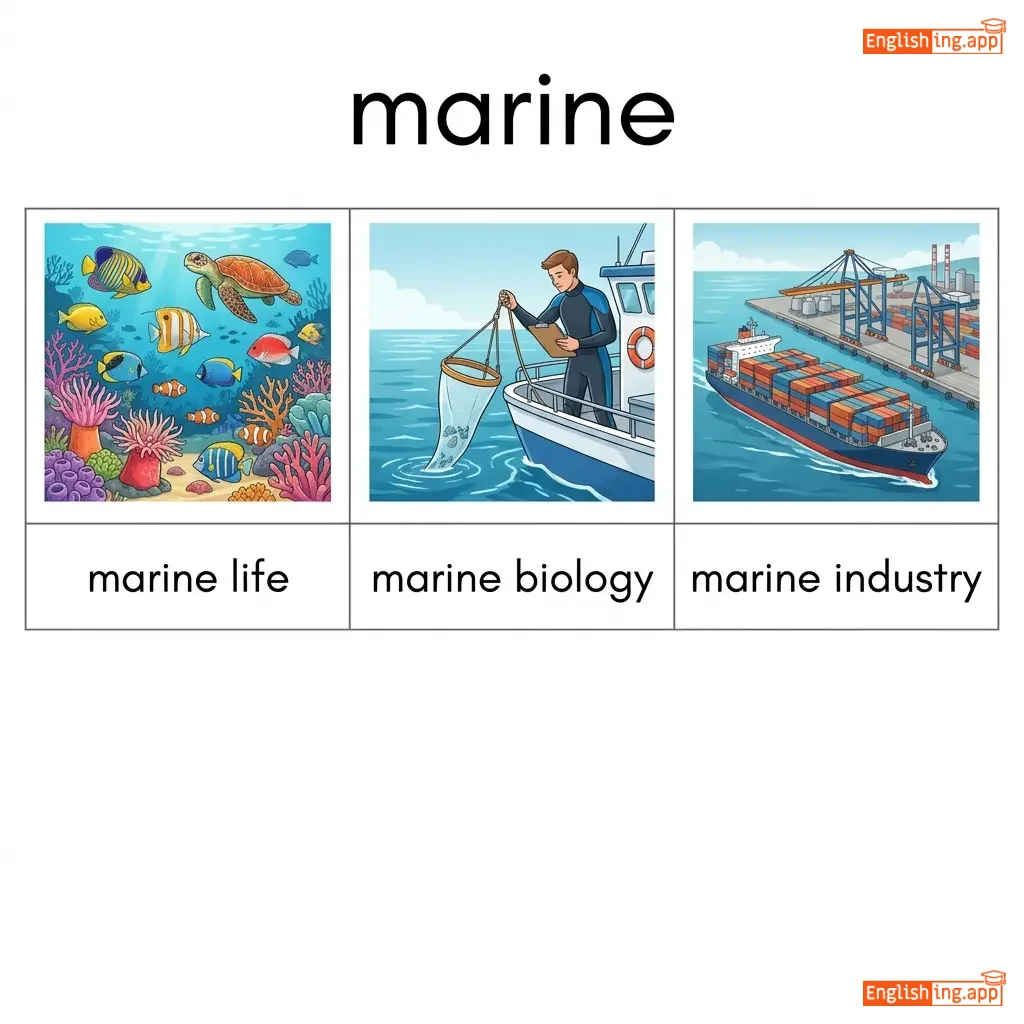
Marine life is threatened by pollution.
海洋生物は汚染の脅威にさらされています。
••••••
|
海洋生物は汚染の脅威にさらされています。
Kaiyō seibutsu wa osen no kyōi ni sarareteimasu.
••••••
|
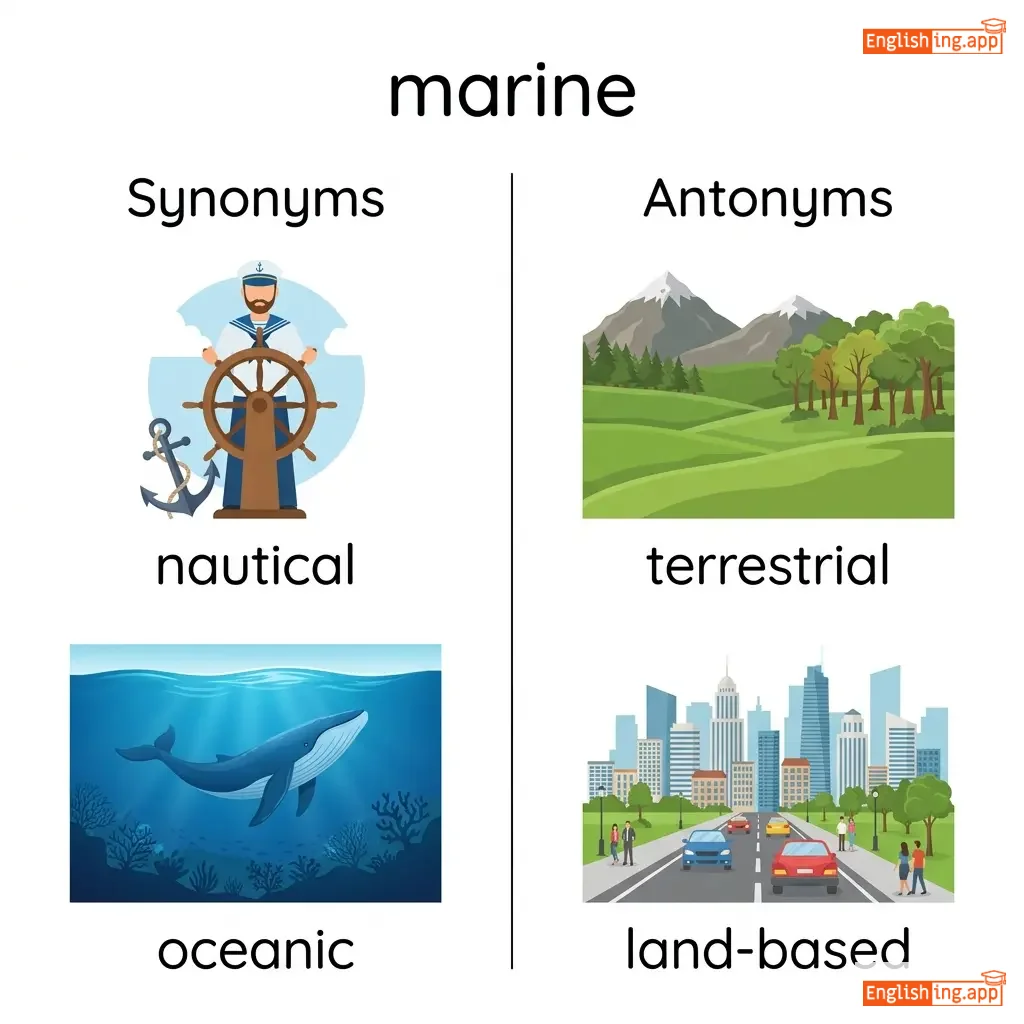
- •••••• | - •••••• | - •••••• |
nautical, oceanic, naval, maritime
••••••
|
terrestrial, land-based
••••••
|
marine life, marine biology, marine industry, marine animals
••••••
|
Marine は海洋に関することです、例えば海洋公園や海洋生物の話。
••••••
|
|
✏️
••••••
|
/mɑːrk/
verb
(マーク)
••••••
|
|
印をつける
ishi o tsukeru
••••••
|
marked
マークド
••••••
|
marked
マークド
••••••
|
marks
マークス
••••••
|
marking
マーキング
••••••
|
to make a visible impression or symbol on a surface
••••••
|
The teacher marked the important points in red.
先生は赤で重要なポイントをマークしました。
••••••
|
先生は赤で重要なポイントをマークしました。
Sensei wa aka de jūyōna pointo o māku shimashita.
••••••
|
make your mark
自分の痕跡を残す
••••••
|
to have a lasting impact or achieve success
••••••
|
自分の印を残す
jibun no shirushi o nokosu
••••••
|
label, stain, sign, indicate, highlight
••••••
|
erase, remove, clear
••••••
|
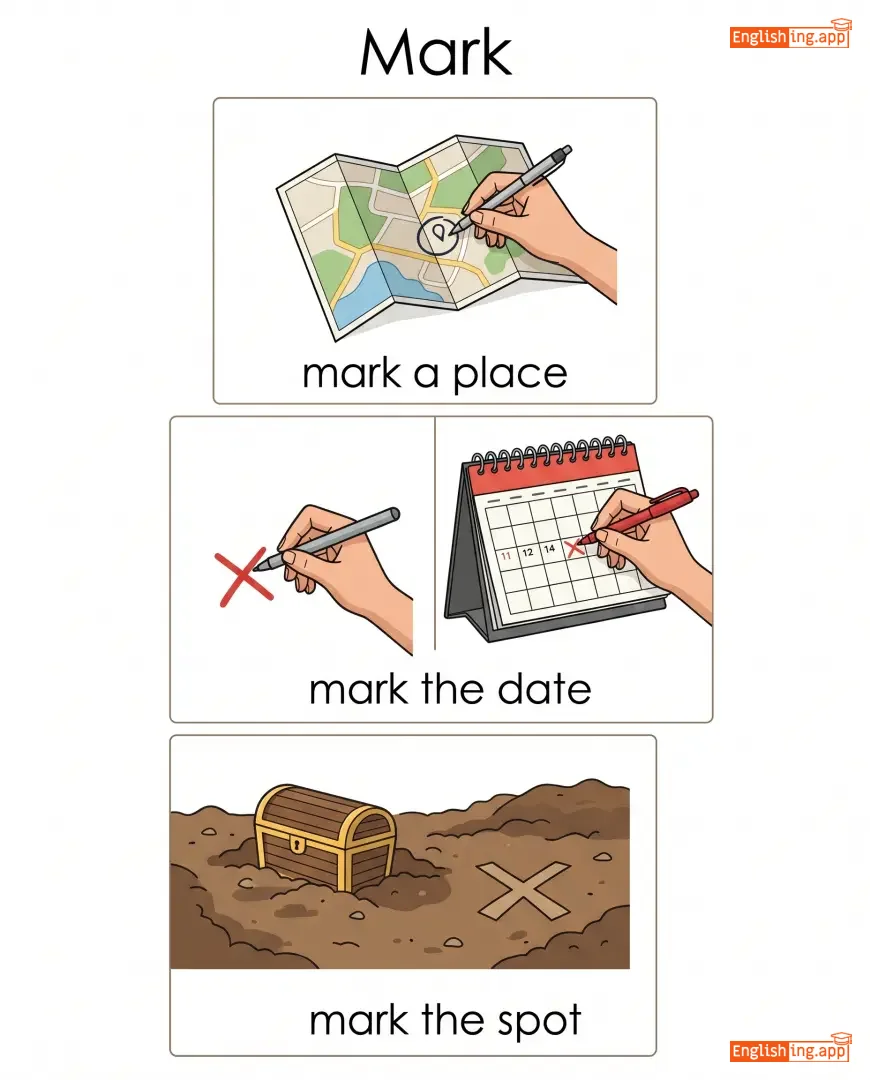
mark a place, mark the date, mark the spot, examination mark
••••••
|
Markで印をつける
••••••
|
|
🖊️
••••••
|
/ˈmɑːrkər/
noun
(マーカー)
••••••
|
- •••••• |
マーカー、マーキングペン
māka, mākingu pen
••••••
|
- •••••• | - •••••• | - •••••• | - •••••• |
an object used to indicate a position, place, or boundary; a pen with a thick tip used for writing or drawing
••••••
|
He used a red marker to underline the important points. |
彼は重要なポイントを強調するために赤いマーカーを使用しました。
Kare wa jūyō na pointo o kyōchō suru tame ni akai mākā o shiyō shimashita.
••••••
|
- •••••• | - •••••• | - •••••• |
sign, indicator, token, pen, symbol
••••••
|
eraser, remover
••••••
|
use a marker, permanent marker, location marker, boundary marker
••••••
|
マーカーは重要な点を示すために使われ、赤いマーカーで強調することができます。
••••••
|
|
📈
••••••
|
/ˈmɑːrkɪt/
verb
(マーケット)
••••••
|

|
マーケティングする
mākeetingu suru
••••••
|
marketed
マーケティングした
••••••
|
marketed
マーケティングした
••••••
|
markets
マーケットする
••••••
|
marketing
マーケティング
••••••
|
to promote and sell products or services; to advertise
••••••
|
The company will market their new product through social media.
会社は新製品をソーシャルメディアでマーケティングする予定です。
••••••
|
会社は新製品をソーシャルメディアでマーケティングする予定です。
Kaisha wa shin seihin o sōsharu media de mākeetingu suru yotei desu.
••••••
|
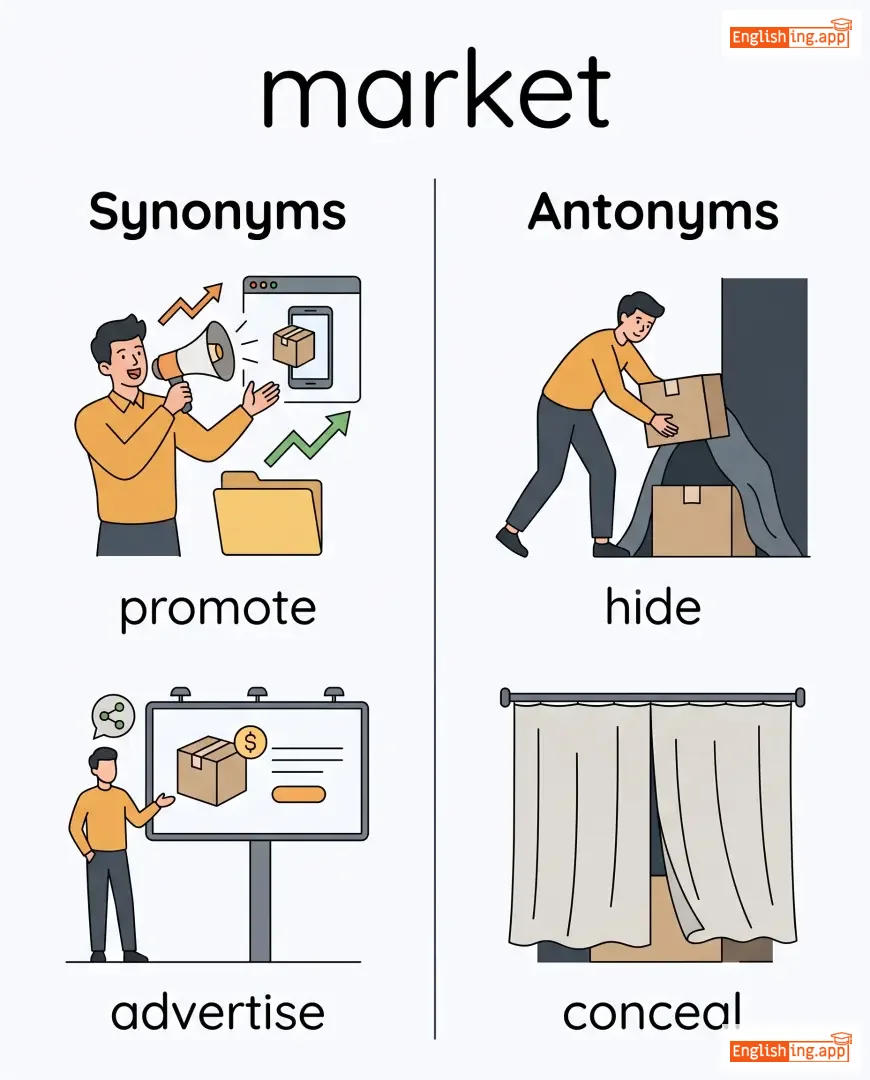
- •••••• | - •••••• | - •••••• |
promote, advertise, sell, publicize
••••••
|
hide, conceal, withdraw, suppress
••••••
|
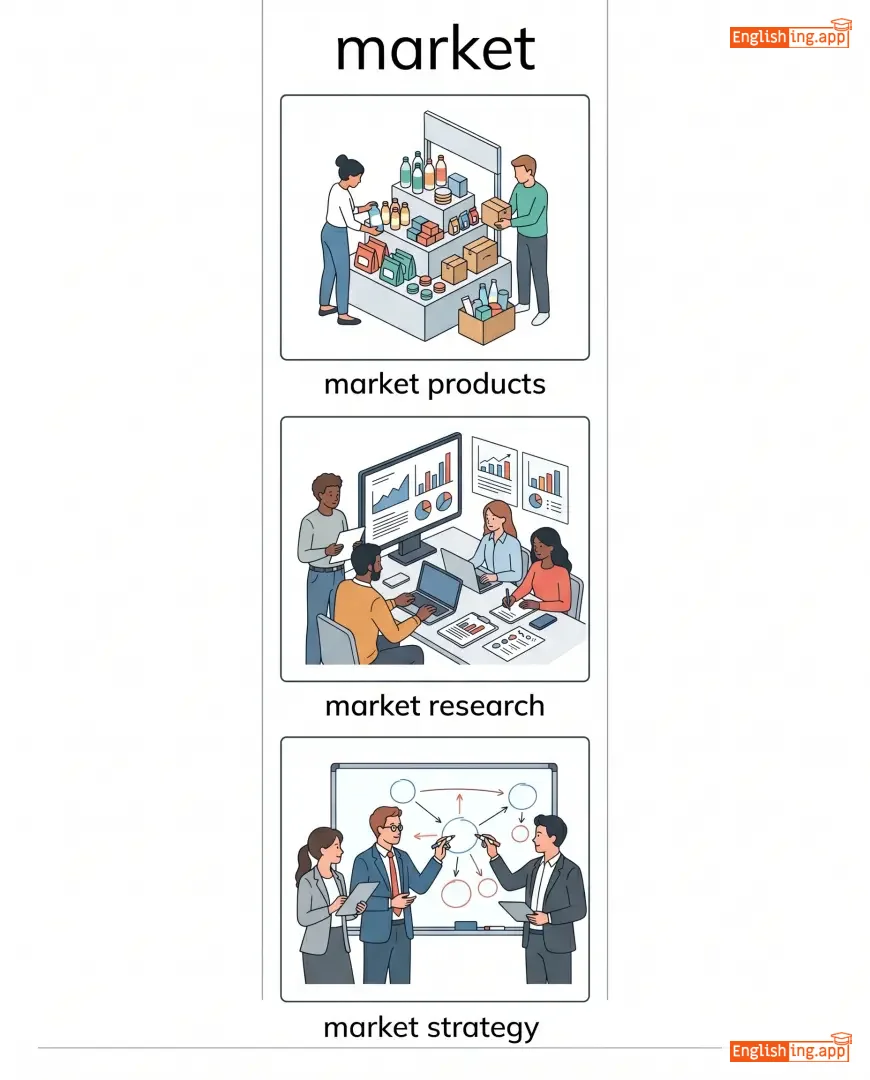
market products, market research, market strategy, target market
••••••
|
マーケティングするのは広告と同じように新製品を広めることです
••••••
|
|
📢
••••••
|
/ˈmɑːrkɪtɪŋ/
noun
(マーケティング)
••••••
|


|
マーケティング
māketingu
••••••
|
- •••••• | - •••••• | - •••••• | - •••••• |
The action or business of promoting and selling products or services, including market research and advertising.
••••••
|
The company invested heavily in digital marketing. |
その会社はデジタルマーケティングに多大な投資をしました。
Sono kaisha wa dejitaru māketingu ni tadaina tōshi o shimashita.
••••••
|
guerrilla marketing |
Unconventional and creative marketing strategies to promote a product.
••••••
|
ゲリラマーケティング
gerira māketingu
••••••
|
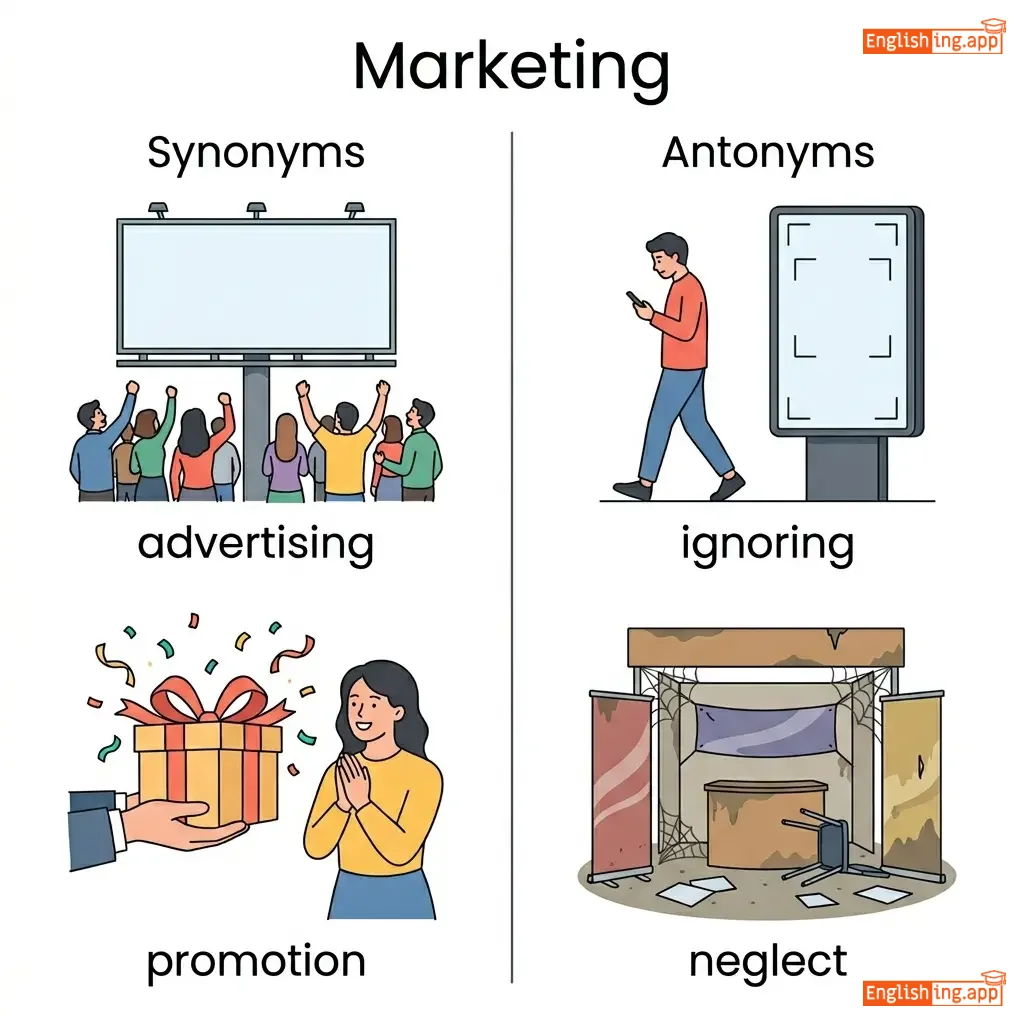
advertising, promotion, publicity, sales, merchandising
••••••
|
ignoring, neglect
••••••
|
marketing strategy, digital marketing, marketing campaign, marketing research, marketing mix
••••••
|
マーケティングは市場で物を売ることです!
••••••
|
|
🏬
••••••
|
/ˈmɑːrkɪtˌpleɪs/
noun
(マーケットプレイス)
••••••
|
- •••••• |
市場
ichiba
••••••
|
- •••••• | - •••••• | - •••••• | - •••••• |
a place where goods and services are bought and sold; an open area for trade
••••••
|
The town's marketplace is crowded every Friday morning. |
街の市場は毎週金曜日の朝に混雑しています。
Machi no ichiba wa maishū kin'yōbi no asa ni konzatsu shiteimasu.
••••••
|
- •••••• | - •••••• | - •••••• |
bazaar, fair, mart, trading center, exchange
••••••
|
home, residence
••••••
|
online marketplace, local marketplace, global marketplace, bustling marketplace
••••••
|
Market + place = 商売の場所 — 市場は取引の場所です。
••••••
|

