|
表情符号
|
单词 | Images | 翻译 | 过去时 | 过去分词 | 第三人称单数 | 动名词 | 含义 | 例句 | 例句翻译 | 示例表达 | 示例表达含义 | 示例表达翻译 | 同义词 | 反义词 | 搭配词 | 助记符 |
|---|---|---|---|---|---|---|---|---|---|---|---|---|---|---|---|---|---|
|
🪄
••••••
|
/ˈmædʒɪk/
noun
(魔法)
••••••
|
- •••••• |
魔法
mó fǎ
••••••
|
- •••••• | - •••••• | - •••••• | - •••••• |
the use of mysterious or supernatural powers to influence events
••••••
|
The magician amazed the crowd with his magic. |
魔术师用他的魔法让观众惊讶。
mó shù shī yòng tā de mó fǎ ràng guān zhòng jīng yà
••••••
|
black magic |
the use of evil supernatural power
••••••
|
黑魔法
hēi mó fǎ
••••••
|
sorcery, wizardry, enchantment, spell, charm
••••••
|
reality, science, logic
••••••
|
do magic, black magic, magic trick, magic spell
••••••
|
魔法 = 魔术师的魔力让你大吃一惊
••••••
|
|
✨
••••••
|
/ˈmædʒɪkəl/
adjective
••••••
|
- •••••• | - •••••• | - •••••• | - •••••• | - •••••• | - •••••• |
having or producing the charm, beauty, or power of magic
••••••
|
The sunset over the mountains was a magical sight. |
- •••••• | - •••••• | - •••••• | - •••••• |
enchanting, mesmerizing, mystical, otherworldly
••••••
|
ordinary, mundane
••••••
|
magical experience, magical powers, magical moment
••••••
|
No •••••• |
|
🪄
••••••
|
/məˈdʒɪʃən/
noun
(魔术师)
••••••
|
- •••••• |
魔术师
mó shù shī
••••••
|
- •••••• | - •••••• | - •••••• | - •••••• |
A person who performs tricks and illusions for entertainment or one believed to have magical powers.
••••••
|
The magician pulled a rabbit out of his hat. |
魔术师从他的帽子里拿出了兔子。
Móshù shī cóng tā de màozi lǐ ná chūle tùzǐ.
••••••
|
like magic |
something happening surprisingly easily or quickly
••••••
|
像魔法一样
xiàng mófǎ yīyàng
••••••
|
sorcerer, wizard, illusionist, conjurer, enchanter
••••••
|
mortal, realist
••••••
|
stage magician, street magician, great magician
••••••
|
魔术师能做任何神奇的事!
••••••
|
|
⚖️
••••••
|
/ˈmædʒɪstreɪt/
noun
(mà jí sī tè)
••••••
|
- •••••• |
法官
fǎguān
••••••
|
- •••••• | - •••••• | - •••••• | - •••••• |
A civil officer who administers the law, often with limited judicial authority.
••••••
|
The magistrate presided over the minor criminal case.
法官主持了轻微刑事案件。
••••••
|
法官主持了轻微刑事案件。
Fǎguān zhǔchíle qīngwēi xíngshì ànjiàn.
••••••
|
- •••••• | - •••••• | - •••••• |
judge, justice, arbiter, adjudicator, official
••••••
|
criminal, offender
••••••
|
magistrate court, local magistrate, chief magistrate, before the magistrate
••••••
|
法官 (fǎguān) 是法律的专家,类似 'master' of law - 法律的专家。
••••••
|
|
🧲
••••••
|
/mæɡˈnɛtɪk/
adjective
(磁性)
••••••
|
- •••••• |
磁性
cíxìng
••••••
|
- •••••• | - •••••• | - •••••• | - •••••• |
having the power to attract metal objects or to attract people or things in a strong way
••••••
|
The magnetic field of the Earth protects us from harmful solar radiation.
地球的磁场保护我们免受有害的太阳辐射。
••••••
|
地球的磁场保护我们免受有害的太阳辐射。
Dìqiú de cíchǎng bǎohù wǒmen miǎn shòu yǒuhài de tàiyáng fúshè.
••••••
|
magnetic personality
有磁性的人格
••••••
|
a charming and attractive character that draws people in
••••••
|
有磁性的人格
yǒu cíxìng de réngé
••••••
|
attractive, alluring, captivating, charismatic, fascinating
••••••
|
repulsive, unappealing, dull
••••••
|
magnetic field, magnetic force, magnetic attraction, magnetic energy
••••••
|
磁性像磁铁一样吸引一切。
••••••
|
|
🌄
••••••
|
/mæɡˈnɪfɪsənt/
adjective
(magnificent)
••••••
|
- •••••• |
壮观
zhuangguan
••••••
|
- •••••• | - •••••• | - •••••• | - •••••• |
extremely beautiful, impressive, or splendid
••••••
|
The view from the mountain was truly magnificent.
从山上看到的景色真的很壮观。
••••••
|
从山上看到的景色真的很壮观。
Cong shan shang kandao de jingse zhen de hen zhuangguan.
••••••
|
in magnificent style
以壮观的风格
••••••
|
to do something in an impressive or splendid way
••••••
|
以壮观的风格
yi zhuangguan de fengge
••••••
|
splendid, glorious, majestic, superb, wonderful
••••••
|
awful, ordinary, poor
••••••
|
magnificent view, magnificent palace, magnificent effort
••••••
|
Magnificent = 壮观 = 一幅宏伟的风景。
••••••
|
|
📏
••••••
|
/ˈmæɡnɪtuːd/
noun
(震级)
••••••
|
- •••••• |
震级
zhènjí
••••••
|
- •••••• | - •••••• | - •••••• | - •••••• |
the great size, extent, or importance of something
••••••
|
The magnitude of the earthquake shocked the nation. |
地震的震级震惊了整个国家。
Dìzhèn de zhènjí zhènjīngle zhěnggè guójiā.
••••••
|
of great magnitude |
something of great size or importance
••••••
|
大震级的
dà zhènjí de
••••••
|
extent, scale, size, importance, intensity
••••••
|
triviality, insignificance, smallness
••••••
|
earthquake magnitude, magnitude of problem, magnitude scale
••••••
|
Magnitude 就像一个大地震 — 大的尺寸或影响。
••••••
|
|
📬
••••••
|
/meɪl/
noun/verb
(mɛil)
••••••
|
- •••••• |
邮件 / 信件
yóujiàn / xìnjiàn
••••••
|
mailed
meɪld
••••••
|
mailed
meɪld
••••••
|
mails
meɪlz
••••••
|
mailing
meɪlɪŋ
••••••
|
Letters, packages, or email messages sent or delivered to someone.
••••••
|
I received an important letter in the mail.
我通过邮件收到了一个重要的信件。
••••••
|
我通过邮件收到了一个重要的信件。
Wǒ tōngguò yóujiàn shōu dào le yī gè zhòngyào de xìnjiàn.
••••••
|
snail mail
慢邮件
••••••
|
traditional postal mail as opposed to email
••••••
|
传统邮寄
chuántǒng yóujì
••••••
|
post, letter, package, parcel, email
••••••
|
email (in contrast to snail mail), direct delivery
••••••
|
send mail, check mail, junk mail, mail service
••••••
|
邮件是邮递员带来的,mail 就是邮件。
••••••
|
|
⭐
••••••
|
/meɪn/
adjective
(main)
••••••
|
- •••••• |
主要的
zhuyao de
••••••
|
- •••••• | - •••••• | - •••••• | - •••••• |
most important; chief in size, extent, or importance
••••••
|
The main reason for his success is hard work. |
他成功的主要原因是努力工作。
ta chenggong de zhuyao yuanyin shi nuli gongzuo.
••••••
|
main attraction |
the most important or interesting feature
••••••
|
主要景点
zhuyao jingdian
••••••
|
chief, primary, principal, central, major
••••••
|
minor, secondary, trivial
••••••
|
main reason, main point, main idea, main street
••••••
|
Main意味着主要,就像Main Street——最重要的街道。
••••••
|
|
🌍
••••••
|
/ˈmeɪnˌlænd/
noun
••••••
|
- •••••• | - •••••• | - •••••• | - •••••• | - •••••• | - •••••• |
the principal landmass of a country or continent, as opposed to the surrounding islands
••••••
|
The mainland of Australia is home to most of its population. |
- •••••• | - •••••• | - •••••• | - •••••• |
continent, land, territory, country
••••••
|
island, archipelago
••••••
|
mainland China, mainland Europe, mainland United States
••••••
|
No •••••• |
|
🎯
••••••
|
/ˈmeɪn.li/
adverb
(meɪnli)
••••••
|
- •••••• |
主要; 大多数
zhǔyào; dàduōshù
••••••
|
- •••••• | - •••••• | - •••••• | - •••••• |
for the most part; chiefly; primarily
••••••
|
The conference was mainly about environmental protection and climate change.
会议主要讨论了环境保护和气候变化。
••••••
|
会议主要讨论了环境保护和气候变化。
huìyì zhǔyào tǎolùnle huánjìng bǎohù hé qìhòu biànhuà
••••••
|
- •••••• | - •••••• | - •••••• |
chiefly, primarily, mostly, principally
••••••
|
secondarily, slightly, minimally
••••••
|
mainly because, mainly due to, mainly focused
••••••
|
主要 = 直接关联到最重要的内容。
••••••
|
|
🌊
••••••
|
/ˈmeɪnstriːm/
noun
(meɪnstrim)
••••••
|
- •••••• |
主流
zhuliu
••••••
|
- •••••• | - •••••• | - •••••• | - •••••• |
the ideas, attitudes, or activities that are regarded as normal or conventional; the dominant trend in opinion or fashion
••••••
|
Social media has become a mainstream source of news for many people. |
社交媒体已经成为许多人获取新闻的主流来源。
Shejiao meiti yijing chengwei xuduo ren huoqu xinwen de zhuliu laiyuan.
••••••
|
go mainstream |
to become widely accepted or popular among the general public
••••••
|
成为主流
chengwei zhuliu
••••••
|
conventional, popular, dominant, prevalent, established
••••••
|
unorthodox, alternative, fringe
••••••
|
mainstream media, mainstream culture, mainstream society, go mainstream
••••••
|
Mainstream是社会中最流行或最普遍的思想或趋势。
••••••
|
|
⚙️
••••••
|
/meɪnˈteɪn/
verb
(梅恩泰因)
••••••
|
|
保持
bǎochí
••••••
|
maintained
梅恩泰恩德
••••••
|
maintained
梅恩泰恩德
••••••
|
maintains
梅恩泰恩兹
••••••
|
maintaining
梅恩泰宁
••••••
|
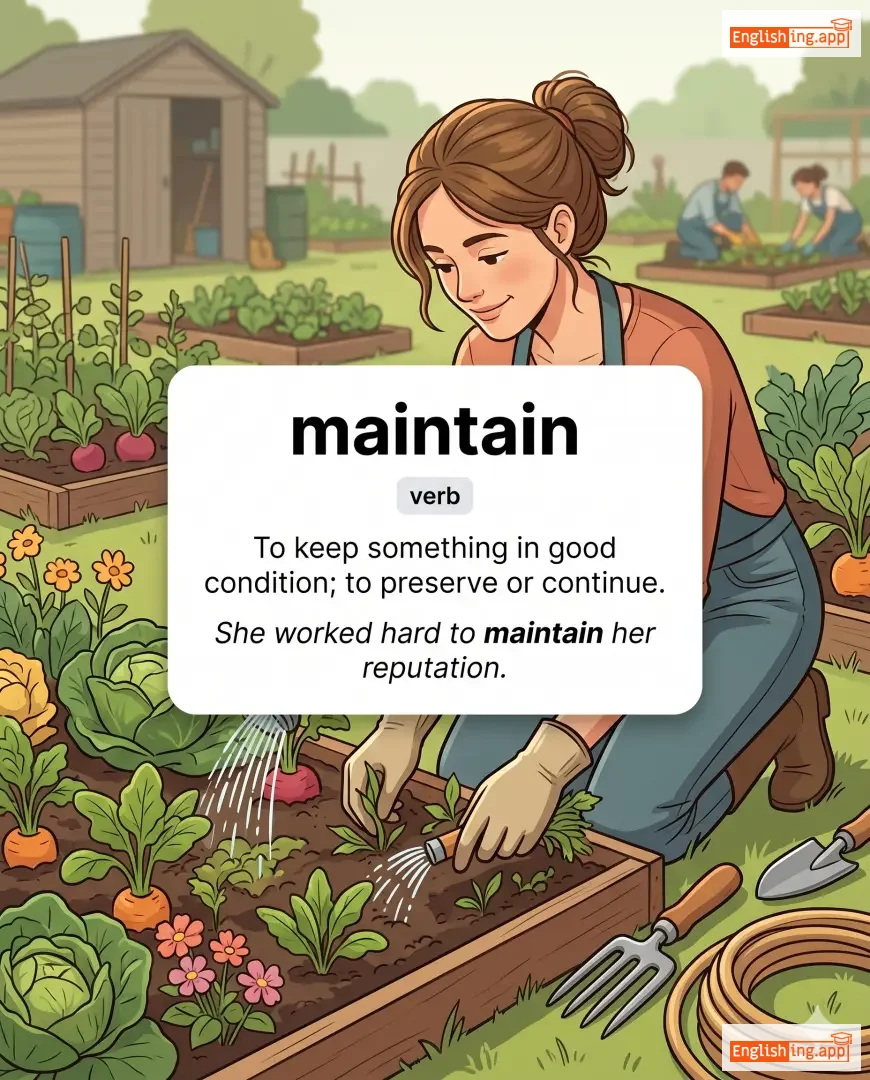
To keep something in good condition; to preserve or continue.
••••••
|
She worked hard to maintain her reputation.
她努力工作以保持自己的声誉。
••••••
|
她努力工作以保持自己的声誉。
Tā nǔlì gōngzuò yǐ bǎochí zìjǐ de shēngyù.
••••••
|
maintain composure
保持冷静
••••••
|
To stay calm and in control under pressure
••••••
|
保持冷静
bǎochí lěngjìng
••••••
|
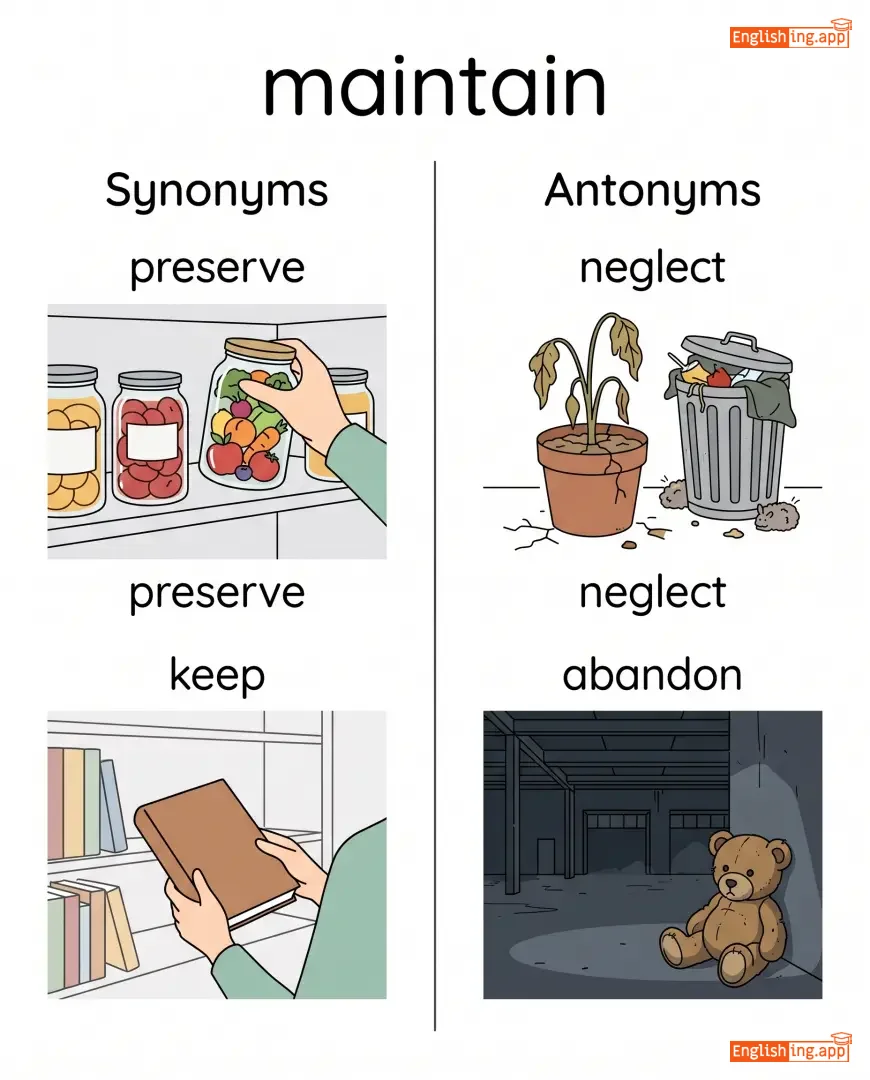
preserve, keep, sustain, uphold, continue
••••••
|
neglect, abandon, destroy
••••••
|
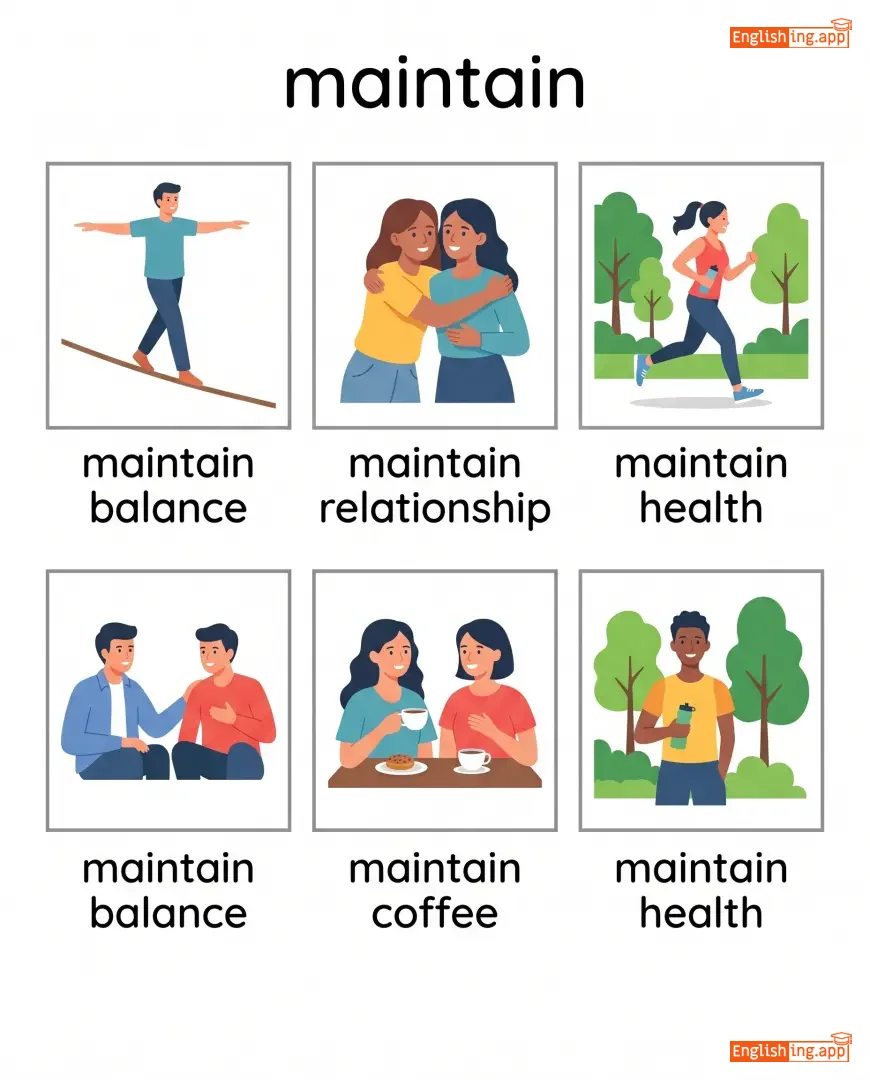
maintain balance, maintain relationship, maintain health, maintain order
••••••
|
Maintain意思是Main + Tain (保持) = 保持或继续
••••••
|
|
🛠️
••••••
|
/ˈmeɪntənəns/
noun
(维持)
••••••
|
|
维护
wéihù
••••••
|
- •••••• | - •••••• | - •••••• | - •••••• |
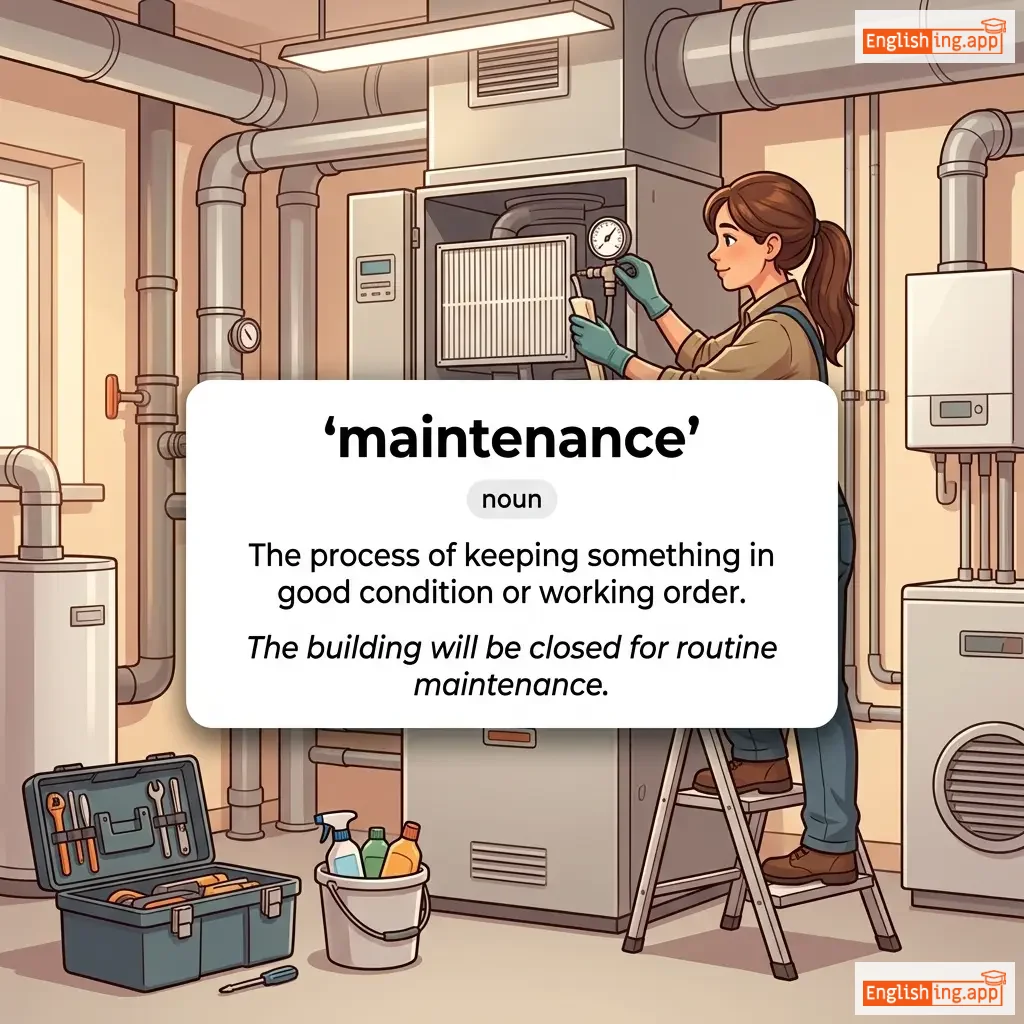
The process of keeping something in good condition or working order.
••••••
|
The building will be closed for routine maintenance. |
该建筑将因常规维护而关闭。
Gāi jiànzhú jiāng yīn chángguī wéihù ér guānbì.
••••••
|
maintenance work |
Regular work done to preserve or repair something
••••••
|
维护工作
wéihù gōngzuò
••••••
|
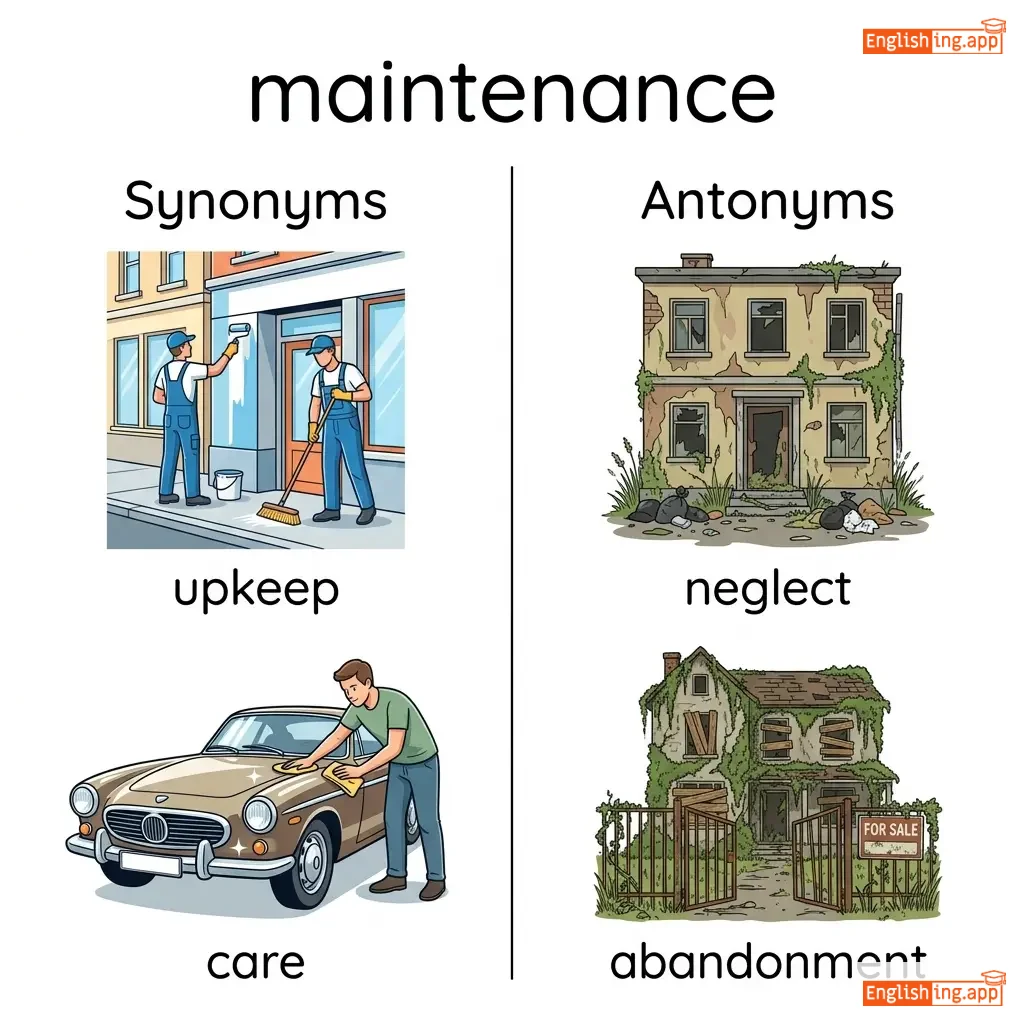
upkeep, care, preservation, repair, servicing
••••••
|
neglect, abandonment
••••••
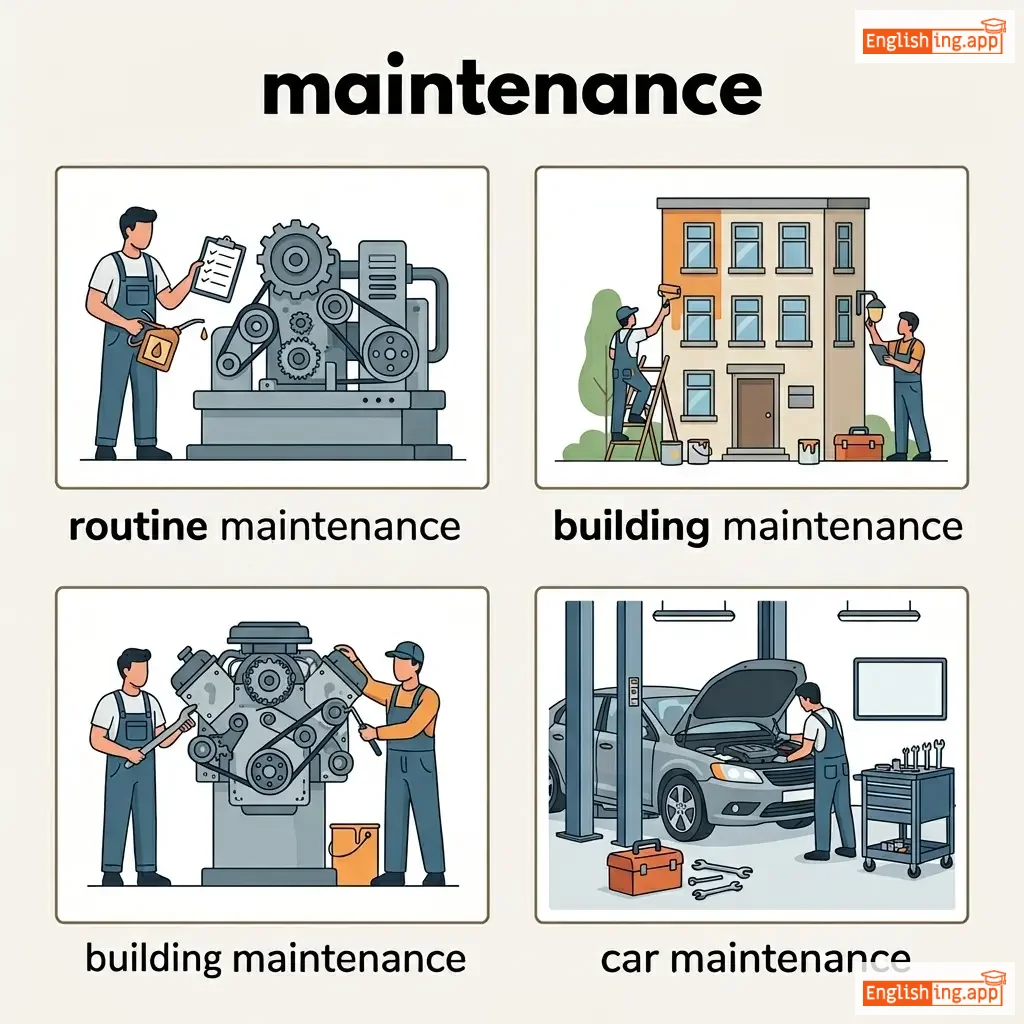
|
routine maintenance, building maintenance, car maintenance, maintenance cost
••••••
|
Maintenance 就是保持事物运行
••••••
|
|
🏆
••••••
|
/ˈmeɪdʒər/
adjective
(梅杰)
••••••
|
- •••••• |
重要的
zhòngyào de
••••••
|
- •••••• | - •••••• | - •••••• | - •••••• |
important, serious, or significant
••••••
|
Climate change is a major concern for the world. |
气候变化是全球关注的重大问题。
qìhòu biànhuà shì quánqiú guānzhù de zhòngdà wèntí.
••••••
|
major breakthrough |
an important discovery or development
••••••
|
重大突破
zhòngdà tūpò
••••••
|
significant, important, serious, substantial
••••••
|
minor, insignificant
••••••
|
major issue, major role, major problem, major impact
••••••
|
Major意味着重要、严肃或有意义。
••••••
|
|
📊
••••••
|
/məˈdʒɒrəti/
noun
(méiyuánzhǔyì)
••••••
|
|
多数
duoshu
••••••
|
- •••••• | - •••••• | - •••••• | - •••••• |
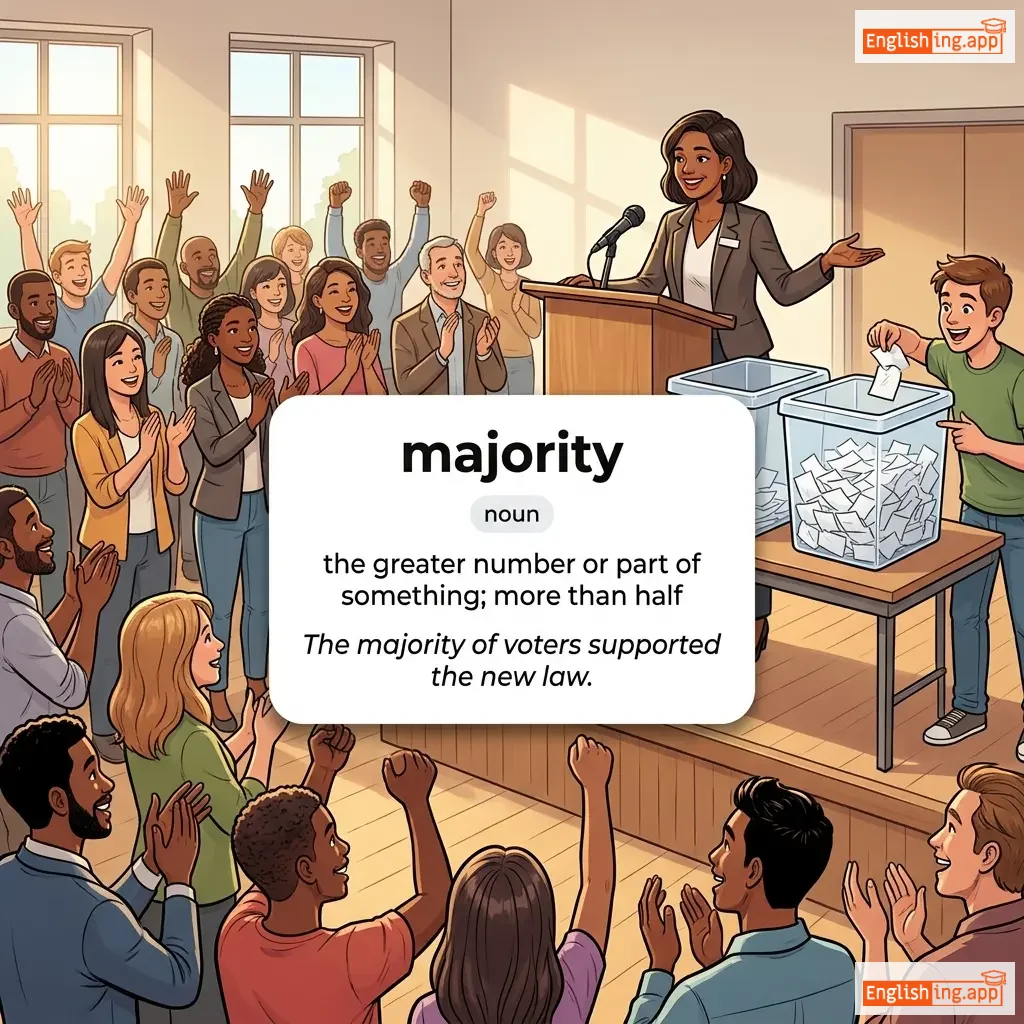
the greater number or part of something; more than half
••••••
|
The majority of voters supported the new law. |
大多数选民支持新法律。
Da duoshu xuanmin zhichi xin falü.
••••••
|
silent majority |
a large group of people who do not express their opinions publicly
••••••
|
沉默的大多数
Chenmo de da duoshu
••••••
|
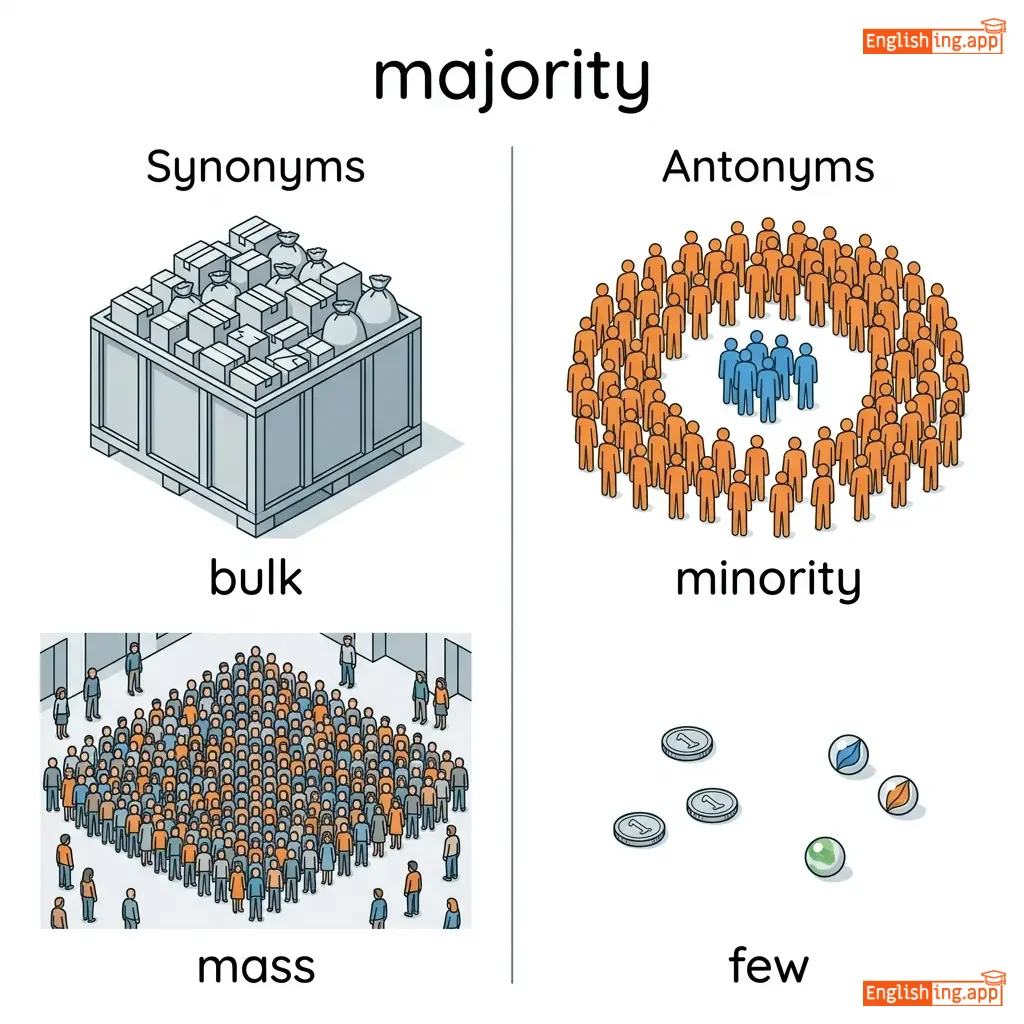
bulk, mass, most, plurality, dominance
••••••
|
minority, few
••••••
|
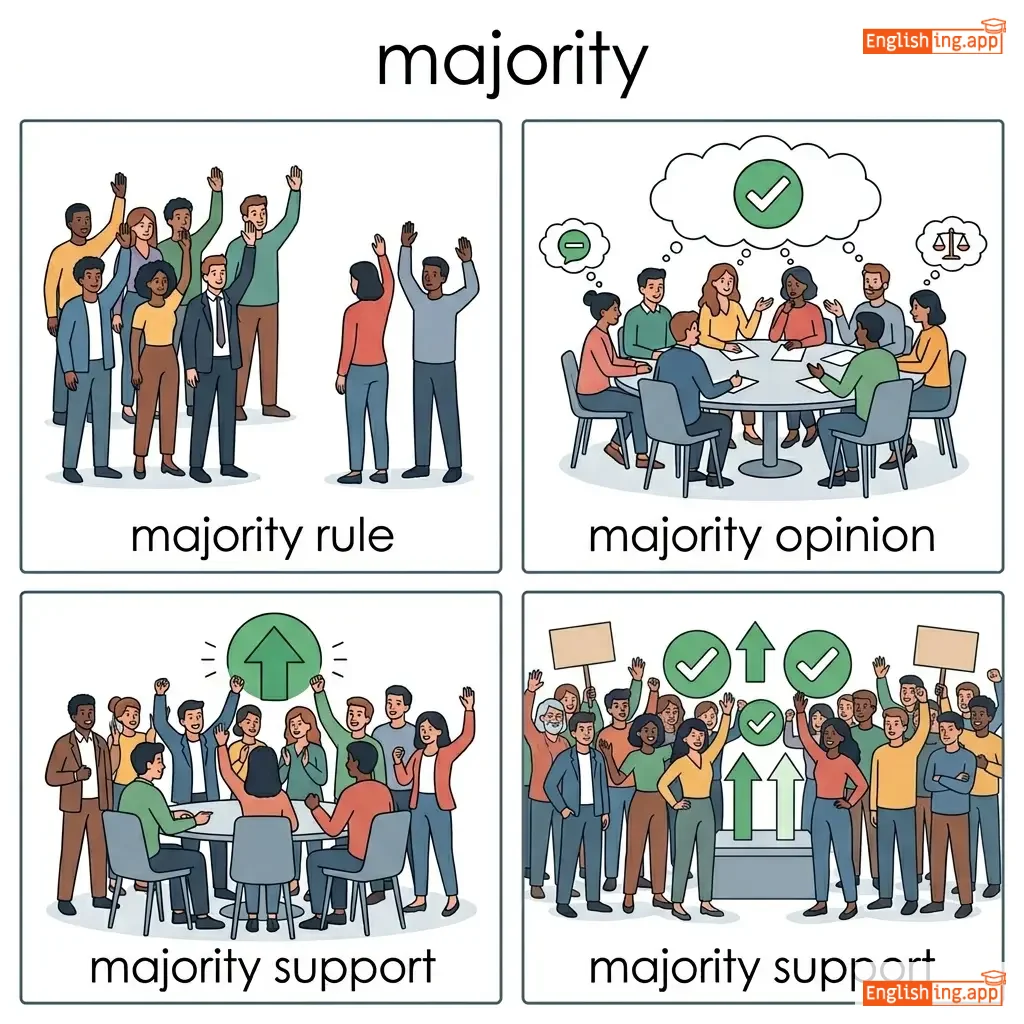
majority rule, majority opinion, majority support, majority party
••••••
|
多数意味着更大的部分 - 多数就是超过一半!
••••••
|
|
🛠️
••••••
|
/meɪk/
verb
(meik)
••••••
|
- •••••• |
做
zuo
••••••
|
made
meid
••••••
|
made
meid
••••••
|
makes
meiks
••••••
|
making
meiking
••••••
|
to create, build, or cause something to happen
••••••
|
She can make delicious cakes.
她可以做美味的蛋糕。
••••••
|
她可以做美味的蛋糕。
Ta keyi zuo meiwei de dangao.
••••••
|
make a difference
做出改变
••••••
|
to have a significant effect
••••••
|
做出改变
zuo chu gaibian
••••••
|
create, build, produce, prepare, construct
••••••
|
destroy, ruin, break
••••••
|
make money, make a decision, make friends, make progress
••••••
|
Make 就是做,像一个'Maker' (创造者)。
••••••
|
|
🛠️
••••••
|
/ˈmeɪkər/
noun
(梅克尔)
••••••
|
- •••••• |
创造者
chuangzao zhe
••••••
|
- •••••• | - •••••• | - •••••• | - •••••• |
a person or thing that makes or produces something
••••••
|
He is a famous movie maker in Hollywood.
他是好莱坞著名的电影制片人。
••••••
|
他是好莱坞著名的电影制片人。
ta shi haolaiwu zhuming de dianying zhipian ren.
••••••
|
decision maker
决策者
••••••
|
a person who has the authority to make decisions
••••••
|
决策者
juece zhe
••••••
|
creator, builder, producer, manufacturer
••••••
|
destroyer, breaker
••••••
|
movie maker, money maker, policy maker, tool maker
••••••
|
Maker 代表创造者 — 一个创造和生产的人,像电影制片人。
••••••
|
|
💄
••••••
|
/ˈmeɪkʌp/
noun
(méikèp)
••••••
|
- •••••• |
化妆
huàzhuāng
••••••
|
- •••••• | - •••••• | - •••••• | - •••••• |
cosmetics used to enhance or alter appearance
••••••
|
She applied makeup before the party. |
她在聚会前化了妆。
Tā zài jùhuì qián huàle zhuāng.
••••••
|
makeup test |
an additional test to make up for one missed earlier
••••••
|
补考
bǔkǎo
••••••
|
cosmetics, foundation, powder, lipstick, beauty products
••••••
|
bare face, natural
••••••
|
apply makeup, makeup kit, makeup artist, makeup remover
••••••
|
Make + Up = 面容变美化妆 💄
••••••
|
|
🎬
••••••
|
/ˈmeɪkɪŋ/
noun
(méikīng)
••••••
|
- •••••• |
制作
zhìzuò
••••••
|
- •••••• | - •••••• | - •••••• | - •••••• |
the process of producing or constructing something
••••••
|
The making of the movie took over two years. |
电影的制作过程花费了超过两年时间。
Diànyǐng de zhìzuò guòchéng huāfèi le chāoguò liǎng nián shíjiān.
••••••
|
- •••••• | - •••••• | - •••••• |
creation, production, construction, forming
••••••
|
destruction, dismantling
••••••
|
making a decision, making progress, making money
••••••
|
Making意味着制作 - Making means making something!
••••••
|
|
👨
••••••
|
/meɪl/
noun/adjective
(梅尔)
••••••
|
- •••••• |
男性
nánxìng
••••••
|
- •••••• | - •••••• | - •••••• | - •••••• |
a man or boy; relating to men or boys
••••••
|
The school has more male teachers than female teachers.
学校有更多的男性教师而非女性教师。
••••••
|
学校有更多的男性教师而非女性教师。
Xuéxiào yǒu gèng duō de nánxìng jiàoshī ér fēi nǚxìng jiàoshī.
••••••
|
male dominance
男性主导
••••••
|
a situation where men hold more power
••••••
|
男性主导
nánxìng zhǔdǎo
••••••
|
man, boy, masculine, gentleman
••••••
|
female, woman
••••••
|
male student, male voice, male member, male worker
••••••
|
男性的'M'就像'男人'。
••••••
|
|
🏬
••••••
|
/mɔːl/ or /mæl/
noun
(mall)
••••••
|
- •••••• |
购物中心
gòuwù zhōngxīn
••••••
|
- •••••• | - •••••• | - •••••• | - •••••• |
a large building or series of connected buildings containing shops and restaurants
••••••
|
They went to the mall to buy new clothes. |
他们去购物中心买新衣服。
tāmen qù gòuwù zhōngxīn mǎi xīn yīfú.
••••••
|
shopping mall |
a large complex with many retail stores
••••••
|
购物中心
gòuwù zhōngxīn
••••••
|
shopping center, plaza, marketplace, arcade
••••••
|
small shop, kiosk
••••••
|
shopping mall, mall culture, mall security, mall parking
••••••
|
Mall 是 '购物中心', 在这里大家都去购物。
••••••
|
|
👨
••••••
|
/mæn/
noun
(mán)
••••••
|
- •••••• |
男人
nánrén
••••••
|
- •••••• | - •••••• | - •••••• | - •••••• |
an adult human male
••••••
|
The man helped the child cross the street.
泽 mán hélpǔd zé chāild kùos dē strǐt.
••••••
|
那个人帮助孩子过马路。
Nàgè rén bāngzhù háizi guò mǎlù.
••••••
|
man's best friend
mán' s běst frěnd
••••••
|
a phrase often used to describe dogs, emphasizing their loyalty to humans
••••••
|
男人最好的朋友
nánrén zuì hǎo de péngyǒu
••••••
|
male, gentleman, guy, fellow, bloke
••••••
|
woman, female
••••••
|
young man, old man, real man, man of honor
••••••
|
Man 男人 - 男人意指男性
••••••
|
|
🛠️
••••••
|
/ˈmænɪdʒ/
verb
(曼内吉)
••••••
|

|
管理
guanli
••••••
|
managed
曼内吉德
••••••
|
managed
曼内吉德
••••••
|
manages
曼内杰斯
••••••
|
managing
曼内吉英
••••••
|
to be in charge of or control something
••••••
|
She manages a small bookstore in town.
她在镇上经营着一家小书店。
••••••
|
她在镇上经营着一家小书店。
Ta zai zhen shang jingying zhe yijia xiao shudian.
••••••
|
manage to do
设法去做
••••••
|
succeed in doing something, especially with difficulty
••••••
|
设法去做
shefa qu zuo
••••••
|
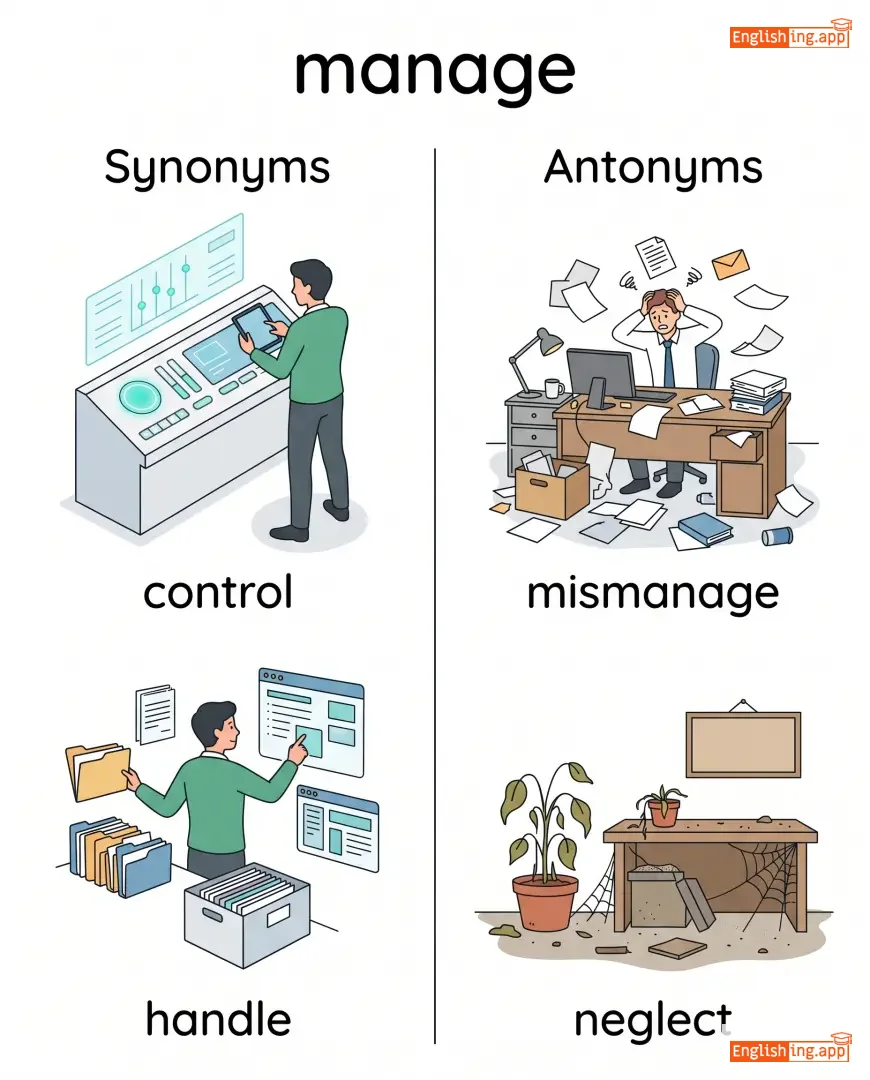
control, handle, supervise, oversee, direct
••••••
|
mismanage, neglect
••••••
|
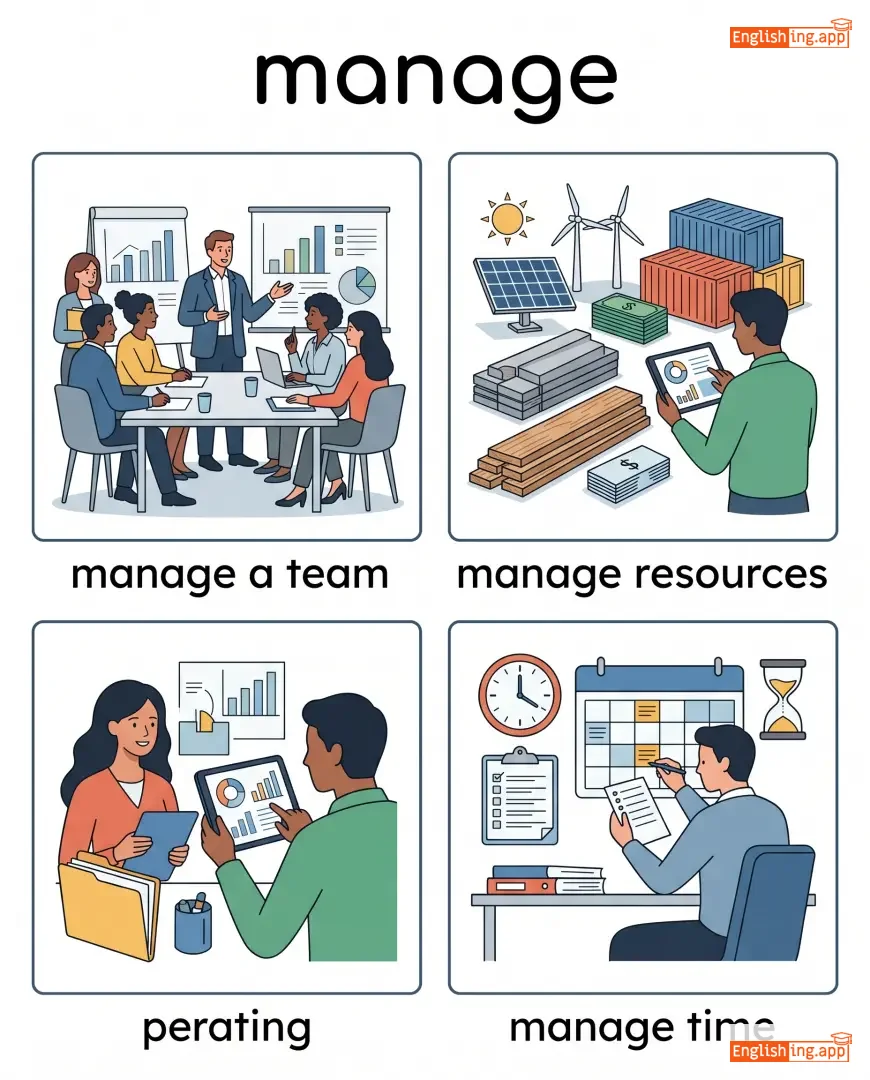
manage a team, manage resources, manage time, manage business
••••••
|
经理管理一切!
••••••
|
|
📊
••••••
|
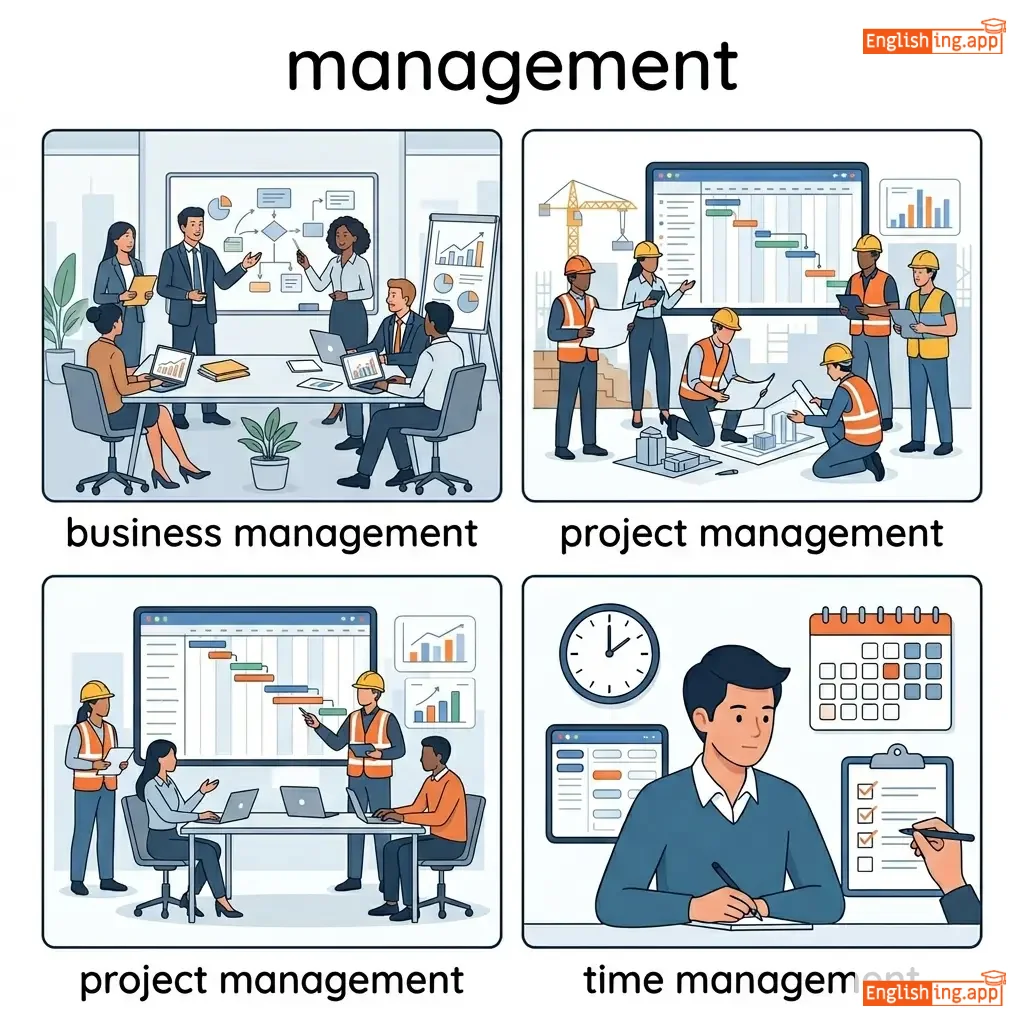
/ˈmænɪdʒmənt/
noun
(mænɪdʒmənt)
••••••
|

|
管理
guanli
••••••
|
- •••••• | - •••••• | - •••••• | - •••••• |
the process of dealing with or controlling things or people
••••••
|
Good management is crucial for the success of any business.
良好的管理对任何企业的成功至关重要。
••••••
|
良好的管理对任何企业的成功至关重要。
Liánghǎo de guǎnlǐ duì rènhé qǐyè de chénggōng zhìguān zhòngyào.
••••••
|
- •••••• | - •••••• | - •••••• |
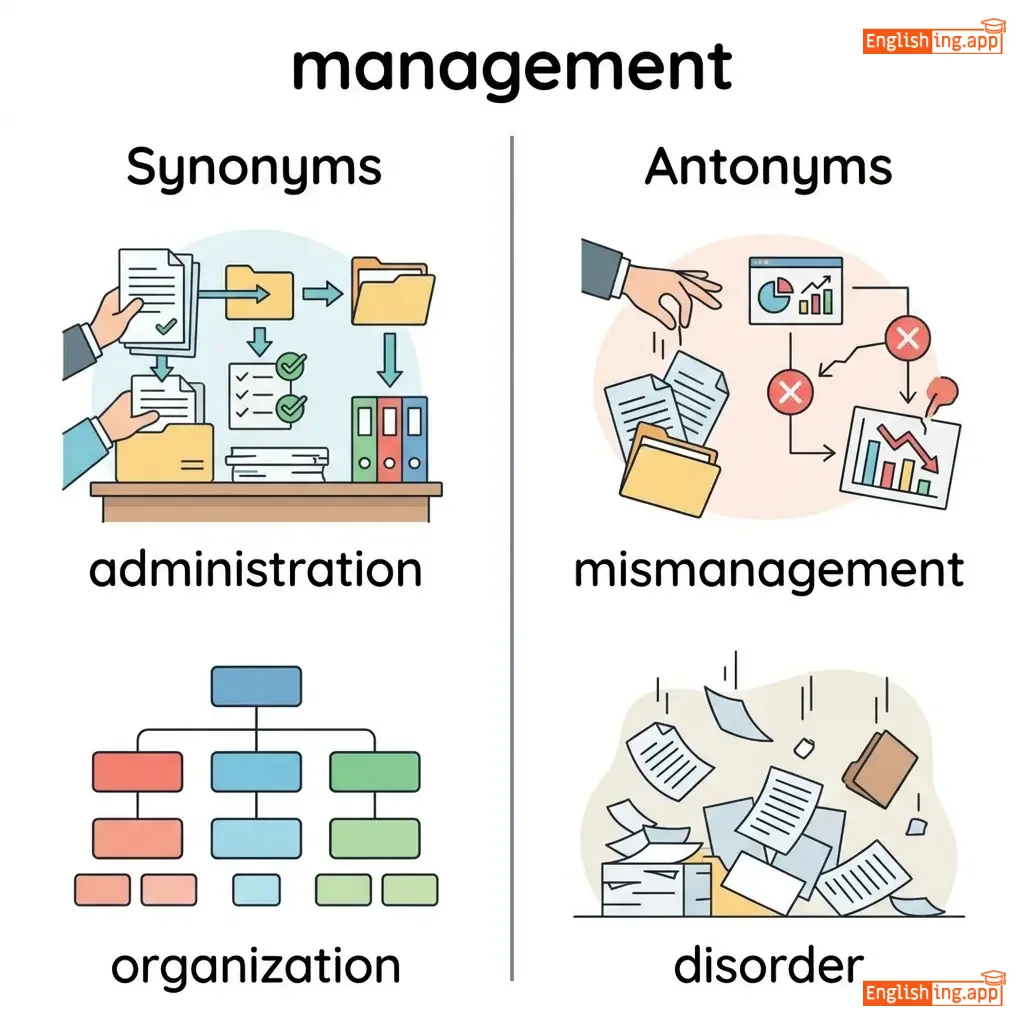
administration, organization, control, supervision, direction
••••••
|
mismanagement, disorder
••••••
|
business management, project management, time management, management team
••••••
|
管理是处理和控制一切事务的过程。
••••••
|
|
👔
••••••
|
/ˈmænɪdʒər/
noun
(máng rén)
••••••
|
- •••••• |
经理
jingli
••••••
|
- •••••• | - •••••• | - •••••• | - •••••• |
a person responsible for controlling or administering an organization or group of staff
••••••
|
The manager approved the new project plan. |
经理批准了新的项目计划。
Jingli pizhunle xin de xiangmu jihua.
••••••
|
- •••••• | - •••••• | - •••••• |
supervisor, director, administrator, boss
••••••
|
employee, worker
••••••
|
project manager, team manager, general manager, sales manager
••••••
|
经理 - 负责管理的人的意思
••••••
|
|
📜
••••••
|
/ˈmæn.deɪt/
noun, verb
(命令)
••••••
|
- •••••• |
命令
mingling
••••••
|
mandated
命令的
••••••
|
mandated
命令的
••••••
|
mandates
命令
••••••
|
mandating
命令中
••••••
|
an official order or command; to give someone authority to act in a certain way
••••••
|
The government issued a mandate to reduce carbon emissions.
政府发布了减少碳排放的命令。
••••••
|
政府发布了减少碳排放的命令。
Zhèngfǔ fābùle jiǎnshǎo tàn pái fàng de mìnglìng.
••••••
|
carry out a mandate
执行命令
••••••
|
to fulfill an official order or duty
••••••
|
执行命令
zhíxíng mìnglìng
••••••
|
order, directive, command, decree, instruction
••••••
|
request, suggestion, option
••••••
|
government mandate, official mandate, mandate authority, mandate power
••••••
|
命令代表政府的指令,必须执行。
••••••
|
|
⚖️
••••••
|
/ˈmæn.dəˌtɔːr.i/
adjective
(曼达托里)
••••••
|
- •••••• |
强制性的
qiángzhìxìng de
••••••
|
- •••••• | - •••••• | - •••••• | - •••••• |
required by law or rules; compulsory
••••••
|
Wearing seat belts is mandatory in most countries. |
在大多数国家,佩戴安全带是强制性的。
Zài dàduōshù guójiā, pèidài ānquán dài shì qiángzhìxìng de.
••••••
|
- •••••• | - •••••• | - •••••• |
compulsory, required, obligatory, enforced
••••••
|
optional, voluntary, discretionary
••••••
|
mandatory rule, mandatory training, mandatory law, mandatory requirement
••••••
|
Mandatory 就是强制性的,类似必须做的事,像穿安全带。
••••••
|
|
✨
••••••
|
/ˈmænɪˌfɛst/
verb, adjective
(曼尼费斯特)
••••••
|

|
显现
xianxian
••••••
|
manifested
manifested
••••••
|
manifested
manifested
••••••
|
manifests
manifest
••••••
|
manifesting
manifesting
••••••
|
to show or display clearly; obvious or evident
••••••
|
The symptoms of the disease manifest quickly.
病症迅速显现。
••••••
|
病症迅速显现。
Bingzheng xun su xianxian.
••••••
|
manifest destiny
显现命运
••••••
|
the belief in the inevitable expansion of the U.S. across the American continent
••••••
|
显现命运
xianxian mingyun
••••••
|
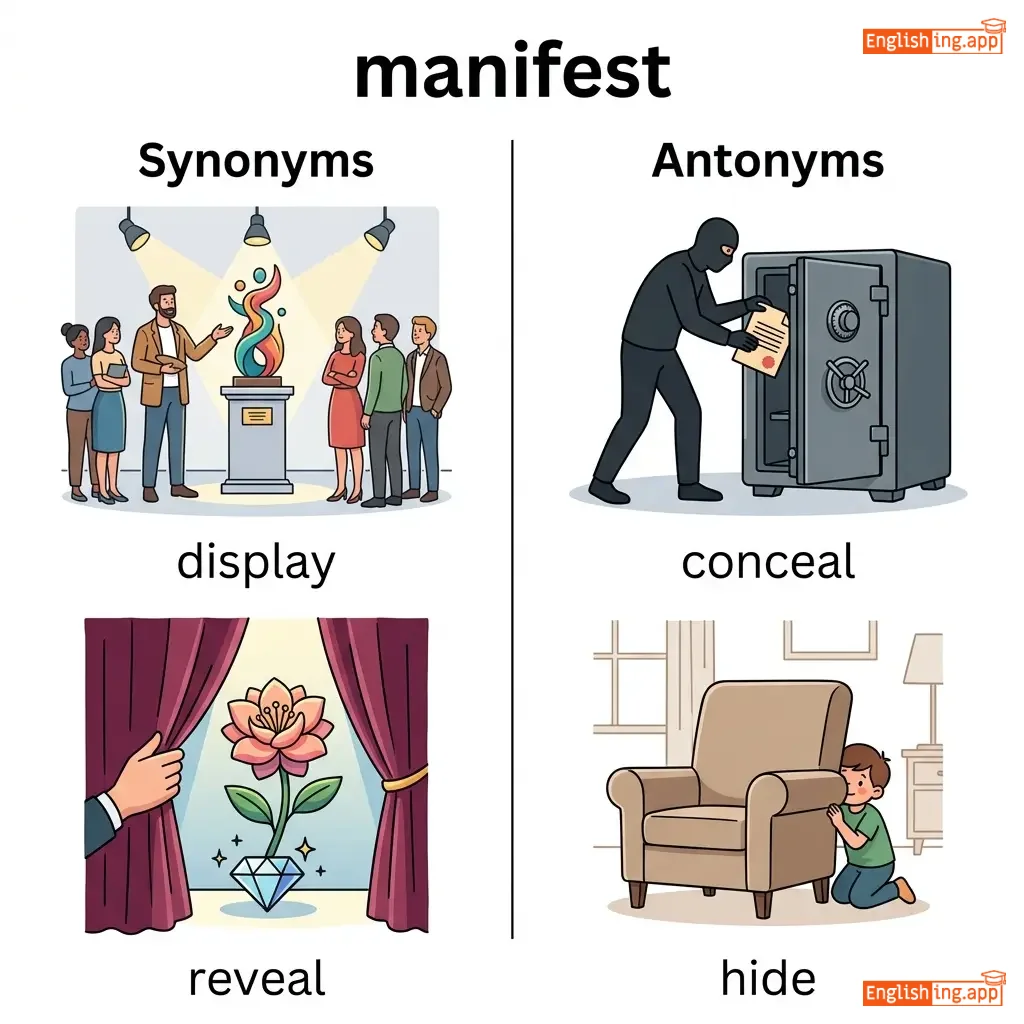
display, reveal, demonstrate, exhibit, express
••••••
|
conceal, hide, obscure
••••••
|
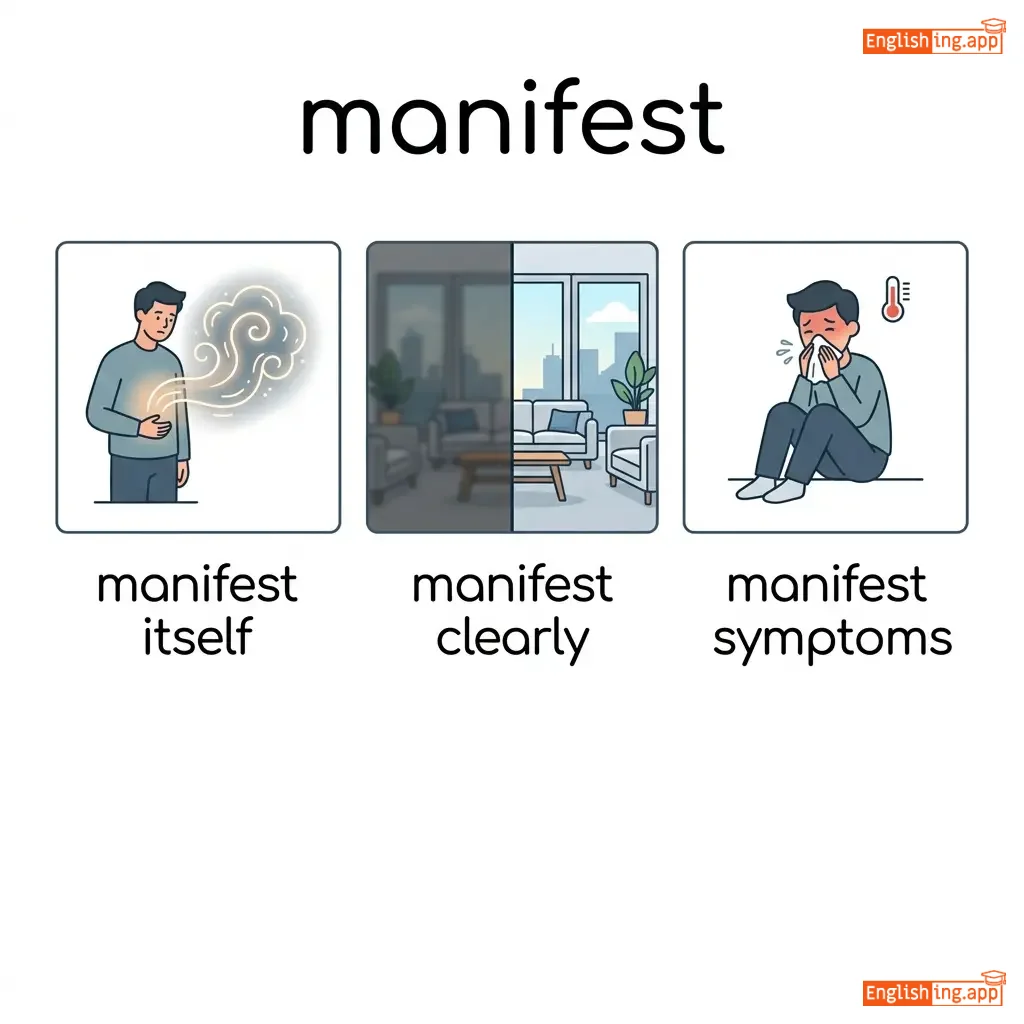
manifest itself, manifest clearly, manifest symptoms, manifest injustice
••••••
|
显现(manifest)给你清晰的事实
••••••
|
|
🕹️
••••••
|
/məˈnɪpjəˌleɪt/
verb
••••••
|
- •••••• | - •••••• |
manipulated
••••••
|
manipulated
••••••
|
manipulates
••••••
|
manipulating
••••••
|
to control or influence someone or something cleverly or unfairly
••••••
|
He tried to manipulate the results in his favor. |
- •••••• |
manipulate the strings |
to control or influence events or people secretly
••••••
|
- •••••• |
control, influence, exploit, maneuver, handle
••••••
|
mismanage, neglect, ignore
••••••
|
manipulate data, manipulate results, manipulate people
••••••
|
No •••••• |
|
🎭
••••••
|
/məˌnɪpjʊˈleɪʃən/
noun
••••••
|
|
- •••••• | - •••••• | - •••••• | - •••••• | - •••••• |
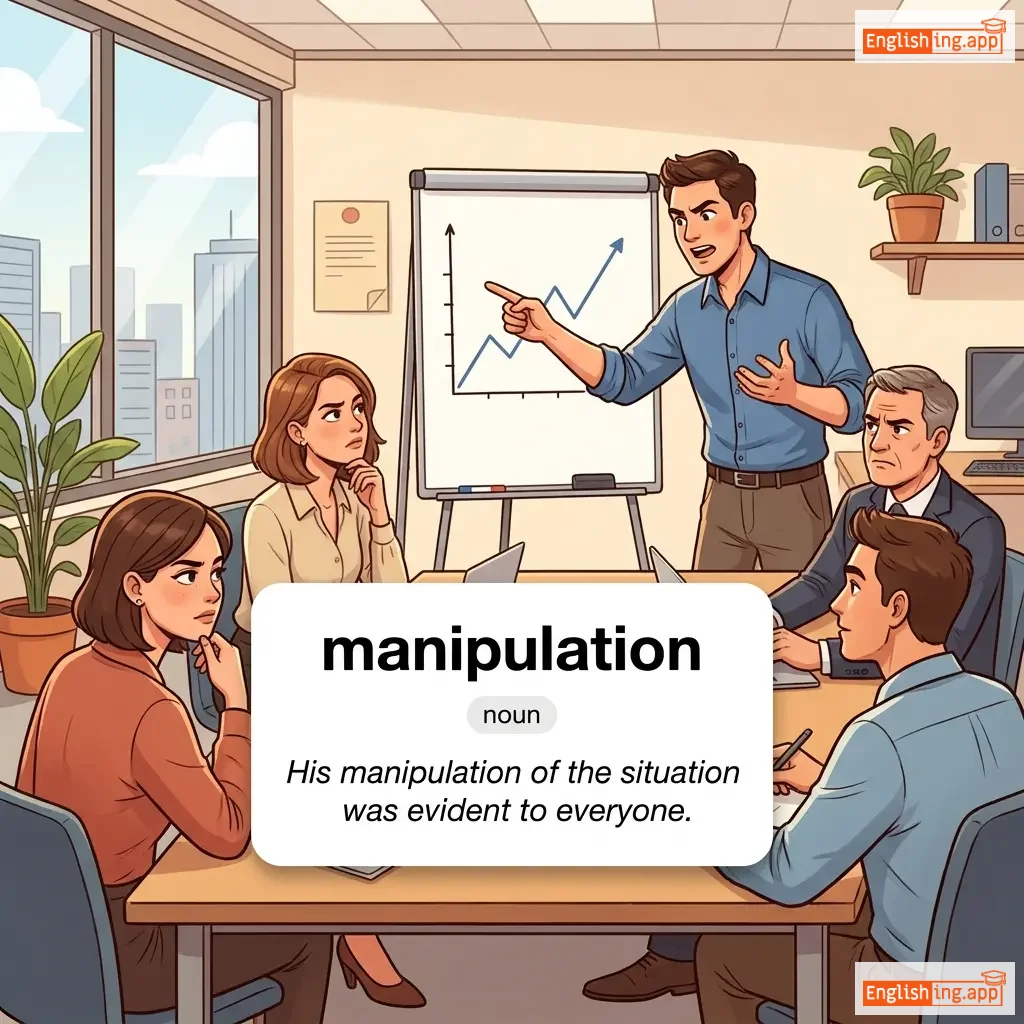
the action of controlling or influencing something or someone cleverly or unfairly
••••••
|
His manipulation of the situation was evident to everyone. |
- •••••• | - •••••• | - •••••• | - •••••• |
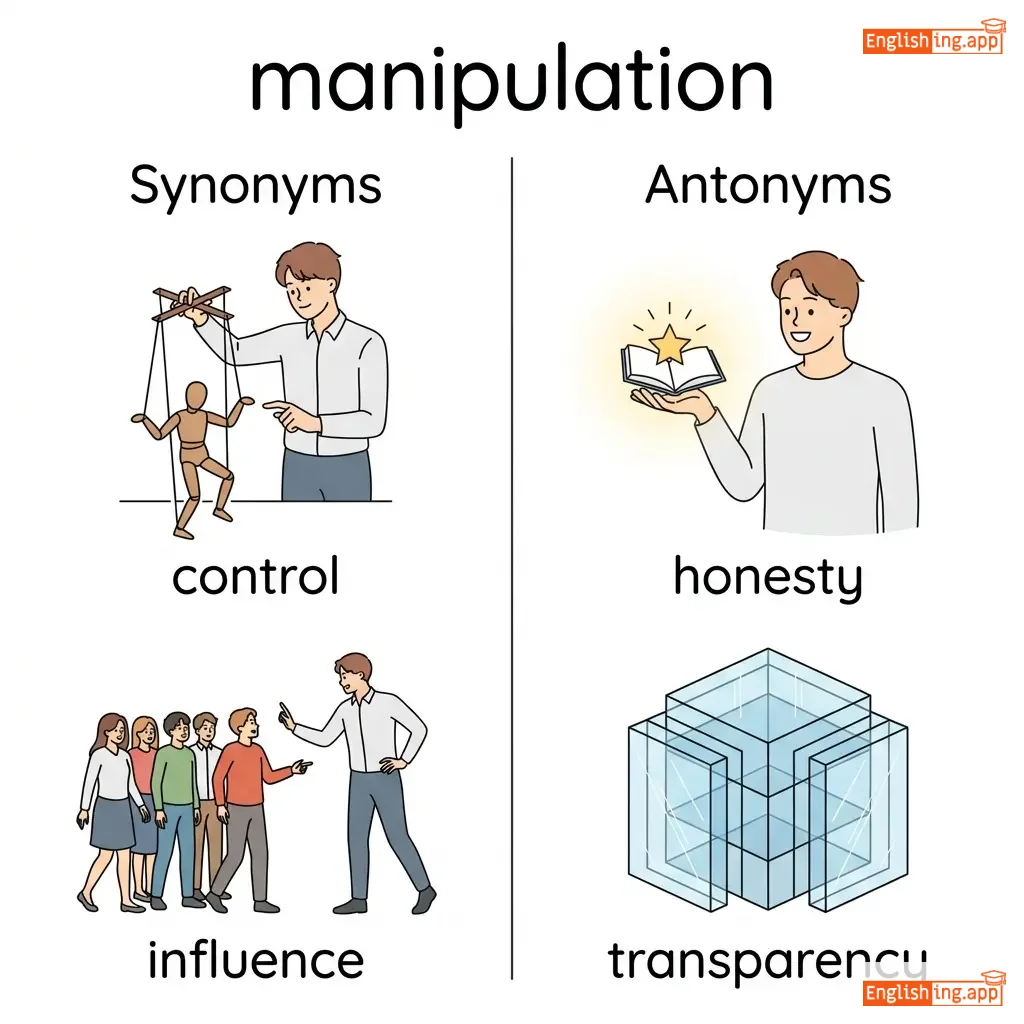
control, influence, handling, exploitation
••••••
|
honesty, transparency
••••••
|
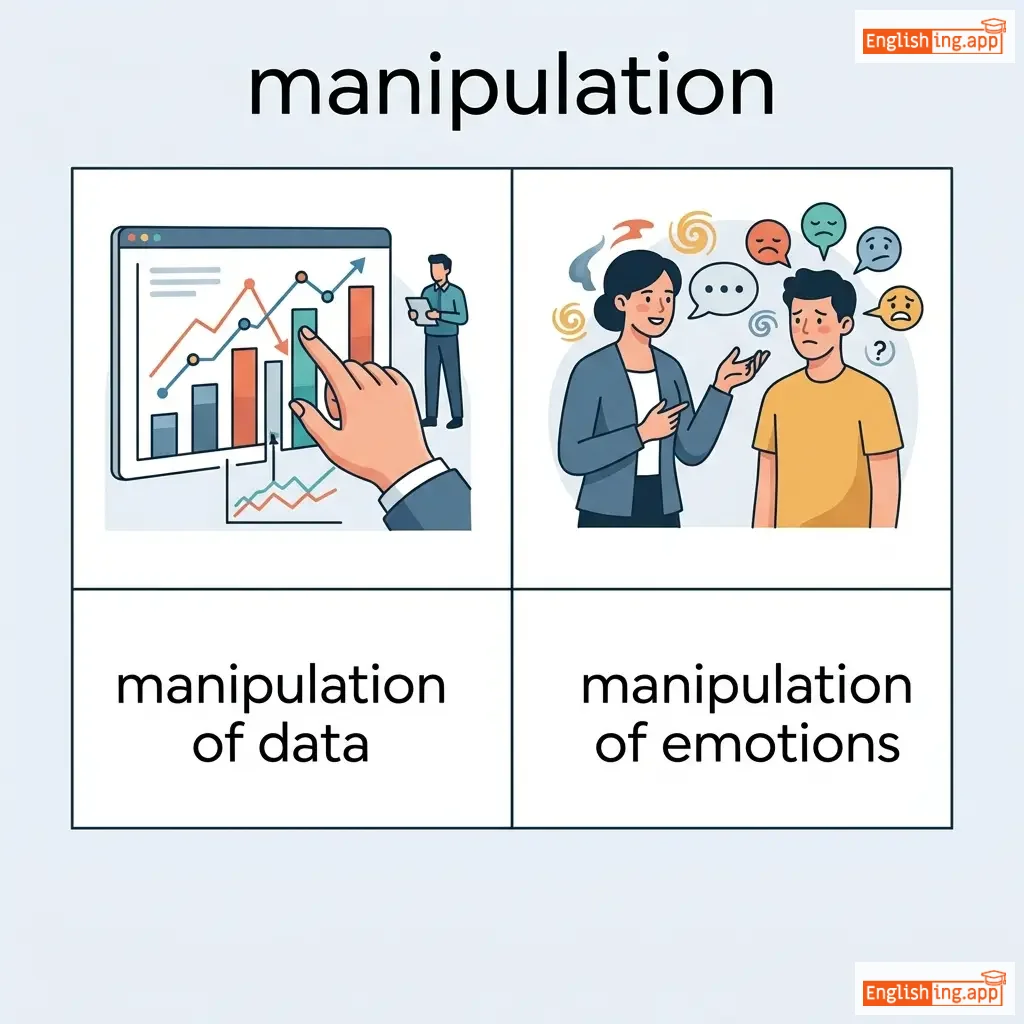
manipulation of data, manipulation of emotions
••••••
|
No •••••• |
|
🗣️
••••••
|
/ˈmænər/
noun
(manner)
••••••
|
- •••••• |
方式 / 举止
fāngshì / jǔzhǐ
••••••
|
- •••••• | - •••••• | - •••••• | - •••••• |
a way in which something is done or happens
••••••
|
He spoke in a polite manner. |
他说话很有礼貌。
Tā shuōhuà hěn yǒu lǐmào.
••••••
|
in a manner of speaking |
in a certain sense or way
••••••
|
一种说话的方式
yī zhǒng shuōhuà de fāngshì
••••••
|
way, style, method, fashion, approach
••••••
|
disorder, chaos
••••••
|
polite manner, proper manner, rude manner, in this manner
••••••
|
Manner 意思是方式 - 礼貌地说话
••••••
|
|
🏭
••••••
|
/ˌmænjʊˈfæktʃər/
verb
(制造)
••••••
|
|
制造
zhìzào
••••••
|
manufactured
制造的
••••••
|
manufactured
制造的
••••••
|
manufactures
制造
••••••
|
manufacturing
制造中
••••••
|
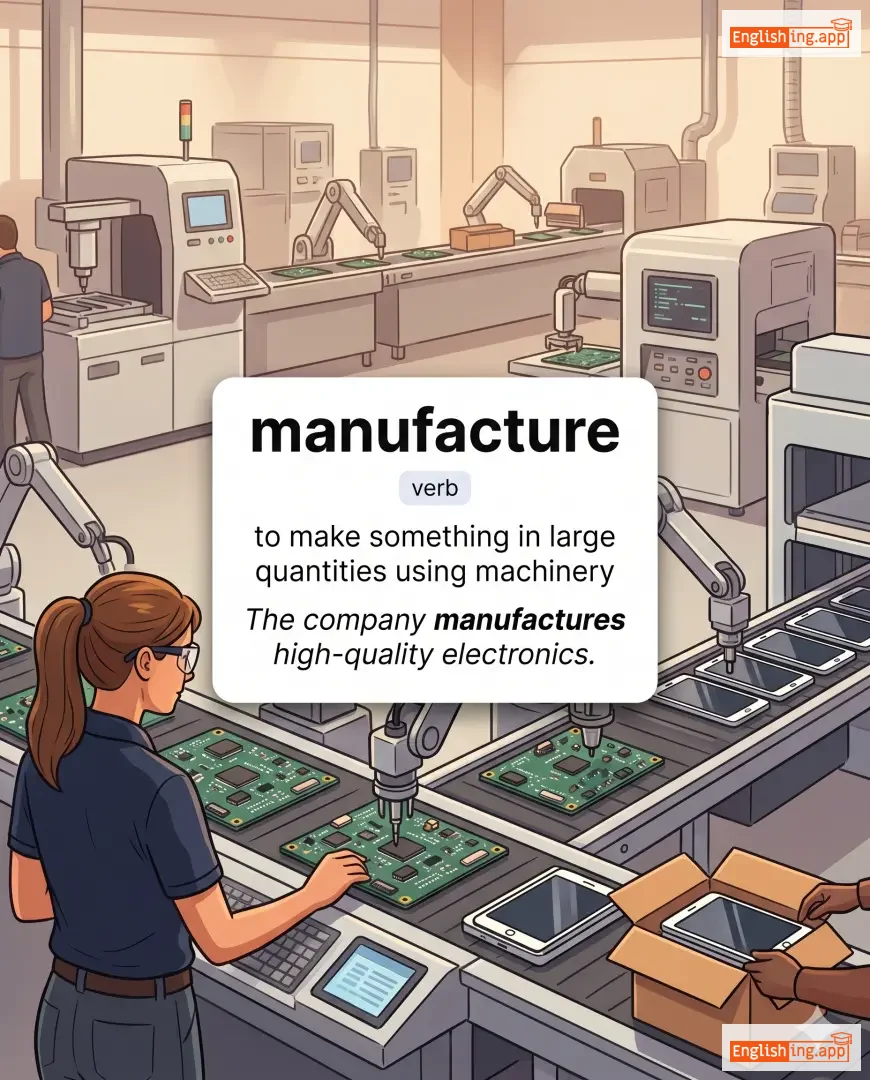
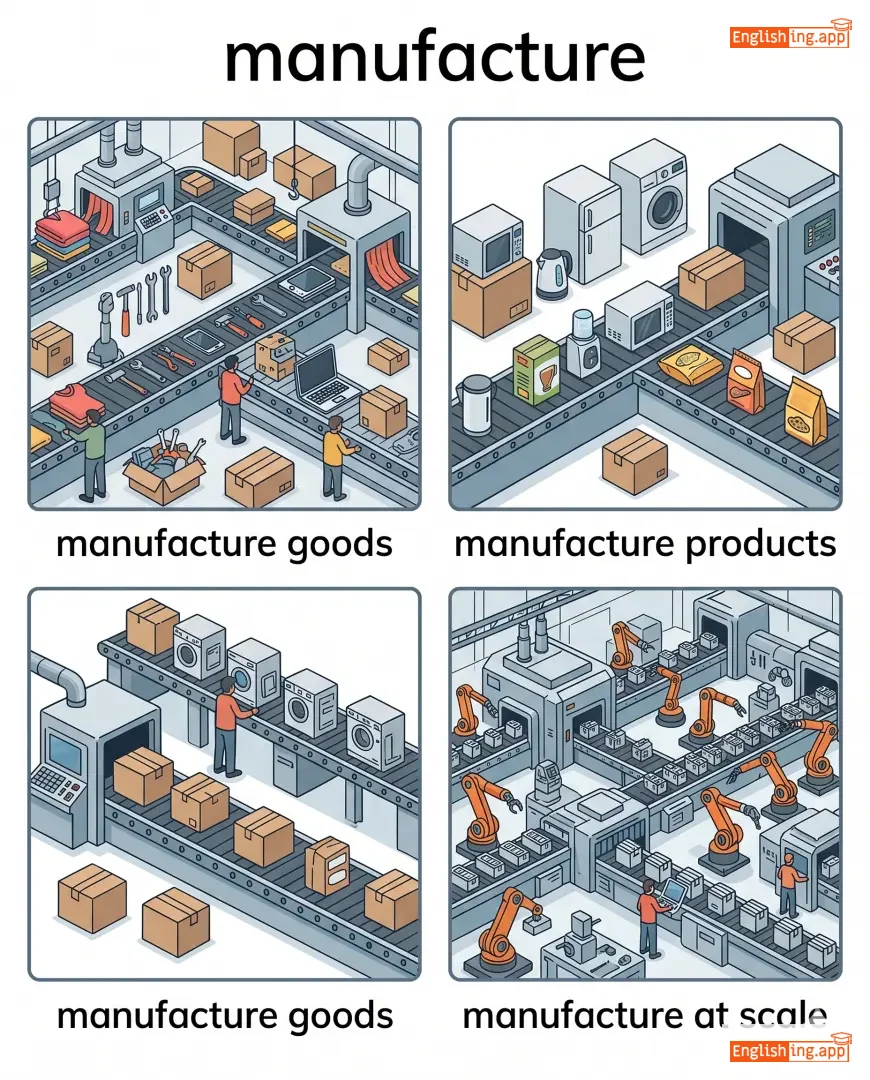
to produce goods in large quantities using machinery; to make or create something
••••••
|
The company manufactures electronic devices for global markets.
该公司为全球市场制造电子设备。
••••••
|
该公司为全球市场生产电子设备。
Gāi gōngsī wèi quánqiú shìchǎng shēngchǎn diànzǐ shèbèi.
••••••
|
- •••••• | - •••••• | - •••••• |
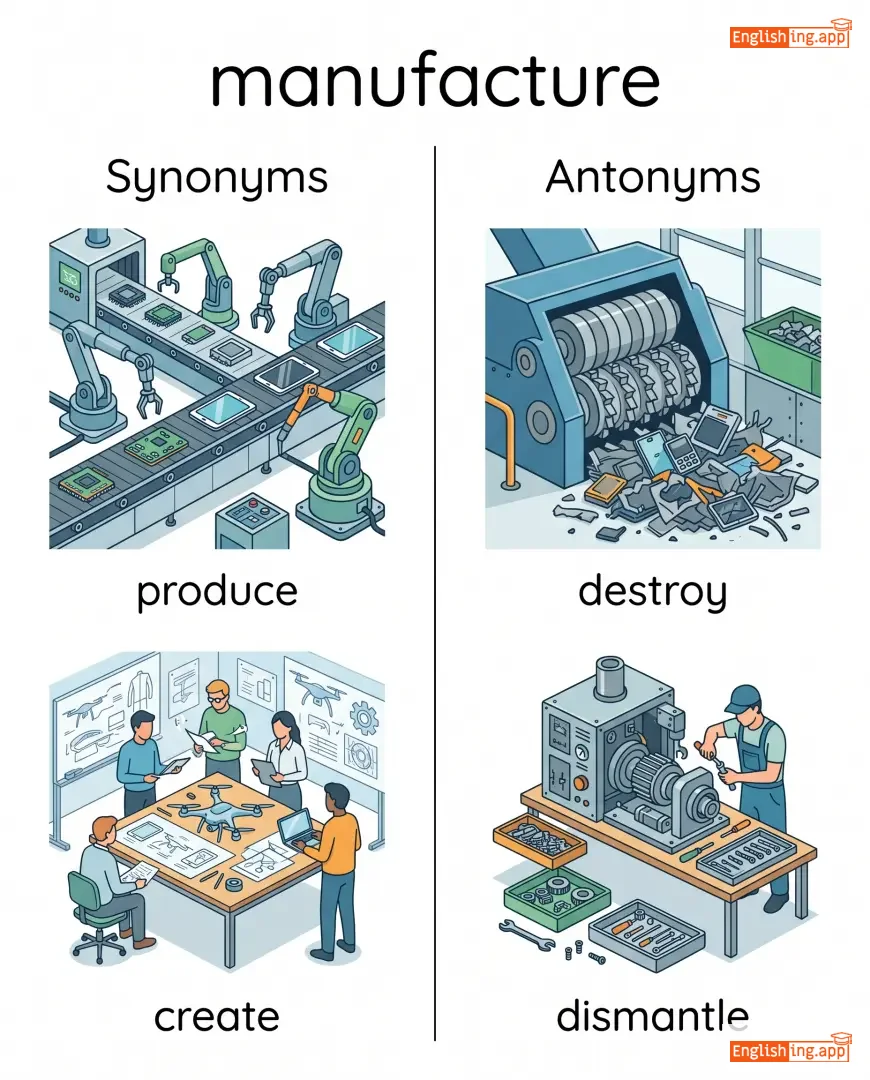
produce, make, create, fabricate
••••••
|
destroy, dismantle, demolish, break
••••••
|
manufacture goods, manufacture products, manufacture cars, mass manufacture
••••••
|
制造就像在工厂里生产大量物品,就像制造手机一样。
••••••
|
|
🏭
••••••
|
/ˌmænjəˈfæktʃərər/
noun
(màinǔfàkèchuà)
••••••
|
- •••••• |
制造商
zhìzàoshāng
••••••
|
- •••••• | - •••••• | - •••••• | - •••••• |
A person or company that makes goods in large quantities.
••••••
|
The manufacturer produces cars for the global market.
制造商为全球市场生产汽车。
••••••
|
制造商为全球市场生产汽车。
Zhìzàoshāng wèi quánqiú shìchǎng shēngchǎn qìchē.
••••••
|
original manufacturer
原始制造商
••••••
|
The main company that first makes and sells a product.
••••••
|
原始制造商
yuánshǐ zhìzàoshāng
••••••
|
producer, maker, creator, builder, fabricator
••••••
|
consumer, buyer, user
••••••
|
car manufacturer, leading manufacturer, original manufacturer, manufacturer warranty
••••••
|
制造商:制造 + 商 → 生产商品的人或公司
••••••
|
|
🏭
••••••
|
/ˌmænjəˈfæktʃərɪŋ/
noun
(制造)
••••••
|
- •••••• |
制造业
zhìzào yè
••••••
|
- •••••• | - •••••• | - •••••• | - •••••• |
the process of making products on a large scale using machinery
••••••
|
The country is investing heavily in the manufacturing sector. |
该国正在大力投资制造业。
gāi guó zhèngzài dàlì tóuzī zhìzàoyè.
••••••
|
manufacturing hub |
a place where a large amount of manufacturing occurs
••••••
|
制造中心
zhìzào zhōngxīn
••••••
|
production, fabrication, assembly, creation, making
••••••
|
consumption, destruction
••••••
|
manufacturing industry, manufacturing process, manufacturing sector, manufacturing plant
••••••
|
制造业是通过机器做大量产品的行业
••••••
|
|
📜
••••••
|
/ˈmæn.juˌskrɪpt/
noun
(手稿)
••••••
|
- •••••• |
手稿
shougao
••••••
|
- •••••• | - •••••• | - •••••• | - •••••• |
a handwritten or typed document, especially a writer’s draft before publication
••••••
|
The author submitted her manuscript to the publisher. |
作者将她的手稿提交给出版商。
Zuozhe jiang ta de shougao tijiagei chubanshang.
••••••
|
- •••••• | - •••••• | - •••••• |
draft, document, text, script, paper
••••••
|
print, publication, copy
••••••
|
ancient manuscript, submit manuscript, manuscript copy
••••••
|
手稿手写,像是 manuscript
••••••
|
|
🔢
••••••
|
/ˈmɛni/
adjective
(méini)
••••••
|
- •••••• |
许多
xuduo
••••••
|
- •••••• | - •••••• | - •••••• | - •••••• |
a large number of
••••••
|
Many students attended the lecture. |
许多学生参加了讲座。
Xuduo xuesheng canjia le jiangzuo.
••••••
|
many a time |
very often
••••••
|
许多次
xuduo ci
••••••
|
numerous, countless, several, various, multiple
••••••
|
few, little
••••••
|
many people, many years, many times, many ways
••••••
|
Many就是许多 (xuduo)
••••••
|
|
🗺️
••••••
|
/mæp/
noun
(地图)
••••••
|
- •••••• |
地图
ditu
••••••
|
- •••••• | - •••••• | - •••••• | - •••••• |
a drawing that shows the features of an area of land or sea
••••••
|
He studied the map before starting his journey. |
他在开始旅程之前研究了地图。
Ta zai kaishi lvcheng zhīqián yánjiūle dìtú.
••••••
|
put on the map |
to make someone or something famous or important
••••••
|
让...名声大噪
ràng...míngshēng dàzào
••••••
|
chart, plan, diagram, blueprint
••••••
|
disorder, chaos
••••••
|
world map, road map, city map, draw a map
••••••
|
地图 = 地图 (map = ditu)
••••••
|
|
🏃♀️
••••••
|
/ˈmærəθən/
noun
(马拉松)
••••••
|
- •••••• |
马拉松
mala song
••••••
|
- •••••• | - •••••• | - •••••• | - •••••• |
a long-distance running race, typically 42.195 kilometers (26.2 miles)
••••••
|
She completed the marathon in under four hours. |
她在不到四小时内完成了马拉松。
Ta zai bu dao si xiaoshi nei wanchengle mala song.
••••••
|
- •••••• | - •••••• | - •••••• |
race, event, competition, endurance
••••••
|
sprint, short race
••••••
|
run a marathon, marathon training, marathon winner
••••••
|
Marathon runs forever - 马拉松永不停止!
••••••
|
|
🚶♂️
••••••
|
/mɑːrtʃ/
verb
••••••
|
- •••••• | - •••••• |
marched
••••••
|
marched
••••••
|
marches
••••••
|
marching
••••••
|
to walk in a regular, rhythmic way, often in step with others; to proceed with determination
••••••
|
The soldiers marched across the field. |
- •••••• |
march to the beat of your own drum |
to act independently and follow your own ideas or path
••••••
|
- •••••• |
walk, stride, parade, proceed, advance
••••••
|
stop, halt, retreat
••••••
|
march forward, peace march, protest march, march together
••••••
|
No •••••• |
|
📊
••••••
|
/ˈmɑːrdʒɪn/
noun
(边际)
••••••
|
- •••••• |
边际,界限,利润率
bianji, jiexian, lirunlv
••••••
|
- •••••• | - •••••• | - •••••• | - •••••• |
The edge or border of something; the amount by which something is won or falls short.
••••••
|
The company increased its profit margin last year. |
公司去年增加了它的利润边际。
Gongsi qunian zengjia le ta de lirun bianji.
••••••
|
on the margins |
existing at the edge of society or outside the mainstream
••••••
|
在边缘
zai bian yuan
••••••
|
edge, border, boundary, allowance, leeway
••••••
|
center, core, middle
••••••
|
profit margin, narrow margin, winning margin, margin of error
••••••
|
Profit margin 指的是利润的边际,就像商店的边缘一样。
••••••
|
|
📏
••••••
|
/ˈmɑːr.dʒɪ.nəl/
adjective
(边际)
••••••
|
- •••••• |
边际的; 微小的; 轻微的
bianji de; weixiao de; qingwei de
••••••
|
- •••••• | - •••••• | - •••••• | - •••••• |
relating to or situated at the edge; minimal; slight
••••••
|
The marginal improvement in sales was barely noticeable. |
销售的边际改善几乎没有被注意到。
Xiaoshou de bianji gaishan jihu meiyou bei zhuyi dao.
••••••
|
- •••••• | - •••••• | - •••••• |
minimal, slight, borderline, peripheral
••••••
|
central, significant, substantial, major
••••••
|
marginal improvement, marginal cost, marginal benefit
••••••
|
销售略微改善,但仍然显而易见。
••••••
|
|
🌊
••••••
|
/məˈriːn/
adjective
(mǎ-rīn)
••••••
|
|
海洋的
hǎiyáng de
••••••
|
- •••••• | - •••••• | - •••••• | - •••••• |
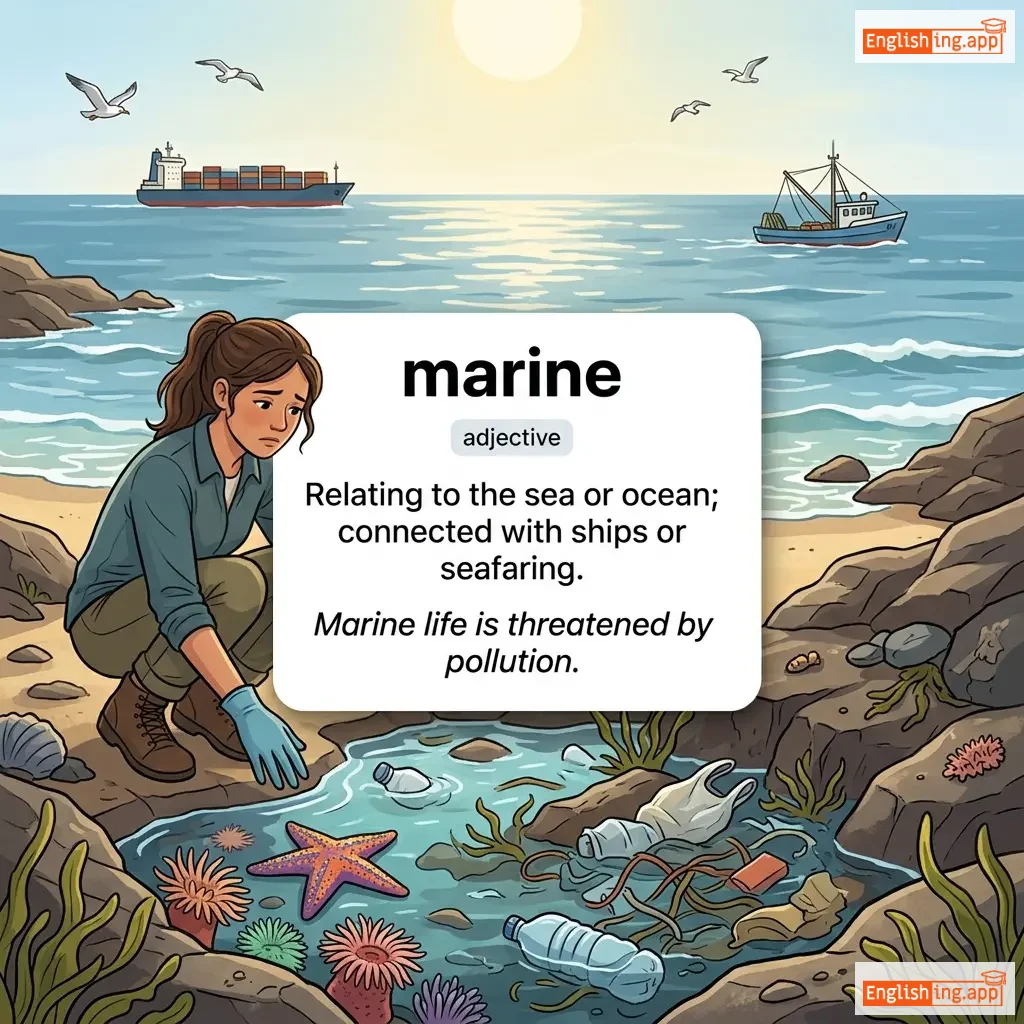
Relating to the sea or ocean; connected with ships or seafaring.
••••••
|
Marine life is threatened by pollution.
海洋生物受到污染的威胁。
••••••
|
海洋生物受到污染的威胁。
Hǎiyáng shēngwù shòudào wūrǎn de wēixié.
••••••
|
- •••••• | - •••••• | - •••••• |
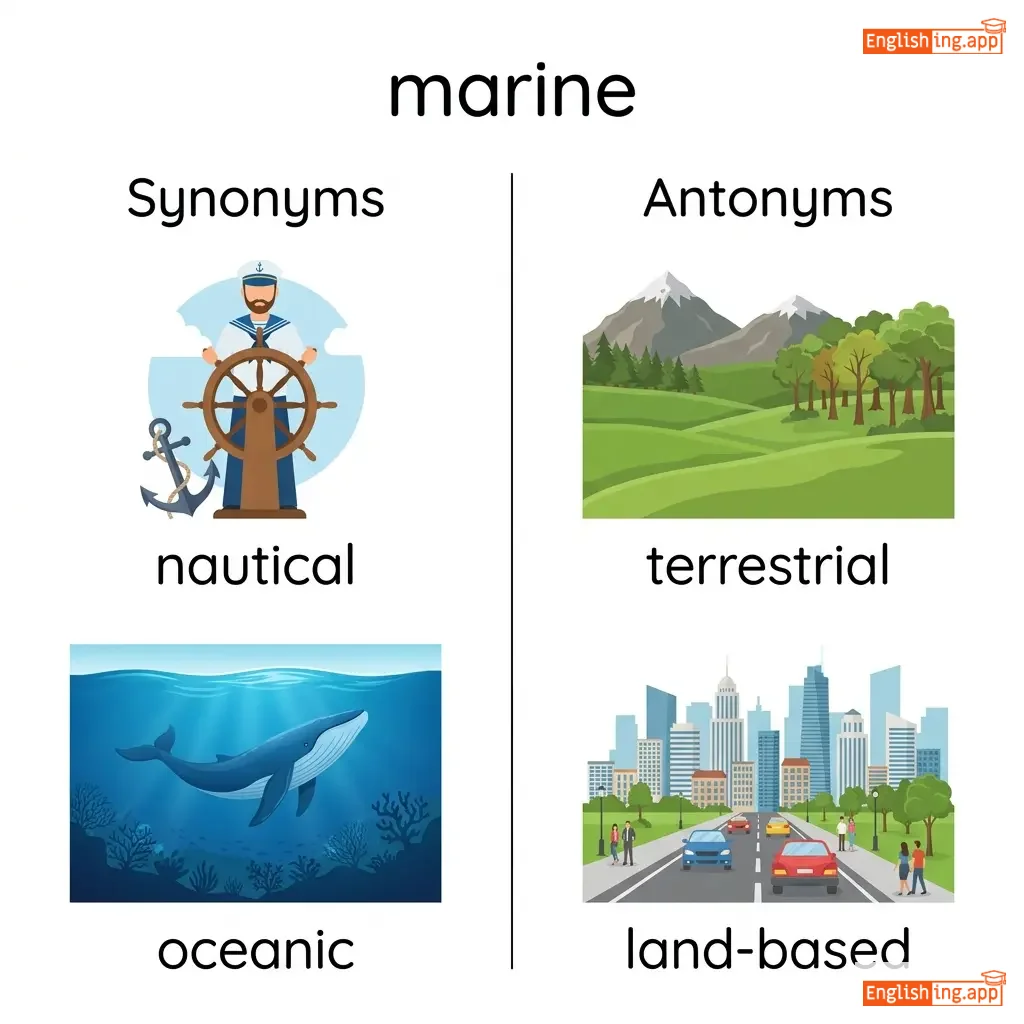
nautical, oceanic, naval, maritime
••••••
|
terrestrial, land-based
••••••
|
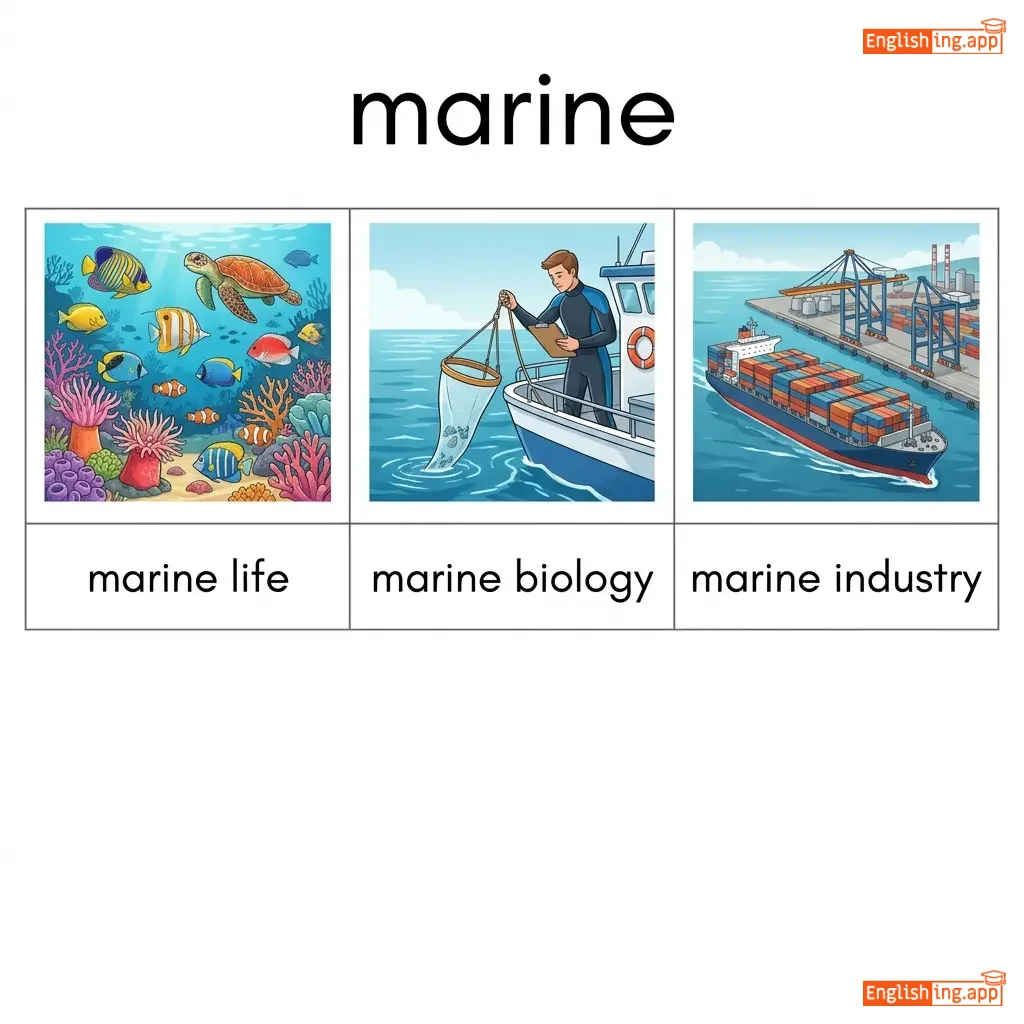
marine life, marine biology, marine industry, marine animals
••••••
|
Marine 代表海洋的, 比如海洋生物或海洋公园。
••••••
|
|
✏️
••••••
|
/mɑːrk/
verb
(mǎkè)
••••••
|
|
标记
biāojì
••••••
|
marked
mǎkèd
••••••
|
marked
mǎkèd
••••••
|
marks
mǎks
••••••
|
marking
mǎkìng
••••••
|
to make a visible impression or symbol on a surface
••••••
|
The teacher marked the important points in red.
老师用红色标出了重要的要点。
••••••
|
老师用红色标出了重要的要点。
Lǎoshī yòng hóngsè biāo chūle zhòngyào de yàodiǎn.
••••••
|
make your mark
留下你的印记
••••••
|
to have a lasting impact or achieve success
••••••
|
留下你的印记
Liú xià nǐ de yìnjì
••••••
|
label, stain, sign, indicate, highlight
••••••
|
erase, remove, clear
••••••
|
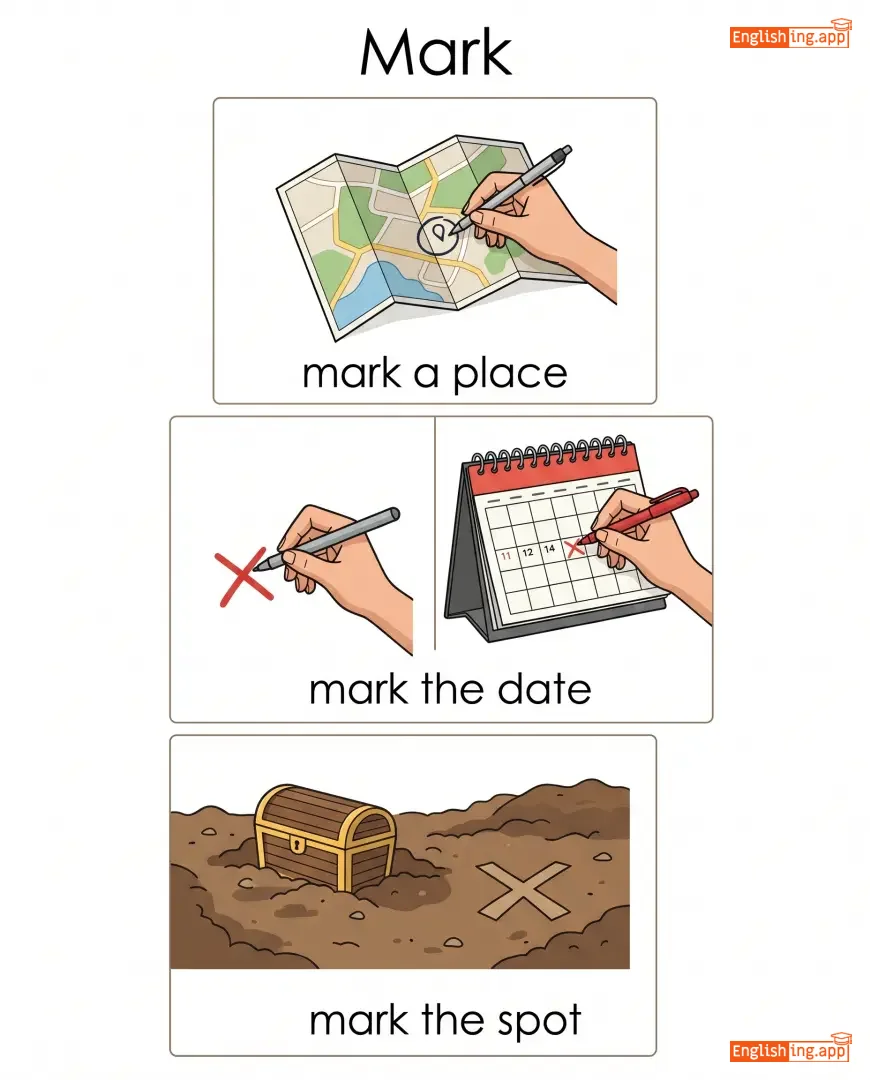
mark a place, mark the date, mark the spot, examination mark
••••••
|
Mark 让我们留下印记
••••••
|
|
🖊️
••••••
|
/ˈmɑːrkər/
noun
(马克笔)
••••••
|
- •••••• |
马克笔,标记笔
mǎkè bǐ, biāojì bǐ
••••••
|
- •••••• | - •••••• | - •••••• | - •••••• |
an object used to indicate a position, place, or boundary; a pen with a thick tip used for writing or drawing
••••••
|
He used a red marker to underline the important points. |
他用红色马克笔强调了重要的要点。
Tā yòng hóngsè mǎkè bǐ qiángdiào le zhòngyào de yàodiǎn.
••••••
|
- •••••• | - •••••• | - •••••• |
sign, indicator, token, pen, symbol
••••••
|
eraser, remover
••••••
|
use a marker, permanent marker, location marker, boundary marker
••••••
|
马克笔用来标记重要的内容,像红色马克笔突出重点。
••••••
|
|
📈
••••••
|
/ˈmɑːrkɪt/
verb
(市场)
••••••
|

|
市场营销
shìchǎng yíngxiāo
••••••
|
marketed
市场营销
••••••
|
marketed
市场营销
••••••
|
markets
市场
••••••
|
marketing
营销
••••••
|
to promote and sell products or services; to advertise
••••••
|
The company will market their new product through social media.
公司将通过社交媒体推广他们的新产品。
••••••
|
公司将通过社交媒体推广他们的新产品。
Gōngsī jiāng tōngguò shèjiāo méitǐ tuīguǎng tāmen de xīn chǎnpǐn.
••••••
|
- •••••• | - •••••• | - •••••• |
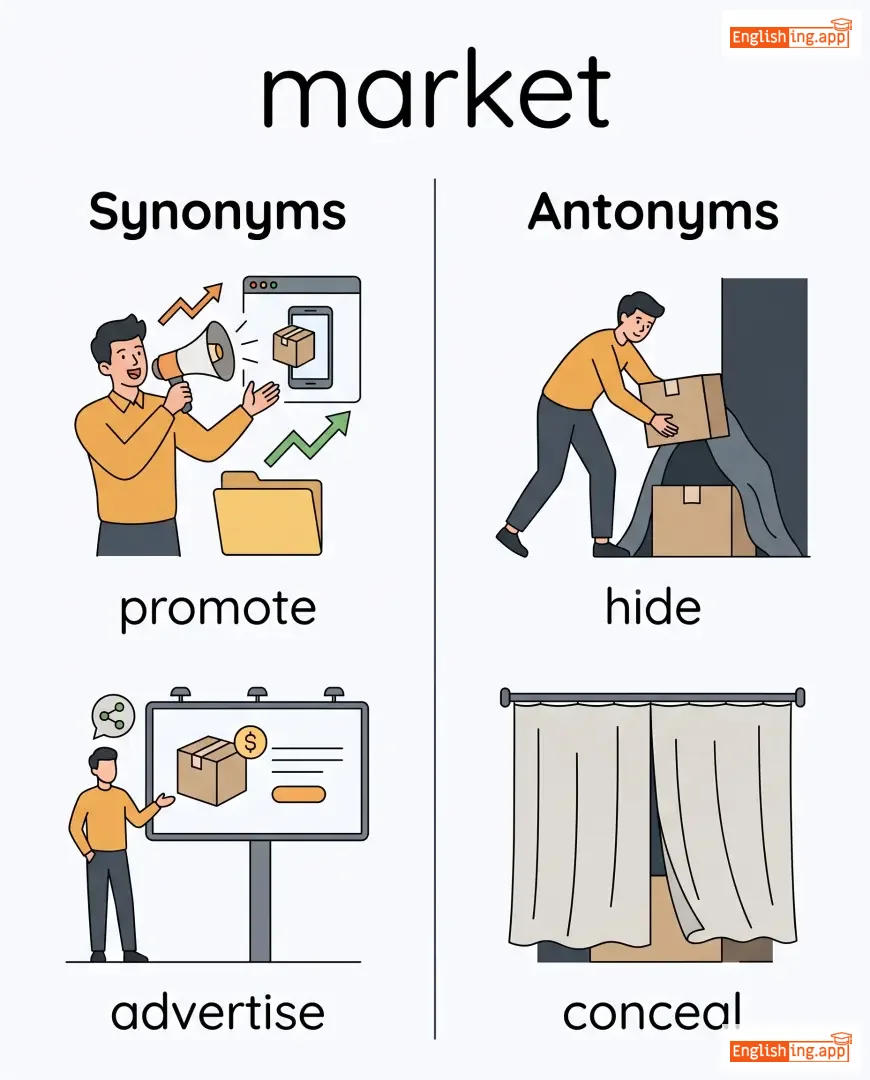
promote, advertise, sell, publicize
••••••
|
hide, conceal, withdraw, suppress
••••••
|
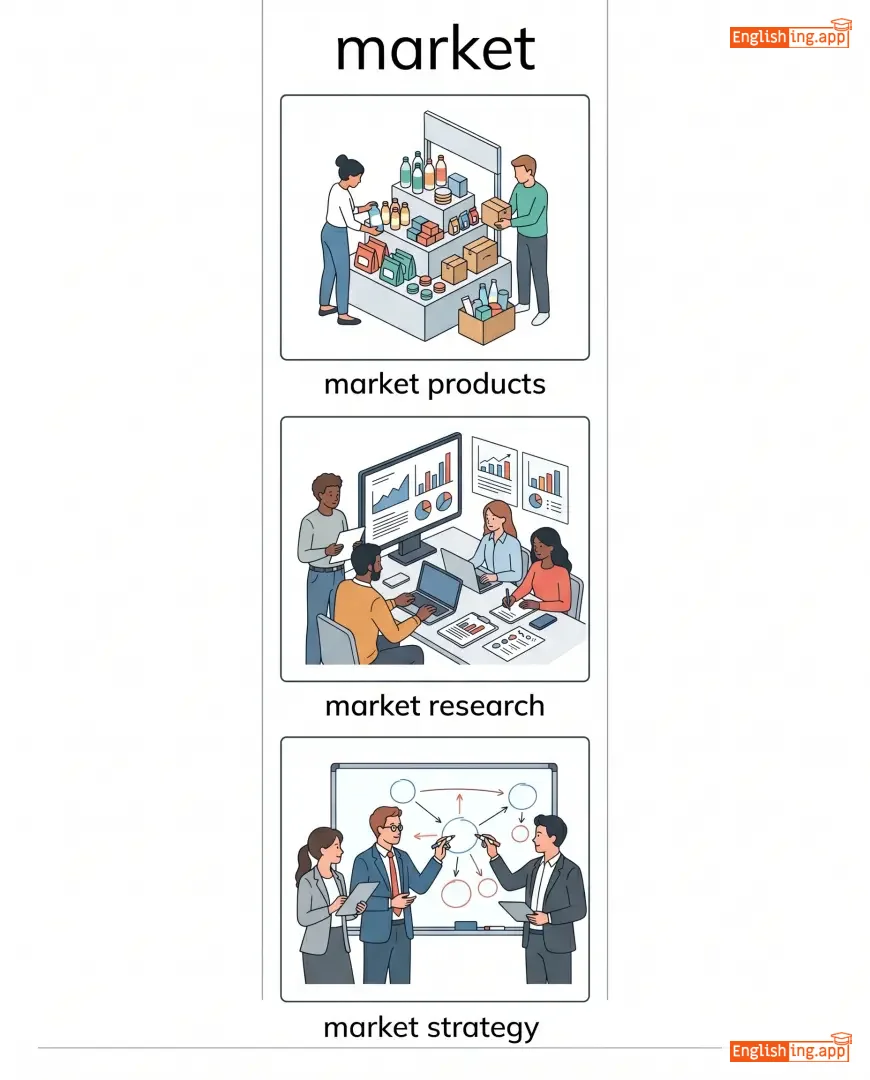
market products, market research, market strategy, target market
••••••
|
市场营销是推广新产品的广告方法
••••••
|
|
📢
••••••
|
/ˈmɑːrkɪtɪŋ/
noun
(mǎkètíng)
••••••
|


|
市场营销
shìchǎng yíngxiāo
••••••
|
- •••••• | - •••••• | - •••••• | - •••••• |
The action or business of promoting and selling products or services, including market research and advertising.
••••••
|
The company invested heavily in digital marketing. |
公司在数字营销上进行了大量投资。
Gōngsī zài shùzì yíngxiāo shàng jìnxíngle dàliàng tóuzī.
••••••
|
guerrilla marketing |
Unconventional and creative marketing strategies to promote a product.
••••••
|
游击营销
yóujī yíngxiāo
••••••
|
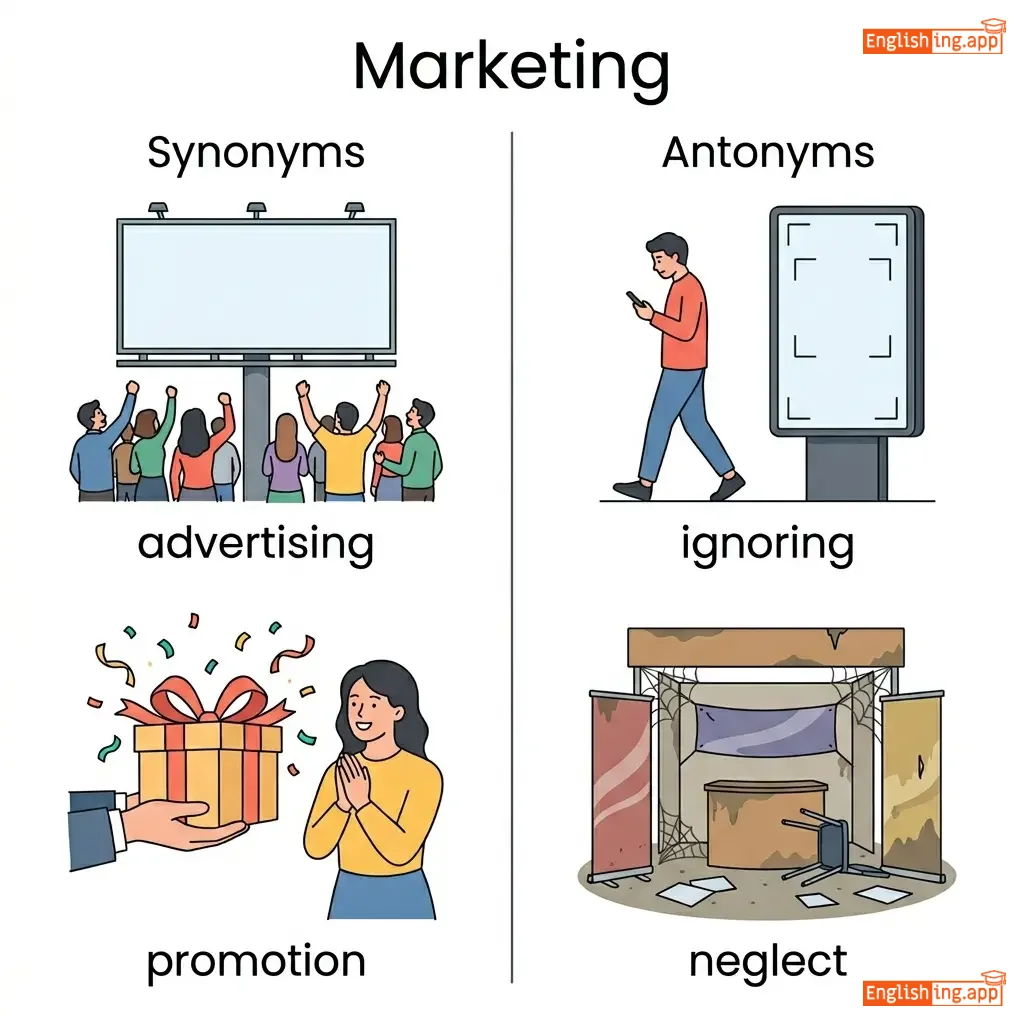
advertising, promotion, publicity, sales, merchandising
••••••
|
ignoring, neglect
••••••
|
marketing strategy, digital marketing, marketing campaign, marketing research, marketing mix
••••••
|
市场营销就是让人买东西!
••••••
|
|
🏬
••••••
|
/ˈmɑːrkɪtˌpleɪs/
noun
(市场)
••••••
|
- •••••• |
市场
shìchǎng
••••••
|
- •••••• | - •••••• | - •••••• | - •••••• |
a place where goods and services are bought and sold; an open area for trade
••••••
|
The town's marketplace is crowded every Friday morning. |
城市的市场每个星期五早上都很拥挤。
Chéngshì de shìchǎng měi gè xīngqī wǔ zǎoshang dōu hěn yōngjǐ.
••••••
|
- •••••• | - •••••• | - •••••• |
bazaar, fair, mart, trading center, exchange
••••••
|
home, residence
••••••
|
online marketplace, local marketplace, global marketplace, bustling marketplace
••••••
|
Market + place = 买卖的地方 — 市场是交易的地方。
••••••
|

