|
絵文字
|
単語 | Images | 翻訳 | 過去 | 過去分詞 | 三人称単数 | 動名詞 | 意味 | 例文 | 例文の翻訳 | 表現例 | 表現例の意味 | 表現例の翻訳 | 同義語 | 対義語 | コロケーション | ニーモニック |
|---|---|---|---|---|---|---|---|---|---|---|---|---|---|---|---|---|---|
|
♻️
••••••
|
/ˌɪrɪˈvɜːrsəbl/
adjective
(イリバーシブル)
••••••
|
- •••••• |
不可逆な
fuka-gyaku na
••••••
|
- •••••• | - •••••• | - •••••• | - •••••• |
Not able to be undone, changed, or reversed.
••••••
|
The damage caused by the fire was irreversible. |
火事によって生じた損害は不可逆でした。
Kaji ni yotte shoujita songai wa fuka-gyaku deshita.
••••••
|
point of no return |
A stage beyond which one cannot go back or undo something
••••••
|
戻れない地点
modorenai chiten
••••••
|
permanent, irrevocable, unalterable, final
••••••
|
reversible, temporary, alterable
••••••
|
irreversible damage, irreversible process, irreversible decision
••••••
|
Irreversibleは、壊れたものが元に戻らないことを意味します。
••••••
|
|
😤
••••••
|
/ˈɪrɪteɪt/
verb
(イリテート)
••••••
|
|
イラつかせる
iratsukaseru
••••••
|
irritated
イリテイテッド
••••••
|
irritated
イリテイテッド
••••••
|
irritates
イリテイツ
••••••
|
irritating
イリテイティング
••••••
|
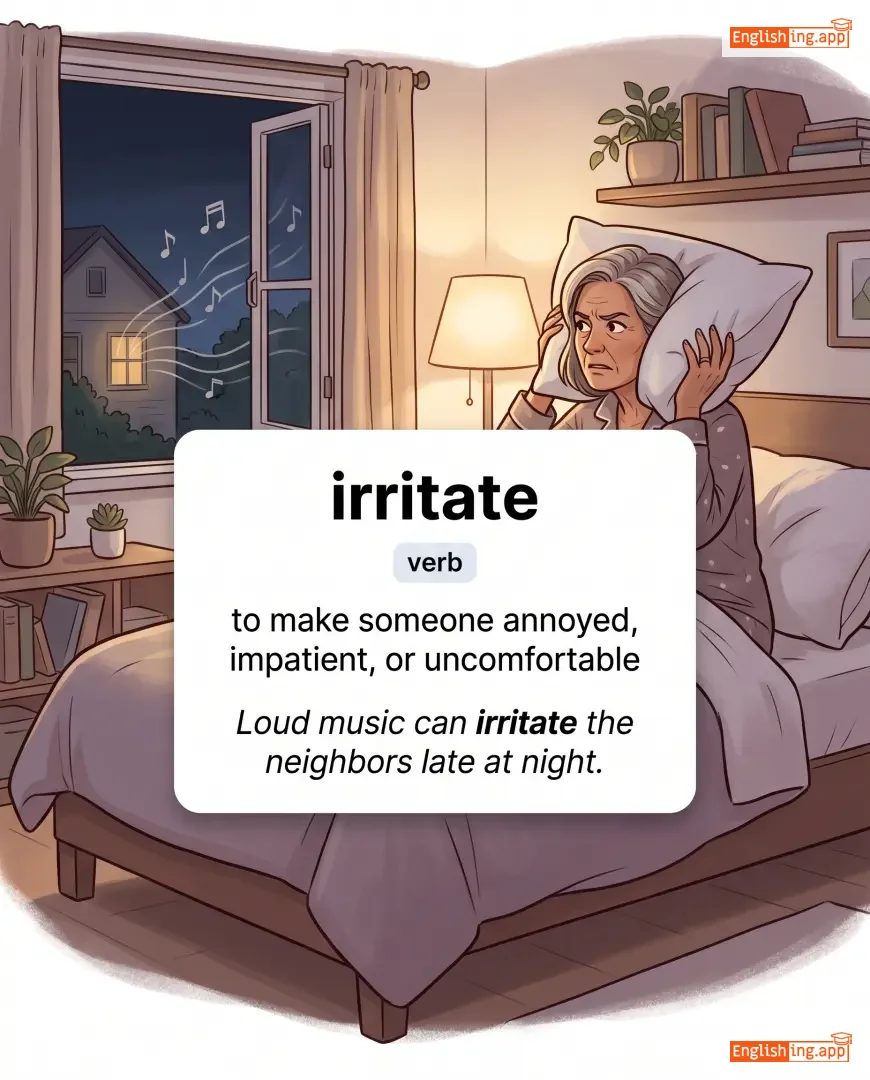
to make someone annoyed, impatient, or uncomfortable
••••••
|
Loud music can irritate the neighbors late at night.
大きな音楽は夜遅くに隣人をイリテートすることがあります。
••••••
|
大きな音楽は夜遅くに隣人をイリテートすることがあります。
Ōkina ongaku wa yoru osoku ni rinjin o iritēto suru koto ga arimasu.
••••••
|
rub the wrong way
悪い方法で摩擦を生む
••••••
|
to annoy or irritate someone unintentionally
••••••
|
無意識にイラつかせる
muishiki ni iratsukaseru
••••••
|
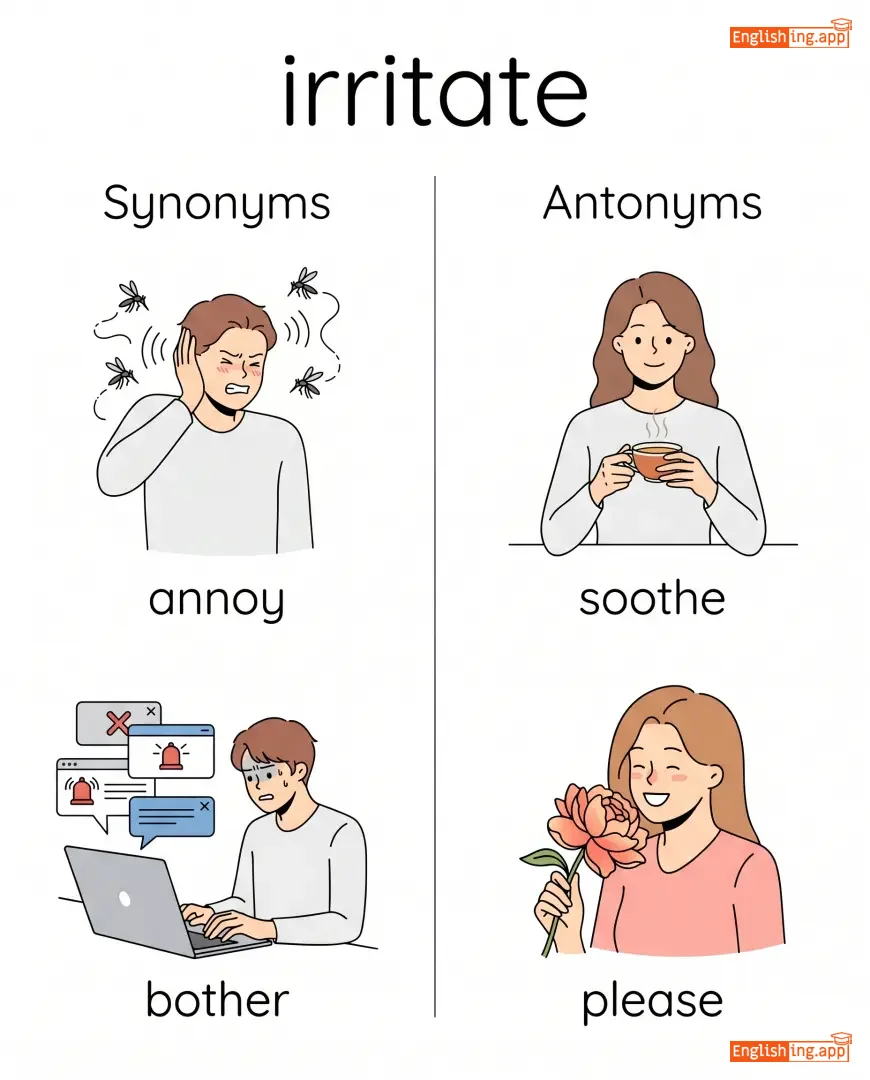
annoy, bother, provoke, aggravate, disturb
••••••
|
soothe, please, comfort
••••••
|
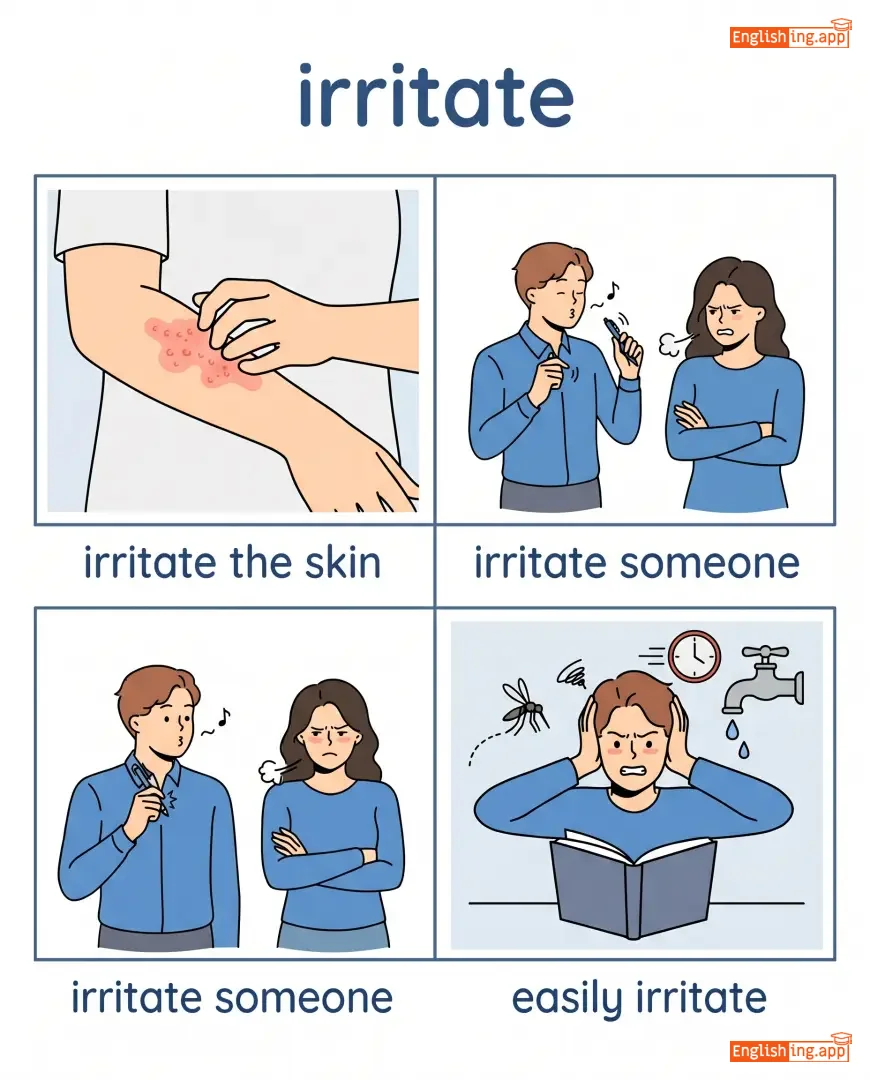
irritate the skin, irritate someone, easily irritate, irritate eyes
••••••
|
Irritate はイラつかせるという意味で、例えば「irri」というとイラつきます。
••••••
|
|
😠
••••••
|
/ˈɪrɪteɪtɪd/
adjective
(イリテイテッド)
••••••
|
- •••••• |
いらいらした
iraira shita
••••••
|
irritated
イリテイテッド
••••••
|
irritated
イリテイテッド
••••••
|
irritates
イリテイツ
••••••
|
irritating
イリテイティング
••••••
|
feeling annoyed or impatient; having inflamed or sore physical condition
••••••
|
She felt irritated by the constant noise outside her window.
シー フェルト イリテイテッド バイ ザ コンスタント ノイズ アウトサイド ハー ウィンドウ
••••••
|
窓の外の絶え間ない騒音に彼女はいらいらした。
Mado no soto no taemanai souon ni kanojo wa iraira shita
••••••
|
irritated at
イリテイテッド アット
••••••
|
annoyed because of someone or something
••••••
|
〜にいらいらする
ni iraira suru
••••••
|
annoyed, agitated, vexed, exasperated, frustrated
••••••
|
calm, pleased, relaxed
••••••
|
feel irritated, easily irritated, visibly irritated, irritated skin, irritated tone
••••••
|
Irritated = いらいら → 音が多いとイライラ
••••••
|
|
😖
••••••
|
/ˈɪrɪteɪtɪŋ/
adjective
(イリテイティング)
••••••
|
- •••••• |
いらいらさせる
iraira saseru
••••••
|
- •••••• | - •••••• | - •••••• | - •••••• |
causing annoyance, impatience, or mild anger
••••••
|
The constant noise from the street is extremely irritating.
ザ コンスタント ノイズ フロム ザ ストリート イズ エクストリームリー イリテイティング。
••••••
|
通りからの絶え間ない騒音はいらいらさせる。
Toori kara no taemanai souon wa iraira saseru
••••••
|
- •••••• | - •••••• | - •••••• |
annoying, bothersome, vexing, aggravating, exasperating
••••••
|
pleasant, soothing, calming
••••••
|
irritating noise, irritating habit, irritating behavior, extremely irritating
••••••
|
Irritating を聞くと イライラ—日本語の いらいら と同じ感覚。
••••••
|
|
☪️
••••••
|
/ɪsˈlɑːm/
noun
(イスラム)
••••••
|
- •••••• |
イスラム教
Isuramu kyō
••••••
|
- •••••• | - •••••• | - •••••• | - •••••• |
the religion founded by the Prophet Muhammad, based on belief in one God (Allah)
••••••
|
Islam emphasizes peace, justice, and compassion. |
イスラム教は平和、正義、そして慈悲を強調します。
Isuramu kyō wa heiwa, seigi, soshite jihi o kyōchō shimasu.
••••••
|
- •••••• | - •••••• | - •••••• |
muslim faith, religion of peace, monotheism
••••••
|
atheism, polytheism
••••••
|
practice Islam, convert to Islam, teachings of Islam
••••••
|
イスラムは平和を意味します — イスラムは平和を意味します ☪️
••••••
|
|
☪️
••••••
|
/ɪsˈlɑːmɪk/
adjective
(イスラミック)
••••••
|
- •••••• |
イスラームの
isurāmu no
••••••
|
- •••••• | - •••••• | - •••••• | - •••••• |
relating to Islam, its followers, or its teachings
••••••
|
The city has many Islamic cultural centers. |
その都市には多くのイスラーム文化センターがあります。
Sono toshi ni wa ōku no isurāmu bunka sentā ga arimasu.
••••••
|
- •••••• | - •••••• | - •••••• |
Muslim, religious, faith-based, Quranic, spiritual
••••••
|
secular, nonreligious
••••••
|
Islamic law, Islamic culture, Islamic faith, Islamic tradition
••••••
|
Islamicはイスラームの意味です。例えば、Islamic Centerはイスラーム文化センターを意味します。
••••••
|
|
🏝️
••••••
|
/ˈaɪ.lənd/
noun
(アイランド)
••••••
|
- •••••• |
島
shima
••••••
|
- •••••• | - •••••• | - •••••• | - •••••• |
a piece of land surrounded by water
••••••
|
They spent their vacation on a tropical island. |
彼らは熱帯の島で休暇を過ごしました。
Karera wa nettai no shima de kyūka o sugoshimashita.
••••••
|
desert island |
a remote uninhabited island
••••••
|
無人島
mujin tō
••••••
|
isle, atoll, key, islet, cay
••••••
|
mainland, continent
••••••
|
small island, tropical island, remote island, desert island
••••••
|
島は水に囲まれた土地です、島に行けば水があることを思い出してください。
••••••
|
|
🛑
••••••
|
/ˈaɪ.sə.leɪt/
verb
(アイソレート)
••••••
|
- •••••• |
隔離する
kakuri suru
••••••
|
isolated
アイソレイテッド
••••••
|
isolated
アイソレイテッド
••••••
|
isolates
アイソレイツ
••••••
|
isolating
アイソレイティング
••••••
|
To separate something or someone from others.
••••••
|
Doctors tried to isolate the patient to prevent the spread of infection.
医師たちは感染の拡大を防ぐために患者を隔離しようとしました。
••••••
|
医師たちは感染の拡大を防ぐために患者を隔離しようとしました。
Ishitachi wa kansen no kakudai o fusegu tame ni kanja o kakuri shiyou to shimashita.
••••••
|
isolate oneself
自分を隔離する
••••••
|
to deliberately avoid contact with others
••••••
|
自分を隔離する
Jibun o kakuri suru
••••••
|
separate, detach, segregate, quarantine, seclude
••••••
|
unite, connect, integrate
••••••
|
isolate the virus, isolate the problem, isolate from others, isolate oneself
••••••
|
隔離するは、誰かを一人にして氷のように冷たくすること ❄️
••••••
|
|
🏝️
••••••
|
/ˈaɪsəleɪtɪd/
adjective
(アイソレイテッド)
••••••
|
|
孤立した / 分離された
koritsu shita / bunri sareta
••••••
|
- •••••• | - •••••• | - •••••• | - •••••• |
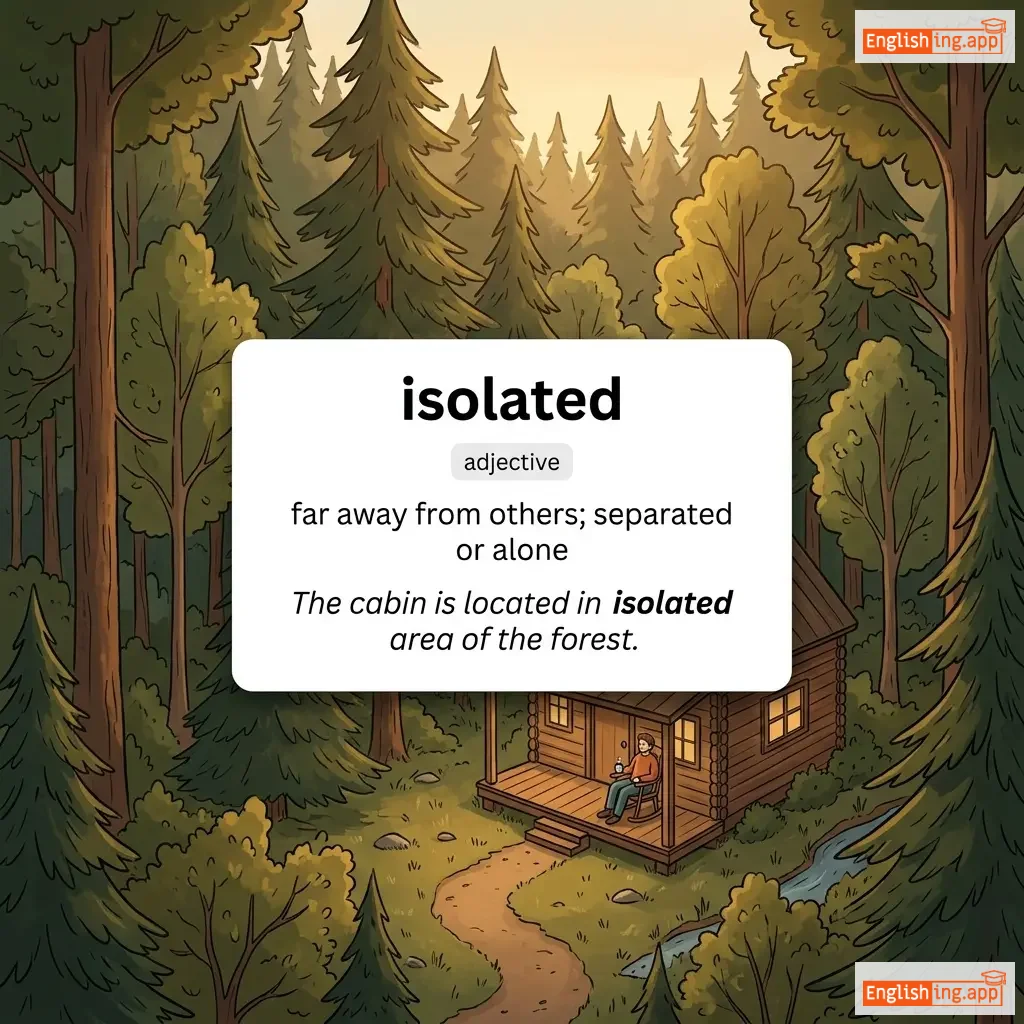
far away from others; separated or alone
••••••
|
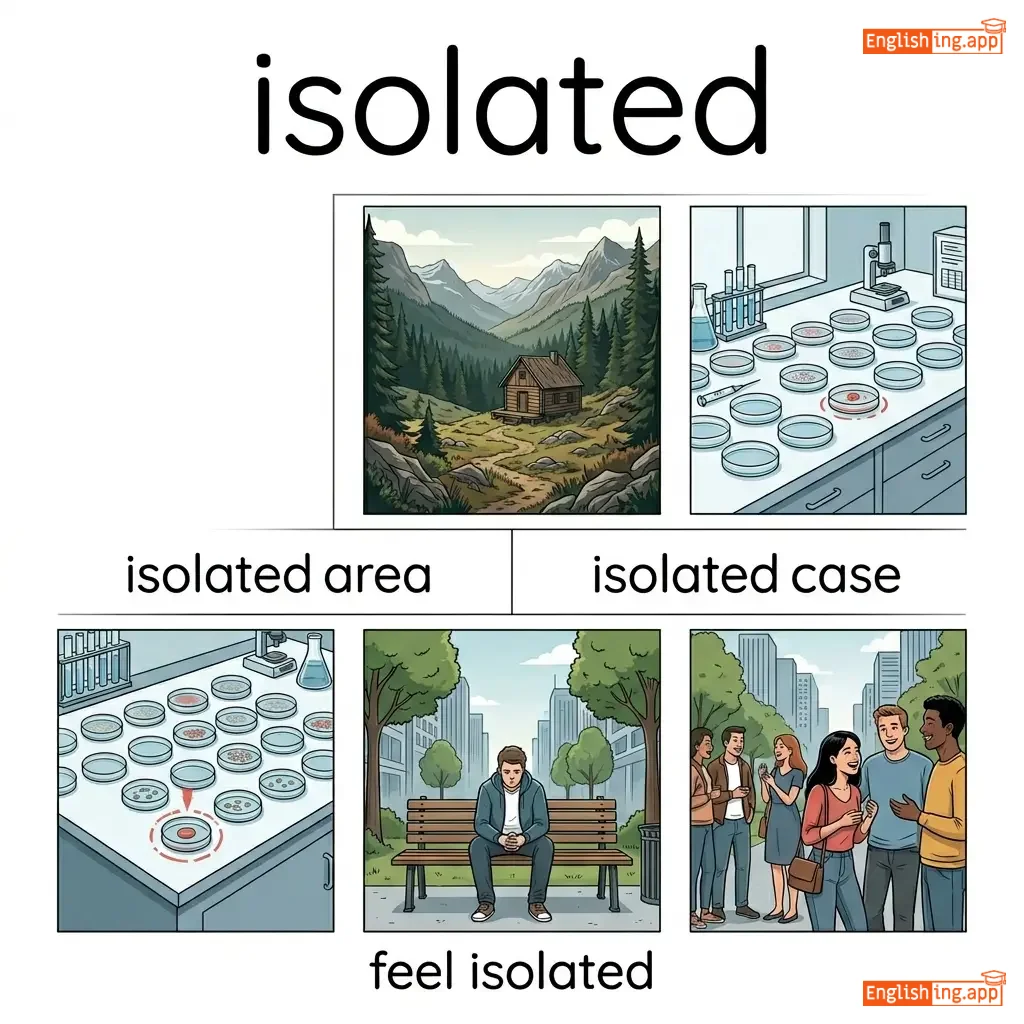
The cabin is located in an isolated area of the forest.
キャビンは森の中の孤立したエリアにあります。
••••••
|
キャビンは森の中の孤立したエリアにあります。
Kyabin wa mori no naka no koritsu shita eria ni arimasu.
••••••
|
feel isolated
孤立して感じる
••••••
|
to feel lonely or separated from others
••••••
|
孤立して感じる
koritsu shite kanjiru
••••••
|
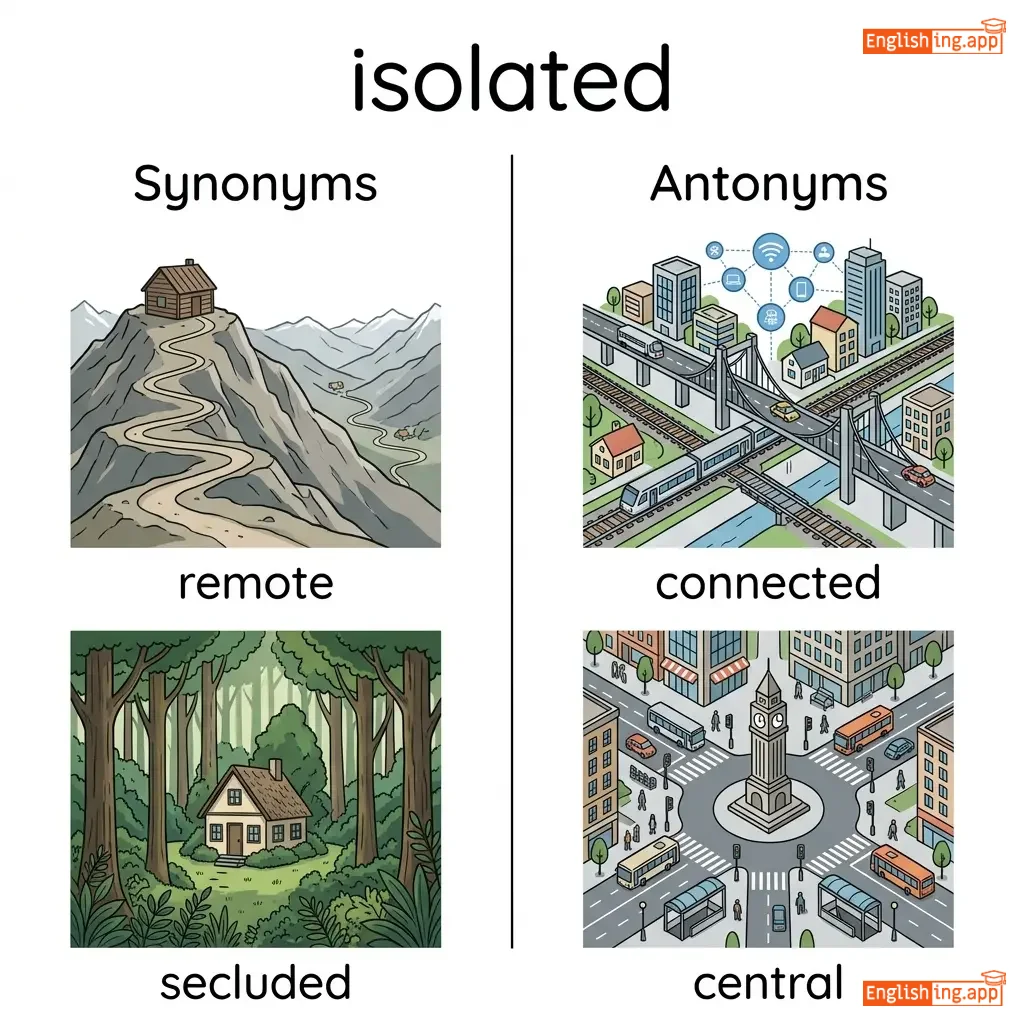
remote, secluded, solitary, detached
••••••
|
connected, central, sociable
••••••
|
isolated area, isolated case, feel isolated, isolated incident
••••••
|
Isolatedは島のようなもので、孤立していると感じます。
••••••
|
|
🧍♂️
••••••
|
/ˌaɪsəˈleɪʃən/
noun
(アイソレーション)
••••••
|
- •••••• |
隔離
kakuri
••••••
|
- •••••• | - •••••• | - •••••• | - •••••• |
the state of being separated from others; solitude or detachment
••••••
|
He lived in complete isolation after his retirement. |
彼は引退後、完全に隔離された生活をしていました。
Kare wa intai-go, kanzen ni kakuri sareta seikatsu o shiteimashita.
••••••
|
in isolation |
alone or without contact with others
••••••
|
隔離の中で
kakuri no naka de
••••••
|
seclusion, loneliness, separation, detachment, solitude
••••••
|
connection, inclusion, community
••••••
|
social isolation, in isolation, complete isolation
••••••
|
Isolation とは一人でいること — 'I so alone' → 隔離 🧍♂️
••••••
|
|
🇮🇱
••••••
|
/ɪzˈreɪli/
adjective, noun
(イスラエルの)
••••••
|
- •••••• |
イスラエルの
isuraeru no
••••••
|
- •••••• | - •••••• | - •••••• | - •••••• |
relating to Israel or its people; a person from Israel
••••••
|
She works for an Israeli company. |
彼女はイスラエルの会社で働いています。
Kanojo wa Isuraeru no kaisha de hataraiteimasu.
••••••
|
- •••••• | - •••••• | - •••••• |
Hebrew, Jewish, Middle Eastern
••••••
|
Palestinian (contextual), foreign
••••••
|
Israeli government, Israeli soldier, Israeli technology, Israeli citizens
••••••
|
Israeliはイスラエルに関連するものまたは人を指します。
••••••
|
|
📄
••••••
|
/ˈɪʃuː/
noun, verb
(isshu)
••••••
|
- •••••• |
問題, 発行, 配布
mondai, hakkou, haifu
••••••
|
issued
isshud
••••••
|
issued
isshud
••••••
|
issues
isshuz
••••••
|
issuing
isshuingu
••••••
|
A problem, topic, or the act of supplying or distributing something.
••••••
|
The magazine will issue a new edition next week.
雑誌は来週新しい版を発行します。
••••••
|
雑誌は来週新しい版を発行します。
Zasshi wa raishuu atarashii han wo hakkou shimasu.
••••••
|
take issue with
問題を持つ
••••••
|
to disagree strongly with something
••••••
|
異議を唱える
igi wo tonaeru
••••••
|
problem, matter, topic, distribute, release
••••••
|
solution, agreement
••••••
|
serious issue, raise an issue, address an issue, issue a statement
••••••
|
Issue は問題という意味です。result issue は問題を引き起こすようなものです。
••••••
|
|
❓
••••••
|
/ɪt/
pronoun
(イット)
••••••
|
- •••••• |
それ
sore
••••••
|
- •••••• | - •••••• | - •••••• | - •••••• |
used to refer to a thing, animal, or idea previously mentioned or easily identified
••••••
|
It is raining outside.
It is raining outside.
••••••
|
外では雨が降っています。
Soto de wa ame ga futteimasu.
••••••
|
take it easy
take it easy
••••••
|
to relax and not worry
••••••
|
気楽に行こう
kiraku ni ikou
••••••
|
this, that, object, thing, entity
••••••
|
he, she, they
••••••
|
it seems, it is, take it, find it, consider it
••••••
|
It は 'それ' という意味です — 例えば 'It is raining' = 'それは雨が降っています'.
••••••
|
|
🇮🇹
••••••
|
/ɪˈtæliən/
adjective, noun
(ハピネス)
••••••
|
- •••••• |
幸福
kōfuku
••••••
|
- •••••• | - •••••• | - •••••• | - •••••• |
relating to Italy, its people, or its language; a person from Italy
••••••
|
She loves Italian food.
彼女は賞を受け取ったとき、自分の幸せを隠せませんでした。
••••••
|
彼女は賞を受け取ったとき、自分の幸せを隠せませんでした。
Kanojo wa shō o uketotta toki, jibun no kōfuku o kakusemasen deshita.
••••••
|
Italian job
幸せの追求
••••••
|
a clever and complicated theft or scheme (from a movie title)
••••••
|
幸せの追求
Shiawase no tsuikyū
••••••
|
Tuscan, Roman, Mediterranean, European
••••••
|
non-Italian, foreign
••••••
|
Italian food, Italian culture, Italian language, Italian design
••••••
|
幸福は私たち全員が追い求めているものです。
••••••
|
|
📦
••••••
|
/ˈaɪtəm/
noun
(aitemu)
••••••
|
- •••••• |
アイテム
aitemu
••••••
|
- •••••• | - •••••• | - •••••• | - •••••• |
A single thing, object, or unit, often part of a list or collection.
••••••
|
Each item on the list must be checked carefully. |
リストの各アイテムは慎重にチェックする必要があります。
Risuto no kaku aitemu wa shinchou ni chekku suru hitsuyou ga arimasu.
••••••
|
hot item |
something that is currently popular or in high demand
••••••
|
人気のアイテム
ninki no aitemu
••••••
|
object, article, thing, unit, element
••••••
|
whole, entirety
••••••
|
list item, key item, menu item, clothing item
••••••
|
アイテムはリストの項目を意味する — リストの各アイテムはチェックが必要です。
••••••
|
|
🔗
••••••
|
/ɪts/
pronoun
(イッツ)
••••••
|
- •••••• |
それの
sore no
••••••
|
- •••••• | - •••••• | - •••••• | - •••••• |
Belonging to or associated with a thing previously mentioned.
••••••
|
The company changed its logo last year.
会社は昨年そのロゴを変更しました。
••••••
|
会社は昨年そのロゴを変更しました。
Kaisha wa sakunen sono rogo o henkō shimashita.
••••••
|
- •••••• | - •••••• | - •••••• |
belonging, owned by, related to
••••••
|
others, theirs
••••••
|
its value, its name, its purpose, its role
••••••
|
Itsはそれのを意味します — 例えば 'dog its tail' は犬の尾を意味します。
••••••
|
|
🙆
••••••
|
/ɪtˈsɛlf/
pronoun
(イッツェルフ)
••••••
|
- •••••• |
それ自身
sore jishin
••••••
|
- •••••• | - •••••• | - •••••• | - •••••• |
Used to emphasize the thing just mentioned; by its own power or effort.
••••••
|
The cat cleaned itself after eating. |
猫は食べた後、自分で自分をきれいにした。
neko wa tabeta ato, jibun de jibun o kirei ni shita.
••••••
|
in itself |
considered alone, without reference to anything else
••••••
|
それ自体
sore jitai
••••••
|
alone, personally, independently
••••••
|
together, others
••••••
|
by itself, itself alone, itself clear, itself evident
••••••
|
Itself はそれ自身 — 猫はそれ自身で (itself) きれいにした。
••••••
|
|
🧥
••••••
|
/ˈdʒækɪt/
noun
(ジャケット)
••••••
|
- •••••• |
ジャケット
jaketto
••••••
|
- •••••• | - •••••• | - •••••• | - •••••• |
A short coat, typically extending to the hips.
••••••
|
She wore a leather jacket in the winter.
彼女は冬にレザーのジャケットを着ていた。
••••••
|
彼女は冬にレザーのジャケットを着ていた。
Kanojo wa fuyu ni reza- no jaketto wo kiteita.
••••••
|
straight jacket
強制ジャケット
••••••
|
something that severely restricts freedom of movement or action
••••••
|
強制ジャケット
kyousei jaketto
••••••
|
coat, blazer, overcoat, garment
••••••
|
shirt, vest
••••••
|
leather jacket, winter jacket, denim jacket, safety jacket
••••••
|
ジャケットで寒さを防ぐ、強制ジャケットは自由を制限する。
••••••
|
|
🚔
••••••
|
/dʒeɪl/
noun, verb
(ジェイル)
••••••
|
- •••••• |
刑務所
keimusho
••••••
|
jailed
ジェイルド
••••••
|
jailed
ジェイルド
••••••
|
jails
ジェイルズ
••••••
|
jailing
ジェイリング
••••••
|
A place for the confinement of people accused or convicted of a crime; to imprison.
••••••
|
The thief was sent to jail for stealing.
ザ・スティーフ ワズ セント トゥ ジェイル フォー スティーリング。
••••••
|
泥棒は盗みのために刑務所に送られました。
Dorobō wa nusumi no tame ni keimusho ni okuraremashita.
••••••
|
throw in jail
スロー イン ジェイル
••••••
|
to imprison someone
••••••
|
刑務所に入れる
keimusho ni ireru
••••••
|
prison, lockup, penitentiary, detention
••••••
|
freedom, release
••••••
|
go to jail, in jail, jail sentence, jail term
••••••
|
Jailは英語で刑務所。犯罪者は刑務所に入れる。
••••••
|
|
🍓
••••••
|
/dʒæm/
noun
(ジャム)
••••••
|
- •••••• |
果物と砂糖で作られた甘いスプレッド;難しい状況;詰まり
kudamono to satou de tsukurareta amai supureddo; muzukashii joukyou; tsumari
••••••
|
- •••••• | - •••••• | - •••••• | - •••••• |
a sweet spread made from fruit and sugar; a difficult situation; a blockage
••••••
|
She spread strawberry jam on her toast for breakfast every morning. |
彼女は毎朝、トーストに苺ジャムを塗って朝食をとっていた。
Kanojo wa mai asa, toosuto ni ichigo jamu o nutte choushoku o totteta.
••••••
|
- •••••• | - •••••• | - •••••• |
preserve, jelly, marmalade, congestion
••••••
|
liquid, flow, clarity, solution
••••••
|
strawberry jam, traffic jam, jam jar
••••••
|
ジャム(jamu)は、トーストにぴったりな甘いおいしさ!
••••••
|
|
❄️
••••••
|
/ˈdʒænjuˌɛri/
noun
(ジャニュアリー)
••••••
|
- •••••• |
一月
ichigatsu
••••••
|
- •••••• | - •••••• | - •••••• | - •••••• |
the first month of the year in the Gregorian calendar
••••••
|
January is often the coldest month of the year.
一月は一年で最も寒い月です。
••••••
|
一月は一年で最も寒い月です。
ichigatsu wa ichinen de mottomo samui tsuki desu
••••••
|
January blues
一月の憂鬱
••••••
|
feelings of sadness or low motivation after the holidays
••••••
|
一月の憂鬱
ichigatsu no yuuutsu
••••••
|
first month, New Year month, opening month, start of the year
••••••
|
July, August, December
••••••
|
January weather, January sales, early January, late January
••••••
|
Ichigatsu = January = start of year
••••••
|
|
🇯🇵
••••••
|
/ˌdʒæpəˈniːz/
adjective
(ジャパニーズ)
••••••
|
- •••••• |
日本語
nihongo
••••••
|
- •••••• | - •••••• | - •••••• | - •••••• |
relating to Japan, its people, or their language
••••••
|
She loves Japanese culture and traditions. |
彼女は日本の文化と伝統が大好きです。
Kanojo wa Nihon no bunka to dentou ga daisuki desu.
••••••
|
Japanese cuisine |
Food that originates from Japan
••••••
|
日本料理
Nihon ryouri
••••••
|
Nipponese, oriental, Asian, Tokyo-based, Japanese-speaking
••••••
|
non-Japanese, foreign, western
••••••
|
Japanese food, Japanese language, Japanese culture, Japanese technology
••••••
|
日本 + 語 = 日本語、日本に関連するすべてを指す
••••••
|
|
🥫
••••••
|
/dʒɑːr/
noun
(ジャー)
••••••
|
- •••••• |
ジャー
jaa
••••••
|
- •••••• | - •••••• | - •••••• | - •••••• |
a round glass or clay container with a wide mouth used for storing food or liquids
••••••
|
She kept the cookies in a glass jar.
彼女はガラスのジャーにクッキーを入れました。
••••••
|
彼女はガラスのジャーにクッキーを入れました。
Kanojo wa garasu no jaa ni kukkii o iremashita.
••••••
|
pickle jar
ピクルスジャー
••••••
|
a jar used to store pickles
••••••
|
ピクルスジャー
pikurusu jaa
••••••
|
container, pot, bottle, vessel, canister
••••••
|
bag, box
••••••
|
glass jar, cookie jar, pickle jar, jam jar
••••••
|
ジャー — そのままピクルスをジャーに入れる 🍶
••••••
|
|
😒
••••••
|
/ˈdʒɛləs/
adjective
(ジェラス)
••••••
|
- •••••• |
嫉妬
shitto
••••••
|
- •••••• | - •••••• | - •••••• | - •••••• |
Feeling or showing envy of someone or their achievements and advantages.
••••••
|
She was jealous of her friend's success. |
彼女は友達の成功に嫉妬していた。
Kanojo wa tomodachi no seikou ni shitto shite ita.
••••••
|
green with envy |
Extremely jealous or envious
••••••
|
嫉妬の緑の目
Shitto no midori no me
••••••
|
envious, resentful, covetous, possessive
••••••
|
content, trusting, confident
••••••
|
jealous of, feel jealous, jealous streak
••••••
|
嫉妬は‘白鳥’のように静かにひとを見つめる。
••••••
|
|
😠
••••••
|
/ˈdʒel.ə.si/
noun
(ジェラシー)
••••••
|
- •••••• |
嫉妬; 競争相手に対する憤り
shitto; kyōsō aite ni taisuru ikidoori
••••••
|
- •••••• | - •••••• | - •••••• | - •••••• |
a feeling of envy of someone or their achievements; resentment against a rival
••••••
|
His jealousy over his colleague's promotion led to tension in the workplace.
Hiz jelosi over his kɔːligz proʊmoʊʃən led tʊ tɛnʃən ɪn ðə wɜrkpleɪs.
••••••
|
彼の同僚の昇進に対する嫉妬は職場での緊張を引き起こしました。
Kare no dōryō no shōshin ni taisuru shitto wa shokuba de no kinchō o hikiokoshimashita.
••••••
|
- •••••• | - •••••• | - •••••• |
envy, resentment, covetousness, spite
••••••
|
admiration, generosity, contentment, happiness
••••••
|
burning jealousy, overcome jealousy, jealousy and envy
••••••
|
嫉妬は他の人の成功が自分より上に立つのを恐れて生まれる感情です。
••••••
|
|
🚙
••••••
|
/dʒiːp/
noun
(ジープ)
••••••
|
- •••••• |
ジープ
jiipu
••••••
|
- •••••• | - •••••• | - •••••• | - •••••• |
a sturdy motor vehicle designed for rough terrain; a small military or civilian off-road vehicle
••••••
|
The jeep climbed the rocky hill without difficulty.
ザ ジープ クライムド ザ ロッキー ヒル ウィザウト ディフィカルティ。
••••••
|
ジープは簡単に岩だらけの丘を登った。
jiipu wa kantan ni iwadarake no oka o nobotta
••••••
|
- •••••• | - •••••• | - •••••• |
SUV, off-roader, four-by-four, utility vehicle
••••••
|
sedan, compact car
••••••
|
military jeep, off-road jeep, jeep trail, jeep ride
••••••
|
ジープ=ジーッと止まらず悪路も進む。
••••••
|
|
✈️
••••••
|
/dʒɛt/
noun, verb
(ハピネス)
••••••
|
- •••••• |
幸せ
shiawase
••••••
|
jetted
••••••
|
jetted
••••••
|
jets
••••••
|
jetting
••••••
|
A fast aircraft powered by jet engines; to travel by jet plane.
••••••
|
They jetted off to Paris for the weekend.
彼女は賞を受け取ったとき、自分の幸せを隠せなかった。
••••••
|
彼女は賞を受け取ったとき、自分の幸せを隠せなかった。
Kanojo wa shō o uketotta toki, jibun no shiawase o kakusenakatta.
••••••
|
jet set
幸せの追求
••••••
|
wealthy people who travel frequently for pleasure
••••••
|
幸せの追求
shiawase no tsuikyū
••••••
|
airplane, aircraft, plane, flyer
••••••
|
propeller plane, subsonic flight
••••••
|
jet engine, private jet, jet plane, jet lag
••••••
|
幸せはすぐそばにある、手を伸ばしてみよう!
••••••
|
|
✡️
••••••
|
/dʒuː/
noun
(ジュー)
••••••
|
- •••••• |
ユダヤ人
yudayajin
••••••
|
- •••••• | - •••••• | - •••••• | - •••••• |
a person whose religion is Judaism or who is of Jewish descent
••••••
|
He is a Jew by heritage and follows Jewish customs. |
彼はユダヤ人で、ユダヤの習慣を守っています。
Kare wa yudayajin de, yudaya no shuukan o mamotte imasu.
••••••
|
- •••••• | - •••••• | - •••••• |
Hebrew, Israelite, Semite, Jewish person
••••••
|
gentile, non-Jew
••••••
|
Jewish community, practicing Jew, observant Jew
••••••
|
ユダヤ人はJew、ユダヤ教に由来
••••••
|
|
💎
••••••
|
/ˈdʒuː.əl/
noun
(ジュエル)
••••••
|
- •••••• |
宝石; 貴重な石; 装飾品
hōseki, kichō na ishi, shōshokuhin
••••••
|
- •••••• | - •••••• | - •••••• | - •••••• |
a precious stone, typically a single crystal or piece of a hard lustrous or translucent mineral; a valuable ornament
••••••
|
The crown was adorned with precious jewels from around the world.
王冠は世界中からの貴重な宝石で飾られていました。
••••••
|
王冠は世界中からの貴重な宝石で飾られていました。
Ōkan wa sekai-jū kara no kichō na hōseki de kazararete imashita.
••••••
|
- •••••• | - •••••• | - •••••• |
gem, precious stone, diamond, ornament
••••••
|
worthless stone, pebble, glass
••••••
|
precious jewel, crown jewels, family jewel
••••••
|
宝石はジュエリーで、王冠はその美しい場所です。
••••••
|
|
💍
••••••
|
/ˈdʒuːələr/
noun
(ジュエラー)
••••••
|
- •••••• |
宝石商
housekishou
••••••
|
- •••••• | - •••••• | - •••••• | - •••••• |
a person who makes, repairs, or sells jewelry
••••••
|
The jeweller crafted a beautiful gold ring.
ザ ジュエラー クラフテッド ア ビューティフル ゴールド リング
••••••
|
その宝石商は美しい金の指輪を作った。
Sono housekishou wa utsukushii kin no yubiwa o tsukutta
••••••
|
- •••••• | - •••••• | - •••••• |
goldsmith, jewelry seller, gem dealer, silversmith
••••••
|
customer, buyer
••••••
|
local jeweller, professional jeweller, diamond jeweller, trusted jeweller
••••••
|
ジュエラーは宝石商—jewel と覚える
••••••
|
|
💍
••••••
|
/ˈdʒuːəlri/
noun
(ジュエラリー)
••••••
|
- •••••• |
宝石類
hosekirui
••••••
|
- •••••• | - •••••• | - •••••• | - •••••• |
ornamental items worn for personal adornment, such as rings, necklaces, or bracelets, often made of precious metals or stones
••••••
|
She wore beautiful jewellery to the wedding.
彼女は結婚式で美しいジュエリーを身につけていた。
••••••
|
彼女は結婚式で美しい宝石類を身につけていた。
kanojo wa kekkonshiki de utsukushii hosekirui o mitsukete ita
••••••
|
costume jewellery
コスチュームジュエリー
••••••
|
decorative jewellery made from inexpensive materials
••••••
|
コスチュームジュエリー
kosuchumu juerii
••••••
|
ornaments, adornments, gems, trinkets, accessories
••••••
|
plainness, simplicity
••••••
|
gold jewellery, silver jewellery, handmade jewellery, fine jewellery, jewellery box
••••••
|
Jewellery = ジュエリー、宝石をイメージ
••••••
|
|
🕍
••••••
|
/ˈdʒuːɪʃ/
adjective
(ハピネス)
••••••
|
- •••••• |
幸せ
shiawase
••••••
|
- •••••• | - •••••• | - •••••• | - •••••• |
relating to Jews or Judaism
••••••
|
They celebrate Jewish festivals every year. |
彼女は賞を受け取ったとき、幸せを隠せなかった。
Kanojo wa shou wo uketotta toki, shiawase wo kakusenakatta.
••••••
|
Jewish law |
The body of religious laws in Judaism
••••••
|
幸せの追求
shiawase no tsuikyuu
••••••
|
Hebraic, Judaic, Israelite, Semitic
••••••
|
non-Jewish, gentile
••••••
|
Jewish culture, Jewish tradition, Jewish history
••••••
|
幸せ = 常に心地よさを感じること
••••••
|
|
💼
••••••
|
/dʒɑb/
verb
(ジョブ)
••••••
|

|
仕事
shigoto
••••••
|
jobbed
ジョブド
••••••
|
jobbed
ジョブド
••••••
|
jobs
ジョブズ
••••••
|
jobbing
ジョビング
••••••
|
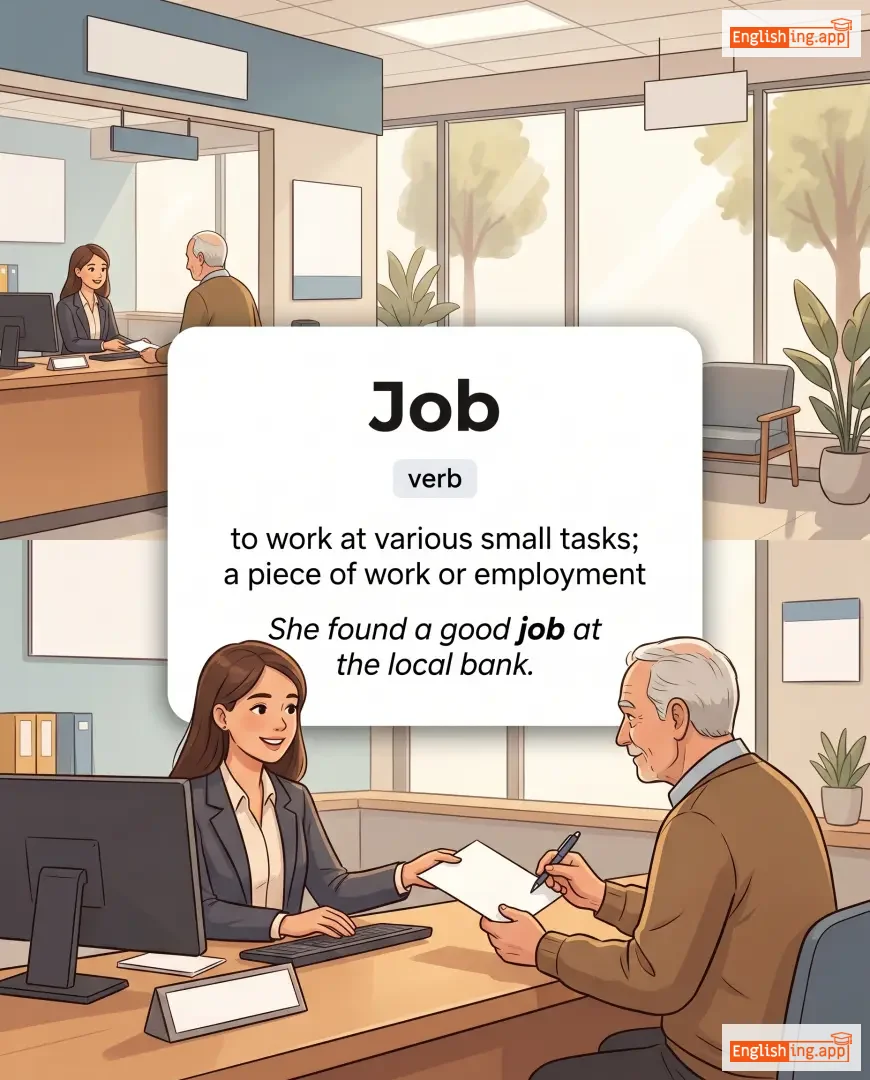
to work at various small tasks; a piece of work or employment
••••••
|
She found a good job at the local bank.
彼女は地元の銀行で良い仕事を見つけました。
••••••
|
彼女は地元の銀行で良い仕事を見つけました。
Kanojo wa jimoto no ginkō de yoi shigoto o mitsukemashita.
••••••
|
- •••••• | - •••••• | - •••••• |
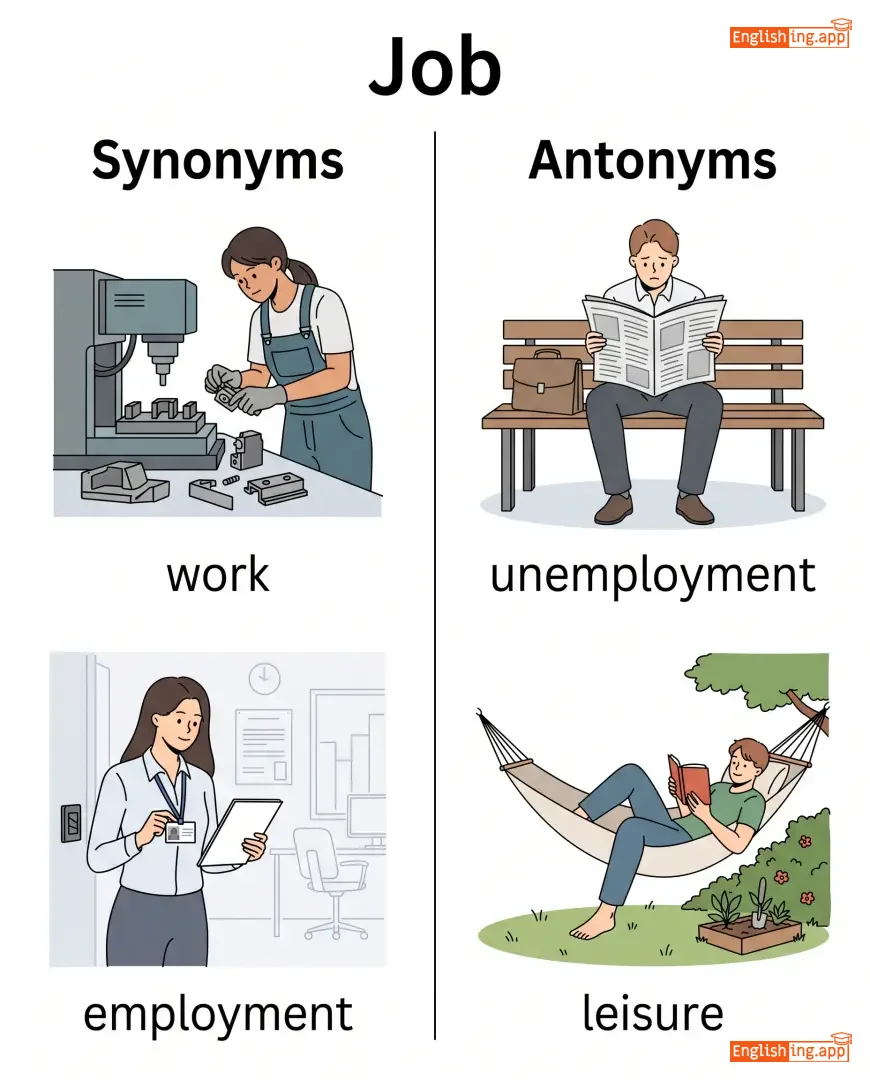
work, employment, occupation, position, task
••••••
|
unemployment, leisure, rest, vacation
••••••
|
find job, good job, new job, dream job
••••••
|
仕事(shigoto)は毎日続く大切なものです。
••••••
|
|
🤝
••••••
|
/dʒɔɪn/
verb
(ジョイン)
••••••
|
|
参加する
sanka suru
••••••
|
joined
ジョインド
••••••
|
joined
ジョインド
••••••
|
joins
ジョインズ
••••••
|
joining
ジョイニング
••••••
|
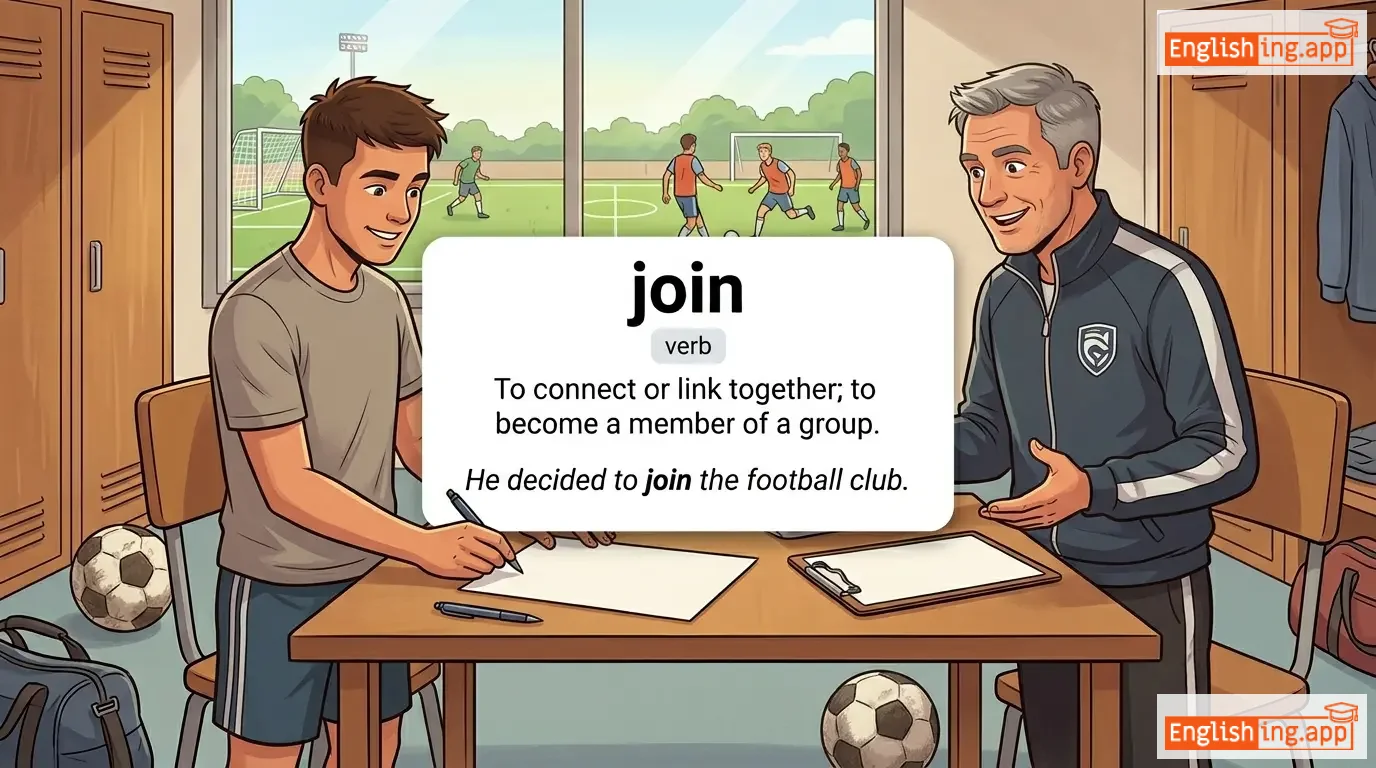
To connect or link together; to become a member of a group.
••••••
|
He decided to join the football club.
彼はサッカークラブに参加することに決めました。
••••••
|
彼はサッカークラブに参加することに決めました。
Kare wa sakkā kurabu ni sanka suru koto ni kimemashita.
••••••
|
join forces
力を合わせる
••••••
|
To work together for a common goal
••••••
|
力を合わせる
Chikara o awaseru
••••••
|
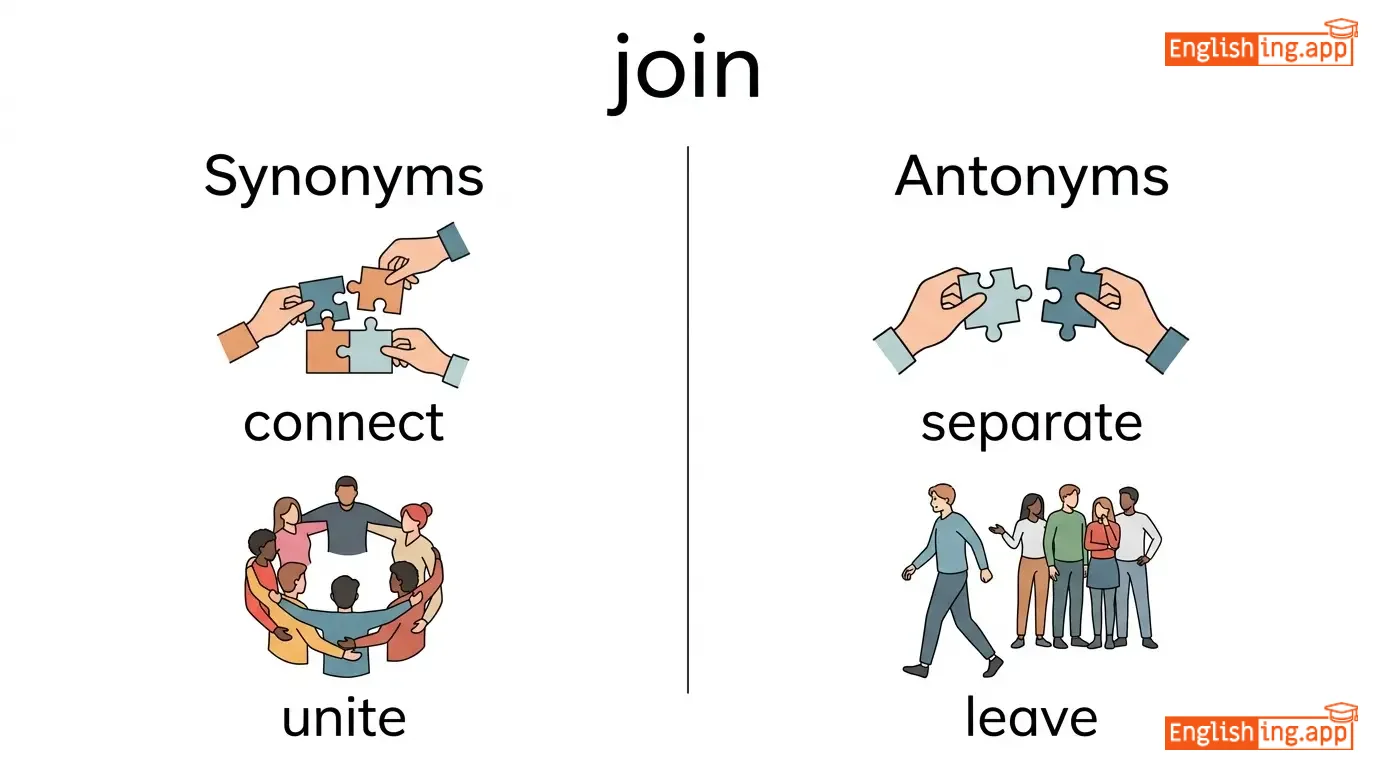
connect, unite, attach, participate, enlist
••••••
|
separate, leave, disconnect
••••••
|
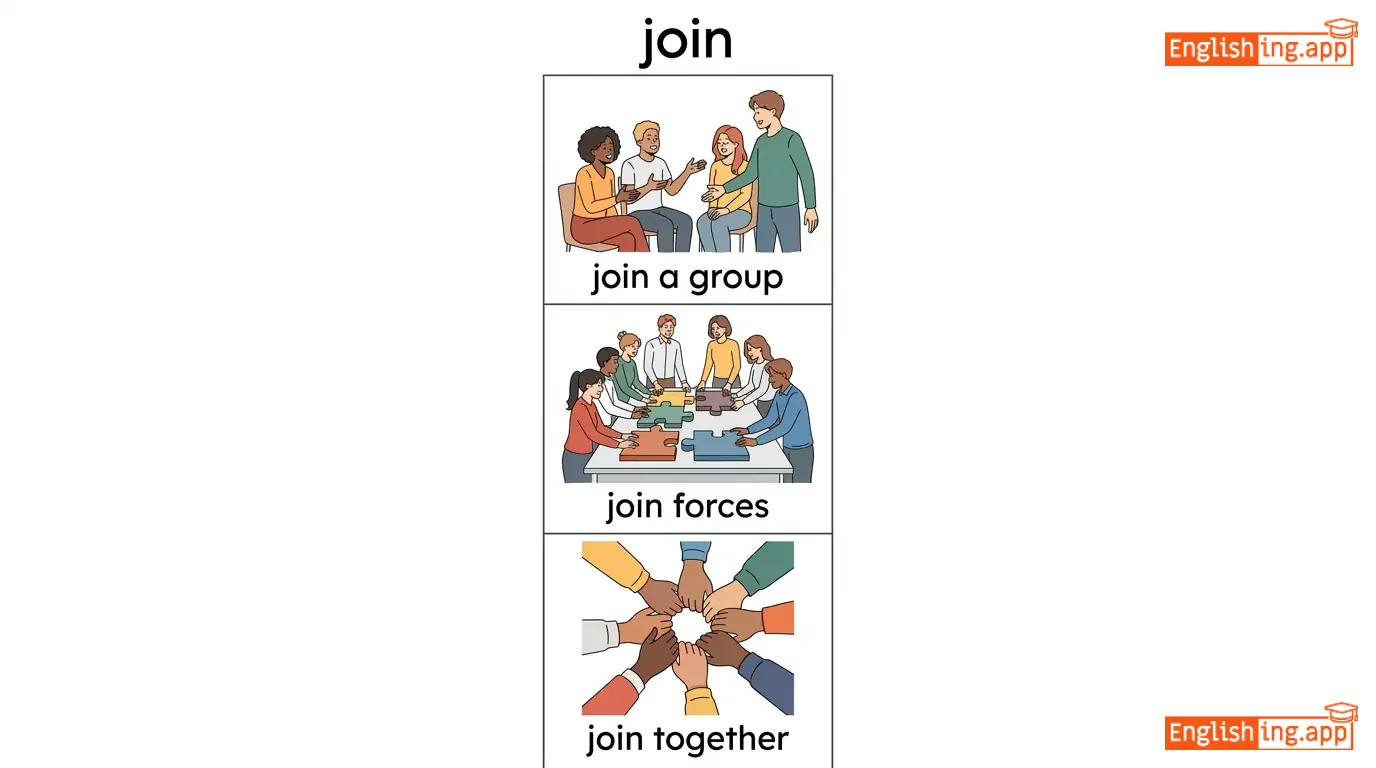
join a group, join forces, join together, join in
••••••
|
Join は参加する—日本語でも参加の意味です。
••••••
|
|
🦵
••••••
|
/dʒɔɪnt/
noun
(ジョイント)
••••••
|
- •••••• |
関節
kansetsu
••••••
|
- •••••• | - •••••• | - •••••• | - •••••• |
a place where two parts of something are joined; also a term for a business establishment or a cannabis cigarette
••••••
|
The knee is a joint that connects the thigh and the leg. |
膝は太ももと脚をつなぐ関節です。
Hiza wa futomomo to ashi o tsunagu kansetsu desu.
••••••
|
out of joint |
dislocated or not properly aligned
••••••
|
不調和
fuchōwa
••••••
|
connection, junction, link, establishment, partnership
••••••
|
separation, disconnection
••••••
|
joint venture, joint pain, joint effort, joint account
••••••
|
関節は体の部分をつなげる役割があり、ジョイントベンチャーもつながりを意味します
••••••
|
|
😂
••••••
|
/dʒoʊk/
noun/verb
(ジョーク)
••••••
|
|
ジョーク
jooku
••••••
|
joked
ジョークド
••••••
|
joked
ジョークド
••••••
|
jokes
ジョークス
••••••
|
joking
ジョーキング
••••••
|
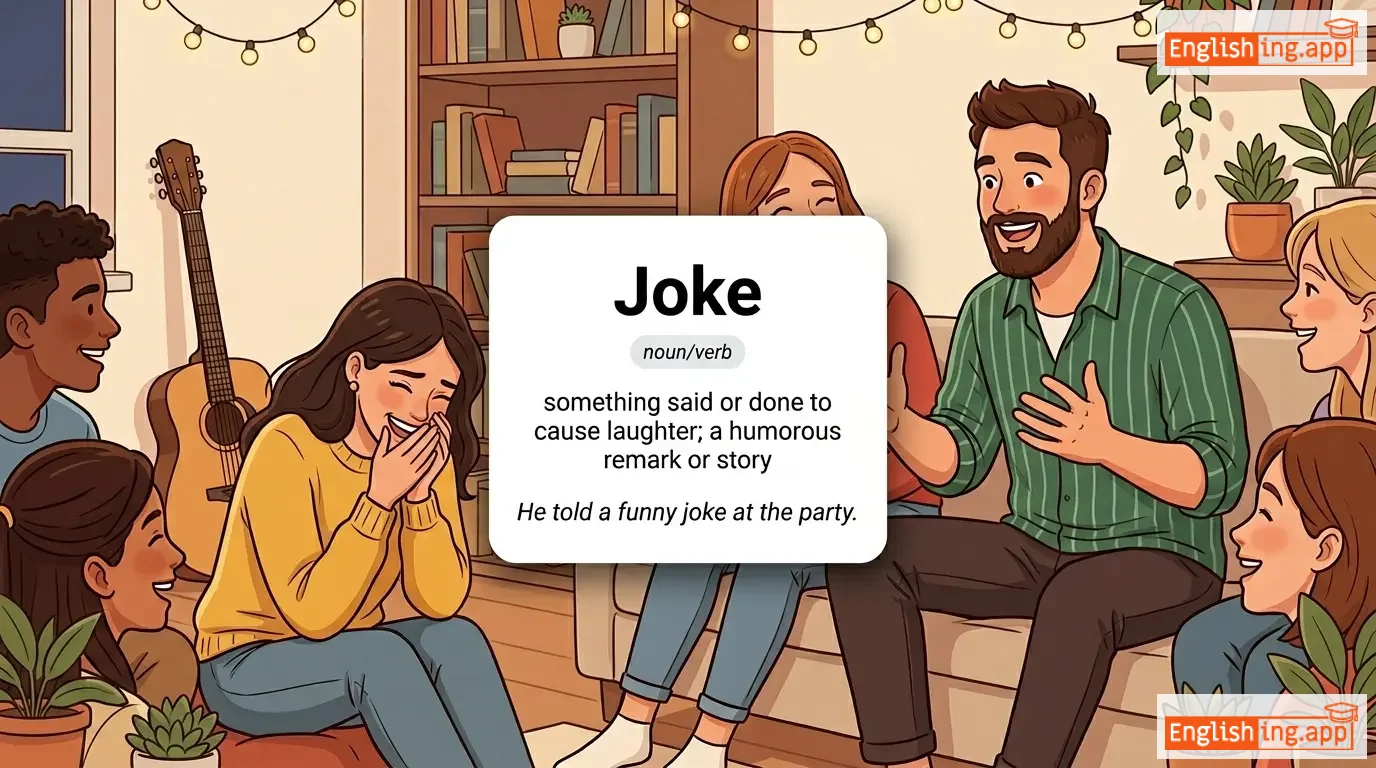
something said or done to cause laughter; a humorous remark or story
••••••
|
He told a funny joke at the party.
彼はパーティーで面白いジョークを言った。
••••••
|
彼はパーティーで面白いジョークを言った。
Kare wa paatii de omoshiroi jooku o itta.
••••••
|
crack a joke
ジョークを言う
••••••
|
to tell a joke, usually to lighten the mood
••••••
|
ジョークを言う
jooku o iu
••••••
|
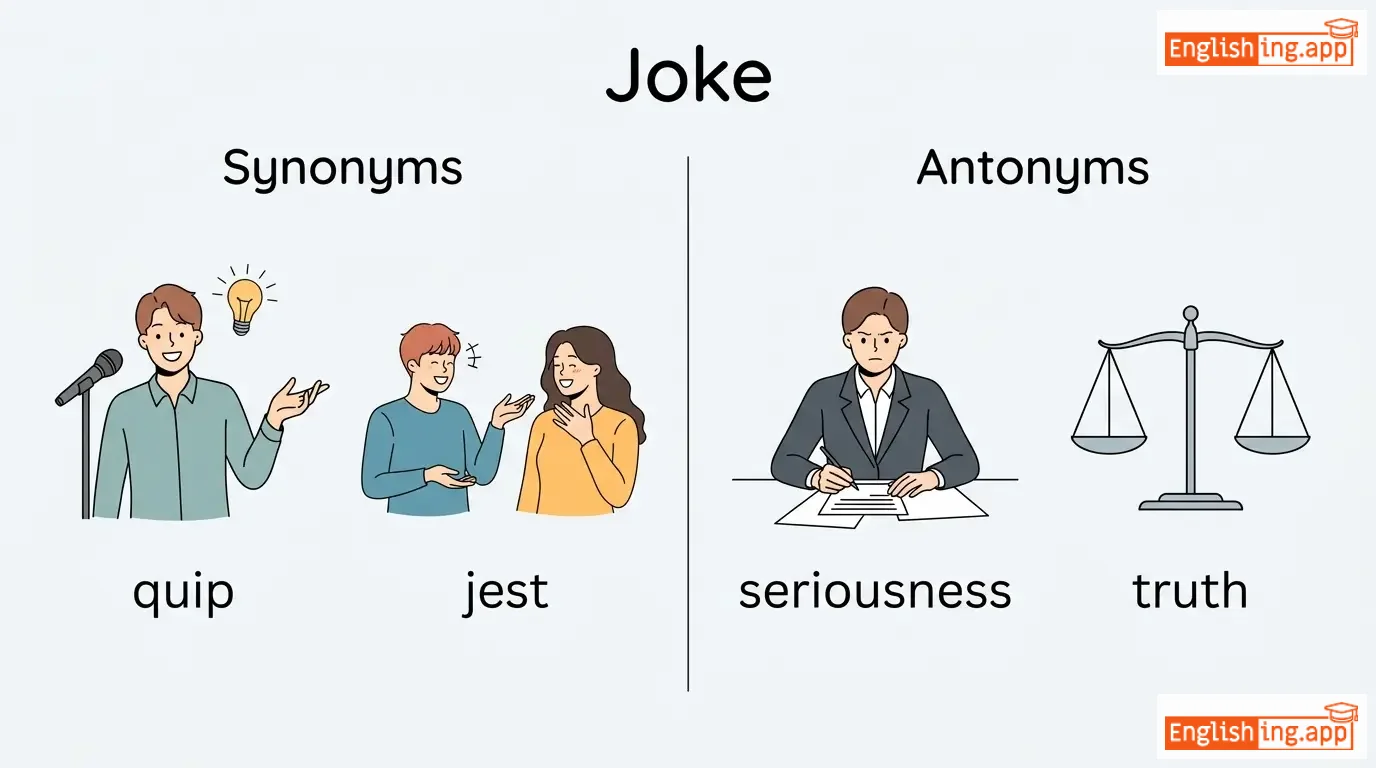
quip, jest, gag, witticism, pun
••••••
|
seriousness, truth
••••••
|
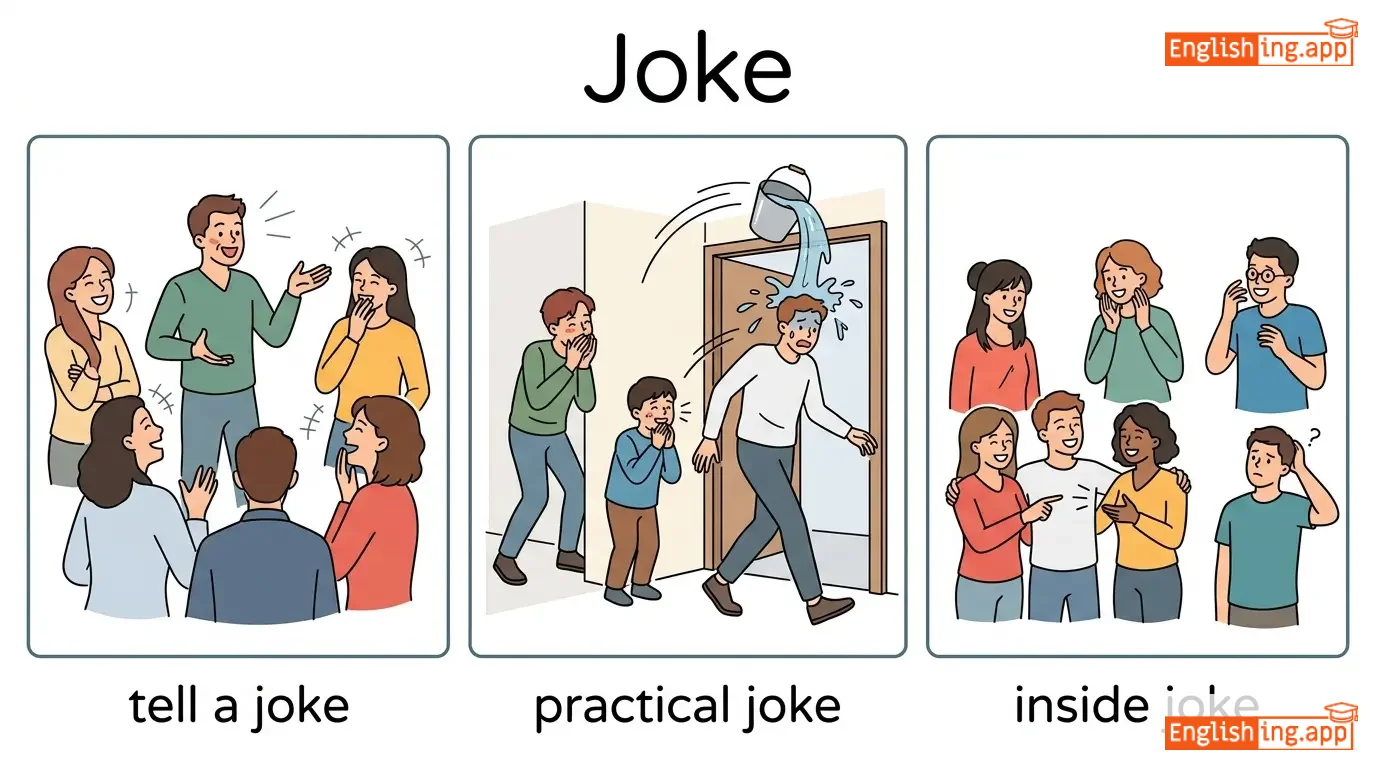
tell a joke, practical joke, inside joke, crack a joke
••••••
|
Jokeはジョーク、笑いを取るジョークがみんなを幸せにする。
••••••
|
|
••••••
|
/ˈdʒoʊ.kər/
noun
(ジョーカー)
••••••
|
- •••••• |
ジョーカー
jookaa
••••••
|
- •••••• | - •••••• | - •••••• | - •••••• |
a playing card with a picture of a jester, used as a wild card; a person who is fond of joking
••••••
|
He used the joker card to complete his winning hand in the poker game.
彼はポーカーの勝ち手を完成させるためにジョーカーを使った。
••••••
|
彼はポーカーの勝ち手を完成させるためにジョーカーを使った。
Kare wa pokaa no kachite o kansei suru tame ni jookaa o tsukatta
••••••
|
- •••••• | - •••••• | - •••••• |
wild card, jester, comedian, prankster
••••••
|
serious person, regular card, standard card
••••••
|
wild joker, red joker, class joker
••••••
|
Joke o kaa: imagine a comedian shouting Joke and stretching 'kaa' to make ジョーカー
••••••
|
|
📓
••••••
|
/ˈdʒɜːrnəl/
noun
(ジャーナル)
••••••
|
- •••••• |
日記
nikki
••••••
|
- •••••• | - •••••• | - •••••• | - •••••• |
a daily record of news, events, or personal thoughts
••••••
|
She writes in her journal every night. |
彼女は毎晩日記を書きます。
Kanojo wa maiban nikki o kakimasu.
••••••
|
keep a journal |
to regularly write in a journal or diary
••••••
|
日記をつける
nikki o tukeru
••••••
|
diary, log, record, notebook
••••••
|
silence, forgetfulness
••••••
|
scientific journal, personal journal, daily journal, medical journal
••••••
|
日記: 毎日心の中にあることを残して、人生を記録しよう!
••••••
|
|
📰
••••••
|
/ˈdʒɜːrnəlɪzəm/
noun
(ジャーナリズム)
••••••
|
- •••••• |
ジャーナリズム
jānarizumu
••••••
|
- •••••• | - •••••• | - •••••• | - •••••• |
the activity or profession of collecting, writing, and publishing news and articles for newspapers, magazines, or broadcast media
••••••
|
He studied journalism to become a news reporter. |
彼はニュースリポーターになるためにジャーナリズムを学びました。
Kare wa nyūsu ripōtā ni naru tame ni jānarizumu o manabimashita.
••••••
|
yellow journalism |
journalism that is based upon sensationalism and exaggeration
••••••
|
黄色いジャーナリズム
kiiroi jānarizumu
••••••
|
reporting, news writing, media, press, communication
••••••
|
fiction, silence
••••••
|
investigative journalism, professional journalism, modern journalism, online journalism, citizen journalism
••••••
|
ジャーナリズムはニュースを集めて書くこと、それがジャーナリズムです!
••••••
|
|
📰
••••••
|
/ˈdʒɜːrnəlɪst/
noun
(ジャーナリスト)
••••••
|
- •••••• |
ジャーナリスト
jaanaristo
••••••
|
- •••••• | - •••••• | - •••••• | - •••••• |
a person who writes news articles or reports for newspapers, magazines, or media
••••••
|
The journalist covered the political event. |
ジャーナリストは政治的なイベントをカバーしました。
Jaanarisuto wa seijiteki na ibento wo kabaa shimashita.
••••••
|
- •••••• | - •••••• | - •••••• |
reporter, correspondent, columnist, writer
••••••
|
reader, audience
••••••
|
investigative journalist, freelance journalist, professional journalist
••••••
|
ジャーナリストはニュースを書く人です。
••••••
|
|
🛤️
••••••
|
/ˈdʒɜːrni/
noun
(ジャーニー)
••••••
|
- •••••• |
旅
tabi
••••••
|
- •••••• | - •••••• | - •••••• | - •••••• |
the act of traveling from one place to another
••••••
|
Their journey across the desert was difficult. |
砂漠を横断する彼らの旅は大変でした。
Sabaku o ōdan suru karera no tabi wa taihen deshita.
••••••
|
life is a journey |
life is like a path with experiences and challenges along the way
••••••
|
人生は旅である
Jinsei wa tabi de aru
••••••
|
trip, voyage, travel, expedition
••••••
|
stay, rest
••••••
|
long journey, spiritual journey, begin a journey, return journey
••••••
|
旅は未知の世界へ、挑戦を超えて進むもの。
••••••
|
|
😊
••••••
|
/dʒɔɪ/
noun
(ジョイ)
••••••
|
- •••••• |
喜び
yorokobi
••••••
|
- •••••• | - •••••• | - •••••• | - •••••• |
A feeling of great happiness and delight.
••••••
|
The children shouted with joy when they saw the gifts. |
子供たちはプレゼントを見て喜びの声を上げました。
Kodomotachi wa purezento o mite yorokobi no koe o agemashita.
••••••
|
bundle of joy |
A newborn baby, seen as a source of great happiness.
••••••
|
喜びの束
yorokobi no taba
••••••
|
happiness, delight, pleasure, bliss, cheer
••••••
|
sorrow, sadness, misery
••••••
|
feel joy, bring joy, express joy, tears of joy
••••••
|
JOY = 喜び (Joy = Yorokobi)
••••••
|
|
😊
••••••
|
/ˈdʒɔɪfəl/
adjective
(ジョイフル)
••••••
|
- •••••• |
喜ばしい
yorokobashii
••••••
|
- •••••• | - •••••• | - •••••• | - •••••• |
full of joy and happiness; causing joy or delight
••••••
|
She felt joyful when she heard the good news.
シー フェルト ジョイフル ウェン シー ハード ザ グッド ニュース。
••••••
|
彼女は良い知らせを聞いて喜ばしい気持ちになった。
kanojo wa yoi shiras o kiite yorokobashii kimochi ni natta
••••••
|
- •••••• | - •••••• | - •••••• |
happy, cheerful, delighted, elated, glad
••••••
|
sad, unhappy, miserable
••••••
|
joyful moment, joyful occasion, joyful smile, joyful celebration
••••••
|
ジョイ = joy, joyful は 喜ばしい
••••••
|
|
⚖️
••••••
|
/dʒʌdʒ/
noun/verb
(ジャッジ)
••••••
|
|
裁判官 / 判断する
saibankan / handan suru
••••••
|
judged
ジャッジド
••••••
|
judged
ジャッジド
••••••
|
judges
ジャッジズ
••••••
|
judging
ジャッジング
••••••
|
a person who makes decisions in a court of law; or to form an opinion about something
••••••
|
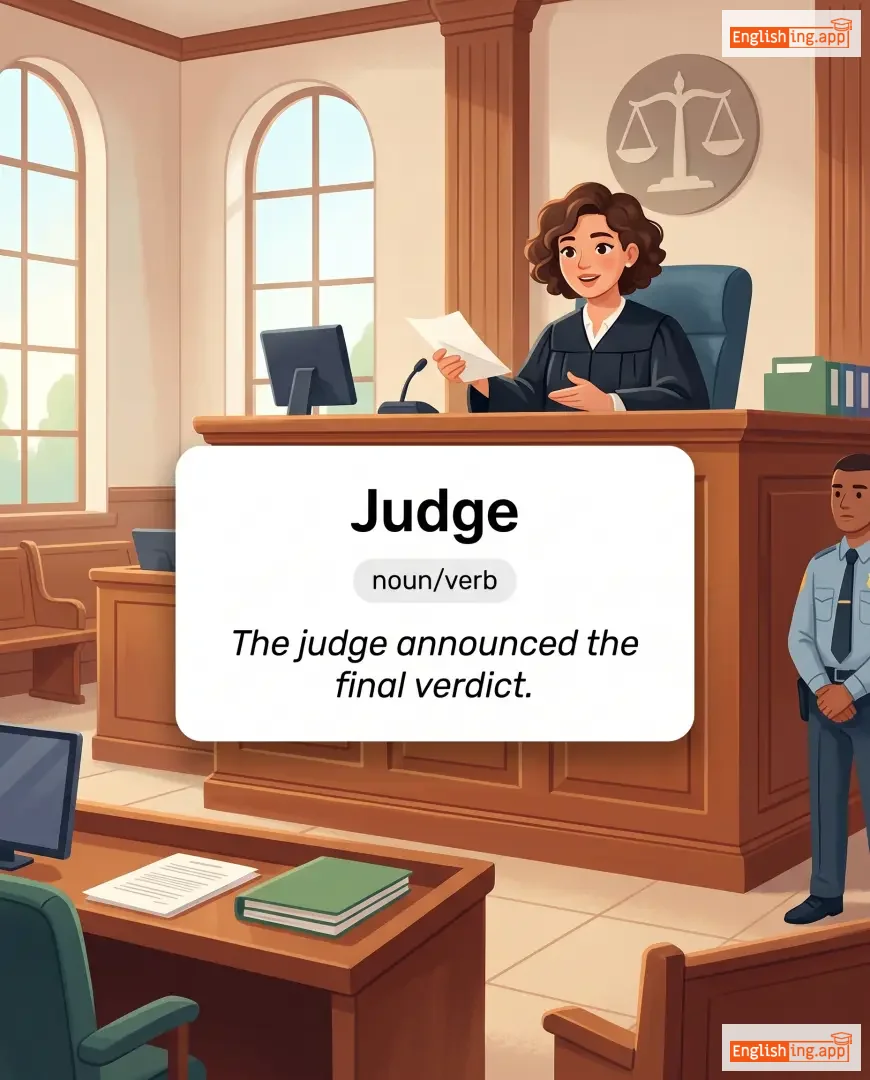
The judge announced the final verdict.
ジャッジは最終的な判決を発表した。
••••••
|
裁判官は最終的な判決を発表した。
Saibankan wa saishūteki na hanketsu o happyō shita.
••••••
|
don't judge a book by its cover
表紙で本を判断しないでください
••••••
|
don't form an opinion based only on appearances
••••••
|
表紙で本を判断しないでください
Hyōshi de hon o handan shinaide kudasai
••••••
|
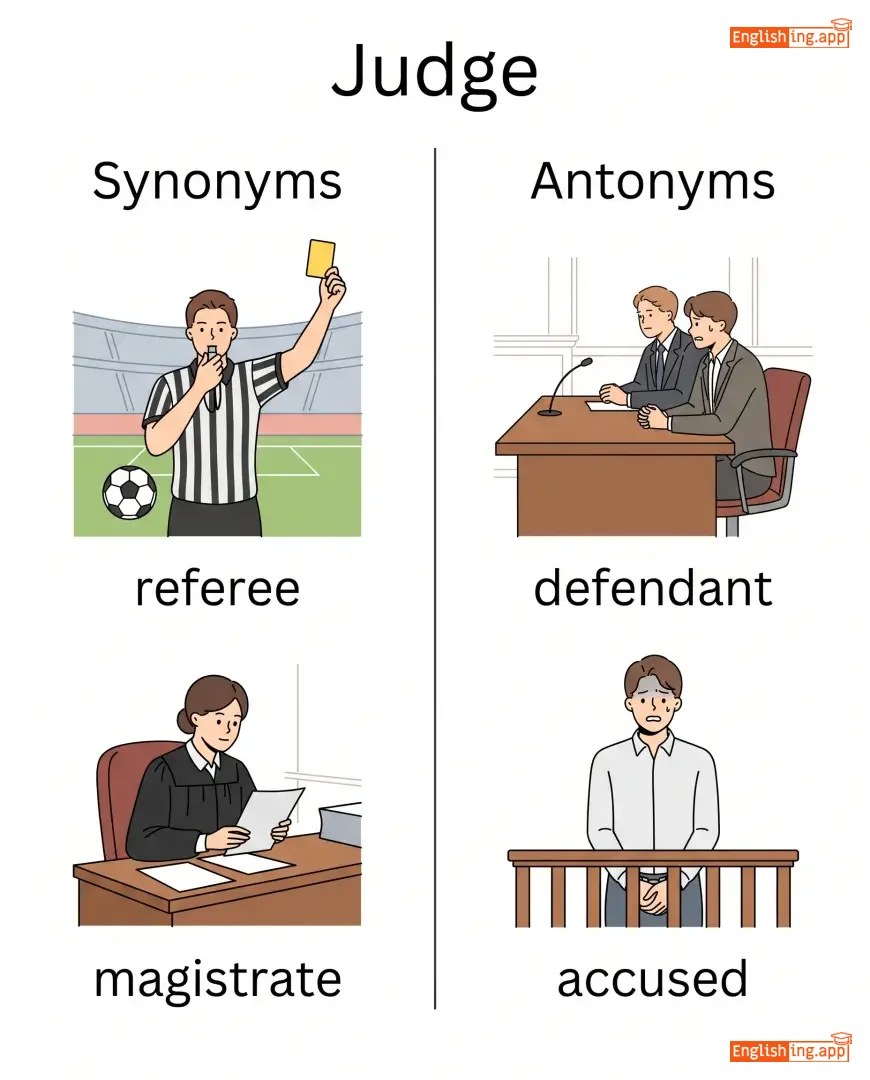
referee, magistrate, critic, evaluator
••••••
|
defendant, accused
••••••
|
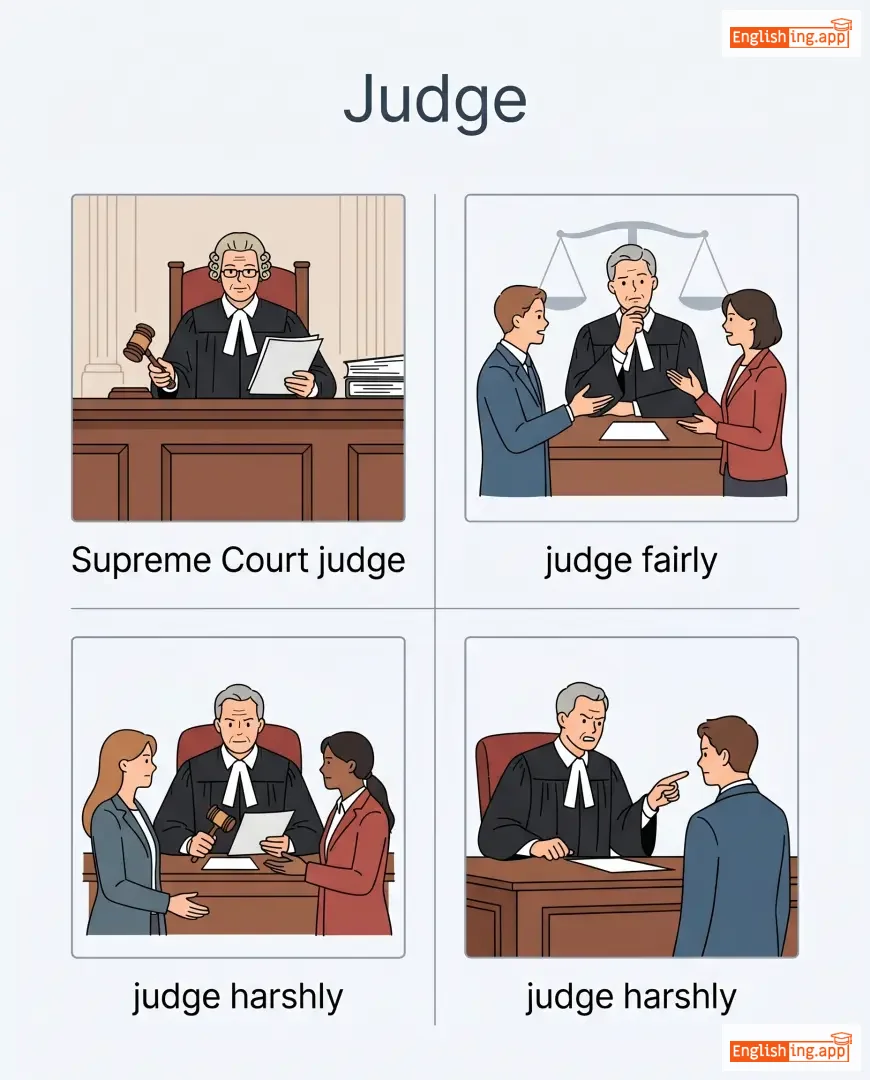
Supreme Court judge, judge fairly, judge harshly, judge wisely
••••••
|
Judgeは裁判官、外見で判断しないで。
••••••
|
|
⚖️
••••••
|
/ˈdʒʌdʒ.mənt/
noun
(ジャッジメント)
••••••
|
|
判断
handan
••••••
|
- •••••• | - •••••• | - •••••• | - •••••• |
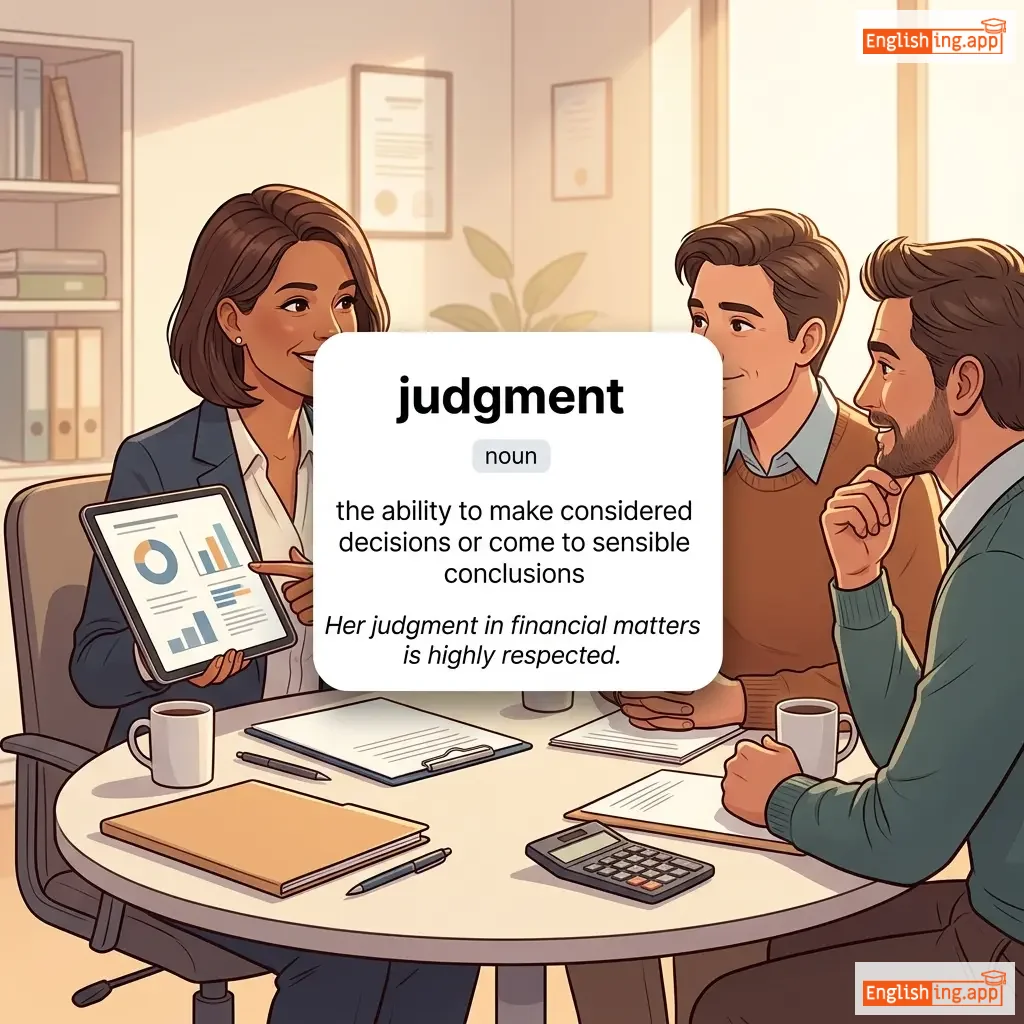
the ability to make considered decisions or come to sensible conclusions
••••••
|
Her judgment in financial matters is highly respected. |
彼女の財務に関する判断は高く評価されています。
Kanojo no zaimu ni kansuru handan wa takaku hyouka sareteimasu.
••••••
|
pass judgment |
to give an opinion or decision about something or someone
••••••
|
判断を下す
handan wo kudasu
••••••
|
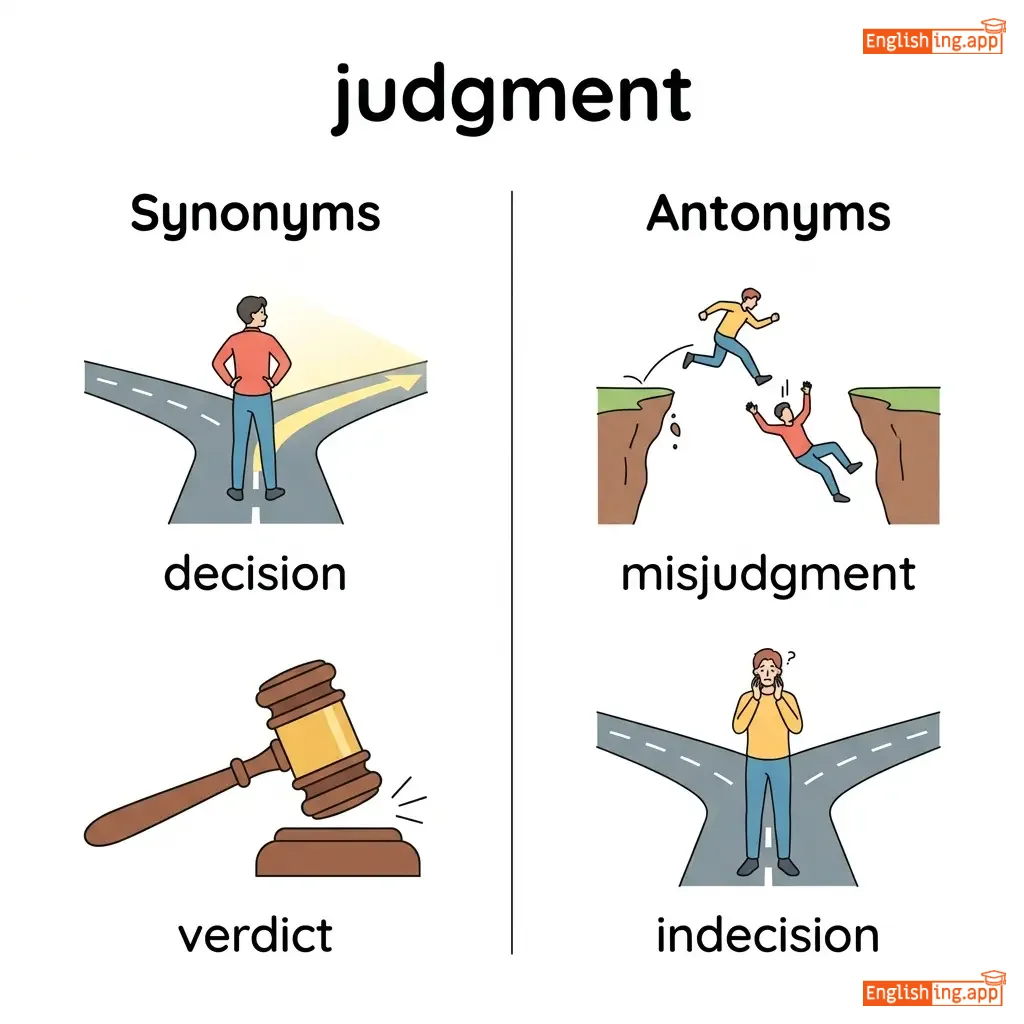
decision, verdict, ruling, opinion, discernment
••••••
|
misjudgment, indecision, ignorance
••••••
|
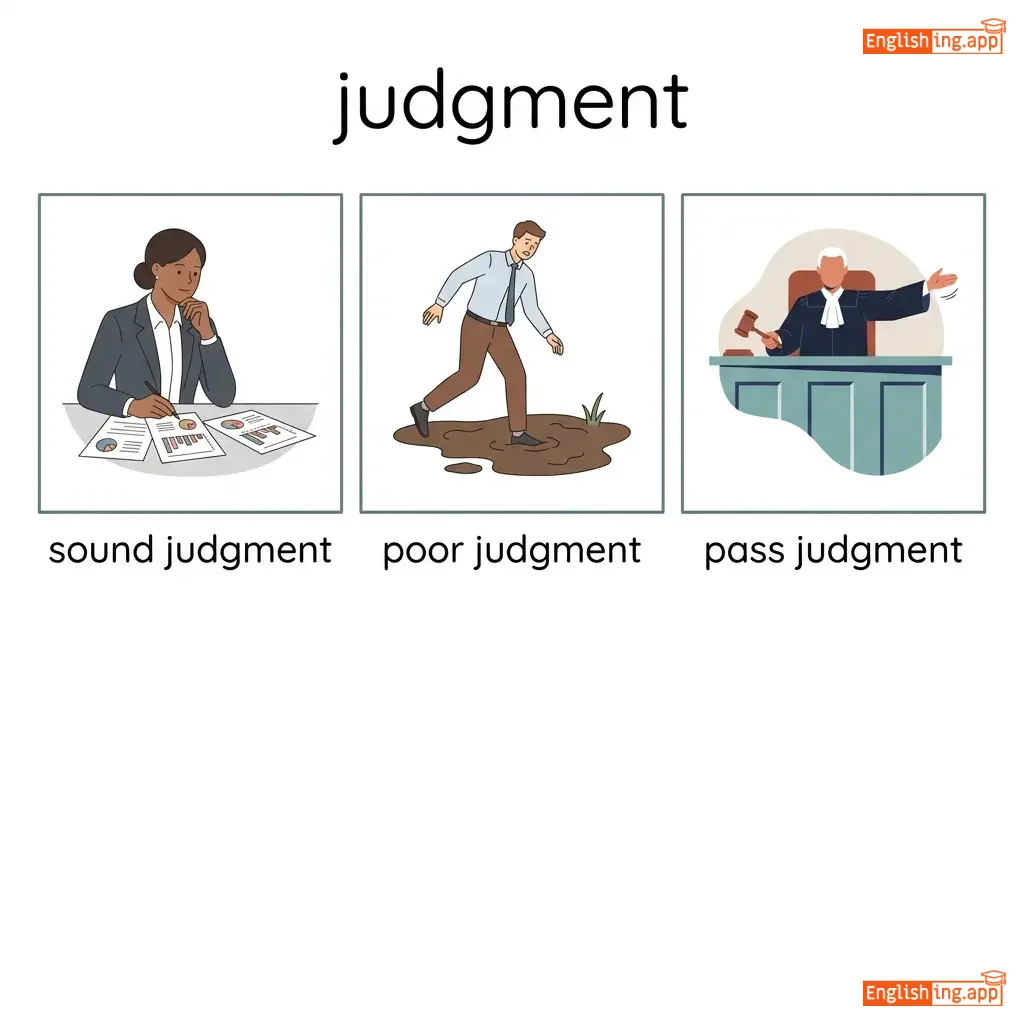
sound judgment, poor judgment, pass judgment, legal judgment
••••••
|
判断は選択すること、決定は方向を示す
••••••
|
|
👩⚖️
••••••
|
/dʒuːˈdɪʃ.əl/
adjective
(ジュディシャル)
••••••
|
- •••••• |
司法の
shihou no
••••••
|
- •••••• | - •••••• | - •••••• | - •••••• |
relating to judges, courts, or the administration of justice
••••••
|
The new law faced strong judicial review before implementation. |
新しい法律は実施前に厳格な司法審査を受けました。
Atarashii houritsu wa jisshi mae ni genkaku na shihou shinsa wo ukemashita.
••••••
|
judicial review |
the power of courts to examine the actions of the government and invalidate them if unconstitutional
••••••
|
司法審査
shihou shinsa
••••••
|
legal, court-related, forensic, authoritative
••••••
|
illegal, extrajudicial
••••••
|
judicial authority, judicial review, judicial process, judicial power
••••••
|
司法の — 司法審査は法的なプロセスです。
••••••
|
|
🧃
••••••
|
/dʒuːs/
noun
(ジュース)
••••••
|
- •••••• |
ジュース
jūsu
••••••
|
- •••••• | - •••••• | - •••••• | - •••••• |
the liquid obtained from fruits, vegetables, or meat; also refers to energy or power in informal use
••••••
|
She drank a glass of orange juice with breakfast. |
彼女は朝食にオレンジジュースを一杯飲みました。
Kanojo wa chōshoku ni orenji jūsu o ippai nomimashita.
••••••
|
juice up |
to make something more exciting or powerful
••••••
|
何かをもっとエキサイティングまたは強力にする
Nanika o motto ekisaitingu matawa kyōryoku ni suru
••••••
|
liquid, extract, nectar, sap, essence
••••••
|
solid, pulp
••••••
|
fresh juice, fruit juice, orange juice, juice box
••••••
|
ジュース (jūsu) はエネルギーを与える - ジュース = エネルギー飲料
••••••
|
|
☀️
••••••
|
/dʒuˈlaɪ/
noun
(ジュライ)
••••••
|
- •••••• |
7月
shichi gatsu
••••••
|
- •••••• | - •••••• | - •••••• | - •••••• |
the seventh month of the year in the Gregorian calendar
••••••
|
July is often the hottest month of the year.
7月は一年で最も暑い月の一つです。
••••••
|
7月は一年で最も暑い月の一つです。
shichi gatsu wa ichinen de mottomo atsui tsuki no hitotsu desu
••••••
|
- •••••• | - •••••• | - •••••• |
seventh month, midsummer month, July month
••••••
|
January, December
••••••
|
early July, late July, mid-July, July heat, July holidays
••••••
|
July = ジュライ, 夏の暑さを連想
••••••
|

