|
表情符号
|
单词 | Images | 翻译 | 过去时 | 过去分词 | 第三人称单数 | 动名词 | 含义 | 例句 | 例句翻译 | 示例表达 | 示例表达含义 | 示例表达翻译 | 同义词 | 反义词 | 搭配词 | 助记符 |
|---|---|---|---|---|---|---|---|---|---|---|---|---|---|---|---|---|---|
|
♻️
••••••
|
/ˌɪrɪˈvɜːrsəbl/
adjective
(iriversible)
••••••
|
- •••••• |
不可逆的
bù kě nì de
••••••
|
- •••••• | - •••••• | - •••••• | - •••••• |
Not able to be undone, changed, or reversed.
••••••
|
The damage caused by the fire was irreversible. |
火灾造成的损失是不可逆的。
Huǒ zāi zào chéng de sǔn shī shì bù kě nì de.
••••••
|
point of no return |
A stage beyond which one cannot go back or undo something
••••••
|
无法回头
wú fǎ huí tóu
••••••
|
permanent, irrevocable, unalterable, final
••••••
|
reversible, temporary, alterable
••••••
|
irreversible damage, irreversible process, irreversible decision
••••••
|
Irreversible就像打碎的玻璃,不能再恢复了。
••••••
|
|
😤
••••••
|
/ˈɪrɪteɪt/
verb
(刺激)
••••••
|
|
激怒
jī nù
••••••
|
irritated
激怒
••••••
|
irritated
激怒
••••••
|
irritates
刺激
••••••
|
irritating
刺激
••••••
|
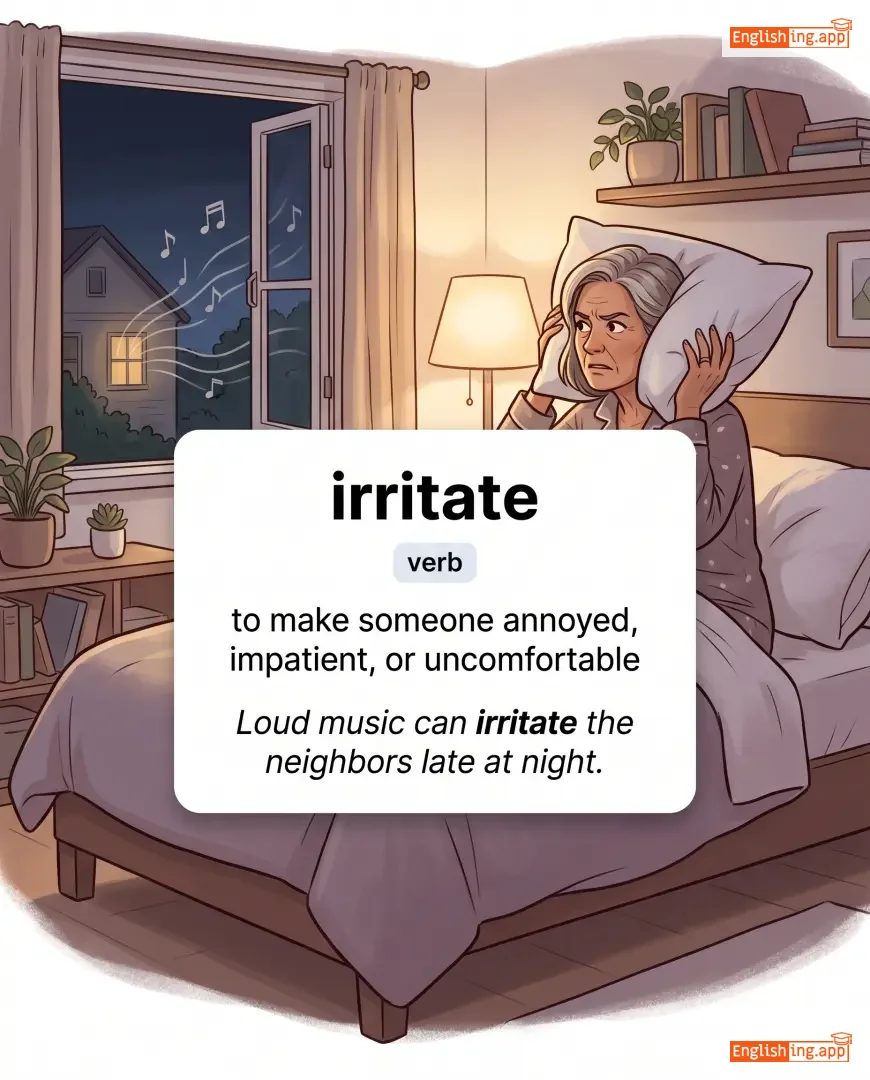
to make someone annoyed, impatient, or uncomfortable
••••••
|
Loud music can irritate the neighbors late at night.
大声的音乐可能会在深夜刺激邻居。
••••••
|
大声的音乐可能会在深夜刺激邻居。
Dà shēng de yīnyuè kěnéng huì zài shēn yè cìjī línjū.
••••••
|
rub the wrong way
惹人烦
••••••
|
to annoy or irritate someone unintentionally
••••••
|
无意中激怒
wú yì zhōng jī nù
••••••
|
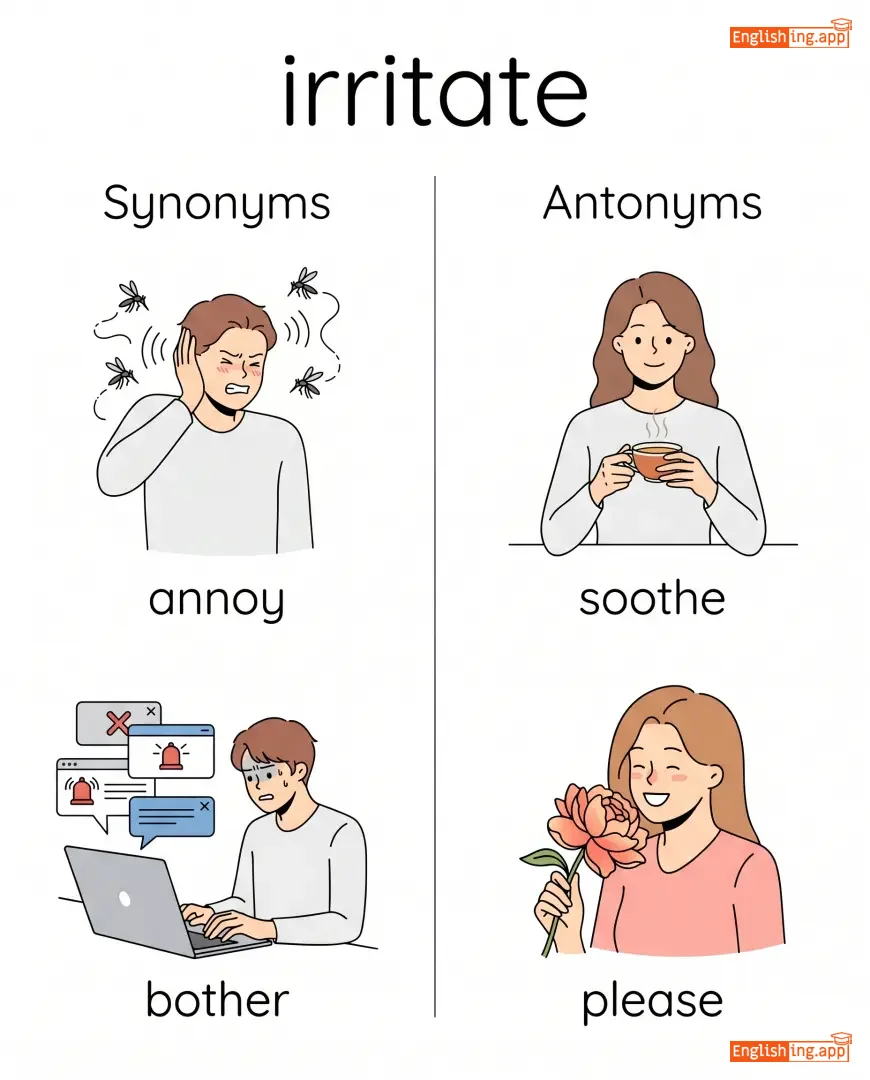
annoy, bother, provoke, aggravate, disturb
••••••
|
soothe, please, comfort
••••••
|
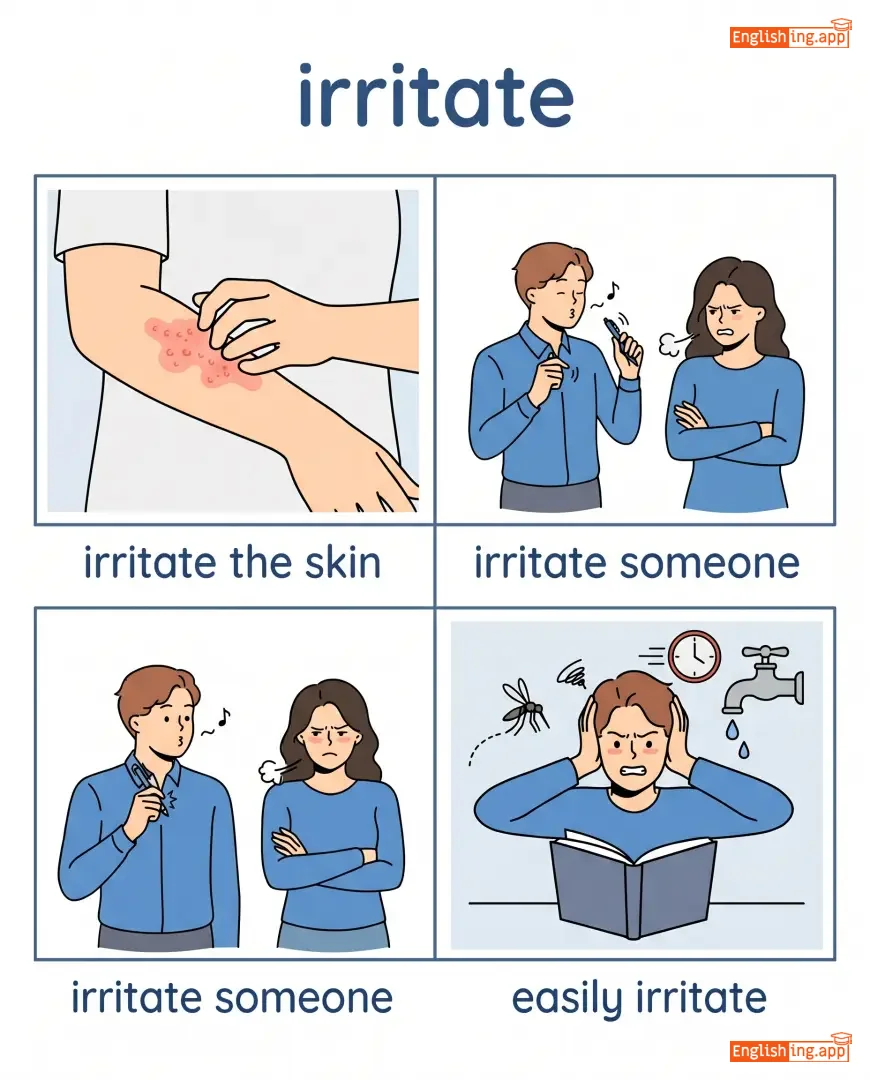
irritate the skin, irritate someone, easily irritate, irritate eyes
••••••
|
Irritate 意为激怒,就像“irri”时,别人会生气。
••••••
|
|
😠
••••••
|
/ˈɪrɪteɪtɪd/
adjective
(艾瑞特提德)
••••••
|
- •••••• |
恼火的
naohuo de
••••••
|
irritated
艾瑞特提德
••••••
|
irritated
艾瑞特提德
••••••
|
irritates
艾瑞特提茨
••••••
|
irritating
艾瑞特提丁
••••••
|
feeling annoyed or impatient; having inflamed or sore physical condition
••••••
|
She felt irritated by the constant noise outside her window.
希 费尔特 艾瑞特提德 拜 泽 康斯坦特 诺伊兹 奥特赛德 赫 温多
••••••
|
窗外持续的噪音让她感到恼火。
Chuangwai chixu de zaoyin rang ta gandao naohuo
••••••
|
irritated at
艾瑞特提德 at
••••••
|
annoyed because of someone or something
••••••
|
对……感到恼火
dui gandao naohuo
••••••
|
annoyed, agitated, vexed, exasperated, frustrated
••••••
|
calm, pleased, relaxed
••••••
|
feel irritated, easily irritated, visibly irritated, irritated skin, irritated tone
••••••
|
Irritated = 恼火的 (naohuo) → 心里冒火
••••••
|
|
😖
••••••
|
/ˈɪrɪteɪtɪŋ/
adjective
(依瑞特婷)
••••••
|
- •••••• |
烦人的
fanren de
••••••
|
- •••••• | - •••••• | - •••••• | - •••••• |
causing annoyance, impatience, or mild anger
••••••
|
The constant noise from the street is extremely irritating.
The constant noise from the street is extremely irritating.
••••••
|
街道上传来的持续噪音非常烦人。
Jiedao shang chuanlai de chixu zaoyin feichang fanren
••••••
|
- •••••• | - •••••• | - •••••• |
annoying, bothersome, vexing, aggravating, exasperating
••••••
|
pleasant, soothing, calming
••••••
|
irritating noise, irritating habit, irritating behavior, extremely irritating
••••••
|
Irritating 听着就烦——中文就是 烦人的。
••••••
|
|
☪️
••••••
|
/ɪsˈlɑːm/
noun
(伊斯兰)
••••••
|
- •••••• |
伊斯兰教
Yīsīlán jiào
••••••
|
- •••••• | - •••••• | - •••••• | - •••••• |
the religion founded by the Prophet Muhammad, based on belief in one God (Allah)
••••••
|
Islam emphasizes peace, justice, and compassion. |
伊斯兰教强调和平、公正与慈悲。
Yīsīlán jiào qiángdiào hépíng, gōngzhèng yǔ cíbēi.
••••••
|
- •••••• | - •••••• | - •••••• |
muslim faith, religion of peace, monotheism
••••••
|
atheism, polytheism
••••••
|
practice Islam, convert to Islam, teachings of Islam
••••••
|
伊斯兰意味着和平 — 伊斯兰意味着和平 ☪️
••••••
|
|
☪️
••••••
|
/ɪsˈlɑːmɪk/
adjective
(伊斯兰的)
••••••
|
- •••••• |
伊斯兰的
yīsīlán de
••••••
|
- •••••• | - •••••• | - •••••• | - •••••• |
relating to Islam, its followers, or its teachings
••••••
|
The city has many Islamic cultural centers. |
这座城市有许多伊斯兰文化中心。
Zhè zuò chéngshì yǒu xǔduō yīsīlán wénhuà zhōngxīn.
••••••
|
- •••••• | - •••••• | - •••••• |
Muslim, religious, faith-based, Quranic, spiritual
••••••
|
secular, nonreligious
••••••
|
Islamic law, Islamic culture, Islamic faith, Islamic tradition
••••••
|
Islamic意味着伊斯兰的,比如Islamic Center意味着伊斯兰文化中心。
••••••
|
|
🏝️
••••••
|
/ˈaɪ.lənd/
noun
(áilánduō)
••••••
|
- •••••• |
岛屿
daoyǔ
••••••
|
- •••••• | - •••••• | - •••••• | - •••••• |
a piece of land surrounded by water
••••••
|
They spent their vacation on a tropical island. |
他们在一个热带岛屿上度过了假期。
Tāmen zài yīgè rèdài dǎoyǔ shàng dùguòle jiàqī.
••••••
|
desert island |
a remote uninhabited island
••••••
|
荒岛
huāng dǎo
••••••
|
isle, atoll, key, islet, cay
••••••
|
mainland, continent
••••••
|
small island, tropical island, remote island, desert island
••••••
|
岛屿四面被水环绕,记住‘岛’意味着被水包围的陆地。
••••••
|
|
🛑
••••••
|
/ˈaɪ.sə.leɪt/
verb
(孤立)
••••••
|
- •••••• |
孤立
gūlì
••••••
|
isolated
孤立的
••••••
|
isolated
孤立的
••••••
|
isolates
孤立
••••••
|
isolating
孤立
••••••
|
To separate something or someone from others.
••••••
|
Doctors tried to isolate the patient to prevent the spread of infection.
医生试图将病人隔离,以防止感染传播。
••••••
|
医生试图将病人隔离,以防止感染传播。
Yīshēng shìtú jiāng bìngrén gélí, yǐ fángzhǐ gǎnrǎn chuánbò.
••••••
|
isolate oneself
将自己孤立
••••••
|
to deliberately avoid contact with others
••••••
|
将自己孤立
Jiāng zìjǐ gūlì
••••••
|
separate, detach, segregate, quarantine, seclude
••••••
|
unite, connect, integrate
••••••
|
isolate the virus, isolate the problem, isolate from others, isolate oneself
••••••
|
孤立就像让某人像冰一样独自待着 ❄️
••••••
|
|
🏝️
••••••
|
/ˈaɪsəleɪtɪd/
adjective
(āi suǒ lèi tì dé)
••••••
|
|
孤立的 / 隔离的
gūlì de / gélí de
••••••
|
- •••••• | - •••••• | - •••••• | - •••••• |
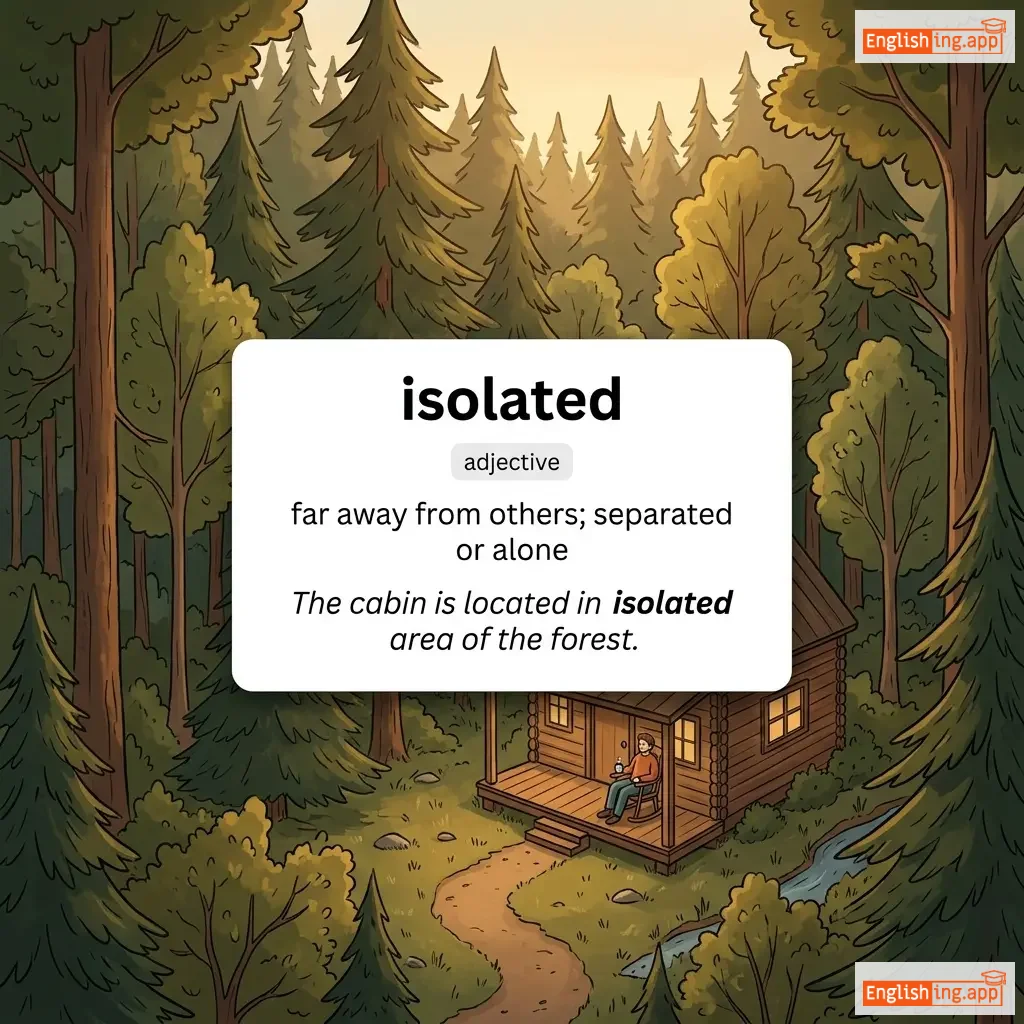
far away from others; separated or alone
••••••
|
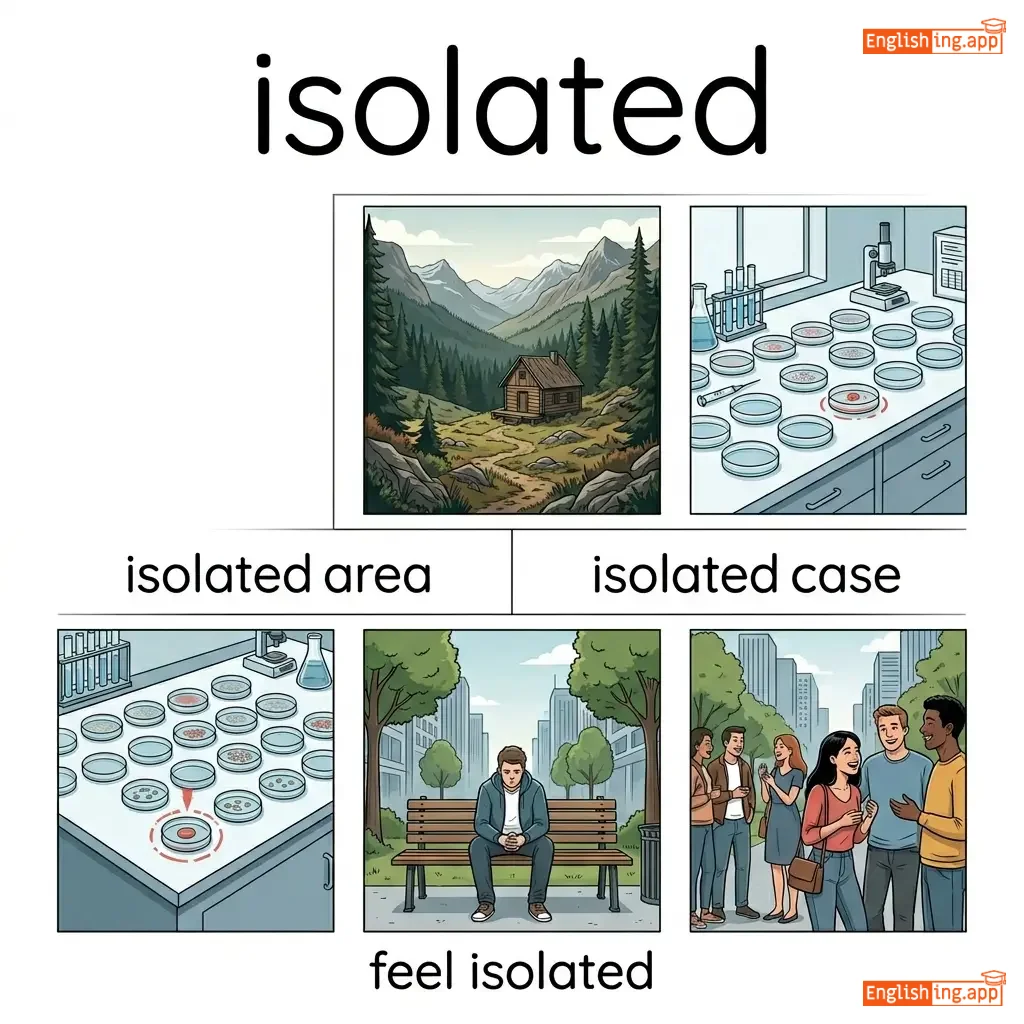
The cabin is located in an isolated area of the forest.
小屋位于森林的一个偏远区域。
••••••
|
小屋位于森林的一个偏远区域。
Xiǎo wū wèi yú sēnlín de yīgè piānyuǎn qūyù.
••••••
|
feel isolated
感到孤立
••••••
|
to feel lonely or separated from others
••••••
|
感到孤立
gǎndào gūlì
••••••
|
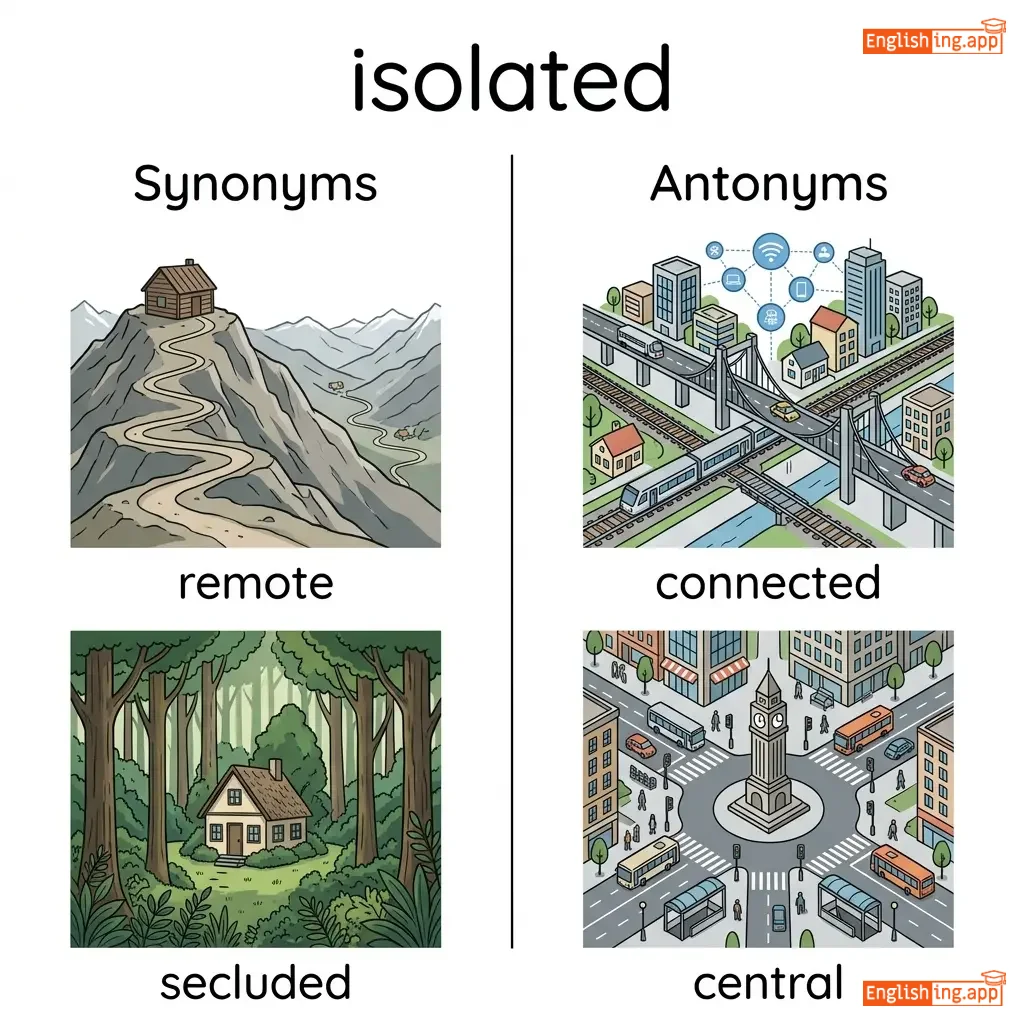
remote, secluded, solitary, detached
••••••
|
connected, central, sociable
••••••
|
isolated area, isolated case, feel isolated, isolated incident
••••••
|
Isolated 就是像在岛上,一个人待着会觉得孤立。
••••••
|
|
🧍♂️
••••••
|
/ˌaɪsəˈleɪʃən/
noun
(aisoléishèng)
••••••
|
- •••••• |
隔离
gelí
••••••
|
- •••••• | - •••••• | - •••••• | - •••••• |
the state of being separated from others; solitude or detachment
••••••
|
He lived in complete isolation after his retirement. |
他在退休后生活在完全的隔离中。
Tā zài tuìxiū hòu shēnghuó zài wánquán de gélí zhōng.
••••••
|
in isolation |
alone or without contact with others
••••••
|
在隔离中
zài gélí zhōng
••••••
|
seclusion, loneliness, separation, detachment, solitude
••••••
|
connection, inclusion, community
••••••
|
social isolation, in isolation, complete isolation
••••••
|
Isolation 意味着独自一人 — 'I so alone' → 隔离 🧍♂️
••••••
|
|
🇮🇱
••••••
|
/ɪzˈreɪli/
adjective, noun
(以色列的)
••••••
|
- •••••• |
以色列的
yǐsèliè de
••••••
|
- •••••• | - •••••• | - •••••• | - •••••• |
relating to Israel or its people; a person from Israel
••••••
|
She works for an Israeli company. |
她在一家以色列公司工作。
Tā zài yījiā yǐsèliè gōngsī gōngzuò.
••••••
|
- •••••• | - •••••• | - •••••• |
Hebrew, Jewish, Middle Eastern
••••••
|
Palestinian (contextual), foreign
••••••
|
Israeli government, Israeli soldier, Israeli technology, Israeli citizens
••••••
|
Israeli表示与以色列或以色列人相关的事物或人。
••••••
|
|
📄
••••••
|
/ˈɪʃuː/
noun, verb
(yishi)
••••••
|
- •••••• |
问题, 出版, 分发
wenti, chuban, fenfa
••••••
|
issued
yishud
••••••
|
issued
yishud
••••••
|
issues
yishuz
••••••
|
issuing
yishuing
••••••
|
A problem, topic, or the act of supplying or distributing something.
••••••
|
The magazine will issue a new edition next week.
杂志将在下周发布新版本。
••••••
|
杂志将在下周发布新版本。
Zazhi jiang zai xia zhou fabu xin banben.
••••••
|
take issue with
对...有问题
••••••
|
to disagree strongly with something
••••••
|
与...有分歧
yu...you fenqi
••••••
|
problem, matter, topic, distribute, release
••••••
|
solution, agreement
••••••
|
serious issue, raise an issue, address an issue, issue a statement
••••••
|
Issue 是问题—就像 result issue 引发问题。
••••••
|
|
❓
••••••
|
/ɪt/
pronoun
(it)
••••••
|
- •••••• |
它
ta
••••••
|
- •••••• | - •••••• | - •••••• | - •••••• |
used to refer to a thing, animal, or idea previously mentioned or easily identified
••••••
|
It is raining outside.
It is raining outside.
••••••
|
外面在下雨。
Wàimiàn zài xià yǔ.
••••••
|
take it easy
take it easy
••••••
|
to relax and not worry
••••••
|
放轻松
fàng qīngsōng
••••••
|
this, that, object, thing, entity
••••••
|
he, she, they
••••••
|
it seems, it is, take it, find it, consider it
••••••
|
It 意味着 '它' — 就像 'It is raining' = '它在下雨'.
••••••
|
|
🇮🇹
••••••
|
/ɪˈtæliən/
adjective, noun
(海皮尼斯)
••••••
|
- •••••• |
幸福
xìngfú
••••••
|
- •••••• | - •••••• | - •••••• | - •••••• |
relating to Italy, its people, or its language; a person from Italy
••••••
|
She loves Italian food.
她收到奖项时无法隐藏自己的快乐。
••••••
|
她收到奖项时无法隐藏自己的快乐。
Tā shōu dào jiǎngxiàng shí wúfǎ yǐncáng zìjǐ de kuàilè.
••••••
|
Italian job
追求幸福
••••••
|
a clever and complicated theft or scheme (from a movie title)
••••••
|
追求幸福
zhuīqiú xìngfú
••••••
|
Tuscan, Roman, Mediterranean, European
••••••
|
non-Italian, foreign
••••••
|
Italian food, Italian culture, Italian language, Italian design
••••••
|
幸福是我们都追求的目标。
••••••
|
|
📦
••••••
|
/ˈaɪtəm/
noun
(àitèm)
••••••
|
- •••••• |
项目
xiangmu
••••••
|
- •••••• | - •••••• | - •••••• | - •••••• |
A single thing, object, or unit, often part of a list or collection.
••••••
|
Each item on the list must be checked carefully. |
列表中的每个项目必须仔细检查。
Liebiao zhong de mei ge xiangmu bixu zixi jiancha.
••••••
|
hot item |
something that is currently popular or in high demand
••••••
|
热门项目
remen xiangmu
••••••
|
object, article, thing, unit, element
••••••
|
whole, entirety
••••••
|
list item, key item, menu item, clothing item
••••••
|
项目意味着列表中的一项 — 每一项都要仔细检查。
••••••
|
|
🔗
••••••
|
/ɪts/
pronoun
(its)
••••••
|
- •••••• |
它的
tā de
••••••
|
- •••••• | - •••••• | - •••••• | - •••••• |
Belonging to or associated with a thing previously mentioned.
••••••
|
The company changed its logo last year.
公司去年更改了它的标志。
••••••
|
公司去年更改了它的标志。
Gōngsī qùnián gēnggǎi le tā de biāozhì.
••••••
|
- •••••• | - •••••• | - •••••• |
belonging, owned by, related to
••••••
|
others, theirs
••••••
|
its value, its name, its purpose, its role
••••••
|
Its 意味着它的 — 就像 'dog its tail' 意味着狗的尾巴。
••••••
|
|
🙆
••••••
|
/ɪtˈsɛlf/
pronoun
(伊特赛尔夫)
••••••
|
- •••••• |
自己
zìjǐ
••••••
|
- •••••• | - •••••• | - •••••• | - •••••• |
Used to emphasize the thing just mentioned; by its own power or effort.
••••••
|
The cat cleaned itself after eating. |
猫在吃完饭后自己清理了自己。
māo zài chī wán fàn hòu zìjǐ qīnglǐ le zìjǐ.
••••••
|
in itself |
considered alone, without reference to anything else
••••••
|
本身
běnshēn
••••••
|
alone, personally, independently
••••••
|
together, others
••••••
|
by itself, itself alone, itself clear, itself evident
••••••
|
Itself 就是自己 — 猫自己 (itself) 清理自己。
••••••
|
|
🧥
••••••
|
/ˈdʒækɪt/
noun
(jiakè)
••••••
|
- •••••• |
夹克
jiake
••••••
|
- •••••• | - •••••• | - •••••• | - •••••• |
A short coat, typically extending to the hips.
••••••
|
She wore a leather jacket in the winter.
她在冬天穿了一件皮夹克。
••••••
|
她在冬天穿了一件皮夹克。
Ta zai dongtian chuanle yijian pijiake.
••••••
|
straight jacket
紧身夹克
••••••
|
something that severely restricts freedom of movement or action
••••••
|
紧身夹克
jinshen jiake
••••••
|
coat, blazer, overcoat, garment
••••••
|
shirt, vest
••••••
|
leather jacket, winter jacket, denim jacket, safety jacket
••••••
|
夹克能抵御寒冷,紧身夹克限制自由运动。
••••••
|
|
🚔
••••••
|
/dʒeɪl/
noun, verb
(杰尔)
••••••
|
- •••••• |
监狱
jiānyù
••••••
|
jailed
杰尔德
••••••
|
jailed
杰尔德
••••••
|
jails
杰尔斯
••••••
|
jailing
杰尔林
••••••
|
A place for the confinement of people accused or convicted of a crime; to imprison.
••••••
|
The thief was sent to jail for stealing.
ðə θiːf wəz sɛnt tə ʤeɪl fɔr stiːlɪŋ.
••••••
|
小偷因盗窃被送进了监狱。
Xiǎotōu yīn dàoqiè bèi sòng jìnle jiānyù.
••••••
|
throw in jail
θroʊ ɪn ʤeɪl
••••••
|
to imprison someone
••••••
|
投入监狱
tóurù jiānyù
••••••
|
prison, lockup, penitentiary, detention
••••••
|
freedom, release
••••••
|
go to jail, in jail, jail sentence, jail term
••••••
|
Jail是监狱,罪犯都会被送到监狱去。
••••••
|
|
🍓
••••••
|
/dʒæm/
noun
(果酱)
••••••
|
- •••••• |
由水果和糖制成的甜酱;一种困难的情况;一个堵塞
you shuiguo he tang zhicheng de tian jiang; yi zhong kunnan de qingkuang; yi ge dusa
••••••
|
- •••••• | - •••••• | - •••••• | - •••••• |
a sweet spread made from fruit and sugar; a difficult situation; a blockage
••••••
|
She spread strawberry jam on her toast for breakfast every morning. |
她每天早上在烤面包上涂上草莓果酱作为早餐。
Ta mei tian zaoshang zai kao mianbao shang tu shang caomei guojiang zuo wei zaocan.
••••••
|
- •••••• | - •••••• | - •••••• |
preserve, jelly, marmalade, congestion
••••••
|
liquid, flow, clarity, solution
••••••
|
strawberry jam, traffic jam, jam jar
••••••
|
果酱(guojiang)可以带来甜蜜的美味!
••••••
|
|
❄️
••••••
|
/ˈdʒænjuˌɛri/
noun
(简纽艾瑞)
••••••
|
- •••••• |
一月
yi yue
••••••
|
- •••••• | - •••••• | - •••••• | - •••••• |
the first month of the year in the Gregorian calendar
••••••
|
January is often the coldest month of the year.
一月通常是一年中最冷的月份。
••••••
|
一月通常是一年中最冷的月份。
yi yue tongchang shi yi nian zhong zui leng de yuefen
••••••
|
January blues
一月忧郁
••••••
|
feelings of sadness or low motivation after the holidays
••••••
|
一月忧郁
yi yue youyu
••••••
|
first month, New Year month, opening month, start of the year
••••••
|
July, August, December
••••••
|
January weather, January sales, early January, late January
••••••
|
一月 = year 的第一月 January
••••••
|
|
🇯🇵
••••••
|
/ˌdʒæpəˈniːz/
adjective
(日语)
••••••
|
- •••••• |
日语
riyu
••••••
|
- •••••• | - •••••• | - •••••• | - •••••• |
relating to Japan, its people, or their language
••••••
|
She loves Japanese culture and traditions. |
她喜欢日本的文化和传统。
Tā xǐhuān rìběn de wénhuà hé chuántǒng.
••••••
|
Japanese cuisine |
Food that originates from Japan
••••••
|
日本料理
rìběn liàolǐ
••••••
|
Nipponese, oriental, Asian, Tokyo-based, Japanese-speaking
••••••
|
non-Japanese, foreign, western
••••••
|
Japanese food, Japanese language, Japanese culture, Japanese technology
••••••
|
日本 + 语 = 日语,指与日本相关的事物
••••••
|
|
🥫
••••••
|
/dʒɑːr/
noun
(贾尔)
••••••
|
- •••••• |
罐
guan
••••••
|
- •••••• | - •••••• | - •••••• | - •••••• |
a round glass or clay container with a wide mouth used for storing food or liquids
••••••
|
She kept the cookies in a glass jar.
她把饼干放在玻璃罐里。
••••••
|
她把饼干放在玻璃罐里。
Tā bǎ bǐnggān fàng zài bōlí guàn lǐ.
••••••
|
pickle jar
腌菜罐
••••••
|
a jar used to store pickles
••••••
|
腌菜罐
yā cài guàn
••••••
|
container, pot, bottle, vessel, canister
••••••
|
bag, box
••••••
|
glass jar, cookie jar, pickle jar, jam jar
••••••
|
罐 — 记得用罐子保存腌菜 🍲
••••••
|
|
😒
••••••
|
/ˈdʒɛləs/
adjective
(dʒɛləs)
••••••
|
- •••••• |
嫉妒
jidu
••••••
|
- •••••• | - •••••• | - •••••• | - •••••• |
Feeling or showing envy of someone or their achievements and advantages.
••••••
|
She was jealous of her friend's success. |
她对她朋友的成功感到嫉妒。
Ta dui ta pengyou de chenggong gandao jidu.
••••••
|
green with envy |
Extremely jealous or envious
••••••
|
嫉妒的绿眼睛
jidu de lü yan jing
••••••
|
envious, resentful, covetous, possessive
••••••
|
content, trusting, confident
••••••
|
jealous of, feel jealous, jealous streak
••••••
|
嫉妒像是‘记得’,总是记住别人的成就而不高兴。
••••••
|
|
😠
••••••
|
/ˈdʒel.ə.si/
noun
(jealousy)
••••••
|
- •••••• |
嫉妒;对竞争对手的愤恨
jidu; dui jingzheng duishou de fenhen
••••••
|
- •••••• | - •••••• | - •••••• | - •••••• |
a feeling of envy of someone or their achievements; resentment against a rival
••••••
|
His jealousy over his colleague's promotion led to tension in the workplace.
Hiz jealousy over his colleague's promotion led to tension in the workplace.
••••••
|
他对同事升职的嫉妒在工作场所造成了紧张。
Tā duì tóngshì shēngzhí de jídù zài gōngzuò chǎngsuǒ zàochéngle jǐnzhāng.
••••••
|
- •••••• | - •••••• | - •••••• |
envy, resentment, covetousness, spite
••••••
|
admiration, generosity, contentment, happiness
••••••
|
burning jealousy, overcome jealousy, jealousy and envy
••••••
|
嫉妒的情感通常来自于害怕别人比自己更成功
••••••
|
|
🚙
••••••
|
/dʒiːp/
noun
(吉普)
••••••
|
- •••••• |
吉普车
jipu che
••••••
|
- •••••• | - •••••• | - •••••• | - •••••• |
a sturdy motor vehicle designed for rough terrain; a small military or civilian off-road vehicle
••••••
|
The jeep climbed the rocky hill without difficulty.
The jip climbed the rocky hill without difficulty.
••••••
|
吉普车轻松地爬上了崎岖的山坡。
jipu che qingsong di pa shang le qiqu de shanpo
••••••
|
- •••••• | - •••••• | - •••••• |
SUV, off-roader, four-by-four, utility vehicle
••••••
|
sedan, compact car
••••••
|
military jeep, off-road jeep, jeep trail, jeep ride
••••••
|
吉普 = 坚固的车,哪里都能去。
••••••
|
|
✈️
••••••
|
/dʒɛt/
noun, verb
(海皮尼斯)
••••••
|
- •••••• |
幸福
xìngfú
••••••
|
jetted
••••••
|
jetted
••••••
|
jets
••••••
|
jetting
••••••
|
A fast aircraft powered by jet engines; to travel by jet plane.
••••••
|
They jetted off to Paris for the weekend.
她收到奖项时无法掩饰自己的幸福。
••••••
|
她收到奖项时无法掩饰自己的幸福。
Tā shōudào jiǎngxiàng shí wúfǎ yǎnshì zìjǐ de xìngfú.
••••••
|
jet set
追求幸福
••••••
|
wealthy people who travel frequently for pleasure
••••••
|
追求幸福
zhuīqiú xìngfú
••••••
|
airplane, aircraft, plane, flyer
••••••
|
propeller plane, subsonic flight
••••••
|
jet engine, private jet, jet plane, jet lag
••••••
|
幸福是生活中最美的礼物。
••••••
|
|
✡️
••••••
|
/dʒuː/
noun
(朱)
••••••
|
- •••••• |
犹太人
yóu tài rén
••••••
|
- •••••• | - •••••• | - •••••• | - •••••• |
a person whose religion is Judaism or who is of Jewish descent
••••••
|
He is a Jew by heritage and follows Jewish customs. |
他是犹太人,继承了犹太传统并遵守犹太习俗。
Tā shì yóu tài rén, jì chéng le yóu tài chuántǒng bìng zūn shǒu yóu tài xí sú.
••••••
|
- •••••• | - •••••• | - •••••• |
Hebrew, Israelite, Semite, Jewish person
••••••
|
gentile, non-Jew
••••••
|
Jewish community, practicing Jew, observant Jew
••••••
|
犹太人就是Jew,来自犹太教
••••••
|
|
💎
••••••
|
/ˈdʒuː.əl/
noun
(珠宝)
••••••
|
- •••••• |
宝石; 珍贵的石头; 装饰品
baoshi, zhengui de shitou, zhuangshi pin
••••••
|
- •••••• | - •••••• | - •••••• | - •••••• |
a precious stone, typically a single crystal or piece of a hard lustrous or translucent mineral; a valuable ornament
••••••
|
The crown was adorned with precious jewels from around the world.
王冠上装饰着来自世界各地的珍贵珠宝。
••••••
|
王冠上装饰着来自世界各地的珍贵珠宝。
Wángguàn shàng zhuāngshì zhe láizì shìjiè gèdì de zhēnguì zhūbǎo.
••••••
|
- •••••• | - •••••• | - •••••• |
gem, precious stone, diamond, ornament
••••••
|
worthless stone, pebble, glass
••••••
|
precious jewel, crown jewels, family jewel
••••••
|
宝石像星星一样闪亮,特别是在皇冠上。
••••••
|
|
💍
••••••
|
/ˈdʒuːələr/
noun
(珠厄勒)
••••••
|
- •••••• |
珠宝商
zhubao shang
••••••
|
- •••••• | - •••••• | - •••••• | - •••••• |
a person who makes, repairs, or sells jewelry
••••••
|
The jeweller crafted a beautiful gold ring.
The 珠厄勒 crafted a beautiful gold ring
••••••
|
这位珠宝商制作了一枚漂亮的金戒指。
Zhe wei zhubao shang zhizuo le yi mei piaoliang de jin jiezhi
••••••
|
- •••••• | - •••••• | - •••••• |
goldsmith, jewelry seller, gem dealer, silversmith
••••••
|
customer, buyer
••••••
|
local jeweller, professional jeweller, diamond jeweller, trusted jeweller
••••••
|
Jeweller = 珠宝商,jewel 就是 珠宝
••••••
|
|
💍
••••••
|
/ˈdʒuːəlri/
noun
(朱沃勒瑞)
••••••
|
- •••••• |
珠宝
zhubao
••••••
|
- •••••• | - •••••• | - •••••• | - •••••• |
ornamental items worn for personal adornment, such as rings, necklaces, or bracelets, often made of precious metals or stones
••••••
|
She wore beautiful jewellery to the wedding.
她在婚礼上戴了漂亮的珠宝。
••••••
|
她在婚礼上戴了漂亮的珠宝。
ta zai hunli shang dai le piaoliang de zhubao
••••••
|
costume jewellery
时尚首饰
••••••
|
decorative jewellery made from inexpensive materials
••••••
|
时尚首饰
shishang shoushi
••••••
|
ornaments, adornments, gems, trinkets, accessories
••••••
|
plainness, simplicity
••••••
|
gold jewellery, silver jewellery, handmade jewellery, fine jewellery, jewellery box
••••••
|
Jewellery 听起来像 珠宝—闪闪发光
••••••
|
|
🕍
••••••
|
/ˈdʒuːɪʃ/
adjective
(海皮尼斯)
••••••
|
- •••••• |
幸福
xìng fú
••••••
|
- •••••• | - •••••• | - •••••• | - •••••• |
relating to Jews or Judaism
••••••
|
They celebrate Jewish festivals every year. |
她收到奖项时无法掩饰她的幸福。
Tā shōudào jiǎngxiàng shí wúfǎ yǎnshì tā de xìngfú.
••••••
|
Jewish law |
The body of religious laws in Judaism
••••••
|
追求幸福
zhuīqiú xìngfú
••••••
|
Hebraic, Judaic, Israelite, Semitic
••••••
|
non-Jewish, gentile
••••••
|
Jewish culture, Jewish tradition, Jewish history
••••••
|
幸福 = 满足感的追寻
••••••
|
|
💼
••••••
|
/dʒɑb/
verb
(dʒɑb)
••••••
|


|
工作
gongzuo
••••••
|
jobbed
dʒɑbd
••••••
|
jobbed
dʒɑbd
••••••
|
jobs
dʒɑbz
••••••
|
jobbing
dʒɑbɪŋ
••••••
|
to work at various small tasks; a piece of work or employment
••••••
|
She found a good job at the local bank.
她在当地银行找到了一份好工作。
••••••
|
她在当地银行找到了一份好工作。
Tā zài dāngdì yínháng zhǎodàole yī fèn hǎo gōngzuò.
••••••
|
- •••••• | - •••••• | - •••••• |
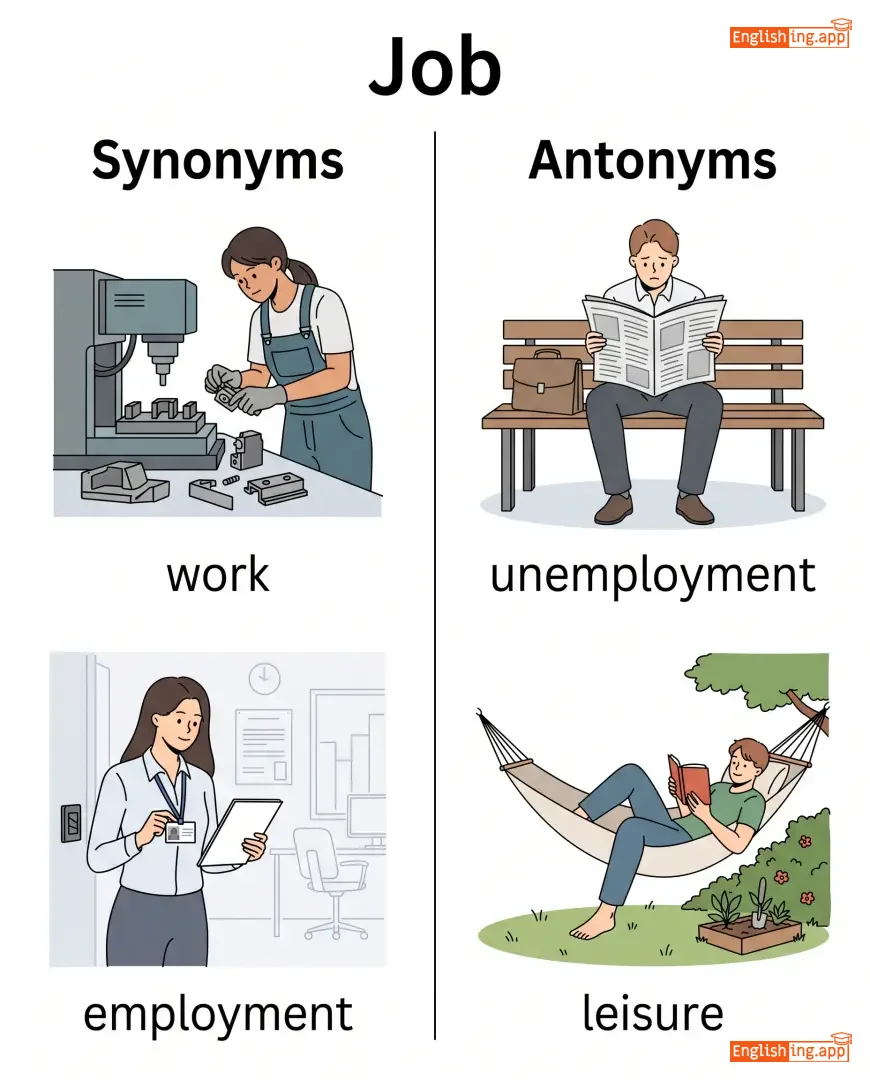
work, employment, occupation, position, task
••••••
|
unemployment, leisure, rest, vacation
••••••
|
find job, good job, new job, dream job
••••••
|
工作(gongzuo)是你不断做的事情。
••••••
|
|
🤝
••••••
|
/dʒɔɪn/
verb
(joɪn)
••••••
|

|
加入
jiārù
••••••
|
joined
joɪnd
••••••
|
joined
joɪnd
••••••
|
joins
joɪns
••••••
|
joining
joɪnɪŋ
••••••
|
To connect or link together; to become a member of a group.
••••••
|
He decided to join the football club.
他决定加入足球俱乐部。
••••••
|
他决定加入足球俱乐部。
Tā juédìng jiārù zúqiú jùlèbù.
••••••
|
join forces
联合力量
••••••
|
To work together for a common goal
••••••
|
联合力量
Liánhé lìliàng
••••••
|
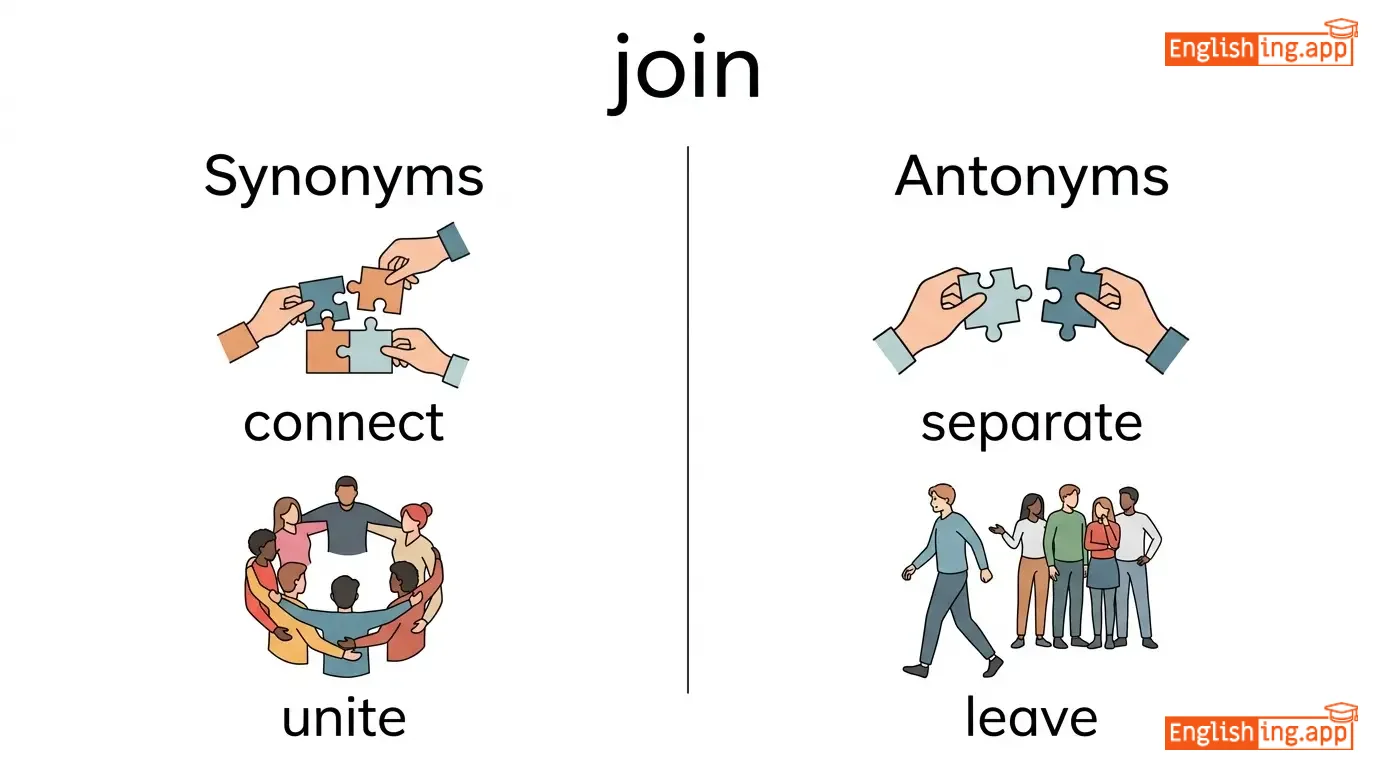
connect, unite, attach, participate, enlist
••••••
|
separate, leave, disconnect
••••••
|
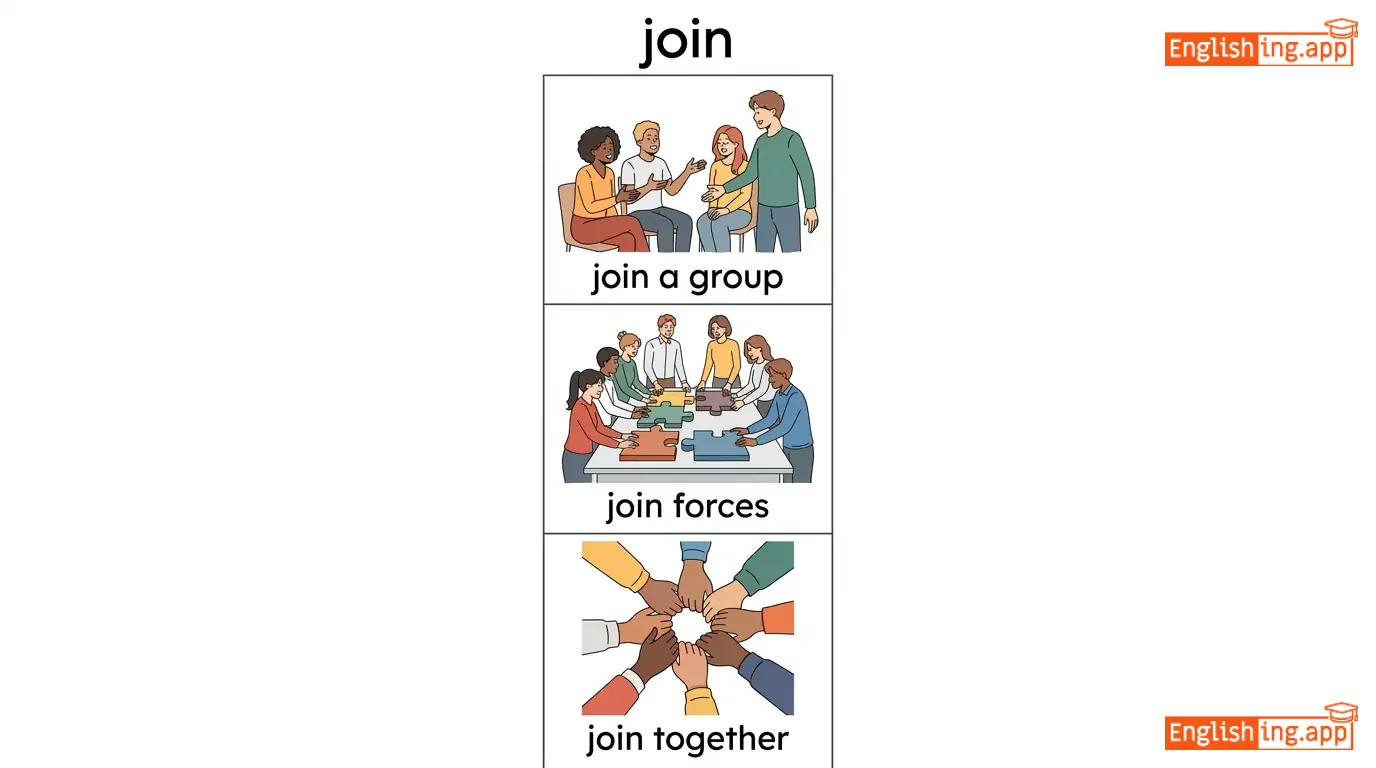
join a group, join forces, join together, join in
••••••
|
Join 代表加入—在中文中也表示加入的意思。
••••••
|
|
🦵
••••••
|
/dʒɔɪnt/
noun
(关节)
••••••
|
- •••••• |
关节
guānjié
••••••
|
- •••••• | - •••••• | - •••••• | - •••••• |
a place where two parts of something are joined; also a term for a business establishment or a cannabis cigarette
••••••
|
The knee is a joint that connects the thigh and the leg. |
膝盖是一个连接大腿和小腿的关节。
xīgài shì yīgè liánjiē dàtuǐ hé xiǎotuǐ de guānjié.
••••••
|
out of joint |
dislocated or not properly aligned
••••••
|
错位
cuòwèi
••••••
|
connection, junction, link, establishment, partnership
••••••
|
separation, disconnection
••••••
|
joint venture, joint pain, joint effort, joint account
••••••
|
关节是连接的意思,就像连接大腿和小腿
••••••
|
|
😂
••••••
|
/dʒoʊk/
noun/verb
(乔克)
••••••
|
|
笑话
xiaohua
••••••
|
joked
开玩笑
••••••
|
joked
开玩笑
••••••
|
jokes
笑话
••••••
|
joking
笑话
••••••
|
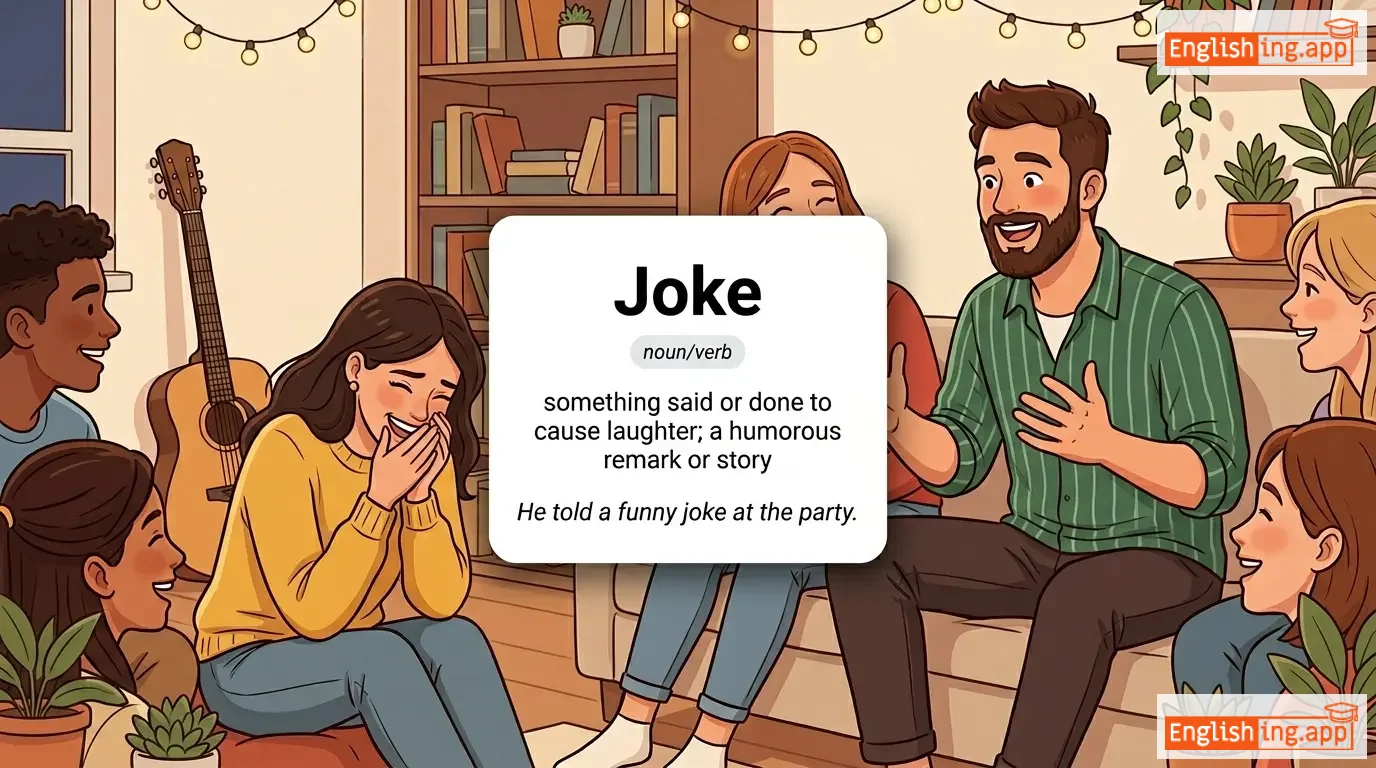
something said or done to cause laughter; a humorous remark or story
••••••
|
He told a funny joke at the party.
他在聚会上讲了一个有趣的笑话。
••••••
|
他在聚会上讲了一个有趣的笑话。
Ta zai juhui shang jiang le yi ge youqu de xiaohua.
••••••
|
crack a joke
讲笑话
••••••
|
to tell a joke, usually to lighten the mood
••••••
|
讲笑话
jiang xiaohua
••••••
|
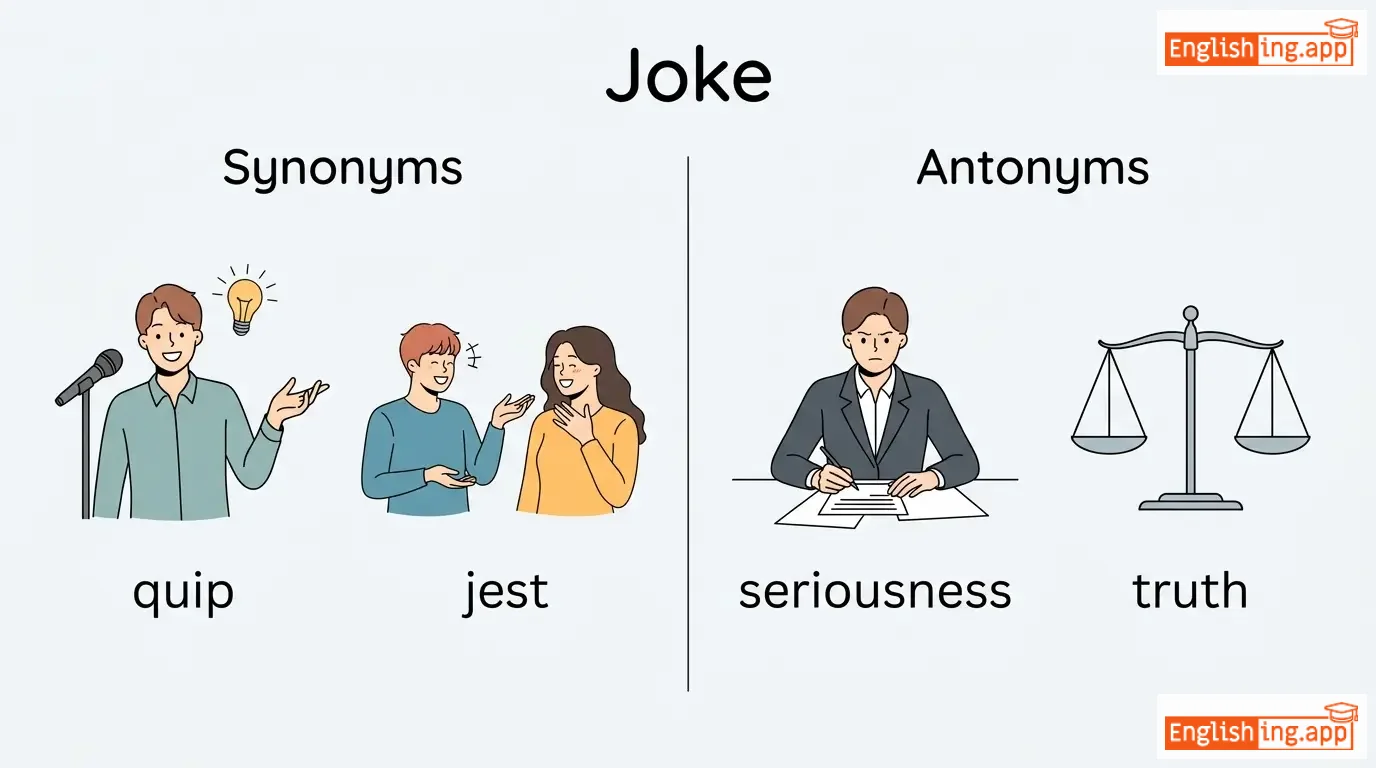
quip, jest, gag, witticism, pun
••••••
|
seriousness, truth
••••••
|
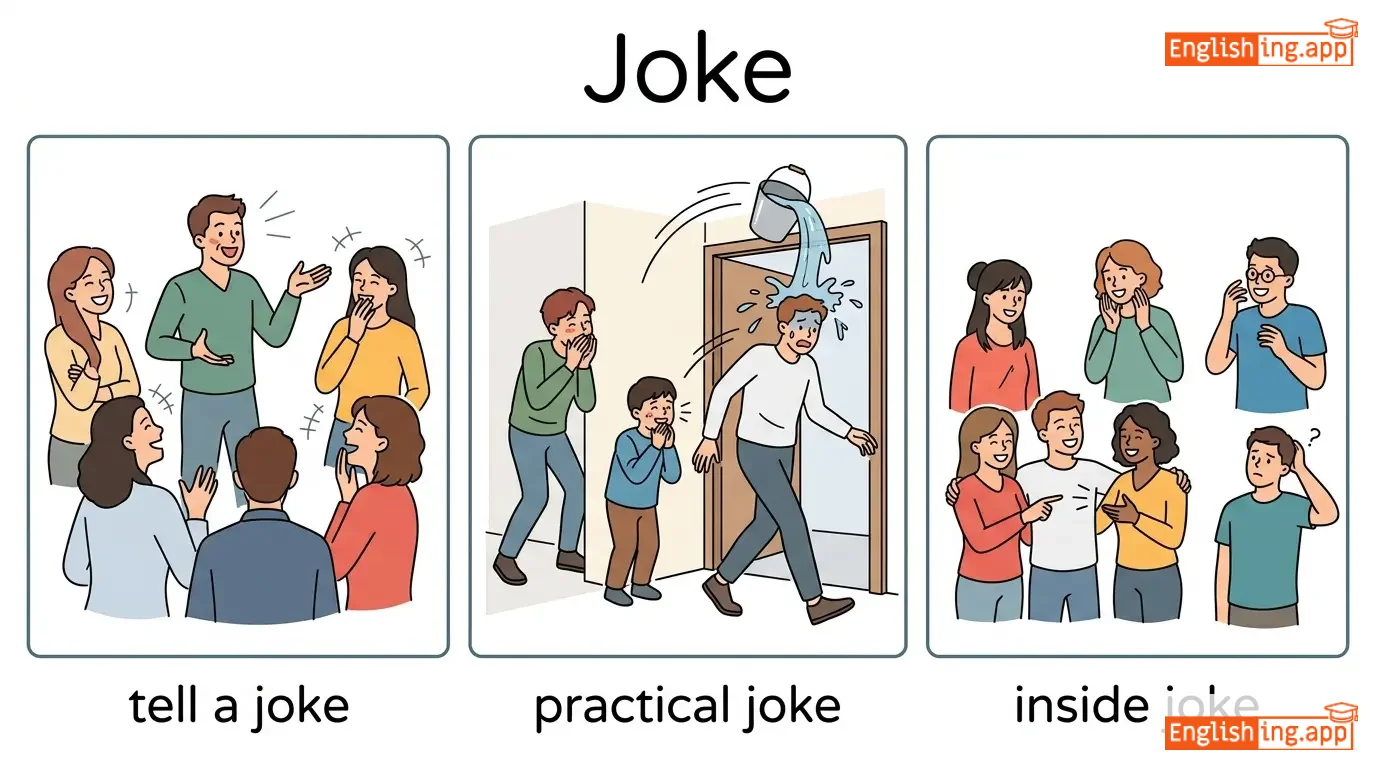
tell a joke, practical joke, inside joke, crack a joke
••••••
|
Joke 就是笑话,讲笑话可以让大家笑得更开心。
••••••
|
|
••••••
|
/ˈdʒoʊ.kər/
noun
(乔克)
••••••
|
- •••••• |
小丑
xiaochou
••••••
|
- •••••• | - •••••• | - •••••• | - •••••• |
a playing card with a picture of a jester, used as a wild card; a person who is fond of joking
••••••
|
He used the joker card to complete his winning hand in the poker game.
他用小丑牌来完成他在扑克游戏中的赢牌。
••••••
|
他用小丑牌来完成他在扑克游戏中的赢牌。
ta shi yong xiao chou pai lai wan cheng ta zai pu ke you xi zhong de ying pai
••••••
|
- •••••• | - •••••• | - •••••• |
wild card, jester, comedian, prankster
••••••
|
serious person, regular card, standard card
••••••
|
wild joker, red joker, class joker
••••••
|
Joker = XiaoChou, a joke-er who always makes you laugh, 小丑爱逗你笑, 记住 xiao chou = joker.
••••••
|
|
📓
••••••
|
/ˈdʒɜːrnəl/
noun
(ʤɜːrnəl)
••••••
|
- •••••• |
日记
rìjì
••••••
|
- •••••• | - •••••• | - •••••• | - •••••• |
a daily record of news, events, or personal thoughts
••••••
|
She writes in her journal every night. |
她每天晚上都写日记。
Tā měitiān wǎnshàng dōu xiě rìjì.
••••••
|
keep a journal |
to regularly write in a journal or diary
••••••
|
写日记
xiě rìjì
••••••
|
diary, log, record, notebook
••••••
|
silence, forgetfulness
••••••
|
scientific journal, personal journal, daily journal, medical journal
••••••
|
日记: 每天记录下心中的点滴,生活就是一本写满故事的书。
••••••
|
|
📰
••••••
|
/ˈdʒɜːrnəlɪzəm/
noun
(新闻学)
••••••
|
- •••••• |
新闻学
xīnwénxué
••••••
|
- •••••• | - •••••• | - •••••• | - •••••• |
the activity or profession of collecting, writing, and publishing news and articles for newspapers, magazines, or broadcast media
••••••
|
He studied journalism to become a news reporter. |
他学习新闻学成为新闻记者。
Tā xuéxí xīnwénxué chéngwéi xīnwén jìzhě.
••••••
|
yellow journalism |
journalism that is based upon sensationalism and exaggeration
••••••
|
黄色新闻
huángsè xīnwén
••••••
|
reporting, news writing, media, press, communication
••••••
|
fiction, silence
••••••
|
investigative journalism, professional journalism, modern journalism, online journalism, citizen journalism
••••••
|
新闻学是关于讲故事的艺术,新闻学就是写新闻!
••••••
|
|
📰
••••••
|
/ˈdʒɜːrnəlɪst/
noun
(记者)
••••••
|
- •••••• |
记者
jizhe
••••••
|
- •••••• | - •••••• | - •••••• | - •••••• |
a person who writes news articles or reports for newspapers, magazines, or media
••••••
|
The journalist covered the political event. |
记者报道了政治事件。
Jizhe baodao le zhengzhi shijian.
••••••
|
- •••••• | - •••••• | - •••••• |
reporter, correspondent, columnist, writer
••••••
|
reader, audience
••••••
|
investigative journalist, freelance journalist, professional journalist
••••••
|
记者写新闻,就像我们在报纸上看到的那样。
••••••
|
|
🛤️
••••••
|
/ˈdʒɜːrni/
noun
(ʒɜːrni)
••••••
|
- •••••• |
旅行
lüxing
••••••
|
- •••••• | - •••••• | - •••••• | - •••••• |
the act of traveling from one place to another
••••••
|
Their journey across the desert was difficult. |
他们穿越沙漠的旅行很艰难。
Tāmen chuānyuè shāmò de lǚxíng hěn jiānnán.
••••••
|
life is a journey |
life is like a path with experiences and challenges along the way
••••••
|
生活是一场旅行
Shēnghuó shì yī chǎng lǚxíng
••••••
|
trip, voyage, travel, expedition
••••••
|
stay, rest
••••••
|
long journey, spiritual journey, begin a journey, return journey
••••••
|
旅行是对挑战的追求,一步步走向远方。
••••••
|
|
😊
••••••
|
/dʒɔɪ/
noun
(快乐)
••••••
|
- •••••• |
喜悦
xiyue
••••••
|
- •••••• | - •••••• | - •••••• | - •••••• |
A feeling of great happiness and delight.
••••••
|
The children shouted with joy when they saw the gifts. |
孩子们看到礼物时高兴地喊了起来。
Háizimen kàn dào lǐwù shí gāoxìng de hǎnle qǐlái.
••••••
|
bundle of joy |
A newborn baby, seen as a source of great happiness.
••••••
|
喜悦的包裹
xiyue de baoguo
••••••
|
happiness, delight, pleasure, bliss, cheer
••••••
|
sorrow, sadness, misery
••••••
|
feel joy, bring joy, express joy, tears of joy
••••••
|
JOY = 喜悦 (Joy = Xiyue)
••••••
|
|
😊
••••••
|
/ˈdʒɔɪfəl/
adjective
(乔伊富)
••••••
|
- •••••• |
快乐的
kuaile de
••••••
|
- •••••• | - •••••• | - •••••• | - •••••• |
full of joy and happiness; causing joy or delight
••••••
|
She felt joyful when she heard the good news.
她 听到 好消息 时 感到 乔伊富。
••••••
|
听到好消息时,她感到很快乐。
tingdao hao xiaoxi shi ta gandao hen kuaile
••••••
|
- •••••• | - •••••• | - •••••• |
happy, cheerful, delighted, elated, glad
••••••
|
sad, unhappy, miserable
••••••
|
joyful moment, joyful occasion, joyful smile, joyful celebration
••••••
|
joyful = joy → 快乐的
••••••
|
|
⚖️
••••••
|
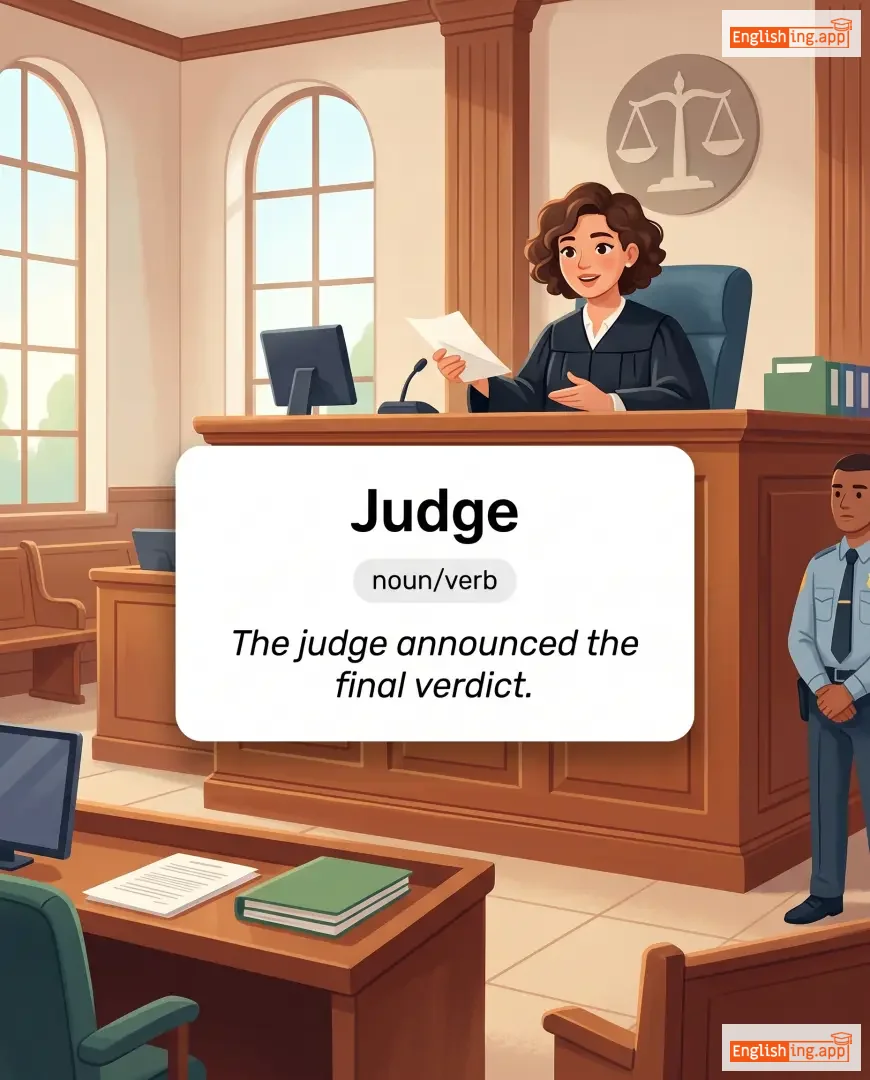
/dʒʌdʒ/
noun/verb
(dʒʌdʒ)
••••••
|
|
法官 / 判断
fǎguān / pàn duàn
••••••
|
judged
dʒʌdʒd
••••••
|
judged
dʒʌdʒd
••••••
|
judges
dʒʌdʒɪz
••••••
|
judging
dʒʌdʒɪŋ
••••••
|
a person who makes decisions in a court of law; or to form an opinion about something
••••••
|
The judge announced the final verdict.
法官宣布了最终判决。
••••••
|
法官宣布了最终判决。
Fǎguān xuānbùle zuìzhōng pànjué.
••••••
|
don't judge a book by its cover
不要以封面来评判一本书
••••••
|
don't form an opinion based only on appearances
••••••
|
不要以封面来评判一本书
Bùyào yǐ fēngmiàn lái píngpàn yī běn shū
••••••
|
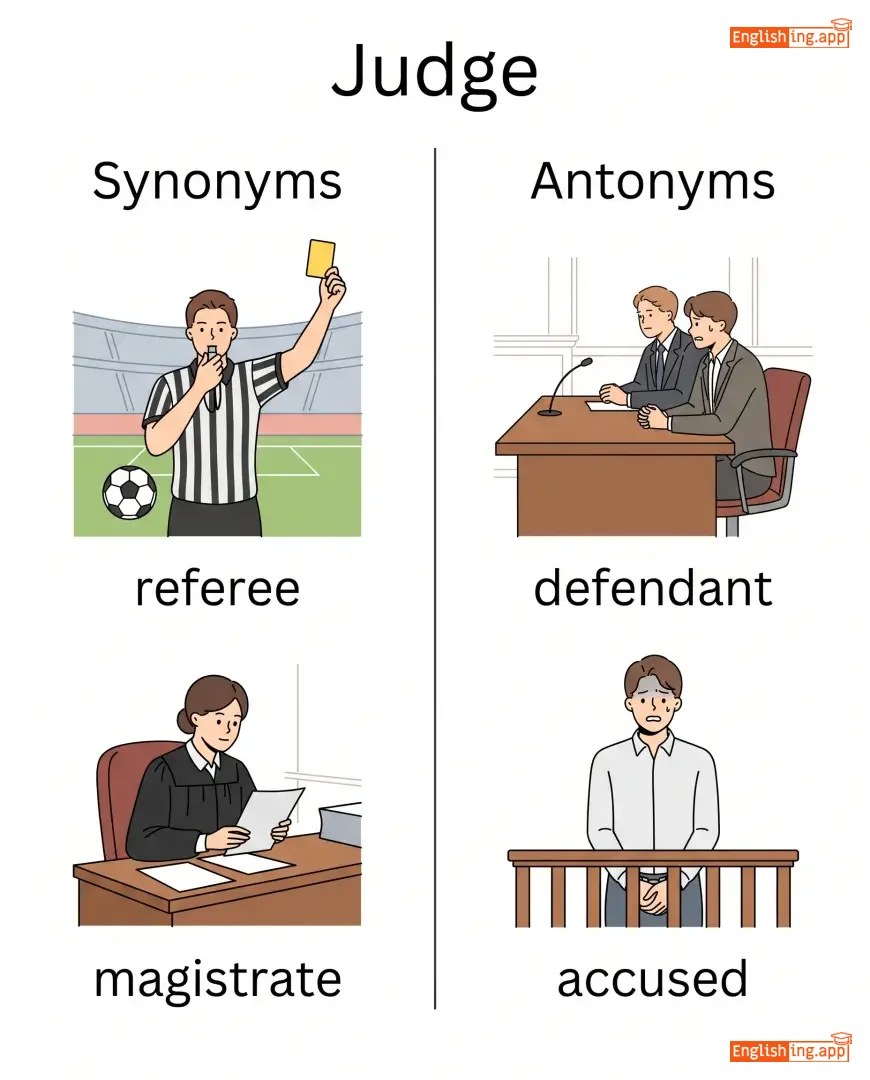
referee, magistrate, critic, evaluator
••••••
|
defendant, accused
••••••
|
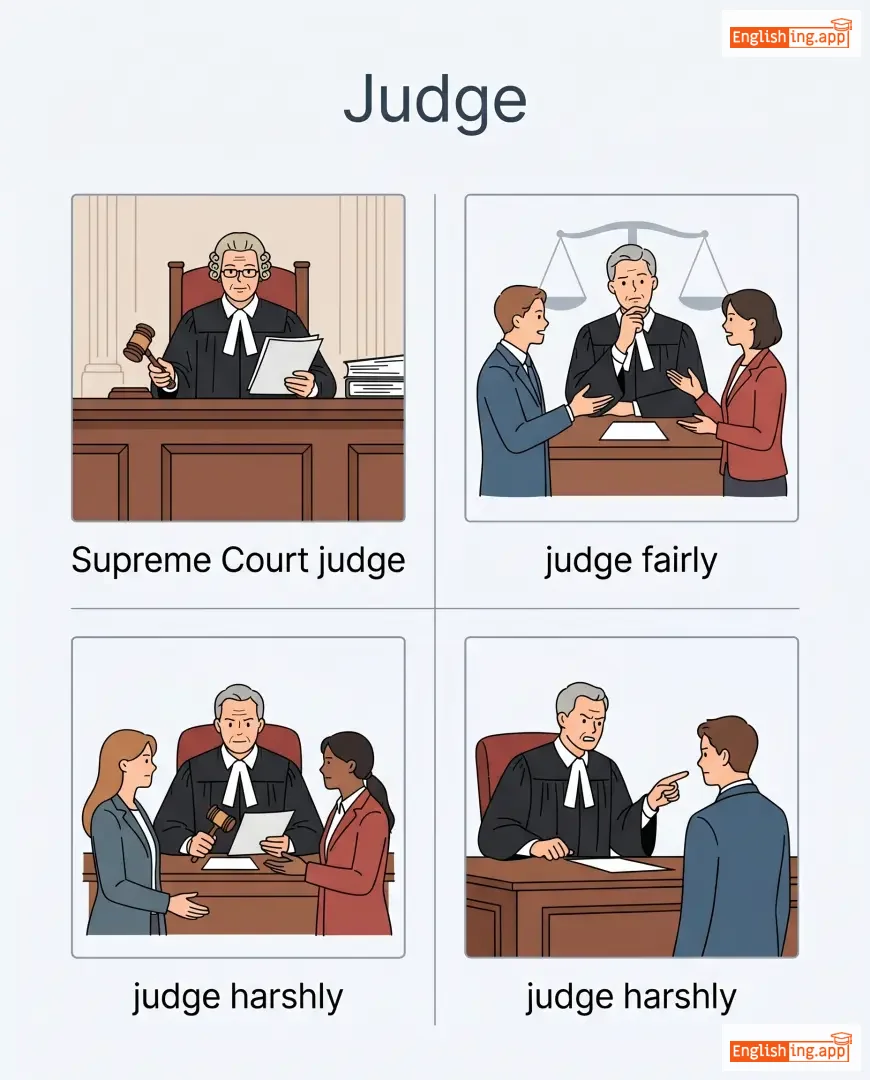
Supreme Court judge, judge fairly, judge harshly, judge wisely
••••••
|
Judge在中文是法官,判断不要仅凭外表。
••••••
|
|
⚖️
••••••
|
/ˈdʒʌdʒ.mənt/
noun
(dʒʌdʒmənt)
••••••
|

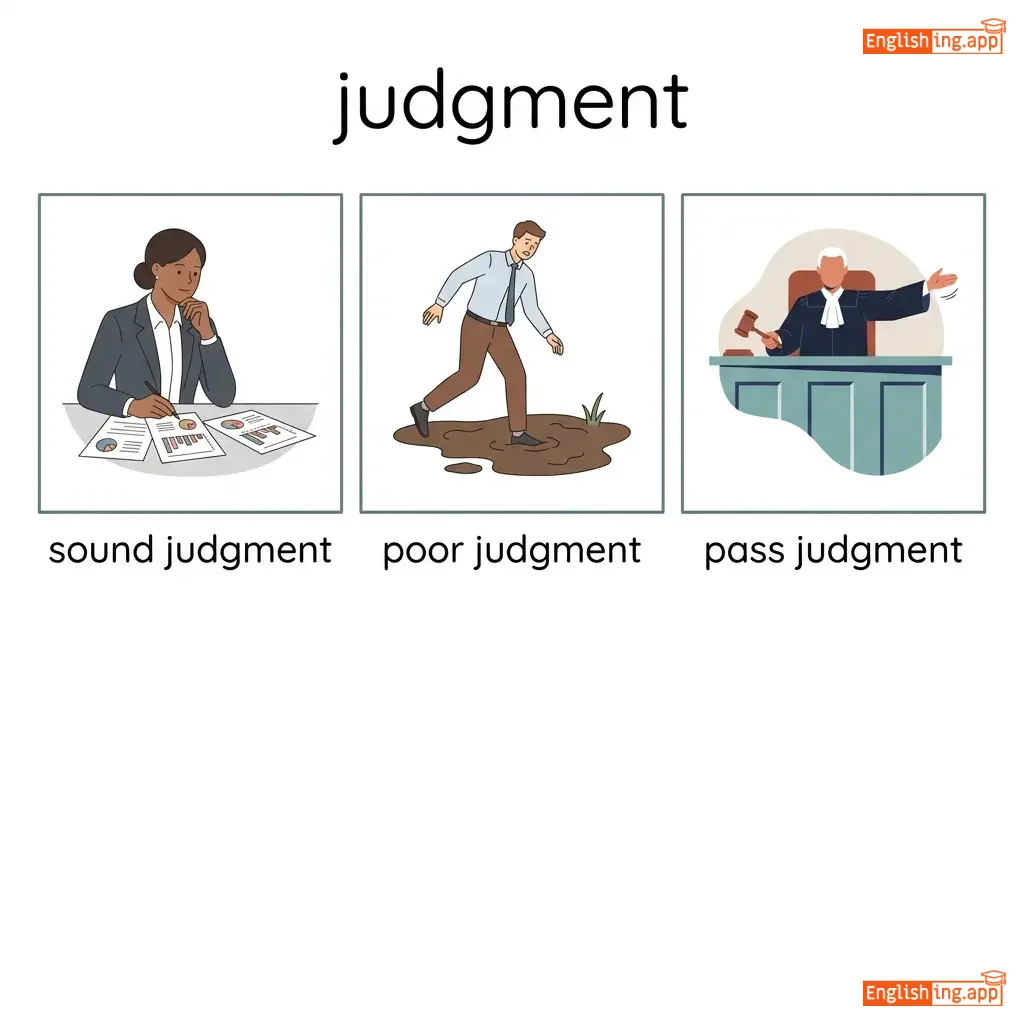
|
判断
pànduàn
••••••
|
- •••••• | - •••••• | - •••••• | - •••••• |
the ability to make considered decisions or come to sensible conclusions
••••••
|
Her judgment in financial matters is highly respected. |
她在财务事务上的判断受到高度尊重。
Tā zài cáiwù shìwù shàng de pànduàn shòudào gāodù zūnzhòng.
••••••
|
pass judgment |
to give an opinion or decision about something or someone
••••••
|
做出判断
zuòchū pànduàn
••••••
|
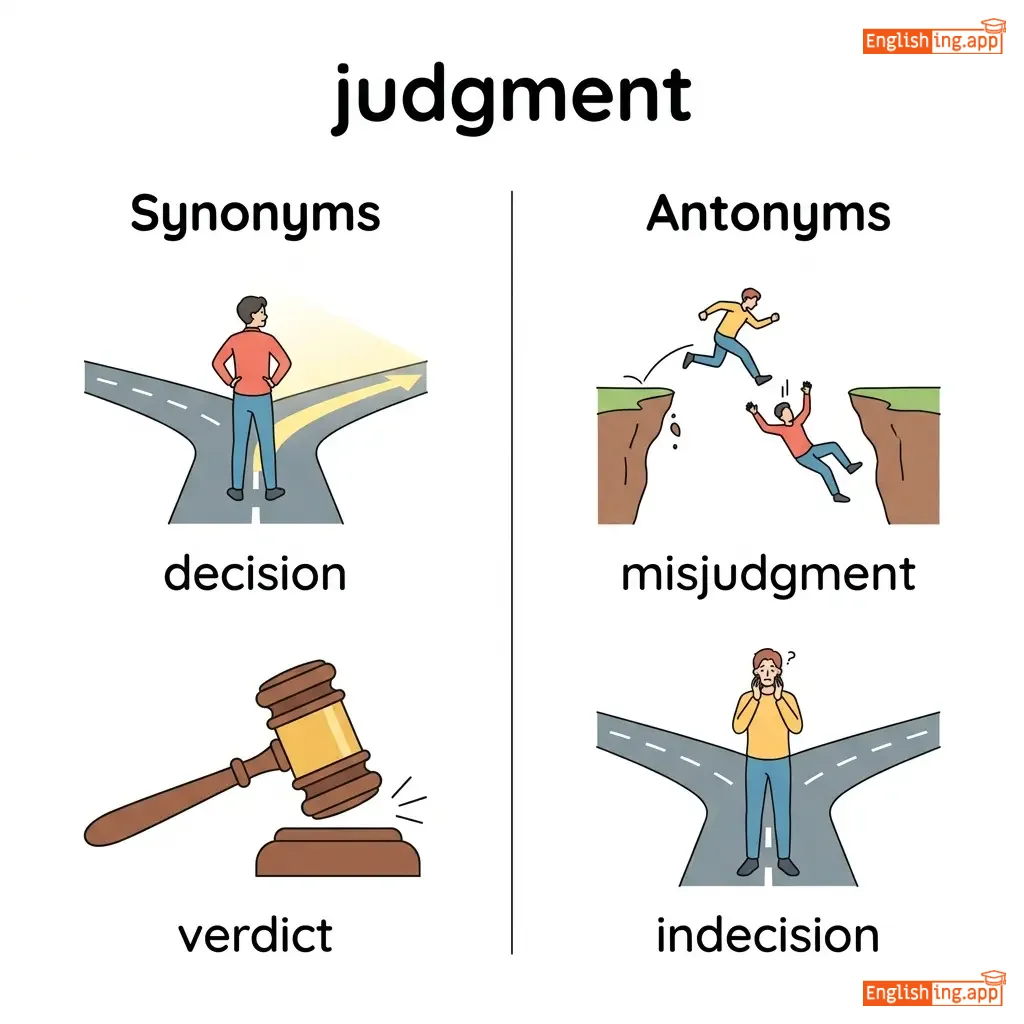
decision, verdict, ruling, opinion, discernment
••••••
|
misjudgment, indecision, ignorance
••••••
|
sound judgment, poor judgment, pass judgment, legal judgment
••••••
|
判断是做决策的一部分
••••••
|
|
👩⚖️
••••••
|
/dʒuːˈdɪʃ.əl/
adjective
(dʒuːˈdɪʃ.əl)
••••••
|
- •••••• |
司法的
sī fǎ de
••••••
|
- •••••• | - •••••• | - •••••• | - •••••• |
relating to judges, courts, or the administration of justice
••••••
|
The new law faced strong judicial review before implementation. |
新法律在实施前接受了严格的司法审查。
Xīn fǎ lǜ zài shí shī qián jiē shòu le yán gé de sī fǎ shěn chá.
••••••
|
judicial review |
the power of courts to examine the actions of the government and invalidate them if unconstitutional
••••••
|
司法审查
sī fǎ shěn chá
••••••
|
legal, court-related, forensic, authoritative
••••••
|
illegal, extrajudicial
••••••
|
judicial authority, judicial review, judicial process, judicial power
••••••
|
司法的相关 — 司法审查与法律相关。
••••••
|
|
🧃
••••••
|
/dʒuːs/
noun
(果汁)
••••••
|
- •••••• |
果汁
guǒ zhī
••••••
|
- •••••• | - •••••• | - •••••• | - •••••• |
the liquid obtained from fruits, vegetables, or meat; also refers to energy or power in informal use
••••••
|
She drank a glass of orange juice with breakfast. |
她早餐喝了一杯橙汁。
Tā zǎocān hēle yī bēi chéng zhī.
••••••
|
juice up |
to make something more exciting or powerful
••••••
|
使某事变得更加兴奋或强大
shǐ mǒu shì biàn dé gèng jiā xīngfèn huò qiángdà
••••••
|
liquid, extract, nectar, sap, essence
••••••
|
solid, pulp
••••••
|
fresh juice, fruit juice, orange juice, juice box
••••••
|
果汁 (guǒ zhī) 给你能量 - 果汁 = 能量饮料
••••••
|
|
☀️
••••••
|
/dʒuˈlaɪ/
noun
(朱莱)
••••••
|
- •••••• |
七月
qi yue
••••••
|
- •••••• | - •••••• | - •••••• | - •••••• |
the seventh month of the year in the Gregorian calendar
••••••
|
July is often the hottest month of the year.
七月通常是一年中最热的月份。
••••••
|
七月通常是一年中最热的月份。
qi yue tongchang shi yi nian zhong zui re de yuefen
••••••
|
- •••••• | - •••••• | - •••••• |
seventh month, midsummer month, July month
••••••
|
January, December
••••••
|
early July, late July, mid-July, July heat, July holidays
••••••
|
July = 七月, summer heat is strong
••••••
|

