|
絵文字
|
単語 | Images | 翻訳 | 過去 | 過去分詞 | 三人称単数 | 動名詞 | 意味 | 例文 | 例文の翻訳 | 表現例 | 表現例の意味 | 表現例の翻訳 | 同義語 | 対義語 | コロケーション | ニーモニック |
|---|---|---|---|---|---|---|---|---|---|---|---|---|---|---|---|---|---|
|
⚙️
••••••
|
/ˌɪnstəˈleɪʃən/
noun
(インストール)
••••••
|

|
インストール
insutooru
••••••
|
- •••••• | - •••••• | - •••••• | - •••••• |
the act or process of putting something in position and making it ready for use
••••••
|
The installation of the new software took less than an hour.
新しいソフトウェアのインストールは1時間もかからなかった。
••••••
|
新しいソフトウェアのインストールは1時間もかからなかった。
Atarashii sofutowea no insutooru wa 1 jikan mo kakaranakatta.
••••••
|
- •••••• | - •••••• | - •••••• |
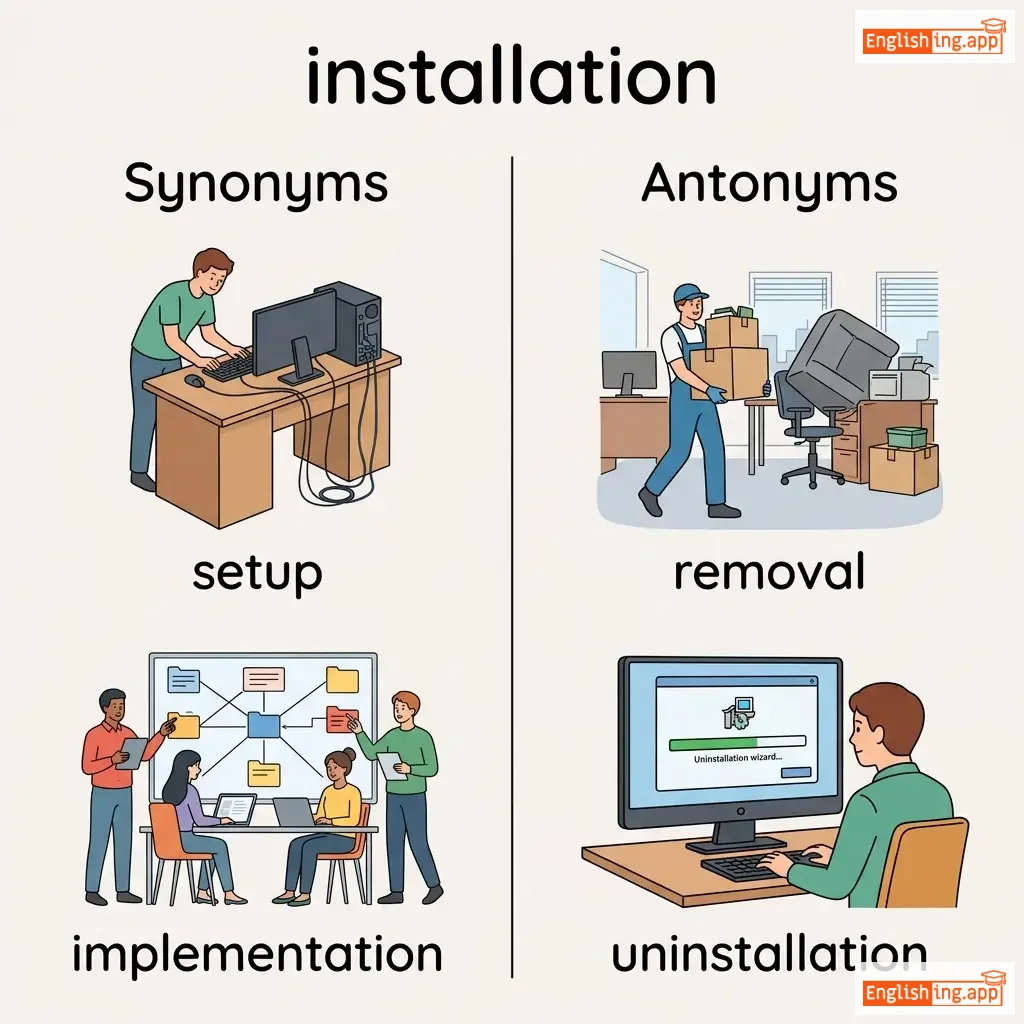
setup, implementation, deployment, placement, establishment
••••••
|
removal, uninstallation, dismantling
••••••
|
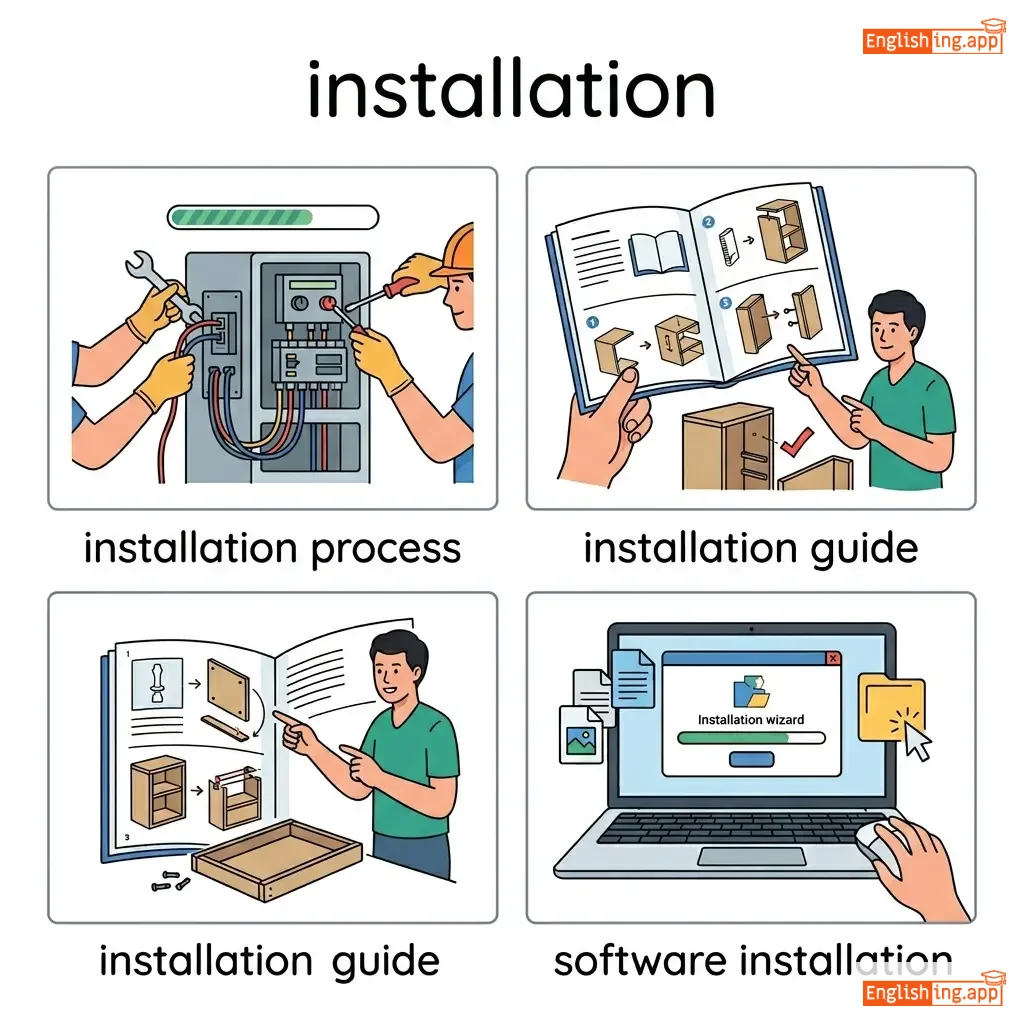
installation process, installation guide, software installation, electrical installation
••••••
|
インストールは物を設置すること、インストールプロセスは使えるようにすることを意味します。
••••••
|
|
📌
••••••
|
/ˈɪnstəns/
noun
(インスタンス)
••••••
|
- •••••• |
例
rei
••••••
|
- •••••• | - •••••• | - •••••• | - •••••• |
An example or single occurrence of something.
••••••
|
This is just one instance of his generosity. |
これは彼の寛大さの一例です。
Kore wa kare no kandaisa no ichirei desu.
••••••
|
for instance |
As an example.
••••••
|
例えば
tatoeba
••••••
|
example, case, occurrence, illustration, situation
••••••
|
generalization, whole
••••••
|
in this instance, one instance, rare instance, for instance
••••••
|
インスタンスは'即時の例'を意味します—それが例または示唆です。
••••••
|
|
⚡
••••••
|
/ˈɪnstənt/
noun/adjective
(インスタント)
••••••
|
- •••••• |
瞬間
shunkan
••••••
|
- •••••• | - •••••• | - •••••• | - •••••• |
A very short period of time; happening immediately.
••••••
|
He replied in an instant without hesitation. |
彼は躊躇うことなく瞬時に返答した。
Kare wa chūchō suru koto naku shunji ni hentō shita.
••••••
|
in an instant |
very quickly; immediately
••••••
|
瞬間
shunkan
••••••
|
moment, second, flash, immediate, prompt
••••••
|
delay, wait
••••••
|
instant coffee, instant reply, instant success, in an instant
••••••
|
瞬間 = 一瞬で反応する瞬間!
••••••
|
|
⚡
••••••
|
/ˈɪnstəntli/
adverb
(インスタントリー)
••••••
|
- •••••• |
すぐに
suguni
••••••
|
- •••••• | - •••••• | - •••••• | - •••••• |
immediately, without any delay
••••••
|
He replied instantly to the message.
彼はすぐにメッセージに返事をした。
••••••
|
彼はすぐにメッセージに返事をした。
Kare wa sugu ni messeeji ni henji o shita.
••••••
|
instantly recognizable
すぐに認識できる
••••••
|
easy to identify immediately
••••••
|
簡単に認識できる
kantan ni ninshiki dekiru
••••••
|
immediately, promptly, right away, straightaway, at once
••••••
|
later, eventually, slowly
••••••
|
respond instantly, disappear instantly, instantly available, instantly clear
••••••
|
インスタントコーヒーのように、すぐに!
••••••
|
|
🔄
••••••
|
/ɪnˈstɛd/
adverb
(インステッド)
••••••
|
- •••••• |
代わりに
kawari ni
••••••
|
- •••••• | - •••••• | - •••••• | - •••••• |
As an alternative or substitute.
••••••
|
She didn’t buy the dress; instead, she chose a pair of shoes.
彼女はドレスを買わなかった。代わりに、彼女は靴を選んだ。
••••••
|
彼女はドレスを買わなかった。代わりに、彼女は靴を選んだ。
Kanojo wa doresu o kawanakatta. Kawari ni, kanojo wa kutsu o eranda.
••••••
|
instead of
代わりに
••••••
|
In place of.
••••••
|
代わりに
kawari ni
••••••
|
alternatively, rather, otherwise, as a substitute
••••••
|
as well, together, along
••••••
|
chose instead, instead of, use instead, prefer instead
••••••
|
Insteadは、ドレスの代わりに靴を選ぶような代替選択肢です。
••••••
|
|
🐾
••••••
|
/ˈɪnstɪŋkt/
noun
(インスティンクト)
••••••
|
- •••••• |
本能
honnou
••••••
|
- •••••• | - •••••• | - •••••• | - •••••• |
A natural way of behaving or reacting that does not require learning.
••••••
|
Birds build nests by instinct. |
鳥は本能で巣を作ります。
Tori wa honnō de su o tsukurimasu.
••••••
|
animal instinct |
natural, unlearned behavior of animals
••••••
|
動物の本能
dōbutsu no honnō
••••••
|
intuition, impulse, tendency, drive, reflex
••••••
|
reason, logic
••••••
|
natural instinct, survival instinct, maternal instinct, instinct tells
••••••
|
Instinct = 本能 → 思考せずに行動する。
••••••
|
|
🏛️
••••••
|
/ˈɪnstɪˌtjuːt/
noun, verb
(インスティチュート)
••••••
|
- •••••• |
インスティチュート
insuchito
••••••
|
instituted
インスティチュートされた
••••••
|
instituted
インスティチュートされた
••••••
|
institutes
インスティチュートする
••••••
|
instituting
インスティチュートすること
••••••
|
as a noun, an organization founded for a specific purpose; as a verb, to establish or initiate
••••••
|
The university decided to institute new rules for the library.
大学は図書館のために新しいルールを設立することを決定しました。
••••••
|
大学は図書館のために新しいルールを設立することを決定しました。
Daigaku wa toshokan no tame ni atarashī rūru o setsuritsu suru koto o kettei shimashita.
••••••
|
- •••••• | - •••••• | - •••••• |
organization, establishment, foundation, initiate, set up
••••••
|
abolish, disband, dissolve
••••••
|
research institute, technical institute, institute reforms, institute measures
••••••
|
インスティチュートは新しいルールを作る場所です。
••••••
|
|
🏥
••••••
|
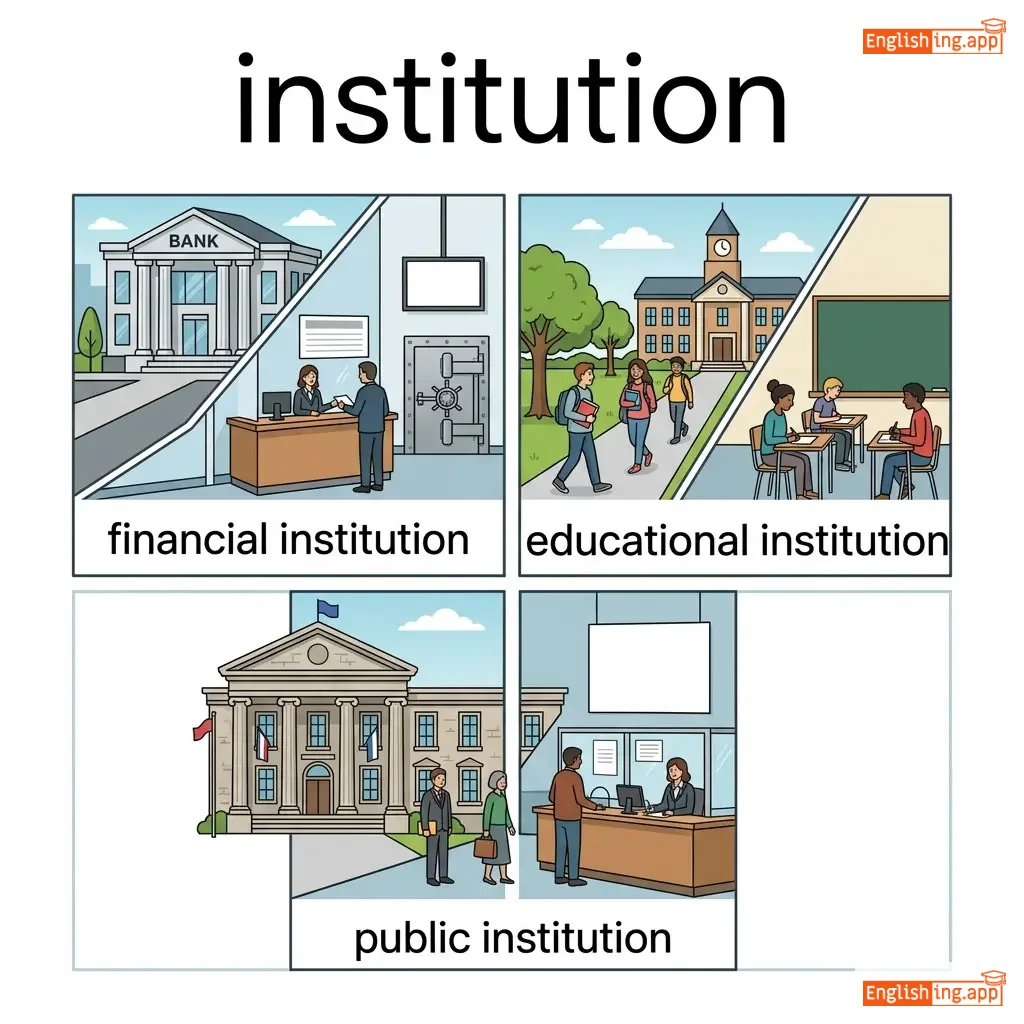
/ˌɪnstɪˈtjuːʃən/
noun
(insutitūshon)
••••••
|
|
機関
kikan
••••••
|
- •••••• | - •••••• | - •••••• | - •••••• |
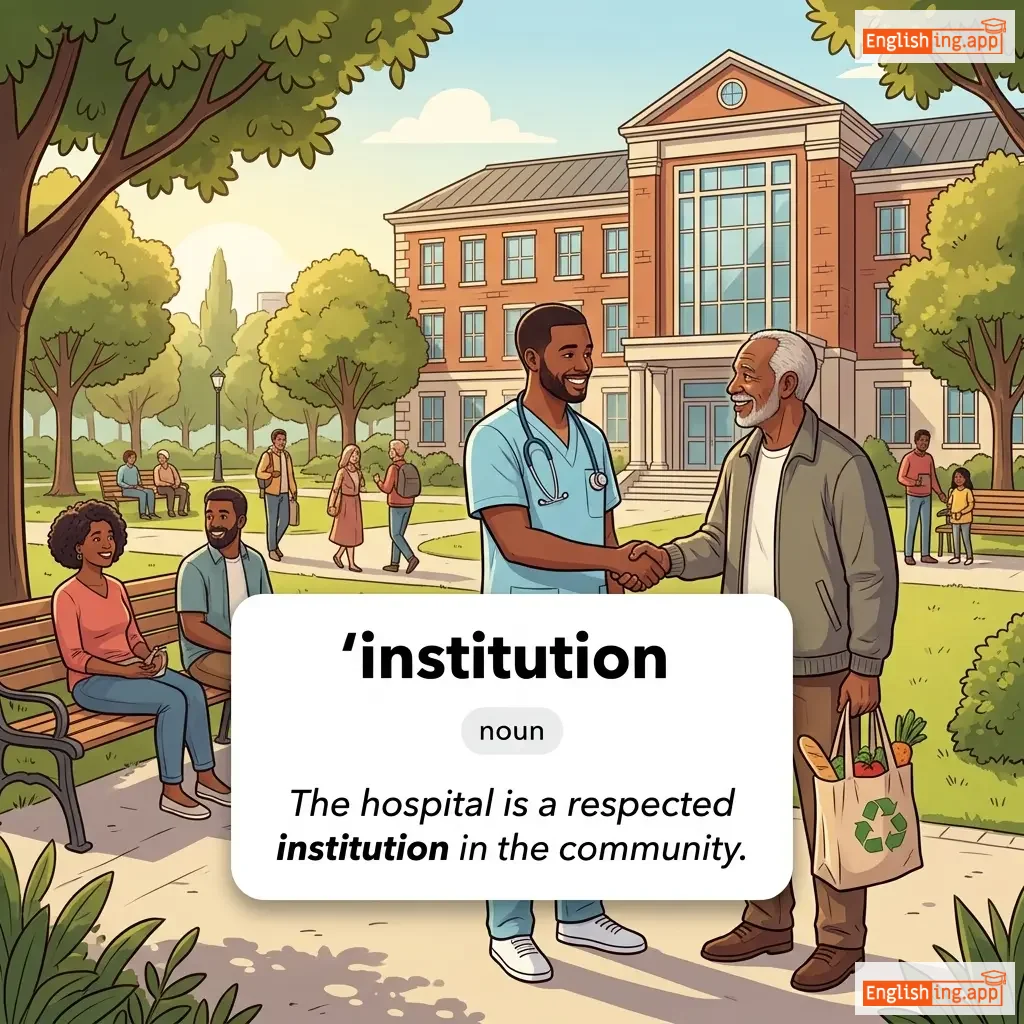
an established organization, especially one dedicated to education, public service, or a particular purpose
••••••
|
The hospital is a respected institution in the community. |
病院は地域社会で尊敬されている機関です。
Byōin wa chiiki shakai de sonkei sarete iru kikan desu.
••••••
|
an institution |
something or someone long established and respected
••••••
|
機関
kikan
••••••
|
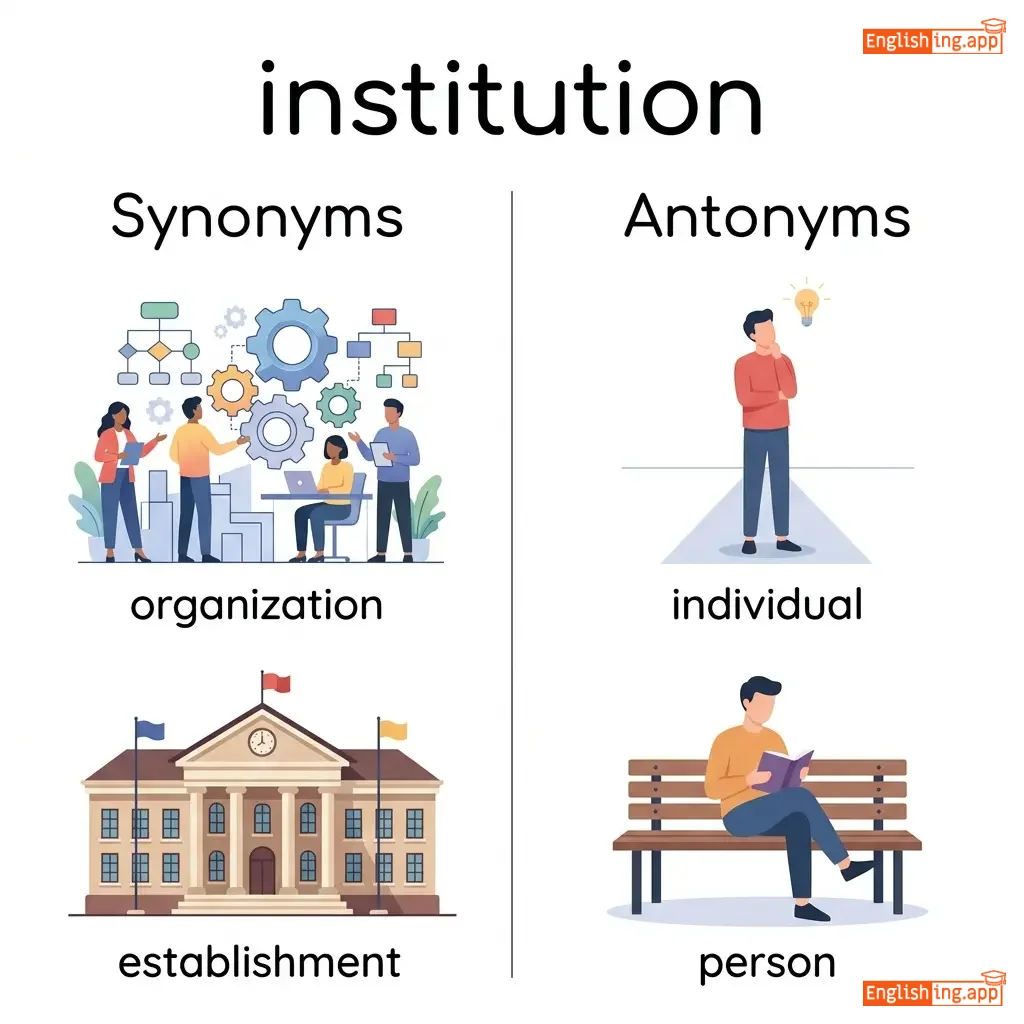
organization, establishment, foundation, facility, entity
••••••
|
individual, person
••••••
|
financial institution, educational institution, public institution, government institution
••••••
|
機関 = 重要な組織、例えば大学や病院のような。
••••••
|
|
🏛️
••••••
|
/ˌɪnstɪˈtjuːʃənl/
adjective
(in-sTi-tyu-sho-nal)
••••••
|
- •••••• |
制度的
seido-teki
••••••
|
- •••••• | - •••••• | - •••••• | - •••••• |
Relating to an organization or established practice.
••••••
|
The government made several institutional reforms in education. |
政府は教育においていくつかの制度的改革を実施しました。
Seifu wa kyōiku ni oite ikutsu ka no seido-teki kaikaku o jisshi shimashita.
••••••
|
- •••••• | - •••••• | - •••••• |
organizational, structural, official, systemic
••••••
|
individual, personal, informal
••••••
|
institutional reform, institutional framework, institutional support, institutional structure
••••••
|
制度的は、制度に関連するという意味で、制度改革を示しています。
••••••
|
|
📘
••••••
|
/ɪnˈstrʌkt/
verb
(インストラクト)
••••••
|

|
指示する、教える
shiji suru, oshieru
••••••
|
instructed
インストラクトされた
••••••
|
instructed
インストラクトされた
••••••
|
instructs
インストラクトする
••••••
|
instructing
インストラクトしている
••••••
|
to tell or teach someone how to do something
••••••
|
The teacher instructed the students to complete the assignment.
教師は生徒に課題を完了するよう指示しました。
••••••
|
教師は生徒に課題を完了するよう指示しました。
Kyōshi wa seito ni kadai o kanryō suru yō shiji shimashita.
••••••
|
instruct someone to do something
誰かに何かをするように指示する
••••••
|
to tell someone officially to perform an action
••••••
|
誰かに何かをするように指示する
dareka ni nanika o suru yō ni shiji suru
••••••
|
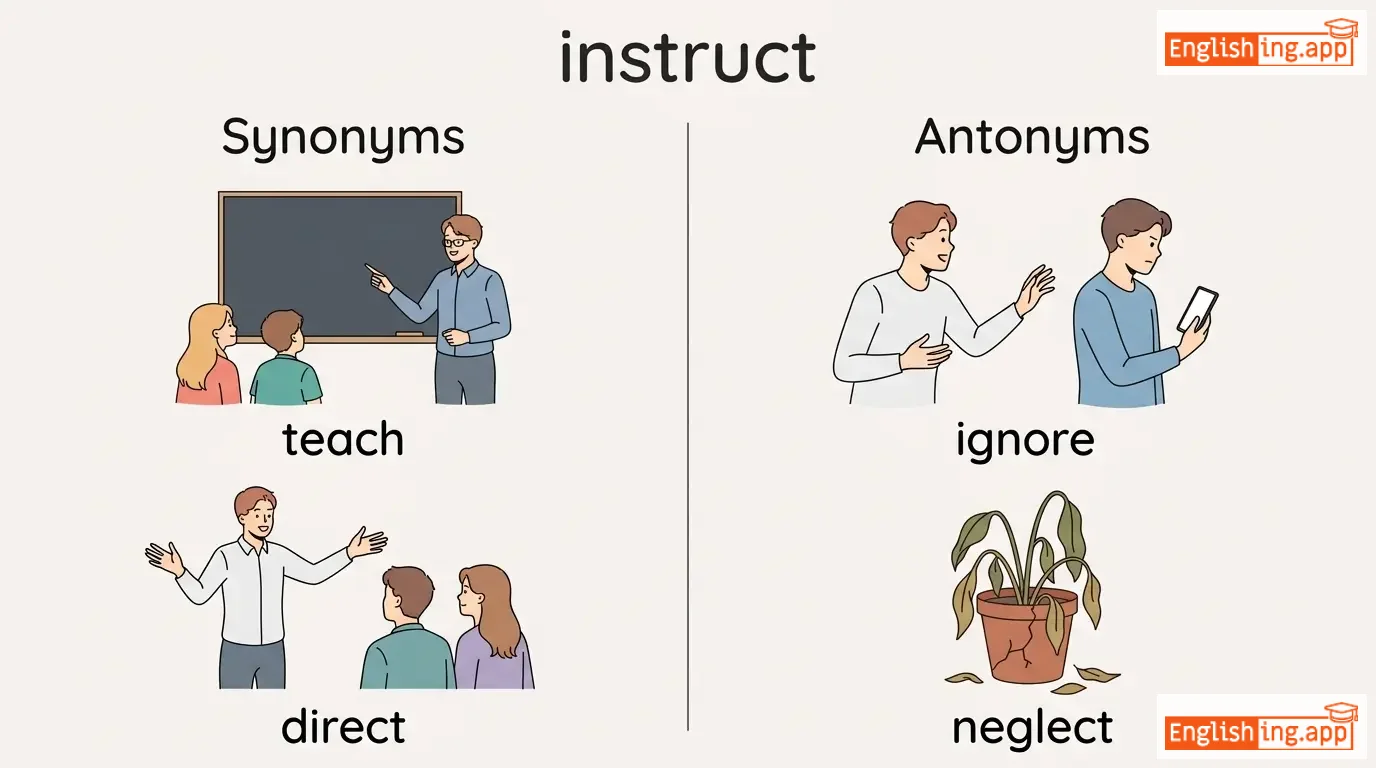
teach, direct, order, command, guide
••••••
|
ignore, neglect, mislead
••••••
|
instruct students, instruct employees, properly instructed, legally instructed
••••••
|
教師は生徒にインストラクトし、課題を達成させる。
••••••
|
|
📘
••••••
|
/ɪnˈstrʌkʃən/
noun
(インストラクション)
••••••
|
- •••••• |
指示
shiji
••••••
|
- •••••• | - •••••• | - •••••• | - •••••• |
Detailed information telling how something should be done or operated.
••••••
|
Please read the instruction carefully before using the machine. |
機械を使用する前に指示をよく読んでください。
Kikai o shiyou suru mae ni shiji o yoku yonde kudasai.
••••••
|
follow instructions |
to do what is directed or advised
••••••
|
指示に従う
shiji ni shitagau
••••••
|
direction, guideline, order, command, teaching
••••••
|
confusion, disorder, disorganization
••••••
|
give instruction, clear instruction, safety instruction, instruction manual
••••••
|
インストラクションはインストラクターの指示をそのまま行うことです。
••••••
|
|
👨🏫
••••••
|
/ɪnˈstrʌktər/
noun
(インストラクター)
••••••
|
- •••••• |
インストラクター
insutorakutā
••••••
|
- •••••• | - •••••• | - •••••• | - •••••• |
A person who teaches a subject or skill.
••••••
|
The driving instructor was very patient with new learners. |
運転インストラクターは新しい生徒にとても忍耐強かった。
Unten insutorakutā wa atarashī seito ni totemo nintai tsuyokatta.
••••••
|
ski instructor |
a person who teaches skiing
••••••
|
スキーインストラクター
sukī insutorakutā
••••••
|
teacher, trainer, tutor, mentor
••••••
|
student, learner, pupil
••••••
|
driving instructor, fitness instructor, course instructor, military instructor
••••••
|
Instructorはインストラクションを教えるので、インストラクターです。
••••••
|
|
🎸
••••••
|
/ˈɪnstrəmənt/
noun
(インストゥルメント)
••••••
|
- •••••• |
楽器
gakki
••••••
|
- •••••• | - •••••• | - •••••• | - •••••• |
A tool or device used for a particular purpose, especially for scientific or musical work.
••••••
|
The doctor used a special instrument during the surgery. |
医師は手術中に特別な楽器を使用しました。
Ishi wa shujutsu-chuu ni tokubetsu na gakki o shiyou shimashita.
••••••
|
musical instrument |
a device used to produce music
••••••
|
楽器
gakki
••••••
|
tool, device, apparatus, implement, utensil
••••••
|
hand, body, natural object
••••••
|
scientific instrument, surgical instrument, precision instrument, musical instrument
••••••
|
インストゥルメントは音楽を作る楽器のことを指します。
••••••
|
|
🎻
••••••
|
/ˌɪnstrʊˈmɛntəl/
adjective
(インストゥルメンタル)
••••••
|
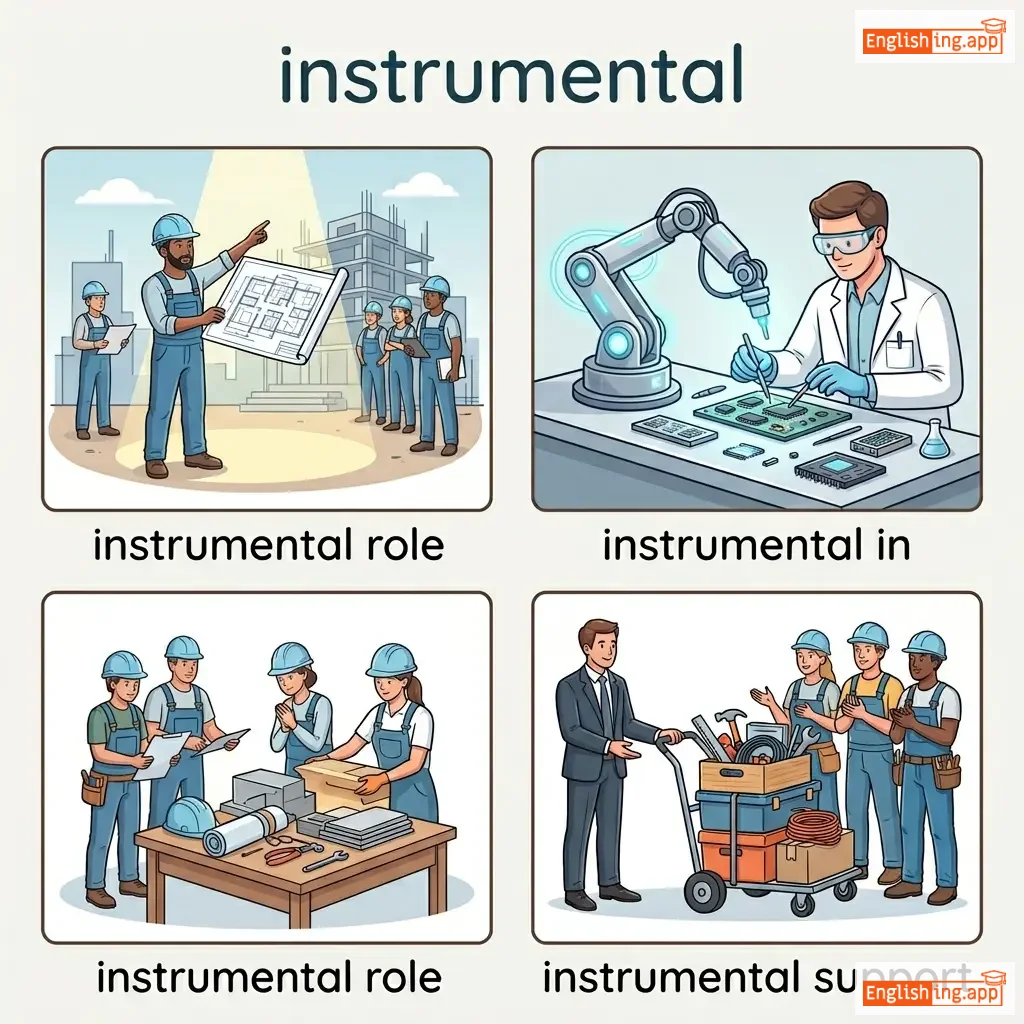
|
重要な
jūyōna
••••••
|
- •••••• | - •••••• | - •••••• | - •••••• |
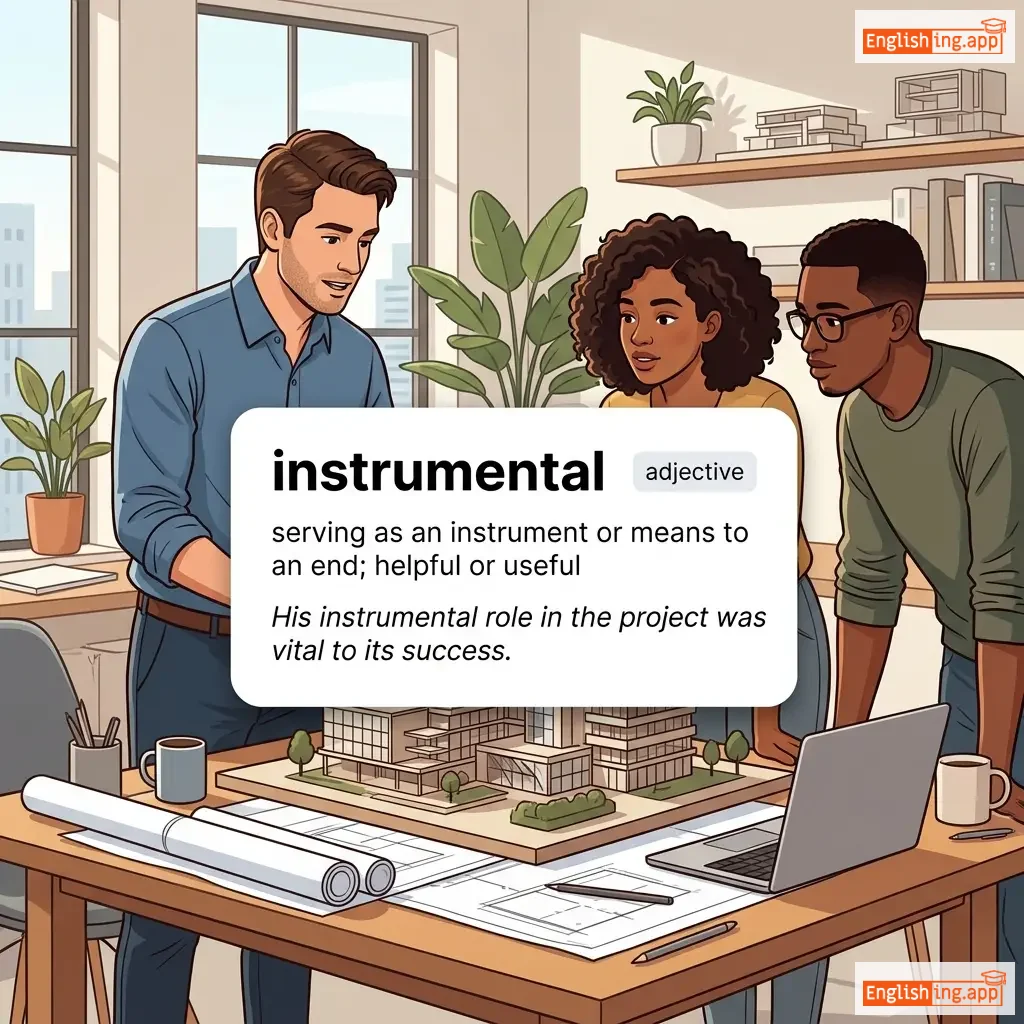
serving as an instrument or means to an end; helpful or useful
••••••
|
His instrumental role in the project was vital to its success.
彼のプロジェクトでのインストゥルメンタルな役割は、成功にとって不可欠でした。
••••••
|
彼のプロジェクトでの重要な役割は、成功にとって不可欠でした。
Kare no purojekuto de no jūyōna yakuwari wa, seikō ni totte fukaketsu deshita.
••••••
|
- •••••• | - •••••• | - •••••• |
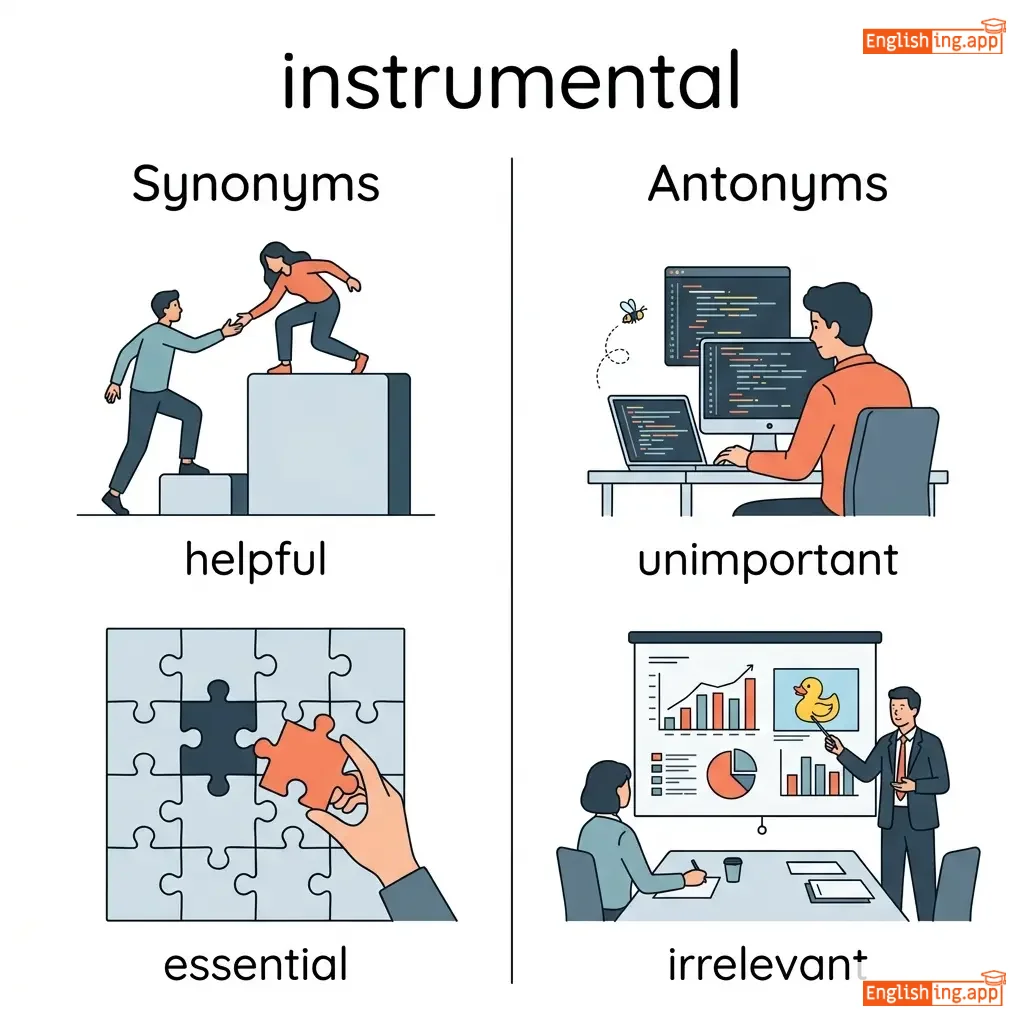
helpful, essential, critical, contributory
••••••
|
unimportant, irrelevant
••••••
|
instrumental role, instrumental in, instrumental support
••••••
|
目標達成のために役立つものは重要である
••••••
|
|
⚠️
••••••
|
/ˌɪnsəˈfɪʃənsi/
noun
(インサフィシェンシー)
••••••
|
- •••••• |
不足
fusoku
••••••
|
- •••••• | - •••••• | - •••••• | - •••••• |
The state of not being enough or not being adequate.
••••••
|
The project failed due to the insufficiency of funds. |
プロジェクトは資金不足のため失敗しました。
Purojekuto wa shikin fusoku no tame shippai shimashita.
••••••
|
- •••••• | - •••••• | - •••••• |
deficiency, inadequacy, shortage, lack, scarcity
••••••
|
abundance, sufficiency, adequacy
••••••
|
insufficiency of funds, cardiac insufficiency, renal insufficiency, insufficiency in resources
••••••
|
不足は資金不足のようなものです。
••••••
|
|
❌
••••••
|
/ˌɪnsəˈfɪʃənt/
adjective
(インサフィシエント)
••••••
|
- •••••• |
不十分
fujūbun
••••••
|
- •••••• | - •••••• | - •••••• | - •••••• |
Not enough; inadequate.
••••••
|
His explanation was insufficient to clear the confusion. |
彼の説明は混乱を解消するには不十分でした。
Kare no setsumei wa konran o kaishō suru ni wa fujūbun deshita.
••••••
|
- •••••• | - •••••• | - •••••• |
inadequate, deficient, meager, scarce, poor
••••••
|
sufficient, adequate, plentiful
••••••
|
insufficient funds, insufficient evidence, insufficient resources
••••••
|
Insufficient という言葉は 'in' + 'sufficient' = 十分でない。
••••••
|
|
😡
••••••
|
/ˈɪnsʌlt/
verb
(インサルト)
••••••
|
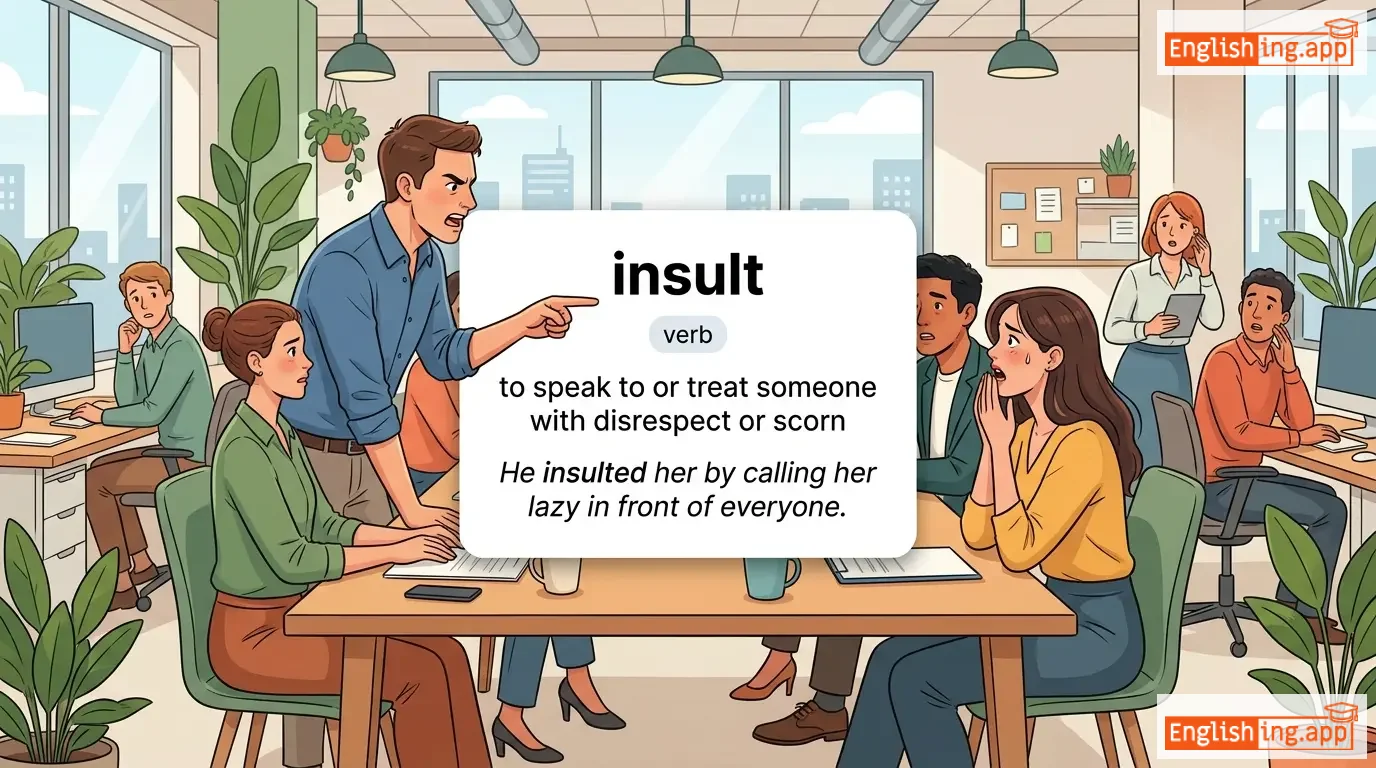
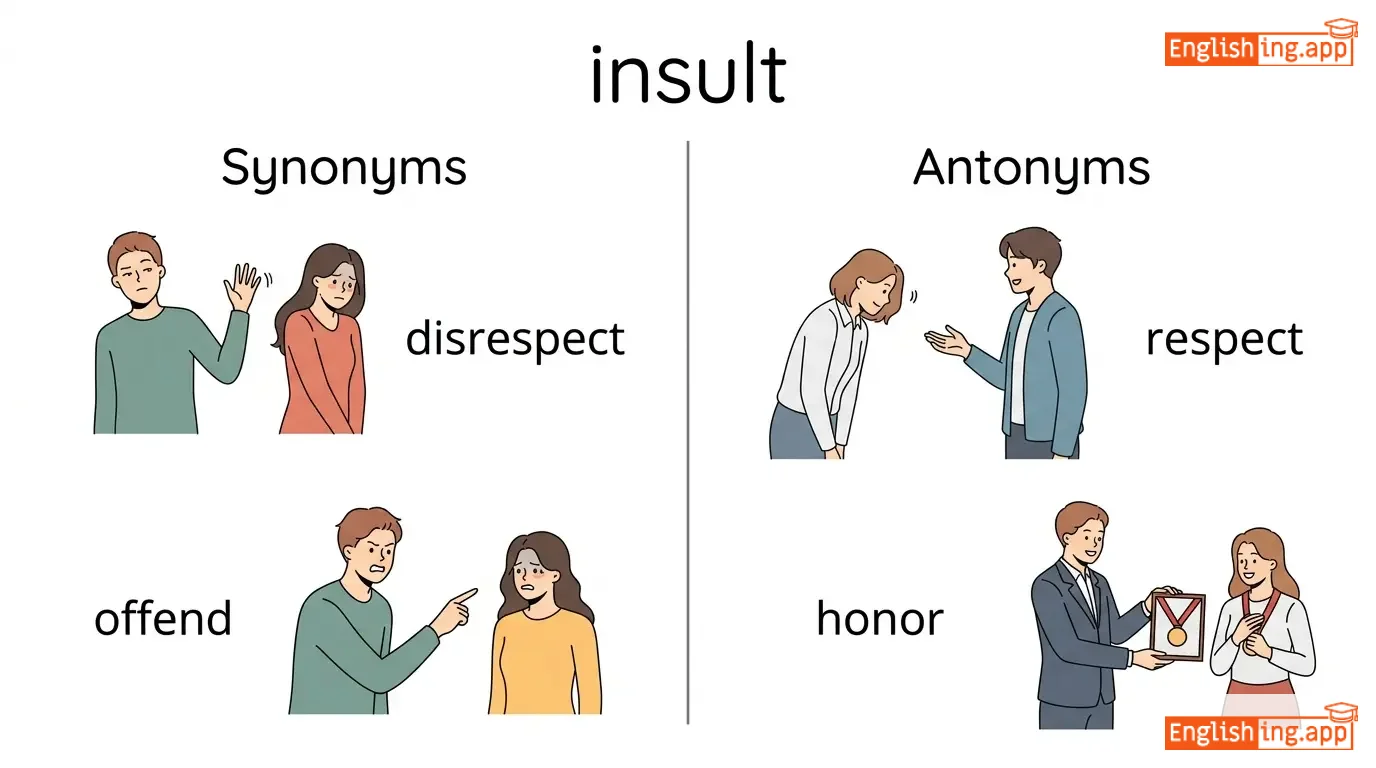
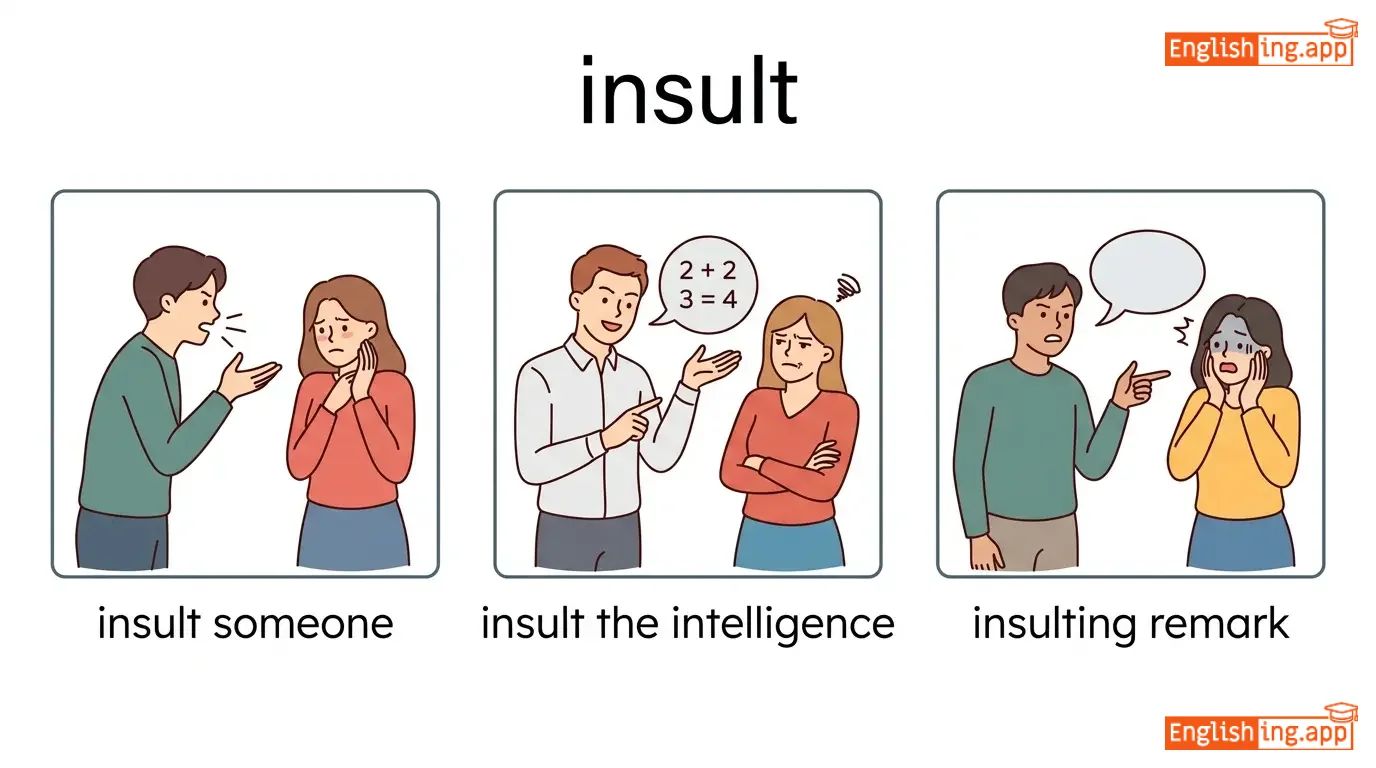
|
侮辱する
bujoku suru
••••••
|
insulted
インサルテッド
••••••
|
insulted
インサルテッド
••••••
|
insults
インサルツ
••••••
|
insulting
インサルティング
••••••
|
to speak to or treat someone with disrespect or scorn
••••••
|
He insulted her by calling her lazy in front of everyone.
彼はみんなの前で彼女を怠け者だと呼んで侮辱しました。
••••••
|
彼はみんなの前で彼女を怠け者だと呼んで侮辱しました。
Kare wa minna no mae de kanojo o namakemono da to yonde bujoku shimashita.
••••••
|
add insult to injury
傷に塩を加える
••••••
|
to make a bad situation worse by adding further harm or disrespect
••••••
|
傷に塩を加える
Kizu ni shio o kuwaeru
••••••
|
disrespect, offend, belittle, demean
••••••
|
respect, honor
••••••
|
insult someone, insult the intelligence, insulting remark
••••••
|
侮辱する、まるで傷口に塩をすり込むように
••••••
|
|
🛡️
••••••
|
/ɪnˈʃʊərəns/
noun
(インシュランス)
••••••
|
- •••••• |
保険
hoken
••••••
|
- •••••• | - •••••• | - •••••• | - •••••• |
An arrangement by which a company provides compensation for loss, damage, or illness in return for a premium.
••••••
|
He bought health insurance to cover medical expenses. |
彼は医療費をカバーするために健康保険に加入しました。
Kare wa iryōhi o kabā suru tame ni kenkō hoken ni nyūsha shimashita.
••••••
|
life insurance |
insurance that pays out on the death of the insured person
••••••
|
生命保険
seimei hoken
••••••
|
coverage, protection, assurance, indemnity
••••••
|
risk, uncertainty, danger
••••••
|
health insurance, car insurance, insurance policy, buy insurance
••••••
|
保険は未来の不確実性に備えるためにあります。
••••••
|
|
🧱
••••••
|
/ɪnˈtækt/
adjective
(インタクト)
••••••
|
- •••••• |
完全
kanzen
••••••
|
- •••••• | - •••••• | - •••••• | - •••••• |
Remaining whole, complete, and undamaged.
••••••
|
Despite the storm, the old house remained intact. |
嵐にもかかわらず、古い家は完全な状態を保っていました。
Arashi ni mo kakawarazu, furui ie wa kanzen na jōtai o tamotte imashita.
••••••
|
- •••••• | - •••••• | - •••••• |
undamaged, whole, unbroken, unharmed, complete
••••••
|
damaged, broken, ruined
••••••
|
remain intact, kept intact, survive intact, preserve intact
••••••
|
IN壊れない、intactは完全を意味します。
••••••
|
|
🍽️
••••••
|
/ˈɪnˌteɪk/
noun
(インテイク)
••••••
|
- •••••• |
摂取
sesshu
••••••
|
- •••••• | - •••••• | - •••••• | - •••••• |
the process of taking something in, especially food or drink
••••••
|
He monitored his daily intake of calories to maintain a healthy diet. |
彼は健康的な食事を維持するために毎日のカロリー摂取量を監視しました。
Kare wa kenkōteki na shokuji o iji suru tame ni mainichi no karorī sesshu-ryō o kanshi shimashita.
••••••
|
- •••••• | - •••••• | - •••••• |
consumption, absorption, intake amount
••••••
|
output, expulsion
••••••
|
calorie intake, food intake, daily intake
••••••
|
摂取は何かを取り入れること、食べ物や飲み物のように。
••••••
|
|
🧩
••••••
|
/ˈɪntɪɡrəl/ or /ɪnˈtɛɡrəl/
adjective
(インテグラル)
••••••
|

|
不可欠
fukaketsu
••••••
|
- •••••• | - •••••• | - •••••• | - •••••• |
Necessary and important as a part of a whole.
••••••
|
Honesty is an integral part of good leadership.
誠実は良いリーダーシップの不可欠な部分です。
••••••
|
誠実は良いリーダーシップの不可欠な部分です。
Seijitsu wa yoi rīdāshippu no fukaketsu na bubun desu.
••••••
|
- •••••• | - •••••• | - •••••• |
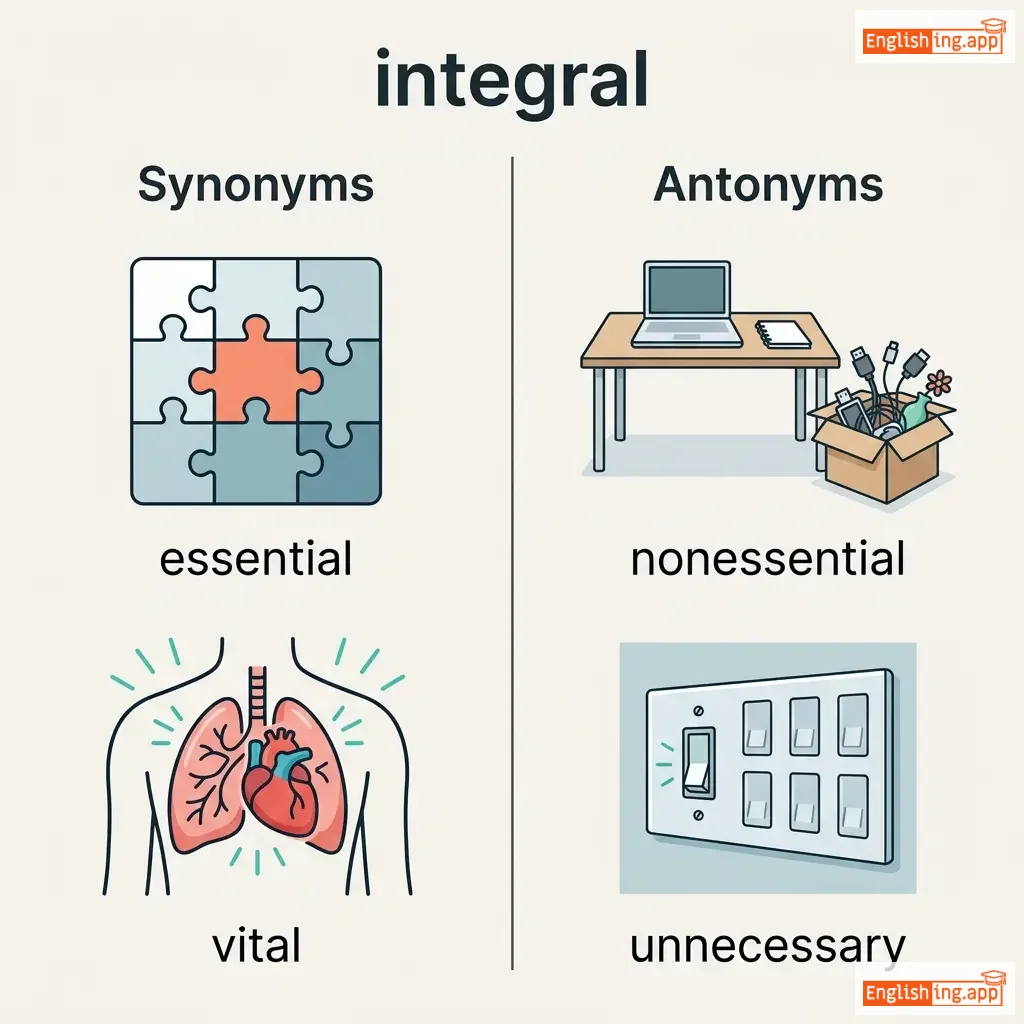
essential, vital, fundamental, crucial, indispensable
••••••
|
nonessential, unnecessary, extraneous
••••••
|
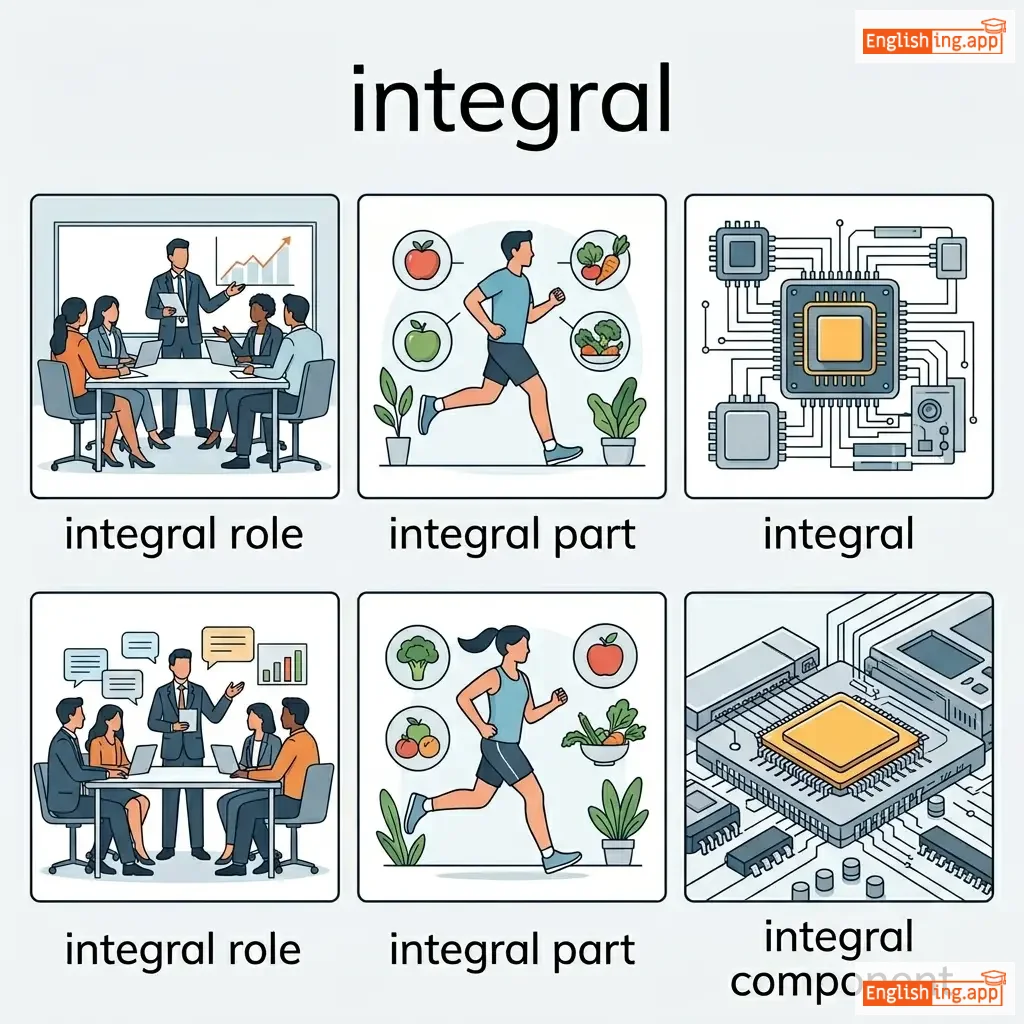
integral role, integral part, integral component, integral element
••••••
|
Integral → 不可欠な一部
••••••
|
|
🔗
••••••
|
/ˈɪntɪɡreɪt/
verb
(インテグレート)
••••••
|
- •••••• |
統合する
tōgō suru
••••••
|
integrated
インテグレーテッド
••••••
|
integrated
インテグレーテッド
••••••
|
integrates
インテグレーツ
••••••
|
integrating
インテグレーティング
••••••
|
To combine or bring together into a unified whole.
••••••
|
The new system integrates data from multiple sources.
新しいシステムは複数のソースからデータを統合します。
••••••
|
新しいシステムは複数のソースからデータを統合します。
Atarashī shisutemu wa fukusū no sōsu kara dēta o tōgō shimasu.
••••••
|
integrate into society
社会に統合する
••••••
|
To become part of a community or culture
••••••
|
社会に統合する
shakai ni tōgō suru
••••••
|
combine, merge, unify, assimilate, incorporate
••••••
|
separate, divide, segregate
••••••
|
integrate technology, integrate system, integrate into, integrate fully
••••••
|
統合 = into + great → 全てをまとめて偉大にする
••••••
|
|
🔗
••••••
|
/ˈɪntɪɡreɪtɪd/
adjective
(インテグレイテッド)
••••••
|

|
統合された
tōgō sareta
••••••
|
- •••••• | - •••••• | - •••••• | - •••••• |
combined or united to form a whole; including all parts or people equally
••••••
|
The company offers an integrated system for managing all business operations. |
その会社は、すべてのビジネス操作を管理するための統合システムを提供しています。
Sono kaisha wa, subete no bijinesu sōsa o kanri suru tame no tōgō shisutemu o teikyō shiteimasu.
••••••
|
- •••••• | - •••••• | - •••••• |
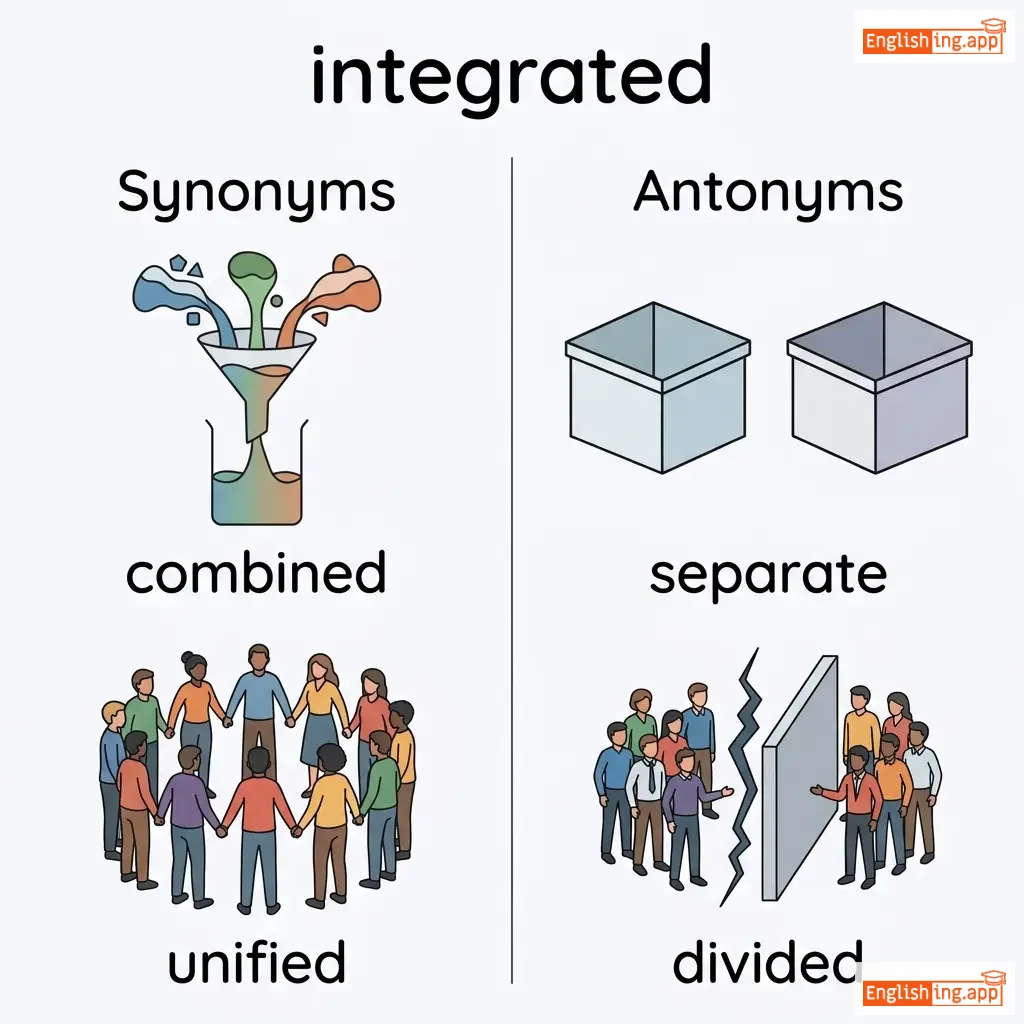
combined, unified, merged, cohesive, connected
••••••
|
separate, divided, isolated
••••••
|
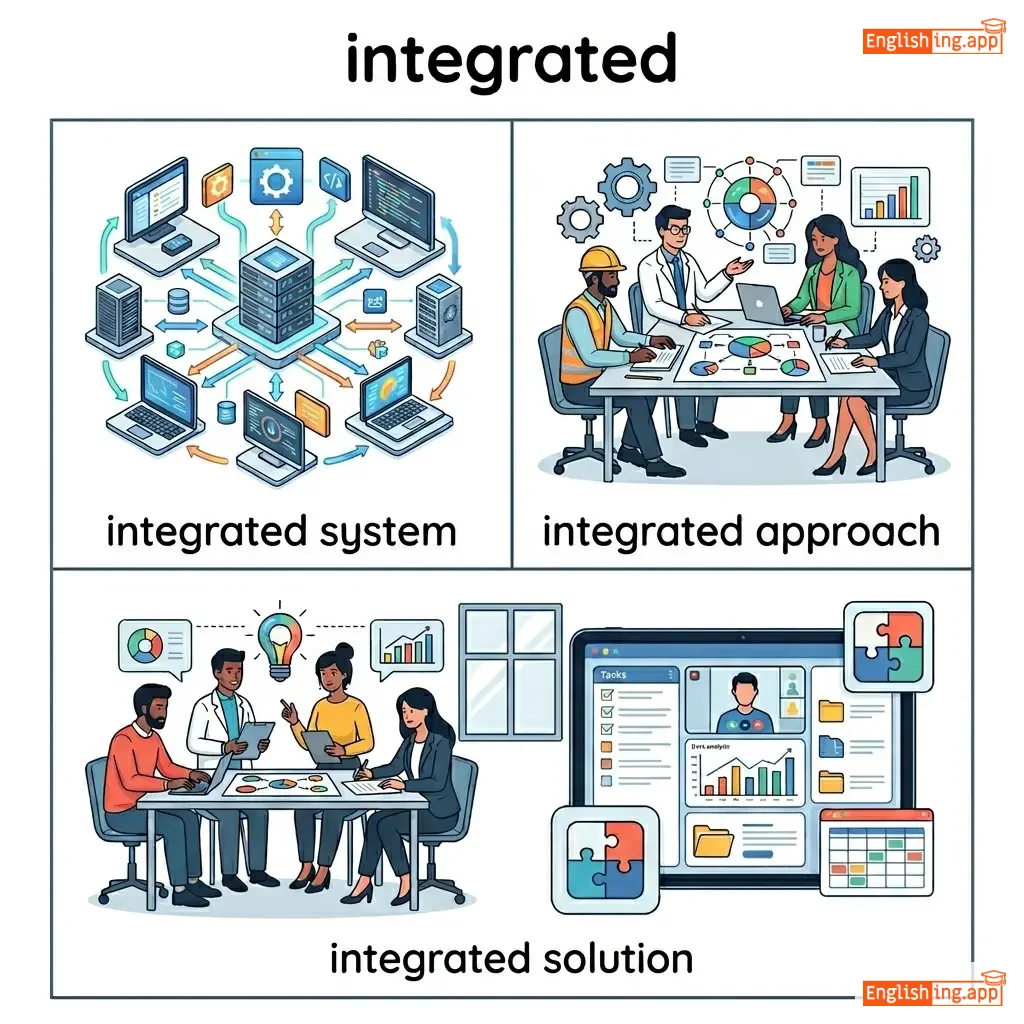
integrated system, integrated approach, integrated solution, fully integrated
••••••
|
統合されたは、すべてを一緒にしてひとつのシステムを作り上げることを意味します。
••••••
|
|
🧩
••••••
|
/ˌɪntɪˈɡreɪʃən/
noun
(インテグレーション)
••••••
|
|
統合
tōgō
••••••
|
- •••••• | - •••••• | - •••••• | - •••••• |
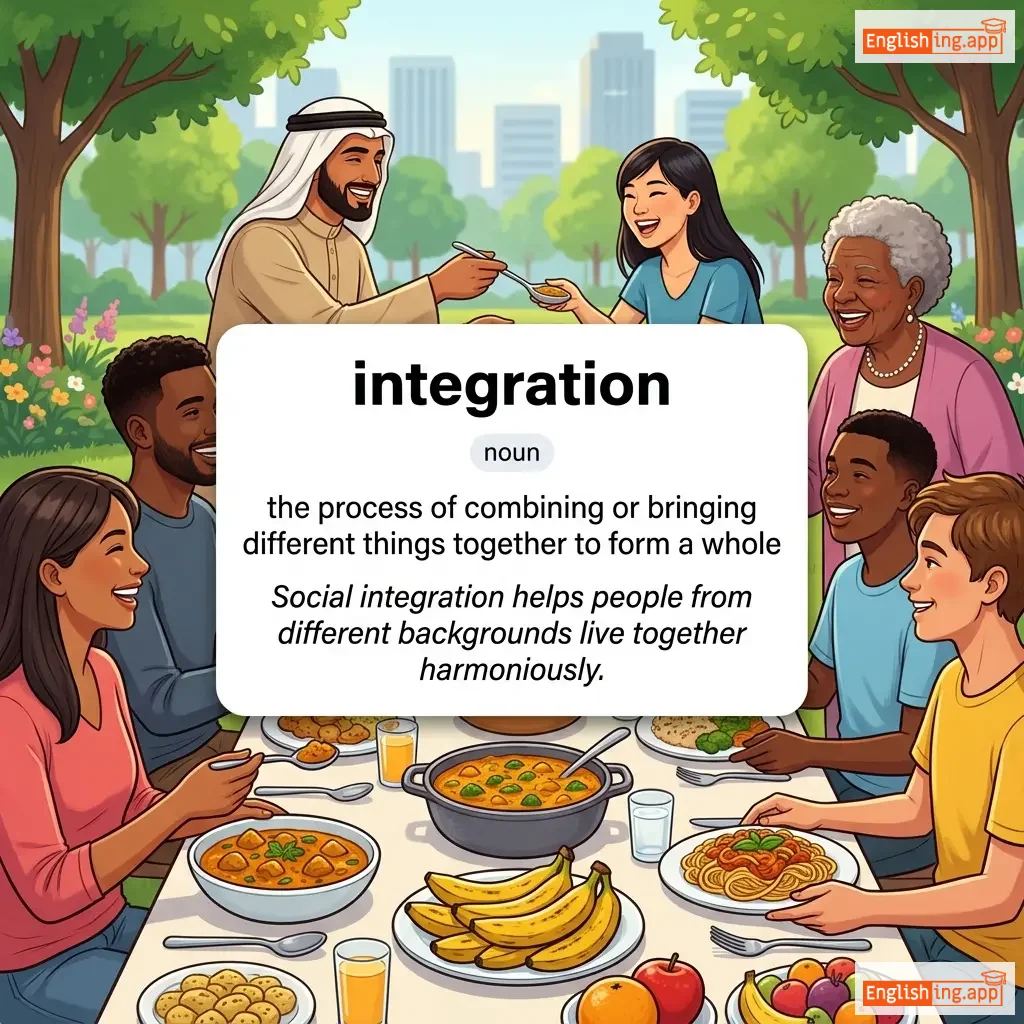
the process of combining or bringing different things together to form a whole
••••••
|
Social integration helps people from different backgrounds live together harmoniously. |
社会的統合は、異なる背景を持つ人々が調和して一緒に住むのを助けます。
Shakaiteki tōgō wa, kotonaru haikei o motsu hitobito ga chōwa shite issho ni sumu no o tasukemasu.
••••••
|
- •••••• | - •••••• | - •••••• |
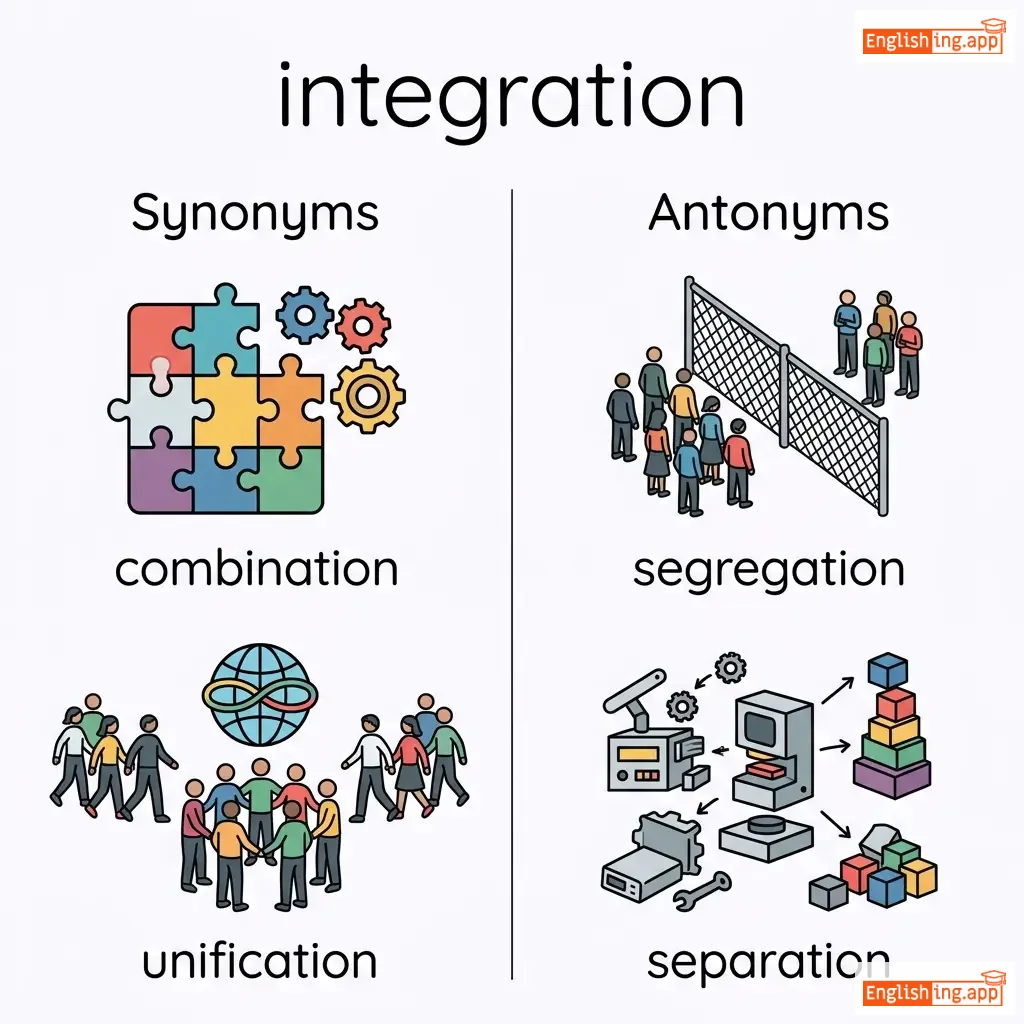
combination, unification, merging, inclusion, assimilation
••••••
|
segregation, separation
••••••
|
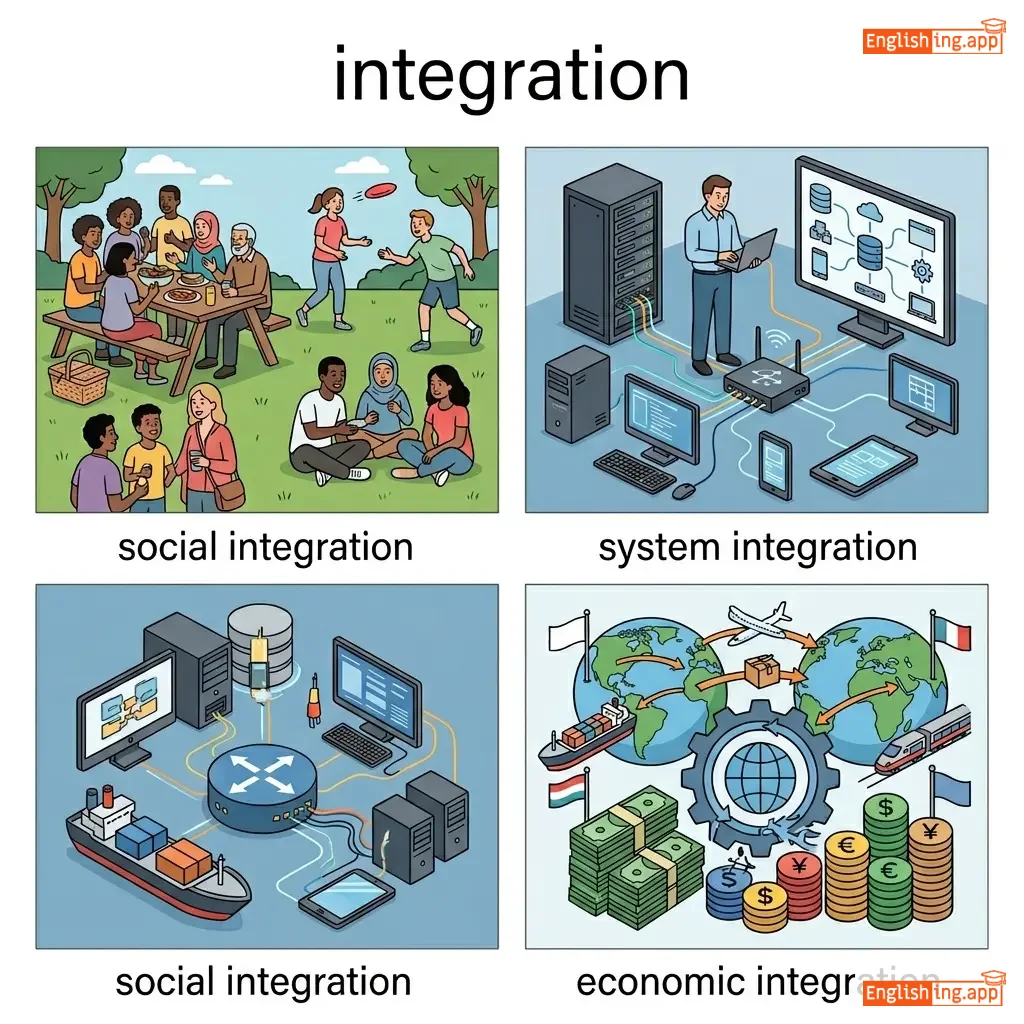
social integration, system integration, economic integration, cultural integration
••••••
|
統合とは「すべてを一つにまとめる」 – すべてを一つの部分にすること!
••••••
|
|
🕊️
••••••
|
/ɪnˈtɛɡrɪti/
noun
(インテグリティ)
••••••
|


|
誠実
seijitsu
••••••
|
- •••••• | - •••••• | - •••••• | - •••••• |
The quality of being honest and having strong moral principles.
••••••
|
She is admired for her honesty and integrity. |
彼女はその正直さと誠実さで賞賛されています。
Kanojo wa sono shōjikisa to seijitsusa de shōsan sareteimasu.
••••••
|
professional integrity |
Adherence to ethical standards in professional life
••••••
|
職業倫理
shokugyō rinri
••••••
|
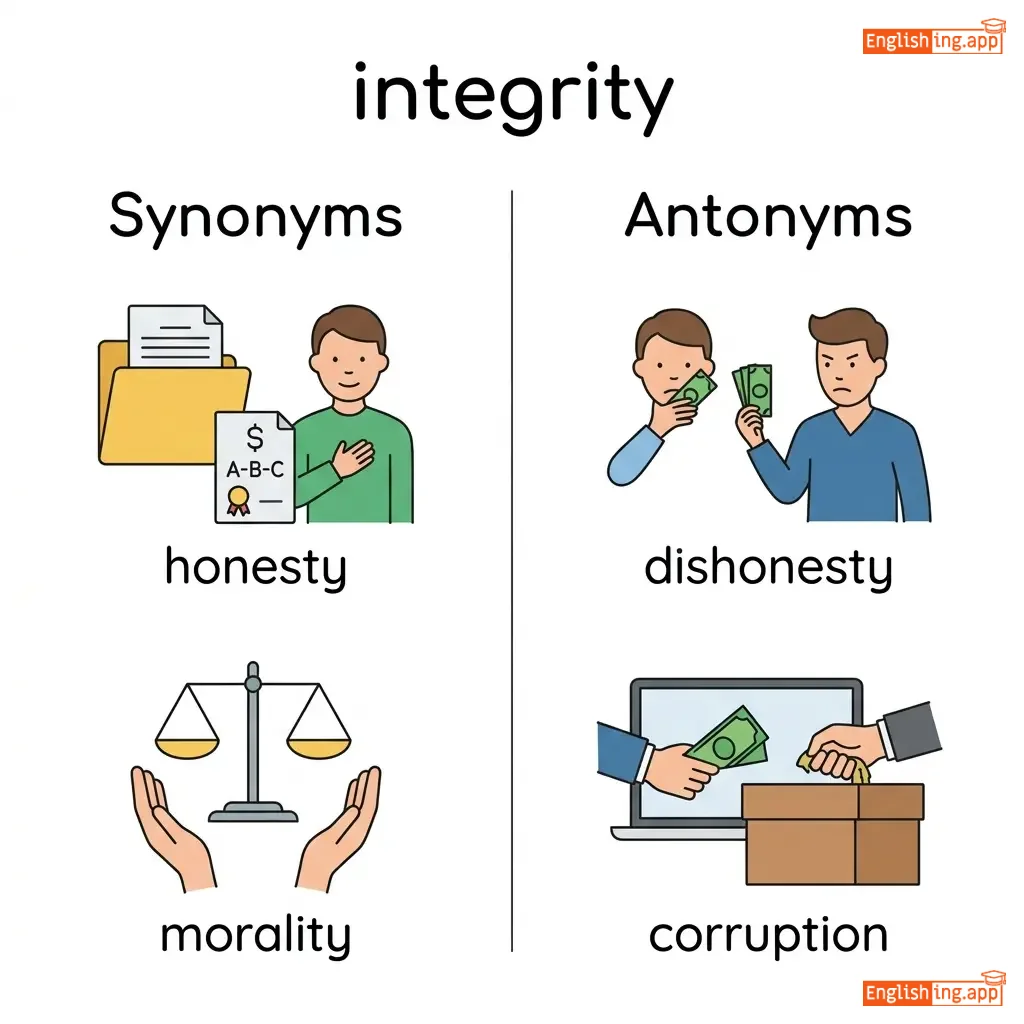
honesty, morality, righteousness, uprightness, virtue
••••••
|
dishonesty, corruption, deceit
••••••
|
personal integrity, professional integrity, maintain integrity, integrity of data
••••••
|
Integrity = in + great → greatの中に誠実がある
••••••
|
|
📚
••••••
|
/ˌɪn.təlˈɛk.tʃu.əl/
adjective, noun
(インテレクチュアル)
••••••
|
- •••••• |
知的な
chiteki na
••••••
|
- •••••• | - •••••• | - •••••• | - •••••• |
Relating to the intellect; a person who engages in critical thinking and study.
••••••
|
She enjoys intellectual discussions about philosophy. |
彼女は哲学についての知的な議論を楽しんでいます。
Kanojo wa tetsugaku ni tsuite no chiteki na giron o tanoshindeimasu.
••••••
|
intellectual curiosity |
a strong desire to learn and understand new things
••••••
|
知的好奇心
chiteki kōkishin
••••••
|
academic, scholarly, thinker, brainy
••••••
|
ignorant, uneducated
••••••
|
intellectual debate, intellectual growth, intellectual pursuit, intellectual class
••••••
|
知的な = 知識 + 実際、つまり知性を実際に活用すること
••••••
|
|
🤖
••••••
|
/ɪnˈtɛl.ɪ.dʒəns/
noun
(インテリジェンス)
••••••
|

|
知能
chinou
••••••
|
- •••••• | - •••••• | - •••••• | - •••••• |
The ability to acquire and apply knowledge and skills.
••••••
|
Artificial intelligence is transforming industries worldwide. |
人工知能は世界中の産業を変革しています。
jinkou chinou wa sekaijuu no sangyou wo henka shiteimasu.
••••••
|
emotional intelligence |
the ability to understand and manage one's own emotions and those of others
••••••
|
感情知能
kanjou chinou
••••••
|
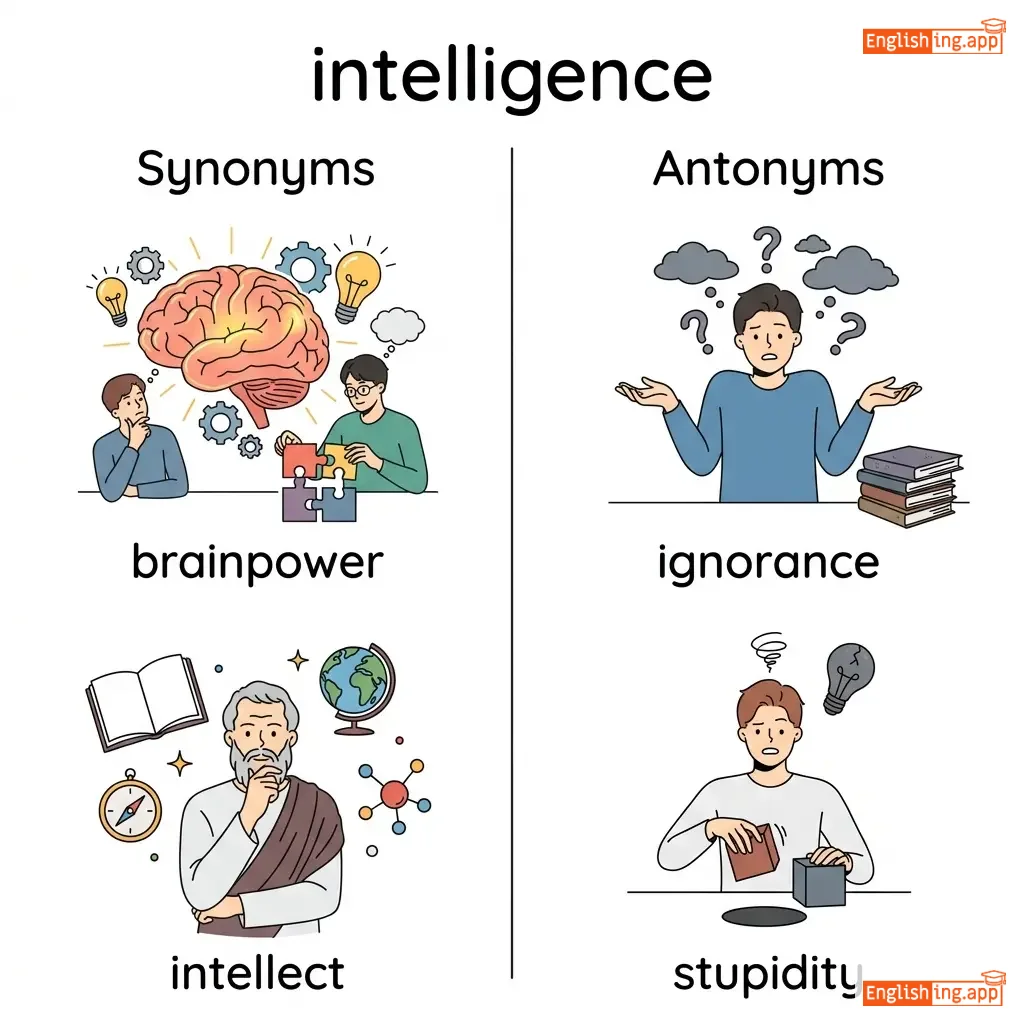
brainpower, intellect, reasoning, understanding
••••••
|
ignorance, stupidity
••••••
|
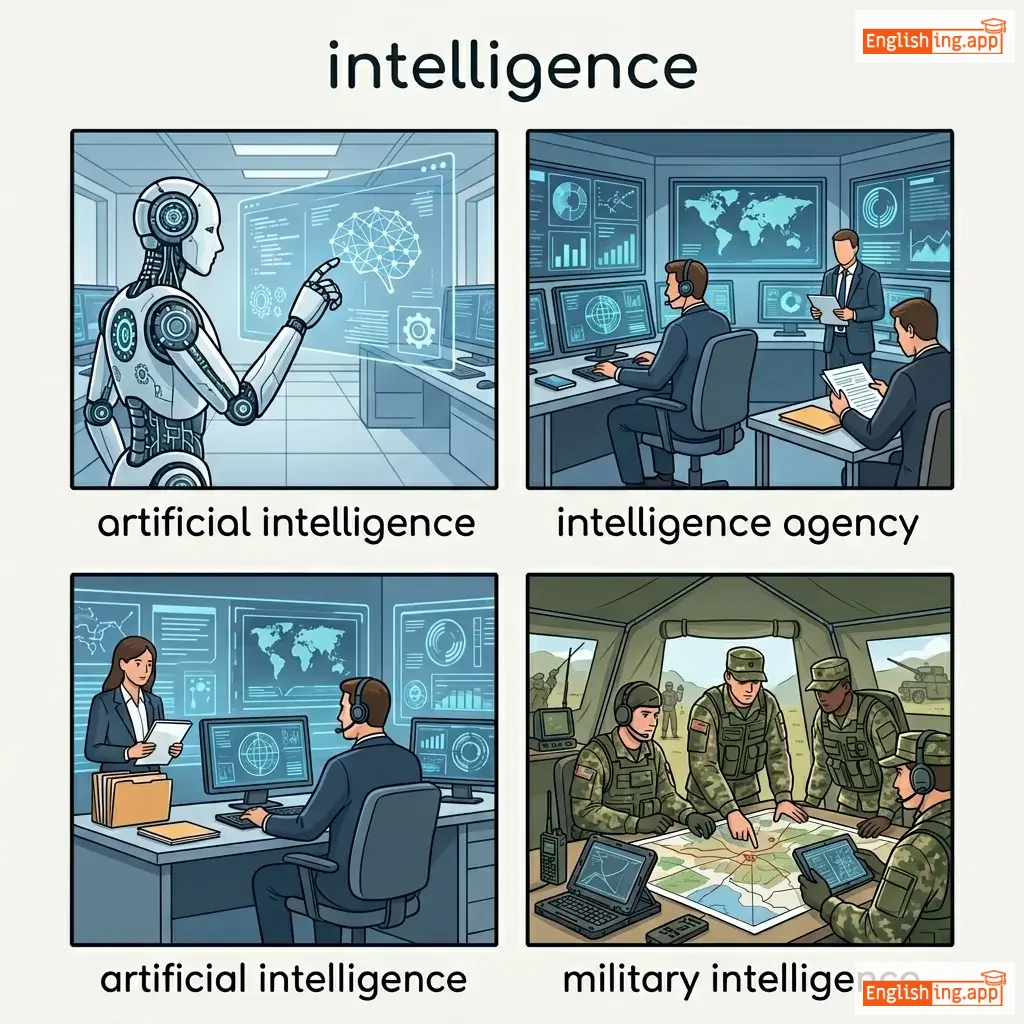
artificial intelligence, intelligence agency, military intelligence, human intelligence
••••••
|
AI = 人工知能、機械の中の知能を意味します!
••••••
|
|
🧠
••••••
|
/ɪnˈtɛlɪdʒənt/
adjective
(インテリジェント)
••••••
|
- •••••• |
賢い
kashikoi
••••••
|
- •••••• | - •••••• | - •••••• | - •••••• |
Having or showing high mental capacity, quick to learn and understand.
••••••
|
She is one of the most intelligent students in the class.
彼女はクラスで最もインテリジェントな学生の一人です。
••••••
|
彼女はクラスで最もインテリジェントな学生の一人です。
Kanojo wa kurasu de mottomo interijento na gakusei no hitori desu.
••••••
|
intelligent guess
インテリジェントな推測
••••••
|
A well-informed or reasonable guess based on available knowledge.
••••••
|
インテリジェントな推測
interijento na suisoku
••••••
|
clever, smart, bright, brainy, knowledgeable
••••••
|
stupid, dull, ignorant
••••••
|
intelligent design, intelligent choice, highly intelligent, intelligent system
••••••
|
Intelは賢いコンピュータ、だからこの言葉も賢い意味を持っています。
••••••
|
|
🎯
••••••
|
/ɪnˈtɛnd/
verb
(インテンド)
••••••
|

|
意図する
itosuru
••••••
|
intended
インテンドッド
••••••
|
intended
インテンドッド
••••••
|
intends
インテンズ
••••••
|
intending
インテンドイング
••••••
|
To have a plan or purpose in mind; to aim to do something.
••••••
|
I intend to finish my work before dinner.
私は夕食前に仕事を終わらせるつもりです。
••••••
|
私は夕食前に仕事を終わらせるつもりです。
Watashi wa yūshoku mae ni shigoto o owaraseru tsumori desu.
••••••
|
well-intended
良い意図で
••••••
|
done with good intentions
••••••
|
良い意図で
yoi ito de
••••••
|
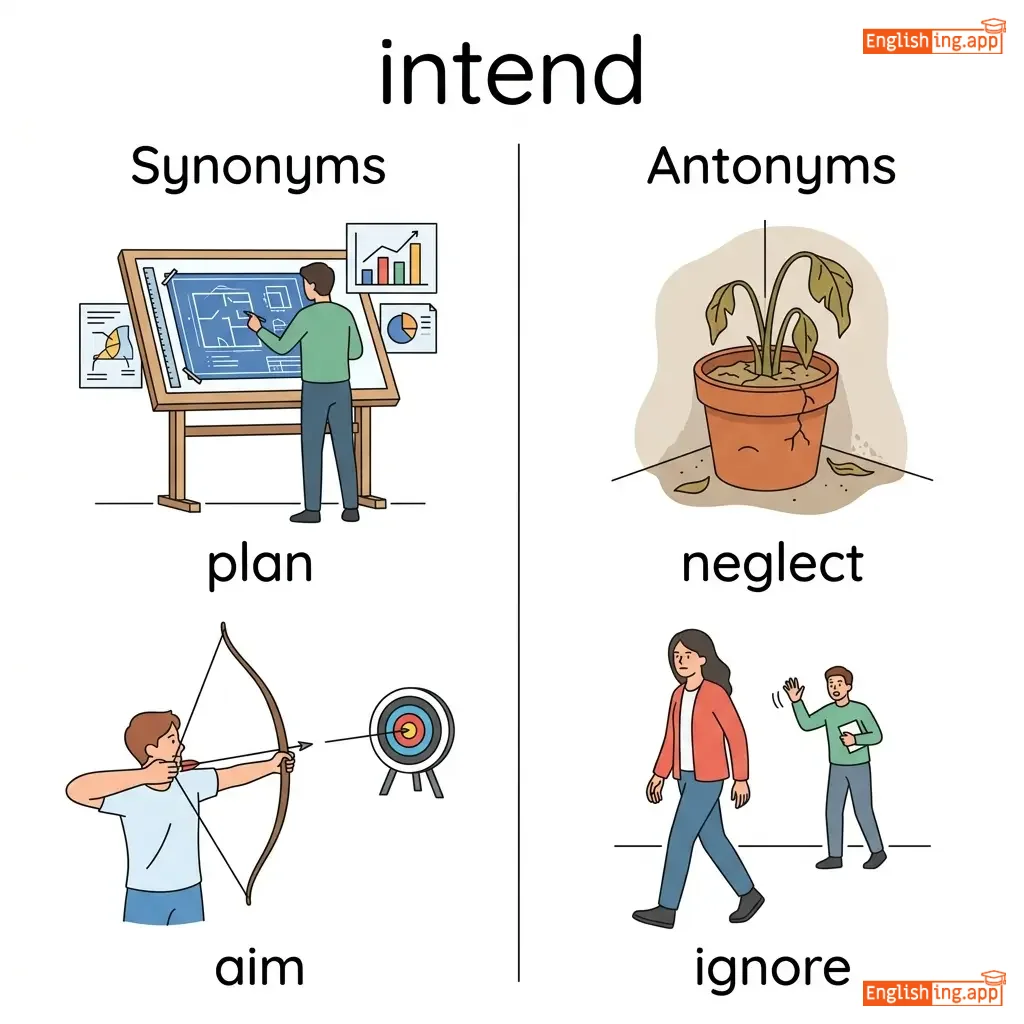
plan, aim, mean, propose, design
••••••
|
neglect, ignore, abandon
••••••
|
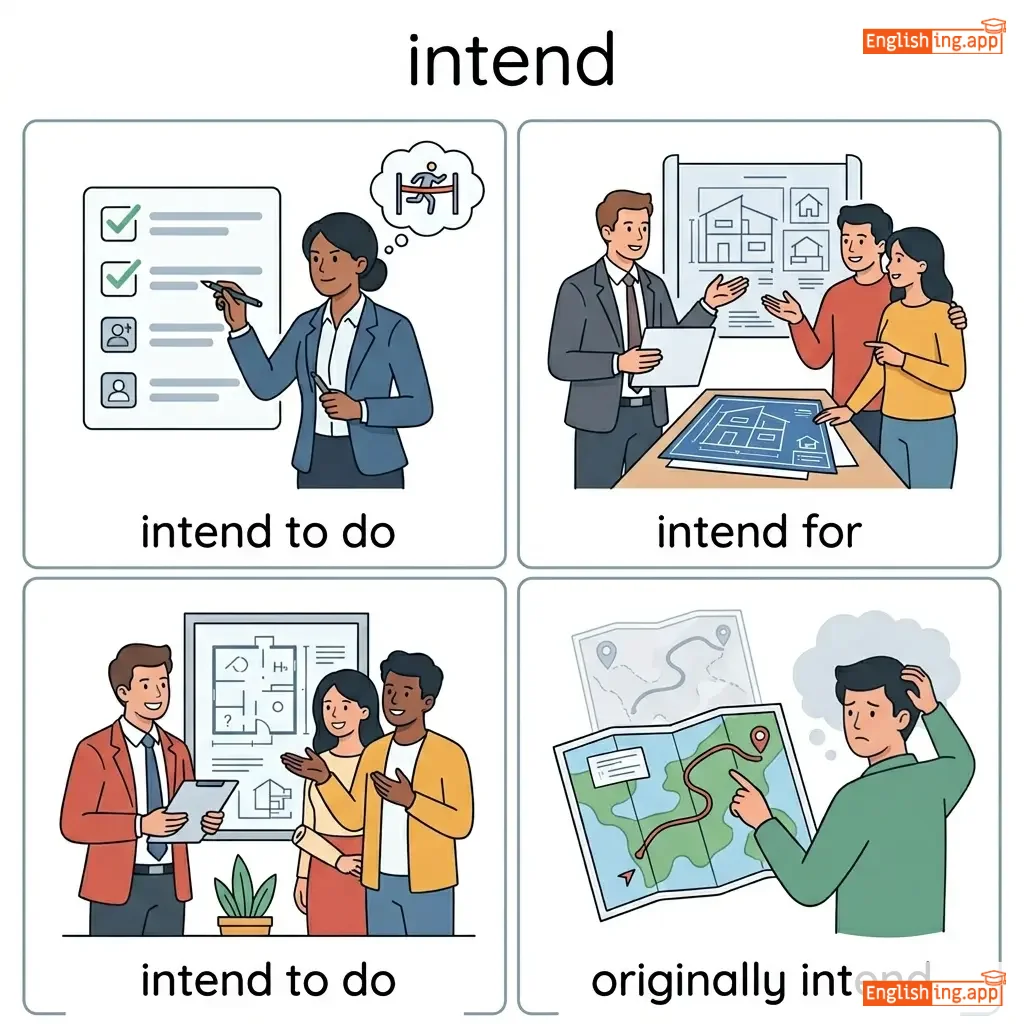
intend to do, intend for, originally intend, seriously intend
••••••
|
Intendは意図する、何かをするつもりでいるということです。
••••••
|
|
🔥
••••••
|
/ɪnˈtɛns/
adjective
(インテンス)
••••••
|
- •••••• |
強烈
kyōretsu
••••••
|
- •••••• | - •••••• | - •••••• | - •••••• |
Of extreme force, degree, or strength.
••••••
|
She felt intense pain after the accident. |
事故後、彼女は強烈な痛みを感じました。
Jiko go, kanojo wa kyōretsu na itami o kanjimashita.
••••••
|
intense pressure |
a very high level of stress or demand
••••••
|
強烈な圧力
kyōretsu na atsuryoku
••••••
|
extreme, severe, powerful, strong, fierce
••••••
|
mild, weak, gentle
••••••
|
intense pain, intense heat, intense pressure, intense competition
••••••
|
強烈は強烈な熱のようです - 非常に強い何か。
••••••
|
|
⚡
••••••
|
/ɪnˈtɛnsɪfaɪ/
verb
(インテンシファイ)
••••••
|
- •••••• |
強化する
kyōka suru
••••••
|
intensified
インテンシファイド
••••••
|
intensified
インテンシファイド
••••••
|
intensifies
インテンシファイズ
••••••
|
intensifying
インテンシファイング
••••••
|
To make something stronger, more extreme, or more forceful.
••••••
|
The storm is expected to intensify overnight.
嵐は夜通し強くなると予想されています。
••••••
|
嵐は夜通し強くなると予想されています。
Arashi wa yodōshi tsuyoku naru to yosō sareteimasu.
••••••
|
intensify efforts
努力を強化する
••••••
|
to increase the level of effort put into something
••••••
|
努力を強化する
doryoku o kyōka suru
••••••
|
strengthen, escalate, heighten, amplify, reinforce
••••••
|
weaken, diminish, lessen
••••••
|
intensify efforts, intensify conflict, intensify pressure, intensify competition
••••••
|
Intensify とは強度を増すこと — 嵐、仕事、努力はすべて強化される。
••••••
|
|
🔥
••••••
|
/ɪnˈtɛnsəti/
noun
(インテンシティ)
••••••
|
- •••••• |
強度
kyoudo
••••••
|
- •••••• | - •••••• | - •••••• | - •••••• |
The quality of being extreme, strong, or forceful in degree.
••••••
|
The intensity of the storm frightened the villagers. |
嵐の強度は村人たちを驚かせた。
Arashi no kyoudo wa murabito-tachi o odorokaseta.
••••••
|
high intensity |
something done with a great level of force, effort, or energy
••••••
|
高強度
kou kyoudo
••••••
|
strength, force, power, severity, energy
••••••
|
weakness, mildness, softness
••••••
|
high intensity, emotional intensity, intensity of light, intensity level
••••••
|
強度は嵐のように、力をすべて注ぐことです。
••••••
|
|
🎯
••••••
|
/ɪnˈtɛnt/
noun
(インテント)
••••••
|
- •••••• |
意図
ito
••••••
|
- •••••• | - •••••• | - •••••• | - •••••• |
the purpose or reason behind an action; a strong determination to do something
••••••
|
Her intent was to improve the quality of education in the community. |
彼女の意図はコミュニティの教育の質を向上させることでした。
Kanojo no ito wa komyuniti no kyōiku no shitsu o kōjōsuru koto deshita.
••••••
|
good intent |
having honest or positive motivation behind an action
••••••
|
良い意図
yoi ito
••••••
|
purpose, aim, goal, objective, determination
••••••
|
indifference, neglect
••••••
|
criminal intent, clear intent, good intent, intent to harm
••••••
|
Intent = ‘in tent’ — テントの中に何かが隠れているように、意図も心の中に隠れています。
••••••
|
|
🎯
••••••
|
/ɪnˈtɛnʃən/
noun
(インテンション)
••••••
|
- •••••• |
意図
ito
••••••
|
- •••••• | - •••••• | - •••••• | - •••••• |
A plan, aim, or purpose behind an action.
••••••
|
Her intention was to finish the project before the deadline. |
彼女の意図はプロジェクトを締め切り前に終わらせることだった。
Kanojo no ito wa purojekuto o shimekiri mae ni owaraseru koto datta.
••••••
|
good intentions |
plans or aims meant to be positive even if not successful
••••••
|
良い意図
yoi ito
••••••
|
aim, plan, purpose, goal, objective
••••••
|
accident, chance
••••••
|
clear intention, good intention, honest intention
••••••
|
意図はあなたの計画や目的を示すものです。
••••••
|
|
🤝
••••••
|
/ˌɪntərˈækt/
verb
(インタラクト)
••••••
|
|
インタラクトする
intarakuto suru
••••••
|
interacted
インタラクテッド
••••••
|
interacted
インタラクテッド
••••••
|
interacts
インタラクツ
••••••
|
interacting
インタラクティング
••••••
|
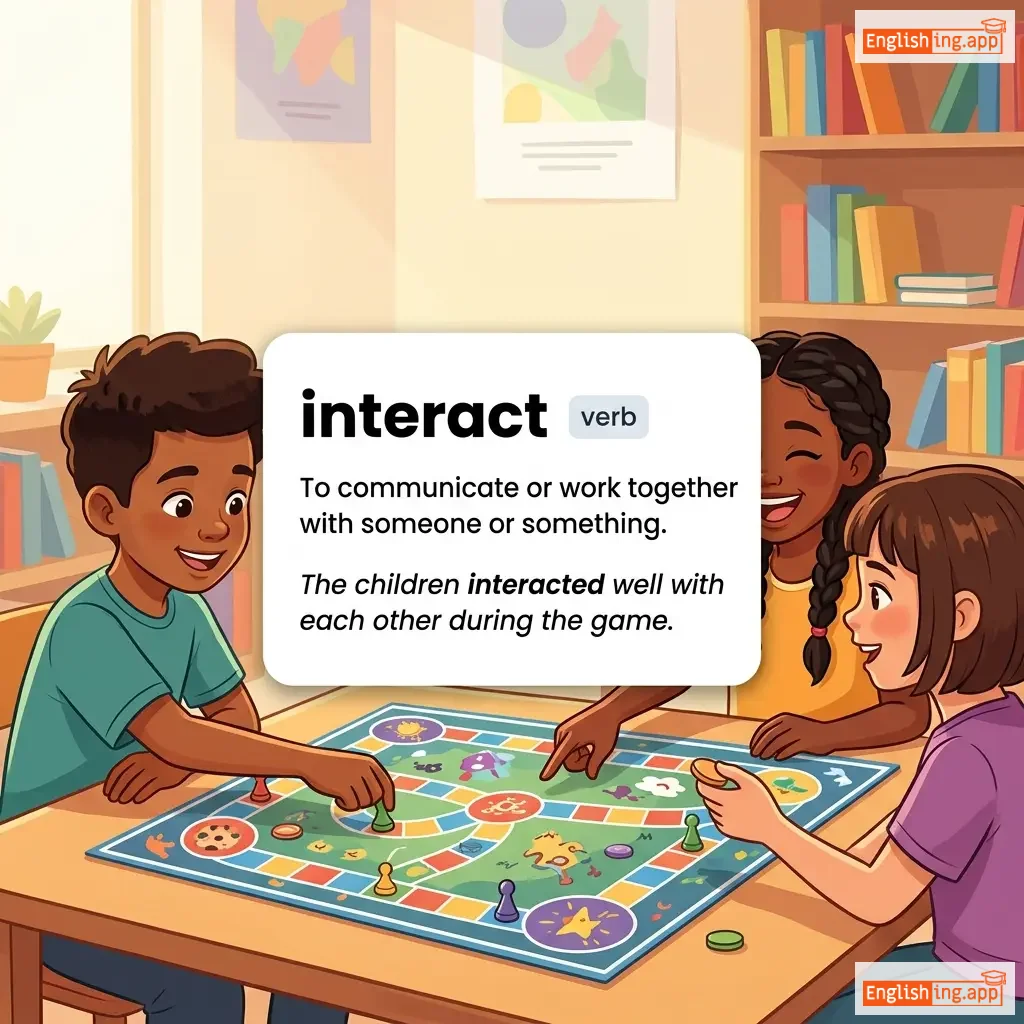
To communicate or work together with someone or something.
••••••
|
The children interacted well with each other during the game.
子供たちはゲーム中にお互いにうまくインタラクトしました。
••••••
|
子供たちはゲーム中にお互いにうまくインタラクトしました。
Kodomotachi wa gēmu-chū ni otagai ni umaku intarakuto shimashita.
••••••
|
interact with
インタラクトする
••••••
|
to communicate or engage with someone or something
••••••
|
インタラクトする
intarakuto suru
••••••
|
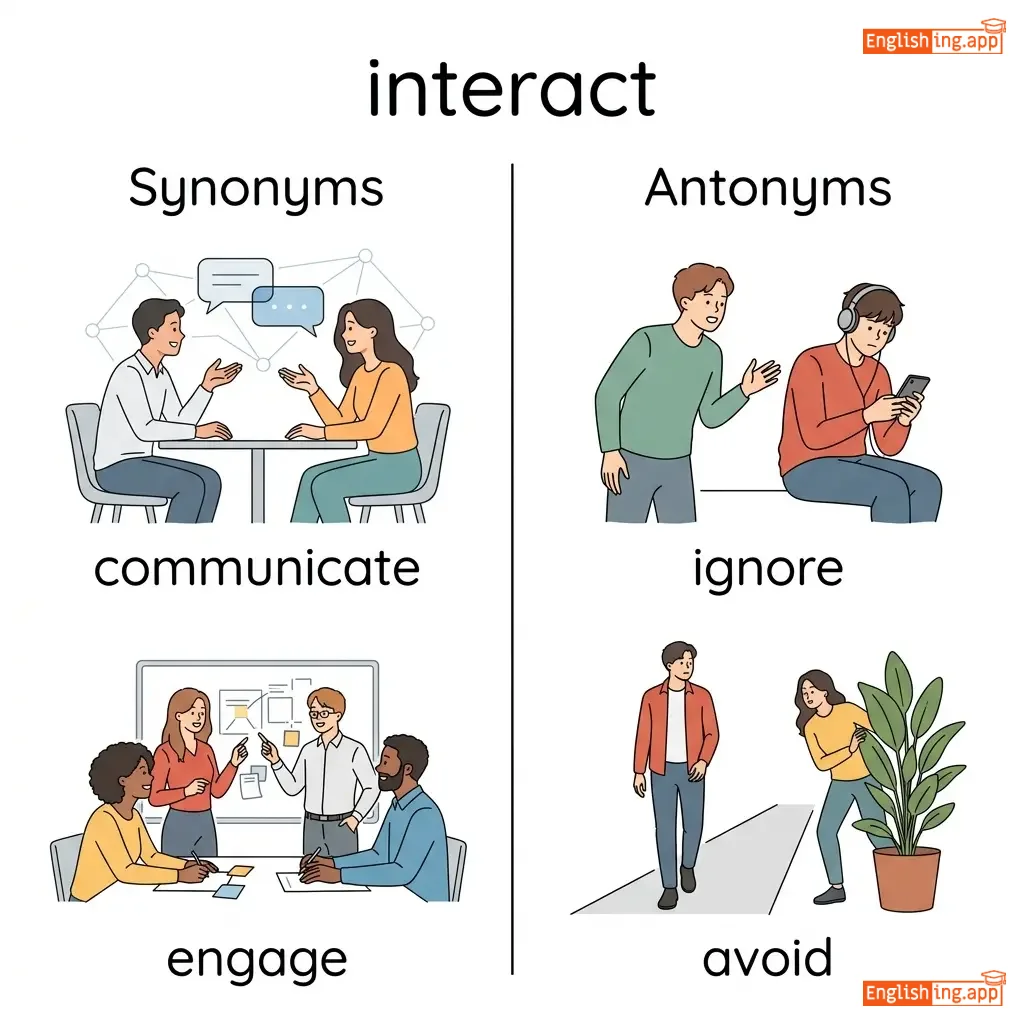
communicate, engage, connect, collaborate
••••••
|
ignore, avoid
••••••
|
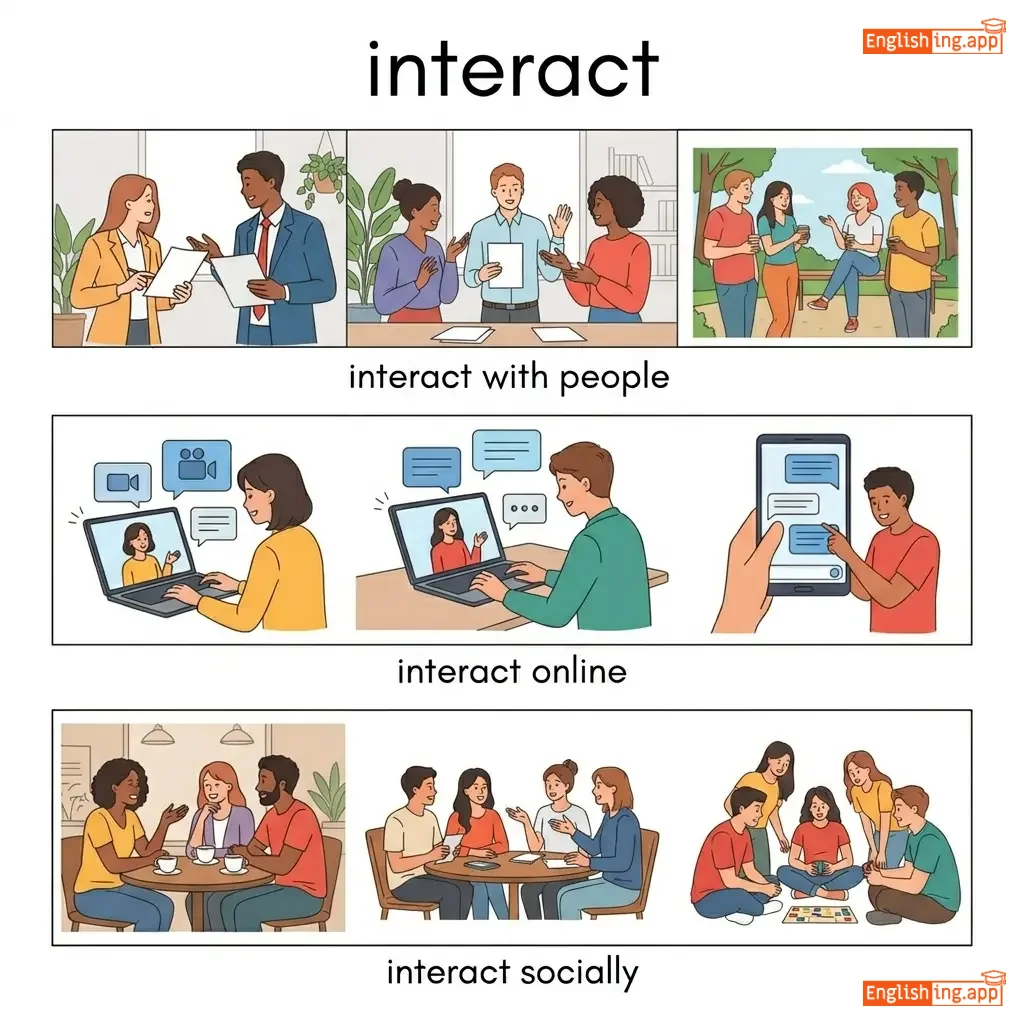
interact with people, interact online, interact socially
••••••
|
インタラクトするは、ゲーム中に他の人とインタラクトするようなものです。
••••••
|
|
🤝
••••••
|
/ˌɪntərˈækʃən/
noun
(インタラクション)
••••••
|
- •••••• |
相互作用
sougou sayou
••••••
|
- •••••• | - •••••• | - •••••• | - •••••• |
The process of people or things acting upon or influencing each other.
••••••
|
The teacher encouraged more interaction between students. |
教師は生徒間のさらなるインタラクションを促進しました。
Kyoushi wa seitokan no saranaインタラクション o sokushin shimashita.
••••••
|
social interaction |
communication or activities between people in society
••••••
|
社会的インタラクション
shakaiteki intarakushon
••••••
|
communication, contact, exchange, collaboration, connection
••••••
|
isolation, separation
••••••
|
human interaction, social interaction, online interaction, interaction with
••••••
|
Interaction = Inter (インター) + Action (アクション) = 相互作用
••••••
|
|
🖱️
••••••
|
/ɪnˈtærɪktɪv/
adjective
••••••
|
|
- •••••• | - •••••• | - •••••• | - •••••• | - •••••• |
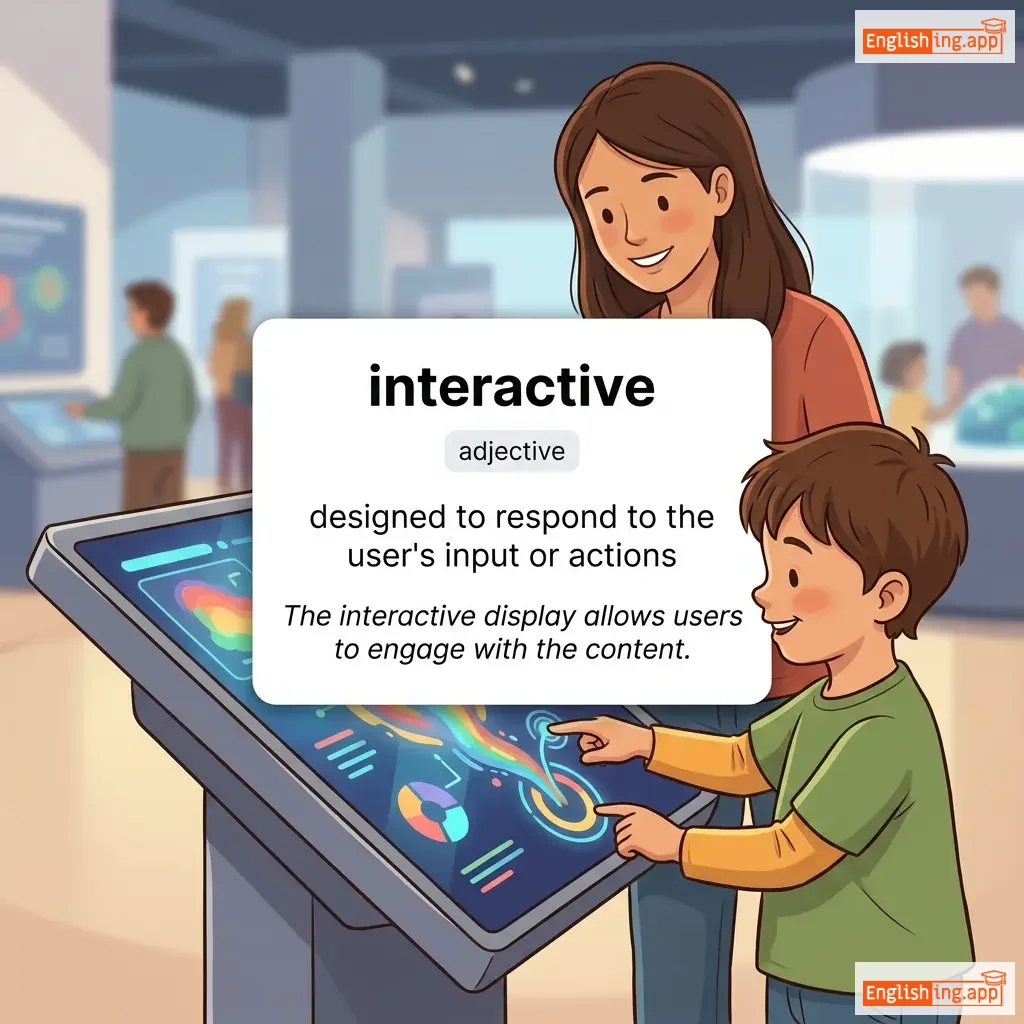
designed to respond to the user's input or actions
••••••
|
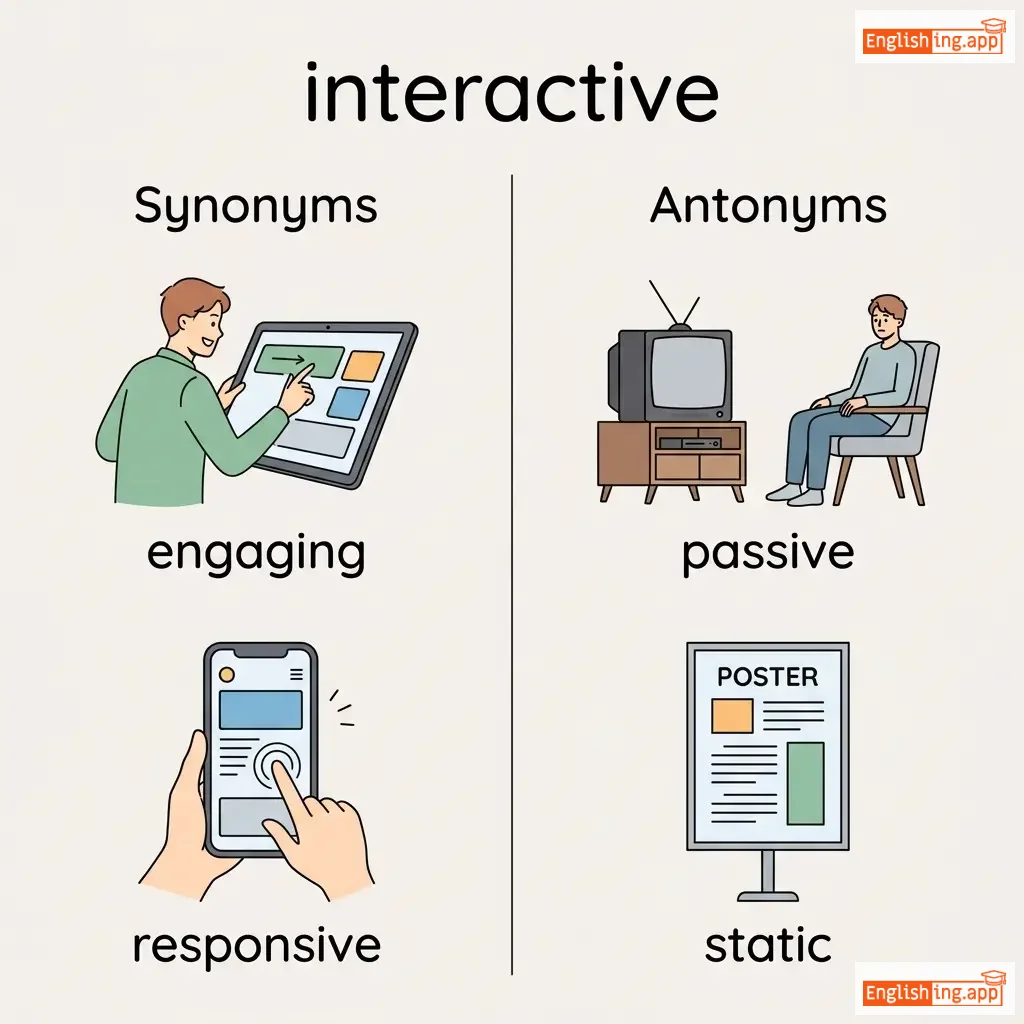
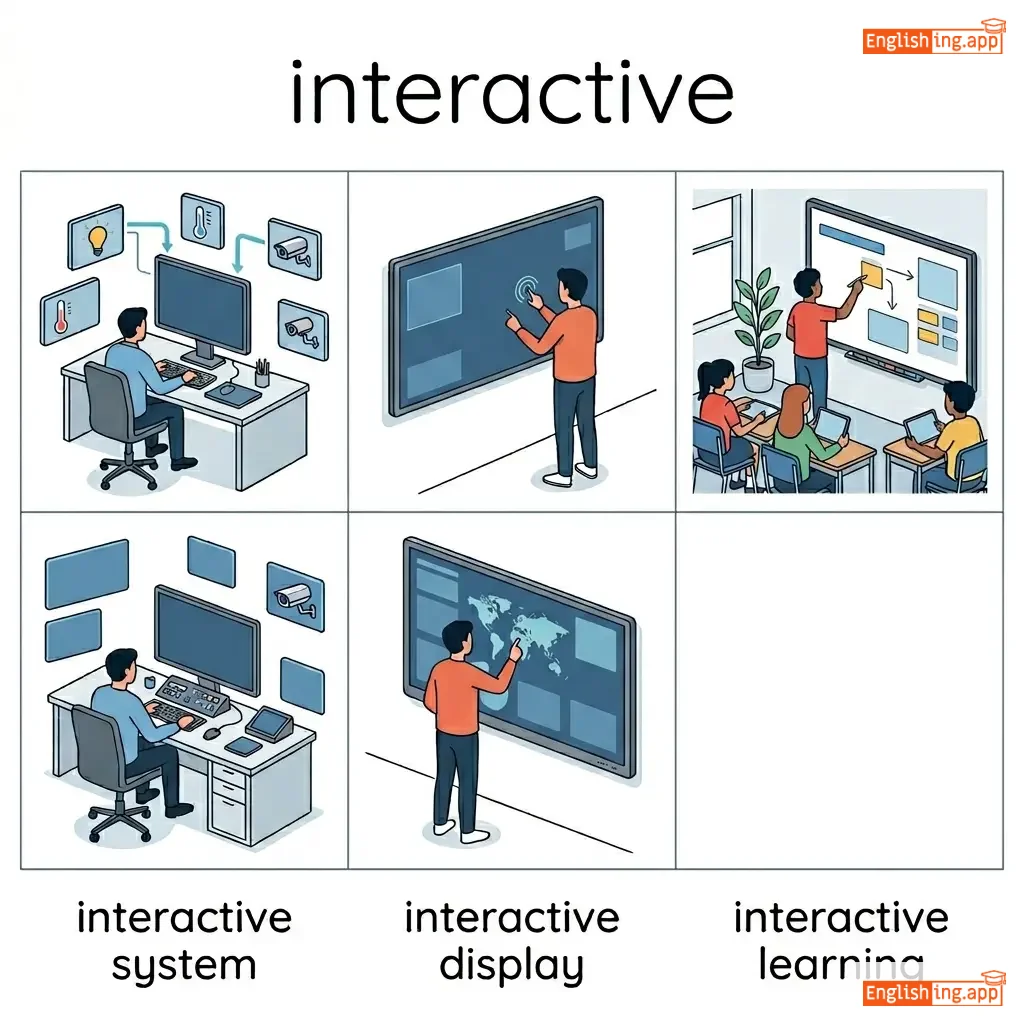
The interactive display allows users to engage with the content. |
- •••••• | - •••••• | - •••••• | - •••••• |
engaging, responsive, participatory, communicative
••••••
|
passive, static, unresponsive
••••••
|
interactive system, interactive display, interactive learning, interactive website
••••••
|
No •••••• |
|
💻
••••••
|
/ˈɪntərfeɪs/
noun
(インターフェイス)
••••••
|
- •••••• |
インターフェイス
intaafeisu
••••••
|
- •••••• | - •••••• | - •••••• | - •••••• |
a point where two systems, subjects, or organizations meet and interact
••••••
|
The user interface is designed to be intuitive and user-friendly. |
ユーザーインターフェイスは直感的で使いやすく設計されています。
Yūzā intāfeisu wa chokkan-teki de tsukaiyasukusutei sareteimasu.
••••••
|
- •••••• | - •••••• | - •••••• |
connection, junction, link, interface point
••••••
|
separation, disconnection
••••••
|
user interface, interface design, software interface, interface system
••••••
|
インターフェイスは'インター'でインタラクション、'フェイス'はユーザーの顔を意味します。
••••••
|
|
🚫
••••••
|
/ˌɪntərˈfɪər/
verb
(ハピネス)
••••••
|
- •••••• |
幸せ
shiawase
••••••
|
interfered
••••••
|
interfered
••••••
|
interferes
••••••
|
interfering
••••••
|
to become involved in something that is not your concern; to hinder or obstruct
••••••
|
Parents should not interfere in their children’s personal choices.
彼女は賞を受け取ったとき、自分の幸せを隠すことができませんでした。
••••••
|
彼女は賞を受け取ったとき、自分の幸せを隠すことができませんでした。
Kanojo wa shō o uketotta toki, jibun no shiawase o kakusu koto ga dekimasen deshita.
••••••
|
interfere with
幸せの追求
••••••
|
to get involved in a way that causes problems or prevents something from happening
••••••
|
幸せの追求
shiawase no tsuikyū
••••••
|
meddle, obstruct, hinder, intrude, intervene
••••••
|
assist, support, cooperate
••••••
|
interfere with, interfere in, badly interfere, refuse to interfere
••••••
|
幸せを追求することは、喜びの一歩一歩です。
••••••
|
|
📡
••••••
|
/ˌɪntərˈfɪərəns/
noun
(インターフェレンス)
••••••
|
- •••••• |
干渉
kanshō
••••••
|
- •••••• | - •••••• | - •••••• | - •••••• |
the action of interfering with something
••••••
|
The radio signal was disrupted due to interference from nearby electronics. |
近くの電子機器からの干渉で、ラジオ信号が途絶えました。
Chikaku no denshi kiki kara no kanshō de, rajio shingō ga tozaemashita.
••••••
|
- •••••• | - •••••• | - •••••• |
disruption, obstruction, hindrance, disturbance
••••••
|
assistance, help, support
••••••
|
radio interference, signal interference, electronic interference, interference pattern
••••••
|
干渉は、何かが通過するのを妨げることで、通信を中断させることです。
••••••
|
|
⏳
••••••
|
/ˈɪntərɪm/
noun
(インタリム)
••••••
|

|
暫定
zantei
••••••
|
- •••••• | - •••••• | - •••••• | - •••••• |
a temporary or provisional period before something permanent is established
••••••
|
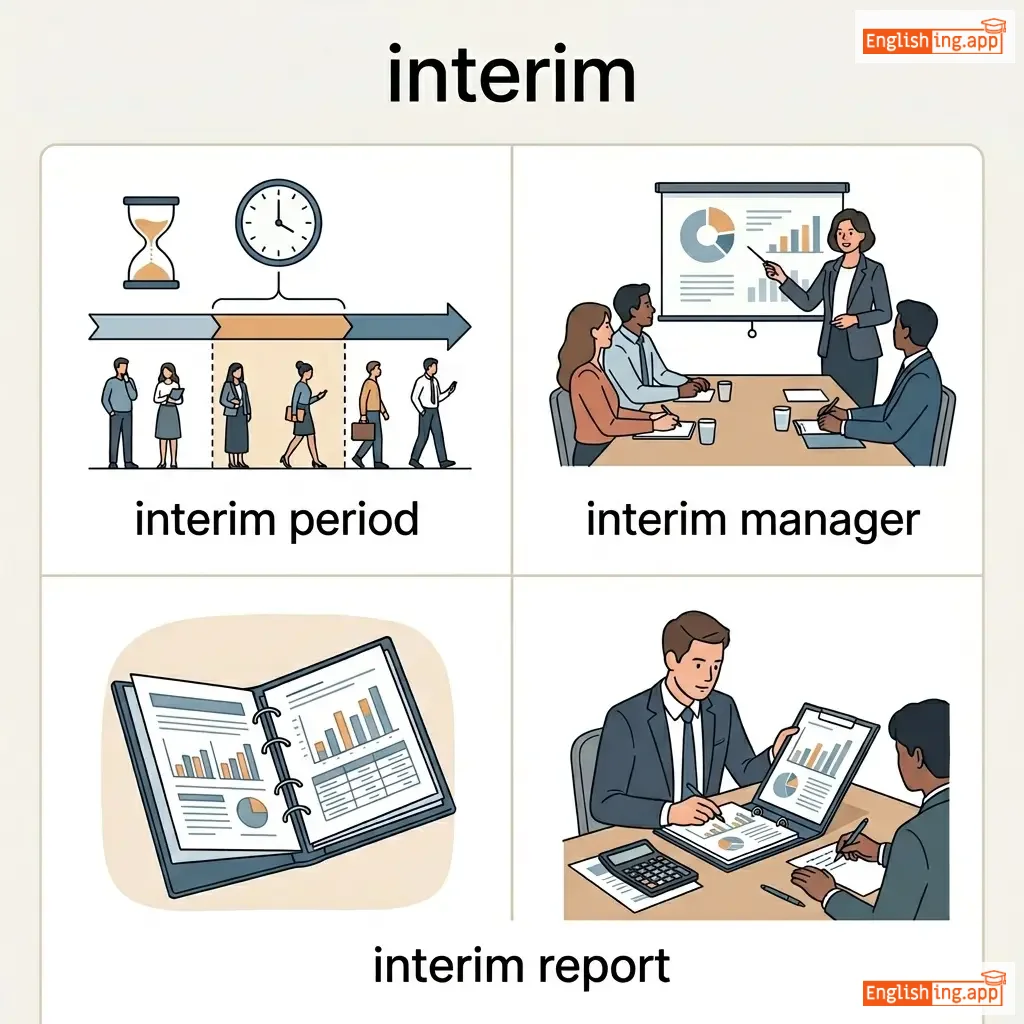
She was appointed as the interim manager until a permanent replacement was found. |
彼女は恒久的な代替者が見つかるまで暫定的なマネージャーとして任命されました。
Kanojo wa koukyuutekina daitaisha ga mitsukaru made zanteiteki na manejaa toshite ninmei saremashita.
••••••
|
in the interim |
for the time being; temporarily
••••••
|
その間に
sono aida ni
••••••
|
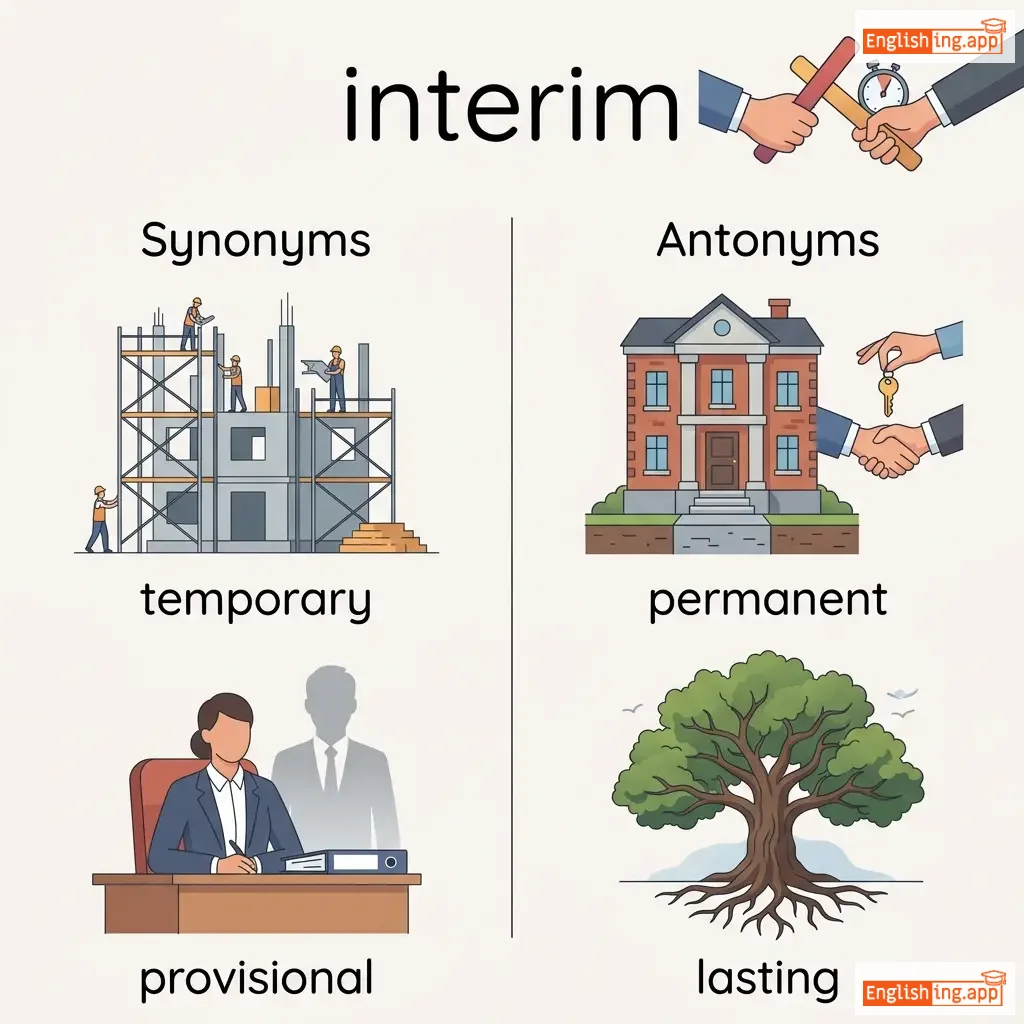
temporary, provisional, acting, short-term
••••••
|
permanent, lasting
••••••
|
interim period, interim manager, interim report, in the interim
••••••
|
Interim は ‘間’ - 一時的な役割
••••••
|
|
🏠
••••••
|
/ɪnˈtɪəriər/
noun
(インテリア)
••••••
|
- •••••• |
インテリア
interia
••••••
|
- •••••• | - •••••• | - •••••• | - •••••• |
the inside part of something; inner area of a place or object
••••••
|
The interior of the hotel was beautifully decorated. |
ホテルのインテリアは美しく装飾されていました。
Hoteru no interia wa utsukushiku shōshoku sarete imashita.
••••••
|
interior design |
the art or process of designing the inside of a building or room
••••••
|
インテリアデザイン
interia dezain
••••••
|
inside, inner part, core, center, internal area
••••••
|
exterior, outside
••••••
|
interior design, interior wall, interior space, car interior
••••••
|
インテリアは「中の部分」を意味し、美しいデザインでさらに良くなります! 🏠
••••••
|
|
↔️
••••••
|
/ˌɪntərˈmiːdiət/
adjective
(インターミディエイト)
••••••
|
- •••••• |
中級
chūkyū
••••••
|
- •••••• | - •••••• | - •••••• | - •••••• |
Coming between two things in time, place, or order; in the middle level or stage.
••••••
|
She is taking an intermediate-level French course.
彼女は中級のフランス語コースを受講しています。
••••••
|
彼女は中級のフランス語コースを受講しています。
Kanojo wa chūkyū no Furansugo kōsu o jukō shiteimasu.
••••••
|
- •••••• | - •••••• | - •••••• |
middle, moderate, halfway, transitional, mid-level
••••••
|
beginner, advanced
••••••
|
intermediate stage, intermediate level, intermediate step
••••••
|
中級は2つの段階の間のレベルです。
••••••
|
|
🏠
••••••
|
/ɪnˈtɜːrnəl/
adjective
(intānal)
••••••
|
- •••••• |
内部
naibu
••••••
|
- •••••• | - •••••• | - •••••• | - •••••• |
situated inside; relating to the inside or inner part of something
••••••
|
The company is conducting an internal audit this month. |
その会社は今月内部監査を行っています。
Sono kaisha wa kongetsu naibu kansa o okonatteimasu.
••••••
|
internal affairs |
matters within an organization or country, not external
••••••
|
内部事務
naibu jimu
••••••
|
inner, inside, domestic, interior, inward
••••••
|
external, outer, outside
••••••
|
internal audit, internal structure, internal affairs, internal use
••••••
|
Internalは内部という意味、例えば日本語では'内部'と訳されます
••••••
|
|
🌍
••••••
|
/ˌɪntərˈnæʃənəl/
adjective
(インターナショナル)
••••••
|


|
国際的
kokusai teki
••••••
|
- •••••• | - •••••• | - •••••• | - •••••• |
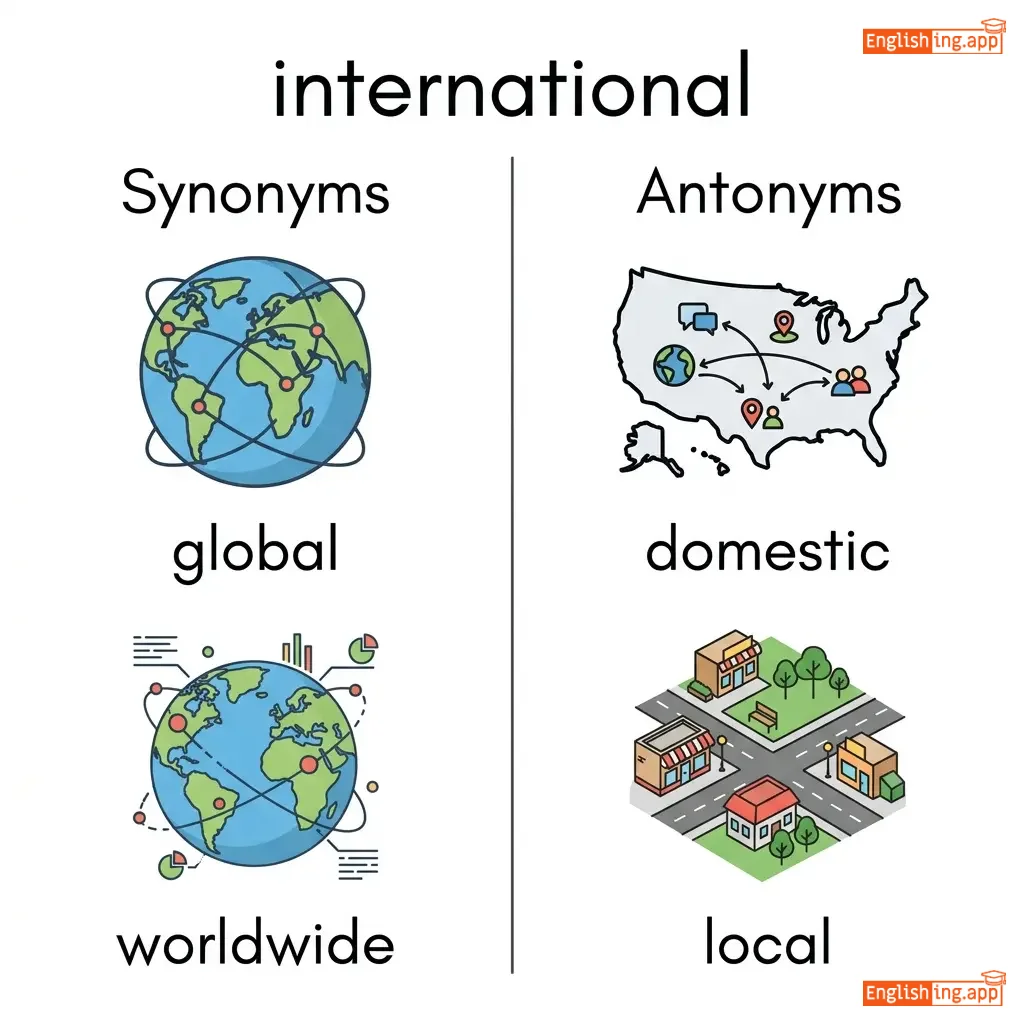
Existing, occurring, or carried on between nations.
••••••
|
The company is planning to expand into international markets. |
その会社は国際市場に拡大する計画を立てています。
Sono kaisha wa kokusai shijou ni kakudai suru keikaku o tateteimasu.
••••••
|
international relations |
relationships between different countries
••••••
|
国際関係
kokusai kankei
••••••
|
global, worldwide, universal, foreign
••••••
|
domestic, local
••••••
|
international trade, international law, international relations, international organization
••••••
|
Internationalはinter(間)+ national(国)=国と国の間の関係
••••••
|
|
🌐
••••••
|
/ˈɪntərˌnɛt/
noun
(インターネット)
••••••
|
|
インターネット
intānetto
••••••
|
- •••••• | - •••••• | - •••••• | - •••••• |
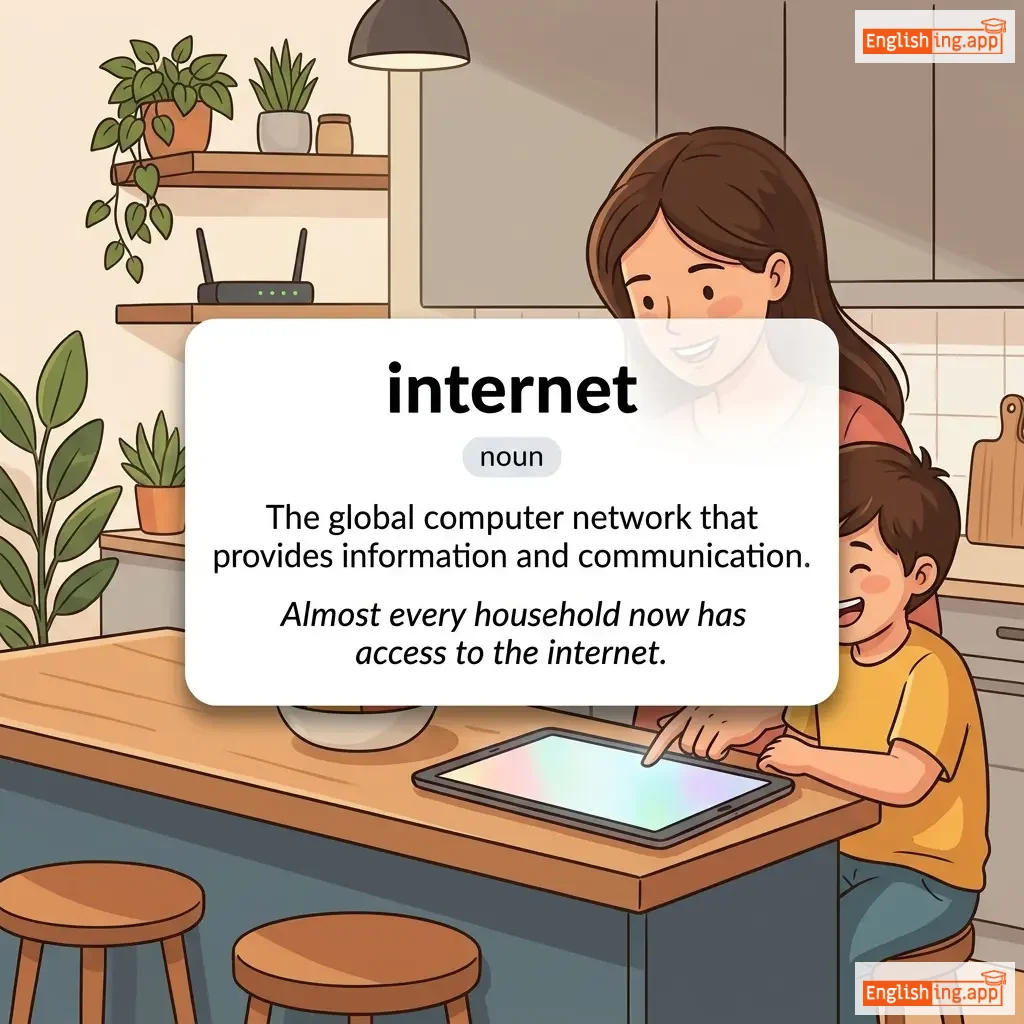
The global computer network that provides information and communication.
••••••
|
Almost every household now has access to the internet. |
ほぼすべての家庭がインターネットにアクセスしています。
Hobo subete no katei ga intānetto ni akusesu shiteimasu.
••••••
|
surf the internet |
to browse or explore websites online
••••••
|
インターネットをサーフィンする
Intānetto o sāfin suru
••••••
|
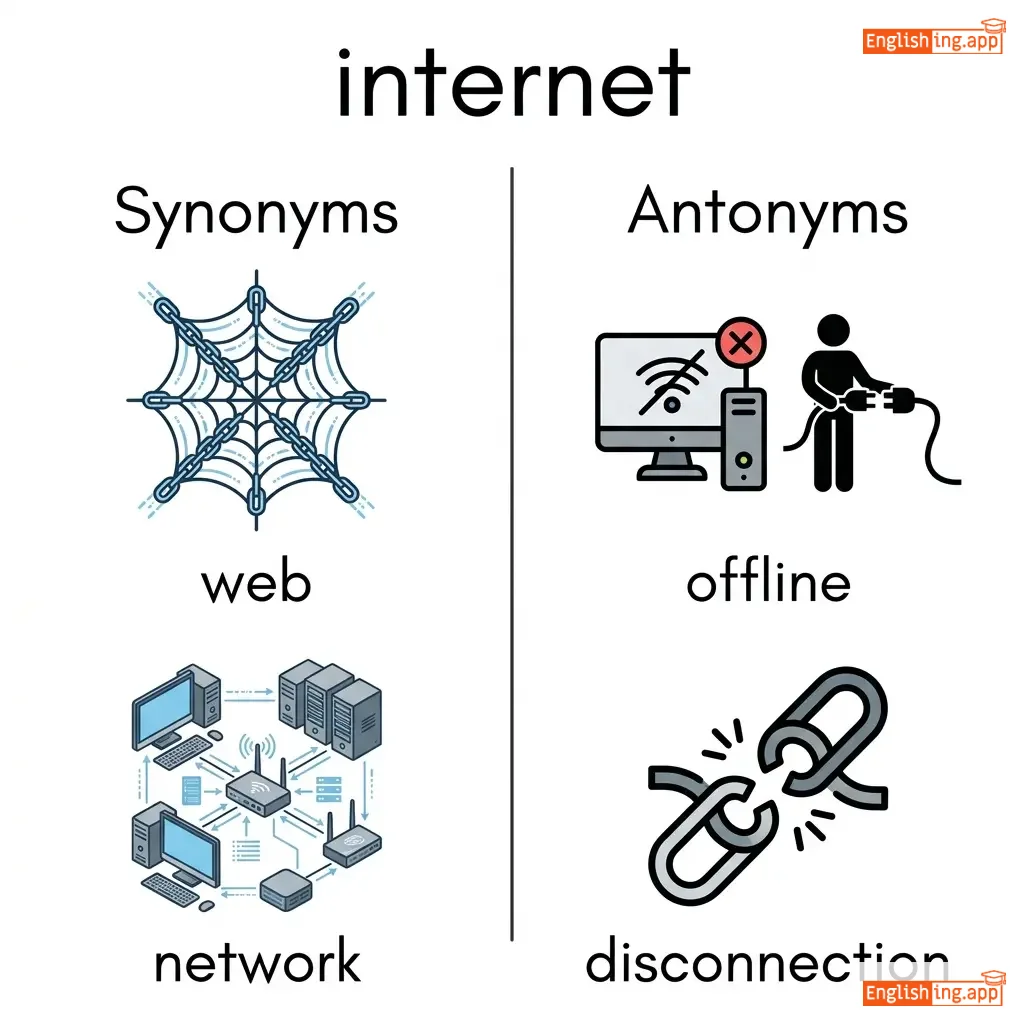
web, network, cyberspace, online system
••••••
|
offline, disconnection
••••••
|
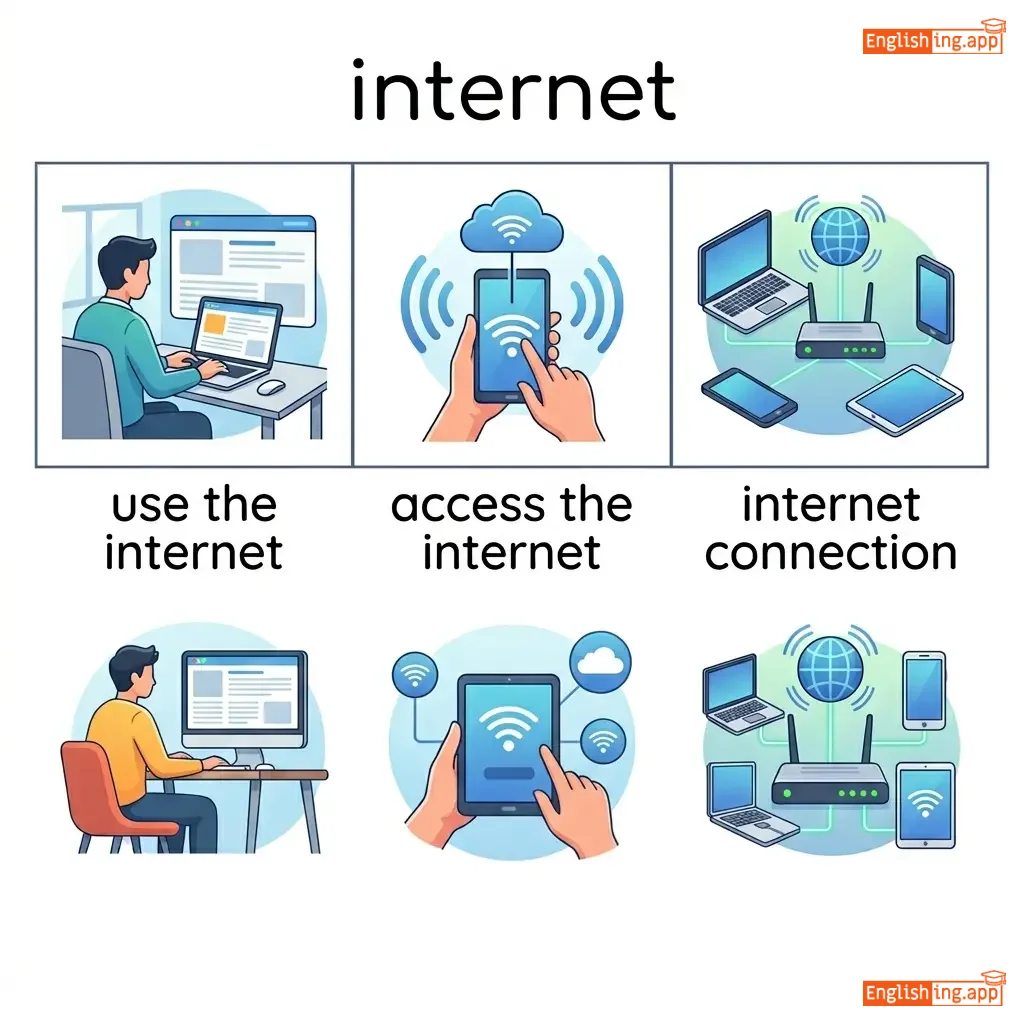
use the internet, access the internet, internet connection, internet service
••••••
|
インターネット = inter (接続) + net (ネット) = 世界をつなぐネットワーク
••••••
|
|
🗣️
••••••
|
/ɪnˈtɜːrprət/
verb
••••••
|
- •••••• | - •••••• |
interpreted
••••••
|
interpreted
••••••
|
interprets
••••••
|
interpreting
••••••
|
to explain the meaning of something; to translate orally
••••••
|
She had to interpret the speech for the foreign guests. |
- •••••• |
interpret the law |
to explain or understand the meaning of legal rules
••••••
|
- •••••• |
explain, clarify, translate, elucidate, understand
••••••
|
confuse, obscure, misinterpret
••••••
|
interpret correctly, interpret data, interpret meaning, interpret the law
••••••
|
No •••••• |
|
📖
••••••
|
/ɪnˌtɜːrprəˈteɪʃən/
noun
(インタープリテーション)
••••••
|
- •••••• |
解釈
kaishaku
••••••
|
- •••••• | - •••••• | - •••••• | - •••••• |
the action of explaining the meaning of something
••••••
|
The teacher gave her own interpretation of the poem. |
教師は詩の自分の解釈を示しました。
Kyōshi wa shi no jibun no kaishaku o shimeshita.
••••••
|
open to interpretation |
something that can be understood in different ways
••••••
|
解釈に開かれている
kaishaku ni hirakarete iru
••••••
|
explanation, clarification, analysis, understanding, rendering
••••••
|
misinterpretation, confusion, misunderstanding
••••••
|
artistic interpretation, legal interpretation, correct interpretation, interpretation of law
••••••
|
Interpretation は解釈です — 映画のように、結末は常に解釈に開かれています。
••••••
|

