|
絵文字
|
単語 | Images | 翻訳 | 過去 | 過去分詞 | 三人称単数 | 動名詞 | 意味 | 例文 | 例文の翻訳 | 表現例 | 表現例の意味 | 表現例の翻訳 | 同義語 | 対義語 | コロケーション | ニーモニック |
|---|---|---|---|---|---|---|---|---|---|---|---|---|---|---|---|---|---|
|
🧠
••••••
|
/ˈkaʊnsələr/
noun
(カウンセラー)
••••••
|
- •••••• |
カウンセラー
kaunseraa
••••••
|
- •••••• | - •••••• | - •••••• | - •••••• |
a person trained to give guidance on personal, social, or psychological problems; an advisor
••••••
|
She spoke to a counsellor to get advice about her career.
シー スポーク トゥ ア カウンセラー トゥ ゲット アドバイス アバウト ハー キャリア。
••••••
|
彼女は自分のキャリアについてカウンセラーに相談した。
kanojo wa jibun no kyaria ni tsuite kaunseraa ni soudan shita
••••••
|
- •••••• | - •••••• | - •••••• |
advisor, therapist, guide, consultant, mentor
••••••
|
opponent, critic
••••••
|
school counsellor, guidance counsellor, professional counsellor, mental health counsellor
••••••
|
カウンセラー sounds same as counsellor
••••••
|
|
🔢
••••••
|
/kaʊnt/
verb
(カウント)
••••••
|
- •••••• |
数える
kazoeru
••••••
|
counted
カウントした
••••••
|
counted
カウントした
••••••
|
counts
カウントする
••••••
|
counting
カウントしている
••••••
|
to determine the total number of something
••••••
|
She carefully counted the money on the table.
彼女はテーブルの上のお金を慎重に数えた。
••••••
|
彼女はテーブルの上のお金を慎重に数えた。
Kanojo wa tēburu no ue no okane o shinchō ni kazoeta.
••••••
|
make it count
それを意味のあるものにしろ
••••••
|
make it worthwhile or meaningful
••••••
|
それを意味のあるものにしろ
Sore o imi no aru mono ni shiro
••••••
|
enumerate, calculate, tally, reckon
••••••
|
ignore, overlook
••••••
|
count numbers, count votes, count money, count on
••••••
|
Countは「数える」を意味します - カウントダウンを聞くたびに数えることを思い出します。
••••••
|
|
🛒
••••••
|
/ˈkaʊn.tər/
noun
(カウンター)
••••••
|
- •••••• |
カウンター
kauntā
••••••
|
- •••••• | - •••••• | - •••••• | - •••••• |
a flat surface in a shop, bank, or kitchen where transactions or work are done
••••••
|
The cashier stood behind the counter.
レジ係はカウンターの後ろに立っていました。
••••••
|
レジ係はカウンターの後ろに立っていました。
Rejigakari wa kauntā no ushiro ni tatteimashita.
••••••
|
over the counter
カウンター越し
••••••
|
available for purchase without prescription
••••••
|
処方箋なしで販売
shohōsen nashi de hanbai
••••••
|
desk, bar, table, worktop
••••••
|
floor, ground
••••••
|
kitchen counter, service counter, counter top, over the counter
••••••
|
カウンター - 店のカウンターの後ろに立っている様子を想像して覚える。
••••••
|
|
🤝
••••••
|
/ˈkaʊntərˌpɑːrt/
noun
(カウンターパート)
••••••
|
- •••••• |
対等者
taiteisha
••••••
|
- •••••• | - •••••• | - •••••• | - •••••• |
a person or thing that corresponds to or has the same function as another
••••••
|
The CEO met with his counterpart in the partner company. |
CEOはパートナー企業の対等者と会いました。
CEO wa pātonā kigyō no taiteisha to aimashita.
••••••
|
- •••••• | - •••••• | - •••••• |
equivalent, peer, match, complement
••••••
|
opposite, unlike
••••••
|
meet a counterpart, counterpart agreement, political counterpart
••••••
|
Counter = 対等者 - Think of counterpart as the equal counterpart in function
••••••
|
|
✨
••••••
|
/ˈkaʊntləs/
adjective
(カウントレス)
••••••
|
- •••••• |
数えきれない
kazoekirenai
••••••
|
- •••••• | - •••••• | - •••••• | - •••••• |
too many to be counted; innumerable
••••••
|
There are countless stars in the sky. |
空には無数の星があります。
Sora ni wa musū no hoshi ga arimasu.
••••••
|
- •••••• | - •••••• | - •••••• |
innumerable, innumerous, endless, boundless
••••••
|
finite, limited
••••••
|
countless opportunities, countless stars, countless hours
••••••
|
星を数えてみて、数えきれないほど多いことに気づく。
••••••
|
|
🌍
••••••
|
/ˈkʌn.tri/
noun
(kanteri)
••••••
|
- •••••• |
国
kuni
••••••
|
- •••••• | - •••••• | - •••••• | - •••••• |
a nation with its own government and borders
••••••
|
Bangladesh is a beautiful country with rich culture. |
バングラデシュは豊かな文化を持つ美しい国です。
Banguradeshu wa yutakana bunka o motsu utsukushii kuni desu.
••••••
|
cross-country |
spanning across a country
••••••
|
国内横断
kokunai ōdan
••••••
|
nation, state, homeland, territory, land
••••••
|
city, colony
••••••
|
developing country, foreign country, home country, country side
••••••
|
Countryは国 - みんなの国で、すべてを見渡すことができる。
••••••
|
|
🌾
••••••
|
/ˈkʌntrisaɪd/
noun
(カントリーサイド)
••••••
|
- •••••• |
田舎
inaka
••••••
|
- •••••• | - •••••• | - •••••• | - •••••• |
land outside cities and towns; rural areas with farms, fields, and villages
••••••
|
She enjoys the peace and beauty of the countryside.
シー エンジョイズ ザ ピース アンド ビューティー オブ ザ カントリーサイド。
••••••
|
彼女は田舎の静けさと美しさを楽しんでいる。
kanojo wa inaka no shizukesa to utsukushisa o tanoshinde iru
••••••
|
- •••••• | - •••••• | - •••••• |
rural area, farmland, rural district, backcountry
••••••
|
city, town, urban area
••••••
|
peaceful countryside, rolling countryside, countryside village, countryside landscape
••••••
|
カントリーサイド=町じゃない田舎
••••••
|
|
🗺️
••••••
|
/ˈkaʊnti/
noun
(カウンティ)
••••••
|
- •••••• |
郡
gun
••••••
|
- •••••• | - •••••• | - •••••• | - •••••• |
A territorial division within a country, typically a region with its own local government.
••••••
|
She grew up in a small county in northern England. |
彼女はイギリス北部の小さな郡で育ちました。
Kanojo wa Igirisu hokubu no chiisana gun de sodachimashita.
••••••
|
- •••••• | - •••••• | - •••••• |
district, region, province, area, territory
••••••
|
city, capital
••••••
|
county council, county fair, county jail, county seat
••••••
|
郡は地方行政の単位で、地域ごとの管理を示す単語です。
••••••
|
|
⚡
••••••
|
/kuː/
noun
(クープ)
••••••
|
- •••••• |
クーデター
kūdetā
••••••
|
- •••••• | - •••••• | - •••••• | - •••••• |
a sudden, decisive action that brings about a change, especially in government
••••••
|
The military staged a coup to overthrow the existing regime.
軍隊は現政権を倒すためにクーデターを起こしました。
••••••
|
軍隊は現政権を倒すためにクーデターを起こしました。
Guntai wa gen seiken o taosu tame ni kūdetā o okoshimashita.
••••••
|
- •••••• | - •••••• | - •••••• |
overthrow, takeover, rebellion, insurrection
••••••
|
election, vote
••••••
|
military coup, political coup, successful coup
••••••
|
クーデター: 政権が一瞬で変わるような、突然の権力交代。
••••••
|
|
❤️
••••••
|
/ˈkʌpəl/
noun
(カップル)
••••••
|
- •••••• |
カップル
kappuru
••••••
|
- •••••• | - •••••• | - •••••• | - •••••• |
two people or things considered together; a pair
••••••
|
They make a lovely couple and have been married for five years. |
彼らは素敵なカップルで、5年間結婚しています。
Karera wa suteki na kappuru de, go-nenkan kekkon shiteimasu.
••••••
|
- •••••• | - •••••• | - •••••• |
pair, duo, twosome, partners
••••••
|
individual, single
••••••
|
married couple, young couple, couple of friends
••••••
|
Couple は二人または物が一緒にいることを意味します。
••••••
|
|
🦁
••••••
|
/ˈkʌrɪdʒ/
noun
(korej)
••••••
|

|
勇気
yūki
••••••
|
- •••••• | - •••••• | - •••••• | - •••••• |
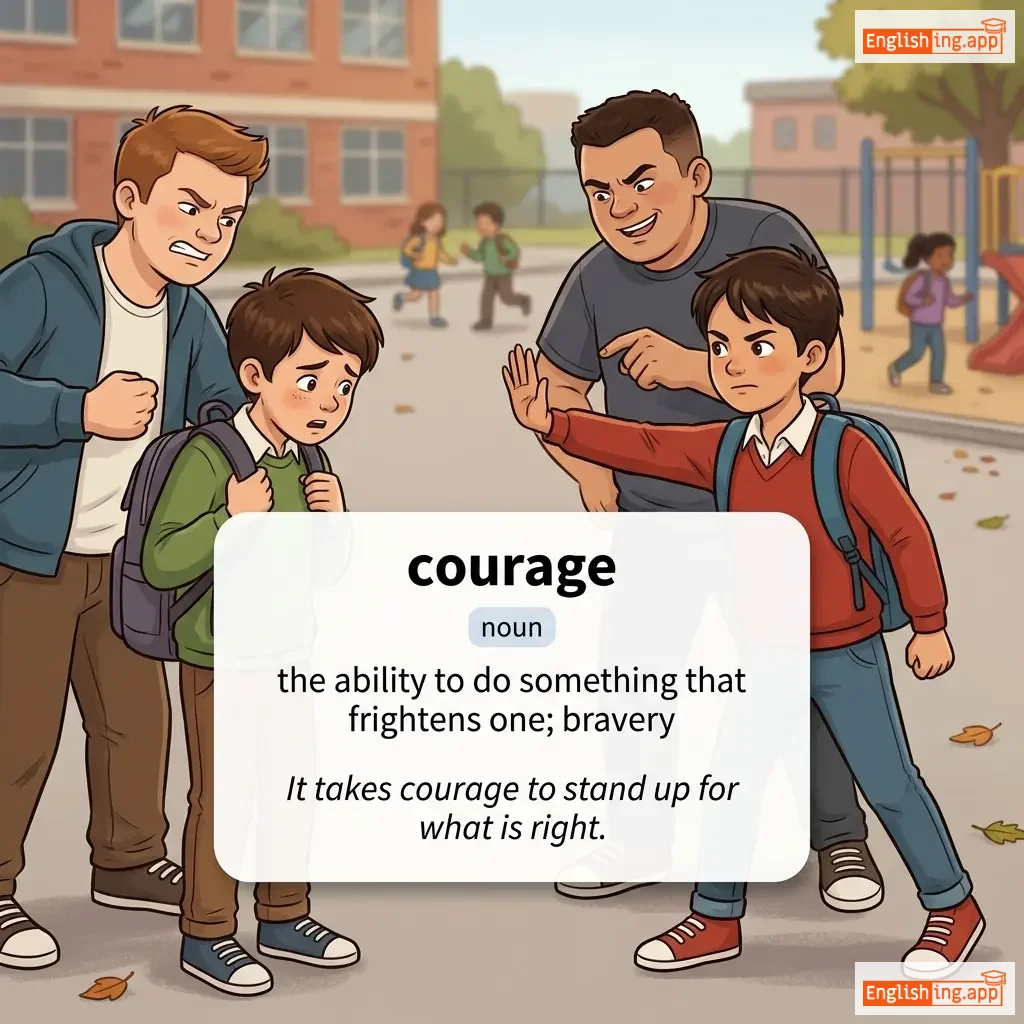
the ability to do something that frightens one; bravery
••••••
|
It takes courage to stand up for what is right. |
正しいことを守るには勇気が必要です。
Tadashī koto o mamoru ni wa yūki ga hitsuyōdesu.
••••••
|
pluck up courage |
to force yourself to be brave enough to do something
••••••
|
勇気を出す
yūki o dasu
••••••
|
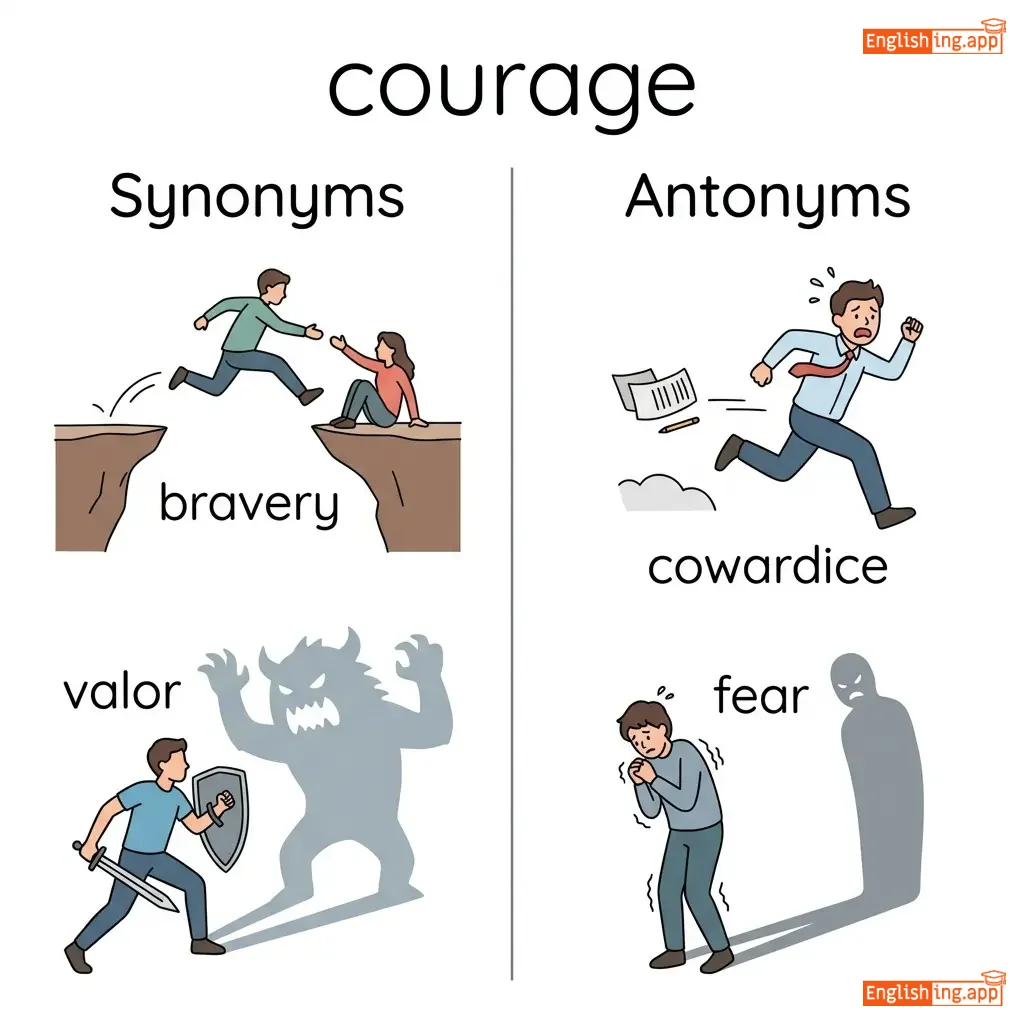
bravery, valor, boldness, fearlessness, spirit
••••••
|
cowardice, fear
••••••
|
show courage, great courage, moral courage
••••••
|
Courage 🦁 は勇気を意味します - ライオンのような勇気があれば、すべてのことができます
••••••
|
|
🦁
••••••
|
/kəˈreɪdʒəs/
adjective
(コレイジャス)
••••••
|
- •••••• |
勇敢な; 恐れを知らない; 危険に立ち向かう勇気を示す
yūkan na; osore o shiranai; kiken ni tachimukau yūki o shimesu
••••••
|
- •••••• | - •••••• | - •••••• | - •••••• |
brave; fearless; showing courage in the face of danger
••••••
|
The courageous firefighter rescued the family from the burning building. |
勇敢な消防士は燃えている建物から家族を救出した。
Yūkan na shōbōshi wa moete iru tatemono kara kazoku o kyūshutsu shita.
••••••
|
- •••••• | - •••••• | - •••••• |
brave, fearless, bold, heroic
••••••
|
cowardly, fearful, timid, scared
••••••
|
courageous act, courageous decision, courageous leader
••••••
|
勇敢な (Courageous) は危険に直面しても勇気を示すことです。
••••••
|
|
🎓
••••••
|
/kɔːrs/
noun
(コース)
••••••
|
- •••••• |
コース、道または一連の教育レッスン
kōsu, michi matawa ichiren no kyōiku ressun
••••••
|
- •••••• | - •••••• | - •••••• | - •••••• |
a direction, path, or a set of educational lessons
••••••
|
She enrolled in a computer science course. |
彼女はコンピュータサイエンスのコースに登録しました。
Kanojo wa konpyūta saiensu no kōsu ni tōroku shimashita.
••••••
|
of course |
certainly, obviously
••••••
|
もちろん
mochiron
••••••
|
class, curriculum, program, direction, path
••••••
|
deviation, detour
••••••
|
training course, online course, course of action, full course
••••••
|
コースに登録して新しい道を学ぼう。
••••••
|
|
⚖️
••••••
|
/kɔːrt/
noun,verb
(コート)
••••••
|
- •••••• |
裁判所または注目や好意を求める場所
saibansho matawa chumoku ya koui wo motomeru basho
••••••
|
courted
コーテッド
••••••
|
courted
コーテッド
••••••
|
courts
コーツ
••••••
|
courting
コーティング
••••••
|
a place where legal cases are heard or to seek favor or attention
••••••
|
He courted the judge with respect.
彼は裁判官に敬意を示して求婚した。
••••••
|
彼は裁判官に敬意を示して求婚した。
Kare wa saibankan ni keii wo shimeshite kyuukon shita.
••••••
|
in court
裁判所で
••••••
|
at a judicial proceeding
••••••
|
裁判所で
saibansho de
••••••
|
tribunal, arena, woo, pursue
••••••
|
- •••••• |
court case, royal court, court of law, court decision
••••••
|
Courtに行こう - コートは裁判所、courtingは好意を求める行為。
••••••
|
|
😇
••••••
|
/ˈkɜːr.tə.si/
noun
(kāteshi)
••••••
|
- •••••• |
礼儀; 優雅;
reigi, yūga
••••••
|
- •••••• | - •••••• | - •••••• | - •••••• |
the showing of politeness in one's attitude and behavior toward others; a polite gesture or remark
••••••
|
He showed great courtesy by holding the door open for elderly people.
彼は高齢者のためにドアを開けたまま、非常に礼儀正しさを示しました。
••••••
|
彼は高齢者のためにドアを開けたまま、非常に礼儀正しさを示しました。
Kare wa kōreisha no tame ni doa o aketa mama, hijō ni reigi tadashisa o shimeshimashita.
••••••
|
- •••••• | - •••••• | - •••••• |
politeness, civility, respect, good manners
••••••
|
rudeness, impoliteness, incivility, discourtesy
••••••
|
common courtesy, professional courtesy, extend courtesy
••••••
|
In Japanese, '礼儀' makes you think of acts of politeness, like holding doors open for others.
••••••
|
|
👫
••••••
|
/ˈkʌzn/
noun
(カズン)
••••••
|
- •••••• |
いとこ
itoko
••••••
|
- •••••• | - •••••• | - •••••• | - •••••• |
A child of one's uncle or aunt.
••••••
|
My cousin is coming to visit us this weekend. |
私のいとこが今週末に遊びに来ます。
Watashi no itoko ga konshūmatsu ni asobi ni kimasu.
••••••
|
- •••••• | - •••••• | - •••••• |
relative, kin, family member
••••••
|
stranger, outsider
••••••
|
first cousin, cousin brother, cousin sister, distant cousin
••••••
|
Cousin はいとこ – 家族の一員です。
••••••
|
|
🛡️
••••••
|
/ˈkʌvər/
verb
(カバー)
••••••
|

|
覆う
ōu
••••••
|
covered
カバーした
••••••
|
covered
カバーした
••••••
|
covers
カバーする
••••••
|
covering
カバーしている
••••••
|
to place something over or on top of something else to protect or hide it
••••••
|
She used a blanket to cover the sleeping child.
彼女は寝ている子供をカバーするために毛布を使った。
••••••
|
彼女は寝ている子供をカバーするために毛布を使った。
Kanojo wa nete iru kodomo o kābā suru tame ni mōfu o tsukatta.
••••••
|
cover up
カバーアップ
••••••
|
to hide the truth about something
••••••
|
真実を隠す
shinjitsu o kakusu
••••••
|
conceal, shield, hide, wrap, protect
••••••
|
expose, uncover
••••••
|
cover story, cover charge, cover page, cover letter
••••••
|
カバーは何かを覆うこと、毛布で寝かせた子供を覆うように。
••••••
|
|
📰
••••••
|
/ˈkʌvərɪdʒ/
noun
(kʌvərɪdʒ)
••••••
|
- •••••• |
報道
hōdō
••••••
|
- •••••• | - •••••• | - •••••• | - •••••• |
The extent or scope of something, such as insurance protection or media reporting.
••••••
|
The news channel provided extensive coverage of the event. |
ニュースチャンネルはそのイベントを広範囲に報道しました。
Nyūsu channeru wa sono ibento o kōhan'i ni hōdō shimashita.
••••••
|
media coverage |
The reporting and attention given to an event or issue by the media.
••••••
|
メディア報道
media hōdō
••••••
|
reporting, protection, insurance, extent
••••••
|
neglect, omission
••••••
|
media coverage, insurance coverage, full coverage, extensive coverage
••••••
|
Coverage は報道のこと、テレビニュースが報道しているように。
••••••
|
|
🐄
••••••
|
/kaʊ/
noun
••••••
|
- •••••• | - •••••• | - •••••• | - •••••• | - •••••• | - •••••• |
a large domesticated bovine animal kept for milk or meat
••••••
|
The farmer milked the cow early in the morning. |
- •••••• |
till the cows come home |
for a very long time
••••••
|
- •••••• |
bovine, cattle, heifer, bull
••••••
|
calf
••••••
|
dairy cow, milking cow, brown cow
••••••
|
No •••••• |
|
🪨
••••••
|
/kræk/
verb
(ハピネス)
••••••
|
- •••••• |
幸せ
shiawase
••••••
|
cracked
••••••
|
cracked
••••••
|
cracks
••••••
|
cracking
••••••
|
To break or cause to break without complete separation; to make a sharp sound.
••••••
|
The glass cracked when it was dropped on the floor. |
彼女は賞を受け取ったとき、幸せを隠すことができませんでした。
Kanojo wa shō o uketotta toki, shiawase o kakusu koto ga dekimasen deshita.
••••••
|
crack a joke |
To tell a joke.
••••••
|
幸せの追求
shiawase no tsuikyū
••••••
|
break, split, fracture, snap
••••••
|
fix, repair, mend
••••••
|
crack open, crack down, crack a smile, crack the code
••••••
|
幸せの意味は 'happy' と同じ、だから '幸せ'を覚えよう!
••••••
|
|
🛠️
••••••
|
/kræft/
noun
(クラフト)
••••••
|
- •••••• |
技術、工芸、手工芸
gijutsu, kougei, shukougei
••••••
|
- •••••• | - •••••• | - •••••• | - •••••• |
an activity involving skill in making things by hand; a trade or occupation
••••••
|
She has mastered the craft of pottery. |
彼女は陶芸の技術を習得しています。
Kanojo wa tougei no gijutsu o shuutoku shiteimasu.
••••••
|
- •••••• | - •••••• | - •••••• |
skill, art, trade, handiwork
••••••
|
ignorance, ineptitude
••••••
|
craft beer, craft skills, craft market, traditional craft
••••••
|
CRAFT は工芸のように - craft を技術として覚えておく
••••••
|
|
💥
••••••
|
/kræʃ/
verb
(ハピネス)
••••••
|
- •••••• |
幸せ
shiawase
••••••
|
crashed
••••••
|
crashed
••••••
|
crashes
••••••
|
crashing
••••••
|
To collide violently; to suddenly stop working (for machines or computers).
••••••
|
The car crashed into the wall at high speed. |
彼女は賞を受け取ったとき、自分の幸せを隠せなかった。
Kanojo wa shō o uketotta toki, jibun no shiawase o kakusenakatta.
••••••
|
computer crash |
When a computer suddenly stops working.
••••••
|
幸せを求めて
shiawase o motomete
••••••
|
collide, smash, wreck, fall
••••••
|
avoid, continue, function
••••••
|
car crash, plane crash, system crash, crash into
••••••
|
幸せ = 幸せを感じると心が軽くなる。
••••••
|
|
🐛
••••••
|
/krɔːl/
verb
(kurooru)
••••••
|
|
這う
hau
••••••
|
crawled
kuroorudo
••••••
|
crawled
kuroorudo
••••••
|
crawls
kuroorusu
••••••
|
crawling
kurooringu
••••••
|
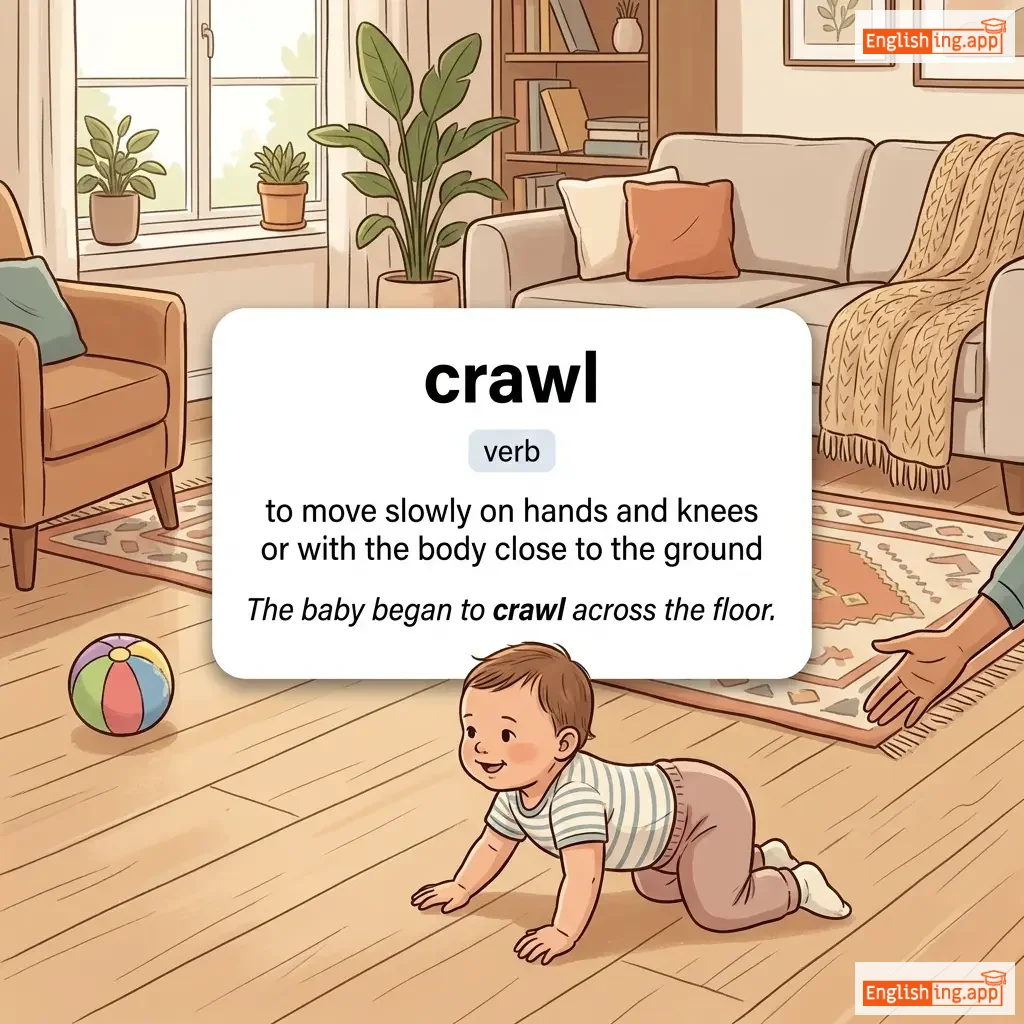
to move slowly on hands and knees or with the body close to the ground
••••••
|
The baby began to crawl across the floor.
赤ちゃんは床を這い始めました。
••••••
|
赤ちゃんは床を這い始めました。
Akachan wa yuka o hai hajimemashita.
••••••
|
crawl out of one's skin
自分の皮膚を這い出す
••••••
|
to feel extremely uncomfortable or disgusted
••••••
|
非常に不快または嫌悪感を感じる
hijō ni fukai mata wa ken'okan o kanjiru
••••••
|
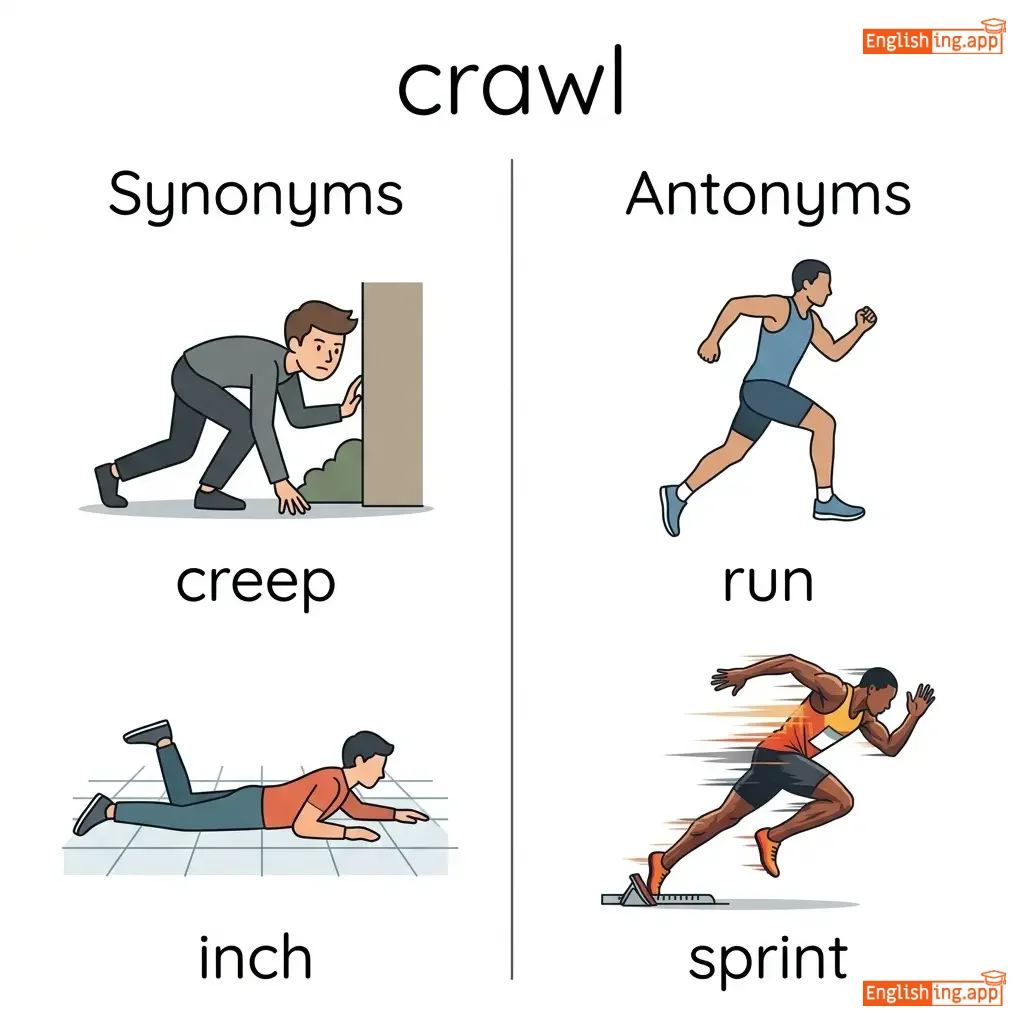
creep, inch, slither, drag, move slowly
••••••
|
run, sprint, rush
••••••
|
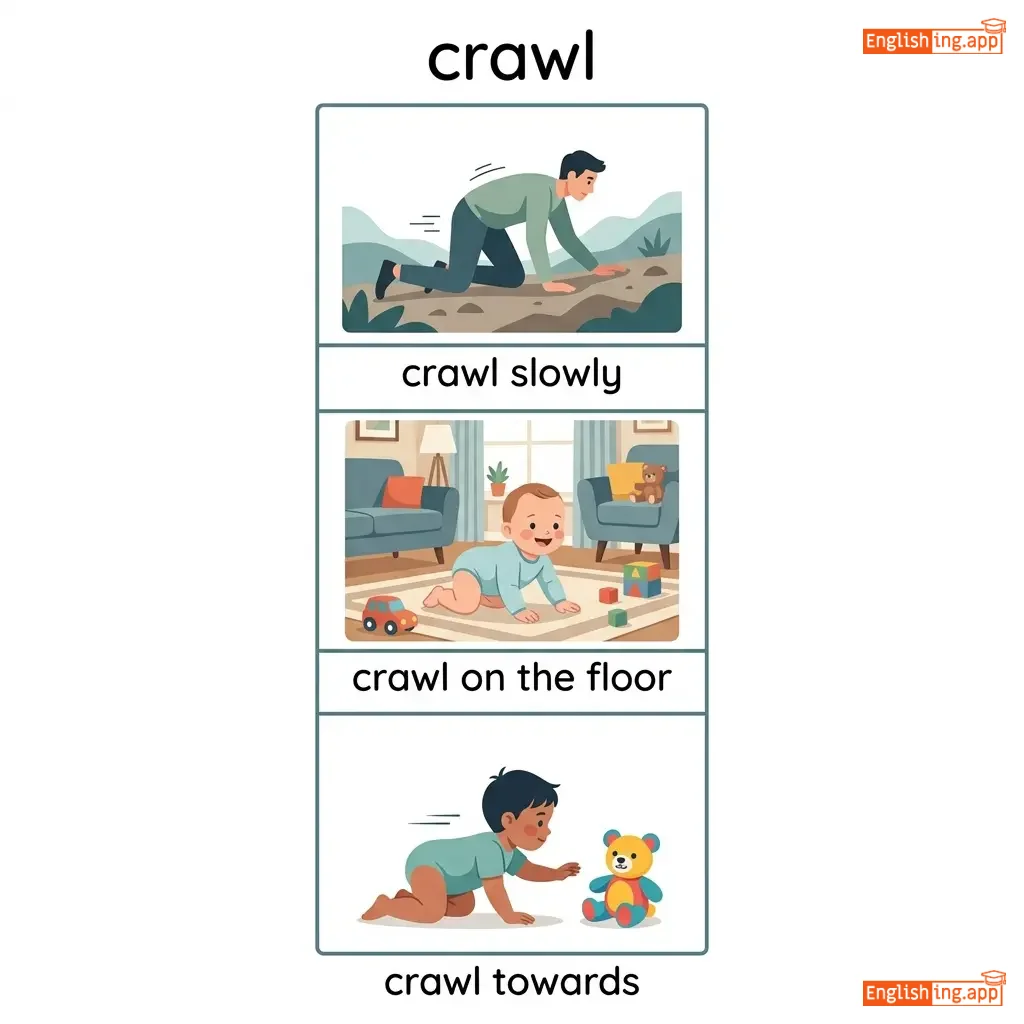
crawl slowly, crawl on the floor, crawl towards, baby crawl
••••••
|
赤ちゃんが這うのはとてもかわいい!
••••••
|
|
🤪
••••••
|
/ˈkreɪzi/
adjective
(クレイジー)
••••••
|
- •••••• |
クレイジー
kureijī
••••••
|
- •••••• | - •••••• | - •••••• | - •••••• |
mentally unsound; extremely foolish or enthusiastic
••••••
|
He had a crazy idea that actually worked. |
彼は実際にうまくいったクレイジーなアイデアを持っていた。
Kare wa jissai ni umaku itta kureijī na aidea o motte ita.
••••••
|
drive someone crazy |
to annoy or make someone feel overwhelmed
••••••
|
誰かを狂わせる
dareka o kuruwaseru
••••••
|
insane, mad, foolish, irrational, wild
••••••
|
sane, rational, normal
••••••
|
crazy idea, crazy behavior, go crazy, crazy about
••••••
|
Crazyは日本語でクレイジー、思い通りに動かす方法です。
••••••
|
|
🍦
••••••
|
/kriːm/
noun
(クリーム)
••••••
|
- •••••• |
クリーム
kuriimu
••••••
|
- •••••• | - •••••• | - •••••• | - •••••• |
A thick, fatty part of milk that rises to the top; also a soft substance used in cooking or cosmetics.
••••••
|
She added some cream to her coffee.
彼女はコーヒーにクリームを加えた。
••••••
|
彼女はコーヒーにクリームを加えた。
Kanojo wa koohii ni kuriimu wo kuwaeta.
••••••
|
the cream of the crop
トップのトップ
••••••
|
the very best of a group
••••••
|
最高の中の最高
saikou no naka no saikou
••••••
|
dairy, lotion, ointment, top, best
••••••
|
worst, inferior
••••••
|
whipped cream, face cream, cream sauce, cream cheese
••••••
|
コーヒーにクリームを加えると、まるで夢のような味になります!
••••••
|
|
🎨
••••••
|
/kriˈeɪt/
verb
(クリエイト)
••••••
|
|
作る
tsukuru
••••••
|
created
クリエイテッド
••••••
|
created
クリエイテッド
••••••
|
creates
クリエイツ
••••••
|
creating
クリエイティング
••••••
|
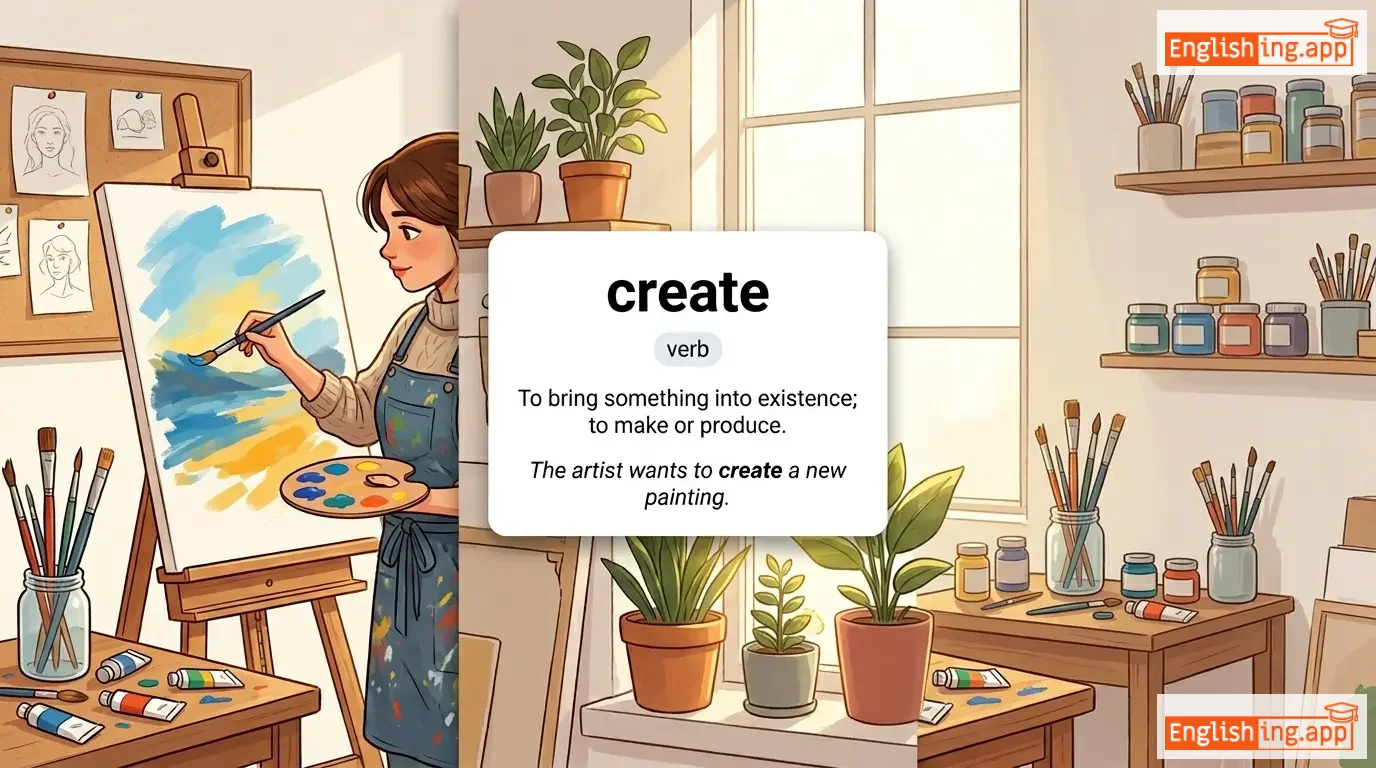
To bring something into existence; to make or produce.
••••••
|
The artist wants to create a new painting.
アーティストは新しい絵を作りたい。
••••••
|
アーティストは新しい絵を作りたい。
Ātisuto wa atarashī e o tsukuritai.
••••••
|
create a scene
シーンを作る
••••••
|
to behave in a loud or disruptive way
••••••
|
騒ぎを起こす
sawagi o okosu
••••••
|
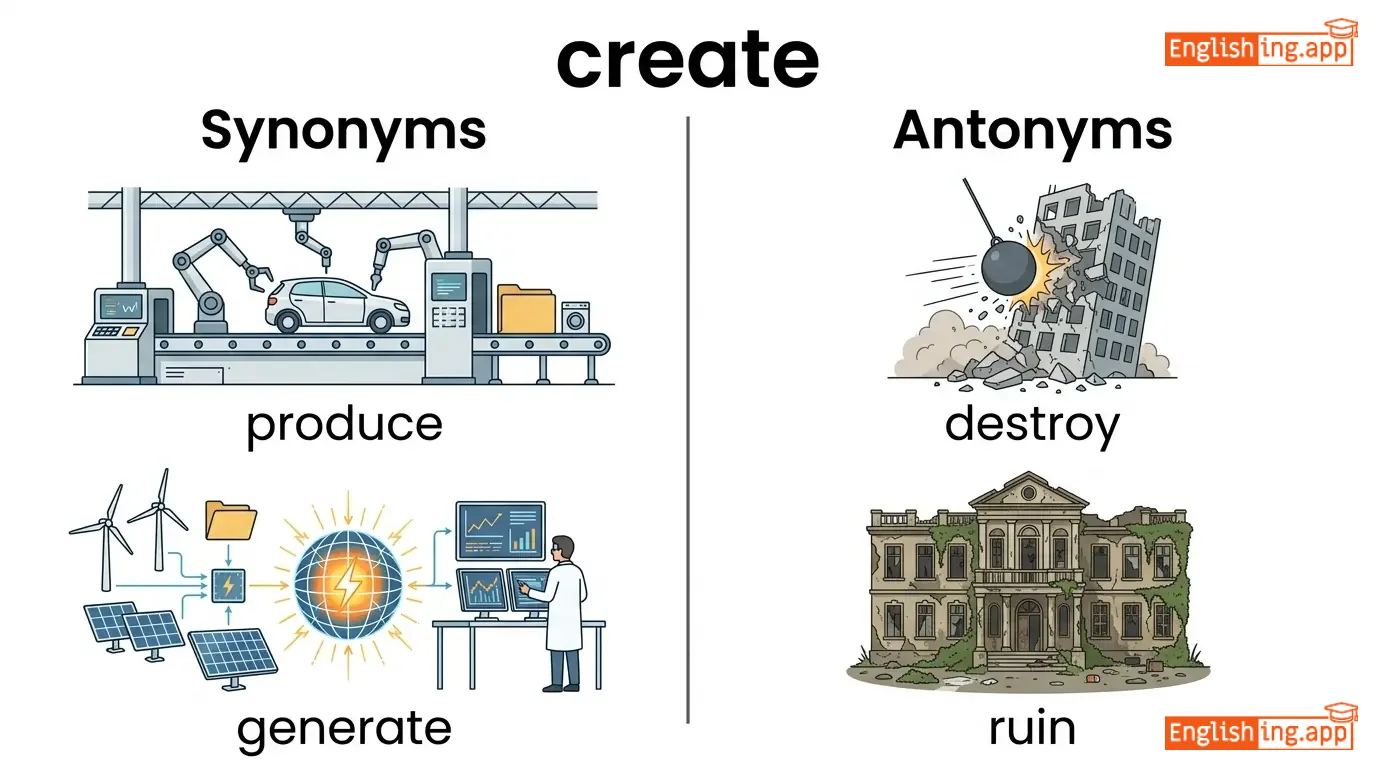
produce, generate, invent, design, build
••••••
|
destroy, ruin, abolish
••••••
|
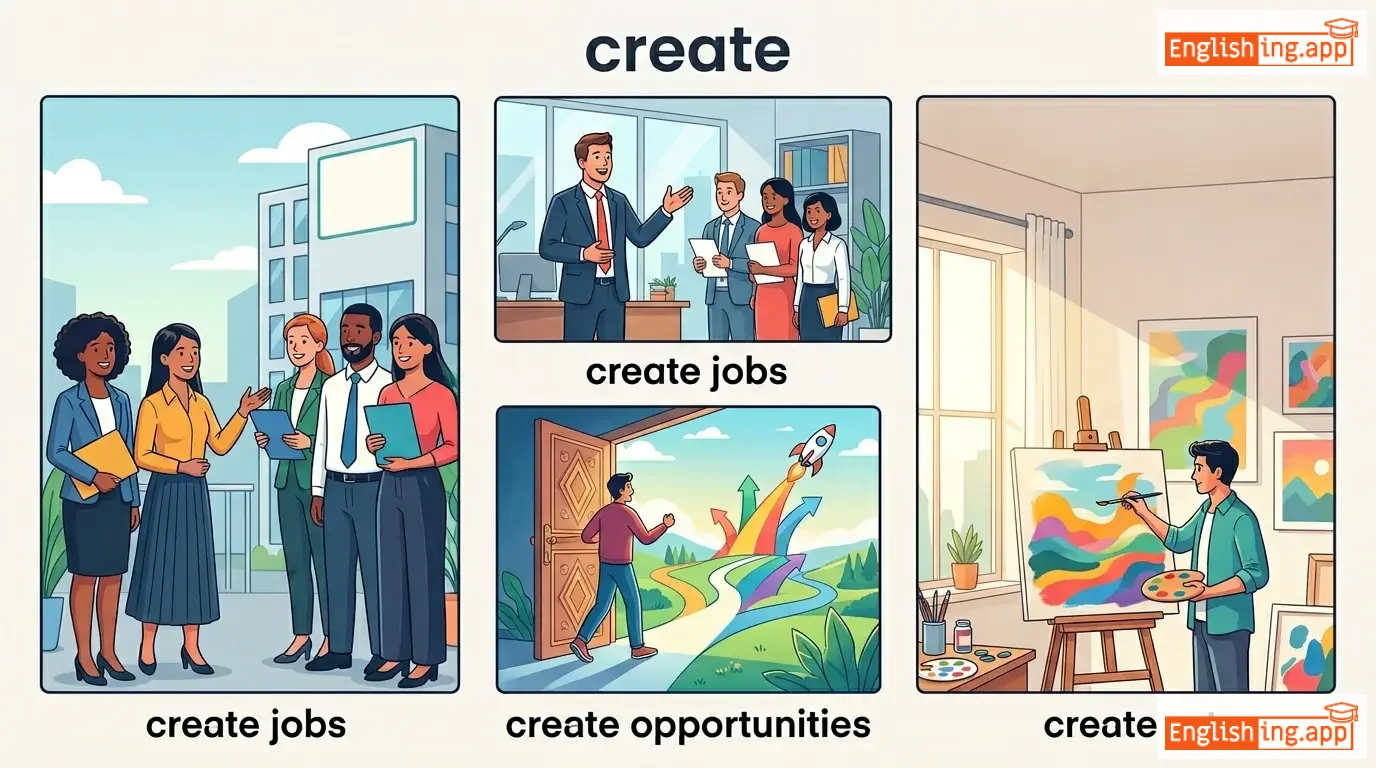
create jobs, create opportunities, create art, create value
••••••
|
作るというのは、新しいものを生み出すこと。例えば、新しい料理を作ること。
••••••
|
|
🎨
••••••
|
/kriˈeɪʃən/
noun
(kurieishon)
••••••
|
- •••••• |
創造
sozou
••••••
|
- •••••• | - •••••• | - •••••• | - •••••• |
The act of bringing something into existence; something that has been made or produced.
••••••
|
The artist’s latest creation was admired by everyone at the gallery. |
そのアーティストの最新の創造はギャラリーで皆に賞賛されました。
Sono atisuto no saishin no souzou wa gyararii de mina ni shousan saremashita.
••••••
|
creation myth |
A symbolic narrative explaining how the world or humankind came into being.
••••••
|
創造神話
souzou shinwa
••••••
|
invention, innovation, formation, production, design
••••••
|
destruction, ruin, elimination
••••••
|
artistic creation, new creation, creative process, divine creation
••••••
|
創造 = 新しいものを創造すること
••••••
|
|
💡
••••••
|
/kriˈeɪtɪv/
adjective
(クリエイティブ)
••••••
|
- •••••• |
創造的
sōzō-teki
••••••
|
- •••••• | - •••••• | - •••••• | - •••••• |
Having the ability to produce new and original ideas or things.
••••••
|
She is very creative in her writing. |
彼女は執筆において非常に創造的です。
Kanojo wa shippitsu ni oite hijō ni sōzō-teki desu.
••••••
|
- •••••• | - •••••• | - •••••• |
imaginative, inventive, innovative, artistic
••••••
|
unimaginative, dull, conventional
••••••
|
creative thinking, creative writing, creative design, creative process
••••••
|
Creativeは新しいアイデアを創造的に作ることです。
••••••
|
|
🎨
••••••
|
/ˌkriːeɪˈtɪvɪti/
noun
(クリエイティビティ)
••••••
|
|
創造性
souzousei
••••••
|
- •••••• | - •••••• | - •••••• | - •••••• |
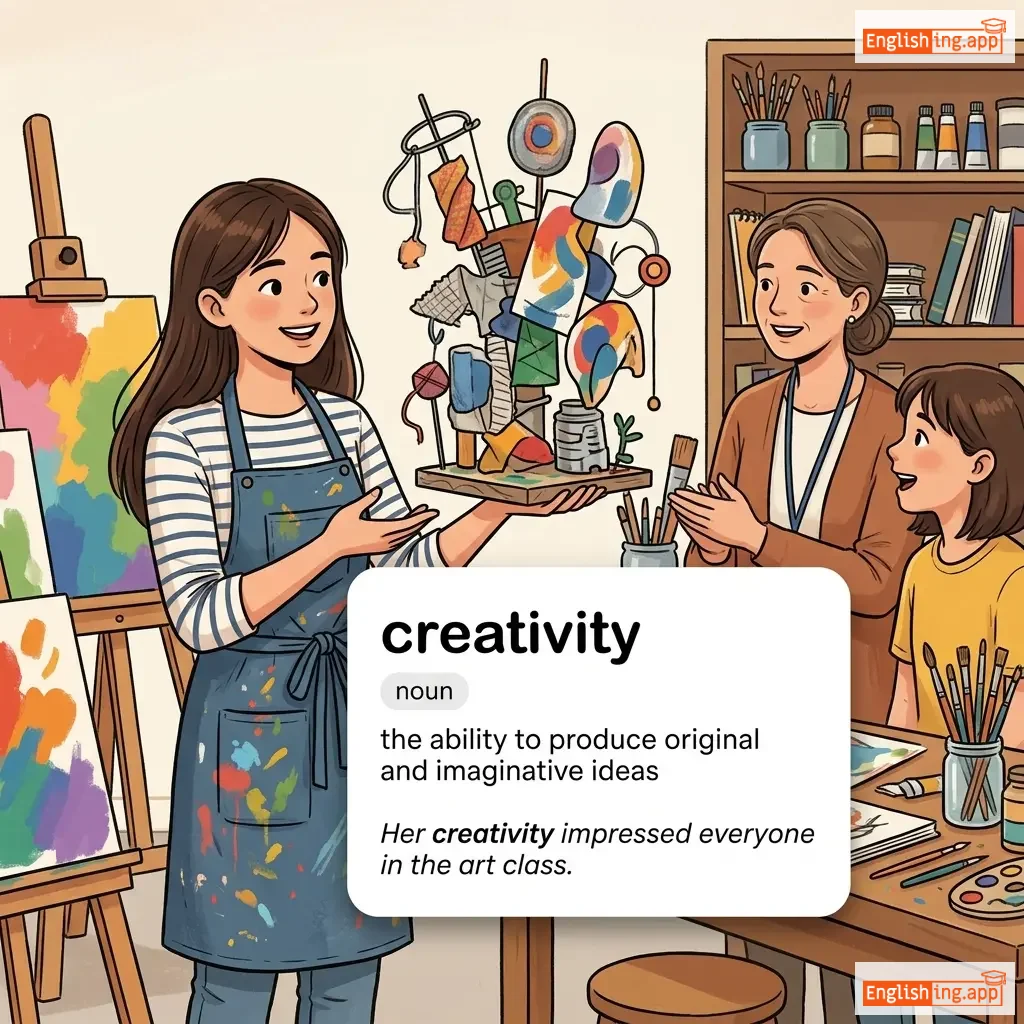
the ability to produce original and imaginative ideas
••••••
|
Her creativity impressed everyone in the art class.
彼女のクリエイティビティは美術のクラスで皆を感動させました。
••••••
|
彼女の創造性は美術のクラスで皆を感動させました。
Kanojo no souzousei wa bijutsu no kurasu de minna wo kandou sasenimashita.
••••••
|
- •••••• | - •••••• | - •••••• |
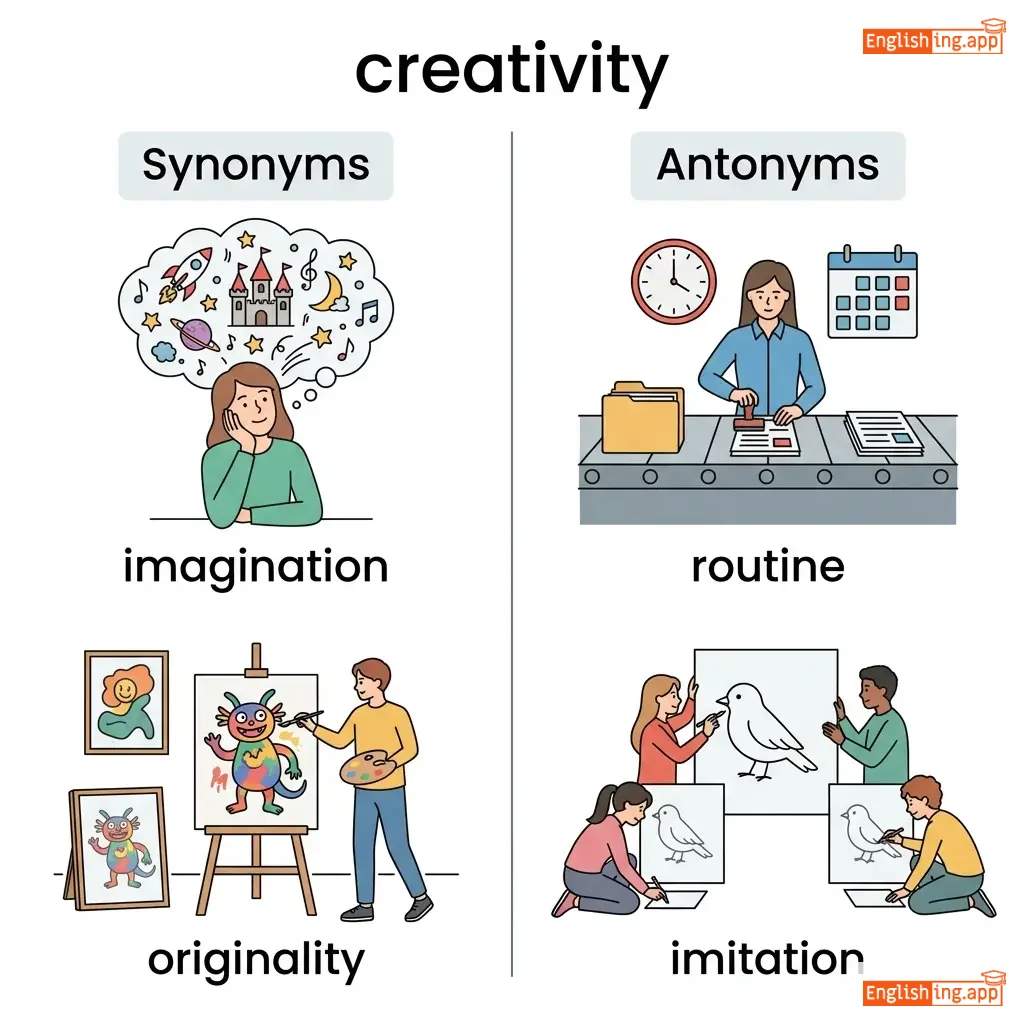
imagination, originality, innovation, inventiveness, resourcefulness
••••••
|
routine, imitation, dullness
••••••
|
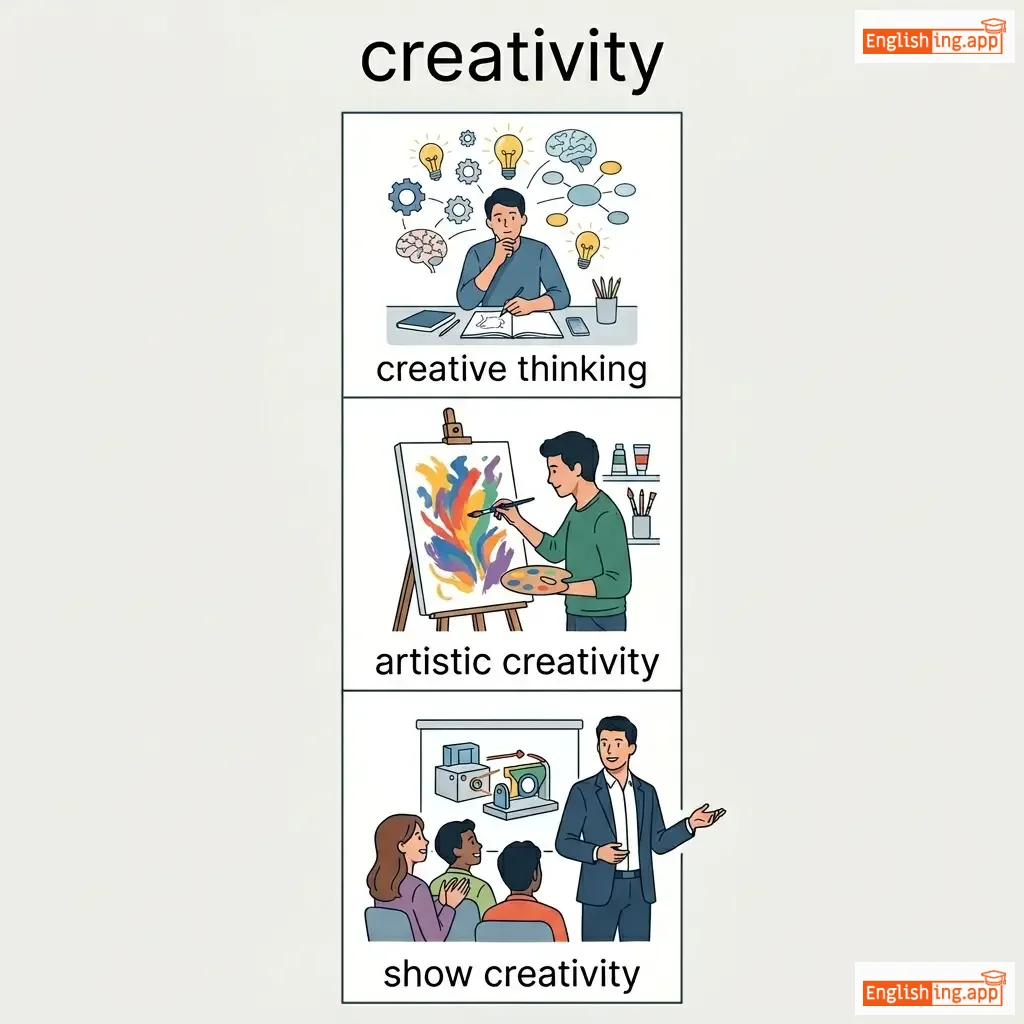
creative thinking, artistic creativity, show creativity, inspire creativity
••••••
|
創造性はCreativity、違う考え方!
••••••
|
|
🧑🎨
••••••
|
/krɪˈeɪtə/
noun
(クリエイター)
••••••
|
- •••••• |
創造者
sōzōsha
••••••
|
- •••••• | - •••••• | - •••••• | - •••••• |
a person who brings something into existence
••••••
|
He is the creator of many successful startups.
彼は多くの成功したスタートアップのクリエイターです。
••••••
|
彼は多くの成功したスタートアップのクリエイターです。
Kare wa ōku no seikō shita sutātopu no kurieitā desu.
••••••
|
- •••••• | - •••••• | - •••••• |
originator, inventor, founder, maker
••••••
|
destroyer, annihilator
••••••
|
creator of ideas, creator of content, content creator
••••••
|
創造者は新しいものを作る人、例えばスタートアップの創業者です。
••••••
|
|
🐾
••••••
|
/ˈkriːtʃər/
noun
(kuriichā)
••••••
|
- •••••• |
生物
seibutsu
••••••
|
- •••••• | - •••••• | - •••••• | - •••••• |
A living being, especially an animal.
••••••
|
The forest is full of strange creatures. |
森は奇妙な生物でいっぱいです。
Mori wa kimyō na seibutsu de ippai desu.
••••••
|
creature comforts |
basic material comforts that make life pleasant
••••••
|
生活の基本的な快適さ
seikatsu no kihonteki na kaiteki-sa
••••••
|
being, animal, organism, entity
••••••
|
object, inanimate
••••••
|
sea creature, mythical creature, living creature, wild creature
••••••
|
Creatureは生物を意味する—森でたくさんの生物がクリケットをしている。
••••••
|
|
📰
••••••
|
/ˌkrɛd.ɪˈbɪl.ɪ.ti/
noun
(krɛdɪˈbɪlɪti)
••••••
|

|
信頼性
shinraisei
••••••
|
- •••••• | - •••••• | - •••••• | - •••••• |
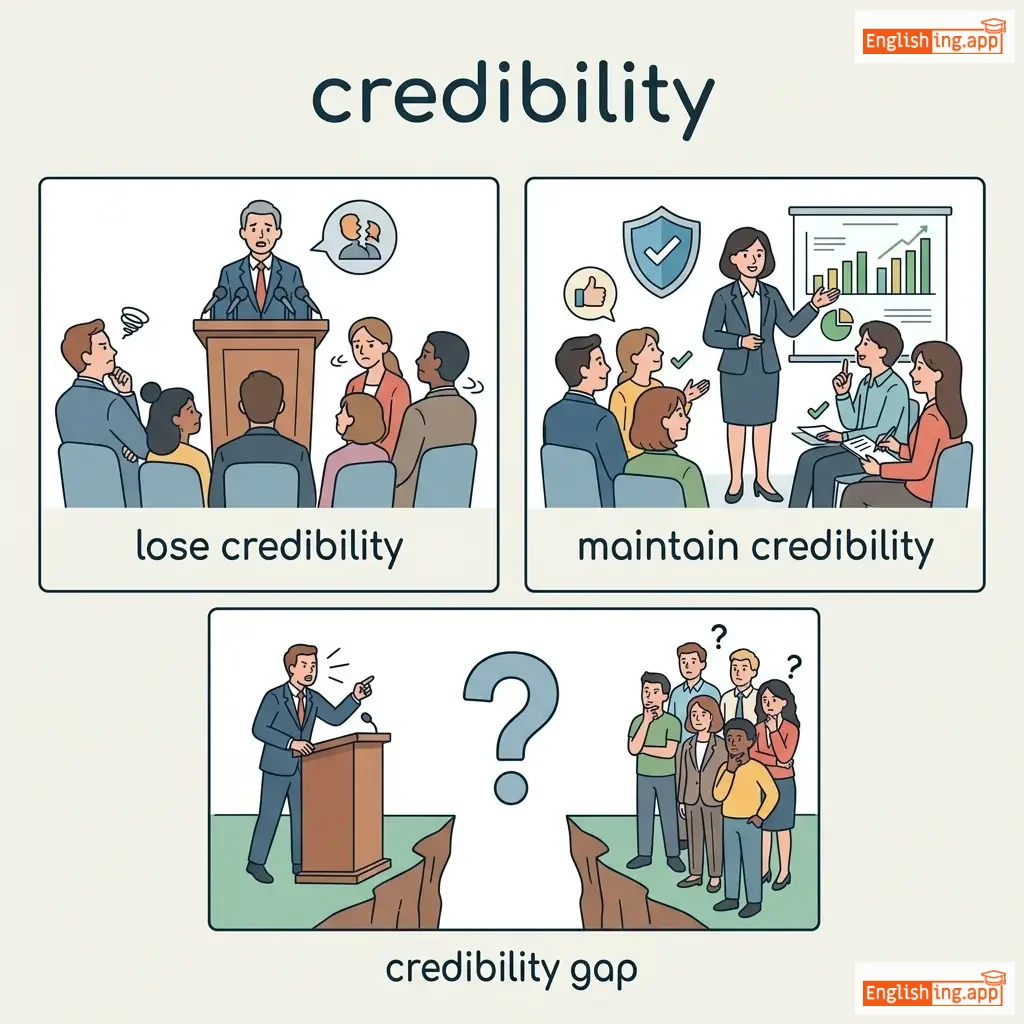
the quality of being trusted and believed in
••••••
|
The journalist's credibility was questioned after the report.
ジャーナリストの信頼性はレポートの後に疑問視されました。
••••••
|
ジャーナリストの信頼性はレポートの後に疑問視されました。
Jānarisuto no shinraisei wa repōto no ato ni gimon-shi saremashita.
••••••
|
- •••••• | - •••••• | - •••••• |
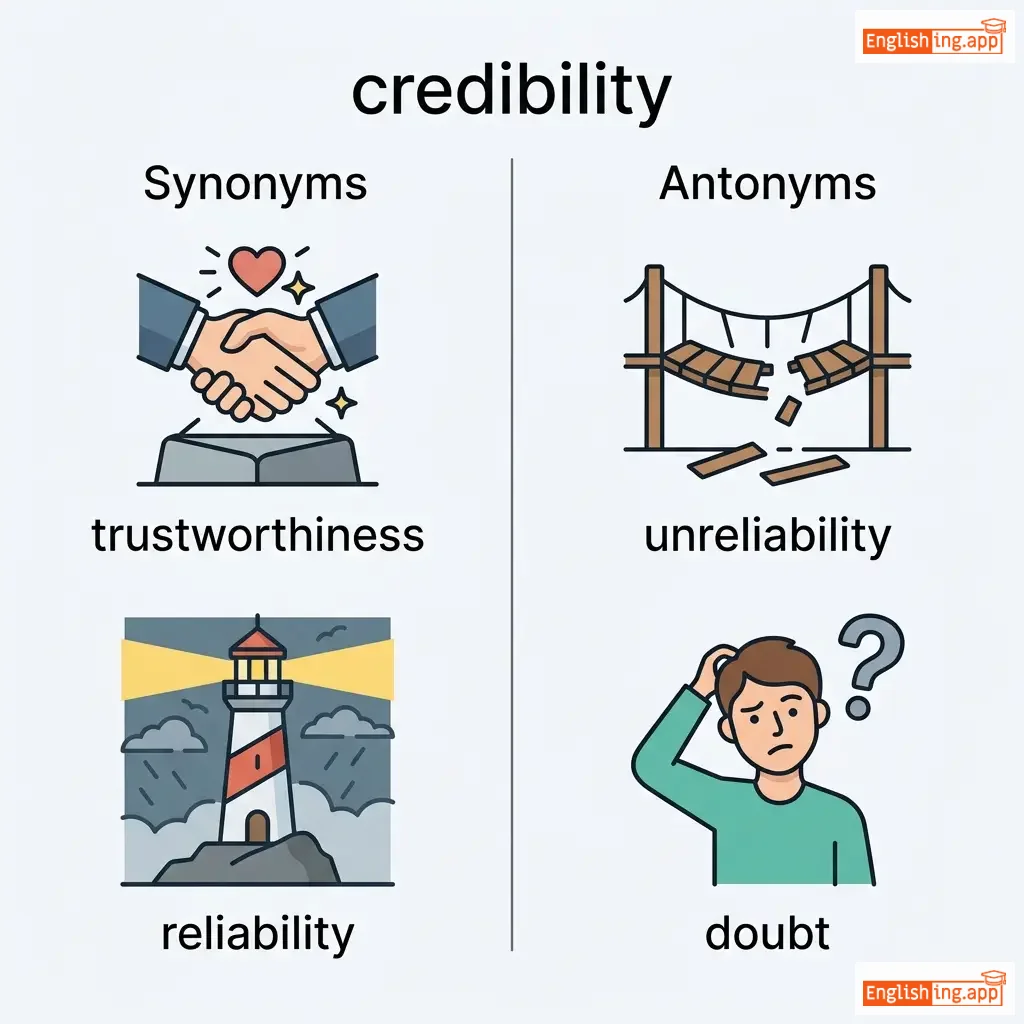
trustworthiness, reliability, believability, integrity
••••••
|
unreliability, doubt
••••••
|
lose credibility, maintain credibility, credibility gap, credibility and trust
••••••
|
信頼性は信じる価値のある仕事から生まれます。
••••••
|
|
👍
••••••
|
/ˈkrɛd.ɪ.bəl/
adjective
(krɛdɪbəl)
••••••
|
- •••••• |
信頼できる
shinrai dekiru
••••••
|
- •••••• | - •••••• | - •••••• | - •••••• |
able to be believed; convincing
••••••
|
Her explanation was credible enough to convince the committee. |
彼女の説明は委員会を納得させるのに十分信頼できるものでした。
Kanojo no setsumei wa iinkai o nattoku saseru no ni jūbun shinrai dekiru mono deshita.
••••••
|
- •••••• | - •••••• | - •••••• |
believable, plausible, trustworthy, convincing
••••••
|
unbelievable, implausible
••••••
|
credible source, credible evidence, credible story, credible explanation
••••••
|
CREDIBLE は信頼できるという意味です、委員会を納得させる説明のように
••••••
|
|
💳
••••••
|
/ˈkrɛdɪt/
noun, verb
••••••
|
- •••••• | - •••••• |
credited
••••••
|
credited
••••••
|
credits
••••••
|
crediting
••••••
|
As a noun: the ability to obtain goods or services before payment; recognition for an achievement. As a verb: to publicly acknowledge someone's contribution.
••••••
|
She received credit for her contribution to the project. |
- •••••• |
give credit where credit is due |
Acknowledge someone’s effort or achievement when it is deserved.
••••••
|
- •••••• |
recognition, trust, praise, loan, acknowledgement
••••••
|
blame, discredit, doubt
••••••
|
take credit, line of credit, credit score, credit card
••••••
|
No •••••• |
|
🕷️
••••••
|
/kriːp/
verb
(kuriipu)
••••••
|
|
忍び寄る
shinobiyoru
••••••
|
crept
kureputo
••••••
|
crept
kureputo
••••••
|
creeps
kuripsu
••••••
|
creeping
kuriipingu
••••••
|
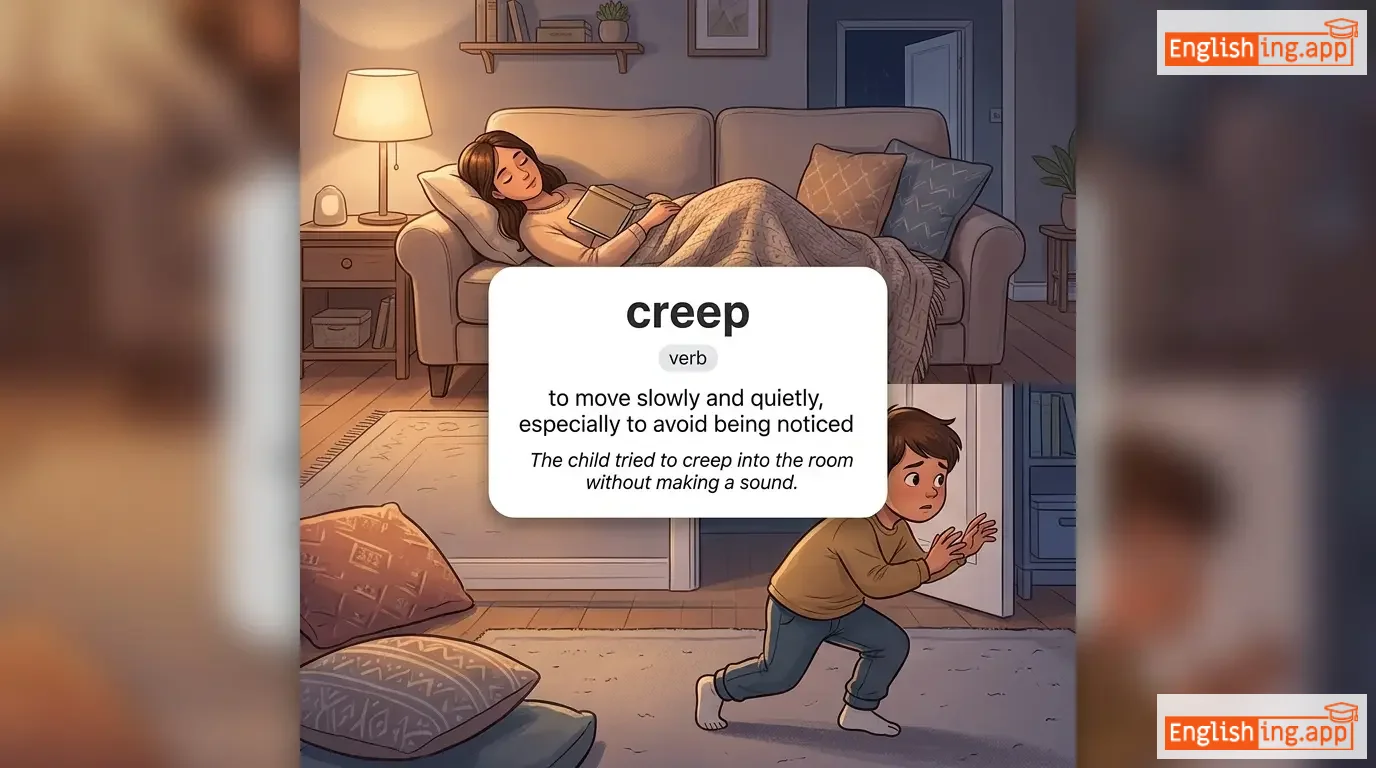
to move slowly and quietly, especially to avoid being noticed
••••••
|
The child tried to creep into the room without making a sound.
子供は音を立てずに部屋に忍び込もうとしました。
••••••
|
子供は音を立てずに部屋に忍び込もうとしました。
Kodomo wa oto o tatezu ni heya ni shinobikomo to shimashita.
••••••
|
creep up on
こっそり近づく
••••••
|
to approach someone quietly without being noticed
••••••
|
こっそり近づく
kossori chikaduku
••••••
|
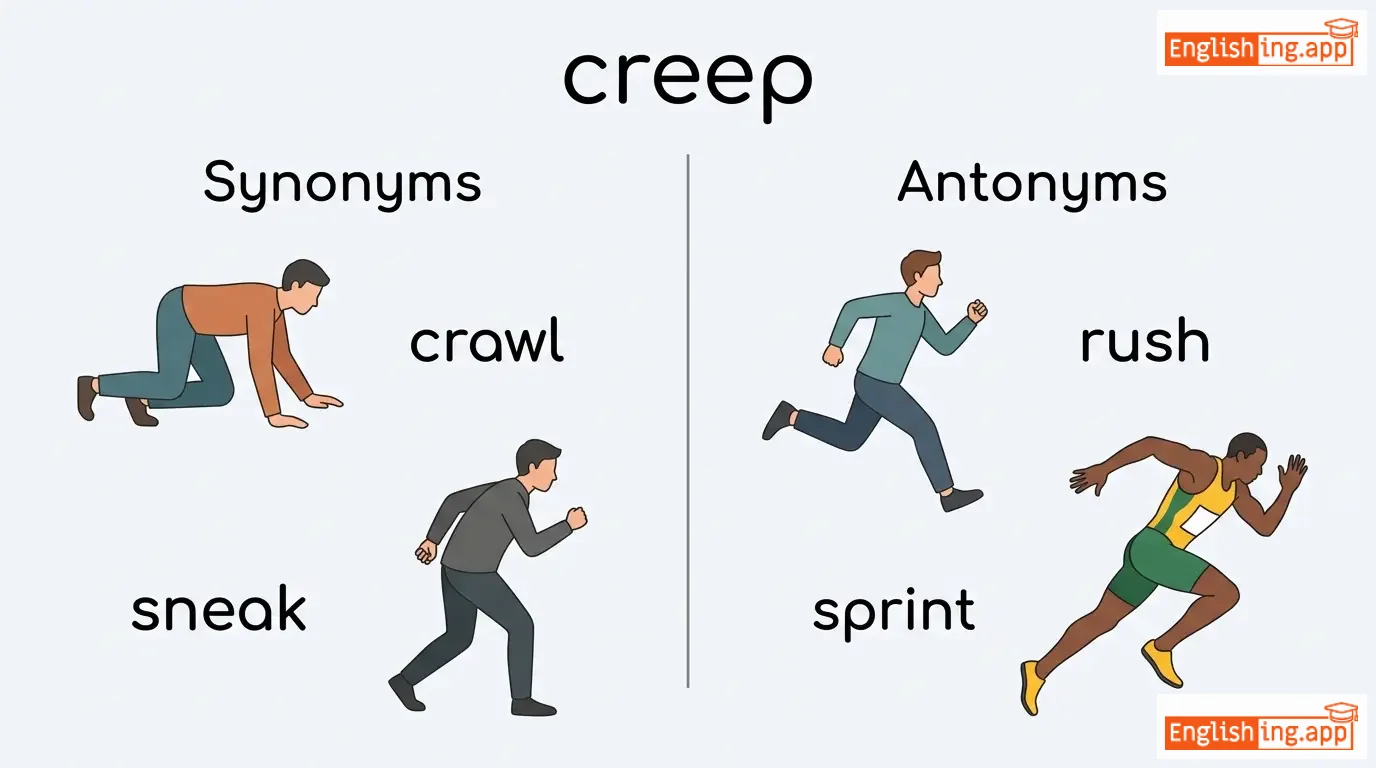
crawl, sneak, tiptoe, slink, edge
••••••
|
rush, sprint, charge
••••••
|
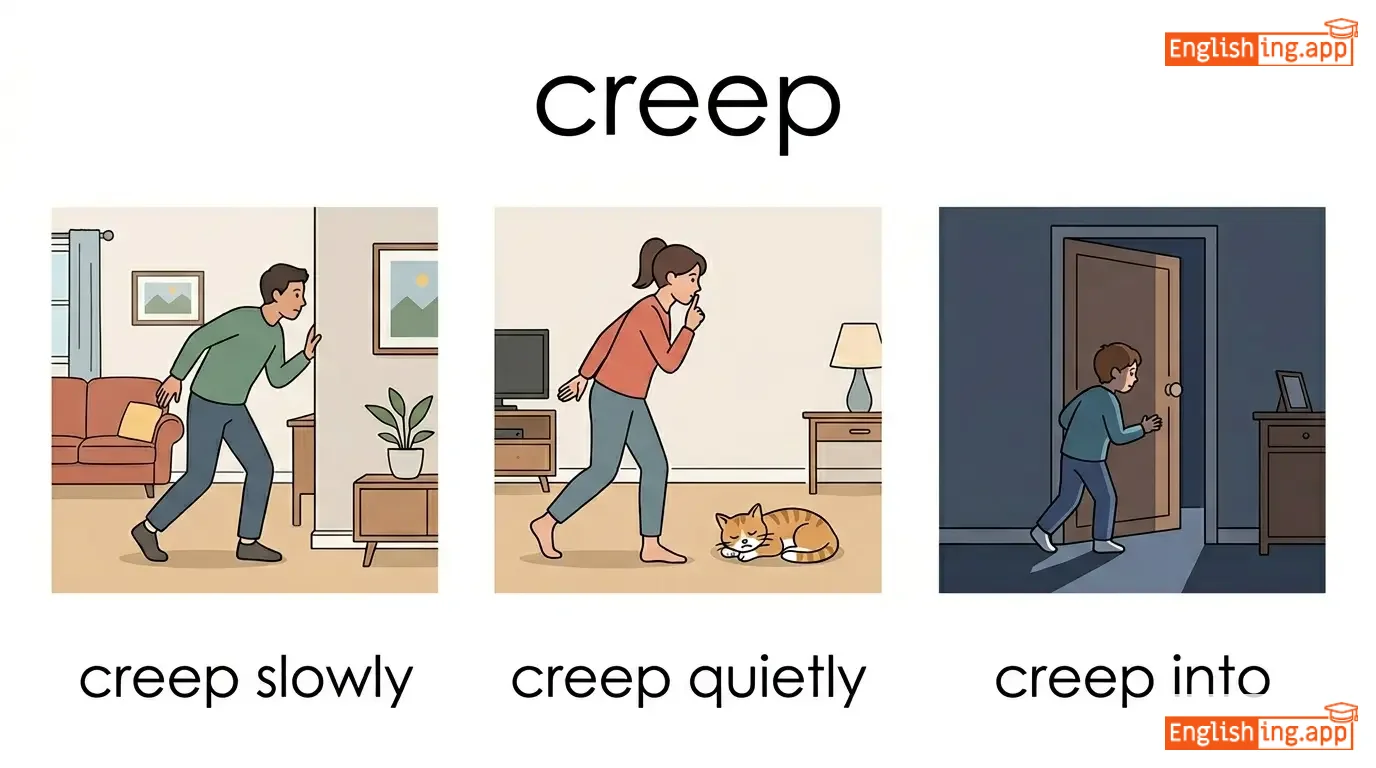
creep slowly, creep quietly, creep into, creep out
••••••
|
Creepは忍び寄ること、例えば忍者のように静かに近づくことです。
••••••
|
|
👨✈️
••••••
|
/kruː/
noun
(クルー)
••••••
|
- •••••• |
乗組員
norumuiin
••••••
|
- •••••• | - •••••• | - •••••• | - •••••• |
A group of people working together, especially on a ship, aircraft, or project.
••••••
|
The ship's crew worked tirelessly during the storm.
船のクルーは嵐の間、休むことなく働いた。
••••••
|
船のクルーは嵐の間、休むことなく働いた。
Fune no kurū wa arashi no aida, yasumu koto naku hataraita.
••••••
|
crew cut
非常に短い髪型
••••••
|
A very short haircut, originally popular among military men.
••••••
|
非常に短い髪型
Hijō ni mijikai kamigata
••••••
|
team, staff, group, squad, gang
••••••
|
individual, loner
••••••
|
film crew, cabin crew, ship's crew, rescue crew
••••••
|
Crew はチームを意味し、乗組員 (norumuiin) は常に一緒に働きます。
••••••
|
|
🦗
••••••
|
/ˈkrɪk.ɪt/
noun
(kriket)
••••••
|
- •••••• |
コオロギ
koorogi
••••••
|
- •••••• | - •••••• | - •••••• | - •••••• |
a jumping insect that makes a chirping sound by rubbing its wings together
••••••
|
We could hear crickets chirping in the evening.
私たちは夕方にコオロギの鳴き声を聞くことができました。
••••••
|
私たちは夕方にコオロギの鳴き声を聞くことができました。
watashitachi wa yuugata ni koorogi no nakigoe o kiku koto ga dekimashita.
••••••
|
- •••••• | - •••••• | - •••••• |
grasshopper, insect
••••••
|
- •••••• |
cricket sound, field cricket, house cricket
••••••
|
コオロギが鳴く夜の静けさはまるで音楽のようです。
••••••
|
|
🚔
••••••
|
/kraɪm/
noun
(クライム)
••••••
|
- •••••• |
犯罪
hanzai
••••••
|
- •••••• | - •••••• | - •••••• | - •••••• |
An illegal act punishable by law.
••••••
|
The police are investigating the crime.
警察は犯罪を調査しています。
••••••
|
警察は犯罪を調査しています。
Keisatsu wa hanzai o chōsa shiteimasu.
••••••
|
crime does not pay
犯罪は報われない。
••••••
|
crime ultimately brings punishment, not profit
••••••
|
犯罪は報われない。
Hanzai wa mukuwarenaī.
••••••
|
offense, felony, wrongdoing, violation
••••••
|
lawfulness, obedience
••••••
|
commit a crime, crime rate, crime scene, organized crime
••••••
|
犯罪を犯すと、必ず後悔と罰が待っている。
••••••
|
|
🚔
••••••
|
/ˈkrɪmɪnəl/
noun, adjective
(kriminal)
••••••
|
- •••••• |
犯罪者
hanzai-sha
••••••
|
- •••••• | - •••••• | - •••••• | - •••••• |
A person who has committed a crime; relating to crime
••••••
|
The police arrested a dangerous criminal last night. |
警察は昨夜、危険な犯罪者を逮捕しました。
Keisatsu wa sakuya, kiken na hanzai-sha o taiho shimashita.
••••••
|
criminal record |
an official history of crimes committed by a person
••••••
|
犯罪歴
hanzai-reki
••••••
|
offender, lawbreaker, felon, culprit, wrongdoer
••••••
|
innocent, lawful, honest
••••••
|
criminal law, criminal record, criminal activity, criminal justice, criminal behavior
••••••
|
犯罪者 = 犯罪をした人
••••••
|
|
⚠️
••••••
|
/ˈkraɪsɪs/
noun
(クライシス)
••••••
|
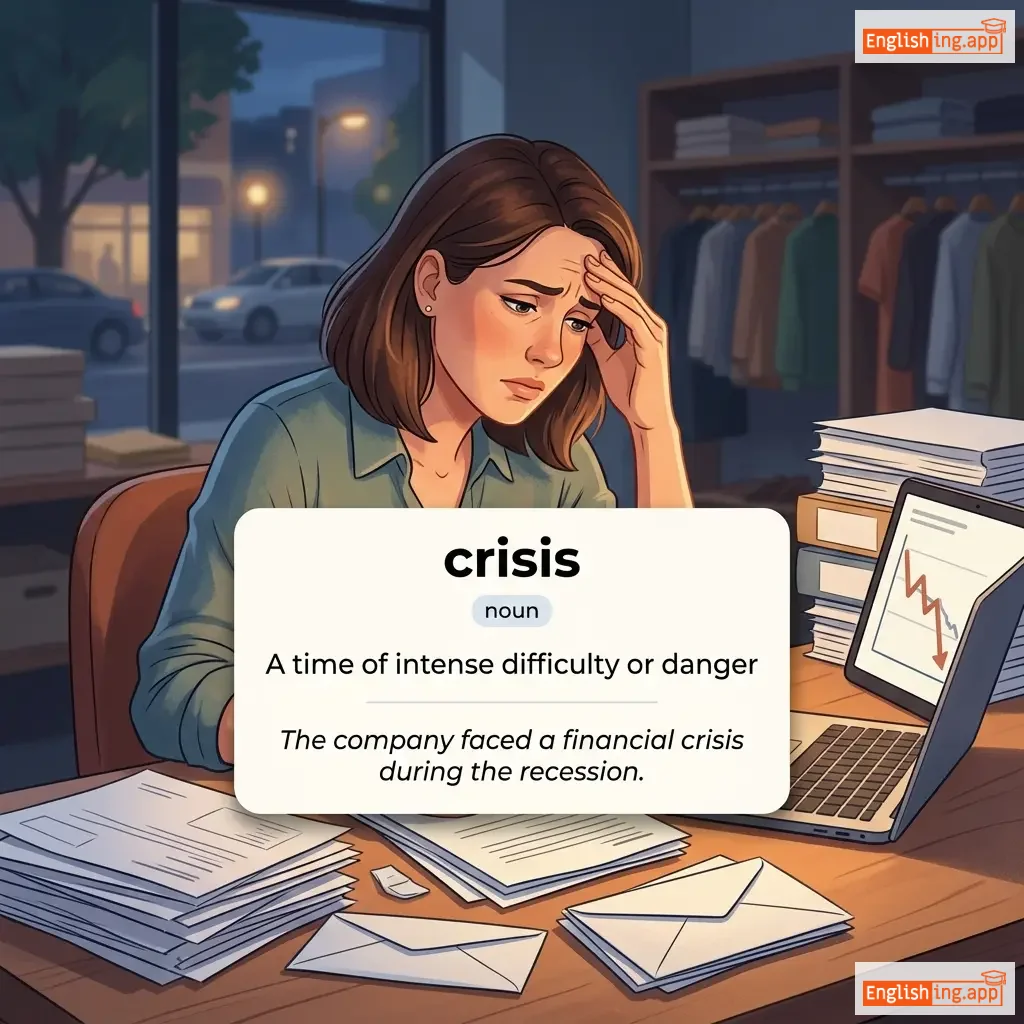
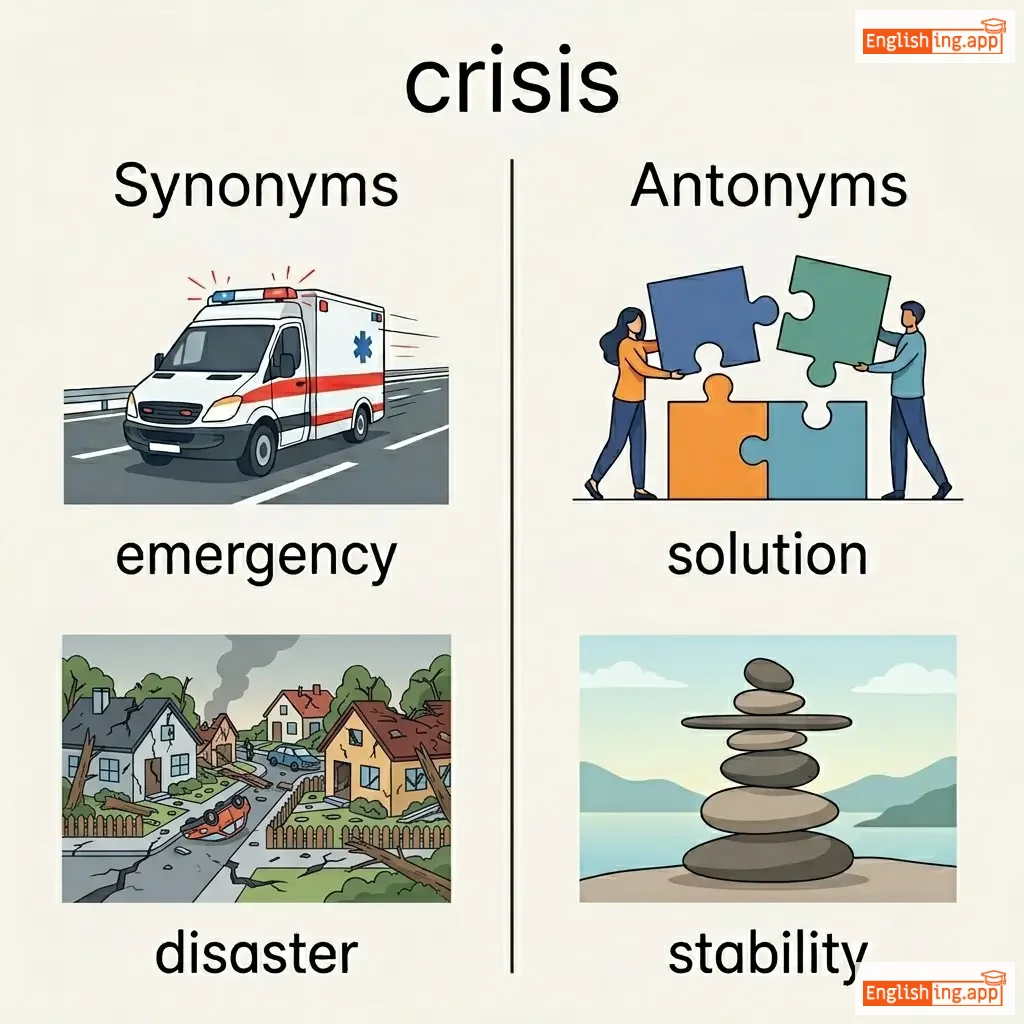
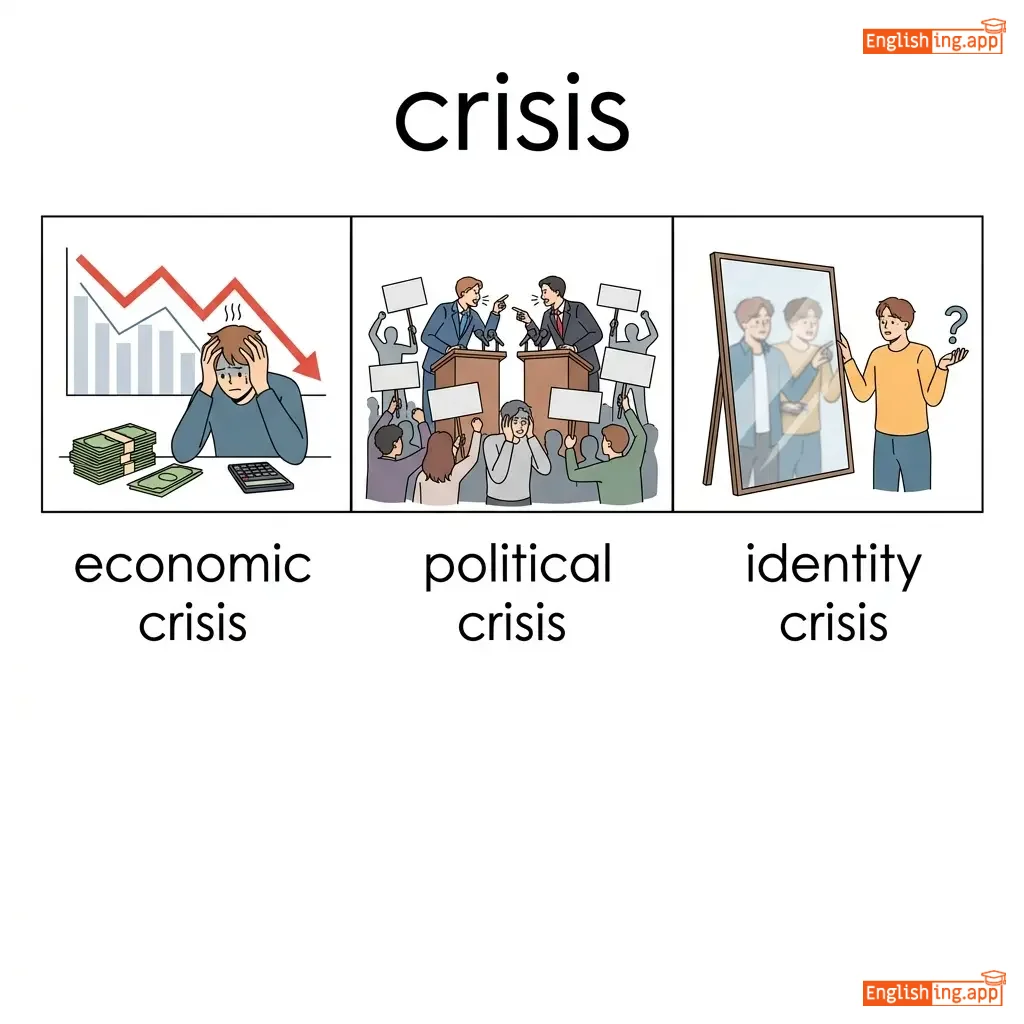
|
危機
kiki
••••••
|
- •••••• | - •••••• | - •••••• | - •••••• |
A time of intense difficulty or danger
••••••
|
The company faced a financial crisis during the recession. |
その企業は不況の中で財政的な危機に直面しました。
Sono kigyō wa fukyō no naka de zaisei-teki na kiki ni chokumen shimashita.
••••••
|
midlife crisis |
a period of doubt and anxiety in middle age about one's life
••••••
|
ミッドライフクライシス
Middoraifu kuraishisu
••••••
|
emergency, disaster, dilemma, catastrophe, trouble
••••••
|
solution, stability, peace
••••••
|
economic crisis, political crisis, identity crisis, health crisis
••••••
|
Crisis ではみんなが困っている、危機の時間!
••••••
|
|
📋
••••••
|
/kraɪˈtɪəriə/
noun
(クライテリア)
••••••
|
- •••••• |
基準
kijun
••••••
|
- •••••• | - •••••• | - •••••• | - •••••• |
Standards or principles by which something is judged or decided.
••••••
|
The candidates were evaluated based on strict criteria. |
候補者は厳格な基準に基づいて評価されました。
Kōhosha wa genkaku na kijun ni motozuite hyōka saremashita.
••••••
|
- •••••• | - •••••• | - •••••• |
standards, measures, requirements, conditions, benchmarks
••••••
|
guess, randomness
••••••
|
evaluation criteria, selection criteria, admission criteria
••••••
|
Criteriaは基準 - 基準を持っていると物事を明確に決めることができます。
••••••
|
|
📝
••••••
|
/ˈkrɪtɪk/
noun
(クリティック)
••••••
|
- •••••• |
批評家
hihyōka
••••••
|
- •••••• | - •••••• | - •••••• | - •••••• |
A person who judges the merits of something, especially art or literature
••••••
|
The film critic praised the director's latest movie. |
映画批評家は監督の最新映画を称賛しました。
Eiga hihyōka wa kantoku no saishin eiga o shōsan shimashita.
••••••
|
armchair critic |
someone who criticizes without real knowledge or involvement
••••••
|
ソファ批評家
Sofa hihyōka
••••••
|
reviewer, evaluator, commentator, judge
••••••
|
supporter, admirer
••••••
|
film critic, art critic, music critic, theater critic
••••••
|
Critic = 批評家、常に評価する人
••••••
|
|
❗
••••••
|
/ˈkrɪtɪkəl/
adjective
(kuritikaru)
••••••
|
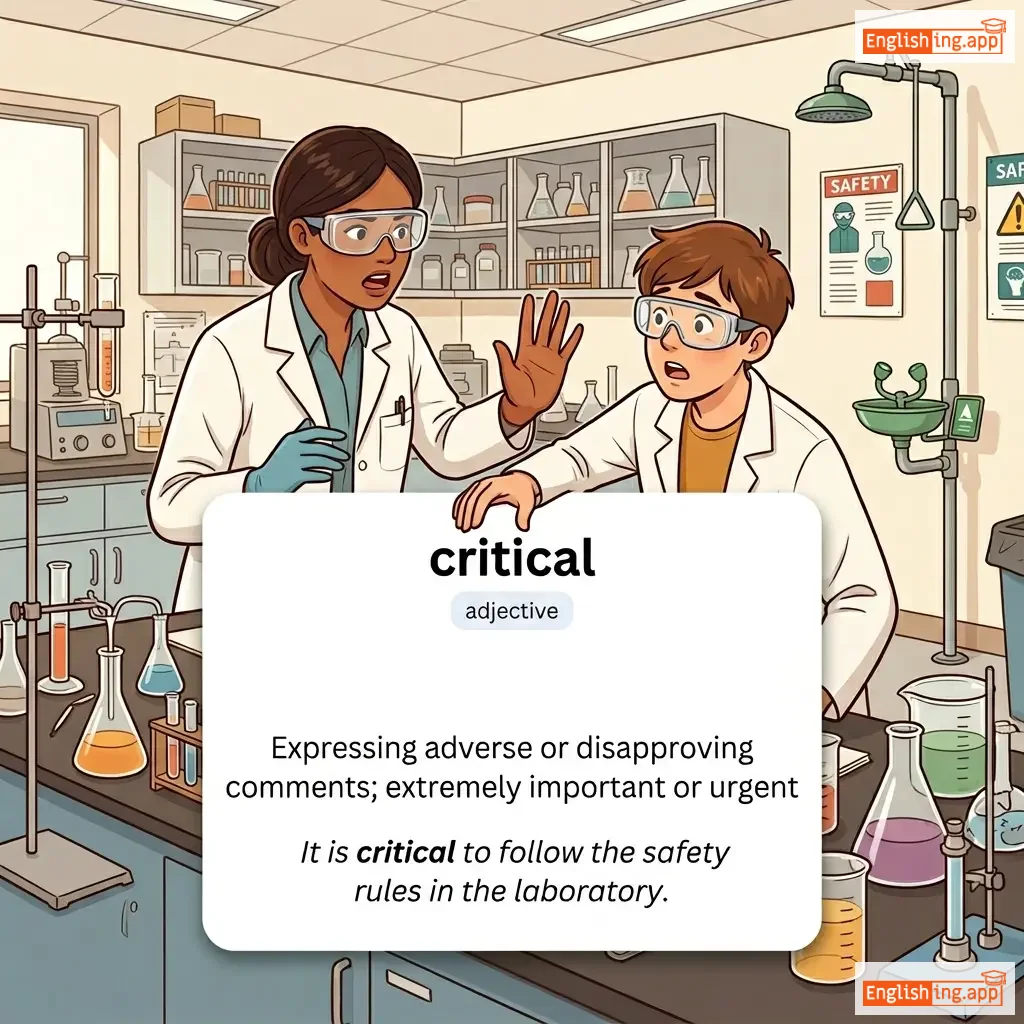
|
重大な / 危機的
jūdaina / kikiteki
••••••
|
- •••••• | - •••••• | - •••••• | - •••••• |
Expressing adverse or disapproving comments; extremely important or urgent
••••••
|
It is critical to follow the safety rules in the laboratory. |
実験室で安全規則に従うことは非常に重要です。
Jikken-shitsu de anzen kisoku ni shitagau koto wa hijō ni jūyō desu.
••••••
|
critical condition |
a serious medical state where life is at risk
••••••
|
危機的状態
kikiteki jōtai
••••••
|
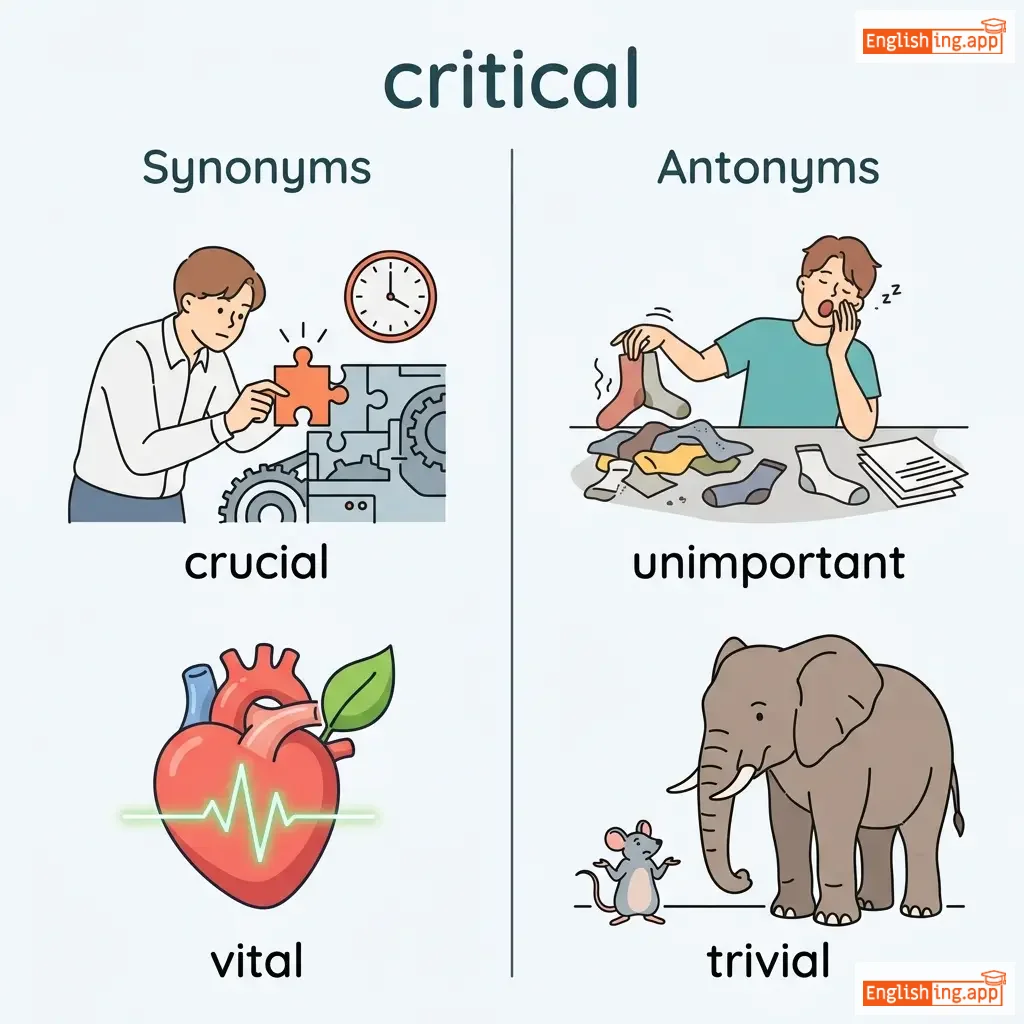
crucial, vital, essential, urgent, disapproving
••••••
|
unimportant, trivial, supportive
••••••
|
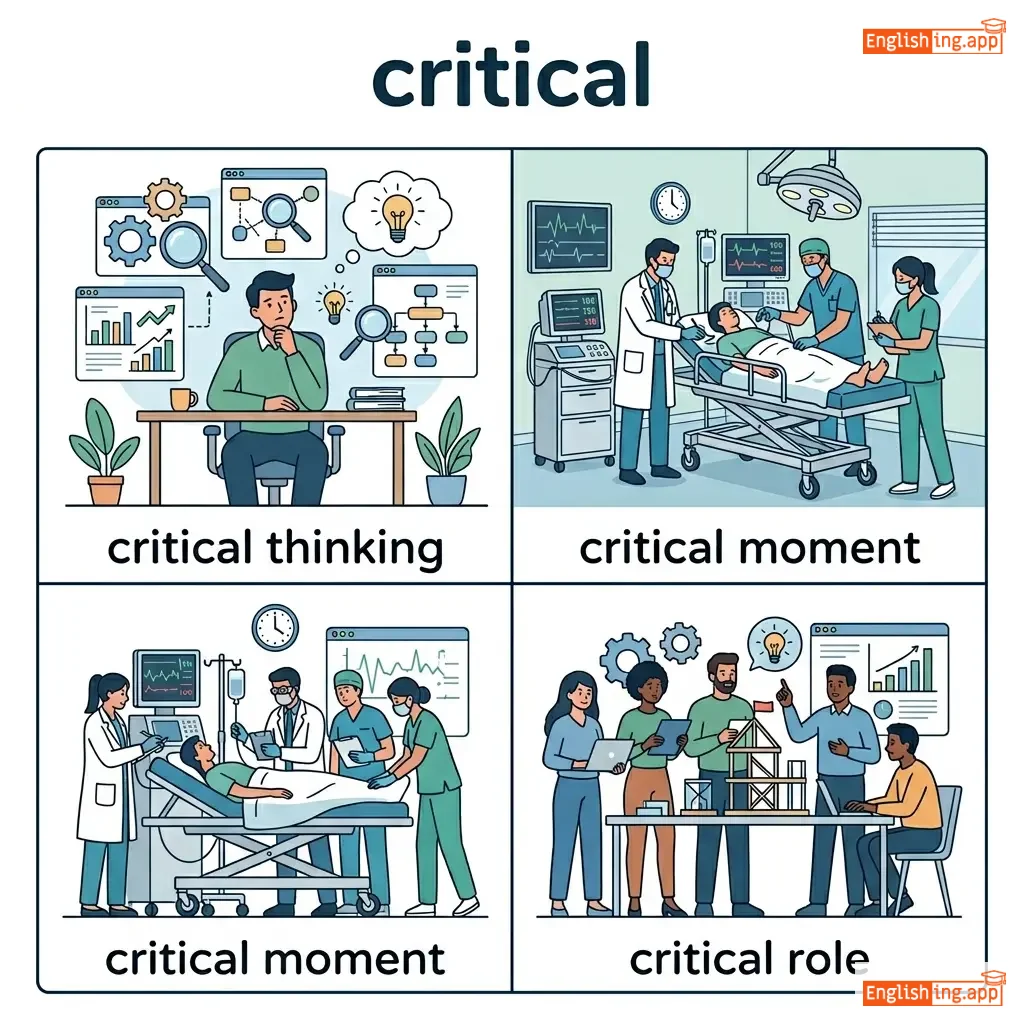
critical thinking, critical moment, critical role, critical analysis
••••••
|
Critical は危機的な状況を意味します – Critical = 危機的
••••••
|
|
⚠️
••••••
|
/ˈkrɪtɪkli/
adverb
(クリティカリー)
••••••
|
- •••••• |
重大に
jūdai ni
••••••
|
- •••••• | - •••••• | - •••••• | - •••••• |
in a way that expresses disapproval or a very serious, important way
••••••
|
He was critically injured in the accident. |
彼は事故で重傷を負った。
Kare wa jiko de jūshō o otta.
••••••
|
- •••••• | - •••••• | - •••••• |
seriously, severely, urgently
••••••
|
lightly, casually
••••••
|
critically important, critically endangered, critically ill
••••••
|
Critically は重大にという意味で、事故で重傷を負うような状況
••••••
|
|
💬
••••••
|
/ˈkrɪtɪˌsɪzəm/
noun
(クリティシズム)
••••••
|
- •••••• |
批判
hihan
••••••
|
- •••••• | - •••••• | - •••••• | - •••••• |
The expression of disapproval or judgment of the merits of something
••••••
|
The new policy has faced a lot of criticism from the public. |
新しい政策は、一般の人々から多くの批判を受けました。
Atarashī seisaku wa, ippan no hitobito kara ōku no hihan o ukemashita.
••••••
|
constructive criticism |
helpful and useful feedback intended to improve something
••••••
|
建設的な批判
Kensetsuteki na hihan
••••••
|
disapproval, judgment, assessment, evaluation, remark
••••••
|
praise, compliment
••••••
|
constructive criticism, harsh criticism, literary criticism, public criticism
••••••
|
批判 = Criticism
••••••
|
|
📝
••••••
|
/ˈkrɪtɪsaɪz/
verb
(クリティサイズ)
••••••
|
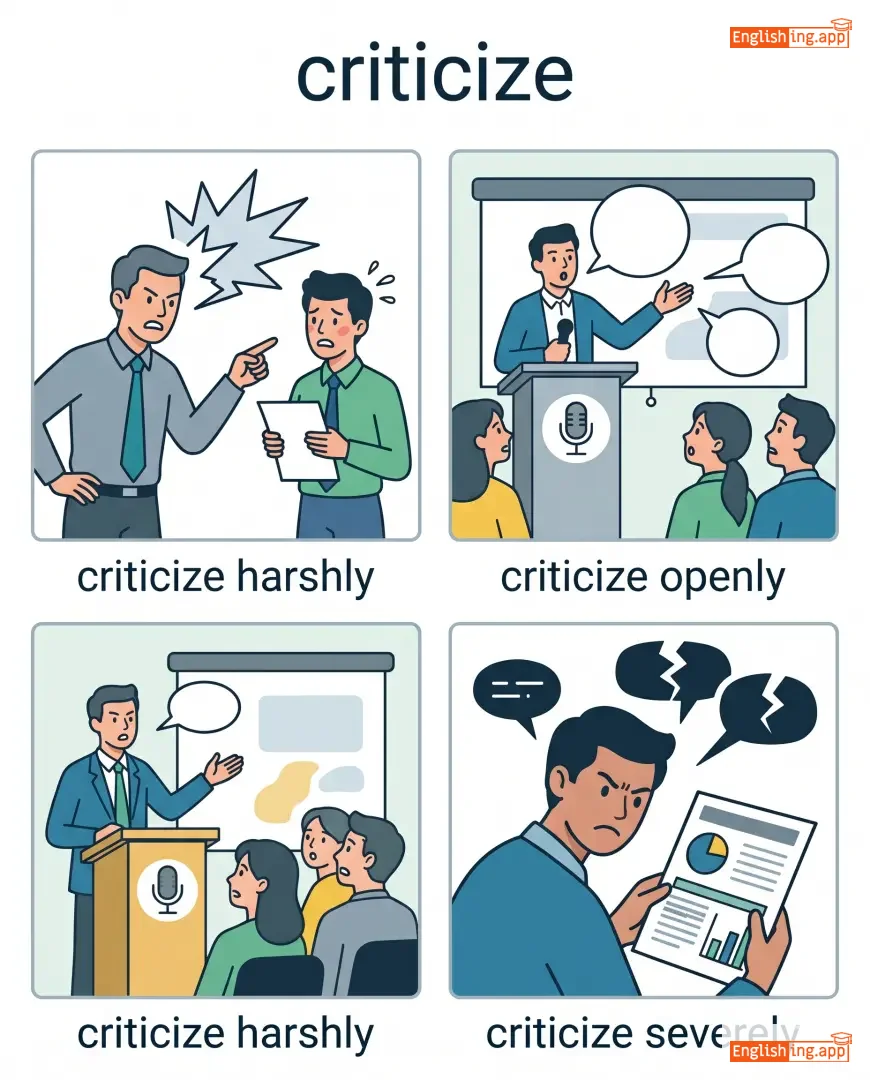
|
批判する
hihan suru
••••••
|
criticized
クリティサイズド
••••••
|
criticized
クリティサイズド
••••••
|
criticizes
クリティサイズズ
••••••
|
criticizing
クリティサイズング
••••••
|
to express disapproval of someone or something by pointing out faults or shortcomings
••••••
|
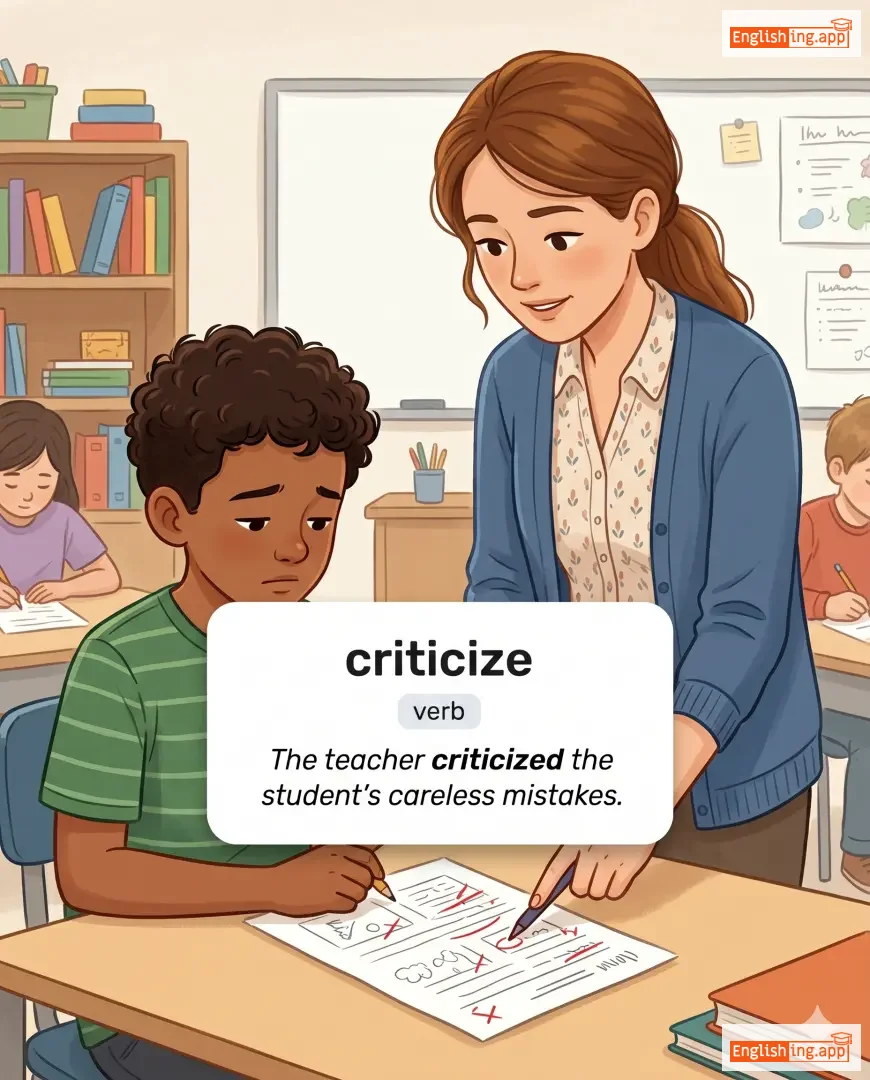
The teacher criticized the student's careless mistakes.
教師は学生の不注意なミスを批判しました。
••••••
|
教師は学生の不注意なミスを批判しました。
Kyōshi wa gakusei no fuchūi na misu o hihan shimashita.
••••••
|
constructive criticism
建設的な批判
••••••
|
helpful feedback intended to improve performance
••••••
|
建設的な批判
kensetsuteki na hihan
••••••
|
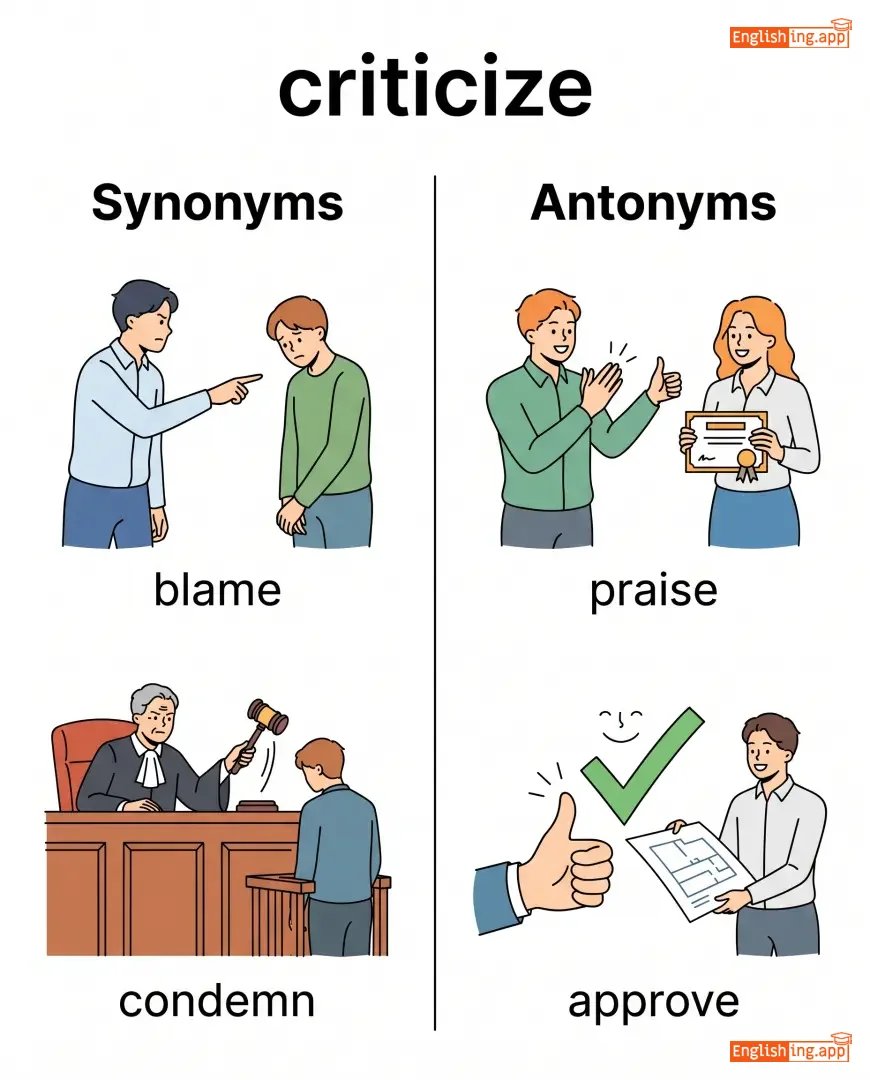
blame, condemn, censure, evaluate, review
••••••
|
praise, approve, compliment
••••••
|
criticize harshly, criticize openly, criticize severely, criticize constantly
••••••
|
批判するは、改善のために間違いを指摘すること。
••••••
|
|
📝
••••••
|
/krɪˈtiːk/
noun/verb
(クリティーク)
••••••
|
- •••••• |
批評
hihyō
••••••
|
critiqued
クリティークド
••••••
|
critiqued
クリティークド
••••••
|
critiques
クリティークス
••••••
|
critiquing
クリティーキング
••••••
|
A detailed analysis and assessment of something, especially a literary, philosophical, or political theory; to evaluate critically.
••••••
|
The professor asked the students to critique each other's essays.
教授は学生にお互いのエッセイを批評するように頼みました。
••••••
|
教授は学生にお互いのエッセイを批評するように頼みました。
Kyōju wa gakusei ni otagai no essei o hihyō suru yō ni tanomimashita.
••••••
|
- •••••• | - •••••• | - •••••• |
review, analysis, evaluation, appraisal, assessment
••••••
|
praise, compliment
••••••
|
literary critique, film critique, critique of, constructive critique
••••••
|
Critique とは批評、文学や政治を深く分析すること
••••••
|
|
🌾
••••••
|
/krɒp/
noun
(クロップ)
••••••
|
- •••••• |
作物
sakumotsu
••••••
|
- •••••• | - •••••• | - •••••• | - •••••• |
plants that are grown and harvested for food or other use
••••••
|
The farmers harvested their rice crop in autumn. |
農家は秋に稲作の作物を収穫しました。
Nōka wa aki ni inasaku no sakumotsu o shūkaku shimashita.
••••••
|
bumper crop |
an unusually large harvest
••••••
|
豊作
hōsaku
••••••
|
harvest, yield, produce, grain
••••••
|
famine, scarcity
••••••
|
crop yield, crop production, crop failure, crop season
••••••
|
Cropは畑で作物を収穫すること。
••••••
|
|
➕
••••••
|
/krɒs/
verb
(クロス)
••••••
|
- •••••• |
渡る
wataru
••••••
|
crossed
クロスト
••••••
|
crossed
クロスト
••••••
|
crosses
クロセス
••••••
|
crossing
クロシング
••••••
|
to go from one side to another, or to pass through
••••••
|
We crossed the river using a wooden bridge.
私たちは木製の橋を使って川を渡りました。
••••••
|
私たちは木製の橋を使って川を渡りました。
Watashitachi wa mokusei no hashi o tsukatte kawa o watarimashita.
••••••
|
cross the line
線を越える
••••••
|
to go beyond what is acceptable or allowed
••••••
|
線を越える
sen o koeru
••••••
|
pass, traverse, intersect, span
••••••
|
stay, remain, halt
••••••
|
cross the street, cross the border, cross over, cross path
••••••
|
Crossは渡ることを意味します – 道を渡る、または限界を超えること
••••••
|
|
👥
••••••
|
/kraʊd/
noun
(クラウド)
••••••
|
- •••••• |
群衆
gunshuu
••••••
|
- •••••• | - •••••• | - •••••• | - •••••• |
a large number of people gathered together
••••••
|
A huge crowd gathered to watch the concert.
ア ヒュージ クラウド ギャザード トゥ ウォッチ ザ コンサート。
••••••
|
コンサートを見るために大きな群衆が集まりました。
Konsaato o miru tame ni ookina gunshuu ga atsumarimashita.
••••••
|
follow the crowd
フォロー ザ クラウド
••••••
|
to do what most other people are doing
••••••
|
群衆について行く
gunshuu ni tsuite iku
••••••
|
gathering, throng, multitude, mob, audience
••••••
|
individual, solitude
••••••
|
huge crowd, large crowd, control the crowd, cheer the crowd
••••••
|
Crowd は群衆 - たくさんの人々が集まることです。
••••••
|

