|
表情符号
|
单词 | Images | 翻译 | 过去时 | 过去分词 | 第三人称单数 | 动名词 | 含义 | 例句 | 例句翻译 | 示例表达 | 示例表达含义 | 示例表达翻译 | 同义词 | 反义词 | 搭配词 | 助记符 |
|---|---|---|---|---|---|---|---|---|---|---|---|---|---|---|---|---|---|
|
🧠
••••••
|
/ˈkaʊnsələr/
noun
(康瑟勒)
••••••
|
- •••••• |
咨询师
zixunshi
••••••
|
- •••••• | - •••••• | - •••••• | - •••••• |
a person trained to give guidance on personal, social, or psychological problems; an advisor
••••••
|
She spoke to a counsellor to get advice about her career.
Shi spoke to a counsellor to get advice about her career.
••••••
|
她和一名咨询师谈了自己的职业问题。
ta he yi ming zixunshi tan le ziji de zhiye wenti
••••••
|
- •••••• | - •••••• | - •••••• |
advisor, therapist, guide, consultant, mentor
••••••
|
opponent, critic
••••••
|
school counsellor, guidance counsellor, professional counsellor, mental health counsellor
••••••
|
咨询师 zixun 像 seek counsel
••••••
|
|
🔢
••••••
|
/kaʊnt/
verb
(kaunt)
••••••
|
- •••••• |
计数
jìshù
••••••
|
counted
kaunted
••••••
|
counted
kaunted
••••••
|
counts
kaunts
••••••
|
counting
kaunting
••••••
|
to determine the total number of something
••••••
|
She carefully counted the money on the table.
她小心翼翼地数着桌子上的钱。
••••••
|
她小心翼翼地数着桌子上的钱。
Tā xiǎoxīn yìyì de shǔzhe zhuōzi shàng de qián.
••••••
|
make it count
让它值得
••••••
|
make it worthwhile or meaningful
••••••
|
让它值得
ràng tā zhídé
••••••
|
enumerate, calculate, tally, reckon
••••••
|
ignore, overlook
••••••
|
count numbers, count votes, count money, count on
••••••
|
Count 意味着 '计数' - 每当你听到 '倒计时',你就会想到计数。
••••••
|
|
🛒
••••••
|
/ˈkaʊn.tər/
noun
(柜台)
••••••
|
- •••••• |
柜台
guìtái
••••••
|
- •••••• | - •••••• | - •••••• | - •••••• |
a flat surface in a shop, bank, or kitchen where transactions or work are done
••••••
|
The cashier stood behind the counter.
收银员站在柜台后面。
••••••
|
收银员站在柜台后面。
Shōuyín yuán zhàn zài guìtái hòumiàn.
••••••
|
over the counter
柜台上
••••••
|
available for purchase without prescription
••••••
|
无处方出售
wú chùfāng chūshòu
••••••
|
desk, bar, table, worktop
••••••
|
floor, ground
••••••
|
kitchen counter, service counter, counter top, over the counter
••••••
|
柜台 - 想象你站在商店柜台后面,面对顾客。
••••••
|
|
🤝
••••••
|
/ˈkaʊntərˌpɑːrt/
noun
(kàu tè pǎ tè)
••••••
|
- •••••• |
对口人
duìkǒurén
••••••
|
- •••••• | - •••••• | - •••••• | - •••••• |
a person or thing that corresponds to or has the same function as another
••••••
|
The CEO met with his counterpart in the partner company. |
首席执行官与合作公司中的对口人会面。
Shǒuxí zhíxíng guān yǔ hézuò gōngsī zhōng de duìkǒurén huìmiàn.
••••••
|
- •••••• | - •••••• | - •••••• |
equivalent, peer, match, complement
••••••
|
opposite, unlike
••••••
|
meet a counterpart, counterpart agreement, political counterpart
••••••
|
Counter = 对口人 - Think of counterpart as the other person who matches in function
••••••
|
|
✨
••••••
|
/ˈkaʊntləs/
adjective
(kaʊntləs)
••••••
|
- •••••• |
数不胜数
shǔ bù shèng shǔ
••••••
|
- •••••• | - •••••• | - •••••• | - •••••• |
too many to be counted; innumerable
••••••
|
There are countless stars in the sky. |
天上有数不清的星星。
Tiān shàng yǒu shù bù qīng de xīng xīng.
••••••
|
- •••••• | - •••••• | - •••••• |
innumerable, innumerous, endless, boundless
••••••
|
finite, limited
••••••
|
countless opportunities, countless stars, countless hours
••••••
|
想象你试图数星星,但它们太多,数不胜数。
••••••
|
|
🌍
••••••
|
/ˈkʌn.tri/
noun
(kǎntrī)
••••••
|
- •••••• |
国家
guójiā
••••••
|
- •••••• | - •••••• | - •••••• | - •••••• |
a nation with its own government and borders
••••••
|
Bangladesh is a beautiful country with rich culture. |
孟加拉国是一个拥有丰富文化的美丽国家。
Mèngjiālāguó shì yī gè yǒu fēngfù wénhuà de měilì guójiā.
••••••
|
cross-country |
spanning across a country
••••••
|
横跨国家
héng kuà guó jiā
••••••
|
nation, state, homeland, territory, land
••••••
|
city, colony
••••••
|
developing country, foreign country, home country, country side
••••••
|
Country就是国家-想象一个国家,人人都知道你是主角。
••••••
|
|
🌾
••••••
|
/ˈkʌntrisaɪd/
noun
(康吹赛德)
••••••
|
- •••••• |
乡村
xiangcun
••••••
|
- •••••• | - •••••• | - •••••• | - •••••• |
land outside cities and towns; rural areas with farms, fields, and villages
••••••
|
She enjoys the peace and beauty of the countryside.
西 英乔伊兹 德 皮斯 安德 比尤提 奥夫 德 康吹赛德。
••••••
|
她享受乡村的宁静和美丽。
ta xiangshou xiangcun de ningjing he meili
••••••
|
- •••••• | - •••••• | - •••••• |
rural area, farmland, rural district, backcountry
••••••
|
city, town, urban area
••••••
|
peaceful countryside, rolling countryside, countryside village, countryside landscape
••••••
|
Country 的 side 不是 城市,是 乡村
••••••
|
|
🗺️
••••••
|
/ˈkaʊnti/
noun
(kaʊnti)
••••••
|
- •••••• |
县
xian
••••••
|
- •••••• | - •••••• | - •••••• | - •••••• |
A territorial division within a country, typically a region with its own local government.
••••••
|
She grew up in a small county in northern England. |
她在英格兰北部的一个小县长大。
Ta zai Yinggelan beibu de yi ge xiao xian zhang da.
••••••
|
- •••••• | - •••••• | - •••••• |
district, region, province, area, territory
••••••
|
city, capital
••••••
|
county council, county fair, county jail, county seat
••••••
|
县是一个地方行政区域,类似于“县”的管理单位。
••••••
|
|
⚡
••••••
|
/kuː/
noun
(kùp)
••••••
|
- •••••• |
政变
zhèngbiàn
••••••
|
- •••••• | - •••••• | - •••••• | - •••••• |
a sudden, decisive action that brings about a change, especially in government
••••••
|
The military staged a coup to overthrow the existing regime.
军队发动了一次政变,推翻了现有政权。
••••••
|
军队发动了一次政变,推翻了现有政权。
Jūn duì fādòngle yī cì zhèngbiàn, tuīfānle xiànyǒu zhèngquán.
••••••
|
- •••••• | - •••••• | - •••••• |
overthrow, takeover, rebellion, insurrection
••••••
|
election, vote
••••••
|
military coup, political coup, successful coup
••••••
|
政变:像一场突如其来的改变一样,瞬间改变政权。
••••••
|
|
❤️
••••••
|
/ˈkʌpəl/
noun
(卡普尔)
••••••
|
- •••••• |
一对
yī duì
••••••
|
- •••••• | - •••••• | - •••••• | - •••••• |
two people or things considered together; a pair
••••••
|
They make a lovely couple and have been married for five years. |
他们是一个可爱的情侣,已经结婚五年了。
Tāmen shì yīgè kě'ài de qínglǚ, yǐjīng jiéhūn wǔ nián le.
••••••
|
- •••••• | - •••••• | - •••••• |
pair, duo, twosome, partners
••••••
|
individual, single
••••••
|
married couple, young couple, couple of friends
••••••
|
Couple 表示两个人一起,就像一对情侣。
••••••
|
|
🦁
••••••
|
/ˈkʌrɪdʒ/
noun
(kùrèzhī)
••••••
|

|
勇气
yongqi
••••••
|
- •••••• | - •••••• | - •••••• | - •••••• |
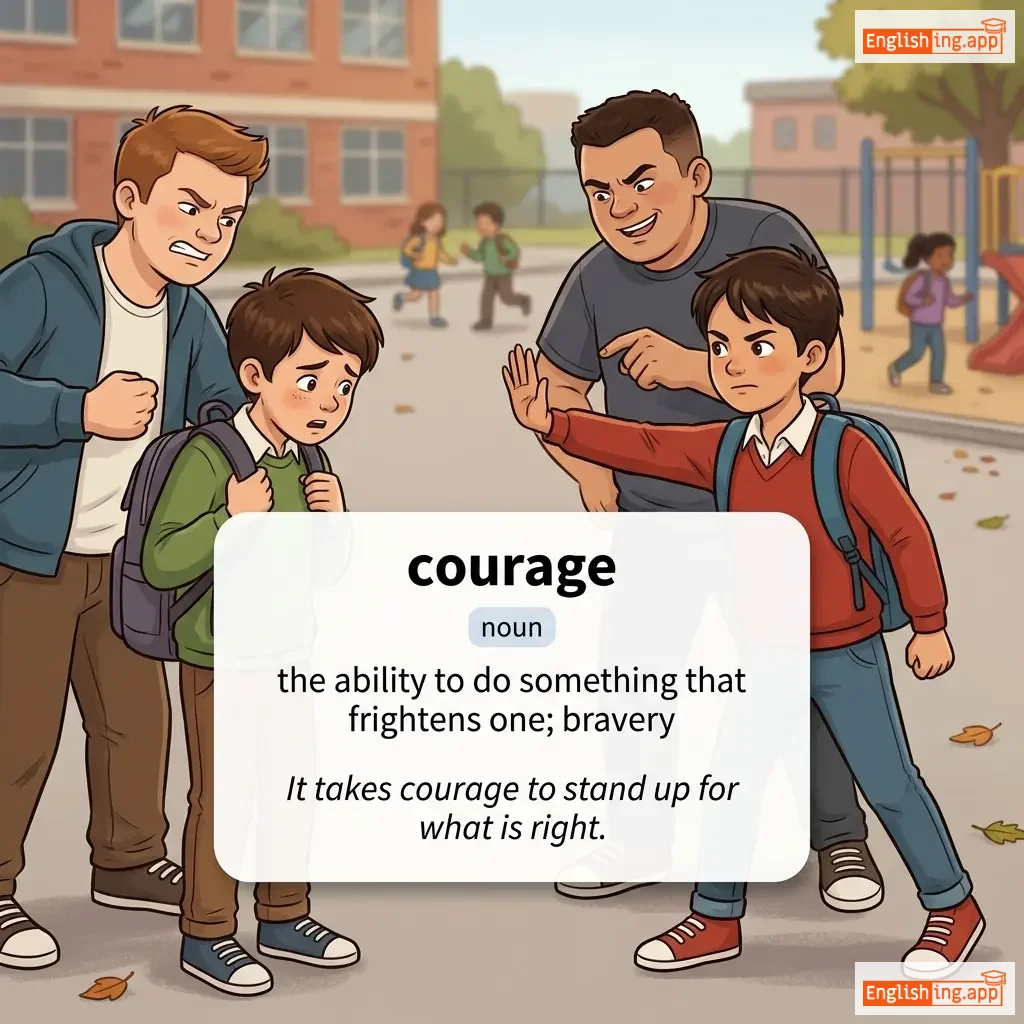
the ability to do something that frightens one; bravery
••••••
|
It takes courage to stand up for what is right. |
为了为正义站起来,需要勇气。
Wei le wei zhengyi zhan qilai, xuyao yongqi.
••••••
|
pluck up courage |
to force yourself to be brave enough to do something
••••••
|
鼓起勇气
guqi yongqi
••••••
|
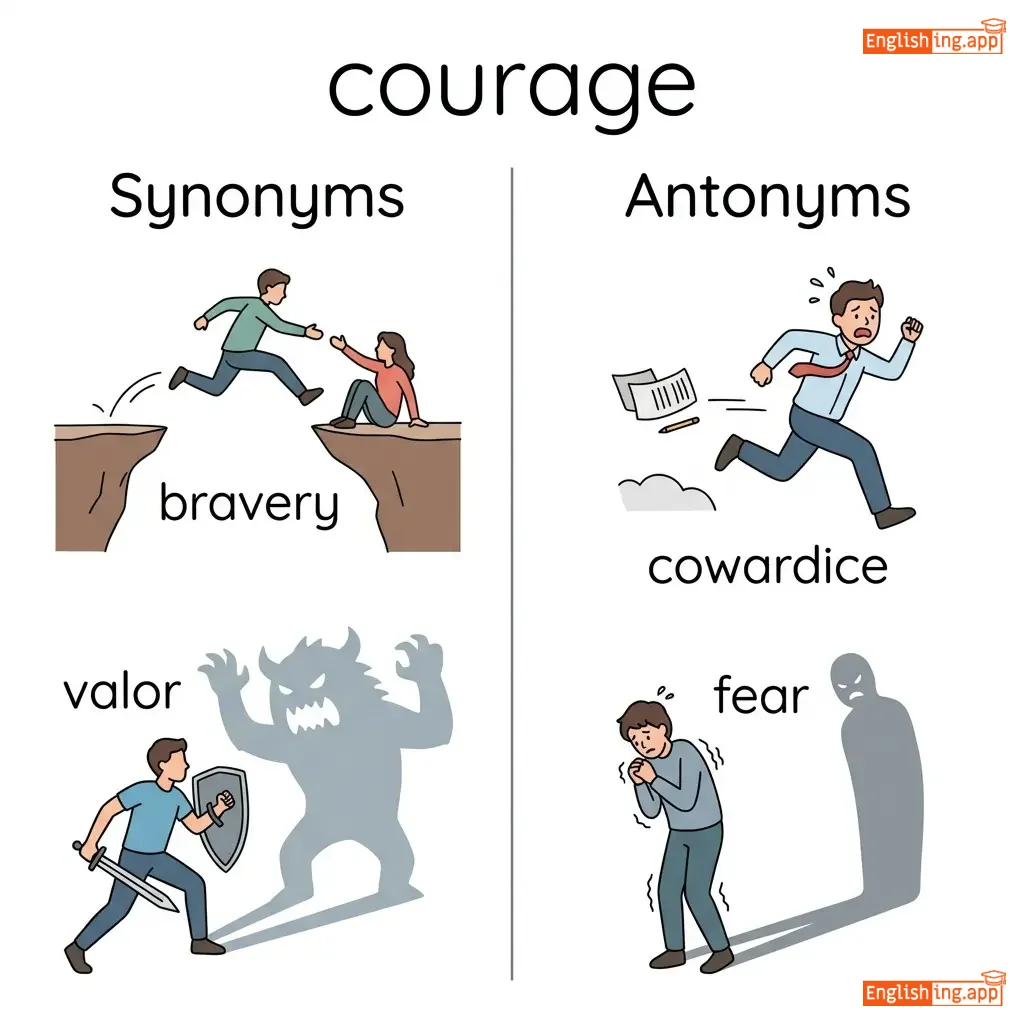
bravery, valor, boldness, fearlessness, spirit
••••••
|
cowardice, fear
••••••
|
show courage, great courage, moral courage
••••••
|
Courage 🦁 意味着勇气 - 拥有狮子的勇气,你可以做任何事情
••••••
|
|
🦁
••••••
|
/kəˈreɪdʒəs/
adjective
(kəˈreɪdʒəs)
••••••
|
- •••••• |
勇敢的; 无畏的; 在面对危险时展现勇气
yǒnggǎn de; wúwèi de; zài miànduì wēixiǎn shí zhǎnxiàn yǒngqì
••••••
|
- •••••• | - •••••• | - •••••• | - •••••• |
brave; fearless; showing courage in the face of danger
••••••
|
The courageous firefighter rescued the family from the burning building. |
勇敢的消防员从燃烧的建筑物中救出了家庭。
Yǒnggǎn de xiāofángyuán cóng ránshāo de jiànzhùwù zhōng jiùchūle jiātíng.
••••••
|
- •••••• | - •••••• | - •••••• |
brave, fearless, bold, heroic
••••••
|
cowardly, fearful, timid, scared
••••••
|
courageous act, courageous decision, courageous leader
••••••
|
勇敢的 (Courageous) 就是面对危险时仍然展现出勇气的表现。
••••••
|
|
🎓
••••••
|
/kɔːrs/
noun
(kɔːrs)
••••••
|
- •••••• |
课程,路径或一组教育课程
kecheng, luxian huo yizu jiaoyu kecheng
••••••
|
- •••••• | - •••••• | - •••••• | - •••••• |
a direction, path, or a set of educational lessons
••••••
|
She enrolled in a computer science course. |
她报名参加了计算机科学课程。
Ta baoming canjia le jisuanji kexue kecheng.
••••••
|
of course |
certainly, obviously
••••••
|
当然
dangran
••••••
|
class, curriculum, program, direction, path
••••••
|
deviation, detour
••••••
|
training course, online course, course of action, full course
••••••
|
报读课程,走上学习的新路。
••••••
|
|
⚖️
••••••
|
/kɔːrt/
noun,verb
(法院)
••••••
|
- •••••• |
法院或寻求关注或偏爱的地方
fayuan huo xunqiu guanzhu huo pian'ai de difang
••••••
|
courted
法院过
••••••
|
courted
法院过
••••••
|
courts
法院
••••••
|
courting
法院
••••••
|
a place where legal cases are heard or to seek favor or attention
••••••
|
He courted the judge with respect.
他以尊重的态度追求法官。
••••••
|
他以尊重的态度追求法官。
Ta yi zunzhong de taidu zhuīqiú fǎguān.
••••••
|
in court
在法庭上
••••••
|
at a judicial proceeding
••••••
|
在法庭上
zai fating shang
••••••
|
tribunal, arena, woo, pursue
••••••
|
- •••••• |
court case, royal court, court of law, court decision
••••••
|
Court去法院 - 法院是地方, courting是寻求偏爱。
••••••
|
|
😇
••••••
|
/ˈkɜːr.tə.si/
noun
(kèrtèxī)
••••••
|
- •••••• |
礼貌; 客气;
lǐmào, kèqì
••••••
|
- •••••• | - •••••• | - •••••• | - •••••• |
the showing of politeness in one's attitude and behavior toward others; a polite gesture or remark
••••••
|
He showed great courtesy by holding the door open for elderly people.
他通过为老年人打开门来表现出极大的礼貌。
••••••
|
他通过为老年人打开门来表现出极大的礼貌。
Tā tōngguò wèi lǎonián rén dǎkāi mén lái biǎoxiàn chū jí dà de lǐmào.
••••••
|
- •••••• | - •••••• | - •••••• |
politeness, civility, respect, good manners
••••••
|
rudeness, impoliteness, incivility, discourtesy
••••••
|
common courtesy, professional courtesy, extend courtesy
••••••
|
Chinese '礼貌' is tied to acts of politeness like holding doors open.
••••••
|
|
👫
••••••
|
/ˈkʌzn/
noun
(kāzīn)
••••••
|
- •••••• |
堂兄/堂弟/表兄/表弟
tángxiōng/tángdì/biǎoxiōng/biǎodì
••••••
|
- •••••• | - •••••• | - •••••• | - •••••• |
A child of one's uncle or aunt.
••••••
|
My cousin is coming to visit us this weekend. |
我的堂兄这个周末要来拜访我们。
Wǒ de tángxiōng zhège zhōumò yào lái bàifǎng wǒmen.
••••••
|
- •••••• | - •••••• | - •••••• |
relative, kin, family member
••••••
|
stranger, outsider
••••••
|
first cousin, cousin brother, cousin sister, distant cousin
••••••
|
Cousin 就是堂兄/堂弟 – 他们是家人。
••••••
|
|
🛡️
••••••
|
/ˈkʌvər/
verb
(kāfū)
••••••
|

|
覆盖
fùgài
••••••
|
covered
bǎn
••••••
|
covered
bǎn
••••••
|
covers
bǎn
••••••
|
covering
bǎn yī gè
••••••
|
to place something over or on top of something else to protect or hide it
••••••
|
She used a blanket to cover the sleeping child.
她用毯子覆盖了睡着的孩子。
••••••
|
她用毯子覆盖了睡着的孩子。
Tā yòng tǎnzi fùgàile shuìzháo de háizi.
••••••
|
cover up
掩盖事实
••••••
|
to hide the truth about something
••••••
|
掩盖事实
yǎngài shìshí
••••••
|
conceal, shield, hide, wrap, protect
••••••
|
expose, uncover
••••••
|
cover story, cover charge, cover page, cover letter
••••••
|
覆盖就是用物品覆盖另一样物品,就像毯子盖在床上。
••••••
|
|
📰
••••••
|
/ˈkʌvərɪdʒ/
noun
(kʌvərɪdʒ)
••••••
|
- •••••• |
报道
baodao
••••••
|
- •••••• | - •••••• | - •••••• | - •••••• |
The extent or scope of something, such as insurance protection or media reporting.
••••••
|
The news channel provided extensive coverage of the event. |
新闻频道对事件进行了广泛的报道。
Xinwen pindao dui shijian jinxing le guangfan de baodao.
••••••
|
media coverage |
The reporting and attention given to an event or issue by the media.
••••••
|
媒体报道
meiti baodao
••••••
|
reporting, protection, insurance, extent
••••••
|
neglect, omission
••••••
|
media coverage, insurance coverage, full coverage, extensive coverage
••••••
|
Coverage 就是报道,媒体报道一个事件。
••••••
|
|
🐄
••••••
|
/kaʊ/
noun
••••••
|
- •••••• | - •••••• | - •••••• | - •••••• | - •••••• | - •••••• |
a large domesticated bovine animal kept for milk or meat
••••••
|
The farmer milked the cow early in the morning. |
- •••••• |
till the cows come home |
for a very long time
••••••
|
- •••••• |
bovine, cattle, heifer, bull
••••••
|
calf
••••••
|
dairy cow, milking cow, brown cow
••••••
|
No •••••• |
|
🪨
••••••
|
/kræk/
verb
(happiness)
••••••
|
- •••••• |
幸福
xìngfú
••••••
|
cracked
••••••
|
cracked
••••••
|
cracks
••••••
|
cracking
••••••
|
To break or cause to break without complete separation; to make a sharp sound.
••••••
|
The glass cracked when it was dropped on the floor. |
当她收到奖项时,她无法掩饰她的幸福。
Dāng tā shōu dào jiǎngxiàng shí, tā wúfǎ yǎnshì tā de xìngfú.
••••••
|
crack a joke |
To tell a joke.
••••••
|
追求幸福
zhuīqiú xìngfú
••••••
|
break, split, fracture, snap
••••••
|
fix, repair, mend
••••••
|
crack open, crack down, crack a smile, crack the code
••••••
|
幸福 = xìngfú, 当你觉得幸福,想起这个词!
••••••
|
|
🛠️
••••••
|
/kræft/
noun
(克拉夫特)
••••••
|
- •••••• |
技能,工艺,手工艺
jineng, gongyi, shougongyi
••••••
|
- •••••• | - •••••• | - •••••• | - •••••• |
an activity involving skill in making things by hand; a trade or occupation
••••••
|
She has mastered the craft of pottery. |
她精通陶艺的工艺。
Ta jingtong taoyi de gongyi.
••••••
|
- •••••• | - •••••• | - •••••• |
skill, art, trade, handiwork
••••••
|
ignorance, ineptitude
••••••
|
craft beer, craft skills, craft market, traditional craft
••••••
|
CRAFT 就像手工艺 - 记住 craft 作为技能
••••••
|
|
💥
••••••
|
/kræʃ/
verb
(hāpiness)
••••••
|
- •••••• |
幸福
xìng fú
••••••
|
crashed
••••••
|
crashed
••••••
|
crashes
••••••
|
crashing
••••••
|
To collide violently; to suddenly stop working (for machines or computers).
••••••
|
The car crashed into the wall at high speed. |
她在获得奖项时无法掩饰自己的幸福。
Tā zài huòdé jiǎngxiàng shí wúfǎ yǎnshì zìjǐ de xìngfú.
••••••
|
computer crash |
When a computer suddenly stops working.
••••••
|
追求幸福
zhuīqiú xìngfú
••••••
|
collide, smash, wreck, fall
••••••
|
avoid, continue, function
••••••
|
car crash, plane crash, system crash, crash into
••••••
|
幸福 = 用心去感受,幸福就在身边。
••••••
|
|
🐛
••••••
|
/krɔːl/
verb
(kruòu)
••••••
|
|
爬行
páxíng
••••••
|
crawled
krôld
••••••
|
crawled
krôld
••••••
|
crawls
krôls
••••••
|
crawling
krôling
••••••
|
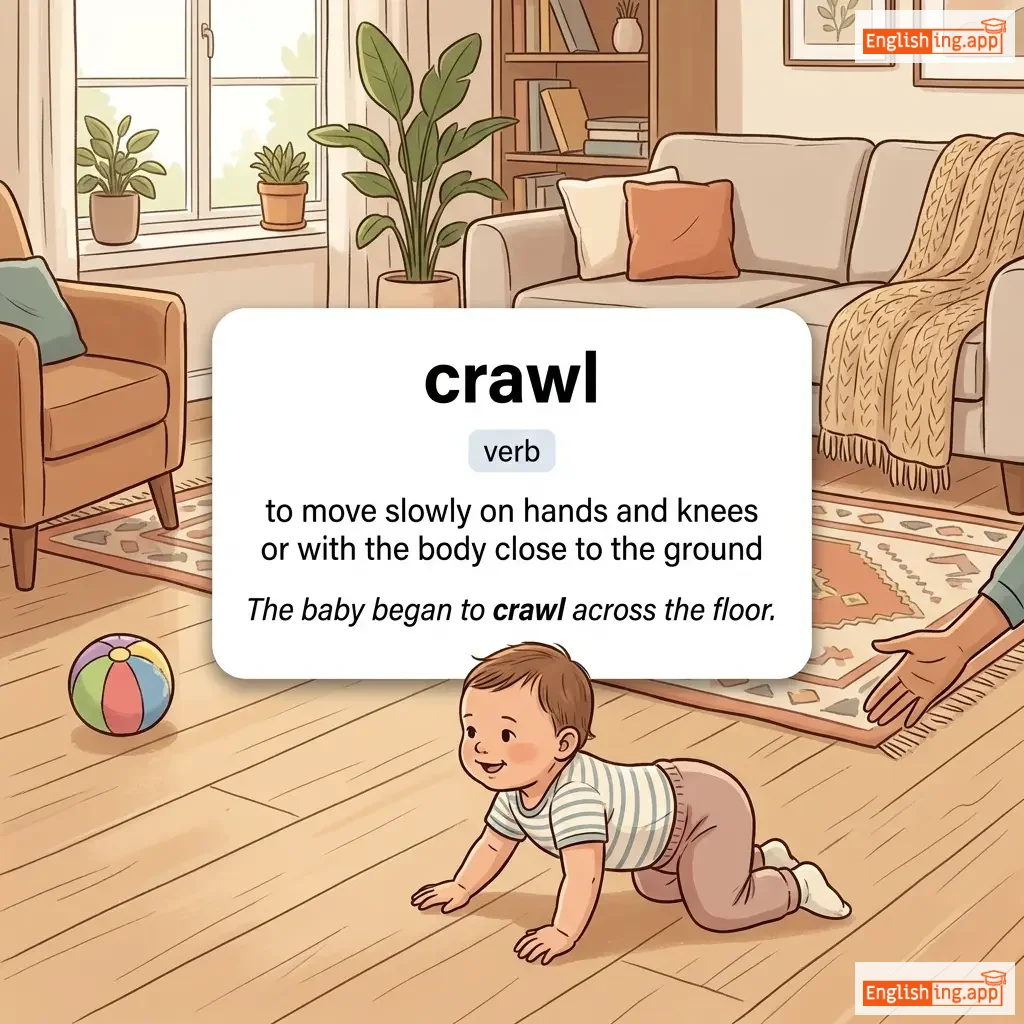
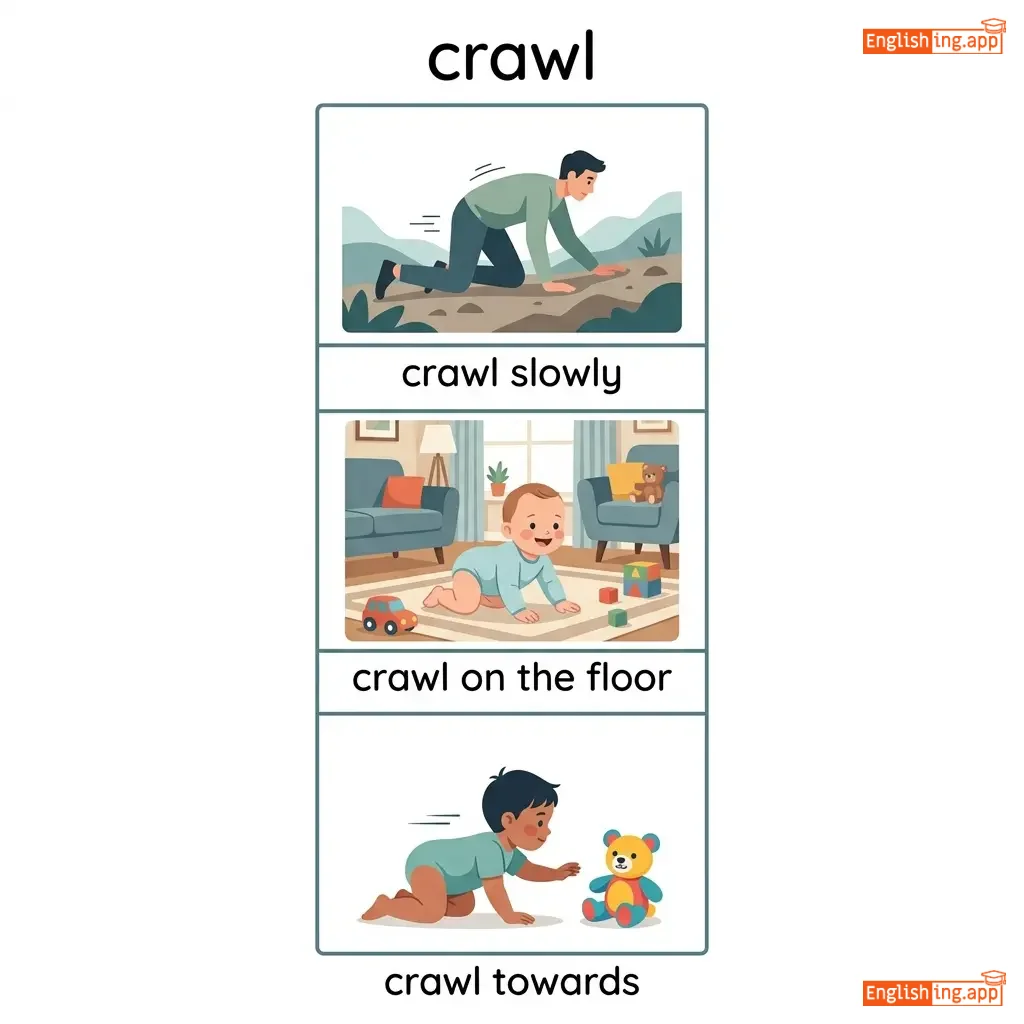
to move slowly on hands and knees or with the body close to the ground
••••••
|
The baby began to crawl across the floor.
宝宝开始在地板上爬行。
••••••
|
宝宝开始在地板上爬行。
Bǎobǎo kāishǐ zài dìbǎn shàng páxíng.
••••••
|
crawl out of one's skin
从自己的皮肤里爬出来
••••••
|
to feel extremely uncomfortable or disgusted
••••••
|
感到极度不舒服或恶心
gǎndào jídù bù shūfú huò ěxīn
••••••
|
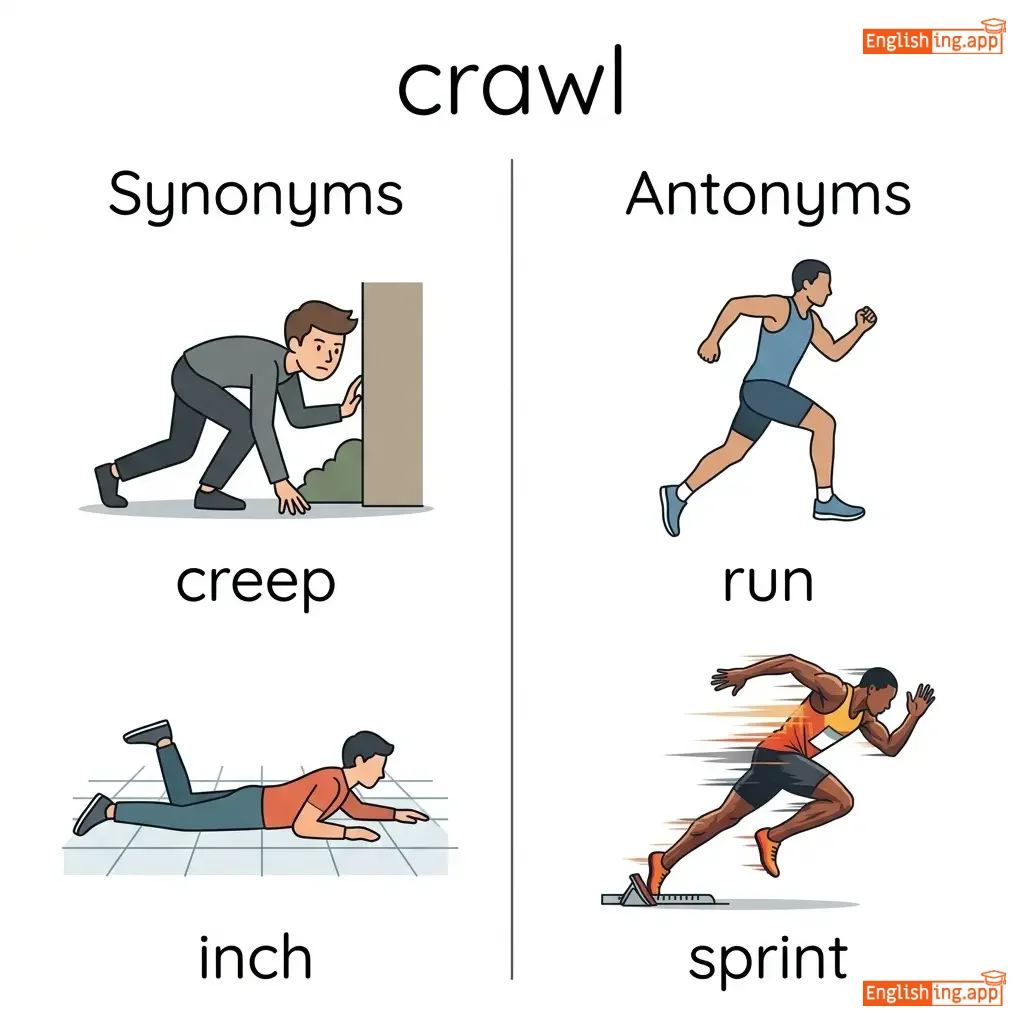
creep, inch, slither, drag, move slowly
••••••
|
run, sprint, rush
••••••
|
crawl slowly, crawl on the floor, crawl towards, baby crawl
••••••
|
宝宝爬行很可爱!
••••••
|
|
🤪
••••••
|
/ˈkreɪzi/
adjective
(kùlèi zī)
••••••
|
- •••••• |
疯狂
fēngkuáng
••••••
|
- •••••• | - •••••• | - •••••• | - •••••• |
mentally unsound; extremely foolish or enthusiastic
••••••
|
He had a crazy idea that actually worked. |
他有一个疯狂的想法,实际上奏效了。
Tā yǒu yīgè fēngkuáng de xiǎngfǎ, shíjì shang zòuxiào le.
••••••
|
drive someone crazy |
to annoy or make someone feel overwhelmed
••••••
|
让某人疯狂
ràng mǒu rén fēngkuáng
••••••
|
insane, mad, foolish, irrational, wild
••••••
|
sane, rational, normal
••••••
|
crazy idea, crazy behavior, go crazy, crazy about
••••••
|
Crazy等于疯狂,像把一个人逼疯的想法。
••••••
|
|
🍦
••••••
|
/kriːm/
noun
(krim)
••••••
|
- •••••• |
奶油
naiyou
••••••
|
- •••••• | - •••••• | - •••••• | - •••••• |
A thick, fatty part of milk that rises to the top; also a soft substance used in cooking or cosmetics.
••••••
|
She added some cream to her coffee.
她在咖啡里加了些奶油。
••••••
|
她在咖啡里加了些奶油。
Ta zai kafe li jia le xie nai you.
••••••
|
the cream of the crop
精英中的精英
••••••
|
the very best of a group
••••••
|
最顶尖的人
zui dingjian de ren
••••••
|
dairy, lotion, ointment, top, best
••••••
|
worst, inferior
••••••
|
whipped cream, face cream, cream sauce, cream cheese
••••••
|
在咖啡里加奶油就像梦想一样顺滑!
••••••
|
|
🎨
••••••
|
/kriˈeɪt/
verb
(创造)
••••••
|

|
创造
chuangzao
••••••
|
created
创造了
••••••
|
created
创造了
••••••
|
creates
创造
••••••
|
creating
创造ing
••••••
|
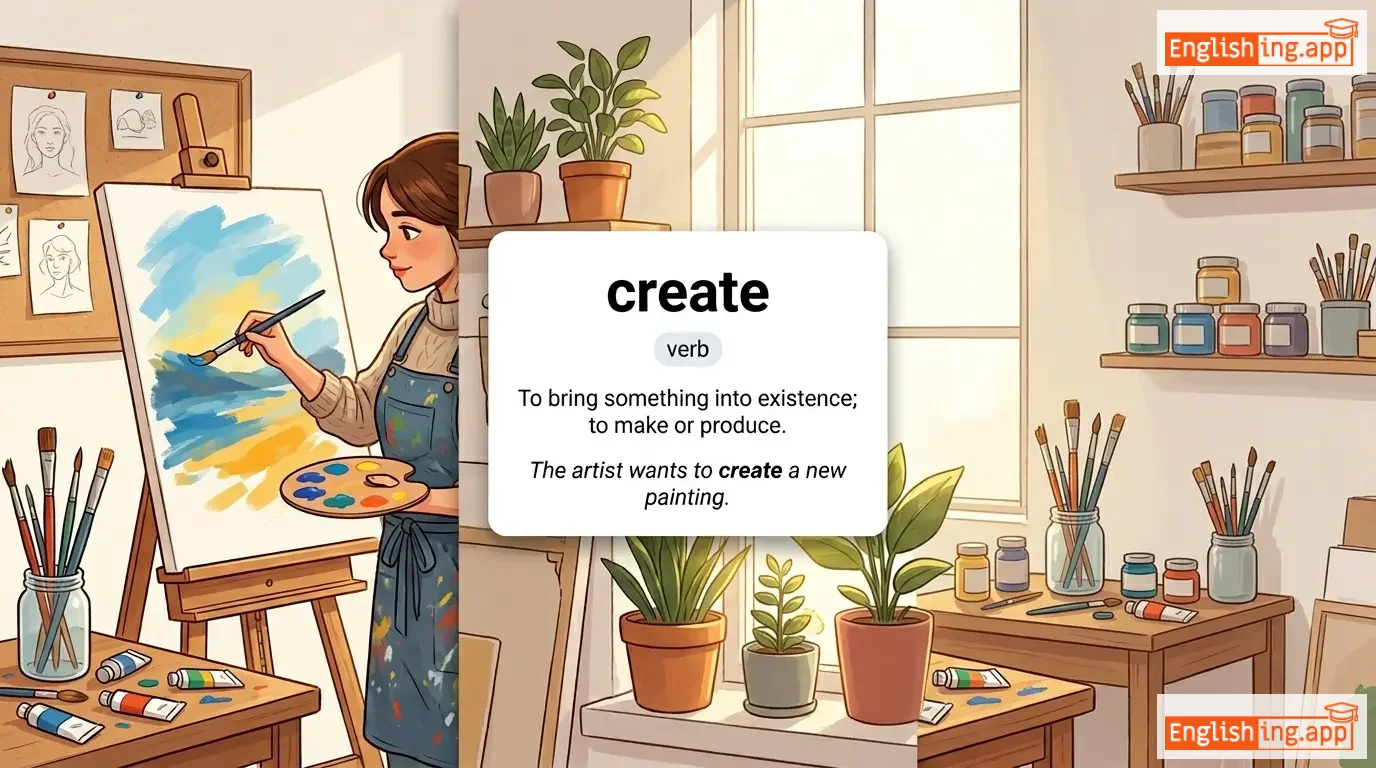
To bring something into existence; to make or produce.
••••••
|
The artist wants to create a new painting.
艺术家想创造一幅新画。
••••••
|
艺术家想创造一幅新画。
Yìshùjiā xiǎng chuàngzào yī fú xīn huà.
••••••
|
create a scene
创造一个场景
••••••
|
to behave in a loud or disruptive way
••••••
|
制造噪音
zhìzào zàoyīn
••••••
|
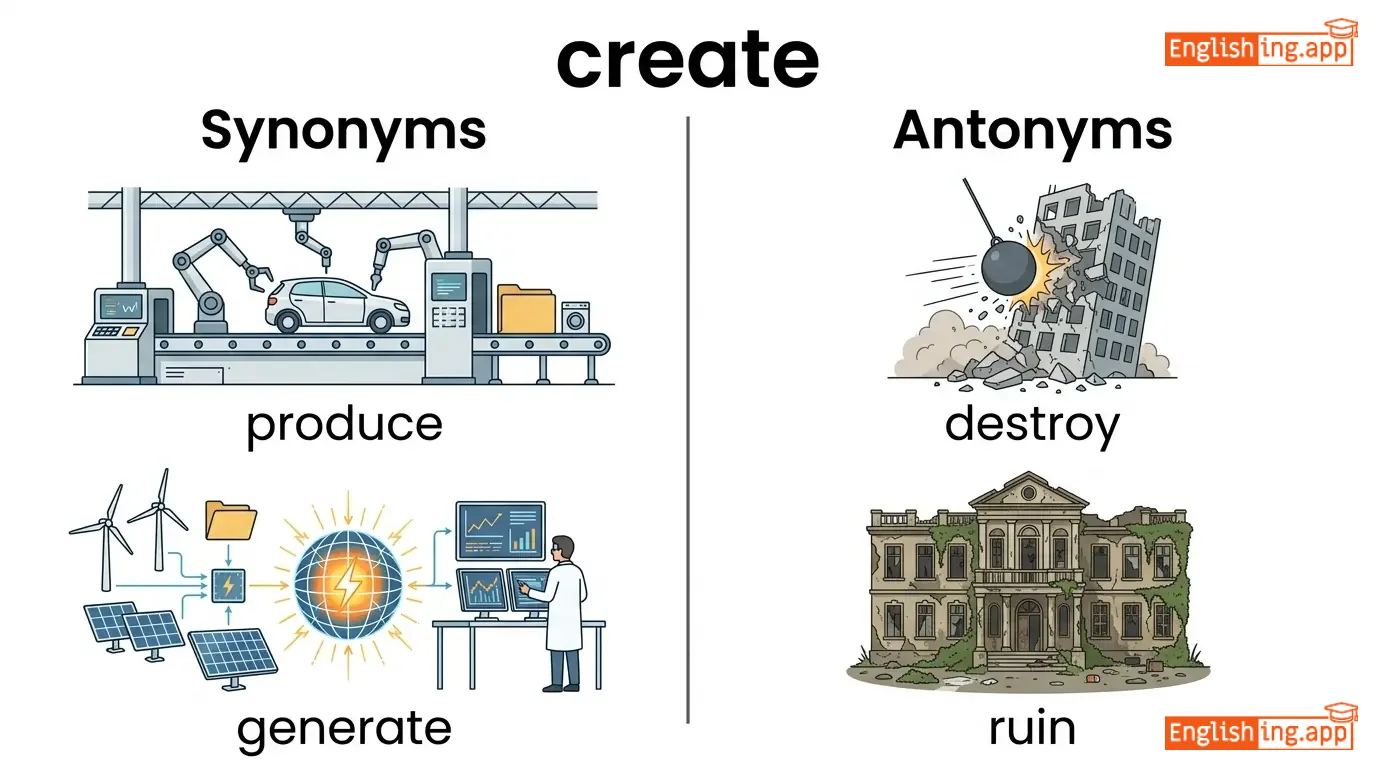
produce, generate, invent, design, build
••••••
|
destroy, ruin, abolish
••••••
|
create jobs, create opportunities, create art, create value
••••••
|
创造就像是创造艺术作品一样,带给世界新的东西。
••••••
|
|
🎨
••••••
|
/kriˈeɪʃən/
noun
(kè liè shēng)
••••••
|
- •••••• |
创造
chuangzuo
••••••
|
- •••••• | - •••••• | - •••••• | - •••••• |
The act of bringing something into existence; something that has been made or produced.
••••••
|
The artist’s latest creation was admired by everyone at the gallery. |
这位艺术家的最新创造在画廊里受到所有人的赞赏。
Zhe wei yishu jia de zui xin chuangzuo zai hualong li shoudao suoyi ren de zan chang.
••••••
|
creation myth |
A symbolic narrative explaining how the world or humankind came into being.
••••••
|
创造神话
chuangzuo shenhua
••••••
|
invention, innovation, formation, production, design
••••••
|
destruction, ruin, elimination
••••••
|
artistic creation, new creation, creative process, divine creation
••••••
|
创造 = 创造某些新事物
••••••
|
|
💡
••••••
|
/kriˈeɪtɪv/
adjective
(kreativ)
••••••
|
- •••••• |
富有创意的
fù yǒu chuàng yì de
••••••
|
- •••••• | - •••••• | - •••••• | - •••••• |
Having the ability to produce new and original ideas or things.
••••••
|
She is very creative in her writing. |
她在写作中非常富有创意。
Tā zài xiě zuò zhōng fēi cháng fù yǒu chuàng yì de.
••••••
|
- •••••• | - •••••• | - •••••• |
imaginative, inventive, innovative, artistic
••••••
|
unimaginative, dull, conventional
••••••
|
creative thinking, creative writing, creative design, creative process
••••••
|
Creative就是通过创造力产生新的创意。
••••••
|
|
🎨
••••••
|
/ˌkriːeɪˈtɪvɪti/
noun
(创意)
••••••
|
|
创意
chuangyi
••••••
|
- •••••• | - •••••• | - •••••• | - •••••• |
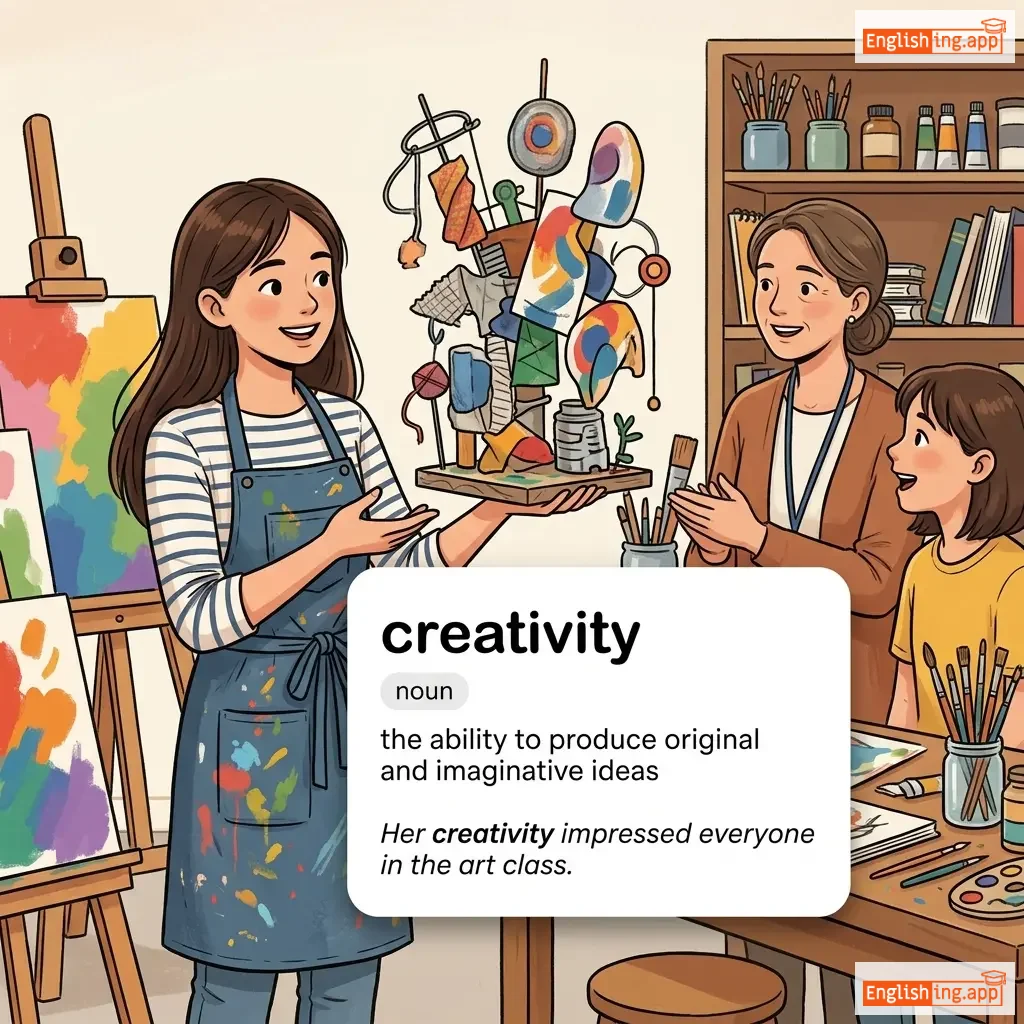
the ability to produce original and imaginative ideas
••••••
|
Her creativity impressed everyone in the art class.
她的创意在艺术课上给大家留下了深刻的印象。
••••••
|
她的创意在艺术课上给大家留下了深刻的印象。
Ta de chuangyi zai yishu ke shang gei dajia liuxia le shenke de yinxiang.
••••••
|
- •••••• | - •••••• | - •••••• |
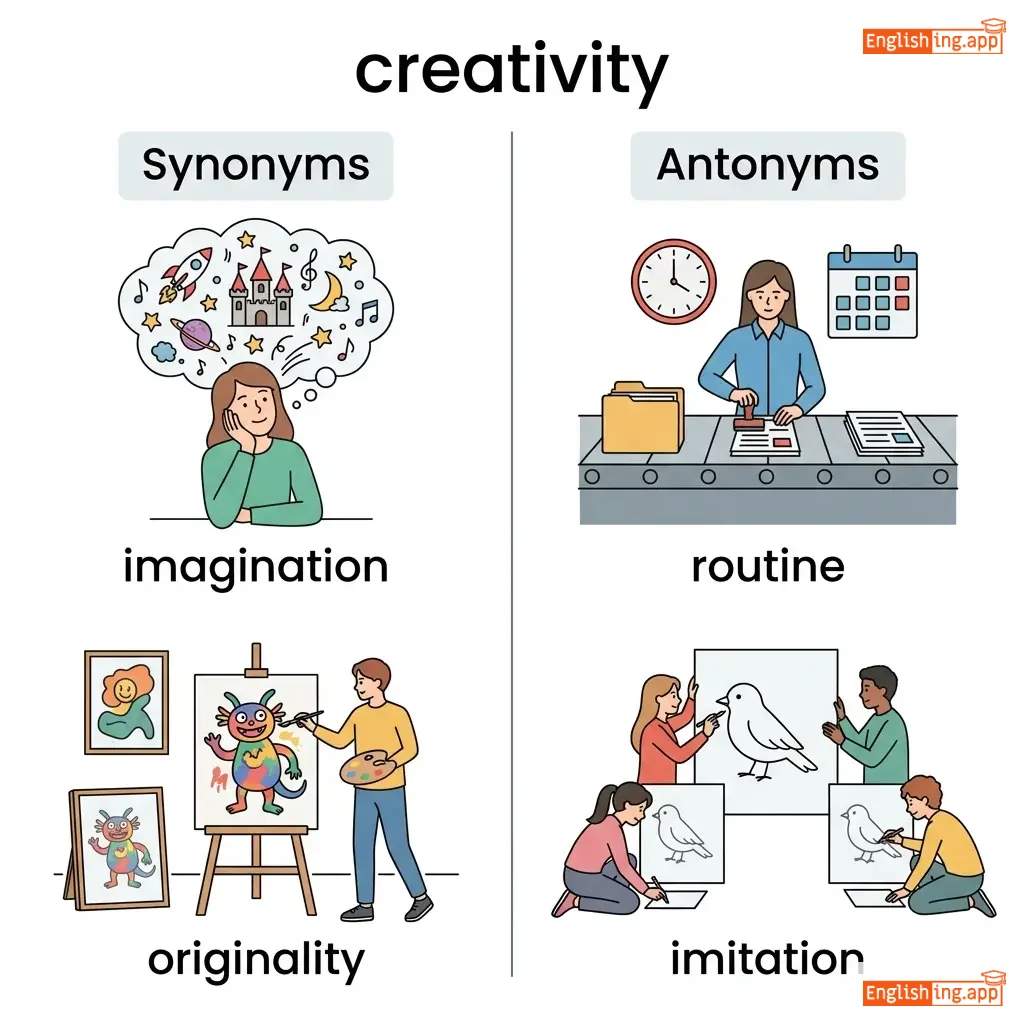
imagination, originality, innovation, inventiveness, resourcefulness
••••••
|
routine, imitation, dullness
••••••
|
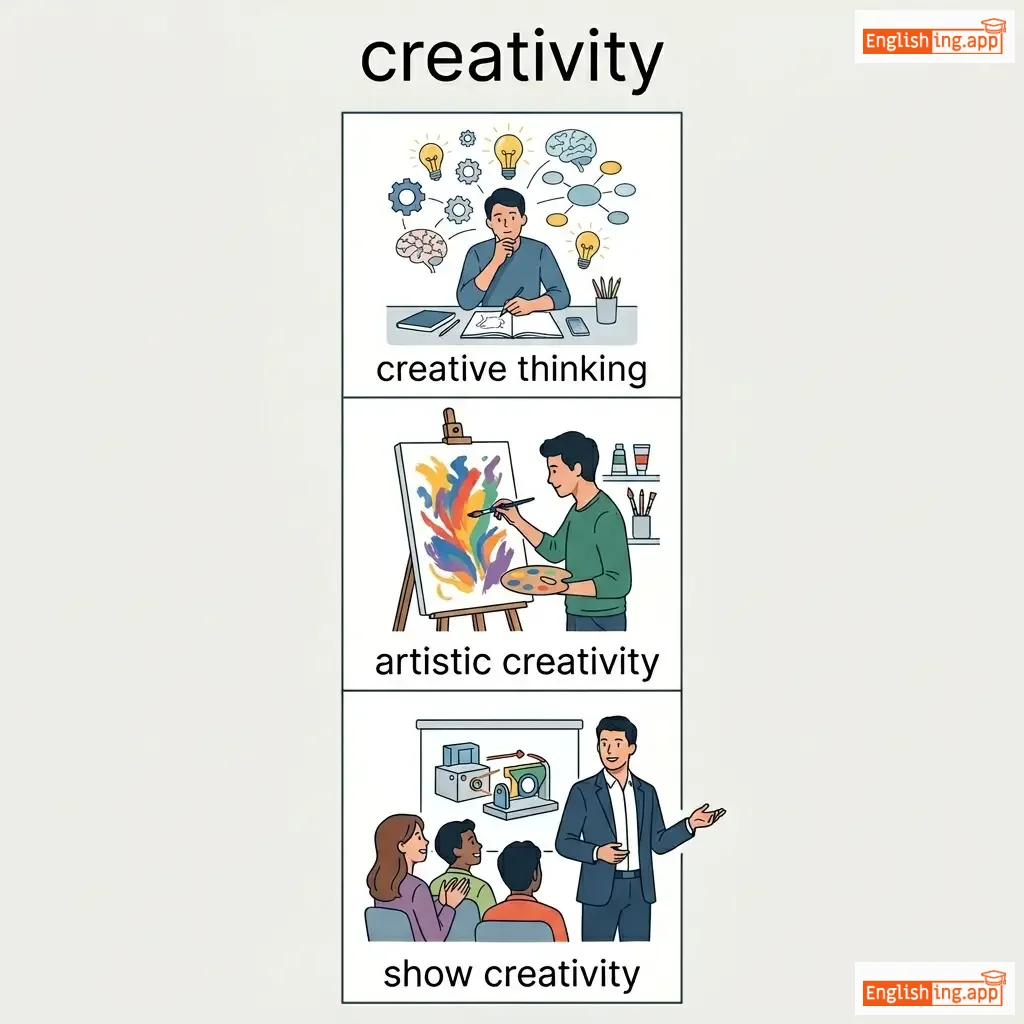
creative thinking, artistic creativity, show creativity, inspire creativity
••••••
|
创意 = Creativity, 不同的思维!
••••••
|
|
🧑🎨
••••••
|
/krɪˈeɪtə/
noun
(krēētər)
••••••
|
- •••••• |
创始人
chuangshi ren
••••••
|
- •••••• | - •••••• | - •••••• | - •••••• |
a person who brings something into existence
••••••
|
He is the creator of many successful startups.
他是许多成功初创公司的创始人。
••••••
|
他是许多成功初创公司的创始人。
Tā shì xǔduō chénggōng chūchuàng gōngsī de chuàngshīrén.
••••••
|
- •••••• | - •••••• | - •••••• |
originator, inventor, founder, maker
••••••
|
destroyer, annihilator
••••••
|
creator of ideas, creator of content, content creator
••••••
|
创始人是创造新事物的人,像一个成功的初创公司。
••••••
|
|
🐾
••••••
|
/ˈkriːtʃər/
noun
(kree-uh-tur)
••••••
|
- •••••• |
生物
shengwu
••••••
|
- •••••• | - •••••• | - •••••• | - •••••• |
A living being, especially an animal.
••••••
|
The forest is full of strange creatures. |
森林里充满了奇怪的生物。
Sēnlín lǐ chōngmǎnle qíguài de shēngwù.
••••••
|
creature comforts |
basic material comforts that make life pleasant
••••••
|
生活的基本舒适
shēnghuó de jīběn shūshì
••••••
|
being, animal, organism, entity
••••••
|
object, inanimate
••••••
|
sea creature, mythical creature, living creature, wild creature
••••••
|
Creature意味着生物—森林里有很多生物在打板球。
••••••
|
|
📰
••••••
|
/ˌkrɛd.ɪˈbɪl.ɪ.ti/
noun
(krɛdɪˈbɪlɪti)
••••••
|

|
可信度
kě xìn dù
••••••
|
- •••••• | - •••••• | - •••••• | - •••••• |
the quality of being trusted and believed in
••••••
|
The journalist's credibility was questioned after the report.
记者的可信度在报告后受到质疑。
••••••
|
记者的可信度在报告后受到质疑。
Jìzhě de kěxìndù zài bàogào hòu shòudào zhìyí.
••••••
|
- •••••• | - •••••• | - •••••• |
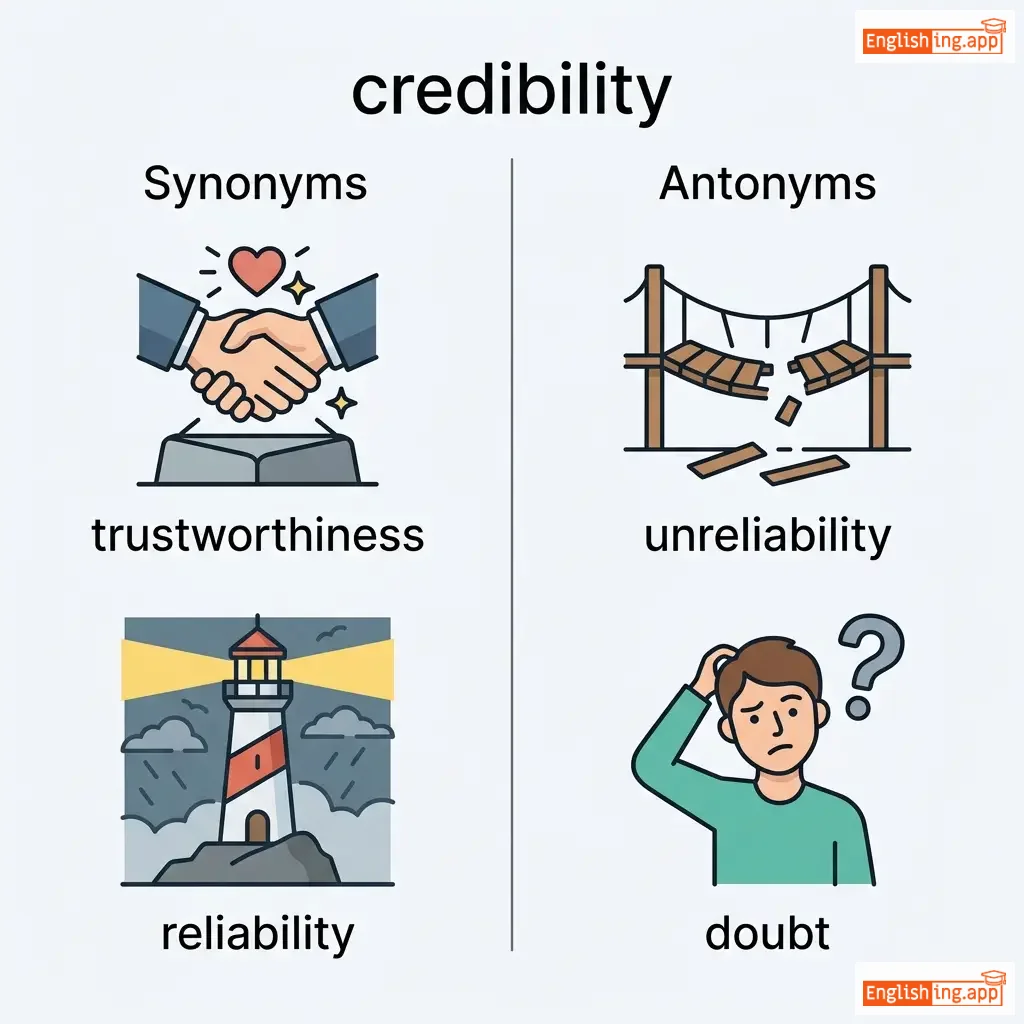
trustworthiness, reliability, believability, integrity
••••••
|
unreliability, doubt
••••••
|
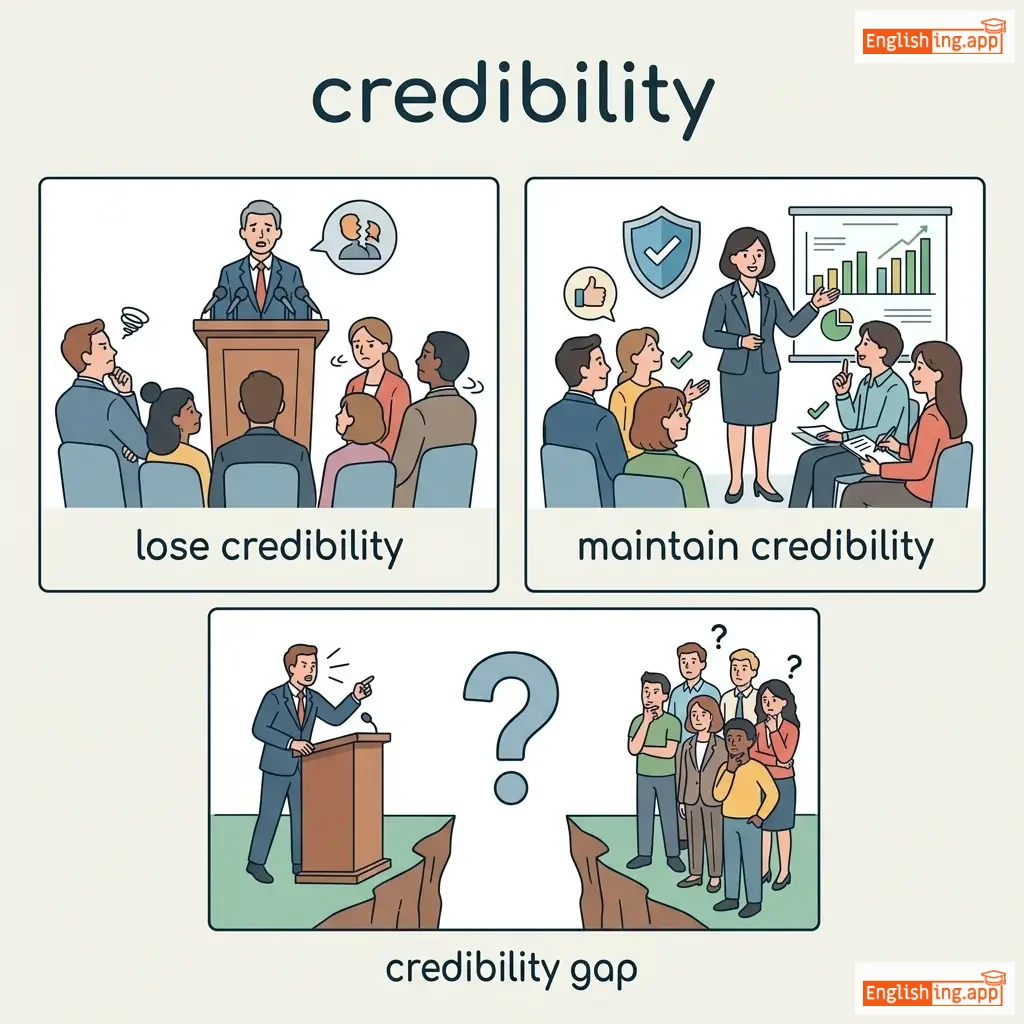
lose credibility, maintain credibility, credibility gap, credibility and trust
••••••
|
获得可信度,需要可靠的工作。
••••••
|
|
👍
••••••
|
/ˈkrɛd.ɪ.bəl/
adjective
(krɛdɪbəl)
••••••
|
- •••••• |
可信的
kě xìn de
••••••
|
- •••••• | - •••••• | - •••••• | - •••••• |
able to be believed; convincing
••••••
|
Her explanation was credible enough to convince the committee. |
她的解释足够可信,能够说服委员会。
Tā de jiěshì zúgòu kěxìn, nénggòu shuōfú wěiyuánhuì.
••••••
|
- •••••• | - •••••• | - •••••• |
believable, plausible, trustworthy, convincing
••••••
|
unbelievable, implausible
••••••
|
credible source, credible evidence, credible story, credible explanation
••••••
|
CREDIBLE 意味着可信的,就像一种能说服委员会的解释
••••••
|
|
💳
••••••
|
/ˈkrɛdɪt/
noun, verb
••••••
|
- •••••• | - •••••• |
credited
••••••
|
credited
••••••
|
credits
••••••
|
crediting
••••••
|
As a noun: the ability to obtain goods or services before payment; recognition for an achievement. As a verb: to publicly acknowledge someone's contribution.
••••••
|
She received credit for her contribution to the project. |
- •••••• |
give credit where credit is due |
Acknowledge someone’s effort or achievement when it is deserved.
••••••
|
- •••••• |
recognition, trust, praise, loan, acknowledgement
••••••
|
blame, discredit, doubt
••••••
|
take credit, line of credit, credit score, credit card
••••••
|
No •••••• |
|
🕷️
••••••
|
/kriːp/
verb
(kreep)
••••••
|

|
悄悄移动
qiāo qiāo yídòng
••••••
|
crept
krept
••••••
|
crept
krept
••••••
|
creeps
krips
••••••
|
creeping
kriping
••••••
|
to move slowly and quietly, especially to avoid being noticed
••••••
|
The child tried to creep into the room without making a sound.
那个孩子试图悄悄地进入房间,没有发出声音。
••••••
|
那个孩子试图悄悄地进入房间,没有发出声音。
Nàgè háizi shìtú qiāoqiāo de jìnrù fángjiān, méiyǒu fāchū shēngyīn.
••••••
|
creep up on
悄悄接近
••••••
|
to approach someone quietly without being noticed
••••••
|
悄悄接近
qiāo qiāo jiējìn
••••••
|
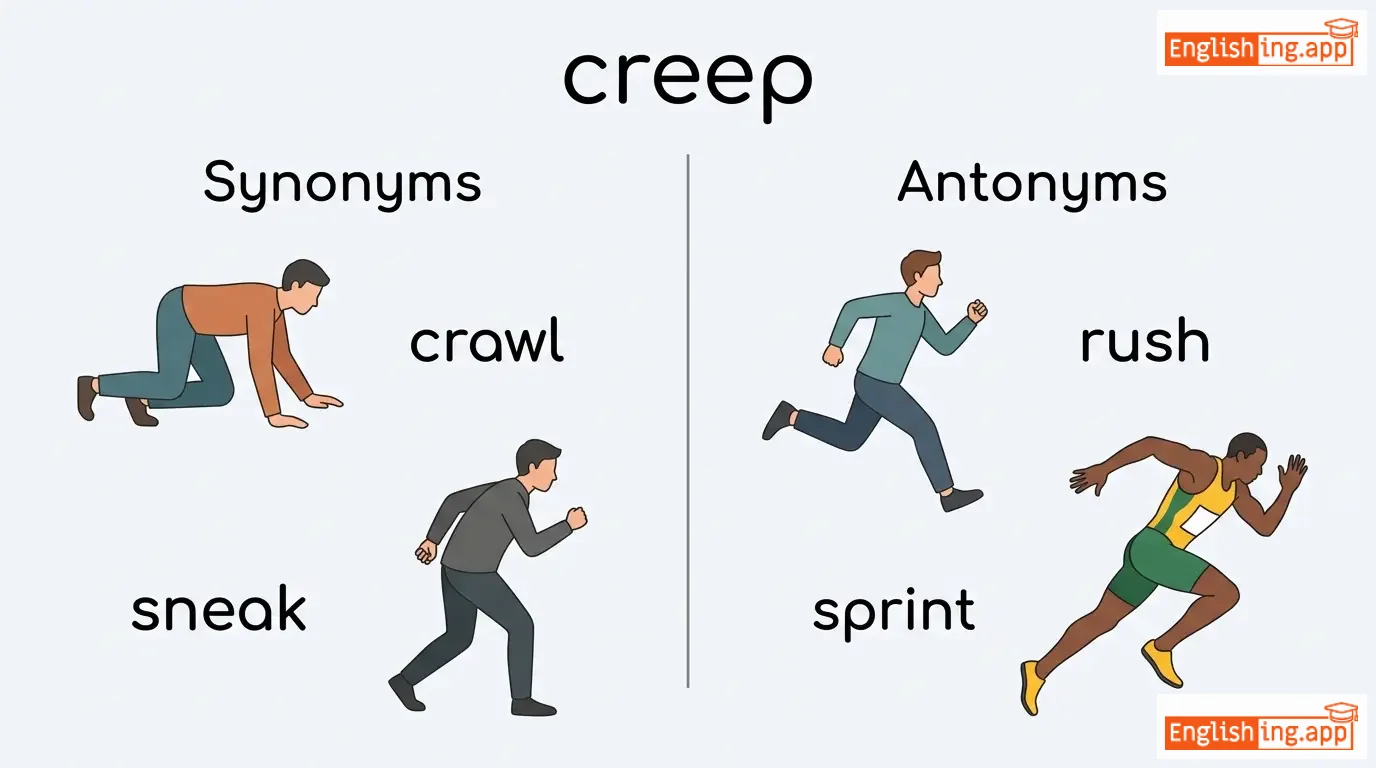
crawl, sneak, tiptoe, slink, edge
••••••
|
rush, sprint, charge
••••••
|
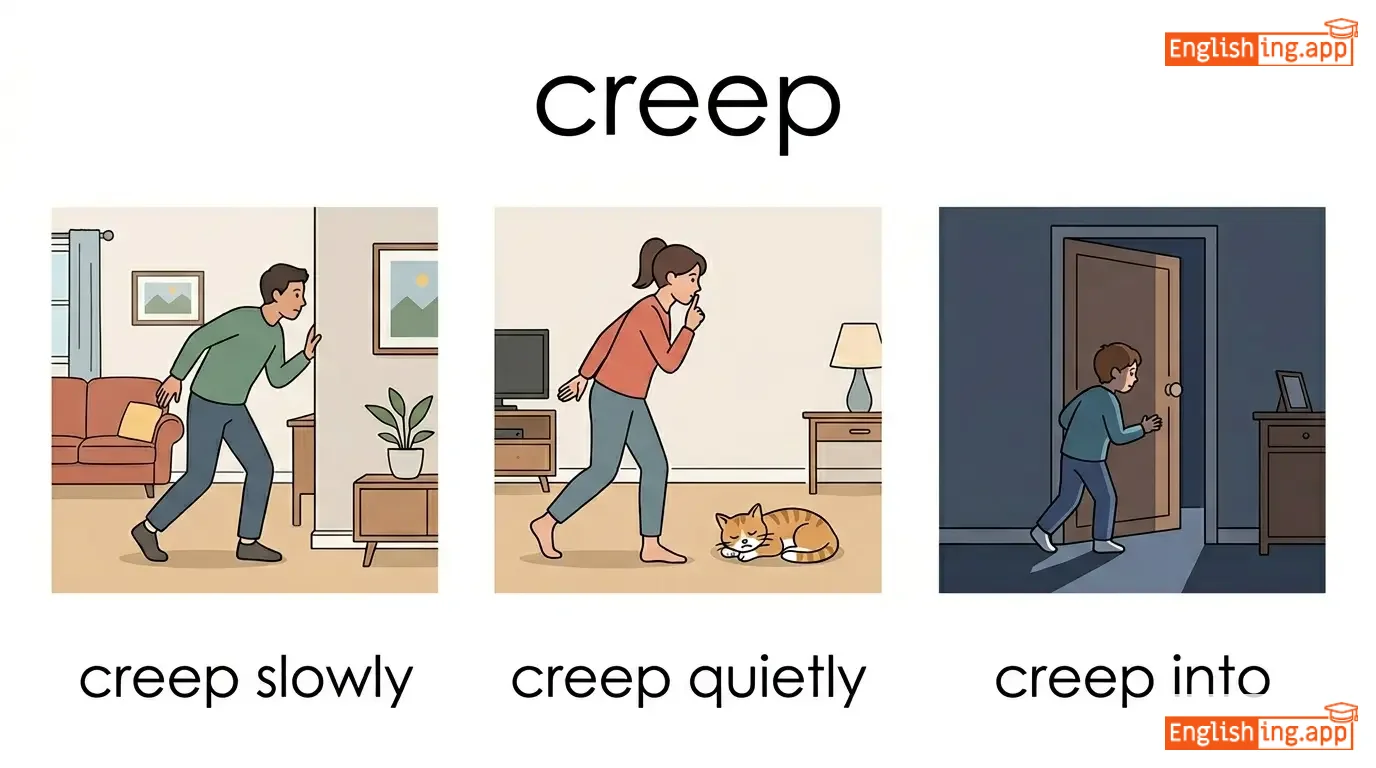
creep slowly, creep quietly, creep into, creep out
••••••
|
Creep意味着悄悄地接近,就像猫轻轻地走近它的猎物。
••••••
|
|
👨✈️
••••••
|
/kruː/
noun
(克鲁)
••••••
|
- •••••• |
船员
chuányuán
••••••
|
- •••••• | - •••••• | - •••••• | - •••••• |
A group of people working together, especially on a ship, aircraft, or project.
••••••
|
The ship's crew worked tirelessly during the storm.
船员在暴风雨中不知疲倦地工作。
••••••
|
船员在暴风雨中不知疲倦地工作。
Chuányuán zài bàofēngyǔ zhōng bùzhī píbèi de gōngzuò.
••••••
|
crew cut
极短的发型
••••••
|
A very short haircut, originally popular among military men.
••••••
|
极短的发型
jí duǎn de fàxíng
••••••
|
team, staff, group, squad, gang
••••••
|
individual, loner
••••••
|
film crew, cabin crew, ship's crew, rescue crew
••••••
|
Crew 意味着团队,就像船员 (chuányuán) 总是一起工作。
••••••
|
|
🦗
••••••
|
/ˈkrɪk.ɪt/
noun
(kriket)
••••••
|
- •••••• |
蟋蟀
xī shuài
••••••
|
- •••••• | - •••••• | - •••••• | - •••••• |
a jumping insect that makes a chirping sound by rubbing its wings together
••••••
|
We could hear crickets chirping in the evening.
我们能在傍晚听到蟋蟀的叫声。
••••••
|
我们能在傍晚听到蟋蟀的叫声。
wo men neng zai bang wan ting dao xi shuai de jiao sheng.
••••••
|
- •••••• | - •••••• | - •••••• |
grasshopper, insect
••••••
|
- •••••• |
cricket sound, field cricket, house cricket
••••••
|
蟋蟀跳跃发出声音,像乐器一样奏响。
••••••
|
|
🚔
••••••
|
/kraɪm/
noun
(克莱姆)
••••••
|
- •••••• |
犯罪
fànzuì
••••••
|
- •••••• | - •••••• | - •••••• | - •••••• |
An illegal act punishable by law.
••••••
|
The police are investigating the crime.
警方正在调查犯罪。
••••••
|
警方正在调查犯罪。
jǐngfāng zhèngzài diàochá fànzuì.
••••••
|
crime does not pay
犯罪没有好处。
••••••
|
crime ultimately brings punishment, not profit
••••••
|
犯罪没有好处。
fànzuì méiyǒu hǎochù.
••••••
|
offense, felony, wrongdoing, violation
••••••
|
lawfulness, obedience
••••••
|
commit a crime, crime rate, crime scene, organized crime
••••••
|
犯罪有后果,做错了就付出代价。
••••••
|
|
🚔
••••••
|
/ˈkrɪmɪnəl/
noun, adjective
(kriminal)
••••••
|
- •••••• |
罪犯
zuìfàn
••••••
|
- •••••• | - •••••• | - •••••• | - •••••• |
A person who has committed a crime; relating to crime
••••••
|
The police arrested a dangerous criminal last night. |
警方昨晚逮捕了一个危险的罪犯。
Jǐngfāng zuó wǎn dàibǔle yīgè wēixiǎn de zuìfàn.
••••••
|
criminal record |
an official history of crimes committed by a person
••••••
|
犯罪记录
fànzuì jìlù
••••••
|
offender, lawbreaker, felon, culprit, wrongdoer
••••••
|
innocent, lawful, honest
••••••
|
criminal law, criminal record, criminal activity, criminal justice, criminal behavior
••••••
|
罪犯 = 做坏事的人
••••••
|
|
⚠️
••••••
|
/ˈkraɪsɪs/
noun
(危机)
••••••
|
|
危机
weiji
••••••
|
- •••••• | - •••••• | - •••••• | - •••••• |
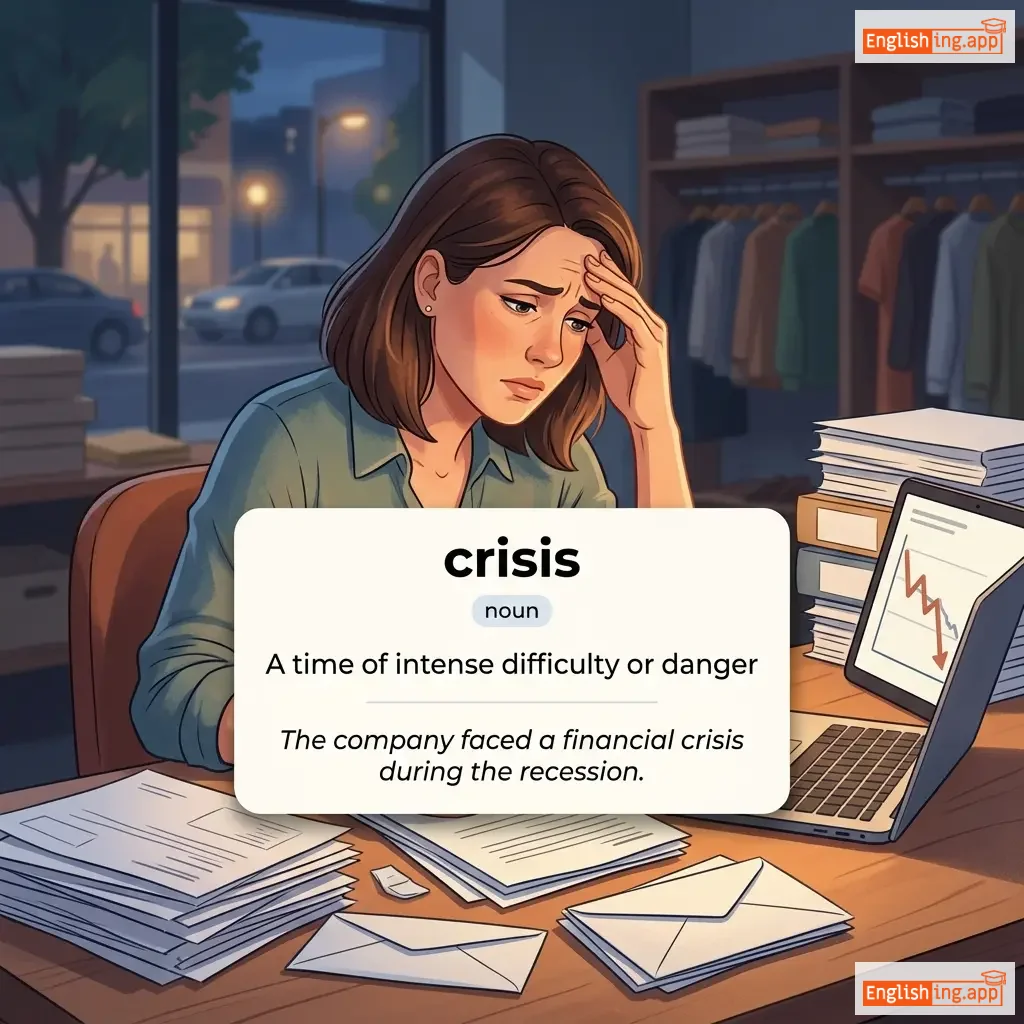
A time of intense difficulty or danger
••••••
|
The company faced a financial crisis during the recession. |
在经济衰退期间,公司面临着财政危机。
Zài jīngjì shuāituì qījiān, gōngsī miànlínzhe cáizhèng wēijī.
••••••
|
midlife crisis |
a period of doubt and anxiety in middle age about one's life
••••••
|
中年危机
zhōngnián wēijī
••••••
|
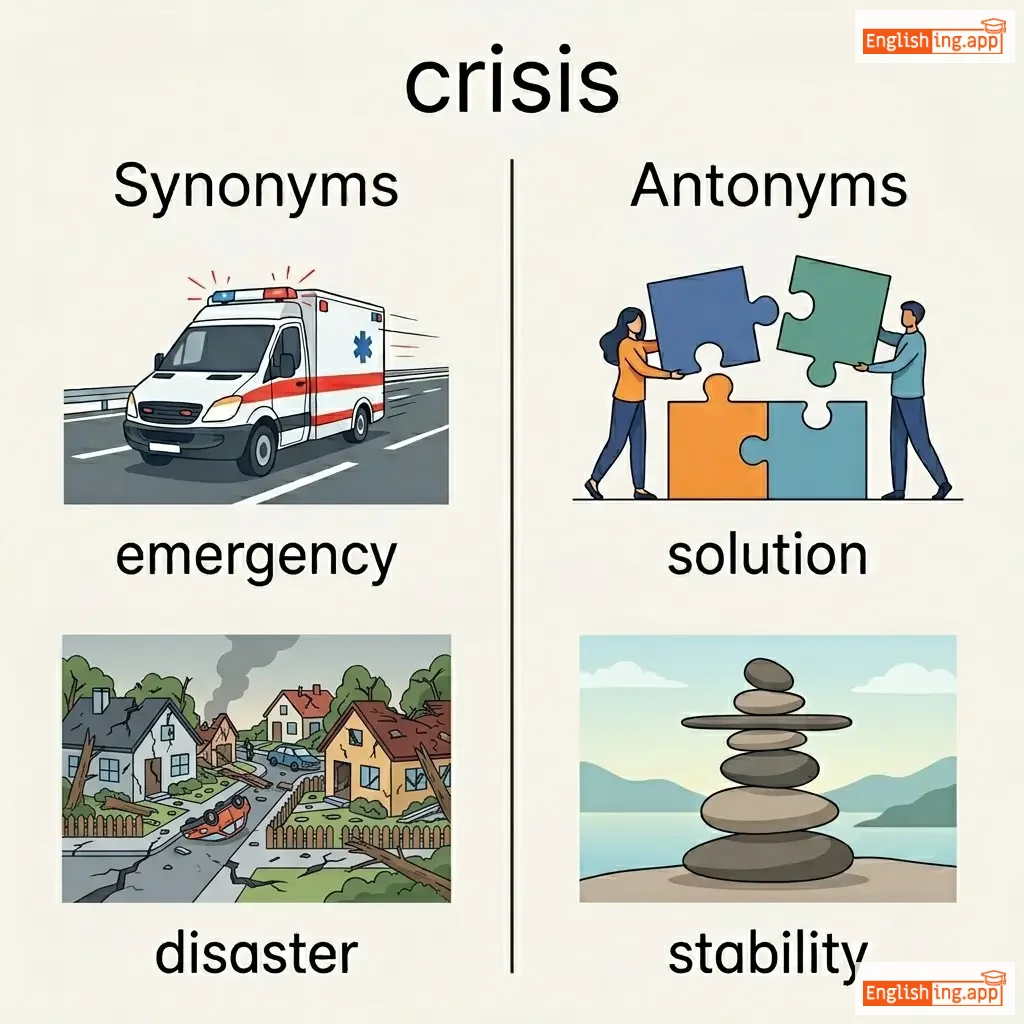
emergency, disaster, dilemma, catastrophe, trouble
••••••
|
solution, stability, peace
••••••
|
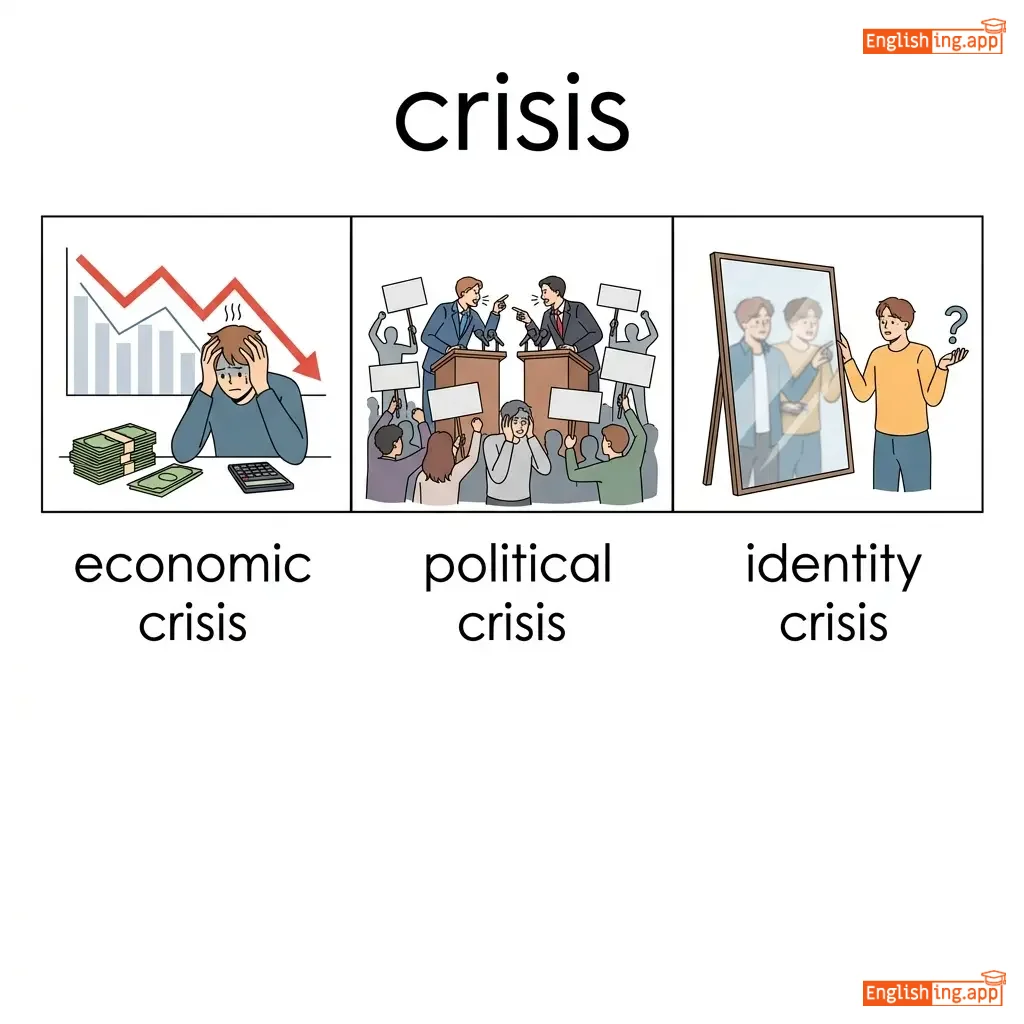
economic crisis, political crisis, identity crisis, health crisis
••••••
|
Crisis 就是危机的意思,大家都很困惑!
••••••
|
|
📋
••••••
|
/kraɪˈtɪəriə/
noun
(krɑɪˈtɪəriə)
••••••
|
- •••••• |
标准
biaozhun
••••••
|
- •••••• | - •••••• | - •••••• | - •••••• |
Standards or principles by which something is judged or decided.
••••••
|
The candidates were evaluated based on strict criteria. |
候选人根据严格的标准进行评估。
Hòuxuǎn rén gēnjù yángé de biāozhǔn jìnxíng pínggū.
••••••
|
- •••••• | - •••••• | - •••••• |
standards, measures, requirements, conditions, benchmarks
••••••
|
guess, randomness
••••••
|
evaluation criteria, selection criteria, admission criteria
••••••
|
Criteria意思是标准 - 如果你有标准,就能决定任何事情,像选举一样。
••••••
|
|
📝
••••••
|
/ˈkrɪtɪk/
noun
(kè lǐ tè)
••••••
|
- •••••• |
评论家
pinglunjia
••••••
|
- •••••• | - •••••• | - •••••• | - •••••• |
A person who judges the merits of something, especially art or literature
••••••
|
The film critic praised the director's latest movie. |
电影评论家赞扬了导演的最新电影。
Dianying pinglunjia zanyang le daoyan de zuixin dianying.
••••••
|
armchair critic |
someone who criticizes without real knowledge or involvement
••••••
|
沙发评论家
Shafa pinglunjia
••••••
|
reviewer, evaluator, commentator, judge
••••••
|
supporter, admirer
••••••
|
film critic, art critic, music critic, theater critic
••••••
|
Critic = 评论家,批评者
••••••
|
|
❗
••••••
|
/ˈkrɪtɪkəl/
adjective
(krìtìkǎo)
••••••
|
|
关键的 / 紧急的
guānjiàn de / jǐnjí de
••••••
|
- •••••• | - •••••• | - •••••• | - •••••• |
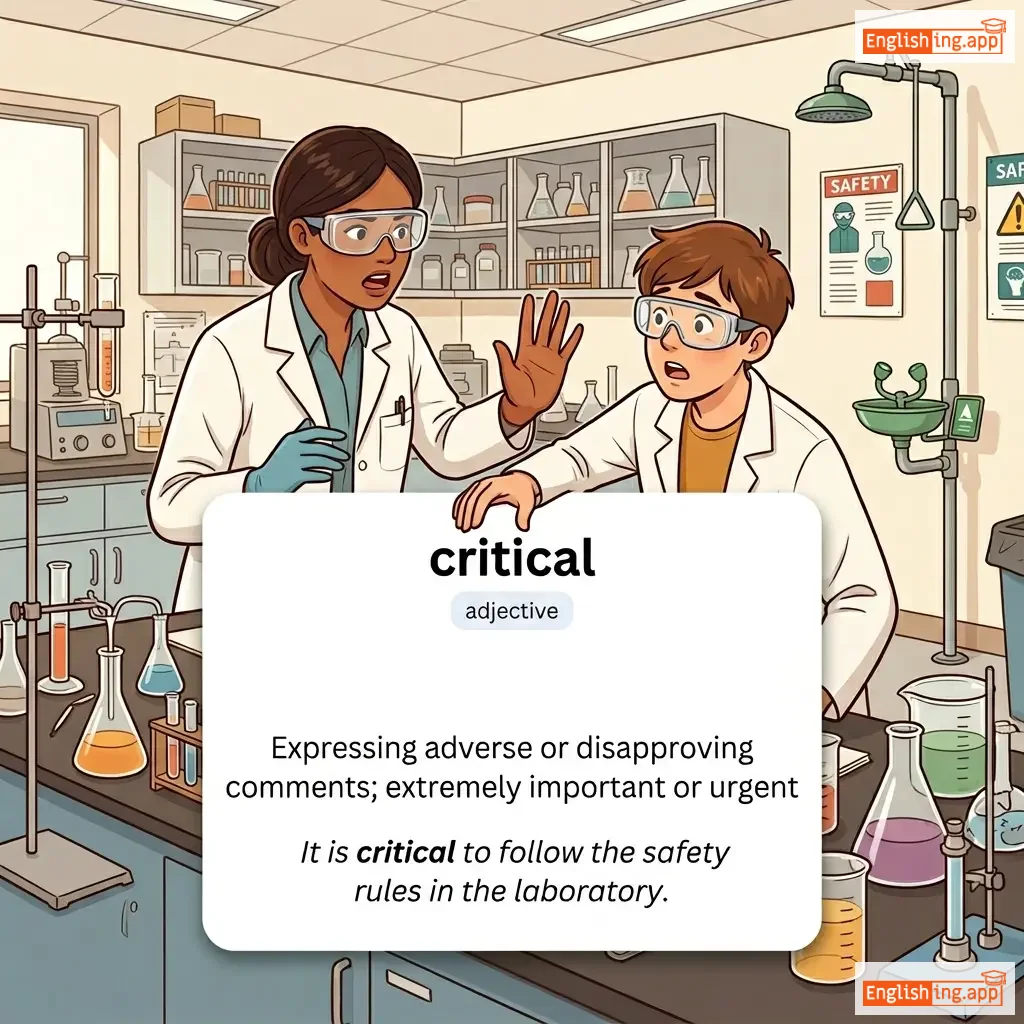
Expressing adverse or disapproving comments; extremely important or urgent
••••••
|
It is critical to follow the safety rules in the laboratory. |
在实验室中,遵循安全规则是至关重要的。
Zài shíyànshì zhōng, zūnxún ānquán guīzé shì zhìguān zhòngyào de.
••••••
|
critical condition |
a serious medical state where life is at risk
••••••
|
危急状态
wéijí zhuàngtài
••••••
|
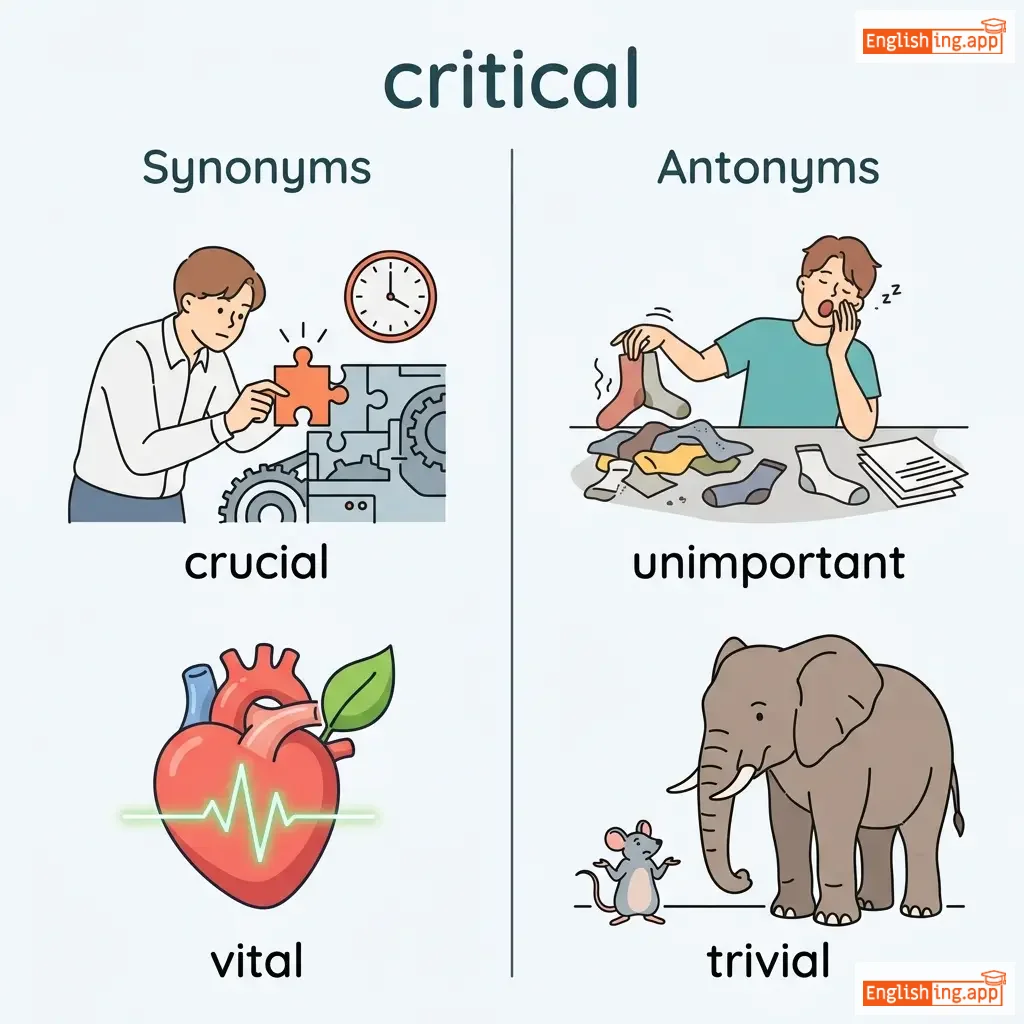
crucial, vital, essential, urgent, disapproving
••••••
|
unimportant, trivial, supportive
••••••
|
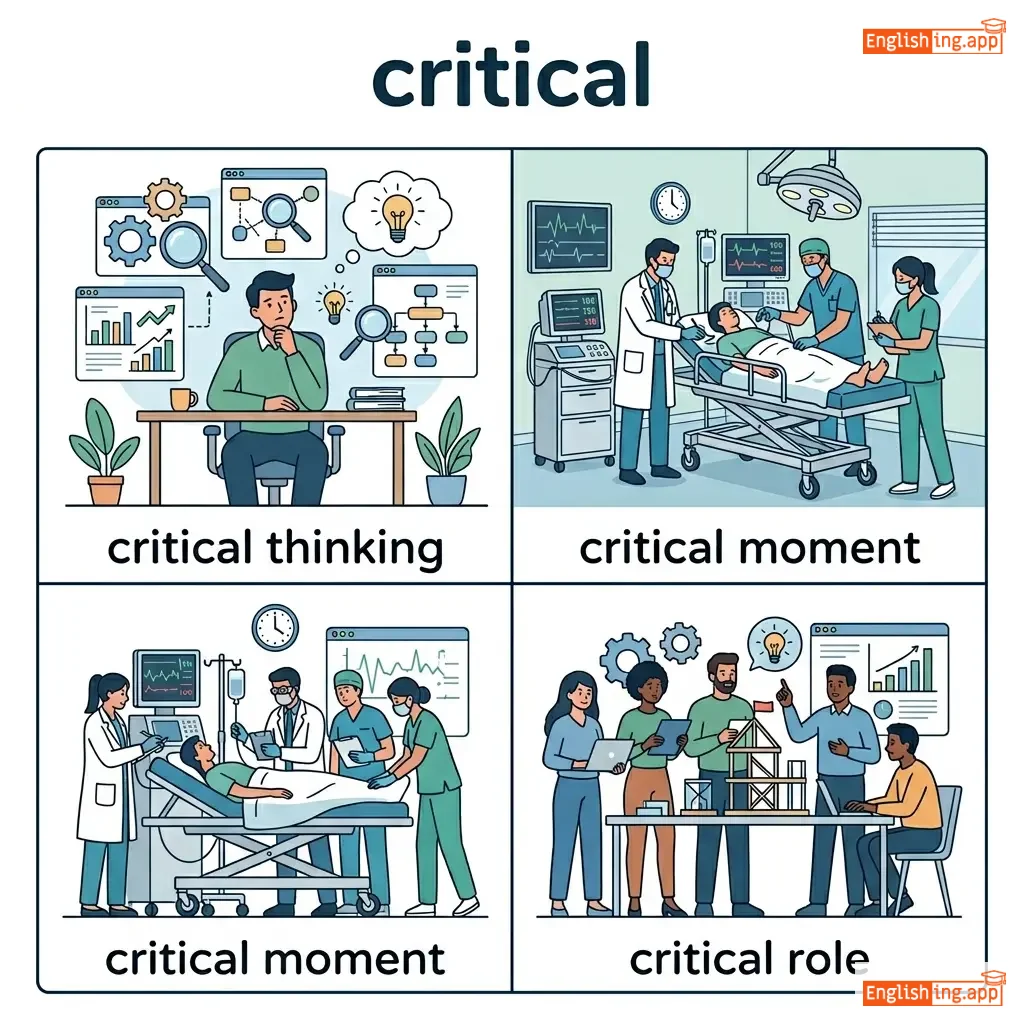
critical thinking, critical moment, critical role, critical analysis
••••••
|
Critical 代表关键 – Critical = 关键的
••••••
|
|
⚠️
••••••
|
/ˈkrɪtɪkli/
adverb
(kè lǐ kè lì)
••••••
|
- •••••• |
严重地
yánzhòng de
••••••
|
- •••••• | - •••••• | - •••••• | - •••••• |
in a way that expresses disapproval or a very serious, important way
••••••
|
He was critically injured in the accident. |
他在事故中受了重伤。
Tā zài shìgù zhōng shòu le zhòngshāng.
••••••
|
- •••••• | - •••••• | - •••••• |
seriously, severely, urgently
••••••
|
lightly, casually
••••••
|
critically important, critically endangered, critically ill
••••••
|
Critically 意味着严重地,就像在事故中严重受伤
••••••
|
|
💬
••••••
|
/ˈkrɪtɪˌsɪzəm/
noun
(krɪtɪˌsɪzəm)
••••••
|
- •••••• |
批评
pīpíng
••••••
|
- •••••• | - •••••• | - •••••• | - •••••• |
The expression of disapproval or judgment of the merits of something
••••••
|
The new policy has faced a lot of criticism from the public. |
新政策面临来自公众的批评。
Xīn zhèngcè miànlín láizì gōngzhòng de pīpíng.
••••••
|
constructive criticism |
helpful and useful feedback intended to improve something
••••••
|
建设性批评
jiànshèxìng pīpíng
••••••
|
disapproval, judgment, assessment, evaluation, remark
••••••
|
praise, compliment
••••••
|
constructive criticism, harsh criticism, literary criticism, public criticism
••••••
|
批评 = Criticism
••••••
|
|
📝
••••••
|
/ˈkrɪtɪsaɪz/
verb
(krɪtɪsaɪz)
••••••
|
|
批评
pīpíng
••••••
|
criticized
krɪtɪsaɪzd
••••••
|
criticized
krɪtɪsaɪzd
••••••
|
criticizes
krɪtɪsaɪzɪz
••••••
|
criticizing
krɪtɪsaɪzɪŋ
••••••
|
to express disapproval of someone or something by pointing out faults or shortcomings
••••••
|
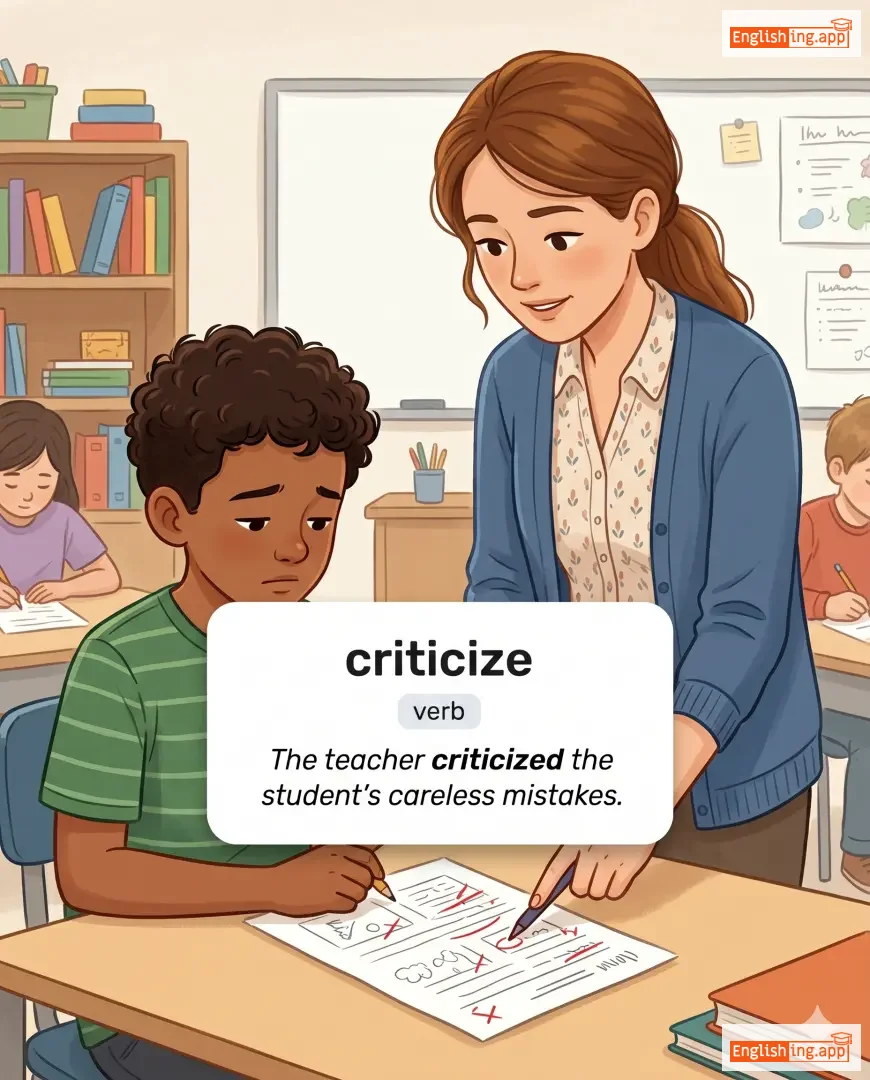
The teacher criticized the student's careless mistakes.
老师批评了学生的粗心错误。
••••••
|
老师批评了学生的粗心错误。
Lǎoshī pīpíngle xuéshēng de cūxīn cuòwù.
••••••
|
constructive criticism
建设性批评
••••••
|
helpful feedback intended to improve performance
••••••
|
建设性批评
jiànshèxìng pīpíng
••••••
|
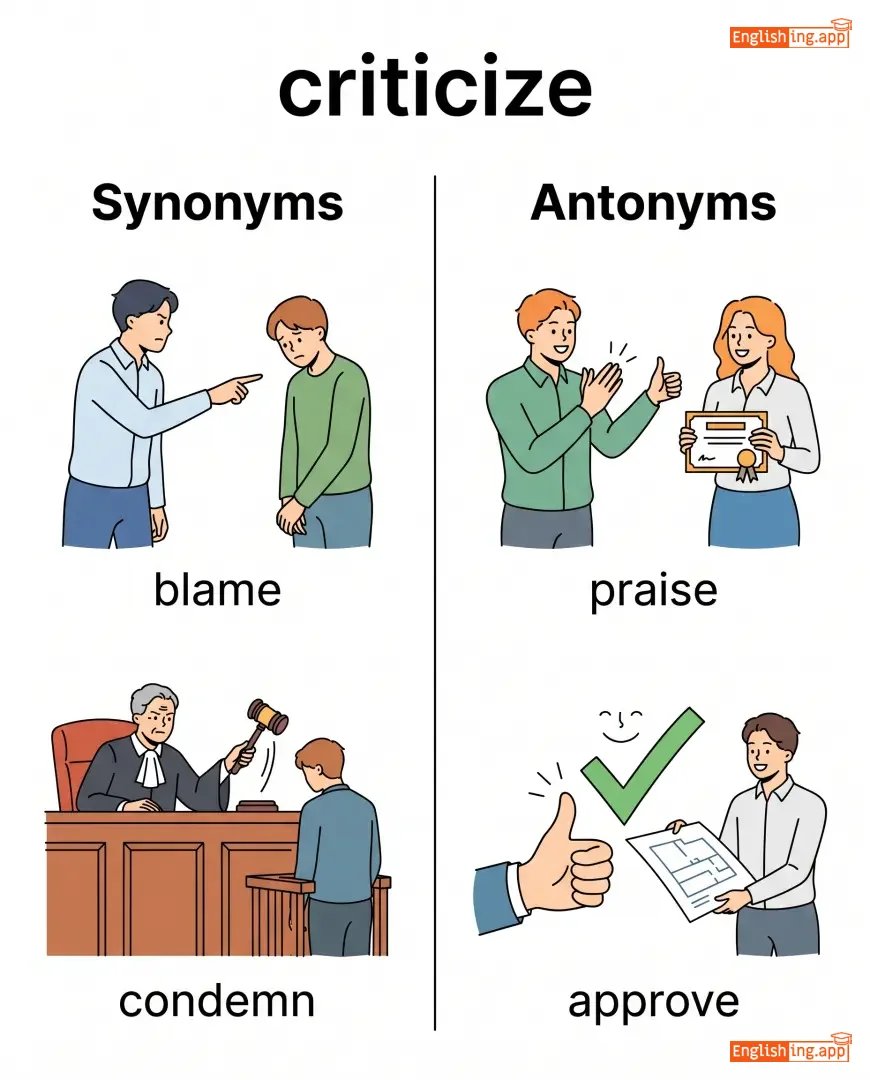
blame, condemn, censure, evaluate, review
••••••
|
praise, approve, compliment
••••••
|
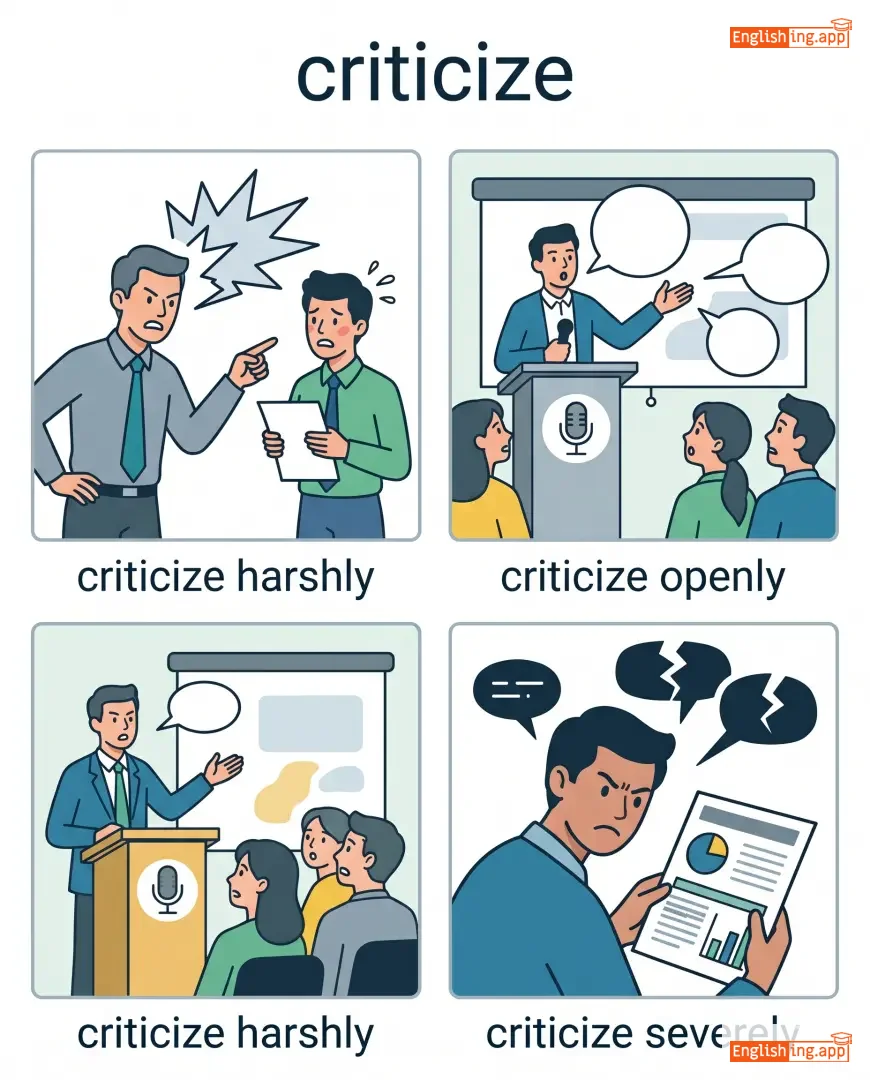
criticize harshly, criticize openly, criticize severely, criticize constantly
••••••
|
批评就是指出错误来帮助改进。
••••••
|
|
📝
••••••
|
/krɪˈtiːk/
noun/verb
(克里提克)
••••••
|
- •••••• |
批评
pīpíng
••••••
|
critiqued
批评
••••••
|
critiqued
批评
••••••
|
critiques
批评
••••••
|
critiquing
批评
••••••
|
A detailed analysis and assessment of something, especially a literary, philosophical, or political theory; to evaluate critically.
••••••
|
The professor asked the students to critique each other's essays.
教授要求学生批评彼此的论文。
••••••
|
教授要求学生批评彼此的论文。
Jiàoshòu yāoqiú xuéshēng pīpíng bǐcǐ de lùnwén.
••••••
|
- •••••• | - •••••• | - •••••• |
review, analysis, evaluation, appraisal, assessment
••••••
|
praise, compliment
••••••
|
literary critique, film critique, critique of, constructive critique
••••••
|
Critique 就是批评,是对某事物的深入分析
••••••
|
|
🌾
••••••
|
/krɒp/
noun
(króp)
••••••
|
- •••••• |
农作物
nongzuowu
••••••
|
- •••••• | - •••••• | - •••••• | - •••••• |
plants that are grown and harvested for food or other use
••••••
|
The farmers harvested their rice crop in autumn. |
农民在秋季收获了他们的稻米作物。
nongmin zai qiujì shōuhuòle tāmen de dàomǐ zuòwù.
••••••
|
bumper crop |
an unusually large harvest
••••••
|
丰收
fēngshōu
••••••
|
harvest, yield, produce, grain
••••••
|
famine, scarcity
••••••
|
crop yield, crop production, crop failure, crop season
••••••
|
Crop在田里收获丰收,农作物一切顺利。
••••••
|
|
➕
••••••
|
/krɒs/
verb
(kuò sī)
••••••
|
- •••••• |
穿越
chuānyuè
••••••
|
crossed
kuò sī
••••••
|
crossed
kuò sī
••••••
|
crosses
kuò sī
••••••
|
crossing
kuò sīng
••••••
|
to go from one side to another, or to pass through
••••••
|
We crossed the river using a wooden bridge.
我们通过一座木桥过了河。
••••••
|
我们通过一座木桥过了河。
Wǒmen tōngguò yī zuò mù qiáo guò le hé.
••••••
|
cross the line
越过界限
••••••
|
to go beyond what is acceptable or allowed
••••••
|
越过界限
yuèguò jièxiàn
••••••
|
pass, traverse, intersect, span
••••••
|
stay, remain, halt
••••••
|
cross the street, cross the border, cross over, cross path
••••••
|
Cross意味着穿越 – 穿越马路或越过界限
••••••
|
|
👥
••••••
|
/kraʊd/
noun
(krau)
••••••
|
- •••••• |
人群
renqun
••••••
|
- •••••• | - •••••• | - •••••• | - •••••• |
a large number of people gathered together
••••••
|
A huge crowd gathered to watch the concert.
A hjuʒ kraʊd gæðərd tu wɒtʃ ðə kənˈsɜrt.
••••••
|
一个巨大的观众聚集在一起观看音乐会。
Yi ge jueda de guanzhong juzhi zai yiqi guankan yinyuehui.
••••••
|
follow the crowd
fɔloʊ ðə kraʊd
••••••
|
to do what most other people are doing
••••••
|
随大流
sui daliu
••••••
|
gathering, throng, multitude, mob, audience
••••••
|
individual, solitude
••••••
|
huge crowd, large crowd, control the crowd, cheer the crowd
••••••
|
Crowd 意味着人群 - 很多人聚在一起。
••••••
|

