The Chef's Transformation
サミアはダッカで小さなレストランを経営していました。毎日、彼女はスーパーで新鮮な野菜を買っていました。彼女の冷蔵庫は常に材料で整理されていました。彼女は健康的な料理を作る際に炭水化物の量に非常に気を使っていました。彼女は各レシピでスプーンを使って正確な量を測っていました。料理の温度を制御することは彼女の得意技でした。彼女の目標は、経済的に手頃な価格で質の高い食事を提供することでした。支出を減らすために、彼女は地元の市場からアイテムを購入していました。季節の食材の利用可能性に基づいて、メニューを変更していました。彼女のレストランは短期間でかなりの成功を収めました。顧客は予約をし始めました。一度、彼女は家族と対立しました、彼らは価格を上げたかったのです。しかし、サミアの価値観は彼らの考え方と一致していませんでした。彼女は部分的に彼らのアドバイスを受け入れましたが、自分の原則を守りました。彼女は定期的に新しいレシピを試していました。秘密裏に彼女はもっと大きなレストランを夢見ていました。彼女はメニューの選択に非常に選択的でした。ある日、有名な料理評論家が彼女を祝福しました。彼女は継続的に良い料理を提供し成功しました。いくつかの競争者が不適切なコメントをしても、彼女は諦めませんでした。今日、彼女のレストランはダッカで最も優れたレストランの一つです。
|
絵文字
|
単語 | Images | 翻訳 | 過去 | 過去分詞 | 三人称単数 | 動名詞 | 意味 | 例文 | 例文の翻訳 | 表現例 | 表現例の意味 | 表現例の翻訳 | 同義語 | 対義語 | コロケーション | ニーモニック |
|---|---|---|---|---|---|---|---|---|---|---|---|---|---|---|---|---|---|
|
🟢
••••••
|
/əˌveɪləˈbɪləti/
noun
(アヴェイラビリティ)
••••••
|
- •••••• |
利用可能性
riyō kanōsei
••••••
|
- •••••• | - •••••• | - •••••• | - •••••• |
the state of being able to be used or obtained
••••••
|
The availability of clean water is crucial for health. |
清潔な水の利用可能性は健康にとって非常に重要です。
Seiketsu na mizu no riyō kanōsei wa kenkō ni totte hijō ni jūyōdesu.
••••••
|
subject to availability |
only if something is in stock or accessible
••••••
|
利用可能性に基づいて
riyō kanōsei ni motozuite
••••••
|
accessibility, readiness, presence, supply, presence
••••••
|
scarcity, absence, shortage
••••••
|
check availability, ensure availability, product availability, room availability
••••••
|
良いものの利用可能性はavailability — 簡単に手に入ります 😄
••••••
|
|
🍞
••••••
|
/ˌkɑːrboʊˈhaɪdreɪt/
noun
(炭水化物)
••••••
|
- •••••• |
炭水化物
tansui kabutsu
••••••
|
- •••••• | - •••••• | - •••••• | - •••••• |
a nutrient that provides energy, found in foods like rice, bread, and sugar
••••••
|
Rice and potatoes are rich in carbohydrates. |
ご飯とポテトは炭水化物が豊富です。
Gohan to poteto wa tansui kabutsu ga hōfu desu.
••••••
|
- •••••• | - •••••• | - •••••• |
sugar, starch, glucose, saccharide
••••••
|
protein, fat
••••••
|
high carbohydrate diet, complex carbohydrate, carbohydrate intake, low carbohydrate
••••••
|
炭水化物は体にエネルギーを与える燃料のようなもの!
••••••
|
|
🎉
••••••
|
/kənˈɡrætʃʊleɪt/
verb
(カングラチュレイト)
••••••
|
- •••••• |
お祝いする
oiwaisuru
••••••
|
congratulated
カングラチュレイテッド
••••••
|
congratulated
カングラチュレイテッド
••••••
|
congratulates
カングラチュレイツ
••••••
|
congratulating
カングラチュレイティング
••••••
|
to praise someone for an achievement or for a special occasion
••••••
|
I want to congratulate you on your promotion.
私はあなたの昇進を祝いたいです。
••••••
|
私はあなたの昇進を祝いたいです。
Watashi wa anata no shoushin o iwai tai desu.
••••••
|
- •••••• | - •••••• | - •••••• |
praise, compliment, applaud, honor
••••••
|
criticize, scold, blame
••••••
|
congratulate on, congratulate someone, congratulate for
••••••
|
In Japanese, お祝いする means to congratulate, so 'oiwaisuru' them!
••••••
|
|
📏
••••••
|
/kənˈsɪdərəbl/
adjective
(kənˈsɪdərəbl)
••••••
|
- •••••• |
かなりの
kanarino
••••••
|
- •••••• | - •••••• | - •••••• | - •••••• |
large in amount, size, or importance
••••••
|
The project required a considerable amount of time and money. |
そのプロジェクトはかなりの時間とお金を必要としました。
Sono purojekuto wa kanarino jikan to okane o hitsuyō to shimashita.
••••••
|
- •••••• | - •••••• | - •••••• |
substantial, significant, great, large, notable
••••••
|
small, minor, insignificant
••••••
|
considerable amount, considerable effort, considerable time, considerable importance
••••••
|
かなりの、プロジェクトに必要な大量の時間とお金のようなものです。
••••••
|
|
📅
••••••
|
/kənˈsɪstəntli/
adverb
(カンシステントリー)
••••••
|
- •••••• |
一貫して
ikkanshite
••••••
|
- •••••• | - •••••• | - •••••• | - •••••• |
in a way that does not vary; regularly and dependably
••••••
|
She has been performing consistently well in her studies. |
彼女は学業で一貫して良い成績を収めています。
Kanojo wa gakugyō de ikkanshite yoi seiseki o osameteimasu.
••••••
|
consistent with |
in agreement or harmony with something
••••••
|
〜と一致する
〜to icchi suru
••••••
|
regularly, steadily, constantly, reliably
••••••
|
inconsistently, irregularly
••••••
|
perform consistently, act consistently, behave consistently, consistently good
••••••
|
一貫しては常に同じ結果を意味します — 常に同じパフォーマンス 📅
••••••
|
|
💌
••••••
|
/kəˈrɛspɒnd/
verb
(コレスポンド)
••••••
|
- •••••• |
通信する
tsuushin suru
••••••
|
corresponded
コレスポンデッド
••••••
|
corresponded
コレスポンデッド
••••••
|
corresponds
コレスポンズ
••••••
|
corresponding
コレスポンディング
••••••
|
to communicate by exchanging letters or messages
••••••
|
I correspond regularly with my old friends.
私は定期的に古い友達と通信しています。
••••••
|
私は定期的に古い友達と通信しています。
Watashi wa teikitekini furui tomodachi to tsuushin shiteimasu.
••••••
|
- •••••• | - •••••• | - •••••• |
communicate, write, exchange, connect
••••••
|
disconnect, ignore
••••••
|
correspond with, correspond regularly, correspond by email
••••••
|
友達と手紙を書くことを'tsuushin'と覚えましょう。
••••••
|
|
💬
••••••
|
/ˌdɪsəˈɡriːmənt/
noun
(ディスアグリーメント)
••••••
|
- •••••• |
不一致
fuitchi
••••••
|
- •••••• | - •••••• | - •••••• | - •••••• |
a failure to agree or a difference in opinion
••••••
|
Their disagreement on the issue caused a delay in the project. |
その問題に対する彼らの不一致はプロジェクトの遅延を引き起こしました。
Sono mondai ni taisuru karera no fuitchi wa purojekuto no chien o hikiokoshimashita.
••••••
|
- •••••• | - •••••• | - •••••• |
dispute, argument, conflict, difference
••••••
|
agreement, harmony, accord
••••••
|
disagreement over, public disagreement, reach a disagreement
••••••
|
不一致(fuitchi)=‘不’不満、‘一致’合意。違う意見が生まれたこと。
••••••
|
|
💰
••••••
|
/ˌiːkəˈnɒmɪkli/
adverb
(エコノミカリー)
••••••
|
- •••••• |
経済的に
keizaiteki ni
••••••
|
- •••••• | - •••••• | - •••••• | - •••••• |
in a way that relates to economics or is efficient and not wasteful.
••••••
|
The company is trying to operate more economically this year. |
その会社は今年、より経済的に運営することを目指しています。
Sono kaisha wa kotoshi, yori keizaiteki ni un'ei suru koto o mezashiteimasu.
••••••
|
- •••••• | - •••••• | - •••••• |
efficiently, financially, frugally, cost-effectively
••••••
|
wastefully, extravagantly
••••••
|
economically viable, economically independent, economically strong, economically developed
••••••
|
経済的にやることは節約すること。無駄を省いて効率よく!
••••••
|
|
📊
••••••
|
/ɪkˈspɛndɪtʃər/
noun
(ek-su-pen-di-cha)
••••••
|

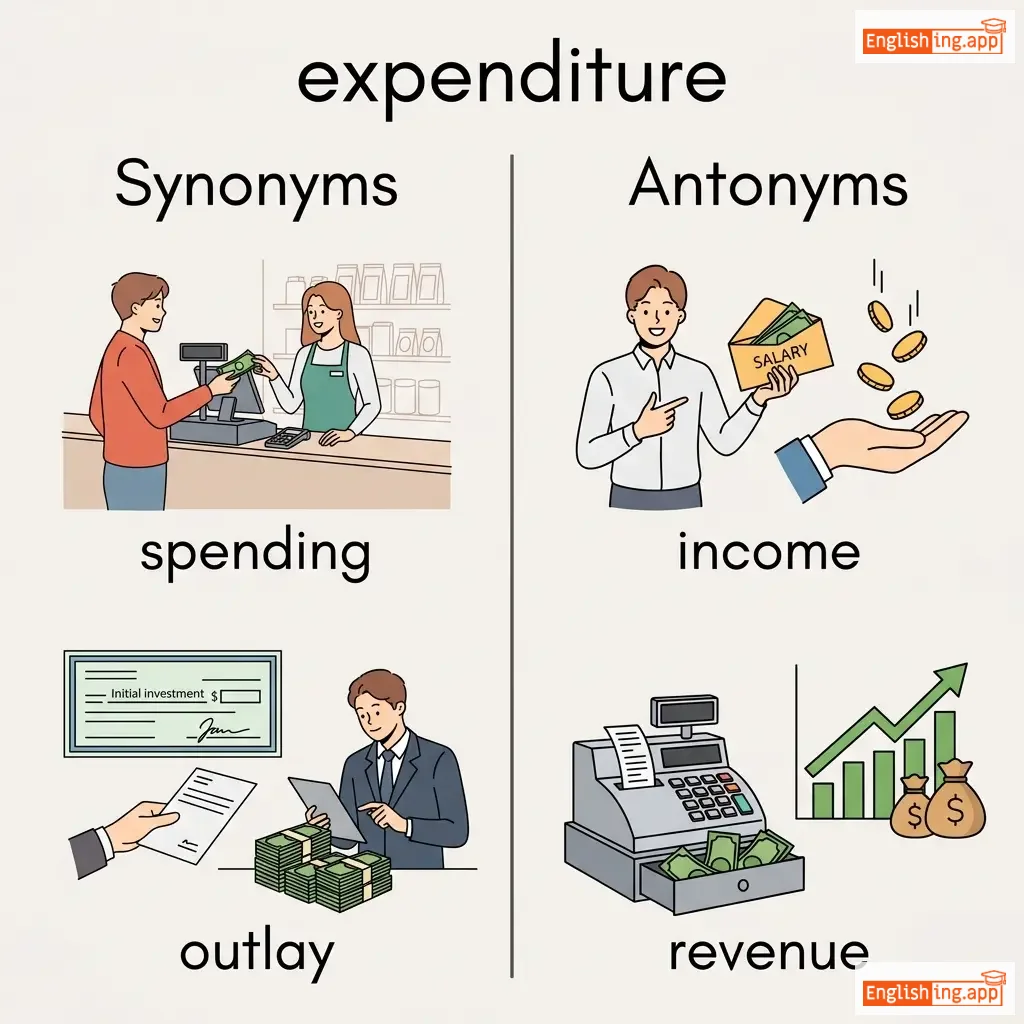
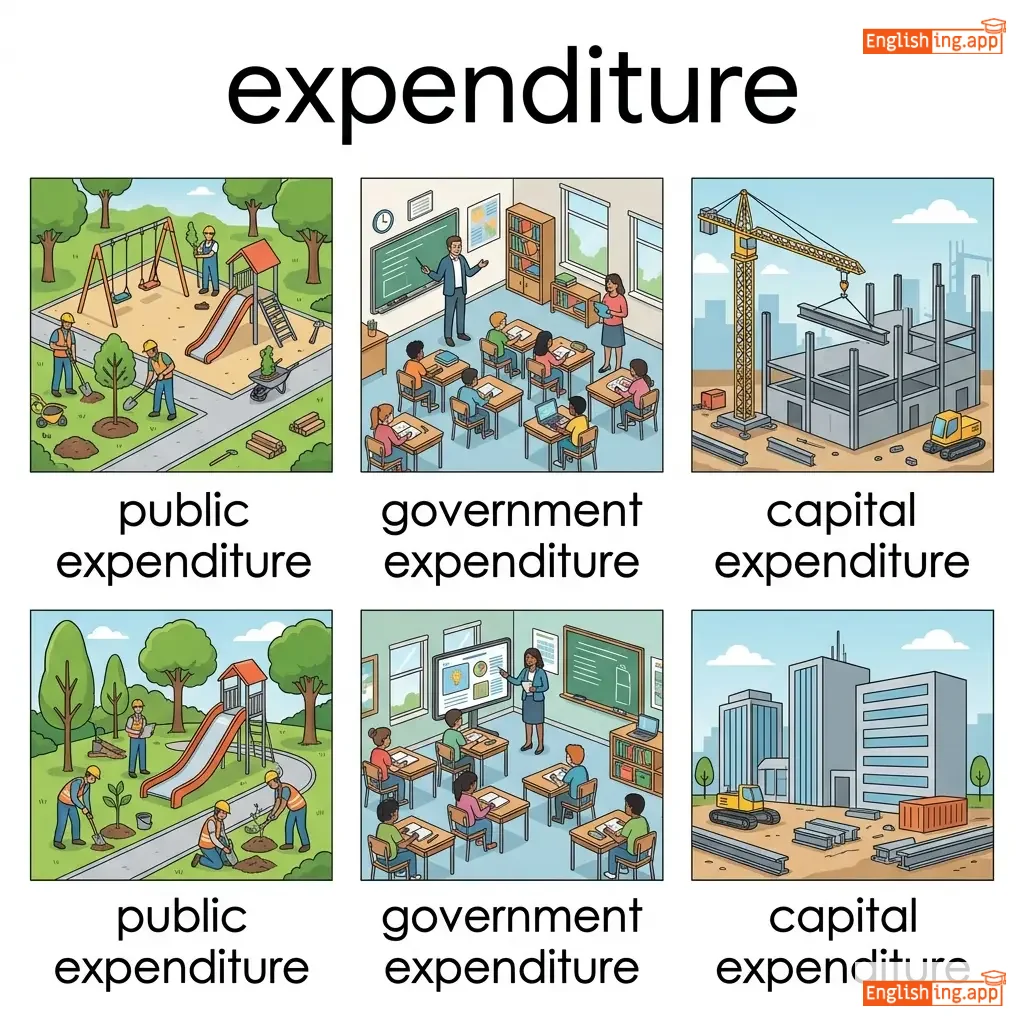
|
支出
shishutsu
••••••
|
- •••••• | - •••••• | - •••••• | - •••••• |
the act of spending money or using resources
••••••
|
The government reduced its expenditure on defense. |
政府は防衛費を削減しました。
Seifu wa bōei-hi o sakugen shimashita.
••••••
|
public expenditure |
money spent by the government for public services
••••••
|
公共支出
kōkyō shishutsu
••••••
|
spending, outlay, cost, expense, disbursement
••••••
|
income, revenue, savings
••••••
|
public expenditure, government expenditure, capital expenditure, annual expenditure
••••••
|
Expenditure は extra 支出 = 支出、試験ではいつも追加の支出があります。
••••••
|
|
🚫
••••••
|
/ˌɪnəˈproʊpriət/
adjective
(イナプロプリエイト)
••••••
|
- •••••• |
不適切
futekisetsu
••••••
|
- •••••• | - •••••• | - •••••• | - •••••• |
not suitable or proper in the circumstances
••••••
|
It was inappropriate to talk loudly in the library. |
図書館で大声で話すのは不適切でした。
Toshokan de oogoe de hanasu no wa futekisetsu deshita.
••••••
|
- •••••• | - •••••• | - •••••• |
unsuitable, improper, unfit, offensive
••••••
|
appropriate, suitable
••••••
|
inappropriate behavior, inappropriate dress, inappropriate comment
••••••
|
Inappropriateは「In a place proper isn't」- それをしてはいけません。
••••••
|
|
🧩
••••••
|
/ˈpɑrʃəli/
adverb
(パーシャリー)
••••••
|
- •••••• |
部分的に; 完全ではない;
bubun-teki ni; kanzen de wa nai;
••••••
|
- •••••• | - •••••• | - •••••• | - •••••• |
to some extent; not completely; incompletely
••••••
|
The building was only partially destroyed in the fire.
その建物は火事で部分的に破壊されました。
••••••
|
その建物は火事で部分的に破壊されました。
Sono tatemono wa kaji de bubun-teki ni hakai saremashita.
••••••
|
- •••••• | - •••••• | - •••••• |
partly, incompletely, somewhat, to some degree
••••••
|
completely, totally, entirely, fully
••••••
|
partially completed, partially visible, partially damaged
••••••
|
部分的には完全ではない
••••••
|
|
🤫
••••••
|
/ˈpraɪ.vət.li/
adverb
(プライベートリー)
••••••
|
- •••••• |
個人的に; 内密に
kojin teki ni; naimitsu ni
••••••
|
- •••••• | - •••••• | - •••••• | - •••••• |
in a private manner; without others present; confidentially
••••••
|
She spoke to him privately about the matter. |
彼女はその問題について彼と個人的に話しました。
Kanojo wa sono mondai ni tsuite kare to kojinteki ni hanashimashita.
••••••
|
- •••••• | - •••••• | - •••••• |
confidentially, secretly, personally, individually
••••••
|
publicly, openly, collectively
••••••
|
speak privately, meet privately, privately owned
••••••
|
Privately in Japanese is 'kojin teki ni'.
••••••
|
|
🧊❄️
••••••
|
/rɪˈfrɪdʒ.ər.eɪ.tər/
noun
(冷蔵庫)
••••••
|
- •••••• |
冷蔵庫
reizouko
••••••
|
- •••••• | - •••••• | - •••••• | - •••••• |
an appliance for keeping food and drinks cold
••••••
|
Please put the milk in the refrigerator to keep it fresh.
牛乳を新鮮に保つために冷蔵庫に入れてください。
••••••
|
牛乳を新鮮に保つために冷蔵庫に入れてください。
gyūnyū o shinsen ni tamotsu tame ni reizouko ni irete kudasai.
••••••
|
- •••••• | - •••••• | - •••••• |
fridge, icebox, cooler
••••••
|
oven, heater
••••••
|
refrigerator door, refrigerator compartment, energy-efficient refrigerator
••••••
|
冷蔵庫 (reizouko) is like ‘refrigerator’ – keep it cold for fresh milk!
••••••
|
|
📅
••••••
|
/ˌrɛzərˈveɪʃən/
noun
(リザベーション)
••••••
|
- •••••• |
予約
yoyaku
••••••
|
- •••••• | - •••••• | - •••••• | - •••••• |
an arrangement made in advance to secure accommodation, a seat, or service
••••••
|
He made a reservation at the hotel for the weekend.
彼は週末のためにホテルにリザベーションをしました。
••••••
|
彼は週末のためにホテルに予約をしました。
Kare wa shūmatsu no tame ni hoteru ni yoyaku o shimashita.
••••••
|
make a reservation
リザベーションをする
••••••
|
to book in advance
••••••
|
リザベーションをする
rizabēshon o suru
••••••
|
booking, appointment, arrangement, order
••••••
|
cancellation, freedom
••••••
|
hotel reservation, table reservation, flight reservation, make reservation
••••••
|
予約は前もって行うこと、旅行の準備のように。
••••••
|
|
🕒
••••••
|
/ruːˈtiːnli/
adverb
(ルーチンリー)
••••••
|
- •••••• |
定期的に
teikiteki ni
••••••
|
- •••••• | - •••••• | - •••••• | - •••••• |
as part of a regular procedure; habitually
••••••
|
The staff routinely checks the equipment for safety. |
スタッフは定期的に安全のために機器を点検します。
Sutaffu wa teikiteki ni anzen no tame ni kiki o tenken shimasu.
••••••
|
- •••••• | - •••••• | - •••••• |
regularly, habitually, normally, usually, consistently
••••••
|
rarely, occasionally, unusually
••••••
|
routinely perform, routinely check, routinely used, routinely tested
••••••
|
定期的に = ルーチンと一緒に毎回行うこと
••••••
|
|
🗂️
••••••
|
/sɪˈlɛkʃən/
noun
(セレクション)
••••••
|

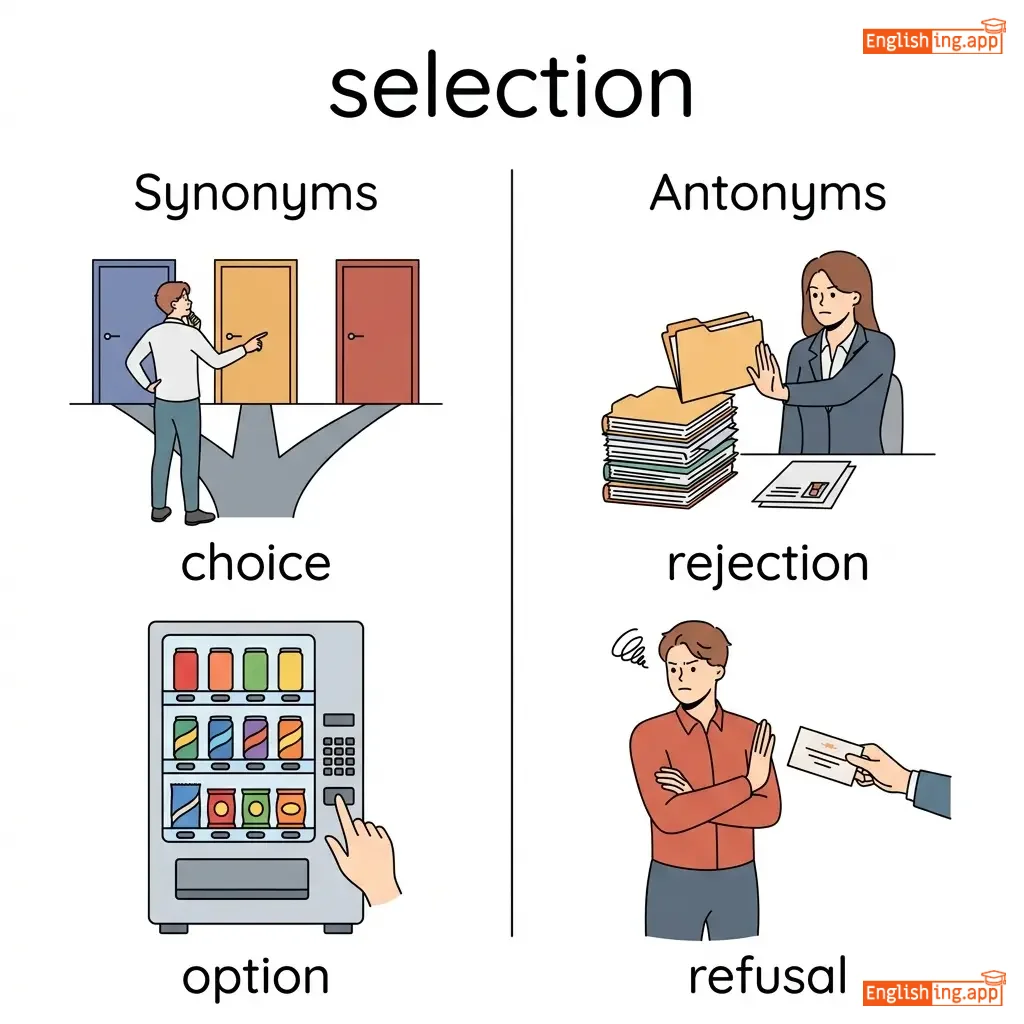
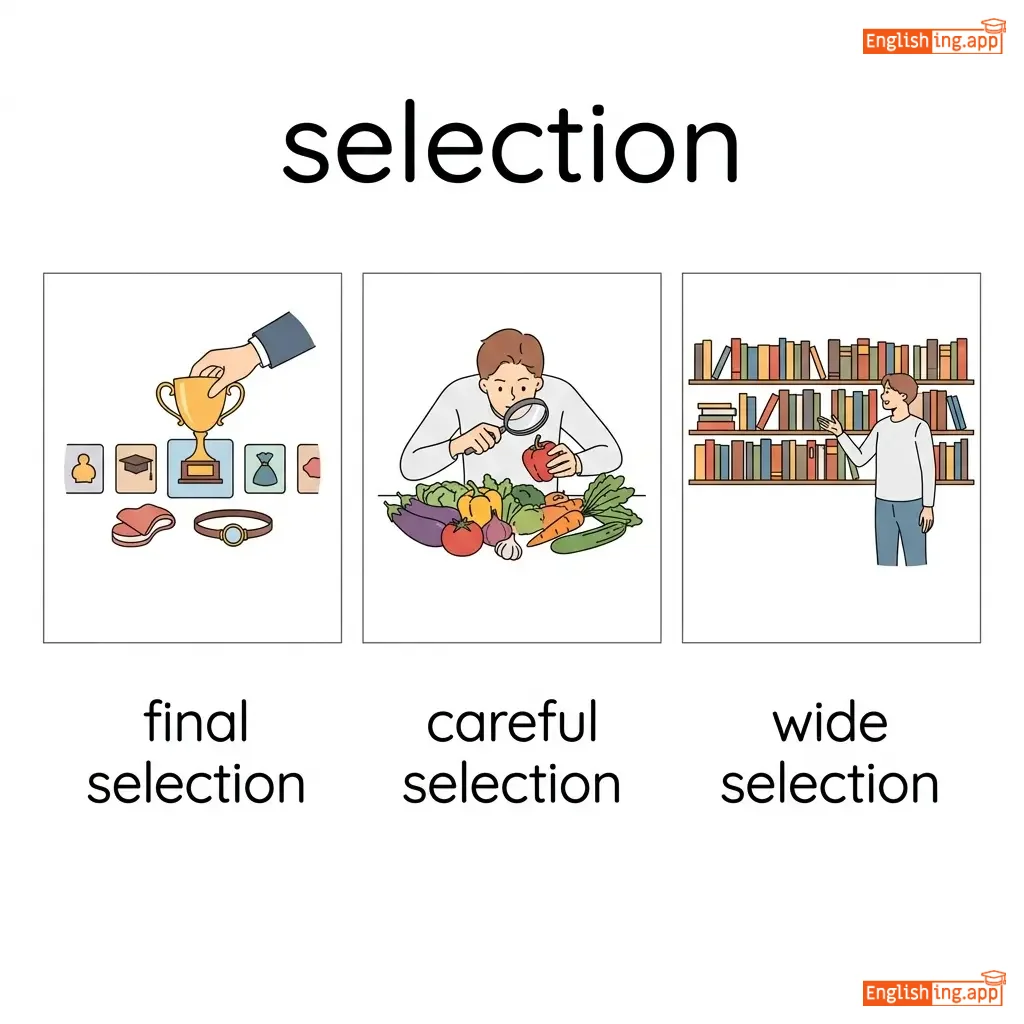
|
選択
sentaku
••••••
|
- •••••• | - •••••• | - •••••• | - •••••• |
the act of choosing or the thing that is chosen
••••••
|
The final selection will be announced tomorrow. |
最終選択は明日発表されます。
Saishū sentaku wa ashita happyō saremasu.
••••••
|
natural selection |
the process by which organisms better adapted to their environment survive
••••••
|
自然選択
shizen sentaku
••••••
|
choice, option, pick, assortment, range
••••••
|
rejection, refusal
••••••
|
final selection, careful selection, wide selection, random selection
••••••
|
Selection は選択を意味します - 選挙のように、みんなが選ぶのです。
••••••
|
|
🎯
••••••
|
/sɪˈlek.tɪv/
adjective
(セレクティブ)
••••••
|
- •••••• |
選択的
sentakuteki
••••••
|
- •••••• | - •••••• | - •••••• | - •••••• |
relating to or involving careful selection; choosy about what to accept
••••••
|
The university has a selective admission process for new students.
大学には新入生のための選択的な入学プロセスがあります。
••••••
|
大学には新入生のための選択的な入学プロセスがあります。
Daigaku ni wa shinnyuusei no tame no sentakuteki na nyuugaku purosesu ga arimasu.
••••••
|
- •••••• | - •••••• | - •••••• |
choosy, particular, discriminating, exclusive
••••••
|
indiscriminate, random, inclusive, accepting
••••••
|
selective admission, selective memory, selective breeding, selective service
••••••
|
選択する (sentaku) という意味
••••••
|
|
🛒
••••••
|
/ˈsuː.pəˌmɑː.kɪt/
noun
(スーパー マーケット)
••••••
|
- •••••• |
スーパーマーケット
suupaa maaketto
••••••
|
- •••••• | - •••••• | - •••••• | - •••••• |
a large self-service store selling food and household goods
••••••
|
She went to the supermarket to buy groceries. |
彼女は食料品を買いにスーパーマーケットに行きました。
Kanojo wa shokuryouhin o kai ni suupaa maaketto ni ikimashita.
••••••
|
- •••••• | - •••••• | - •••••• |
grocery store, mart, store, food market, hypermarket
••••••
|
small shop, kiosk
••••••
|
big supermarket, local supermarket, supermarket chain, supermarket shopping, supermarket employee
••••••
|
スーパーマーケット — すべてが揃っている場所 🛒
••••••
|
|
🥄
••••••
|
/ˈteɪbəlˌspun/
noun
(テーブルスプーン)
••••••
|
- •••••• |
テーブルスプーン
teeburusu pun
••••••
|
- •••••• | - •••••• | - •••••• | - •••••• |
a spoon used for serving or eating food, typically holding about 15 milliliters
••••••
|
She stirred the soup with a tablespoon.
彼女はテーブルスプーンでスープをかき混ぜました。
••••••
|
彼女はテーブルスプーンでスープをかき混ぜました。
Kanojo wa teeburusu pun de suupu o kakimazemashita.
••••••
|
- •••••• | - •••••• | - •••••• |
soup spoon, serving spoon
••••••
|
teaspoon, fork
••••••
|
tablespoon of sugar, tablespoon of salt, a full tablespoon
••••••
|
テーブルスプーンでスープ (teeburusu pun de suupu) - Imagine using a spoonful of soup.
••••••
|
|
🌡️
••••••
|
/ˈtem.pər.ə.tʃər/
noun
(テンペラチャー)
••••••
|
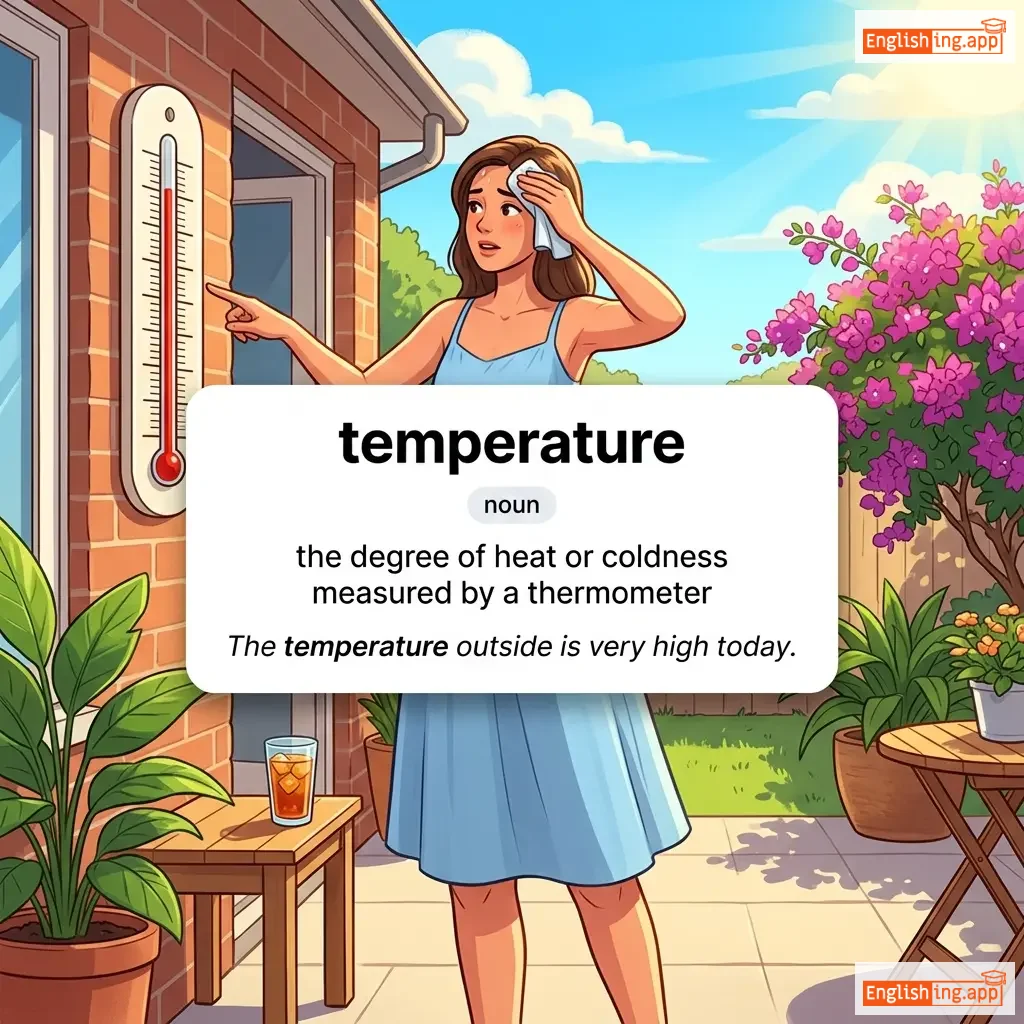
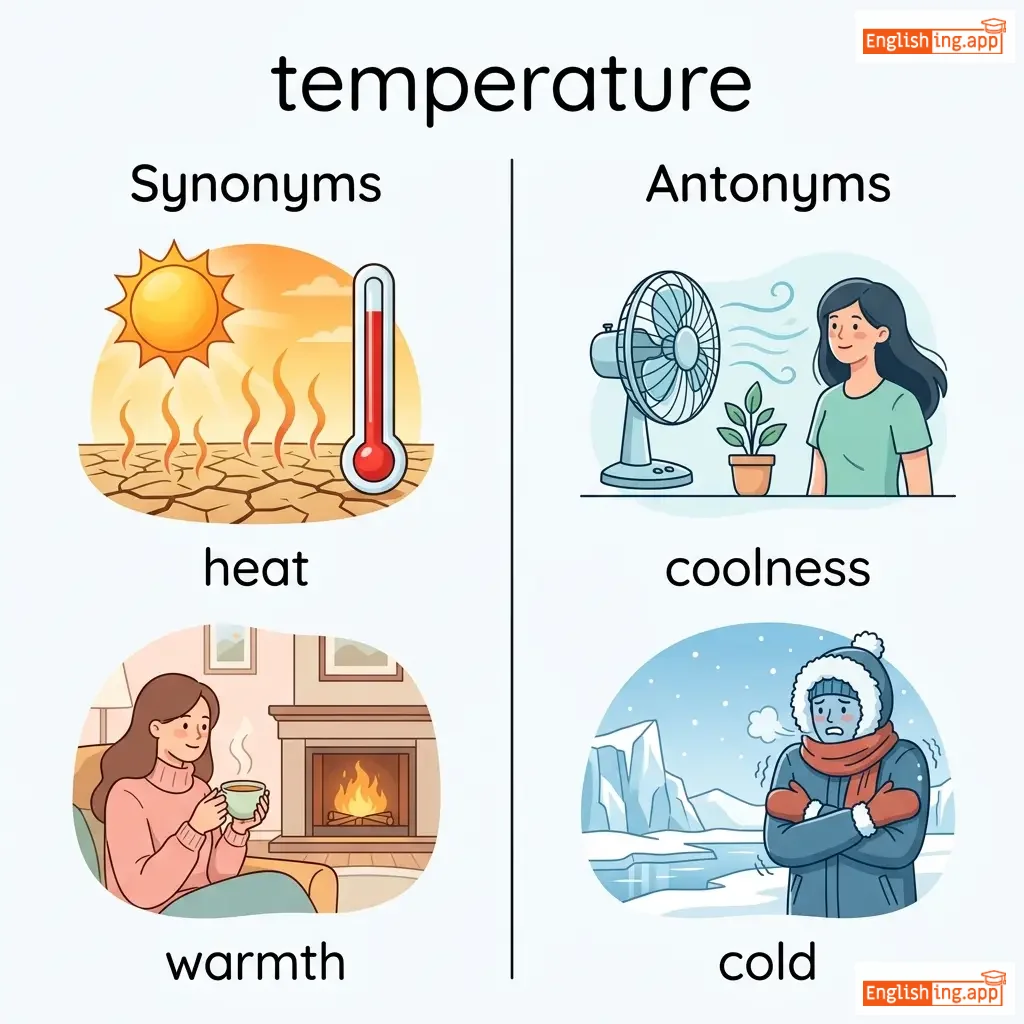
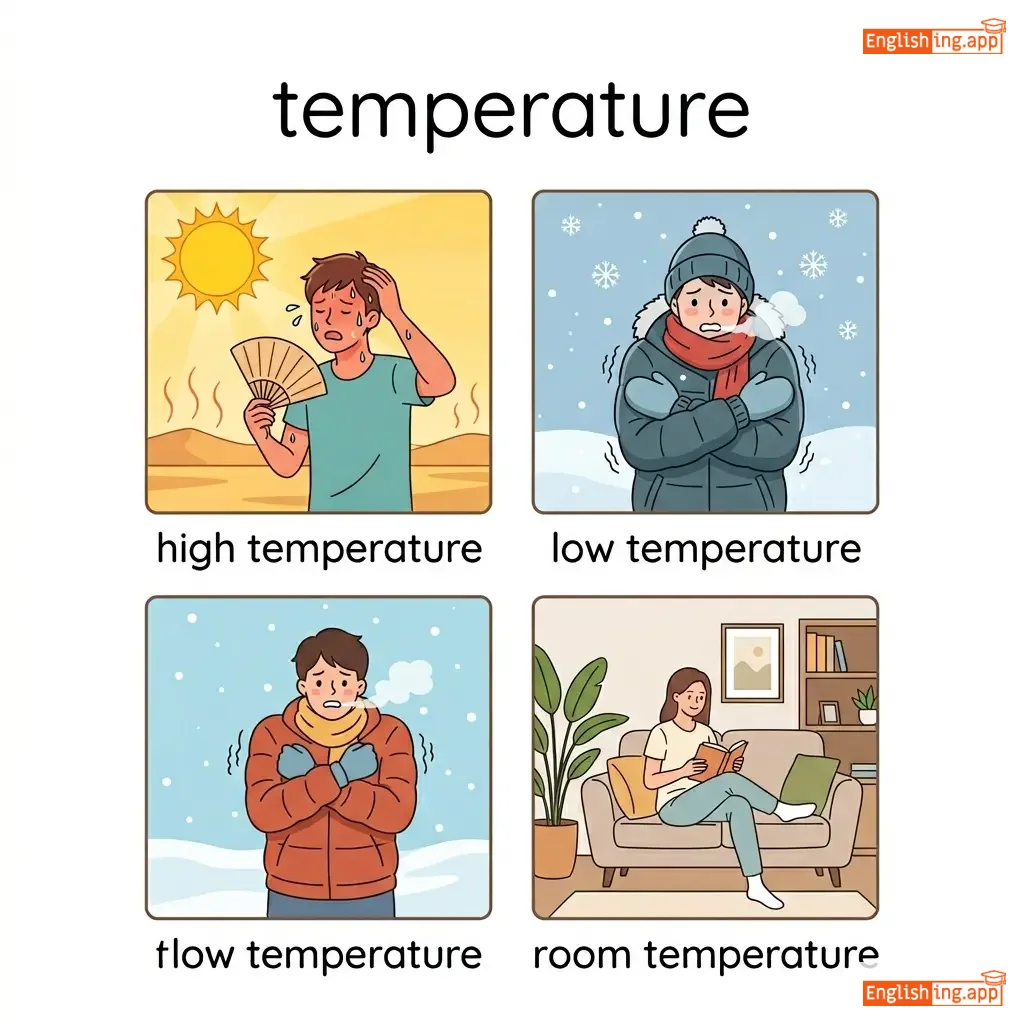
|
温度
ondo
••••••
|
- •••••• | - •••••• | - •••••• | - •••••• |
the degree of heat or cold in the atmosphere, body, or substance
••••••
|
The temperature today is twenty-five degrees Celsius. |
今日の温度は25度セルシウスです。
Kyou no ondo wa 25 do Serushiusu desu.
••••••
|
- •••••• | - •••••• | - •••••• |
heat, warmth, thermal reading, degree
••••••
|
absolute zero
••••••
|
body temperature, room temperature, high temperature, take temperature
••••••
|
温度(ondo)を覚えて、英語の'温度(temperature)'を理解しよう
••••••
|

