The Student Who Never Stopped Learning
Sabinaは、aspirationとしてエンジニアになることを目指している献身的な学生です。Initially、practicalな作業を行うことは彼女にとって非常に難しかったです、especially彼女のinstructionマニュアルが英語で書かれているとき。彼女の学校のprincipalはよく言っていました、「Typically、学生は理論だけを学びますが、otherwise、実践的なtechniqueを学ばなければなりません。」Sabinaはこの助言をcompletely受け入れ、similarlyクラスメートたちとグループ学習を始めました。ある日、彼らは複雑なassignmentがあり、demonstrationを行う必要がありました。Sabinaはapparently緊張していましたが、すべての計算をprecisely行い、obviously準備は完璧でした。「Sometimes私はそれをできないと思います」と、彼女はliterally泣きながら友達に言いました。しかし、彼女の努力はacceptableをはるかに超えていました。最終的に、発表の際、Sabinaはその明確なdemonstrationで皆を感動させました。Principalは言いました、「あなたは献身と努力が本当に効果があることを証明しました。」Sabinaのaspirationはもはや遠い夢ではなく、実現可能な目標です。
|
絵文字
|
単語 | Images | 翻訳 | 意味 | 例文 | 例文の翻訳 | 表現例 | 表現例の意味 | 表現例の翻訳 | 同義語 | 対義語 | コロケーション | ニーモニック |
|---|---|---|---|---|---|---|---|---|---|---|---|---|---|
|
👍
••••••
|
/əkˈsɛptəbəl/
adjective
(akuseptāberu)
••••••
|
- •••••• |
受け入れ可能な
ukeire kanōna
••••••
|
able to be agreed upon; satisfactory or suitable
••••••
|
Your proposal is acceptable to the committee. |
あなたの提案は委員会に受け入れ可能です。
Anata no teian wa iinkai ni ukeire kanō desu.
••••••
|
socially acceptable |
considered appropriate by society
••••••
|
社会的に受け入れ可能な
shakai-teki ni ukeire kanō na
••••••
|
satisfactory, adequate, tolerable, suitable, agreeable
••••••
|
unacceptable, unsuitable, improper
••••••
|
acceptable level, acceptable standard, acceptable behavior, socially acceptable
••••••
|
Acceptableは受け入れ可能なことを意味し、覚えやすいです。
••••••
|
|
👀
••••••
|
/əˈperəntli/
adverb
(アパレントリー)
••••••
|
- •••••• |
明らかに;
akirakani
••••••
|
seemingly; as far as one knows or can see; clearly; evidently
••••••
|
Apparently, the meeting has been postponed to next week.
アパレントリー、会議は来週に延期されたようです。
••••••
|
明らかに、会議は来週に延期されたようです。
akirakani, kaigi wa raishuu ni enki sareta you desu.
••••••
|
- •••••• | - •••••• | - •••••• |
seemingly, evidently, clearly, obviously
••••••
|
actually, really, truly, certainly
••••••
|
apparently not, apparently so, quite apparently
••••••
|
明らかに見えるもの、それがアパレントリーです。
••••••
|
|
🚀
••••••
|
/ˌæspəˈreɪʃən/
noun
(アスピレーション)
••••••
|
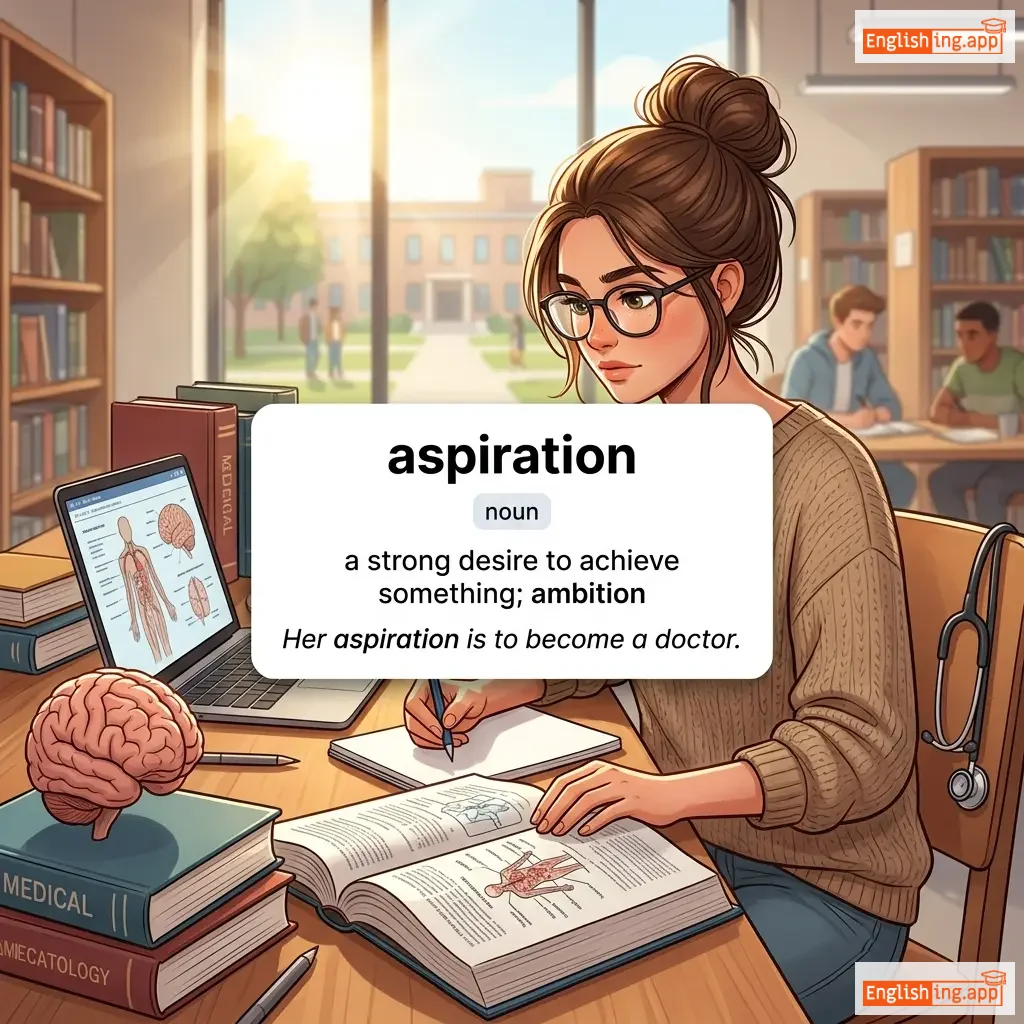
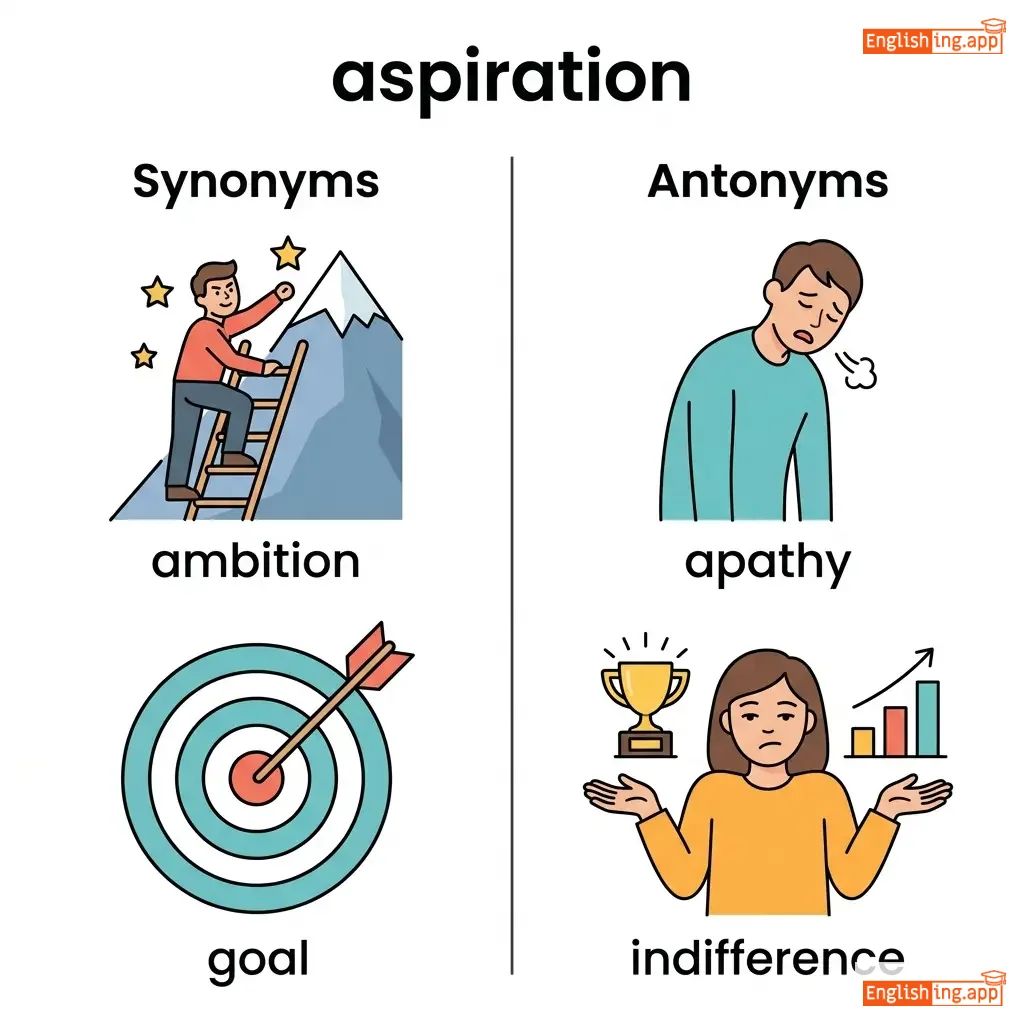

|
志望
shibou
••••••
|
a strong desire to achieve something; ambition
••••••
|
Her aspiration is to become a doctor. |
彼女の志望は医者になることです。
Kanojo no shibou wa isha ni naru koto desu.
••••••
|
high aspirations |
lofty ambitions or goals
••••••
|
高い志望
takai shibou
••••••
|
ambition, goal, aim, desire, dream
••••••
|
apathy, indifference
••••••
|
career aspiration, life aspiration, aspiration for success, high aspiration
••••••
|
Aspirationは志望を意味します — 我々が志望すれば、志望はより高くなります。
••••••
|
|
📄
••••••
|
/əˈsaɪnmənt/
noun
(アサインメント)
••••••
|
- •••••• |
課題
kadai
••••••
|
a task or piece of work given to someone as part of their duties
••••••
|
The students completed their homework assignment on time. |
学生たちは時間通りに宿題を終わらせました。
gakusei-tachi wa jikan doori ni shukudai o owarasemashita.
••••••
|
writing assignment |
a task requiring written work
••••••
|
作文課題
sakubun kadai
••••••
|
task, duty, job, responsibility, project
••••••
|
neglect, avoidance
••••••
|
school assignment, work assignment, group assignment, writing assignment
••••••
|
Assignmentは'アサイン'された課題です – 先生から与えられた仕事
••••••
|
|
🔄
••••••
|
/kəmˈpliːtli/
adverb
(カムプリートリー)
••••••
|
- •••••• |
完全に
kanzen ni
••••••
|
totally; in every way possible
••••••
|
The room was completely silent. |
部屋は完全に静かでした。
Heya wa kanzen ni shizuka deshita.
••••••
|
- •••••• | - •••••• | - •••••• |
totally, entirely, fully, utterly
••••••
|
partially, incompletely
••••••
|
completely different, completely silent, completely destroyed, completely wrong
••••••
|
Completelyは完全にという意味で、完全に静かであることです。
••••••
|
|
✊
••••••
|
/ˌdɛmənˈstreɪʃən/
noun
(デモンストレーション)
••••••
|
- •••••• |
デモ, 示威
demo, shii
••••••
|
the act of showing something clearly, or a public protest
••••••
|
The workers organized a demonstration for better wages. |
労働者たちはより良い賃金のためにデモを組織した。
Rōdō-sha tachi wa yori yoi chingin no tame ni demo o soshiki shita.
••••••
|
peaceful demonstration |
a non-violent public protest
••••••
|
平和的なデモ
heiwa-teki na demo
••••••
|
protest, rally, march, display, presentation
••••••
|
silence, inaction
••••••
|
street demonstration, public demonstration, demonstration of power, demonstration of skills
••••••
|
Demonstrationはデモをすること、または抗議を示すこと
••••••
|
|
⭐
••••••
|
/ɪˈspeʃəli/
adverb
(エスペシャリー)
••••••
|
- •••••• |
特に; 特別に; とりわけ
toku ni; tokubetsu ni; toriwake
••••••
|
particularly; in particular; above all
••••••
|
I love all fruits, especially mangoes.
私はすべての果物が好きですが、特にマンゴーが好きです。
••••••
|
私はすべての果物が好きですが、特にマンゴーが好きです。
Watashi wa subete no kudamono ga suki desu ga, toku ni mango ga suki desu.
••••••
|
- •••••• | - •••••• | - •••••• |
particularly, specifically, notably, chiefly, mainly
••••••
|
generally, broadly, commonly
••••••
|
especially important, especially difficult, especially when
••••••
|
特にマンゴー - とっても好き!
••••••
|
|
⏳
••••••
|
/ɪˈnɪʃəli/
adverb
(イニシャリー)
••••••
|
- •••••• |
最初に
saisho ni
••••••
|
At the beginning; at first.
••••••
|
Initially, he refused the offer but later accepted it. |
最初に、彼はその提案を断ったが、後で受け入れた。
Saisho ni, kare wa sono teian o kotowatta ga, ato de ukeireta.
••••••
|
- •••••• | - •••••• | - •••••• |
at first, originally, at the start, to begin with
••••••
|
finally, eventually
••••••
|
initially planned, initially intended, initially thought
••••••
|
最初に意味するのは始めに、何かが最初は難しいように見える時のように。
••••••
|
|
📘
••••••
|
/ɪnˈstrʌkʃən/
noun
(インストラクション)
••••••
|
- •••••• |
指示
shiji
••••••
|
Detailed information telling how something should be done or operated.
••••••
|
Please read the instruction carefully before using the machine. |
機械を使用する前に指示をよく読んでください。
Kikai o shiyou suru mae ni shiji o yoku yonde kudasai.
••••••
|
follow instructions |
to do what is directed or advised
••••••
|
指示に従う
shiji ni shitagau
••••••
|
direction, guideline, order, command, teaching
••••••
|
confusion, disorder, disorganization
••••••
|
give instruction, clear instruction, safety instruction, instruction manual
••••••
|
インストラクションはインストラクターの指示をそのまま行うことです。
••••••
|
|
🔍
••••••
|
/ˈlɪtərəli/
adverb
(リテラリー)
••••••
|
- •••••• |
文字通り
mojidoori
••••••
|
in a literal manner or sense; exactly
••••••
|
He was literally running for three hours without stopping. |
彼は文字通り3時間休まずに走り続けていた。
Kare wa mojidoori san jikan yasumazu ni hashiri tsuzukete ita.
••••••
|
- •••••• | - •••••• | - •••••• |
exactly, precisely, actually, really
••••••
|
figuratively, metaphorically
••••••
|
literally true, literally impossible, literally happened
••••••
|
文字通りは文字通りの意味です – '正確に'と言うようなもの!
••••••
|
|
🙄
••••••
|
/ˈɒbviəsli/
adverb
(オブヴィアスリー)
••••••
|
- •••••• |
明らかに
akirakani
••••••
|
in a way that is easily perceived or understood; clearly
••••••
|
Obviously, he didn’t read the instructions.
もちろん、彼は指示を読まなかった。
••••••
|
もちろん、彼は指示を読まなかった。
Mochiron, kare wa shiji o yomanakatta.
••••••
|
- •••••• | - •••••• | - •••••• |
clearly, evidently, unmistakably, plainly
••••••
|
ambiguously, unclearly
••••••
|
obviously wrong, obviously clear, obviously upset
••••••
|
明らかにわかりやすい!
••••••
|
|
↔️❓
••••••
|
/ˈʌðərwaɪz/
adverb
(アザーウィズ)
••••••
|
- •••••• |
さもないと; 他の方法で
samonaito; hoka no hōhō de
••••••
|
in a different way; if not; or else; apart from that
••••••
|
Study hard, otherwise you will fail the exam. |
一生懸命勉強しなさい、さもないと試験に落ちます。
Isshōkenmei benkyō shinasai, samonaito shiken ni ochimasu
••••••
|
- •••••• | - •••••• | - •••••• |
or else, alternatively, differently, if not
••••••
|
likewise, similarly, correspondingly
••••••
|
or otherwise, otherwise known as, unless otherwise stated
••••••
|
Japanese 'さもないと' means 'otherwise'.
••••••
|
|
🔧
••••••
|
/ˈpræk.tɪ.kəl/
adjective
(プラクティカル)
••••••
|
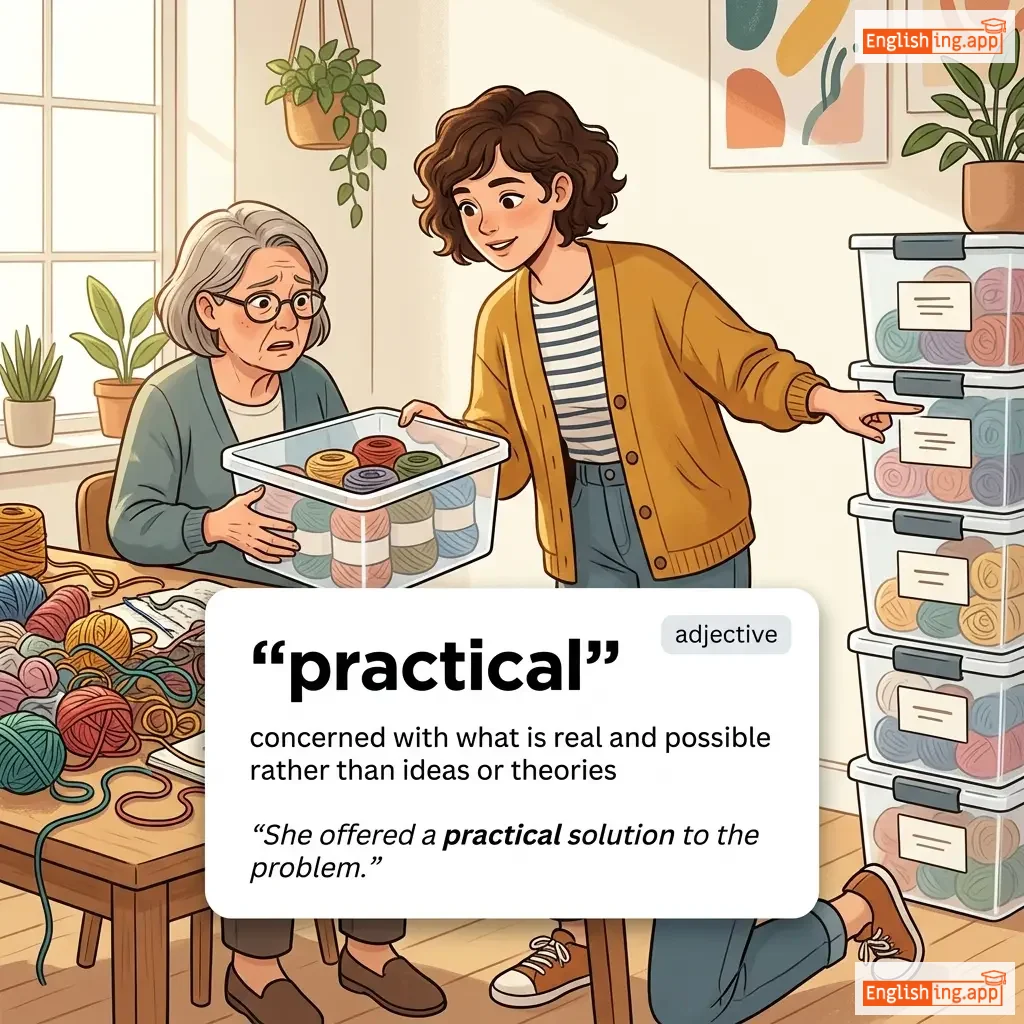
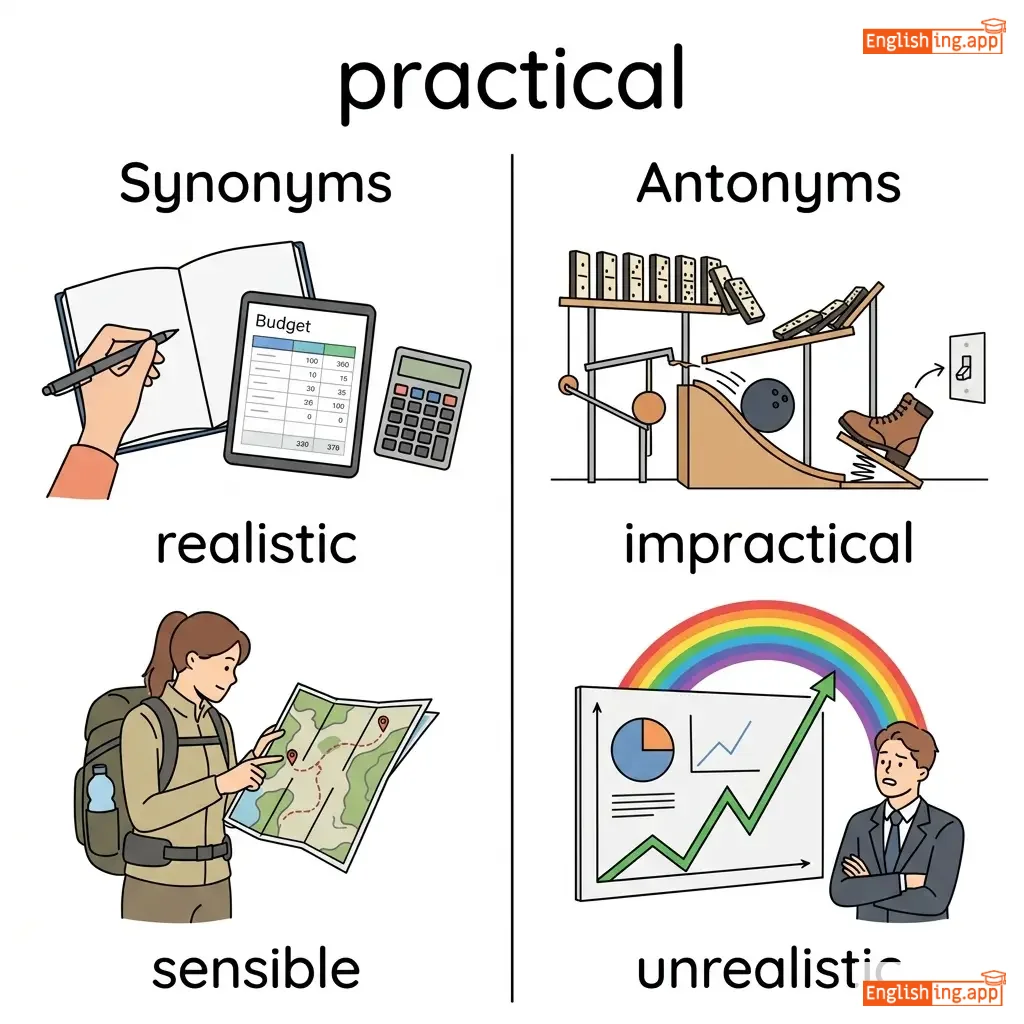
|
実用的な
jitsuyō-teki na
••••••
|
concerned with what is real and possible rather than ideas or theories
••••••
|
She offered a practical solution to the problem. |
彼女は問題に対して実用的な解決策を提供しました。
Kanojo wa mondai ni taishite jitsuyō-teki na kaiketsu-saku o teikyō shimashita.
••••••
|
practice makes perfect |
the more you practice something, the better you become at it
••••••
|
練習が完璧を作る
renshū ga kanpeki o tsukuru
••••••
|
realistic, sensible, useful, logical, pragmatic
••••••
|
impractical, unrealistic, theoretical
••••••
|
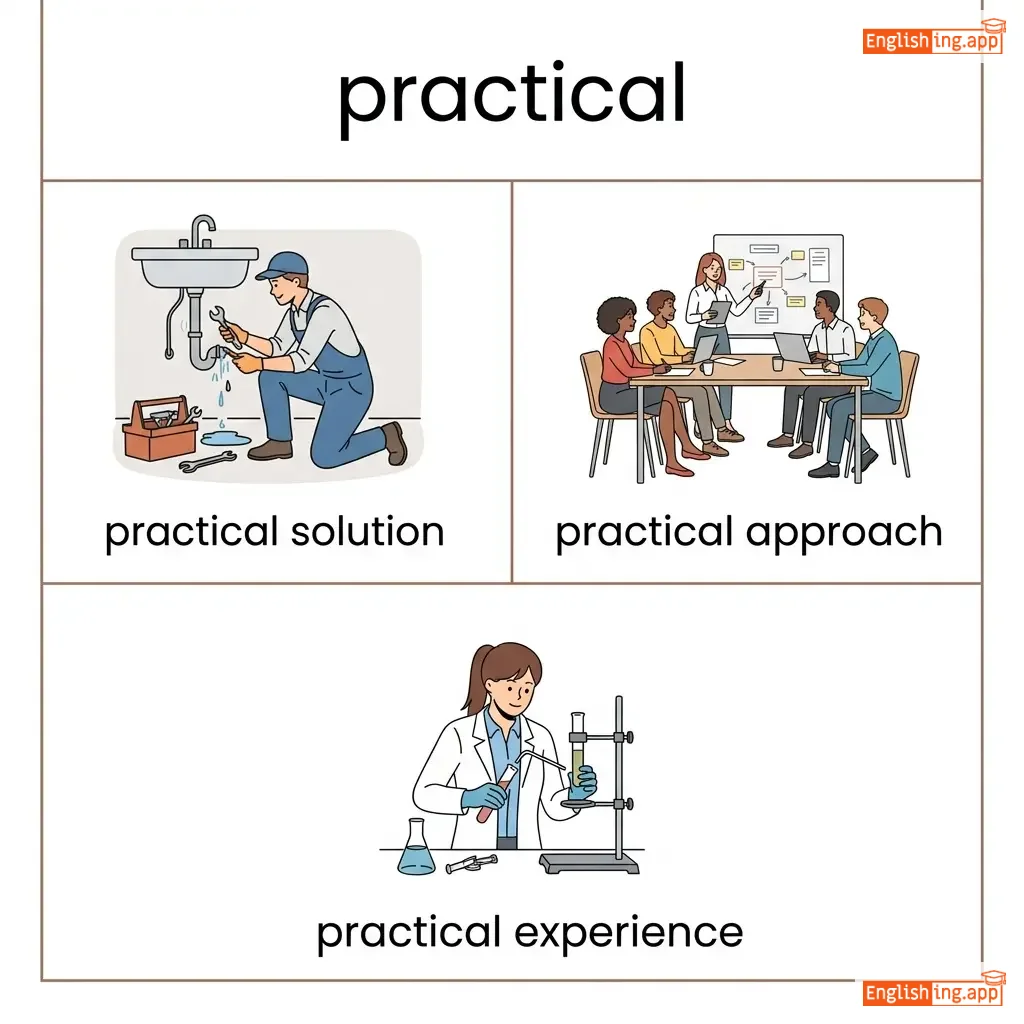
practical solution, practical approach, practical experience, practical advice
••••••
|
実用的なことは理論ではなく、実際に行動すること
••••••
|
|
📏
••••••
|
/prɪˈsaɪsli/
adverb
(プレサイスリ)
••••••
|
|
正確に
seikaku ni
••••••
|
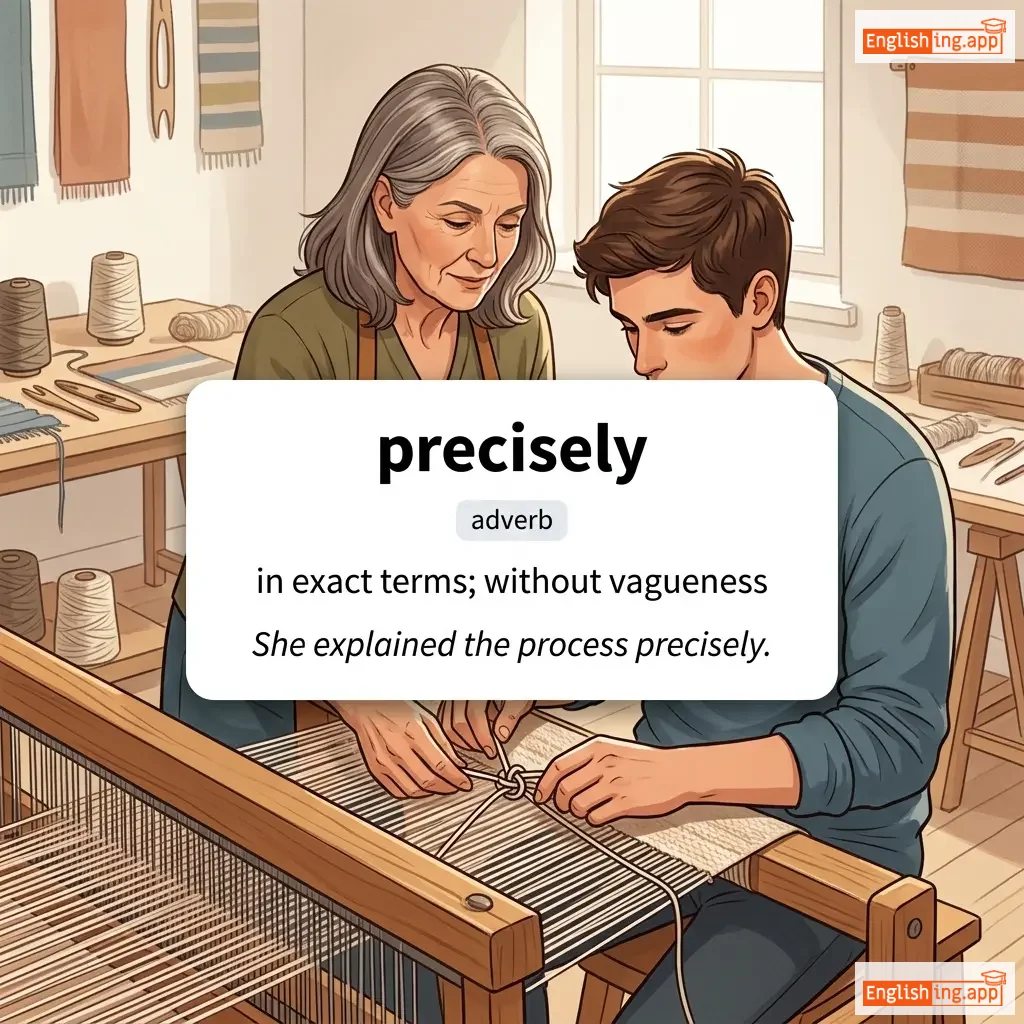
in exact terms; without vagueness
••••••
|
She explained the process precisely.
彼女はそのプロセスを正確に説明しました。
••••••
|
彼女はそのプロセスを正確に説明しました。
Kanojo wa sono purosesu o seikaku ni setsumei shimashita.
••••••
|
- •••••• | - •••••• | - •••••• |
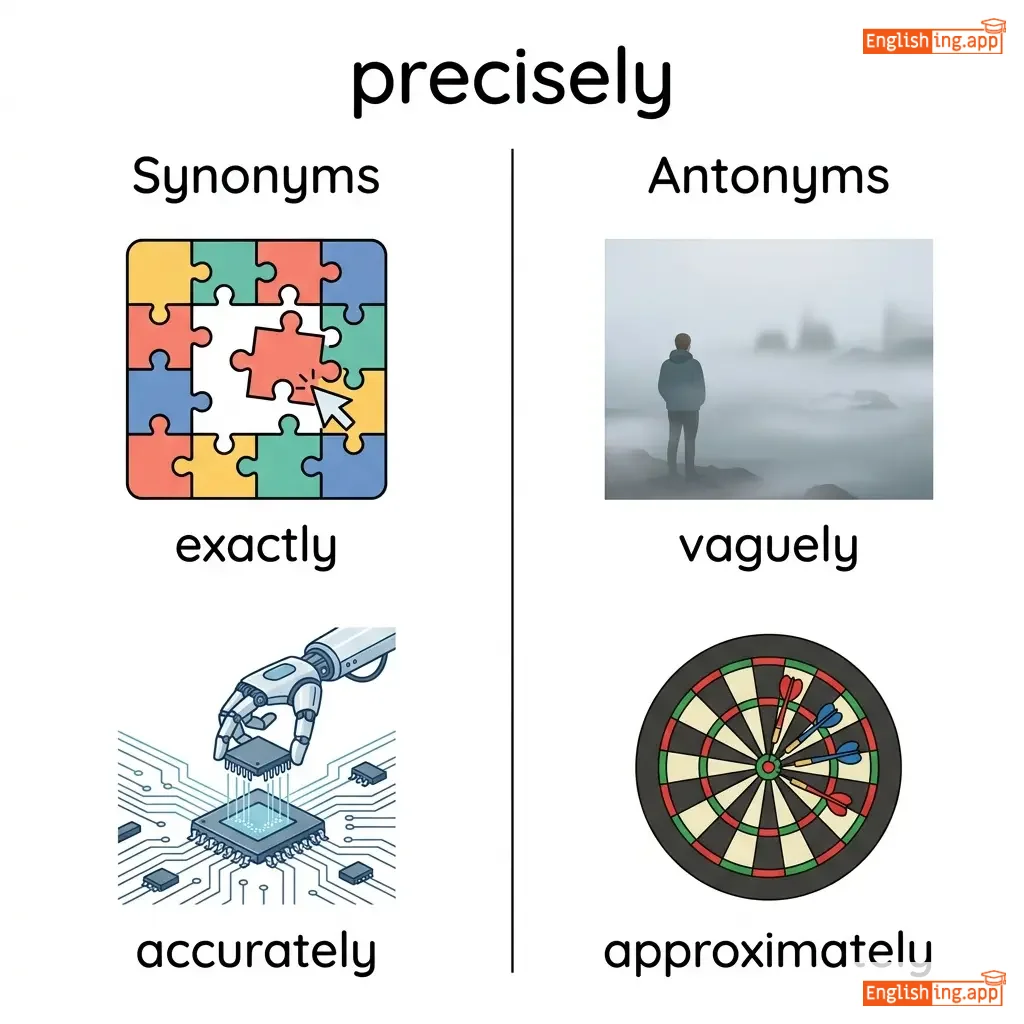
exactly, accurately, specifically, strictly
••••••
|
vaguely, approximately
••••••
|
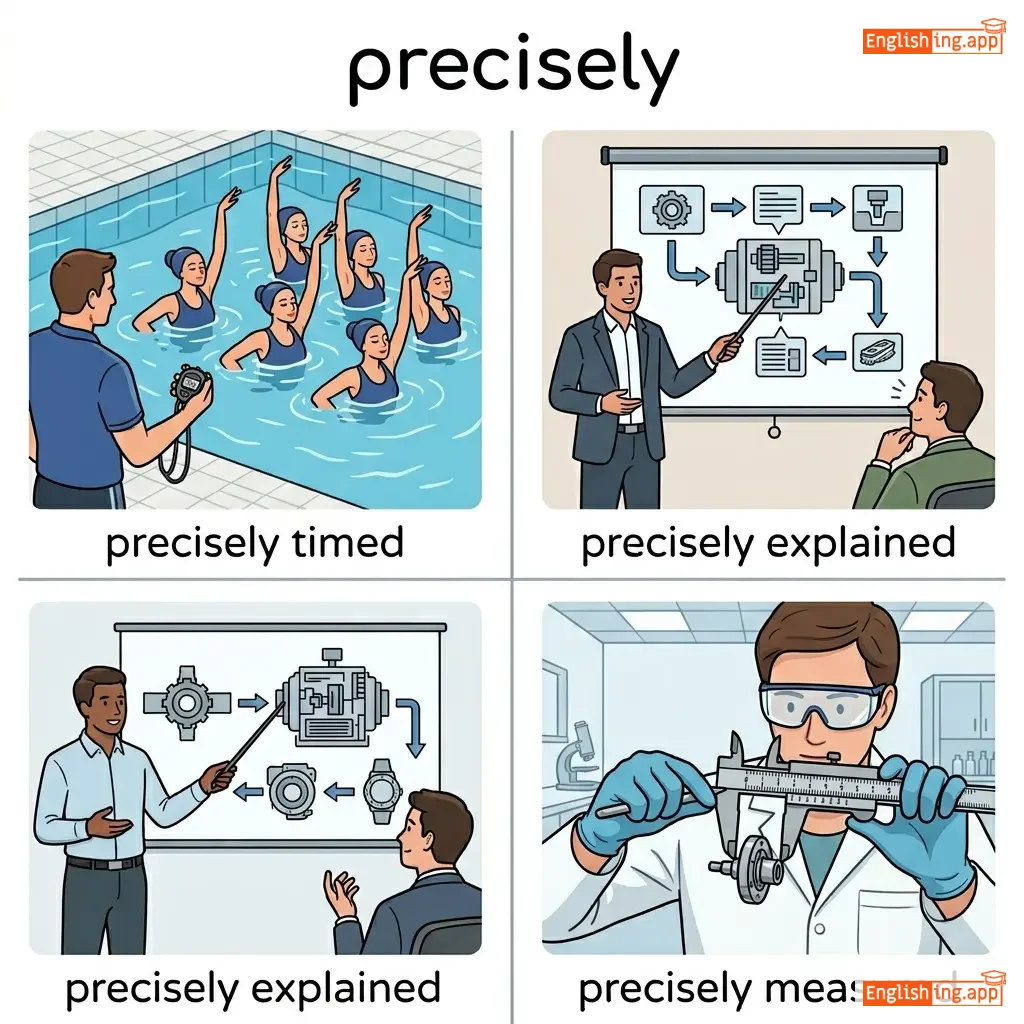
precisely timed, precisely explained, precisely measured
••••••
|
Precisely = No errors, only clarity!
••••••
|
|
🎓
••••••
|
/ˈprɪnsəpəl/
noun, adjective
(プリンシパル)
••••••
|
- •••••• |
校長
kouchou
••••••
|
the person with the highest authority or most important position; main or most important
••••••
|
The school principal addressed the students in the auditorium. |
学校の校長が講堂で生徒たちに挨拶しました。
Gakkou no kouchou ga koudou de seitotachi ni aisatsu shimashita.
••••••
|
principal and interest |
the original amount of money invested or loaned and the charge for borrowing it
••••••
|
元金と利息
genkin to risoku
••••••
|
head, leader, chief, primary, main
••••••
|
subordinate, minor, secondary
••••••
|
school principal, principal amount, principal role, principal office
••••••
|
Principalは学校の校長、最も重要な人物。
••••••
|
|
📜
••••••
|
/rɪˈɡɑrdɪŋ/
preposition
(リガーディング)
••••••
|
- •••••• |
に関して
ni kanshite
••••••
|
concerning or relating to
••••••
|
The decision regarding the meeting will be made tomorrow. |
会議に関する決定は明日行われます。
Kaigi ni kanshite kettei wa ashita okonawaremasu.
••••••
|
- •••••• | - •••••• | - •••••• |
concerning, about, in relation to
••••••
|
- •••••• |
regarding the matter, regarding the issue, regarding the project
••••••
|
会議に関する決定は明日です
••••••
|
|
🔄
••••••
|
/ˈsɪmɪlərli/
adverb
(シミラリー)
••••••
|
- •••••• |
同様に
douyou ni
••••••
|
in a similar way
••••••
|
Similarly, we can achieve success with dedication and hard work. |
同様に、私たちは献身と努力によって成功を収めることができます。
Douyou ni, watashitachi wa kenshin to doryoku ni yotte seikou o osameru koto ga dekimasu.
••••••
|
- •••••• | - •••••• | - •••••• |
alike, likewise, in the same way
••••••
|
differently, oppositely
••••••
|
similarly to, similarly minded, similarly structured
••••••
|
Similarly, like two hands working in harmony!
••••••
|
|
🔄
••••••
|
/ˈsʌm.taɪmz/
adverb
(samtayms)
••••••
|
- •••••• |
時々
tokidoki
••••••
|
at times; occasionally; now and then
••••••
|
Sometimes I go for a walk in the evening.
samtayms ai gou fô ā woku in za ivuningu.
••••••
|
時々、私は夕方に散歩します。
Tokidoki, watashi wa yūgata ni sanpo shimasu.
••••••
|
- •••••• | - •••••• | - •••••• |
occasionally, at times, now and then, from time to time
••••••
|
always, never, constantly
••••••
|
sometimes difficult, sometimes happens, sometimes feel
••••••
|
時々は散歩を楽しんでいます。
••••••
|
|
🧘
••••••
|
/tɛkˈniːk/
noun
(テクニック)
••••••
|
- •••••• |
技術
gijutsu
••••••
|
A particular way of carrying out a task, especially with skill.
••••••
|
She learned a new breathing technique in yoga class. |
彼女はヨガのクラスで新しい呼吸法を学びました。
Kanojo wa yoga no kurasu de atarashī kokyūhō o manabimashita.
••••••
|
by technique |
Done using a specific method or skill.
••••••
|
技術によって
Gijutsu ni yotte
••••••
|
method, procedure, style, craft, skill
••••••
|
incompetence, inability
••••••
|
teaching technique, special technique, breathing technique, painting technique
••••••
|
技術は方法を意味し、技術があれば作業が簡単に進む。
••••••
|
|
⏰
••••••
|
/ˈtɪpɪkli/
adverb
(ティピカリー)
••••••
|
- •••••• |
通常
tsūjō
••••••
|
in a way that is typical of a particular person, thing, or group
••••••
|
She typically arrives at work at 9 AM.
彼女は通常、午前9時に仕事に到着します。
••••••
|
彼女は通常、午前9時に仕事に到着します。
Kanojo wa tsūjō, gozen 9 ji ni shigoto ni tōchaku shimasu.
••••••
|
- •••••• | - •••••• | - •••••• |
usually, ordinarily, commonly, customarily
••••••
|
unusually, rarely
••••••
|
typically on time, typically works, typically performs
••••••
|
典型的:いつも定刻に到着する。
••••••
|

