The Monk Who Climbed the Peak
ロビンは monk だった。彼は holy な寺に住んでいた。毎日 noon に pray していた。
ある日、師が言った。「もし pure な知恵を望むなら、山の peak に行きなさい。そこに holy な神殿がある。」
「でも、とても far です。」ロビンは言った。「旅は long です。」
「そんなに簡単に quit するのか?」師は尋ねた。「困難に cope しなければならない。monk は信仰に rely するものだ。」
こうしてロビンは旅に出た。最初の日、太陽が美しく rose した。しかし道は long だった。夜になると彼の mood は落ちた。「私は fool だろうか?」と彼は思った。
二日目、濃い fog が現れた。彼はほとんど見えなかった。「ここで halt しよう」と思った。「見えない。」
しかし彼は思い出した——monk は目だけで見るのではない。彼は prayed:「私は信仰に rely する。」
三日目、彼の力は faded した。顔は pale に。彼は思った。「もしかしてこれは myth かもしれない。神殿などないのかも。」
|
絵文字
|
単語 | Images | 翻訳 | 過去 | 過去分詞 | 三人称単数 | 動名詞 | 意味 | 例文 | 例文の翻訳 | 表現例 | 表現例の意味 | 表現例の翻訳 | 同義語 | 対義語 | コロケーション | ニーモニック |
|---|---|---|---|---|---|---|---|---|---|---|---|---|---|---|---|---|---|
|
💪
••••••
|
/koʊp/
verb
(コープ)
••••••
|
- •••••• |
対処する
taisho suru
••••••
|
coped
コップド
••••••
|
coped
コップド
••••••
|
copes
コープス
••••••
|
coping
コーピング
••••••
|
to deal effectively with something difficult
••••••
|
She had to cope with a lot of pressure at work.
彼女は仕事で大きなプレッシャーに対処しなければなりませんでした。
••••••
|
彼女は仕事で大きなプレッシャーに対処しなければなりませんでした。
Kanojo wa shigoto de ōkina purettoshā ni taisho shinakereba narimasen deshita.
••••••
|
cope with
対処する
••••••
|
to manage or handle a difficult situation
••••••
|
対処する
taisho suru
••••••
|
manage, handle, endure, survive
••••••
|
fail, collapse
••••••
|
cope with stress, cope with problems, cope alone
••••••
|
COPEは困難を対処することを意味します - cope = 対処する
••••••
|
|
🌫️
••••••
|
/feɪd/
verb
(フェイド)
••••••
|
- •••••• |
色あせる
iro aseru
••••••
|
faded
フェイデッド
••••••
|
faded
フェイデッド
••••••
|
fades
フェイデス
••••••
|
fading
フェイディング
••••••
|
To gradually lose brightness, color, or strength.
••••••
|
The colors of the old photo have started to fade.
古い写真の色が薄れてきた。
••••••
|
古い写真の色が薄れてきた。
Furui shashin no iro ga usurete kita.
••••••
|
fade away
フェイドアウェイ
••••••
|
to disappear slowly
••••••
|
ゆっくり消える
yukkuri kie ru
••••••
|
diminish, weaken, vanish, pale, decline
••••••
|
brighten, strengthen, appear
••••••
|
fade away, fade out, fade over time, colors fade
••••••
|
色あせるは消えるという意味です。色がだんだん薄くなっていきます。
••••••
|
|
🌍
••••••
|
/fɑːr/
adverb
(ファー)
••••••
|
- •••••• |
遠い
tooi
••••••
|
- •••••• | - •••••• | - •••••• | - •••••• |
at, to, or by a great distance
••••••
|
The school is far from my house.
学校は私の家から遠いです。
••••••
|
学校は私の家から遠いです。
Gakkou wa watashi no ie kara tooi desu.
••••••
|
by far
ずっと
••••••
|
used to emphasize that something is much better, worse, etc. than anything else
••••••
|
ずっと
zutto
••••••
|
distant, remote, away, afar
••••••
|
near, close
••••••
|
far away, far distance, far from, by far
••••••
|
Far は遠い、例えば"遠い道のりだけど、価値がある"。
••••••
|
|
🌫️
••••••
|
/fɒɡ/
noun
(フォグ)
••••••
|
- •••••• |
霧
kiri
••••••
|
- •••••• | - •••••• | - •••••• | - •••••• |
a thick cloud of tiny water droplets suspended in the air near the ground that reduces visibility
••••••
|
The airplane was delayed due to heavy fog. |
濃い霧のため、飛行機が遅れました。
Koi kiri no tame, hikouki ga okuremashita.
••••••
|
in a fog |
confused or unable to think clearly
••••••
|
霧の中にいる
kiri no naka ni iru
••••••
|
mist, haze, smog, cloud, vapor
••••••
|
clarity, sunshine, brightness
••••••
|
dense fog, morning fog, thick fog, fog lifts
••••••
|
霧(きり)= Fog! 霧が立つと視界がぼやける!
••••••
|
|
🤡
••••••
|
/fuːl/
noun, verb
(fūru)
••••••
|
- •••••• |
バカ
baka
••••••
|
fooled
fūru-d
••••••
|
fooled
fūru-d
••••••
|
fools
fūru-su
••••••
|
fooling
fūru-ing
••••••
|
a silly or stupid person; to trick someone
••••••
|
He felt like a fool after believing the prank.
彼はいたずらを信じた後、バカにされたように感じた。
••••••
|
いたずらを信じた後、彼は自分がバカだと思った。
Itazura o shinjita ato, kare wa jibun ga baka da to omotta.
••••••
|
make a fool of
誰かをバカにする
••••••
|
to embarrass someone or yourself by acting silly
••••••
|
誰かをバカにする
dareka o baka ni suru
••••••
|
idiot, clown, trick, deceive, prankster
••••••
|
wise, genius, intellect
••••••
|
April fool, play the fool, fool someone, fool around
••••••
|
Foolはバカを意味し、April Fool'sのようにみんながバカになる日。
••••••
|
|
🛑
••••••
|
/hɔːlt/
verb
(ハルト)
••••••
|
- •••••• |
停止する
teishi suru
••••••
|
halted
ハルテッド
••••••
|
halted
ハルテッド
••••••
|
halts
ハルツ
••••••
|
halting
ハルティング
••••••
|
to stop or bring to a stop
••••••
|
The train suddenly halted at the station.
電車は駅で突然止まりました。
••••••
|
電車は駅で突然止まりました。
Densha wa eki de totsuzen tomarimashita.
••••••
|
- •••••• | - •••••• | - •••••• |
stop, cease, terminate, freeze
••••••
|
start, begin, continue
••••••
|
halt operations, halt progress, halt movement
••••••
|
Haltは英語で停止を意味し、日本語では停止する
••••••
|
|
🙏
••••••
|
/ˈhoʊli/
adjective
(ホーリー)
••••••
|
- •••••• |
聖なる
seinaru
••••••
|
- •••••• | - •••••• | - •••••• | - •••••• |
Dedicated to God or a religious purpose; sacred.
••••••
|
This temple is considered a holy place. |
この寺院は聖なる場所と見なされています。
Kono jiin wa seinaru basho to minasa reteimasu.
••••••
|
holy cow |
An expression of surprise or astonishment.
••••••
|
神聖な牛
Shinsei na ushi
••••••
|
sacred, divine, blessed, saintly
••••••
|
profane, unholy
••••••
|
holy book, holy man, holy place, holy spirit
••••••
|
Holy は '聖なる' を意味します - みんな '聖なる場所' と言います。
••••••
|
|
📏
••••••
|
/lɔːŋ/
adjective
(ロング)
••••••
|
- •••••• |
長い
nagai
••••••
|
- •••••• | - •••••• | - •••••• | - •••••• |
Measuring a great distance from end to end; lasting for a large amount of time.
••••••
|
They waited a long time for the train. |
彼らは電車を長い時間待っていました。
Karera wa densha wo nagai jikan matte imashita.
••••••
|
in the long run |
After a long period of time; eventually.
••••••
|
長い目で見て
nagai me de mite
••••••
|
lengthy, extended, prolonged, tall
••••••
|
short, brief
••••••
|
long time, long road, long journey, long hair
••••••
|
Longは長いを意味します — 長い道を歩くイメージ。
••••••
|
|
🌤️
••••••
|
/maɪld/
adjective
(maɪld)
••••••
|
- •••••• |
穏やか
odayaka
••••••
|
- •••••• | - •••••• | - •••••• | - •••••• |
not severe or strong; gentle in nature
••••••
|
The patient had only mild symptoms.
患者には軽い症状だけがありました。
••••••
|
患者には軽い症状だけがありました。
Kanja ni wa karui shōjō dake ga arimashita.
••••••
|
mild mannered
mild mannered
••••••
|
gentle and not aggressive
••••••
|
穏やかな性格
odayakana seikaku
••••••
|
gentle, soft, calm, slight, moderate
••••••
|
harsh, severe, strong
••••••
|
mild symptoms, mild climate, mild taste, mild mannered
••••••
|
Mild は穏やかで、軽い味の飲み物のようです。
••••••
|
|
🧘♂️
••••••
|
/mʌŋk/
noun
(マンク)
••••••
|
- •••••• |
僧侶
sōryo
••••••
|
- •••••• | - •••••• | - •••••• | - •••••• |
a man who is a member of a religious community living under vows
••••••
|
The monk spent hours in meditation each day.
その僧侶は毎日数時間を瞑想に費やしました。
••••••
|
その僧侶は毎日数時間を瞑想に費やしました。
Sono sōryo wa mainichi suū jikan o meisō ni tsuiyashimashita.
••••••
|
- •••••• | - •••••• | - •••••• |
friar, religious, ascetic, hermit
••••••
|
layperson, secular person
••••••
|
Buddhist monk, Christian monk, monastery monk
••••••
|
僧侶 (Sōryo) =瞑想 (Meditation)と誓い (Vow)
••••••
|
|
😊
••••••
|
/muːd/
noun
(ムード)
••••••
|
- •••••• |
ムード
mood
••••••
|
- •••••• | - •••••• | - •••••• | - •••••• |
a temporary state of mind or feeling
••••••
|
He was in a good mood after getting the job.
彼は仕事を得た後、良いムードでした。
••••••
|
彼は仕事を得た後、良いムードでした。
Kare wa shigoto o eta ato, yoi mood deshita.
••••••
|
in the mood
ムードにいる
••••••
|
ready or willing to do something
••••••
|
ムードにいる
mood ni iru
••••••
|
feeling, temperament, emotion, attitude, spirit
••••••
|
apathy, indifference
••••••
|
good mood, bad mood, mood swing, change mood
••••••
|
ムード、時々嬉しい時や怒っている時!
••••••
|
|
🐉
••••••
|
/mɪθ/
noun
(ミス)
••••••
|
- •••••• |
神話
shinwa
••••••
|
- •••••• | - •••••• | - •••••• | - •••••• |
A traditional story explaining natural or social phenomena, often involving supernatural beings; a widely held but false belief.
••••••
|
The myth of the phoenix tells of a bird reborn from its ashes. |
フェニックスの神話は、灰の中から生まれ変わった鳥の話を伝えています。
Fenikkusu no shinwa wa, hai no naka kara umarekawatta tori no hanashi o tsutaete imasu.
••••••
|
myth or reality |
Used when questioning whether something is true or just a belief.
••••••
|
神話か現実か
Shinwa ka genjitsu ka
••••••
|
legend, tale, folklore, fable, fiction
••••••
|
fact, reality, truth
••••••
|
ancient myth, Greek myth, popular myth, myth about
••••••
|
Myth = 本当のことではないかもしれない、でも興味深い話!
••••••
|
|
☀️
••••••
|
/nuːn/
noun
(ヌーン)
••••••
|
- •••••• |
正午
shōgo
••••••
|
- •••••• | - •••••• | - •••••• | - •••••• |
12 o'clock in the daytime; midday
••••••
|
The meeting will start at noon. |
会議は正午に始まります。
Kaigi wa shōgo ni hajimarimasu.
••••••
|
high noon |
exactly midday; sometimes used to describe a decisive confrontation
••••••
|
正午
shōgo
••••••
|
midday, twelve o'clock, middaytime
••••••
|
midnight
••••••
|
at noon, by noon, until noon, high noon
••••••
|
Noonは正午を意味し、太陽 ☀️ は真上にあります
••••••
|
|
😷
••••••
|
/peɪl/
adjective
(ペイル)
••••••
|
- •••••• |
青白い; 淡い; 弱い
peiru
••••••
|
- •••••• | - •••••• | - •••••• | - •••••• |
having a light color; lacking brightness or vividness; weak or faint
••••••
|
She looked pale after being sick for a week. |
彼女は1週間病気で、青白く見えた。
kanojo wa isshukan byouki de, aoiroku mieta
••••••
|
- •••••• | - •••••• | - •••••• |
white, colorless, wan, ashen, faded
••••••
|
bright, vivid, rosy, colorful, flushed
••••••
|
pale face, pale skin, pale light, turn pale, look pale
••••••
|
病気で顔が青白くなることは、弱っている証拠です。
••••••
|
|
⛰️
••••••
|
/piːk/
noun
(ピーク)
••••••
|
- •••••• |
頂上
choujou
••••••
|
- •••••• | - •••••• | - •••••• | - •••••• |
the highest point of a mountain or hill; the maximum level or intensity
••••••
|
The climbers reached the peak of Mount Everest. |
登山者たちはエベレスト山の頂上に到達した。
Tozan-sha-tachi wa Eberesuto-san no choujou ni toutatsu shita.
••••••
|
- •••••• | - •••••• | - •••••• |
summit, top, apex, pinnacle
••••••
|
base, bottom, valley
••••••
|
mountain peak, snow-capped peak, peak performance
••••••
|
頂上に行くと、すべてが高くなります
••••••
|
|
🙏
••••••
|
/preɪ/
verb
(purei)
••••••
|
|
祈る
inoru
••••••
|
prayed
pureido
••••••
|
prayed
pureido
••••••
|
prays
pureizu
••••••
|
praying
pureingu
••••••
|
to speak to a deity, especially for help or thanks
••••••
|
Every night, she prays for her family’s safety.
毎晩、彼女は家族の安全を祈ります。
••••••
|
毎晩、彼女は家族の安全を祈ります。
Maiban, kanojo wa kazoku no anzen o inorimasu.
••••••
|
say your prayers
祈りを言う
••••••
|
to pray, especially before bed
••••••
|
祈りを言う
Inori o iu
••••••
|
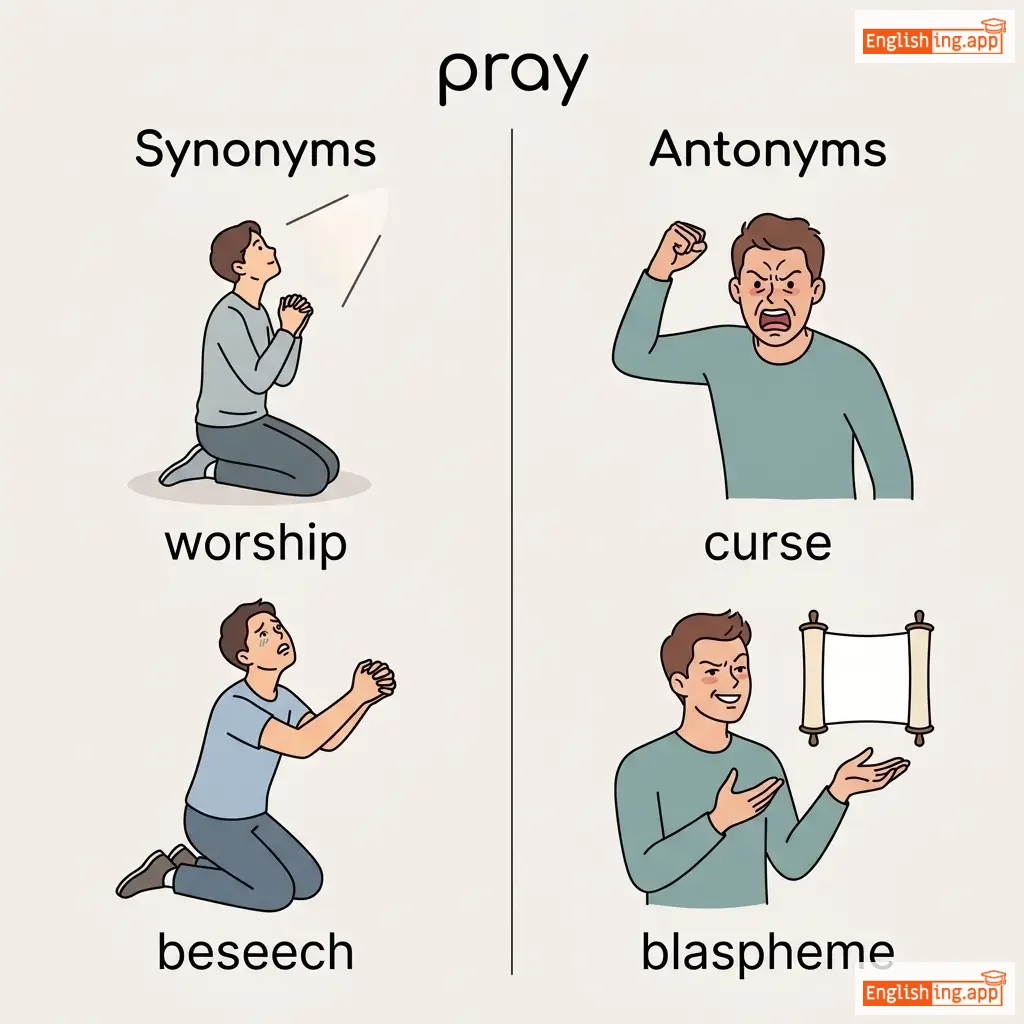
worship, beseech, implore, petition
••••••
|
curse, blaspheme
••••••
|
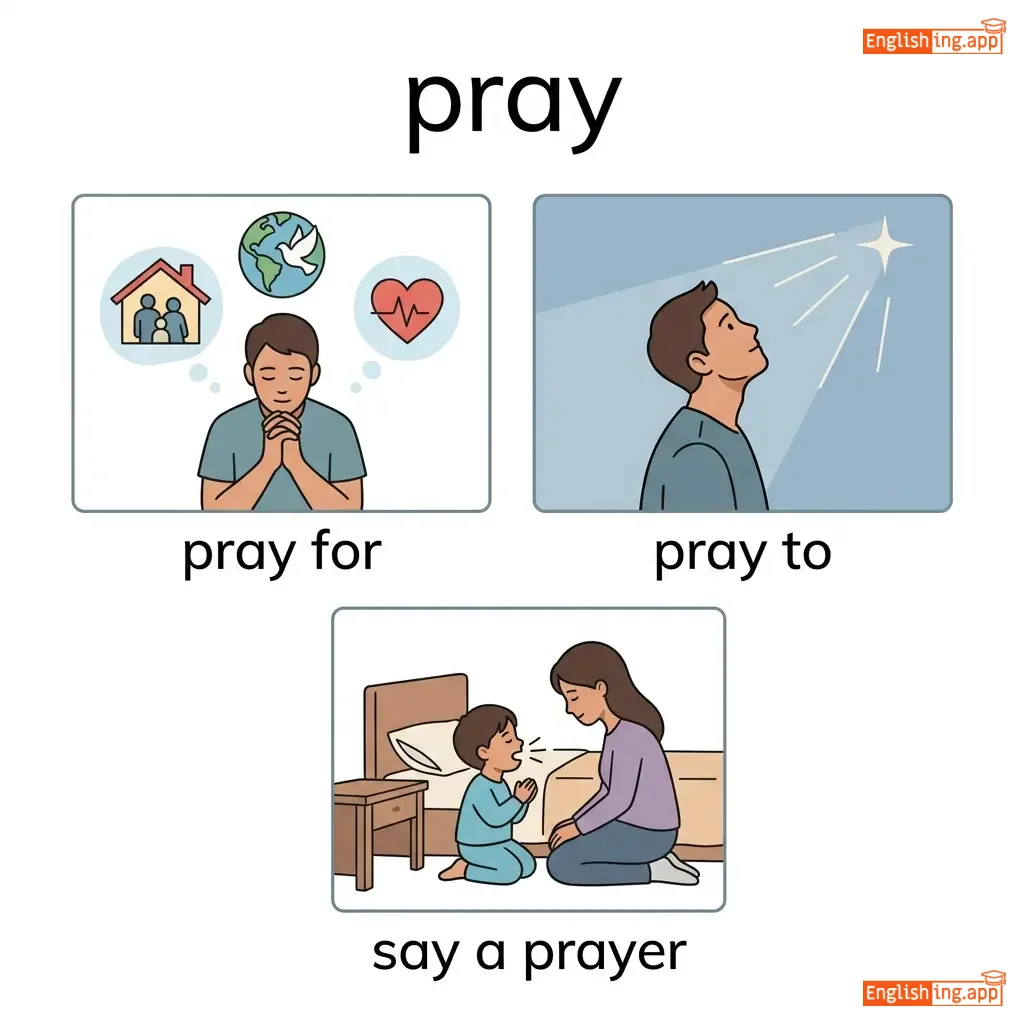
pray for, pray to, say a prayer, praying hands
••••••
|
Pray for safety, pray at night - Night is the time to pray.
••••••
|
|
✨
••••••
|
/pjʊər/
adjective
(pyua)
••••••
|
- •••••• |
純粋な; 清潔な; 汚れのない; 差別のない;
junsui na; seiketsu na; yogore no nai; sabetsu no nai
••••••
|
- •••••• | - •••••• | - •••••• | - •••••• |
clean; clear; untainted; without discrimination;
••••••
|
The water from the mountain spring is pure. |
山の泉からの水は純粋です。
Yama no izumi kara no mizu wa junsui desu.
••••••
|
- •••••• | - •••••• | - •••••• |
clean, clear, pristine, untainted, innocent
••••••
|
impure, contaminated, polluted, dirty
••••••
|
pure water, pure gold, pure intention
••••••
|
純粋な水のように、汚れがなく、差別もありません。
••••••
|
|
🚪
••••••
|
/kwɪt/
verb
(kwit)
••••••
|

|
やめる
yameru
••••••
|
quit
kwit
••••••
|
quit
kwit
••••••
|
quits
kwits
••••••
|
quitting
kwiting
••••••
|
To leave a place, job, or habit permanently.
••••••
|
He decided to quit his job after five years.
彼は5年後に仕事を辞めることを決めました。
••••••
|
彼は5年後に仕事を辞めることを決めました。
Kare wa 5-nen go ni shigoto o yameru koto o kimemashita.
••••••
|
quit cold turkey
突然習慣をやめる
••••••
|
to stop a habit suddenly and completely
••••••
|
突然習慣をやめる
Totsuzen shūkan o yameru
••••••
|
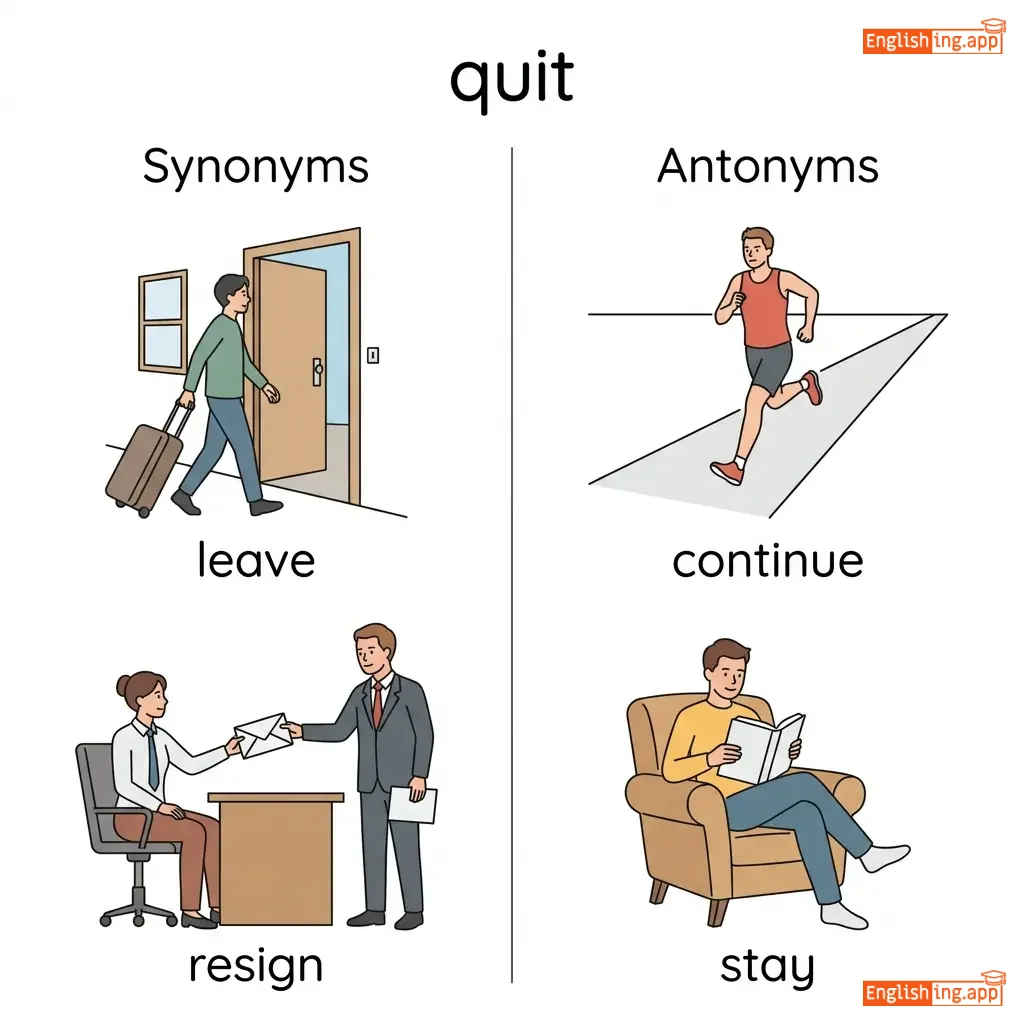
leave, resign, abandon, give up
••••••
|
continue, stay
••••••
|
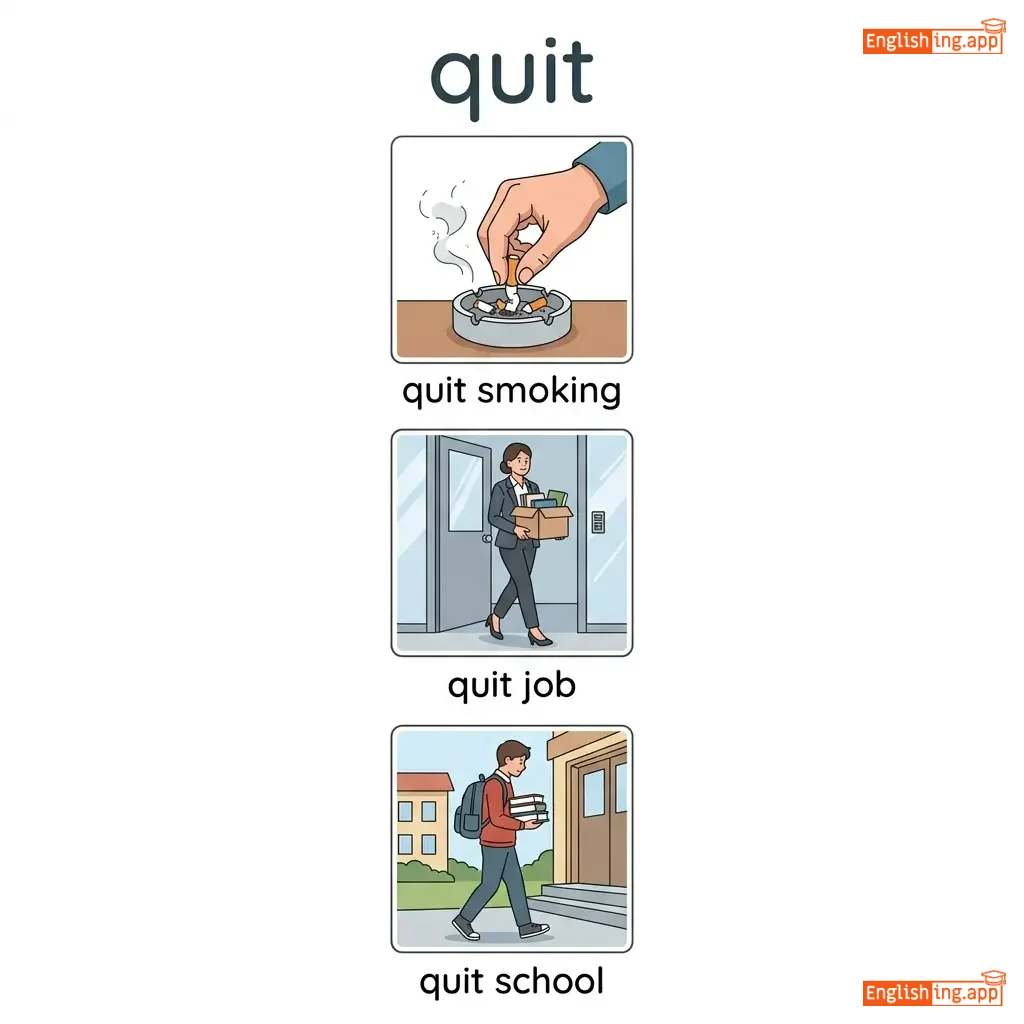
quit smoking, quit job, quit school, quit early
••••••
|
Quitはやめる – 仕事をやめる、習慣をやめる。
••••••
|
|
🤝
••••••
|
/rɪˈlaɪ/
verb
(リライ)
••••••
|
- •••••• |
頼る
tayoru
••••••
|
relied
リライド
••••••
|
relied
リライド
••••••
|
relies
リライズ
••••••
|
relying
リライング
••••••
|
to depend on or trust someone or something
••••••
|
I rely on my friends for support.
私は支援のために友達に頼ります。
••••••
|
私は支援のために友達に頼ります。
Watashi wa shien no tame ni tomodachi ni tayorimasu.
••••••
|
- •••••• | - •••••• | - •••••• |
depend, trust, count on, lean on
••••••
|
distrust, doubt, reject
••••••
|
rely on, rely upon, rely heavily, rely completely
••••••
|
友達に頼って、いつも助けてもらおう!
••••••
|
|
🌹
••••••
|
/roʊz/
noun
(ローズ)
••••••
|
- •••••• |
バラ
bara
••••••
|
- •••••• | - •••••• | - •••••• | - •••••• |
a fragrant flower with thorny stems, typically red, pink, white, or yellow
••••••
|
She gave me a beautiful red rose for Valentine's Day.
シー ガブ ミー ア ビューティフル レッド ローズ フォー バレンタインズ デー。
••••••
|
彼女はバレンタインデーに私に美しい赤いバラをくれました。
kanojo wa barentainde ni watashi ni utsukushii akai bara o kuremashita
••••••
|
- •••••• | - •••••• | - •••••• |
flower, bloom, blossom
••••••
|
weed, thorn
••••••
|
red rose, rose garden, rose petals, rose bouquet
••••••
|
In Japanese, ‘bara’ sounds soft and elegant – just like a rose.
••••••
|

