The Monk Who Climbed the Peak
罗宾是一位 monk。他住在一座 holy 寺庙里。每天 noon 他都会 pray。
有一天,他的老师说:“如果你想得到 pure 智慧,你必须去山的 peak。那里有一个 holy 神殿。”
“但那里太 far 了,”罗宾说,“而且旅程很 long。”
“你要这么容易就 quit 吗?”老师问。“你必须学会 cope 困难。作为一个 monk,你要 rely 信仰。”
于是罗宾开始了他的旅程。第一天,太阳 rose 得很美。但路很 long。晚上他的 mood 很低。“我是不是个 fool?”他想。
第二天,浓厚的 fog 出现了。他几乎什么都看不见。“我得 halt,”他想。“我看不见。”
但他想起——monk 不只是用眼睛去看。他 prayed:“我 rely 信仰。”
第三天,他的力量 faded。他的脸变得 pale。“也许这只是个 myth,”他想。“也许神殿不存在。”
“我该 quit 吗?”他自语。
突然,一个老 monk 出现。“你已经走这么 far 了,为什么要 quit?”
“我累了,”罗宾说。“我的 mood 很低。我的力量 fading。我感觉自己像个 fool。”
老 monk 微笑着说:“Peak 不在于力量,而在于如何 cope 弱点。Holy 的人不是总有好 mood 的人。Pure 的心不是从不挣扎的心。真正的智慧是学会 rely 不仅仅是自己,而是更大的力量。”
|
表情符号
|
单词 | Images | 翻译 | 过去时 | 过去分词 | 第三人称单数 | 动名词 | 含义 | 例句 | 例句翻译 | 示例表达 | 示例表达含义 | 示例表达翻译 | 同义词 | 反义词 | 搭配词 | 助记符 |
|---|---|---|---|---|---|---|---|---|---|---|---|---|---|---|---|---|---|
|
💪
••••••
|
/koʊp/
verb
(科普)
••••••
|
- •••••• |
应对
yìng duì
••••••
|
coped
科普德
••••••
|
coped
科普德
••••••
|
copes
科普斯
••••••
|
coping
科普英
••••••
|
to deal effectively with something difficult
••••••
|
She had to cope with a lot of pressure at work.
她不得不应对工作中的巨大压力。
••••••
|
她不得不应对工作中的巨大压力。
Tā bùdé bù yìng duì gōngzuò zhōng de jù dà yālì.
••••••
|
cope with
应对
••••••
|
to manage or handle a difficult situation
••••••
|
应对
yìng duì
••••••
|
manage, handle, endure, survive
••••••
|
fail, collapse
••••••
|
cope with stress, cope with problems, cope alone
••••••
|
COPE意味着应对挑战 - cope = 应对
••••••
|
|
🌫️
••••••
|
/feɪd/
verb
(费德)
••••••
|
- •••••• |
褪色
tuì sè
••••••
|
faded
费德德
••••••
|
faded
费德德
••••••
|
fades
费德斯
••••••
|
fading
费丁
••••••
|
To gradually lose brightness, color, or strength.
••••••
|
The colors of the old photo have started to fade.
老照片的颜色开始褪色。
••••••
|
老照片的颜色开始褪色。
Lǎo zhàopiàn de yánsè kāishǐ tuìsè.
••••••
|
fade away
褪色
••••••
|
to disappear slowly
••••••
|
慢慢消失
màn màn xiāo shī
••••••
|
diminish, weaken, vanish, pale, decline
••••••
|
brighten, strengthen, appear
••••••
|
fade away, fade out, fade over time, colors fade
••••••
|
褪色意味着逐渐消失,就像褪色的照片。
••••••
|
|
🌍
••••••
|
/fɑːr/
adverb
(法尔)
••••••
|
- •••••• |
远
yuan
••••••
|
- •••••• | - •••••• | - •••••• | - •••••• |
at, to, or by a great distance
••••••
|
The school is far from my house.
学校离我家很远。
••••••
|
学校离我家很远。
Xuexiao li wo jia hen yuan.
••••••
|
by far
远远地
••••••
|
used to emphasize that something is much better, worse, etc. than anything else
••••••
|
远远地
yuan yuan de
••••••
|
distant, remote, away, afar
••••••
|
near, close
••••••
|
far away, far distance, far from, by far
••••••
|
Far 意思是远,例如"我住得很远"。
••••••
|
|
🌫️
••••••
|
/fɒɡ/
noun
(fog)
••••••
|
- •••••• |
雾
wu
••••••
|
- •••••• | - •••••• | - •••••• | - •••••• |
a thick cloud of tiny water droplets suspended in the air near the ground that reduces visibility
••••••
|
The airplane was delayed due to heavy fog. |
由于浓雾,飞机延误了。
Youyu nong wu, feiji yanwu le.
••••••
|
in a fog |
confused or unable to think clearly
••••••
|
雾中迷失
wu zhong mishi
••••••
|
mist, haze, smog, cloud, vapor
••••••
|
clarity, sunshine, brightness
••••••
|
dense fog, morning fog, thick fog, fog lifts
••••••
|
雾就像 Fog 一样,迷迷糊糊看不清楚!
••••••
|
|
🤡
••••••
|
/fuːl/
noun, verb
(fu-er)
••••••
|
- •••••• |
傻瓜
shagua
••••••
|
fooled
fu-er-d
••••••
|
fooled
fu-er-d
••••••
|
fools
fu-er-s
••••••
|
fooling
fu-er-ing
••••••
|
a silly or stupid person; to trick someone
••••••
|
He felt like a fool after believing the prank.
他在相信恶作剧之后觉得自己像个傻瓜。
••••••
|
他在相信恶作剧之后觉得自己像个傻瓜。
Ta zai xiangxin ezuoju zhihou juede ziji xiang ge shagua.
••••••
|
make a fool of
让某人出丑
••••••
|
to embarrass someone or yourself by acting silly
••••••
|
让某人出丑
rang mou ren chu chou
••••••
|
idiot, clown, trick, deceive, prankster
••••••
|
wise, genius, intellect
••••••
|
April fool, play the fool, fool someone, fool around
••••••
|
Fool 代表傻瓜,像在愚人节那样,每个人都变成傻瓜。
••••••
|
|
🛑
••••••
|
/hɔːlt/
verb
(哈特)
••••••
|
- •••••• |
停止
tingzhi
••••••
|
halted
哈特德
••••••
|
halted
哈特德
••••••
|
halts
哈特斯
••••••
|
halting
哈廷
••••••
|
to stop or bring to a stop
••••••
|
The train suddenly halted at the station.
火车突然在车站停了下来。
••••••
|
火车突然在车站停了下来。
Huoche tudan zai chezhang tingle xiala.
••••••
|
- •••••• | - •••••• | - •••••• |
stop, cease, terminate, freeze
••••••
|
start, begin, continue
••••••
|
halt operations, halt progress, halt movement
••••••
|
Halt在英文中是停止,中文是停止
••••••
|
|
🙏
••••••
|
/ˈhoʊli/
adjective
(hāolí)
••••••
|
- •••••• |
神圣的
shensheng de
••••••
|
- •••••• | - •••••• | - •••••• | - •••••• |
Dedicated to God or a religious purpose; sacred.
••••••
|
This temple is considered a holy place. |
这座寺庙被认为是一个神圣的地方。
Zhe zuo simiao bei renwei shi yige shensheng de difang.
••••••
|
holy cow |
An expression of surprise or astonishment.
••••••
|
神圣的牛
Shensheng de niu
••••••
|
sacred, divine, blessed, saintly
••••••
|
profane, unholy
••••••
|
holy book, holy man, holy place, holy spirit
••••••
|
Holy 的意思是 '神圣的',就像一个神圣的地方,比如寺庙。
••••••
|
|
📏
••••••
|
/lɔːŋ/
adjective
(long)
••••••
|
- •••••• |
长
chang
••••••
|
- •••••• | - •••••• | - •••••• | - •••••• |
Measuring a great distance from end to end; lasting for a large amount of time.
••••••
|
They waited a long time for the train. |
他们等了很长时间才等到火车。
tamen deng le hen chang shi jian cai deng dao huo che.
••••••
|
in the long run |
After a long period of time; eventually.
••••••
|
从长远来看
cong chang yuan lai kan
••••••
|
lengthy, extended, prolonged, tall
••••••
|
short, brief
••••••
|
long time, long road, long journey, long hair
••••••
|
Long 意味着长 — 想象一根长长的绳子。
••••••
|
|
🌤️
••••••
|
/maɪld/
adjective
(maɪld)
••••••
|
- •••••• |
温和
wēnhé
••••••
|
- •••••• | - •••••• | - •••••• | - •••••• |
not severe or strong; gentle in nature
••••••
|
The patient had only mild symptoms.
病人只有轻微的症状。
••••••
|
病人只有轻微的症状。
Bìngrén zhǐyǒu qīngwēi de zhèngzhuàng.
••••••
|
mild mannered
mild mannered
••••••
|
gentle and not aggressive
••••••
|
温和的性格
wēnhé de xìnggé
••••••
|
gentle, soft, calm, slight, moderate
••••••
|
harsh, severe, strong
••••••
|
mild symptoms, mild climate, mild taste, mild mannered
••••••
|
Mild 意味着温和,就像一道温和的菜肴。
••••••
|
|
🧘♂️
••••••
|
/mʌŋk/
noun
(mʌŋk)
••••••
|
- •••••• |
僧侣
sēnglǚ
••••••
|
- •••••• | - •••••• | - •••••• | - •••••• |
a man who is a member of a religious community living under vows
••••••
|
The monk spent hours in meditation each day.
那位僧侣每天花几个小时冥想。
••••••
|
那位僧侣每天花几个小时冥想。
Nà wèi sēnglǚ měitiān huā jǐ gè xiǎoshí míngxiǎng.
••••••
|
- •••••• | - •••••• | - •••••• |
friar, religious, ascetic, hermit
••••••
|
layperson, secular person
••••••
|
Buddhist monk, Christian monk, monastery monk
••••••
|
僧侣 (Senglü) = 冥想 (Meditation) 和 誓言 (Vow)
••••••
|
|
😊
••••••
|
/muːd/
noun
(穆德)
••••••
|
- •••••• |
心情
xinqing
••••••
|
- •••••• | - •••••• | - •••••• | - •••••• |
a temporary state of mind or feeling
••••••
|
He was in a good mood after getting the job.
他在得到工作后心情愉快。
••••••
|
他在得到工作后心情愉快。
Tā zài dédào gōngzuò hòu xīnqíng yúkuài.
••••••
|
in the mood
心情
••••••
|
ready or willing to do something
••••••
|
心情
xinqing
••••••
|
feeling, temperament, emotion, attitude, spirit
••••••
|
apathy, indifference
••••••
|
good mood, bad mood, mood swing, change mood
••••••
|
心情就像Mood,有时开心有时生气!
••••••
|
|
🐉
••••••
|
/mɪθ/
noun
(mɪθ)
••••••
|
- •••••• |
神话
shenhua
••••••
|
- •••••• | - •••••• | - •••••• | - •••••• |
A traditional story explaining natural or social phenomena, often involving supernatural beings; a widely held but false belief.
••••••
|
The myth of the phoenix tells of a bird reborn from its ashes. |
凤凰的神话讲述了一只从灰烬中重生的鸟。
Fenghuang de shenhua jiangshu le yi zhi cong huijin zhong chongsheng de niao.
••••••
|
myth or reality |
Used when questioning whether something is true or just a belief.
••••••
|
神话还是现实
Shenhua haishi xianshi
••••••
|
legend, tale, folklore, fable, fiction
••••••
|
fact, reality, truth
••••••
|
ancient myth, Greek myth, popular myth, myth about
••••••
|
Myth = 一个关于错觉的故事,虽然有些可能是真的!
••••••
|
|
☀️
••••••
|
/nuːn/
noun
(noon)
••••••
|
- •••••• |
中午
zhongwu
••••••
|
- •••••• | - •••••• | - •••••• | - •••••• |
12 o'clock in the daytime; midday
••••••
|
The meeting will start at noon. |
会议将在中午开始。
Huiyi jiang zai zhongwu kaishi.
••••••
|
high noon |
exactly midday; sometimes used to describe a decisive confrontation
••••••
|
中午
zhongwu
••••••
|
midday, twelve o'clock, middaytime
••••••
|
midnight
••••••
|
at noon, by noon, until noon, high noon
••••••
|
Noon 意味着中午,太阳 ☀️ 正在正上方
••••••
|
|
😷
••••••
|
/peɪl/
adjective
(pèi ěr)
••••••
|
- •••••• |
苍白的; 暗淡的; 虚弱的
cangbai de; andan de; xuruo de
••••••
|
- •••••• | - •••••• | - •••••• | - •••••• |
having a light color; lacking brightness or vividness; weak or faint
••••••
|
She looked pale after being sick for a week. |
她生病了一周后,看起来苍白。
ta shengbing le yizhou hou, kan qilai cangbai
••••••
|
- •••••• | - •••••• | - •••••• |
white, colorless, wan, ashen, faded
••••••
|
bright, vivid, rosy, colorful, flushed
••••••
|
pale face, pale skin, pale light, turn pale, look pale
••••••
|
苍白的脸表示虚弱,就像生病时的样子。
••••••
|
|
⛰️
••••••
|
/piːk/
noun
(pí kè)
••••••
|
- •••••• |
山顶
shanding
••••••
|
- •••••• | - •••••• | - •••••• | - •••••• |
the highest point of a mountain or hill; the maximum level or intensity
••••••
|
The climbers reached the peak of Mount Everest. |
登山者到达了珠穆朗玛峰的山顶。
Deng shanzhe daodale zhumu langma feng de shanding.
••••••
|
- •••••• | - •••••• | - •••••• |
summit, top, apex, pinnacle
••••••
|
base, bottom, valley
••••••
|
mountain peak, snow-capped peak, peak performance
••••••
|
登顶山顶,你会看到最美的风景
••••••
|
|
🙏
••••••
|
/preɪ/
verb
(pulei)
••••••
|
|
祈祷
qidao
••••••
|
prayed
puleid
••••••
|
prayed
puleid
••••••
|
prays
puleiz
••••••
|
praying
puleing
••••••
|
to speak to a deity, especially for help or thanks
••••••
|
Every night, she prays for her family’s safety.
每晚,她为家人的安全祈祷。
••••••
|
每晚,她为家人的安全祈祷。
Měi wǎn, tā wèi jiārén de ānquán qídǎo.
••••••
|
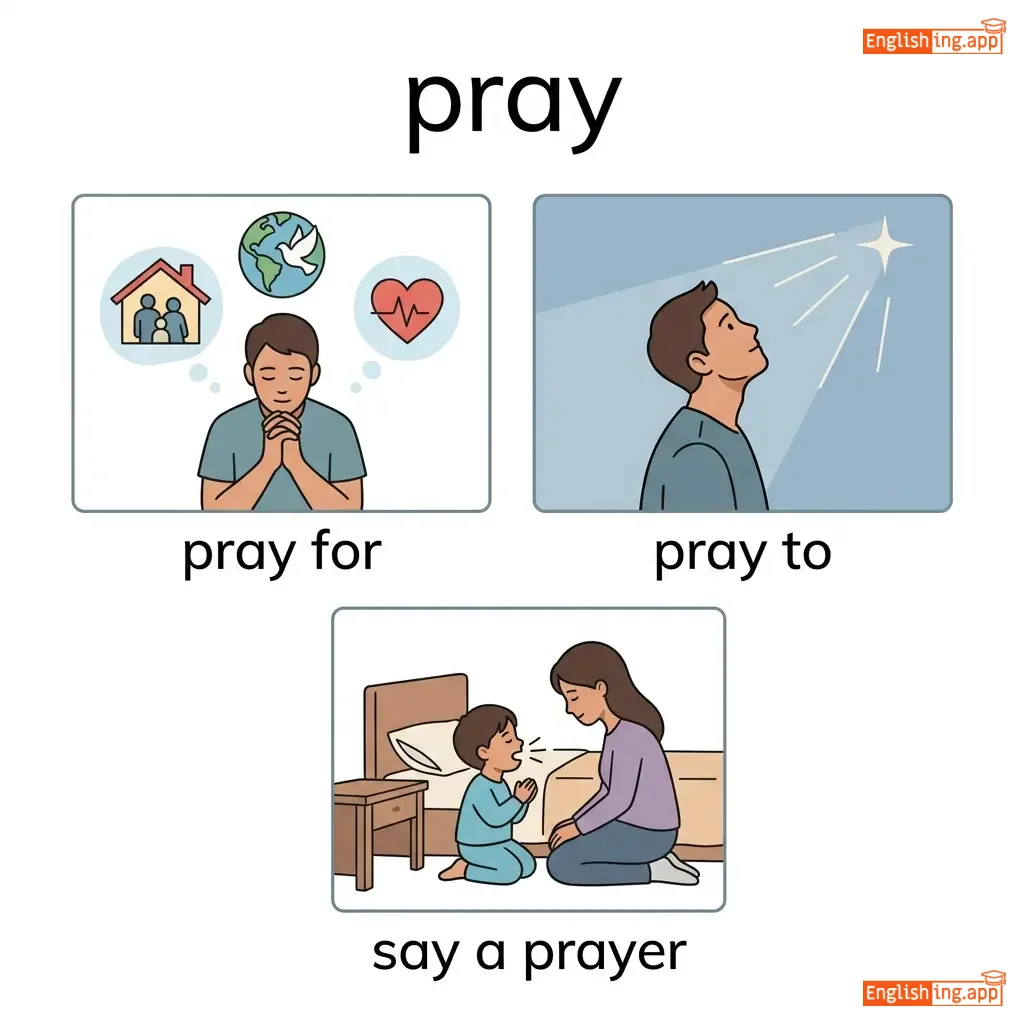
say your prayers
说你的祈祷
••••••
|
to pray, especially before bed
••••••
|
说你的祈祷
Shuō nǐ de qídǎo
••••••
|
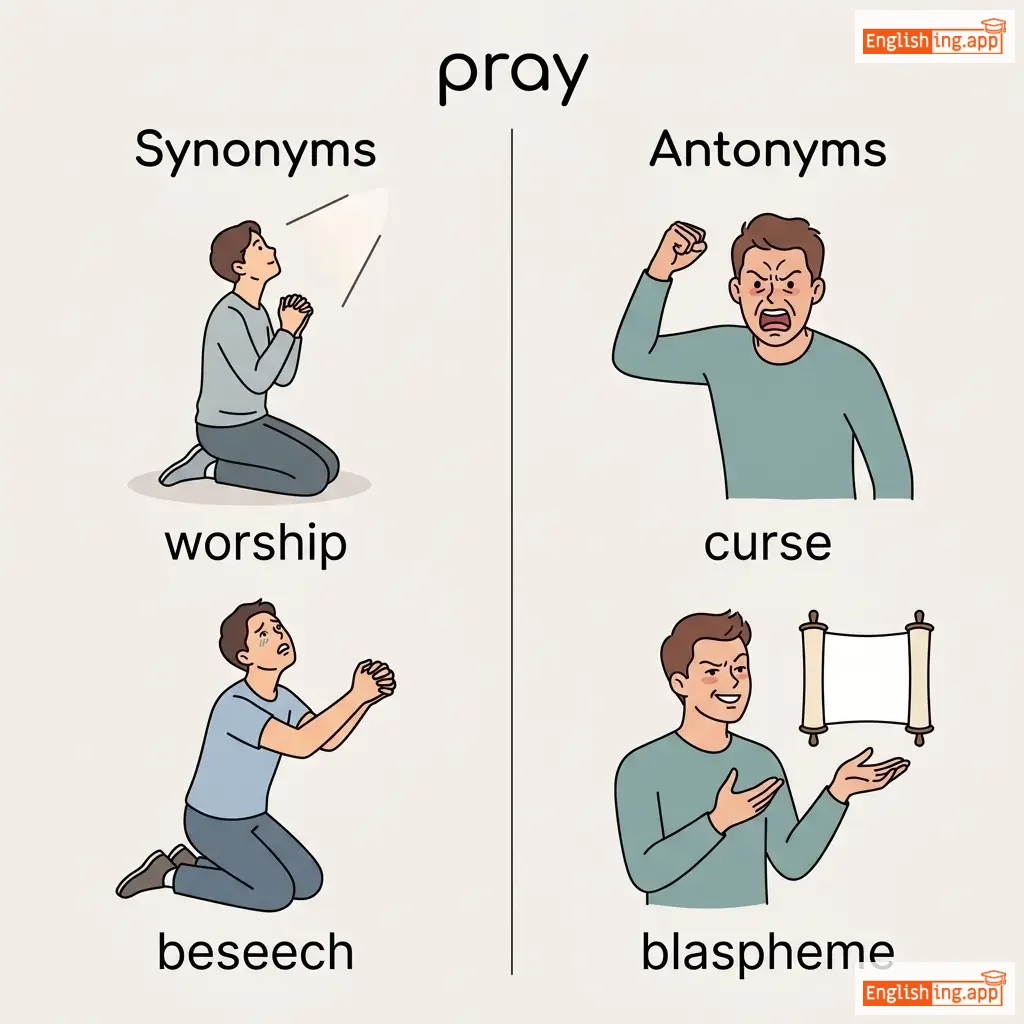
worship, beseech, implore, petition
••••••
|
curse, blaspheme
••••••
|
pray for, pray to, say a prayer, praying hands
••••••
|
Pray for safety, pray at night - Night is the time to pray.
••••••
|
|
✨
••••••
|
/pjʊər/
adjective
(pīu'ěr)
••••••
|
- •••••• |
纯净的; 清澈的; 无污点的; 无歧视的;
chúnjìng de; qīngchè de; wú wūdiǎn de; wú qíshì de
••••••
|
- •••••• | - •••••• | - •••••• | - •••••• |
clean; clear; untainted; without discrimination;
••••••
|
The water from the mountain spring is pure. |
来自山泉的水是纯净的。
Lái zì shān quán de shuǐ shì chúnjìng de.
••••••
|
- •••••• | - •••••• | - •••••• |
clean, clear, pristine, untainted, innocent
••••••
|
impure, contaminated, polluted, dirty
••••••
|
pure water, pure gold, pure intention
••••••
|
纯净如山泉水,清澈且无瑕疵。
••••••
|
|
🚪
••••••
|
/kwɪt/
verb
(kwit)
••••••
|

|
放弃
fangqi
••••••
|
quit
kwit
••••••
|
quit
kwit
••••••
|
quits
kwits
••••••
|
quitting
kwiting
••••••
|
To leave a place, job, or habit permanently.
••••••
|
He decided to quit his job after five years.
他在五年后决定辞去工作。
••••••
|
他在五年后决定辞去工作。
Tā zài wǔ nián hòu juédìng cíqù gōngzuò.
••••••
|
quit cold turkey
突然戒掉习惯
••••••
|
to stop a habit suddenly and completely
••••••
|
突然后悔习惯
Túrán huìguì xíguàn
••••••
|
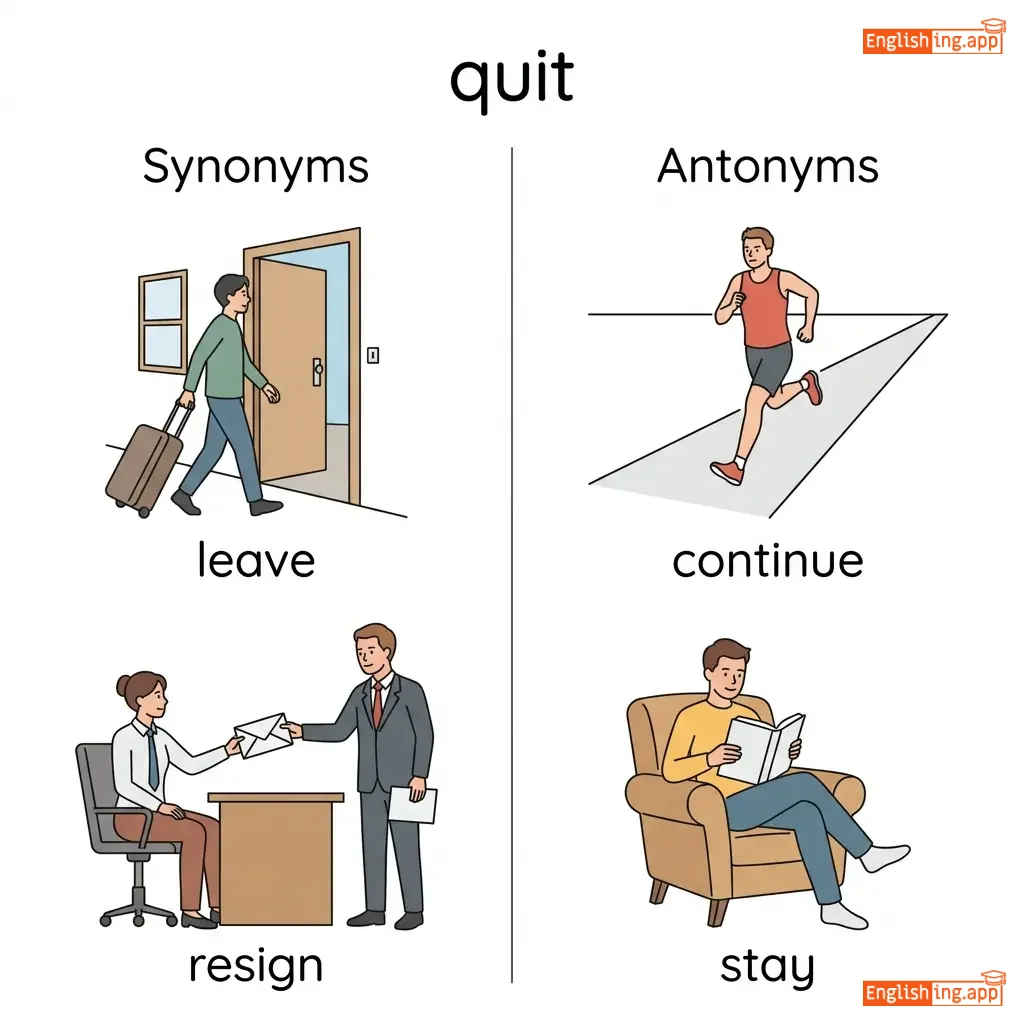
leave, resign, abandon, give up
••••••
|
continue, stay
••••••
|
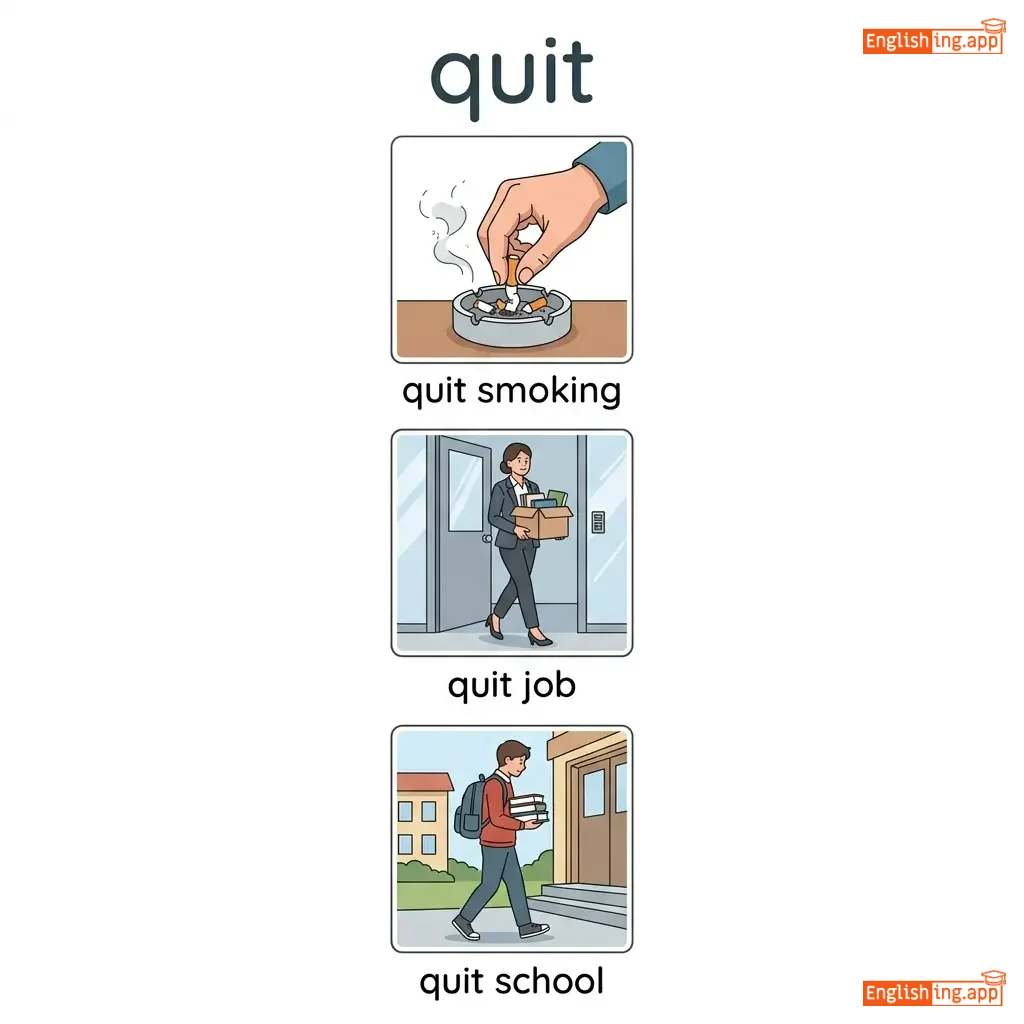
quit smoking, quit job, quit school, quit early
••••••
|
Quit意味着放弃 – 放弃工作或习惯.
••••••
|
|
🤝
••••••
|
/rɪˈlaɪ/
verb
(rílái)
••••••
|
- •••••• |
依赖
yīlài
••••••
|
relied
ríláid
••••••
|
relied
ríláid
••••••
|
relies
ríláiz
••••••
|
relying
ríláing
••••••
|
to depend on or trust someone or something
••••••
|
I rely on my friends for support.
我依赖我的朋友寻求支持。
••••••
|
我依赖我的朋友寻求支持。
Wǒ yīlài wǒ de péngyǒu xúnqiú zhīchí.
••••••
|
- •••••• | - •••••• | - •••••• |
depend, trust, count on, lean on
••••••
|
distrust, doubt, reject
••••••
|
rely on, rely upon, rely heavily, rely completely
••••••
|
信赖朋友,永远不掉链!
••••••
|
|
🌹
••••••
|
/roʊz/
noun
(罗斯)
••••••
|
- •••••• |
玫瑰
meigui
••••••
|
- •••••• | - •••••• | - •••••• | - •••••• |
a fragrant flower with thorny stems, typically red, pink, white, or yellow
••••••
|
She gave me a beautiful red rose for Valentine's Day.
她送给我一朵漂亮的红玫瑰作为情人节礼物。
••••••
|
她在情人节送给我一朵漂亮的红玫瑰。
ta zai qingrenjie song gei wo yi duo piaoliang de hong meigui
••••••
|
- •••••• | - •••••• | - •••••• |
flower, bloom, blossom
••••••
|
weed, thorn
••••••
|
red rose, rose garden, rose petals, rose bouquet
••••••
|
Remember ‘meigui’ sounds like ‘my grey’ – think of a grey rose in your mind.
••••••
|

