African Revolutions and Independence Movements
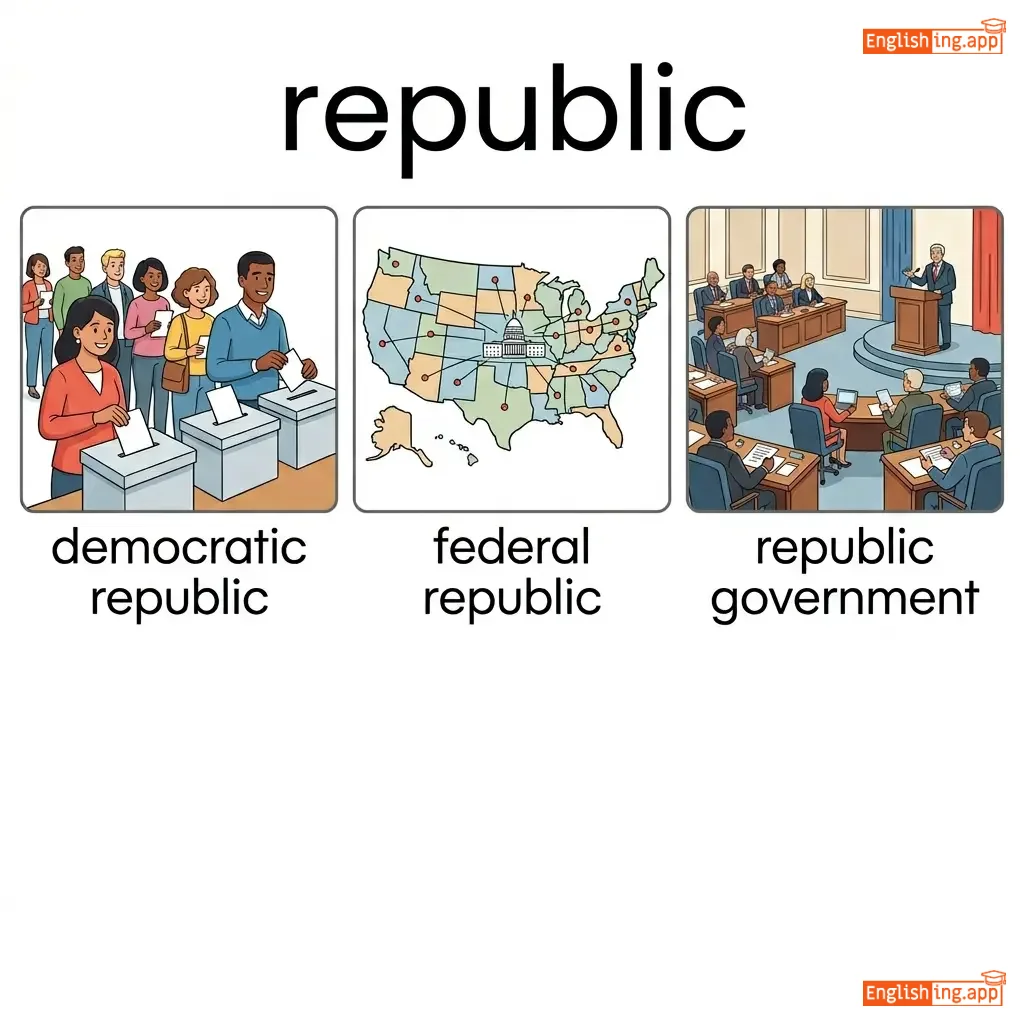
Afrika hat verschiedene Revolutionen und Bewegungen zur Unabhängigkeit zu verschiedenen Zeiten erlebt, die die koloniale Herrschaft beendeten. Zum Beispiel wurde 1952 in Ägypten die Monarchie durch die 'Bewegung der Freien Offiziere' abgeschafft und eine Republik gegründet.
In Algerien begann 1954 ein Kampf um die Unabhängigkeit gegen Frankreich, was 1962 die Befreiung sicherte.
Guinea-Bissau begann 1956 mit dem Widerstand gegen die portugiesische Herrschaft und erlangte 1973 die Souveränität. Mosambik begann 1964 mit einem ähnlichen Aufstand und erlangte 1975 die Unabhängigkeit.
Simbabwe erlangte 1980 nach einem langen bewaffneten Konflikt die Unabhängigkeit.
In Südafrika endete die Apartheid in den 1990er Jahren, und unter der Führung von Nelson Mandela wurde die Demokratie etabliert.
Diese Revolutionen und Kämpfe haben eine wichtige Rolle bei der Gestaltung des politischen, sozialen und wirtschaftlichen Rahmens Afrikas gespielt.
Erhalten Sie unbegrenzten Zugriff auf alle Vokabeln mit Pro-Mitgliedschaft
Upgrade auf ProErhalten Sie unbegrenzten Zugriff auf alle Sätze mit Pro-Mitgliedschaft
Upgrade auf Pro|
Emoji
|
Wort | Images | Bedeutung | Beispielsatz | Synonyme | Antonyme |
|---|---|---|---|---|---|---|
|
#213
⚡
|
ˌrev.əˈluː.ʃənz
noun
••••••
|
•••••• |
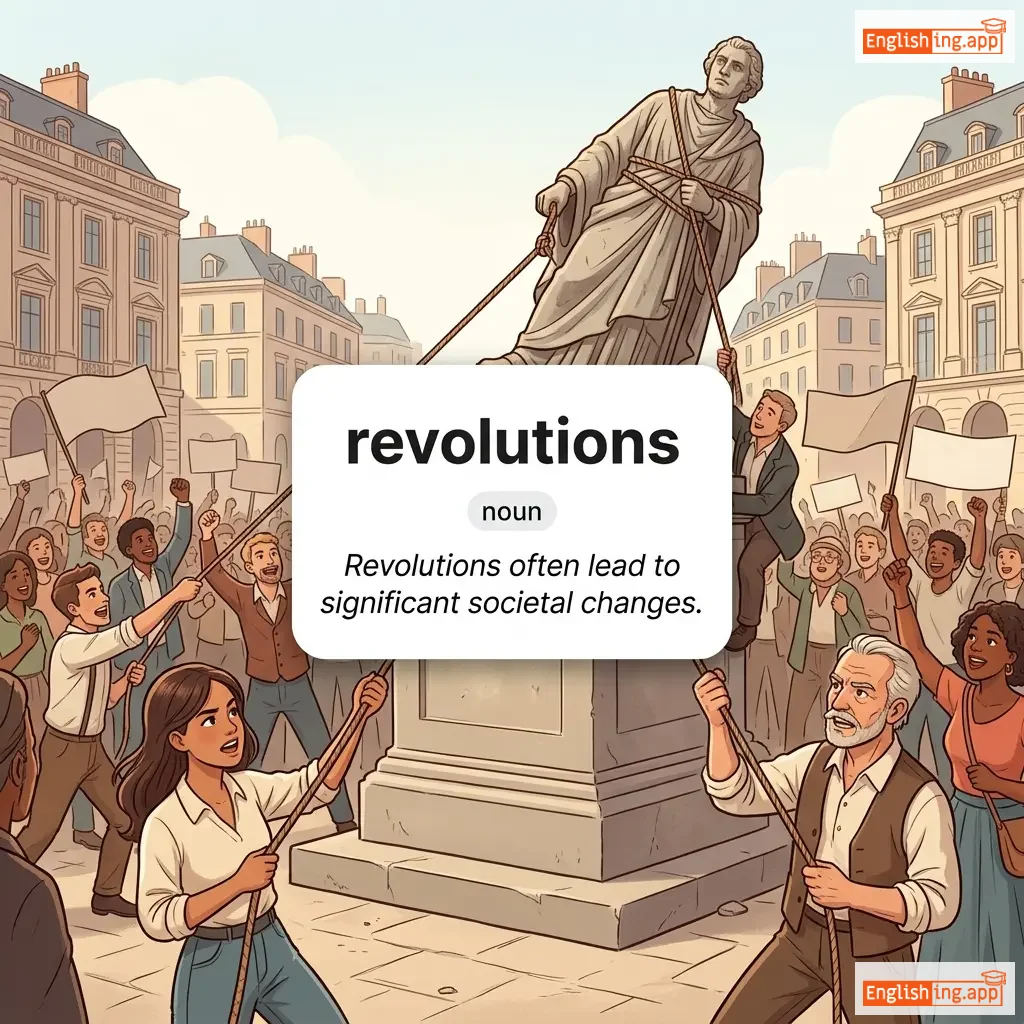
Dramatic and wide-reaching changes in political, social, or economic systems, often involving the overthrow of a government or social order.
••••••
|
Revolutions often lead to significant societal changes. |
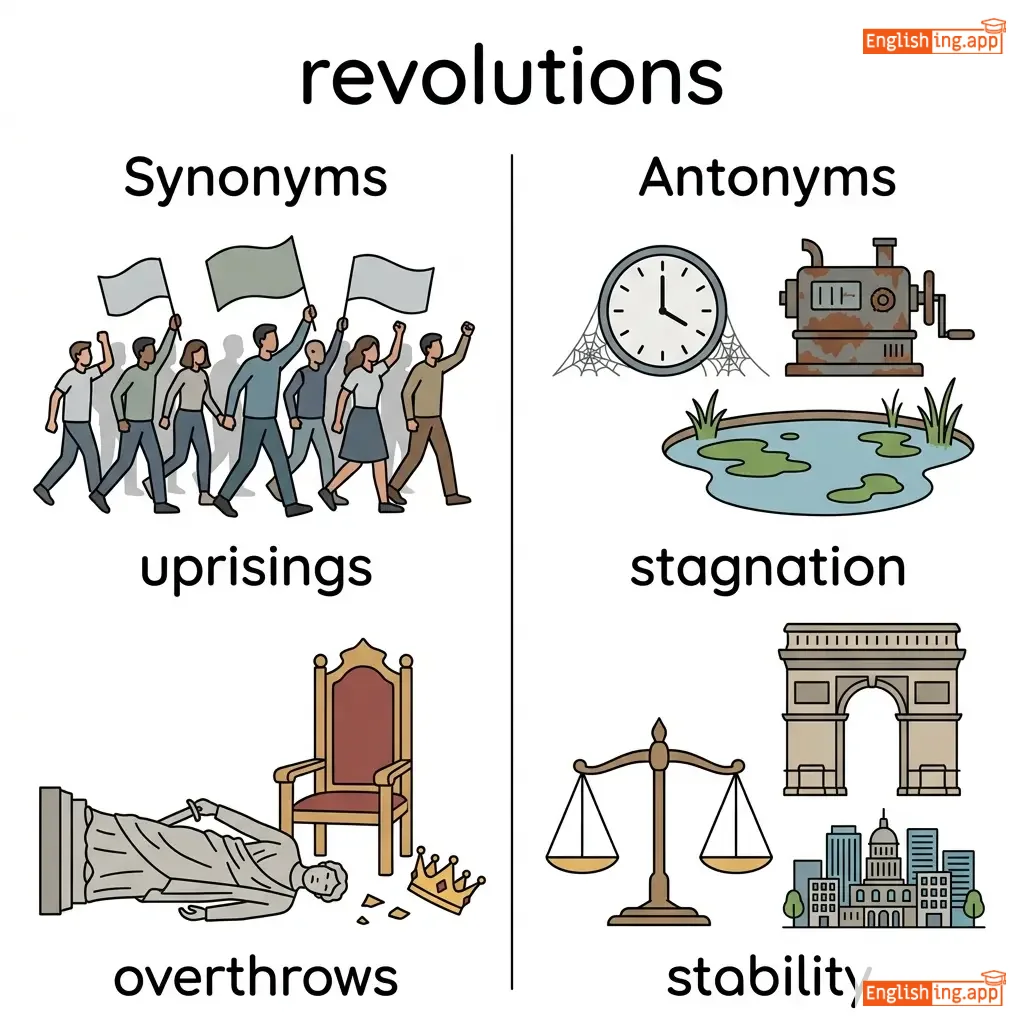
uprisings, overthrows, rebellions, coups
••••••
|
stagnation, stability, conservation, order
••••••
|
|
#214
✊
|
ˈmuːv.mənts
noun
••••••
|
•••••• |
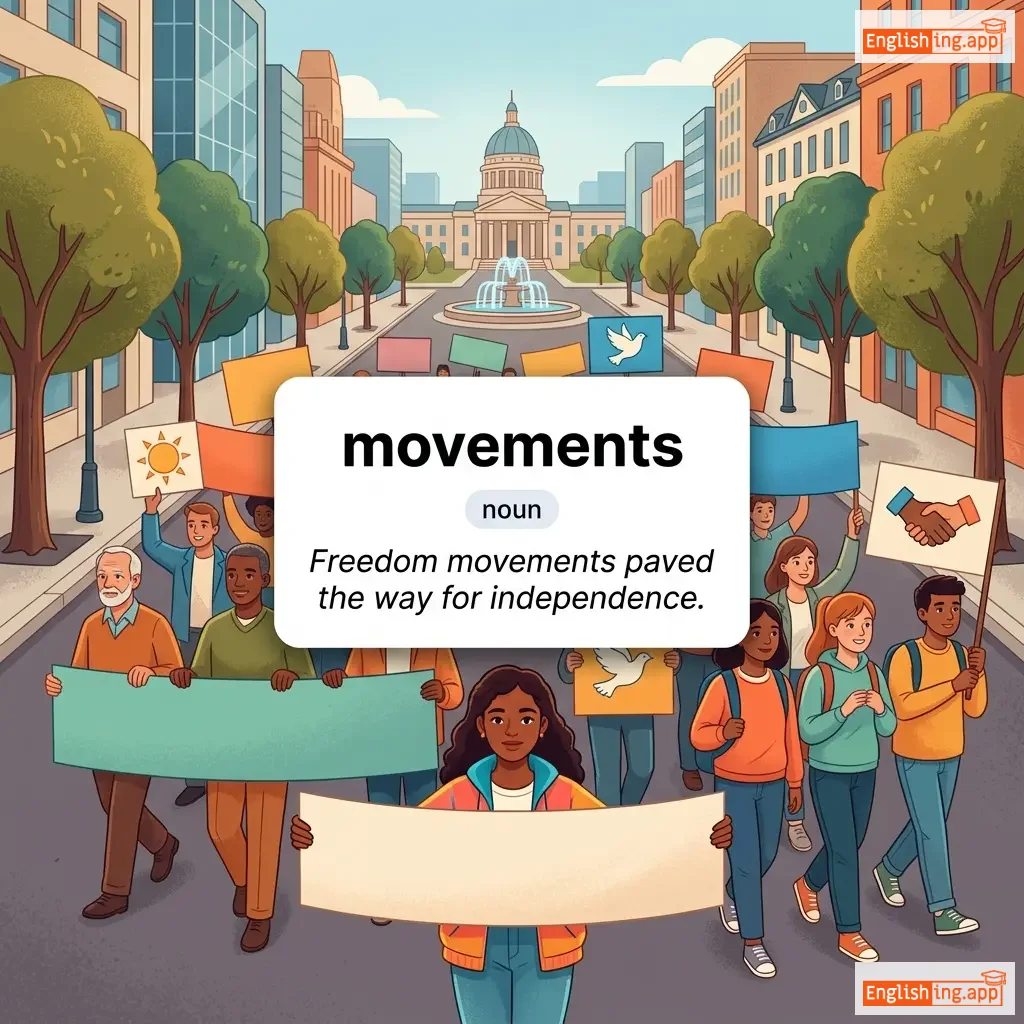
Organized efforts by groups of people working together to advance their shared political, social, or artistic ideas.
••••••
|
Freedom movements paved the way for independence. |
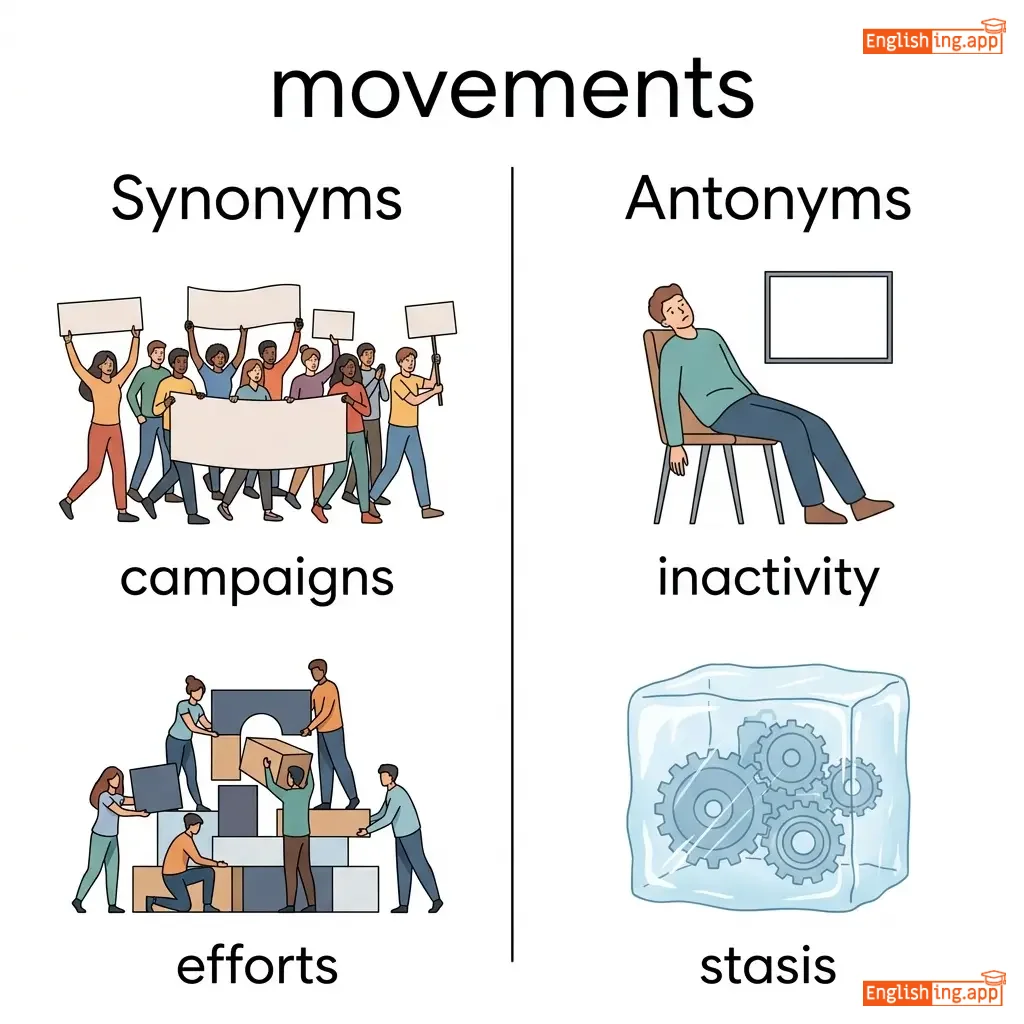
campaigns, efforts, initiatives, crusades
••••••
|
inactivity, stasis, passivity, stillness
••••••
|
|
#215
🏛️
|
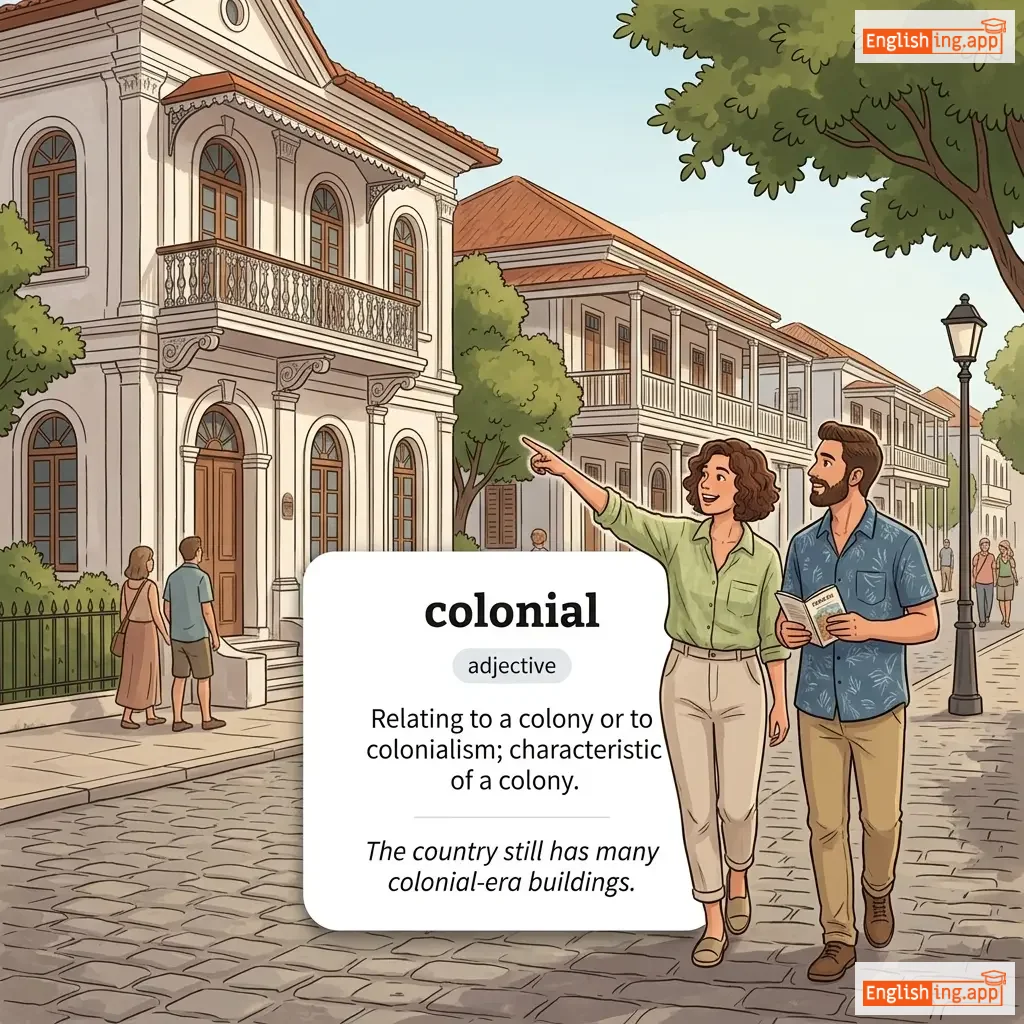
kəˈləʊ.ni.əl
adjective
••••••
|
•••••• |
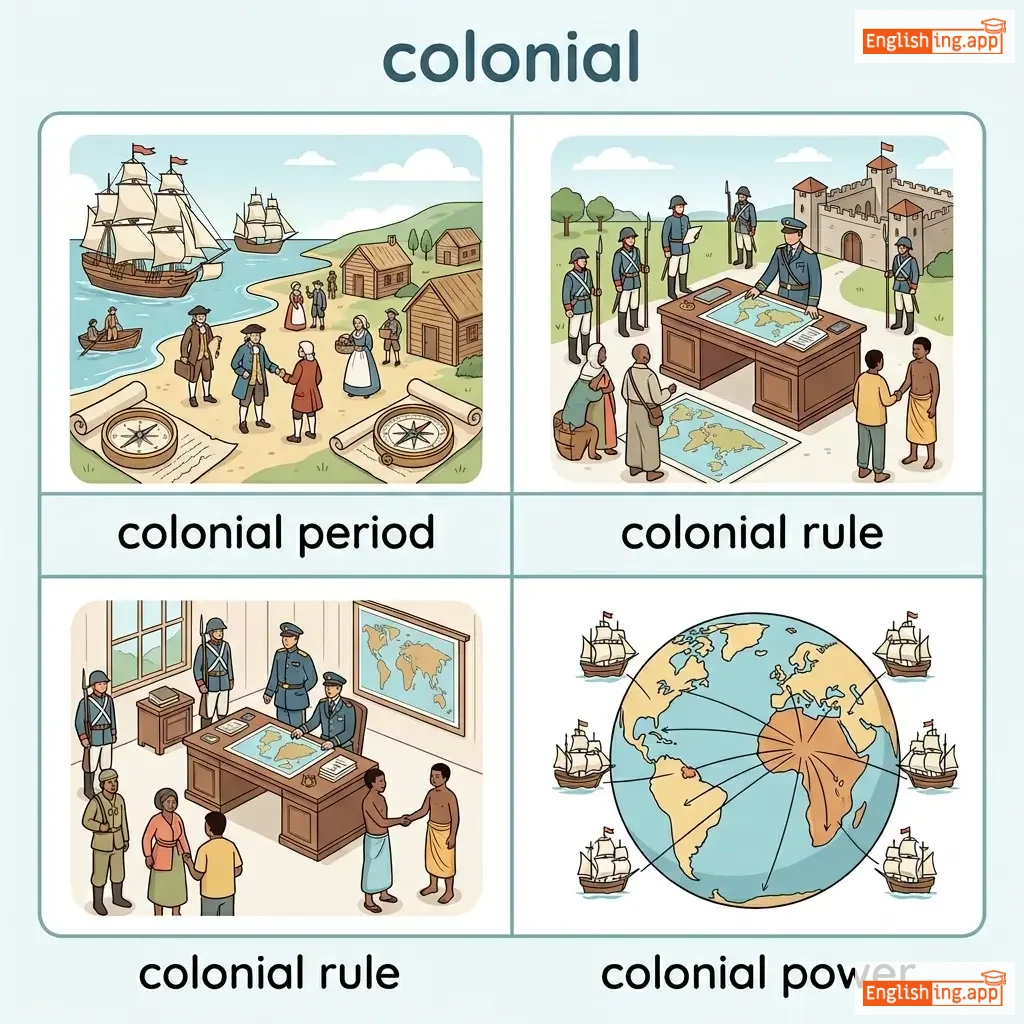
Relating to or characteristic of a colony or colonialism, especially involving the control of one country by another.
••••••
|
Colonial rule suppressed local governance. |
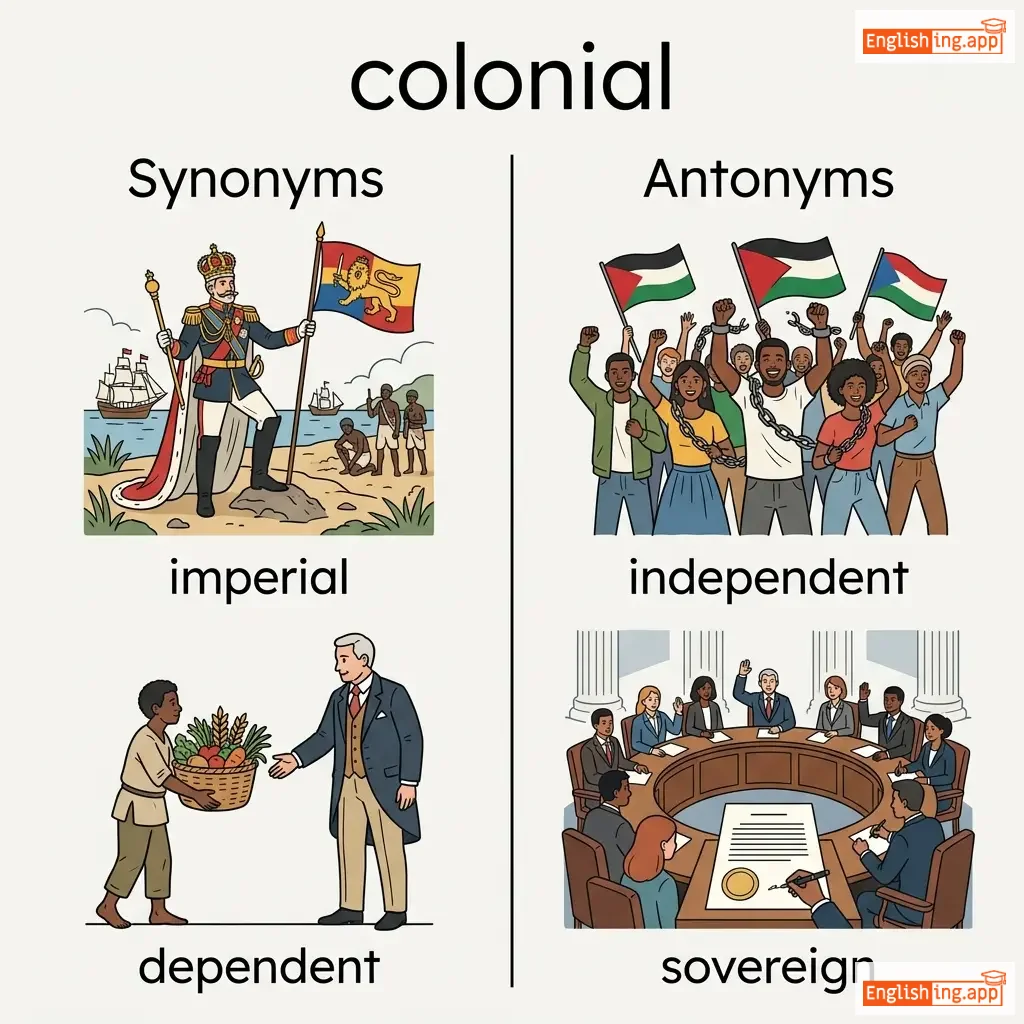
imperial, occupying, dominating, controlling
••••••
|
independent, sovereign, autonomous, free
••••••
|
|
#216
👑
|
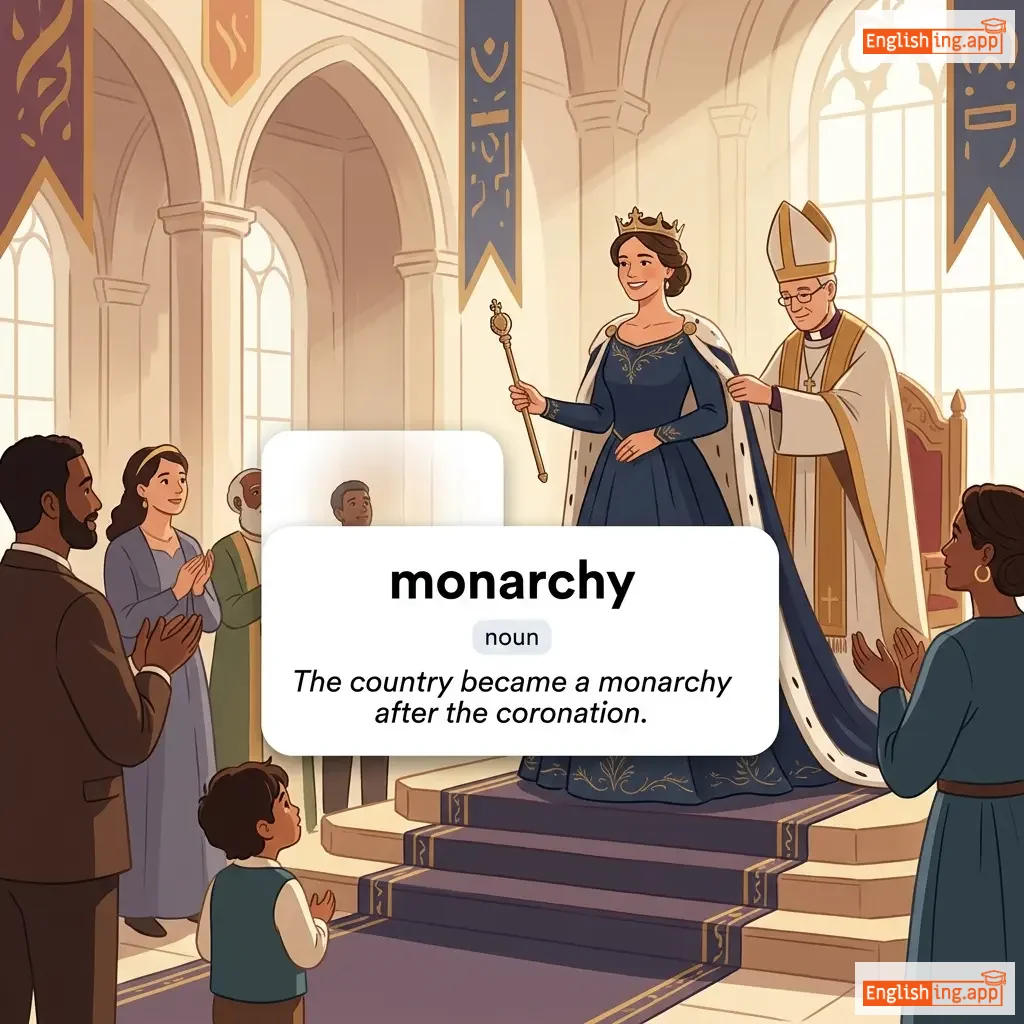
ˈmɒn.ə.ki
noun
••••••
|
•••••• |
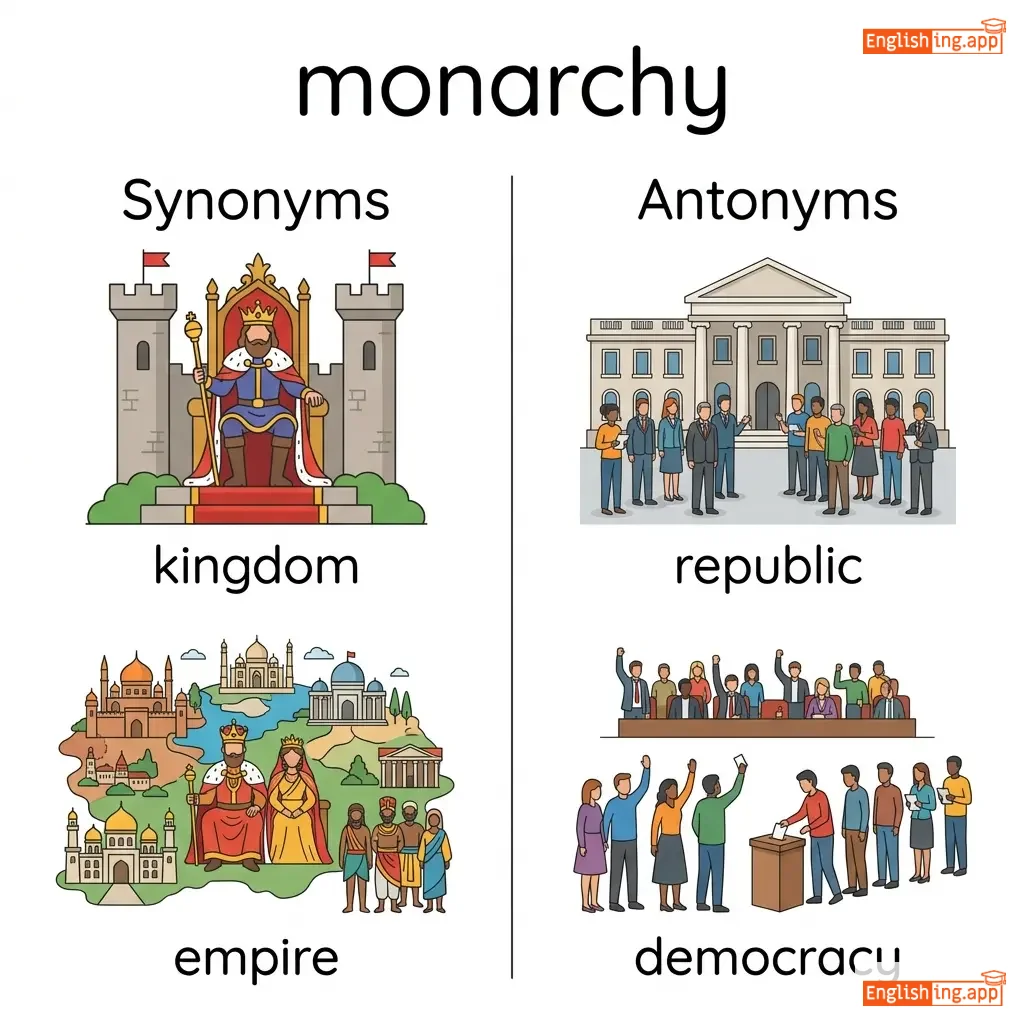
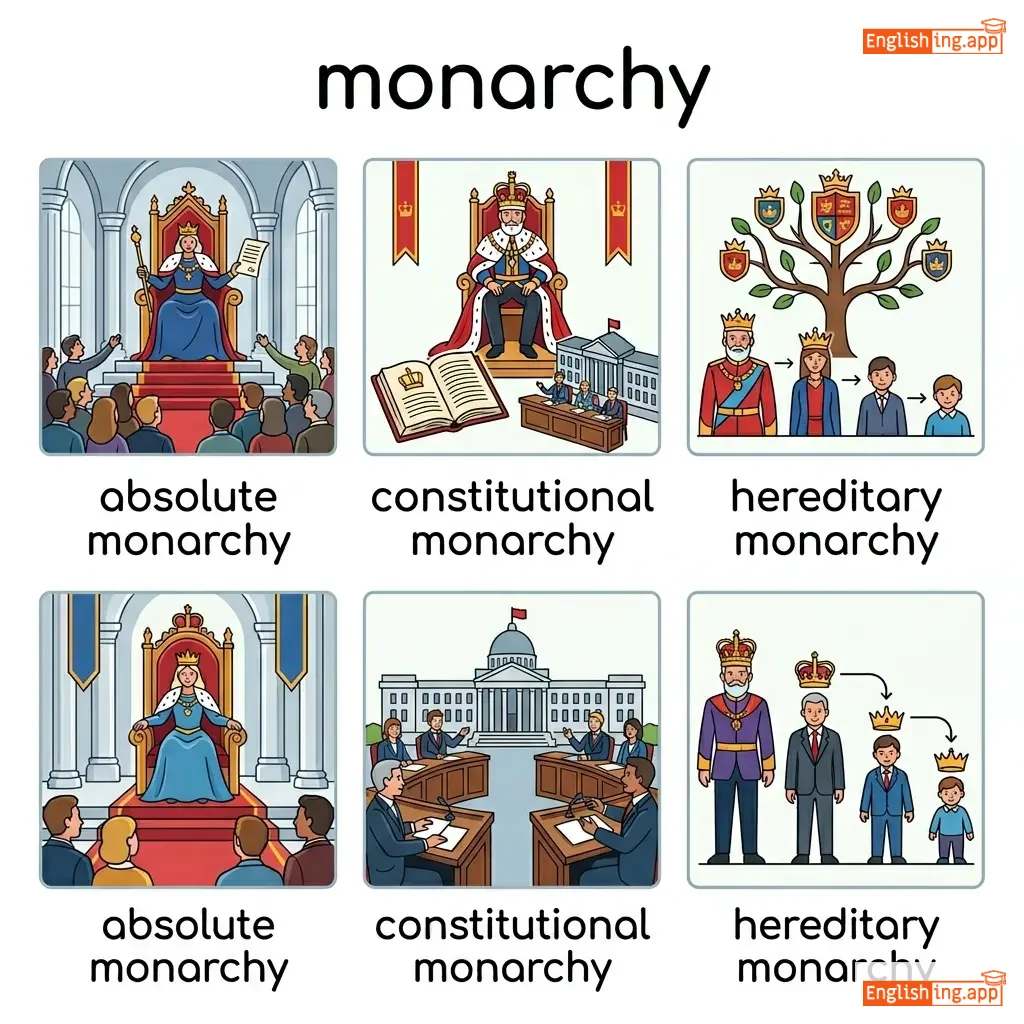
A form of government with a monarch at the head, where supreme power is held by a single person such as a king or queen.
••••••
|
The monarchy was abolished during the revolution. |
kingship, sovereignty, royal rule, crown
••••••
|
republic, democracy, anarchism, communism
••••••
|
|
#217
🏛️
|
rɪˈpʌb.lɪk
noun
••••••
|
•••••• |
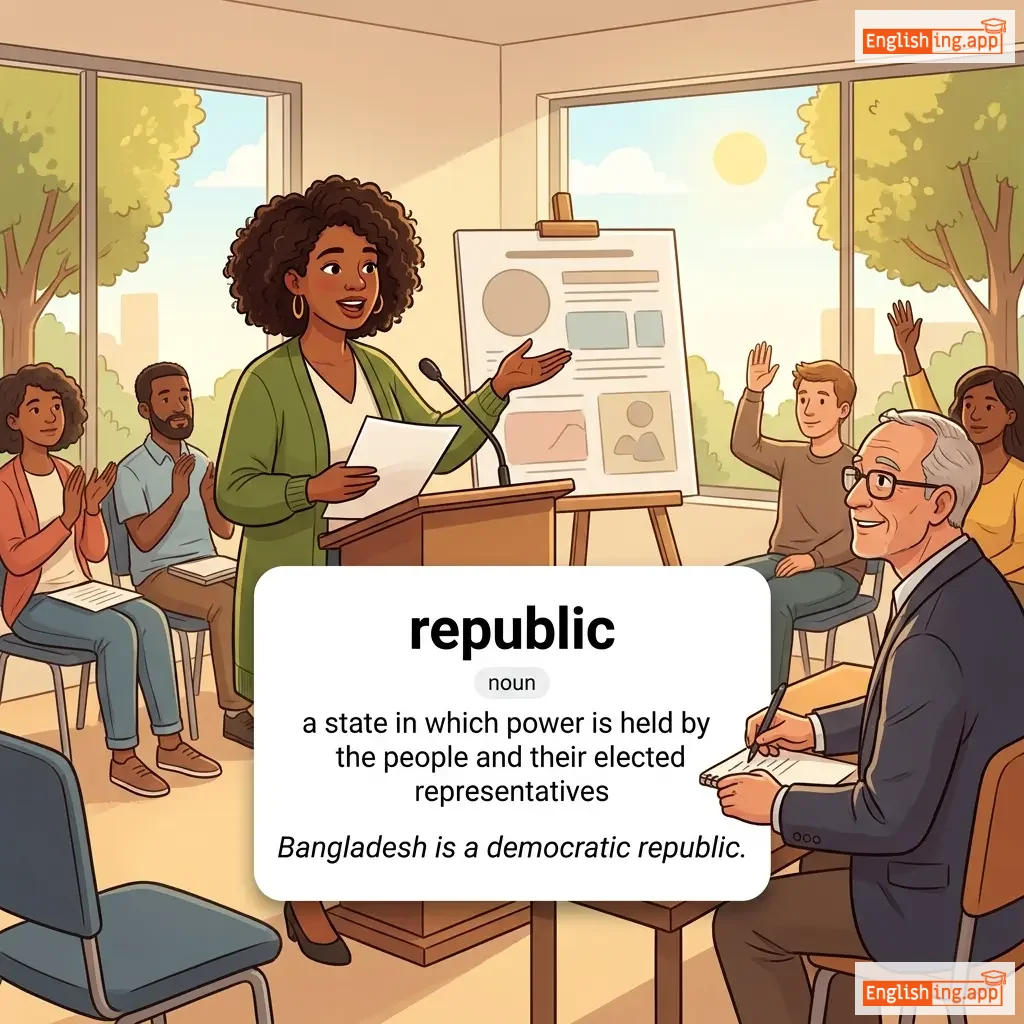
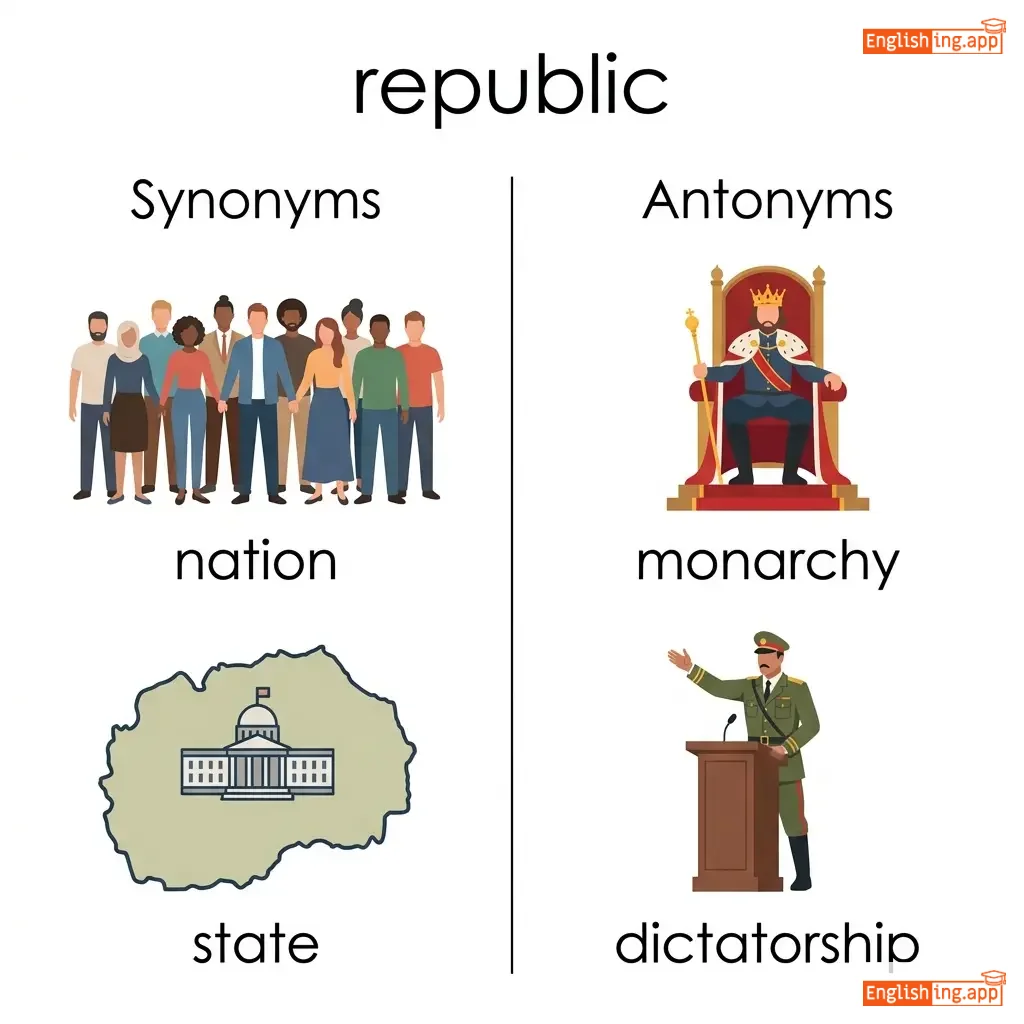
A state in which supreme power is held by the people and their elected representatives, with an elected or nominated president rather than a monarch.
••••••
|
A republic is governed by representatives of the people. |
democracy, state, commonwealth, federation
••••••
|
monarchy, autocracy, dictatorship, tyranny
••••••
|
|
#218
💪
|
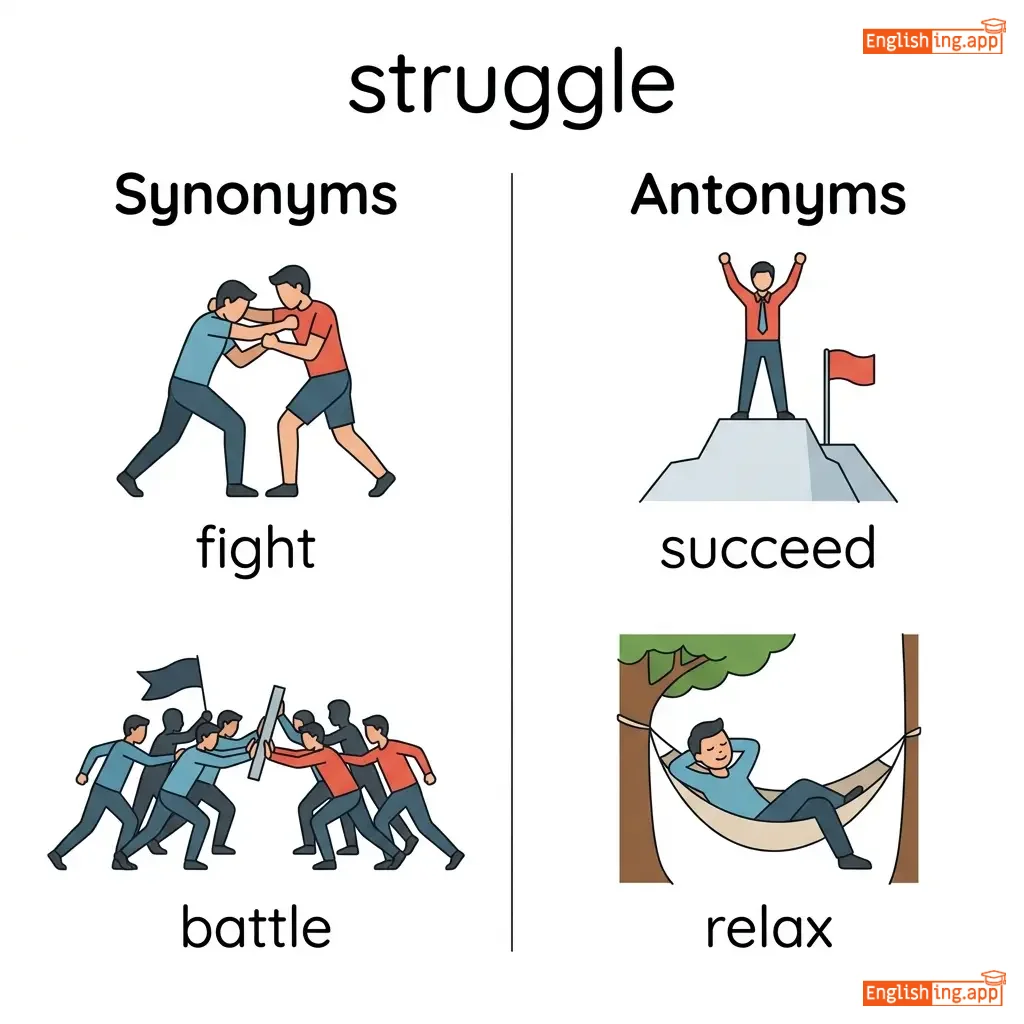
ˈstrʌɡ.əl
noun
••••••
|
•••••• |
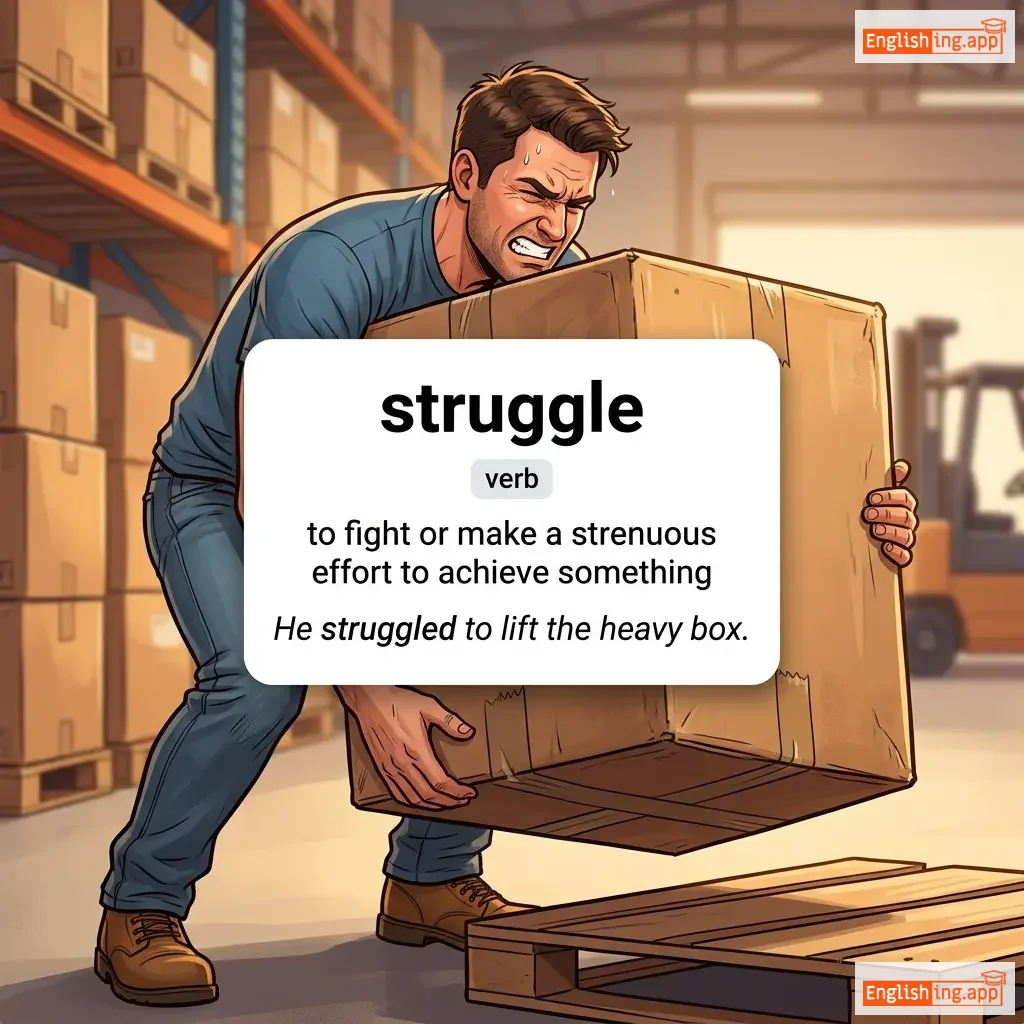
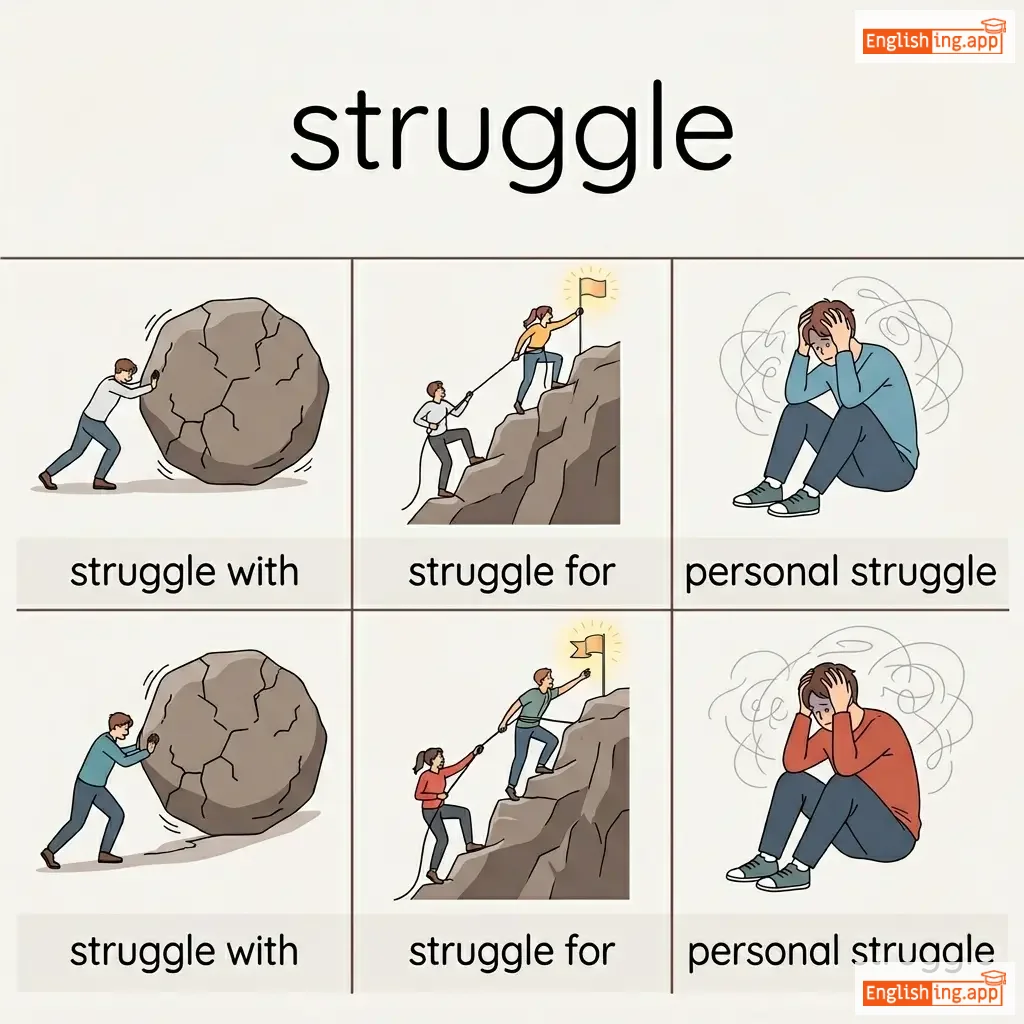
A forceful or violent effort to get free of restraint or resist attack; a determined effort under difficult circumstances.
••••••
|
The struggle for independence united the nation. |
battle, conflict, fight, effort
••••••
|
peace, harmony, ease, surrender
••••••
|
|
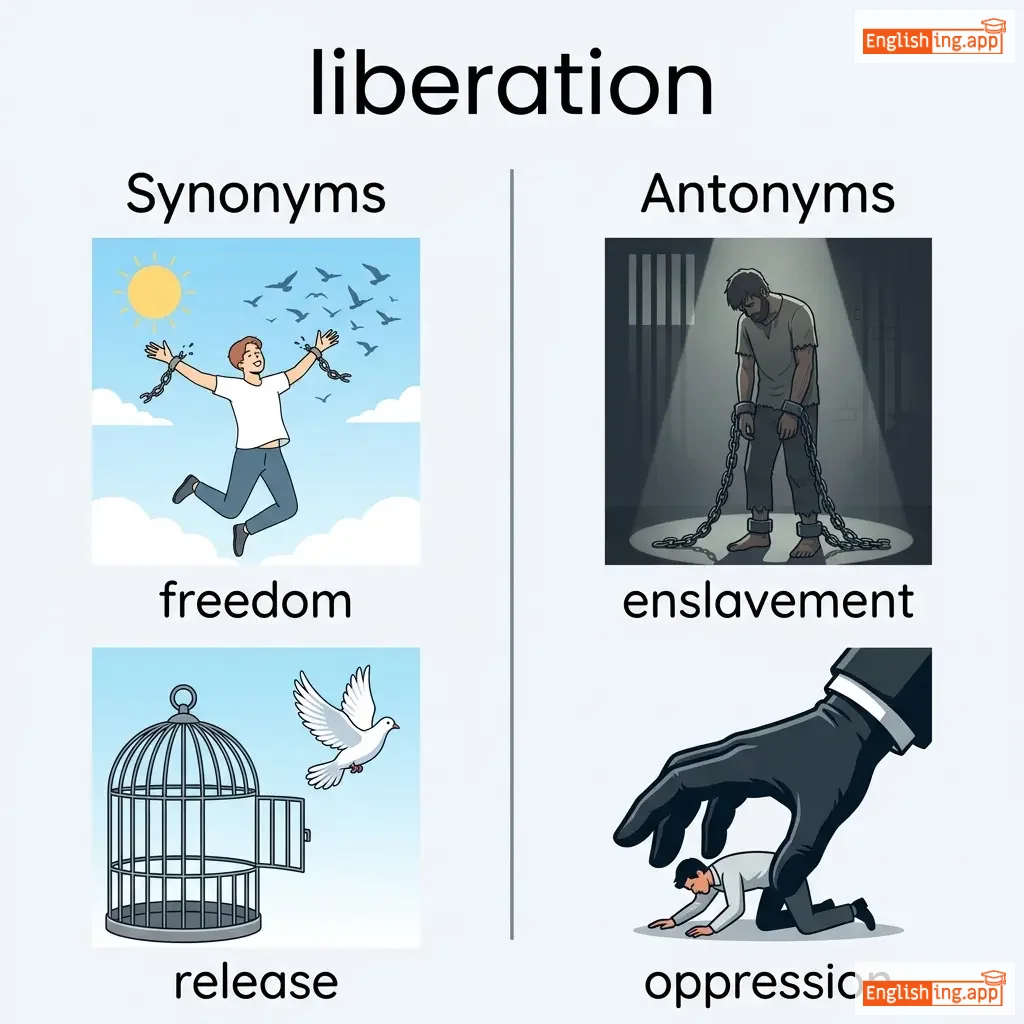
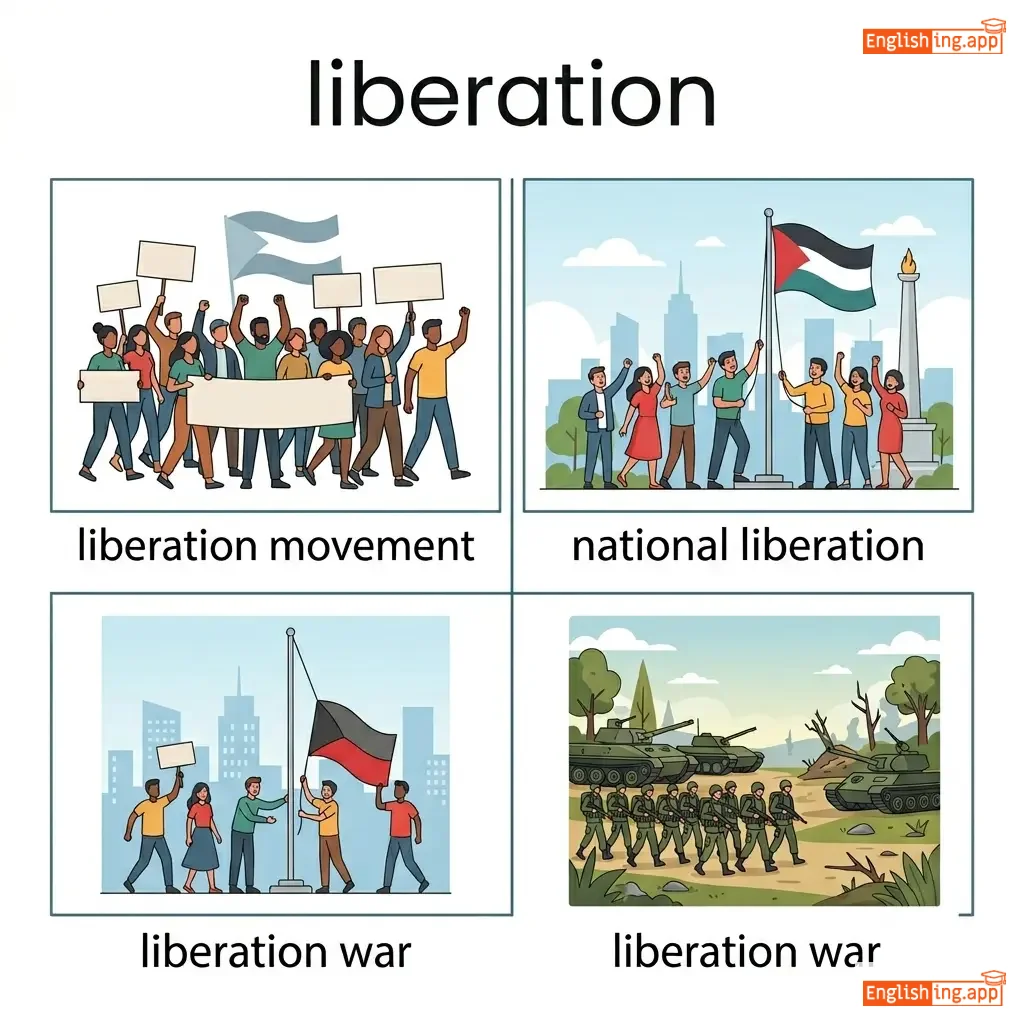
#219
🕊️
|
ˌlɪb.ərˈeɪ.ʃən
noun
••••••
|
•••••• |
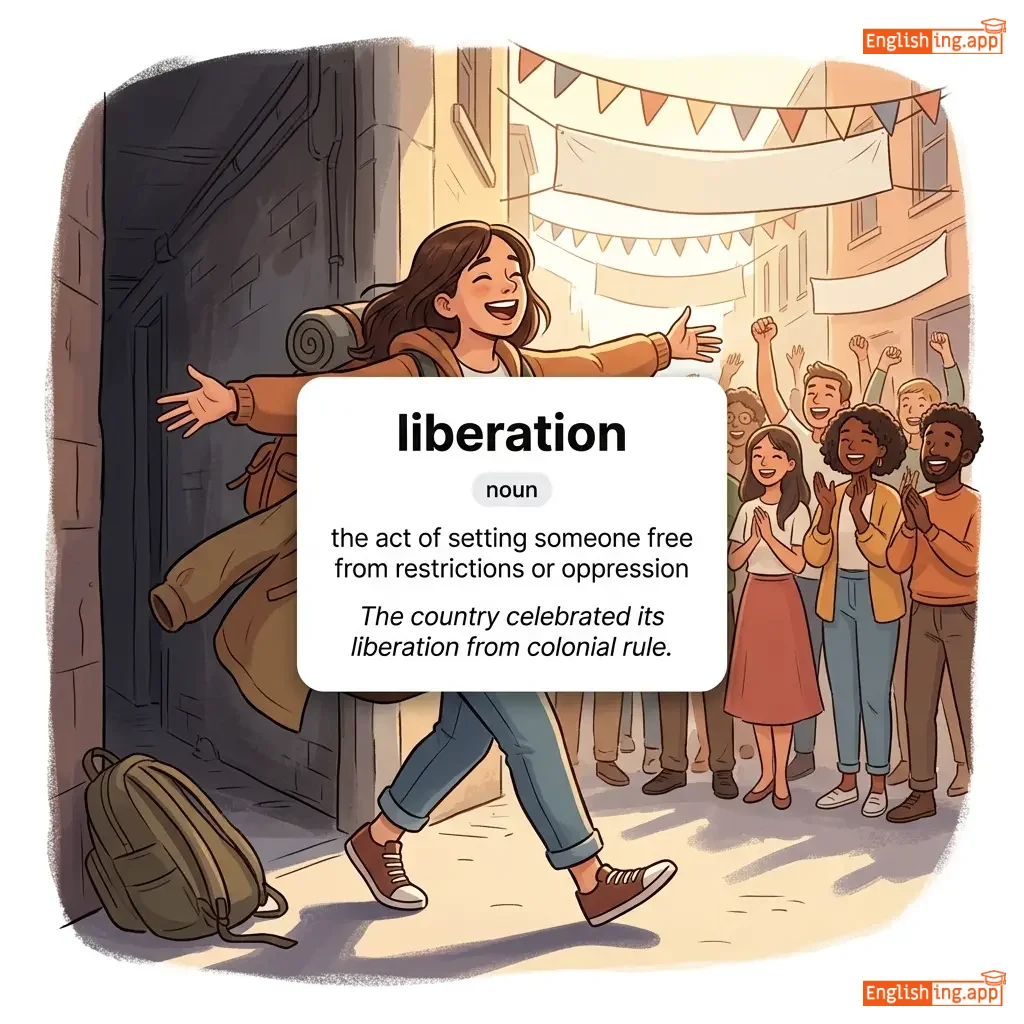
The action of setting someone free from imprisonment, slavery, or oppression; release.
••••••
|
Liberation movements inspired many countries. |
emancipation, freedom, release, deliverance
••••••
|
captivity, subjugation, imprisonment, bondage
••••••
|
|
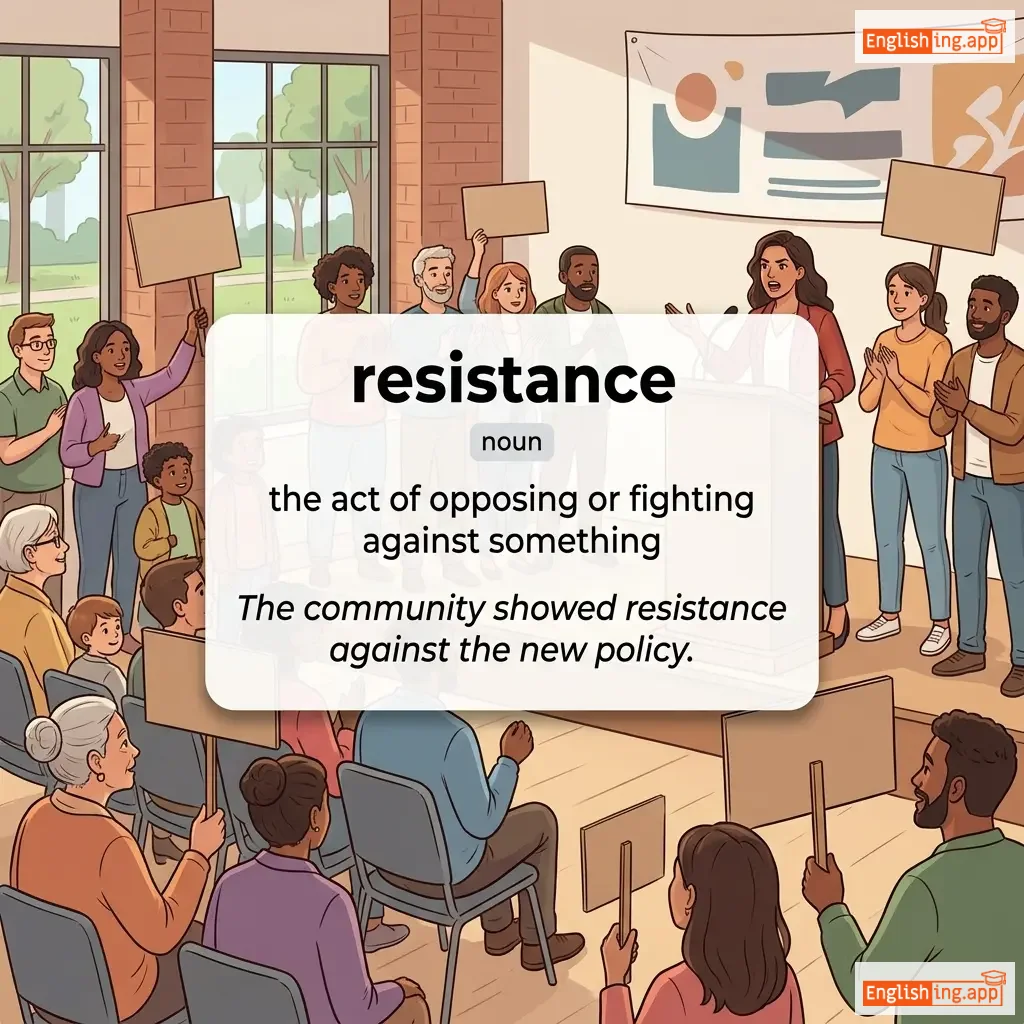
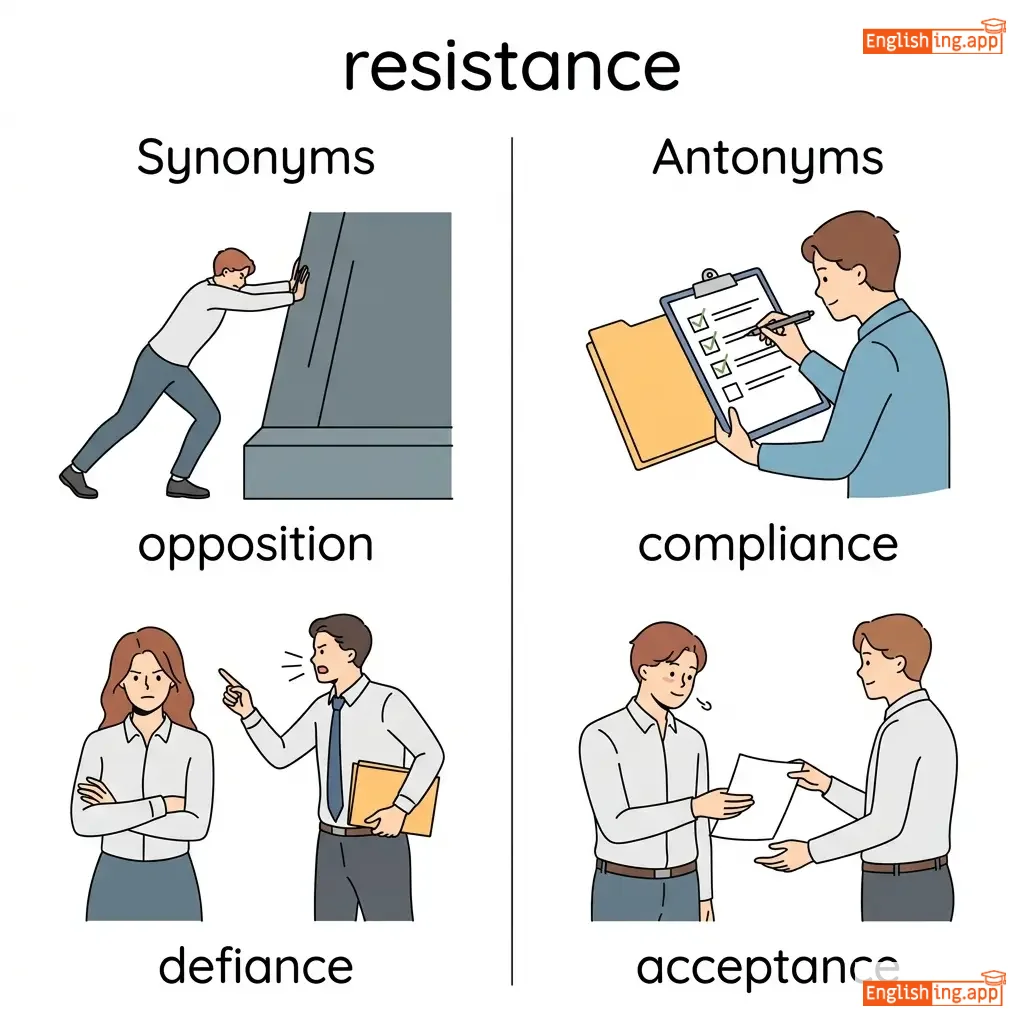
#220
🛡️
|
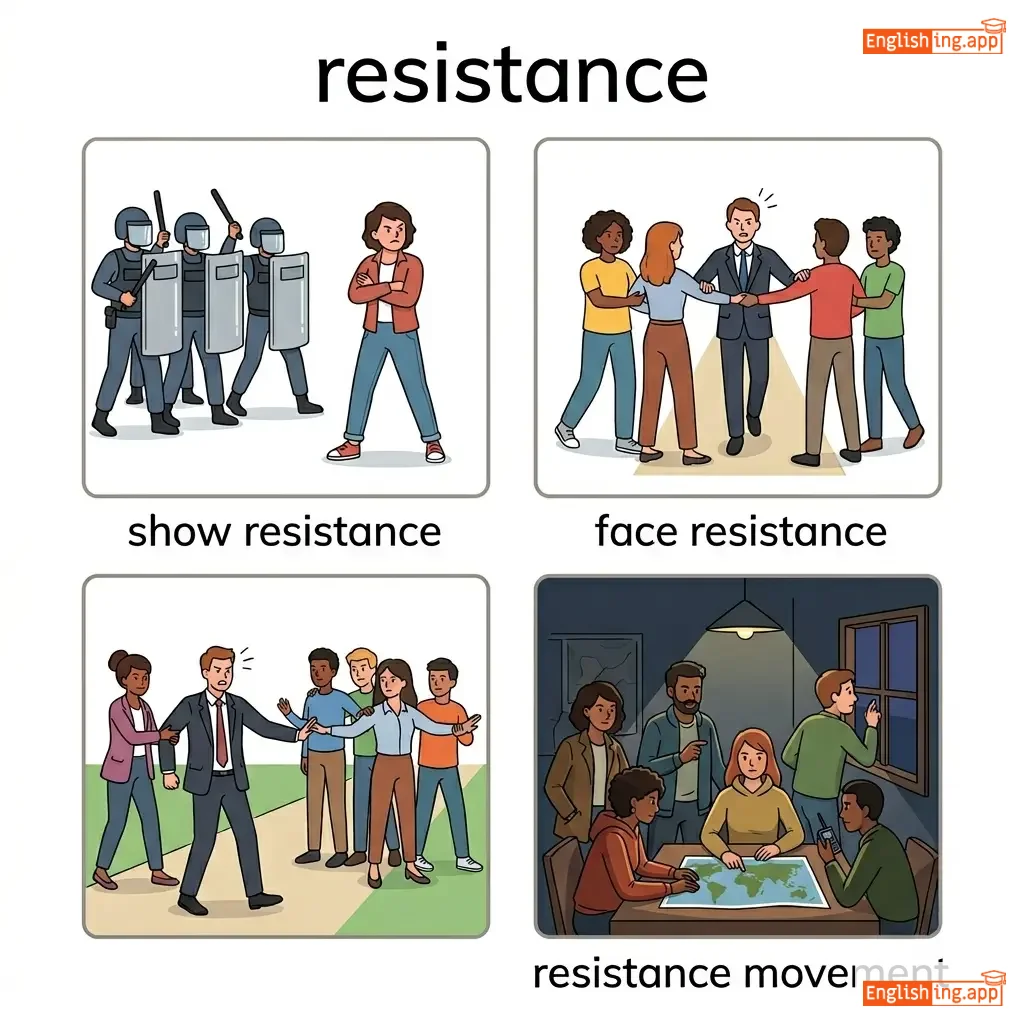
rɪˈzɪs.təns
noun
••••••
|
•••••• |
The refusal to accept or comply with something; the attempt to prevent something by action or argument.
••••••
|
The resistance fought bravely against colonial forces. |
opposition, defiance, revolt, rebellion
••••••
|
submission, compliance, surrender, acceptance
••••••
|
|
#221
🏆
|
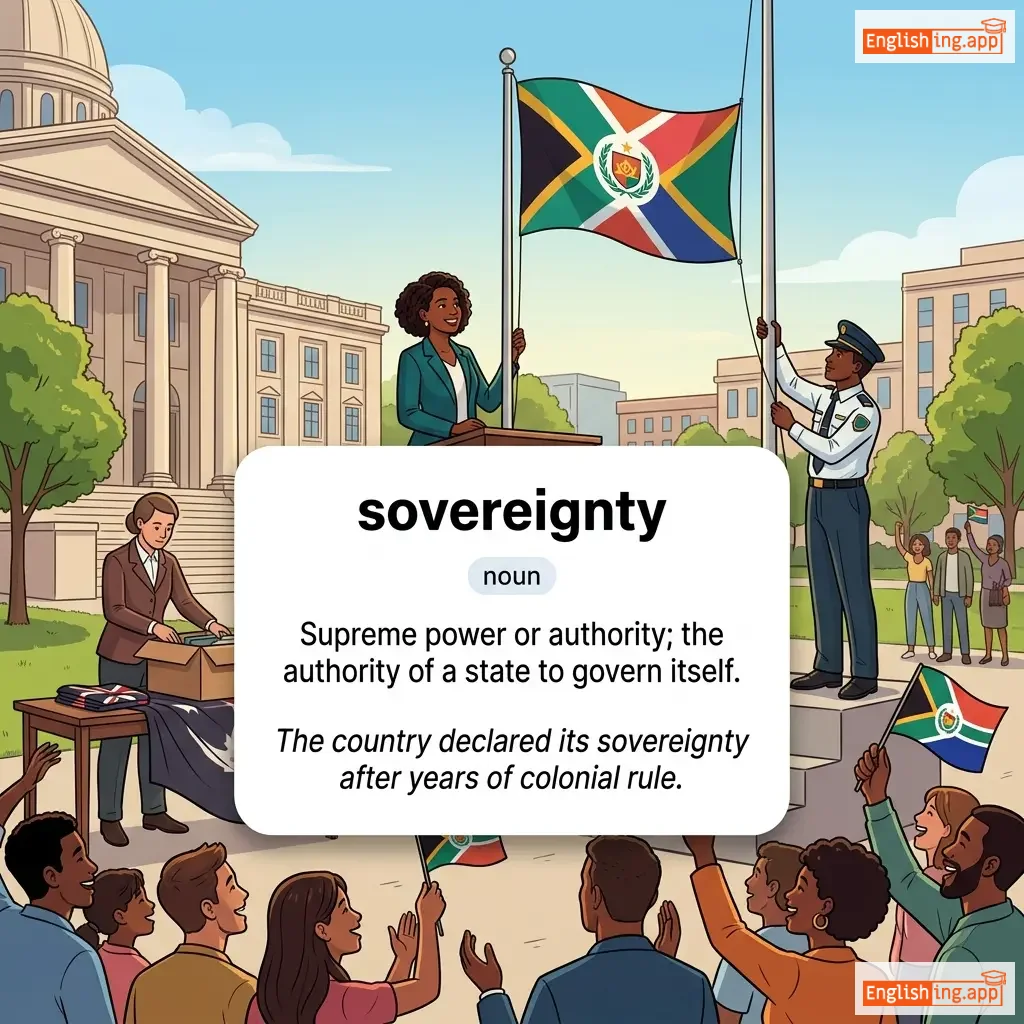
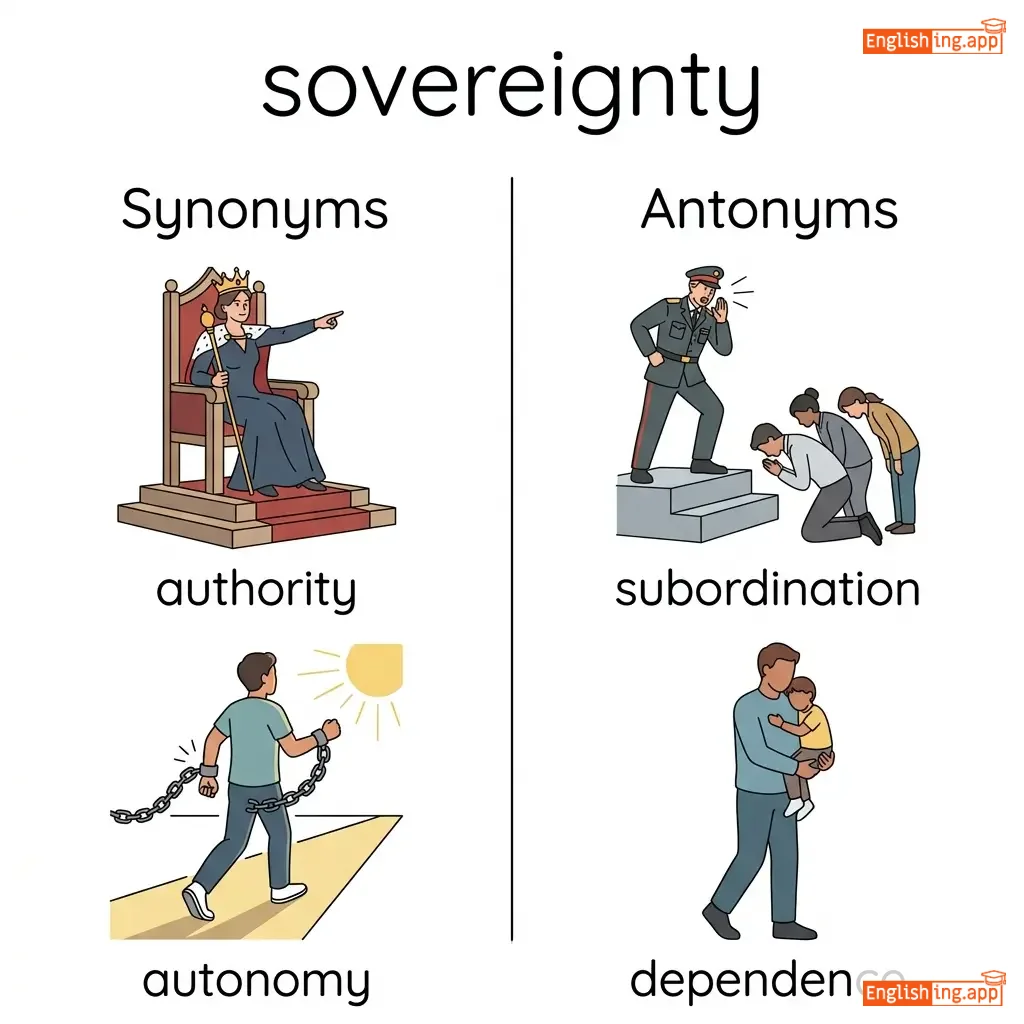
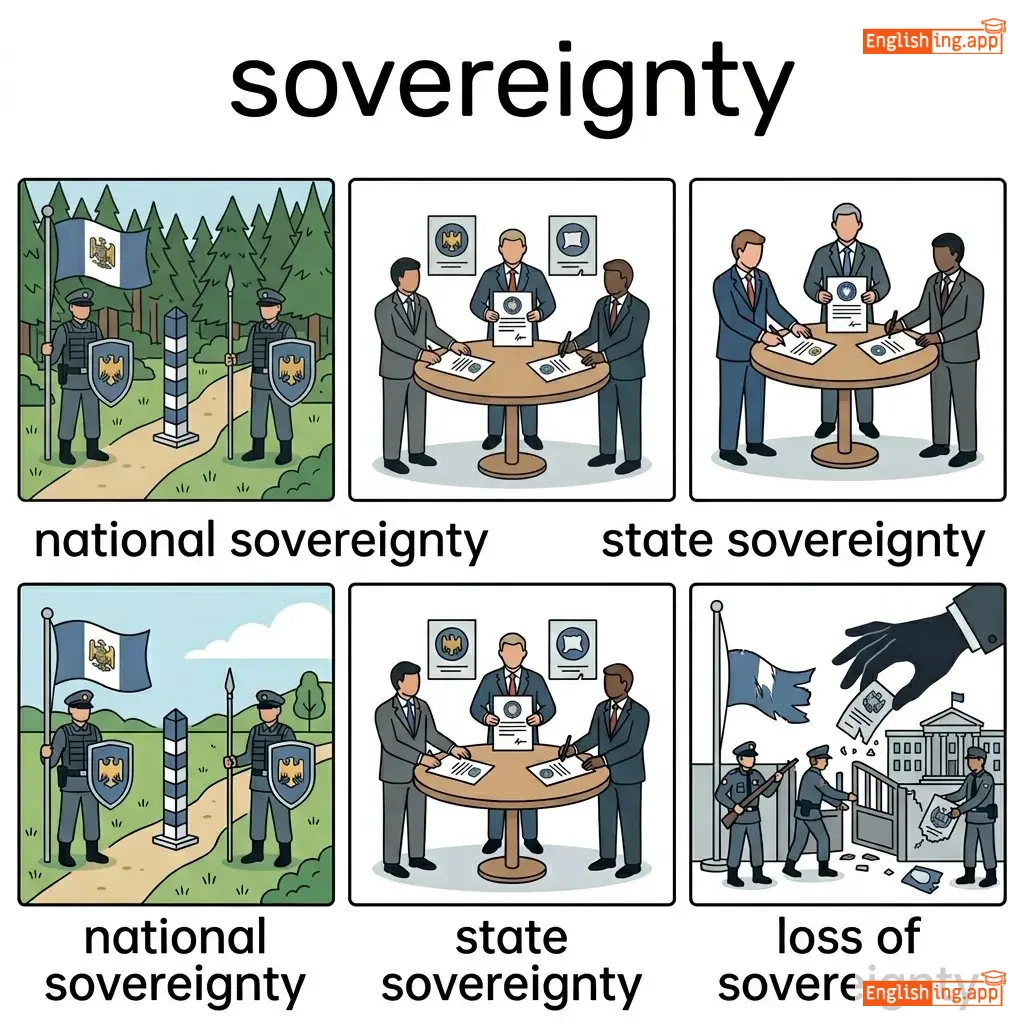
ˈsɒv.rɪn.ti
noun
••••••
|
•••••• |
The authority of a state to govern itself or another state; supreme power or authority.
••••••
|
Sovereignty is essential for a nation's identity. |
autonomy, independence, self-rule, supremacy
••••••
|
dependence, subjugation, subordination, vassalage
••••••
|
|
#222
🔥
|
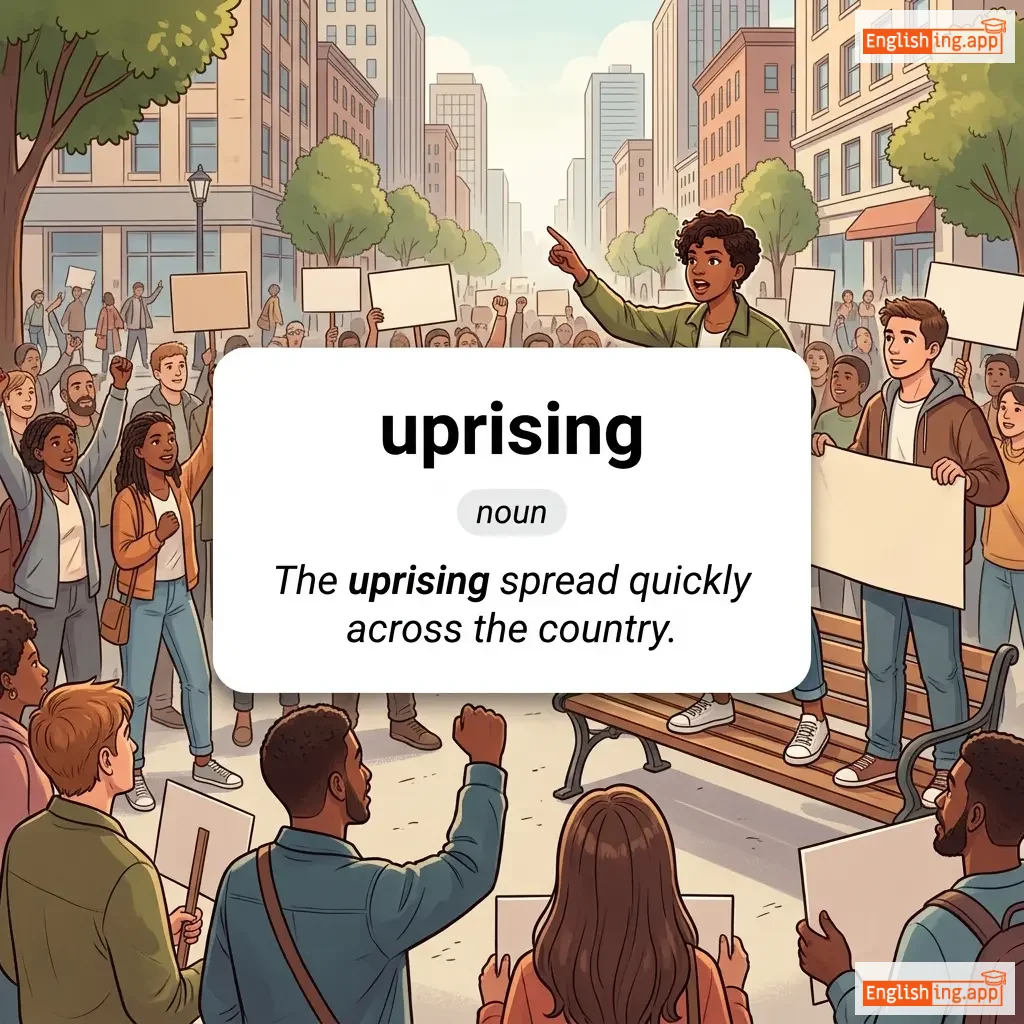
ˈʌp.raɪ.zɪŋ
noun
••••••
|
•••••• |
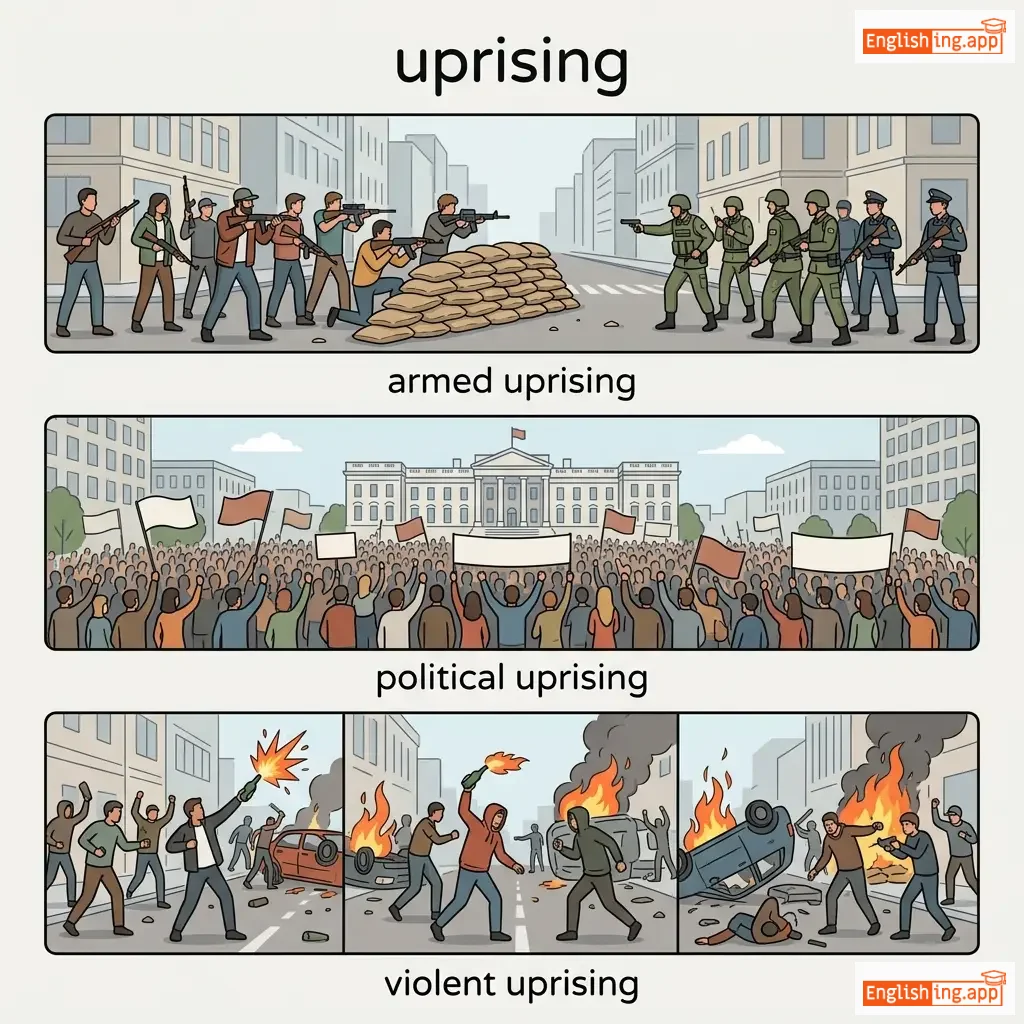
An act of resistance or rebellion; a revolt against an authority or government.
••••••
|
The uprising marked the beginning of the revolution. |
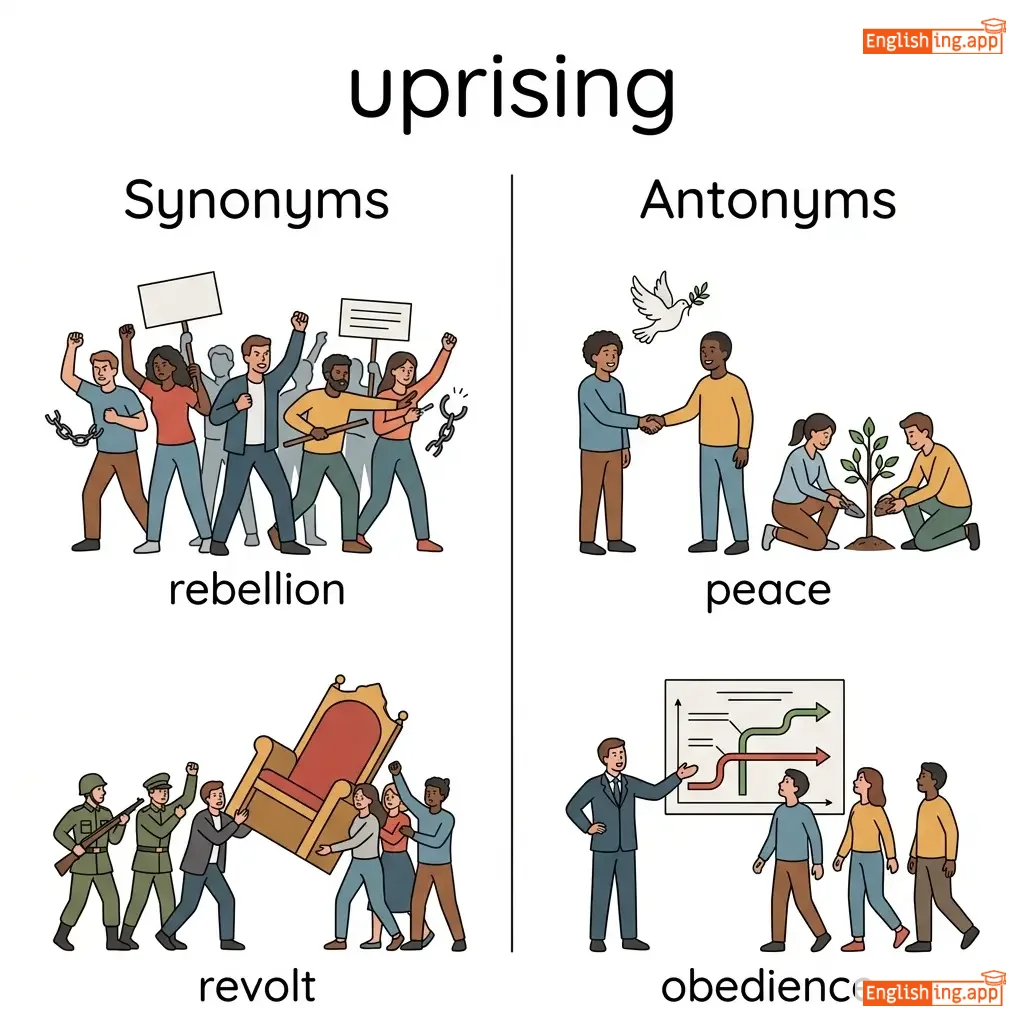
revolt, rebellion, insurrection, mutiny
••••••
|
obedience, peace, submission, compliance
••••••
|
|
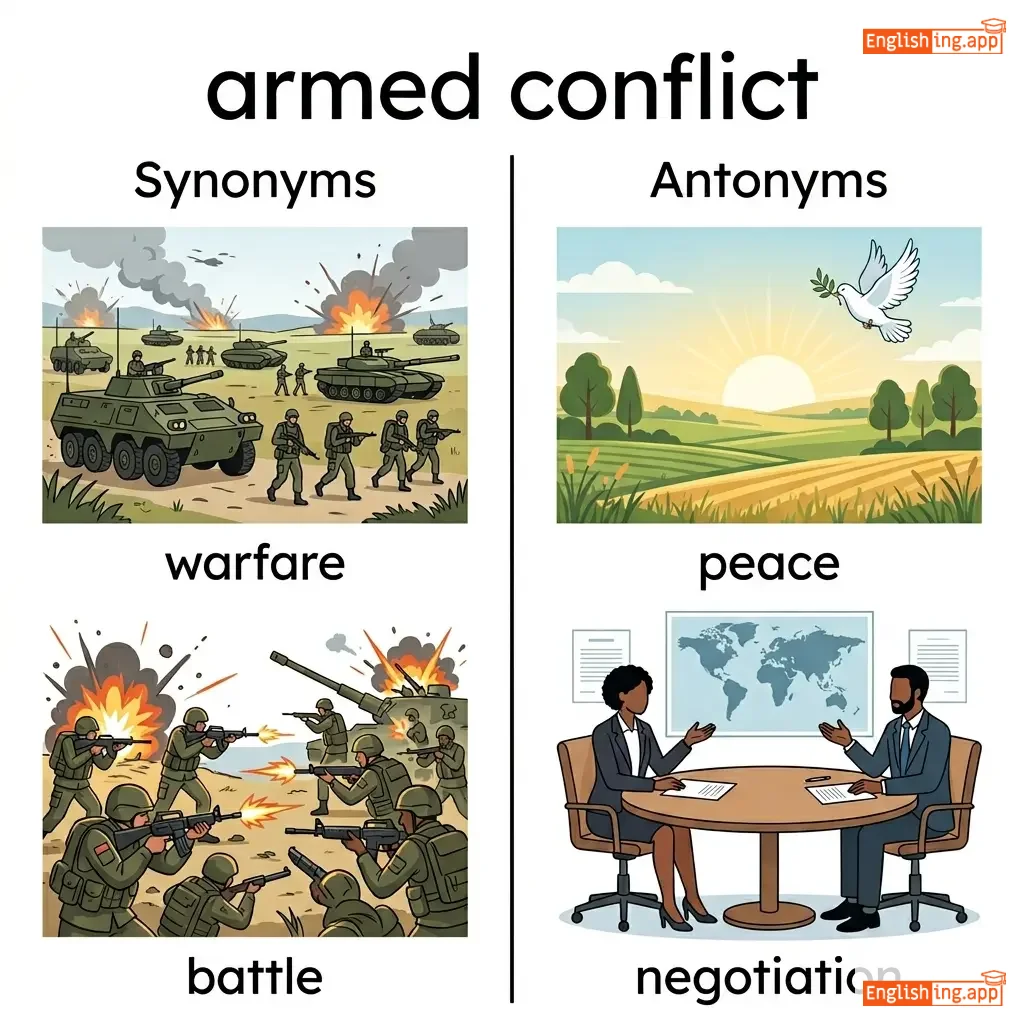
#223
⚔️
|
ɑːmd ˈkɒn.flɪkt
noun
••••••
|
•••••• |
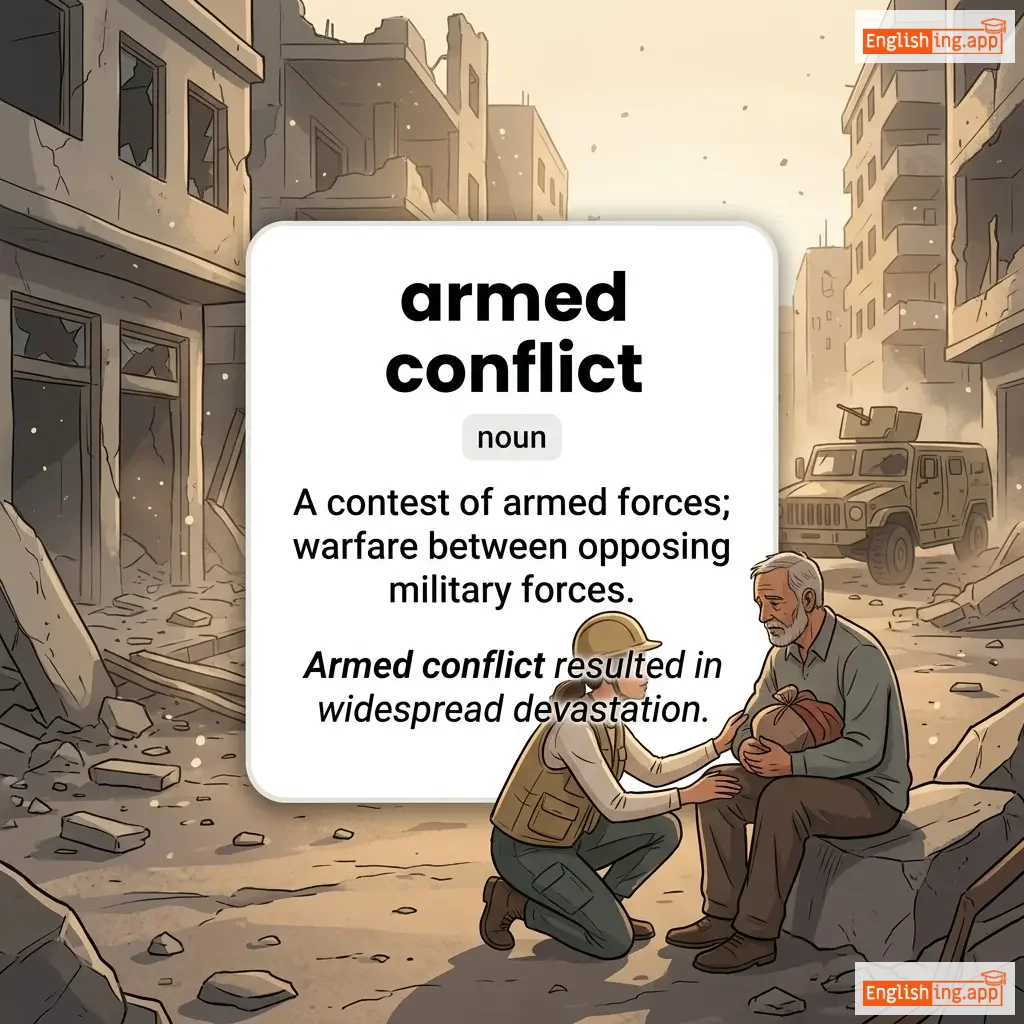
A contest of armed forces; warfare between opposing military forces.
••••••
|
Armed conflict resulted in widespread devastation. |
warfare, battle, combat, hostilities
••••••
|
peace, negotiation, diplomacy, ceasefire
••••••
|
|
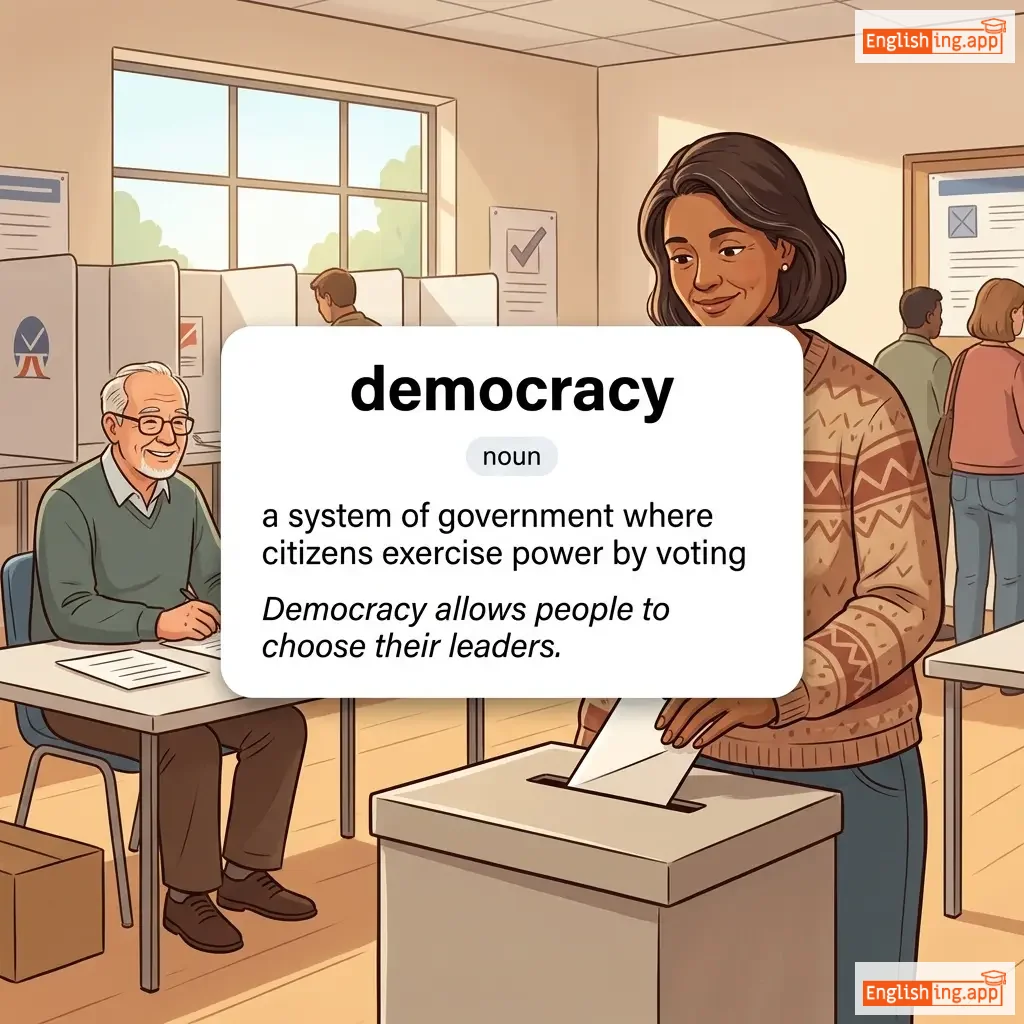
#224
🗳️
|
dɪˈmɒk.rə.si
noun
••••••
|
•••••• |
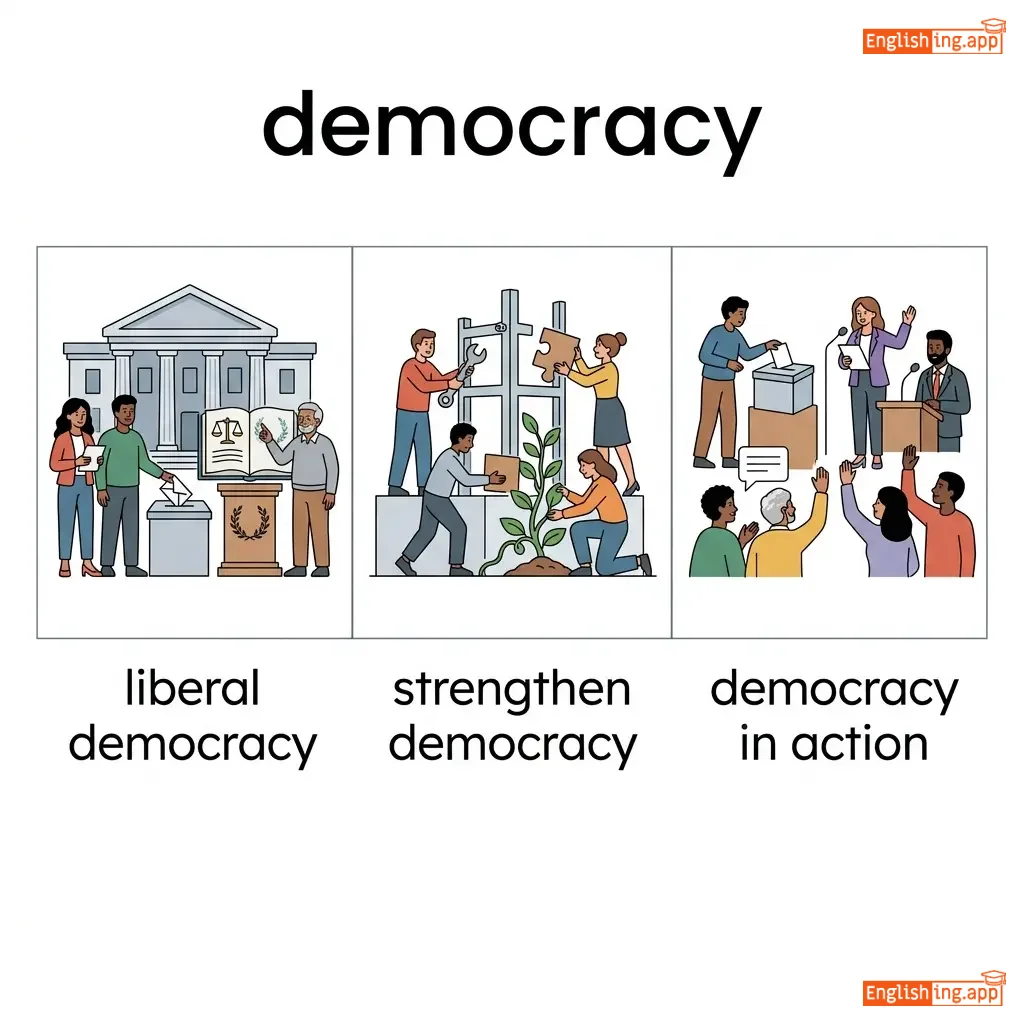
A system of government by the whole population or all the eligible members of a state, typically through elected representatives.
••••••
|
Democracy ensures equal rights for all citizens. |
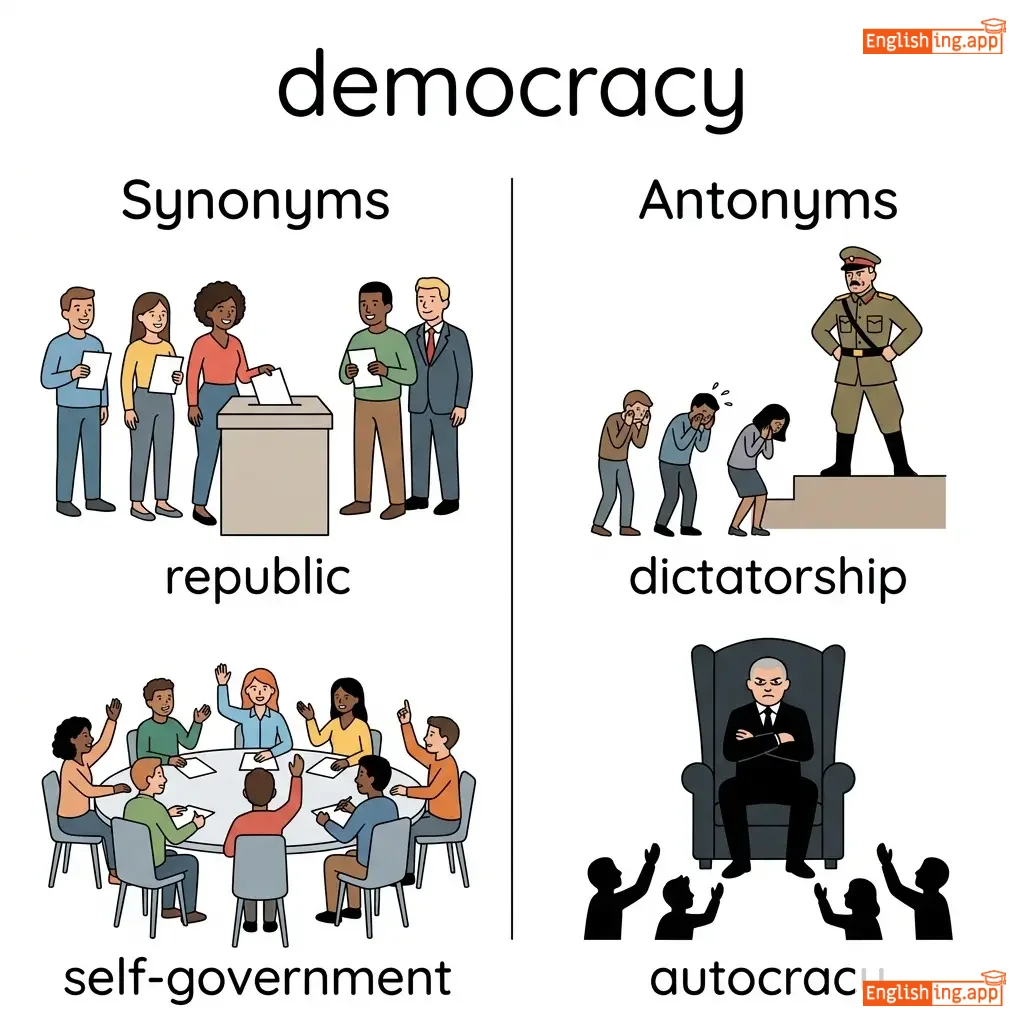
republic, self-government, representative government, popular rule
••••••
|
autocracy, dictatorship, tyranny, authoritarianism
••••••
|
|
#225
🏗️
|
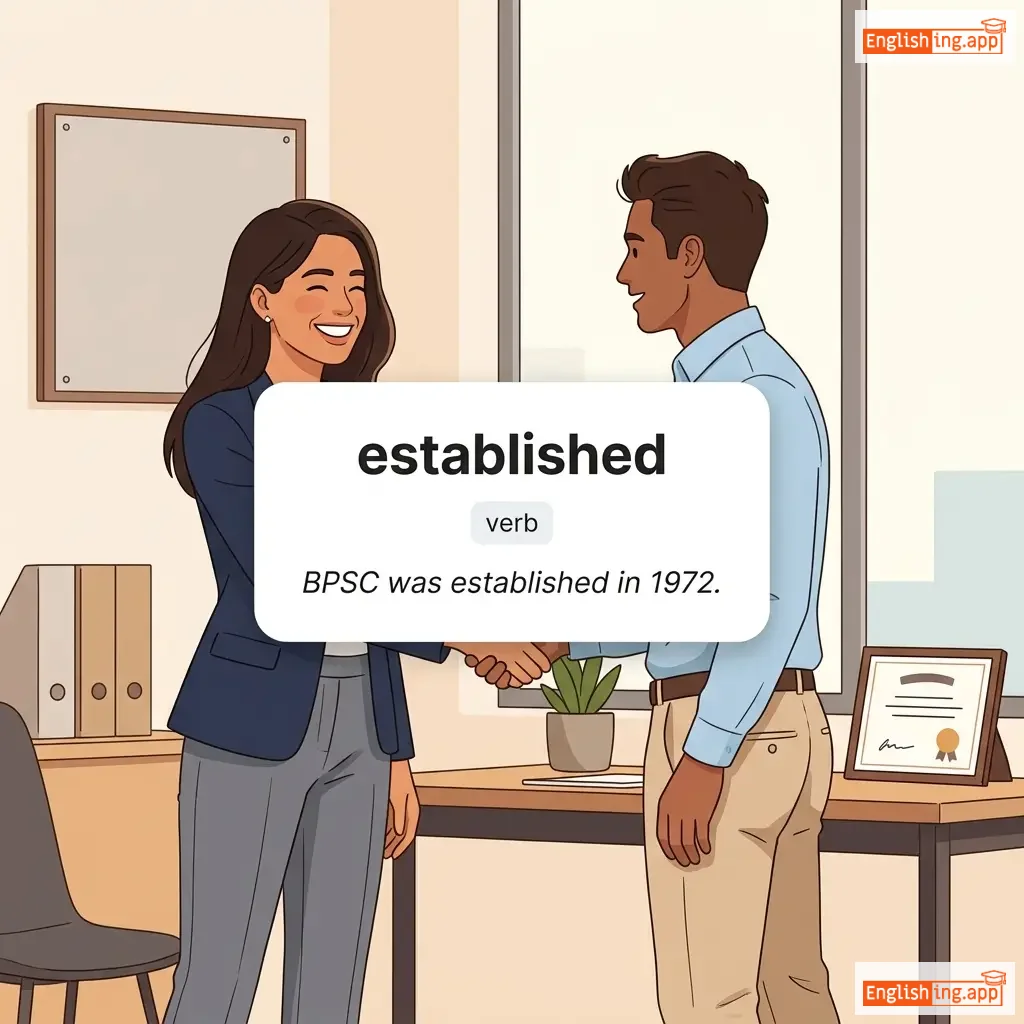
ɪˈstæb.lɪʃt
adjective
••••••
|
•••••• |
Having been in existence for a long time and therefore recognized and generally accepted; set up on a firm or permanent basis.
••••••
|
Democracy was established under strong leadership. |
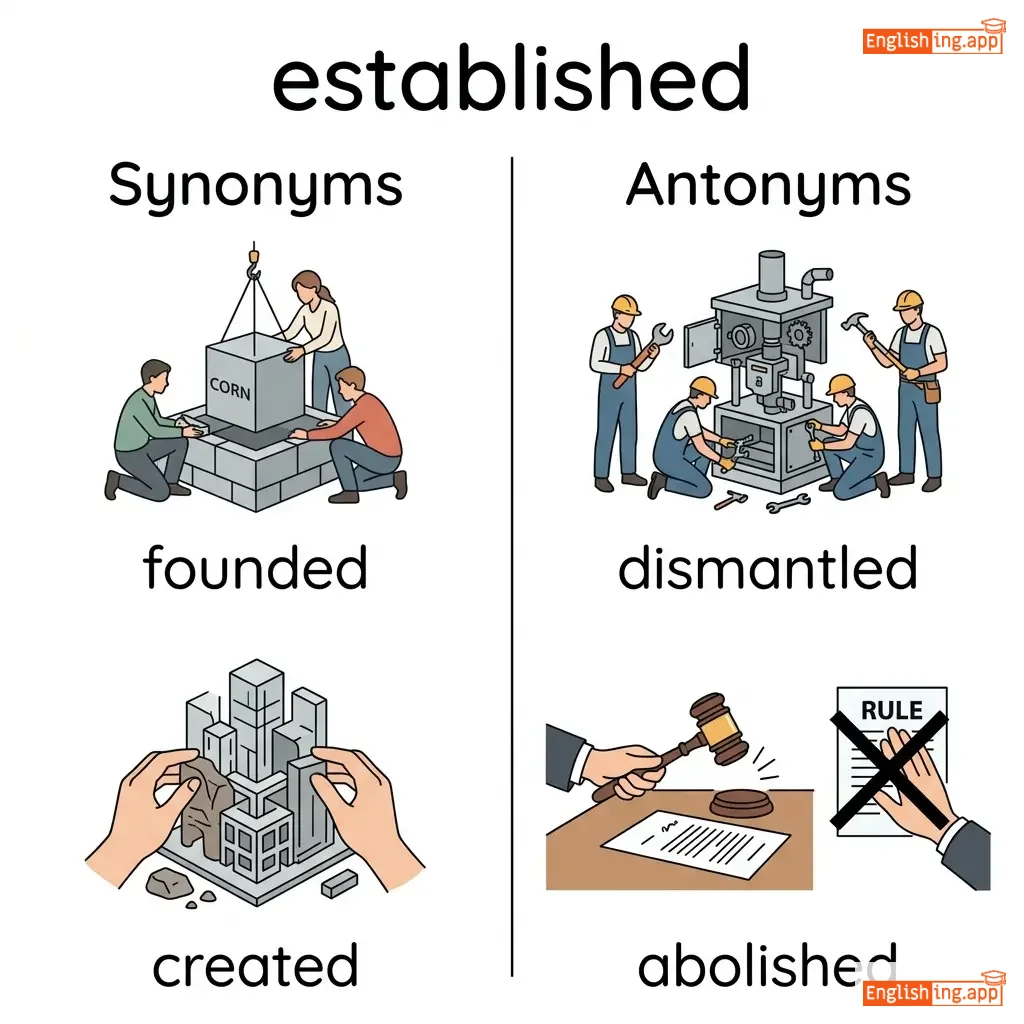
founded, set up, instituted, created
••••••
|
abolished, destroyed, dismantled, eliminated
••••••
|
|
#226
🏗️
|
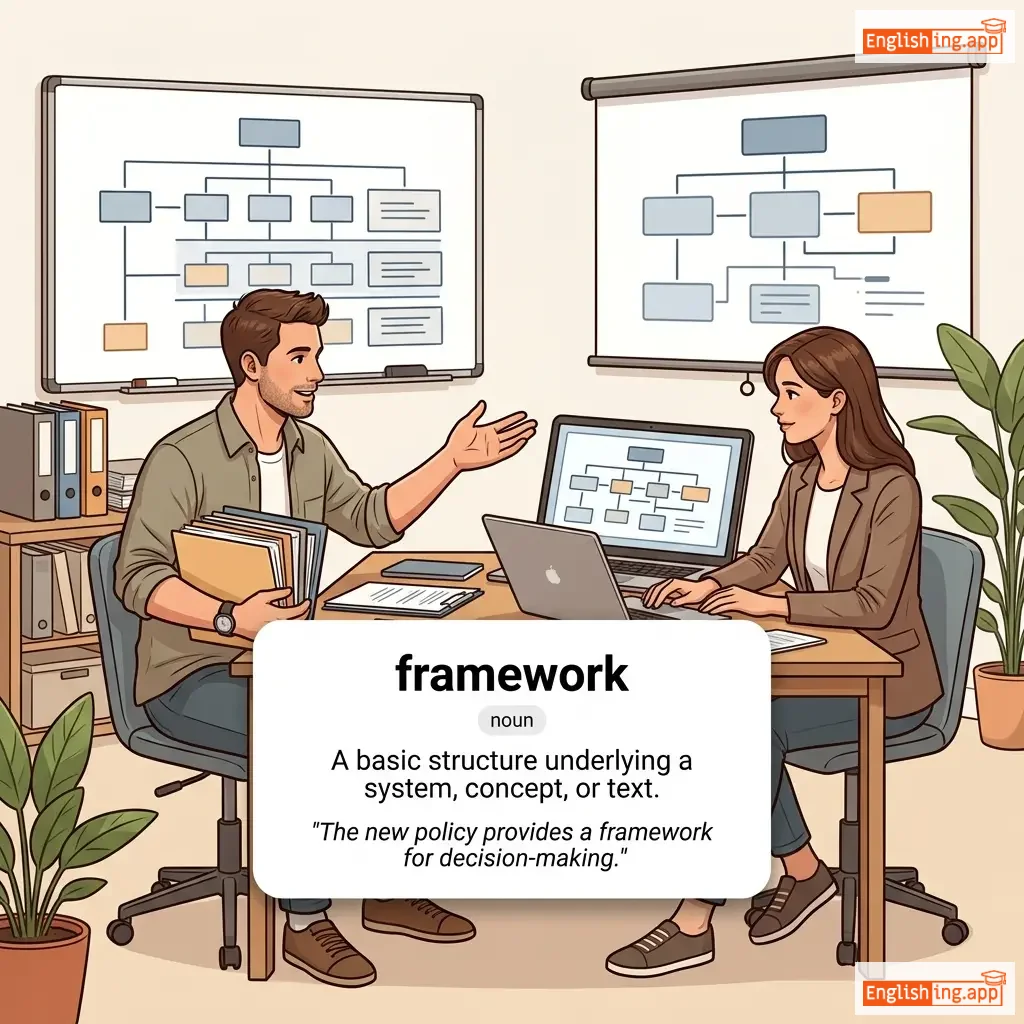
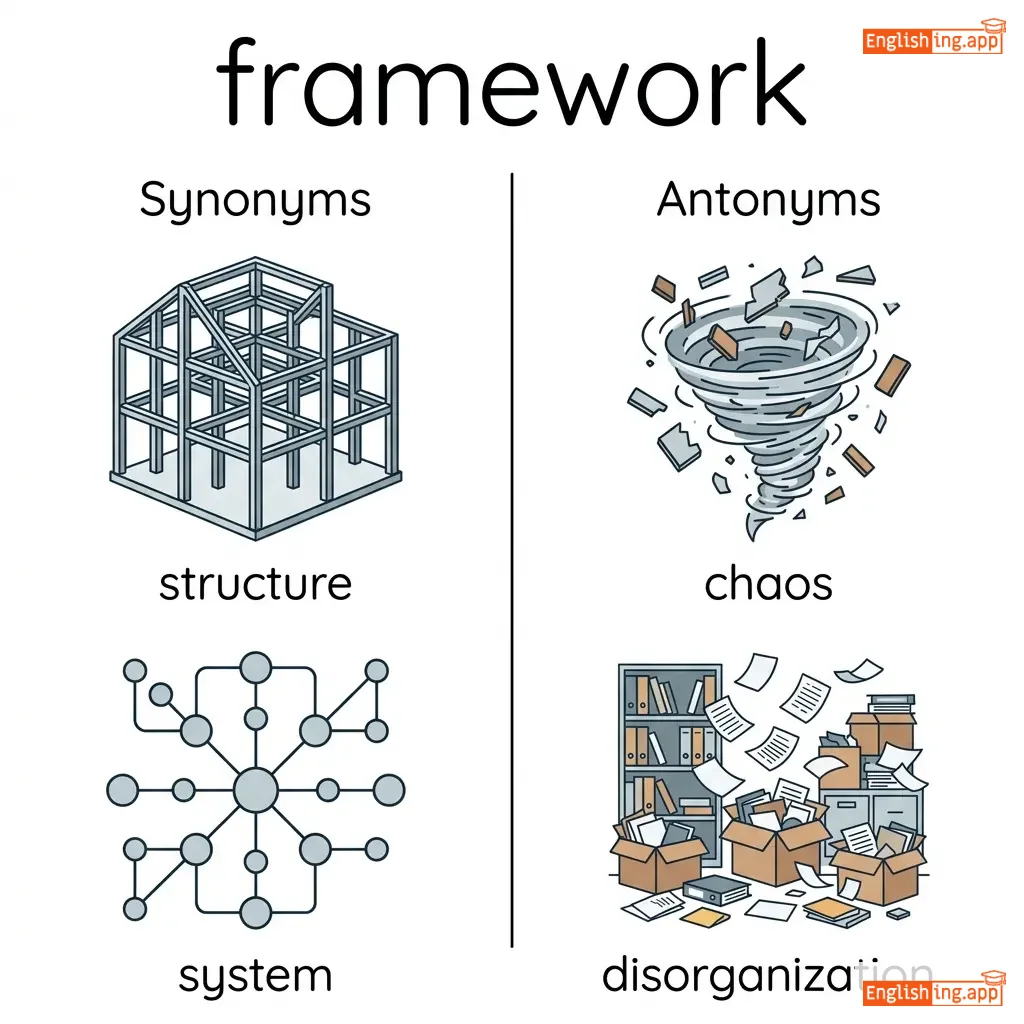
ˈfreɪm.wɜːk
noun
••••••
|
•••••• |
An essential supporting structure of a building, vehicle, or object; a basic structure underlying a system, concept, or text.
••••••
|
A strong framework is vital for governance. |
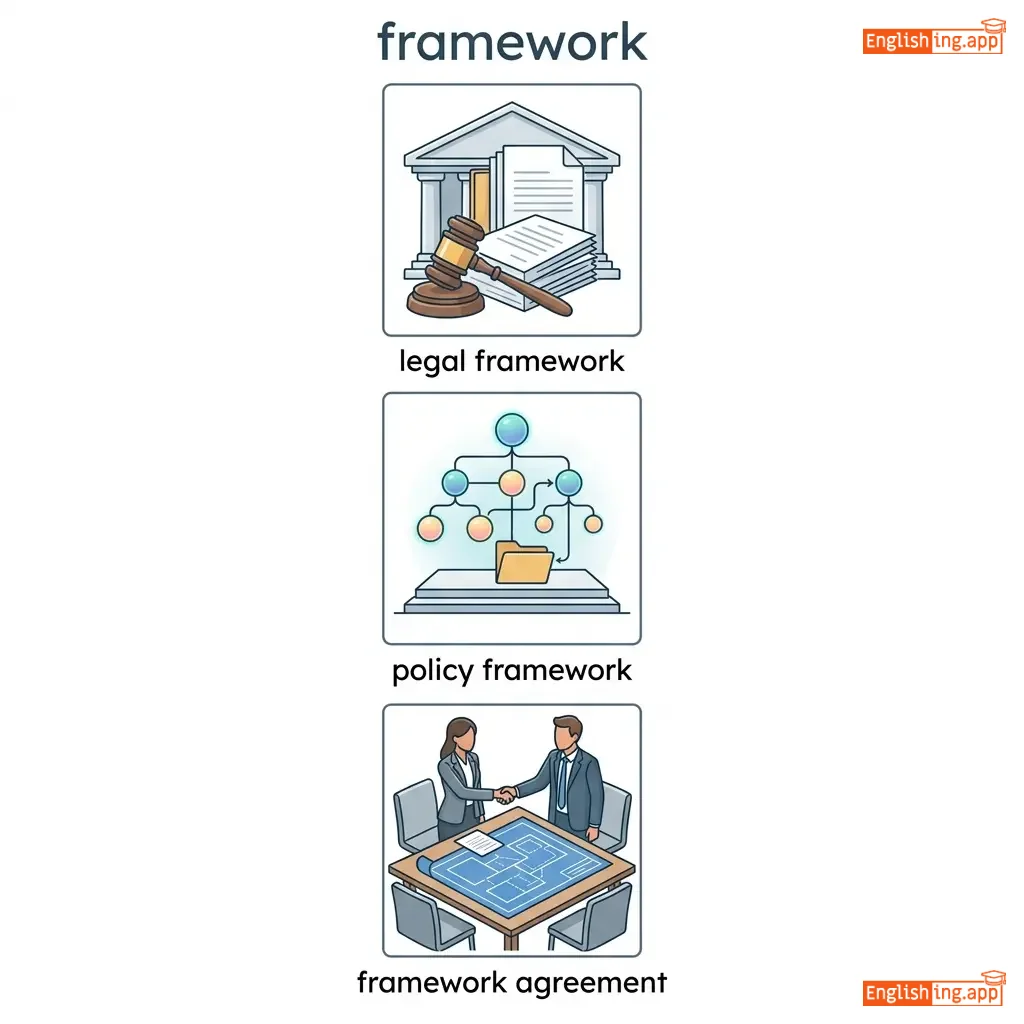
structure, system, organization, foundation
••••••
|
chaos, disorganization, disorder, anarchy
••••••
|