Breaking Through the Darkness
Sara 最近几个月一直在遭受 depression 的困扰,她的生活变得难以忍受。每天早上醒来都感到 frustrating,她感到完全处于 isolation 中。她的母亲意识到 Sara seriously 遇到问题,并带她去了 psychologist。在第一次会谈中,Sara 感到 vulnerable,但她渐渐开始分享她的感受。Psychologist 告诉她,战胜 depression 并非 impossible,这只是需要时间和正确的支持。Sara 理解了她的 self-esteem 和 well-being 的 significance。管理日常的 frustration 和 difficulty 是一个巨大的挑战。但她的家人是她最大的 supporter,他们从不让她感到孤单。Psychologist 教她如何 acknowledge 她的 limitations 并培养对自己的 acceptance。Sara 学会了不把她的 sensitivity 视为弱点,而是将其视为力量。当她感到 overwhelmed 时,她会练习深呼吸和冥想。几个月后,Sara 觉得她的 consciousness 和心理状态得到了极大的改善。她的 inadequate 感觉逐渐消失,她又开始享受生活中的小事。Sara 的旅程教会了她,认真对待心理健康并寻求帮助并不羞耻。今天,Sara 亲自鼓舞着那些正在与 depression 作斗争的人。
|
表情符号
|
单词 | Images | 翻译 | 过去时 | 过去分词 | 第三人称单数 | 动名词 | 含义 | 例句 | 例句翻译 | 示例表达 | 示例表达含义 | 示例表达翻译 | 同义词 | 反义词 | 搭配词 | 助记符 |
|---|---|---|---|---|---|---|---|---|---|---|---|---|---|---|---|---|---|
|
🤲
••••••
|
/əkˈsɛptəns/
noun
(akseptans)
••••••
|
- •••••• |
接受
jie shou
••••••
|
- •••••• | - •••••• | - •••••• | - •••••• |
the act of agreeing to receive or undertake something offered
••••••
|
Her acceptance of the award was met with applause. |
她接受奖项时,掌声四起。
Ta jie shou jiang xiang shi, zhang sheng si qi.
••••••
|
acceptance speech |
a speech given when accepting an award or honor
••••••
|
接受演讲
jie shou yan jiang
••••••
|
approval, agreement, consent, recognition
••••••
|
rejection, refusal, denial
••••••
|
letter of acceptance, acceptance speech, acceptance of offer, gain acceptance
••••••
|
Acceptance: 接受后获得掌声!
••••••
|
|
🙏
••••••
|
/əkˈnɒlɪdʒ/
verb
(ak-nol-ijz)
••••••
|
- •••••• |
承认
chengren
••••••
|
acknowledged
ak-nol-ijzd
••••••
|
acknowledged
ak-nol-ijzd
••••••
|
acknowledges
ak-nol-ijz
••••••
|
acknowledging
ak-nol-ijzing
••••••
|
to accept, admit, or recognize the truth or existence of something
••••••
|
She refused to acknowledge her mistake.
她拒绝承认她的错误。
••••••
|
她拒绝承认她的错误。
Ta jujue chengren ta de cuowu.
••••••
|
acknowledge receipt
确认收到
••••••
|
to confirm that something has been received
••••••
|
确认收到
queren shoudao
••••••
|
admit, accept, recognize, concede, confirm
••••••
|
deny, ignore, reject
••••••
|
acknowledge mistake, acknowledge receipt, acknowledge contribution, acknowledge truth
••••••
|
Acknowledge = 承认错误和知识
••••••
|
|
🧠
••••••
|
/ˈkɒnʃəsnəs/
noun
(kōngshí'ěr nà sī)
••••••
|
|
意识
yìshi
••••••
|
- •••••• | - •••••• | - •••••• | - •••••• |
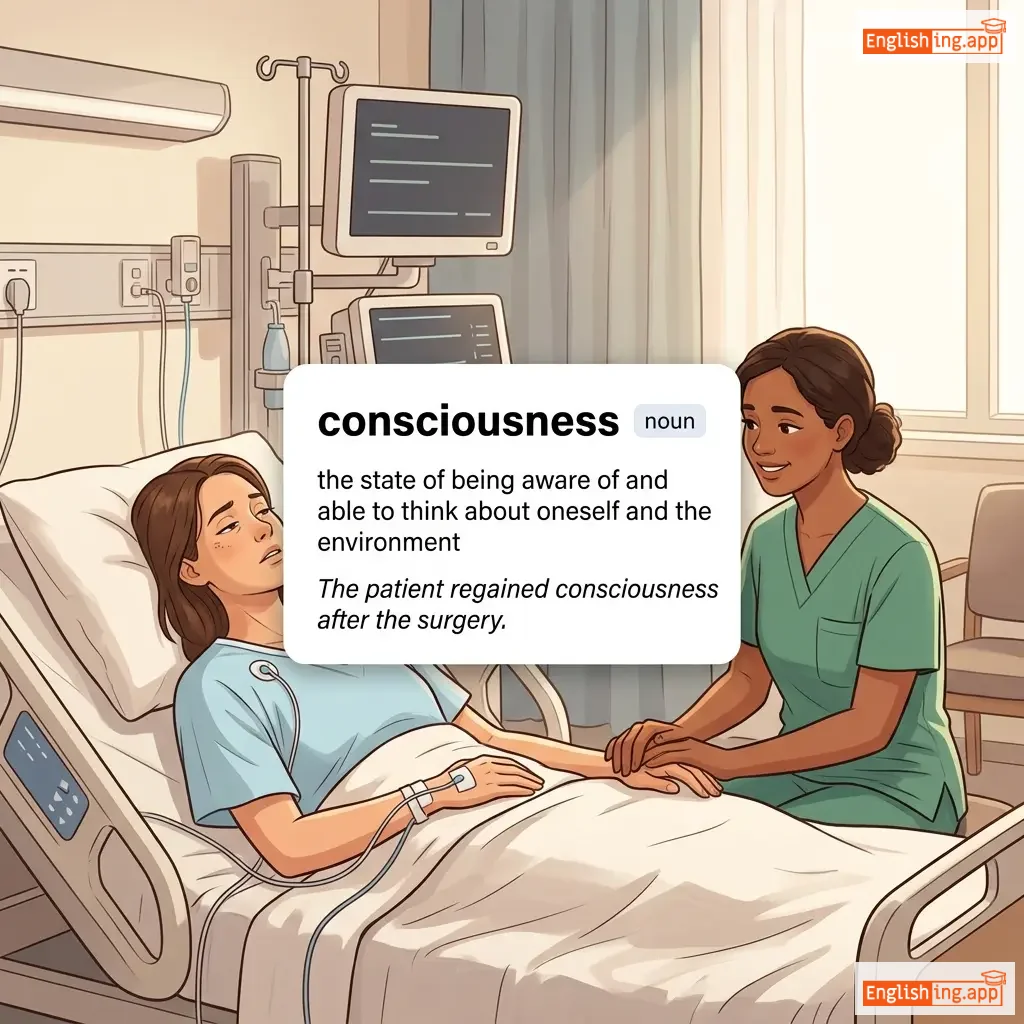
the state of being aware of and able to think about oneself and the environment
••••••
|
The patient regained consciousness after the surgery. |
患者在手术后恢复了意识。
huànzhě zài shǒushù hòu huīfùle yìshi.
••••••
|
stream of consciousness |
a literary style that presents a character's continuous flow of thoughts and feelings
••••••
|
意识流
yìshi liú
••••••
|
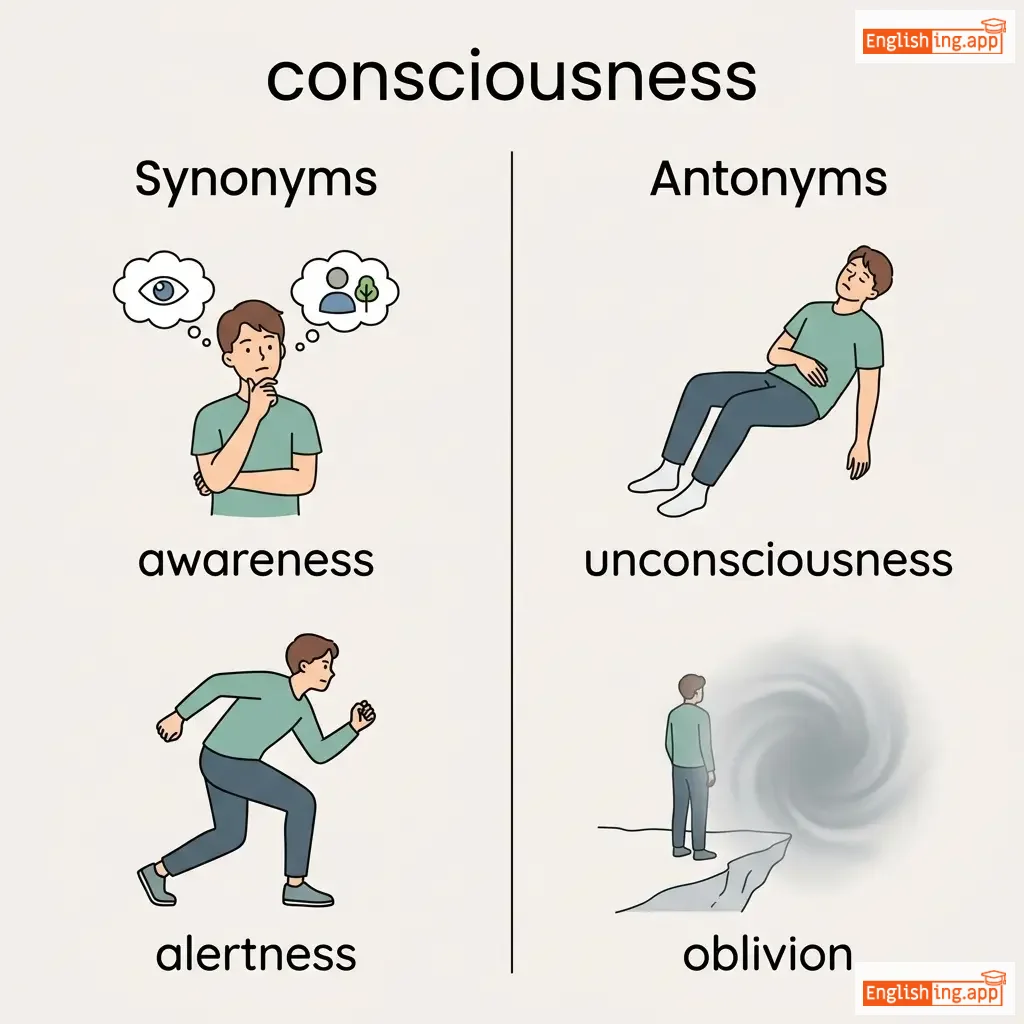
awareness, alertness, perception, mindfulness, sentience
••••••
|
unconsciousness, oblivion, ignorance
••••••
|
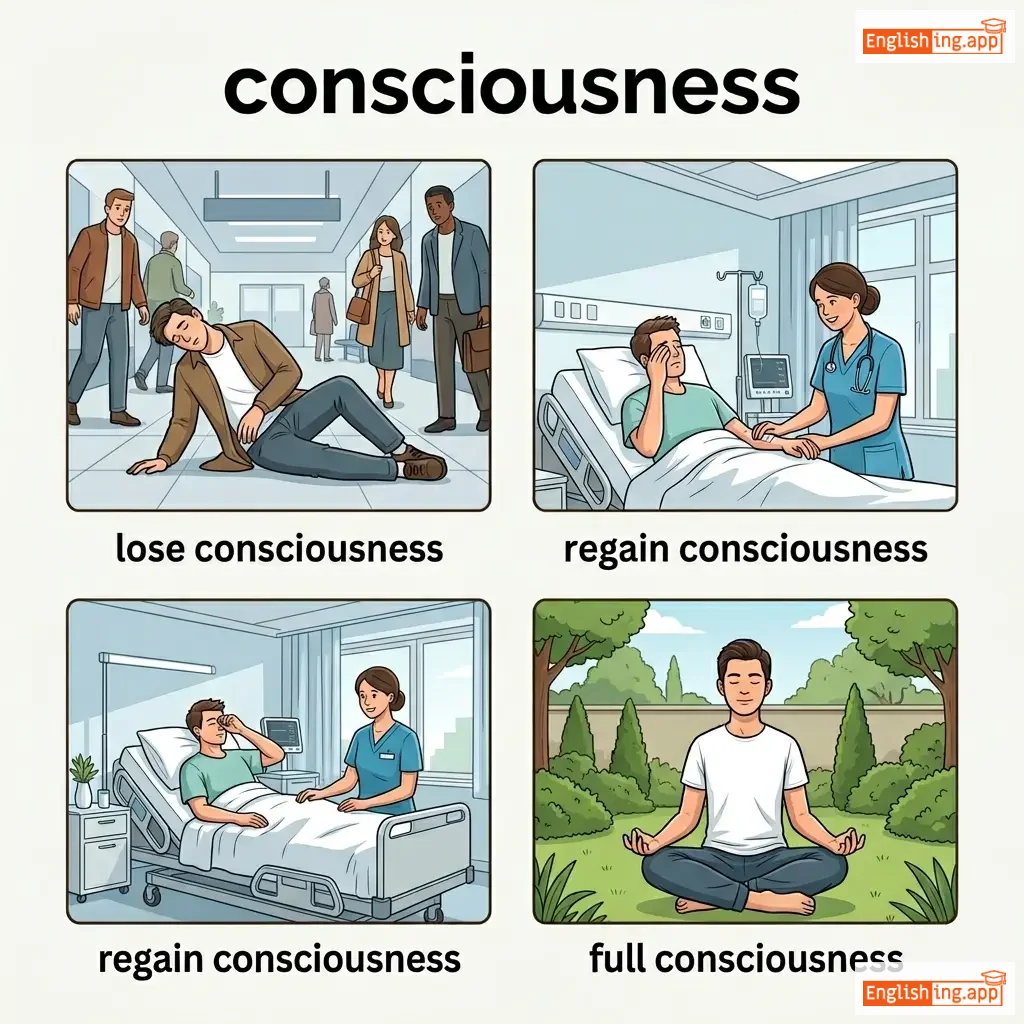
lose consciousness, regain consciousness, full consciousness, human consciousness
••••••
|
意识(yìshi)在中文中就是指意识到自己和周围的环境,就像'consciousness'一样。
••••••
|
|
😔
••••••
|
/dɪˈprɛʃən/
noun
(抑郁症)
••••••
|
- •••••• |
抑郁症
yiyuzheng
••••••
|
- •••••• | - •••••• | - •••••• | - •••••• |
A state of severe sadness or hopelessness; also a prolonged downturn in economic activity.
••••••
|
She has been battling depression for several months. |
她已经与抑郁症斗争了几个月。
Ta yijing yu yiyuzheng douzheng le ji ge yue.
••••••
|
economic depression |
A long-term downturn in economic activity.
••••••
|
经济萧条
jingji xiaotiao
••••••
|
melancholy, sadness, gloom, slump, recession
••••••
|
happiness, joy, boom
••••••
|
suffer from depression, clinical depression, deep depression, economic depression
••••••
|
抑郁症 = deep + pressure = 内心沉重的压迫感。
••••••
|
|
⚠️
••••••
|
/ˈdɪfɪkəlti/
noun
••••••
|
- •••••• | - •••••• | - •••••• | - •••••• | - •••••• | - •••••• |
the state or condition of being hard to do, deal with, or understand
••••••
|
He faced great difficulty in learning a new language. |
- •••••• |
in difficulty |
to be in trouble or facing problems
••••••
|
- •••••• |
challenge, hardship, obstacle, struggle, trouble
••••••
|
ease, simplicity, comfort
••••••
|
face difficulty, great difficulty, difficulty in, experience difficulty
••••••
|
No •••••• |
|
😩
••••••
|
/ˈfrʌstreɪtɪŋ/
adjective
(frustrating)
••••••
|
- •••••• |
令人沮丧
lìng rén jǔsàng
••••••
|
- •••••• | - •••••• | - •••••• | - •••••• |
causing annoyance or dissatisfaction
••••••
|
The slow internet connection was really frustrating. |
缓慢的互联网连接真的令人沮丧。
Huǎnmàn de hùliánwǎng liánjiē zhēn de lìng rén jǔsàng.
••••••
|
- •••••• | - •••••• | - •••••• |
annoying, exasperating, irritating
••••••
|
pleasing, satisfying, enjoyable
••••••
|
frustrating experience, frustrating situation, frustrating delay
••••••
|
Frustrating situations feel like 'frozen traffic' – you just can't move ahead.
••••••
|
|
😣
••••••
|
/frʌˈstreɪʃən/
noun
(fu-ruu-strei-shen)
••••••
|
- •••••• |
挫折
cuòzhé
••••••
|
- •••••• | - •••••• | - •••••• | - •••••• |
The feeling of being upset or annoyed due to inability to achieve something.
••••••
|
He felt deep frustration when his plans failed. |
当他的计划失败时,他感到深深的挫折。
Dāng tā de jìhuà shībài shí, tā gǎndào shēnshēn de cuòzhé.
••••••
|
vent frustration |
To express anger or annoyance openly.
••••••
|
表达挫折
biǎodá cuòzhé
••••••
|
annoyance, irritation, disappointment, exasperation, discontent
••••••
|
satisfaction, contentment, delight
••••••
|
cause frustration, deep frustration, express frustration, frustration level
••••••
|
挫折(cuòzhé)表示无法成功的无奈感,就像英文中的frustration一样。
••••••
|
|
🚫
••••••
|
/ɪmˈpɑːsəbl/
adjective
(不可能)
••••••
|
- •••••• |
不可能
bù kěnéng
••••••
|
- •••••• | - •••••• | - •••••• | - •••••• |
not able to occur, exist, or be done
••••••
|
It is impossible to finish this work in one day.
一天之内完成这项工作是不可能的。
••••••
|
一天之内完成这项工作是不可能的。
Yītiān zhī nèi wánchéng zhè xiàng gōngzuò shì bù kěnéng de.
••••••
|
nothing is impossible
没有什么是不可能的
••••••
|
everything can be achieved with effort
••••••
|
没有什么是不可能的
Méiyǒu shénme shì bù kěnéng de
••••••
|
unachievable, unattainable, hopeless, impracticable
••••••
|
possible, achievable, feasible
••••••
|
seem impossible, make impossible, impossible task, impossible mission
••••••
|
不可能,意味着要努力去克服它!💪
••••••
|
|
⚠️
••••••
|
/ɪnˈædɪkwət/
adjective
(inadekweit)
••••••
|
- •••••• |
不充分
bù chōngfèn
••••••
|
- •••••• | - •••••• | - •••••• | - •••••• |
Not sufficient or good enough.
••••••
|
The funding was inadequate to complete the project. |
资金不足以完成项目。
Zījīn bù zúgòu yǐ wánchéng xiàngmù.
••••••
|
inadequate resources |
Not enough resources to meet requirements.
••••••
|
不足的资源
bù zú de zīyuán
••••••
|
insufficient, deficient, lacking, meager, incomplete
••••••
|
adequate, sufficient, enough
••••••
|
inadequate funding, inadequate resources, inadequate support, inadequate system
••••••
|
Adequate意味着足够,所以Inadequate = 不足 → 不充分
••••••
|
|
🧍♂️
••••••
|
/ˌaɪsəˈleɪʃən/
noun
(aisoléishèng)
••••••
|
- •••••• |
隔离
gelí
••••••
|
- •••••• | - •••••• | - •••••• | - •••••• |
the state of being separated from others; solitude or detachment
••••••
|
He lived in complete isolation after his retirement. |
他在退休后生活在完全的隔离中。
Tā zài tuìxiū hòu shēnghuó zài wánquán de gélí zhōng.
••••••
|
in isolation |
alone or without contact with others
••••••
|
在隔离中
zài gélí zhōng
••••••
|
seclusion, loneliness, separation, detachment, solitude
••••••
|
connection, inclusion, community
••••••
|
social isolation, in isolation, complete isolation
••••••
|
Isolation 意味着独自一人 — 'I so alone' → 隔离 🧍♂️
••••••
|
|
⛔
••••••
|
/ˌlɪmɪˈteɪʃən/
noun
(limiteishen)
••••••
|
|
限制
xianzhi
••••••
|
- •••••• | - •••••• | - •••••• | - •••••• |
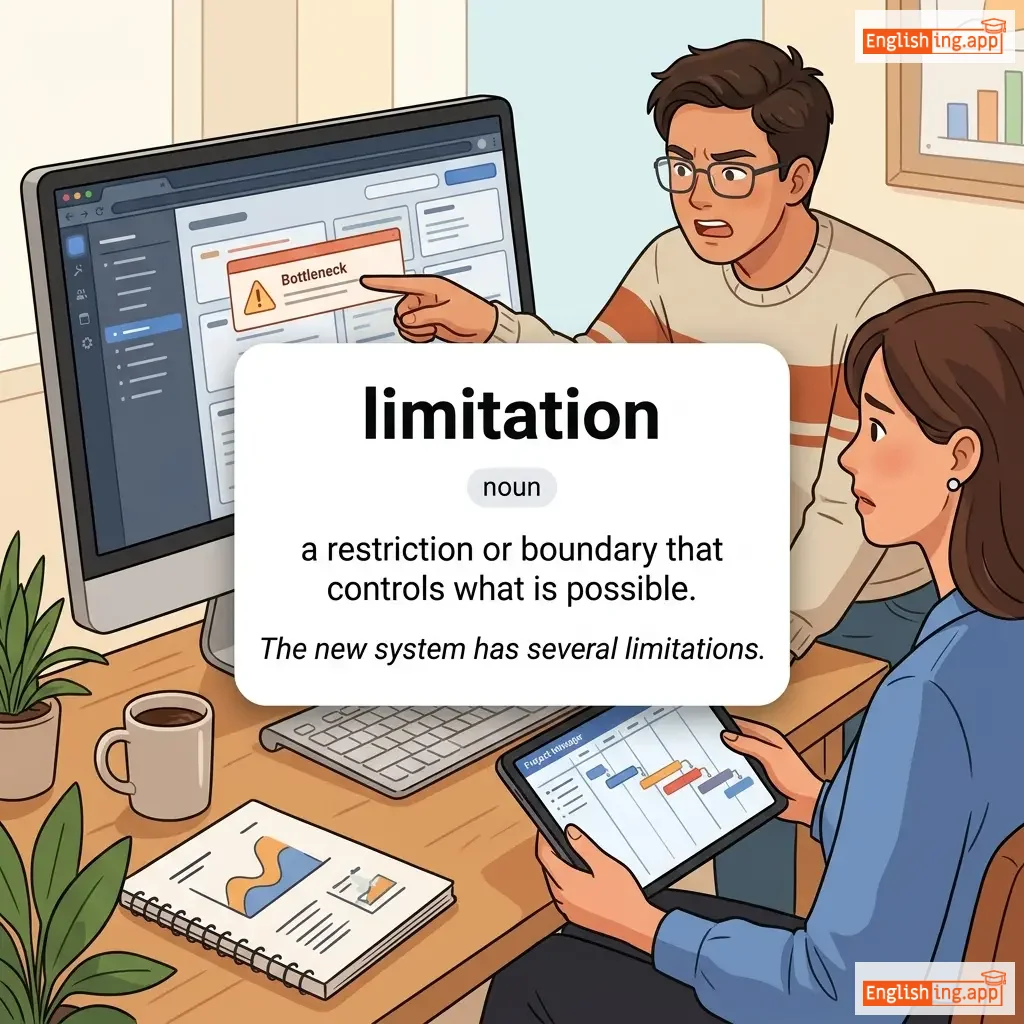
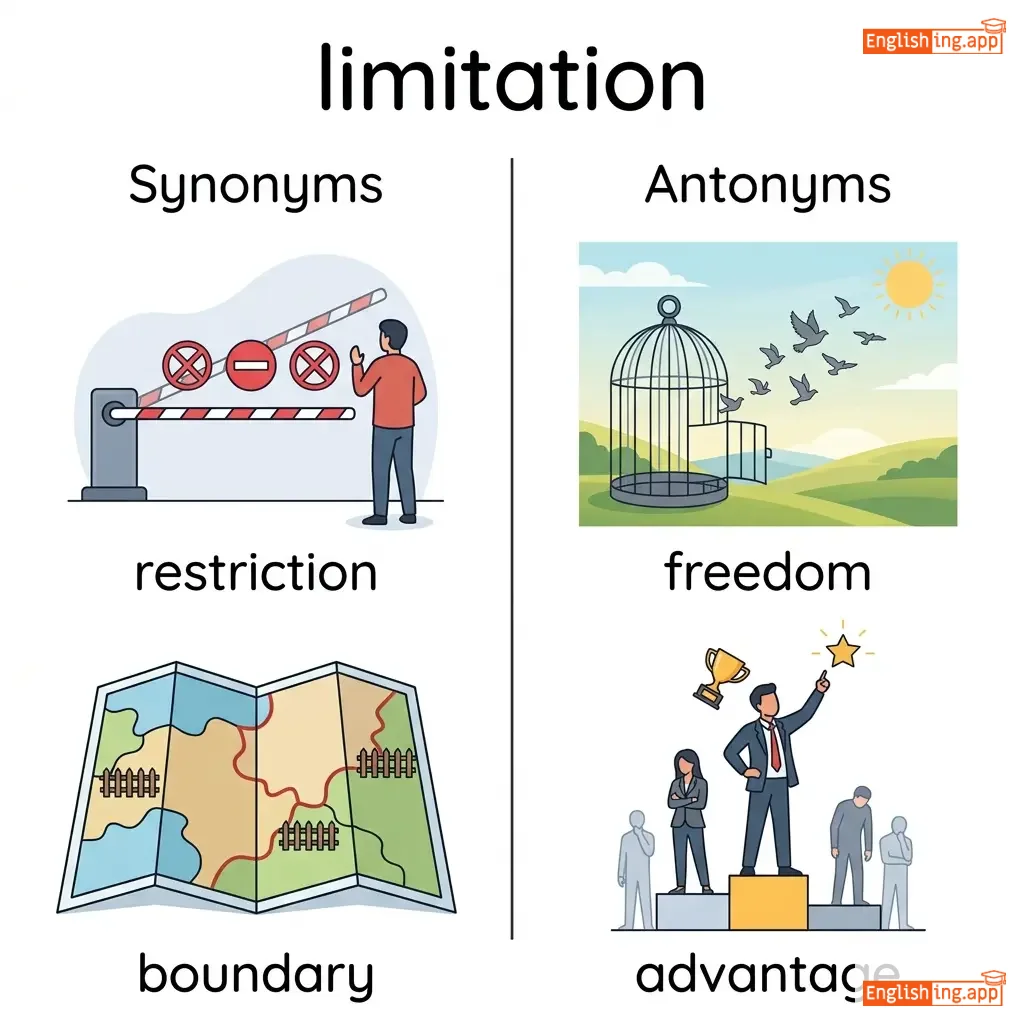
a restriction or boundary that controls what is possible.
••••••
|
The new system has several limitations. |
新系统有几个限制。
Xin xitong you ji ge xianzhi.
••••••
|
know your limitations |
be aware of your own weaknesses or boundaries.
••••••
|
了解你的限制
liaojie nide xianzhi
••••••
|
restriction, boundary, constraint, drawback, shortcoming
••••••
|
freedom, advantage, strength
••••••
|
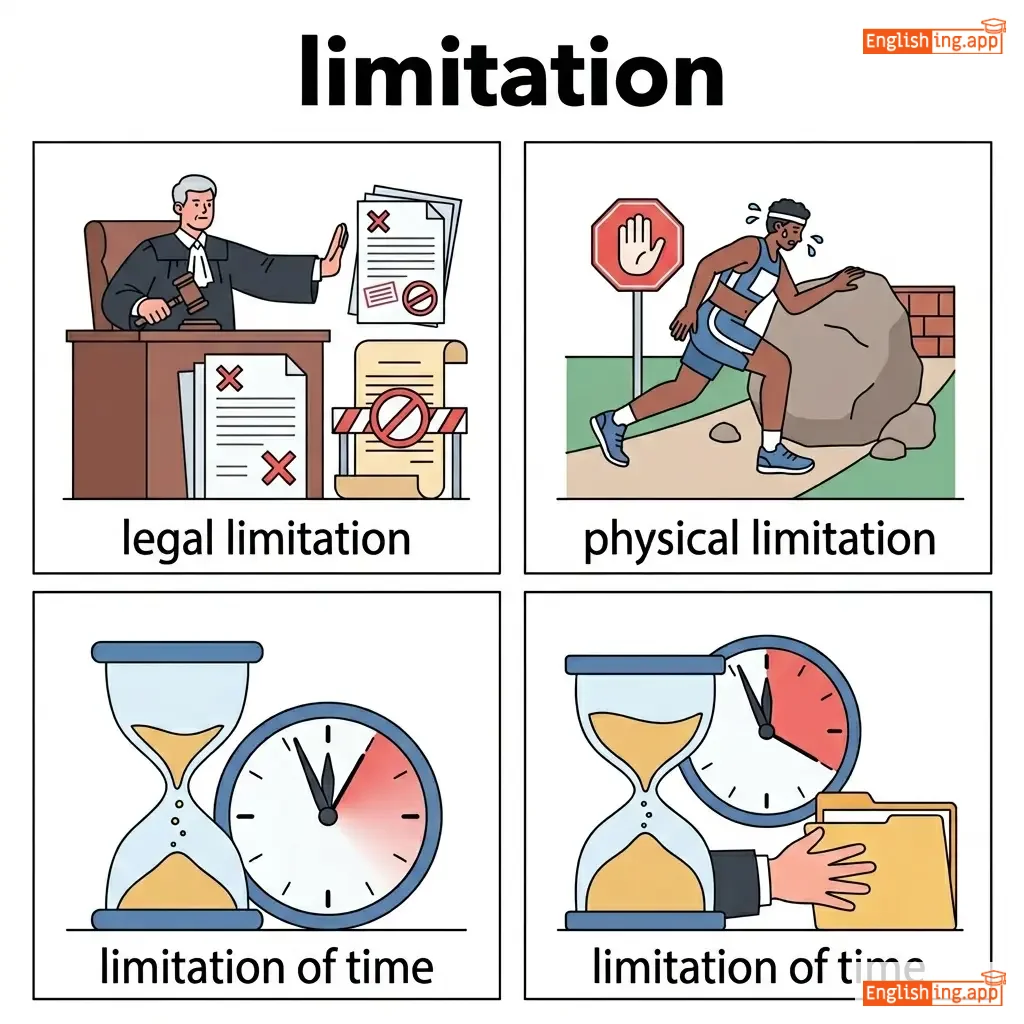
legal limitation, physical limitation, limitation of time, limitation on rights
••••••
|
限制和‘limit’有关系,意味着边界或约束。
••••••
|
|
🌊
••••••
|
/ˌoʊvərˈwɛlm/
verb
••••••
|
- •••••• | - •••••• |
overwhelmed
••••••
|
overwhelmed
••••••
|
overwhelms
••••••
|
overwhelming
••••••
|
to overpower someone emotionally or physically; to be too much to handle
••••••
|
She was overwhelmed with gratitude after receiving the help. |
- •••••• |
overwhelmed with joy |
to feel extreme happiness
••••••
|
- •••••• |
overpower, crush, engulf, overcome, astonish
••••••
|
calm, comfort, underwhelm
••••••
|
overwhelm with work, overwhelm the enemy, overwhelmed by emotions
••••••
|
No •••••• |
|
🧠
••••••
|
/saɪˈkɒlədʒɪst/
noun
(心理学家)
••••••
|
- •••••• |
心理学家
xīnlǐ xué jiā
••••••
|
- •••••• | - •••••• | - •••••• | - •••••• |
a person who studies mental processes and behavior
••••••
|
The psychologist helped him cope with his anxiety. |
心理学家帮助他应对焦虑。
xīnlǐ xué jiā bāng zhù tā yìng duì jiāo lǜ.
••••••
|
- •••••• | - •••••• | - •••••• |
therapist, counselor, psychiatrist, analyst
••••••
|
patient, sufferer
••••••
|
clinical psychologist, child psychologist, psychologist consultation
••••••
|
心理学家 (xīnlǐ xué jiā) 是研究心理的专家。
••••••
|
|
💪
••••••
|
/ˌsɛlf ɪˈstiːm/
noun
(self-esteem)
••••••
|
- •••••• |
自尊
zizun
••••••
|
- •••••• | - •••••• | - •••••• | - •••••• |
confidence in one's own worth or abilities; self-respect
••••••
|
Building self-esteem takes time and consistent effort. |
建立自尊需要时间和持续的努力。
Jianli zizun xuyao shijian he chixu de nuli.
••••••
|
low self-esteem |
a lack of confidence and negative view of oneself
••••••
|
低自尊
di zizun
••••••
|
self-confidence, self-respect, pride, dignity, morale
••••••
|
self-doubt, insecurity, shame
••••••
|
high self-esteem, low self-esteem, boost self-esteem, develop self-esteem
••••••
|
自尊是对自己有信心,尊重自己。
••••••
|
|
💗
••••••
|
/ˌsɛnsɪˈtɪvɪti/
noun
(敏感性)
••••••
|
|
敏感性
mǐn gǎn xìng
••••••
|
- •••••• | - •••••• | - •••••• | - •••••• |
the quality of being sensitive; ability to detect or respond to slight changes or emotions
••••••
|
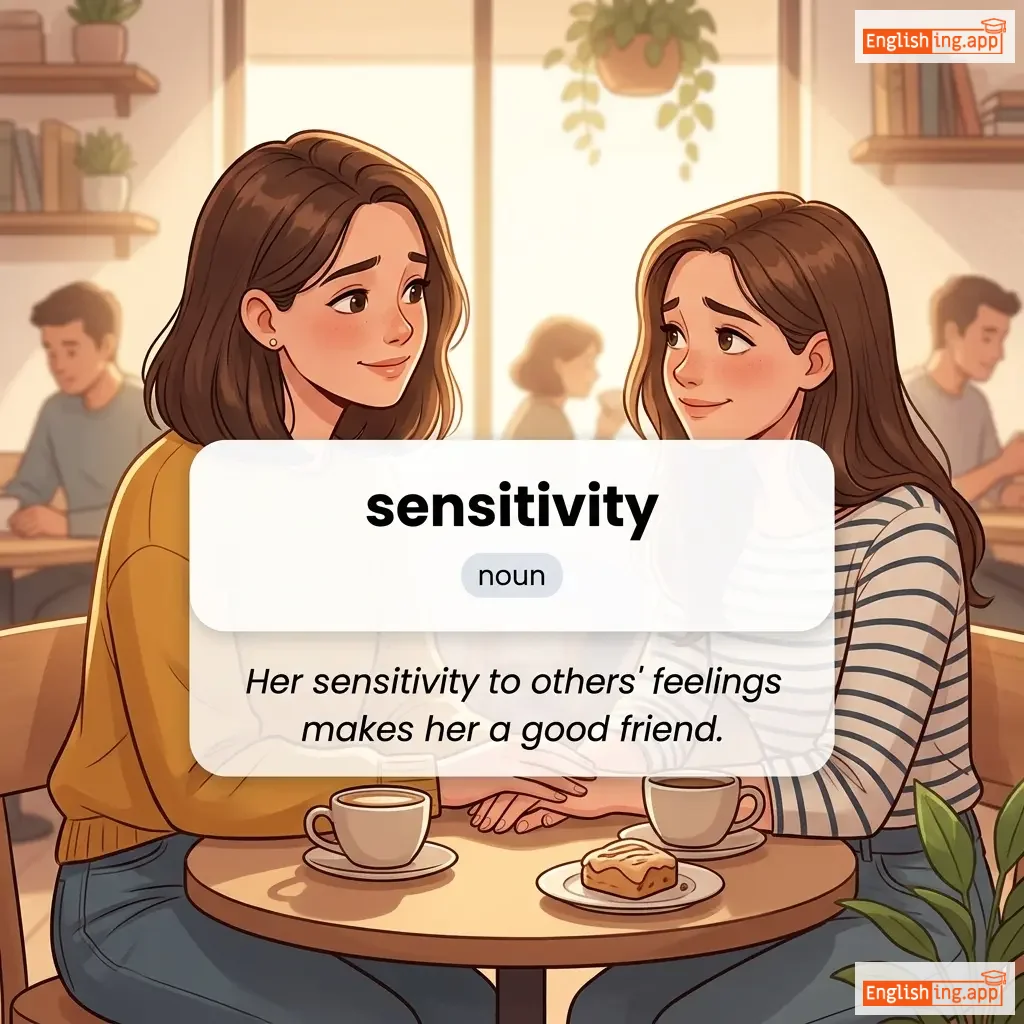
Her sensitivity to others' feelings makes her a good friend.
她对他人感受的敏感性使她成为一个好朋友。
••••••
|
她对他人感受的敏感性使她成为一个好朋友。
Tā duì tārén gǎnshòu de mǐn gǎn xìng shǐ tā chéngwéi yī gè hǎo péngyǒu.
••••••
|
cultural sensitivity
文化敏感性
••••••
|
awareness and respect for cultural differences
••••••
|
文化敏感性
wén huà mǐn gǎn xìng
••••••
|
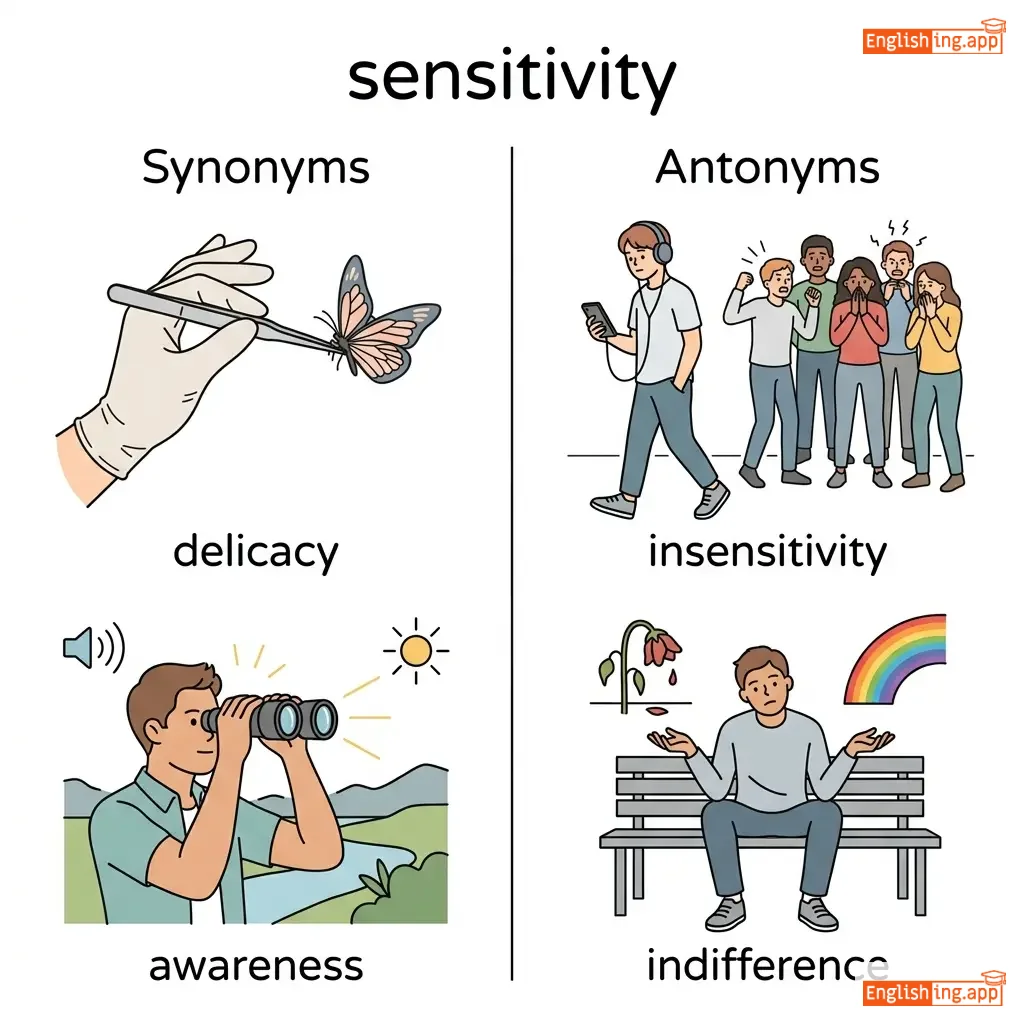
delicacy, awareness, responsiveness, empathy, receptivity
••••••
|
insensitivity, indifference, numbness
••••••
|
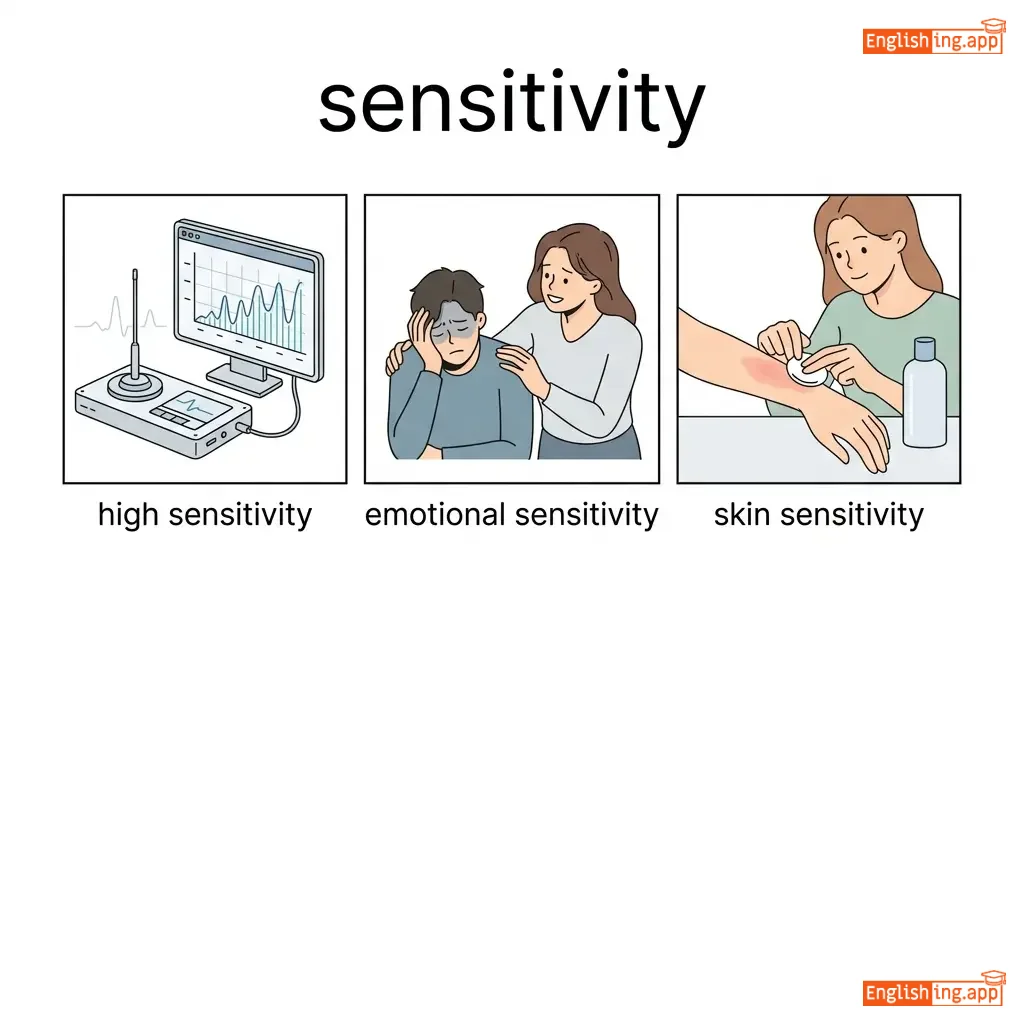
high sensitivity, emotional sensitivity, skin sensitivity, cultural sensitivity
••••••
|
敏感性 = 敏感 + 性, 意味着感知微小的情感变化
••••••
|
|
😐
••••••
|
/ˈsɪə.ri.əs.li/
adverb
(严肃地)
••••••
|
- •••••• |
认真地
rènzhēn de
••••••
|
- •••••• | - •••••• | - •••••• | - •••••• |
in a solemn or thoughtful manner
••••••
|
She took the matter very seriously. |
她非常认真地对待了这个问题。
Tā fēicháng rènzhēn de duìdài le zhège wèntí.
••••••
|
- •••••• | - •••••• | - •••••• |
earnestly, sincerely, thoughtfully, profoundly
••••••
|
lightly, casually, humorously
••••••
|
take seriously, treat seriously, speak seriously
••••••
|
Serious people are always 'serious' about everything!
••••••
|
|
📌
••••••
|
/sɪɡˈnɪfɪkəns/
noun
(xīngfèn)
••••••
|
- •••••• |
意义
yìyì
••••••
|
- •••••• | - •••••• | - •••••• | - •••••• |
the quality of being important, meaningful, or worthy of attention
••••••
|
The significance of the discovery was recognized worldwide. |
这一发现的重要性在全球范围内得到了认可。
Zhè yī fāxiàn de zhòngyào xìng zài quánqiú fànwéi nèi dédào le rènkě.
••••••
|
of great significance |
something very important or meaningful
••••••
|
极其重要
jíqí zhòngyào
••••••
|
importance, meaning, value, weight, consequence
••••••
|
insignificance, triviality
••••••
|
historical significance, cultural significance, great significance, significance level
••••••
|
Significance意味着意义 - 有意义的事情很重要
••••••
|
|
💪
••••••
|
/səˈpɔːtər/
noun
(支持者)
••••••
|
- •••••• |
支持者
zhīchí zhě
••••••
|
- •••••• | - •••••• | - •••••• | - •••••• |
a person who supports someone or something
••••••
|
She is a strong supporter of the local animal shelter.
她是当地动物收容所的强大支持者。
••••••
|
她是当地动物收容所的强大支持者。
Tā shì dāngdì dòngwù shōuróngsuǒ de qiángdà zhīchí zhě.
••••••
|
- •••••• | - •••••• | - •••••• |
advocate, backer, champion, fan
••••••
|
opponent, adversary, critic
••••••
|
supporter of, strong supporter, loyal supporter, passionate supporter
••••••
|
支持者是总是支持的,就像支持一个动物收容所。
••••••
|
|
🛡️
••••••
|
/ˈvʌl.nər.ə.bəl/
adjective
(脆弱)
••••••
|
- •••••• |
脆弱
cuìruò
••••••
|
- •••••• | - •••••• | - •••••• | - •••••• |
susceptible to physical or emotional harm
••••••
|
Children are often the most vulnerable in times of crisis.
孩子们在危机时刻常常是最脆弱的。
••••••
|
孩子们在危机时刻常常是最脆弱的。
Háizimen zài wéijī shíkè chángcháng shì zuì cuìruò de.
••••••
|
vulnerable position
脆弱的位置
••••••
|
a situation of weakness or exposure to harm
••••••
|
脆弱的位置
cuìruò de wèizhì
••••••
|
defenseless, exposed, weak, fragile, unprotected
••••••
|
strong, secure, protected
••••••
|
vulnerable groups, vulnerable people, vulnerable position
••••••
|
Vulnerable意思是'Val Na Roble' - '瓦尔纳罗布尔' 变得脆弱
••••••
|
|
😊
••••••
|
/ˈwel.biː.ɪŋ/
noun
(wɛlˈbiɪŋ)
••••••
|
|
福祉
fú zhǐ
••••••
|
- •••••• | - •••••• | - •••••• | - •••••• |
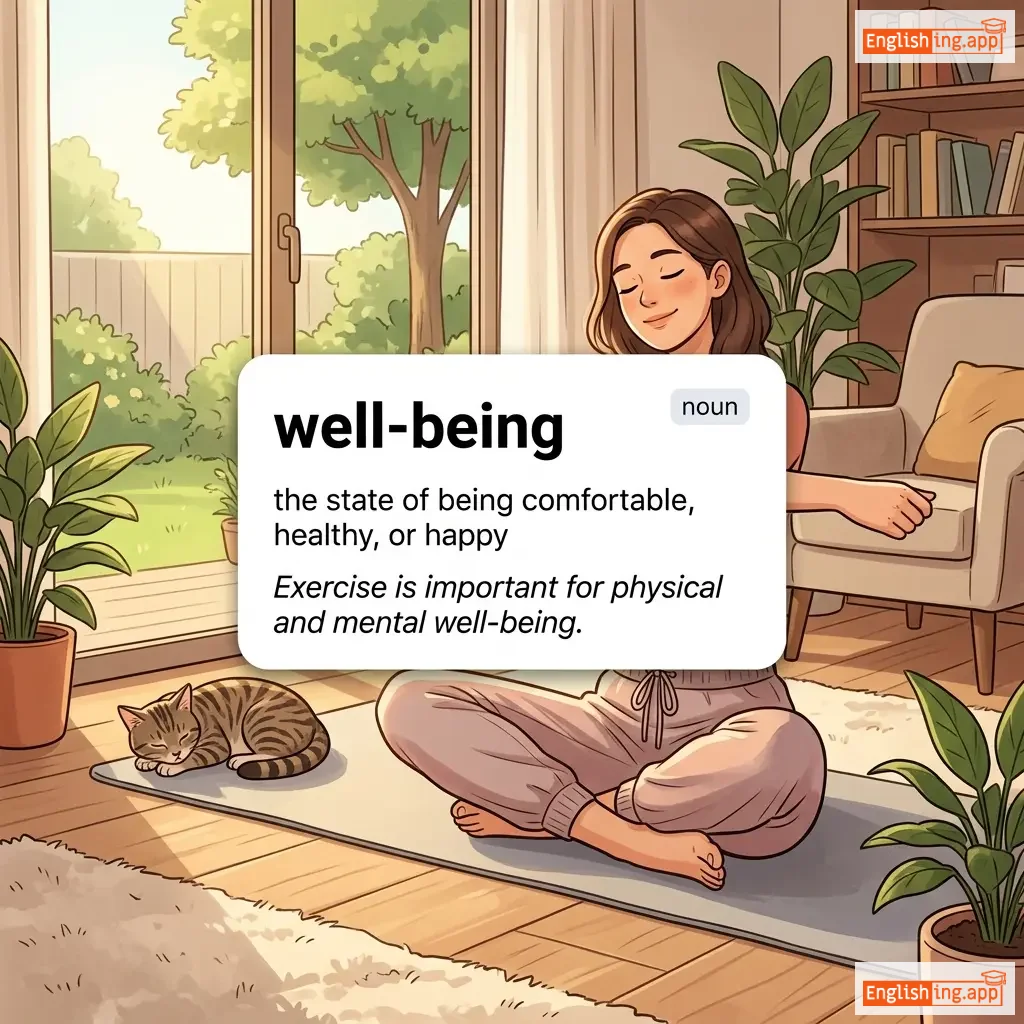
the state of being comfortable, healthy, or happy
••••••
|
Regular exercise contributes to physical and mental well-being. |
定期锻炼有助于身体和心理的福祉。
Dìngqī duànliàn yǒuzhù yú shēntǐ hé xīnlǐ de fú zhǐ.
••••••
|
- •••••• | - •••••• | - •••••• |
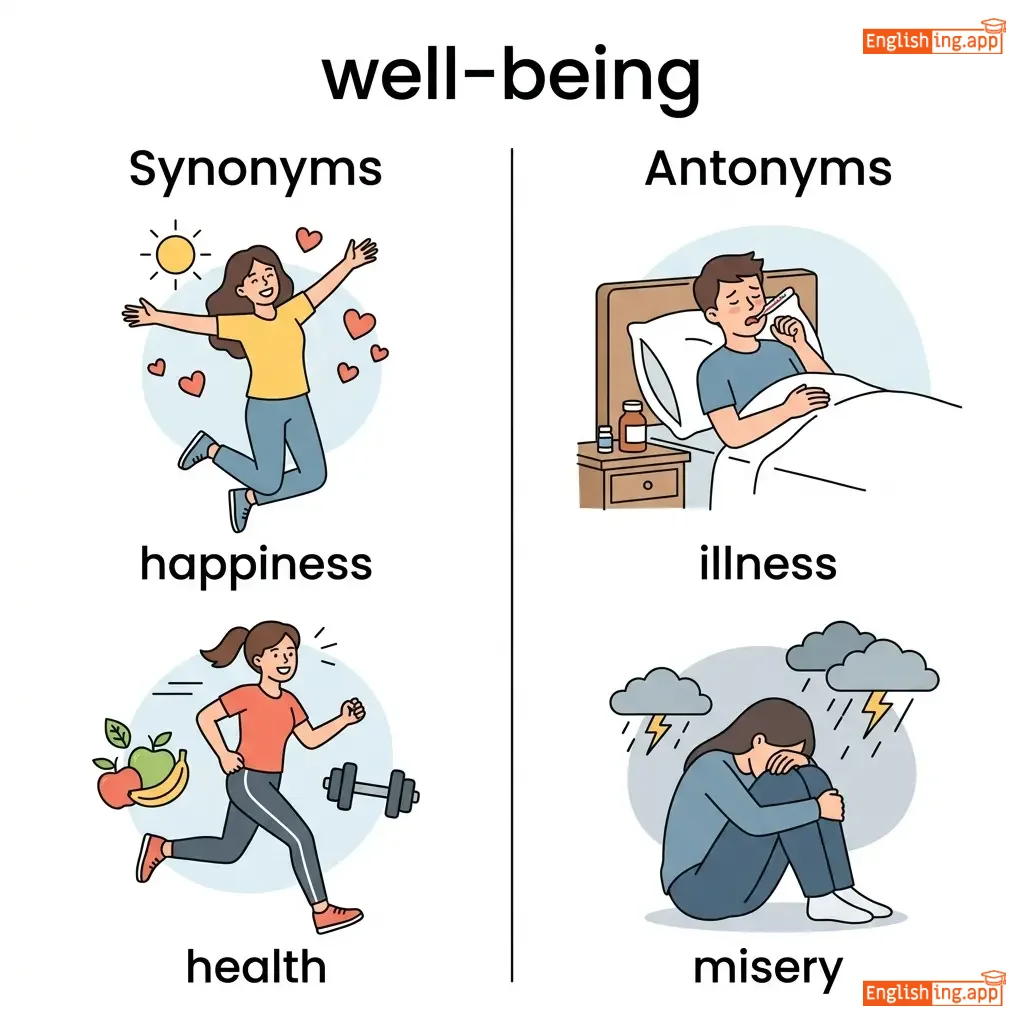
welfare, health, happiness, comfort
••••••
|
suffering, distress, misery
••••••
|
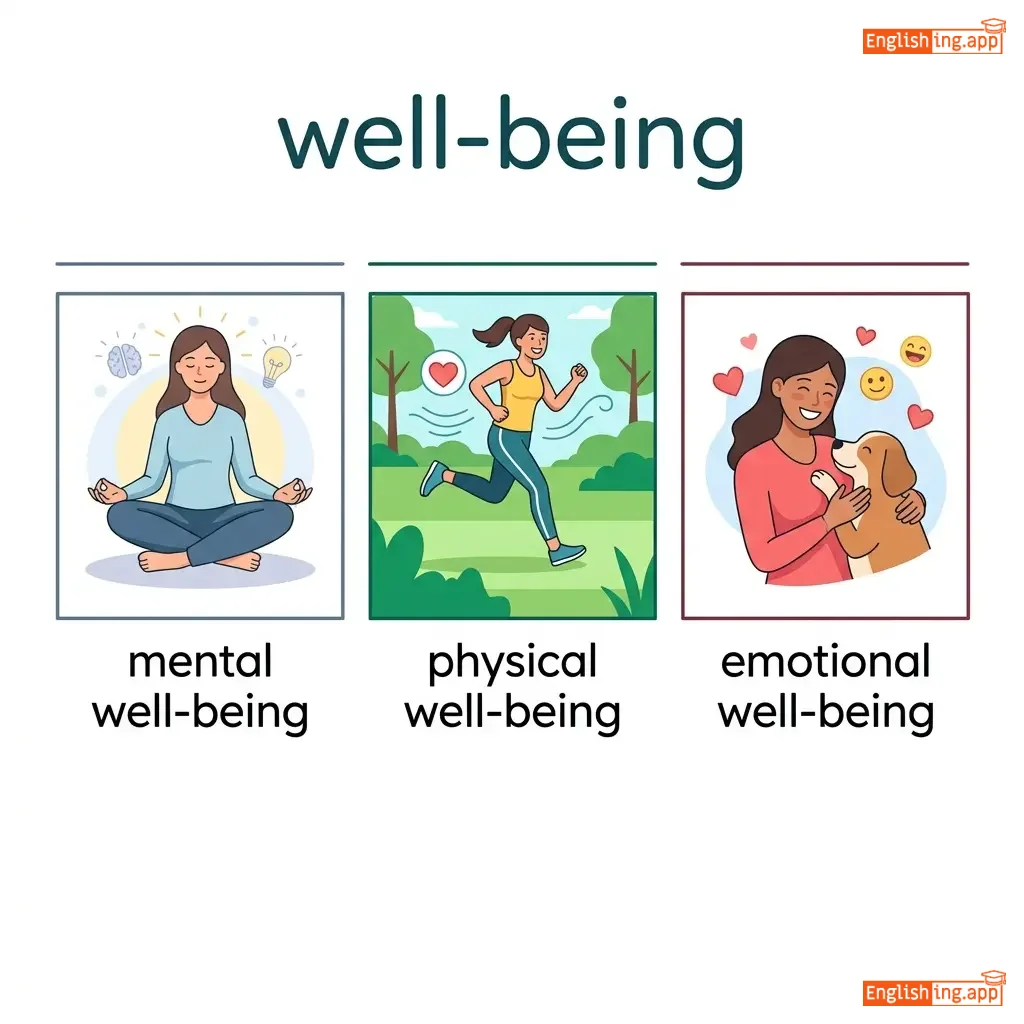
physical well-being, mental well-being, emotional well-being
••••••
|
福祉 (fú zhǐ) in Chinese is like 'well-being,' where '福' means happiness and '祉' means well-being.
••••••
|

