Получите неограниченный доступ ко всем словам с подпиской Pro
Обновить до ProПолучите неограниченный доступ ко всем предложениям с подпиской Pro
Обновить до Pro|
Эмодзи
|
Слово | Images | Перевод | Прошедшее | Причастие прошедшего времени | Третье лицо единственного числа | Герундий | Значение | Пример предложения | Перевод примера предложения | Пример выражения | Значение примера выражения | Перевод примера выражения | Синонимы | Антонимы | Коллокации | Мнемоника |
|---|---|---|---|---|---|---|---|---|---|---|---|---|---|---|---|---|---|
|
📏
••••••
|
/saɪz/
noun
(сайз)
••••••
|
- •••••• |
размер
razmer
••••••
|
- •••••• | - •••••• | - •••••• | - •••••• |
the physical dimensions, proportions, or magnitude of something
••••••
|
This shirt is too small in size for me. |
Эта рубашка слишком мала по размеру для меня.
Eta rubashka slishkom mala po razmeru dlya menya.
••••••
|
- •••••• | - •••••• | - •••••• |
dimension, measurement, volume, magnitude
••••••
|
smallness, insignificance
••••••
|
larger size, shirt size, appropriate size, size chart
••••••
|
Razmer is like 'size' but with a Russian twist!
••••••
|
|
✏️
••••••
|
/skɛtʃ/
noun
(sketch)
••••••
|
- •••••• |
эскиз
eskiz
••••••
|
- •••••• | - •••••• | - •••••• | - •••••• |
a simple, rough drawing or outline
••••••
|
He made a quick sketch of the landscape.
Он сделал быстрый эскиз пейзажа.
••••••
|
Он сделал быстрый эскиз пейзажа.
On sdelal bystryy eskiz peyzazha.
••••••
|
- •••••• | - •••••• | - •••••• |
drawing, outline, draft, blueprint
••••••
|
finished work, masterpiece
••••••
|
quick sketch, pencil sketch, rough sketch
••••••
|
Так просто, так эскиз (eskiz)
••••••
|
|
🎿
••••••
|
/skiː/
verb
(сноуборд)
••••••
|
- •••••• |
кататься на лыжах
katatsya na lyzhakh
••••••
|
skied
катался
••••••
|
skied
покатился
••••••
|
skis
катается
••••••
|
skiing
кататься
••••••
|
to glide over snow on skis
••••••
|
We went skiing in the Alps last winter.
Мы катались на лыжах в Альпах прошлой зимой.
••••••
|
Мы катались на лыжах в Альпах прошлой зимой.
My katat'sya na lyzhakh v Alpakh proshloy zimoy.
••••••
|
- •••••• | - •••••• | - •••••• |
snowboard, glide, coast
••••••
|
walk, crawl
••••••
|
ski trip, ski resort, downhill skiing, cross-country skiing
••••••
|
Skiing is 'кататься на лыжах' in Russian. Glide down the snowy slopes!
••••••
|
|
🎯
••••••
|
/ˈskɪlfʊl/
adjective
(скілфул)
••••••
|
- •••••• |
умелый; опытный; мастер
umely; opytny; master
••••••
|
- •••••• | - •••••• | - •••••• | - •••••• |
having or showing skill; expert and accomplished
••••••
|
The skilful surgeon performed the operation with great precision. |
Умелый хирург выполнил операцию с большой точностью.
Umelyi khirurg vypolnil operatsiyu s bol'shoy tochnost'yu.
••••••
|
- •••••• | - •••••• | - •••••• |
skilled, expert, accomplished, proficient, adept
••••••
|
unskilled, incompetent, clumsy, inexpert, amateurish
••••••
|
skilful hands, skilful player, skilful craftsman, skilful technique
••••••
|
Будь умелым как хирург, с мастерством выполнять работу.
••••••
|
|
🎨
••••••
|
/skɪl/
noun
(skil)
••••••
|
- •••••• |
умение
umeniye
••••••
|
- •••••• | - •••••• | - •••••• | - •••••• |
the ability to do something well through training or experience
••••••
|
Her skill in painting impressed everyone. |
Ее умение в живописи впечатлило всех.
Yeyo umeniye v zhivopisi vpechatlilo vsekh.
••••••
|
learn a new skill |
to acquire the ability to do something new
••••••
|
изучить новый навык
izuchit' novyy navyk
••••••
|
ability, talent, expertise, competence, proficiency
••••••
|
incompetence, inability
••••••
|
develop skill, practical skill, language skill, technical skill
••••••
|
Умение = умение = развивается с практикой
••••••
|
|
🎯
••••••
|
/skɪld/
adjective
(скилд)
••••••
|
- •••••• |
квалифицированный
kvalifitsirovannyy
••••••
|
- •••••• | - •••••• | - •••••• | - •••••• |
having the ability, experience, or training to do something well
••••••
|
She is a highly skilled surgeon with years of experience.
Она высококвалифицированный хирург с многолетним опытом.
••••••
|
Она высококвалифицированный хирург с многолетним опытом.
Ona vysokokvalifitsirovannyy khirurg s mnogoletnim opytom.
••••••
|
skilled labor
квалифицированный труд
••••••
|
work that requires specialized training or expertise
••••••
|
квалифицированный труд
kvalifitsirovannyy trud
••••••
|
talented, expert, proficient, capable, competent
••••••
|
unskilled, inexperienced, amateur
••••••
|
skilled worker, skilled labor, highly skilled, skilled professional
••••••
|
Skilled означает квалифицированный – человек с нужными навыками, чтобы быть квалифицированным.
••••••
|
|
🦴
••••••
|
/skɪn/
noun
(скiн)
••••••
|
- •••••• |
кожа
kozha
••••••
|
- •••••• | - •••••• | - •••••• | - •••••• |
the outer covering of the body; the natural outer covering of a fruit or vegetable
••••••
|
Her skin was soft and smooth.
Её кожа была мягкой и гладкой.
••••••
|
Её кожа была мягкой и гладкой.
Eyo kozha byla myagkoy i gladkoy.
••••••
|
- •••••• | - •••••• | - •••••• |
flesh, hide, peel, surface
••••••
|
interior, inside, core
••••••
|
soft skin, smooth skin, dry skin, skin care, skin color
••••••
|
Remember 'kozha' as 'cozy' like how skin feels cozy
••••••
|
|
⏭️
••••••
|
/skɪp/
verb
(скип)
••••••
|
- •••••• |
пропустить
propustit
••••••
|
skipped
скипед
••••••
|
skipped
скипед
••••••
|
skips
скипс
••••••
|
skipping
скиппинг
••••••
|
to omit or pass over something; to move lightly or quickly
••••••
|
He decided to skip breakfast and go straight to work.
Он решил пропустить завтрак и прямо поехать на работу.
••••••
|
Он решил пропустить завтрак и прямо поехать на работу.
On reshil propustit zavtrak i pryamo poehat na rabotu.
••••••
|
skip a beat
пропустить момент
••••••
|
to feel a sudden excitement or nervousness
••••••
|
пропустить момент
propustit moment
••••••
|
omit, jump, bypass, ignore, hop
••••••
|
include, attend, continue
••••••
|
skip class, skip meal, skip a step, skip ahead
••••••
|
Пропускать — это избегать, как ‘Пропустить экзамен — опасно!’ 😅
••••••
|
|
👗
••••••
|
/skɜːrt/
noun/verb
(скирт)
••••••
|
- •••••• |
юбка
skirt
••••••
|
skirted
скиртед
••••••
|
skirted
скиртед
••••••
|
skirts
скиртс
••••••
|
skirting
скиртинг
••••••
|
a piece of clothing that hangs from the waist; to go around the edge of something
••••••
|
She wore a red skirt to the party.
Она надела красную юбку на вечеринку.
••••••
|
Она надела красную юбку на вечеринку.
Ona nadela krasnuyu yubku na vecherinku.
••••••
|
skirt the issue
обходить вопрос
••••••
|
to avoid dealing directly with a subject
••••••
|
обходить вопрос
obkhodit vopros
••••••
|
dress, petticoat, hem, bypass, avoid
••••••
|
confront, face
••••••
|
short skirt, long skirt, denim skirt, skirt around
••••••
|
S держит yubka near kray; SKIRT = S + kirt; visualizируй букву S обнимающей юбку и стоящей у края
••••••
|
|
💀
••••••
|
/skʌl/
noun
(skal)
••••••
|
- •••••• |
череп
cherep
••••••
|
- •••••• | - •••••• | - •••••• | - •••••• |
the bony structure that forms the head and protects the brain
••••••
|
The archaeologists found an ancient human skull. |
Археологи нашли древний человеческий череп.
Arkhieologi nashli drevniy chelovecheskiy cherep.
••••••
|
skull and crossbones |
a symbol of death or danger, often used on pirate flags or poison labels
••••••
|
череп и скрещённые кости
cherep i skreshchyonnyye kosti
••••••
|
cranium, head, braincase, noggin, dome
••••••
|
none, flesh
••••••
|
fractured skull, human skull, skull bones, skull shape
••••••
|
Череп защищает мозг, как череп и скрещённые кости символизируют опасность.
••••••
|
|
☁️
••••••
|
/skaɪ/
noun
(skaɪ)
••••••
|
- •••••• |
небо
nebo
••••••
|
- •••••• | - •••••• | - •••••• | - •••••• |
the region of the atmosphere and outer space seen from the earth
••••••
|
The sky is blue today.
небо сегодня синее.
••••••
|
Небо сегодня синее.
Nebo segodnya sineye.
••••••
|
- •••••• | - •••••• | - •••••• |
heavens, atmosphere, firmament
••••••
|
ground, earth
••••••
|
blue sky, clear sky, cloudy sky, night sky
••••••
|
Небо, как океан, бескрайнее (The sky is as infinite as the ocean).
••••••
|
|
💥
••••••
|
/slæm/
verb
(слам)
••••••
|
- •••••• |
ударить с силой
udarit' s silo
••••••
|
slammed
сламд
••••••
|
slammed
сламд
••••••
|
slams
сламы
••••••
|
slamming
сламинг
••••••
|
to close or hit something with great force
••••••
|
He slammed the door angrily after the argument.
Он с силой закрыл дверь после ссоры.
••••••
|
Он с силой закрыл дверь после ссоры.
On s silo zakryl dver' posle ssory.
••••••
|
slam dunk
слэм-данк
••••••
|
a sure success or an easy victory
••••••
|
легкая победа
legkaya pobeda
••••••
|
bang, strike, shut, hit, smash
••••••
|
open, praise, compliment
••••••
|
slam the door, slam shut, slam into, slam hard
••••••
|
Слам – это как сильный удар, например, слэм-данк!
••••••
|
|
🖐️
••••••
|
/slæp/
verb, noun
(слэп)
••••••
|
|
дать пощёчину
dat' poshchenu
••••••
|
slapped
слэппед
••••••
|
slapped
слэппед
••••••
|
slaps
слэпс
••••••
|
slapping
слэппинг
••••••
|
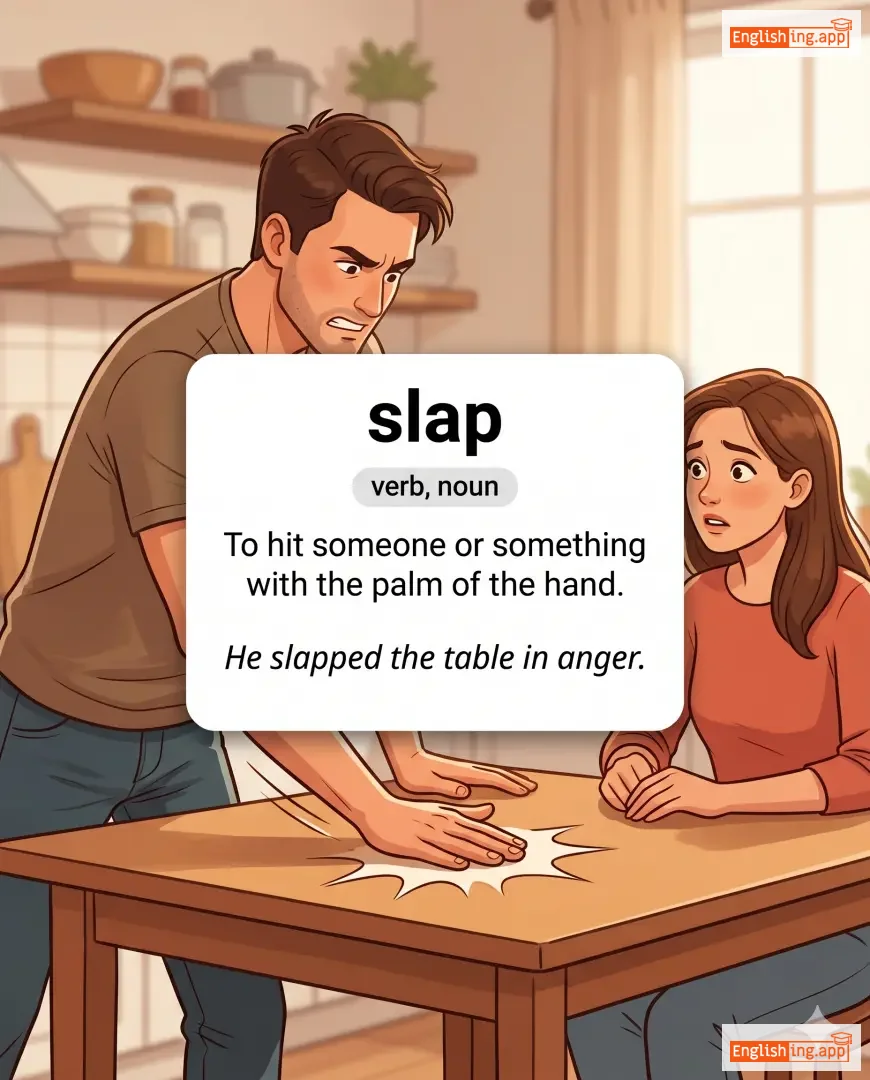
To hit someone or something with the palm of the hand.
••••••
|
He slapped the table in anger.
Он ударил по столу от гнева.
••••••
|
Он ударил по столу от гнева.
On udaril po stolu ot gneva.
••••••
|
slap on the wrist
пощечина по запястью
••••••
|
a mild punishment or warning
••••••
|
легкое наказание
legkoye nakazaniye
••••••
|
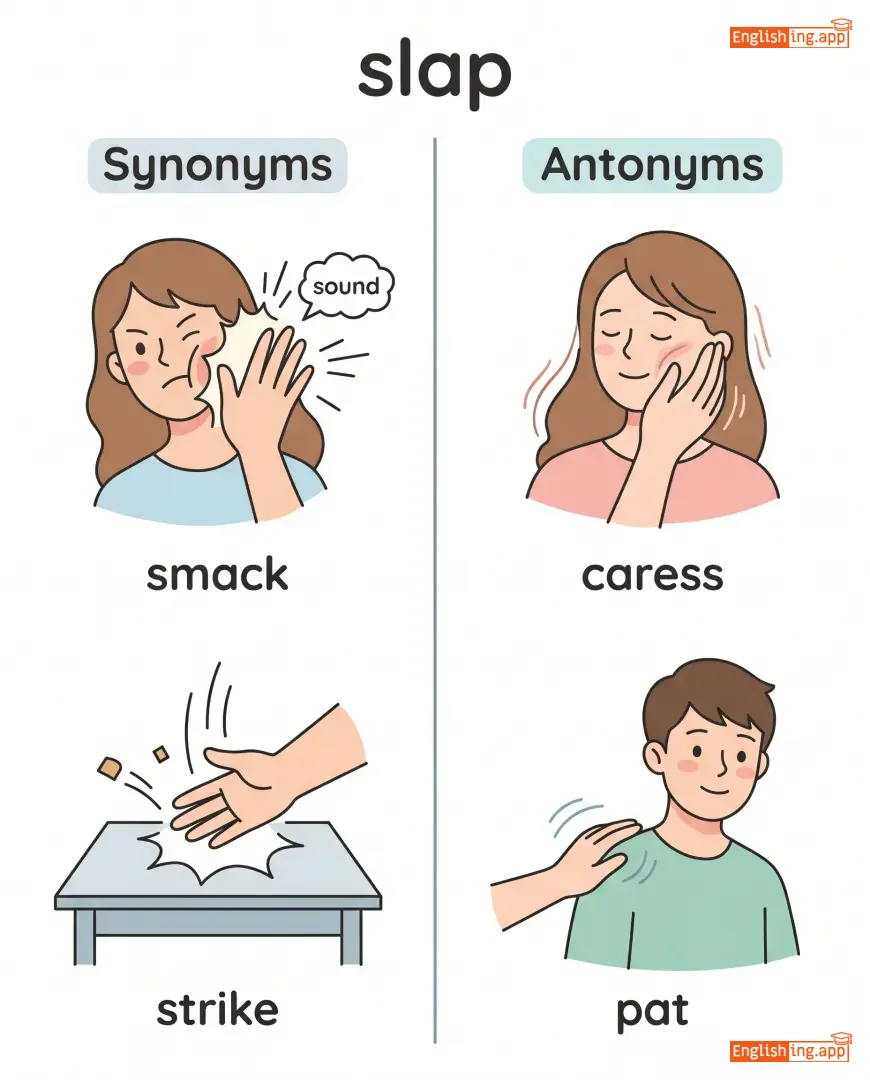
smack, strike, hit, whack
••••••
|
caress, pat
••••••
|
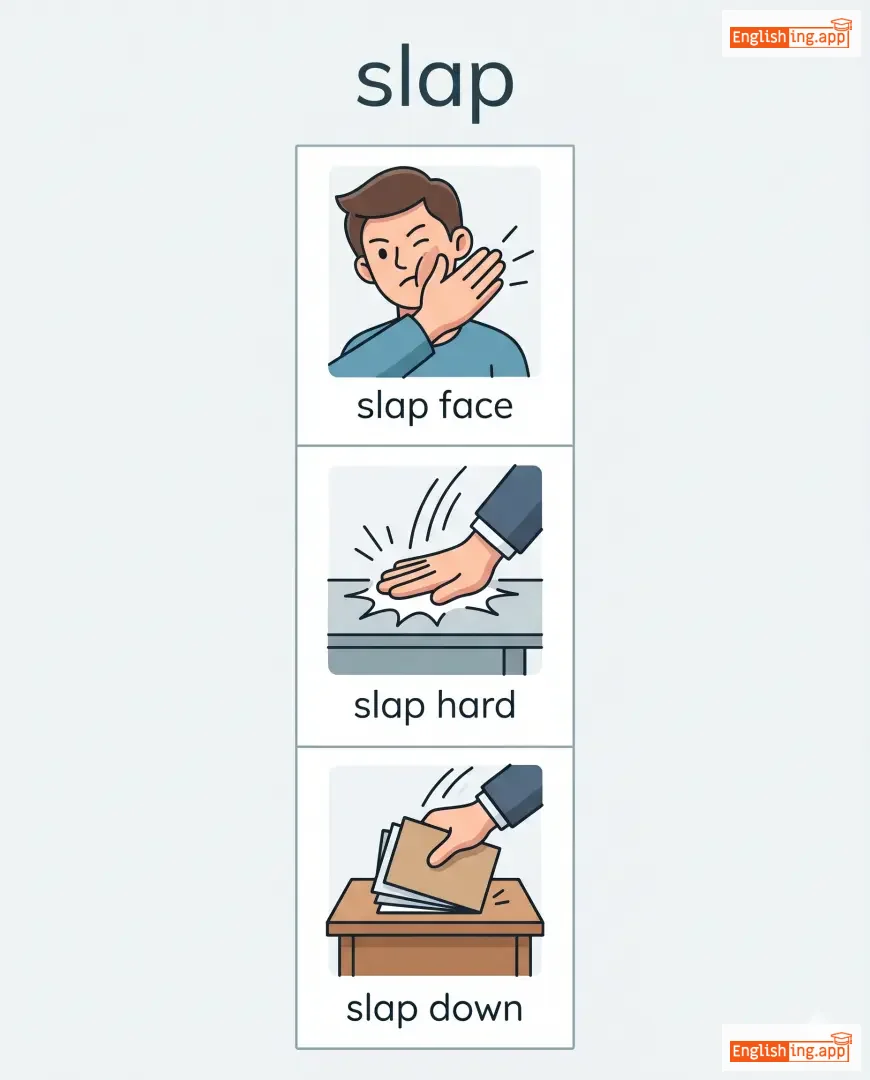
slap face, slap hard, slap down, slap on the wrist
••••••
|
Slap означает slap 🖐️ — дать пощёчину легко запомнить.
••••••
|
|
✂️
••••••
|
/slæʃ/
verb
(слэш)
••••••
|
|
резать
rezyat
••••••
|
slashed
слэшнул
••••••
|
slashed
слэшнул
••••••
|
slashes
слэшит
••••••
|
slashing
слэшащий
••••••
|
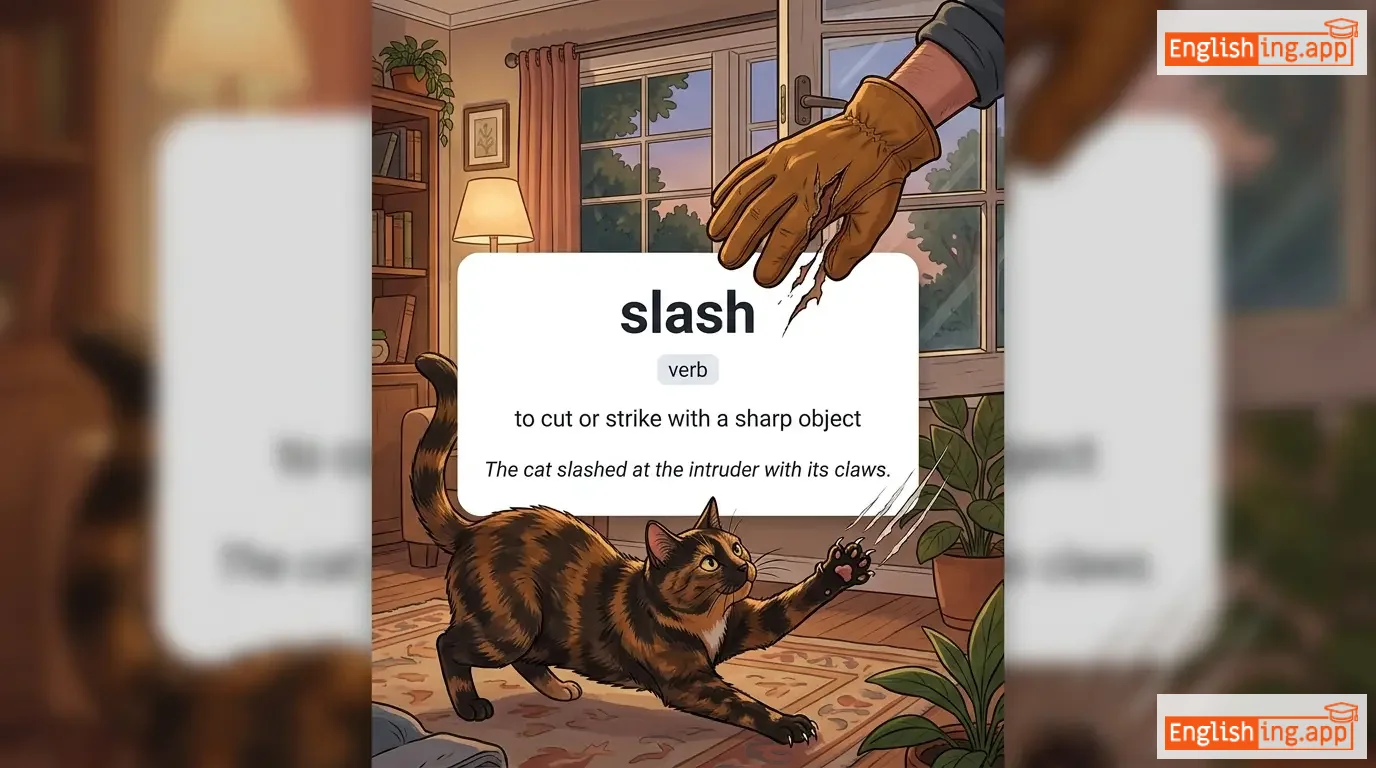
to cut with a sharp blade; to reduce drastically
••••••
|
The company slashed prices to attract more customers.
Компания снизила цены, чтобы привлечь больше клиентов.
••••••
|
Компания снизила цены, чтобы привлечь больше клиентов.
Kompaniya snizila tseny, chtoby privlech' bol'she klientov.
••••••
|
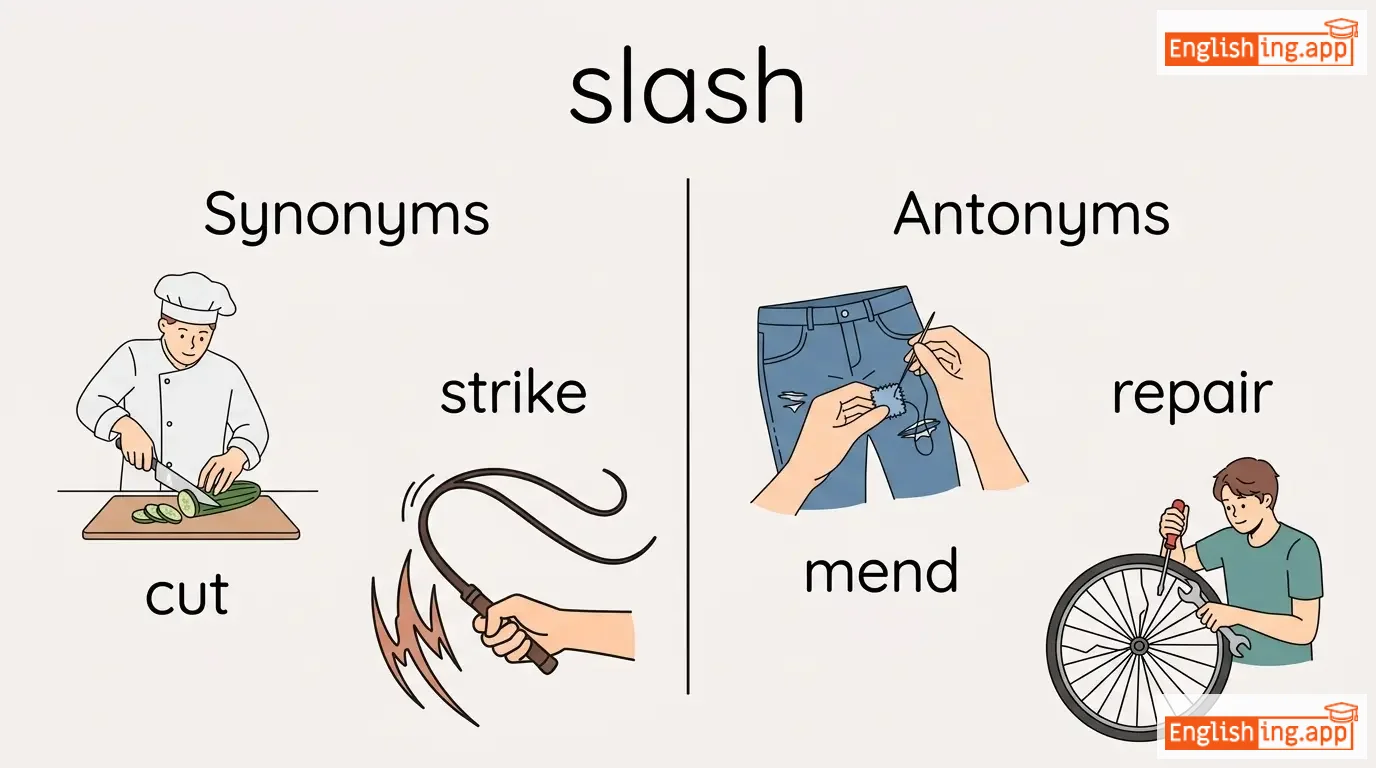
- •••••• | - •••••• | - •••••• |
cut, reduce, strike, slice
••••••
|
increase, raise, heal, mend
••••••
|
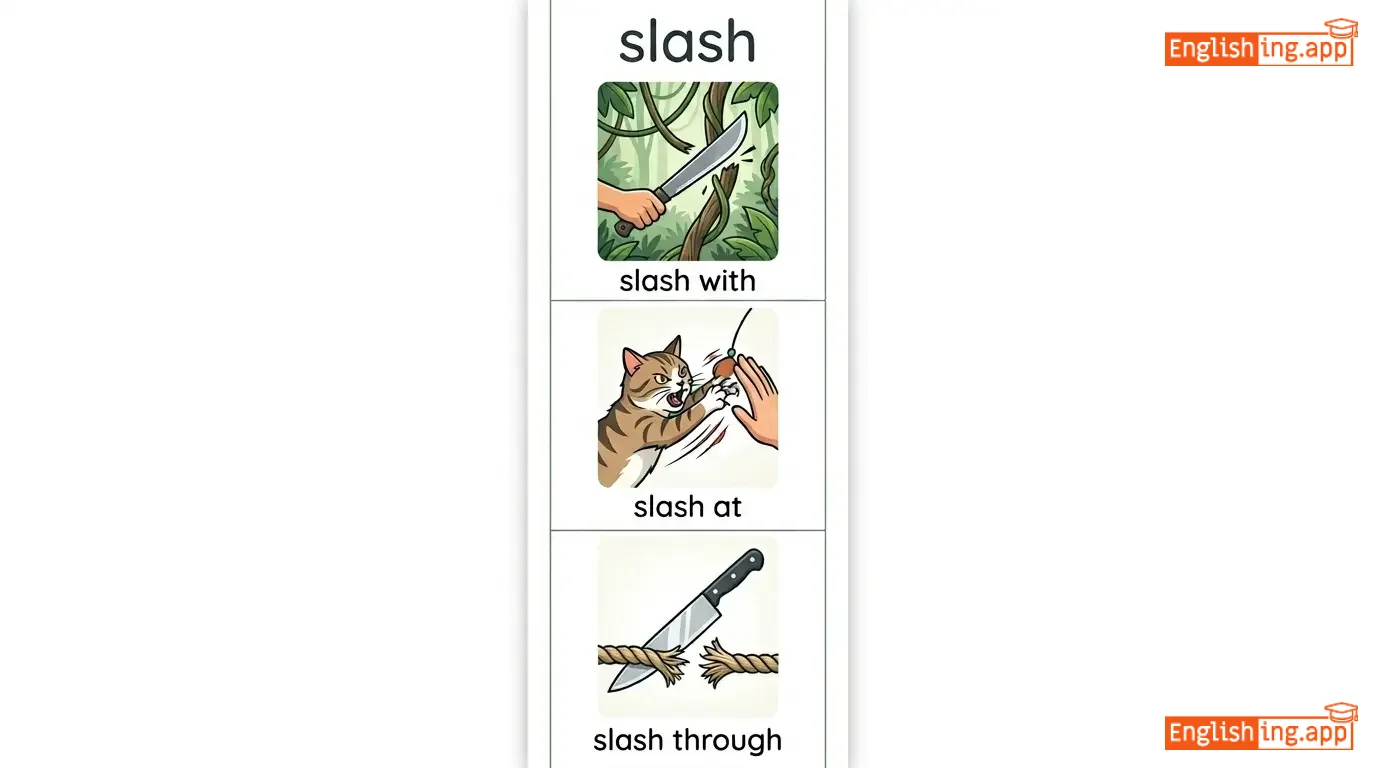
slash prices, slash deeply, slash through, slash budgets, slash dramatically
••••••
|
Slash в английском языке означает резать или сокращать.
••••••
|
|
👤
••••••
|
/sleɪv/
noun
(slɛɪv)
••••••
|
- •••••• |
раб
rab
••••••
|
- •••••• | - •••••• | - •••••• | - •••••• |
a person who is the legal property of another and is forced to work for them
••••••
|
The abolitionist movement fought for the rights of slaves. |
Аборигенистское движение боролось за права рабов.
Aborigenistskoye dvizhene borolos' za prava rabov.
••••••
|
- •••••• | - •••••• | - •••••• |
serf, bondsman, vassal, indentured servant
••••••
|
freeman, master, owner
••••••
|
enslaved slave, slavery system, slave labor
••••••
|
Рабы - это те, кто связан цепями и не могут избежать труда.
••••••
|
|
⛓️
••••••
|
/ˈsleɪvəri/
noun
••••••
|
- •••••• | - •••••• | - •••••• | - •••••• | - •••••• | - •••••• |
the system or state of being owned and forced to work for someone else
••••••
|
Slavery was abolished in most countries in the 19th century. |
- •••••• |
modern-day slavery |
the exploitation of people through forced labor or trafficking in modern times
••••••
|
- •••••• |
servitude, bondage, oppression, captivity
••••••
|
freedom, liberty, independence
••••••
|
abolish slavery, against slavery, slavery system, slavery trade
••••••
|
No •••••• |
|
😴
••••••
|
/sliːp/
verb
(slip)
••••••
|
|
спать
spat
••••••
|
slept
slept
••••••
|
slept
slept
••••••
|
sleeps
sleeps
••••••
|
sleeping
sleeping
••••••
|
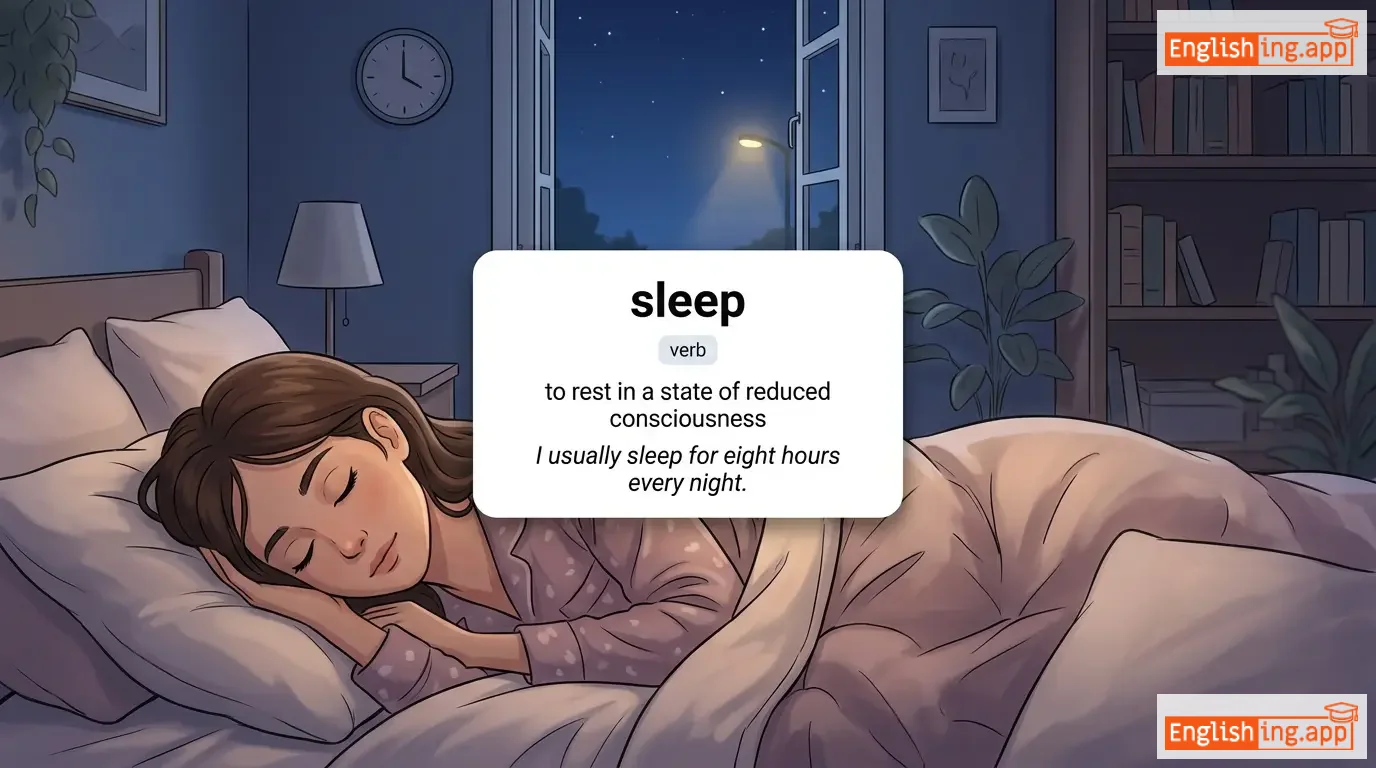
to rest with eyes closed and reduced consciousness; to be inactive
••••••
|
I need to sleep for eight hours every night.
I need to sleep for eight hours every night.
••••••
|
Мне нужно спать восемь часов каждую ночь.
Mne nuzhno spat' vosem' chasov kazhduyu noch'
••••••
|
- •••••• | - •••••• | - •••••• |
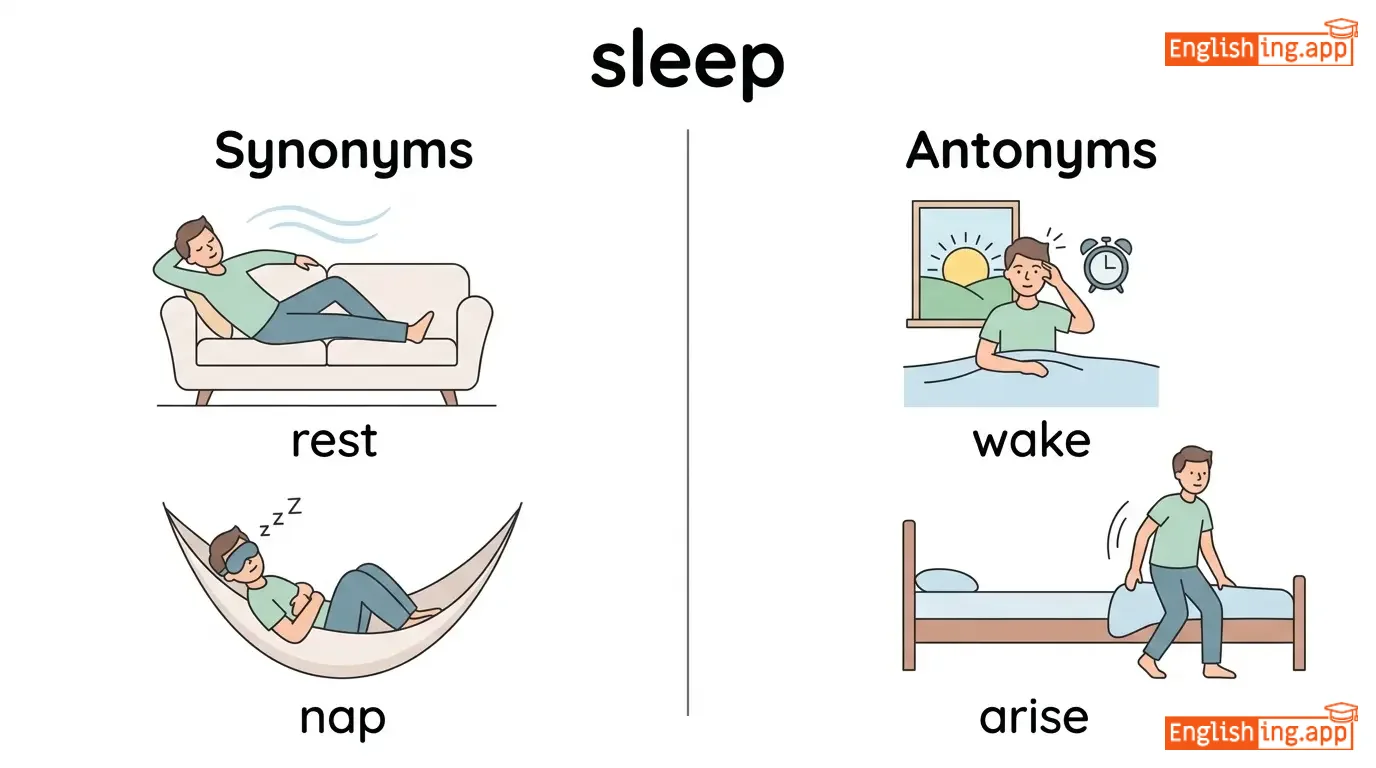
rest, slumber, doze, nap
••••••
|
wake, arise, stay awake
••••••
|
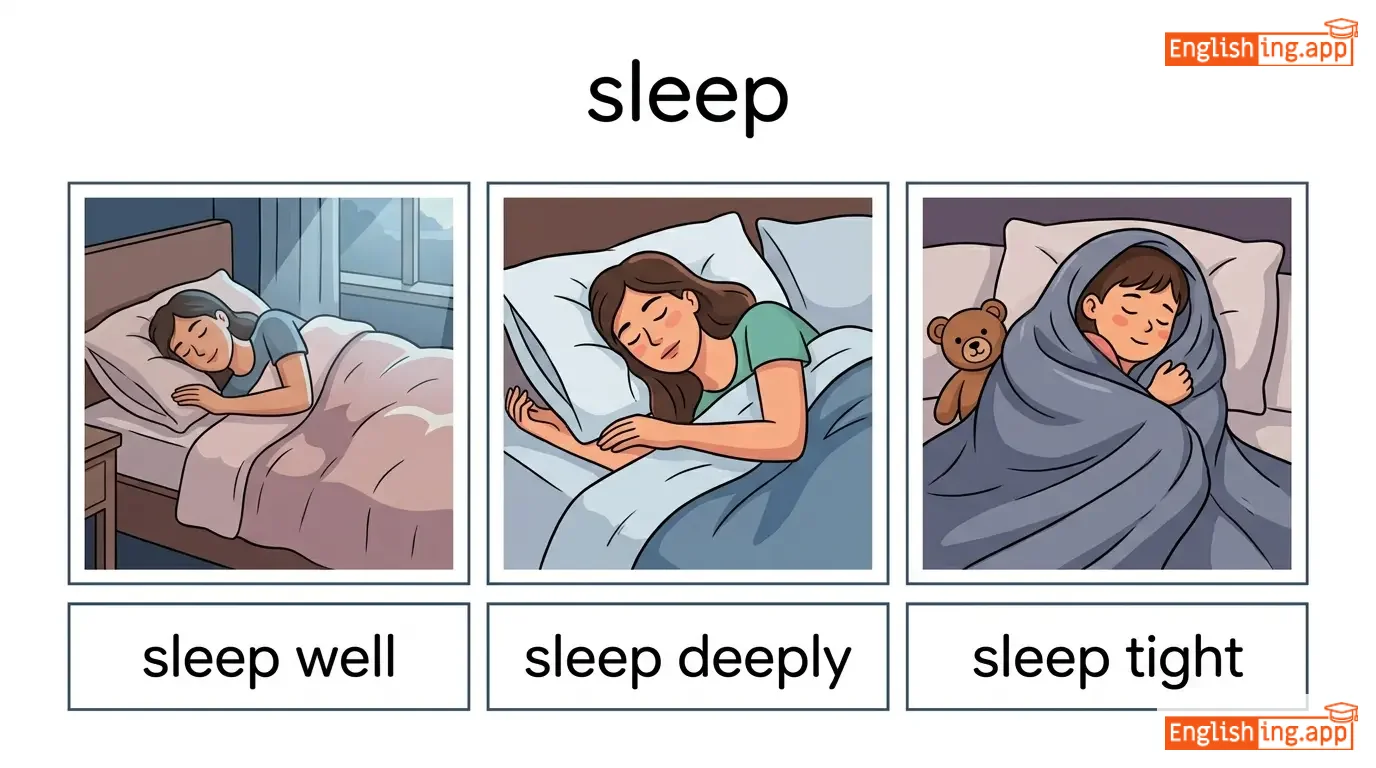
sleep soundly, sleep peacefully, sleep deeply, sleep well, sleep late
••••••
|
Спать важно для восстановления сил.
••••••
|
|
👕
••••••
|
/sliːv/
noun
(sliv)
••••••
|
- •••••• |
рукав
rukav
••••••
|
- •••••• | - •••••• | - •••••• | - •••••• |
the part of a garment that covers all or part of the arm
••••••
|
He rolled up his sleeves before starting the work. |
Он закатал рукава перед тем, как начать работу.
On zakatal rukava pered tem, kak nachat' rabotu.
••••••
|
wear your heart on your sleeve |
to openly show your emotions or feelings
••••••
|
выкладывать душу на рукаве
vykhodyt' dushu na rukave
••••••
|
arm, cuff, covering, garment part
••••••
|
bare arm, sleeveless
••••••
|
long sleeve, short sleeve, shirt sleeve, roll up sleeves
••••••
|
Рукав – это часть рубашки, которая покрывает руку, подними рукава перед работой! 👕
••••••
|
|
🍞
••••••
|
/slaɪs/
noun
(slays)
••••••
|
- •••••• |
кусок; ломтик
kusok; lomtik
••••••
|
- •••••• | - •••••• | - •••••• | - •••••• |
a thin, flat piece cut from something larger
••••••
|
Would you like a slice of pizza? |
Вы хотите кусок пиццы?
Vy khotite kusok pitstsy?
••••••
|
- •••••• | - •••••• | - •••••• |
piece, portion, segment, cut
••••••
|
whole, entirety, complete piece
••••••
|
thin slice, thick slice, slice of bread
••••••
|
Ломтик пиццы: тонкий и вкусный
••••••
|
|
🔹
••••••
|
/slaɪt/
adjective
(slait)
••••••
|
- •••••• |
незначительный
neznachitel'nyy
••••••
|
- •••••• | - •••••• | - •••••• | - •••••• |
Small in degree; not considerable.
••••••
|
There was a slight change in the schedule. |
В расписании было незначительное изменение.
V raspisanii bylo neznačitel'noe izmenenie.
••••••
|
take it as a slight |
To interpret something as an insult or offense.
••••••
|
воспринимать как оскорбление
vosprinimat' kak oskorblenie
••••••
|
small, minor, trivial, negligible, faint
••••••
|
major, significant, large
••••••
|
slight change, slight chance, slight problem, slight build
••••••
|
Slight = незначительный, slight change = незначительное изменение, slight insult = незначительное оскорбление
••••••
|
|
🪶
••••••
|
/ˈslaɪtli/
adverb
(слáйтли)
••••••
|
- •••••• |
немного
nemnogo
••••••
|
- •••••• | - •••••• | - •••••• | - •••••• |
to a small degree or extent
••••••
|
The temperature has slightly increased today.
Температура сегодня немного увеличилась.
••••••
|
Температура сегодня немного увеличилась.
Temperatura segodnya nemnogo uvelichilas'.
••••••
|
- •••••• | - •••••• | - •••••• |
mildly, a little, marginally, somewhat
••••••
|
greatly, significantly
••••••
|
slightly different, slightly better, slightly worse
••••••
|
Think of something slightly tilted as 'slightly' off-center.
••••••
|
|
👟
••••••
|
/slɪp/
verb
(слип)
••••••
|
- •••••• |
поскользнуться
poskolznutsya
••••••
|
slipped
слиппед
••••••
|
slipped
слиппед
••••••
|
slips
слипс
••••••
|
slipping
слиппинг
••••••
|
to lose balance or fall while moving, or to accidentally slide from a position
••••••
|
She slipped on the wet floor and fell.
Она поскользнулась на мокром полу и упала.
••••••
|
Она поскользнулась на мокром полу и упала.
Ona poskolznulas' na mokrom polu i upala.
••••••
|
- •••••• | - •••••• | - •••••• |
slide, fall, stumble, trip
••••••
|
stand, stabilize, remain
••••••
|
slip on ice, slip down, slip away, slip through
••••••
|
Slipping on a slippery floor is a 'slip' in the story of your day.
••••••
|
|
🗣️
••••••
|
/ˈsloʊɡən/
noun
••••••
|
- •••••• | - •••••• | - •••••• | - •••••• | - •••••• | - •••••• |
a short and memorable phrase used to promote a cause or product
••••••
|
The campaign used a powerful slogan to inspire people. |
- •••••• | - •••••• | - •••••• | - •••••• |
catchphrase, motto, tagline, saying
••••••
|
silence, quiet
••••••
|
campaign slogan, popular slogan, catchy slogan
••••••
|
No •••••• |
|
🕳️
••••••
|
/slɒt/
noun
(слот)
••••••
|
- •••••• |
щель
shchel
••••••
|
- •••••• | - •••••• | - •••••• | - •••••• |
a narrow opening into which something fits or is placed
••••••
|
Insert the card into the slot to open the door. |
Вставьте карту в щель, чтобы открыть дверь.
Vstav'te kartu v shchel', chtoby otkryt' dver'.
••••••
|
time slot |
a specific time period allocated for an activity
••••••
|
временной промежуток
vremennoy promezhutok
••••••
|
groove, opening, hole, niche, position
••••••
|
blockage, closure
••••••
|
time slot, memory slot, parking slot, machine slot
••••••
|
Щель - как маленькое пространство для карты, и дверь открывается.
••••••
|
|
🐢
••••••
|
/sloʊ/
adjective
(slou)
••••••
|
- •••••• |
медленный
medlennyy
••••••
|
- •••••• | - •••••• | - •••••• | - •••••• |
moving or happening at a low speed
••••••
|
The car moved slowly down the street. |
Машина ехала медленно по улице.
Mashina yekhala medlenno po ulitse.
••••••
|
- •••••• | - •••••• | - •••••• |
leisurely, gradual, sluggish, lazy
••••••
|
fast, quick, speedy
••••••
|
slow down, slow pace, slow movement, slow progress
••••••
|
A slow-moving bear (медведь) represents 'медленный'!
••••••
|
|
🦥
••••••
|
/ˈsloʊli/
adverb
(медленно)
••••••
|
- •••••• |
медленно
medlenno
••••••
|
- •••••• | - •••••• | - •••••• | - •••••• |
in a slow manner
••••••
|
She walked slowly to the door.
Она шла медленно к двери.
••••••
|
Она шла медленно к двери.
Ona shla medlenno k dveri.
••••••
|
- •••••• | - •••••• | - •••••• |
gradually, leisurely, gently, sluggishly
••••••
|
quickly, rapidly, fast
••••••
|
move slowly, speak slowly, slowly approach
••••••
|
Picture a snail moving slowly, never rushing but always advancing.
••••••
|
|
🔹
••••••
|
/smɔːl/
adjective
(smol)
••••••
|
- •••••• |
маленький
malen'kiy
••••••
|
- •••••• | - •••••• | - •••••• | - •••••• |
not large in size, amount, or importance
••••••
|
He lives in a small house near the river. |
Он живет в маленьком доме рядом с рекой.
On zhivet v malen'kom dome ryadom s rekoy.
••••••
|
small talk |
light or casual conversation about unimportant matters
••••••
|
легкий разговор
legkiy razgovor
••••••
|
tiny, little, petite, compact, miniature
••••••
|
big, large, huge
••••••
|
small house, small amount, small group, small talk
••••••
|
маленький значит small – маленькие шаги ведут к большим победам.
••••••
|
|
🧠
••••••
|
/smɑːrt/
adjective, noun, verb
(смарт)
••••••
|
- •••••• |
умный / стильный
umnyy / stil'nyy
••••••
|
smarted
смартид
••••••
|
smarted
смартид
••••••
|
smarts
смартс
••••••
|
smarting
смартинг
••••••
|
Clever and intelligent; also stylish in appearance; or to feel pain.
••••••
|
She is a smart student who always excels in class.
Она умная студентка, которая всегда преуспевает в классе.
••••••
|
Она умная студентка, которая всегда преуспевает в классе.
Ona umnaya studentka, kotoraya vsegda preuspevaet v klasse.
••••••
|
smart money
умные деньги
••••••
|
Money invested by those with expert knowledge.
••••••
|
деньги от экспертов
dengi ot ekspertov
••••••
|
clever, bright, intelligent, stylish, sharp
••••••
|
dull, foolish, stupid
••••••
|
smart student, smart decision, smart clothes, smart city
••••••
|
Smart – как смартфон, умный и современный.
••••••
|
|
💥
••••••
|
/smæʃ/
verb
(смеш)
••••••
|
- •••••• |
разбить
razbit'
••••••
|
smashed
смешд
••••••
|
smashed
смешд
••••••
|
smashes
смешес
••••••
|
smashing
смешинг
••••••
|
to break something into pieces violently
••••••
|
She smashed the glass in frustration.
Она разбила стакан в отчаянии.
••••••
|
Она разбила стакан в отчаянии.
Ona razbila stakan v otchayan'ye.
••••••
|
- •••••• | - •••••• | - •••••• |
break, crush, shatter, demolish
••••••
|
repair, fix, preserve
••••••
|
smash into, smash up, smash down
••••••
|
Разбей что-то, когда ты злишься!
••••••
|
|
👃
••••••
|
/smel/
verb
(смел)
••••••
|
|
пахнуть
pahnut
••••••
|
smelt
смелт
••••••
|
smelled
смеллэд
••••••
|
smells
смелс
••••••
|
smelling
смеллинг
••••••
|
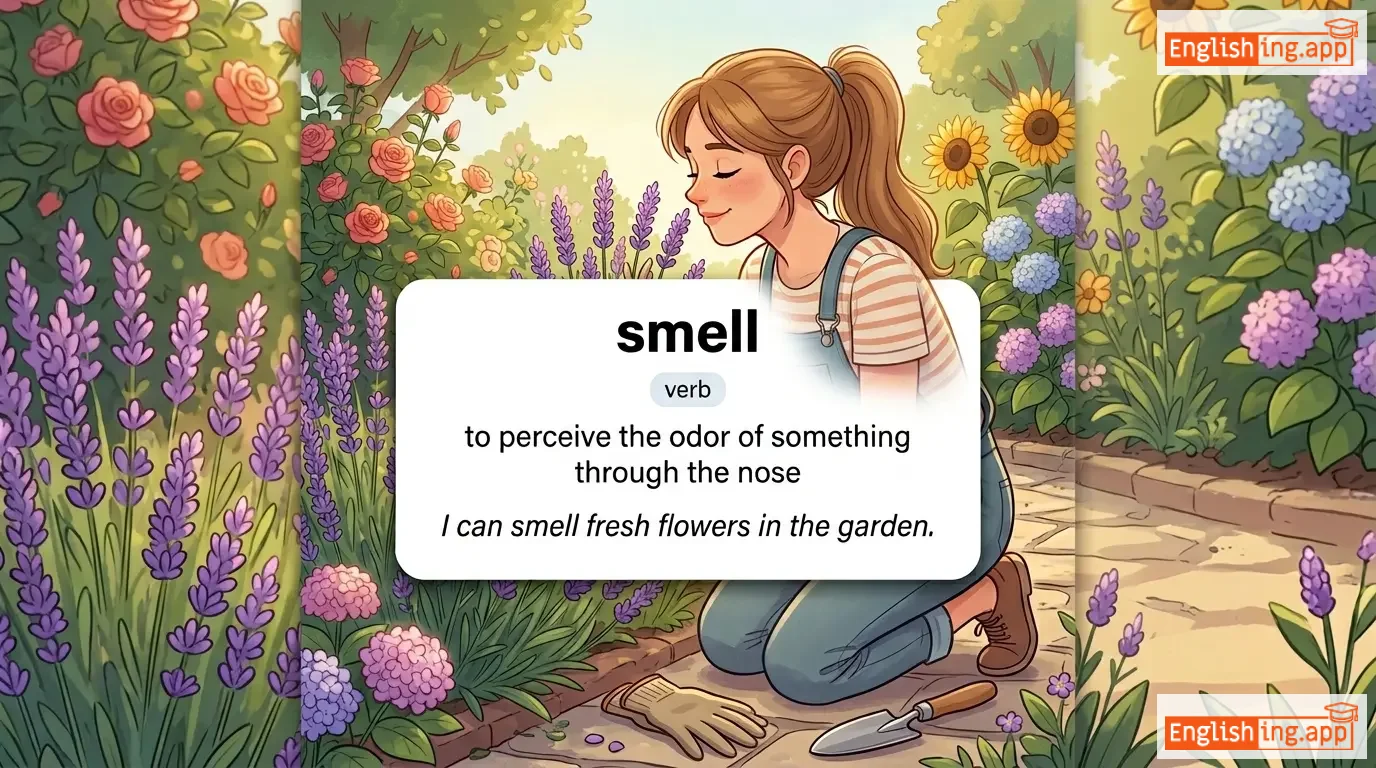
to perceive odor through the nose; to have an odor
••••••
|
The flowers smell sweet.
Цветы пахнут сладко.
••••••
|
Цветы пахнут сладко.
Tsvety pakhnut sladko.
••••••
|
- •••••• | - •••••• | - •••••• |
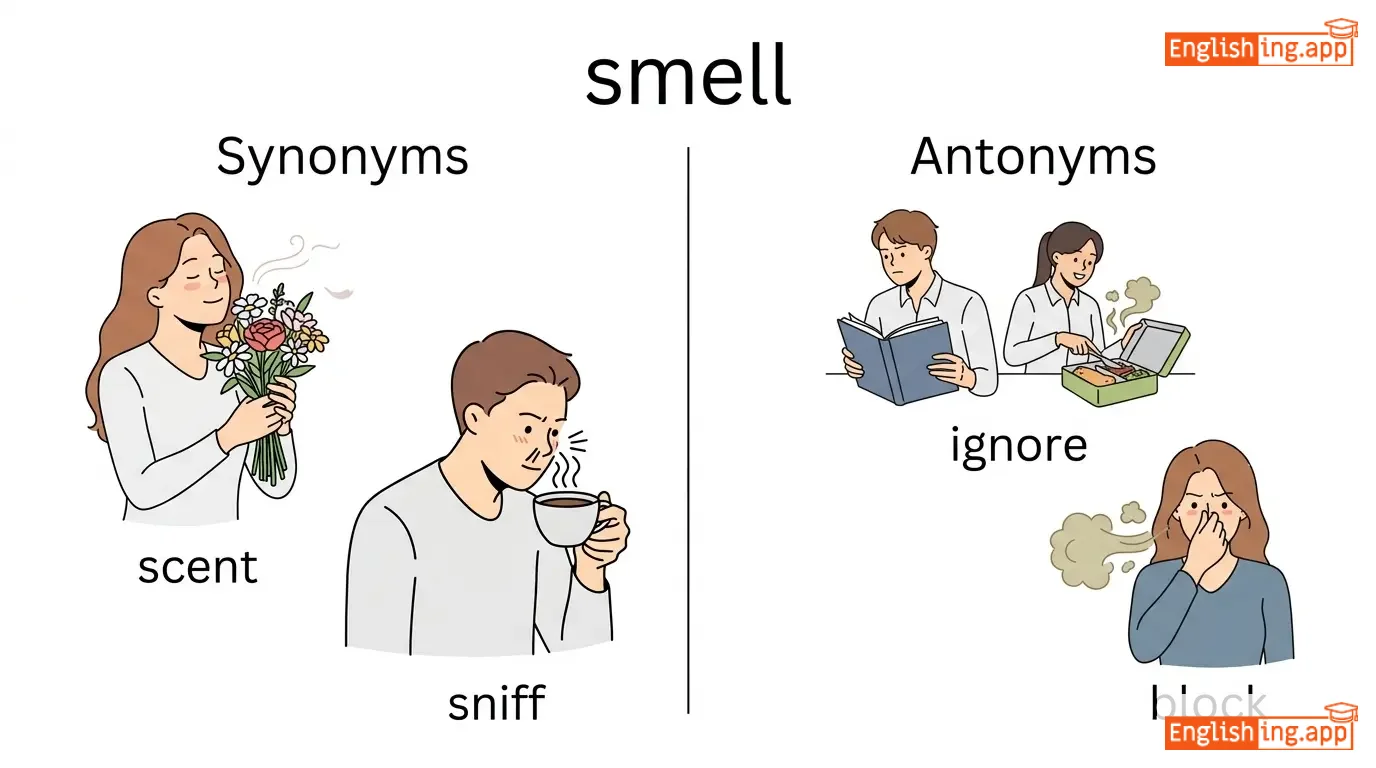
scent, odor, aroma, fragrance
••••••
|
scentless, odorless
••••••
|
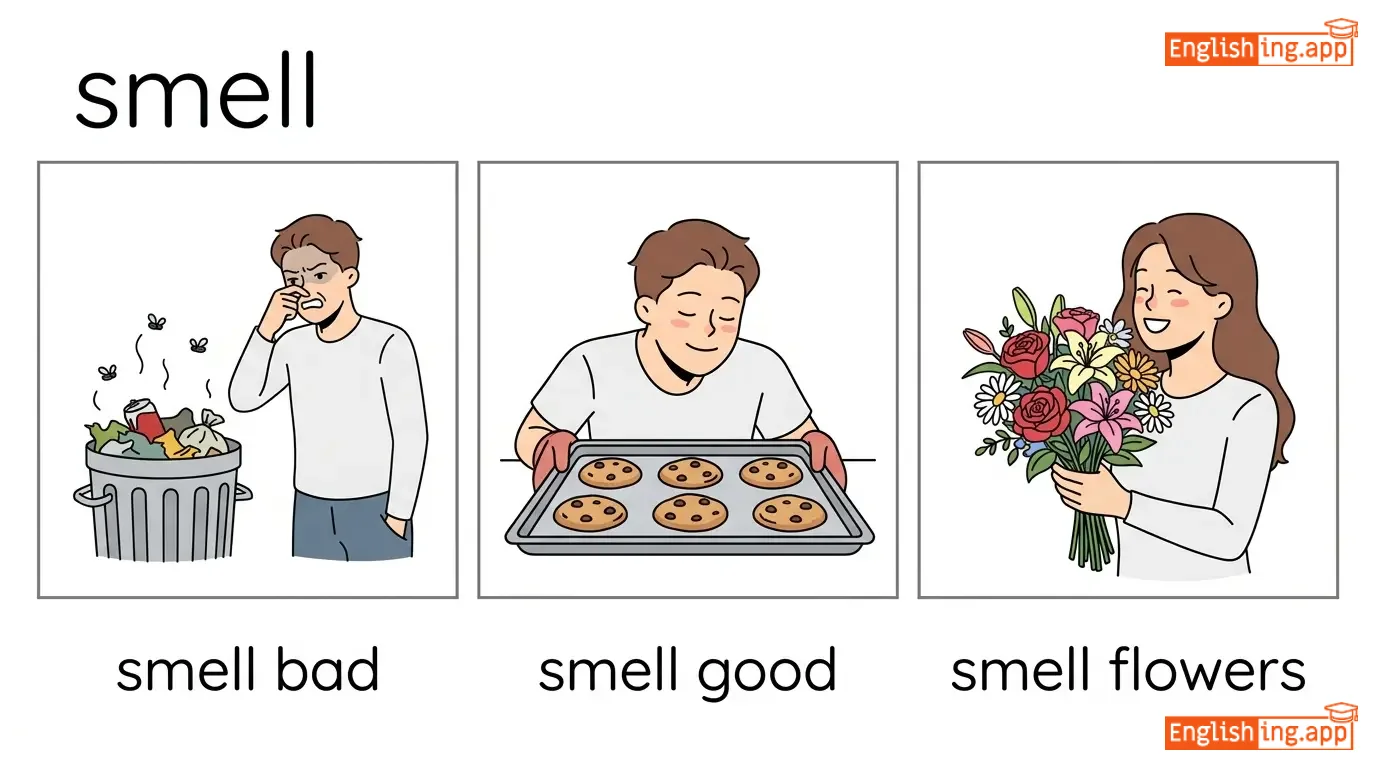
smell good, smell bad, smell sweet, smell fishy, smell trouble
••••••
|
Цветы пахнут сладко, пахнуть запахом
••••••
|
|
😊
••••••
|
/smaɪl/
verb
(smayl)
••••••
|
- •••••• |
улыбка
ulybka
••••••
|
smiled
smayld
••••••
|
smiled
smayld
••••••
|
smiles
smaylz
••••••
|
smiling
smayling
••••••
|
to express happiness or friendliness by turning the corners of the mouth upwards
••••••
|
She smiled when she saw the gift.
Она улыбнулась, когда увидела подарок.
••••••
|
Она улыбнулась, когда увидела подарок.
Ona ulybnulas', kogda uvidela podarok.
••••••
|
- •••••• | - •••••• | - •••••• |
grin, beam, laugh, show teeth
••••••
|
frown, scowl
••••••
|
smile brightly, smile warmly, smile at someone
••••••
|
Улыбка – это маленький, но мощный жест, который скрасит любой день.
••••••
|
|
💨
••••••
|
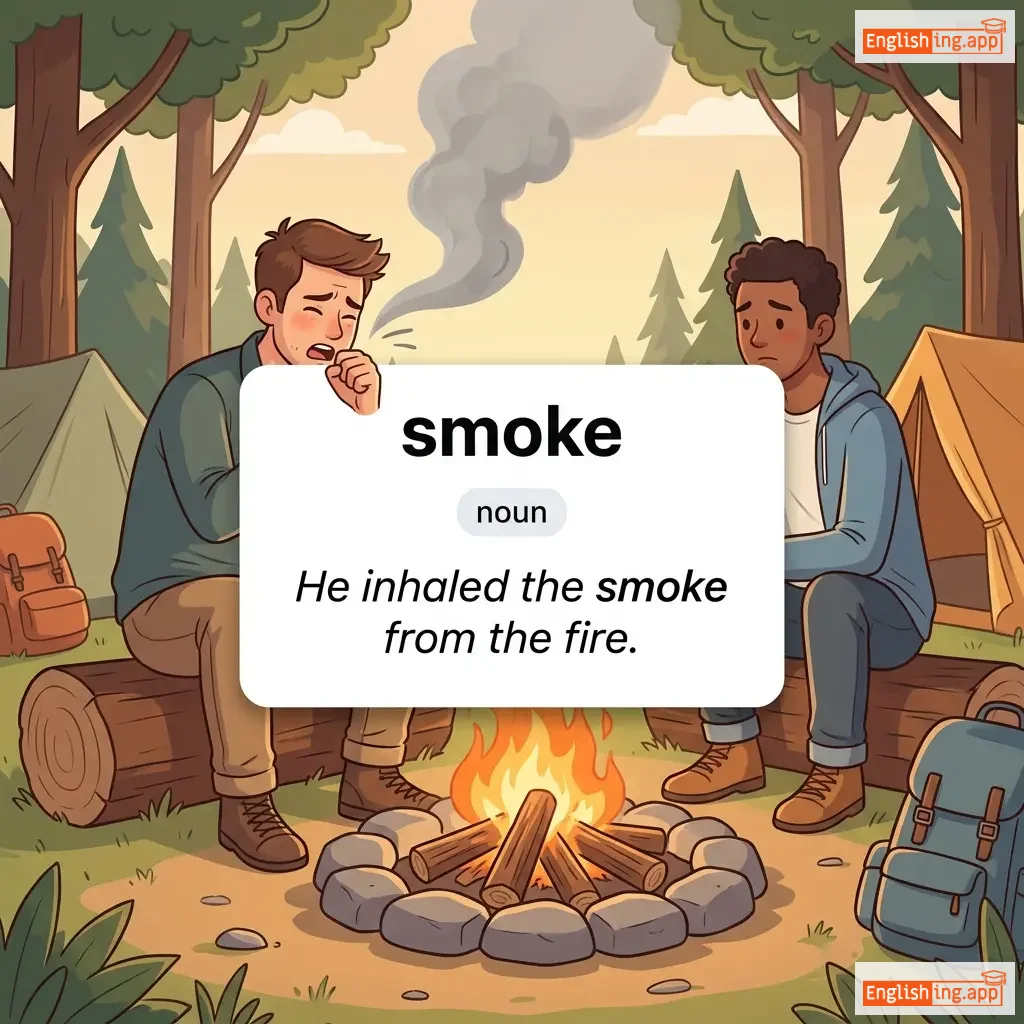
/smoʊk/
noun
(Смоке)
••••••
|
|
дым
Smoke
••••••
|
- •••••• | - •••••• | - •••••• | - •••••• |
visible vapor and gases emitted when something burns
••••••
|
Thick smoke rose from the burning building.
Тхиск Смоке росе фром тхе бурнинг буилдинг.
••••••
|
Плотный дым поднялся из горящего здания.
Thisk Smoke rose from the building.
••••••
|
- •••••• | - •••••• | - •••••• |
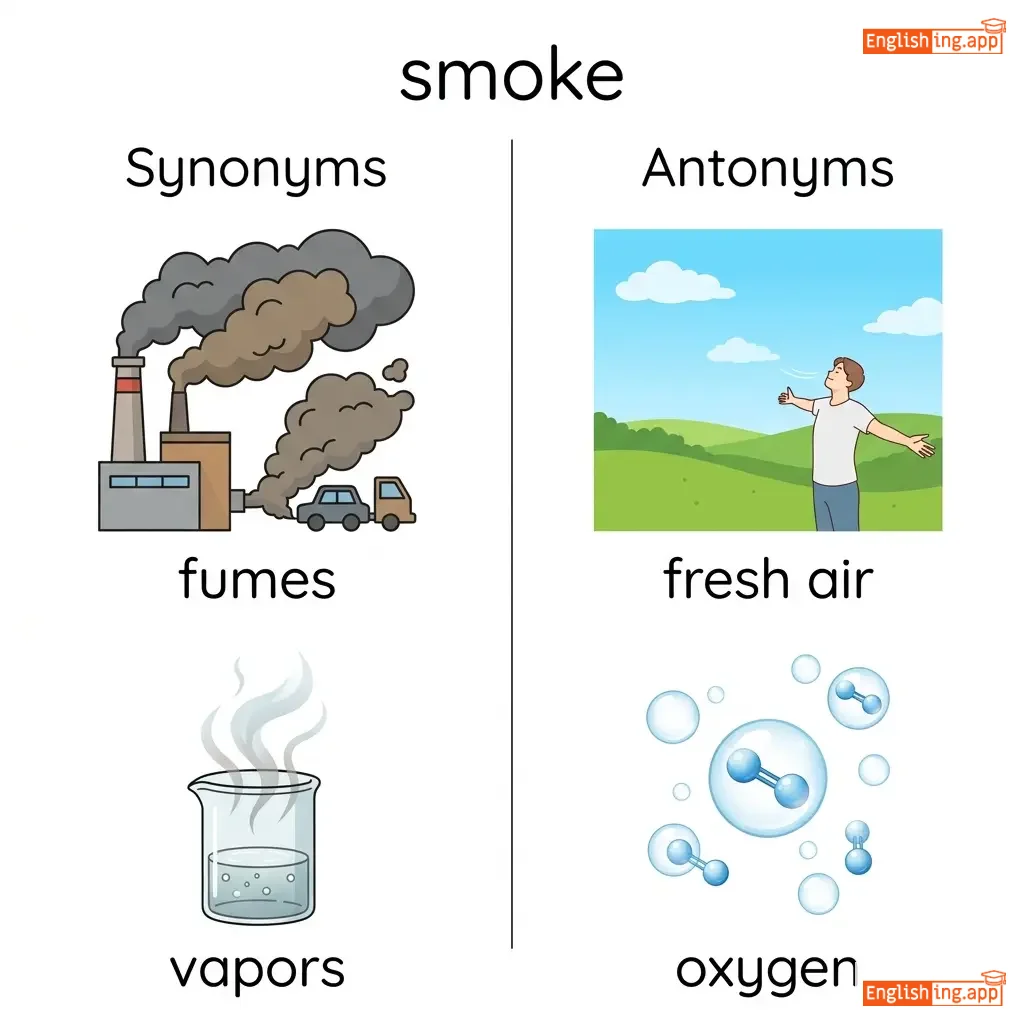
vapor, fumes, haze
••••••
|
clear air, fresh air
••••••
|
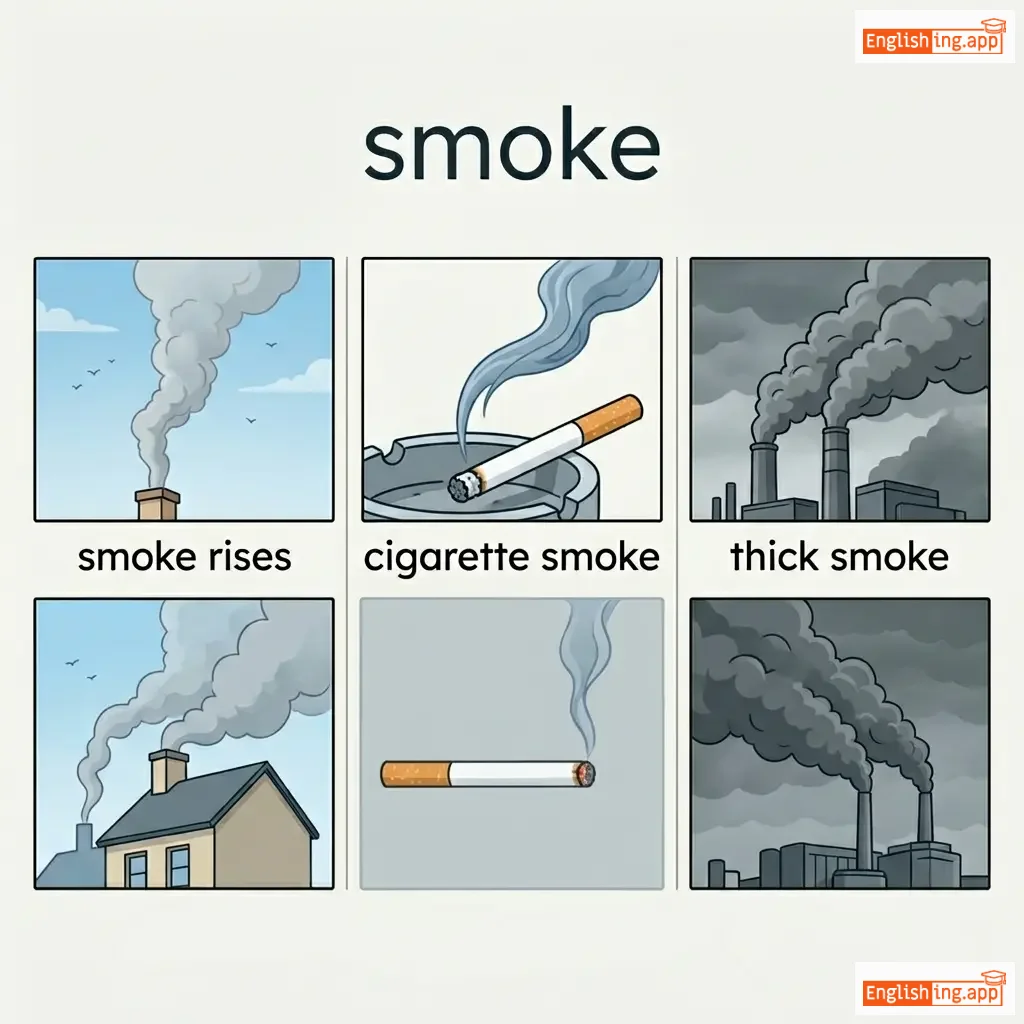
thick smoke, black smoke, smoke detector, smoke alarm
••••••
|
Смокe = Smoke; представь дым над городом, дым = dym, и запомни: Smoke = дым
••••••
|
|
🚬
••••••
|
/ˈsmoʊkər/
noun
(смоукер)
••••••
|
- •••••• |
курильщик
kurilshchik
••••••
|
- •••••• | - •••••• | - •••••• | - •••••• |
A person who smokes tobacco or other substances
••••••
|
He is a heavy smoker and tries to quit every year.
Он заядлый курильщик и пытается бросить каждый год.
••••••
|
Он заядлый курильщик и пытается бросить каждый год.
On zayadlyi kurilshchik i pytayetsya brosit kazhdyi god.
••••••
|
chain smoker
заядлый курильщик
••••••
|
A person who smokes cigarettes one after another, without pause
••••••
|
заядлый курильщик
zayadlyi kurilshchik
••••••
|
tobacco user, cigarette smoker, nicotine addict, puffing person
••••••
|
non-smoker, teetotaler
••••••
|
heavy smoker, chain smoker, occasional smoker, former smoker
••••••
|
Smoker = курильщик (smoke + r)
••••••
|
|
🚬
••••••
|
/ˈsmoʊ.kɪŋ/
noun/adjective
(смокинг)
••••••
|
- •••••• |
курение
kureniye
••••••
|
- •••••• | - •••••• | - •••••• |
smoking
курение
••••••
|
The act of inhaling and exhaling the smoke of tobacco or other substances; wearing a tuxedo (adjective, formal context).
••••••
|
Smoking is prohibited inside the building.
Курение запрещено внутри здания.
••••••
|
Курение запрещено внутри здания.
Kurenie zapreshcheno vnutri zdaniya.
••••••
|
smoking gun
дымящееся орудие
••••••
|
A piece of evidence that proves a crime or wrongdoing
••••••
|
дымящееся орудие
dymyascheesya orudie
••••••
|
tobacco use, puffing, inhaling smoke, chain-smoking
••••••
|
non-smoking, abstaining
••••••
|
smoking area, smoking habit, smoking ban, smoking cessation
••••••
|
Think of a Russian friend saying 'Я курю' while smoking.
••••••
|
|
🪞
••••••
|
/smuːð/
adjective
(сму́ð)
••••••
|
- •••••• |
гладкий
gladkiy
••••••
|
- •••••• | - •••••• | - •••••• | - •••••• |
having an even surface without roughness; happening without difficulty
••••••
|
The table has a smooth surface. |
У стола гладкая поверхность.
U stola gladkaya poverkhnost'.
••••••
|
smooth sailing |
a situation that goes easily without problems
••••••
|
плавное плавание
plavnoe plavanie
••••••
|
even, flat, polished, silky, sleek
••••••
|
rough, uneven, coarse
••••••
|
smooth surface, smooth skin, smooth operation, smooth transition
••••••
|
Гладкая поверхность, как плавное плавание.
••••••
|
|
🛣️
••••••
|
/ˈsmuːð.li/
adverb
(смутли)
••••••
|
- •••••• |
гладко; без проблем
gladko; bez problem
••••••
|
- •••••• | - •••••• | - •••••• | - •••••• |
without problems or difficulties; in an even and regular way
••••••
|
The car runs smoothly on the new highway. |
Машина едет гладко по новой трассе.
Mashina yedet gladko po novoy trasse.
••••••
|
- •••••• | - •••••• | - •••••• |
effortlessly, seamlessly, evenly, easily, fluidly
••••••
|
roughly, bumpily, unevenly, difficultly, choppily
••••••
|
run smoothly, go smoothly, operate smoothly, flow smoothly
••••••
|
'Гладко' напоминает о том, как что-то идет без замедлений и легко.
••••••
|
|
🐍
••••••
|
/sneɪk/
noun
(sneik)
••••••
|
- •••••• |
змея
zmeia
••••••
|
- •••••• | - •••••• | - •••••• | - •••••• |
a long, legless reptile that moves by slithering
••••••
|
A snake slithered across the garden path. |
Змея ползала по садовой дорожке.
Zmey polzala po sadovoy dorozhke.
••••••
|
snake in the grass |
a hidden enemy or betrayer
••••••
|
змея в траве
zmeia v trave
••••••
|
serpent, viper, reptile, cobra, python
••••••
|
mammal, bird
••••••
|
venomous snake, poisonous snake, garden snake, snake bite
••••••
|
Snake это змея – Shape длинная, ползет как змея!
••••••
|
|
📸
••••••
|
/snæp/
verb
(снэп)
••••••
|
|
сломать
slomat
••••••
|
snapped
снэппед
••••••
|
snapped
снэппед
••••••
|
snaps
снэпс
••••••
|
snapping
снэппинг
••••••
|
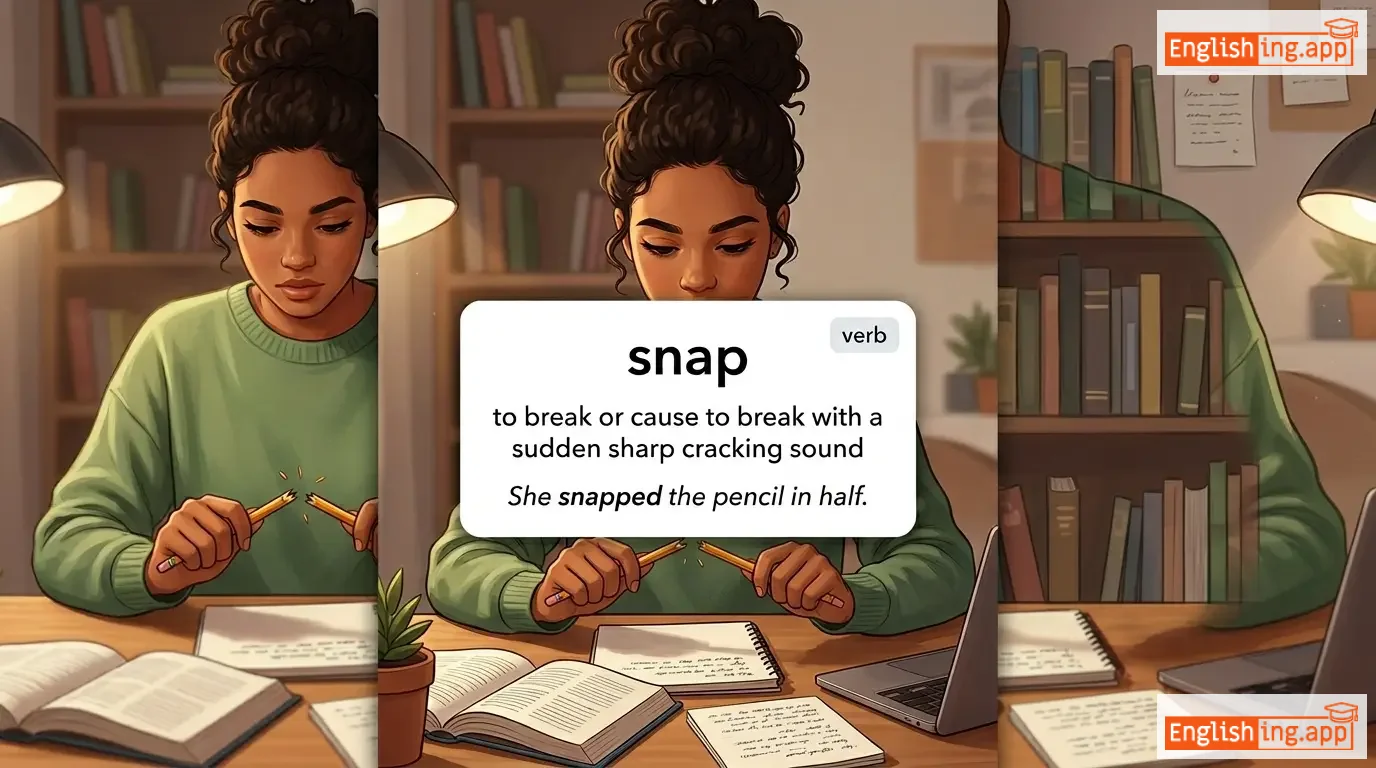
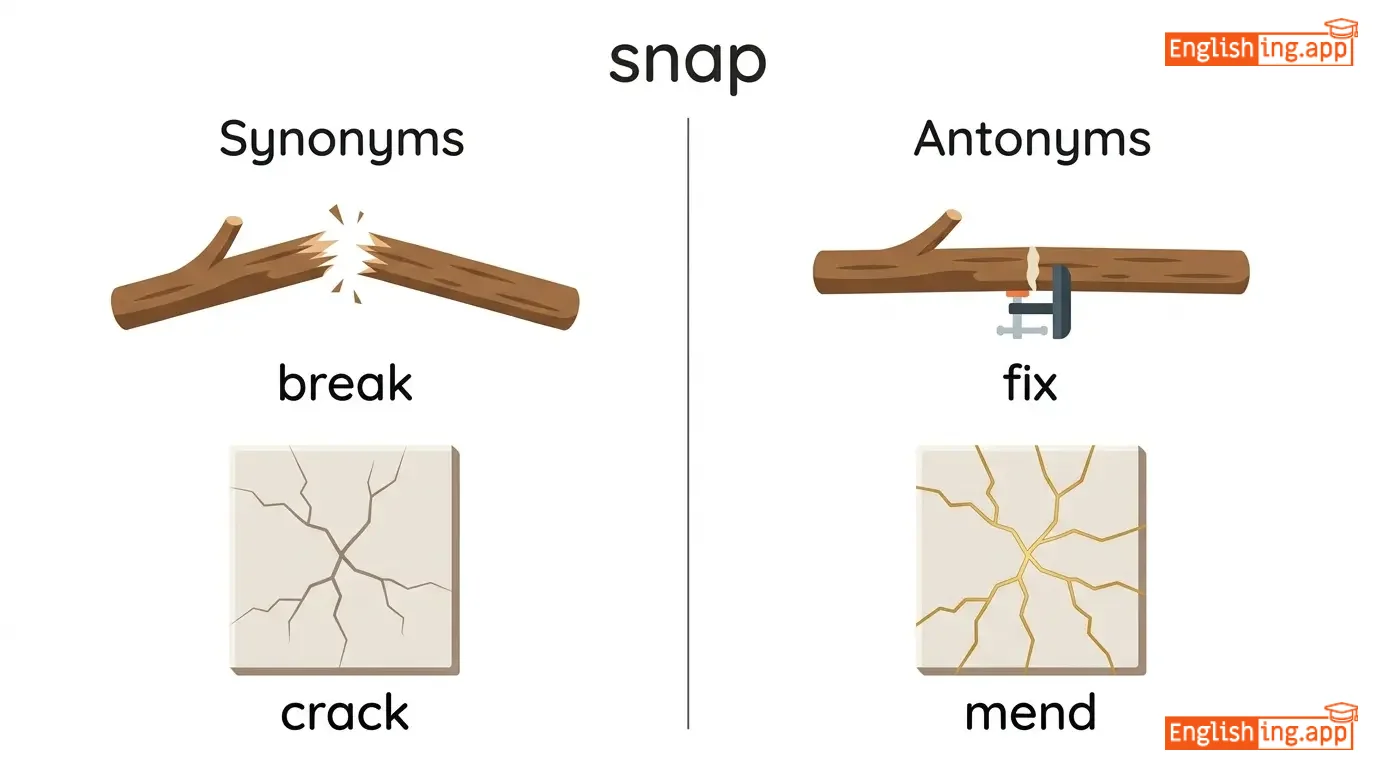
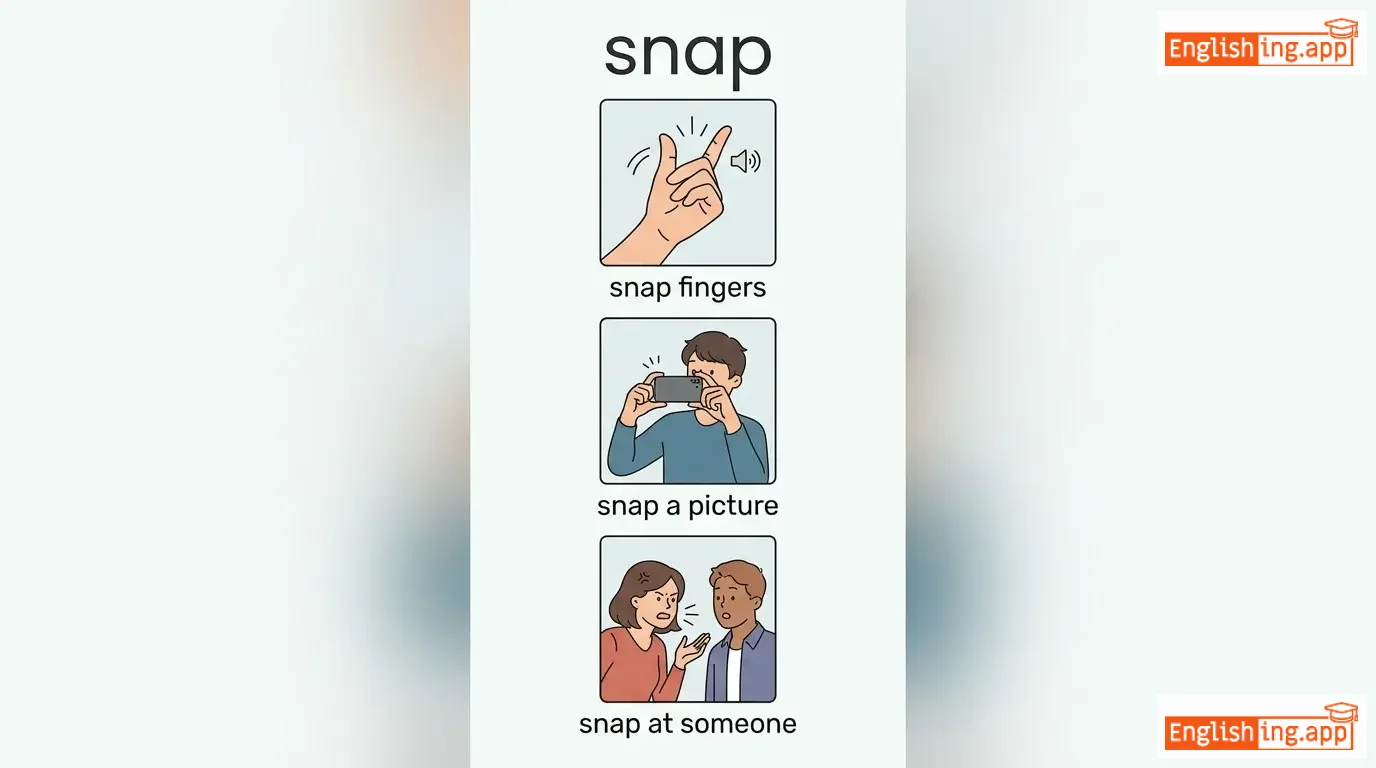
to break suddenly; to speak angrily; to take a photograph quickly
••••••
|
The rope snapped under the weight.
Завязка тросса лопнула под весом.
••••••
|
Веревка сломалась под весом.
Veriovka slomalas' pod vesom.
••••••
|
- •••••• | - •••••• | - •••••• |
break, crack, split, photograph
••••••
|
mend, repair, fix
••••••
|
snap photos, snap fingers, snap decision, snap back, snap at
••••••
|
No •••••• |
|
🤧
••••••
|
/sniːz/
verb, noun
(сниз)
••••••
|
- •••••• |
чихать
chikhat
••••••
|
sneezed
снизд
••••••
|
sneezed
снизд
••••••
|
sneezes
снизес
••••••
|
sneezing
снизинг
••••••
|
to expel air involuntarily from the nose and mouth due to irritation; the act of sneezing
••••••
|
I had to sneeze during the meeting.
Мне пришлось чихнуть во время встречи.
••••••
|
Мне пришлось чихнуть во время встречи.
Mne prishlos chikhnyut vo vremya vstrechi
••••••
|
bless you
будь здоров
••••••
|
said to someone after they sneeze to wish them well
••••••
|
будь здоров
bud zdorov
••••••
|
sternutation, expel, sniffle, cough
••••••
|
inhale, hold
••••••
|
sneeze loudly, sneeze repeatedly, sneeze into tissue, sneeze reflex
••••••
|
сниз = чихать; после sneeze говори 'будь здоров'
••••••
|
|
❄️
••••••
|
/snoʊ/
noun
(снег)
••••••
|
- •••••• |
снег
sneg
••••••
|
- •••••• | - •••••• | - •••••• | - •••••• |
frozen water vapor that falls from the sky as white flakes
••••••
|
Children love to play in the snow. |
Дети любят играть в снегу.
Deti lyubyat igrat' v snegu.
••••••
|
snowed under |
to be overwhelmed with too much work
••••••
|
погрязнуть в работе
pogryaznut' v rabote
••••••
|
frost, ice, sleet, flurry, blizzard
••••••
|
heat, sun
••••••
|
heavy snow, snow storm, snow fall, snow covered
••••••
|
Снег – это как английское snow, падает белыми хлопьями.
••••••
|
|
😊
••••••
|
/soʊ/
adverb
(со)
••••••
|
- •••••• |
так
tak
••••••
|
- •••••• | - •••••• | - •••••• | - •••••• |
to such a degree or extent
••••••
|
She was so happy with the gift.
Она была так счастлива с подарком.
••••••
|
Она была так счастлива с подарком.
Ona byla tak schastliva s podarkom.
••••••
|
- •••••• | - •••••• | - •••••• |
very, extremely, exceedingly, incredibly
••••••
|
not, slightly, somewhat
••••••
|
so good, so bad, so tired, so far
••••••
|
со (так) указывает на степень или уровень чего-то.
••••••
|
|
🙄
••••••
|
/ˈsoʊ kɔːld/
adjective
(со-колд)
••••••
|
- •••••• |
так называемый
tak nazyvaemyi
••••••
|
- •••••• | - •••••• | - •••••• | - •••••• |
referred to as or known by a particular name or title, often misleadingly
••••••
|
The so-called expert couldn't answer the question.
Зе со-колд экспёрт куднт ансэр зе квестчн.
••••••
|
Так называемый эксперт не смог ответить на вопрос.
Tak nazyvaemyi ekspert ne smog otvetit na vopros.
••••••
|
- •••••• | - •••••• | - •••••• |
alleged, supposed, apparent, purported
••••••
|
actual, real
••••••
|
so-called expert, so-called leader, so-called solution
••••••
|
So-called = так называемый: imagine a sign that says SO-CALLED with the Russian label Так Названый around it to picture the meaning
••••••
|
|
💦
••••••
|
/soʊk/
verb
(сок)
••••••
|
- •••••• |
погружать
pogruzhat
••••••
|
soaked
сокд
••••••
|
soaked
сокд
••••••
|
soaks
сокc
••••••
|
soaking
сокинг
••••••
|
to make something completely wet by immersing it in liquid
••••••
|
She soaked the clothes in water before washing them.
она сокд дры одежду в воде перед тем, как ее постирать.
••••••
|
она погрузила одежду в воду перед тем, как ее постирать.
ona pogruzila odezhdu v vodu pered tem, kak ee postirat.
••••••
|
soak up knowledge
сок ап знание
••••••
|
to absorb information eagerly
••••••
|
впитывать знания
vpitivat' znaniya
••••••
|
drench, saturate, immerse, absorb
••••••
|
dry, dehydrate, evaporate
••••••
|
soak clothes, soak in water, soak up knowledge, soak overnight
••••••
|
SOAK означает погружать, как погружать одежду в воду
••••••
|
|
🧼
••••••
|
/soʊp/
noun
••••••
|
- •••••• | - •••••• | - •••••• | - •••••• | - •••••• | - •••••• |
a substance used for washing and cleaning, typically made from fats and alkalis
••••••
|
She washed her hands with soap and water. |
- •••••• |
soap opera |
a television or radio drama series about daily life
••••••
|
- •••••• |
cleanser, detergent, wash, suds, bar
••••••
|
dirt, grime
••••••
|
bar of soap, liquid soap, hand soap, soap bubbles
••••••
|
No •••••• |
|
🦅
••••••
|
/sɔːr/
verb
(соʊр)
••••••
|
- •••••• |
взлетать / быстро увеличиваться
vzoletat / bystro uvelichivatsya
••••••
|
soared
соʊрд
••••••
|
soared
соʊрд
••••••
|
soars
соʊрс
••••••
|
soaring
соʊринг
••••••
|
to fly or rise high in the air; to increase rapidly or dramatically
••••••
|
The eagle soared high above the mountains.
Орел соʊрд высоко над горами.
••••••
|
Орел взлетел высоко над горами.
Orel vzletel vysoko nad gorami.
••••••
|
soar to new heights
soar to new heights
••••••
|
to achieve great success or improvement
••••••
|
достигать новых высот
dostigat' novykh vysot
••••••
|
rise, ascend, climb, surge, escalate
••••••
|
fall, drop, descend
••••••
|
soar high, prices soar, spirits soar, soar above
••••••
|
Soar как орел, летящий ввысь!
••••••
|
|
🌍
••••••
|
/ˈsəʊʃəl/
adjective
(социальный)
••••••
|
- •••••• |
социальный
social'nyy
••••••
|
- •••••• | - •••••• | - •••••• | - •••••• |
relating to society or its organization
••••••
|
She has a very social personality and enjoys meeting new people. |
У неё очень социальная личность, и она любит встречать новых людей.
U nee ochen' sotsial'naya lichnost', i ona lyubit vstrechat' novykh lyudey.
••••••
|
- •••••• | - •••••• | - •••••• |
community-oriented, sociable, outgoing, friendly
••••••
|
antisocial, solitary
••••••
|
social media, social interaction, social event, social networking
••••••
|
Социальный - Люди любят встречаться и взаимодействовать в обществе.
••••••
|
|
🌍
••••••
|
/ˈsoʊʃəlɪst/
noun, adjective
(сошалист)
••••••
|
- •••••• |
социалист
sotsialist
••••••
|
- •••••• | - •••••• | - •••••• | - •••••• |
a person who advocates for socialism; relating to socialism
••••••
|
He is a well-known socialist writer. |
Он известный писатель-социалист.
On izvestnyy pisatel' sotsialist.
••••••
|
- •••••• | - •••••• | - •••••• |
leftist, progressive, collectivist, reformer
••••••
|
capitalist, conservative
••••••
|
socialist party, socialist policies, socialist ideals
••••••
|
Социалист = человек с социальной идеей
••••••
|
|
🏘️
••••••
|
/səˈsaɪ.ə.ti/
noun
(общество)
••••••
|
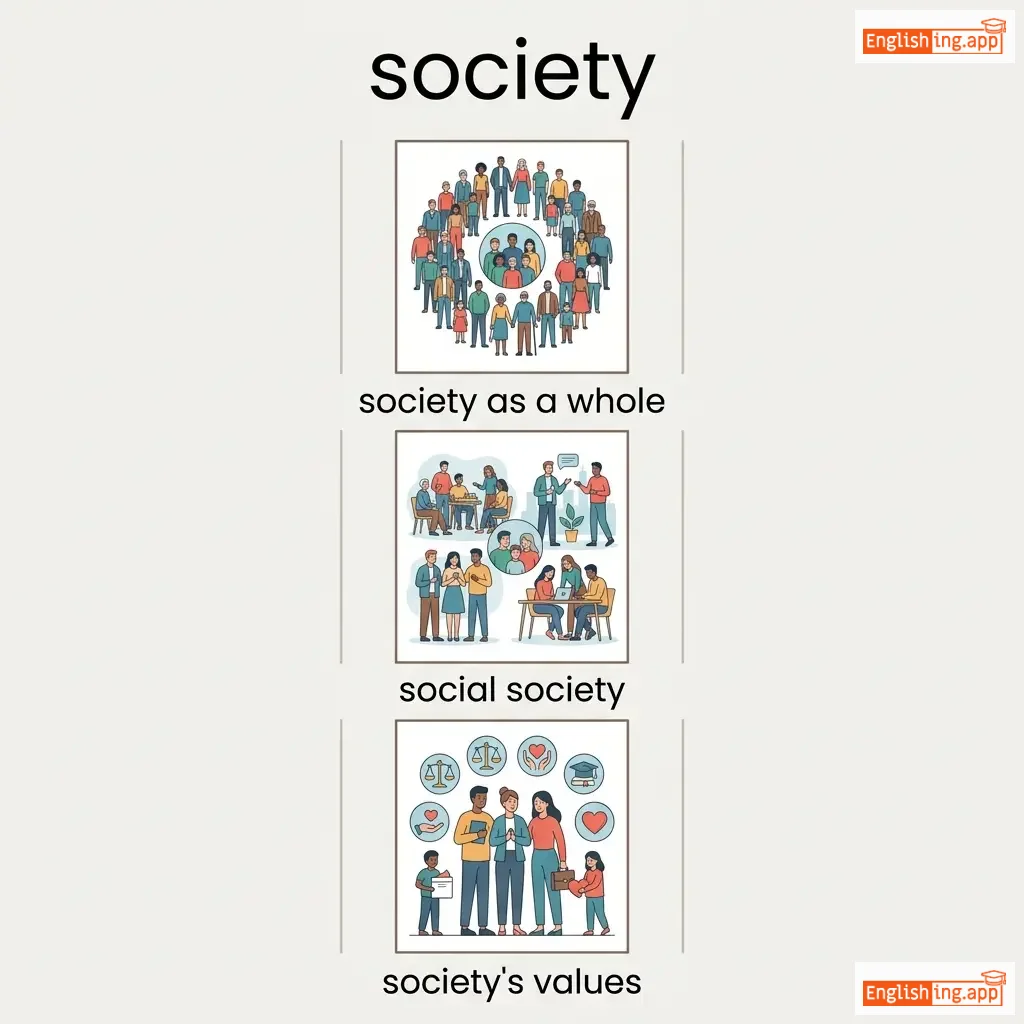
|
общество; организация
obshchestvo; organizatsiya
••••••
|
- •••••• | - •••••• | - •••••• | - •••••• |
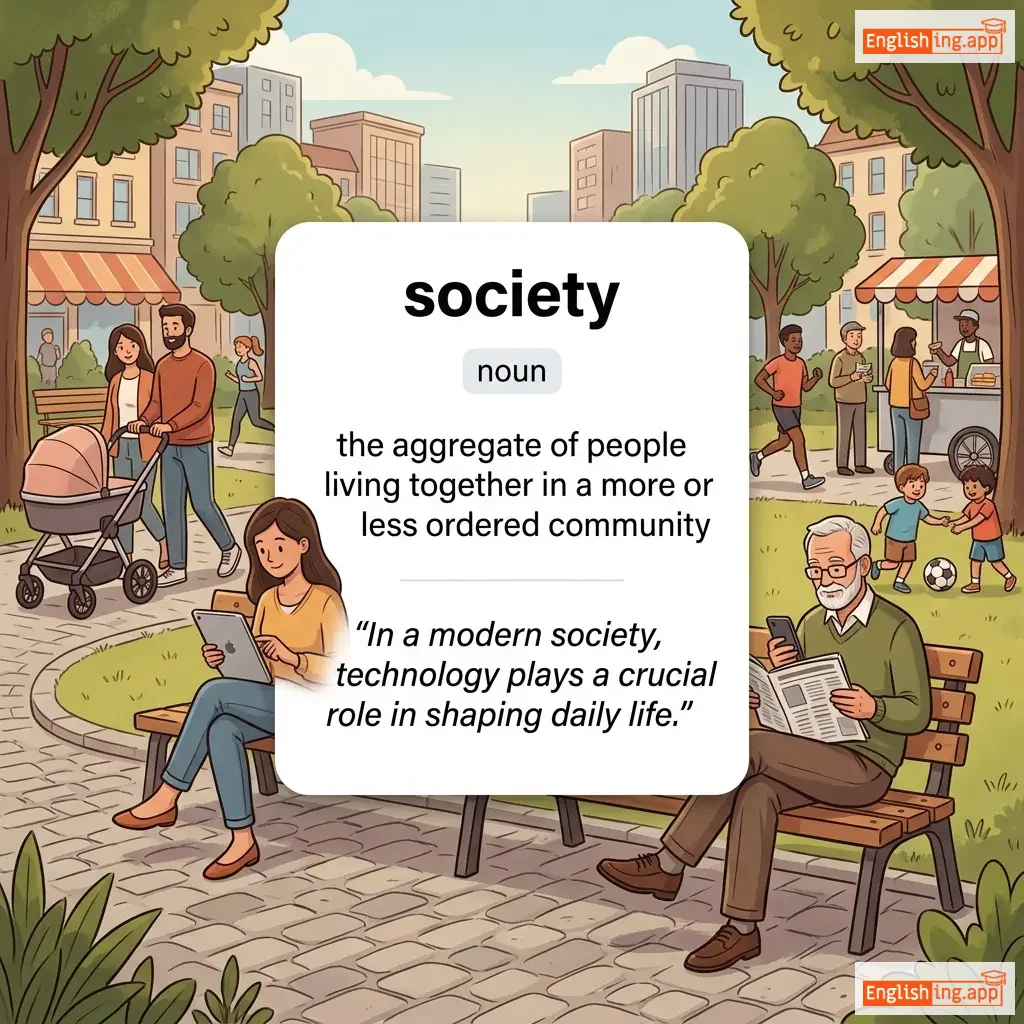
a community of people living together; an organization or association
••••••
|
Education plays an important role in society. |
Образование играет важную роль в обществе.
Obrazovanie igayet vazhnuyu rol' v obshchestve.
••••••
|
- •••••• | - •••••• | - •••••• |
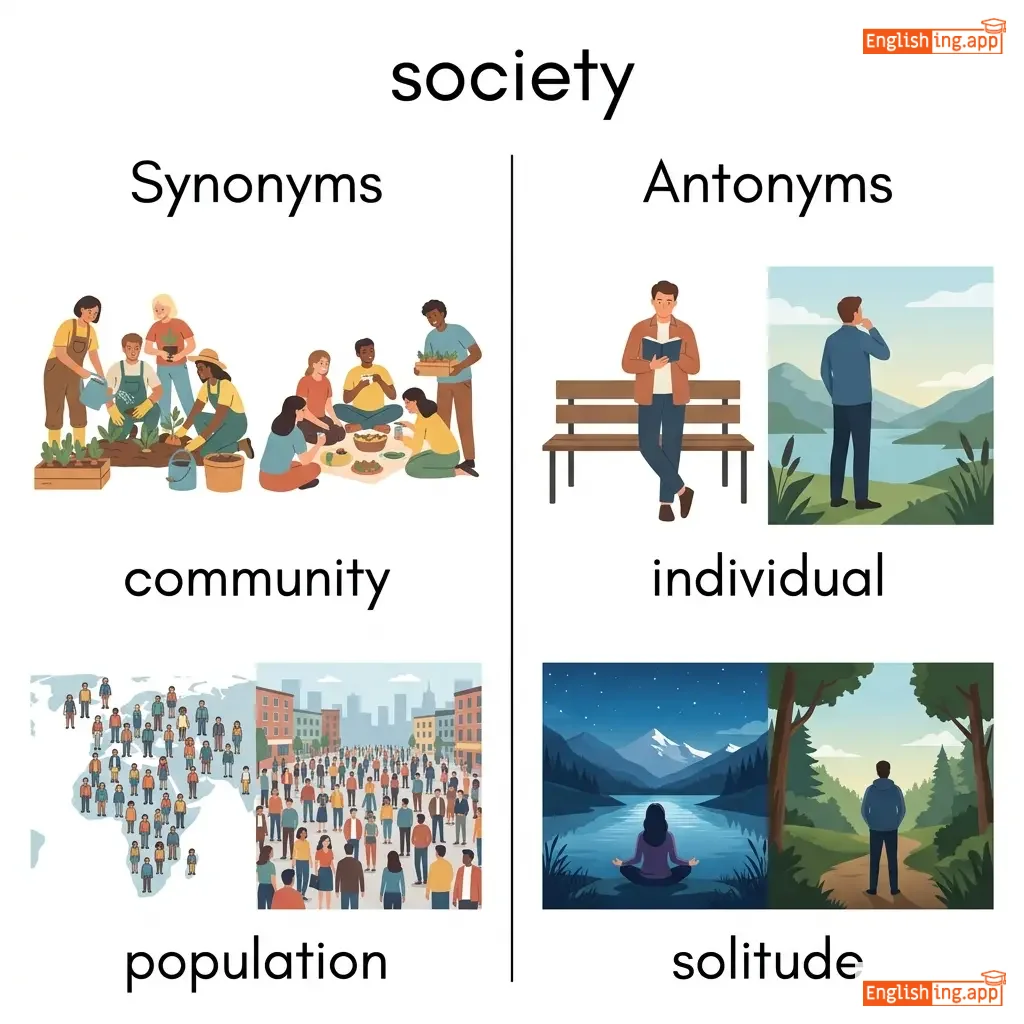
community, civilization, culture, association
••••••
|
isolation, solitude, individualism
••••••
|
modern society, civil society, human society
••••••
|
Общество - это объединение людей, образование - ключ.
••••••
|

