|
表情符号
|
单词 | Images | 翻译 | 过去时 | 过去分词 | 第三人称单数 | 动名词 | 含义 | 例句 | 例句翻译 | 示例表达 | 示例表达含义 | 示例表达翻译 | 同义词 | 反义词 | 搭配词 | 助记符 |
|---|---|---|---|---|---|---|---|---|---|---|---|---|---|---|---|---|---|
|
📏
••••••
|
/saɪz/
noun
(saiz)
••••••
|
- •••••• |
尺寸
chicun
••••••
|
- •••••• | - •••••• | - •••••• | - •••••• |
the physical dimensions, proportions, or magnitude of something
••••••
|
This shirt is too small in size for me. |
这件衬衫对我来说在尺寸上太小了。
Zhe jian chen shan dui wo lai shuo zai chicun shang tai xiao le.
••••••
|
- •••••• | - •••••• | - •••••• |
dimension, measurement, volume, magnitude
••••••
|
smallness, insignificance
••••••
|
larger size, shirt size, appropriate size, size chart
••••••
|
Chicun sounds like 'size' for your clothes!
••••••
|
|
✏️
••••••
|
/skɛtʃ/
noun
(sketch)
••••••
|
- •••••• |
素描
sumiao
••••••
|
- •••••• | - •••••• | - •••••• | - •••••• |
a simple, rough drawing or outline
••••••
|
He made a quick sketch of the landscape.
他画了一个快速的风景草图。
••••••
|
他画了一个快速的风景素描。
Ta hua le yige kuaisu de fengjing sumiao.
••••••
|
- •••••• | - •••••• | - •••••• |
drawing, outline, draft, blueprint
••••••
|
finished work, masterpiece
••••••
|
quick sketch, pencil sketch, rough sketch
••••••
|
越简单越素描 (sumiao)
••••••
|
|
🎿
••••••
|
/skiː/
verb
(滑雪)
••••••
|
- •••••• |
滑雪
huá xuě
••••••
|
skied
滑雪过
••••••
|
skied
滑雪过
••••••
|
skis
滑雪
••••••
|
skiing
滑雪
••••••
|
to glide over snow on skis
••••••
|
We went skiing in the Alps last winter.
我们去年冬天去了阿尔卑斯滑雪。
••••••
|
我们去年冬天去了阿尔卑斯滑雪。
Wǒmen qùnián dōngtiān qùle Ā'ěr bēi sī huá xuě.
••••••
|
- •••••• | - •••••• | - •••••• |
snowboard, glide, coast
••••••
|
walk, crawl
••••••
|
ski trip, ski resort, downhill skiing, cross-country skiing
••••••
|
Skiing is '滑雪' in Chinese. Ski through the powdery snow!
••••••
|
|
🎯
••••••
|
/ˈskɪlfʊl/
adjective
(skilful)
••••••
|
- •••••• |
熟练的; 能手; 专家
shulian de; nengshou; zhuanjia
••••••
|
- •••••• | - •••••• | - •••••• | - •••••• |
having or showing skill; expert and accomplished
••••••
|
The skilful surgeon performed the operation with great precision. |
熟练的外科医生以极高的精确度完成了手术。
Shulian de waike yisheng yi ji gao de jingqueduwu wancheng le shoushu.
••••••
|
- •••••• | - •••••• | - •••••• |
skilled, expert, accomplished, proficient, adept
••••••
|
unskilled, incompetent, clumsy, inexpert, amateurish
••••••
|
skilful hands, skilful player, skilful craftsman, skilful technique
••••••
|
像外科专家一样熟练,精准完成每个细节。
••••••
|
|
🎨
••••••
|
/skɪl/
noun
(skil)
••••••
|
- •••••• |
技能
jineng
••••••
|
- •••••• | - •••••• | - •••••• | - •••••• |
the ability to do something well through training or experience
••••••
|
Her skill in painting impressed everyone. |
她在绘画方面的技能给大家留下了深刻印象。
Ta zai huihua fangmian de jineng gei dajia liuxia le shenke yinxiang.
••••••
|
learn a new skill |
to acquire the ability to do something new
••••••
|
学习新技能
xuexi xin jineng
••••••
|
ability, talent, expertise, competence, proficiency
••••••
|
incompetence, inability
••••••
|
develop skill, practical skill, language skill, technical skill
••••••
|
技能 = 技能 = 通过练习提升
••••••
|
|
🎯
••••••
|
/skɪld/
adjective
(斯基尔德)
••••••
|
- •••••• |
熟练
shulian
••••••
|
- •••••• | - •••••• | - •••••• | - •••••• |
having the ability, experience, or training to do something well
••••••
|
She is a highly skilled surgeon with years of experience.
她是一位经验丰富的高技能外科医生。
••••••
|
她是一位经验丰富的高技能外科医生。
Ta shi yi wei jingyan fengfu de gao jishun waike yisheng.
••••••
|
skilled labor
熟练劳动
••••••
|
work that requires specialized training or expertise
••••••
|
熟练劳动
shulian laodong
••••••
|
talented, expert, proficient, capable, competent
••••••
|
unskilled, inexperienced, amateur
••••••
|
skilled worker, skilled labor, highly skilled, skilled professional
••••••
|
Skilled意味着熟练 – 熟练的人有必要的技能做任何工作。
••••••
|
|
🦴
••••••
|
/skɪn/
noun
(skin)
••••••
|
- •••••• |
皮肤
pifu
••••••
|
- •••••• | - •••••• | - •••••• | - •••••• |
the outer covering of the body; the natural outer covering of a fruit or vegetable
••••••
|
Her skin was soft and smooth.
她的皮肤又软又滑。
••••••
|
她的皮肤又软又滑。
Tā de pífū yòu ruǎn yòu huá.
••••••
|
- •••••• | - •••••• | - •••••• |
flesh, hide, peel, surface
••••••
|
interior, inside, core
••••••
|
soft skin, smooth skin, dry skin, skin care, skin color
••••••
|
Remember 'pifu' like 'peel' for the outer skin layer
••••••
|
|
⏭️
••••••
|
/skɪp/
verb
(skip)
••••••
|
- •••••• |
跳过
tiao guo
••••••
|
skipped
skiped
••••••
|
skipped
skiped
••••••
|
skips
skips
••••••
|
skipping
skipping
••••••
|
to omit or pass over something; to move lightly or quickly
••••••
|
He decided to skip breakfast and go straight to work.
他决定跳过早餐,直接去上班。
••••••
|
他决定跳过早餐,直接去上班。
Ta jueding tiao guo zaocan, zhijie qu shangban.
••••••
|
skip a beat
跳过一拍
••••••
|
to feel a sudden excitement or nervousness
••••••
|
跳过一拍
tiao guo yi pai
••••••
|
omit, jump, bypass, ignore, hop
••••••
|
include, attend, continue
••••••
|
skip class, skip meal, skip a step, skip ahead
••••••
|
跳过意味着避免,像是‘跳过考试有风险!’ 😅
••••••
|
|
👗
••••••
|
/skɜːrt/
noun/verb
••••••
|
- •••••• | - •••••• |
skirted
••••••
|
skirted
••••••
|
skirts
••••••
|
skirting
••••••
|
a piece of clothing that hangs from the waist; to go around the edge of something
••••••
|
She wore a red skirt to the party. |
- •••••• |
skirt the issue |
to avoid dealing directly with a subject
••••••
|
- •••••• |
dress, petticoat, hem, bypass, avoid
••••••
|
confront, face
••••••
|
short skirt, long skirt, denim skirt, skirt around
••••••
|
No •••••• |
|
💀
••••••
|
/skʌl/
noun
(skal)
••••••
|
- •••••• |
头骨
tougu
••••••
|
- •••••• | - •••••• | - •••••• | - •••••• |
the bony structure that forms the head and protects the brain
••••••
|
The archaeologists found an ancient human skull. |
考古学家发现了一个古老的人类头骨。
Kaogu xuejia faxianle yige gulao de renlei tougu.
••••••
|
skull and crossbones |
a symbol of death or danger, often used on pirate flags or poison labels
••••••
|
骷髅与交叉骨头
kulou yu jiaocha gutou
••••••
|
cranium, head, braincase, noggin, dome
••••••
|
none, flesh
••••••
|
fractured skull, human skull, skull bones, skull shape
••••••
|
头骨保护大脑,就像骷髅和交叉的骨头一样象征着危险。
••••••
|
|
☁️
••••••
|
/skaɪ/
noun
(skaɪ)
••••••
|
- •••••• |
天空
tiānkōng
••••••
|
- •••••• | - •••••• | - •••••• | - •••••• |
the region of the atmosphere and outer space seen from the earth
••••••
|
The sky is blue today.
今天的天空是蓝色的。
••••••
|
今天的天空是蓝色的。
Jīntiān de tiānkōng shì lán sè de.
••••••
|
- •••••• | - •••••• | - •••••• |
heavens, atmosphere, firmament
••••••
|
ground, earth
••••••
|
blue sky, clear sky, cloudy sky, night sky
••••••
|
天空广阔无垠 (The sky is vast and boundless).
••••••
|
|
💥
••••••
|
/slæm/
verb
(斯拉姆)
••••••
|
- •••••• |
用力关门
yònglì guānmén
••••••
|
slammed
斯拉姆德
••••••
|
slammed
斯拉姆德
••••••
|
slams
斯拉姆斯
••••••
|
slamming
斯拉姆英
••••••
|
to close or hit something with great force
••••••
|
He slammed the door angrily after the argument.
他在争论后愤怒地摔门。
••••••
|
他在争论后愤怒地摔门。
Tā zài zhēnglùn hòu fènnù de shuāi mén.
••••••
|
slam dunk
扣篮
••••••
|
a sure success or an easy victory
••••••
|
轻松获胜
qīngsōng huòshèng
••••••
|
bang, strike, shut, hit, smash
••••••
|
open, praise, compliment
••••••
|
slam the door, slam shut, slam into, slam hard
••••••
|
Slam就像一个用力的打击,像扣篮一样!
••••••
|
|
🖐️
••••••
|
/slæp/
verb, noun
(slap)
••••••
|
|
打耳光
da ěrguāng
••••••
|
slapped
slapped
••••••
|
slapped
slapped
••••••
|
slaps
slaps
••••••
|
slapping
slapping
••••••
|
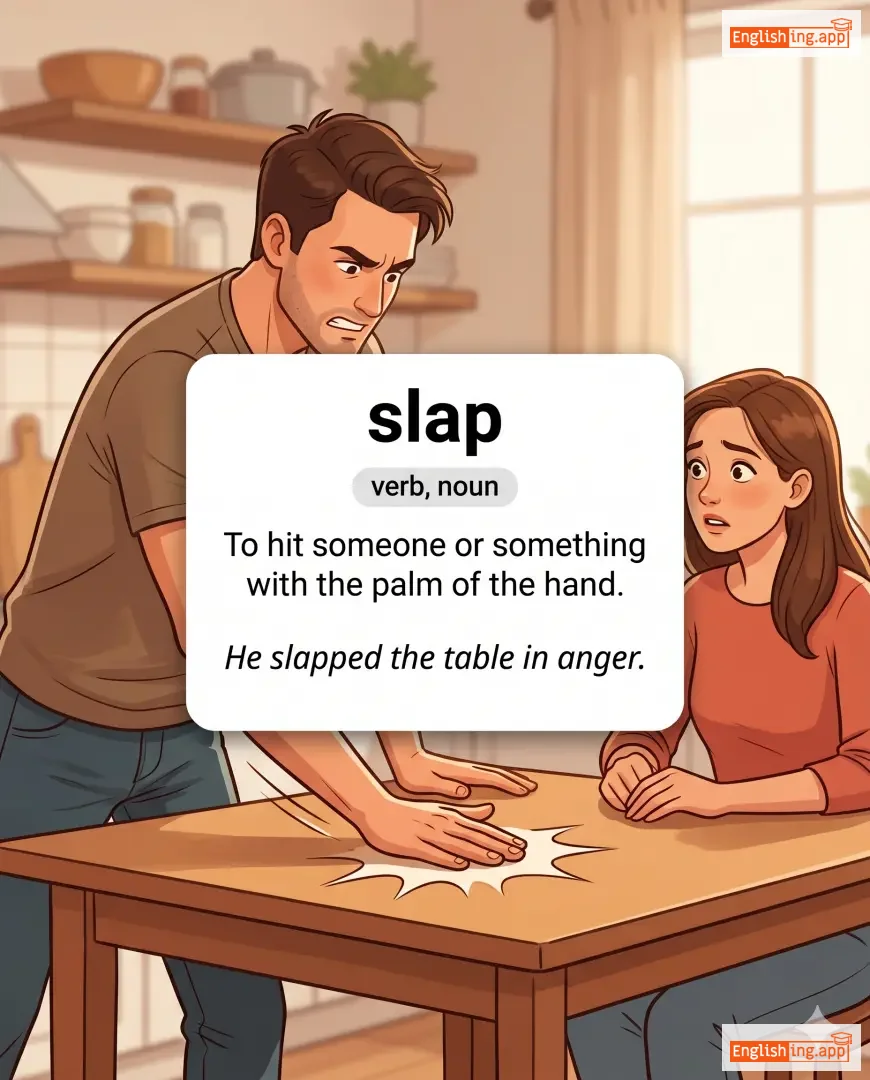
To hit someone or something with the palm of the hand.
••••••
|
He slapped the table in anger.
他生气地拍了桌子。
••••••
|
他生气地拍了桌子。
Tā shēngqì de pāi le zhuōzi.
••••••
|
slap on the wrist
手腕上的耳光
••••••
|
a mild punishment or warning
••••••
|
轻微惩罚
qīngwēi chéngfá
••••••
|
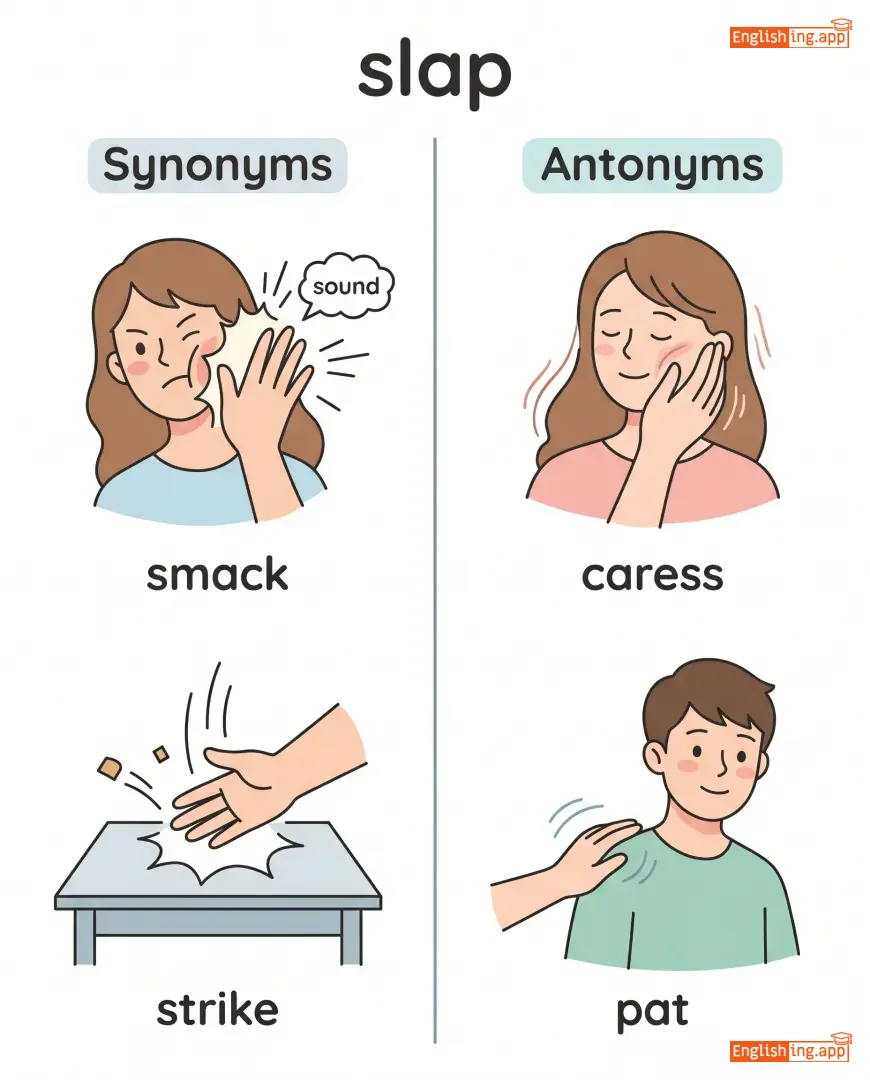
smack, strike, hit, whack
••••••
|
caress, pat
••••••
|
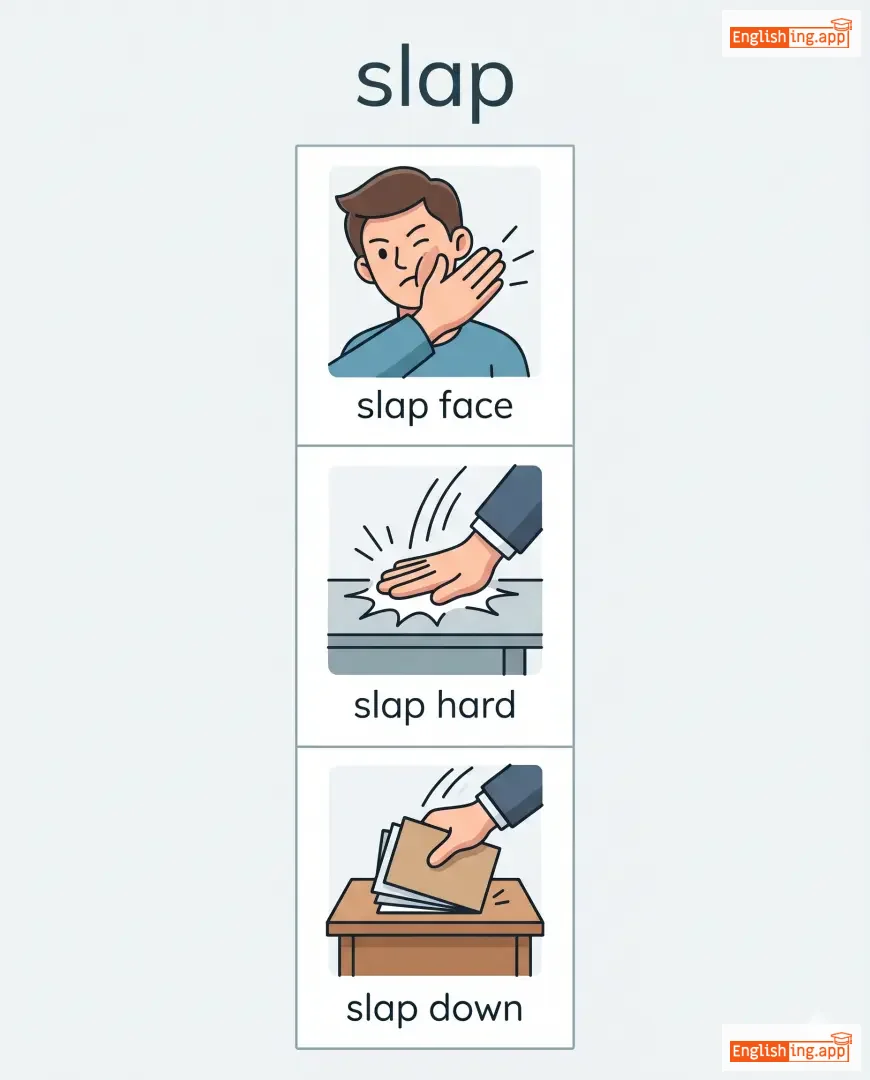
slap face, slap hard, slap down, slap on the wrist
••••••
|
Slap 意味着 slap 🖐️ — 打耳光容易记住
••••••
|
|
✂️
••••••
|
/slæʃ/
verb
(slash)
••••••
|
|
切割
qie ge
••••••
|
slashed
slashd
••••••
|
slashed
slashd
••••••
|
slashes
slashes
••••••
|
slashing
slashing
••••••
|
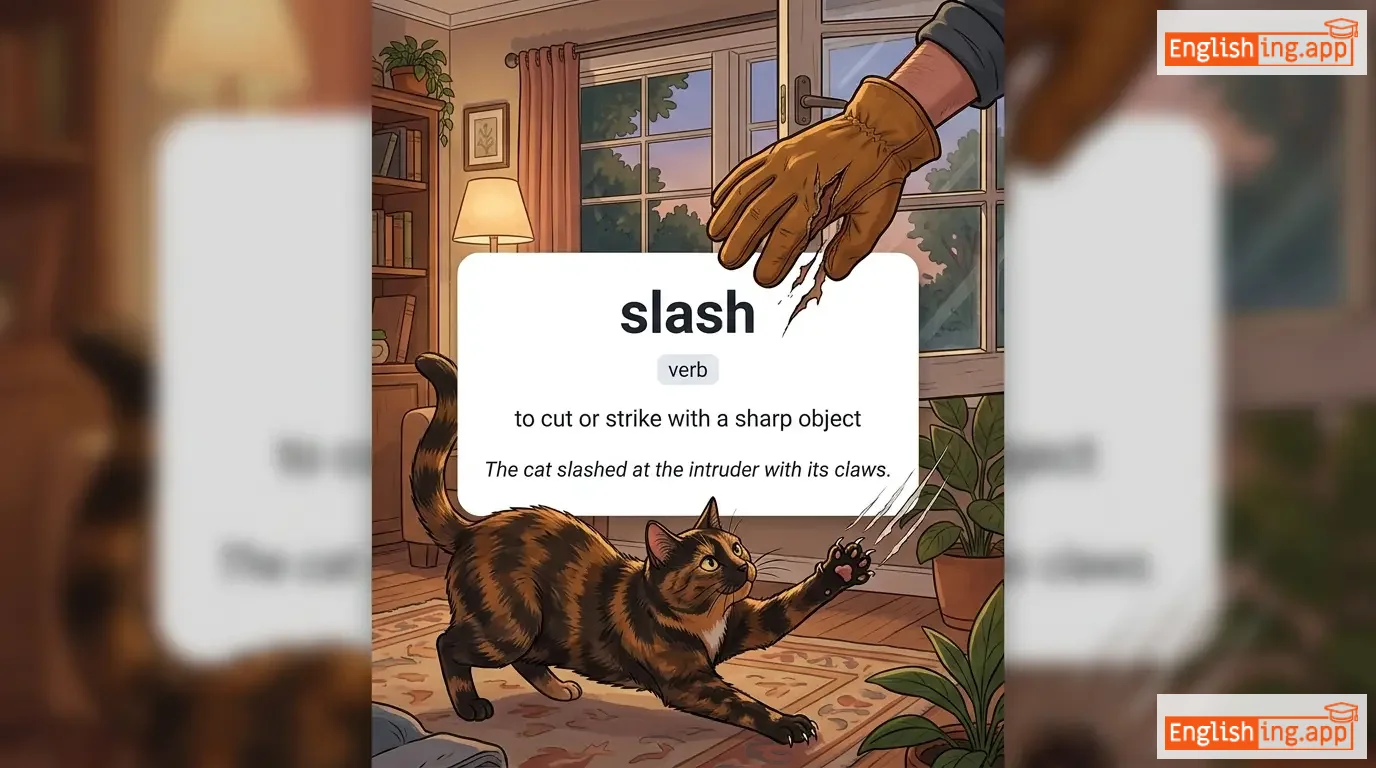
to cut with a sharp blade; to reduce drastically
••••••
|
The company slashed prices to attract more customers.
公司大幅削减价格以吸引更多顾客。
••••••
|
公司大幅削减价格以吸引更多顾客。
Gongsi dafu xiaojian jiage yi xiyin gengduo guke.
••••••
|
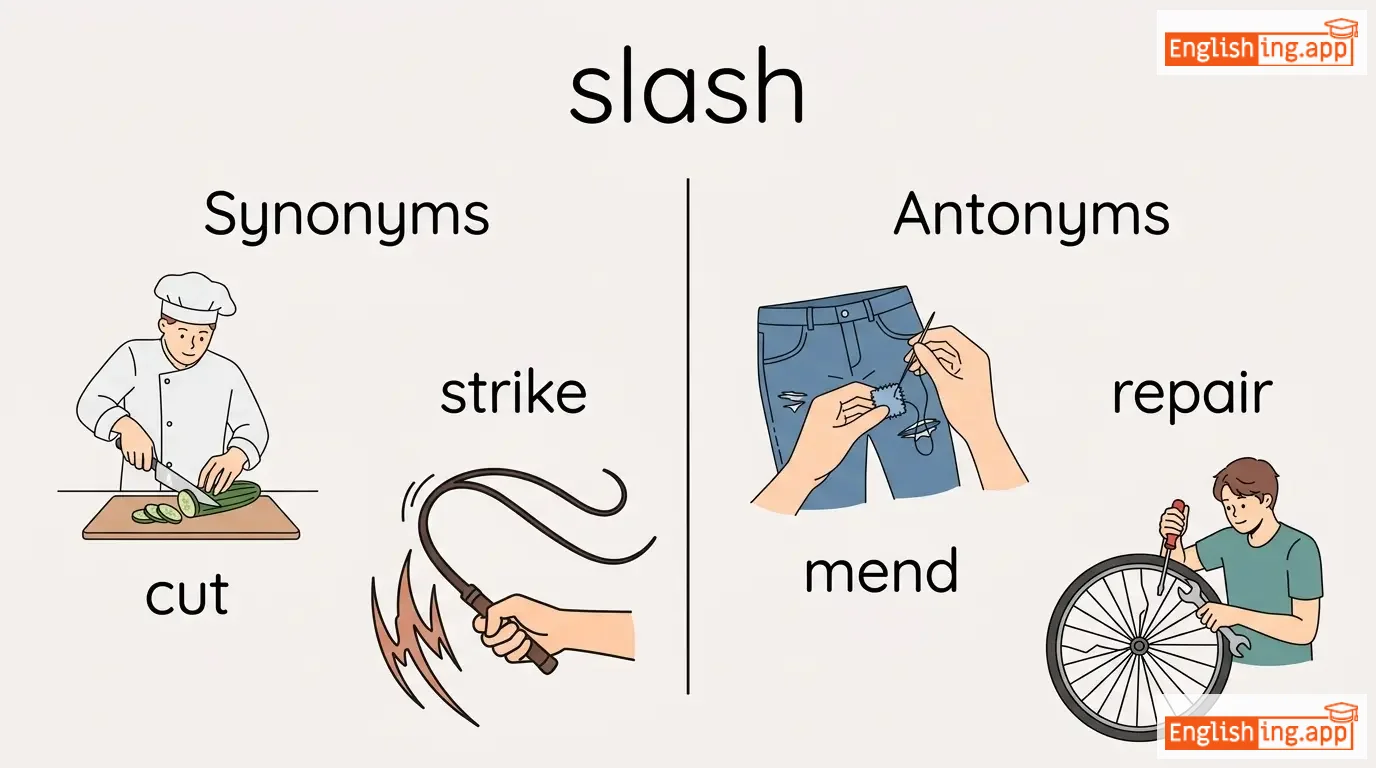
- •••••• | - •••••• | - •••••• |
cut, reduce, strike, slice
••••••
|
increase, raise, heal, mend
••••••
|
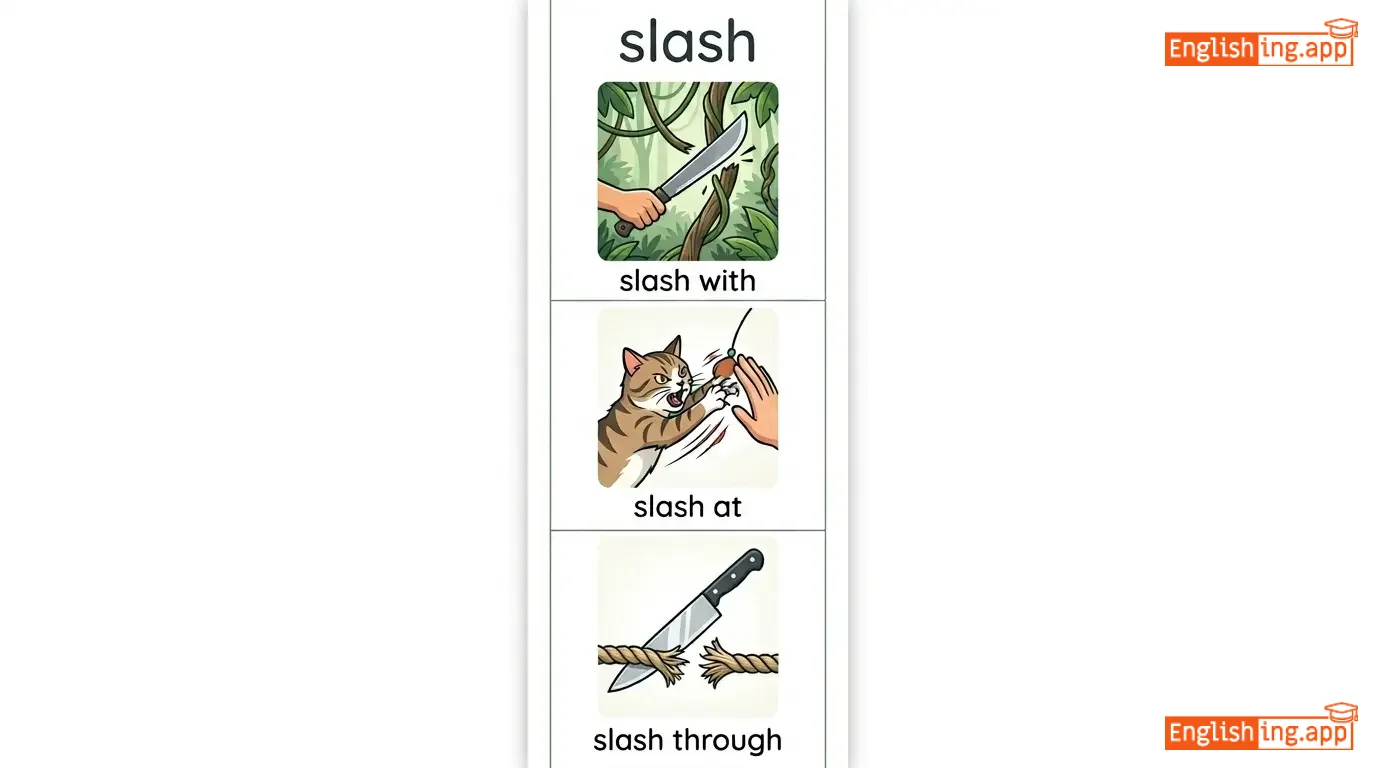
slash prices, slash deeply, slash through, slash budgets, slash dramatically
••••••
|
Slash在英语中是切割或削减价格的意思。
••••••
|
|
👤
••••••
|
/sleɪv/
noun
(slāv)
••••••
|
- •••••• |
奴隶
nùlì
••••••
|
- •••••• | - •••••• | - •••••• | - •••••• |
a person who is the legal property of another and is forced to work for them
••••••
|
The abolitionist movement fought for the rights of slaves. |
废奴主义者运动为奴隶的权利而奋斗。
Fèi nú zhǔyì zhě yùndòng wèi nùlì de quánlì ér fèndòu.
••••••
|
- •••••• | - •••••• | - •••••• |
serf, bondsman, vassal, indentured servant
••••••
|
freeman, master, owner
••••••
|
enslaved slave, slavery system, slave labor
••••••
|
奴隶,像铁链一样无法逃脱的工作者。
••••••
|
|
⛓️
••••••
|
/ˈsleɪvəri/
noun
••••••
|
- •••••• | - •••••• | - •••••• | - •••••• | - •••••• | - •••••• |
the system or state of being owned and forced to work for someone else
••••••
|
Slavery was abolished in most countries in the 19th century. |
- •••••• |
modern-day slavery |
the exploitation of people through forced labor or trafficking in modern times
••••••
|
- •••••• |
servitude, bondage, oppression, captivity
••••••
|
freedom, liberty, independence
••••••
|
abolish slavery, against slavery, slavery system, slavery trade
••••••
|
No •••••• |
|
😴
••••••
|
/sliːp/
verb
(slíp)
••••••
|
|
睡觉
shuijiao
••••••
|
slept
slept
••••••
|
slept
slept
••••••
|
sleeps
sleeps
••••••
|
sleeping
sleeping
••••••
|
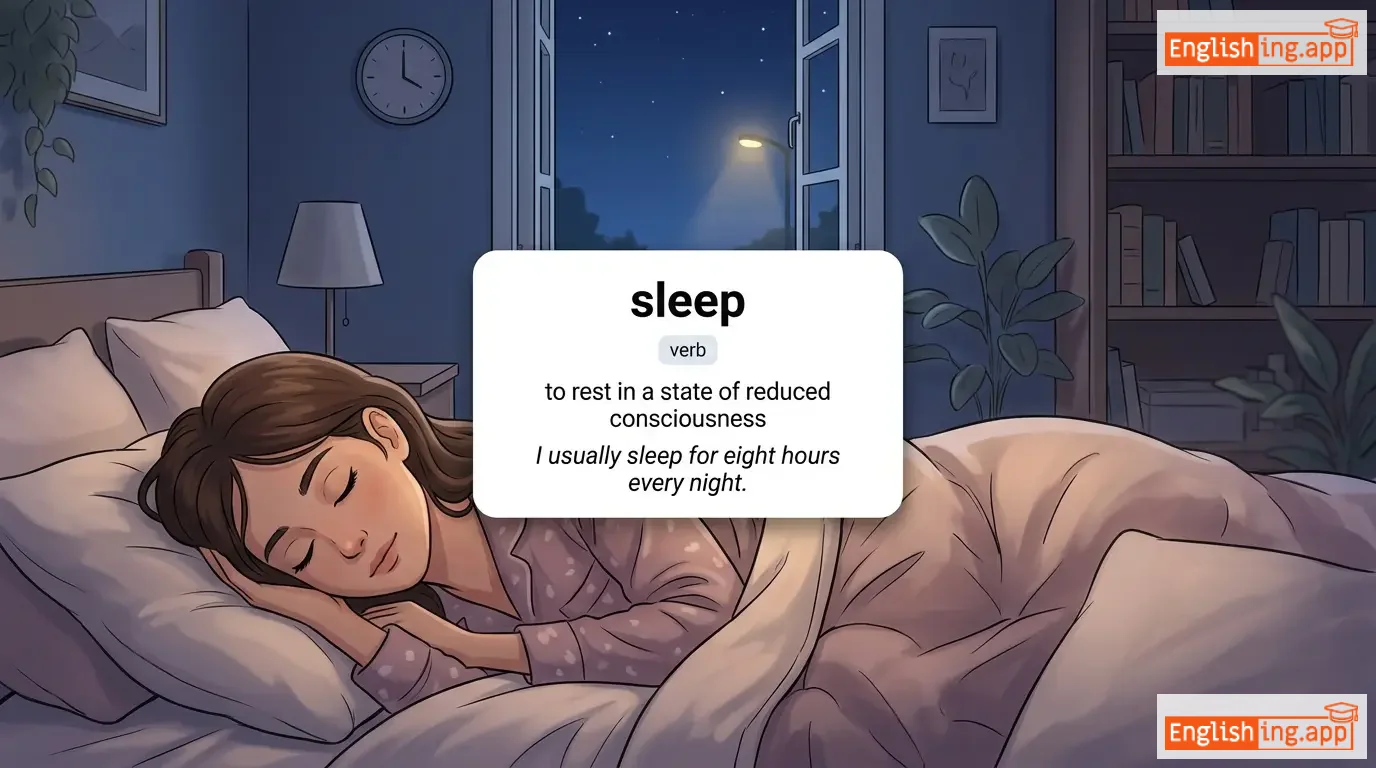
to rest with eyes closed and reduced consciousness; to be inactive
••••••
|
I need to sleep for eight hours every night.
I need to sleep for eight hours every night.
••••••
|
我需要每晚睡八小时。
Wǒ xūyào měi wǎn shuì bā xiǎoshí
••••••
|
- •••••• | - •••••• | - •••••• |
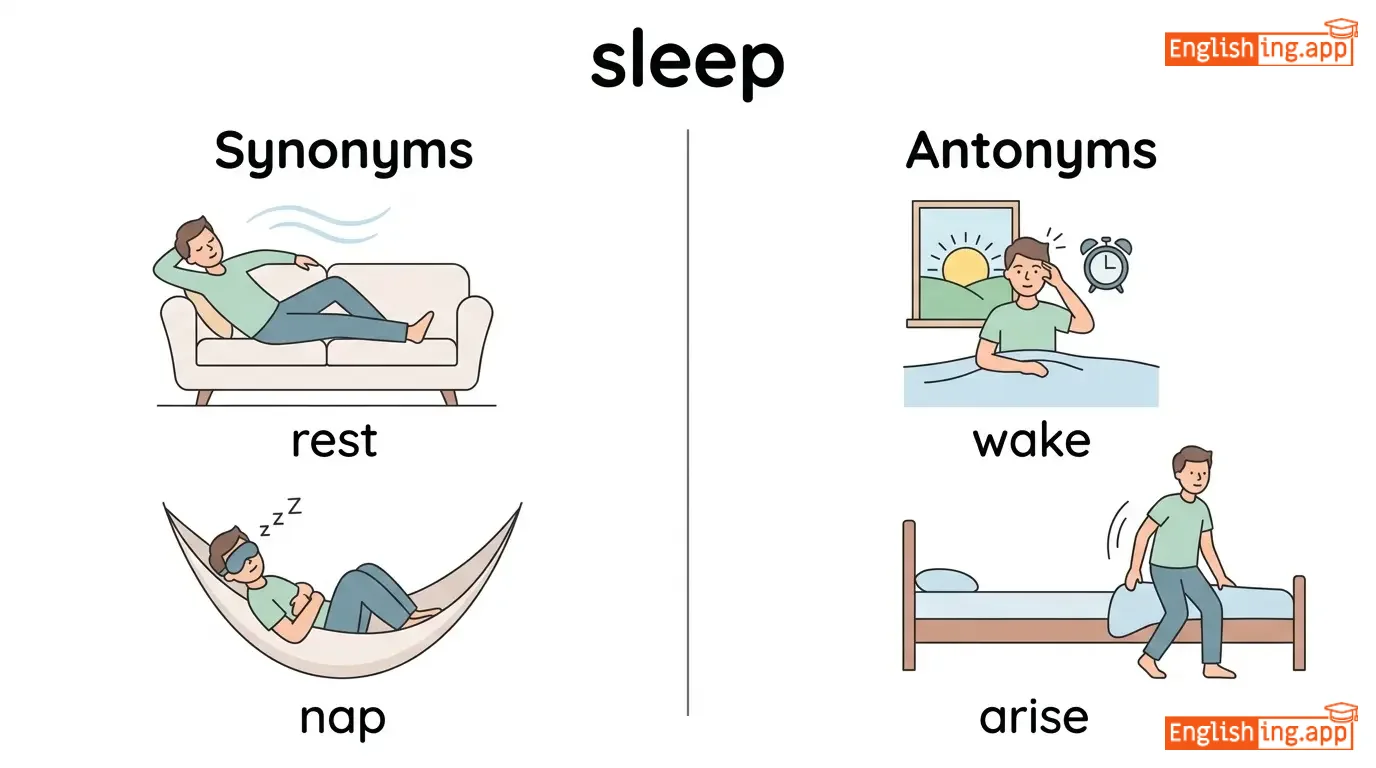
rest, slumber, doze, nap
••••••
|
wake, arise, stay awake
••••••
|
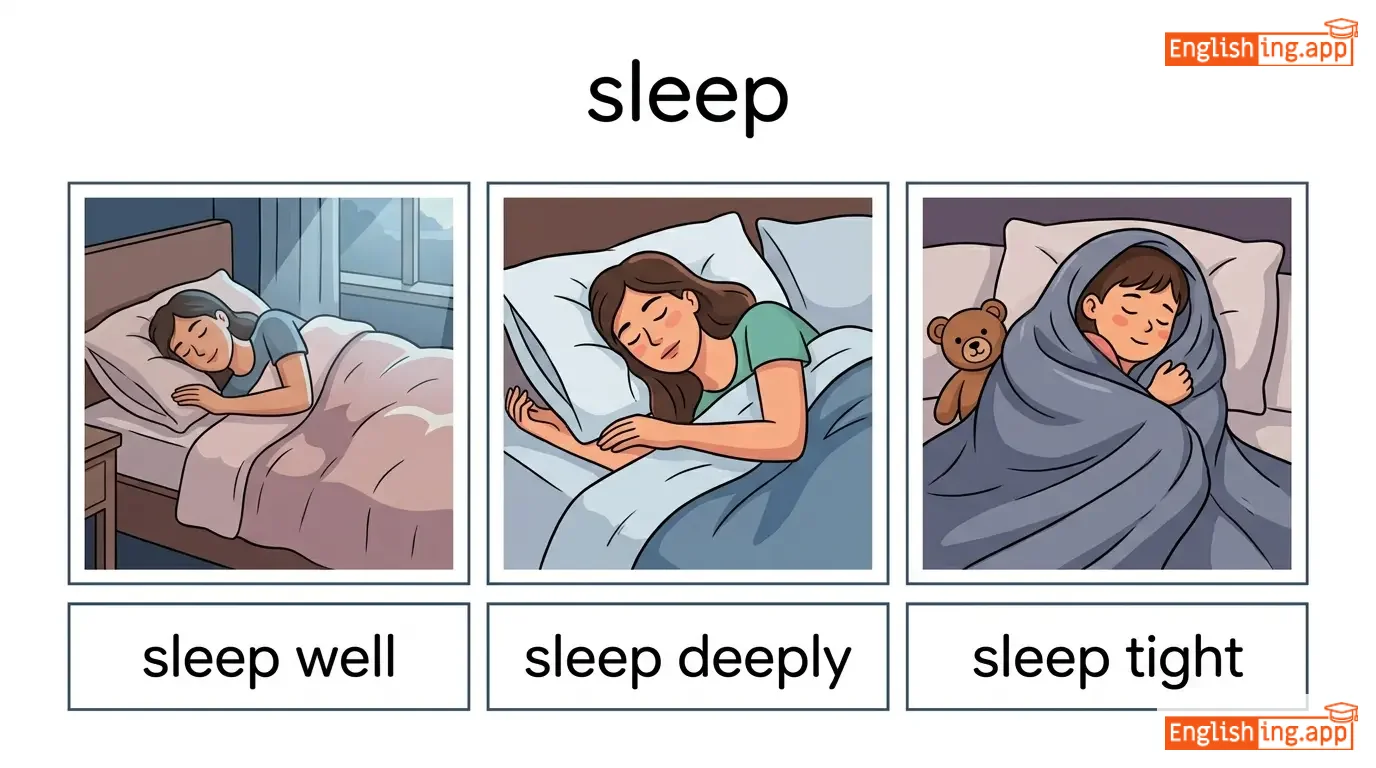
sleep soundly, sleep peacefully, sleep deeply, sleep well, sleep late
••••••
|
睡觉对恢复身体至关重要
••••••
|
|
👕
••••••
|
/sliːv/
noun
(sliːv)
••••••
|
- •••••• |
袖子
xiùzi
••••••
|
- •••••• | - •••••• | - •••••• | - •••••• |
the part of a garment that covers all or part of the arm
••••••
|
He rolled up his sleeves before starting the work. |
他在开始工作前卷起了袖子。
Tā zài kāishǐ gōngzuò qián juǎn qǐ le xiùzi.
••••••
|
wear your heart on your sleeve |
to openly show your emotions or feelings
••••••
|
将心事写在袖子上
jiāng xīn shì xiě zài xiùzi shàng
••••••
|
arm, cuff, covering, garment part
••••••
|
bare arm, sleeveless
••••••
|
long sleeve, short sleeve, shirt sleeve, roll up sleeves
••••••
|
袖子就是覆盖手臂的部分,开始工作前,卷起你的袖子! 👕
••••••
|
|
🍞
••••••
|
/slaɪs/
noun
(slàis)
••••••
|
- •••••• |
切片; 薄片
qie pian; bao pian
••••••
|
- •••••• | - •••••• | - •••••• | - •••••• |
a thin, flat piece cut from something larger
••••••
|
Would you like a slice of pizza? |
你想要一片披萨吗?
Nǐ xiǎng yào yī piàn pīsà ma?
••••••
|
- •••••• | - •••••• | - •••••• |
piece, portion, segment, cut
••••••
|
whole, entirety, complete piece
••••••
|
thin slice, thick slice, slice of bread
••••••
|
切片披萨: 薄且美味
••••••
|
|
🔹
••••••
|
/slaɪt/
adjective
(slait)
••••••
|
- •••••• |
轻微的
qingwei de
••••••
|
- •••••• | - •••••• | - •••••• | - •••••• |
Small in degree; not considerable.
••••••
|
There was a slight change in the schedule. |
时间表上有轻微的变化。
Shijian biao shang you qingwei de bianhua.
••••••
|
take it as a slight |
To interpret something as an insult or offense.
••••••
|
当作侮辱来看待
Dangzuo wuru lai kanding
••••••
|
small, minor, trivial, negligible, faint
••••••
|
major, significant, large
••••••
|
slight change, slight chance, slight problem, slight build
••••••
|
Slight = 轻微的, slight change = 轻微的变化, slight insult = 轻微的侮辱
••••••
|
|
🪶
••••••
|
/ˈslaɪtli/
adverb
(斯莱特利)
••••••
|
- •••••• |
略微
luewei
••••••
|
- •••••• | - •••••• | - •••••• | - •••••• |
to a small degree or extent
••••••
|
The temperature has slightly increased today.
今天温度略有上升。
••••••
|
今天温度略有上升。
Jīntiān wēndù lüè yǒu shàngshēng.
••••••
|
- •••••• | - •••••• | - •••••• |
mildly, a little, marginally, somewhat
••••••
|
greatly, significantly
••••••
|
slightly different, slightly better, slightly worse
••••••
|
Think of something slightly tilted as 'slightly' off-center.
••••••
|
|
👟
••••••
|
/slɪp/
verb
(slip)
••••••
|
- •••••• |
滑倒
huá dǎo
••••••
|
slipped
slipped
••••••
|
slipped
slipped
••••••
|
slips
slips
••••••
|
slipping
slipping
••••••
|
to lose balance or fall while moving, or to accidentally slide from a position
••••••
|
She slipped on the wet floor and fell.
她在湿滑的地板上滑倒了。
••••••
|
她在湿滑的地板上滑倒了。
Ta zai shi hua de diban shang hua dao le.
••••••
|
- •••••• | - •••••• | - •••••• |
slide, fall, stumble, trip
••••••
|
stand, stabilize, remain
••••••
|
slip on ice, slip down, slip away, slip through
••••••
|
Slipping on a slippery floor is a 'slip' in the story of your day.
••••••
|
|
🗣️
••••••
|
/ˈsloʊɡən/
noun
••••••
|
- •••••• | - •••••• | - •••••• | - •••••• | - •••••• | - •••••• |
a short and memorable phrase used to promote a cause or product
••••••
|
The campaign used a powerful slogan to inspire people. |
- •••••• | - •••••• | - •••••• | - •••••• |
catchphrase, motto, tagline, saying
••••••
|
silence, quiet
••••••
|
campaign slogan, popular slogan, catchy slogan
••••••
|
No •••••• |
|
🕳️
••••••
|
/slɒt/
noun
(槽)
••••••
|
- •••••• |
插槽
chacuo
••••••
|
- •••••• | - •••••• | - •••••• | - •••••• |
a narrow opening into which something fits or is placed
••••••
|
Insert the card into the slot to open the door. |
将卡片插入插槽以打开门。
Jiang ka pian charu chacuo yi dakaimen.
••••••
|
time slot |
a specific time period allocated for an activity
••••••
|
时间段
shijian duan
••••••
|
groove, opening, hole, niche, position
••••••
|
blockage, closure
••••••
|
time slot, memory slot, parking slot, machine slot
••••••
|
插槽就是放卡片的地方,门就会打开!
••••••
|
|
🐢
••••••
|
/sloʊ/
adjective
(sī lōu)
••••••
|
- •••••• |
慢
man
••••••
|
- •••••• | - •••••• | - •••••• | - •••••• |
moving or happening at a low speed
••••••
|
The car moved slowly down the street. |
车子在街上慢慢行驶。
Che zi zai jie shang man man xing shi.
••••••
|
- •••••• | - •••••• | - •••••• |
leisurely, gradual, sluggish, lazy
••••••
|
fast, quick, speedy
••••••
|
slow down, slow pace, slow movement, slow progress
••••••
|
A slow-moving panda (熊猫) helps you remember '慢'!
••••••
|
|
🦥
••••••
|
/ˈsloʊli/
adverb
(慢慢地)
••••••
|
- •••••• |
慢慢地
màn màn de
••••••
|
- •••••• | - •••••• | - •••••• | - •••••• |
in a slow manner
••••••
|
She walked slowly to the door.
她慢慢地走向门。
••••••
|
她慢慢地走向门。
Tā màn màn de zǒu xiàng mén.
••••••
|
- •••••• | - •••••• | - •••••• |
gradually, leisurely, gently, sluggishly
••••••
|
quickly, rapidly, fast
••••••
|
move slowly, speak slowly, slowly approach
••••••
|
Think of walking through soft sand, each step slow and deliberate.
••••••
|
|
🔹
••••••
|
/smɔːl/
adjective
(smol)
••••••
|
- •••••• |
小
xiao
••••••
|
- •••••• | - •••••• | - •••••• | - •••••• |
not large in size, amount, or importance
••••••
|
He lives in a small house near the river. |
他住在一间小房子里,靠近河流。
Ta zhu zai yi jian xiao fangzi li, kaojin heliu.
••••••
|
small talk |
light or casual conversation about unimportant matters
••••••
|
寒暄
hanxuan
••••••
|
tiny, little, petite, compact, miniature
••••••
|
big, large, huge
••••••
|
small house, small amount, small group, small talk
••••••
|
小就像 small – 小步快跑,成功无障碍!
••••••
|
|
🧠
••••••
|
/smɑːrt/
adjective, noun, verb
(smart)
••••••
|
- •••••• |
聪明 / 时尚
cōngmíng / shíshàng
••••••
|
smarted
smarted
••••••
|
smarted
smarted
••••••
|
smarts
smarts
••••••
|
smarting
smarting
••••••
|
Clever and intelligent; also stylish in appearance; or to feel pain.
••••••
|
She is a smart student who always excels in class.
她是一个聪明的学生,总是在课堂上表现出色。
••••••
|
她是一个聪明的学生,总是在课堂上表现出色。
Tā shì yīgè cōngmíng de xuéshēng, zǒng shì zài kètáng shàng biǎoxiàn chūsè.
••••••
|
smart money
聪明的钱
••••••
|
Money invested by those with expert knowledge.
••••••
|
专家投资的钱
zhuānjiā tóuzī de qián
••••••
|
clever, bright, intelligent, stylish, sharp
••••••
|
dull, foolish, stupid
••••••
|
smart student, smart decision, smart clothes, smart city
••••••
|
Smart – 就像智能手机,聪明且现代。
••••••
|
|
💥
••••••
|
/smæʃ/
verb
(smash)
••••••
|
- •••••• |
打破
dǎ pò
••••••
|
smashed
smashd
••••••
|
smashed
smashd
••••••
|
smashes
smashes
••••••
|
smashing
smashing
••••••
|
to break something into pieces violently
••••••
|
She smashed the glass in frustration.
她因沮喪而摔碎了玻璃。
••••••
|
她因沮喪而摔碎了玻璃。
Tā yīn jǔ sàng ér shuāi suì le bō lí.
••••••
|
- •••••• | - •••••• | - •••••• |
break, crush, shatter, demolish
••••••
|
repair, fix, preserve
••••••
|
smash into, smash up, smash down
••••••
|
沮喪時,摔碎它!
••••••
|
|
👃
••••••
|
/smel/
verb
(smel)
••••••
|
|
闻
wén
••••••
|
smelt
smelt
••••••
|
smelled
smelled
••••••
|
smells
smells
••••••
|
smelling
smelling
••••••
|
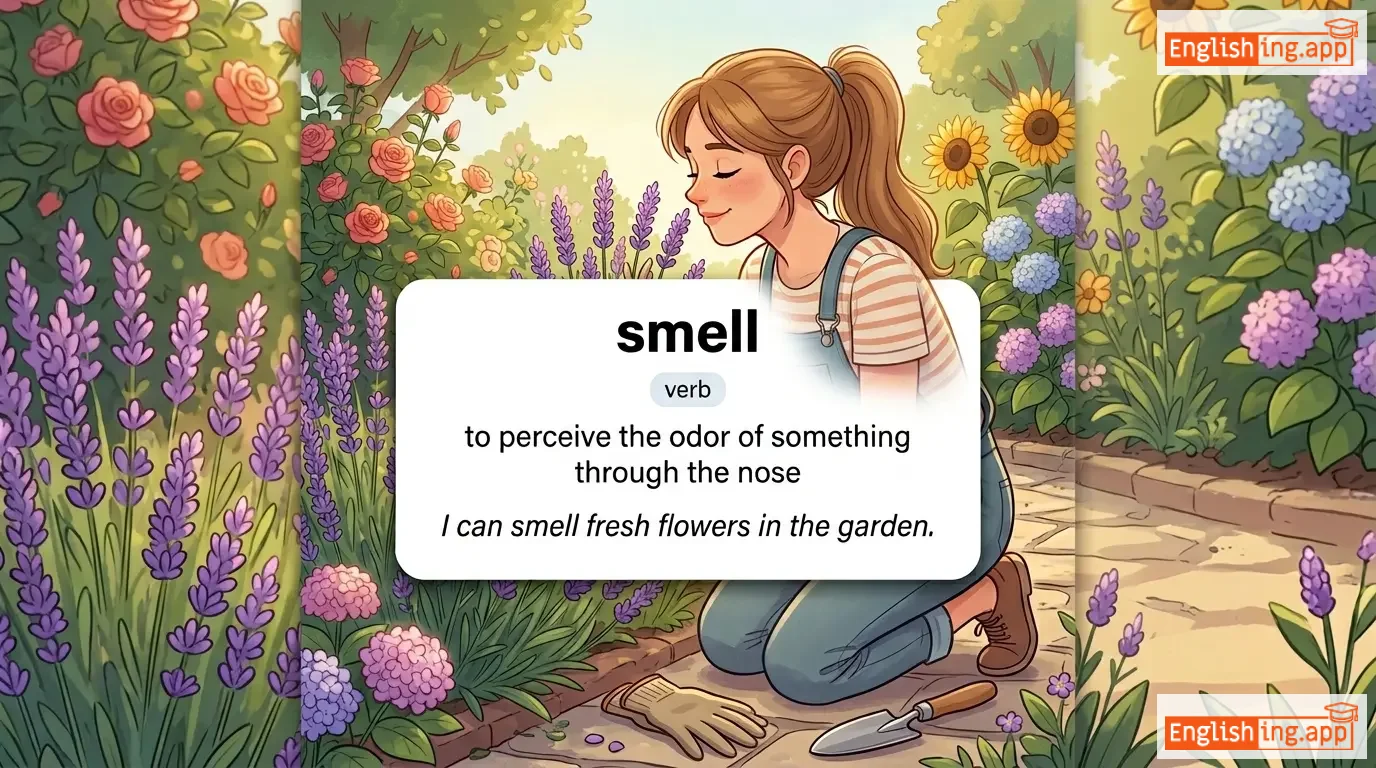
to perceive odor through the nose; to have an odor
••••••
|
The flowers smell sweet.
花儿闻起来甜美。
••••••
|
花儿闻起来甜美。
Huār wén qǐlái tiánměi.
••••••
|
- •••••• | - •••••• | - •••••• |
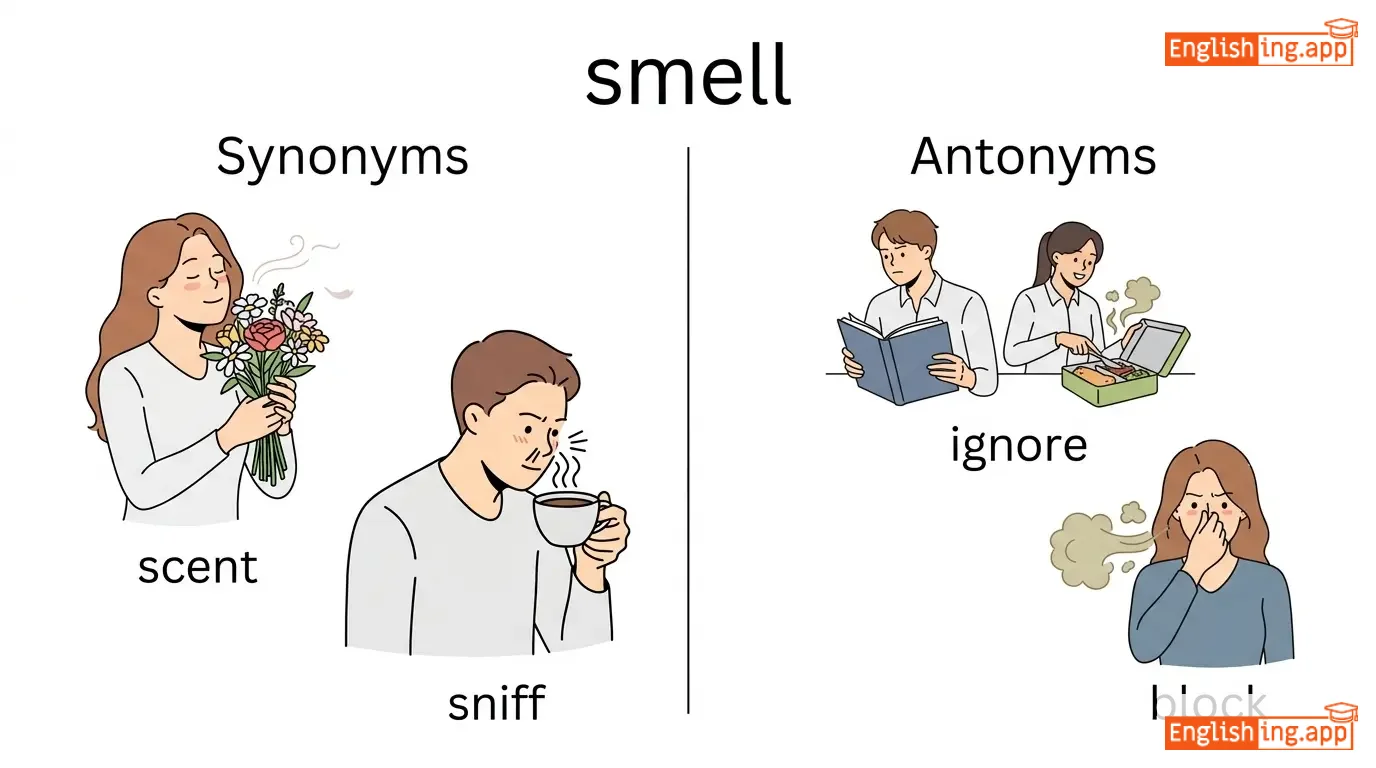
scent, odor, aroma, fragrance
••••••
|
scentless, odorless
••••••
|
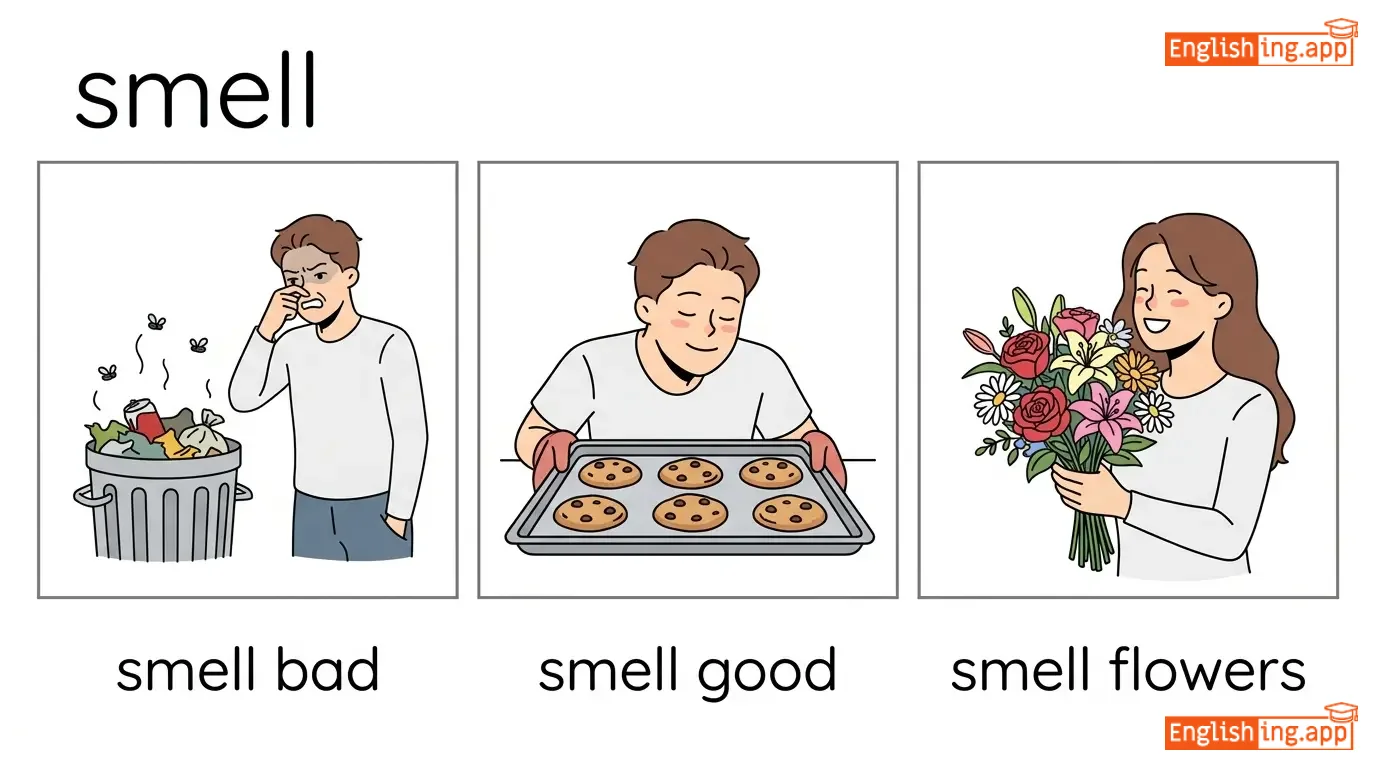
smell good, smell bad, smell sweet, smell fishy, smell trouble
••••••
|
闻花香,闻是感知气味
••••••
|
|
😊
••••••
|
/smaɪl/
verb
(smaíl)
••••••
|
- •••••• |
微笑
weixiao
••••••
|
smiled
smaíld
••••••
|
smiled
smaíld
••••••
|
smiles
smaílz
••••••
|
smiling
smaílín
••••••
|
to express happiness or friendliness by turning the corners of the mouth upwards
••••••
|
She smiled when she saw the gift.
她看到礼物时笑了。
••••••
|
她看到礼物时笑了。
Ta kan dao liwu shi xiao le.
••••••
|
- •••••• | - •••••• | - •••••• |
grin, beam, laugh, show teeth
••••••
|
frown, scowl
••••••
|
smile brightly, smile warmly, smile at someone
••••••
|
微笑是最简单的语言,让世界充满爱与温暖。
••••••
|
|
💨
••••••
|
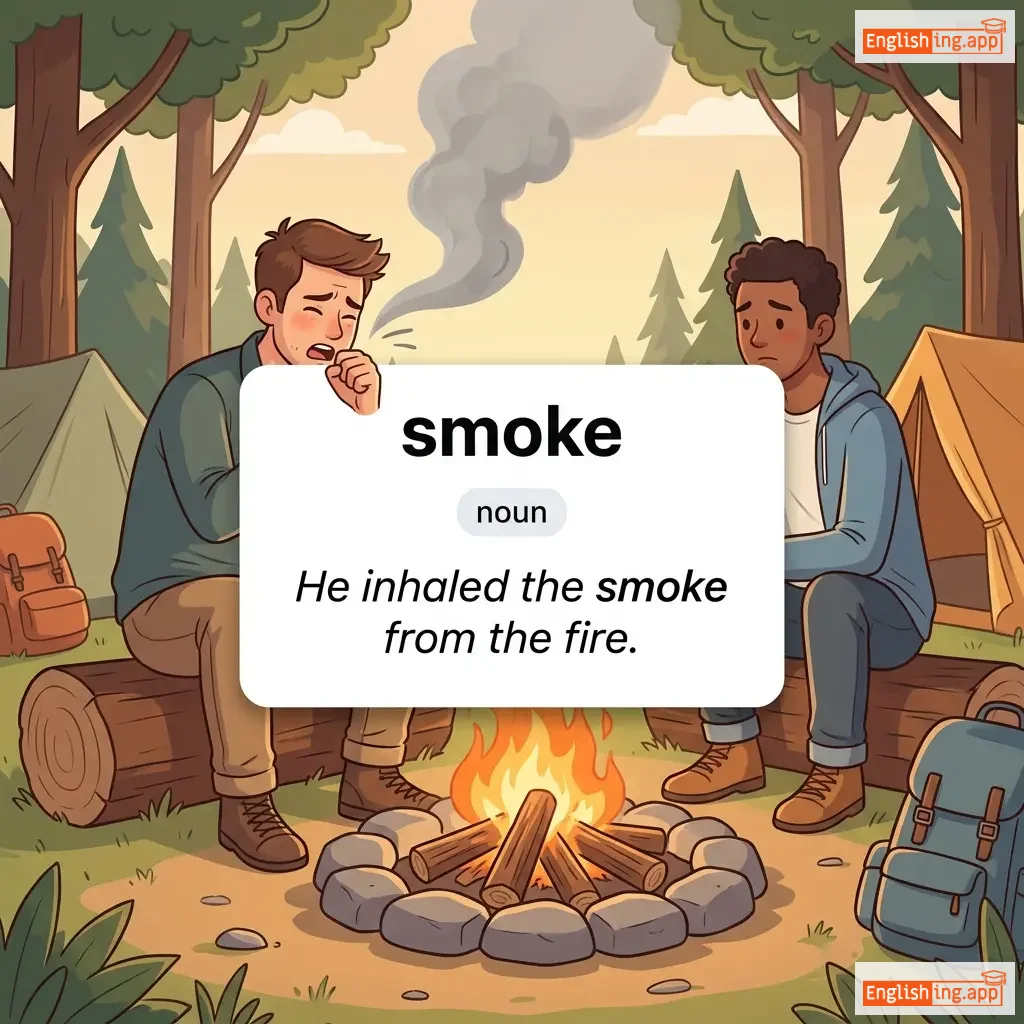
/smoʊk/
noun
(斯莫克)
••••••
|
|
烟
si mo ke
••••••
|
- •••••• | - •••••• | - •••••• | - •••••• |
visible vapor and gases emitted when something burns
••••••
|
Thick smoke rose from the burning building.
浓烟从燃烧的建筑物升起。
••••••
|
浓烟从燃烧的建筑物升起。
Nong yan cong ran shao de jian zhu wu sheng qi
••••••
|
- •••••• | - •••••• | - •••••• |
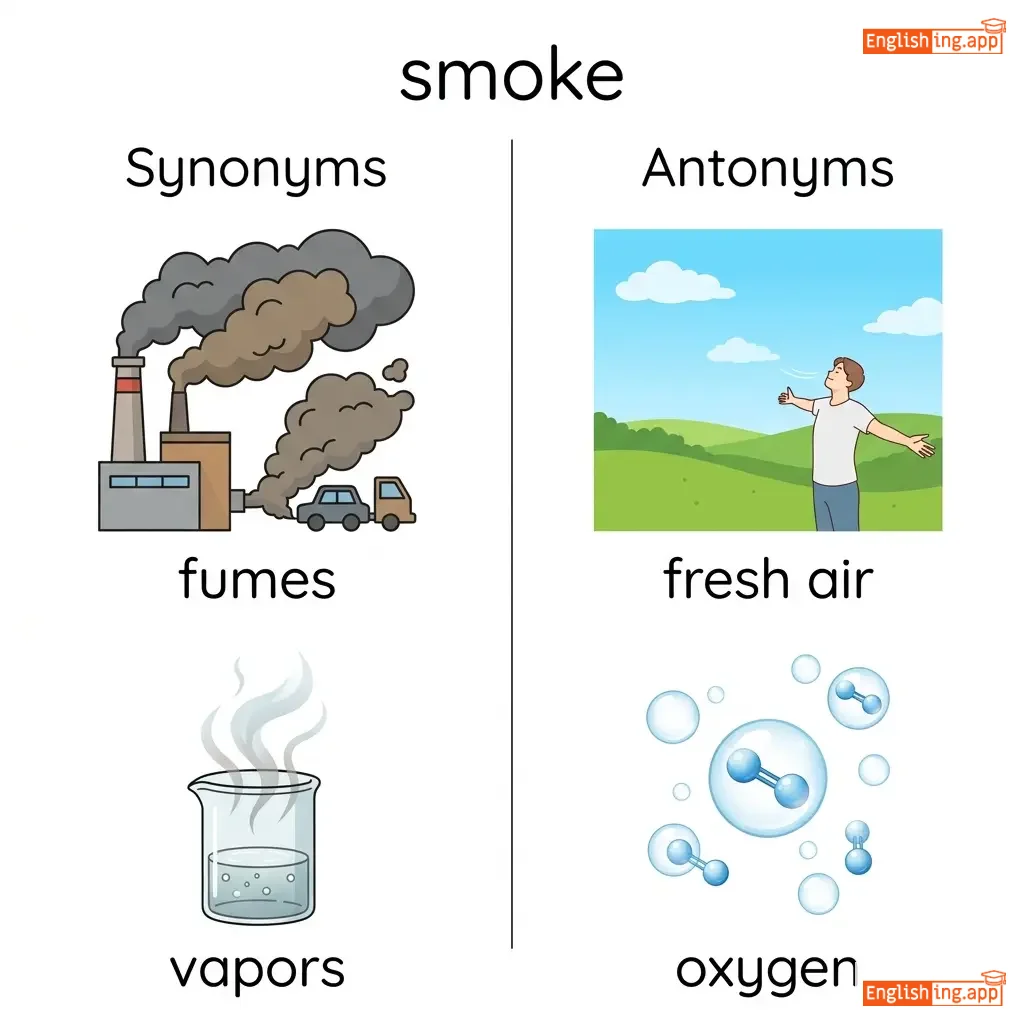
vapor, fumes, haze
••••••
|
clear air, fresh air
••••••
|
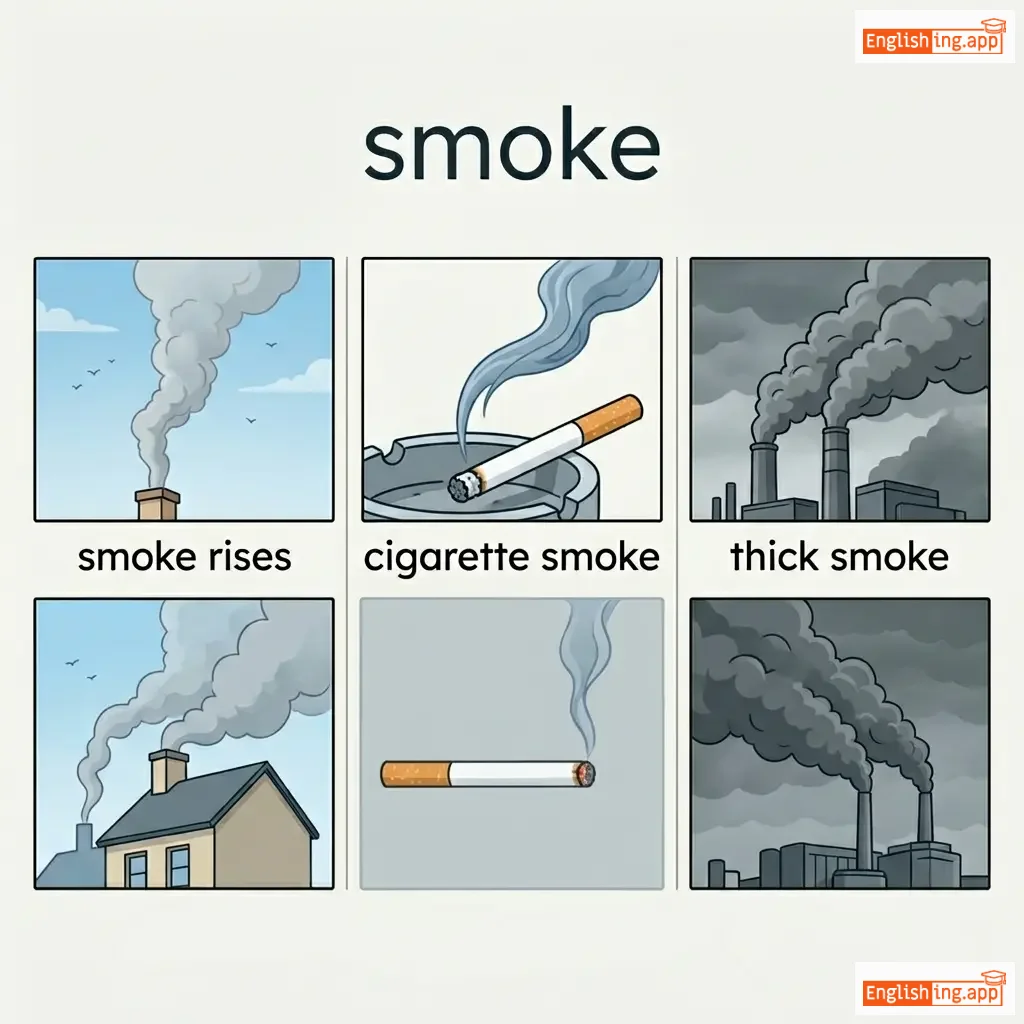
thick smoke, black smoke, smoke detector, smoke alarm
••••••
|
SiMoKe: See more Smoke rising from 火 to become 烟
••••••
|
|
🚬
••••••
|
/ˈsmoʊkər/
noun
(斯莫克尔)
••••••
|
- •••••• |
吸烟者
xiyanzhe
••••••
|
- •••••• | - •••••• | - •••••• | - •••••• |
A person who smokes tobacco or other substances
••••••
|
He is a heavy smoker and tries to quit every year.
他是一个重度吸烟者,每年都试图戒烟。
••••••
|
他是一个吸烟者,每年都试图戒烟。
Ta shi yi ge xiyanzhe, mei nian dou shitu jieyan.
••••••
|
chain smoker
连环吸烟者
••••••
|
A person who smokes cigarettes one after another, without pause
••••••
|
连环吸烟者
lianhuan xiyanzhe
••••••
|
tobacco user, cigarette smoker, nicotine addict, puffing person
••••••
|
non-smoker, teetotaler
••••••
|
heavy smoker, chain smoker, occasional smoker, former smoker
••••••
|
Smoker sounds like 'xiyanzhe'
••••••
|
|
🚬
••••••
|
/ˈsmoʊ.kɪŋ/
noun/adjective
(吸烟)
••••••
|
- •••••• |
吸烟
xiyān
••••••
|
- •••••• | - •••••• | - •••••• |
smoking
吸烟
••••••
|
The act of inhaling and exhaling the smoke of tobacco or other substances; wearing a tuxedo (adjective, formal context).
••••••
|
Smoking is prohibited inside the building.
建筑物内禁止吸烟。
••••••
|
建筑物内禁止吸烟。
Jianzhu wu nei jin zhi xiyān.
••••••
|
smoking gun
确凿的证据
••••••
|
A piece of evidence that proves a crime or wrongdoing
••••••
|
确凿的证据
quezhao de zhengju
••••••
|
tobacco use, puffing, inhaling smoke, chain-smoking
••••••
|
non-smoking, abstaining
••••••
|
smoking area, smoking habit, smoking ban, smoking cessation
••••••
|
Imagine a Chinese '禁止吸烟' sign 🚬 inside a building.
••••••
|
|
🪞
••••••
|
/smuːð/
adjective
(smuːð)
••••••
|
- •••••• |
光滑
guānghuá
••••••
|
- •••••• | - •••••• | - •••••• | - •••••• |
having an even surface without roughness; happening without difficulty
••••••
|
The table has a smooth surface. |
桌子的表面很光滑。
Zhuōzi de biǎomiàn hěn guānghuá.
••••••
|
smooth sailing |
a situation that goes easily without problems
••••••
|
顺利航行
shùnlì hángxíng
••••••
|
even, flat, polished, silky, sleek
••••••
|
rough, uneven, coarse
••••••
|
smooth surface, smooth skin, smooth operation, smooth transition
••••••
|
光滑的桌面就像顺利航行。
••••••
|
|
🛣️
••••••
|
/ˈsmuːð.li/
adverb
(smuːðli)
••••••
|
- •••••• |
顺畅地; 没有问题
shùnchàng de; méiyǒu wèntí
••••••
|
- •••••• | - •••••• | - •••••• | - •••••• |
without problems or difficulties; in an even and regular way
••••••
|
The car runs smoothly on the new highway. |
汽车在新高速公路上顺畅行驶。
qìchē zài xīn gāosù gōnglù shàng shùnchàng xíngshǐ.
••••••
|
- •••••• | - •••••• | - •••••• |
effortlessly, seamlessly, evenly, easily, fluidly
••••••
|
roughly, bumpily, unevenly, difficultly, choppily
••••••
|
run smoothly, go smoothly, operate smoothly, flow smoothly
••••••
|
'顺畅'使人联想到流畅的事情,顺利的过程。
••••••
|
|
🐍
••••••
|
/sneɪk/
noun
(sneik)
••••••
|
- •••••• |
蛇
she
••••••
|
- •••••• | - •••••• | - •••••• | - •••••• |
a long, legless reptile that moves by slithering
••••••
|
A snake slithered across the garden path. |
一条蛇沿着花园小径滑行。
Yi tiao she yan zhe huayuan xiao jing huaxing.
••••••
|
snake in the grass |
a hidden enemy or betrayer
••••••
|
草丛中的蛇
cao cong zhong de she
••••••
|
serpent, viper, reptile, cobra, python
••••••
|
mammal, bird
••••••
|
venomous snake, poisonous snake, garden snake, snake bite
••••••
|
Snake 是 蛇 – Shape 长,滑行像蛇!
••••••
|
|
📸
••••••
|
/snæp/
verb
(snap)
••••••
|
|
折断
zheduan
••••••
|
snapped
snapped
••••••
|
snapped
snapped
••••••
|
snaps
snaps
••••••
|
snapping
snapping
••••••
|
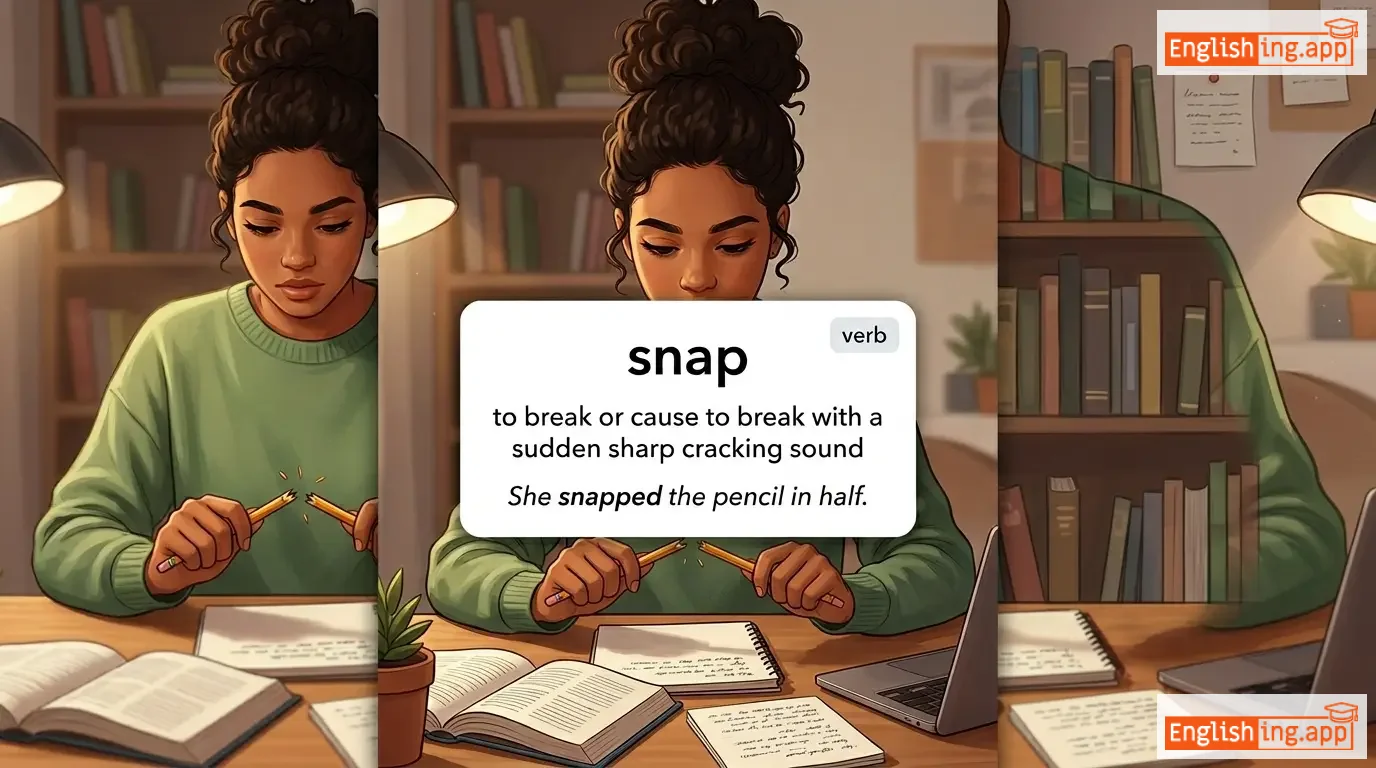
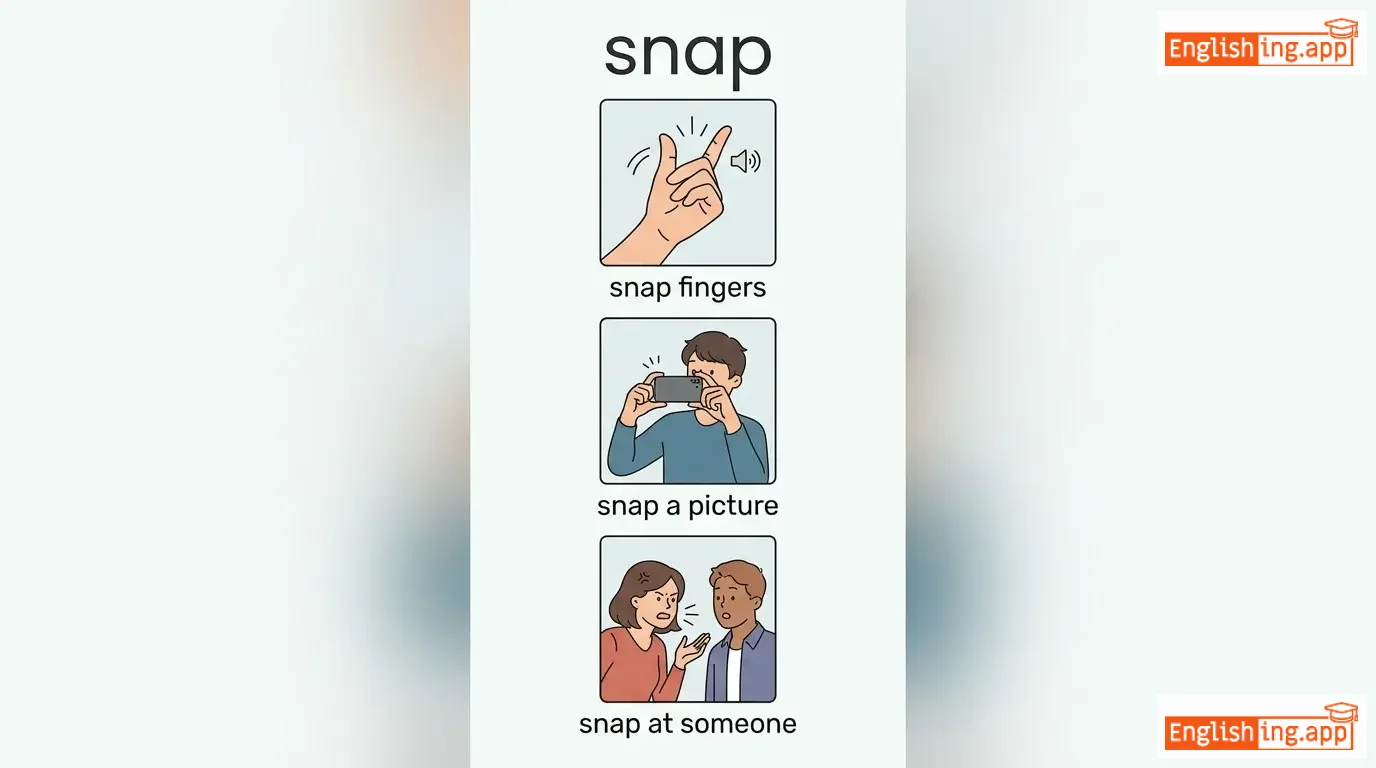
to break suddenly; to speak angrily; to take a photograph quickly
••••••
|
The rope snapped under the weight.
The rope snapped under the weight.
••••••
|
绳子在重压下断裂。
Shéngzi zài zhòng yā xià duànliè.
••••••
|
- •••••• | - •••••• | - •••••• |
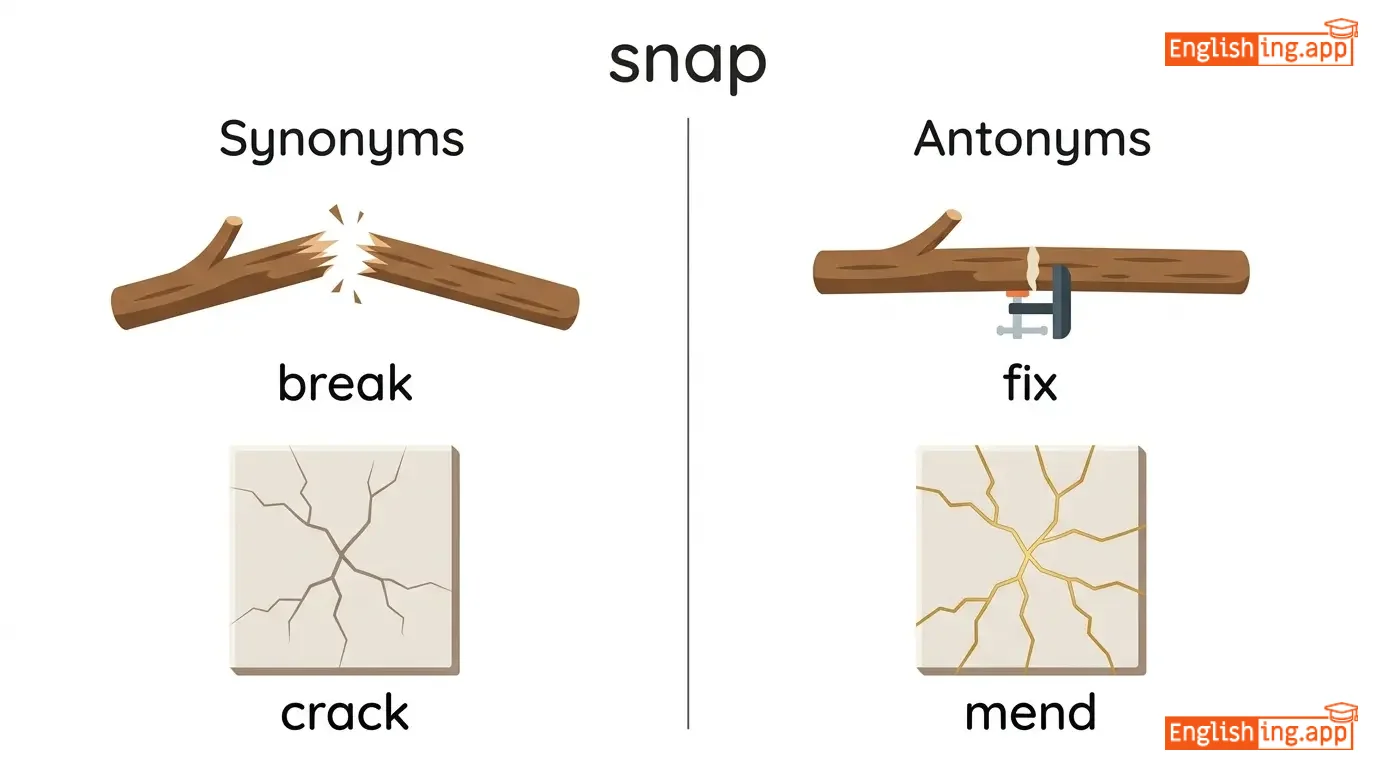
break, crack, split, photograph
••••••
|
mend, repair, fix
••••••
|
snap photos, snap fingers, snap decision, snap back, snap at
••••••
|
No •••••• |
|
🤧
••••••
|
/sniːz/
verb, noun
(斯尼兹)
••••••
|
- •••••• |
打喷嚏
da penti
••••••
|
sneezed
斯尼兹德
••••••
|
sneezed
斯尼兹德
••••••
|
sneezes
斯尼兹斯
••••••
|
sneezing
斯尼兹ing
••••••
|
to expel air involuntarily from the nose and mouth due to irritation; the act of sneezing
••••••
|
I had to sneeze during the meeting.
我在会议中不得不打喷嚏。
••••••
|
我在会议中不得不打喷嚏。
wo zai huiyi zhong bude bu da penti
••••••
|
bless you
祝你健康
••••••
|
said to someone after they sneeze to wish them well
••••••
|
祝你健康
zhu ni jiankang
••••••
|
sternutation, expel, sniffle, cough
••••••
|
inhale, hold
••••••
|
sneeze loudly, sneeze repeatedly, sneeze into tissue, sneeze reflex
••••••
|
斯尼兹 = 打喷嚏, 想 '祝你健康' 每次 sneeze
••••••
|
|
❄️
••••••
|
/snoʊ/
noun
(雪)
••••••
|
- •••••• |
雪
xue
••••••
|
- •••••• | - •••••• | - •••••• | - •••••• |
frozen water vapor that falls from the sky as white flakes
••••••
|
Children love to play in the snow. |
孩子们喜欢在雪中玩耍。
Haizimen xihuan zai xuezhong wanshua.
••••••
|
snowed under |
to be overwhelmed with too much work
••••••
|
被工作压得喘不过气
Bei gongzuo ya de chuan buguo qi
••••••
|
frost, ice, sleet, flurry, blizzard
••••••
|
heat, sun
••••••
|
heavy snow, snow storm, snow fall, snow covered
••••••
|
雪 – 就像英文中的snow,一下子飘落,带来清凉的白色感受。
••••••
|
|
😊
••••••
|
/soʊ/
adverb
(索)
••••••
|
- •••••• |
如此
rúcǐ
••••••
|
- •••••• | - •••••• | - •••••• | - •••••• |
to such a degree or extent
••••••
|
She was so happy with the gift.
她对礼物感到如此高兴。
••••••
|
她对礼物感到如此高兴。
Tā duì lǐwù gǎndào rúcǐ gāoxìng.
••••••
|
- •••••• | - •••••• | - •••••• |
very, extremely, exceedingly, incredibly
••••••
|
not, slightly, somewhat
••••••
|
so good, so bad, so tired, so far
••••••
|
so (如此) 表示某种程度或范围。
••••••
|
|
🙄
••••••
|
/ˈsoʊ kɔːld/
adjective
••••••
|
- •••••• | - •••••• | - •••••• | - •••••• | - •••••• | - •••••• |
referred to as or known by a particular name or title, often misleadingly
••••••
|
The so-called expert couldn't answer the question. |
- •••••• | - •••••• | - •••••• | - •••••• |
alleged, supposed, apparent, purported
••••••
|
actual, real
••••••
|
so-called expert, so-called leader, so-called solution
••••••
|
No •••••• |
|
💦
••••••
|
/soʊk/
verb
(索克)
••••••
|
- •••••• |
浸泡
jìnpào
••••••
|
soaked
索克德
••••••
|
soaked
索克德
••••••
|
soaks
索克斯
••••••
|
soaking
索金
••••••
|
to make something completely wet by immersing it in liquid
••••••
|
She soaked the clothes in water before washing them.
她在洗衣前把衣服浸泡在水中。
••••••
|
她在洗衣前把衣服浸泡在水中。
tā zài xǐyī qián bǎ yīfú jìnpào zài shuǐ zhōng.
••••••
|
soak up knowledge
吸收知识
••••••
|
to absorb information eagerly
••••••
|
吸收知识
xīshōu zhīshì
••••••
|
drench, saturate, immerse, absorb
••••••
|
dry, dehydrate, evaporate
••••••
|
soak clothes, soak in water, soak up knowledge, soak overnight
••••••
|
SOAK 代表浸泡,就像把衣服浸泡在水里
••••••
|
|
🧼
••••••
|
/soʊp/
noun
••••••
|
- •••••• | - •••••• | - •••••• | - •••••• | - •••••• | - •••••• |
a substance used for washing and cleaning, typically made from fats and alkalis
••••••
|
She washed her hands with soap and water. |
- •••••• |
soap opera |
a television or radio drama series about daily life
••••••
|
- •••••• |
cleanser, detergent, wash, suds, bar
••••••
|
dirt, grime
••••••
|
bar of soap, liquid soap, hand soap, soap bubbles
••••••
|
No •••••• |
|
🦅
••••••
|
/sɔːr/
verb
(索尔)
••••••
|
- •••••• |
翱翔 / 快速增长
áo xiáng / kuài sù zēng zhǎng
••••••
|
soared
索尔德
••••••
|
soared
索尔德
••••••
|
soars
索尔斯
••••••
|
soaring
索尔英
••••••
|
to fly or rise high in the air; to increase rapidly or dramatically
••••••
|
The eagle soared high above the mountains.
鹰在山脉上方飞翔。
••••••
|
鹰飞得很高,越过山脉。
Yīng fēi de hěn gāo, yuèguò shānmài.
••••••
|
soar to new heights
soar to new heights
••••••
|
to achieve great success or improvement
••••••
|
达到新的高度
dá dào xīn de gāodù
••••••
|
rise, ascend, climb, surge, escalate
••••••
|
fall, drop, descend
••••••
|
soar high, prices soar, spirits soar, soar above
••••••
|
Soar,就像鹰展翅高飞!
••••••
|
|
🌍
••••••
|
/ˈsəʊʃəl/
adjective
(社交)
••••••
|
- •••••• |
社交
shejiao
••••••
|
- •••••• | - •••••• | - •••••• | - •••••• |
relating to society or its organization
••••••
|
She has a very social personality and enjoys meeting new people. |
她有一个非常社交的个性,喜欢与新朋友见面。
Ta you yi ge feichang shejiao de gexing, xihuan yu xin pengyou jianmian.
••••••
|
- •••••• | - •••••• | - •••••• |
community-oriented, sociable, outgoing, friendly
••••••
|
antisocial, solitary
••••••
|
social media, social interaction, social event, social networking
••••••
|
社交 (social) - 喜欢和新朋友互动 - People love social interactions.
••••••
|
|
🌍
••••••
|
/ˈsoʊʃəlɪst/
noun, adjective
(səʊʃəlɪst)
••••••
|
- •••••• |
社会主义者
shehuizhuyi zhe
••••••
|
- •••••• | - •••••• | - •••••• | - •••••• |
a person who advocates for socialism; relating to socialism
••••••
|
He is a well-known socialist writer. |
他是一个著名的社会主义作家。
Tā shì yīgè zhùmíng de shèhuì zhǔyì zuòjiā.
••••••
|
- •••••• | - •••••• | - •••••• |
leftist, progressive, collectivist, reformer
••••••
|
capitalist, conservative
••••••
|
socialist party, socialist policies, socialist ideals
••••••
|
社会主义者 = 社会+主义+者
••••••
|
|
🏘️
••••••
|
/səˈsaɪ.ə.ti/
noun
(社会)
••••••
|
|
社会; 组织
shehui; zuzhi
••••••
|
- •••••• | - •••••• | - •••••• | - •••••• |
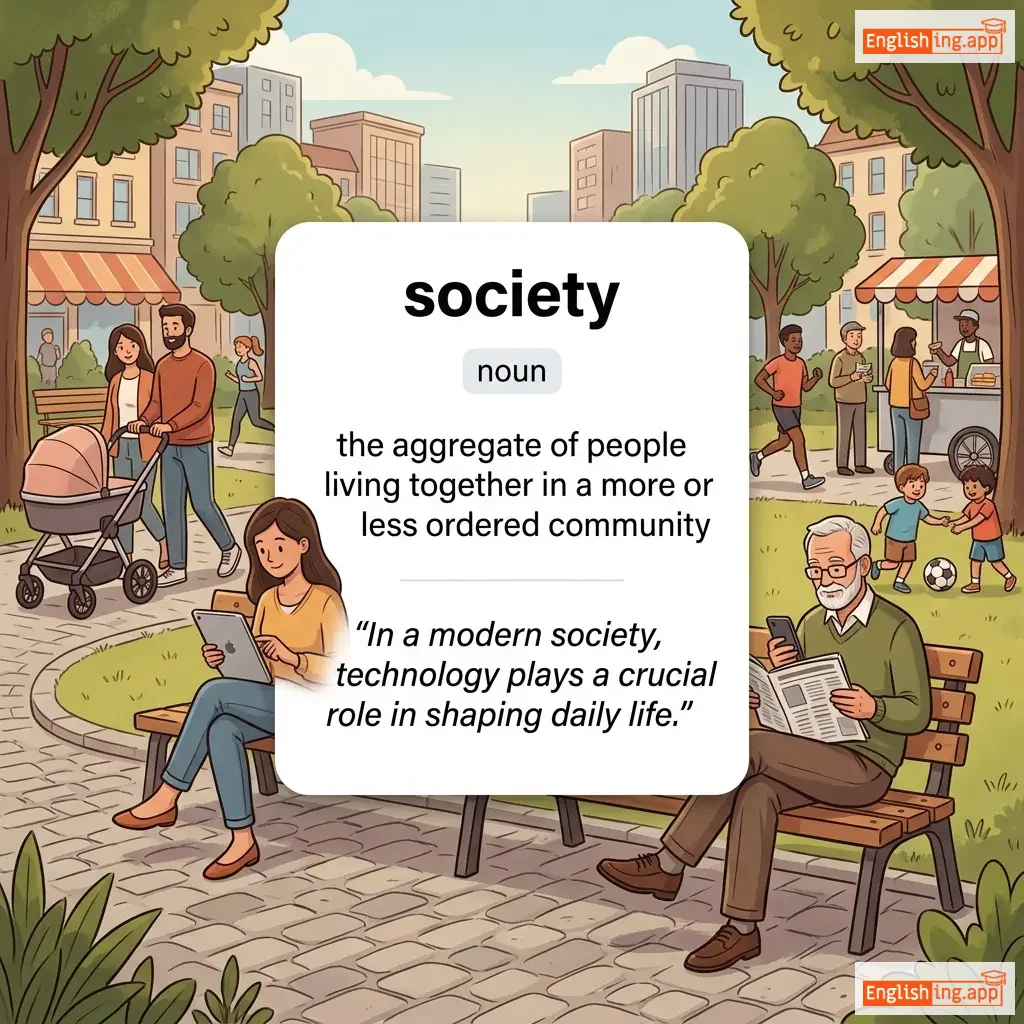
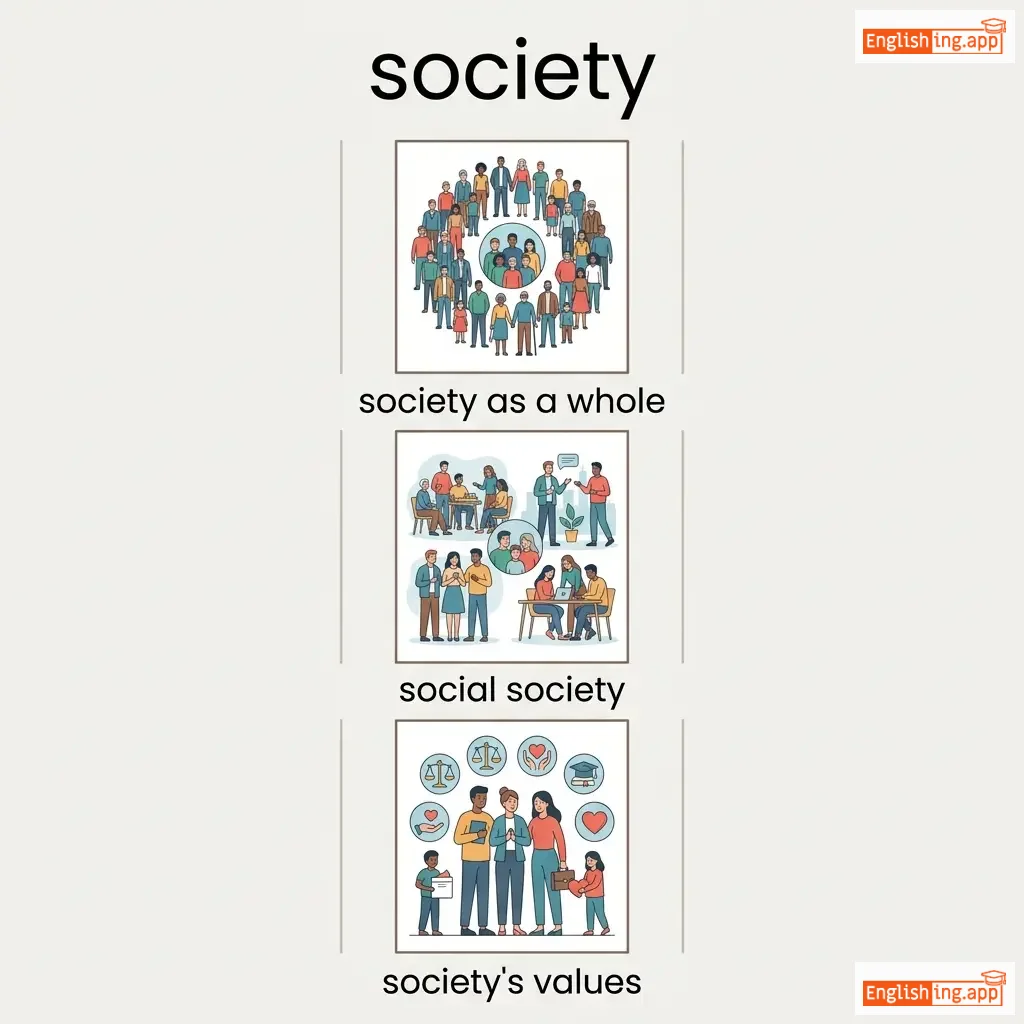
a community of people living together; an organization or association
••••••
|
Education plays an important role in society. |
教育在社会中扮演着重要角色。
Jiaoyu zai shehui zhong banyan zhe zhongyao juese.
••••••
|
- •••••• | - •••••• | - •••••• |
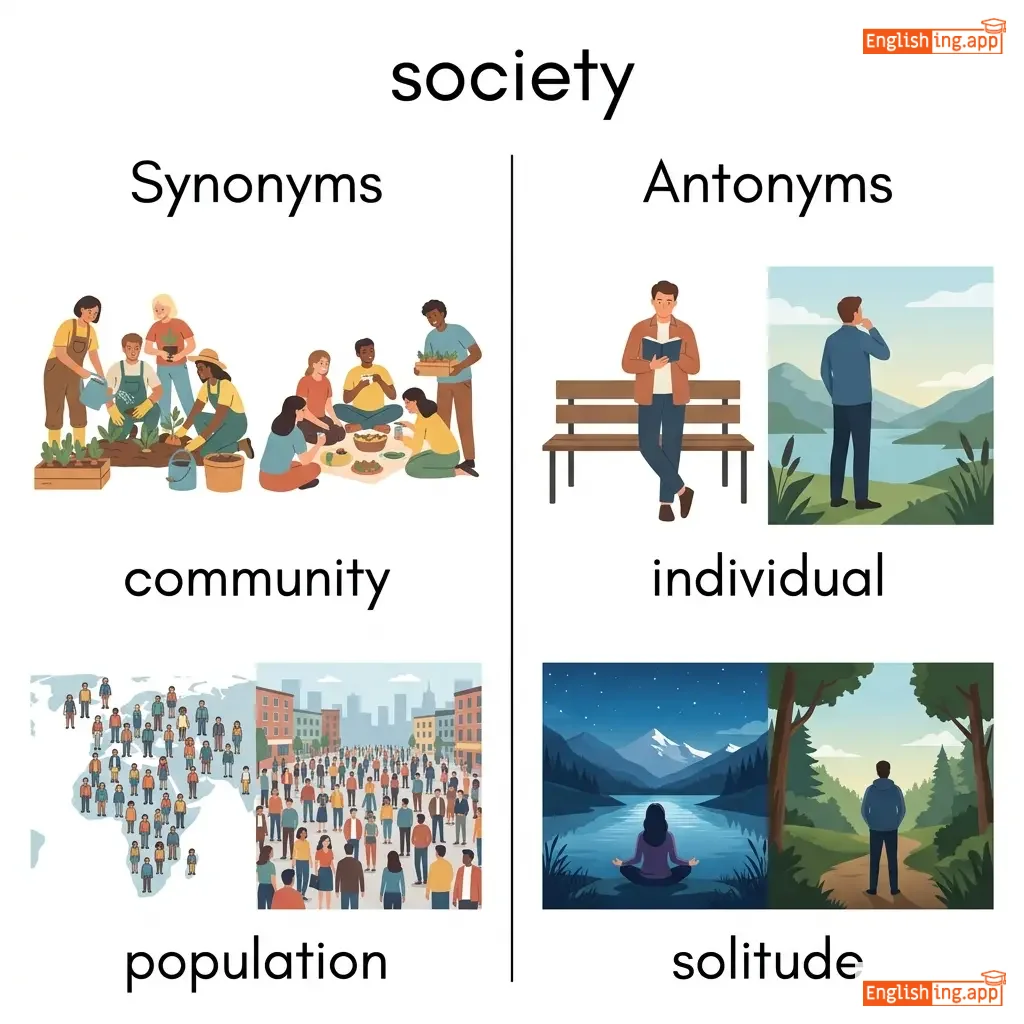
community, civilization, culture, association
••••••
|
isolation, solitude, individualism
••••••
|
modern society, civil society, human society
••••••
|
社会是我们共同的家,教育让我们团结。
••••••
|

