Получите неограниченный доступ ко всем словам с подпиской Pro
Обновить до ProПолучите неограниченный доступ ко всем предложениям с подпиской Pro
Обновить до Pro|
Эмодзи
|
Слово | Images | Перевод | Прошедшее | Причастие прошедшего времени | Третье лицо единственного числа | Герундий | Значение | Пример предложения | Перевод примера предложения | Пример выражения | Значение примера выражения | Перевод примера выражения | Синонимы | Антонимы | Коллокации | Мнемоника |
|---|---|---|---|---|---|---|---|---|---|---|---|---|---|---|---|---|---|
|
👨👩👧👦
••••••
|
/foʊk/
noun
(фолк)
••••••
|
- •••••• |
люди
lyudi
••••••
|
- •••••• | - •••••• | - •••••• | - •••••• |
people in general, often referring to a group or community
••••••
|
Country folk often live a simple life.
Люди из деревни часто ведут простую жизнь.
••••••
|
Люди из деревни часто ведут простую жизнь.
Lyudi iz derevni chasto vedut prostuyu zhizn.
••••••
|
just plain folk
простые люди
••••••
|
ordinary people
••••••
|
обычные люди
obychnye lyudi
••••••
|
people, community, tribe, population, crowd
••••••
|
individual, elite
••••••
|
folk music, country folk, common folk, ordinary folk
••••••
|
Фолк - это люди, которые живут в деревне.
••••••
|
|
➡️
••••••
|
/ˈfɒloʊ/
verb
(фоло)
••••••
|
- •••••• |
следовать
sleduvat
••••••
|
followed
фоловед
••••••
|
followed
фоловед
••••••
|
follows
фоловс
••••••
|
following
фолоуинг
••••••
|
to move behind someone or something; to go after or come after
••••••
|
The children followed their teacher into the classroom.
Дети следовали за своим учителем в класс.
••••••
|
Дети следовали за своим учителем в класс.
Deti sleduvali za svoim uchitelem v klass.
••••••
|
follow suit
следовать примеру
••••••
|
to do the same as someone else has just done
••••••
|
следовать примеру
sleduvat primery
••••••
|
pursue, track, chase, obey, accompany
••••••
|
lead, precede, ignore
••••••
|
follow instructions, follow orders, follow closely, follow a path
••••••
|
Следовать - это делать то же самое, как кто-то другой, например, следовать в Инстаграме.
••••••
|
|
👥
••••••
|
/ˈfɑː.loʊ.ɪŋ/
noun
(фоллоуинг)
••••••
|
- •••••• |
последователи
posledovateli
••••••
|
- •••••• | - •••••• | - •••••• | - •••••• |
a group of supporters or people who admire something or someone
••••••
|
The singer has a large following around the world. |
У певца есть большая группа последователей по всему миру.
U pevtsa yest' bol'shaya gruppa posledovateley po vsemu miru.
••••••
|
- •••••• | - •••••• | - •••••• |
fans, supporters, admirers, audience, enthusiasts
••••••
|
critics, opponents
••••••
|
large following, loyal following, following crowd, following group
••••••
|
Following означает последователи, как на Facebook.
••••••
|
|
💖
••••••
|
/fɒnd/
adjective
(фонд)
••••••
|
- •••••• |
любящий
lyubyashchiy
••••••
|
- •••••• | - •••••• | - •••••• | - •••••• |
having a strong liking or affection for something or someone
••••••
|
She is fond of painting and spends hours in front of her canvas. |
Она любит живопись и проводит часы перед своим холстом.
Ona lyubit zhivopis' i provodit chasy pered svoim kholstom.
••••••
|
- •••••• | - •••••• | - •••••• |
loving, affectionate, passionate, devoted
••••••
|
indifferent, apathetic
••••••
|
fond of, fond memory, fond relationship
••••••
|
Любящий означает сильную привязанность, как я люблю рисование. - Lyubyashchiy means strong affection, just like I love painting!
••••••
|
|
🍲
••••••
|
/fuːd/
noun
(fud)
••••••
|
- •••••• |
пища
pishcha
••••••
|
- •••••• | - •••••• | - •••••• | - •••••• |
any nutritious substance that people or animals eat or drink to maintain life and growth
••••••
|
Rice is a common food in Asia. |
Рис - это обычная пища в Азии.
Ris - eto obychnaya pishcha v Azii.
••••••
|
comfort food |
food that provides a sense of well-being or nostalgia
••••••
|
утешительная пища
uteshitel'naya pishcha
••••••
|
meal, dish, cuisine, nourishment, sustenance
••••••
|
poison, toxin
••••••
|
fast food, healthy food, food supply, food chain
••••••
|
Food - это пища - помни: Fast food - это быстрая пища.
••••••
|
|
🤡
••••••
|
/fuːl/
noun, verb
(ful)
••••••
|
- •••••• |
дурак
durak
••••••
|
fooled
fuld
••••••
|
fooled
fuld
••••••
|
fools
fuls
••••••
|
fooling
fool-ing
••••••
|
a silly or stupid person; to trick someone
••••••
|
He felt like a fool after believing the prank.
Он почувствовал себя дураком после того, как поверил в розыгрыш.
••••••
|
Он почувствовал себя дураком после того, как поверил в розыгрыш.
On pochuvstvoval sebya durakom posle togo, kak poveril v rozygrysh.
••••••
|
make a fool of
сделать из кого-то дурака
••••••
|
to embarrass someone or yourself by acting silly
••••••
|
сделать из кого-то дурака
sdelat' iz kogo-to duraka
••••••
|
idiot, clown, trick, deceive, prankster
••••••
|
wise, genius, intellect
••••••
|
April fool, play the fool, fool someone, fool around
••••••
|
Fool означает дурак, как в День дурака, когда все становятся дураками.
••••••
|
|
🦶
••••••
|
/fʊt/
noun
(fut)
••••••
|
- •••••• |
нога
noga
••••••
|
- •••••• | - •••••• | - •••••• | - •••••• |
The lower extremity of the leg below the ankle, used for standing and walking.
••••••
|
He injured his foot while playing basketball. |
Он повредил ногу, играя в баскетбол.
On povredil nogu, igrya v basketbol.
••••••
|
put your foot down |
to assert authority or take a firm stand
••••••
|
поставить ногу на землю
postavit' nogu na zemlyu
••••••
|
leg end, paw, hoof, base, bottom
••••••
|
head, top
••••••
|
bare foot, foot injury, left foot, right foot, foot step
••••••
|
Запомни, нога и FOOT имеют одинаковое значение.
••••••
|
|
🎥
••••••
|
/ˈfʊtɪdʒ/
noun
(futazh)
••••••
|
- •••••• |
видеозапись
videozapic
••••••
|
- •••••• | - •••••• | - •••••• | - •••••• |
a recorded film or video, especially one that is used for news or documentaries
••••••
|
The footage of the protest was shown on television all day. |
Записи протестов показывали по телевизору весь день.
Zapisi protestov pokazyvali po televzoru ves' den'.
••••••
|
- •••••• | - •••••• | - •••••• |
video, film, recording, clip
••••••
|
still, photo
••••••
|
raw footage, video footage, news footage
••••••
|
Footage означает видеозапись, как протестное видео - Footage means video, like protest video footage!
••••••
|
|
🏈
••••••
|
/ˈfʊtˌbɔːl/
noun
(футбол)
••••••
|
- •••••• |
футбол
futbol
••••••
|
- •••••• | - •••••• | - •••••• | - •••••• |
A team sport played with a ball that is kicked or carried to score points.
••••••
|
They watched a football match on TV. |
Они смотрели матч по футболу по телевизору.
Oni smotreli match po futbola po televizoru.
••••••
|
- •••••• | - •••••• | - •••••• |
soccer, game, match, sport, gridiron
••••••
|
none, inactivity
••••••
|
football match, football player, football field, football team
••••••
|
Футбол - это когда ногой (foot) пинаешь мяч (ball).
••••••
|
|
🎁
••••••
|
/fɔːr/
preposition
(фор)
••••••
|
- •••••• |
для
dlya
••••••
|
- •••••• | - •••••• | - •••••• | - •••••• |
used to indicate purpose, destination, or recipient
••••••
|
This gift is for you. |
Этот подарок для тебя.
Etot podarok dlya tebya.
••••••
|
for good |
permanently
••••••
|
навсегда
navsegda
••••••
|
on behalf of, in favor of, because of, intended for
••••••
|
against, anti
••••••
|
for example, for instance, for sale, for life
••••••
|
For означает 'для', как в 'Gift for you', что означает 'Подарок для тебя'.
••••••
|
|
⛔
••••••
|
/fərˈbɪd/
verb
(форбид)
••••••
|
- •••••• |
запрещать
zapreshchat
••••••
|
forbade
форбэйд
••••••
|
forbidden
форбидден
••••••
|
forbids
форбидс
••••••
|
forbidding
форбиддинг
••••••
|
to order someone not to do something
••••••
|
The school forbids smoking on campus.
Школа запрещает курение на кампусе.
••••••
|
Школа запрещает курение на кампусе.
Shkola zapreshchayet kureniye na kampuse.
••••••
|
God forbid
Боже упаси
••••••
|
a phrase used to express a strong wish that something does not happen
••••••
|
Боже упаси
Bozhe upasi
••••••
|
prohibit, ban, prevent, restrict, deny
••••••
|
allow, permit, approve
••••••
|
forbid entry, forbid smoking, strictly forbid, forbid access
••••••
|
Forbid означает запрещать, как школа запрещает курение на кампусе.
••••••
|
|
💪
••••••
|
/fɔːrs/
noun/verb
(форс)
••••••
|
|
сила / мощь
sila / moshch
••••••
|
forced
форсд
••••••
|
forced
форсд
••••••
|
forces
форсес
••••••
|
forcing
форсинг
••••••
|
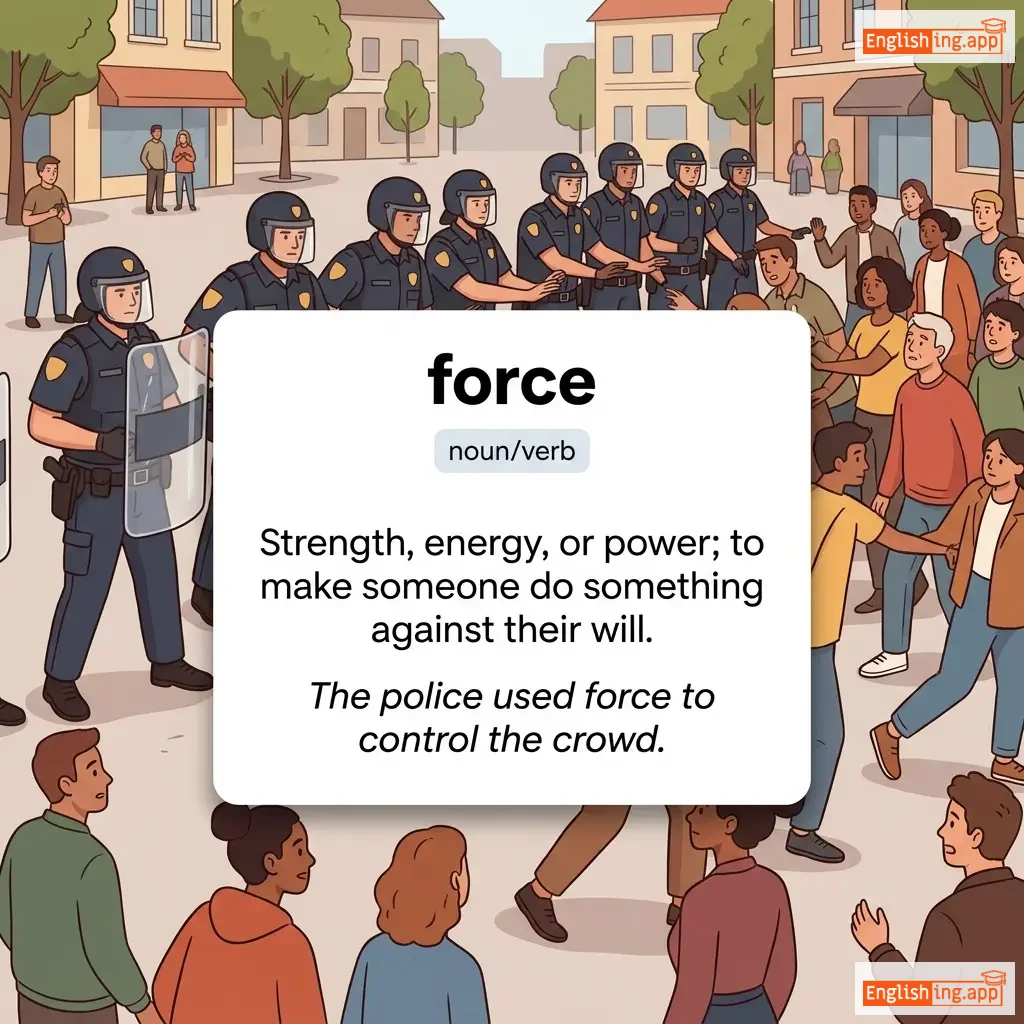
Strength, energy, or power; to make someone do something against their will.
••••••
|
The police used force to control the crowd.
Полиция использовала силу, чтобы контролировать толпу.
••••••
|
Полиция использовала силу, чтобы контролировать толпу.
Politsiya ispol'zovala silu, chtoby kontrolirovat' tolpu.
••••••
|
brute force
грубая сила
••••••
|
using physical power rather than skill or intelligence
••••••
|
грубая сила
grubaya sila
••••••
|
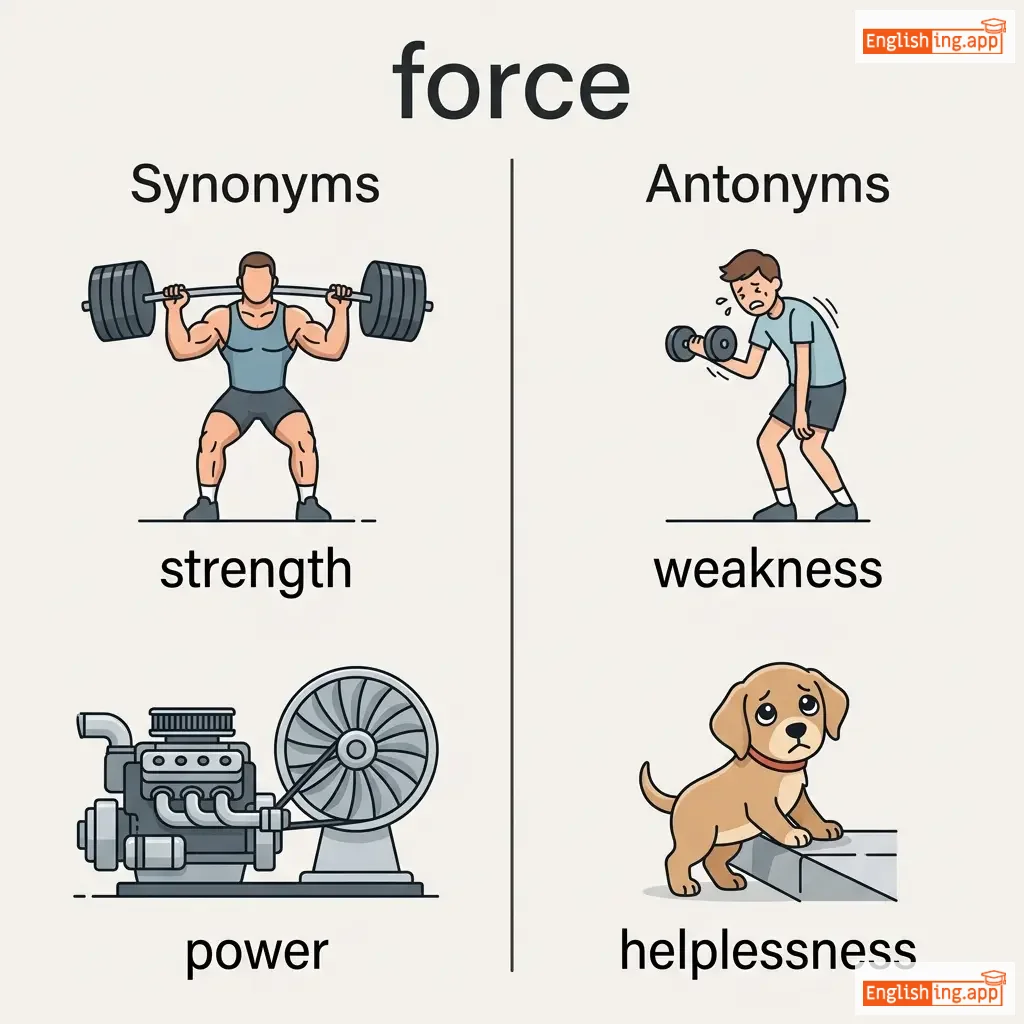
strength, power, energy, pressure, compulsion
••••••
|
weakness, helplessness, inaction
••••••
|
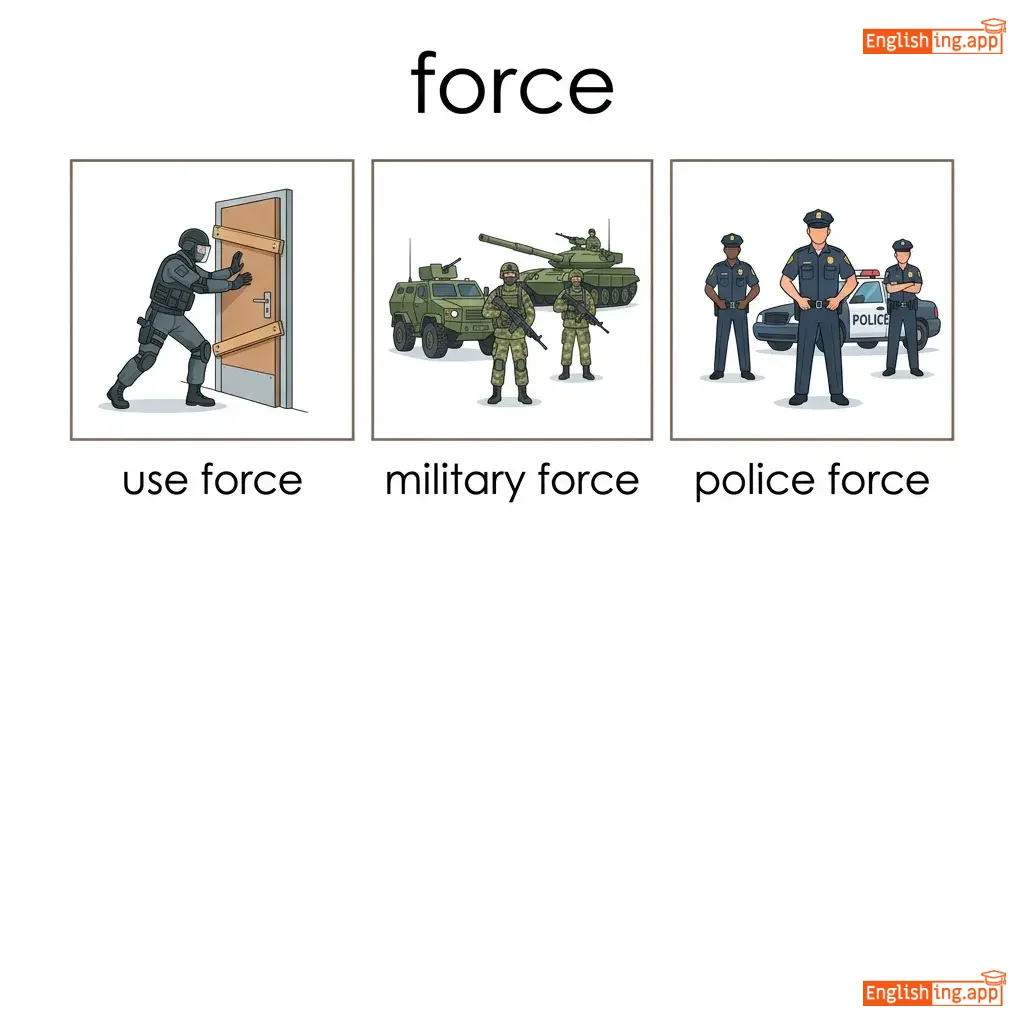
use force, military force, police force, force someone
••••••
|
FORCE - это когда вы используете силу, чтобы получить, что хотите.
••••••
|
|
🌦️
••••••
|
/ˈfɔːrkæst/
noun/verb
••••••
|
- •••••• | - •••••• |
forecast
••••••
|
forecast
••••••
|
forecasts
••••••
|
forecasting
••••••
|
To predict future events, especially weather or economic trends.
••••••
|
The weather office forecast heavy rain for tomorrow. |
- •••••• |
long-term forecast |
Prediction about a distant future period
••••••
|
- •••••• |
predict, project, estimate, prognosis, outlook
••••••
|
ignore, miscalculate
••••••
|
economic forecast, weather forecast, forecast demand, forecast growth
••••••
|
No •••••• |
|
🌍
••••••
|
/ˈfɔːrən/ or /ˈfɑːrən/
adjective
(foren)
••••••
|
- •••••• |
иностранный
inostranny
••••••
|
- •••••• | - •••••• | - •••••• | - •••••• |
Belonging to or coming from another country.
••••••
|
She loves studying foreign languages. |
Ей нравится изучать иностранные языки.
Ejj nravitsya izuchat' inostrannyye yazyki.
••••••
|
foreign to someone |
Something that is strange or unfamiliar to someone.
••••••
|
чужд для кого-то
chuzhd dlya kogo-to
••••••
|
overseas, external, alien, exotic, unfamiliar
••••••
|
domestic, native, local
••••••
|
foreign policy, foreign language, foreign country, foreign affairs
••••••
|
Foreign = иностранный—Foreign значит не из своей страны!
••••••
|
|
🧳
••••••
|
/ˈfɔːrənər/ or /ˈfɑːrənər/
noun
(форейнер)
••••••
|
- •••••• |
иностранец
inostranets
••••••
|
- •••••• | - •••••• | - •••••• | - •••••• |
A person from another country.
••••••
|
The city welcomes every foreigner with kindness. |
Город приветствует каждого иностранца с добротой.
Gorod privechstvuyet kazhdogo inostrantsa s dobrotoy.
••••••
|
- •••••• | - •••••• | - •••••• |
outsider, alien, immigrant, stranger, visitor
••••••
|
citizen, native, local
••••••
|
foreign tourist, foreigner community, foreigner rights, foreigner registration
••••••
|
Foreigner означает иностранец—тот, кто из другого государства.
••••••
|
|
🌲
••••••
|
/ˈfɔːrɪst/
noun
(форест)
••••••
|
- •••••• |
лес
les
••••••
|
- •••••• | - •••••• | - •••••• | - •••••• |
A large area covered chiefly with trees and undergrowth.
••••••
|
They went hiking in the forest. |
Они пошли в поход в лес.
Oni poshli v pokhod v les.
••••••
|
can't see the forest for the trees |
focusing too much on details and missing the bigger picture
••••••
|
не видеть леса за деревьями
ne videt' lesa za derev'yami
••••••
|
woods, jungle, woodland, grove, rainforest
••••••
|
desert, plain
••••••
|
dense forest, tropical forest, forest fire, forest reserve
••••••
|
LES = Лес, как в лесу, где всё укрыто деревьями.
••••••
|
|
♾️
••••••
|
/fɔːrˈɛvər/
adverb
(форэвер)
••••••
|
- •••••• |
навсегда
navsegda
••••••
|
- •••••• | - •••••• | - •••••• | - •••••• |
For all future time; for always.
••••••
|
She promised to love him forever.
Она пообещала любить его всегда.
••••••
|
Она пообещала любить его всегда.
Ona poobeshchala lyubit' ego vsegda.
••••••
|
forever and a day
навсегда и на день больше
••••••
|
an extremely long time
••••••
|
очень долгое время
ochen' dolgoye vremya
••••••
|
always, eternally, endlessly, perpetually, permanently
••••••
|
never, temporarily
••••••
|
love forever, last forever, forever young, forever grateful
••••••
|
Навсегда означает всегда, как вечная любовь.
••••••
|
|
⚒️
••••••
|
/fɔːrdʒ/
verb
(фордж)
••••••
|
- •••••• |
ковать, подделывать
kovat, poddelivat
••••••
|
forged
форджд
••••••
|
forged
форджд
••••••
|
forges
форджес
••••••
|
forging
форджинг
••••••
|
to create or shape something, often with effort or skill; also to counterfeit or fake something
••••••
|
The blacksmith forged a strong sword from the iron.
Кузнец выковал прочный меч из железа.
••••••
|
Кузнец выковал прочный меч из железа.
Kuznets vykoval prochny mech iz zheleza.
••••••
|
forge ahead
идти вперед
••••••
|
to move forward with determination despite challenges
••••••
|
идти вперед с решимостью
idti vpered s reshimost'yu
••••••
|
form, shape, create, counterfeit, fabricate
••••••
|
destroy, break, dismantle
••••••
|
forge a relationship, forge a career, forge ahead, forged document
••••••
|
Ковать значит создавать, как кузнец, который кует меч.
••••••
|
|
🙏
••••••
|
/fərˈɡɪv/
verb
(форгив)
••••••
|
|
прощать
proshchat
••••••
|
forgave
форгов
••••••
|
forgiven
пардонед
••••••
|
forgives
пардонит
••••••
|
forgiving
пардоня
••••••
|
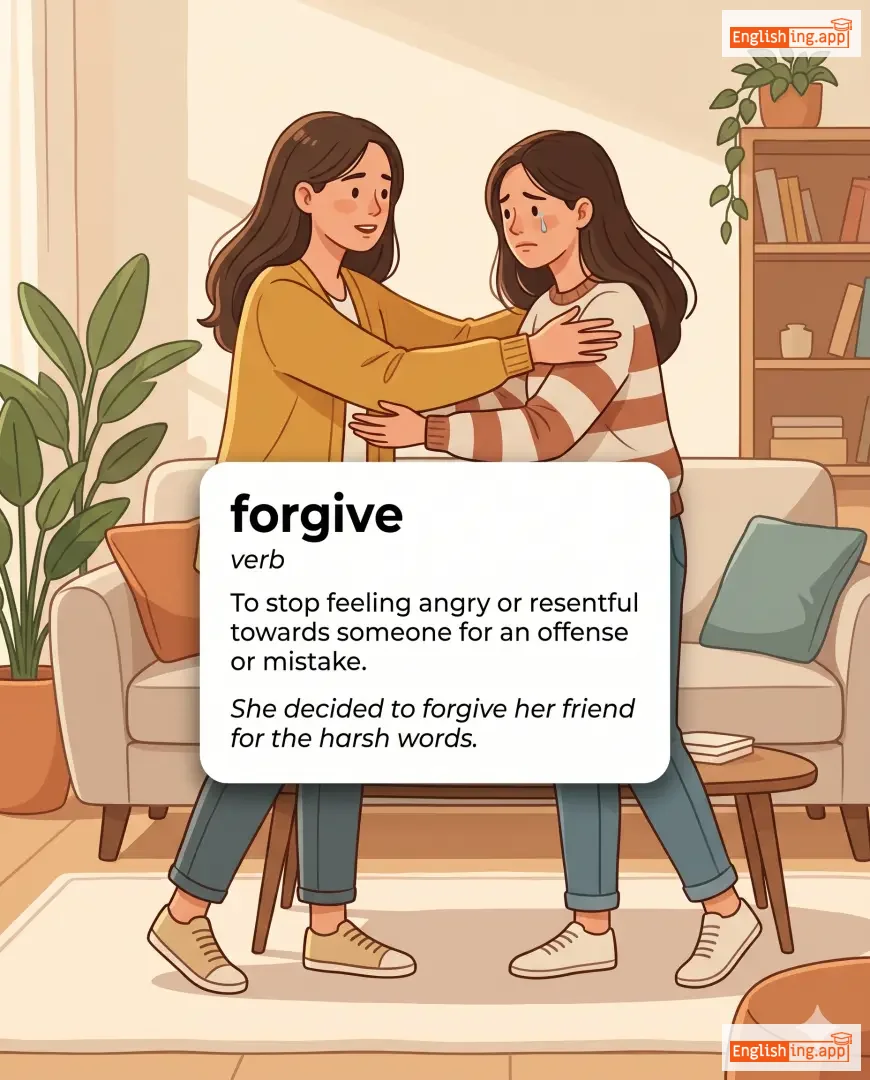
To stop feeling angry or resentful towards someone for an offense or mistake.
••••••
|
She decided to forgive her friend for the harsh words.
Она решила простить своего друга за жесткие слова.
••••••
|
Она решила простить своего друга за жесткие слова.
Ona reshila prostit' svoego druga za zhestkie slova.
••••••
|
forgive and forget
простить и забыть
••••••
|
To forgive someone and not remember the offense anymore.
••••••
|
простить и забыть
prostit' i zabyit'
••••••
|
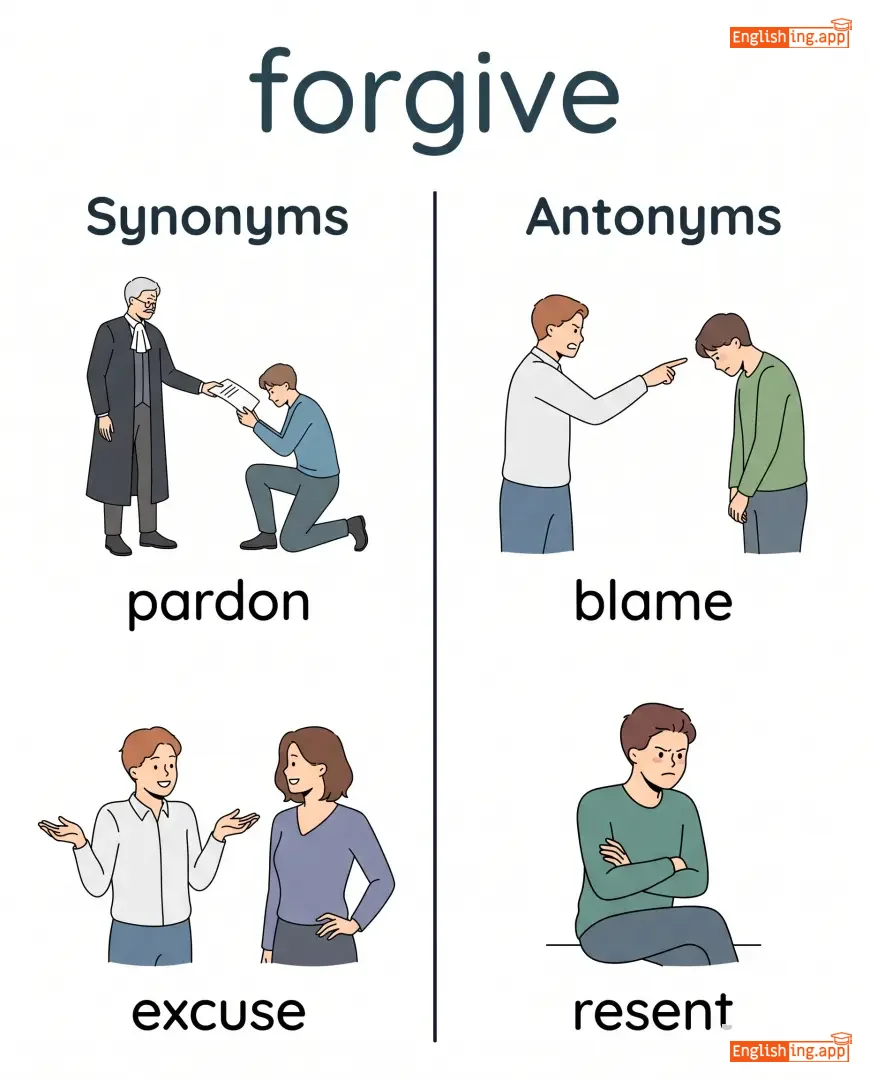
pardon, excuse, absolve, overlook, release
••••••
|
blame, resent, condemn
••••••
|
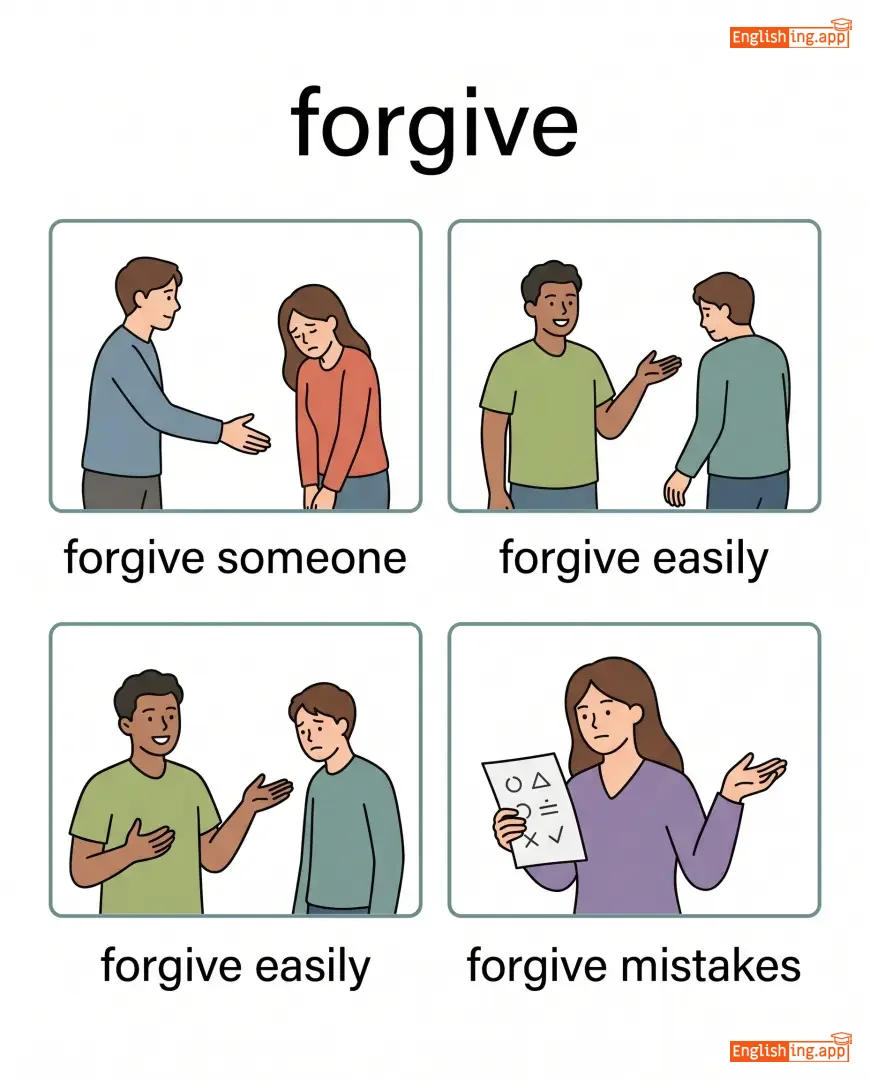
forgive someone, forgive easily, forgive mistakes, forgive sins
••••••
|
Простить означает забыть (forget + give). Прощение укрепляет дружбу.
••••••
|
|
🍴
••••••
|
/fɔːk/
noun
(форк)
••••••
|
- •••••• |
вилка
vilka
••••••
|
- •••••• | - •••••• | - •••••• | - •••••• |
a tool with two or more prongs used for eating or serving food
••••••
|
He ate his salad with a fork. |
Он съел свой салат вилкой.
On s'yel svoi salat vilkoy.
••••••
|
at a fork in the road |
facing a point where a decision must be made
••••••
|
на развилке дороги
na razvylke dorogi
••••••
|
utensil, prong, cutlery, divider
••••••
|
spoon, knife
••••••
|
dinner fork, salad fork, fork and knife, silver fork
••••••
|
Fork = вилка. Используй вилку, чтобы не испачкать руки!
••••••
|
|
📄
••••••
|
/fɔːrm/
noun, verb
(форма)
••••••
|
- •••••• |
форма / форма
forma / forma
••••••
|
formed
сформирован
••••••
|
formed
сформирован
••••••
|
forms
формирует
••••••
|
forming
формируя
••••••
|
the shape or structure of something; to bring something into existence
••••••
|
Students filled out the registration form.
Студенты заполнили регистрационную форму.
••••••
|
Студенты заполнили регистрационную форму.
Studenty zapolnili registratsionnuyu formu.
••••••
|
take form
принимать форму
••••••
|
to start to develop a clear shape or structure
••••••
|
принимать форму
prinimat' formu
••••••
|
shape, structure, configuration, type, create
••••••
|
disorder, destroy, deform
••••••
|
application form, fill out form, form a team, form an opinion
••••••
|
Form означает форму, как когда заполняешь форму.
••••••
|
|
🎩
••••••
|
/ˈfɔːrməl/
adjective
(формал)
••••••
|
- •••••• |
формальный
formal'nyy
••••••
|
- •••••• | - •••••• | - •••••• | - •••••• |
done in accordance with rules of convention or etiquette; official or serious in nature
••••••
|
He wore a formal suit to the wedding.
Он носил формальный костюм на свадьбе.
••••••
|
Он носил формальный костюм на свадьбе.
On nosil formal'nyy kostyum na svad'be.
••••••
|
formal attire
формальная одежда
••••••
|
clothing suitable for official or serious occasions
••••••
|
формальная одежда
formal'naya odezhda
••••••
|
ceremonial, proper, official, conventional, stiff
••••••
|
casual, informal, relaxed
••••••
|
formal event, formal education, formal attire, formal agreement
••••••
|
Формальный означает что-то официальное, например, носить формальную одежду на свадьбе.
••••••
|
|
📜
••••••
|
/ˈfɔːrməli/
adverb
(формали)
••••••
|
- •••••• |
официально
ofitsialno
••••••
|
- •••••• | - •••••• | - •••••• | - •••••• |
in a formal or official manner; according to established rules or conventions
••••••
|
The agreement was formally signed by both parties.
Зе эгримент воз формали сайнд бай боус партиз
••••••
|
Соглашение было официально подписано обеими сторонами.
soglashenie bylo ofitsialno podpisano obeimi storonami
••••••
|
formally speaking
формали спикинг
••••••
|
used to introduce a statement from an official or strict point of view
••••••
|
официально говоря
ofitsialno govorya
••••••
|
officially, properly, ceremoniously, correctly, conventionally
••••••
|
informally, casually, unofficially
••••••
|
formally announce, formally agree, formally dressed, formally recognize
••••••
|
Formal = официальный, formally = официально
••••••
|
|
🗂️
••••••
|
/ˈfɔːmæt/
noun
(формат)
••••••
|
- •••••• |
формат
format
••••••
|
- •••••• | - •••••• | - •••••• | - •••••• |
the way in which something is arranged, designed, or presented
••••••
|
Please follow the given format for your report submission. |
Пожалуйста, следуйте данному формату для подачи вашего отчета.
Pozhaluysta, sleduyte dannomu formatu dlya podachi vashego otcheta.
••••••
|
standard format |
a commonly accepted structure or arrangement
••••••
|
стандартный формат
standartny format
••••••
|
layout, structure, design, arrangement, configuration
••••••
|
disorder, chaos, disorganization
••••••
|
file format, report format, standard format, data format
••••••
|
Формат — это порядок вещей. Без формата отчет не принимается!
••••••
|
|
🧩
••••••
|
/fɔːrˈmeɪʃən/
noun
(fɔrˈmeɪʃən)
••••••
|
- •••••• |
формирование
formirovanie
••••••
|
- •••••• | - •••••• | - •••••• | - •••••• |
the action of forming or process of being formed
••••••
|
The formation of the new company took several months. |
Формирование новой компании заняло несколько месяцев.
Formirovanie novoy kompanii zanyalo neskol'ko mesyatsev.
••••••
|
in formation |
organized in a particular way, often used for groups like soldiers or birds
••••••
|
в форме
v forme
••••••
|
creation, development, establishment, structure, arrangement
••••••
|
destruction, disintegration
••••••
|
rock formation, team formation, formation process, military formation
••••••
|
Формирование означает создание чего-то, например, формация солдат.
••••••
|
|
⏳
••••••
|
/ˈfɔːrmər/
adjective
(фо́рмер)
••••••
|
- •••••• |
бывший
byvshiy
••••••
|
- •••••• | - •••••• | - •••••• | - •••••• |
Having been previously in a particular role or position.
••••••
|
He is a former president of the association. |
Он бывший президент ассоциации.
On byvshiy prezident assotsiatsii.
••••••
|
- •••••• | - •••••• | - •••••• |
previous, ex, prior, earlier
••••••
|
current, present
••••••
|
former president, former employee, former partner, former member
••••••
|
Former означает 'кто был раньше' → бывший человек.
••••••
|
|
⏮️
••••••
|
/ˈfɔːrmərli/
adverb
(фо́рмерли)
••••••
|
- •••••• |
раньше; раньше всего
ran'she; ran'she vsego
••••••
|
- •••••• | - •••••• | - •••••• | - •••••• |
in the past; previously; at an earlier time
••••••
|
The building was formerly a school but is now a community center. |
Здание раньше было школой, но теперь это общественный центр.
Zdanie ran'she bylo shkoloy, no teper' eto obshchestvennyy tsentr.
••••••
|
- •••••• | - •••••• | - •••••• |
previously, earlier, before, once, in the past
••••••
|
currently, now, presently, lately, recently
••••••
|
formerly known as, formerly owned by, formerly called
••••••
|
Formerly - раньше было, а теперь что-то другое.
••••••
|
|
📐
••••••
|
/ˈfɔːrmjələ/
noun
(формула)
••••••
|
- •••••• |
формула
formula
••••••
|
- •••••• | - •••••• | - •••••• | - •••••• |
a fixed method for doing something; a mathematical or chemical rule expressed in symbols
••••••
|
The scientist discovered a new formula for the medicine. |
Ученый открыл новую формулу для лекарства.
Uchenyy otkryl novuyu formuluy dlya lekartstva.
••••••
|
magic formula |
a simple solution that guarantees success
••••••
|
волшебная формула
volshebnaya formula
••••••
|
equation, method, recipe, rule, pattern
••••••
|
disorder, randomness
••••••
|
mathematical formula, chemical formula, secret formula, formula milk
••••••
|
Формула — это всегда решение, как в математике, с конкретной формулой.
••••••
|
|
🧪
••••••
|
/ˈfɔːrmjʊleɪt/
verb
(формулировать)
••••••
|


|
формулировать, создавать методически
formulirovat, sozdavat' metodicheski
••••••
|
formulated
сформулировал
••••••
|
formulated
сформулированный
••••••
|
formulates
формулирует
••••••
|
formulating
формулируя
••••••
|
to create or devise methodically; to express in a formula
••••••
|
Scientists formulated a new theory about climate change.
Учёные сформулировали новую теорию о климатических изменениях.
••••••
|
Учёные сформулировали новую теорию о климатических изменениях.
Uchyonye sformulirovali novuyu teoryu o klimatycheskikh izmeneniyakh.
••••••
|
- •••••• | - •••••• | - •••••• |
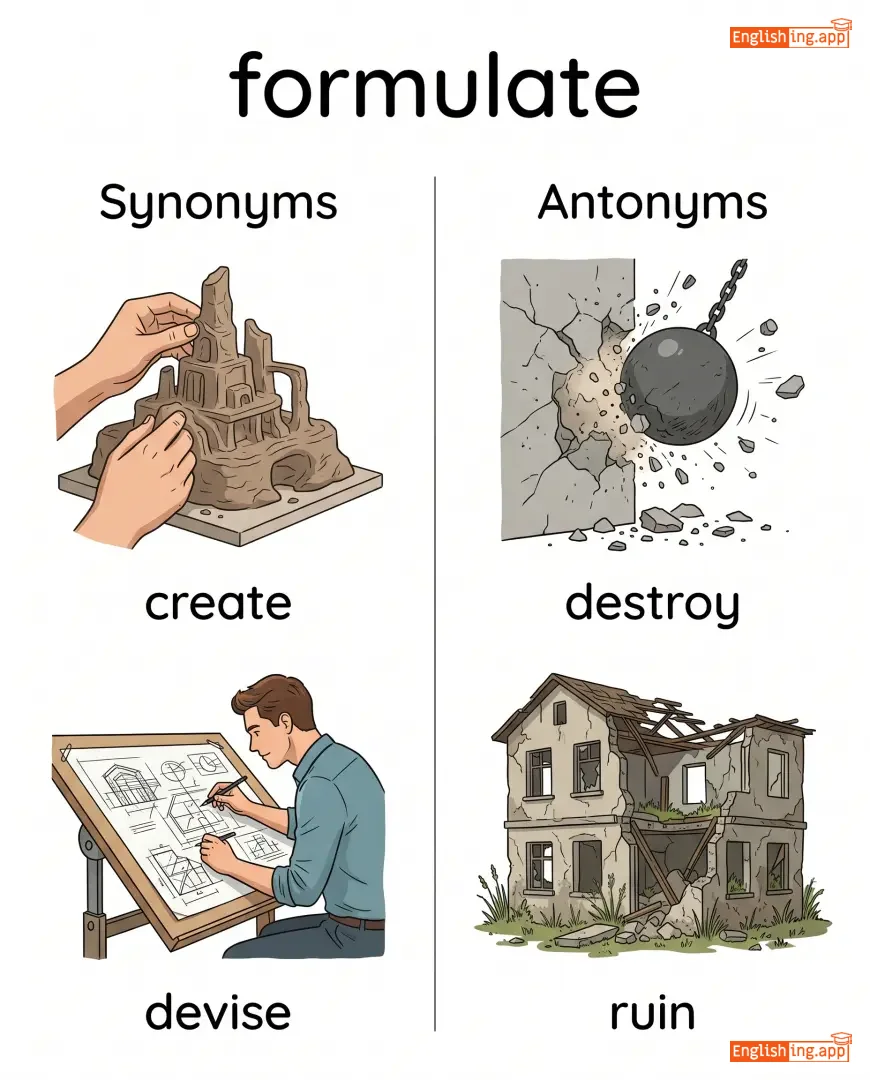
devise, create, develop, design
••••••
|
destroy, dismantle, dissolve, abandon
••••••
|
formulate plan, formulate strategy, formulate theory, formulate policy
••••••
|
Formulirovat' = Formula sozdavat'
••••••
|
|
🏰
••••••
|
/fɔːrt/
noun
(форт)
••••••
|
- •••••• |
крепость
krepost
••••••
|
- •••••• | - •••••• | - •••••• | - •••••• |
a strong building or group of buildings where soldiers live and defend
••••••
|
The ancient fort stood on top of the hill for centuries.
Древний форт стоял на вершине холма веками.
••••••
|
Древний форт стоял на вершине холма веками.
Drevniy fort stoyal na vershine kholma vekami.
••••••
|
- •••••• | - •••••• | - •••••• |
fortress, castle, stronghold, citadel
••••••
|
open field, plain, vulnerability
••••••
|
military fort, ancient fort, fort walls, fort defense
••••••
|
Krepost (fort) - Imagine a fortress (krepost) standing tall and proud. Defend!
••••••
|
|
➡️
••••••
|
/fɔːrθ/
adverb
(форс)
••••••
|
- •••••• |
вперед
vpered
••••••
|
- •••••• | - •••••• | - •••••• | - •••••• |
forward in place, time, or order
••••••
|
The leader stepped forth to address the crowd. |
Лидер шагнул вперед, чтобы обратиться к толпе.
Lider shagnyl vpered, chtoby obratit'sya k tolpe.
••••••
|
and so forth |
and so on; continuing in the same way
••••••
|
и так далее
i tak dalee
••••••
|
forward, ahead, onward, out
••••••
|
backward, behind
••••••
|
go forth, set forth, bring forth, come forth
••••••
|
‘forth’ значит идти вперед.
••••••
|
|
📅
••••••
|
/ˌfɔːrθˈkʌmɪŋ/
adjective
(форс-каминг)
••••••
|
- •••••• |
предстоящий
predstoyashchiy
••••••
|
- •••••• | - •••••• | - •••••• | - •••••• |
about to happen soon; willing to share information
••••••
|
The company announced its forthcoming product launch. |
Компания объявила о предстоящем запуске продукта.
Kompaniya ob'yavila o predstoyashchem zapuske produkta.
••••••
|
- •••••• | - •••••• | - •••••• |
upcoming, imminent, approaching, pending, willing
••••••
|
past, previous, unwilling
••••••
|
forthcoming event, forthcoming meeting, forthcoming details, forthcoming report
••••••
|
'Forthcoming event' означает, что оно скоро произойдет — помни, что предстоящий = upcoming.
••••••
|
|
🍀
••••••
|
/ˈfɔːrtʃənət/
adjective
(fortchunet)
••••••
|
- •••••• |
счастливый
schastlivyy
••••••
|
- •••••• | - •••••• | - •••••• | - •••••• |
Having good luck or receiving something desirable by chance.
••••••
|
She was fortunate to escape the accident without injuries.
Она была удачлива, что избежала травм в аварии.
••••••
|
Она была удачлива, что избежала травм в аварии.
Ona byla udachliva, chto izbezhala travm v avarii.
••••••
|
fortunate enough
достаточно удачлива
••••••
|
Lucky to have something or experience something
••••••
|
достаточно удачлива
dostatochno udachliva
••••••
|
lucky, blessed, favored, prosperous, successful
••••••
|
unfortunate, unlucky, cursed
••••••
|
fortunate enough, fortunate circumstances, feel fortunate, fortunate opportunity
••••••
|
Fortune означает удача, так что fortunate означает счастливый 🍀
••••••
|
|
🍀
••••••
|
/ˈfɔːtʃənətli/
adverb
(fortchunetli)
••••••
|
- •••••• |
к счастью
k schchast'yu
••••••
|
- •••••• | - •••••• | - •••••• | - •••••• |
by good luck; luckily
••••••
|
Fortunately, no one was injured in the accident. |
К счастью, никто не пострадал в аварии.
K schast'yu, nikto ne postradal v avarii.
••••••
|
- •••••• | - •••••• | - •••••• |
luckily, thankfully, providentially, auspiciously
••••••
|
unfortunately, sadly, regrettably
••••••
|
fortunately for, fortunately enough, said fortunately
••••••
|
Fortunately означает к счастью — удача всегда с тобой!
••••••
|
|
🍀
••••••
|
/ˈfɔːrtʃən/
noun
(fortchun)
••••••
|
- •••••• |
счастье / состояние
schast'ye / sostoyanie
••••••
|
- •••••• | - •••••• | - •••••• | - •••••• |
chance or luck, especially in success or wealth
••••••
|
She made a fortune by investing in real estate.
Она сделала состояние, инвестируя в недвижимость.
••••••
|
Она сделала состояние, инвестируя в недвижимость.
Ona sdelala sostoyanie, investiruya v nedvizhimost'.
••••••
|
fortune favors the brave
Удача благоприятствует смелым
••••••
|
those who take risks are more likely to succeed
••••••
|
Удача благоприятствует смелым
Udacha blagopriyatstvuet smelym
••••••
|
wealth, luck, fate, destiny, riches
••••••
|
poverty, misfortune, loss
••••••
|
good fortune, bad fortune, make a fortune, bring fortune
••••••
|
Fortune означает удачу — получи состояние, рискуя!
••••••
|
|
💬
••••••
|
/ˈfɔːrəm/
noun
(форум)
••••••
|
- •••••• |
форум
forum
••••••
|
- •••••• | - •••••• | - •••••• | - •••••• |
A place, meeting, or medium where ideas and views can be exchanged.
••••••
|
The online forum allows people to discuss a wide range of topics. |
Онлайн-форум позволяет людям обсуждать широкий круг тем.
Onlayn-forum pozvolyayet lyudyam obshchatsya shirokiy krug tem.
••••••
|
- •••••• | - •••••• | - •••••• |
meeting, assembly, discussion, platform, conference
••••••
|
isolation, silence
••••••
|
online forum, public forum, discussion forum, international forum
••••••
|
Forum на русском - место для обсуждения, где идеи могут 'переключаться' между участниками.
••••••
|
|
➡️
••••••
|
/ˈfɔːrwərd/
adverb, adjective, verb, noun
(форвард)
••••••
|
- •••••• |
вперед
vpered
••••••
|
forwarded
форвардед
••••••
|
forwarded
форвардед
••••••
|
forwards
форвардс
••••••
|
forwarding
форвардинг
••••••
|
toward the front; to advance or send ahead; an onward position or direction
••••••
|
The troops moved forward to secure the bridge.
Труппы двинулись вперед, чтобы обеспечить безопасность моста.
••••••
|
Труппы двинулись вперед, чтобы обеспечить безопасность моста.
Truppy dvinuulis vpered, chtoby obespechit' bezopasnost' mosta.
••••••
|
look forward to
с нетерпением ждать
••••••
|
to anticipate something with pleasure
••••••
|
с нетерпением ожидать
s neterpeniem ozhidat
••••••
|
ahead, onward, advance, transmit, promote
••••••
|
backward, reverse, retreat
••••••
|
move forward, step forward, look forward, forward message
••••••
|
Вперед: Поставь цель и двигайся к ней, как сообщение в SMS.
••••••
|
|
🦖
••••••
|
/ˈfɒsɪl/
noun
(фоссил)
••••••
|
- •••••• |
ископаемое
iskopaemoe
••••••
|
- •••••• | - •••••• | - •••••• | - •••••• |
the remains or impression of a prehistoric plant or animal embedded in rock
••••••
|
The fossil of a dinosaur was discovered in the mountains. |
Ископаемое динозавра было найдено в горах.
Iskopaemoe dinozavra bylo naydeno v gorakh.
••••••
|
- •••••• | - •••••• | - •••••• |
remains, artifact, relic
••••••
|
modern, new
••••••
|
dinosaur fossil, ancient fossil, fossil record
••••••
|
Ископаемые — это как следы древних существ, сохранившиеся в камне.
••••••
|
|
👩👧
••••••
|
/ˈfɒstər/
verb, adjective
(фостер)
••••••
|
- •••••• |
воспитывать
vospityvat'
••••••
|
fostered
фостерд
••••••
|
fostered
фостерд
••••••
|
fosters
фостерс
••••••
|
fostering
фостеринг
••••••
|
to encourage the development of something; to raise a child that is not one's own
••••••
|
The program aims to foster creativity in young students.
Программа направлена на поощрение творчества у молодых студентов.
••••••
|
Программа направлена на поощрение творчества у молодых студентов.
Programma napravlena na pooshchryeniye tvorchestva u molodykh studentov.
••••••
|
foster care
приемная забота
••••••
|
temporary guardianship of children by non-biological parents
••••••
|
приемная забота
priyomnaya zabota
••••••
|
encourage, nurture, support, promote, cultivate
••••••
|
neglect, hinder, suppress
••••••
|
foster child, foster home, foster relationships, foster environment
••••••
|
Foster care означает заботу о детях, помни 'Foster Mama' русская версия
••••••
|
|
🏢
••••••
|
/faʊnd/
verb
(faʊnd)
••••••
|
- •••••• |
основать
osnovat'
••••••
|
found
faʊnd
••••••
|
found
faʊnd
••••••
|
finds
faɪndz
••••••
|
founding
faʊndɪŋ
••••••
|
to establish or set up an institution, company, or organization
••••••
|
They found a new startup focused on renewable energy.
Они основали новый стартап, сосредоточенный на возобновляемых источниках энергии.
••••••
|
Они основали новый стартап, сосредоточенный на возобновляемых источниках энергии.
Oni osnovali novyy startup, sosredotochennyy na vozobnovlyaemykh istochnikakh energii.
••••••
|
well-founded
хорошо обосновано
••••••
|
based on good reasons or evidence
••••••
|
хорошо обосновано
khorosho obosnovano
••••••
|
establish, create, set up, launch, originate
••••••
|
close, abolish, dismantle
••••••
|
found a company, found an institution, newly founded, founder of
••••••
|
Found означает основать — основатель — тот, кто основал компанию.
••••••
|
|
🏗️
••••••
|
/faʊnˈdeɪʃən/
noun
(faundéishon)
••••••
|
|
фонд
fond
••••••
|
- •••••• | - •••••• | - •••••• | - •••••• |
the base or underlying support of something; an institution established for a purpose
••••••
|
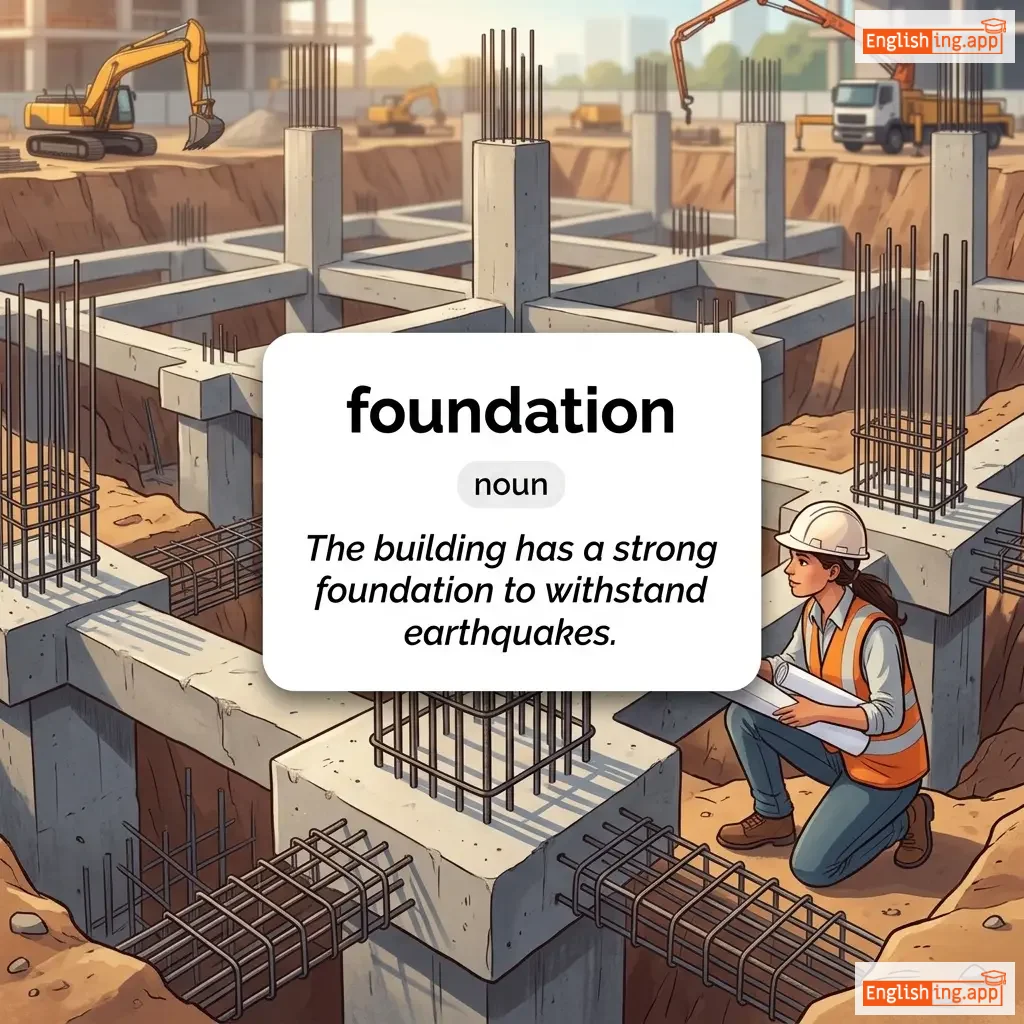
The building has a strong foundation to withstand earthquakes. |
Здание имеет прочный фундамент, чтобы выдержать землетрясения.
Zdaniye imeyet prochnyy fundament, chtoby vydyerzhat' zemletryaseniya.
••••••
|
lay the foundation |
to provide the basic ideas or structures on which something can develop
••••••
|
заложить основы
zalozhit' osnovy
••••••
|
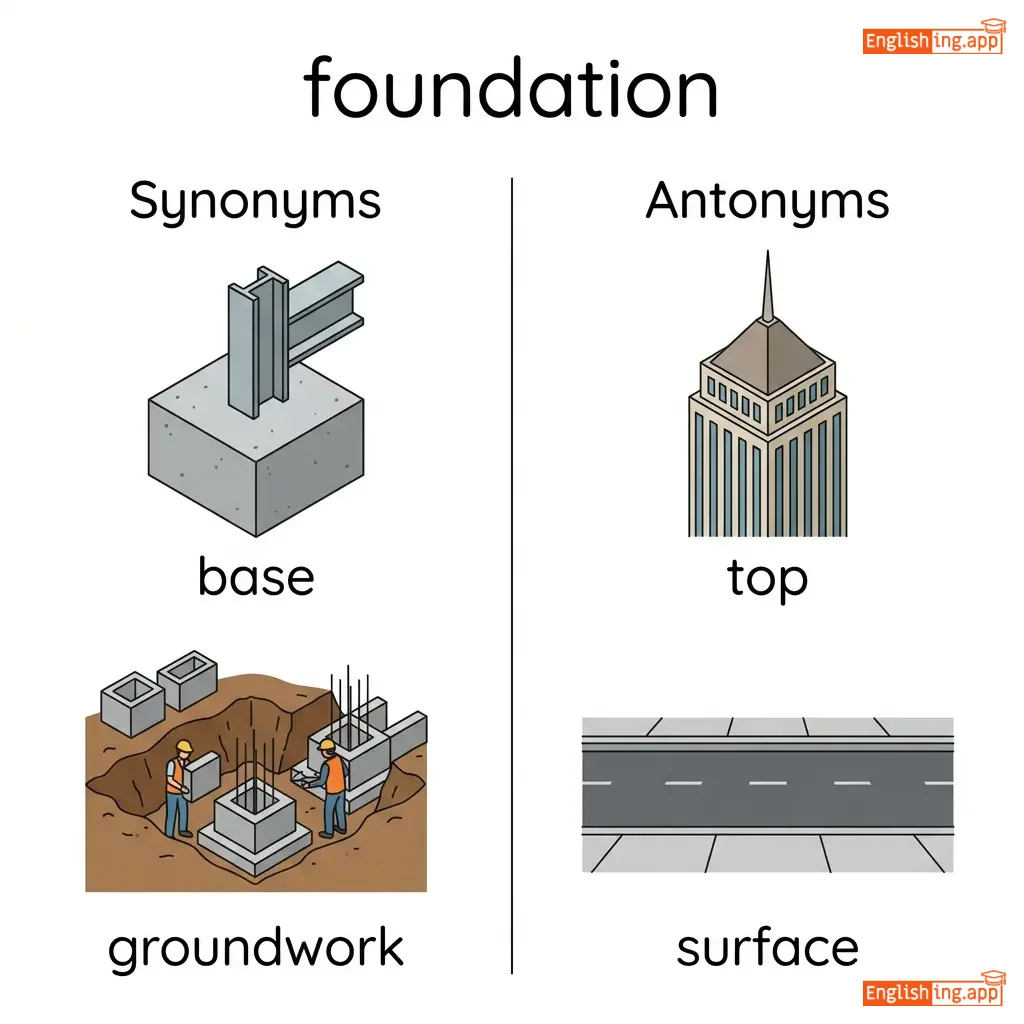
base, groundwork, support, basis, establishment
••••••
|
top, surface, collapse
••••••
|
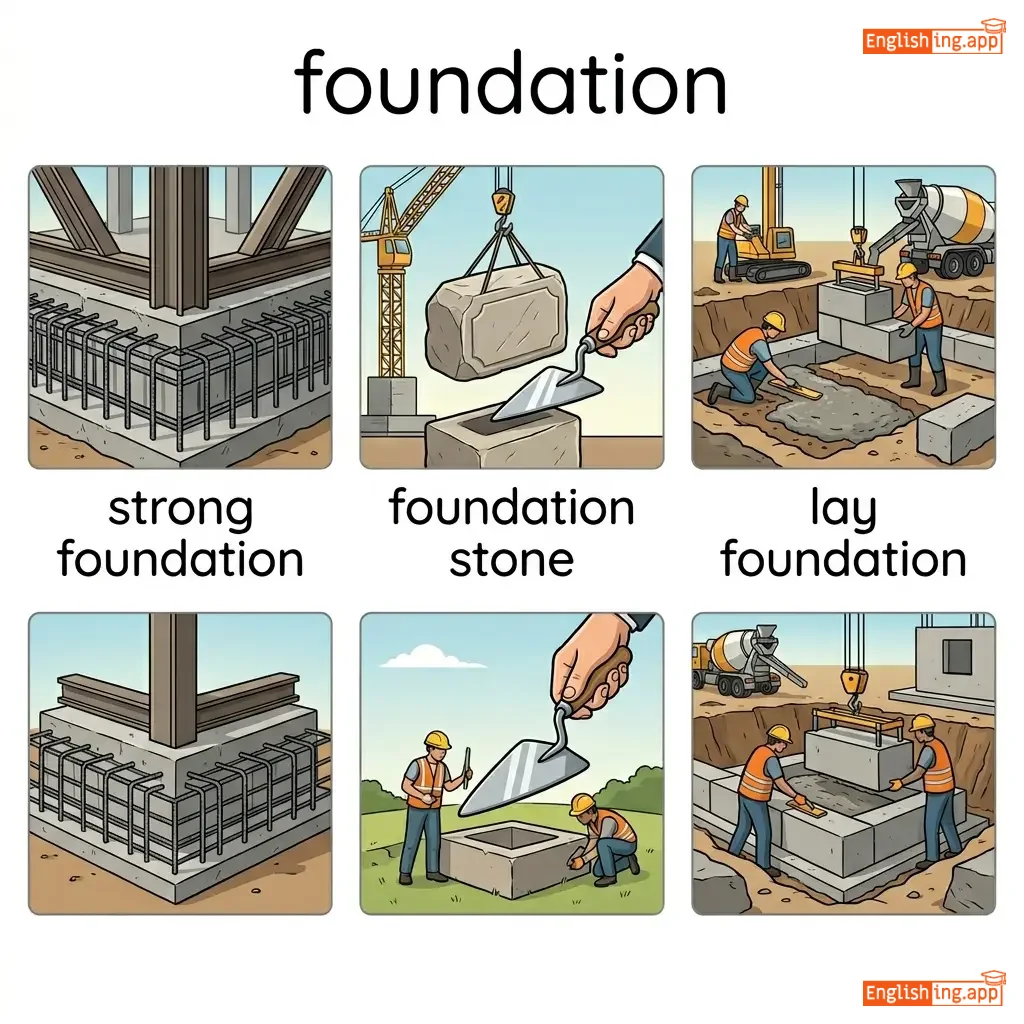
strong foundation, foundation stone, lay foundation, charitable foundation
••••••
|
Foundation означает фонд — без foundation здание рухнет.
••••••
|
|
🏗️
••••••
|
/ˈfaʊndər/
noun, verb
(фаундер)
••••••
|


|
основатель
osnovatel
••••••
|
founded
фаундед
••••••
|
founded
фаундед
••••••
|
founds
фаундс
••••••
|
founding
фаундинг
••••••
|
a person who establishes an institution or company; as a verb, to fail or sink
••••••
|
She is the founder of a successful startup.
Она основательница успешного стартапа.
••••••
|
Она основательница успешного стартапа.
Ona osnovatelnitsa uspeshnogo startapa.
••••••
|
- •••••• | - •••••• | - •••••• |
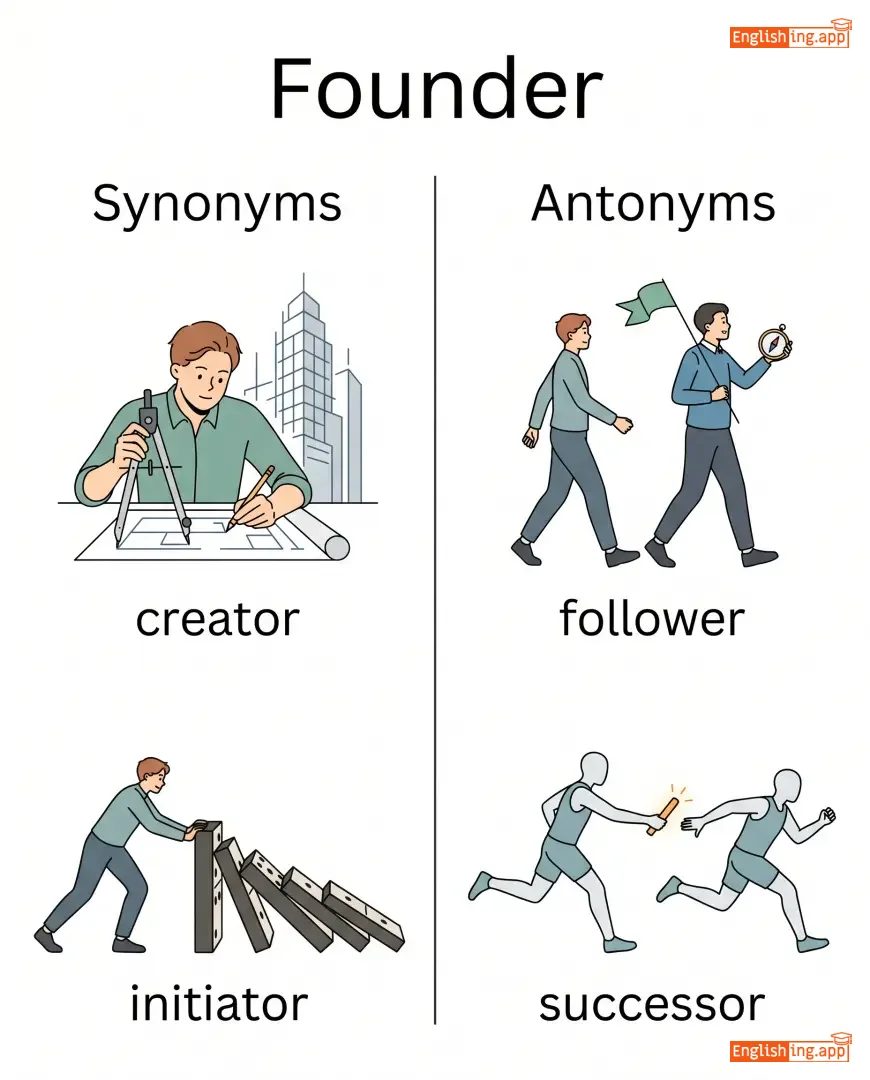
creator, initiator, establisher, originator
••••••
|
follower, successor
••••••
|
company founder, startup founder, founding member, founder of
••••••
|
Founder – это основатель, как в Foundation (фонд).
••••••
|
|
4️⃣
••••••
|
/fɔːr/
numeral
(фор)
••••••
|
- •••••• |
четыре
chetyre
••••••
|
- •••••• | - •••••• | - •••••• | - •••••• |
The number equivalent to the sum of two and two; one more than three.
••••••
|
She has four books on her desk. |
У нее четыре книги на столе.
U nee chetyre knigi na stole.
••••••
|
four corners of the world |
everywhere in the world
••••••
|
четыре угла мира
chetyre ugla mira
••••••
|
quartet, quadruple, foursome, tetrad
••••••
|
three, five
••••••
|
four times, four years, four people, four seasons
••••••
|
С четырьмя друзьями всегда весело – помни, что Four означает четыре.
••••••
|
|
4️⃣
••••••
|
/fɔːrθ/
adjective/noun
(фо́рс)
••••••
|
- •••••• |
четвертый
chetverty
••••••
|
- •••••• | - •••••• | - •••••• | - •••••• |
Constituting number four in a sequence; coming after the third in position.
••••••
|
He finished in fourth place in the race. |
Он занял четвертое место в гонке.
On zanyal chetvertoe mesto v gonke.
••••••
|
the fourth estate |
the press and news media
••••••
|
четвертая власть
chetvertaya vlast'
••••••
|
quartile, fourthly, quadrant, quaternary
••••••
|
first, last
••••••
|
fourth place, fourth time, fourth floor, fourth century
••••••
|
Четвертый – это просто 4, не трудно запомнить!
••••••
|
|
➗
••••••
|
/ˈfrækʃən/
noun
(фрэкшн)
••••••
|
- •••••• |
доля
dolya
••••••
|
- •••••• | - •••••• | - •••••• | - •••••• |
A small part of something; in mathematics, a number that represents part of a whole.
••••••
|
Only a small fraction of the population attended the event.
Только небольшая часть населения посетила мероприятие.
••••••
|
Только небольшая часть населения посетила мероприятие.
Tol'ko nebol'shaya chast' naseleniya posetila meropriyatie.
••••••
|
a fraction of
часть от
••••••
|
A very small part of something
••••••
|
часть от
chast' ot
••••••
|
portion, segment, piece, part
••••••
|
whole, entirety
••••••
|
small fraction, significant fraction, fraction of time, fraction of cost
••••••
|
Fraction означает доля ➗ как 1/2, 1/4 и так далее
••••••
|
|
🧪
••••••
|
/ˈfræʤaɪl/
adjective
(фрэджайл)
••••••
|
- •••••• |
хрупкий
khrupkiy
••••••
|
- •••••• | - •••••• | - •••••• | - •••••• |
Easily broken or damaged; delicate.
••••••
|
Be careful with that vase, it's very fragile. |
Будь осторожен с вазой, она очень хрупкая.
Bud' ostorozhen s vazoy, ona ochen' khrupkaya.
••••••
|
fragile peace |
A peace that is weak and easily disrupted
••••••
|
хрупкий мир
khrupkiy mir
••••••
|
delicate, breakable, frail, weak, brittle
••••••
|
strong, durable, sturdy
••••••
|
fragile glass, fragile economy, fragile peace, fragile body
••••••
|
Fragile = хрупкий на русском — хрупкий, осторожно!
••••••
|
|
🧩
••••••
|
/ˈfræɡmənt/
noun
(фрагмент)
••••••
|
- •••••• |
фрагмент
fragment
••••••
|
- •••••• | - •••••• | - •••••• | - •••••• |
a small piece broken off something larger
••••••
|
He found a fragment of ancient pottery near the river. |
Он нашел фрагмент древней посуды рядом с рекой.
On nashel fragment drevney posudy ryadom s rekoj.
••••••
|
in fragments |
broken into small pieces
••••••
|
на фрагменты
na fragmenty
••••••
|
piece, shard, particle, portion, bit
••••••
|
whole, entirety
••••••
|
glass fragment, bone fragment, sentence fragment, broken fragment
••••••
|
Фрагмент = 'фраг' как части, которые разрушаются.
••••••
|

