|
表情符号
|
单词 | Images | 翻译 | 过去时 | 过去分词 | 第三人称单数 | 动名词 | 含义 | 例句 | 例句翻译 | 示例表达 | 示例表达含义 | 示例表达翻译 | 同义词 | 反义词 | 搭配词 | 助记符 |
|---|---|---|---|---|---|---|---|---|---|---|---|---|---|---|---|---|---|
|
👨👩👧👦
••••••
|
/foʊk/
noun
(福尔克)
••••••
|
- •••••• |
人们
renmen
••••••
|
- •••••• | - •••••• | - •••••• | - •••••• |
people in general, often referring to a group or community
••••••
|
Country folk often live a simple life.
乡村人通常过着简单的生活。
••••••
|
乡村人通常过着简单的生活。
Xiangcun ren tongchang guo zhe jiandan de shenghuo.
••••••
|
just plain folk
普通人
••••••
|
ordinary people
••••••
|
普通人
putong ren
••••••
|
people, community, tribe, population, crowd
••••••
|
individual, elite
••••••
|
folk music, country folk, common folk, ordinary folk
••••••
|
Folk是人们的代名词 - Folk表示普通人和乡村生活。
••••••
|
|
➡️
••••••
|
/ˈfɒloʊ/
verb
(fóluò)
••••••
|
- •••••• |
跟随
gēnsuí
••••••
|
followed
fóluòde
••••••
|
followed
fóluòde
••••••
|
follows
fóluò
••••••
|
following
fóluòing
••••••
|
to move behind someone or something; to go after or come after
••••••
|
The children followed their teacher into the classroom.
孩子们跟着老师进了教室。
••••••
|
孩子们跟着老师进了教室。
Háizimen gēnzhe lǎoshī jìnle jiàoshì.
••••••
|
follow suit
跟着做
••••••
|
to do the same as someone else has just done
••••••
|
效仿
xiàofǎng
••••••
|
pursue, track, chase, obey, accompany
••••••
|
lead, precede, ignore
••••••
|
follow instructions, follow orders, follow closely, follow a path
••••••
|
在中文中,'跟随'是指做别人做过的事情,就像在社交媒体上跟随别人。
••••••
|
|
👥
••••••
|
/ˈfɑː.loʊ.ɪŋ/
noun
(fóluòyīng)
••••••
|
- •••••• |
追随者
zhuīsuízhě
••••••
|
- •••••• | - •••••• | - •••••• | - •••••• |
a group of supporters or people who admire something or someone
••••••
|
The singer has a large following around the world. |
这位歌手在全世界有很多追随者。
Zhè wèi gēshǒu zài quán shìjiè yǒu hěn duō zhuīsuízhě.
••••••
|
- •••••• | - •••••• | - •••••• |
fans, supporters, admirers, audience, enthusiasts
••••••
|
critics, opponents
••••••
|
large following, loyal following, following crowd, following group
••••••
|
Following的意思是追随者,就像Facebook上的粉丝一样。
••••••
|
|
💖
••••••
|
/fɒnd/
adjective
(fóngdé)
••••••
|
- •••••• |
喜爱
xiai
••••••
|
- •••••• | - •••••• | - •••••• | - •••••• |
having a strong liking or affection for something or someone
••••••
|
She is fond of painting and spends hours in front of her canvas. |
她非常喜爱画画,并且在画布前面花费了几个小时。
Ta feichang xiai huahua, bingqie zai huabu qianmian huafei le jige xiaoshi.
••••••
|
- •••••• | - •••••• | - •••••• |
loving, affectionate, passionate, devoted
••••••
|
indifferent, apathetic
••••••
|
fond of, fond memory, fond relationship
••••••
|
喜爱意味着强烈的喜好,就像我喜欢画画一样。 - Xiai means strong liking, just like I am fond of painting!
••••••
|
|
🍲
••••••
|
/fuːd/
noun
(fud)
••••••
|
- •••••• |
食物
shiwu
••••••
|
- •••••• | - •••••• | - •••••• | - •••••• |
any nutritious substance that people or animals eat or drink to maintain life and growth
••••••
|
Rice is a common food in Asia. |
米饭是亚洲常见的食物。
Mifan shi Yazhou changjian de shiwu.
••••••
|
comfort food |
food that provides a sense of well-being or nostalgia
••••••
|
安慰食物
anwei shiwu
••••••
|
meal, dish, cuisine, nourishment, sustenance
••••••
|
poison, toxin
••••••
|
fast food, healthy food, food supply, food chain
••••••
|
Food 是食物 - 记住:Fast food 是快速食物。
••••••
|
|
🤡
••••••
|
/fuːl/
noun, verb
(fu-er)
••••••
|
- •••••• |
傻瓜
shagua
••••••
|
fooled
fu-er-d
••••••
|
fooled
fu-er-d
••••••
|
fools
fu-er-s
••••••
|
fooling
fu-er-ing
••••••
|
a silly or stupid person; to trick someone
••••••
|
He felt like a fool after believing the prank.
他在相信恶作剧之后觉得自己像个傻瓜。
••••••
|
他在相信恶作剧之后觉得自己像个傻瓜。
Ta zai xiangxin ezuoju zhihou juede ziji xiang ge shagua.
••••••
|
make a fool of
让某人出丑
••••••
|
to embarrass someone or yourself by acting silly
••••••
|
让某人出丑
rang mou ren chu chou
••••••
|
idiot, clown, trick, deceive, prankster
••••••
|
wise, genius, intellect
••••••
|
April fool, play the fool, fool someone, fool around
••••••
|
Fool 代表傻瓜,像在愚人节那样,每个人都变成傻瓜。
••••••
|
|
🦶
••••••
|
/fʊt/
noun
(fut)
••••••
|
- •••••• |
脚
jiao
••••••
|
- •••••• | - •••••• | - •••••• | - •••••• |
The lower extremity of the leg below the ankle, used for standing and walking.
••••••
|
He injured his foot while playing basketball. |
他在打篮球时伤了脚。
Tā zài dǎ lánqiú shí shāngle jiǎo.
••••••
|
put your foot down |
to assert authority or take a firm stand
••••••
|
把脚放下
bǎ jiǎo fàng xià
••••••
|
leg end, paw, hoof, base, bottom
••••••
|
head, top
••••••
|
bare foot, foot injury, left foot, right foot, foot step
••••••
|
记住,脚和FOOT的意思是一样的。
••••••
|
|
🎥
••••••
|
/ˈfʊtɪdʒ/
noun
(fùtèjí)
••••••
|
- •••••• |
视频录制
shipin luzhi
••••••
|
- •••••• | - •••••• | - •••••• | - •••••• |
a recorded film or video, especially one that is used for news or documentaries
••••••
|
The footage of the protest was shown on television all day. |
抗议的录像整天在电视上播放。
Kangyi de luxiang zhengtian zai dianshi shang bofang.
••••••
|
- •••••• | - •••••• | - •••••• |
video, film, recording, clip
••••••
|
still, photo
••••••
|
raw footage, video footage, news footage
••••••
|
Footage 意味着视频录制,像抗议视频录制 - Footage means video, like protest video footage!
••••••
|
|
🏈
••••••
|
/ˈfʊtˌbɔːl/
noun
(足球)
••••••
|
- •••••• |
足球
zuqiu
••••••
|
- •••••• | - •••••• | - •••••• | - •••••• |
A team sport played with a ball that is kicked or carried to score points.
••••••
|
They watched a football match on TV. |
他们在电视上观看了一场足球比赛。
Tamen zai dianshi shang guankan le yichang zuqiu bisai.
••••••
|
- •••••• | - •••••• | - •••••• |
soccer, game, match, sport, gridiron
••••••
|
none, inactivity
••••••
|
football match, football player, football field, football team
••••••
|
足球 (zúqiú) 是脚 (foot) 踢的球 (ball)!
••••••
|
|
🎁
••••••
|
/fɔːr/
preposition
(福尔)
••••••
|
- •••••• |
为
wèi
••••••
|
- •••••• | - •••••• | - •••••• | - •••••• |
used to indicate purpose, destination, or recipient
••••••
|
This gift is for you. |
这个礼物是给你的。
Zhège lǐwù shì gěi nǐ de.
••••••
|
for good |
permanently
••••••
|
永远
yǒngyuǎn
••••••
|
on behalf of, in favor of, because of, intended for
••••••
|
against, anti
••••••
|
for example, for instance, for sale, for life
••••••
|
For 的意思是 '为', 比如 'Gift for you' 意味着 '给你的礼物'.
••••••
|
|
⛔
••••••
|
/fərˈbɪd/
verb
(福比德)
••••••
|
- •••••• |
禁止
jìnzhǐ
••••••
|
forbade
福贝德
••••••
|
forbidden
福比登
••••••
|
forbids
福比兹
••••••
|
forbidding
福比丁
••••••
|
to order someone not to do something
••••••
|
The school forbids smoking on campus.
学校禁止在校园内吸烟。
••••••
|
学校禁止在校园内吸烟。
Xuéxiào jìnzhǐ zài xiàoyuán nèi xīyān.
••••••
|
God forbid
上帝保佑
••••••
|
a phrase used to express a strong wish that something does not happen
••••••
|
上帝保佑
Shàngdì bǎoyòu
••••••
|
prohibit, ban, prevent, restrict, deny
••••••
|
allow, permit, approve
••••••
|
forbid entry, forbid smoking, strictly forbid, forbid access
••••••
|
Forbid 意味着禁止,就像学校禁止在校园内吸烟。
••••••
|
|
💪
••••••
|
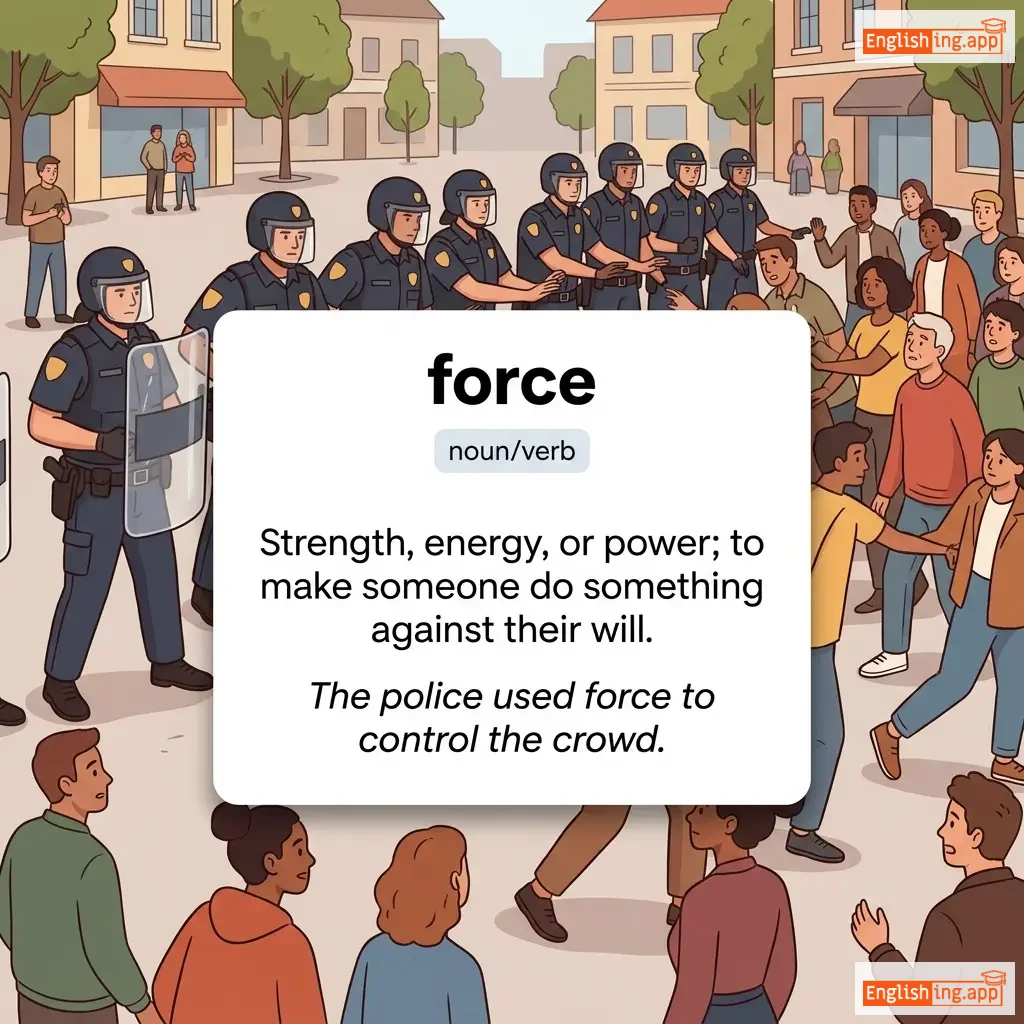
/fɔːrs/
noun/verb
(fórs)
••••••
|
|
力量 / 强度
lìliàng / qiángdù
••••••
|
forced
fórsed
••••••
|
forced
fórsed
••••••
|
forces
fórses
••••••
|
forcing
fórsing
••••••
|
Strength, energy, or power; to make someone do something against their will.
••••••
|
The police used force to control the crowd.
警察使用了暴力来控制人群。
••••••
|
警察使用了暴力来控制人群。
Jǐngchá shǐyòngle bàolì lái kòngzhì rénqún.
••••••
|
brute force
暴力
••••••
|
using physical power rather than skill or intelligence
••••••
|
暴力
bàolì
••••••
|
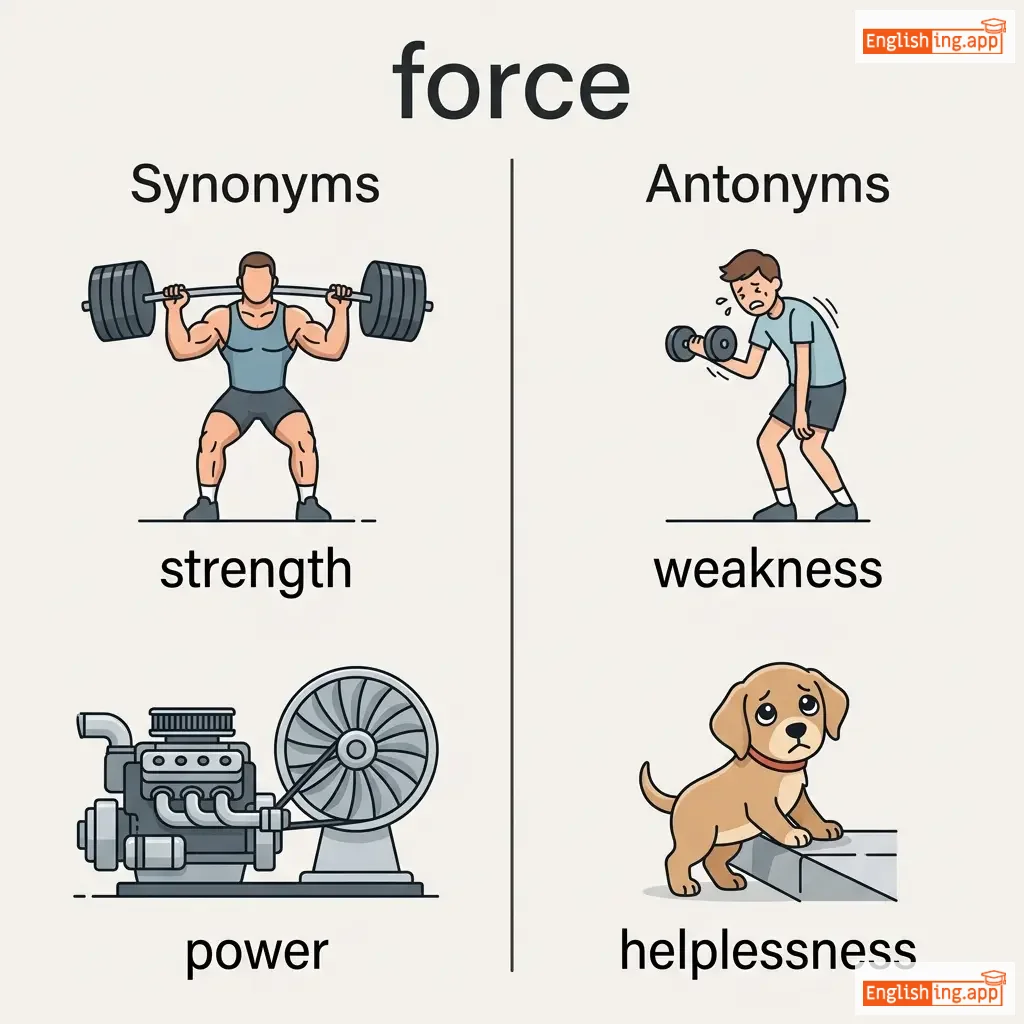
strength, power, energy, pressure, compulsion
••••••
|
weakness, helplessness, inaction
••••••
|
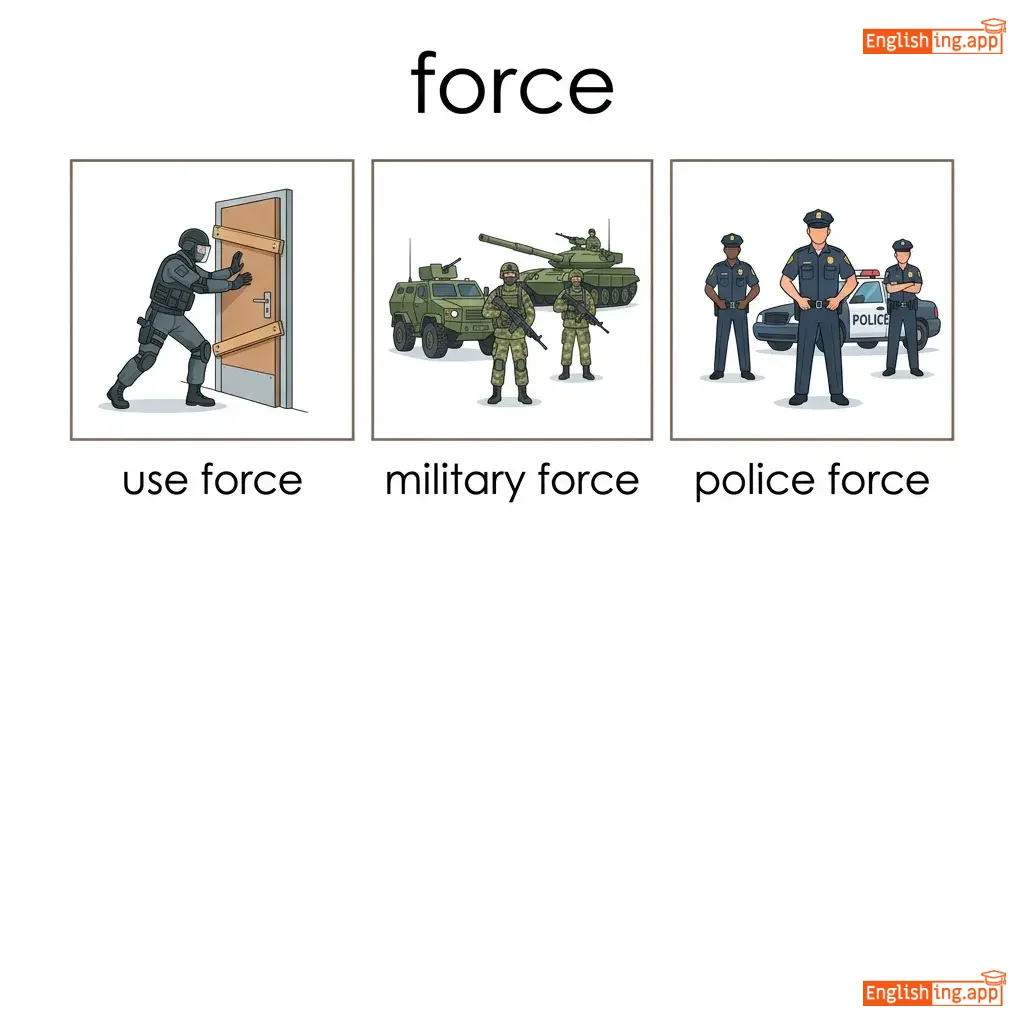
use force, military force, police force, force someone
••••••
|
FORCE 就是通过暴力获得你想要的东西。
••••••
|
|
🌦️
••••••
|
/ˈfɔːrkæst/
noun/verb
••••••
|
- •••••• | - •••••• |
forecast
••••••
|
forecast
••••••
|
forecasts
••••••
|
forecasting
••••••
|
To predict future events, especially weather or economic trends.
••••••
|
The weather office forecast heavy rain for tomorrow. |
- •••••• |
long-term forecast |
Prediction about a distant future period
••••••
|
- •••••• |
predict, project, estimate, prognosis, outlook
••••••
|
ignore, miscalculate
••••••
|
economic forecast, weather forecast, forecast demand, forecast growth
••••••
|
No •••••• |
|
🌍
••••••
|
/ˈfɔːrən/ or /ˈfɑːrən/
adjective
(fóren)
••••••
|
- •••••• |
外国的
wàiguó de
••••••
|
- •••••• | - •••••• | - •••••• | - •••••• |
Belonging to or coming from another country.
••••••
|
She loves studying foreign languages. |
她喜欢学习外国语言。
Tā xǐhuān xuéxí wàiguó yǔyán.
••••••
|
foreign to someone |
Something that is strange or unfamiliar to someone.
••••••
|
对某人来说陌生
duì mǒu rén lái shuō mòshēng
••••••
|
overseas, external, alien, exotic, unfamiliar
••••••
|
domestic, native, local
••••••
|
foreign policy, foreign language, foreign country, foreign affairs
••••••
|
Foreign = 外国的—Foreign 代表不属于自己国家!
••••••
|
|
🧳
••••••
|
/ˈfɔːrənər/ or /ˈfɑːrənər/
noun
(外国人)
••••••
|
- •••••• |
外国人
waiguoren
••••••
|
- •••••• | - •••••• | - •••••• | - •••••• |
A person from another country.
••••••
|
The city welcomes every foreigner with kindness. |
这个城市欢迎每一位外国人。
Zhege chengshi huanying mei yi wei waiguoren.
••••••
|
- •••••• | - •••••• | - •••••• |
outsider, alien, immigrant, stranger, visitor
••••••
|
citizen, native, local
••••••
|
foreign tourist, foreigner community, foreigner rights, foreigner registration
••••••
|
Foreigner 是外国人—来自其他国家的人!
••••••
|
|
🌲
••••••
|
/ˈfɔːrɪst/
noun
(森林)
••••••
|
- •••••• |
森林
sēnlín
••••••
|
- •••••• | - •••••• | - •••••• | - •••••• |
A large area covered chiefly with trees and undergrowth.
••••••
|
They went hiking in the forest. |
他们去了森林远足。
Tāmen qùle sēnlín yuǎnzú.
••••••
|
can't see the forest for the trees |
focusing too much on details and missing the bigger picture
••••••
|
看不见森林,只看见树木
Kàn bùjiàn sēnlín, zhǐ kànjiàn shùmù
••••••
|
woods, jungle, woodland, grove, rainforest
••••••
|
desert, plain
••••••
|
dense forest, tropical forest, forest fire, forest reserve
••••••
|
SENLIN = 在森林里走,你会看到树木,却看不到全景
••••••
|
|
♾️
••••••
|
/fɔːrˈɛvər/
adverb
(福尔艾弗)
••••••
|
- •••••• |
永远
yǒngyuǎn
••••••
|
- •••••• | - •••••• | - •••••• | - •••••• |
For all future time; for always.
••••••
|
She promised to love him forever.
她承诺永远爱他。
••••••
|
她承诺永远爱他。
Tā chéngnuò yǒngyuǎn ài tā.
••••••
|
forever and a day
永远和一天
••••••
|
an extremely long time
••••••
|
一个极长的时间
yí ge jí cháng de shíjiān
••••••
|
always, eternally, endlessly, perpetually, permanently
••••••
|
never, temporarily
••••••
|
love forever, last forever, forever young, forever grateful
••••••
|
永远表示永远,就像永恒的爱。
••••••
|
|
⚒️
••••••
|
/fɔːrdʒ/
verb
(福尔吉)
••••••
|
- •••••• |
锻造,伪造
duànzào, wèizào
••••••
|
forged
福尔吉德
••••••
|
forged
福尔吉德
••••••
|
forges
福尔吉斯
••••••
|
forging
福尔金
••••••
|
to create or shape something, often with effort or skill; also to counterfeit or fake something
••••••
|
The blacksmith forged a strong sword from the iron.
铁匠从铁中锻造出一把坚固的剑。
••••••
|
铁匠从铁中锻造出一把坚固的剑。
Tiějiàng cóng tiě zhōng duànzào chū yī bǎ jiāngù de jiàn.
••••••
|
forge ahead
向前锻造
••••••
|
to move forward with determination despite challenges
••••••
|
坚定不移地前进
jiāndìng bù yí de qiánjìn
••••••
|
form, shape, create, counterfeit, fabricate
••••••
|
destroy, break, dismantle
••••••
|
forge a relationship, forge a career, forge ahead, forged document
••••••
|
Forge意味着创造,就像铁匠铸造一把剑一样。
••••••
|
|
🙏
••••••
|
/fərˈɡɪv/
verb
(佛吉夫)
••••••
|
|
宽恕
kuānshù
••••••
|
forgave
佛吉夫
••••••
|
forgiven
宽恕
••••••
|
forgives
佛吉夫
••••••
|
forgiving
宽恕
••••••
|
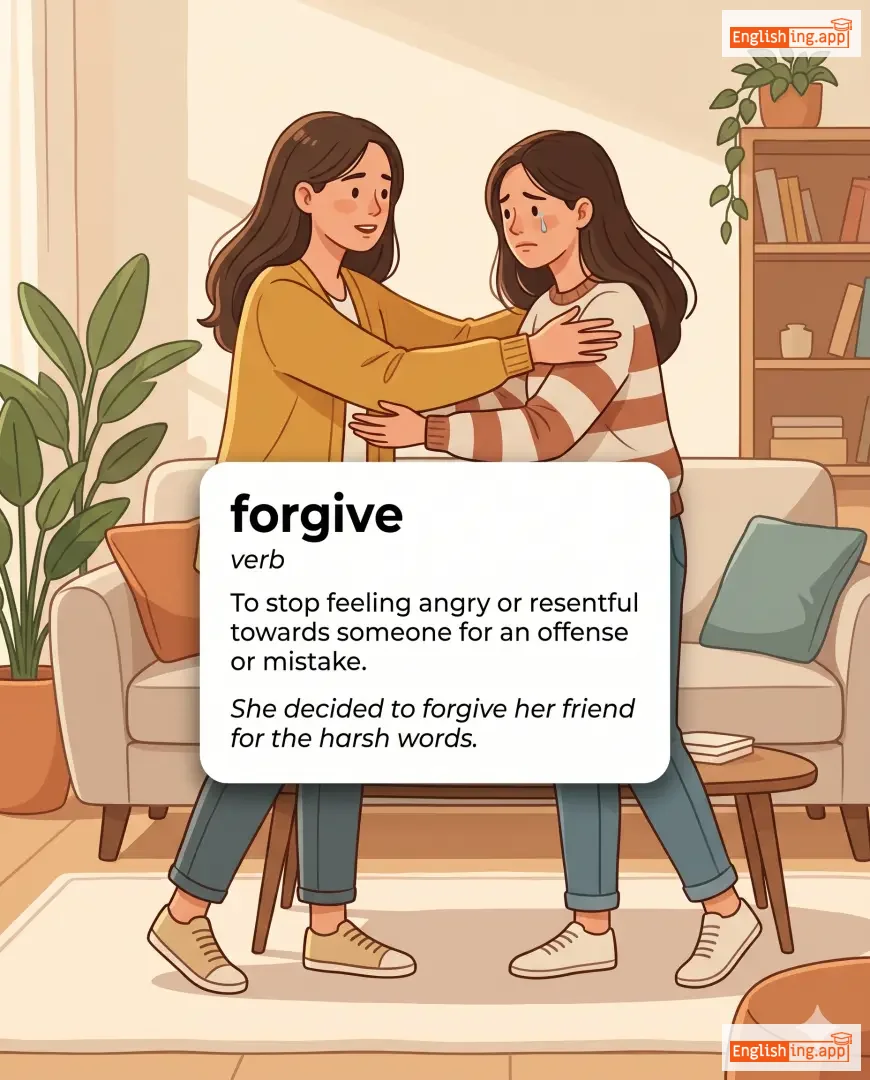
To stop feeling angry or resentful towards someone for an offense or mistake.
••••••
|
She decided to forgive her friend for the harsh words.
她决定原谅她的朋友因为那些严厉的话。
••••••
|
她决定原谅她的朋友因为那些严厉的话。
Tā juédìng yuánliàng tā de péngyǒu yīnwèi nàxiē yánlì de huà.
••••••
|
forgive and forget
宽恕和忘记
••••••
|
To forgive someone and not remember the offense anymore.
••••••
|
宽恕和忘记
kuānshù hé wàngjì
••••••
|
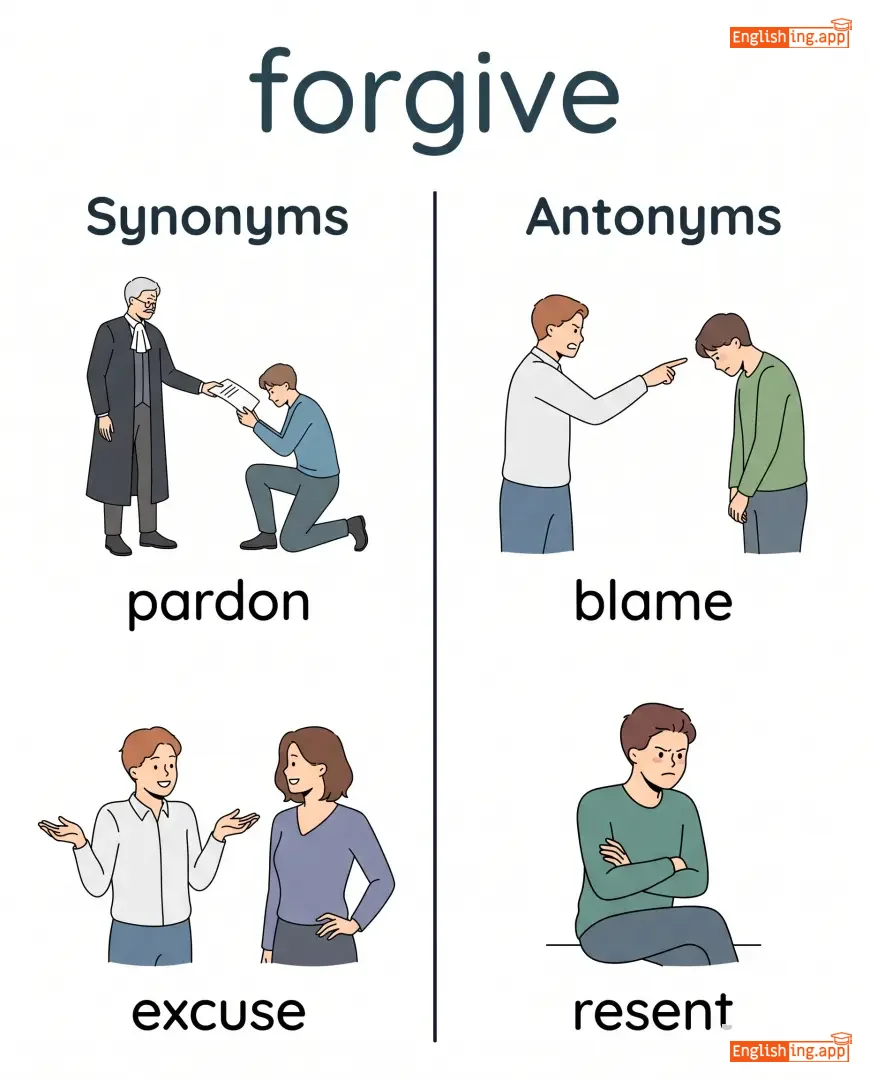
pardon, excuse, absolve, overlook, release
••••••
|
blame, resent, condemn
••••••
|
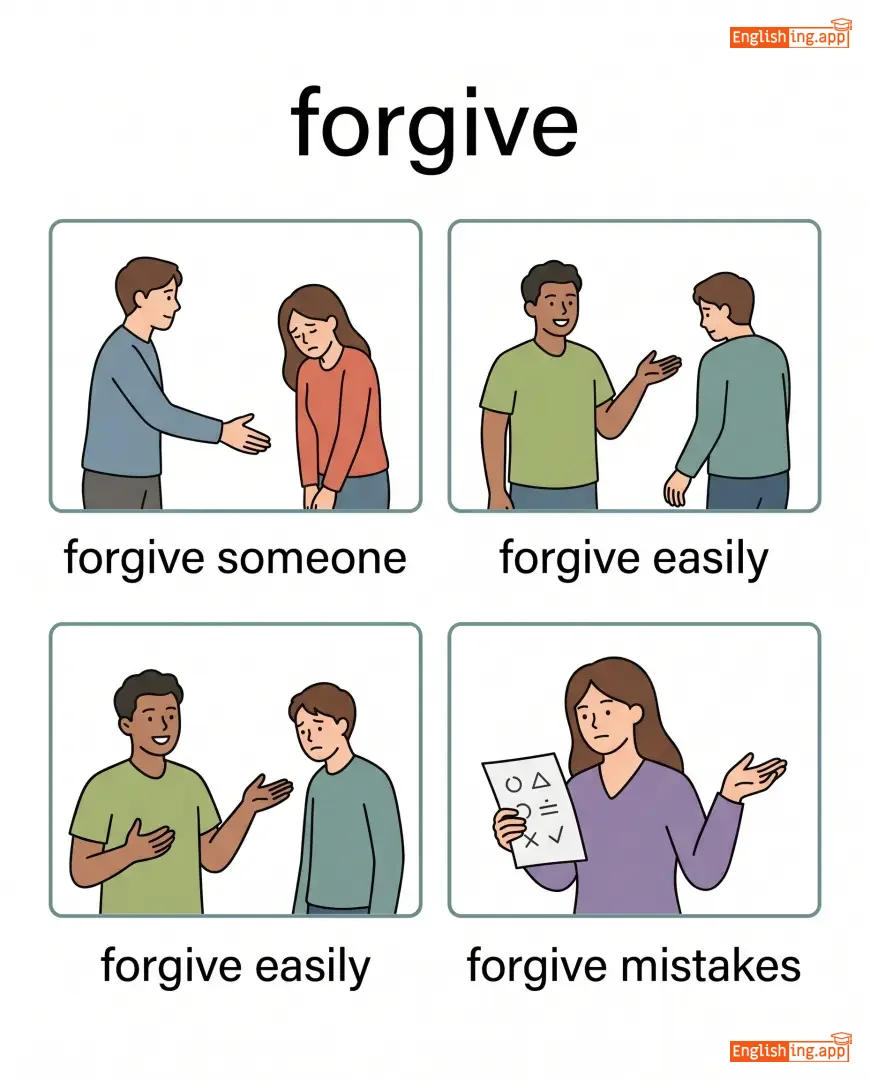
forgive someone, forgive easily, forgive mistakes, forgive sins
••••••
|
宽恕意味着忘记 (forget + give)。宽恕增强了友谊。
••••••
|
|
🍴
••••••
|
/fɔːk/
noun
(fɔrk)
••••••
|
- •••••• |
叉子
chāzi
••••••
|
- •••••• | - •••••• | - •••••• | - •••••• |
a tool with two or more prongs used for eating or serving food
••••••
|
He ate his salad with a fork. |
他用叉子吃了他的沙拉。
Tā yòng chāzi chīle tā de shālā.
••••••
|
at a fork in the road |
facing a point where a decision must be made
••••••
|
在路口
zài lùkǒu
••••••
|
utensil, prong, cutlery, divider
••••••
|
spoon, knife
••••••
|
dinner fork, salad fork, fork and knife, silver fork
••••••
|
Fork = 叉子。用叉子,保持双手清洁!
••••••
|
|
📄
••••••
|
/fɔːrm/
noun, verb
(fó mú)
••••••
|
- •••••• |
形状 / 表格
xíng zhuàng / biǎo gé
••••••
|
formed
xíng chéng
••••••
|
formed
xíng chéng
••••••
|
forms
xíng chéng
••••••
|
forming
xíng chéng zhōng
••••••
|
the shape or structure of something; to bring something into existence
••••••
|
Students filled out the registration form.
学生填写了注册表格。
••••••
|
学生填写了注册表格。
Xuéshēng tiánxiěle zhùcè biǎogé.
••••••
|
take form
成形
••••••
|
to start to develop a clear shape or structure
••••••
|
成形
chéng xíng
••••••
|
shape, structure, configuration, type, create
••••••
|
disorder, destroy, deform
••••••
|
application form, fill out form, form a team, form an opinion
••••••
|
Form 形状,就像填写一个表格。
••••••
|
|
🎩
••••••
|
/ˈfɔːrməl/
adjective
(fó mǎ ěr)
••••••
|
- •••••• |
正式
zhèngshì
••••••
|
- •••••• | - •••••• | - •••••• | - •••••• |
done in accordance with rules of convention or etiquette; official or serious in nature
••••••
|
He wore a formal suit to the wedding.
他在婚礼上穿了正式西装。
••••••
|
他在婚礼上穿了正式西装。
Tā zài hūnlǐ shàng chuānle zhèngshì xīzhuāng.
••••••
|
formal attire
正式服装
••••••
|
clothing suitable for official or serious occasions
••••••
|
正式服装
zhèngshì fúzhuāng
••••••
|
ceremonial, proper, official, conventional, stiff
••••••
|
casual, informal, relaxed
••••••
|
formal event, formal education, formal attire, formal agreement
••••••
|
正式意味着做事需要规则,就像穿‘正式服装’去婚礼一样。
••••••
|
|
📜
••••••
|
/ˈfɔːrməli/
adverb
(福马利)
••••••
|
- •••••• |
正式地
zhengshi de
••••••
|
- •••••• | - •••••• | - •••••• | - •••••• |
in a formal or official manner; according to established rules or conventions
••••••
|
The agreement was formally signed by both parties.
泽 阿格里门特 沃兹 福马利 赛因德 拜 波斯 帕提斯
••••••
|
该协议已由双方正式签署。
gai xieyi yi you shuangfang zhengshi qianshu
••••••
|
formally speaking
福马利 斯皮肯
••••••
|
used to introduce a statement from an official or strict point of view
••••••
|
正式地说
zhengshi de shuo
••••••
|
officially, properly, ceremoniously, correctly, conventionally
••••••
|
informally, casually, unofficially
••••••
|
formally announce, formally agree, formally dressed, formally recognize
••••••
|
正式 = formal, 所以 formally = 正式地
••••••
|
|
🗂️
••••••
|
/ˈfɔːmæt/
noun
(fòrmàt)
••••••
|
- •••••• |
格式
ge shi
••••••
|
- •••••• | - •••••• | - •••••• | - •••••• |
the way in which something is arranged, designed, or presented
••••••
|
Please follow the given format for your report submission. |
请按照给定的格式提交您的报告。
Qing an zhao gei ding de ge shi ti jiao nin de baogao.
••••••
|
standard format |
a commonly accepted structure or arrangement
••••••
|
标准格式
biao zhun ge shi
••••••
|
layout, structure, design, arrangement, configuration
••••••
|
disorder, chaos, disorganization
••••••
|
file format, report format, standard format, data format
••••••
|
格式是如何组织的 — 没有格式,报告提交不了!
••••••
|
|
🧩
••••••
|
/fɔːrˈmeɪʃən/
noun
(fɔːˈmeɪʃən)
••••••
|
- •••••• |
形成
xíngchéng
••••••
|
- •••••• | - •••••• | - •••••• | - •••••• |
the action of forming or process of being formed
••••••
|
The formation of the new company took several months. |
新公司的形成花了几个月时间。
Xīn gōngsī de xíngchéng huāle jǐ gè yuè shíjiān.
••••••
|
in formation |
organized in a particular way, often used for groups like soldiers or birds
••••••
|
在形成中
zài xíngchéng zhōng
••••••
|
creation, development, establishment, structure, arrangement
••••••
|
destruction, disintegration
••••••
|
rock formation, team formation, formation process, military formation
••••••
|
Formation意味着创建某物,就像士兵的阵型。
••••••
|
|
⏳
••••••
|
/ˈfɔːrmər/
adjective
(fǒrmó)
••••••
|
- •••••• |
前任
qianren
••••••
|
- •••••• | - •••••• | - •••••• | - •••••• |
Having been previously in a particular role or position.
••••••
|
He is a former president of the association. |
他是该协会的前任主席。
Tā shì gāi xiéhuì de qiánrèn zhǔxí.
••••••
|
- •••••• | - •••••• | - •••••• |
previous, ex, prior, earlier
••••••
|
current, present
••••••
|
former president, former employee, former partner, former member
••••••
|
Former表示‘曾经是’ → 前任人物。
••••••
|
|
⏮️
••••••
|
/ˈfɔːrmərli/
adverb
(fó mǎ lì)
••••••
|
- •••••• |
以前; 从前
yiqian; congqian
••••••
|
- •••••• | - •••••• | - •••••• | - •••••• |
in the past; previously; at an earlier time
••••••
|
The building was formerly a school but is now a community center. |
这座建筑以前是学校,但现在是一个社区中心。
Zhe zuo jianzhu yiqian shi xuexiao, dan xianzai shi yige shequ zhongxin.
••••••
|
- •••••• | - •••••• | - •••••• |
previously, earlier, before, once, in the past
••••••
|
currently, now, presently, lately, recently
••••••
|
formerly known as, formerly owned by, formerly called
••••••
|
Formerly - 以前的事情,现在变了,社区成为了新的一切.
••••••
|
|
📐
••••••
|
/ˈfɔːrmjələ/
noun
(公式)
••••••
|
- •••••• |
公式
gongshi
••••••
|
- •••••• | - •••••• | - •••••• | - •••••• |
a fixed method for doing something; a mathematical or chemical rule expressed in symbols
••••••
|
The scientist discovered a new formula for the medicine. |
科学家发现了一种新的药物公式。
Ke xue jia fa xian le yi zhong xin de yao wu gong shi.
••••••
|
magic formula |
a simple solution that guarantees success
••••••
|
魔法公式
mo fa gong shi
••••••
|
equation, method, recipe, rule, pattern
••••••
|
disorder, randomness
••••••
|
mathematical formula, chemical formula, secret formula, formula milk
••••••
|
公式就是解决问题的方式,像数学里的公式一样。
••••••
|
|
🧪
••••••
|
/ˈfɔːrmjʊleɪt/
verb
(公式化)
••••••
|

|
制定,方法性地创造
zhìdìng, fāngfǎxìng de chuàngzào
••••••
|
formulated
已公式化
••••••
|
formulated
已公式化
••••••
|
formulates
公式化
••••••
|
formulating
公式化中
••••••
|
to create or devise methodically; to express in a formula
••••••
|
Scientists formulated a new theory about climate change.
科学家们制定了一个新的气候变化理论。
••••••
|
科学家们制定了一个新的气候变化理论。
Kēxuéjiāmen zhìdìngle yīgè xīn de qìhòu biànhuà lǐlùn.
••••••
|
- •••••• | - •••••• | - •••••• |
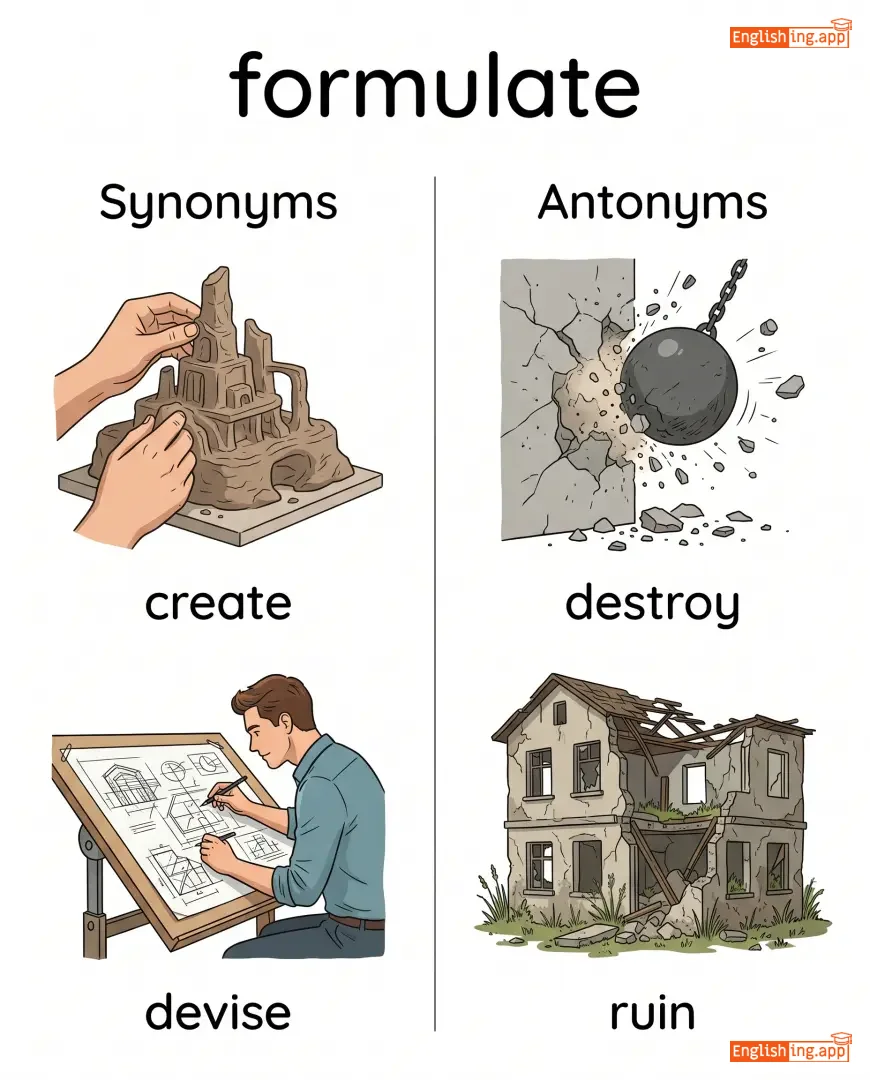
devise, create, develop, design
••••••
|
destroy, dismantle, dissolve, abandon
••••••
|
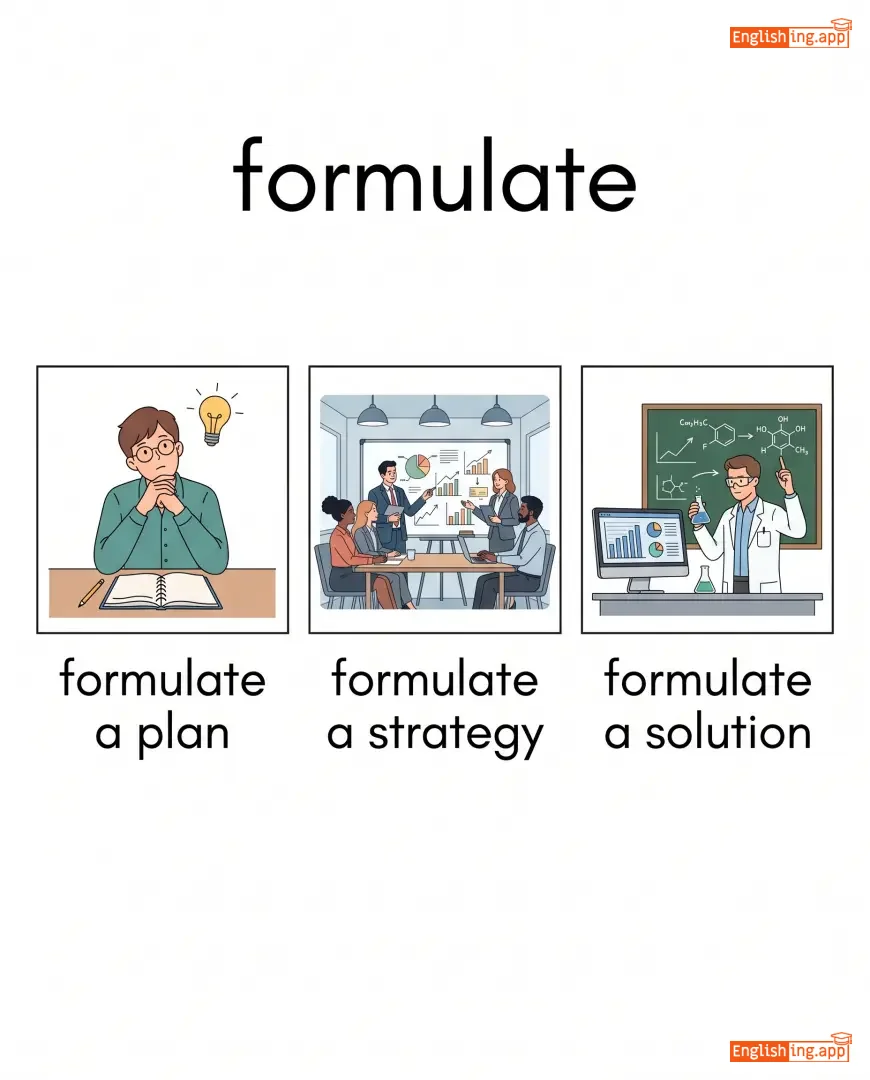
formulate plan, formulate strategy, formulate theory, formulate policy
••••••
|
Formulate = 公式化的方法
••••••
|
|
🏰
••••••
|
/fɔːrt/
noun
(福特)
••••••
|
- •••••• |
堡垒
baolei
••••••
|
- •••••• | - •••••• | - •••••• | - •••••• |
a strong building or group of buildings where soldiers live and defend
••••••
|
The ancient fort stood on top of the hill for centuries.
古老的堡垒屹立在山顶上数百年。
••••••
|
古老的堡垒屹立在山顶上数百年。
Gǔlǎo de bǎolěi yìlì zài shāndǐng shàng shù bǎi nián.
••••••
|
- •••••• | - •••••• | - •••••• |
fortress, castle, stronghold, citadel
••••••
|
open field, plain, vulnerability
••••••
|
military fort, ancient fort, fort walls, fort defense
••••••
|
堡垒 (baolei) - Fortress strong and resilient, standing for defense!
••••••
|
|
➡️
••••••
|
/fɔːrθ/
adverb
(福斯)
••••••
|
- •••••• |
向前
xiang qian
••••••
|
- •••••• | - •••••• | - •••••• | - •••••• |
forward in place, time, or order
••••••
|
The leader stepped forth to address the crowd. |
领导走上前去与人群讲话。
Lingdao zou shang qian qu yu renqun jianghua.
••••••
|
and so forth |
and so on; continuing in the same way
••••••
|
等等
deng deng
••••••
|
forward, ahead, onward, out
••••••
|
backward, behind
••••••
|
go forth, set forth, bring forth, come forth
••••••
|
‘forth’ 意味着向前走。
••••••
|
|
📅
••••••
|
/ˌfɔːrθˈkʌmɪŋ/
adjective
(forthcoming)
••••••
|
- •••••• |
即将到来
jijiang daolai
••••••
|
- •••••• | - •••••• | - •••••• | - •••••• |
about to happen soon; willing to share information
••••••
|
The company announced its forthcoming product launch. |
公司宣布了即将到来的产品发布。
Gongsi xuānbù le jìjiāng dào lái de chǎnpǐn fābù.
••••••
|
- •••••• | - •••••• | - •••••• |
upcoming, imminent, approaching, pending, willing
••••••
|
past, previous, unwilling
••••••
|
forthcoming event, forthcoming meeting, forthcoming details, forthcoming report
••••••
|
'Forthcoming event' 就是即将发生的事情,记住即将到来=upcoming.
••••••
|
|
🍀
••••••
|
/ˈfɔːrtʃənət/
adjective
(fòchúnèt)
••••••
|
- •••••• |
幸运的
xìngyùn de
••••••
|
- •••••• | - •••••• | - •••••• | - •••••• |
Having good luck or receiving something desirable by chance.
••••••
|
She was fortunate to escape the accident without injuries.
她很幸运没有在事故中受伤。
••••••
|
她很幸运没有在事故中受伤。
Tā hěn xìngyùn méiyǒu zài shìgù zhōng shòushāng.
••••••
|
fortunate enough
足够幸运
••••••
|
Lucky to have something or experience something
••••••
|
足够幸运
zúgòu xìngyùn
••••••
|
lucky, blessed, favored, prosperous, successful
••••••
|
unfortunate, unlucky, cursed
••••••
|
fortunate enough, fortunate circumstances, feel fortunate, fortunate opportunity
••••••
|
Fortune 意味着好运,因此 fortunate 意味着幸运的 🍀
••••••
|
|
🍀
••••••
|
/ˈfɔːtʃənətli/
adverb
(fòchùnètèlì)
••••••
|
- •••••• |
幸运地
xìngyùn de
••••••
|
- •••••• | - •••••• | - •••••• | - •••••• |
by good luck; luckily
••••••
|
Fortunately, no one was injured in the accident. |
幸运地,事故中没有人受伤。
Xìngyùn de, shìgù zhōng méiyǒu rén shòushāng.
••••••
|
- •••••• | - •••••• | - •••••• |
luckily, thankfully, providentially, auspiciously
••••••
|
unfortunately, sadly, regrettably
••••••
|
fortunately for, fortunately enough, said fortunately
••••••
|
Fortunately 的意思是幸运地 — 幸运让一切变好!
••••••
|
|
🍀
••••••
|
/ˈfɔːrtʃən/
noun
(fòchūn)
••••••
|
- •••••• |
运气 / 财富
yùnqì / cáifù
••••••
|
- •••••• | - •••••• | - •••••• | - •••••• |
chance or luck, especially in success or wealth
••••••
|
She made a fortune by investing in real estate.
她通过投资房地产赚了一大笔钱。
••••••
|
她通过投资房地产赚了一大笔钱。
Tā tōngguò tóuzī fángdìchǎn zhuànle yī dà bǐ qián.
••••••
|
fortune favors the brave
幸运眷顾勇敢者
••••••
|
those who take risks are more likely to succeed
••••••
|
幸运眷顾勇敢者
Xìngyùn juàngù yǒnggǎn zhě
••••••
|
wealth, luck, fate, destiny, riches
••••••
|
poverty, misfortune, loss
••••••
|
good fortune, bad fortune, make a fortune, bring fortune
••••••
|
Fortune 意味着运气 — 投资房地产赚取财富!
••••••
|
|
💬
••••••
|
/ˈfɔːrəm/
noun
(论坛)
••••••
|
- •••••• |
论坛
luntan
••••••
|
- •••••• | - •••••• | - •••••• | - •••••• |
A place, meeting, or medium where ideas and views can be exchanged.
••••••
|
The online forum allows people to discuss a wide range of topics. |
在线论坛允许人们讨论广泛的主题。
Zai xian luntan yunxu renmen taolun guangfan de zhutian.
••••••
|
- •••••• | - •••••• | - •••••• |
meeting, assembly, discussion, platform, conference
••••••
|
isolation, silence
••••••
|
online forum, public forum, discussion forum, international forum
••••••
|
论坛意味着一个可以'讨论'思想的地方。
••••••
|
|
➡️
••••••
|
/ˈfɔːrwərd/
adverb, adjective, verb, noun
(fɔːrwərd)
••••••
|
- •••••• |
向前
xiang qian
••••••
|
forwarded
forwarded
••••••
|
forwarded
forwarded
••••••
|
forwards
forwards
••••••
|
forwarding
forwarding
••••••
|
toward the front; to advance or send ahead; an onward position or direction
••••••
|
The troops moved forward to secure the bridge.
部队向前移动以确保桥梁的安全。
••••••
|
部队向前移动以确保桥梁的安全。
Budui xiang qian yidong yi quebao qiaoliang de anquan.
••••••
|
look forward to
期待
••••••
|
to anticipate something with pleasure
••••••
|
期待
qidai
••••••
|
ahead, onward, advance, transmit, promote
••••••
|
backward, reverse, retreat
••••••
|
move forward, step forward, look forward, forward message
••••••
|
向前:就像转发短信一样,信息向前推进。
••••••
|
|
🦖
••••••
|
/ˈfɒsɪl/
noun
(化石)
••••••
|
- •••••• |
化石
huàshí
••••••
|
- •••••• | - •••••• | - •••••• | - •••••• |
the remains or impression of a prehistoric plant or animal embedded in rock
••••••
|
The fossil of a dinosaur was discovered in the mountains. |
在山中发现了一只恐龙化石。
Zài shān zhōng fāxiànle yī zhī kǒnglóng huàshí.
••••••
|
- •••••• | - •••••• | - •••••• |
remains, artifact, relic
••••••
|
modern, new
••••••
|
dinosaur fossil, ancient fossil, fossil record
••••••
|
化石是像古代生物的印记,锁定在岩石中。
••••••
|
|
👩👧
••••••
|
/ˈfɒstər/
verb, adjective
(福斯特)
••••••
|
- •••••• |
培养
peiyang
••••••
|
fostered
福斯特德
••••••
|
fostered
福斯特德
••••••
|
fosters
福斯特斯
••••••
|
fostering
福斯特灵
••••••
|
to encourage the development of something; to raise a child that is not one's own
••••••
|
The program aims to foster creativity in young students.
该计划旨在促进年轻学生的创造力。
••••••
|
该计划旨在促进年轻学生的创造力。
Gai jihua zhi zai cujin nianqing xuesheng de chuangzaolili.
••••••
|
foster care
寄养照顾
••••••
|
temporary guardianship of children by non-biological parents
••••••
|
寄养照顾
jiyang zhaogu
••••••
|
encourage, nurture, support, promote, cultivate
••••••
|
neglect, hinder, suppress
••••••
|
foster child, foster home, foster relationships, foster environment
••••••
|
Foster care 意味着照顾孩子,记住 'Foster Mama' 中文版本
••••••
|
|
🏢
••••••
|
/faʊnd/
verb
(faʊnd)
••••••
|
- •••••• |
创办
chuangban
••••••
|
found
faʊnd
••••••
|
found
faʊnd
••••••
|
finds
faɪndz
••••••
|
founding
faʊndɪŋ
••••••
|
to establish or set up an institution, company, or organization
••••••
|
They found a new startup focused on renewable energy.
他们成立了一个专注于可再生能源的新创业公司。
••••••
|
他们成立了一个专注于可再生能源的新创业公司。
Tāmen chénglìle yīgè zhuānzhù yú kě zàishēng néngyuán de xīn chuàngyè gōngsī.
••••••
|
well-founded
建立良好基础
••••••
|
based on good reasons or evidence
••••••
|
有良好基础
yǒu liánghǎo jīchǔ
••••••
|
establish, create, set up, launch, originate
••••••
|
close, abolish, dismantle
••••••
|
found a company, found an institution, newly founded, founder of
••••••
|
Found意味着创办 — Founder是建立公司的那个人。
••••••
|
|
🏗️
••••••
|
/faʊnˈdeɪʃən/
noun
(fáu̇ndéishon)
••••••
|
|
基础
jīchǔ
••••••
|
- •••••• | - •••••• | - •••••• | - •••••• |
the base or underlying support of something; an institution established for a purpose
••••••
|
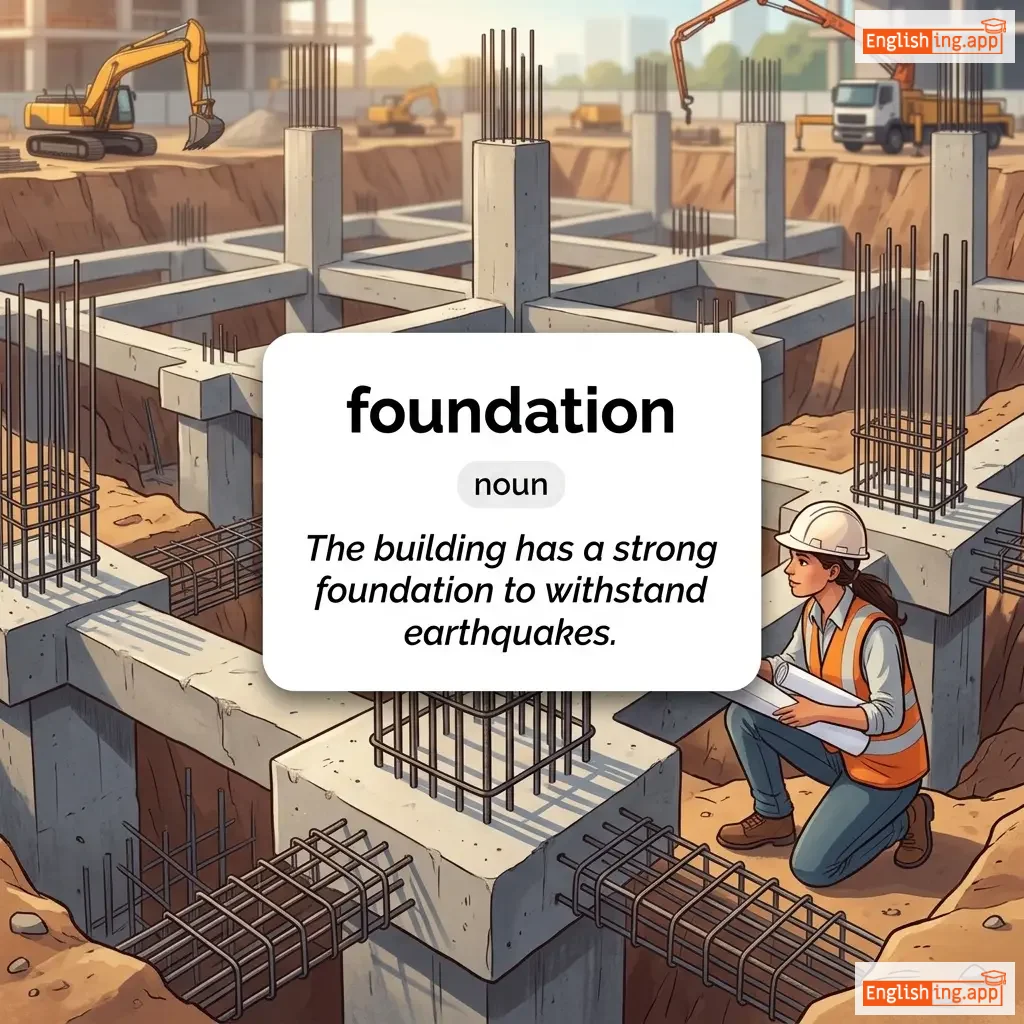
The building has a strong foundation to withstand earthquakes. |
这座建筑有坚固的基础,能够抵抗地震。
Zhè zuò jiànzhú yǒu jiāngù de jīchǔ, nénggòu dǐkàng dìzhèn.
••••••
|
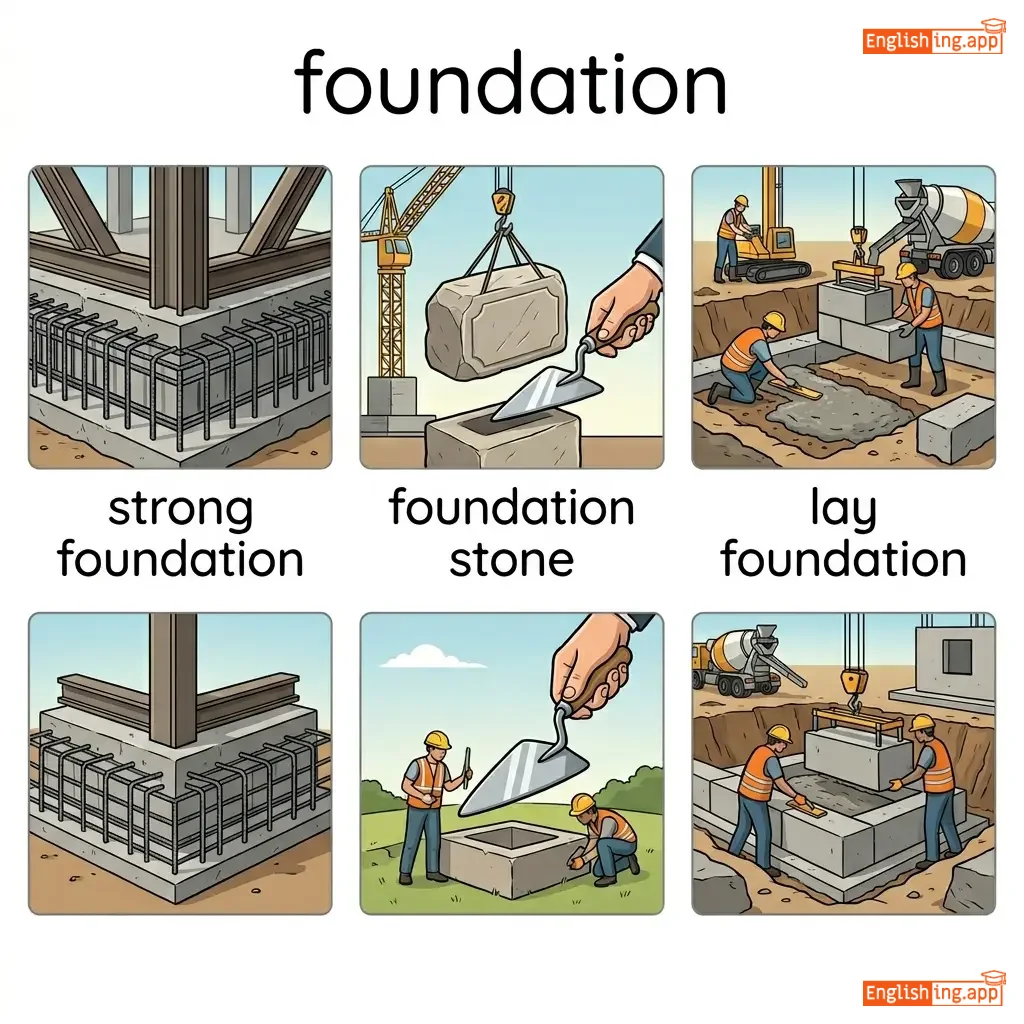
lay the foundation |
to provide the basic ideas or structures on which something can develop
••••••
|
奠定基础
diàndìng jīchǔ
••••••
|
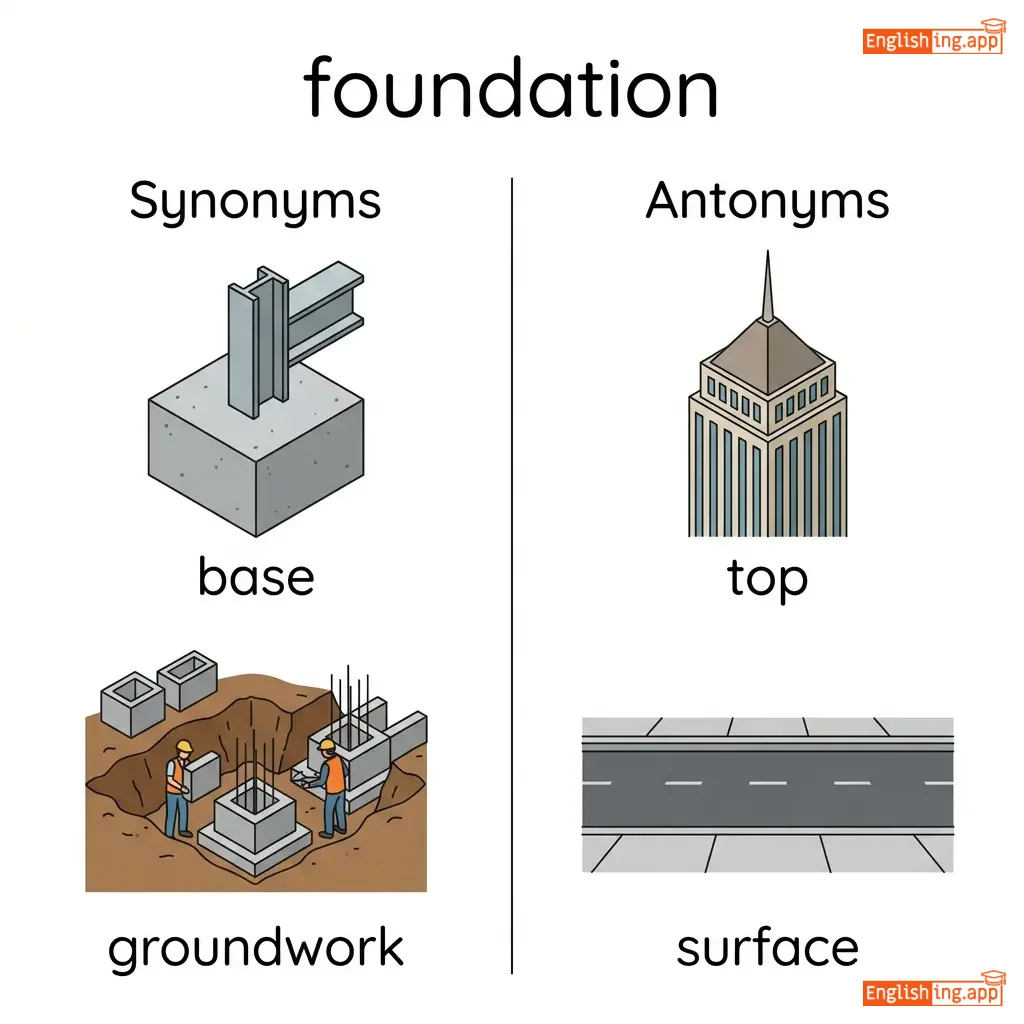
base, groundwork, support, basis, establishment
••••••
|
top, surface, collapse
••••••
|
strong foundation, foundation stone, lay foundation, charitable foundation
••••••
|
Foundation 意味着基础 — 没有基础,建筑无法稳固。
••••••
|
|
🏗️
••••••
|
/ˈfaʊndər/
noun, verb
(fáowndé)
••••••
|


|
创始人
chuàngshǐrén
••••••
|
founded
fáowndé
••••••
|
founded
fáowndé
••••••
|
founds
fáowndés
••••••
|
founding
fáowndíng
••••••
|
a person who establishes an institution or company; as a verb, to fail or sink
••••••
|
She is the founder of a successful startup.
她是一个成功创业公司的创始人。
••••••
|
她是一个成功创业公司的创始人。
Tā shì yīgè chénggōng chuàngyè gōngsī de chuàngshǐrén.
••••••
|
- •••••• | - •••••• | - •••••• |
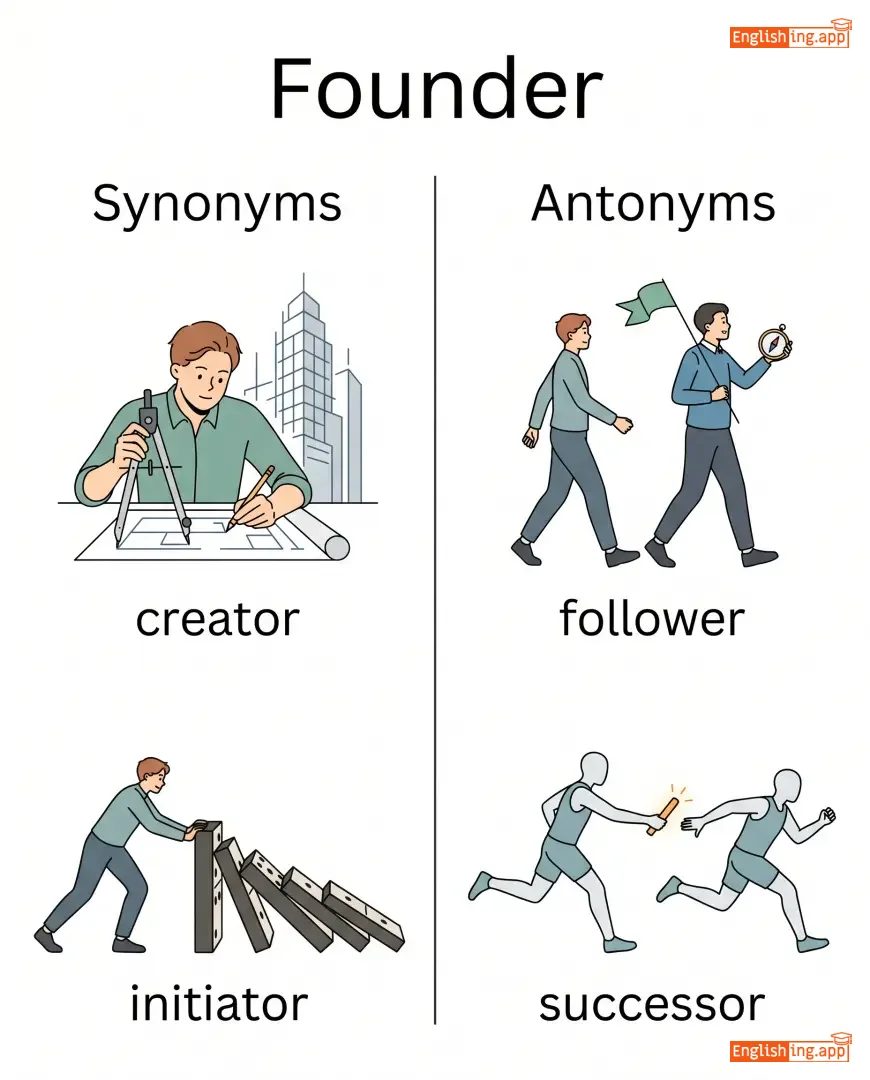
creator, initiator, establisher, originator
••••••
|
follower, successor
••••••
|
company founder, startup founder, founding member, founder of
••••••
|
Founder 就是创始人,跟Foundation(基础)有关
••••••
|
|
4️⃣
••••••
|
/fɔːr/
numeral
(fōr)
••••••
|
- •••••• |
四
si
••••••
|
- •••••• | - •••••• | - •••••• | - •••••• |
The number equivalent to the sum of two and two; one more than three.
••••••
|
She has four books on her desk. |
她的桌子上有四本书。
Tā de zhuōzi shàng yǒu sì běn shū.
••••••
|
four corners of the world |
everywhere in the world
••••••
|
世界四个角落
Shìjiè sì gè jiǎoluò
••••••
|
quartet, quadruple, foursome, tetrad
••••••
|
three, five
••••••
|
four times, four years, four people, four seasons
••••••
|
四个朋友一起,总是很有趣 – 记住Four意味着四。
••••••
|
|
4️⃣
••••••
|
/fɔːrθ/
adjective/noun
(fóu sī)
••••••
|
- •••••• |
第四
di si
••••••
|
- •••••• | - •••••• | - •••••• | - •••••• |
Constituting number four in a sequence; coming after the third in position.
••••••
|
He finished in fourth place in the race. |
他在比赛中获得了第四名。
ta zai bisai zhong huode le di si ming.
••••••
|
the fourth estate |
the press and news media
••••••
|
第四权力
di si quanli
••••••
|
quartile, fourthly, quadrant, quaternary
••••••
|
first, last
••••••
|
fourth place, fourth time, fourth floor, fourth century
••••••
|
第四就像是排在前三之后的那个位置,很容易记住!
••••••
|
|
➗
••••••
|
/ˈfrækʃən/
noun
(fúlèishēn)
••••••
|
- •••••• |
分数
fenshu
••••••
|
- •••••• | - •••••• | - •••••• | - •••••• |
A small part of something; in mathematics, a number that represents part of a whole.
••••••
|
Only a small fraction of the population attended the event.
只有一小部分人口参加了这次活动。
••••••
|
只有一小部分人口参加了这次活动。
Zhi you yi xiao bufen renkou canjia le zhe ci huodong.
••••••
|
a fraction of
一部分
••••••
|
A very small part of something
••••••
|
一部分
Yi bufen
••••••
|
portion, segment, piece, part
••••••
|
whole, entirety
••••••
|
small fraction, significant fraction, fraction of time, fraction of cost
••••••
|
Fraction 意味着分数 ➗ 如 1/2, 1/4 等等
••••••
|
|
🧪
••••••
|
/ˈfræʤaɪl/
adjective
(fúruì)
••••••
|
- •••••• |
脆弱
cuìruò
••••••
|
- •••••• | - •••••• | - •••••• | - •••••• |
Easily broken or damaged; delicate.
••••••
|
Be careful with that vase, it's very fragile. |
小心那个花瓶,它很脆弱。
Xiǎoxīn nàgè huāpíng, tā hěn cuìruò.
••••••
|
fragile peace |
A peace that is weak and easily disrupted
••••••
|
脆弱的和平
cuìruò de hépíng
••••••
|
delicate, breakable, frail, weak, brittle
••••••
|
strong, durable, sturdy
••••••
|
fragile glass, fragile economy, fragile peace, fragile body
••••••
|
Fragile = 脆弱 in Chinese — delicate, handle with care.
••••••
|
|
🧩
••••••
|
/ˈfræɡmənt/
noun
(弗拉格门特)
••••••
|
- •••••• |
碎片
suìpiàn
••••••
|
- •••••• | - •••••• | - •••••• | - •••••• |
a small piece broken off something larger
••••••
|
He found a fragment of ancient pottery near the river. |
他在河边找到了一个古老陶器的碎片。
Tā zài hé biān zhǎodào le yīgè gǔlǎo táoqì de suìpiàn.
••••••
|
in fragments |
broken into small pieces
••••••
|
成碎片
chéng suìpiàn
••••••
|
piece, shard, particle, portion, bit
••••••
|
whole, entirety
••••••
|
glass fragment, bone fragment, sentence fragment, broken fragment
••••••
|
碎片 = '碎'代表破碎,'片'是小块。
••••••
|

