Получите неограниченный доступ ко всем словам с подпиской Pro
Обновить до ProПолучите неограниченный доступ ко всем предложениям с подпиской Pro
Обновить до Pro|
Эмодзи
|
Слово | Images | Перевод | Прошедшее | Причастие прошедшего времени | Третье лицо единственного числа | Герундий | Значение | Пример предложения | Перевод примера предложения | Пример выражения | Значение примера выражения | Перевод примера выражения | Синонимы | Антонимы | Коллокации | Мнемоника |
|---|---|---|---|---|---|---|---|---|---|---|---|---|---|---|---|---|---|
|
🙏
••••••
|
/kənˈfɛs/
verb
(кэнфэс)
••••••
|

|
признавать
priznavat'
••••••
|
confessed
признал
••••••
|
confessed
признал
••••••
|
confesses
признаёт
••••••
|
confessing
признавая
••••••
|
to admit that you have done something wrong or illegal
••••••
|
He confessed that he had stolen the money.
Он признался, что украл деньги.
••••••
|
Он признался, что украл деньги.
On priznalsya, chto ukral den'gi.
••••••
|
confess one's sins
признание грехов
••••••
|
to admit to having done wrong, often in a religious context
••••••
|
признание грехов
priznanie grekhov
••••••
|
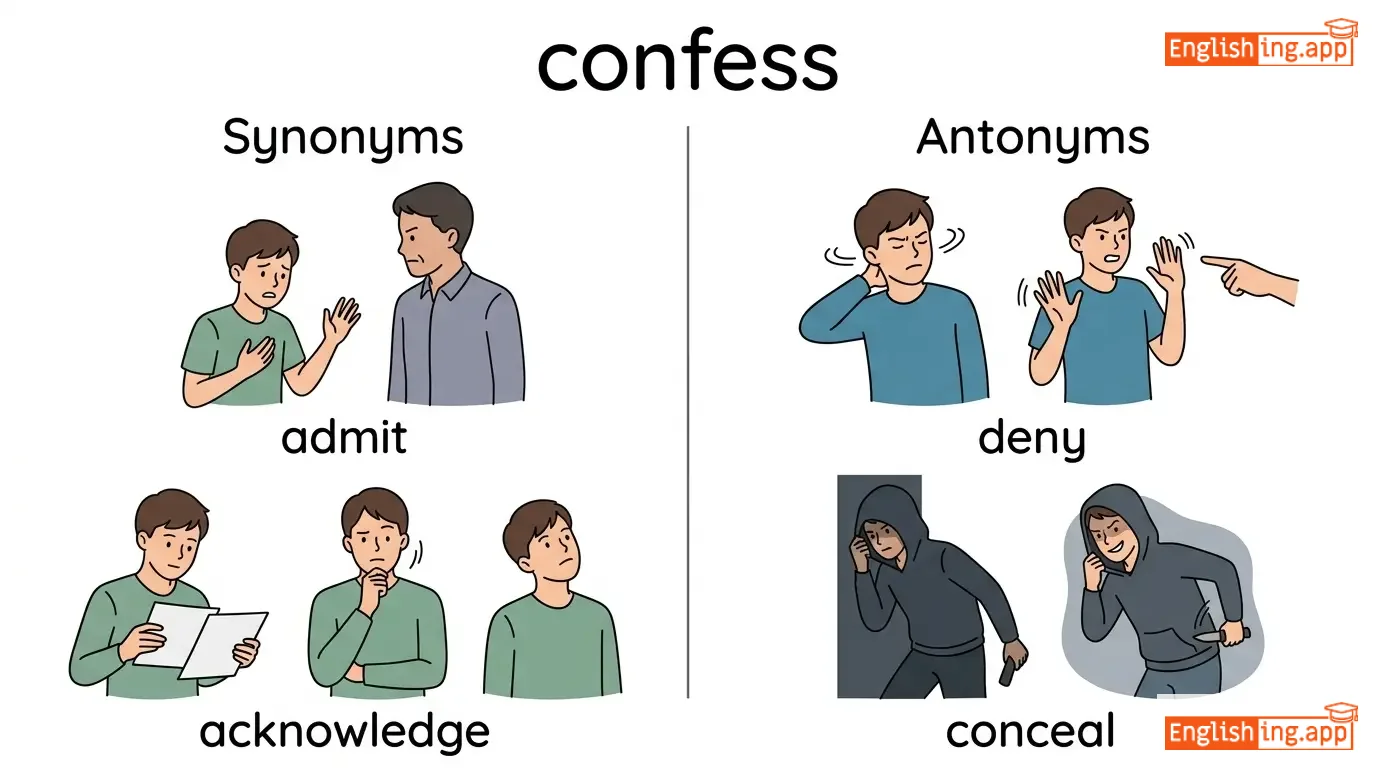
admit, acknowledge, disclose, reveal
••••••
|
deny, conceal
••••••
|
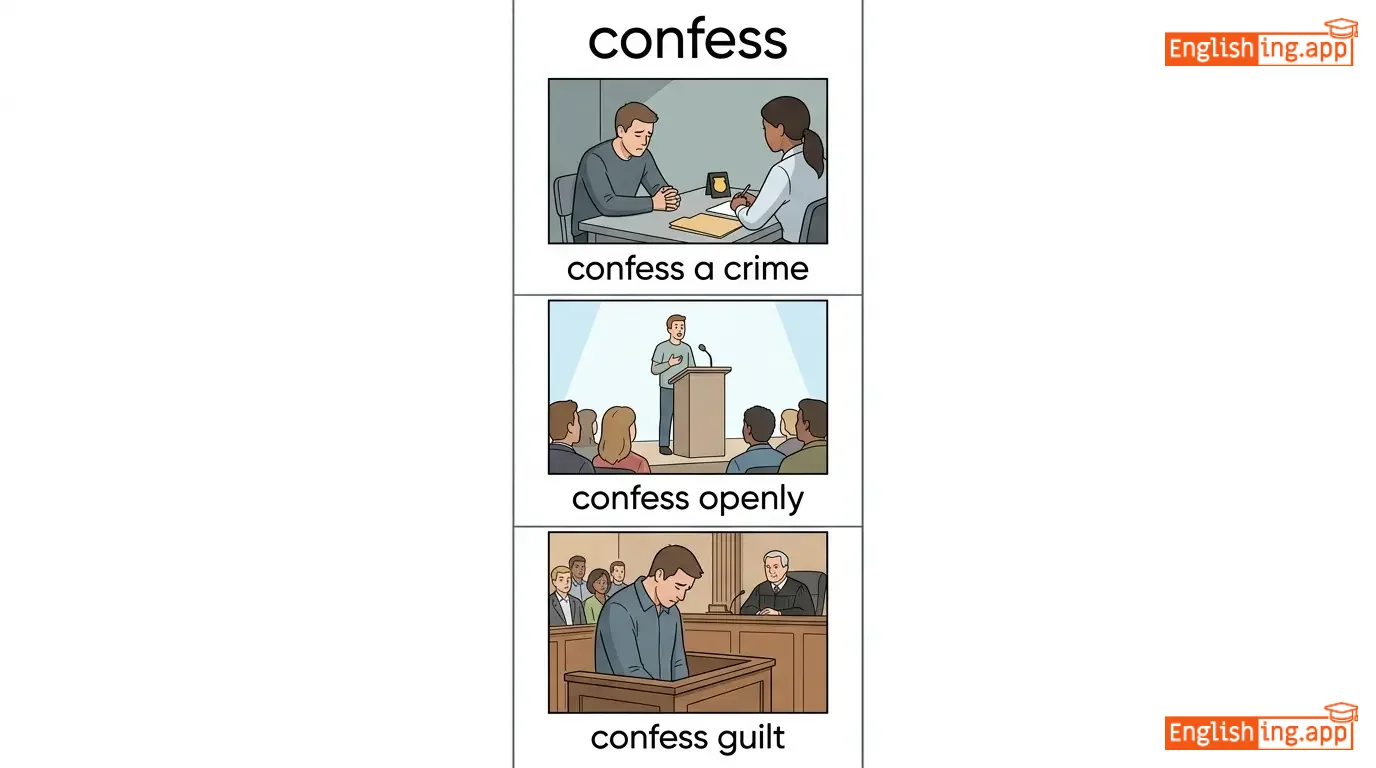
confess a crime, confess openly, confess guilt, confess sins
••••••
|
Признавать свои ошибки — значит очистить душу.
••••••
|
|
🙏
••••••
|
/kənˈfɛʃən/
noun
(конфессия)
••••••
|
- •••••• |
признание
priznanie
••••••
|
- •••••• | - •••••• | - •••••• | - •••••• |
a statement admitting that one is guilty of a crime or has done something wrong
••••••
|
The suspect made a full confession to the police. |
Подозреваемый дал полное признание полиции.
Podozrevaemyy dal polnoe priznanie politsii.
••••••
|
make a confession |
to admit to doing something wrong
••••••
|
сделать признание
sdelat' priznanie
••••••
|
admission, acknowledgment, declaration, disclosure, revelation
••••••
|
denial, concealment, secrecy
••••••
|
make a confession, public confession, written confession, emotional confession
••••••
|
Confession означает признать ошибку 🙏
••••••
|
|
💪
••••••
|
/ˈkɒnfɪdəns/
noun
(kɒnfɪdəns)
••••••
|
- •••••• |
уверенность
uveryennost
••••••
|
- •••••• | - •••••• | - •••••• | - •••••• |
The feeling or belief that one can rely on someone or something; firm trust or self-assurance.
••••••
|
She spoke with great confidence during the meeting. |
Она говорила с большой уверенностью на встрече.
Ona govorila s bol'shoy uverennost'yu na vstreche.
••••••
|
gain confidence |
To develop or increase trust in oneself or in a situation
••••••
|
приобрести уверенность
priobresti uverennost'
••••••
|
trust, assurance, belief, faith, certainty
••••••
|
doubt, insecurity, mistrust
••••••
|
self confidence, boost confidence, lose confidence, build confidence
••••••
|
Уверенность – это как уверенность в себе, которая растет с каждым шагом.
••••••
|
|
😌
••••••
|
/ˈkɒnfɪdənt/
adjective
(kon-fi-dent)
••••••
|
- •••••• |
уверенный
uverennyy
••••••
|
- •••••• | - •••••• | - •••••• | - •••••• |
feeling or showing certainty about something; having self-assurance
••••••
|
She was confident about her ability to succeed. |
Она была уверена в своей способности преуспеть.
Ona byla uverena v svoey sposobnosti preuspet'.
••••••
|
confident smile |
a smile that shows assurance and self-belief
••••••
|
уверенная улыбка
uverennaya ulybka
••••••
|
assured, certain, secure, self-assured, optimistic
••••••
|
insecure, uncertain, doubtful
••••••
|
confident manner, confident attitude, feel confident, become confident
••••••
|
Confidence — это уверенный. Уверенная улыбка всегда уверена.
••••••
|
|
🔧
••••••
|
/kənˌfɪɡəˈreɪʃən/
noun
(конфигурация)
••••••
|
- •••••• |
конфигурация
konfiguratsiya
••••••
|
- •••••• | - •••••• | - •••••• | - •••••• |
an arrangement of parts or elements in a particular form or structure
••••••
|
The configuration of the system needs to be adjusted for better performance.
Конфигурация системы должна быть настроена для лучшей производительности.
••••••
|
Конфигурация системы должна быть настроена для лучшей производительности.
Konfiguratsiya sistemy dolzhna byt' nastroena dlya luchshey proizvoditel'nosti.
••••••
|
- •••••• | - •••••• | - •••••• |
arrangement, layout, setup, structure
••••••
|
disorder, chaos
••••••
|
system configuration, network configuration, device configuration
••••••
|
конфигурация = как элементы организованы
••••••
|
|
🚪
••••••
|
/kənˈfaɪn/
verb
(konfajn)
••••••
|
|
ограничить
ogranichit
••••••
|
confined
konfaind
••••••
|
confined
konfaind
••••••
|
confines
konfains
••••••
|
confining
konfaining
••••••
|
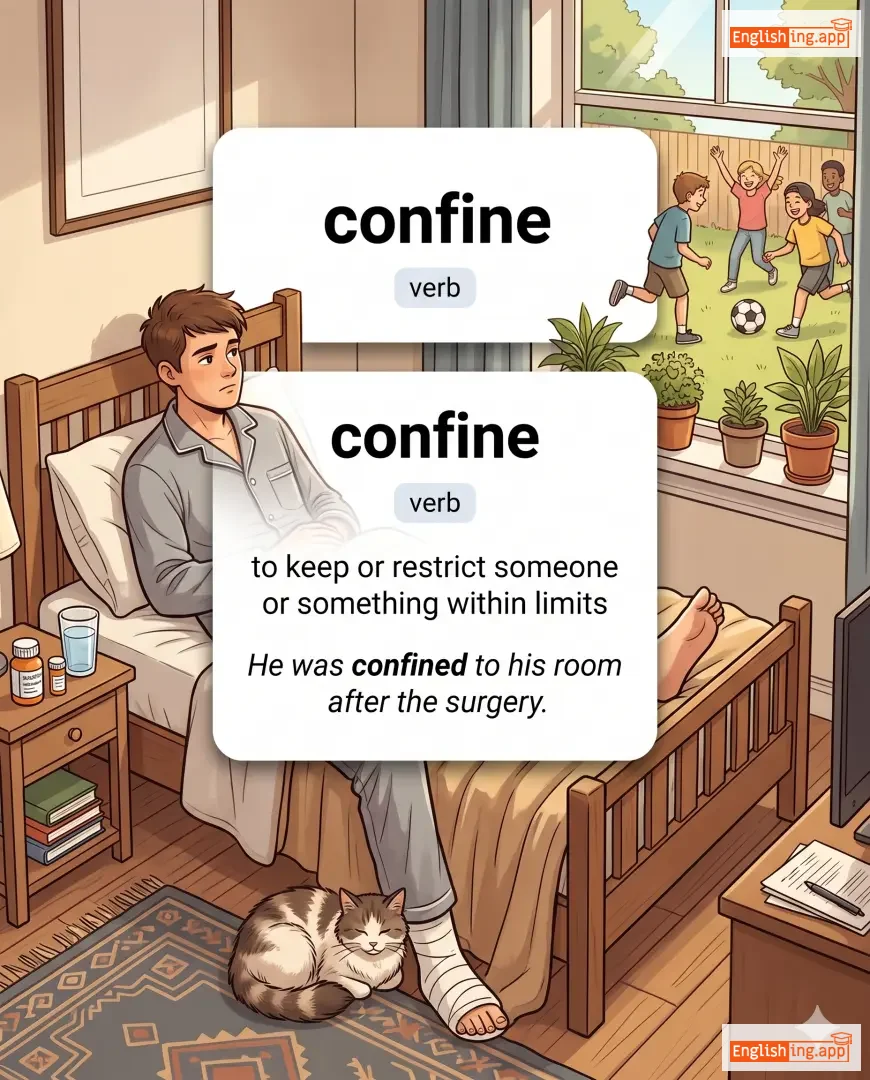
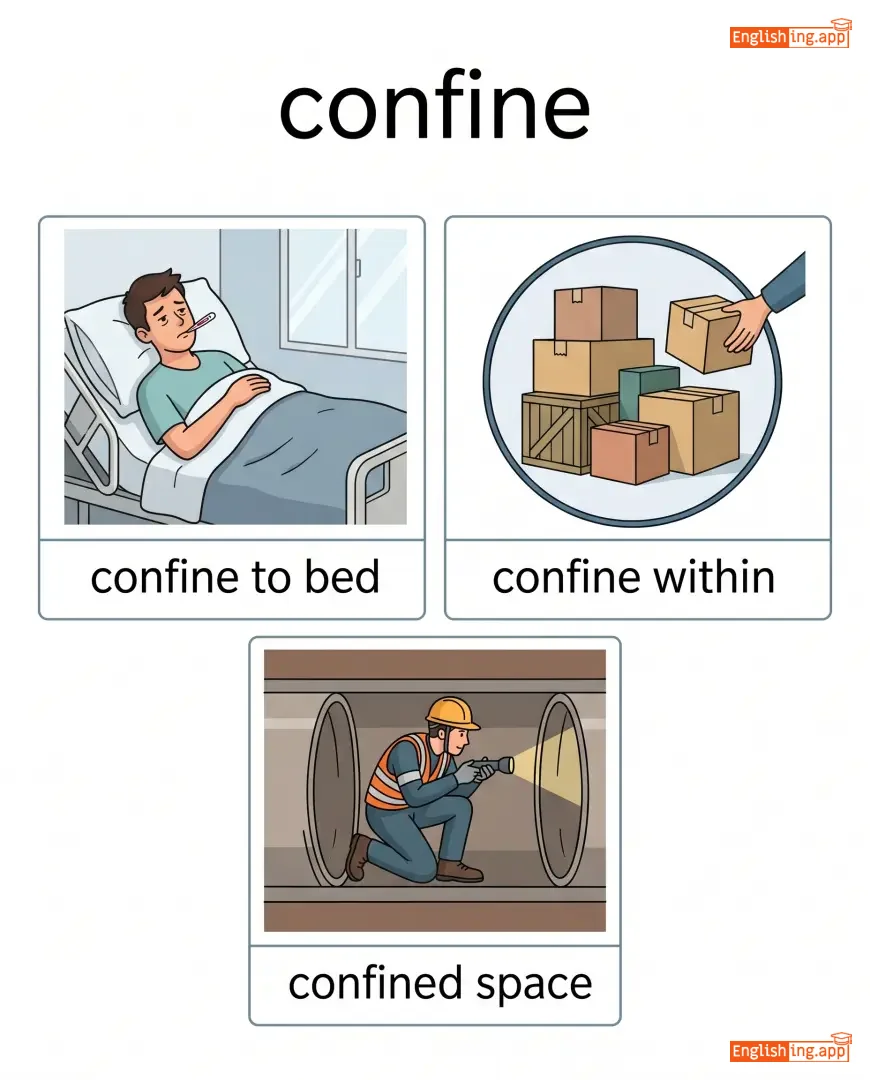
to keep or restrict someone or something within limits
••••••
|
He was confined to his room after the surgery.
Он был ограничен в своей комнате после операции.
••••••
|
Он был ограничен в своей комнате после операции.
On byl ogranichen v svoey komnate posle operatsii.
••••••
|
confined space
ограниченное пространство
••••••
|
a small or restricted area
••••••
|
ограниченное пространство
ogranichennoe prostranstvo
••••••
|
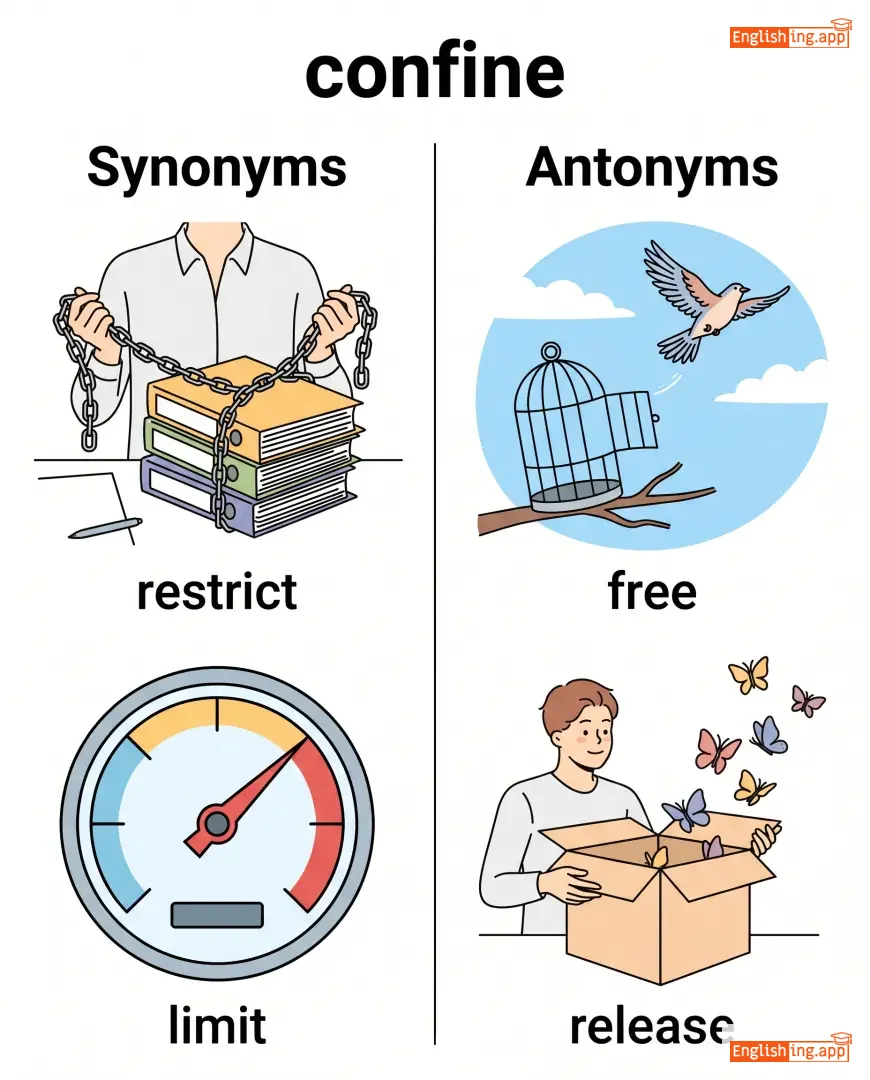
restrict, limit, restrain, enclose, imprison
••••••
|
free, release, liberate
••••••
|
confine to bed, confine within, confined space, confine attention
••••••
|
Confine звучит как 'кон' (конфайн), что означает ограничение.
••••••
|
|
✅
••••••
|
/kənˈfɜːrm/
verb
(kənˈfɜːrm)
••••••
|
- •••••• |
подтверждать
podtverzhdat'
••••••
|
confirmed
kənˈfɜːrmd
••••••
|
confirmed
kənˈfɜːrmd
••••••
|
confirms
kənˈfɜːrmz
••••••
|
confirming
kənˈfɜːrmɪŋ
••••••
|
to establish the truth, accuracy, or validity of something
••••••
|
The hotel will confirm your reservation by email.
Отель подтвердит ваш заказ по электронной почте.
••••••
|
Отель подтвердит ваш заказ по электронной почте.
Otel' podtverdit vash zakaz po elektronnoj pochete.
••••••
|
confirm receipt
подтвердить получение
••••••
|
to acknowledge that something has been received
••••••
|
подтвердить получение
podtverdit' polucheniye
••••••
|
verify, validate, affirm, approve, corroborate
••••••
|
deny, reject, contradict
••••••
|
confirm booking, confirm details, confirm attendance, confirm identity
••••••
|
Подтверждать по-русски значит проверять, как когда вы подтверждаете ваш заказ.
••••••
|
|
✔️
••••••
|
/kənˌfɜːˈmeɪʃən/
noun
(kənˈfɜːrmейшн)
••••••
|
- •••••• |
подтверждение
podtverzhdeniye
••••••
|
- •••••• | - •••••• | - •••••• | - •••••• |
the action of confirming something or the state of being confirmed
••••••
|
She received a confirmation email for her appointment.
Она получила электронное письмо с подтверждением о своем назначении.
••••••
|
Она получила электронное письмо с подтверждением о своем назначении.
Ona poluchila elektronnoe pismo s podtverzhdeniem o svoem naznachenii.
••••••
|
- •••••• | - •••••• | - •••••• |
verification, affirmation, validation, endorsement
••••••
|
denial, rejection, disapproval
••••••
|
confirmation email, confirmation number, confirmation letter
••••••
|
Confirm your phone number to get the confirmation of your appointment.
••••••
|
|
⚔️
••••••
|
/ˈkɒnflɪkt/
noun
(kənflɪkt)
••••••
|
- •••••• |
конфликт
konflikt
••••••
|
- •••••• | - •••••• | - •••••• | - •••••• |
A serious disagreement or argument, often a prolonged one.
••••••
|
The two countries are trying to resolve the conflict through negotiations. |
Две страны пытаются разрешить конфликт через переговоры.
Dve strany pytayutsya razreshit' konflikt cherez peregovory.
••••••
|
conflict of interest |
A situation where someone's personal interest might influence their professional decisions.
••••••
|
конфликт интересов
konflikt interesov
••••••
|
clash, struggle, fight, dispute, battle
••••••
|
agreement, harmony, peace
••••••
|
armed conflict, internal conflict, conflict resolution, conflict management
••••••
|
Konflikt – как столкновение мнений, в России 'конфликт' обозначает серьезные разногласия.
••••••
|
|
⚔️
••••••
|
/kənˈfrʌnt/
verb
(конфронтировать)
••••••
|
- •••••• |
противостоять
protivostoyat
••••••
|
confronted
конфронтировал
••••••
|
confronted
конфронтирован
••••••
|
confronts
конфронтирует
••••••
|
confronting
конфронтируя
••••••
|
to face someone or something directly, especially in a challenge or conflict
••••••
|
She had to confront her fears before making the speech.
Ей пришлось столкнуться с своими страхами перед тем, как выступить с речью.
••••••
|
Ей пришлось столкнуться с своими страхами перед тем, как выступить с речью.
Yey prishlos' stolknutsya s svoimi strakhami pered tem, kak vystupit' s rech'yu.
••••••
|
confront the issue
столкнуться с проблемой
••••••
|
to directly deal with a problem instead of avoiding it
••••••
|
столкнуться с проблемой
stolknutsya s problemoy
••••••
|
face, challenge, oppose, encounter
••••••
|
avoid, evade, dodge
••••••
|
confront danger, confront the truth, confront directly, confront the problem
••••••
|
Konfrontировать значит противостоять — Столкнись с вызовом прямо в лицо!
••••••
|
|
⚔️
••••••
|
/ˌkɑn.frənˈteɪ.ʃən/
noun
(kənˈfrɒn.teɪ.ʃən)
••••••
|
- •••••• |
конфронтация
konfrontatsiya
••••••
|
- •••••• | - •••••• | - •••••• | - •••••• |
a hostile or argumentative meeting or situation between opposing parties; direct challenge or opposition
••••••
|
The confrontation between the two leaders ended without any agreement.
Конфронтация между двумя лидерами закончилась без какого-либо соглашения.
••••••
|
Конфронтация между двумя лидерами закончилась без какого-либо соглашения.
Konfrontatsiya mezhdu dvumya liderami zakonchilas bez kakogo-libo soglasheniya.
••••••
|
- •••••• | - •••••• | - •••••• |
conflict, clash, dispute, face-off
••••••
|
agreement, cooperation, harmony, peace
••••••
|
avoid confrontation, violent confrontation, direct confrontation
••••••
|
Konfrontatsiya - Когда два лидера сталкиваются лицом к лицу.
••••••
|
|
😕
••••••
|
/kənˈfjuːz/
verb
(kənfjuːz)
••••••
|
- •••••• |
смущать
smushchat
••••••
|
confused
kənfjuːzəd
••••••
|
confused
kənfjuːzəd
••••••
|
confuses
kənfjuːzəs
••••••
|
confusing
kənfjuːzɪŋ
••••••
|
To make someone unable to think clearly; to bewilder.
••••••
|
The complex instructions confused the students.
Сложные инструкции запутали студентов.
••••••
|
Сложные инструкции запутали студентов.
Slozhnye instruktsii zaputali studentov.
••••••
|
confuse someone with someone else
путать кого-то с кем-то другим
••••••
|
To mistake one person for another.
••••••
|
путать кого-то с кем-то другим
putat' kogo-to s kem-to drugim
••••••
|
perplex, puzzle, bewilder, baffle
••••••
|
clarify, explain
••••••
|
confuse the issue, confuse the audience, confuse easily
••••••
|
Confuse = Смущать = Смущение
••••••
|
|
😕
••••••
|
/kənˈfjuːzd/
adjective
(конфьюзд)
••••••
|
- •••••• |
смущённый
smushchyonnyy
••••••
|
- •••••• | - •••••• | - •••••• | - •••••• |
unable to think clearly; uncertain or puzzled
••••••
|
She felt confused by the complicated instructions.
Ши фэлт конфьюзд бай зе компликейтед инструкшнс.
••••••
|
Она была смущена сложными инструкциями.
ona byla smushchyena slozhnymi instruktsiyami
••••••
|
feel confused
фил конфьюзд
••••••
|
to be unable to understand something clearly
••••••
|
чувствовать себя смущённым
chuvstvovat sebya smushchyonnyy
••••••
|
puzzled, bewildered, perplexed, uncertain, muddled
••••••
|
clear, certain, confident
••••••
|
feel confused, look confused, confused expression, confused mind
••••••
|
Confused হলে রুশে смущённый—দুটোতেই clarity নেই!
••••••
|
|
😕
••••••
|
/kənˈfjuːzɪŋ/
adjective
(конфьюзинг)
••••••
|
- •••••• |
запутывающий
zaputyvayushchiy
••••••
|
- •••••• | - •••••• | - •••••• | - •••••• |
causing someone to be unable to think clearly or understand; difficult to comprehend
••••••
|
The instructions were confusing and hard to follow.
Зэ инструкшнз уэр конфьюзинг энд хард ту фолоу.
••••••
|
Инструкции были запутывающими и трудными для понимания.
Instruktsii byli zaputyvayushchimi i trudnymi dlya ponimaniya
••••••
|
- •••••• | - •••••• | - •••••• |
perplexing, puzzling, bewildering, unclear, baffling
••••••
|
clear, understandable, straightforward
••••••
|
confusing situation, confusing instructions, confusing message, confusing rules
••••••
|
confusing = запутанный, путает
••••••
|
|
😕
••••••
|
/kənˈfjuːʒən/
noun
(конфьюжн)
••••••
|
- •••••• |
замешательство
zamechatel'stvo
••••••
|
- •••••• | - •••••• | - •••••• | - •••••• |
a state of being bewildered or unclear in one’s mind
••••••
|
The sudden change in schedule caused a lot of confusion. |
Внезапное изменение расписания вызвало много замешательства.
Vnezapnoe izmenenie raspisaniya vyzvalo mnogo zamechatel'stva.
••••••
|
in confusion |
in a state of disorder or uncertainty
••••••
|
в замешательстве
v zamechatel'stve
••••••
|
uncertainty, disorder, chaos, puzzlement
••••••
|
clarity, order, certainty
••••••
|
confusion arises, confusion caused, create confusion, confusion about
••••••
|
Когда все неясно и смешано, это замешательство, как буря в голове.
••••••
|
|
🎉
••••••
|
/kənˈɡrætʃʊleɪt/
verb
(кэнˈɡрэтшулэйт)
••••••
|
- •••••• |
поздравить
pozdravit'
••••••
|
congratulated
кэнˈɡрэтшулэйтед
••••••
|
congratulated
кэнˈɡрэтшулэйтед
••••••
|
congratulates
кэнˈɡрэтшулэйтс
••••••
|
congratulating
кэнˈɡрэтшулэйтинг
••••••
|
to praise someone for an achievement or for a special occasion
••••••
|
I want to congratulate you on your promotion.
Я хочу поздравить тебя с повышением.
••••••
|
Я хочу поздравить тебя с повышением.
Ya khochu pozdravit' tebya s povysheniem.
••••••
|
- •••••• | - •••••• | - •••••• |
praise, compliment, applaud, honor
••••••
|
criticize, scold, blame
••••••
|
congratulate on, congratulate someone, congratulate for
••••••
|
Pozdravit' is Russian for congratulate, so 'pozdravit' them on great work!
••••••
|
|
🎉
••••••
|
/kənˌɡrætʃəˈleɪʃən/
noun
(конгрэчулейшн)
••••••
|
- •••••• |
поздравление
pozdravlenie
••••••
|
- •••••• | - •••••• | - •••••• | - •••••• |
an expression of praise or joy for someone’s achievement or good fortune
••••••
|
She sent a congratulation to her friend on winning the award.
Ши сент э конгрэчулейшн ту хёр френд он виннинг зи эворд.
••••••
|
Она отправила поздравление подруге с победой в конкурсе.
ona otpravila pozdravlenie podruge s pobedoi v konkurse
••••••
|
offer one’s congratulations
оффер уанз конгрэчулейшнз
••••••
|
to formally express praise or happiness for someone’s success
••••••
|
выразить поздравление
vyrazit pozdravlenie
••••••
|
praise, commendation, felicitation, applause
••••••
|
condolence, criticism
••••••
|
send a congratulation, warm congratulation, heartfelt congratulation, official congratulation
••••••
|
Pozdrav = praise + joy = congratulation
••••••
|
|
🏛️
••••••
|
/ˈkɒŋɡrɛs/
noun
(кóнгресс)
••••••
|
- •••••• |
конгресс
kongress
••••••
|
- •••••• | - •••••• | - •••••• | - •••••• |
a formal meeting or assembly, especially of representatives for discussion
••••••
|
The international congress on climate change will be held next year. |
Международный конгресс по изменению климата состоится в следующем году.
Mezhdunarodnyy kongress po izmeneniyu klimata sostoyitsya v sleduyushchem godu.
••••••
|
- •••••• | - •••••• | - •••••• |
assembly, meeting, convention, conference
••••••
|
individual, separation
••••••
|
national congress, international congress, hold congress, annual congress
••••••
|
Конгресс - это большая встреча, как политический конгресс.
••••••
|
|
📜
••••••
|
/kənˈɡrɛʃənl/
adjective
(kənˈɡrɛʃənl)
••••••
|
- •••••• |
конгрессуальный
kongressual'nyy
••••••
|
- •••••• | - •••••• | - •••••• | - •••••• |
relating to a congress, especially the US Congress
••••••
|
The bill received strong congressional support. |
Законопроект получил сильную поддержку от Конгресса.
Zakonoproekt poluchil sil'nuyu podderzhku ot Kongressa.
••••••
|
- •••••• | - •••••• | - •••••• |
legislative, parliamentary, governmental, political
••••••
|
individual, unofficial
••••••
|
congressional hearing, congressional approval, congressional committee, congressional election
••••••
|
Congressional означает, что это связано с Конгрессом.
••••••
|
|
💍
••••••
|
/ˈkɒndʒʊɡəl/
adjective
(kondʒugal)
••••••
|

|
супружеский
supruzheskiy
••••••
|
- •••••• | - •••••• | - •••••• | - •••••• |
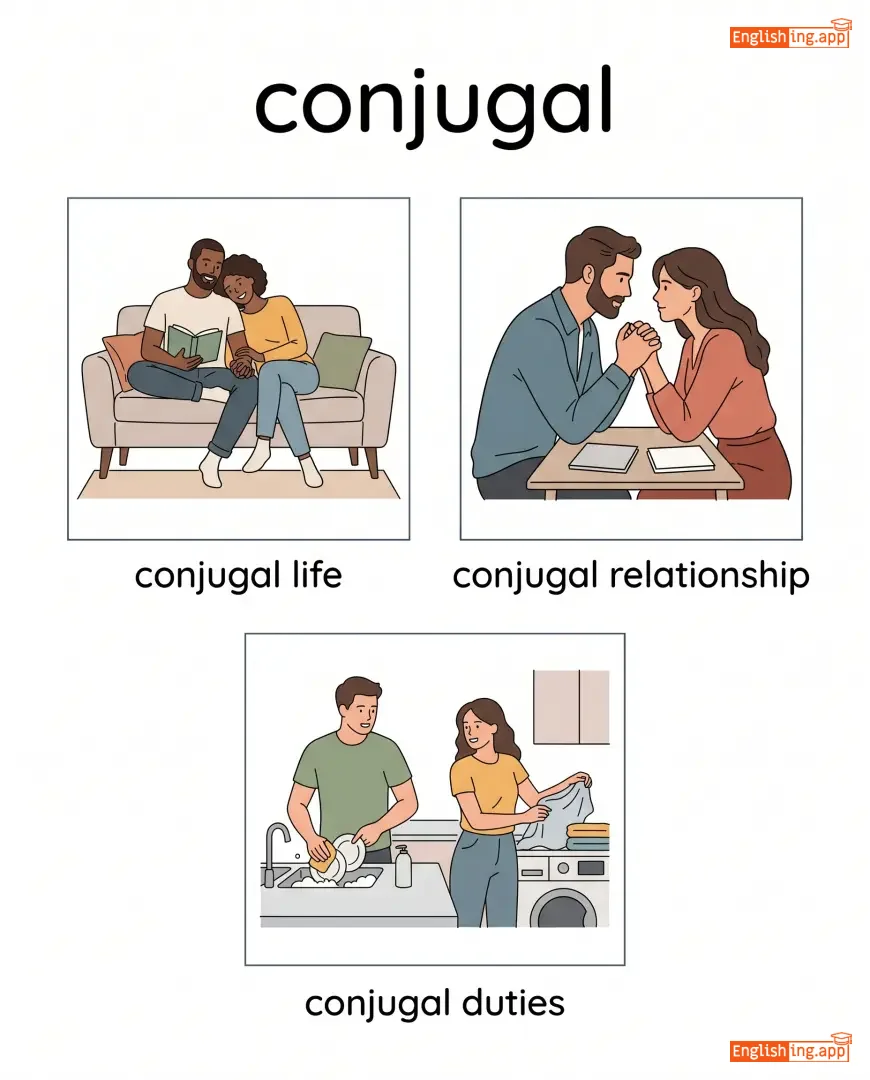
relating to marriage or the relationship between husband and wife
••••••
|
They enjoyed a long life of conjugal happiness. |
Они наслаждались долгой супружеской жизнью счастья.
Oni naslazhdalis' dolgoy supruzheskoy zhiznyu schast'ya.
••••••
|
conjugal rights |
the rights enjoyed by married partners, especially sexual relations
••••••
|
супружеские права
supruzheskiye prava
••••••
|
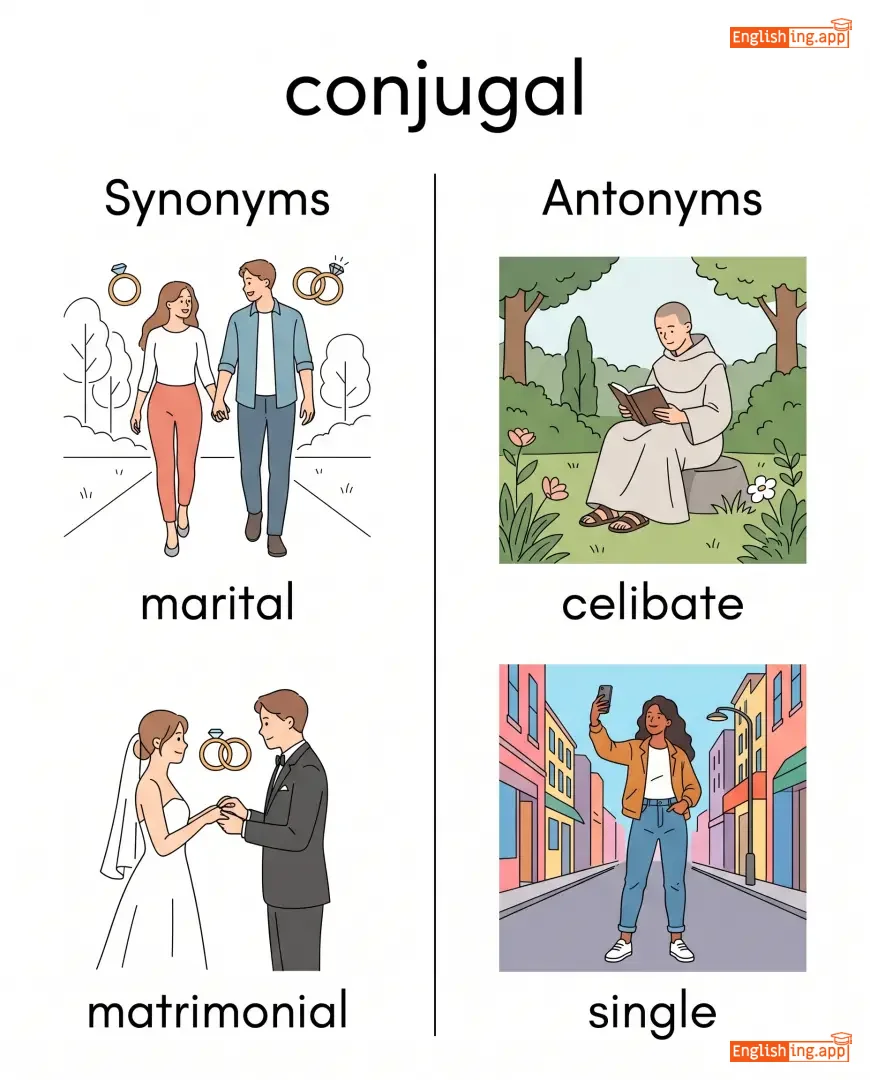
marital, matrimonial, spousal, wedded
••••••
|
celibate, single
••••••
|
conjugal life, conjugal relationship, conjugal duties
••••••
|
Супружеский = жизнь в браке - супружеский = женатый.
••••••
|
|
🔗
••••••
|
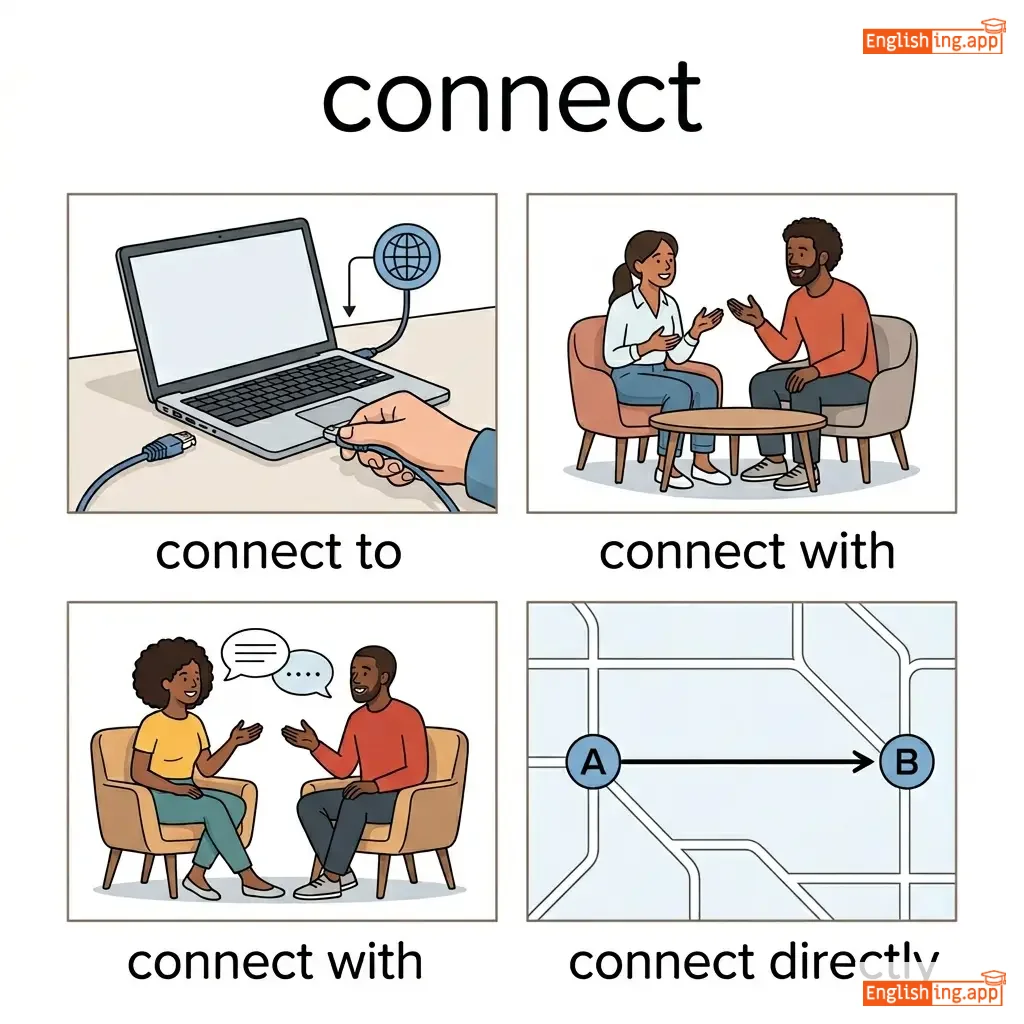
/kəˈnɛkt/
verb
(коне́кт)
••••••
|

|
соединять
soedinyat
••••••
|
connected
коне́кчено
••••••
|
connected
коне́кчено
••••••
|
connects
коне́ктит
••••••
|
connecting
коне́ктация
••••••
|
to join or link two or more things together
••••••
|
The new bridge will connect the two cities.
Новый мост соединит два города.
••••••
|
Новый мост соединит два города.
Novyi most soedinit dva goroda.
••••••
|
connect the dots
связать точки
••••••
|
to understand the relationship between different ideas or facts
••••••
|
связать точки
svyazat tochki
••••••
|
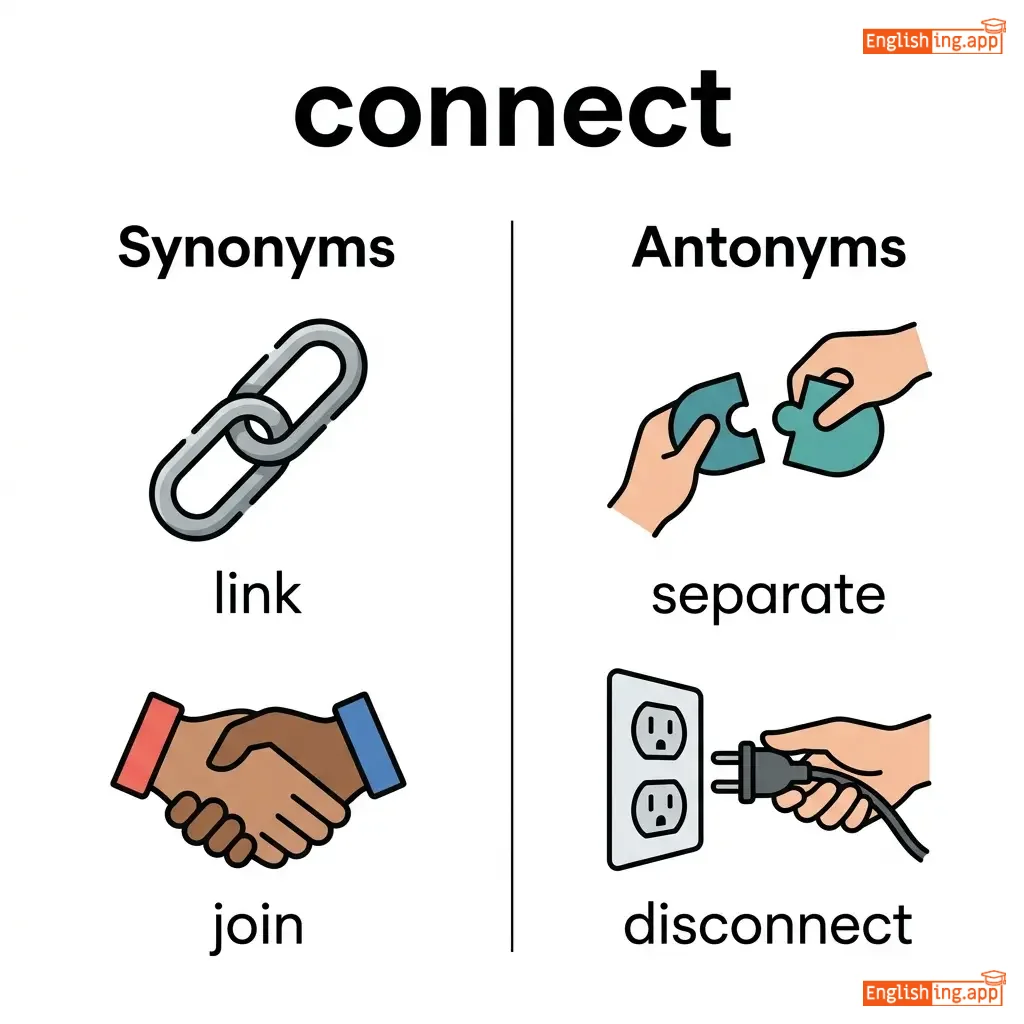
link, join, attach, unite, couple
••••••
|
separate, disconnect, divide
••••••
|
connect to, connect with, connect directly, connect easily
••••••
|
Connect означает соединять — как когда ты соединяешь свой телефон с Wi-Fi для доступа в интернет.
••••••
|
|
🔗
••••••
|
/kəˈnɛkʃən/
noun
(коне́кшн)
••••••
|
- •••••• |
связь
svyaz
••••••
|
- •••••• | - •••••• | - •••••• | - •••••• |
a relationship in which a person, thing, or idea is linked or associated with something else
••••••
|
There is a strong connection between exercise and health. |
Существует сильная связь между физическими упражнениями и здоровьем.
Sushchestvuyet sil'naya svyaz' mezhdu fizicheskimi uprazhneniyami i zdorov'yem.
••••••
|
make a connection |
to establish a relationship or link with someone or something
••••••
|
установить связь
ustanovit' svyaz'
••••••
|
link, relationship, bond, association, tie
••••••
|
disconnection, separation, detachment
••••••
|
internet connection, family connection, business connection, strong connection
••••••
|
Connection означает связь, как когда есть подключение к интернету, все связано.
••••••
|
|
⚔️
••••••
|
/ˈkɒŋkər/
verb
(kɒŋkɪər)
••••••
|

|
покорять
pokoryat
••••••
|
conquered
kɒŋkɪrd
••••••
|
conquered
kɒŋkɪrd
••••••
|
conquers
kɒŋkɪərz
••••••
|
conquering
kɒŋkɪəɹɪŋ
••••••
|
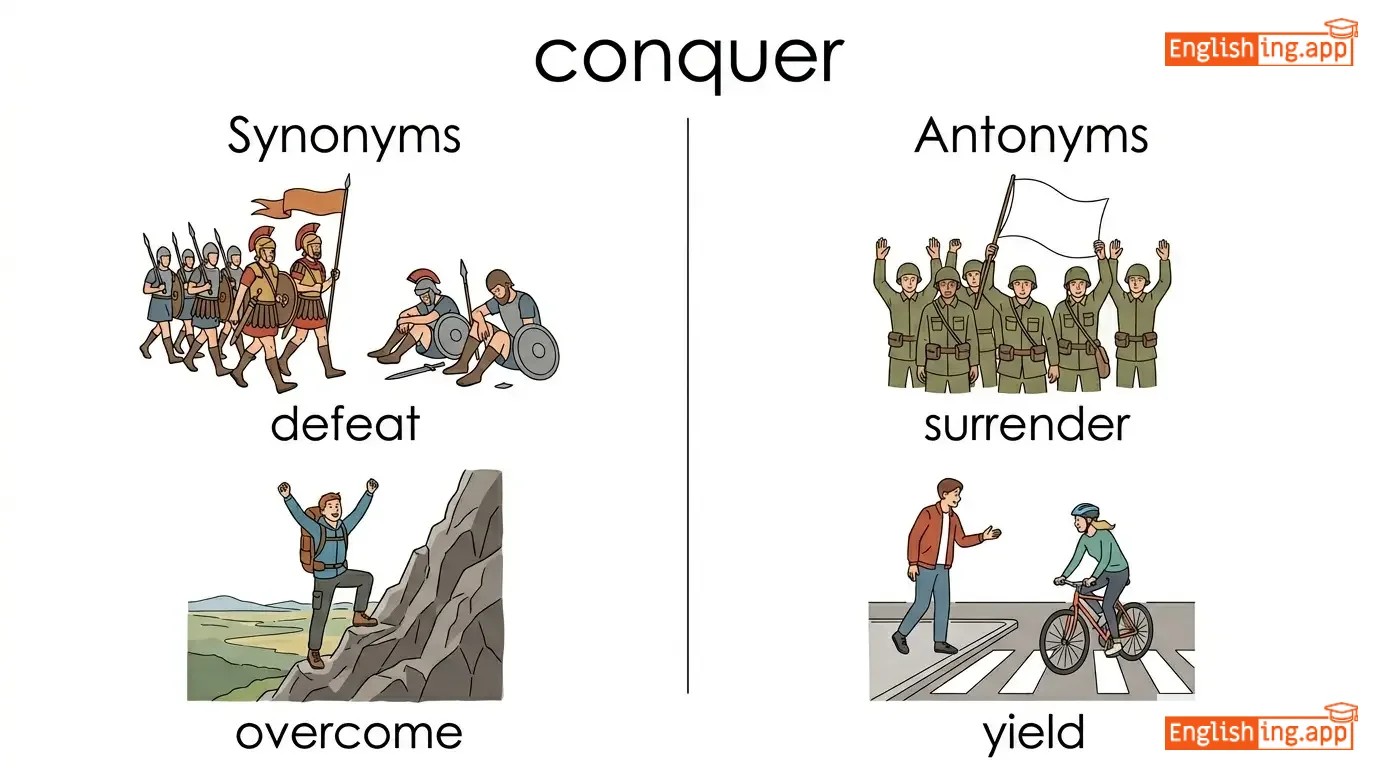
To defeat and take control of a place or people by force.
••••••
|
The king set out to conquer new lands.
Король отправился завоевывать новые земли.
••••••
|
Король отправился завоевывать новые земли.
Korol' otpravil'sya zavoevyvat' novye zemli.
••••••
|
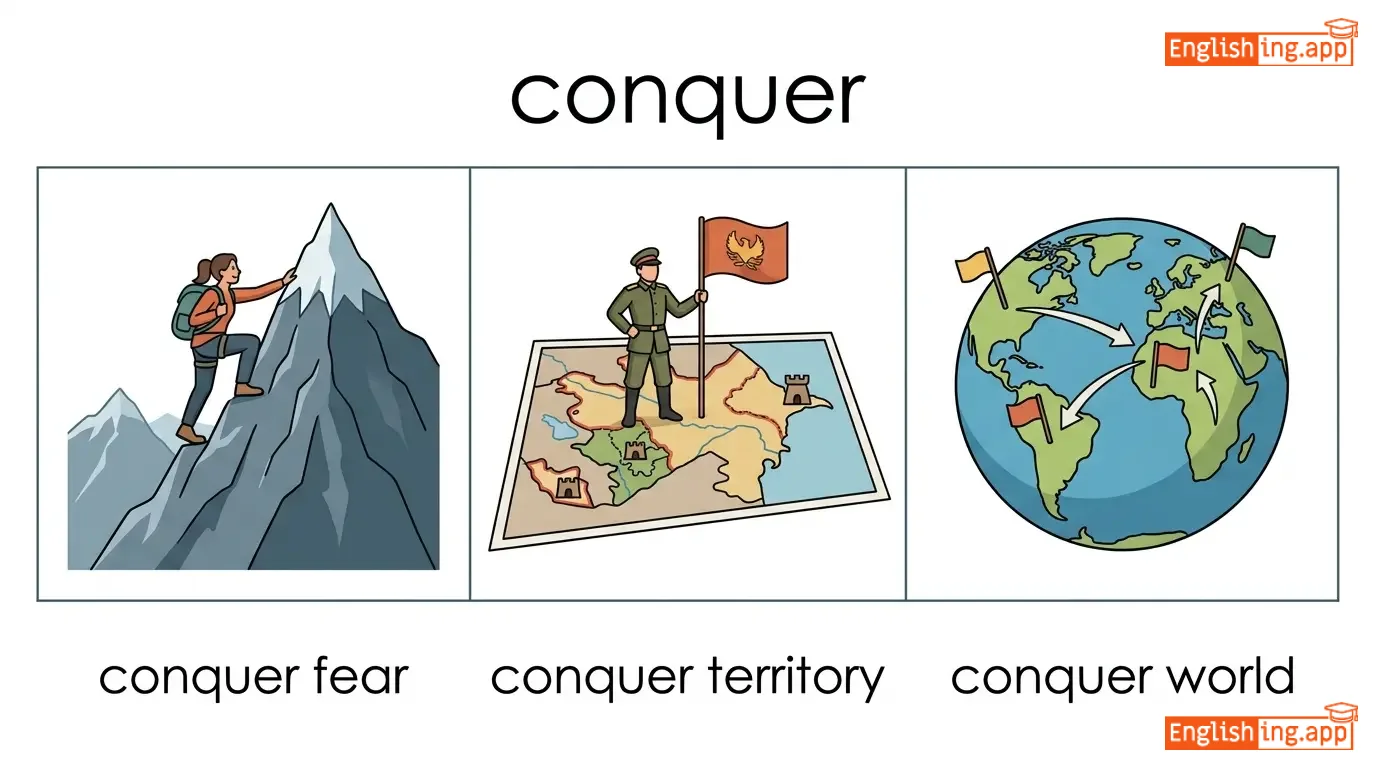
conquer your fears
побеждать свои страхи
••••••
|
To overcome or defeat your fears.
••••••
|
побеждать свои страхи
pobezhdat' svoi strakhi
••••••
|
defeat, overcome, vanquish, subdue, master
••••••
|
surrender, yield, lose
••••••
|
conquer fear, conquer territory, conquer world, conquer disease
••••••
|
Pokoryat' - как Александр Великий покорил мир.
••••••
|
|
🧠
••••••
|
/ˈkɒnʃəns/
noun
(kɔnʃens)
••••••
|
- •••••• |
совесть
sovest'
••••••
|
- •••••• | - •••••• | - •••••• | - •••••• |
An inner sense of right and wrong that guides a person's actions.
••••••
|
Her conscience told her to admit the mistake. |
Ее совесть сказала ей признать ошибку.
Eyo sovest' skazala yey priznat' oshibku.
••••••
|
a guilty conscience |
A feeling of guilt caused by knowing you have done something wrong.
••••••
|
вина совести
vina sovesti
••••••
|
morality, ethics, principles, scruples, integrity
••••••
|
immorality, corruption, wickedness
••••••
|
clear conscience, guilty conscience, prick of conscience
••••••
|
Совесть как 'совес' (совесть подсказывает, что делать).
••••••
|
|
👁️
••••••
|
/ˈkɒnʃəs/
adjective
(kɒnʃəs)
••••••
|
- •••••• |
сознательный
soznatelny
••••••
|
- •••••• | - •••••• | - •••••• | - •••••• |
Aware of and responding to one's surroundings; awake.
••••••
|
She was fully conscious after the surgery.
Она была полностью в сознании после операции.
••••••
|
Она была полностью в сознании после операции.
Ona byla polnost'yu v soznanii posle operatsii.
••••••
|
lose consciousness
потерять сознание
••••••
|
To become unconscious or faint.
••••••
|
потерять сознание
poteryat' soznanie
••••••
|
aware, alert, awake, mindful, responsive
••••••
|
unconscious, unaware, oblivious
••••••
|
conscious mind, fully conscious, conscious effort
••••••
|
Сознание означает слышать с помощью ушей (con) и оставаться настороженным.
••••••
|
|
🧠
••••••
|
/ˈkɒnʃəsnəs/
noun
(konschiesnes)
••••••
|
|
сознание
soznanie
••••••
|
- •••••• | - •••••• | - •••••• | - •••••• |
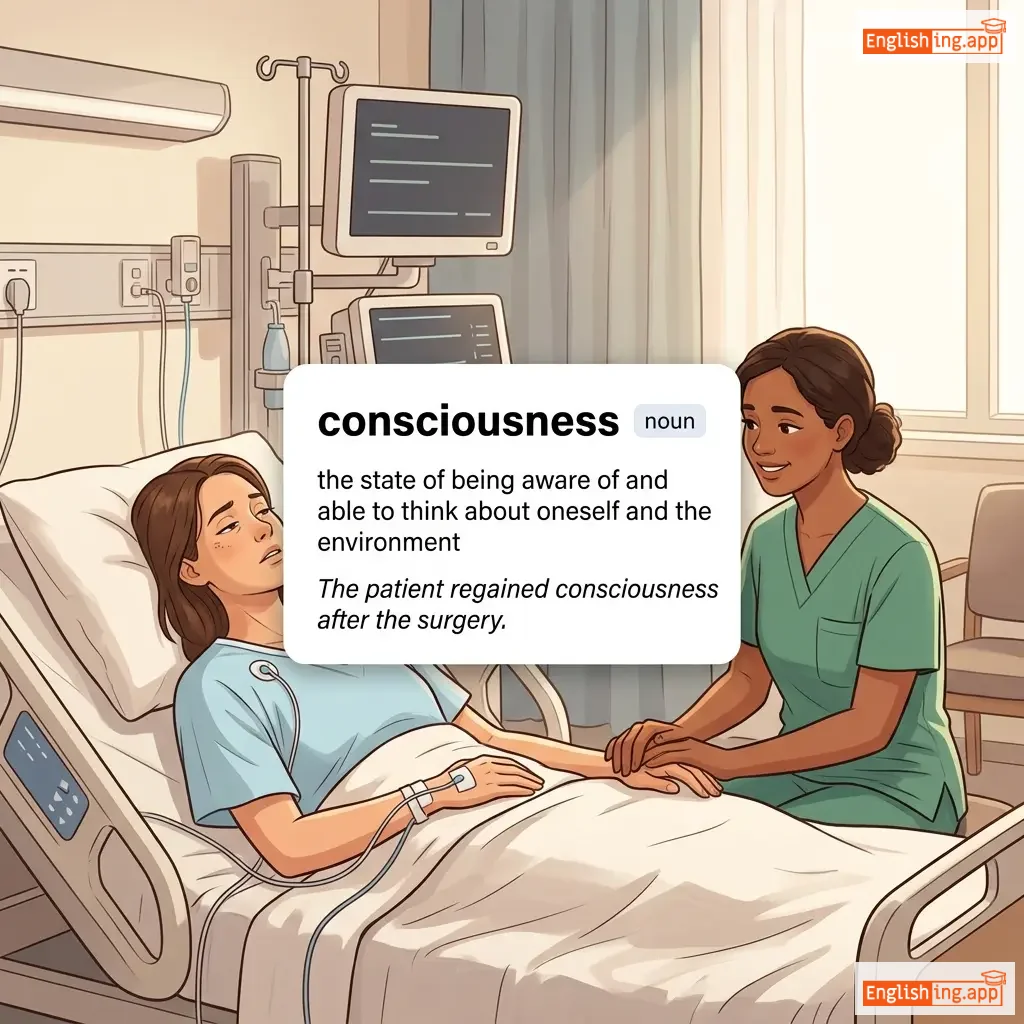
the state of being aware of and able to think about oneself and the environment
••••••
|
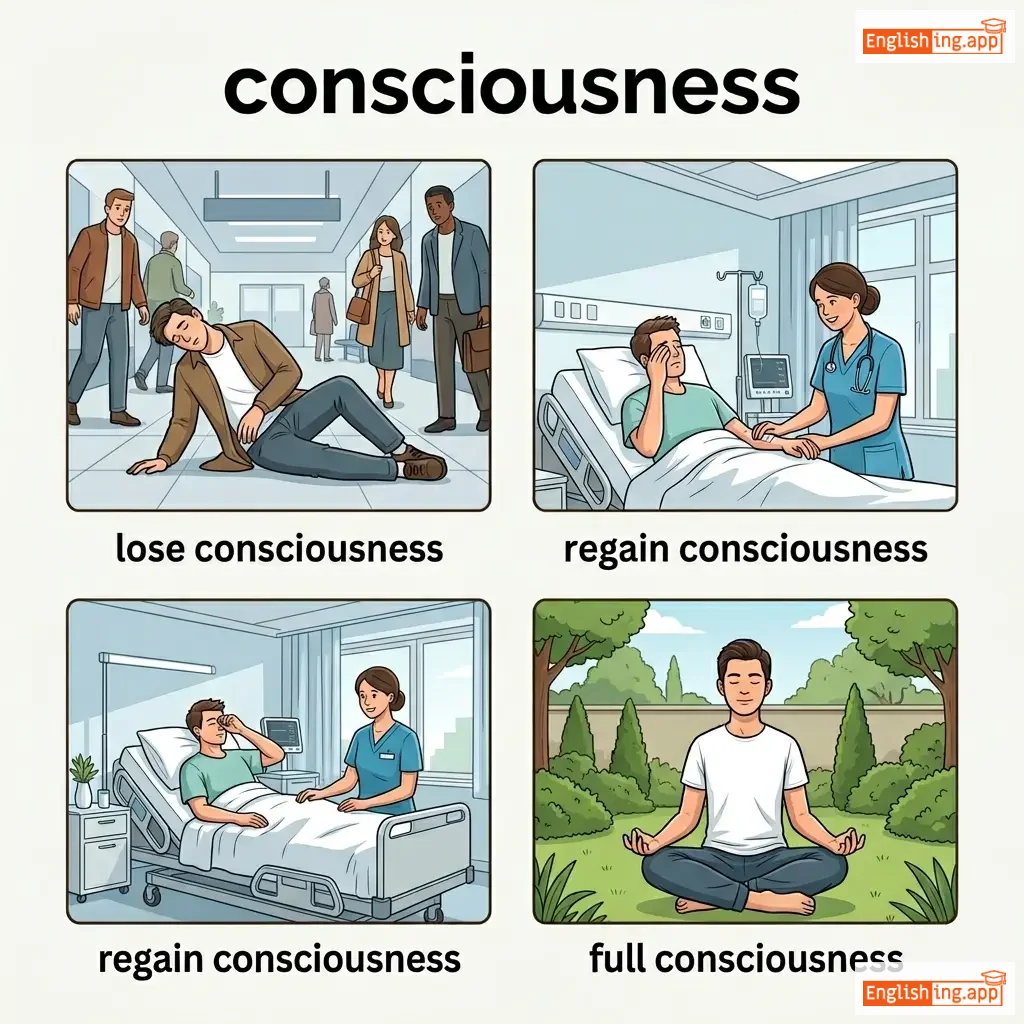
The patient regained consciousness after the surgery. |
Пациент пришел в сознание после операции.
Patsiyent prishel v soznanie posle operatsii.
••••••
|
stream of consciousness |
a literary style that presents a character's continuous flow of thoughts and feelings
••••••
|
поток сознания
potok soznaniya
••••••
|
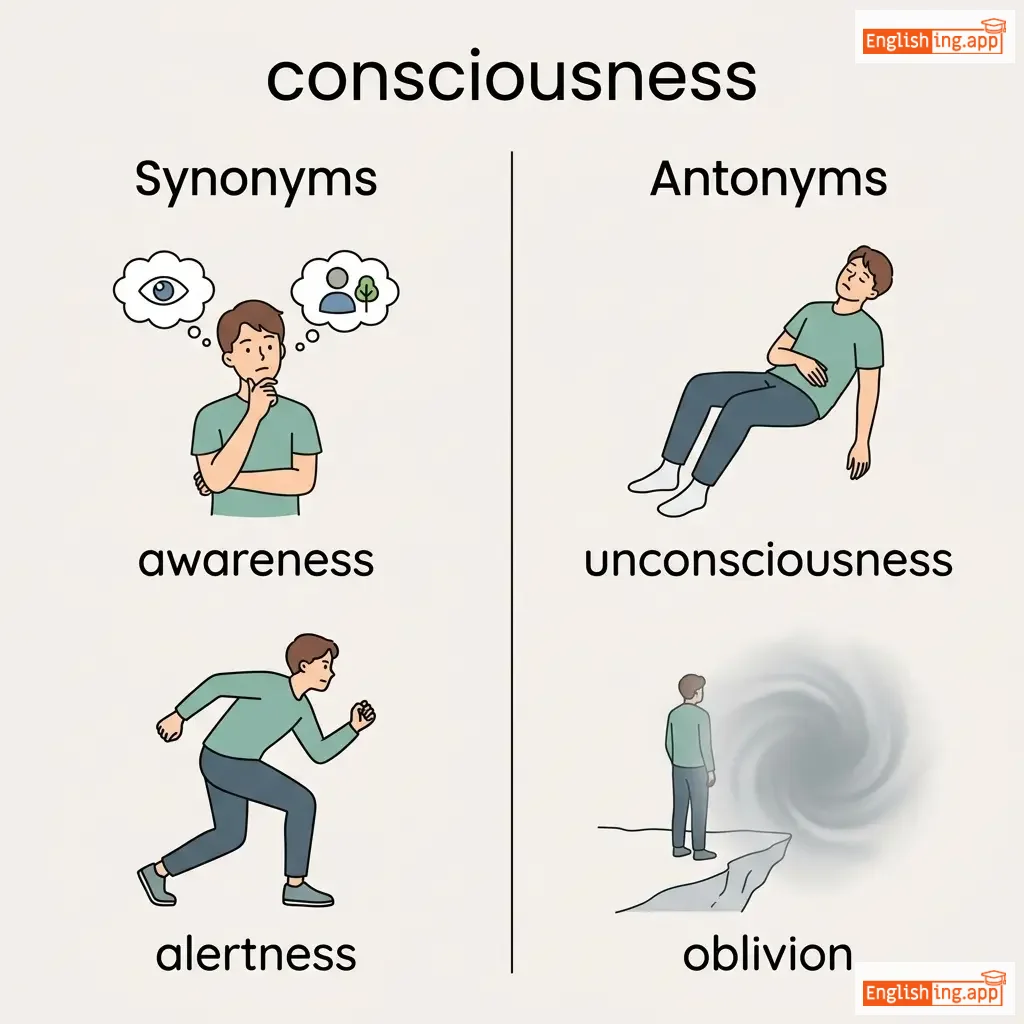
awareness, alertness, perception, mindfulness, sentience
••••••
|
unconsciousness, oblivion, ignorance
••••••
|
lose consciousness, regain consciousness, full consciousness, human consciousness
••••••
|
Consciousness на английском и 'сознание' на русском имеют схожие значения и звучания.
••••••
|
|
🔢
••••••
|
/kənˈsɛkjʊtɪv/
adjective
(kənˈsɛkjʊtɪv)
••••••
|
- •••••• |
последовательный
posledovatel'nyy
••••••
|
- •••••• | - •••••• | - •••••• | - •••••• |
following one after another without interruption
••••••
|
She won three consecutive matches. |
Она выиграла три подряд идущие матча.
Ona vyigrala tri podryad idushchie matcha.
••••••
|
consecutive days |
days that come one after another in sequence
••••••
|
последовательные дни
posledovatel'nye dni
••••••
|
successive, sequential, continuous, uninterrupted, serial
••••••
|
sporadic, intermittent, irregular
••••••
|
consecutive days, consecutive years, consecutive matches, consecutive numbers
••••••
|
Последовательный — значит без перерыва, как дни, идущие подряд.
••••••
|
|
🤝
••••••
|
/kənˈsɛnsəs/
noun
(kənˈsɛnsəs)
••••••
|

|
консенсус
konsensus
••••••
|
- •••••• | - •••••• | - •••••• | - •••••• |
general agreement among a group of people
••••••
|
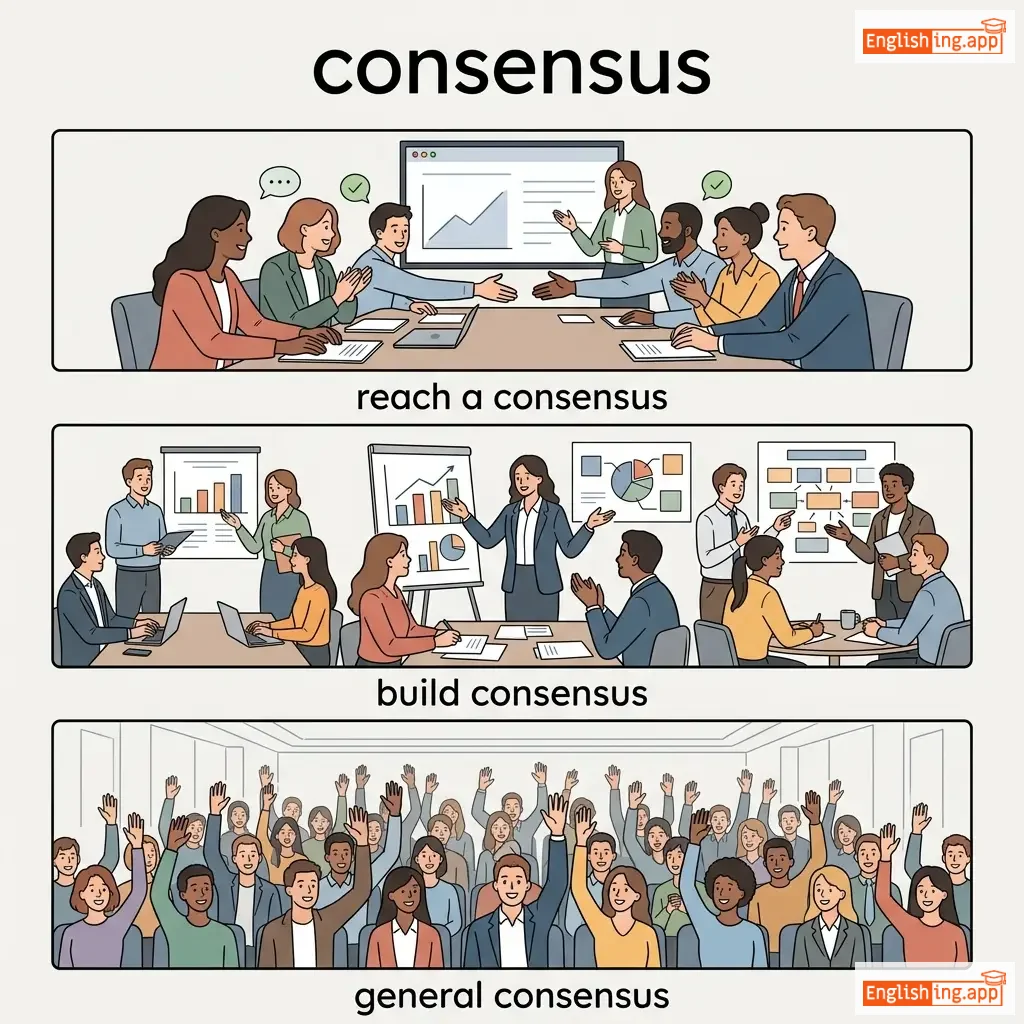
The team reached a consensus on the new strategy. |
Команда пришла к консенсусу по новой стратегии.
Komanda prishla k konsensusu po novoy strategii.
••••••
|
general consensus |
a widely accepted common opinion
••••••
|
общий консенсус
obshchiy konsensus
••••••
|
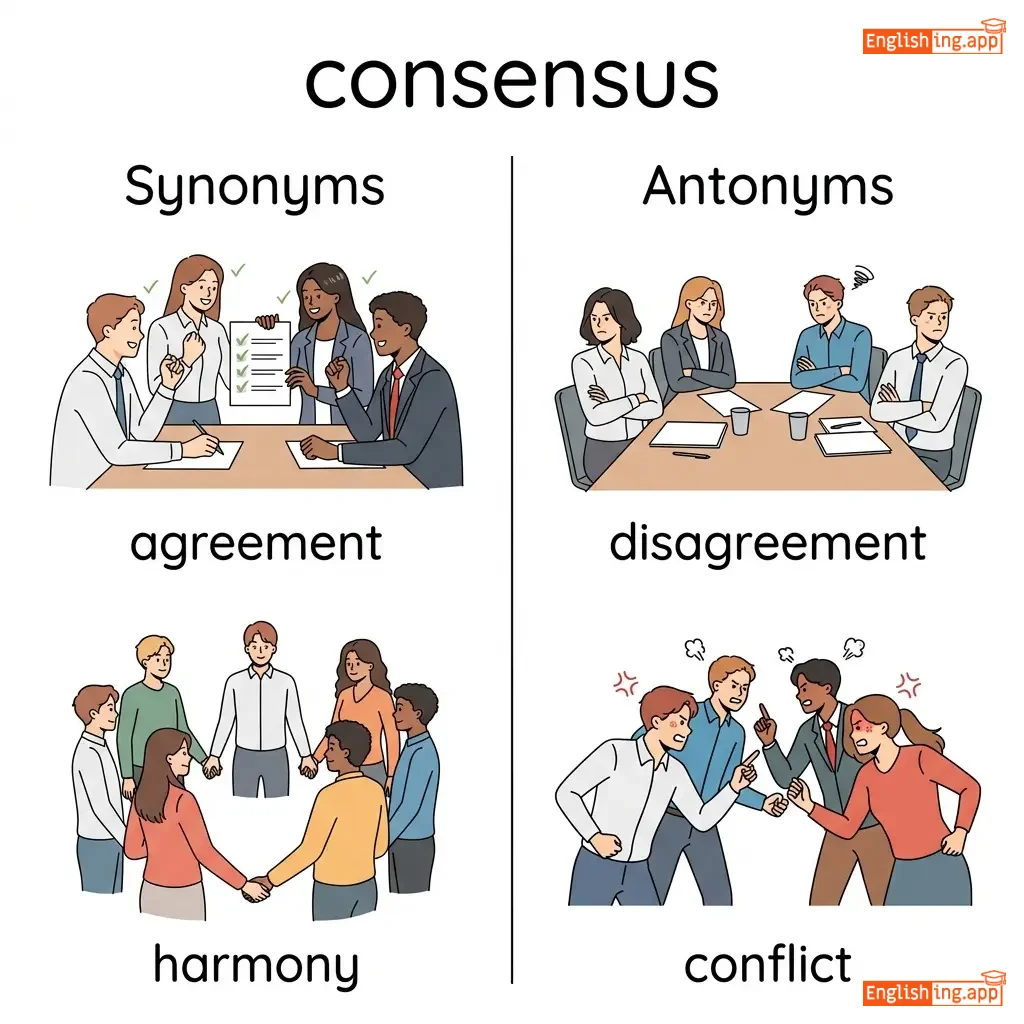
agreement, harmony, accord, unity, concurrence
••••••
|
disagreement, conflict, discord
••••••
|
reach a consensus, build consensus, general consensus, consensus opinion
••••••
|
Consensus = con (все) + sensus (чувство), все в одном чувстве.
••••••
|
|
✅
••••••
|
/kənˈsɛnt/
noun
(kənˈsɛnt)
••••••
|
- •••••• |
согласие
soglasie
••••••
|
- •••••• | - •••••• | - •••••• | - •••••• |
permission for something to happen or agreement to do something
••••••
|
She gave her consent before the operation. |
Она дала свое согласие перед операцией.
Ona dala svoe soglasie pered operatsiey.
••••••
|
with your consent |
with your permission or agreement
••••••
|
с вашего согласия
s vashego soglasiya
••••••
|
permission, approval, agreement, authorization
••••••
|
refusal, denial, rejection
••••••
|
give consent, obtain consent, written consent, parental consent
••••••
|
Согласие — это когда ты говоришь 'да', как в разрешении.
••••••
|
|
⚖️
••••••
|
/ˈkɒnsɪkwəns/
noun
(konsikvenc)
••••••
|
|
последствие
posledstvie
••••••
|
- •••••• | - •••••• | - •••••• | - •••••• |
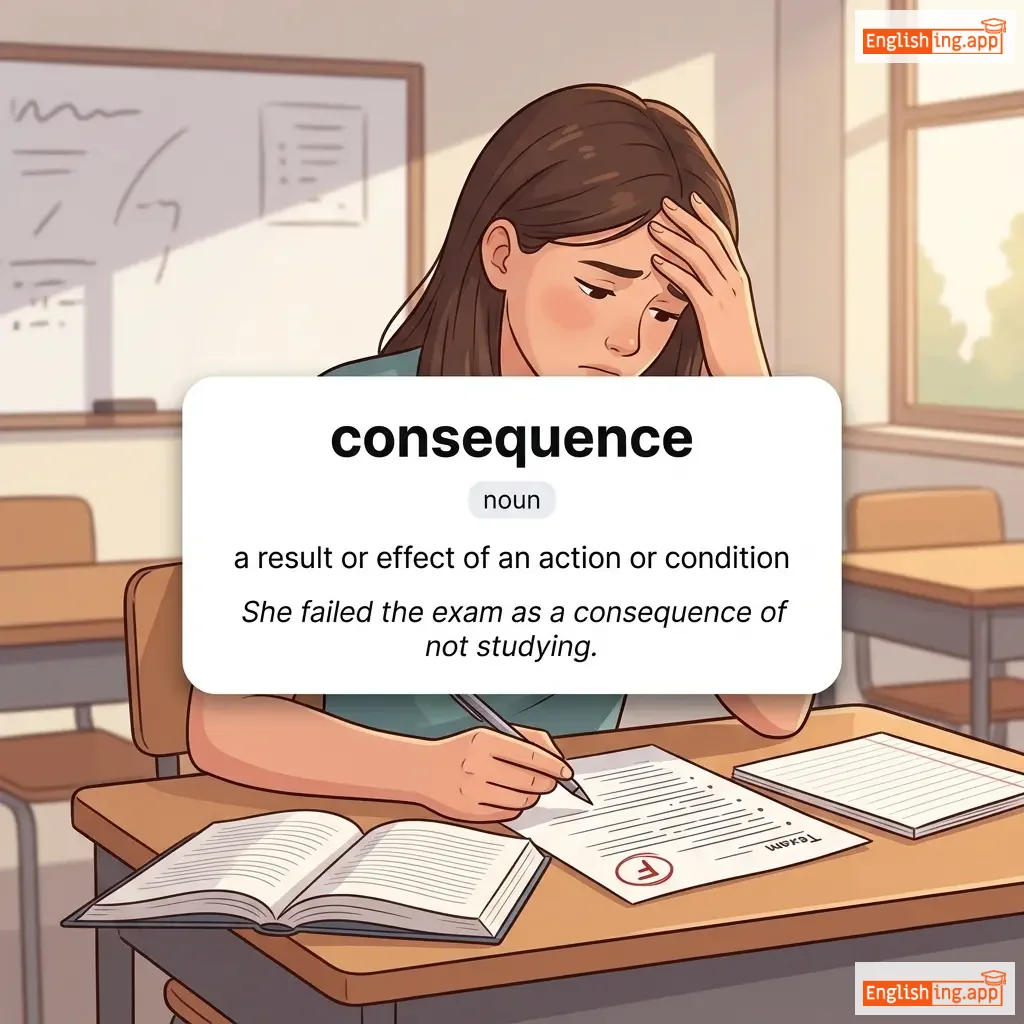
a result or effect of an action or condition
••••••
|
She failed the exam as a consequence of not studying. |
Она провалила экзамен как следствие того, что не училась.
Ona provalila ekzamen kak sledstvie togo, chto ne uchilas'.
••••••
|
face the consequences |
to accept the results of one's actions, especially bad ones
••••••
|
столкнуться с последствиями
stolknut'sya s posledstviyami
••••••
|
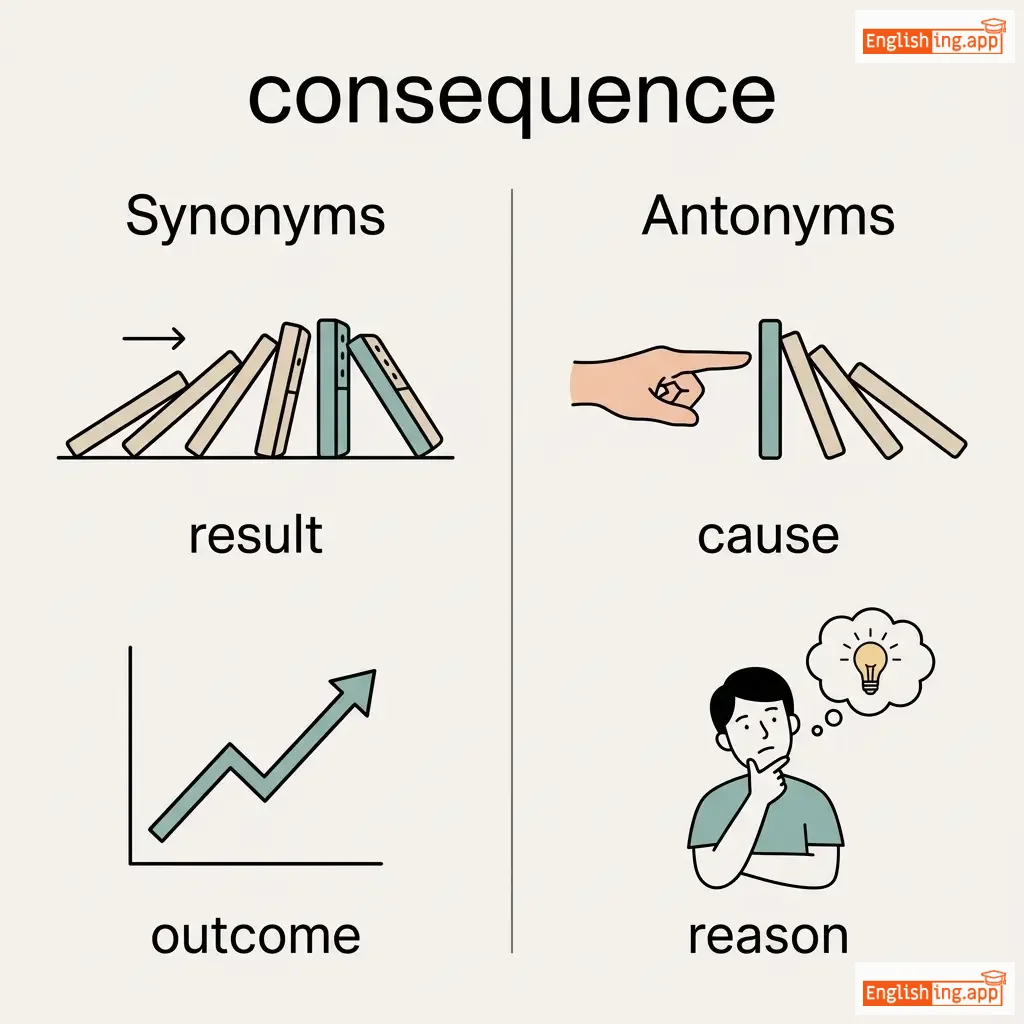
result, outcome, effect, aftermath, repercussion
••••••
|
cause, reason, origin
••••••
|
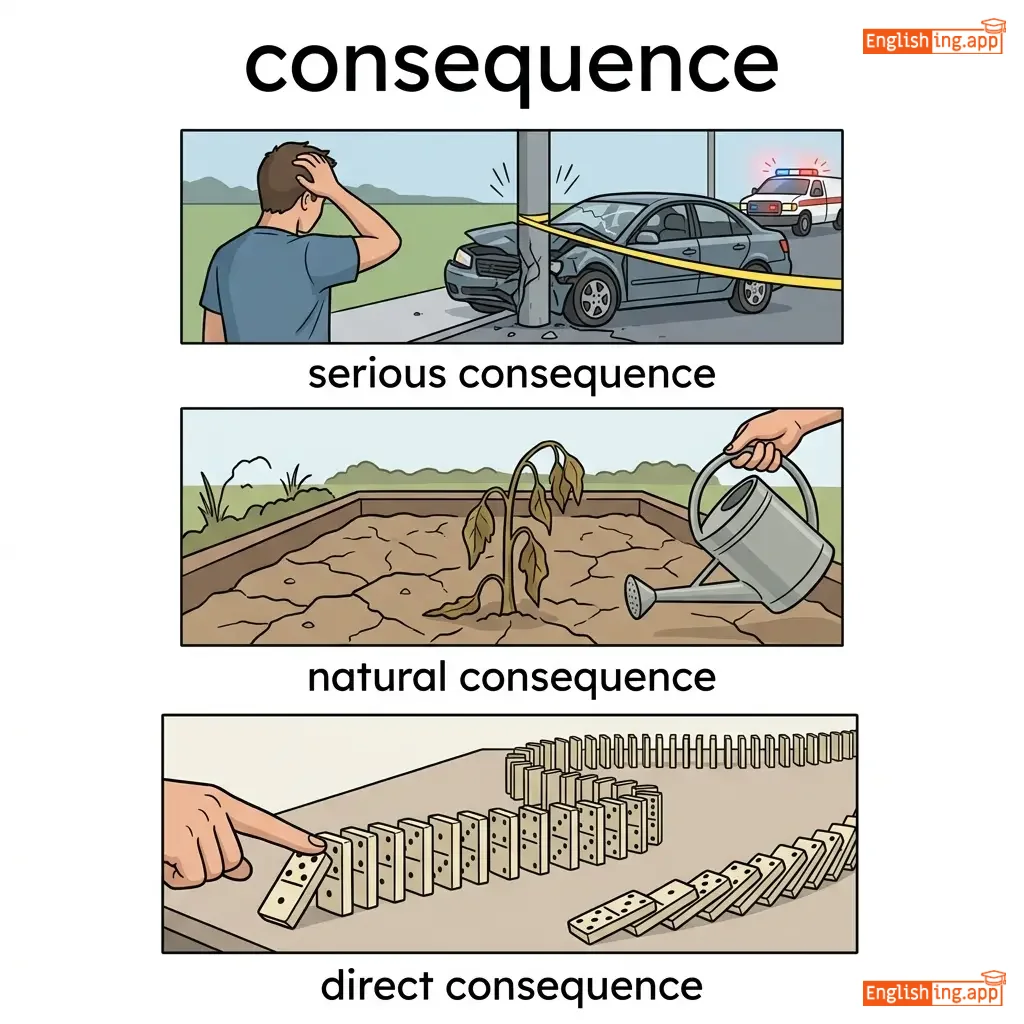
serious consequence, natural consequence, direct consequence, face consequences
••••••
|
Последствие — это результат действия, как следствие плохих решений.
••••••
|
|
➡️
••••••
|
/ˈkɒnsɪkwəntli/
adverb
(kɒnsɪkwəntli)
••••••
|
- •••••• |
следовательно
slyedovatel'no
••••••
|
- •••••• | - •••••• | - •••••• | - •••••• |
as a result; therefore
••••••
|
He didn’t study, and consequently he failed the exam.
Он не учился, и, следовательно, не сдал экзамен.
••••••
|
Он не учился, и, следовательно, не сдал экзамен.
On ne uchilsya, i, slyedovatel'no, ne sdal ekzamen.
••••••
|
- •••••• | - •••••• | - •••••• |
therefore, thus, hence, accordingly, as a result
••••••
|
nevertheless, however, despite
••••••
|
and consequently, consequently failed, consequently led to, consequently resulted in
••••••
|
Consequently означает следовательно — это результат чего-то.
••••••
|
|
🌿
••••••
|
/ˌkɒnsəˈveɪʃən/
noun
(консервейшн)
••••••
|
|
сохранение
sokhranenie
••••••
|
- •••••• | - •••••• | - •••••• | - •••••• |
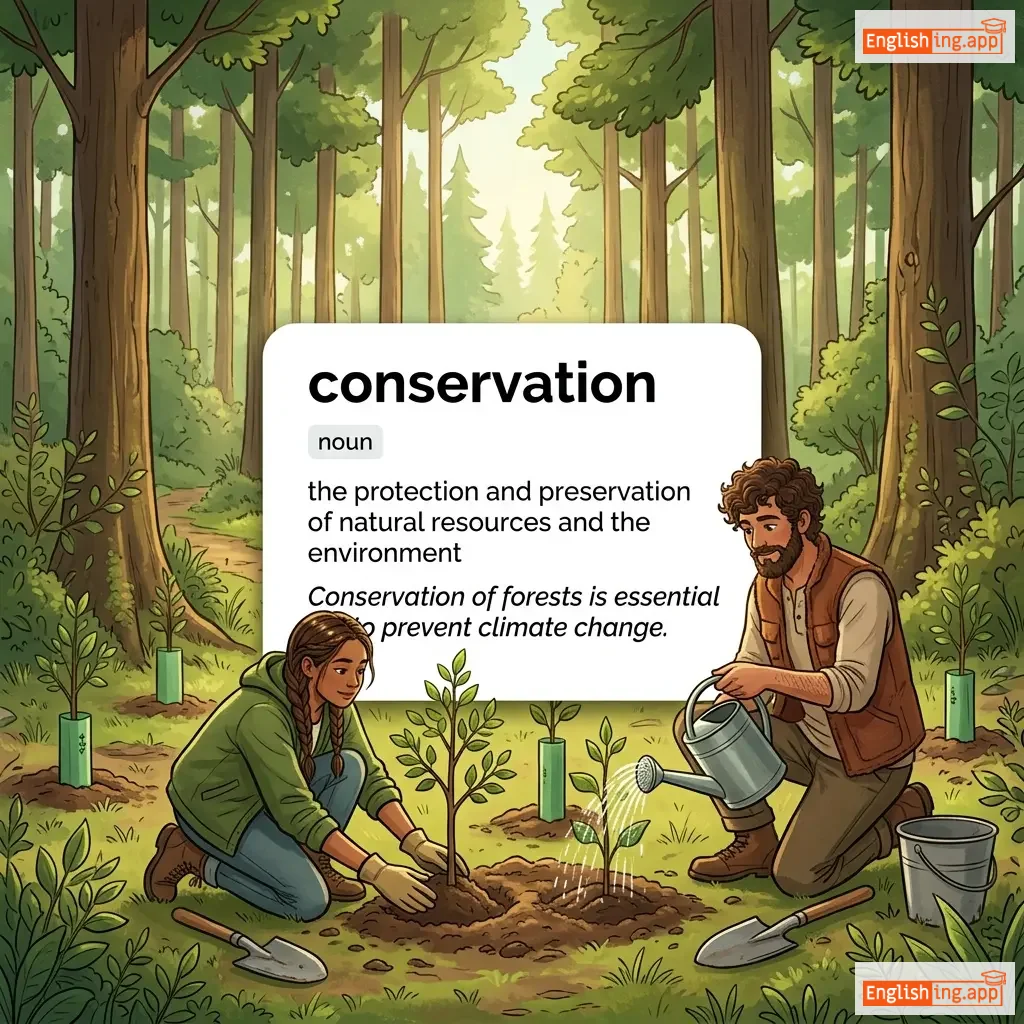
the protection and preservation of natural resources and the environment
••••••
|
Conservation of forests is essential to prevent climate change.
Консервейшн лесов необходим для предотвращения изменения климата.
••••••
|
Сохранение лесов необходимо для предотвращения изменения климата.
Sokhranenie lesov neobkhodimo dlya predotvrashcheniya izmeneniya klimata.
••••••
|
conservation of energy
консервейшн энергии
••••••
|
the principle that energy cannot be created or destroyed, only transformed
••••••
|
сохранение энергии
sokhranenie energii
••••••
|
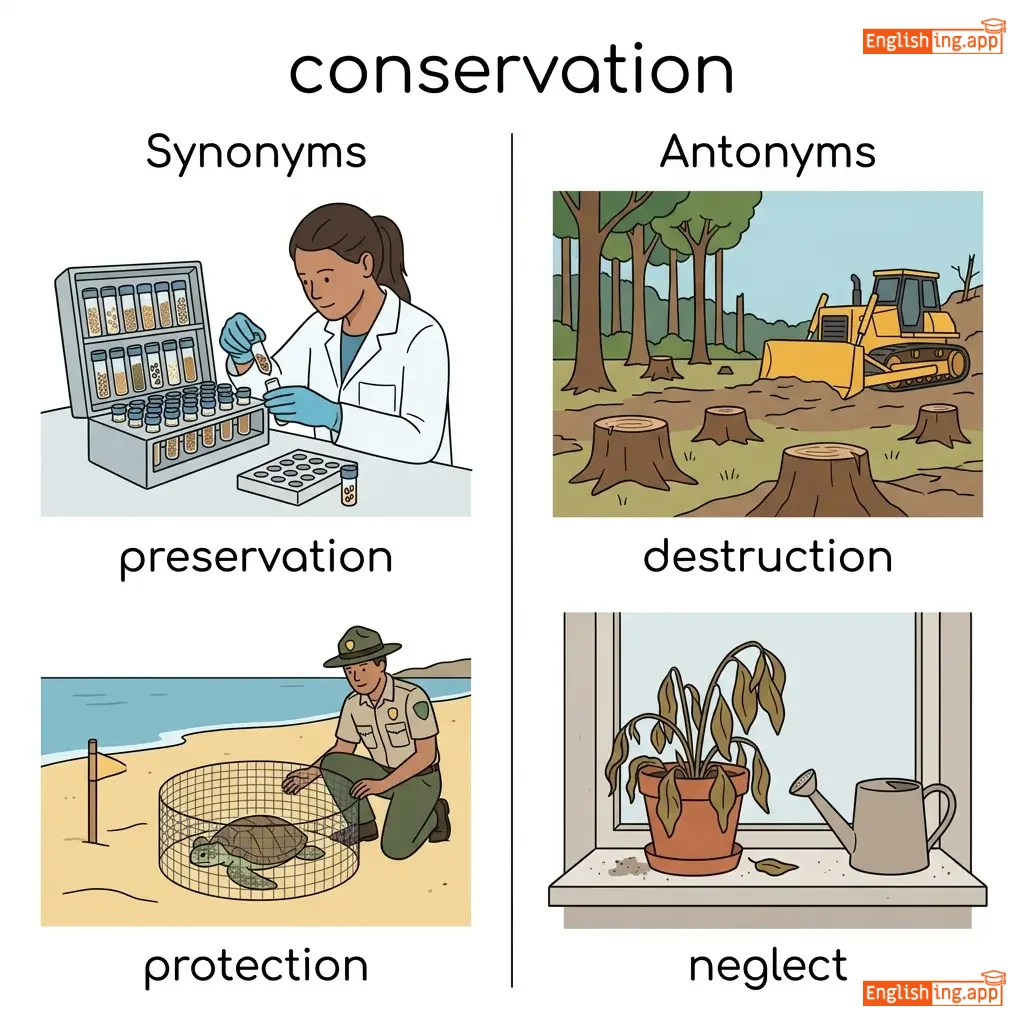
preservation, protection, care, maintenance, safeguarding
••••••
|
destruction, neglect, waste
••••••
|
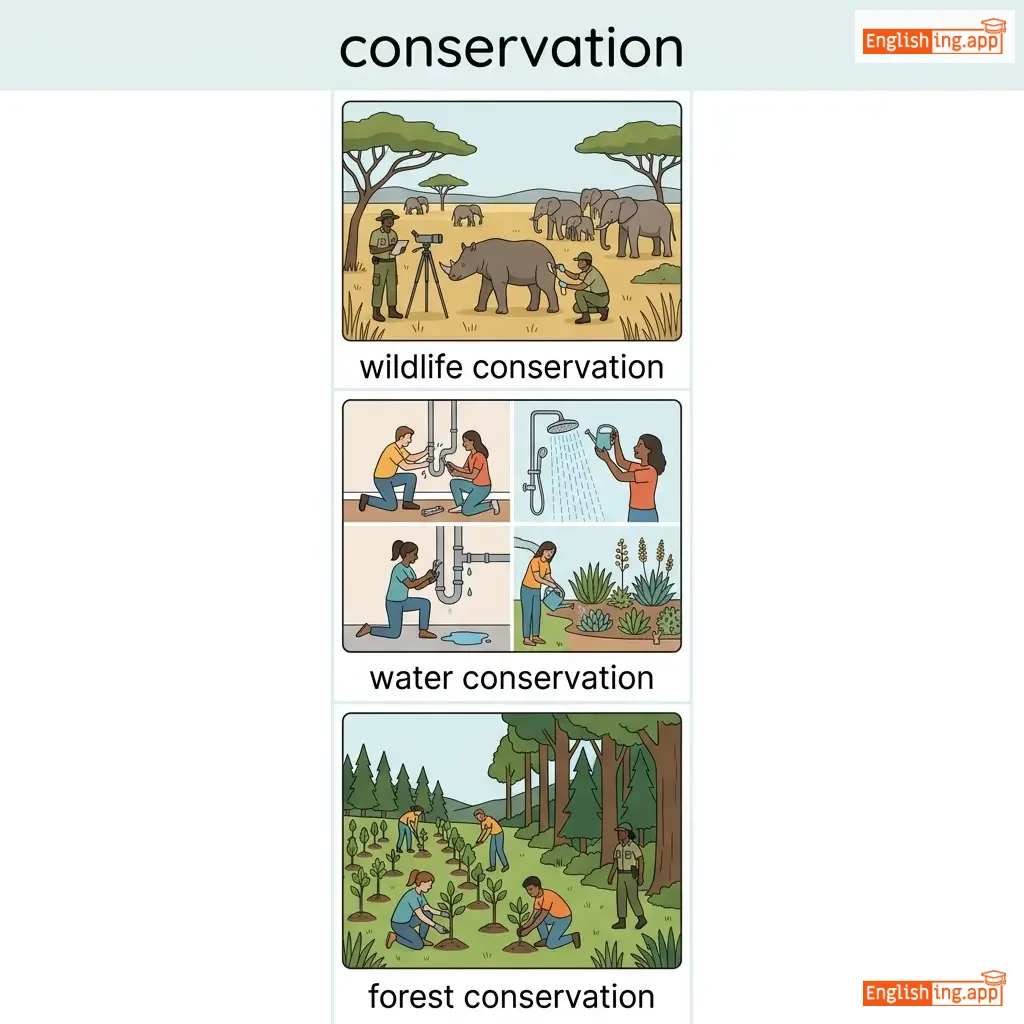
wildlife conservation, water conservation, forest conservation, energy conservation
••••••
|
Сохранение means keeping safe — conserve like saving forests 🌳
••••••
|
|
🛡️
••••••
|
/kənˈsɜːvətɪv/
adjective
(kənˈsɜːvətɪv)
••••••
|
- •••••• |
консервативный
konservativny
••••••
|
- •••••• | - •••••• | - •••••• | - •••••• |
Favoring traditional views and values; resistant to change.
••••••
|
He has conservative views on family and society. |
У него консервативные взгляды на семью и общество.
U nego konservativnye vzglyady na sem'yu i obshchestvo.
••••••
|
conservative estimate |
An estimate deliberately kept lower or more cautious.
••••••
|
консервативная оценка
konservativnaya otsenka
••••••
|
traditional, cautious, orthodox, conventional
••••••
|
progressive, liberal, radical
••••••
|
conservative values, conservative politics, conservative approach, conservative estimate
••••••
|
Conserve + актив = активно сохранять, значит быть консервативным.
••••••
|
|
🤔
••••••
|
/kənˈsɪdər/
verb
(кəнˈсɪдər)
••••••
|
- •••••• |
рассматривать
rassmatrivat
••••••
|
considered
кəнсɪдерд
••••••
|
considered
кəнсɪдерд
••••••
|
considers
кəнсɪдерс
••••••
|
considering
кəнсɪдеринг
••••••
|
to think carefully about something, especially before making a decision
••••••
|
She is considering studying abroad next year.
Она рассматривает возможность учебы за границей в следующем году.
••••••
|
Она рассматривает возможность учебы за границей в следующем году.
Ona rassmatrivaet vozmozhnost' ucheby za granitsey v sleduyushchem godu.
••••••
|
take into consideration
принять во внимание
••••••
|
to think about something when making a decision
••••••
|
принять во внимание
prinyat' vo vnimanie
••••••
|
contemplate, regard, reflect, evaluate, examine
••••••
|
ignore, disregard, neglect
••••••
|
consider carefully, consider options, consider seriously, consider important
••••••
|
Рассмотрение означает думать перед принятием решения.
••••••
|
|
📏
••••••
|
/kənˈsɪdərəbl/
adjective
(кənˈсɪдэрэбл)
••••••
|
- •••••• |
существенный
sushtestvenny
••••••
|
- •••••• | - •••••• | - •••••• | - •••••• |
large in amount, size, or importance
••••••
|
The project required a considerable amount of time and money. |
Проект потребовал значительного времени и денег.
Proyekt potreboval znachitelnogo vremeni i deneg.
••••••
|
- •••••• | - •••••• | - •••••• |
substantial, significant, great, large, notable
••••••
|
small, minor, insignificant
••••••
|
considerable amount, considerable effort, considerable time, considerable importance
••••••
|
Существенный - это что-то значительное, как время или деньги в проекте.
••••••
|
|
📈
••••••
|
/kənˈsɪdərəbli/
adverb
(kənˈsɪdərəbli)
••••••
|
- •••••• |
значительно; существенно
znachitel'no; suschestvenno
••••••
|
- •••••• | - •••••• | - •••••• | - •••••• |
to a notably large degree; significantly; substantially
••••••
|
The price has increased considerably over the past year. |
Цена значительно увеличилась за последний год.
Tsen'a znachitel'no uvelichilas' za posledniy god.
••••••
|
- •••••• | - •••••• | - •••••• |
significantly, substantially, markedly
••••••
|
slightly, minimally, insignificantly
••••••
|
increase considerably, improve considerably, differ considerably
••••••
|
No •••••• |
|
🤔
••••••
|
/kənˌsɪdəˈreɪʃən/
noun
(хэппинесс)
••••••
|
- •••••• |
счастье
schast'ye
••••••
|
- •••••• | - •••••• | - •••••• | - •••••• |
careful thought or attention to something before making a decision
••••••
|
After much consideration, she accepted the job offer. |
Она не могла скрыть свое счастье, когда получила награду.
Ona ne mogla skryt' svoe schast'ye, kogda poluchila nagradu.
••••••
|
out of consideration |
done out of respect or kindness for someone
••••••
|
поиск счастья
poisk schast'ya
••••••
|
thought, reflection, deliberation, regard, attention
••••••
|
neglect, disregard, thoughtlessness
••••••
|
take into consideration, give consideration, careful consideration, thoughtful consideration
••••••
|
Счастье = Чувства радости, оба связаны с счастьем.
••••••
|
|
📋
••••••
|
/kənˈsɪst/
verb
(кənˈсɪст)
••••••
|
- •••••• |
состоять
sostoyat
••••••
|
consisted
кənˈсɪстэд
••••••
|
consisted
кənˈсɪстэд
••••••
|
consists
кənˈсɪстс
••••••
|
consisting
кənˈсɪстɪнɡ
••••••
|
to be made up or composed of certain parts or elements
••••••
|
The committee consists of five members.
Комитет состоит из пяти членов.
••••••
|
Комитет состоит из пяти членов.
Komitet sostoyit iz pyati chlenov.
••••••
|
consist in
состоять в
••••••
|
to have something as an essential feature
••••••
|
состоять в
sostoyat' v
••••••
|
contain, include, comprise, embody
••••••
|
exclude, lack, omit
••••••
|
consist of, consist in, committee consists, diet consists
••••••
|
Состоять означает быть составленным из частей. Помни: Комитет состоит из членов.
••••••
|
|
📏
••••••
|
/kənˈsɪstənsi/
noun
(kon-sis-ten-see)
••••••
|

|
последовательность, стабильность
posledovatel'nost', stabil'nost'
••••••
|
- •••••• | - •••••• | - •••••• | - •••••• |
the quality of always behaving or performing in a similar way; uniformity
••••••
|
Her consistency in work earned her a promotion. |
Ее последовательность в работе принесла ей повышение.
Eyo posledovatel'nost' v rabote prinesla yey povyshenie.
••••••
|
- •••••• | - •••••• | - •••••• |
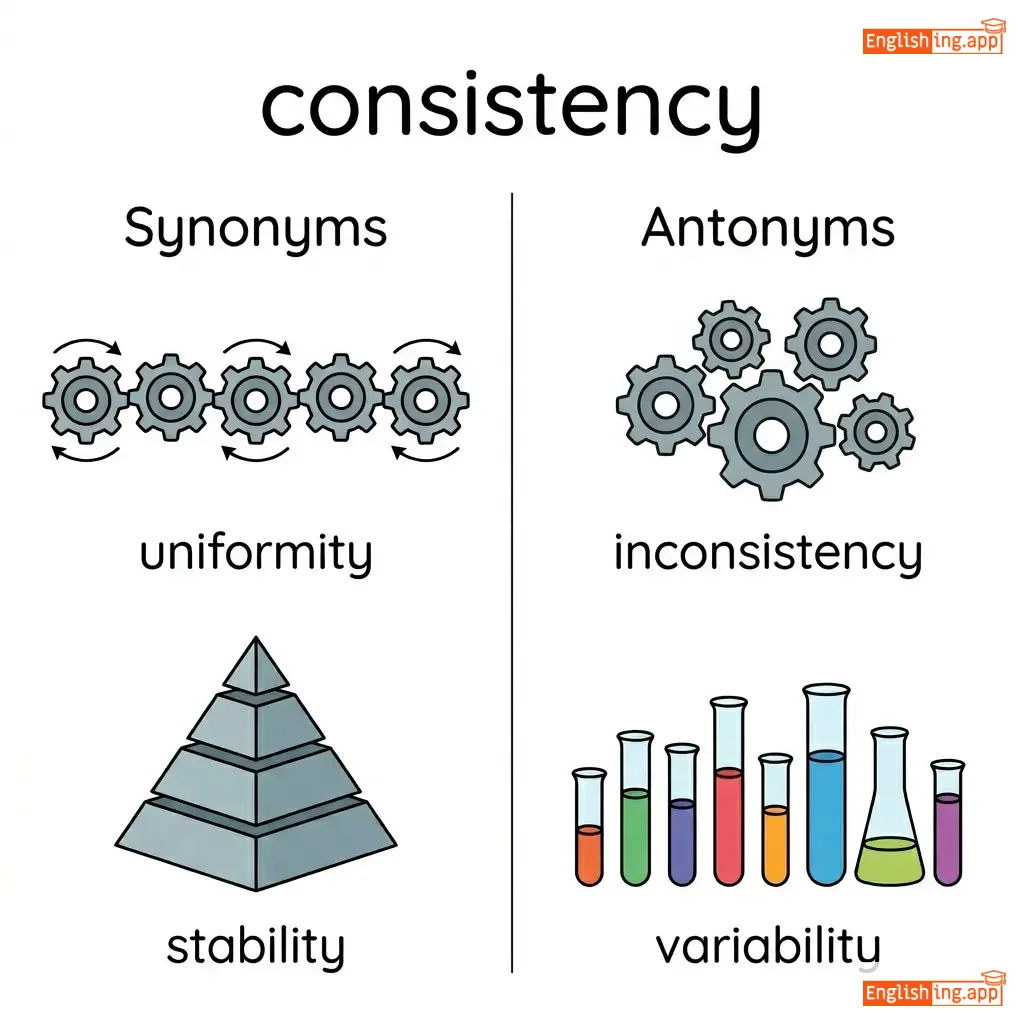
uniformity, stability, regularity, dependability
••••••
|
inconsistency, variability
••••••
|
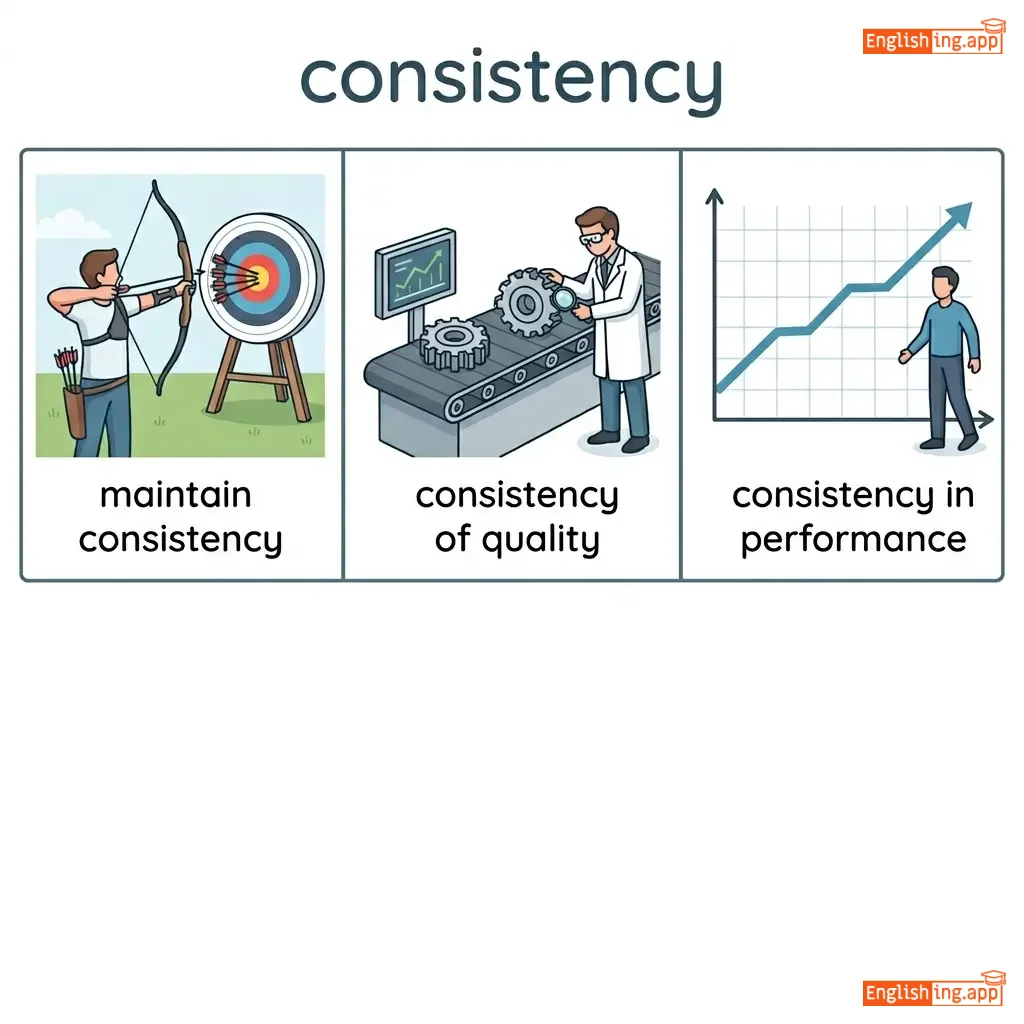
maintain consistency, consistency of quality, consistency in performance
••••••
|
CON SISTently работая, успех придет – помни о consistency
••••••
|
|
📈
••••••
|
/kənˈsɪstənt/
adjective
(кэнˈсистент)
••••••
|


|
последовательный
posledovatel'nyy
••••••
|
- •••••• | - •••••• | - •••••• | - •••••• |
acting or done in the same way over time; reliable or uniform
••••••
|
He is very consistent in his work. |
Он очень последовательный в своей работе.
On ochen' posledovatel'nyy v svoey rabote.
••••••
|
consistent with |
in agreement or harmony with something
••••••
|
последовательный с
posledovatel'nyy s
••••••
|
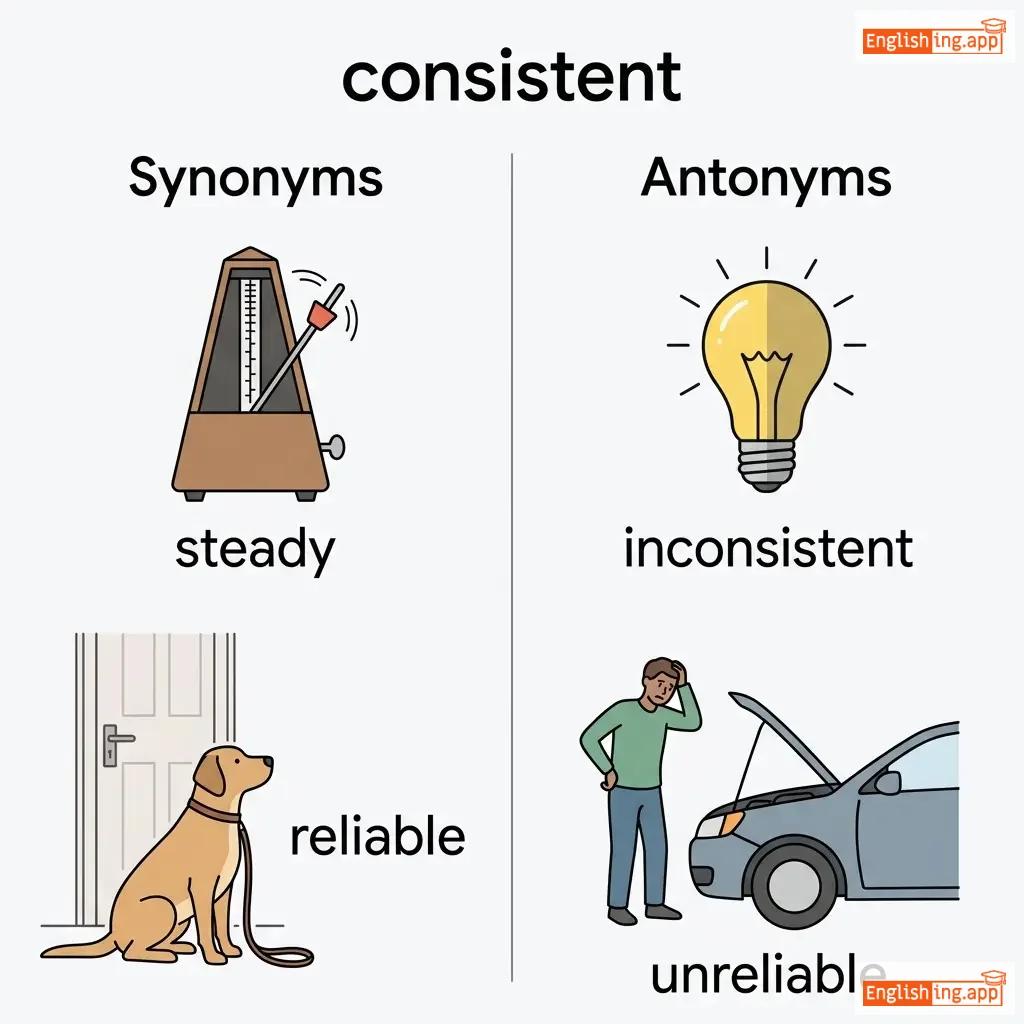
steady, reliable, regular, stable
••••••
|
inconsistent, unreliable, irregular
••••••
|
remain consistent, consistent effort, consistent results, consistent behavior
••••••
|
Последовательный всегда одинаково, как последовательный
••••••
|
|
📅
••••••
|
/kənˈsɪstəntli/
adverb
(кənˈсɪстентли)
••••••
|
- •••••• |
непрерывно
nepreryvno
••••••
|
- •••••• | - •••••• | - •••••• | - •••••• |
in a way that does not vary; regularly and dependably
••••••
|
She has been performing consistently well in her studies. |
Она постоянно показывает хорошие результаты в учебе.
Ona postoyanno pokazyvayet khoroshie rezul'taty v uchebe.
••••••
|
consistent with |
in agreement or harmony with something
••••••
|
соответствует
sovpadaet s
••••••
|
regularly, steadily, constantly, reliably
••••••
|
inconsistently, irregularly
••••••
|
perform consistently, act consistently, behave consistently, consistently good
••••••
|
Непрерывно означает всегда одинаковый результат — всегда одинаковая производительность 📅
••••••
|
|
🏢
••••••
|
/kənˈsɑːlɪdeɪt/
verb
(кэнˈсолиˌдеɪт)
••••••
|

|
консолидировать
konsolidirovat
••••••
|
consolidated
кэнˈсолиˌдеɪтед
••••••
|
consolidated
кэнˈсолиˌдеɪтед
••••••
|
consolidates
кэнˈсолиˌдеɪтс
••••••
|
consolidating
кэнˈсолиˌдеɪтинг
••••••
|
to combine into a single, more effective or coherent whole
••••••
|
The company plans to consolidate its offices into one building.
Компания планирует консолидацию своих офисов в одном здании.
••••••
|
Компания планирует консолидацию своих офисов в одном здании.
Kompaniya planirovet konsolidatsiyu svoikh ofisov v odnom zdanii.
••••••
|
- •••••• | - •••••• | - •••••• |
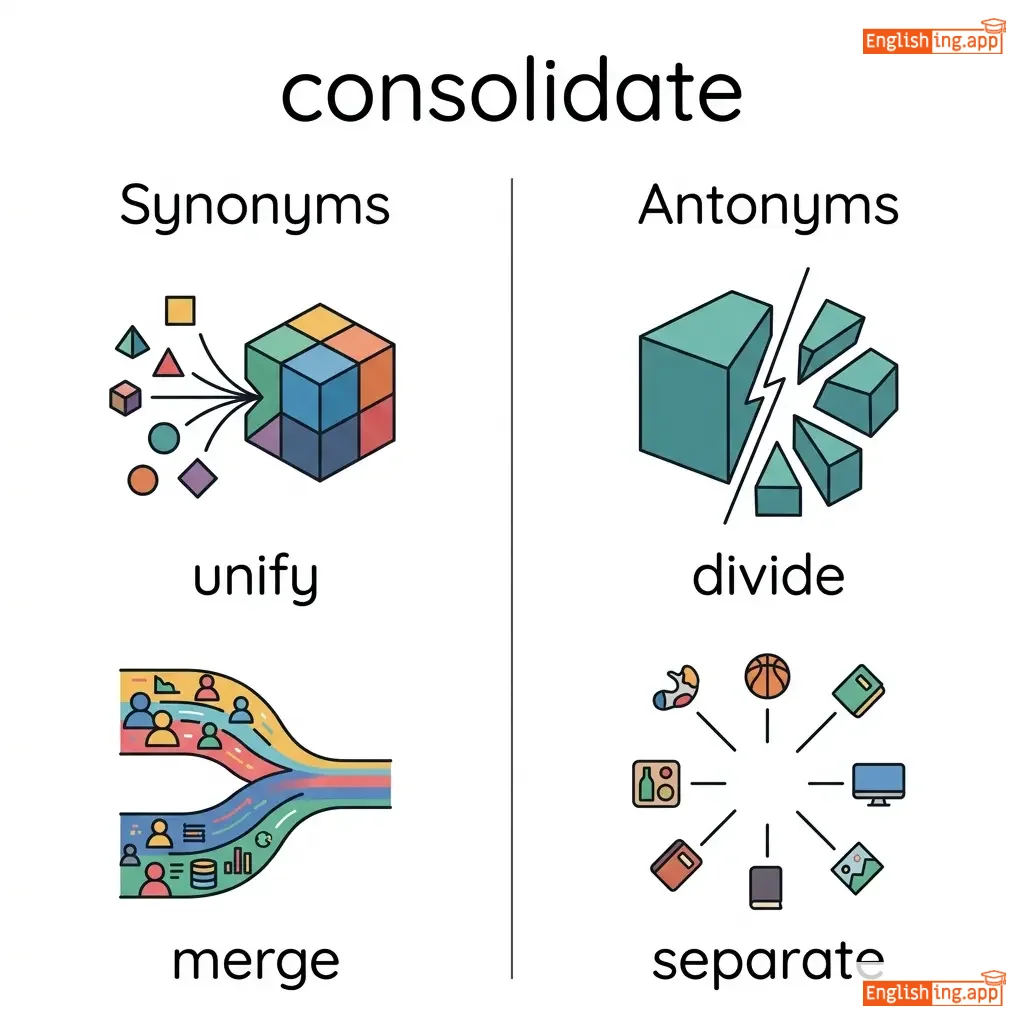
unify, merge, integrate, strengthen
••••••
|
divide, separate, scatter
••••••
|
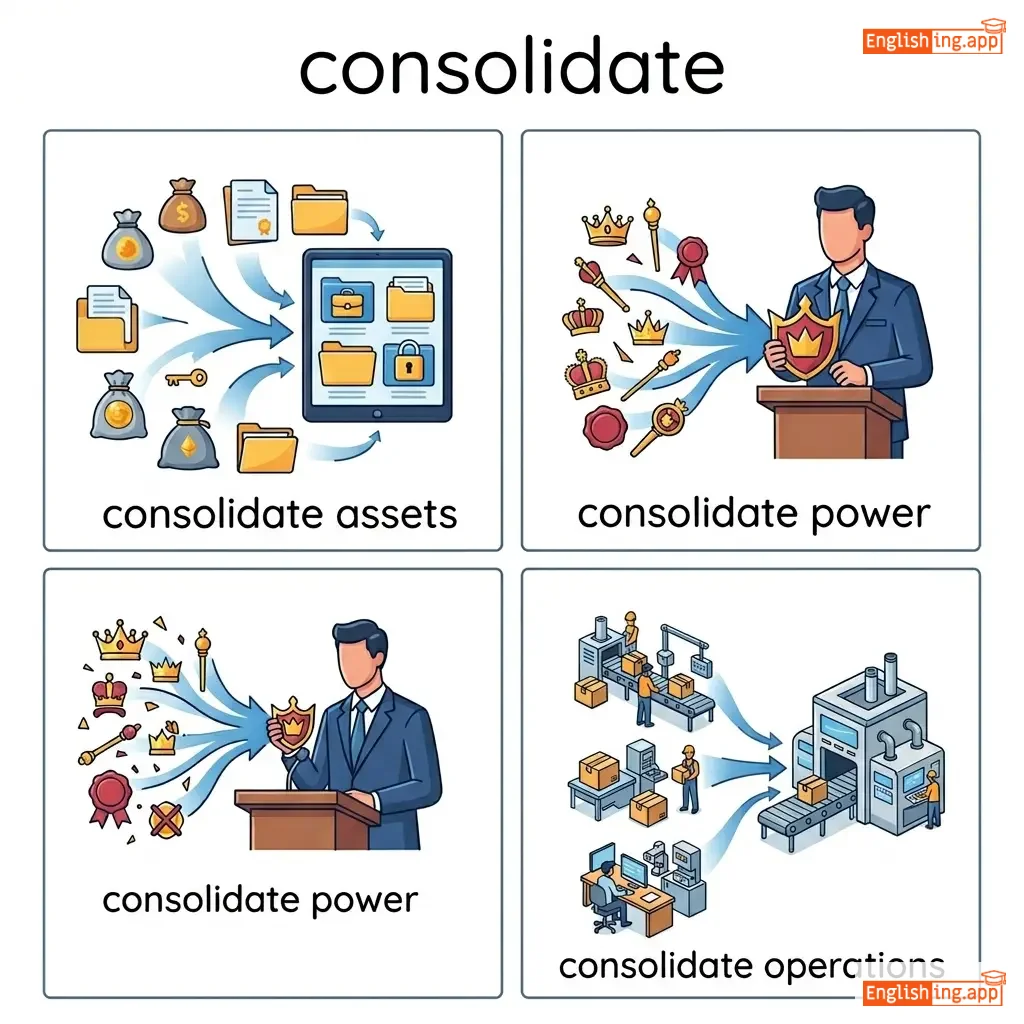
consolidate assets, consolidate power, consolidate operations
••••••
|
КонСОЛИДировать = это собрать все в одно место
••••••
|
|
🕵️
••••••
|
/kənˈspɪrəsi/
noun
(kənˈspɪrəsi)
••••••
|
- •••••• |
заговор
zagovor
••••••
|
- •••••• | - •••••• | - •••••• | - •••••• |
A secret plan by a group to do something unlawful or harmful.
••••••
|
The police uncovered a conspiracy to overthrow the government. |
Полиция раскрыла заговор по свержению правительства.
Politsiya raskryla zagovor po sverzheniyu pravitel'stva.
••••••
|
conspiracy theory |
a belief that events are secretly manipulated by powerful groups
••••••
|
теория заговора
teoriya zagovora
••••••
|
plot, scheme, intrigue, collusion, cabal
••••••
|
honesty, openness, truth
••••••
|
political conspiracy, conspiracy theory, criminal conspiracy, conspiracy to commit
••••••
|
Conspiracy = секретный план на концерте — заговор.
••••••
|
|
♾️
••••••
|
/ˈkɒn.stənt/
adjective
(констант)
••••••
|
- •••••• |
постоянный
postoyannyy
••••••
|
- •••••• | - •••••• | - •••••• | - •••••• |
happening all the time or staying the same without change
••••••
|
She lived in constant fear of losing her job. |
Она жила в постоянном страхе потерять свою работу.
Ona zhila v postoyannom strake poteryat' svoyu rabotu.
••••••
|
constant companion |
something or someone that is always present
••••••
|
постоянный спутник
postoyannyy sputnik
••••••
|
continuous, persistent, steady, perpetual
••••••
|
occasional, irregular, variable
••••••
|
constant fear, constant pressure, constant change
••••••
|
Constant значит постоянный—как солнце, которое всегда светит.
••••••
|
|
🔄
••••••
|
/ˈkɒnstəntli/
adverb
(konstantli)
••••••
|
- •••••• |
постоянно; всегда; без остановки
postoyanno; vsegda; bez ostanovki
••••••
|
- •••••• | - •••••• | - •••••• | - •••••• |
continuously over a period of time; always; without stopping
••••••
|
The baby was constantly crying throughout the night. |
Ребенок плакал постоянно всю ночь.
Rebenok plakal postoyanno vsyu noch.
••••••
|
- •••••• | - •••••• | - •••••• |
continuously, always, perpetually
••••••
|
occasionally, rarely, never
••••••
|
constantly changing, constantly moving, constantly working
••••••
|
Constantly = Постоянно, как 'постоянно' (nepreryvno) в русском языке.
••••••
|
|
🗳️
••••••
|
/kənˈstɪtʃuənsi/
noun
(кənˈстɪтʃуэнси)
••••••
|
- •••••• |
избирательный округ
izbiratel'nyy okrug
••••••
|
- •••••• | - •••••• | - •••••• | - •••••• |
A geographical area whose residents elect a representative to a legislative body.
••••••
|
She campaigned tirelessly across her constituency. |
Она неустанно вела кампанию по своему избирательному округу.
Ona neustanno vela kampaniyu po svojemu izbiratel'nomu okrugu.
••••••
|
- •••••• | - •••••• | - •••••• |
district, electorate, ward, division
••••••
|
nonelectoral area, nonvoting zone
••••••
|
electoral constituency, parliamentary constituency, within the constituency
••••••
|
Constitute + округ = Constituency на русском
••••••
|
|
⚖️
••••••
|
/ˈkɒnstɪtjuːt/
verb
(kɒnstɪtjuːt)
••••••
|
- •••••• |
составлять
sostavlyat'
••••••
|
constituted
kɒnstɪtjuːtɪd
••••••
|
constituted
kɒnstɪtjuːtɪd
••••••
|
constitutes
kɒnstɪtjuːts
••••••
|
constituting
kɒnstɪtjuːtɪŋ
••••••
|
To make up, form, or establish something.
••••••
|
These documents constitute the legal agreement between the two parties.
Эти документы составляют юридическое соглашение между двумя сторонами.
••••••
|
Эти документы составляют юридическое соглашение между двумя сторонами.
Ety dokumenty sostavlyayut yuridicheskoe soglashenie mezhdu dvumya storonami.
••••••
|
- •••••• | - •••••• | - •••••• |
comprise, form, make up, establish, create
••••••
|
exclude, destroy, abolish
••••••
|
constitute a crime, constitute an offense, constitute a majority, constitute evidence
••••••
|
Constitute означает 'составлять' – как конституция в стране.
••••••
|
|
📜
••••••
|
/ˌkɒnstɪˈtjuːʃən/
noun
(конституция)
••••••
|
|
конституция
konstituciya
••••••
|
- •••••• | - •••••• | - •••••• | - •••••• |
The system of fundamental principles according to which a nation or organization is governed.
••••••
|
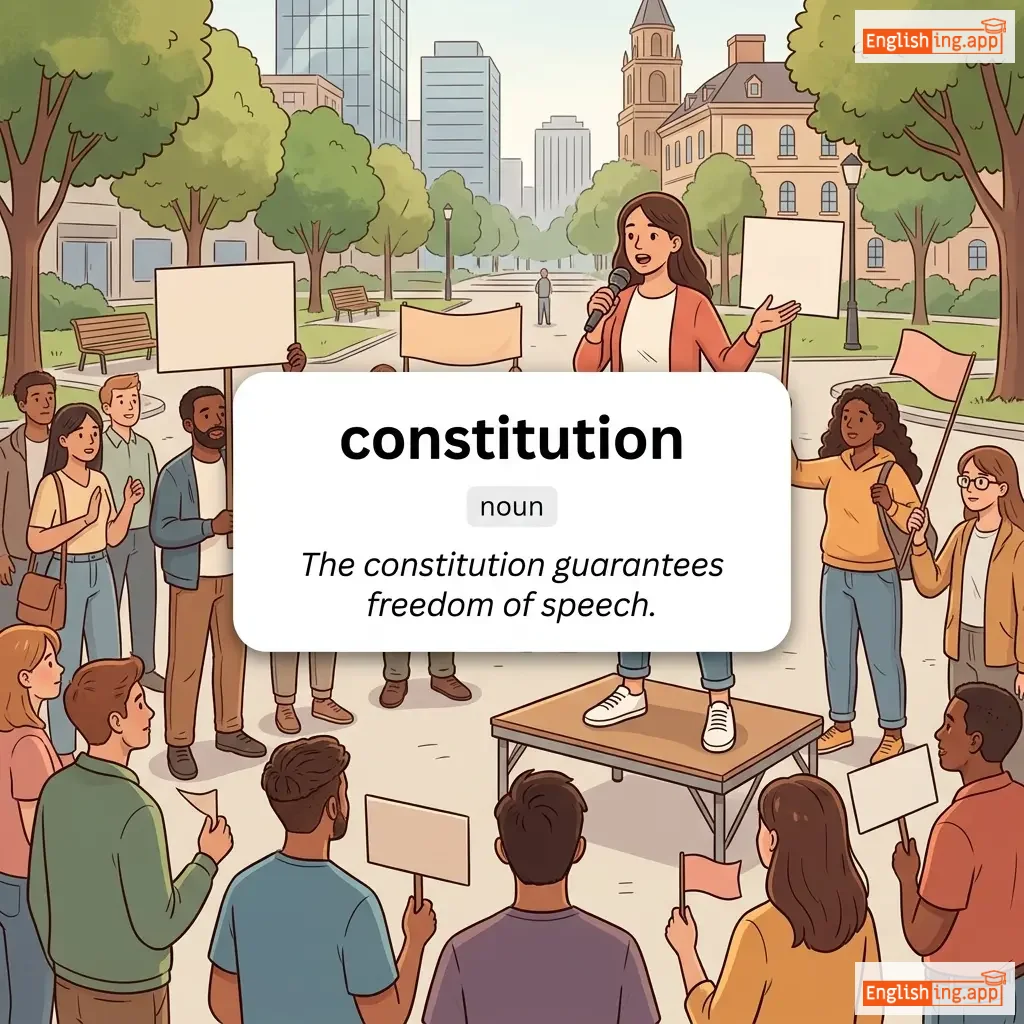
The constitution guarantees freedom of speech. |
Конституция гарантирует свободу слова.
Konstituciya garantiruet svobodu slova.
••••••
|
- •••••• | - •••••• | - •••••• |
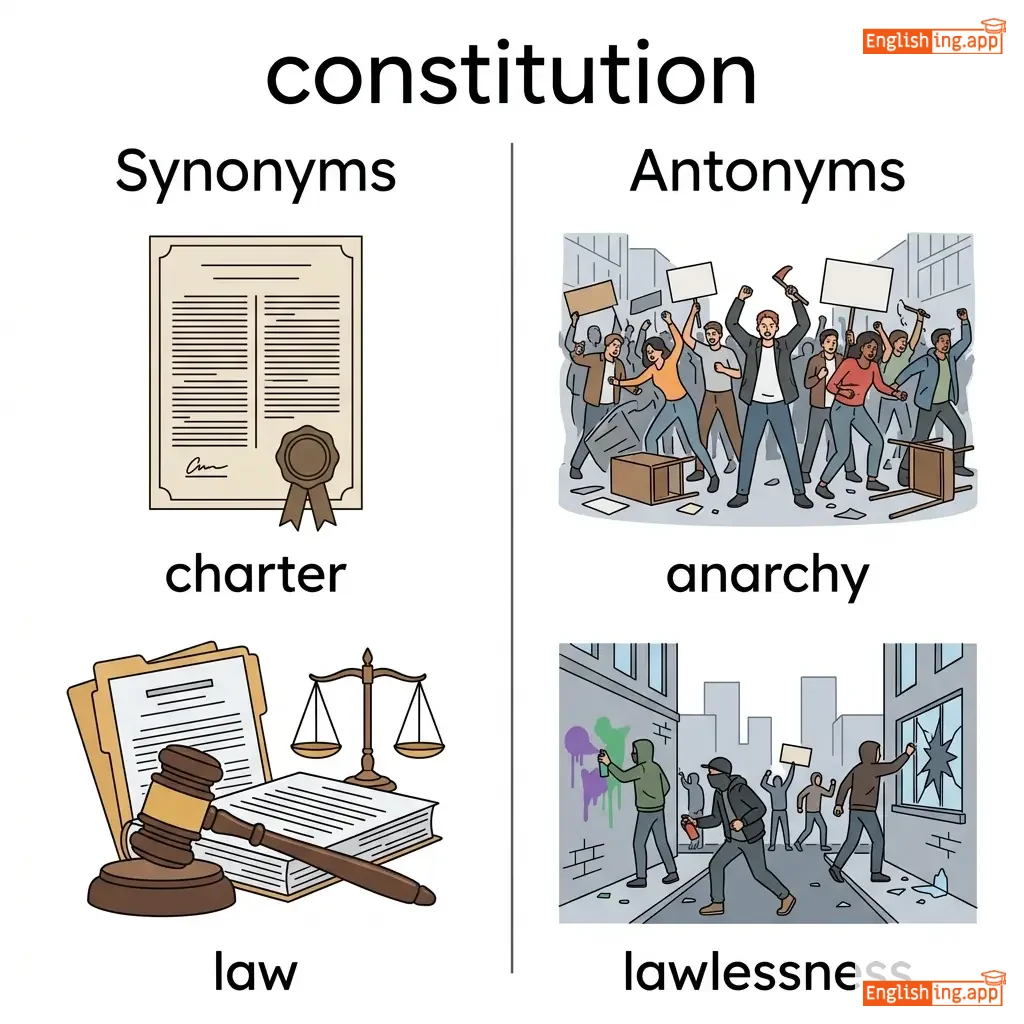
charter, law, code, framework, fundamental law
••••••
|
anarchy, lawlessness, disorder
••••••
|
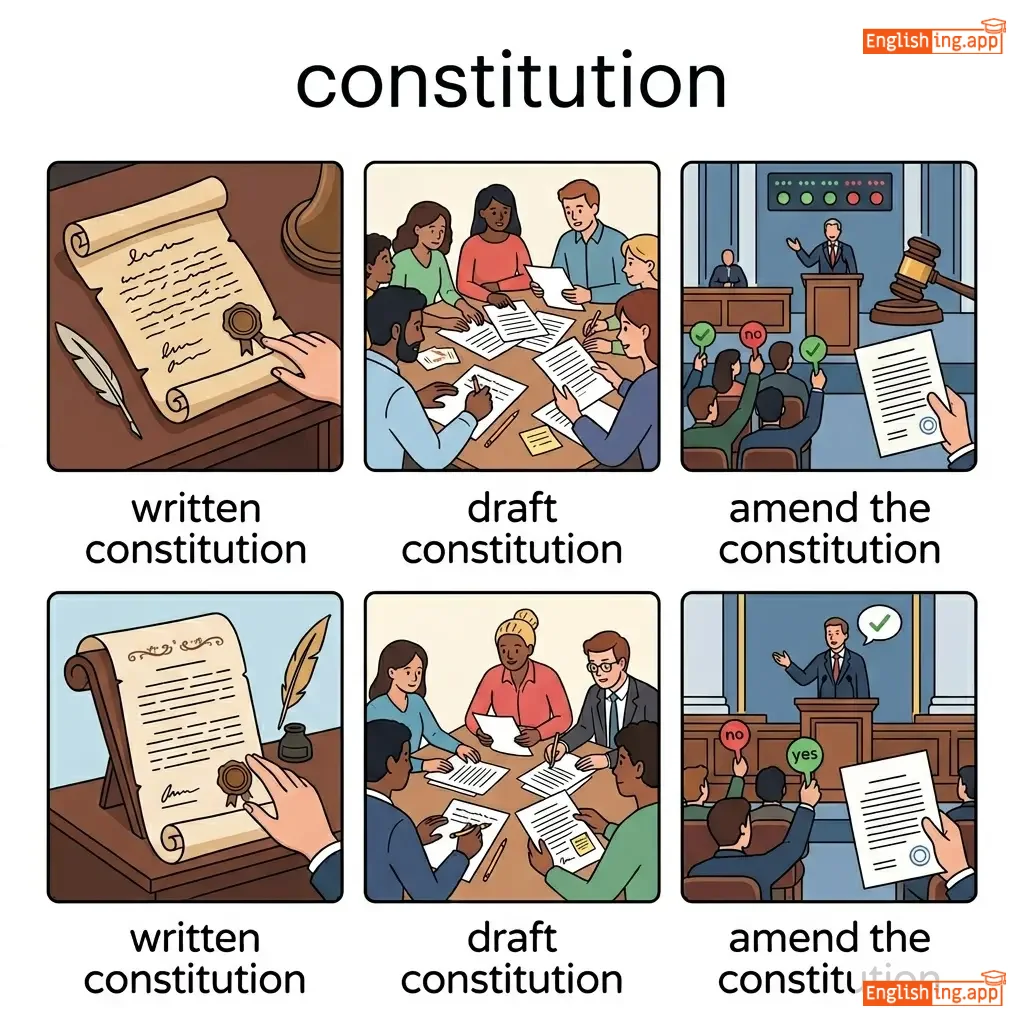
written constitution, draft constitution, amend the constitution, constitution of a country
••••••
|
Constitution = конституция – что управляет страной по 'конституционному' праву.
••••••
|
|
⚖️
••••••
|
/ˌkɒnstɪˈtjuːʃənəl/
adjective
(конституционный)
••••••
|
|
конституционный
konstitutsionny
••••••
|
- •••••• | - •••••• | - •••••• | - •••••• |
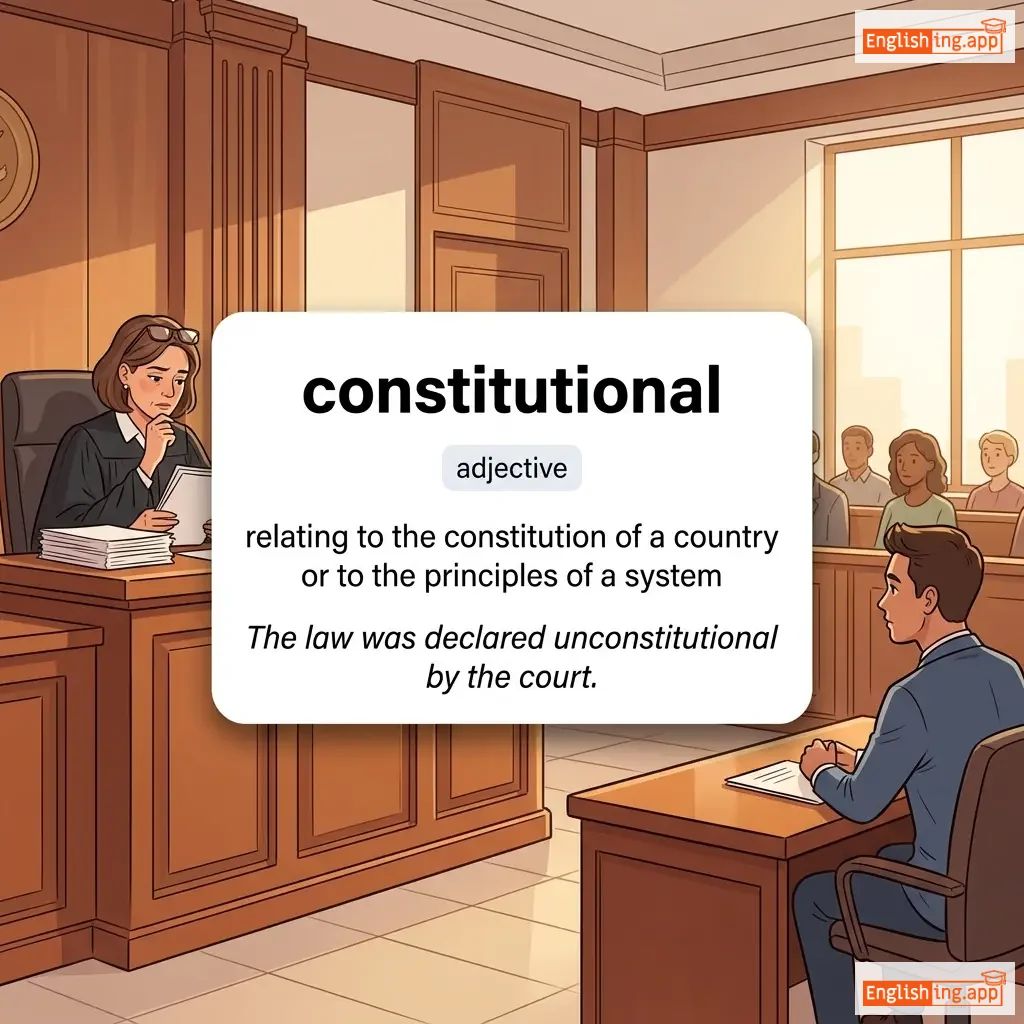
relating to the constitution of a country or to the principles of a system
••••••
|
The law was declared unconstitutional by the court.
Закон был признан неконституционным судом.
••••••
|
Закон был признан неконституционным судом.
Zakon byl prizan nekonstitutsionnym sudom.
••••••
|
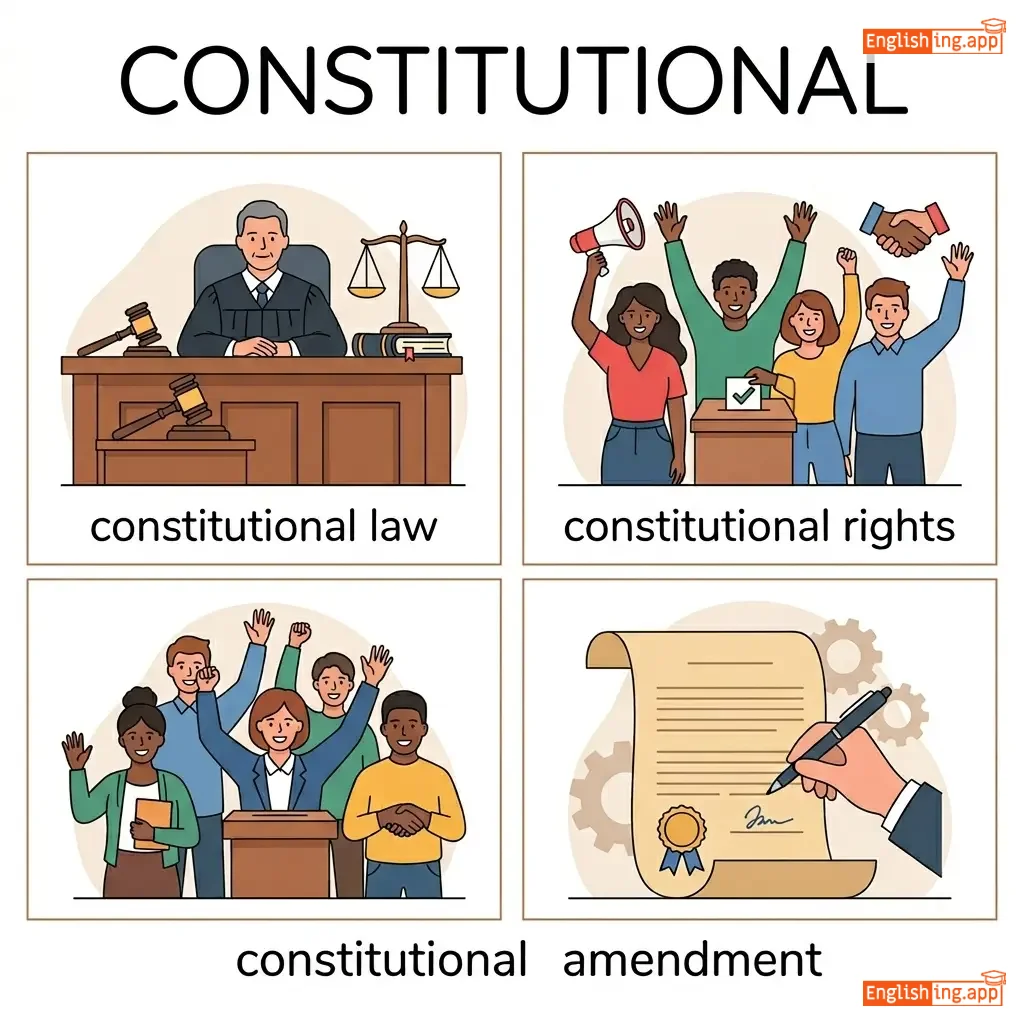
constitutional rights
конституционные права
••••••
|
basic legal rights guaranteed by a constitution
••••••
|
конституционные права
konstitutsionnye prava
••••••
|
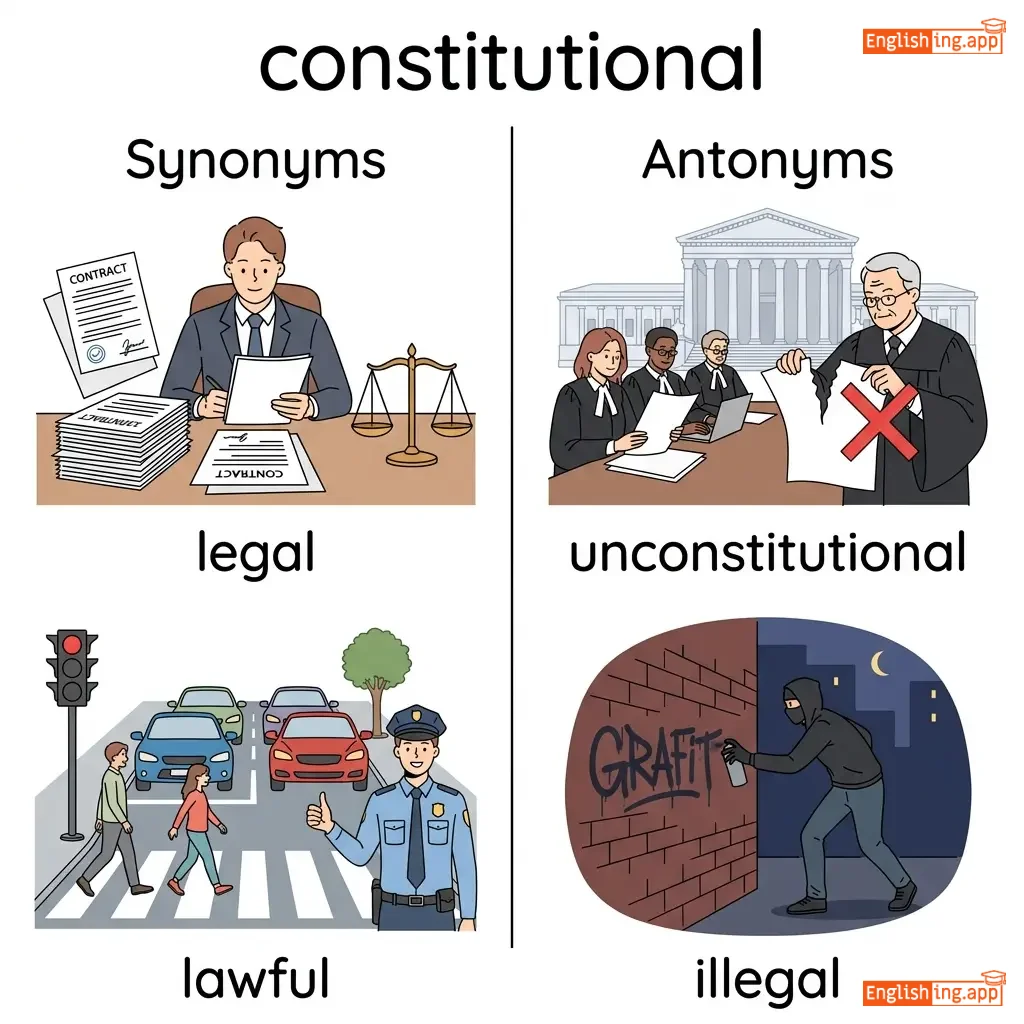
legal, lawful, legitimate, chartered
••••••
|
unconstitutional, illegal, unlawful
••••••
|
constitutional law, constitutional rights, constitutional amendment, constitutional crisis
••••••
|
конституция shield = constitutional: con-sti-tu-tion-al, relating to the constitution; запомни через образ щита конституции
••••••
|

