|
表情符号
|
单词 | Images | 翻译 | 过去时 | 过去分词 | 第三人称单数 | 动名词 | 含义 | 例句 | 例句翻译 | 示例表达 | 示例表达含义 | 示例表达翻译 | 同义词 | 反义词 | 搭配词 | 助记符 |
|---|---|---|---|---|---|---|---|---|---|---|---|---|---|---|---|---|---|
|
🙏
••••••
|
/kənˈfɛs/
verb
(kənfɛs)
••••••
|


|
承认
chéngrèn
••••••
|
confessed
kənfɛsd
••••••
|
confessed
kənfɛsd
••••••
|
confesses
kənfɛsɪz
••••••
|
confessing
kənfɛsɪŋ
••••••
|
to admit that you have done something wrong or illegal
••••••
|
He confessed that he had stolen the money.
他承认他偷了钱。
••••••
|
他承认他偷了钱。
Tā chéngrèn tā tōu le qián.
••••••
|
confess one's sins
承认罪过
••••••
|
to admit to having done wrong, often in a religious context
••••••
|
承认罪过
chéngrèn zuìguò
••••••
|
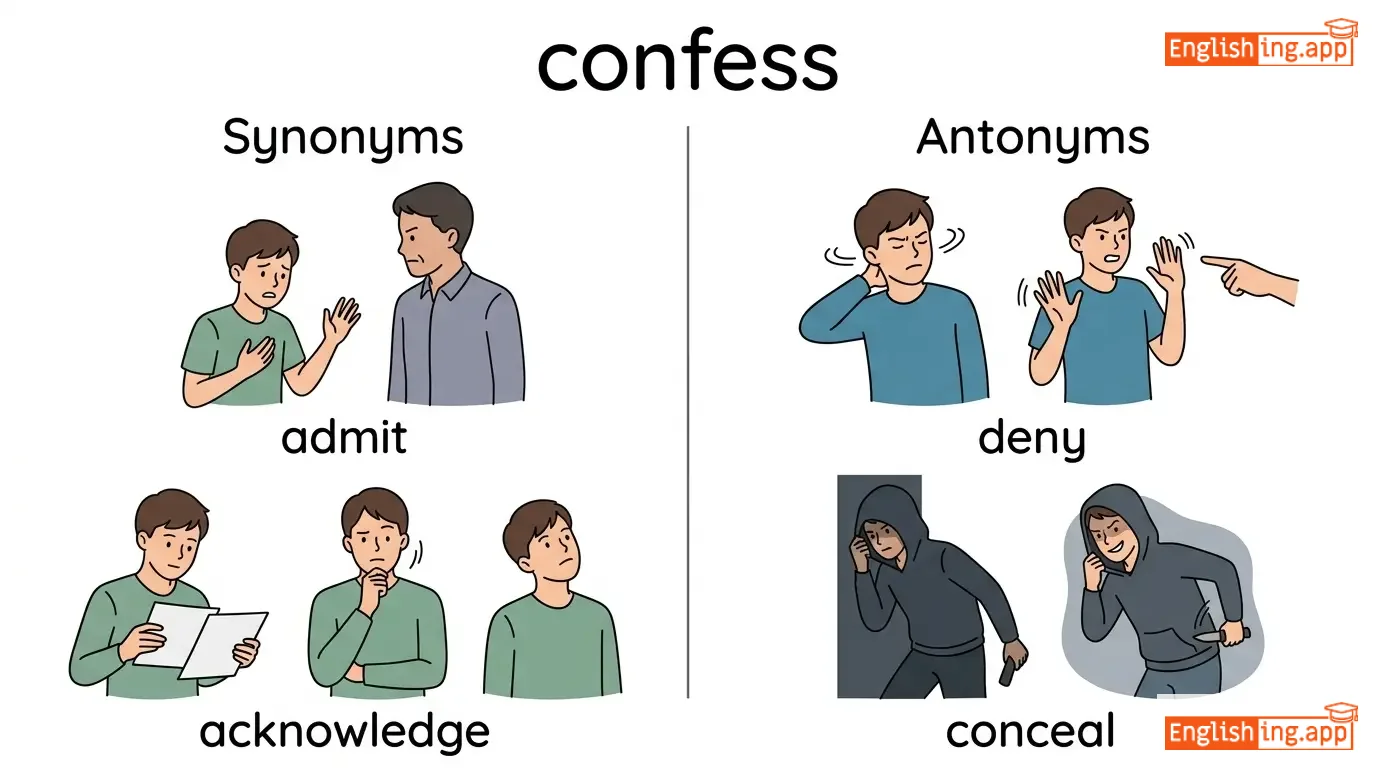
admit, acknowledge, disclose, reveal
••••••
|
deny, conceal
••••••
|
confess a crime, confess openly, confess guilt, confess sins
••••••
|
承认错误可以使心灵得到净化。
••••••
|
|
🙏
••••••
|
/kənˈfɛʃən/
noun
(忏悔)
••••••
|
- •••••• |
忏悔
chanhui
••••••
|
- •••••• | - •••••• | - •••••• | - •••••• |
a statement admitting that one is guilty of a crime or has done something wrong
••••••
|
The suspect made a full confession to the police. |
嫌疑人向警方做出了完整的忏悔。
Xianyi ren xiang jingfang zuochu le wanzheng de chanhui.
••••••
|
make a confession |
to admit to doing something wrong
••••••
|
做忏悔
zuo chanhui
••••••
|
admission, acknowledgment, declaration, disclosure, revelation
••••••
|
denial, concealment, secrecy
••••••
|
make a confession, public confession, written confession, emotional confession
••••••
|
Confession 就是认错 🙏
••••••
|
|
💪
••••••
|
/ˈkɒnfɪdəns/
noun
(kāngfí dénsī)
••••••
|
- •••••• |
自信
zìxìn
••••••
|
- •••••• | - •••••• | - •••••• | - •••••• |
The feeling or belief that one can rely on someone or something; firm trust or self-assurance.
••••••
|
She spoke with great confidence during the meeting. |
她在会议中表现出极大的自信。
Tā zài huìyì zhōng biǎoxiàn chū jí dà de zìxìn.
••••••
|
gain confidence |
To develop or increase trust in oneself or in a situation
••••••
|
获得自信
huòqǔ zìxìn
••••••
|
trust, assurance, belief, faith, certainty
••••••
|
doubt, insecurity, mistrust
••••••
|
self confidence, boost confidence, lose confidence, build confidence
••••••
|
自信让你像一颗大星星一样发光!
••••••
|
|
😌
••••••
|
/ˈkɒnfɪdənt/
adjective
(kǒn-fí-dènt)
••••••
|
- •••••• |
自信
zìxìn
••••••
|
- •••••• | - •••••• | - •••••• | - •••••• |
feeling or showing certainty about something; having self-assurance
••••••
|
She was confident about her ability to succeed. |
她对自己能够成功充满自信。
Tā duì zìjǐ nénggòu chénggōng chōngmǎn zìxìn.
••••••
|
confident smile |
a smile that shows assurance and self-belief
••••••
|
自信的微笑
zìxìn de wēixiào
••••••
|
assured, certain, secure, self-assured, optimistic
••••••
|
insecure, uncertain, doubtful
••••••
|
confident manner, confident attitude, feel confident, become confident
••••••
|
Confidence就是自信 — 自信的微笑代表你能做到。
••••••
|
|
🔧
••••••
|
/kənˌfɪɡəˈreɪʃən/
noun
(配置)
••••••
|
- •••••• |
配置
peizhi
••••••
|
- •••••• | - •••••• | - •••••• | - •••••• |
an arrangement of parts or elements in a particular form or structure
••••••
|
The configuration of the system needs to be adjusted for better performance.
系统配置需要调整以提高性能。
••••••
|
系统配置需要调整以提高性能。
Xitong peizhi xuyao tiaozheng yi tigao xingneng.
••••••
|
- •••••• | - •••••• | - •••••• |
arrangement, layout, setup, structure
••••••
|
disorder, chaos
••••••
|
system configuration, network configuration, device configuration
••••••
|
配置 = 系统如何安排元素
••••••
|
|
🚪
••••••
|
/kənˈfaɪn/
verb
(kāngfǎn)
••••••
|
|
限制
xiànzhì
••••••
|
confined
kāngfàind
••••••
|
confined
kāngfàind
••••••
|
confines
kāngfàins
••••••
|
confining
kāngfǎnɪnɡ
••••••
|
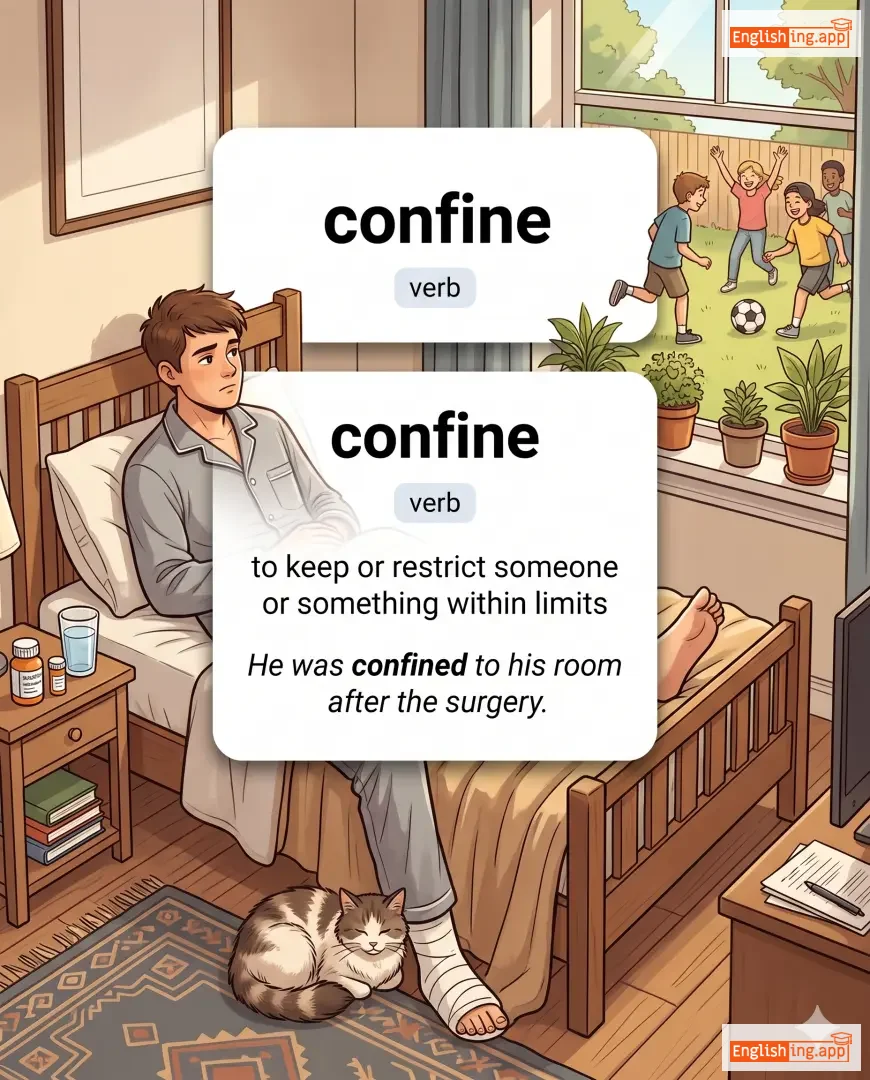
to keep or restrict someone or something within limits
••••••
|
He was confined to his room after the surgery.
他在手术后被限制在他的房间里。
••••••
|
他在手术后被限制在他的房间里。
Tā zài shǒushù hòu bèi xiànzhì zài tā de fángjiān lǐ.
••••••
|
confined space
受限空间
••••••
|
a small or restricted area
••••••
|
受限空间
shòuxiàn kōngjiān
••••••
|
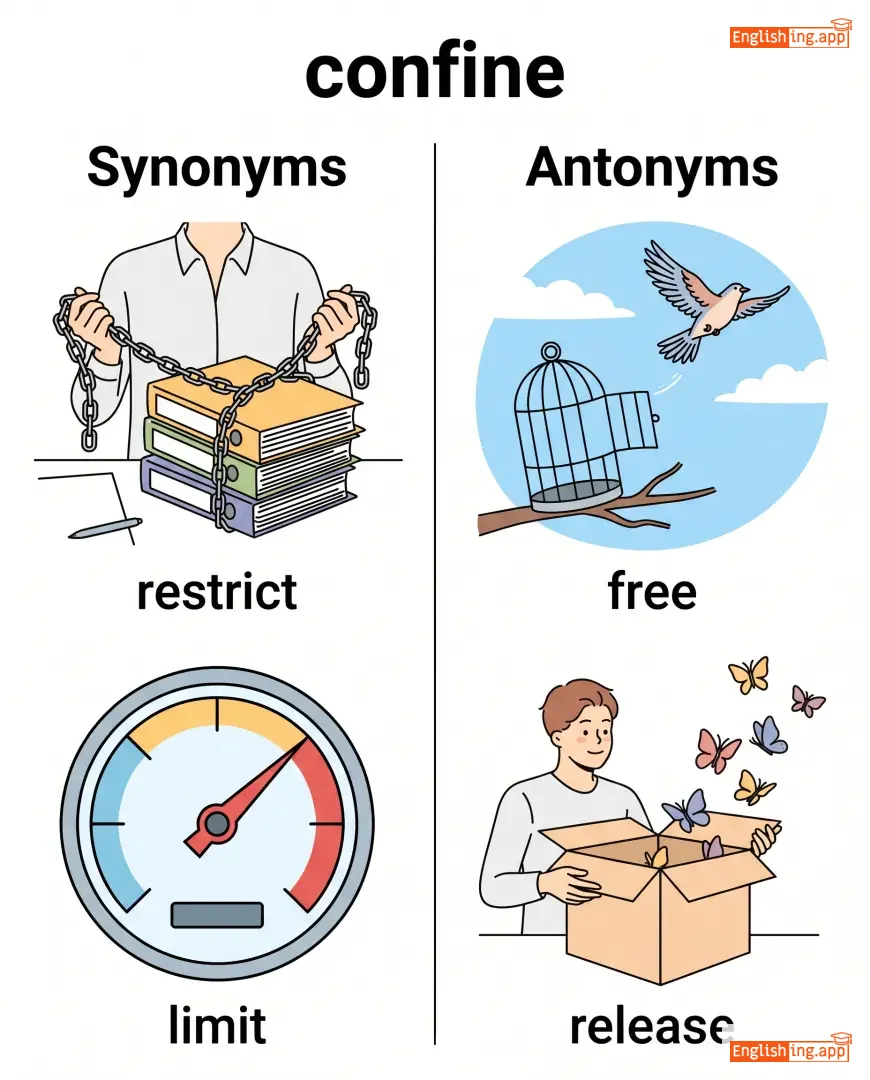
restrict, limit, restrain, enclose, imprison
••••••
|
free, release, liberate
••••••
|
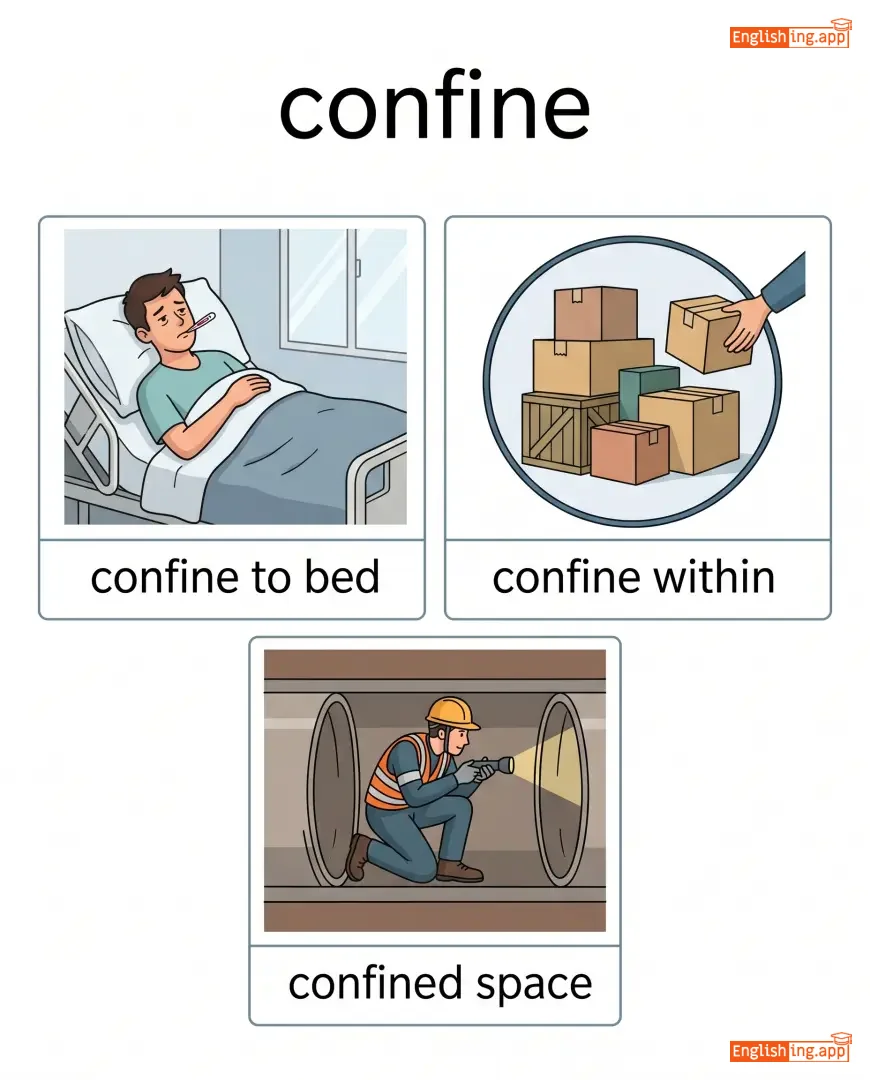
confine to bed, confine within, confined space, confine attention
••••••
|
Confine 就是限制,像是 '限制' 就是 'finite' (有限) 的意思。
••••••
|
|
✅
••••••
|
/kənˈfɜːrm/
verb
(kənˈfɜːrm)
••••••
|
- •••••• |
确认
queren
••••••
|
confirmed
kənˈfɜːrmd
••••••
|
confirmed
kənˈfɜːrmd
••••••
|
confirms
kənˈfɜːrmz
••••••
|
confirming
kənˈfɜːrmɪŋ
••••••
|
to establish the truth, accuracy, or validity of something
••••••
|
The hotel will confirm your reservation by email.
酒店将通过电子邮件确认您的预订。
••••••
|
酒店将通过电子邮件确认您的预订。
Jiudian jiang tongguo dianzi youjian queren nin de yuding.
••••••
|
confirm receipt
确认收据
••••••
|
to acknowledge that something has been received
••••••
|
确认收据
queren shouju
••••••
|
verify, validate, affirm, approve, corroborate
••••••
|
deny, reject, contradict
••••••
|
confirm booking, confirm details, confirm attendance, confirm identity
••••••
|
确认在中文里意味着确保,像是确认一笔订单。
••••••
|
|
✔️
••••••
|
/kənˌfɜːˈmeɪʃən/
noun
(kənˈfɜːrmeɪʃən)
••••••
|
- •••••• |
确认
queren
••••••
|
- •••••• | - •••••• | - •••••• | - •••••• |
the action of confirming something or the state of being confirmed
••••••
|
She received a confirmation email for her appointment.
她收到了她预约的确认电子邮件。
••••••
|
她收到了她预约的确认电子邮件。
Tā shōudàole tā yùyuē de quèrèn diànzǐ yóujiàn.
••••••
|
- •••••• | - •••••• | - •••••• |
verification, affirmation, validation, endorsement
••••••
|
denial, rejection, disapproval
••••••
|
confirmation email, confirmation number, confirmation letter
••••••
|
Confirm your phone number to get the confirmation of your appointment.
••••••
|
|
⚔️
••••••
|
/ˈkɒnflɪkt/
noun
(kónflɪkt)
••••••
|
- •••••• |
冲突
chōngtū
••••••
|
- •••••• | - •••••• | - •••••• | - •••••• |
A serious disagreement or argument, often a prolonged one.
••••••
|
The two countries are trying to resolve the conflict through negotiations. |
这两个国家正在通过谈判解决冲突。
Zhè liǎng gè guójiā zhèngzài tōngguò tánpàn jiějué chōngtū.
••••••
|
conflict of interest |
A situation where someone's personal interest might influence their professional decisions.
••••••
|
利益冲突
lìyì chōngtū
••••••
|
clash, struggle, fight, dispute, battle
••••••
|
agreement, harmony, peace
••••••
|
armed conflict, internal conflict, conflict resolution, conflict management
••••••
|
冲突 – 就是意见的碰撞 – 在中国,'冲突'表示持续的争执或不和。
••••••
|
|
⚔️
••••••
|
/kənˈfrʌnt/
verb
(对抗)
••••••
|
- •••••• |
面对
miànduì
••••••
|
confronted
对抗了
••••••
|
confronted
对抗过
••••••
|
confronts
对抗
••••••
|
confronting
对抗中
••••••
|
to face someone or something directly, especially in a challenge or conflict
••••••
|
She had to confront her fears before making the speech.
她在演讲前必须面对自己的恐惧。
••••••
|
她在演讲前必须面对自己的恐惧。
Tā zài yǎnjiǎng qián bìxū miànduì zìjǐ de kǒngjù.
••••••
|
confront the issue
面对问题
••••••
|
to directly deal with a problem instead of avoiding it
••••••
|
面对问题
miànduì wèntí
••••••
|
face, challenge, oppose, encounter
••••••
|
avoid, evade, dodge
••••••
|
confront danger, confront the truth, confront directly, confront the problem
••••••
|
Confront 的意思是面对 — 站在前面直面挑战!
••••••
|
|
⚔️
••••••
|
/ˌkɑn.frənˈteɪ.ʃən/
noun
(kɑnfrənˈteɪʃən)
••••••
|
- •••••• |
对抗
duìkàng
••••••
|
- •••••• | - •••••• | - •••••• | - •••••• |
a hostile or argumentative meeting or situation between opposing parties; direct challenge or opposition
••••••
|
The confrontation between the two leaders ended without any agreement.
两位领导人之间的对抗以没有任何协议结束。
••••••
|
两位领导人之间的对抗以没有任何协议结束。
Liǎng wèi lǐngdǎo rén zhī jiān de duìkàng yǐ méiyǒu rènhé xiéyì jiéshù.
••••••
|
- •••••• | - •••••• | - •••••• |
conflict, clash, dispute, face-off
••••••
|
agreement, cooperation, harmony, peace
••••••
|
avoid confrontation, violent confrontation, direct confrontation
••••••
|
对抗 - 两方在同一场合进行直接的对立和争论。
••••••
|
|
😕
••••••
|
/kənˈfjuːz/
verb
(kənfjuːz)
••••••
|
- •••••• |
混淆
hùnxiáo
••••••
|
confused
kənfjuːzd
••••••
|
confused
kənfjuːzd
••••••
|
confuses
kənfjuːzəs
••••••
|
confusing
kənfjuːzɪŋ
••••••
|
To make someone unable to think clearly; to bewilder.
••••••
|
The complex instructions confused the students.
复杂的指示使学生感到困惑。
••••••
|
复杂的指示使学生感到困惑。
Fùzá de zhǐshì shǐ xuéshēng gǎndào kùnhuò.
••••••
|
confuse someone with someone else
把某人和别人混淆
••••••
|
To mistake one person for another.
••••••
|
把某人和别人混淆
Bǎ mǒu rén hé biérén hùnxiáo
••••••
|
perplex, puzzle, bewilder, baffle
••••••
|
clarify, explain
••••••
|
confuse the issue, confuse the audience, confuse easily
••••••
|
Confuse = 混淆 = 困惑
••••••
|
|
😕
••••••
|
/kənˈfjuːzd/
adjective
(康菲尤兹德)
••••••
|
- •••••• |
困惑的
kunhuode
••••••
|
- •••••• | - •••••• | - •••••• | - •••••• |
unable to think clearly; uncertain or puzzled
••••••
|
She felt confused by the complicated instructions.
西 费尔特 康菲尤兹德 拜 德 康普利凯特德 因斯特拉克申斯。
••••••
|
她被复杂的指示弄得很困惑。
ta bei fuzade zhishi nong de hen kunhuo
••••••
|
feel confused
菲尔 康菲尤兹德
••••••
|
to be unable to understand something clearly
••••••
|
感到困惑
gandao kunhuo
••••••
|
puzzled, bewildered, perplexed, uncertain, muddled
••••••
|
clear, certain, confident
••••••
|
feel confused, look confused, confused expression, confused mind
••••••
|
Confused = 困惑的,心里一团乱!
••••••
|
|
😕
••••••
|
/kənˈfjuːzɪŋ/
adjective
(肯福油辛)
••••••
|
- •••••• |
令人困惑的
ling ren kun huo de
••••••
|
- •••••• | - •••••• | - •••••• | - •••••• |
causing someone to be unable to think clearly or understand; difficult to comprehend
••••••
|
The instructions were confusing and hard to follow.
德 因斯特拉克申 维尔 肯福油辛 安德 哈德 图 佛洛。
••••••
|
这些说明令人困惑,很难遵循。
zhe xie shuo ming ling ren kun huo hen nan zun xun
••••••
|
- •••••• | - •••••• | - •••••• |
perplexing, puzzling, bewildering, unclear, baffling
••••••
|
clear, understandable, straightforward
••••••
|
confusing situation, confusing instructions, confusing message, confusing rules
••••••
|
confusing 听起来像困惑
••••••
|
|
😕
••••••
|
/kənˈfjuːʒən/
noun
(困惑)
••••••
|
- •••••• |
困惑
kùnhuò
••••••
|
- •••••• | - •••••• | - •••••• | - •••••• |
a state of being bewildered or unclear in one’s mind
••••••
|
The sudden change in schedule caused a lot of confusion. |
时间表的突然变化引起了许多困惑。
Shíjiān biǎo de túrán biànhuà yǐnqǐle xǔduō kùnhuò.
••••••
|
in confusion |
in a state of disorder or uncertainty
••••••
|
困惑中
kùnhuò zhōng
••••••
|
uncertainty, disorder, chaos, puzzlement
••••••
|
clarity, order, certainty
••••••
|
confusion arises, confusion caused, create confusion, confusion about
••••••
|
困惑就是当一切不清楚时,心里就像迷失方向。
••••••
|
|
🎉
••••••
|
/kənˈɡrætʃʊleɪt/
verb
(kənˈɡrætʃʊleɪt)
••••••
|
- •••••• |
祝贺
zhùhè
••••••
|
congratulated
kənˈɡrætʃʊleɪtɪd
••••••
|
congratulated
kənˈɡrætʃʊleɪtɪd
••••••
|
congratulates
kənˈɡrætʃʊleɪts
••••••
|
congratulating
kənˈɡrætʃʊleɪtɪŋ
••••••
|
to praise someone for an achievement or for a special occasion
••••••
|
I want to congratulate you on your promotion.
我想祝贺你晋升。
••••••
|
我想祝贺你晋升。
Wǒ xiǎng zhùhè nǐ jìnshēng.
••••••
|
- •••••• | - •••••• | - •••••• |
praise, compliment, applaud, honor
••••••
|
criticize, scold, blame
••••••
|
congratulate on, congratulate someone, congratulate for
••••••
|
Zhùhè is the Chinese word for congratulations, so say 'zhùhè' to them!
••••••
|
|
🎉
••••••
|
/kənˌɡrætʃəˈleɪʃən/
noun
(康格拉丘雷申)
••••••
|
- •••••• |
祝贺
zhuhe
••••••
|
- •••••• | - •••••• | - •••••• | - •••••• |
an expression of praise or joy for someone’s achievement or good fortune
••••••
|
She sent a congratulation to her friend on winning the award.
西 森特 额 康格拉丘雷申 图 赫 弗伦德 昂 威宁 德 阿沃德。
••••••
|
她向朋友送上了获奖的祝贺。
ta xiang pengyou song shangle huojiang de zhuhe
••••••
|
offer one’s congratulations
奥弗 万兹 康格拉丘雷申
••••••
|
to formally express praise or happiness for someone’s success
••••••
|
表示祝贺
biaoshi zhuhe
••••••
|
praise, commendation, felicitation, applause
••••••
|
condolence, criticism
••••••
|
send a congratulation, warm congratulation, heartfelt congratulation, official congratulation
••••••
|
Zhuhe = say joyfully for success = congratulation
••••••
|
|
🏛️
••••••
|
/ˈkɒŋɡrɛs/
noun
(kāngrè sī)
••••••
|
- •••••• |
大会
dàhuì
••••••
|
- •••••• | - •••••• | - •••••• | - •••••• |
a formal meeting or assembly, especially of representatives for discussion
••••••
|
The international congress on climate change will be held next year. |
关于气候变化的国际大会将在明年举行。
Guānyú qìhòu biànhuà de guójì dàhuì jiāng zài míngnián jǔxíng.
••••••
|
- •••••• | - •••••• | - •••••• |
assembly, meeting, convention, conference
••••••
|
individual, separation
••••••
|
national congress, international congress, hold congress, annual congress
••••••
|
大会是一个正式的集会,就像政治大会一样,大家来讨论问题。
••••••
|
|
📜
••••••
|
/kənˈɡrɛʃənl/
adjective
(kənˈɡrɛʃənl)
••••••
|
- •••••• |
国会的
guóhuì de
••••••
|
- •••••• | - •••••• | - •••••• | - •••••• |
relating to a congress, especially the US Congress
••••••
|
The bill received strong congressional support. |
该法案获得了强烈的国会支持。
Gāi fǎ'àn huòdéle qiángliè de guóhuì zhīchí.
••••••
|
- •••••• | - •••••• | - •••••• |
legislative, parliamentary, governmental, political
••••••
|
individual, unofficial
••••••
|
congressional hearing, congressional approval, congressional committee, congressional election
••••••
|
Congressional 代表与国会有关。
••••••
|
|
💍
••••••
|
/ˈkɒndʒʊɡəl/
adjective
(kōngjūgǎo)
••••••
|



|
婚姻的
hūnyīn de
••••••
|
- •••••• | - •••••• | - •••••• | - •••••• |
relating to marriage or the relationship between husband and wife
••••••
|
They enjoyed a long life of conjugal happiness. |
他们享受了长久的婚姻幸福生活。
Tāmen xiǎngshòule chángjiǔ de hūnyīn xìngfú shēnghuó.
••••••
|
conjugal rights |
the rights enjoyed by married partners, especially sexual relations
••••••
|
婚姻权利
hūnyīn quánlì
••••••
|
marital, matrimonial, spousal, wedded
••••••
|
celibate, single
••••••
|
conjugal life, conjugal relationship, conjugal duties
••••••
|
婚姻生活 = 婚姻中的生活 - 婚姻 = 夫妻生活。
••••••
|
|
🔗
••••••
|
/kəˈnɛkt/
verb
(科奈特)
••••••
|

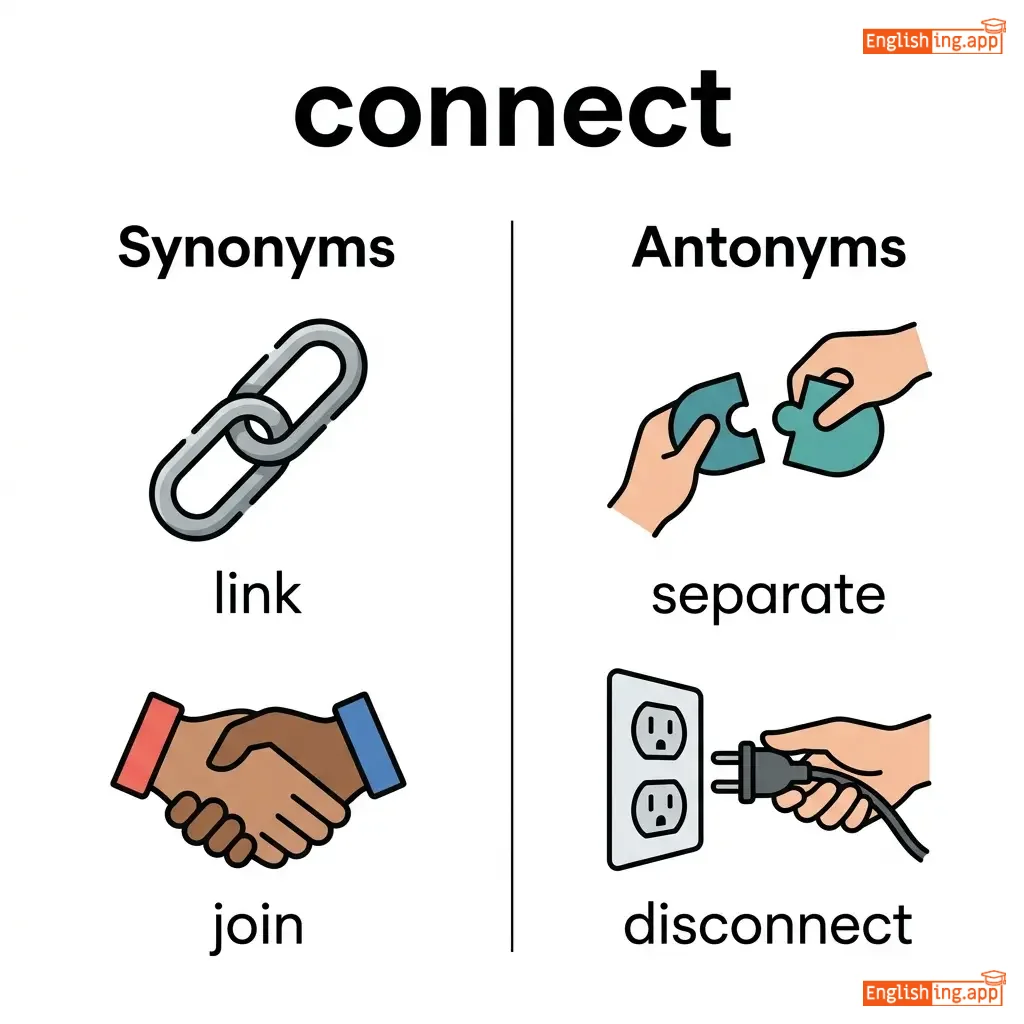
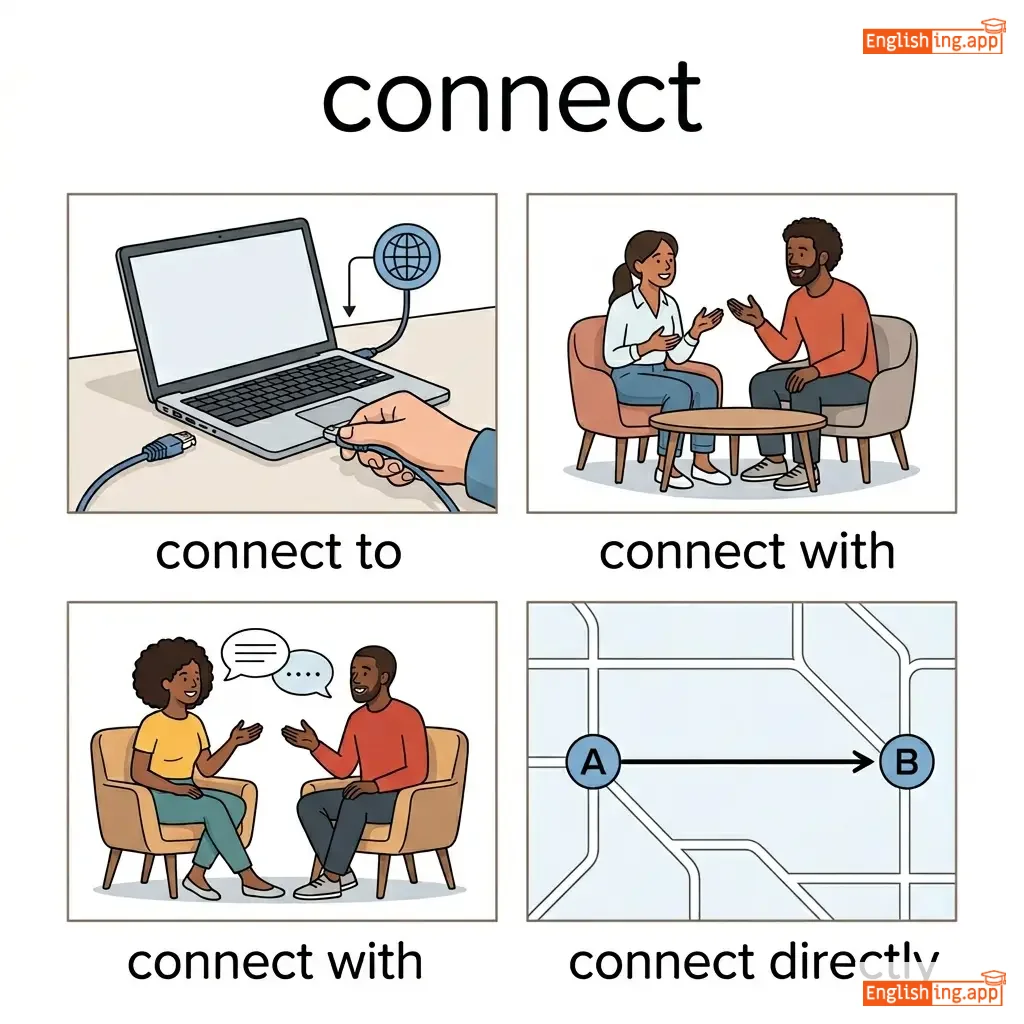
|
连接
lianjie
••••••
|
connected
连接
••••••
|
connected
连接
••••••
|
connects
连接
••••••
|
connecting
连接中
••••••
|
to join or link two or more things together
••••••
|
The new bridge will connect the two cities.
新桥将连接这两个城市。
••••••
|
新桥将连接这两个城市。
Xin qiao jiang lianjie zhe liang ge chengshi.
••••••
|
connect the dots
连接点
••••••
|
to understand the relationship between different ideas or facts
••••••
|
连接点
lianjie dian
••••••
|
link, join, attach, unite, couple
••••••
|
separate, disconnect, divide
••••••
|
connect to, connect with, connect directly, connect easily
••••••
|
Connect 意味着连接 — 就像你将手机连接到Wi-Fi以获取互联网访问权限。
••••••
|
|
🔗
••••••
|
/kəˈnɛkʃən/
noun
(连接)
••••••
|
- •••••• |
连接
lianjie
••••••
|
- •••••• | - •••••• | - •••••• | - •••••• |
a relationship in which a person, thing, or idea is linked or associated with something else
••••••
|
There is a strong connection between exercise and health. |
运动和健康之间有着紧密的联系。
Yundong he jiankang zhijian youzhe jinmi de lianxi.
••••••
|
make a connection |
to establish a relationship or link with someone or something
••••••
|
建立联系
Jianli lianxi
••••••
|
link, relationship, bond, association, tie
••••••
|
disconnection, separation, detachment
••••••
|
internet connection, family connection, business connection, strong connection
••••••
|
Connection意味着连接,就像有互联网连接时,一切都与之相关。
••••••
|
|
⚔️
••••••
|
/ˈkɒŋkər/
verb
(kóngkè)
••••••
|

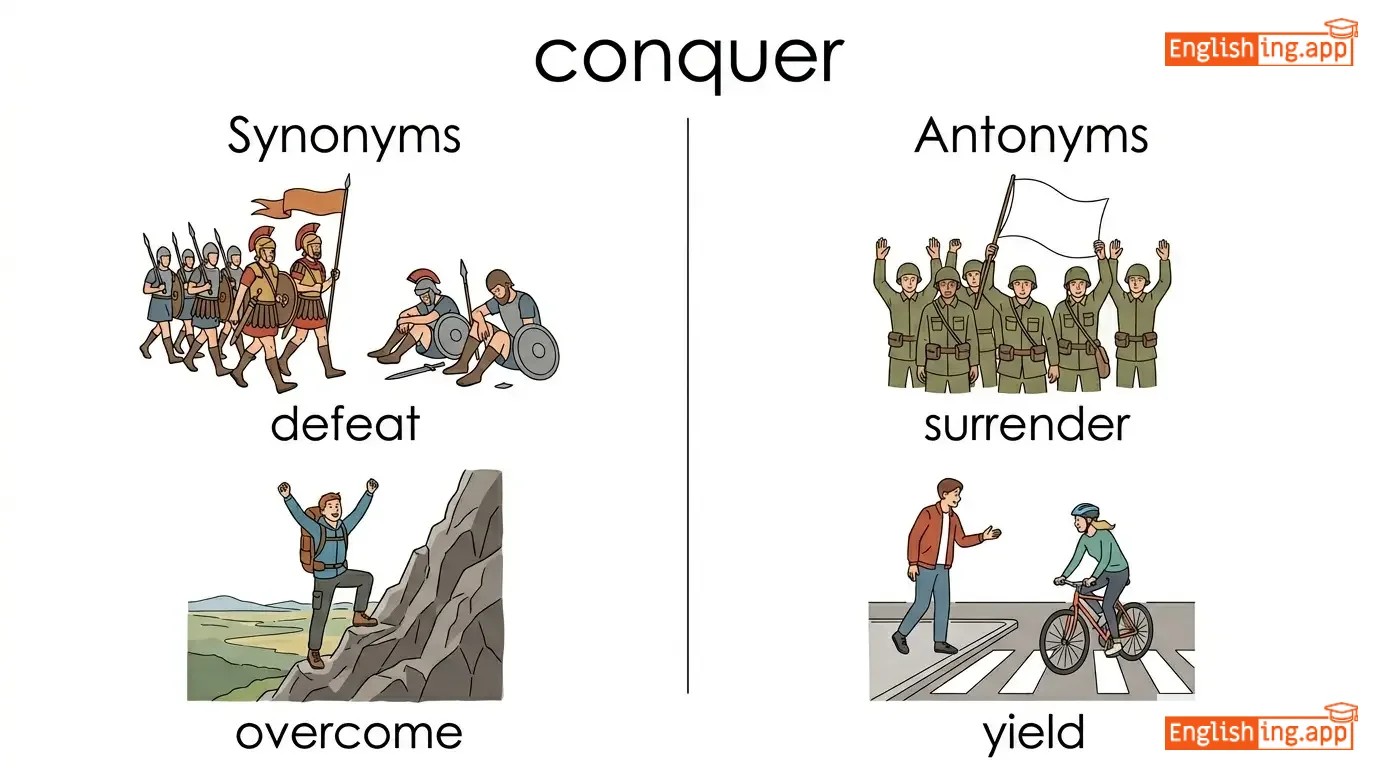
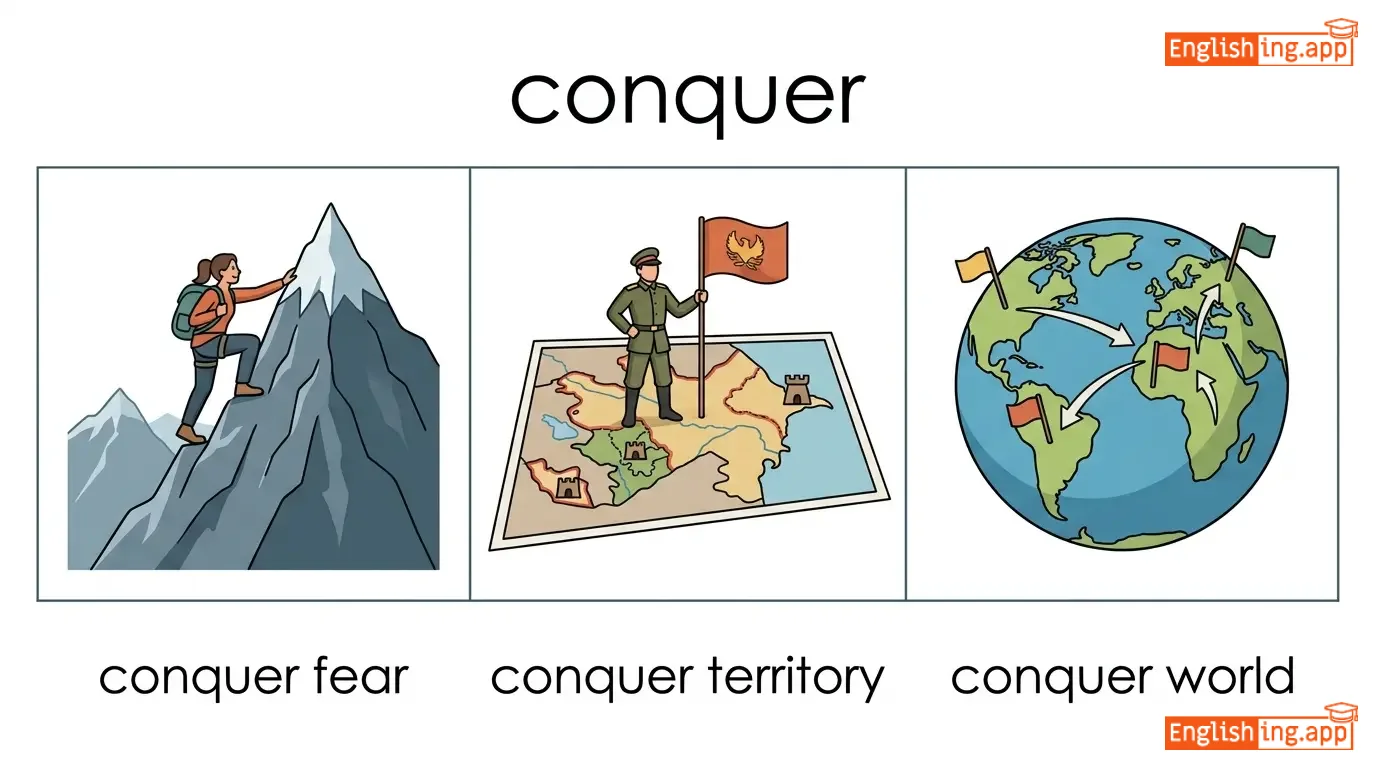
|
征服
zhēngfú
••••••
|
conquered
kóngkèd
••••••
|
conquered
kóngkèd
••••••
|
conquers
kóngkèz
••••••
|
conquering
kóngkèɹɪŋ
••••••
|
To defeat and take control of a place or people by force.
••••••
|
The king set out to conquer new lands.
国王出发征服新土地。
••••••
|
国王出发征服新土地。
guówáng chūfā zhēngfú xīn tǔdì.
••••••
|
conquer your fears
征服你的恐惧
••••••
|
To overcome or defeat your fears.
••••••
|
征服你的恐惧
zhēngfú nǐ de kǒngjù
••••••
|
defeat, overcome, vanquish, subdue, master
••••••
|
surrender, yield, lose
••••••
|
conquer fear, conquer territory, conquer world, conquer disease
••••••
|
征服就像成吉思汗征服了世界。
••••••
|
|
🧠
••••••
|
/ˈkɒnʃəns/
noun
(kǎnxiǎnsī)
••••••
|
- •••••• |
良心
liángxīn
••••••
|
- •••••• | - •••••• | - •••••• | - •••••• |
An inner sense of right and wrong that guides a person's actions.
••••••
|
Her conscience told her to admit the mistake. |
她的良心告诉她承认错误。
Tā de liángxīn gàosù tā chéngrèn cuòwù.
••••••
|
a guilty conscience |
A feeling of guilt caused by knowing you have done something wrong.
••••••
|
内疚的良心
nèi jiù de liángxīn
••••••
|
morality, ethics, principles, scruples, integrity
••••••
|
immorality, corruption, wickedness
••••••
|
clear conscience, guilty conscience, prick of conscience
••••••
|
良心 (liángxīn) - 如同你的内心向你讲述是非。
••••••
|
|
👁️
••••••
|
/ˈkɒnʃəs/
adjective
(kɔːnʃəs)
••••••
|
- •••••• |
清醒
qingxing
••••••
|
- •••••• | - •••••• | - •••••• | - •••••• |
Aware of and responding to one's surroundings; awake.
••••••
|
She was fully conscious after the surgery.
她在手术后完全清醒。
••••••
|
她在手术后完全清醒。
Tā zài shǒushù hòu wánquán qīngxǐng.
••••••
|
lose consciousness
失去意识
••••••
|
To become unconscious or faint.
••••••
|
失去意识
shīqù yìshí
••••••
|
aware, alert, awake, mindful, responsive
••••••
|
unconscious, unaware, oblivious
••••••
|
conscious mind, fully conscious, conscious effort
••••••
|
清醒意味着通过耳朵(con)来听,保持警觉。
••••••
|
|
🧠
••••••
|
/ˈkɒnʃəsnəs/
noun
(kōngshí'ěr nà sī)
••••••
|
|
意识
yìshi
••••••
|
- •••••• | - •••••• | - •••••• | - •••••• |
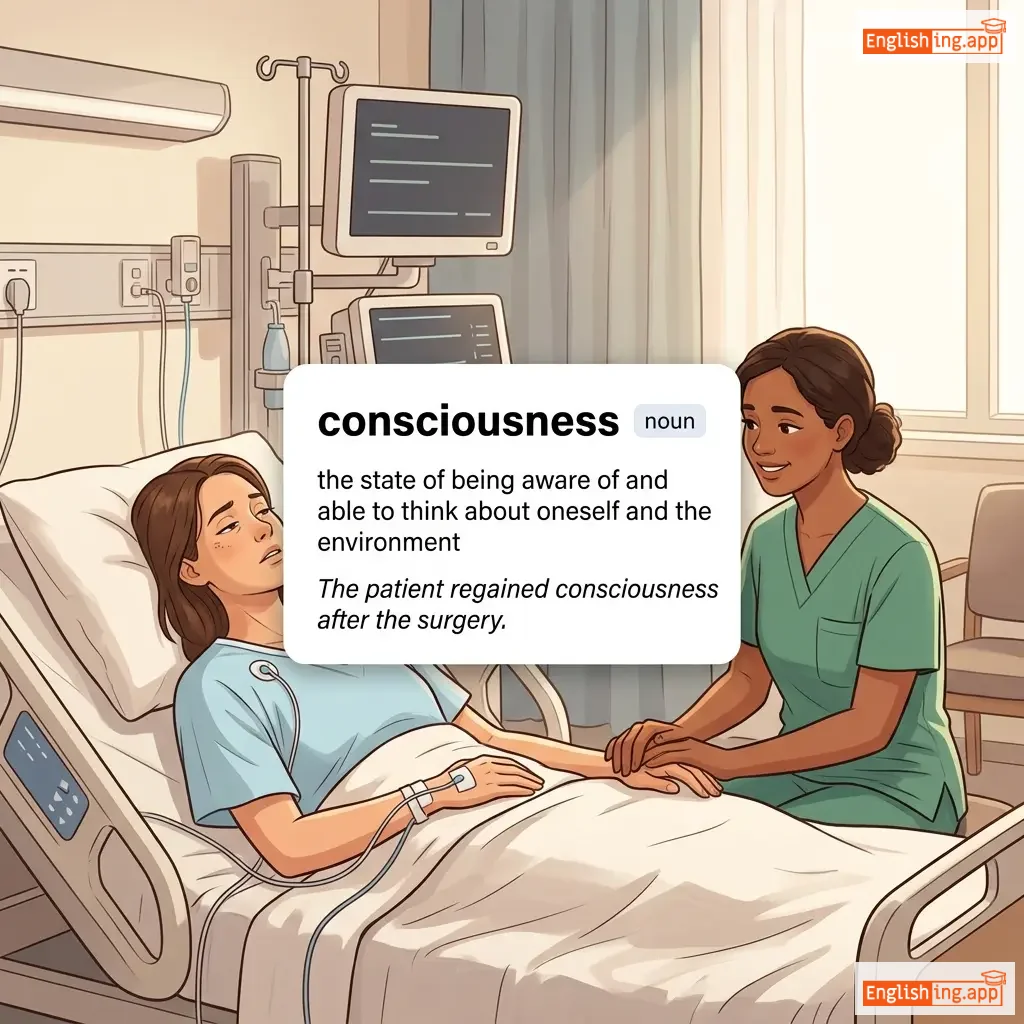
the state of being aware of and able to think about oneself and the environment
••••••
|
The patient regained consciousness after the surgery. |
患者在手术后恢复了意识。
huànzhě zài shǒushù hòu huīfùle yìshi.
••••••
|
stream of consciousness |
a literary style that presents a character's continuous flow of thoughts and feelings
••••••
|
意识流
yìshi liú
••••••
|
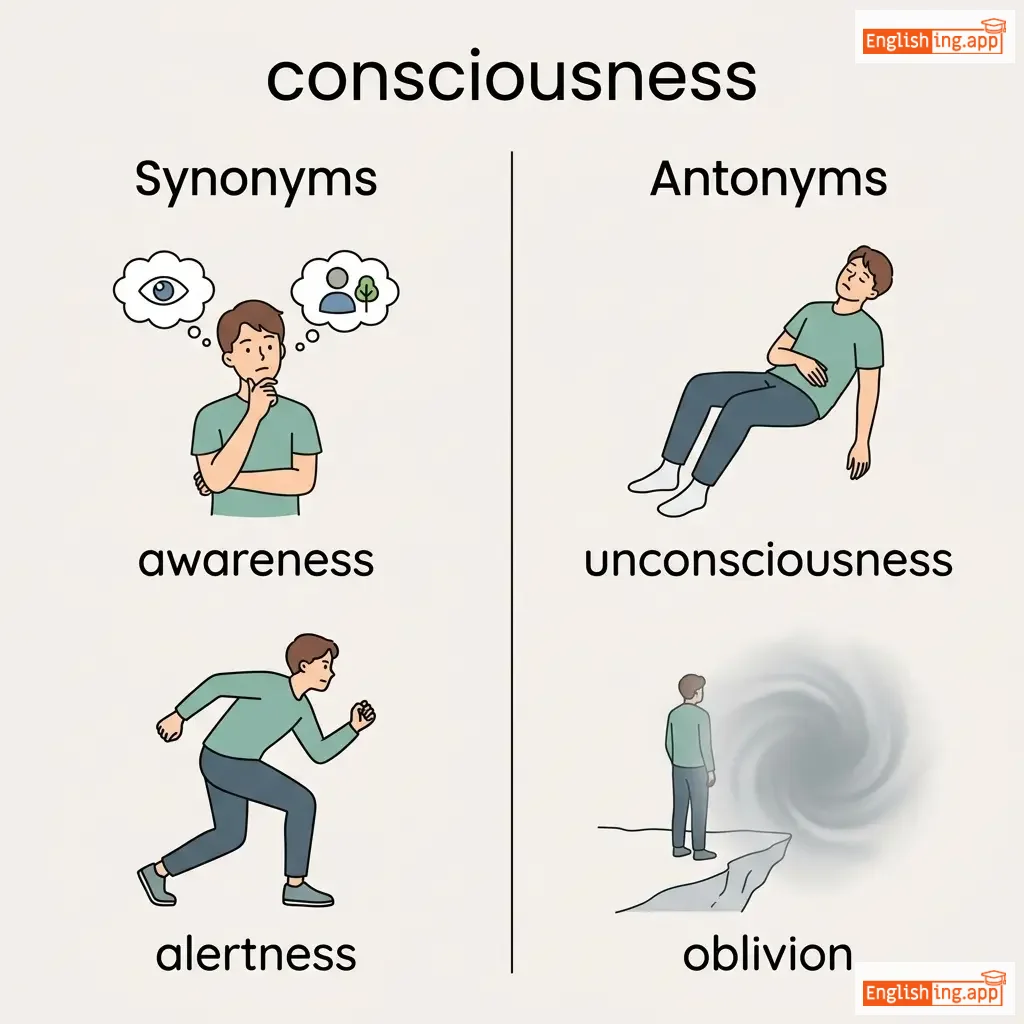
awareness, alertness, perception, mindfulness, sentience
••••••
|
unconsciousness, oblivion, ignorance
••••••
|
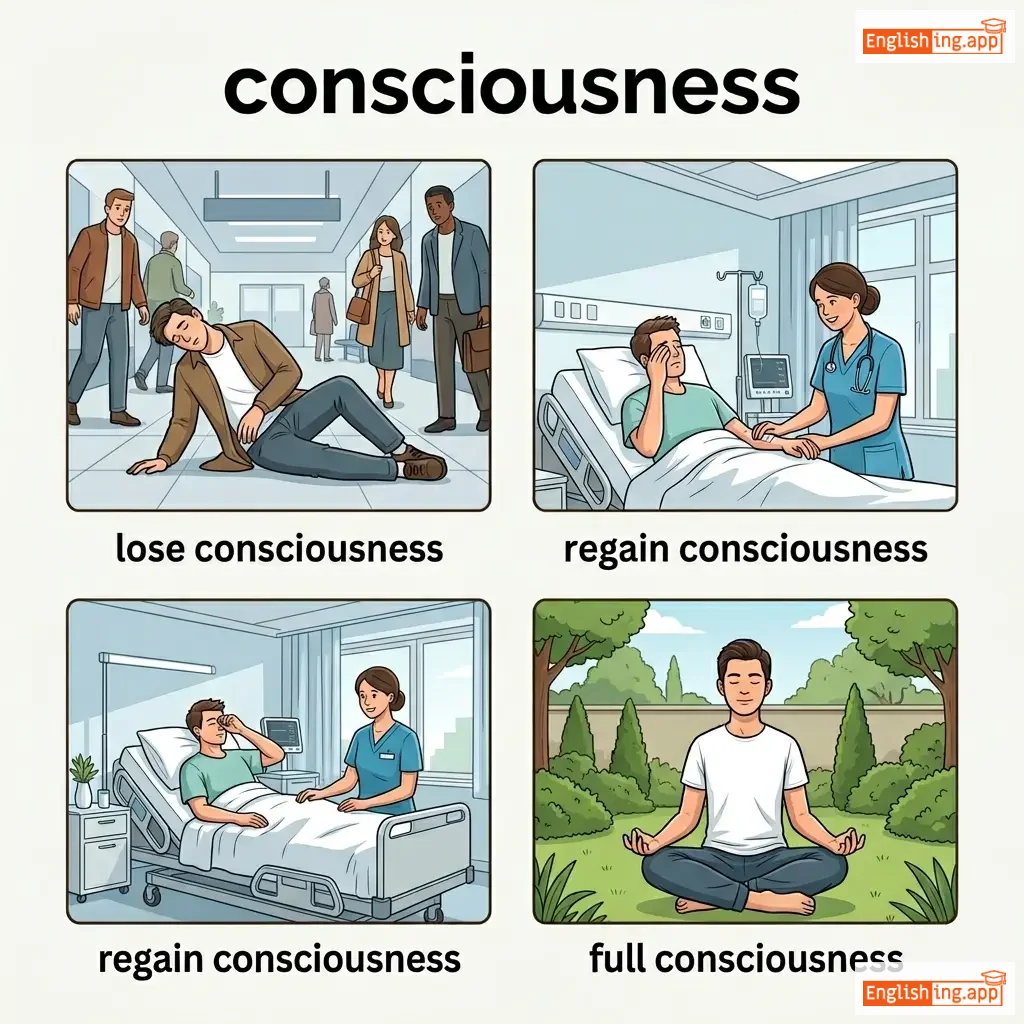
lose consciousness, regain consciousness, full consciousness, human consciousness
••••••
|
意识(yìshi)在中文中就是指意识到自己和周围的环境,就像'consciousness'一样。
••••••
|
|
🔢
••••••
|
/kənˈsɛkjʊtɪv/
adjective
(kənˈsɛkjʊtɪv)
••••••
|
- •••••• |
连续的
liánxù de
••••••
|
- •••••• | - •••••• | - •••••• | - •••••• |
following one after another without interruption
••••••
|
She won three consecutive matches. |
她赢得了三场连续的比赛。
Tā yíngdéle sān chǎng liánxù de bǐsài.
••••••
|
consecutive days |
days that come one after another in sequence
••••••
|
连续的日子
liánxù de rìzi
••••••
|
successive, sequential, continuous, uninterrupted, serial
••••••
|
sporadic, intermittent, irregular
••••••
|
consecutive days, consecutive years, consecutive matches, consecutive numbers
••••••
|
连续的日子一接一,像是比赛不间断的赢得
••••••
|
|
🤝
••••••
|
/kənˈsɛnsəs/
noun
(kənˈsɛnsəs)
••••••
|

|
共识
gongshi
••••••
|
- •••••• | - •••••• | - •••••• | - •••••• |
general agreement among a group of people
••••••
|
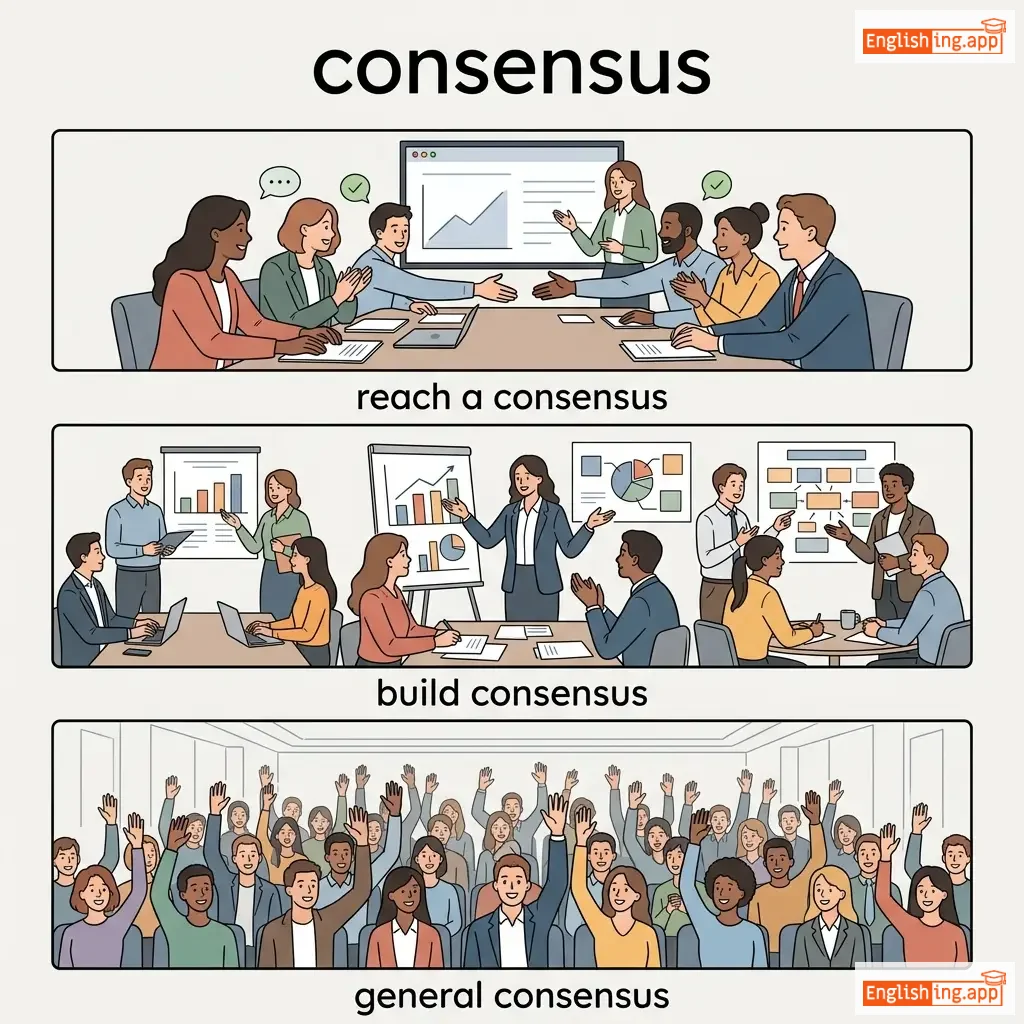
The team reached a consensus on the new strategy. |
团队就新战略达成了一致意见。
Tuánduì jiù xīn zhànlüè dáchéngle yīzhì yìjiàn.
••••••
|
general consensus |
a widely accepted common opinion
••••••
|
普遍共识
pǔbiàn gòngshí
••••••
|
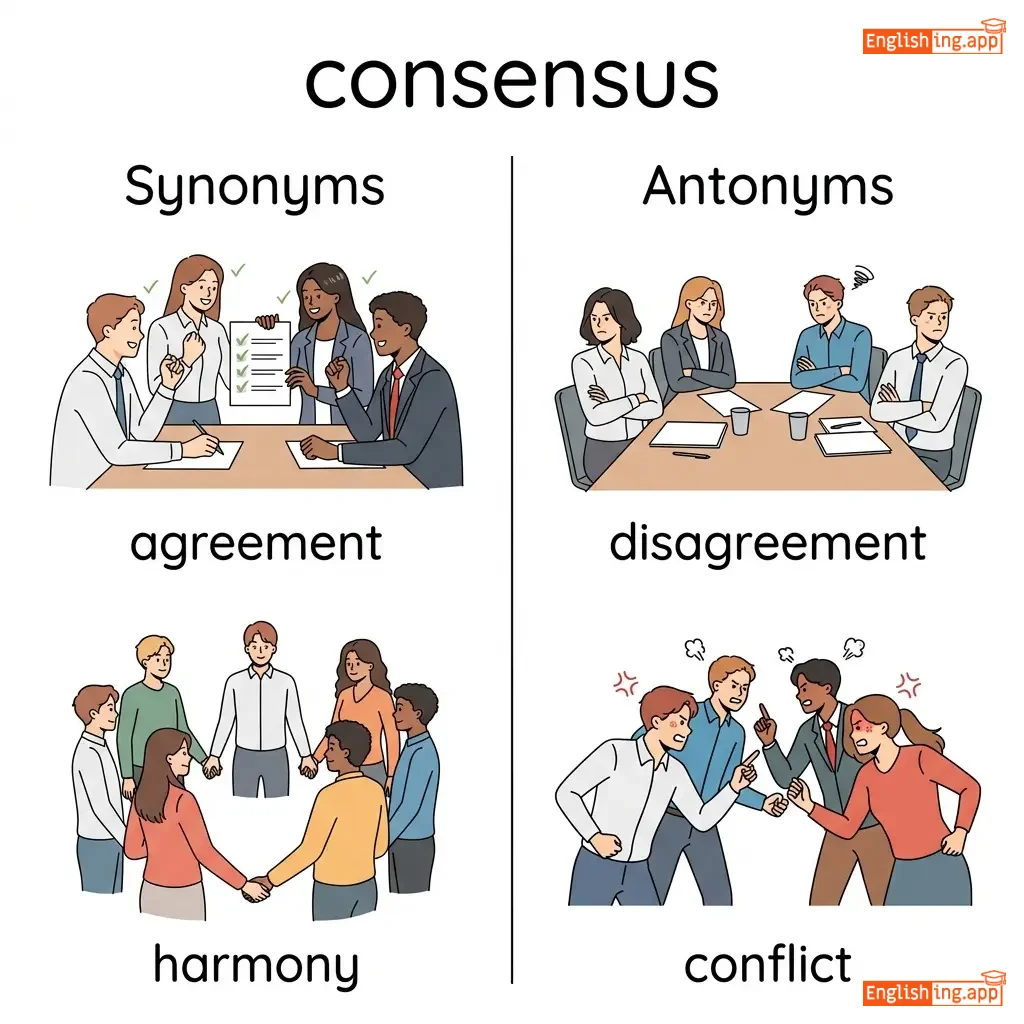
agreement, harmony, accord, unity, concurrence
••••••
|
disagreement, conflict, discord
••••••
|
reach a consensus, build consensus, general consensus, consensus opinion
••••••
|
Consensus = con (大家) + sensus (感觉),大家有相同的感觉。
••••••
|
|
✅
••••••
|
/kənˈsɛnt/
noun
(kənˈsɛnt)
••••••
|
- •••••• |
同意
tongyi
••••••
|
- •••••• | - •••••• | - •••••• | - •••••• |
permission for something to happen or agreement to do something
••••••
|
She gave her consent before the operation. |
她在手术前给了她的同意。
Ta zai shoushu qian geile ta de tongyi.
••••••
|
with your consent |
with your permission or agreement
••••••
|
在您的同意下
Zai nín de tóngyì xià
••••••
|
permission, approval, agreement, authorization
••••••
|
refusal, denial, rejection
••••••
|
give consent, obtain consent, written consent, parental consent
••••••
|
同意就像说'是'一样,表示许可。
••••••
|
|
⚖️
••••••
|
/ˈkɒnsɪkwəns/
noun
(kāngsīkuìwēn)
••••••
|
|
后果
hòuguǒ
••••••
|
- •••••• | - •••••• | - •••••• | - •••••• |
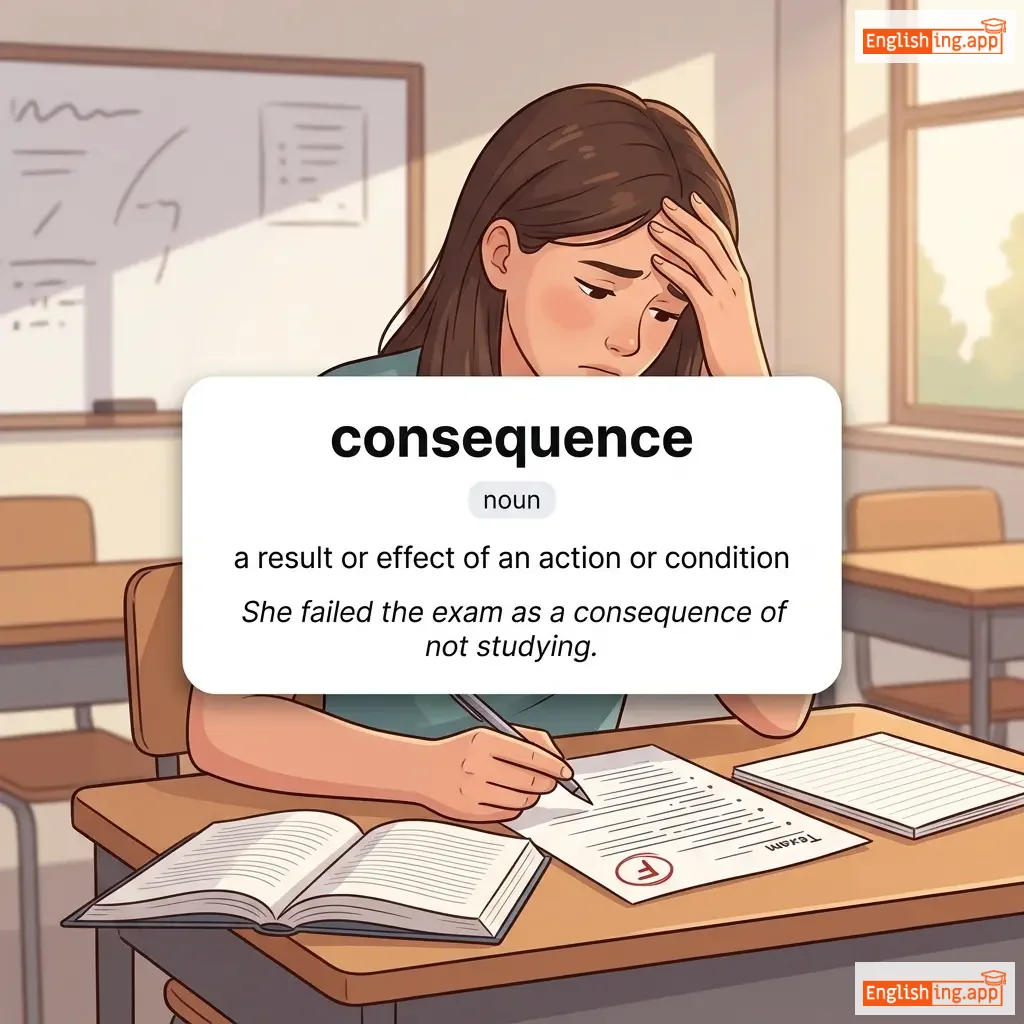
a result or effect of an action or condition
••••••
|
She failed the exam as a consequence of not studying. |
她因未学习而未通过考试,结果就是这样。
Tā yīn wèi xuéxí ér wèi tōngguò kǎoshì, jiéguǒ jiùshì zhèyàng.
••••••
|
face the consequences |
to accept the results of one's actions, especially bad ones
••••••
|
面对后果
miànduì hòuguǒ
••••••
|
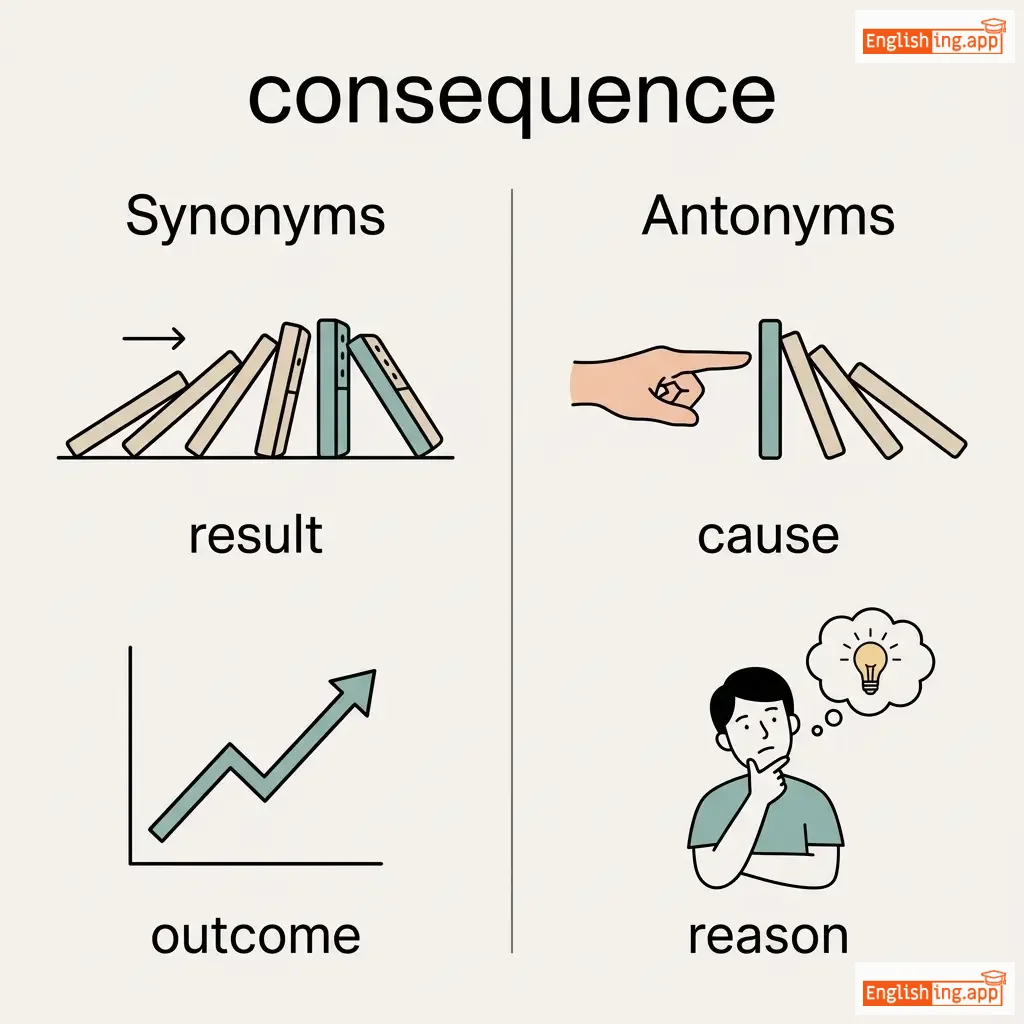
result, outcome, effect, aftermath, repercussion
••••••
|
cause, reason, origin
••••••
|
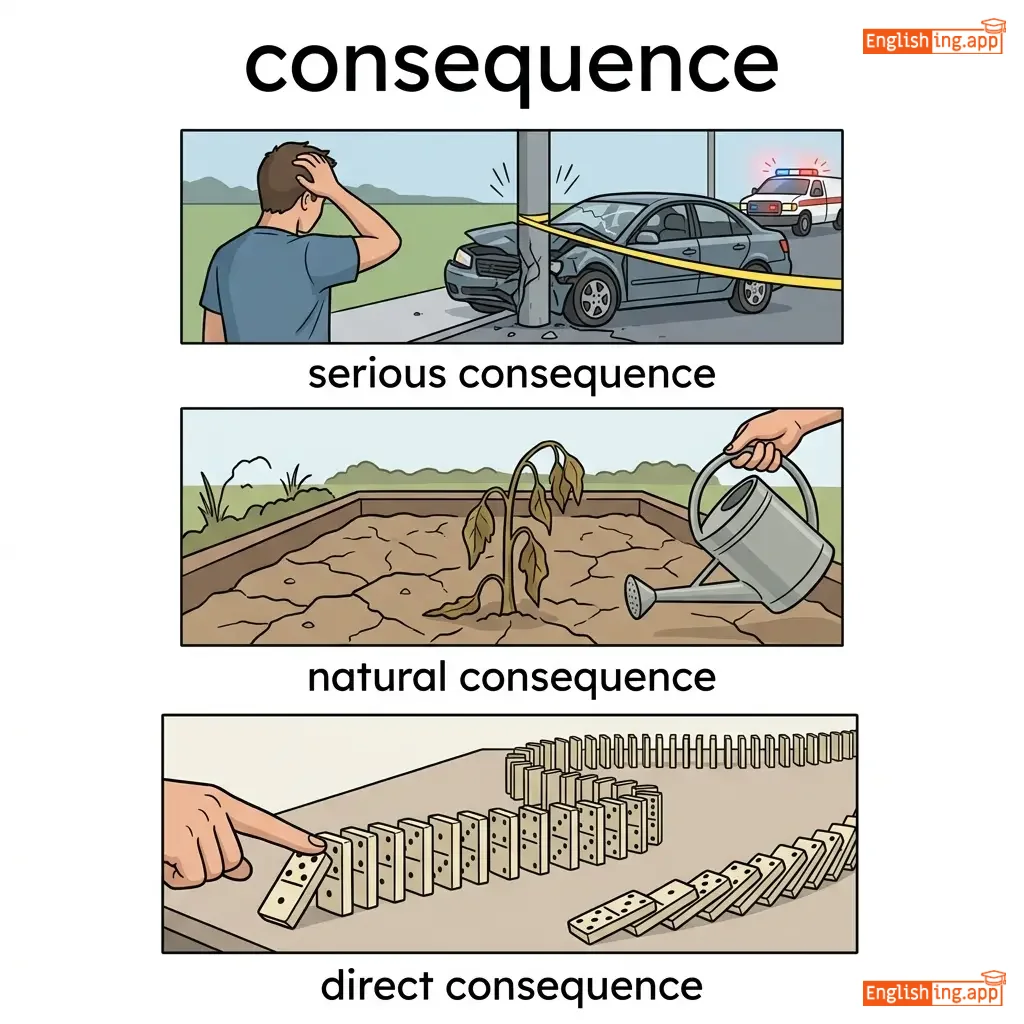
serious consequence, natural consequence, direct consequence, face consequences
••••••
|
后果是行动的结果,就像一个不好的后果。
••••••
|
|
➡️
••••••
|
/ˈkɒnsɪkwəntli/
adverb
(kōngsīkwéntlì)
••••••
|
- •••••• |
因此
yīncǐ
••••••
|
- •••••• | - •••••• | - •••••• | - •••••• |
as a result; therefore
••••••
|
He didn’t study, and consequently he failed the exam.
他没有学习,因此他没通过考试。
••••••
|
他没有学习,因此他没通过考试。
Tā méiyǒu xuéxí, yīncǐ tā méi tōngguò kǎoshì.
••••••
|
- •••••• | - •••••• | - •••••• |
therefore, thus, hence, accordingly, as a result
••••••
|
nevertheless, however, despite
••••••
|
and consequently, consequently failed, consequently led to, consequently resulted in
••••••
|
Consequently 就是 '因此', 表示因为某个原因所以有的结果。
••••••
|
|
🌿
••••••
|
/ˌkɒnsəˈveɪʃən/
noun
(康瑟维申)
••••••
|
|
保护
baohu
••••••
|
- •••••• | - •••••• | - •••••• | - •••••• |
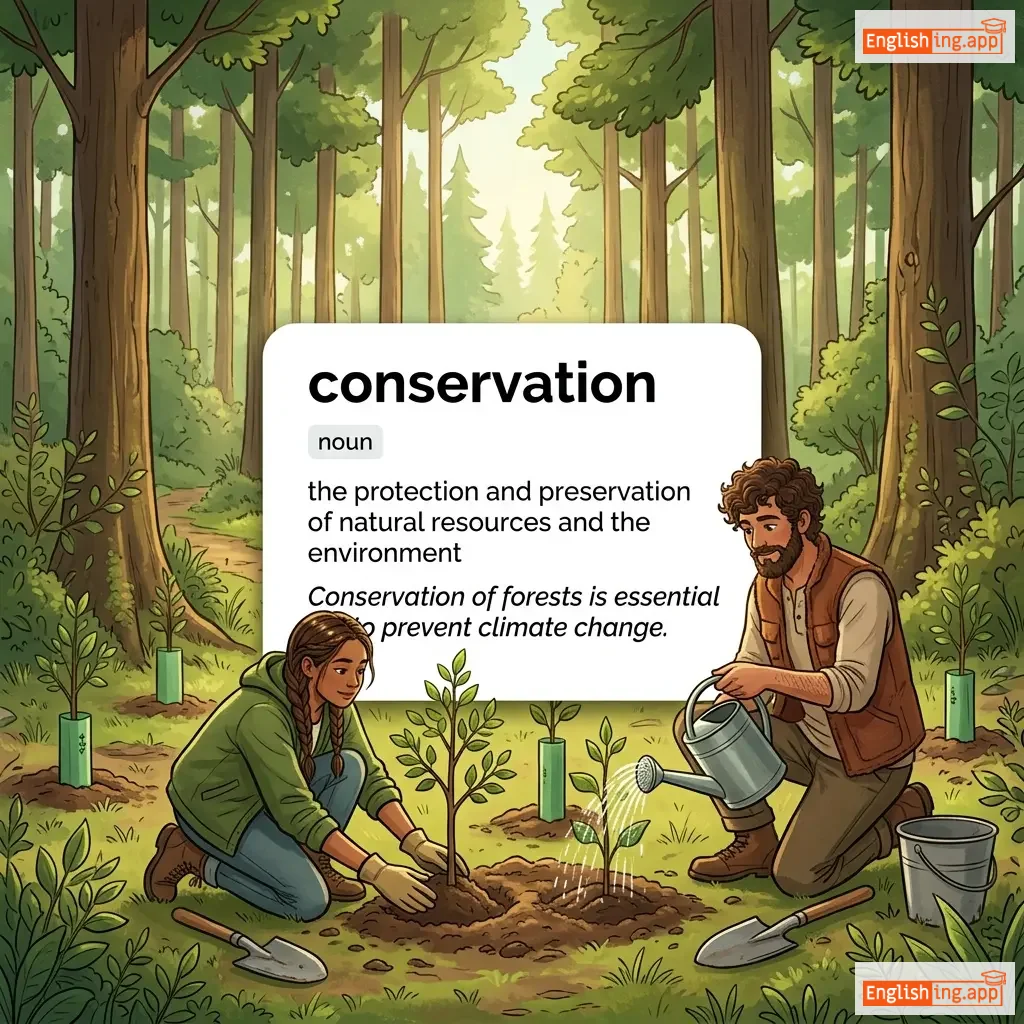
the protection and preservation of natural resources and the environment
••••••
|
Conservation of forests is essential to prevent climate change.
森林的康瑟维申对防止气候变化至关重要。
••••••
|
森林的保护对于防止气候变化至关重要。
senlin de baohu duiyu fangzhi qihou bianhua zhiguan zhongyao.
••••••
|
conservation of energy
能量的康瑟维申
••••••
|
the principle that energy cannot be created or destroyed, only transformed
••••••
|
能量守恒
nengliang shouheng
••••••
|
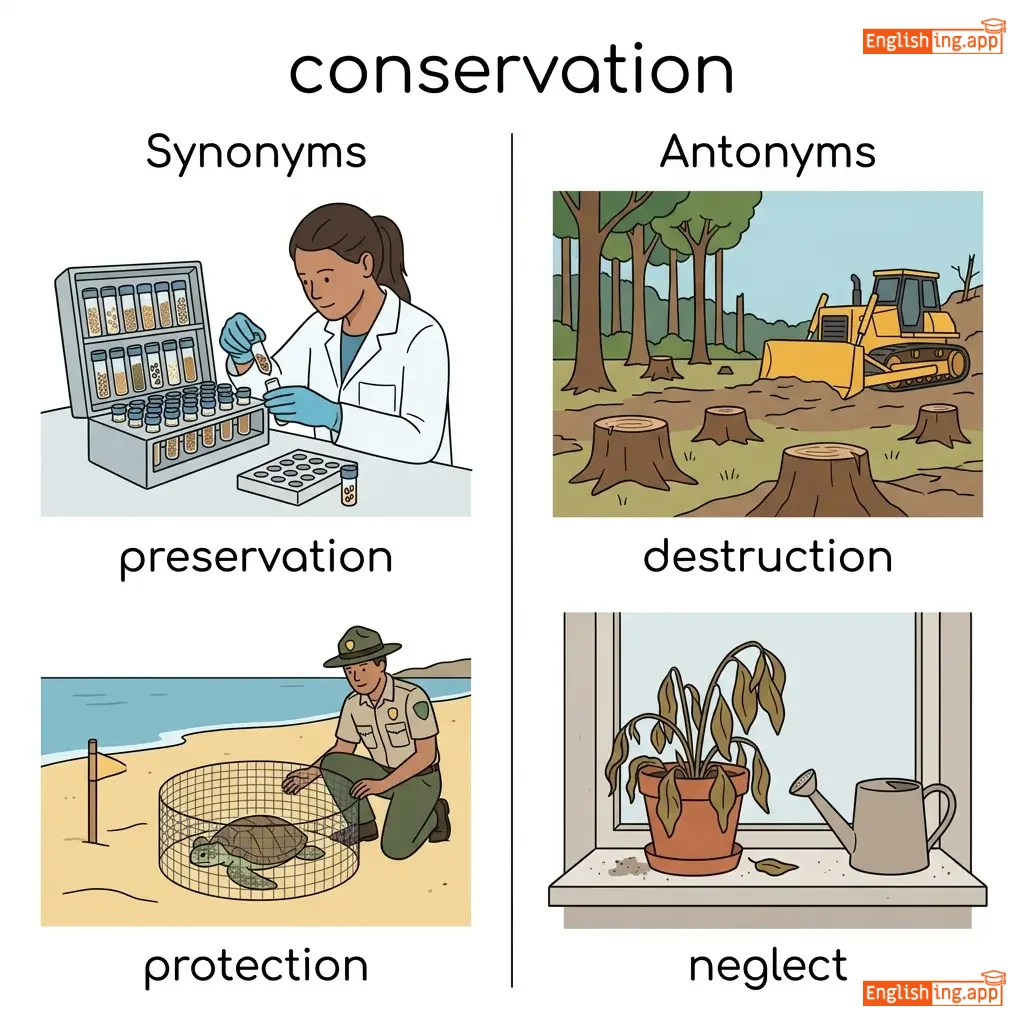
preservation, protection, care, maintenance, safeguarding
••••••
|
destruction, neglect, waste
••••••
|
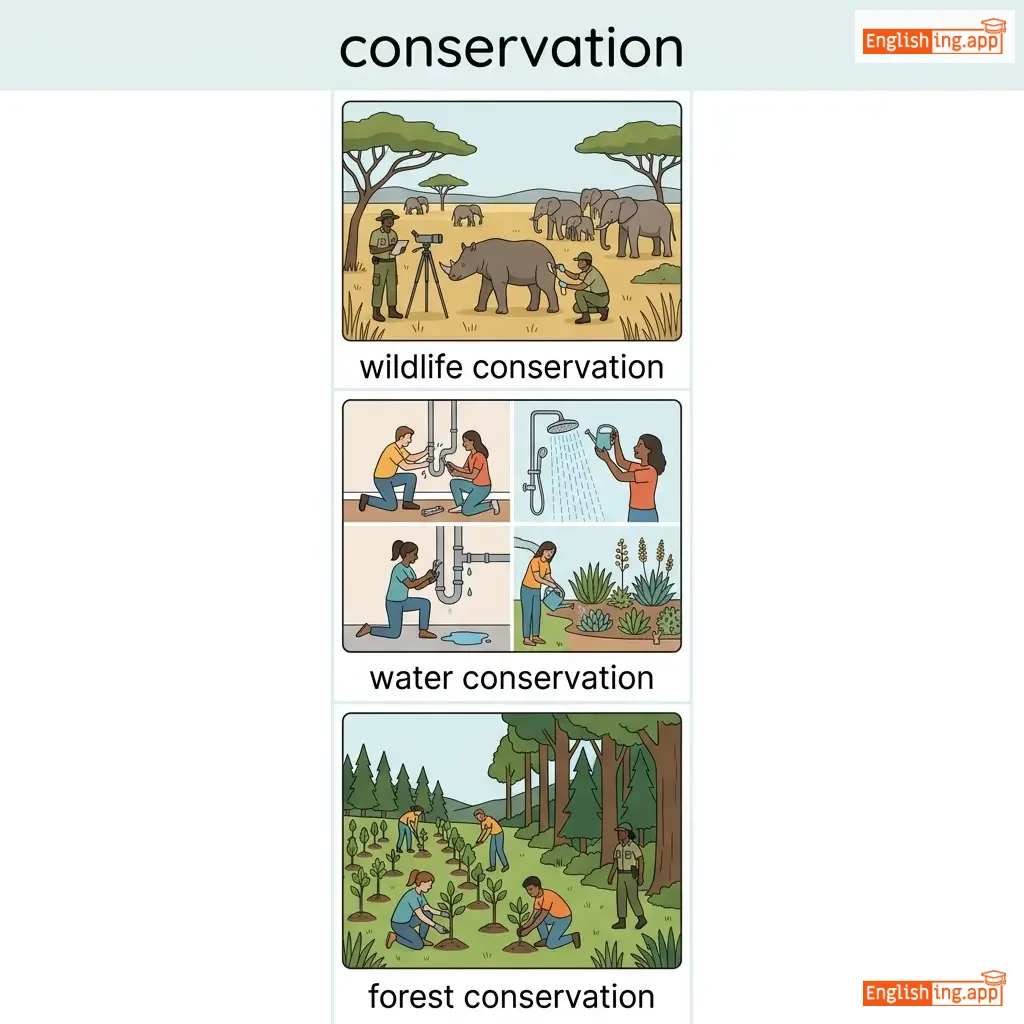
wildlife conservation, water conservation, forest conservation, energy conservation
••••••
|
保护 (baohu) sounds like ‘bamboo hold’ — to conserve nature 🎋
••••••
|
|
🛡️
••••••
|
/kənˈsɜːvətɪv/
adjective
(kənˈsɜːvətɪv)
••••••
|
- •••••• |
保守的
baoshou de
••••••
|
- •••••• | - •••••• | - •••••• | - •••••• |
Favoring traditional views and values; resistant to change.
••••••
|
He has conservative views on family and society. |
他对家庭和社会持有保守的看法。
Tā duì jiātíng hé shèhuì chí yǒu bǎoshǒu de kànfǎ.
••••••
|
conservative estimate |
An estimate deliberately kept lower or more cautious.
••••••
|
保守估计
bǎoshǒu gūjì
••••••
|
traditional, cautious, orthodox, conventional
••••••
|
progressive, liberal, radical
••••••
|
conservative values, conservative politics, conservative approach, conservative estimate
••••••
|
Conserve + active = 积极保存意味着保守的观点。
••••••
|
|
🤔
••••••
|
/kənˈsɪdər/
verb
(肯西德尔)
••••••
|
- •••••• |
考虑
kaolu
••••••
|
considered
肯西德尔德
••••••
|
considered
肯西德尔德
••••••
|
considers
肯西德尔斯
••••••
|
considering
肯西德尔英
••••••
|
to think carefully about something, especially before making a decision
••••••
|
She is considering studying abroad next year.
她正在考虑明年出国留学。
••••••
|
她正在考虑明年出国留学。
Ta zhengzai kaolu mingnian chuguo liuxue.
••••••
|
take into consideration
考虑
••••••
|
to think about something when making a decision
••••••
|
考虑
kaolu
••••••
|
contemplate, regard, reflect, evaluate, examine
••••••
|
ignore, disregard, neglect
••••••
|
consider carefully, consider options, consider seriously, consider important
••••••
|
考虑代表做出决定前要仔细思考。
••••••
|
|
📏
••••••
|
/kənˈsɪdərəbl/
adjective
(kənˈsɪdərəbl)
••••••
|
- •••••• |
相当的
xiāngdāng de
••••••
|
- •••••• | - •••••• | - •••••• | - •••••• |
large in amount, size, or importance
••••••
|
The project required a considerable amount of time and money. |
该项目需要相当多的时间和金钱。
Gāi xiàngmù xūyào xiāngdāng duō de shíjiān hé jīnqián.
••••••
|
- •••••• | - •••••• | - •••••• |
substantial, significant, great, large, notable
••••••
|
small, minor, insignificant
••••••
|
considerable amount, considerable effort, considerable time, considerable importance
••••••
|
相当的,像项目所需的大量时间和金钱。
••••••
|
|
📈
••••••
|
/kənˈsɪdərəbli/
adverb
(kənˈsɪdərəbli)
••••••
|
- •••••• |
显著地;相当大地
xian zhu de; xiang dang da di
••••••
|
- •••••• | - •••••• | - •••••• | - •••••• |
to a notably large degree; significantly; substantially
••••••
|
The price has increased considerably over the past year. |
过去一年价格显著上涨。
guo qu yi nian jia ge xian zhu shang zhang.
••••••
|
- •••••• | - •••••• | - •••••• |
significantly, substantially, markedly
••••••
|
slightly, minimally, insignificantly
••••••
|
increase considerably, improve considerably, differ considerably
••••••
|
No •••••• |
|
🤔
••••••
|
/kənˌsɪdəˈreɪʃən/
noun
(海皮尼斯)
••••••
|
- •••••• |
幸福
xìngfú
••••••
|
- •••••• | - •••••• | - •••••• | - •••••• |
careful thought or attention to something before making a decision
••••••
|
After much consideration, she accepted the job offer. |
当她收到奖项时,她无法掩饰她的幸福。
Dāng tā shōu dào jiǎngxiàng shí, tā wúfǎ yǎnshì tā de xìngfú.
••••••
|
out of consideration |
done out of respect or kindness for someone
••••••
|
追求幸福
zhuīqiú xìngfú
••••••
|
thought, reflection, deliberation, regard, attention
••••••
|
neglect, disregard, thoughtlessness
••••••
|
take into consideration, give consideration, careful consideration, thoughtful consideration
••••••
|
幸福 = 快乐,一切都围绕着快乐与满足。
••••••
|
|
📋
••••••
|
/kənˈsɪst/
verb
(kənˈsɪst)
••••••
|
- •••••• |
由...组成
you...zucheng
••••••
|
consisted
kənˈsɪstəd
••••••
|
consisted
kənˈsɪstəd
••••••
|
consists
kənˈsɪsts
••••••
|
consisting
kənˈsɪstɪŋ
••••••
|
to be made up or composed of certain parts or elements
••••••
|
The committee consists of five members.
委员会由五个成员组成。
••••••
|
委员会由五个成员组成。
Wei yuan hui you wu ge cheng yuan zu cheng.
••••••
|
consist in
由...组成
••••••
|
to have something as an essential feature
••••••
|
由...组成
you...zucheng
••••••
|
contain, include, comprise, embody
••••••
|
exclude, lack, omit
••••••
|
consist of, consist in, committee consists, diet consists
••••••
|
由...组成意味着合成部分。记住:委员会由成员组成。
••••••
|
|
📏
••••••
|
/kənˈsɪstənsi/
noun
(kēn-sī-sī-tèng-xì)
••••••
|

|
一致性, 稳定性
yīzhìxìng, wěndìngxìng
••••••
|
- •••••• | - •••••• | - •••••• | - •••••• |
the quality of always behaving or performing in a similar way; uniformity
••••••
|
Her consistency in work earned her a promotion. |
她在工作中的一致性为她赢得了晋升。
Tā zài gōngzuò zhōng de yīzhìxìng wèi tā yíngdé le jìnshēng.
••••••
|
- •••••• | - •••••• | - •••••• |
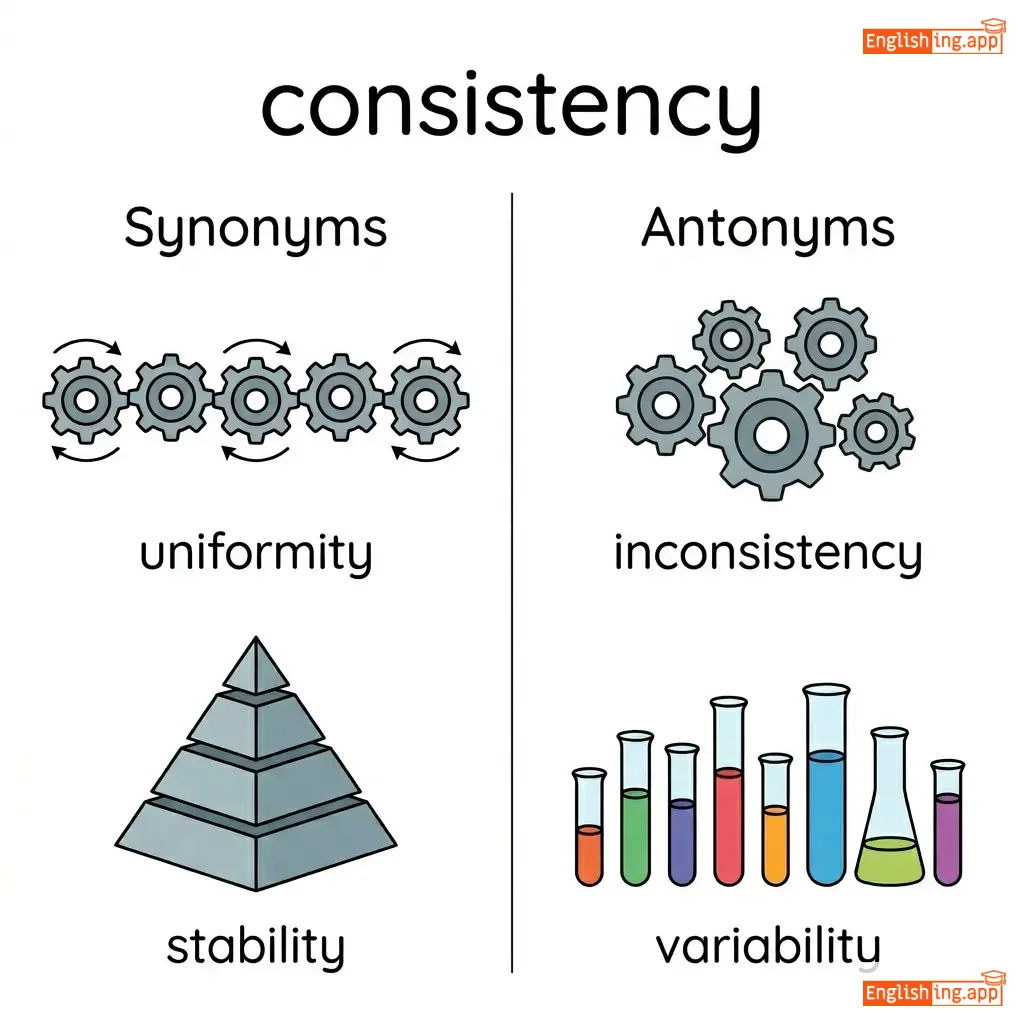
uniformity, stability, regularity, dependability
••••••
|
inconsistency, variability
••••••
|
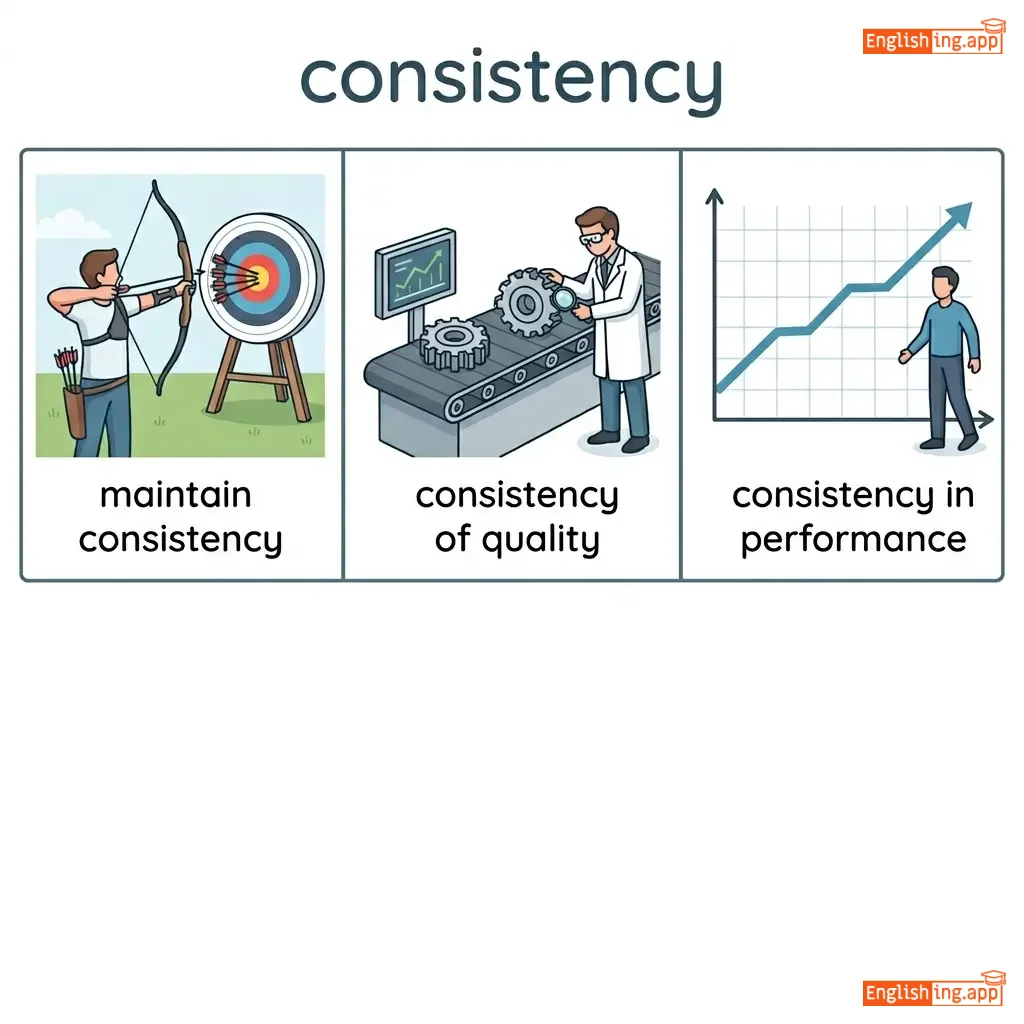
maintain consistency, consistency of quality, consistency in performance
••••••
|
CON SISTently 工作,成功会到来 – 记住 consistency
••••••
|
|
📈
••••••
|
/kənˈsɪstənt/
adjective
(kənˈsɪstənt)
••••••
|


|
一致的
yīzhì de
••••••
|
- •••••• | - •••••• | - •••••• | - •••••• |
acting or done in the same way over time; reliable or uniform
••••••
|
He is very consistent in his work. |
他在工作中非常一致。
Tā zài gōngzuò zhōng fēicháng yīzhì.
••••••
|
consistent with |
in agreement or harmony with something
••••••
|
与一致
yǔ yīzhì
••••••
|
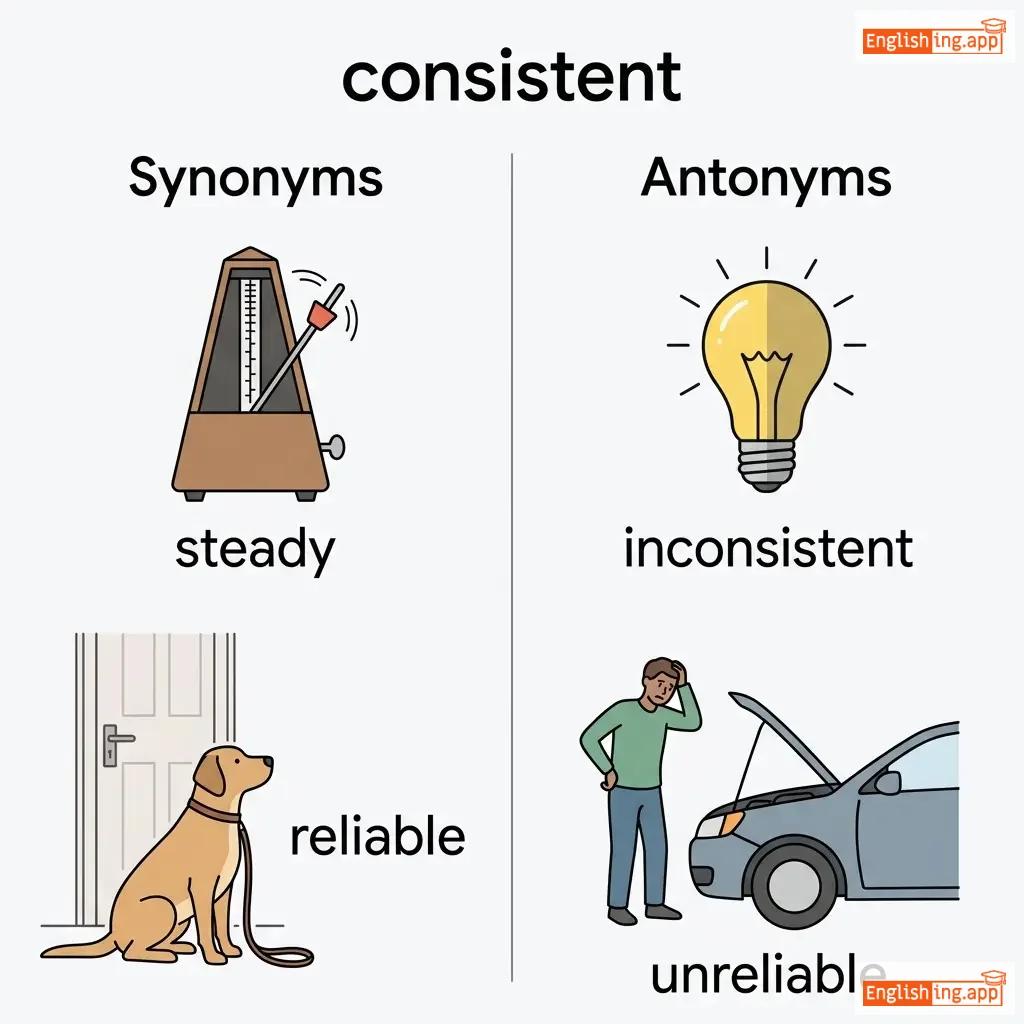
steady, reliable, regular, stable
••••••
|
inconsistent, unreliable, irregular
••••••
|
remain consistent, consistent effort, consistent results, consistent behavior
••••••
|
一致的就是一直一样,像一致的
••••••
|
|
📅
••••••
|
/kənˈsɪstəntli/
adverb
(kənˈsɪstəntli)
••••••
|
- •••••• |
持续地
chíxù de
••••••
|
- •••••• | - •••••• | - •••••• | - •••••• |
in a way that does not vary; regularly and dependably
••••••
|
She has been performing consistently well in her studies. |
她在学习中始终表现得很好。
Tā zài xuéxí zhōng shǐzhōng biǎoxiàn dé hěn hǎo.
••••••
|
consistent with |
in agreement or harmony with something
••••••
|
与...一致
yǔ... yīzhì
••••••
|
regularly, steadily, constantly, reliably
••••••
|
inconsistently, irregularly
••••••
|
perform consistently, act consistently, behave consistently, consistently good
••••••
|
持续地意味着总是相同的结果——总是相同的表现 📅
••••••
|
|
🏢
••••••
|
/kənˈsɑːlɪdeɪt/
verb
(kənˈsɑːlɪdeɪt)
••••••
|

|
整合
zhěnghé
••••••
|
consolidated
kənˈsɑːlɪdeɪtəd
••••••
|
consolidated
kənˈsɑːlɪdeɪtəd
••••••
|
consolidates
kənˈsɑːlɪdeɪts
••••••
|
consolidating
kənˈsɑːlɪdeɪtɪŋ
••••••
|
to combine into a single, more effective or coherent whole
••••••
|
The company plans to consolidate its offices into one building.
公司计划将其办公室合并到一栋建筑中。
••••••
|
公司计划将其办公室合并到一栋建筑中。
Gōngsī jìhuà jiāng qí bàngōngshì hébìng dào yī dòng jiànzhú zhōng.
••••••
|
- •••••• | - •••••• | - •••••• |
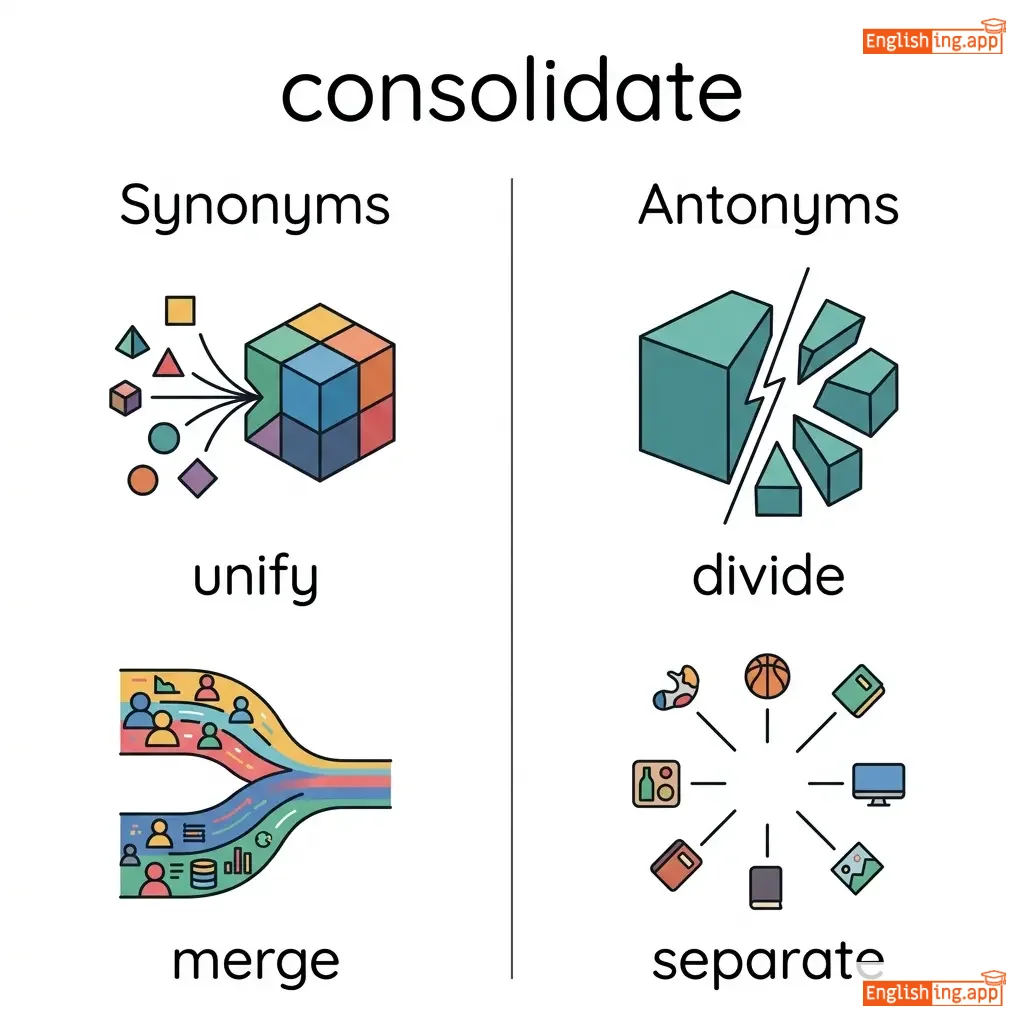
unify, merge, integrate, strengthen
••••••
|
divide, separate, scatter
••••••
|
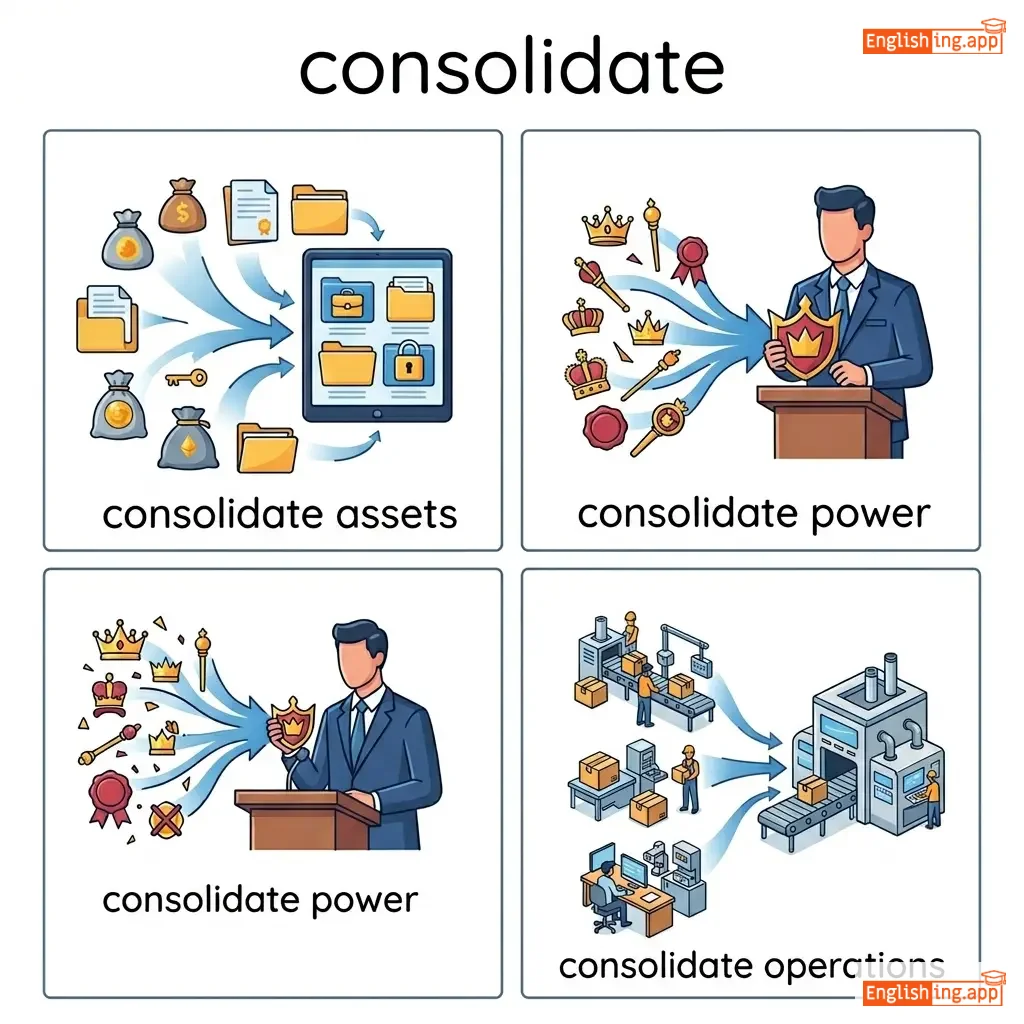
consolidate assets, consolidate power, consolidate operations
••••••
|
整合 = 将一切整齐地合并
••••••
|
|
🕵️
••••••
|
/kənˈspɪrəsi/
noun
(kənˈspɪrəsi)
••••••
|
- •••••• |
阴谋
yīnmóu
••••••
|
- •••••• | - •••••• | - •••••• | - •••••• |
A secret plan by a group to do something unlawful or harmful.
••••••
|
The police uncovered a conspiracy to overthrow the government. |
警方揭露了一项推翻政府的阴谋。
Jǐngfāng jiēlùle yī xiàng tuīfān zhèngfǔ de yīnmóu.
••••••
|
conspiracy theory |
a belief that events are secretly manipulated by powerful groups
••••••
|
阴谋论
yīnmóu lùn
••••••
|
plot, scheme, intrigue, collusion, cabal
••••••
|
honesty, openness, truth
••••••
|
political conspiracy, conspiracy theory, criminal conspiracy, conspiracy to commit
••••••
|
Conspiracy = 演唱会上的秘密计划 — 阴谋.
••••••
|
|
♾️
••••••
|
/ˈkɒn.stənt/
adjective
(kòngsītènt)
••••••
|
- •••••• |
恒定的
héngdìng de
••••••
|
- •••••• | - •••••• | - •••••• | - •••••• |
happening all the time or staying the same without change
••••••
|
She lived in constant fear of losing her job. |
她一直生活在失去工作的恒定恐惧中。
Tā yīzhí shēnghuó zài shīqù gōngzuò de héngdìng kǒngjù zhōng.
••••••
|
constant companion |
something or someone that is always present
••••••
|
恒定伴侣
héngdìng bànlǚ
••••••
|
continuous, persistent, steady, perpetual
••••••
|
occasional, irregular, variable
••••••
|
constant fear, constant pressure, constant change
••••••
|
Constant 意味着恒定的—就像永不停息的时间。
••••••
|
|
🔄
••••••
|
/ˈkɒnstəntli/
adverb
(kānsītèntlì)
••••••
|
- •••••• |
不断地; 总是; 不停地
bùduàn de; zǒng shì; bù tíng de
••••••
|
- •••••• | - •••••• | - •••••• | - •••••• |
continuously over a period of time; always; without stopping
••••••
|
The baby was constantly crying throughout the night. |
婴儿整晚不停地哭泣。
Yīng'ér zhěng wǎn bù tíng de kūqì.
••••••
|
- •••••• | - •••••• | - •••••• |
continuously, always, perpetually
••••••
|
occasionally, rarely, never
••••••
|
constantly changing, constantly moving, constantly working
••••••
|
不断地 - 就像不停的水流,‘不断’就像‘constant’.
••••••
|
|
🗳️
••••••
|
/kənˈstɪtʃuənsi/
noun
(kənˈstɪtʃuənsi)
••••••
|
- •••••• |
选区
xuan qu
••••••
|
- •••••• | - •••••• | - •••••• | - •••••• |
A geographical area whose residents elect a representative to a legislative body.
••••••
|
She campaigned tirelessly across her constituency. |
她在自己的选区内不知疲倦地竞选。
Ta zai ziji de xuanqu nei buzhi pijuande jingxuan.
••••••
|
- •••••• | - •••••• | - •••••• |
district, electorate, ward, division
••••••
|
nonelectoral area, nonvoting zone
••••••
|
electoral constituency, parliamentary constituency, within the constituency
••••••
|
Constitute + 区 = Constituency 在中文
••••••
|
|
⚖️
••••••
|
/ˈkɒnstɪtjuːt/
verb
(kɑnˈstɪtjut)
••••••
|
- •••••• |
构成
gòu chéng
••••••
|
constituted
kɑnˈstɪtjutɪd
••••••
|
constituted
kɑnˈstɪtjutɪd
••••••
|
constitutes
kɑnˈstɪtjut
••••••
|
constituting
kɑnˈstɪtjutɪŋ
••••••
|
To make up, form, or establish something.
••••••
|
These documents constitute the legal agreement between the two parties.
这些文件构成了两方之间的法律协议。
••••••
|
这些文件构成了两方之间的法律协议。
Zhèxiē wénjiàn gòuchéngle liǎng fāng zhī jiān de fǎlǜ xiéyì.
••••••
|
- •••••• | - •••••• | - •••••• |
comprise, form, make up, establish, create
••••••
|
exclude, destroy, abolish
••••••
|
constitute a crime, constitute an offense, constitute a majority, constitute evidence
••••••
|
Constitute 意为 '构成' - 像宪法一样构建国家。
••••••
|
|
📜
••••••
|
/ˌkɒnstɪˈtjuːʃən/
noun
(宪法)
••••••
|


|
宪法
xianfa
••••••
|
- •••••• | - •••••• | - •••••• | - •••••• |
The system of fundamental principles according to which a nation or organization is governed.
••••••
|
The constitution guarantees freedom of speech. |
宪法保障言论自由。
Xiànfǎ bǎozhàng yánlùn zìyóu.
••••••
|
- •••••• | - •••••• | - •••••• |
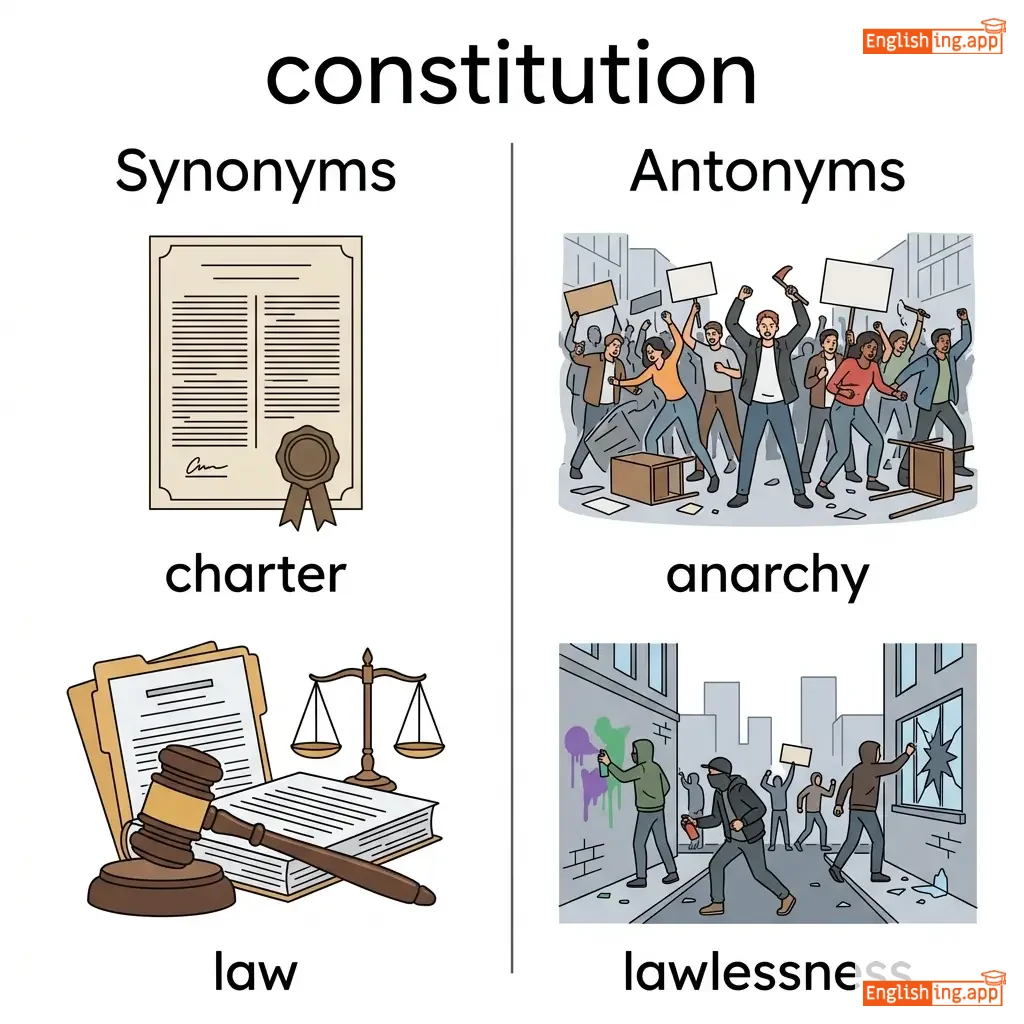
charter, law, code, framework, fundamental law
••••••
|
anarchy, lawlessness, disorder
••••••
|
written constitution, draft constitution, amend the constitution, constitution of a country
••••••
|
Constitution = 宪法 – 通过'宪法'治理国家。
••••••
|
|
⚖️
••••••
|
/ˌkɒnstɪˈtjuːʃənəl/
adjective
••••••
|
|
- •••••• | - •••••• | - •••••• | - •••••• | - •••••• |
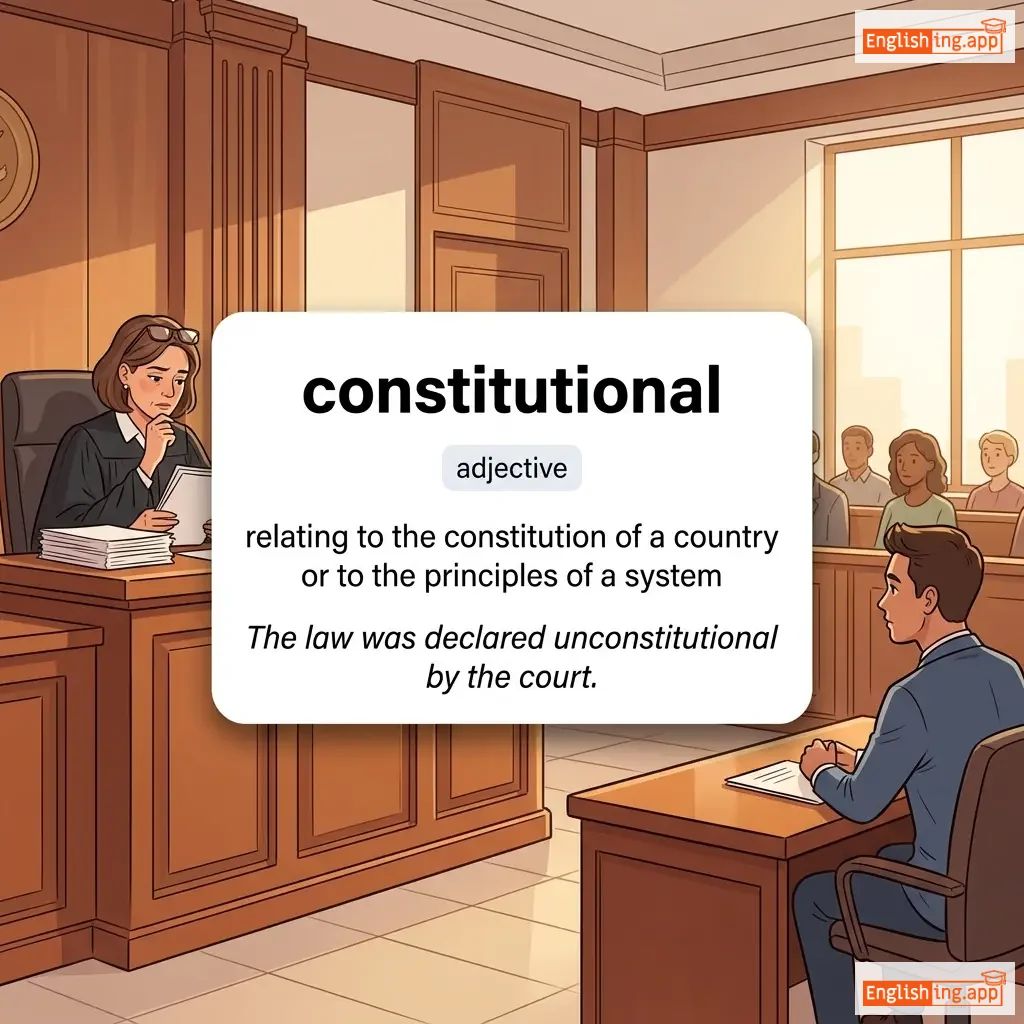
relating to the constitution of a country or to the principles of a system
••••••
|
The law was declared unconstitutional by the court. |
- •••••• |
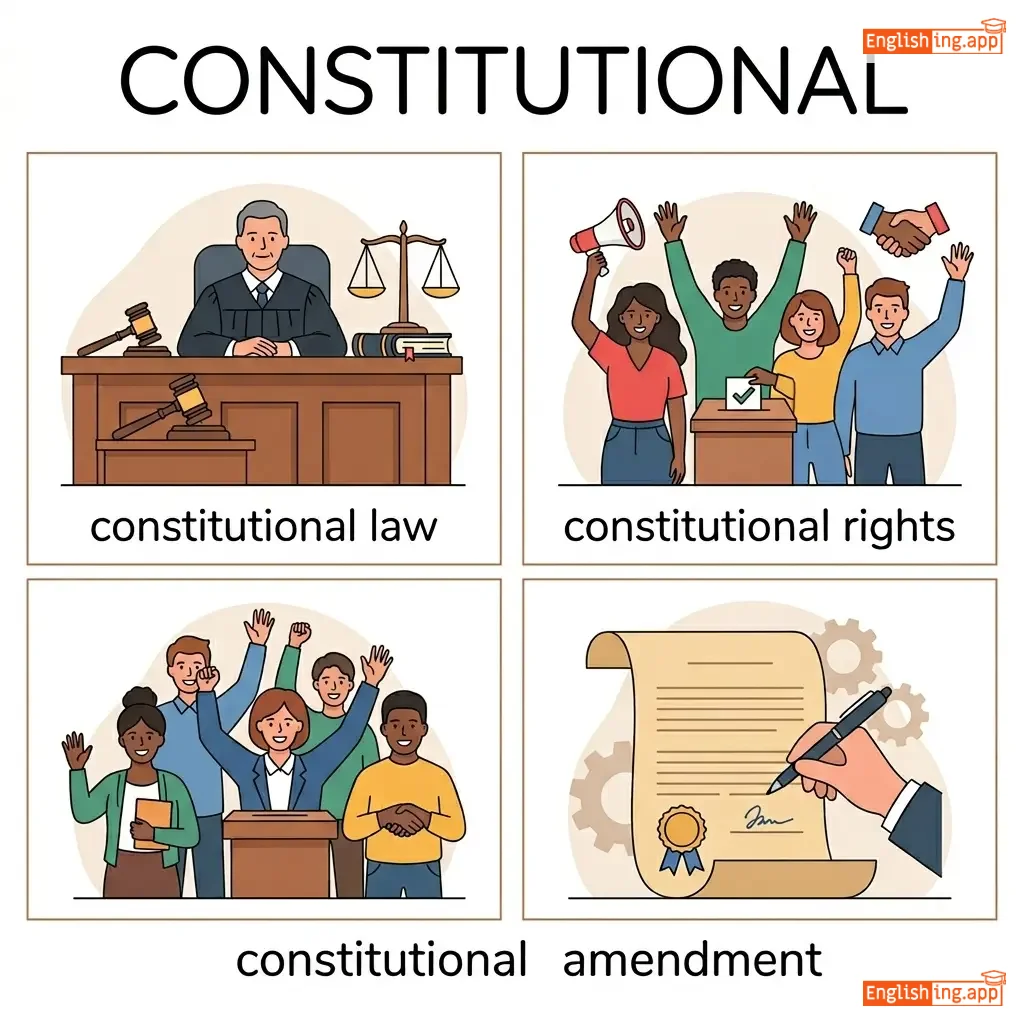
constitutional rights |
basic legal rights guaranteed by a constitution
••••••
|
- •••••• |
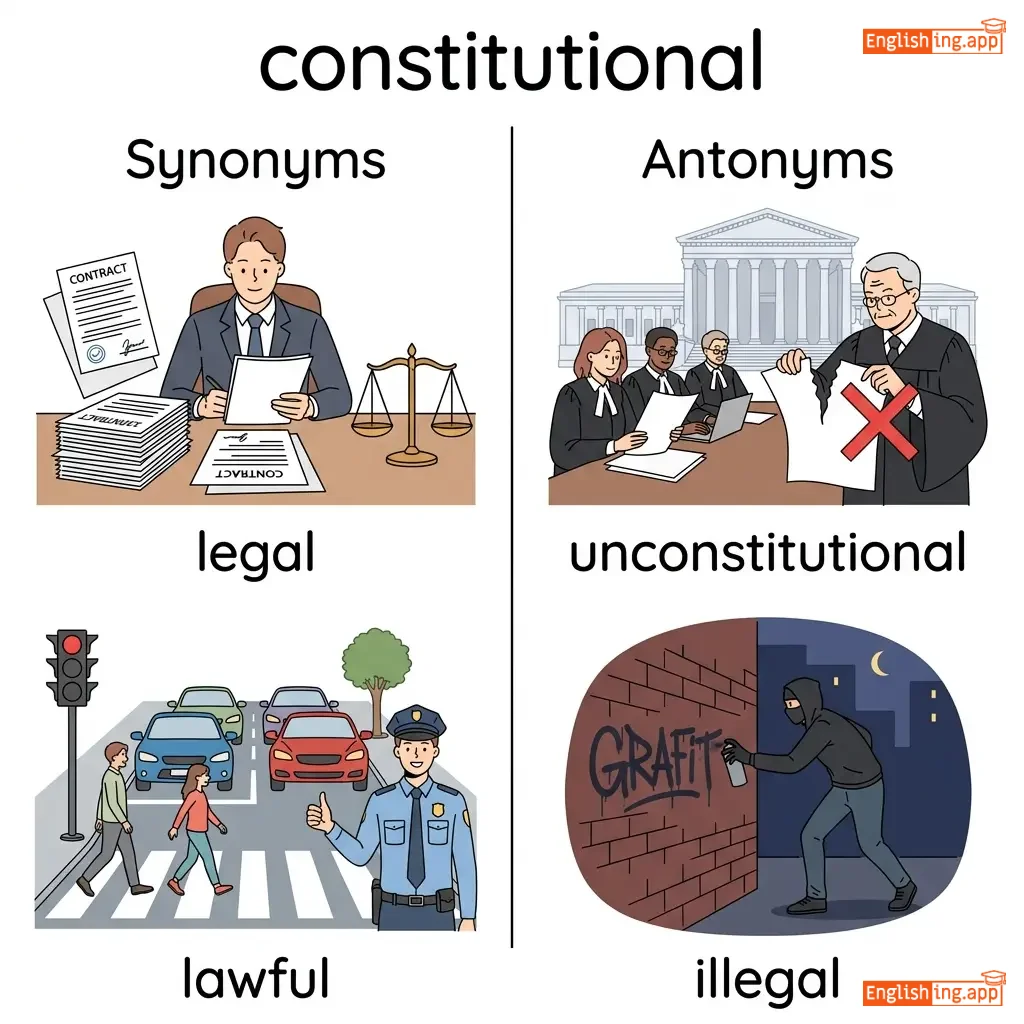
legal, lawful, legitimate, chartered
••••••
|
unconstitutional, illegal, unlawful
••••••
|
constitutional law, constitutional rights, constitutional amendment, constitutional crisis
••••••
|
No •••••• |

