|
絵文字
|
単語 | Images | 翻訳 | 過去 | 過去分詞 | 三人称単数 | 動名詞 | 意味 | 例文 | 例文の翻訳 | 表現例 | 表現例の意味 | 表現例の翻訳 | 同義語 | 対義語 | コロケーション | ニーモニック |
|---|---|---|---|---|---|---|---|---|---|---|---|---|---|---|---|---|---|
|
🙏
••••••
|
/kənˈfɛs/
verb
(コンフェス)
••••••
|

|
告白する
kokuhaku suru
••••••
|
confessed
コンフェスド
••••••
|
confessed
コンフェスド
••••••
|
confesses
コンフェスズ
••••••
|
confessing
コンフェッシング
••••••
|
to admit that you have done something wrong or illegal
••••••
|
He confessed that he had stolen the money.
彼はお金を盗んだことを告白した。
••••••
|
彼はお金を盗んだことを告白した。
Kare wa okane o nusunda koto o kokuhaku shita.
••••••
|
confess one's sins
罪を告白する
••••••
|
to admit to having done wrong, often in a religious context
••••••
|
罪を告白する
tsumi o kokuhaku suru
••••••
|
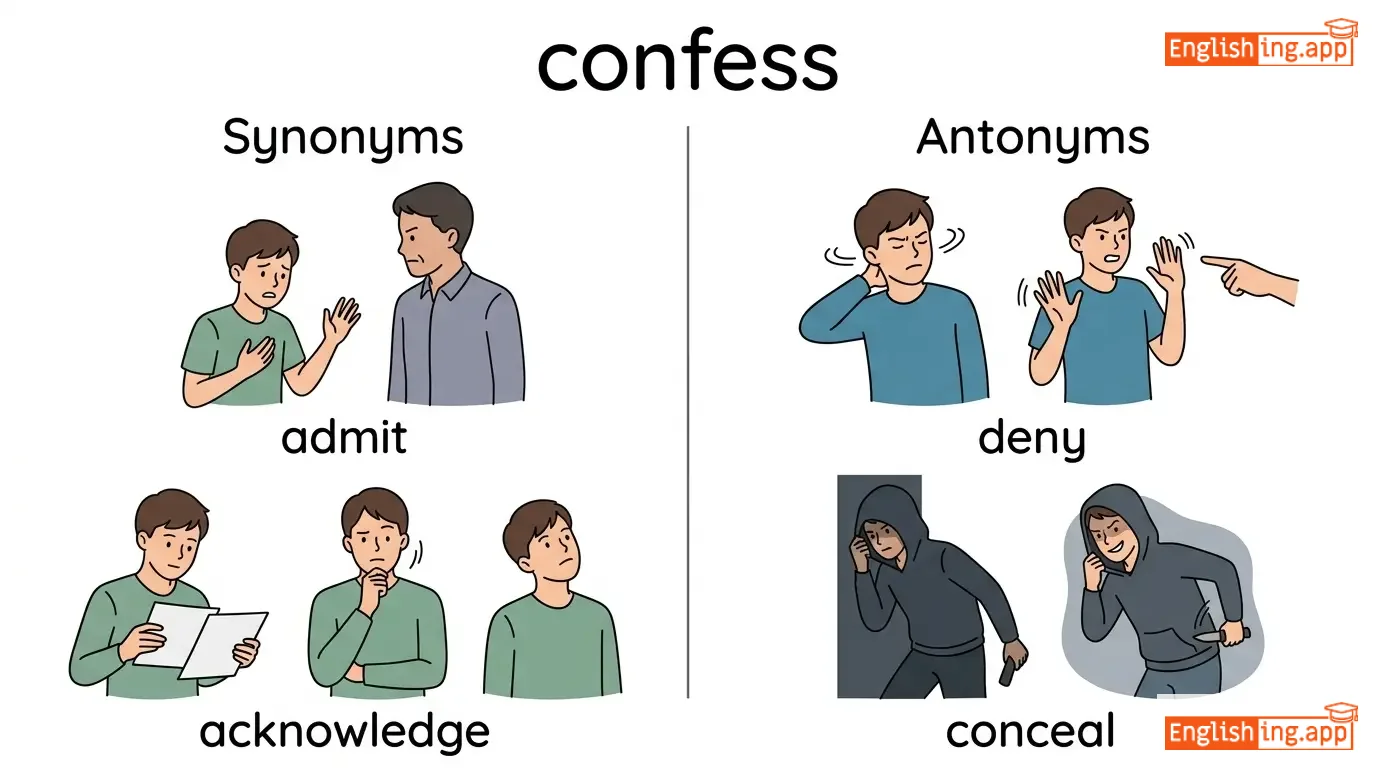
admit, acknowledge, disclose, reveal
••••••
|
deny, conceal
••••••
|
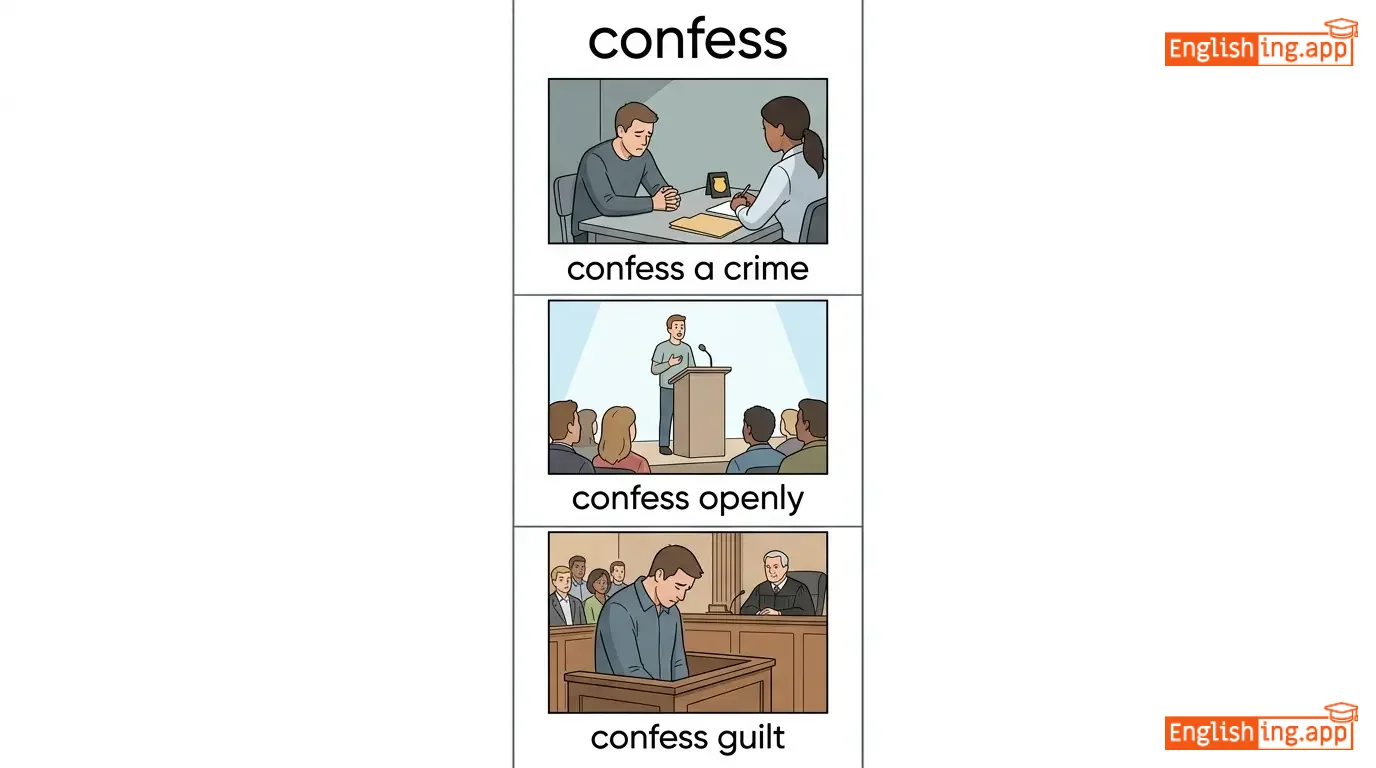
confess a crime, confess openly, confess guilt, confess sins
••••••
|
告白することで心が軽くなる。
••••••
|
|
🙏
••••••
|
/kənˈfɛʃən/
noun
(コンフェッション)
••••••
|
- •••••• |
告白
kokuhaku
••••••
|
- •••••• | - •••••• | - •••••• | - •••••• |
a statement admitting that one is guilty of a crime or has done something wrong
••••••
|
The suspect made a full confession to the police. |
容疑者は警察に完全な告白をした。
Yōgisha wa keisatsu ni kanzen'na kokuhaku o shita.
••••••
|
make a confession |
to admit to doing something wrong
••••••
|
告白する
kokuhaku suru
••••••
|
admission, acknowledgment, declaration, disclosure, revelation
••••••
|
denial, concealment, secrecy
••••••
|
make a confession, public confession, written confession, emotional confession
••••••
|
Confession は自分の間違いを認めること 🙏
••••••
|
|
💪
••••••
|
/ˈkɒnfɪdəns/
noun
(コンフィデンス)
••••••
|
- •••••• |
自信
jishin
••••••
|
- •••••• | - •••••• | - •••••• | - •••••• |
The feeling or belief that one can rely on someone or something; firm trust or self-assurance.
••••••
|
She spoke with great confidence during the meeting. |
彼女は会議で大きな自信を持って話しました。
Kanojo wa kaigi de ōkina jishin o motte hanashimashita.
••••••
|
gain confidence |
To develop or increase trust in oneself or in a situation
••••••
|
自信を得る
jishin o eru
••••••
|
trust, assurance, belief, faith, certainty
••••••
|
doubt, insecurity, mistrust
••••••
|
self confidence, boost confidence, lose confidence, build confidence
••••••
|
自信は自分に星を与えるようなもの。
••••••
|
|
😌
••••••
|
/ˈkɒnfɪdənt/
adjective
(kon-fi-dento)
••••••
|
- •••••• |
自信
jishin
••••••
|
- •••••• | - •••••• | - •••••• | - •••••• |
feeling or showing certainty about something; having self-assurance
••••••
|
She was confident about her ability to succeed. |
彼女は自分の成功する能力に自信を持っていた。
Kanojo wa jibun no seikou suru nouryoku ni jishin o motte ita.
••••••
|
confident smile |
a smile that shows assurance and self-belief
••••••
|
自信に満ちた笑顔
jishin ni michita egao
••••••
|
assured, certain, secure, self-assured, optimistic
••••••
|
insecure, uncertain, doubtful
••••••
|
confident manner, confident attitude, feel confident, become confident
••••••
|
Confidence — 自信。自信に満ちた笑顔で自分を表現しよう。
••••••
|
|
🔧
••••••
|
/kənˌfɪɡəˈreɪʃən/
noun
(コンフィギュレーション)
••••••
|
- •••••• |
コンフィギュレーション
konfigyurēshon
••••••
|
- •••••• | - •••••• | - •••••• | - •••••• |
an arrangement of parts or elements in a particular form or structure
••••••
|
The configuration of the system needs to be adjusted for better performance.
システムのコンフィギュレーションは、パフォーマンス向上のために調整する必要があります。
••••••
|
システムのコンフィギュレーションは、パフォーマンス向上のために調整する必要があります。
Shisutemu no konfigyurēshon wa, pafōmansu kōjō no tame ni chōsei suru hitsuyō ga arimasu.
••••••
|
- •••••• | - •••••• | - •••••• |
arrangement, layout, setup, structure
••••••
|
disorder, chaos
••••••
|
system configuration, network configuration, device configuration
••••••
|
コンフィギュレーション = 部品の配置
••••••
|
|
🚪
••••••
|
/kənˈfaɪn/
verb
(コンファイン)
••••••
|
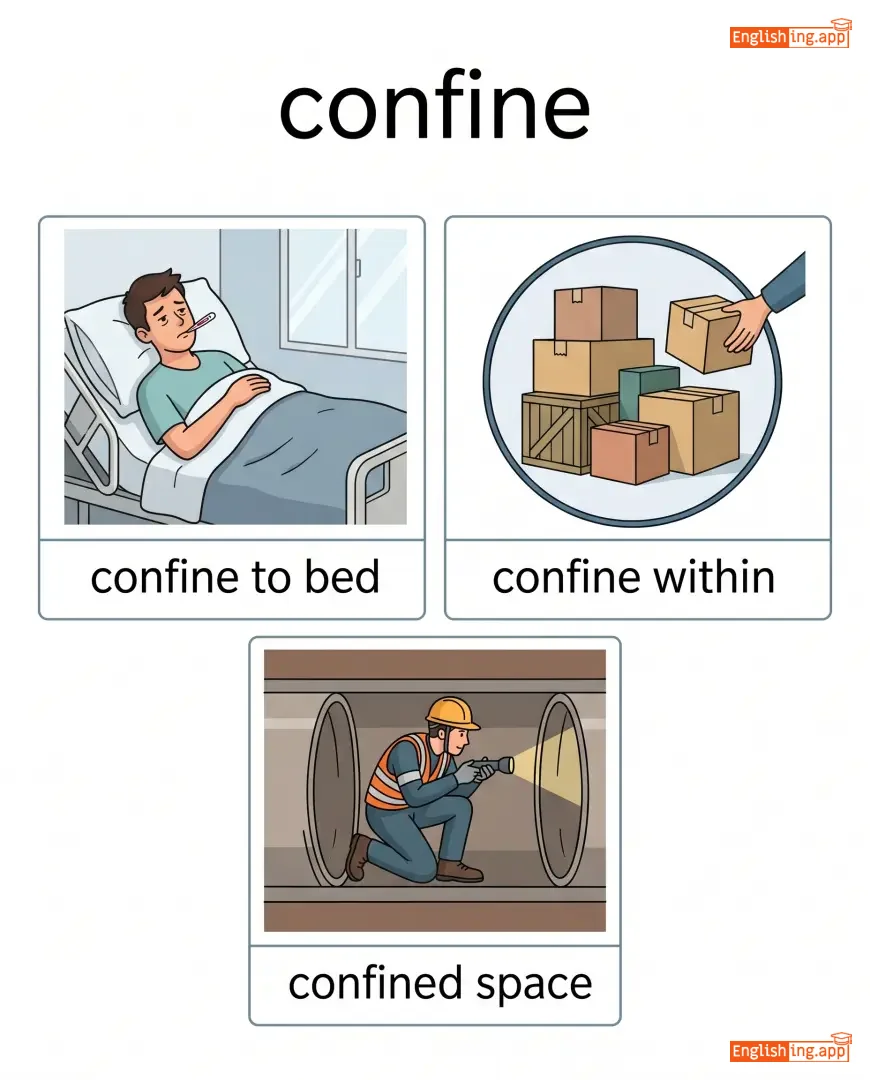
|
閉じ込める
tojimeru
••••••
|
confined
コンファインド
••••••
|
confined
コンファインド
••••••
|
confines
コンファインズ
••••••
|
confining
コンファイニング
••••••
|
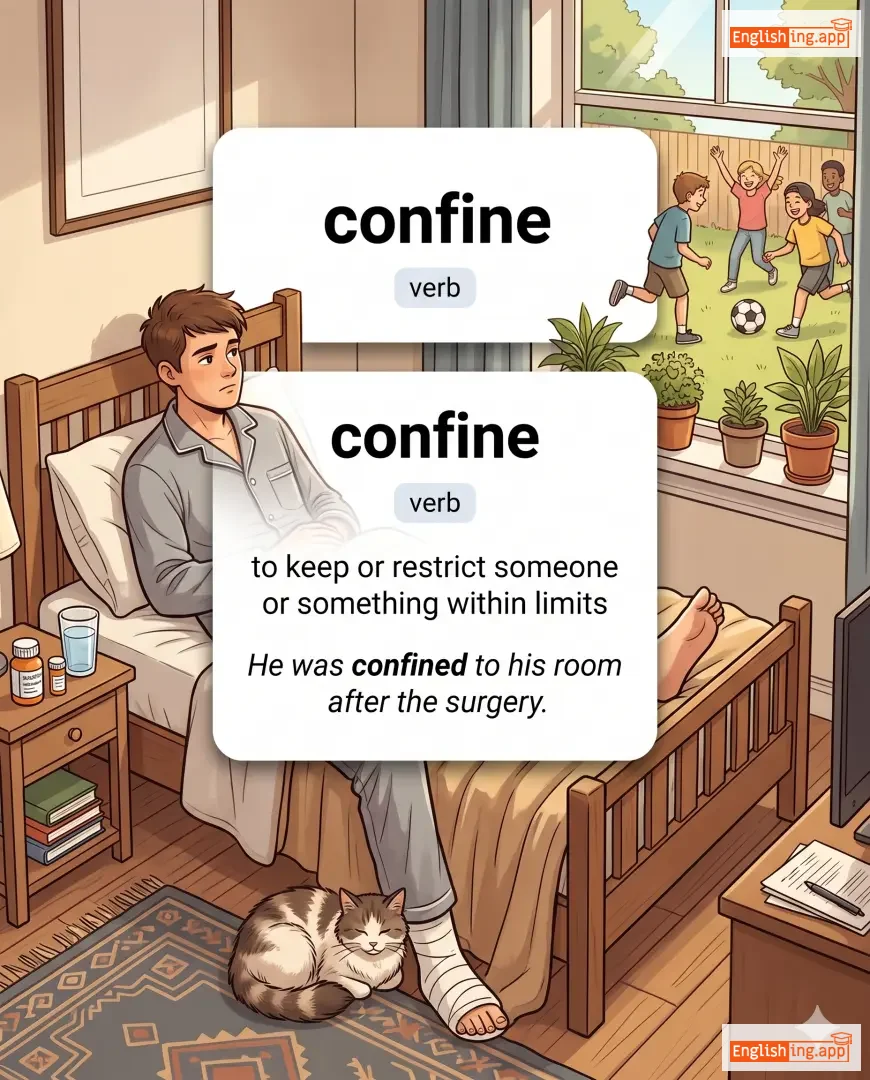
to keep or restrict someone or something within limits
••••••
|
He was confined to his room after the surgery.
彼は手術後、部屋に閉じ込められました。
••••••
|
彼は手術後、部屋に閉じ込められました。
Kare wa shujutsu go, heya ni tojimemashita.
••••••
|
confined space
閉鎖空間
••••••
|
a small or restricted area
••••••
|
閉鎖空間
heisa kūkan
••••••
|
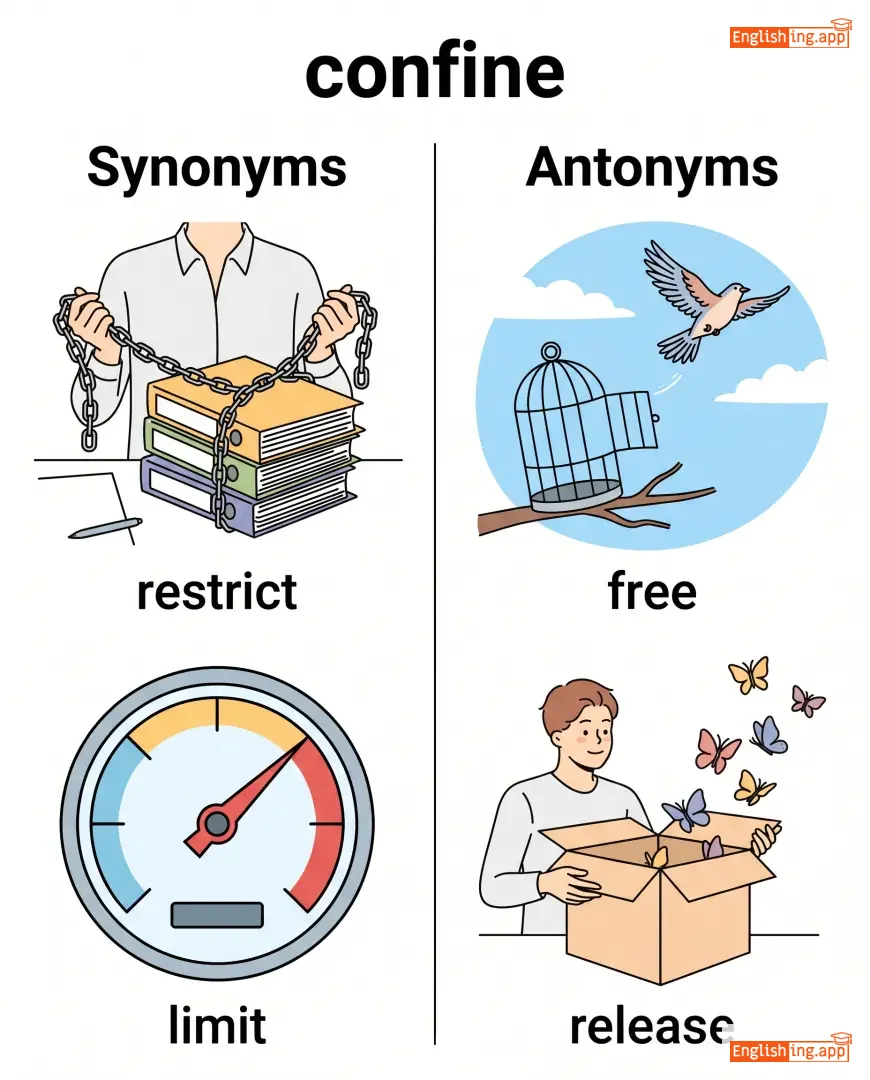
restrict, limit, restrain, enclose, imprison
••••••
|
free, release, liberate
••••••
|
confine to bed, confine within, confined space, confine attention
••••••
|
Confineは'コン' (閉じ込める)と'ファイン' (制限)という意味で覚えやすいです。
••••••
|
|
✅
••••••
|
/kənˈfɜːrm/
verb
(カンファーム)
••••••
|
- •••••• |
確認する
kakunin suru
••••••
|
confirmed
カンファームド
••••••
|
confirmed
カンファームド
••••••
|
confirms
カンファームズ
••••••
|
confirming
カンファーミング
••••••
|
to establish the truth, accuracy, or validity of something
••••••
|
The hotel will confirm your reservation by email.
ホテルはメールで予約を確認します。
••••••
|
ホテルはメールで予約を確認します。
Hoteru wa meeru de yoyaku wo kakunin shimasu.
••••••
|
confirm receipt
受領確認
••••••
|
to acknowledge that something has been received
••••••
|
受領確認
Juryou kakunin
••••••
|
verify, validate, affirm, approve, corroborate
••••••
|
deny, reject, contradict
••••••
|
confirm booking, confirm details, confirm attendance, confirm identity
••••••
|
確認するというのは、確実にすること、例えば、予約を確認するということです。
••••••
|
|
✔️
••••••
|
/kənˌfɜːˈmeɪʃən/
noun
(コンファーメーション)
••••••
|
- •••••• |
確認
kakunin
••••••
|
- •••••• | - •••••• | - •••••• | - •••••• |
the action of confirming something or the state of being confirmed
••••••
|
She received a confirmation email for her appointment.
彼女は彼女の予約の確認メールを受け取りました。
••••••
|
彼女は彼女の予約の確認メールを受け取りました。
Kanojo wa kanojo no yoyaku no kakunin mēru o ukemashita.
••••••
|
- •••••• | - •••••• | - •••••• |
verification, affirmation, validation, endorsement
••••••
|
denial, rejection, disapproval
••••••
|
confirmation email, confirmation number, confirmation letter
••••••
|
Confirm your phone number to get the confirmation of your appointment.
••••••
|
|
⚔️
••••••
|
/ˈkɒnflɪkt/
noun
(コンフリクト)
••••••
|
- •••••• |
対立
tairitsu
••••••
|
- •••••• | - •••••• | - •••••• | - •••••• |
A serious disagreement or argument, often a prolonged one.
••••••
|
The two countries are trying to resolve the conflict through negotiations. |
二国は交渉を通じて対立を解決しようとしています。
Nikoku wa kōshō o tōjite tairitsu o kaiketsu shiyō to shiteimasu.
••••••
|
conflict of interest |
A situation where someone's personal interest might influence their professional decisions.
••••••
|
利害の対立
rigai no tairitsu
••••••
|
clash, struggle, fight, dispute, battle
••••••
|
agreement, harmony, peace
••••••
|
armed conflict, internal conflict, conflict resolution, conflict management
••••••
|
対立 – 意見がぶつかり合うこと – 日本では'対立'は長期にわたる争いを意味します。
••••••
|
|
⚔️
••••••
|
/kənˈfrʌnt/
verb
(コンフロント)
••••••
|
- •••••• |
立ち向かう
tachi muka
••••••
|
confronted
コンフロントした
••••••
|
confronted
コンフロントされた
••••••
|
confronts
コンフロントする
••••••
|
confronting
コンフロントしている
••••••
|
to face someone or something directly, especially in a challenge or conflict
••••••
|
She had to confront her fears before making the speech.
彼女はスピーチをする前に恐怖と向き合わなければならなかった。
••••••
|
彼女はスピーチをする前に恐怖と向き合わなければならなかった。
Kanojo wa supīchi o suru mae ni kyōfu to mukiawanakereba naranakatta.
••••••
|
confront the issue
問題に立ち向かう
••••••
|
to directly deal with a problem instead of avoiding it
••••••
|
問題に立ち向かう
mondai ni tachimukau
••••••
|
face, challenge, oppose, encounter
••••••
|
avoid, evade, dodge
••••••
|
confront danger, confront the truth, confront directly, confront the problem
••••••
|
Confront は立ち向かうという意味 — 立ち向かって挑戦しよう!
••••••
|
|
⚔️
••••••
|
/ˌkɑn.frənˈteɪ.ʃən/
noun
(kənˈfrɒn.teɪ.ʃən)
••••••
|
- •••••• |
対立
tairitsu
••••••
|
- •••••• | - •••••• | - •••••• | - •••••• |
a hostile or argumentative meeting or situation between opposing parties; direct challenge or opposition
••••••
|
The confrontation between the two leaders ended without any agreement.
二人のリーダー間の対立は合意なく終わった。
••••••
|
二人のリーダー間の対立は合意なく終わった。
Futari no rīdā-kan no tairitsu wa gōi naku owatta.
••••••
|
- •••••• | - •••••• | - •••••• |
conflict, clash, dispute, face-off
••••••
|
agreement, cooperation, harmony, peace
••••••
|
avoid confrontation, violent confrontation, direct confrontation
••••••
|
対立 - 二つの意見がぶつかる瞬間。
••••••
|
|
😕
••••••
|
/kənˈfjuːz/
verb
(コンフューズ)
••••••
|
- •••••• |
混乱させる
konran saseru
••••••
|
confused
コンフューズド
••••••
|
confused
コンフューズド
••••••
|
confuses
コンフューズズ
••••••
|
confusing
コンフューズイング
••••••
|
To make someone unable to think clearly; to bewilder.
••••••
|
The complex instructions confused the students.
複雑な指示が学生を混乱させた。
••••••
|
複雑な指示が学生を混乱させた。
Fukuzatsu na shiji ga gakusei o konran saseta.
••••••
|
confuse someone with someone else
誰かを他の誰かと混同する
••••••
|
To mistake one person for another.
••••••
|
誰かを他の誰かと混同する
Dareka o hoka no dareka to kondou suru
••••••
|
perplex, puzzle, bewilder, baffle
••••••
|
clarify, explain
••••••
|
confuse the issue, confuse the audience, confuse easily
••••••
|
Confuse = 混乱 = 混同
••••••
|
|
😕
••••••
|
/kənˈfjuːzd/
adjective
(コンフューズド)
••••••
|
- •••••• |
混乱した
konran shita
••••••
|
- •••••• | - •••••• | - •••••• | - •••••• |
unable to think clearly; uncertain or puzzled
••••••
|
She felt confused by the complicated instructions.
シー フェルト コンフューズド バイ ザ コンプリケイテッド インストラクションズ。
••••••
|
彼女は複雑な指示に混乱した。
kanojo wa fukuzatsu na shiji ni konran shita
••••••
|
feel confused
フィール コンフューズド
••••••
|
to be unable to understand something clearly
••••••
|
混乱していると感じる
konran shite iru to kanjiru
••••••
|
puzzled, bewildered, perplexed, uncertain, muddled
••••••
|
clear, certain, confident
••••••
|
feel confused, look confused, confused expression, confused mind
••••••
|
コンフューズド = 混乱した、カタカナで覚えやすい!
••••••
|
|
😕
••••••
|
/kənˈfjuːzɪŋ/
adjective
(コンフュージング)
••••••
|
- •••••• |
紛らわしい
magirawashii
••••••
|
- •••••• | - •••••• | - •••••• | - •••••• |
causing someone to be unable to think clearly or understand; difficult to comprehend
••••••
|
The instructions were confusing and hard to follow.
ザ インストラクションズ ワー コンフュージング アンド ハード トゥ フォロー。
••••••
|
その指示は紛らわしく、従うのが難しかった。
sono shiji wa magirawashiku shitagau no ga muzukashikatta
••••••
|
- •••••• | - •••••• | - •••••• |
perplexing, puzzling, bewildering, unclear, baffling
••••••
|
clear, understandable, straightforward
••••••
|
confusing situation, confusing instructions, confusing message, confusing rules
••••••
|
confusing = 紛らわしい、mind が混乱
••••••
|
|
😕
••••••
|
/kənˈfjuːʒən/
noun
(コンフュージョン)
••••••
|
- •••••• |
混乱
konran
••••••
|
- •••••• | - •••••• | - •••••• | - •••••• |
a state of being bewildered or unclear in one’s mind
••••••
|
The sudden change in schedule caused a lot of confusion. |
スケジュールの突然の変更は多くの混乱を引き起こしました。
Sukējūru no totsuzen no henkō wa ōku no konran o hikiokoshimashita.
••••••
|
in confusion |
in a state of disorder or uncertainty
••••••
|
混乱の中で
konran no naka de
••••••
|
uncertainty, disorder, chaos, puzzlement
••••••
|
clarity, order, certainty
••••••
|
confusion arises, confusion caused, create confusion, confusion about
••••••
|
混乱とは、心の中で何もかもが混ざり合う状態です。
••••••
|
|
🎉
••••••
|
/kənˈɡrætʃʊleɪt/
verb
(カングラチュレイト)
••••••
|
- •••••• |
お祝いする
oiwaisuru
••••••
|
congratulated
カングラチュレイテッド
••••••
|
congratulated
カングラチュレイテッド
••••••
|
congratulates
カングラチュレイツ
••••••
|
congratulating
カングラチュレイティング
••••••
|
to praise someone for an achievement or for a special occasion
••••••
|
I want to congratulate you on your promotion.
私はあなたの昇進を祝いたいです。
••••••
|
私はあなたの昇進を祝いたいです。
Watashi wa anata no shoushin o iwai tai desu.
••••••
|
- •••••• | - •••••• | - •••••• |
praise, compliment, applaud, honor
••••••
|
criticize, scold, blame
••••••
|
congratulate on, congratulate someone, congratulate for
••••••
|
In Japanese, お祝いする means to congratulate, so 'oiwaisuru' them!
••••••
|
|
🎉
••••••
|
/kənˌɡrætʃəˈleɪʃən/
noun
(コングラチュレーション)
••••••
|
- •••••• |
祝賀
shukuga
••••••
|
- •••••• | - •••••• | - •••••• | - •••••• |
an expression of praise or joy for someone’s achievement or good fortune
••••••
|
She sent a congratulation to her friend on winning the award.
シー セント ア コングラチュレーション トゥー ハー フレンド オン ウィニング ジ アワード。
••••••
|
彼女は受賞した友人に祝賀を送った。
kanojo wa jushou shita yuujin ni shukuga o okutta
••••••
|
offer one’s congratulations
オファー ワンズ コングラチュレーションズ
••••••
|
to formally express praise or happiness for someone’s success
••••••
|
祝賀を述べる
shukuga o noberu
••••••
|
praise, commendation, felicitation, applause
••••••
|
condolence, criticism
••••••
|
send a congratulation, warm congratulation, heartfelt congratulation, official congratulation
••••••
|
Shuku = celebrate, ga = event → shukuga = congratulation
••••••
|
|
🏛️
••••••
|
/ˈkɒŋɡrɛs/
noun
(コングレス)
••••••
|
- •••••• |
会議
kaigi
••••••
|
- •••••• | - •••••• | - •••••• | - •••••• |
a formal meeting or assembly, especially of representatives for discussion
••••••
|
The international congress on climate change will be held next year. |
気候変動に関する国際会議は来年開催されます。
Kikō hendō ni kansuru kokusai kaigi wa rainen kaisai saremasu.
••••••
|
- •••••• | - •••••• | - •••••• |
assembly, meeting, convention, conference
••••••
|
individual, separation
••••••
|
national congress, international congress, hold congress, annual congress
••••••
|
会議は、大きな会合です。政治的な会議のように、皆が集まって議論します。
••••••
|
|
📜
••••••
|
/kənˈɡrɛʃənl/
adjective
(コングレッショナル)
••••••
|
- •••••• |
議会の
gikai no
••••••
|
- •••••• | - •••••• | - •••••• | - •••••• |
relating to a congress, especially the US Congress
••••••
|
The bill received strong congressional support. |
その法案は強力な議会の支持を得た。
Sono hōan wa kyōryokuna gikai no shiji o eta.
••••••
|
- •••••• | - •••••• | - •••••• |
legislative, parliamentary, governmental, political
••••••
|
individual, unofficial
••••••
|
congressional hearing, congressional approval, congressional committee, congressional election
••••••
|
Congressional は議会に関連しています。
••••••
|
|
💍
••••••
|
/ˈkɒndʒʊɡəl/
adjective
(kondʒugal)
••••••
|

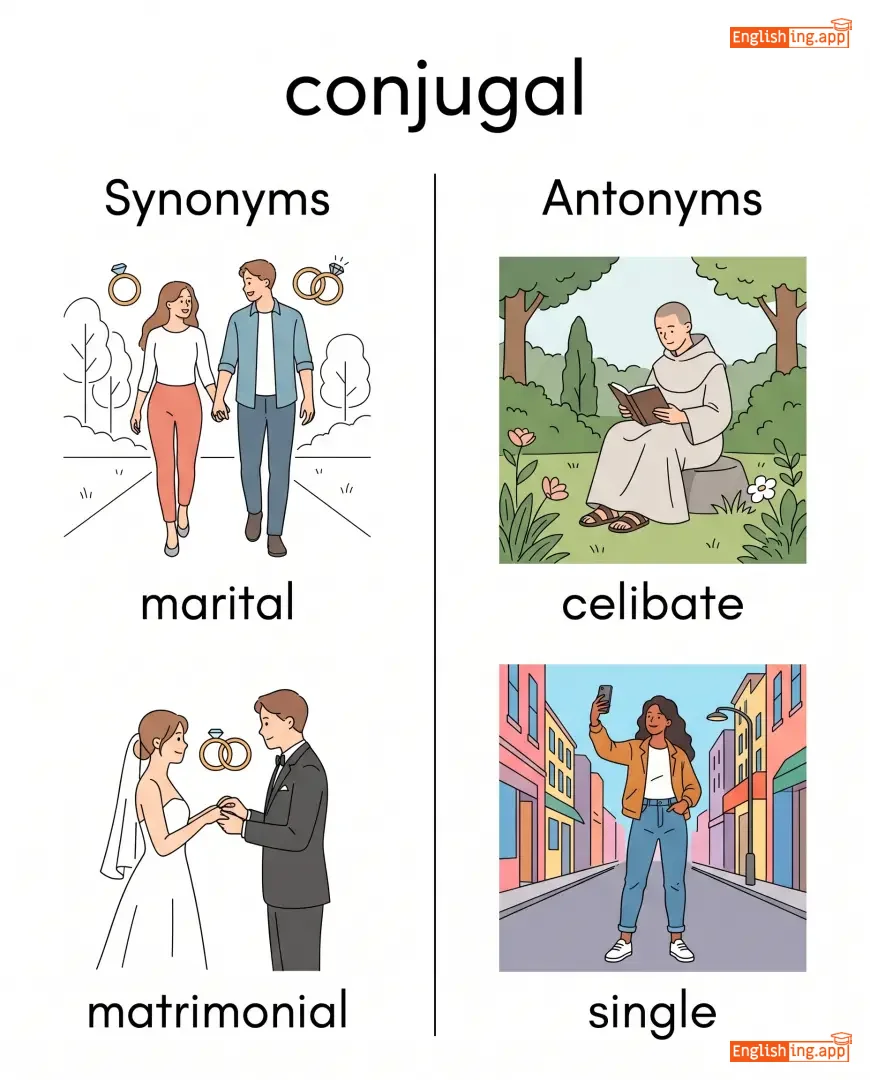

|
婚姻の
kon'in no
••••••
|
- •••••• | - •••••• | - •••••• | - •••••• |
relating to marriage or the relationship between husband and wife
••••••
|
They enjoyed a long life of conjugal happiness. |
彼らは長い結婚生活を楽しみました。
Karera wa nagai kekkon seikatsu o tanoshimimashita.
••••••
|
conjugal rights |
the rights enjoyed by married partners, especially sexual relations
••••••
|
婚姻権
kon'in ken
••••••
|
marital, matrimonial, spousal, wedded
••••••
|
celibate, single
••••••
|
conjugal life, conjugal relationship, conjugal duties
••••••
|
婚姻の生活 = 夫婦の生活 - 婚姻 = 結婚生活。
••••••
|
|
🔗
••••••
|
/kəˈnɛkt/
verb
(コネクト)
••••••
|

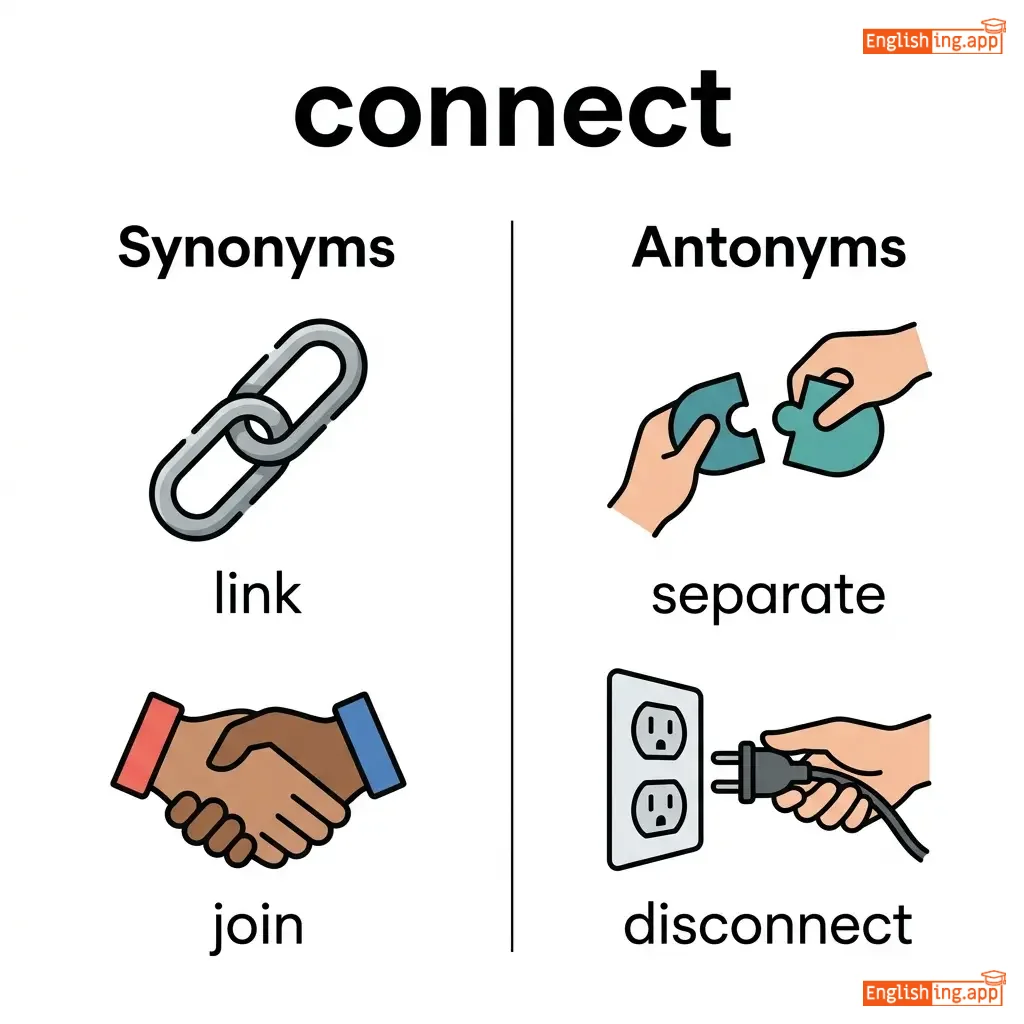
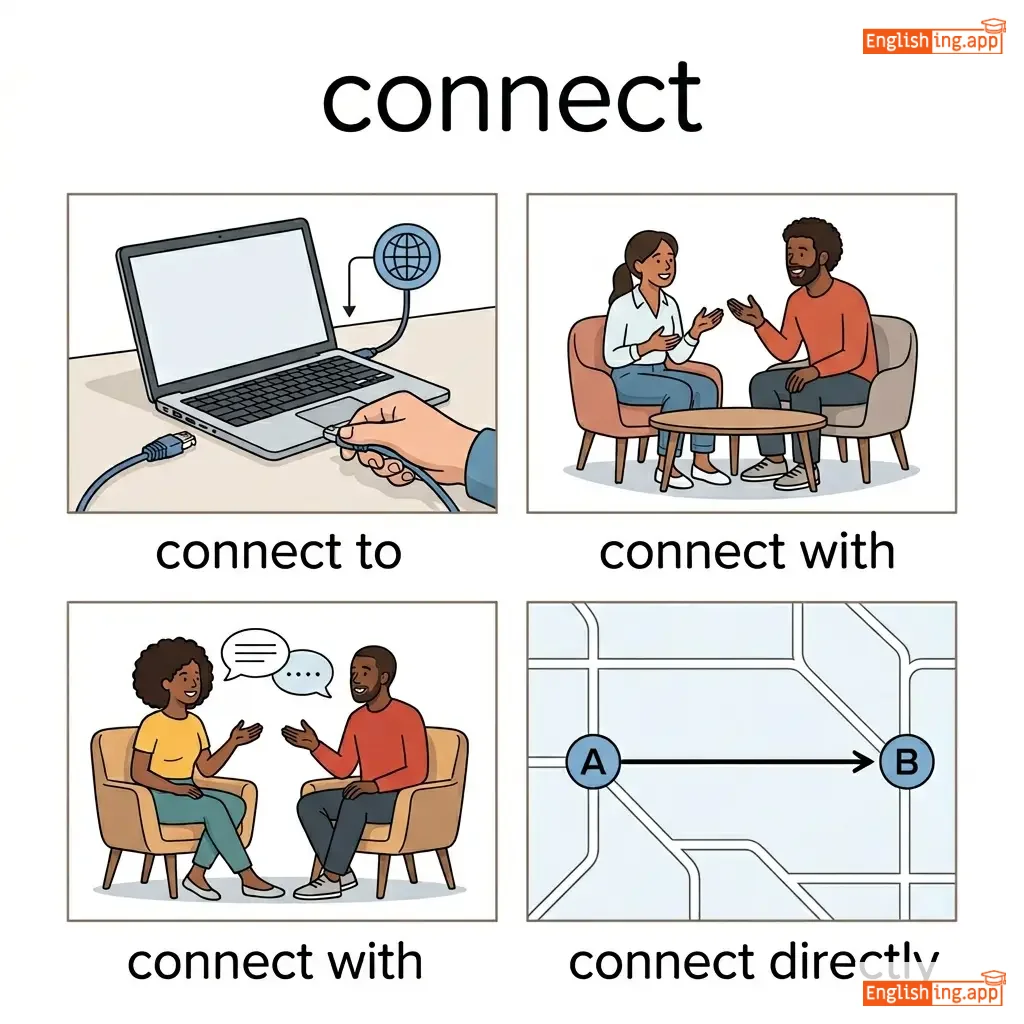
|
接続する
setsuzoku suru
••••••
|
connected
コネクテッド
••••••
|
connected
コネクテッド
••••••
|
connects
コネクツ
••••••
|
connecting
コネクティング
••••••
|
to join or link two or more things together
••••••
|
The new bridge will connect the two cities.
新しい橋が二つの都市をつなげる。
••••••
|
新しい橋が二つの都市をつなげる。
Atarashii hashi ga futatsu no toshi wo tsunageru.
••••••
|
connect the dots
ドットをつなげる
••••••
|
to understand the relationship between different ideas or facts
••••••
|
ドットをつなげる
dotto wo tsunageru
••••••
|
link, join, attach, unite, couple
••••••
|
separate, disconnect, divide
••••••
|
connect to, connect with, connect directly, connect easily
••••••
|
Connect は接続するという意味 — Wi-Fi に接続するように、インターネットにアクセスできるようになる。
••••••
|
|
🔗
••••••
|
/kəˈnɛkʃən/
noun
(コネクション)
••••••
|
- •••••• |
接続
setsuzoku
••••••
|
- •••••• | - •••••• | - •••••• | - •••••• |
a relationship in which a person, thing, or idea is linked or associated with something else
••••••
|
There is a strong connection between exercise and health. |
運動と健康の間に強い接続があります。
Undou to kenkou no aida ni tsuyoi setsuzoku ga arimasu.
••••••
|
make a connection |
to establish a relationship or link with someone or something
••••••
|
接続を作る
Setsuzoku wo tsukuru
••••••
|
link, relationship, bond, association, tie
••••••
|
disconnection, separation, detachment
••••••
|
internet connection, family connection, business connection, strong connection
••••••
|
Connectionは接続の意味で、インターネット接続があればすべてがつながっています。
••••••
|
|
⚔️
••••••
|
/ˈkɒŋkər/
verb
(kɔnkwəɹ)
••••••
|
|
征服する
seifuku suru
••••••
|
conquered
kɔnkwəd
••••••
|
conquered
kɔnkwəd
••••••
|
conquers
kɔnkwəz
••••••
|
conquering
kɔnkwɪəɹɪŋ
••••••
|
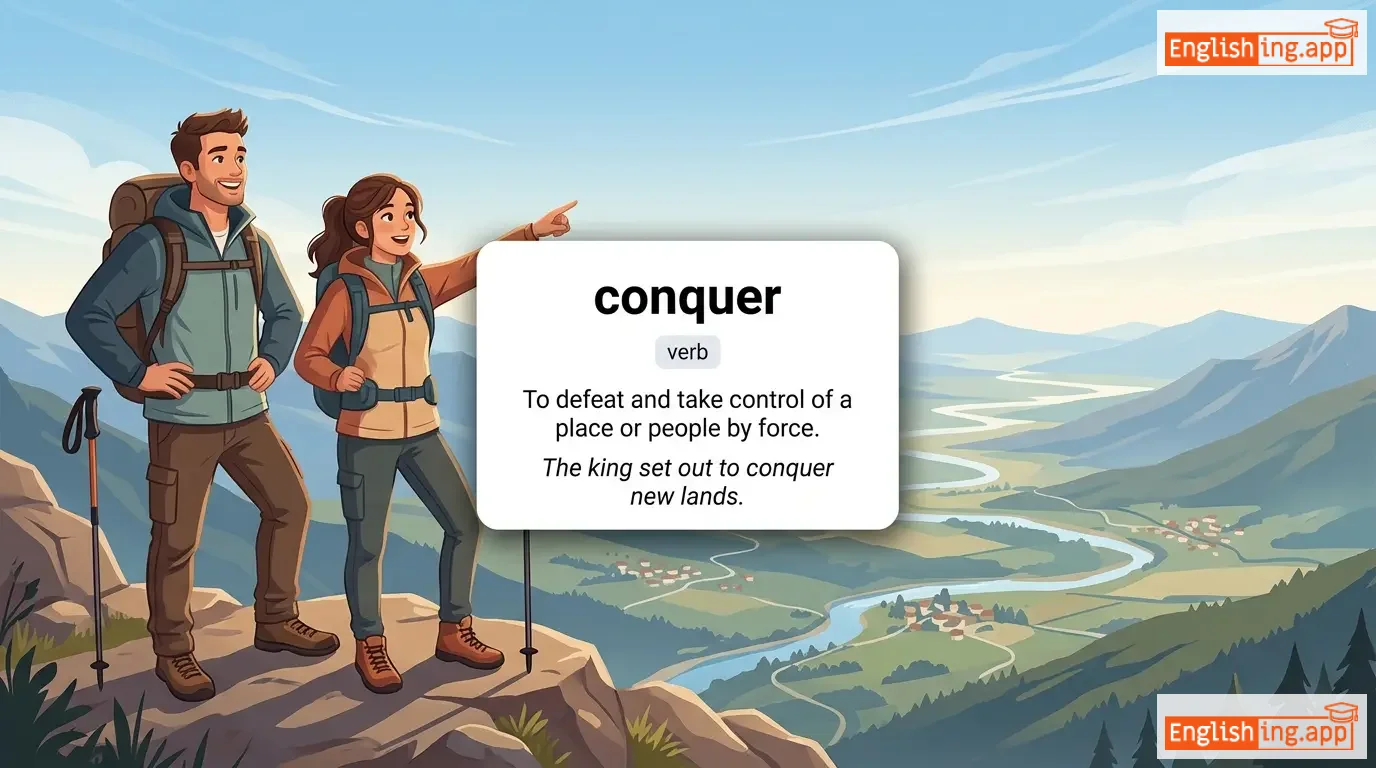
To defeat and take control of a place or people by force.
••••••
|
The king set out to conquer new lands.
王は新しい土地を征服するために出発した。
••••••
|
王は新しい土地を征服するために出発した。
Ō wa atarashī tochi o seifuku suru tame ni shuppatsu shita.
••••••
|
conquer your fears
恐怖を征服する
••••••
|
To overcome or defeat your fears.
••••••
|
恐怖を征服する
Kyōfu o seifuku suru
••••••
|
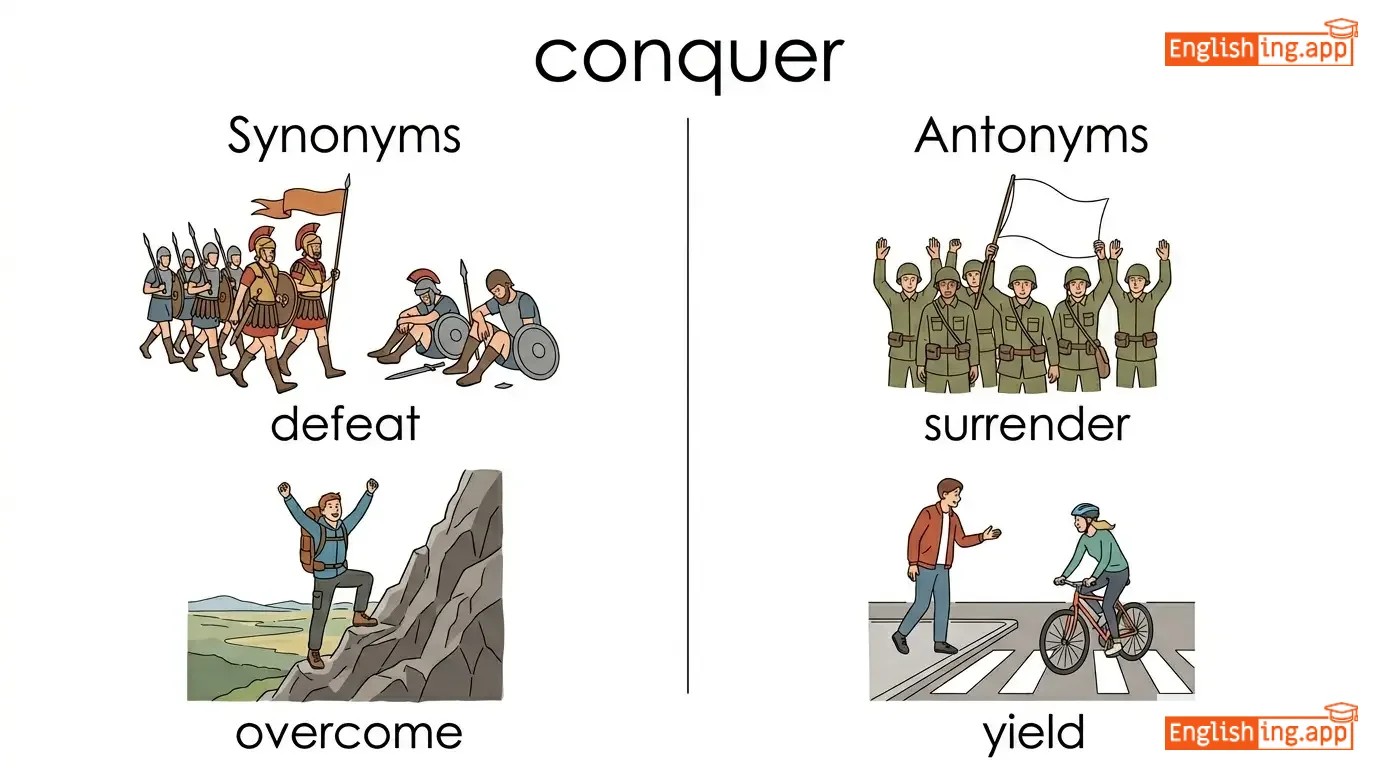
defeat, overcome, vanquish, subdue, master
••••••
|
surrender, yield, lose
••••••
|
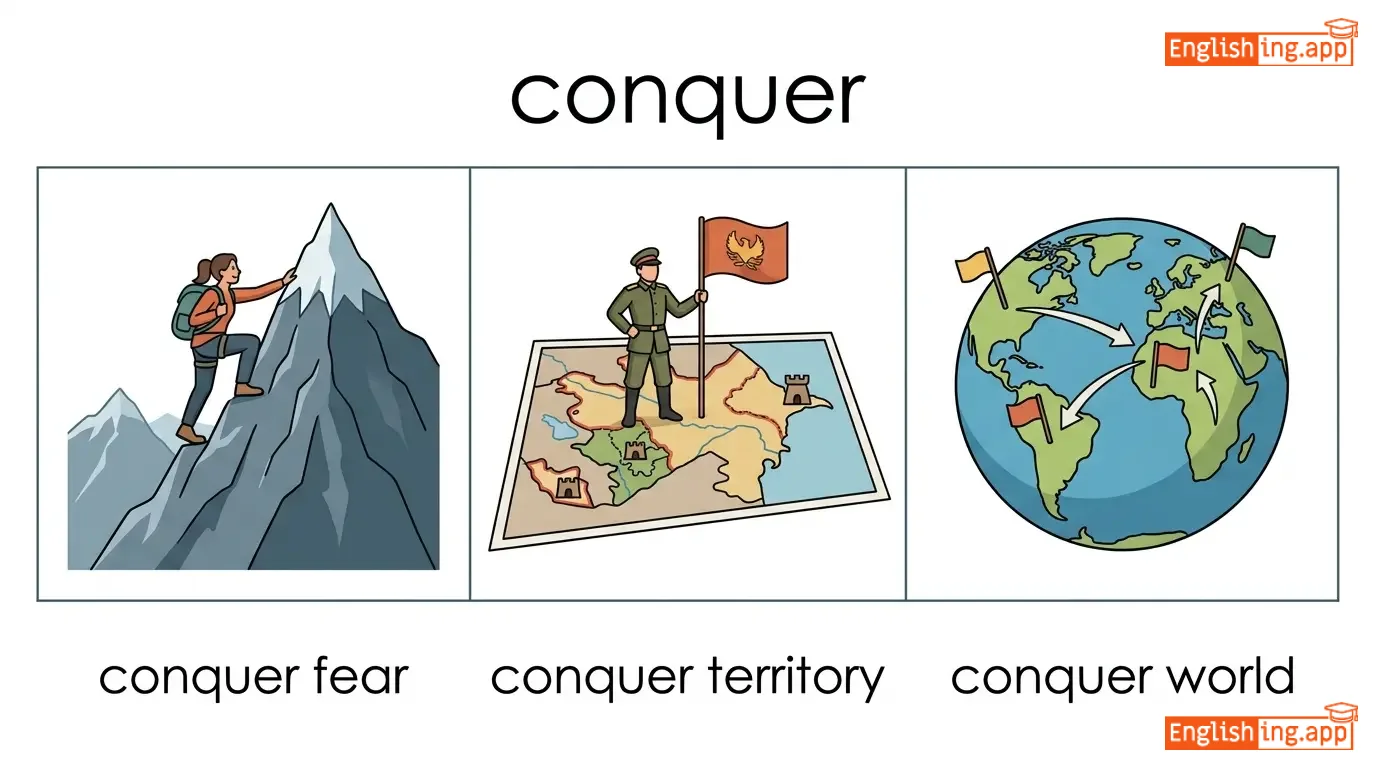
conquer fear, conquer territory, conquer world, conquer disease
••••••
|
征服する、ナポレオンのように世界を征服する。
••••••
|
|
🧠
••••••
|
/ˈkɒnʃəns/
noun
(コンシャス)
••••••
|
- •••••• |
良心
ryōshin
••••••
|
- •••••• | - •••••• | - •••••• | - •••••• |
An inner sense of right and wrong that guides a person's actions.
••••••
|
Her conscience told her to admit the mistake. |
彼女の良心は彼女に間違いを認めるように言った。
Kanojo no ryōshin wa kanojo ni machigai o mitomeru yō ni itta.
••••••
|
a guilty conscience |
A feeling of guilt caused by knowing you have done something wrong.
••••••
|
罪悪感のある良心
zaiakukan no aru ryōshin
••••••
|
morality, ethics, principles, scruples, integrity
••••••
|
immorality, corruption, wickedness
••••••
|
clear conscience, guilty conscience, prick of conscience
••••••
|
良心 (ryōshin) - 内面の声が指し示す、何が正しいか。
••••••
|
|
👁️
••••••
|
/ˈkɒnʃəs/
adjective
(コンシャス)
••••••
|
- •••••• |
意識的
ishikiteki
••••••
|
- •••••• | - •••••• | - •••••• | - •••••• |
Aware of and responding to one's surroundings; awake.
••••••
|
She was fully conscious after the surgery.
手術後、彼女は完全に意識が戻った。
••••••
|
手術後、彼女は完全に意識が戻った。
Shujutsugo, kanojo wa kanzen ni ishiki ga modotta.
••••••
|
lose consciousness
意識を失う
••••••
|
To become unconscious or faint.
••••••
|
意識を失う
Ishiki o ushinau
••••••
|
aware, alert, awake, mindful, responsive
••••••
|
unconscious, unaware, oblivious
••••••
|
conscious mind, fully conscious, conscious effort
••••••
|
意識は耳(con)で聞いて、注意を払うことです。
••••••
|
|
🧠
••••••
|
/ˈkɒnʃəsnəs/
noun
(コンシャスネス)
••••••
|
|
意識
ishiki
••••••
|
- •••••• | - •••••• | - •••••• | - •••••• |
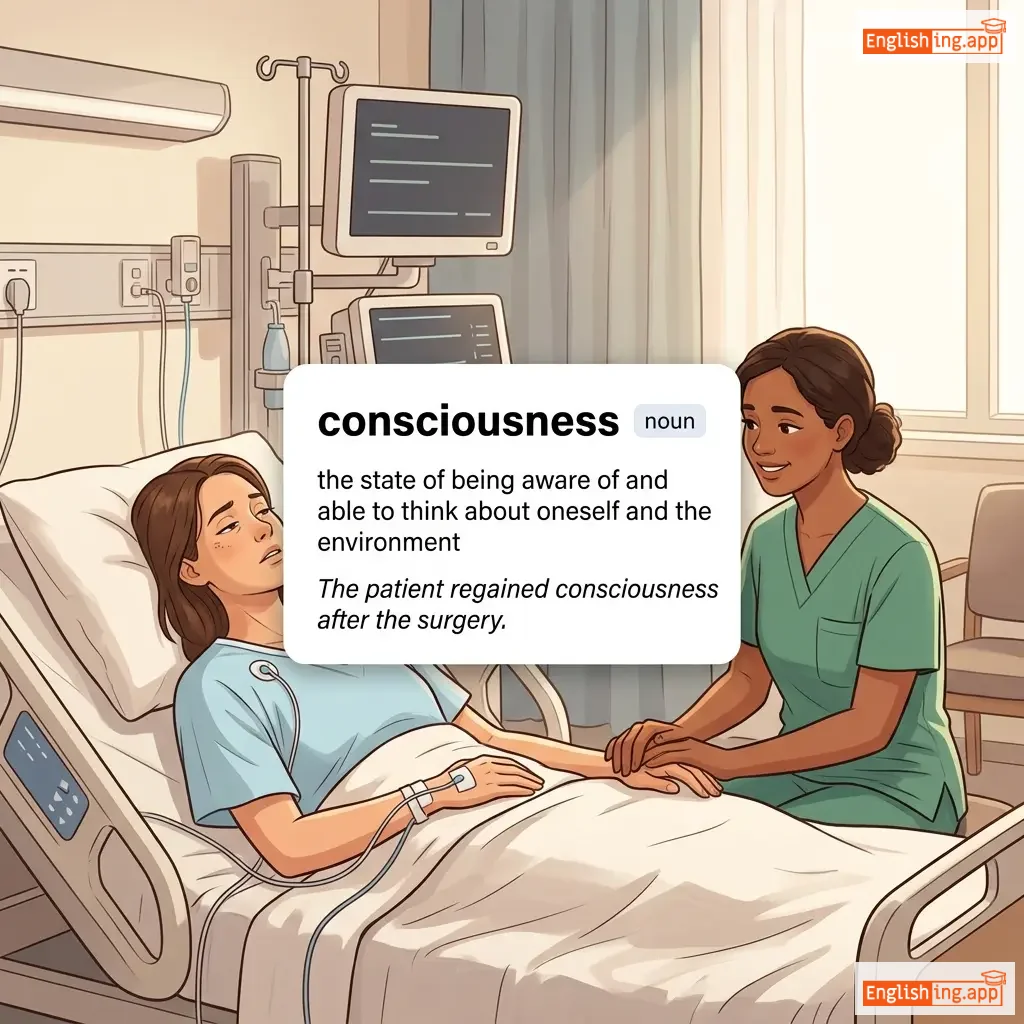
the state of being aware of and able to think about oneself and the environment
••••••
|
The patient regained consciousness after the surgery. |
手術後、患者は意識を取り戻しました。
Shujutsugo, kanja wa ishiki o torimodoshimashita.
••••••
|
stream of consciousness |
a literary style that presents a character's continuous flow of thoughts and feelings
••••••
|
意識の流れ
ishiki no nagare
••••••
|
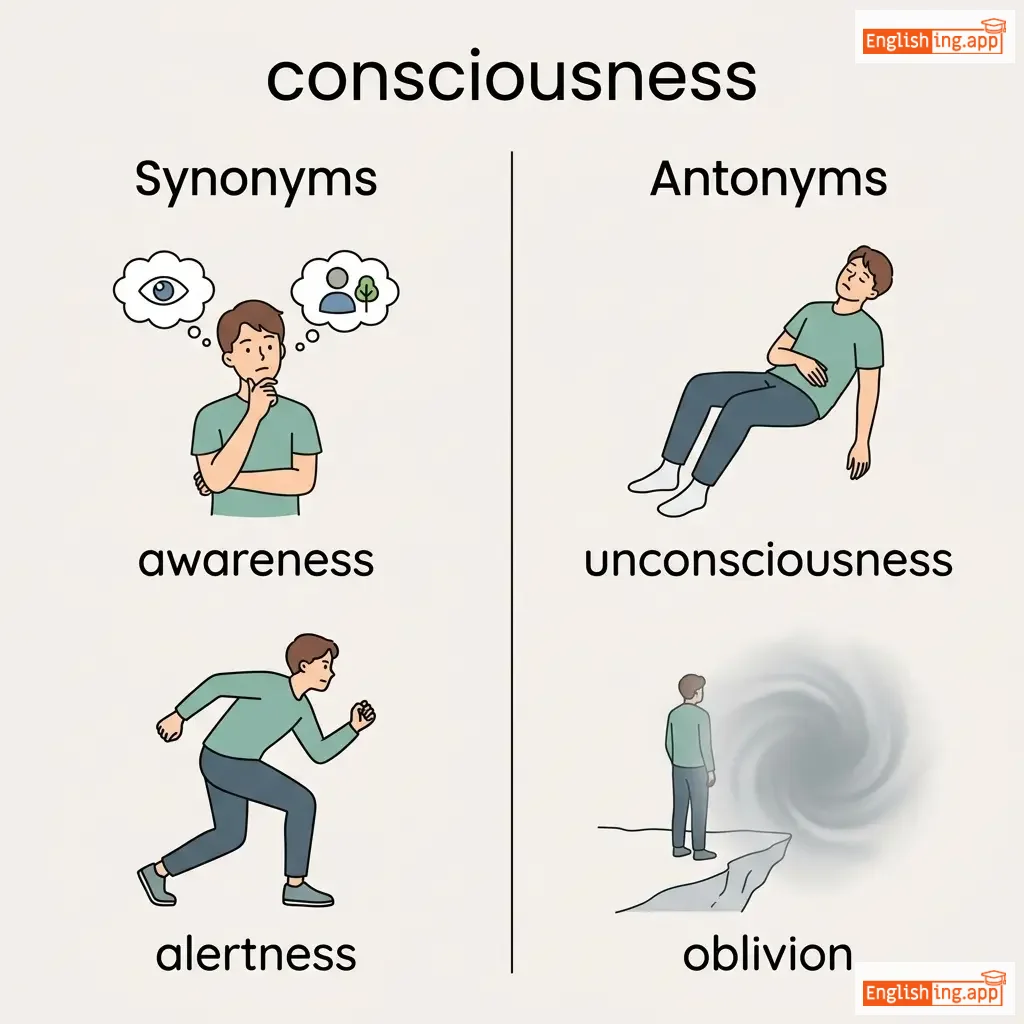
awareness, alertness, perception, mindfulness, sentience
••••••
|
unconsciousness, oblivion, ignorance
••••••
|
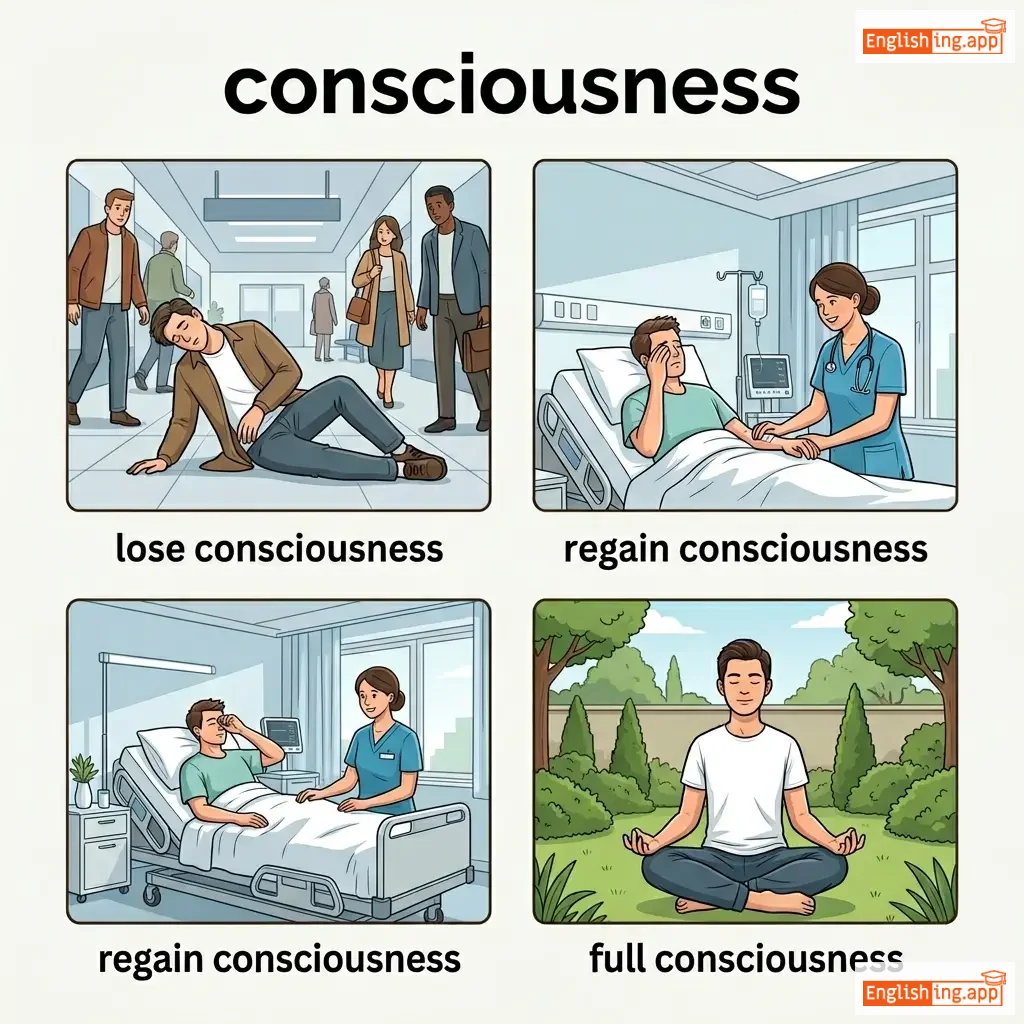
lose consciousness, regain consciousness, full consciousness, human consciousness
••••••
|
英語の'consciousness'と日本語の'意識'は意味が似ている。
••••••
|
|
🔢
••••••
|
/kənˈsɛkjʊtɪv/
adjective
(コンセクティブ)
••••••
|
- •••••• |
連続的
renzokuteki
••••••
|
- •••••• | - •••••• | - •••••• | - •••••• |
following one after another without interruption
••••••
|
She won three consecutive matches. |
彼女は三連続の試合に勝った。
Kanojo wa san renzoku no shiai ni katta.
••••••
|
consecutive days |
days that come one after another in sequence
••••••
|
連続した日々
renzoku shita hibi
••••••
|
successive, sequential, continuous, uninterrupted, serial
••••••
|
sporadic, intermittent, irregular
••••••
|
consecutive days, consecutive years, consecutive matches, consecutive numbers
••••••
|
連続的なものは途切れなく続く。日々がそれであるように。
••••••
|
|
🤝
••••••
|
/kənˈsɛnsəs/
noun
(コンセンサス)
••••••
|
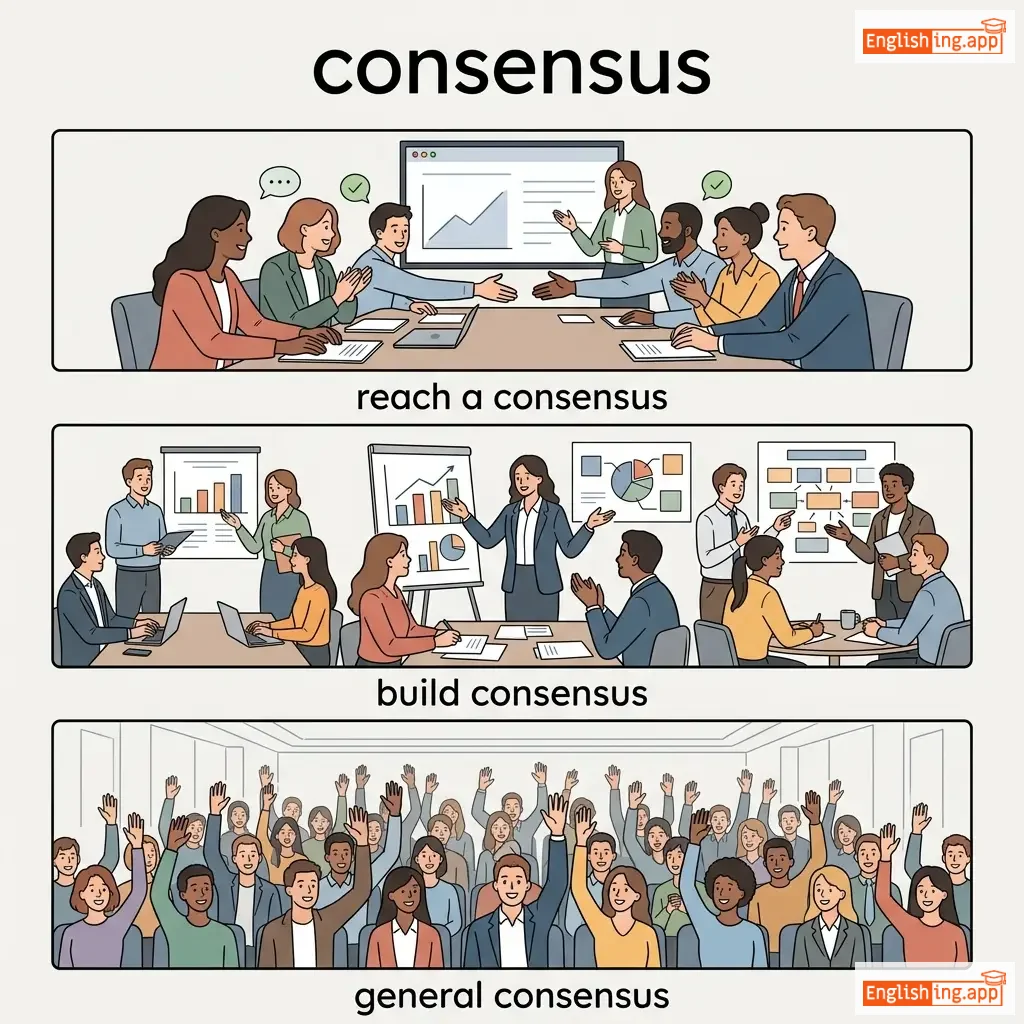
|
コンセンサス
konsensasu
••••••
|
- •••••• | - •••••• | - •••••• | - •••••• |
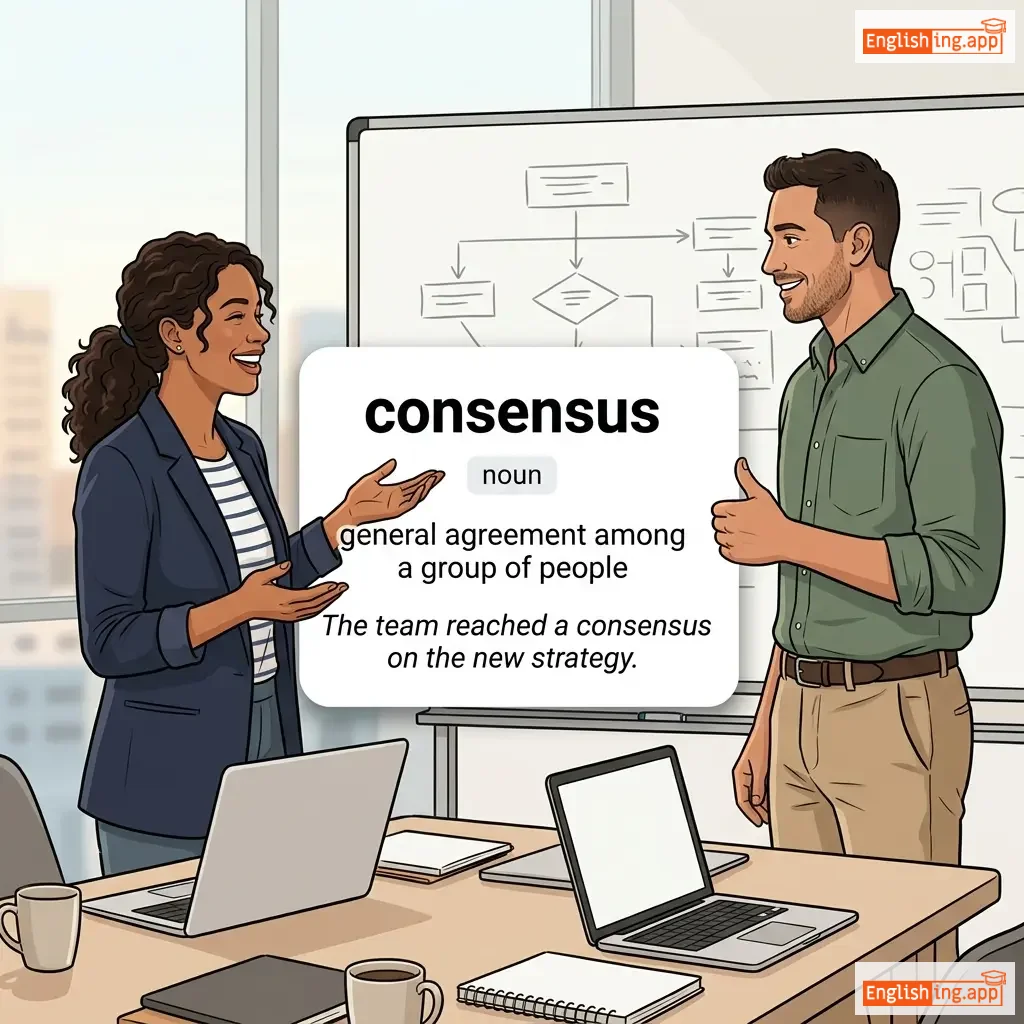
general agreement among a group of people
••••••
|
The team reached a consensus on the new strategy. |
チームは新しい戦略についてコンセンサスに達しました。
Chīmu wa atarashī senryaku ni tsuite konsensasu ni tasshimashita.
••••••
|
general consensus |
a widely accepted common opinion
••••••
|
一般的なコンセンサス
ippanteki na konsensasu
••••••
|
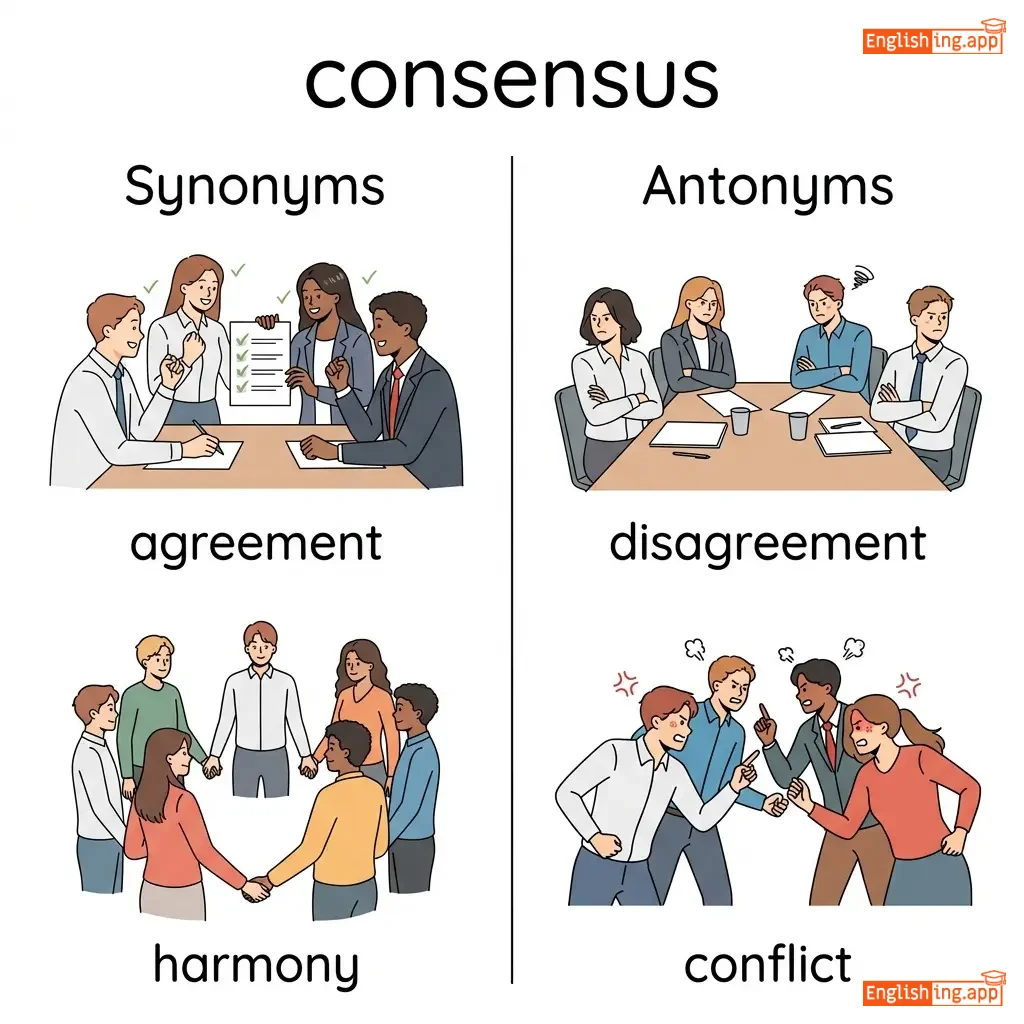
agreement, harmony, accord, unity, concurrence
••••••
|
disagreement, conflict, discord
••••••
|
reach a consensus, build consensus, general consensus, consensus opinion
••••••
|
Consensus = con (みんな) + sensus (感覚)、みんな同じ感覚。
••••••
|
|
✅
••••••
|
/kənˈsɛnt/
noun
(kənˈsɛnt)
••••••
|
- •••••• |
同意
doui
••••••
|
- •••••• | - •••••• | - •••••• | - •••••• |
permission for something to happen or agreement to do something
••••••
|
She gave her consent before the operation. |
彼女は手術の前に同意を与えました。
Kanojo wa shujutsu no mae ni doui o ataemashita.
••••••
|
with your consent |
with your permission or agreement
••••••
|
あなたの同意のもとで
Anata no doui no moto de
••••••
|
permission, approval, agreement, authorization
••••••
|
refusal, denial, rejection
••••••
|
give consent, obtain consent, written consent, parental consent
••••••
|
同意は'はい'を言うこと、許可を与えることです。
••••••
|
|
⚖️
••••••
|
/ˈkɒnsɪkwəns/
noun
(コンシケンス)
••••••
|
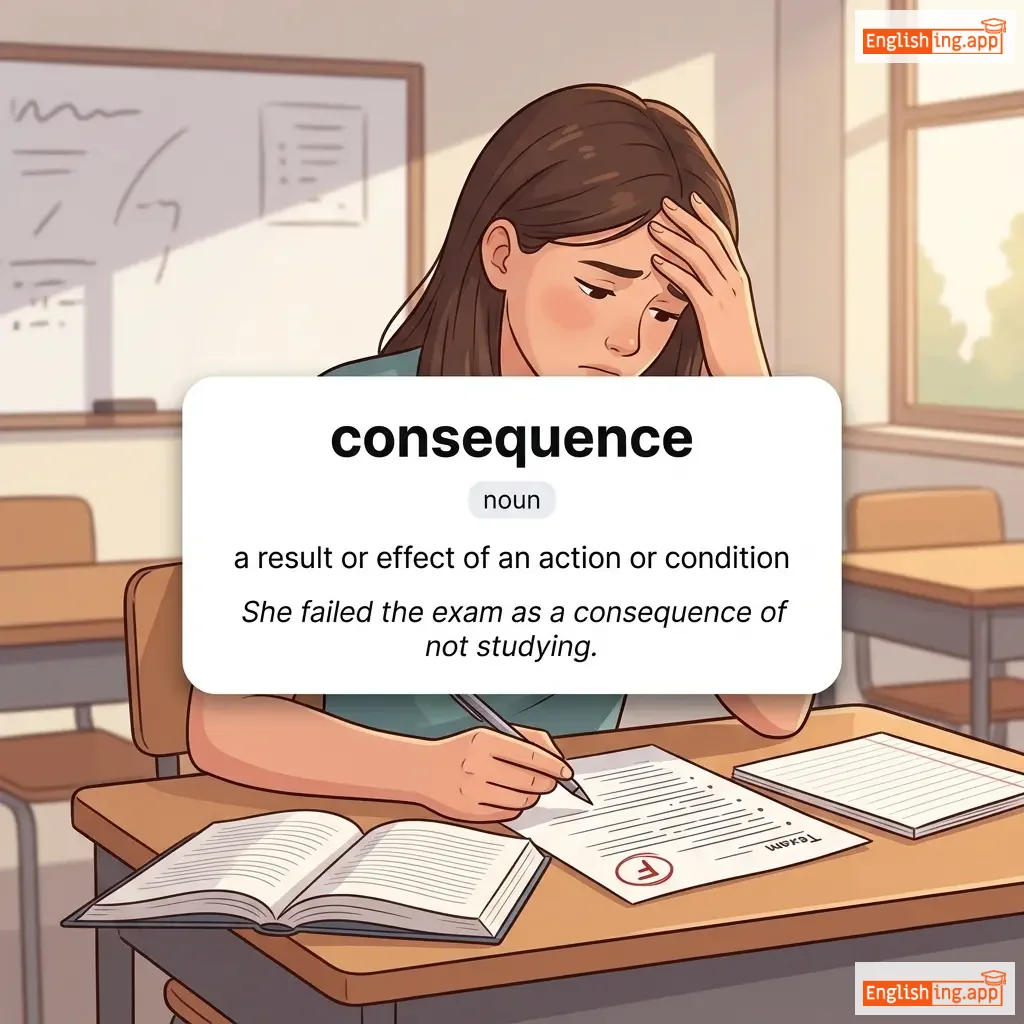
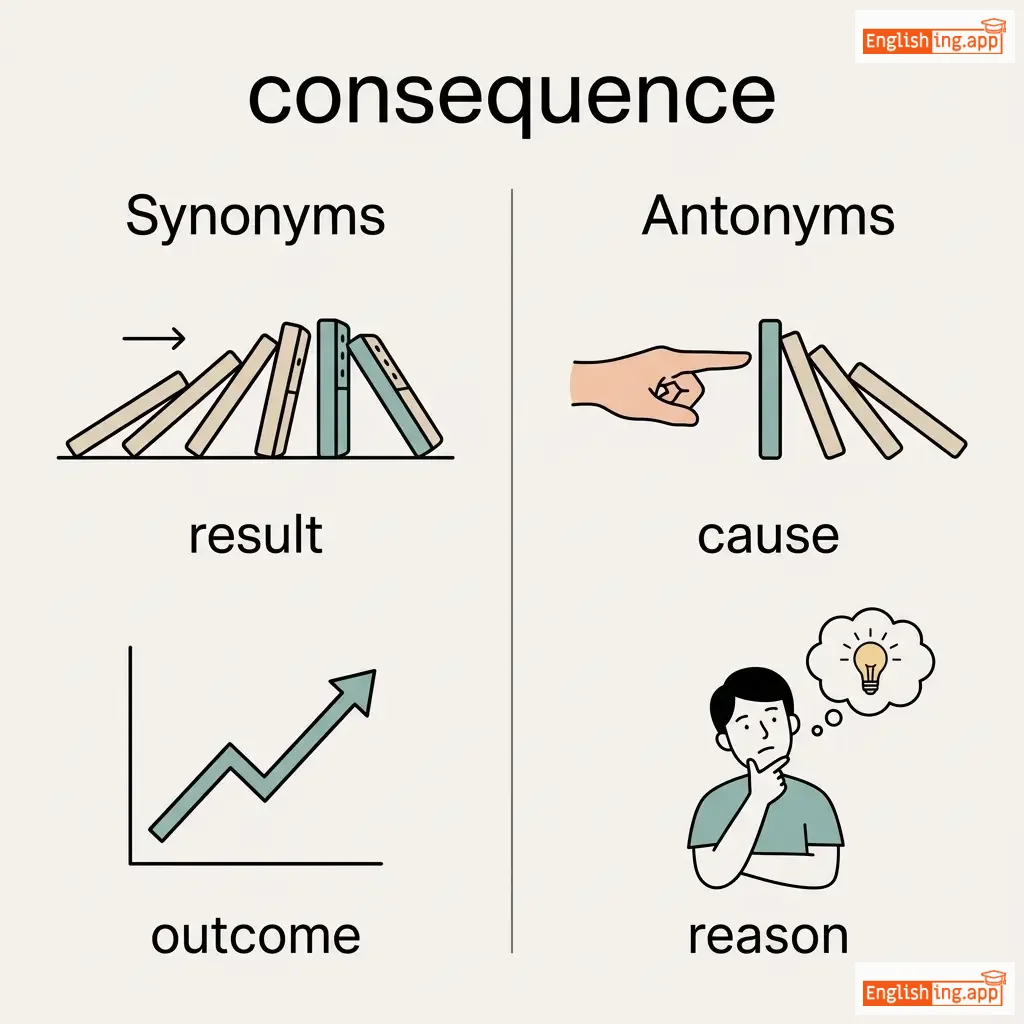
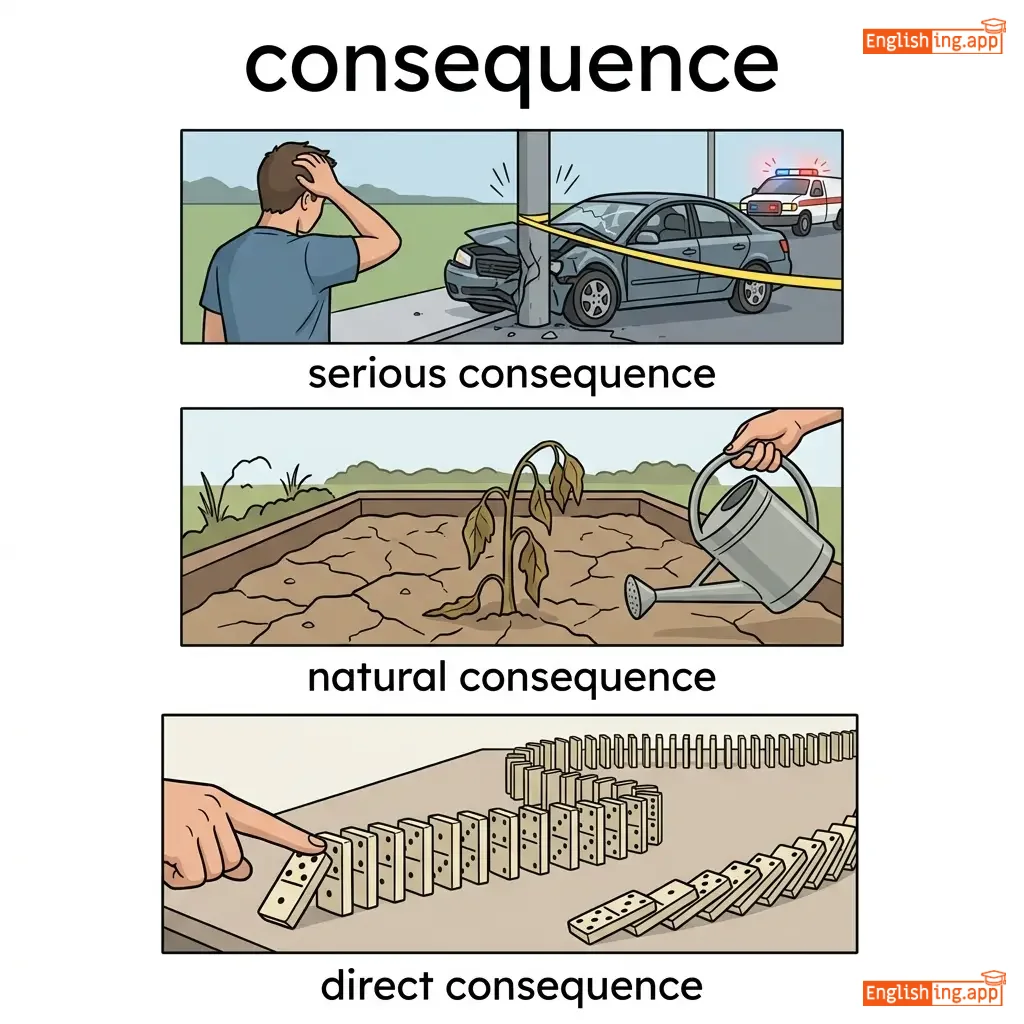
|
結果
kekka
••••••
|
- •••••• | - •••••• | - •••••• | - •••••• |
a result or effect of an action or condition
••••••
|
She failed the exam as a consequence of not studying. |
勉強しなかった結果、試験に落ちた。
Benkyō shinakatta kekka, shiken ni ochita.
••••••
|
face the consequences |
to accept the results of one's actions, especially bad ones
••••••
|
結果に直面する
kekka ni chokumen suru
••••••
|
result, outcome, effect, aftermath, repercussion
••••••
|
cause, reason, origin
••••••
|
serious consequence, natural consequence, direct consequence, face consequences
••••••
|
結果は行動の結果であり、それが悪い結果であったとしても受け入れること。
••••••
|
|
➡️
••••••
|
/ˈkɒnsɪkwəntli/
adverb
(kônsiquéntorī)
••••••
|
- •••••• |
その結果
sono kekka
••••••
|
- •••••• | - •••••• | - •••••• | - •••••• |
as a result; therefore
••••••
|
He didn’t study, and consequently he failed the exam.
彼は勉強しなかったので、その結果試験に落ちた。
••••••
|
彼は勉強しなかったので、その結果試験に落ちた。
Kare wa benkyou shinakatta node, sono kekka shiken ni ochita.
••••••
|
- •••••• | - •••••• | - •••••• |
therefore, thus, hence, accordingly, as a result
••••••
|
nevertheless, however, despite
••••••
|
and consequently, consequently failed, consequently led to, consequently resulted in
••••••
|
Consequently は 'その結果', 結果に対して使う。
••••••
|
|
🌿
••••••
|
/ˌkɒnsəˈveɪʃən/
noun
(コンサーベイション)
••••••
|
|
保護
hogo
••••••
|
- •••••• | - •••••• | - •••••• | - •••••• |
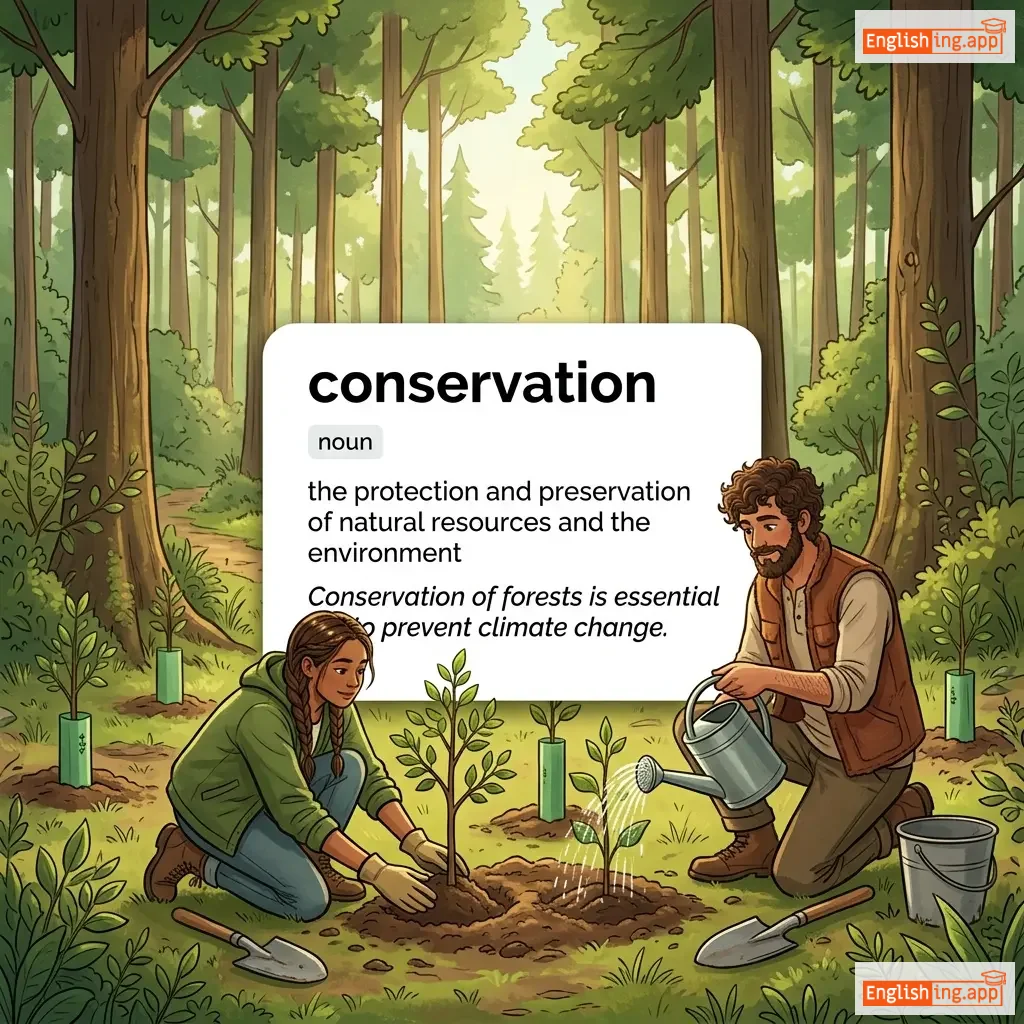
the protection and preservation of natural resources and the environment
••••••
|
Conservation of forests is essential to prevent climate change.
森のコンサーベイションは気候変動を防ぐために重要です。
••••••
|
森の保護は気候変動を防ぐために重要です。
mori no hogo wa kikou hendou o fusegu tame ni juuyou desu.
••••••
|
conservation of energy
エネルギーのコンサーベイション
••••••
|
the principle that energy cannot be created or destroyed, only transformed
••••••
|
エネルギーの保存
enerugii no hozon
••••••
|
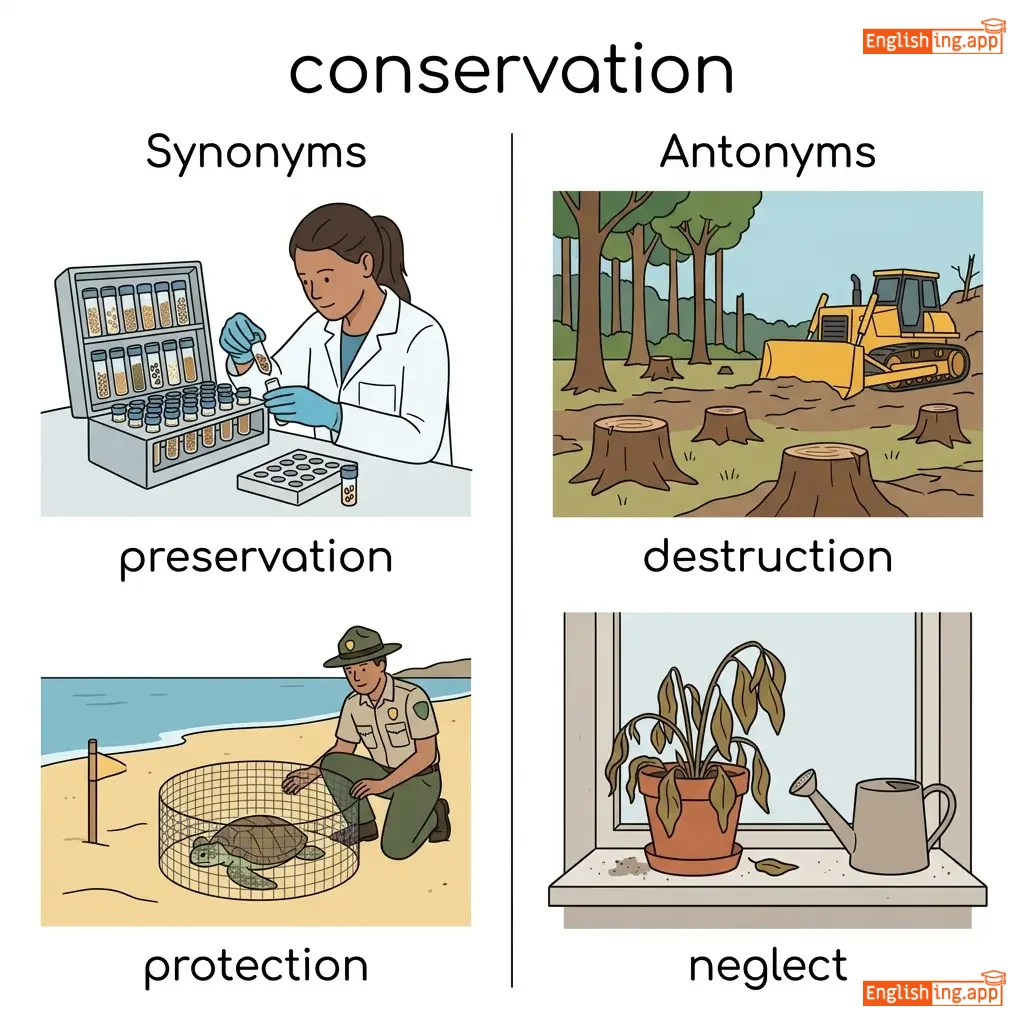
preservation, protection, care, maintenance, safeguarding
••••••
|
destruction, neglect, waste
••••••
|
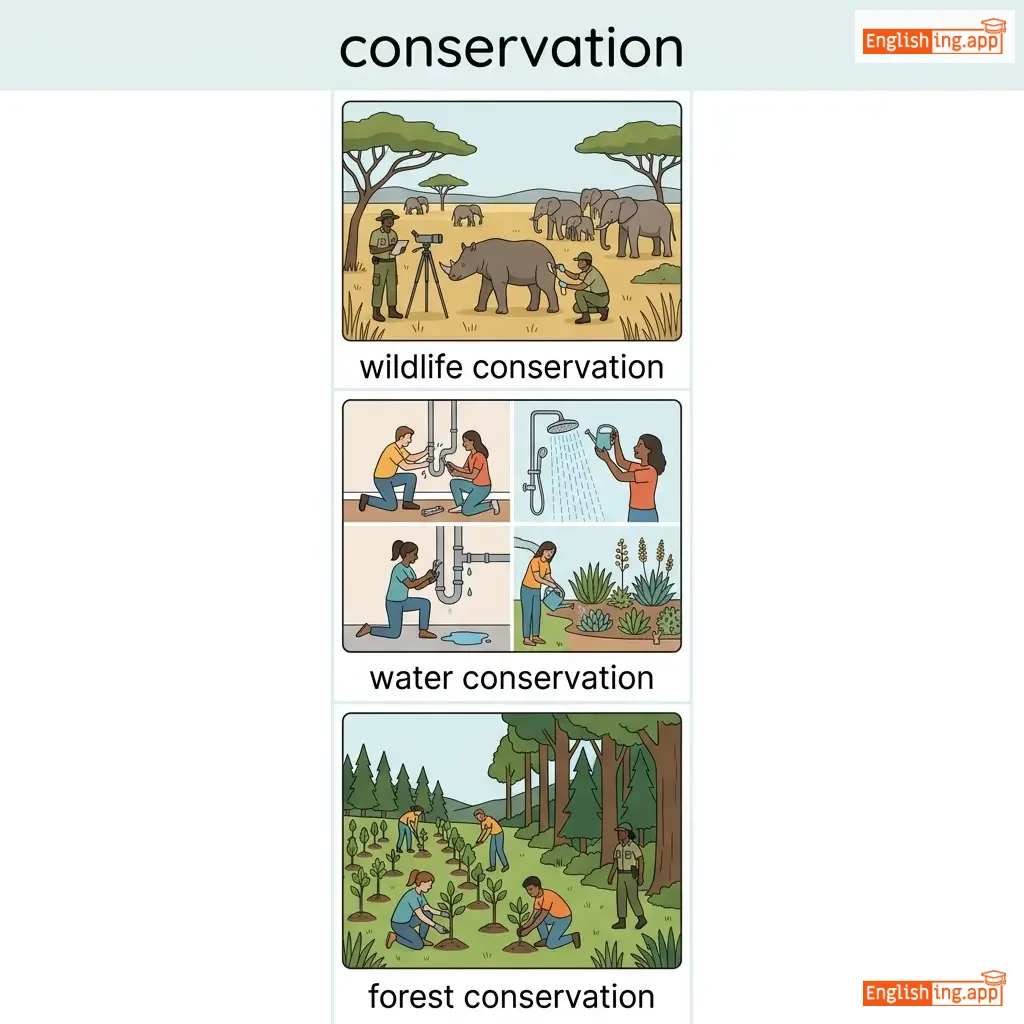
wildlife conservation, water conservation, forest conservation, energy conservation
••••••
|
保護 (hogo) sounds like ‘hold go’ — to protect and conserve 🌱
••••••
|
|
🛡️
••••••
|
/kənˈsɜːvətɪv/
adjective
(コンセルヴァティブ)
••••••
|
- •••••• |
保守的な
hoshuteki na
••••••
|
- •••••• | - •••••• | - •••••• | - •••••• |
Favoring traditional views and values; resistant to change.
••••••
|
He has conservative views on family and society. |
彼は家族と社会について保守的な見解を持っている。
Kare wa kazoku to shakai ni tsuite hoshuteki na kenkai o motte iru.
••••••
|
conservative estimate |
An estimate deliberately kept lower or more cautious.
••••••
|
保守的な見積もり
hoshuteki na mitsumori
••••••
|
traditional, cautious, orthodox, conventional
••••••
|
progressive, liberal, radical
••••••
|
conservative values, conservative politics, conservative approach, conservative estimate
••••••
|
Conserve + active = 積極的に保存することが保守的な意味です。
••••••
|
|
🤔
••••••
|
/kənˈsɪdər/
verb
(コンシダー)
••••••
|
- •••••• |
考慮する
koryo suru
••••••
|
considered
コンシダード
••••••
|
considered
コンシダード
••••••
|
considers
コンシダーズ
••••••
|
considering
コンシダーリング
••••••
|
to think carefully about something, especially before making a decision
••••••
|
She is considering studying abroad next year.
彼女は来年海外で学ぶことを考えています。
••••••
|
彼女は来年海外で学ぶことを考えています。
Kanojo wa rainen kaigai de manabu koto wo kangaeteimasu.
••••••
|
take into consideration
考慮に入れる
••••••
|
to think about something when making a decision
••••••
|
考慮に入れる
koryo ni ireru
••••••
|
contemplate, regard, reflect, evaluate, examine
••••••
|
ignore, disregard, neglect
••••••
|
consider carefully, consider options, consider seriously, consider important
••••••
|
考慮するとは、決定を下す前に考えることです。
••••••
|
|
📏
••••••
|
/kənˈsɪdərəbl/
adjective
(kənˈsɪdərəbl)
••••••
|
- •••••• |
かなりの
kanarino
••••••
|
- •••••• | - •••••• | - •••••• | - •••••• |
large in amount, size, or importance
••••••
|
The project required a considerable amount of time and money. |
そのプロジェクトはかなりの時間とお金を必要としました。
Sono purojekuto wa kanarino jikan to okane o hitsuyō to shimashita.
••••••
|
- •••••• | - •••••• | - •••••• |
substantial, significant, great, large, notable
••••••
|
small, minor, insignificant
••••••
|
considerable amount, considerable effort, considerable time, considerable importance
••••••
|
かなりの、プロジェクトに必要な大量の時間とお金のようなものです。
••••••
|
|
📈
••••••
|
/kənˈsɪdərəbli/
adverb
(コンシダラブリー)
••••••
|
- •••••• |
かなり; 相当
kanari; soutou
••••••
|
- •••••• | - •••••• | - •••••• | - •••••• |
to a notably large degree; significantly; substantially
••••••
|
The price has increased considerably over the past year. |
昨年、価格はかなり上昇しました。
sakunen, kakaku wa kanari joushou shimashita.
••••••
|
- •••••• | - •••••• | - •••••• |
significantly, substantially, markedly
••••••
|
slightly, minimally, insignificantly
••••••
|
increase considerably, improve considerably, differ considerably
••••••
|
No •••••• |
|
🤔
••••••
|
/kənˌsɪdəˈreɪʃən/
noun
(ハピネス)
••••••
|
- •••••• |
幸福
kōfuku
••••••
|
- •••••• | - •••••• | - •••••• | - •••••• |
careful thought or attention to something before making a decision
••••••
|
After much consideration, she accepted the job offer. |
彼女は賞を受け取ったとき、自分の幸せを隠せなかった。
Kanojo wa shō o uketotta toki, jibun no kōfuku o kakusenakatta.
••••••
|
out of consideration |
done out of respect or kindness for someone
••••••
|
幸せの追求
shiawase no suikyū
••••••
|
thought, reflection, deliberation, regard, attention
••••••
|
neglect, disregard, thoughtlessness
••••••
|
take into consideration, give consideration, careful consideration, thoughtful consideration
••••••
|
幸福 = 最高の喜び、すべてが喜びと満足に関連しています。
••••••
|
|
📋
••••••
|
/kənˈsɪst/
verb
(カンシスト)
••••••
|
- •••••• |
構成する
kousei suru
••••••
|
consisted
カンシステッド
••••••
|
consisted
カンシステッド
••••••
|
consists
カンシスツ
••••••
|
consisting
カンシスティング
••••••
|
to be made up or composed of certain parts or elements
••••••
|
The committee consists of five members.
委員会は五人のメンバーで構成されています。
••••••
|
委員会は五人のメンバーで構成されています。
Iinkai wa gonin no menbaa de kousei sareteimasu.
••••••
|
consist in
カンシスト イン
••••••
|
to have something as an essential feature
••••••
|
構成する
kousei suru
••••••
|
contain, include, comprise, embody
••••••
|
exclude, lack, omit
••••••
|
consist of, consist in, committee consists, diet consists
••••••
|
構成するは部分からなるという意味です。覚えておいてください:委員会はメンバーで構成されています。
••••••
|
|
📏
••••••
|
/kənˈsɪstənsi/
noun
(コンシステンシー)
••••••
|

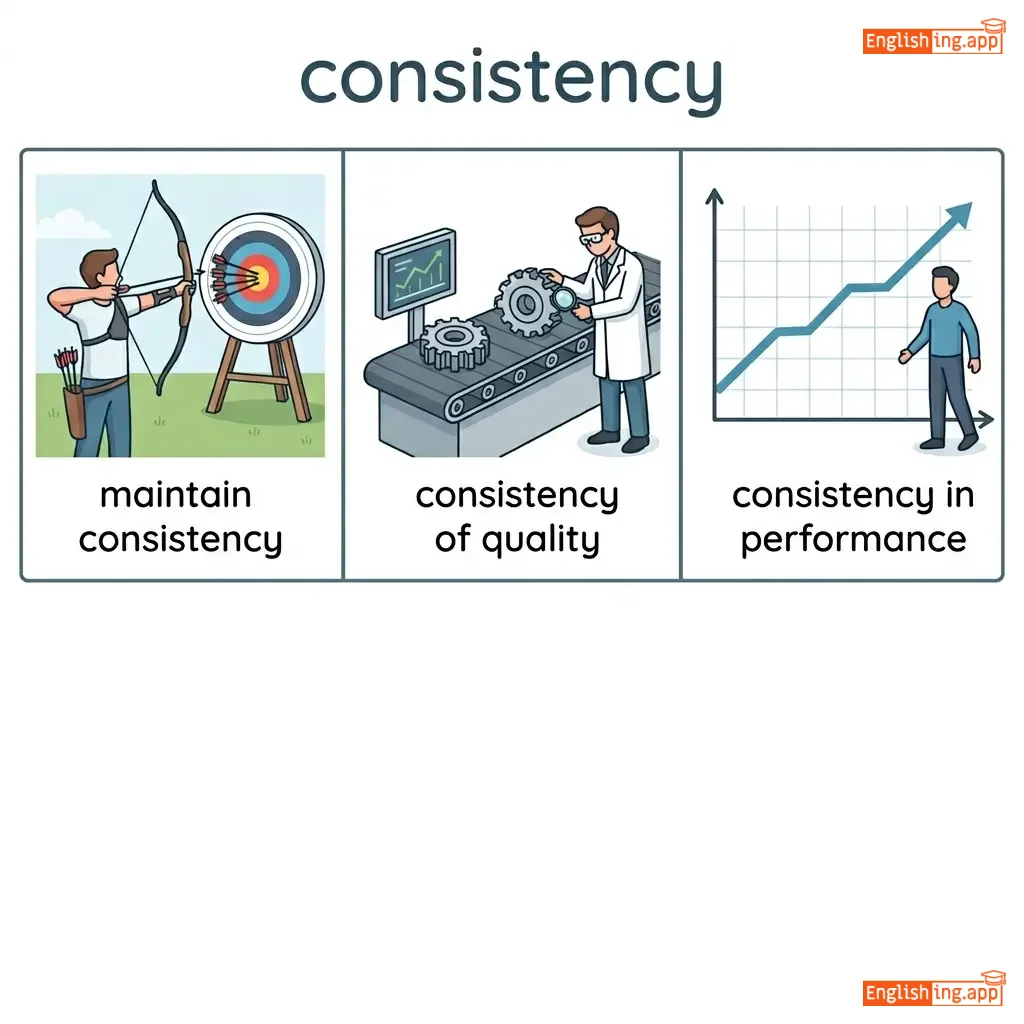
|
一貫性, 安定性
ikkansē, anteisē
••••••
|
- •••••• | - •••••• | - •••••• | - •••••• |
the quality of always behaving or performing in a similar way; uniformity
••••••
|
Her consistency in work earned her a promotion. |
彼女の仕事での一貫性が昇進をもたらしました。
Kanojo no shigoto de no ikkansē ga shōshin o motarashimashita.
••••••
|
- •••••• | - •••••• | - •••••• |
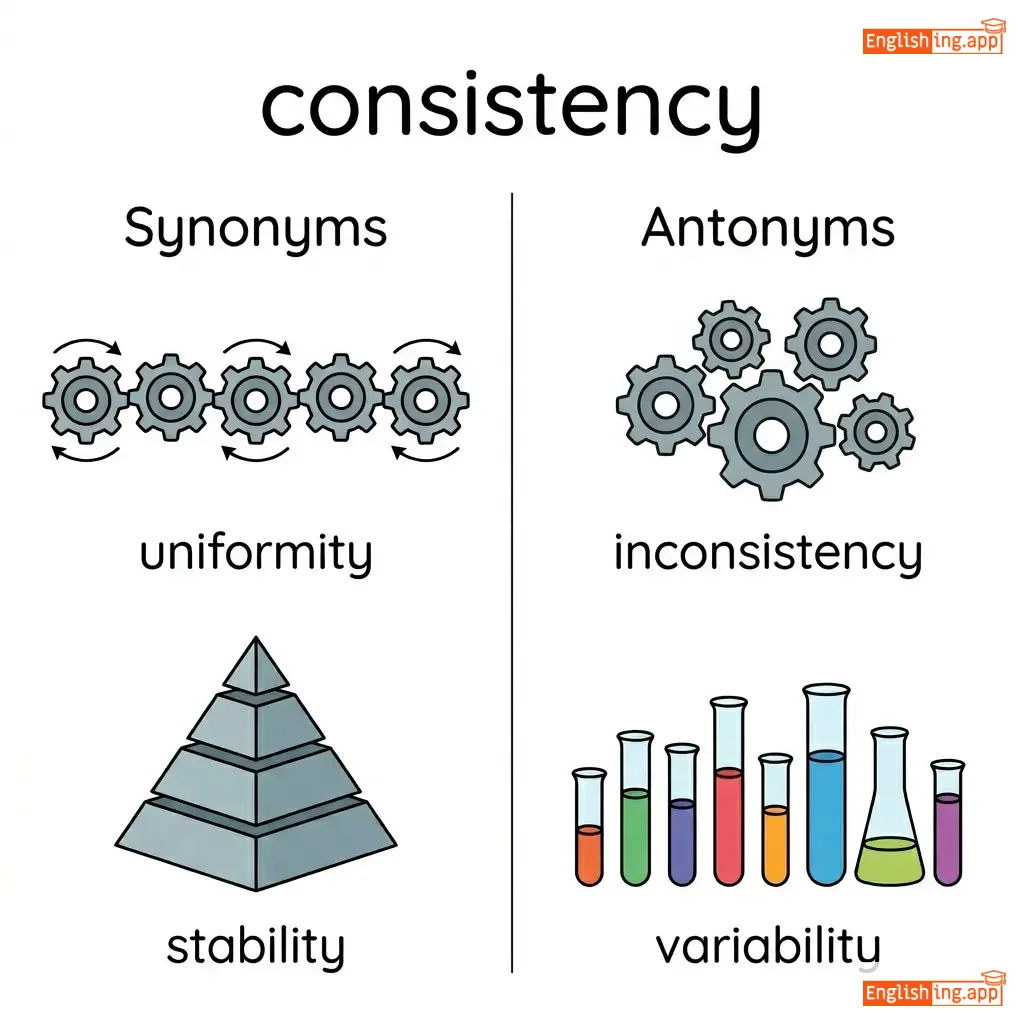
uniformity, stability, regularity, dependability
••••••
|
inconsistency, variability
••••••
|
maintain consistency, consistency of quality, consistency in performance
••••••
|
CON SISTently 働けば成功が来る – consistency を覚えておこう
••••••
|
|
📈
••••••
|
/kənˈsɪstənt/
adjective
(kənˈsɪstənt)
••••••
|

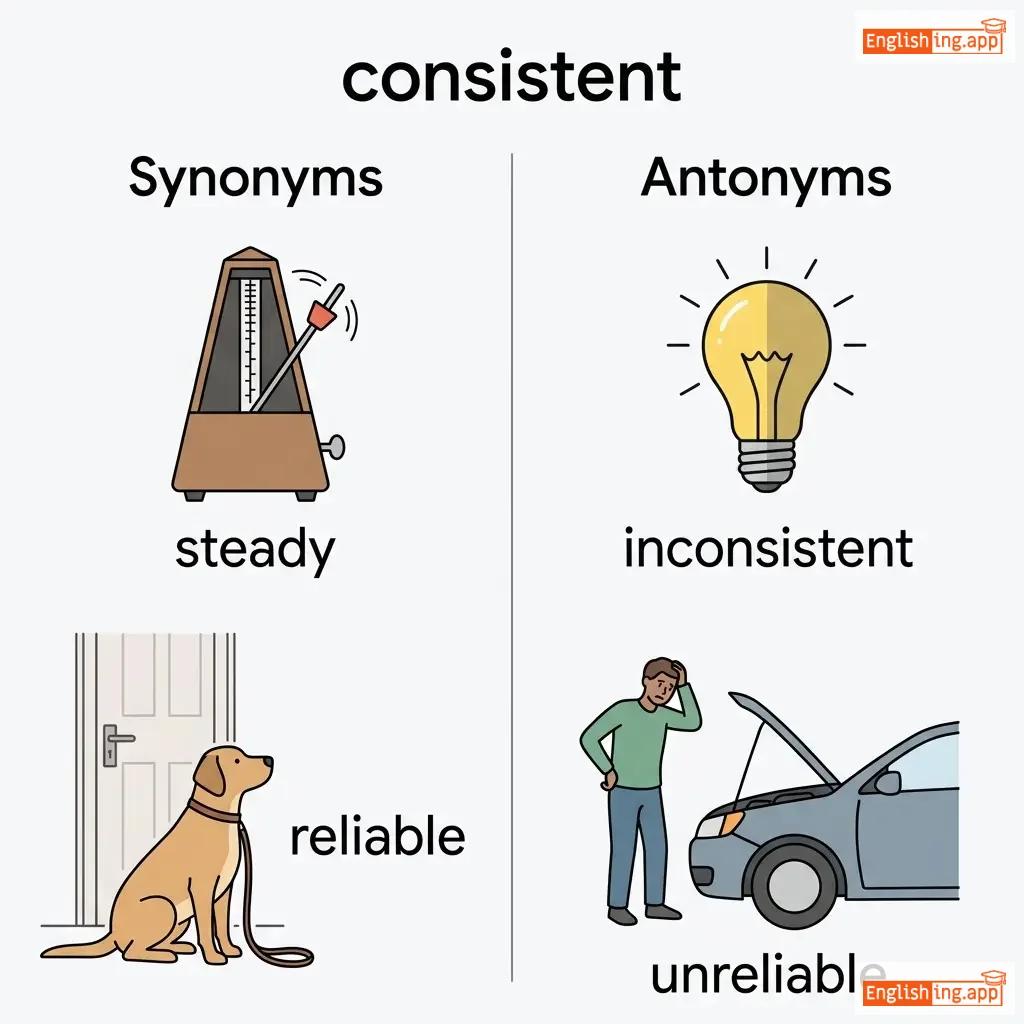

|
一貫した
ikkan shita
••••••
|
- •••••• | - •••••• | - •••••• | - •••••• |
acting or done in the same way over time; reliable or uniform
••••••
|
He is very consistent in his work. |
彼は仕事において非常に一貫しています。
Kare wa shigoto ni oite hijō ni ikkan shiteimasu.
••••••
|
consistent with |
in agreement or harmony with something
••••••
|
一貫している
ikkan shiteiru
••••••
|
steady, reliable, regular, stable
••••••
|
inconsistent, unreliable, irregular
••••••
|
remain consistent, consistent effort, consistent results, consistent behavior
••••••
|
一貫したはいつも同じ、だからikkan
••••••
|
|
📅
••••••
|
/kənˈsɪstəntli/
adverb
(カンシステントリー)
••••••
|
- •••••• |
一貫して
ikkanshite
••••••
|
- •••••• | - •••••• | - •••••• | - •••••• |
in a way that does not vary; regularly and dependably
••••••
|
She has been performing consistently well in her studies. |
彼女は学業で一貫して良い成績を収めています。
Kanojo wa gakugyō de ikkanshite yoi seiseki o osameteimasu.
••••••
|
consistent with |
in agreement or harmony with something
••••••
|
〜と一致する
〜to icchi suru
••••••
|
regularly, steadily, constantly, reliably
••••••
|
inconsistently, irregularly
••••••
|
perform consistently, act consistently, behave consistently, consistently good
••••••
|
一貫しては常に同じ結果を意味します — 常に同じパフォーマンス 📅
••••••
|
|
🏢
••••••
|
/kənˈsɑːlɪdeɪt/
verb
(コンソリデート)
••••••
|

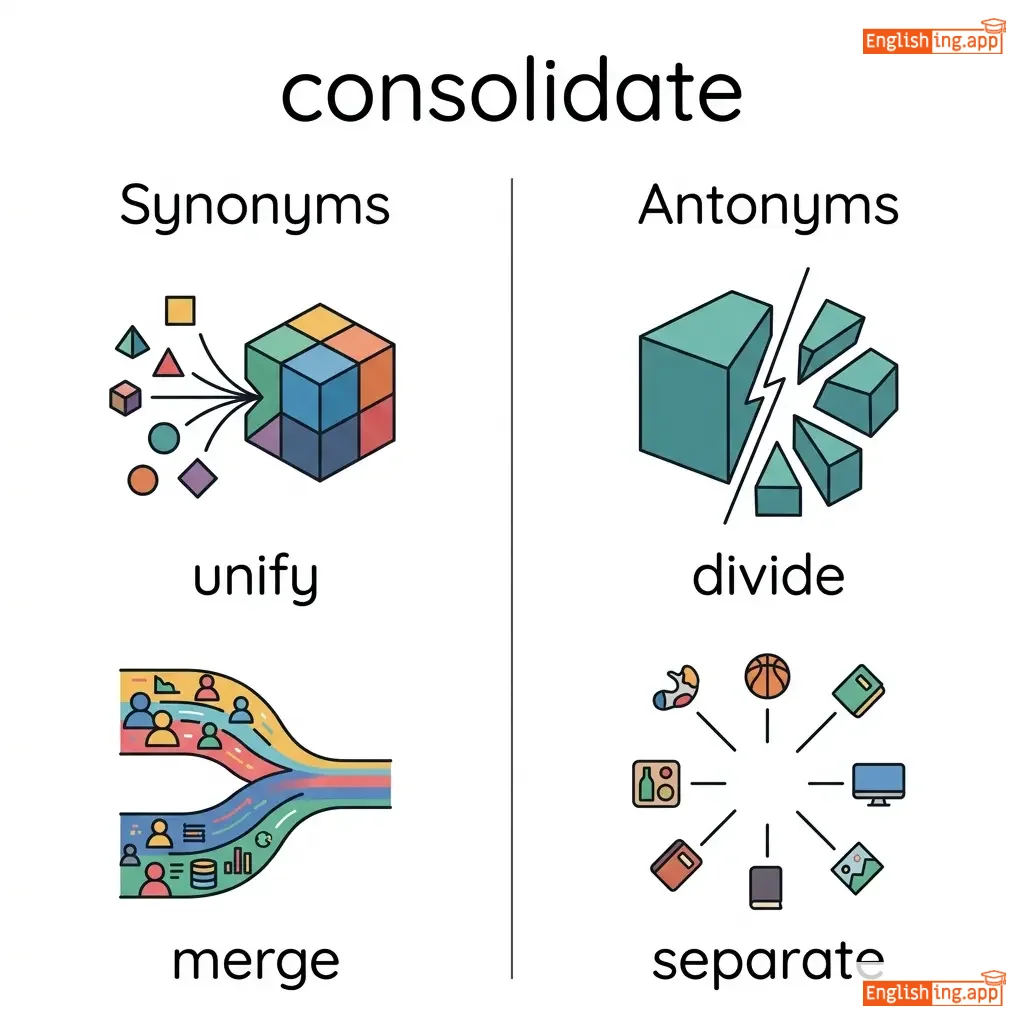
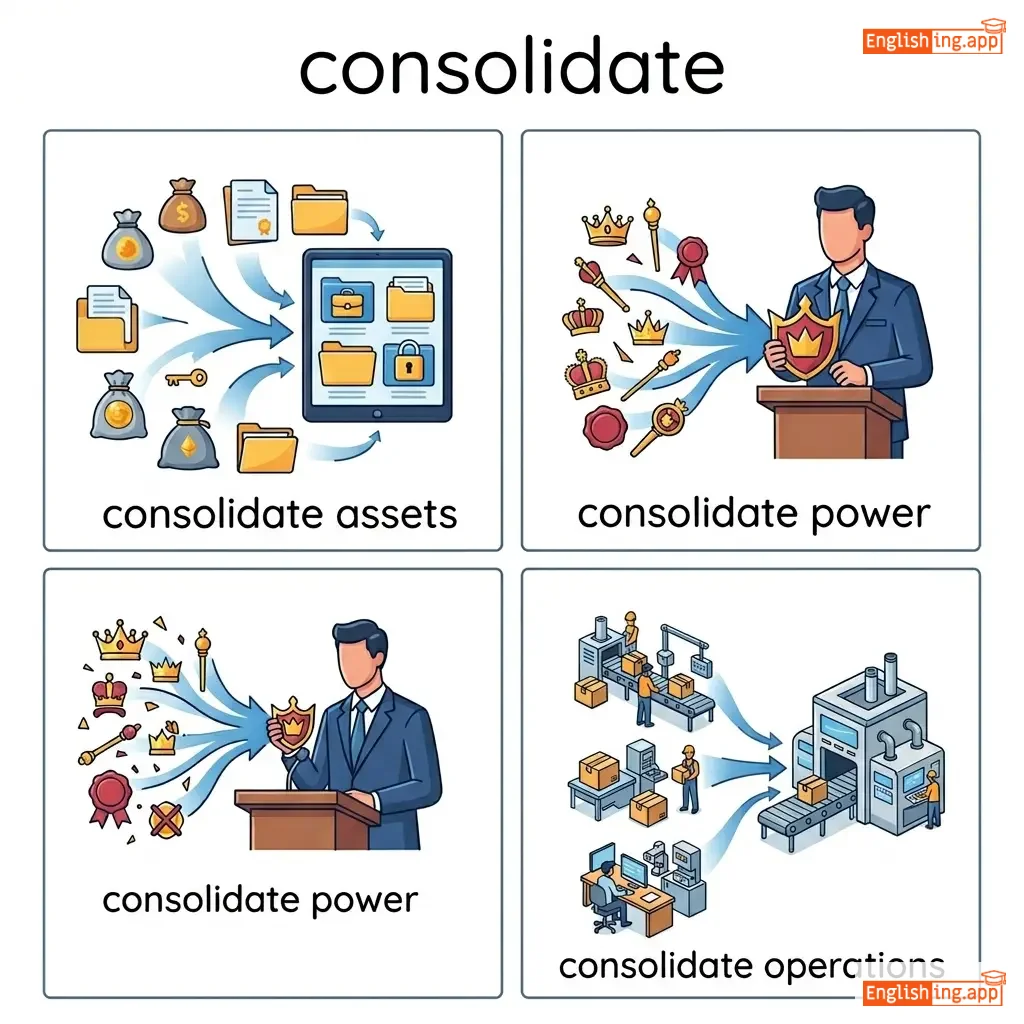
|
統合する
tōgō suru
••••••
|
consolidated
コンソリデーテッド
••••••
|
consolidated
コンソリデーテッド
••••••
|
consolidates
コンソリデーツ
••••••
|
consolidating
コンソリデイティング
••••••
|
to combine into a single, more effective or coherent whole
••••••
|
The company plans to consolidate its offices into one building.
その会社はオフィスを1つの建物に統合する予定です。
••••••
|
その会社はオフィスを1つの建物に統合する予定です。
Sono kaisha wa ofisu o hitotsu no tatemono ni tōgō suru yotei desu.
••••••
|
- •••••• | - •••••• | - •••••• |
unify, merge, integrate, strengthen
••••••
|
divide, separate, scatter
••••••
|
consolidate assets, consolidate power, consolidate operations
••••••
|
統合する = すべてを強固にまとめる
••••••
|
|
🕵️
••••••
|
/kənˈspɪrəsi/
noun
(コンスピラシー)
••••••
|
- •••••• |
陰謀
inbō
••••••
|
- •••••• | - •••••• | - •••••• | - •••••• |
A secret plan by a group to do something unlawful or harmful.
••••••
|
The police uncovered a conspiracy to overthrow the government. |
警察は政府を転覆させる陰謀を暴露した。
Keisatsu wa seifu o tenpuku saseru inbō o bakuro shita.
••••••
|
conspiracy theory |
a belief that events are secretly manipulated by powerful groups
••••••
|
陰謀論
inbō ron
••••••
|
plot, scheme, intrigue, collusion, cabal
••••••
|
honesty, openness, truth
••••••
|
political conspiracy, conspiracy theory, criminal conspiracy, conspiracy to commit
••••••
|
Conspiracy = コンサートでの秘密計画 — 陰謀.
••••••
|
|
♾️
••••••
|
/ˈkɒn.stənt/
adjective
(コンスタント)
••••••
|
- •••••• |
一定の
ittei no
••••••
|
- •••••• | - •••••• | - •••••• | - •••••• |
happening all the time or staying the same without change
••••••
|
She lived in constant fear of losing her job. |
彼女は仕事を失うことへの一定の恐怖の中で生きていた。
Kanojo wa shigoto o ushinau koto e no ittei no kyōfu no naka de ikite ita.
••••••
|
constant companion |
something or someone that is always present
••••••
|
一定の仲間
ittei no nakama
••••••
|
continuous, persistent, steady, perpetual
••••••
|
occasional, irregular, variable
••••••
|
constant fear, constant pressure, constant change
••••••
|
Constant は一定の—変わらない時計のように。
••••••
|
|
🔄
••••••
|
/ˈkɒnstəntli/
adverb
(コンスタントリー)
••••••
|
- •••••• |
絶え間なく; 常に; 止まることなく
taemamaku; itsumo; tomaru koto naku
••••••
|
- •••••• | - •••••• | - •••••• | - •••••• |
continuously over a period of time; always; without stopping
••••••
|
The baby was constantly crying throughout the night. |
赤ちゃんは夜通し絶え間なく泣いていた。
Akachan wa yodōshi taemamaku naite ita.
••••••
|
- •••••• | - •••••• | - •••••• |
continuously, always, perpetually
••••••
|
occasionally, rarely, never
••••••
|
constantly changing, constantly moving, constantly working
••••••
|
絶え間なく = 永遠に続く、'constant'という意味の日本語.
••••••
|
|
🗳️
••••••
|
/kənˈstɪtʃuənsi/
noun
(コンスティチュエンシー)
••••••
|
- •••••• |
選挙区
senkyoku
••••••
|
- •••••• | - •••••• | - •••••• | - •••••• |
A geographical area whose residents elect a representative to a legislative body.
••••••
|
She campaigned tirelessly across her constituency. |
彼女は選挙区で疲れ知らずに選挙運動を行いました。
Kanojo wa senkyoku de tsukare shirazu ni senkyo undou o okonai mashita.
••••••
|
- •••••• | - •••••• | - •••••• |
district, electorate, ward, division
••••••
|
nonelectoral area, nonvoting zone
••••••
|
electoral constituency, parliamentary constituency, within the constituency
••••••
|
Constitute + 選挙区 = Constituency in Japanese
••••••
|
|
⚖️
••••••
|
/ˈkɒnstɪtjuːt/
verb
(コンスティチュート)
••••••
|
- •••••• |
構成する
kousei suru
••••••
|
constituted
コンスティチューテッド
••••••
|
constituted
コンスティチューテッド
••••••
|
constitutes
コンスティチューツ
••••••
|
constituting
コンスティチューティング
••••••
|
To make up, form, or establish something.
••••••
|
These documents constitute the legal agreement between the two parties.
これらの文書は、両者間の法的契約を構成しています。
••••••
|
これらの文書は、両者間の法的契約を構成しています。
Korera no bunsho wa, ryousha-kan no houteki keiyaku o kousei shiteimasu.
••••••
|
- •••••• | - •••••• | - •••••• |
comprise, form, make up, establish, create
••••••
|
exclude, destroy, abolish
••••••
|
constitute a crime, constitute an offense, constitute a majority, constitute evidence
••••••
|
Constitute は「構成する」を意味します - 憲法のように国を構成します。
••••••
|
|
📜
••••••
|
/ˌkɒnstɪˈtjuːʃən/
noun
(コンスティテューション)
••••••
|
|
憲法
kenpou
••••••
|
- •••••• | - •••••• | - •••••• | - •••••• |
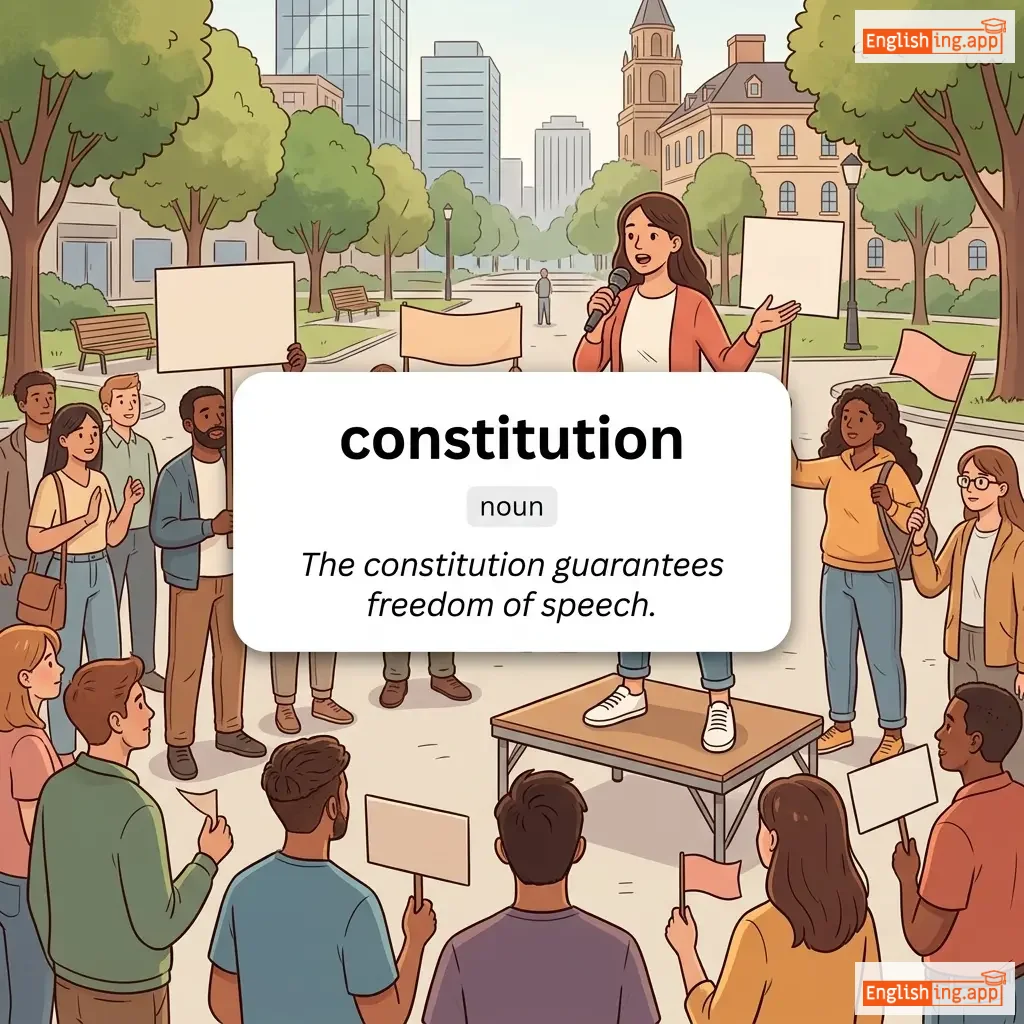
The system of fundamental principles according to which a nation or organization is governed.
••••••
|
The constitution guarantees freedom of speech. |
憲法は言論の自由を保障します。
Kenpou wa genron no jiyuu o hoshou shimasu.
••••••
|
- •••••• | - •••••• | - •••••• |
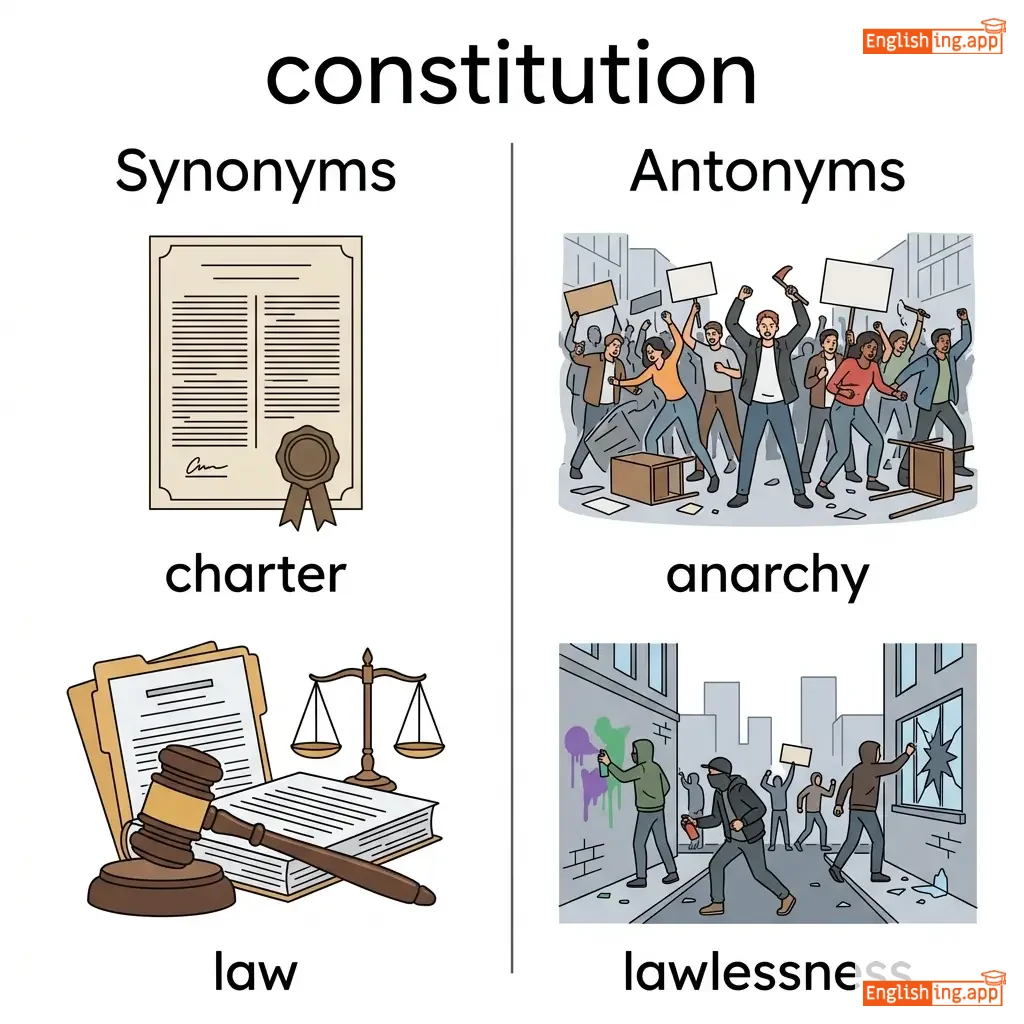
charter, law, code, framework, fundamental law
••••••
|
anarchy, lawlessness, disorder
••••••
|
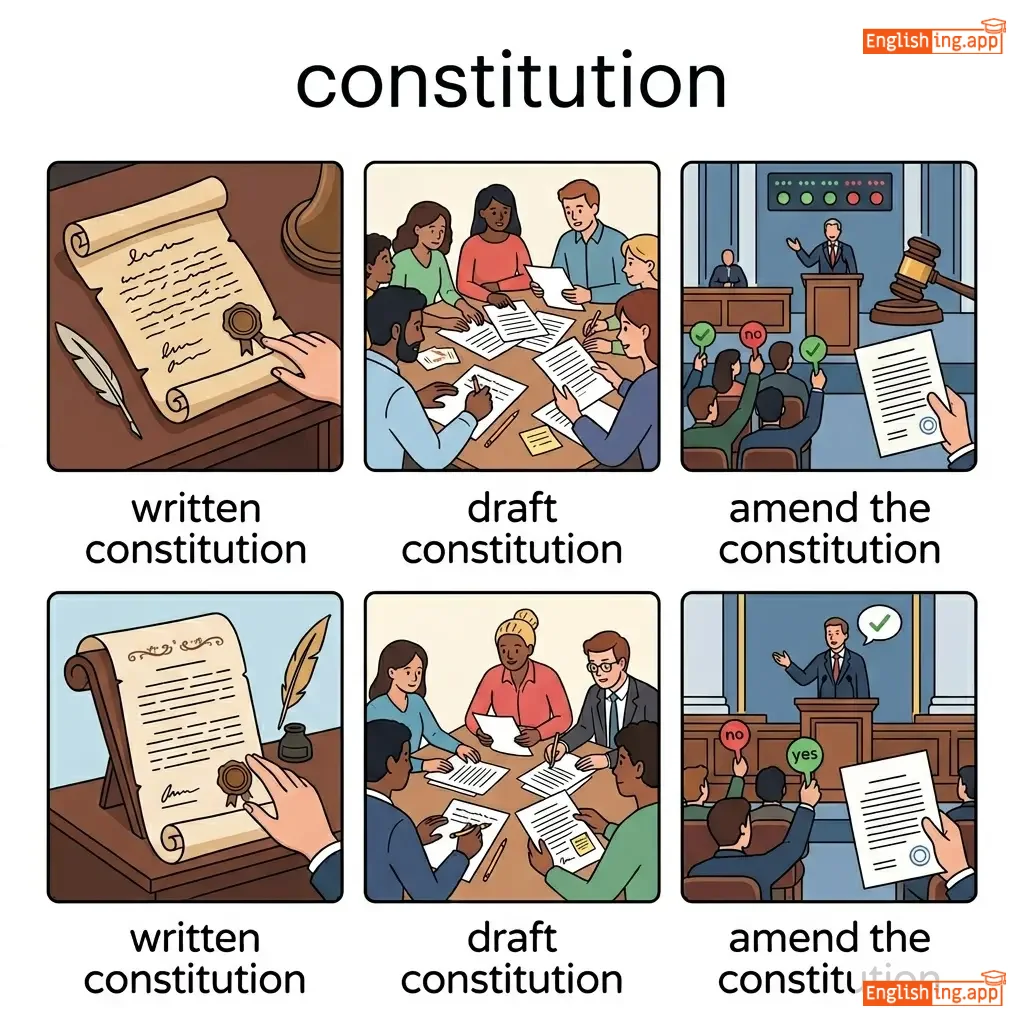
written constitution, draft constitution, amend the constitution, constitution of a country
••••••
|
Constitution = 憲法 – 国家を'憲法'で支配します。
••••••
|
|
⚖️
••••••
|
/ˌkɒnstɪˈtjuːʃənəl/
adjective
••••••
|
|
- •••••• | - •••••• | - •••••• | - •••••• | - •••••• |
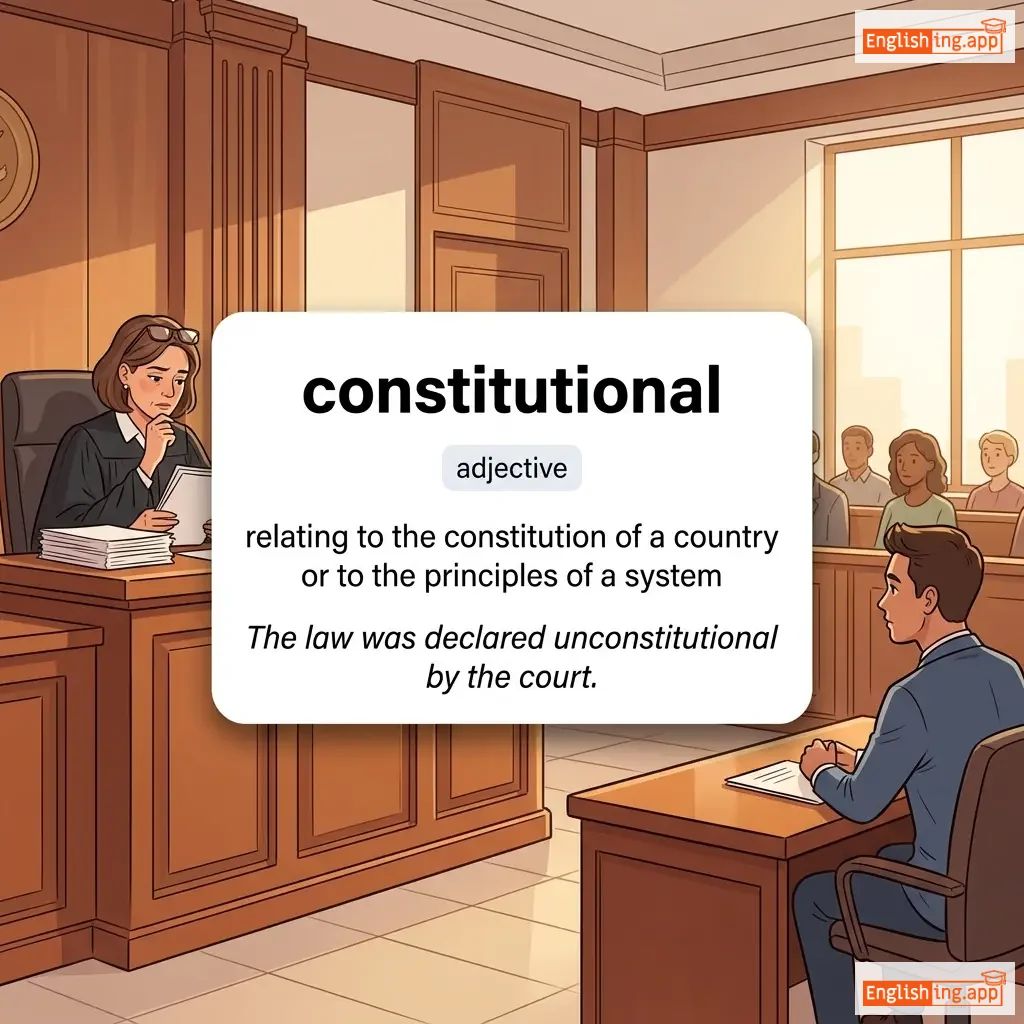
relating to the constitution of a country or to the principles of a system
••••••
|
The law was declared unconstitutional by the court. |
- •••••• |
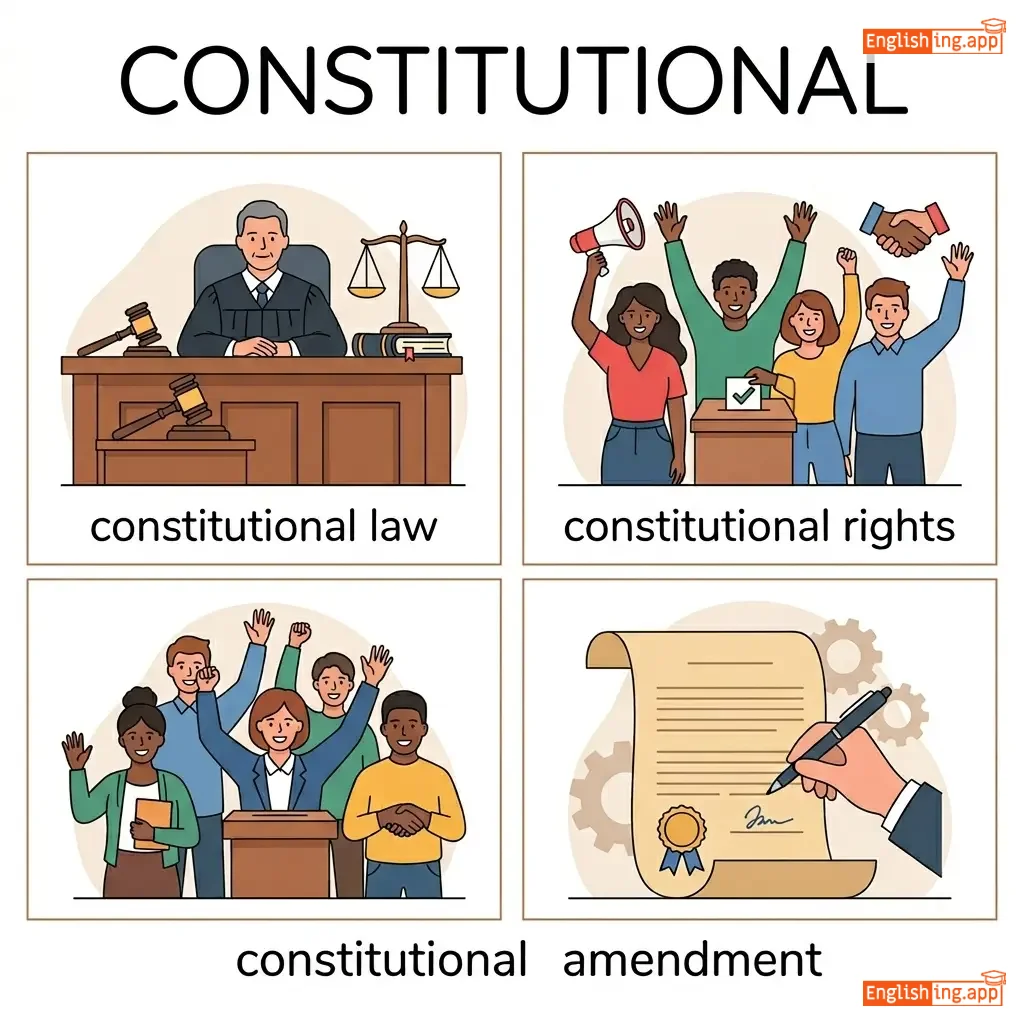
constitutional rights |
basic legal rights guaranteed by a constitution
••••••
|
- •••••• |
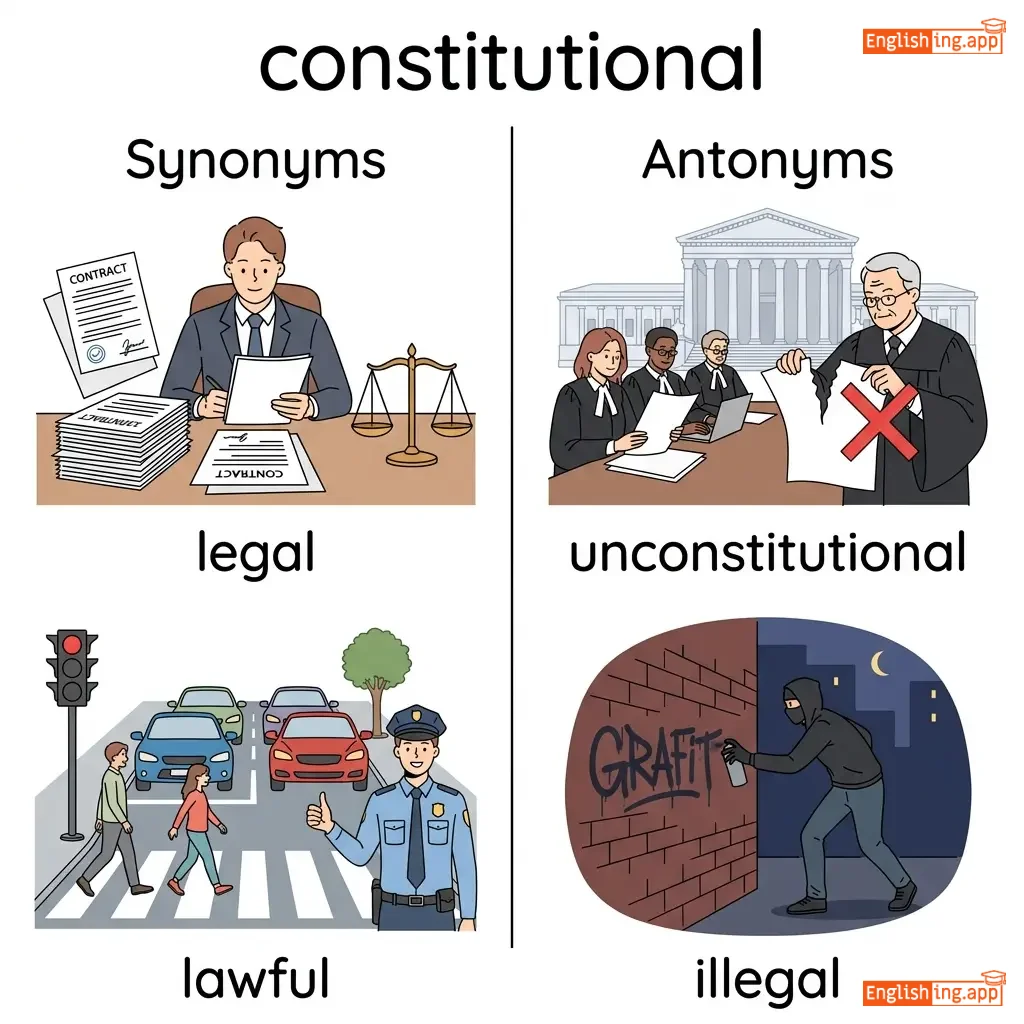
legal, lawful, legitimate, chartered
••••••
|
unconstitutional, illegal, unlawful
••••••
|
constitutional law, constitutional rights, constitutional amendment, constitutional crisis
••••••
|
No •••••• |

