Получите неограниченный доступ ко всем словам с подпиской Pro
Обновить до ProПолучите неограниченный доступ ко всем предложениям с подпиской Pro
Обновить до Pro|
Эмодзи
|
Слово | Images | Перевод | Прошедшее | Причастие прошедшего времени | Третье лицо единственного числа | Герундий | Значение | Пример предложения | Перевод примера предложения | Пример выражения | Значение примера выражения | Перевод примера выражения | Синонимы | Антонимы | Коллокации | Мнемоника |
|---|---|---|---|---|---|---|---|---|---|---|---|---|---|---|---|---|---|
|
🎁
••••••
|
/bɪˈstoʊ/
verb
(bɛstɔ)
••••••
|
- •••••• |
даровать
darovat
••••••
|
bestowed
bɛstɔd
••••••
|
bestowed
bɛstɔd
••••••
|
bestows
bɛstɔz
••••••
|
bestowing
bɛstɔɪŋ
••••••
|
To give or present something as a gift or honor.
••••••
|
The king bestowed honors upon the brave soldiers.
Король bestow награды храбрым солдатам.
••••••
|
Король даровал награды храбрым солдатам.
Korol' daroval nagrady khrabrym soldatam.
••••••
|
bestow upon
bestow upon
••••••
|
to grant or give something to someone
••••••
|
даровать кому-то
darovat' komu-to
••••••
|
grant, confer, present, donate, award
••••••
|
withhold, deny, refuse
••••••
|
bestow honor, bestow gift, bestow blessing, bestow title
••••••
|
Best + Owe = дарить лучшее что-то кому-то
••••••
|
|
🎲
••••••
|
/bɛt/
verb, noun
(бет)
••••••
|
|
ставить
stavit
••••••
|
bet
бет
••••••
|
bet
бет
••••••
|
bets
бетс
••••••
|
betting
беттинг
••••••
|
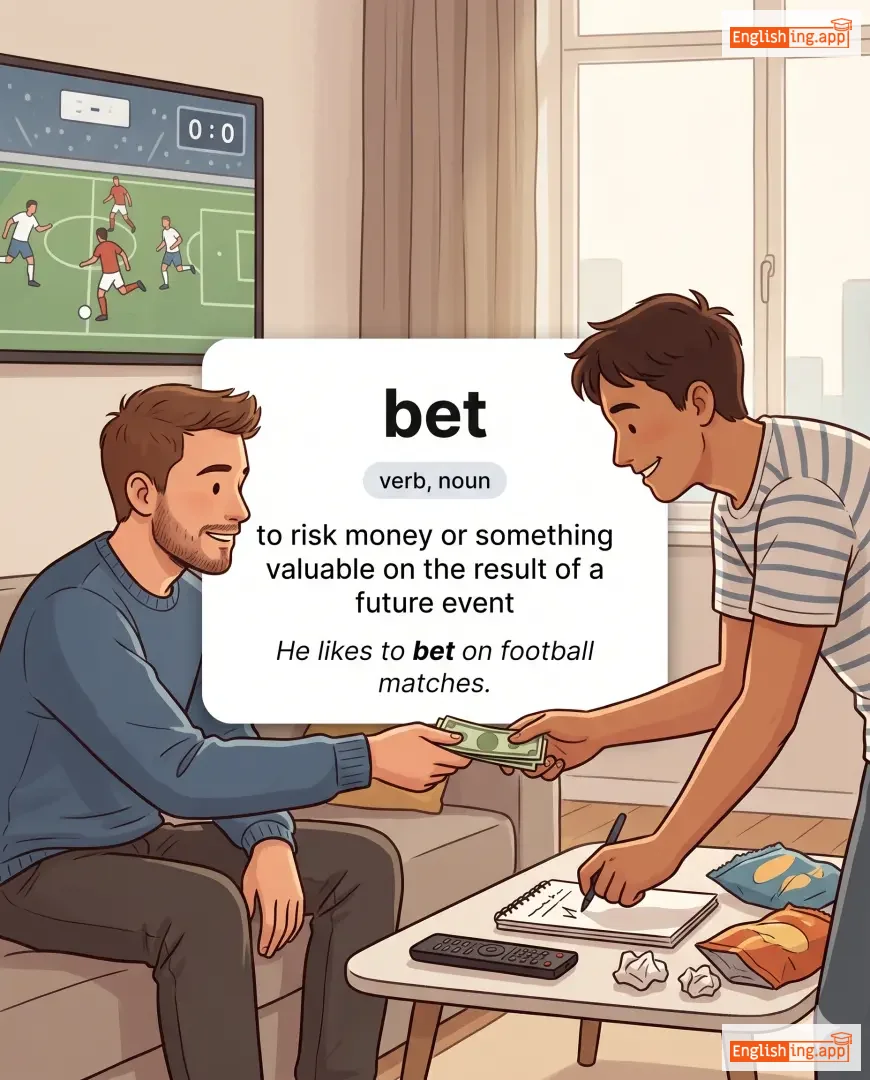
to risk money or something valuable on the result of a future event
••••••
|
He likes to bet on football matches.
Ему нравится ставить на футбольные матчи.
••••••
|
Ему нравится ставить на футбольные матчи.
Emu nravitsya stavit' na futbol'nye matchi.
••••••
|
you can bet on it
Ты можешь на это поставить
••••••
|
something is certain to happen
••••••
|
Ты можешь на это поставить
Ty mozhesh' na eto postavit'
••••••
|
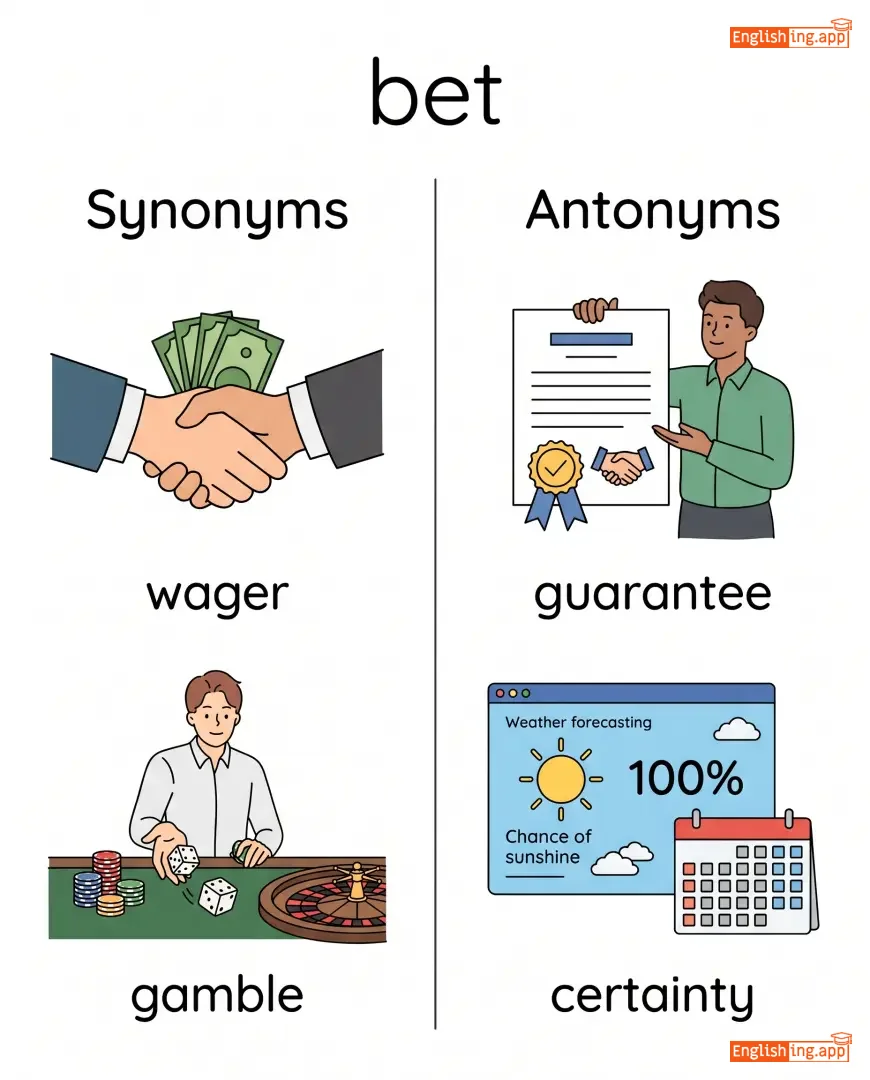
wager, gamble, stake, risk
••••••
|
guarantee, certainty
••••••
|
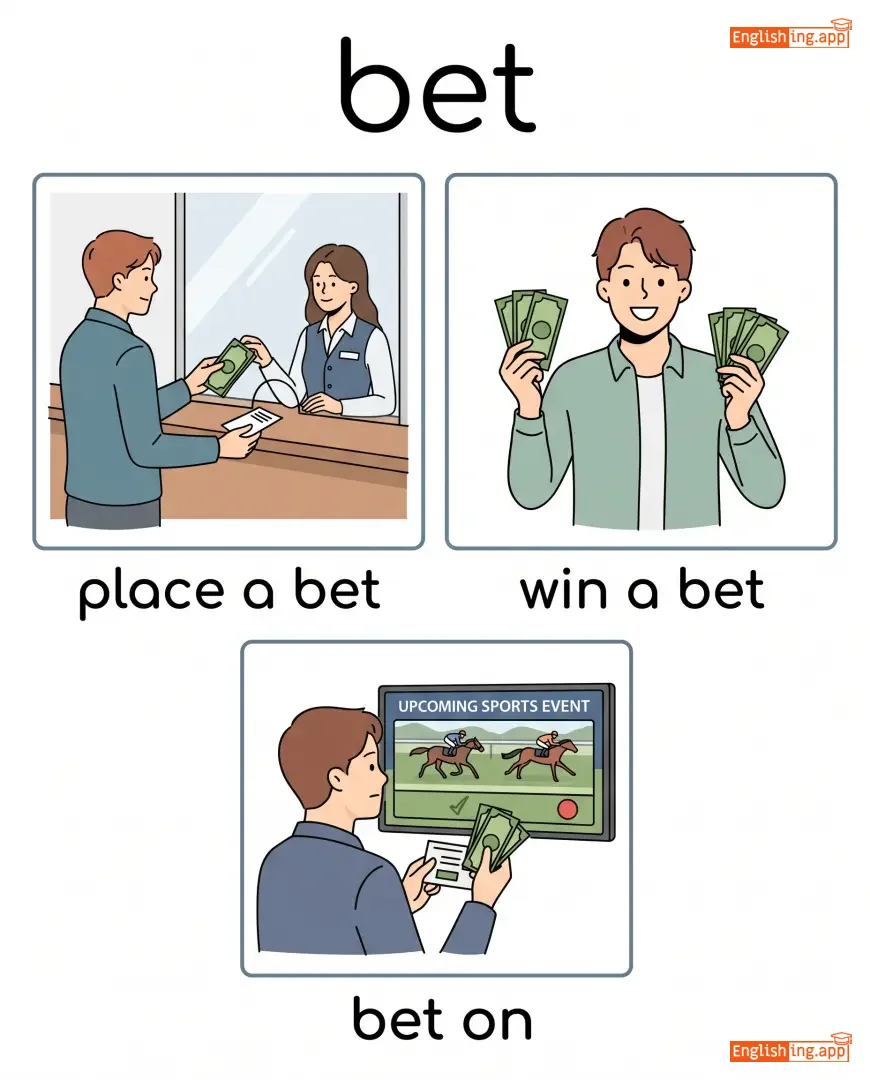
place a bet, win a bet, bet on, bet against
••••••
|
Bet - ставить деньги на матч, ставь на будущее
••••••
|
|
🚶
••••••
|
/bɪˈteɪk/
verb
(битейк)
••••••
|
- •••••• |
отправляться; прибегать
otpravlyatsya; pribegat
••••••
|
betook
битук
••••••
|
betaken
битейкен
••••••
|
betakes
битейкс
••••••
|
betaking
битейкинг
••••••
|
to go or resort to a place or course of action, especially as a response; to apply oneself
••••••
|
After dinner, she betook herself to her room to read.
Афтер диннер, ши битук харселф ту хар рум ту рид.
••••••
|
После ужина она отправилась в свою комнату читать.
Posle uzhina ona otpravilas v svoyu komnatu chitat
••••••
|
betake oneself to
битейк уанcелф ту
••••••
|
to go to or turn to a particular place or activity
••••••
|
прибегать к
pribegat k
••••••
|
go, resort, turn, proceed, repair
••••••
|
avoid, abandon
••••••
|
betake oneself to bed, betake oneself to study, betake to prayer
••••••
|
Betake = быть и идти куда-то
••••••
|
|
🗡️
••••••
|
/bɪˈtreɪ/
verb
(бɪˈтреɪ)
••••••
|
|
предать
predat
••••••
|
betrayed
бɪˈтрейд
••••••
|
betrayed
бɪˈтрейд
••••••
|
betrays
бɪˈтрейз
••••••
|
betraying
бɪˈтрейɪнг
••••••
|
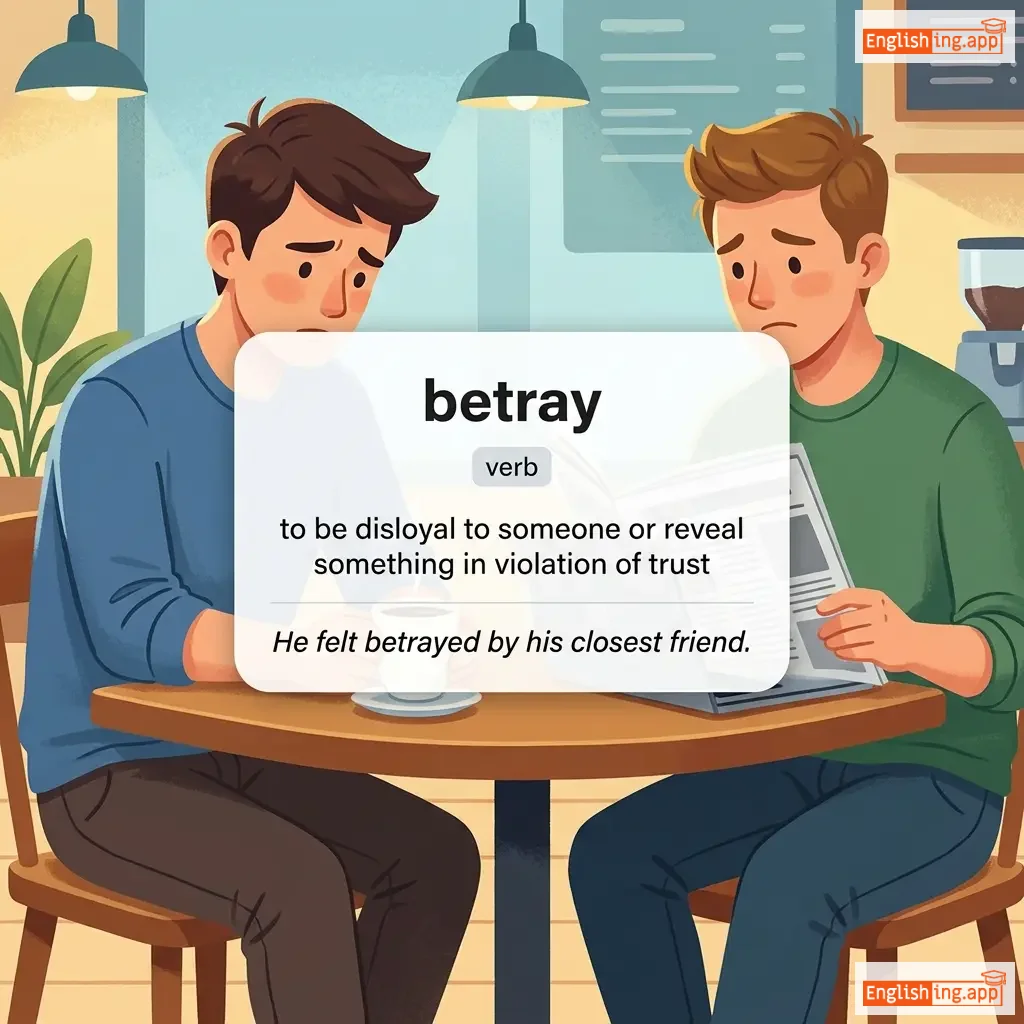
to be disloyal to someone or reveal something in violation of trust
••••••
|
He felt betrayed by his closest friend.
Он почувствовал себя преданным своим самым близким другом.
••••••
|
Он почувствовал себя преданным своим самым близким другом.
On pochuvstvoval sebya predannym svoim samym blizkim drugom.
••••••
|
betray someone's trust
предать чье-то доверие
••••••
|
to reveal secrets or act against someone's confidence
••••••
|
предать чье-то доверие
predat ch'ye-to doveriye
••••••
|
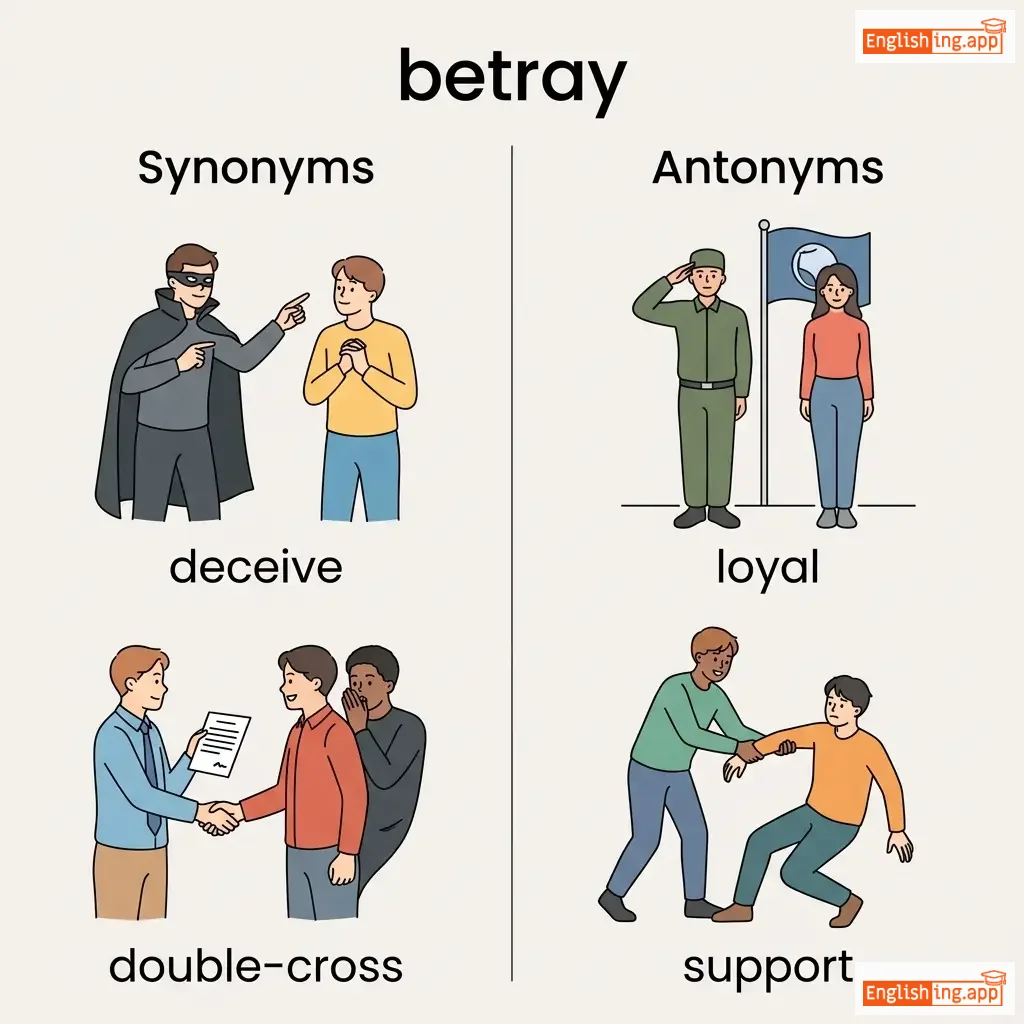
deceive, double-cross, expose, reveal, backstab
••••••
|
loyal, support, protect
••••••
|
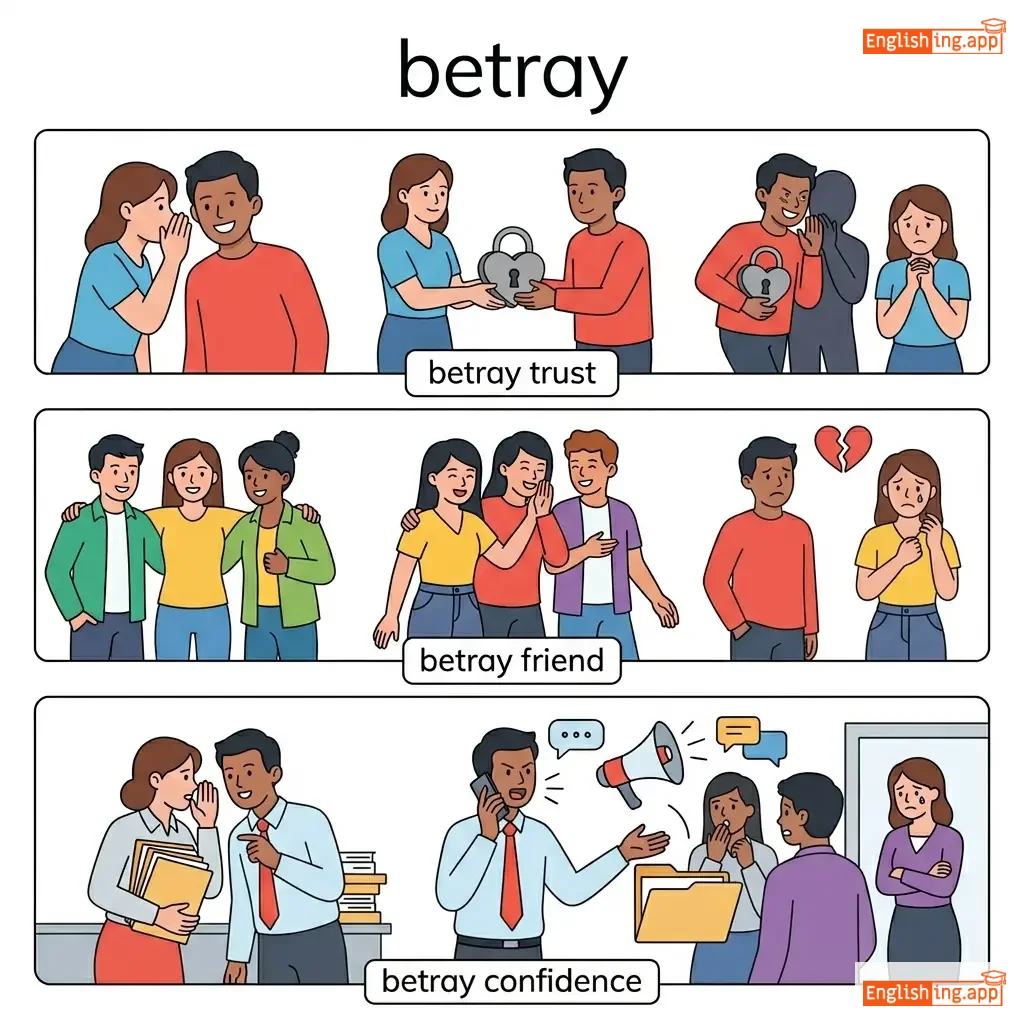
betray trust, betray friend, betray confidence
••••••
|
Betray = Be + Tray — оставить друга на тарелке (предать)
••••••
|
|
💍
••••••
|
/bɪˈtroʊð/
verb
(бэтроʊð)
••••••
|
- •••••• |
обручиться
obruchitsya
••••••
|
betrothed
бэтроʊðд
••••••
|
betrothed
бэтроʊðд
••••••
|
betroths
бэтроʊðс
••••••
|
betrothing
бэтроʊðɪнг
••••••
|
To formally promise to marry someone; to engage.
••••••
|
He was betrothed to the princess at a young age.
Он был обручен с принцессой в юном возрасте.
••••••
|
Он был обручен с принцессой в юном возрасте.
On byl obruchens s printsessoy v yunom vozraste.
••••••
|
- •••••• | - •••••• | - •••••• |
engage, promise, pledge, commit, vow
••••••
|
break off, separate, divorce
••••••
|
betroth to, betroth her, formally betroth
••••••
|
Betroth значит 'обручиться', как обещание перед свадьбой.
••••••
|
|
👍
••••••
|
/ˈbɛtər/
adjective, adverb, verb
••••••
|
- •••••• | - •••••• |
bettered
••••••
|
bettered
••••••
|
betters
••••••
|
bettering
••••••
|
of a more excellent or effective type or quality; to surpass or improve
••••••
|
He felt better after taking the medicine. |
- •••••• |
better late than never |
It is better to do something late than not do it at all.
••••••
|
- •••••• |
improved, superior, greater, finer, enhanced
••••••
|
worse, inferior, poorer
••••••
|
better chance, better understanding, better option, feel better
••••••
|
No •••••• |
|
↔️
••••••
|
/bɪˈtwiːn/
preposition, adverb
(бɪˈтвин)
••••••
|
- •••••• |
между
mezhdu
••••••
|
- •••••• | - •••••• | - •••••• | - •••••• |
at, into, or across the space separating two objects or regions
••••••
|
She sat between her two friends. |
Она сидела между своими двумя друзьями.
Ona sidelа mezhdu svoimi dvumya druz'yami.
••••••
|
between a rock and a hard place |
To be faced with two difficult choices.
••••••
|
между молотом и наковальней
mezhdu molotom i nakoval'ney
••••••
|
amid, among, in the middle of, betwixt
••••••
|
outside, beyond
••••••
|
between people, between countries, between lines
••••••
|
Between означает между, помни be + tween (между) = between.
••••••
|
|
😢
••••••
|
/bɪˈweɪl/
verb
(бивэйл)
••••••
|
- •••••• |
оплакивать
oplakivat
••••••
|
bewailed
бивэйлд
••••••
|
bewailed
бивэйлд
••••••
|
bewails
бивэйлз
••••••
|
bewailing
бивэйлинг
••••••
|
to express deep sorrow or regret over something; to mourn openly
••••••
|
She bewailed the loss of her childhood home.
ши бивэйлд зэ лосс ов хёр чайлдхуд хоум
••••••
|
Она оплакивала потерю дома своего детства.
Ona oplakivala poteryu doma svoego detstva
••••••
|
- •••••• | - •••••• | - •••••• |
lament, mourn, grieve over, deplore, bemoan
••••••
|
celebrate, rejoice, praise
••••••
|
bewail the loss, bewail one’s fate, bewail the death, bewail the situation
••••••
|
bewail = оплакивать, значит сильно горевать
••••••
|
|
😕
••••••
|
/bɪˈwɪldər/
verb
(bih-wil-der)
••••••
|
- •••••• |
смущать
smushchat
••••••
|
bewildered
bih-wil-derd
••••••
|
bewildered
bih-wil-derd
••••••
|
bewilders
bih-wil-ders
••••••
|
bewildering
bih-wil-der-ing
••••••
|
to cause someone to be confused or puzzled
••••••
|
The complex instructions bewildered the students.
Сложные инструкции озадачили студентов.
••••••
|
Сложные инструкции озадачили студентов.
Slozhnye instruktsii ozadachili studentov.
••••••
|
- •••••• | - •••••• | - •••••• |
confuse, perplex, baffle, puzzle, mystify
••••••
|
clarify, explain, enlighten
••••••
|
bewilder completely, bewilder the mind, utterly bewildered
••••••
|
Bewilder звучит как 'смущать' на русском → Когда ты смущен, ты чувствуешь себя потерянным.
••••••
|
|
✨
••••••
|
/bɪˈwɪtʃ/
verb
(биуич)
••••••
|
- •••••• |
околдовать
okoldovat
••••••
|
bewitched
биуичд
••••••
|
bewitched
биуичд
••••••
|
bewitches
биуичес
••••••
|
bewitching
биуичинг
••••••
|
to enchant or fascinate someone as if by magic
••••••
|
The dancer's performance bewitched the audience.
Выступление танцовщицы очаровало зрителей.
••••••
|
Выступление танцовщицы очаровало зрителей.
Vystuplenie tantsovshchitsy ocharovalo zritelyey.
••••••
|
- •••••• | - •••••• | - •••••• |
enchant, captivate, charm, mesmerize, spellbind
••••••
|
repel, bore, disgust
••••••
|
bewitch the audience, bewitched by, utterly bewitched
••••••
|
Bewitch значит околдовать, как ведьма → околдовать.
••••••
|
|
🌌
••••••
|
/bɪˈjɒnd/
preposition, adverb
(биезонд)
••••••
|
- •••••• |
за пределами
za predelami
••••••
|
- •••••• | - •••••• | - •••••• | - •••••• |
at or to the further side of; more than
••••••
|
The village lies beyond the river. |
Деревня находится за рекой.
Derevnya nakhoditsya za rekoj.
••••••
|
beyond belief |
Too extreme to be believed.
••••••
|
за пределами веры
za predelami very
••••••
|
past, outside, over, farther
••••••
|
within, inside
••••••
|
beyond reach, beyond control, beyond doubt
••••••
|
За пределами означает за пределами чего-то, помни 'за пределами' реки!
••••••
|
|
⚖️
••••••
|
/ˈbaɪəs/
noun
(bayas)
••••••
|
|
предвзятость
predvzyatost
••••••
|
- •••••• | - •••••• |
biases
bayases
••••••
|
biasing
bayasing
••••••
|
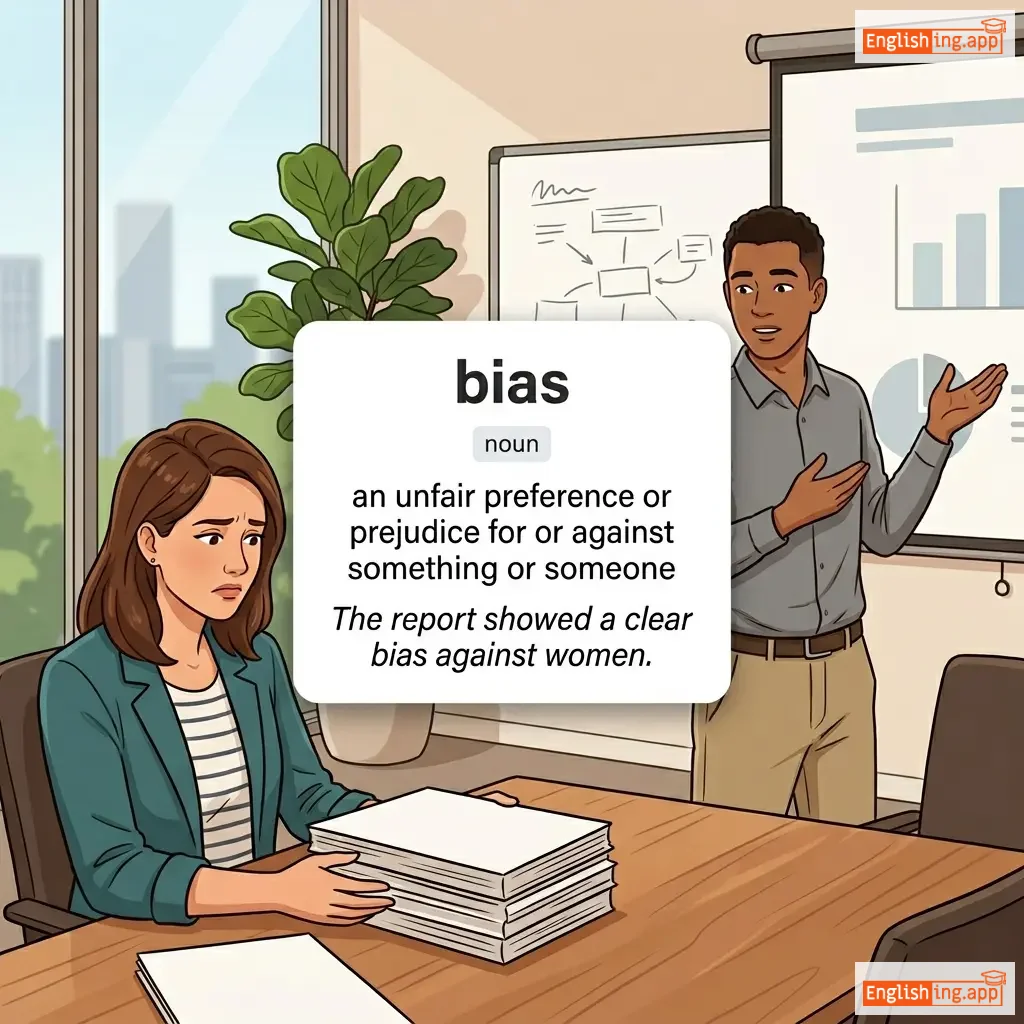
an unfair preference or prejudice for or against something or someone
••••••
|
The report showed a clear bias against women.
Отчет показал явное предвзятое отношение к женщинам.
••••••
|
Отчет показал явное предвзятое отношение к женщинам.
Otchet pokazal yavnoe predvzyatoe otnoshenie k zhenshchinam.
••••••
|
unconscious bias
бессознательное предвзятое отношение
••••••
|
prejudice that a person is unaware of having
••••••
|
бессознательное предвзятое отношение
bessoznatelnoe predvzyatoe otnoshenie
••••••
|
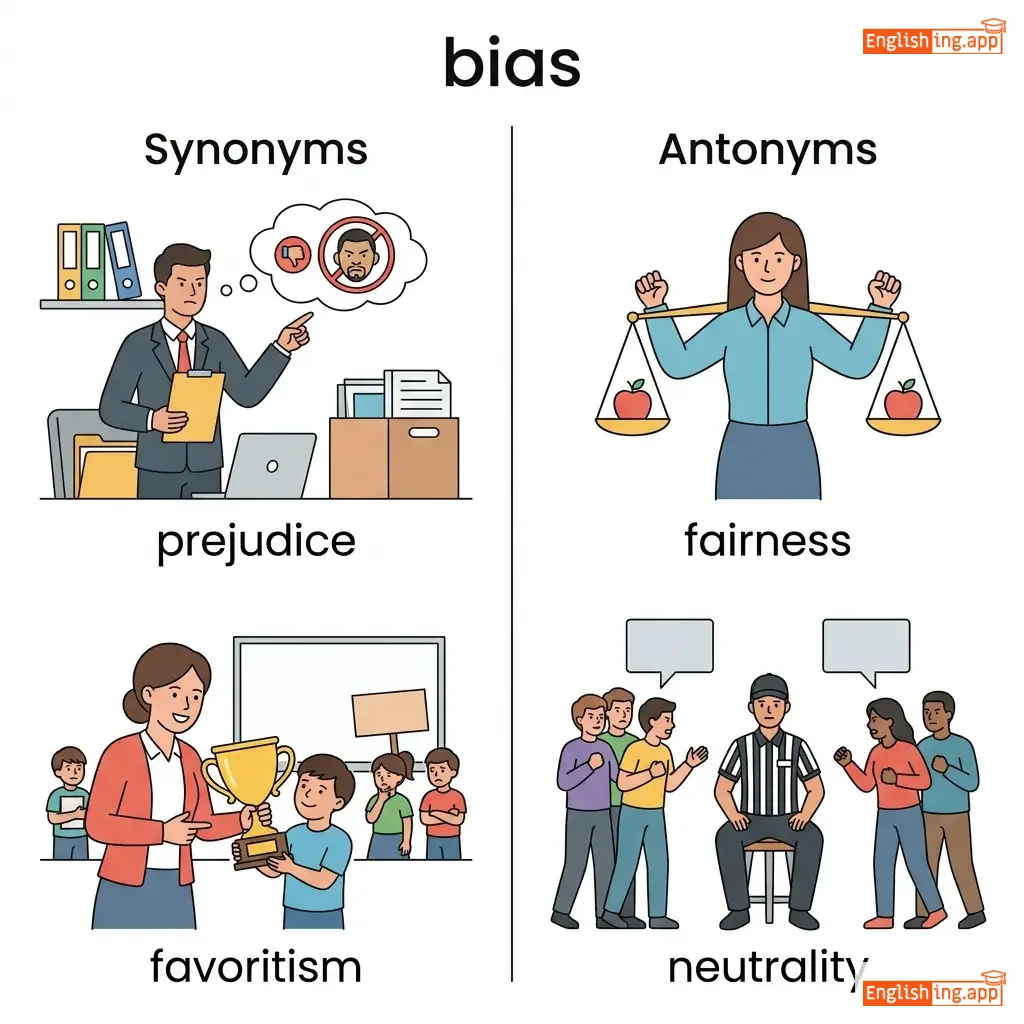
prejudice, favoritism, partiality, inclination, tendency
••••••
|
fairness, neutrality, objectivity
••••••
|
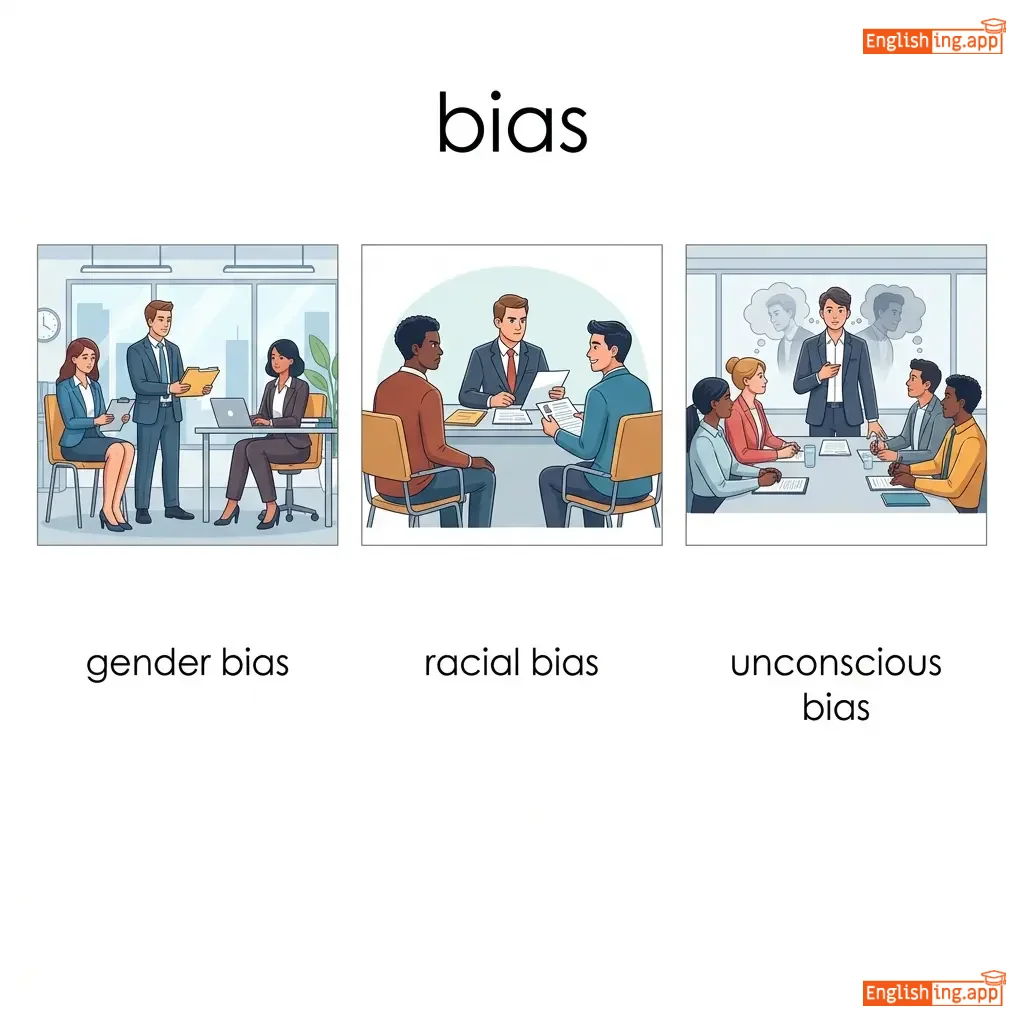
gender bias, racial bias, unconscious bias, bias towards
••••••
|
Предвзятость — это нечестность! Помни, ‘Pre-View-Zee’ — означает настраивать на свой лад.
••••••
|
|
📖
••••••
|
/ˈbaɪbəl/
noun
(байбл)
••••••
|
- •••••• |
библия
bibliya
••••••
|
- •••••• | - •••••• | - •••••• | - •••••• |
the Christian scriptures consisting of the Old and New Testaments; also used for any authoritative book
••••••
|
She reads the Bible every morning. |
Она читает Библию каждое утро.
Ona chitayet Bibliyu kazhdoe utro.
••••••
|
- •••••• | - •••••• | - •••••• |
scripture, holy book, testament, gospel
••••••
|
none
••••••
|
Bible study, Bible verse, Bible story
••••••
|
Bible = Библия, помни, что Библия — это священная книга.
••••••
|
|
🚴♂️
••••••
|
/ˈbaɪsɪkl/
noun
(хэппинесс)
••••••
|
- •••••• |
счастье
schast'ye
••••••
|
- •••••• | - •••••• | - •••••• | - •••••• |
a vehicle with two wheels that you ride by pedaling
••••••
|
He rides his bicycle to school every day. |
Она не могла скрыть свое счастье, когда получила награду.
Ona ne mogla skryt' svoyo schast'ye, kogda poluchila nagradu.
••••••
|
ride a bicycle |
to travel by bicycle
••••••
|
поиск счастья
poisk schast'ya
••••••
|
bike, cycle, two-wheeler, pedal bike
••••••
|
car, motorcycle
••••••
|
ride a bicycle, mountain bicycle, bicycle lane, bicycle helmet
••••••
|
Счастье = когда ты с собой доволен.
••••••
|
|
💸
••••••
|
/bɪd/
verb
(бид)
••••••
|
- •••••• |
сделать ставку
sdelat' stavku
••••••
|
bid
бид
••••••
|
bid
бид
••••••
|
bids
бидс
••••••
|
bidding
биддинг
••••••
|
to offer a certain amount of money for something, especially at an auction
••••••
|
She bid $200 for the antique vase.
Она предложила 200 $ за антикварную вазу.
••••••
|
Она предложила 200 $ за антикварную вазу.
Ona predlozhila 200 dollarov za antikvarnuyu vazu.
••••••
|
bid farewell
попрощаться
••••••
|
to say goodbye formally
••••••
|
формально попрощаться
formal'no poproschatsya
••••••
|
offer, propose, tender, submit, quote
••••••
|
withdraw, retract
••••••
|
bid price, bid farewell, bid high, bid low
••••••
|
На аукционе, если сделаешь ставку, придется заплатить 💸 - поэтому 'bid' означает сделать ставку.
••••••
|
|
📏
••••••
|
/bɪɡ/
adjective
(биг)
••••••
|
- •••••• |
большой
bolshoy
••••••
|
- •••••• | - •••••• | - •••••• | - •••••• |
large in size, extent, or importance
••••••
|
They moved into a big house with plenty of space. |
Они переехали в большой дом с большим количеством пространства.
Oni pereekhali v bol'shoy dom s bol'shim kolichestvom prostranstva.
••••••
|
think big |
to have ambitious or grand ideas
••••••
|
думать по-крупному
dumat' po-krupnomu
••••••
|
large, huge, massive, enormous, vast
••••••
|
small, tiny, little
••••••
|
big house, big city, big problem, big chance
••••••
|
Big означает большой – Big = Bol'shoy.
••••••
|
|
📏
••••••
|
/ˈbɪɡɪst/
adjective
(биггест)
••••••
|
- •••••• |
самый большой
samyy bolshoy
••••••
|
- •••••• | - •••••• | - •••••• | - •••••• |
largest in size, amount, degree, or importance; superlative form of big
••••••
|
This is the biggest challenge we have ever faced.
дис из зе биггест челлендж ви хэв эвер фейст
••••••
|
Это самая большая проблема, с которой мы сталкивались.
eto samaya bolshaya problema s kotoroy my stalkivalis
••••••
|
the biggest fish in the pond
зе биггест фиш ин зе понд
••••••
|
the most powerful or important person in a small group
••••••
|
самый влиятельный человек в небольшой группе
samyy vliyatelnyy chelovek v nebolshoy gruppe
••••••
|
largest, greatest, hugest, vastest, maximum
••••••
|
smallest, tiniest, least
••••••
|
biggest mistake, biggest city, biggest problem, biggest opportunity
••••••
|
Biggest = самый большой, big по-русски большой
••••••
|
|
🚲
••••••
|
/baɪk/
noun, verb
(байк)
••••••
|
- •••••• |
велосипед
velosiped
••••••
|
biked
байкт
••••••
|
biked
байкт
••••••
|
bikes
байкс
••••••
|
biking
байкинг
••••••
|
a bicycle or motorcycle; to ride a bicycle
••••••
|
He biked to school every day.
Он ездил в школу на велосипеде каждый день.
••••••
|
Он ездил в школу на велосипеде каждый день.
On ezdil v shkolu na velosipede kazhdyi den.
••••••
|
bike ride
велосипедная прогулка
••••••
|
An outing or trip on a bicycle.
••••••
|
велосипедная прогулка
velosipednaya progulka
••••••
|
bicycle, cycle, motorcycle, two-wheeler
••••••
|
car, bus
••••••
|
ride a bike, mountain bike, bike helmet, bike path
••••••
|
Bike на английском означает велосипед, подумай 'велосипед'!
••••••
|
|
🧾
••••••
|
/bɪl/
noun
••••••
|
- •••••• | - •••••• | - •••••• | - •••••• | - •••••• | - •••••• |
a written statement of money owed for goods or services; also a proposed law presented to a legislature
••••••
|
He received the electricity bill yesterday. |
- •••••• |
foot the bill |
to pay for something, especially something expensive
••••••
|
- •••••• |
invoice, statement, charge, account, draft
••••••
|
credit, receipt
••••••
|
pay a bill, receive a bill, pass a bill, utility bill
••••••
|
No •••••• |
|
💰
••••••
|
/ˈbɪljən/
noun
(биллион)
••••••
|
- •••••• |
миллиард
milliard
••••••
|
- •••••• | - •••••• | - •••••• | - •••••• |
the number 1,000,000,000 (one thousand million)
••••••
|
The company is worth more than a billion dollars.
Компания стоит более одного миллиарда долларов.
••••••
|
Компания стоит более одного миллиарда долларов.
Kompaniya stoit bolee odnogo milliarda dollarov.
••••••
|
- •••••• | - •••••• | - •••••• |
thousand million, giga, large number
••••••
|
one, few
••••••
|
a billion dollars, reach a billion, billion people
••••••
|
milliard: представь milli (много миллионов) + yard (ярд) — ярд купюр на миллиард долларов
••••••
|
|
🪢
••••••
|
/baɪnd/
verb
(baind)
••••••
|

|
связывать
svyazyvat
••••••
|
bound
baund
••••••
|
bound
baund
••••••
|
binds
bainds
••••••
|
binding
bainding
••••••
|
to tie or fasten tightly; to unite or restrict
••••••
|
The contract will bind both parties to the agreement.
контракт свяжет обе стороны с соглашением.
••••••
|
Контракт свяжет обе стороны с соглашением.
Kontrakt svyazhet obe storony s soglasheniem.
••••••
|
in a bind
в затруднении
••••••
|
in a difficult situation
••••••
|
в затруднении
v zatrudnenii
••••••
|
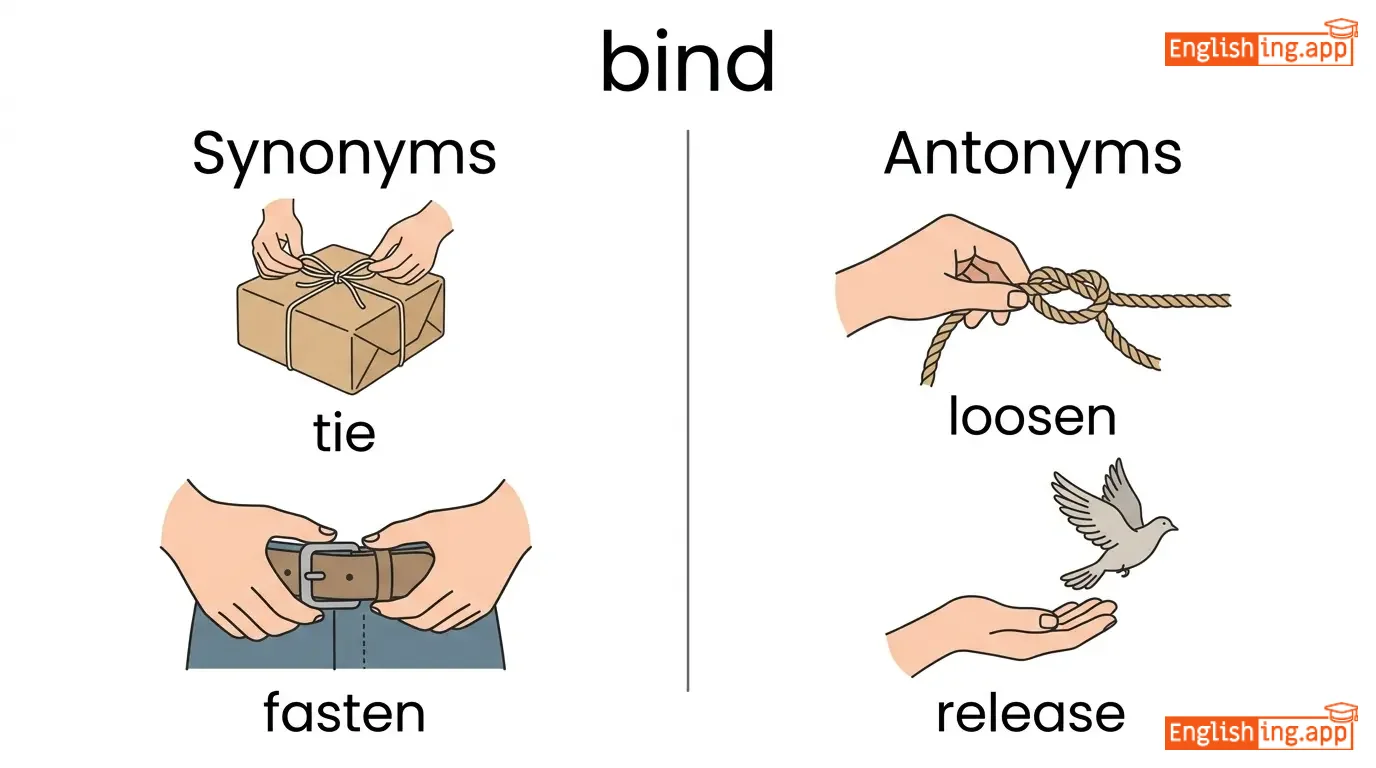
tie, fasten, connect, unite, secure
••••••
|
loosen, release, free
••••••
|
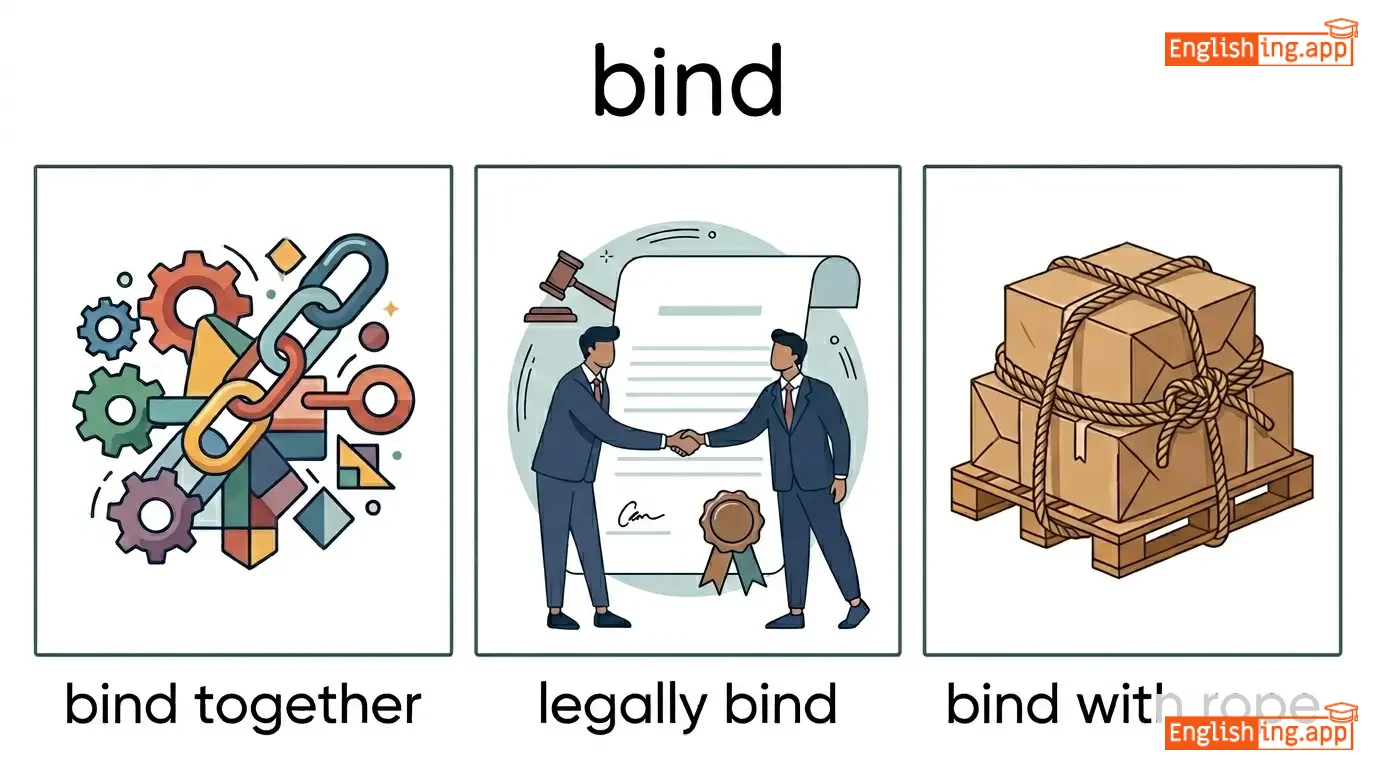
bind together, legally bind, bind with rope, bind tightly
••••••
|
Связывать означает соединять вещи вместе, как при завязывании узла.
••••••
|
|
📖
••••••
|
/baɪˈɒɡrəfi/
noun
(baɪˈɒɡrəfi)
••••••
|
- •••••• |
биография
biografiya
••••••
|
- •••••• | - •••••• | - •••••• | - •••••• |
an account of someone's life written by someone else; the story of a person's life
••••••
|
I'm reading a fascinating biography of Albert Einstein. |
Я читаю увлекательную биографию Альберта Эйнштейна.
Ya chitayu uvyeklatel'nuyu biografiyu Alberta Eynshteyna.
••••••
|
- •••••• | - •••••• | - •••••• |
life story, memoir, profile
••••••
|
fiction, novel
••••••
|
write a biography, read biography, authorized biography
••••••
|
Biografia in Russian and Biography in English both share the meaning of someone's life story.
••••••
|
|
🧬
••••••
|
/ˌbaɪəˈlɒdʒɪkl̩/
adjective
(баɪˈолədʒɪкəl)
••••••
|
- •••••• |
биологический
biologicheskiy
••••••
|
- •••••• | - •••••• | - •••••• | - •••••• |
relating to the science of biology or to life and living organisms
••••••
|
She is studying biological sciences at university. |
Она изучает биологические науки в университете.
Ona izuchayet biologicheskie nauki v universitete.
••••••
|
biological clock |
the natural timing mechanism in the body that influences processes like sleep and fertility
••••••
|
биологические часы
biologicheskie chasy
••••••
|
organic, natural, life-related, physiological
••••••
|
artificial, synthetic
••••••
|
biological science, biological research, biological process, biological parents
••••••
|
Биологический = BIO (жизнь) + логический (разум) = разум жизни
••••••
|
|
🧬
••••••
|
/baɪˈɒlədʒi/
noun
(биология)
••••••
|
- •••••• |
биология
biologiya
••••••
|
- •••••• | - •••••• | - •••••• | - •••••• |
The scientific study of living organisms.
••••••
|
Biology explains how plants and animals function. |
Биология объясняет, как функционируют растения и животные.
Biologiya ob'yasnyayet, kak funktsioniruyut rasteniya i zhivotnyye.
••••••
|
- •••••• | - •••••• | - •••••• |
life science, natural science, zoology, botany
••••••
|
inanimate science, nonliving study
••••••
|
study biology, biology class, molecular biology, marine biology
••••••
|
Bio (жизнь) + логия (наука) = наука о жизни = биология.
••••••
|
|
🐦
••••••
|
/bɜːrd/
noun
(бёрд)
••••••
|
- •••••• |
птица
ptitsa
••••••
|
- •••••• | - •••••• | - •••••• | - •••••• |
a warm-blooded animal with feathers and wings that usually lays eggs and can often fly
••••••
|
A bird was singing on the tree branch. |
Птица пела на ветке дерева.
Ptitsa pela na vetke dereva
••••••
|
a little bird told me |
used to indicate that the speaker has heard a secret from someone unnamed
••••••
|
маленькая птица мне сказала
malen'kaya ptitsa mne skazala
••••••
|
avian, fowl, feathered creature
••••••
|
mammal, reptile
••••••
|
bird song, bird watching, migratory bird, bird species
••••••
|
Bird означает птица 🐦 - 'Птица' напоминает о пернатом друге, летящем в небе
••••••
|
|
👶
••••••
|
/bɜːrθ/
noun
(бёрθ)
••••••
|
- •••••• |
рождение
rozhdenie
••••••
|
- •••••• | - •••••• | - •••••• | - •••••• |
the process of being born; the start of life
••••••
|
The birth of a child brings joy to the whole family. |
Рождение ребенка приносит радость всей семье.
Rozhdenie rebenka prinosit radost vsei sem'e.
••••••
|
give birth |
to have a baby
••••••
|
родить
rodit'
••••••
|
delivery, arrival, nativity, beginning
••••••
|
death, end
••••••
|
birth of a child, birth certificate, give birth, birth anniversary
••••••
|
Рождение и Birth напоминают о куске торта на вашем дне рождения!
••••••
|
|
🎂
••••••
|
/ˈbɜːrθ.deɪ/
noun
••••••
|
- •••••• | - •••••• | - •••••• | - •••••• | - •••••• | - •••••• |
the anniversary of the day on which a person was born, typically celebrated annually
••••••
|
We are planning a surprise birthday party for her. |
- •••••• |
happy birthday |
a greeting used to wish someone well on the anniversary of their birth
••••••
|
- •••••• |
anniversary, natal day, birth anniversary
••••••
|
deathday
••••••
|
birthday cake, birthday party, birthday gift, birthday wish
••••••
|
No •••••• |
|
⛪
••••••
|
/ˈbɪʃəp/
noun
(бишоп)
••••••
|
- •••••• |
епископ
episkop
••••••
|
- •••••• | - •••••• | - •••••• | - •••••• |
a senior member of the Christian clergy, usually in charge of a diocese and empowered to confer holy orders.
••••••
|
The bishop delivered a powerful sermon during Sunday service. |
Епископ произнес мощную проповедь во время воскресного богослужения.
Episkop proiznes moshchnuyu propoved' vo vremya voskresnogo bogosluzheniya.
••••••
|
move diagonally like a bishop |
to act or move in a way that avoids direct confrontation, like the bishop piece in chess.
••••••
|
двигаться по диагонали как епископ
dvigat'sya po diakonal' kak episkop
••••••
|
clergyman, priest, pastor, archbishop, prelate
••••••
|
layman, civilian
••••••
|
Catholic bishop, Anglican bishop, bishop's palace, ordained bishop
••••••
|
Епископ — это старший священнослужитель церкви, помни, ‘⛪ Епископ ведет молитвы’.
••••••
|
|
🧩
••••••
|
/bɪt/
noun
(бит)
••••••
|
- •••••• |
кусок
kusok
••••••
|
- •••••• | - •••••• | - •••••• | - •••••• |
a small piece, amount, or portion of something
••••••
|
She ate a bit of the cake before leaving. |
Она съела кусок торта перед тем, как уйти.
Ona syela kusok torta pered tem, kak uyti.
••••••
|
every bit |
completely or fully
••••••
|
каждый кусок
kazhdyy kusok
••••••
|
piece, fragment, portion, part, scrap
••••••
|
whole, entirety
••••••
|
a bit of, every bit, quite a bit, bit by bit
••••••
|
Bit означает кусок, как кусок торта.
••••••
|
|
🐕🦺
••••••
|
/bɪtʃ/
noun
(бич)
••••••
|
- •••••• |
сука;
suka
••••••
|
- •••••• | - •••••• | - •••••• | - •••••• |
a female dog; an unpleasant or spiteful woman (offensive)
••••••
|
The bitch gave birth to five puppies.
Сука родила пятерых щенков.
••••••
|
Сука родила пятерых щенков.
Suka rodila pyaterykh shchenkov.
••••••
|
- •••••• | - •••••• | - •••••• |
female dog
••••••
|
male dog, dog
••••••
|
breeding bitch, guard bitch
••••••
|
Сука, которая родила щенков.
••••••
|
|
🦷
••••••
|
/baɪt/
verb
(байт)
••••••
|
|
кусать
kusat
••••••
|
bit
бит
••••••
|
bitten
биттен
••••••
|
bites
байтс
••••••
|
biting
байтинг
••••••
|
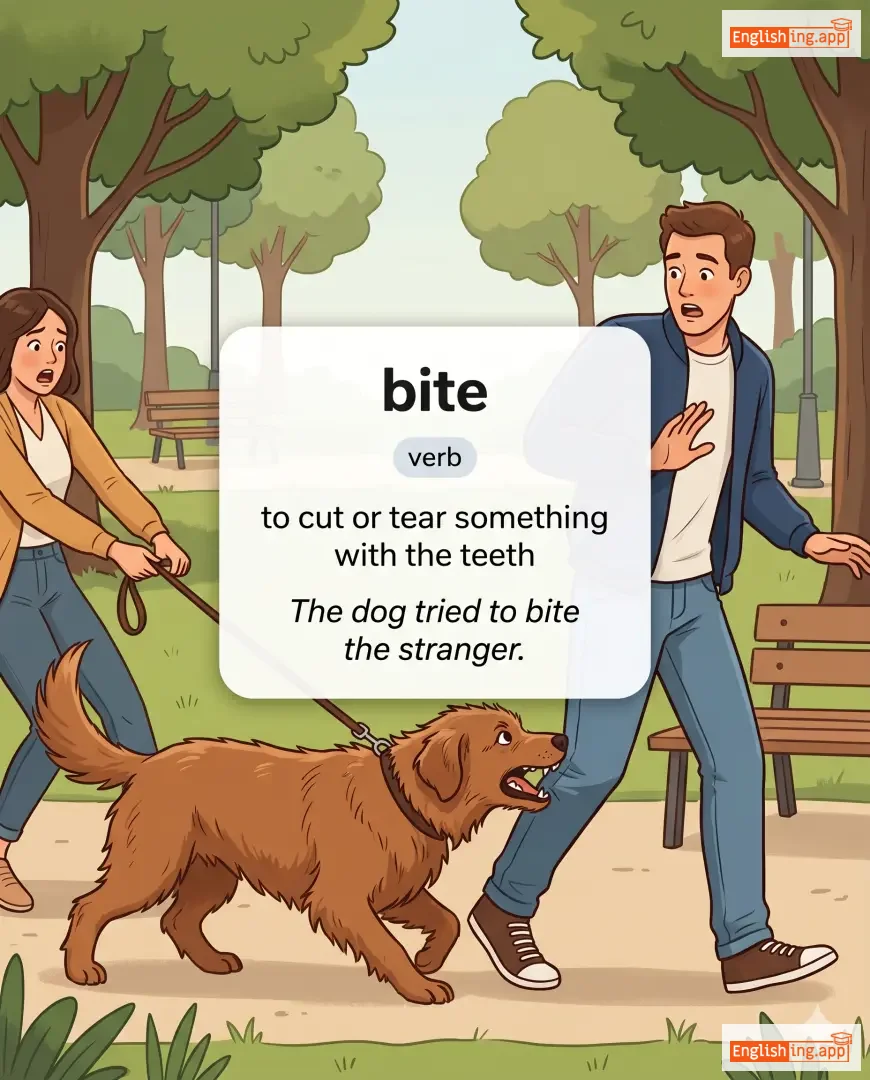
to cut or tear something with the teeth
••••••
|
The dog tried to bite the stranger.
Собака пыталась укусить незнакомца.
••••••
|
Собака пыталась укусить незнакомца.
Sobaka pytalas' ukusit' neznamokca.
••••••
|
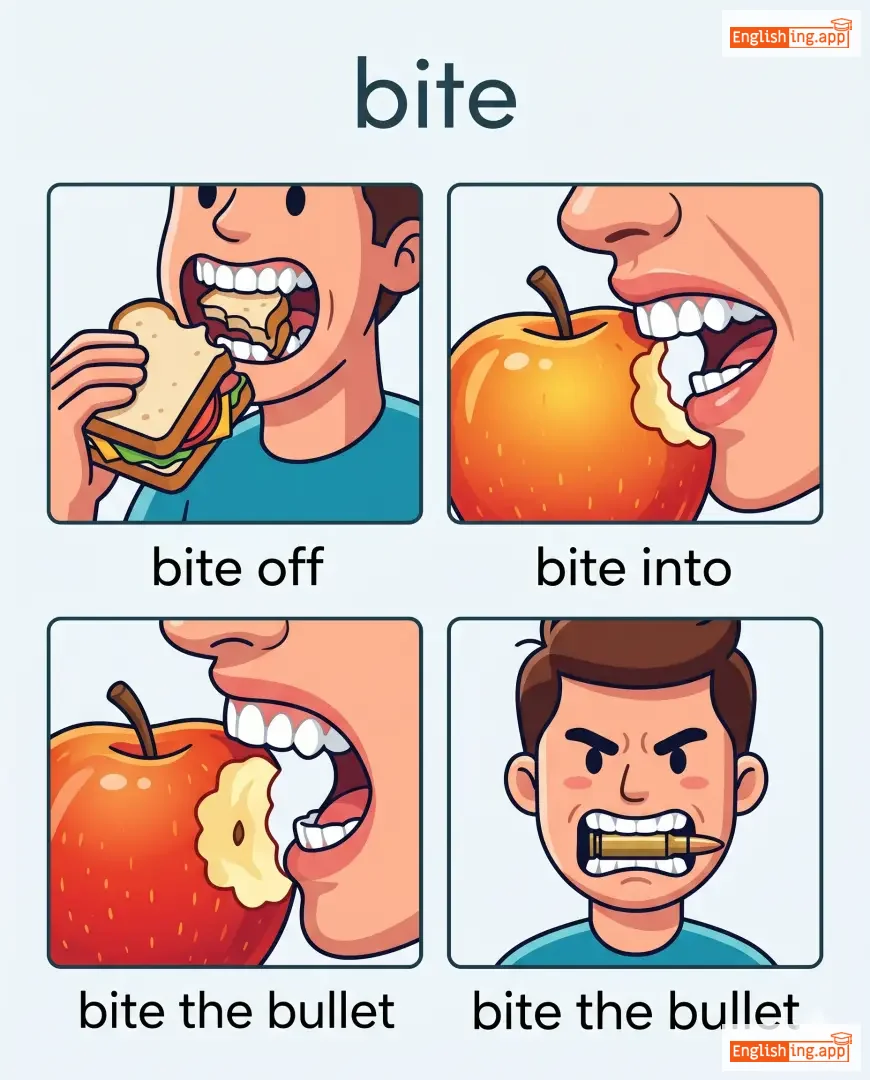
bite the bullet
bite the bullet
••••••
|
to face a painful or difficult situation with courage
••••••
|
смотреть в лицо трудной ситуации с мужеством
smotret' v litso trudnoy situatsii s muzhestvom
••••••
|
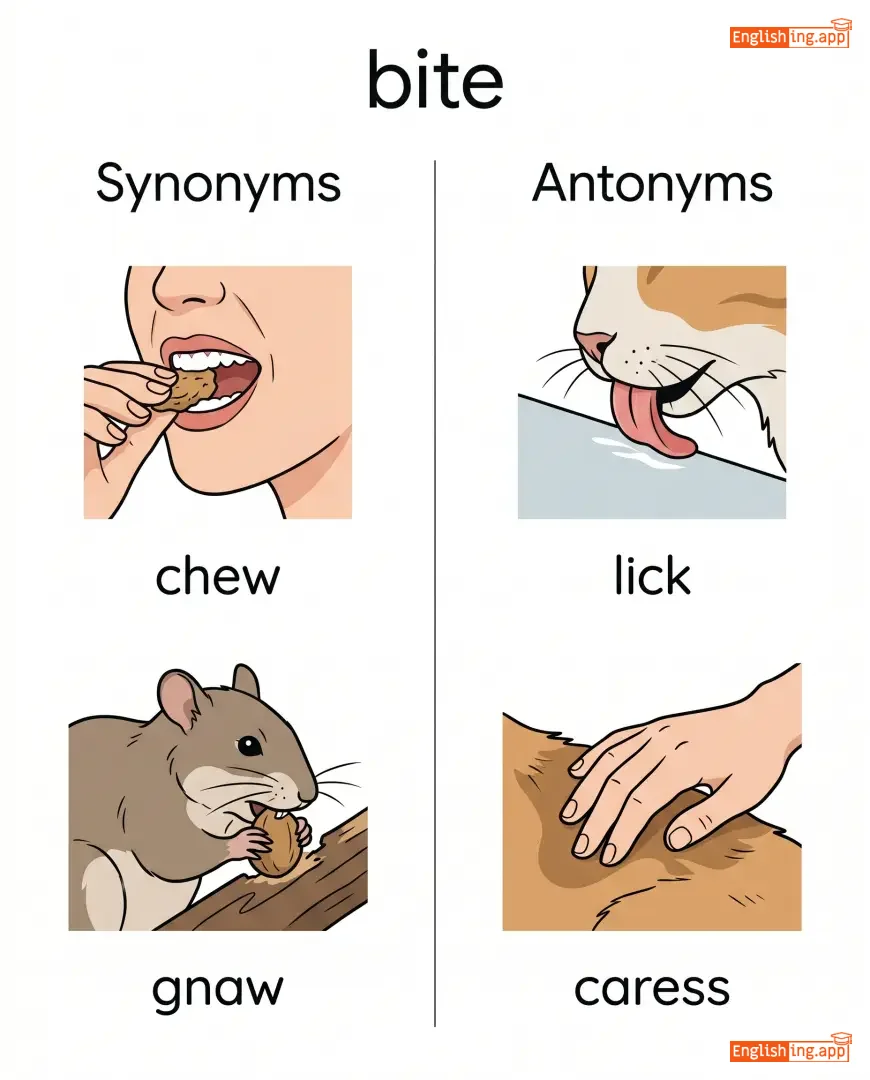
chew, gnaw, snap, nip
••••••
|
lick, caress
••••••
|
bite off, bite into, bite the bullet, bite back
••••••
|
Bite - это кусать - представь, что ты кусишь яблоко.
••••••
|
|
🍋
••••••
|
/ˈbɪtər/
adjective
(биттер)
••••••
|
- •••••• |
горький
gorkiy
••••••
|
- •••••• | - •••••• | - •••••• | - •••••• |
having a sharp, unpleasant taste or showing strong hostility or resentment
••••••
|
She felt bitter about losing the competition. |
Она почувствовала горечь после того, как проиграла соревнование.
Ona poczuvala gorce posle togo, kak proigrala sorevnovanie.
••••••
|
bitter pill to swallow |
an unpleasant fact or situation that must be accepted
••••••
|
горькая пилюля, которую нужно проглотить
gorkaya pil'yul'ya, kotoruyu nuzhno proglotit'
••••••
|
harsh, resentful, sour, acrid, severe
••••••
|
sweet, pleasant, delightful
••••••
|
bitter taste, bitter truth, bitter experience, bitter rival
••••••
|
Горькая как жизнь, напоминающая о сложных моментах
••••••
|
|
🤯
••••••
|
/bɪˈzɑːr/
adjective
(бизар)
••••••
|
- •••••• |
странный
strannyy
••••••
|
- •••••• | - •••••• | - •••••• | - •••••• |
very strange or unusual, especially so as to cause interest or amusement
••••••
|
He told a bizarre story that no one could believe. |
Он рассказал странную историю, в которую никто не мог поверить.
On rasskazal strannuyu istoriyu, v kotoruyu nikto ne mog poverit'.
••••••
|
- •••••• | - •••••• | - •••••• |
strange, odd, peculiar, unusual, weird
••••••
|
normal, ordinary, usual
••••••
|
bizarre incident, bizarre behavior, bizarre story, bizarre outfit
••••••
|
Bizarre звучит как 'странный' на русском.
••••••
|
|
🗣️
••••••
|
/blæb/
verb, noun
(блэб)
••••••
|
- •••••• |
болтать; выбалтывать
boltat; vybaltyvat
••••••
|
blabbed
блэбд
••••••
|
blabbed
блэбд
••••••
|
blabs
блэбс
••••••
|
blabbing
блэбинг
••••••
|
to talk too much or reveal secrets carelessly; excessive or foolish talk
••••••
|
He accidentally blabbed the surprise to everyone.
он случайно блэбд сюрпрайз всем
••••••
|
Он случайно выдал сюрприз всем.
On sluchaino vydal syurpriz vsem
••••••
|
blab it out
блэб ит аут
••••••
|
to reveal something without thinking
••••••
|
выболтать секрет
vyboltat sekret
••••••
|
babble, chatter, prattle, gossip, tattle
••••••
|
keep quiet, conceal, hush
••••••
|
blab secrets, blab on, blab about, blab away
••••••
|
blab = болт-болт — болтать
••••••
|
|
⚫
••••••
|
/blæk/
adjective
(блэк)
••••••
|
- •••••• |
чёрный
chornyy
••••••
|
- •••••• | - •••••• | - •••••• | - •••••• |
of the very darkest color due to the absence of light
••••••
|
She wore a black dress to the party. |
Она носила чёрное платье на вечеринке.
Ona nosila chornoye plat'ye na vecherinke.
••••••
|
black and white |
clear and straightforward
••••••
|
ясно и прямо
yasno i pryamo
••••••
|
dark, ebony, jet, inky
••••••
|
white, bright
••••••
|
black dress, black coffee, pitch black, black hole
••••••
|
Black означает чёрный—'Black coffee' означает кофе без молока.
••••••
|
|
⚫
••••••
|
/ˈblækən/
verb
(блэкэн)
••••••
|
- •••••• |
чернить
chernit
••••••
|
blackened
блэкэнд
••••••
|
blackened
блэкэнд
••••••
|
blackens
блэкэнз
••••••
|
blackening
блэкэнинг
••••••
|
to make something black or darker; to stain, soil, or tarnish
••••••
|
Smoke from the fire began to blacken the walls.
Смоук фром зе файр бигэн ту блэкэн зе воллз.
••••••
|
Дым от огня начал чернить стены.
Dym ot ognya nachal chernit steny
••••••
|
blacken someone's name
блэкэн самуанс нейм
••••••
|
to damage someone's reputation
••••••
|
очернить имя
ochernit imya
••••••
|
darken, soil, stain, tarnish, smudge
••••••
|
whiten, brighten, clean
••••••
|
blacken the sky, blacken walls, blacken reputation, blacken surface
••••••
|
Чёрный = black → чернить = blacken
••••••
|
|
🕵️
••••••
|
/ˈblækmeɪl/
noun, verb
(блэкмейл)
••••••
|
- •••••• |
шантажировать
shantazhirovat
••••••
|
blackmailed
блэкмейлд
••••••
|
blackmailed
блэкмейлд
••••••
|
blackmails
блэкмейлз
••••••
|
blackmailing
блэкмейлинг
••••••
|
the act of demanding money or advantage by threatening to reveal secrets; to force someone to act by using such threats
••••••
|
He tried to blackmail her by threatening to reveal the documents.
Хи трайд ту блэкмейл хёр бай сретенинг ту ривил зэ докьюментс.
••••••
|
Он пытался шантажировать её, угрожая раскрыть документы.
on pytalsya shantazhirovat ee ugrozhaya raskryt dokumenty
••••••
|
blackmail someone into doing something
blackmail someone into doing something
••••••
|
to force someone to do something through threats
••••••
|
шантажировать кого-то ради чего-то
shantazhirovat kogo-to radi chego-to
••••••
|
extort, coerce, pressure, intimidate, threaten
••••••
|
persuade, appeal, encourage
••••••
|
blackmail attempt, blackmail scheme, blackmail money, emotional blackmail
••••••
|
Шантаж звучит как шанс, но с угрозой — blackmail
••••••
|
|
🔪
••••••
|
/bleɪd/
noun
(bleid)
••••••
|
- •••••• |
лезвие
lezvie
••••••
|
- •••••• | - •••••• | - •••••• | - •••••• |
the flat cutting edge of a tool, knife, or weapon
••••••
|
The blade of the knife was very sharp.
Лезвие ножа было очень острым.
••••••
|
Лезвие ножа было очень острым.
Lezvie nozhа bylo ochen' ostrym.
••••••
|
on the blade's edge
на краю лезвия
••••••
|
in a very risky or dangerous position
••••••
|
в очень рискованной ситуации
v ochen' riskovannoy situatsii
••••••
|
edge, sword, cutter, razor
••••••
|
handle, blunt side
••••••
|
knife blade, razor blade, sharp blade, blade of grass
••••••
|
Лезвие означает blade—'Лезвие режет' запомни.
••••••
|
|
☝️
••••••
|
/bleɪm/
verb
(bleym)
••••••
|
|
обвинять
obvinyat
••••••
|
blamed
bleymd
••••••
|
blamed
bleymd
••••••
|
blames
bleyms
••••••
|
blaming
bleyming
••••••
|
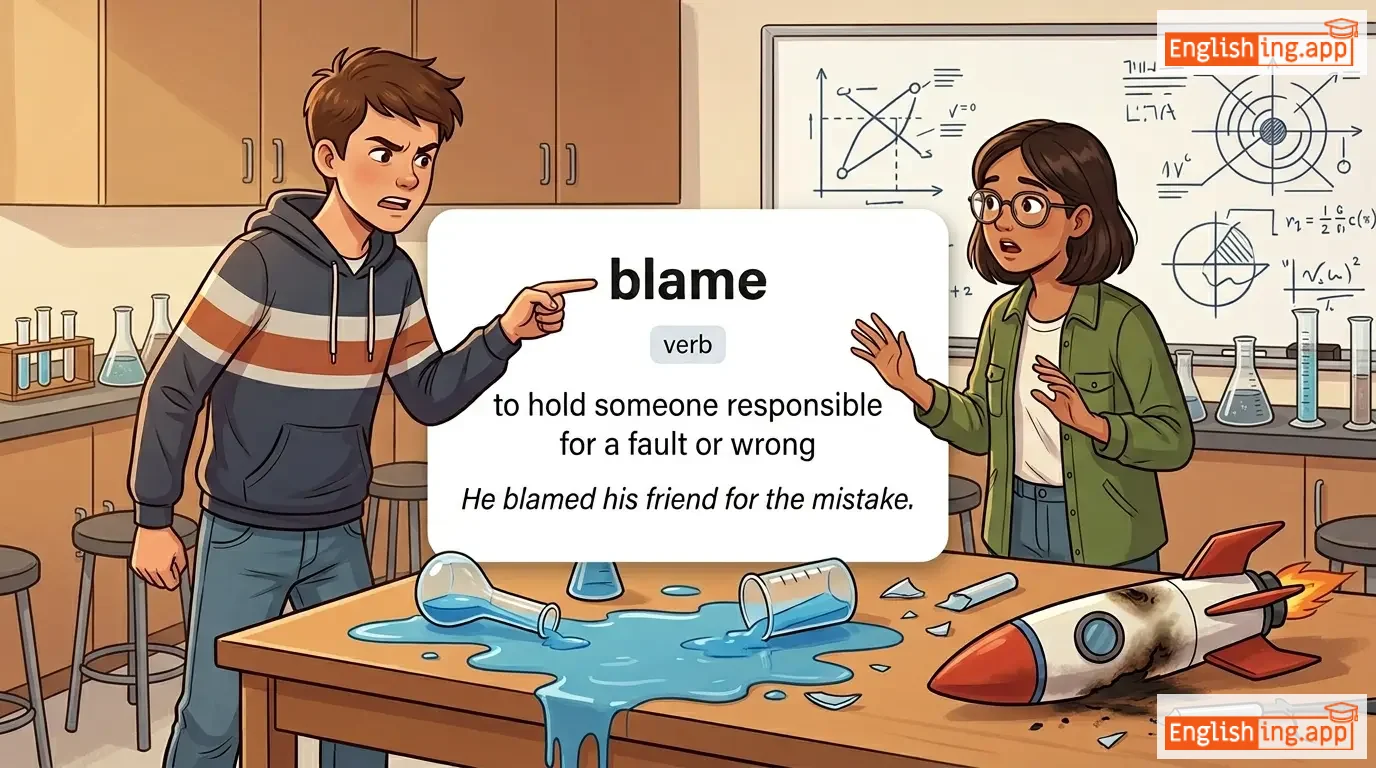
to hold someone responsible for a fault or wrong
••••••
|
He blamed his friend for the mistake.
Он обвинил своего друга в ошибке.
••••••
|
Он обвинил своего друга в ошибке.
On obvinil svoego druga v oshibke.
••••••
|
put the blame on
возложить вину на
••••••
|
to make someone responsible for something bad
••••••
|
возложить вину на
vozlozhit vinu na
••••••
|
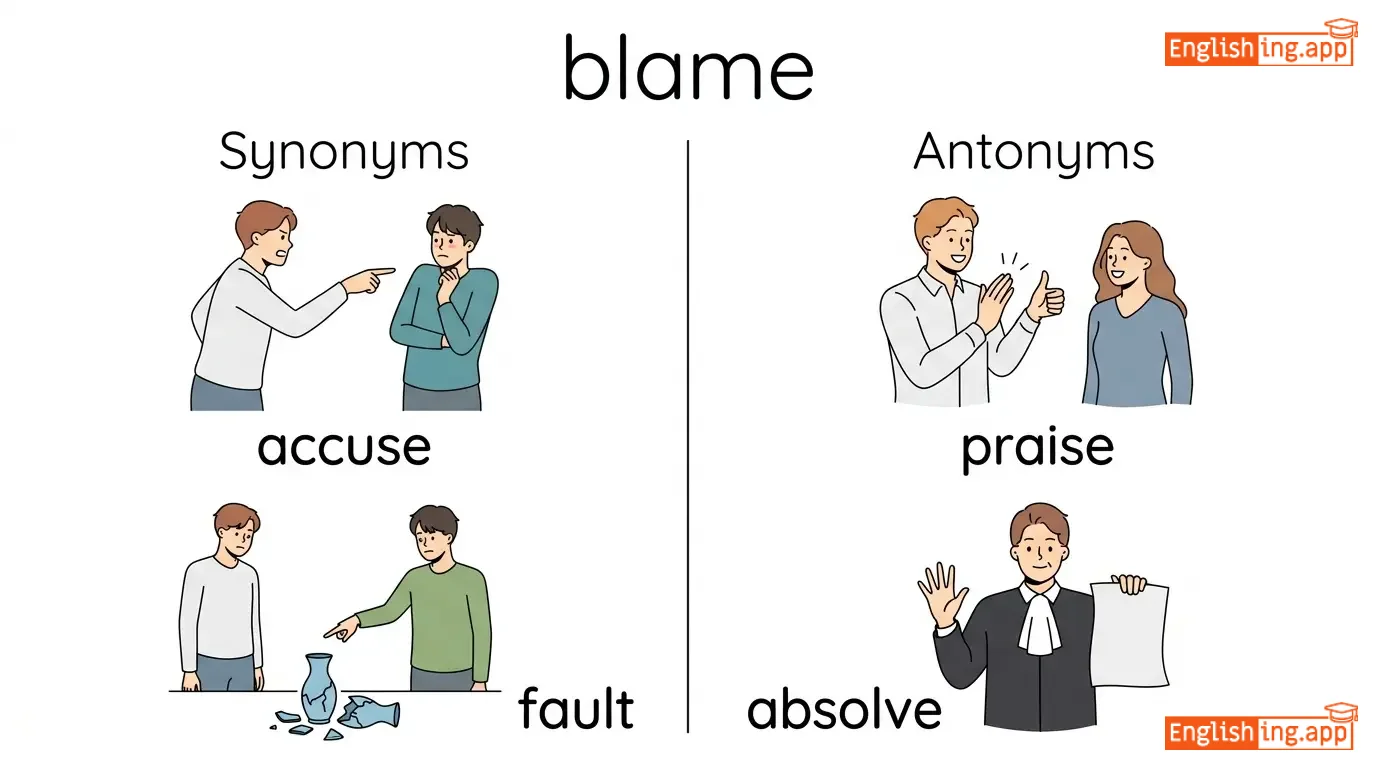
accuse, fault, charge, condemn
••••••
|
praise, absolve, forgive
••••••
|
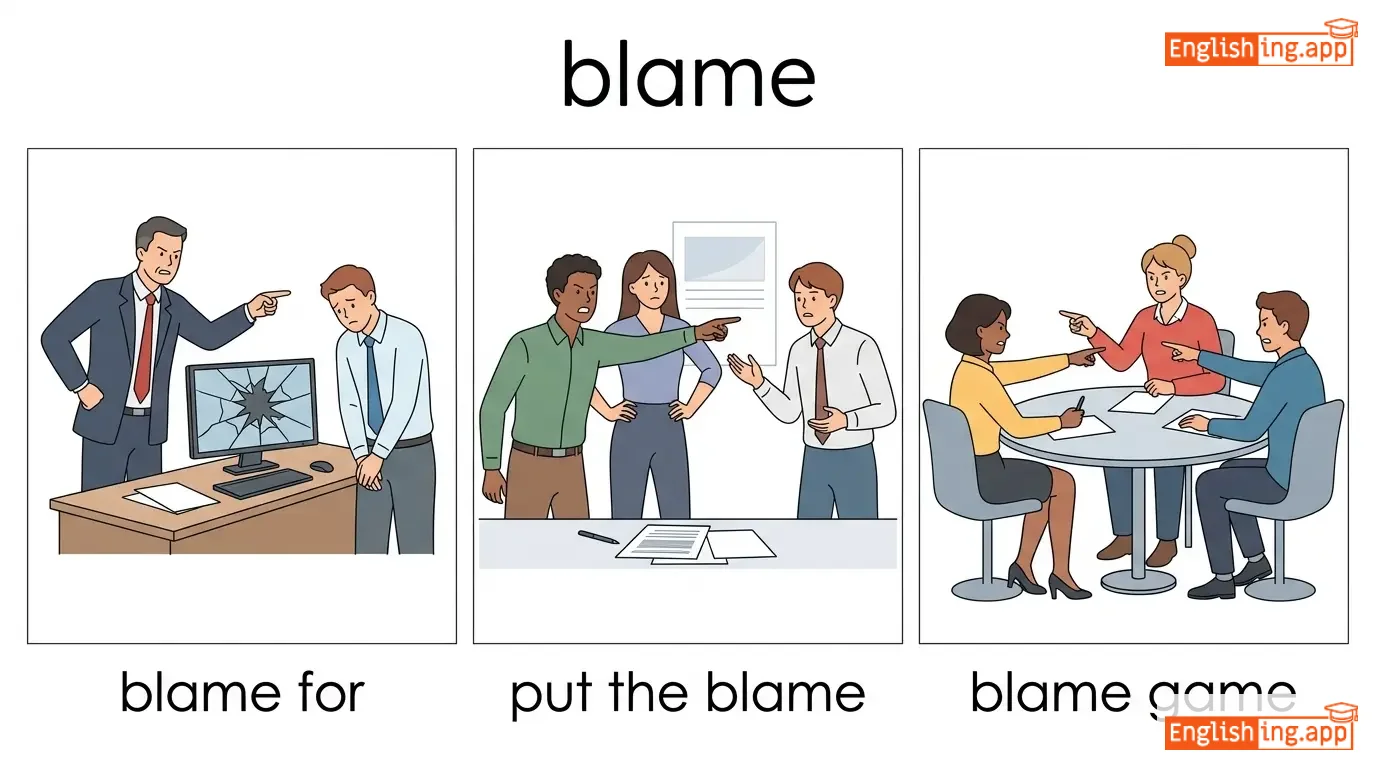
blame for, put the blame, blame game, blame others
••••••
|
Blame значит обвинять—'Blame game' значит игра в обвинения.
••••••
|
|
😌
••••••
|
/ˈblændɪʃ/
verb
(блэндниш)
••••••
|
- •••••• |
льстить
lstit
••••••
|
blandished
блэндништ
••••••
|
blandished
блэндништ
••••••
|
blandishes
блэнднишес
••••••
|
blandishing
блэнднишинг
••••••
|
to flatter or coax someone with kind words or praise in order to influence them
••••••
|
He blandished the officials with compliments to gain their support.
Хи блэнднишд зэ офишалс уиз комплиментс.
••••••
|
Он льстил чиновникам, чтобы получить их поддержку.
on lstil chinovnikam chtoby poluchit ikh podderzhku
••••••
|
- •••••• | - •••••• | - •••••• |
flatter, coax, cajole, sweet-talk, wheedle
••••••
|
criticize, insult, rebuke
••••••
|
blandish someone with praise, blandish into agreement, blandishing words
••••••
|
blandish = льстить, говорить сладко
••••••
|
|
📄
••••••
|
/blæŋk/
adjective
(блэнк)
••••••
|
- •••••• |
пустой
pustoy
••••••
|
- •••••• | - •••••• | - •••••• | - •••••• |
showing no expression or containing nothing written, printed, or recorded.
••••••
|
Her face went blank when she heard the bad news. |
Ее лицо стало пустым, когда она услышала плохие новости.
Yeyo litso stalo pustym, kogda ona uslyshala plokhie novosti.
••••••
|
a blank slate |
a fresh start with no previous record or experience.
••••••
|
чистая доска
chistaya doska
••••••
|
empty, vacant, expressionless, plain, void
••••••
|
filled, expressive, occupied
••••••
|
blank page, blank look, blank screen, blank form
••••••
|
Blank означает пустой — если на экзамене пустая бумага, ты провалился!
••••••
|
|
🛏️
••••••
|
/ˈblæŋ.kɪt/
noun
(блэнкет)
••••••
|
- •••••• |
одеяло
odeyalo
••••••
|
- •••••• | - •••••• | - •••••• | - •••••• |
A large piece of cloth used for warmth, typically on a bed.
••••••
|
She pulled the blanket over her shoulders to stay warm.
Она натянула одеяло на плечи, чтобы не замерзнуть.
••••••
|
Она натянула одеяло на плечи, чтобы не замерзнуть.
Ona natyanyla odeyalo na plechi, chtoby ne zamerznut'.
••••••
|
a blanket statement
общее утверждение
••••••
|
A general statement that covers all cases but may not be accurate in detail.
••••••
|
общее утверждение
obshchee utverzhdeniye
••••••
|
cover, quilt, throw, spread, comforter
••••••
|
sheet, exposure
••••••
|
warm blanket, electric blanket, wool blanket, heavy blanket
••••••
|
Одеяло = Blanket, которое покрывает все, как общее утверждение.
••••••
|
|
💥
••••••
|
/blæst/
noun, verb
(бласт)
••••••
|
- •••••• |
взрыв, сильный удар
vzriv, sil'nyy udar
••••••
|
blasted
бластед
••••••
|
blasted
бластед
••••••
|
blasts
бластс
••••••
|
blasting
бластинг
••••••
|
a strong gust of wind, an explosion, or a loud sound; to destroy or shatter by explosion
••••••
|
The explosion sent a powerful blast through the building.
Взрыв послал мощный взрыв через здание.
••••••
|
Взрыв послал мощный удар через здание.
Vzryv poslal moshchnyy udar cherez zdaniye.
••••••
|
have a blast
потрясающе провести время
••••••
|
to have a very enjoyable time
••••••
|
классно провести время
klassno provesti vremya
••••••
|
explosion, burst, boom, gust, detonation
••••••
|
silence, calm, stillness
••••••
|
blast wave, blast furnace, blast off, blasting sound
••••••
|
Blast означает взрыв, а 'have a blast' означает весело провести время, как взрыв удовольствия
••••••
|
|
🩸
••••••
|
/bliːd/
verb
(blid)
••••••
|
- •••••• |
кровоточить
krovotochit
••••••
|
bled
bled
••••••
|
bled
bled
••••••
|
bleeds
blids
••••••
|
bleeding
bliding
••••••
|
to lose blood from the body, especially due to injury
••••••
|
She began to bleed from the cut on her arm.
Она начала кровоточить от пореза на руке.
••••••
|
Она начала кровоточить от пореза на руке.
Ona nachala krovotochit' ot poreza na ruke.
••••••
|
- •••••• | - •••••• | - •••••• |
hemorrhage, ooze, drip, seep
••••••
|
heal, stop
••••••
|
bleed heavily, bleed profusely, bleed out, bleed internally
••••••
|
Blee(d) похоже на кровоточить на русском, так что запомни: если ты порежешься, будет кровь!
••••••
|
|
🥤
••••••
|
/blɛnd/
verb
(блэнд)
••••••
|
|
смешивать
smeshivat
••••••
|
blended
блендед
••••••
|
blended
блендед
••••••
|
blends
блендс
••••••
|
blending
блендинг
••••••
|
to mix different substances or elements together so that they form a smooth combination
••••••
|
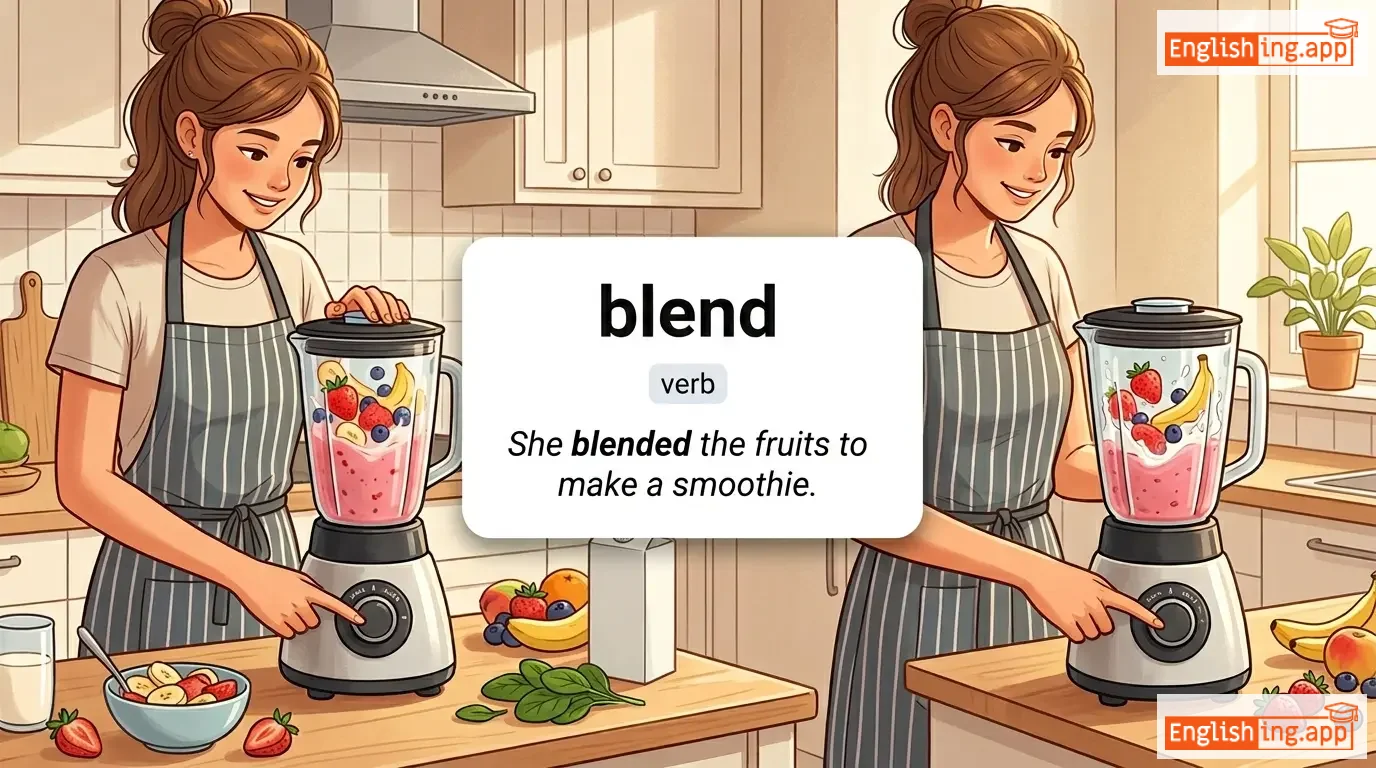
She blended the fruits to make a smoothie.
Она смешала фрукты, чтобы сделать смузи.
••••••
|
Она смешала фрукты, чтобы сделать смузи.
Ona smeshala frukty, chtoby sdelat' smuzi.
••••••
|
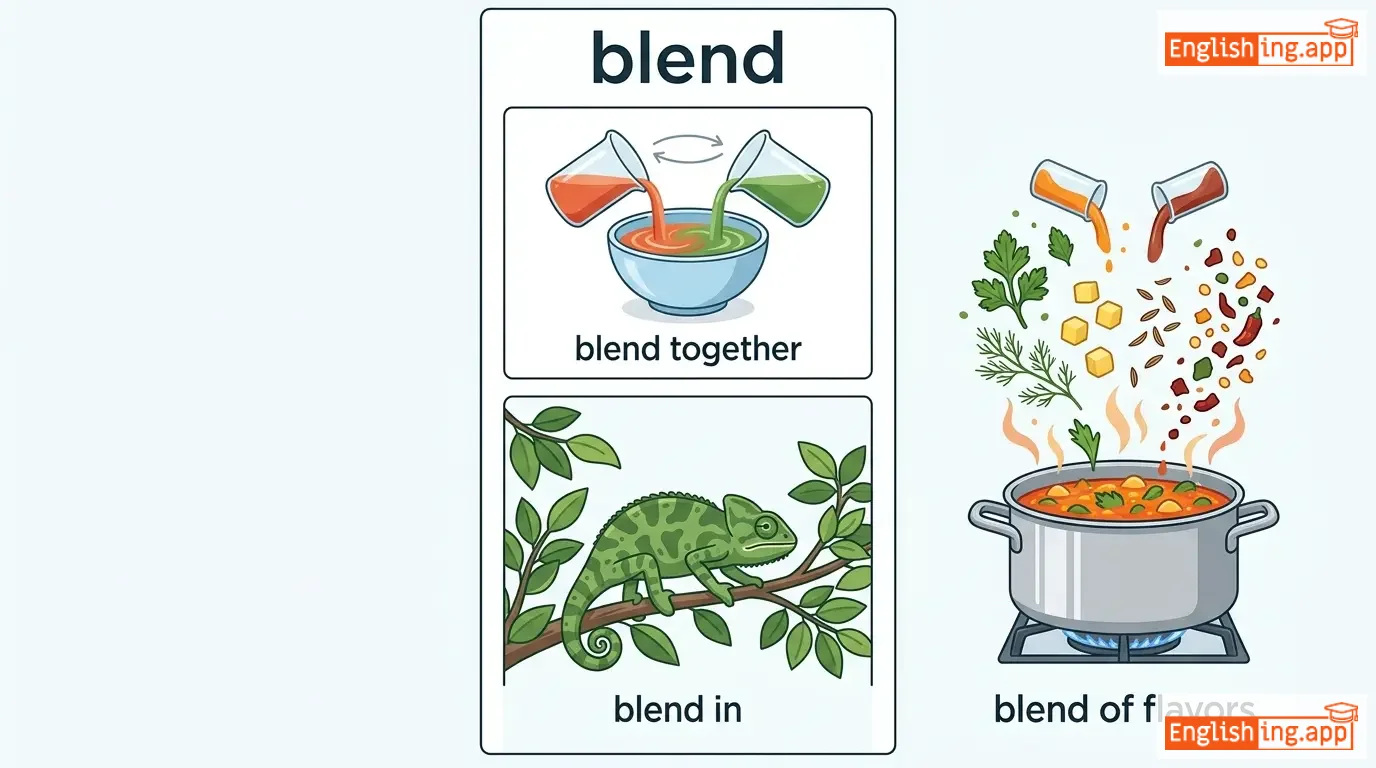
blend in
влиться
••••••
|
to look or seem the same as the surrounding people or things
••••••
|
вливаться
vlivat'sya
••••••
|
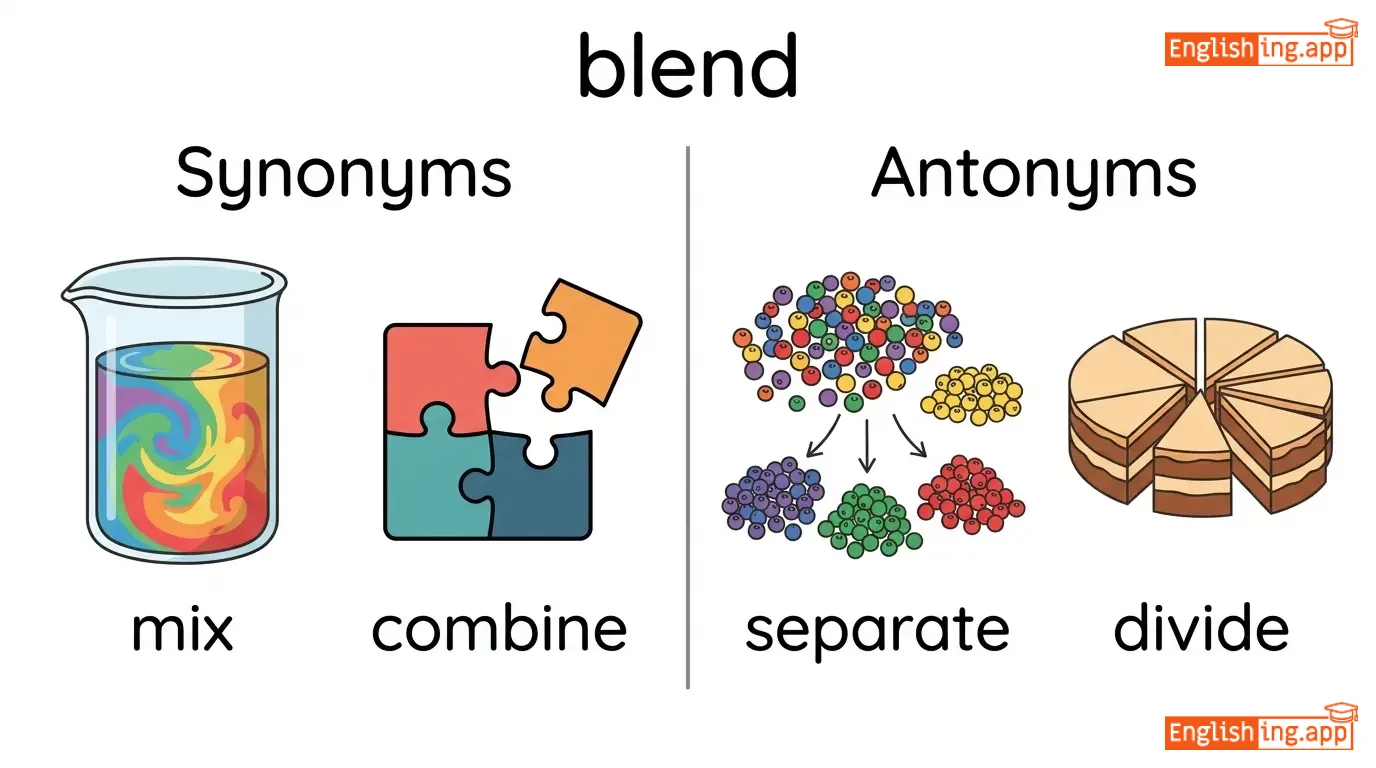
mix, combine, merge, fuse, integrate
••••••
|
separate, divide, detach
••••••
|
blend together, blend in, blend of flavors, blend smoothly
••••••
|
Blend означает смешивать, как смешивать фрукты в блендере для приготовления смузи.
••••••
|
|
🙏
••••••
|
/blɛs/
verb
(блэс)
••••••
|

|
благословить
blagoslovit
••••••
|
blessed
блессед
••••••
|
blessed
блессед
••••••
|
blesses
блессес
••••••
|
blessing
блессинг
••••••
|
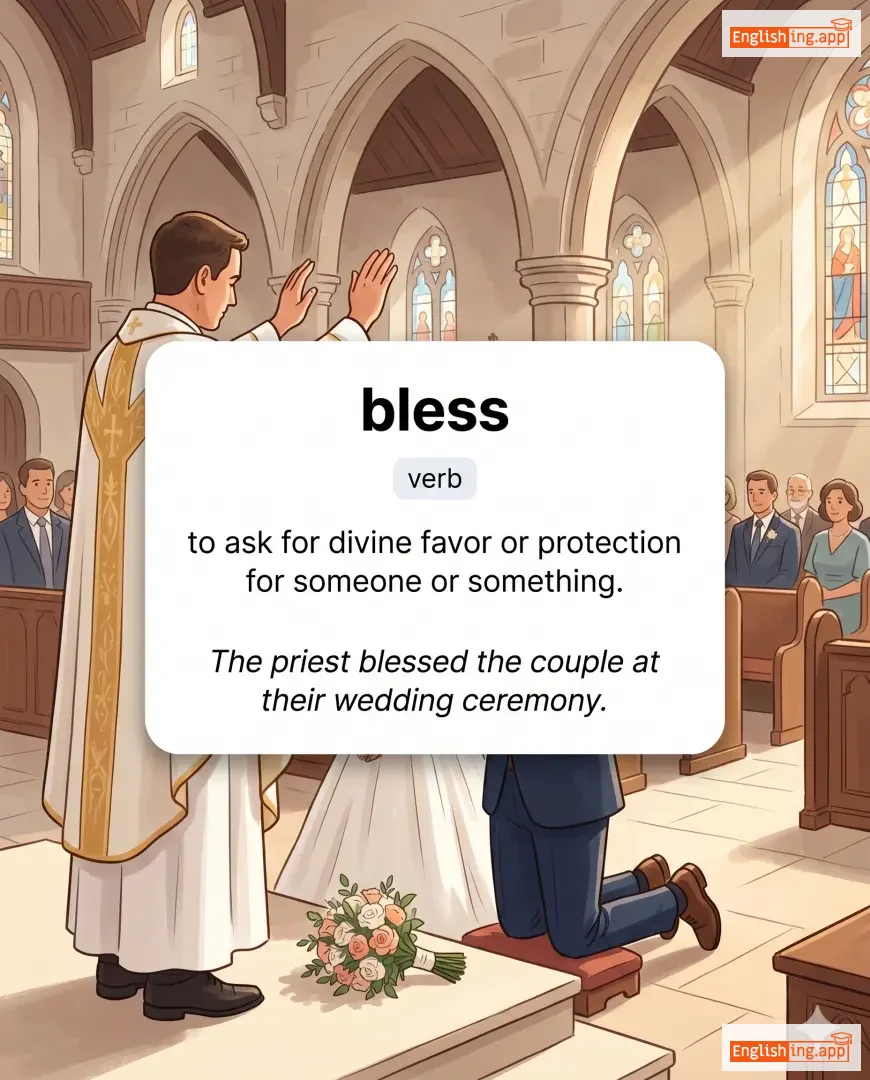
to ask for divine favor or protection for someone or something.
••••••
|
The priest blessed the couple at their wedding ceremony.
Священник благословил пару на их свадебной церемонии.
••••••
|
Священник благословил пару на их свадебной церемонии.
Svyashchennik blagoslovil paru na ikh svadebnoy tseremonii.
••••••
|
count your blessings
Считайте свои благословения
••••••
|
to be thankful for the good things you have.
••••••
|
Считайте свои благословения
Schitayte svoi blagosloveniya
••••••
|
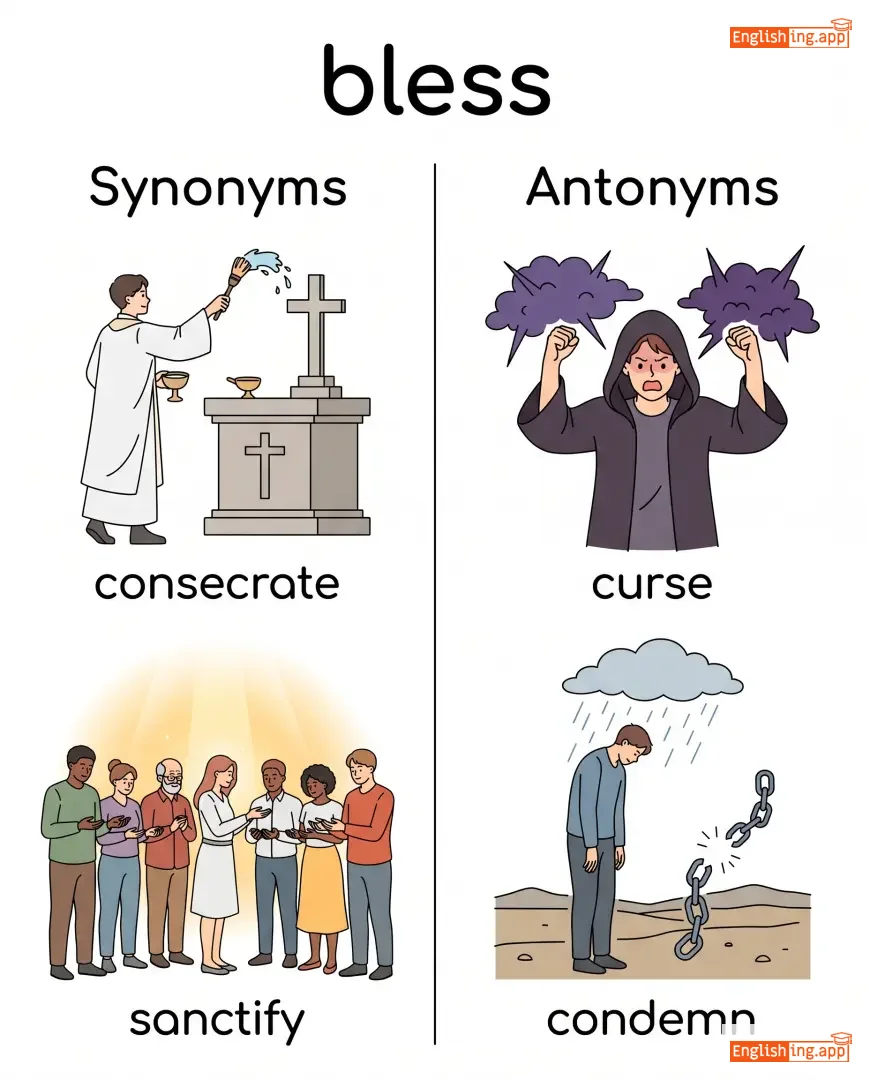
consecrate, sanctify, praise, thank, favor
••••••
|
curse, condemn
••••••
|
bless someone, bless you, God bless, bless the day
••••••
|
Благословение - это благоприятный пожелания, как 'God bless you'.
••••••
|
|
🌸
••••••
|
/ˈblɛsɪŋ/
noun
(блесинг)
••••••
|
- •••••• |
благословение
blagoslovenie
••••••
|
- •••••• | - •••••• | - •••••• | - •••••• |
a prayer asking for divine favor; something that brings happiness or benefit.
••••••
|
Good health is a blessing we often take for granted. |
Хорошее здоровье — это благословение, которое мы часто воспринимаем как должное.
Khoroshee zdorov'e — eto blagoslovenie, kotoroe my chasto vosprinimaem kak dolzhnoe.
••••••
|
a mixed blessing |
something that has both advantages and disadvantages.
••••••
|
смешанное благословение
smeshannoe blagoslovenie
••••••
|
favor, gift, boon, grace, benefit
••••••
|
curse, misfortune, bane
••••••
|
divine blessing, family blessing, count your blessings, a true blessing
••••••
|
Blessing означает благословение — помни, здоровье — это благословение!
••••••
|
|
🌱
••••••
|
/blaɪt/
noun
(blayt)
••••••
|
- •••••• |
мор
mor
••••••
|
- •••••• | - •••••• | - •••••• | - •••••• |
A disease or condition that causes plants to wither; something that spoils or damages.
••••••
|
The drought was a blight on the farmer’s crops. |
Засуха была мором для урожая фермера.
Zasukha byla morom dlya urozha fermera.
••••••
|
cast a blight on |
To have a damaging or harmful effect on something.
••••••
|
навести мор на
navesti mor na
••••••
|
disease, plague, curse, scourge, ruin
••••••
|
blessing, benefit, boon
••••••
|
urban blight, potato blight, economic blight, cast a blight
••••••
|
Мор – как смерть для растений, точно как блight!
••••••
|

