Radical Reading Night
チャットグラムの region では、学習センターは夕方を過ぎても明かりが消えません。サラは、彼らの radical アイデアが子どもたちに勇気を取り戻させるだろうと言いました。近くの refugee 家族からの子どもたちが今日、新しい本を受け取りました。彼らは毎日 reading チャートに自分の名前を書きます。ボランティアたちは rapidly 座席を整えました。新しいボランティアを recruit するために、サラはオープンマイクを発表しました。アラムは自分の ranking を見て微笑みました、なぜなら彼は初めてトップに立ったからです。子どもたちが物語を聞くために座ると、部屋は readily 静かになりました。ルビーは、たとえ reality が厳しくても、物語は人々を変えることに気づきました。彼女は、励ましがなければ、自分たちの力を realize することはなかったと理解しています。彼らは現在、先週の洪水で損害を受けた学校を rebuild しています。市の企業は彼らがアート用品を receive するのを助けました。健康を維持するために、トレーナーは、みんながゆっくりと健康を recover しなければならないと言いました。新しいゲストコーチは自分自身をフィールドゲームの referee として紹介しました。試合後、子どもたちはその日の出来事を日記に reflect しました。一人の母親は最初に息子を送ることを refusal したことを思い出して涙をこらえました。サラは彼らに、regular 練習をしないと進歩が止まることを思い出させました。だから彼女はすべてのクラスを regulate する責任を取った。誰かが他の子供をいじめた場合、サミはその行動を断固として reject します。日の終わりに、彼らは古い戦争の話を recount し、新しい未来を築くことを誓います。
|
絵文字
|
単語 | Images | 翻訳 | 過去 | 過去分詞 | 三人称単数 | 動名詞 | 意味 | 例文 | 例文の翻訳 | 表現例 | 表現例の意味 | 表現例の翻訳 | 同義語 | 対義語 | コロケーション | ニーモニック |
|---|---|---|---|---|---|---|---|---|---|---|---|---|---|---|---|---|---|
|
🔥
••••••
|
/ˈrædɪkl/
adjective
••••••
|
|
- •••••• | - •••••• | - •••••• | - •••••• | - •••••• |
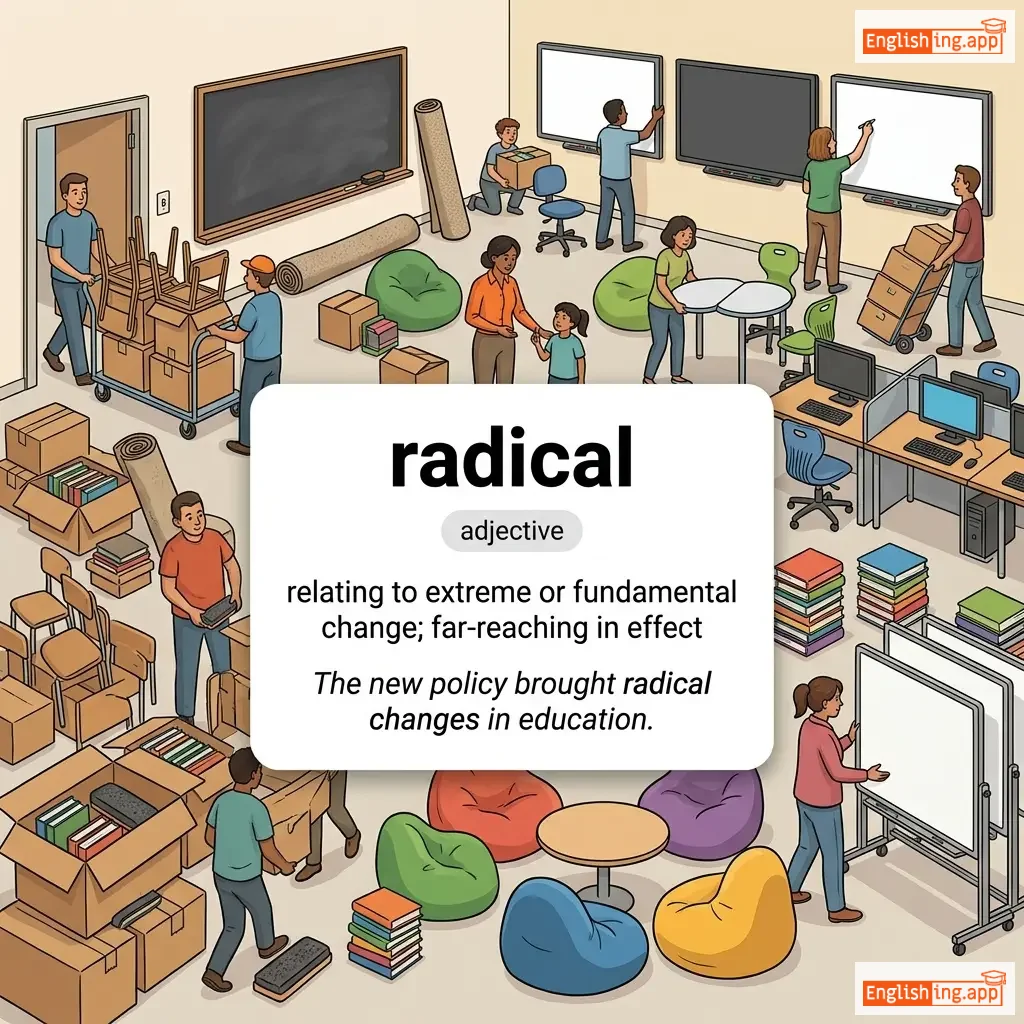
relating to extreme or fundamental change; far-reaching in effect
••••••
|
The new policy brought radical changes in education. |
- •••••• |
radical change |
a complete and fundamental transformation
••••••
|
- •••••• |
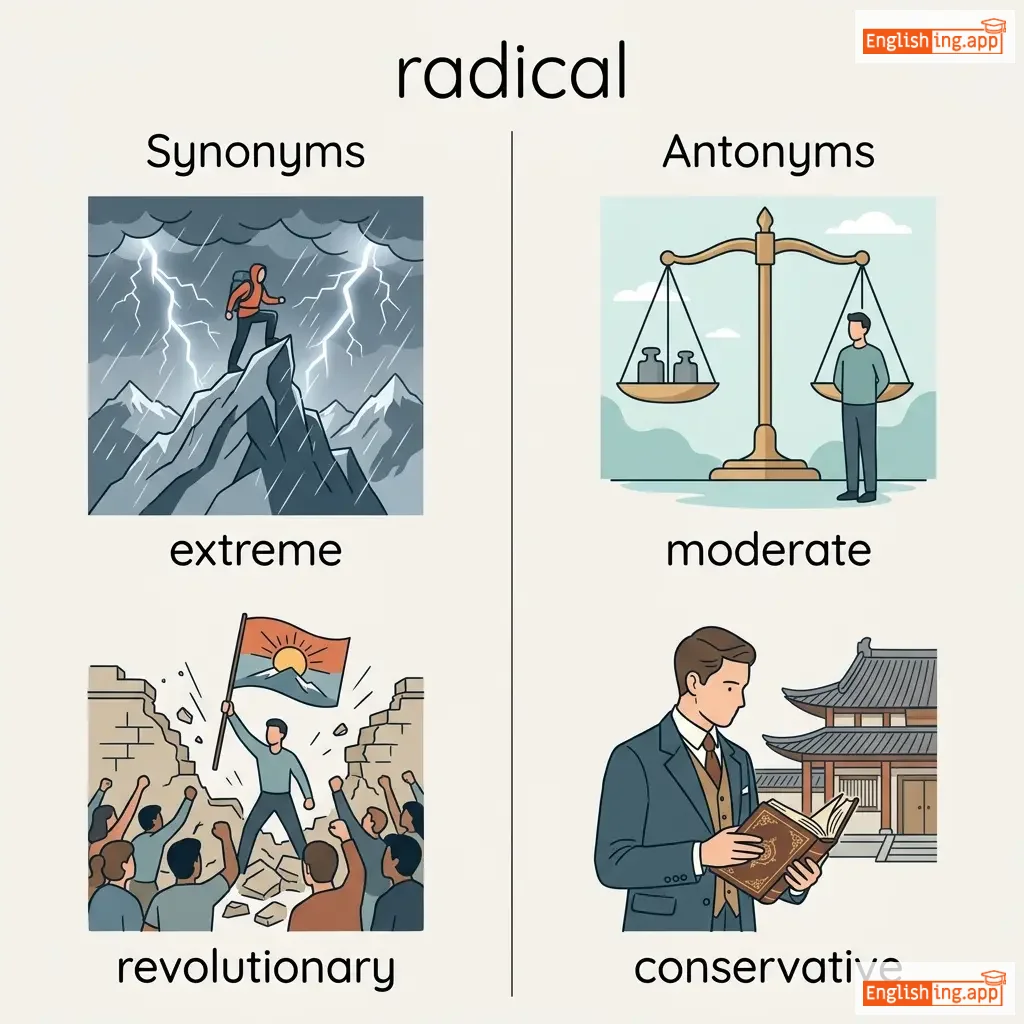
extreme, revolutionary, fundamental, drastic, profound
••••••
|
moderate, conservative, traditional
••••••
|
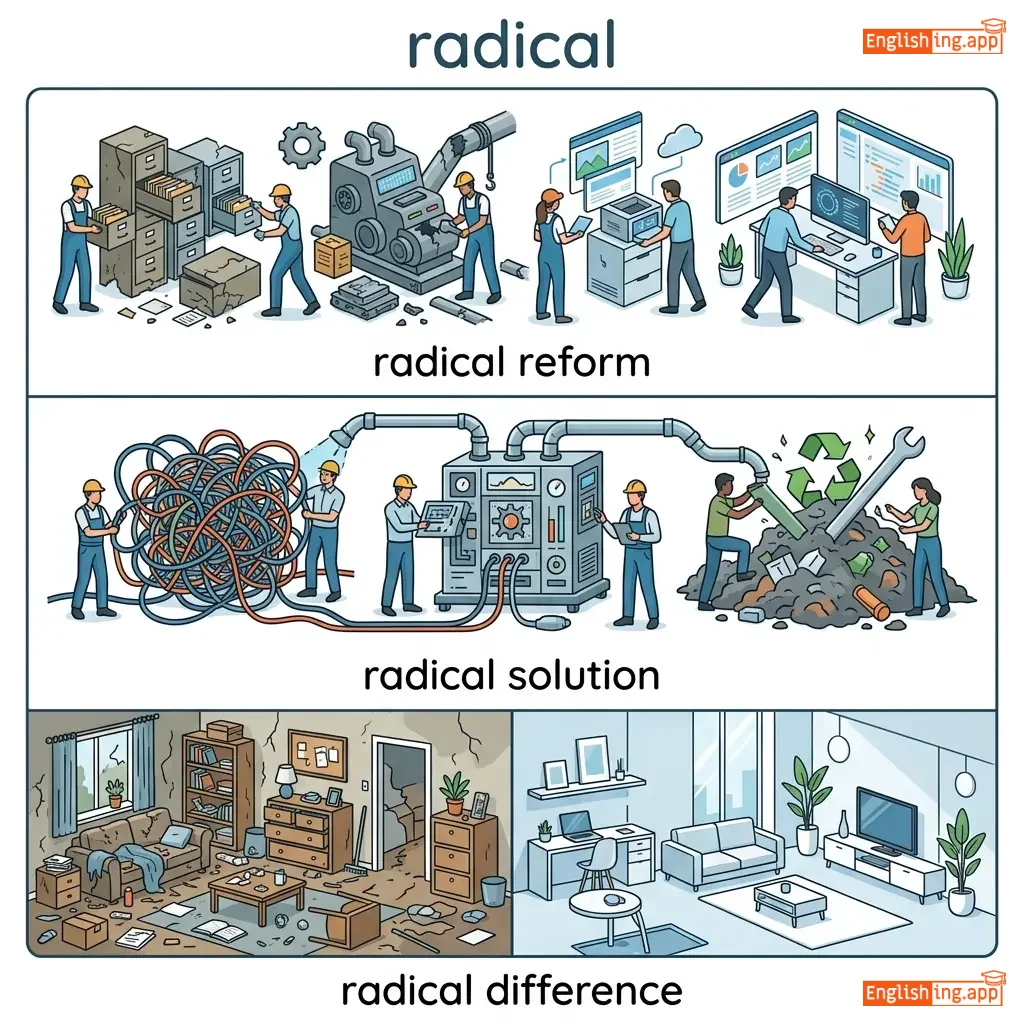
radical reform, radical solution, radical difference
••••••
|
No •••••• |
|
🏆
••••••
|
/ˈræŋkɪŋ/
noun
(ランキング)
••••••
|
- •••••• |
ランキング
ranking
••••••
|
- •••••• | - •••••• | - •••••• | - •••••• |
a position in a list or hierarchy, especially in terms of performance or importance
••••••
|
His ranking in the competition improved after each round. |
彼の競技でのランキングは、各ラウンド後に向上しました。
Kare no kyōgi de no ranking wa, kaku raundo go ni kōjō shimashita.
••••••
|
- •••••• | - •••••• | - •••••• |
position, standing, status, classification
••••••
|
bottom, low, inferior
••••••
|
ranking system, top ranking, global ranking, national ranking
••••••
|
ランキングは競技でのあなたの位置を示します!
••••••
|
|
⚡
••••••
|
/ˈræp.ɪd.li/
adverb
(ラピッドリー)
••••••
|
- •••••• |
速やかに; 急速に
sumiyaka ni; kyūsoku ni
••••••
|
- •••••• | - •••••• | - •••••• | - •••••• |
at a fast speed; quickly
••••••
|
The company is rapidly expanding into new markets. |
会社は新しい市場に急速に拡大しています。
Kaisha wa atarashī shijō ni kyūsoku ni kakudai shiteimasu.
••••••
|
- •••••• | - •••••• | - •••••• |
quickly, swiftly, speedily, fast
••••••
|
slowly, gradually, leisurely
••••••
|
rapidly growing, rapidly changing, rapidly expanding
••••••
|
No •••••• |
|
😊
••••••
|
/ˈred.ɪ.li/
adverb
(レディリー)
••••••
|
- •••••• |
快く; 簡単に; ためらわずに
kotonokushi; kantan ni; tamerawazu ni
••••••
|
- •••••• | - •••••• | - •••••• | - •••••• |
willingly; easily; without hesitation
••••••
|
She readily agreed to help with the project. |
彼女は喜んでプロジェクトを手伝うことに同意した。
kanojo wa yorokonde purojekuto wo tetsudau koto ni dōi shita.
••••••
|
- •••••• | - •••••• | - •••••• |
willingly, easily, eagerly, gladly
••••••
|
reluctantly, hesitantly, unwillingly
••••••
|
readily available, readily accept, readily admit
••••••
|
Readily = ためらわずに物事をする。
••••••
|
|
📖
••••••
|
/ˈriːdɪŋ/
noun
(リーディング)
••••••
|
- •••••• |
読書
dokusho
••••••
|
- •••••• | - •••••• | - •••••• | - •••••• |
the action or skill of reading
••••••
|
Reading is one of my favorite hobbies. |
読書は私の好きな趣味の一つです。
Dokusho wa watashi no sukina shumi no hitotsu desu.
••••••
|
- •••••• | - •••••• | - •••••• |
perusal, study
••••••
|
skimming, ignoring
••••••
|
reading habits, reading skills, reading time
••••••
|
READing means when you're actually reading books!
••••••
|
|
🌍
••••••
|
/riˈæl.ə.ti/
noun
(リアリティ)
••••••
|


|
現実
genjitsu
••••••
|
- •••••• | - •••••• | - •••••• | - •••••• |
the state of things as they actually exist; the actual situation
••••••
|
We need to face the reality of the situation. |
私たちは状況の現実に直面する必要があります。
Watashitachi wa joukyou no genjitsu ni chokumen suru hitsuyou ga arimasu.
••••••
|
- •••••• | - •••••• | - •••••• |
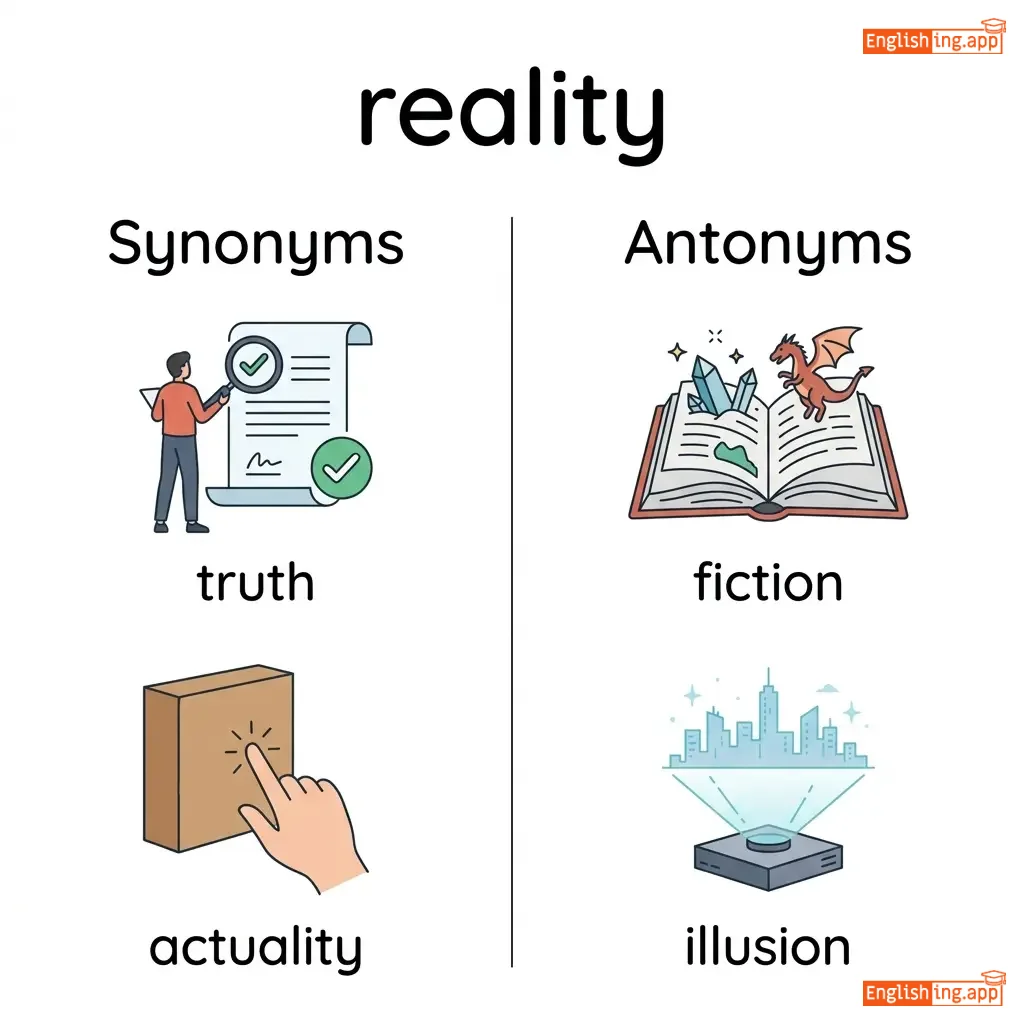
actuality, truth, fact
••••••
|
fantasy, illusion, fiction
••••••
|
face reality, harsh reality, virtual reality
••••••
|
現実 = 実際に存在するもの
••••••
|
|
💡
••••••
|
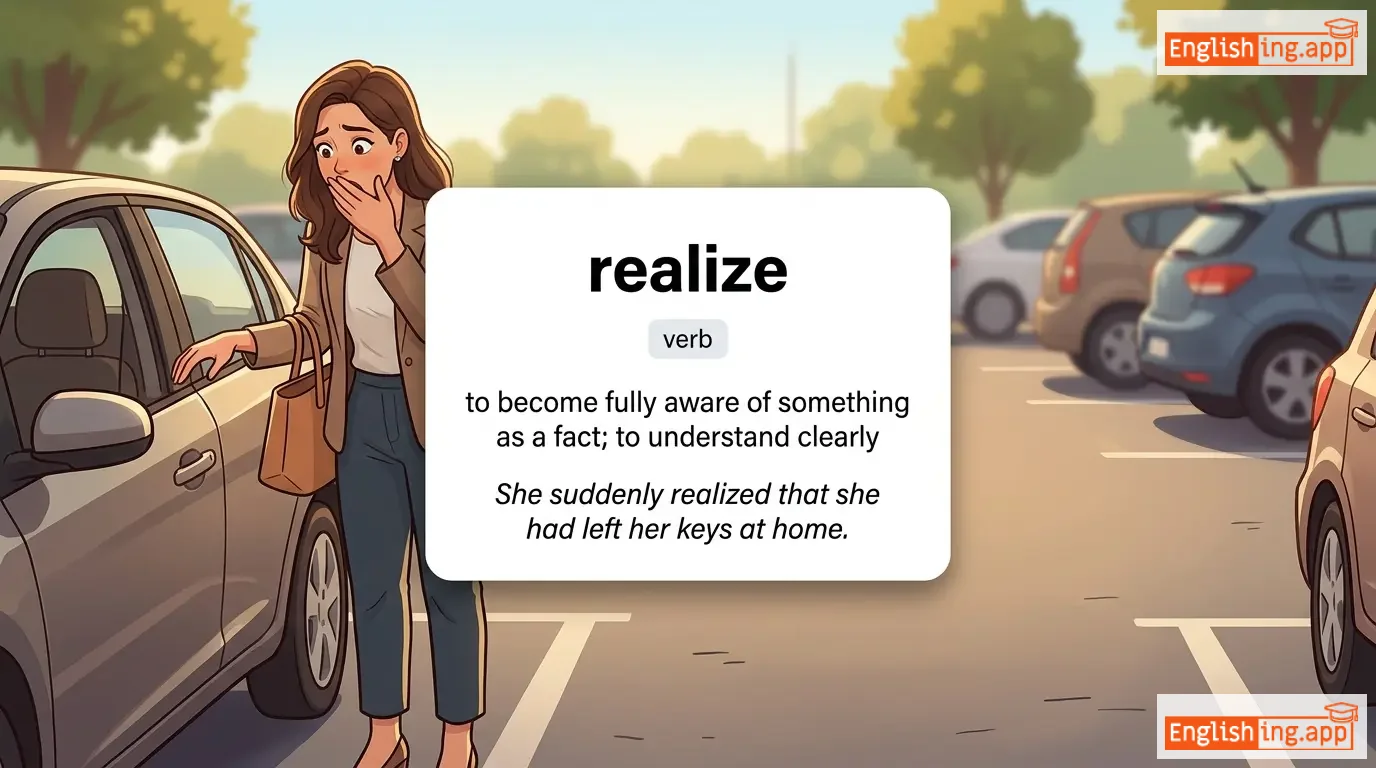
/ˈriːəlaɪz/
verb
(リアライズ)
••••••
|
|
気づく
kizuku
••••••
|
realized
リアライズド
••••••
|
realized
リアライズド
••••••
|
realizes
リアライズズ
••••••
|
realizing
リアライジング
••••••
|
to become aware of; to understand clearly; to achieve or make real
••••••
|
I didn't realize how late it was until I checked the clock.
アイ ディドント リアライズ ハウ レイト イット ワズ アンティル アイ チェックド ザ クロック。
••••••
|
時計を見るまで、こんなに遅いとは気づかなかった。
tokei o miru made konna ni osoi to wa kizukanakatta
••••••
|
- •••••• | - •••••• | - •••••• |
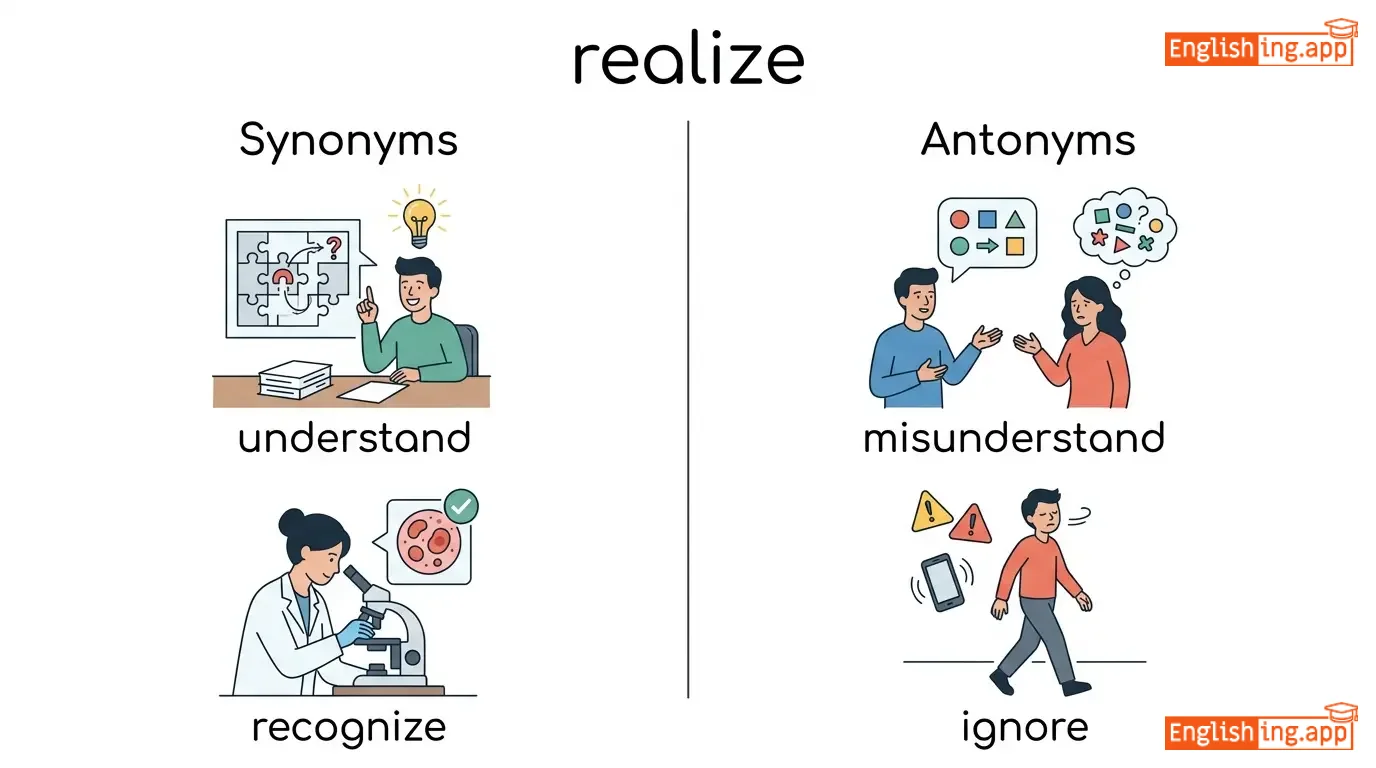
understand, recognize, comprehend, achieve
••••••
|
misunderstand, ignore, overlook, fail
••••••
|
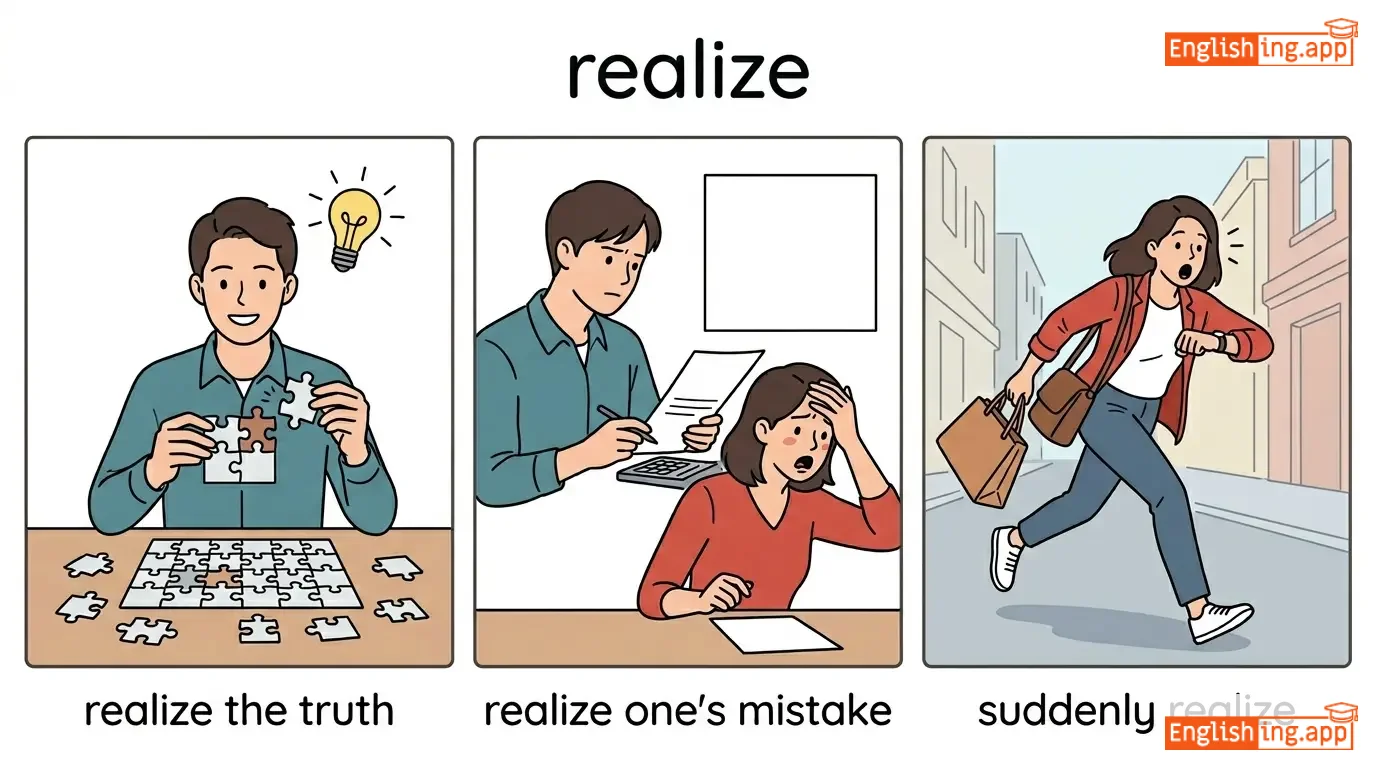
realize potential, realize dreams, suddenly realize, realize mistake
••••••
|
Realize in Japanese is kizuku — like 'kids look' when they realize something.
••••••
|
|
🏗️
••••••
|
/ˌriːˈbɪld/
verb
(ribildu)
••••••
|
- •••••• |
再建する
saiken suru
••••••
|
rebuilt
ribilto
••••••
|
rebuilt
ribilto
••••••
|
rebuilds
ribilduzu
••••••
|
rebuilding
ribilduingu
••••••
|
to build something again after it has been damaged or destroyed
••••••
|
The villagers worked together to rebuild the bridge after the flood.
村人たちは洪水の後、橋を再建するために協力しました。
••••••
|
村人たちは洪水の後、橋を再建するために協力しました。
Murabito-tachi wa kōzui no ato, hashi o saiken suru tame ni kyōryoku shimashita.
••••••
|
- •••••• | - •••••• | - •••••• |
restore, reconstruct, renovate, repair, remake
••••••
|
destroy, demolish
••••••
|
rebuild the bridge, rebuild confidence, rebuild home, rebuild life
••••••
|
ReBUILD は再び作ること — 破壊されたものを再建する
••••••
|
|
📩
••••••
|
/rɪˈsiːv/
verb
(リシーヴ)
••••••
|
|
受け取る
uketoru
••••••
|
received
リシーヴド
••••••
|
received
リシーヴド
••••••
|
receives
リシーヴス
••••••
|
receiving
リシーヴィング
••••••
|
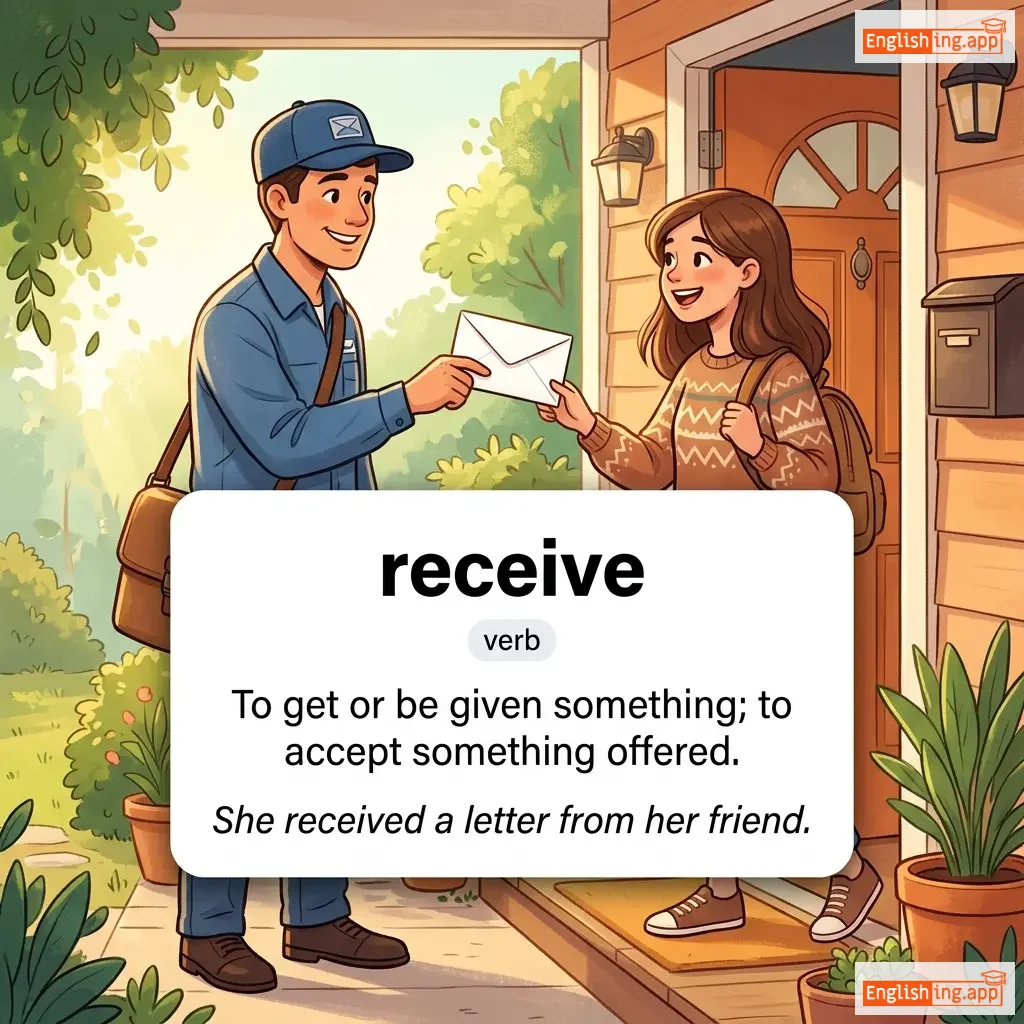
To get or be given something; to accept something offered.
••••••
|
She received a letter from her friend.
シー リシーヴド ア レター フロム ハー フレンド。
••••••
|
彼女は友達から手紙を受け取った。
Kanojo wa tomodachi kara tegami o uketotta.
••••••
|
receive with open arms
リシーヴ ウィズ オープン アームズ
••••••
|
to welcome someone warmly
••••••
|
両手を広げて受け入れる
ryōte o hirogete ukeireru
••••••
|
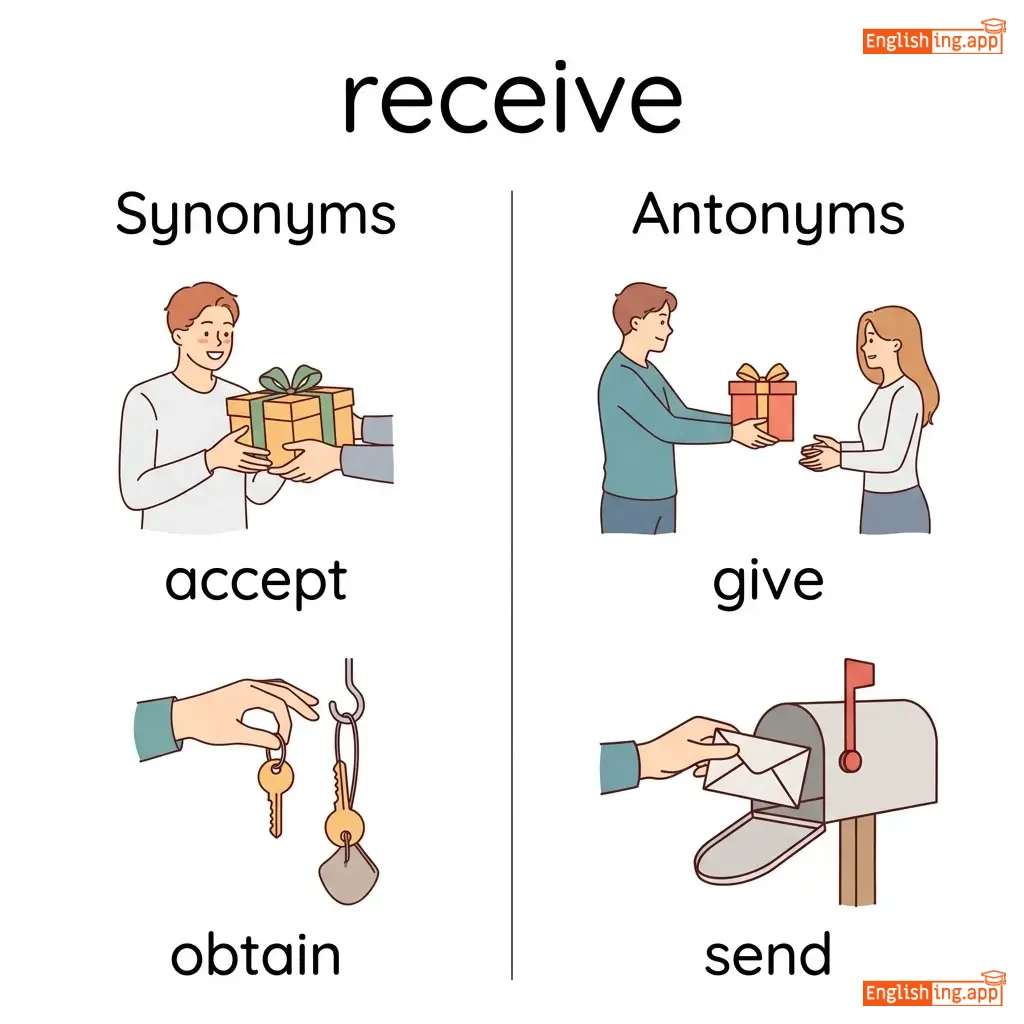
accept, obtain, acquire, collect, welcome
••••••
|
give, send, refuse
••••••
|
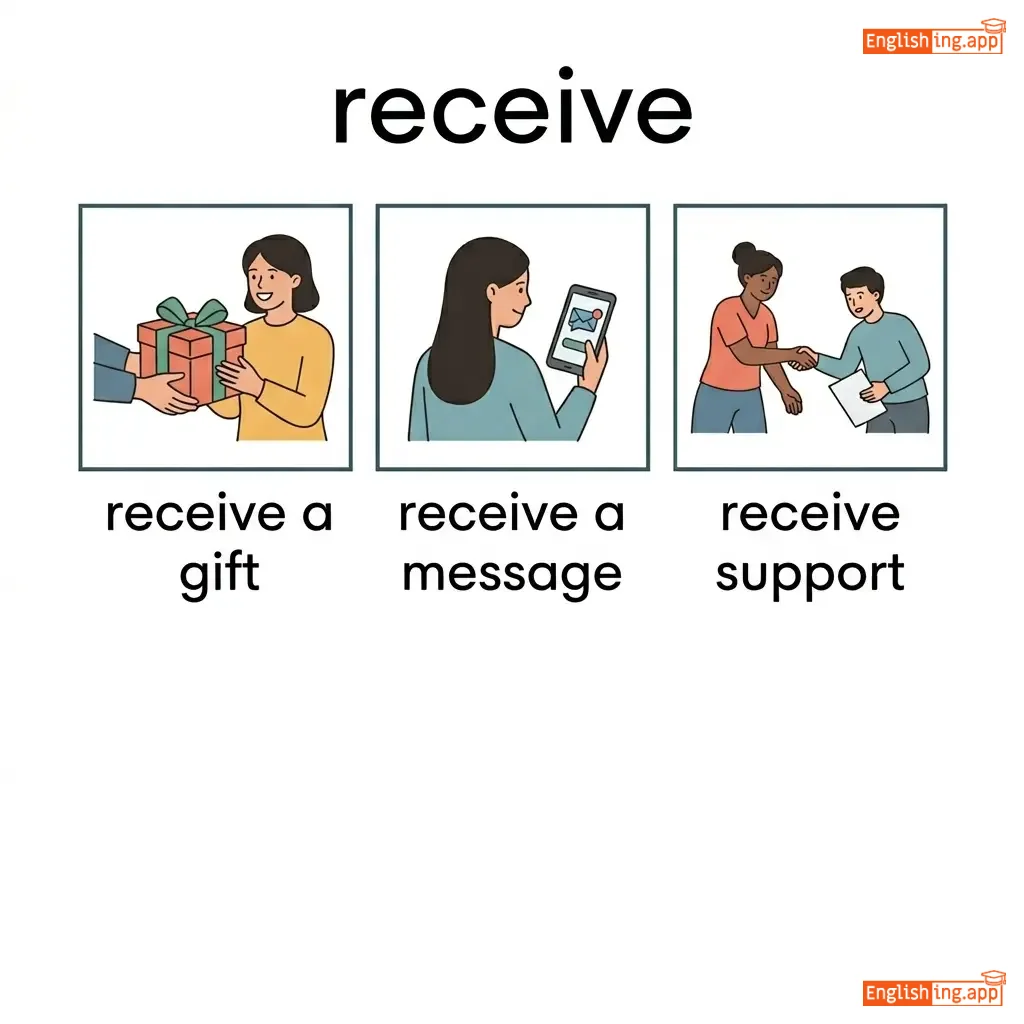
receive a gift, receive a message, receive support, receive payment
••••••
|
受け取るはプレゼント 📦 や手紙を受け取ることに似ています。
••••••
|
|
📖
••••••
|
/rɪˈkaʊnt/
verb
(リカウント)
••••••
|
- •••••• |
語る
kataru
••••••
|
recounted
リカウントエッド
••••••
|
recounted
リカウントエッド
••••••
|
recounts
リカウントス
••••••
|
recounting
リカウントイング
••••••
|
to narrate or tell the details of an event or experience
••••••
|
She recounted her adventures during the summer trip.
彼女は夏の旅行中の冒険について語った。
••••••
|
彼女は夏の旅行中の冒険について語った。
Kanojo wa natsu no ryokou-chuu no bouken ni tsuite katatta.
••••••
|
- •••••• | - •••••• | - •••••• |
narrate, describe, relate, tell, detail
••••••
|
conceal, suppress
••••••
|
recount a story, recount events, recount experiences, recount details
••••••
|
語ることは再び数えることのように、物語を一つずつ語ることです。
••••••
|
|
💪
••••••
|
/rɪˈkʌvər/
verb
••••••
|
|
- •••••• |
recovered
••••••
|
recovered
••••••
|
recovers
••••••
|
recovering
••••••
|
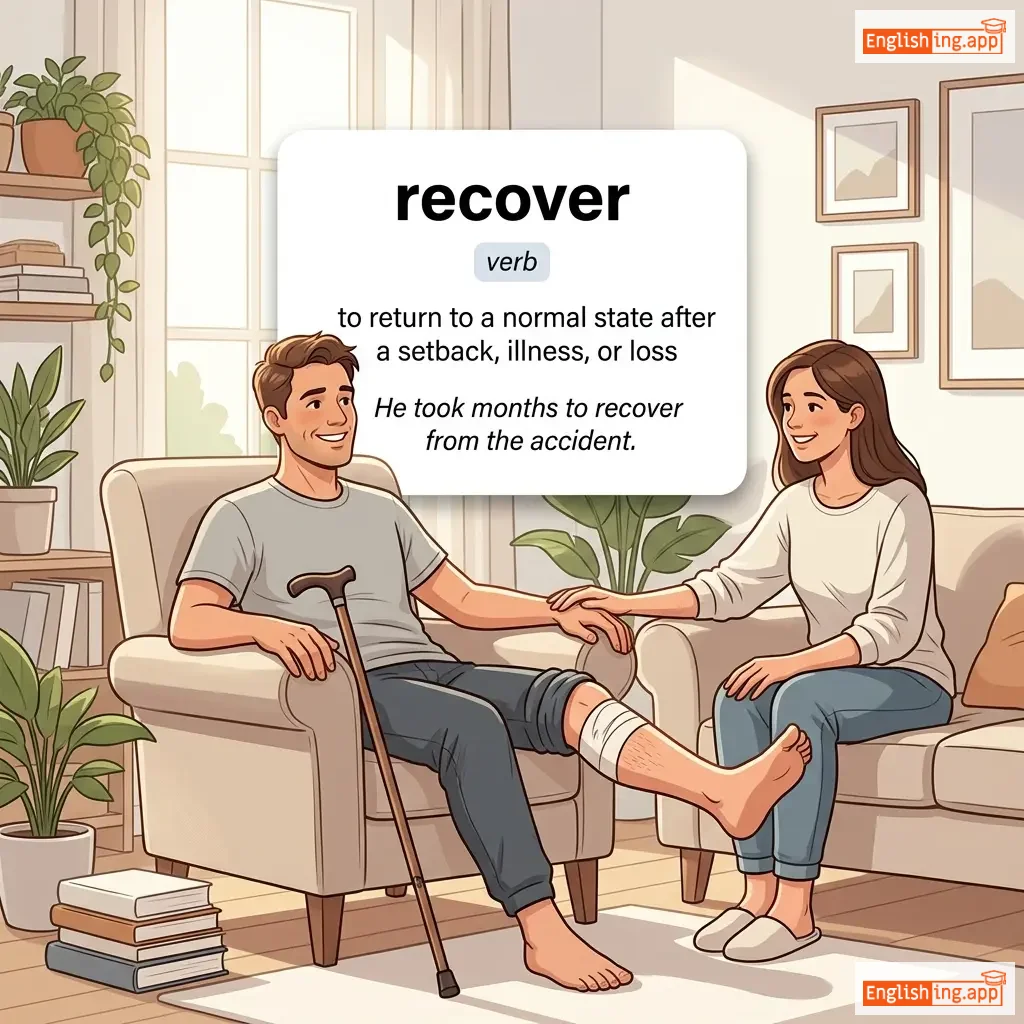
to return to a normal state after a setback, illness, or loss
••••••
|
He took months to recover from the accident. |
- •••••• |
recover one's strength |
to regain energy or health
••••••
|
- •••••• |
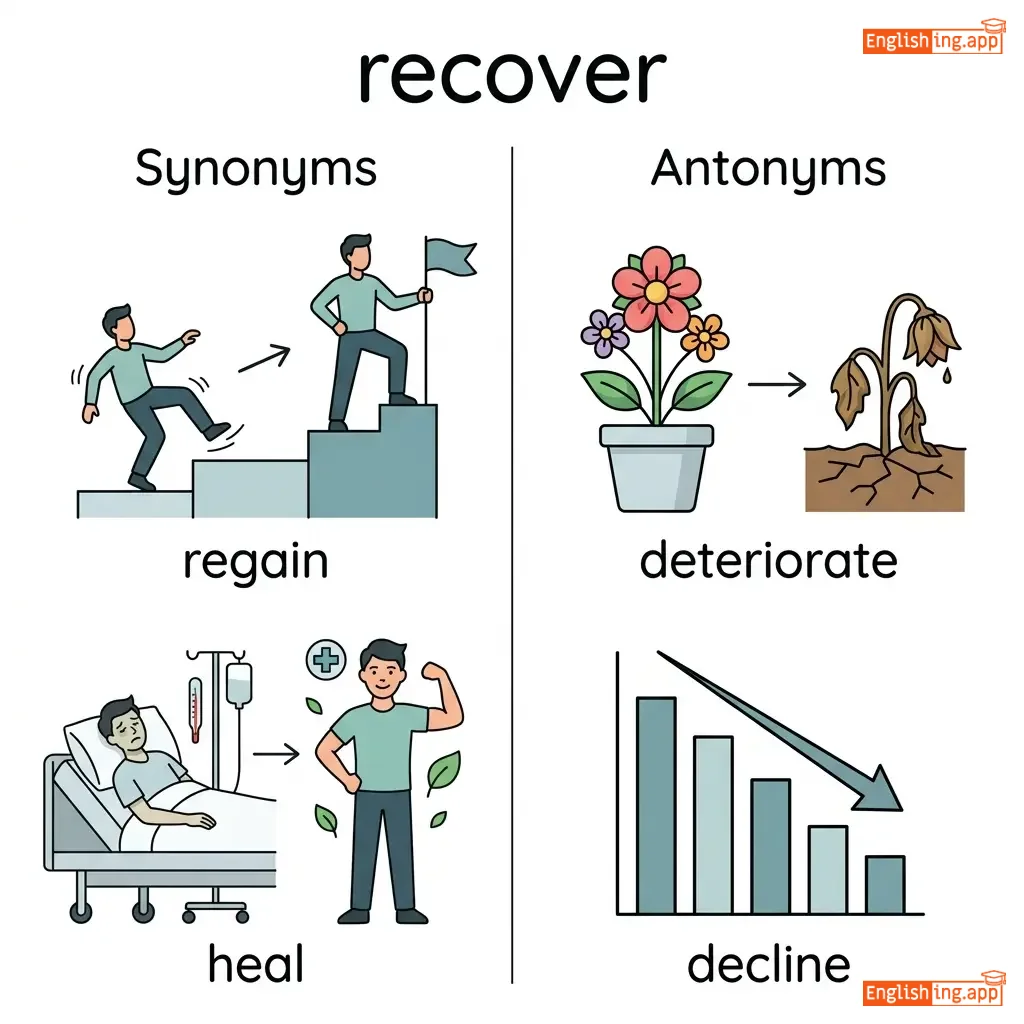
regain, heal, restore, bounce back
••••••
|
deteriorate, decline, worsen
••••••
|
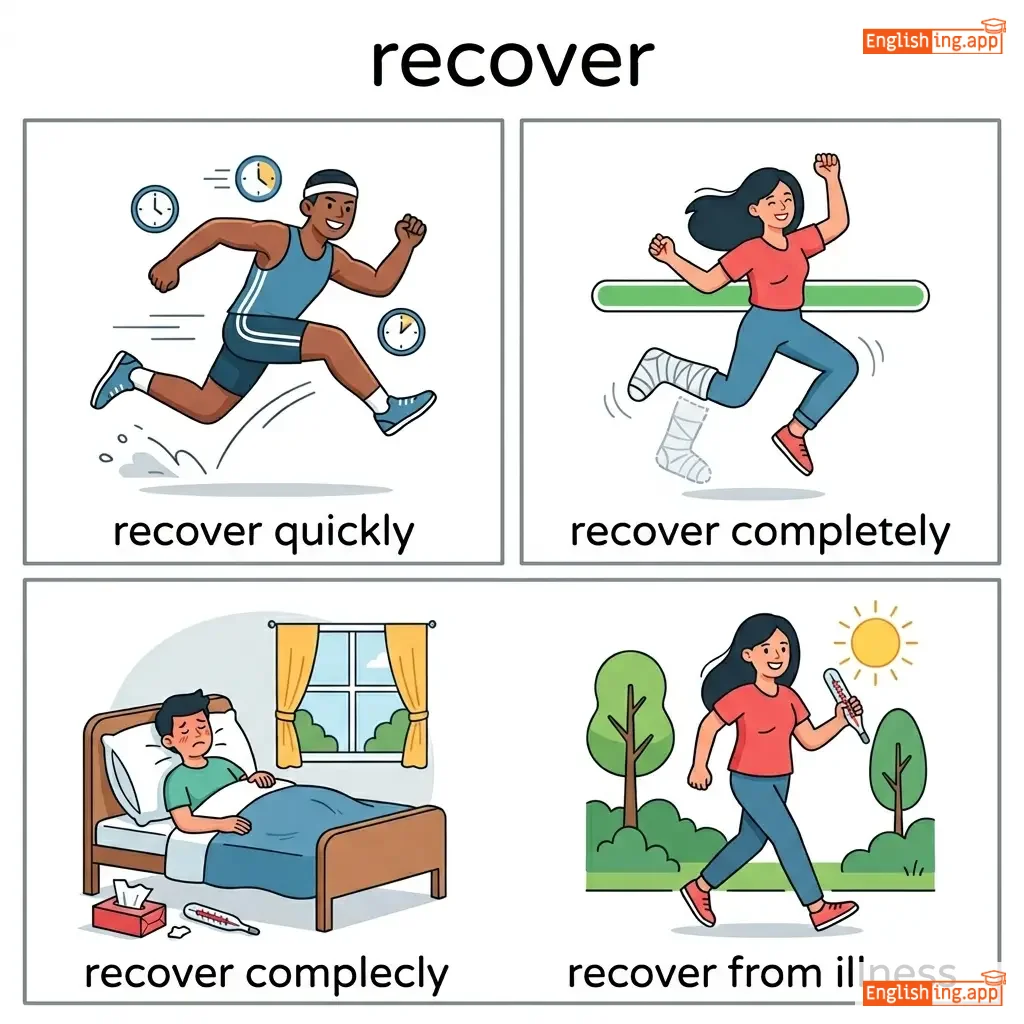
recover quickly, recover completely, recover from illness, recover lost
••••••
|
No •••••• |
|
🧑💼
••••••
|
/rɪˈkruːt/
verb
(リクルート)
••••••
|
- •••••• |
採用する
saiyō suru
••••••
|
recruited
リクルーテッド
••••••
|
recruited
リクルーテッド
••••••
|
recruits
リクルーツ
••••••
|
recruiting
リクルーティング
••••••
|
to enlist or hire people for a job, service, or membership
••••••
|
The company is trying to recruit more software engineers.
その会社はもっと多くのソフトウェアエンジニアをリクルートしようとしています。
••••••
|
その会社はもっと多くのソフトウェアエンジニアをリクルートしようとしています。
Sono kaisha wa motto ōku no sofutowea enjinia o rikurūto shiyou to shiteimasu.
••••••
|
recruit talent
才能をリクルートする
••••••
|
to attract and hire skilled people
••••••
|
才能をリクルートする
Sainou o rikurūto suru
••••••
|
enlist, hire, enroll, draft, engage
••••••
|
dismiss, fire, reject
••••••
|
recruit staff, recruit volunteers, recruit new members, recruit soldiers
••••••
|
リクルートは新しい才能をチームに迎え入れることです。
••••••
|
|
⚽
••••••
|
/ˌrɛfəˈriː/
noun
(レフェリー)
••••••
|
- •••••• |
審判
shinpan
••••••
|
- •••••• | - •••••• | - •••••• | - •••••• |
a person who oversees a game or match to ensure the rules are followed
••••••
|
The referee stopped the game after a foul. |
審判はファウルの後、試合を停止しました。
Shinpan wa fauru no ato, shiai o teishi shimashita.
••••••
|
blow the whistle |
to stop play or call out a foul in sports
••••••
|
ホイッスルを吹く
hoissuru o fuku
••••••
|
umpire, judge, arbiter, mediator
••••••
|
player, participant
••••••
|
football referee, official referee, match referee
••••••
|
サッカーの審判はホイッスルを吹いて(hoissuru o fuku)試合を止めます。
••••••
|
|
🪞
••••••
|
/rɪˈflɛkt/
verb
(リフレクト)
••••••
|

|
反映する
hanei suru
••••••
|
reflected
リフレクテッド
••••••
|
reflected
リフレクテッド
••••••
|
reflects
リフレクツ
••••••
|
reflecting
リフレクティング
••••••
|
to show an image as in a mirror, or to think deeply about something
••••••
|
The mirror reflects her smiling face.
鏡は彼女の笑顔を反映しています。
••••••
|
鏡は彼女の笑顔を反映しています。
Kagami wa kanojo no egao o hanei shiteimasu.
••••••
|
reflect on
考える
••••••
|
to think carefully about something
••••••
|
考える
kangaeru
••••••
|
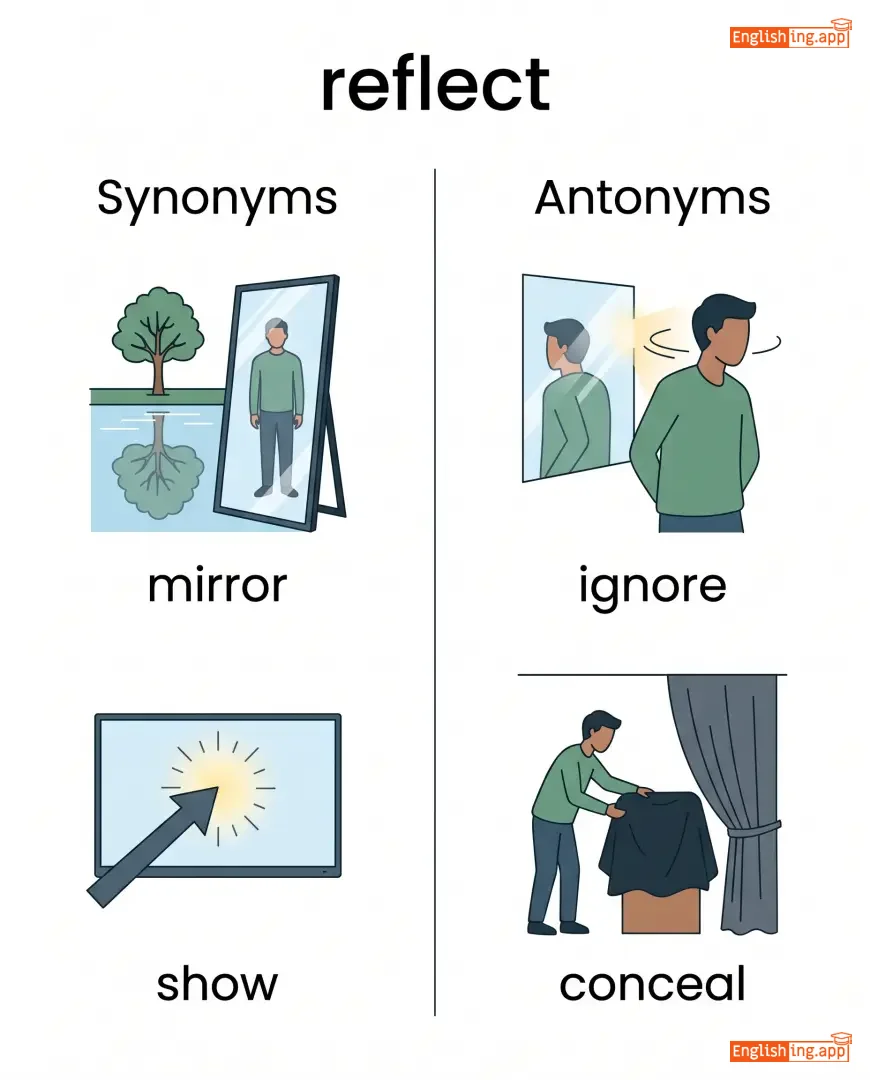
mirror, show, indicate, reveal, ponder
••••••
|
ignore, conceal, absorb
••••••
|
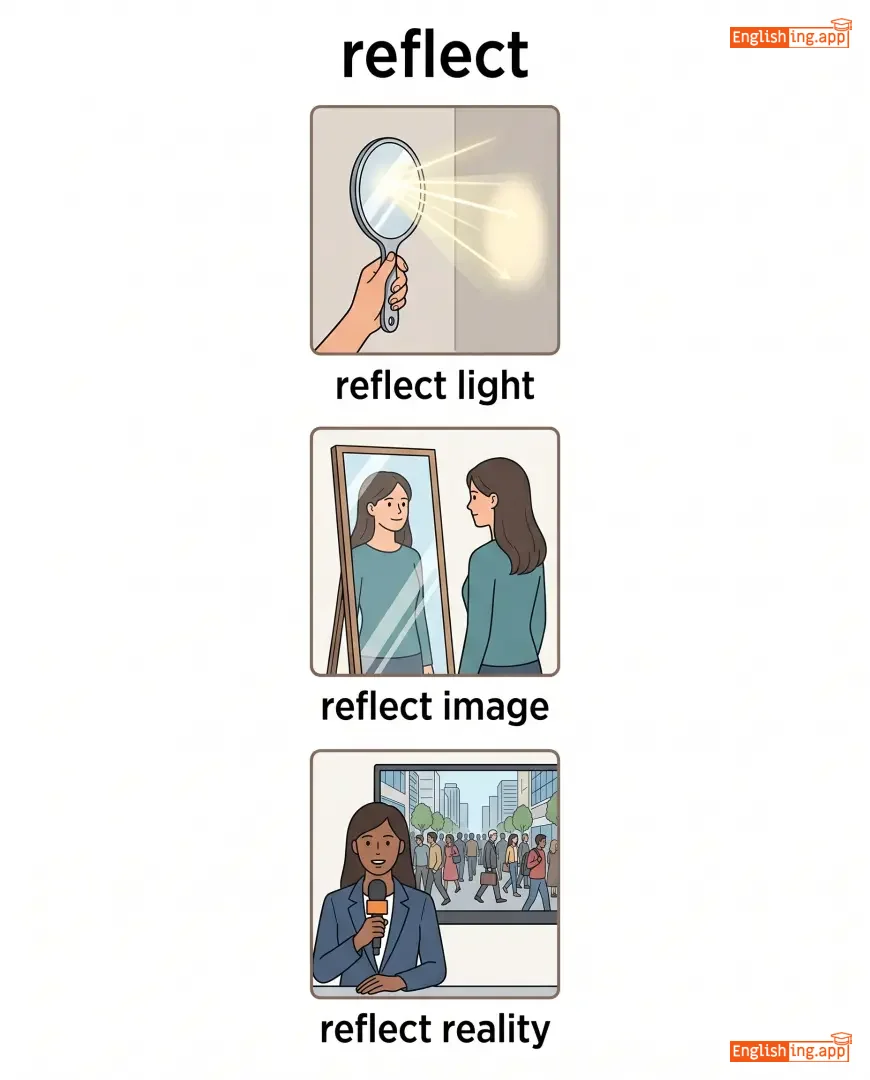
reflect light, reflect image, reflect reality, reflect values
••••••
|
鏡は反映し、私たちは考えます。
••••••
|
|
🏠
••••••
|
/ˌref.jʊˈdʒiː/
noun
(レフュジー)
••••••
|
- •••••• |
難民
nanmin
••••••
|
- •••••• | - •••••• | - •••••• | - •••••• |
a person who has been forced to leave their country in order to escape war, persecution, or natural disaster
••••••
|
The refugee camp provided temporary shelter for thousands of displaced families. |
難民キャンプは、何千人もの避難した家族に一時的な避難所を提供しました。
Nanmin kyanpu wa, nanzen-nin mo no hinan shita kazoku ni ichiji-teki na hinanjo wo teikyoushita
••••••
|
- •••••• | - •••••• | - •••••• |
asylum seeker, displaced person, exile, migrant
••••••
|
citizen, resident, native
••••••
|
refugee camp, refugee crisis, political refugee, refugee status
••••••
|
難民 = 逃げるための避難
••••••
|
|
🚫
••••••
|
/rɪˈfjuːzəl/
noun
(リフューザル)
••••••
|
- •••••• |
拒否
kyohi
••••••
|
- •••••• | - •••••• | - •••••• | - •••••• |
An act of saying or showing that one will not do or accept something.
••••••
|
Her refusal to cooperate delayed the project.
彼女の協力しないという拒否がプロジェクトを遅らせた。
••••••
|
彼女の協力しないという拒否がプロジェクトを遅らせた。
Kanojo no kyouryoku shinai to iu kyohi ga purojekuto wo okuraseta.
••••••
|
point-blank refusal
直接的な拒否
••••••
|
a direct and absolute rejection
••••••
|
直接的な拒否
Chokusetsuteki na kyohi
••••••
|
denial, rejection, declination, noncompliance
••••••
|
acceptance, agreement
••••••
|
strong refusal, outright refusal, firm refusal
••••••
|
Refuse = 拒否、拒否 🚫
••••••
|
|
🗺️
••••••
|
/ˈriː.dʒən/
noun
(rijon)
••••••
|
- •••••• |
地域; 区域; 地帯
chiiki; kuiki; chitai
••••••
|
- •••••• | - •••••• | - •••••• | - •••••• |
a particular area or part of a country or the world
••••••
|
This region is famous for its wine production.
この地域はワイン生産で有名です。
••••••
|
この地域はワイン生産で有名です。
Kono chiiki wa wain seisan de yūmei desu.
••••••
|
- •••••• | - •••••• | - •••••• |
area, zone, territory, district, province
••••••
|
center, point, specific location
••••••
|
geographical region, remote region, coastal region, mountainous region
••••••
|
Region in Japanese is a specific area of a larger whole!
••••••
|
|
📅
••••••
|
/ˈrɛɡjələr/
adjective
(レギュラー)
••••••
|
- •••••• |
定期的な
teikiteki na
••••••
|
- •••••• | - •••••• | - •••••• | - •••••• |
Happening at fixed intervals; usual or normal in pattern or quality
••••••
|
He is a regular visitor to the library. |
彼は図書館の定期的な訪問者です。
Kare wa toshokan no teikiteki na hōmon-sha desu.
••••••
|
regular customer |
A person who frequently visits or buys from the same place
••••••
|
定期的な顧客
teikiteki na kokyaku
••••••
|
consistent, usual, normal, routine, frequent
••••••
|
irregular, unusual, abnormal
••••••
|
regular basis, regular meeting, regular customer, regular pattern
••••••
|
Regular は定期的な — 定期的に訪れる顧客
••••••
|
|
⚖️
••••••
|
/ˈrɛɡjʊˌleɪt/
verb
(レギュレート)
••••••
|
|
規制する
kisei suru
••••••
|
regulated
レギュレーテッド
••••••
|
regulated
レギュレーテッド
••••••
|
regulates
レギュレーツ
••••••
|
regulating
レギュレーティング
••••••
|
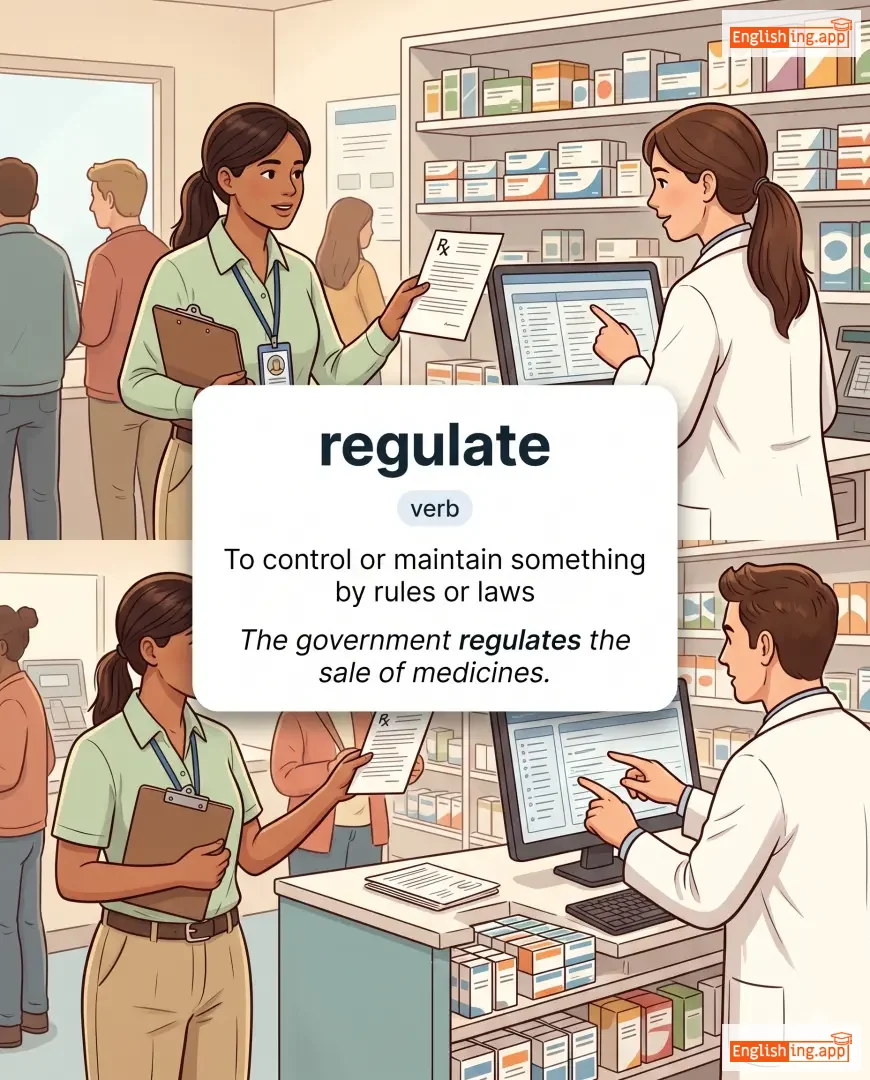
To control or maintain something by rules or laws
••••••
|
The government regulates the sale of medicines.
政府は薬の販売を規制しています。
••••••
|
政府は薬の販売を規制しています。
Seifu wa kusuri no hanbai o kisei shiteimasu.
••••••
|
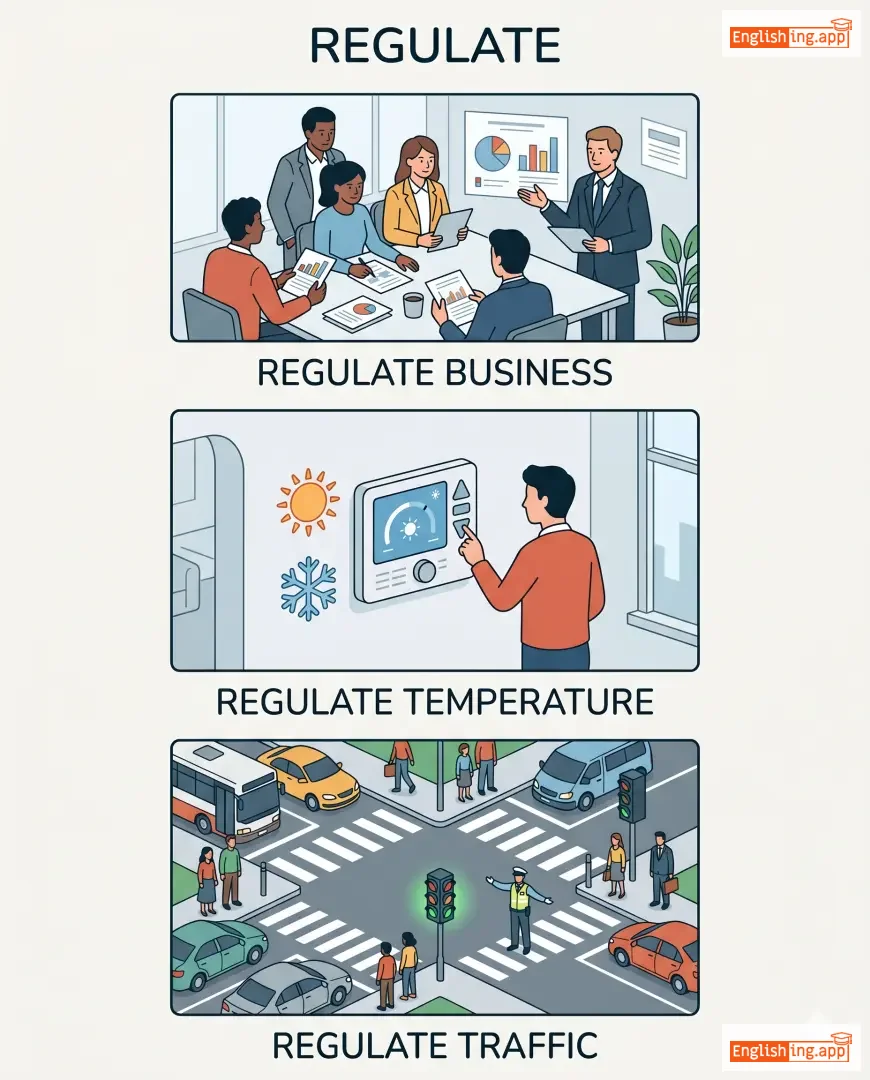
regulate traffic
交通を規制する
••••••
|
To control the flow and movement of vehicles
••••••
|
交通を規制する
Kōtsū o kisei suru
••••••
|
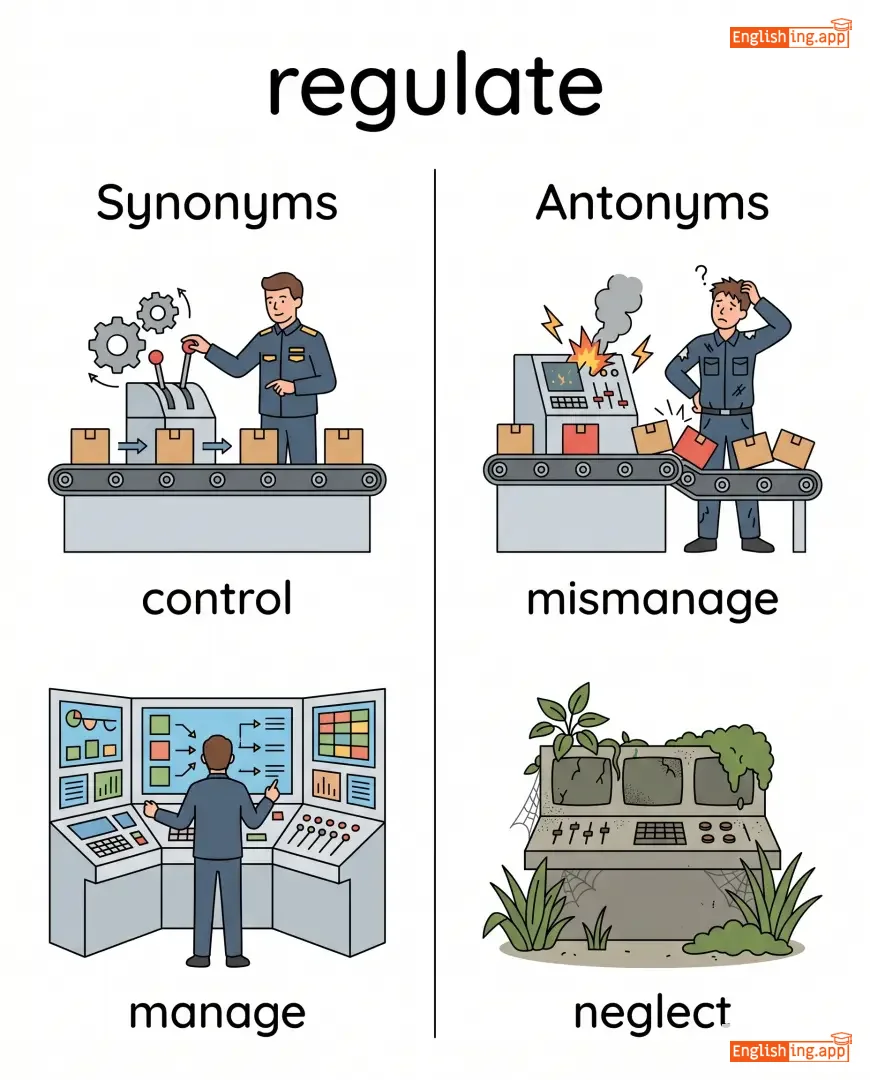
control, manage, supervise, direct, monitor
••••••
|
mismanage, neglect
••••••
|
regulate business, regulate temperature, regulate traffic, regulate industry
••••••
|
規制するは「規則で制御する」という意味です
••••••
|
|
❌
••••••
|
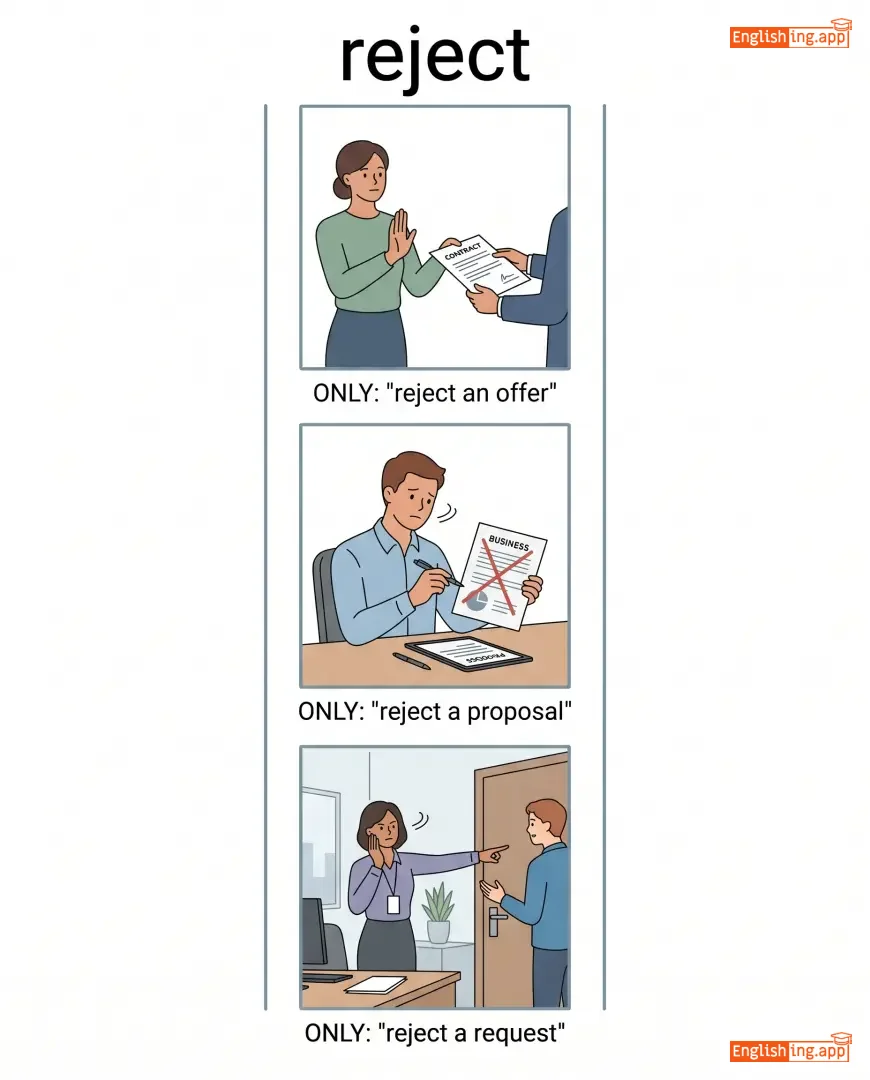
/rɪˈdʒekt/
verb
(rijékt)
••••••
|
|
拒否する
kyōhi suru
••••••
|
rejected
rejékted
••••••
|
rejected
rejékted
••••••
|
rejects
rejékts
••••••
|
rejecting
rejékting
••••••
|
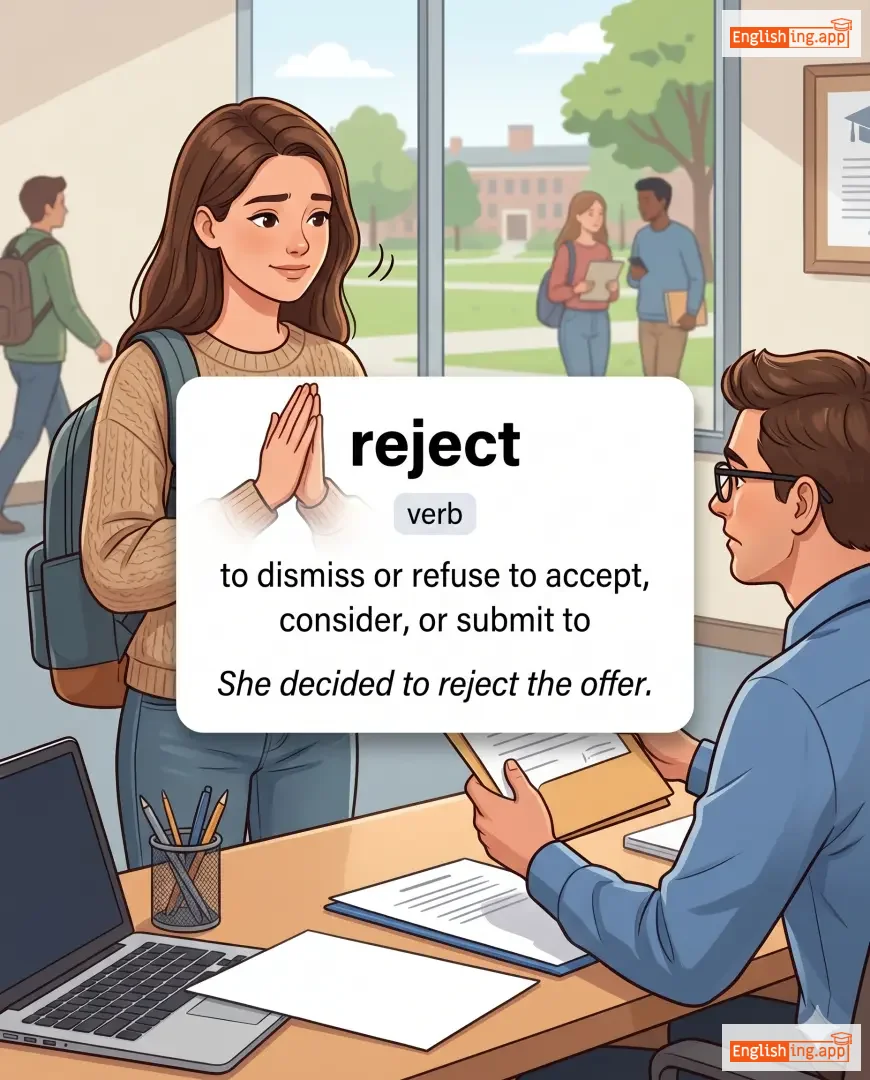
to refuse to accept or consider something
••••••
|
The committee decided to reject the proposal.
委員会は提案を拒否することに決めました。
••••••
|
委員会は提案を拒否することに決めました。
Iinkai wa teian o kyohi suru koto ni kimemashita.
••••••
|
- •••••• | - •••••• | - •••••• |
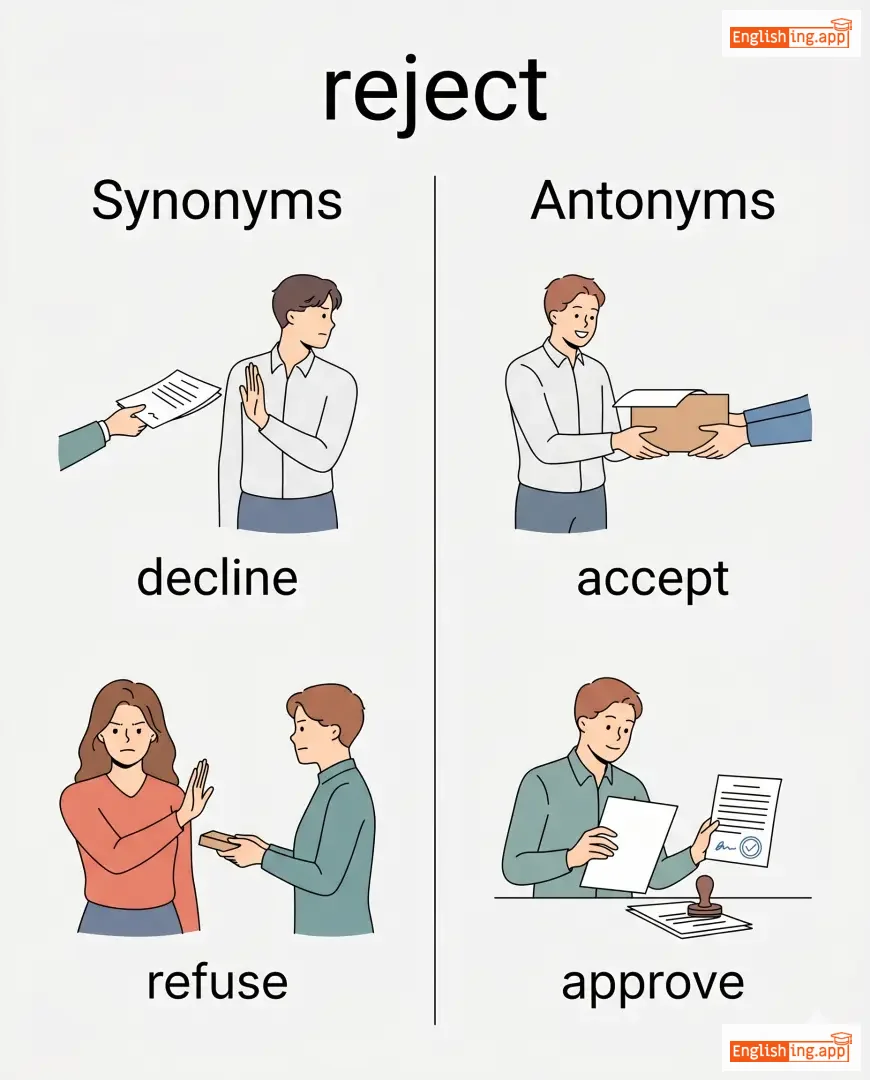
refuse, decline, dismiss, deny
••••••
|
accept, approve, embrace, welcome
••••••
|
firmly reject, completely reject, reject outright, reject a proposal, reject an offer
••••••
|
In Japanese, '拒否する' (kyohi suru) means to 'reject'.
••••••
|

