|
絵文字
|
単語 | Images | 翻訳 | 過去 | 過去分詞 | 三人称単数 | 動名詞 | 意味 | 例文 | 例文の翻訳 | 表現例 | 表現例の意味 | 表現例の翻訳 | 同義語 | 対義語 | コロケーション | ニーモニック |
|---|---|---|---|---|---|---|---|---|---|---|---|---|---|---|---|---|---|
|
🛒
••••••
|
/ˈsuː.pəˌmɑː.kɪt/
noun
(スーパー マーケット)
••••••
|
- •••••• |
スーパーマーケット
suupaa maaketto
••••••
|
- •••••• | - •••••• | - •••••• | - •••••• |
a large self-service store selling food and household goods
••••••
|
She went to the supermarket to buy groceries. |
彼女は食料品を買いにスーパーマーケットに行きました。
Kanojo wa shokuryouhin o kai ni suupaa maaketto ni ikimashita.
••••••
|
- •••••• | - •••••• | - •••••• |
grocery store, mart, store, food market, hypermarket
••••••
|
small shop, kiosk
••••••
|
big supermarket, local supermarket, supermarket chain, supermarket shopping, supermarket employee
••••••
|
スーパーマーケット — すべてが揃っている場所 🛒
••••••
|
|
👀
••••••
|
/ˈsuːpərvaɪz/
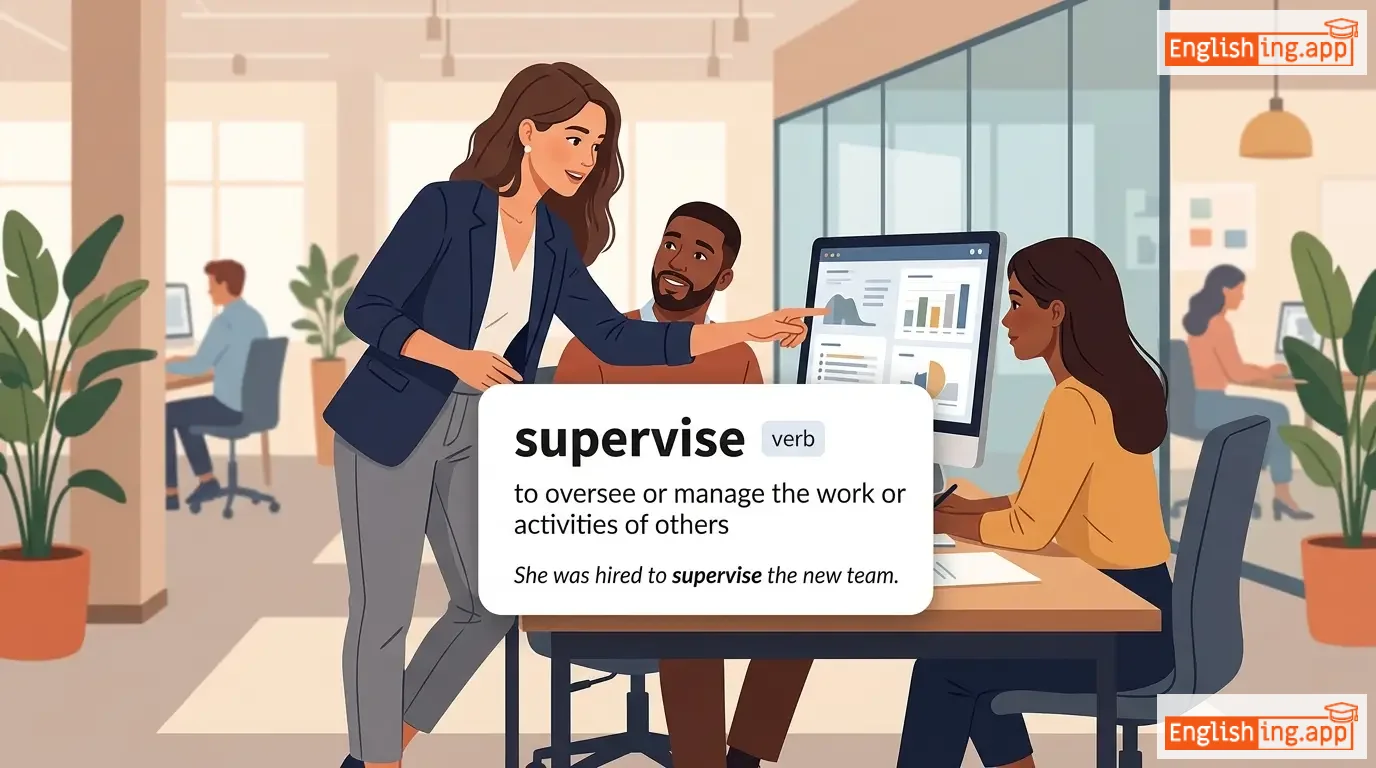
verb
(スーパーバイズ)
••••••
|
|
監督する
kantoku suru
••••••
|
supervised
スーパーバイズド
••••••
|
supervised
スーパーバイズド
••••••
|
supervises
スーパーバイゼズ
••••••
|
supervising
スーパーバイジング
••••••
|
to watch and direct a person or activity to ensure things are done correctly
••••••
|
The teacher supervises students during the exam.
教師は試験中に学生を監督します。
••••••
|
教師は試験中に学生を監督します。
Kyōshi wa shiken-chū ni gakusei o kantoku shimasu.
••••••
|
- •••••• | - •••••• | - •••••• |
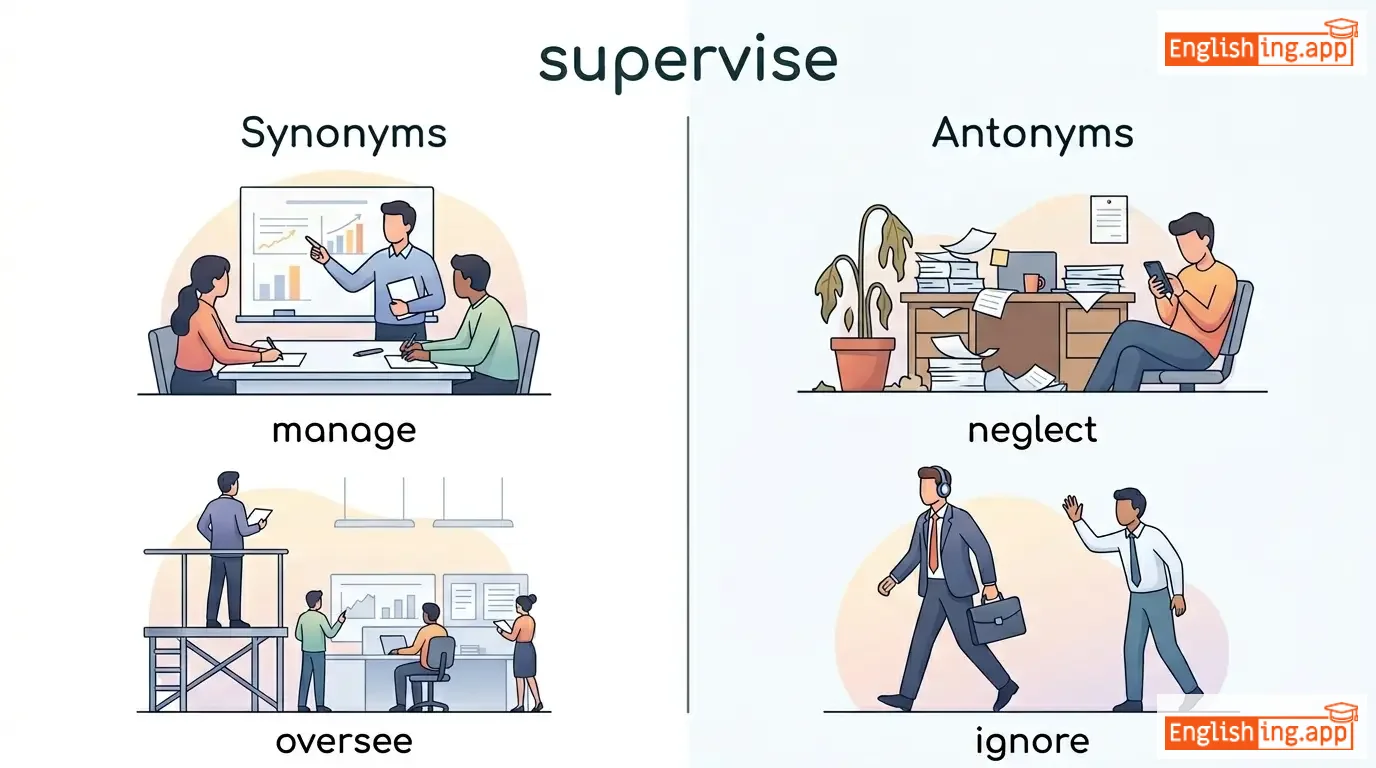
oversee, monitor, manage, direct
••••••
|
neglect, ignore, abandon
••••••
|
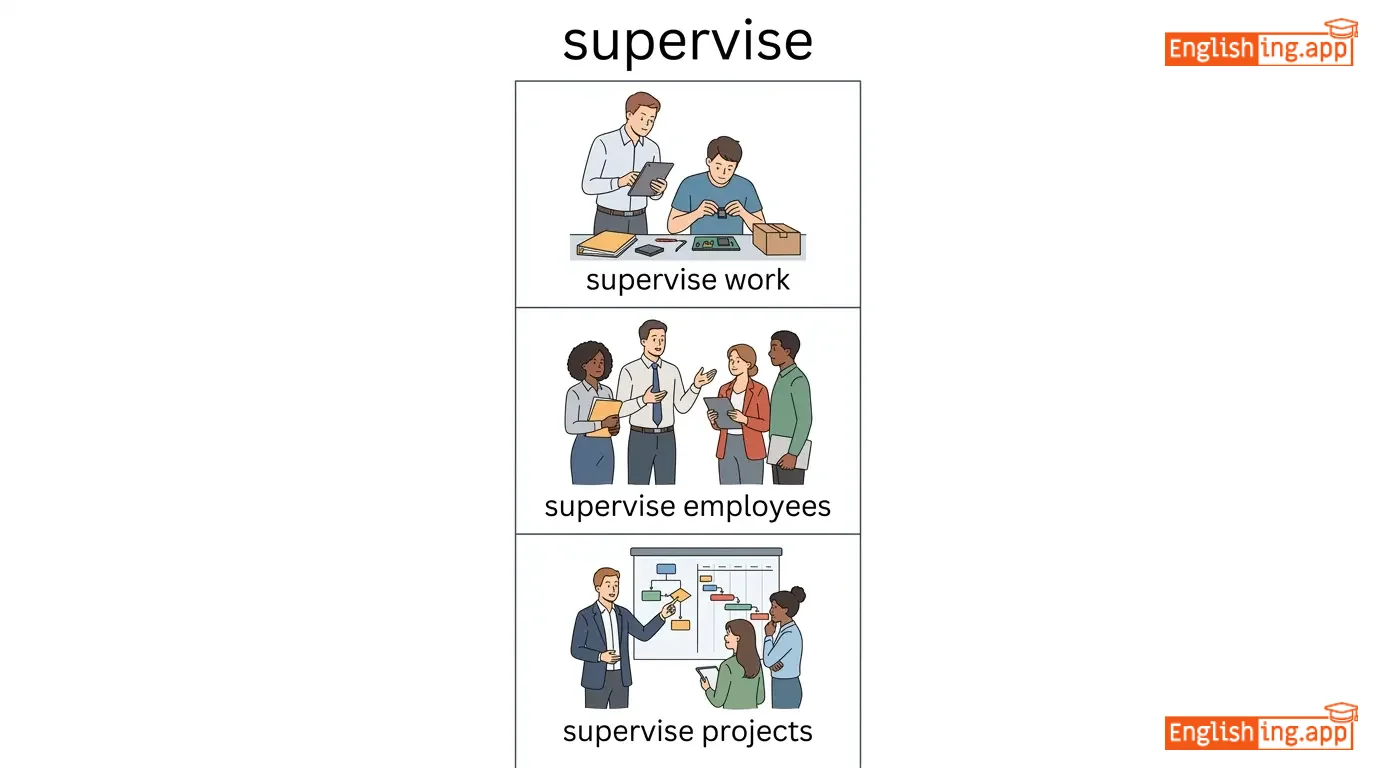
supervise closely, supervise work, supervise students, under supervision
••••••
|
スーパーヒーローのように監督しよう!
••••••
|
|
👀
••••••
|
/ˌsuːpərˈvɪʒən/
noun
(スーパービジョン)
••••••
|
- •••••• |
監視
kanshi
••••••
|
- •••••• | - •••••• | - •••••• | - •••••• |
the action or process of overseeing or managing something or someone
••••••
|
The project was completed under the supervision of an experienced manager. |
そのプロジェクトは経験豊富なマネージャーの監視の下で完了しました。
Sono purojekuto wa keiken hōfu na manējā no kanshi no moto de kanryō shimashita.
••••••
|
- •••••• | - •••••• | - •••••• |
oversight, management, control, direction
••••••
|
neglect, mismanagement
••••••
|
under supervision, supervision of staff, strict supervision
••••••
|
Supervision is like 'super watch' – always keeping an eye on things!
••••••
|
|
🧑💼
••••••
|
/ˈsuːpəvaɪzə(r)/
noun
(スーパーバイザー)
••••••
|
- •••••• |
監督者
kantokusha
••••••
|
- •••••• | - •••••• | - •••••• | - •••••• |
a person who manages or directs the work of others
••••••
|
The supervisor checked the progress of each employee. |
スーパーバイザーは各従業員の進捗を確認しました。
Sūpābaizā wa kaku jūgyōin no shinchoku o kakunin shimashita.
••••••
|
under the supervision of |
being directed or controlled by someone in charge
••••••
|
の監督の下で
no kantoku no moto de
••••••
|
manager, overseer, inspector, director, controller
••••••
|
subordinate, worker, employee
••••••
|
project supervisor, factory supervisor, direct supervisor, under the supervision
••••••
|
スーパーバイザー (supervisor) はすべてを監督する人!
••••••
|
|
🍽️
••••••
|
/ˈsʌp.ər/
noun
(サパー)
••••••
|
- •••••• |
晩ご飯
bangohan
••••••
|
- •••••• | - •••••• | - •••••• | - •••••• |
an evening meal, typically a light or informal one
••••••
|
We usually have supper around seven o'clock.
ウィ ユージュアリー ハヴ サパー アラウンド セブン オ'クロック。
••••••
|
私たちは通常、七時ごろに晩ご飯を食べます。
Watashitachi wa tsuujou, shichiji goro ni bangohan o tabemasu.
••••••
|
- •••••• | - •••••• | - •••••• |
dinner, evening meal
••••••
|
breakfast, lunch
••••••
|
have supper, light supper, family supper, supper time
••••••
|
晩ご飯は一日の終わりを感じさせる
••••••
|
|
💊
••••••
|
/ˈsʌplɪmənt/
noun/verb
(サプリメント)
••••••
|
- •••••• |
補助食品
hojosyokuhin
••••••
|
supplemented
サプリメントされた
••••••
|
supplemented
サプリメントされた
••••••
|
supplements
サプリメントする
••••••
|
supplementing
サプリメント中
••••••
|
Something added to complete or enhance; to add extra to make up for a deficiency.
••••••
|
She takes vitamin supplements to improve her health.
彼女は健康を改善するためにビタミンサプリメントを取ります。
••••••
|
彼女は健康を改善するためにビタミンサプリメントを取ります。
Kanojo wa kenko o kaizen suru tame ni bitamin sapurimento o torimasu.
••••••
|
dietary supplement
ダイエットサプリメント
••••••
|
A product taken to add nutritional value to the diet.
••••••
|
ダイエットサプリメント
daietto sapurimento
••••••
|
addition, extra, complement, enhancement, augmentation
••••••
|
reduction, subtraction, deficiency
••••••
|
vitamin supplement, dietary supplement, supplement income, supplement plan
••••••
|
Supplement means supply + cement → 足りない部分を埋めるためにセメントのようなものを加える!
••••••
|
|
📦
••••••
|
/səˈplaɪə(r)/
noun
(サプライヤー)
••••••
|
- •••••• |
供給者
kyoukyuusha
••••••
|
- •••••• | - •••••• | - •••••• | - •••••• |
a person or company that provides goods or services
••••••
|
The supplier delivered the products on time.
サプライヤーは時間通りに商品を納品しました。
••••••
|
供給者は時間通りに商品を納品しました。
Kyoukyuusha wa jikan doori ni shouhin wo nouhin shimashita.
••••••
|
regular supplier
定期的なサプライヤー
••••••
|
a company that provides goods or services regularly
••••••
|
定期的な供給者
teikiteki na kyoukyuusha
••••••
|
vendor, provider, dealer, distributor, seller
••••••
|
buyer, customer, client
••••••
|
main supplier, local supplier, supplier contract, supplier agreement
••••••
|
サプライヤーは supply を供給する人。
••••••
|
|
📦
••••••
|
/səˈplaɪ/
noun
••••••
|
|
- •••••• | - •••••• | - •••••• | - •••••• | - •••••• |
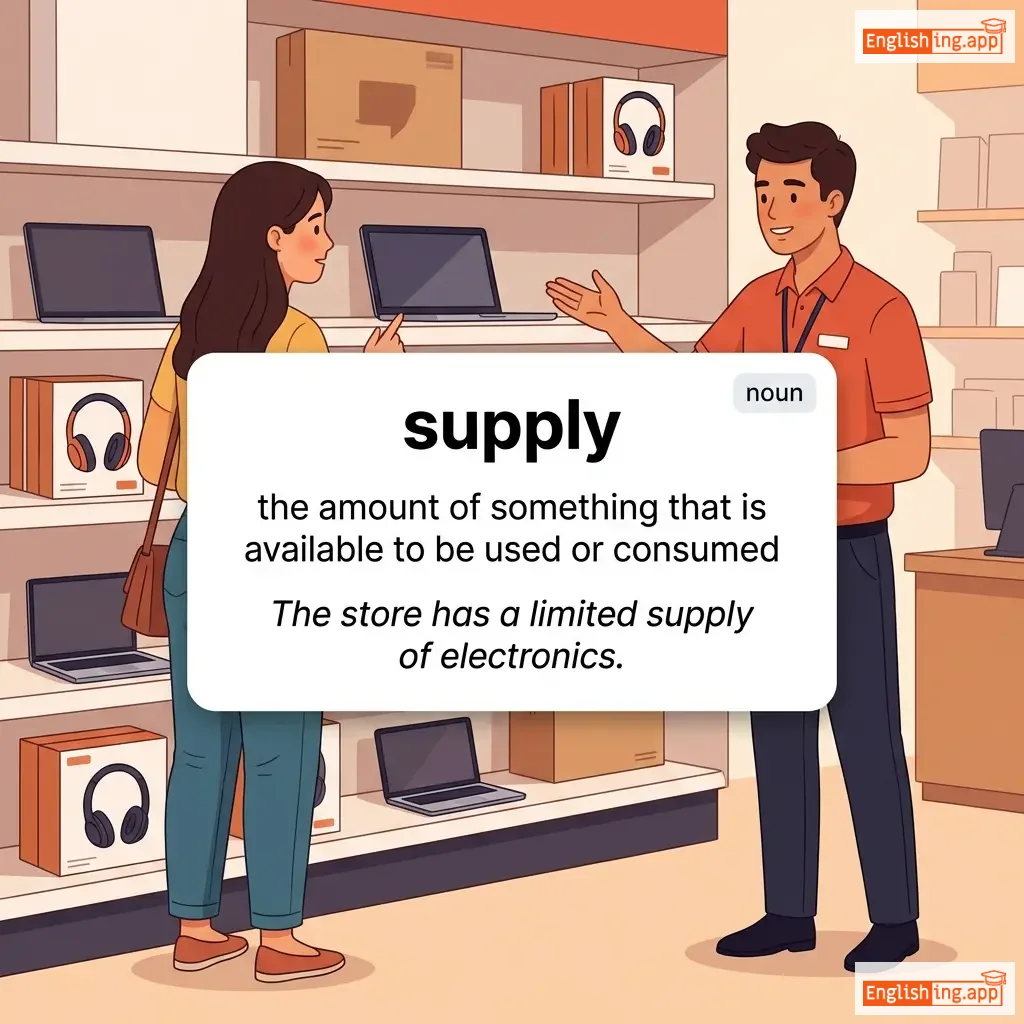
the amount of something that is available to be used or consumed
••••••
|
The store has a limited supply of electronics. |
- •••••• | - •••••• | - •••••• | - •••••• |
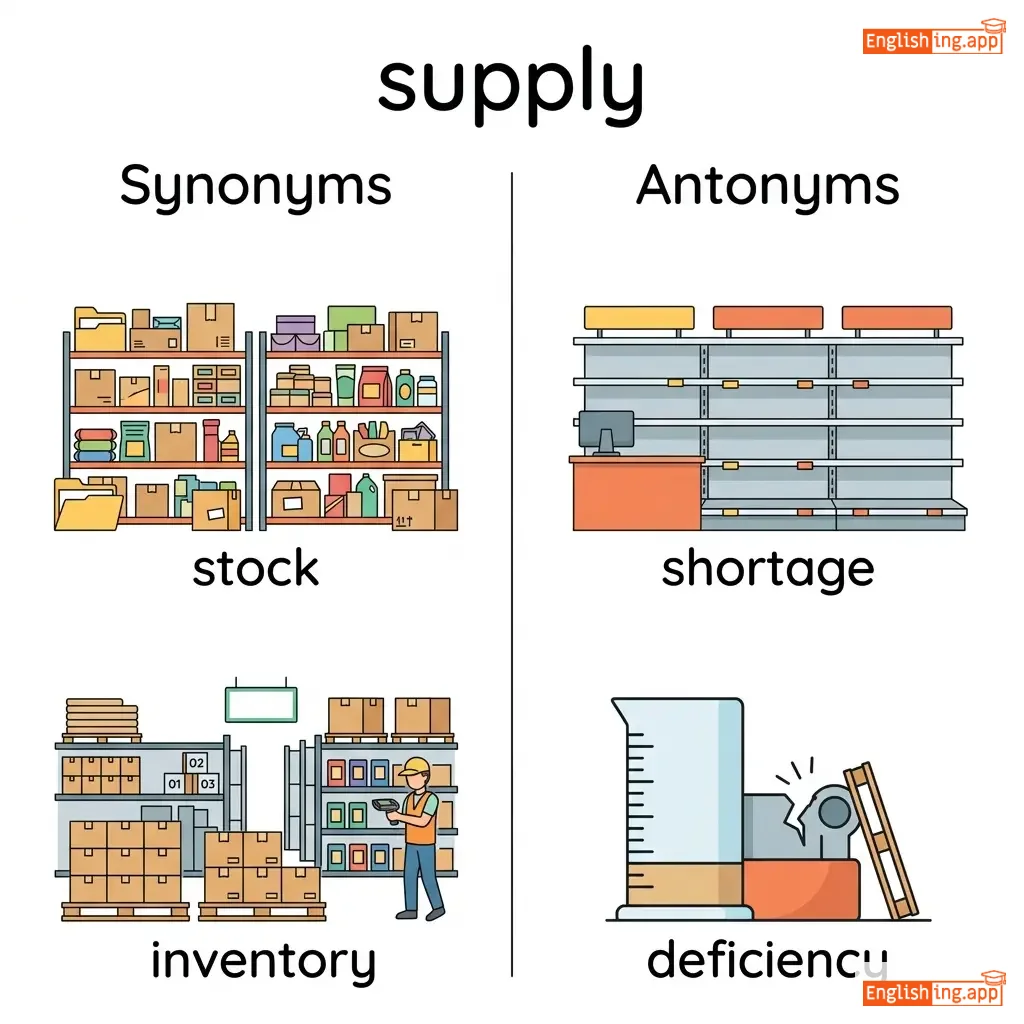
stock, inventory, provision, reserve
••••••
|
shortage, deficiency
••••••
|
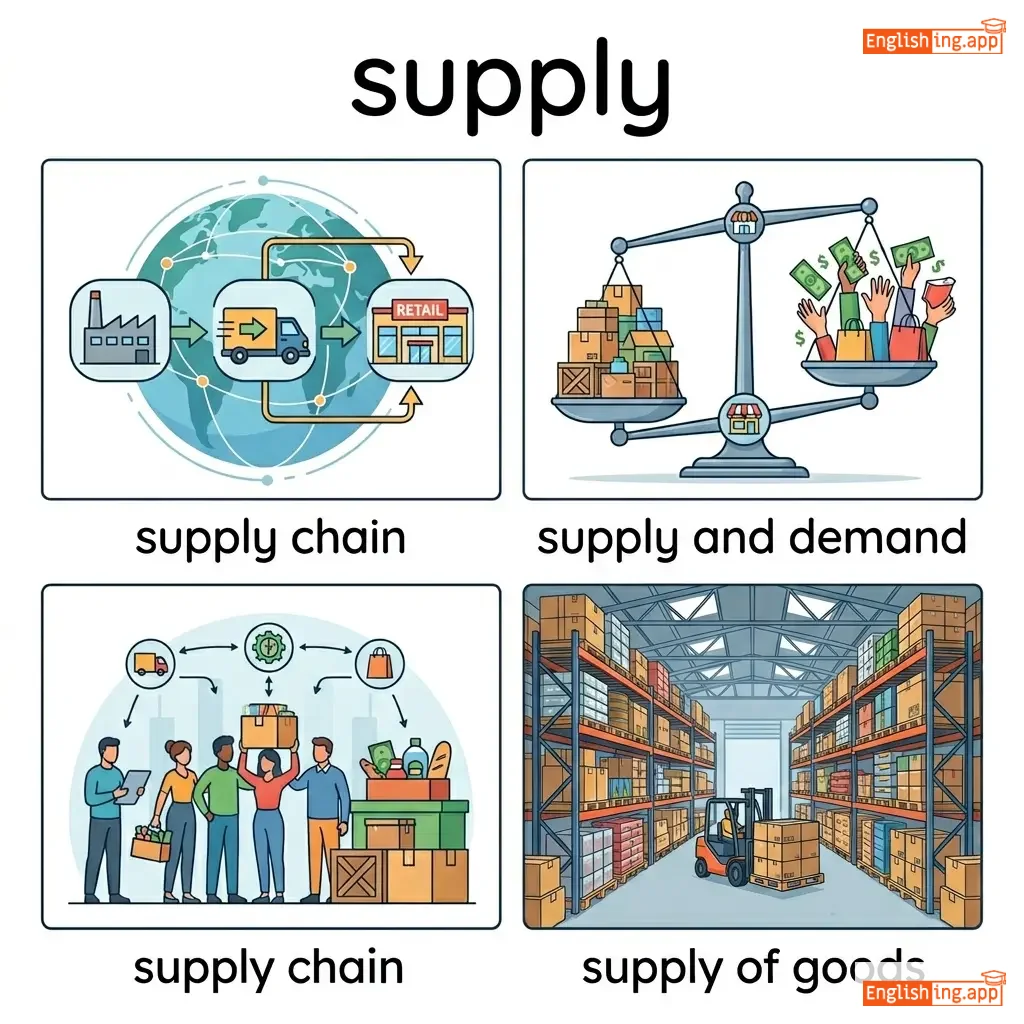
supply chain, supply and demand, supply of goods, supply shortage
••••••
|
No •••••• |
|
🤝
••••••
|
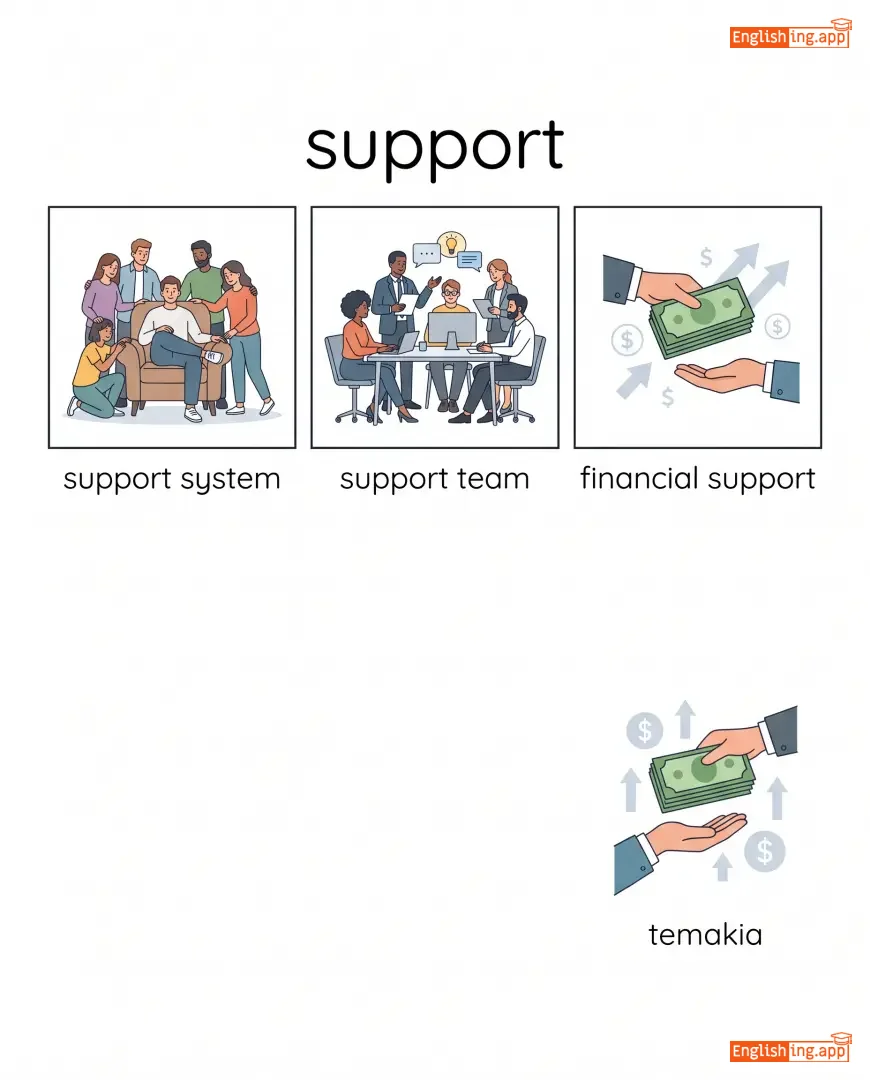
/səˈpɔːrt/
verb
(サポート)
••••••
|
|
サポートする
sapōto suru
••••••
|
supported
サポートされた
••••••
|
supported
サポートされた
••••••
|
supports
サポートする
••••••
|
supporting
サポートしている
••••••
|
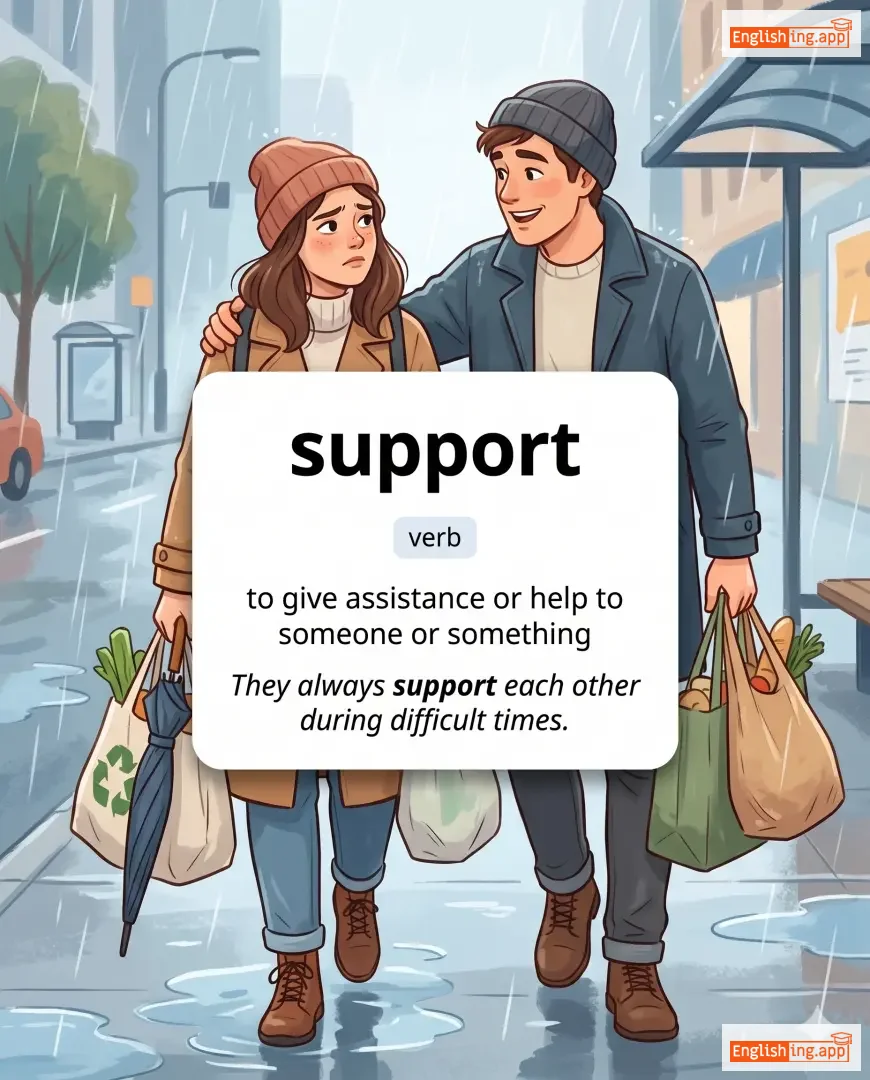
to help or assist someone; to hold up or bear the weight of something
••••••
|
The family will support their son through his studies.
家族は息子を学業でサポートします。
••••••
|
家族は息子を学業でサポートします。
Kazoku wa musuko o gakugyō de sapōto shimasu.
••••••
|
- •••••• | - •••••• | - •••••• |
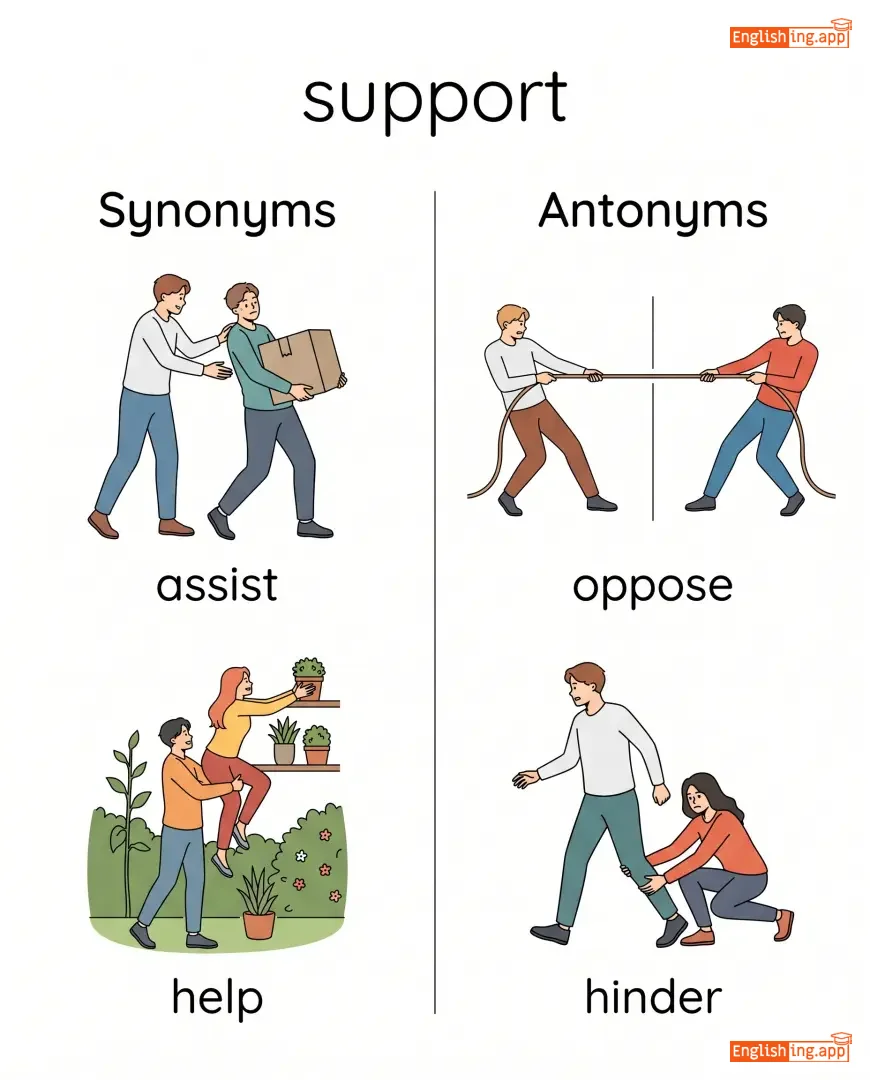
help, assist, aid, back
••••••
|
oppose, hinder, obstruct, abandon
••••••
|
support fully, support decision, support family, financial support
••••••
|
サポートとは助けることで、重荷を支えること
••••••
|
|
💪
••••••
|
/səˈpɔːtər/
noun
(サポーター)
••••••
|
- •••••• |
サポーター
sapōtā
••••••
|
- •••••• | - •••••• | - •••••• | - •••••• |
a person who supports someone or something
••••••
|
She is a strong supporter of the local animal shelter.
彼女は地元の動物シェルターの強力なサポーターです。
••••••
|
彼女は地元の動物シェルターの強力なサポーターです。
Kanojo wa jimoto no dōbutsu shertā no kyōryokuna sapōtā desu.
••••••
|
- •••••• | - •••••• | - •••••• |
advocate, backer, champion, fan
••••••
|
opponent, adversary, critic
••••••
|
supporter of, strong supporter, loyal supporter, passionate supporter
••••••
|
サポーターは常にサポートする人、地元の動物シェルターをサポートするように。
••••••
|
|
🤗
••••••
|
/səˈpɔːtɪv/
adjective
(su-po-ru-ti-bu)
••••••
|
- •••••• |
支援的な
shien-teki na
••••••
|
- •••••• | - •••••• | - •••••• | - •••••• |
providing encouragement or emotional help to someone
••••••
|
She was very supportive during my difficult times. |
彼女は私の困難な時期に非常に支援的でした。
Kanojo wa watashi no konnan na jiki ni hijō ni shien-teki deshita.
••••••
|
supportive role |
a role that helps or assists others rather than leading
••••••
|
支援的な役割
shien-teki na yakuwari
••••••
|
helpful, encouraging, caring, understanding, kind
••••••
|
unsupportive, discouraging, neglectful
••••••
|
supportive friend, supportive family, supportive environment, supportive attitude
••••••
|
支援を提供する人はいつでも supportive 🫶
••••••
|
|
🤔
••••••
|
/səˈpəʊz/
verb
(サポーズ)
••••••
|
- •••••• |
仮定する
katei suru
••••••
|
supposed
サポーズド
••••••
|
supposed
サポーズド
••••••
|
supposes
サポーズズ
••••••
|
supposing
サポージング
••••••
|
to assume or believe something is true without proof
••••••
|
I suppose she will be here soon.
私は彼女がすぐにここに来ると思います。
••••••
|
私は彼女がすぐにここに来ると思います。
Watashi wa kanojo ga sugu ni koko ni kuru to omoimasu.
••••••
|
suppose so
そう思います
••••••
|
used to express agreement with a suggestion or opinion
••••••
|
そう思います
Sō omoimasu
••••••
|
assume, believe, guess, think
••••••
|
doubt, question, deny
••••••
|
suppose to, I suppose, suppose that, suppose so
••••••
|
仮定するのは、全てを予測すること!
••••••
|
|
❓
••••••
|
/səˈpəʊzd/
adjective
(サポーズド)
••••••
|
- •••••• |
仮定された
katei sareta
••••••
|
- •••••• | - •••••• | - •••••• | - •••••• |
generally believed or assumed, but not necessarily true
••••••
|
This is the supposed solution to the problem. |
これは問題の仮定された解決策です。
Kore wa mondai no katei sareta kaiketsusaku desu.
••••••
|
- •••••• | - •••••• | - •••••• |
assumed, alleged, presumed, supposed
••••••
|
real, certain, verified
••••••
|
supposed to, supposed solution, supposed reason
••••••
|
仮定された (supposed) は、必ずしも正しいとは限らないが、信じられていることを示す言葉です。
••••••
|
|
🤔
••••••
|
/səˈpəʊzɪdli/
adverb
(サポーズドリー)
••••••
|
- •••••• |
いわゆる
iwayuru
••••••
|
- •••••• | - •••••• | - •••••• | - •••••• |
used to show that something is believed or claimed to be true, though it may not be
••••••
|
He is supposedly the best player on the team. |
彼はチームで一番うまい選手だと言われている。
Kare wa chīmu de ichiban umai senshu da to iwarete iru.
••••••
|
supposedly true |
believed to be true but not certain
••••••
|
いわゆる真実
iwayuru shinjitsu
••••••
|
allegedly, reportedly, apparently, ostensibly
••••••
|
certainly, surely, definitely
••••••
|
supposedly true, supposedly innocent, supposedly safe, supposedly related
••••••
|
いわゆる、でも確信がない — いわゆる!
••••••
|
|
🚫
••••••
|
/səˈprɛs/
verb
(サプレッス)
••••••
|
|
抑える
osaeru
••••••
|
suppressed
サプレッスド
••••••
|
suppressed
サプレッスド
••••••
|
suppresses
サプレッセス
••••••
|
suppressing
サプレッシング
••••••
|
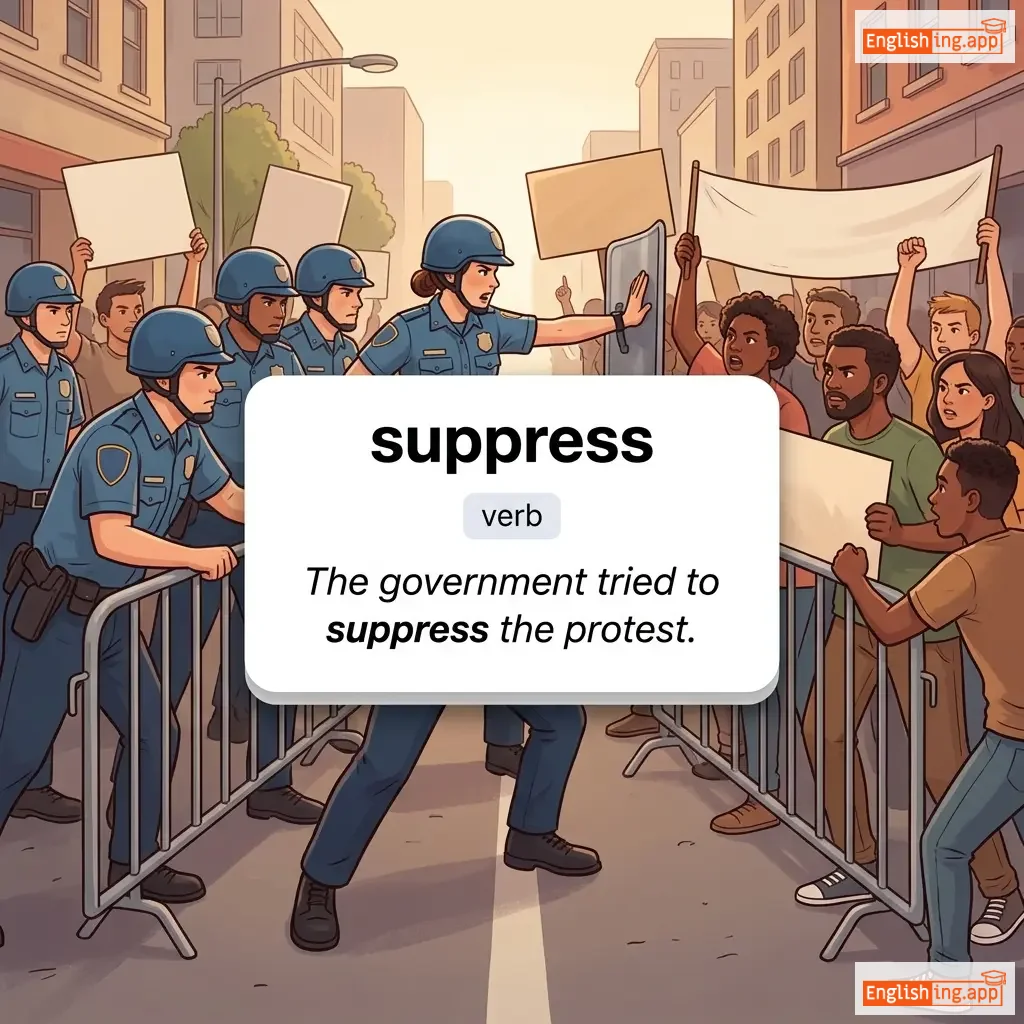
to forcibly put an end to something; to restrain or hold back an action, feeling, or development
••••••
|
The government tried to suppress the protest.
政府は抗議を抑え込もうとした。
••••••
|
政府は抗議を抑え込もうとした。
Seifu wa kougi o osaekomou to shita.
••••••
|
suppress a smile
笑顔を抑える
••••••
|
to try not to show amusement
••••••
|
笑顔を抑える
egao o osaeru
••••••
|
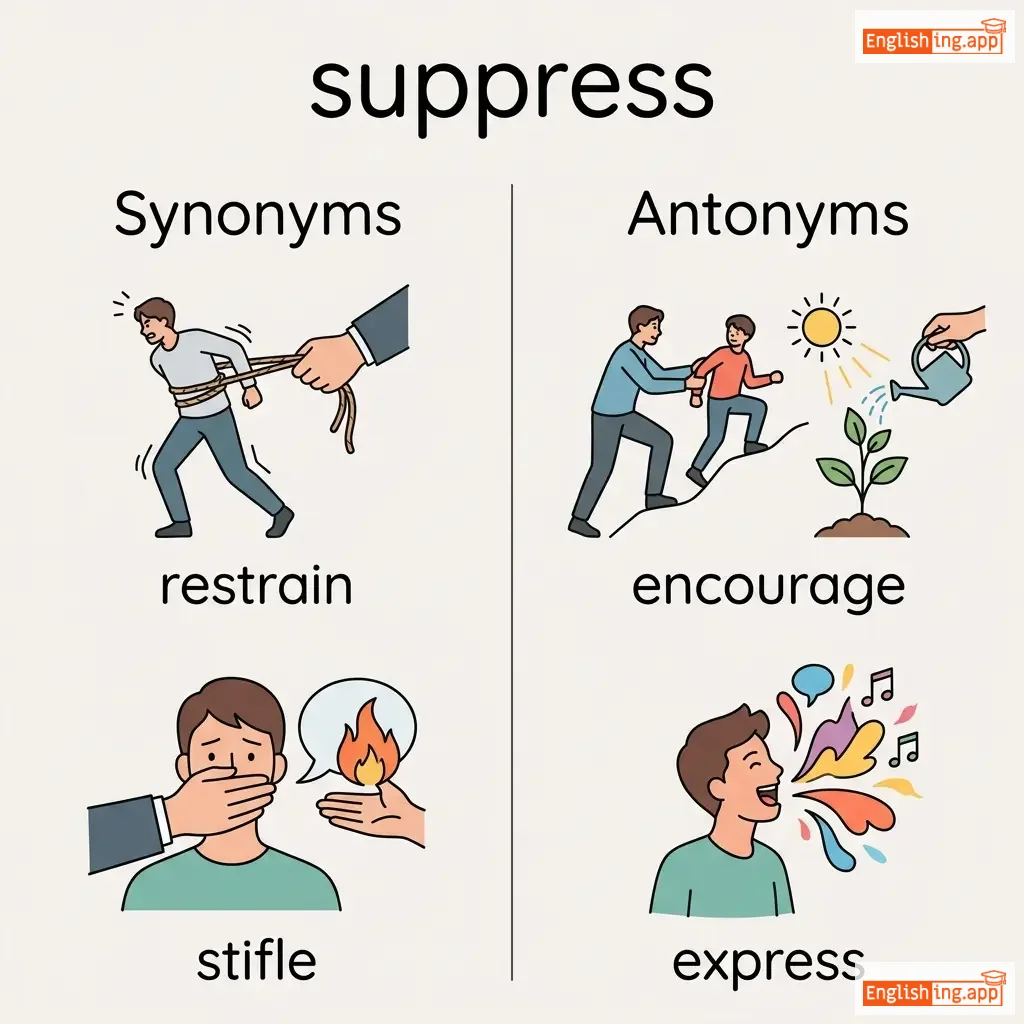
restrain, stifle, subdue, curb, repress
••••••
|
encourage, express, release
••••••
|
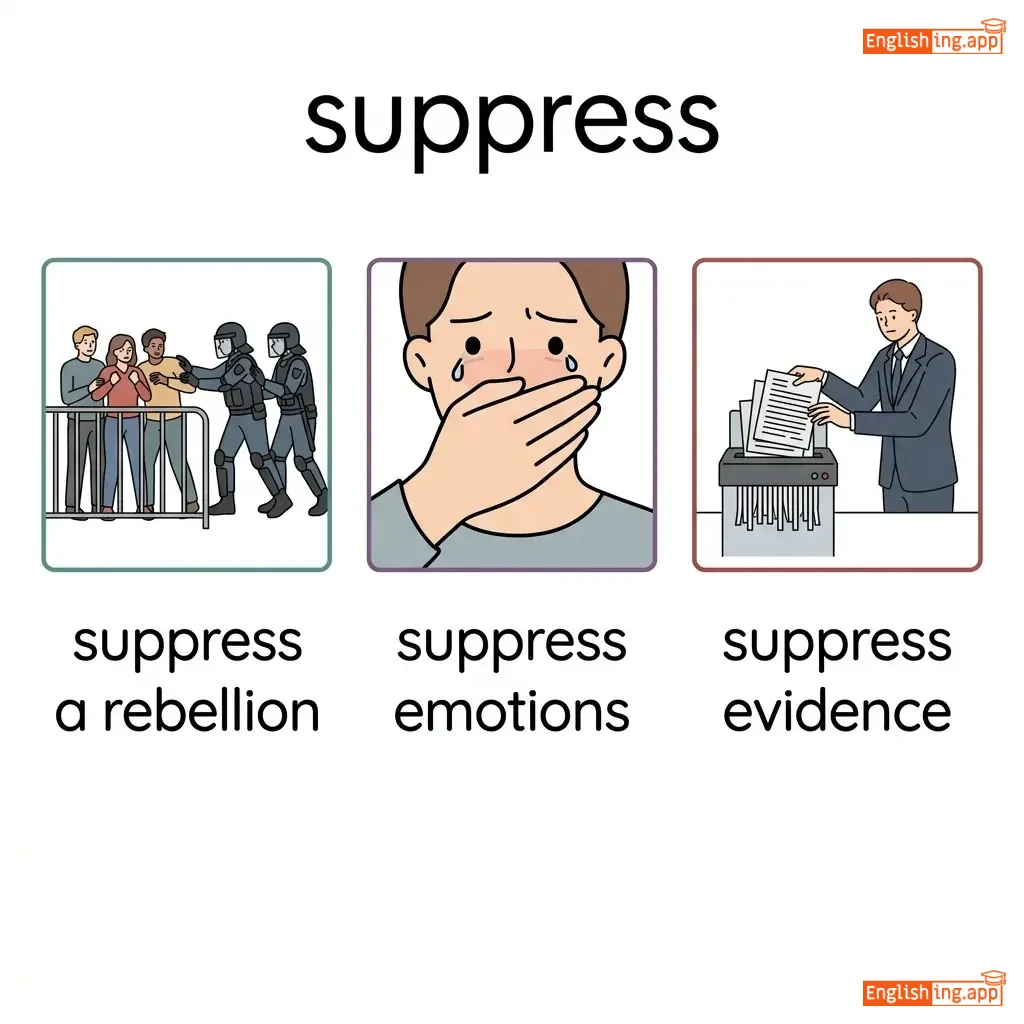
suppress a rebellion, suppress emotions, suppress evidence, suppress a smile
••••••
|
SUPPRESS は抑えるという意味です、笑顔を抑えるように - 笑顔を SUPPress!
••••••
|
|
👑
••••••
|
/suːˈpriːm/
adjective
(スプリーム)
••••••
|
- •••••• |
最高の
saikō no
••••••
|
- •••••• | - •••••• | - •••••• | - •••••• |
highest in rank, authority, or quality; greatest; most important
••••••
|
The Supreme Court made the final decision. |
最高裁判所は最終的な決定を下しました。
Saikō saiban-sho wa saishū-teki na kettei o kudashimashita
••••••
|
- •••••• | - •••••• | - •••••• |
highest, ultimate, paramount, top
••••••
|
lowest, inferior, subordinate, minor
••••••
|
supreme court, supreme authority, supreme power
••••••
|
No •••••• |
|
🩺
••••••
|
/ˈsɜːdʒən/
noun
(サージャン)
••••••
|
- •••••• |
外科医
kaiki
••••••
|
- •••••• | - •••••• | - •••••• | - •••••• |
a doctor who performs medical operations
••••••
|
The surgeon performed a complex heart operation. |
外科医は複雑な心臓手術を行いました。
Kaiki wa fukuzatsu na shinzou shujutsu o okonaimashita.
••••••
|
chief surgeon |
the head doctor in charge of surgical operations
••••••
|
主任外科医
shunin kaiki
••••••
|
doctor, physician, medical practitioner, specialist
••••••
|
patient, layman
••••••
|
heart surgeon, brain surgeon, plastic surgeon, chief surgeon
••••••
|
外科手術を行う医者 — 外科医
••••••
|
|
🩺
••••••
|
/ˈsɜːdʒəri/
noun
••••••
|
- •••••• | - •••••• | - •••••• | - •••••• | - •••••• | - •••••• |
a medical procedure involving the cutting of the body to treat a condition
••••••
|
She underwent surgery to remove the tumor. |
- •••••• | - •••••• | - •••••• | - •••••• |
operation, procedure, treatment
••••••
|
healing, recovery
••••••
|
surgery operation, minor surgery, surgery recovery
••••••
|
No •••••• |
|
🩺
••••••
|
/ˈsɜːdʒɪkəl/
adjective
(サージカル)
••••••
|
- •••••• |
外科手術に関連する
kaishujutsu ni kanren suru
••••••
|
- •••••• | - •••••• | - •••••• | - •••••• |
relating to or involving surgery
••••••
|
She underwent surgical treatment to repair the damage. |
彼女は損傷を修復するために外科的治療を受けました。
Kanojo wa sonshō o shūfuku suru tame ni kaishutekina chiryō o ukemashita.
••••••
|
- •••••• | - •••••• | - •••••• |
medical, operative, therapeutic, healing
••••••
|
non-surgical, conservative
••••••
|
surgical procedure, surgical operation, surgical team
••••••
|
Surgical は ‘surge’ のように聞こえる – 大きな医療の波!
••••••
|
|
📈
••••••
|
/ˈsɜːr.plʌs/
noun
(サープラス)
••••••
|
- •••••• |
余剰
yojo
••••••
|
- •••••• | - •••••• | - •••••• | - •••••• |
An amount that is more than what is needed.
••••••
|
The country has a surplus of food this year. |
今年、その国には食料の余剰があります。
Kotoshi, sono kuni ni wa shokuryou no yojou ga arimasu.
••••••
|
trade surplus |
The amount by which a country's exports exceed its imports.
••••••
|
貿易余剰
boueki yojo
••••••
|
excess, extra, oversupply, remainder, overflow
••••••
|
shortage, deficit, lack
••••••
|
budget surplus, surplus goods, surplus food, surplus production
••••••
|
余剰 = 必要以上に多い
••••••
|
|
🎉
••••••
|
/səˈpraɪz/
noun
(サプライズ)
••••••
|
- •••••• |
驚き
odoroki
••••••
|
- •••••• | - •••••• | - •••••• | - •••••• |
a sudden and unexpected event or situation
••••••
|
His arrival was a pleasant surprise. |
彼の到着は嬉しい驚きでした。
kare no touchaku wa ureshii odoroki deshita.
••••••
|
a pleasant surprise |
an unexpected but happy event
••••••
|
嬉しい驚き
ureshii odoroki
••••••
|
shock, astonishment, amazement, wonder
••••••
|
expectation, predictability
••••••
|
pleasant surprise, unexpected surprise, big surprise
••••••
|
SURprise = SURroundings change suddenly!
••••••
|
|
😲
••••••
|
/sər'praɪzd/
adjective
(サープライズド)
••••••
|
- •••••• |
驚いた
odoroita
••••••
|
- •••••• | - •••••• | - •••••• | - •••••• |
feeling or showing surprise; astonished
••••••
|
I was surprised to see my old friend at the market.
私は市場で古い友達を見て驚きました。
••••••
|
私は市場で古い友達を見て驚きました。
Watashi wa ichiba de furui tomodachi wo mite odoroimashita.
••••••
|
- •••••• | - •••••• | - •••••• |
astonished, amazed, shocked, startled
••••••
|
unsurprised, expectant, prepared, anticipated
••••••
|
pleasantly surprised, quite surprised, genuinely surprised
••••••
|
驚いた時の顔を思い浮かべてください、驚きはその瞬間の感情です。
••••••
|
|
😯
••••••
|
/sər'praɪz.ɪŋ/
adjective
(サプライズイング)
••••••
|
- •••••• |
驚くべき; 予想外の
odorokubeki; yosougai no
••••••
|
- •••••• | - •••••• | - •••••• | - •••••• |
causing surprise; unexpected; remarkable
••••••
|
It's surprising how quickly children learn new languages. |
子供たちが新しい言語をどれだけ早く学ぶかは驚くべきことです。
Kodomo-tachi ga atarashī gengo o dore dake hayaku manabu ka wa odorokubeki koto desu.
••••••
|
- •••••• | - •••••• | - •••••• |
astonishing, amazing, unexpected, remarkable
••••••
|
predictable, expected, ordinary, unsurprising
••••••
|
surprising news, surprising result, not surprising
••••••
|
驚くべき (surprising) は予想外 (unexpected) の結果です。
••••••
|
|
😲
••••••
|
/səˈpraɪzɪŋli/
adverb
(サプライズングリー)
••••••
|
- •••••• |
驚くべきことに
odorokubeki koto ni
••••••
|
- •••••• | - •••••• | - •••••• | - •••••• |
in a way that causes surprise or amazement
••••••
|
Surprisingly, she finished the entire project in just one day.
驚くべきことに、彼女は1日でプロジェクト全体を終わらせました。
••••••
|
驚くべきことに、彼女は1日でプロジェクト全体を終わらせました。
Odorokubeki koto ni, kanojo wa 1 nichi de purojekuto zentai o owarasemashita.
••••••
|
- •••••• | - •••••• | - •••••• |
unexpectedly, shockingly, amazingly, astoundingly
••••••
|
predictably, expectedly
••••••
|
surprisingly fast, surprisingly well, surprisingly easy
••••••
|
驚くべき!つまらない仕事が驚くべき速さで終わる – 驚くべきことに
••••••
|
|
🏳️
••••••
|
/səˈrɛndər/
verb
(サレンダー)
••••••
|
- •••••• |
降伏する
kōfuku suru
••••••
|
surrendered
サレンダー・ド
••••••
|
surrendered
サレンダー・ド
••••••
|
surrenders
サレンダー・ス
••••••
|
surrendering
サレンダーリング
••••••
|
to give up or yield to an opponent or authority
••••••
|
The army finally surrendered after weeks of fighting.
軍隊は数週間の戦闘の後、最終的に降伏しました。
••••••
|
数週間の戦闘の後、軍隊は最終的に降伏しました。
Sū shūkan no sentō no ato, guntai wa saishū-teki ni kōfuku shimashita.
••••••
|
surrender to fate
運命に降伏する
••••••
|
to accept something that cannot be changed
••••••
|
運命に降伏する
unmei ni kōfuku suru
••••••
|
yield, give up, submit, capitulate
••••••
|
resist, fight, defend
••••••
|
surrender to authority, unconditional surrender, surrender peacefully
••••••
|
降伏するは屈すること—🏳️ 白旗を上げることは降伏すること。
••••••
|
|
⭕
••••••
|
/səˈraʊnd/
verb
(ハウンド)
••••••
|
- •••••• |
囲む
kakomu
••••••
|
surrounded
ハウンドエッド
••••••
|
surrounded
ハウンドエッド
••••••
|
surrounds
ハウンズ
••••••
|
surrounding
ハウンドイング
••••••
|
To be all around someone or something.
••••••
|
Mountains surround the small village.
山々が小さな村を囲んでいます。
••••••
|
山々が小さな村を囲んでいます。
Yamayama ga chiisana mura wo kakondeimasu.
••••••
|
surround yourself with
自分を囲む
••••••
|
To choose to associate with certain people or things.
••••••
|
自分を囲む
Jibun wo kakomu
••••••
|
enclose, encircle, encompass, besiege
••••••
|
free, release, exclude
••••••
|
surround with, surround yourself, completely surround
••••••
|
囲むはまるであなたを囲む円のようです。
••••••
|
|
🌄
••••••
|
/səˈraʊndɪŋ/
adjective
(サラウンディング)
••••••
|
- •••••• |
周囲の
shūi no
••••••
|
- •••••• | - •••••• | - •••••• | - •••••• |
located all around a particular place or thing; nearby
••••••
|
The surrounding hills were covered in mist.
周囲の丘は霧に包まれていました。
••••••
|
周囲の丘は霧に包まれていました。
Shūi no oka wa kiri ni tsutsumarete imashita.
••••••
|
- •••••• | - •••••• | - •••••• |
nearby, adjacent, neighboring, close, around
••••••
|
distant, remote, far
••••••
|
surrounding area, surrounding environment, surrounding region, surrounding countryside
••••••
|
Surroundingは周囲を意味します。例えば、"周囲の区域"のように。
••••••
|
|
👀
••••••
|
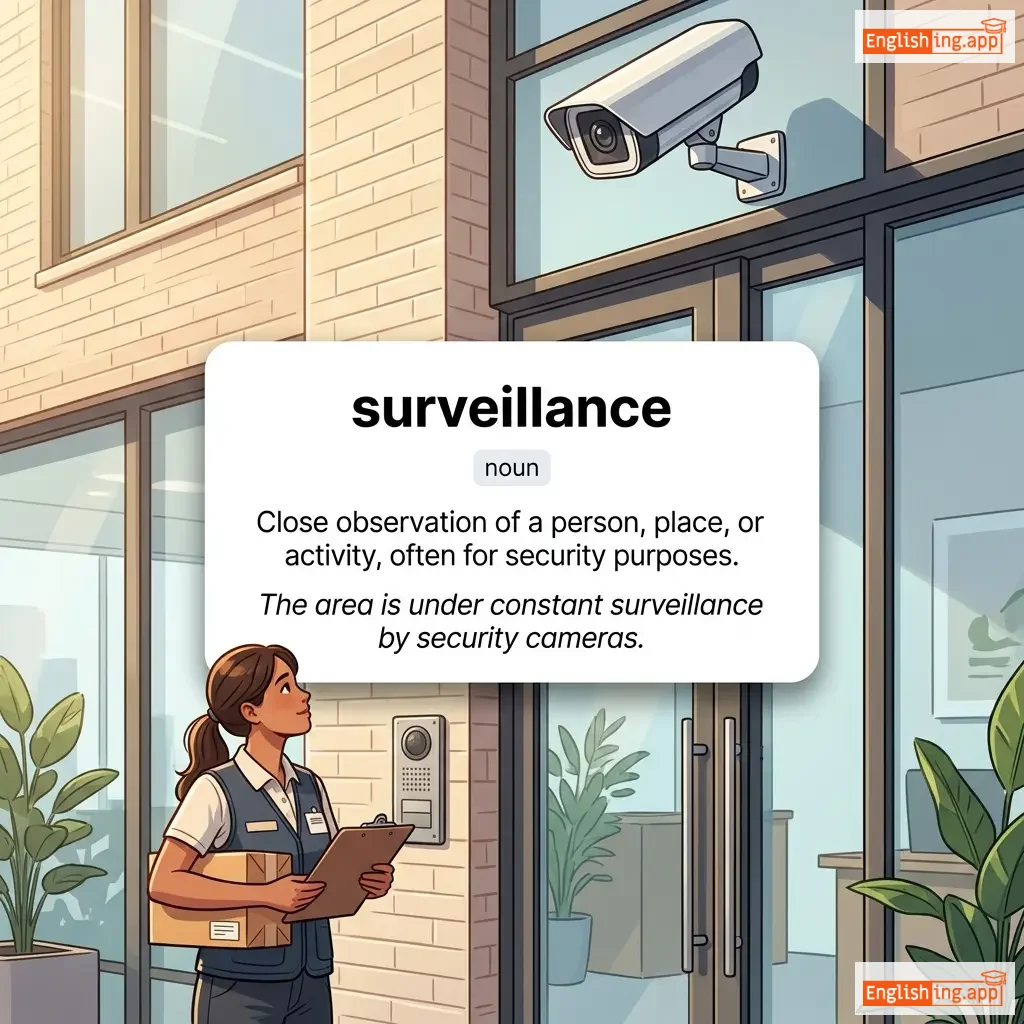
/sɜːˈveɪləns/
noun
(サーヴェイランス)
••••••
|

|
監視
kanshi
••••••
|
- •••••• | - •••••• | - •••••• | - •••••• |
close observation, especially of a suspected spy or criminal
••••••
|
The police kept the suspect under surveillance for weeks. |
警察は数週間にわたり容疑者を監視していました。
Keisatsu wa suū-shūkan ni watari yōgisha o kanshi shite imashita.
••••••
|
- •••••• | - •••••• | - •••••• |
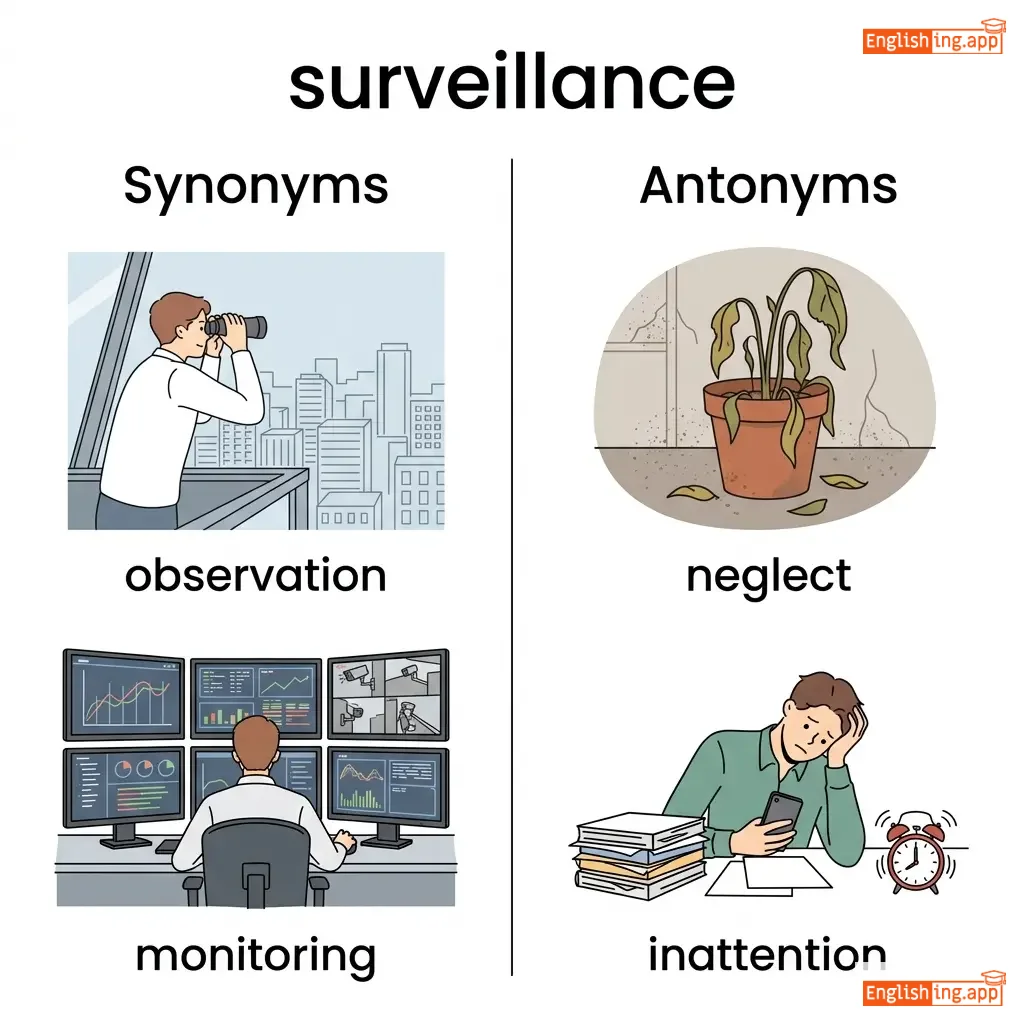
observation, monitoring, watching, scrutiny
••••••
|
neglect, ignorance, inattention
••••••
|
under surveillance, surveillance camera, surveillance system, police surveillance
••••••
|
監視 = 見逃さない警察の目!
••••••
|
|
🦸
••••••
|
/səˈvaɪvl/
noun
(サバイバル)
••••••
|
- •••••• |
サバイバル
sabaibaru
••••••
|
- •••••• | - •••••• | - •••••• | - •••••• |
the state of continuing to live or exist, typically in difficult conditions
••••••
|
Survival in the wild can be a challenging experience.
野生でのサバイバルは、挑戦的な経験となることがあります。
••••••
|
野生でのサバイバルは、挑戦的な経験となることがあります。
Yasei de no sabaibaru wa, chousenteki na keiken to naru koto ga arimasu.
••••••
|
- •••••• | - •••••• | - •••••• |
existence, endurance, staying alive
••••••
|
death, extinction
••••••
|
survival skills, survival mode, struggle for survival
••••••
|
サバイバル - 厳しい環境で生き残るために戦う
••••••
|
|
🌱
••••••
|
/sərˈvaɪv/
verb
(サバイヴ)
••••••
|
- •••••• |
生き残る
ikinokoru
••••••
|
survived
サバイヴド
••••••
|
survived
サバイヴド
••••••
|
survives
サバイヴズ
••••••
|
surviving
サバイヴィング
••••••
|
To continue to live or exist after a difficult event or situation.
••••••
|
He managed to survive the storm.
彼は嵐を生き延びた。
••••••
|
彼は嵐を生き延びた。
Kare wa arashi o ikinobita.
••••••
|
survival of the fittest
適者生存
••••••
|
The idea that only the strongest individuals succeed or endure.
••••••
|
適者生存
Tekisha seizon
••••••
|
endure, persist, outlive, remain, withstand
••••••
|
perish, die, succumb
••••••
|
survive an accident, survive a crisis, survive on, survive against odds
••••••
|
生き残るは嵐を乗り越えること = 生き残る
••••••
|
|
💪
••••••
|
/sərˈvaɪvər/
noun
(サバイバー)
••••••
|
- •••••• |
生き残った人、特に他の人が亡くなった後に生き残った人
ikinokotta hito, tokuni hoka no hito ga nakunatta ato ni ikinokotta hito
••••••
|
- •••••• | - •••••• | - •••••• | - •••••• |
a person who survives, especially a person remaining alive after an event in which others have died
••••••
|
She is a cancer survivor who now helps other patients. |
彼女はがんのサバイバーで、今は他の患者を助けています。
Kanojo wa gan no sabaibā de, ima wa hoka no kanja o tasuketeimasu.
••••••
|
- •••••• | - •••••• | - •••••• |
victor, overcomer, endurer, fighter
••••••
|
victim, casualty, fatality
••••••
|
cancer survivor, disaster survivor, sole survivor, survivor guilt
••••••
|
サバイバーは試練を乗り越え、他の人に希望を与える。
••••••
|
|
🕵️
••••••
|
/səˈspɛkt/ (noun, adj) | /səˈspɛkt/ (verb)
verb, noun, adjective
••••••
|

|
- •••••• |
suspected
••••••
|
suspected
••••••
|
suspects
••••••
|
suspecting
••••••
|
To believe something to be true, likely, or guilty without certain proof.
••••••
|
The police suspect him of stealing the car. |
- •••••• |
usual suspect |
a person frequently suspected of wrongdoing
••••••
|
- •••••• |
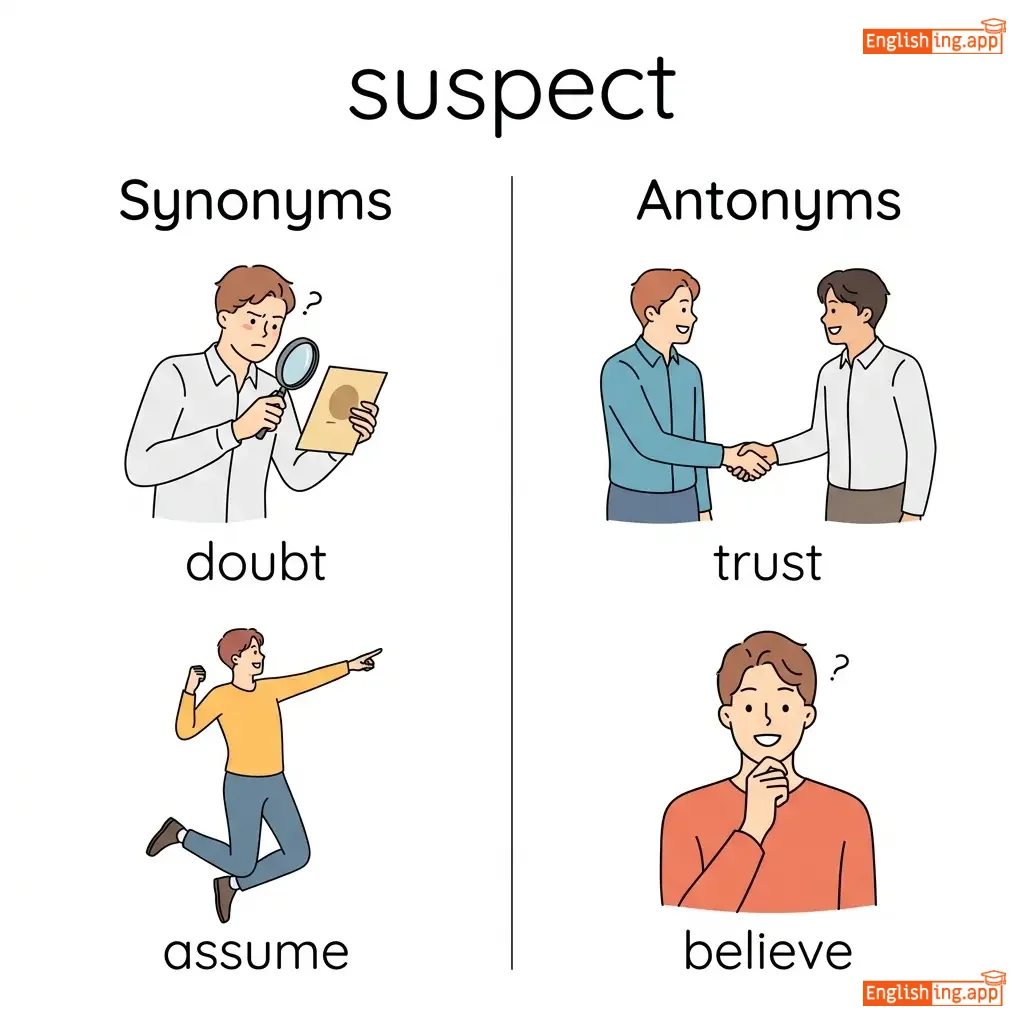
doubt, assume, suppose, accuse
••••••
|
trust, believe, absolve
••••••
|
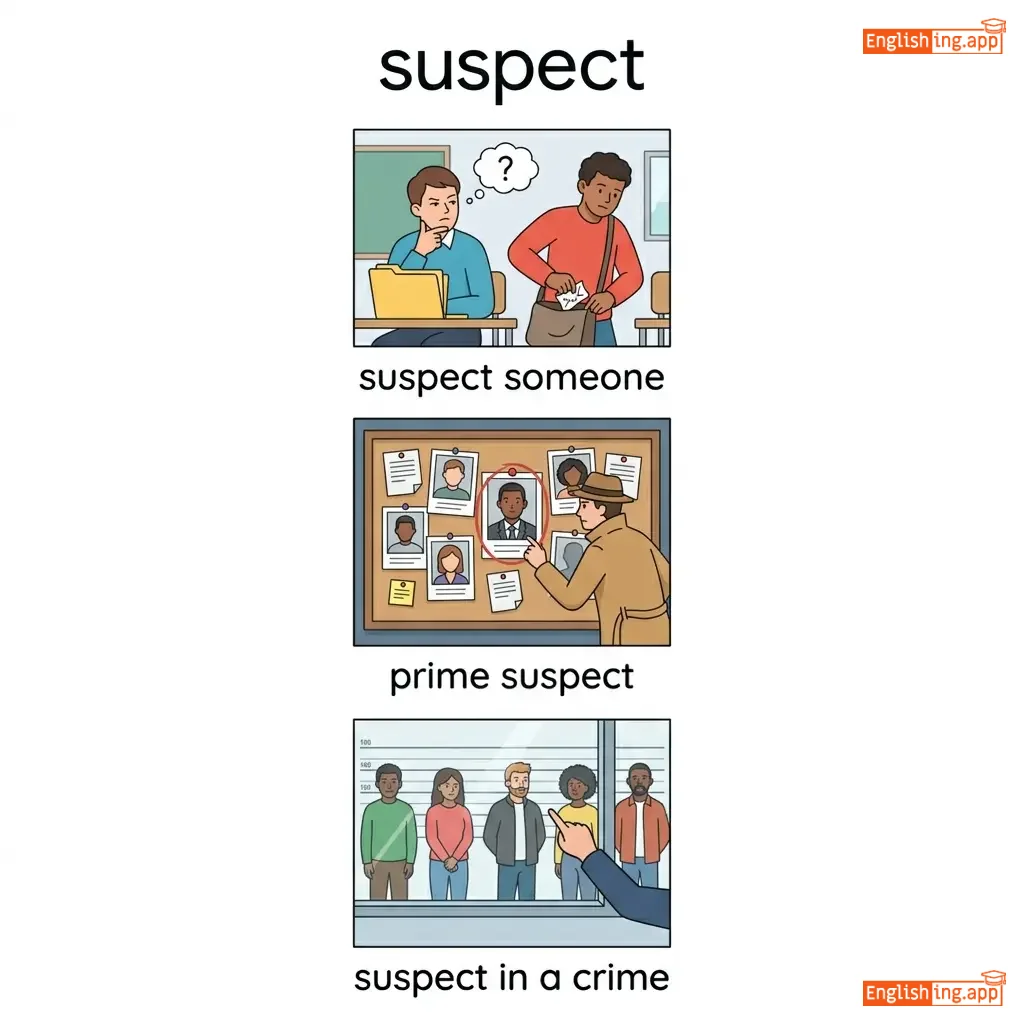
suspect someone, prime suspect, suspect in a crime
••••••
|
No •••••• |
|
⏸️
••••••
|
/səˈspɛnd/
verb
(サスペンド)
••••••
|
- •••••• |
一時停止する
ichijiteishi suru
••••••
|
suspended
サスペンデッド
••••••
|
suspended
サスペンデッド
••••••
|
suspends
サスペンズ
••••••
|
suspending
サスペンディング
••••••
|
To temporarily stop something from being active or valid.
••••••
|
The company decided to suspend his membership.
その会社は彼の会員資格をサスペンドすることに決めました。
••••••
|
その会社は彼の会員資格をサスペンドすることに決めました。
Sono kaisha wa kare no kaiin shikaku wo sasupendo suru koto ni kimemashita.
••••••
|
suspend disbelief
サスペンド・ディスビリーフ
••••••
|
to willingly accept something unrealistic for the sake of enjoyment
••••••
|
不信を一時停止する
fushin wo ichijiteishi suru
••••••
|
halt, delay, interrupt, pause
••••••
|
continue, resume, proceed
••••••
|
suspend activities, suspend operations, suspend from work
••••••
|
サスペンドは休止ボタンのようなもの—すべてが止まります!
••••••
|
|
⏸️
••••••
|
/səˈspɛnʃən/
noun
(サスペンション)
••••••
|
- •••••• |
停止
teishi
••••••
|
- •••••• | - •••••• | - •••••• | - •••••• |
The act of temporarily stopping something; also refers to a system in vehicles that absorbs shock.
••••••
|
The player received a three-game suspension for misconduct. |
その選手は不正行為のために3試合の停止処分を受けました。
Sono senshu wa fusei koui no tame ni san shiai no teishi shobun o ukemashita.
••••••
|
- •••••• | - •••••• | - •••••• |
pause, stoppage, interruption, postponement, delay
••••••
|
continuation, resumption, progress
••••••
|
suspension bridge, school suspension, temporary suspension, suspension system
••••••
|
停止—学校で悪いことをすると停止されるよ。
••••••
|
|
🤨
••••••
|
/səˈspɪʃən/
noun
(suspishon)
••••••
|
- •••••• |
疑い
utagai
••••••
|
- •••••• | - •••••• | - •••••• | - •••••• |
a feeling or belief that someone has done something wrong or illegal
••••••
|
He was arrested on suspicion of theft. |
彼は窃盗の疑いで逮捕された。
Kare wa settō no utagai de taiho sareta.
••••••
|
arouse suspicion |
to make people think that something wrong or illegal may have happened
••••••
|
疑いを引き起こす
utagai o hikiokosu
••••••
|
doubt, mistrust, distrust, skepticism, uncertainty
••••••
|
trust, confidence, belief
••••••
|
raise suspicion, under suspicion, deep suspicion, suspicion of
••••••
|
Suspicion は日本語で疑い — 疑いを持つと suspicion が起こります!
••••••
|
|
🕵️
••••••
|
/səˈspɪʃəs/
adjective
(サスピシャス)
••••••
|
- •••••• |
疑わしい
utagawashī
••••••
|
- •••••• | - •••••• | - •••••• | - •••••• |
Feeling doubt or distrust about someone or something.
••••••
|
She gave me a suspicious look when I entered late. |
遅れて入ったとき、彼女は私を疑わしい目で見ました。
Okurete haitta toki, kanojo wa watashi o utagawashī me de mimashita.
••••••
|
under suspicious circumstances |
In a way that causes doubt or mistrust.
••••••
|
疑わしい状況下で
utagawashī jōkyōka de
••••••
|
distrustful, doubtful, wary, skeptical, uneasy
••••••
|
trusting, certain, confident
••••••
|
suspicious activity, suspicious behavior, suspicious look, suspicious mind
••••••
|
疑わしい—何か怪しい時、それが疑わしいという意味です。
••••••
|
|
🌱
••••••
|
/səˈsteɪn/
verb
(サステイン)
••••••
|
- •••••• |
維持する
ijisuru
••••••
|
sustained
サステインド
••••••
|
sustained
サステインド
••••••
|
sustains
サステインズ
••••••
|
sustaining
サステイニング
••••••
|
To support, maintain, or keep something going over time.
••••••
|
The team worked hard to sustain their success.
チームは彼らの成功を維持するために一生懸命働きました。
••••••
|
チームは彼らの成功を維持するために一生懸命働きました。
Chīmu wa karera no seikō o iji suru tame ni isshōkenmei hatarakimashita.
••••••
|
sustain a loss
損失を被る
••••••
|
To suffer or experience a loss.
••••••
|
損失を被る
Sonshitsu o kōmuru
••••••
|
maintain, uphold, continue, support, endure
••••••
|
abandon, quit, discontinue
••••••
|
sustain growth, sustain life, sustain damage, sustain interest
••••••
|
Sustainは「維持する」- 成功を保つように覚えましょう。
••••••
|
|
🌱
••••••
|
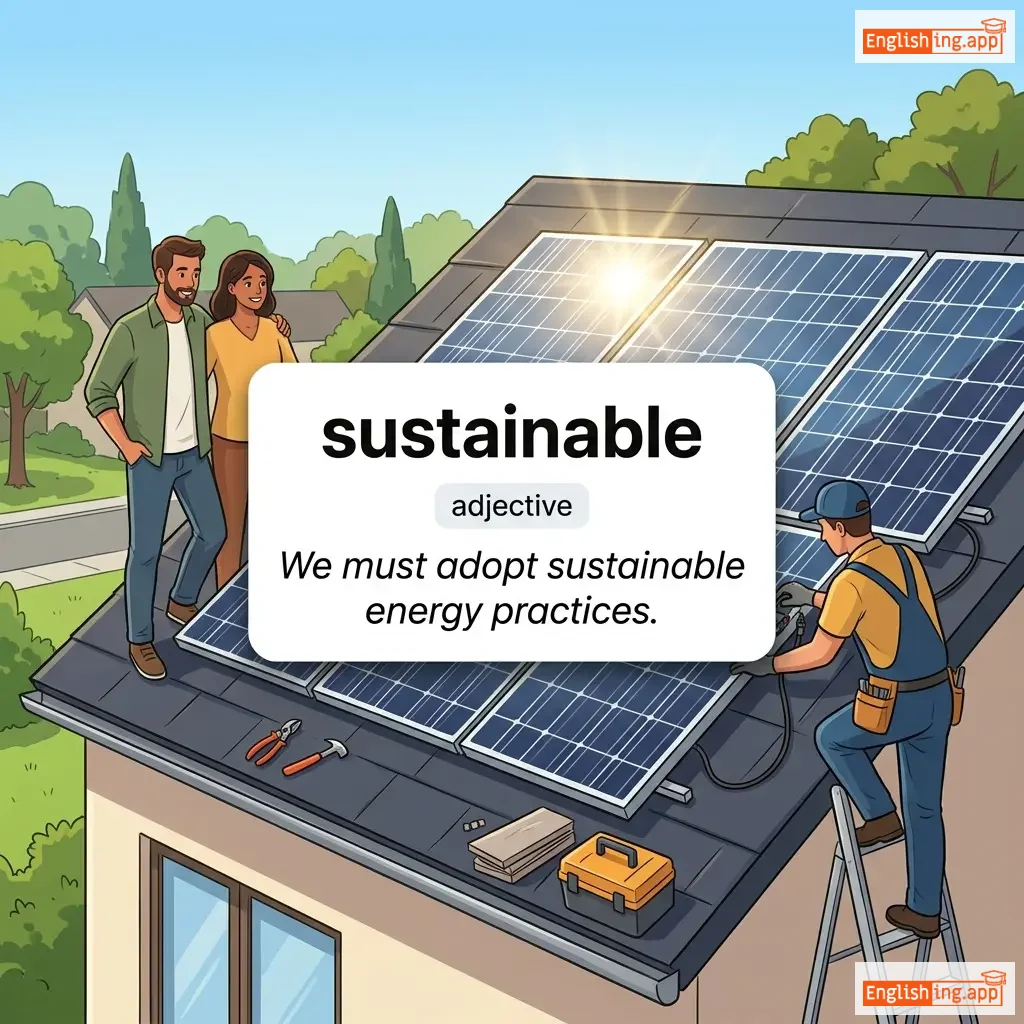
/səˈsteɪnəbəl/
adjective
(サステイナブル)
••••••
|
|
持続可能
jizoku kanou
••••••
|
- •••••• | - •••••• | - •••••• | - •••••• |
able to continue over a long period without causing harm to the environment or using up resources
••••••
|
We must adopt sustainable energy practices.
私たちは持続可能なエネルギーの実践を採用する必要があります。
••••••
|
私たちは持続可能なエネルギーの実践を採用する必要があります。
Watashitachi wa jizoku kanou na enerugī no jissen wo saiyou suru hitsuyou ga arimasu.
••••••
|
sustainable development
持続可能な開発
••••••
|
development that meets present needs without compromising future generations’ ability to meet theirs
••••••
|
持続可能な開発
jizoku kanou na kaihatsu
••••••
|
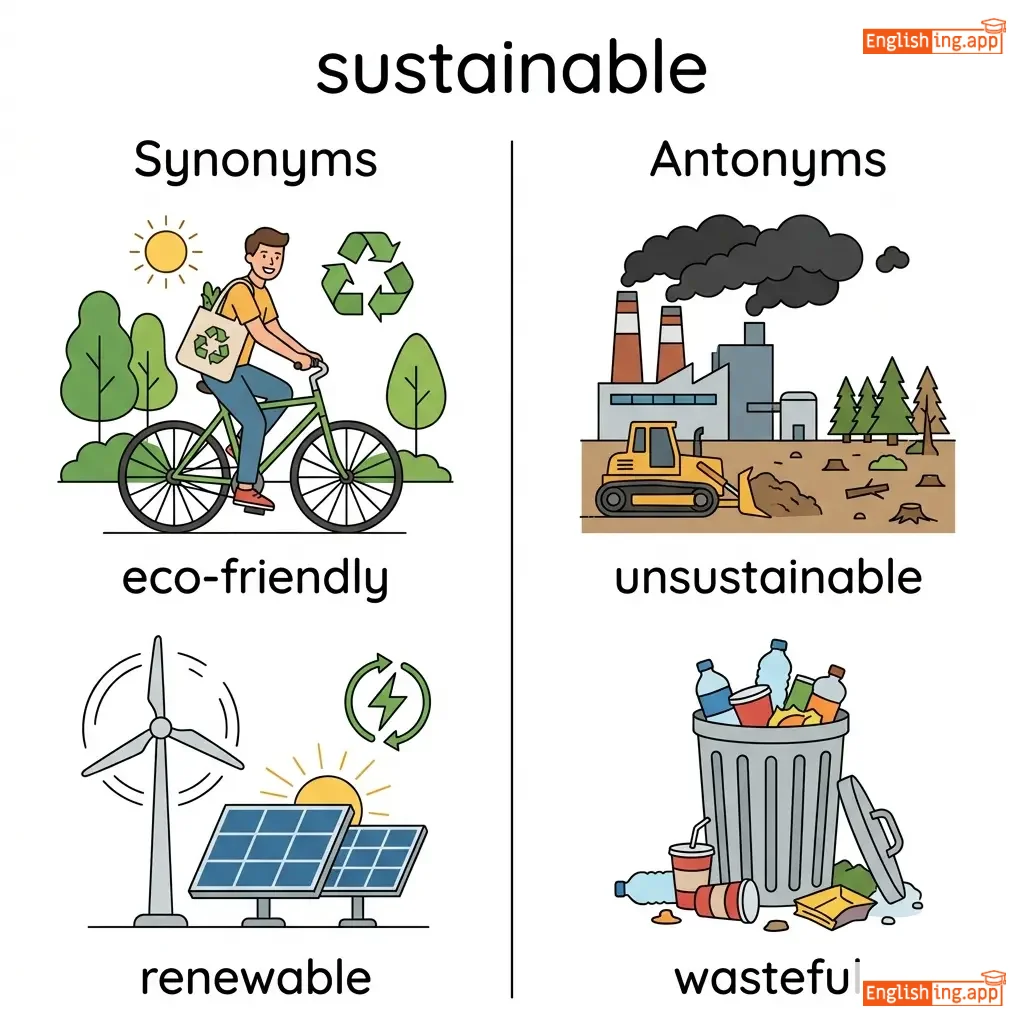
eco-friendly, renewable, viable, maintainable, green
••••••
|
unsustainable, wasteful, destructive
••••••
|
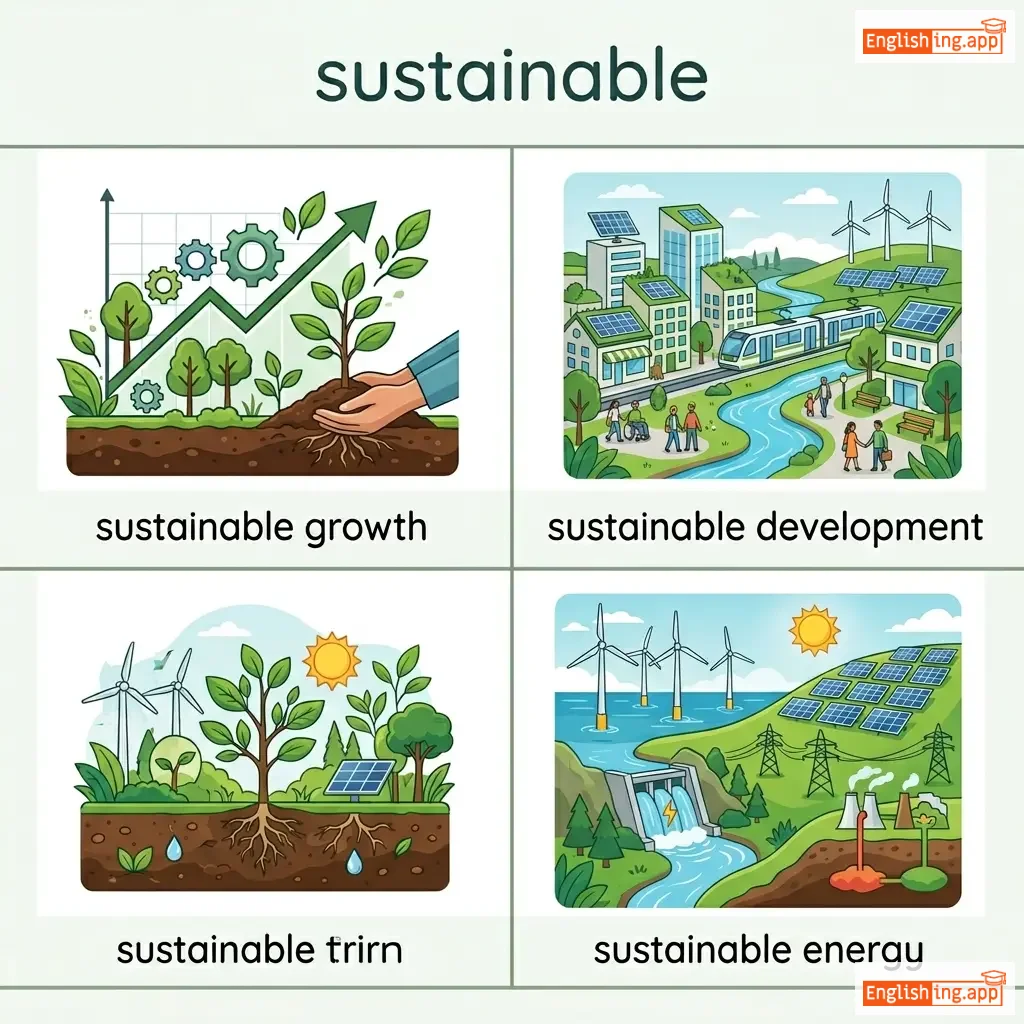
sustainable growth, sustainable development, sustainable energy, sustainable future
••••••
|
Sustain は維持すること — sustainable は維持できること、持続可能です。
••••••
|
|
🫗
••••••
|
/ˈswɒloʊ/
verb
(スワロー)
••••••
|
- •••••• |
飲み込む
nomikomu
••••••
|
swallowed
スワロウド
••••••
|
swallowed
スワロウド
••••••
|
swallows
スワロウズ
••••••
|
swallowing
スワローイング
••••••
|
to make food or drink go down your throat into your stomach
••••••
|
He swallowed the pill with a glass of water.
彼は薬を水で飲み込みました。
••••••
|
彼は薬を水で飲み込みました。
Kare wa kusuri o mizu de nomikomimashita.
••••••
|
swallow one's pride
プライドを飲み込む
••••••
|
to do something that is humiliating or embarrassing but necessary
••••••
|
プライドを飲み込む
Puraido o nomikomu
••••••
|
gulp, ingest, consume, devour, absorb
••••••
|
spit, vomit, reject
••••••
|
swallow food, swallow hard, swallow a pill, swallow the truth
••••••
|
Swallow は飲み込むという意味 — 鳥が昆虫を飲み込むのと同じ!
••••••
|
|
🗣️
••••••
|
/swɛər/
verb
(スウェア)
••••••
|
|
誓う
chikau
••••••
|
swore
スウォア
••••••
|
sworn
スウォーン
••••••
|
swears
スウェアズ
••••••
|
swearing
スウェアリング
••••••
|
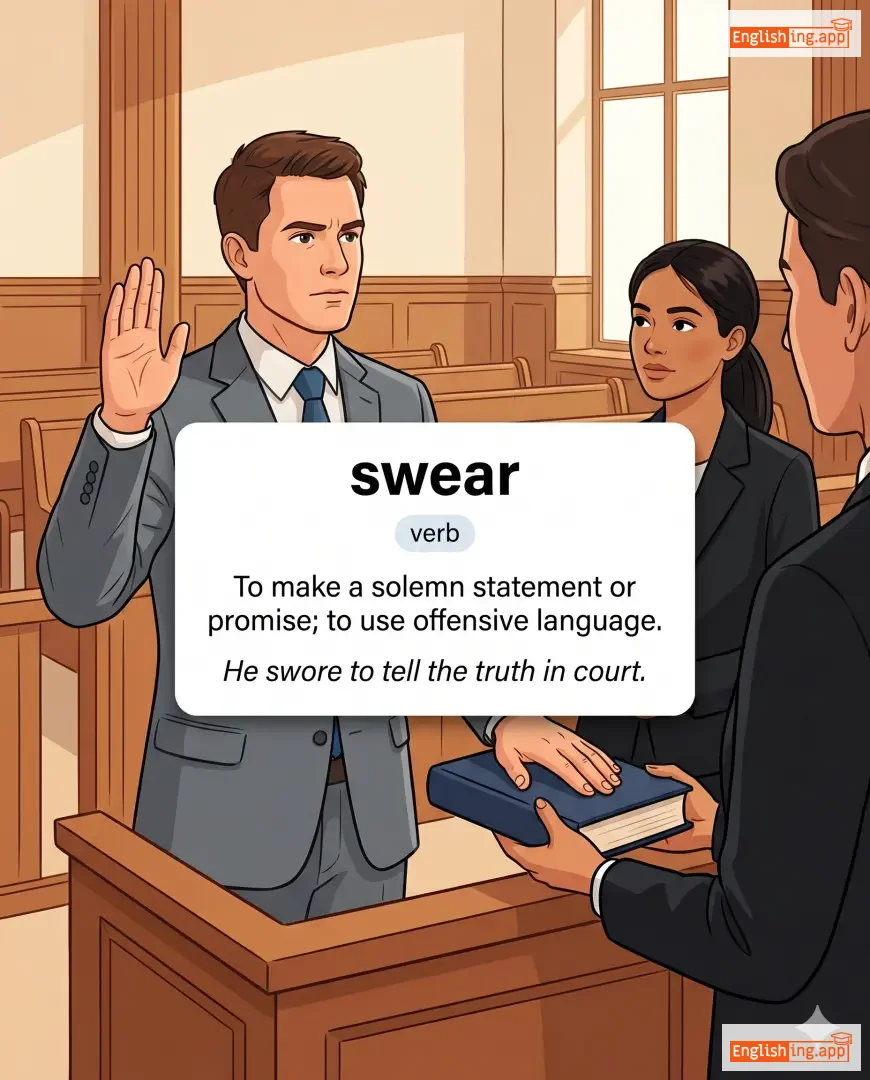
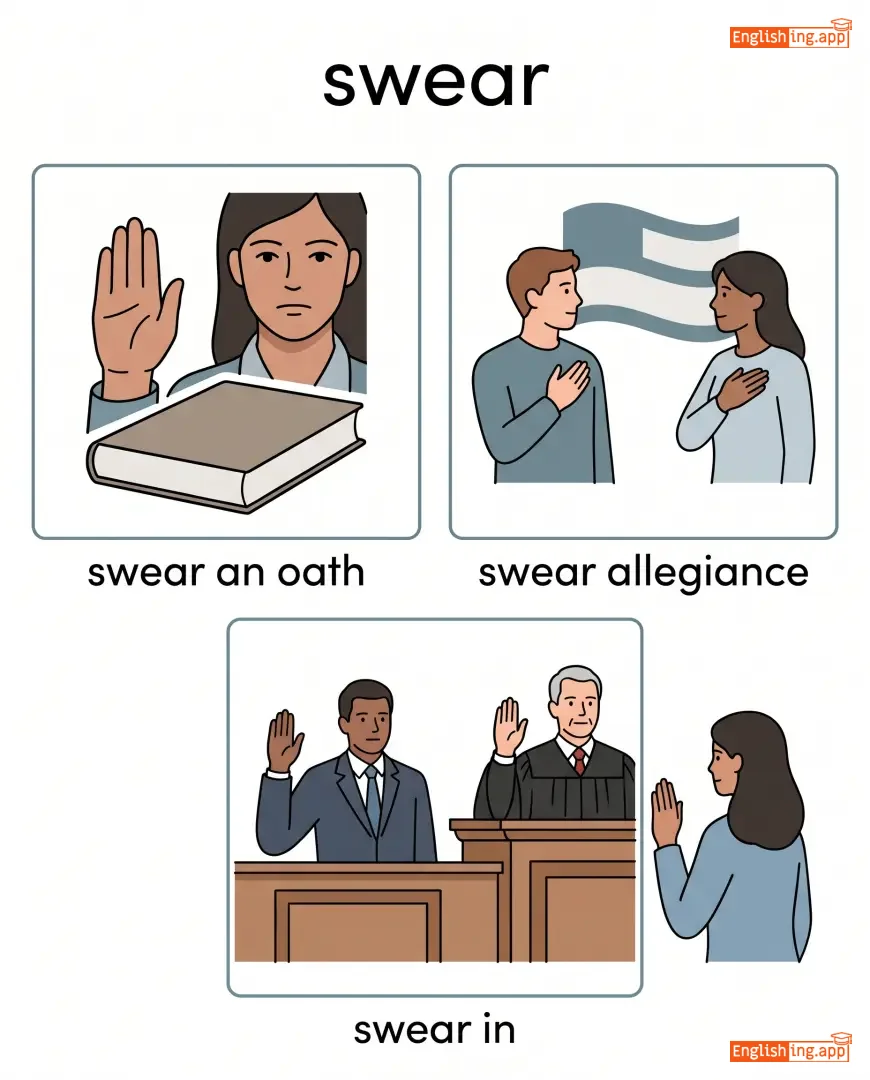
To make a solemn statement or promise; to use offensive language.
••••••
|
He swore to tell the truth in court.
ヒー スウォア トゥ テル ザ トゥルース イン コート
••••••
|
彼は法廷で真実を話すと誓った。
Kare wa hōtei de shinjitsu o hanasu to chikatta.
••••••
|
swear by
スウェア バイ
••••••
|
To have great confidence in something.
••••••
|
何かに誓う
nanika ni chikau
••••••
|
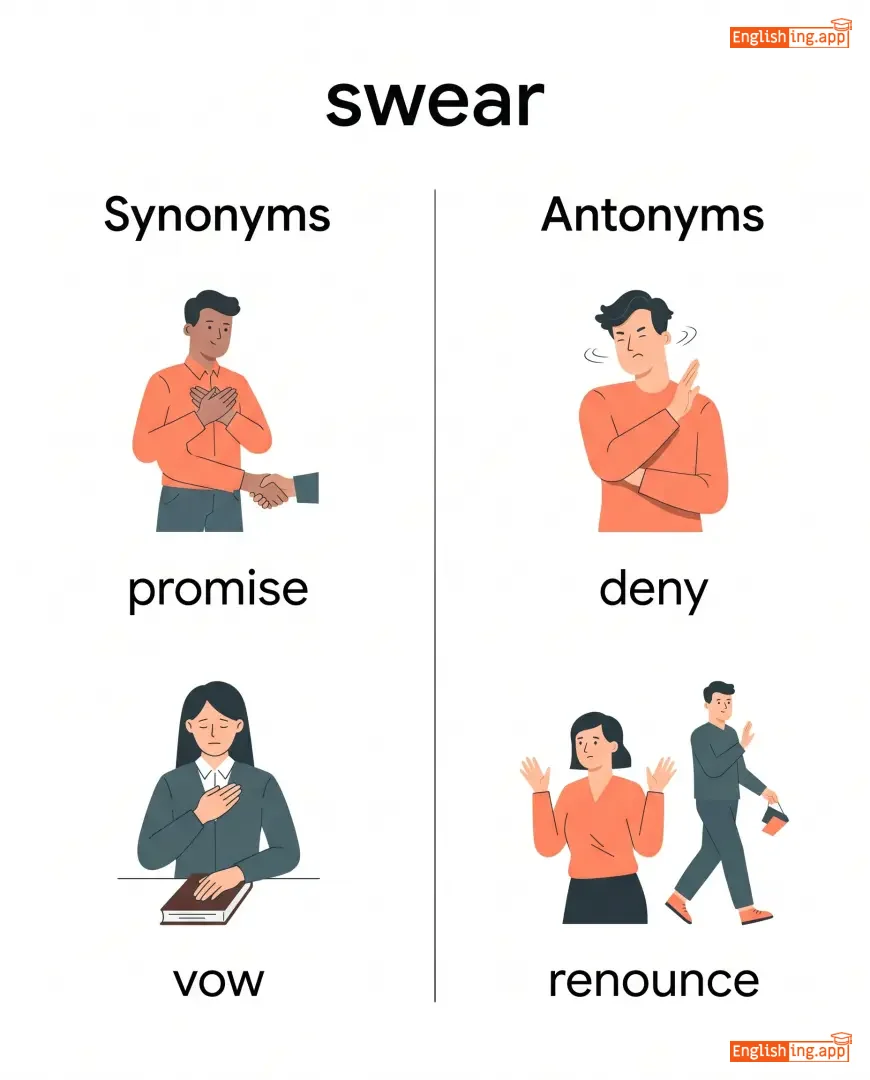
promise, vow, curse, pledge, affirm
••••••
|
deny, renounce, retract
••••••
|
swear an oath, swear allegiance, swear in, swear by
••••••
|
Swear は誓うという意味 – 法廷で誓う。
••••••
|
|
💦
••••••
|
/swɛt/
verb
(スウェット)
••••••
|
- •••••• |
汗
ase
••••••
|
sweated
スウェットした
••••••
|
sweated
スウェットした
••••••
|
sweats
スウェットする
••••••
|
sweating
スウェットしている
••••••
|
to produce liquid from your skin when you are hot or nervous
••••••
|
He was sweating after running for an hour.
彼は1時間走った後、汗をかいていた。
••••••
|
彼は1時間走った後、汗をかいていた。
Kare wa 1 jikan hashitta ato, ase o kaite ita.
••••••
|
break a sweat
汗をかく
••••••
|
to begin to perspire, usually from physical effort
••••••
|
汗をかく
ase o kaku
••••••
|
perspire, exude, drip, toil, labor
••••••
|
rest, relax, cool
••••••
|
heavy sweat, cold sweat, sweat profusely, make someone sweat
••••••
|
Sweaterを着ると汗(sweat)が出る!
••••••
|
|
🧶
••••••
|
/ˈswɛtər/
noun
••••••
|
- •••••• | - •••••• | - •••••• | - •••••• | - •••••• | - •••••• |
a warm knitted piece of clothing worn on the upper body
••••••
|
She wore a red sweater to keep warm in the cold weather. |
- •••••• | - •••••• | - •••••• | - •••••• |
jumper, pullover, cardigan, hoodie, sweatshirt
••••••
|
shirt, blouse, jacket
••••••
|
wool sweater, knitted sweater, wear a sweater, red sweater
••••••
|
No •••••• |
|
👕
••••••
|
/ˈswɛtʃɜːrt/
noun
(スウェットシャツ)
••••••
|
- •••••• |
スウェットシャツ
suwettoshatsu
••••••
|
- •••••• | - •••••• | - •••••• | - •••••• |
A casual, long-sleeved pullover garment, typically made of cotton or fleece, worn for warmth or comfort.
••••••
|
He wore a grey sweatshirt while jogging in the park.
彼は公園でジョギングをするとき、灰色のスウェットシャツを着ていた。
••••••
|
彼は公園でジョギングをするとき、灰色のスウェットシャツを着ていた。
Kare wa kouen de jogingu wo suru toki, haiiro no suwettoshatsu wo kiteita.
••••••
|
- •••••• | - •••••• | - •••••• |
jumper, pullover, hoodie, fleece
••••••
|
tank top, T-shirt
••••••
|
cotton sweatshirt, grey sweatshirt, sports sweatshirt, oversized sweatshirt
••••••
|
スウェットシャツ de sweat demo atatakai
••••••
|
|
🧹
••••••
|
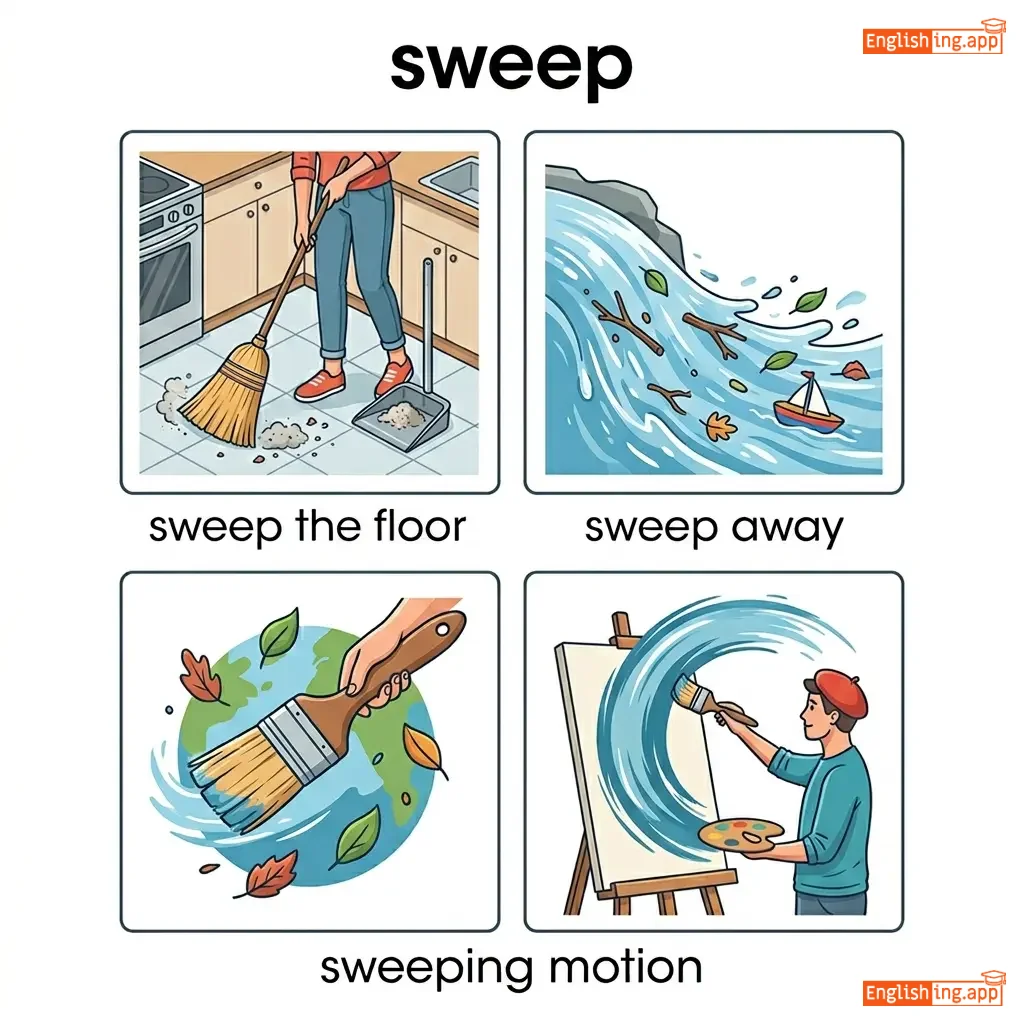
/swiːp/
verb
(スウィープ)
••••••
|
|
掃く
haku
••••••
|
swept
スウェプト
••••••
|
swept
スウェプト
••••••
|
sweeps
スウィープス
••••••
|
sweeping
スウィーピング
••••••
|
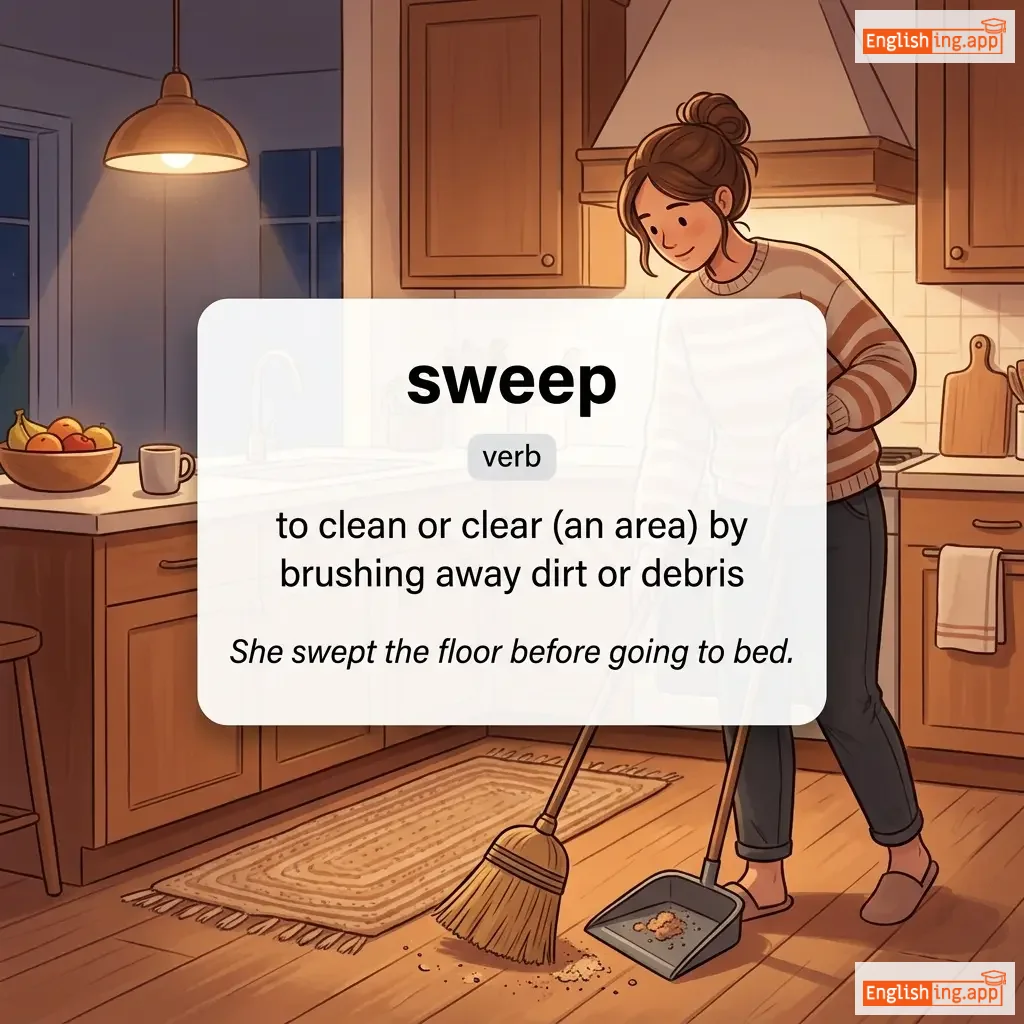
to clean by brushing; to move quickly and smoothly
••••••
|
She sweeps the floor every morning.
シー スウィープス ザ フロア エブリ モーニング。
••••••
|
彼女は毎朝床を掃く。
Kanojo wa mai asa yuka o haku
••••••
|
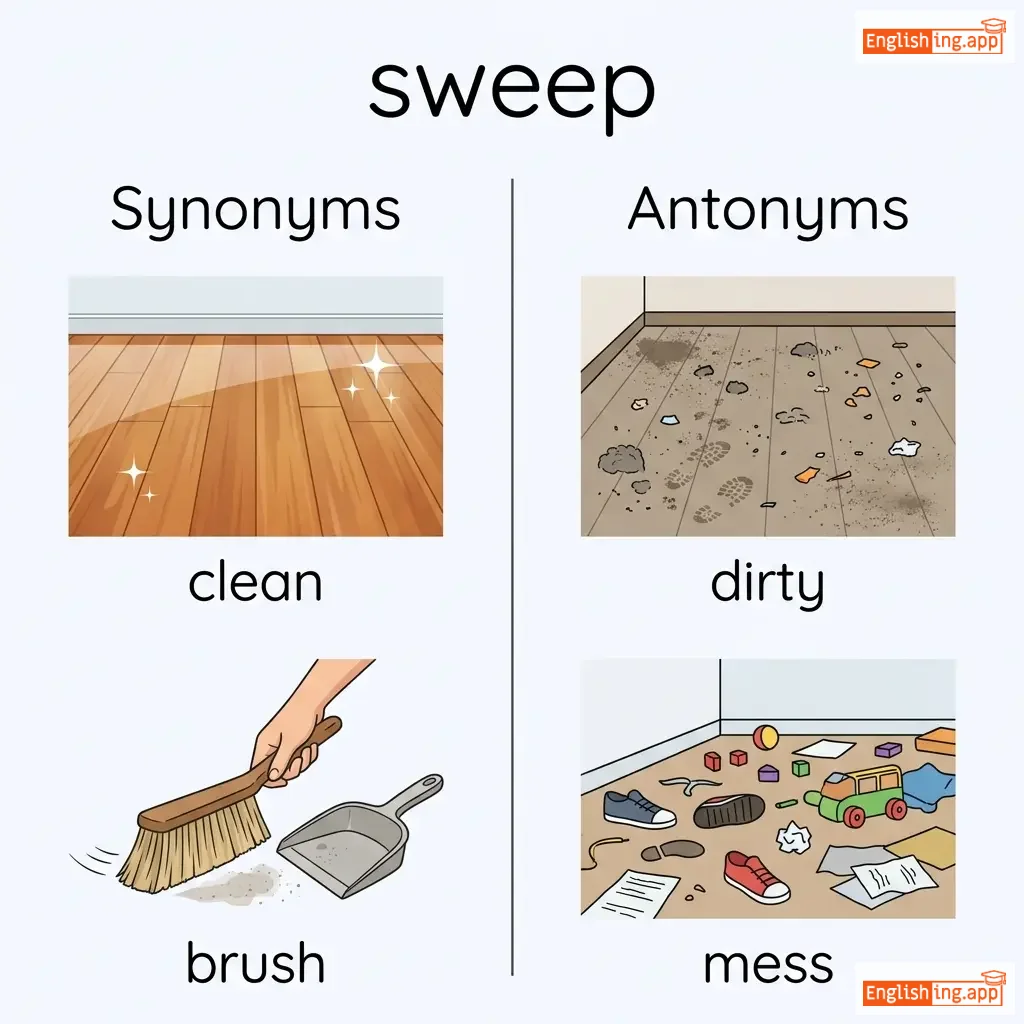
- •••••• | - •••••• | - •••••• |
brush, clean, move quickly, glide
••••••
|
dirty, mess up
••••••
|
sweep away, sweep clean, sweep up, sweep aside, sweep through, sweep under
••••••
|
‘Sweep’ sounds like ‘スウィープ’ — remember ‘haku’ to brush away dust!
••••••
|
|
🍯
••••••
|
/swiːt/
adjective
(スウィート)
••••••
|
- •••••• |
甘い; 親切な; 魅力的な
amai, shinsetsu na, miryokuteki na
••••••
|
- •••••• | - •••••• | - •••••• | - •••••• |
having a pleasant taste; kind and gentle; pleasing
••••••
|
She has a sweet voice that everyone loves to hear.
シー ハズ ア スウィート ボイス ザット エヴリワン ラブズ トゥ ヒア。
••••••
|
彼女は甘い声を持っていて、皆が聴きたがる。
Kanojo wa amai koe o motte ite, minna ga kikitaru.
••••••
|
- •••••• | - •••••• | - •••••• |
pleasant, lovely, kind, gentle, sugary
••••••
|
bitter, sour, harsh, unpleasant, rude
••••••
|
sweet taste, sweet smell, sweet dreams, sweet person
••••••
|
Sweet is like 甘い, and 甘い means sweet!
••••••
|
|
💨
••••••
|
/swɛl/
verb
(スウェル)
••••••
|
- •••••• |
膨れる
fukurero
••••••
|
swelled
スウェルド
••••••
|
swelled
スウェルド
••••••
|
swells
スウェルズ
••••••
|
swelling
スウェリング
••••••
|
to increase in size or volume, often due to internal pressure or emotional intensity
••••••
|
Her ankle began to swell after the injury.
怪我をした後、彼女の足首が腫れ始めた。
••••••
|
怪我をした後、彼女の足首が腫れ始めた。
Kega o shita ato, kanojo no ashi kubi ga hare hajimeta.
••••••
|
swell with pride
誇りで膨れ上がる
••••••
|
to feel very proud
••••••
|
誇りで膨れ上がる
hokori de fukureagaru
••••••
|
expand, enlarge, grow, bulge, inflate
••••••
|
shrink, contract
••••••
|
swell up, swell with pride, swell in number
••••••
|
SWEater 膨らむ、だから膨れるが swell
••••••
|
|
🏊
••••••
|
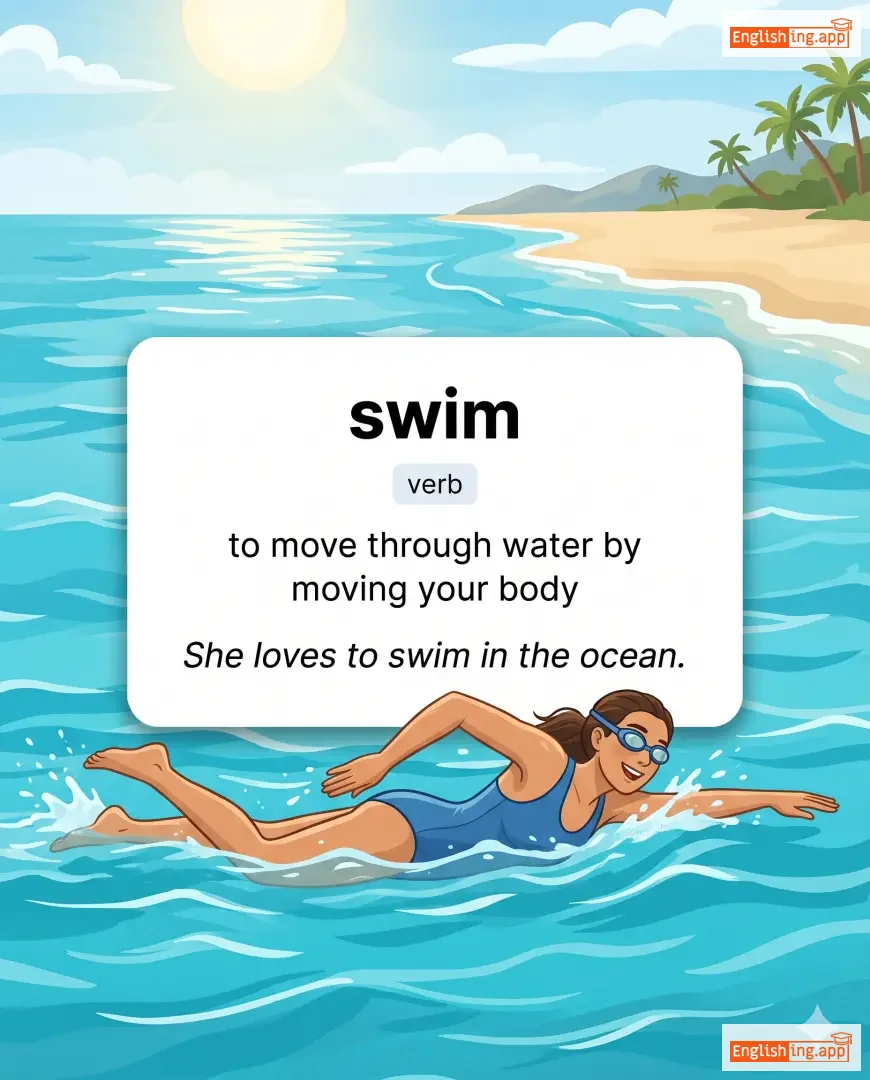
/swɪm/
verb
(スウィム)
••••••
|
|
泳ぐ
oyogu
••••••
|
swam
スワム
••••••
|
swum
スワム
••••••
|
swims
スウィムス
••••••
|
swimming
スウィミング
••••••
|
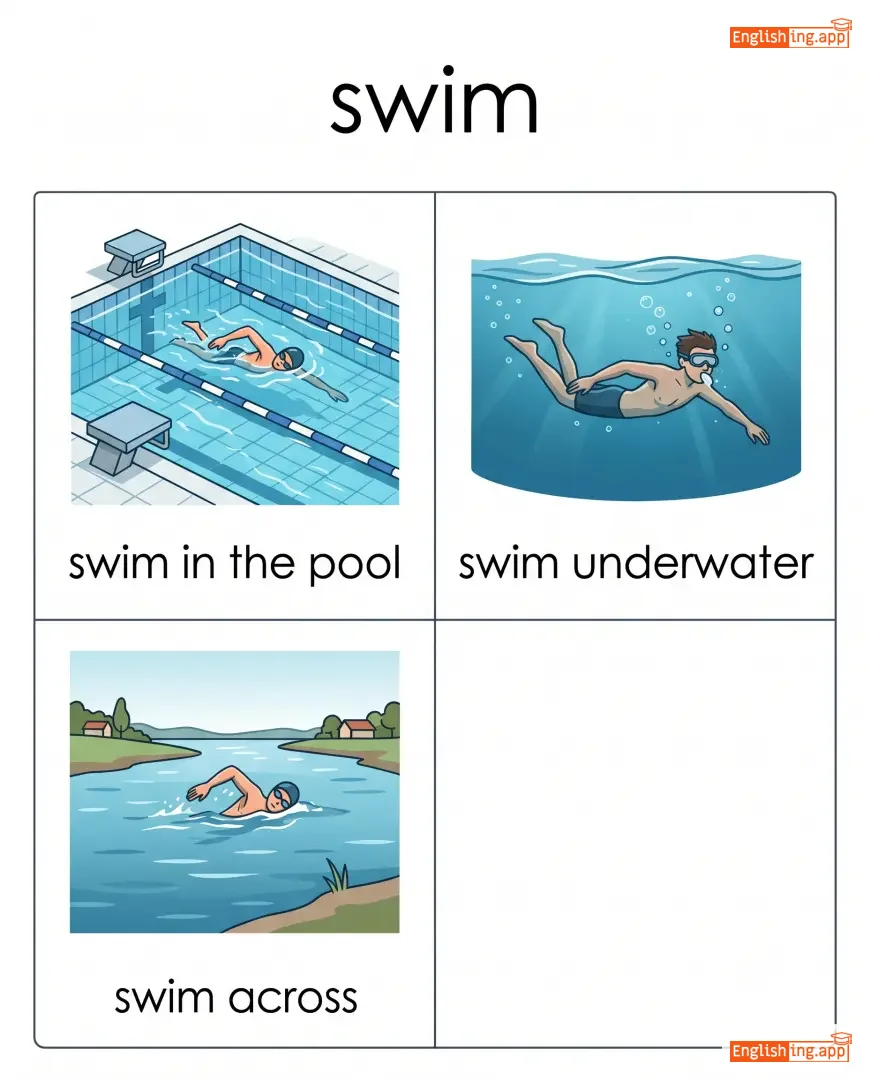
to move through water using body movements
••••••
|
I love to swim in the ocean during summer.
私は夏に海で泳ぐのが好きです。
••••••
|
私は夏に海で泳ぐのが好きです。
Watashi wa natsu ni umi de oyogu no ga suki desu.
••••••
|
- •••••• | - •••••• | - •••••• |
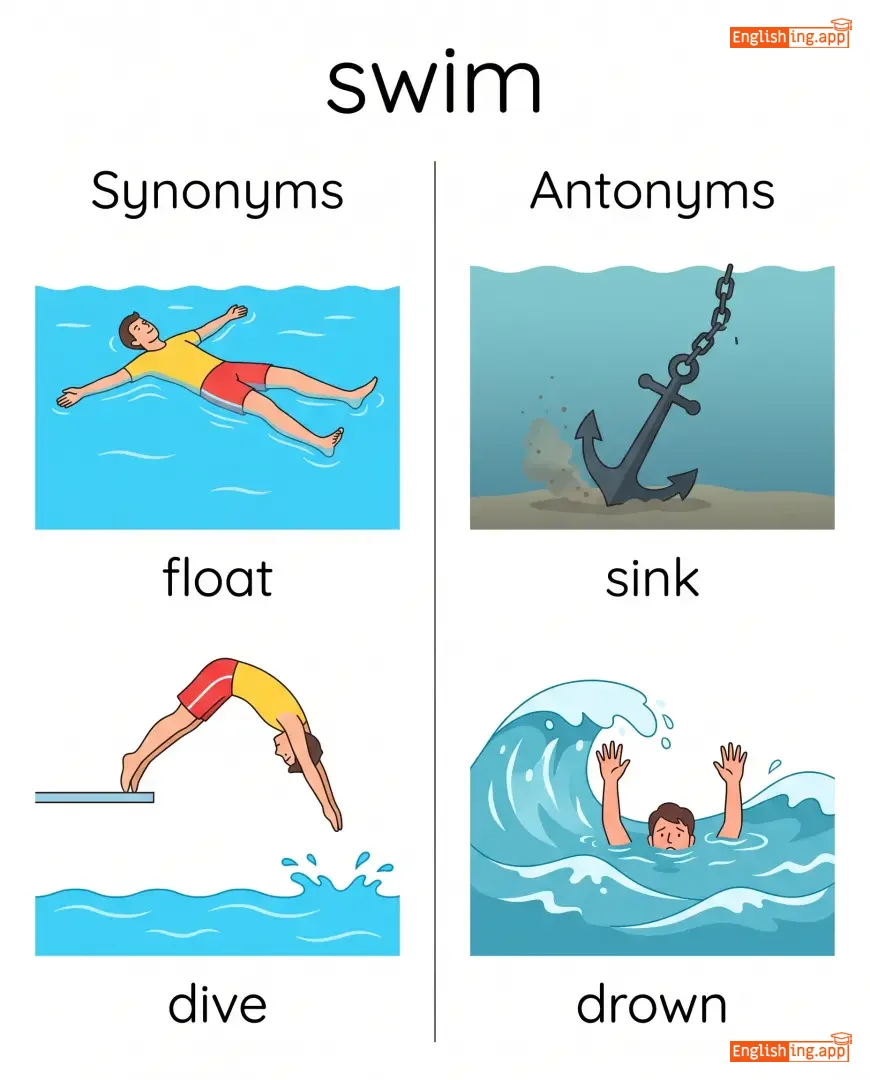
float, paddle, dive, stroke
••••••
|
sink, drown, walk
••••••
|
swim laps, swim stroke, swim fast, swim upstream
••••••
|
泳ぐ:魚のように水中を簡単に動く。
••••••
|
|
🏊
••••••
|
/ˈswɪmɪŋ/
noun
(スイミング)
••••••
|
- •••••• |
水泳
suiei
••••••
|
- •••••• | - •••••• | - •••••• |
swimming
スイミング
••••••
|
the activity or sport of moving through water using the limbs
••••••
|
Swimming is a great way to stay fit and healthy.
水泳は健康でフィットな状態を保つための素晴らしい方法です。
••••••
|
水泳は健康でフィットな状態を保つための素晴らしい方法です。
Suiei wa kenko de fitto na jōtai wo tamotsu tame no subarashii hōhō desu.
••••••
|
in the same boat
同じボートに乗る
••••••
|
to be in the same situation as others
••••••
|
同じ状況にある
onaji jōkyō ni aru
••••••
|
diving, floating, bathing, aquatic exercise, water sport
••••••
|
sinking, drowning
••••••
|
go swimming, swimming pool, swimming lessons, swimming competition
••••••
|
水泳でフィットを維持しよう!
••••••
|
|
⛓️
••••••
|
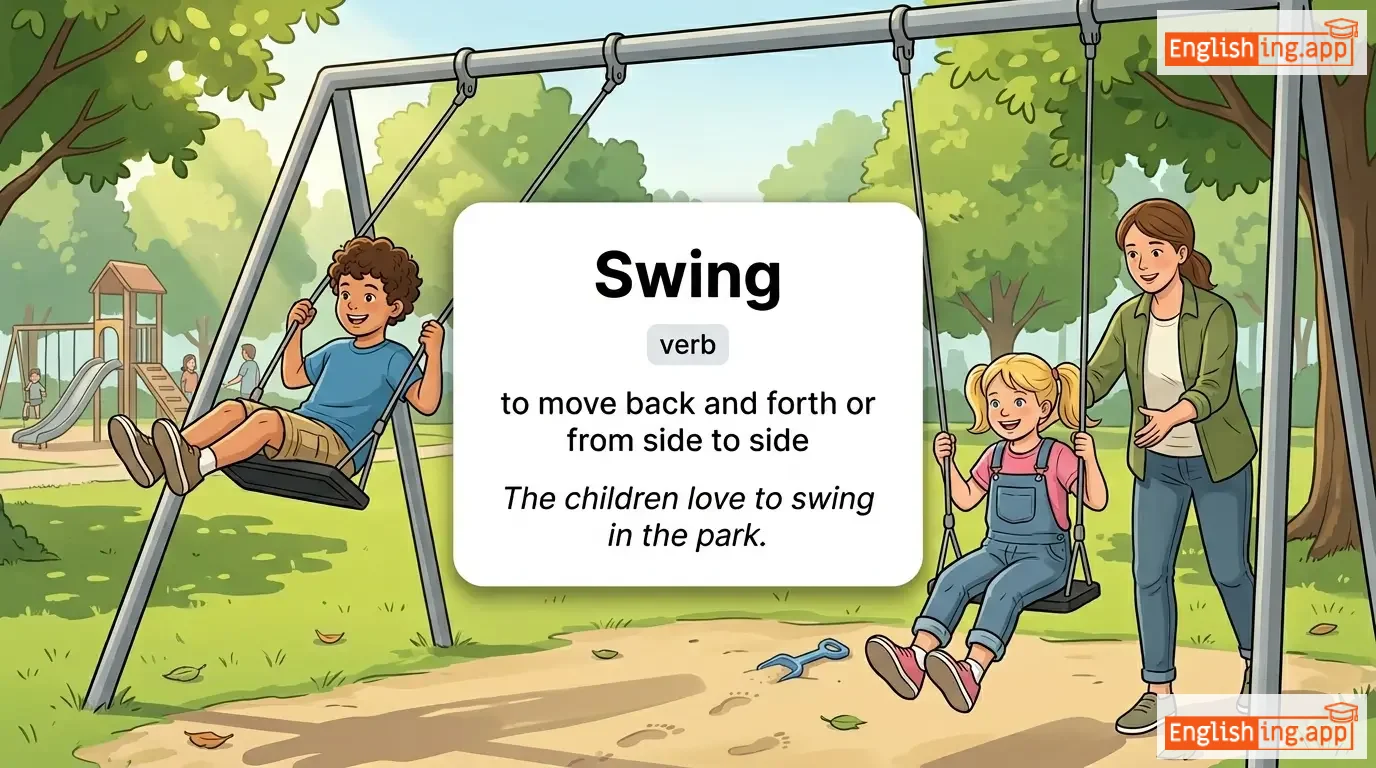
/swɪŋ/
verb
(スウィング)
••••••
|
|
ブランコをする
buranko wo suru
••••••
|
swung
スワング
••••••
|
swung
スワング
••••••
|
swings
スウィングス
••••••
|
swinging
スウィンギング
••••••
|
to move back and forth or from side to side
••••••
|
The children love to swing in the park.
子供たちは公園でブランコをするのが大好きです。
••••••
|
子供たちは公園でブランコをするのが大好きです。
Kodomotachi wa kōen de buranko o suru no ga daisuki desu.
••••••
|
swing into action
すぐに行動を起こす
••••••
|
to start doing something quickly and effectively
••••••
|
迅速に行動を起こす
Jinsoku ni kōdō o okosu
••••••
|
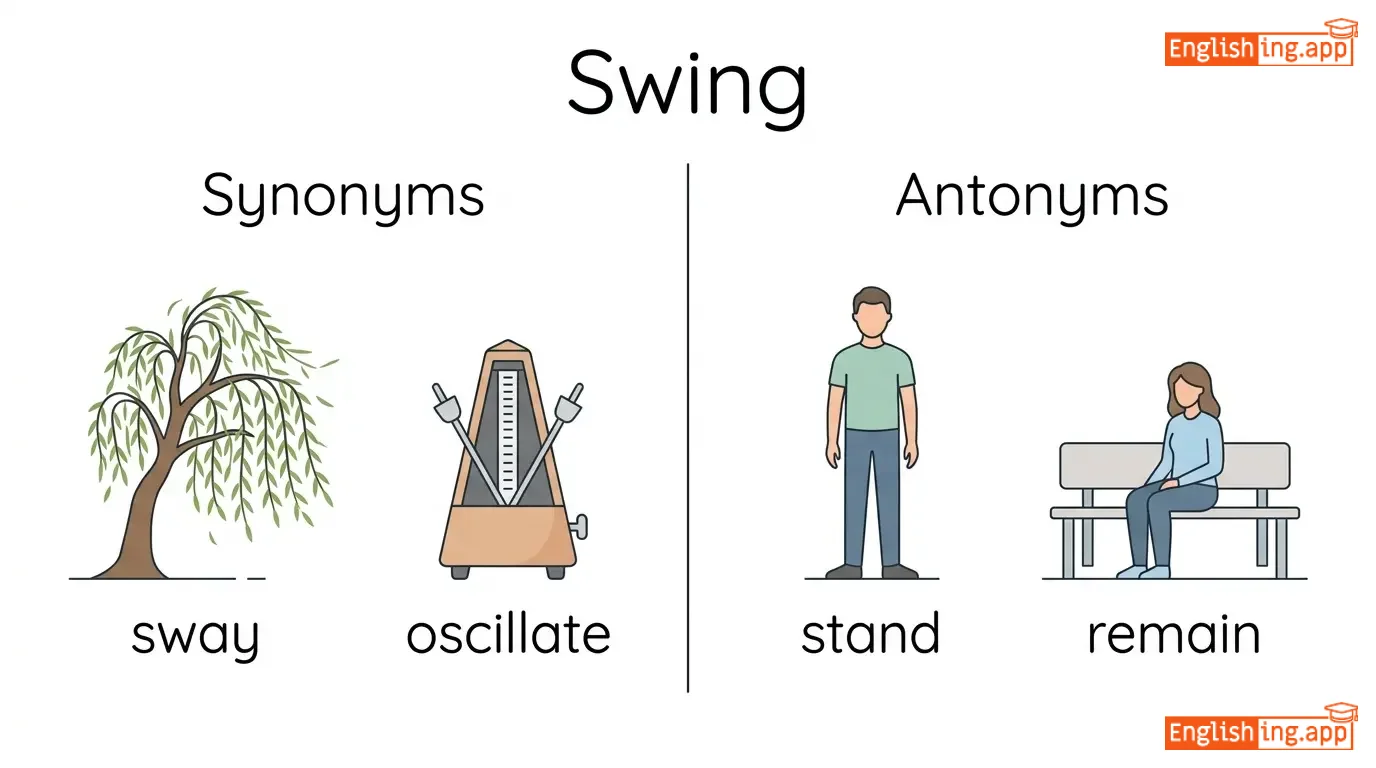
sway, oscillate, rotate, wave
••••••
|
stand, remain, stay
••••••
|
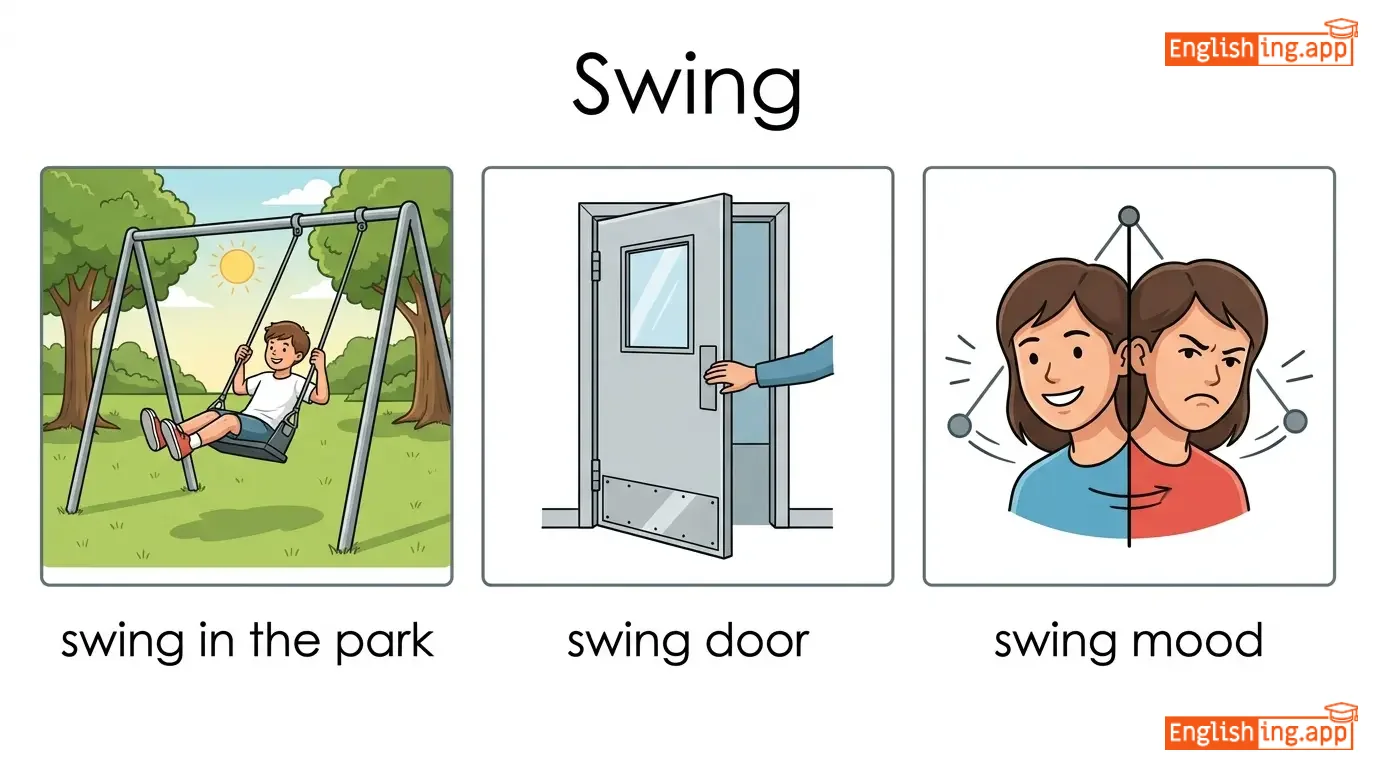
swing in the park, swing door, swing mood, swing votes
••••••
|
Swingのように揺れる、ブランコの動き
••••••
|
|
🤕
••••••
|
/ˈswoʊlən/
adjective
(スウォーレン)
••••••
|
- •••••• |
腫れた
hareta
••••••
|
- •••••• | - •••••• | - •••••• | - •••••• |
Enlarged or puffed up, usually due to injury, inflammation, or fluid accumulation
••••••
|
Her ankle was swollen after she twisted it during the hike.
ハイキング中に足首をひねった後、足首が腫れていました。
••••••
|
ハイキング中に足首をひねった後、足首が腫れていました。
Haikingu-chuu ni ashikubi o hinetta ato, ashikubi ga harete imashita.
••••••
|
swollen with pride
誇りで膨れた
••••••
|
Feeling extremely proud
••••••
|
誇りで膨れた
hokori de fureta
••••••
|
inflated, puffed, bloated, engorged, distended
••••••
|
shrunken, deflated, reduced
••••••
|
swollen ankle, swollen eye, swollen river, swollen cheek, swollen glands
••••••
|
足首が腫れた = swollen ankle
••••••
|

