|
表情符号
|
单词 | Images | 翻译 | 过去时 | 过去分词 | 第三人称单数 | 动名词 | 含义 | 例句 | 例句翻译 | 示例表达 | 示例表达含义 | 示例表达翻译 | 同义词 | 反义词 | 搭配词 | 助记符 |
|---|---|---|---|---|---|---|---|---|---|---|---|---|---|---|---|---|---|
|
🛒
••••••
|
/ˈsuː.pəˌmɑː.kɪt/
noun
(超市)
••••••
|
- •••••• |
超市
chaoshi
••••••
|
- •••••• | - •••••• | - •••••• | - •••••• |
a large self-service store selling food and household goods
••••••
|
She went to the supermarket to buy groceries. |
她去超市买杂货。
Tā qù chāoshì mǎi záhuò.
••••••
|
- •••••• | - •••••• | - •••••• |
grocery store, mart, store, food market, hypermarket
••••••
|
small shop, kiosk
••••••
|
big supermarket, local supermarket, supermarket chain, supermarket shopping, supermarket employee
••••••
|
超市 — 一个可以一站式购物的地方 🛒
••••••
|
|
👀
••••••
|
/ˈsuːpərvaɪz/
verb
(sūpèrvàiz)
••••••
|

|
监督
jiāndū
••••••
|
supervised
sūpèrvàizd
••••••
|
supervised
sūpèrvàizd
••••••
|
supervises
sūpèrvàizè
••••••
|
supervising
sūpèrvàizīng
••••••
|
to watch and direct a person or activity to ensure things are done correctly
••••••
|
The teacher supervises students during the exam.
老师在考试期间监督学生。
••••••
|
老师在考试期间监督学生。
Lǎoshī zài kǎoshì qījiān jiāndū xuéshēng.
••••••
|
- •••••• | - •••••• | - •••••• |
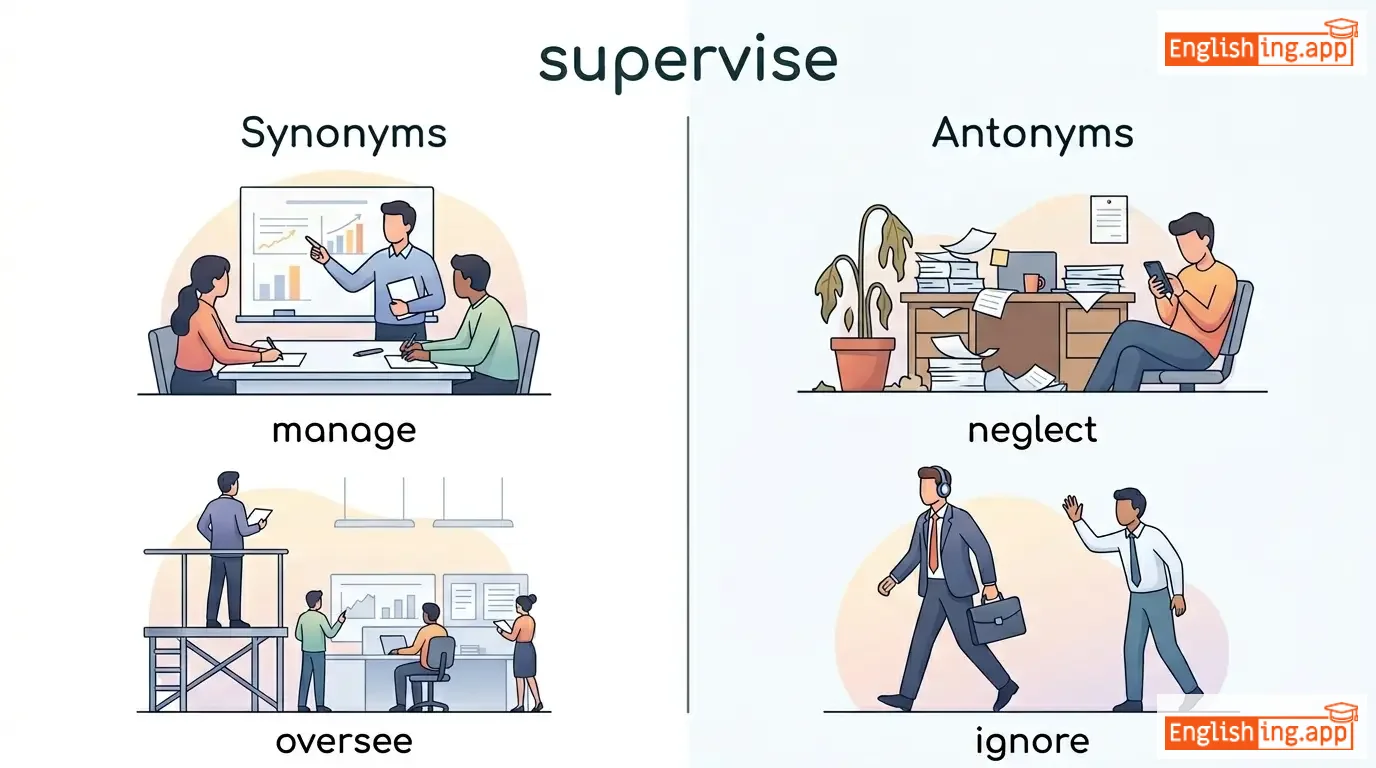
oversee, monitor, manage, direct
••••••
|
neglect, ignore, abandon
••••••
|
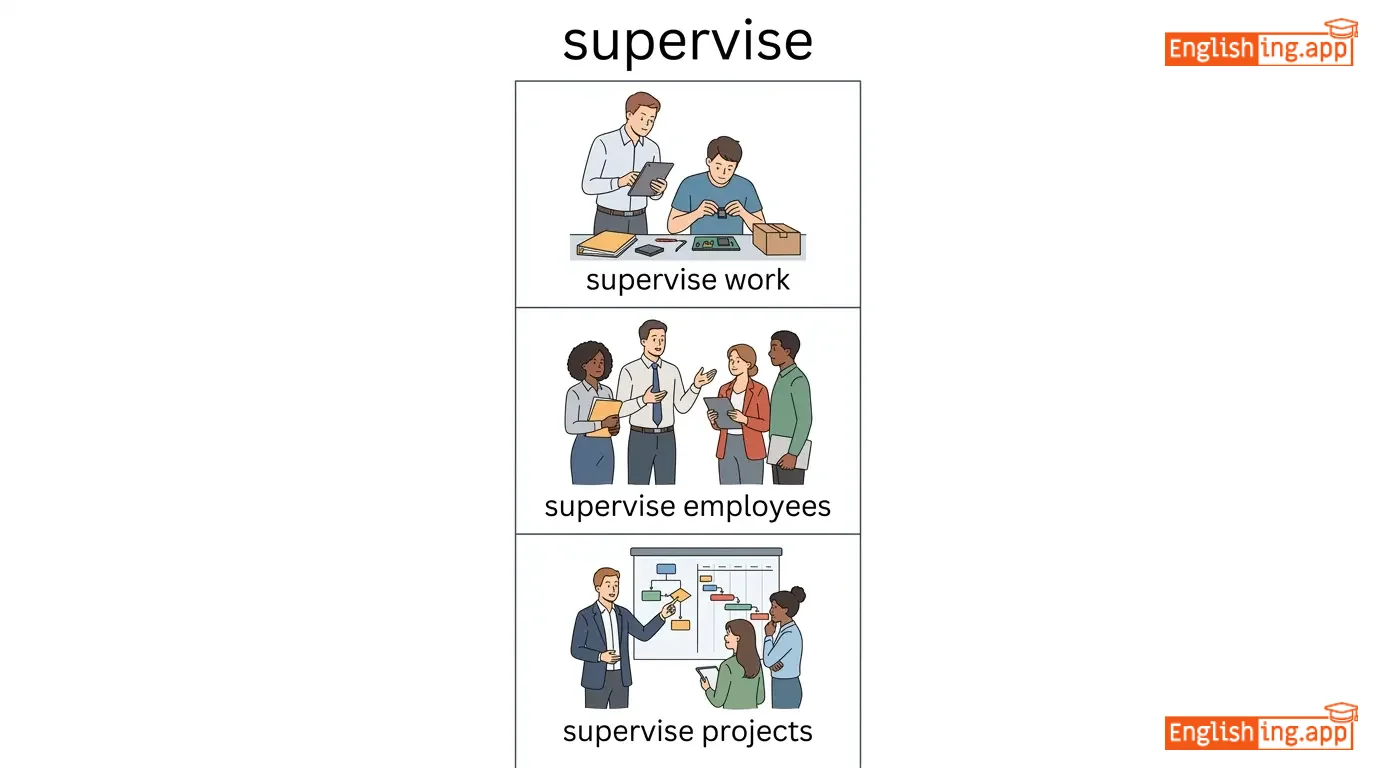
supervise closely, supervise work, supervise students, under supervision
••••••
|
监督一切,就像超级英雄一样!
••••••
|
|
👀
••••••
|
/ˌsuːpərˈvɪʒən/
noun
(supervision)
••••••
|
- •••••• |
监督
jiāndū
••••••
|
- •••••• | - •••••• | - •••••• | - •••••• |
the action or process of overseeing or managing something or someone
••••••
|
The project was completed under the supervision of an experienced manager. |
该项目在一位经验丰富的经理监督下完成。
Gāi xiàngmù zài yī wèi jīngyàn fēngfù de jīnglǐ jiāndū xià wánchéng.
••••••
|
- •••••• | - •••••• | - •••••• |
oversight, management, control, direction
••••••
|
neglect, mismanagement
••••••
|
under supervision, supervision of staff, strict supervision
••••••
|
Supervision is like 'super watch' – always keeping an eye on things!
••••••
|
|
🧑💼
••••••
|
/ˈsuːpəvaɪzə(r)/
noun
(超级管理员)
••••••
|
- •••••• |
监督员
jiāndū yuán
••••••
|
- •••••• | - •••••• | - •••••• | - •••••• |
a person who manages or directs the work of others
••••••
|
The supervisor checked the progress of each employee. |
主管检查了每个员工的进展。
Zhǔguǎn jiǎnchá le měi gè yuángōng de jìnzhǎn.
••••••
|
under the supervision of |
being directed or controlled by someone in charge
••••••
|
在...的监督下
zài... de jiāndū xià
••••••
|
manager, overseer, inspector, director, controller
••••••
|
subordinate, worker, employee
••••••
|
project supervisor, factory supervisor, direct supervisor, under the supervision
••••••
|
监督员 (jiāndū yuán) 就是管理他人的超级人员!
••••••
|
|
🍽️
••••••
|
/ˈsʌp.ər/
noun
(sùpèr)
••••••
|
- •••••• |
晚餐
wǎn cān
••••••
|
- •••••• | - •••••• | - •••••• | - •••••• |
an evening meal, typically a light or informal one
••••••
|
We usually have supper around seven o'clock.
Wǒmen tōngcháng zài qī diǎn chī wǎn cān.
••••••
|
我们通常在七点左右吃晚餐。
Wǒmen tōngcháng zài qī diǎn zuǒyòu chī wǎn cān.
••••••
|
- •••••• | - •••••• | - •••••• |
dinner, evening meal
••••••
|
breakfast, lunch
••••••
|
have supper, light supper, family supper, supper time
••••••
|
晚餐时,轻松愉快,聊着生活
••••••
|
|
💊
••••••
|
/ˈsʌplɪmənt/
noun/verb
(补充)
••••••
|
- •••••• |
补充
buchong
••••••
|
supplemented
补充的
••••••
|
supplemented
补充的
••••••
|
supplements
补充
••••••
|
supplementing
补充中
••••••
|
Something added to complete or enhance; to add extra to make up for a deficiency.
••••••
|
She takes vitamin supplements to improve her health.
她服用维生素补充剂来改善她的健康。
••••••
|
她服用维生素补充剂来改善她的健康。
Ta fuyong weishengsu buchongji lai gaishan ta de jiankang.
••••••
|
dietary supplement
膳食补充剂
••••••
|
A product taken to add nutritional value to the diet.
••••••
|
膳食补充剂
Shan shi bu chong ji
••••••
|
addition, extra, complement, enhancement, augmentation
••••••
|
reduction, subtraction, deficiency
••••••
|
vitamin supplement, dietary supplement, supplement income, supplement plan
••••••
|
Supplement means supply + cement → 添加额外的东西就像给缺失的部分加水泥!
••••••
|
|
📦
••••••
|
/səˈplaɪə(r)/
noun
(suˈplaɪə)
••••••
|
- •••••• |
供应商
gongyingshang
••••••
|
- •••••• | - •••••• | - •••••• | - •••••• |
a person or company that provides goods or services
••••••
|
The supplier delivered the products on time.
供应商按时交付了产品。
••••••
|
供应商按时交付了产品。
Gongyingshang anshi jiaofu le chanpin.
••••••
|
regular supplier
常规供应商
••••••
|
a company that provides goods or services regularly
••••••
|
常规供应商
changgui gongyingshang
••••••
|
vendor, provider, dealer, distributor, seller
••••••
|
buyer, customer, client
••••••
|
main supplier, local supplier, supplier contract, supplier agreement
••••••
|
供应商像供应服务一样,提供商品或服务。
••••••
|
|
📦
••••••
|
/səˈplaɪ/
noun
••••••
|

|
- •••••• | - •••••• | - •••••• | - •••••• | - •••••• |
the amount of something that is available to be used or consumed
••••••
|
The store has a limited supply of electronics. |
- •••••• | - •••••• | - •••••• | - •••••• |
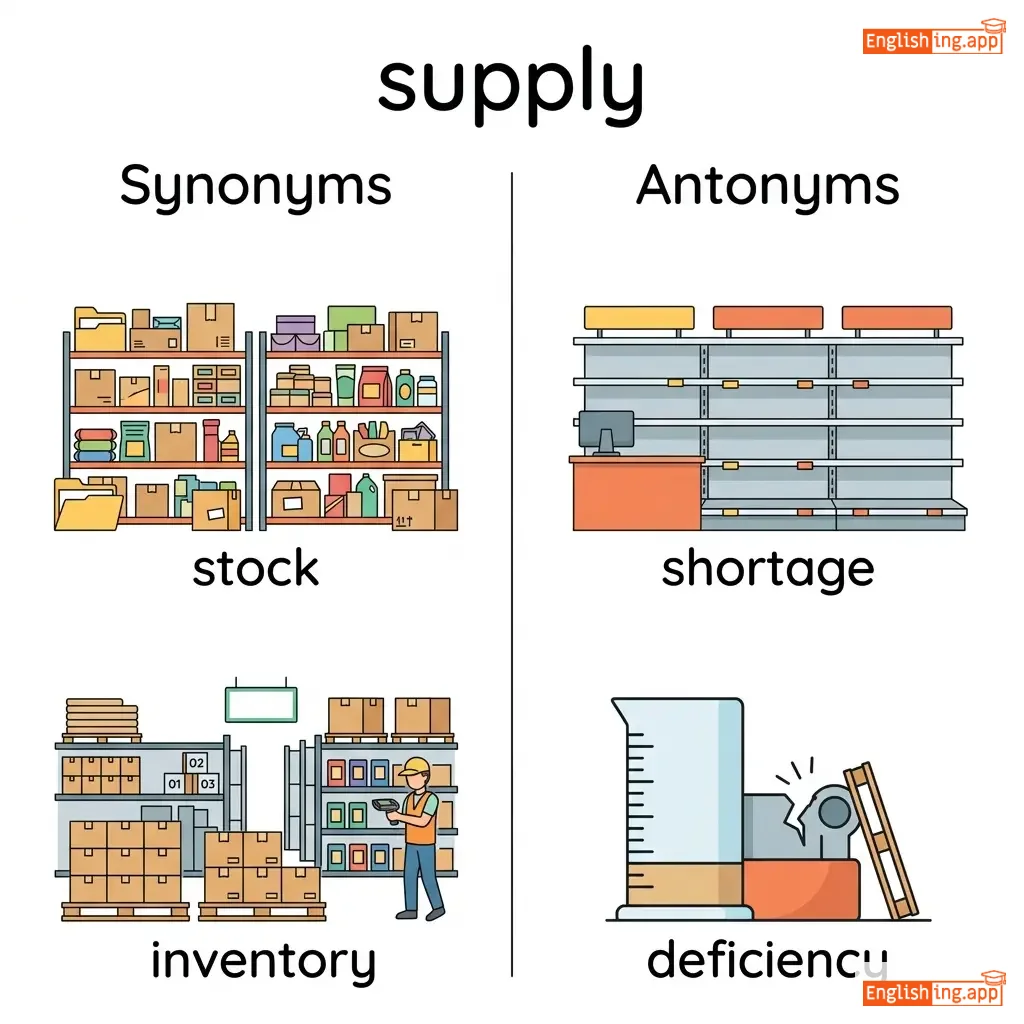
stock, inventory, provision, reserve
••••••
|
shortage, deficiency
••••••
|
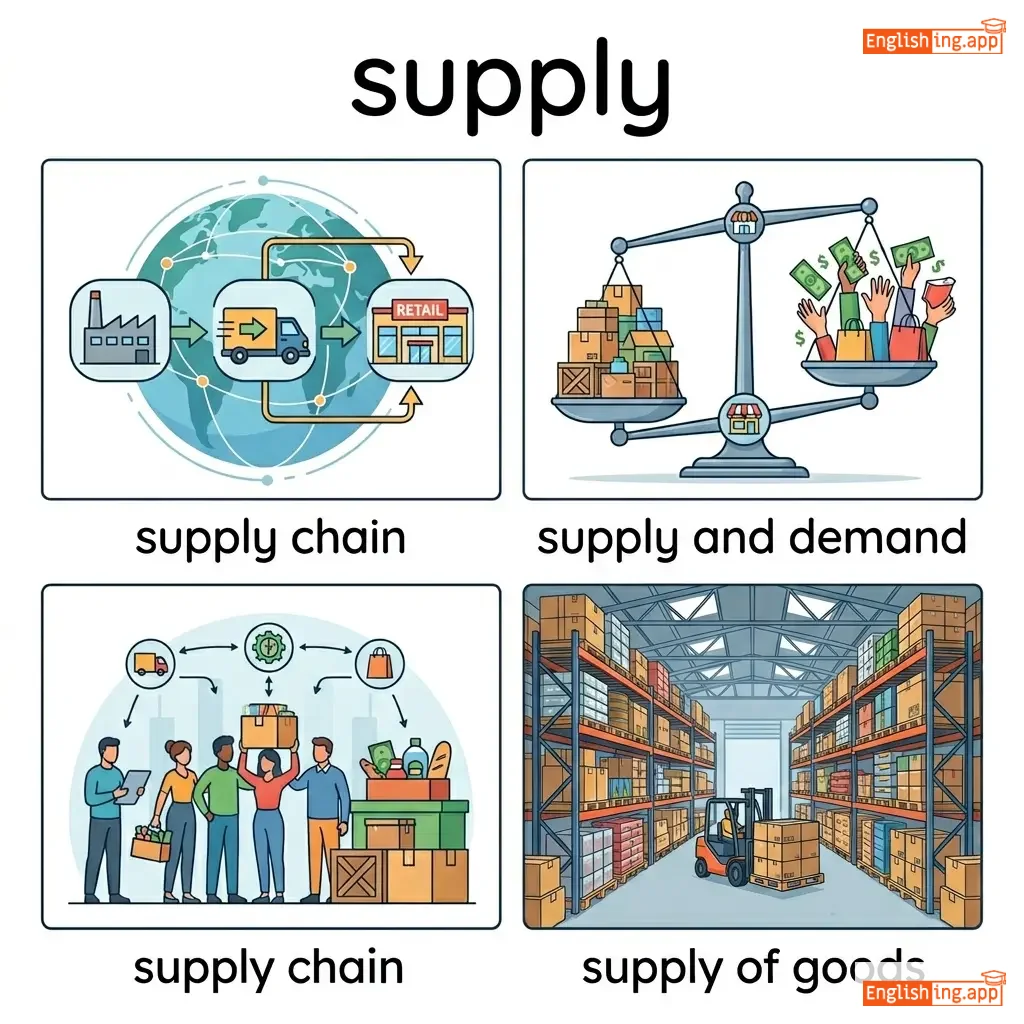
supply chain, supply and demand, supply of goods, supply shortage
••••••
|
No •••••• |
|
🤝
••••••
|
/səˈpɔːrt/
verb
(səˈpɔːrt)
••••••
|
|
支持
zhīchí
••••••
|
supported
səˈpɔːrtəd
••••••
|
supported
səˈpɔːrtəd
••••••
|
supports
səˈpɔːrts
••••••
|
supporting
səˈpɔːrtɪŋ
••••••
|
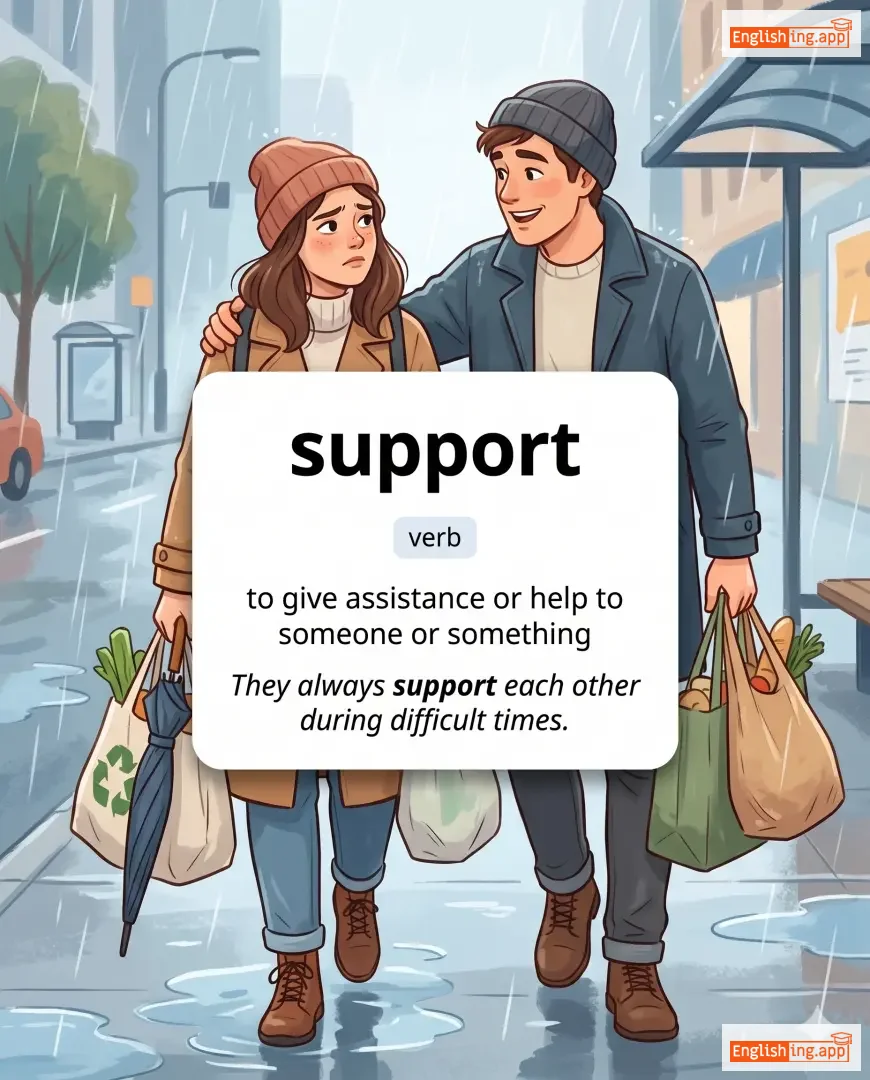
to help or assist someone; to hold up or bear the weight of something
••••••
|
The family will support their son through his studies.
家庭将支持他们的儿子完成学业。
••••••
|
家庭将支持他们的儿子完成学业。
Jiātíng jiāng zhīchí tāmen de érzi wánchéng xuéyè.
••••••
|
- •••••• | - •••••• | - •••••• |
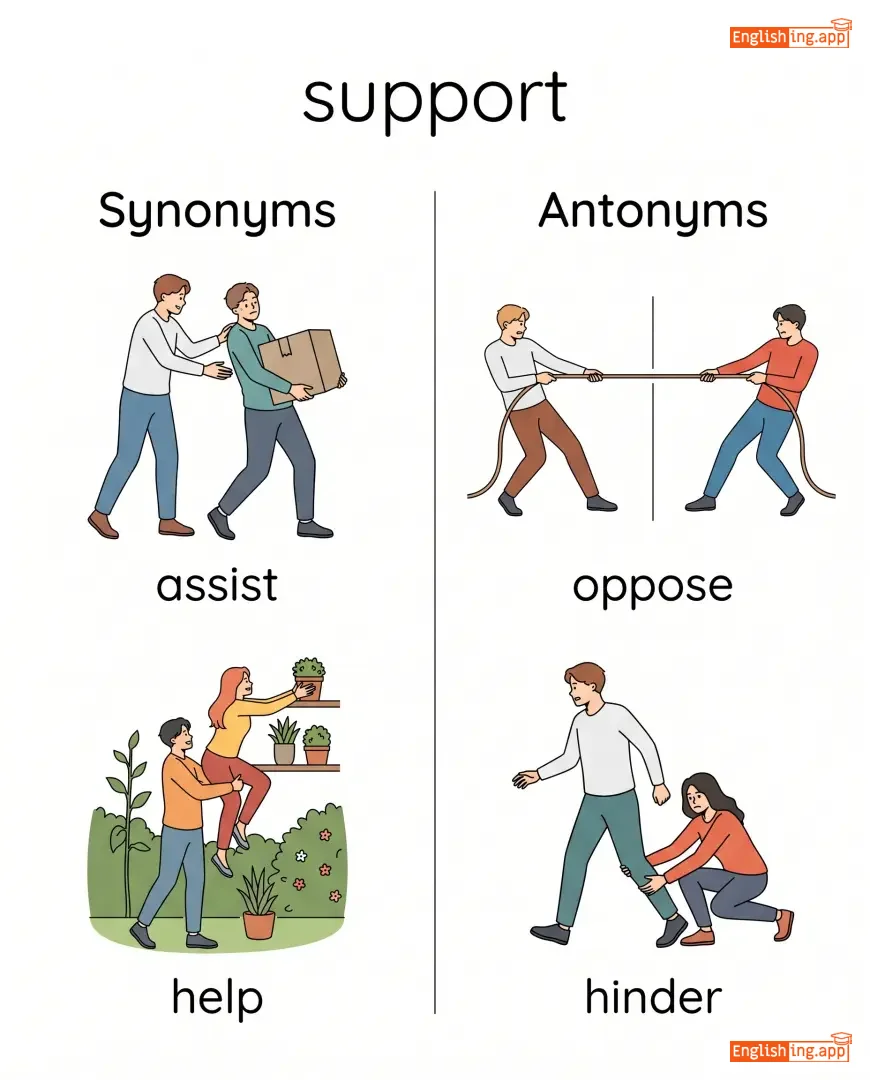
help, assist, aid, back
••••••
|
oppose, hinder, obstruct, abandon
••••••
|
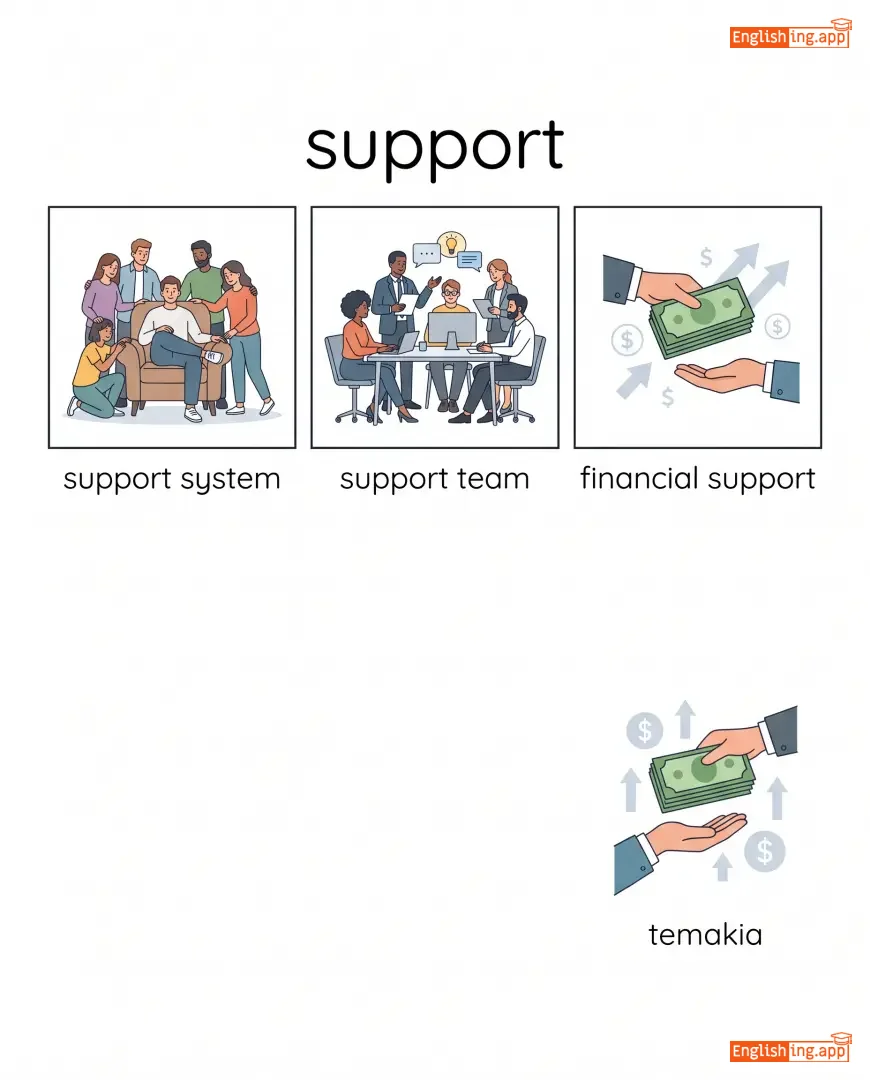
support fully, support decision, support family, financial support
••••••
|
支持意味着帮助并承受重担
••••••
|
|
💪
••••••
|
/səˈpɔːtər/
noun
(支持者)
••••••
|
- •••••• |
支持者
zhīchí zhě
••••••
|
- •••••• | - •••••• | - •••••• | - •••••• |
a person who supports someone or something
••••••
|
She is a strong supporter of the local animal shelter.
她是当地动物收容所的强大支持者。
••••••
|
她是当地动物收容所的强大支持者。
Tā shì dāngdì dòngwù shōuróngsuǒ de qiángdà zhīchí zhě.
••••••
|
- •••••• | - •••••• | - •••••• |
advocate, backer, champion, fan
••••••
|
opponent, adversary, critic
••••••
|
supporter of, strong supporter, loyal supporter, passionate supporter
••••••
|
支持者是总是支持的,就像支持一个动物收容所。
••••••
|
|
🤗
••••••
|
/səˈpɔːtɪv/
adjective
(su-por-tiv)
••••••
|
- •••••• |
支持的
zhīchí de
••••••
|
- •••••• | - •••••• | - •••••• | - •••••• |
providing encouragement or emotional help to someone
••••••
|
She was very supportive during my difficult times. |
在我困难的时刻,她非常支持我。
Zài wǒ kùnnán de shíkè, tā fēicháng zhīchí wǒ.
••••••
|
supportive role |
a role that helps or assists others rather than leading
••••••
|
支持角色
zhīchí juésè
••••••
|
helpful, encouraging, caring, understanding, kind
••••••
|
unsupportive, discouraging, neglectful
••••••
|
supportive friend, supportive family, supportive environment, supportive attitude
••••••
|
任何提供支持的人总是 supportive 🫶
••••••
|
|
🤔
••••••
|
/səˈpəʊz/
verb
(səpóuɪz)
••••••
|
- •••••• |
假设
jiǎshè
••••••
|
supposed
səpóuzd
••••••
|
supposed
səpóuzd
••••••
|
supposes
səpóuzəs
••••••
|
supposing
səpóuɪŋ
••••••
|
to assume or believe something is true without proof
••••••
|
I suppose she will be here soon.
我猜你很快会到这里。
••••••
|
我猜你很快会到这里。
Wǒ cāi nǐ hěn kuài huì dào zhèlǐ.
••••••
|
suppose so
我想是的
••••••
|
used to express agreement with a suggestion or opinion
••••••
|
我想是的
Wǒ xiǎng shì de
••••••
|
assume, believe, guess, think
••••••
|
doubt, question, deny
••••••
|
suppose to, I suppose, suppose that, suppose so
••••••
|
假设自己知道答案,像在猜测一样!
••••••
|
|
❓
••••••
|
/səˈpəʊzd/
adjective
(səˈpɔzəd)
••••••
|
- •••••• |
假定的
jiading de
••••••
|
- •••••• | - •••••• | - •••••• | - •••••• |
generally believed or assumed, but not necessarily true
••••••
|
This is the supposed solution to the problem. |
这是问题的假定解决方案。
Zhe shi wenti de jiading jiejue fang'an.
••••••
|
- •••••• | - •••••• | - •••••• |
assumed, alleged, presumed, supposed
••••••
|
real, certain, verified
••••••
|
supposed to, supposed solution, supposed reason
••••••
|
假定的 (supposed) 是指看似真实但未必如此的事物。
••••••
|
|
🤔
••••••
|
/səˈpəʊzɪdli/
adverb
(suˈpəʊzɪdli)
••••••
|
- •••••• |
据说
jùshuō
••••••
|
- •••••• | - •••••• | - •••••• | - •••••• |
used to show that something is believed or claimed to be true, though it may not be
••••••
|
He is supposedly the best player on the team. |
据说他是队里最好的球员。
Jùshuō tā shì duì lǐ zuì hǎo de qiúyuán.
••••••
|
supposedly true |
believed to be true but not certain
••••••
|
据说是真的
jùshuō shì zhēn de
••••••
|
allegedly, reportedly, apparently, ostensibly
••••••
|
certainly, surely, definitely
••••••
|
supposedly true, supposedly innocent, supposedly safe, supposedly related
••••••
|
就像是说,可能不是真的 — 据说!
••••••
|
|
🚫
••••••
|
/səˈprɛs/
verb
(苏普雷斯)
••••••
|
|
压制
yāzhì
••••••
|
suppressed
苏普雷斯德
••••••
|
suppressed
苏普雷斯德
••••••
|
suppresses
苏普雷塞斯
••••••
|
suppressing
苏普雷辛
••••••
|
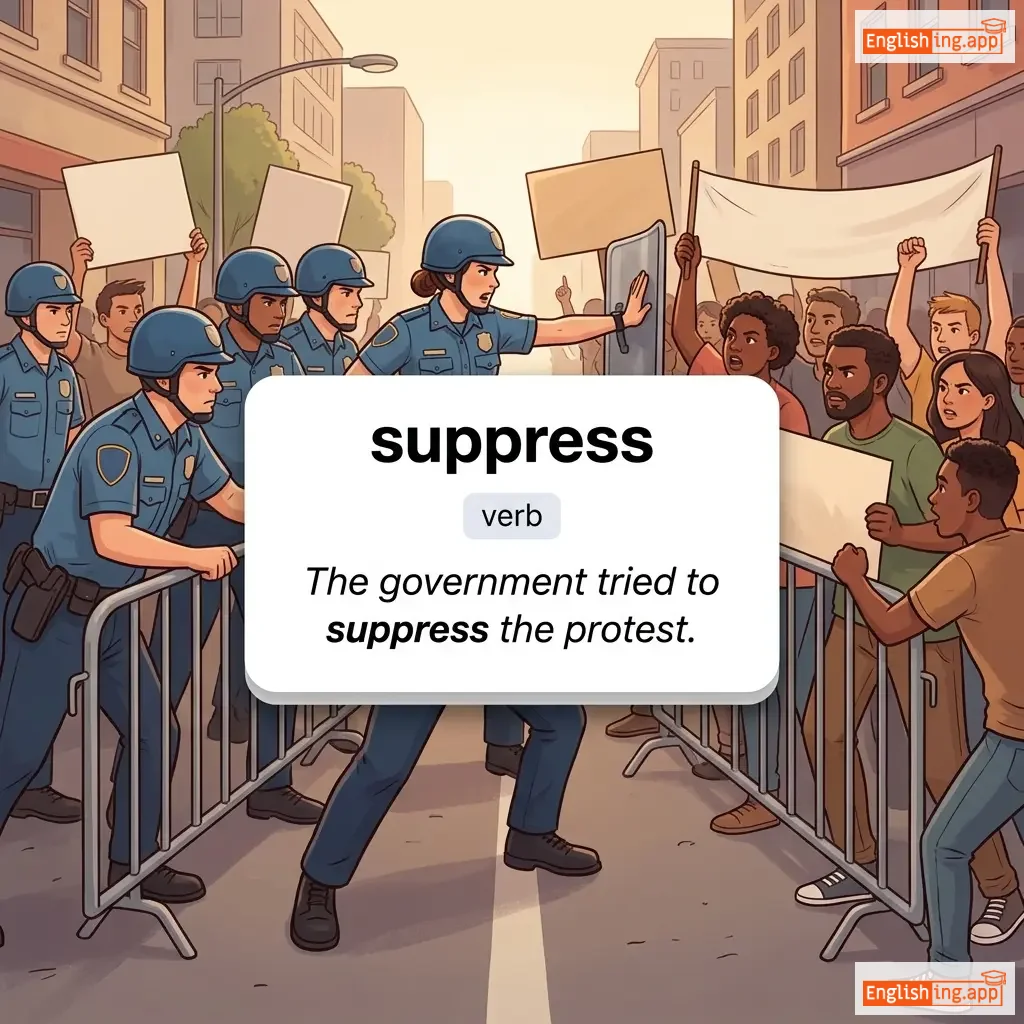
to forcibly put an end to something; to restrain or hold back an action, feeling, or development
••••••
|
The government tried to suppress the protest.
政府试图压制抗议。
••••••
|
政府试图压制抗议。
Zhèngfǔ shìtú yāzhì kàngyì.
••••••
|
suppress a smile
压制笑容
••••••
|
to try not to show amusement
••••••
|
压制笑容
yāzhì xiàoróng
••••••
|
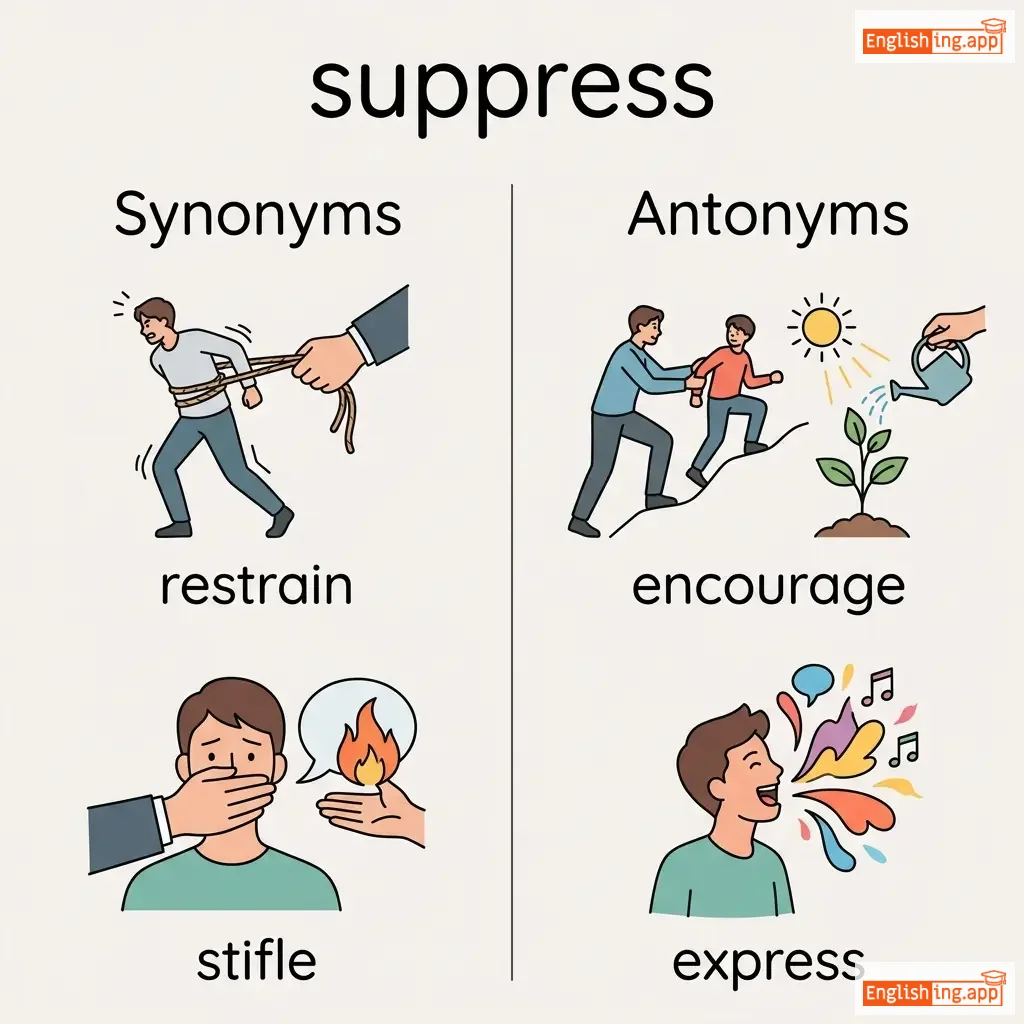
restrain, stifle, subdue, curb, repress
••••••
|
encourage, express, release
••••••
|
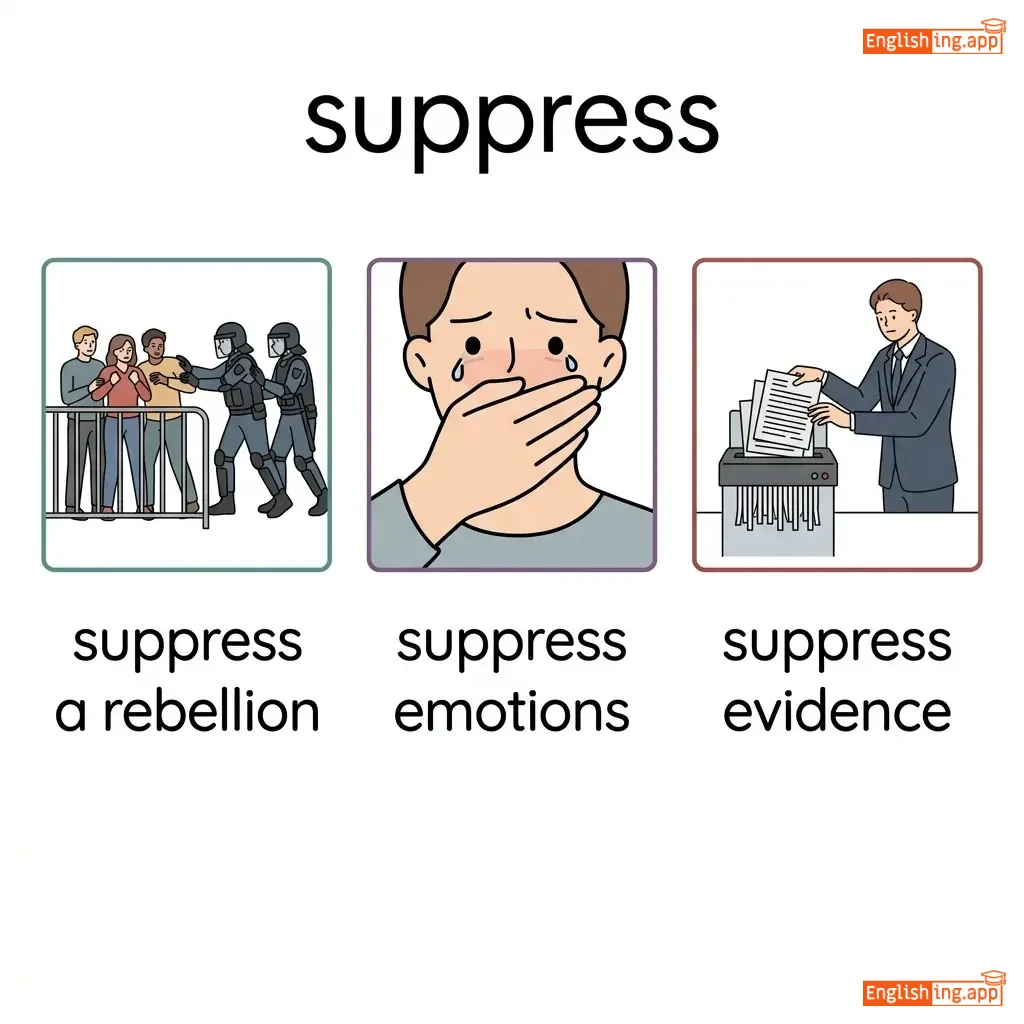
suppress a rebellion, suppress emotions, suppress evidence, suppress a smile
••••••
|
SUPPRESS 意味着压制,就像你必须压制一个笑容一样 - 保持笑容 SUPPressed!
••••••
|
|
👑
••••••
|
/suːˈpriːm/
adjective
(suːˈpriːm)
••••••
|
- •••••• |
最高的
zuìgāo de
••••••
|
- •••••• | - •••••• | - •••••• | - •••••• |
highest in rank, authority, or quality; greatest; most important
••••••
|
The Supreme Court made the final decision. |
最高法院作出了最终决定。
zuìgāo fǎyuàn zuò chūle zuìzhōng juédìng
••••••
|
- •••••• | - •••••• | - •••••• |
highest, ultimate, paramount, top
••••••
|
lowest, inferior, subordinate, minor
••••••
|
supreme court, supreme authority, supreme power
••••••
|
No •••••• |
|
🩺
••••••
|
/ˈsɜːdʒən/
noun
(sàozhèn)
••••••
|
- •••••• |
外科医生
waike yisheng
••••••
|
- •••••• | - •••••• | - •••••• | - •••••• |
a doctor who performs medical operations
••••••
|
The surgeon performed a complex heart operation. |
外科医生进行了复杂的心脏手术。
Waike yisheng jinxing le fuza de xinzang shoushu.
••••••
|
chief surgeon |
the head doctor in charge of surgical operations
••••••
|
首席外科医生
shouxi waike yisheng
••••••
|
doctor, physician, medical practitioner, specialist
••••••
|
patient, layman
••••••
|
heart surgeon, brain surgeon, plastic surgeon, chief surgeon
••••••
|
做外科手术的医生 — 外科医生
••••••
|
|
🩺
••••••
|
/ˈsɜːdʒəri/
noun
••••••
|
- •••••• | - •••••• | - •••••• | - •••••• | - •••••• | - •••••• |
a medical procedure involving the cutting of the body to treat a condition
••••••
|
She underwent surgery to remove the tumor. |
- •••••• | - •••••• | - •••••• | - •••••• |
operation, procedure, treatment
••••••
|
healing, recovery
••••••
|
surgery operation, minor surgery, surgery recovery
••••••
|
No •••••• |
|
🩺
••••••
|
/ˈsɜːdʒɪkəl/
adjective
(sā jí kè ěr)
••••••
|
- •••••• |
与外科手术相关
yu wàikē shǒushù xiāngguān
••••••
|
- •••••• | - •••••• | - •••••• | - •••••• |
relating to or involving surgery
••••••
|
She underwent surgical treatment to repair the damage. |
她接受了外科治疗来修复损伤。
Tā jiēshòu le wàikē zhìliáo lái xiūfù sǔnshāng.
••••••
|
- •••••• | - •••••• | - •••••• |
medical, operative, therapeutic, healing
••••••
|
non-surgical, conservative
••••••
|
surgical procedure, surgical operation, surgical team
••••••
|
Surgical 听起来像‘surge’ - 一波强大的医疗护理!
••••••
|
|
📈
••••••
|
/ˈsɜːr.plʌs/
noun
(sɜːrpləs)
••••••
|
- •••••• |
盈余
yingyu
••••••
|
- •••••• | - •••••• | - •••••• | - •••••• |
An amount that is more than what is needed.
••••••
|
The country has a surplus of food this year. |
今年该国的食品盈余。
Jin nian gai guo de shi pin ying yu.
••••••
|
trade surplus |
The amount by which a country's exports exceed its imports.
••••••
|
贸易盈余
maoyi yingyu
••••••
|
excess, extra, oversupply, remainder, overflow
••••••
|
shortage, deficit, lack
••••••
|
budget surplus, surplus goods, surplus food, surplus production
••••••
|
盈余 = 超过需要的部分
••••••
|
|
🎉
••••••
|
/səˈpraɪz/
noun
(惊讶)
••••••
|
- •••••• |
惊讶
jingya
••••••
|
- •••••• | - •••••• | - •••••• | - •••••• |
a sudden and unexpected event or situation
••••••
|
His arrival was a pleasant surprise. |
他的到来是一个愉快的惊讶。
tā de dào lái shì yīgè yúkuài de jīngyà.
••••••
|
a pleasant surprise |
an unexpected but happy event
••••••
|
一个愉快的惊讶
yīgè yúkuài de jīngyà
••••••
|
shock, astonishment, amazement, wonder
••••••
|
expectation, predictability
••••••
|
pleasant surprise, unexpected surprise, big surprise
••••••
|
SURprise = SURroundings change suddenly!
••••••
|
|
😲
••••••
|
/sər'praɪzd/
adjective
(sər'praɪzd)
••••••
|
- •••••• |
惊讶
jingya
••••••
|
- •••••• | - •••••• | - •••••• | - •••••• |
feeling or showing surprise; astonished
••••••
|
I was surprised to see my old friend at the market.
我在市场看到我的老朋友时感到惊讶。
••••••
|
我在市场看到我的老朋友时感到惊讶。
Wǒ zài shìchǎng kàn dào wǒ de lǎo péngyǒu shí gǎndào jīngyà.
••••••
|
- •••••• | - •••••• | - •••••• |
astonished, amazed, shocked, startled
••••••
|
unsurprised, expectant, prepared, anticipated
••••••
|
pleasantly surprised, quite surprised, genuinely surprised
••••••
|
惊讶就像你突然发现了一个神秘的宝藏。
••••••
|
|
😯
••••••
|
/sər'praɪz.ɪŋ/
adjective
(sànpūlài zìng)
••••••
|
- •••••• |
令人惊讶的; 出人意料的
lìng rén jīngyà de; chū rén yì liào de
••••••
|
- •••••• | - •••••• | - •••••• | - •••••• |
causing surprise; unexpected; remarkable
••••••
|
It's surprising how quickly children learn new languages. |
令人惊讶的是,孩子们学新语言的速度有多快。
lìng rén jīngyà de shì, háizimen xué xīn yǔyán de sùdù yǒu duō kuài.
••••••
|
- •••••• | - •••••• | - •••••• |
astonishing, amazing, unexpected, remarkable
••••••
|
predictable, expected, ordinary, unsurprising
••••••
|
surprising news, surprising result, not surprising
••••••
|
令人惊讶的 (surprising) 事件总是出人意料的 (unexpected).
••••••
|
|
😲
••••••
|
/səˈpraɪzɪŋli/
adverb
(surprizingli)
••••••
|
- •••••• |
令人惊讶地
ling ren jing ya di
••••••
|
- •••••• | - •••••• | - •••••• | - •••••• |
in a way that causes surprise or amazement
••••••
|
Surprisingly, she finished the entire project in just one day.
令人惊讶的是,她在一天之内完成了整个项目。
••••••
|
令人惊讶的是,她在一天之内完成了整个项目。
Ling ren jing ya de, ta zai yi tian zhi nei wan cheng le zheng ge xiang mu.
••••••
|
- •••••• | - •••••• | - •••••• |
unexpectedly, shockingly, amazingly, astoundingly
••••••
|
predictably, expectedly
••••••
|
surprisingly fast, surprisingly well, surprisingly easy
••••••
|
惊讶!原来一个枯燥的任务竟然做得这么快 – 令人惊讶地!
••••••
|
|
🏳️
••••••
|
/səˈrɛndər/
verb
(surrender)
••••••
|
- •••••• |
投降
tóuxiáng
••••••
|
surrendered
surrendered
••••••
|
surrendered
surrendered
••••••
|
surrenders
surrenders
••••••
|
surrendering
surrendering
••••••
|
to give up or yield to an opponent or authority
••••••
|
The army finally surrendered after weeks of fighting.
The army finally surrendered after weeks of fighting.
••••••
|
在几周的战斗后,军队终于投降了。
Zài jǐ zhōu de zhàndòu hòu, jūnduì zhōngyú tóuxiáng le.
••••••
|
surrender to fate
surrender to fate
••••••
|
to accept something that cannot be changed
••••••
|
向命运投降
xiàng mìngyùn tóuxiáng
••••••
|
yield, give up, submit, capitulate
••••••
|
resist, fight, defend
••••••
|
surrender to authority, unconditional surrender, surrender peacefully
••••••
|
投降意味着屈服—🏳️ 举起白旗就是投降。
••••••
|
|
⭕
••••••
|
/səˈraʊnd/
verb
(səˈraʊnd)
••••••
|
- •••••• |
围绕
wéiráo
••••••
|
surrounded
səˈraʊndɪd
••••••
|
surrounded
səˈraʊndɪd
••••••
|
surrounds
səˈraʊndz
••••••
|
surrounding
səˈraʊndɪŋ
••••••
|
To be all around someone or something.
••••••
|
Mountains surround the small village.
山脉围绕着小村庄。
••••••
|
山脉围绕着小村庄。
Shānmài wéirào zhe xiǎo cūnzhuāng.
••••••
|
surround yourself with
把自己围起来
••••••
|
To choose to associate with certain people or things.
••••••
|
把自己围起来
Bǎ zìjǐ wéirào qǐlái
••••••
|
enclose, encircle, encompass, besiege
••••••
|
free, release, exclude
••••••
|
surround with, surround yourself, completely surround
••••••
|
围绕像圆圈一样围住你。
••••••
|
|
🌄
••••••
|
/səˈraʊndɪŋ/
adjective
(suɹaʊndɪŋ)
••••••
|
- •••••• |
周围的
zhōuwéi de
••••••
|
- •••••• | - •••••• | - •••••• | - •••••• |
located all around a particular place or thing; nearby
••••••
|
The surrounding hills were covered in mist.
周围的山丘被雾气覆盖。
••••••
|
周围的山丘被雾气覆盖。
Zhōuwéi de shānqiū bèi wùqì fùgài.
••••••
|
- •••••• | - •••••• | - •••••• |
nearby, adjacent, neighboring, close, around
••••••
|
distant, remote, far
••••••
|
surrounding area, surrounding environment, surrounding region, surrounding countryside
••••••
|
Surrounding意味着四周,比如周围的区域。
••••••
|
|
👀
••••••
|
/sɜːˈveɪləns/
noun
(sɜːˈveɪləns)
••••••
|


|
监视
jiānshì
••••••
|
- •••••• | - •••••• | - •••••• | - •••••• |
close observation, especially of a suspected spy or criminal
••••••
|
The police kept the suspect under surveillance for weeks. |
警方对嫌疑人进行了数周的监视。
jǐngfāng duì xiányí rén jìnxíngle shù zhōu de jiānshì.
••••••
|
- •••••• | - •••••• | - •••••• |
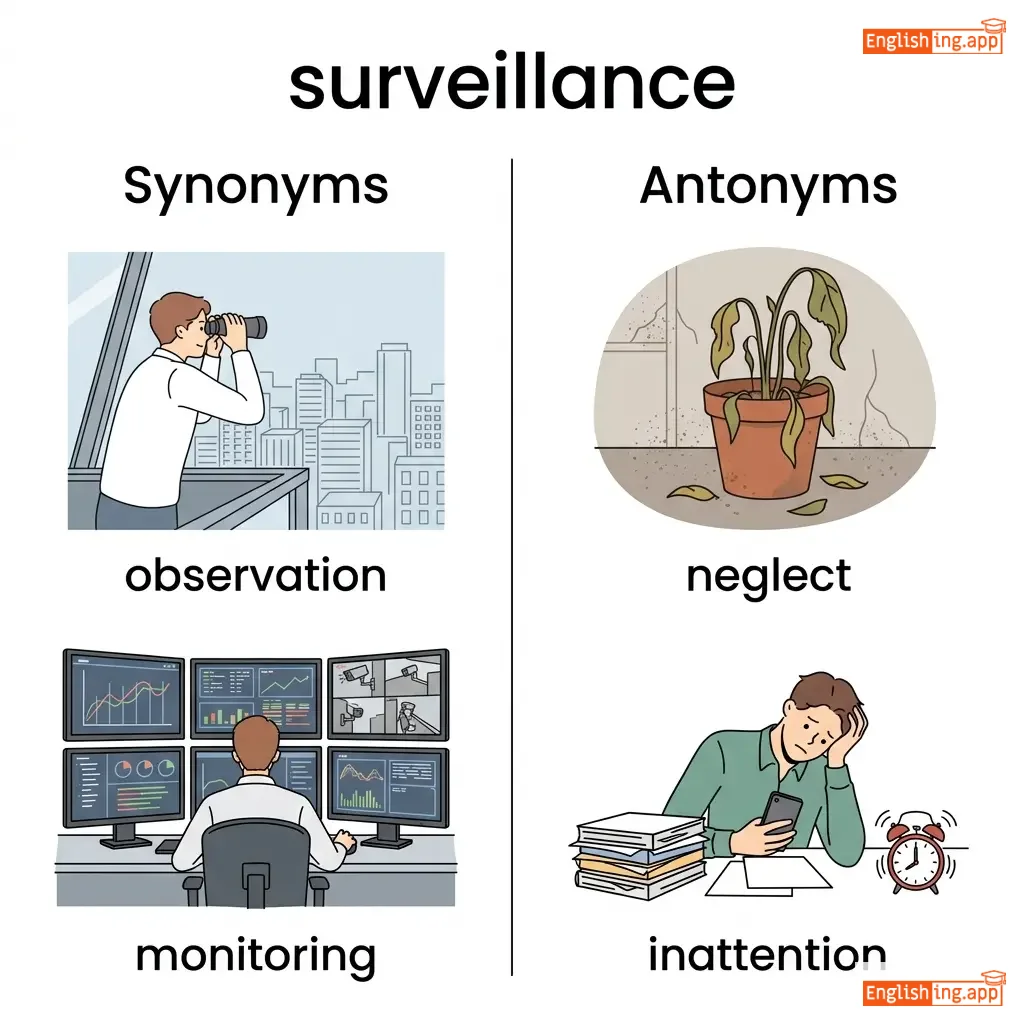
observation, monitoring, watching, scrutiny
••••••
|
neglect, ignorance, inattention
••••••
|
under surveillance, surveillance camera, surveillance system, police surveillance
••••••
|
监视 = 警察看着每一个可疑的人!
••••••
|
|
🦸
••••••
|
/səˈvaɪvl/
noun
(生存)
••••••
|
- •••••• |
生存
shengcun
••••••
|
- •••••• | - •••••• | - •••••• | - •••••• |
the state of continuing to live or exist, typically in difficult conditions
••••••
|
Survival in the wild can be a challenging experience.
在野外生存可能是一次充满挑战的经历。
••••••
|
在野外生存可能是一次充满挑战的经历。
Zai ye wai shengcun keneng shi yici chongman tiaozhan de jingli.
••••••
|
- •••••• | - •••••• | - •••••• |
existence, endurance, staying alive
••••••
|
death, extinction
••••••
|
survival skills, survival mode, struggle for survival
••••••
|
生存 - 为了生存,我们必须适应环境
••••••
|
|
🌱
••••••
|
/sərˈvaɪv/
verb
(suerveiv)
••••••
|
- •••••• |
生还
shenghuan
••••••
|
survived
suerveivd
••••••
|
survived
suerveivd
••••••
|
survives
suerveivs
••••••
|
surviving
suerveiving
••••••
|
To continue to live or exist after a difficult event or situation.
••••••
|
He managed to survive the storm.
他成功地生还了风暴。
••••••
|
他成功地生还了风暴。
Ta chenggong de shenghuan le fengbao.
••••••
|
survival of the fittest
适者生存
••••••
|
The idea that only the strongest individuals succeed or endure.
••••••
|
适者生存
Shizhe shengcun
••••••
|
endure, persist, outlive, remain, withstand
••••••
|
perish, die, succumb
••••••
|
survive an accident, survive a crisis, survive on, survive against odds
••••••
|
生还意味着生还 = 生还
••••••
|
|
💪
••••••
|
/sərˈvaɪvər/
noun
(生还者)
••••••
|
- •••••• |
一个幸存下来的人,特别是指在其他人死去后仍然活着的人
yī gè xìngcún xiàlái de rén, tèbié shì zhǐ zài qítā rén sǐqù hòu réngrán huózhe de rén
••••••
|
- •••••• | - •••••• | - •••••• | - •••••• |
a person who survives, especially a person remaining alive after an event in which others have died
••••••
|
She is a cancer survivor who now helps other patients. |
她是一名癌症幸存者,现在帮助其他病人。
Tā shì yī míng áizhèng xìngcún zhě, xiànzài bāngzhù qítā bìngrén.
••••••
|
- •••••• | - •••••• | - •••••• |
victor, overcomer, endurer, fighter
••••••
|
victim, casualty, fatality
••••••
|
cancer survivor, disaster survivor, sole survivor, survivor guilt
••••••
|
生还者,死里逃生,始终活下来的英雄。
••••••
|
|
🕵️
••••••
|
/səˈspɛkt/ (noun, adj) | /səˈspɛkt/ (verb)
verb, noun, adjective
••••••
|

|
- •••••• |
suspected
••••••
|
suspected
••••••
|
suspects
••••••
|
suspecting
••••••
|
To believe something to be true, likely, or guilty without certain proof.
••••••
|
The police suspect him of stealing the car. |
- •••••• |
usual suspect |
a person frequently suspected of wrongdoing
••••••
|
- •••••• |
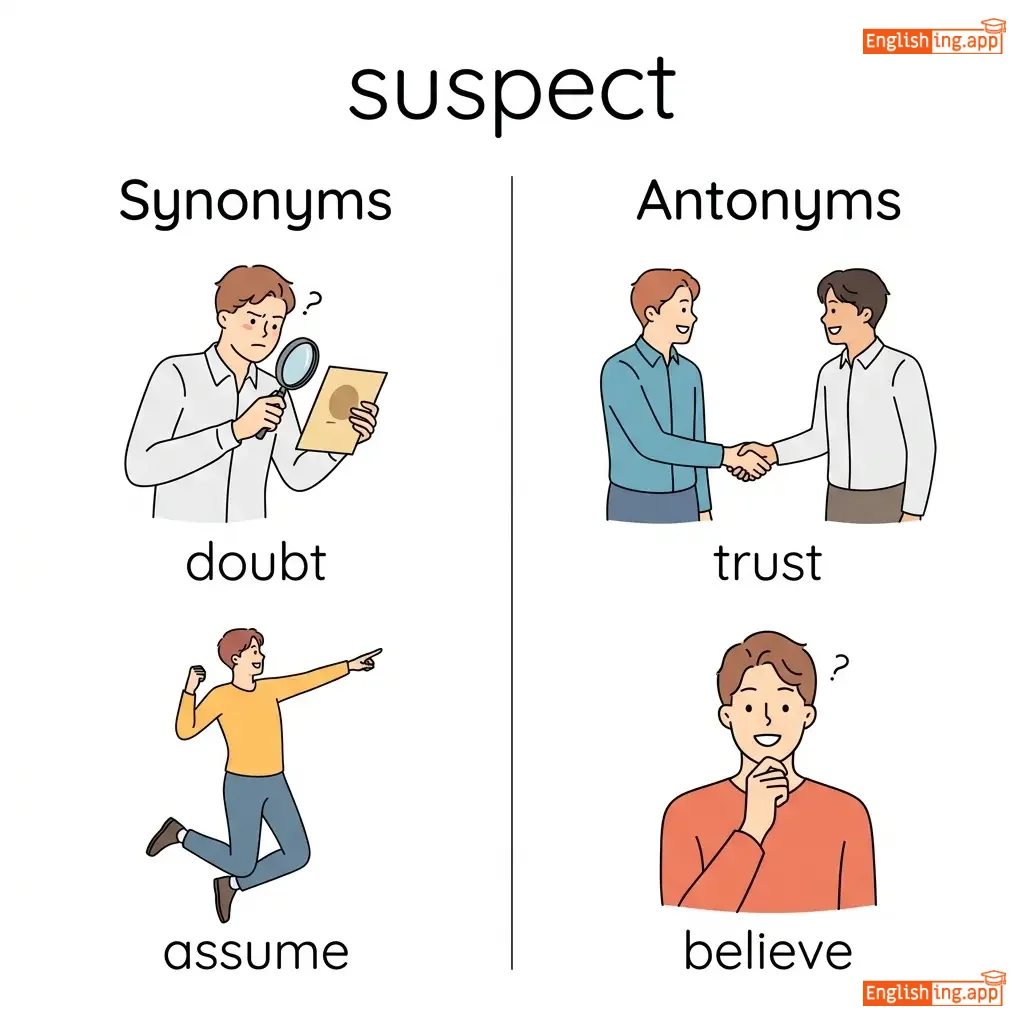
doubt, assume, suppose, accuse
••••••
|
trust, believe, absolve
••••••
|
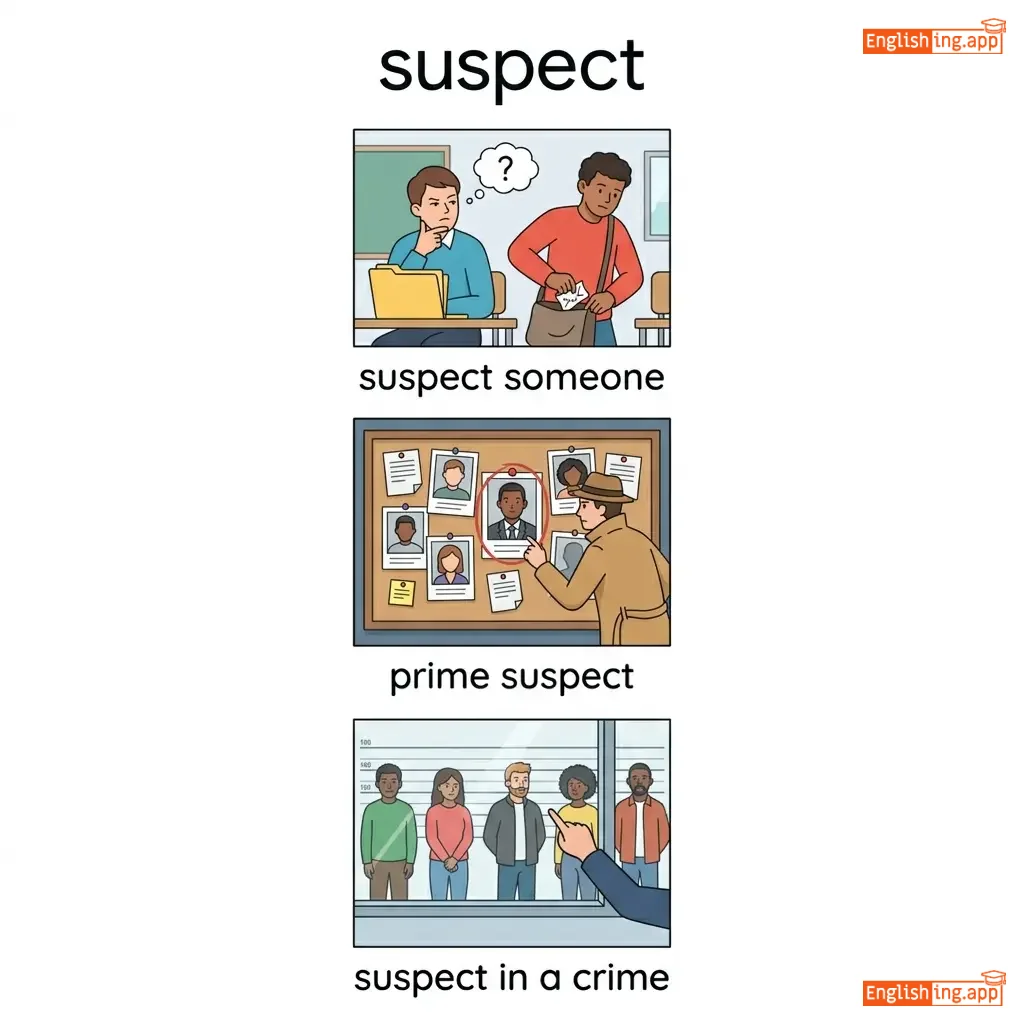
suspect someone, prime suspect, suspect in a crime
••••••
|
No •••••• |
|
⏸️
••••••
|
/səˈspɛnd/
verb
(暂停)
••••••
|
- •••••• |
暂停
zanting
••••••
|
suspended
暂停的
••••••
|
suspended
暂停的
••••••
|
suspends
暂停
••••••
|
suspending
暂停中
••••••
|
To temporarily stop something from being active or valid.
••••••
|
The company decided to suspend his membership.
公司决定暂停他的会员资格。
••••••
|
公司决定暂停他的会员资格。
Gongsi jueding zanting tade huiyuan zige.
••••••
|
suspend disbelief
暂停不信
••••••
|
to willingly accept something unrealistic for the sake of enjoyment
••••••
|
暂停不信
zanting bu xin
••••••
|
halt, delay, interrupt, pause
••••••
|
continue, resume, proceed
••••••
|
suspend activities, suspend operations, suspend from work
••••••
|
暂停,像是按下暂停键——一切都停下来了!
••••••
|
|
⏸️
••••••
|
/səˈspɛnʃən/
noun
(suspension)
••••••
|
- •••••• |
停赛
tingsai
••••••
|
- •••••• | - •••••• | - •••••• | - •••••• |
The act of temporarily stopping something; also refers to a system in vehicles that absorbs shock.
••••••
|
The player received a three-game suspension for misconduct. |
该球员因不当行为被禁赛三场。
Gai qiu yuan yin budang xingwei bei jinsai san chang.
••••••
|
- •••••• | - •••••• | - •••••• |
pause, stoppage, interruption, postponement, delay
••••••
|
continuation, resumption, progress
••••••
|
suspension bridge, school suspension, temporary suspension, suspension system
••••••
|
停赛—如果做错事,不能比赛。
••••••
|
|
🤨
••••••
|
/səˈspɪʃən/
noun
(səsˈpɪʃən)
••••••
|
- •••••• |
怀疑
huái yí
••••••
|
- •••••• | - •••••• | - •••••• | - •••••• |
a feeling or belief that someone has done something wrong or illegal
••••••
|
He was arrested on suspicion of theft. |
他因涉嫌盗窃被逮捕。
Tā yīn shèxián dàoqiè bèi dàibǔ.
••••••
|
arouse suspicion |
to make people think that something wrong or illegal may have happened
••••••
|
引起怀疑
yǐnqǐ huái yí
••••••
|
doubt, mistrust, distrust, skepticism, uncertainty
••••••
|
trust, confidence, belief
••••••
|
raise suspicion, under suspicion, deep suspicion, suspicion of
••••••
|
Suspicion 在中文中是怀疑 — 如果你怀疑,那么你就有 suspicion!
••••••
|
|
🕵️
••••••
|
/səˈspɪʃəs/
adjective
(suspɪʃəs)
••••••
|
- •••••• |
可疑的
kě yí de
••••••
|
- •••••• | - •••••• | - •••••• | - •••••• |
Feeling doubt or distrust about someone or something.
••••••
|
She gave me a suspicious look when I entered late. |
当我迟到时,她给了我一个可疑的眼神。
Dāng wǒ chídào shí, tā gěi le wǒ yīgè kě yí de yǎnshén.
••••••
|
under suspicious circumstances |
In a way that causes doubt or mistrust.
••••••
|
在可疑的情况下
zài kě yí de qíngkuàng xià
••••••
|
distrustful, doubtful, wary, skeptical, uneasy
••••••
|
trusting, certain, confident
••••••
|
suspicious activity, suspicious behavior, suspicious look, suspicious mind
••••••
|
可疑的听起来像怀疑—当你怀疑某事时,它就是可疑的。
••••••
|
|
🌱
••••••
|
/səˈsteɪn/
verb
(苏斯坦)
••••••
|
- •••••• |
维持
wèichí
••••••
|
sustained
苏斯坦德
••••••
|
sustained
苏斯坦德
••••••
|
sustains
苏斯坦斯
••••••
|
sustaining
苏斯坦宁
••••••
|
To support, maintain, or keep something going over time.
••••••
|
The team worked hard to sustain their success.
团队努力工作以维持他们的成功。
••••••
|
团队努力工作以维持他们的成功。
Tuánduì nǔlì gōngzuò yǐ wéichí tāmen de chénggōng.
••••••
|
sustain a loss
承受损失
••••••
|
To suffer or experience a loss.
••••••
|
承受损失
chéngshòu sǔnshī
••••••
|
maintain, uphold, continue, support, endure
••••••
|
abandon, quit, discontinue
••••••
|
sustain growth, sustain life, sustain damage, sustain interest
••••••
|
Sustain意味着维持-就像保持成功一样。
••••••
|
|
🌱
••••••
|
/səˈsteɪnəbəl/
adjective
(可持续的)
••••••
|

|
可持续
kěchíxù
••••••
|
- •••••• | - •••••• | - •••••• | - •••••• |
able to continue over a long period without causing harm to the environment or using up resources
••••••
|
We must adopt sustainable energy practices.
我们必须采用可持续的能源实践。
••••••
|
我们必须采用可持续的能源实践。
Wǒmen bìxū cǎiyòng kěchíxù de nényuán shíjiàn.
••••••
|
sustainable development
可持续发展
••••••
|
development that meets present needs without compromising future generations’ ability to meet theirs
••••••
|
可持续发展
kěchíxù fāzhǎn
••••••
|
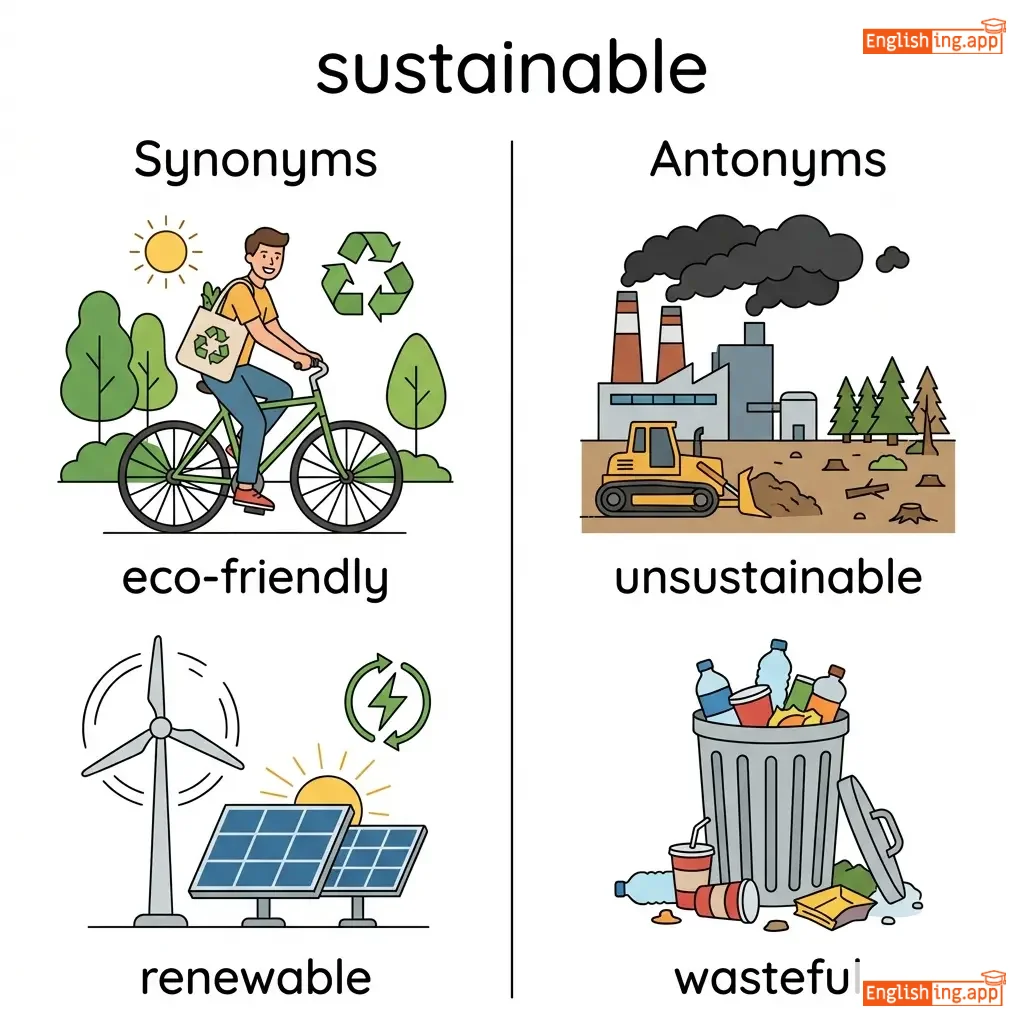
eco-friendly, renewable, viable, maintainable, green
••••••
|
unsustainable, wasteful, destructive
••••••
|
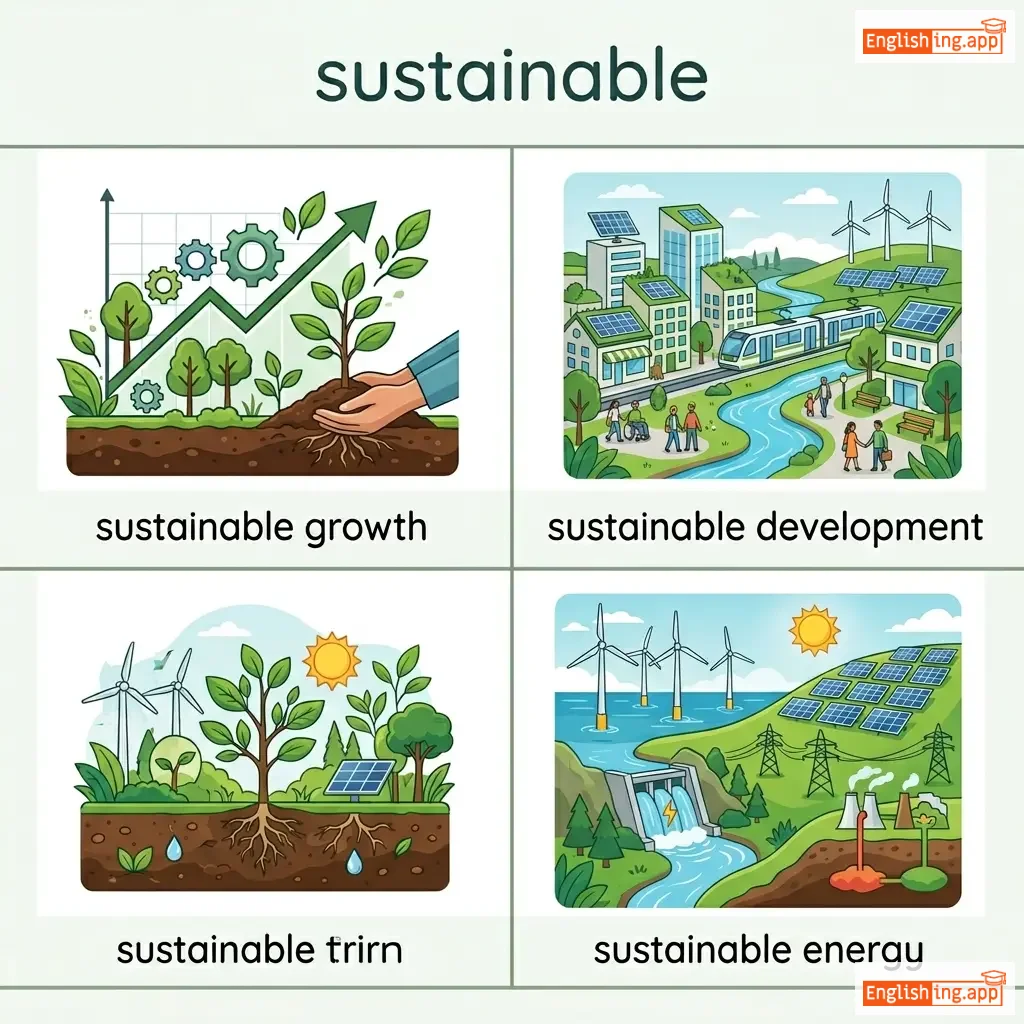
sustainable growth, sustainable development, sustainable energy, sustainable future
••••••
|
Sustain意味着保持 — sustainable意味着可以保持的可持续的。
••••••
|
|
🫗
••••••
|
/ˈswɒloʊ/
verb
(斯瓦罗)
••••••
|
- •••••• |
吞下
tūn xià
••••••
|
swallowed
斯瓦罗德
••••••
|
swallowed
斯瓦罗德
••••••
|
swallows
斯瓦罗斯
••••••
|
swallowing
斯瓦罗英
••••••
|
to make food or drink go down your throat into your stomach
••••••
|
He swallowed the pill with a glass of water.
他吞下了药片,喝了一杯水。
••••••
|
他吞下了药片,喝了一杯水。
Tā tūn xià le yàopiàn, hēle yī bēi shuǐ.
••••••
|
swallow one's pride
吞下自己的骄傲
••••••
|
to do something that is humiliating or embarrassing but necessary
••••••
|
吞下自己的骄傲
tūn xià zìjǐ de jiāo'ào
••••••
|
gulp, ingest, consume, devour, absorb
••••••
|
spit, vomit, reject
••••••
|
swallow food, swallow hard, swallow a pill, swallow the truth
••••••
|
Swallow 意味着吞下 —— 就像鸟儿吞下昆虫一样!
••••••
|
|
🗣️
••••••
|
/swɛər/
verb
(斯威尔)
••••••
|


|
发誓
fā shì
••••••
|
swore
斯沃尔
••••••
|
sworn
斯沃恩
••••••
|
swears
斯威尔兹
••••••
|
swearing
斯威林
••••••
|
To make a solemn statement or promise; to use offensive language.
••••••
|
He swore to tell the truth in court.
他在法庭上发誓说出真相。
••••••
|
他发誓在法庭上说出真相。
Tā fā shì zài fǎ tíng shàng shuō chū zhēn xiàng.
••••••
|
swear by
发誓
••••••
|
To have great confidence in something.
••••••
|
信任
xìn rèn
••••••
|
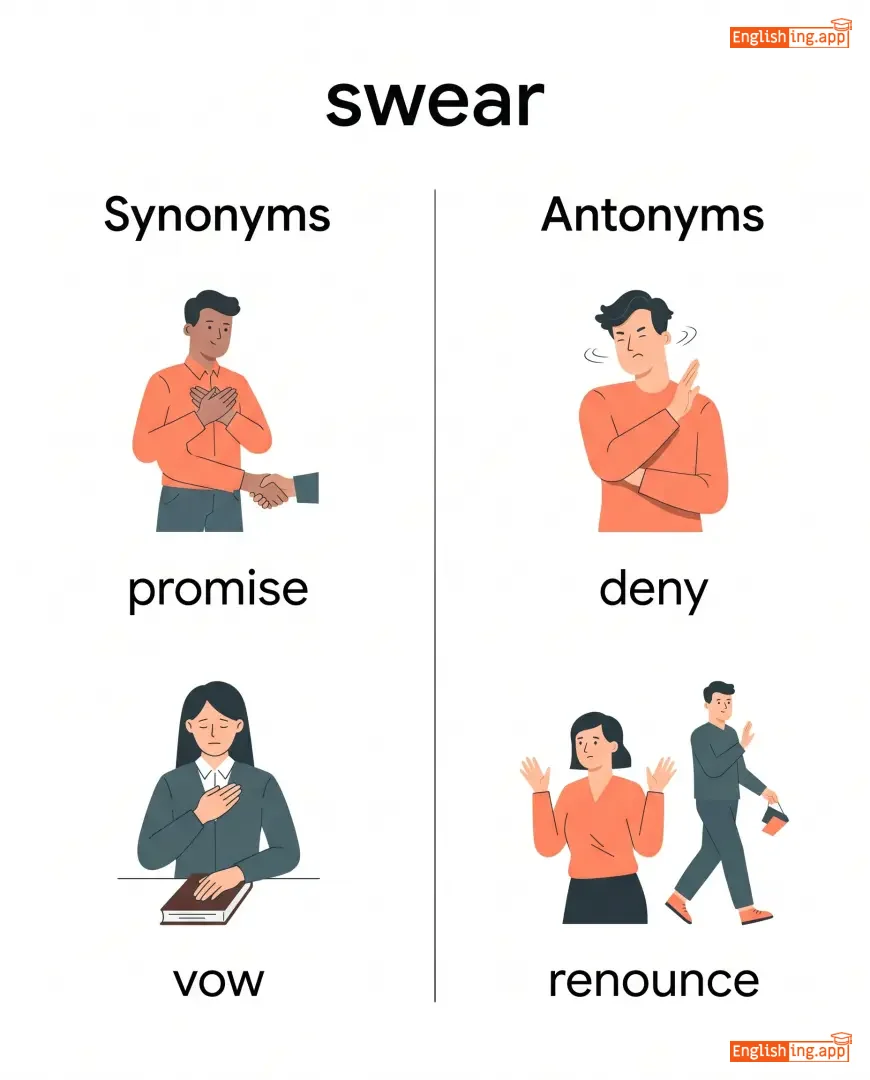
promise, vow, curse, pledge, affirm
••••••
|
deny, renounce, retract
••••••
|
swear an oath, swear allegiance, swear in, swear by
••••••
|
Swear 代表发誓 – 法庭上宣誓说真话。
••••••
|
|
💦
••••••
|
/swɛt/
verb
(汗水)
••••••
|
- •••••• |
汗水
hànshuǐ
••••••
|
sweated
汗水
••••••
|
sweated
汗水
••••••
|
sweats
汗水
••••••
|
sweating
汗水
••••••
|
to produce liquid from your skin when you are hot or nervous
••••••
|
He was sweating after running for an hour.
他跑了一个小时后,满身是汗。
••••••
|
他跑了一个小时后,满身是汗。
Tā pǎo le yī gè xiǎoshí hòu, mǎn shēn shì hàn.
••••••
|
break a sweat
流汗
••••••
|
to begin to perspire, usually from physical effort
••••••
|
流汗
liú hàn
••••••
|
perspire, exude, drip, toil, labor
••••••
|
rest, relax, cool
••••••
|
heavy sweat, cold sweat, sweat profusely, make someone sweat
••••••
|
Sweater 让你流汗 (sweat)!
••••••
|
|
🧶
••••••
|
/ˈswɛtər/
noun
••••••
|
- •••••• | - •••••• | - •••••• | - •••••• | - •••••• | - •••••• |
a warm knitted piece of clothing worn on the upper body
••••••
|
She wore a red sweater to keep warm in the cold weather. |
- •••••• | - •••••• | - •••••• | - •••••• |
jumper, pullover, cardigan, hoodie, sweatshirt
••••••
|
shirt, blouse, jacket
••••••
|
wool sweater, knitted sweater, wear a sweater, red sweater
••••••
|
No •••••• |
|
👕
••••••
|
/ˈswɛtʃɜːrt/
noun
(斯威特衫)
••••••
|
- •••••• |
运动衫
yundongshan
••••••
|
- •••••• | - •••••• | - •••••• | - •••••• |
A casual, long-sleeved pullover garment, typically made of cotton or fleece, worn for warmth or comfort.
••••••
|
He wore a grey sweatshirt while jogging in the park.
他在公园慢跑时穿着灰色的斯威特衫。
••••••
|
他在公园慢跑时穿着灰色的斯威特衫。
Ta zai gongyuan manpao shi chuanzhe huise de siweite shan.
••••••
|
- •••••• | - •••••• | - •••••• |
jumper, pullover, hoodie, fleece
••••••
|
tank top, T-shirt
••••••
|
cotton sweatshirt, grey sweatshirt, sports sweatshirt, oversized sweatshirt
••••••
|
运动衫 keeps you warm even when you sweat
••••••
|
|
🧹
••••••
|
/swiːp/
verb
(斯威普)
••••••
|
|
打扫
dasao
••••••
|
swept
斯韦普特
••••••
|
swept
斯韦普特
••••••
|
sweeps
斯威普斯
••••••
|
sweeping
斯威平
••••••
|
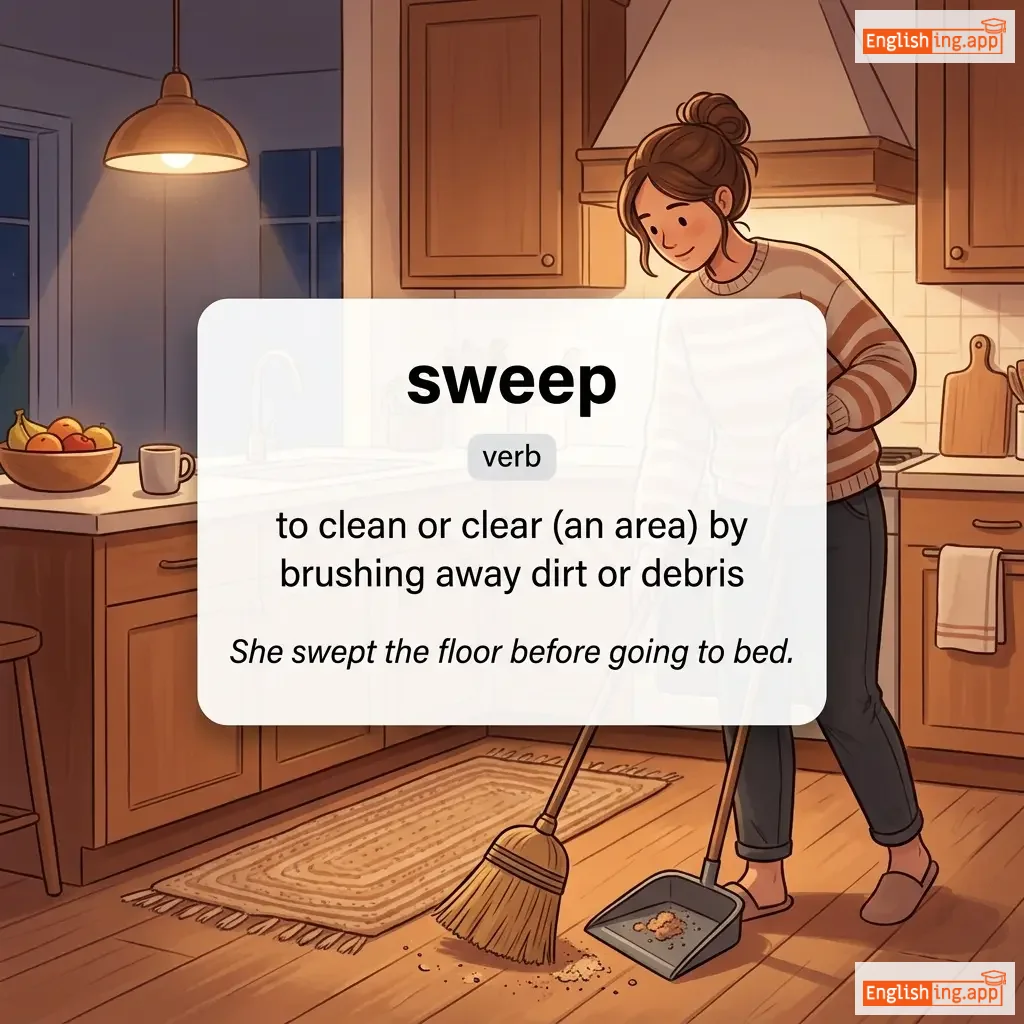
to clean by brushing; to move quickly and smoothly
••••••
|
She sweeps the floor every morning.
她 每天早上 打扫 地板。
••••••
|
她每天早上打扫地板。
Ta meitian zaoshang dasao diban
••••••
|
- •••••• | - •••••• | - •••••• |
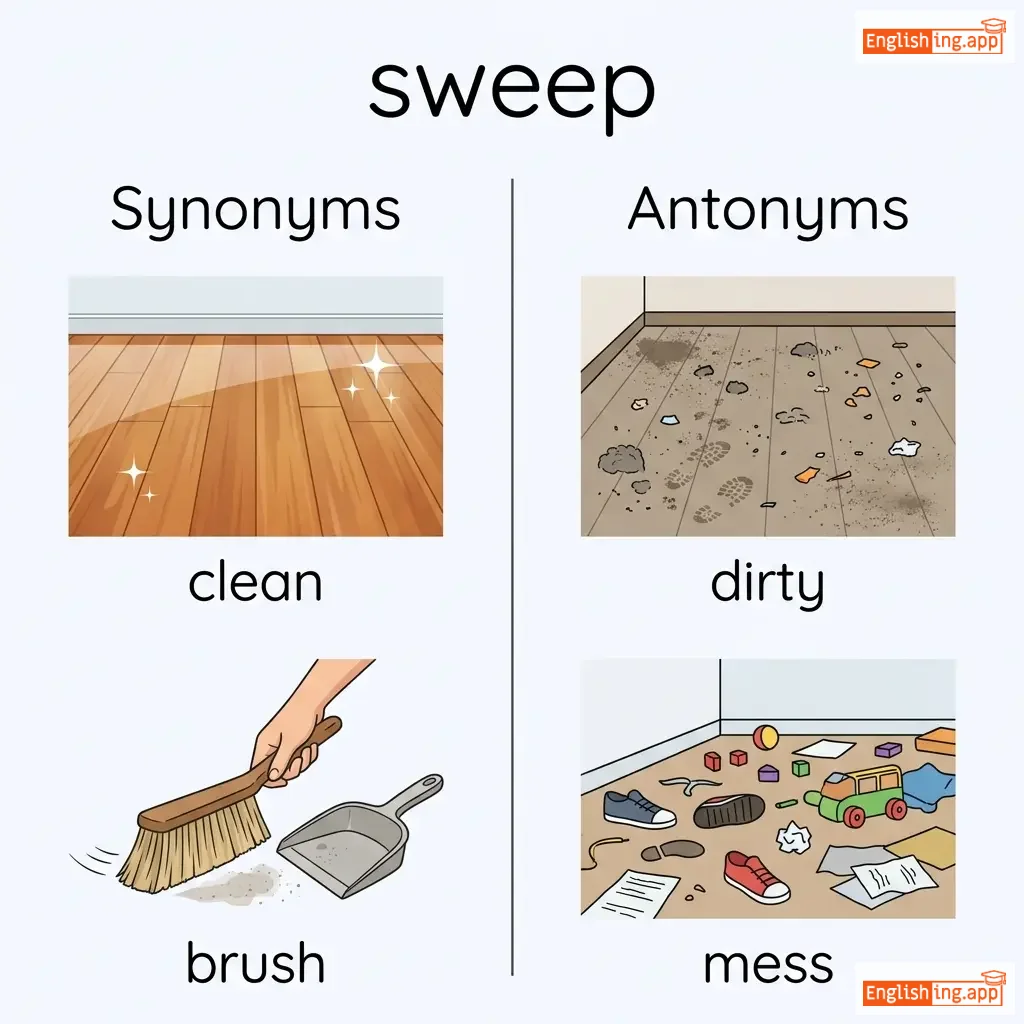
brush, clean, move quickly, glide
••••••
|
dirty, mess up
••••••
|
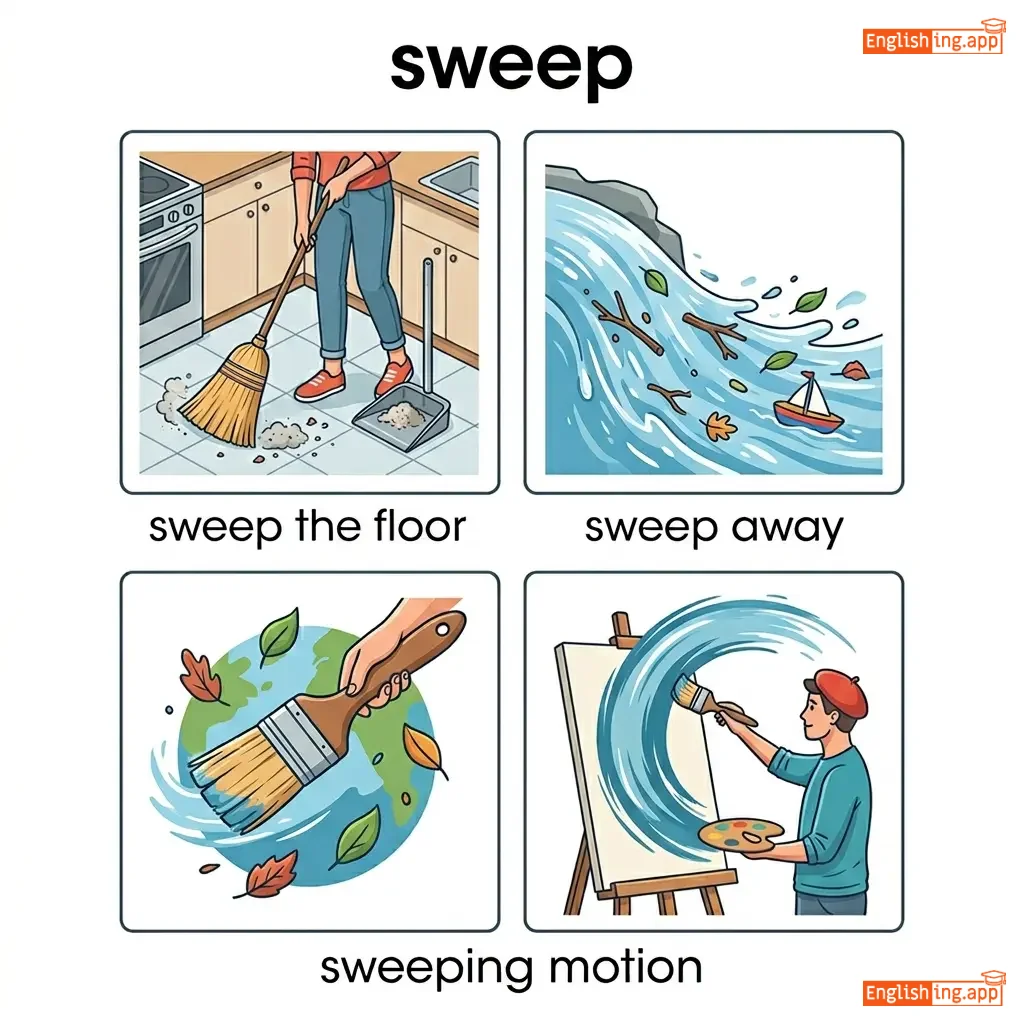
sweep away, sweep clean, sweep up, sweep aside, sweep through, sweep under
••••••
|
‘Sweep’ and ‘打扫 (dasao)’ both mean to clean the floor smoothly.
••••••
|
|
🍯
••••••
|
/swiːt/
adjective
(sui:t)
••••••
|
- •••••• |
甜的; 亲切的; 迷人的
tián de, qīnqiè de, mírén de
••••••
|
- •••••• | - •••••• | - •••••• | - •••••• |
having a pleasant taste; kind and gentle; pleasing
••••••
|
She has a sweet voice that everyone loves to hear.
Shī hǎz à suìt vɔɪs dæt èvrɪwæn lʌvz tú hɪr.
••••••
|
她有一个甜美的声音,人人都喜欢听。
Tā yǒu yīgè tiánměi de shēngyīn, rén rén dōu xǐhuān tīng.
••••••
|
- •••••• | - •••••• | - •••••• |
pleasant, lovely, kind, gentle, sugary
••••••
|
bitter, sour, harsh, unpleasant, rude
••••••
|
sweet taste, sweet smell, sweet dreams, sweet person
••••••
|
Sweet is like 甜的, and 甜的 means sweet!
••••••
|
|
💨
••••••
|
/swɛl/
verb
(斯威尔)
••••••
|
- •••••• |
肿胀
zhǒngzhàng
••••••
|
swelled
斯威尔德
••••••
|
swelled
斯威尔德
••••••
|
swells
斯威尔斯
••••••
|
swelling
斯威尔林
••••••
|
to increase in size or volume, often due to internal pressure or emotional intensity
••••••
|
Her ankle began to swell after the injury.
她的脚踝在受伤后开始肿胀。
••••••
|
她的脚踝在受伤后开始肿胀。
Tā de jiǎohuái zài shòushāng hòu kāishǐ zhǒngzhàng.
••••••
|
swell with pride
因自豪而膨胀
••••••
|
to feel very proud
••••••
|
因自豪而膨胀
Yīn zìháo ér péngzhàng
••••••
|
expand, enlarge, grow, bulge, inflate
••••••
|
shrink, contract
••••••
|
swell up, swell with pride, swell in number
••••••
|
SWEater 膨胀,因此肿胀是 swell
••••••
|
|
🏊
••••••
|
/swɪm/
verb
(suim)
••••••
|
|
游泳
youyong
••••••
|
swam
swam
••••••
|
swum
swum
••••••
|
swims
swims
••••••
|
swimming
swimming
••••••
|
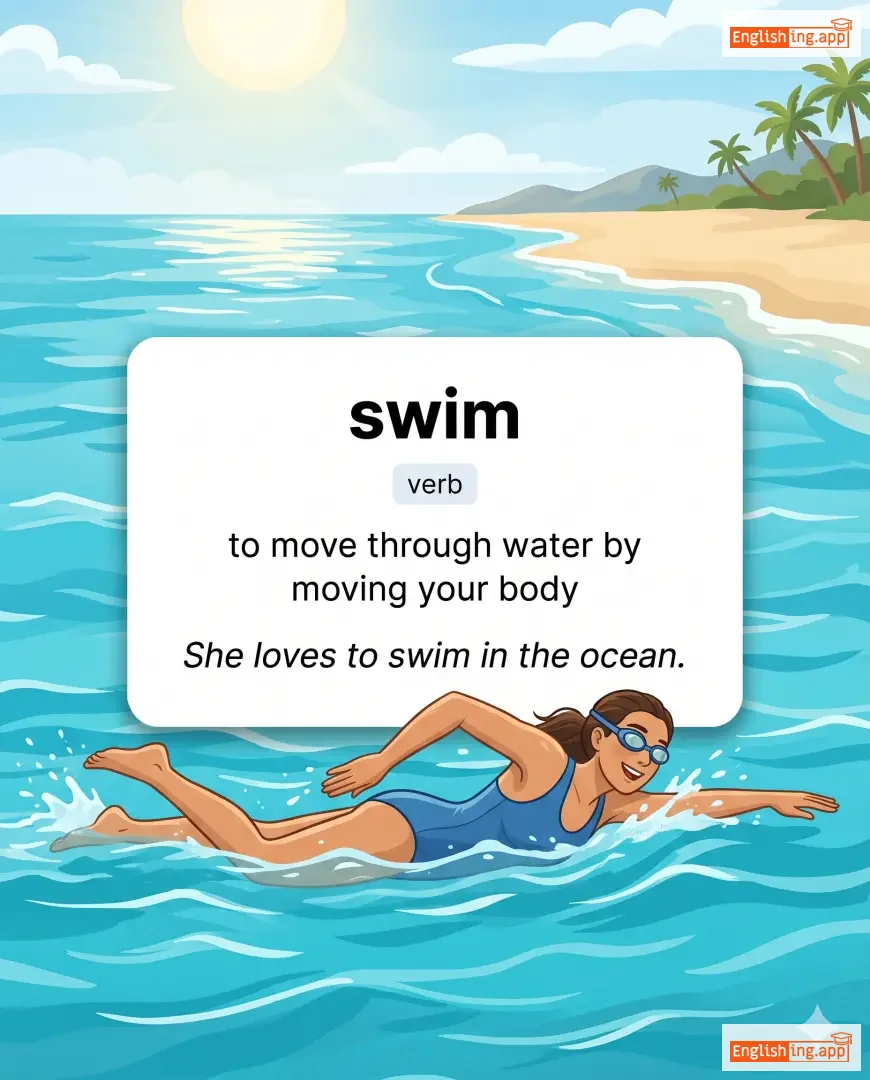
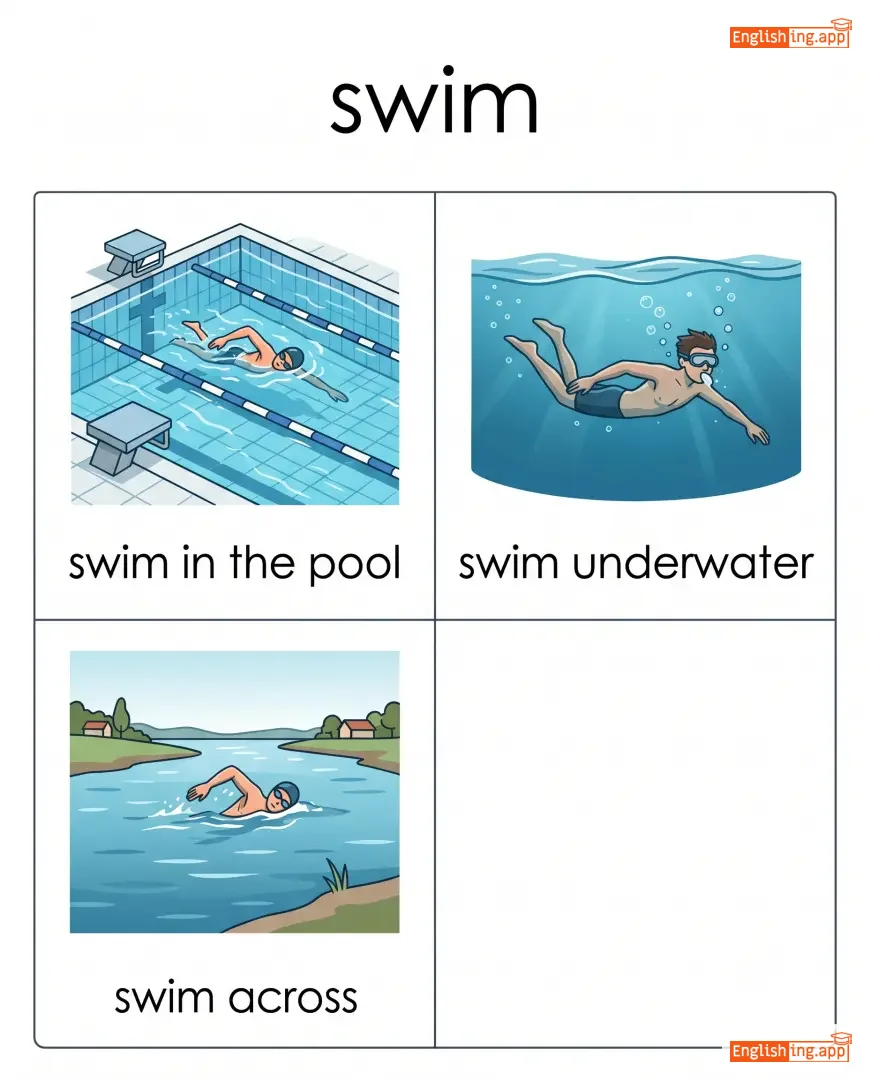
to move through water using body movements
••••••
|
I love to swim in the ocean during summer.
我喜欢在夏天在海洋中游泳。
••••••
|
我喜欢在夏天在海洋中游泳。
Wo xihuan zai xiatian zai haiyang zhong youyong.
••••••
|
- •••••• | - •••••• | - •••••• |
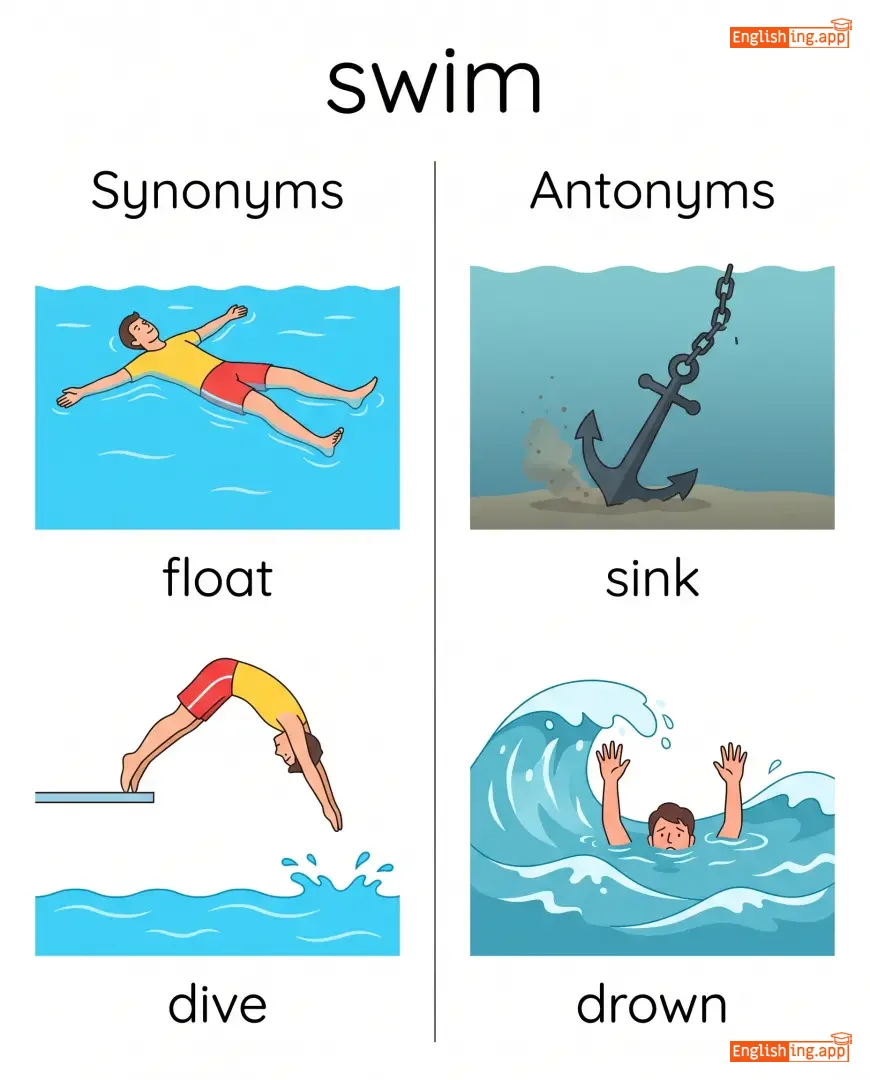
float, paddle, dive, stroke
••••••
|
sink, drown, walk
••••••
|
swim laps, swim stroke, swim fast, swim upstream
••••••
|
游泳:就像鱼一样,轻松自在地在水中游动。
••••••
|
|
🏊
••••••
|
/ˈswɪmɪŋ/
noun
(游泳)
••••••
|
- •••••• |
游泳
you yong
••••••
|
- •••••• | - •••••• | - •••••• |
swimming
游泳
••••••
|
the activity or sport of moving through water using the limbs
••••••
|
Swimming is a great way to stay fit and healthy.
游泳是保持健康和身体健康的好方法。
••••••
|
游泳是保持健康和身体健康的好方法。
You yong shi bao chi jiankang he shenti jiankang de hao fangfa.
••••••
|
in the same boat
同舟共济
••••••
|
to be in the same situation as others
••••••
|
同舟共济
tong zhou gong ji
••••••
|
diving, floating, bathing, aquatic exercise, water sport
••••••
|
sinking, drowning
••••••
|
go swimming, swimming pool, swimming lessons, swimming competition
••••••
|
游泳让你保持健康,像在同舟共济一样!
••••••
|
|
⛓️
••••••
|
/swɪŋ/
verb
(斯温)
••••••
|
|
荡秋千
dàng qiū qiān
••••••
|
swung
斯旺
••••••
|
swung
斯旺
••••••
|
swings
斯温斯
••••••
|
swinging
斯温金
••••••
|
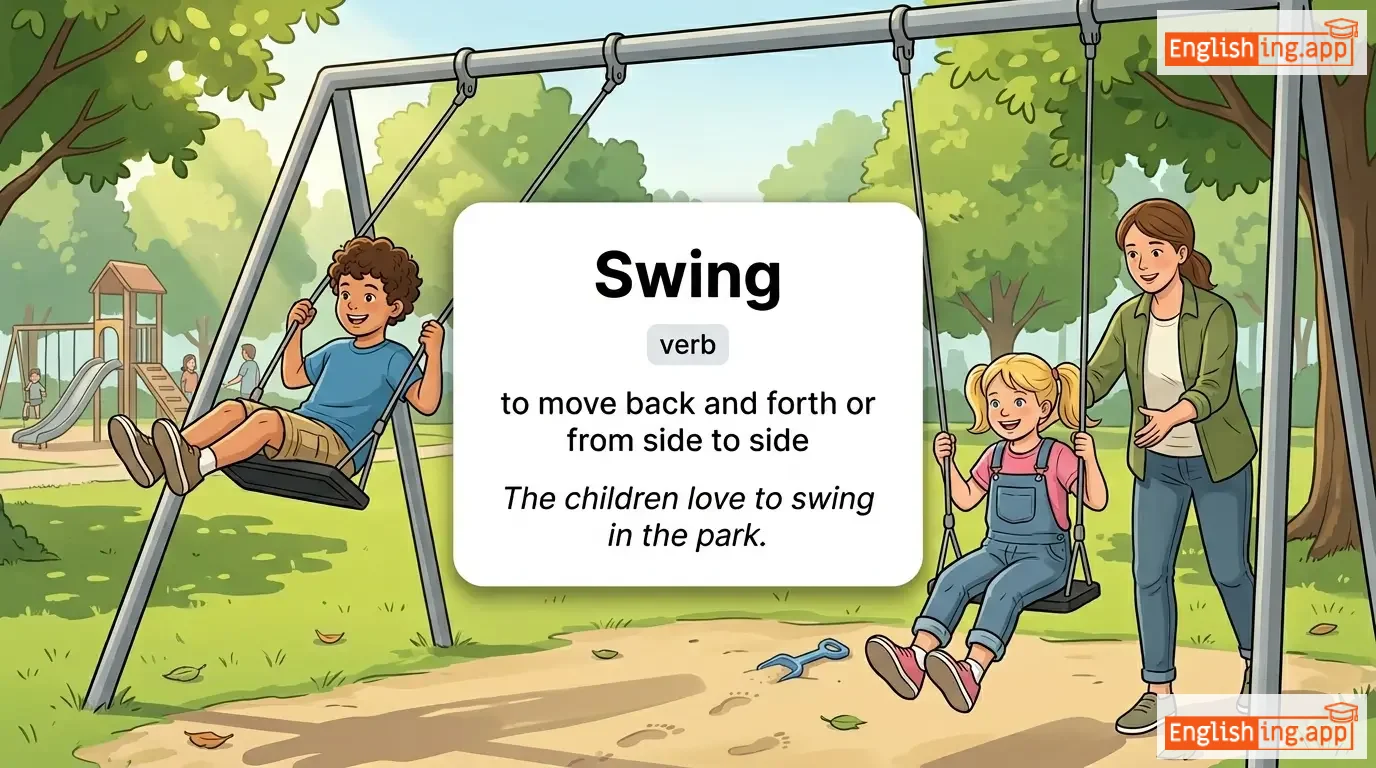
to move back and forth or from side to side
••••••
|
The children love to swing in the park.
孩子们喜欢在公园里荡秋千。
••••••
|
孩子们喜欢在公园里荡秋千。
Háizimen xǐhuān zài gōngyuán lǐ dàng qiū qiān.
••••••
|
swing into action
迅速进入行动
••••••
|
to start doing something quickly and effectively
••••••
|
快速采取行动
kuài sù cǎi qǔ xíng dòng
••••••
|
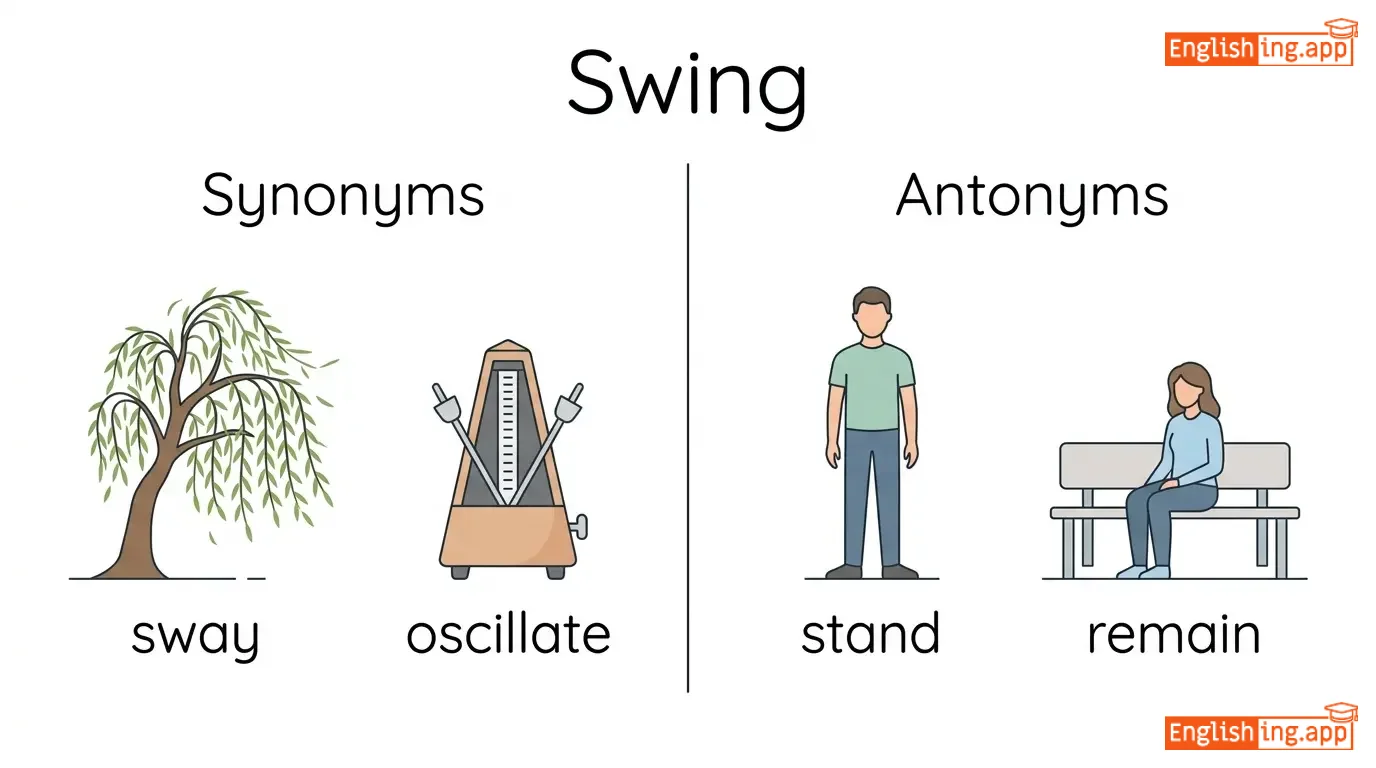
sway, oscillate, rotate, wave
••••••
|
stand, remain, stay
••••••
|
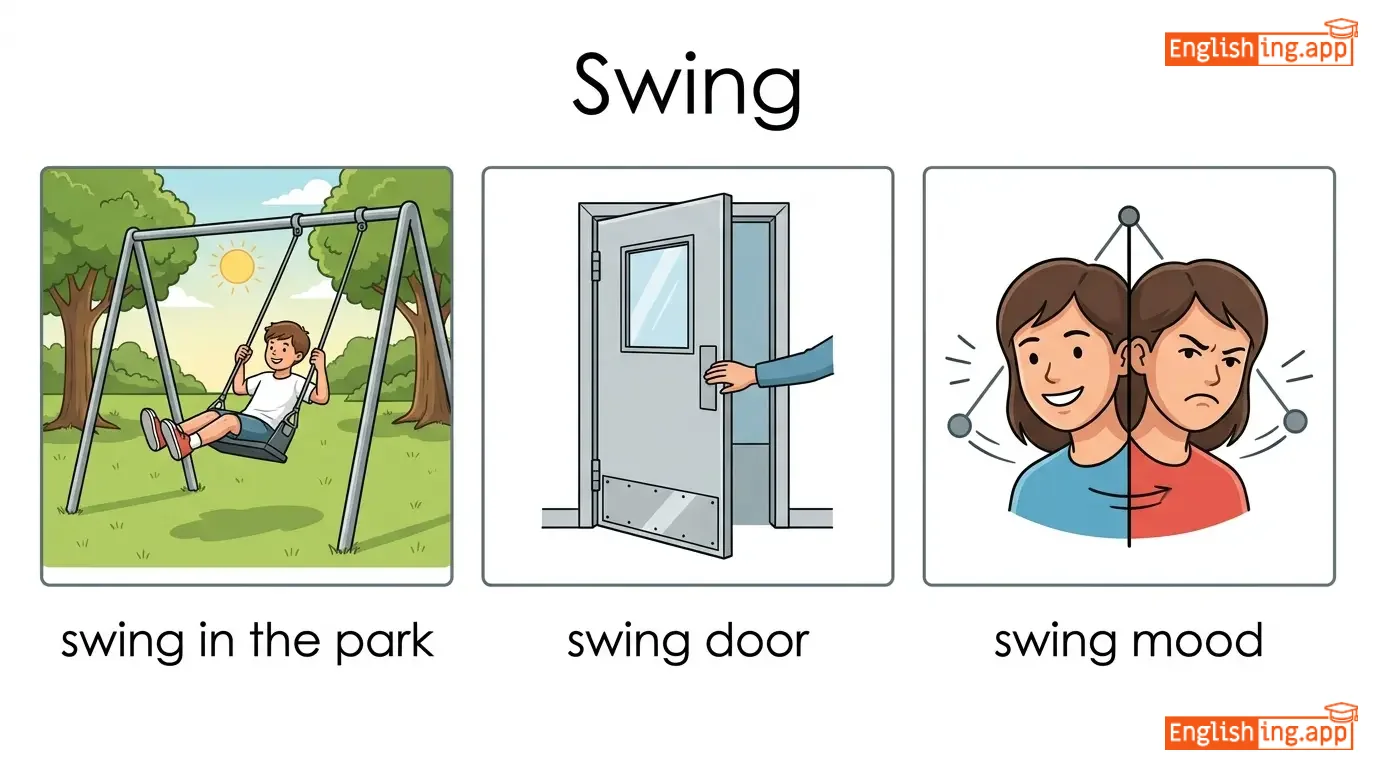
swing in the park, swing door, swing mood, swing votes
••••••
|
Swing 如荡秋千,动来动去
••••••
|
|
🤕
••••••
|
/ˈswoʊlən/
adjective
(斯沃伦)
••••••
|
- •••••• |
肿胀的
zhongzhang de
••••••
|
- •••••• | - •••••• | - •••••• | - •••••• |
Enlarged or puffed up, usually due to injury, inflammation, or fluid accumulation
••••••
|
Her ankle was swollen after she twisted it during the hike.
她在徒步旅行时扭伤了脚踝,脚踝肿了。
••••••
|
她在徒步旅行时扭伤了脚踝,脚踝肿了。
Ta zai tubu luyou shi niushang le jiaohui, jiaohui zhong le.
••••••
|
swollen with pride
骄傲得膨胀
••••••
|
Feeling extremely proud
••••••
|
骄傲得膨胀
jiaoaode pengzhang
••••••
|
inflated, puffed, bloated, engorged, distended
••••••
|
shrunken, deflated, reduced
••••••
|
swollen ankle, swollen eye, swollen river, swollen cheek, swollen glands
••••••
|
脚踝肿了 = swollen ankle
••••••
|

