|
絵文字
|
単語 | Images | 翻訳 | 過去 | 過去分詞 | 三人称単数 | 動名詞 | 意味 | 例文 | 例文の翻訳 | 表現例 | 表現例の意味 | 表現例の翻訳 | 同義語 | 対義語 | コロケーション | ニーモニック |
|---|---|---|---|---|---|---|---|---|---|---|---|---|---|---|---|---|---|
|
🎤
••••••
|
/ˈspiːkər/
noun
(スピーカー)
••••••
|
- •••••• |
スピーカー
supiikaa
••••••
|
- •••••• | - •••••• | - •••••• | - •••••• |
a person who speaks or talks, especially as an occupation
••••••
|
The speaker delivered an inspiring speech at the conference. |
スピーカーは会議で感動的なスピーチを行いました。
Supiikaa wa kaigi de kandouteki na supiichi o okonai mashita.
••••••
|
public speaker |
a person who gives speeches in front of an audience
••••••
|
公共スピーカー
koukyou supiikaa
••••••
|
orator, lecturer, presenter, talker
••••••
|
listener, audience
••••••
|
motivational speaker, guest speaker, public speaker, keynote speaker
••••••
|
A speaker is someone who speaks – and touches hearts with every word!
••••••
|
|
✨
••••••
|
/ˈspɛʃəl/
adjective
(スペシャル)
••••••
|
- •••••• |
特別
tokubetsu
••••••
|
- •••••• | - •••••• | - •••••• | - •••••• |
different from what is usual; better or greater than normal
••••••
|
This gift is very special to me.
このギフトは私にとってとてもスペシャルです。
••••••
|
このギフトは私にとってとても特別です。
Kono gifuto wa watashi ni totte totemo tokubetsu desu.
••••••
|
special treatment
特別な扱い
••••••
|
different or better care or service than usual
••••••
|
特別な扱い
tokubetsu na atsukai
••••••
|
unique, exceptional, distinctive, extraordinary
••••••
|
ordinary, common, usual
••••••
|
special occasion, special day, special gift, special attention
••••••
|
Specialは日本語で '特別' (tokubetsu)といいます。
••••••
|
|
👨⚕️
••••••
|
/ˈspeʃəlɪst/
noun
(スペシャリスト)
••••••
|
- •••••• |
専門家
senmonka
••••••
|
- •••••• | - •••••• | - •••••• | - •••••• |
a person who has specialized knowledge or training in a particular area; an expert
••••••
|
She consulted a heart specialist about her condition.
彼女は自分の状態について心臓専門医に相談しました。
••••••
|
彼女は自分の状態について心臓専門医に相談しました。
Kanojo wa jibun no jōtai ni tsuite shinzō senmon'i ni sōdan shimashita.
••••••
|
- •••••• | - •••••• | - •••••• |
expert, professional, authority, consultant
••••••
|
generalist, amateur, novice, beginner
••••••
|
medical specialist, heart specialist, IT specialist, specialist knowledge
••••••
|
専門家 = エキスパート
••••••
|
|
🎯
••••••
|
/ˈspɛʃəˌlaɪz/
verb
(スペシャライズ)
••••••
|
- •••••• |
専門的に取り組む
senmonteki ni torikumu
••••••
|
specialized
スペシャライズド
••••••
|
specialized
スペシャライズド
••••••
|
specializes
スペシャライズズ
••••••
|
specializing
スペシャライジング
••••••
|
to focus on a particular subject or activity and become an expert in it
••••••
|
He decided to specialize in cardiology.
彼は心臓病学に専門的に取り組むことに決めました。
••••••
|
彼は心臓病学に専門的に取り組むことに決めました。
Kare wa shinzōbyōgaku ni senmonten ni torikumu koto ni kimemashita.
••••••
|
specialize in
専門的に取り組む
••••••
|
to concentrate on a particular field of study or work
••••••
|
専門的に取り組む
senmonteki ni torikumu
••••••
|
concentrate, focus, dedicate, major, train
••••••
|
generalize, diversify
••••••
|
specialize in medicine, specialize in law, specialize in marketing
••••••
|
Specialize = 専門的に取り組む, ある分野の専門家になる
••••••
|
|
🔧
••••••
|
/ˈspɛʃəˌlaɪzd/
adjective
(スぺシャライズド)
••••••
|
- •••••• |
専門的な
senmon-teki na
••••••
|
- •••••• | - •••••• | - •••••• | - •••••• |
designed or developed for a particular purpose or function
••••••
|
He has a specialized knowledge of ancient civilizations.
彼は古代文明に関する専門的な知識を持っています。
••••••
|
彼は古代文明に関する専門的な知識を持っています。
Kare wa kodai bunmei ni kansuru senmon-teki na chishiki o motteimasu.
••••••
|
- •••••• | - •••••• | - •••••• |
specialist, specific, expert
••••••
|
general, broad
••••••
|
specialized knowledge, specialized equipment, specialized skills
••••••
|
Specialized とは、特定の目的 (mokuteki) のために作られたことを意味します。
••••••
|
|
⭐
••••••
|
/ˈspeʃ.əl.i/
adverb
(es-pe-sha-ri)
••••••
|
- •••••• |
特別に
tokubetsu ni
••••••
|
- •••••• | - •••••• | - •••••• | - •••••• |
for a particular purpose; especially; specifically
••••••
|
This gift was specially made for you.
このギフトは特別にあなたのために作られました。
••••••
|
このギフトは特別にあなたのために作られました。
Kono gifuto wa tokubetsu ni anata no tame ni tsukuraremashita.
••••••
|
- •••••• | - •••••• | - •••••• |
especially, particularly, specifically, expressly
••••••
|
generally, ordinarily, commonly
••••••
|
specially designed, specially trained, specially made
••••••
|
In Japanese, '特別に' means specially. Think of a gift specially made for you!
••••••
|
|
🐼
••••••
|
/ˈspiːʃiːz/
noun
(スピシーズ)
••••••
|
- •••••• |
種
shu
••••••
|
- •••••• | - •••••• | - •••••• | - •••••• |
a group of living organisms consisting of similar individuals capable of exchanging genes or interbreeding
••••••
|
The panda is an endangered species. |
パンダは絶滅危惧種です。
Panda wa zetsumetsu kigushu desu.
••••••
|
endangered species |
a species at risk of extinction
••••••
|
絶滅危惧種
zetsumetsu kigushu
••••••
|
type, kind, group, breed
••••••
|
individual, singular
••••••
|
endangered species, rare species, animal species, plant species
••••••
|
種 - 特別なグループ
••••••
|
|
📌
••••••
|
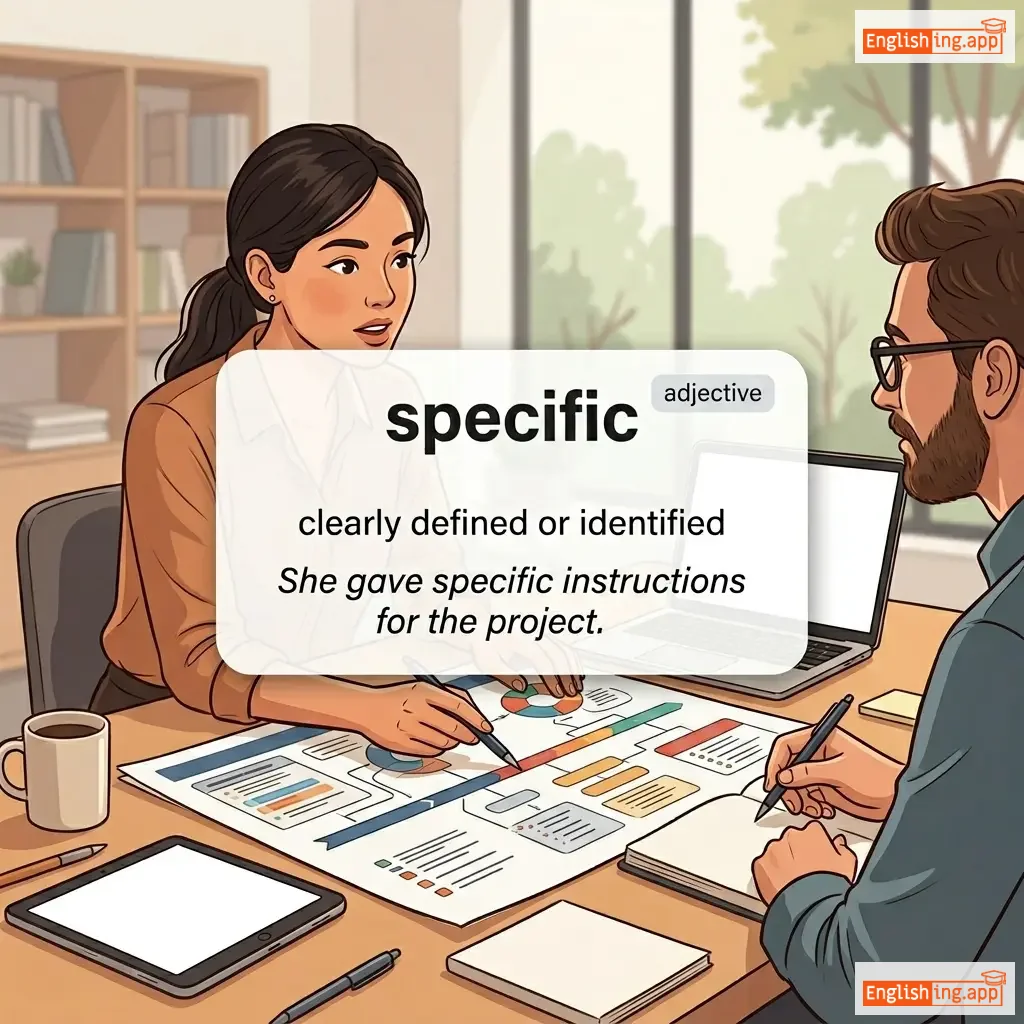
/spəˈsɪfɪk/
adjective
(especifico)
••••••
|
|
具体的
gutaiteki
••••••
|
- •••••• | - •••••• | - •••••• | - •••••• |
clearly defined or identified
••••••
|
She gave specific instructions for the project. |
彼女はプロジェクトのために具体的な指示を出しました。
Kanojo wa purojekuto no tame ni gutaiteki na shiji o dashimashita.
••••••
|
to be specific |
to clarify or state something exactly
••••••
|
具体的に言うと
gutaiteki ni iu to
••••••
|
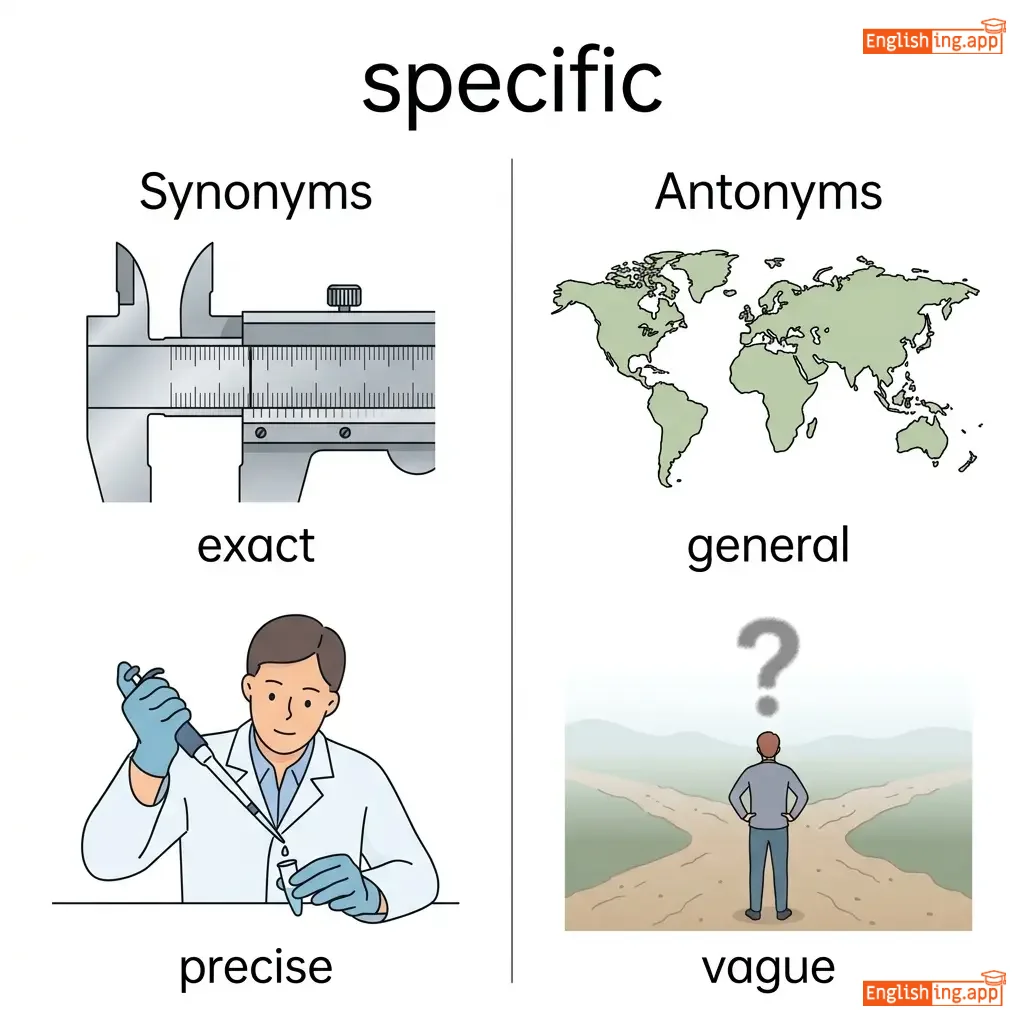
exact, precise, detailed, explicit
••••••
|
general, vague
••••••
|
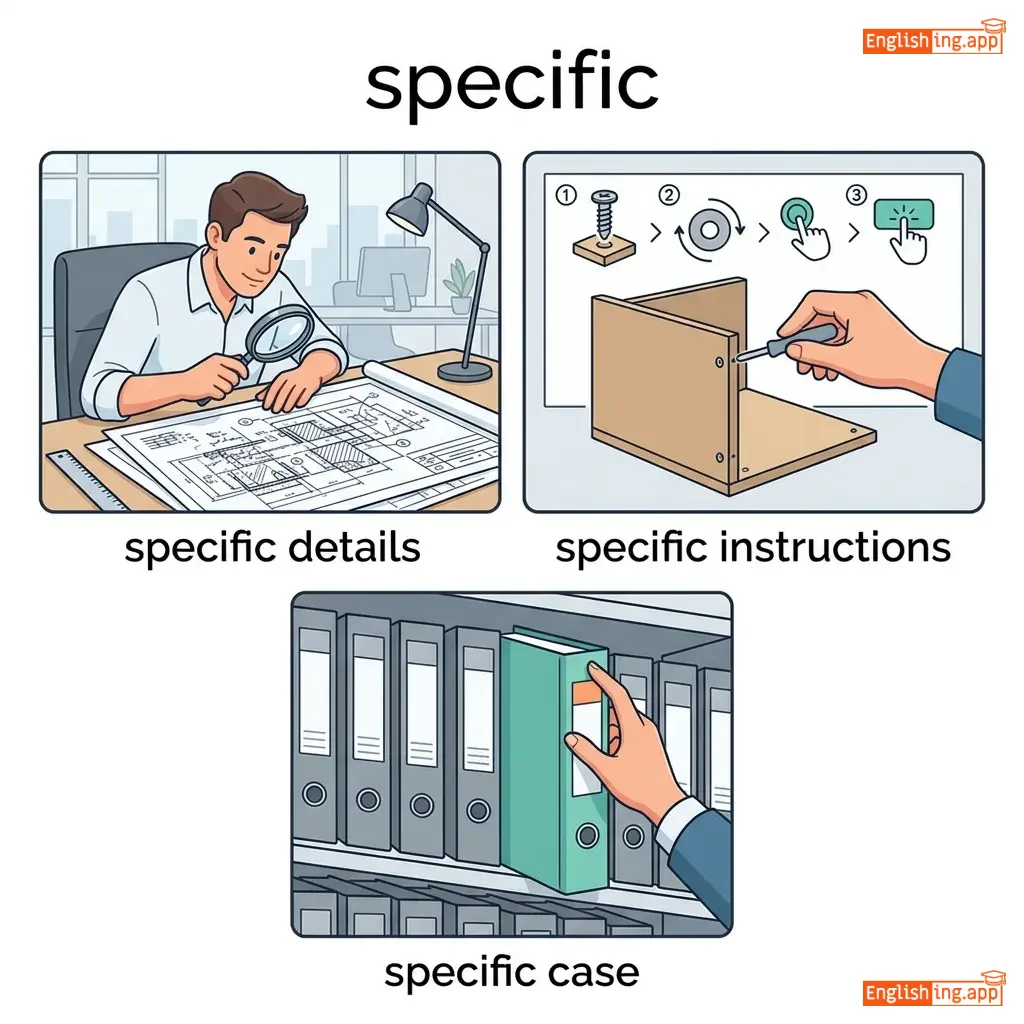
specific details, specific instructions, specific case, specific purpose
••••••
|
Specificは日本語で具体的、混乱なし
••••••
|
|
🔍
••••••
|
/spəˈsɪfɪkli/
adverb
(スペシフィカリー)
••••••
|
- •••••• |
特に
toku ni
••••••
|
- •••••• | - •••••• | - •••••• | - •••••• |
in a clear and exact way
••••••
|
He was specifically asked to handle the finances. |
彼は特に財務を扱うように頼まれました。
Kare wa toku ni zaimu o atsukau you ni tanomaremashita.
••••••
|
- •••••• | - •••••• | - •••••• |
explicitly, clearly, particularly, definitively
••••••
|
vaguely, generally
••••••
|
specifically asked, specifically designed, specifically mentioned
••••••
|
SPECIFICally is SPECIFIC! If you say SPECIFIC, it's specific!
••••••
|
|
📑
••••••
|
/ˌspɛsɪfɪˈkeɪʃən/
noun
(スペシフィケーション)
••••••
|
- •••••• |
仕様書
shiyōsho
••••••
|
- •••••• | - •••••• | - •••••• | - •••••• |
a detailed description or assessment of something
••••••
|
The product specification includes all the necessary details. |
製品の仕様書にはすべての必要な詳細が含まれています。
Seihin no shiyōsho ni wa subete no hitsuyō na shōsai ga fukumareteimasu.
••••••
|
- •••••• | - •••••• | - •••••• |
requirement, description, outline, standard
••••••
|
ambiguity, vagueness
••••••
|
technical specification, product specification, detailed specification
••••••
|
仕様書はスペシャル説明(special description)のようなものです。
••••••
|
|
📝
••••••
|
/ˈspɛsɪfaɪ/
verb
(suseifai)
••••••
|
- •••••• |
指定する
shiteisuru
••••••
|
specified
suseifaido
••••••
|
specified
suseifaido
••••••
|
specifies
suseifaizu
••••••
|
specifying
suseifainngu
••••••
|
to state or describe something clearly and exactly
••••••
|
Please specify the time and place of the meeting.
会議の時間と場所を指定してください。
••••••
|
会議の時間と場所を指定してください。
Kaigi no jikan to basho o shitei shite kudasai.
••••••
|
specify requirements
要求を指定する
••••••
|
to clearly state what is needed
••••••
|
要求を指定する
youkyuu o shitei suru
••••••
|
define, state, describe, mention, detail
••••••
|
generalize, omit
••••••
|
specify details, specify conditions, specify requirements, specify time
••••••
|
指定するは明確に指示すること!
••••••
|
|
🧪
••••••
|
/ˈspesɪmən/
noun
(スペシメン)
••••••
|
- •••••• |
標本; 試料; サンプル
hyouhon; shiryou; sanpuru
••••••
|
- •••••• | - •••••• | - •••••• | - •••••• |
an individual example of something; a sample collected for scientific study or testing
••••••
|
The scientist collected a blood specimen for analysis.
科学者は分析のために血液の標本を集めました。
••••••
|
科学者は分析のために血液の標本を集めました。
Kagakusha wa bunseki no tame ni ketsueki no hyouhon o atsume mashita.
••••••
|
- •••••• | - •••••• | - •••••• |
sample, example, model, instance
••••••
|
whole, entirety, bulk
••••••
|
blood specimen, specimen jar, fine specimen, specimen collection
••••••
|
科学者が分析のために標本を集める。
••••••
|
|
🎆
••••••
|
/ˈspɛktəkəl/
noun
(スペクタクル)
••••••
|
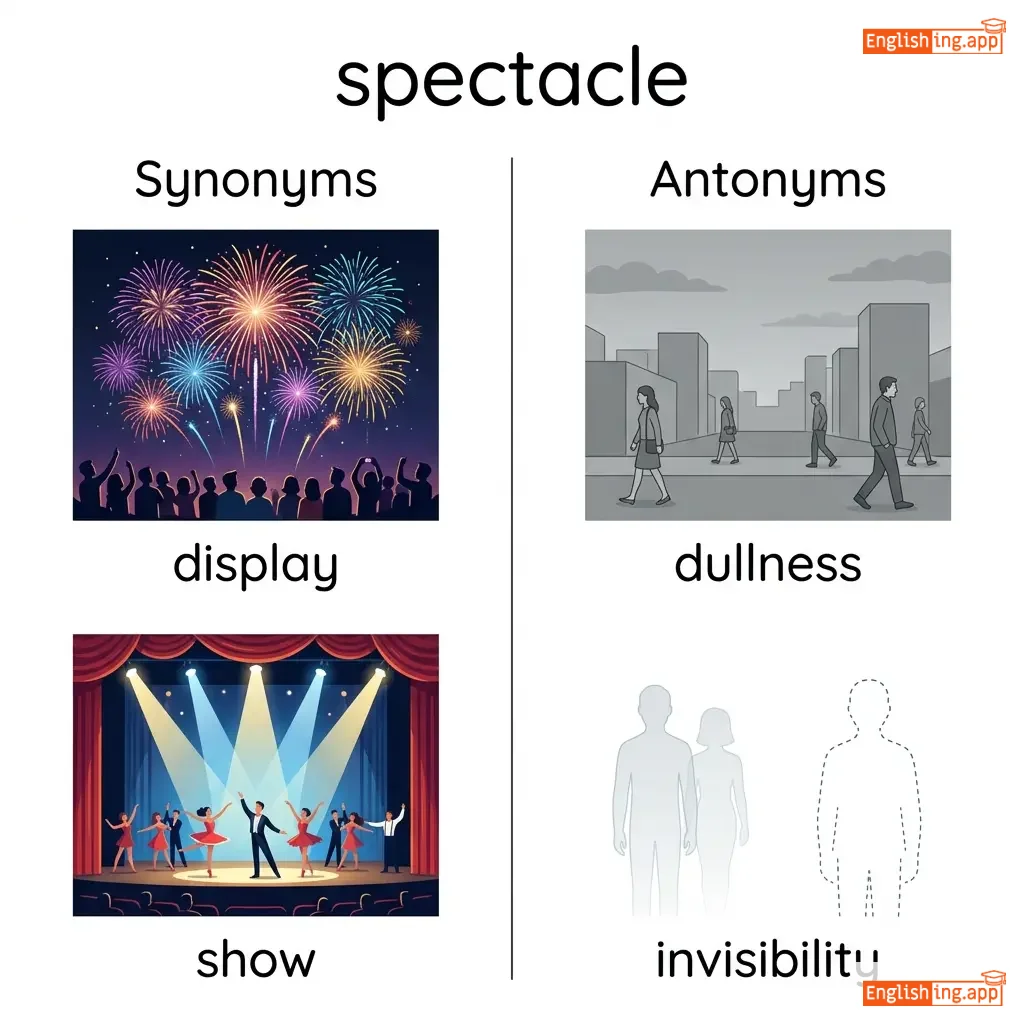
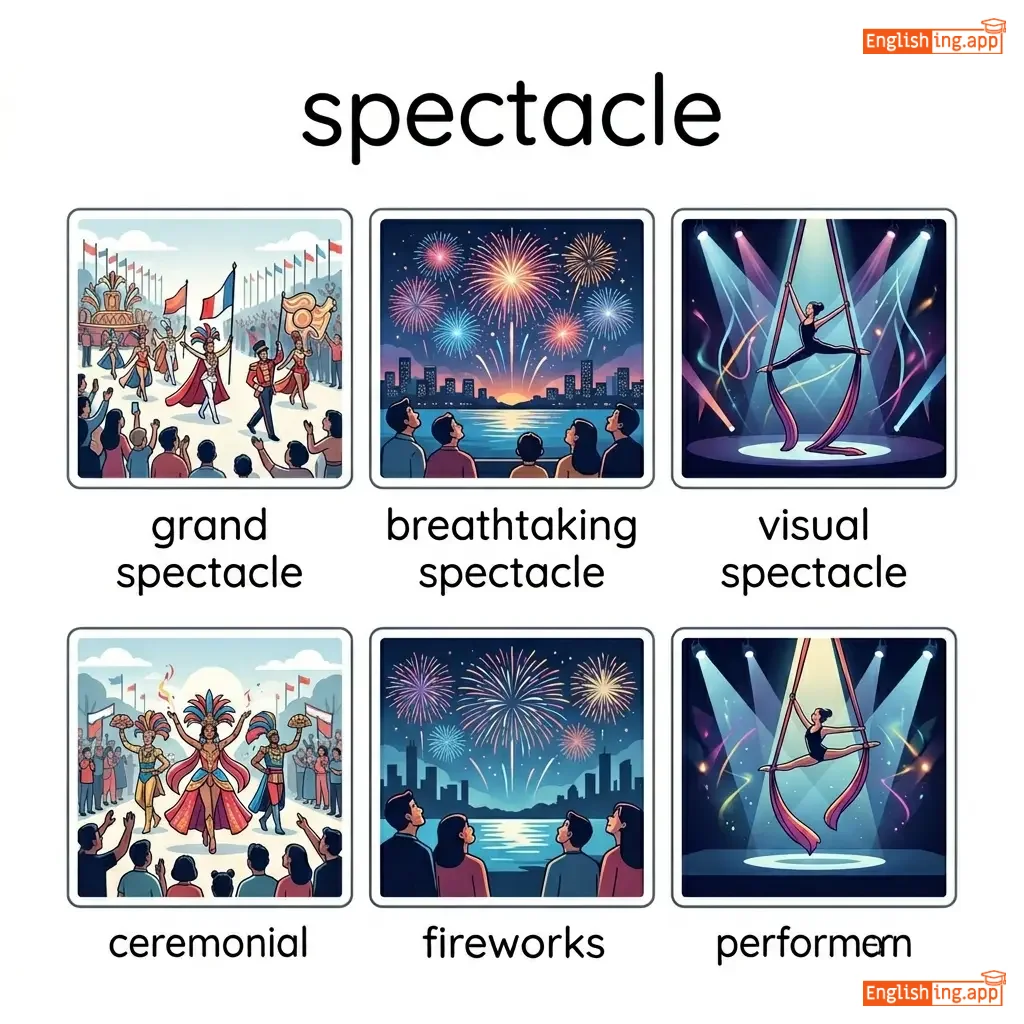
|
視覚的なショー
shikakuteki na shō
••••••
|
- •••••• | - •••••• | - •••••• | - •••••• |
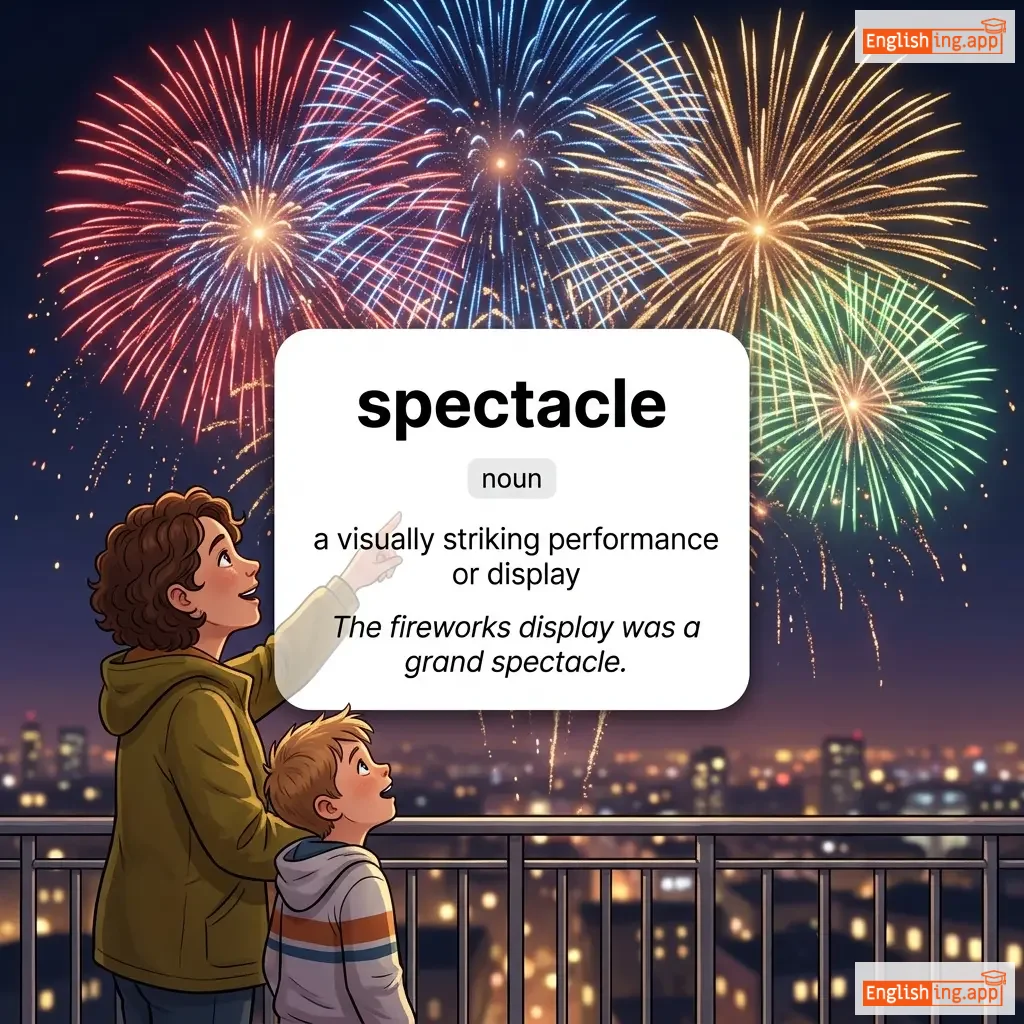
a visually striking performance or display
••••••
|
The fireworks display was a grand spectacle. |
花火のショーは壮大な視覚的なショーでした。
Hanabi no shō wa sōdaina shikakuteki na shō deshita.
••••••
|
- •••••• | - •••••• | - •••••• |
display, show, performance, exhibition
••••••
|
dullness, invisibility
••••••
|
grand spectacle, breathtaking spectacle, visual spectacle
••••••
|
スペクタクルは目を引くもの、例えば花火のようなものです。
••••••
|
|
🌟
••••••
|
/spɛkˈtækjələr/
adjective
(sutekutakyurā)
••••••
|
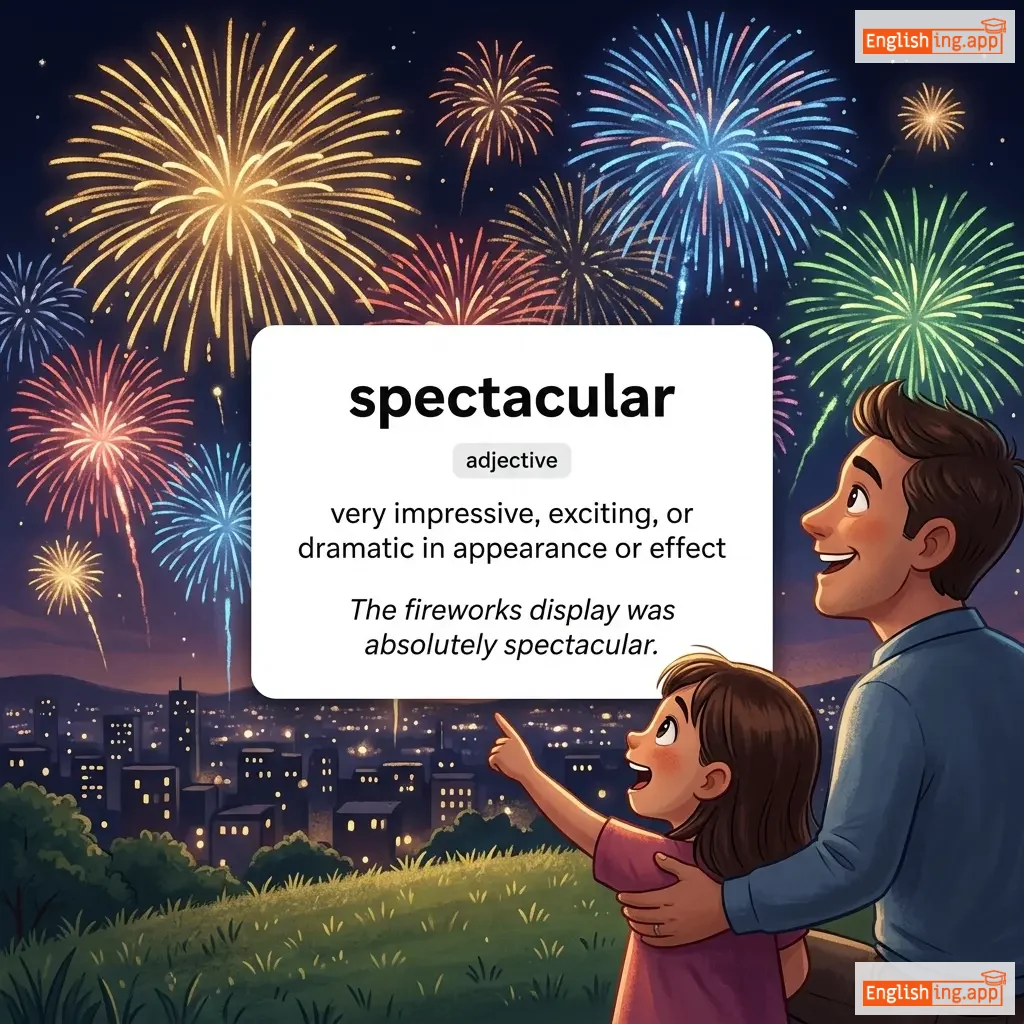
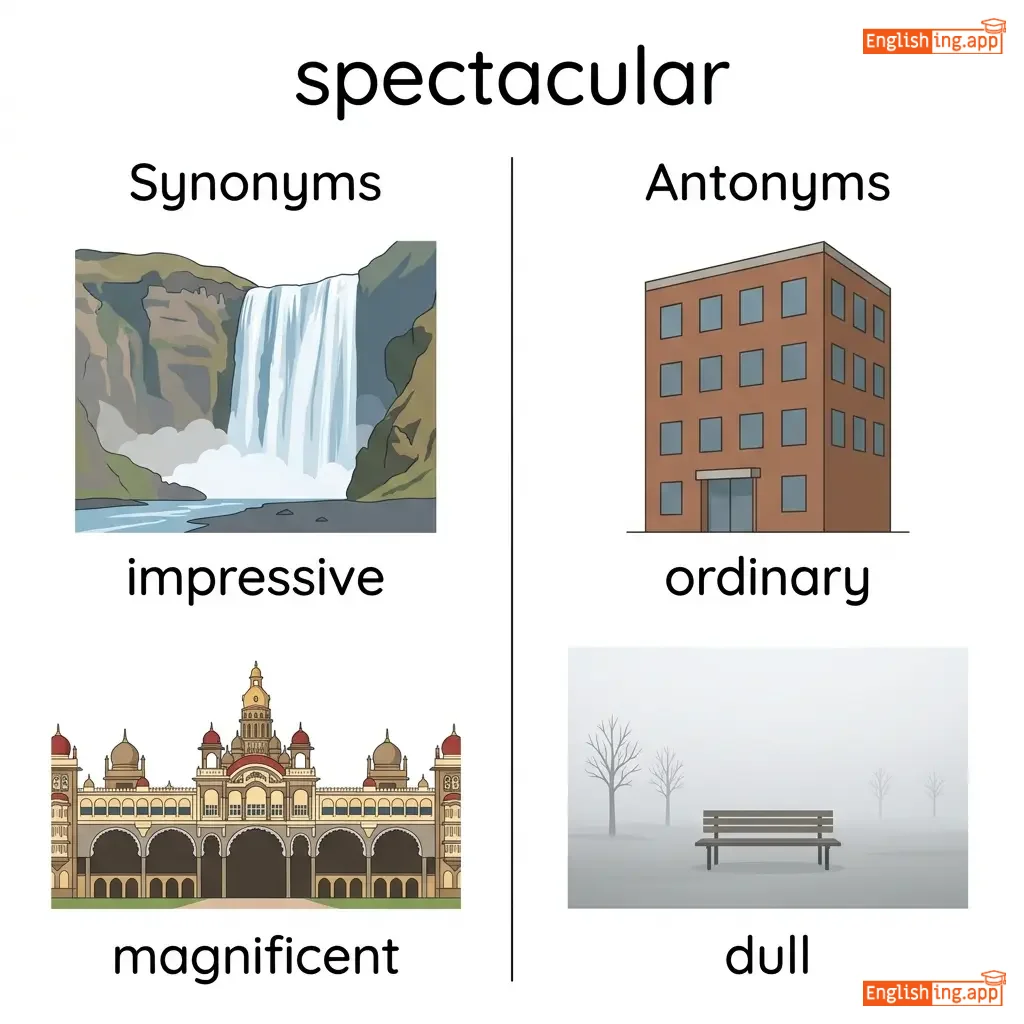
|
壮大
sōdai
••••••
|
- •••••• | - •••••• | - •••••• | - •••••• |
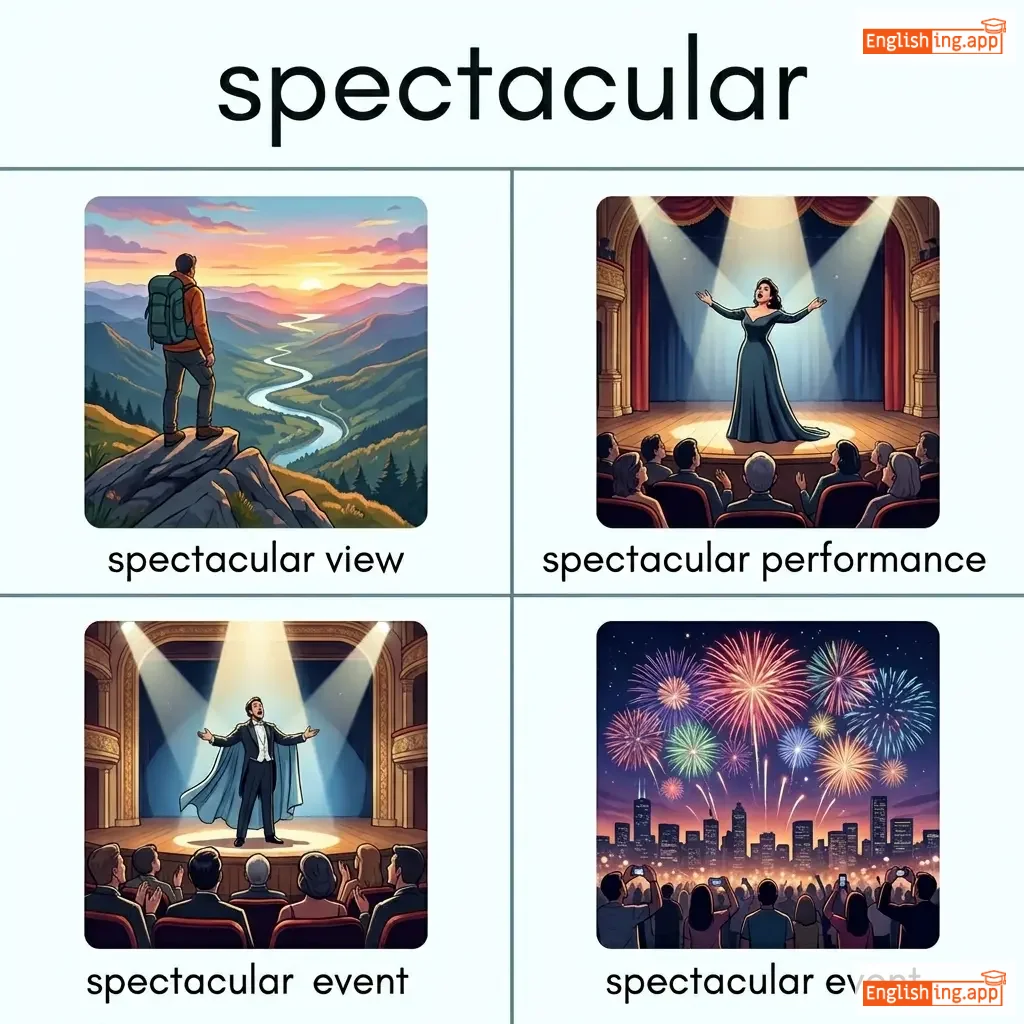
very impressive, exciting, or dramatic in appearance or effect
••••••
|
The fireworks display was absolutely spectacular.
花火大会は絶対に壮観でした。
••••••
|
花火大会は絶対に壮観でした。
Hanabi taikai wa zettai ni sōkan deshita.
••••••
|
spectacular success
壮大な成功
••••••
|
an extremely impressive achievement
••••••
|
壮大な成功
Sōdaina seikō
••••••
|
impressive, magnificent, stunning, remarkable, breathtaking
••••••
|
ordinary, dull, unimpressive
••••••
|
spectacular view, spectacular performance, spectacular event, spectacular victory
••••••
|
Spectacular は映画の特殊効果のように素晴らしい!
••••••
|
|
👀
••••••
|
/ˈspɛkteɪtər/
noun
(スペクテーター)
••••••
|
- •••••• |
観客
kankyaku
••••••
|
- •••••• | - •••••• | - •••••• | - •••••• |
A person who watches an event, show, or game without taking part.
••••••
|
Thousands of spectators gathered to watch the football match. |
何千人もの観客がサッカーの試合を観るために集まりました。
Nansen-nin mono kankyaku ga sakkā no shiai o miru tame ni atsumarimashita.
••••••
|
mere spectator |
someone who is only watching without involvement
••••••
|
単なる観客
tannaru kankyaku
••••••
|
viewer, observer, onlooker, audience
••••••
|
participant, player
••••••
|
sports spectator, theater spectator, excited spectator
••••••
|
Spectatorは、'spectacle'を観るだけで、ゲームに参加しない。
••••••
|
|
🌈
••••••
|
/ˈspɛktrəm/
noun
(スペクトル)
••••••
|
|
スペクトル
supekutoru
••••••
|
- •••••• | - •••••• | - •••••• | - •••••• |
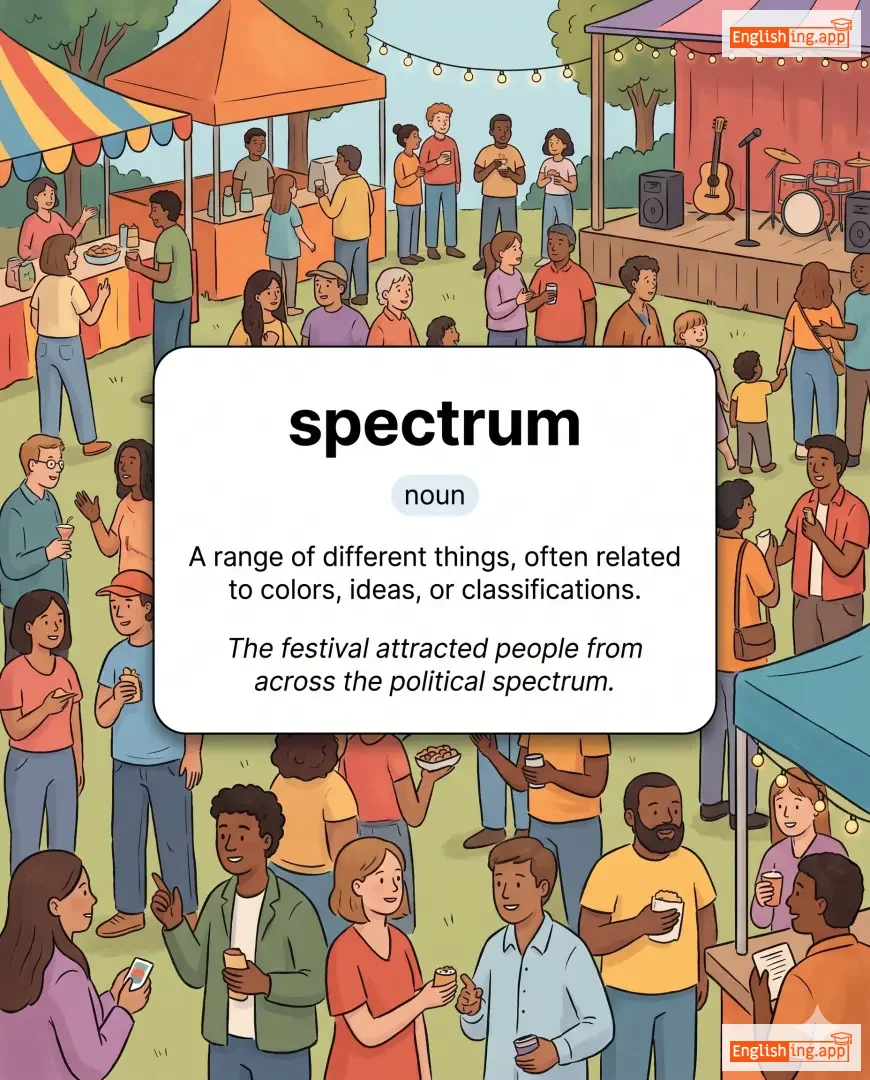
A range of different things, often related to colors, ideas, or classifications.
••••••
|
The festival attracted people from across the political spectrum. |
その祭りは政治的スペクトル全体から人々を引き付けました。
Sono matsuri wa seijiteki supekutoru zentai kara hitobito o hiki tsukemashita.
••••••
|
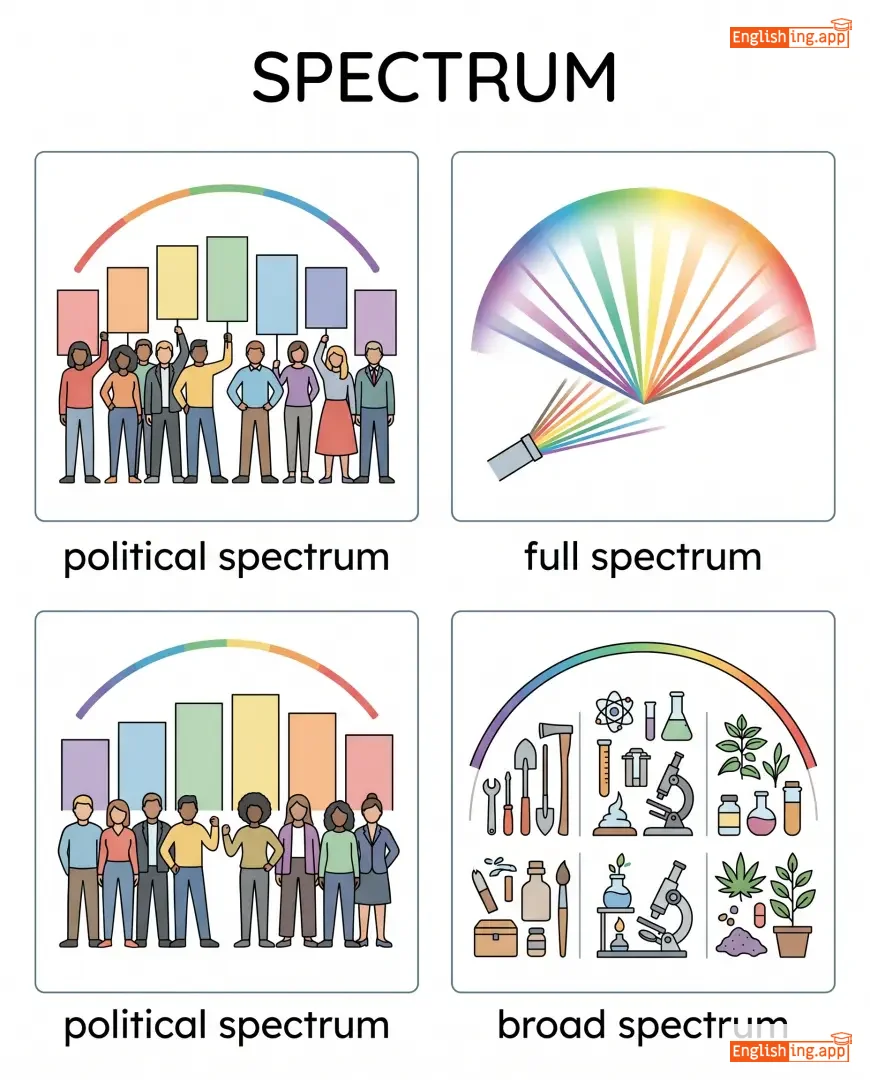
broad spectrum |
Covering a wide range of ideas or possibilities.
••••••
|
広範なスペクトル
Kōhan na supekutoru
••••••
|
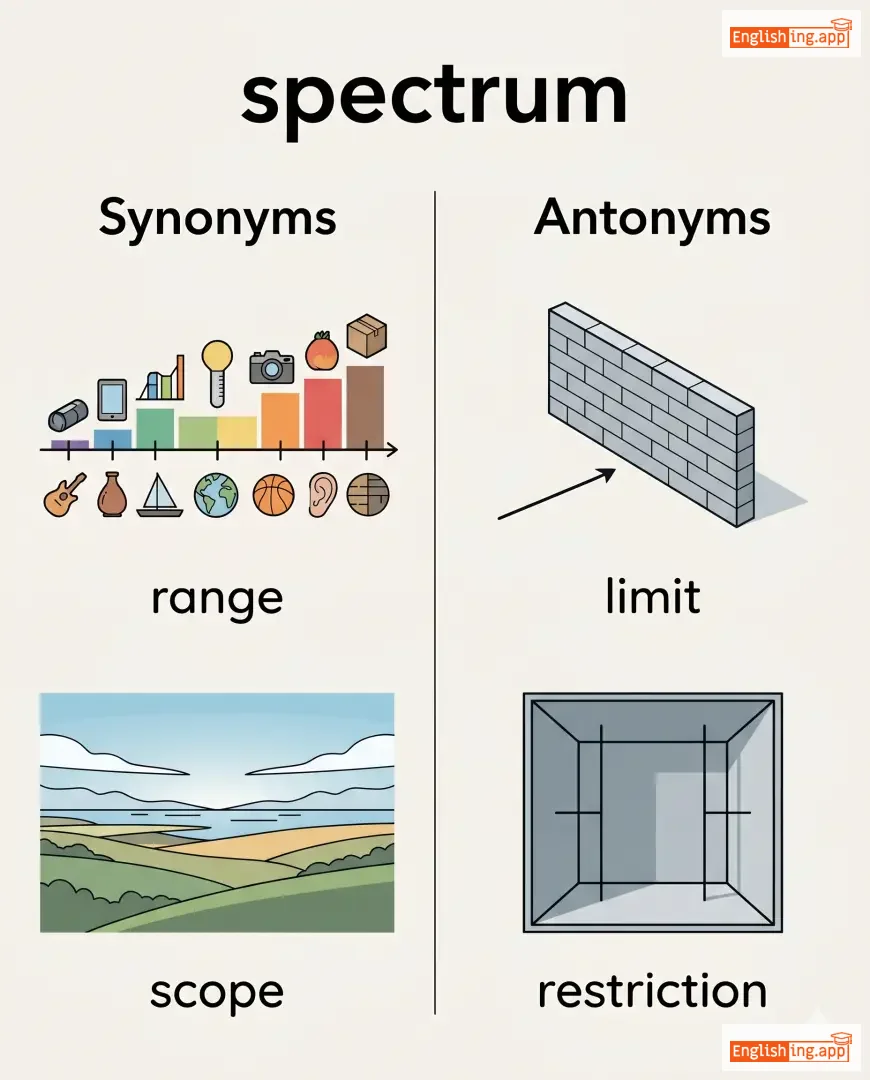
range, scope, span, variety, gamut
••••••
|
limit, restriction, boundary
••••••
|
political spectrum, full spectrum, broad spectrum, across the spectrum
••••••
|
スペクトルは色の完全な範囲を意味します 🌈、スペクトルにすべてが含まれています。
••••••
|
|
🤔
••••••
|
/ˈspɛkjʊˌleɪt/
verb
(スペキュレート)
••••••
|
- •••••• |
推測する / 投資する
すいそくする / とうしする
••••••
|
speculated
スペキュレートした
••••••
|
speculated
スペキュレートした
••••••
|
speculates
スペキュレートする
••••••
|
speculating
スペキュレートしている
••••••
|
To form a theory or guess without firm evidence; to invest in stocks, property, etc. hoping for profit.
••••••
|
Experts speculate that the company may expand into new markets.
専門家は会社が新しい市場に進出する可能性があると予測しています。
••••••
|
専門家は会社が新しい市場に進出する可能性があると予測しています。
せんもんかはかいしゃがあたらしいしじょうにしんしゅつするかのうせいがあるとよそくしています。
••••••
|
wildly speculate
根拠のない推測をする
••••••
|
To guess without much evidence or basis.
••••••
|
根拠のない推測をする
こんきょのないすいそくをする
••••••
|
guess, hypothesize, suppose, invest, gamble
••••••
|
know, prove, confirm
••••••
|
speculate about, speculate on, speculate wildly, speculate heavily
••••••
|
スペキュレートはただの推測だけでなく、利益を期待して投資もすることです。
••••••
|
|
💭
••••••
|
/ˌspɛkjʊˈleɪʃən/
noun
(スペキュレーション)
••••••
|

|
推測
suisoku
••••••
|
- •••••• | - •••••• | - •••••• | - •••••• |
the forming of ideas or theories without firm evidence; guesswork
••••••
|
There is a lot of speculation about who will win the election. |
誰が選挙に勝つかについて多くの推測があります。
Dare ga senkyo ni katsu ka ni tsuite ooku no suisoku ga arimasu.
••••••
|
wild speculation |
an unproven or exaggerated theory or guess
••••••
|
野生の推測
yasei no suisoku
••••••
|
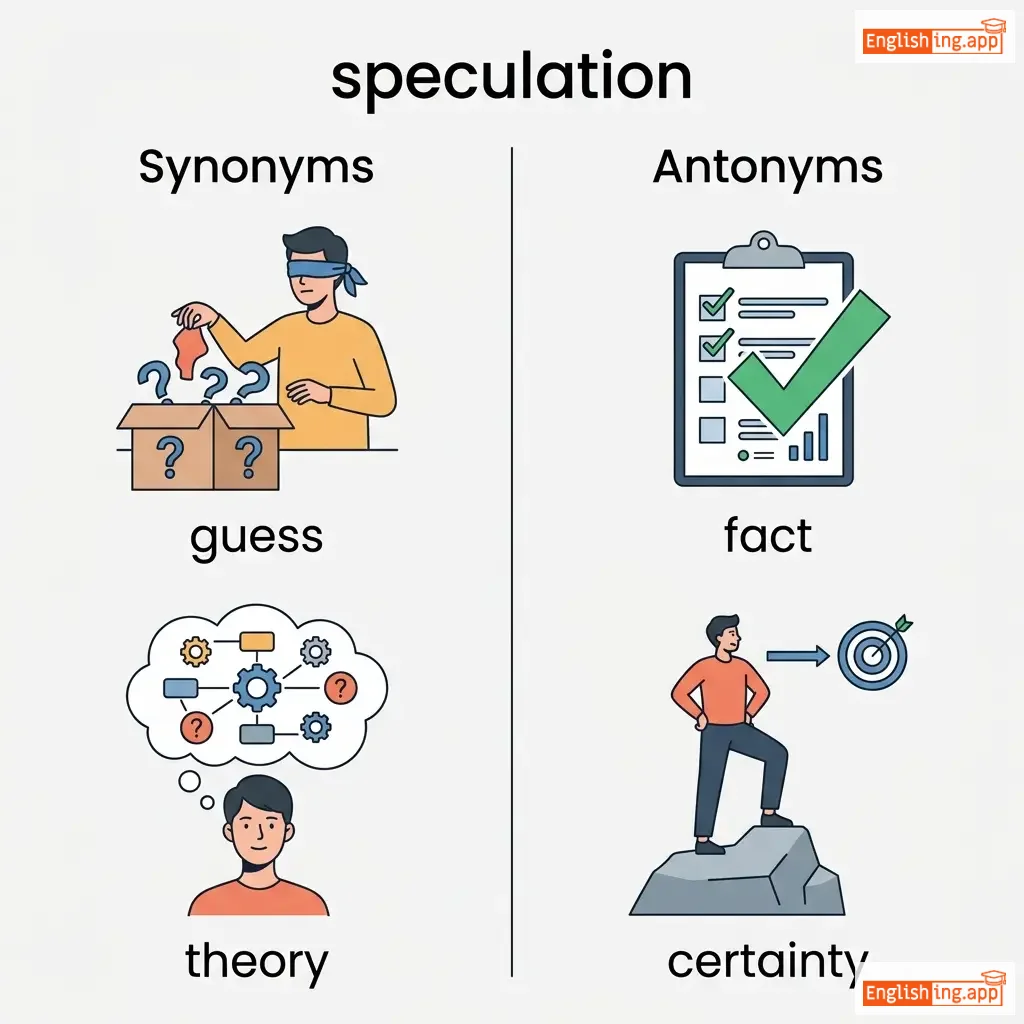
guess, theory, assumption, hypothesis, conjecture
••••••
|
fact, certainty
••••••
|
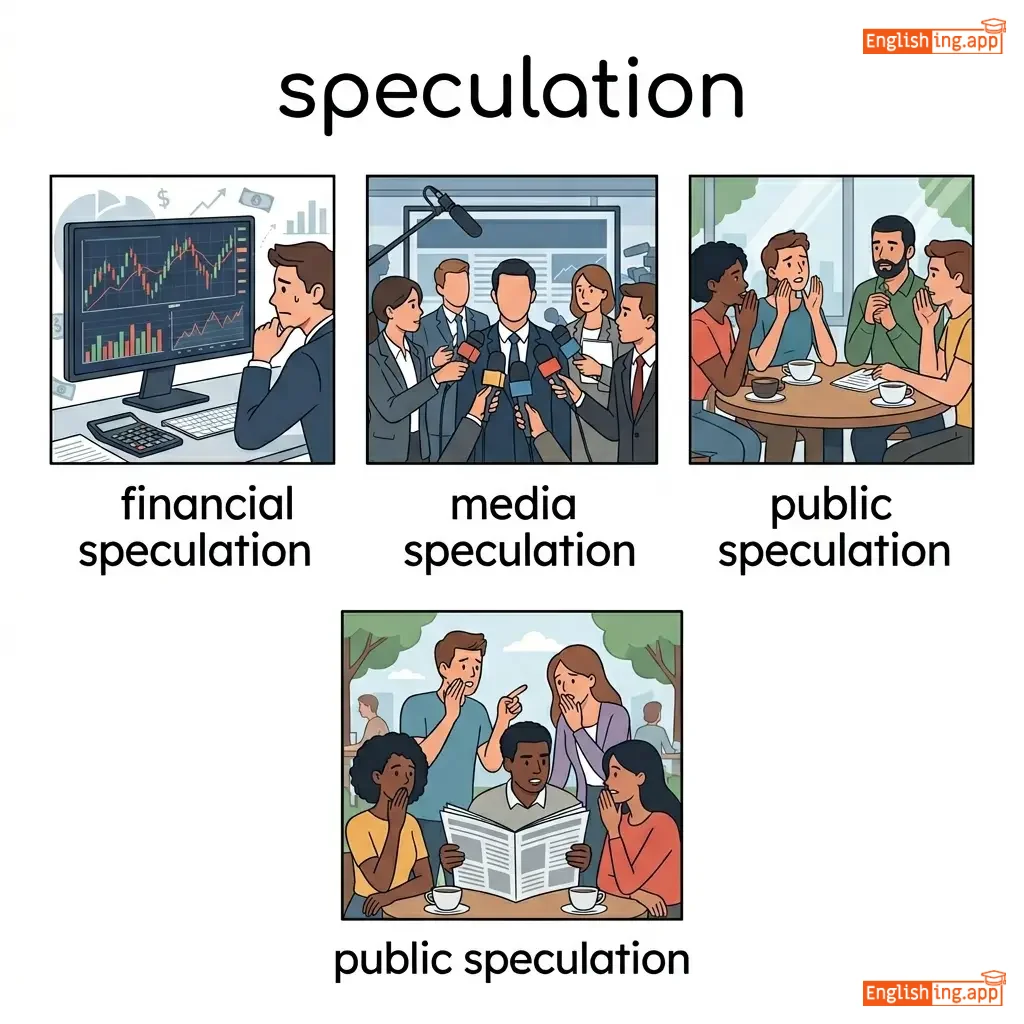
financial speculation, media speculation, public speculation, wild speculation
••••••
|
推測は証拠なしで考えること — ただの予測 💭
••••••
|
|
🎤
••••••
|
/spiːtʃ/
noun
(スピーチ)
••••••
|
- •••••• |
スピーチ; 演説;
supīchi; enzetsu
••••••
|
- •••••• | - •••••• | - •••••• | - •••••• |
formal address or discourse delivered to an audience; the expression of thoughts in spoken words
••••••
|
The president gave an inspiring speech to the nation. |
大統領は国民に向けて感動的なスピーチをしました。
Daitōryō wa kokumin ni mukete kandō-teki na supīchi o shimashita.
••••••
|
- •••••• | - •••••• | - •••••• |
address, oration, discourse, talk
••••••
|
silence, muteness
••••••
|
keynote speech, public speech, acceptance speech, farewell speech
••••••
|
Speech in Japanese: Connecting hearts with the power of words.
••••••
|
|
🏎️
••••••
|
/spiːd/
noun/verb
(スピード)
••••••
|
- •••••• |
速度
sokudo
••••••
|
sped
スペッド
••••••
|
sped
スペッド
••••••
|
speeds
スピードス
••••••
|
speeding
スピーディング
••••••
|
the rate at which something moves or happens
••••••
|
The car was moving at high speed.
車は高速で走っていた。
••••••
|
車は高速で走っていた。
Kuruma wa kōsoku de hashitte ita.
••••••
|
In the fast lane
ファーストレーン
••••••
|
Living or working in a fast-paced environment
••••••
|
速いペースの環境で生きたり働いたりすること
Hayai pēsu no kankyō de ikitari hataraitari suru koto
••••••
|
velocity, pace, rate, momentum
••••••
|
slowness, delay
••••••
|
high speed, top speed, speed limit, speed up
••••••
|
Speed is like running, run to be fast!
••••••
|
|
✨
••••••
|
/spɛl/
verb
(スペル)
••••••
|
- •••••• |
綴る / 呪文
tsuzuru / jumon
••••••
|
spelled
スペルド
••••••
|
spelled
スペルド
••••••
|
spells
スペルズ
••••••
|
spelling
スペリング
••••••
|
to write or name the letters of a word in the correct order; also a short period of time or a state of enchantment
••••••
|
She asked me to spell her name correctly on the form.
彼女はフォームに正しく名前をスペルしてほしいと言いました。
••••••
|
彼女はフォームに正しく名前を綴ってほしいと言いました。
Kanojo wa fōmu ni tadashiku namae wo tsuzutte hoshī to iimashita.
••••••
|
cast a spell
呪文を唱える
••••••
|
to use magic words to make something happen
••••••
|
呪文を唱える
jumon wo tonaeru
••••••
|
write, recite, articulate, enchant, charm
••••••
|
miswrite, confuse, neglect
••••••
|
spell a word, spell correctly, cast a spell, spelling mistake
••••••
|
綴りは呪文のようなもの、魔法の始まりです!
••••••
|
|
💸
••••••
|
/spɛnd/
verb
(su-pendo)
••••••
|

|
使う
tsukau
••••••
|
spent
su-pento
••••••
|
spent
su-pento
••••••
|
spends
su-pendos
••••••
|
spending
su-pendingu
••••••
|
to use money to buy or pay for something
••••••
|
He spent all his money on books.
彼は本にすべてのお金を使いました。
••••••
|
彼は本にすべてのお金を使いました。
Kare wa hon ni subete no okane o tsukaimashita.
••••••
|
Spend time wisely
時間を賢く使いましょう
••••••
|
Use your time effectively
••••••
|
時間を賢く使いましょう
Jikan o kashikoku tsukai mashou
••••••
|
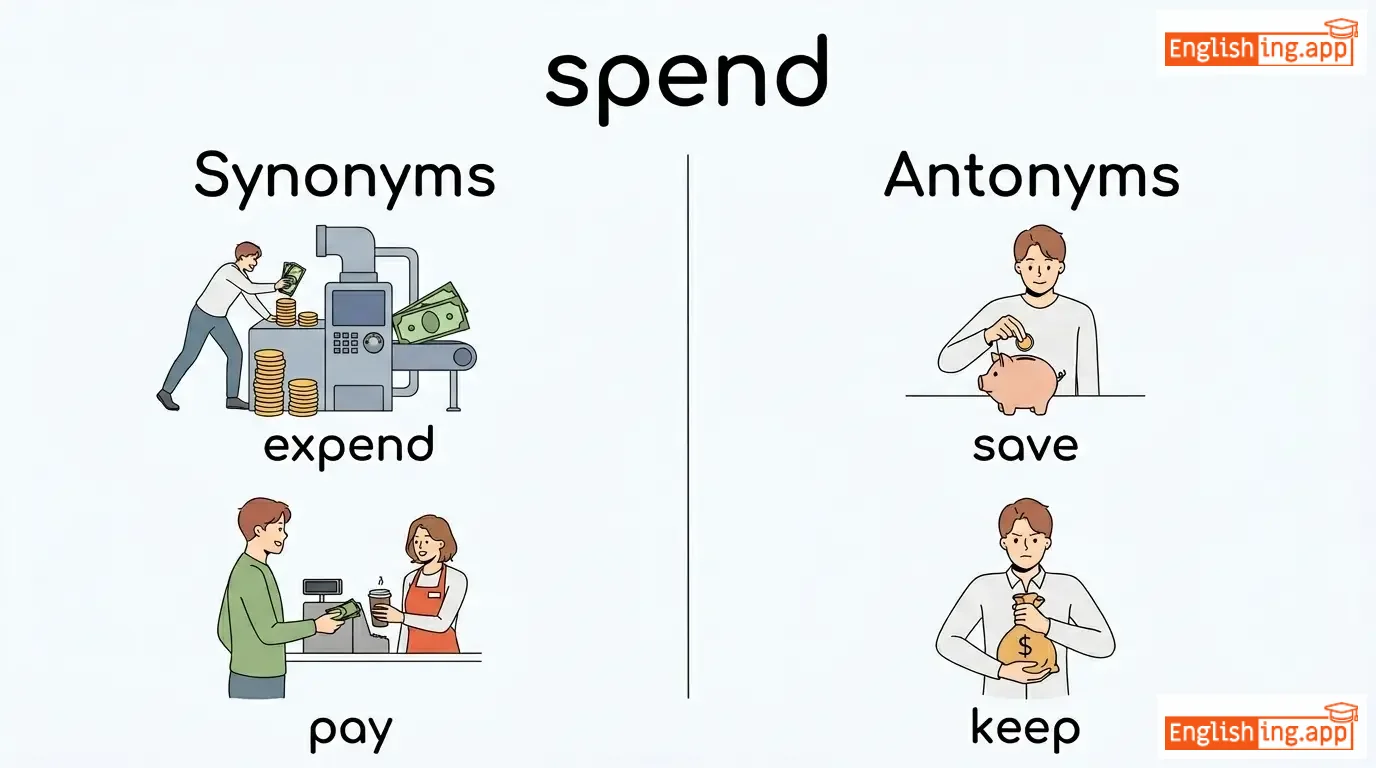
expend, pay, invest, consume
••••••
|
save, keep
••••••
|
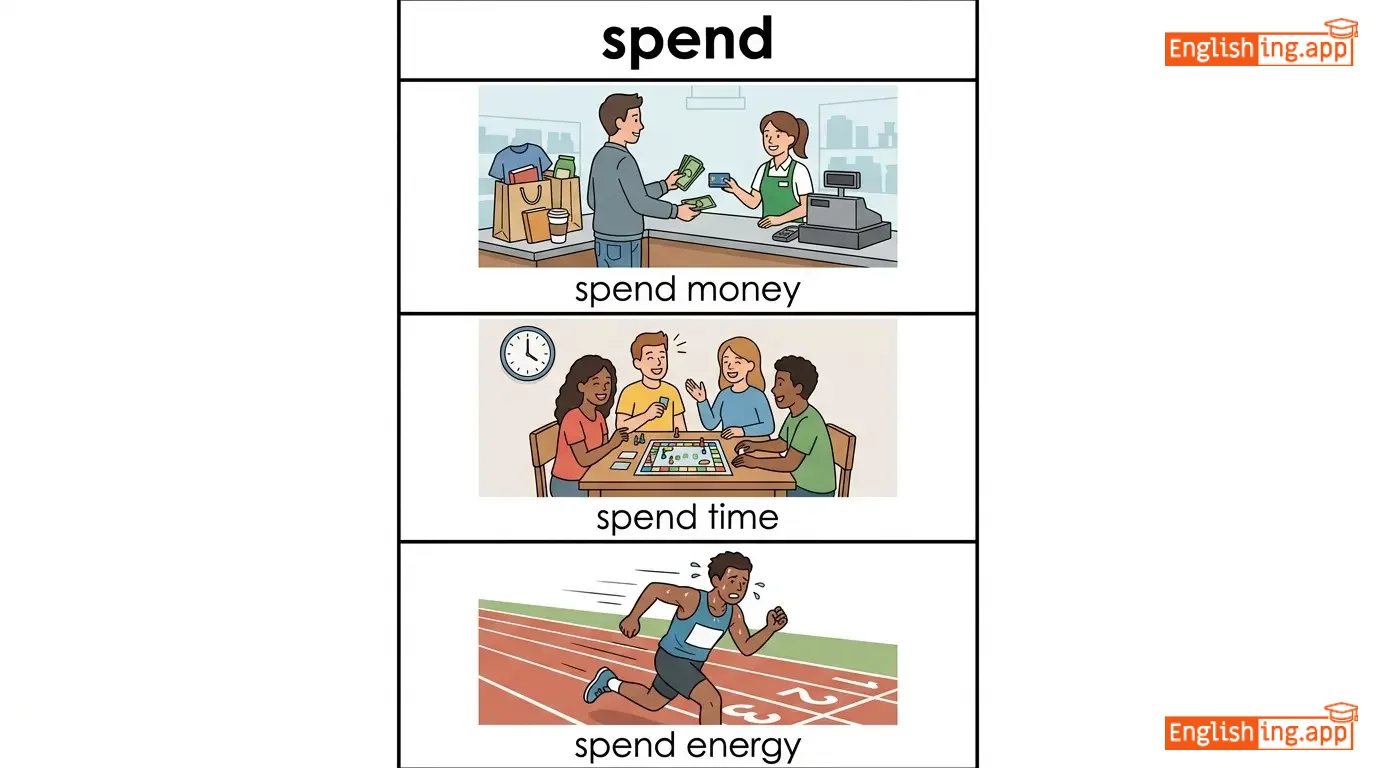
spend money, spend time, spend energy
••••••
|
時間を賢く使わなければ、無駄にしてしまいます!
••••••
|
|
💸
••••••
|
/ˈspɛndɪŋ/
noun
••••••
|
- •••••• | - •••••• | - •••••• | - •••••• | - •••••• | - •••••• |
the act of paying money for goods or services
••••••
|
Her spending on clothes was higher than expected. |
- •••••• | - •••••• | - •••••• | - •••••• |
expenditure, outlay, payment, cost
••••••
|
savings, thrift
••••••
|
high spending, government spending, reckless spending
••••••
|
No •••••• |
|
🌍
••••••
|
/sfɪər/
noun
(sufia)
••••••
|
- •••••• |
球体
kyūtai
••••••
|
- •••••• | - •••••• | - •••••• | - •••••• |
a round, three-dimensional shape that is perfectly symmetrical around its center; an area of activity or knowledge
••••••
|
The Earth is almost a perfect sphere. |
地球はほぼ完璧な球体です。
Chikyū wa hobo kanpeki na kyūtai desu.
••••••
|
sphere of influence |
an area where one person or group has power or control
••••••
|
影響圏
eikyōken
••••••
|
ball, globe, orb, domain, field
••••••
|
cube, flat
••••••
|
sphere of influence, within the sphere, political sphere, social sphere
••••••
|
球体は丸いという意味 - 地球が球体だと想像してみてください (sphere) 🌍
••••••
|
|
🌶️
••••••
|
/spaɪs/
noun
(スパイス)
••••••
|
- •••••• |
スパイス
supaisu
••••••
|
- •••••• | - •••••• | - •••••• | - •••••• |
a substance used to add flavor to food
••••••
|
She added a pinch of spice to the curry for extra flavor.
彼女はカレーに風味を加えるためにスパイスを一つまみ加えました。
••••••
|
彼女はカレーに風味を加えるためにスパイスを一つまみ加えました。
Kanojo wa karē ni fūmi o kuwaeru tame ni supaisu o hitotsu mami kuwaemashita.
••••••
|
- •••••• | - •••••• | - •••••• |
seasoning, flavoring, condiment
••••••
|
blandness
••••••
|
add spice, spicy dish, curry spice
••••••
|
スパイスは食事に味を加えるもの、カレーに使うスパイスのように。
••••••
|
|
🌶️
••••••
|
/ˈspaɪ.si/
adjective
(スパイシー)
••••••
|
- •••••• |
スパイシー
supaisī
••••••
|
- •••••• | - •••••• | - •••••• | - •••••• |
having a strong, hot flavor from spices; containing spices
••••••
|
This curry is too spicy for me to eat. |
このカレーは私には辛すぎます。
kono karē wa watashi ni wa karasugimasu.
••••••
|
- •••••• | - •••••• | - •••••• |
hot, peppery, pungent, fiery, seasoned
••••••
|
mild, bland, plain, unseasoned
••••••
|
spicy food, spicy curry, spicy sauce
••••••
|
スパイスが効いてるから、スパイシー!
••••••
|
|
🕷️
••••••
|
/ˈspaɪ.dər/
noun
(スパイダー)
••••••
|
- •••••• |
クモ
kumo
••••••
|
- •••••• | - •••••• | - •••••• | - •••••• |
a small creature with eight legs that makes webs to catch insects
••••••
|
The spider caught a fly in its web.
スパイダーは自分のウェブでハエを捕まえた。
••••••
|
クモは自分のウェブでハエを捕まえた。
Kumo wa jibun no webu de hae o tsukamaeta.
••••••
|
- •••••• | - •••••• | - •••••• |
arachnid
••••••
|
- •••••• |
spider web, spider bite, house spider
••••••
|
クモの巣で昆虫を捕まえるクモ。
••••••
|
|
☕
••••••
|
/spɪl/
verb
(スピル)
••••••
|
- •••••• |
こぼす
kobosu
••••••
|
spilled
スピルド
••••••
|
spilled
スピルド
••••••
|
spills
スピルズ
••••••
|
spilling
スピリング
••••••
|
to cause liquid to flow or fall out of a container by accident
••••••
|
Be careful not to spill your coffee.
コーヒーをこぼさないように気を付けて。
••••••
|
コーヒーをこぼさないように気を付けて。
Koohii wo kobosanai you ni ki wo tsukete.
••••••
|
spill the beans
ビーンズをこぼす
••••••
|
to reveal a secret
••••••
|
秘密を漏らす
himitsu wo morasu
••••••
|
pour, leak, overflow, splash, slosh
••••••
|
contain, hold
••••••
|
spill water, spill oil, spill over, coffee spill
••••••
|
Spill するとこぼれてしまう!気をつけて!
••••••
|
|
🌀
••••••
|
/spɪn/
verb
(スピン)
••••••
|
- •••••• |
回転する
kaiten suru
••••••
|
spun
スパン
••••••
|
spun
スパン
••••••
|
spins
スピンズ
••••••
|
spinning
スピニング
••••••
|
To turn around quickly or cause something to rotate
••••••
|
The dancer began to spin gracefully on the stage.
ザ ダンサー ビガン トゥ スピン グレースフリー オン ザ ステージ
••••••
|
ダンサーはステージで優雅に回転を始めました。
Dansā wa sutēji de yūga ni kaiten o hajimemashita.
••••••
|
spin out of control
スピン アウト オブ コントロール
••••••
|
To lose stability or control
••••••
|
制御を失う
segyo o ushinau
••••••
|
twirl, rotate, whirl, revolve, turn
••••••
|
stop, halt, remain
••••••
|
spin wheel, spin around, spin class, spin doctor
••••••
|
Spin は回転する – 舞台での回転のように
••••••
|
|
🦴
••••••
|
/spaɪn/
noun
(supein)
••••••
|
- •••••• |
背骨
sebone
••••••
|
- •••••• | - •••••• | - •••••• | - •••••• |
the backbone; a series of bones extending from the skull to the lower back
••••••
|
The doctor examined her spine after the accident. |
事故後、医者は彼女の背骨を調べました。
Jiko go, isha wa kanojo no sebone wo shirabemashita.
••••••
|
backbone of something |
the most important part or support of something
••••••
|
何かの背骨
nanika no sebone
••••••
|
backbone, vertebrae, ridge, support
••••••
|
weakness, fragility
••••••
|
spine injury, spine surgery, curved spine, spine health
••••••
|
Spineは背骨、spine-lessは弱いということです。
••••••
|
|
👻
••••••
|
/ˈspɪr.ɪt/
noun
(スピリット)
••••••
|
- •••••• |
精神; 魂; 熱意; 勇気
seishin; tamashī; netsui; yūki
••••••
|
- •••••• | - •••••• | - •••••• | - •••••• |
the non-physical part of a person; enthusiasm or courage; the essential character of something
••••••
|
The team showed great spirit despite losing the match.
チームは試合に負けても素晴らしいスピリットを見せました。
••••••
|
チームは試合に負けても素晴らしいスピリットを見せました。
Chīmu wa shiai ni maketemo subarashī supiritto o misemashita.
••••••
|
- •••••• | - •••••• | - •••••• |
soul, enthusiasm, courage, morale
••••••
|
body, dejection, cowardice
••••••
|
team spirit, fighting spirit, free spirit, school spirit
••••••
|
スピリットは勇気と熱意を持つ魂
••••••
|
|
🙏
••••••
|
/ˈspɪr.ɪ.tʃu.əl/
adjective
(スピリチュアル)
••••••
|
- •••••• |
精神的; 宗教的; 神聖な
supirichuaru
••••••
|
- •••••• | - •••••• | - •••••• | - •••••• |
relating to the human spirit or soul; religious or sacred
••••••
|
She found spiritual peace through meditation.
彼女は瞑想を通じて精神的な平和を見つけました。
••••••
|
彼女は瞑想を通じて精神的な平和を見つけました。
Kanojo wa meisō o tōjite seishinteki na heiwa o mitsukemashita.
••••••
|
- •••••• | - •••••• | - •••••• |
religious, sacred, divine, holy, mystical
••••••
|
material, physical, secular, worldly
••••••
|
spiritual leader, spiritual journey, spiritual growth
••••••
|
精神的は瞑想によって心の平和を見つけることです。
••••••
|
|
😠
••••••
|
/spaɪt/
noun
(スパイト)
••••••
|
- •••••• |
意地悪
ijiwaru
••••••
|
- •••••• | - •••••• | - •••••• | - •••••• |
a desire to hurt, annoy, or offend someone
••••••
|
She refused the gift out of spite. |
彼女は意地悪で贈り物を拒否した。
Kanojo wa ijiwaru de okurimono o kyohi shita.
••••••
|
in spite of |
despite something; regardless of
••••••
|
にもかかわらず
nimo kakawarazu
••••••
|
malice, resentment, bitterness, hostility
••••••
|
kindness, goodwill, compassion
••••••
|
out of spite, in spite of, spiteful remark, spite attack
••••••
|
Spite は '意地悪' と同じ — 何かに対して意地を張る時 😡
••••••
|
|
✂️
••••••
|
/splɪt/
verb
(スプリット)
••••••
|
- •••••• |
分ける
wakeru
••••••
|
split
スプリット
••••••
|
split
スプリット
••••••
|
splits
スプリッツ
••••••
|
splitting
スプリッティング
••••••
|
to divide or separate into parts or groups
••••••
|
He split the log in two with an axe.
彼は斧で丸太を二つに割った。
••••••
|
彼は斧で丸太を二つに割った。
Kare wa ono de maruta o futatsu ni watta.
••••••
|
- •••••• | - •••••• | - •••••• |
divide, separate, break, sever
••••••
|
join, unite
••••••
|
split up, split the difference, split second
••••••
|
To 'split' something is to 'split' it into two.
••••••
|
|
💔
••••••
|
/spɔɪl/
verb
(スポイル)
••••••
|
- •••••• |
台無しにする
dainashi ni suru
••••••
|
spoiled
スポイルド
••••••
|
spoiled
スポイルド
••••••
|
spoils
スポイルズ
••••••
|
spoiling
スポイリング
••••••
|
to damage or ruin something
••••••
|
The rain spoiled the outdoor event.
雨が屋外イベントを台無しにした。
••••••
|
雨が屋外イベントを台無しにした。
Ame ga okugai ibento o dainashi ni shita.
••••••
|
- •••••• | - •••••• | - •••••• |
ruin, damage, mar, destroy
••••••
|
preserve, protect
••••••
|
spoil food, spoil plans, spoil someone
••••••
|
台無しにするは何かを損なうこと、雨によって台無しにされたイベントのように。
••••••
|
|
🗣️
••••••
|
/ˈspəʊksmən/
noun
(スポークスマン)
••••••
|
- •••••• |
スポークスマン
supōkusu man
••••••
|
- •••••• | - •••••• | - •••••• | - •••••• |
a person who speaks on behalf of others, especially for a group or organization
••••••
|
The spokesman addressed the crowd during the rally. |
スポークスマンは集会中に群衆に向かって話した。
Supōkusuman wa shūkai-chū ni gunshū ni mukatte hanashita.
••••••
|
- •••••• | - •••••• | - •••••• |
representative, delegate, spokesman, ambassador
••••••
|
opponent, adversary
••••••
|
chief spokesman, official spokesman, media spokesman
••••••
|
A spokesman is 'スポークスマン', a voice that speaks for the crowd!
••••••
|
|
🗣️
••••••
|
/ˈspəʊkspɜːrsən/
noun
(スポークスパーソン)
••••••
|
- •••••• |
スポークスマン
supōkusu man
••••••
|
- •••••• | - •••••• | - •••••• | - •••••• |
a person who speaks on behalf of others or an organization
••••••
|
The spokesperson addressed the press conference on behalf of the company. |
スポークスマンは会社を代表して記者会見で話しました。
Supōkusuman wa kaisha o daihyō shite kishakaiken de hanashimashita.
••••••
|
- •••••• | - •••••• | - •••••• |
representative, spokesperson, mouthpiece, agent
••••••
|
critic, opponent
••••••
|
official spokesperson, company spokesperson, media spokesperson
••••••
|
スポークスマンは話す人、例えば会社のスポークスマン。
••••••
|
|
👩💼
••••••
|
/ˈspəʊkswɪmən/
noun
(spōkusuwiman)
••••••
|
- •••••• |
広報女性
kōhō josei
••••••
|
- •••••• | - •••••• | - •••••• | - •••••• |
a woman who speaks on behalf of a group or organization
••••••
|
The spokeswoman for the company announced the new product. |
その会社の広報女性は新製品を発表した。
Sono kaisha no kōhō josei wa shin seihin wo happyō shita.
••••••
|
- •••••• | - •••••• | - •••••• |
representative, spokesperson, delegate, mouthpiece
••••••
|
opponent, adversary
••••••
|
spokeswoman for, female spokesperson, appointed spokeswoman
••••••
|
広報女性、団体を代表して話す!
••••••
|
|
💼
••••••
|
/ˈspɒnsəʃɪp/
noun
(スポンサーシップ)
••••••
|
- •••••• |
後援
kouen
••••••
|
- •••••• | - •••••• | - •••••• | - •••••• |
the act of supporting an event, activity, person, or organization financially or through other resources
••••••
|
The event was made possible due to the sponsorship of several big companies.
イベントは、いくつかの大企業のスポンサーシップのおかげで実現しました。
••••••
|
イベントは、いくつかの大企業の後援のおかげで実現しました。
Ibento wa, ikutsuka no daikigyou no kouen no okage de jitsugen shimashita.
••••••
|
- •••••• | - •••••• | - •••••• |
patronage, backing, funding, support
••••••
|
neglect, withdrawal
••••••
|
event sponsorship, corporate sponsorship, sponsorship deal, sponsorship agreement
••••••
|
Sponsorship は、大企業による支援です!
••••••
|
|
🥄
••••••
|
/spuːn/
noun
(スプーン)
••••••
|
- •••••• |
スプーン
supūn
••••••
|
- •••••• | - •••••• | - •••••• | - •••••• |
a utensil consisting of a small shallow bowl with a handle, used for eating, stirring, or serving food
••••••
|
She stirred her coffee with a silver spoon. |
彼女は銀のスプーンでコーヒーをかき混ぜました。
Kanojo wa gin no supūn de kōhī o kakimazemashita.
••••••
|
born with a silver spoon in one's mouth |
to be born into a wealthy and privileged family
••••••
|
銀のスプーンで生まれる
Gin no supūn de umareru
••••••
|
ladle, utensil, scoop, teaspoon, tablespoon
••••••
|
fork, knife
••••••
|
tea spoon, soup spoon, silver spoon, wooden spoon
••••••
|
スプーンで食べるのは簡単だよ – 覚えておいて 🥄
••••••
|
|
⚽
••••••
|
/spɔːt/
noun
(スポーツ)
••••••
|
- •••••• |
スポーツ
supōtsu
••••••
|
- •••••• | - •••••• | - •••••• | - •••••• |
an activity involving physical exertion and skill in which an individual or team competes against another or others for entertainment
••••••
|
Football is a popular sport around the world.
サッカーは世界中で人気のスポーツです。
••••••
|
サッカーは世界中で人気のスポーツです。
Sakkā wa sekaijū de ninki no supōtsu desu.
••••••
|
- •••••• | - •••••• | - •••••• |
game, activity, competition, exercise
••••••
|
inactivity, laziness
••••••
|
team sport, competitive sport, individual sport
••••••
|
スポーツは友達と競い、楽しむものです。
••••••
|
|
🏅
••••••
|
/ˈspɔːrtsmən/
noun
(スポーツマン)
••••••
|
- •••••• |
スポーツ選手
supotsu senshu
••••••
|
- •••••• | - •••••• | - •••••• | - •••••• |
A person who is skilled in sports or enjoys participating in athletic activities.
••••••
|
He is a true sportsman, always fair and respectful to his opponents.
彼は本物のスポーツマンで、常に相手に対して公正で尊敬を示す。
••••••
|
彼は本物のスポーツ選手で、常に相手に対して公正で尊敬を示す。
Kare wa honmono no supotsu senshu de, tsune ni aite ni taishite kousei de sonkei o shimesu.
••••••
|
- •••••• | - •••••• | - •••••• |
athlete, competitor, player, sports enthusiast
••••••
|
non-athlete, sedentary person
••••••
|
professional sportsman, amateur sportsman, sportsman spirit, sportsman attitude
••••••
|
'Sportsman' = スポーツ選手 (supotsu senshu) in Japanese
••••••
|
|
📍
••••••
|
/spɒt/
noun
(スポット)
••••••
|
- •••••• |
場所
basho
••••••
|
- •••••• | - •••••• | - •••••• | - •••••• |
a particular place or position
••••••
|
I found a great spot for a picnic in the park. |
公園でピクニックをするための素晴らしい場所を見つけました。
Kouen de pikunikku o suru tame no subarashii basho o mitsukemashita.
••••••
|
- •••••• | - •••••• | - •••••• |
location, place, area, position
••••••
|
void, space, gap
••••••
|
hot spot, tourist spot, perfect spot
••••••
|
Spot the perfect picnic spot in the park.
••••••
|
|
🔦
••••••
|
/ˈspɒt.laɪt/
noun
••••••
|
- •••••• | - •••••• | - •••••• | - •••••• | - •••••• | - •••••• |
a strong beam of light directed onto a particular area; figuratively, public attention
••••••
|
The singer stood proudly in the spotlight. |
- •••••• |
in the spotlight |
receiving a lot of public attention
••••••
|
- •••••• |
highlight, focus, limelight, glare
••••••
|
obscurity, shadow
••••••
|
under spotlight, grab spotlight, media spotlight, stage spotlight
••••••
|
No •••••• |
|
💍
••••••
|
/spaʊs/
noun
(スパウス)
••••••
|
- •••••• |
配偶者
haiguusha
••••••
|
- •••••• | - •••••• | - •••••• | - •••••• |
a person's husband or wife
••••••
|
Each employee may include their spouse in the health insurance plan.
各従業員は配偶者を健康保険プランに含めることができます。
••••••
|
各従業員は配偶者を健康保険プランに含めることができます。
Kaku juugyouin wa haiguusha o kenkou hoken puran ni fukumeru koto ga dekimasu.
••••••
|
- •••••• | - •••••• | - •••••• |
partner, husband, wife, mate, consort
••••••
|
single, bachelor, spinster
••••••
|
loving spouse, faithful spouse, deceased spouse, legal spouse
••••••
|
Spouse は日本語で配偶者 — 夫または妻
••••••
|
|
📢
••••••
|
/spred/
verb
(esupuredo)
••••••
|
- •••••• |
広める
hiromeru
••••••
|
spread
esupuredo
••••••
|
spread
esupuredo
••••••
|
spreads
esupuredosu
••••••
|
spreading
esupuredingu
••••••
|
to extend over a larger area; to distribute; to apply
••••••
|
The news spread quickly through the town.
そのニュースは町中に素早く広まりました。
••••••
|
そのニュースは町中に素早く広まりました。
Sono nyūsu wa machi-jū ni subayaku hiromarimashita.
••••••
|
- •••••• | - •••••• | - •••••• |
extend, distribute, scatter, circulate
••••••
|
collect, gather, concentrate, contain
••••••
|
spread quickly, spread widely, spread evenly, spread news
••••••
|
Spread the word just like spreading a smile.
••••••
|
|
🌸
••••••
|
/sprɪŋ/
noun
(スプリング)
••••••
|
- •••••• |
春
haru
••••••
|
- •••••• | - •••••• | - •••••• | - •••••• |
the season between winter and summer when plants begin to grow
••••••
|
Flowers bloom in the spring. |
春には花が咲きます。
Haru ni wa hana ga sakimasu.
••••••
|
- •••••• | - •••••• | - •••••• |
season, time of growth, rebirth
••••••
|
winter, autumn
••••••
|
spring flowers, spring break, spring rain
••••••
|
春の花が咲くように、成長の季節がやってきた!
••••••
|
|
🕵️♂️
••••••
|
/spaɪ/
verb
(supai)
••••••
|
- •••••• |
スパイする
supai suru
••••••
|
spied
supaid
••••••
|
spied
supaid
••••••
|
spies
supaizu
••••••
|
spying
supaiingu
••••••
|
to secretly collect information about a person, group, or country
••••••
|
He was caught spying on his neighbor through the window.
彼は窓越しに隣人をスパイしているところを捕まえられた。
••••••
|
彼は窓越しに隣人をスパイしているところを捕まえられた。
Kare wa madogoshi ni rinjin o supai shite iru tokoro o tsukamaerareta.
••••••
|
spy on someone
誰かをスパイする
••••••
|
to watch someone secretly
••••••
|
誰かをスパイする
dareka o supai suru
••••••
|
observe, watch, monitor, investigate, snoop
••••••
|
ignore, overlook
••••••
|
spy agency, spy mission, spy network, spy movie
••••••
|
Spyはスパイを意味します — 映画のスパイは秘密で観察します。
••••••
|

