|
表情符号
|
单词 | Images | 翻译 | 过去时 | 过去分词 | 第三人称单数 | 动名词 | 含义 | 例句 | 例句翻译 | 示例表达 | 示例表达含义 | 示例表达翻译 | 同义词 | 反义词 | 搭配词 | 助记符 |
|---|---|---|---|---|---|---|---|---|---|---|---|---|---|---|---|---|---|
|
🎤
••••••
|
/ˈspiːkər/
noun
(spiːkər)
••••••
|
- •••••• |
演讲者
yanjiangzhe
••••••
|
- •••••• | - •••••• | - •••••• | - •••••• |
a person who speaks or talks, especially as an occupation
••••••
|
The speaker delivered an inspiring speech at the conference. |
演讲者在会议上发表了激动人心的演讲。
Yanjiangzhe zai huiyi shang fabiao le jidongrenshin de yanjiang.
••••••
|
public speaker |
a person who gives speeches in front of an audience
••••••
|
公共演讲者
gonggong yanjiangzhe
••••••
|
orator, lecturer, presenter, talker
••••••
|
listener, audience
••••••
|
motivational speaker, guest speaker, public speaker, keynote speaker
••••••
|
A speaker is someone who speaks – and captivates audiences worldwide!
••••••
|
|
✨
••••••
|
/ˈspɛʃəl/
adjective
(特別)
••••••
|
- •••••• |
特别
tebie
••••••
|
- •••••• | - •••••• | - •••••• | - •••••• |
different from what is usual; better or greater than normal
••••••
|
This gift is very special to me.
這份禮物對我來說非常特別。
••••••
|
这份礼物对我来说非常特别。
Zhe fen liwu dui wo lai shuo feichang tebie.
••••••
|
special treatment
特別待遇
••••••
|
different or better care or service than usual
••••••
|
特别待遇
tebie daiyu
••••••
|
unique, exceptional, distinctive, extraordinary
••••••
|
ordinary, common, usual
••••••
|
special occasion, special day, special gift, special attention
••••••
|
Special 就是 '特别' (tebie), 就像当你得到特别待遇一样。
••••••
|
|
👨⚕️
••••••
|
/ˈspeʃəlɪst/
noun
(专家)
••••••
|
- •••••• |
专家
zhuānjiā
••••••
|
- •••••• | - •••••• | - •••••• | - •••••• |
a person who has specialized knowledge or training in a particular area; an expert
••••••
|
She consulted a heart specialist about her condition.
她就自己的情况咨询了一位心脏专家。
••••••
|
她就自己的情况咨询了一位心脏专家。
Tā jiù zìjǐ de qíngkuàng zīxún le yī wèi xīnzàng zhuānjiā.
••••••
|
- •••••• | - •••••• | - •••••• |
expert, professional, authority, consultant
••••••
|
generalist, amateur, novice, beginner
••••••
|
medical specialist, heart specialist, IT specialist, specialist knowledge
••••••
|
专家:你是这方面的专家
••••••
|
|
🎯
••••••
|
/ˈspɛʃəˌlaɪz/
verb
(sɛspɛʃəlʌɪz)
••••••
|
- •••••• |
专攻
zhuāngōng
••••••
|
specialized
sɛspɛʃəlʌɪzd
••••••
|
specialized
sɛspɛʃəlʌɪzd
••••••
|
specializes
sɛspɛʃəlʌɪzəs
••••••
|
specializing
sɛspɛʃəlʌɪzɪŋ
••••••
|
to focus on a particular subject or activity and become an expert in it
••••••
|
He decided to specialize in cardiology.
他决定专攻心脏病学。
••••••
|
他决定专攻心脏病学。
Tā juédìng zhuāngōng xīnzàng bìngxué.
••••••
|
specialize in
专攻
••••••
|
to concentrate on a particular field of study or work
••••••
|
专攻
zhuāngōng
••••••
|
concentrate, focus, dedicate, major, train
••••••
|
generalize, diversify
••••••
|
specialize in medicine, specialize in law, specialize in marketing
••••••
|
Specialize = 专攻, 成为某一领域的专家
••••••
|
|
🔧
••••••
|
/ˈspɛʃəˌlaɪzd/
adjective
(speshálaizd)
••••••
|
- •••••• |
专门的
zhuānmén de
••••••
|
- •••••• | - •••••• | - •••••• | - •••••• |
designed or developed for a particular purpose or function
••••••
|
He has a specialized knowledge of ancient civilizations.
他对古代文明有专门的知识。
••••••
|
他对古代文明有专门的知识。
Tā duì gǔdài wénmíng yǒu zhuānmén de zhīshì.
••••••
|
- •••••• | - •••••• | - •••••• |
specialist, specific, expert
••••••
|
general, broad
••••••
|
specialized knowledge, specialized equipment, specialized skills
••••••
|
Specialized 意味着为特定目标 (mùdì) 开发的。
••••••
|
|
⭐
••••••
|
/ˈspeʃ.əl.i/
adverb
(s-pe-she-li)
••••••
|
- •••••• |
特别
tebie
••••••
|
- •••••• | - •••••• | - •••••• | - •••••• |
for a particular purpose; especially; specifically
••••••
|
This gift was specially made for you.
这个礼物是特别为你做的。
••••••
|
这个礼物是特别为你做的。
Zhe ge liwu shi tebie wei ni zuo de.
••••••
|
- •••••• | - •••••• | - •••••• |
especially, particularly, specifically, expressly
••••••
|
generally, ordinarily, commonly
••••••
|
specially designed, specially trained, specially made
••••••
|
In Chinese, '特别' means specially. Imagine a gift made specially for you!
••••••
|
|
🐼
••••••
|
/ˈspiːʃiːz/
noun
(spiːʃiz)
••••••
|
- •••••• |
物种
wùzhǒng
••••••
|
- •••••• | - •••••• | - •••••• | - •••••• |
a group of living organisms consisting of similar individuals capable of exchanging genes or interbreeding
••••••
|
The panda is an endangered species. |
熊猫是濒临灭绝的物种。
Xióngmāo shì bīnlín mièjué de wùzhǒng.
••••••
|
endangered species |
a species at risk of extinction
••••••
|
濒危物种
bīnwēi wùzhǒng
••••••
|
type, kind, group, breed
••••••
|
individual, singular
••••••
|
endangered species, rare species, animal species, plant species
••••••
|
物种 - 特殊群体
••••••
|
|
📌
••••••
|
/spəˈsɪfɪk/
adjective
(especifico)
••••••
|
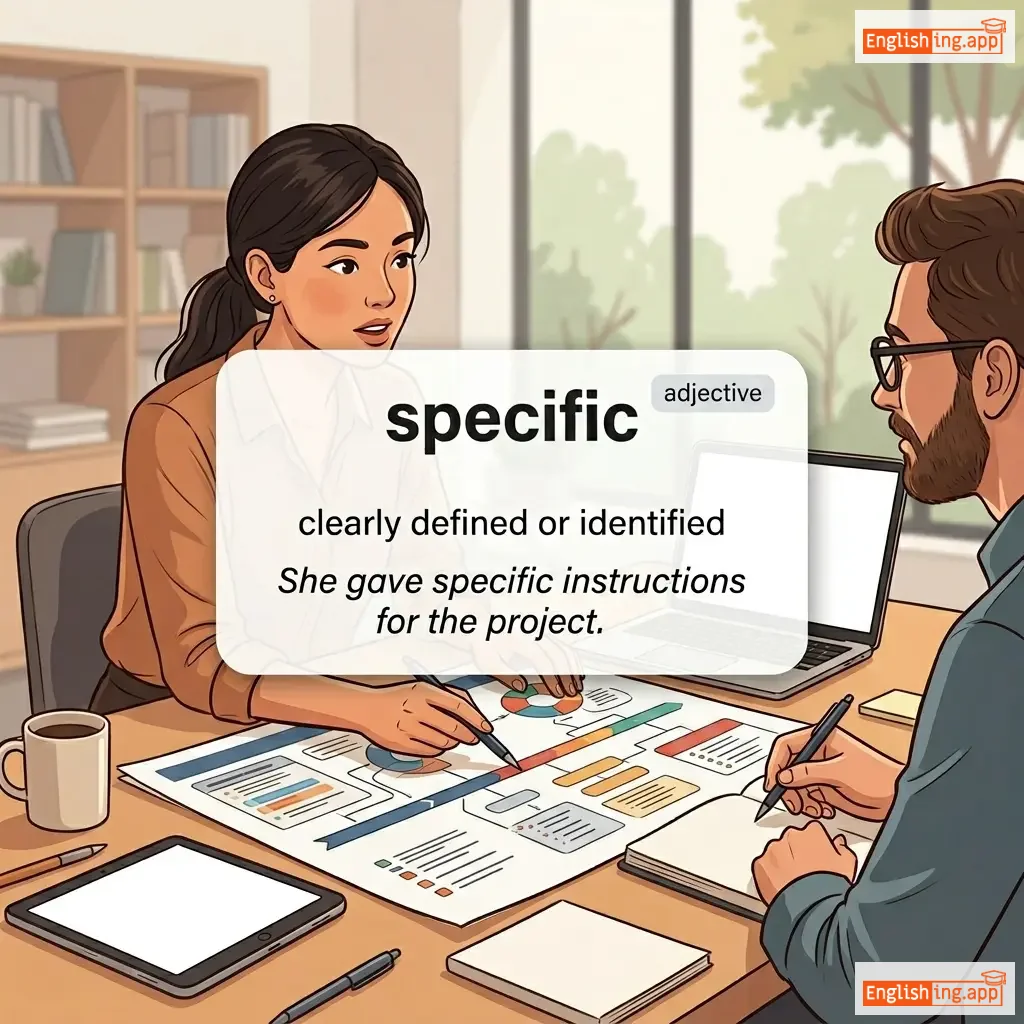
|
特定的
tèdìng de
••••••
|
- •••••• | - •••••• | - •••••• | - •••••• |
clearly defined or identified
••••••
|
She gave specific instructions for the project. |
她给出了项目的特定指示。
Tā gěi chūle xiàngmù de tèdìng zhǐshì.
••••••
|
to be specific |
to clarify or state something exactly
••••••
|
具体来说
jùtǐ lái shuō
••••••
|
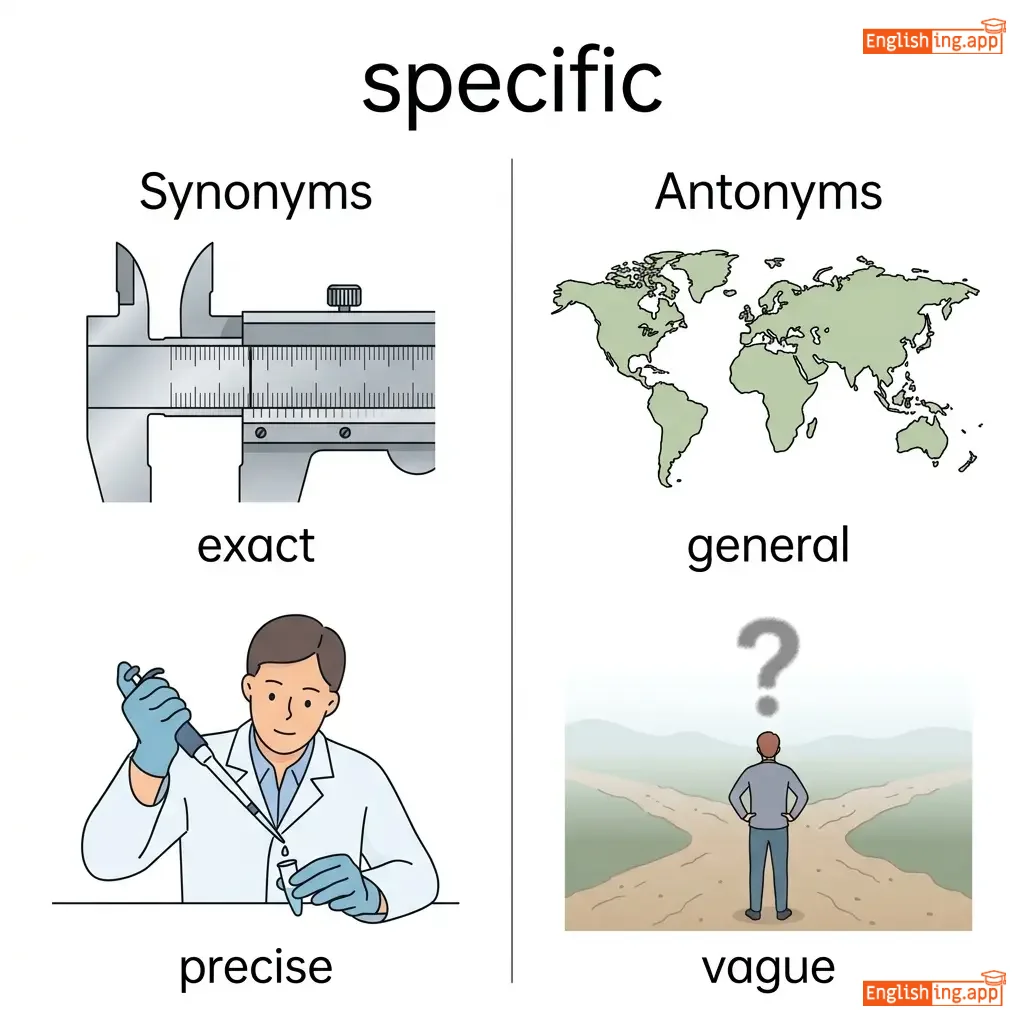
exact, precise, detailed, explicit
••••••
|
general, vague
••••••
|
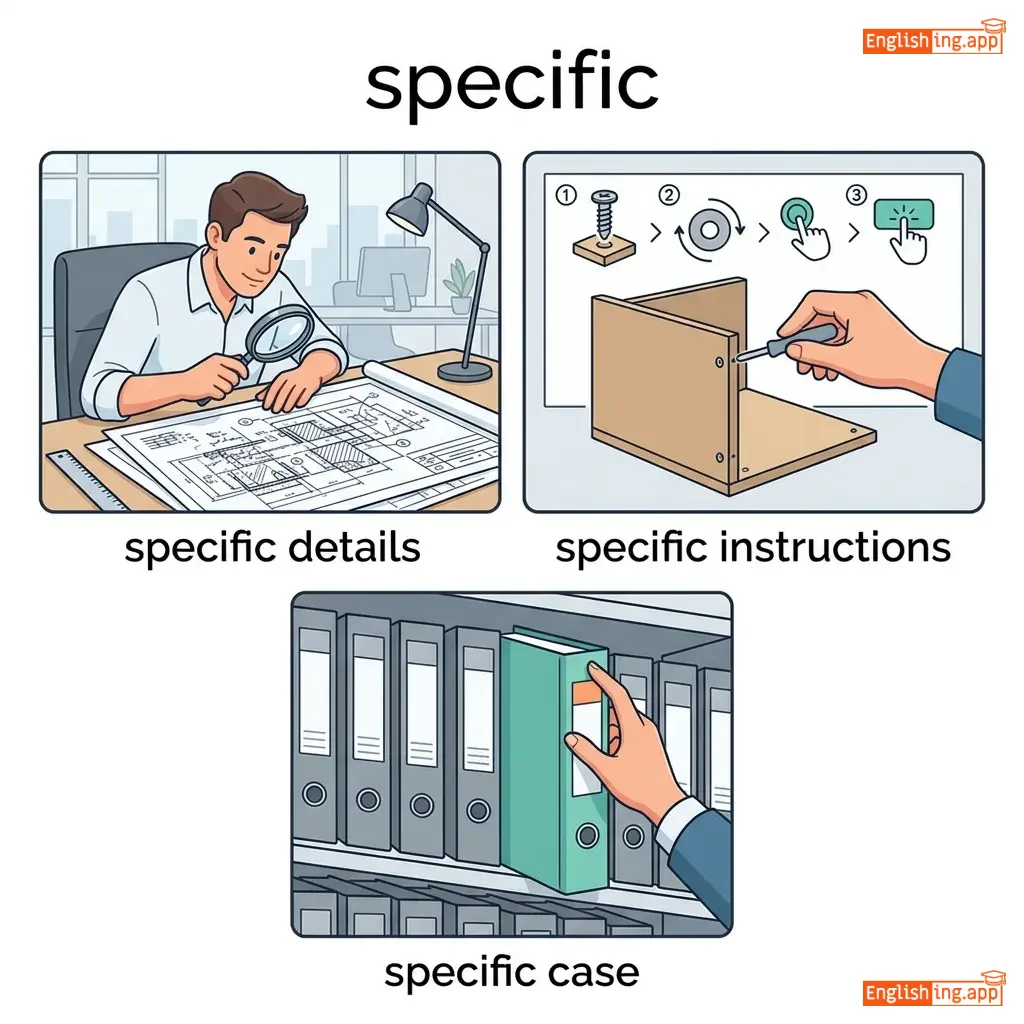
specific details, specific instructions, specific case, specific purpose
••••••
|
Specific在中文中是特定的,毫不混淆
••••••
|
|
🔍
••••••
|
/spəˈsɪfɪkli/
adverb
(sī pí xī fì kè lì)
••••••
|
- •••••• |
特别地
te bie de
••••••
|
- •••••• | - •••••• | - •••••• | - •••••• |
in a clear and exact way
••••••
|
He was specifically asked to handle the finances. |
他被特别要求处理财务。
Ta bei tebie yaoqiu chuli caiwu.
••••••
|
- •••••• | - •••••• | - •••••• |
explicitly, clearly, particularly, definitively
••••••
|
vaguely, generally
••••••
|
specifically asked, specifically designed, specifically mentioned
••••••
|
SPECIFICally is SPECIFIC! If you say SPECIFIC, it's specific!
••••••
|
|
📑
••••••
|
/ˌspɛsɪfɪˈkeɪʃən/
noun
(规格)
••••••
|
- •••••• |
规格
guīgé
••••••
|
- •••••• | - •••••• | - •••••• | - •••••• |
a detailed description or assessment of something
••••••
|
The product specification includes all the necessary details. |
产品规格包括所有必要的细节。
Chǎnpǐn guīgé bāokuò suǒyǒu bìyào de xìjié.
••••••
|
- •••••• | - •••••• | - •••••• |
requirement, description, outline, standard
••••••
|
ambiguity, vagueness
••••••
|
technical specification, product specification, detailed specification
••••••
|
规格就像特别的描述(special description)。
••••••
|
|
📝
••••••
|
/ˈspɛsɪfaɪ/
verb
(sipesifai)
••••••
|
- •••••• |
指定
zhiding
••••••
|
specified
sipesifaidi
••••••
|
specified
sipesifaidi
••••••
|
specifies
sipesifaizhi
••••••
|
specifying
sipesifaiying
••••••
|
to state or describe something clearly and exactly
••••••
|
Please specify the time and place of the meeting.
请明确指定会议的时间和地点。
••••••
|
请明确指定会议的时间和地点。
Qing mingque zhiding huiyi de shijian he didian.
••••••
|
specify requirements
指定需求
••••••
|
to clearly state what is needed
••••••
|
指定需求
zhiding xuqiu
••••••
|
define, state, describe, mention, detail
••••••
|
generalize, omit
••••••
|
specify details, specify conditions, specify requirements, specify time
••••••
|
指定就是清楚表达,避免模糊。
••••••
|
|
🧪
••••••
|
/ˈspesɪmən/
noun
(标本)
••••••
|
- •••••• |
样本; 标本; 例子
yangben; biaoben; lizi
••••••
|
- •••••• | - •••••• | - •••••• | - •••••• |
an individual example of something; a sample collected for scientific study or testing
••••••
|
The scientist collected a blood specimen for analysis.
科学家收集了一份血液标本进行分析。
••••••
|
科学家收集了一份血液标本进行分析。
Ke xue jia shou ji le yi fen xue ye biao ben jin xing fen xi.
••••••
|
- •••••• | - •••••• | - •••••• |
sample, example, model, instance
••••••
|
whole, entirety, bulk
••••••
|
blood specimen, specimen jar, fine specimen, specimen collection
••••••
|
科学家收集标本以进行分析。
••••••
|
|
🎆
••••••
|
/ˈspɛktəkəl/
noun
(壮观)
••••••
|
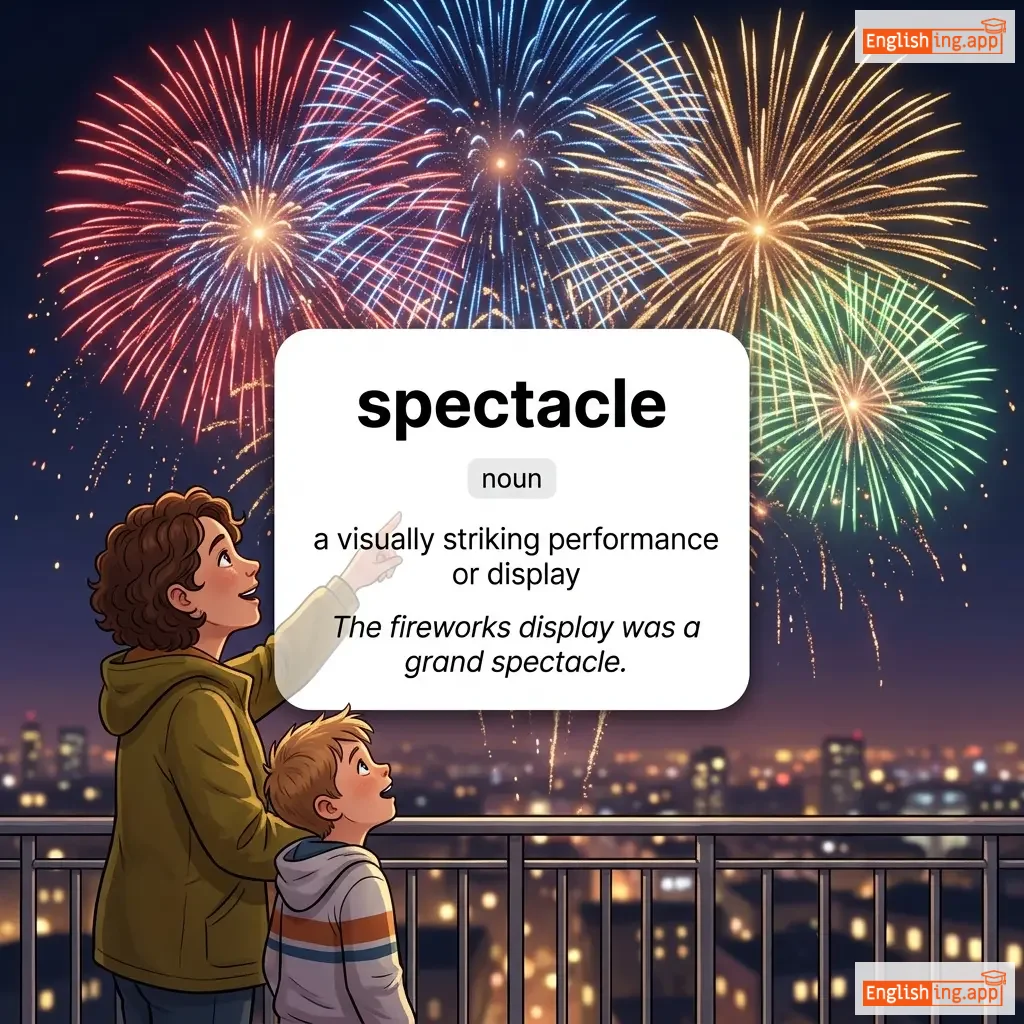
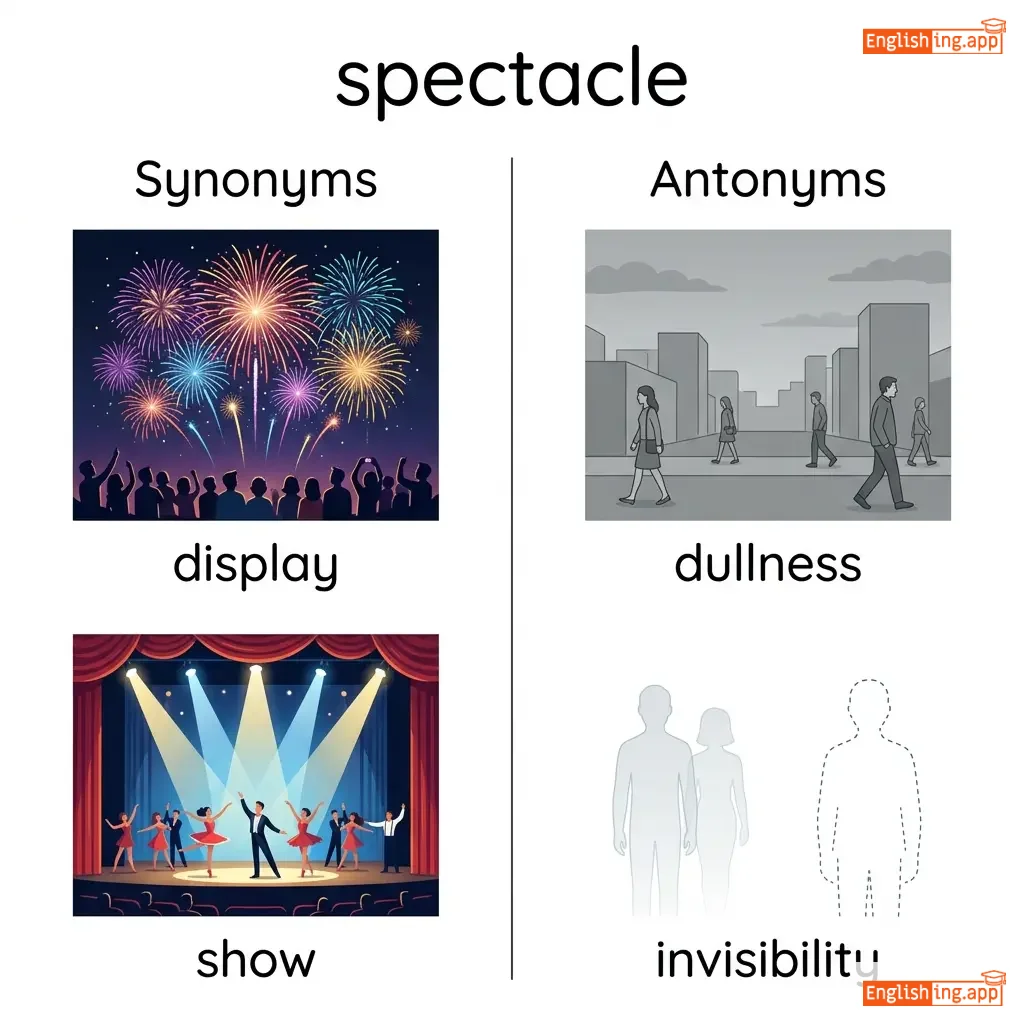
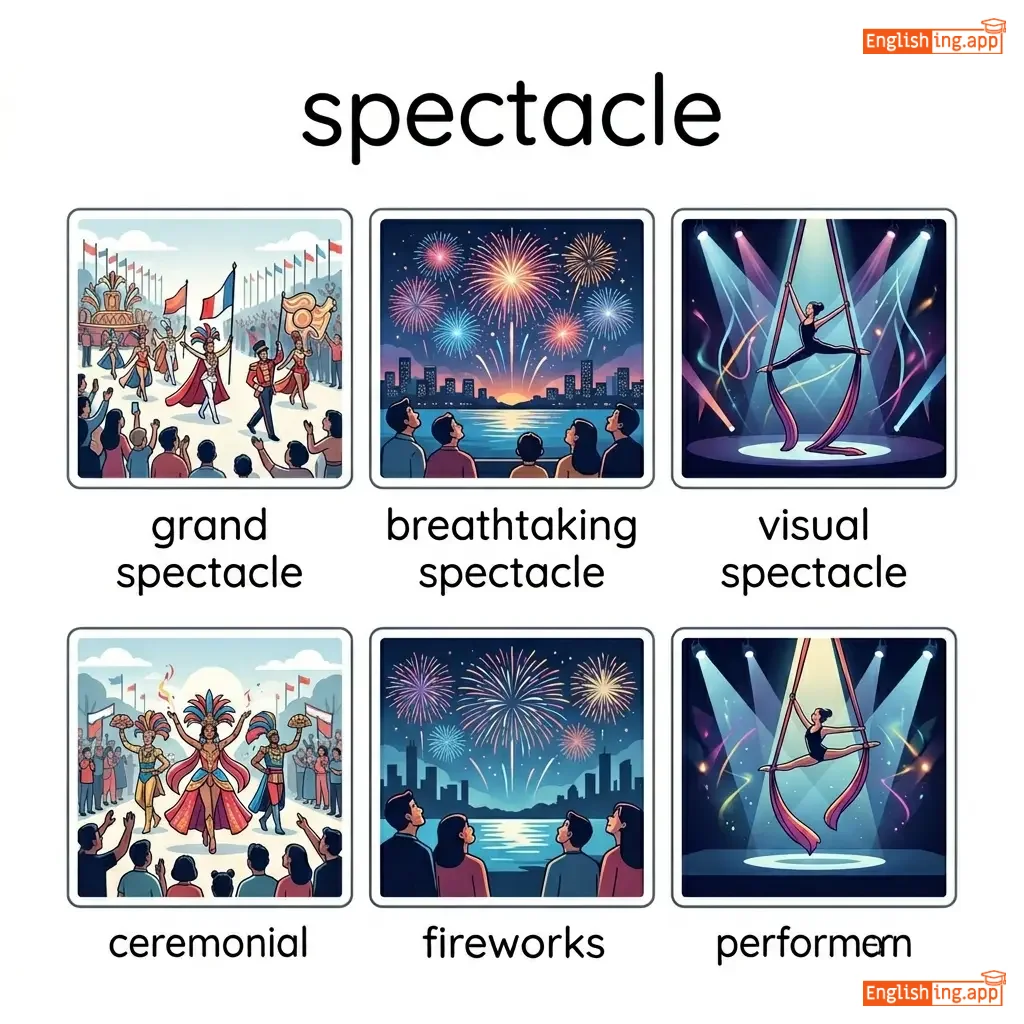
|
视觉盛宴
shìjué shèngyàn
••••••
|
- •••••• | - •••••• | - •••••• | - •••••• |
a visually striking performance or display
••••••
|
The fireworks display was a grand spectacle. |
烟花表演是一场壮观的视觉盛宴。
Yānhuā biǎoyǎn shì yī chǎng zhuàngguān de shìjué shèngyàn.
••••••
|
- •••••• | - •••••• | - •••••• |
display, show, performance, exhibition
••••••
|
dullness, invisibility
••••••
|
grand spectacle, breathtaking spectacle, visual spectacle
••••••
|
壮观意味着吸引眼球的东西,比如烟花表演。
••••••
|
|
🌟
••••••
|
/spɛkˈtækjələr/
adjective
(spektakuleer)
••••••
|
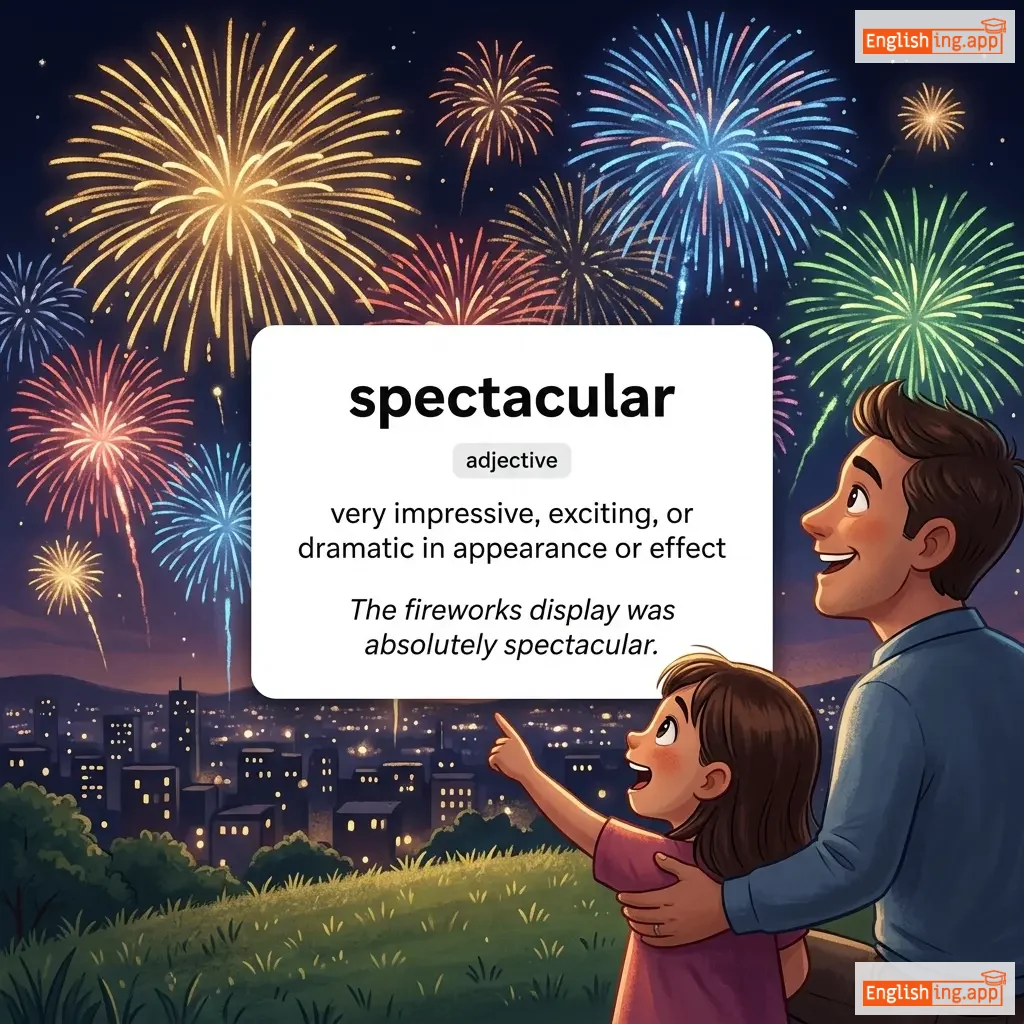
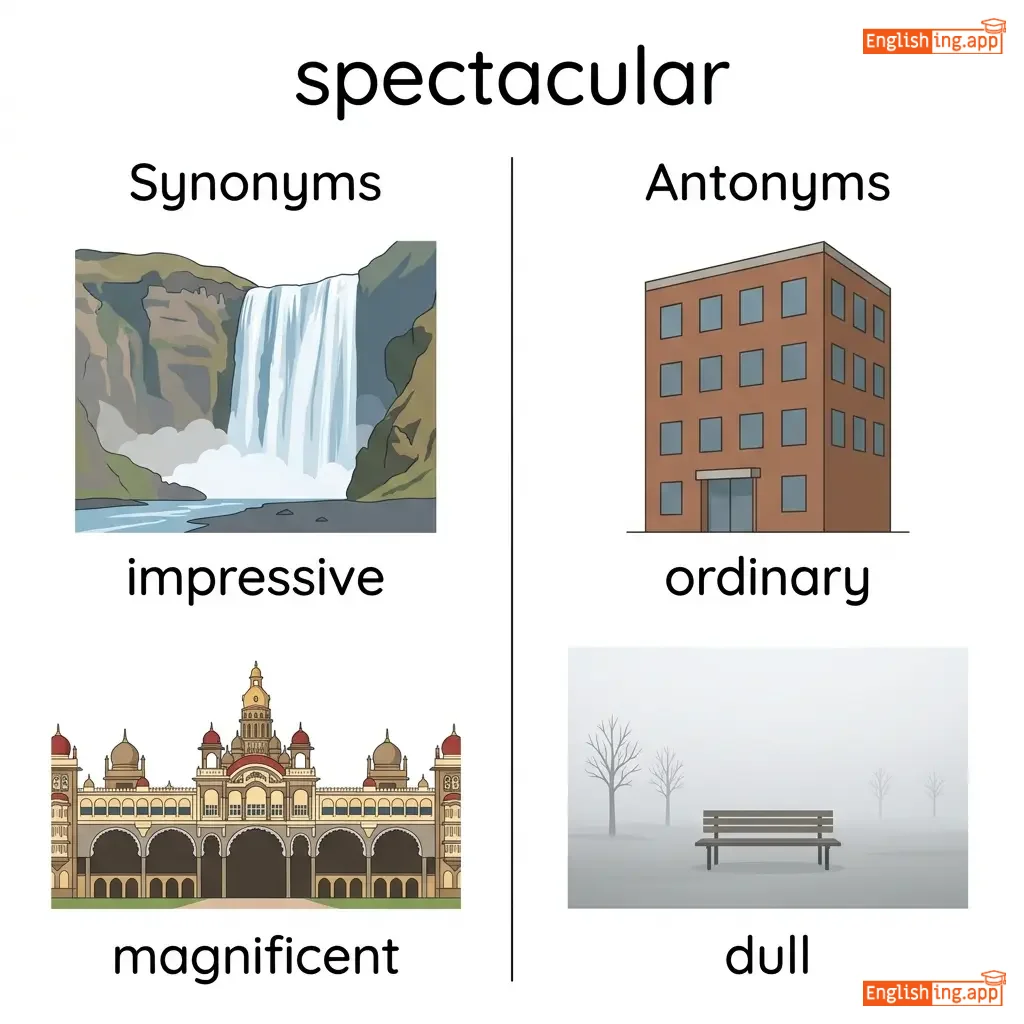
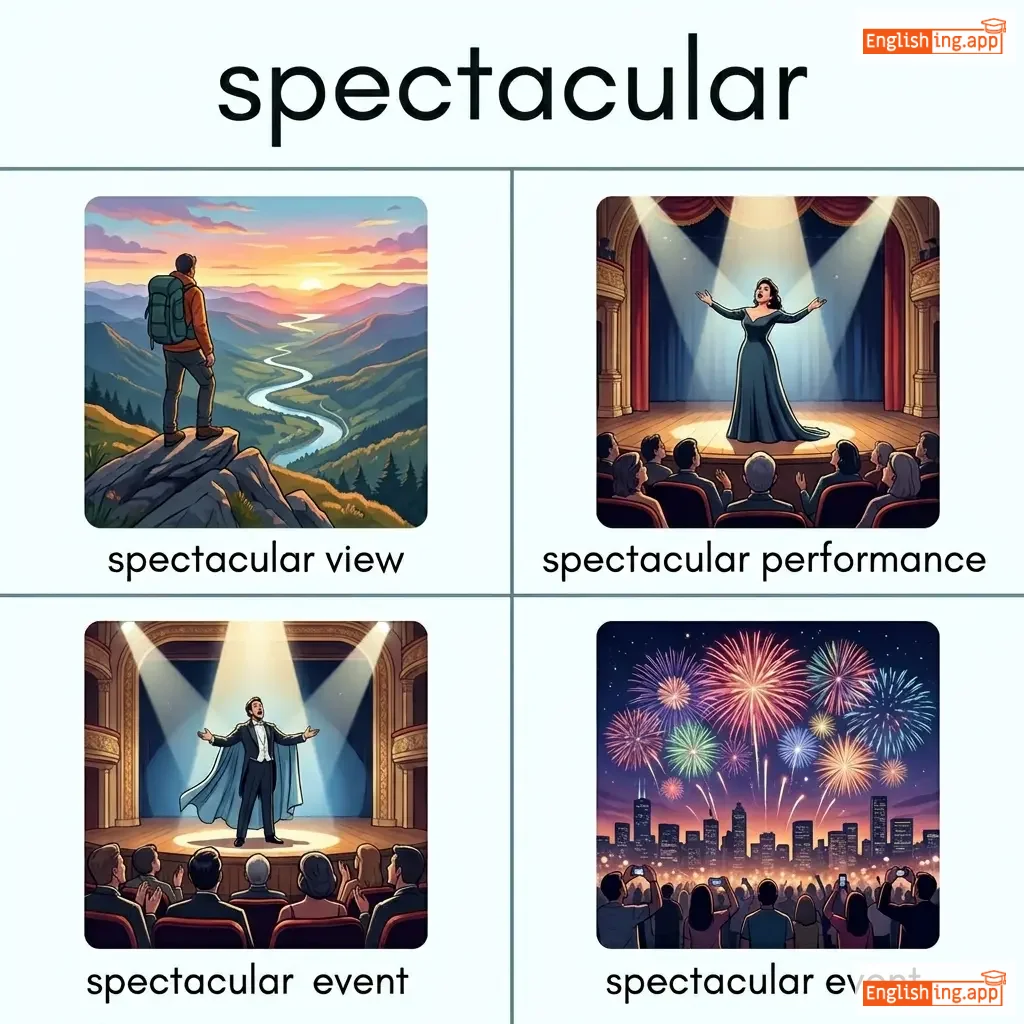
|
壮观
zhuangguan
••••••
|
- •••••• | - •••••• | - •••••• | - •••••• |
very impressive, exciting, or dramatic in appearance or effect
••••••
|
The fireworks display was absolutely spectacular.
烟火表演绝对壮观。
••••••
|
烟火表演绝对壮观。
Yanhuo biaoyan juedui zhuangguan.
••••••
|
spectacular success
壮观的成功
••••••
|
an extremely impressive achievement
••••••
|
壮观的成功
Zhuangguan de chenggong
••••••
|
impressive, magnificent, stunning, remarkable, breathtaking
••••••
|
ordinary, dull, unimpressive
••••••
|
spectacular view, spectacular performance, spectacular event, spectacular victory
••••••
|
Spectacular 就像电影中的特效一样震撼!
••••••
|
|
👀
••••••
|
/ˈspɛkteɪtər/
noun
(观众)
••••••
|
- •••••• |
观众
guānzhòng
••••••
|
- •••••• | - •••••• | - •••••• | - •••••• |
A person who watches an event, show, or game without taking part.
••••••
|
Thousands of spectators gathered to watch the football match. |
成千上万的观众聚集在一起观看足球比赛。
Chéng qiān shàng wàn de guānzhòng jùjí zài yīqǐ guānkàn zúqiú bǐsài.
••••••
|
mere spectator |
someone who is only watching without involvement
••••••
|
单纯的观众
dānchún de guānzhòng
••••••
|
viewer, observer, onlooker, audience
••••••
|
participant, player
••••••
|
sports spectator, theater spectator, excited spectator
••••••
|
Spectator 就像 'spectacle',看着但不参与。
••••••
|
|
🌈
••••••
|
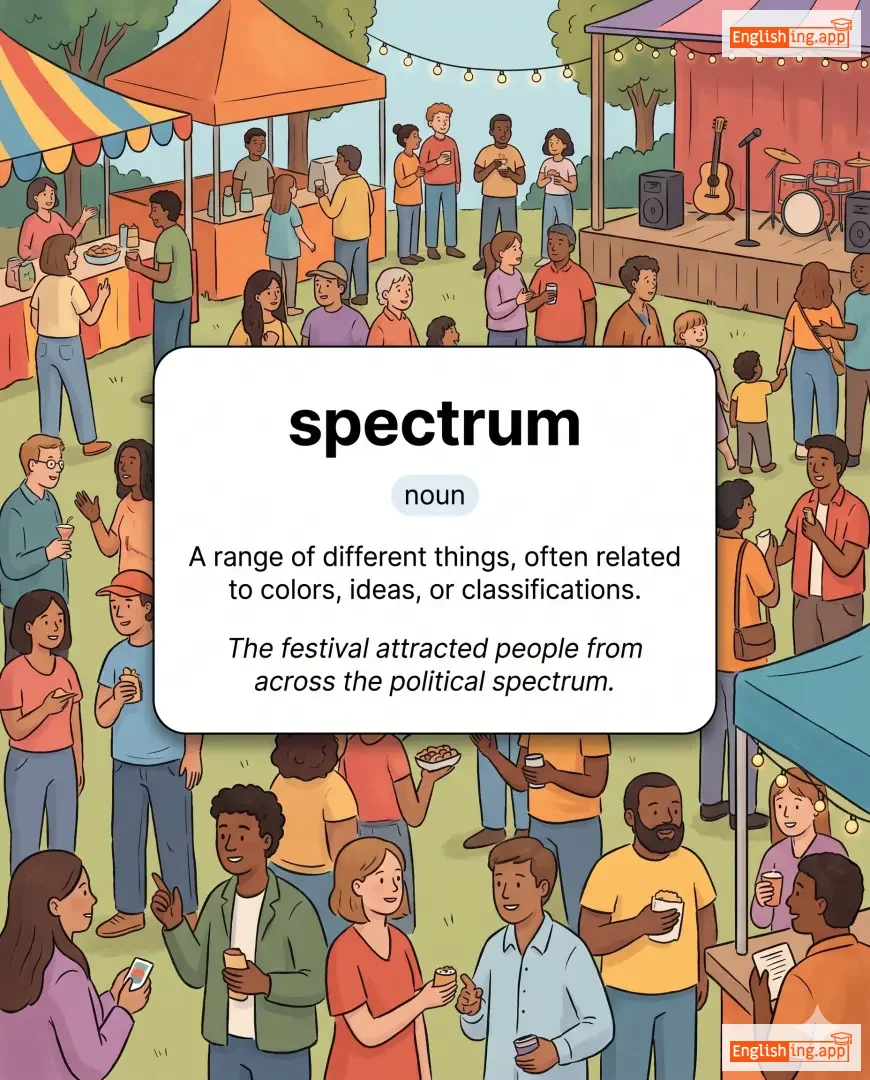
/ˈspɛktrəm/
noun
(光谱)
••••••
|
|
光谱
guāngpǔ
••••••
|
- •••••• | - •••••• | - •••••• | - •••••• |
A range of different things, often related to colors, ideas, or classifications.
••••••
|
The festival attracted people from across the political spectrum. |
这个节日吸引了来自各个政治光谱的人们。
Zhège jiérì xīyǐnle láizì gè ge zhèngzhì guāngpǔ de rénmen.
••••••
|
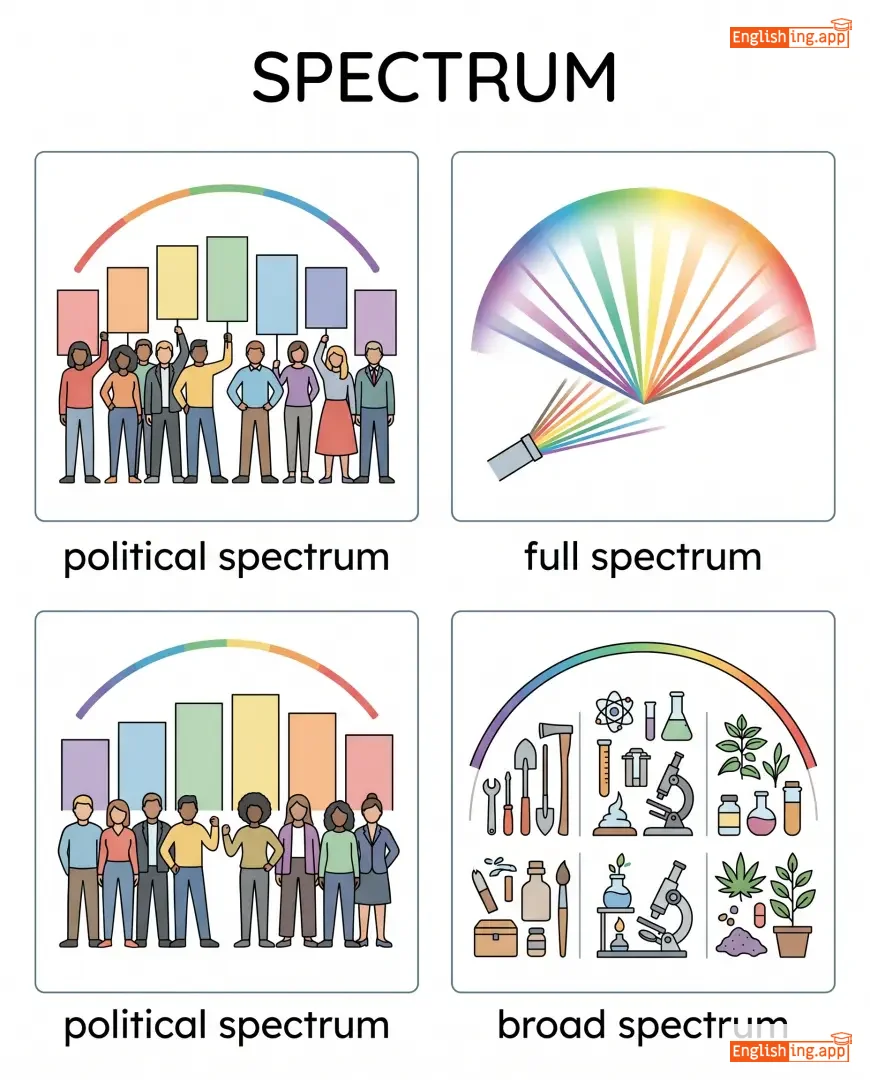
broad spectrum |
Covering a wide range of ideas or possibilities.
••••••
|
广泛的光谱
guǎngfàn de guāngpǔ
••••••
|
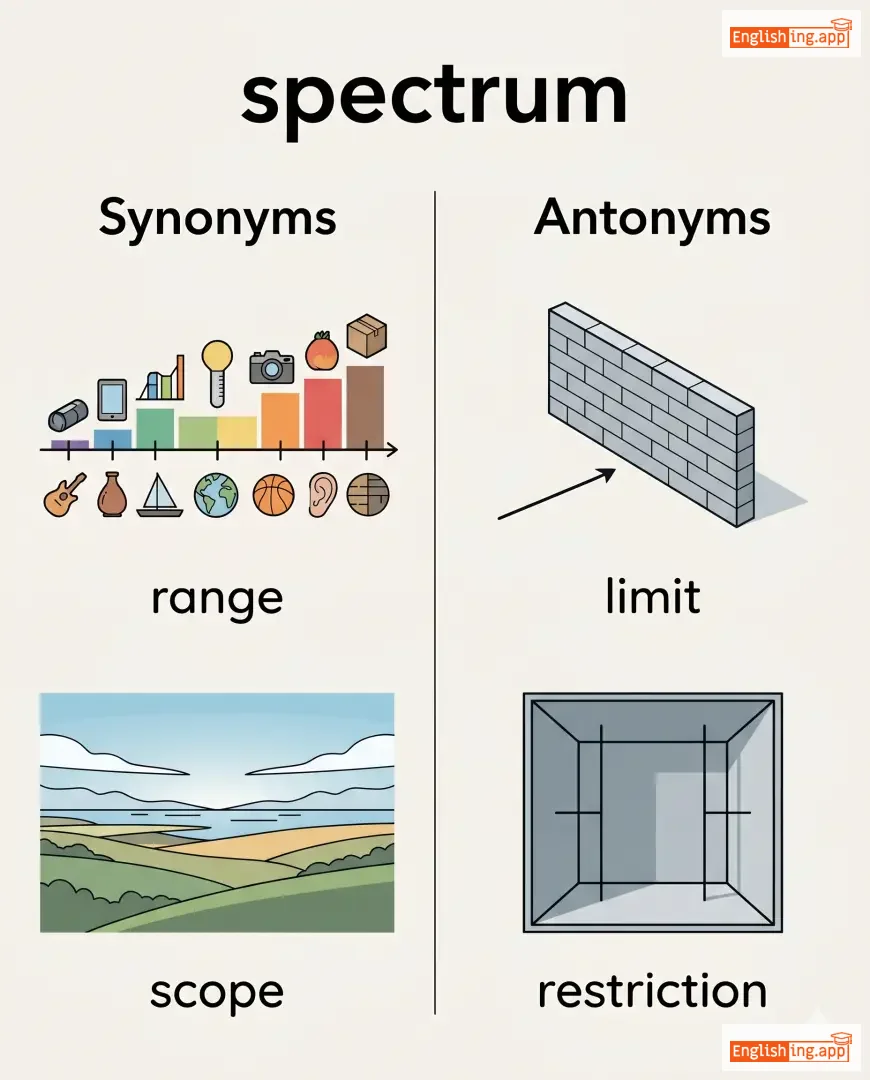
range, scope, span, variety, gamut
••••••
|
limit, restriction, boundary
••••••
|
political spectrum, full spectrum, broad spectrum, across the spectrum
••••••
|
光谱意味着完整的颜色范围 🌈,你在光谱中看到的一切。
••••••
|
|
🤔
••••••
|
/ˈspɛkjʊˌleɪt/
verb
(投机)
••••••
|
- •••••• |
投机 / 投资
tóujī / tóuzī
••••••
|
speculated
投机了
••••••
|
speculated
投机了
••••••
|
speculates
投机
••••••
|
speculating
投机中
••••••
|
To form a theory or guess without firm evidence; to invest in stocks, property, etc. hoping for profit.
••••••
|
Experts speculate that the company may expand into new markets.
专家推测公司可能会扩展到新市场。
••••••
|
专家推测公司可能会扩展到新市场。
zhuānjiā tuīcè gōngsī kěnéng huì kuòzhǎn dào xīn shìchǎng.
••••••
|
wildly speculate
无根据的猜测
••••••
|
To guess without much evidence or basis.
••••••
|
无根据的猜测
wú gēnjù de cāicè
••••••
|
guess, hypothesize, suppose, invest, gamble
••••••
|
know, prove, confirm
••••••
|
speculate about, speculate on, speculate wildly, speculate heavily
••••••
|
投机不仅仅是猜测,还是为了利润的投资。
••••••
|
|
💭
••••••
|
/ˌspɛkjʊˈleɪʃən/
noun
(sīpèiɡuǎlèixīn)
••••••
|

|
猜测
caice
••••••
|
- •••••• | - •••••• | - •••••• | - •••••• |
the forming of ideas or theories without firm evidence; guesswork
••••••
|
There is a lot of speculation about who will win the election. |
关于谁将赢得选举,存在很多猜测。
Guanyu shei jiang yingde xuanju, cunzai henduo caice.
••••••
|
wild speculation |
an unproven or exaggerated theory or guess
••••••
|
狂妄猜测
kuangwang caice
••••••
|
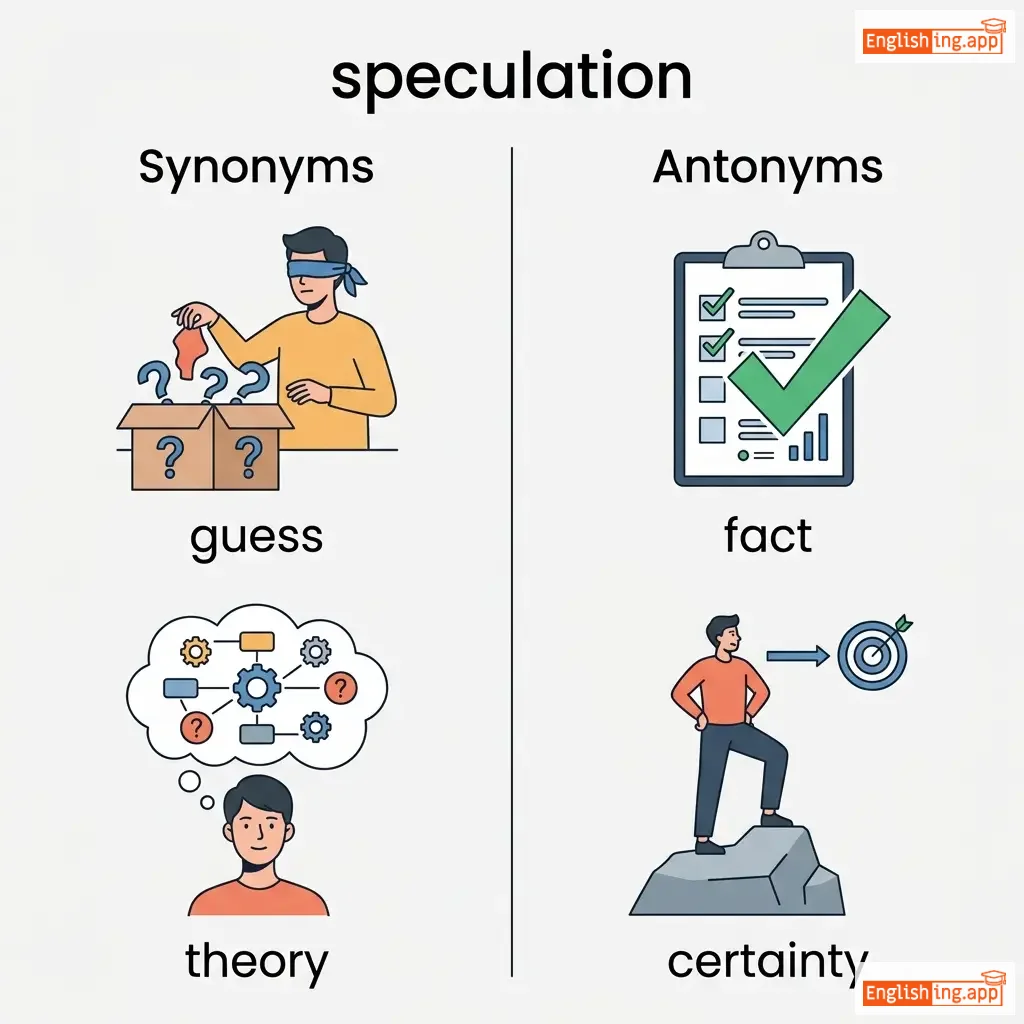
guess, theory, assumption, hypothesis, conjecture
••••••
|
fact, certainty
••••••
|
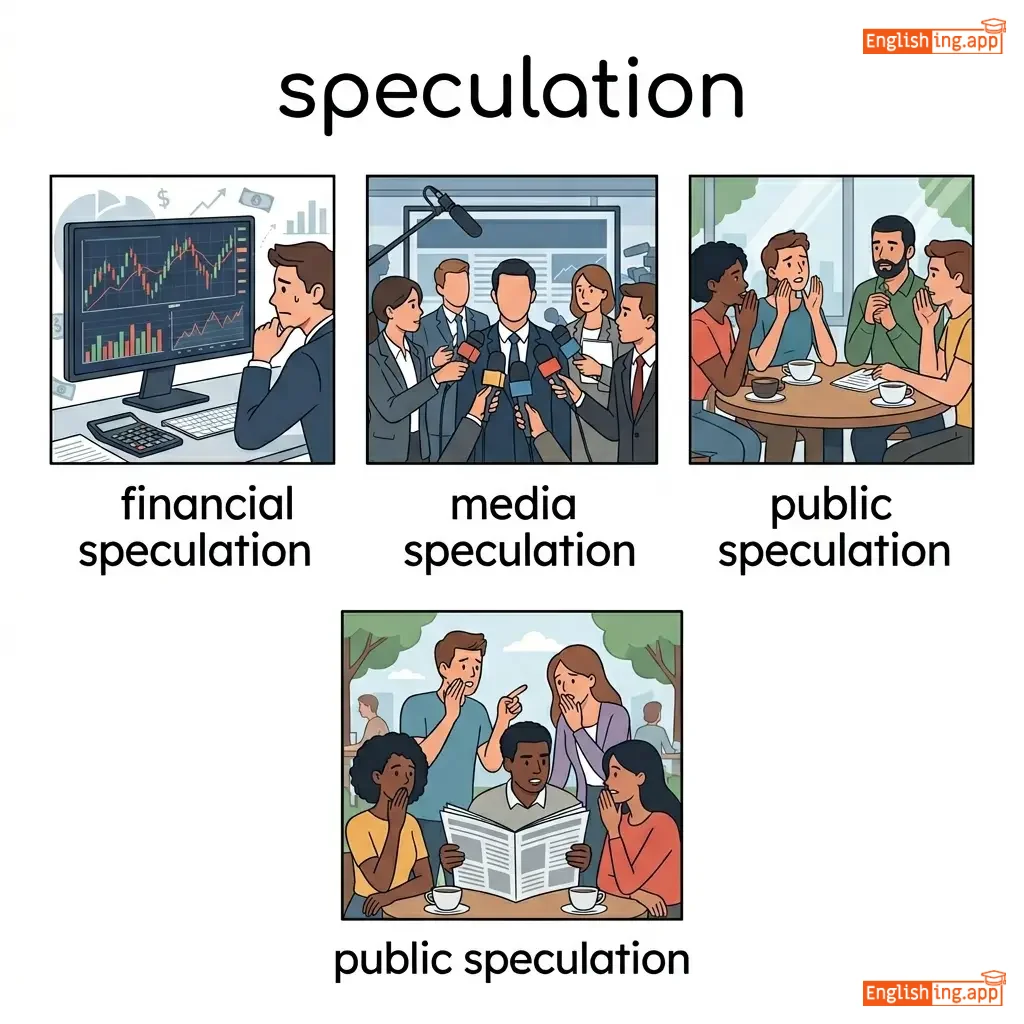
financial speculation, media speculation, public speculation, wild speculation
••••••
|
猜测就像没有证据的推测 — 只是脑海中的想法 💭
••••••
|
|
🎤
••••••
|
/spiːtʃ/
noun
(演讲)
••••••
|
- •••••• |
演讲; 演说;
yanjiang; yanshuo
••••••
|
- •••••• | - •••••• | - •••••• | - •••••• |
formal address or discourse delivered to an audience; the expression of thoughts in spoken words
••••••
|
The president gave an inspiring speech to the nation. |
总统向国家发表了鼓舞人心的演讲。
zongtong xiang guojia fabiao le guliu renxin de yanjiang.
••••••
|
- •••••• | - •••••• | - •••••• |
address, oration, discourse, talk
••••••
|
silence, muteness
••••••
|
keynote speech, public speech, acceptance speech, farewell speech
••••••
|
Speech in Chinese: The voice that echoes across time and space.
••••••
|
|
🏎️
••••••
|
/spiːd/
noun/verb
(spid)
••••••
|
- •••••• |
速度
sudu
••••••
|
sped
sped
••••••
|
sped
sped
••••••
|
speeds
speeds
••••••
|
speeding
speeding
••••••
|
the rate at which something moves or happens
••••••
|
The car was moving at high speed.
这辆车以高速行驶。
••••••
|
这辆车以高速行驶。
Zhè liàng chē yǐ gāosù xíngshǐ.
••••••
|
In the fast lane
快速车道
••••••
|
Living or working in a fast-paced environment
••••••
|
在快节奏的环境中生活或工作
Zài kuài jiézòu de huánjìng zhōng shēnghuó huò gōngzuò
••••••
|
velocity, pace, rate, momentum
••••••
|
slowness, delay
••••••
|
high speed, top speed, speed limit, speed up
••••••
|
Speed is like running, run to be fast!
••••••
|
|
✨
••••••
|
/spɛl/
verb
(拼写)
••••••
|
- •••••• |
拼写 / 咒语
pīnxiě / zhòuyǔ
••••••
|
spelled
拼写过
••••••
|
spelled
拼写过
••••••
|
spells
拼写
••••••
|
spelling
拼写
••••••
|
to write or name the letters of a word in the correct order; also a short period of time or a state of enchantment
••••••
|
She asked me to spell her name correctly on the form.
她让我在表格上正确拼写她的名字。
••••••
|
她让我在表格上正确拼写她的名字。
Tā ràng wǒ zài biǎogé shàng zhèngquè pīnxiě tā de míngzì.
••••••
|
cast a spell
施法
••••••
|
to use magic words to make something happen
••••••
|
施法
shīfǎ
••••••
|
write, recite, articulate, enchant, charm
••••••
|
miswrite, confuse, neglect
••••••
|
spell a word, spell correctly, cast a spell, spelling mistake
••••••
|
拼写(pīnxiě)就像咒语,魔法的开始!
••••••
|
|
💸
••••••
|
/spɛnd/
verb
(spend)
••••••
|

|
花费
huafei
••••••
|
spent
spent
••••••
|
spent
spent
••••••
|
spends
spends
••••••
|
spending
spending
••••••
|
to use money to buy or pay for something
••••••
|
He spent all his money on books.
他把所有的钱都花在了书上。
••••••
|
他把所有的钱都花在了书上。
Tā bǎ suǒyǒu de qián dōu huā zài le shū shàng.
••••••
|
Spend time wisely
明智地度过时光
••••••
|
Use your time effectively
••••••
|
明智地度过时光
Míngzhì de dùguò shíguāng
••••••
|
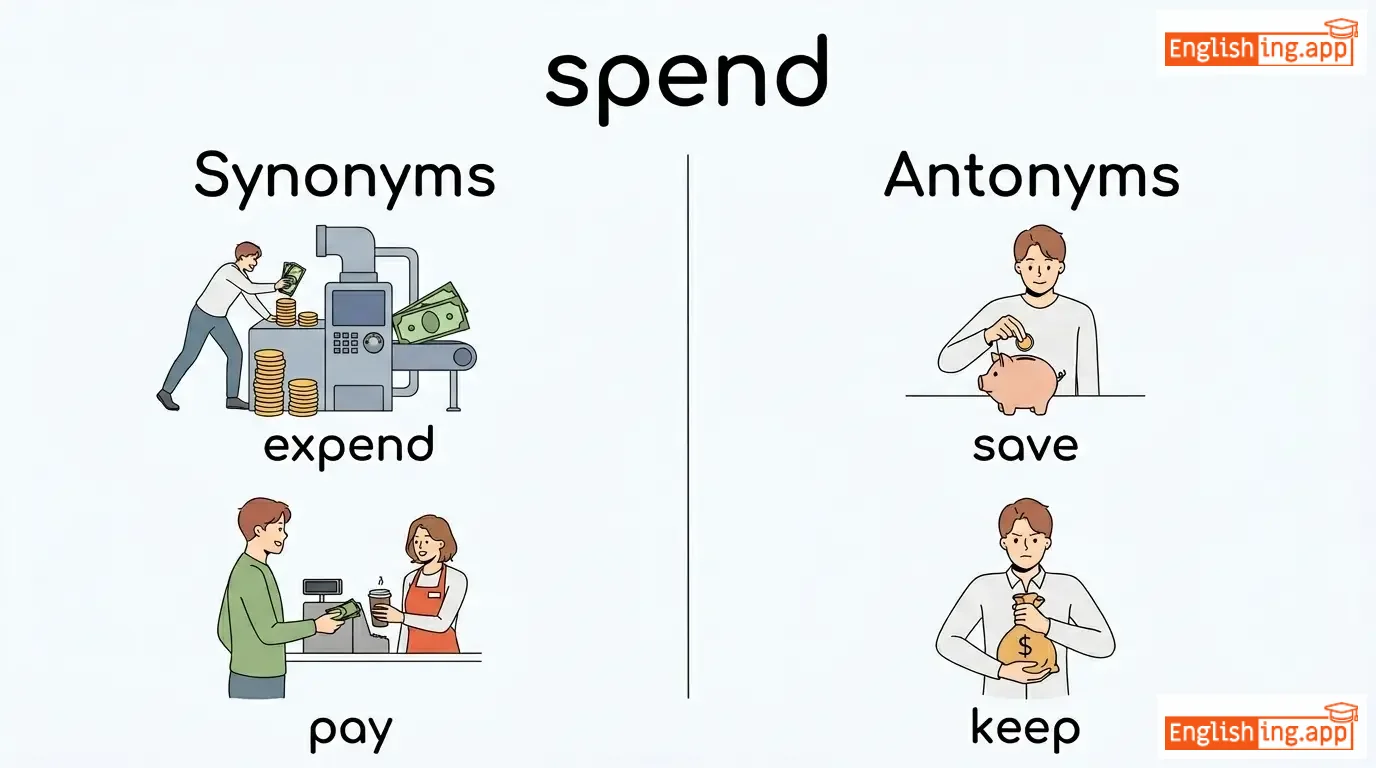
expend, pay, invest, consume
••••••
|
save, keep
••••••
|
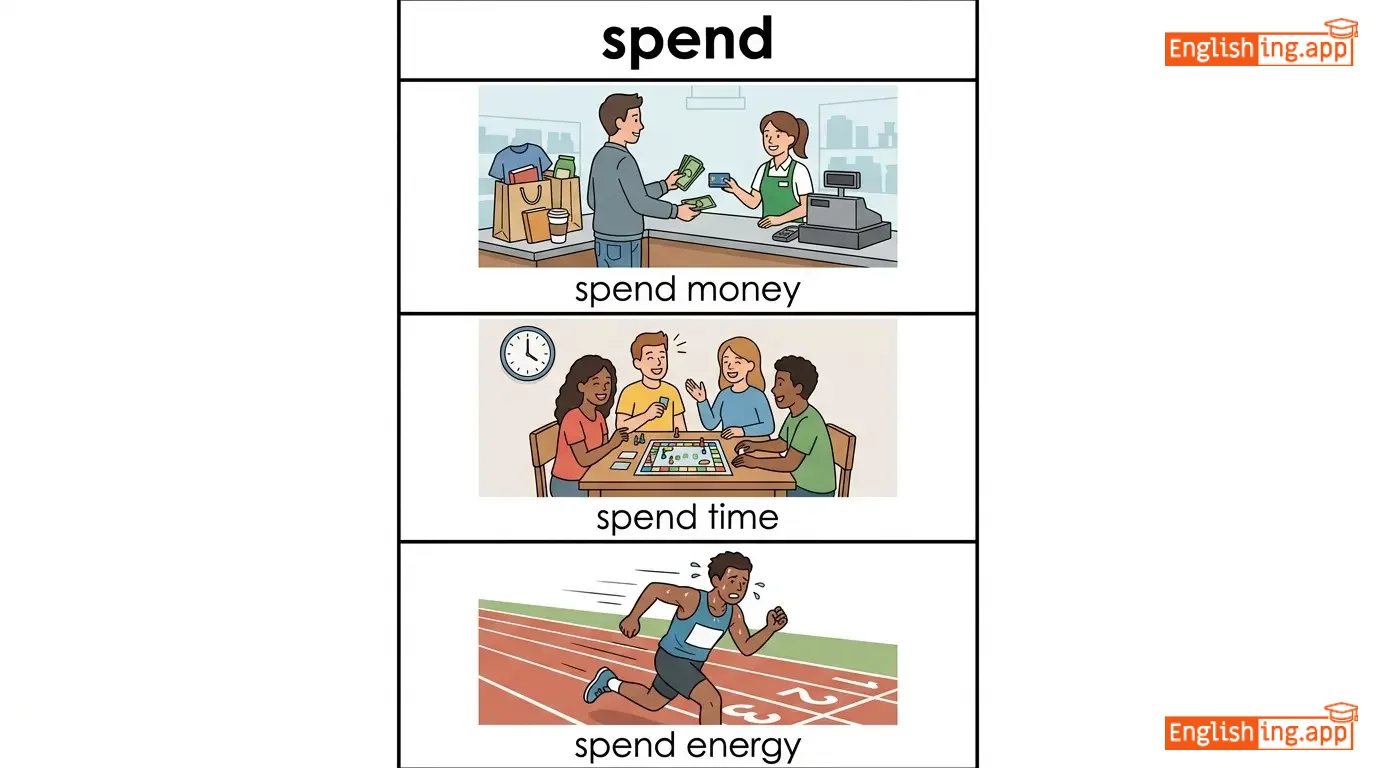
spend money, spend time, spend energy
••••••
|
花费时间明智地,否则你会浪费它!
••••••
|
|
💸
••••••
|
/ˈspɛndɪŋ/
noun
••••••
|
- •••••• | - •••••• | - •••••• | - •••••• | - •••••• | - •••••• |
the act of paying money for goods or services
••••••
|
Her spending on clothes was higher than expected. |
- •••••• | - •••••• | - •••••• | - •••••• |
expenditure, outlay, payment, cost
••••••
|
savings, thrift
••••••
|
high spending, government spending, reckless spending
••••••
|
No •••••• |
|
🌍
••••••
|
/sfɪər/
noun
(sīfēi'ěr)
••••••
|
- •••••• |
球体
qiútǐ
••••••
|
- •••••• | - •••••• | - •••••• | - •••••• |
a round, three-dimensional shape that is perfectly symmetrical around its center; an area of activity or knowledge
••••••
|
The Earth is almost a perfect sphere. |
地球几乎是一个完美的球体。
Dìqiú jīhū shì yīgè wánměi de qiútǐ.
••••••
|
sphere of influence |
an area where one person or group has power or control
••••••
|
影响范围
yǐngxiǎng fànwéi
••••••
|
ball, globe, orb, domain, field
••••••
|
cube, flat
••••••
|
sphere of influence, within the sphere, political sphere, social sphere
••••••
|
球体意味着圆形 - 想象地球是一个球体 (sphere) 🌍
••••••
|
|
🌶️
••••••
|
/spaɪs/
noun
(spais)
••••••
|
- •••••• |
香料
xiangliao
••••••
|
- •••••• | - •••••• | - •••••• | - •••••• |
a substance used to add flavor to food
••••••
|
She added a pinch of spice to the curry for extra flavor.
她在咖喱里加入了一撮香料以增加味道。
••••••
|
她在咖喱里加入了一撮香料以增加味道。
Tā zài gālí lǐ jiārù le yī cuǒ xiāngliào yǐ zēngjiā wèidào.
••••••
|
- •••••• | - •••••• | - •••••• |
seasoning, flavoring, condiment
••••••
|
blandness
••••••
|
add spice, spicy dish, curry spice
••••••
|
香料让食物更有味道,就像咖喱香料一样。
••••••
|
|
🌶️
••••••
|
/ˈspaɪ.si/
adjective
(spaisi)
••••••
|
- •••••• |
辛辣
xinla
••••••
|
- •••••• | - •••••• | - •••••• | - •••••• |
having a strong, hot flavor from spices; containing spices
••••••
|
This curry is too spicy for me to eat. |
这道咖喱对我来说太辣了。
zhe dao gāli duì wǒ lái shuō tài là le.
••••••
|
- •••••• | - •••••• | - •••••• |
hot, peppery, pungent, fiery, seasoned
••••••
|
mild, bland, plain, unseasoned
••••••
|
spicy food, spicy curry, spicy sauce
••••••
|
辛辣的味道,像香料一样的热辣!
••••••
|
|
🕷️
••••••
|
/ˈspaɪ.dər/
noun
(shīzhī)
••••••
|
- •••••• |
蜘蛛
zhizhu
••••••
|
- •••••• | - •••••• | - •••••• | - •••••• |
a small creature with eight legs that makes webs to catch insects
••••••
|
The spider caught a fly in its web.
蜘蛛在它的网中抓住了一只苍蝇。
••••••
|
蜘蛛在它的网中抓住了一只苍蝇。
Zhizhu zai ta de wang zhong zhua zhuo le yi zhi cangying.
••••••
|
- •••••• | - •••••• | - •••••• |
arachnid
••••••
|
- •••••• |
spider web, spider bite, house spider
••••••
|
蜘蛛在它的网中抓住了一只苍蝇,记住它八条腿。
••••••
|
|
☕
••••••
|
/spɪl/
verb
(spil)
••••••
|
- •••••• |
洒
sa
••••••
|
spilled
spild
••••••
|
spilled
spild
••••••
|
spills
spils
••••••
|
spilling
spiling
••••••
|
to cause liquid to flow or fall out of a container by accident
••••••
|
Be careful not to spill your coffee.
小心不要洒出你的咖啡。
••••••
|
小心不要洒出你的咖啡。
Xiaoxin bu yao sa chu ni de kafei.
••••••
|
spill the beans
洒豆
••••••
|
to reveal a secret
••••••
|
泄露秘密
xielu mimi
••••••
|
pour, leak, overflow, splash, slosh
••••••
|
contain, hold
••••••
|
spill water, spill oil, spill over, coffee spill
••••••
|
Spill 就像洒水,小心啊!
••••••
|
|
🌀
••••••
|
/spɪn/
verb
(spin)
••••••
|
- •••••• |
旋转
xuánzhuǎn
••••••
|
spun
span
••••••
|
spun
span
••••••
|
spins
spins
••••••
|
spinning
spinning
••••••
|
To turn around quickly or cause something to rotate
••••••
|
The dancer began to spin gracefully on the stage.
the dancer began to spin gracefully on the stage
••••••
|
舞者开始在舞台上优雅地旋转。
Wǔzhě kāishǐ zài wǔtái shàng yōuyǎ de xuánzhuǎn.
••••••
|
spin out of control
spin out of control
••••••
|
To lose stability or control
••••••
|
失控
shīkòng
••••••
|
twirl, rotate, whirl, revolve, turn
••••••
|
stop, halt, remain
••••••
|
spin wheel, spin around, spin class, spin doctor
••••••
|
Spin 是旋转 – 就像舞蹈中的旋转
••••••
|
|
🦴
••••••
|
/spaɪn/
noun
(spain)
••••••
|
- •••••• |
脊柱
jizhu
••••••
|
- •••••• | - •••••• | - •••••• | - •••••• |
the backbone; a series of bones extending from the skull to the lower back
••••••
|
The doctor examined her spine after the accident. |
事故发生后,医生检查了她的脊柱。
Shigu fashen hou, yisheng jiancha le ta de jizhu.
••••••
|
backbone of something |
the most important part or support of something
••••••
|
某物的脊柱
mou wu de jizhu
••••••
|
backbone, vertebrae, ridge, support
••••••
|
weakness, fragility
••••••
|
spine injury, spine surgery, curved spine, spine health
••••••
|
Spine是脊柱,spine-less则是脆弱的。
••••••
|
|
👻
••••••
|
/ˈspɪr.ɪt/
noun
(精神)
••••••
|
- •••••• |
精神; 灵魂; 热情; 勇气
jingshen; linghun; reqing; yongqi
••••••
|
- •••••• | - •••••• | - •••••• | - •••••• |
the non-physical part of a person; enthusiasm or courage; the essential character of something
••••••
|
The team showed great spirit despite losing the match.
尽管输掉比赛,队伍仍展现出伟大的精神。
••••••
|
尽管输掉比赛,队伍仍展现出伟大的精神。
Jin guan shudiào bǐsài, duìwǔ réng zhǎnxiàn chū wěidà de jīngshén.
••••••
|
- •••••• | - •••••• | - •••••• |
soul, enthusiasm, courage, morale
••••••
|
body, dejection, cowardice
••••••
|
team spirit, fighting spirit, free spirit, school spirit
••••••
|
精神代表勇气,灵魂充满热情
••••••
|
|
🙏
••••••
|
/ˈspɪr.ɪ.tʃu.əl/
adjective
(精神的)
••••••
|
- •••••• |
精神的; 宗教的; 神圣的
jīngshén de
••••••
|
- •••••• | - •••••• | - •••••• | - •••••• |
relating to the human spirit or soul; religious or sacred
••••••
|
She found spiritual peace through meditation.
她通过冥想找到了精神的平静。
••••••
|
她通过冥想找到了精神的平静。
Tā tōngguò míngxiǎng zhǎodào le jīngshén de píngjìng.
••••••
|
- •••••• | - •••••• | - •••••• |
religious, sacred, divine, holy, mystical
••••••
|
material, physical, secular, worldly
••••••
|
spiritual leader, spiritual journey, spiritual growth
••••••
|
精神的意味着通过冥想找到内心的平静。
••••••
|
|
😠
••••••
|
/spaɪt/
noun
(spaɪt)
••••••
|
- •••••• |
恶意
èyì
••••••
|
- •••••• | - •••••• | - •••••• | - •••••• |
a desire to hurt, annoy, or offend someone
••••••
|
She refused the gift out of spite. |
她因为恶意拒绝了礼物。
Tā yīnwèi èyì jùjué le lǐwù.
••••••
|
in spite of |
despite something; regardless of
••••••
|
尽管如此
jǐnguǎn rúcǐ
••••••
|
malice, resentment, bitterness, hostility
••••••
|
kindness, goodwill, compassion
••••••
|
out of spite, in spite of, spiteful remark, spite attack
••••••
|
Spite 就是 '恶意' —— 就像怀恨在心那样 😠
••••••
|
|
✂️
••••••
|
/splɪt/
verb
(斯普利特)
••••••
|
- •••••• |
分割
fēngē
••••••
|
split
斯普利特
••••••
|
split
斯普利特
••••••
|
splits
斯普利茨
••••••
|
splitting
斯普利廷
••••••
|
to divide or separate into parts or groups
••••••
|
He split the log in two with an axe.
他用斧子把木头劈成两半。
••••••
|
他用斧子把木头劈成两半。
Tā yòng fǔzi bǎ mùtou pī chéng liǎng bàn.
••••••
|
- •••••• | - •••••• | - •••••• |
divide, separate, break, sever
••••••
|
join, unite
••••••
|
split up, split the difference, split second
••••••
|
To 'split' something is to 'split' it into two.
••••••
|
|
💔
••••••
|
/spɔɪl/
verb
(斯波伊尔)
••••••
|
- •••••• |
破坏
pòhuài
••••••
|
spoiled
斯波伊尔德
••••••
|
spoiled
斯波伊尔德
••••••
|
spoils
斯波伊尔斯
••••••
|
spoiling
斯波伊林
••••••
|
to damage or ruin something
••••••
|
The rain spoiled the outdoor event.
雨水破坏了户外活动。
••••••
|
雨水破坏了户外活动。
Yǔshuǐ pòhuài le hùwài huódòng.
••••••
|
- •••••• | - •••••• | - •••••• |
ruin, damage, mar, destroy
••••••
|
preserve, protect
••••••
|
spoil food, spoil plans, spoil someone
••••••
|
破坏意味着损坏某物,就像一个被雨水毁坏的活动。
••••••
|
|
🗣️
••••••
|
/ˈspəʊksmən/
noun
(spokesman)
••••••
|
- •••••• |
发言人
fā yán rén
••••••
|
- •••••• | - •••••• | - •••••• | - •••••• |
a person who speaks on behalf of others, especially for a group or organization
••••••
|
The spokesman addressed the crowd during the rally. |
发言人在集会中向人群讲话。
Fā yán rén zài jíhuì zhōng xiàng rénqún jiǎnghuà.
••••••
|
- •••••• | - •••••• | - •••••• |
representative, delegate, spokesman, ambassador
••••••
|
opponent, adversary
••••••
|
chief spokesman, official spokesman, media spokesman
••••••
|
A spokesman is like a '发言人' (someone who speaks for others), guiding the crowd.
••••••
|
|
🗣️
••••••
|
/ˈspəʊkspɜːrsən/
noun
(spokesperson)
••••••
|
- •••••• |
发言人
fāyánrén
••••••
|
- •••••• | - •••••• | - •••••• | - •••••• |
a person who speaks on behalf of others or an organization
••••••
|
The spokesperson addressed the press conference on behalf of the company. |
发言人代表公司在新闻发布会上发言。
Fāyánrén dàibiǎo gōngsī zài xīnwén fābù huì shàng fāyán.
••••••
|
- •••••• | - •••••• | - •••••• |
representative, spokesperson, mouthpiece, agent
••••••
|
critic, opponent
••••••
|
official spokesperson, company spokesperson, media spokesperson
••••••
|
发言人就是发言的人员,例如公司的发言人。
••••••
|
|
👩💼
••••••
|
/ˈspəʊkswɪmən/
noun
(spóukswimén)
••••••
|
- •••••• |
发言人女性
fāyánrén nǚxìng
••••••
|
- •••••• | - •••••• | - •••••• | - •••••• |
a woman who speaks on behalf of a group or organization
••••••
|
The spokeswoman for the company announced the new product. |
公司的发言人宣布了新产品。
Gōngsī de fāyánrén xuānbùle xīn chǎnpǐn.
••••••
|
- •••••• | - •••••• | - •••••• |
representative, spokesperson, delegate, mouthpiece
••••••
|
opponent, adversary
••••••
|
spokeswoman for, female spokesperson, appointed spokeswoman
••••••
|
发言人女性,代表团体发声!
••••••
|
|
💼
••••••
|
/ˈspɒnsəʃɪp/
noun
(sponsorship)
••••••
|
- •••••• |
赞助
zanzhu
••••••
|
- •••••• | - •••••• | - •••••• | - •••••• |
the act of supporting an event, activity, person, or organization financially or through other resources
••••••
|
The event was made possible due to the sponsorship of several big companies.
由于几家大公司的赞助,活动得以举行。
••••••
|
由于几家大公司的赞助,活动得以举行。
Yóuyú jǐ jiā dà gōngsī de zànzhù, huódòng dé yǐ jǔxíng.
••••••
|
- •••••• | - •••••• | - •••••• |
patronage, backing, funding, support
••••••
|
neglect, withdrawal
••••••
|
event sponsorship, corporate sponsorship, sponsorship deal, sponsorship agreement
••••••
|
Sponsorship 就是用资源支持活动!
••••••
|
|
🥄
••••••
|
/spuːn/
noun
(spūn)
••••••
|
- •••••• |
勺子
shaozi
••••••
|
- •••••• | - •••••• | - •••••• | - •••••• |
a utensil consisting of a small shallow bowl with a handle, used for eating, stirring, or serving food
••••••
|
She stirred her coffee with a silver spoon. |
她用银勺子搅拌她的咖啡。
Tā yòng yín sháozi jiǎobàn tā de kāfēi.
••••••
|
born with a silver spoon in one's mouth |
to be born into a wealthy and privileged family
••••••
|
含着银勺子出生
hán zhe yín sháozi chūshēng
••••••
|
ladle, utensil, scoop, teaspoon, tablespoon
••••••
|
fork, knife
••••••
|
tea spoon, soup spoon, silver spoon, wooden spoon
••••••
|
用勺子吃饭很简单 – 记住 🥄
••••••
|
|
⚽
••••••
|
/spɔːt/
noun
(体育)
••••••
|
- •••••• |
体育
tiyu
••••••
|
- •••••• | - •••••• | - •••••• | - •••••• |
an activity involving physical exertion and skill in which an individual or team competes against another or others for entertainment
••••••
|
Football is a popular sport around the world.
足球是全球流行的体育运动。
••••••
|
足球是全球流行的体育运动。
Zúqiú shì quánqiú liúxíng de tǐyù yùndòng.
••••••
|
- •••••• | - •••••• | - •••••• |
game, activity, competition, exercise
••••••
|
inactivity, laziness
••••••
|
team sport, competitive sport, individual sport
••••••
|
In sports, you compete and enjoy physical activities with friends.
••••••
|
|
🏅
••••••
|
/ˈspɔːrtsmən/
noun
(斯波茨曼)
••••••
|
- •••••• |
运动员
yundongyuan
••••••
|
- •••••• | - •••••• | - •••••• | - •••••• |
A person who is skilled in sports or enjoys participating in athletic activities.
••••••
|
He is a true sportsman, always fair and respectful to his opponents.
他是一个真正的斯波茨曼,总是对对手公平和尊重。
••••••
|
他是一个真正的运动员,总是对对手公平和尊重。
Ta shi yige zhenzheng de yundongyuan, zongshi dui duishou gongping he zunzhong.
••••••
|
- •••••• | - •••••• | - •••••• |
athlete, competitor, player, sports enthusiast
••••••
|
non-athlete, sedentary person
••••••
|
professional sportsman, amateur sportsman, sportsman spirit, sportsman attitude
••••••
|
'Sportsman' = 运动员 (yundongyuan) in Chinese
••••••
|
|
📍
••••••
|
/spɒt/
noun
(点)
••••••
|
- •••••• |
地点
didian
••••••
|
- •••••• | - •••••• | - •••••• | - •••••• |
a particular place or position
••••••
|
I found a great spot for a picnic in the park. |
我在公园里找到了一个很好的野餐地点。
Wo zai gongyuan li zhaodao le yi ge hen hao de yecan didian.
••••••
|
- •••••• | - •••••• | - •••••• |
location, place, area, position
••••••
|
void, space, gap
••••••
|
hot spot, tourist spot, perfect spot
••••••
|
Spot the perfect picnic spot in the park.
••••••
|
|
🔦
••••••
|
/ˈspɒt.laɪt/
noun
••••••
|
- •••••• | - •••••• | - •••••• | - •••••• | - •••••• | - •••••• |
a strong beam of light directed onto a particular area; figuratively, public attention
••••••
|
The singer stood proudly in the spotlight. |
- •••••• |
in the spotlight |
receiving a lot of public attention
••••••
|
- •••••• |
highlight, focus, limelight, glare
••••••
|
obscurity, shadow
••••••
|
under spotlight, grab spotlight, media spotlight, stage spotlight
••••••
|
No •••••• |
|
💍
••••••
|
/spaʊs/
noun
(spaus)
••••••
|
- •••••• |
配偶
peikou
••••••
|
- •••••• | - •••••• | - •••••• | - •••••• |
a person's husband or wife
••••••
|
Each employee may include their spouse in the health insurance plan.
每个员工可以将配偶纳入健康保险计划。
••••••
|
每个员工可以将配偶纳入健康保险计划。
Mei ge yuangong keyi jiang peigou naru jiankang baoxian jihua.
••••••
|
- •••••• | - •••••• | - •••••• |
partner, husband, wife, mate, consort
••••••
|
single, bachelor, spinster
••••••
|
loving spouse, faithful spouse, deceased spouse, legal spouse
••••••
|
Spouse 在中文中是配偶 — 丈夫或妻子
••••••
|
|
📢
••••••
|
/spred/
verb
(èspǐréd)
••••••
|
- •••••• |
传播
chuanbo
••••••
|
spread
èspǐréd
••••••
|
spread
èspǐréd
••••••
|
spreads
èspǐréds
••••••
|
spreading
èspǐréding
••••••
|
to extend over a larger area; to distribute; to apply
••••••
|
The news spread quickly through the town.
新闻迅速在城镇传播。
••••••
|
新闻迅速在城镇传播。
Xinwen xun su zai chengzhen chuanbo.
••••••
|
- •••••• | - •••••• | - •••••• |
extend, distribute, scatter, circulate
••••••
|
collect, gather, concentrate, contain
••••••
|
spread quickly, spread widely, spread evenly, spread news
••••••
|
Spread the word like spreading butter on toast.
••••••
|
|
🌸
••••••
|
/sprɪŋ/
noun
(春天)
••••••
|
- •••••• |
春天
chuntian
••••••
|
- •••••• | - •••••• | - •••••• | - •••••• |
the season between winter and summer when plants begin to grow
••••••
|
Flowers bloom in the spring. |
春天花开。
Chuntian hua kai.
••••••
|
- •••••• | - •••••• | - •••••• |
season, time of growth, rebirth
••••••
|
winter, autumn
••••••
|
spring flowers, spring break, spring rain
••••••
|
春天百花齐放,正如大自然的生长季节!
••••••
|
|
🕵️♂️
••••••
|
/spaɪ/
verb
(sī pāi)
••••••
|
- •••••• |
间谍
jiandie
••••••
|
spied
sī pāi dé
••••••
|
spied
sī pāi dé
••••••
|
spies
sī pāi sī
••••••
|
spying
sī pāi yīng
••••••
|
to secretly collect information about a person, group, or country
••••••
|
He was caught spying on his neighbor through the window.
他在窗户旁边偷偷地监视邻居时被抓住了。
••••••
|
他在窗户旁边偷偷地监视邻居时被抓住了。
Tā zài chuānghù pángbiān tōutōu de jiānshì línjū shí bèi zhuā zhù le.
••••••
|
spy on someone
监视某人
••••••
|
to watch someone secretly
••••••
|
监视某人
jiānshì mǒu rén
••••••
|
observe, watch, monitor, investigate, snoop
••••••
|
ignore, overlook
••••••
|
spy agency, spy mission, spy network, spy movie
••••••
|
Spy是间谍 — ‘在间谍电影中,间谍悄悄地观察别人’。
••••••
|

