|
絵文字
|
単語 | Images | 翻訳 | 過去 | 過去分詞 | 三人称単数 | 動名詞 | 意味 | 例文 | 例文の翻訳 | 表現例 | 表現例の意味 | 表現例の翻訳 | 同義語 | 対義語 | コロケーション | ニーモニック |
|---|---|---|---|---|---|---|---|---|---|---|---|---|---|---|---|---|---|
|
💓
••••••
|
/pʌls/
noun/verb
••••••
|
- •••••• | - •••••• |
pulsed
••••••
|
pulsed
••••••
|
pulses
••••••
|
pulsing
••••••
|
A rhythmic beat or vibration, especially the heartbeat; to throb or move with a rhythm.
••••••
|
The doctor checked her pulse after the long run. |
- •••••• |
take someone's pulse |
to check someone's heartbeat or to understand their state of mind
••••••
|
- •••••• |
heartbeat, rhythm, beat, vibration, throb
••••••
|
stillness, calm
••••••
|
strong pulse, weak pulse, pulse rate, pulse check
••••••
|
No •••••• |
|
💧
••••••
|
/pʌmp/
verb
(pampu)
••••••
|
- •••••• |
ポンプする
ponpu suru
••••••
|
pumped
pampudo
••••••
|
pumped
pampudo
••••••
|
pumps
pampusu
••••••
|
pumping
pampingu
••••••
|
to force liquid or gas to move in a particular direction using a device
••••••
|
They pumped water from the well into the tank.
彼らは井戸からタンクに水をポンプしました。
••••••
|
彼らは井戸からタンクに水をポンプしました。
Karera wa ido kara tanku ni mizu o ponpu shimashita.
••••••
|
pump up
pump up
••••••
|
to fill with air or excitement
••••••
|
空気を入れる
kūki o ireru
••••••
|
siphon, extract, draw, force, inflate
••••••
|
drain, empty
••••••
|
pump water, pump air, pump fuel, pump up
••••••
|
ポンプするようにエネルギーを注入、‘pump up’で盛り上がる!
••••••
|
|
🥊
••••••
|
/pʌntʃ/
verb
(パンチ)
••••••
|
- •••••• |
殴る
naguru
••••••
|
punched
パンチド
••••••
|
punched
パンチド
••••••
|
punches
パンチズ
••••••
|
punching
パンチング
••••••
|
to hit someone or something hard with your fist
••••••
|
He punched the wall in frustration.
彼はフラストレーションで壁を殴った。
••••••
|
彼はフラストレーションで壁を殴った。
Kare wa furasutorēshon de kabe o nagutta.
••••••
|
pack a punch
パンチを加える
••••••
|
to have a strong effect or impact
••••••
|
強い影響を与える
tsuyoi eikyō o ataeru
••••••
|
hit, strike, smack, blow, thump
••••••
|
caress, pat
••••••
|
throw a punch, punch hard, punch bag, pack a punch
••••••
|
‘punch’ を考えてみて、壁を殴るような力強い影響!
••••••
|
|
⚖️
••••••
|
/ˈpʌnɪʃ/
verb
(パニッシュ)
••••••
|
|
罰する
bassuru
••••••
|
punished
パニッシュド
••••••
|
punished
パニッシュド
••••••
|
punishes
パニッシュズ
••••••
|
punishing
パニッシング
••••••
|
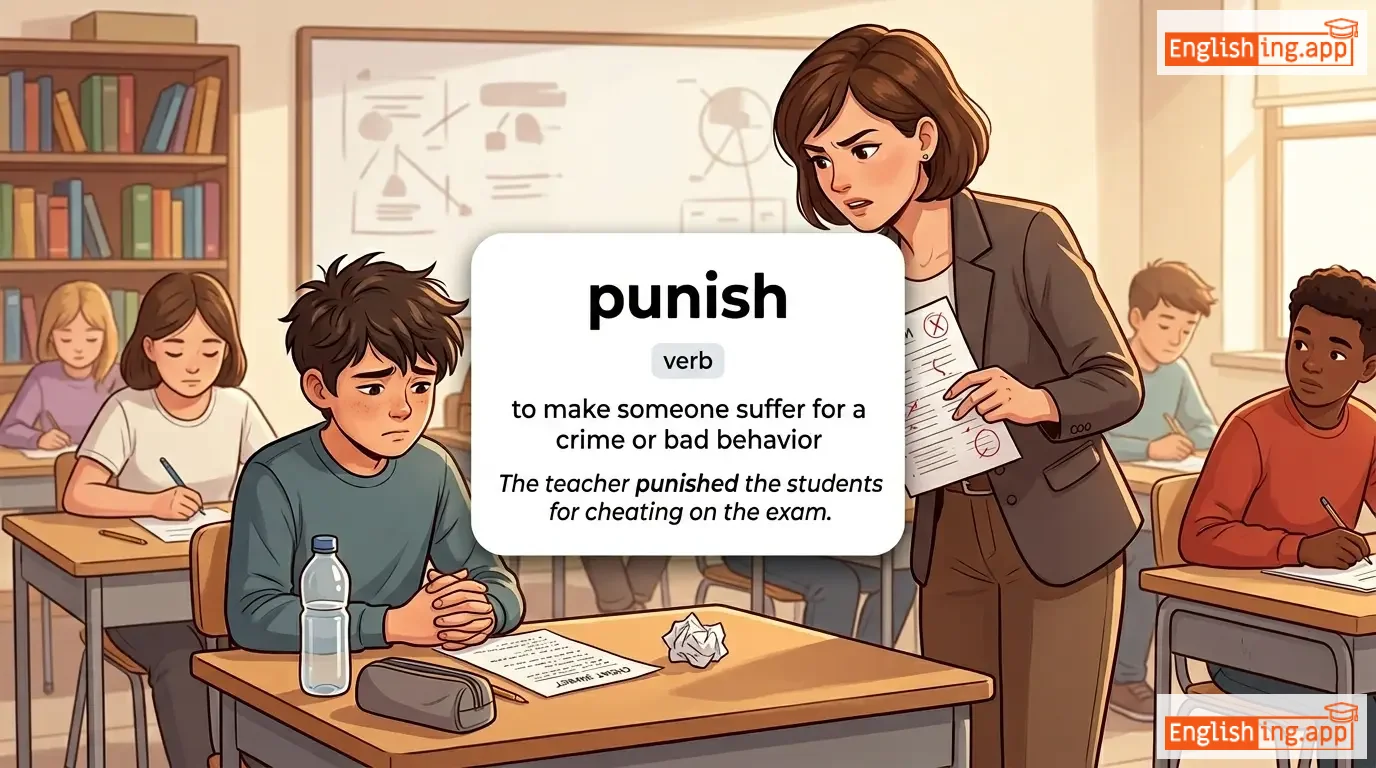
to make someone suffer for a crime or bad behavior
••••••
|
The teacher punished the students for cheating on the exam.
教師は試験でカンニングをした学生を罰した。
••••••
|
教師は試験でカンニングをした学生を罰した。
Kyoushi wa shiken de kanningu wo shita gakusei wo basshita.
••••••
|
punish oneself
自分を罰する
••••••
|
to make oneself suffer for guilt or regret
••••••
|
自分を罰する
jibun wo bassuru
••••••
|
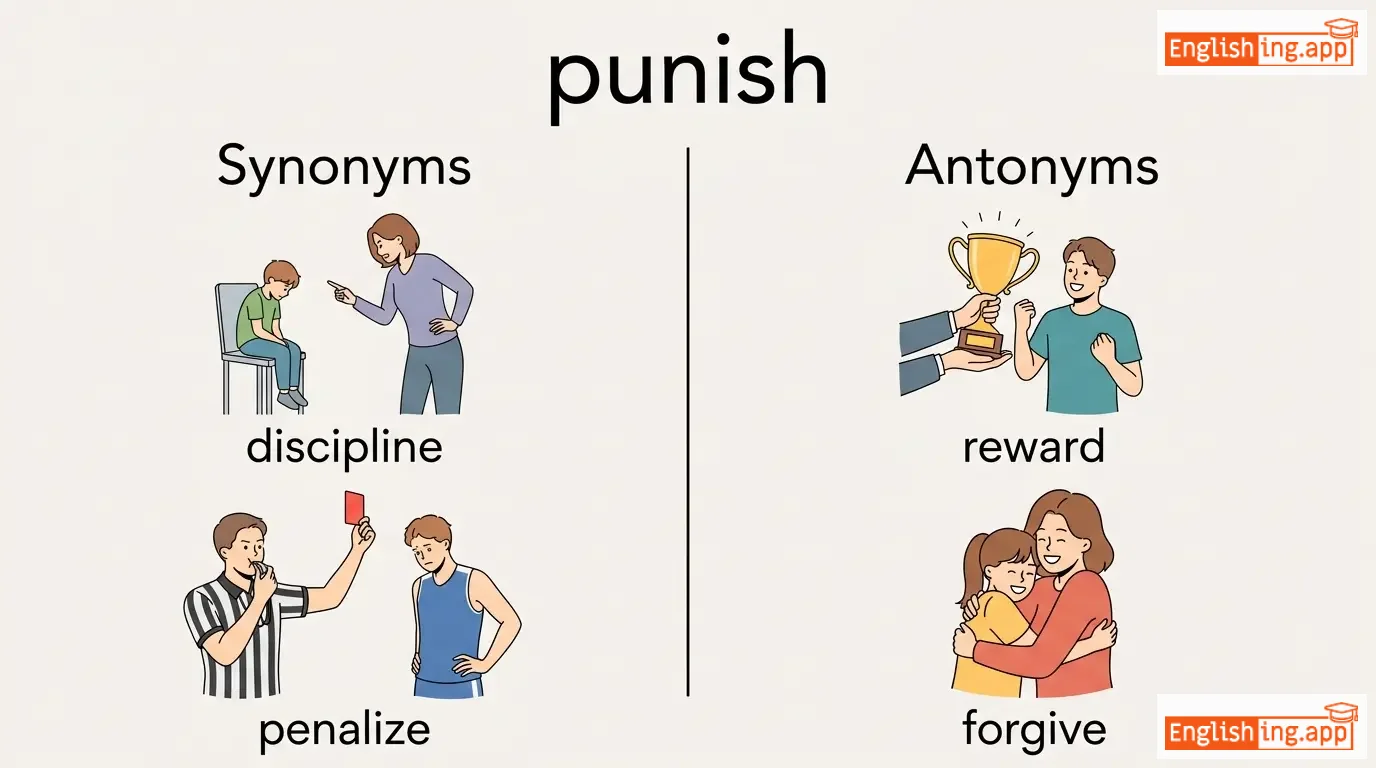
discipline, penalize, reprimand, chastise, correct
••••••
|
reward, forgive
••••••
|
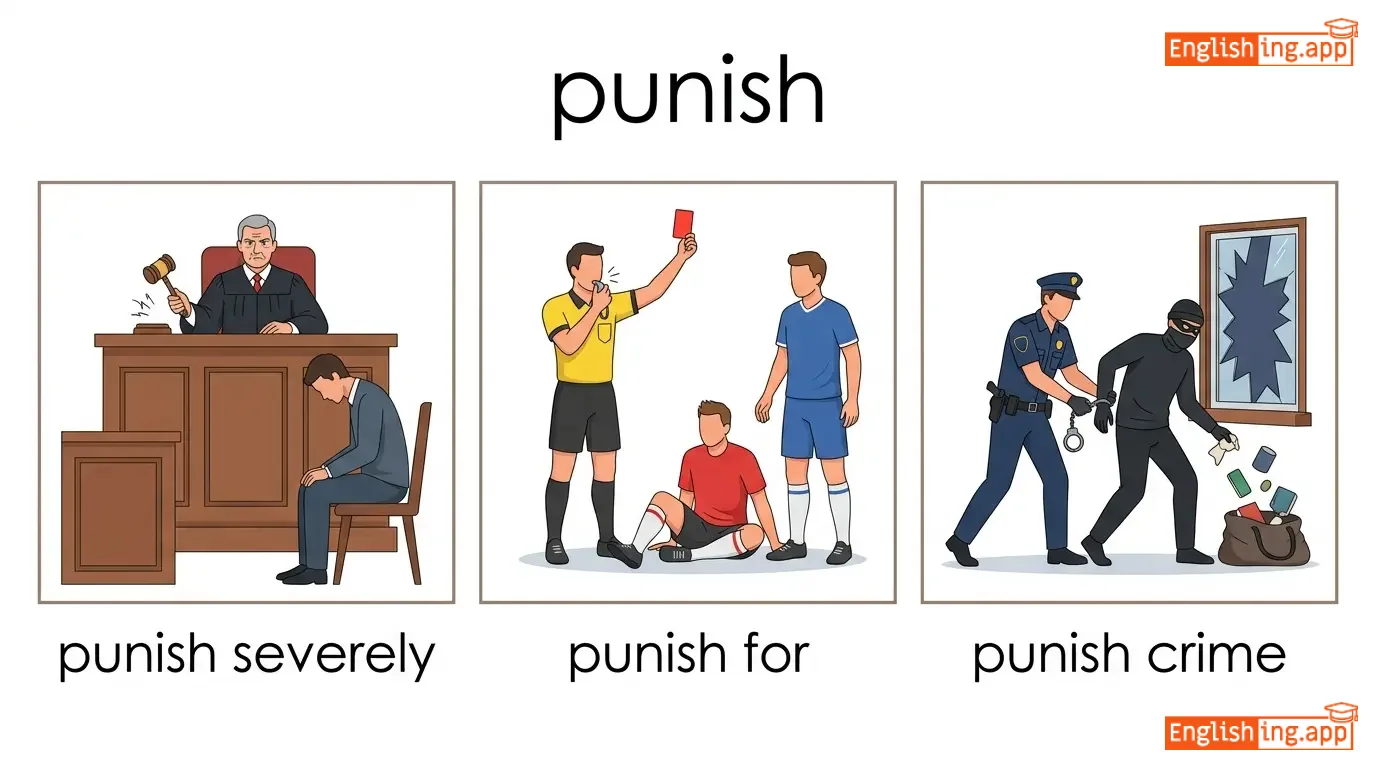
punish severely, punish for, punish crime, punish wrongdoer
••••••
|
Punishは罰するという意味 — Punが罰に関係している!
••••••
|
|
⚖️
••••••
|
/ˈpʌnɪʃmənt/
noun
(punišumento)
••••••
|
- •••••• |
罰
batsu
••••••
|
- •••••• | - •••••• | - •••••• | - •••••• |
the infliction of a penalty as retribution for an offense or wrongdoing
••••••
|
The criminal received a harsh punishment for his crime. |
犯人はその犯罪に対して厳しい罰を受けました。
Hannin wa sono hanzai ni taishite kibishii batsu o ukemashita.
••••••
|
pay the penalty |
to be punished for something
••••••
|
代償を払う
daishō o harau
••••••
|
penalty, retribution, consequence, sanction
••••••
|
reward, pardon
••••••
|
capital punishment, severe punishment, corporal punishment, punishment for crimes
••••••
|
Punishment - 罰は悪いことをするときに必ずやってくる。
••••••
|
|
🎸
••••••
|
/pʌŋk/
noun
(パンク)
••••••
|
- •••••• |
パンク
panku
••••••
|
- •••••• | - •••••• | - •••••• | - •••••• |
a type of popular music, or the culture associated with it, characterized by loud, fast rhythms and rebellious attitudes
••••••
|
He’s always been into punk music and fashion.
彼はいつもパンク音楽とファッションに興味を持っている。
••••••
|
彼はいつもパンク音楽とファッションに興味を持っている。
Kare wa itsumo panku ongaku to fasshon ni kyōmi o motte iru.
••••••
|
- •••••• | - •••••• | - •••••• |
rock, alternative, rebellious, anti-establishment
••••••
|
pop, classical, mainstream
••••••
|
punk rock, punk culture, punk music, punk fashion
••••••
|
パンクは反抗の音楽。聴けば、あなたも反抗者!
••••••
|
|
👁️
••••••
|
/ˈpjuːpəl/
noun
(ピューピル)
••••••
|
- •••••• |
生徒; 瞳
seito; hitomi
••••••
|
- •••••• | - •••••• | - •••••• | - •••••• |
a student, especially a young one; the central opening of the eye that lets in light
••••••
|
The pupil listened carefully to the teacher during class.
ザ ピューピル リスンド ケアフリー トゥ ザ ティーチャー。
••••••
|
生徒は授業で先生の話を注意深く聞いた。
seito wa jugyou de sensei no hanashi o chuui bukaku kiita
••••••
|
star pupil
スター ピューピル
••••••
|
an exceptionally good or successful student
••••••
|
優秀な生徒
yuushuu na seito
••••••
|
student, learner, schoolchild, apprentice, trainee
••••••
|
teacher, instructor, tutor
••••••
|
primary school pupil, star pupil, diligent pupil, dilated pupil
••••••
|
ピューピルは生徒、目の瞳も pupil
••••••
|
|
🛒
••••••
|
/ˈpɜː.tʃəs/
verb
(パーチェス)
••••••
|


|
購入
kounyuu
••••••
|
purchased
パーチェスト
••••••
|
purchased
パーチェスト
••••••
|
purchases
パーチェスズ
••••••
|
purchasing
パーチェシング
••••••
|
To buy something by paying money for it.
••••••
|
She purchased a new laptop from the store.
彼女は店で新しいノートパソコンを購入しました。
••••••
|
彼女は店で新しいノートパソコンを購入しました。
Kanojo wa mise de atarashī nōtopasokon o kōnyū shimashita.
••••••
|
make a purchase
購入する
••••••
|
to buy something
••••••
|
購入する
kōnyū suru
••••••
|
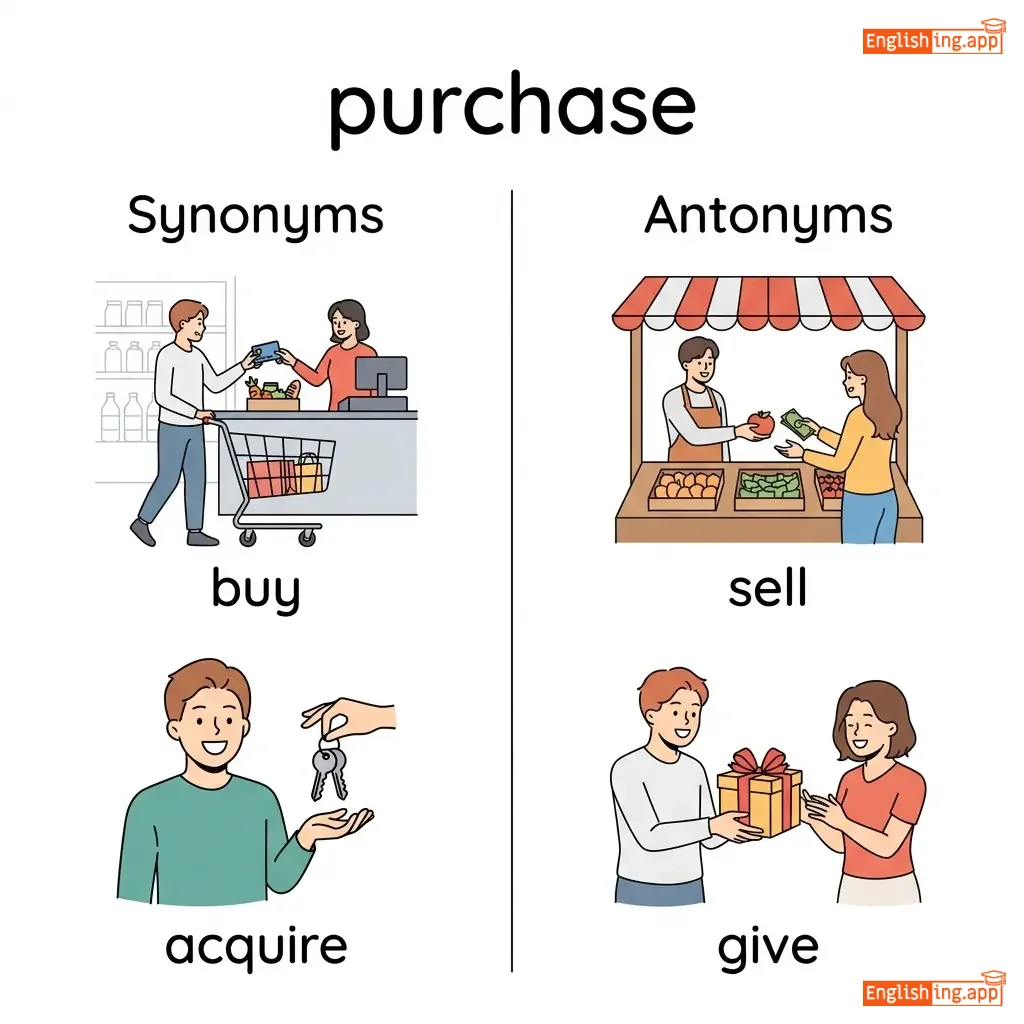
buy, acquire, obtain, procure, get
••••••
|
sell, give, forfeit
••••••
|
purchase order, purchase price, purchase agreement, online purchase
••••••
|
Purchase は、お金で何かを購入することです。
••••••
|
|
✨
••••••
|
/pjʊər/
adjective
(pyua)
••••••
|
- •••••• |
純粋な; 清潔な; 汚れのない; 差別のない;
junsui na; seiketsu na; yogore no nai; sabetsu no nai
••••••
|
- •••••• | - •••••• | - •••••• | - •••••• |
clean; clear; untainted; without discrimination;
••••••
|
The water from the mountain spring is pure. |
山の泉からの水は純粋です。
Yama no izumi kara no mizu wa junsui desu.
••••••
|
- •••••• | - •••••• | - •••••• |
clean, clear, pristine, untainted, innocent
••••••
|
impure, contaminated, polluted, dirty
••••••
|
pure water, pure gold, pure intention
••••••
|
純粋な水のように、汚れがなく、差別もありません。
••••••
|
|
✨
••••••
|
/ˈpjʊərli/
adverb
(ピュアリー)
••••••
|
- •••••• |
純粋に
junsui ni
••••••
|
- •••••• | - •••••• | - •••••• | - •••••• |
only and completely; entirely
••••••
|
The decision was purely based on economic factors. |
その決定は完全に経済的な要因に基づいていました。
Sono kettei wa kanzen ni keizaiteki na yōin ni motozuite imashita.
••••••
|
- •••••• | - •••••• | - •••••• |
exclusively, solely, entirely, totally
••••••
|
partially, incompletely, somewhat
••••••
|
purely coincidental, purely for fun, purely theoretical, purely academic
••••••
|
Purely は完全に意味し、純粋な水のように!
••••••
|
|
💧
••••••
|
/ˈpjʊərɪfaɪ/
verb
(ピュリファイ)
••••••
|
|
浄化する
jouka suru
••••••
|
purified
ピュリファイド
••••••
|
purified
ピュリファイド
••••••
|
purifies
ピュリファイズ
••••••
|
purifying
ピュリファイング
••••••
|
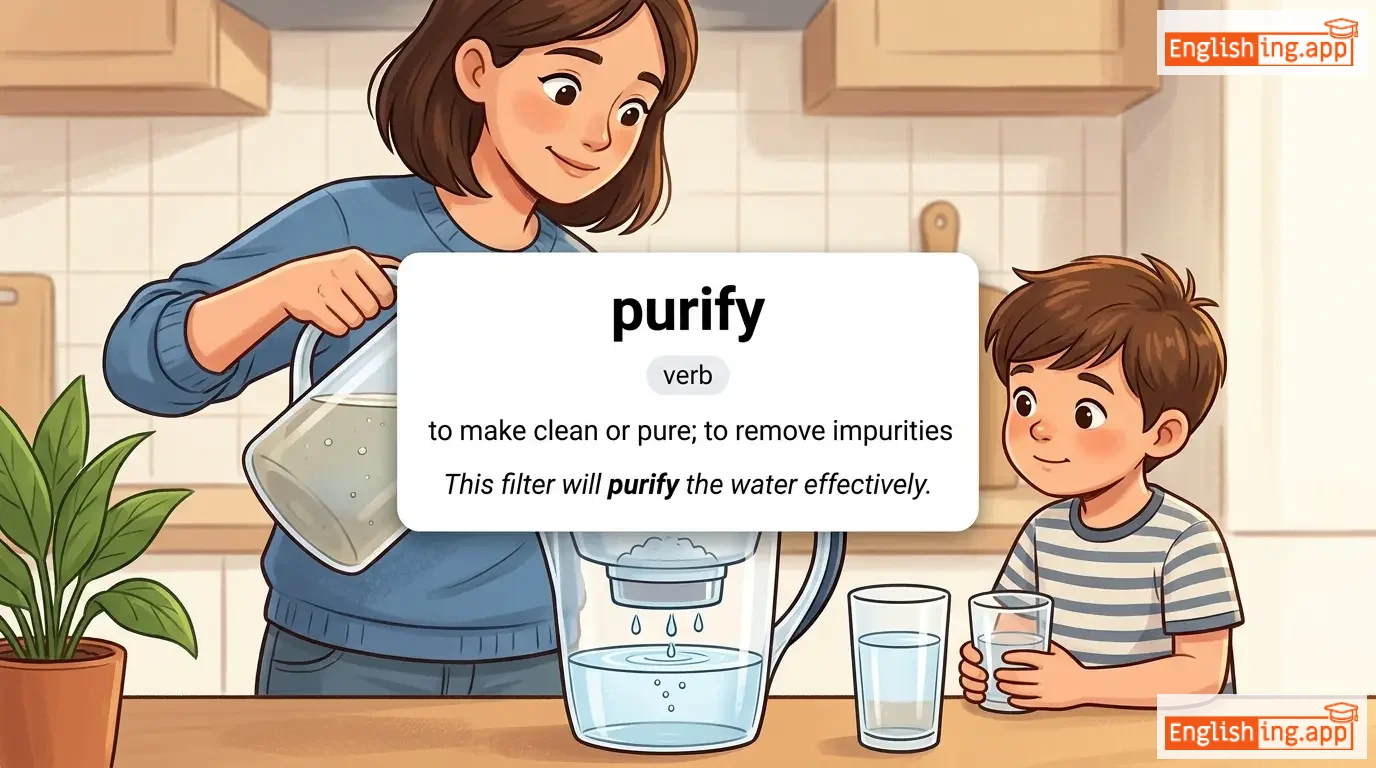
to make clean or pure; to remove impurities
••••••
|
This filter will purify the water effectively.
このフィルターは水を効果的に浄化します。
••••••
|
このフィルターは水を効果的に浄化します。
Kono firutā wa mizu o kōka-teki ni jōka shimasu.
••••••
|
- •••••• | - •••••• | - •••••• |
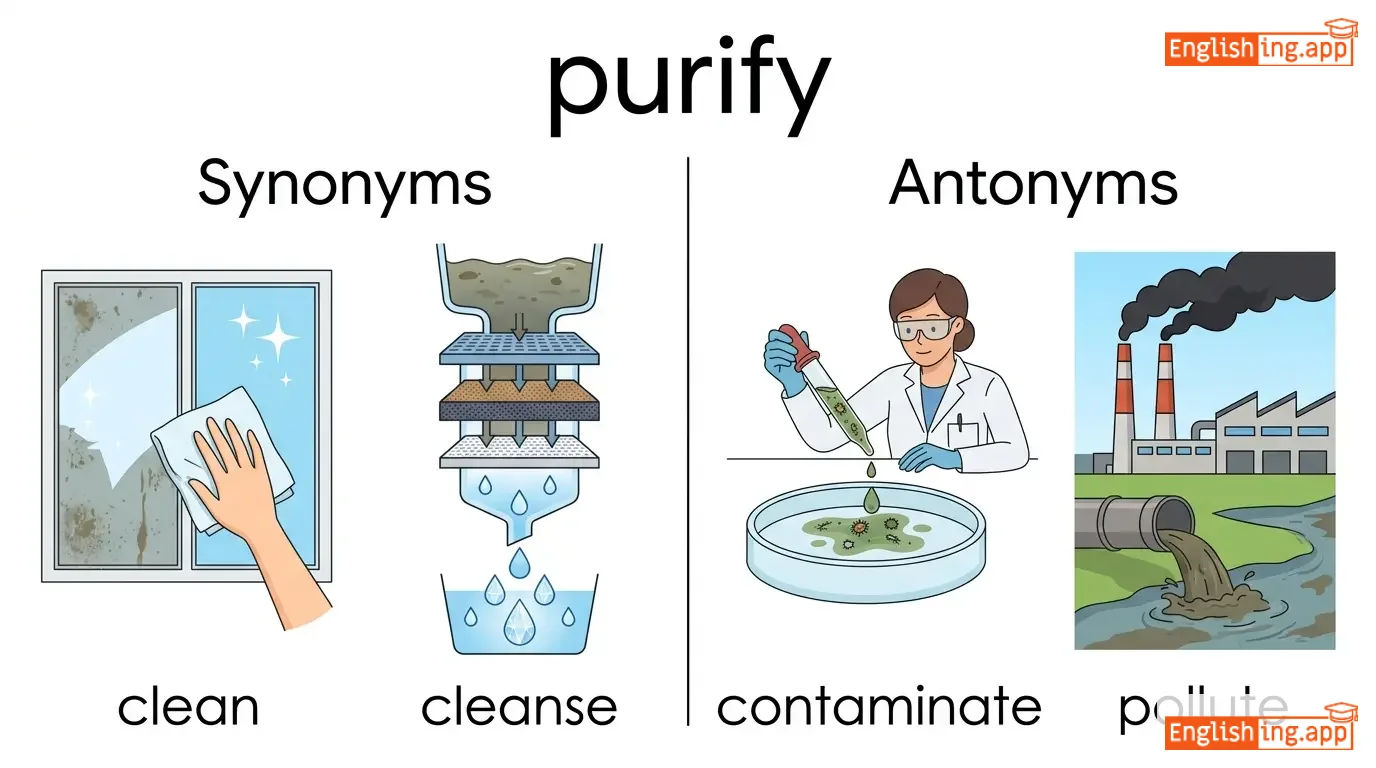
clean, cleanse, refine, filter
••••••
|
contaminate, pollute, dirty, corrupt
••••••
|
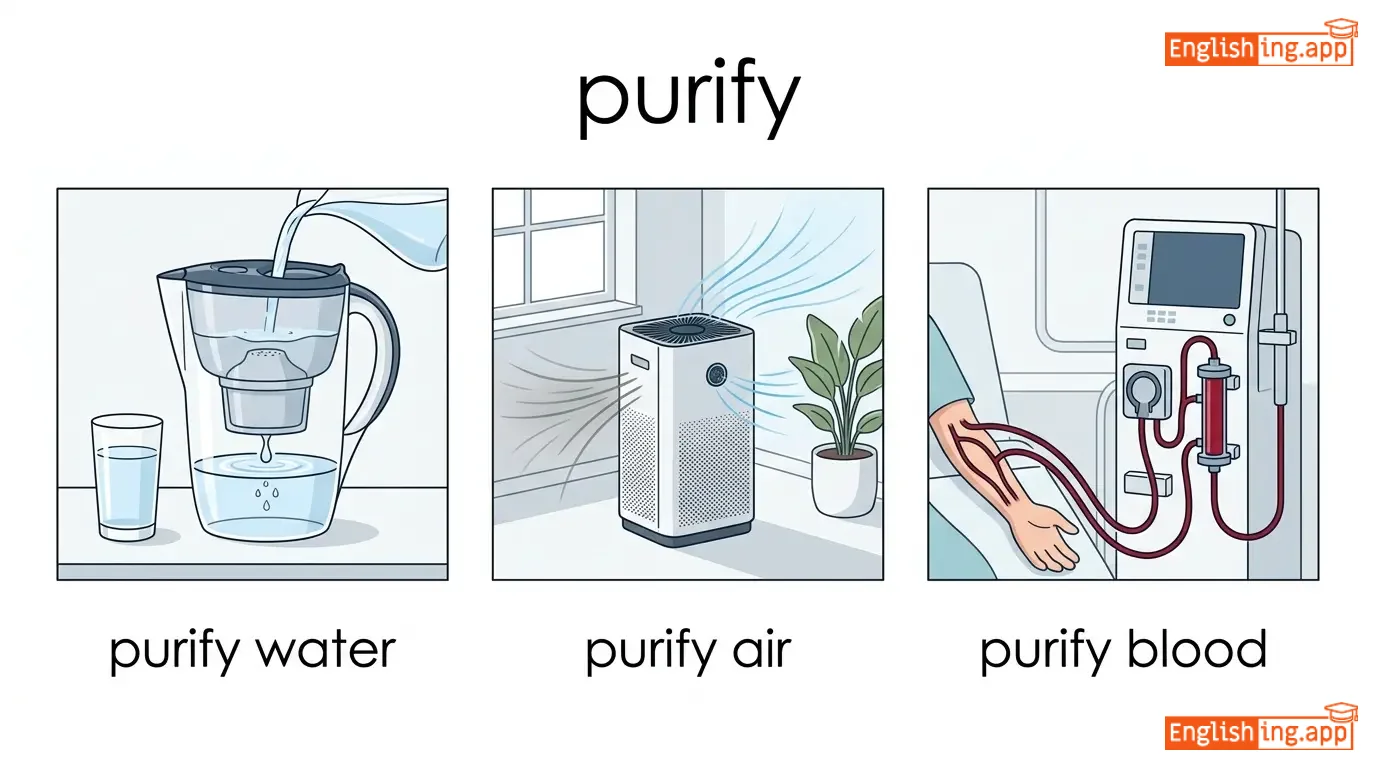
purify water, purify air, purify blood, purify mind, purify completely
••••••
|
Purifyという言葉は日本語の浄化すると似ています。
••••••
|
|
💎
••••••
|
/ˈpjʊrəti/
noun
(ピュアリティ)
••••••
|
- •••••• |
純粋さ
junsuisa
••••••
|
- •••••• | - •••••• | - •••••• | - •••••• |
The quality or state of being pure; freedom from contamination or sin.
••••••
|
The mountain air was admired for its purity.
山の空気はその純粋さで賞賛されました。
••••••
|
山の空気はその純粋さで賞賛されました。
Yama no kūki wa sono junsuisa de shōsan saremashita.
••••••
|
purity of heart
心の純粋さ
••••••
|
Innocence and sincerity in one’s intentions.
••••••
|
心の純粋さ
kokoro no junsuisa
••••••
|
cleanliness, innocence, clarity, integrity, chastity
••••••
|
impurity, corruption, sin
••••••
|
purity of mind, purity of heart, water purity, absolute purity
••••••
|
純粋さは清らかな水のようです。水が純粋なとき、それは完全に透明です。
••••••
|
|
🟣
••••••
|
/ˈpɜː.pəl/
adjective
(パープル)
••••••
|
- •••••• |
紫
murasaki
••••••
|
- •••••• | - •••••• | - •••••• | - •••••• |
a color that is a mix of red and blue
••••••
|
She wore a beautiful purple dress to the party. |
彼女はパーティーに美しい紫のドレスを着て行きました。
Kanojo wa pātii ni utsukushī murasaki no doresu o kite ikimashita.
••••••
|
born to the purple |
born into a royal or noble family
••••••
|
紫禁城で生まれる
shikinjō de umareru
••••••
|
violet, lavender, mauve, lilac, plum
••••••
|
colorless, pale, white
••••••
|
purple dress, purple flower, deep purple, light purple
••••••
|
紫 = Purple, 王族にふさわしい色。
••••••
|
|
🎯
••••••
|
/ˈpɜːpəs/
noun
(パーパス)
••••••
|
- •••••• |
目的
mokuteki
••••••
|
- •••••• | - •••••• | - •••••• | - •••••• |
the reason for which something is done or created
••••••
|
The purpose of this meeting is to discuss the new project.
この会議の目的は新しいプロジェクトについて議論することです。
••••••
|
この会議の目的は新しいプロジェクトについて議論することです。
Kono kaigi no mokuteki wa atarashii purojekuto ni tsuite giron suru koto desu.
••••••
|
on purpose
わざと
••••••
|
intentionally; by design
••••••
|
意図的に
itoteki ni
••••••
|
goal, aim, objective, intention
••••••
|
accident, mistake
••••••
|
life purpose, purpose-driven, purpose-built, higher purpose
••••••
|
Purpose - 目標を見つけて、それを達成しよう
••••••
|
|
🏃♀️
••••••
|
/pərˈsuː/
verb
(パースュー)
••••••
|
- •••••• |
追求する
tsuikyū suru
••••••
|
pursued
パースユード
••••••
|
pursued
パースユード
••••••
|
pursues
パースユーズ
••••••
|
pursuing
パースユーイング
••••••
|
to follow or chase with the intent to catch or achieve something
••••••
|
She decided to pursue her dreams of becoming a doctor.
彼女は医者になるという夢を追い求めることに決めました。
••••••
|
彼女は医者になるという夢を追い求めることに決めました。
Kanojo wa isha ni naru to iu yume o oimotomeru koto ni kimemashita.
••••••
|
- •••••• | - •••••• | - •••••• |
chase, seek, follow, strive
••••••
|
abandon, neglect, avoid
••••••
|
pursue a goal, pursue a career, pursue happiness, pursue success
••••••
|
医者になるためには、自分の夢を追い求める (tsuikyū suru) 必要があります。
••••••
|
|
🏃♂️
••••••
|
/pəˈsjuːt/
noun
(パースート)
••••••
|
- •••••• |
追求, 探求
tsuikyū, tankyū
••••••
|
- •••••• | - •••••• | - •••••• | - •••••• |
the act of chasing or trying to achieve something
••••••
|
He dedicated his life to the pursuit of happiness. |
彼は幸福を追い求めることに人生を捧げた。
Kare wa kōfuku o oimotomeru koto ni jinsei o sasageta.
••••••
|
in hot pursuit |
closely chasing someone or something
••••••
|
熱心に追いかける
nesshin ni oikakeru
••••••
|
quest, chase, search, aim, endeavor
••••••
|
retreat, surrender, inaction
••••••
|
pursuit of happiness, pursuit of knowledge, in pursuit, career pursuit
••••••
|
Pursuitは、目標を追い求めることです。
••••••
|
|
➡️
••••••
|
/pʊʃ/
verb
(プッシュ)
••••••
|
|
押す
osu
••••••
|
pushed
プッシュド
••••••
|
pushed
プッシュド
••••••
|
pushes
プッシュズ
••••••
|
pushing
プッシング
••••••
|
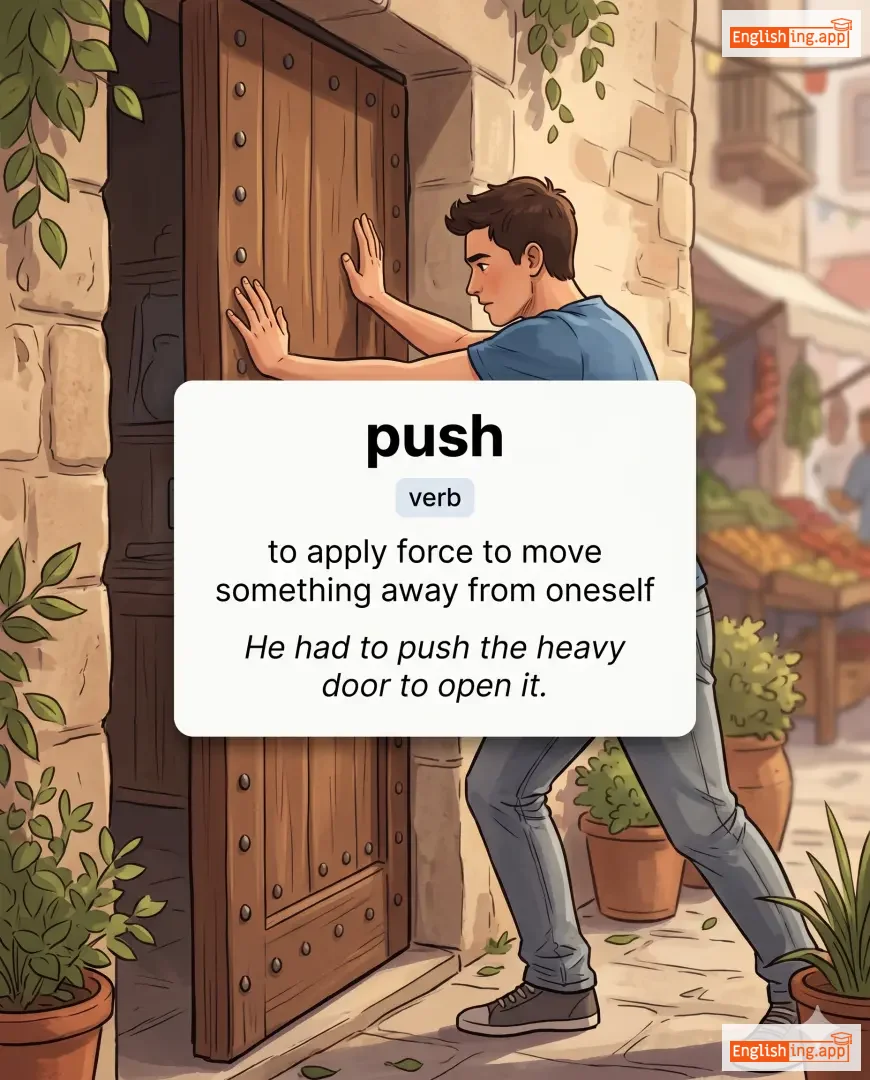
to apply force to move something away from oneself
••••••
|
He had to push the heavy door to open it.
彼は重いドアを開けるためにプッシュしなければなりませんでした。
••••••
|
彼は重いドアを開けるために押さなければなりませんでした。
Kare wa omoi doa wo akeru tame ni osanakereba narimasen deshita.
••••••
|
push the envelope
プッシュする封筒
••••••
|
to go beyond the limits of what is normally done
••••••
|
限界を超える
genkai wo koeru
••••••
|
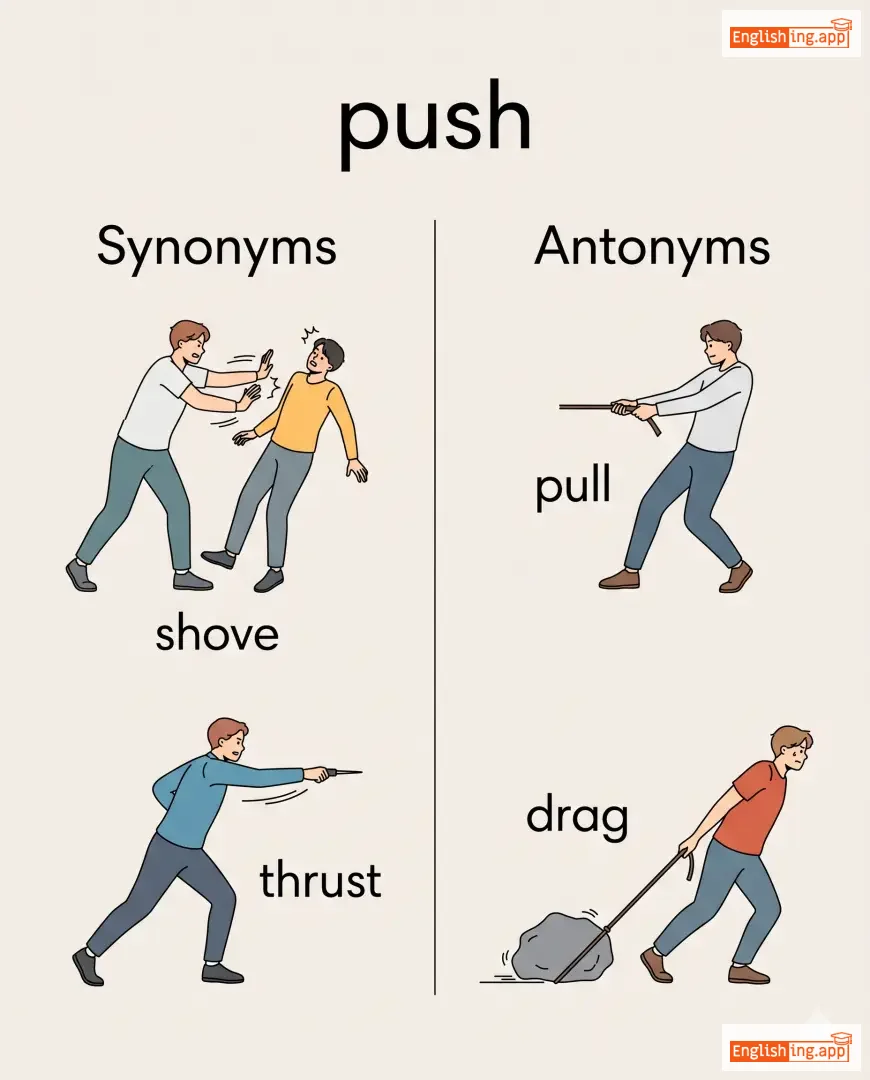
shove, thrust, propel, drive
••••••
|
pull, drag
••••••
|
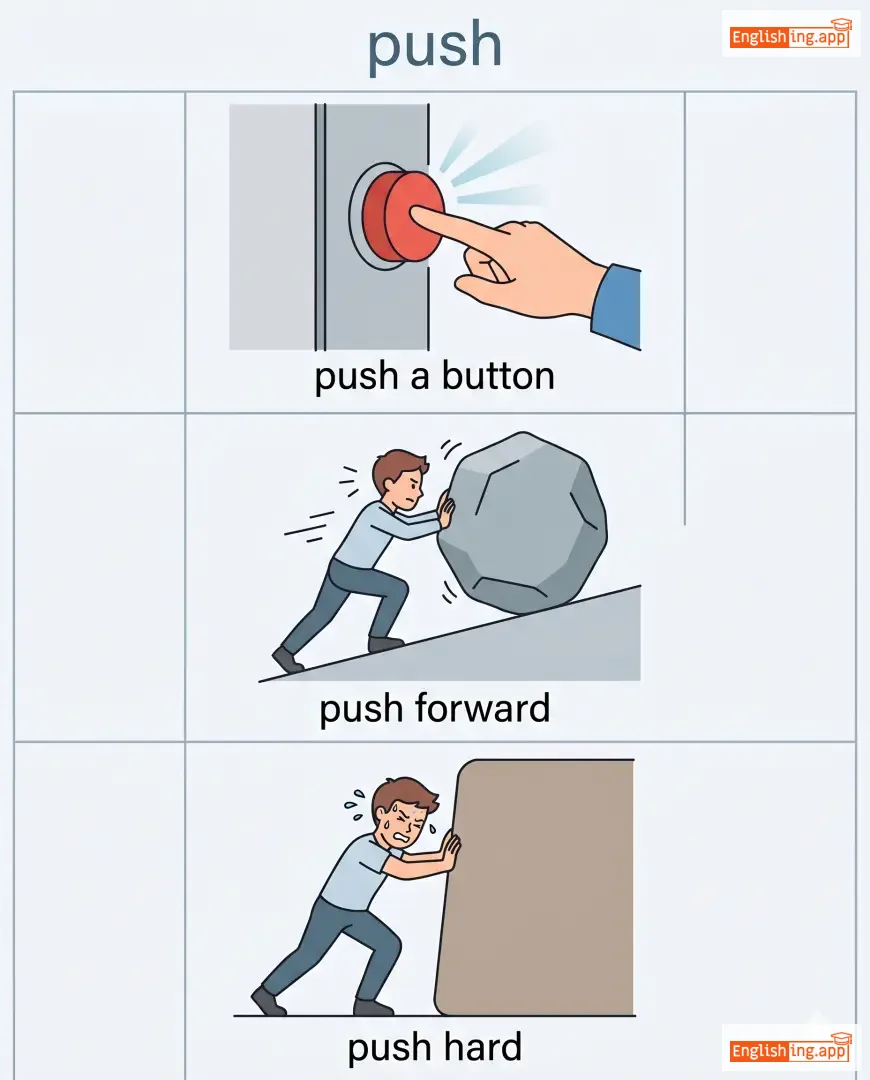
push a button, push forward, push hard, push back
••••••
|
Pushは押すことです — 引くの反対です。
••••••
|
|
📍
••••••
|
/pʊt/
verb
(プット)
••••••
|
|
置く
oku
••••••
|
put
プット
••••••
|
put
プット
••••••
|
puts
プッツ
••••••
|
putting
プッティング
••••••
|
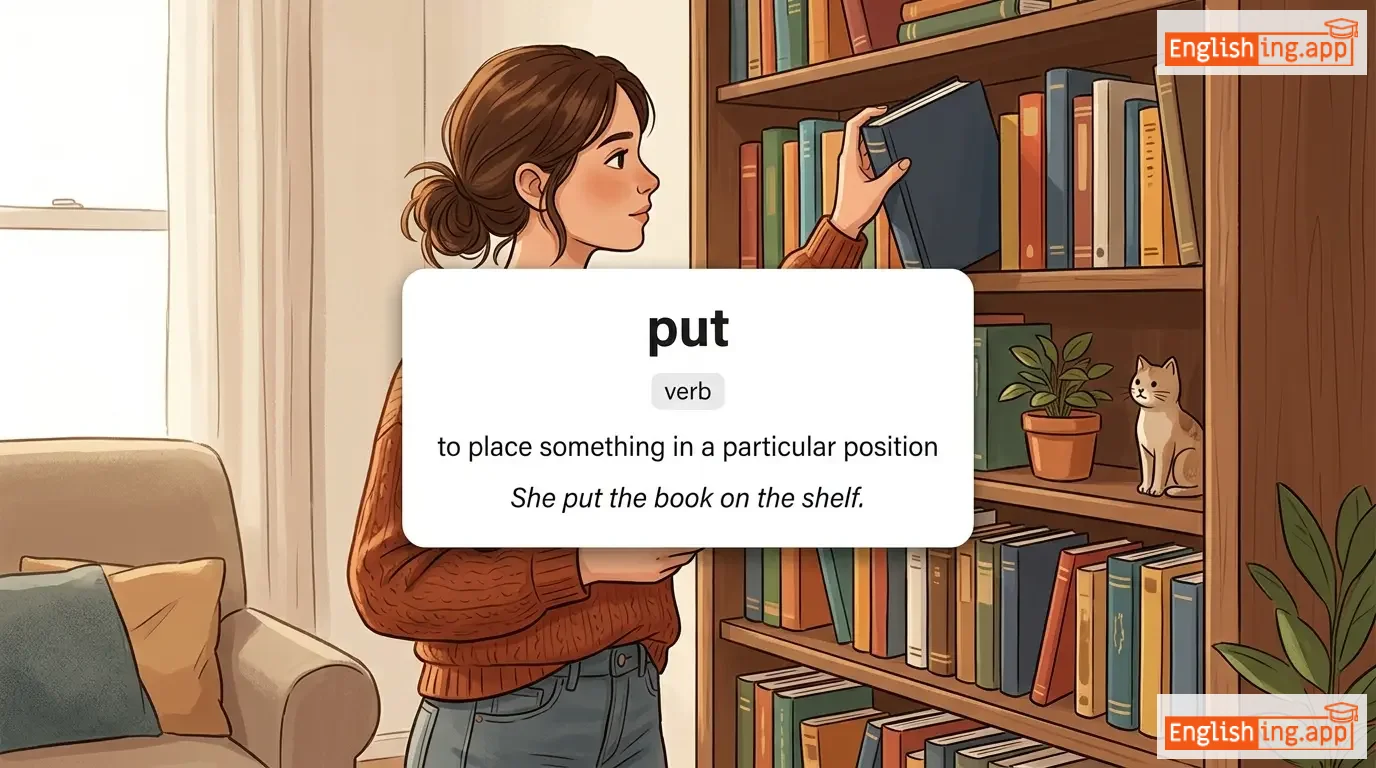
to place something in a particular position; to move to a location
••••••
|
Please put the book on the table.
本をテーブルに置いてください。
••••••
|
本をテーブルに置いてください。
Hon o teeburu ni oite kudasai.
••••••
|
- •••••• | - •••••• | - •••••• |
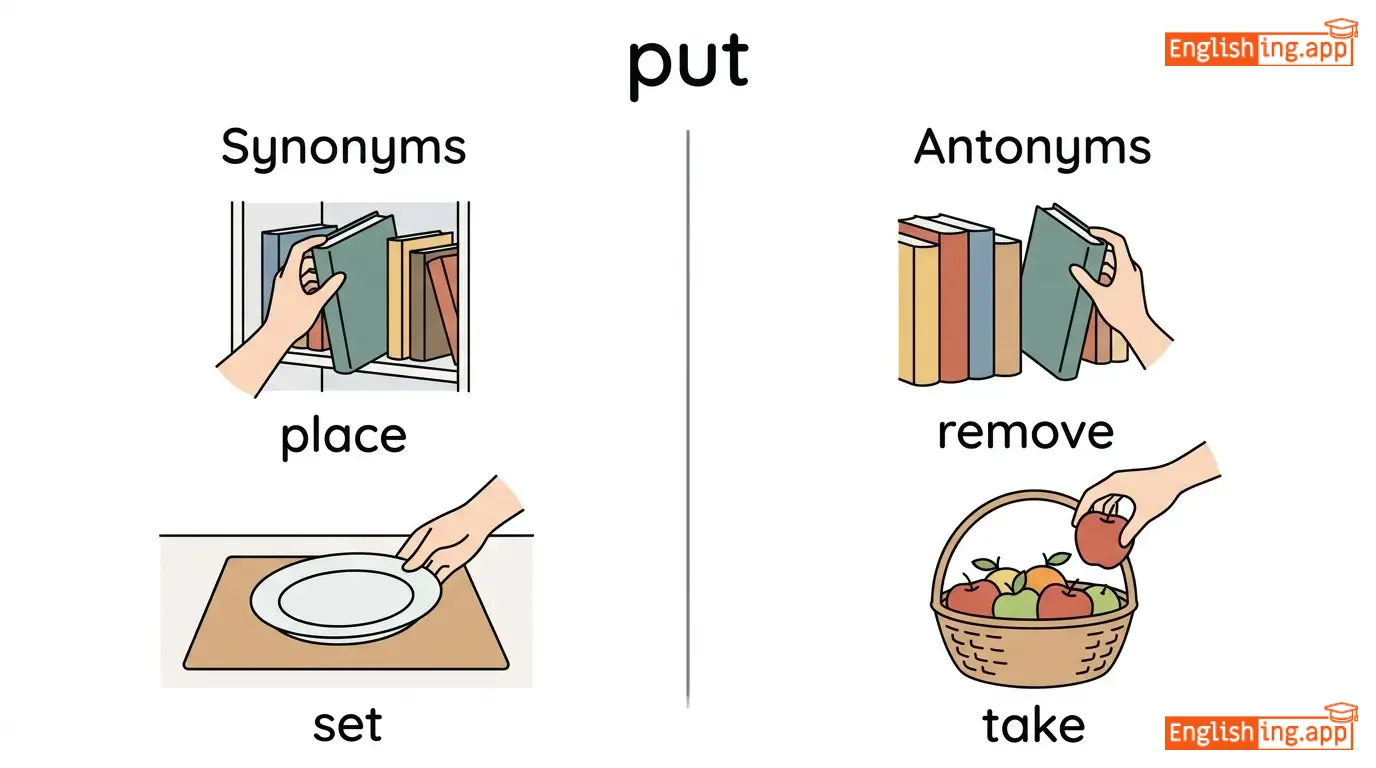
place, set, position, lay
••••••
|
remove, take, lift, withdraw
••••••
|
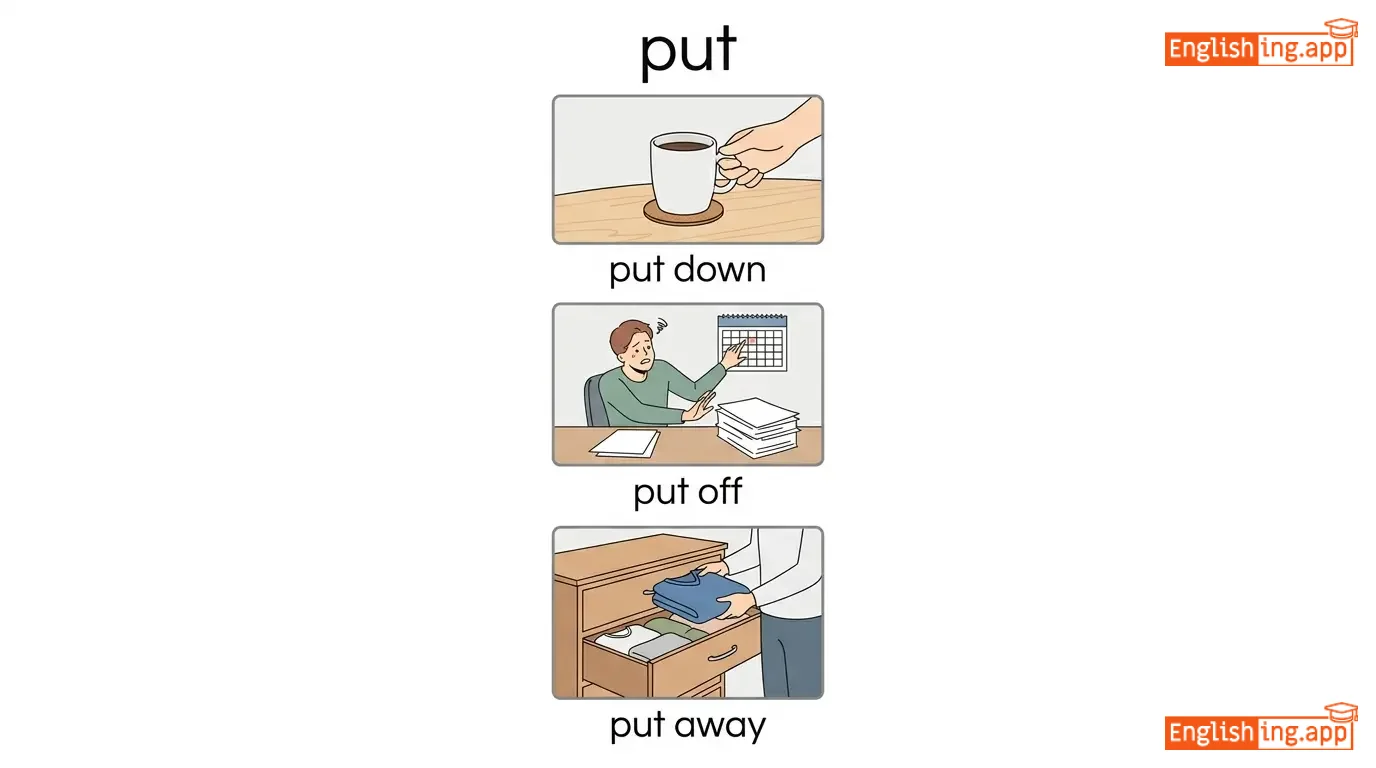
put down, put away, put together, put forward, put pressure, put effort
••••••
|
‘Put’ and ‘置く’ are both used for placing objects.
••••••
|
|
🧩
••••••
|
/ˈpʌzl/
noun, verb
(パズル)
••••••
|
|
パズル / 困らせる
pazuru / komaraseru
••••••
|
puzzled
パズルド
••••••
|
puzzled
パズルド
••••••
|
puzzles
パズルズ
••••••
|
puzzling
パズリング
••••••
|
a game, toy, or problem designed to test ingenuity; to cause someone to be confused
••••••
|
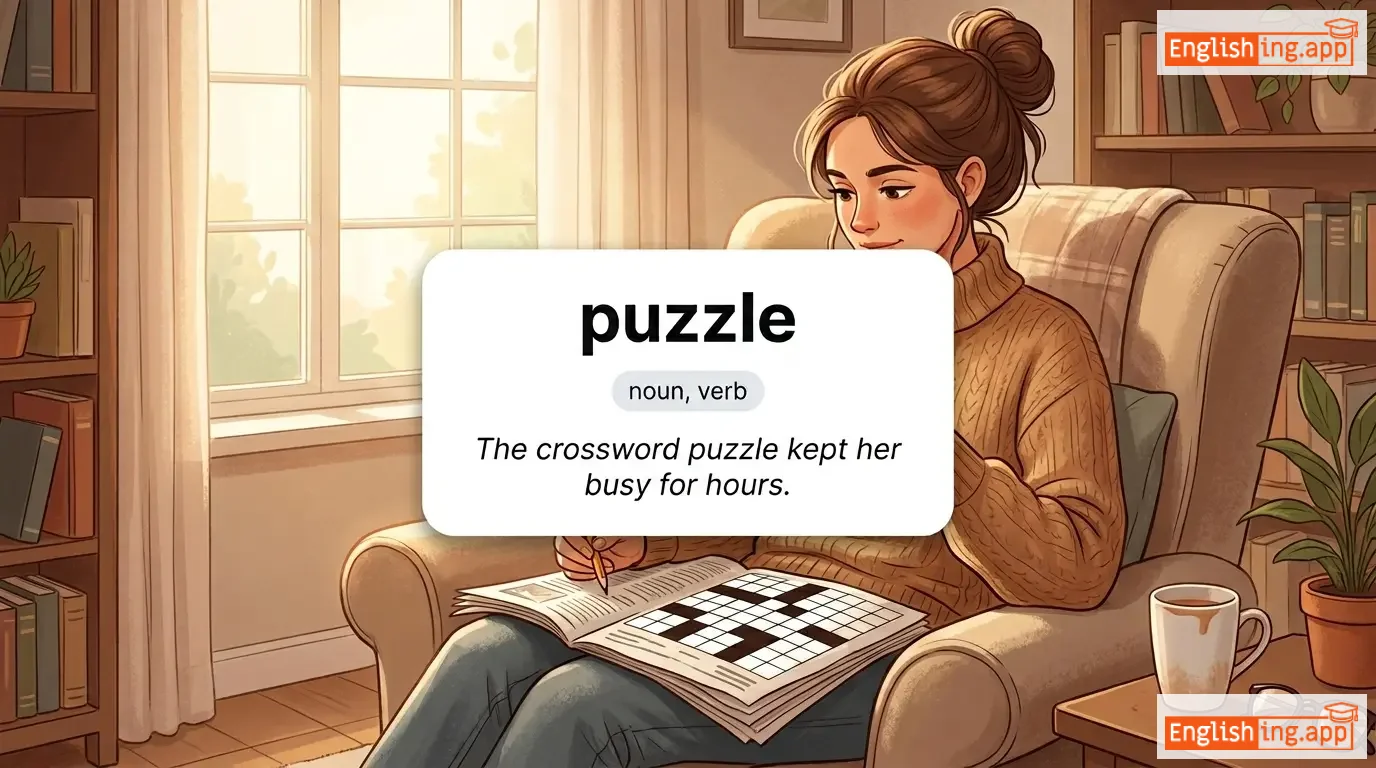
The crossword puzzle kept her busy for hours.
クロスワードパズルは彼女を数時間忙しくさせました。
••••••
|
クロスワードパズルは彼女を数時間忙しくさせました。
Kurosuwādo pazuru wa kanojo o suū jikan isogashiku sasemashita.
••••••
|
puzzle over
パズルに思いを巡らせる
••••••
|
to think deeply about something difficult to understand
••••••
|
パズルについて考える
pazuru ni tsuite kangaeru
••••••
|
riddle, enigma, conundrum, problem, mystery
••••••
|
solution, answer, clarity
••••••
|
crossword puzzle, jigsaw puzzle, puzzle game, puzzle over
••••••
|
Puzzle は‘パズル’ — 問題を解くために頭が‘Buzz’する。
••••••
|
|
🎓
••••••
|
/ˌkwɒlɪfɪˈkeɪʃən/
noun
(クォリフィケーション)
••••••
|
- •••••• |
資格
shikaku
••••••
|
- •••••• | - •••••• | - •••••• | - •••••• |
a condition or skill that makes someone suitable for a job or activity; the process of qualifying
••••••
|
She listed her qualifications on the job application. |
彼女は求人申込書に自分の資格を記載しました。
Kanojo wa kyūjin mōshikomi-sho ni jibun no shikaku o kisai shimashita.
••••••
|
meet the qualifications |
to possess the required skills or criteria
••••••
|
資格を満たす
shikaku o mitasu
••••••
|
credential, requirement, competence, skill, eligibility
••••••
|
incompetence, disqualification
••••••
|
educational qualification, professional qualification, meet qualifications, required qualification
••••••
|
Qualificationとは資格のこと → 仕事には質と教育が必要
••••••
|
|
🎓
••••••
|
/ˈkwɒlɪfaɪd/
adjective
(クオリファイド)
••••••
|

|
資格のある
shikaku no aru
••••••
|
- •••••• | - •••••• | - •••••• | - •••••• |
officially recognized as being trained or knowledgeable for a particular job or activity
••••••
|
She is a qualified doctor with years of experience.
彼女は経験豊富な資格を持つ医者です。
••••••
|
彼女は経験豊富な資格を持つ医者です。
Kanojo wa keiken houfu na shikaku wo motsu isha desu.
••••••
|
qualified success
資格のある成功
••••••
|
a success that is only partial or limited
••••••
|
資格のある成功
shikaku no aru seikou
••••••
|
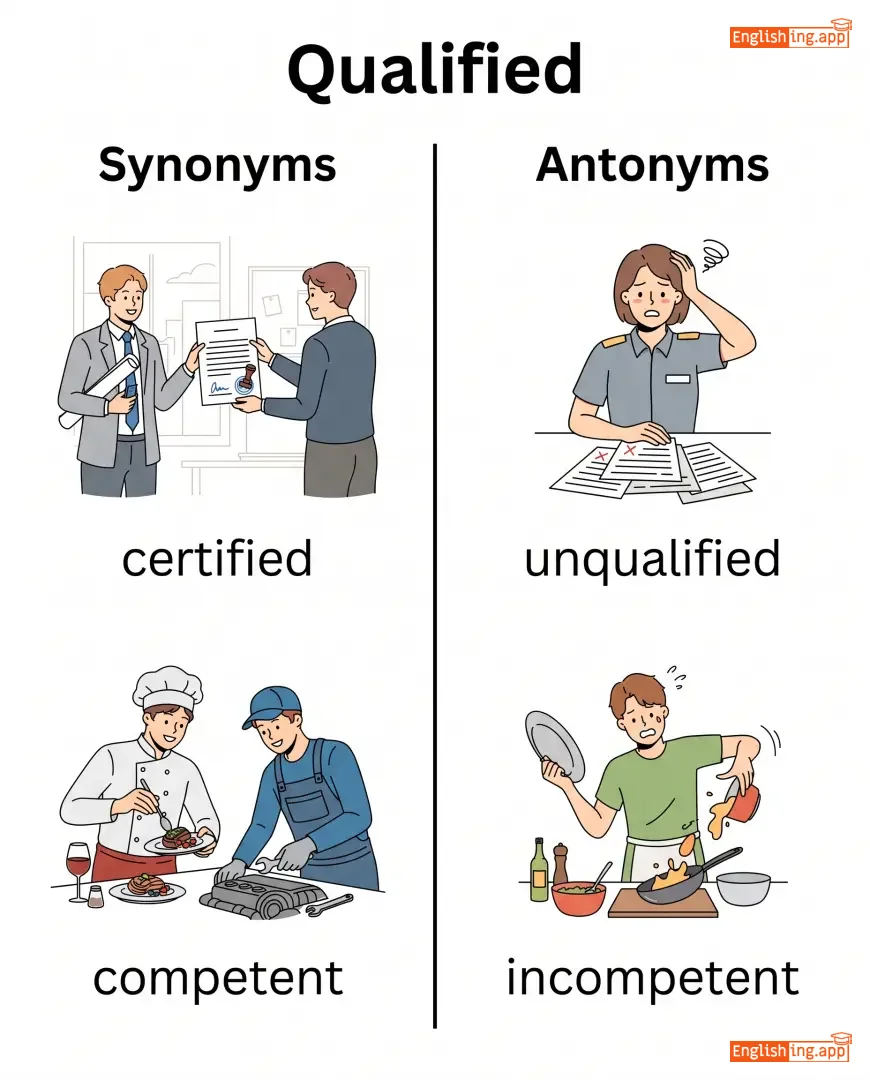
certified, competent, skilled, trained, capable
••••••
|
unqualified, incompetent, incapable
••••••
|
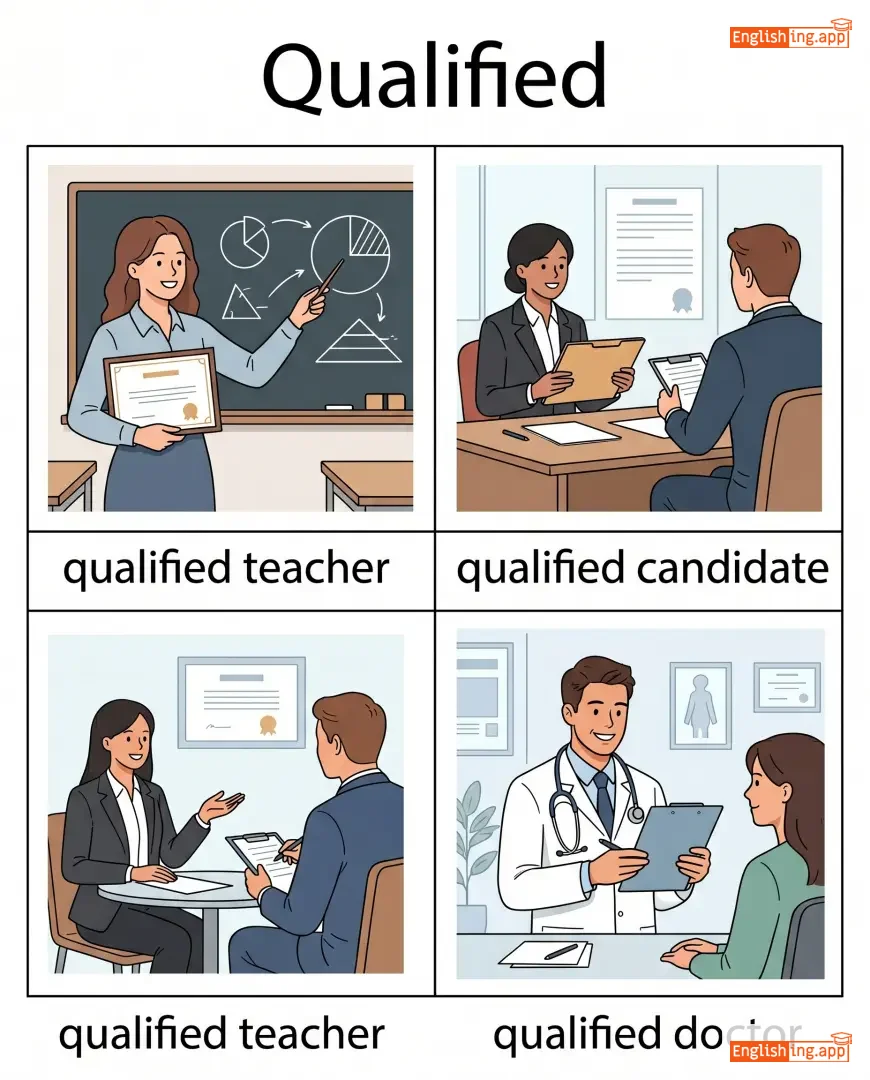
qualified teacher, qualified candidate, qualified doctor, qualified professional
••••••
|
資格 = 経験 + 成功 → 資格のある人は常に成功します。
••••••
|
|
✅
••••••
|
/ˈkwɒlɪfaɪ/
verb
(クオリファイ)
••••••
|
|
資格を得る
shikaku wo eru
••••••
|
qualified
クオリファイド
••••••
|
qualified
クオリファイド
••••••
|
qualifies
クオリファイズ
••••••
|
qualifying
クオリファイング
••••••
|
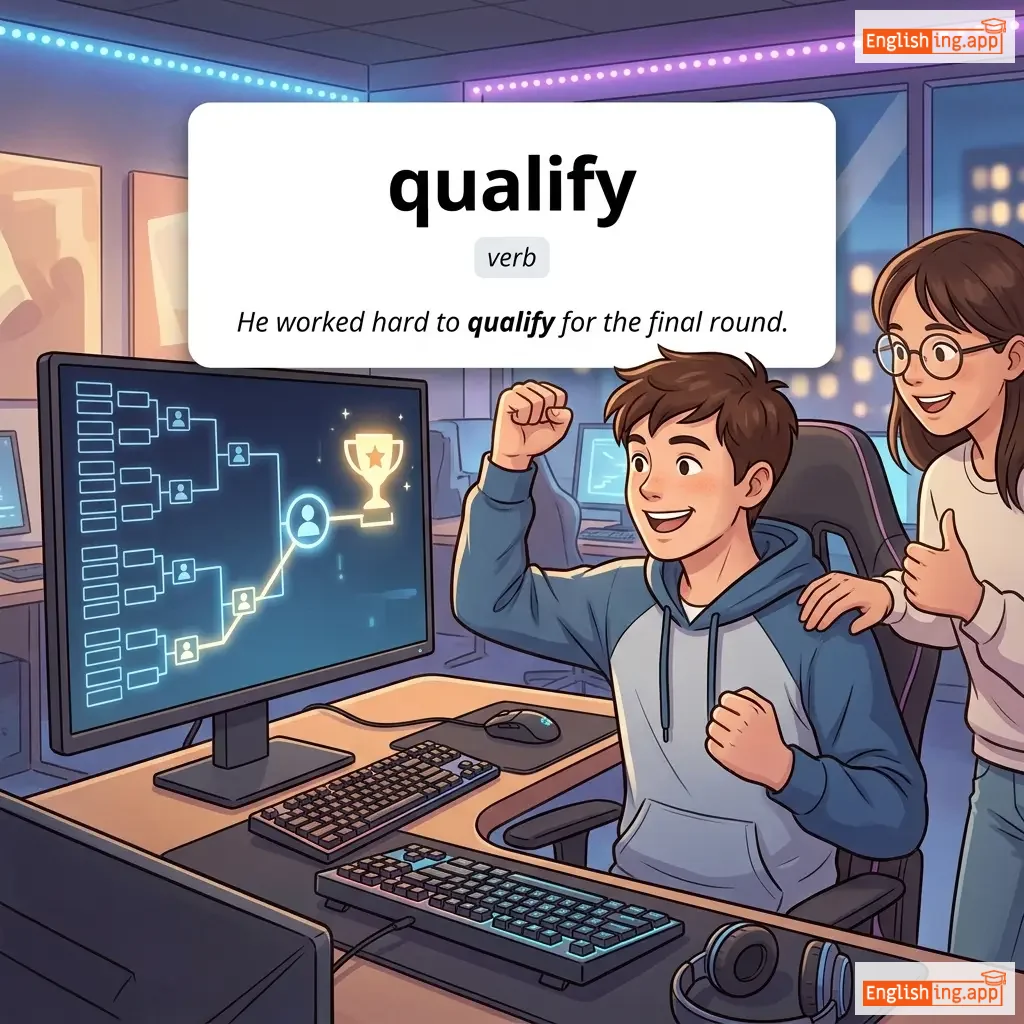
to meet the requirements or conditions for something
••••••
|
He worked hard to qualify for the final round.
彼はファイナルラウンドに出場するために一生懸命働いた。
••••••
|
彼はファイナルラウンドに出場するために一生懸命働いた。
Kare wa fainaru raundo ni shutsujou suru tame ni isshoukenmei hataraita.
••••••
|
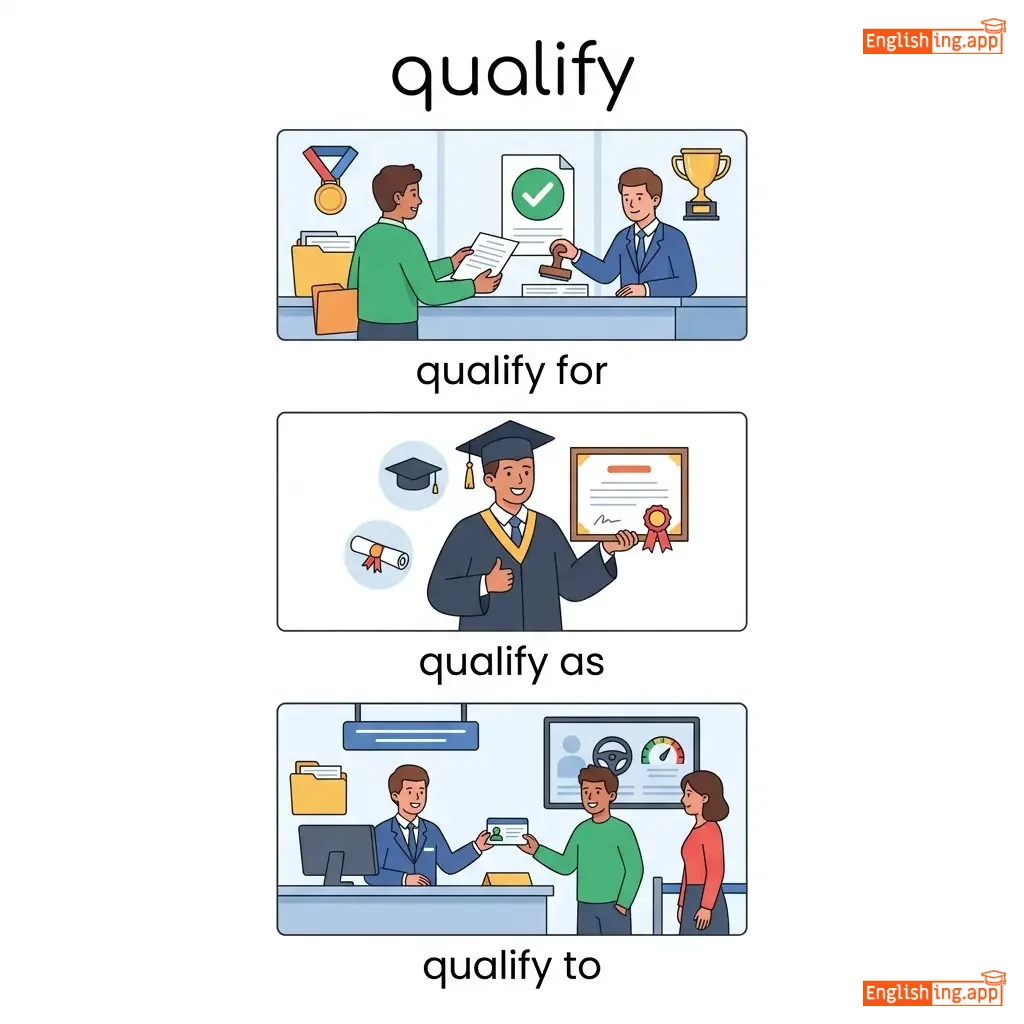
qualify for
クオリファイフォー
••••••
|
to be eligible for something
••••••
|
資格を得る
shikaku wo eru
••••••
|
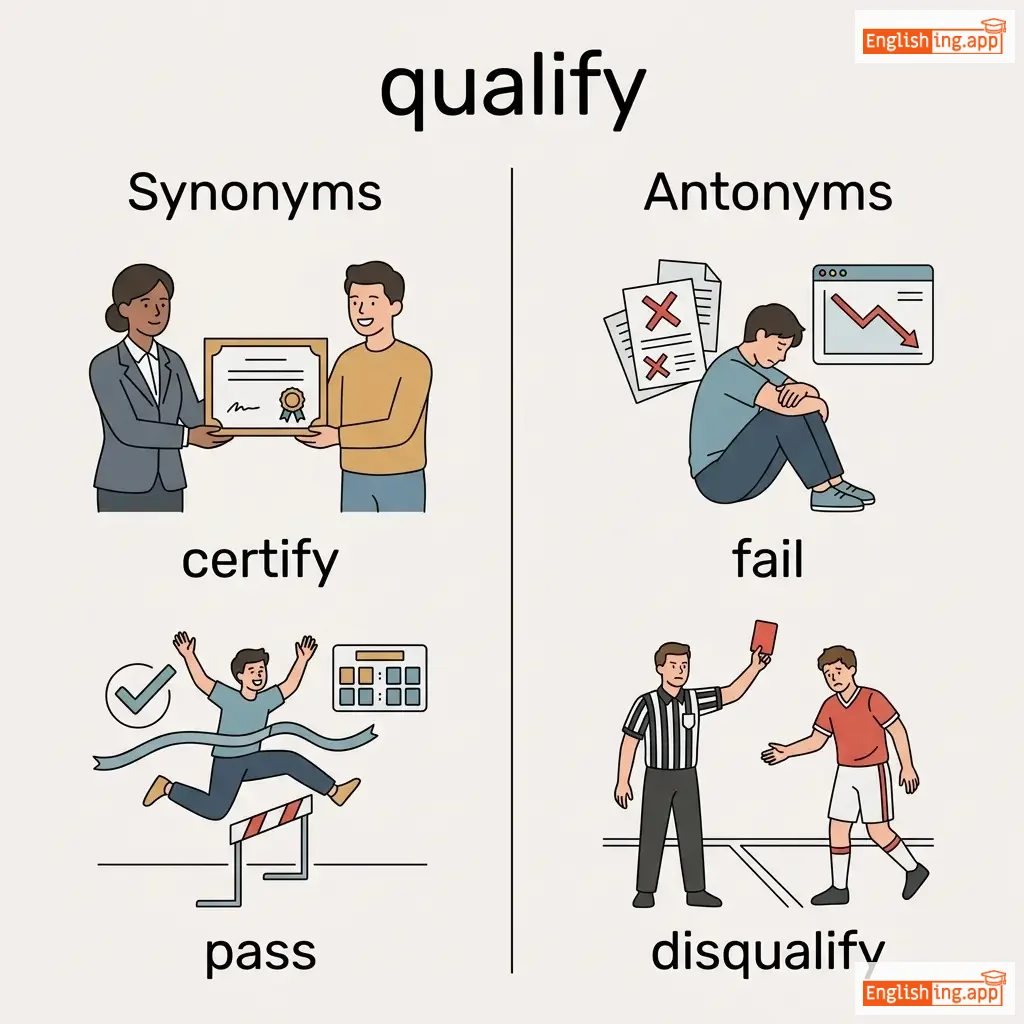
certify, pass, succeed, train, achieve
••••••
|
fail, disqualify
••••••
|
qualify for, qualify as, qualify to, newly qualified
••••••
|
Qualifyは日本語で資格を得るという意味です。
••••••
|
|
⭐
••••••
|
/ˈkwɒl.ɪ.ti/
noun
(クオリティ)
••••••
|
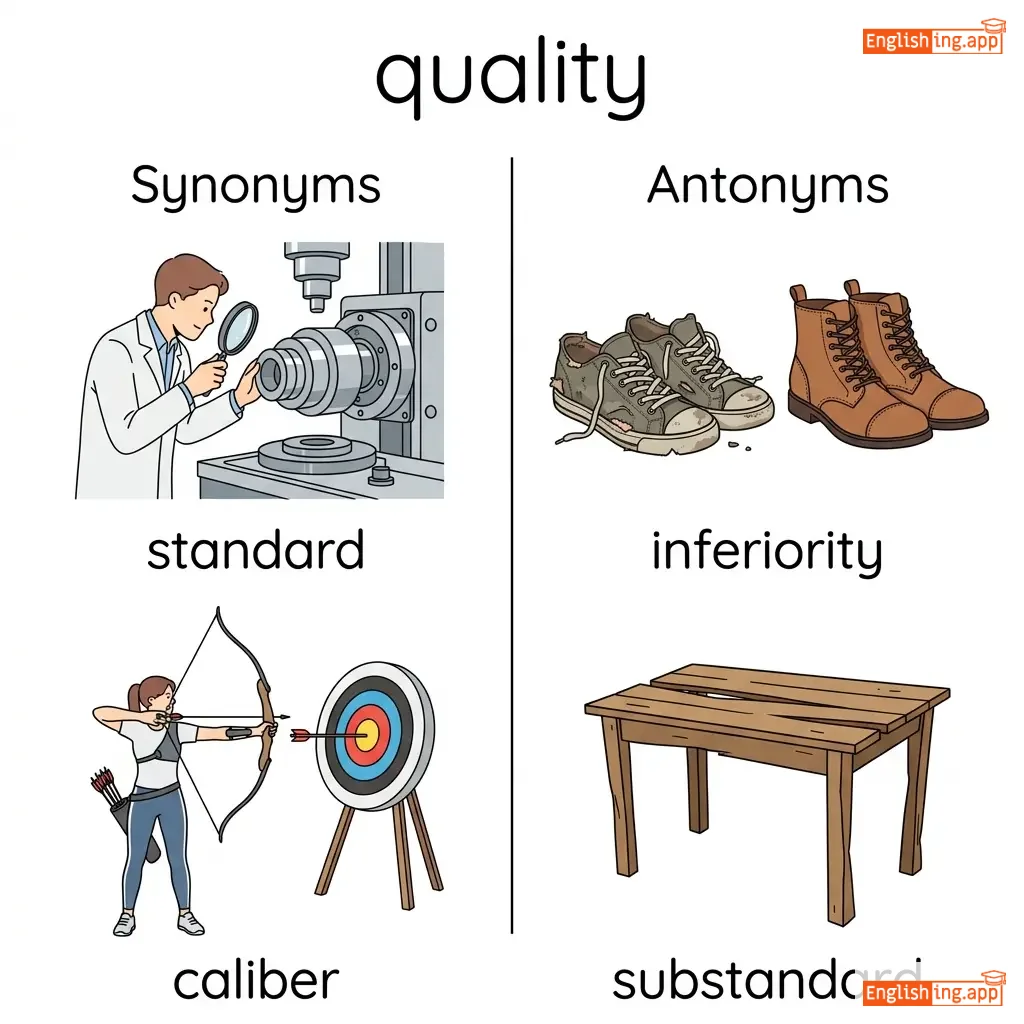
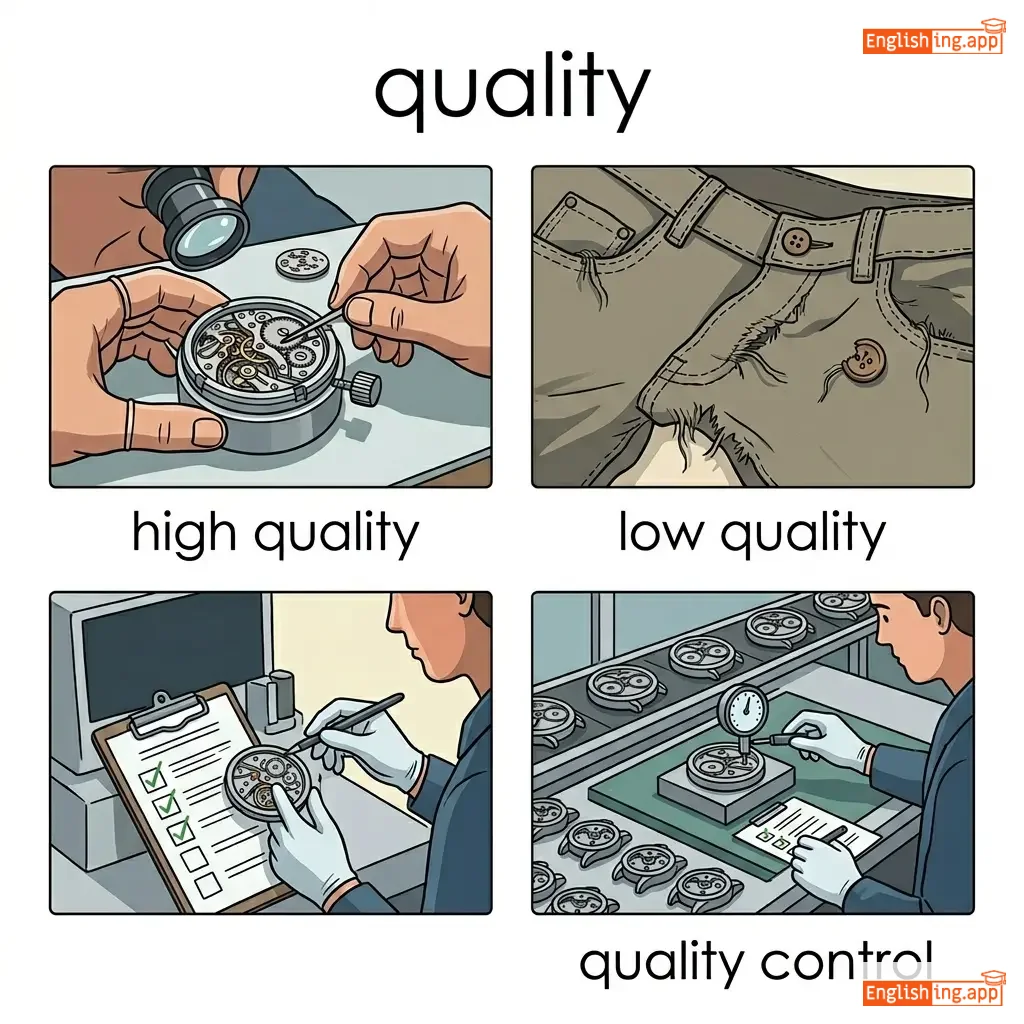
|
品質
hinshitsu
••••••
|
- •••••• | - •••••• | - •••••• | - •••••• |
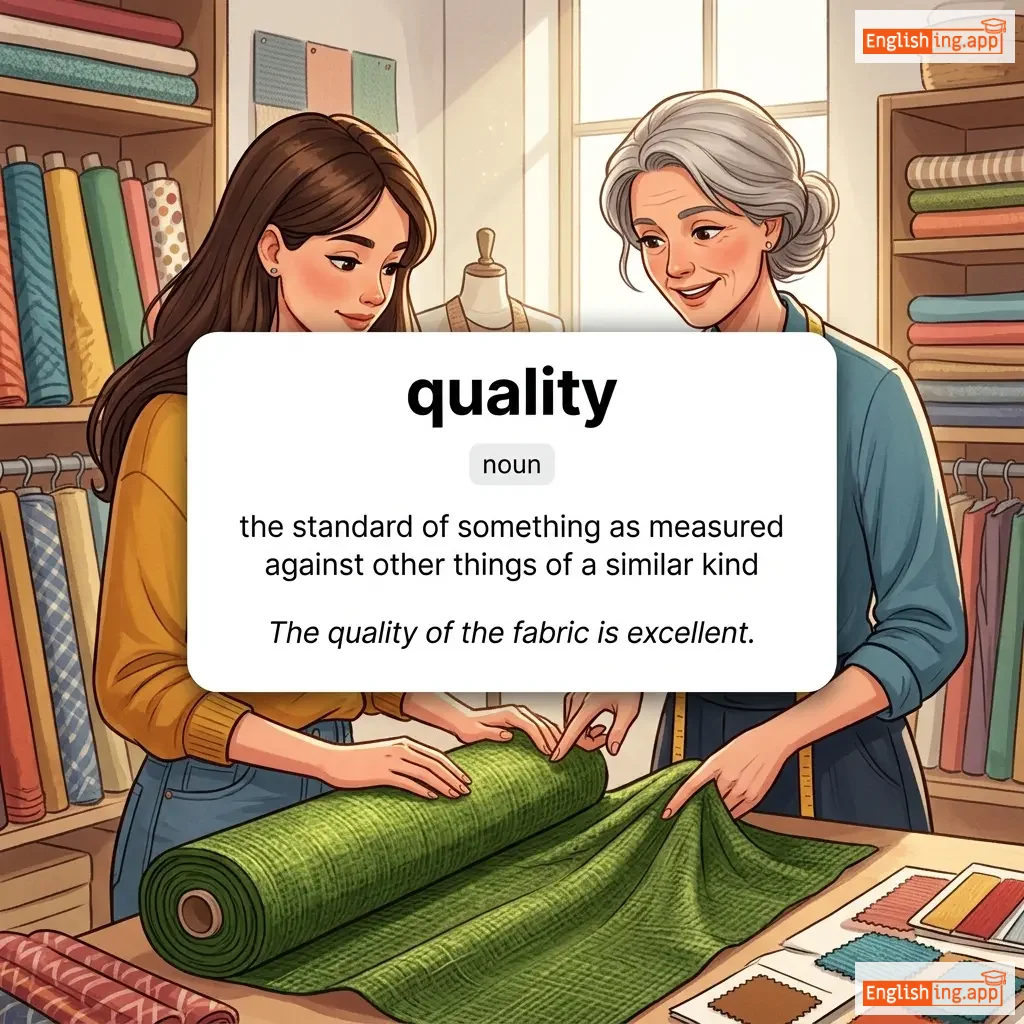
the standard of something when compared to other things; characteristic or feature
••••••
|
This restaurant is known for the high quality of its food. |
このレストランはその高い品質の食べ物で知られています。
Kono resutoran wa sono takai hinshitsu no tabemono de shirareteimasu.
••••••
|
- •••••• | - •••••• | - •••••• |
standard, grade, characteristic, attribute
••••••
|
inferiority, defect, flaw
••••••
|
high quality, poor quality, quality control
••••••
|
品質は他の物と比べたときにその価値を示す
••••••
|
|
🔢
••••••
|
/ˈkwɒn.tə.ti/
noun
(クワンティティ)
••••••
|
- •••••• |
量
ryō
••••••
|
- •••••• | - •••••• | - •••••• | - •••••• |
An amount or number of something.
••••••
|
The shop ordered a large quantity of rice. |
店は大量の米を注文しました。
Mise wa tairyo no kome o chūmon shimashita.
••••••
|
quantity over quality |
Focusing on producing more items rather than better ones.
••••••
|
量より質
ryō yori shitsu
••••••
|
amount, volume, total, number, mass
••••••
|
quality, scarcity, lack
••••••
|
large quantity, small quantity, huge quantity, quantity supplied, quantity demanded
••••••
|
量はどれだけあるか、もっとは量です。
••••••
|
|
🟦
••••••
|
/ˈkwɔː.tər/
noun/verb
(クォーター)
••••••
|
- •••••• |
四分の一
shibu no ichi
••••••
|
quartered
クォーターズ
••••••
|
quartered
クォーターズ
••••••
|
quarters
クォーターズ
••••••
|
quartering
クォーターリング
••••••
|
One-fourth part of something; also used for housing or accommodating.
••••••
|
She paid a quarter of the total bill.
シー ペイド ア クォーター オブ ザ トータル ビル。
••••••
|
彼女は総額の四分の一を支払った。
Kanojo wa sōgaku no shibu no ichi o shiharatta.
••••••
|
quarter to
クォーター トゥ
••••••
|
Used to indicate 15 minutes before the hour in time.
••••••
|
クォーター トゥ
Kuōtā tu
••••••
|
fourth, segment, section, division
••••••
|
whole, entirety
••••••
|
a quarter of, quarter century, quarter hour, residential quarters
••••••
|
四分の一は1/4です。四分の一のピザを思い浮かべてください。
••••••
|
|
🏈
••••••
|
/ˈkwɔːtərˌbæk/
noun
(クォーターバック)
••••••
|
- •••••• |
クォーターバック
kuōtābakku
••••••
|
- •••••• | - •••••• | - •••••• | - •••••• |
the player who directs a team’s offense in American football
••••••
|
The quarterback threw a perfect pass.
クォーターバックは完璧なパスを投げました。
••••••
|
クォーターバックは完璧なパスを投げました。
Kuōtābakku wa kanpeki na pasu o nagemashita.
••••••
|
- •••••• | - •••••• | - •••••• |
playmaker, leader, captain
••••••
|
follower, subordinates
••••••
|
quarterback role, quarterback pass, quarterback player
••••••
|
優れたクォーターバックになるためには、正確なパスを投げる必要があります。
••••••
|
|
👑
••••••
|
/kwiːn/
noun
(クイーン)
••••••
|
- •••••• |
女王
joō
••••••
|
- •••••• | - •••••• | - •••••• | - •••••• |
a female ruler of a country or the wife of a king
••••••
|
The queen addressed her people with grace. |
女王は優雅に人々に話しかけた。
Joō wa yūga ni hitobito ni hanashikaketa.
••••••
|
drama queen |
a person who overreacts or exaggerates emotions
••••••
|
ドラマクイーン
Dorama kuīn
••••••
|
monarch, ruler, sovereign, empress, consort
••••••
|
king, commoner, servant
••••••
|
queen bee, beauty queen, queen of hearts, crowned queen
••••••
|
Queen は女王 👑 – ロイヤルな品位!
••••••
|
|
❓
••••••
|
/ˈkwɪəri/
verb
(クエリ)
••••••
|

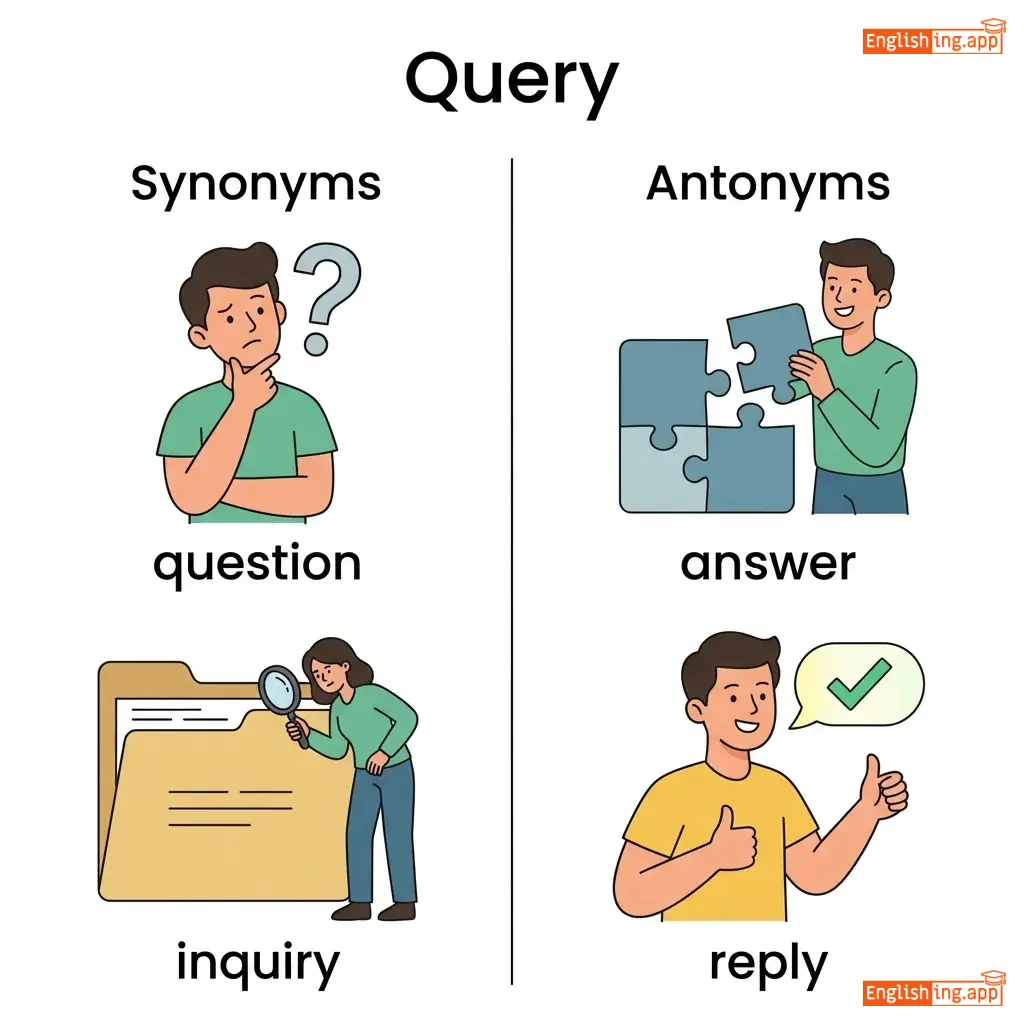
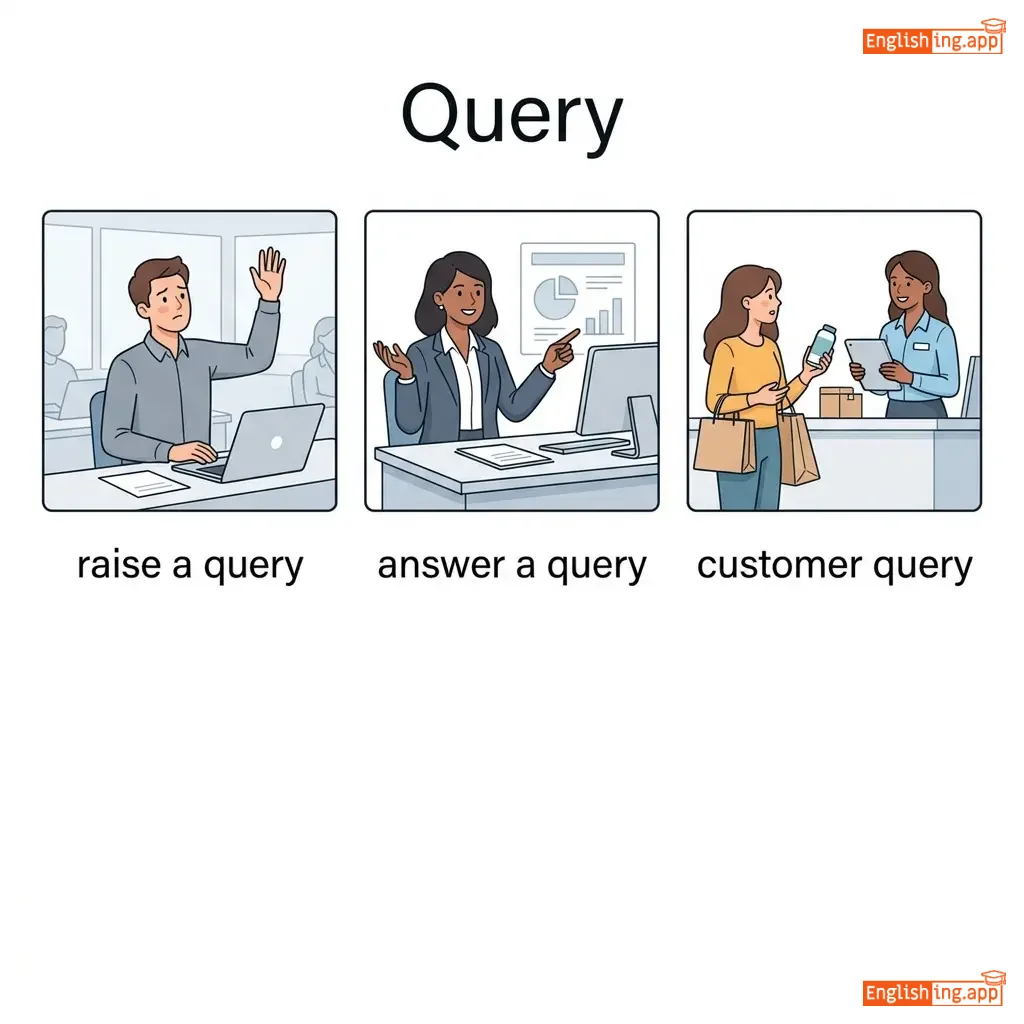
|
質問する
shitsumon suru
••••••
|
queried
クエリード
••••••
|
queried
クエリード
••••••
|
queries
クエリーズ
••••••
|
querying
クエリング
••••••
|
to ask a question; to express doubt about something
••••••
|
The student decided to query the professor about the assignment.
学生は課題について教授にクエリすることにした。
••••••
|
学生は課題について教授に質問することにした。
Gakusei wa kadai ni tsuite kyoushu ni shitsumon suru koto ni shita.
••••••
|
- •••••• | - •••••• | - •••••• |
question, ask, inquire, challenge
••••••
|
answer, accept, confirm
••••••
|
database query, search query, query results, SQL query, query language
••••••
|
Query sounds like ‘kueri’—remember it when you ‘shitsumon suru’ (ask a question).
••••••
|
|
🔍
••••••
|
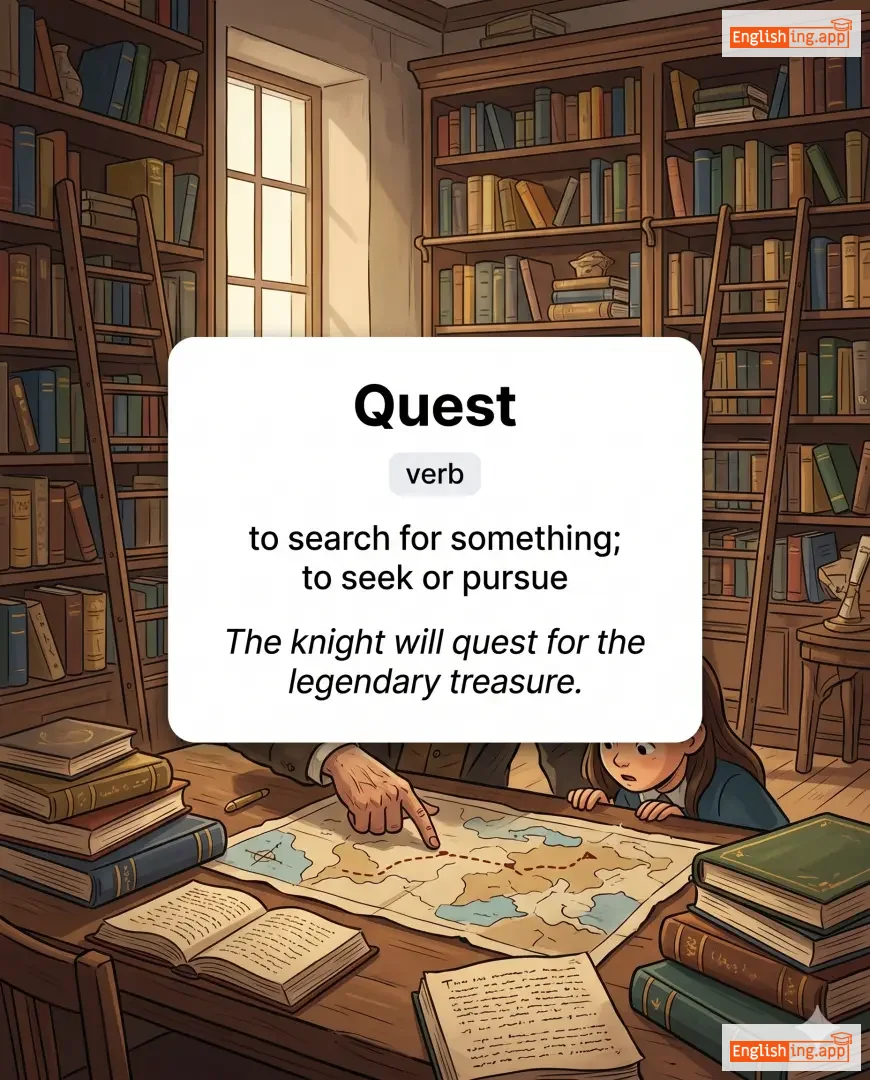
/kwest/
verb
(クエスト)
••••••
|
|
探す
sagasu
••••••
|
quested
クエステッド
••••••
|
quested
クエステッド
••••••
|
quests
クエストズ
••••••
|
questing
クエスティング
••••••
|
to search for something; to seek or pursue
••••••
|
The knight will quest for the legendary treasure.
その騎士は伝説の宝を探し求めるだろう。
••••••
|
その騎士は伝説の宝を探し求めるだろう。
Sono kishi wa densetsu no takara o sagashi motomeru darou.
••••••
|
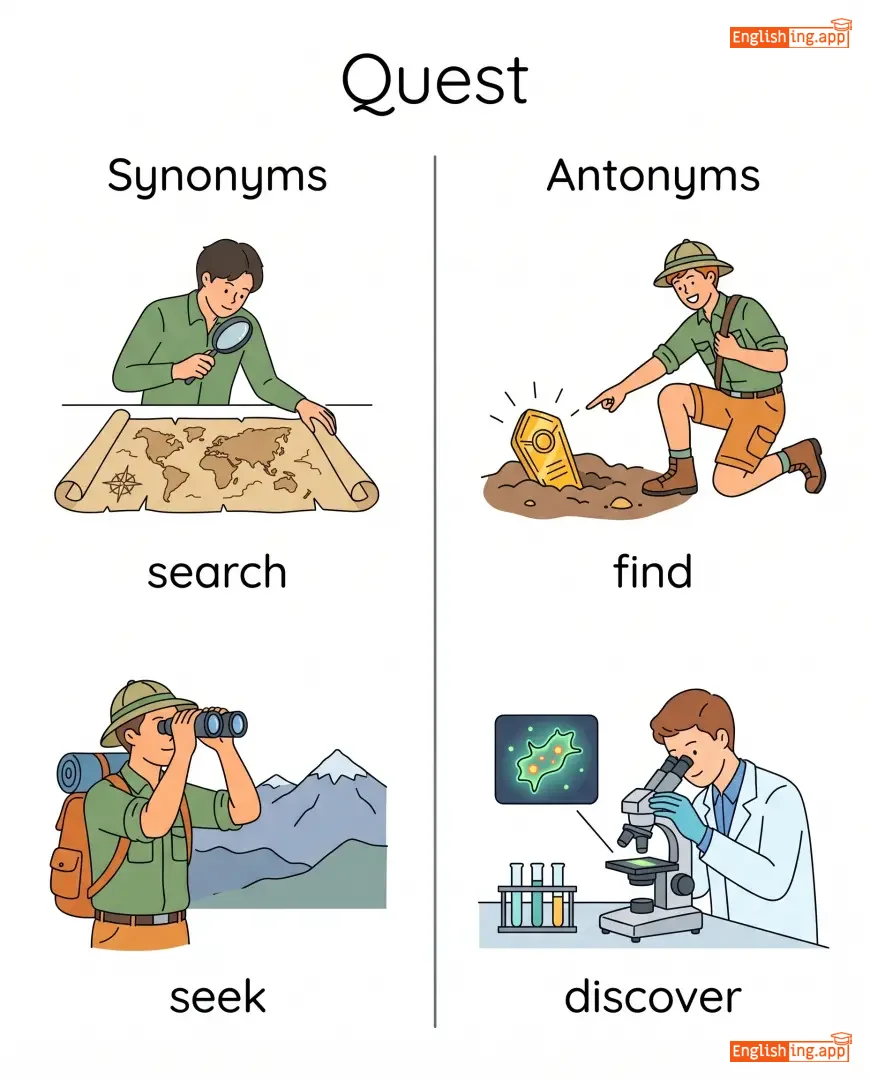
- •••••• | - •••••• | - •••••• |
search, seek, pursue, hunt
••••••
|
find, discover, abandon
••••••
|
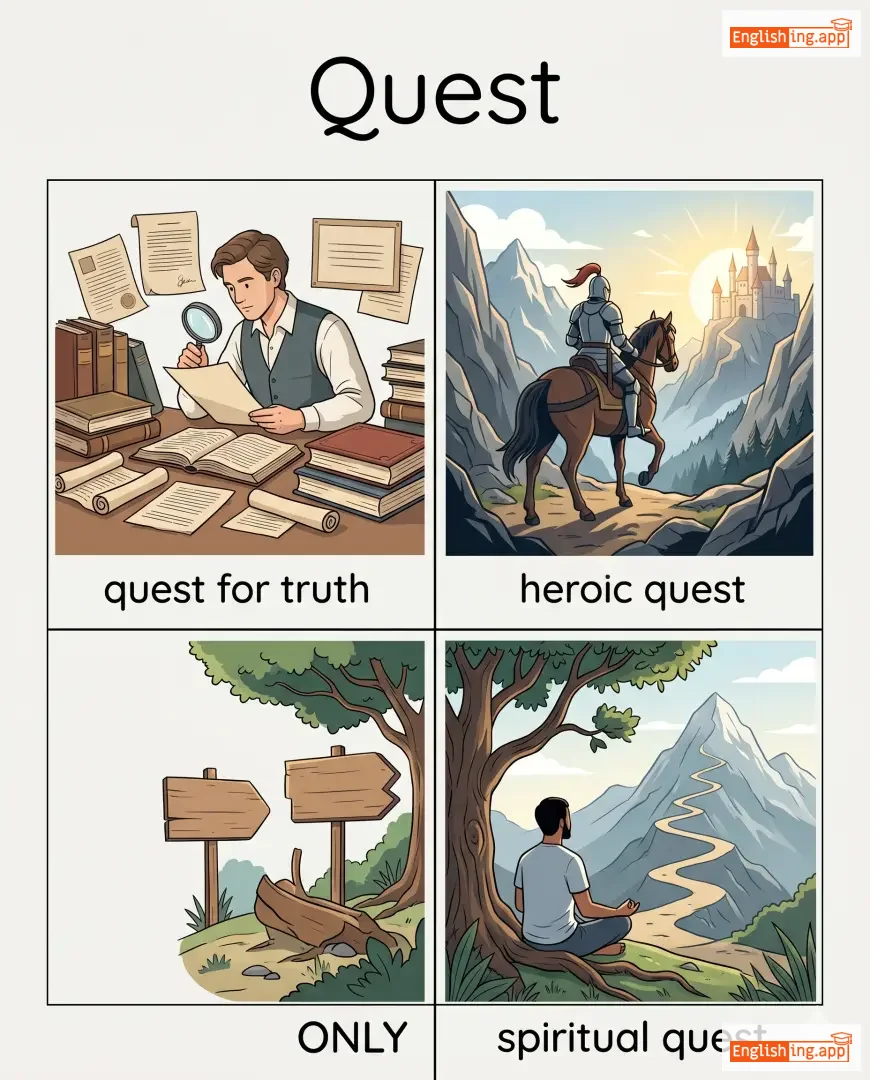
quest for truth, heroic quest, spiritual quest, quest continues
••••••
|
クエストは Quest の旅、宝を Sagasu するイメージで覚える
••••••
|
|
❓
••••••
|
/ˈkwes.tʃən/
noun/verb
(kwes.chon)
••••••
|
|
質問
shitsumon
••••••
|
questioned
kwes.chend
••••••
|
questioned
kwes.chend
••••••
|
questions
kwes.chons
••••••
|
questioning
kwes.choning
••••••
|
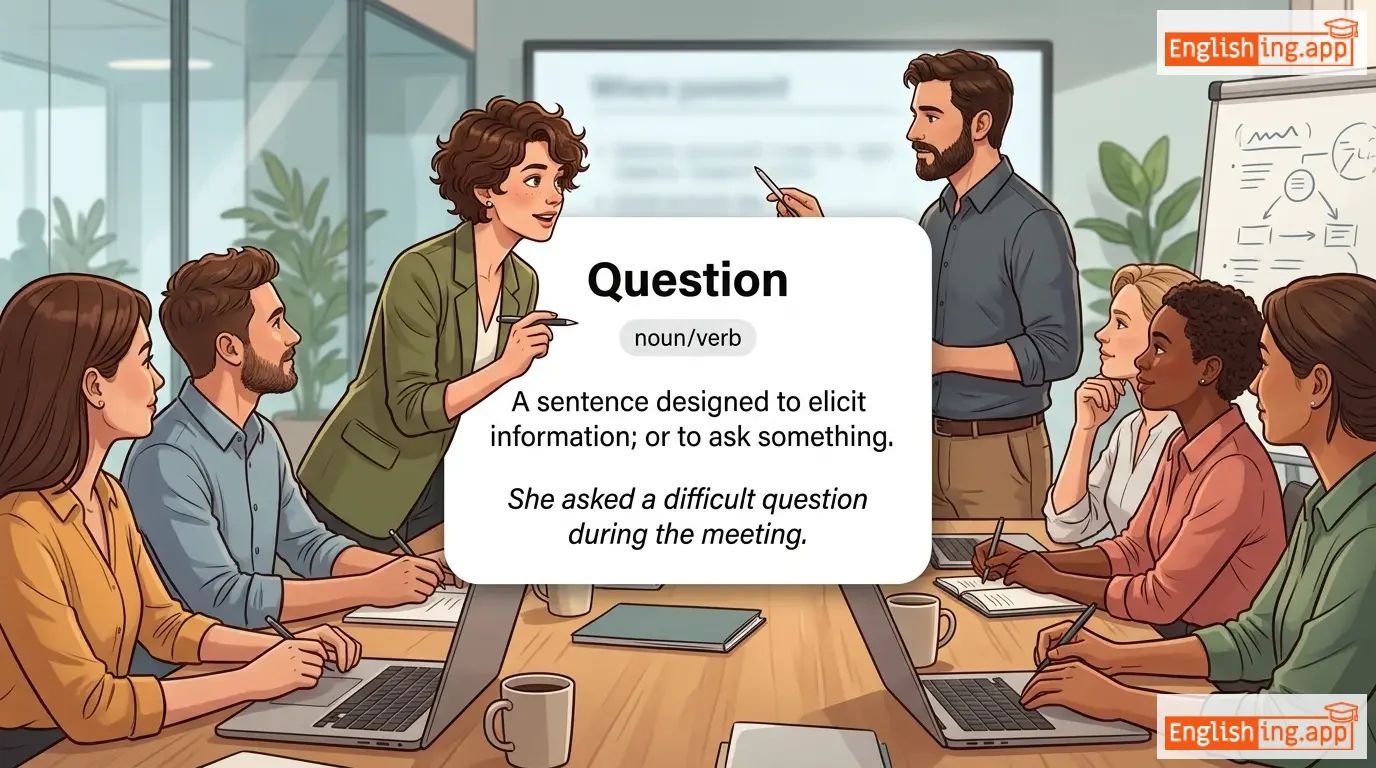
A sentence designed to elicit information; or to ask something.
••••••
|
She asked a difficult question during the meeting.
Shi askd a difikult kwes.chon during de meeting.
••••••
|
彼女は会議中に難しい質問をしました。
Kanojo wa kaigi chuu ni muzukashii shitsumon wo shimashita.
••••••
|
beyond question
beyond kwes.chon
••••••
|
without doubt
••••••
|
疑いの余地なく
utagai no yochi naku
••••••
|
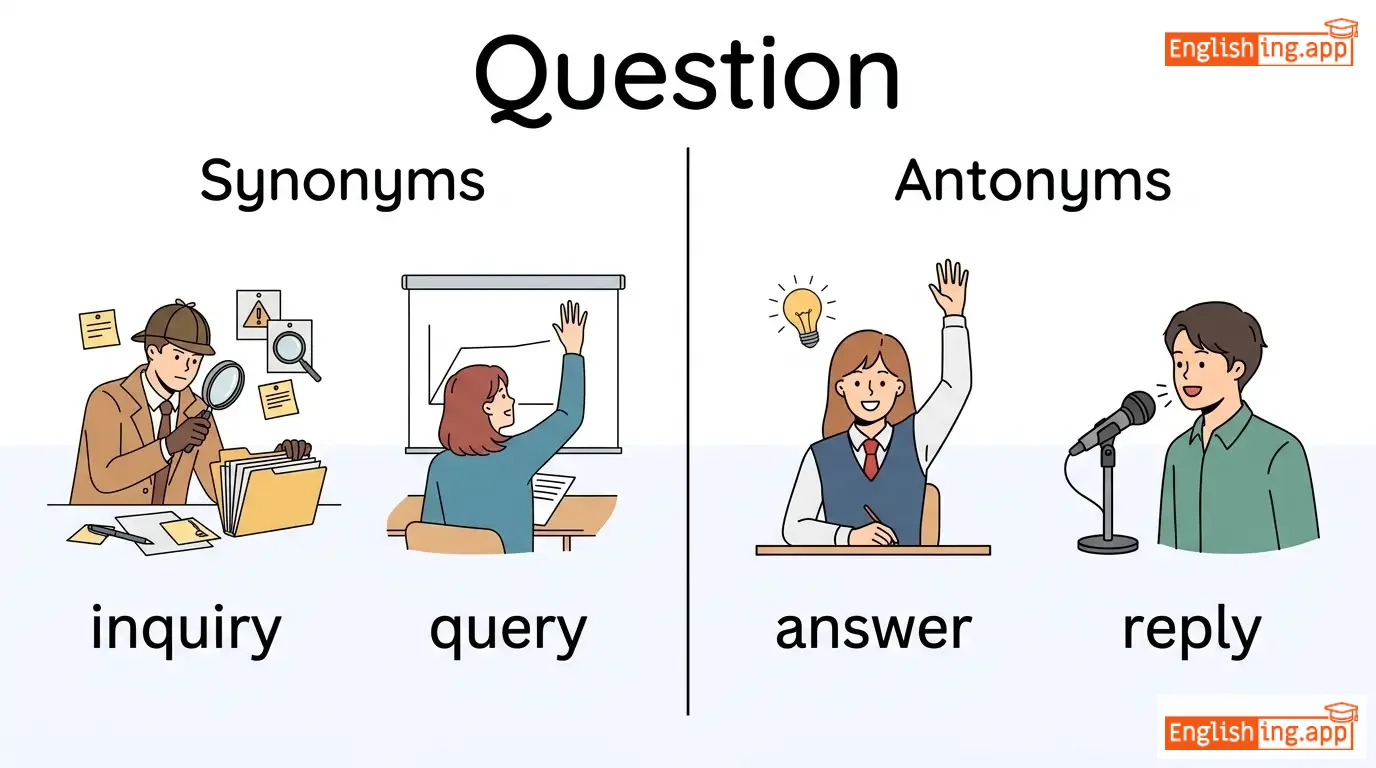
inquiry, query, ask, interrogate
••••••
|
answer, reply
••••••
|
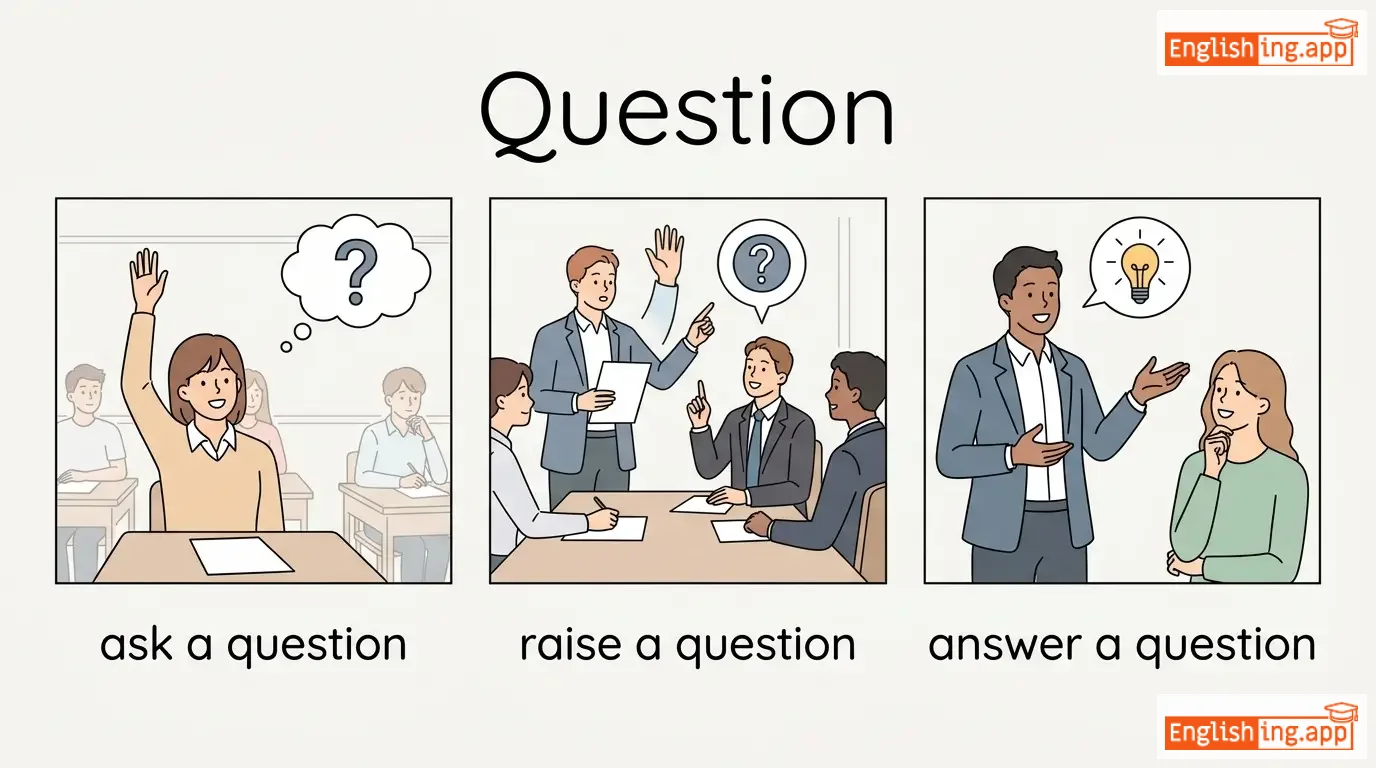
ask a question, raise a question, answer a question, difficult question
••••••
|
質問: 質問をすれば答えが返ってきます。
••••••
|
|
📋
••••••
|
/ˌkwes.tʃəˈneər/
noun
(クエスチョネア)
••••••
|
- •••••• |
アンケート
ankēto
••••••
|
- •••••• | - •••••• | - •••••• | - •••••• |
a set of written questions used to collect information or opinions
••••••
|
Participants filled out a detailed questionnaire about their habits.
参加者は自分の習慣についての詳細なアンケートに記入しました。
••••••
|
参加者は自分の習慣についての詳細なアンケートに記入しました。
Sanka-sha wa jibun no shūkan ni tsuite no shōsai na ankēto ni kinyū shimashita.
••••••
|
- •••••• | - •••••• | - •••••• |
survey, form, poll, feedback form, inquiry sheet
••••••
|
answer, response, reply
••••••
|
fill out questionnaire, complete questionnaire, survey questionnaire, customer questionnaire
••••••
|
アンケートは質問がたくさんあるので、覚えておいてください、アンケート!
••••••
|
|
⚡
••••••
|
/kwɪk/
adjective
(kwik)
••••••
|
- •••••• |
速い
hayai
••••••
|
- •••••• | - •••••• | - •••••• | - •••••• |
fast; rapid; swift; happening in a short time
••••••
|
She gave a quick answer to the teacher's question.
彼女は教師の質問に迅速に答えました。
••••••
|
彼女は教師の質問に迅速に答えました。
Kanojo wa kyōshi no shitsumon ni jinsoku ni kotaemashita.
••••••
|
- •••••• | - •••••• | - •••••• |
fast, rapid, swift, speedy
••••••
|
slow, sluggish, leisurely, gradual
••••••
|
quick response, quick decision, quick learner
••••••
|
Quick = 速い (hayai) - 速さで問題を解決する感じ。
••••••
|
|
⚡
••••••
|
/ˈkwɪk.li/
adverb
(kwɪkli)
••••••
|
- •••••• |
速く; 急速に
hayaku; kyūsokuni
••••••
|
- •••••• | - •••••• | - •••••• | - •••••• |
at a fast speed; with little delay; rapidly
••••••
|
He quickly finished his homework.
彼はすぐに宿題を終えました。
••••••
|
彼はすぐに宿題を終えました。
Kare wa sugu ni shukudai o oemashita.
••••••
|
- •••••• | - •••••• | - •••••• |
rapidly, fast, speedily, swiftly
••••••
|
slowly, gradually, leisurely, tardily
••••••
|
move quickly, work quickly, respond quickly, learn quickly
••••••
|
速さを感じるためにすぐに何かを終わらせるイメージ。
••••••
|
|
🤫
••••••
|
/ˈkwaɪət/
adjective
(kwaietto)
••••••
|
- •••••• |
静かな
shizukana
••••••
|
- •••••• | - •••••• | - •••••• | - •••••• |
Making little or no noise; free from disturbance.
••••••
|
The library is a very quiet place to study. |
図書館はとても静かな勉強場所です。
Toshokan wa totemo shizukana benkyō basho desu.
••••••
|
keep quiet |
to stop talking or remain silent
••••••
|
静かにしている
shizuka ni shite iru
••••••
|
silent, calm, peaceful, hushed, still
••••••
|
loud, noisy, rowdy
••••••
|
quiet place, quiet voice, quiet night, keep quiet
••••••
|
Quietは静かという意味 – 試験中に先生は'keep quiet'と言います、それは静かにしているという意味です。
••••••
|
|
🤫
••••••
|
/ˈkwaɪ.ət.li/
adverb
(クワイエトリー)
••••••
|
- •••••• |
静かに; 落ち着いて
shizukani; ochitsuite
••••••
|
- •••••• | - •••••• | - •••••• | - •••••• |
without making much noise; silently; in a calm manner
••••••
|
She spoke quietly so she wouldn't wake the baby. |
彼女は赤ちゃんを起こさないように静かに話した。
Kanojo wa akachan o okosanai yō ni shizukani hanashita.
••••••
|
- •••••• | - •••••• | - •••••• |
silently, softly, peacefully, calmly
••••••
|
loudly, noisily, boisterously, raucously
••••••
|
speak quietly, walk quietly, work quietly, sit quietly
••••••
|
In Japanese, '静か' means quiet!
••••••
|
|
🛏️
••••••
|
/kwɪlt/
noun
(kwɪlt)
••••••
|
- •••••• |
キルト
kiruto
••••••
|
- •••••• | - •••••• | - •••••• | - •••••• |
a warm bed covering made of padding enclosed between layers of fabric
••••••
|
Grandmother made a beautiful quilt with colorful patches for my bed. |
祖母は私のベッドのためにカラフルなパッチで美しいキルトを作りました。
sobo wa watashi no beddo no tame ni karafuru na pacchi de utsukushii kiruto o tsukurimashita
••••••
|
- •••••• | - •••••• | - •••••• |
blanket, coverlet, bedspread, comforter
••••••
|
sheet, thin cover
••••••
|
handmade quilt, patchwork quilt, warm quilt, quilted blanket
••••••
|
キルトは暖かくて、ベッドを包み込む温もり
••••••
|
|
🚪
••••••
|
/kwɪt/
verb
(kwit)
••••••
|

|
やめる
yameru
••••••
|
quit
kwit
••••••
|
quit
kwit
••••••
|
quits
kwits
••••••
|
quitting
kwiting
••••••
|
To leave a place, job, or habit permanently.
••••••
|
He decided to quit his job after five years.
彼は5年後に仕事を辞めることを決めました。
••••••
|
彼は5年後に仕事を辞めることを決めました。
Kare wa 5-nen go ni shigoto o yameru koto o kimemashita.
••••••
|
quit cold turkey
突然習慣をやめる
••••••
|
to stop a habit suddenly and completely
••••••
|
突然習慣をやめる
Totsuzen shūkan o yameru
••••••
|
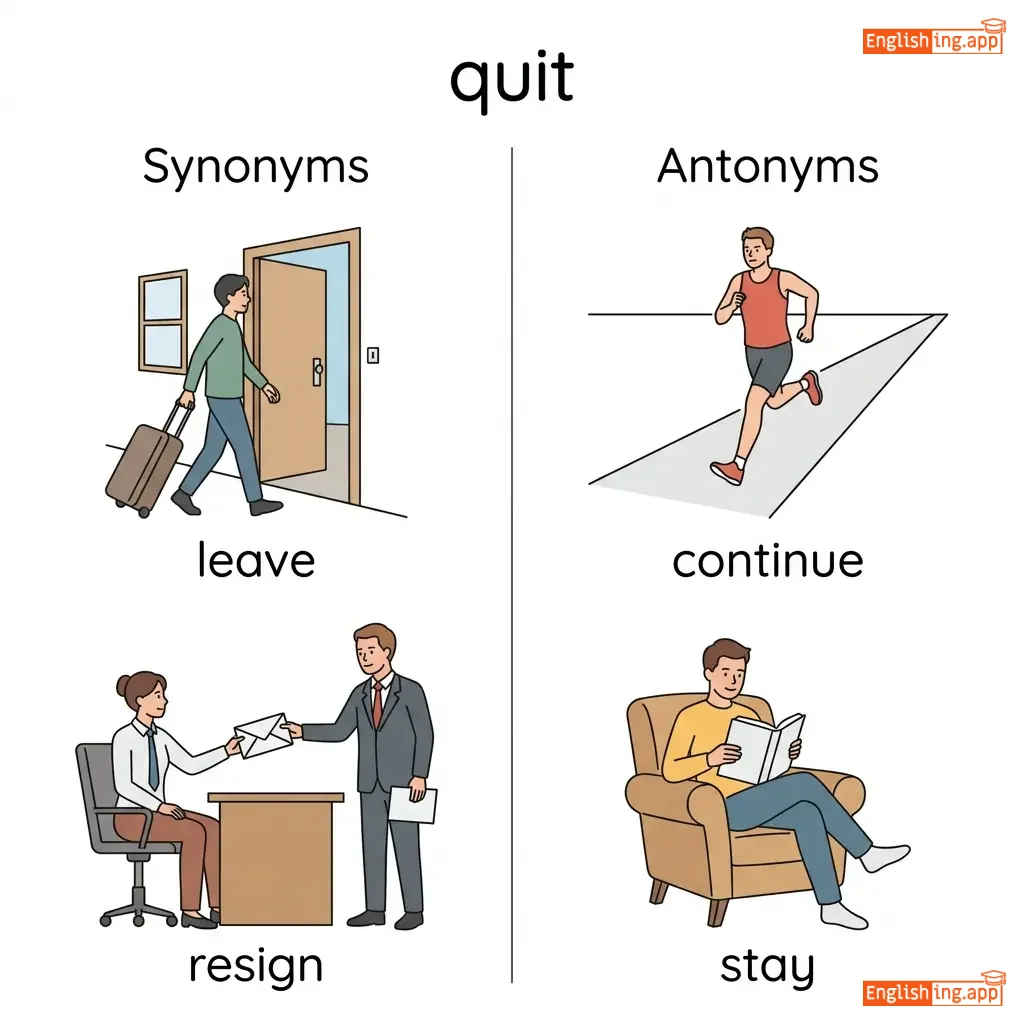
leave, resign, abandon, give up
••••••
|
continue, stay
••••••
|
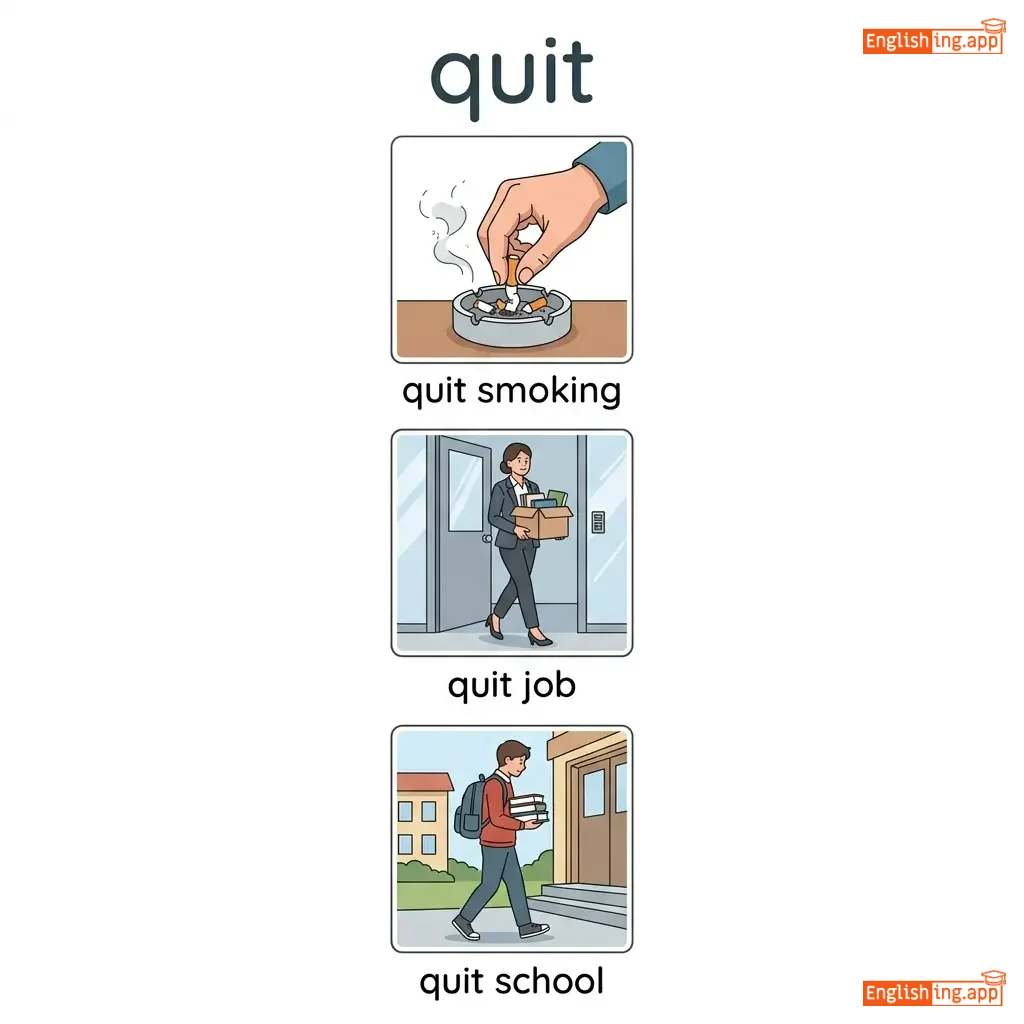
quit smoking, quit job, quit school, quit early
••••••
|
Quitはやめる – 仕事をやめる、習慣をやめる。
••••••
|
|
👌
••••••
|
/kwaɪt/
adverb
(クワイト)
••••••
|
- •••••• |
かなり / とても
kanari / totemo
••••••
|
- •••••• | - •••••• | - •••••• | - •••••• |
To a certain or considerable extent; very or completely.
••••••
|
She was quite happy with the results. |
彼女は結果にかなり満足していた。
Kanojo wa kekka ni kanari manzoku shite ita.
••••••
|
not quite |
Almost but not completely.
••••••
|
完全ではない
kanzen dewa nai
••••••
|
fairly, rather, very, completely, absolutely
••••••
|
barely, hardly
••••••
|
quite happy, quite good, quite interesting, not quite
••••••
|
Quite はかなりを意味する—'Quite quiet' はとても静かを意味する。
••••••
|
|
📊
••••••
|
/ˈkwəʊtə/
noun
(クォータ)
••••••
|
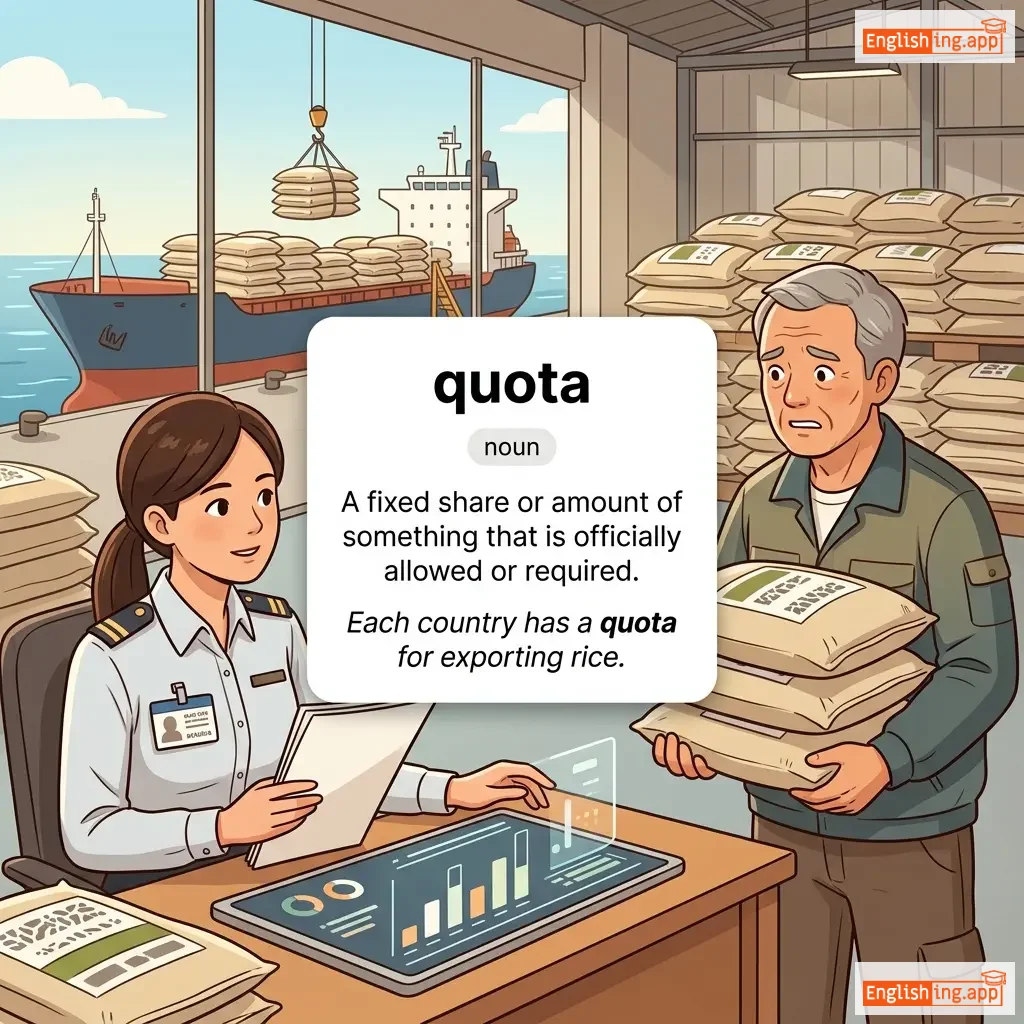
|
割り当て, 定額
wariate, teigaku
••••••
|
- •••••• | - •••••• | - •••••• | - •••••• |
A fixed share or amount of something that is officially allowed or required.
••••••
|
Each country has a quota for exporting rice.
イーチ カントリー ハズ ア クォータ フォー エクスポーティング ライス。
••••••
|
各国には、米の輸出に関する割り当てがあります。
Kakoku ni wa, kome no yushutsu ni kansuru wariate ga arimasu.
••••••
|
- •••••• | - •••••• | - •••••• |
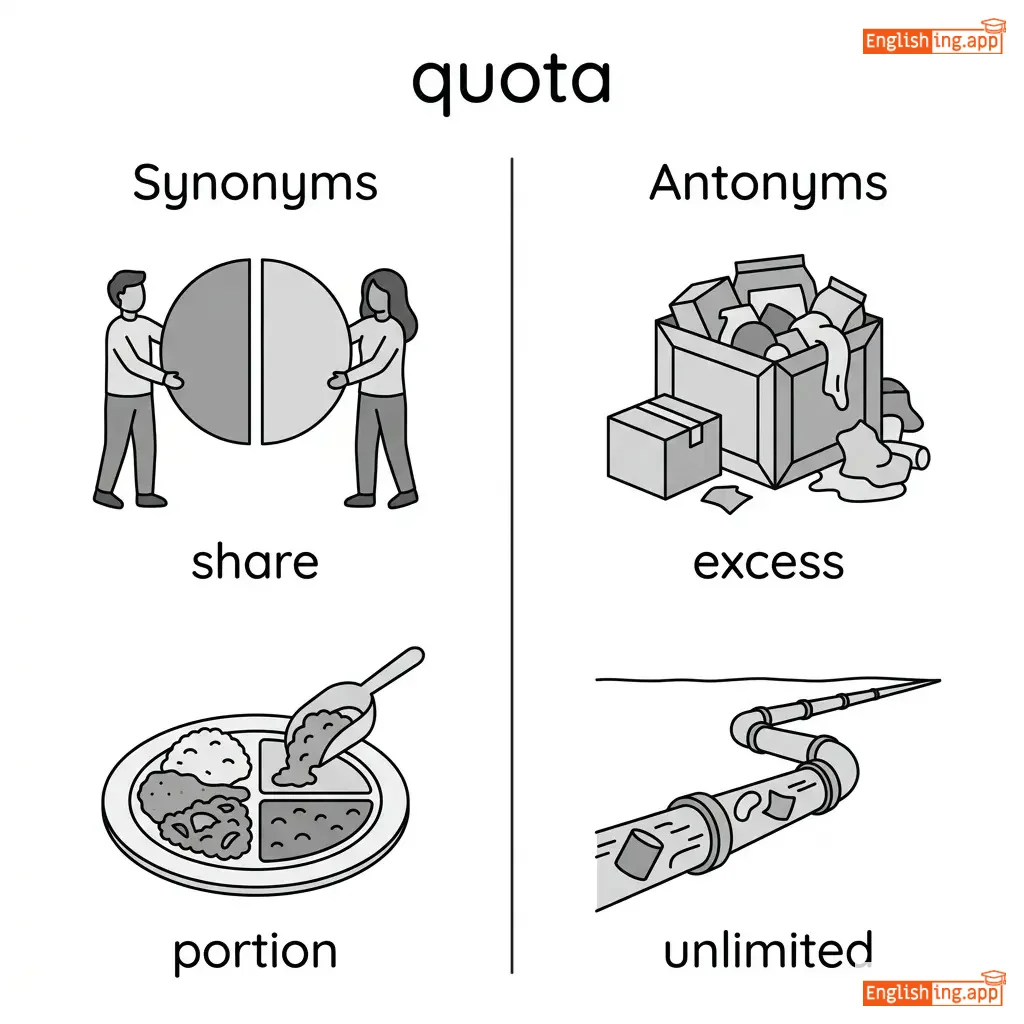
share, portion, allotment, limit, allowance
••••••
|
excess, unlimited
••••••
|
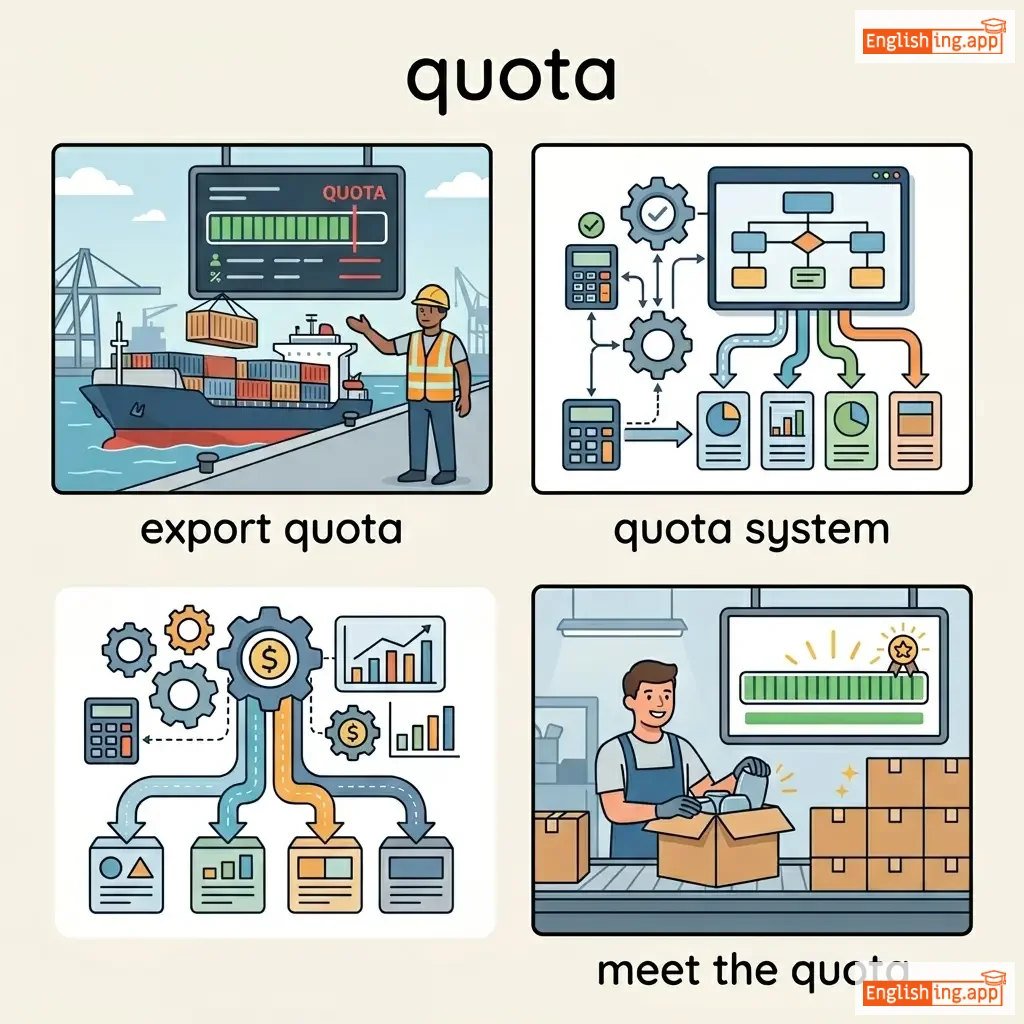
export quota, quota system, meet the quota, annual quota
••••••
|
割り当て = カット + 部分 - 固定された部分が割り当てられます。
••••••
|
|
❝
••••••
|
/kwəʊˈteɪʃən/
noun
(クオーテーション)
••••••
|
- •••••• |
引用; 見積もり
inyo; mitsumori
••••••
|
- •••••• | - •••••• | - •••••• | - •••••• |
a group of words taken from a text or speech and repeated exactly; an estimated price given for goods or services
••••••
|
The article opened with a famous quotation from Shakespeare.
ジ アーティクル オープンド ウィズ ア フェイマス クオーテーション フロム シェイクスピア。
••••••
|
その記事はシェイクスピアの有名な引用で始まった。
sono kiji wa Sheikusupia no yuumei na inyo de hajimatta
••••••
|
quotation marks
クオーテーション マーク
••••••
|
punctuation used to show the exact words someone has said or written
••••••
|
引用符
inyo fu
••••••
|
quote, citation, excerpt, passage, saying
••••••
|
originality, paraphrase
••••••
|
direct quotation, famous quotation, price quotation, exact quotation, cite a quotation
••••••
|
Quotation=引用、クオートすると覚える。
••••••
|
|
💬
••••••
|
/kwoʊt/
verb
(クォート)
••••••
|

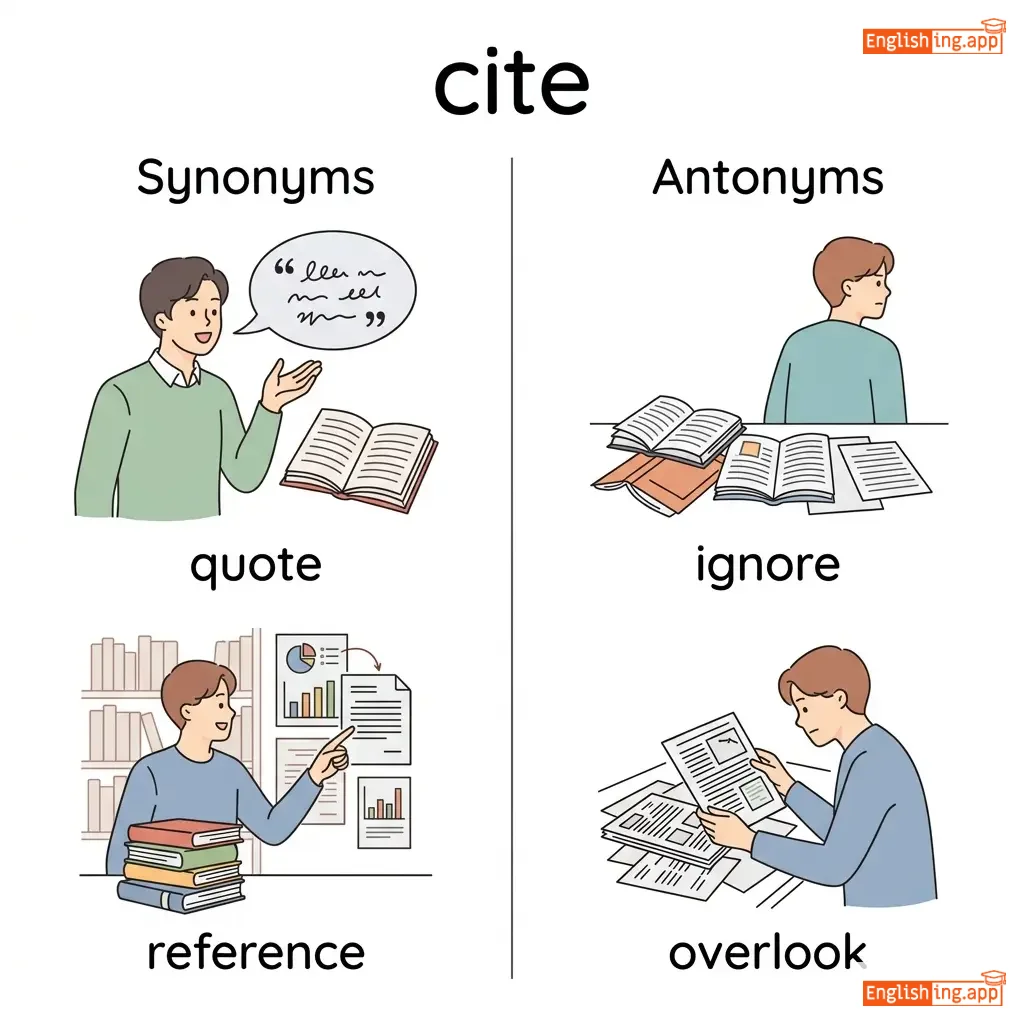
|
引用する
in'yō suru
••••••
|
quoted
クォテッド
••••••
|
quoted
クォテッド
••••••
|
quotes
クォッツ
••••••
|
quoting
クォーティング
••••••
|
to repeat someone else's words; to give a price or estimate
••••••
|
The teacher asked students to quote the famous author in their essays.
教師は学生にその有名な作家をエッセイで引用するように頼みました。
••••••
|
教師は学生にその有名な作家をエッセイで引用するように頼みました。
Kyōshi wa gakusei ni sono yūmei na sakka o essei de in'yō suru yō ni tanomimashita.
••••••
|
- •••••• | - •••••• | - •••••• |
cite, repeat, reference, mention
••••••
|
paraphrase, summarize, omit
••••••
|
quote directly, quote accurately, quote from, quote someone
••••••
|
引用する、例えば有名な作家の言葉を引用するように頼む。
••••••
|
|
🐇
••••••
|
/ˈræbɪt/
noun
(ラビット)
••••••
|
|
ウサギ
usagi
••••••
|
- •••••• | - •••••• | - •••••• | - •••••• |
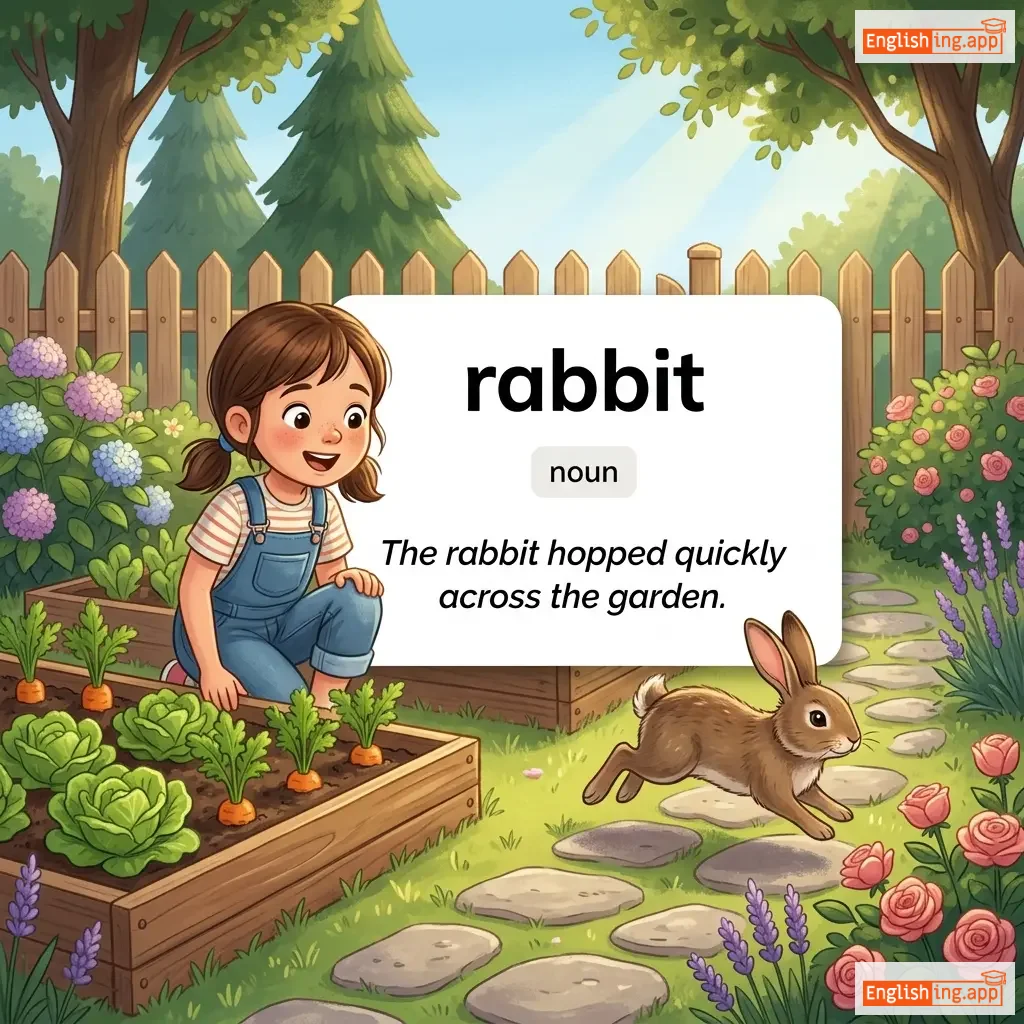
a small furry animal with long ears that lives in holes in the ground and moves by hopping
••••••
|
The rabbit hopped quickly across the garden. |
ウサギは庭を素早く跳びました。
Usagi wa niwa o subayaku tobimashita.
••••••
|
pull a rabbit out of a hat |
to do something surprising or seemingly magical
••••••
|
帽子からウサギを取り出す
bōshi kara usagi o toridasu
••••••
|
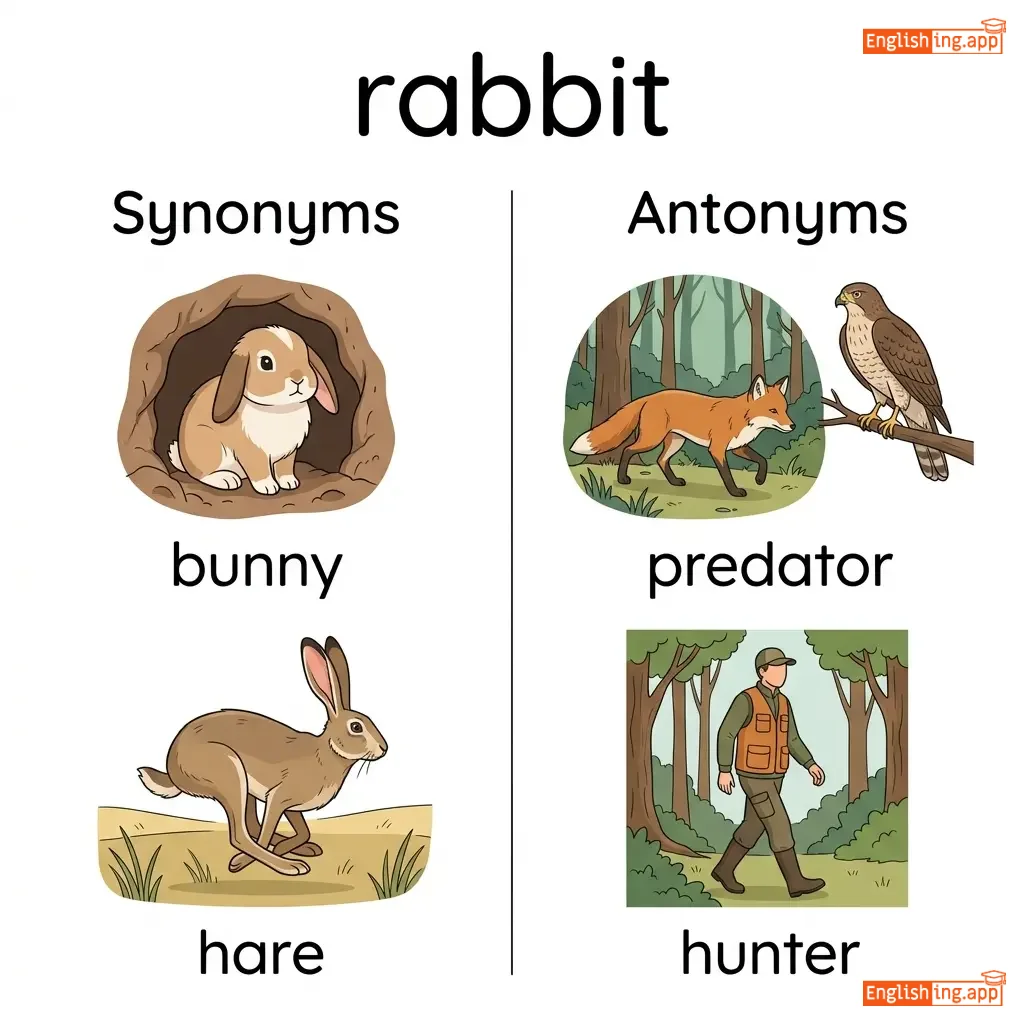
bunny, hare, coney, rodent, lagomorph
••••••
|
predator, hunter
••••••
|
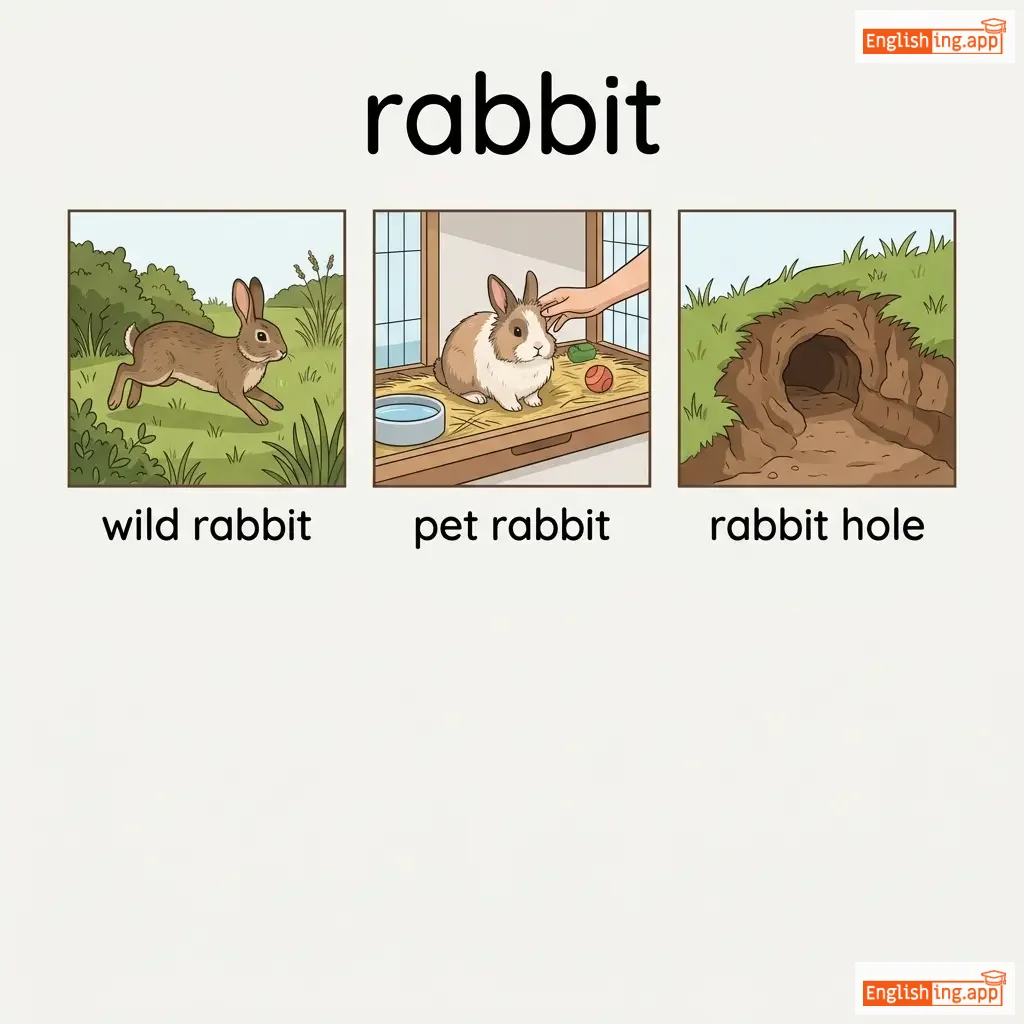
wild rabbit, pet rabbit, rabbit hole, rabbit stew, rabbit fur
••••••
|
ウサギはすばやく跳ねる — それは速い動物です!
••••••
|
|
🏁
••••••
|
/reɪs/
noun
(レース)
••••••
|
- •••••• |
レース
resu
••••••
|
- •••••• | - •••••• | - •••••• | - •••••• |
a competition of speed, or a group of people with similar characteristics
••••••
|
The race was very exciting, with many competitors. |
レースは非常にエキサイティングで、たくさんの競技者がいました。
Resu wa hijou ni ekisaitingu de, takusan no kyōgisha ga imashita.
••••••
|
- •••••• | - •••••• | - •••••• |
competition, contest, event
••••••
|
cooperation, alliance
••••••
|
run a race, win a race, racing car, race track
••••••
|
レースはゴールラインに向かって速い 'レース' です!
••••••
|
|
🌍
••••••
|
/ˈreɪʃəl/
adjective
(レイシャル)
••••••
|
- •••••• |
人種の
jinshu no
••••••
|
- •••••• | - •••••• | - •••••• | - •••••• |
relating to a race of people
••••••
|
Racial equality is an important issue in many societies. |
人種平等は多くの社会において重要な問題です。
Jinshu byōdō wa ōku no shakai ni oite jūyōna mondai desu.
••••••
|
- •••••• | - •••••• | - •••••• |
ethnic, cultural, racialized
••••••
|
equal, neutral
••••••
|
racial discrimination, racial equality, racial tension
••••••
|
Racial means 'jinshu' - think of different races around the world!
••••••
|
|
✊🏾
••••••
|
/ˈreɪsɪzəm/
noun
(reishizumu)
••••••
|
- •••••• |
人種差別
jinshu sabetsu
••••••
|
- •••••• | - •••••• | - •••••• | - •••••• |
the belief that some races are superior to others, leading to unfair treatment or prejudice
••••••
|
The organization works to eliminate racism in all forms. |
その組織はすべての形態の人種差別を排除するために取り組んでいます。
Sono soshiki wa subete no keitai no jinshu sabetsu o haijo suru tame ni torikundeimasu.
••••••
|
- •••••• | - •••••• | - •••••• |
discrimination, prejudice, bigotry, intolerance, bias
••••••
|
equality, tolerance, fairness
••••••
|
fight racism, eliminate racism, racial discrimination, systemic racism
••••••
|
Race + ism は人種に関する信念、だから人種差別は人種に基づく不公平です。
••••••
|

