|
表情符号
|
单词 | Images | 翻译 | 过去时 | 过去分词 | 第三人称单数 | 动名词 | 含义 | 例句 | 例句翻译 | 示例表达 | 示例表达含义 | 示例表达翻译 | 同义词 | 反义词 | 搭配词 | 助记符 |
|---|---|---|---|---|---|---|---|---|---|---|---|---|---|---|---|---|---|
|
💓
••••••
|
/pʌls/
noun/verb
••••••
|
- •••••• | - •••••• |
pulsed
••••••
|
pulsed
••••••
|
pulses
••••••
|
pulsing
••••••
|
A rhythmic beat or vibration, especially the heartbeat; to throb or move with a rhythm.
••••••
|
The doctor checked her pulse after the long run. |
- •••••• |
take someone's pulse |
to check someone's heartbeat or to understand their state of mind
••••••
|
- •••••• |
heartbeat, rhythm, beat, vibration, throb
••••••
|
stillness, calm
••••••
|
strong pulse, weak pulse, pulse rate, pulse check
••••••
|
No •••••• |
|
💧
••••••
|
/pʌmp/
verb
(pāngpǔ)
••••••
|
- •••••• |
抽水
chōushuǐ
••••••
|
pumped
pāngpǔd
••••••
|
pumped
pāngpǔd
••••••
|
pumps
pāngpǔs
••••••
|
pumping
pāngpǔing
••••••
|
to force liquid or gas to move in a particular direction using a device
••••••
|
They pumped water from the well into the tank.
他们把水从井里抽到水箱里。
••••••
|
他们把水从井里抽到水箱里。
Tāmen bǎ shuǐ cóng jǐng lǐ chōu dào shuǐxiāng lǐ.
••••••
|
pump up
pump up
••••••
|
to fill with air or excitement
••••••
|
充气
chōngqì
••••••
|
siphon, extract, draw, force, inflate
••••••
|
drain, empty
••••••
|
pump water, pump air, pump fuel, pump up
••••••
|
像抽水一样抽出能量,‘pump up’充满气氛!
••••••
|
|
🥊
••••••
|
/pʌntʃ/
verb
(パンチ)
••••••
|
- •••••• |
击打
jī dǎ
••••••
|
punched
パンチド
••••••
|
punched
パンチド
••••••
|
punches
パンチズ
••••••
|
punching
パンチング
••••••
|
to hit someone or something hard with your fist
••••••
|
He punched the wall in frustration.
他因沮丧打了墙。
••••••
|
他因沮丧打了墙。
Tā yīn jǔsàng dǎle qiáng.
••••••
|
pack a punch
打击一拳
••••••
|
to have a strong effect or impact
••••••
|
产生强烈的影响
chǎnshēng qiángliè de yǐngxiǎng
••••••
|
hit, strike, smack, blow, thump
••••••
|
caress, pat
••••••
|
throw a punch, punch hard, punch bag, pack a punch
••••••
|
‘punch’ 就是拳头打出来的效果,别忘了它的力量!
••••••
|
|
⚖️
••••••
|
/ˈpʌnɪʃ/
verb
(puniš)
••••••
|
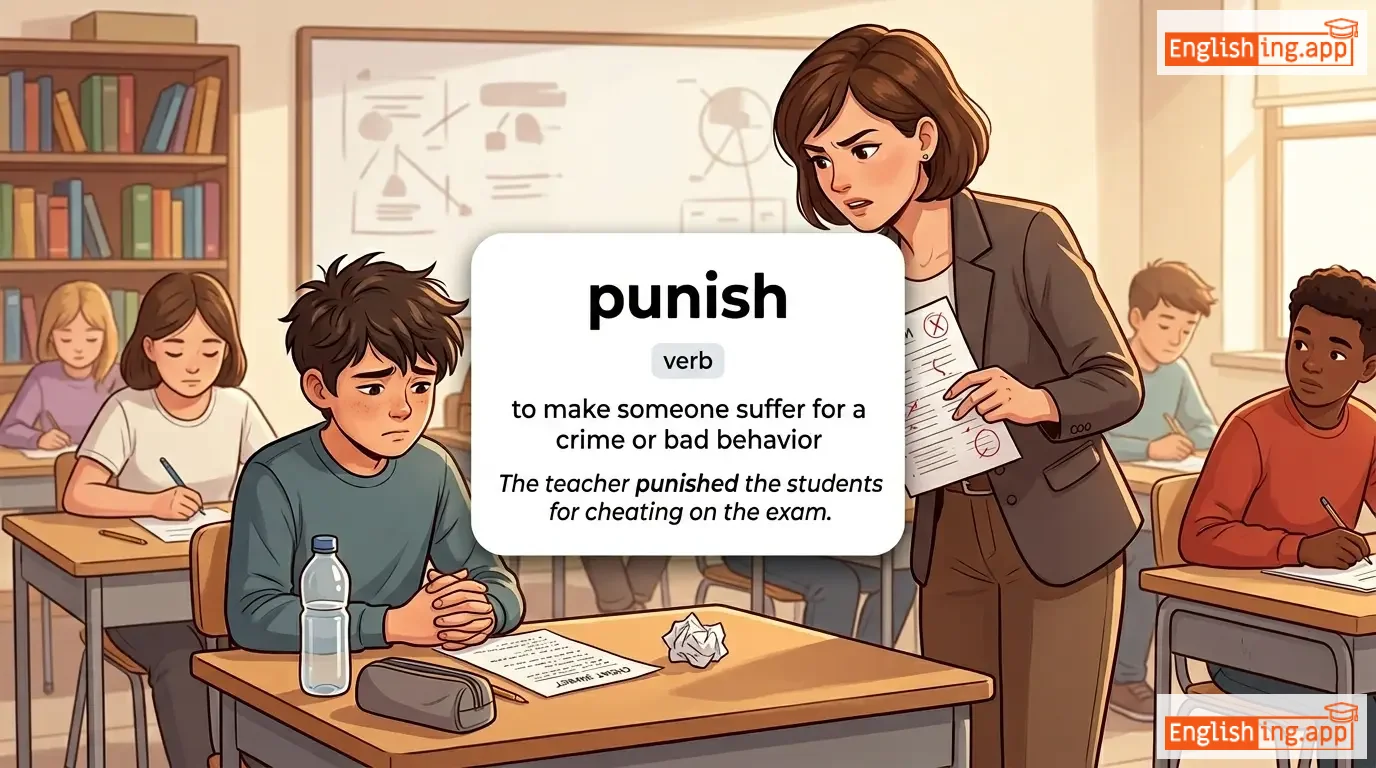
|
惩罚
chéngfá
••••••
|
punished
punishd
••••••
|
punished
punishd
••••••
|
punishes
punishis
••••••
|
punishing
punishing
••••••
|
to make someone suffer for a crime or bad behavior
••••••
|
The teacher punished the students for cheating on the exam.
老师因学生在考试中作弊而惩罚了他们。
••••••
|
老师因学生在考试中作弊而惩罚了他们。
Lǎoshī yīn xuéshēng zài kǎoshì zhōng zhòubì ér chéngfá le tāmen.
••••••
|
punish oneself
惩罚自己
••••••
|
to make oneself suffer for guilt or regret
••••••
|
惩罚自己
chéngfá zìjǐ
••••••
|
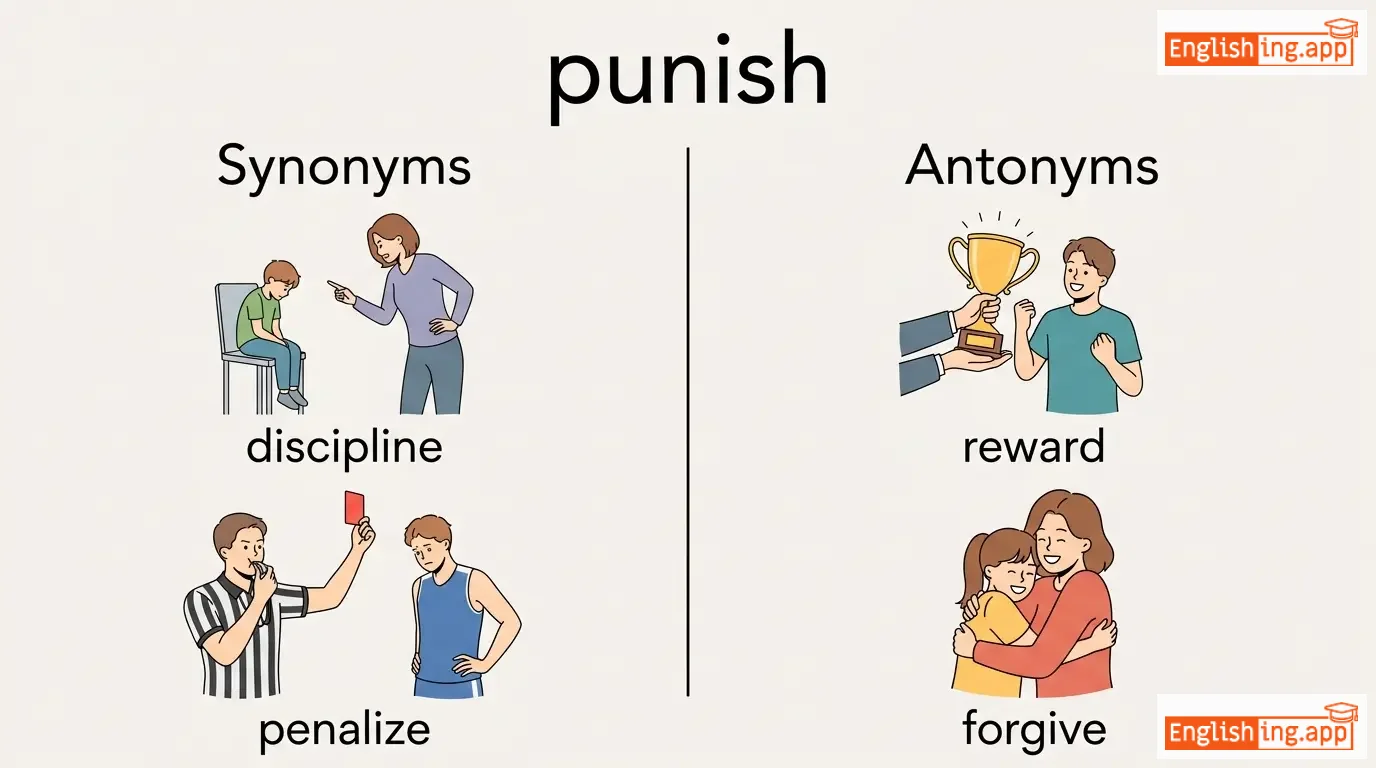
discipline, penalize, reprimand, chastise, correct
••••••
|
reward, forgive
••••••
|
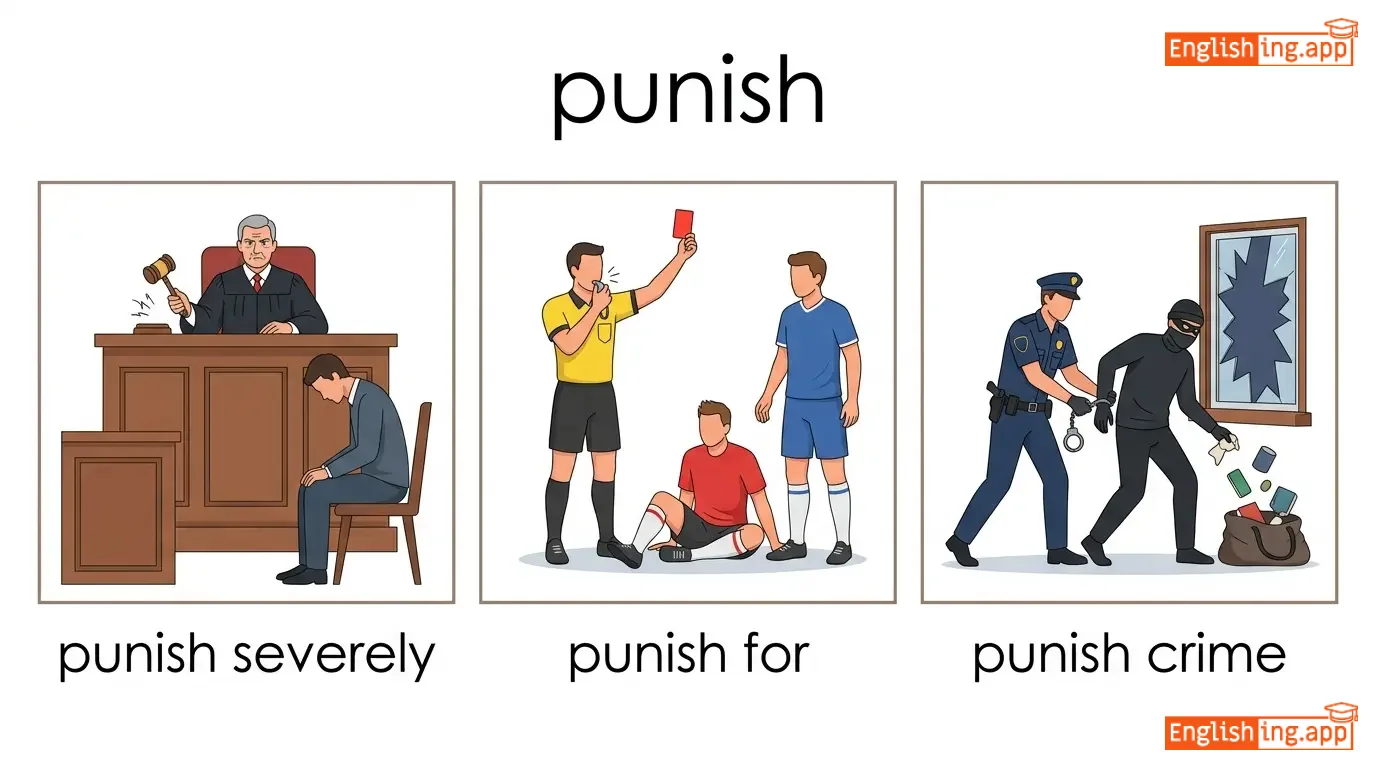
punish severely, punish for, punish crime, punish wrongdoer
••••••
|
Punish意味着惩罚 — Pun有惩罚的意思!
••••••
|
|
⚖️
••••••
|
/ˈpʌnɪʃmənt/
noun
(pǔnìshmènt)
••••••
|
- •••••• |
惩罚
chěngfá
••••••
|
- •••••• | - •••••• | - •••••• | - •••••• |
the infliction of a penalty as retribution for an offense or wrongdoing
••••••
|
The criminal received a harsh punishment for his crime. |
罪犯因其罪行受到了严厉的惩罚。
zuìfàn yīn qí zuìxíng shòudàole yánlì de chěngfá.
••••••
|
pay the penalty |
to be punished for something
••••••
|
付出代价
fùchū dàijià
••••••
|
penalty, retribution, consequence, sanction
••••••
|
reward, pardon
••••••
|
capital punishment, severe punishment, corporal punishment, punishment for crimes
••••••
|
Punishment - 做错事就会有惩罚。
••••••
|
|
🎸
••••••
|
/pʌŋk/
noun
(pāng kè)
••••••
|
- •••••• |
朋克
pēngkè
••••••
|
- •••••• | - •••••• | - •••••• | - •••••• |
a type of popular music, or the culture associated with it, characterized by loud, fast rhythms and rebellious attitudes
••••••
|
He’s always been into punk music and fashion.
他一直对朋克音乐和时尚感兴趣。
••••••
|
他一直对朋克音乐和时尚感兴趣。
Tā yīzhí duì pēngkè yīnyuè hé shíshàng gǎn xìngqù.
••••••
|
- •••••• | - •••••• | - •••••• |
rock, alternative, rebellious, anti-establishment
••••••
|
pop, classical, mainstream
••••••
|
punk rock, punk culture, punk music, punk fashion
••••••
|
朋克是反叛的音乐,听它就像是宣告自己也要叛逆!
••••••
|
|
👁️
••••••
|
/ˈpjuːpəl/
noun
(皮尤皮尔)
••••••
|
- •••••• |
学生; 瞳孔
xuesheng; tongkong
••••••
|
- •••••• | - •••••• | - •••••• | - •••••• |
a student, especially a young one; the central opening of the eye that lets in light
••••••
|
The pupil listened carefully to the teacher during class.
泽 皮尤皮尔 利森德 凯尔富利 图 泽 提彻。
••••••
|
学生在课堂上认真听老师讲课。
xuesheng zai ketang shang renzhen ting laoshi jiangke
••••••
|
star pupil
斯塔 皮尤皮尔
••••••
|
an exceptionally good or successful student
••••••
|
优秀学生
youxiu xuesheng
••••••
|
student, learner, schoolchild, apprentice, trainee
••••••
|
teacher, instructor, tutor
••••••
|
primary school pupil, star pupil, diligent pupil, dilated pupil
••••••
|
Pupil 学生,眼睛也有 pupil
••••••
|
|
🛒
••••••
|
/ˈpɜː.tʃəs/
verb
(pɜːrʧəs)
••••••
|


|
购买
gòumǎi
••••••
|
purchased
pɜːrʧɛst
••••••
|
purchased
pɜːrʧɛst
••••••
|
purchases
pɜːrʧəsɪz
••••••
|
purchasing
pɜːrʧəsɪŋ
••••••
|
To buy something by paying money for it.
••••••
|
She purchased a new laptop from the store.
她在商店购买了一台新笔记本电脑。
••••••
|
她在商店购买了一台新笔记本电脑。
Tā zài shāngdiàn gòumǎile yī tái xīn bǐjìběn diànnǎo.
••••••
|
make a purchase
进行购买
••••••
|
to buy something
••••••
|
进行购买
jìnxíng gòumǎi
••••••
|
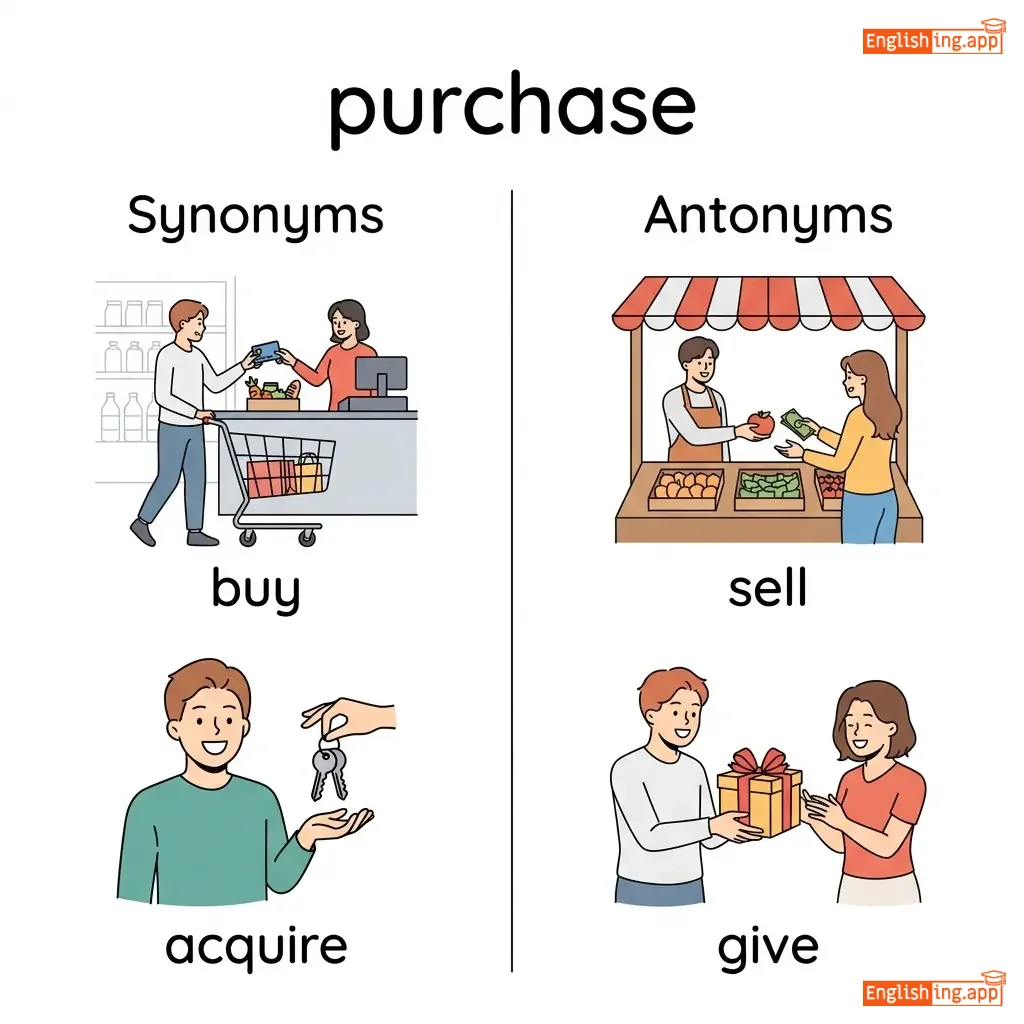
buy, acquire, obtain, procure, get
••••••
|
sell, give, forfeit
••••••
|
purchase order, purchase price, purchase agreement, online purchase
••••••
|
Purchase 就是用钱来购买物品。
••••••
|
|
✨
••••••
|
/pjʊər/
adjective
(pīu'ěr)
••••••
|
- •••••• |
纯净的; 清澈的; 无污点的; 无歧视的;
chúnjìng de; qīngchè de; wú wūdiǎn de; wú qíshì de
••••••
|
- •••••• | - •••••• | - •••••• | - •••••• |
clean; clear; untainted; without discrimination;
••••••
|
The water from the mountain spring is pure. |
来自山泉的水是纯净的。
Lái zì shān quán de shuǐ shì chúnjìng de.
••••••
|
- •••••• | - •••••• | - •••••• |
clean, clear, pristine, untainted, innocent
••••••
|
impure, contaminated, polluted, dirty
••••••
|
pure water, pure gold, pure intention
••••••
|
纯净如山泉水,清澈且无瑕疵。
••••••
|
|
✨
••••••
|
/ˈpjʊərli/
adverb
(pjʊərli)
••••••
|
- •••••• |
纯粹地
chúncuì de
••••••
|
- •••••• | - •••••• | - •••••• | - •••••• |
only and completely; entirely
••••••
|
The decision was purely based on economic factors. |
这个决定完全基于经济因素。
Zhège juédìng wánquán jīyú jīngjì yīnsù.
••••••
|
- •••••• | - •••••• | - •••••• |
exclusively, solely, entirely, totally
••••••
|
partially, incompletely, somewhat
••••••
|
purely coincidental, purely for fun, purely theoretical, purely academic
••••••
|
Purely 意味着完全地,像纯净的水一样!
••••••
|
|
💧
••••••
|
/ˈpjʊərɪfaɪ/
verb
(pǔ yǔ rǐ fāi)
••••••
|
|
净化
jìng huà
••••••
|
purified
pǔ yǔ rǐ fāi dé
••••••
|
purified
pǔ yǔ rǐ fāi dé
••••••
|
purifies
pǔ yǔ rǐ fāi zhuǎn
••••••
|
purifying
pǔ yǔ rǐ fāi
••••••
|
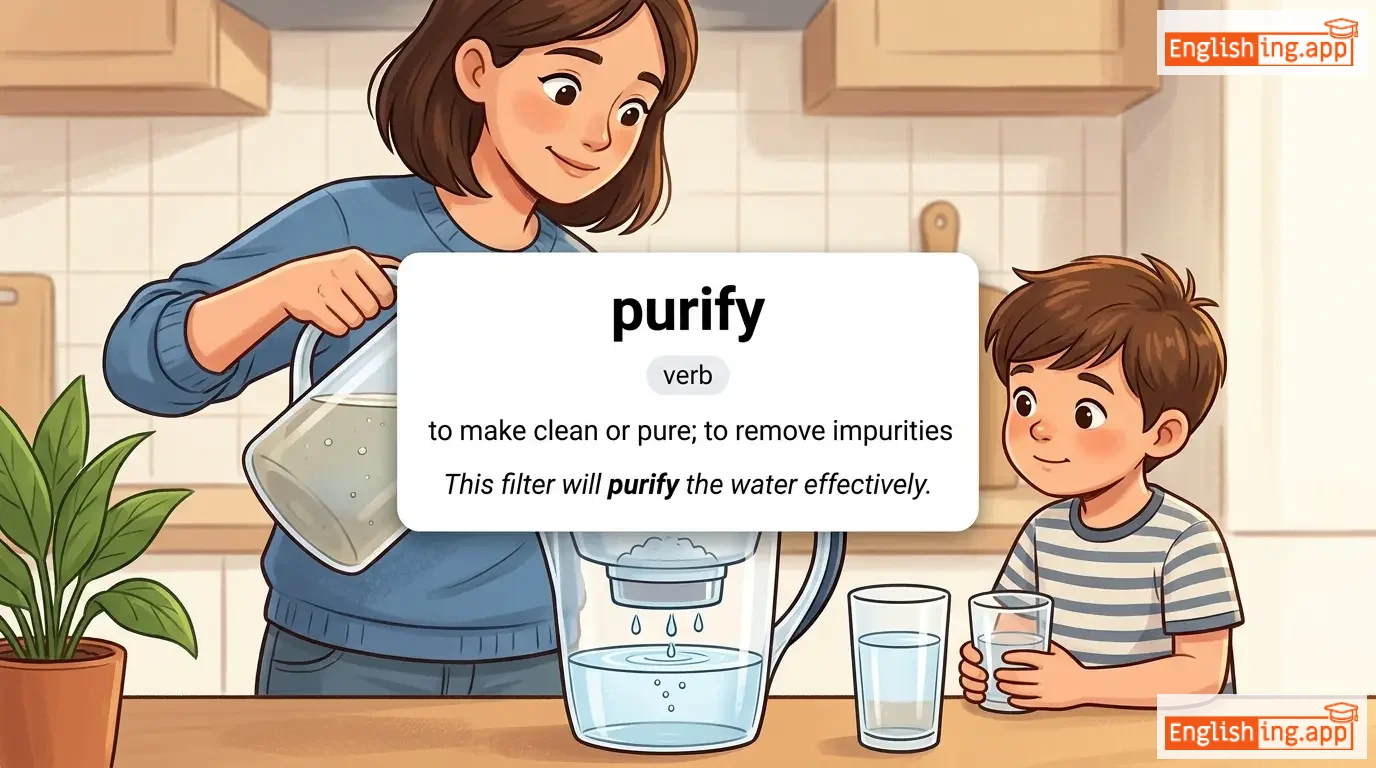
to make clean or pure; to remove impurities
••••••
|
This filter will purify the water effectively.
这个过滤器将有效地净化水。
••••••
|
这个过滤器将有效地净化水。
Zhège guòlǜqì jiāng yǒuxiàolì dì jìnghuà shuǐ.
••••••
|
- •••••• | - •••••• | - •••••• |
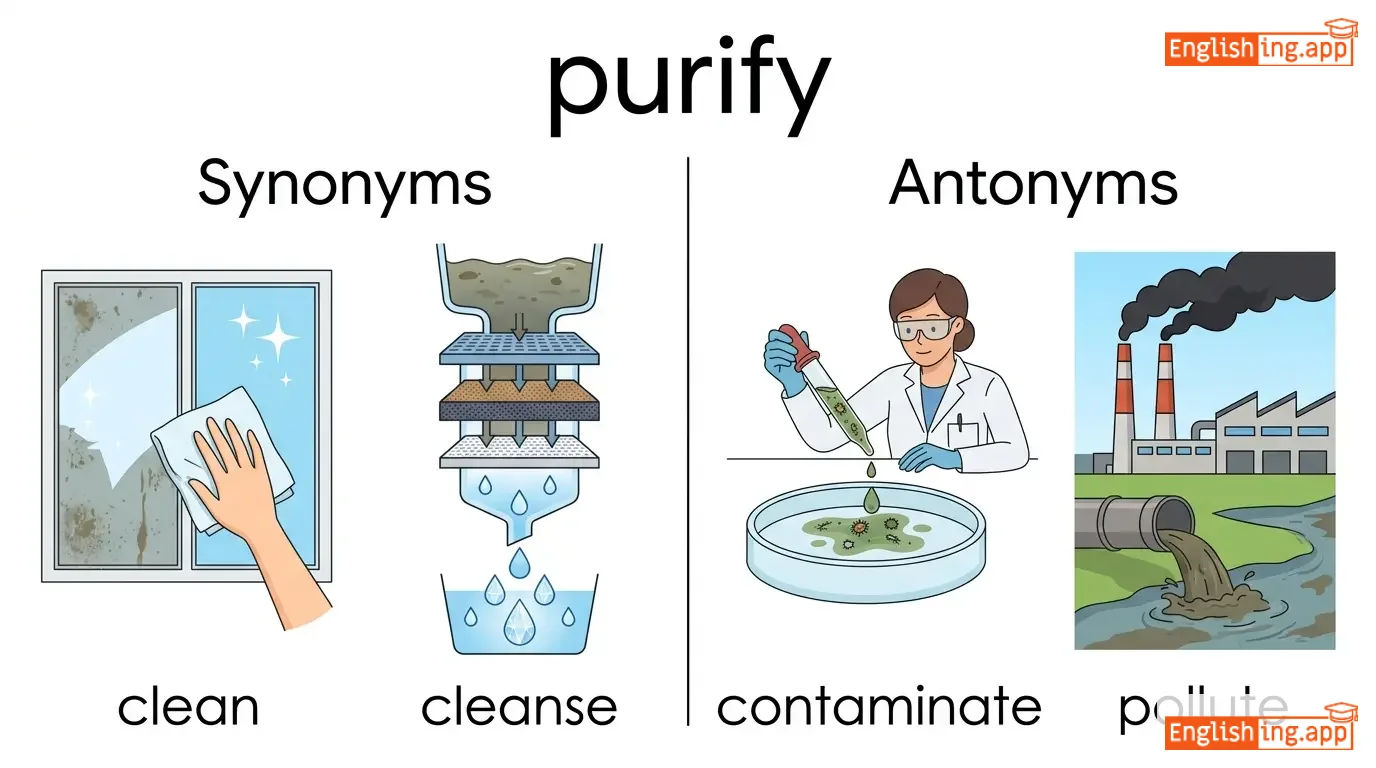
clean, cleanse, refine, filter
••••••
|
contaminate, pollute, dirty, corrupt
••••••
|
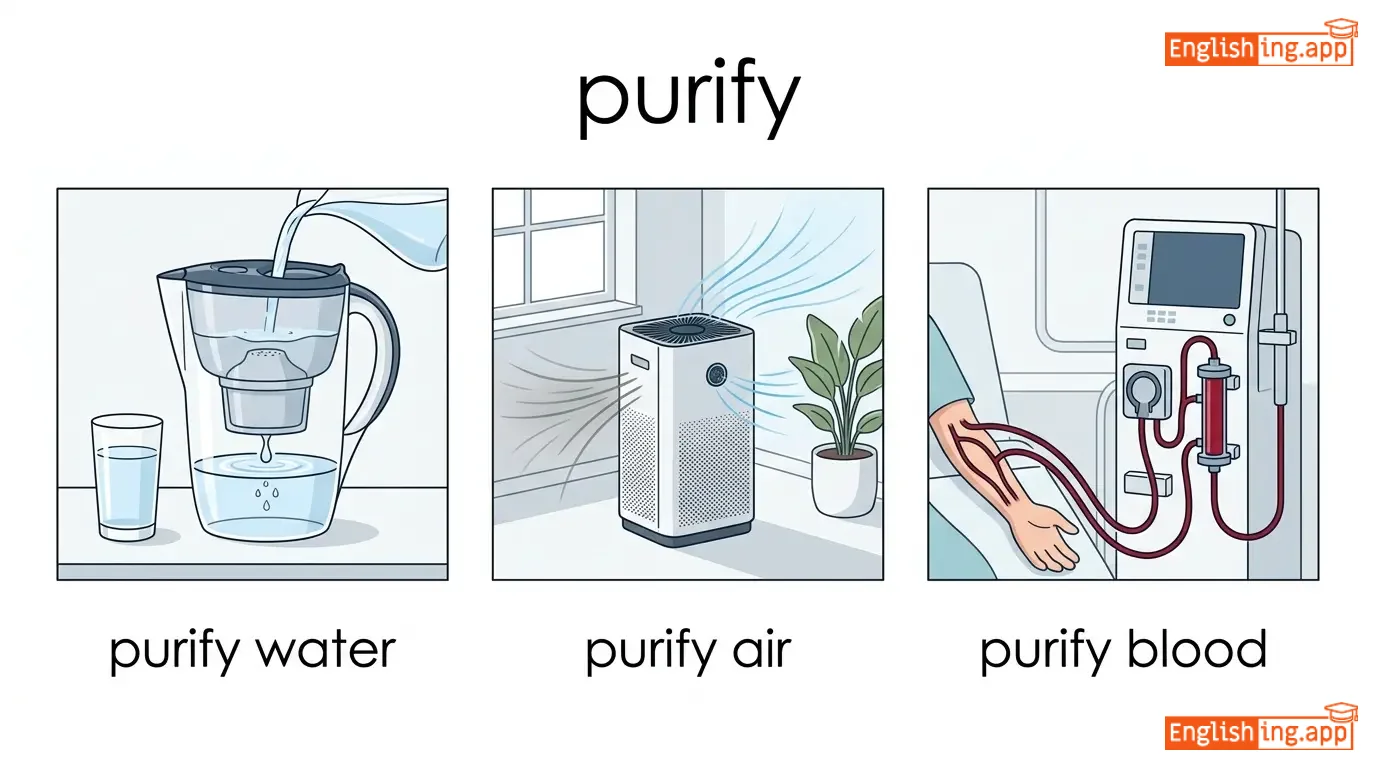
purify water, purify air, purify blood, purify mind, purify completely
••••••
|
Purify在中文是净化, 就像英语中的purify。
••••••
|
|
💎
••••••
|
/ˈpjʊrəti/
noun
(pú rì tǐ)
••••••
|
- •••••• |
纯净
chunjing
••••••
|
- •••••• | - •••••• | - •••••• | - •••••• |
The quality or state of being pure; freedom from contamination or sin.
••••••
|
The mountain air was admired for its purity.
山间的空气因其纯净而受到赞赏。
••••••
|
山间的空气因其纯净而受到赞赏。
Shānjiān de kōngqì yīn qí chúnjìng ér shòudào zànshǎng.
••••••
|
purity of heart
心灵的纯洁
••••••
|
Innocence and sincerity in one’s intentions.
••••••
|
心灵的纯洁
xīnlíng de chúnjié
••••••
|
cleanliness, innocence, clarity, integrity, chastity
••••••
|
impurity, corruption, sin
••••••
|
purity of mind, purity of heart, water purity, absolute purity
••••••
|
纯净就像清澈的水,水清澈时,它是完全透明的。
••••••
|
|
🟣
••••••
|
/ˈpɜː.pəl/
adjective
(pɜːrpl)
••••••
|
- •••••• |
紫色
zǐsè
••••••
|
- •••••• | - •••••• | - •••••• | - •••••• |
a color that is a mix of red and blue
••••••
|
She wore a beautiful purple dress to the party. |
她穿了一件漂亮的紫色裙子去参加聚会。
Tā chuānle yī jiàn piàoliang de zǐsè qúnzi qù cānjiā jùhuì.
••••••
|
born to the purple |
born into a royal or noble family
••••••
|
生于紫禁城
shēng yú zǐjìnchéng
••••••
|
violet, lavender, mauve, lilac, plum
••••••
|
colorless, pale, white
••••••
|
purple dress, purple flower, deep purple, light purple
••••••
|
紫色 = Purple, 高贵的颜色。
••••••
|
|
🎯
••••••
|
/ˈpɜːpəs/
noun
(pǒpǔs)
••••••
|
- •••••• |
目的
mudi
••••••
|
- •••••• | - •••••• | - •••••• | - •••••• |
the reason for which something is done or created
••••••
|
The purpose of this meeting is to discuss the new project.
这个会议的目的就是讨论新项目。
••••••
|
这个会议的目的就是讨论新项目。
Zhege huiyi de mudi jiushi taolun xin xiangmu.
••••••
|
on purpose
故意
••••••
|
intentionally; by design
••••••
|
故意
guyi
••••••
|
goal, aim, objective, intention
••••••
|
accident, mistake
••••••
|
life purpose, purpose-driven, purpose-built, higher purpose
••••••
|
Purpose - 找到你的目标,完成它
••••••
|
|
🏃♀️
••••••
|
/pərˈsuː/
verb
(pərˈsuː)
••••••
|
- •••••• |
追求
zhuīqiú
••••••
|
pursued
pərˈsuːd
••••••
|
pursued
pərˈsuːd
••••••
|
pursues
pərˈsuːz
••••••
|
pursuing
pərˈsuːɪŋ
••••••
|
to follow or chase with the intent to catch or achieve something
••••••
|
She decided to pursue her dreams of becoming a doctor.
她决定追求成为医生的梦想。
••••••
|
她决定追求成为医生的梦想。
Tā juédìng zhuīqiú chéngwéi yīshēng de mèngxiǎng.
••••••
|
- •••••• | - •••••• | - •••••• |
chase, seek, follow, strive
••••••
|
abandon, neglect, avoid
••••••
|
pursue a goal, pursue a career, pursue happiness, pursue success
••••••
|
要成为医生,你必须追求 (zhuīqiú) 你的梦想。
••••••
|
|
🏃♂️
••••••
|
/pəˈsjuːt/
noun
(pǔsūtu)
••••••
|
- •••••• |
追求, 寻求
zhuīqiú, xúnqiú
••••••
|
- •••••• | - •••••• | - •••••• | - •••••• |
the act of chasing or trying to achieve something
••••••
|
He dedicated his life to the pursuit of happiness. |
他将一生奉献给了追求幸福。
Tā jiāng yīshēng fèngxiàn gěi le zhuīqiú xìngfú.
••••••
|
in hot pursuit |
closely chasing someone or something
••••••
|
紧追不舍
jǐn zhuī bù shě
••••••
|
quest, chase, search, aim, endeavor
••••••
|
retreat, surrender, inaction
••••••
|
pursuit of happiness, pursuit of knowledge, in pursuit, career pursuit
••••••
|
Pursuit 就是追求目标,像在追赶某事一样。
••••••
|
|
➡️
••••••
|
/pʊʃ/
verb
(push)
••••••
|
|
推
tui
••••••
|
pushed
pushed
••••••
|
pushed
pushed
••••••
|
pushes
pushes
••••••
|
pushing
pushing
••••••
|
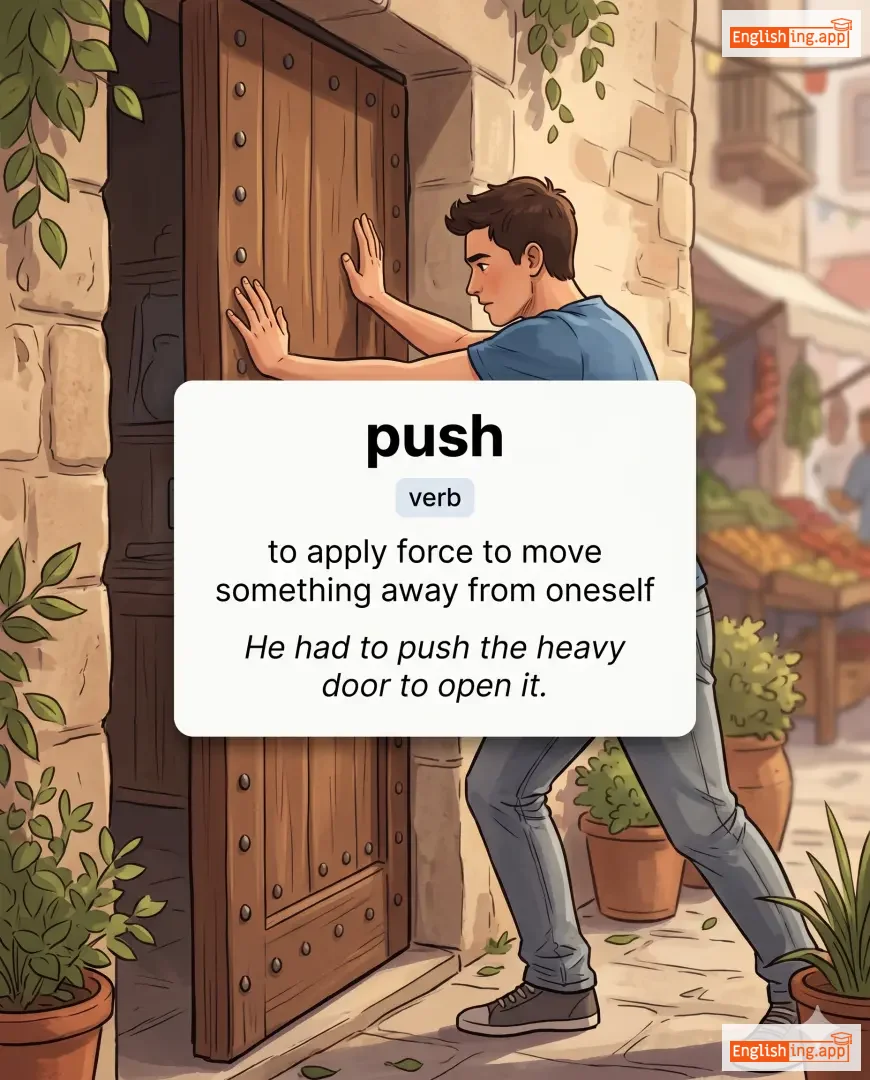
to apply force to move something away from oneself
••••••
|
He had to push the heavy door to open it.
他必须推开那扇沉重的门才能打开它。
••••••
|
他必须推开那扇沉重的门才能打开它。
Ta bixu tuikai na shan chenzhong de men cai neng dakai ta.
••••••
|
push the envelope
推信封
••••••
|
to go beyond the limits of what is normally done
••••••
|
突破极限
tupo jixian
••••••
|
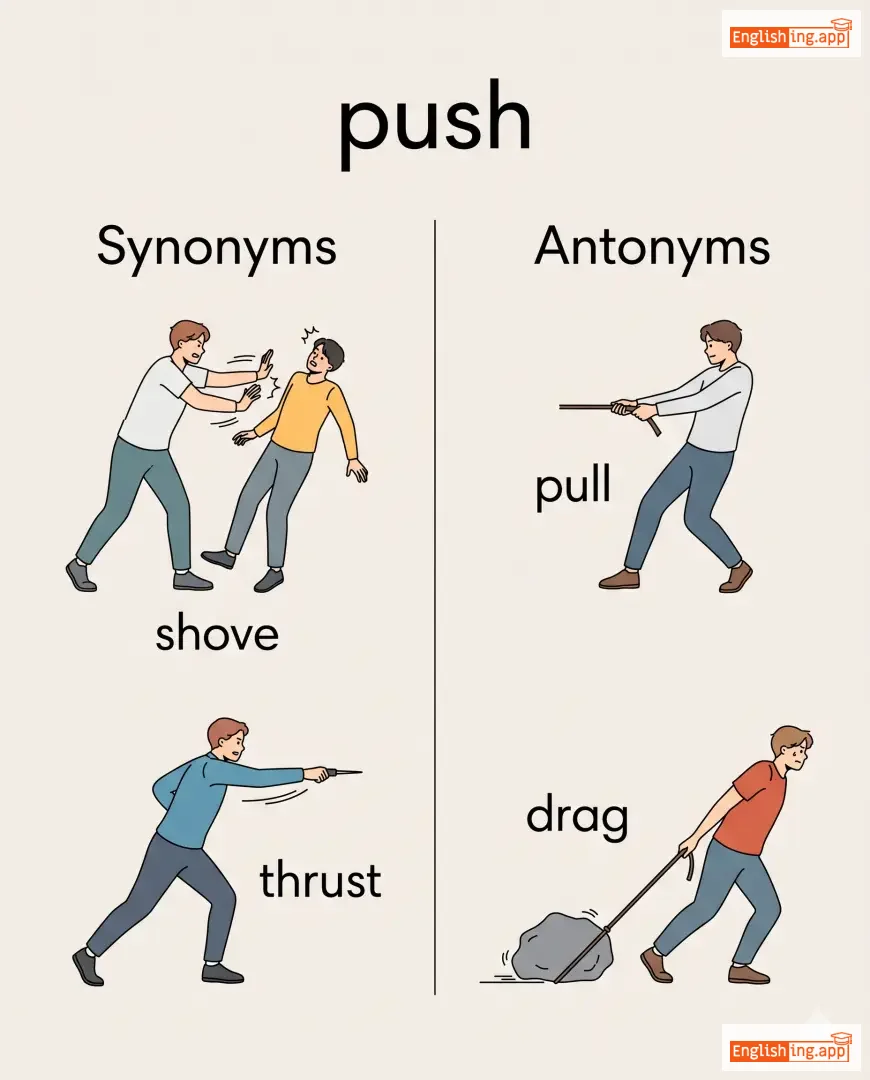
shove, thrust, propel, drive
••••••
|
pull, drag
••••••
|
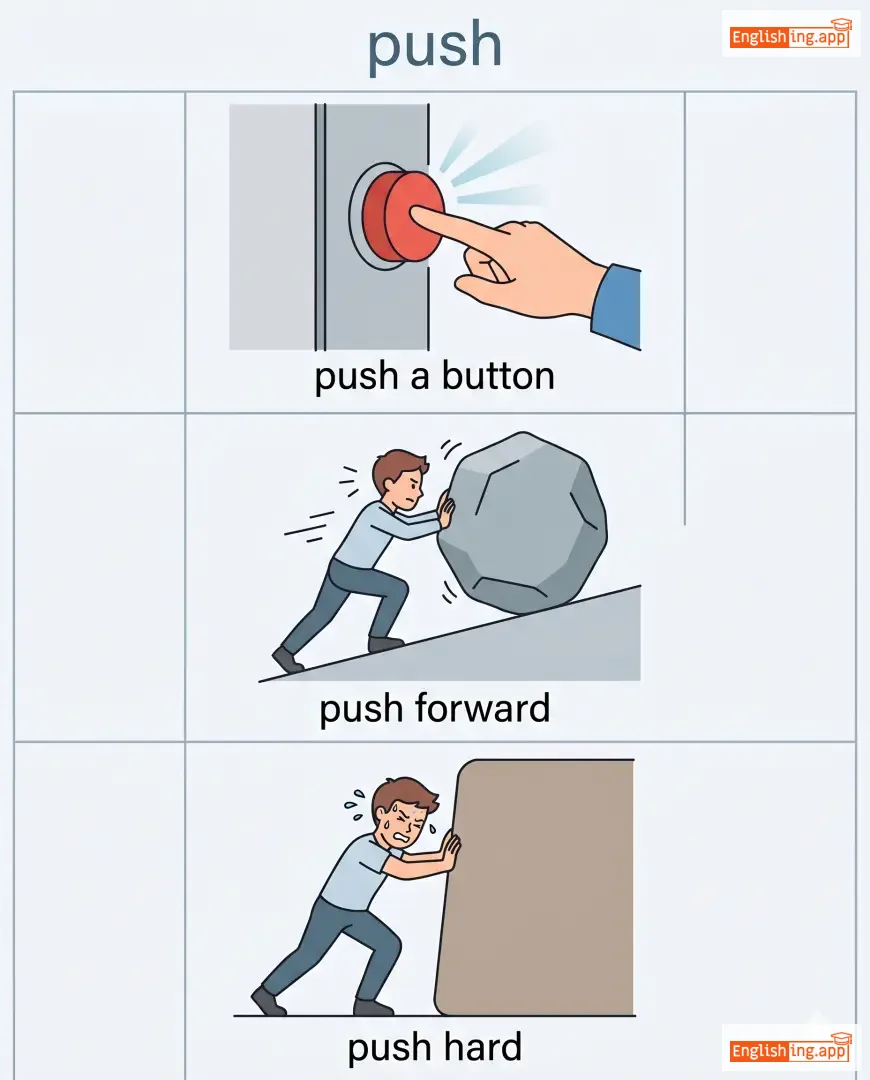
push a button, push forward, push hard, push back
••••••
|
Push意思是推——和拉正好相反。
••••••
|
|
📍
••••••
|
/pʊt/
verb
(put)
••••••
|

|
放
fang
••••••
|
put
put
••••••
|
put
put
••••••
|
puts
puts
••••••
|
putting
putting
••••••
|
to place something in a particular position; to move to a location
••••••
|
Please put the book on the table.
请把书放在桌子上。
••••••
|
请把书放在桌子上。
Qing ba shu fang zai zhuozi shang.
••••••
|
- •••••• | - •••••• | - •••••• |
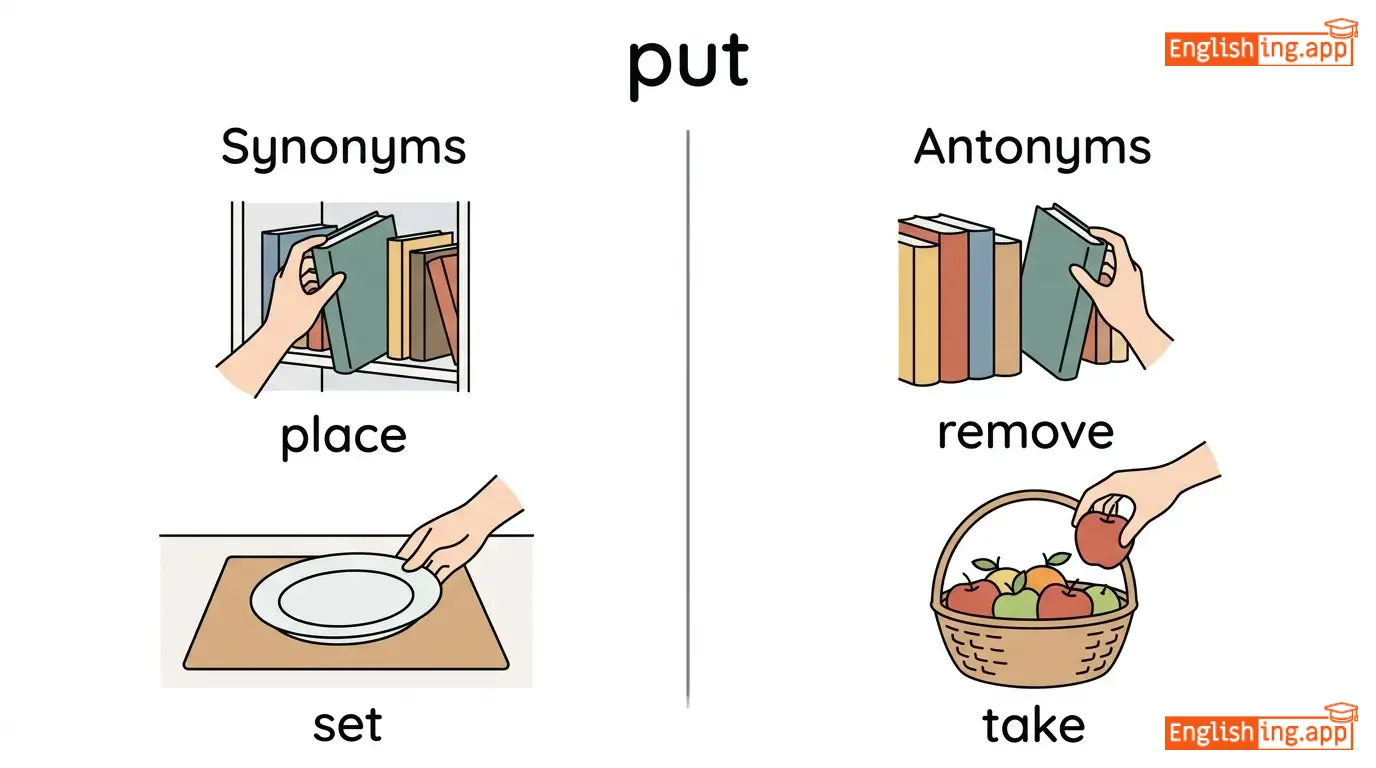
place, set, position, lay
••••••
|
remove, take, lift, withdraw
••••••
|
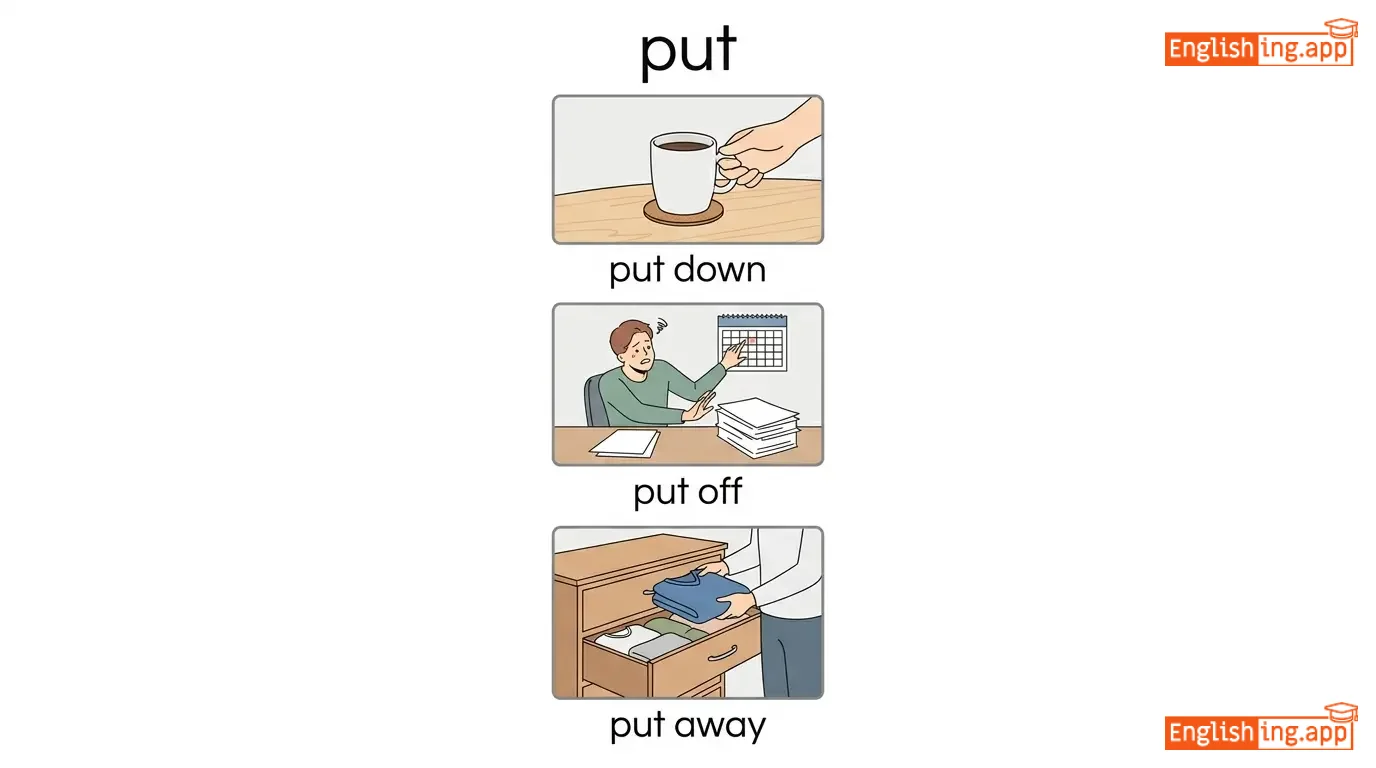
put down, put away, put together, put forward, put pressure, put effort
••••••
|
‘Put’ and ‘放’ share a similar meaning of placing things.
••••••
|
|
🧩
••••••
|
/ˈpʌzl/
noun, verb
(拼图)
••••••
|
|
谜题 / 使困惑
mí tí / shǐ kùn huò
••••••
|
puzzled
拼图
••••••
|
puzzled
拼图
••••••
|
puzzles
拼图
••••••
|
puzzling
拼图
••••••
|
a game, toy, or problem designed to test ingenuity; to cause someone to be confused
••••••
|
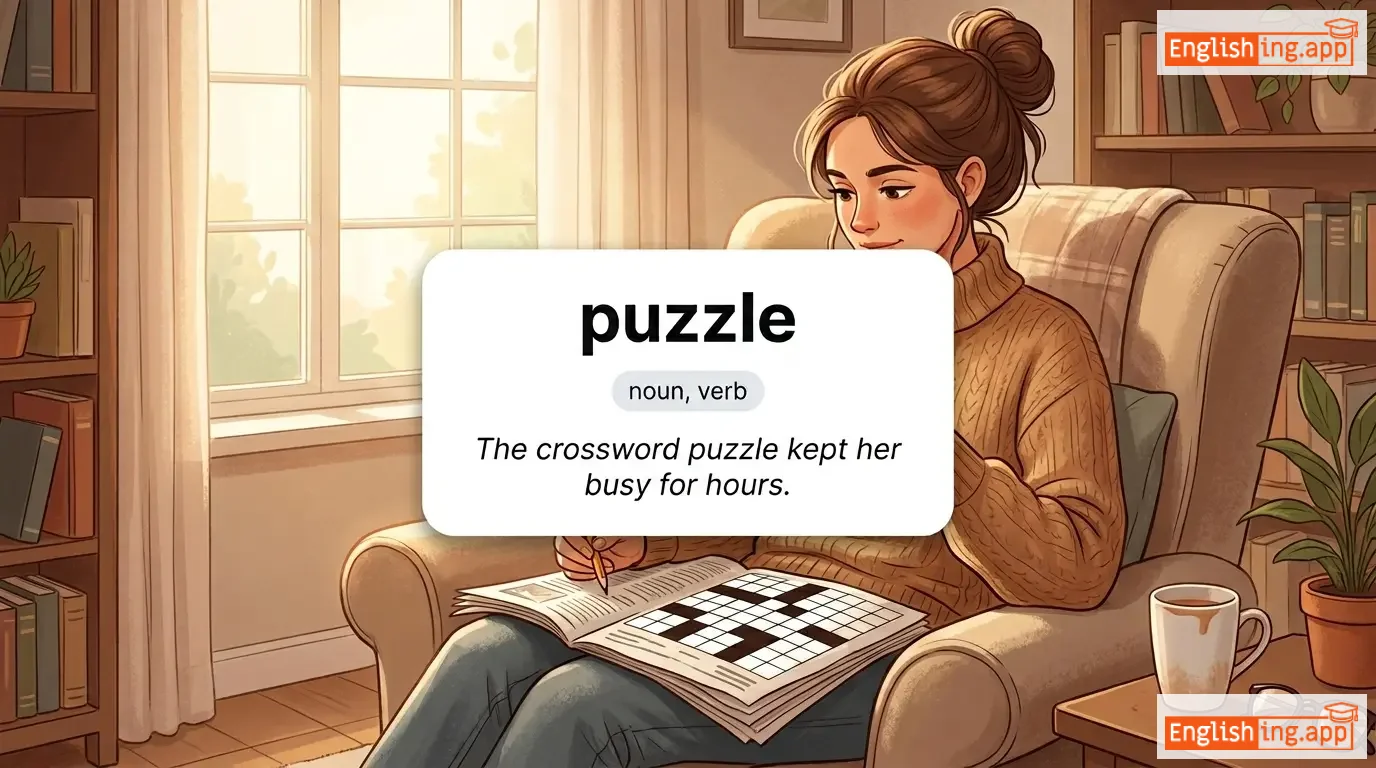
The crossword puzzle kept her busy for hours.
填字游戏让她忙了好几个小时。
••••••
|
填字游戏让她忙了好几个小时。
Tián zì yóu xì ràng tā máng le hǎo jǐ gè xiǎo shí.
••••••
|
puzzle over
思考难题
••••••
|
to think deeply about something difficult to understand
••••••
|
思考难题
sī kǎo nán tí
••••••
|
riddle, enigma, conundrum, problem, mystery
••••••
|
solution, answer, clarity
••••••
|
crossword puzzle, jigsaw puzzle, puzzle game, puzzle over
••••••
|
拼图是难题 — 让你的脑袋‘拼’成完整的解决方案。
••••••
|
|
🎓
••••••
|
/ˌkwɒlɪfɪˈkeɪʃən/
noun
(kwɒlɪfɪˈkeɪʃən)
••••••
|
- •••••• |
资格
zīgé
••••••
|
- •••••• | - •••••• | - •••••• | - •••••• |
a condition or skill that makes someone suitable for a job or activity; the process of qualifying
••••••
|
She listed her qualifications on the job application. |
她在求职申请中列出了她的资格。
Tā zài qiúzhí shēnqǐng zhōng lièchūle tā de zīgé.
••••••
|
meet the qualifications |
to possess the required skills or criteria
••••••
|
符合资格
fúhé zīgé
••••••
|
credential, requirement, competence, skill, eligibility
••••••
|
incompetence, disqualification
••••••
|
educational qualification, professional qualification, meet qualifications, required qualification
••••••
|
Qualification意味着资格 → 工作需要质量和教育
••••••
|
|
🎓
••••••
|
/ˈkwɒlɪfaɪd/
adjective
(kwɒlɪfaɪd)
••••••
|


|
合格
hege
••••••
|
- •••••• | - •••••• | - •••••• | - •••••• |
officially recognized as being trained or knowledgeable for a particular job or activity
••••••
|
She is a qualified doctor with years of experience.
她是一位具有多年经验的合格医生。
••••••
|
她是一位具有多年经验的合格医生。
Ta shi yi wei juyou duonian jingyan de hege yisheng.
••••••
|
qualified success
合格的成功
••••••
|
a success that is only partial or limited
••••••
|
合格的成功
hege de chenggong
••••••
|
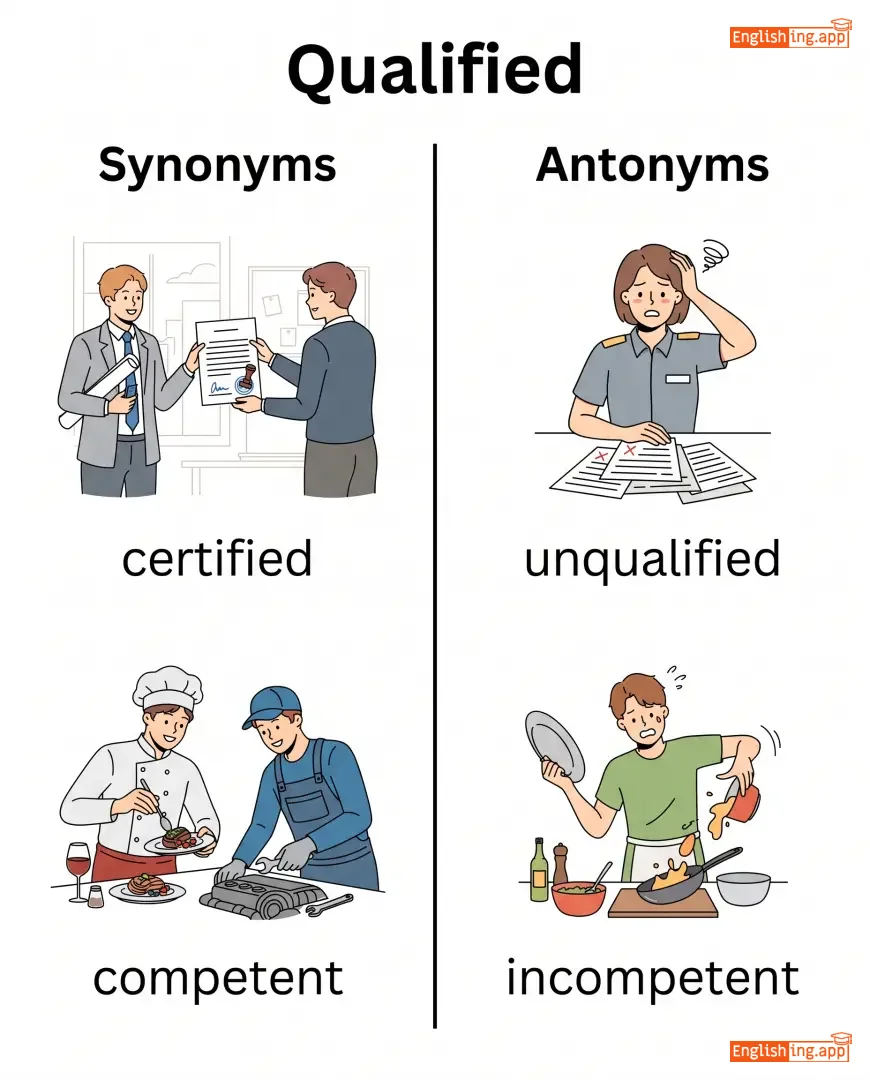
certified, competent, skilled, trained, capable
••••••
|
unqualified, incompetent, incapable
••••••
|
qualified teacher, qualified candidate, qualified doctor, qualified professional
••••••
|
合格 = 合理 + 成功 → 合格的人总是成功的。
••••••
|
|
✅
••••••
|
/ˈkwɒlɪfaɪ/
verb
(kwah-li-fai)
••••••
|

|
符合资格
fu he zi ge
••••••
|
qualified
kwah-li-feid
••••••
|
qualified
kwah-li-feid
••••••
|
qualifies
kwah-li-fais
••••••
|
qualifying
kwah-li-fai-ing
••••••
|
to meet the requirements or conditions for something
••••••
|
He worked hard to qualify for the final round.
他努力工作以符合最后一轮的资格。
••••••
|
他努力工作以符合最后一轮的资格。
Ta nuli gongzuo yi fuhe zuìhòu yī lún de zīgé.
••••••
|
qualify for
符合资格
••••••
|
to be eligible for something
••••••
|
符合资格
fu he zi ge
••••••
|
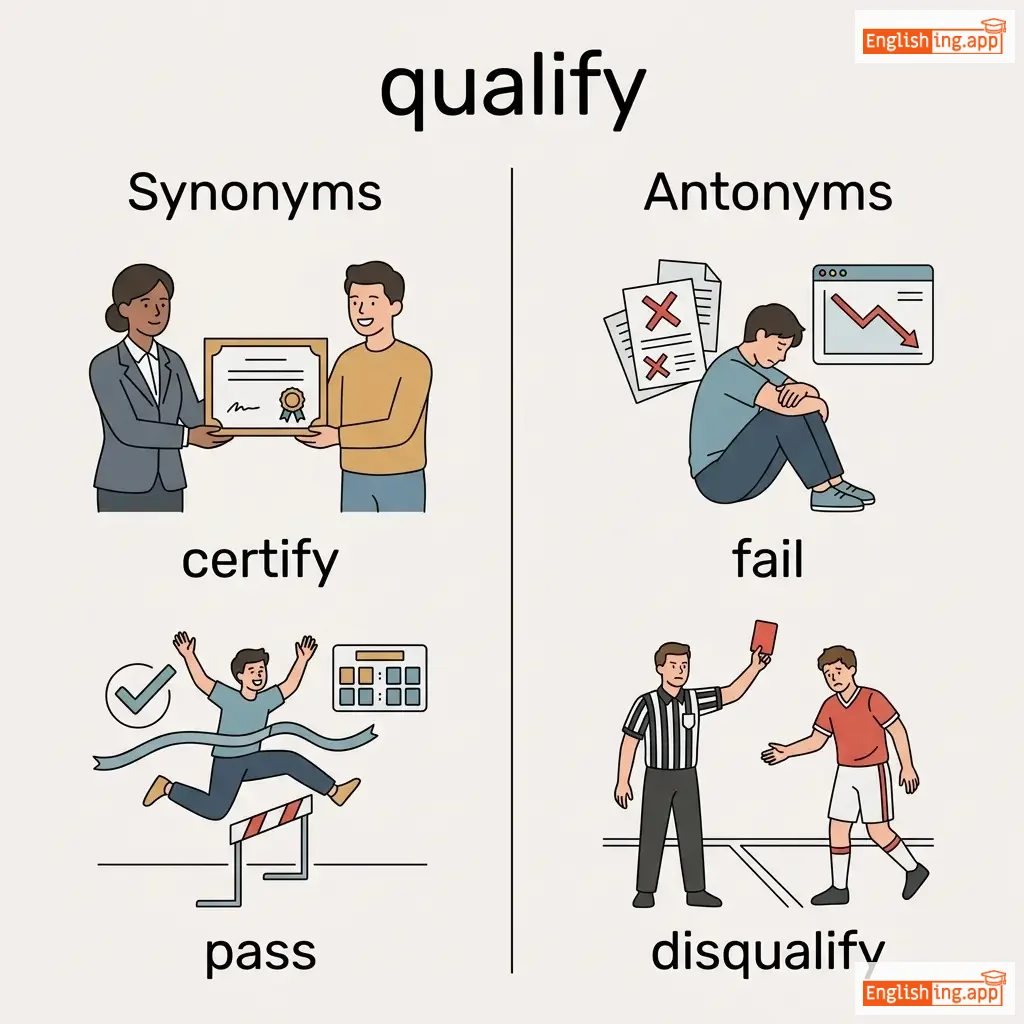
certify, pass, succeed, train, achieve
••••••
|
fail, disqualify
••••••
|
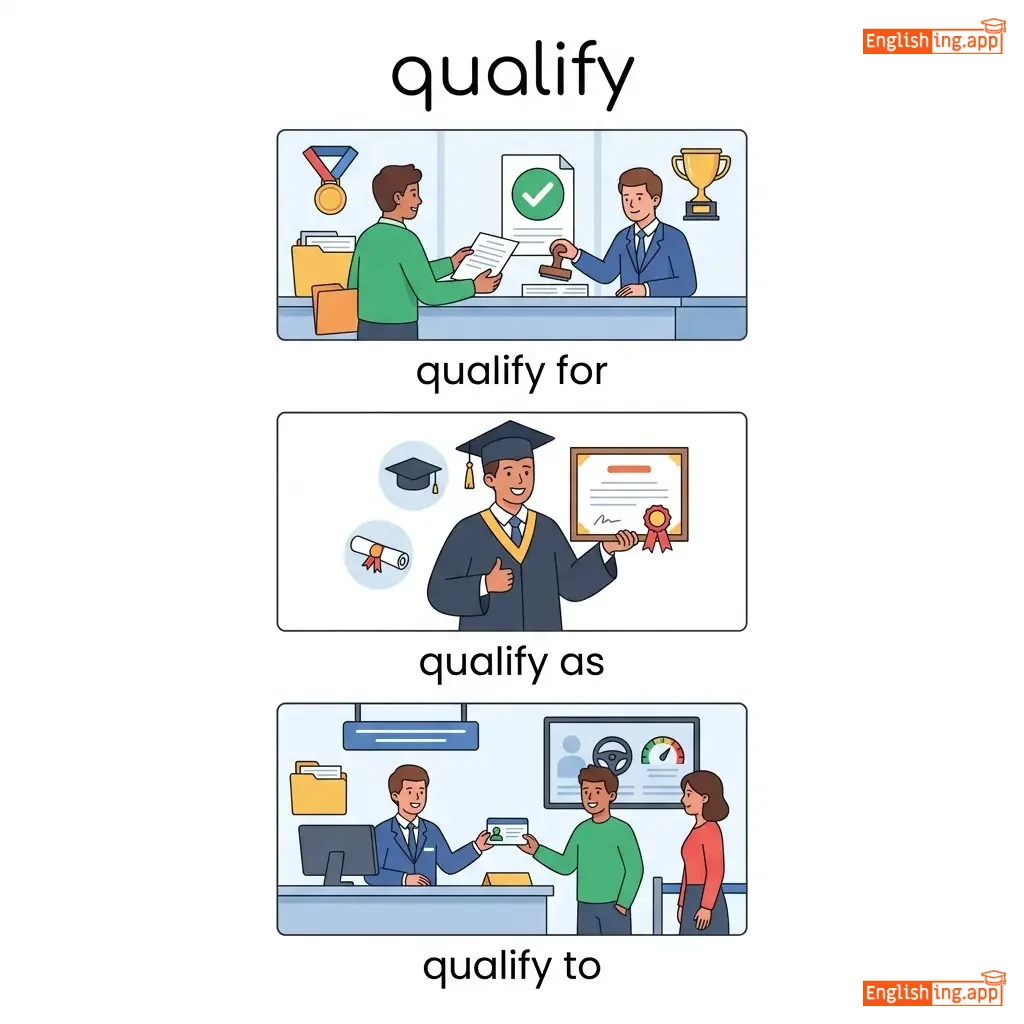
qualify for, qualify as, qualify to, newly qualified
••••••
|
Qualify在中文意味着符合资格,就像英语一样。
••••••
|
|
⭐
••••••
|
/ˈkwɒl.ɪ.ti/
noun
(质量)
••••••
|
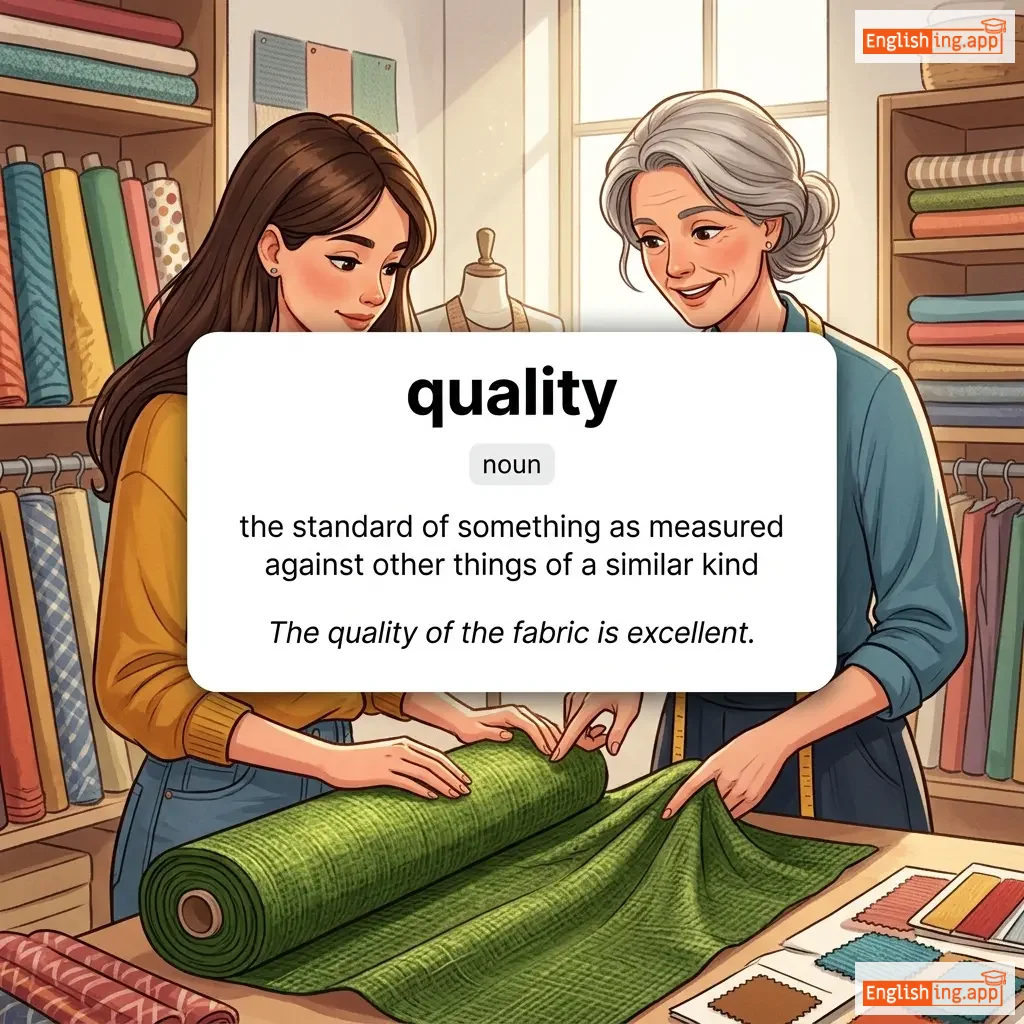
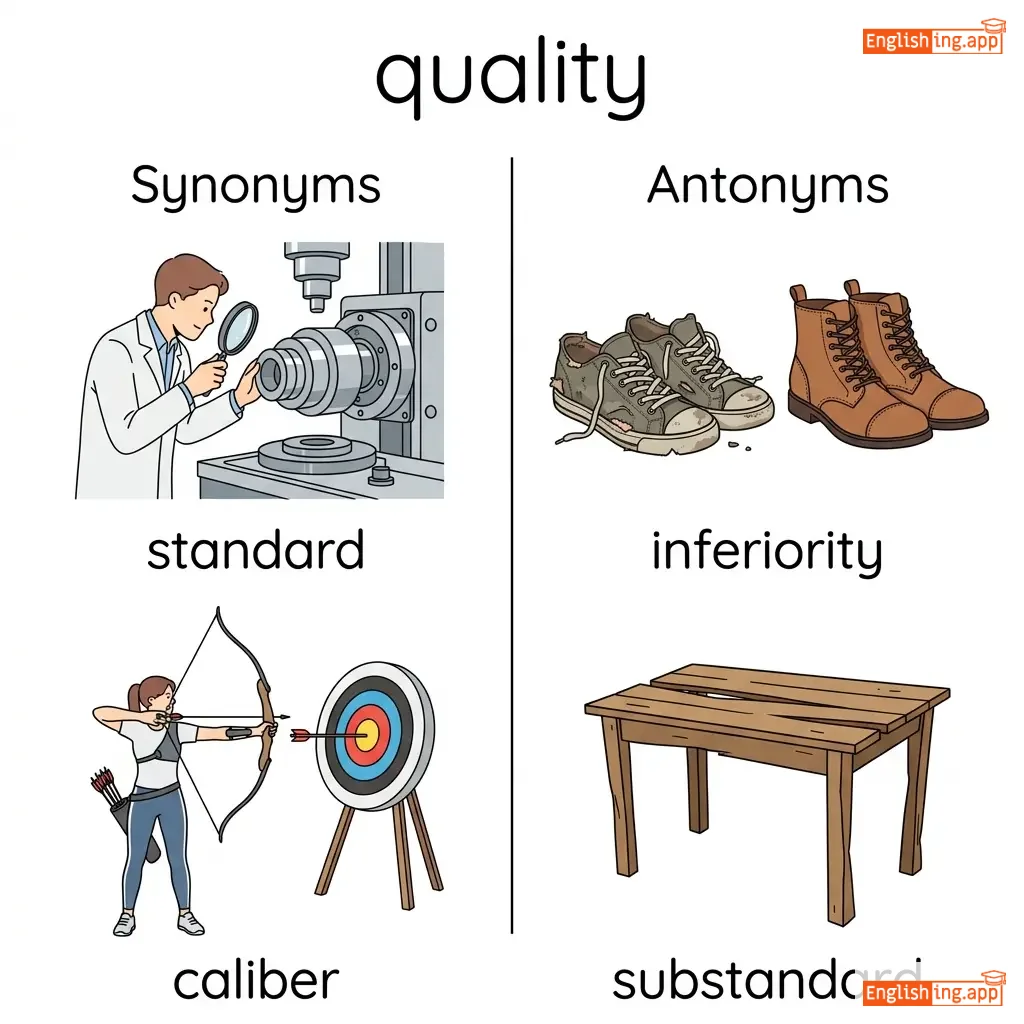
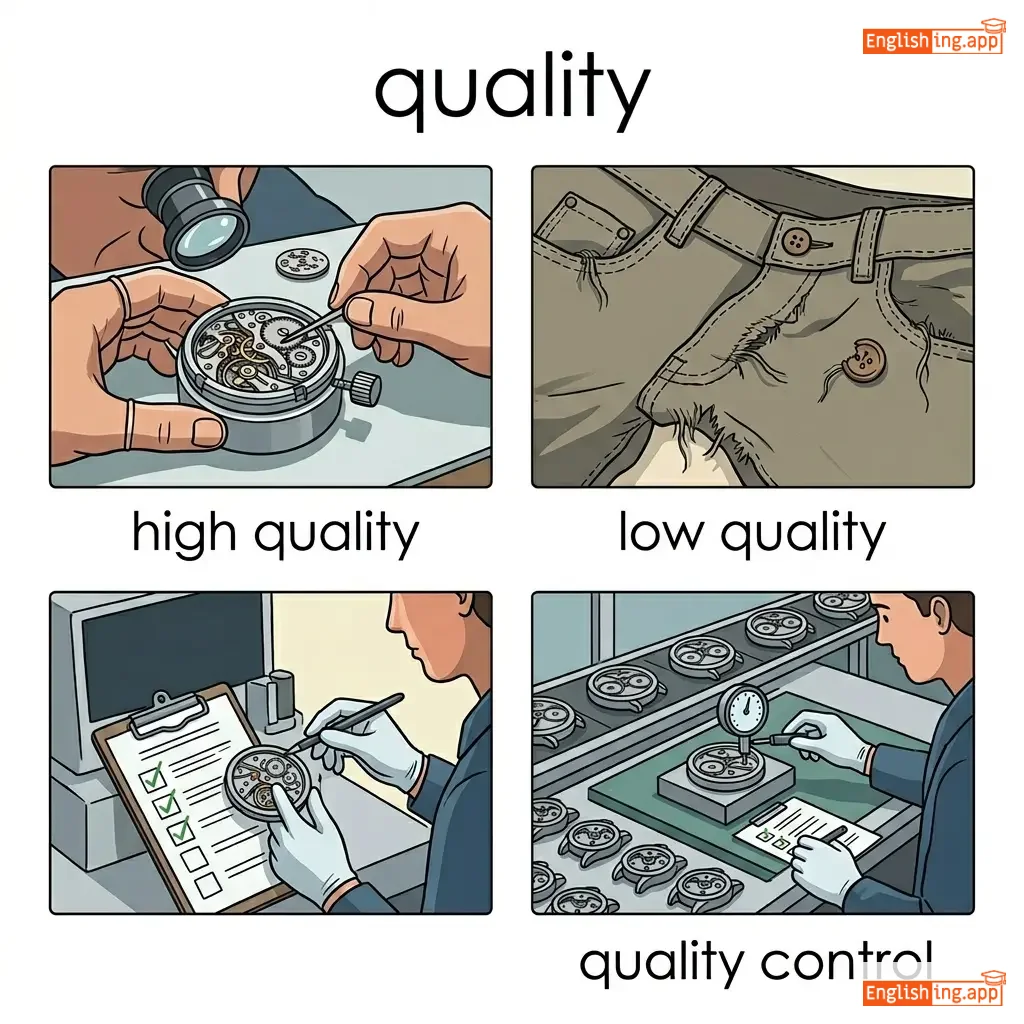
|
质量
zhìliàng
••••••
|
- •••••• | - •••••• | - •••••• | - •••••• |
the standard of something when compared to other things; characteristic or feature
••••••
|
This restaurant is known for the high quality of its food. |
这家餐厅以其高质量的食物而闻名。
Zhè jiā cāntīng yǐ qí gāo zhìliàng de shíwù ér wénmíng.
••••••
|
- •••••• | - •••••• | - •••••• |
standard, grade, characteristic, attribute
••••••
|
inferiority, defect, flaw
••••••
|
high quality, poor quality, quality control
••••••
|
质量是评价一个事物优劣的标准
••••••
|
|
🔢
••••••
|
/ˈkwɒn.tə.ti/
noun
(kwán-ti-ti)
••••••
|
- •••••• |
数量
shùliàng
••••••
|
- •••••• | - •••••• | - •••••• | - •••••• |
An amount or number of something.
••••••
|
The shop ordered a large quantity of rice. |
商店订购了大量的米。
Shāngdiàn dìnggòu le dàliàng de mǐ.
••••••
|
quantity over quality |
Focusing on producing more items rather than better ones.
••••••
|
数量超过质量
shùliàng chāoguò zhìliàng
••••••
|
amount, volume, total, number, mass
••••••
|
quality, scarcity, lack
••••••
|
large quantity, small quantity, huge quantity, quantity supplied, quantity demanded
••••••
|
数量就是有多少东西,更多就是数量。
••••••
|
|
🟦
••••••
|
/ˈkwɔː.tər/
noun/verb
(kwɔːr.tər)
••••••
|
- •••••• |
四分之一
si fen zhi yi
••••••
|
quartered
kwɔːr.təd
••••••
|
quartered
kwɔːr.təd
••••••
|
quarters
kwɔːr.tərs
••••••
|
quartering
kwɔːr.tərɪŋ
••••••
|
One-fourth part of something; also used for housing or accommodating.
••••••
|
She paid a quarter of the total bill.
shi peɪd ə kwɔːr.tər ʌv ðə təʊ.təl bɪl.
••••••
|
她支付了总账单的四分之一。
Tā zhīfùle zǒng zhàngdān de sì fēn zhī yī.
••••••
|
quarter to
kwɔːr.tər tu
••••••
|
Used to indicate 15 minutes before the hour in time.
••••••
|
差十五分钟
Chà shíwǔ fēnzhōng
••••••
|
fourth, segment, section, division
••••••
|
whole, entirety
••••••
|
a quarter of, quarter century, quarter hour, residential quarters
••••••
|
四分之一就是1/4,就像四分之一块蛋糕一样。
••••••
|
|
🏈
••••••
|
/ˈkwɔːtərˌbæk/
noun
(kwòrtèrbàk)
••••••
|
- •••••• |
四分卫
sifènwèi
••••••
|
- •••••• | - •••••• | - •••••• | - •••••• |
the player who directs a team’s offense in American football
••••••
|
The quarterback threw a perfect pass.
四分卫传了一个完美的传球。
••••••
|
四分卫传了一个完美的传球。
Sifènwèi chuánle yīgè wánměi de chuánqiú.
••••••
|
- •••••• | - •••••• | - •••••• |
playmaker, leader, captain
••••••
|
follower, subordinates
••••••
|
quarterback role, quarterback pass, quarterback player
••••••
|
要成为一个出色的四分卫,你需要精准地传球。
••••••
|
|
👑
••••••
|
/kwiːn/
noun
(kùīng)
••••••
|
- •••••• |
女王
nǚwáng
••••••
|
- •••••• | - •••••• | - •••••• | - •••••• |
a female ruler of a country or the wife of a king
••••••
|
The queen addressed her people with grace. |
女王以优雅的姿态向她的人民致辞。
Nǚwáng yǐ yōuyǎ de zītài xiàng tā de rénmín zhìcí.
••••••
|
drama queen |
a person who overreacts or exaggerates emotions
••••••
|
戏剧女王
xìjù nǚwáng
••••••
|
monarch, ruler, sovereign, empress, consort
••••••
|
king, commoner, servant
••••••
|
queen bee, beauty queen, queen of hearts, crowned queen
••••••
|
Queen 是女王 👑 – 皇室优雅!
••••••
|
|
❓
••••••
|
/ˈkwɪəri/
verb
(奎瑞)
••••••
|

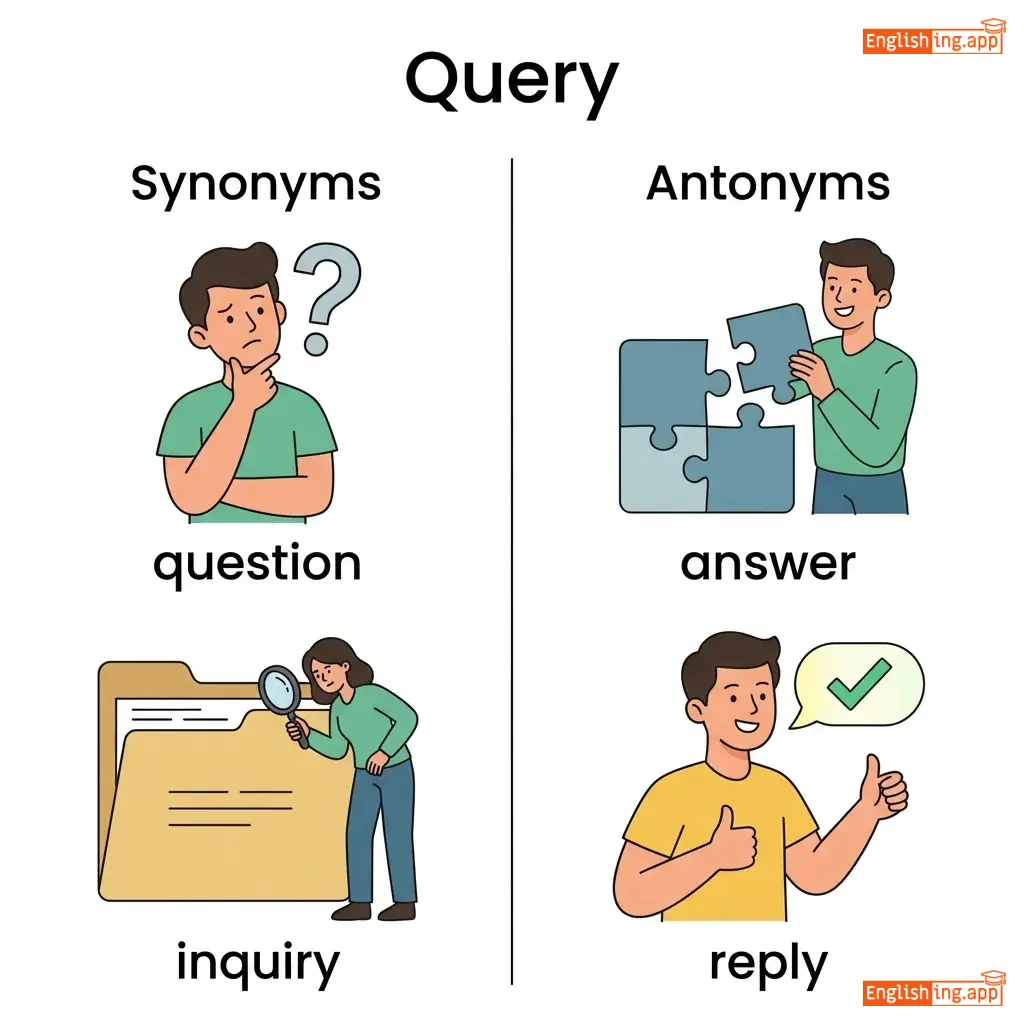
|
询问
xunwen
••••••
|
queried
奎瑞德
••••••
|
queried
奎瑞德
••••••
|
queries
奎瑞斯
••••••
|
querying
奎瑞英
••••••
|
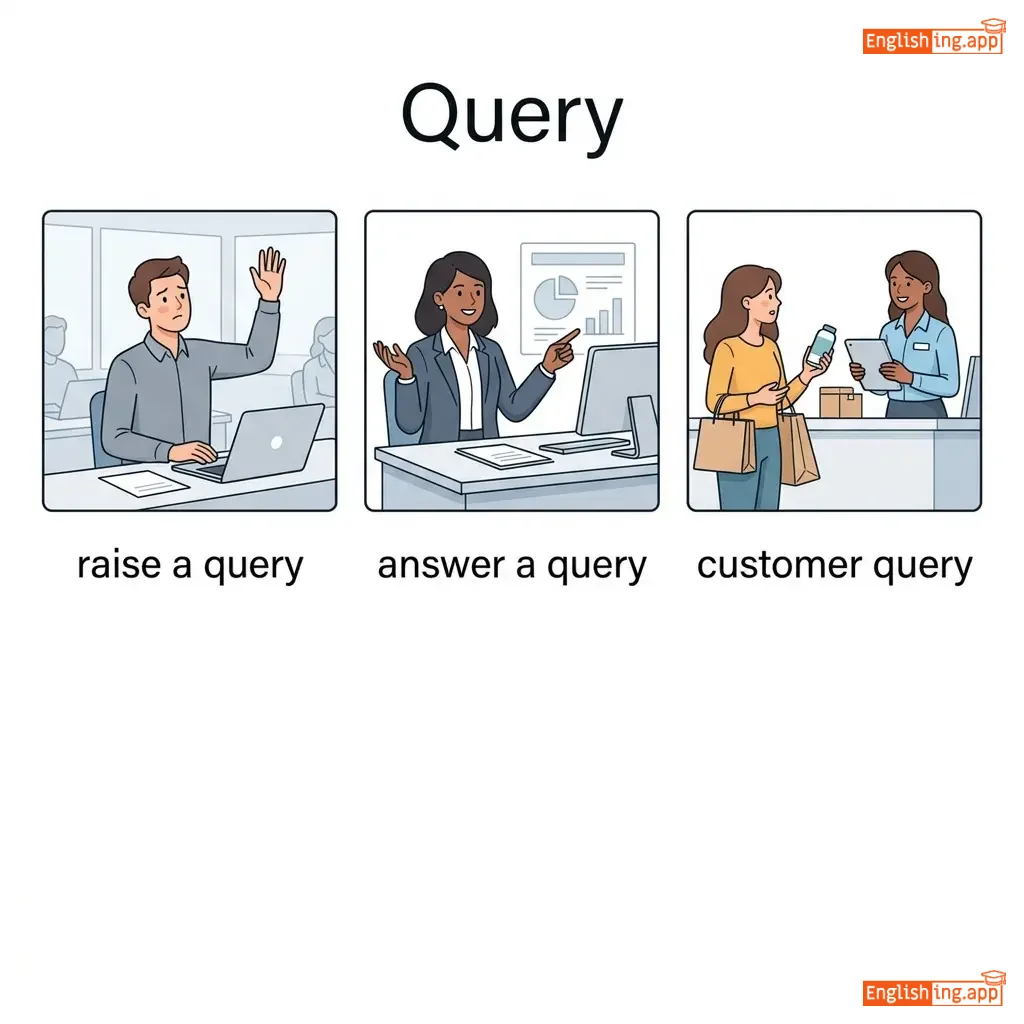
to ask a question; to express doubt about something
••••••
|
The student decided to query the professor about the assignment.
学生决定奎瑞教授关于作业。
••••••
|
学生决定向教授询问作业的事。
Xuesheng jueding xiang jiaoshou xunwen zuoye de shi.
••••••
|
- •••••• | - •••••• | - •••••• |
question, ask, inquire, challenge
••••••
|
answer, accept, confirm
••••••
|
database query, search query, query results, SQL query, query language
••••••
|
Query and ‘xunwen’ both mean to ask — imagine sending a ‘query’ to your Chinese teacher.
••••••
|
|
🔍
••••••
|
/kwest/
verb
(kuèst)
••••••
|

|
寻找
xúnzhǎo
••••••
|
quested
kuèstəd
••••••
|
quested
kuèstəd
••••••
|
quests
kuèsts
••••••
|
questing
kuèsting
••••••
|
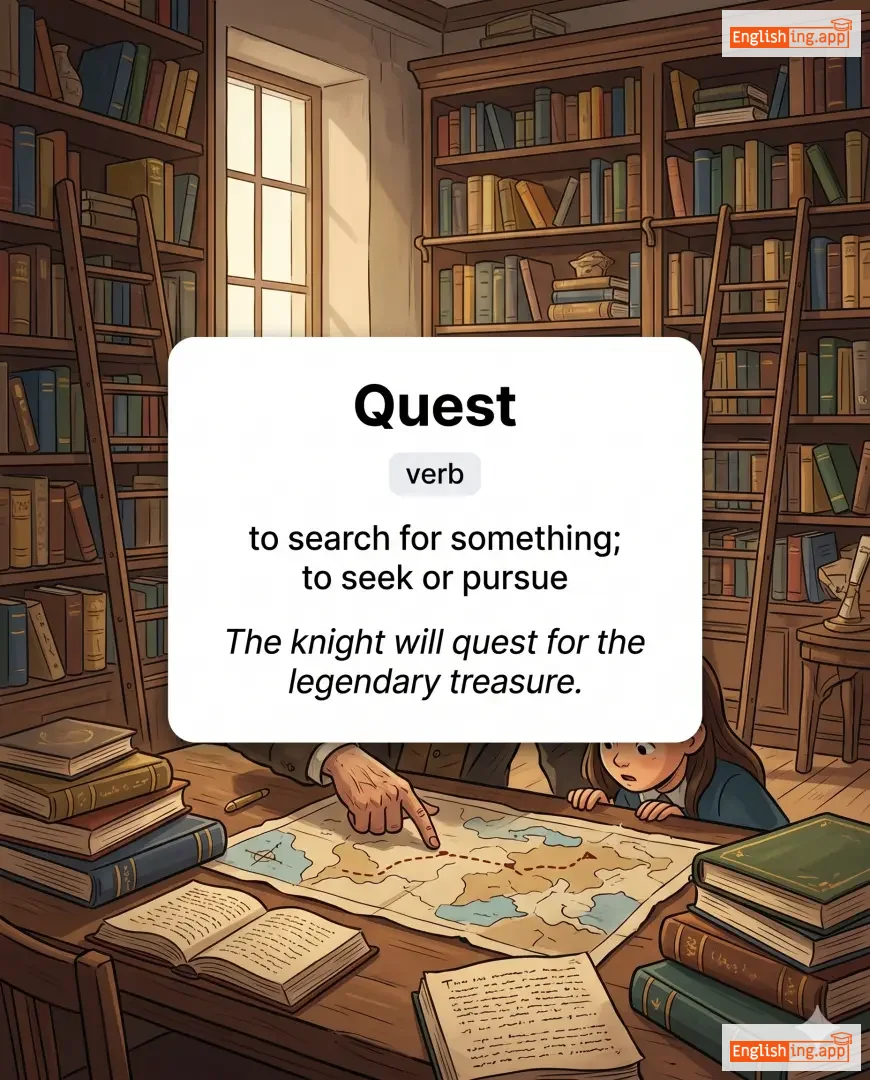
to search for something; to seek or pursue
••••••
|
The knight will quest for the legendary treasure.
骑士将寻找传奇的宝藏。
••••••
|
骑士将寻找传奇的宝藏。
Qíshì jiāng xúnzhǎo chuánqí de bǎocáng.
••••••
|
- •••••• | - •••••• | - •••••• |
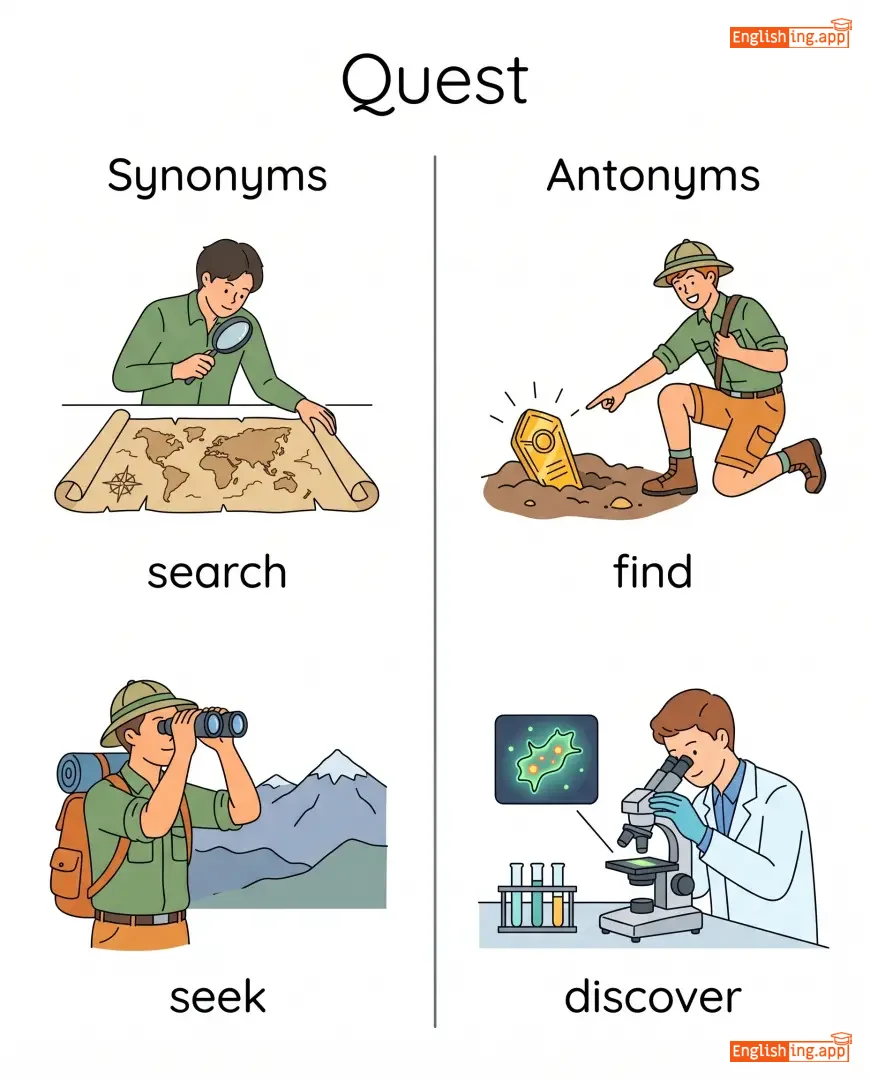
search, seek, pursue, hunt
••••••
|
find, discover, abandon
••••••
|
quest for truth, heroic quest, spiritual quest, quest continues
••••••
|
In Chinese, '寻找' (xúnzhǎo) means questing, like searching for a treasure.
••••••
|
|
❓
••••••
|
/ˈkwes.tʃən/
noun/verb
(kwes.chən)
••••••
|

|
问题
wenti
••••••
|
questioned
kwes.chend
••••••
|
questioned
kwes.chend
••••••
|
questions
kwes.chens
••••••
|
questioning
kwes.chening
••••••
|
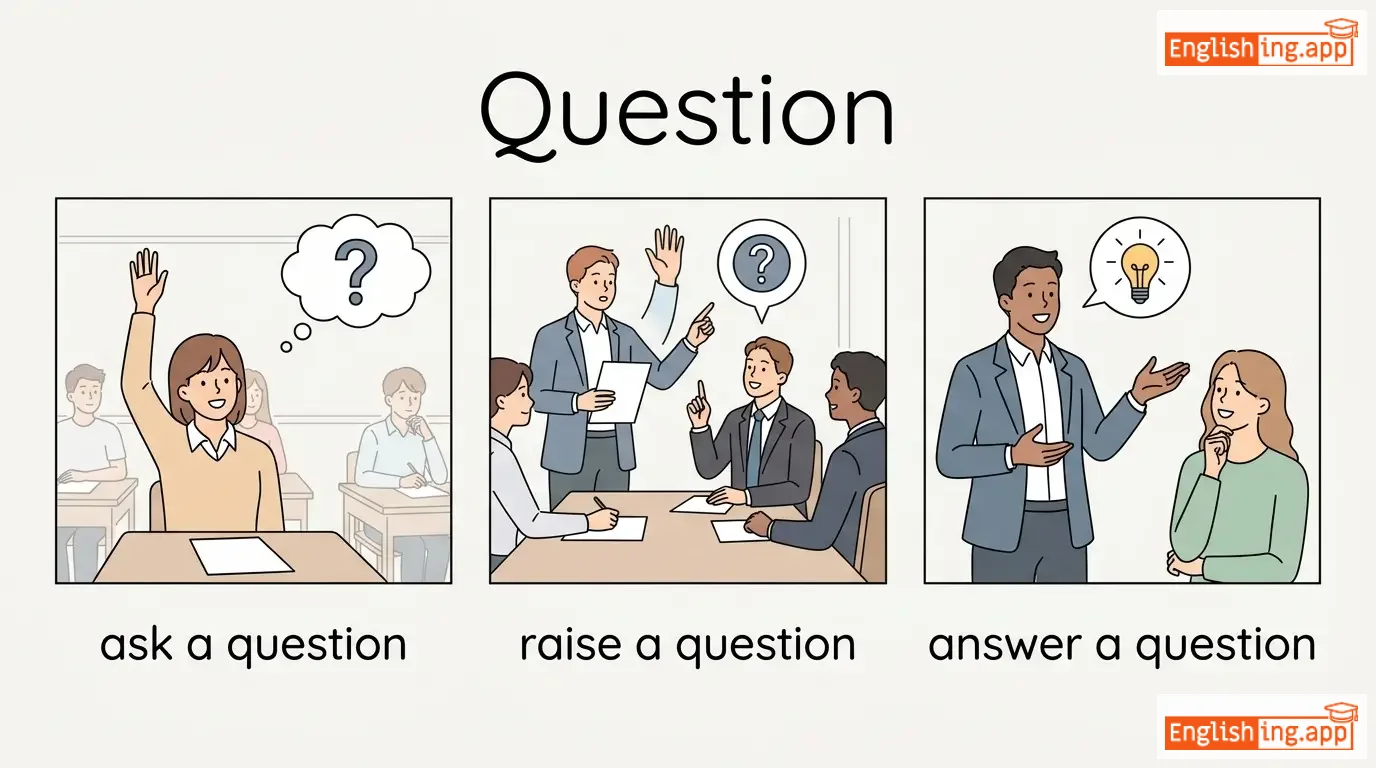
A sentence designed to elicit information; or to ask something.
••••••
|
She asked a difficult question during the meeting.
Shi askd a difikult kwes.chon during de meeting.
••••••
|
她在会议中提出了一个困难的问题。
Ta zai huiyi zhong tichu le yige kunnan de wenti.
••••••
|
beyond question
beyond kwes.chon
••••••
|
without doubt
••••••
|
毫无疑问
haowu yiwent
••••••
|
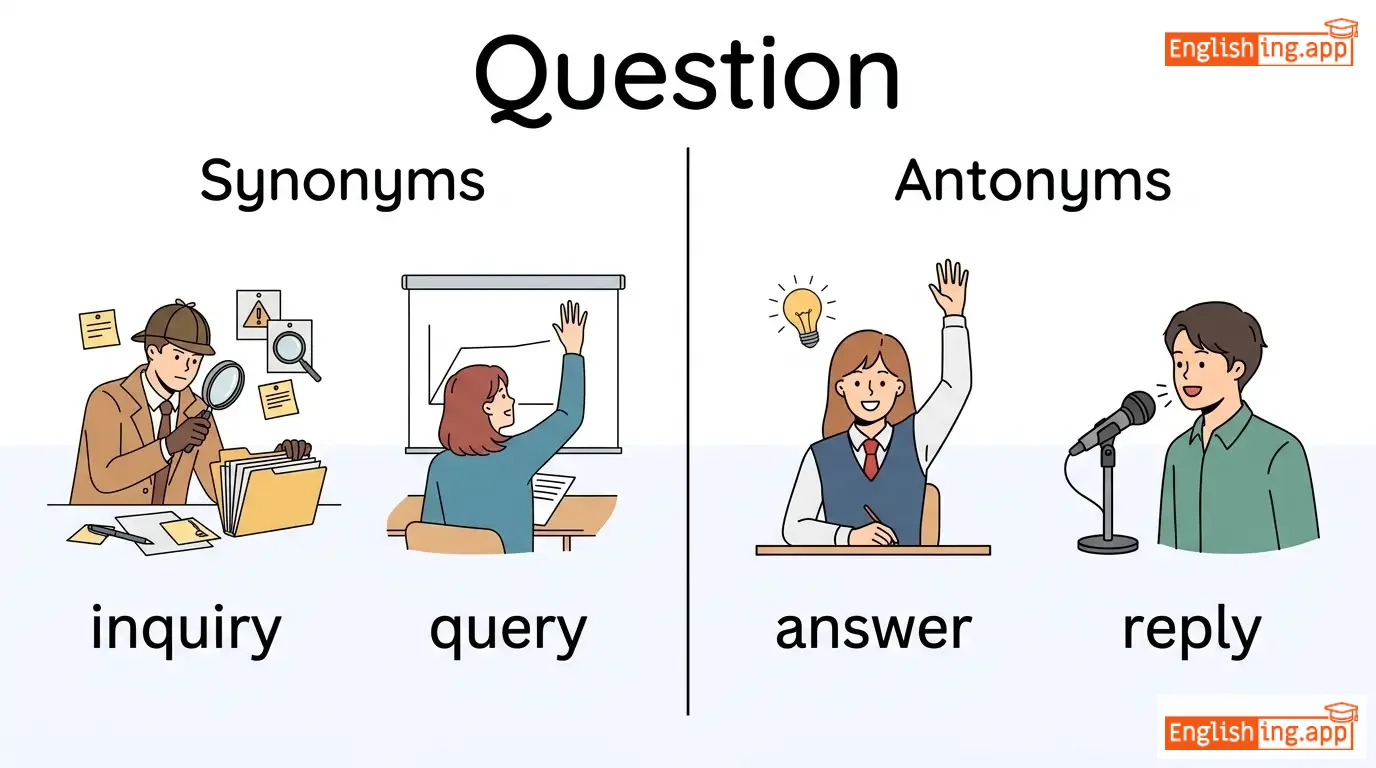
inquiry, query, ask, interrogate
••••••
|
answer, reply
••••••
|
ask a question, raise a question, answer a question, difficult question
••••••
|
问题:问问题就能得到答案。
••••••
|
|
📋
••••••
|
/ˌkwes.tʃəˈneər/
noun
(kwes-chuh-ner)
••••••
|
- •••••• |
问卷
wenjuan
••••••
|
- •••••• | - •••••• | - •••••• | - •••••• |
a set of written questions used to collect information or opinions
••••••
|
Participants filled out a detailed questionnaire about their habits.
参与者填写了关于他们习惯的详细问卷。
••••••
|
参与者填写了关于他们习惯的详细问卷。
Canyu zhe tianxie le guanyu tamen xiguan de xishi wenjuan.
••••••
|
- •••••• | - •••••• | - •••••• |
survey, form, poll, feedback form, inquiry sheet
••••••
|
answer, response, reply
••••••
|
fill out questionnaire, complete questionnaire, survey questionnaire, customer questionnaire
••••••
|
问卷就像是有很多问题的问卷 – 记住,问卷!
••••••
|
|
⚡
••••••
|
/kwɪk/
adjective
(kwik)
••••••
|
- •••••• |
快速
kuaisu
••••••
|
- •••••• | - •••••• | - •••••• | - •••••• |
fast; rapid; swift; happening in a short time
••••••
|
She gave a quick answer to the teacher's question.
她对老师的问题给出了快速的回答。
••••••
|
她对老师的问题给出了快速的回答。
Tā duì lǎoshī de wèntí gěi chūle kuàisù de huídá.
••••••
|
- •••••• | - •••••• | - •••••• |
fast, rapid, swift, speedy
••••••
|
slow, sluggish, leisurely, gradual
••••••
|
quick response, quick decision, quick learner
••••••
|
Quick = 快速 (kuaisu) - 就像跑步时非常迅速。
••••••
|
|
⚡
••••••
|
/ˈkwɪk.li/
adverb
(kwɪkli)
••••••
|
- •••••• |
迅速; 快速
xùnsù; kuàisù
••••••
|
- •••••• | - •••••• | - •••••• | - •••••• |
at a fast speed; with little delay; rapidly
••••••
|
He quickly finished his homework.
他迅速完成了他的作业。
••••••
|
他迅速完成了他的作业。
Tā xùnsù wánchéngle tā de zuòyè.
••••••
|
- •••••• | - •••••• | - •••••• |
rapidly, fast, speedily, swiftly
••••••
|
slowly, gradually, leisurely, tardily
••••••
|
move quickly, work quickly, respond quickly, learn quickly
••••••
|
想象你很快完成了一件事,就像闪电一样快速。
••••••
|
|
🤫
••••••
|
/ˈkwaɪət/
adjective
(kuaiyet)
••••••
|
- •••••• |
安静
anjing
••••••
|
- •••••• | - •••••• | - •••••• | - •••••• |
Making little or no noise; free from disturbance.
••••••
|
The library is a very quiet place to study. |
图书馆是一个非常安静的学习场所。
Túshūguǎn shì yīgè fēicháng ānjìng de xuéxí chǎngsuǒ.
••••••
|
keep quiet |
to stop talking or remain silent
••••••
|
保持安静
bǎochí ānjìng
••••••
|
silent, calm, peaceful, hushed, still
••••••
|
loud, noisy, rowdy
••••••
|
quiet place, quiet voice, quiet night, keep quiet
••••••
|
Quiet 意思是安静 – 在考试时,老师说'keep quiet',意思是保持安静。
••••••
|
|
🤫
••••••
|
/ˈkwaɪ.ət.li/
adverb
(kwaiètli)
••••••
|
- •••••• |
安静地; 平静地
anjing de; pingjing de
••••••
|
- •••••• | - •••••• | - •••••• | - •••••• |
without making much noise; silently; in a calm manner
••••••
|
She spoke quietly so she wouldn't wake the baby. |
她小声说话,生怕吵醒婴儿。
Ta xiaosheng shuohua, shengpa chaoxing ying'er.
••••••
|
- •••••• | - •••••• | - •••••• |
silently, softly, peacefully, calmly
••••••
|
loudly, noisily, boisterously, raucously
••••••
|
speak quietly, walk quietly, work quietly, sit quietly
••••••
|
In Chinese, '安静' means quiet!
••••••
|
|
🛏️
••••••
|
/kwɪlt/
noun
(kwɪlt)
••••••
|
- •••••• |
被子
beizi
••••••
|
- •••••• | - •••••• | - •••••• | - •••••• |
a warm bed covering made of padding enclosed between layers of fabric
••••••
|
Grandmother made a beautiful quilt with colorful patches for my bed. |
祖母为我的床做了一个美丽的被子,上面有五彩斑斓的补丁。
zumu wei wode chuang zuo le yi ge meili de beizi, shangmian you wucai banlan de buting
••••••
|
- •••••• | - •••••• | - •••••• |
blanket, coverlet, bedspread, comforter
••••••
|
sheet, thin cover
••••••
|
handmade quilt, patchwork quilt, warm quilt, quilted blanket
••••••
|
被子覆盖在身上就像温暖的怀抱
••••••
|
|
🚪
••••••
|
/kwɪt/
verb
(kwit)
••••••
|

|
放弃
fangqi
••••••
|
quit
kwit
••••••
|
quit
kwit
••••••
|
quits
kwits
••••••
|
quitting
kwiting
••••••
|
To leave a place, job, or habit permanently.
••••••
|
He decided to quit his job after five years.
他在五年后决定辞去工作。
••••••
|
他在五年后决定辞去工作。
Tā zài wǔ nián hòu juédìng cíqù gōngzuò.
••••••
|
quit cold turkey
突然戒掉习惯
••••••
|
to stop a habit suddenly and completely
••••••
|
突然后悔习惯
Túrán huìguì xíguàn
••••••
|
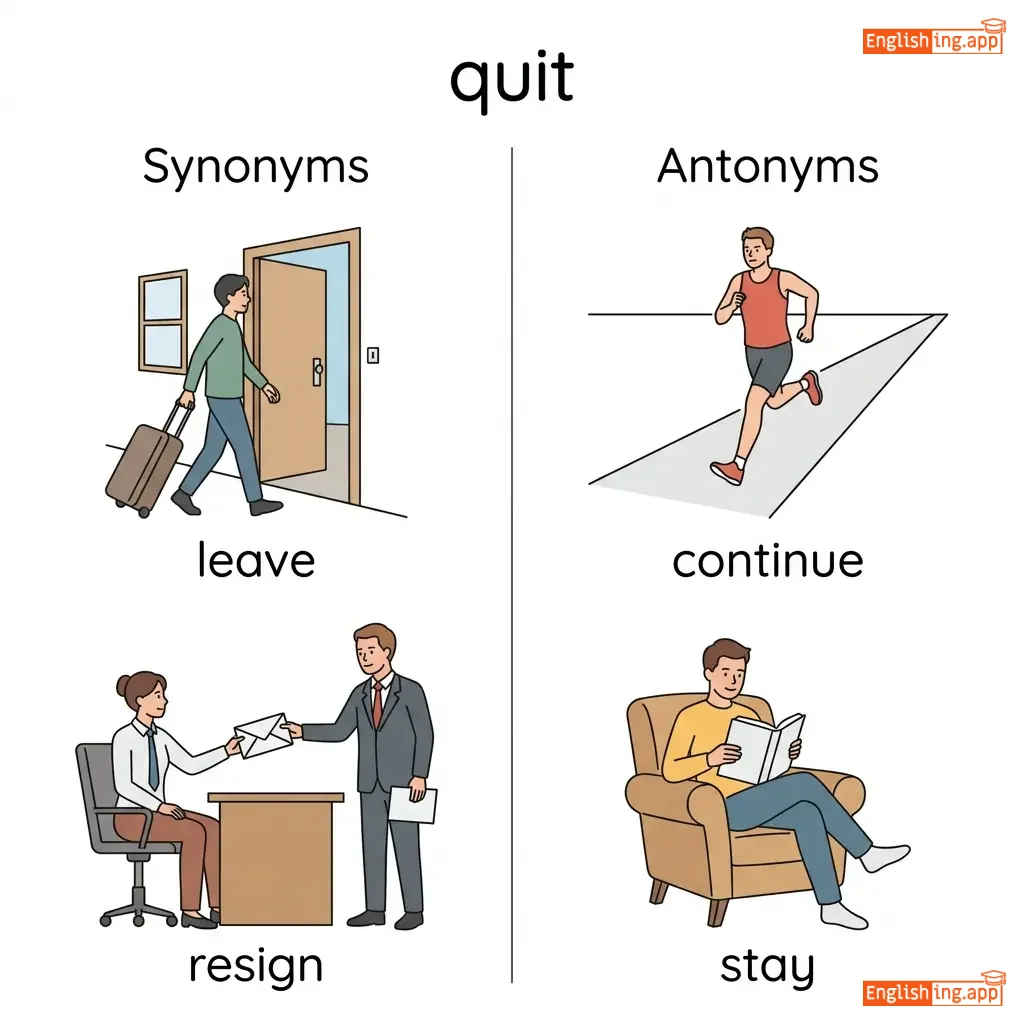
leave, resign, abandon, give up
••••••
|
continue, stay
••••••
|
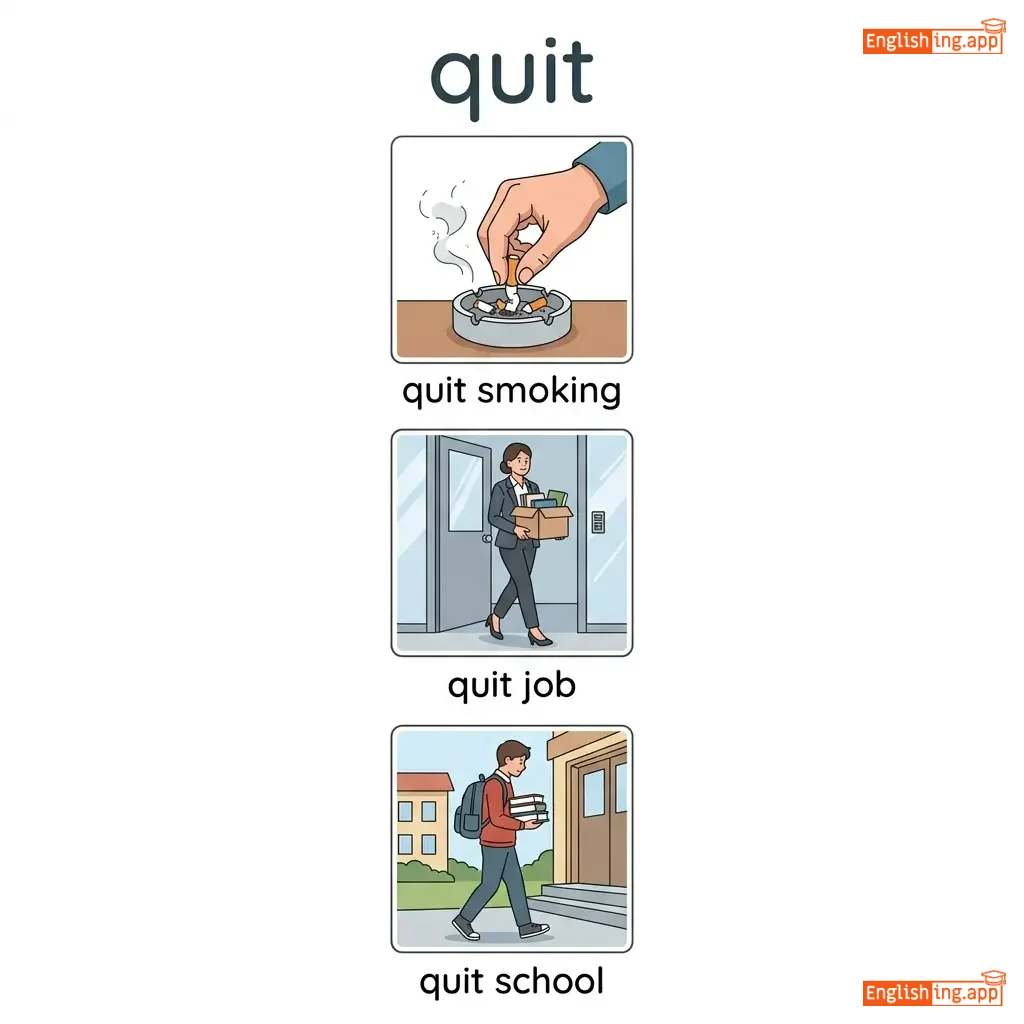
quit smoking, quit job, quit school, quit early
••••••
|
Quit意味着放弃 – 放弃工作或习惯.
••••••
|
|
👌
••••••
|
/kwaɪt/
adverb
(kwai)
••••••
|
- •••••• |
相当 / 很
xiangdang / hen
••••••
|
- •••••• | - •••••• | - •••••• | - •••••• |
To a certain or considerable extent; very or completely.
••••••
|
She was quite happy with the results. |
她对结果相当满意。
Ta dui jieguo xiangdang manyi.
••••••
|
not quite |
Almost but not completely.
••••••
|
不完全是
bu wanquan shi
••••••
|
fairly, rather, very, completely, absolutely
••••••
|
barely, hardly
••••••
|
quite happy, quite good, quite interesting, not quite
••••••
|
Quite 意味着相当—'Quite quiet' 意味着非常安静。
••••••
|
|
📊
••••••
|
/ˈkwəʊtə/
noun
(kwòu-tā)
••••••
|
|
配额, 固定份额
pèiguì, gùdìng fèn'é
••••••
|
- •••••• | - •••••• | - •••••• | - •••••• |
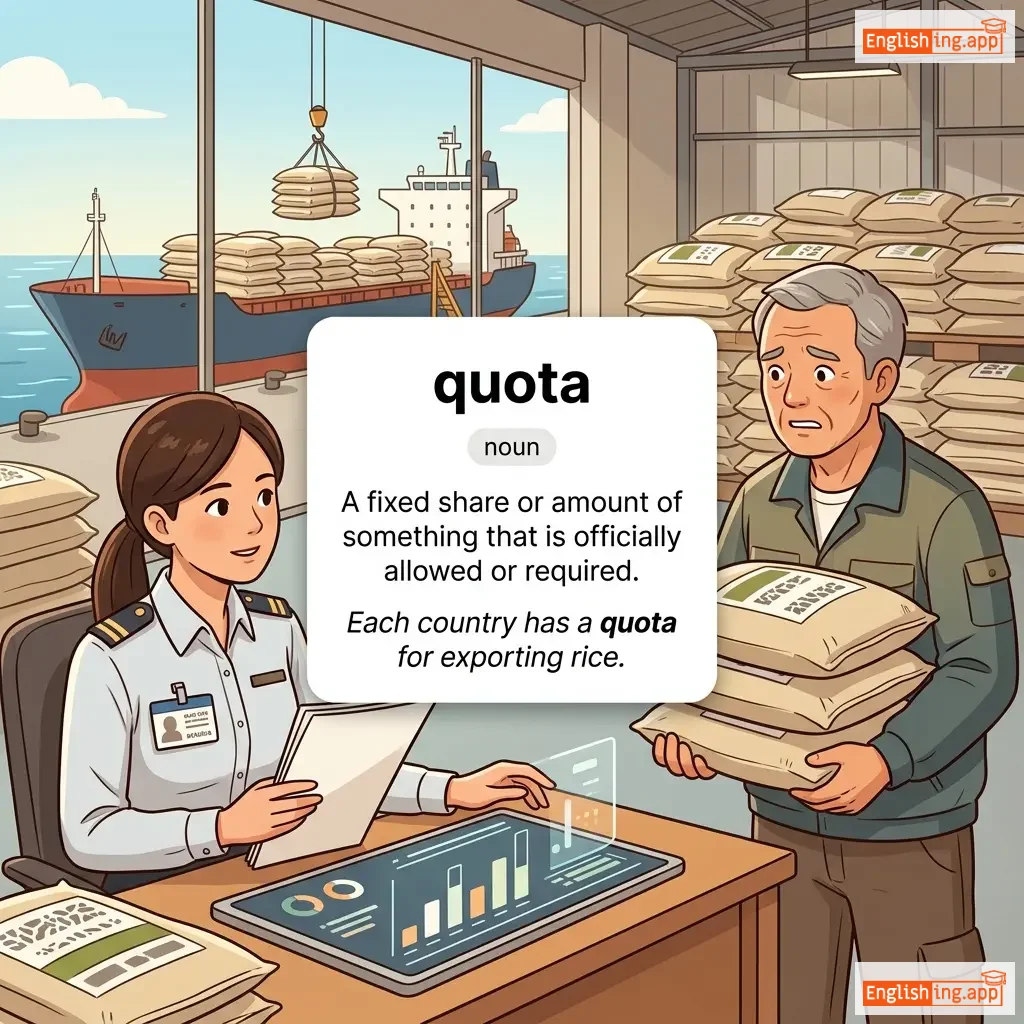
A fixed share or amount of something that is officially allowed or required.
••••••
|
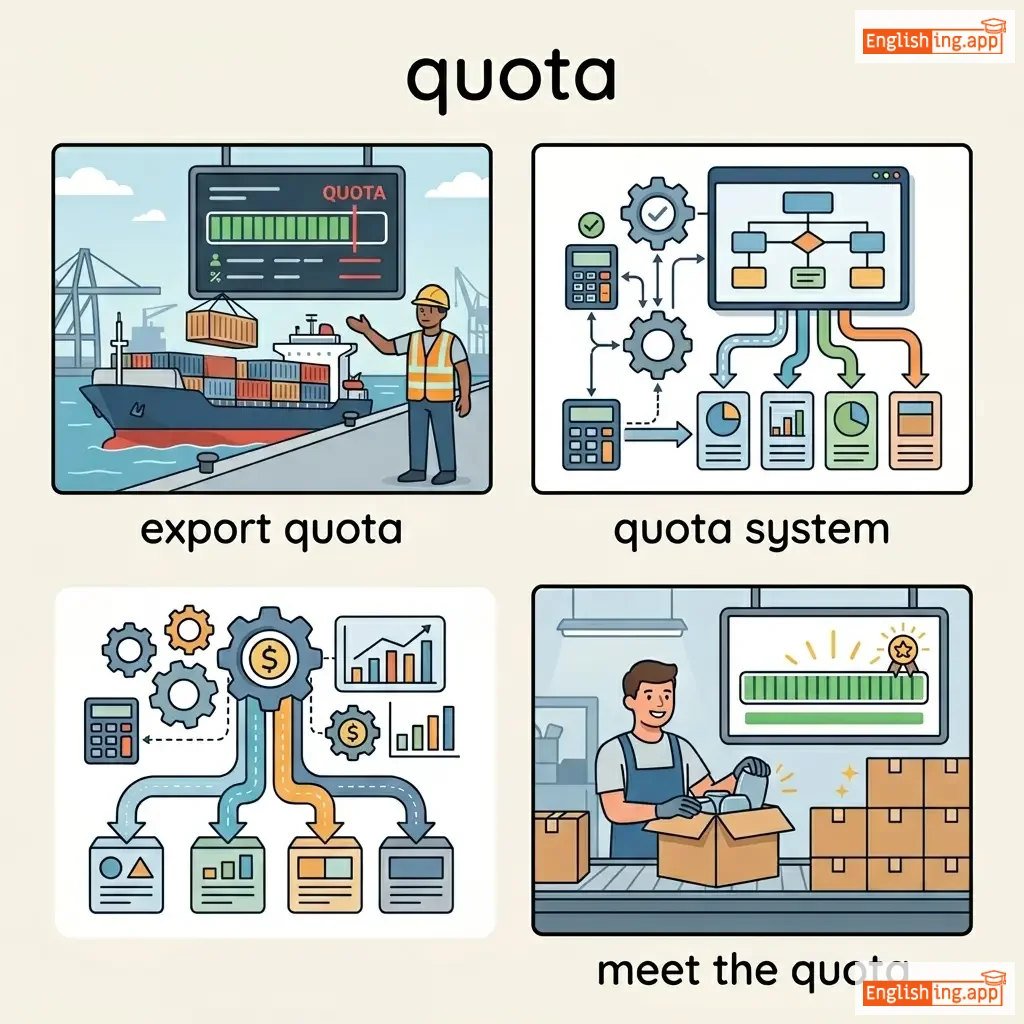
Each country has a quota for exporting rice.
Yīch kāntrī hāz ā kwòu-tā fǒr èks-pòr-tīng ráis.
••••••
|
每个国家都有一个出口稻米的配额。
Měi gè guójiā dōu yǒu yīgè chūkǒu dàomǐ de pèiguì.
••••••
|
- •••••• | - •••••• | - •••••• |
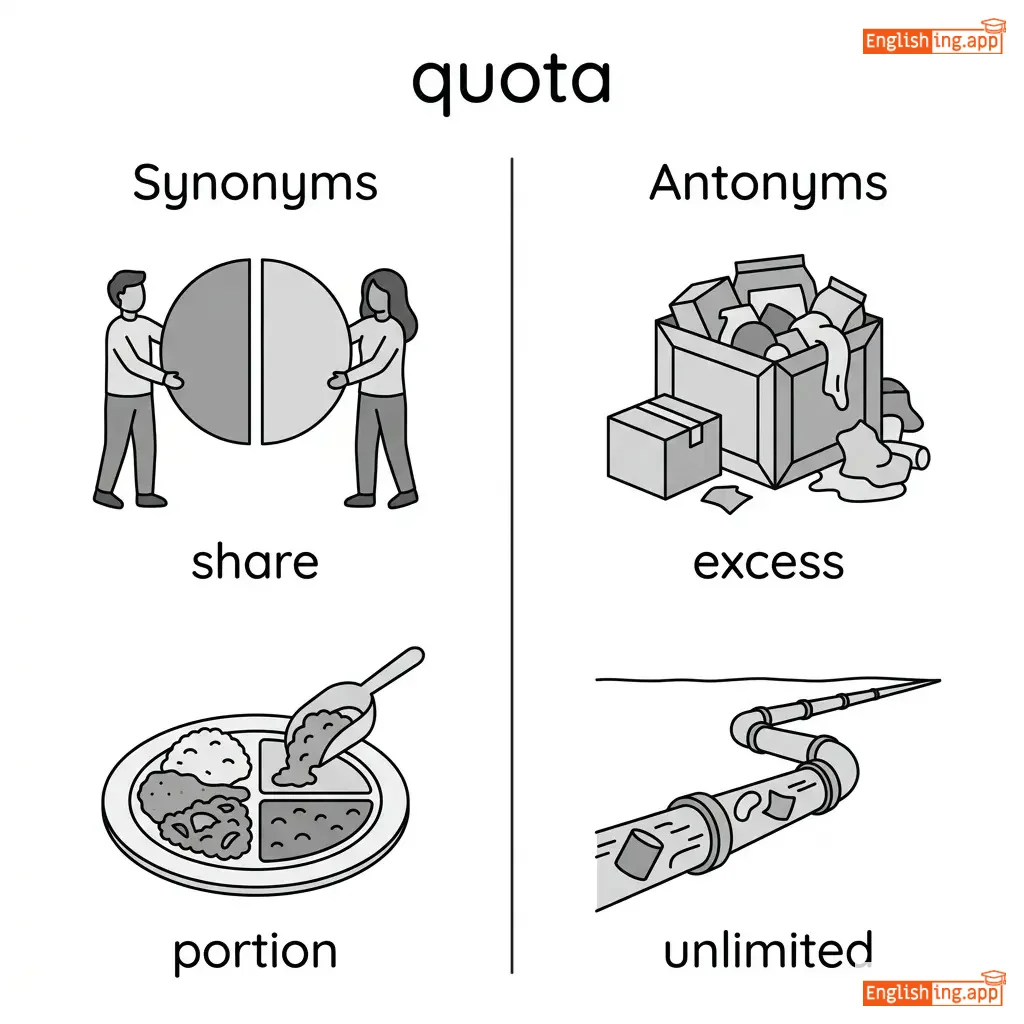
share, portion, allotment, limit, allowance
••••••
|
excess, unlimited
••••••
|
export quota, quota system, meet the quota, annual quota
••••••
|
配额 = 切 + 部分 - 固定的部分切割出来。
••••••
|
|
❝
••••••
|
/kwəʊˈteɪʃən/
noun
(夸哦忒申)
••••••
|
- •••••• |
引语; 报价
yinyu; baojia
••••••
|
- •••••• | - •••••• | - •••••• | - •••••• |
a group of words taken from a text or speech and repeated exactly; an estimated price given for goods or services
••••••
|
The article opened with a famous quotation from Shakespeare.
泽 阿提口 欧彭德 威思 阿 费莫斯 夸哦忒申 弗罗姆 莎士比亚。
••••••
|
这篇文章以莎士比亚的一句名言开头。
Zhe pian wenzhang yi Shashibiya de yi ju mingyan kaitou
••••••
|
quotation marks
夸哦忒申 马克斯
••••••
|
punctuation used to show the exact words someone has said or written
••••••
|
引号
yinhao
••••••
|
quote, citation, excerpt, passage, saying
••••••
|
originality, paraphrase
••••••
|
direct quotation, famous quotation, price quotation, exact quotation, cite a quotation
••••••
|
Quotation 就是 引语,用引号记住。
••••••
|
|
💬
••••••
|
/kwoʊt/
verb
(kuo te)
••••••
|

|
引用
yǐn yòng
••••••
|
quoted
kuo ted
••••••
|
quoted
kuo ted
••••••
|
quotes
kuo ts
••••••
|
quoting
kuo ting
••••••
|
to repeat someone else's words; to give a price or estimate
••••••
|
The teacher asked students to quote the famous author in their essays.
老师要求学生在他们的论文中引用著名作者。
••••••
|
老师要求学生在他们的论文中引用著名作者。
Lǎoshī yāoqiú xuéshēng zài tāmen de lùnwén zhōng yǐn yòng zhùmíng zuòzhě.
••••••
|
- •••••• | - •••••• | - •••••• |
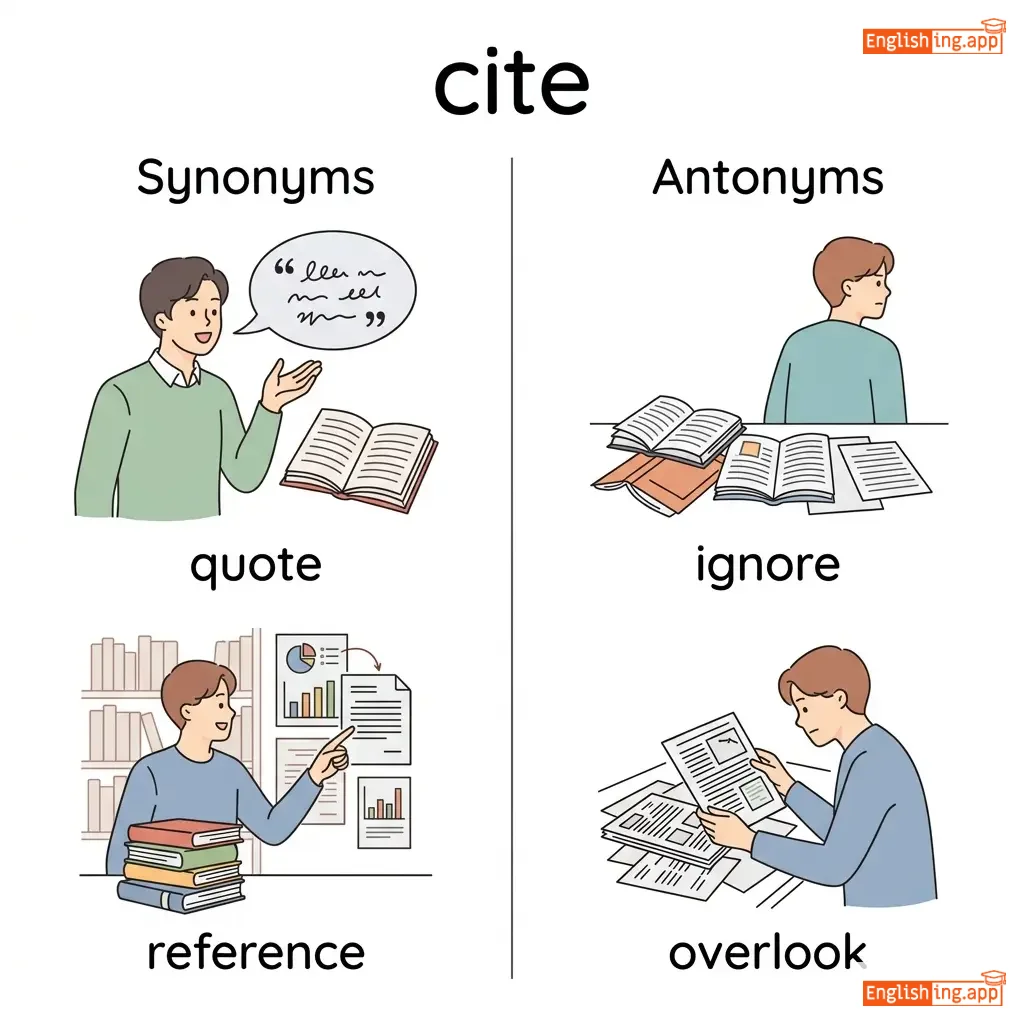
cite, repeat, reference, mention
••••••
|
paraphrase, summarize, omit
••••••
|
quote directly, quote accurately, quote from, quote someone
••••••
|
引用某著名作家的话就像引用名言。
••••••
|
|
🐇
••••••
|
/ˈræbɪt/
noun
(拉比特)
••••••
|
|
兔子
tùzi
••••••
|
- •••••• | - •••••• | - •••••• | - •••••• |
a small furry animal with long ears that lives in holes in the ground and moves by hopping
••••••
|
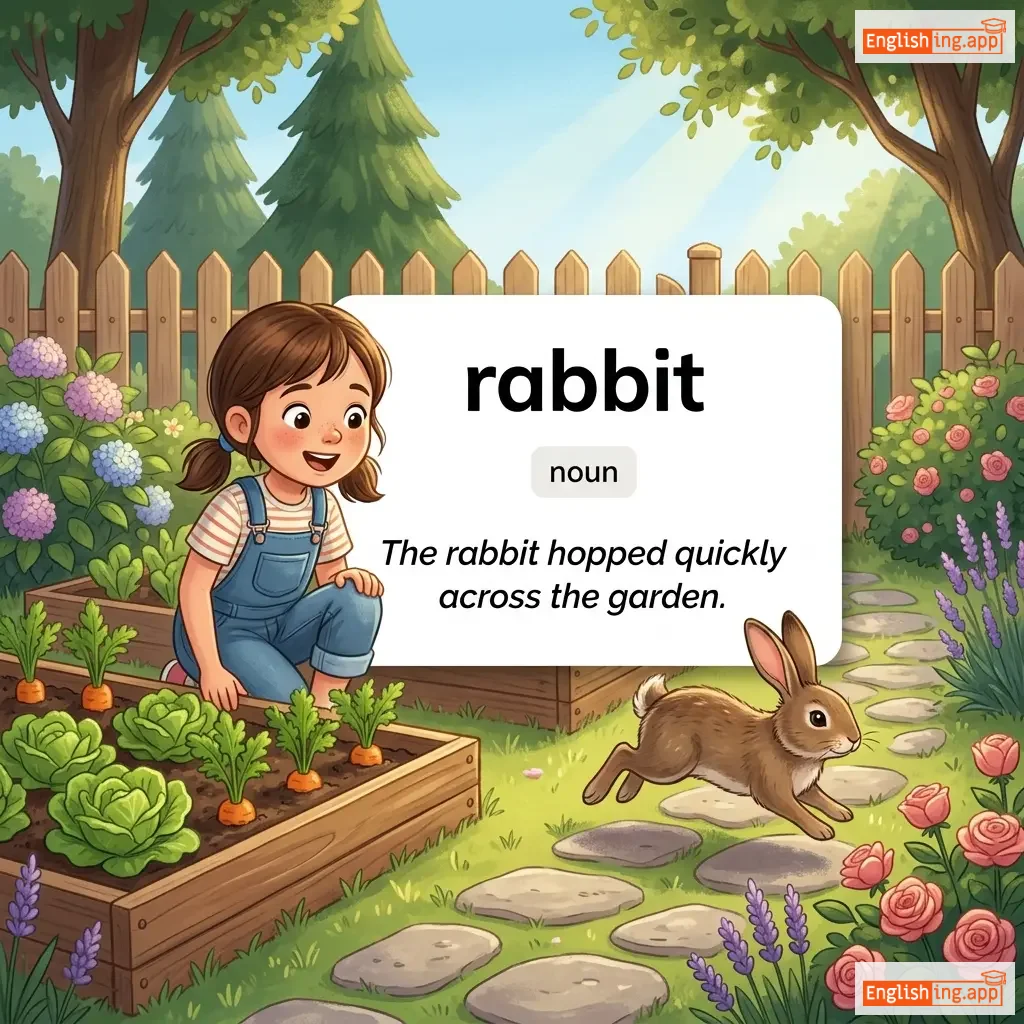
The rabbit hopped quickly across the garden. |
兔子快速跳过花园。
Tùzi kuàisù tiàoguò huāyuán.
••••••
|
pull a rabbit out of a hat |
to do something surprising or seemingly magical
••••••
|
从帽子里拿出一只兔子
cóng màozi lǐ ná chū yī zhī tùzi
••••••
|
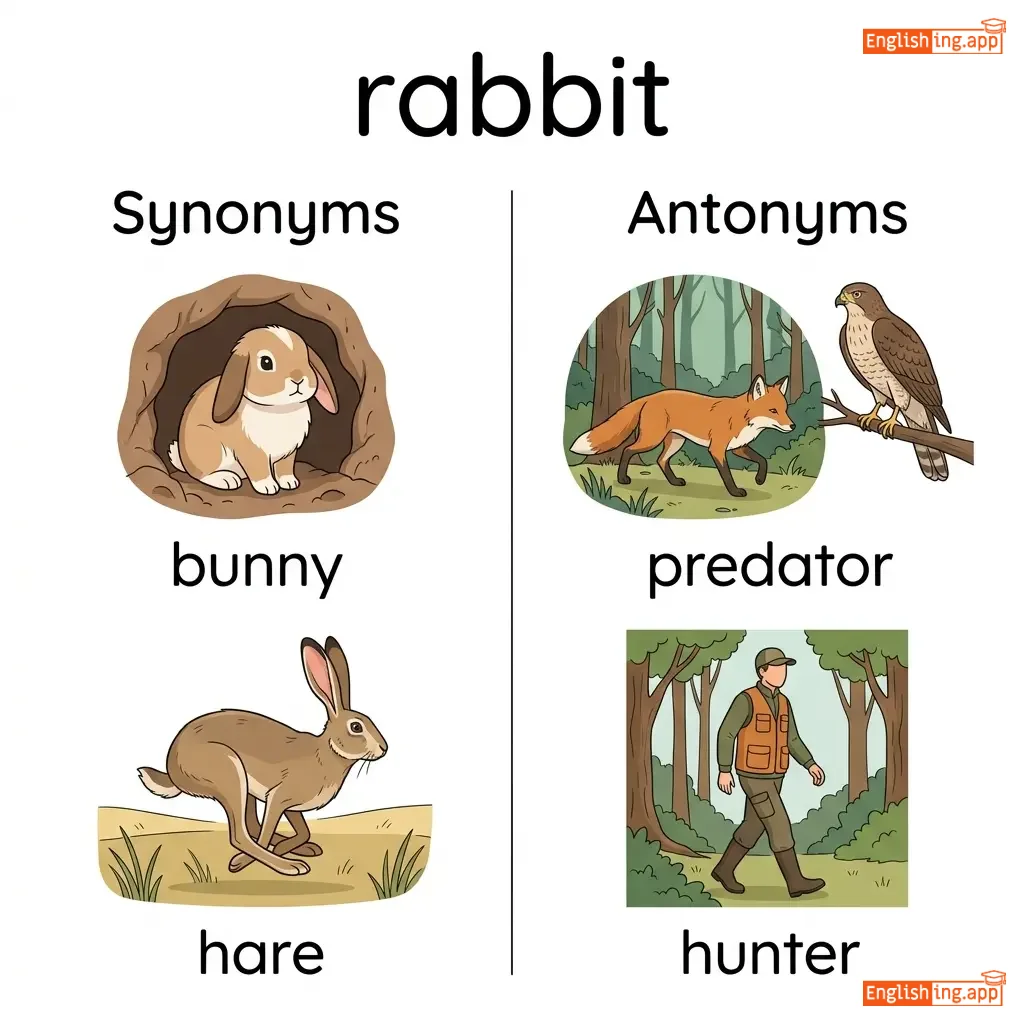
bunny, hare, coney, rodent, lagomorph
••••••
|
predator, hunter
••••••
|
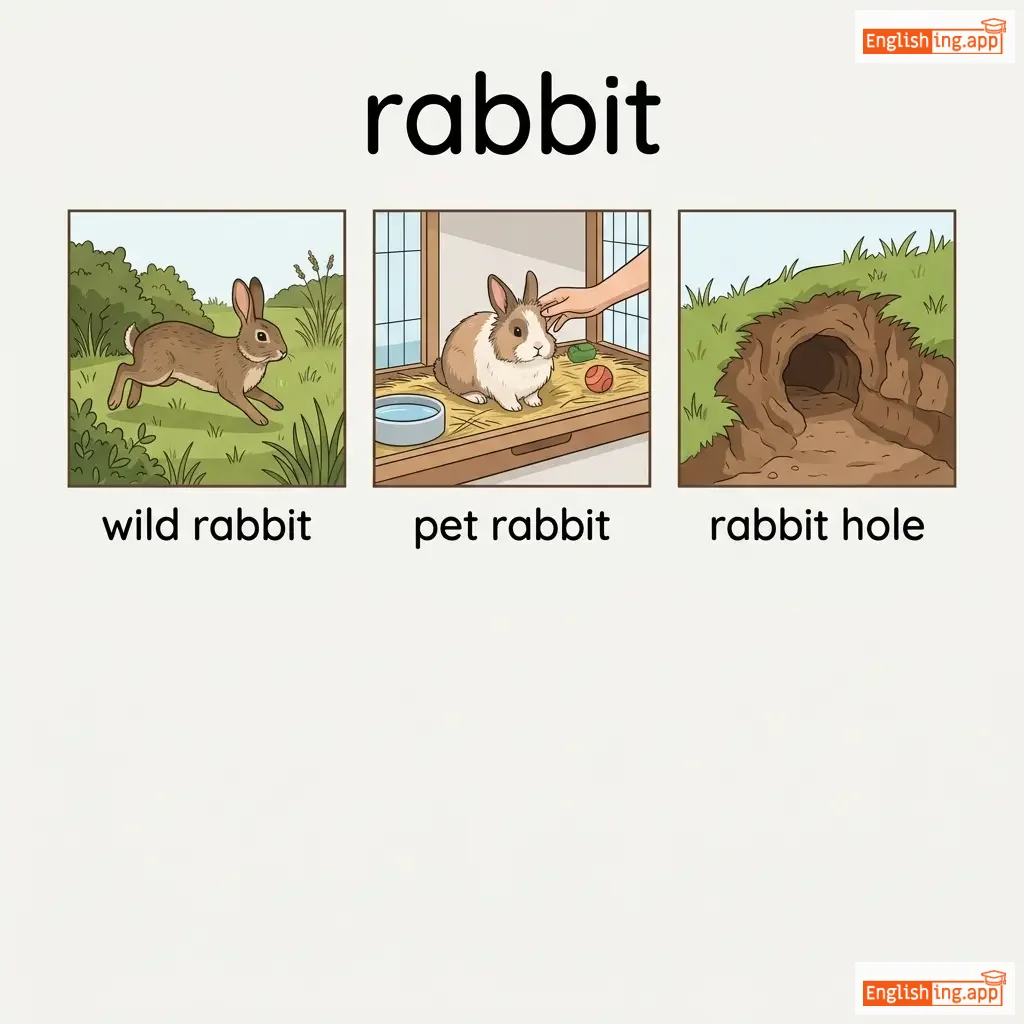
wild rabbit, pet rabbit, rabbit hole, rabbit stew, rabbit fur
••••••
|
兔子跑得飞快 — 它是一个快速的小动物!
••••••
|
|
🏁
••••••
|
/reɪs/
noun
(rè sī)
••••••
|
- •••••• |
比赛
bisai
••••••
|
- •••••• | - •••••• | - •••••• | - •••••• |
a competition of speed, or a group of people with similar characteristics
••••••
|
The race was very exciting, with many competitors. |
比赛非常激动人心,有许多参赛者。
Bisai feichang jidong renxin, you xuduo cansaizhe.
••••••
|
- •••••• | - •••••• | - •••••• |
competition, contest, event
••••••
|
cooperation, alliance
••••••
|
run a race, win a race, racing car, race track
••••••
|
比赛是快速的'比赛'冲向终点线!
••••••
|
|
🌍
••••••
|
/ˈreɪʃəl/
adjective
(rèshì'ěr)
••••••
|
- •••••• |
种族的
zhǒngzú de
••••••
|
- •••••• | - •••••• | - •••••• | - •••••• |
relating to a race of people
••••••
|
Racial equality is an important issue in many societies. |
种族平等是许多社会中的一个重要问题。
Zhǒngzú píngděng shì xǔduō shèhuì zhōng de yīgè zhòngyào wèntí.
••••••
|
- •••••• | - •••••• | - •••••• |
ethnic, cultural, racialized
••••••
|
equal, neutral
••••••
|
racial discrimination, racial equality, racial tension
••••••
|
Racial means 'zhǒngzú' - think of different races in society!
••••••
|
|
✊🏾
••••••
|
/ˈreɪsɪzəm/
noun
(rèisīzīm)
••••••
|
- •••••• |
种族主义
zhǒngzú zhǔyì
••••••
|
- •••••• | - •••••• | - •••••• | - •••••• |
the belief that some races are superior to others, leading to unfair treatment or prejudice
••••••
|
The organization works to eliminate racism in all forms. |
该组织致力于消除所有形式的种族主义。
Gāi zǔzhī zhìlì yú xiāochú suǒyǒu xíngshì de zhǒngzú zhǔyì.
••••••
|
- •••••• | - •••••• | - •••••• |
discrimination, prejudice, bigotry, intolerance, bias
••••••
|
equality, tolerance, fairness
••••••
|
fight racism, eliminate racism, racial discrimination, systemic racism
••••••
|
Race + ism 是种族的信仰,所以种族主义意味着种族歧视。
••••••
|

