|
絵文字
|
単語 | Images | 翻訳 | 過去 | 過去分詞 | 三人称単数 | 動名詞 | 意味 | 例文 | 例文の翻訳 | 表現例 | 表現例の意味 | 表現例の翻訳 | 同義語 | 対義語 | コロケーション | ニーモニック |
|---|---|---|---|---|---|---|---|---|---|---|---|---|---|---|---|---|---|
|
🚢
••••••
|
/ˈneɪvəl/
adjective
(ネイヴァル)
••••••
|
- •••••• |
海軍の
kaigun no
••••••
|
- •••••• | - •••••• | - •••••• | - •••••• |
relating to a country's navy or military ships
••••••
|
The country invested heavily in naval defense. |
その国は海軍防衛に多額の投資をしました。
Sono kuni wa kaigun bōei ni tagaku no tōshi o shimashita.
••••••
|
naval forces |
a nation's warships and related military strength
••••••
|
海軍力
kaigun ryoku
••••••
|
maritime, seafaring, oceanic, military
••••••
|
civilian, land-based
••••••
|
naval base, naval battle, naval defense, naval fleet
••••••
|
Navalは海軍を意味します — NavyとBattleを合わせてNavalを覚えましょう!
••••••
|
|
🧭
••••••
|
/ˌnævɪˈɡeɪʃən/
noun
(ネヴィゲーション)
••••••
|
|
ナビゲーション
navigēshon
••••••
|
- •••••• | - •••••• | - •••••• | - •••••• |
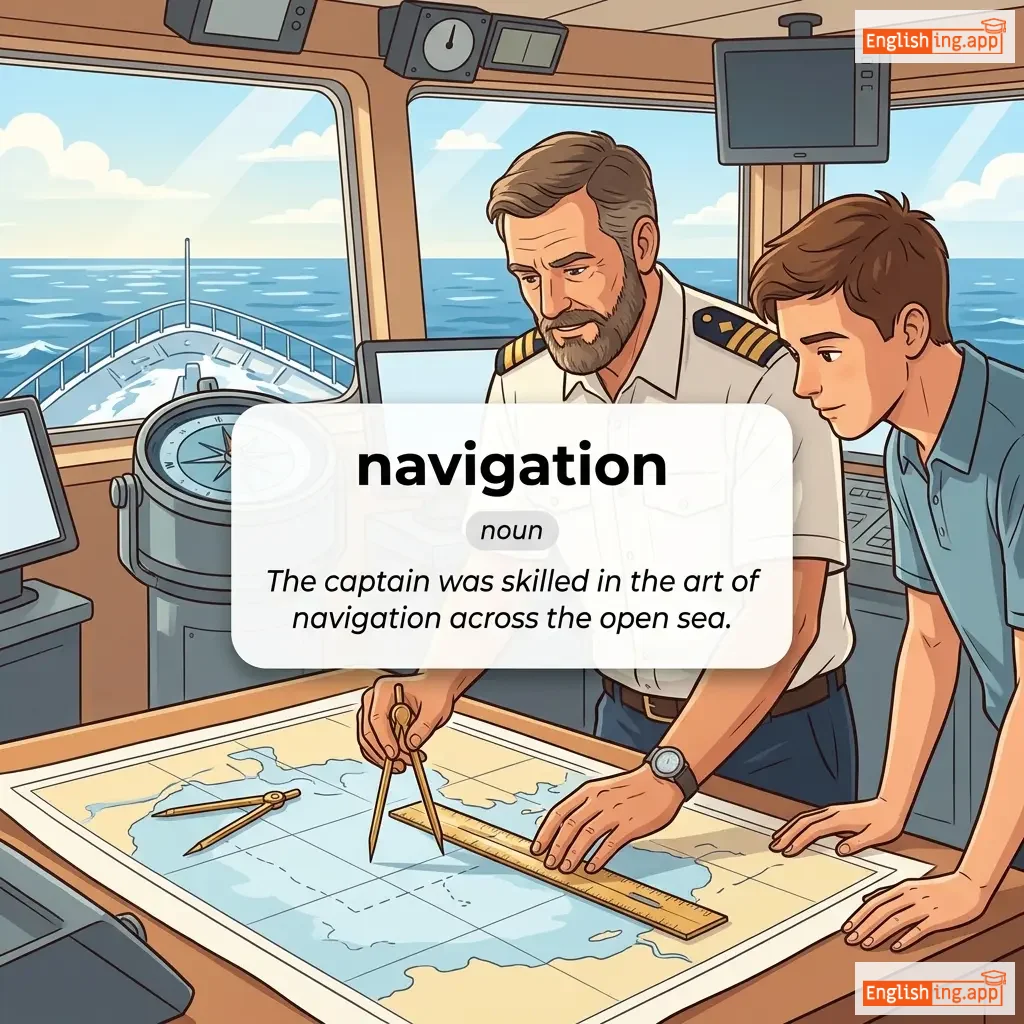
the process or activity of accurately determining one's position and planning and following a route
••••••
|
The captain was skilled in the art of navigation across the open sea.
キャプテンは開けた海での航海術に熟練していました。
••••••
|
キャプテンは開けた海での航海術に熟練していました。
kyaputen wa aketa umi de no kōkaijutsu ni jukuren shiteimashita.
••••••
|
- •••••• | - •••••• | - •••••• |
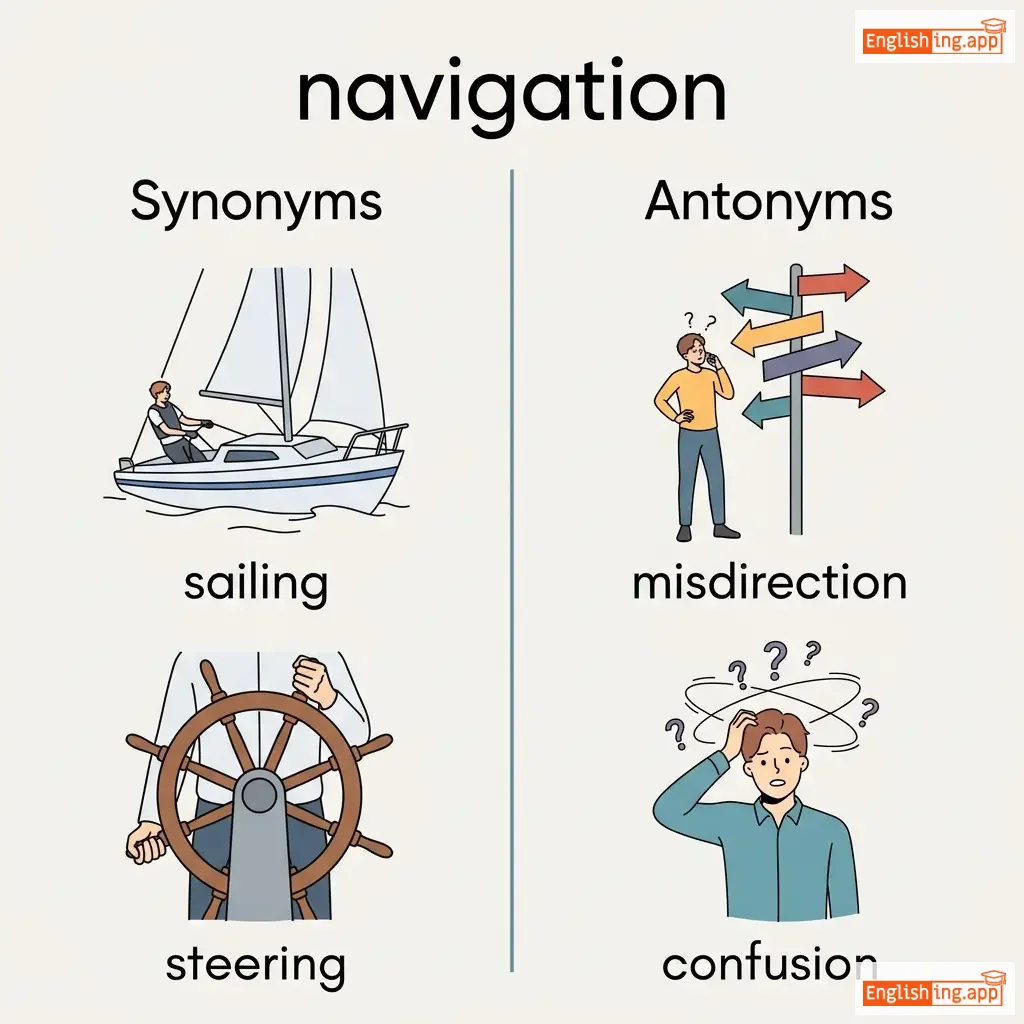
sailing, steering, route planning, charting
••••••
|
misdirection, confusion
••••••
|
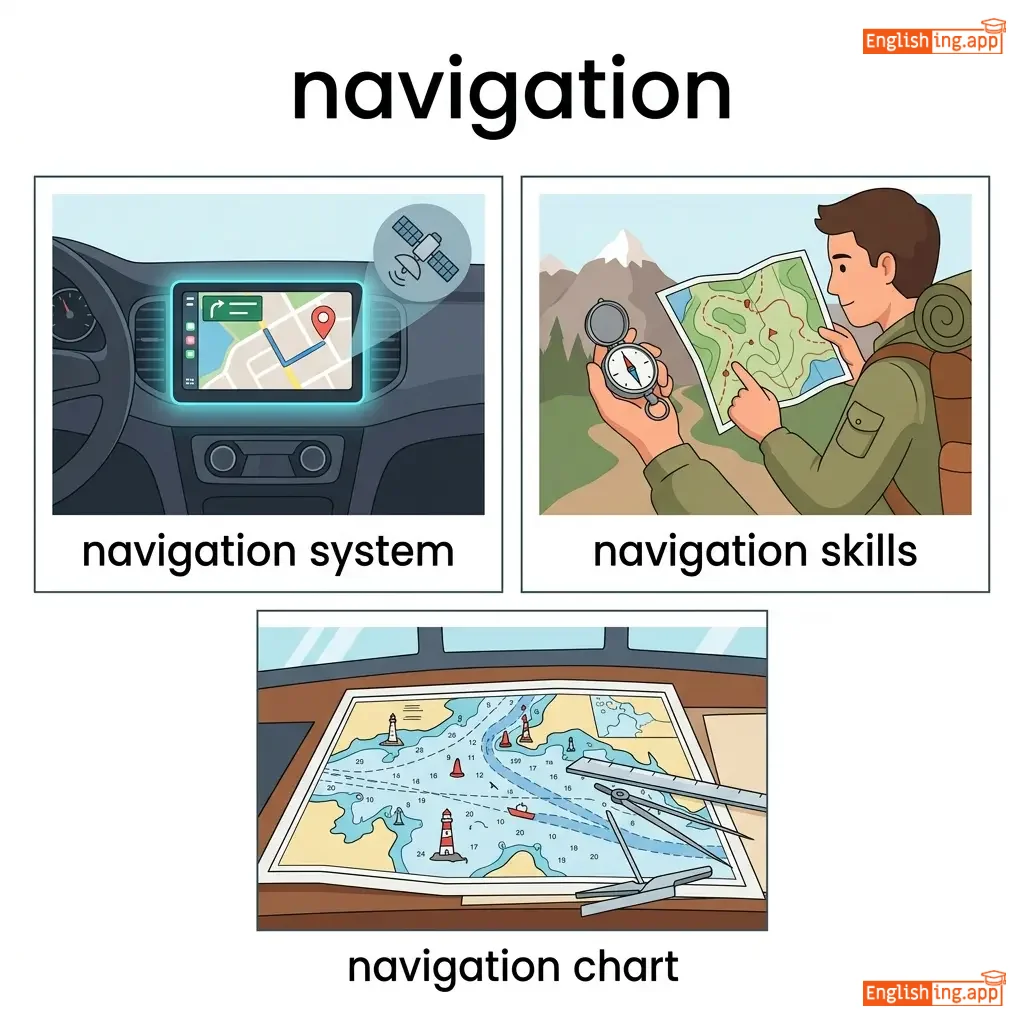
navigation system, navigation skills, navigation chart
••••••
|
ナビゲーションは目的地への道を示す
••••••
|
|
⚓
••••••
|
/ˈneɪvi/
noun
(ネイビー)
••••••
|
- •••••• |
海軍
kaigun
••••••
|
- •••••• | - •••••• | - •••••• | - •••••• |
the branch of armed forces that conducts military operations at sea
••••••
|
He joined the navy after graduating from college. |
彼は大学を卒業した後、海軍に入隊した。
Kare wa daigaku o sotsugyō shita ato, kaigun ni nyūtai shita.
••••••
|
- •••••• | - •••••• | - •••••• |
fleet, naval force, maritime force
••••••
|
- •••••• |
navy blue, royal navy, navy ship, navy seal
••••••
|
海軍は海の上で戦う部隊です
••••••
|
|
📍
••••••
|
/nɪə(r)/
preposition
(ニア)
••••••
|
- •••••• |
近く
chikaku
••••••
|
- •••••• | - •••••• | - •••••• | - •••••• |
At or to a short distance away; close in space, time, or relationship.
••••••
|
There is a park near my house. |
私の家の近くに公園があります。
Watashi no ie no chikaku ni kōen ga arimasu.
••••••
|
near and dear |
very close and important to someone
••••••
|
非常に親しいと大切な
hijō ni shitashī to taisetsu na
••••••
|
close, adjacent, next to, nearby
••••••
|
far, distant
••••••
|
near future, near death, near place, near completion
••••••
|
Nearは近くを意味する—大切な人は近くにいるものです。
••••••
|
|
📍
••••••
|
/ˈnɪəˌbaɪ/
adjective
(ニアバイ)
••••••
|
- •••••• |
近く
chikaku
••••••
|
- •••••• | - •••••• | - •••••• | - •••••• |
close to a particular place or person
••••••
|
The nearest gas station is nearby.
最寄りのガソリンスタンドは近くにあります。
••••••
|
最寄りのガソリンスタンドは近くにあります。
Moyori no gasorin sutando wa chikaku ni arimasu.
••••••
|
- •••••• | - •••••• | - •••••• |
close, adjacent, near, neighboring
••••••
|
distant, far, remote
••••••
|
nearby area, nearby place, nearby town
••••••
|
近く (chikaku) - まるで 'nearby' のように
••••••
|
|
🔄
••••••
|
/ˈnɪərli/
adverb
(ニアリー)
••••••
|
- •••••• |
ほとんど; ほぼ;
hotondo; hobo;
••••••
|
- •••••• | - •••••• | - •••••• | - •••••• |
almost; not quite; very close to
••••••
|
I nearly missed the bus this morning.
今朝、バスをほとんど逃しそうになった。
••••••
|
今朝、バスをほとんど逃しそうになった。
Kesa, basu o hotondo nogashisou ni natta
••••••
|
- •••••• | - •••••• | - •••••• |
almost, practically, virtually, approximately
••••••
|
completely, entirely, fully
••••••
|
nearly finished, nearly impossible, nearly ready
••••••
|
日本語: バスを逃しそうになる、ほとんど。
••••••
|
|
✨
••••••
|
/niːt/
adjective
(ニート)
••••••
|
- •••••• |
きれい
kirei
••••••
|
- •••••• | - •••••• | - •••••• | - •••••• |
tidy, orderly, and well-arranged; simple and elegant
••••••
|
His handwriting is very neat and easy to read. |
彼の手書きはとてもきれいで、読みやすいです。
Kare no tegaki wa totemo kirei de, yomiyasui desu.
••••••
|
neat and tidy |
extremely clean, organized, and well-arranged
••••••
|
きれいで整頓された
kirei de seiton sareta
••••••
|
tidy, orderly, clean, elegant, organized
••••••
|
messy, untidy, disorderly
••••••
|
neat handwriting, neat solution, neat appearance, neat arrangement
••••••
|
NEATはきれいと同じ — すべてをきれいに整理すること
••••••
|
|
✨
••••••
|
/ˈniːtli/
adverb
(nītorī)
••••••
|
- •••••• |
きちんと; 清潔に
kichinto; seiketsu ni
••••••
|
- •••••• | - •••••• | - •••••• | - •••••• |
in a tidy and orderly way; carefully and precisely
••••••
|
She arranged the books neatly on the shelf.
彼女は本をきれいに棚に並べました。
••••••
|
彼女は本をきちんと棚に並べました。
Kanojo wa hon o kichinto tana ni narabemashita.
••••••
|
- •••••• | - •••••• | - •••••• |
tidily, orderly, carefully, precisely
••••••
|
messily, carelessly, untidily
••••••
|
neatly arranged, neatly organized, neatly folded
••••••
|
きちんとした整理整頓、neatly done!
••••••
|
|
⚖️
••••••
|
/ˌnesəˈserəli/
adverb
(ネセサリリー)
••••••
|
- •••••• |
必然的に; 必ずしも;
hitsuzenteki ni; kanarazushimo;
••••••
|
- •••••• | - •••••• | - •••••• | - •••••• |
as a necessary result; inevitably; by logical consequence
••••••
|
Rich people are not necessarily happy.
裕福な人々は必ずしも幸せではありません。
••••••
|
裕福な人々は必ずしも幸せではありません。
Yūfukuna hitobito wa kanarazushimo shiawase de wa arimasen.
••••••
|
- •••••• | - •••••• | - •••••• |
inevitably, unavoidably, automatically, certainly
••••••
|
optionally, possibly, maybe
••••••
|
not necessarily, necessarily true, necessarily follow
••••••
|
必然 = 必要であるならば
••••••
|
|
✔️
••••••
|
/ˈnɛsəsɛri/
adjective
••••••
|
|
- •••••• | - •••••• | - •••••• | - •••••• | - •••••• |
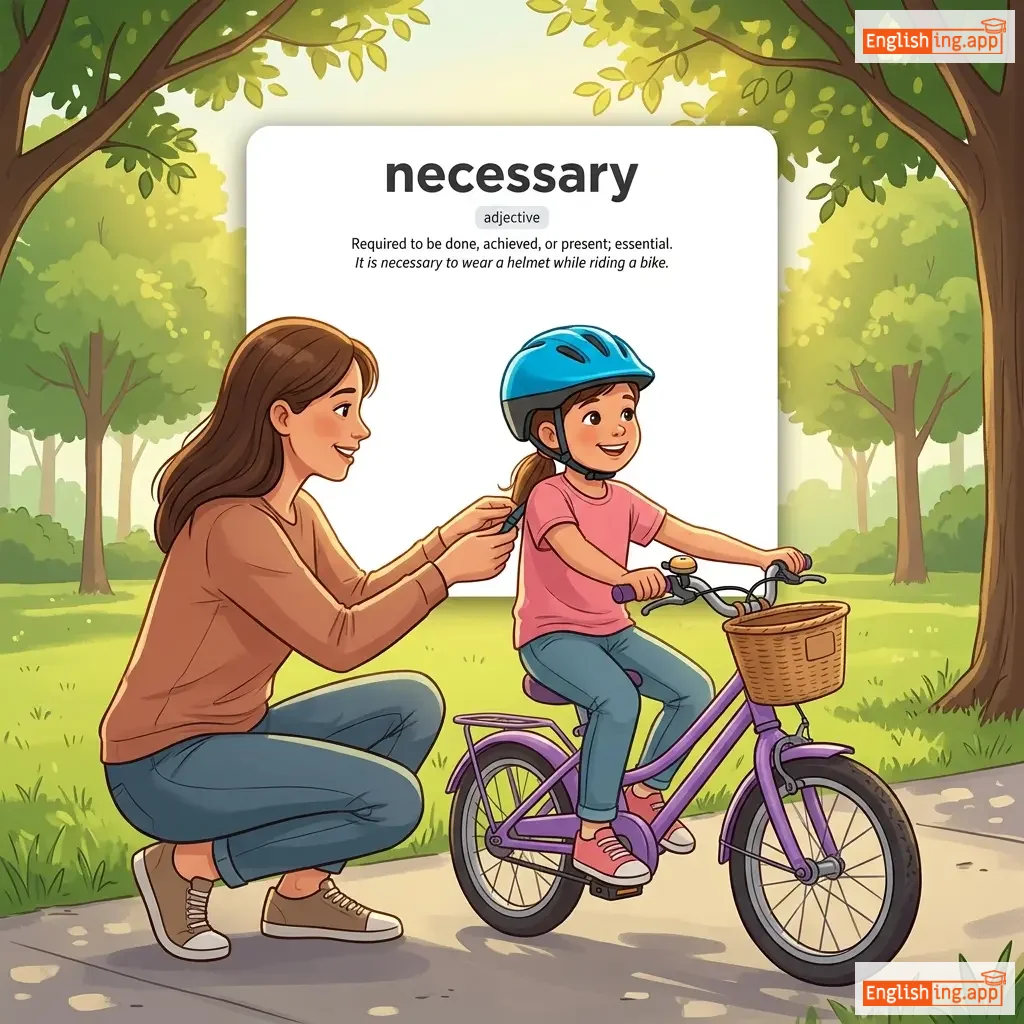
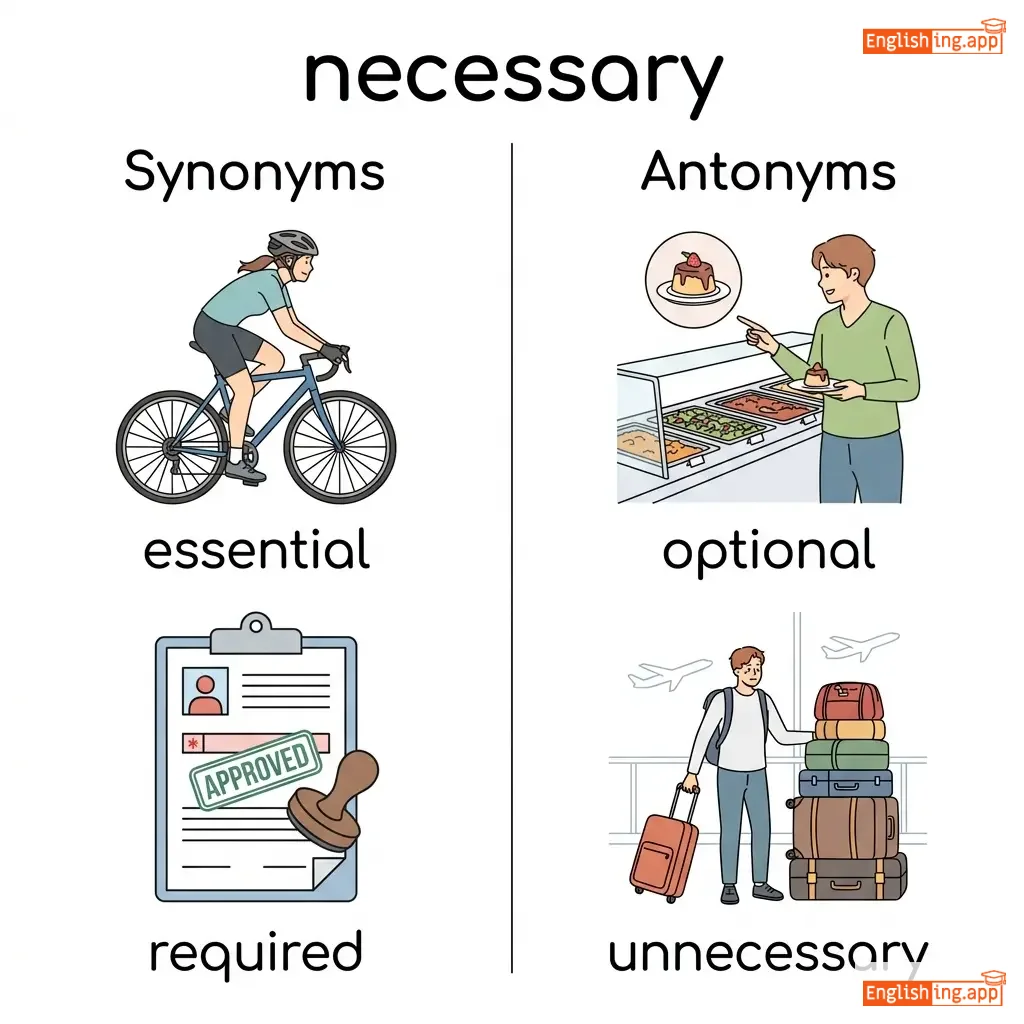
Required to be done, achieved, or present; essential.
••••••
|
It is necessary to wear a helmet while riding a bike. |
- •••••• |
make necessary arrangements |
to prepare the essential things needed
••••••
|
- •••••• |
essential, required, vital, crucial, mandatory
••••••
|
optional, unnecessary, needless
••••••
|
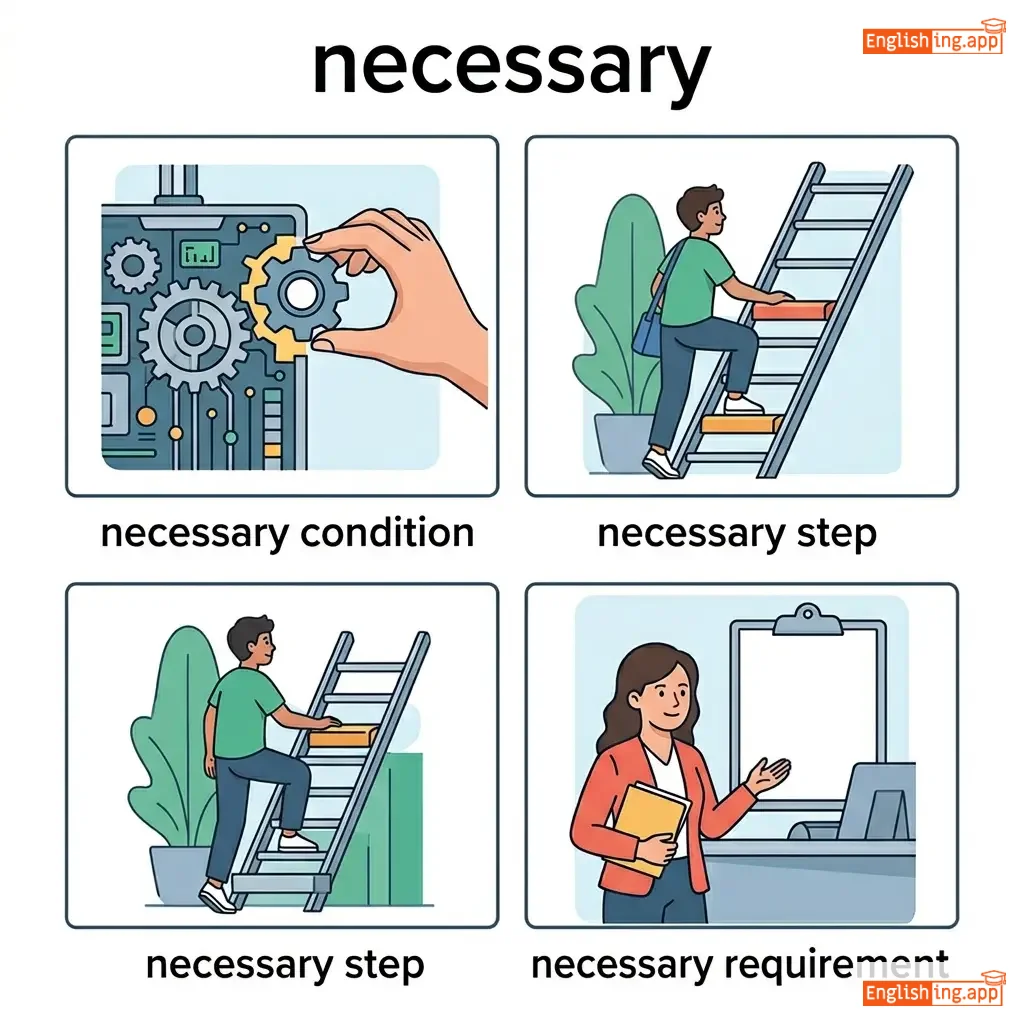
necessary condition, necessary step, necessary requirement, absolutely necessary
••••••
|
No •••••• |
|
🥖
••••••
|
/nəˈsɛsəti/
noun
(ネセシティ)
••••••
|
|
必要性
hitsuyousei
••••••
|
- •••••• | - •••••• | - •••••• | - •••••• |
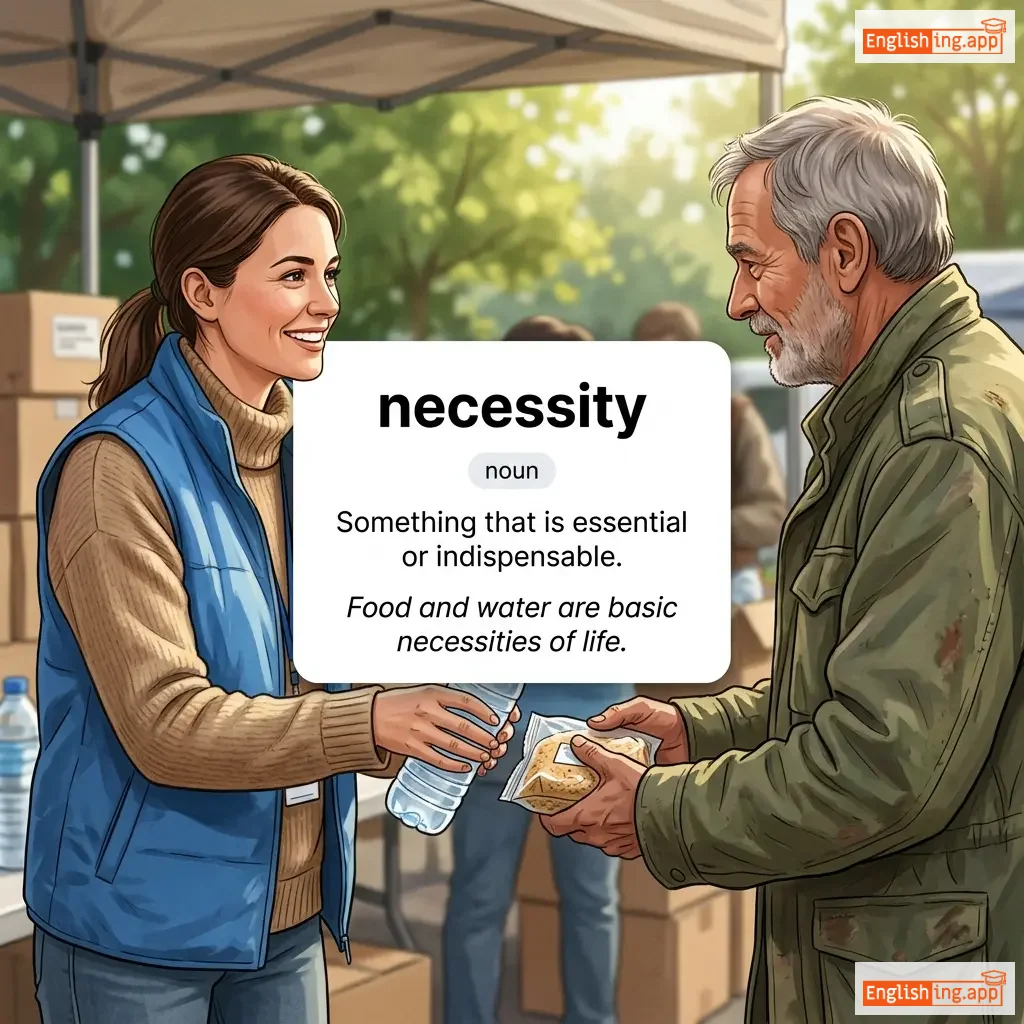
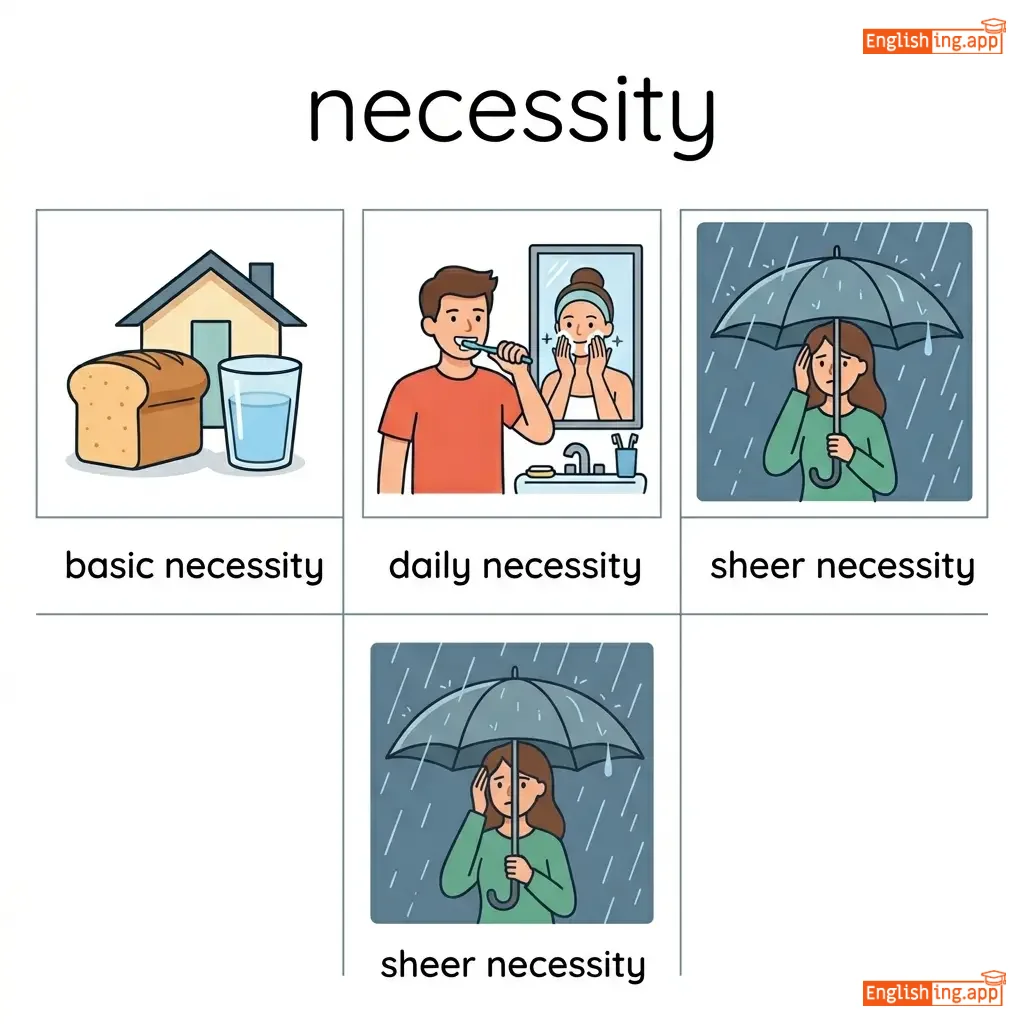
Something that is essential or indispensable.
••••••
|
Food and water are basic necessities of life. |
食べ物と水は生活の基本的な必要性です。
Tabemono to mizu wa seikatsu no kihonteki na hitsuyousei desu.
••••••
|
out of necessity |
because it is necessary
••••••
|
必要から
hitsuyou kara
••••••
|
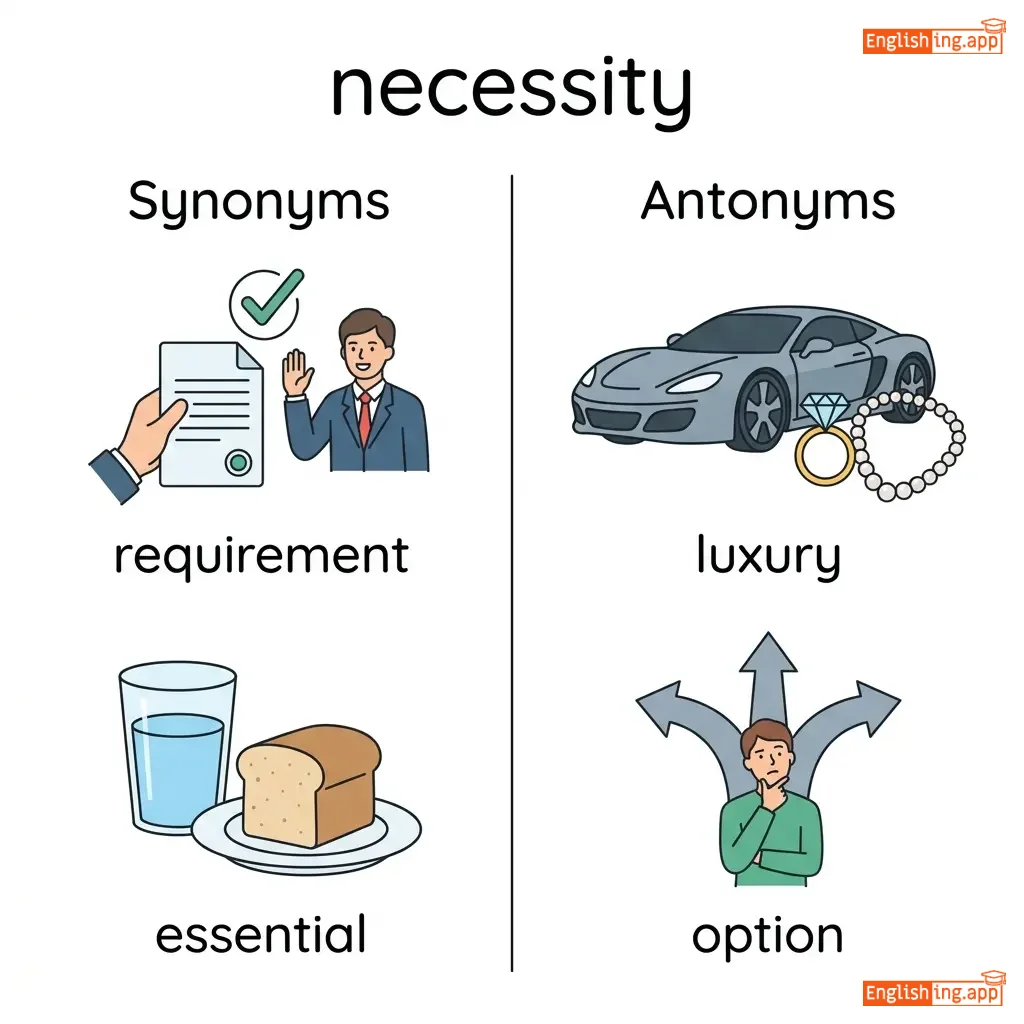
requirement, essential, need, must
••••••
|
luxury, option
••••••
|
basic necessity, daily necessity, sheer necessity
••••••
|
Necessity は必要性を意味します — 食べ物と水なしでは生命は不可能です。
••••••
|
|
🦒
••••••
|
/nɛk/
noun
(nek)
••••••
|
- •••••• |
首
kubi
••••••
|
- •••••• | - •••••• | - •••••• | - •••••• |
the part of the body connecting the head and the shoulders
••••••
|
She wore a necklace around her neck. |
彼女は首にネックレスをつけていた。
Kanojo wa kubi ni nekkuresu wo tsuketeita.
••••••
|
- •••••• | - •••••• | - •••••• |
throat, collar, nape
••••••
|
head, chest
••••••
|
neck pain, neck injury, neck of the bottle
••••••
|
首 (kubi) は 'neck' に似ていて、首にネックレスを想像してください。
••••••
|
|
🙏
••••••
|
/niːd/
verb
(nīd)
••••••
|

|
必要
hitsuyou
••••••
|
needed
nīded
••••••
|
needed
nīded
••••••
|
needs
nīds
••••••
|
needing
nīding
••••••
|
to require something; to be in want of
••••••
|
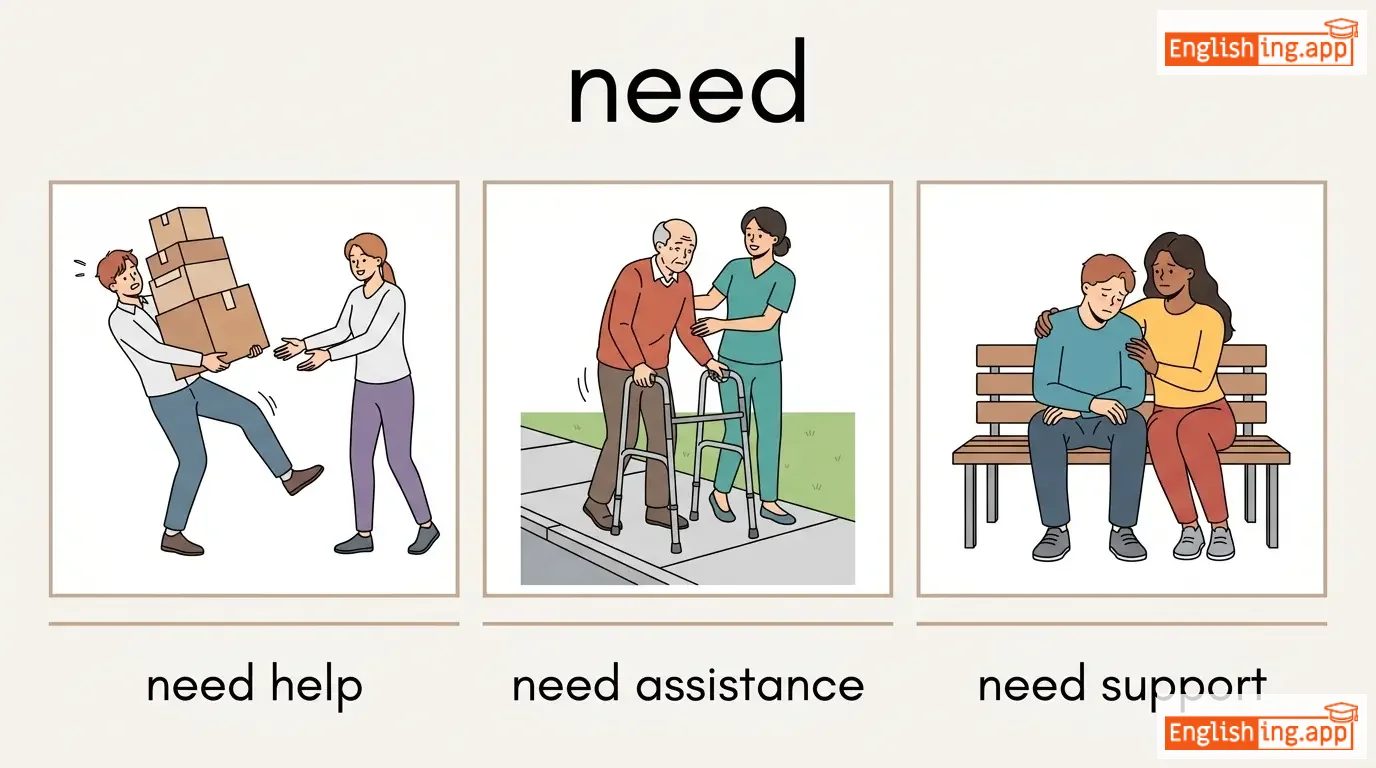
I need help with my homework.
私は宿題に助けが必要です。
••••••
|
私は宿題に助けが必要です。
Watashi wa shukudai ni tasuke ga hitsuyou desu.
••••••
|
- •••••• | - •••••• | - •••••• |
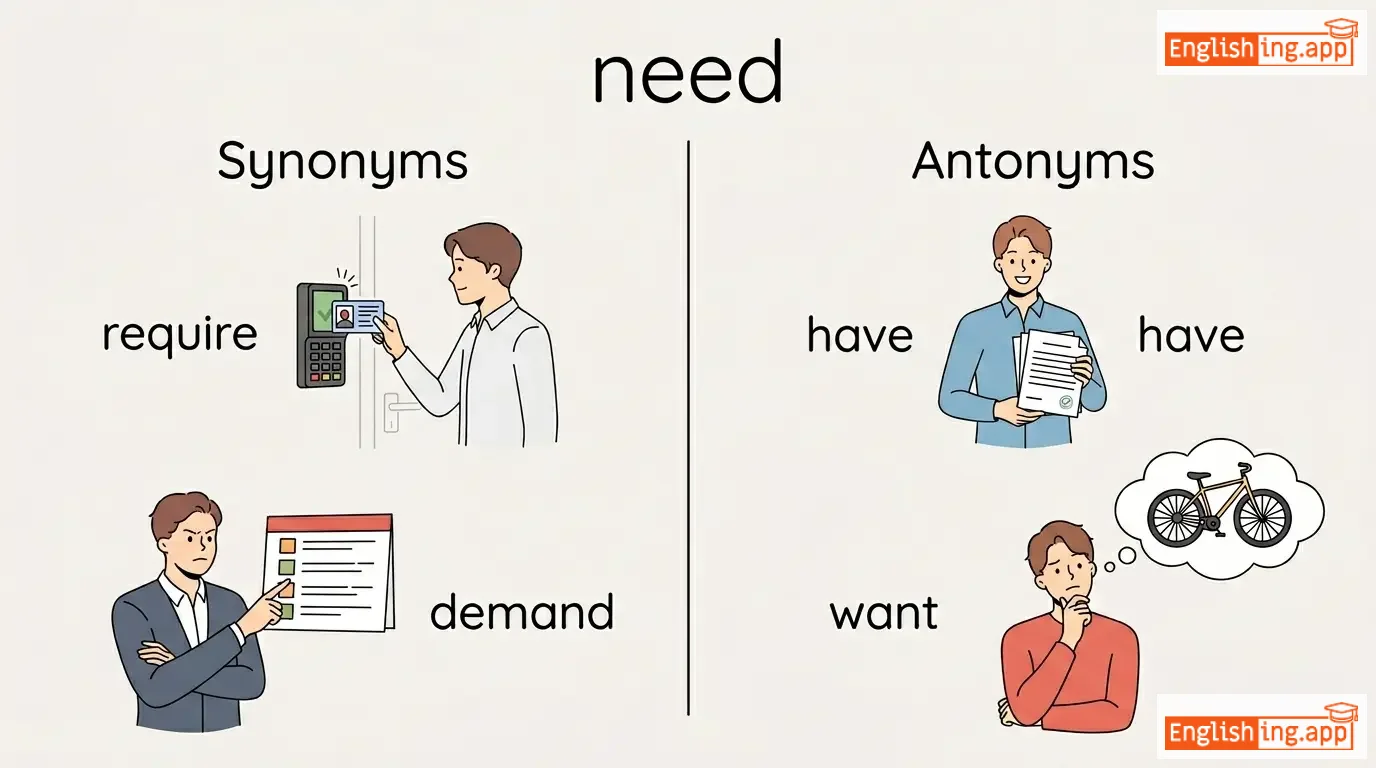
require, want, demand, necessitate
••••••
|
have, possess, own
••••••
|
need help, need badly, need immediately, need desperately, need urgently
••••••
|
必要 = 何かが必要な時、'必要'です!
••••••
|
|
💉
••••••
|
/ˈniː.dəl/
noun, verb
(ニードル)
••••••
|
- •••••• |
針
hari
••••••
|
needled
ニードルド
••••••
|
needled
ニードルド
••••••
|
needles
ニードルス
••••••
|
needling
ニードリング
••••••
|
a small thin metal tool with a point used for sewing or injecting; to provoke or annoy someone
••••••
|
The nurse used a sterile needle for the injection.
看護師は注射のために滅菌された針を使用しました。
••••••
|
看護師は注射のために滅菌された針を使用しました。
Kangoshi wa chūsha no tame ni mekkin sareta hari o shiyō shimashita.
••••••
|
needle in a haystack
藁の中の針
••••••
|
something that is extremely difficult or impossible to find
••••••
|
非常に難しい、またはほとんど不可能なものを見つけること
hijō ni muzukashī, mata wa hotondo fukanō na mono o mitsukeru koto
••••••
|
pin, syringe, prick, irritate, provoke
••••••
|
soothe, calm
••••••
|
sewing needle, injection needle, needle and thread, needle prick
••••••
|
針はNeedleを意味します—覚えておいてください: 針は布に‘必要’です!
••••••
|
|
🤲
••••••
|
/ˈniː.di/
adjective
(nidi)
••••••
|
- •••••• |
困窮した; 貧しい; 必要がある
konkyū shita; mazushī; hitsuyō ga aru
••••••
|
- •••••• | - •••••• | - •••••• | - •••••• |
requiring help or support; poor; lacking basic necessities
••••••
|
The charity helps needy families during the winter.
チャリティは冬に困窮している家族を助けます。
••••••
|
チャリティは冬に困窮している家族を助けます。
Chariti wa fuyu ni konkyū shite iru kazoku o tasukemasu.
••••••
|
- •••••• | - •••••• | - •••••• |
poor, destitute, impoverished, deprived
••••••
|
wealthy, rich, affluent, prosperous
••••••
|
needy families, help the needy, needy children
••••••
|
困窮した家族に冬の支援が必要であることを思い出すための言葉です。
••••••
|
|
☹️
••••••
|
/ˈnɛɡətɪv/
adjective
(ネガティブ)
••••••
|
|
否定的
hōteiteki
••••••
|
- •••••• | - •••••• | - •••••• | - •••••• |
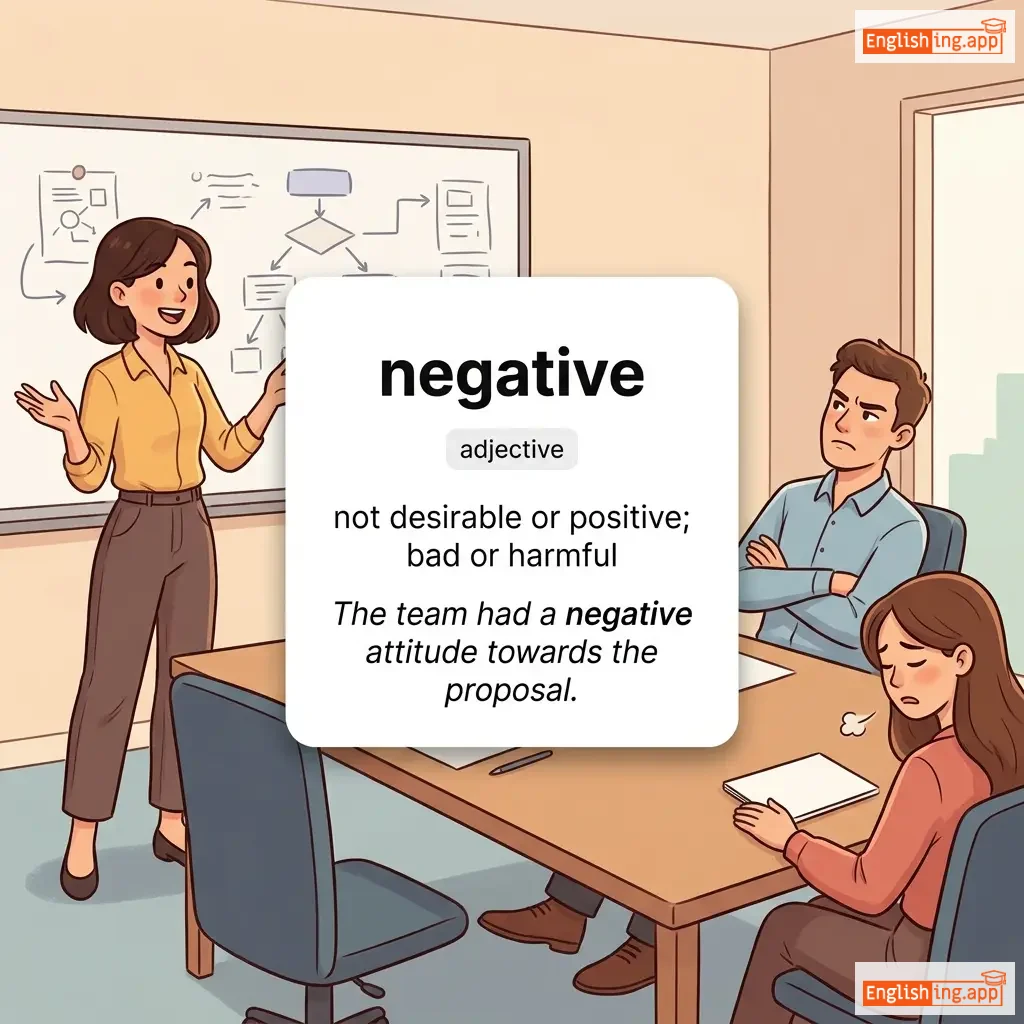
not desirable or positive; bad or harmful
••••••
|
The team had a negative attitude towards the proposal. |
チームは提案に対して否定的な態度を持っていました。
Chīmu wa teian ni taishite hōteiteki na taido o motte imashita.
••••••
|
- •••••• | - •••••• | - •••••• |
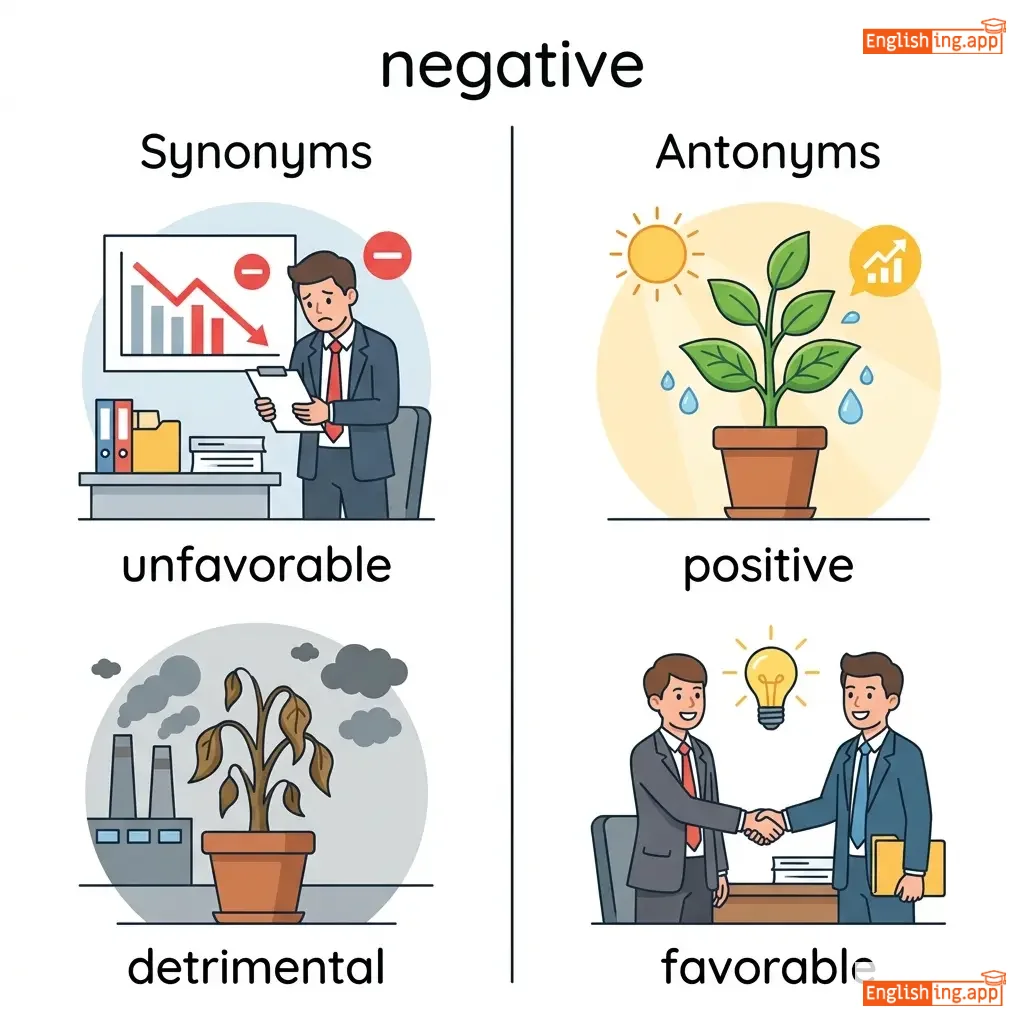
unfavorable, detrimental, harmful, pessimistic
••••••
|
positive, favorable, optimistic
••••••
|
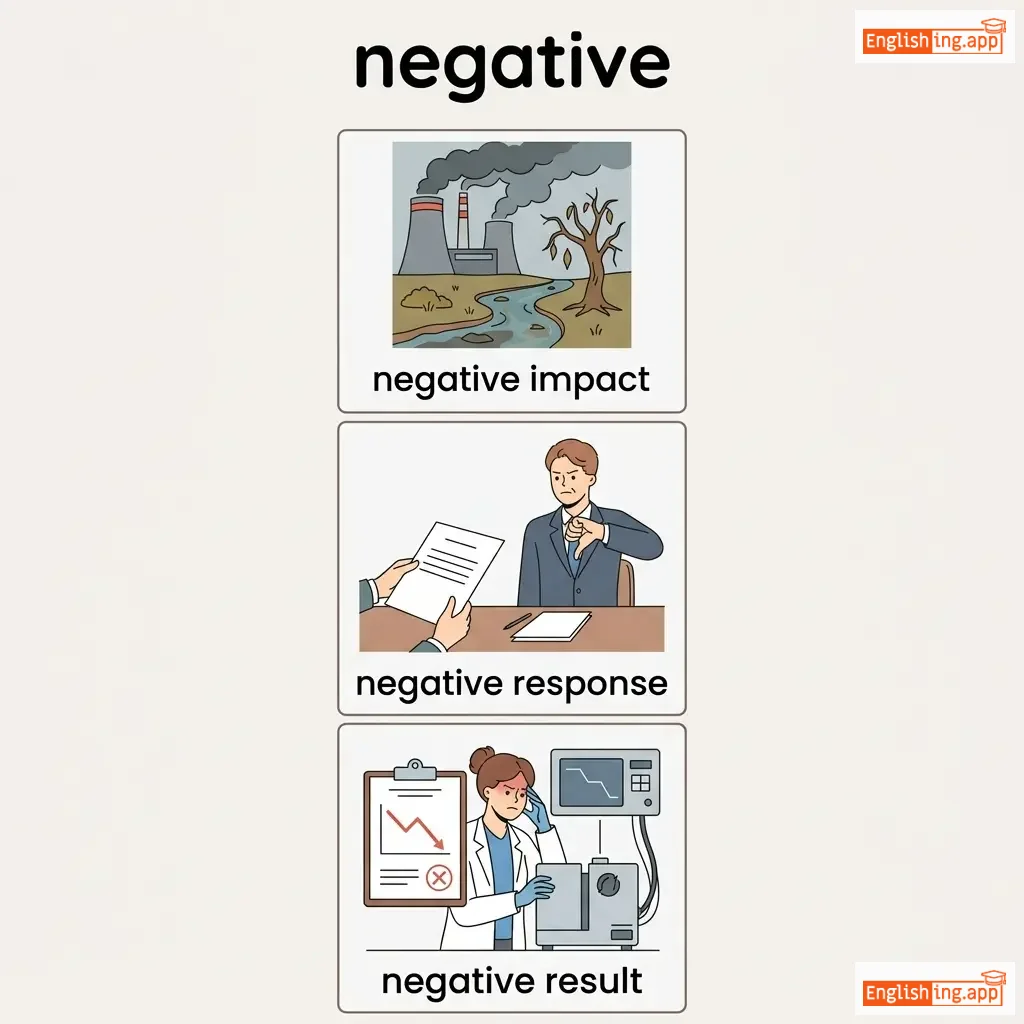
negative impact, negative response, negative result
••••••
|
ネガティブを覚えて、良いことは何もない!
••••••
|
|
😔
••••••
|
/nɪˈɡlɛkt/
verb
(ネグレクト)
••••••
|
|
無視
mushi
••••••
|
neglected
ネグレクテッド
••••••
|
neglected
ネグレクテッド
••••••
|
neglects
ネグレクツ
••••••
|
neglecting
ネグレクティング
••••••
|
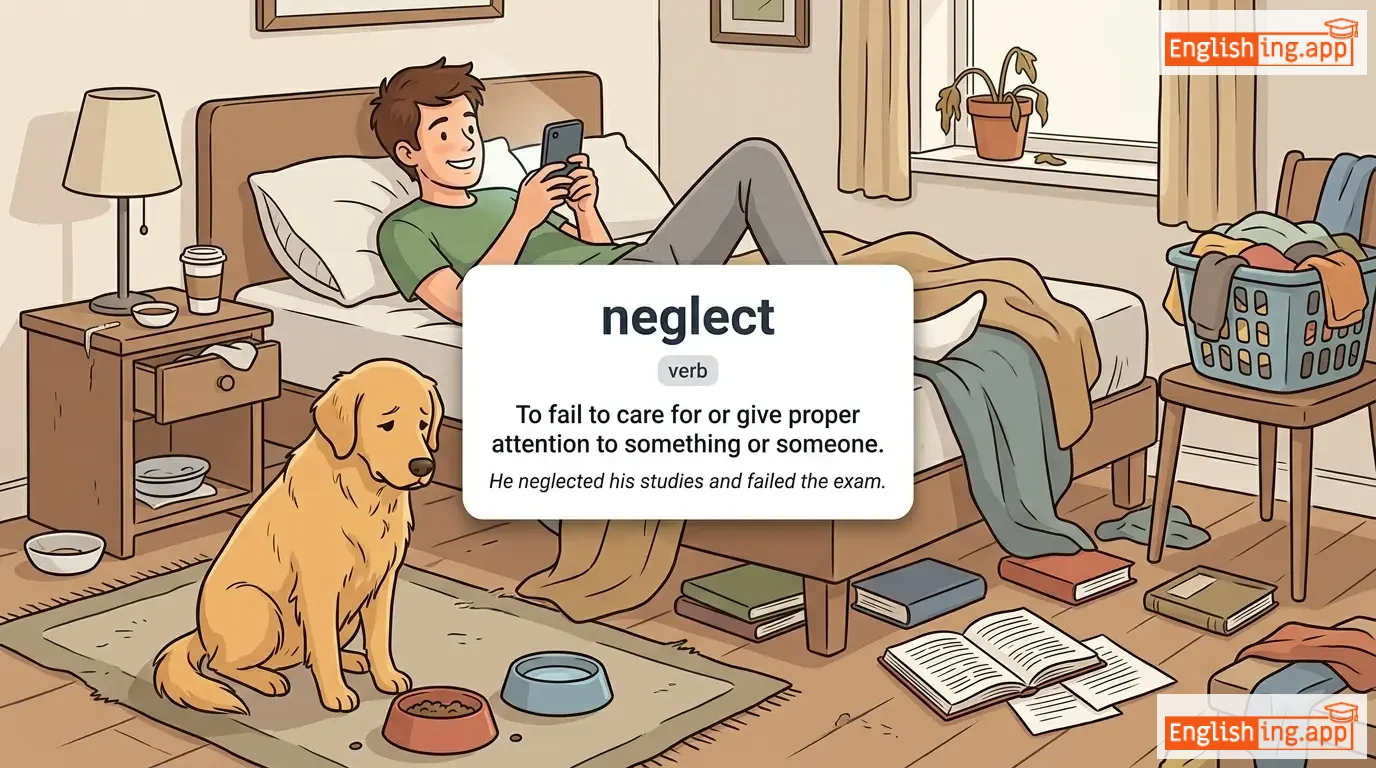
To fail to care for or give proper attention to something or someone.
••••••
|
He neglected his studies and failed the exam.
彼は勉強を怠けて試験に落ちました。
••••••
|
彼は勉強を怠け、試験に落ちました。
Kare wa benkyou o namakete, shiken ni ochimashita.
••••••
|
neglect of duty
義務の怠慢
••••••
|
Failure to fulfill one's responsibilities.
••••••
|
義務の怠慢
Gimu no taimani
••••••
|
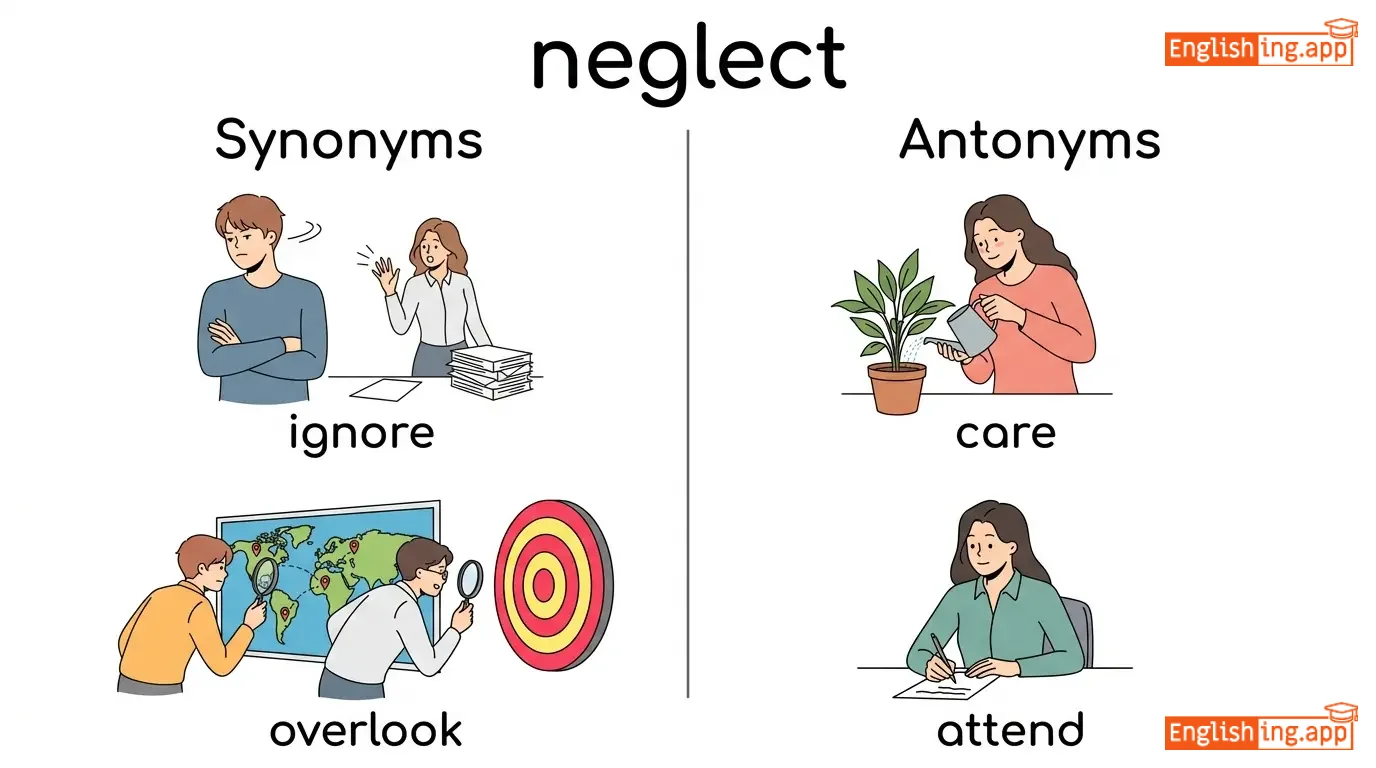
ignore, overlook, disregard, abandon, forget
••••••
|
care, attend, maintain
••••••
|
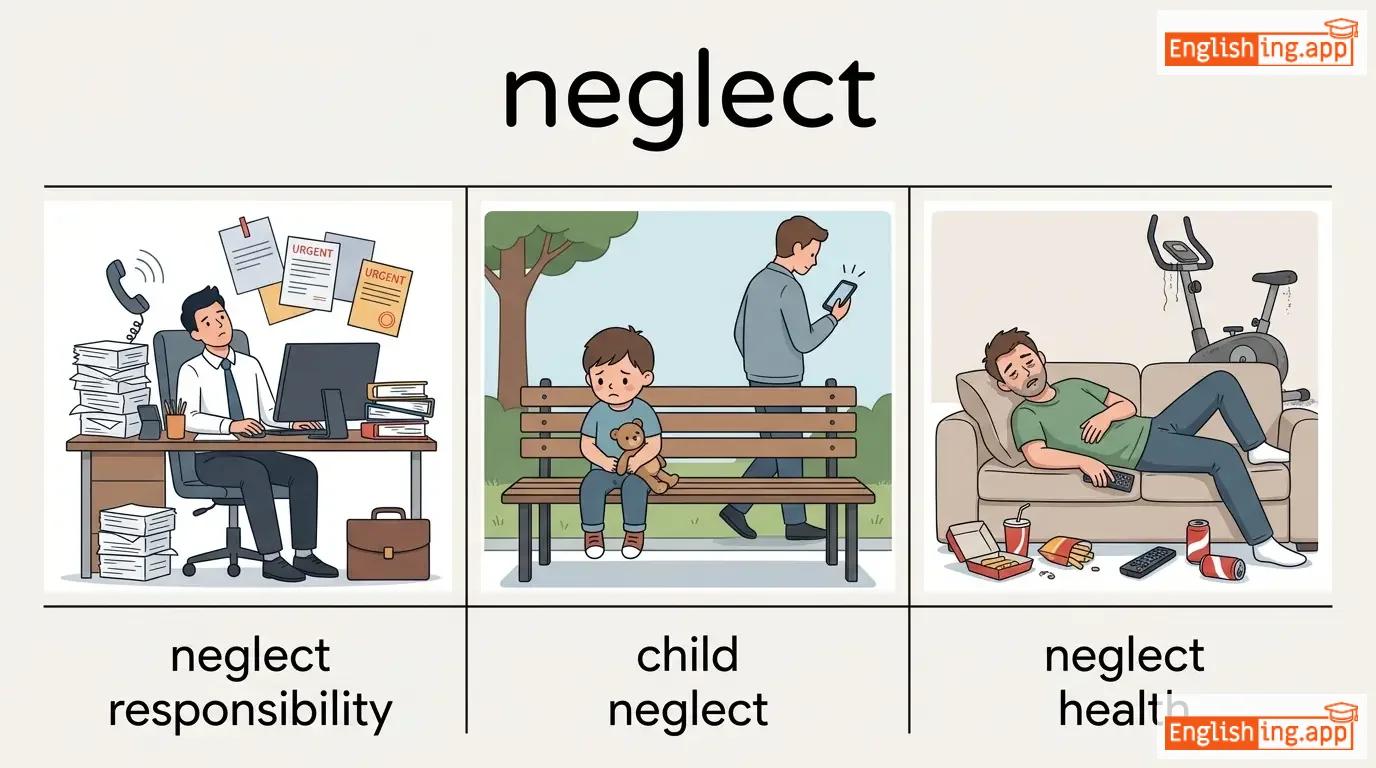
neglect responsibility, child neglect, neglect health, neglect work
••••••
|
Neglect は negative + collect → 何も集めない = 無視。
••••••
|
|
🤝
••••••
|
/nɪˈɡoʊ.ʃi.eɪt/
verb
(ネゴシエイト)
••••••
|
- •••••• |
交渉する
koushou suru
••••••
|
negotiated
ネゴシエイテッド
••••••
|
negotiated
ネゴシエイテッド
••••••
|
negotiates
ネゴシエイツ
••••••
|
negotiating
ネゴシエイティング
••••••
|
To discuss something formally in order to reach an agreement.
••••••
|
They negotiated a fair deal with the supplier.
彼らはサプライヤーと公平な取引を交渉した。
••••••
|
彼らはサプライヤーと公平な取引を交渉した。
Karera wa sapuraiyaa to kouhei na torihiki wo koushou shita.
••••••
|
negotiate a deal
取引を交渉する
••••••
|
To bargain and reach an agreement.
••••••
|
取引を交渉する
torihiki wo koushou suru
••••••
|
bargain, discuss, mediate, arrange, settle
••••••
|
refuse, reject, decline
••••••
|
negotiate terms, negotiate peace, negotiate agreement, negotiate contract
••••••
|
ネゴシエイト = NEGOTiate + SIT - 座って取引を交渉する
••••••
|
|
🤝
••••••
|
/nɪˌɡoʊ.siˈeɪ.ʃən/
noun
(ネゴシエーション)
••••••
|
- •••••• |
合意に達するための議論; 交渉
negoshiēshon
••••••
|
- •••••• | - •••••• | - •••••• | - •••••• |
discussion aimed at reaching an agreement; bargaining
••••••
|
The negotiation between the two companies lasted for weeks. |
二社間の交渉は数週間続きました。
Nishakan no kōshō wa sūshūkan tsudzukimashita.
••••••
|
- •••••• | - •••••• | - •••••• |
discussion, bargaining, talks, mediation
••••••
|
conflict, disagreement, deadlock
••••••
|
peace negotiation, contract negotiation, salary negotiation
••••••
|
交渉は合意を得るための重要なプロセスです
••••••
|
|
🏘️
••••••
|
/ˈneɪbər/
noun
(ネイバー)
••••••
|
- •••••• |
隣人
rinjin
••••••
|
- •••••• | - •••••• | - •••••• | - •••••• |
a person living next door or nearby
••••••
|
My neighbor lent me some sugar when I ran out.
マイ ネイバー レント ミ サム シュガー ウェン アイ ラン アウト。
••••••
|
私の隣人は私が砂糖がなくなった時、砂糖を貸してくれました。
Watashi no rinjin wa watashi ga satō ga nakunatta toki, satō o kashite kuremashita.
••••••
|
- •••••• | - •••••• | - •••••• |
adjacent resident, nearby person, local
••••••
|
stranger, outsider
••••••
|
good neighbor, friendly neighbor, next-door neighbor
••••••
|
Your neighbor never says ‘no’, it’s sweet like sugar!
••••••
|
|
🏡
••••••
|
/ˈneɪbərˌhʊd/
noun
(ネイバーフッド)
••••••
|
- •••••• |
近所
kinjo
••••••
|
- •••••• | - •••••• | - •••••• | - •••••• |
a district or area around or near a particular place
••••••
|
I grew up in a quiet neighborhood. |
私は静かな近所で育ちました。
Watashi wa shizukana kinjo de sodachimashita.
••••••
|
- •••••• | - •••••• | - •••••• |
community, locality, district, area
••••••
|
isolation, wilderness
••••••
|
peaceful neighborhood, residential neighborhood, urban neighborhood
••••••
|
近所 - 近くに住んでいる友達と良い関係を築く場所
••••••
|
|
🏘️
••••••
|
/ˈneɪ.bər.ɪŋ/
adjective
(ネイバリング)
••••••
|
- •••••• |
隣接した; 近接した; 隣国の
rinsesshita; kinsetsu shita; ringoku no
••••••
|
- •••••• | - •••••• | - •••••• | - •••••• |
situated next to or very near; adjacent; bordering
••••••
|
We often visit our neighbouring countries for trade. |
私たちは貿易のために隣国をよく訪れます。
Watashitachi wa boueki no tame ni ringoku o yoku otozuremasu.
••••••
|
- •••••• | - •••••• | - •••••• |
adjacent, nearby, bordering, adjoining
••••••
|
distant, remote, far, separate
••••••
|
neighbouring countries, neighbouring houses, neighbouring cities
••••••
|
隣国に貿易で行くことはよくあることです!
••••••
|
|
🚫
••••••
|
/ˈniːðər/
conjunction
(ナイザー)
••••••
|
- •••••• |
どちらも〜ない
dochira mo nai
••••••
|
- •••••• | - •••••• | - •••••• | - •••••• |
used to connect two negative alternatives
••••••
|
Neither the manager nor the assistant could attend the meeting.
ナイザー ザ マネージャー ノア ザ アシスタント クッド アテンド ザ ミーティング。
••••••
|
マネージャーもアシスタントも会議に出席できなかった。
maneja mo ashisutanto mo kaigi ni shusseki dekinakatta
••••••
|
- •••••• | - •••••• | - •••••• |
nor, not either
••••••
|
either
••••••
|
neither nor, neither of them
••••••
|
Neither in Japanese: どちらも〜ない means neither of the two!
••••••
|
|
👦
••••••
|
/ˈnefjuː/
noun
(ネフュー)
••••••
|
- •••••• |
甥
oi
••••••
|
- •••••• | - •••••• | - •••••• | - •••••• |
the son of one’s brother or sister
••••••
|
My nephew is studying at the university.
マイ ネフュー イズ スタディーイング アット ザ ユニバーシティ。
••••••
|
私の甥は大学で勉強しています。
watashi no oi wa daigaku de benkyou shiteimasu
••••••
|
- •••••• | - •••••• | - •••••• |
brother's son, sister's son, male relative, young relative
••••••
|
uncle, aunt
••••••
|
beloved nephew, young nephew, nephew and niece, visit my nephew
••••••
|
甥(oi) = nephew—নেফিউ মনে করলেই 甥
••••••
|
|
😰
••••••
|
/ˈnɜːrvəs/
adjective
(ナーヴァス)
••••••
|
- •••••• |
緊張
kinchou
••••••
|
- •••••• | - •••••• | - •••••• | - •••••• |
anxious, worried, or fearful about something
••••••
|
She felt nervous before giving her presentation.
彼女はプレゼンテーションの前に緊張していた。
••••••
|
彼女はプレゼンテーションの前に緊張していた。
Kanojo wa purezentēshon no mae ni kinchou shite ita.
••••••
|
nervous wreck
神経質な壊滅的
••••••
|
a person who is very anxious, worried, or stressed
••••••
|
非常に緊張している人
hijou ni kinchou shite iru hito
••••••
|
anxious, uneasy, tense, restless, jittery
••••••
|
calm, relaxed, confident
••••••
|
nervous about, nervous smile, nervous feeling, nervous breakdown
••••••
|
試験中、みんな NERVOUS (緊張)
••••••
|
|
🪹
••••••
|
/nɛst/
noun
(ネスト)
••••••
|
- •••••• |
巣
su
••••••
|
- •••••• | - •••••• | - •••••• | - •••••• |
a structure built by birds or other animals to hold their eggs or young.
••••••
|
The bird built a nest in the tall tree. |
その鳥は高い木に巣を作った。
Sono tori wa takai ki ni su o tsukutta.
••••••
|
empty nest |
a home where children have grown up and left, leaving the parents alone.
••••••
|
空の巣
Sora no su
••••••
|
home, den, lair, shelter, abode
••••••
|
wilderness, outside
••••••
|
bird's nest, build a nest, cozy nest, empty nest
••••••
|
巣は鳥が育てる場所。鳥たちがその巣で眠り、育てる場所を想像しよう!
••••••
|
|
🎣
••••••
|
/nɛt/
noun
(ネット)
••••••
|
- •••••• |
網
ami
••••••
|
- •••••• | - •••••• | - •••••• | - •••••• |
a piece of material made of threads or ropes woven together, used to catch or hold things
••••••
|
The fisherman cast his net into the sea. |
漁師は網を海に投げた。
Ryoushi wa ami wo umi ni nageta.
••••••
|
cast a wide net |
to try to reach or include as many people or things as possible
••••••
|
広い網を投げる
Hiroi ami wo nageru
••••••
|
mesh, web, lattice, trap
••••••
|
freedom, release
••••••
|
safety net, fishing net, cast net, catch in net
••••••
|
ネットは網を意味します - インターネットも網のように接続します
••••••
|
|
🌐
••••••
|
/ˈnɛtˌwɜrk/
noun
(ネットワーク)
••••••
|
- •••••• |
ネットワーク
nettowaaku
••••••
|
- •••••• | - •••••• | - •••••• | - •••••• |
A system of interconnected people, things, or computers.
••••••
|
She built a strong professional network.
彼女は強力なプロフェッショナルネットワークを作り上げた。
••••••
|
彼女は強力なプロフェッショナルネットワークを作り上げた。
Kanojo wa kyouryoku na purofesshonaru nettowaaku wo tsukuriageta.
••••••
|
networking opportunities
ネットワーキングの機会
••••••
|
Chances to connect with people for career or business growth
••••••
|
ネットワーキングの機会
Nettowaakingu no kikai
••••••
|
system, web, grid, connection, chain
••••••
|
isolation, separation
••••••
|
social network, computer network, business network, global network
••••••
|
Network + work = 仕事のためのネットワーク
••••••
|
|
⚖️
••••••
|
/ˈnjuːtrəl/
adjective
(ニュートラル)
••••••
|
|
中立
chūritsu
••••••
|
- •••••• | - •••••• | - •••••• | - •••••• |
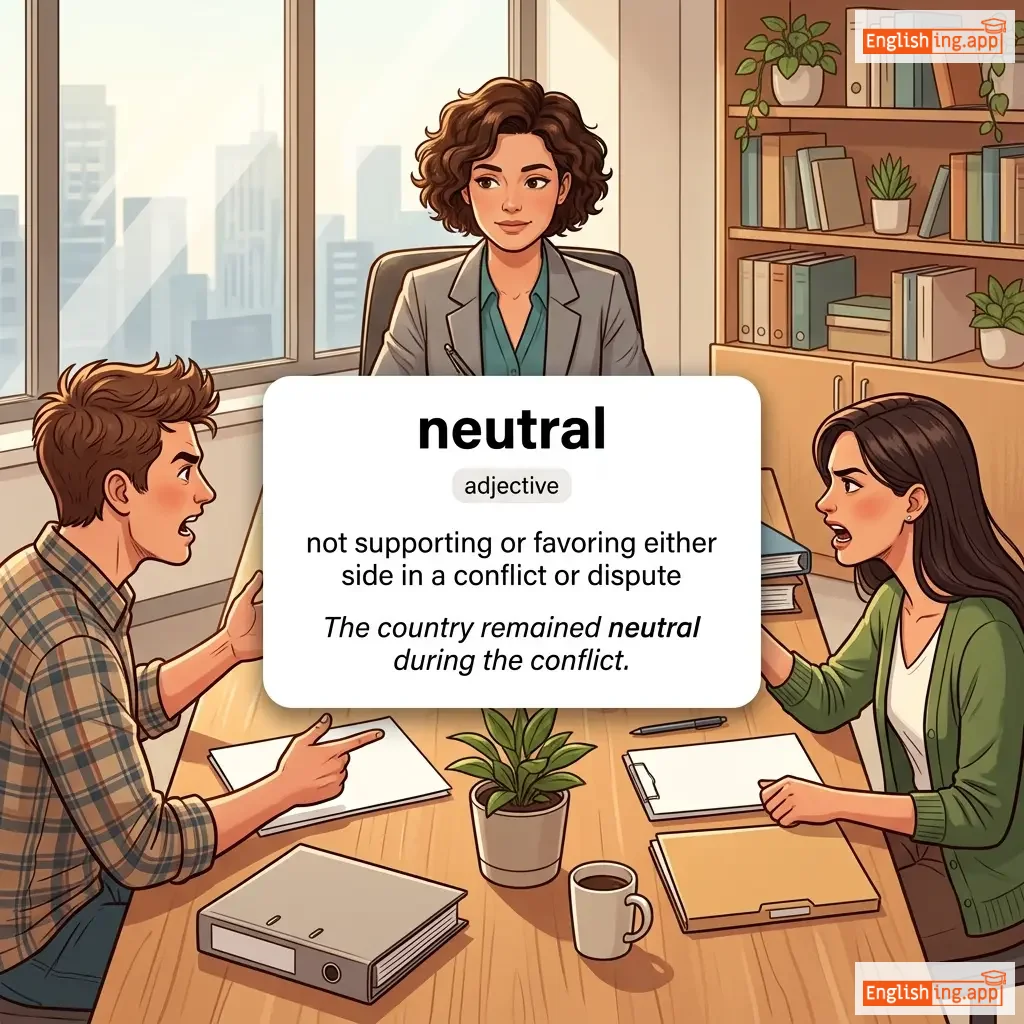
not supporting or favoring either side in a conflict or dispute
••••••
|
The country remained neutral during the conflict. |
その国は対立の間中立を保った。
Sono kuni wa tairitsu no aida chūritsu o tamotta.
••••••
|
neutral stance |
a position of not taking sides
••••••
|
中立の立場
chūritsu no tachiba
••••••
|
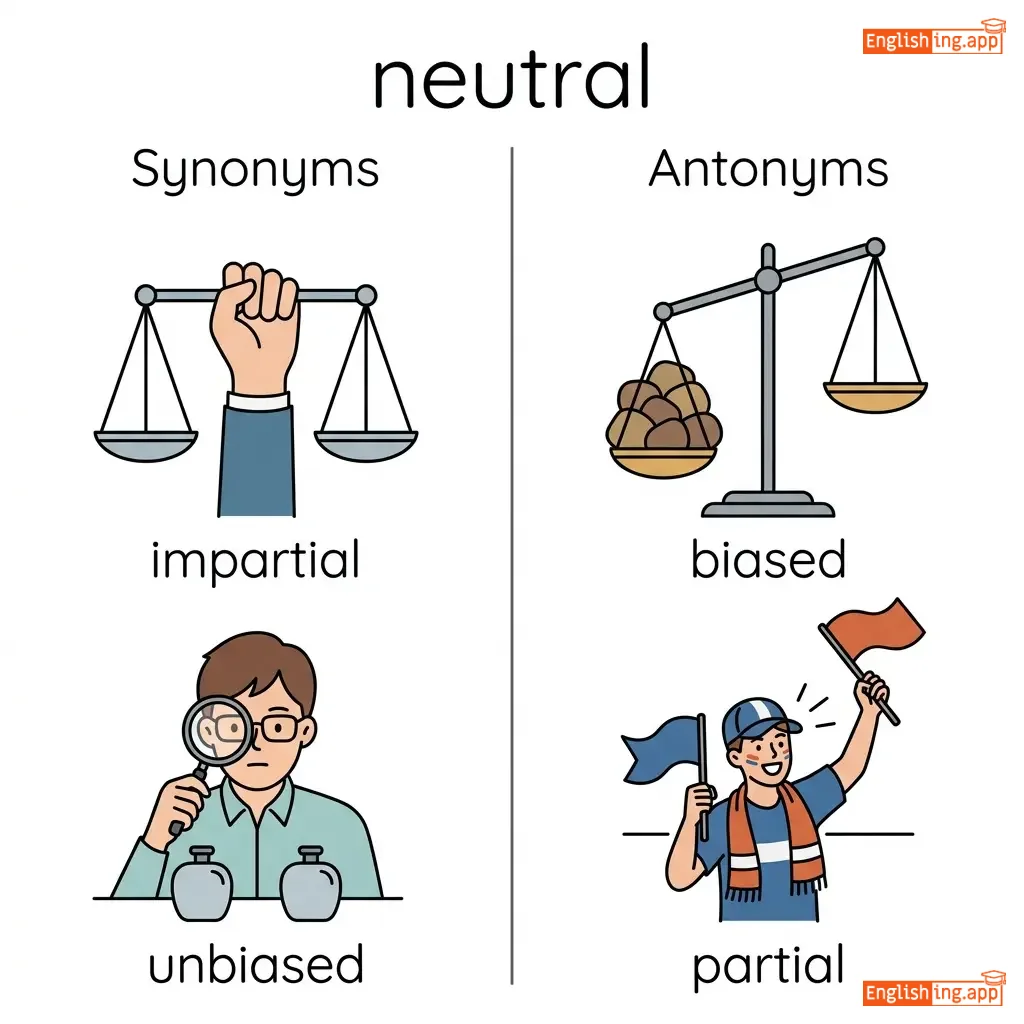
impartial, unbiased, nonpartisan, detached, indifferent
••••••
|
biased, partial, partisan
••••••
|
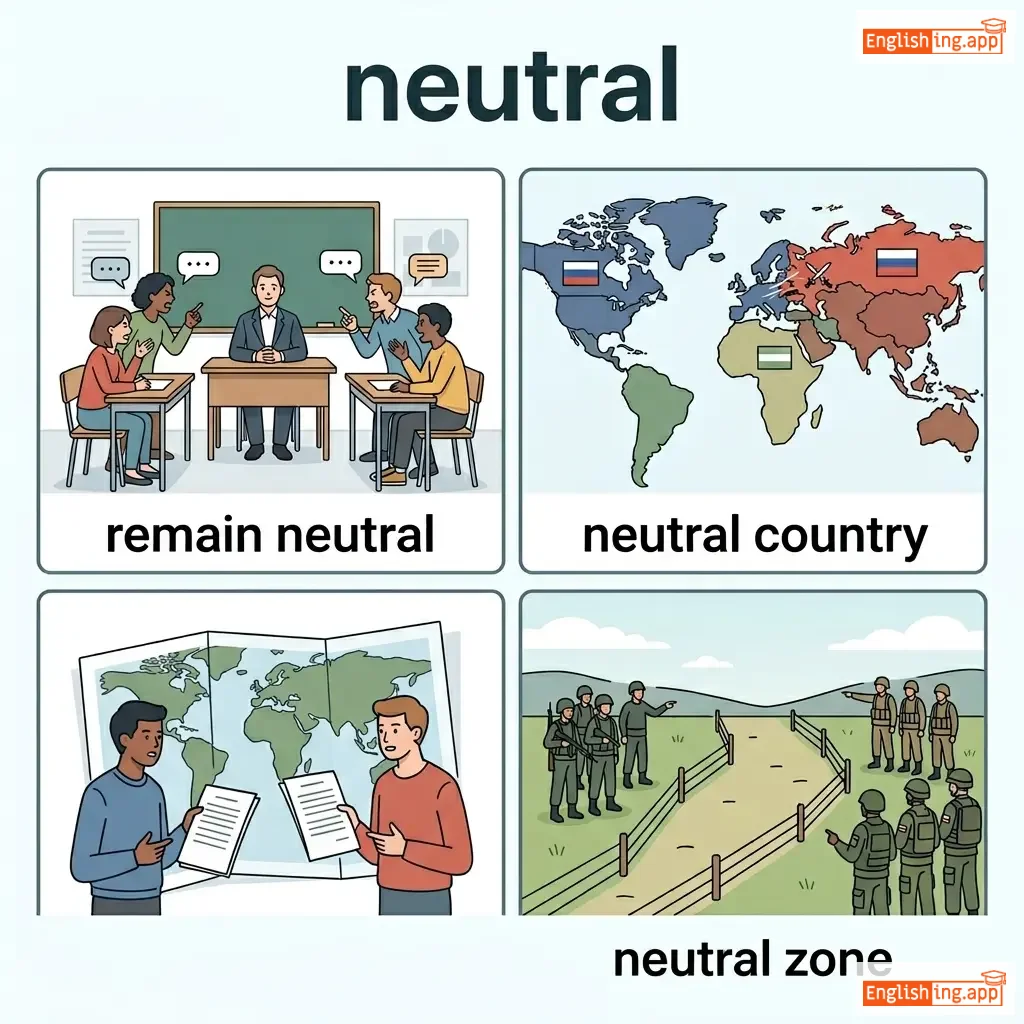
remain neutral, neutral country, neutral zone, neutral position
••••••
|
Neutralは '中立' の意味です — 争いごとの中で誰も偏らず、全員が中立の立場を取ります。
••••••
|
|
⚖️
••••••
|
/nuːˈtræl.ə.ti/
noun
(ニュートラリティ)
••••••
|
|
中立
chūritsu
••••••
|
- •••••• | - •••••• | - •••••• | - •••••• |
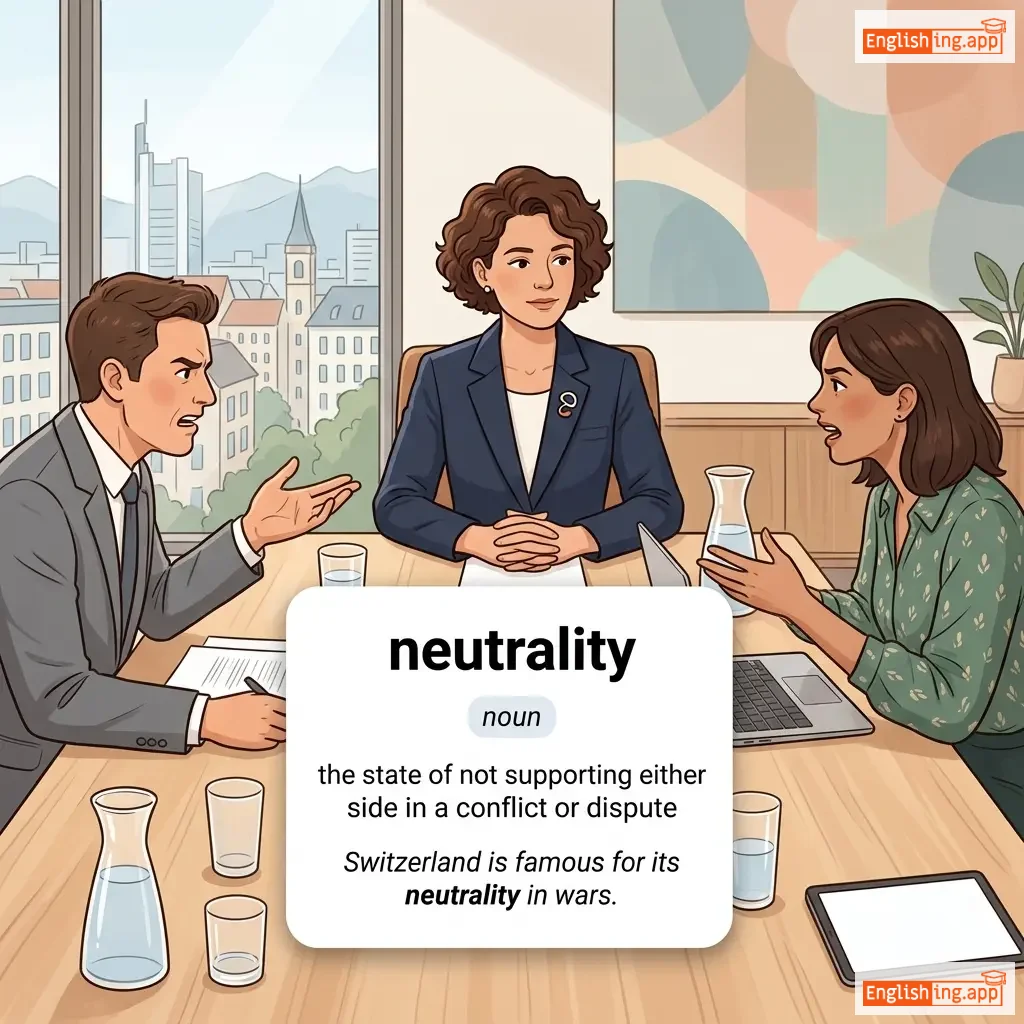
the state of not supporting either side in a conflict or dispute
••••••
|
Switzerland is famous for its neutrality in wars.
スイスは戦争でのニュートラリティで有名です。
••••••
|
スイスは戦争での中立で有名です。
Suisu wa sensō de no chūritsu de yūmei desu.
••••••
|
- •••••• | - •••••• | - •••••• |
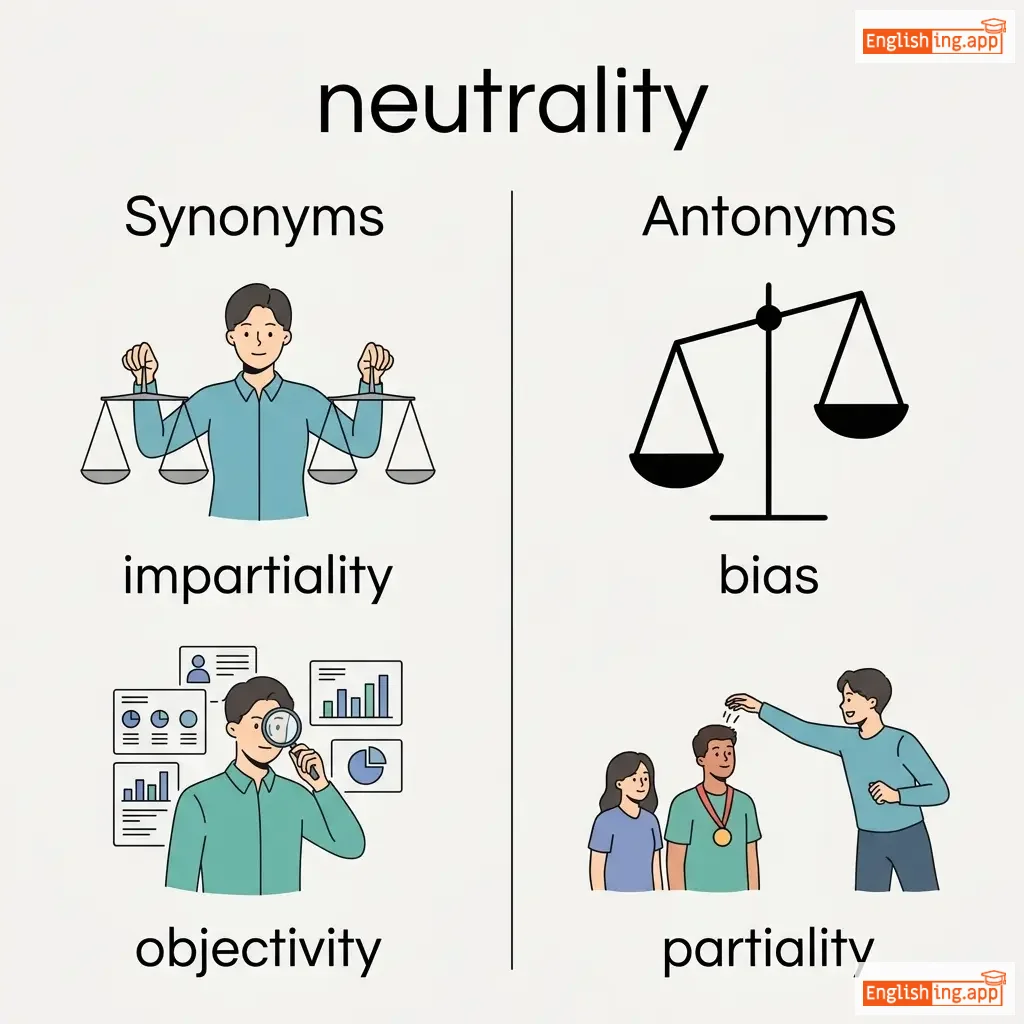
impartiality, objectivity, non-alignment
••••••
|
bias, partiality, involvement, alliance
••••••
|
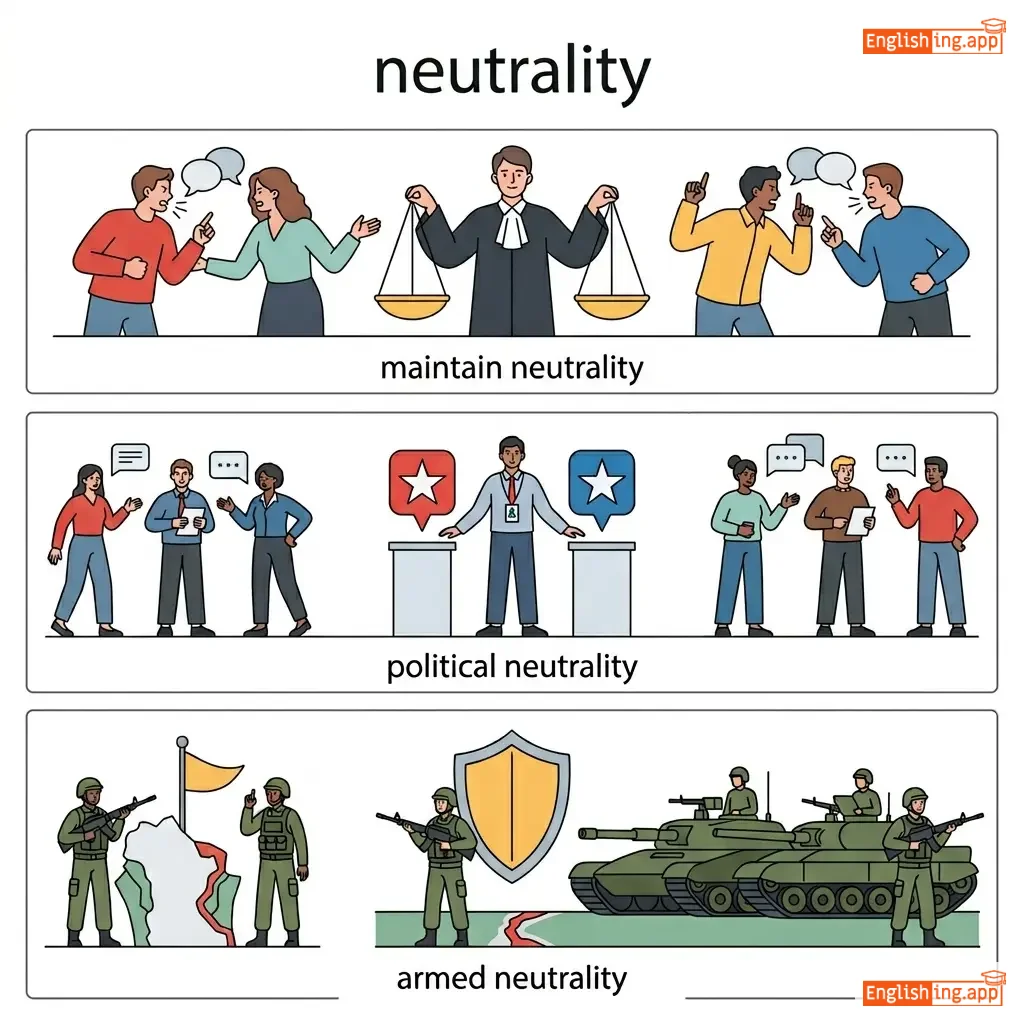
maintain neutrality, political neutrality, armed neutrality
••••••
|
中立 - '中'は真ん中、'立'は立つ意味で、どちらの側にも立たない状態を表します。
••••••
|
|
🚫
••••••
|
/ˈnɛvər/
adverb
(ネヴァー)
••••••
|
- •••••• |
決して
kesshite
••••••
|
- •••••• | - •••••• | - •••••• | - •••••• |
at no time in the past or future; not ever
••••••
|
I have never seen such a beautiful sunset. |
私はこんなに美しい夕日を決して見たことがありません。
Watashi wa konna ni utsukushii yūhi o kesshite mita koto ga arimasen.
••••••
|
- •••••• | - •••••• | - •••••• |
not at all, under no circumstances, in no way, by no means
••••••
|
always, ever
••••••
|
never seen, never been, never heard, never thought
••••••
|
NEVER forget to say NO (kesshite) to things that waste time
••••••
|
|
🤷
••••••
|
/ˌnɛvəðəˈlɛs/
adverb
••••••
|
- •••••• | - •••••• | - •••••• | - •••••• | - •••••• | - •••••• |
in spite of that; however
••••••
|
He was tired; nevertheless, he kept working. |
- •••••• | - •••••• | - •••••• | - •••••• |
however, nonetheless, yet, still, though
••••••
|
therefore, thus
••••••
|
but nevertheless, nevertheless continue, nevertheless important
••••••
|
No •••••• |
|
🆕
••••••
|
/njuː/
adjective
(ニュウ)
••••••
|
- •••••• |
新しい
atarashī
••••••
|
- •••••• | - •••••• | - •••••• | - •••••• |
recently made, discovered, or introduced; not existing before
••••••
|
He bought a new car yesterday.
彼は昨日新しい車を買いました。
••••••
|
彼は昨日新しい車を買いました。
Kare wa kinō atarashī kuruma o kaimashita.
••••••
|
brand new
全く新しい
••••••
|
completely new, unused, and fresh
••••••
|
全く新しい
mattaku atarashī
••••••
|
fresh, recent, modern, novel, latest
••••••
|
old, used, ancient
••••••
|
new car, new job, new idea, new technology
••••••
|
NEWはATARASHII — すべての新しいものはいつも新しい
••••••
|
|
🆕
••••••
|
/ˈnjuːli/
adverb
(nyūri)
••••••
|
- •••••• |
最近
saikin
••••••
|
- •••••• | - •••••• | - •••••• | - •••••• |
in a new or recent manner
••••••
|
She has newly renovated her house.
彼女は最近家をリフォームしました。
••••••
|
彼女は最近家をリフォームしました。
Kanojo wa saikin ie o rifōm shimashita.
••••••
|
- •••••• | - •••••• | - •••••• |
recently, freshly, just, newly made
••••••
|
old, outdated
••••••
|
newly appointed, newly built, newly married, newly discovered
••••••
|
NEWLY means NEW + LY (recently done with love)
••••••
|
|
📰
••••••
|
/nuːz/
noun
(ニューヨーク)
••••••
|
- •••••• |
ニュース
nyūsu
••••••
|
- •••••• | - •••••• | - •••••• | - •••••• |
newly received or noteworthy information, especially about recent events
••••••
|
The news about the storm spread quickly. |
嵐に関するニュースはすぐに広まりました。
Arashi ni kansuru nyūsu wa sugu ni hiromarimashita.
••••••
|
- •••••• | - •••••• | - •••••• |
information, report, bulletin, update
••••••
|
silence, ignorance
••••••
|
breaking news, latest news, good news, bad news
••••••
|
NEWS = 新しい 事件 我々 知っているべき
••••••
|
|
📰
••••••
|
/ˈnjuːzˌlɛtər/
noun
(nyūzuretā)
••••••
|
- •••••• |
ニュースレター
nyūzuretā
••••••
|
- •••••• | - •••••• | - •••••• | - •••••• |
a printed or electronic report containing news or information about a company or organization
••••••
|
The company sends a weekly newsletter to its employees.
その会社は毎週社員にニュースレターを送ります。
••••••
|
その会社は毎週社員にニュースレターを送ります。
Sono kaisha wa maishū shain ni nyūzuretā o okurimasu.
••••••
|
- •••••• | - •••••• | - •••••• |
bulletin, report, circular, digest
••••••
|
none
••••••
|
newsletter subscription, newsletter content, newsletter design
••••••
|
ニュースレターで毎週情報を受け取る
••••••
|
|
🗞️
••••••
|
/ˈnjuːzˌpeɪpər/
noun
(ニューペーパー)
••••••
|
- •••••• |
新聞
shinbun
••••••
|
- •••••• | - •••••• | - •••••• | - •••••• |
a printed publication (usually daily or weekly) containing news, articles, advertisements, and correspondence
••••••
|
I read the newspaper every morning.
私は毎朝新聞を読みます。
••••••
|
私は毎朝新聞を読みます。
Watashi wa mai asa shinbun o yomimasu.
••••••
|
- •••••• | - •••••• | - •••••• |
periodical, journal, publication, paper
••••••
|
magazine, online media
••••••
|
daily newspaper, local newspaper, national newspaper, newspaper article
••••••
|
Newspapers are the first place to get the NEWS
••••••
|
|
⏭️
••••••
|
/nɛkst/
adjective
(ネクスト)
••••••
|
- •••••• |
次
tsugi
••••••
|
- •••••• | - •••••• | - •••••• | - •••••• |
immediately following in time, order, or place
••••••
|
The next train leaves at 9:00 AM. |
次の電車は午前9時に出発します。
Tsugi no densha wa gozen 9-ji ni shuppatsu shimasu.
••••••
|
- •••••• | - •••••• | - •••••• |
following, subsequent, upcoming, nearest
••••••
|
previous, prior
••••••
|
next day, next year, next time, next week
••••••
|
Next is always the NEXT thing to happen
••••••
|
|
😊
••••••
|
/naɪs/
adjective
(ナイス)
••••••
|
- •••••• |
素敵
suteki
••••••
|
- •••••• | - •••••• | - •••••• | - •••••• |
pleasant, kind, or enjoyable
••••••
|
She is a very nice person to work with. |
彼女は一緒に働くのにとても素敵な人です。
Kanojo wa issho ni hataraku no ni totemo suteki na hito desu.
••••••
|
nice and easy |
something simple and comfortable
••••••
|
素敵で簡単
suteki de kantan
••••••
|
pleasant, kind, friendly, agreeable, charming
••••••
|
mean, rude, unpleasant
••••••
|
nice day, nice person, nice weather, nice job, nice to meet
••••••
|
素敵な人はいつも楽しい
••••••
|
|
😊
••••••
|
/ˈnaɪsli/
adverb
(ナイスリー)
••••••
|
- •••••• |
上手に
joozu ni
••••••
|
- •••••• | - •••••• | - •••••• | - •••••• |
in a pleasant, kind, or satisfactory manner; carefully and appropriately
••••••
|
She explained the problem nicely so everyone could understand.
シー エクスプレーンド ザ プロブレム ナイスリー ソー エブリワン クッド アンダースタンド
••••••
|
彼女はみんなが理解できるように上手に説明した。
kanojo wa minna ga rikai dekiru yoo ni joozu ni setsumei shita
••••••
|
nicely done
ナイスリー ダン
••••••
|
said to praise someone for doing something well
••••••
|
よくやった
yoku yatta
••••••
|
pleasantly, kindly, well, smoothly, agreeably
••••••
|
badly, poorly, rudely
••••••
|
nicely done, nicely dressed, nicely explained, nicely arranged
••••••
|
Nice にすると joozu ni
••••••
|
|
🌱
••••••
|
/niːʃ/
noun
(ニッチ)
••••••
|

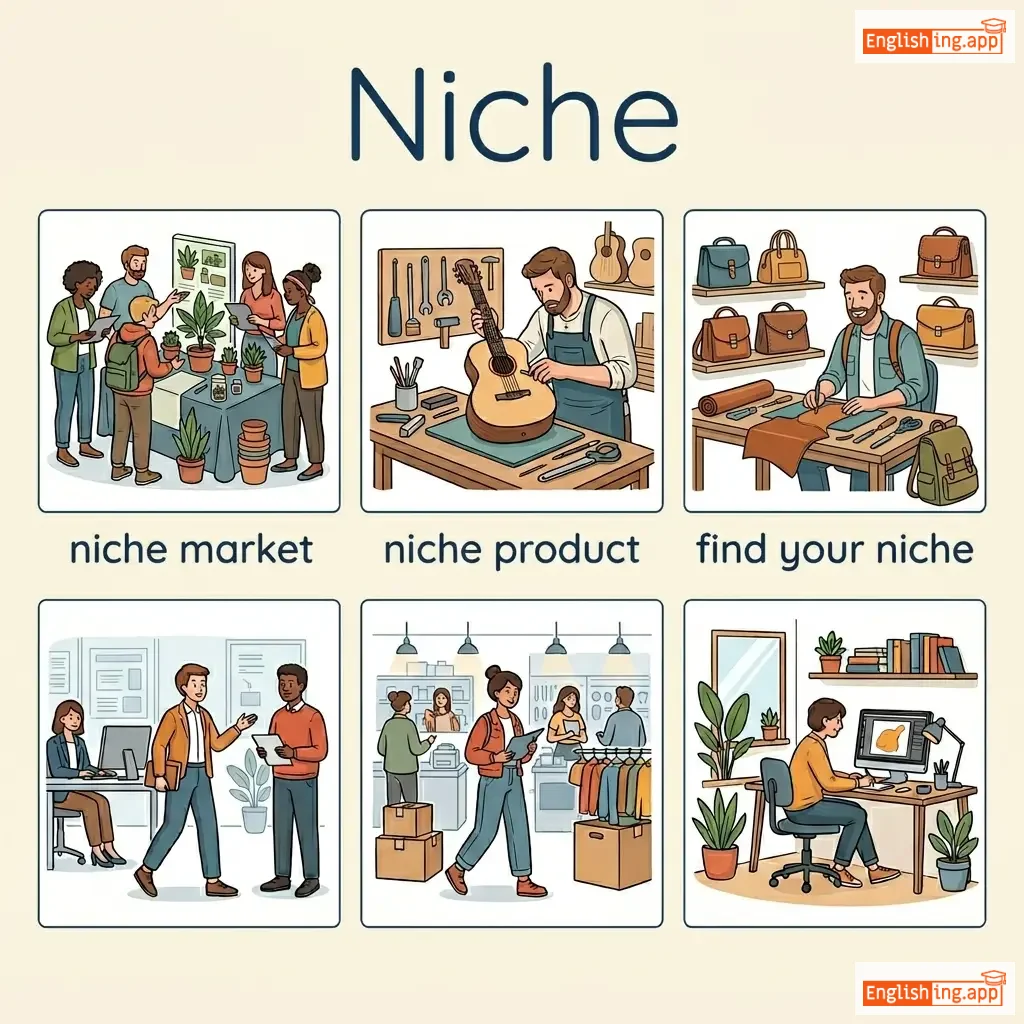
|
ニッチ
nicchi
••••••
|
- •••••• | - •••••• | - •••••• | - •••••• |
a comfortable or suitable position in life or employment
••••••
|
He has found his niche in the marketing industry. |
彼はマーケティング業界で自分のニッチを見つけました。
Kare wa maketingu gyoukai de jibun no nicchi wo mitsukemashita.
••••••
|
- •••••• | - •••••• | - •••••• |
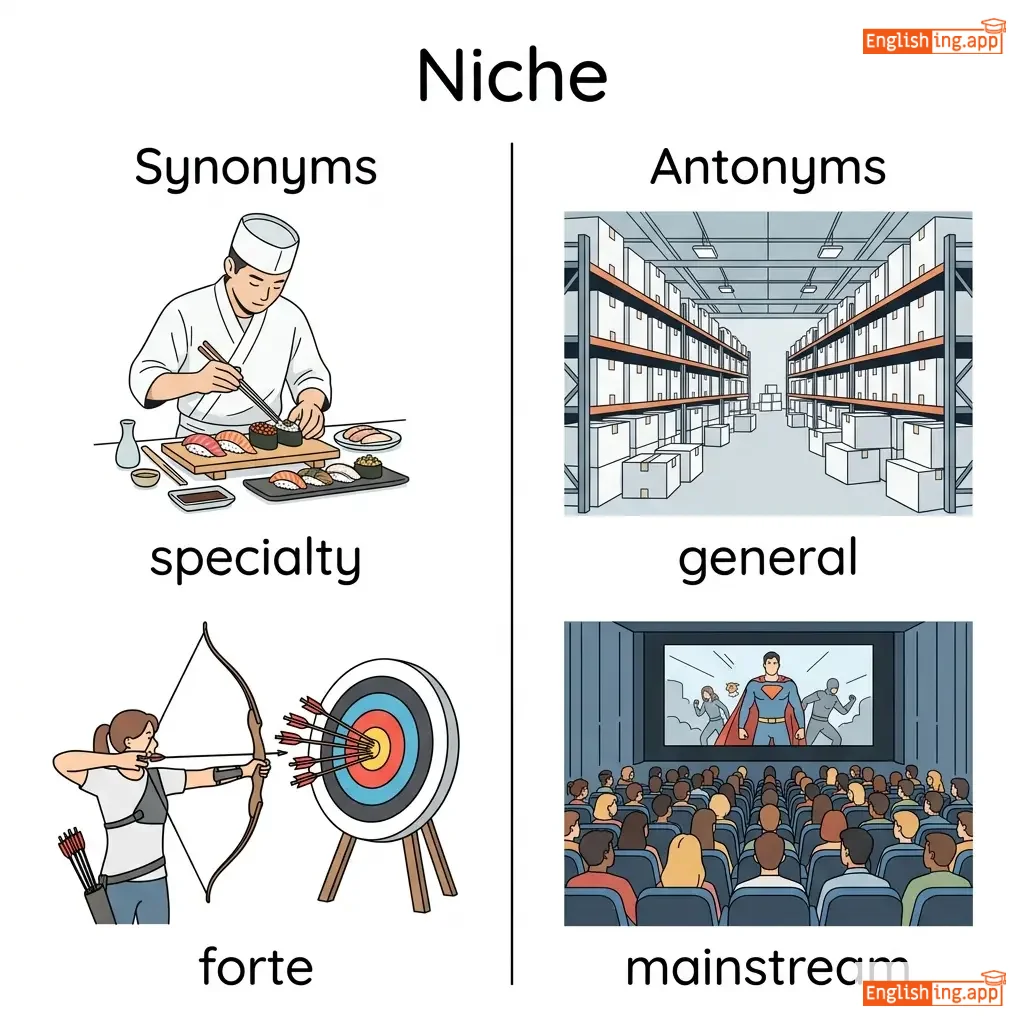
specialty, forte, domain, area
••••••
|
general, mainstream
••••••
|
niche market, niche product, find your niche
••••••
|
マーケティング業界での自分の居場所
••••••
|
|
🏷️
••••••
|
/ˈnɪk.neɪm/
noun
(ˈnɪkˌneɪm)
••••••
|
- •••••• |
ニックネーム
nikku nēmu
••••••
|
- •••••• | - •••••• | - •••••• | - •••••• |
a familiar or humorous name given to a person instead of their real name
••••••
|
His nickname is 'Tiger' because he's so brave. |
彼のニックネームは 'タイガー' です。なぜなら彼はとても勇敢だからです。
kare no nikku nēmu wa 'taigā' desu. nazenara kare wa totemo yūkan dakara desu.
••••••
|
- •••••• | - •••••• | - •••••• |
pet name, alias, moniker, sobriquet
••••••
|
real name, formal name, given name
••••••
|
give nickname, earn nickname, childhood nickname
••••••
|
ニックネームは親しい名前、例えば'タイガー'です。
••••••
|
|
👧
••••••
|
/niːs/
noun
(ニース)
••••••
|
- •••••• |
姪
mei
••••••
|
- •••••• | - •••••• | - •••••• | - •••••• |
the daughter of one's brother or sister
••••••
|
My niece is studying at the university this year.
マイ ニース イズ スタディング アット ザ ユニバーシティ ディス イヤー
••••••
|
私の姪は今年大学で勉強しています。
watashi no mei wa kotoshi daigaku de benkyo shiteimasu
••••••
|
- •••••• | - •••••• | - •••••• |
brother's daughter, sister's daughter, relative, kin
••••••
|
nephew, uncle
••••••
|
my niece, young niece, beloved niece, niece and nephew
••••••
|
姪 mei sounds short like niece
••••••
|
|
🌙
••••••
|
/naɪt/
noun
(ナイト)
••••••
|
- •••••• |
夜
yoru
••••••
|
- •••••• | - •••••• | - •••••• | - •••••• |
the time of darkness between one day and the next, when most people sleep
••••••
|
She loves going for walks at night. |
彼女は夜に散歩するのが好きです。
Kanojo wa yoru ni sanpo suru no ga suki desu.
••••••
|
- •••••• | - •••••• | - •••••• |
evening, nighttime, dusk, dark
••••••
|
day, morning
••••••
|
night sky, night time, at night, good night
••••••
|
夜 = 夜はやっぱりリラックス、寝る時間 (Night = Night is for relaxation, sleep time)
••••••
|
|
9️⃣
••••••
|
/naɪn/
noun
(ナイン)
••••••
|
- •••••• |
九
kyuu
••••••
|
- •••••• | - •••••• | - •••••• | - •••••• |
the number that is one more than eight
••••••
|
She has nine books in her collection.
彼女はコレクションに9冊の本を持っています。
••••••
|
彼女はコレクションに9冊の本を持っています。
Kanojo wa korekushon ni kyuu-satsu no hon o motteimasu.
••••••
|
- •••••• | - •••••• | - •••••• |
ninth, 9
••••••
|
eight, ten
••••••
|
nine o'clock, nine days, nine years
••••••
|
九本の本、九番目の数字
••••••
|
|
🚫
••••••
|
/noʊ/
adverb
(ノー)
••••••
|
- •••••• |
いいえ
iie
••••••
|
- •••••• | - •••••• | - •••••• | - •••••• |
used to give a negative response or to show disagreement
••••••
|
She said no to the invitation.
彼女は招待状を断った。
••••••
|
彼女は招待状を断った。
Kanojo wa shoutaijou o kotowatta.
••••••
|
- •••••• | - •••••• | - •••••• |
nope, never, negative, not at all
••••••
|
yes, okay
••••••
|
say no, no way, no problem, no need
••••••
|
ノー(no)と言うとすべてが止まる - Saying no stops everything.
••••••
|

