Получите неограниченный доступ ко всем словам с подпиской Pro
Обновить до ProПолучите неограниченный доступ ко всем предложениям с подпиской Pro
Обновить до Pro|
Эмодзи
|
Слово | Images | Перевод | Прошедшее | Причастие прошедшего времени | Третье лицо единственного числа | Герундий | Значение | Пример предложения | Перевод примера предложения | Пример выражения | Значение примера выражения | Перевод примера выражения | Синонимы | Антонимы | Коллокации | Мнемоника |
|---|---|---|---|---|---|---|---|---|---|---|---|---|---|---|---|---|---|
|
🚢
••••••
|
/ˈneɪvəl/
adjective
(невэл)
••••••
|
- •••••• |
морской
morskoy
••••••
|
- •••••• | - •••••• | - •••••• | - •••••• |
relating to a country's navy or military ships
••••••
|
The country invested heavily in naval defense. |
Страна сделала большие инвестиции в морскую оборону.
Strana sdelala bol'shie investitsii v morskuyu oboronu.
••••••
|
naval forces |
a nation's warships and related military strength
••••••
|
морские силы
morskie sily
••••••
|
maritime, seafaring, oceanic, military
••••••
|
civilian, land-based
••••••
|
naval base, naval battle, naval defense, naval fleet
••••••
|
Naval означает морской — представьте Navy и Battle вместе, чтобы запомнить Naval.
••••••
|
|
🧭
••••••
|
/ˌnævɪˈɡeɪʃən/
noun
(навигейшн)
••••••
|
|
навигация
navigatsiya
••••••
|
- •••••• | - •••••• | - •••••• | - •••••• |
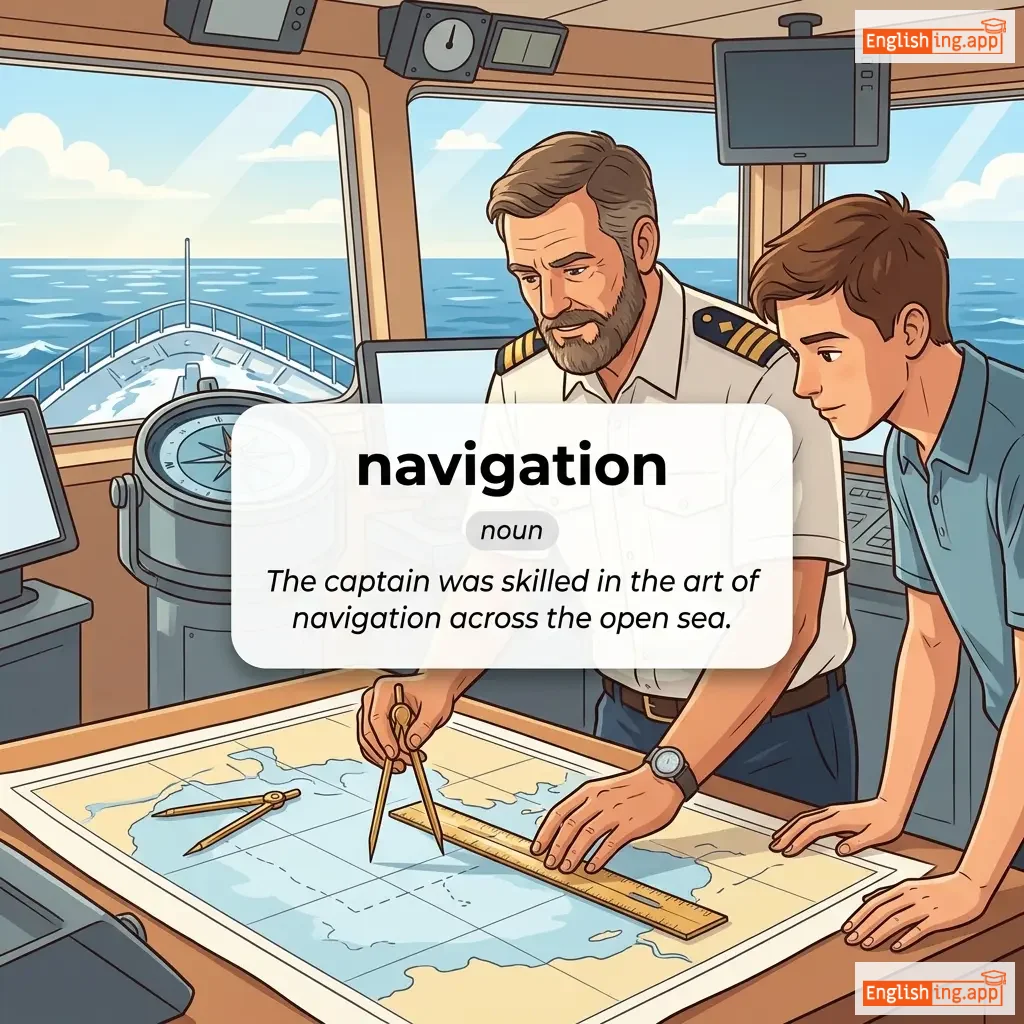
the process or activity of accurately determining one's position and planning and following a route
••••••
|
The captain was skilled in the art of navigation across the open sea.
Капитан был мастером в искусстве навигации через открытое море.
••••••
|
Капитан был мастером в искусстве навигации через открытое море.
Kapitan byl masterom v iskusstve navigatsii cherez otkrytoye more.
••••••
|
- •••••• | - •••••• | - •••••• |
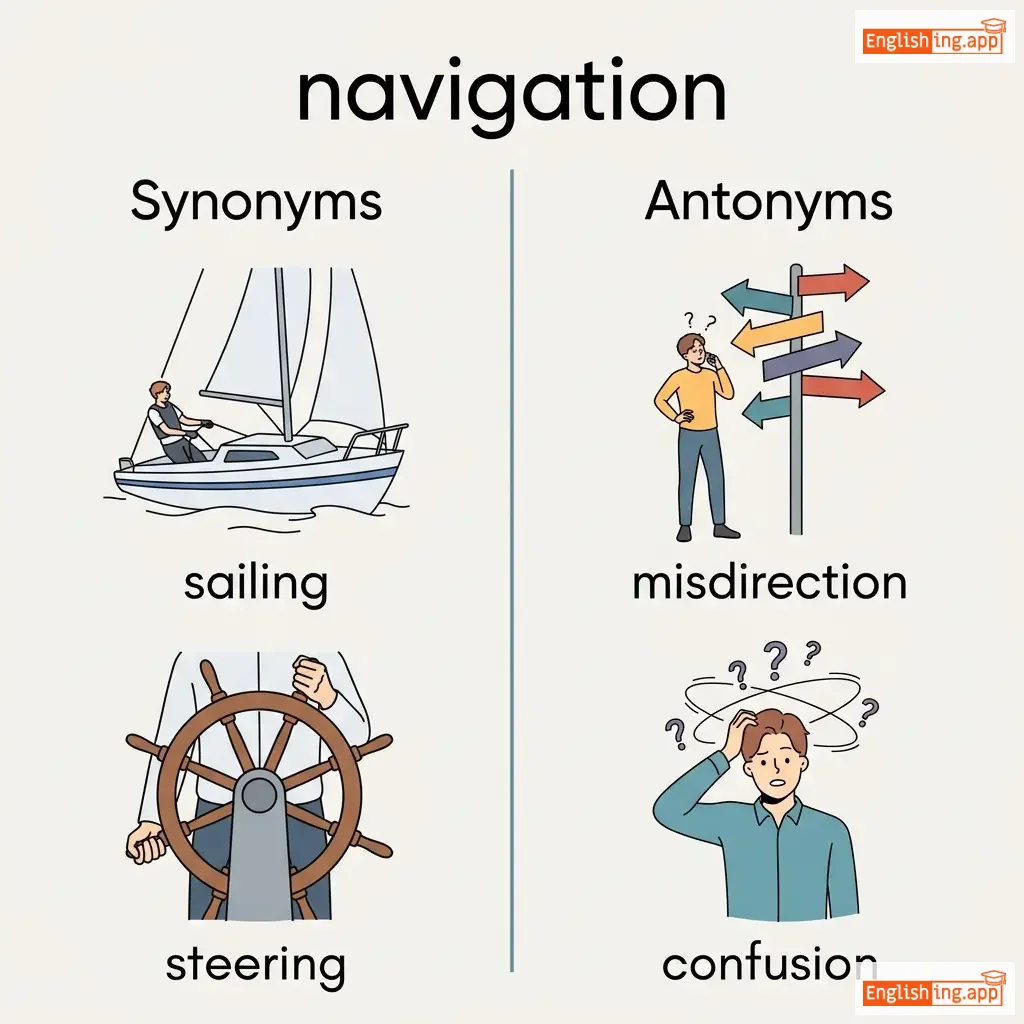
sailing, steering, route planning, charting
••••••
|
misdirection, confusion
••••••
|
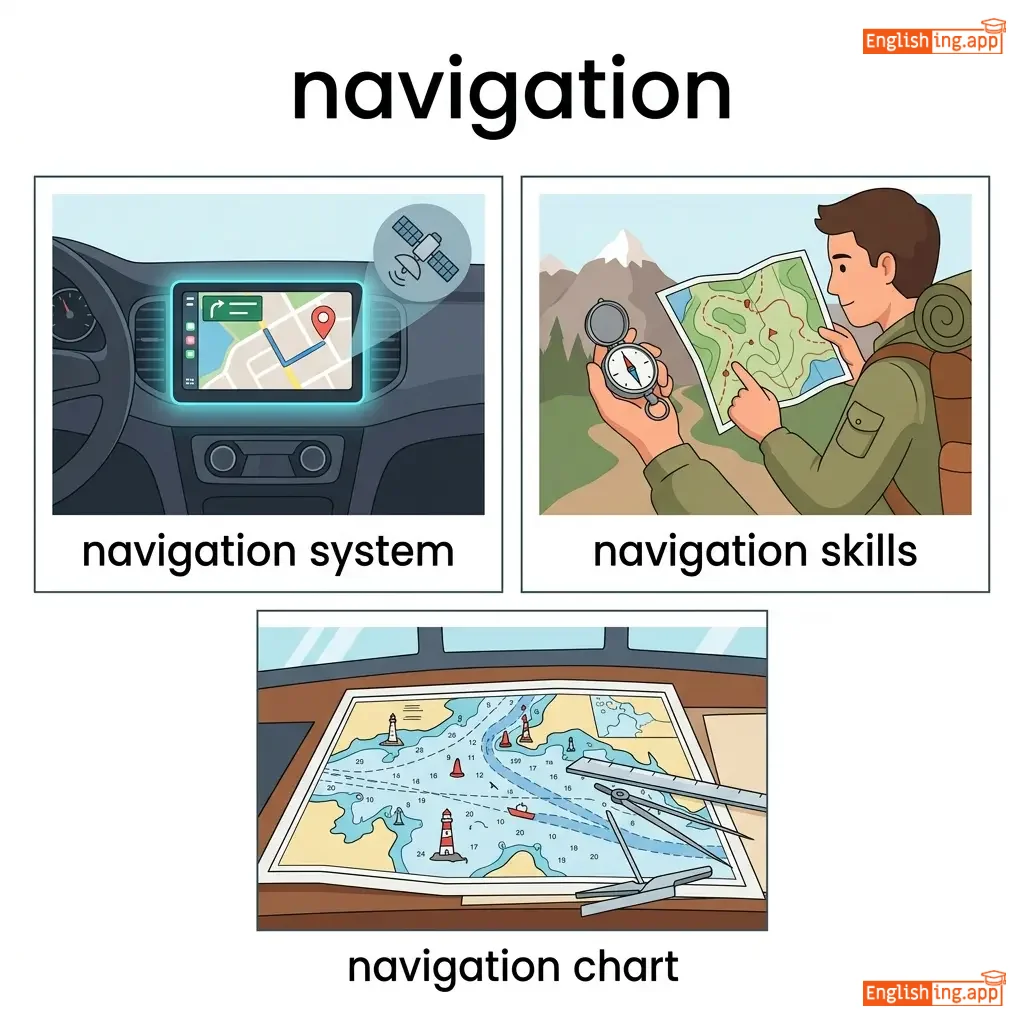
navigation system, navigation skills, navigation chart
••••••
|
Навигация - твой путь к цели
••••••
|
|
⚓
••••••
|
/ˈneɪvi/
noun
(неɪви)
••••••
|
- •••••• |
военно-морской флот
voyenno-morskoy flot
••••••
|
- •••••• | - •••••• | - •••••• | - •••••• |
the branch of armed forces that conducts military operations at sea
••••••
|
He joined the navy after graduating from college. |
Он поступил в военно-морской флот после окончания колледжа.
On postupil v voyenno-morskoy flot posle okonchaniya kolledzha.
••••••
|
- •••••• | - •••••• | - •••••• |
fleet, naval force, maritime force
••••••
|
- •••••• |
navy blue, royal navy, navy ship, navy seal
••••••
|
Военно-морской флот — это сила, которая действует на воде.
••••••
|
|
📍
••••••
|
/nɪə(r)/
preposition
(ниар)
••••••
|
- •••••• |
близко
blizko
••••••
|
- •••••• | - •••••• | - •••••• | - •••••• |
At or to a short distance away; close in space, time, or relationship.
••••••
|
There is a park near my house. |
Есть парк недалеко от моего дома.
Yest park nedaleko ot moyego doma.
••••••
|
near and dear |
very close and important to someone
••••••
|
очень близкий и важный
ochen' blizkiy i vazhnyy
••••••
|
close, adjacent, next to, nearby
••••••
|
far, distant
••••••
|
near future, near death, near place, near completion
••••••
|
Near означает близко – как когда кто-то очень близок и важен для вас.
••••••
|
|
📍
••••••
|
/ˈnɪəˌbaɪ/
adjective
(нɪəˌбаɪ)
••••••
|
- •••••• |
рядом
ryadom
••••••
|
- •••••• | - •••••• | - •••••• | - •••••• |
close to a particular place or person
••••••
|
The nearest gas station is nearby.
Ближайшая автозаправка рядом.
••••••
|
Ближайшая автозаправка рядом.
Blizhayshaya avtobenzinovka ryadom.
••••••
|
- •••••• | - •••••• | - •••••• |
close, adjacent, near, neighboring
••••••
|
distant, far, remote
••••••
|
nearby area, nearby place, nearby town
••••••
|
рядом (ryadom) - как 'nearby' на русском
••••••
|
|
🔄
••••••
|
/ˈnɪərli/
adverb
(nʲɪrli)
••••••
|
- •••••• |
почти; почти;
pochtí; pochtí;
••••••
|
- •••••• | - •••••• | - •••••• | - •••••• |
almost; not quite; very close to
••••••
|
I nearly missed the bus this morning.
Я чуть не опоздал на автобус сегодня утром.
••••••
|
Я чуть не опоздал на автобус сегодня утром.
Ya chut' ne opozdal na avtobus segodnya utrom
••••••
|
- •••••• | - •••••• | - •••••• |
almost, practically, virtually, approximately
••••••
|
completely, entirely, fully
••••••
|
nearly finished, nearly impossible, nearly ready
••••••
|
Русский: Почти как опоздать на автобус, почти.
••••••
|
|
✨
••••••
|
/niːt/
adjective
(нит)
••••••
|
- •••••• |
аккуратный
akkuratnyy
••••••
|
- •••••• | - •••••• | - •••••• | - •••••• |
tidy, orderly, and well-arranged; simple and elegant
••••••
|
His handwriting is very neat and easy to read. |
Его почерк очень аккуратный и легко читаемый.
Ego pocherk ochen' akuratnyy i legko chitayemyy.
••••••
|
neat and tidy |
extremely clean, organized, and well-arranged
••••••
|
аккуратный и чистый
akkuratnyy i chisty
••••••
|
tidy, orderly, clean, elegant, organized
••••••
|
messy, untidy, disorderly
••••••
|
neat handwriting, neat solution, neat appearance, neat arrangement
••••••
|
NEAT в русском — аккуратный — держи вещи neat (аккуратные) и организованные
••••••
|
|
✨
••••••
|
/ˈniːtli/
adverb
(neetlee)
••••••
|
- •••••• |
аккуратно; чисто
akkuratno; chisto
••••••
|
- •••••• | - •••••• | - •••••• | - •••••• |
in a tidy and orderly way; carefully and precisely
••••••
|
She arranged the books neatly on the shelf.
Она аккуратно разместила книги на полке.
••••••
|
Она аккуратно разместила книги на полке.
Ona akkurnato razmestila knigi na polke.
••••••
|
- •••••• | - •••••• | - •••••• |
tidily, orderly, carefully, precisely
••••••
|
messily, carelessly, untidily
••••••
|
neatly arranged, neatly organized, neatly folded
••••••
|
Akkuratno i Chisto, neatly done!
••••••
|
|
⚖️
••••••
|
/ˌnesəˈserəli/
adverb
(nɛsɛsɛrɪlʲɪ)
••••••
|
- •••••• |
необязательно; неизбежно;
neobzazatel'no; neizbezhno;
••••••
|
- •••••• | - •••••• | - •••••• | - •••••• |
as a necessary result; inevitably; by logical consequence
••••••
|
Rich people are not necessarily happy.
Богатые люди не обязательно счастливы.
••••••
|
Богатые люди не обязательно счастливы.
Bogatyye lyudi ne obzazatel'no schastlivy.
••••••
|
- •••••• | - •••••• | - •••••• |
inevitably, unavoidably, automatically, certainly
••••••
|
optionally, possibly, maybe
••••••
|
not necessarily, necessarily true, necessarily follow
••••••
|
Необязательное = не обязательно быть счастливыми
••••••
|
|
✔️
••••••
|
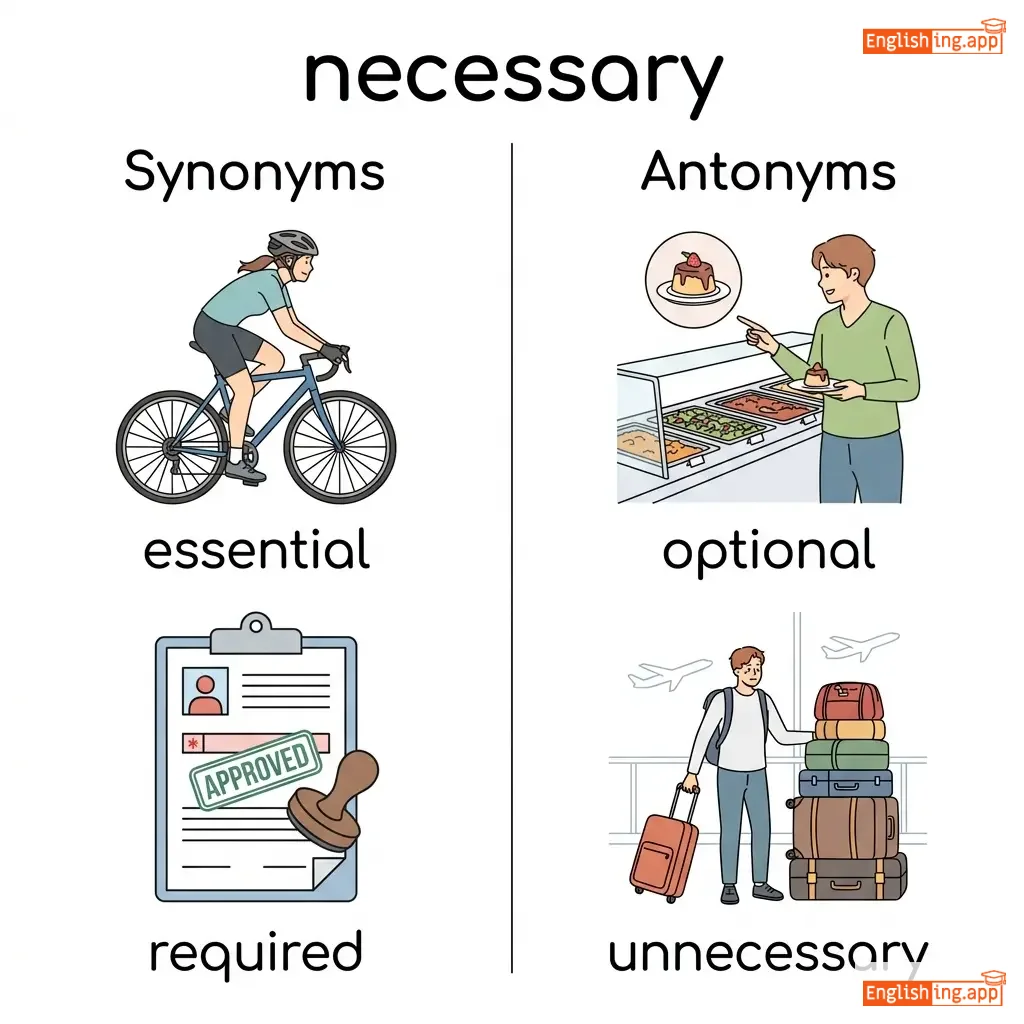
/ˈnɛsəsɛri/
adjective
(несесери)
••••••
|
|
необходимый
neseseri
••••••
|
- •••••• | - •••••• | - •••••• | - •••••• |
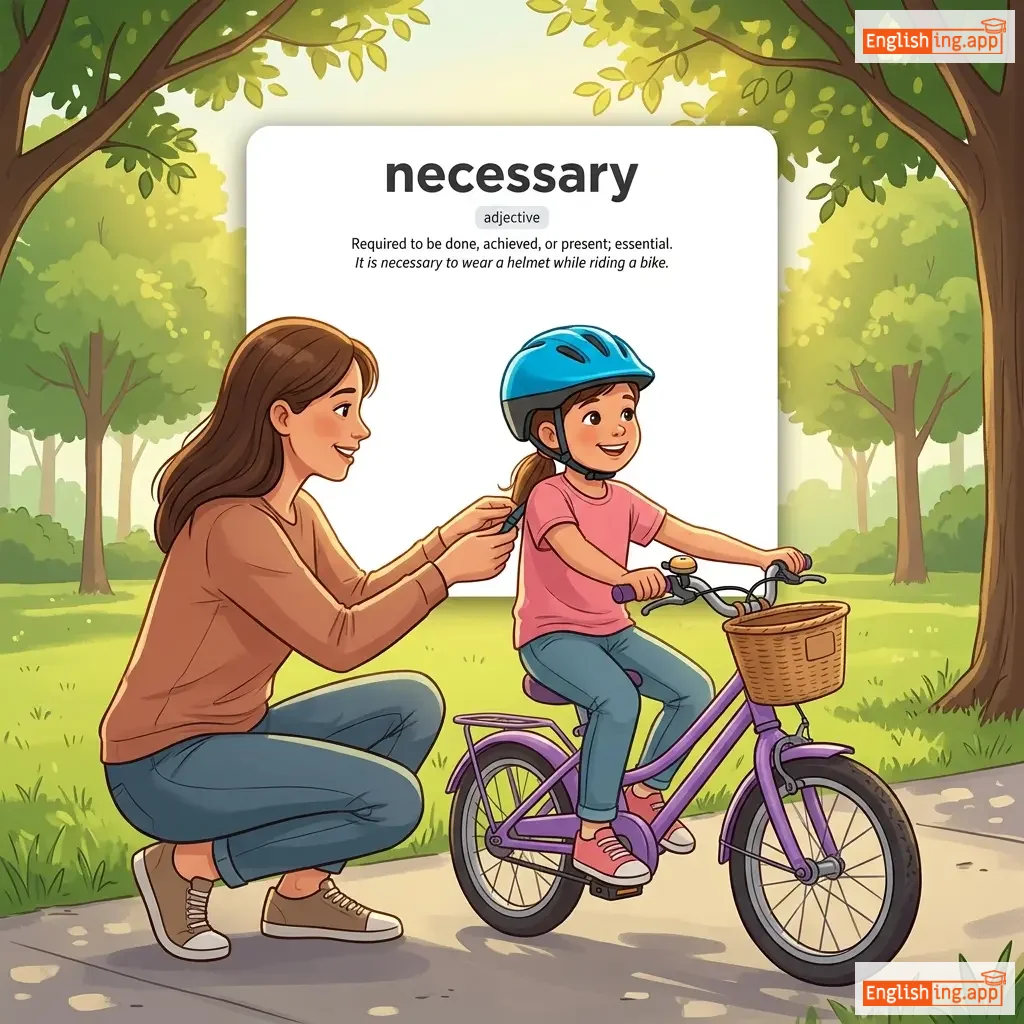
Required to be done, achieved, or present; essential.
••••••
|
It is necessary to wear a helmet while riding a bike.
Необходимо носить шлем во время езды на велосипеде.
••••••
|
Необходимо носить шлем во время езды на велосипеде.
Neobkhodimo nosit shlem vo vremya ezdy na velosipede
••••••
|
make necessary arrangements
сделать необходимые приготовления
••••••
|
to prepare the essential things needed
••••••
|
сделать необходимые приготовления
sdelay neobkhodimye prigotovleniya
••••••
|
essential, required, vital, crucial, mandatory
••••••
|
optional, unnecessary, needless
••••••
|
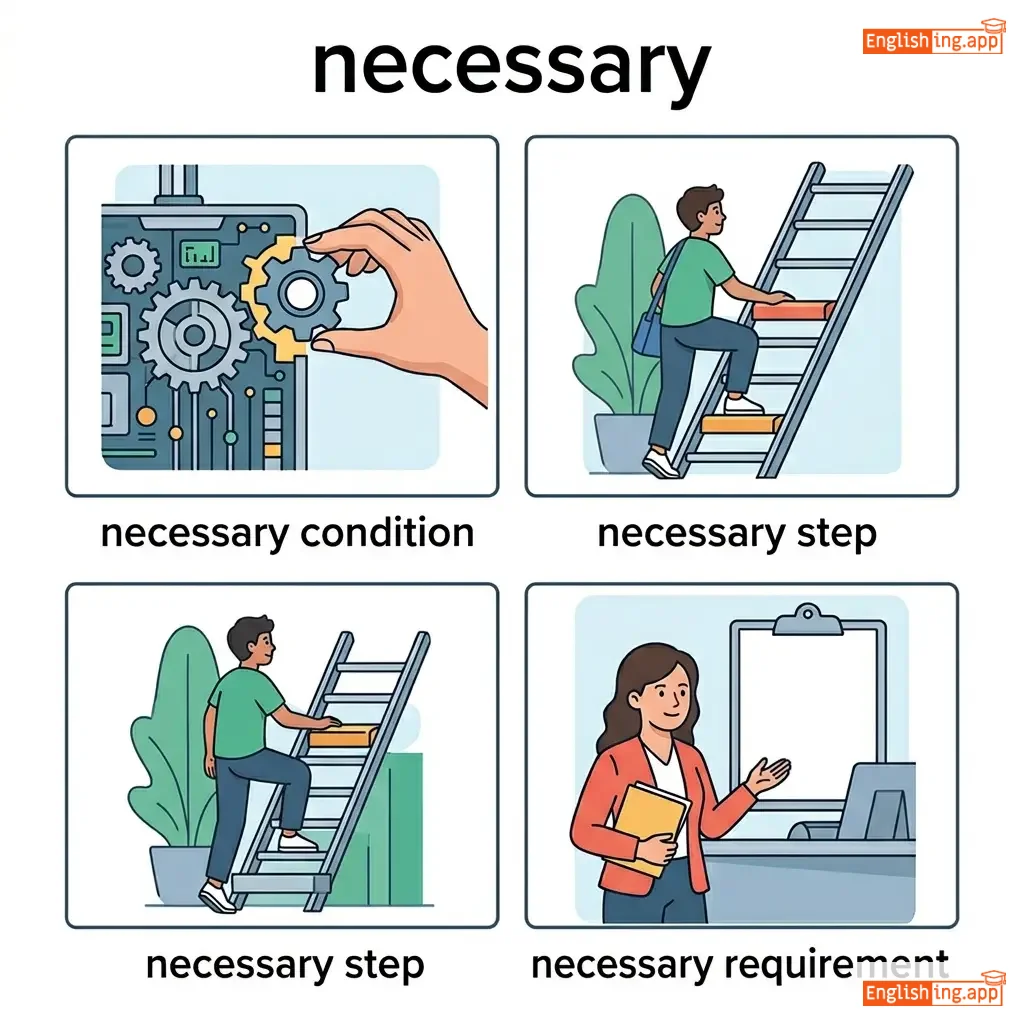
necessary condition, necessary step, necessary requirement, absolutely necessary
••••••
|
НеобходИмЫй ключ: neobkhodimy = необходимый; remember you need it
••••••
|
|
🥖
••••••
|
/nəˈsɛsəti/
noun
(nesesiti)
••••••
|
|
необходимость
neobkhodimost
••••••
|
- •••••• | - •••••• | - •••••• | - •••••• |
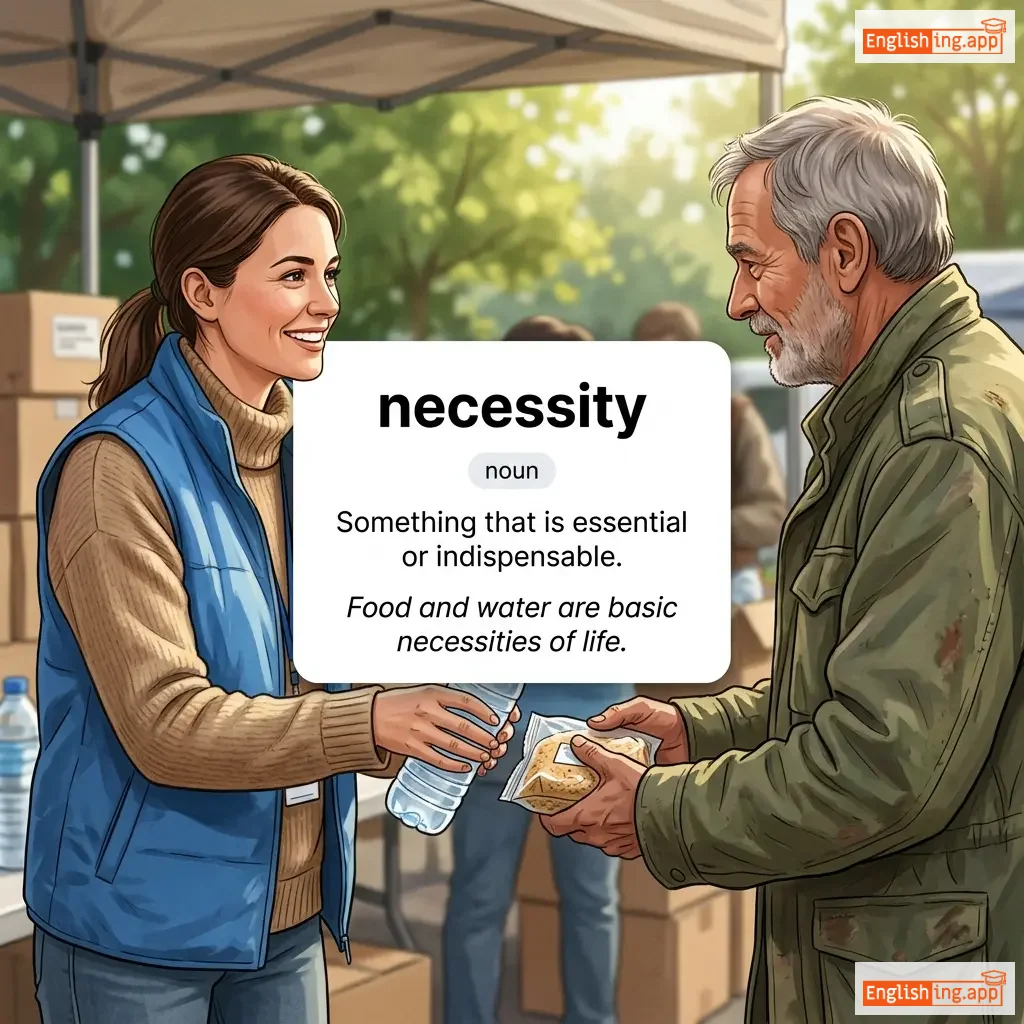
Something that is essential or indispensable.
••••••
|
Food and water are basic necessities of life. |
Еда и вода являются основными необходимыми вещами в жизни.
Yeda i voda yavyayutsya osnovnymi neobkhodimymi veshchami v zhizni.
••••••
|
out of necessity |
because it is necessary
••••••
|
по необходимости
po neobkhodimosti
••••••
|
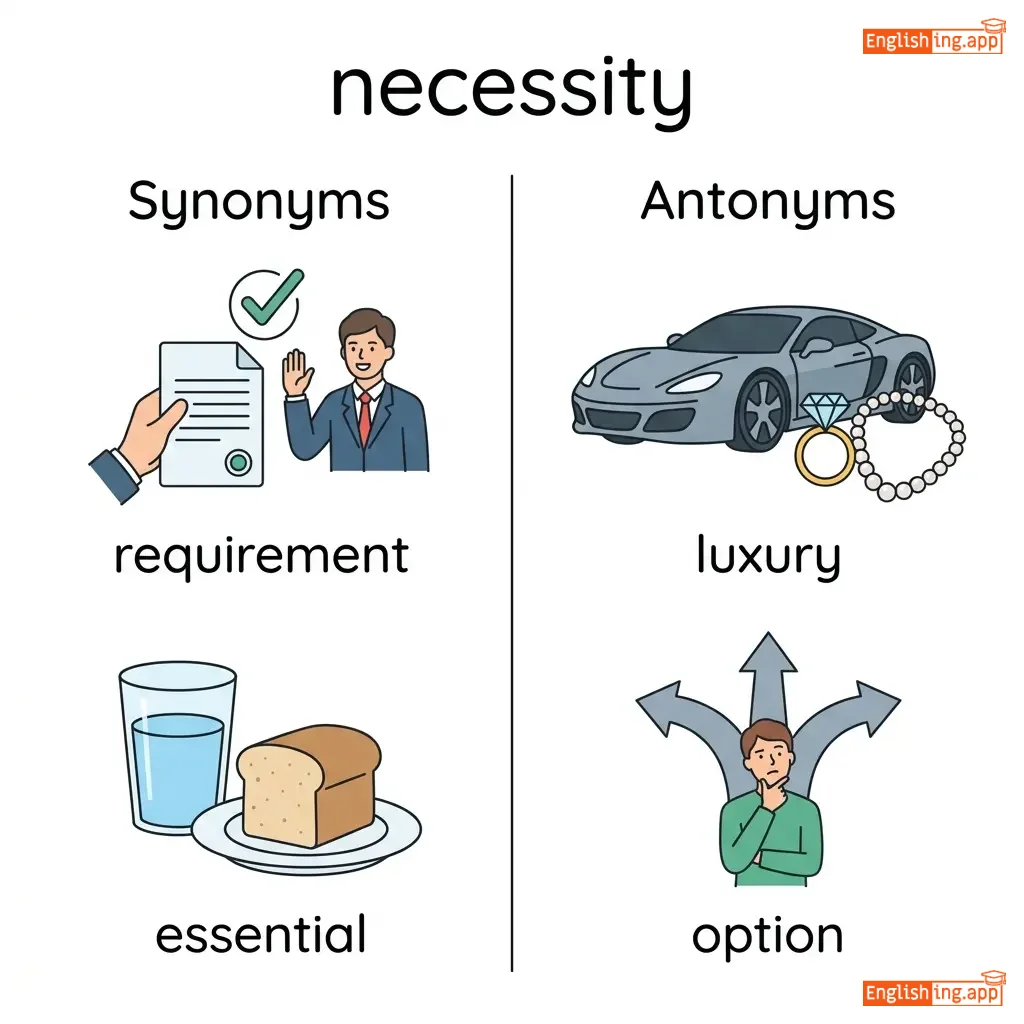
requirement, essential, need, must
••••••
|
luxury, option
••••••
|
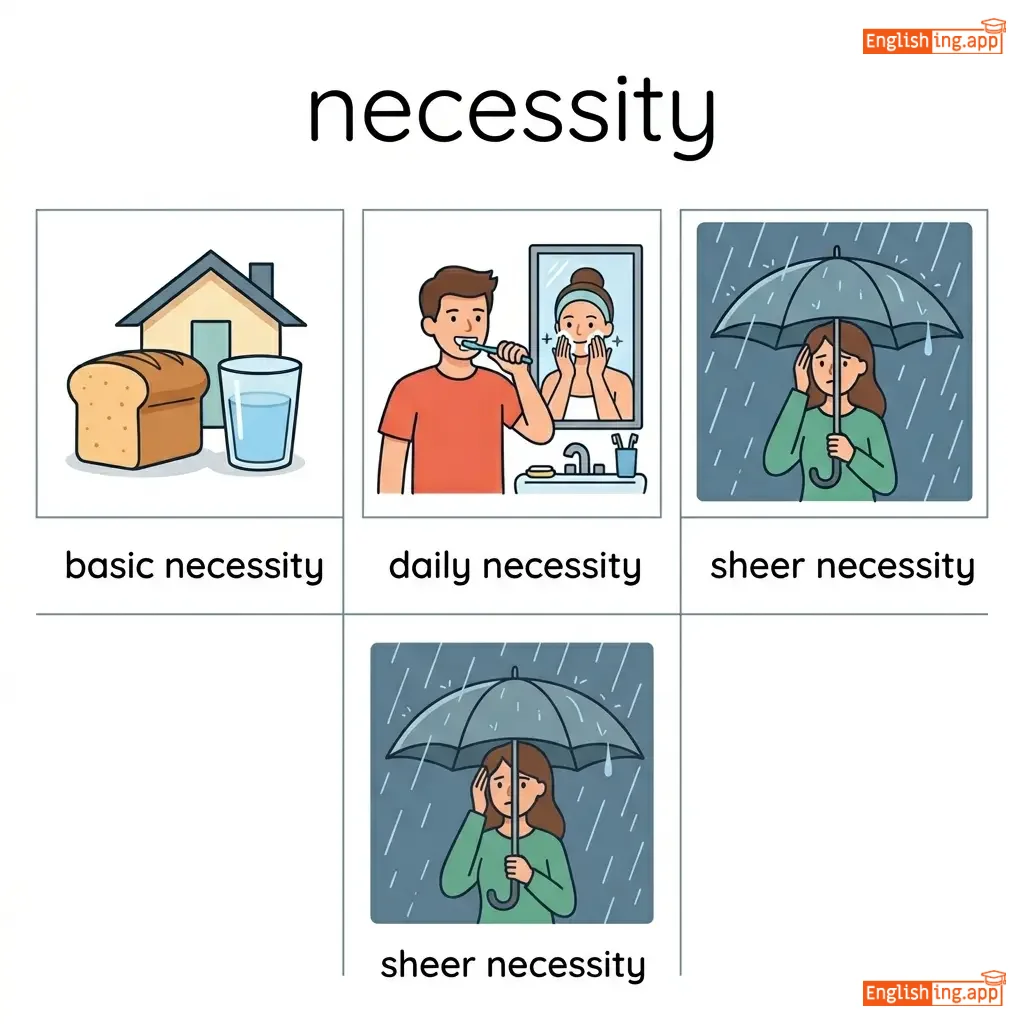
basic necessity, daily necessity, sheer necessity
••••••
|
Necessity означает необходимость — без еды и воды жизнь невозможна.
••••••
|
|
🦒
••••••
|
/nɛk/
noun
(nek)
••••••
|
- •••••• |
шея
sheya
••••••
|
- •••••• | - •••••• | - •••••• | - •••••• |
the part of the body connecting the head and the shoulders
••••••
|
She wore a necklace around her neck. |
Она носила ожерелье на своей шее.
Ona nosila ozherelye na svoey sheye.
••••••
|
- •••••• | - •••••• | - •••••• |
throat, collar, nape
••••••
|
head, chest
••••••
|
neck pain, neck injury, neck of the bottle
••••••
|
Шея (sheya) напоминает neck, как ожерелье на шее.
••••••
|
|
🙏
••••••
|
/niːd/
verb
(nīd)
••••••
|

|
нуждаться
nuzhdatsya
••••••
|
needed
nīded
••••••
|
needed
nīded
••••••
|
needs
nīds
••••••
|
needing
nīding
••••••
|
to require something; to be in want of
••••••
|
I need help with my homework.
Мне нужна помощь с домашней работой.
••••••
|
Мне нужна помощь с домашней работой.
Mne nuzhna pomoshch' s domashney rabotoy.
••••••
|
- •••••• | - •••••• | - •••••• |
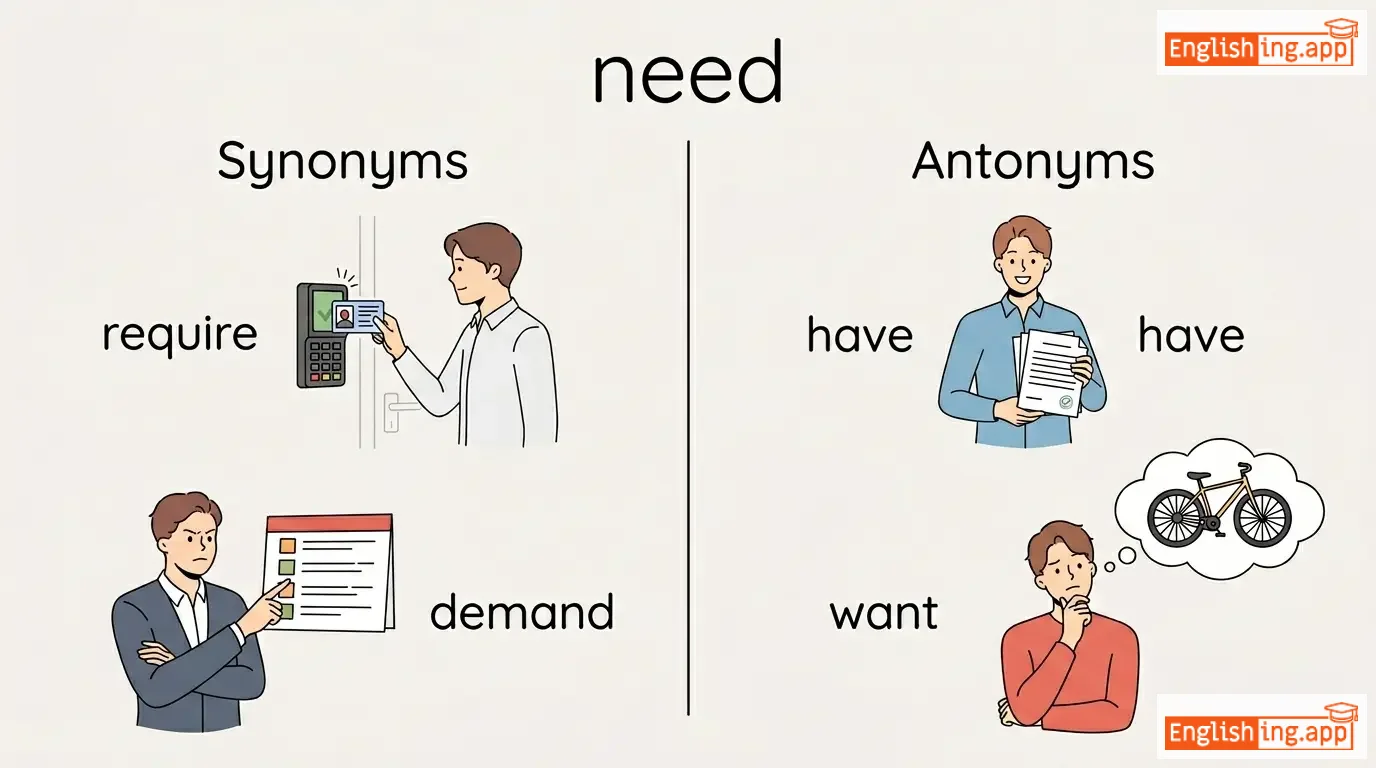
require, want, demand, necessitate
••••••
|
have, possess, own
••••••
|
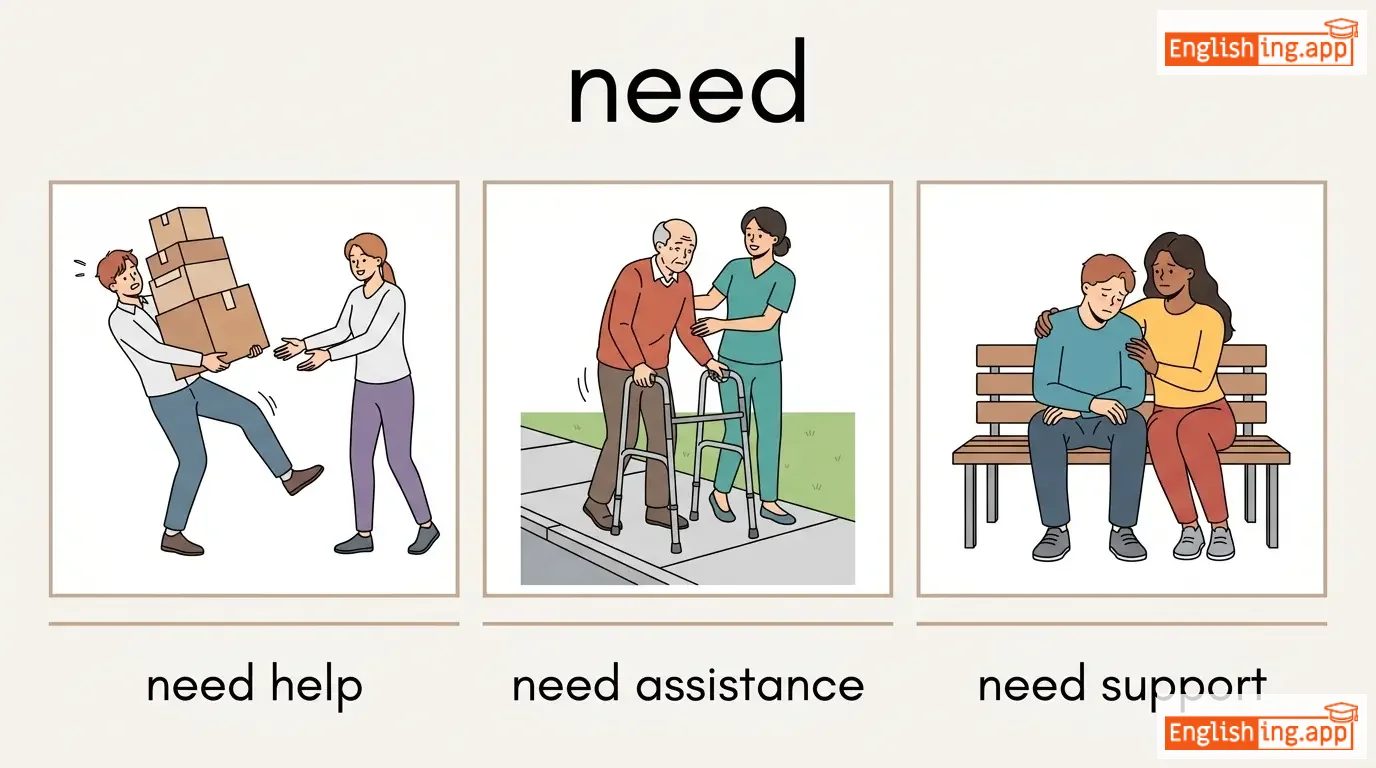
need help, need badly, need immediately, need desperately, need urgently
••••••
|
Нуждаться = когда ты 'нуждаешься' в помощи.
••••••
|
|
💉
••••••
|
/ˈniː.dəl/
noun, verb
(нидл)
••••••
|
- •••••• |
игла
igla
••••••
|
needled
нидлд
••••••
|
needled
нидлд
••••••
|
needles
нидлс
••••••
|
needling
нидлинг
••••••
|
a small thin metal tool with a point used for sewing or injecting; to provoke or annoy someone
••••••
|
The nurse used a sterile needle for the injection.
медсестра использовала стерильную иглу для инъекции.
••••••
|
Медсестра использовала стерильную иглу для инъекции.
Medsestra ispol'zovala sterileyu iglu dlya in'ektsii.
••••••
|
needle in a haystack
игла в стоге сена
••••••
|
something that is extremely difficult or impossible to find
••••••
|
что-то чрезвычайно трудное или почти невозможное найти
chto-to chrezvychayno trudnoye ili pochti nevozmozhno nayti
••••••
|
pin, syringe, prick, irritate, provoke
••••••
|
soothe, calm
••••••
|
sewing needle, injection needle, needle and thread, needle prick
••••••
|
Игла означает Needle — запомни: игла ‘нуждается’ в том, чтобы пройти в ткань!
••••••
|
|
🤲
••••••
|
/ˈniː.di/
adjective
(nidi)
••••••
|
- •••••• |
нуждающийся; бедный; без средств
nidi
••••••
|
- •••••• | - •••••• | - •••••• | - •••••• |
requiring help or support; poor; lacking basic necessities
••••••
|
The charity helps needy families during the winter.
Благотворительность помогает нуждающимся семьям зимой.
••••••
|
Благотворительность помогает нуждающимся семьям зимой.
Blagotvoritel'nost' pomogayet nuzhdayushchimsya sem'yam zimoy.
••••••
|
- •••••• | - •••••• | - •••••• |
poor, destitute, impoverished, deprived
••••••
|
wealthy, rich, affluent, prosperous
••••••
|
needy families, help the needy, needy children
••••••
|
Слово 'нуждающийся' ассоциируется с теми, кто нуждается в помощи зимой.
••••••
|
|
☹️
••••••
|
/ˈnɛɡətɪv/
adjective
(негатив)
••••••
|
|
негативный
negativnyy
••••••
|
- •••••• | - •••••• | - •••••• | - •••••• |
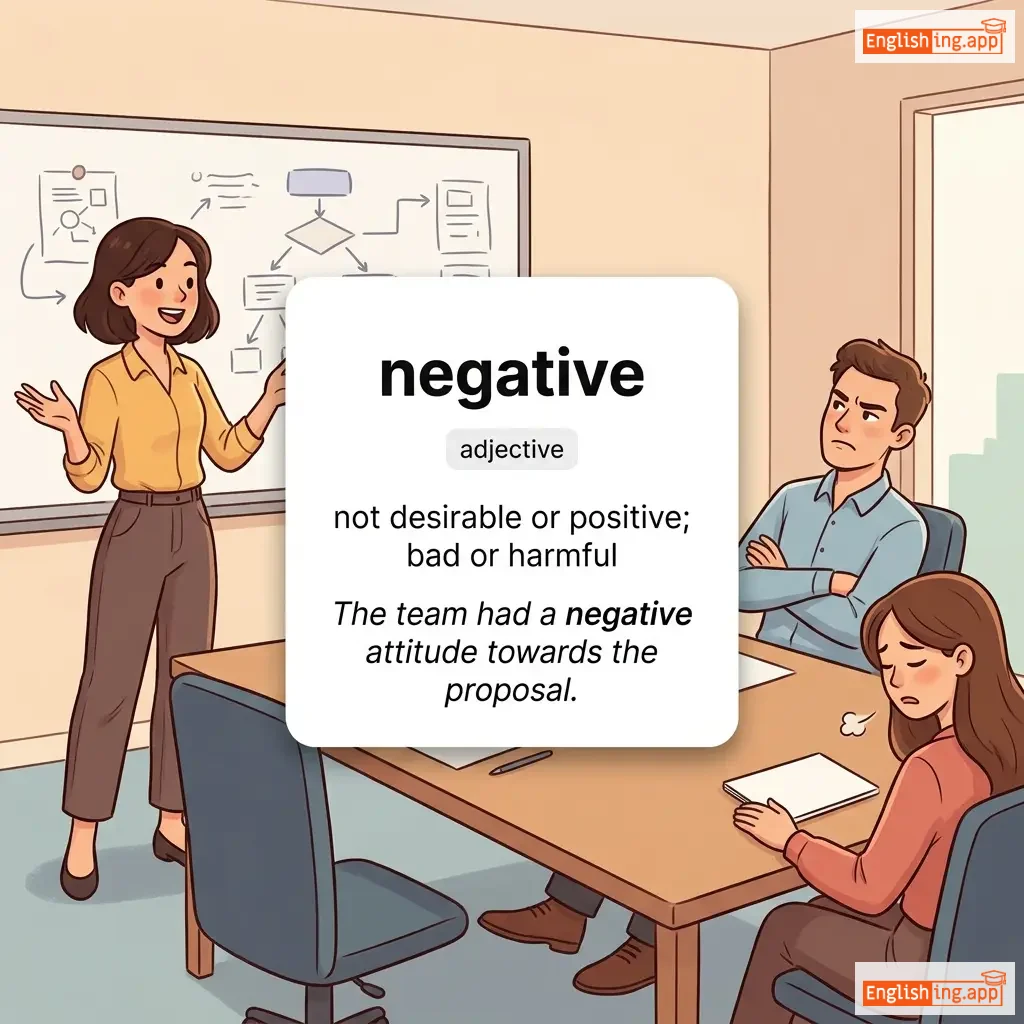
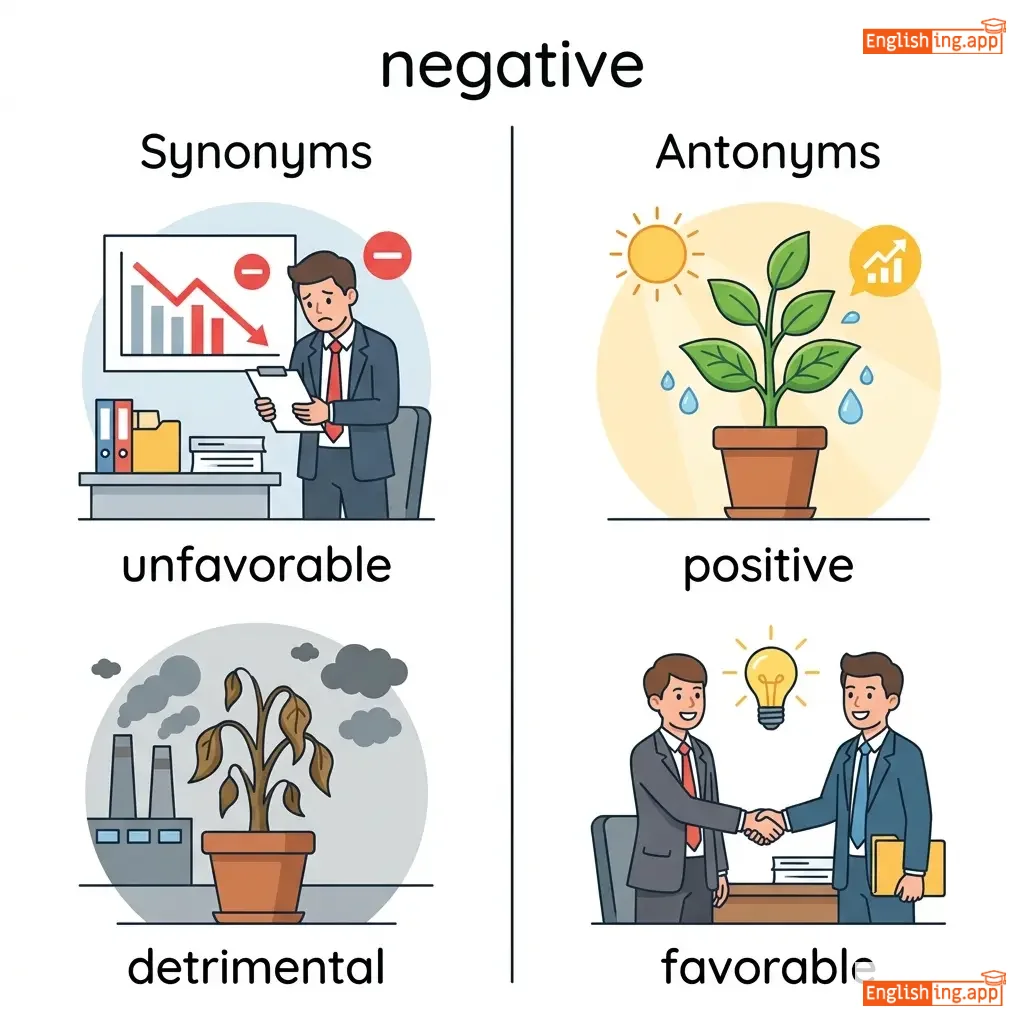
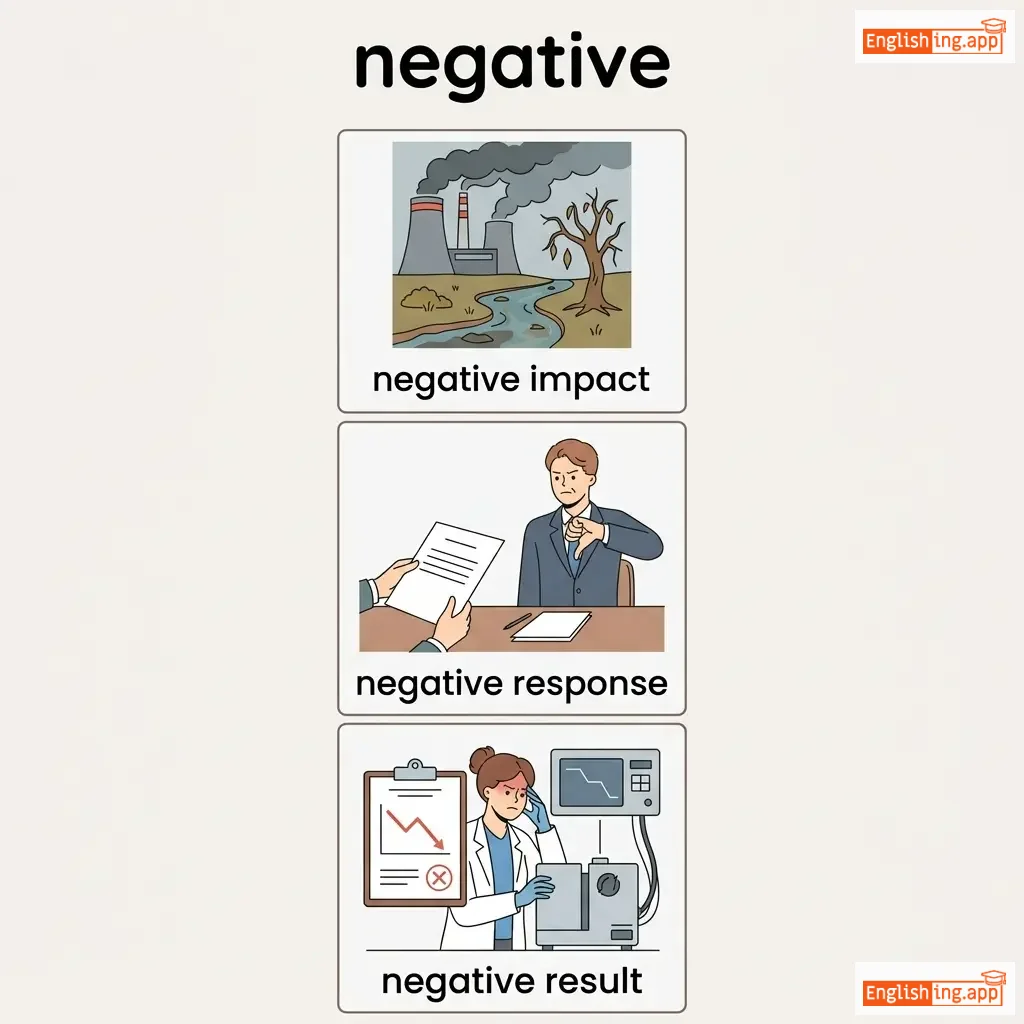
not desirable or positive; bad or harmful
••••••
|
The team had a negative attitude towards the proposal. |
Команда имела негативное отношение к предложению.
Komanda imela negativnoe otnoshenie k predlozheniyu.
••••••
|
- •••••• | - •••••• | - •••••• |
unfavorable, detrimental, harmful, pessimistic
••••••
|
positive, favorable, optimistic
••••••
|
negative impact, negative response, negative result
••••••
|
Запомни негатив, ничего хорошего в этом!
••••••
|
|
😔
••••••
|
/nɪˈɡlɛkt/
verb
(неглект)
••••••
|
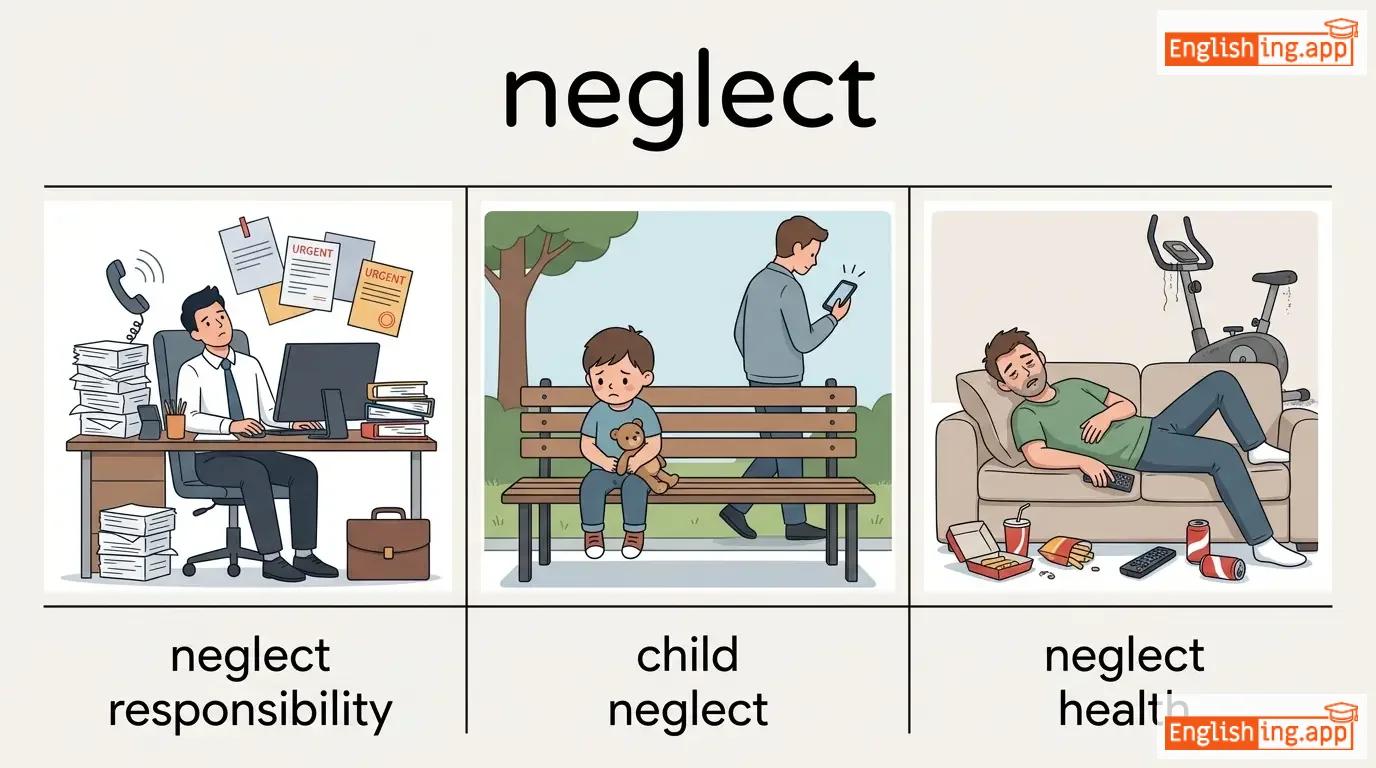
|
пренебрежение
prenebrezhene
••••••
|
neglected
неглектед
••••••
|
neglected
неглектед
••••••
|
neglects
неглектс
••••••
|
neglecting
неглектинг
••••••
|
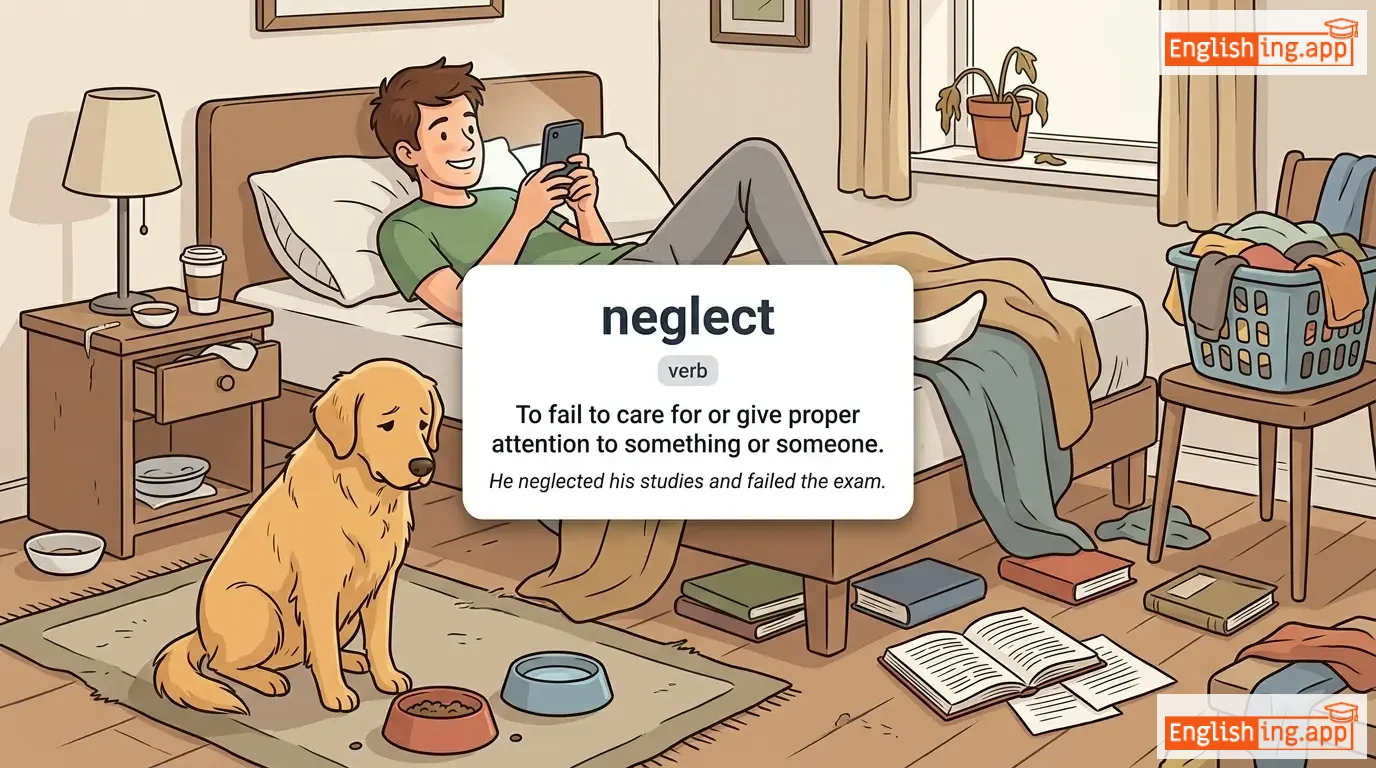
To fail to care for or give proper attention to something or someone.
••••••
|
He neglected his studies and failed the exam.
Он не заботился о своих учебных занятиях и провалил экзамен.
••••••
|
Он пренебрег учебой и не сдал экзамен.
On prenebreg ucheboy i ne sdal ekzamen.
••••••
|
neglect of duty
недооценка долга
••••••
|
Failure to fulfill one's responsibilities.
••••••
|
пренебрежение долгом
prenebrezhene dolgom
••••••
|
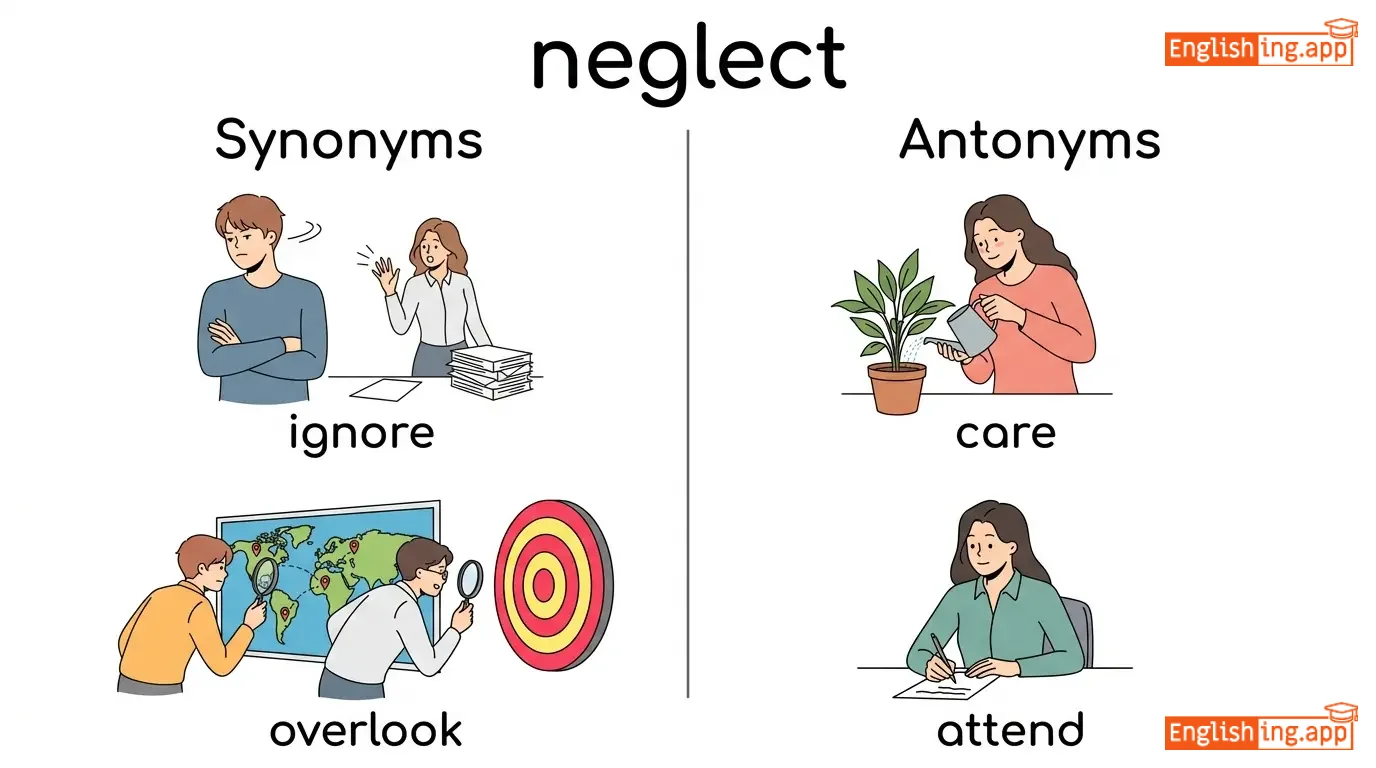
ignore, overlook, disregard, abandon, forget
••••••
|
care, attend, maintain
••••••
|
neglect responsibility, child neglect, neglect health, neglect work
••••••
|
Neglect означает negative + collect → ничего не собирать = пренебрежение.
••••••
|
|
🤝
••••••
|
/nɪˈɡoʊ.ʃi.eɪt/
verb
(вести переговоры)
••••••
|
- •••••• |
вести переговоры
vesti peregovory
••••••
|
negotiated
вел переговоры
••••••
|
negotiated
вел переговоры
••••••
|
negotiates
ведет переговоры
••••••
|
negotiating
ведя переговоры
••••••
|
To discuss something formally in order to reach an agreement.
••••••
|
They negotiated a fair deal with the supplier.
Они провели переговоры о справедливой сделке с поставщиком.
••••••
|
Они провели переговоры о справедливой сделке с поставщиком.
Oni proveli peregovory o spravedlivoy sdelke s postavshchikom.
••••••
|
negotiate a deal
вести переговоры о сделке
••••••
|
To bargain and reach an agreement.
••••••
|
вести переговоры о сделке
vesti peregovory o sdelke
••••••
|
bargain, discuss, mediate, arrange, settle
••••••
|
refuse, reject, decline
••••••
|
negotiate terms, negotiate peace, negotiate agreement, negotiate contract
••••••
|
Vesti peregovory = VESti + peregovory - Сидите и ведите переговоры.
••••••
|
|
🤝
••••••
|
/nɪˌɡoʊ.siˈeɪ.ʃən/
noun
(переговоры)
••••••
|
- •••••• |
обсуждение, направленное на достижение соглашения; торг
peregovory
••••••
|
- •••••• | - •••••• | - •••••• | - •••••• |
discussion aimed at reaching an agreement; bargaining
••••••
|
The negotiation between the two companies lasted for weeks. |
Переговоры между двумя компаниями длились несколько недель.
Peregovory mezhdu dvumya kompaniyami dlilis' neskol'ko nedel'.
••••••
|
- •••••• | - •••••• | - •••••• |
discussion, bargaining, talks, mediation
••••••
|
conflict, disagreement, deadlock
••••••
|
peace negotiation, contract negotiation, salary negotiation
••••••
|
Переговоры — это процесс, направленный на согласование.
••••••
|
|
🏘️
••••••
|
/ˈneɪbər/
noun
(нейбор)
••••••
|
- •••••• |
сосед
sosed
••••••
|
- •••••• | - •••••• | - •••••• | - •••••• |
a person living next door or nearby
••••••
|
My neighbor lent me some sugar when I ran out.
Май нейбор лент ми сам шугар вен ай ран аут.
••••••
|
Мой сосед одолжил мне немного сахара, когда я его не достал.
Moy sosed odolzhil mne nemnogo sakhara, kogda ya yego ne dostal.
••••••
|
- •••••• | - •••••• | - •••••• |
adjacent resident, nearby person, local
••••••
|
stranger, outsider
••••••
|
good neighbor, friendly neighbor, next-door neighbor
••••••
|
Your neighbor never says ‘no’, it’s sweet like sugar!
••••••
|
|
🏡
••••••
|
/ˈneɪbərˌhʊd/
noun
(нейбэрхуд)
••••••
|
- •••••• |
район
rajon
••••••
|
- •••••• | - •••••• | - •••••• | - •••••• |
a district or area around or near a particular place
••••••
|
I grew up in a quiet neighborhood. |
Я вырос в тихом районе.
Ya vyros v tikhom rayone.
••••••
|
- •••••• | - •••••• | - •••••• |
community, locality, district, area
••••••
|
isolation, wilderness
••••••
|
peaceful neighborhood, residential neighborhood, urban neighborhood
••••••
|
Район - это место, где ты живешь рядом с соседями.
••••••
|
|
🏘️
••••••
|
/ˈneɪ.bər.ɪŋ/
adjective
(нейборинг)
••••••
|
- •••••• |
соседний; прилегающий; смежный
sosedniy; prilegayushchiy; smezhniy
••••••
|
- •••••• | - •••••• | - •••••• | - •••••• |
situated next to or very near; adjacent; bordering
••••••
|
We often visit our neighbouring countries for trade. |
Мы часто посещаем наши соседние страны для торговли.
My chasto poseschaem nashi sosednie strany dlya torgovli.
••••••
|
- •••••• | - •••••• | - •••••• |
adjacent, nearby, bordering, adjoining
••••••
|
distant, remote, far, separate
••••••
|
neighbouring countries, neighbouring houses, neighbouring cities
••••••
|
Соседние страны всегда рядом для торговли!
••••••
|
|
🚫
••••••
|
/ˈniːðər/
conjunction
(нидар)
••••••
|
- •••••• |
ни тот ни другой
ni tot ni drugoy
••••••
|
- •••••• | - •••••• | - •••••• | - •••••• |
used to connect two negative alternatives
••••••
|
Neither the manager nor the assistant could attend the meeting.
Нидар зэ менеджер нор зэ ассистент куд э'тэнд зэ митинг.
••••••
|
Ни менеджер, ни помощник не смогли присутствовать на встрече.
ni menedzher ni pomoshnik ne smogli prisutstvovat na vstreche
••••••
|
- •••••• | - •••••• | - •••••• |
nor, not either
••••••
|
either
••••••
|
neither nor, neither of them
••••••
|
Neither in Russian repeats 'ни': ни это, ни то!
••••••
|
|
👦
••••••
|
/ˈnefjuː/
noun
(нефью)
••••••
|
- •••••• |
племянник
plemyannik
••••••
|
- •••••• | - •••••• | - •••••• | - •••••• |
the son of one’s brother or sister
••••••
|
My nephew is studying at the university.
Май нефью из стадийинг эт зе юниверсити.
••••••
|
Мой племянник учится в университете.
moy plemyannik uchitsya v universitete
••••••
|
- •••••• | - •••••• | - •••••• |
brother's son, sister's son, male relative, young relative
••••••
|
uncle, aunt
••••••
|
beloved nephew, young nephew, nephew and niece, visit my nephew
••••••
|
plemyannik = nephew—পরিবারের ছেলে
••••••
|
|
😰
••••••
|
/ˈnɜːrvəs/
adjective
(нёрвэс)
••••••
|
- •••••• |
нервный
nervnyy
••••••
|
- •••••• | - •••••• | - •••••• | - •••••• |
anxious, worried, or fearful about something
••••••
|
She felt nervous before giving her presentation.
Она чувствовала себя нервной перед презентацией.
••••••
|
Она чувствовала себя нервной перед презентацией.
Ona chuvstvovala sebya nervnoy pered prezentatsiyey.
••••••
|
nervous wreck
нервный разваливающийся
••••••
|
a person who is very anxious, worried, or stressed
••••••
|
очень нервный человек
ochen' nervnyĭ chelovek
••••••
|
anxious, uneasy, tense, restless, jittery
••••••
|
calm, relaxed, confident
••••••
|
nervous about, nervous smile, nervous feeling, nervous breakdown
••••••
|
На экзамене все НЕРВНИЧАЮТ (нервный)
••••••
|
|
🪹
••••••
|
/nɛst/
noun
(нест)
••••••
|
- •••••• |
гнездо
gnezdo
••••••
|
- •••••• | - •••••• | - •••••• | - •••••• |
a structure built by birds or other animals to hold their eggs or young.
••••••
|
The bird built a nest in the tall tree. |
Птица построила гнездо на высоком дереве.
Ptitsa postroila gnezdo na visokom dereve.
••••••
|
empty nest |
a home where children have grown up and left, leaving the parents alone.
••••••
|
пустое гнездо
pustoye gnezdo
••••••
|
home, den, lair, shelter, abode
••••••
|
wilderness, outside
••••••
|
bird's nest, build a nest, cozy nest, empty nest
••••••
|
Гнездо — дом птиц, где они растят своих птенцов. Представь, как птичка строит гнездо!
••••••
|
|
🎣
••••••
|
/nɛt/
noun
(нет)
••••••
|
- •••••• |
сеть
set
••••••
|
- •••••• | - •••••• | - •••••• | - •••••• |
a piece of material made of threads or ropes woven together, used to catch or hold things
••••••
|
The fisherman cast his net into the sea. |
Рыбак бросил свою сеть в море.
Rybak brosil svoju set' v more.
••••••
|
cast a wide net |
to try to reach or include as many people or things as possible
••••••
|
расставить широкую сеть
rasstavit' shirokuyu set'
••••••
|
mesh, web, lattice, trap
••••••
|
freedom, release
••••••
|
safety net, fishing net, cast net, catch in net
••••••
|
Сеть означает сеть - Интернет тоже соединяет как сеть
••••••
|
|
🌐
••••••
|
/ˈnɛtˌwɜrk/
noun
(нэтворк)
••••••
|
- •••••• |
сеть
set
••••••
|
- •••••• | - •••••• | - •••••• | - •••••• |
A system of interconnected people, things, or computers.
••••••
|
She built a strong professional network.
Она построила сильную профессиональную сеть.
••••••
|
Она построила сильную профессиональную сеть.
Ona postroila sil'nuyu professional'nuyu set'.
••••••
|
networking opportunities
возможности для нетворкинга
••••••
|
Chances to connect with people for career or business growth
••••••
|
возможности для нетворкинга
vozmozhnosti dlya networkinga
••••••
|
system, web, grid, connection, chain
••••••
|
isolation, separation
••••••
|
social network, computer network, business network, global network
••••••
|
Network + работа = Сеть для профессиональных связей
••••••
|
|
⚖️
••••••
|
/ˈnjuːtrəl/
adjective
(nyutral)
••••••
|
|
нейтральный
neytralny
••••••
|
- •••••• | - •••••• | - •••••• | - •••••• |
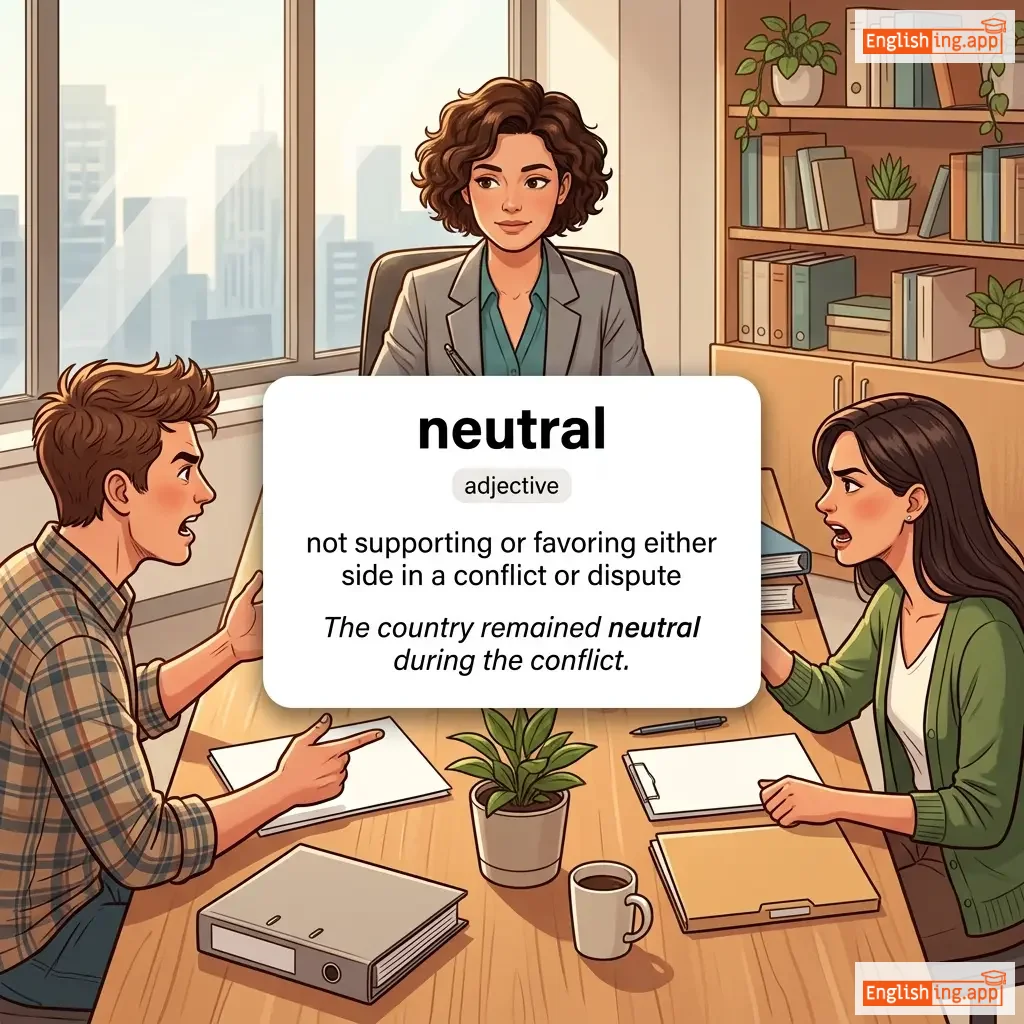
not supporting or favoring either side in a conflict or dispute
••••••
|
The country remained neutral during the conflict. |
Страна осталась нейтральной во время конфликта.
Strana ostalas' neytral'noy vo vremya konflikta.
••••••
|
neutral stance |
a position of not taking sides
••••••
|
нейтральная позиция
neytral'naya pozitsiya
••••••
|
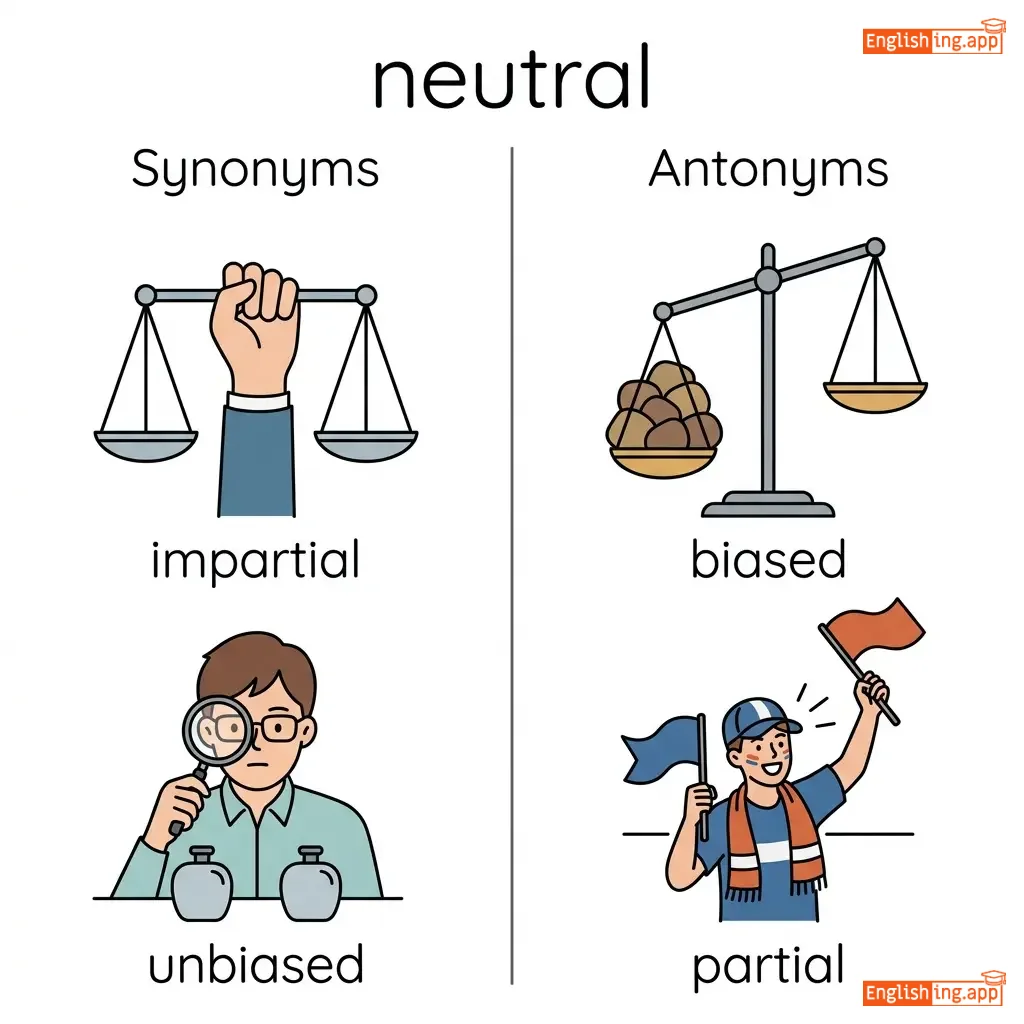
impartial, unbiased, nonpartisan, detached, indifferent
••••••
|
biased, partial, partisan
••••••
|
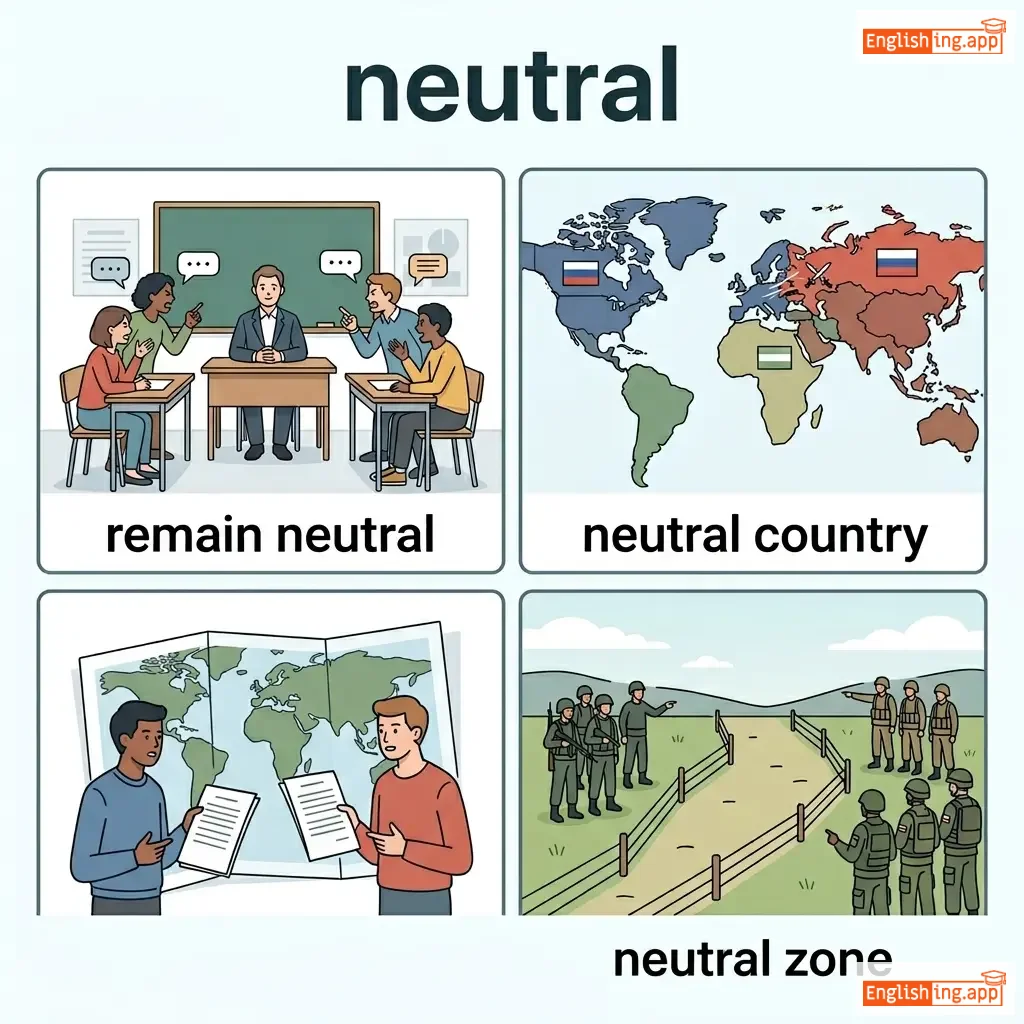
remain neutral, neutral country, neutral zone, neutral position
••••••
|
Neutral означает 'нейтральный' — на споре никто не выбирает сторону, все остаются нейтральными.
••••••
|
|
⚖️
••••••
|
/nuːˈtræl.ə.ti/
noun
(нейтралитет)
••••••
|
|
нейтралитет
neytralitet
••••••
|
- •••••• | - •••••• | - •••••• | - •••••• |
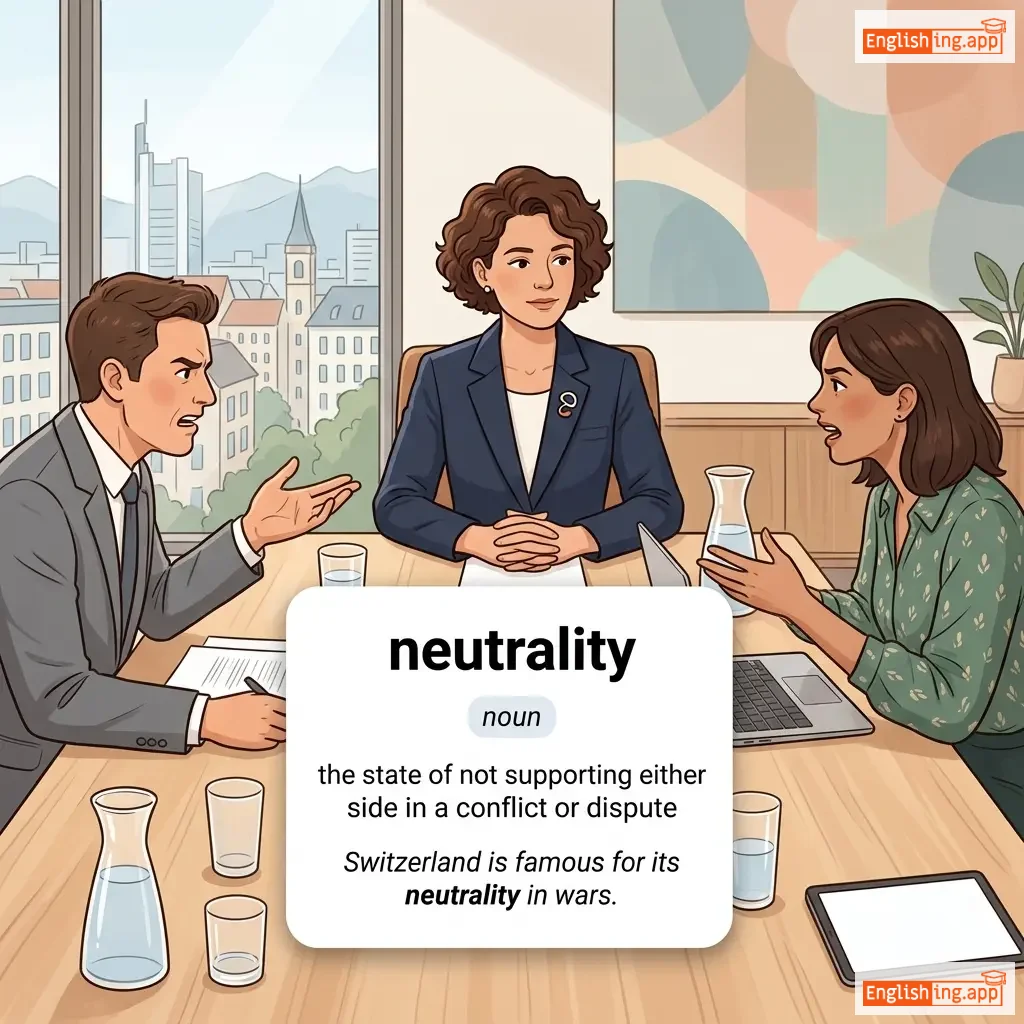
the state of not supporting either side in a conflict or dispute
••••••
|
Switzerland is famous for its neutrality in wars.
Швейцария известна своим нейтралитетом в войнах.
••••••
|
Швейцария известна своим нейтралитетом в войнах.
Shveytsariya izvestna svoim neytralitetom v voynakh.
••••••
|
- •••••• | - •••••• | - •••••• |
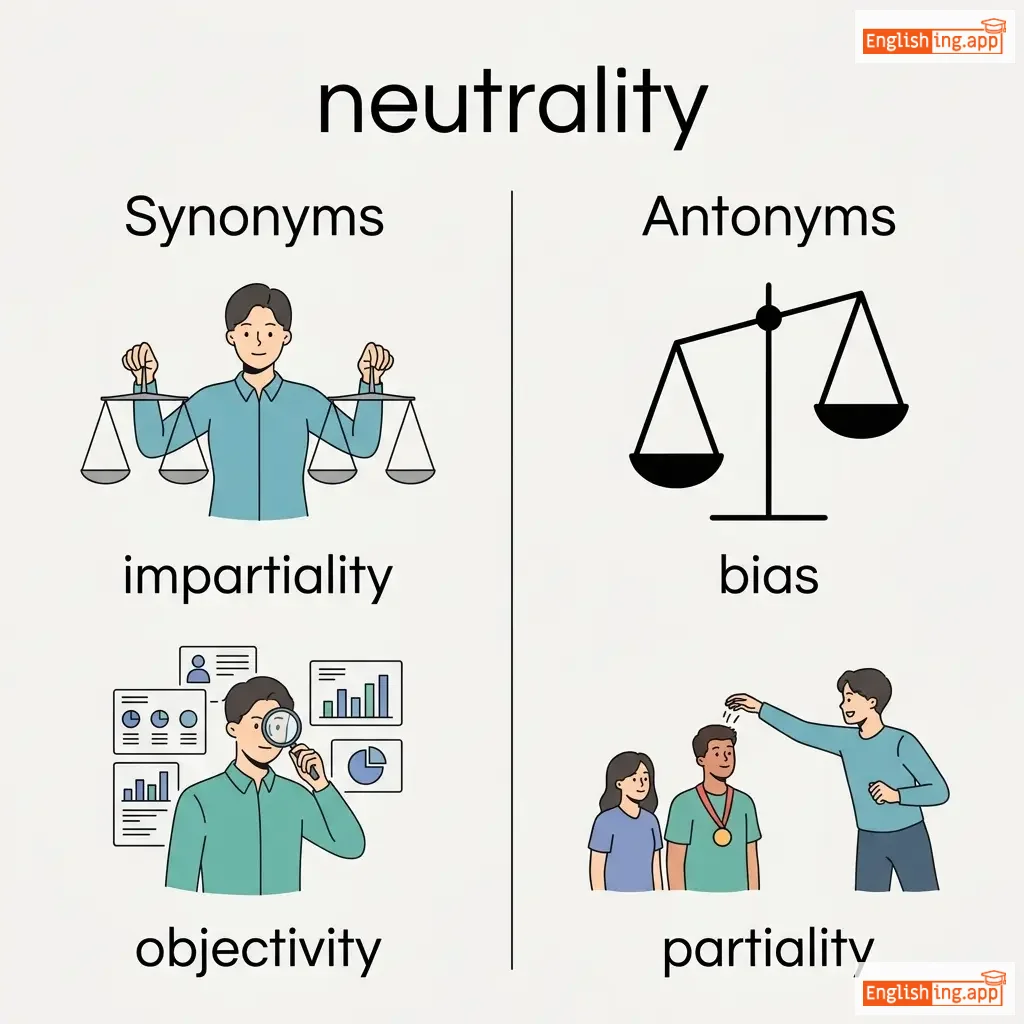
impartiality, objectivity, non-alignment
••••••
|
bias, partiality, involvement, alliance
••••••
|
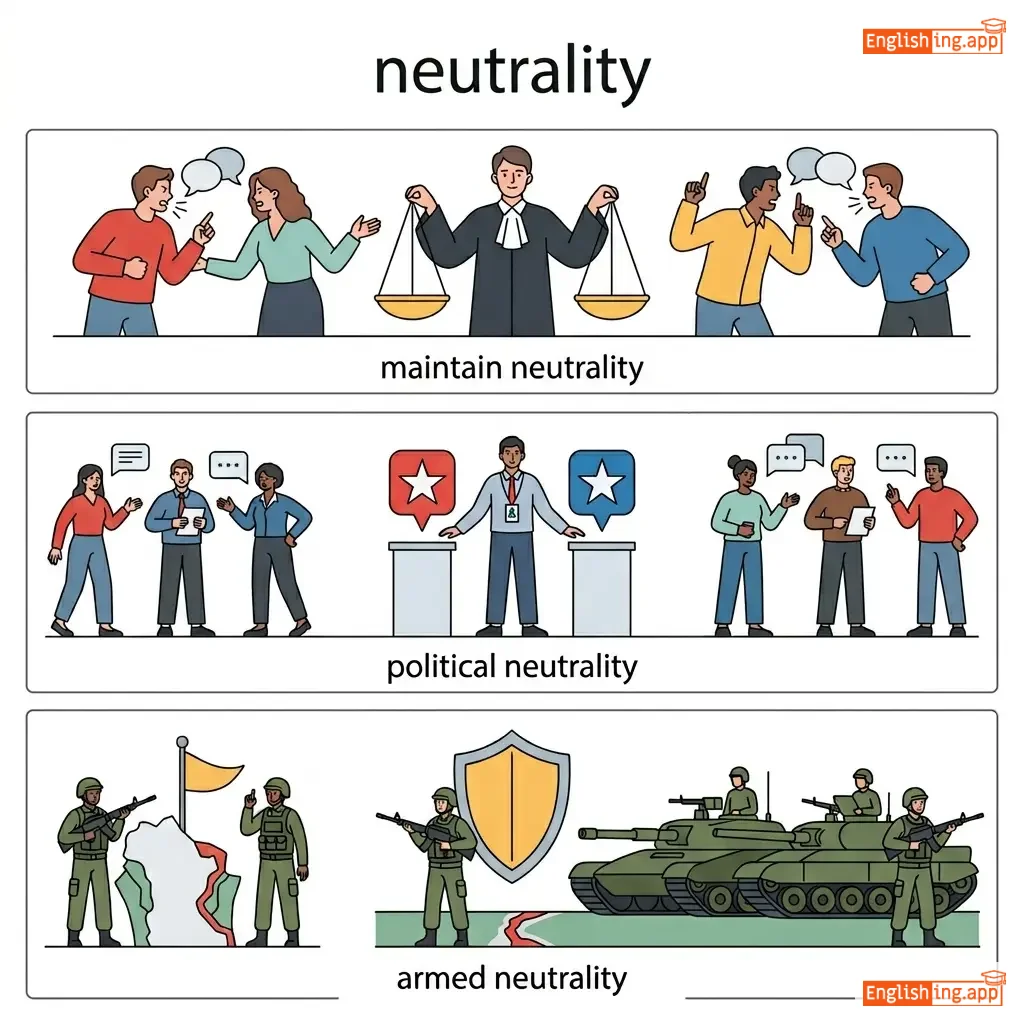
maintain neutrality, political neutrality, armed neutrality
••••••
|
Нейтралитет - 'нейтральный' без выбора стороны, 'ит' для состояния.
••••••
|
|
🚫
••••••
|
/ˈnɛvər/
adverb
(нэвэр)
••••••
|
- •••••• |
никогда
nikogda
••••••
|
- •••••• | - •••••• | - •••••• | - •••••• |
at no time in the past or future; not ever
••••••
|
I have never seen such a beautiful sunset. |
Я никогда не видел такого красивого заката.
Ya nikogda ne videl takogo krasivogo zakata.
••••••
|
- •••••• | - •••••• | - •••••• |
not at all, under no circumstances, in no way, by no means
••••••
|
always, ever
••••••
|
never seen, never been, never heard, never thought
••••••
|
NEVER forget to say NO (nikogda) to things that waste time
••••••
|
|
🤷
••••••
|
/ˌnɛvəðəˈlɛs/
adverb
(неверзелесс)
••••••
|
- •••••• |
тем не менее
nevertheless
••••••
|
- •••••• | - •••••• | - •••••• | - •••••• |
in spite of that; however
••••••
|
He was tired; nevertheless, he kept working.
Он устал; тем не менее он продолжал работать.
••••••
|
Он устал; тем не менее он продолжал работать.
On ustal tem ne meneye on prodolzhal rabotat
••••••
|
- •••••• | - •••••• | - •••••• |
however, nonetheless, yet, still, though
••••••
|
therefore, thus
••••••
|
but nevertheless, nevertheless continue, nevertheless important
••••••
|
Не вер зе Лесс запомни nevertheless = несмотря на это
••••••
|
|
🆕
••••••
|
/njuː/
adjective
(niu)
••••••
|
- •••••• |
новый
novyy
••••••
|
- •••••• | - •••••• | - •••••• | - •••••• |
recently made, discovered, or introduced; not existing before
••••••
|
He bought a new car yesterday.
Он купил новую машину вчера.
••••••
|
Он купил новую машину вчера.
On kupil novuyu mashinu vchera.
••••••
|
brand new
совсем новый
••••••
|
completely new, unused, and fresh
••••••
|
совсем новый
sovsem novyy
••••••
|
fresh, recent, modern, novel, latest
••••••
|
old, used, ancient
••••••
|
new car, new job, new idea, new technology
••••••
|
NEW — это NOVYY — все новое всегда ново
••••••
|
|
🆕
••••••
|
/ˈnjuːli/
adverb
(niuli)
••••••
|
- •••••• |
недавно
nedavno
••••••
|
- •••••• | - •••••• | - •••••• | - •••••• |
in a new or recent manner
••••••
|
She has newly renovated her house.
Она недавно отремонтировала свой дом.
••••••
|
Она недавно отремонтировала свой дом.
Ona nedavno otrepairovala svoi dom.
••••••
|
- •••••• | - •••••• | - •••••• |
recently, freshly, just, newly made
••••••
|
old, outdated
••••••
|
newly appointed, newly built, newly married, newly discovered
••••••
|
NEWLY means NEW + LY (recently done with love)
••••••
|
|
📰
••••••
|
/nuːz/
noun
(ньюз)
••••••
|
- •••••• |
новости
novosti
••••••
|
- •••••• | - •••••• | - •••••• | - •••••• |
newly received or noteworthy information, especially about recent events
••••••
|
The news about the storm spread quickly. |
Новости о шторме быстро распространились.
Novosti o shtorme bystro rasprostranilis'.
••••••
|
- •••••• | - •••••• | - •••••• |
information, report, bulletin, update
••••••
|
silence, ignorance
••••••
|
breaking news, latest news, good news, bad news
••••••
|
NEWS = Новые События Мы Должны Знать
••••••
|
|
📰
••••••
|
/ˈnjuːzˌlɛtər/
noun
(nyuzlɛtər)
••••••
|
- •••••• |
рассылка
rassylka
••••••
|
- •••••• | - •••••• | - •••••• | - •••••• |
a printed or electronic report containing news or information about a company or organization
••••••
|
The company sends a weekly newsletter to its employees.
Компания отправляет своим сотрудникам еженедельную рассылку.
••••••
|
Компания отправляет своим сотрудникам еженедельную рассылку.
Kompaniya otpravljayet svoim sotrudnikam ezhenedel'nuyu rassylku.
••••••
|
- •••••• | - •••••• | - •••••• |
bulletin, report, circular, digest
••••••
|
none
••••••
|
newsletter subscription, newsletter content, newsletter design
••••••
|
рассылка - новости каждую неделю
••••••
|
|
🗞️
••••••
|
/ˈnjuːzˌpeɪpər/
noun
(njuzpeɾ)
••••••
|
- •••••• |
газета
gazeta
••••••
|
- •••••• | - •••••• | - •••••• | - •••••• |
a printed publication (usually daily or weekly) containing news, articles, advertisements, and correspondence
••••••
|
I read the newspaper every morning.
ja čitam gazetu každoye utro.
••••••
|
Я читаю газету каждое утро.
Ya chitayu gazetu kazhdoe utro.
••••••
|
- •••••• | - •••••• | - •••••• |
periodical, journal, publication, paper
••••••
|
magazine, online media
••••••
|
daily newspaper, local newspaper, national newspaper, newspaper article
••••••
|
Newspapers are the first place to get the NEWS
••••••
|
|
⏭️
••••••
|
/nɛkst/
adjective
(некст)
••••••
|
- •••••• |
следующий
sleduyushchiy
••••••
|
- •••••• | - •••••• | - •••••• | - •••••• |
immediately following in time, order, or place
••••••
|
The next train leaves at 9:00 AM. |
Следующий поезд отправляется в 9:00 утра.
Sleduyushchiy poyezd otpravlyaetsya v 9:00 utra.
••••••
|
- •••••• | - •••••• | - •••••• |
following, subsequent, upcoming, nearest
••••••
|
previous, prior
••••••
|
next day, next year, next time, next week
••••••
|
Next is always the NEXT thing to happen
••••••
|
|
😊
••••••
|
/naɪs/
adjective
(nais)
••••••
|
- •••••• |
милый
milyi
••••••
|
- •••••• | - •••••• | - •••••• | - •••••• |
pleasant, kind, or enjoyable
••••••
|
She is a very nice person to work with. |
Она очень приятный человек, с которым приятно работать.
Ona ochen' priyatnyi chelovek, s kotorym priyatno rabotat'.
••••••
|
nice and easy |
something simple and comfortable
••••••
|
приятно и легко
priyatno i legko
••••••
|
pleasant, kind, friendly, agreeable, charming
••••••
|
mean, rude, unpleasant
••••••
|
nice day, nice person, nice weather, nice job, nice to meet
••••••
|
Милый человек всегда приятно работать.
••••••
|
|
😊
••••••
|
/ˈnaɪsli/
adverb
(найсли)
••••••
|
- •••••• |
хорошо
khorosho
••••••
|
- •••••• | - •••••• | - •••••• | - •••••• |
in a pleasant, kind, or satisfactory manner; carefully and appropriately
••••••
|
She explained the problem nicely so everyone could understand.
ши иксплейнд зе проблэм найсли со эвриуан куд андэрстэнд
••••••
|
Она хорошо объяснила проблему, чтобы все поняли.
ona khorosho obyasnila problemu chtoby vse ponyali
••••••
|
nicely done
найсли дан
••••••
|
said to praise someone for doing something well
••••••
|
отлично сделано
otlichno sdelano
••••••
|
pleasantly, kindly, well, smoothly, agreeably
••••••
|
badly, poorly, rudely
••••••
|
nicely done, nicely dressed, nicely explained, nicely arranged
••••••
|
Nice значит khorosho
••••••
|
|
🌱
••••••
|
/niːʃ/
noun
(ниче)
••••••
|


|
ниша
nisha
••••••
|
- •••••• | - •••••• | - •••••• | - •••••• |
a comfortable or suitable position in life or employment
••••••
|
He has found his niche in the marketing industry. |
Он нашел свою нишу в маркетинговой индустрии.
On nashel svoiu nishu v marketingovoi industrii.
••••••
|
- •••••• | - •••••• | - •••••• |
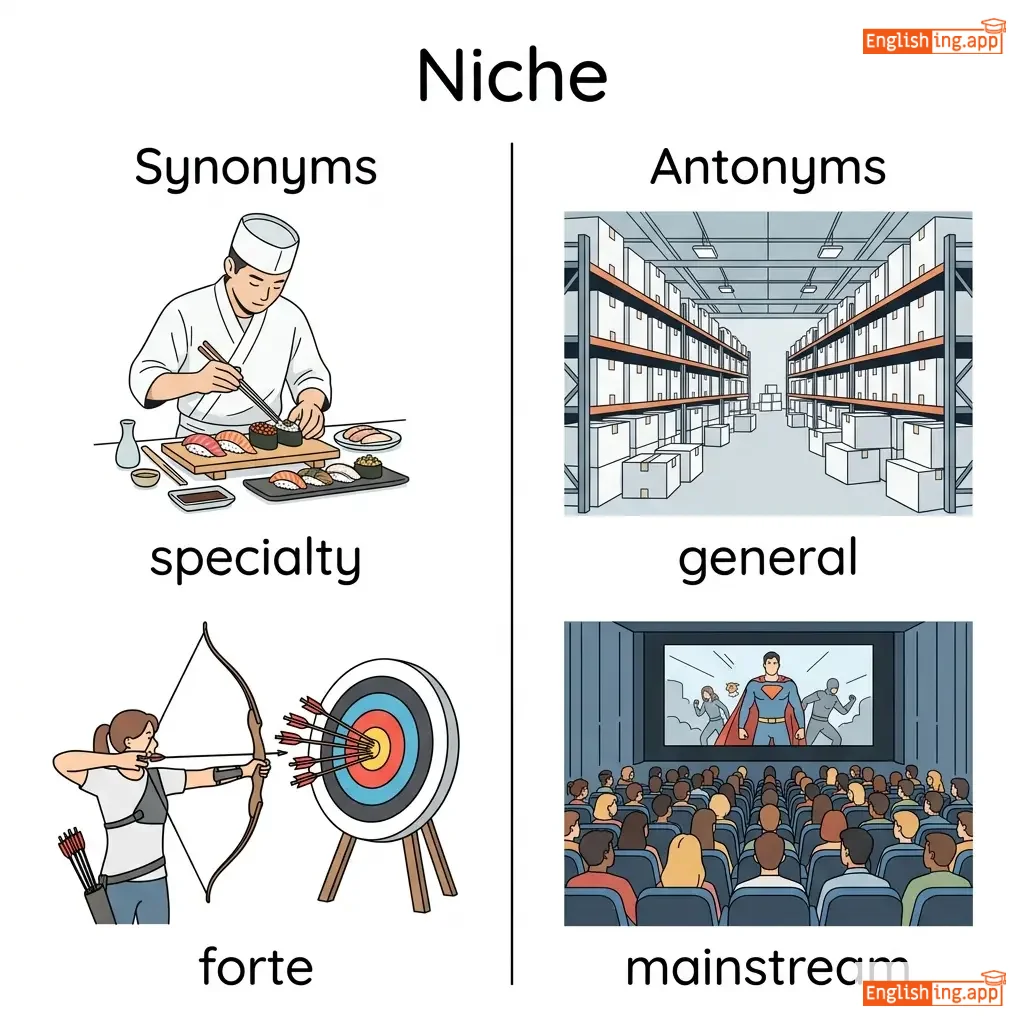
specialty, forte, domain, area
••••••
|
general, mainstream
••••••
|
niche market, niche product, find your niche
••••••
|
Ниша, подходящая для работы в маркетинге.
••••••
|
|
🏷️
••••••
|
/ˈnɪk.neɪm/
noun
(ˈnɪkˌneɪm)
••••••
|
- •••••• |
прозвище
prozvishche
••••••
|
- •••••• | - •••••• | - •••••• | - •••••• |
a familiar or humorous name given to a person instead of their real name
••••••
|
His nickname is 'Tiger' because he's so brave. |
Его прозвище — 'Тигр', потому что он очень смелый.
Ego prozvishche — 'Tigr', potomu chto on ochen' smelyi.
••••••
|
- •••••• | - •••••• | - •••••• |
pet name, alias, moniker, sobriquet
••••••
|
real name, formal name, given name
••••••
|
give nickname, earn nickname, childhood nickname
••••••
|
Прозвище как 'Тигр', это знакомое имя.
••••••
|
|
👧
••••••
|
/niːs/
noun
(нис)
••••••
|
- •••••• |
племянница
plemyannitsa
••••••
|
- •••••• | - •••••• | - •••••• | - •••••• |
the daughter of one's brother or sister
••••••
|
My niece is studying at the university this year.
май нис из стадийнг эт зэ юниверсити зис йеа
••••••
|
Моя племянница учится в университете в этом году.
Moya plemyannitsa uchitsya v universitete v etom godu
••••••
|
- •••••• | - •••••• | - •••••• |
brother's daughter, sister's daughter, relative, kin
••••••
|
nephew, uncle
••••••
|
my niece, young niece, beloved niece, niece and nephew
••••••
|
Племянница = niece
••••••
|
|
🌙
••••••
|
/naɪt/
noun
(наит)
••••••
|
- •••••• |
ночь
noch
••••••
|
- •••••• | - •••••• | - •••••• | - •••••• |
the time of darkness between one day and the next, when most people sleep
••••••
|
She loves going for walks at night. |
Ей нравится гулять ночью.
Ey nravitsya gulyat' noch'yu.
••••••
|
- •••••• | - •••••• | - •••••• |
evening, nighttime, dusk, dark
••••••
|
day, morning
••••••
|
night sky, night time, at night, good night
••••••
|
ночь = Ночь — Новый отдых, человек спит (Night = New rest at night, a person sleeps)
••••••
|
|
9️⃣
••••••
|
/naɪn/
noun
(nayn)
••••••
|
- •••••• |
девять
devyat
••••••
|
- •••••• | - •••••• | - •••••• | - •••••• |
the number that is one more than eight
••••••
|
She has nine books in her collection.
У нее девять книг в коллекции.
••••••
|
У нее девять книг в коллекции.
U nee devyat knig v kollektsii.
••••••
|
- •••••• | - •••••• | - •••••• |
ninth, 9
••••••
|
eight, ten
••••••
|
nine o'clock, nine days, nine years
••••••
|
Девять книг – девять, как девять.
••••••
|
|
🚫
••••••
|
/noʊ/
adverb
(но)
••••••
|
- •••••• |
нет
net
••••••
|
- •••••• | - •••••• | - •••••• | - •••••• |
used to give a negative response or to show disagreement
••••••
|
She said no to the invitation.
Она сказала нет приглашению.
••••••
|
Она сказала нет приглашению.
Ona skazala net priglasheniyu.
••••••
|
- •••••• | - •••••• | - •••••• |
nope, never, negative, not at all
••••••
|
yes, okay
••••••
|
say no, no way, no problem, no need
••••••
|
Нет, когда ты говоришь нет, всё останавливается. - When you say no, everything stops.
••••••
|

