|
表情符号
|
单词 | Images | 翻译 | 过去时 | 过去分词 | 第三人称单数 | 动名词 | 含义 | 例句 | 例句翻译 | 示例表达 | 示例表达含义 | 示例表达翻译 | 同义词 | 反义词 | 搭配词 | 助记符 |
|---|---|---|---|---|---|---|---|---|---|---|---|---|---|---|---|---|---|
|
🚢
••••••
|
/ˈneɪvəl/
adjective
(nèiwǎěr)
••••••
|
- •••••• |
海军的
haijun de
••••••
|
- •••••• | - •••••• | - •••••• | - •••••• |
relating to a country's navy or military ships
••••••
|
The country invested heavily in naval defense. |
该国在海军防御方面进行了大量投资。
Gai guo zai haijun fangyu fangmian jin xing le daliao touzi.
••••••
|
naval forces |
a nation's warships and related military strength
••••••
|
海军力量
haijun li liang
••••••
|
maritime, seafaring, oceanic, military
••••••
|
civilian, land-based
••••••
|
naval base, naval battle, naval defense, naval fleet
••••••
|
Naval意味着海军 — 联想到Navy和Battle来记住Naval!
••••••
|
|
🧭
••••••
|
/ˌnævɪˈɡeɪʃən/
noun
(nà wéí géi shèn)
••••••
|

|
导航
daohang
••••••
|
- •••••• | - •••••• | - •••••• | - •••••• |
the process or activity of accurately determining one's position and planning and following a route
••••••
|
The captain was skilled in the art of navigation across the open sea.
船长擅长在开阔海洋中的导航艺术。
••••••
|
船长擅长在开阔海洋中的导航艺术。
chuánzhǎng shàncháng zài kāikuò hǎiyáng zhōng de dǎoháng yìshù.
••••••
|
- •••••• | - •••••• | - •••••• |
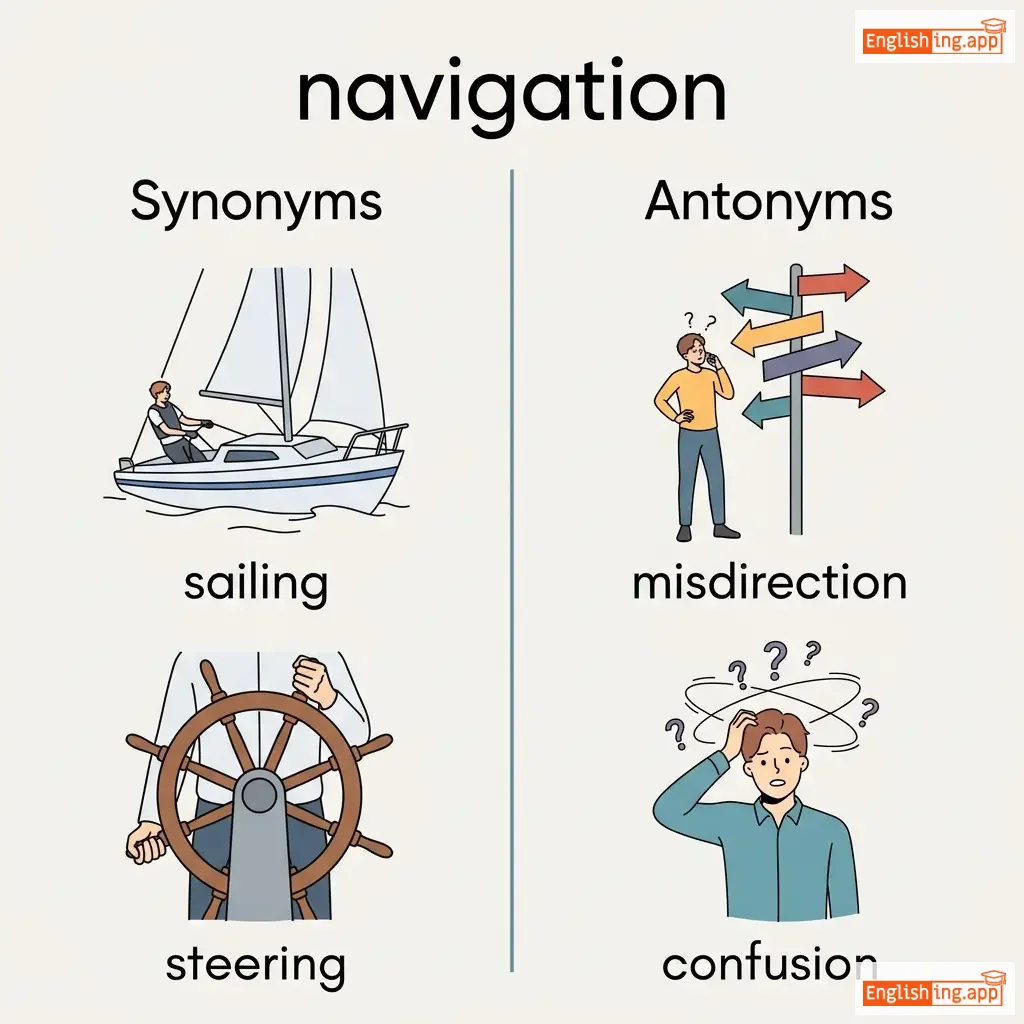
sailing, steering, route planning, charting
••••••
|
misdirection, confusion
••••••
|
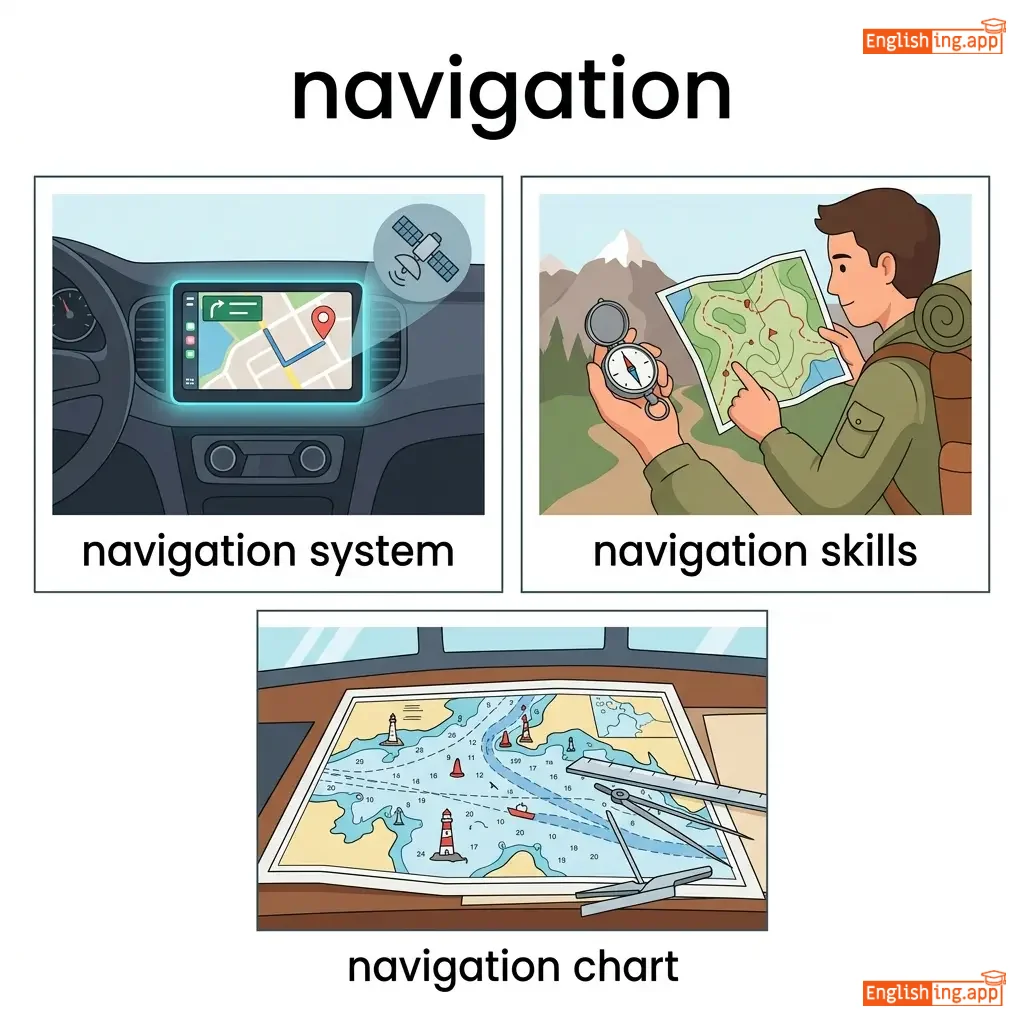
navigation system, navigation skills, navigation chart
••••••
|
导航是你走向目标的指南
••••••
|
|
⚓
••••••
|
/ˈneɪvi/
noun
(ˈneɪvi)
••••••
|
- •••••• |
海军
haijun
••••••
|
- •••••• | - •••••• | - •••••• | - •••••• |
the branch of armed forces that conducts military operations at sea
••••••
|
He joined the navy after graduating from college. |
他在大学毕业后加入了海军。
Tā zài dàxué bìyè hòu jiārùle hǎijūn.
••••••
|
- •••••• | - •••••• | - •••••• |
fleet, naval force, maritime force
••••••
|
- •••••• |
navy blue, royal navy, navy ship, navy seal
••••••
|
海军代表着海上的军事力量
••••••
|
|
📍
••••••
|
/nɪə(r)/
preposition
(nier)
••••••
|
- •••••• |
近
jin
••••••
|
- •••••• | - •••••• | - •••••• | - •••••• |
At or to a short distance away; close in space, time, or relationship.
••••••
|
There is a park near my house. |
我家附近有一个公园。
Wo jia fujin you yige gongyuan.
••••••
|
near and dear |
very close and important to someone
••••••
|
非常亲密和重要
feichang qinmi he zhongyao
••••••
|
close, adjacent, next to, nearby
••••••
|
far, distant
••••••
|
near future, near death, near place, near completion
••••••
|
Near就是接近——就像有些人非常亲密和重要。
••••••
|
|
📍
••••••
|
/ˈnɪəˌbaɪ/
adjective
(nɪəˌbaɪ)
••••••
|
- •••••• |
附近
fujin
••••••
|
- •••••• | - •••••• | - •••••• | - •••••• |
close to a particular place or person
••••••
|
The nearest gas station is nearby.
最近的加油站就在附近。
••••••
|
最近的加油站就在附近。
Zui jin de jia you zhan jiu zai fujin.
••••••
|
- •••••• | - •••••• | - •••••• |
close, adjacent, near, neighboring
••••••
|
distant, far, remote
••••••
|
nearby area, nearby place, nearby town
••••••
|
附近 (fujin) - 想到 'nearby' 在中文
••••••
|
|
🔄
••••••
|
/ˈnɪərli/
adverb
(nìrli)
••••••
|
- •••••• |
差不多; 几乎;
chà bù duō; jī hū;
••••••
|
- •••••• | - •••••• | - •••••• | - •••••• |
almost; not quite; very close to
••••••
|
I nearly missed the bus this morning.
我差点错过了今天早上的公交车。
••••••
|
我差点错过了今天早上的公交车。
wǒ chà bù duō cuò guò le jīntiān zǎo shàng de gōng jiāo chē
••••••
|
- •••••• | - •••••• | - •••••• |
almost, practically, virtually, approximately
••••••
|
completely, entirely, fully
••••••
|
nearly finished, nearly impossible, nearly ready
••••••
|
中文: 就像几乎错过公交车,差不多和nearly相似。
••••••
|
|
✨
••••••
|
/niːt/
adjective
(尼特)
••••••
|
- •••••• |
整洁
zhěngjié
••••••
|
- •••••• | - •••••• | - •••••• | - •••••• |
tidy, orderly, and well-arranged; simple and elegant
••••••
|
His handwriting is very neat and easy to read. |
他的字迹很整洁,容易阅读。
Tā de zìjì hěn zhěngjié, róngyì yuèdú.
••••••
|
neat and tidy |
extremely clean, organized, and well-arranged
••••••
|
整洁与有序
zhěngjié yǔ yǒuxù
••••••
|
tidy, orderly, clean, elegant, organized
••••••
|
messy, untidy, disorderly
••••••
|
neat handwriting, neat solution, neat appearance, neat arrangement
••••••
|
NEAT 就是整洁 — 把你的桌子保持 neat (整洁)
••••••
|
|
✨
••••••
|
/ˈniːtli/
adverb
(nítlī)
••••••
|
- •••••• |
整齐地; 干净地
zhěngqí de; gānjìng de
••••••
|
- •••••• | - •••••• | - •••••• | - •••••• |
in a tidy and orderly way; carefully and precisely
••••••
|
She arranged the books neatly on the shelf.
她把书整齐地放在书架上。
••••••
|
她把书整齐地放在书架上。
Tā bǎ shū zhěngqí de fàng zài shūjià shàng.
••••••
|
- •••••• | - •••••• | - •••••• |
tidily, orderly, carefully, precisely
••••••
|
messily, carelessly, untidily
••••••
|
neatly arranged, neatly organized, neatly folded
••••••
|
整齐的,干净的,neatly done
••••••
|
|
⚖️
••••••
|
/ˌnesəˈserəli/
adverb
(nèi sī sī rì lì)
••••••
|
- •••••• |
必然地;不可避免地;
bì rán dì; bù kě bì miǎn dì;
••••••
|
- •••••• | - •••••• | - •••••• | - •••••• |
as a necessary result; inevitably; by logical consequence
••••••
|
Rich people are not necessarily happy.
有钱人不一定幸福。
••••••
|
有钱人不一定幸福。
Yǒu qián rén bù yīdìng xìngfú.
••••••
|
- •••••• | - •••••• | - •••••• |
inevitably, unavoidably, automatically, certainly
••••••
|
optionally, possibly, maybe
••••••
|
not necessarily, necessarily true, necessarily follow
••••••
|
必要的 = 如果不必定发生,那它可能发生
••••••
|
|
✔️
••••••
|
/ˈnɛsəsɛri/
adjective
••••••
|
|
- •••••• | - •••••• | - •••••• | - •••••• | - •••••• |
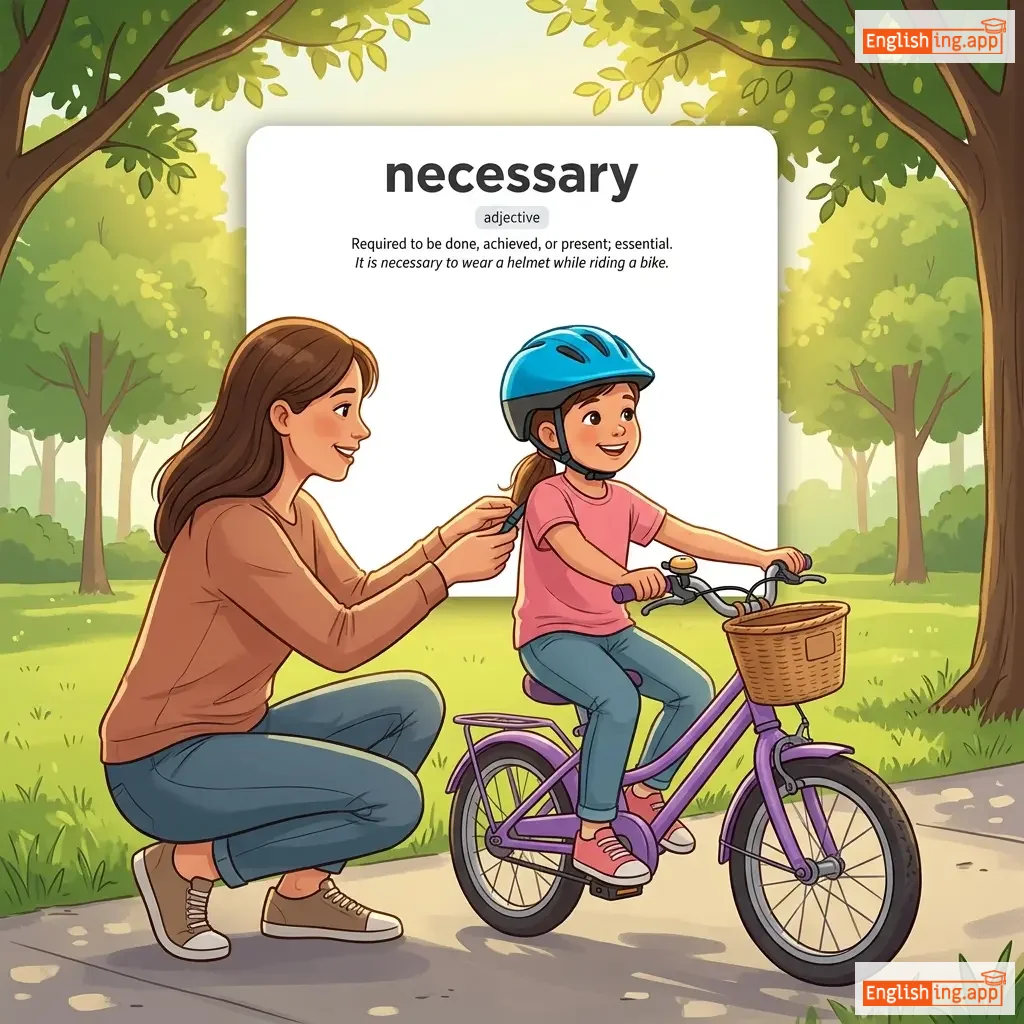
Required to be done, achieved, or present; essential.
••••••
|
It is necessary to wear a helmet while riding a bike. |
- •••••• |
make necessary arrangements |
to prepare the essential things needed
••••••
|
- •••••• |
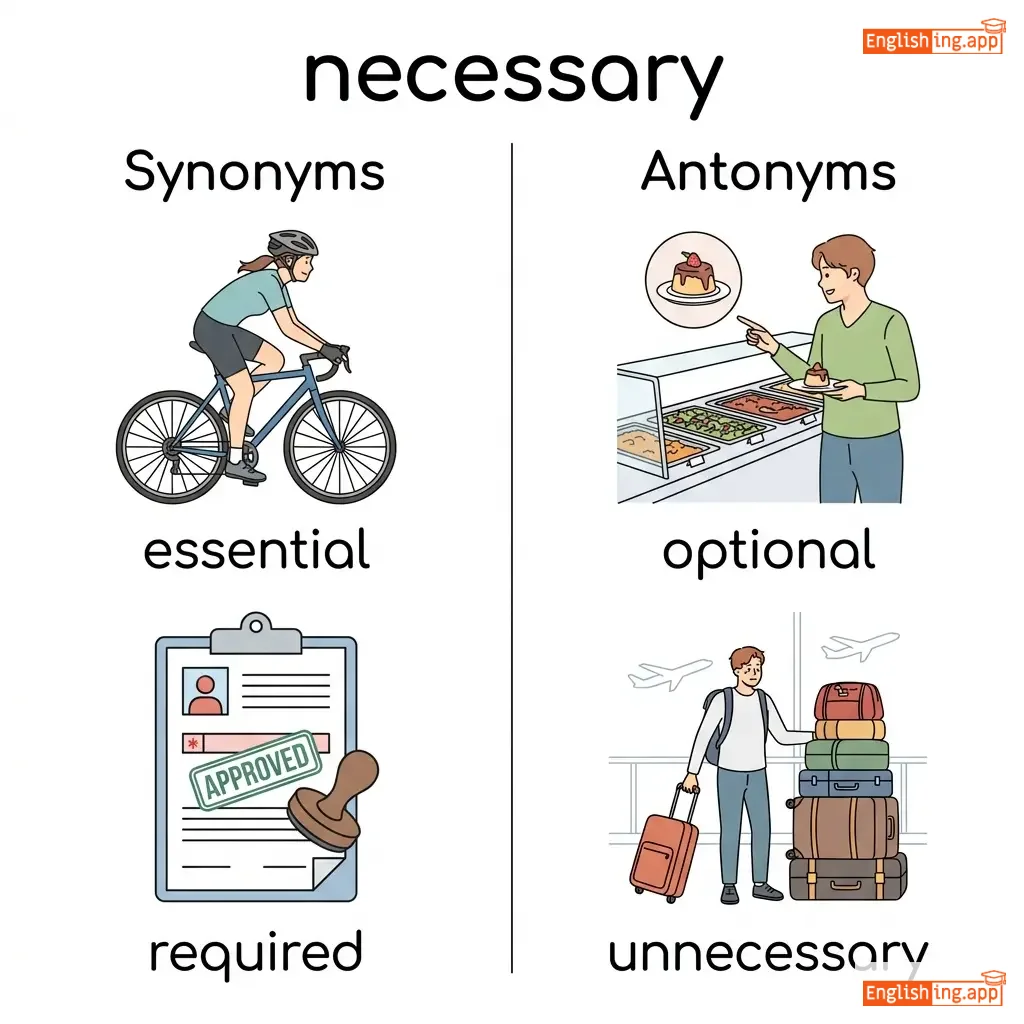
essential, required, vital, crucial, mandatory
••••••
|
optional, unnecessary, needless
••••••
|
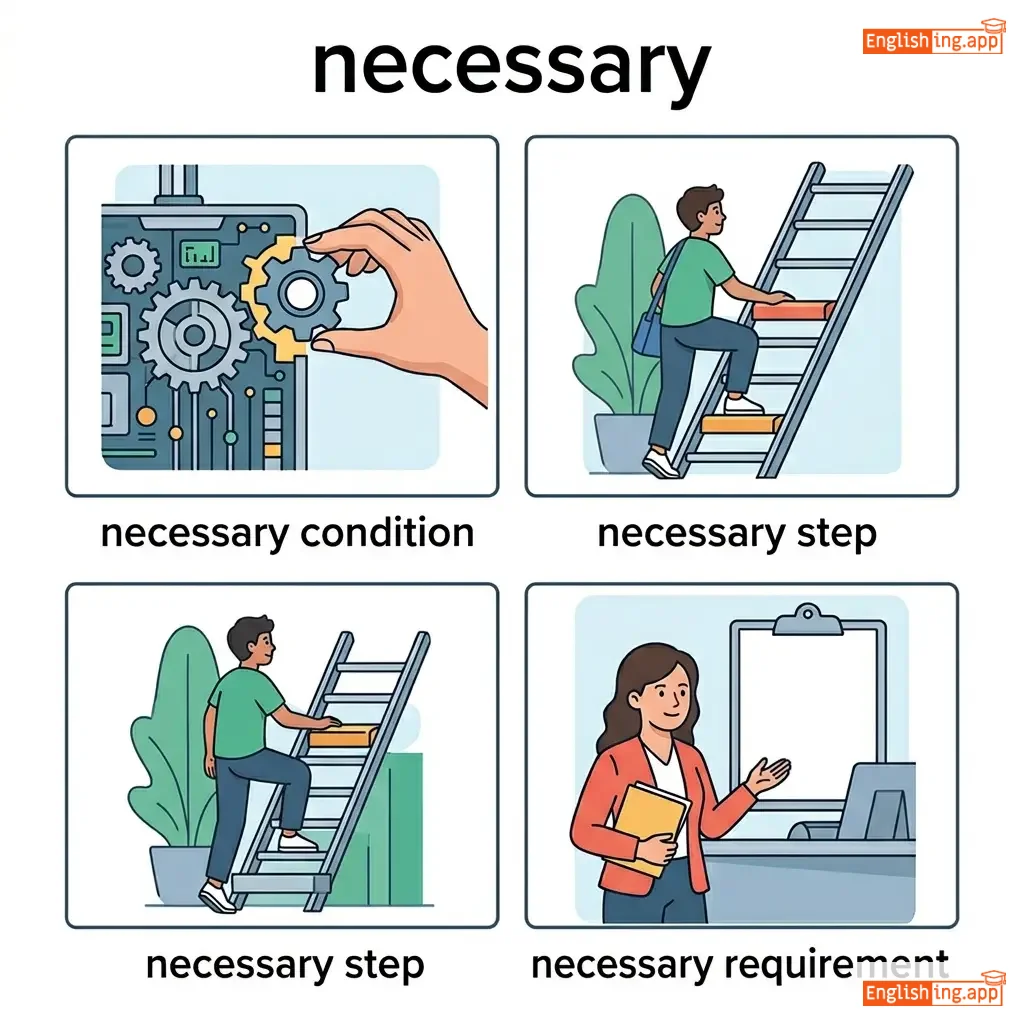
necessary condition, necessary step, necessary requirement, absolutely necessary
••••••
|
No •••••• |
|
🥖
••••••
|
/nəˈsɛsəti/
noun
(nè sī tì)
••••••
|
|
必要性
bì yào xìng
••••••
|
- •••••• | - •••••• | - •••••• | - •••••• |
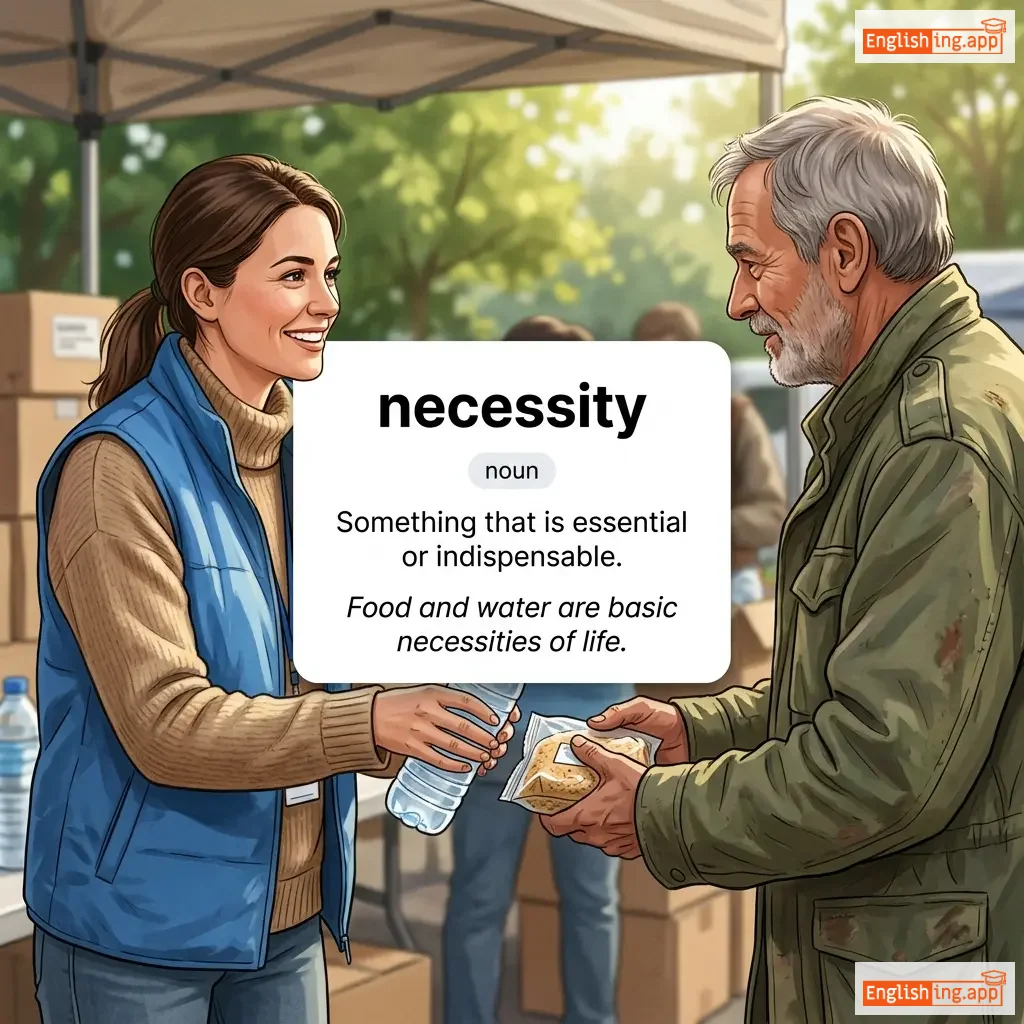
Something that is essential or indispensable.
••••••
|
Food and water are basic necessities of life. |
食物和水是生活中的基本必需品。
Shíwù hé shuǐ shì shēnghuó zhōng de jīběn bìxū pǐn.
••••••
|
out of necessity |
because it is necessary
••••••
|
出于必要性
chū yú bìyàoxìng
••••••
|
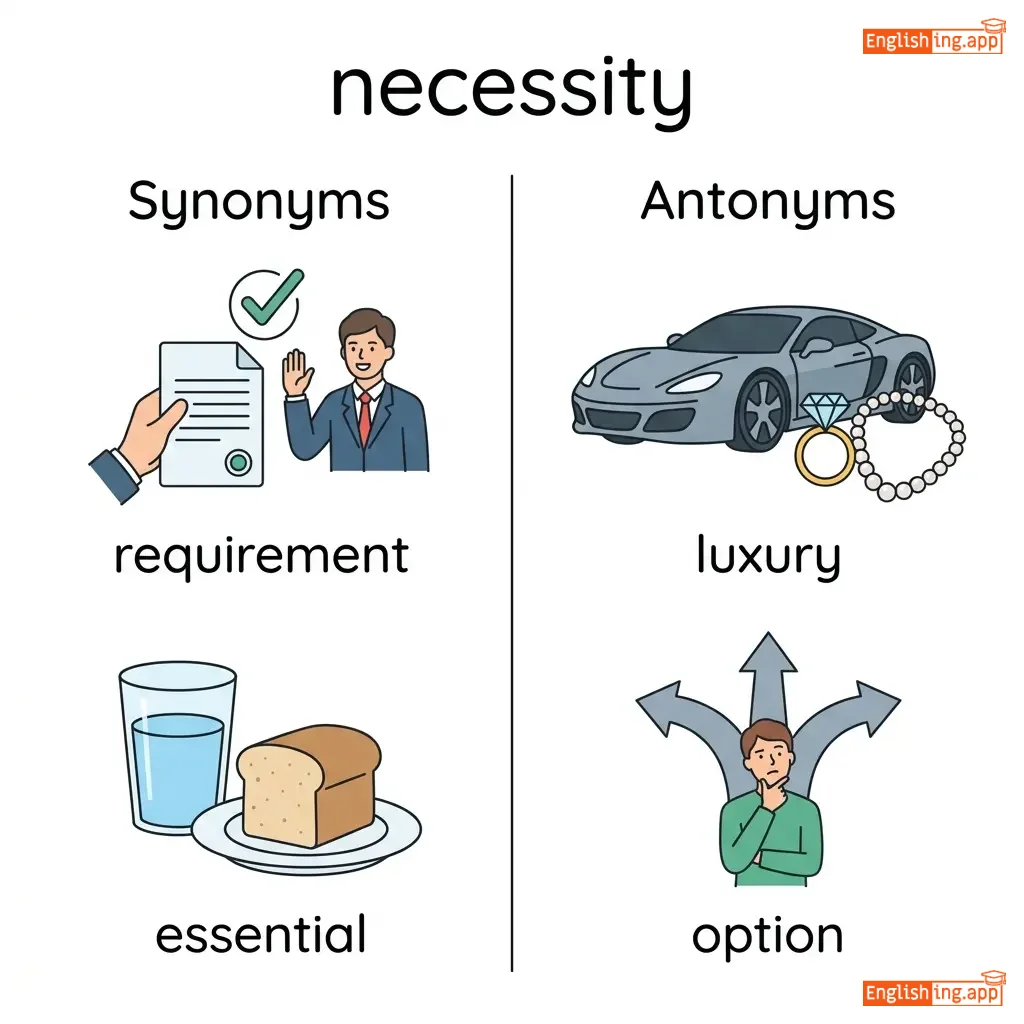
requirement, essential, need, must
••••••
|
luxury, option
••••••
|
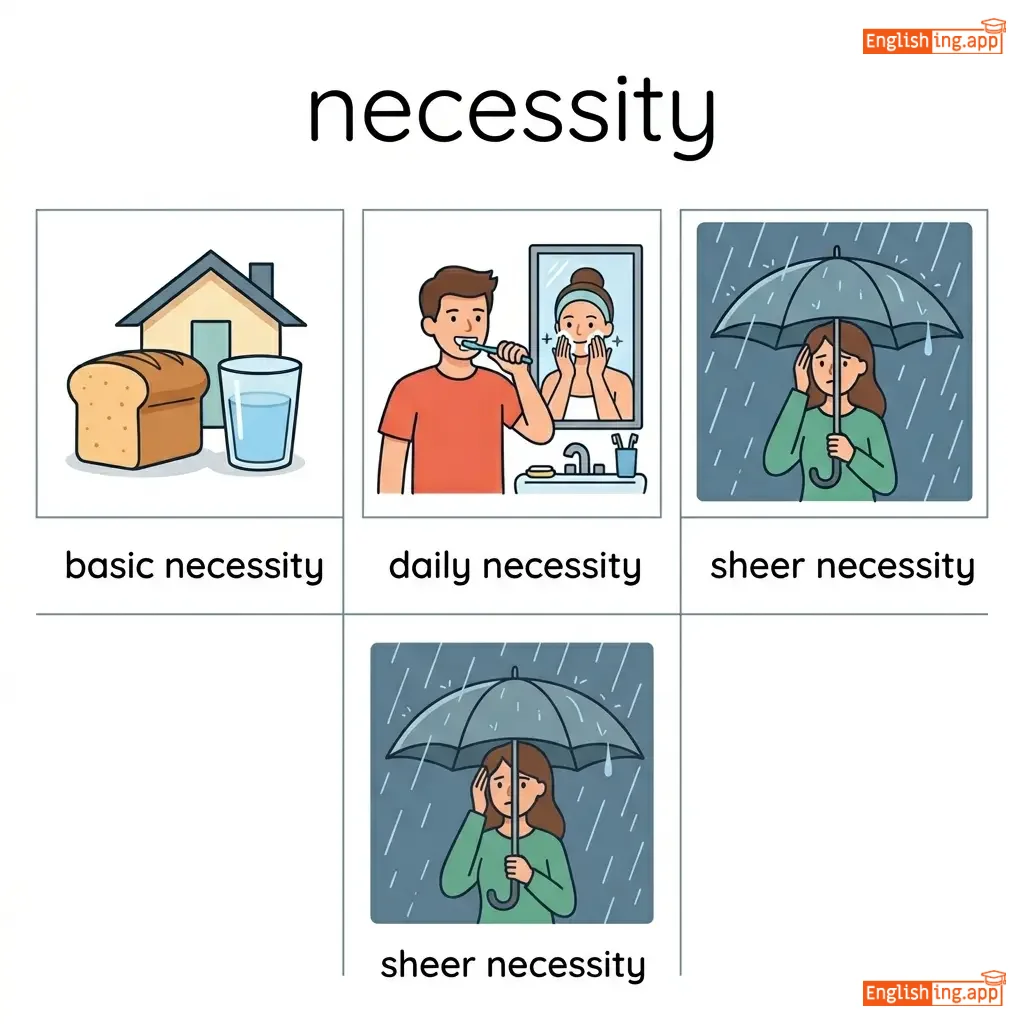
basic necessity, daily necessity, sheer necessity
••••••
|
Necessity 的意思是必需——没有食物和水,生命无法存在。
••••••
|
|
🦒
••••••
|
/nɛk/
noun
(nèkè)
••••••
|
- •••••• |
脖子
bozi
••••••
|
- •••••• | - •••••• | - •••••• | - •••••• |
the part of the body connecting the head and the shoulders
••••••
|
She wore a necklace around her neck. |
她脖子上戴着一条项链。
Tā bózi shàng dàizhe yītiáo xiàngliàn.
••••••
|
- •••••• | - •••••• | - •••••• |
throat, collar, nape
••••••
|
head, chest
••••••
|
neck pain, neck injury, neck of the bottle
••••••
|
脖子 (bozi) 和 'neck' 很像,想象你脖子上的项链。
••••••
|
|
🙏
••••••
|
/niːd/
verb
(nīd)
••••••
|

|
需要
xūyào
••••••
|
needed
nīded
••••••
|
needed
nīded
••••••
|
needs
nīds
••••••
|
needing
nīding
••••••
|
to require something; to be in want of
••••••
|
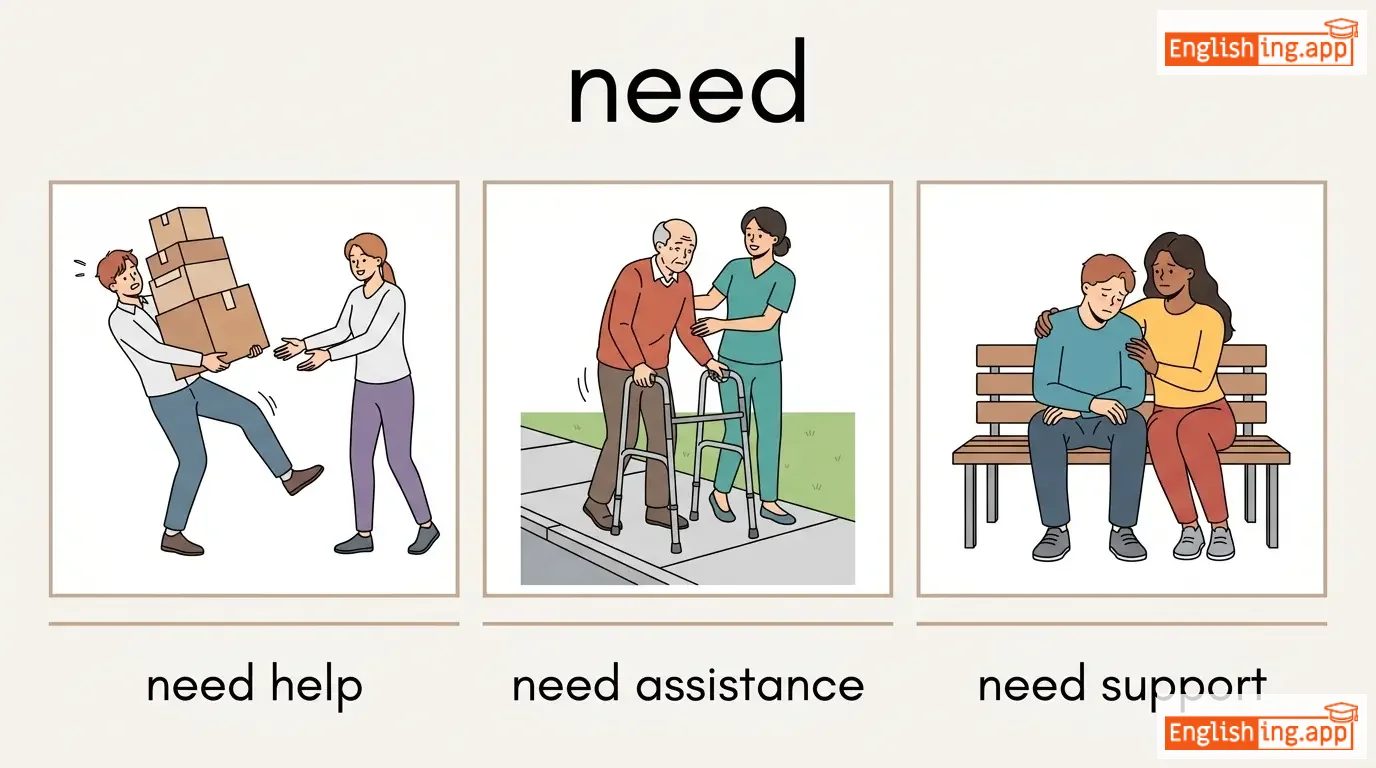
I need help with my homework.
我需要我的作业的帮助。
••••••
|
我需要我的作业的帮助。
Wǒ xūyào wǒ de zuòyè de bāngzhù.
••••••
|
- •••••• | - •••••• | - •••••• |
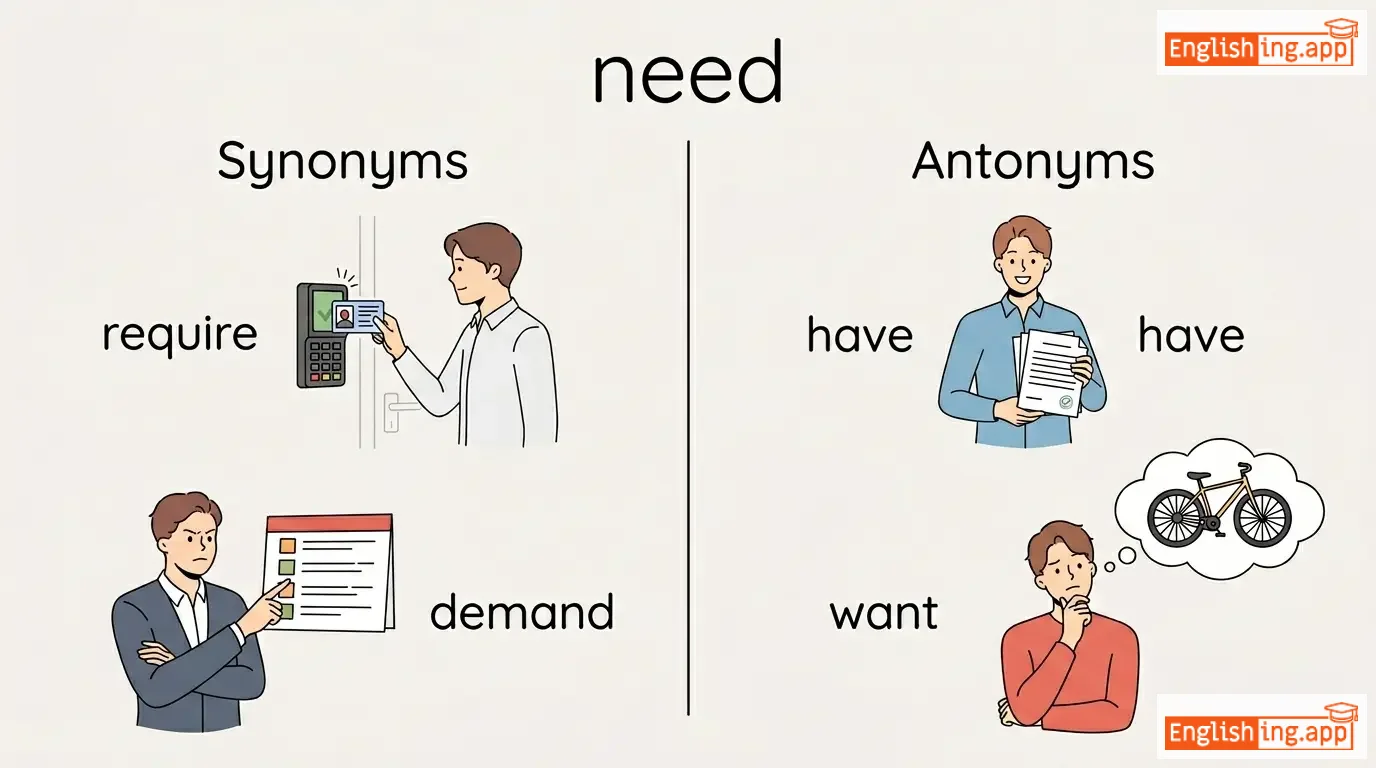
require, want, demand, necessitate
••••••
|
have, possess, own
••••••
|
need help, need badly, need immediately, need desperately, need urgently
••••••
|
需要 = 是当你'需要'帮助时的词!
••••••
|
|
💉
••••••
|
/ˈniː.dəl/
noun, verb
(nídl)
••••••
|
- •••••• |
针
zhēn
••••••
|
needled
nídld
••••••
|
needled
nídld
••••••
|
needles
nídls
••••••
|
needling
nídlíng
••••••
|
a small thin metal tool with a point used for sewing or injecting; to provoke or annoy someone
••••••
|
The nurse used a sterile needle for the injection.
护士使用了无菌针头进行注射。
••••••
|
护士使用了无菌针头进行注射。
Hùshì shǐyòng le wújūn zhēntóu jìnxíng zhùshè.
••••••
|
needle in a haystack
干草堆里的针
••••••
|
something that is extremely difficult or impossible to find
••••••
|
极难或几乎不可能找到的东西
jí nán huò jīhū bù kěnéng zhǎodào de dōngxī
••••••
|
pin, syringe, prick, irritate, provoke
••••••
|
soothe, calm
••••••
|
sewing needle, injection needle, needle and thread, needle prick
••••••
|
针意味着Needle — 记住:针‘需要’穿过布料!
••••••
|
|
🤲
••••••
|
/ˈniː.di/
adjective
(nidi)
••••••
|
- •••••• |
贫困的; 需要帮助的; 缺乏基本生活必需品的
pinkuande; xuyao bangzhu de; quexiao jiben shenghuo bixu pin de
••••••
|
- •••••• | - •••••• | - •••••• | - •••••• |
requiring help or support; poor; lacking basic necessities
••••••
|
The charity helps needy families during the winter.
慈善在冬季帮助贫困家庭。
••••••
|
慈善在冬季帮助贫困家庭。
Císhàn zài dōngjì bāngzhù pínkùn jiātíng.
••••••
|
- •••••• | - •••••• | - •••••• |
poor, destitute, impoverished, deprived
••••••
|
wealthy, rich, affluent, prosperous
••••••
|
needy families, help the needy, needy children
••••••
|
贫困的家庭冬天需要帮助,慈善正是为此提供援助。
••••••
|
|
☹️
••••••
|
/ˈnɛɡətɪv/
adjective
(负面)
••••••
|
|
负面
fùmiàn
••••••
|
- •••••• | - •••••• | - •••••• | - •••••• |
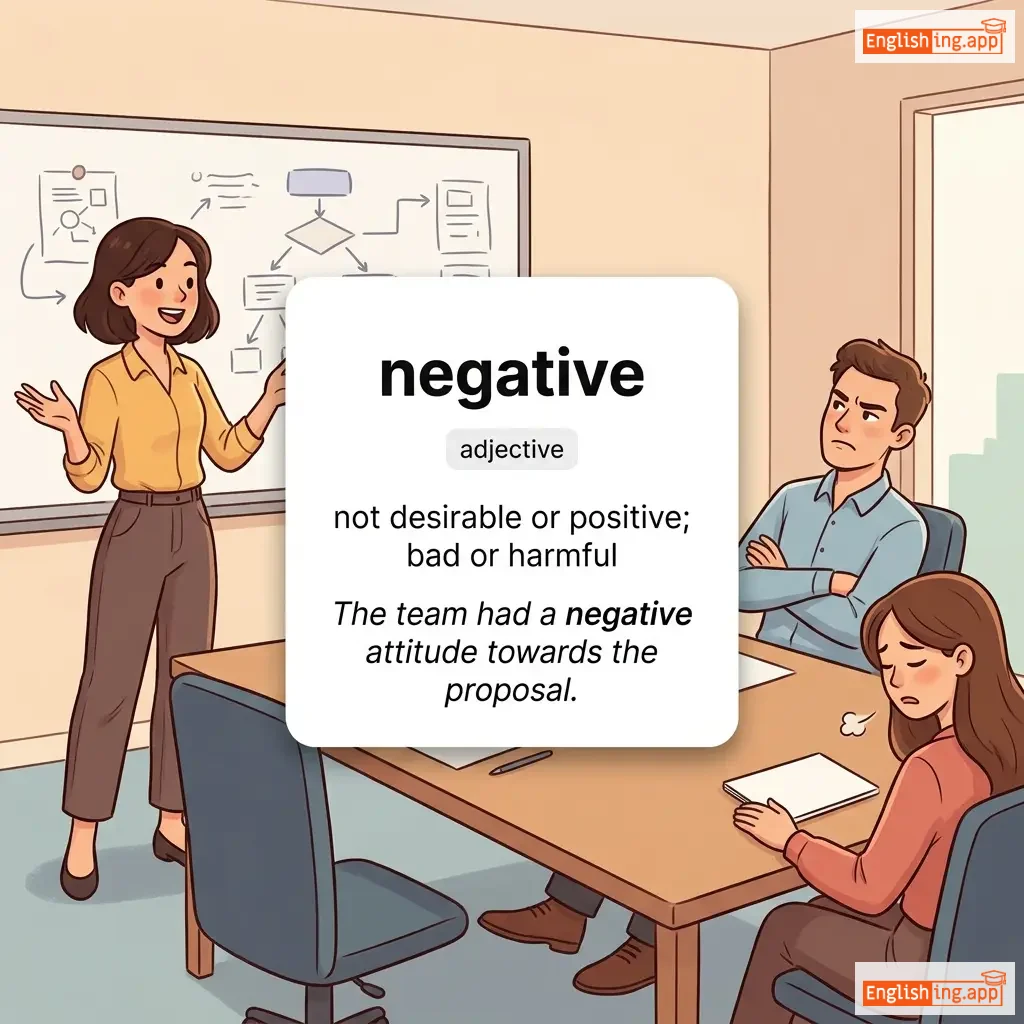
not desirable or positive; bad or harmful
••••••
|
The team had a negative attitude towards the proposal. |
团队对提案持负面态度。
Tuánduì duì tí'àn chí fùmiàn tàidù.
••••••
|
- •••••• | - •••••• | - •••••• |
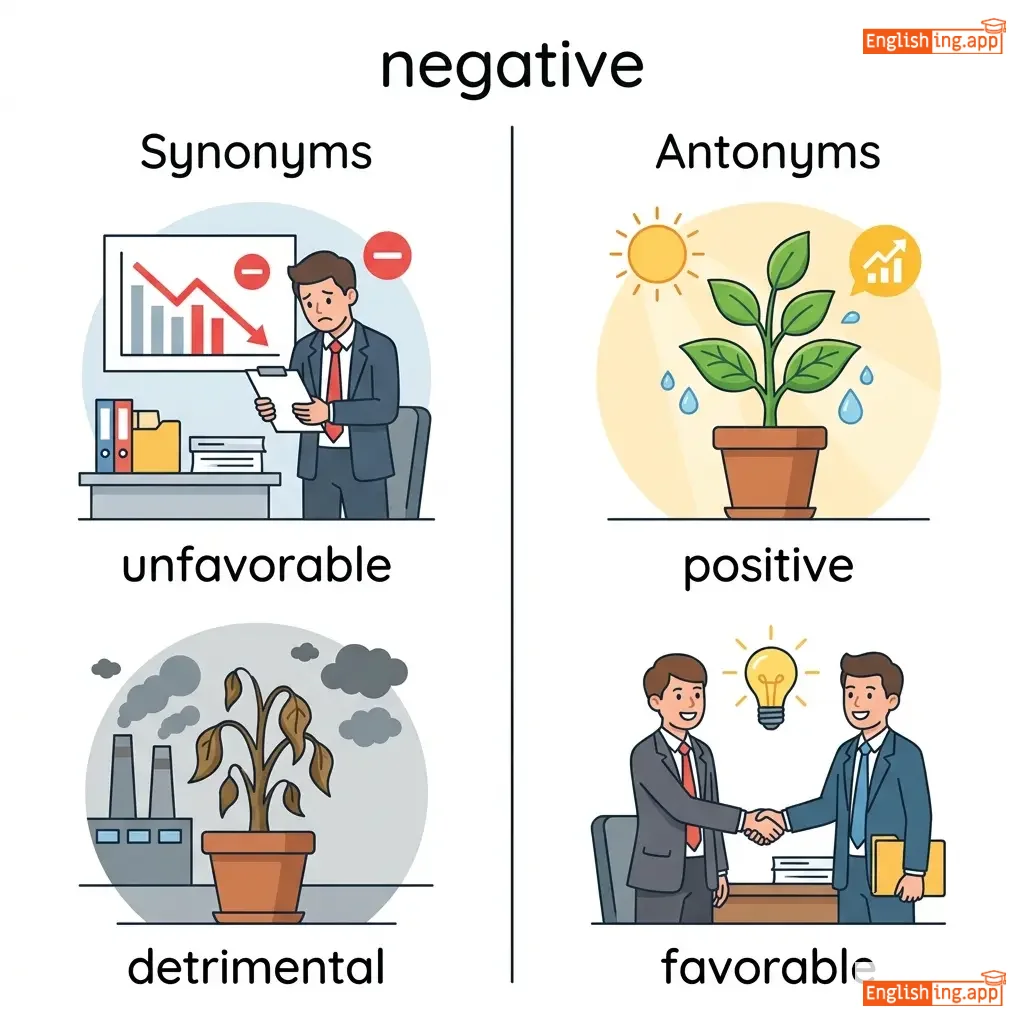
unfavorable, detrimental, harmful, pessimistic
••••••
|
positive, favorable, optimistic
••••••
|
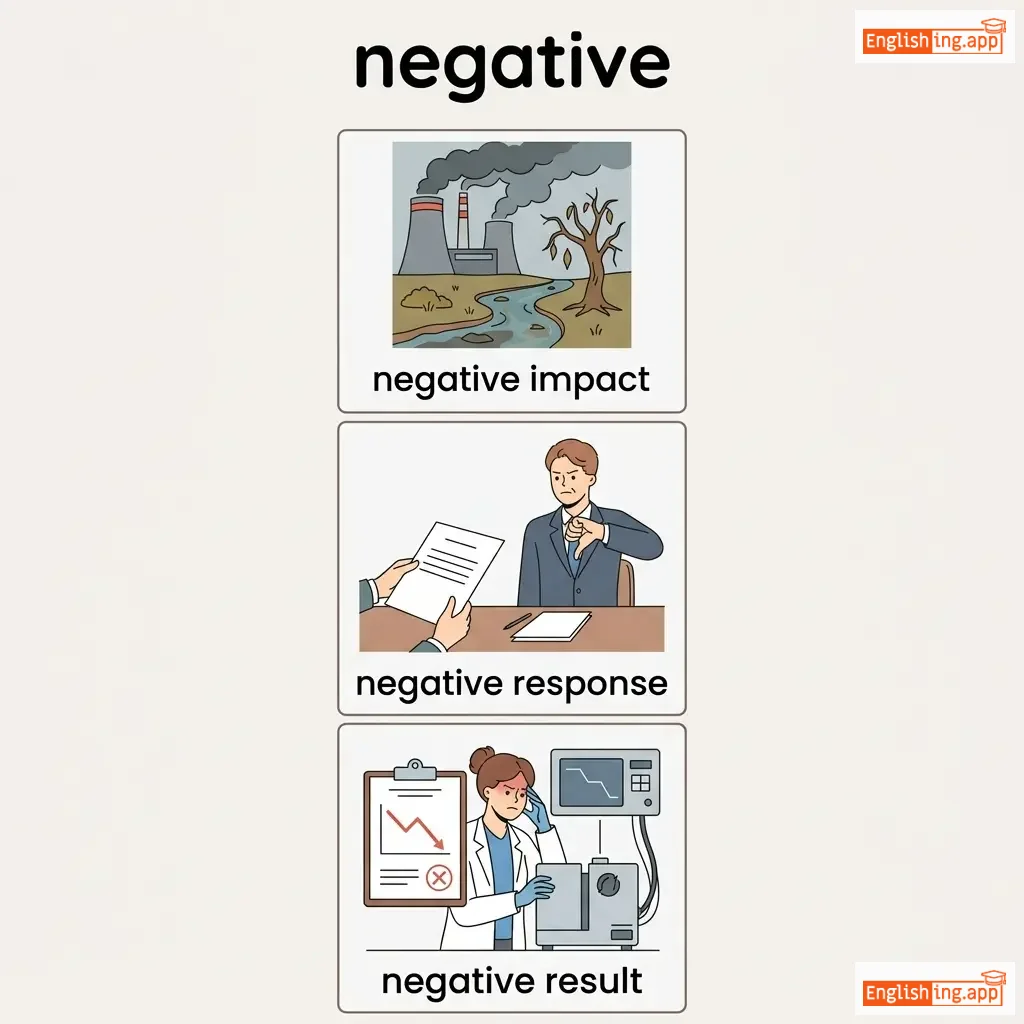
negative impact, negative response, negative result
••••••
|
记住负面,没有什么好的东西!
••••••
|
|
😔
••••••
|
/nɪˈɡlɛkt/
verb
(neglect)
••••••
|
|
忽视
hushi
••••••
|
neglected
neglected
••••••
|
neglected
neglected
••••••
|
neglects
neglects
••••••
|
neglecting
neglecting
••••••
|
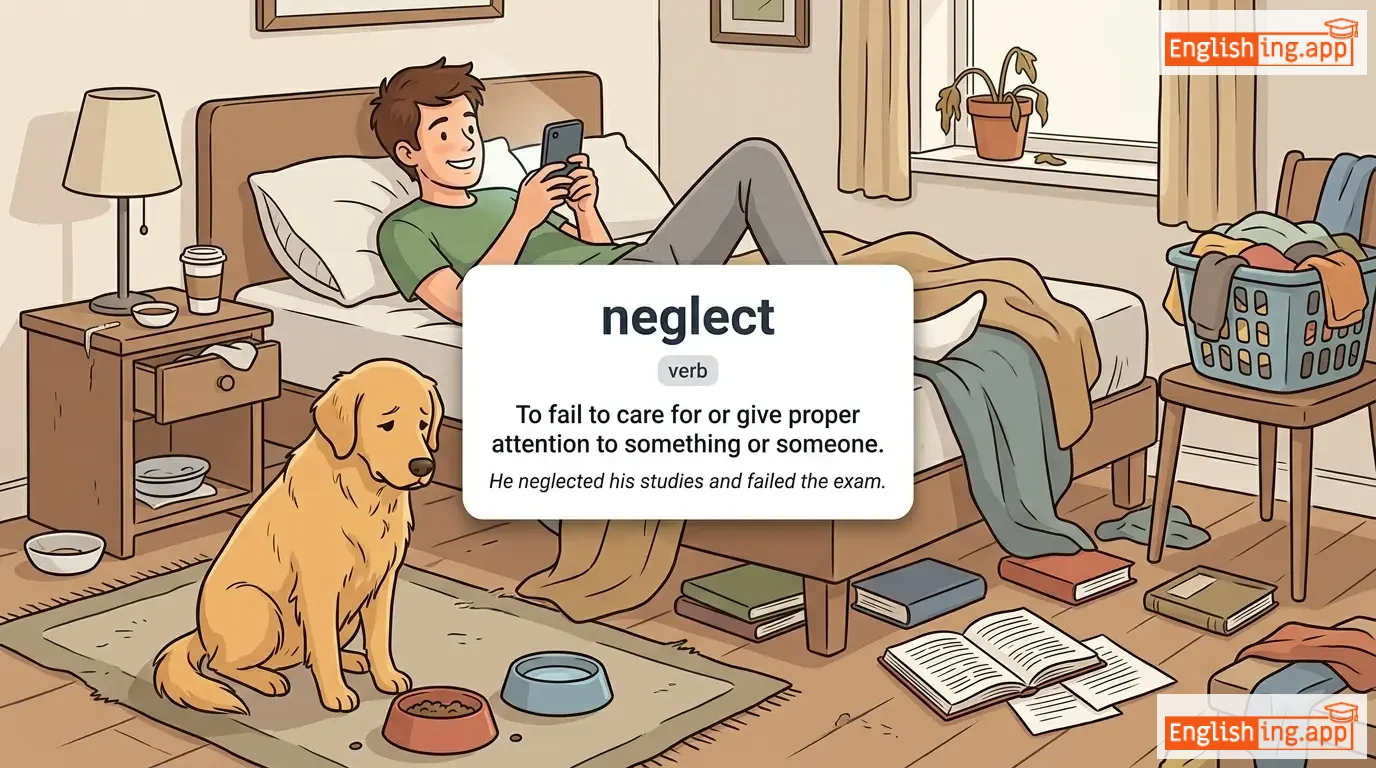
To fail to care for or give proper attention to something or someone.
••••••
|
He neglected his studies and failed the exam.
He neglected his studies and failed the exam.
••••••
|
他忽视了学业,考试不及格。
Ta hushi le xueye, kaoshi bu jige.
••••••
|
neglect of duty
neglect of duty
••••••
|
Failure to fulfill one's responsibilities.
••••••
|
忽视职责
Hushi zhize
••••••
|
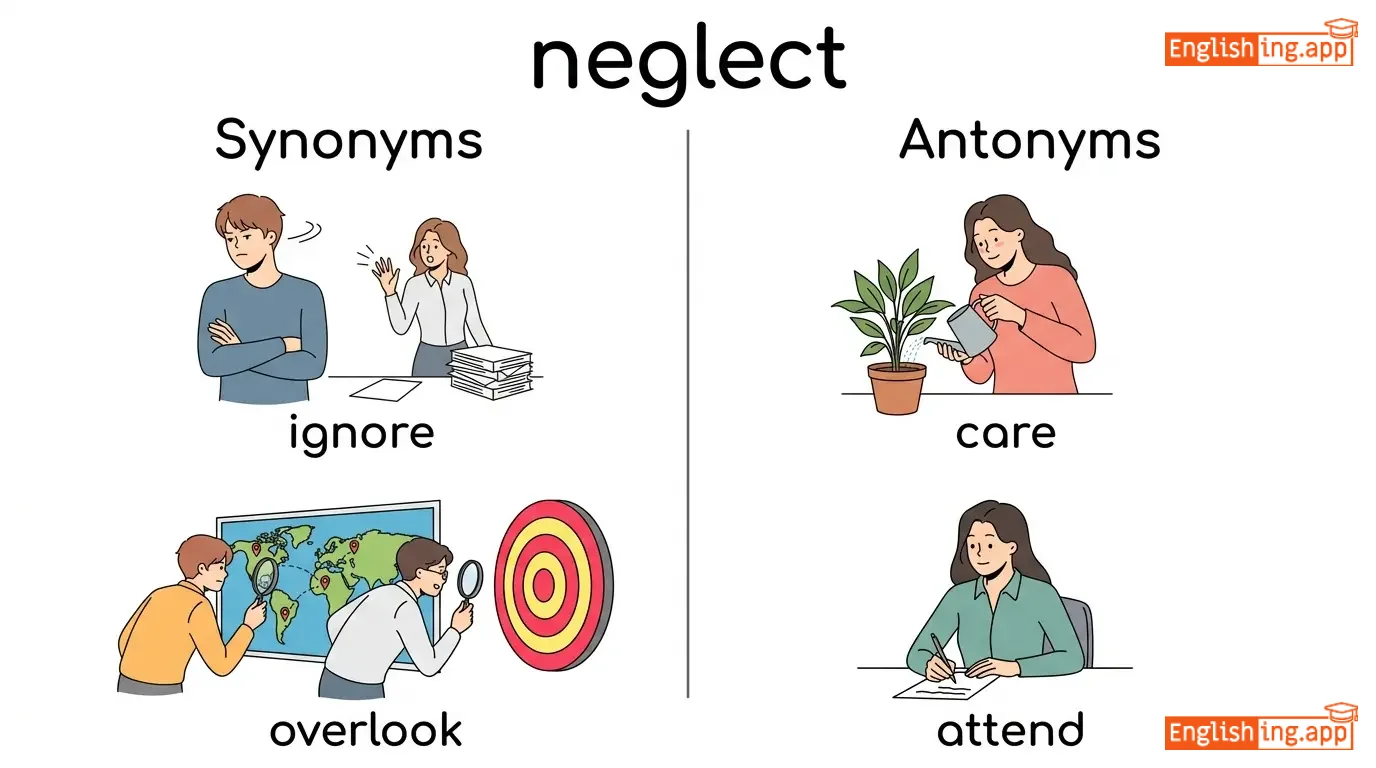
ignore, overlook, disregard, abandon, forget
••••••
|
care, attend, maintain
••••••
|
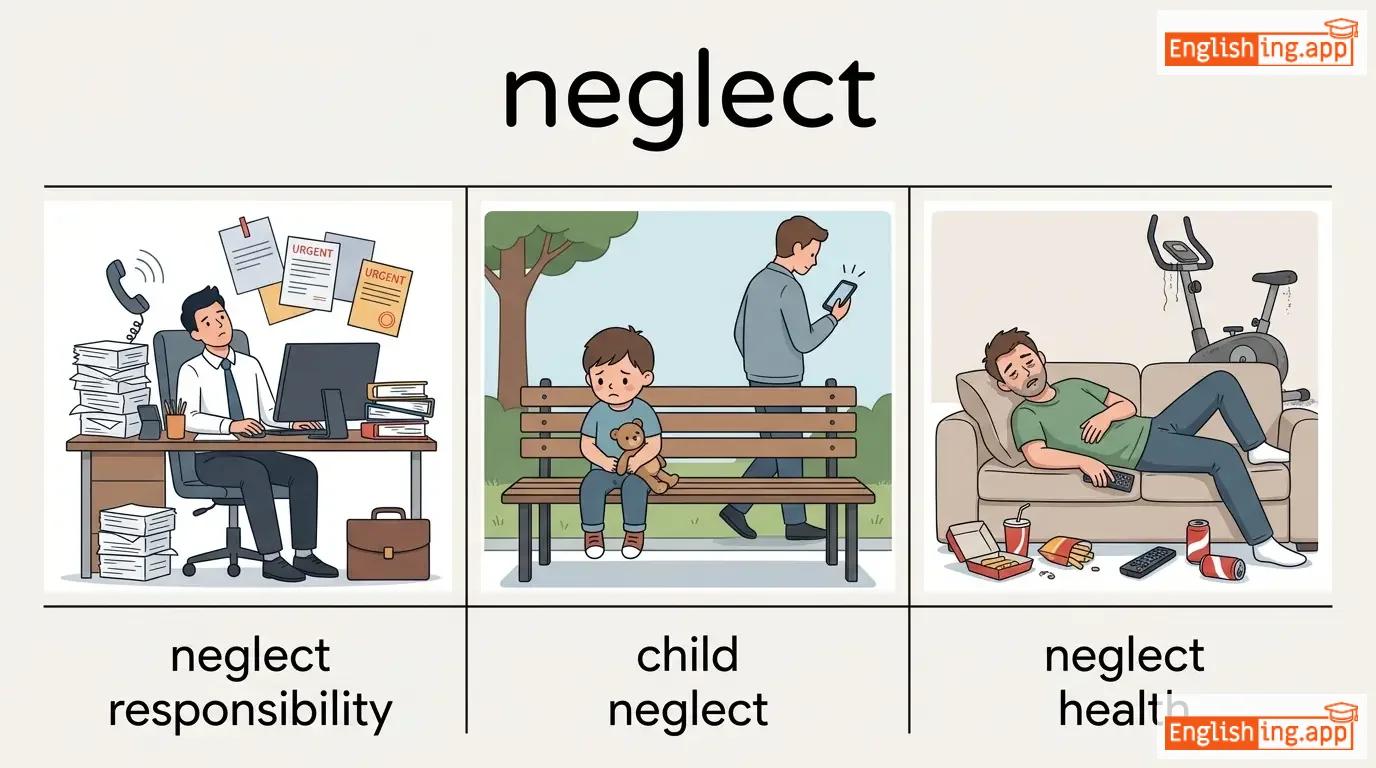
neglect responsibility, child neglect, neglect health, neglect work
••••••
|
Neglect 意味着 negative + collect → 不收集 = 忽视。
••••••
|
|
🤝
••••••
|
/nɪˈɡoʊ.ʃi.eɪt/
verb
(谈判)
••••••
|
- •••••• |
谈判
tanpan
••••••
|
negotiated
谈判了
••••••
|
negotiated
谈判了
••••••
|
negotiates
谈判
••••••
|
negotiating
谈判中
••••••
|
To discuss something formally in order to reach an agreement.
••••••
|
They negotiated a fair deal with the supplier.
他们与供应商谈判达成了公平的交易。
••••••
|
他们与供应商谈判达成了公平的交易。
Tāmen yǔ gōngyìng shāng tánpàn dáchéng le gōngpíng de jiāoyì.
••••••
|
negotiate a deal
谈判交易
••••••
|
To bargain and reach an agreement.
••••••
|
谈判交易
tanpan jiaoyi
••••••
|
bargain, discuss, mediate, arrange, settle
••••••
|
refuse, reject, decline
••••••
|
negotiate terms, negotiate peace, negotiate agreement, negotiate contract
••••••
|
谈判 = TAN + pan - 坐下来讨论达成交易
••••••
|
|
🤝
••••••
|
/nɪˌɡoʊ.siˈeɪ.ʃən/
noun
(谈判)
••••••
|
- •••••• |
旨在达成协议的讨论; 谈判
tanpan
••••••
|
- •••••• | - •••••• | - •••••• | - •••••• |
discussion aimed at reaching an agreement; bargaining
••••••
|
The negotiation between the two companies lasted for weeks. |
两家公司之间的谈判持续了好几个星期。
Liǎng jiā gōngsī zhī jiān de tánpàn chíxù le hǎo jǐ gè xīngqī.
••••••
|
- •••••• | - •••••• | - •••••• |
discussion, bargaining, talks, mediation
••••••
|
conflict, disagreement, deadlock
••••••
|
peace negotiation, contract negotiation, salary negotiation
••••••
|
谈判是为了达成协议的讨论
••••••
|
|
🏘️
••••••
|
/ˈneɪbər/
noun
(内博)
••••••
|
- •••••• |
邻居
línjū
••••••
|
- •••••• | - •••••• | - •••••• | - •••••• |
a person living next door or nearby
••••••
|
My neighbor lent me some sugar when I ran out.
迈 内博 伦特 米 山 砂糖 温 艾 瑞 安 奥特。
••••••
|
我的邻居在我糖用完时借给了我一些糖。
Wǒ de línjū zài wǒ táng yòng wán shí jiè gěi le wǒ yīxiē táng.
••••••
|
- •••••• | - •••••• | - •••••• |
adjacent resident, nearby person, local
••••••
|
stranger, outsider
••••••
|
good neighbor, friendly neighbor, next-door neighbor
••••••
|
Your neighbor never says ‘no’, it’s sweet like sugar!
••••••
|
|
🏡
••••••
|
/ˈneɪbərˌhʊd/
noun
(neɪbərˌhʊd)
••••••
|
- •••••• |
社区
shequ
••••••
|
- •••••• | - •••••• | - •••••• | - •••••• |
a district or area around or near a particular place
••••••
|
I grew up in a quiet neighborhood. |
我在一个安静的社区长大。
Wo zai yi ge anjing de shequ changda.
••••••
|
- •••••• | - •••••• | - •••••• |
community, locality, district, area
••••••
|
isolation, wilderness
••••••
|
peaceful neighborhood, residential neighborhood, urban neighborhood
••••••
|
社区 - 人们彼此友好相处的地方
••••••
|
|
🏘️
••••••
|
/ˈneɪ.bər.ɪŋ/
adjective
(neiboring)
••••••
|
- •••••• |
邻近的; 相邻的; 邻接的
linjin de; xianglin de; linjie de
••••••
|
- •••••• | - •••••• | - •••••• | - •••••• |
situated next to or very near; adjacent; bordering
••••••
|
We often visit our neighbouring countries for trade. |
我们经常访问我们的邻国进行贸易。
Women jingchang fuzhu wode lingguo jinxing maoyi.
••••••
|
- •••••• | - •••••• | - •••••• |
adjacent, nearby, bordering, adjoining
••••••
|
distant, remote, far, separate
••••••
|
neighbouring countries, neighbouring houses, neighbouring cities
••••••
|
邻国之间的贸易如此紧密!
••••••
|
|
🚫
••••••
|
/ˈniːðər/
conjunction
(奈泽)
••••••
|
- •••••• |
既不
ji bu
••••••
|
- •••••• | - •••••• | - •••••• | - •••••• |
used to connect two negative alternatives
••••••
|
Neither the manager nor the assistant could attend the meeting.
奈泽 the manager nor the assistant could attend the meeting。
••••••
|
经理和助理都无法参加会议。
jing li he zhu li dou wu fa can jia hui yi
••••••
|
- •••••• | - •••••• | - •••••• |
nor, not either
••••••
|
either
••••••
|
neither nor, neither of them
••••••
|
Neither = 既不…也不… in Chinese—don’t pick any!
••••••
|
|
👦
••••••
|
/ˈnefjuː/
noun
(奈甫优)
••••••
|
- •••••• |
侄子
zhizi
••••••
|
- •••••• | - •••••• | - •••••• | - •••••• |
the son of one’s brother or sister
••••••
|
My nephew is studying at the university.
迈 奈甫优 伊兹 斯塔迪英 阿特 泽 尤尼弗西提。
••••••
|
我的侄子在大学学习。
wo de zhizi zai daxue xuexi
••••••
|
- •••••• | - •••••• | - •••••• |
brother's son, sister's son, male relative, young relative
••••••
|
uncle, aunt
••••••
|
beloved nephew, young nephew, nephew and niece, visit my nephew
••••••
|
侄子 zhizi = nephew—family link
••••••
|
|
😰
••••••
|
/ˈnɜːrvəs/
adjective
(nervous)
••••••
|
- •••••• |
紧张
jin zhang
••••••
|
- •••••• | - •••••• | - •••••• | - •••••• |
anxious, worried, or fearful about something
••••••
|
She felt nervous before giving her presentation.
她在做报告前感到紧张。
••••••
|
她在做报告前感到紧张。
Tā zài zuò bào gào qián gǎn dào jǐn zhāng.
••••••
|
nervous wreck
神经质的残骸
••••••
|
a person who is very anxious, worried, or stressed
••••••
|
极度紧张的人
jí dù jǐn zhāng de rén
••••••
|
anxious, uneasy, tense, restless, jittery
••••••
|
calm, relaxed, confident
••••••
|
nervous about, nervous smile, nervous feeling, nervous breakdown
••••••
|
考试时,每个人都感到 NERVOUS (紧张)
••••••
|
|
🪹
••••••
|
/nɛst/
noun
(nèst)
••••••
|
- •••••• |
鸟巢
niao chao
••••••
|
- •••••• | - •••••• | - •••••• | - •••••• |
a structure built by birds or other animals to hold their eggs or young.
••••••
|
The bird built a nest in the tall tree. |
那只鸟在高高的树上建了一个鸟巢。
Na zhi niao zai gao gao de shu shang jian le yi ge niao chao.
••••••
|
empty nest |
a home where children have grown up and left, leaving the parents alone.
••••••
|
空巢
kong chao
••••••
|
home, den, lair, shelter, abode
••••••
|
wilderness, outside
••••••
|
bird's nest, build a nest, cozy nest, empty nest
••••••
|
鸟巢 — 就是鸟儿住的地方,想象它们在鸟巢里筑巢!
••••••
|
|
🎣
••••••
|
/nɛt/
noun
(网)
••••••
|
- •••••• |
网
wang
••••••
|
- •••••• | - •••••• | - •••••• | - •••••• |
a piece of material made of threads or ropes woven together, used to catch or hold things
••••••
|
The fisherman cast his net into the sea. |
渔夫把他的网投进了海里。
Yufu ba tade wang tou jin le hǎi li.
••••••
|
cast a wide net |
to try to reach or include as many people or things as possible
••••••
|
撒网
sa wang
••••••
|
mesh, web, lattice, trap
••••••
|
freedom, release
••••••
|
safety net, fishing net, cast net, catch in net
••••••
|
网意味着网 - 网络也像网一样连接
••••••
|
|
🌐
••••••
|
/ˈnɛtˌwɜrk/
noun
(网络)
••••••
|
- •••••• |
网络
wangluo
••••••
|
- •••••• | - •••••• | - •••••• | - •••••• |
A system of interconnected people, things, or computers.
••••••
|
She built a strong professional network.
她建立了一个强大的职业网络。
••••••
|
她建立了一个强大的职业网络。
Ta jianli le yige qiangda de zhiye wangluo.
••••••
|
networking opportunities
网络机会
••••••
|
Chances to connect with people for career or business growth
••••••
|
网络机会
Wangluo jihui
••••••
|
system, web, grid, connection, chain
••••••
|
isolation, separation
••••••
|
social network, computer network, business network, global network
••••••
|
Network + work = 网络,意为职业发展的连接
••••••
|
|
⚖️
••••••
|
/ˈnjuːtrəl/
adjective
(niutràl)
••••••
|
|
中立
zhōnglì
••••••
|
- •••••• | - •••••• | - •••••• | - •••••• |
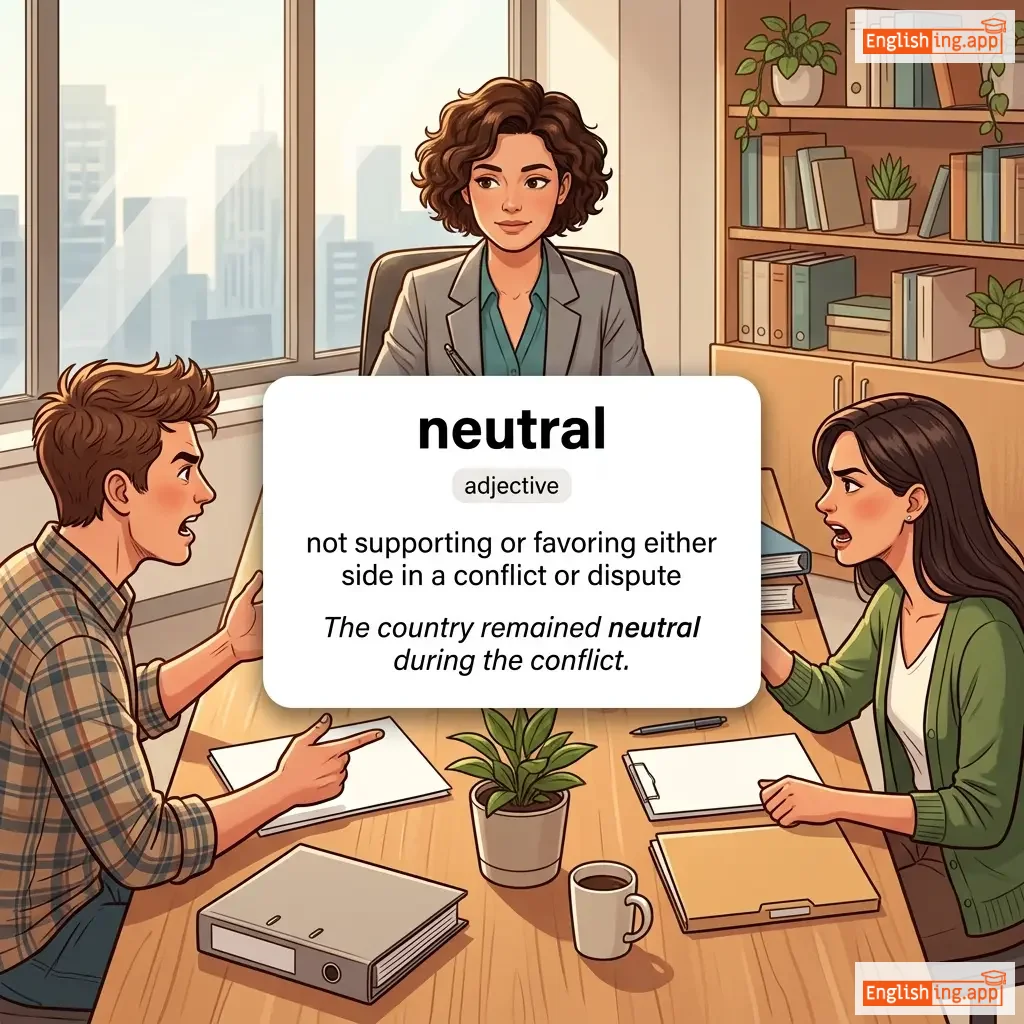
not supporting or favoring either side in a conflict or dispute
••••••
|
The country remained neutral during the conflict. |
这个国家在冲突中保持中立。
Zhège guójiā zài chōngtú zhōng bǎochí zhōnglì.
••••••
|
neutral stance |
a position of not taking sides
••••••
|
中立立场
zhōnglì lìchǎng
••••••
|
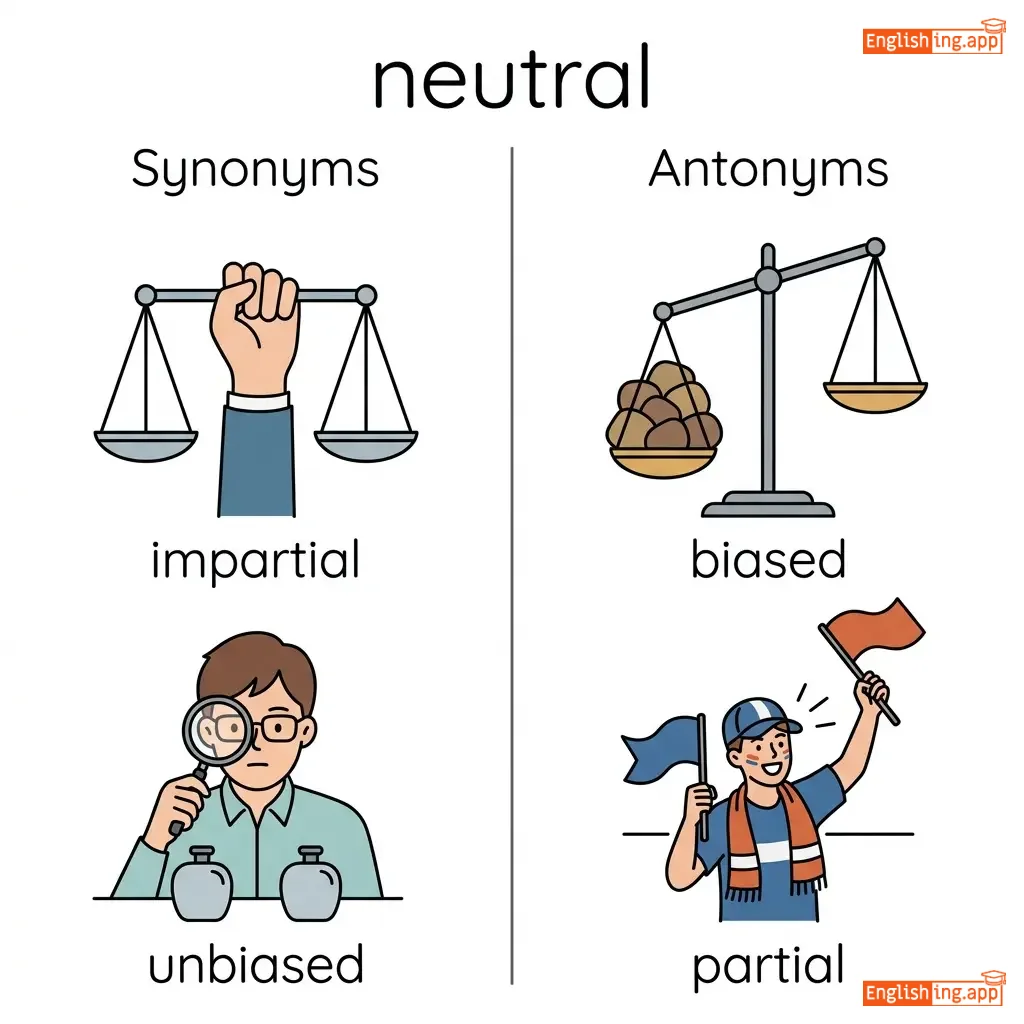
impartial, unbiased, nonpartisan, detached, indifferent
••••••
|
biased, partial, partisan
••••••
|
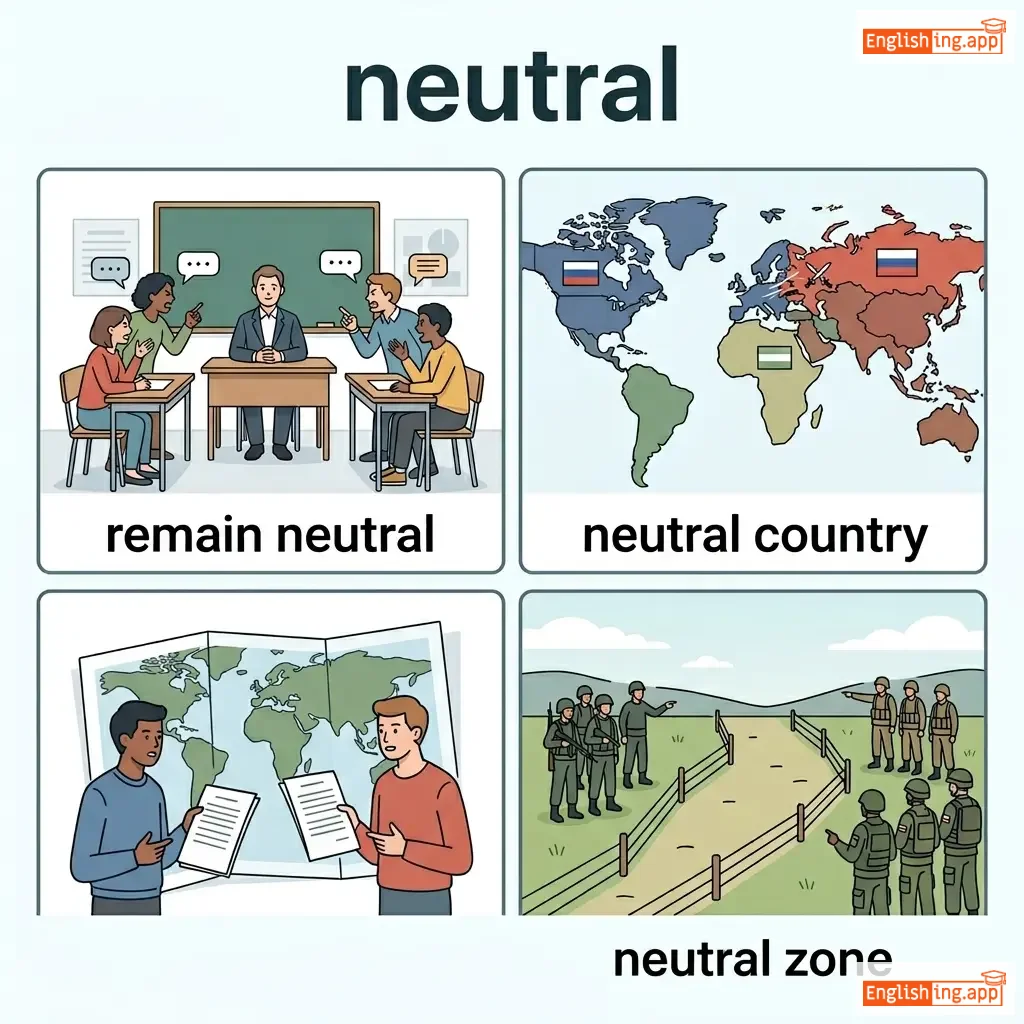
remain neutral, neutral country, neutral zone, neutral position
••••••
|
Neutral意味着 '中立' — 在争论中,没人偏袒,大家都保持中立。
••••••
|
|
⚖️
••••••
|
/nuːˈtræl.ə.ti/
noun
(中立)
••••••
|
|
中立
zhongli
••••••
|
- •••••• | - •••••• | - •••••• | - •••••• |
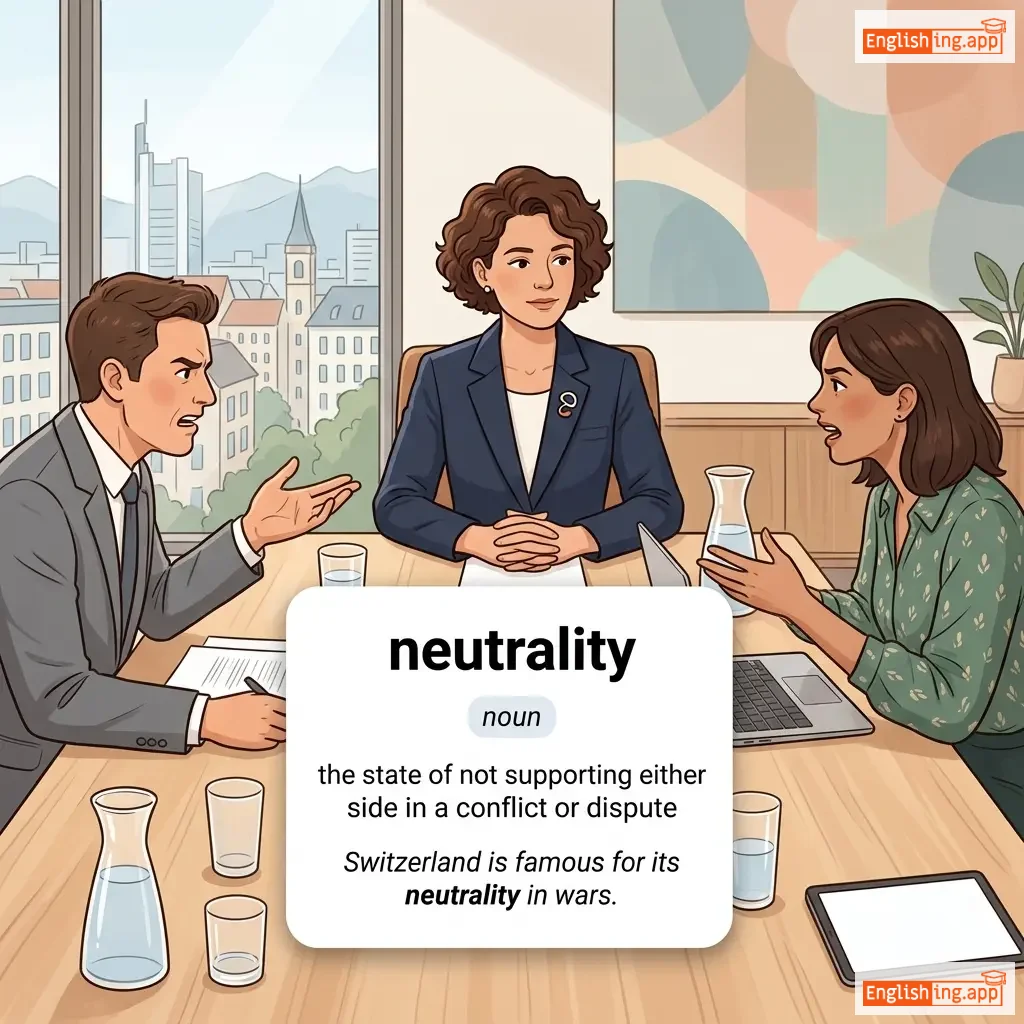
the state of not supporting either side in a conflict or dispute
••••••
|
Switzerland is famous for its neutrality in wars.
瑞士因其在战争中的中立而闻名。
••••••
|
瑞士因其在战争中的中立而闻名。
Ruìshì yīn qí zài zhànzhēng zhōng de zhōnglì ér wénmíng.
••••••
|
- •••••• | - •••••• | - •••••• |
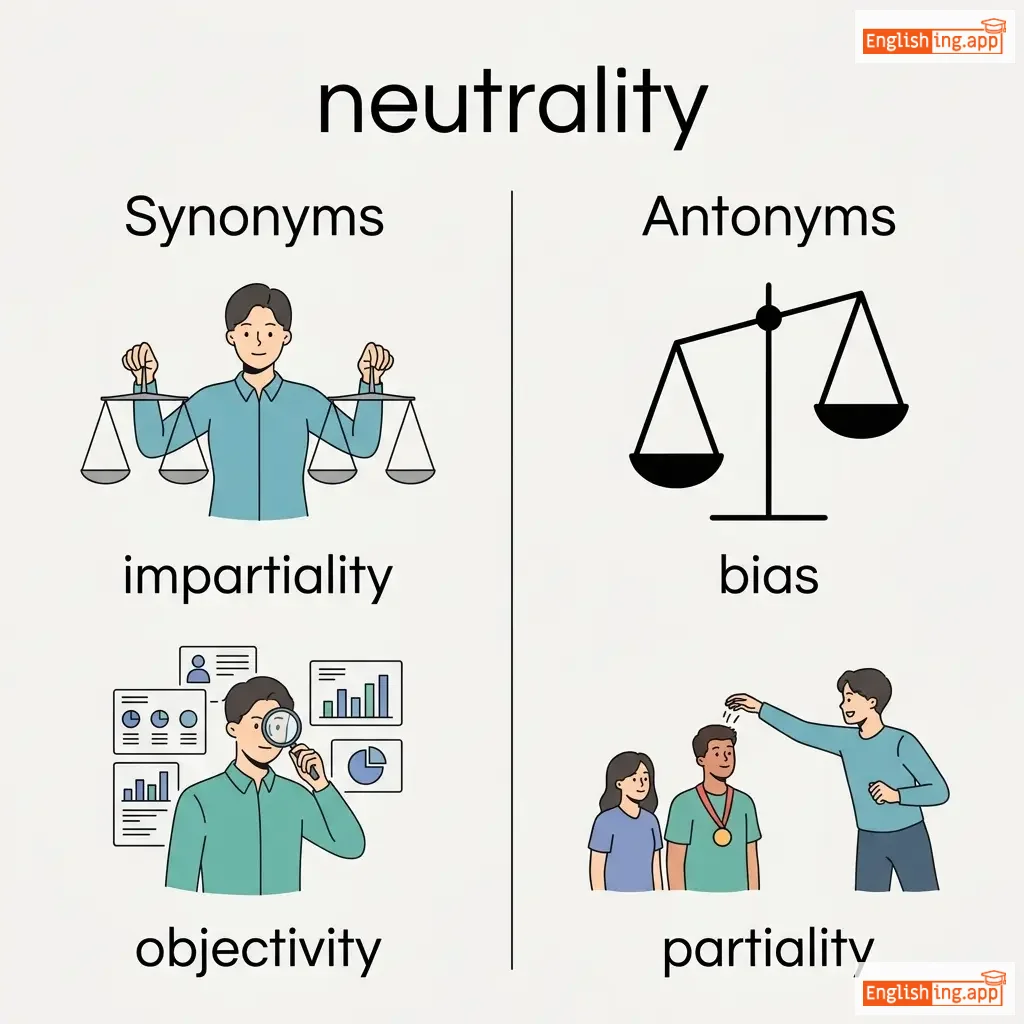
impartiality, objectivity, non-alignment
••••••
|
bias, partiality, involvement, alliance
••••••
|
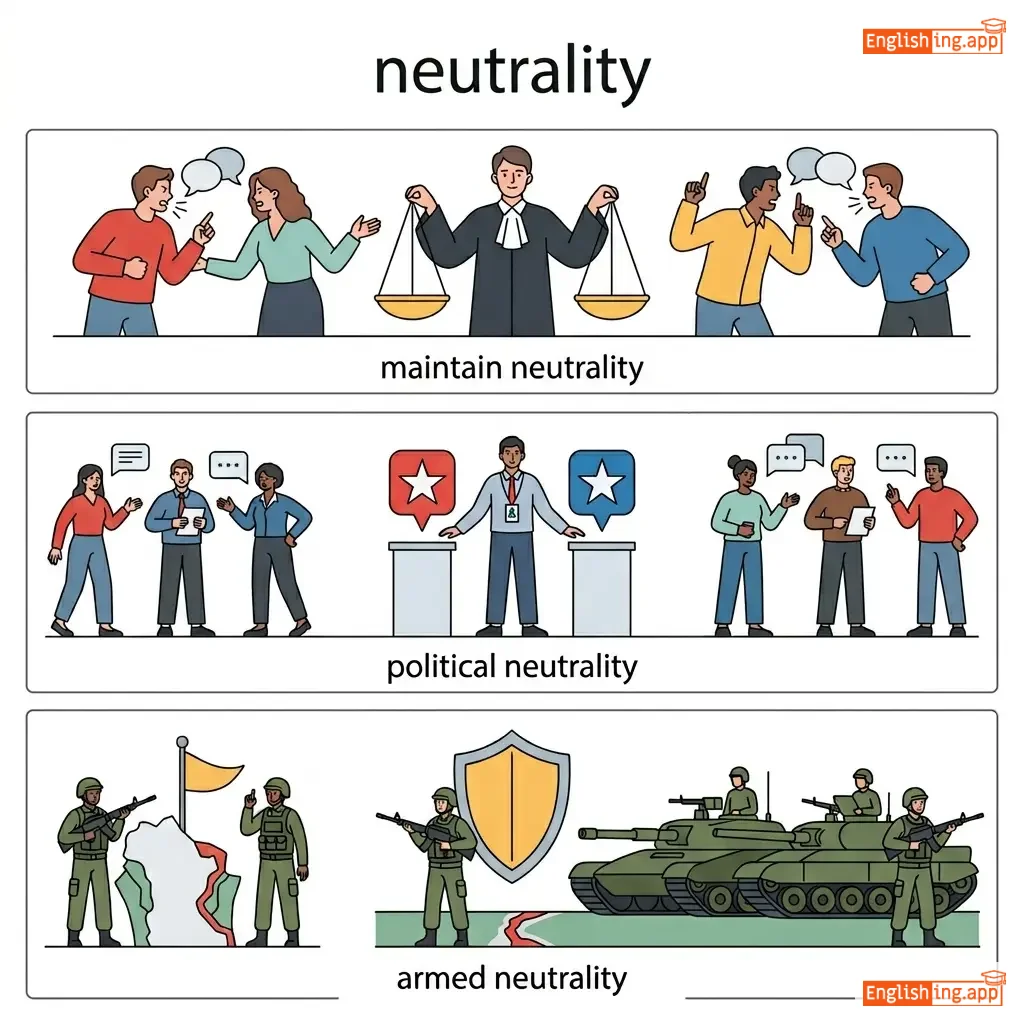
maintain neutrality, political neutrality, armed neutrality
••••••
|
中立 - '中'表示中间,'立'表示站立,指不站在任何一方。
••••••
|
|
🚫
••••••
|
/ˈnɛvər/
adverb
(nèiwèi)
••••••
|
- •••••• |
从不
congbu
••••••
|
- •••••• | - •••••• | - •••••• | - •••••• |
at no time in the past or future; not ever
••••••
|
I have never seen such a beautiful sunset. |
我从未见过如此美丽的日落。
Wo congbu jian guo ruci mei li de ri luo.
••••••
|
- •••••• | - •••••• | - •••••• |
not at all, under no circumstances, in no way, by no means
••••••
|
always, ever
••••••
|
never seen, never been, never heard, never thought
••••••
|
NEVER forget to say NO (congbu) to things that waste time
••••••
|
|
🤷
••••••
|
/ˌnɛvəðəˈlɛs/
adverb
••••••
|
- •••••• | - •••••• | - •••••• | - •••••• | - •••••• | - •••••• |
in spite of that; however
••••••
|
He was tired; nevertheless, he kept working. |
- •••••• | - •••••• | - •••••• | - •••••• |
however, nonetheless, yet, still, though
••••••
|
therefore, thus
••••••
|
but nevertheless, nevertheless continue, nevertheless important
••••••
|
No •••••• |
|
🆕
••••••
|
/njuː/
adjective
(niu)
••••••
|
- •••••• |
新的
xīn de
••••••
|
- •••••• | - •••••• | - •••••• | - •••••• |
recently made, discovered, or introduced; not existing before
••••••
|
He bought a new car yesterday.
他昨天买了一辆新车。
••••••
|
他昨天买了一辆新车。
Tā zuótiān mǎile yī liàng xīn chē.
••••••
|
brand new
全新
••••••
|
completely new, unused, and fresh
••••••
|
全新
quánxīn
••••••
|
fresh, recent, modern, novel, latest
••••••
|
old, used, ancient
••••••
|
new car, new job, new idea, new technology
••••••
|
NEW 是 XIN DE — 一切新事物都是新的
••••••
|
|
🆕
••••••
|
/ˈnjuːli/
adverb
(niúli)
••••••
|
- •••••• |
最近
zuìjìn
••••••
|
- •••••• | - •••••• | - •••••• | - •••••• |
in a new or recent manner
••••••
|
She has newly renovated her house.
她最近重新装修了她的房子。
••••••
|
她最近重新装修了她的房子。
Tā zuìjìn chóngxīn zhuāngxiūle tā de fángzi.
••••••
|
- •••••• | - •••••• | - •••••• |
recently, freshly, just, newly made
••••••
|
old, outdated
••••••
|
newly appointed, newly built, newly married, newly discovered
••••••
|
NEWLY means NEW + LY (recently done with love)
••••••
|
|
📰
••••••
|
/nuːz/
noun
(niúzī)
••••••
|
- •••••• |
新闻
xīnwén
••••••
|
- •••••• | - •••••• | - •••••• | - •••••• |
newly received or noteworthy information, especially about recent events
••••••
|
The news about the storm spread quickly. |
关于暴风雨的新闻迅速传播。
Guānyú bàofēngyǔ de xīnwén xùnsù chuánbò.
••••••
|
- •••••• | - •••••• | - •••••• |
information, report, bulletin, update
••••••
|
silence, ignorance
••••••
|
breaking news, latest news, good news, bad news
••••••
|
NEWS = 新的 事件 我们 应该 知道
••••••
|
|
📰
••••••
|
/ˈnjuːzˌlɛtər/
noun
(nǐuzlèitè)
••••••
|
- •••••• |
时事通讯
shishixunwen
••••••
|
- •••••• | - •••••• | - •••••• | - •••••• |
a printed or electronic report containing news or information about a company or organization
••••••
|
The company sends a weekly newsletter to its employees.
公司每周向员工发送时事通讯。
••••••
|
公司每周向员工发送时事通讯。
Gōngsī měi zhōu xiàng yuángōng fāsòng shíshì xùnwén.
••••••
|
- •••••• | - •••••• | - •••••• |
bulletin, report, circular, digest
••••••
|
none
••••••
|
newsletter subscription, newsletter content, newsletter design
••••••
|
时事通讯每周更新
••••••
|
|
🗞️
••••••
|
/ˈnjuːzˌpeɪpər/
noun
(niúzpeìpà)
••••••
|
- •••••• |
报纸
baozhi
••••••
|
- •••••• | - •••••• | - •••••• | - •••••• |
a printed publication (usually daily or weekly) containing news, articles, advertisements, and correspondence
••••••
|
I read the newspaper every morning.
wǒ měi tiān zǎo shàng dú zhèngwén.
••••••
|
我每天早上读报纸。
Wo mei tian zao shang du baozhi.
••••••
|
- •••••• | - •••••• | - •••••• |
periodical, journal, publication, paper
••••••
|
magazine, online media
••••••
|
daily newspaper, local newspaper, national newspaper, newspaper article
••••••
|
Newspapers are the first place to get the NEWS
••••••
|
|
⏭️
••••••
|
/nɛkst/
adjective
(nɛkst)
••••••
|
- •••••• |
下一个
xia yige
••••••
|
- •••••• | - •••••• | - •••••• | - •••••• |
immediately following in time, order, or place
••••••
|
The next train leaves at 9:00 AM. |
下一班火车将在上午9:00出发。
Xia yiban huoche jiang zai shangwu 9:00 chufa.
••••••
|
- •••••• | - •••••• | - •••••• |
following, subsequent, upcoming, nearest
••••••
|
previous, prior
••••••
|
next day, next year, next time, next week
••••••
|
Next is always the NEXT thing to happen
••••••
|
|
😊
••••••
|
/naɪs/
adjective
(nài sī)
••••••
|
- •••••• |
友好
yǒu hǎo
••••••
|
- •••••• | - •••••• | - •••••• | - •••••• |
pleasant, kind, or enjoyable
••••••
|
She is a very nice person to work with. |
她是一个非常友好的人,和她一起工作很愉快。
Tā shì yī gè fēicháng yǒu hǎo de rén, hé tā yīqǐ gōngzuò hěn yú kuài.
••••••
|
nice and easy |
something simple and comfortable
••••••
|
友好且简单
yǒu hǎo qiě jiǎn dān
••••••
|
pleasant, kind, friendly, agreeable, charming
••••••
|
mean, rude, unpleasant
••••••
|
nice day, nice person, nice weather, nice job, nice to meet
••••••
|
友好 = 一个友好的人总是愉快的!
••••••
|
|
😊
••••••
|
/ˈnaɪsli/
adverb
(奈斯利)
••••••
|
- •••••• |
很好地
hen hao de
••••••
|
- •••••• | - •••••• | - •••••• | - •••••• |
in a pleasant, kind, or satisfactory manner; carefully and appropriately
••••••
|
She explained the problem nicely so everyone could understand.
shi eksipulend ze problem naisili so everyone ku andestend
••••••
|
她把问题解释得很好,让大家都明白了。
ta ba wenti jieshi de hen hao rang dajia dou mingbai le
••••••
|
nicely done
naisili dan
••••••
|
said to praise someone for doing something well
••••••
|
干得好
gan de hao
••••••
|
pleasantly, kindly, well, smoothly, agreeably
••••••
|
badly, poorly, rudely
••••••
|
nicely done, nicely dressed, nicely explained, nicely arranged
••••••
|
Nice = hen hao
••••••
|
|
🌱
••••••
|
/niːʃ/
noun
(尼奇)
••••••
|


|
合适的位置
heshi de weizhi
••••••
|
- •••••• | - •••••• | - •••••• | - •••••• |
a comfortable or suitable position in life or employment
••••••
|
He has found his niche in the marketing industry. |
他在营销行业找到了自己的合适位置。
Tā zài yíngxiāo hángyè zhǎodàole zìjǐ de héshì wèizhì.
••••••
|
- •••••• | - •••••• | - •••••• |
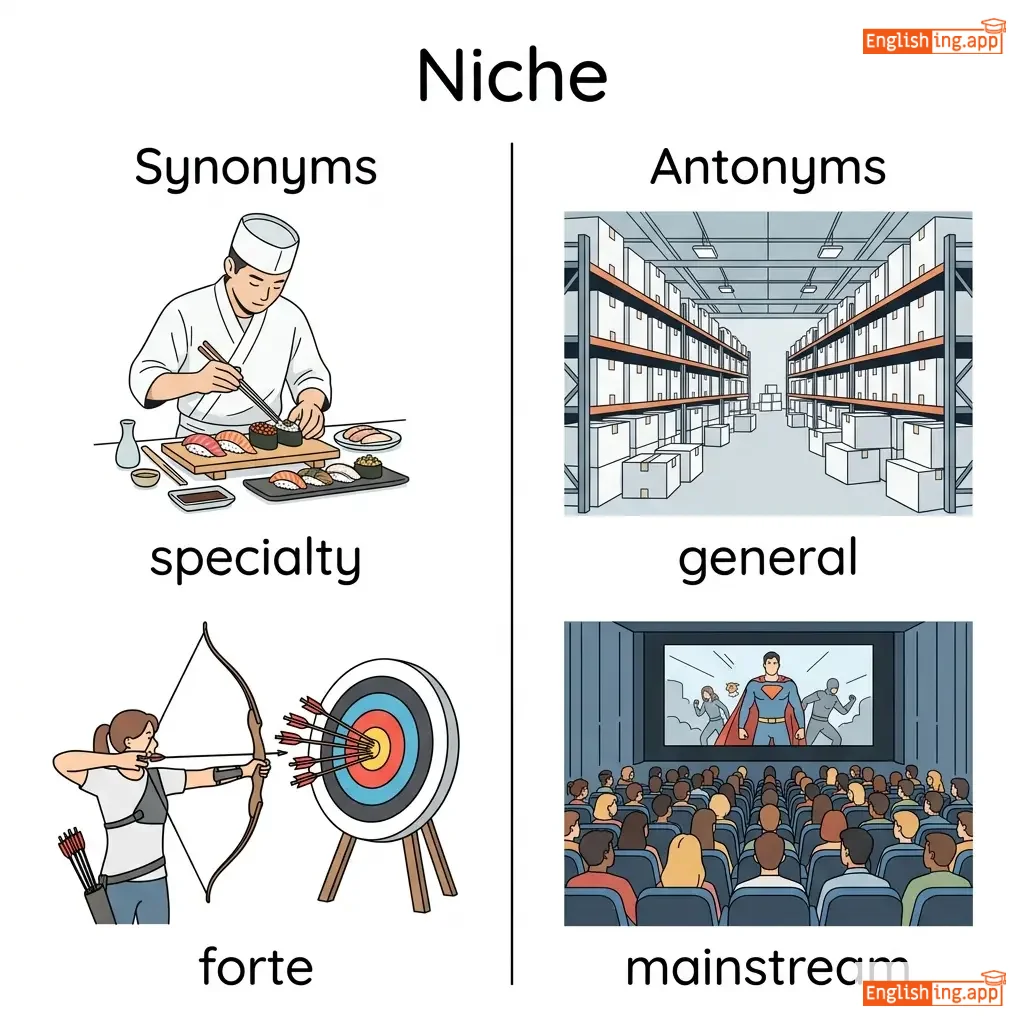
specialty, forte, domain, area
••••••
|
general, mainstream
••••••
|
niche market, niche product, find your niche
••••••
|
在营销领域找到合适的位置
••••••
|
|
🏷️
••••••
|
/ˈnɪk.neɪm/
noun
(nɪkˈneɪm)
••••••
|
- •••••• |
昵称
ni cheng
••••••
|
- •••••• | - •••••• | - •••••• | - •••••• |
a familiar or humorous name given to a person instead of their real name
••••••
|
His nickname is 'Tiger' because he's so brave. |
他的昵称是'老虎'因为他非常勇敢。
tā de nìchēng shì 'lǎohǔ' yīnwèi tā fēicháng yǒnggǎn.
••••••
|
- •••••• | - •••••• | - •••••• |
pet name, alias, moniker, sobriquet
••••••
|
real name, formal name, given name
••••••
|
give nickname, earn nickname, childhood nickname
••••••
|
昵称就像'老虎'一样,是一个熟悉的名字。
••••••
|
|
👧
••••••
|
/niːs/
noun
(尼斯)
••••••
|
- •••••• |
侄女; 外甥女
zhinv; waishengnv
••••••
|
- •••••• | - •••••• | - •••••• | - •••••• |
the daughter of one's brother or sister
••••••
|
My niece is studying at the university this year.
mai nis iz stadiing zai de yunivorsiti dis yiar
••••••
|
我的侄女今年在大学学习。
wo de zhinv jinnian zai daxue xuexi
••••••
|
- •••••• | - •••••• | - •••••• |
brother's daughter, sister's daughter, relative, kin
••••••
|
nephew, uncle
••••••
|
my niece, young niece, beloved niece, niece and nephew
••••••
|
侄女 外甥女 都是 niece
••••••
|
|
🌙
••••••
|
/naɪt/
noun
(naɪt)
••••••
|
- •••••• |
夜晚
ye wan
••••••
|
- •••••• | - •••••• | - •••••• | - •••••• |
the time of darkness between one day and the next, when most people sleep
••••••
|
She loves going for walks at night. |
她喜欢晚上散步。
Ta xihuan wanshang sanbu.
••••••
|
- •••••• | - •••••• | - •••••• |
evening, nighttime, dusk, dark
••••••
|
day, morning
••••••
|
night sky, night time, at night, good night
••••••
|
夜晚 = 你也晚,休息开始 (Night = You also late, time to rest)
••••••
|
|
9️⃣
••••••
|
/naɪn/
noun
(nàin)
••••••
|
- •••••• |
九
jiu
••••••
|
- •••••• | - •••••• | - •••••• | - •••••• |
the number that is one more than eight
••••••
|
She has nine books in her collection.
她的收藏里有九本书。
••••••
|
她的收藏里有九本书。
Tā de shōucáng lǐ yǒu jiǔ běn shū.
••••••
|
- •••••• | - •••••• | - •••••• |
ninth, 9
••••••
|
eight, ten
••••••
|
nine o'clock, nine days, nine years
••••••
|
九, 九本书,像数字九一样
••••••
|
|
🚫
••••••
|
/noʊ/
adverb
(诺)
••••••
|
- •••••• |
不
bu
••••••
|
- •••••• | - •••••• | - •••••• | - •••••• |
used to give a negative response or to show disagreement
••••••
|
She said no to the invitation.
她对邀请说了不。
••••••
|
她对邀请说了不。
Tā duì yāoqǐng shuōle bù.
••••••
|
- •••••• | - •••••• | - •••••• |
nope, never, negative, not at all
••••••
|
yes, okay
••••••
|
say no, no way, no problem, no need
••••••
|
不,说不一切停止 - Saying no stops everything.
••••••
|

