|
絵文字
|
単語 | Images | 翻訳 | 過去 | 過去分詞 | 三人称単数 | 動名詞 | 意味 | 例文 | 例文の翻訳 | 表現例 | 表現例の意味 | 表現例の翻訳 | 同義語 | 対義語 | コロケーション | ニーモニック |
|---|---|---|---|---|---|---|---|---|---|---|---|---|---|---|---|---|---|
|
🏆
••••••
|
/ˈliːdɪŋ/
adjective
(リーディング)
••••••
|
- •••••• |
先導
sendou
••••••
|
- •••••• | - •••••• | - •••••• | - •••••• |
most important or most successful; at the front
••••••
|
She is one of the leading experts in the field. |
彼女はその分野で先導的な専門家の一人です。
Kanojo wa sono bunya de sendou-teki na senmonka no hitori desu.
••••••
|
leading role |
the main role in a play or movie
••••••
|
主役
shuyaku
••••••
|
top, foremost, principal, chief, prominent
••••••
|
minor, secondary, insignificant
••••••
|
leading company, leading expert, leading role, leading position
••••••
|
Leadingは前に立つことを意味し、クラスで最前列に座っている生徒のようなものです。
••••••
|
|
🍃
••••••
|
/liːf/
noun
(リーフ)
••••••
|
- •••••• |
葉
ha
••••••
|
- •••••• | - •••••• | - •••••• | - •••••• |
A flat, green part of a plant that grows from the stem or branch.
••••••
|
A green leaf fell from the tree. |
緑の葉が木から落ちた。
Midori no ha ga ki kara ochita.
••••••
|
turn over a new leaf |
to make a fresh start or begin to behave in a better way
••••••
|
新しいページを開く
Atarashii pēji o hiraku
••••••
|
foliage, frond, blade, greenery
••••••
|
stem, root
••••••
|
green leaf, dry leaf, autumn leaf, leaf pattern
••••••
|
Leafは葉を意味します – 本のページのように、葉も平らです。
••••••
|
|
📜
••••••
|
/ˈliːf.lət/
noun
(リーフレット)
••••••
|
- •••••• |
チラシ; 広告
chirashi; koukoku
••••••
|
- •••••• | - •••••• | - •••••• | - •••••• |
a printed sheet of paper containing information or advertising and usually distributed free
••••••
|
She handed out leaflets about the environmental campaign. |
彼女は環境運動についてのチラシを配布しました。
kanojo wa kankyou undou ni tsuite no chirashi o haifu shimashita
••••••
|
- •••••• | - •••••• | - •••••• |
brochure, pamphlet, flyer, handout
••••••
|
book, manual
••••••
|
distribute leaflets, information leaflet, campaign leaflet
••••••
|
Leaflet = リーダー (キャンペーン) + フレット (無料)
••••••
|
|
🏆
••••••
|
/liːɡ/
noun
(リーグ)
••••••
|
- •••••• |
リーグ
rīgu
••••••
|
- •••••• | - •••••• | - •••••• | - •••••• |
An association of people or groups united for a common purpose; also a unit of distance (old use).
••••••
|
Several clubs formed a league to promote sportsmanship. |
いくつかのクラブがスポーツマンシップを促進するためにリーグを結成した。
Ikutsuka no kurabu ga supōtsumanshippu o sokushin suru tame ni rīgu o kessei shita.
••••••
|
out of someone's league |
Beyond someone's ability, status, or suitability.
••••••
|
誰かの手に負えない
dareka no te ni oenai
••••••
|
association, alliance, union, federation, coalition
••••••
|
rivalry, opposition, division
••••••
|
football league, professional league, in the same league
••••••
|
リーグ:みんなが一緒にプレイするトーナメント。
••••••
|
|
💧
••••••
|
/liːk/
noun/verb
(リック)
••••••
|
- •••••• |
漏れ
more
••••••
|
leaked
リックド
••••••
|
leaked
リックド
••••••
|
leaks
リックス
••••••
|
leaking
リッキング
••••••
|
to allow liquid or gas to escape; or a hole through which liquid or gas can escape
••••••
|
Water started to leak from the ceiling after the storm.
嵐の後、天井から水が漏れ始めた。
••••••
|
嵐の後、天井から水が漏れ始めた。
Arashi no ato, tenjō kara mizu ga more hajimeta.
••••••
|
leak like a sieve
ふるいように漏れる
••••••
|
to leak a lot, usually referring to a very porous or defective object
••••••
|
ふるいように漏れる
Furui yō ni moreru
••••••
|
spill, escape, ooze
••••••
|
seal, close
••••••
|
leak water, leak information, leak pipe
••••••
|
漏れ - 水がふるいように漏れています
••••••
|
|
↘️
••••••
|
/liːn/
verb
(リン)
••••••
|

|
寄りかかる
yorikakaru
••••••
|
leaned
リンド
••••••
|
leaned
リンド
••••••
|
leans
リンズ
••••••
|
leaning
リーニング
••••••
|
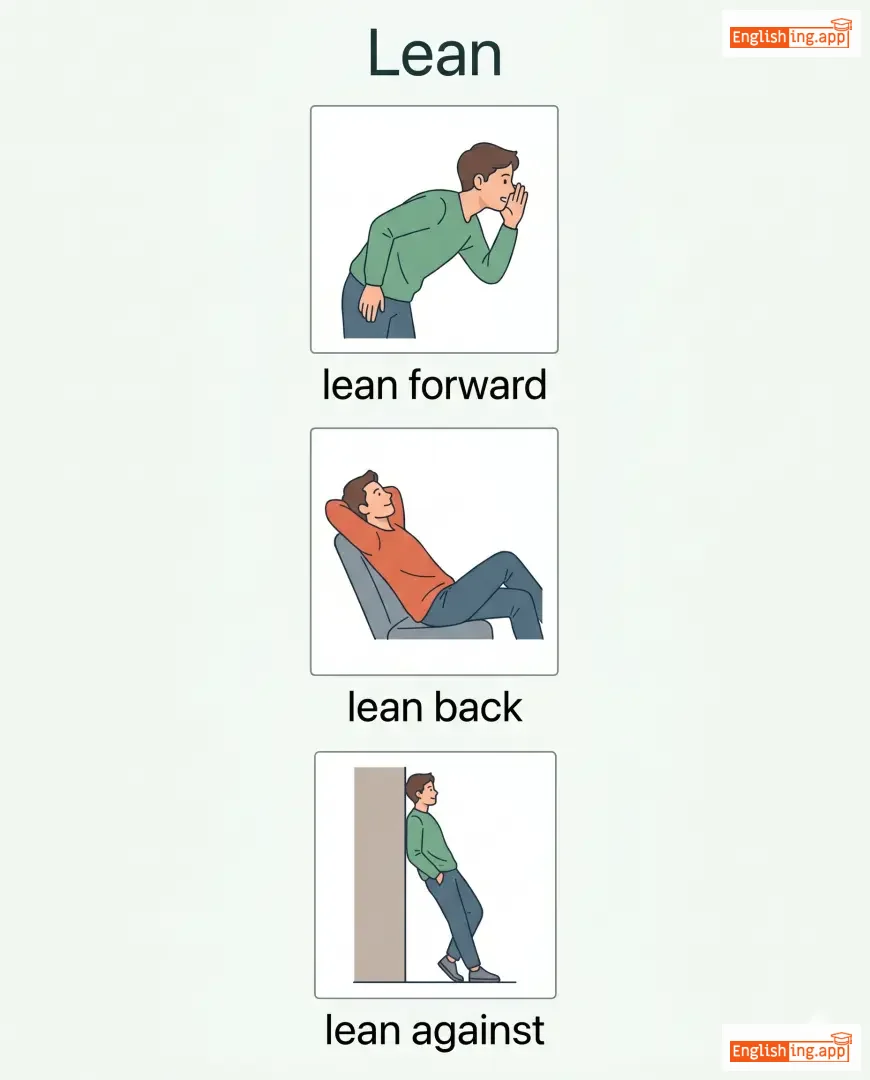
To move or bend your body in a particular direction.
••••••
|
He had to lean forward to hear her clearly.
彼は彼女の声をはっきり聞くために前かがみにならなければならなかった。
••••••
|
彼は彼女の声をはっきり聞くために前かがみにならなければならなかった。
Kare wa kanojo no koe o hakkiri kiku tame ni mae kagami ni naranakereba naranakatta.
••••••
|
lean on someone
誰かに頼る
••••••
|
to rely on someone for support
••••••
|
誰かに頼る
Dareka ni tayoru
••••••
|
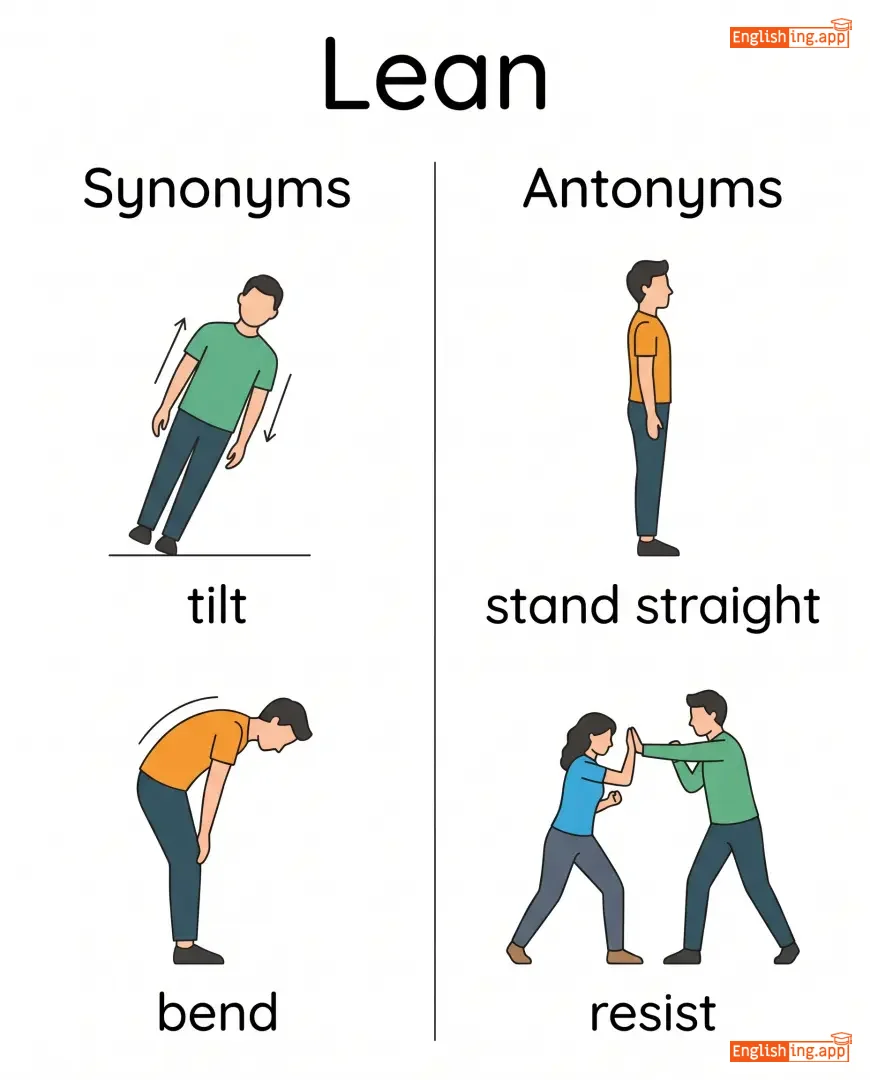
tilt, bend, rest, incline
••••••
|
stand straight, resist
••••••
|
lean forward, lean back, lean against, lean towards
••••••
|
寄りかかるとは頼ること、試験中に寄りかかるためには誰かに頼る必要がある。
••••••
|
|
🏃♂️
••••••
|
/liːp/
verb
(リープ)
••••••
|
|
跳ぶ
tobu
••••••
|
leapt
レプト
••••••
|
leapt
レプト
••••••
|
leaps
リープス
••••••
|
leaping
リーピング
••••••
|
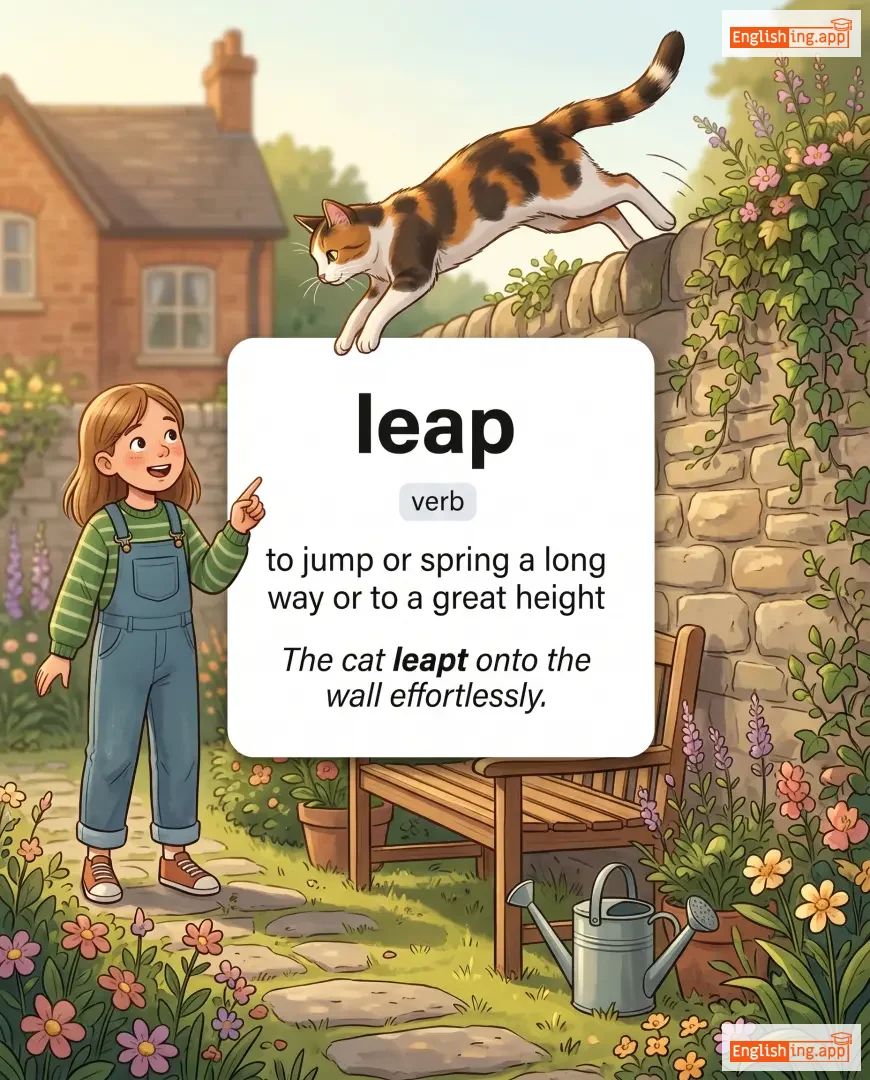
to jump or spring a long way or to a great height
••••••
|
The cat leapt onto the wall effortlessly.
猫は簡単に壁に飛び乗った。
••••••
|
猫は簡単に壁に飛び乗った。
Neko wa kantan ni kabe ni tobinotta.
••••••
|
leap of faith
Leap of faith
••••••
|
an act of believing in something uncertain
••••••
|
信念の飛躍
shinnen no hiyaku
••••••
|
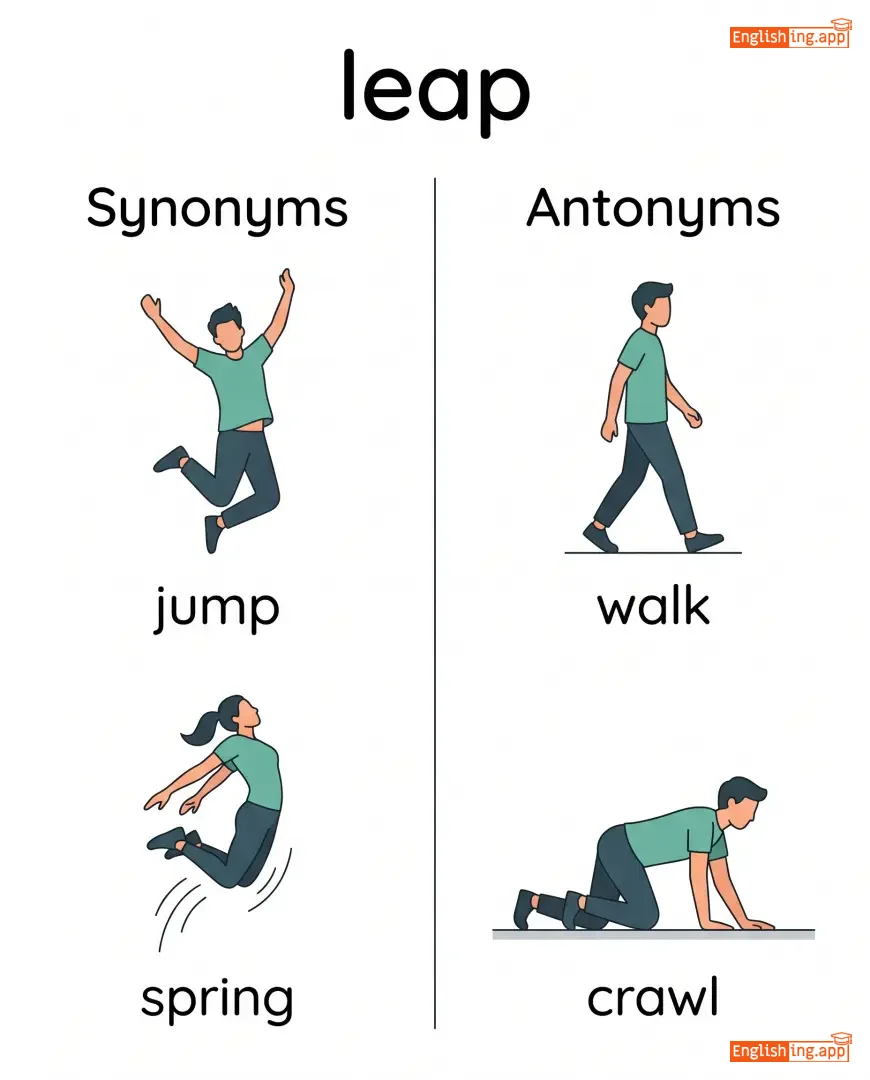
jump, spring, bound, hop, vault
••••••
|
walk, crawl, step
••••••
|
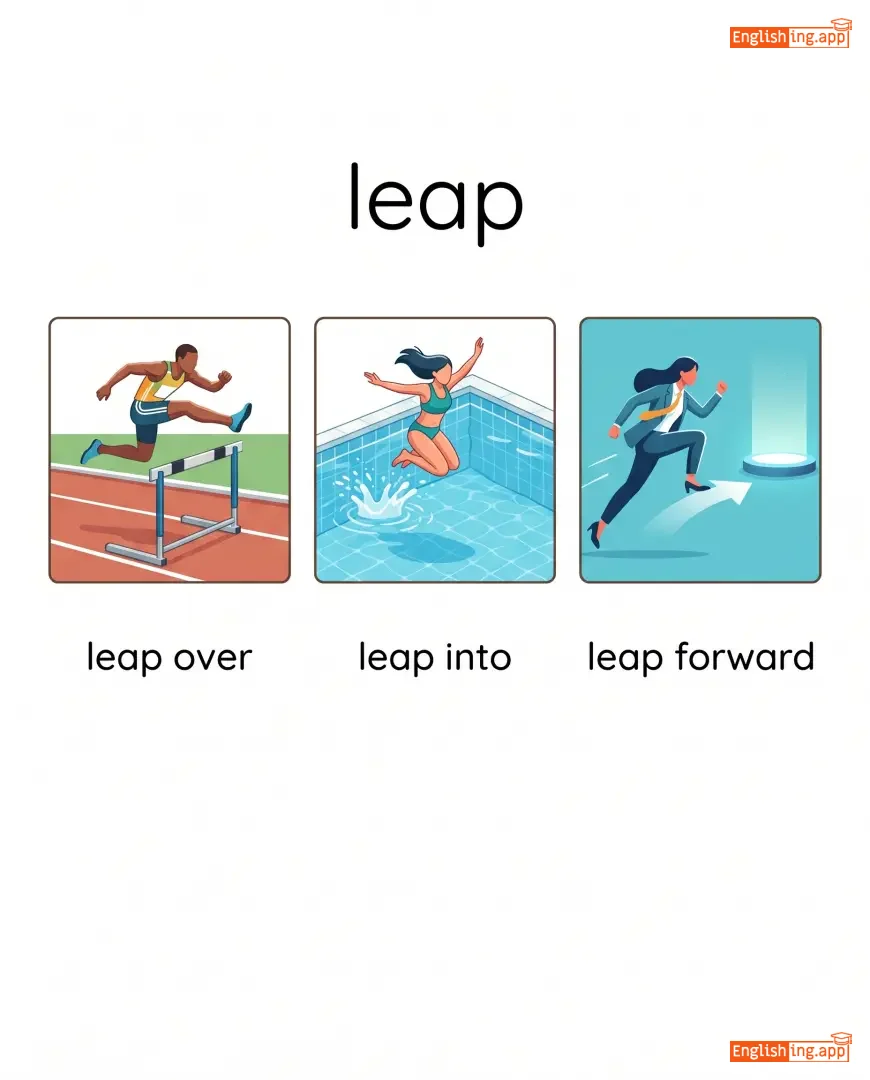
leap over, leap into, leap forward, leap of joy
••••••
|
Leap は跳ぶという意味 — 跳んで、前に向かって leap しよう!
••••••
|
|
📘
••••••
|
/lɜːrn/
verb
(ラーン)
••••••
|
|
学ぶ
manabu
••••••
|
learned
ラーンド
••••••
|
learned
ラーンド
••••••
|
learns
ラーンズ
••••••
|
learning
ラーンニング
••••••
|
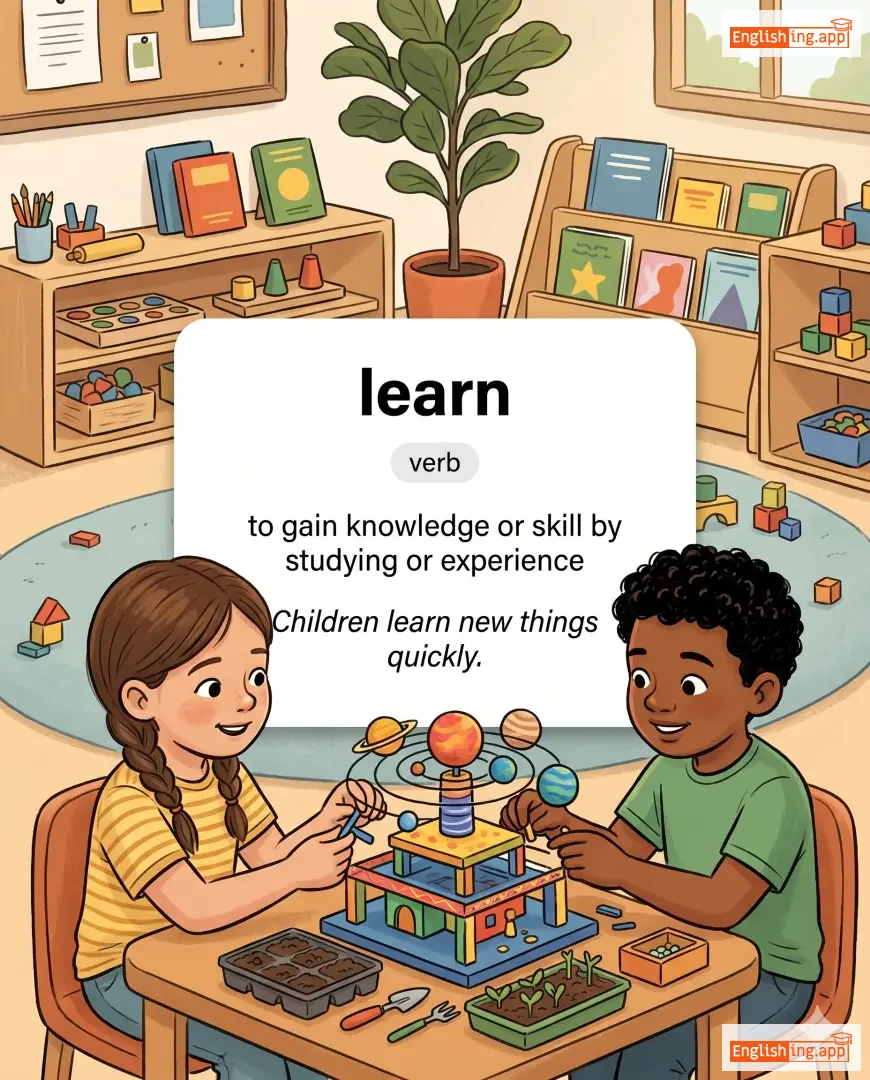
to gain knowledge or skill by studying or experience
••••••
|
Children learn new things quickly.
子供たちは新しいことを素早く学びます。
••••••
|
子供たちは新しいことを素早く学びます。
Kodomo-tachi wa atarashī koto o subayaku manabimasu.
••••••
|
live and learn
生きて学ぶ
••••••
|
to learn from life experiences, often mistakes
••••••
|
生きて学ぶ
Ikite manabu
••••••
|
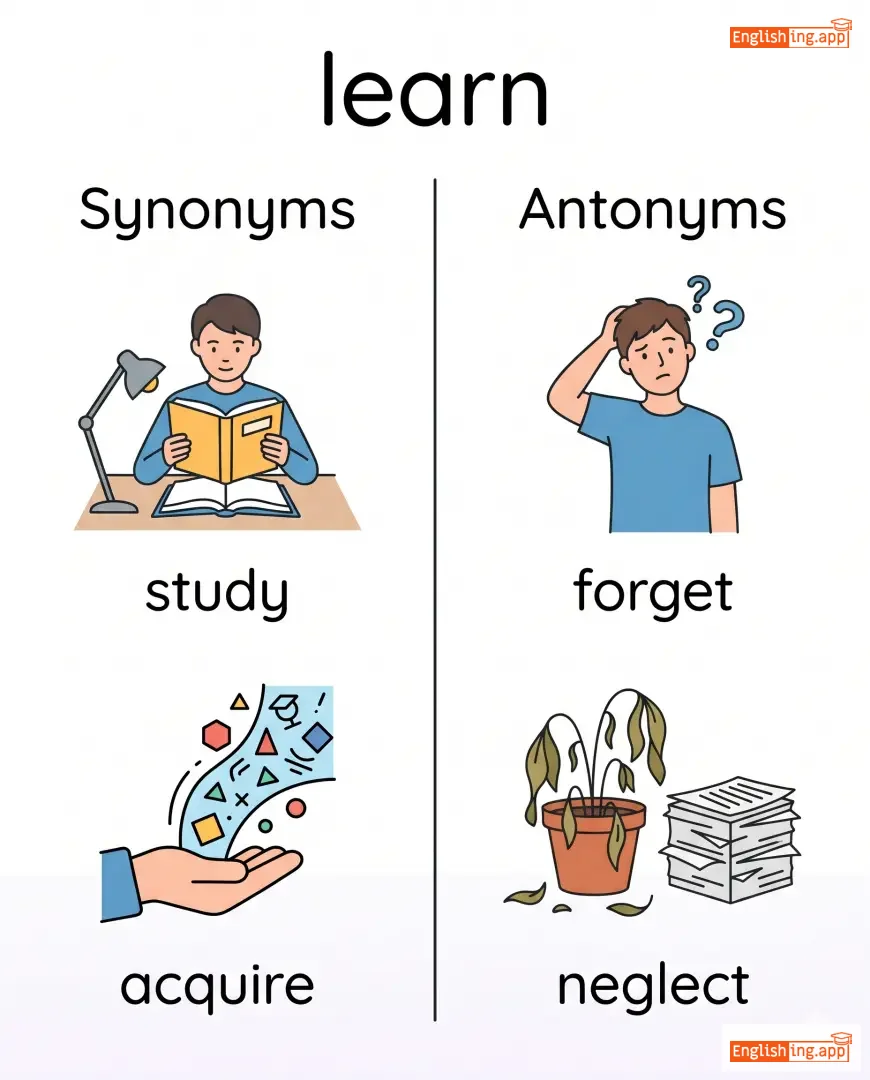
study, acquire, master, understand, grasp
••••••
|
forget, neglect, ignore
••••••
|
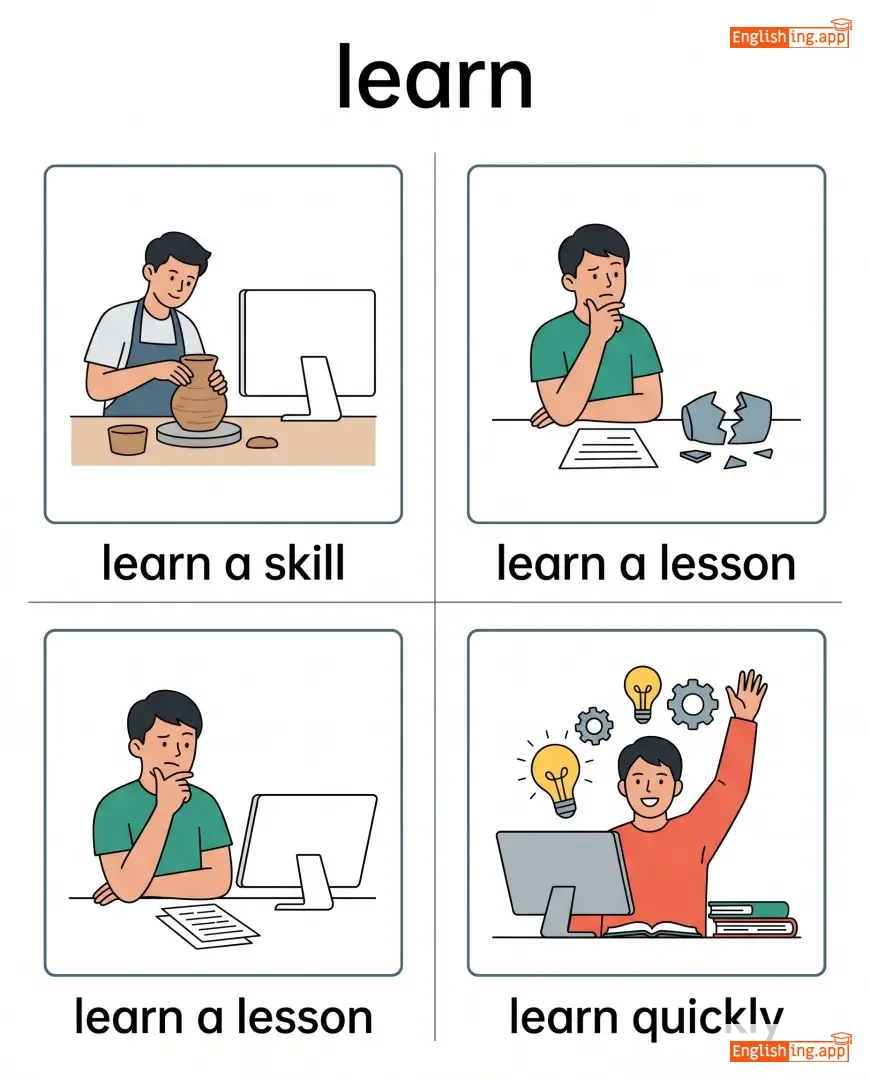
learn a skill, learn a lesson, learn quickly, learn about
••••••
|
Learnは学ぶ、ランタンを使って学ぶように。
••••••
|
|
📚
••••••
|
/lɜːrnd/
adjective; verb (past and past participle)
(ラーンド)
••••••
|
- •••••• |
博学な
hakugakuna
••••••
|
learned
ラーンド
••••••
|
learned
ラーンド
••••••
|
learns
ラーンズ
••••••
|
learning
ラーニング
••••••
|
having acquired much knowledge through study; gained knowledge or skill through experience or teaching
••••••
|
She is a learned scholar with deep knowledge of history.
シー イズ ア ラーンド スカラー ウィズ ディープ ナレッジ オブ ヒストリー
••••••
|
彼女は歴史に詳しい博学な学者です。
kanojo wa rekishi ni kuwashii hakugakuna gakusha desu
••••••
|
learned the hard way
ラーンド ザ ハード ウェイ
••••••
|
to gain knowledge through difficult or painful experience
••••••
|
痛い目にあって学ぶ
itai me ni atte manabu
••••••
|
educated, knowledgeable, scholarly, erudite, informed
••••••
|
ignorant, uneducated, illiterate
••••••
|
learned scholar, learned behavior, learned response, learned opinion
••••••
|
Learned = 博学な, learn を重ねた結果
••••••
|
|
📘
••••••
|
/ˈlɜːrnər/
noun
(ラーナー)
••••••
|
- •••••• |
学習者
gakushuusha
••••••
|
- •••••• | - •••••• | - •••••• | - •••••• |
a person who is acquiring knowledge or skill through study or experience
••••••
|
She is a fast learner.
シー イズ ア ファスト ラーナー
••••••
|
彼女は覚えが早い。
kanojo wa oboe ga hayai
••••••
|
- •••••• | - •••••• | - •••••• |
student, pupil, trainee, apprentice, novice
••••••
|
teacher, instructor, expert
••••••
|
fast learner, quick learner, slow learner, eager learner
••••••
|
学習者は学ぶ—learner も learn する
••••••
|
|
📚
••••••
|
/ˈlɜrnɪŋ/
noun
(ラーンニング)
••••••
|
- •••••• |
学習
gakushū
••••••
|
- •••••• | - •••••• | - •••••• | - •••••• |
The process of gaining knowledge or skills through study or experience.
••••••
|
Learning a new language can be exciting.
新しい言語を学ぶことは興奮することがあります。
••••••
|
新しい言語を学ぶことは興奮することがあります。
Atarashī gengo o manabu koto wa kōfun suru koto ga arimasu.
••••••
|
lifelong learning
生涯学習
••••••
|
continuous pursuit of knowledge throughout life
••••••
|
生涯学習
shōgai gakushū
••••••
|
education, knowledge, training, study
••••••
|
ignorance, unawareness
••••••
|
learning process, learning skills, online learning, active learning
••••••
|
Learningは学んで、成長することで未来に役立つ。
••••••
|
|
⬇️
••••••
|
/liːst/
adjective
(リースト)
••••••
|
- •••••• |
最小
saishō
••••••
|
- •••••• | - •••••• | - •••••• | - •••••• |
smallest in amount, extent, or importance
••••••
|
She showed the least interest in the project. |
彼女はプロジェクトに最小の興味を示した。
Kanojo wa purojekuto ni saishō no kyōmi o shimeshita.
••••••
|
at least |
used to indicate the minimum or to emphasize something
••••••
|
少なくとも
sukunakutomo
••••••
|
smallest, minimal, slightest, meager
••••••
|
most, greatest, maximum
••••••
|
at least, least important, least effort, least number
••••••
|
Leastは最小を意味し、最小がいつも一番少ないことを思い出しましょう。
••••••
|
|
👞
••••••
|
/ˈlɛðər/
noun
(レザー)
••••••
|
- •••••• |
革
kawa
••••••
|
- •••••• | - •••••• | - •••••• | - •••••• |
A material made from the skin of an animal, usually treated and used to make clothing, shoes, or furniture.
••••••
|
He bought a leather jacket for winter. |
彼は冬のために革のジャケットを買いました。
Kare wa fuyu no tame ni kawa no jaketto o kaimashita.
••••••
|
tough as leather |
very strong and durable
••••••
|
革のように硬い
Kawa no yō ni katai
••••••
|
hide, skin, suede, material
••••••
|
fabric, cloth
••••••
|
leather jacket, leather shoes, leather bag, leather belt
••••••
|
Leatherは革を意味します – レザーのジャケットは革のジャケットです。
••••••
|
|
🚶♂️
••••••
|
/liːv/
verb
(リーブ)
••••••
|
|
去る
saru
••••••
|
left
レフト
••••••
|
left
レフト
••••••
|
leaves
リーブス
••••••
|
leaving
リービング
••••••
|
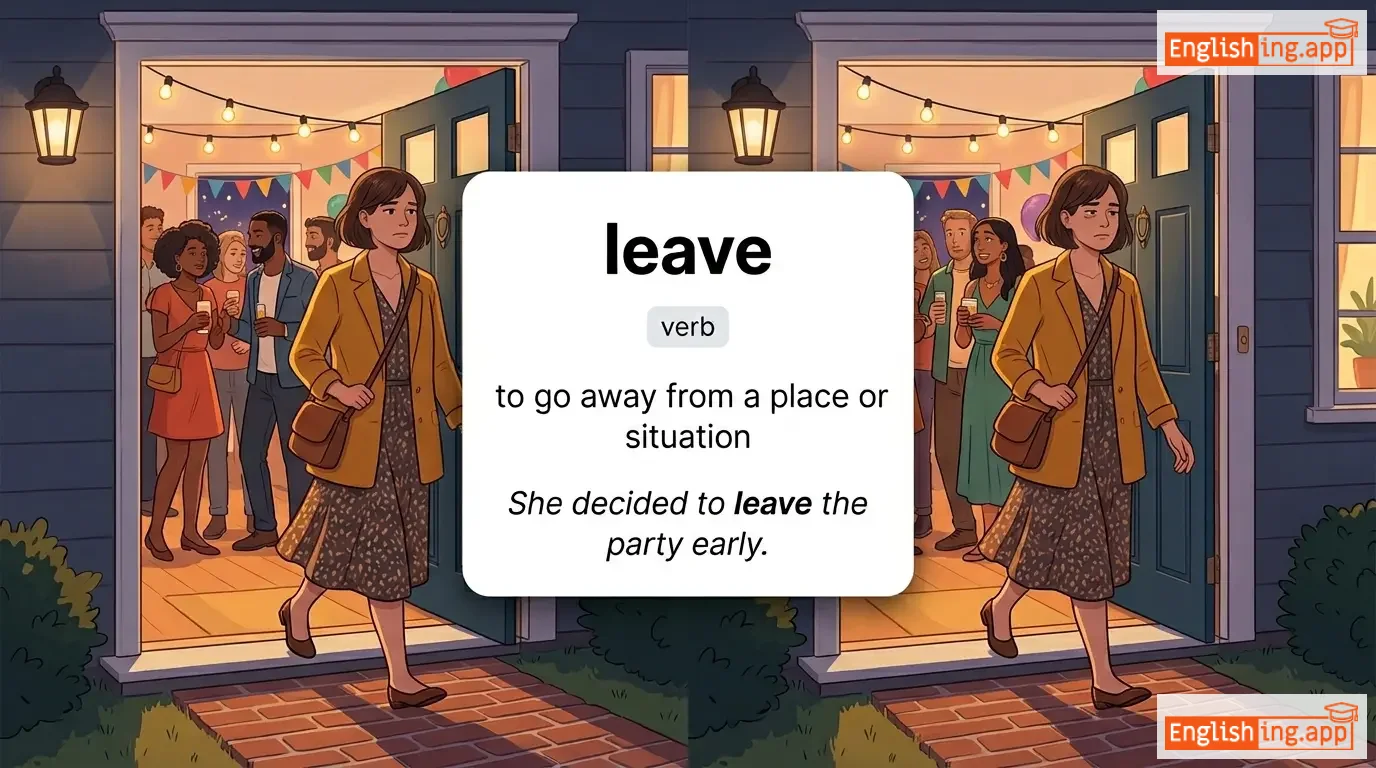
to go away from a place or situation
••••••
|
She decided to leave the party early.
彼女はパーティーを早く去ることに決めました。
••••••
|
彼女はパーティーを早く去ることに決めました。
Kanojo wa pātī o hayaku saru koto ni kimemashita.
••••••
|
leave no stone unturned
石を一つも残さずに去る
••••••
|
to try every possible course of action
••••••
|
石を一つも残さずに去る
Ishi o hitotsu mo nokosazu ni saru
••••••
|
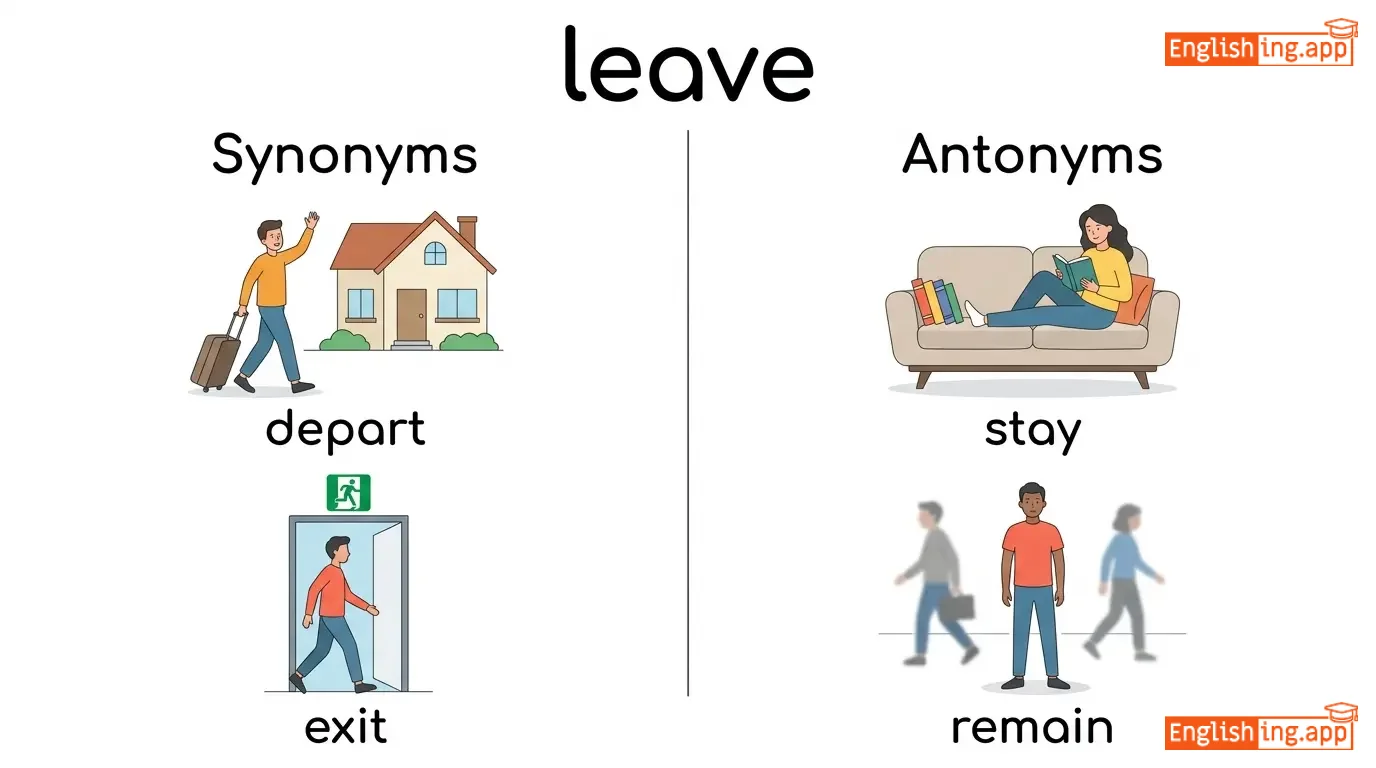
depart, exit, withdraw, quit, abandon
••••••
|
stay, remain, arrive
••••••
|
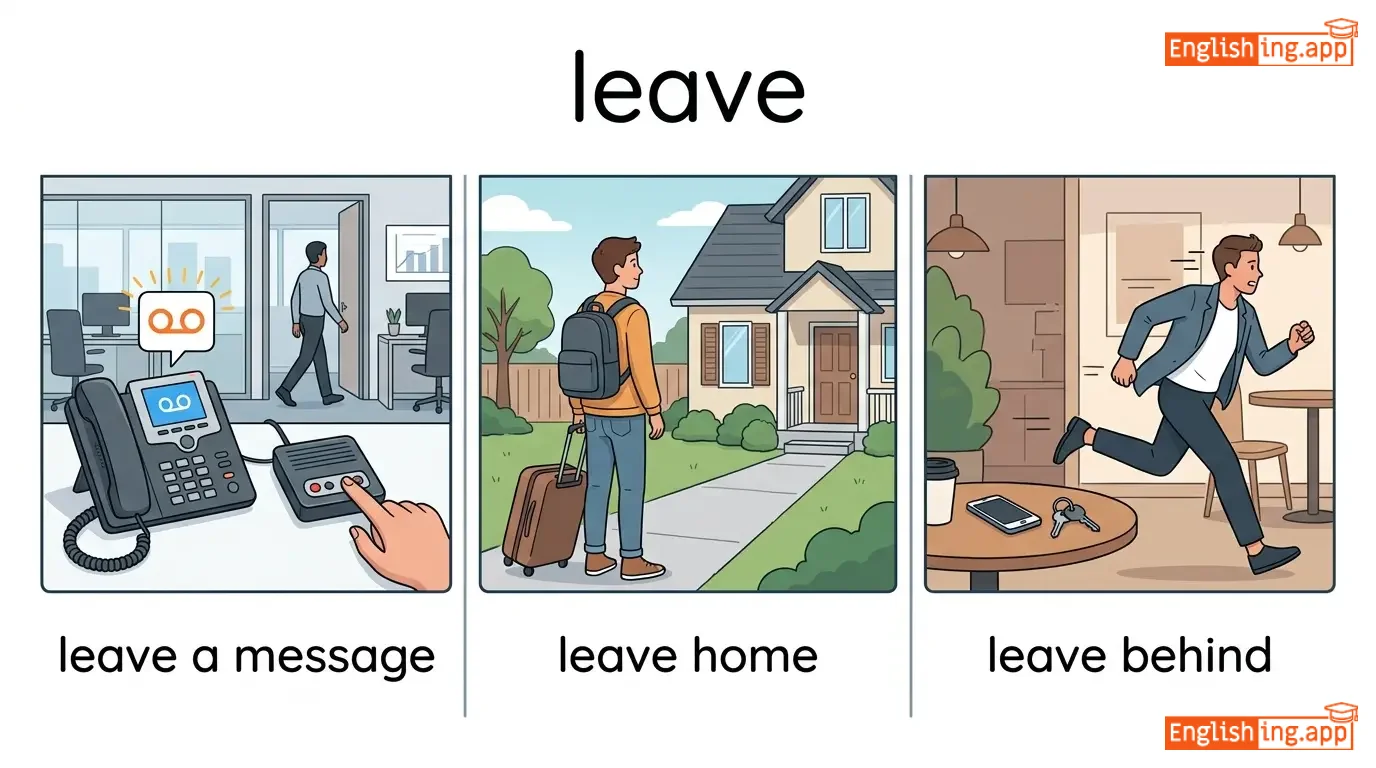
leave a message, leave home, leave behind, leave early
••••••
|
去るは'left'と同じ意味です。去るときは前に進み、振り返りません。
••••••
|
|
🎓
••••••
|
/ˈlektʃər/
noun
(レクチャー)
••••••
|
- •••••• |
講義
kougi
••••••
|
- •••••• | - •••••• | - •••••• | - •••••• |
a talk given to a group of people to teach them about a subject
••••••
|
The professor gave a lecture on climate change. |
教授は気候変動に関する講義を行った。
Kyouju wa kikou hendou ni kansuru kougi o okonatta.
••••••
|
give a lecture |
to deliver a talk or presentation
••••••
|
講義を行う
kougi o okonau
••••••
|
speech, talk, address, presentation, discourse
••••••
|
silence, quiet, conversation
••••••
|
give a lecture, attend a lecture, lecture hall, public lecture
••••••
|
Lecture は日本語で講義 🎓 — 講義では教えられるよ!
••••••
|
|
🎓
••••••
|
/ˈlɛktʃərər/
noun
(レクチャラー)
••••••
|
- •••••• |
講師
koshi
••••••
|
- •••••• | - •••••• | - •••••• | - •••••• |
a person who gives lectures, especially at a college or university
••••••
|
The lecturer explained the theory with clear examples.
ザ レクチャラー エクスプレーンド ザ セオリー ウィズ クリア イグザンプルズ。
••••••
|
講師は分かりやすい例で理論を説明した。
Koshi wa wakariyasui rei de riron o setsumei shita
••••••
|
- •••••• | - •••••• | - •••••• |
teacher, instructor, professor, speaker, academic
••••••
|
student, learner
••••••
|
guest lecturer, university lecturer, senior lecturer, lecture hall
••••••
|
Lecturer は lecture する人、講師
••••••
|
|
⬅️
••••••
|
/lɛft/
adjective, noun, adverb, verb (past tense of leave)
(レフト)
••••••
|
- •••••• |
左
hidari
••••••
|
- •••••• | - •••••• | - •••••• | - •••••• |
on or towards the side of the body that is to the west when facing north
••••••
|
He turned left at the intersection. |
彼は交差点で左に曲がった。
kare wa kousaten de hidari ni magatta.
••••••
|
out of left field |
something surprising or unexpected
••••••
|
驚くべきこと、または予期しないこと
odorokubeki koto, mata wa yokishinai koto
••••••
|
port, remaining, gone, departed
••••••
|
right, present
••••••
|
left side, left hand, turn left, left over
••••••
|
Left は左、右は右だから簡単
••••••
|
|
🦵
••••••
|
/lɛɡ/
noun
(レッグ)
••••••
|
- •••••• |
足
ashi
••••••
|
- •••••• | - •••••• | - •••••• | - •••••• |
one of the limbs on which a person or animal walks and stands
••••••
|
He injured his leg while playing football.
サッカーをしているとき、彼は足を怪我しました。
••••••
|
サッカーをしているとき、彼は足を怪我しました。
Sakkaa o shite iru toki, kare wa ashi o kega shimashita.
••••••
|
stretch your legs
足を伸ばす
••••••
|
to walk around after sitting for a long time
••••••
|
長時間座った後に歩く
chou jikan suwatta ato ni aruku
••••••
|
limb, shank, appendage, extremity
••••••
|
arm, wing
••••••
|
leg injury, leg pain, leg muscles, broken leg
••••••
|
Legは足を意味し、サッカーで'足技'はとても重要です。
••••••
|
|
🏛️
••••••
|
/ˈlɛɡəsi/
noun
(レガシー)
••••••
|
|
遺産
isan
••••••
|
- •••••• | - •••••• | - •••••• | - •••••• |
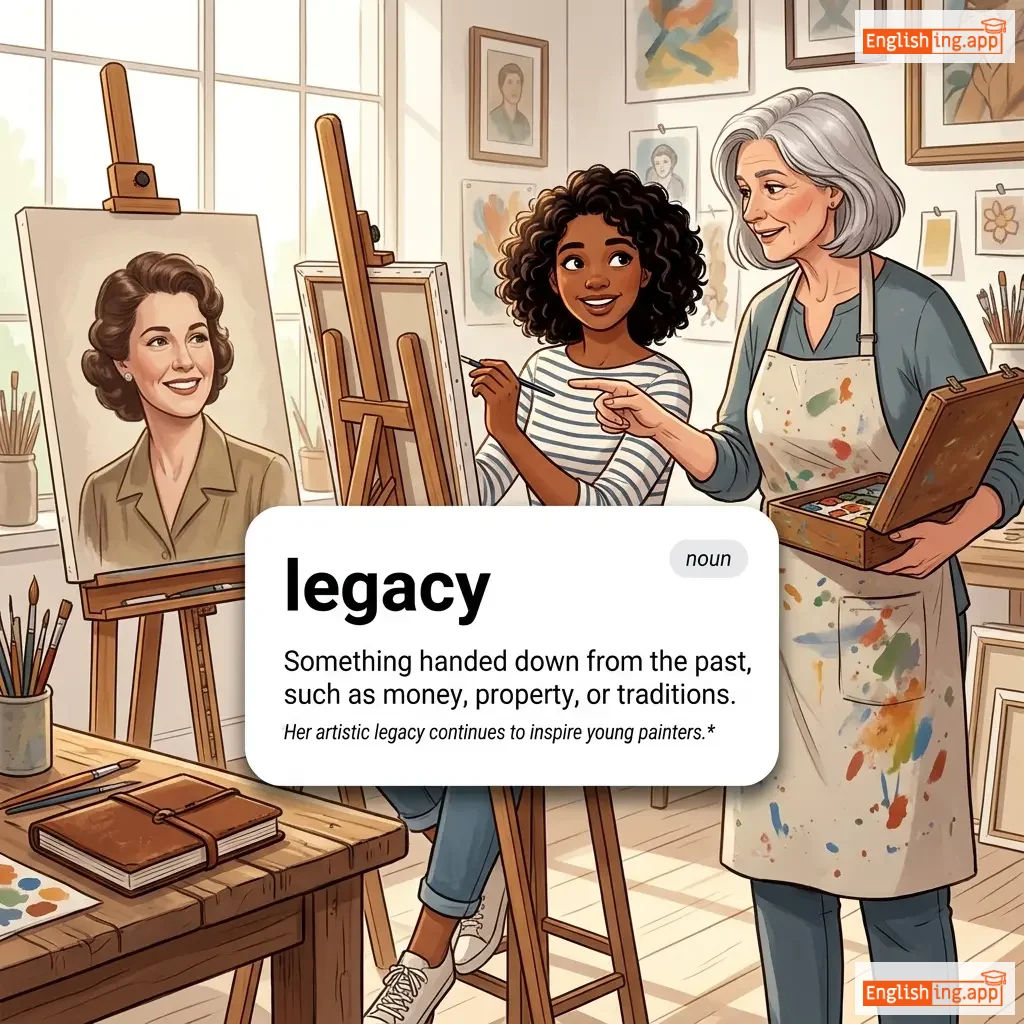
Something handed down from the past, such as money, property, or traditions.
••••••
|
Her artistic legacy continues to inspire young painters. |
彼女の芸術的遺産は若い画家たちにインスピレーションを与え続けています。
Kanojo no geijutsuteki isan wa wakai gakatatachi ni insupirēshon o atae tsudzuketeimasu.
••••••
|
leave a legacy |
To create something that outlives you.
••••••
|
遺産を残す
Isan o nokosu
••••••
|
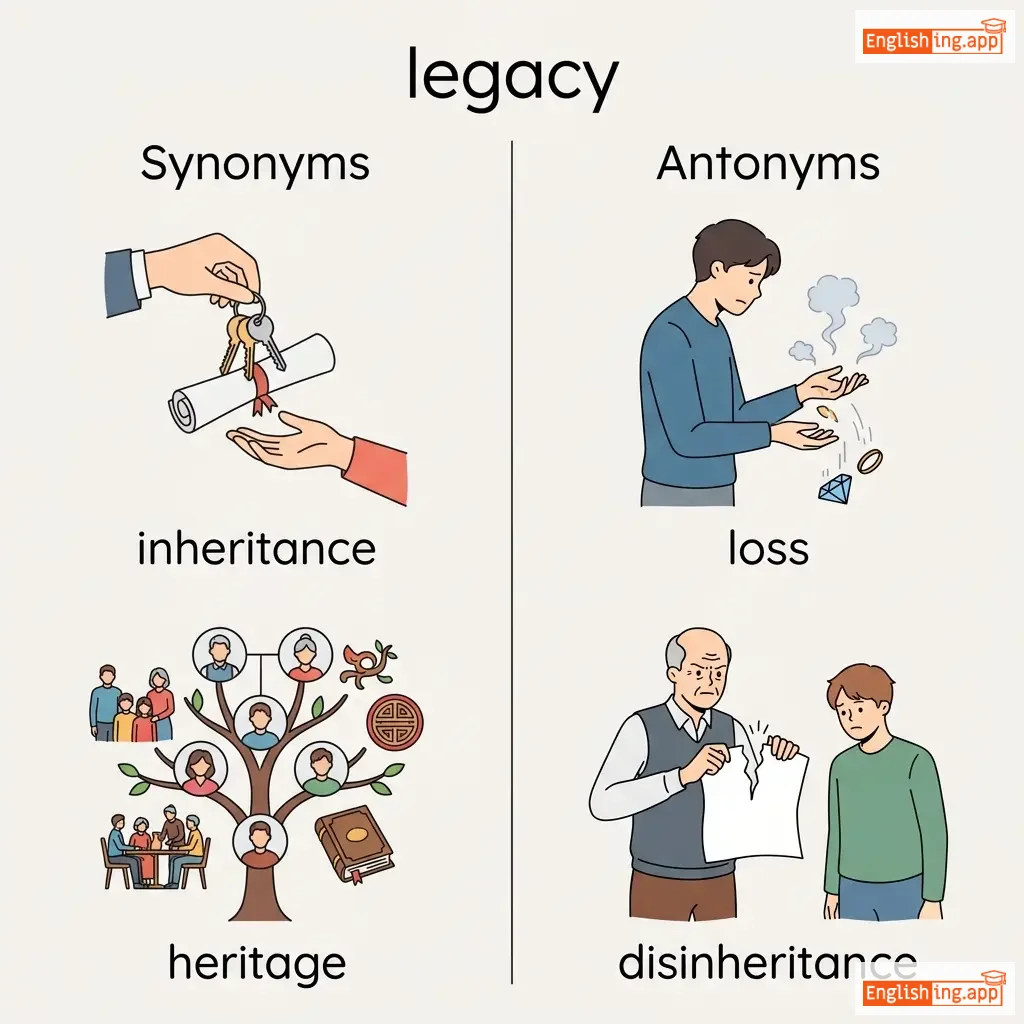
inheritance, heritage, bequest, tradition, gift
••••••
|
loss, disinheritance
••••••
|
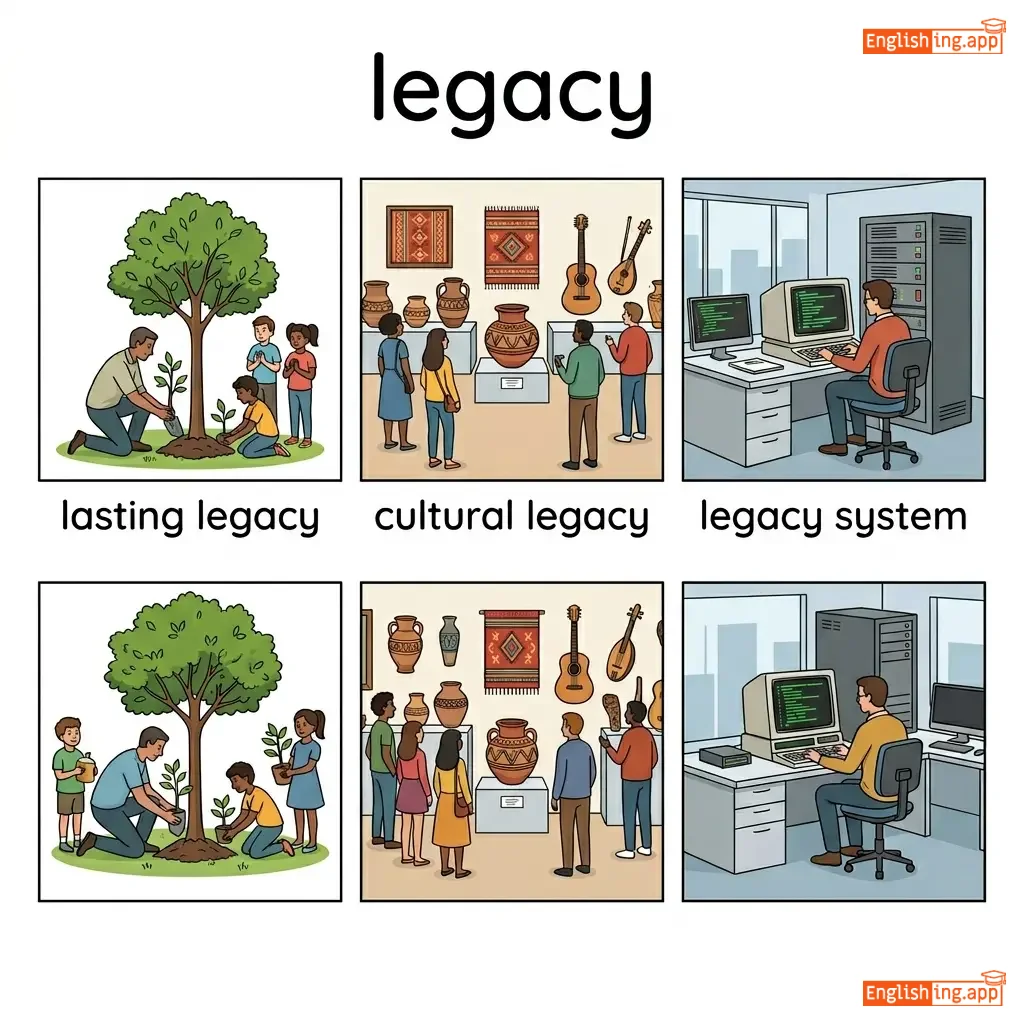
lasting legacy, cultural legacy, legacy system
••••••
|
Legacyは遺産を残すことで、未来の人々に影響を与えることです。
••••••
|
|
⚖️
••••••
|
/ˈliːɡəl/
adjective
(リーガル)
••••••
|

|
法的
hōteki
••••••
|
- •••••• | - •••••• | - •••••• | - •••••• |
relating to the law
••••••
|
He sought legal advice before signing the contract.
彼は契約書に署名する前に法的アドバイスを求めました。
••••••
|
彼は契約書に署名する前に法的アドバイスを求めました。
Kare wa keiyaku-sho ni shomei suru mae ni hōteki adobaisu o motomemashita.
••••••
|
legal loophole
法的抜け穴
••••••
|
a gap or ambiguity in the law that allows someone to avoid following it
••••••
|
法的抜け穴
hōteki nukeana
••••••
|
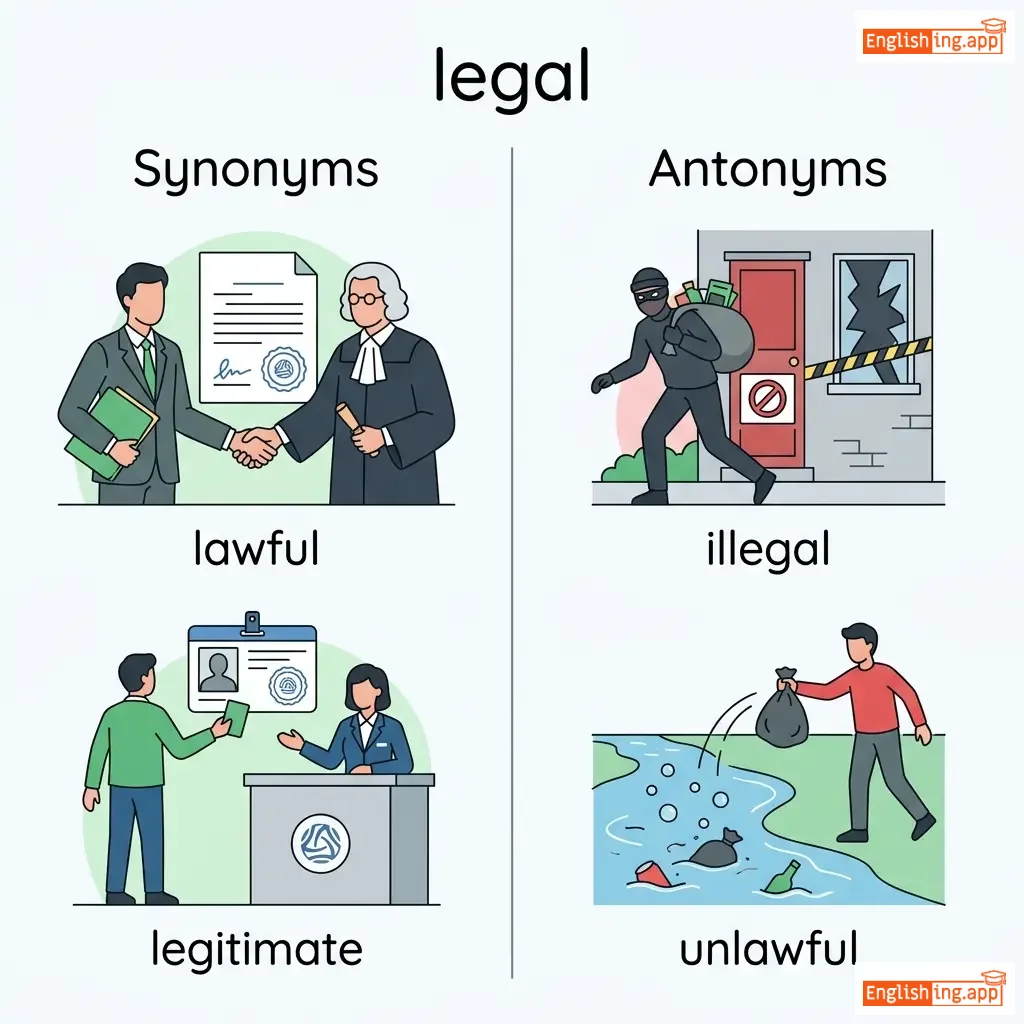
lawful, legitimate, valid, authorized
••••••
|
illegal, unlawful, illicit
••••••
|
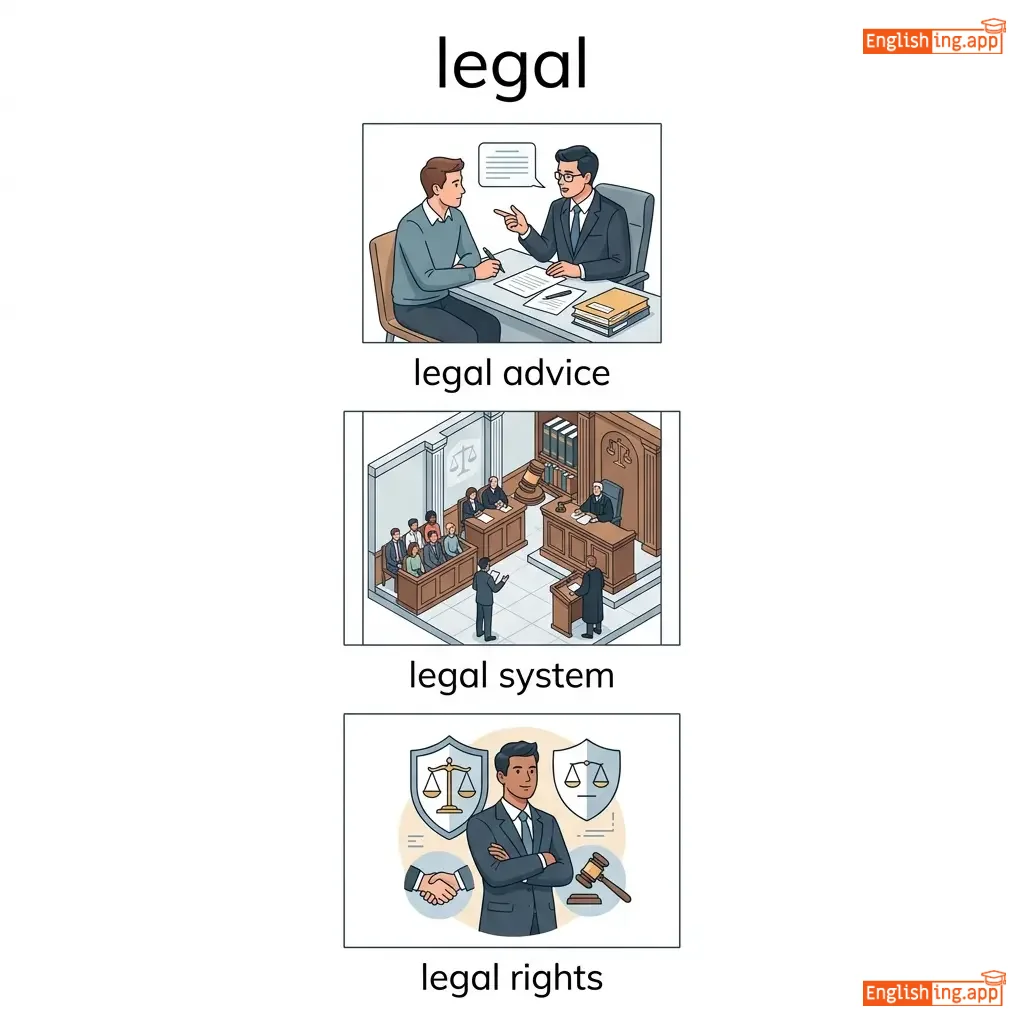
legal advice, legal system, legal rights, legal action
••••••
|
Legalは法的であり、法的な文書は有効です。
••••••
|
|
🌟
••••••
|
/ˈlɛdʒənd/
noun
(レジェンド)
••••••
|
- •••••• |
伝説
densetsu
••••••
|
- •••••• | - •••••• | - •••••• | - •••••• |
A traditional story popularly regarded as historical but unauthenticated; also a famous person admired for achievements.
••••••
|
The footballer is considered a legend in his country. |
そのサッカー選手は彼の国で伝説と見なされています。
Sono sakkā senshu wa kare no kuni de densetsu to minasarete imasu.
••••••
|
living legend |
A person who is still alive but already regarded as legendary.
••••••
|
生ける伝説
ikeru densetsu
••••••
|
myth, tale, fable, icon, hero
••••••
|
fact, reality
••••••
|
ancient legend, living legend, sports legend
••••••
|
伝説はまるで生きている話のようで、ずっと記憶に残ります。
••••••
|
|
🌟
••••••
|
/ˈlɛdʒəndɛri/
adjective
••••••
|
- •••••• | - •••••• | - •••••• | - •••••• | - •••••• | - •••••• |
remarkable enough to be famous; often used to describe something that is iconic or widely known
••••••
|
The legendary musician performed in front of a packed stadium. |
- •••••• | - •••••• | - •••••• | - •••••• |
famous, renowned, iconic
••••••
|
obscure, unknown
••••••
|
legendary figure, legendary status, legendary career
••••••
|
No •••••• |
|
⚖️
••••••
|
/ˌledʒɪsˈleɪʃən/
noun
(立法)
••••••
|
- •••••• |
立法
rippō
••••••
|
- •••••• | - •••••• | - •••••• | - •••••• |
laws considered collectively, or the act of making laws
••••••
|
The government passed new legislation to protect the environment. |
政府は環境保護のために新しい立法を制定しました。
Seifu wa kankyō hogo no tame ni atarashī rippō o seitei shimashita.
••••••
|
piece of legislation |
a single law or act passed by a legislature
••••••
|
立法の一部
rippō no ichibu
••••••
|
law, regulation, statute, decree, ordinance
••••••
|
anarchy, lawlessness
••••••
|
pass legislation, new legislation, environmental legislation, draft legislation
••••••
|
立法の‘立’ = 法律を作る!
••••••
|
|
🏛️
••••••
|
/ˈlɛdʒɪslətɪv/
adjective
(立法的)
••••••
|
- •••••• |
立法の
rippō no
••••••
|
- •••••• | - •••••• | - •••••• | - •••••• |
relating to the making of laws
••••••
|
The legislative body passed the new tax bill. |
立法機関は新しい税法を可決しました。
Rippō kikan wa atarashī zeihō o kaketsu shimashita.
••••••
|
legislative power |
the authority to make laws
••••••
|
立法権力
rippō kenryoku
••••••
|
law-making, juridical, parliamentary, statutory
••••••
|
executive, judicial
••••••
|
legislative body, legislative assembly, legislative process, legislative framework
••••••
|
Legislativeは法律の制定に関連する意味 — 立法機関でLegはアクティブです。
••••••
|
|
🏛️
••••••
|
/ˈlɛdʒɪsˌleɪtʃər/
noun
(レジスレイチャー)
••••••
|
|
立法機関
rippō kikan
••••••
|
- •••••• | - •••••• | - •••••• | - •••••• |
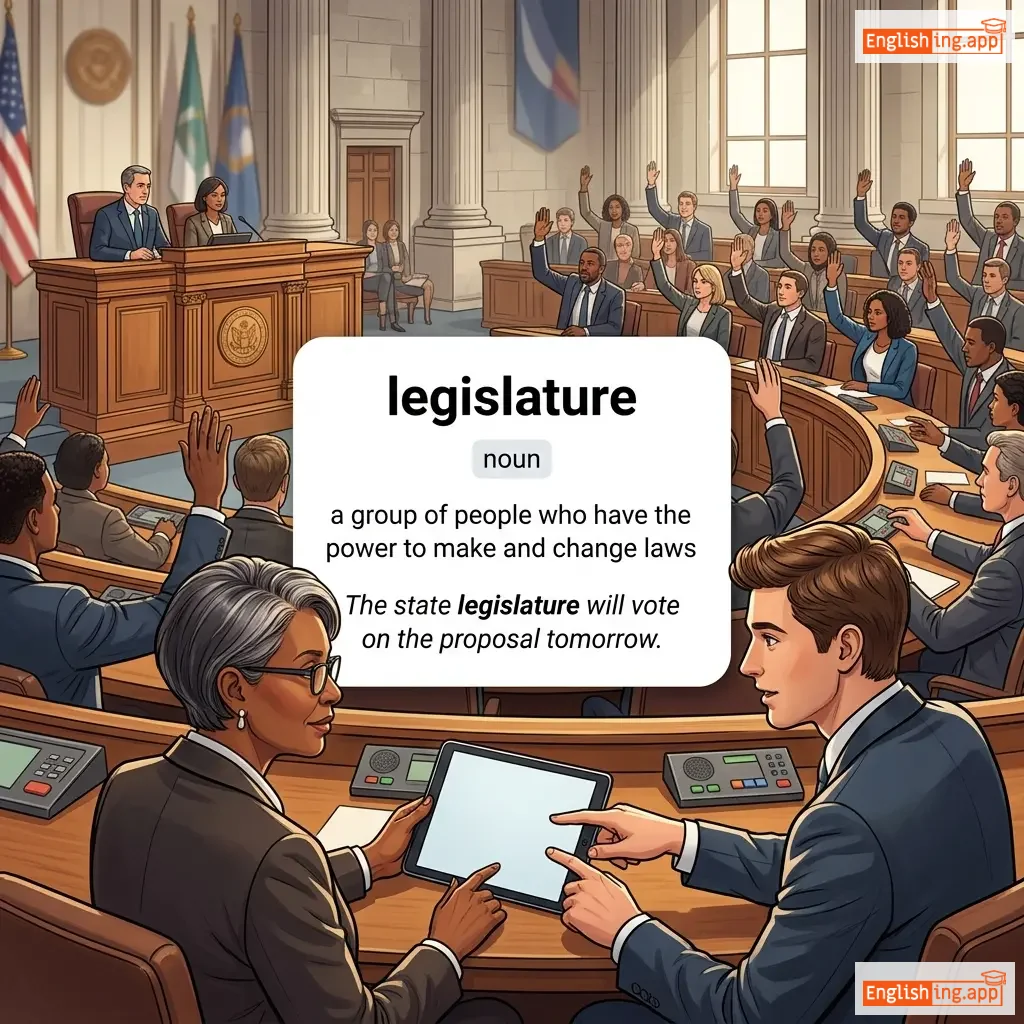
a group of people who have the power to make and change laws
••••••
|
The state legislature will vote on the proposal tomorrow.
州の立法機関は明日提案について投票します。
••••••
|
州の立法機関は明日提案について投票します。
Shū no rippō kikan wa ashita teian ni tsuite tōhyō shimasu.
••••••
|
- •••••• | - •••••• | - •••••• |
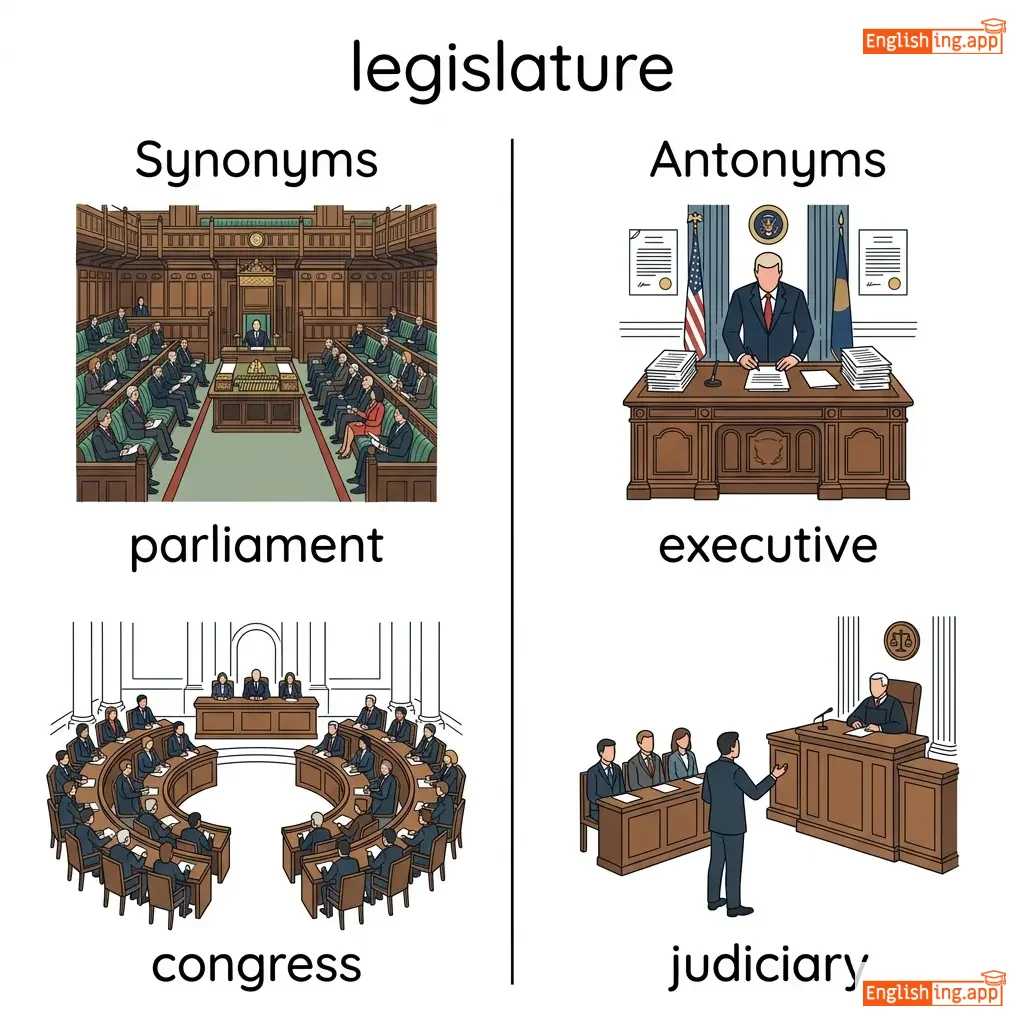
parliament, congress, assembly, senate
••••••
|
executive, judiciary
••••••
|
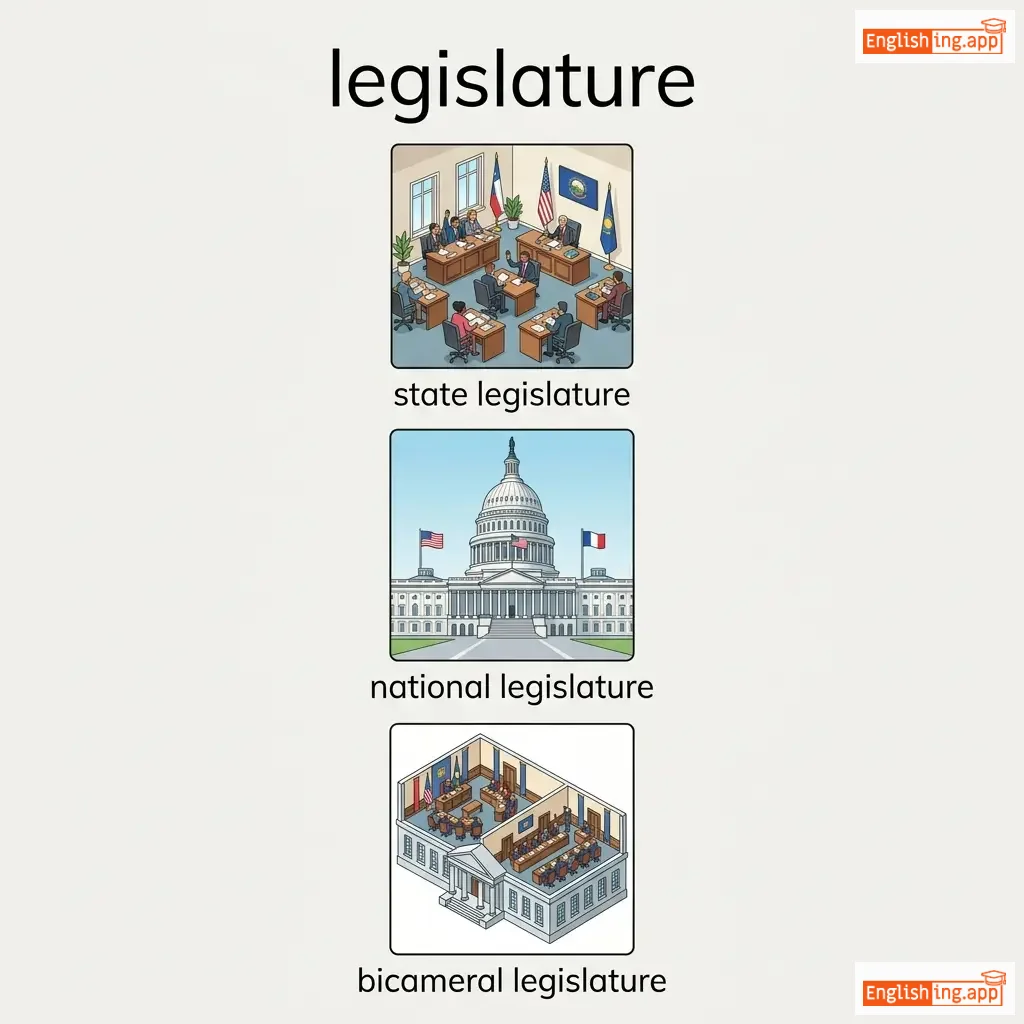
state legislature, national legislature, bicameral legislature
••••••
|
Legislature は立法機関 — ここで法律を作り、変更します。
••••••
|
|
✅
••••••
|
/lɪˈdʒɪtɪmət/
adjective
(rijitimetto)
••••••
|
- •••••• |
正当
seitou
••••••
|
- •••••• | - •••••• | - •••••• | - •••••• |
Conforming to the law or to rules; valid or acceptable.
••••••
|
She presented a legitimate reason for her absence.
彼女は欠席の理由を正当化しました。
••••••
|
彼女は欠席の理由を正当化しました。
Kanojo wa kesseki no riyū o seitōka shimashita.
••••••
|
legitimate concerns
正当な懸念
••••••
|
Valid or reasonable worries or issues.
••••••
|
正当な懸念
seitō na ken'en
••••••
|
lawful, valid, genuine, proper, authentic
••••••
|
illegal, fake, invalid
••••••
|
legitimate business, legitimate child, legitimate claim, legitimate interest
••••••
|
Legitimate は合法を意味するので、legitimate = 正当
••••••
|
|
🏖️
••••••
|
/ˈliːʒər/ or /ˈlɛʒər/
noun
(レジャー)
••••••
|
- •••••• |
余暇
yoka
••••••
|
- •••••• | - •••••• | - •••••• | - •••••• |
Free time when one is not working or occupied; time for relaxation.
••••••
|
She spends her leisure reading novels. |
彼女は余暇の時間を小説を読んで過ごしています。
Kanojo wa yoka no jikan o shōsetsu o yonde sugoshiteimasu.
••••••
|
at leisure |
Having free time; unhurried.
••••••
|
余暇に
yoka ni
••••••
|
free time, relaxation, rest, downtime
••••••
|
work, duty, occupation
••••••
|
leisure time, leisure activities, at leisure, leisure center
••••••
|
Leisure = 余暇, ゆっくりとリラックスできる時間。
••••••
|
|
🍋
••••••
|
/ˈlɛmən/
noun
(レモン)
••••••
|
- •••••• |
レモン
remon
••••••
|
- •••••• | - •••••• | - •••••• | - •••••• |
a yellow citrus fruit with a sour taste
••••••
|
She added lemon to the tea for extra flavor. |
彼女はお茶に風味を加えるためにレモンを入れた。
Kanojo wa ocha ni fūmi o kuwaeru tame ni remon o ireta.
••••••
|
when life gives you lemons |
make the best out of a bad situation
••••••
|
人生がレモンをくれる時
Jinsei ga remon o kureru toki
••••••
|
citrus, lime, fruit, zest
••••••
|
sweet, sugar
••••••
|
lemon juice, lemon tea, lemon slice, fresh lemon
••••••
|
Lemon はレモン、茶にレモンを入れると酸っぱくなる。
••••••
|
|
💸
••••••
|
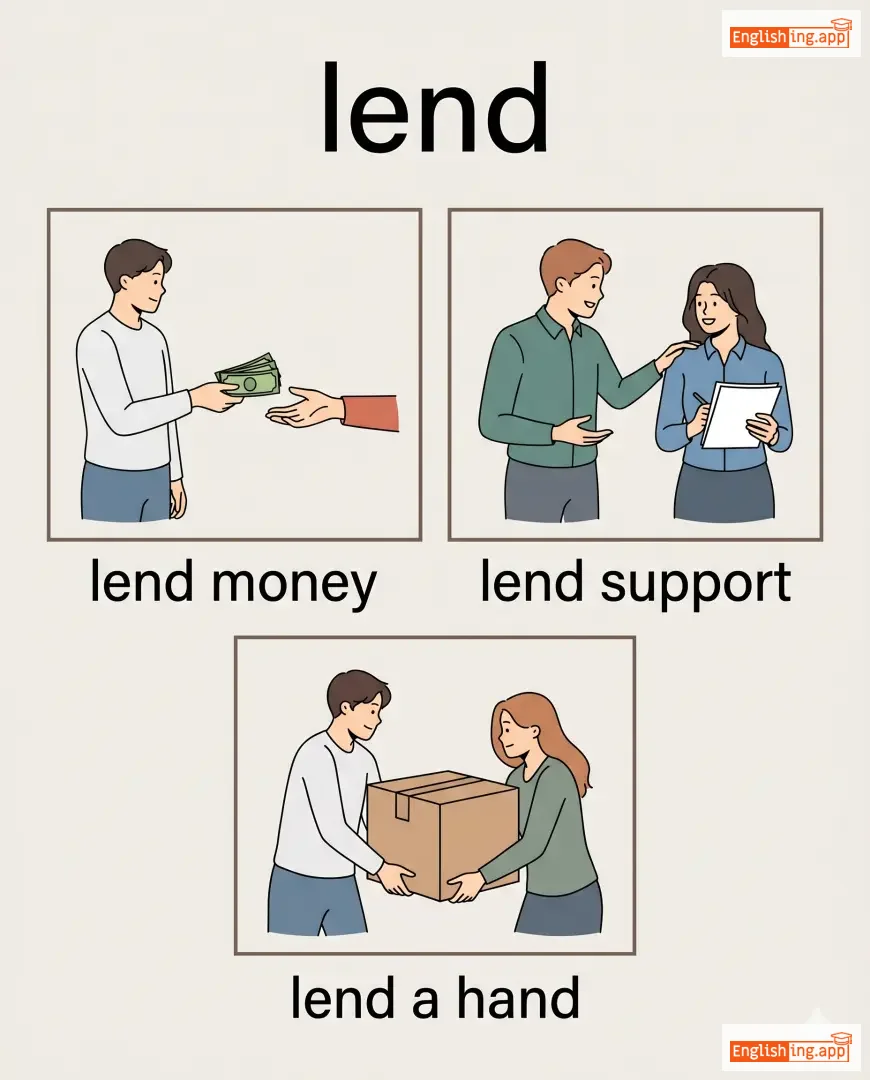
/lend/
verb
(ハピネス)
••••••
|

|
幸せ
shiawase
••••••
|
lent
••••••
|
lent
••••••
|
lends
••••••
|
lending
••••••
|
to give something to someone for a period of time, expecting it to be returned
••••••
|
Can you lend me some money?
お金を貸してくれますか?
••••••
|
お金を貸してくれますか?
Okane wo kashite kuremasu ka?
••••••
|
lend a hand
手を差し伸べる
••••••
|
to help someone
••••••
|
手を差し伸べる
te wo sashinoberu
••••••
|
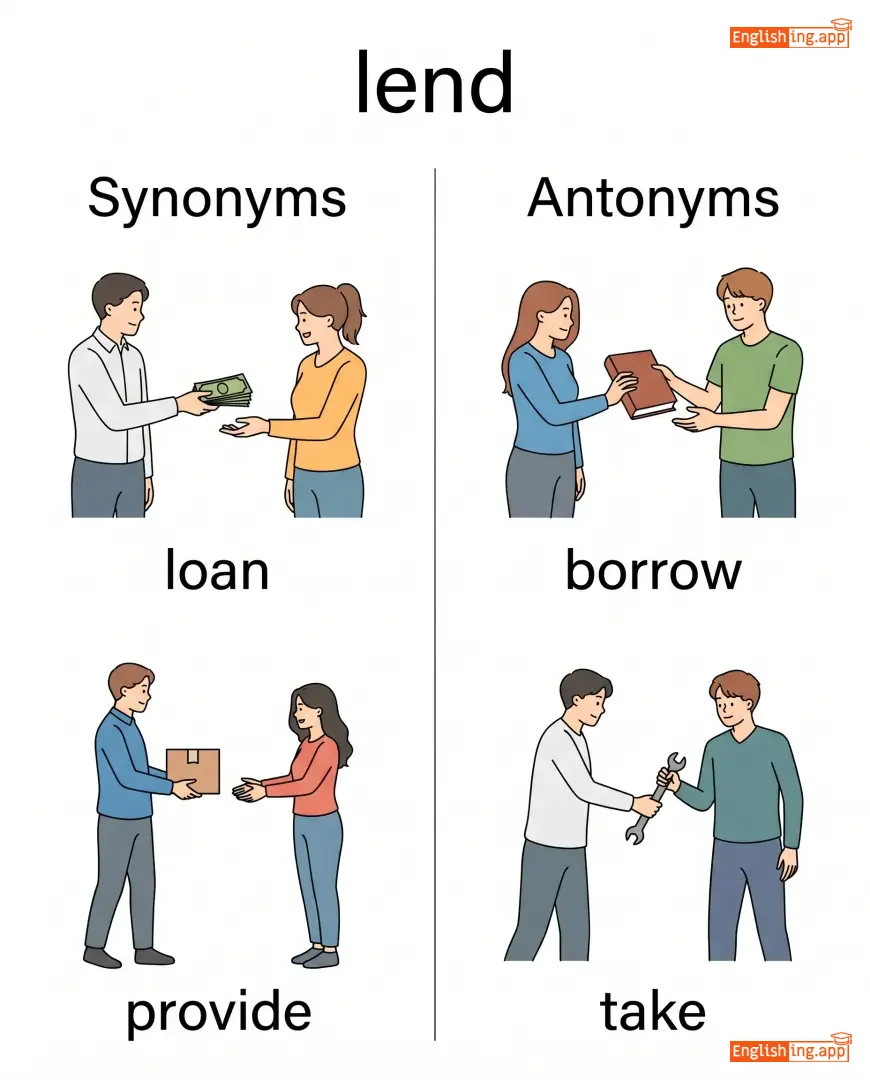
loan, provide, give, supply, contribute
••••••
|
borrow, take
••••••
|
lend money, lend support, lend a hand, lend strength
••••••
|
幸せを感じるときは、お金を貸して助ける。
••••••
|
|
📏
••••••
|
/lɛŋkθ/
noun
(lɛŋkθ)
••••••
|
- •••••• |
長さ
nagasa
••••••
|
- •••••• | - •••••• | - •••••• | - •••••• |
The measurement or extent of something from end to end.
••••••
|
The length of the bridge is two kilometers. |
橋の長さは2キロメートルです。
Hashi no nagasa wa 2 kirometoru desu.
••••••
|
at length |
in detail; thoroughly
••••••
|
詳細に
shousai ni
••••••
|
extent, distance, measurement, span, stretch
••••••
|
shortness, brevity
••••••
|
length of time, full length, hair length, considerable length
••••••
|
Lengthは長さ — 何かの長さを長さで測ります。
••••••
|
|
⏳
••••••
|
/ˈlɛŋθi/
adjective
(レンシ)
••••••
|
- •••••• |
長い
nagai
••••••
|
- •••••• | - •••••• | - •••••• | - •••••• |
long in duration or extent
••••••
|
The meeting was lengthy, lasting over three hours. |
会議は長く、3時間以上続きました。
Kaigi wa nagaku, sanjikan ijou tsudzukimashita.
••••••
|
- •••••• | - •••••• | - •••••• |
long, prolonged, extended, drawn-out
••••••
|
short, brief, quick
••••••
|
lengthy discussion, lengthy process, lengthy delay
••••••
|
長い (long) 時間 - Lengthy means long!
••••••
|
|
📷
••••••
|
/lenz/
noun
(レンズ)
••••••
|
- •••••• |
レンズ
renzu
••••••
|
- •••••• | - •••••• | - •••••• | - •••••• |
a curved piece of glass or plastic that makes things look clearer or larger when you look through it
••••••
|
He cleaned the camera lens before taking the picture. |
彼は写真を撮る前にカメラのレンズをきれいにしました。
Kare wa shashin o toru mae ni kamera no renzu o kirei ni shimashita.
••••••
|
through the lens of |
viewed or interpreted from a particular perspective
••••••
|
レンズを通して
renzu o tōshite
••••••
|
glass, optic, focus, viewpoint, filter
••••••
|
blindspot, obstruction
••••••
|
camera lens, contact lens, wide lens, lens cover
••••••
|
レンズを通して世界を見ることで、よりクリアに見ることができます。
••••••
|
|
🌱
••••••
|
/ˈlen.tɪl/
noun
(レンティル)
••••••
|
- •••••• |
レンズ豆
renzu mame
••••••
|
- •••••• | - •••••• | - •••••• | - •••••• |
a high-protein pulse which is dried and then soaked and cooked prior to eating
••••••
|
She cooked red lentils for dinner tonight. |
彼女は今晩の夕食に赤レンズ豆を調理しました。
kanojo wa konban no yūshoku ni aka renzu mame o chōri shimashita
••••••
|
- •••••• | - •••••• | - •••••• |
pulse, legume, dal
••••••
|
meat, grain
••••••
|
red lentils, green lentils, lentil soup
••••••
|
レンズ豆は小さくて栄養満点!
••••••
|
|
🏳️🌈
••••••
|
/ˈlɛzbiən/
noun/adjective
(レズビアン)
••••••
|
- •••••• |
レズビアン
rezubian
••••••
|
- •••••• | - •••••• | - •••••• | - •••••• |
a woman who is romantically or sexually attracted to other women
••••••
|
She is a proud lesbian and advocates for equal rights. |
彼女は誇り高いレズビアンで、平等な権利を支持しています。
Kanojo wa hokori takai rezubian de, byoudou na kenri wo shiji shiteimasu.
••••••
|
- •••••• | - •••••• | - •••••• |
gay woman, queer woman
••••••
|
heterosexual woman, straight woman
••••••
|
lesbian rights, lesbian community, lesbian couple
••••••
|
レズビアンとは女性を愛する女性です - Lesbian means woman-loving!
••••••
|
|
➖
••••••
|
/lɛs/
adjective/adverb
(レス)
••••••
|
- •••••• |
少ない
sukunai
••••••
|
- •••••• | - •••••• | - •••••• | - •••••• |
A smaller amount; not as much.
••••••
|
She spends less money than her brother. |
彼女は兄よりお金を使うのが少ない。
Kanojo wa ani yori okane o tsukau no ga sukunai.
••••••
|
less is more |
simplicity is more effective than complexity
••••••
|
少ない方が多い
sukunai hō ga ōi
••••••
|
fewer, reduced, diminished, lower
••••••
|
more, greater, higher
••••••
|
less time, less money, less important, less than
••••••
|
LESSは少ないという意味 — 少ないお金、もっと貯金する。
••••••
|
|
⬇️
••••••
|
/ˈles.ər/
adjective
(レサー)
••••••
|
- •••••• |
少ない
sukunai
••••••
|
- •••••• | - •••••• | - •••••• | - •••••• |
smaller in amount; of lower importance; inferior
••••••
|
He chose the lesser of two evils when making his decision. |
彼は二つの悪の中で少ない方を選びました。
Kare wa futatsu no aku no naka de sukunai hou wo erabimashita.
••••••
|
- •••••• | - •••••• | - •••••• |
smaller, minor, inferior, reduced, diminished
••••••
|
greater, larger, superior, major, increased
••••••
|
lesser extent, lesser degree, lesser evil, lesser known
••••••
|
少ない方を選ぶ、悪の中でも少ない方を選択
••••••
|
|
📚
••••••
|
/ˈlɛsən/
noun
(レッスン)
••••••
|
- •••••• |
レッスン
ressun
••••••
|
- •••••• | - •••••• | - •••••• | - •••••• |
A unit of teaching or something learned through experience.
••••••
|
The teacher explained the lesson clearly. |
先生はレッスンを明確に説明しました。
Sensei wa ressun o meikaku ni setsumei shimashita.
••••••
|
learn a lesson |
to gain knowledge or understanding from a mistake or event
••••••
|
教訓を得る
Kyōkun o eru
••••••
|
class, session, lecture, instruction
••••••
|
ignorance, neglect
••••••
|
math lesson, life lesson, teach a lesson, learn a lesson
••••••
|
レッスンはレッスン📚 — 学んだことを忘れないように!
••••••
|
|
✅
••••••
|
/lɛt/
verb
(レット)
••••••
|

|
許可する
kyoka suru
••••••
|
let
レット
••••••
|
let
レット
••••••
|
lets
レッツ
••••••
|
letting
レッティング
••••••
|
To allow someone to do something; to permit.
••••••
|
She let him borrow her book.
シー レット ヒム バロウ ハー ブック。
••••••
|
彼女は彼に彼女の本を借りさせた。
Kanojo wa kare ni kanojo no hon wo karisaseta.
••••••
|
let it be
レット イット ビー
••••••
|
accept a situation without trying to change it
••••••
|
そのままにしておく
sono mama ni shite oku
••••••
|
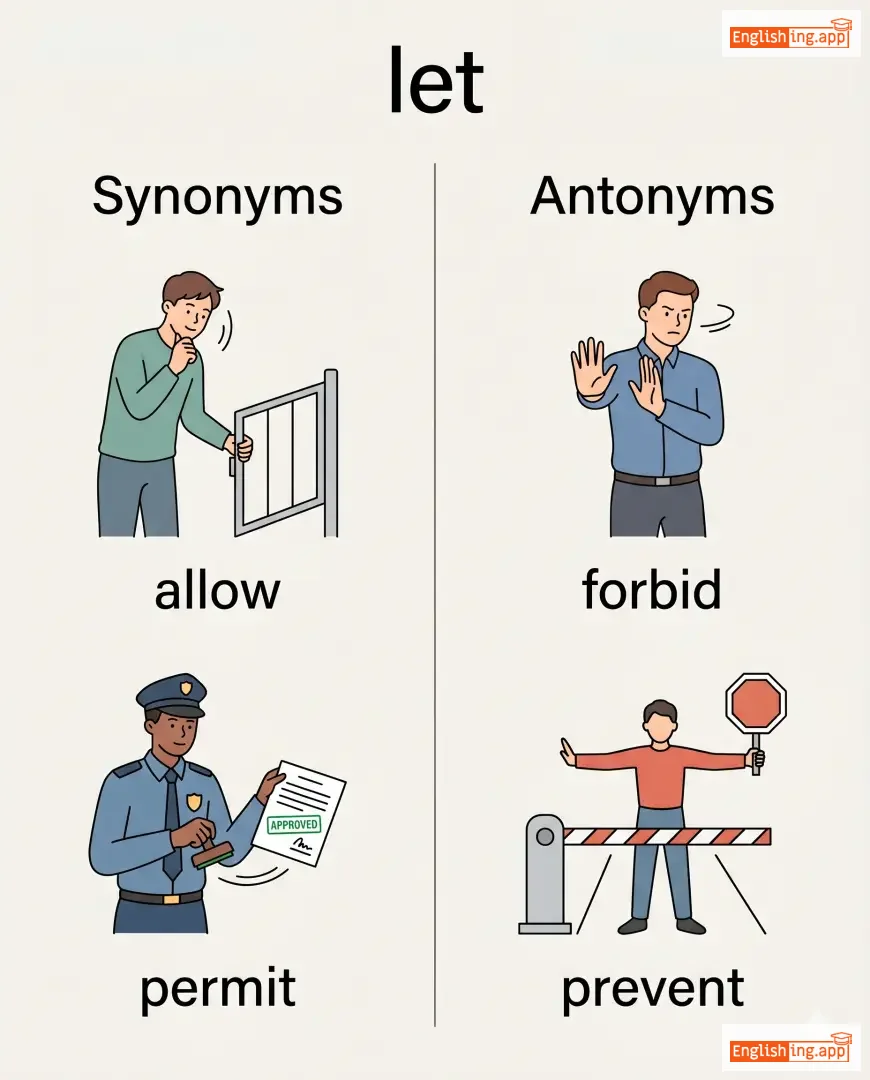
allow, permit, enable, grant
••••••
|
forbid, prevent, refuse
••••••
|
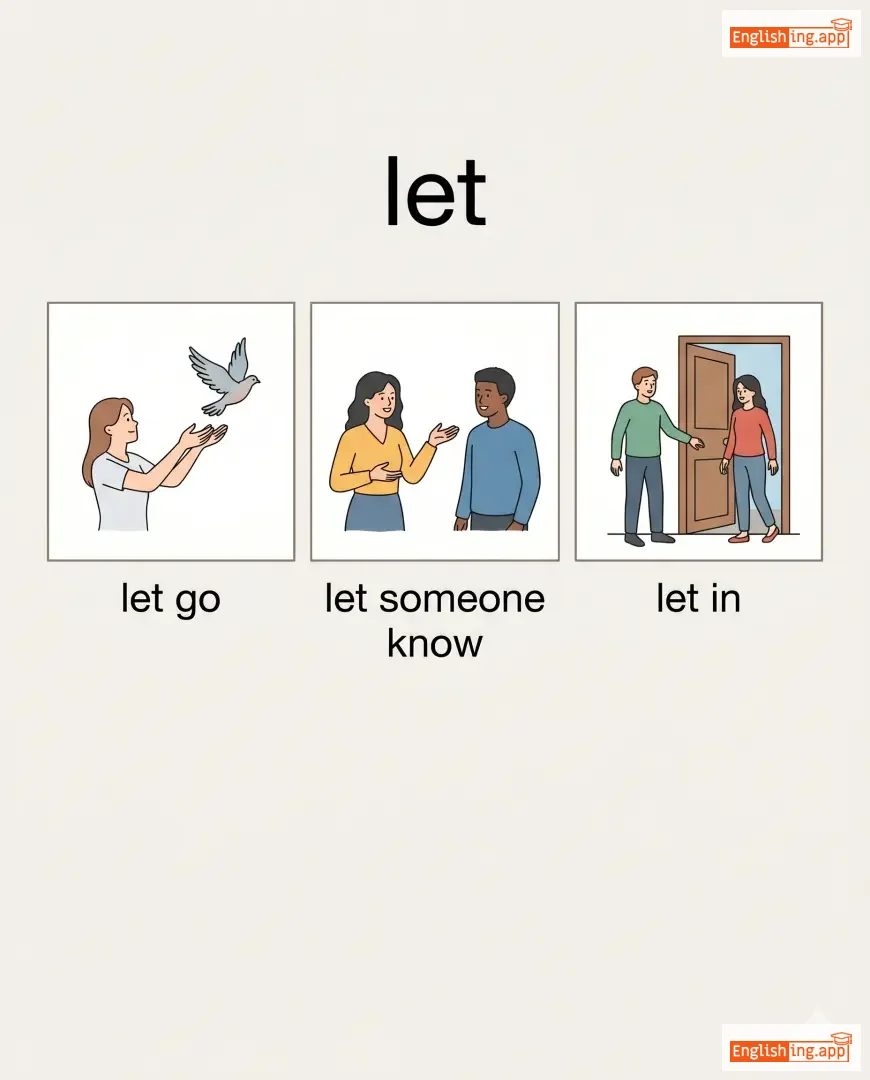
let go, let someone know, let in, let out
••••••
|
LETは許可するという意味 — ママがLET him goと言うのは、彼を行かせるという意味です ✅
••••••
|
|
☠️
••••••
|
/ˈliːθəl/
adjective
(リサル)
••••••
|
- •••••• |
致命的
chimeiteki
••••••
|
- •••••• | - •••••• | - •••••• | - •••••• |
Able to cause death; deadly.
••••••
|
The snake's venom is extremely lethal. |
ヘビの毒は非常に致命的です。
Hebi no doku wa hijō ni chimeiteki desu.
••••••
|
lethal weapon |
a weapon capable of killing
••••••
|
致命的な武器
chimeiteki na buki
••••••
|
deadly, fatal, mortal, poisonous
••••••
|
harmless, safe, nonlethal
••••••
|
lethal weapon, lethal dose, lethal force, lethal injection
••••••
|
Lethal は lethal weapon を意味し、致命的な武器です。
••••••
|
|
✉️
••••••
|
/ˈlɛtər/
noun
(レター)
••••••
|
- •••••• |
手紙
tegami
••••••
|
- •••••• | - •••••• | - •••••• | - •••••• |
A written or printed message sent to someone.
••••••
|
He wrote a letter to his friend.
彼は友達に手紙を書いた。
••••••
|
彼は友達に手紙を書いた。
Kare wa tomodachi ni tegami o kaita.
••••••
|
to the letter
文字通り
••••••
|
exactly as instructed or prescribed
••••••
|
文字通り
moji tōri
••••••
|
note, message, mail, correspondence
••••••
|
speech, silence
••••••
|
write a letter, love letter, official letter, letter of recommendation
••••••
|
Letter ✉️ は手紙を意味します — 郵便配達員が手紙を運びます。
••••••
|
|
🥬
••••••
|
/ˈlɛtɪs/
noun
(レタス)
••••••
|
- •••••• |
レタス
retasu
••••••
|
- •••••• | - •••••• | - •••••• | - •••••• |
a leafy green vegetable commonly used in salads and sandwiches
••••••
|
She added fresh lettuce to the sandwich.
シー アデッド フレッシュ レタス トゥ ザ サンドイッチ。
••••••
|
彼女はサンドイッチに新鮮なレタスを加えた。
kanojo wa sandoitchi ni shinsen na retasu o kuwaeta
••••••
|
- •••••• | - •••••• | - •••••• |
greens, leaf lettuce, romaine, iceberg
••••••
|
meat, grain
••••••
|
fresh lettuce, chopped lettuce, lettuce leaves, head of lettuce
••••••
|
レタス (retasu) sounds exactly like lettuce
••••••
|
|
📏
••••••
|
/ˈlɛvəl/
noun, verb, adjective
(レベル)
••••••
|
|
レベル、段階
reberu, dankai
••••••
|
leveled
レヴェルド
••••••
|
leveled
レヴェルド
••••••
|
levels
レヴェルズ
••••••
|
leveling
レヴェリング
••••••
|
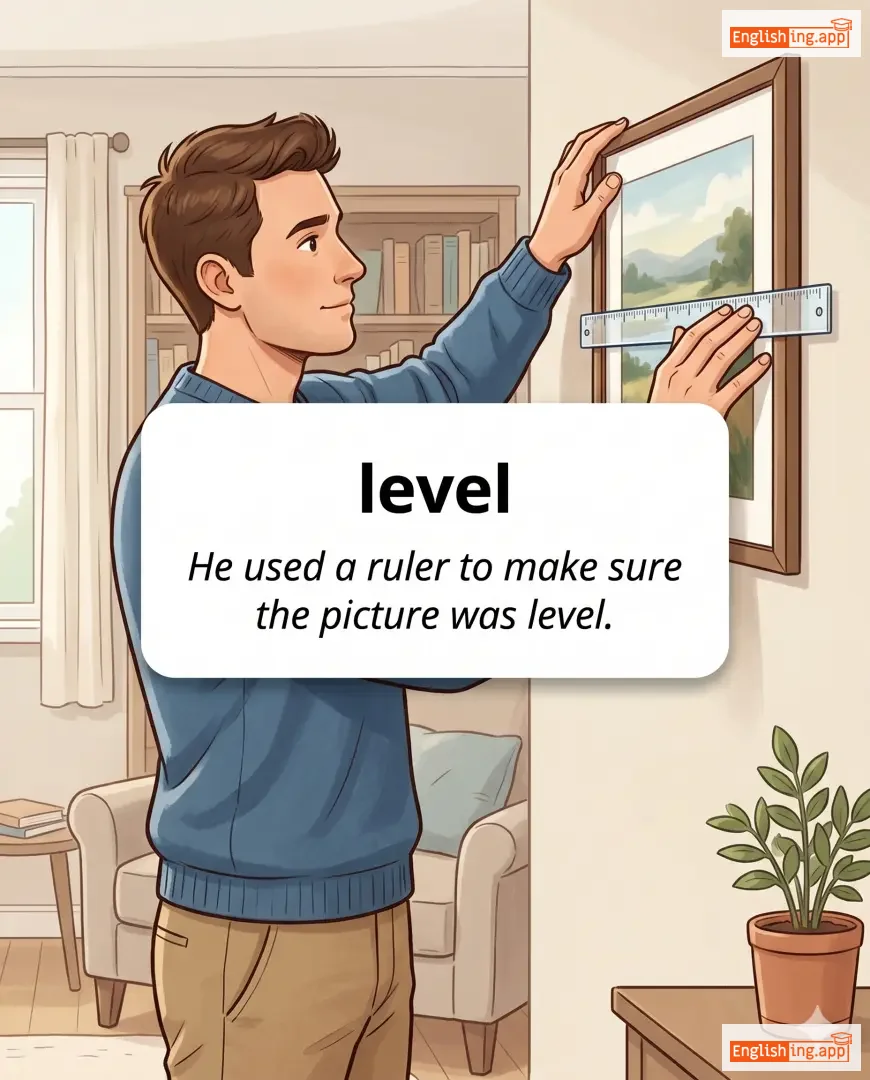
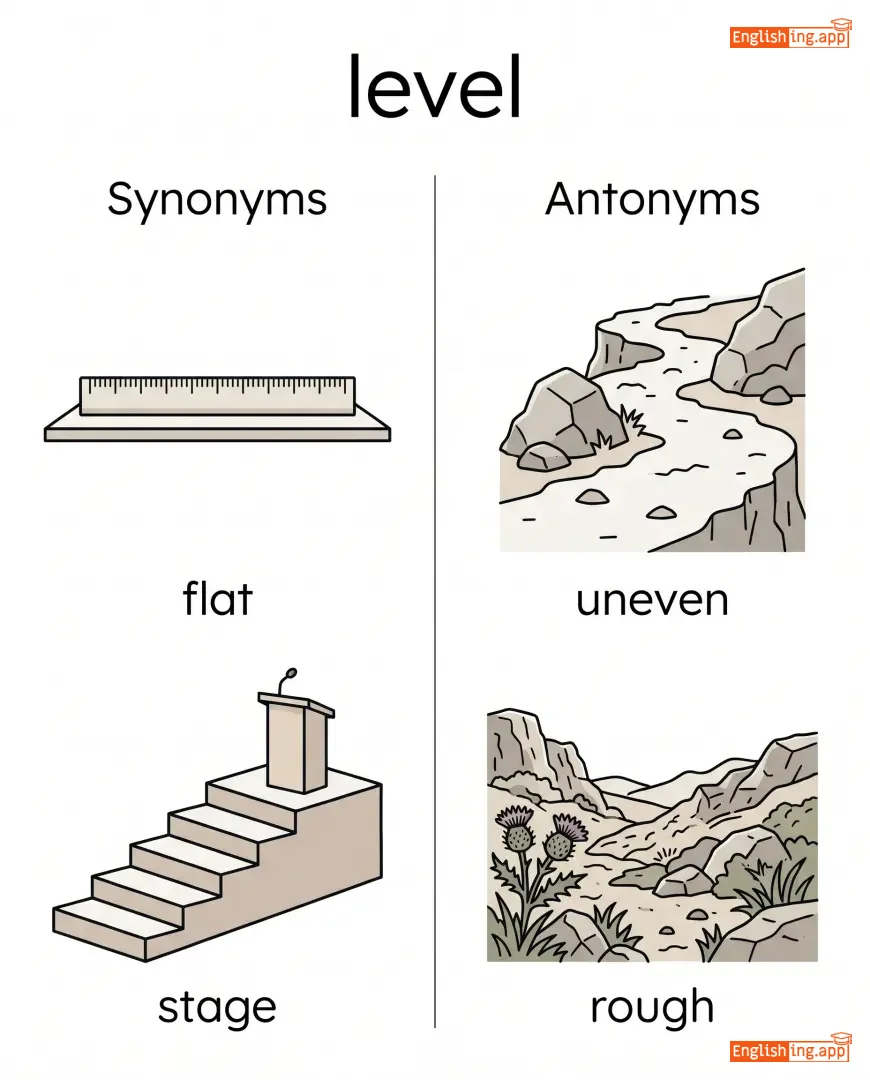
a flat or even surface; a stage in scale or rank; to make something flat or equal.
••••••
|
He used a ruler to make sure the picture was level.
彼は絵が水平かどうか確認するために定規を使いました。
••••••
|
彼は絵が水平かどうか確認するために定規を使いました。
Kare wa e ga suihei ka dō ka kakunin suru tame ni jōgi o tsukaimashita.
••••••
|
on the level
レベルの上で
••••••
|
honest and straightforward
••••••
|
正直で率直
shōjiki de sasshoku
••••••
|
flat, stage, equal, rank, grade
••••••
|
uneven, rough, dishonest
••••••
|
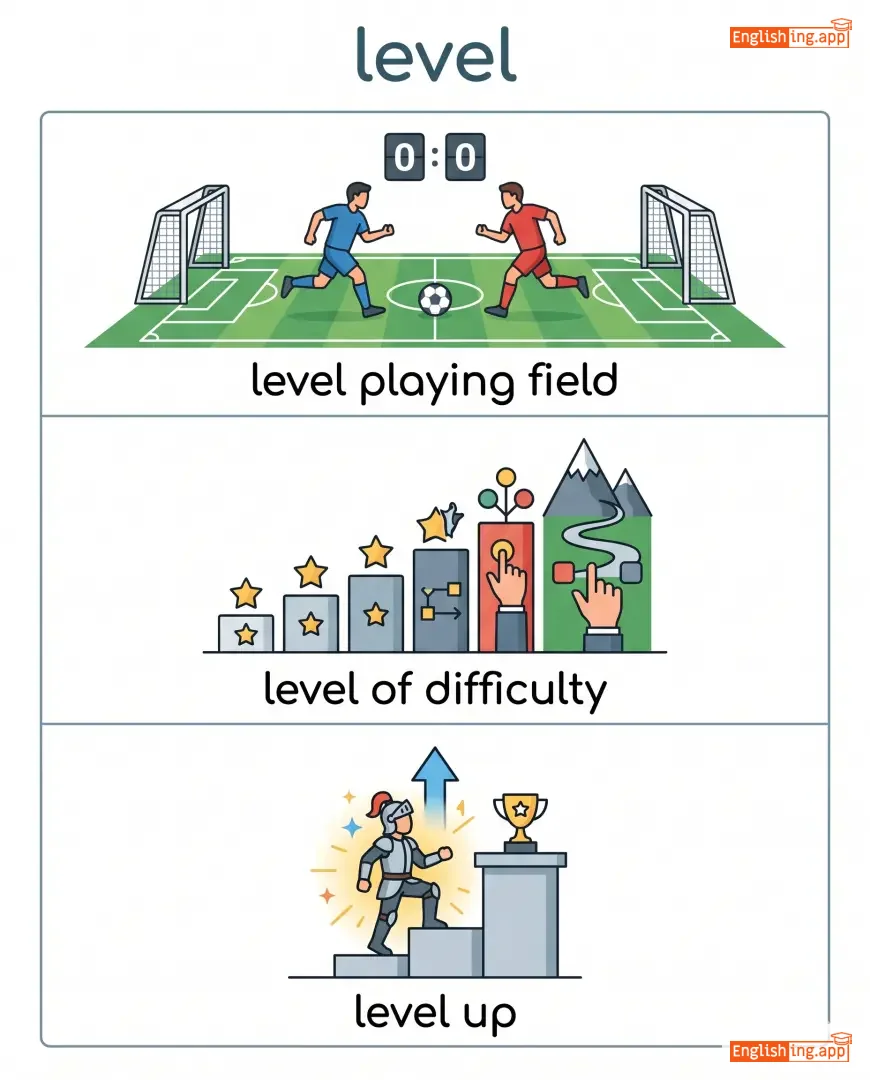
level playing field, level of difficulty, level up, level surface
••••••
|
レベルはすべて同じ (level = onaji).
••••••
|
|
📜
••••••
|
/ˈlaɪəbl/
adjective
(ライアブル)
••••••
|
- •••••• |
責任がある
sekinin ga aru
••••••
|
- •••••• | - •••••• | - •••••• | - •••••• |
legally responsible or likely to be affected by something
••••••
|
He is liable to pay damages for the accident. |
彼は事故の損害賠償を支払う責任があります。
Kare wa jiko no songaibaishō o shiharau sekinin ga arimasu.
••••••
|
liable to |
likely to experience or suffer from something
••••••
|
可能性がある
kanōsei ga aru
••••••
|
responsible, accountable, answerable, bound
••••••
|
immune, exempt
••••••
|
liable for, liable to, held liable, liable party
••••••
|
Liableは責任があるか、影響を受ける可能性があることを意味します。
••••••
|
|
🌍
••••••
|
/ˈlɪbərəl/
adjective
(リベラル)
••••••
|
|
リベラル
riberaru
••••••
|
- •••••• | - •••••• | - •••••• | - •••••• |
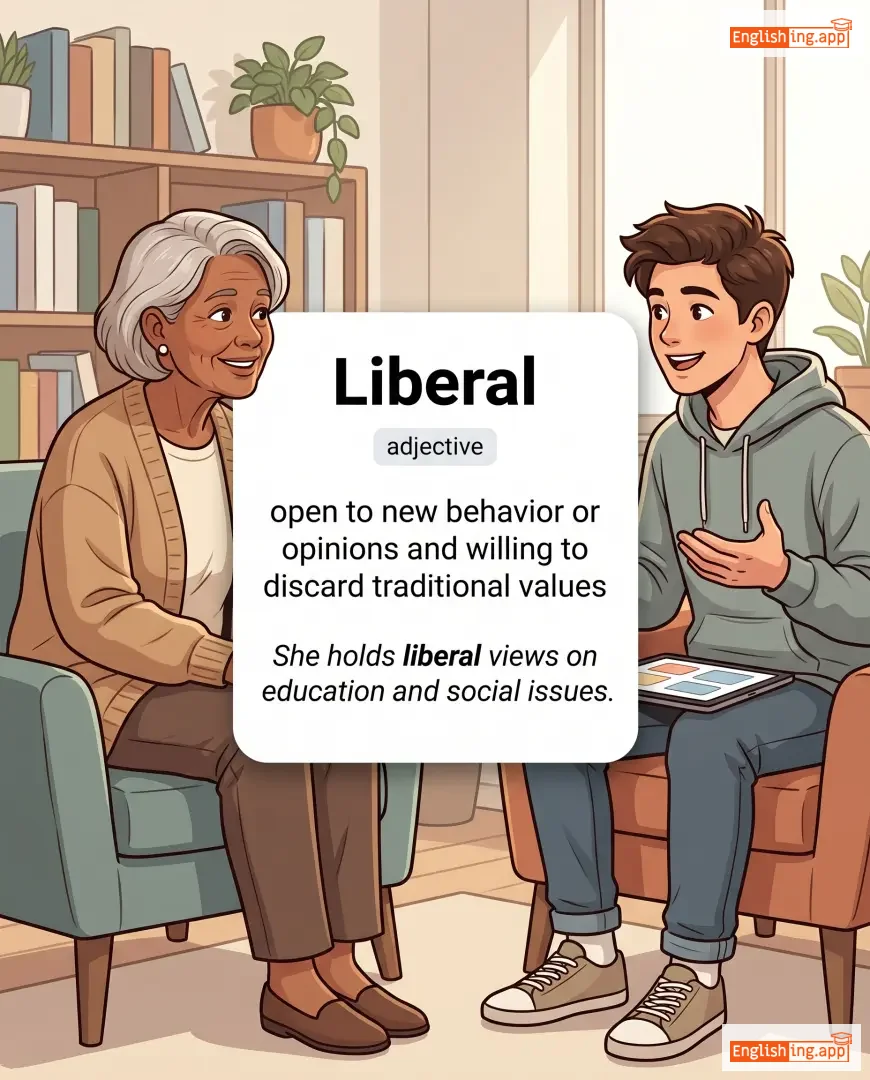
open to new behavior or opinions and willing to discard traditional values
••••••
|
She holds liberal views on education and social issues. |
彼女は教育と社会問題についてリベラルな見解を持っている。
Kanojo wa kyōiku to shakai mondai ni tsuite riberaru na kenkai o motte iru.
••••••
|
liberal arts |
academic studies intended to develop general knowledge and intellectual ability
••••••
|
リベラルアーツ
riberaruātsu
••••••
|
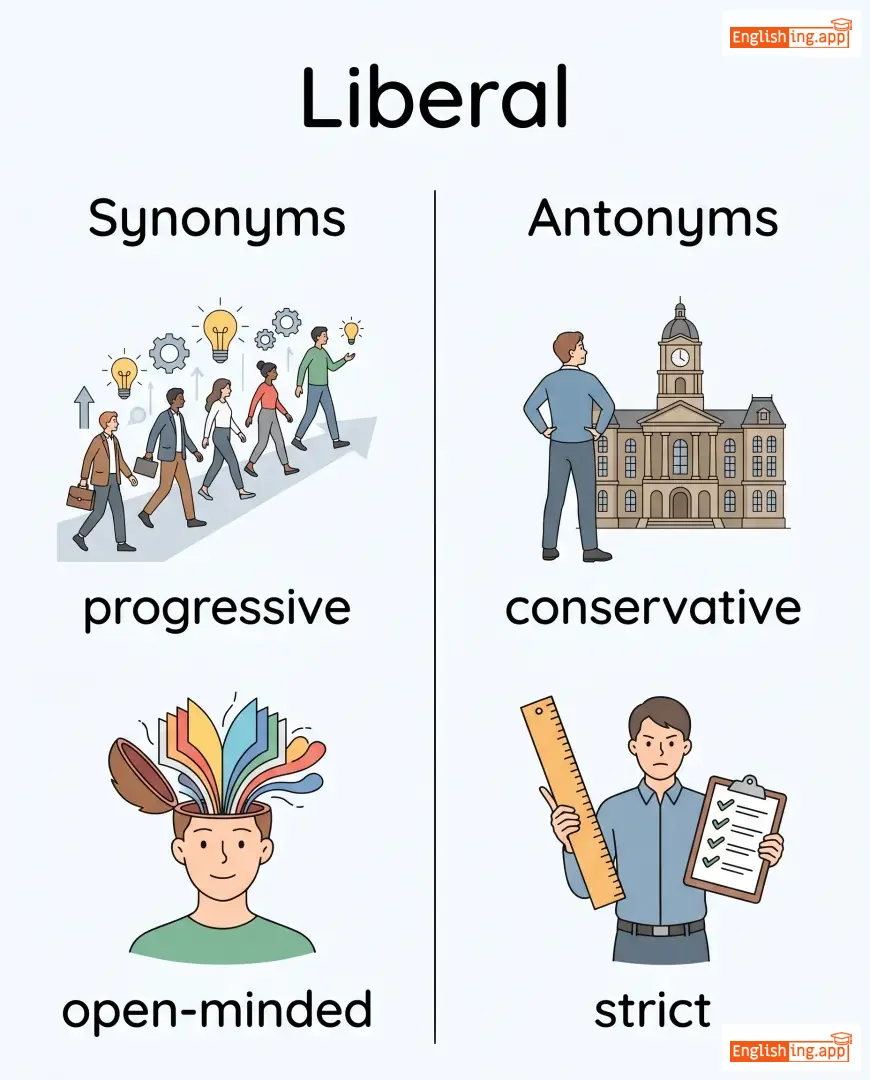
progressive, open-minded, tolerant, generous
••••••
|
conservative, strict, narrow-minded
••••••
|
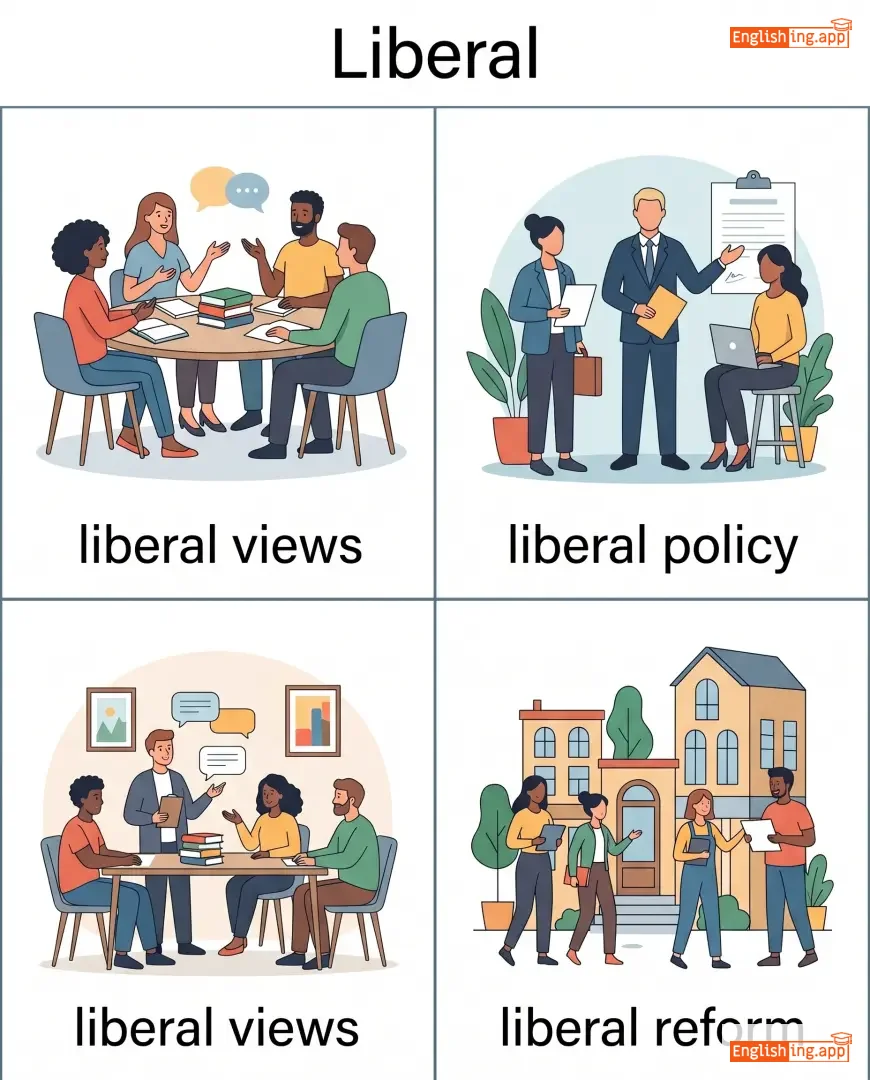
liberal views, liberal policy, liberal reform, liberal democracy
••••••
|
リベラルは自由に広がる思想を表す。
••••••
|
|
🕊️
••••••
|
/ˈlɪbəreɪt/
verb
(リベレート)
••••••
|
|
解放する
kaihō suru
••••••
|
liberated
リベレーテッド
••••••
|
liberated
リベレーテッド
••••••
|
liberates
リベレーツ
••••••
|
liberating
リベレーティング
••••••
|
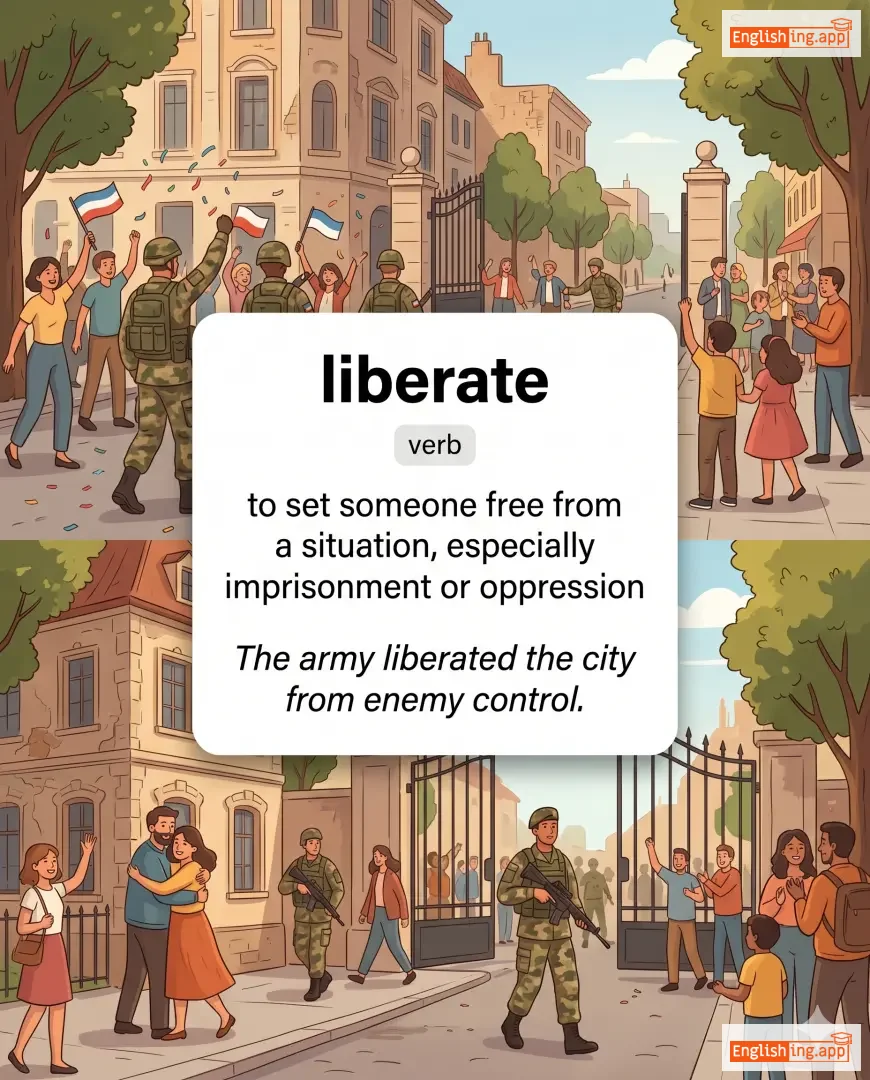
to set someone free from a situation, especially imprisonment or oppression
••••••
|
The army liberated the city from enemy control.
軍隊は街を敵の支配から解放した。
••••••
|
軍隊は街を敵の支配から解放した。
Guntai wa machi o teki no shihai kara kaihō shita.
••••••
|
liberate the mind
心を解放する
••••••
|
to free someone from narrow or limiting thinking
••••••
|
心を解放する
kokoro o kaihō suru
••••••
|
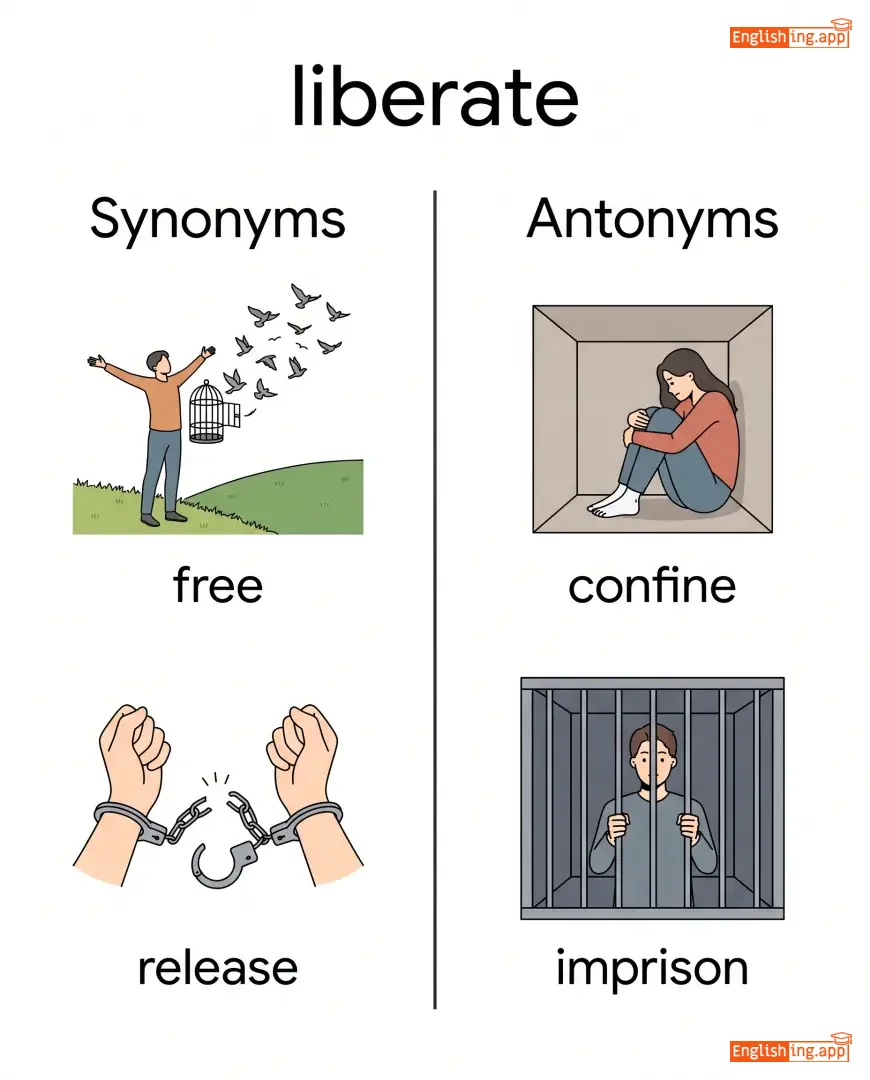
free, release, rescue, emancipate, deliver
••••••
|
confine, imprison, restrain
••••••
|
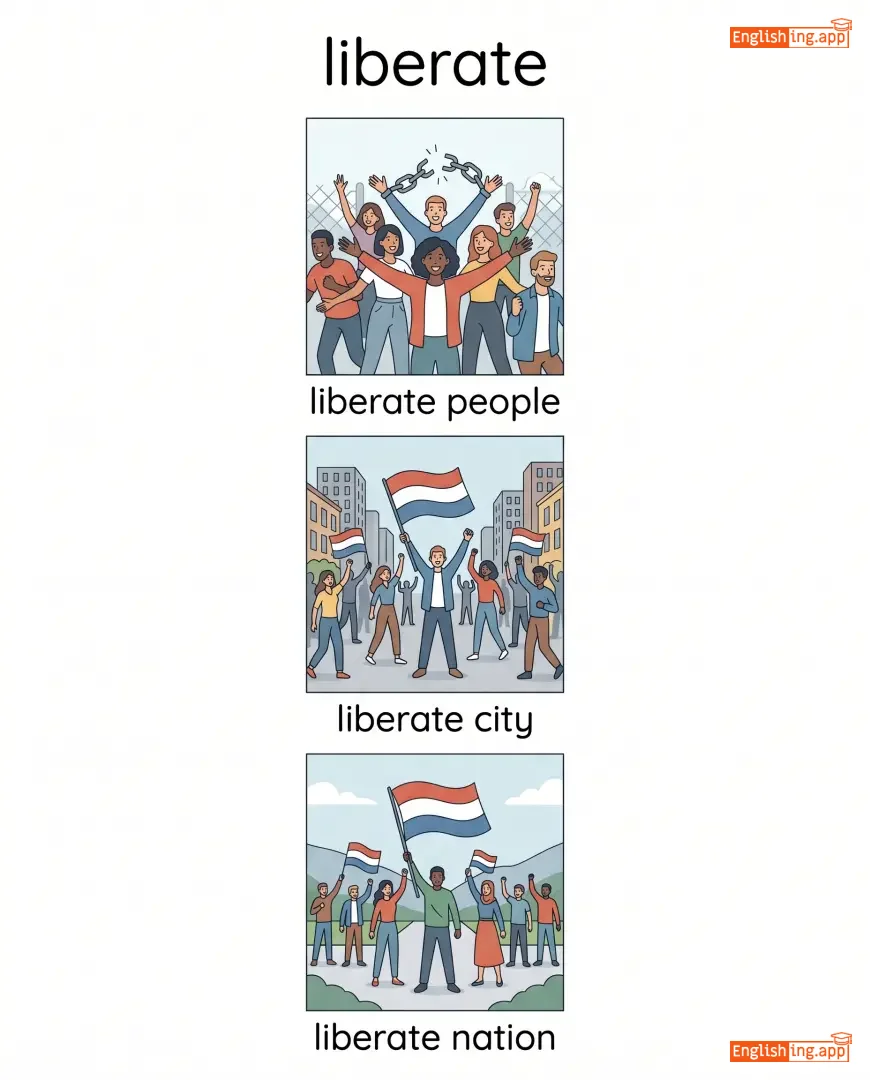
liberate people, liberate city, liberate nation, liberate mind
••••••
|
リベレート = 自由を与える、解放しよう
••••••
|
|
🕓
••••••
|
/ˌlɪb.əˈreɪ.ʃən/
noun
(リベレーション)
••••••
|
|
解放; 自由;
ribereshon
••••••
|
- •••••• | - •••••• | - •••••• | - •••••• |
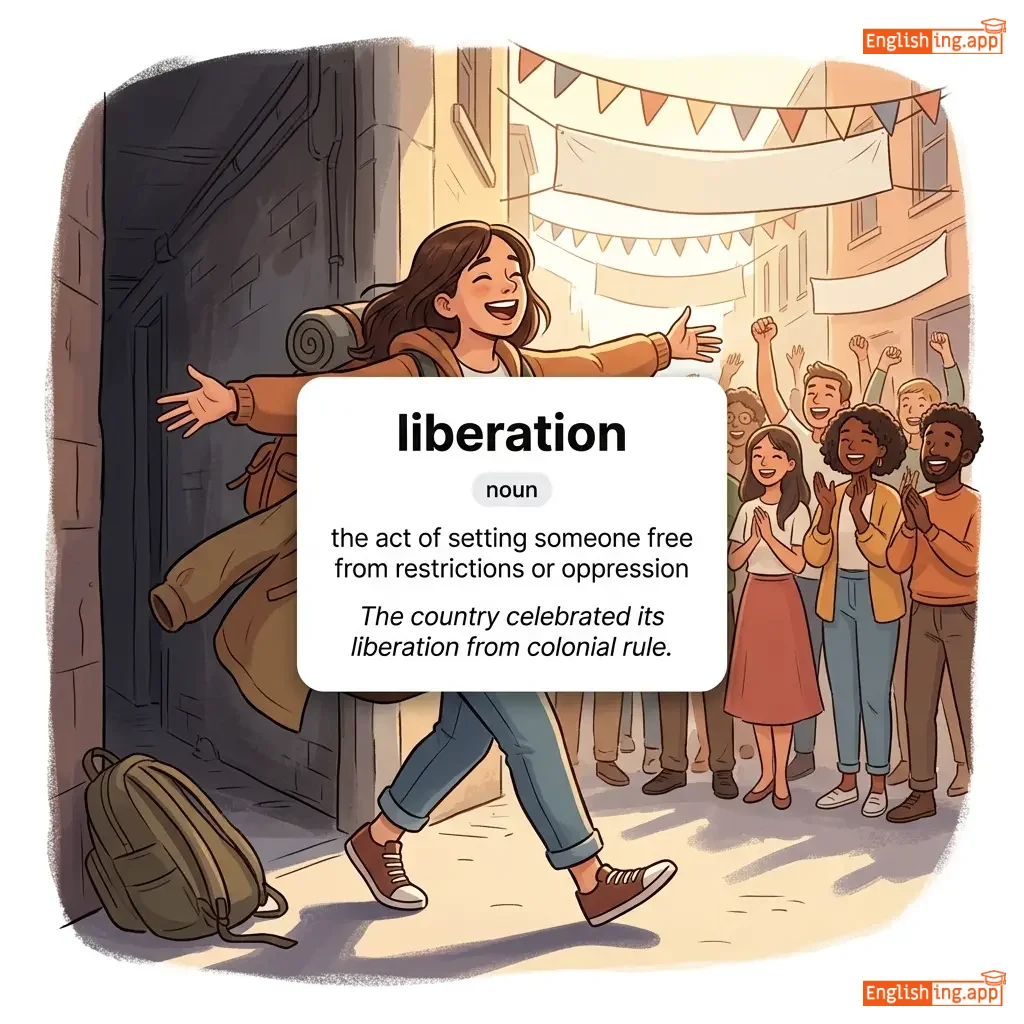
the action of setting someone free from imprisonment, slavery, or oppression; release
••••••
|
The liberation of the country took many years. |
その国の解放には多くの年がかかりました。
sono kuni no kaihō ni wa ōku no toshi ga kakarimashita.
••••••
|
- •••••• | - •••••• | - •••••• |
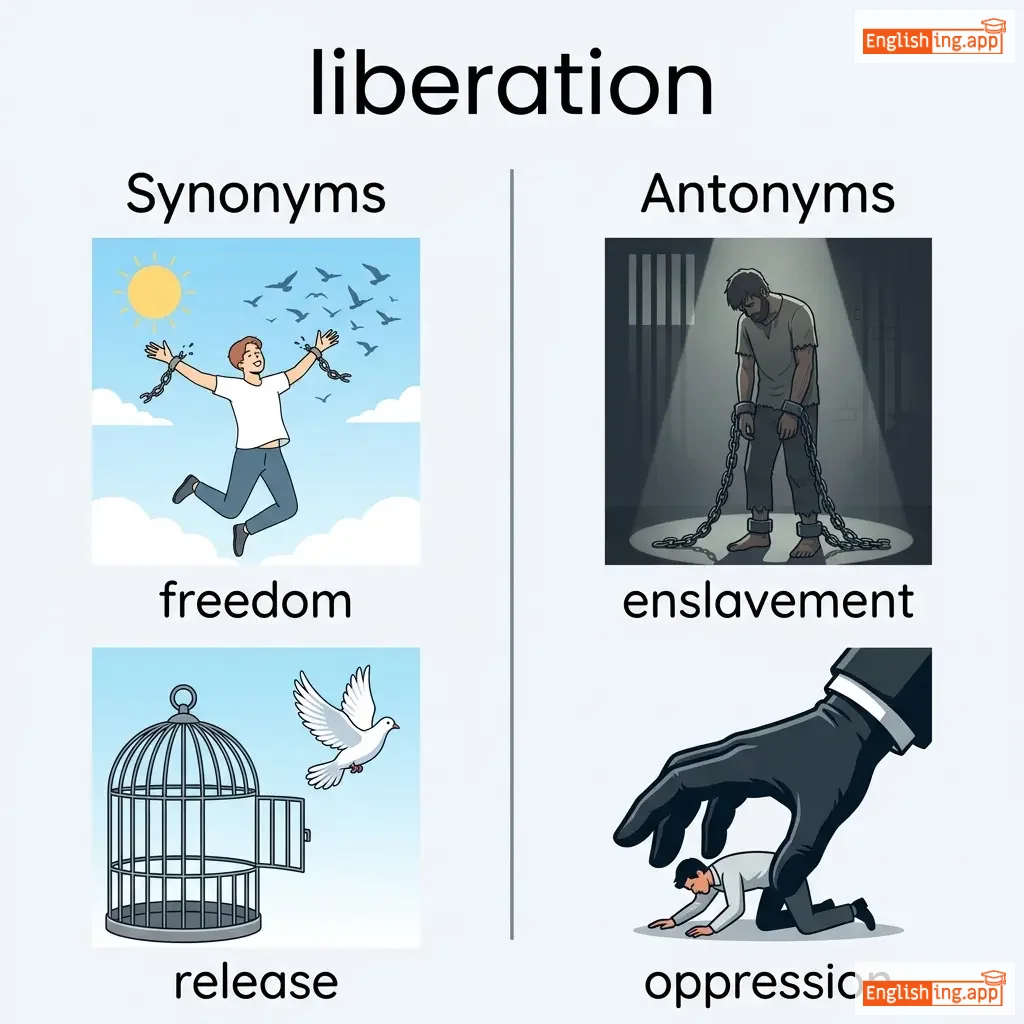
freedom, emancipation, release, independence
••••••
|
oppression, captivity, enslavement
••••••
|
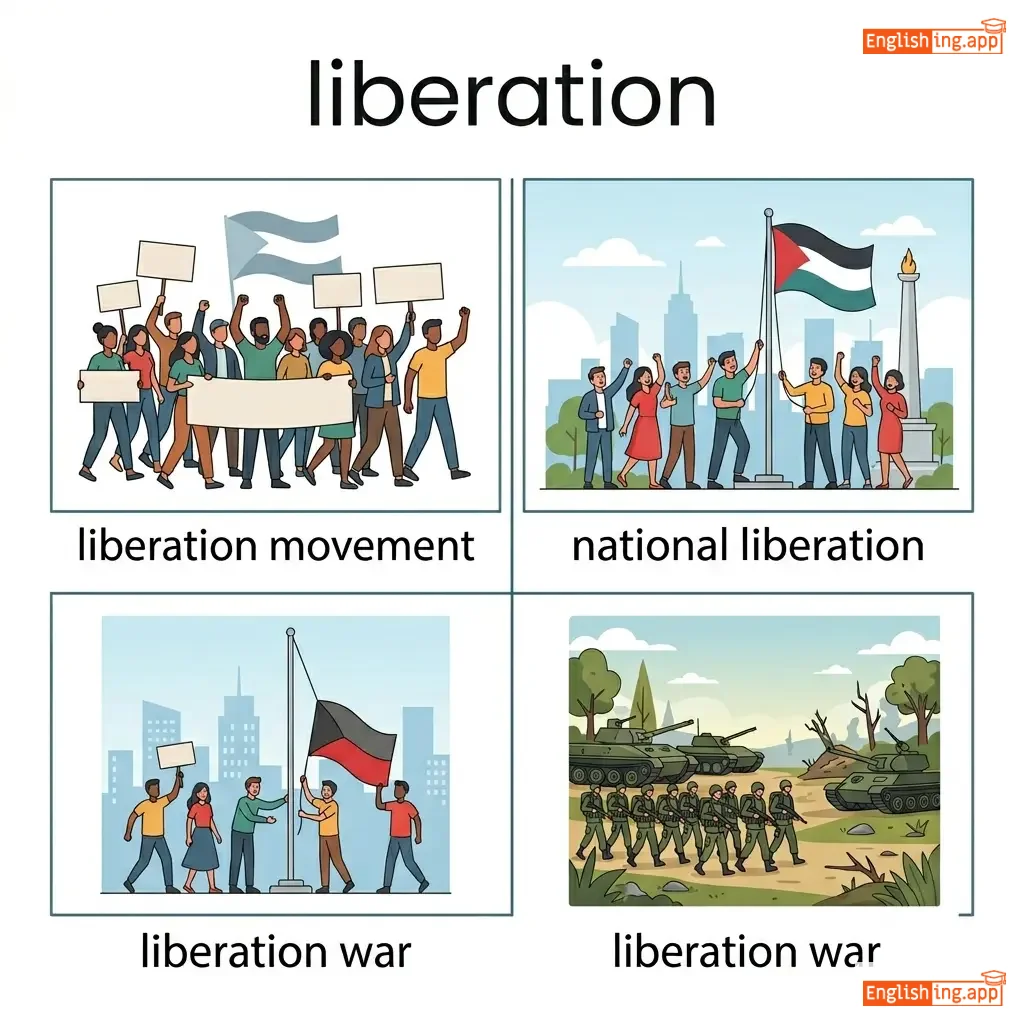
national liberation, women's liberation, liberation movement
••••••
|
In Japanese, '解放' is the act of liberating someone, leading to '自由' (freedom).
••••••
|
|
🕊️
••••••
|
/ˌlɪbəˈreɪʃən wɔːr/
noun
(リベレーション・ウォー)
••••••
|
- •••••• |
解放戦争
kaihou sensou
••••••
|
- •••••• | - •••••• | - •••••• | - •••••• |
a war fought to gain freedom from foreign rule, occupation, or oppression; an armed struggle for national independence
••••••
|
The liberation war reshaped the nation’s history and identity.
ザ・リベレーション・ウォー・リシェイプド・ザ・ネイションズ・ヒストリー・アンド・アイデンティティ。
••••••
|
解放戦争は国の歴史を大きく変えた。
kaihou sensou wa kuni no rekishi o ookiku kaeta
••••••
|
- •••••• | - •••••• | - •••••• |
war of independence, freedom struggle, emancipation war, revolutionary war
••••••
|
occupation, subjugation, enslavement
••••••
|
national liberation war, liberation war veterans, liberation war history, liberation war memorial
••••••
|
解放 = liberation, 戦争 = war → 解放戦争.
••••••
|
|
🗽
••••••
|
/ˈlɪbərti/
noun
(リバティ)
••••••
|
- •••••• |
自由
jiyuu
••••••
|
- •••••• | - •••••• | - •••••• | - •••••• |
the state of being free within society from oppressive restrictions
••••••
|
Freedom of speech is a basic liberty. |
言論の自由は基本的な自由です。
genron no jiyuu wa kihonteki na jiyuu desu.
••••••
|
take the liberty |
to do something without permission
••••••
|
自由を取る
jiyuu wo toru
••••••
|
freedom, independence, autonomy, right, privilege
••••••
|
slavery, oppression, restraint
••••••
|
personal liberty, civil liberty, liberty rights, at liberty
••••••
|
自由とは自由のこと — 自由の女神がそれを思い出させます!
••••••
|
|
📚
••••••
|
/laɪˈbrɛəriən/
noun
(ライブラリアン)
••••••
|
- •••••• |
司書
shisho
••••••
|
- •••••• | - •••••• | - •••••• | - •••••• |
a person who manages, organizes, and assists users in a library
••••••
|
The librarian helped me find a rare history book.
ザ ライブラリアン ヘルプト ミー ファインド ア レア ヒストリー ブック。
••••••
|
司書は私が珍しい歴史の本を見つけるのを手伝ってくれました。
shisho wa watashi ga mezurashii rekishi no hon o mitsukeru no o tetsudatte kuremashita
••••••
|
- •••••• | - •••••• | - •••••• |
library worker, archivist, information specialist, bibliothecary
••••••
|
reader, borrower
••••••
|
school librarian, head librarian, public librarian, librarian duties
••••••
|
Library の professional = 司書 (shisho)
••••••
|

