|
表情符号
|
单词 | Images | 翻译 | 过去时 | 过去分词 | 第三人称单数 | 动名词 | 含义 | 例句 | 例句翻译 | 示例表达 | 示例表达含义 | 示例表达翻译 | 同义词 | 反义词 | 搭配词 | 助记符 |
|---|---|---|---|---|---|---|---|---|---|---|---|---|---|---|---|---|---|
|
🏆
••••••
|
/ˈliːdɪŋ/
adjective
(lídìng)
••••••
|
- •••••• |
领先
lǐngxiān
••••••
|
- •••••• | - •••••• | - •••••• | - •••••• |
most important or most successful; at the front
••••••
|
She is one of the leading experts in the field. |
她是该领域的领先专家之一。
Tā shì gāi lǐngyù de lǐngxiān zhuānjiā zhī yī.
••••••
|
leading role |
the main role in a play or movie
••••••
|
主导角色
zhǔdǎo juésè
••••••
|
top, foremost, principal, chief, prominent
••••••
|
minor, secondary, insignificant
••••••
|
leading company, leading expert, leading role, leading position
••••••
|
Leading意味着走在前面,就像班级里总是坐在最前面的学生。
••••••
|
|
🍃
••••••
|
/liːf/
noun
(līf)
••••••
|
- •••••• |
叶子
yezi
••••••
|
- •••••• | - •••••• | - •••••• | - •••••• |
A flat, green part of a plant that grows from the stem or branch.
••••••
|
A green leaf fell from the tree. |
一片绿叶从树上掉了下来。
Yi pian lü ye cong shu shang diao le xia lai.
••••••
|
turn over a new leaf |
to make a fresh start or begin to behave in a better way
••••••
|
翻开新的一页
fān kāi xīn de yī yè
••••••
|
foliage, frond, blade, greenery
••••••
|
stem, root
••••••
|
green leaf, dry leaf, autumn leaf, leaf pattern
••••••
|
Leaf意味着叶子 – 就像书页一样,叶子也平坦。
••••••
|
|
📜
••••••
|
/ˈliːf.lət/
noun
(lì fú lè tè)
••••••
|
- •••••• |
传单; 宣传单
chuán dān; xuān chuán dān
••••••
|
- •••••• | - •••••• | - •••••• | - •••••• |
a printed sheet of paper containing information or advertising and usually distributed free
••••••
|
She handed out leaflets about the environmental campaign. |
她分发了有关环保运动的传单。
ta fen fa le you guan huan bao yun dong de chuan dan
••••••
|
- •••••• | - •••••• | - •••••• |
brochure, pamphlet, flyer, handout
••••••
|
book, manual
••••••
|
distribute leaflets, information leaflet, campaign leaflet
••••••
|
Leaflet = 来发 (广告) + 乐 (免费的传单)
••••••
|
|
🏆
••••••
|
/liːɡ/
noun
(lì)
••••••
|
- •••••• |
联赛
lian sai
••••••
|
- •••••• | - •••••• | - •••••• | - •••••• |
An association of people or groups united for a common purpose; also a unit of distance (old use).
••••••
|
Several clubs formed a league to promote sportsmanship. |
几个俱乐部组成了一个联盟,以促进体育精神。
Ji ge julebu zucheng le yi ge lianmeng, yi cujin tiyu jingshen.
••••••
|
out of someone's league |
Beyond someone's ability, status, or suitability.
••••••
|
超出某人能力范围
chao chu mou ren nengli fanwei
••••••
|
association, alliance, union, federation, coalition
••••••
|
rivalry, opposition, division
••••••
|
football league, professional league, in the same league
••••••
|
联赛:所有人齐心协力玩一起。
••••••
|
|
💧
••••••
|
/liːk/
noun/verb
(lìk)
••••••
|
- •••••• |
漏洞
lòudòng
••••••
|
leaked
lìkèd
••••••
|
leaked
lìkèd
••••••
|
leaks
lìks
••••••
|
leaking
lìkīng
••••••
|
to allow liquid or gas to escape; or a hole through which liquid or gas can escape
••••••
|
Water started to leak from the ceiling after the storm.
暴风雨过后,水开始从天花板漏出来。
••••••
|
暴风雨过后,水开始从天花板漏出来。
Bàofēngyǔ guòhòu, shuǐ kāishǐ cóng tiānhuābǎn lòuchūlái.
••••••
|
leak like a sieve
像筛子一样漏
••••••
|
to leak a lot, usually referring to a very porous or defective object
••••••
|
像筛子一样漏
xiàng shāizi yīyàng lòu
••••••
|
spill, escape, ooze
••••••
|
seal, close
••••••
|
leak water, leak information, leak pipe
••••••
|
漏 - 水像筛子一样漏出来
••••••
|
|
↘️
••••••
|
/liːn/
verb
(lin)
••••••
|

|
倾斜
qingxie
••••••
|
leaned
lind
••••••
|
leaned
lind
••••••
|
leans
lins
••••••
|
leaning
lining
••••••
|
To move or bend your body in a particular direction.
••••••
|
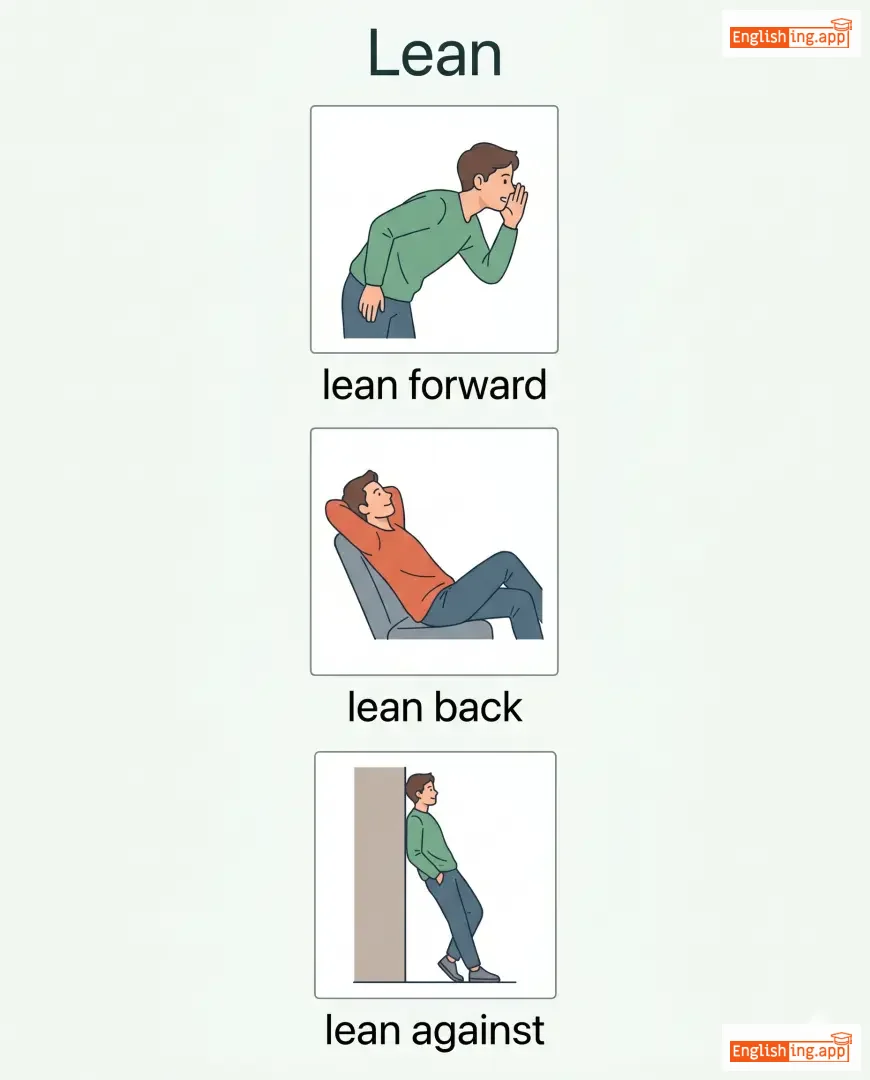
He had to lean forward to hear her clearly.
他必须向前倾斜才能清楚地听到她。
••••••
|
他必须向前倾斜才能清楚地听到她。
Ta bixu xiang qian qingxie cai neng qingchu de tingdao ta.
••••••
|
lean on someone
依赖某人
••••••
|
to rely on someone for support
••••••
|
依赖某人
Yilai mou ren
••••••
|
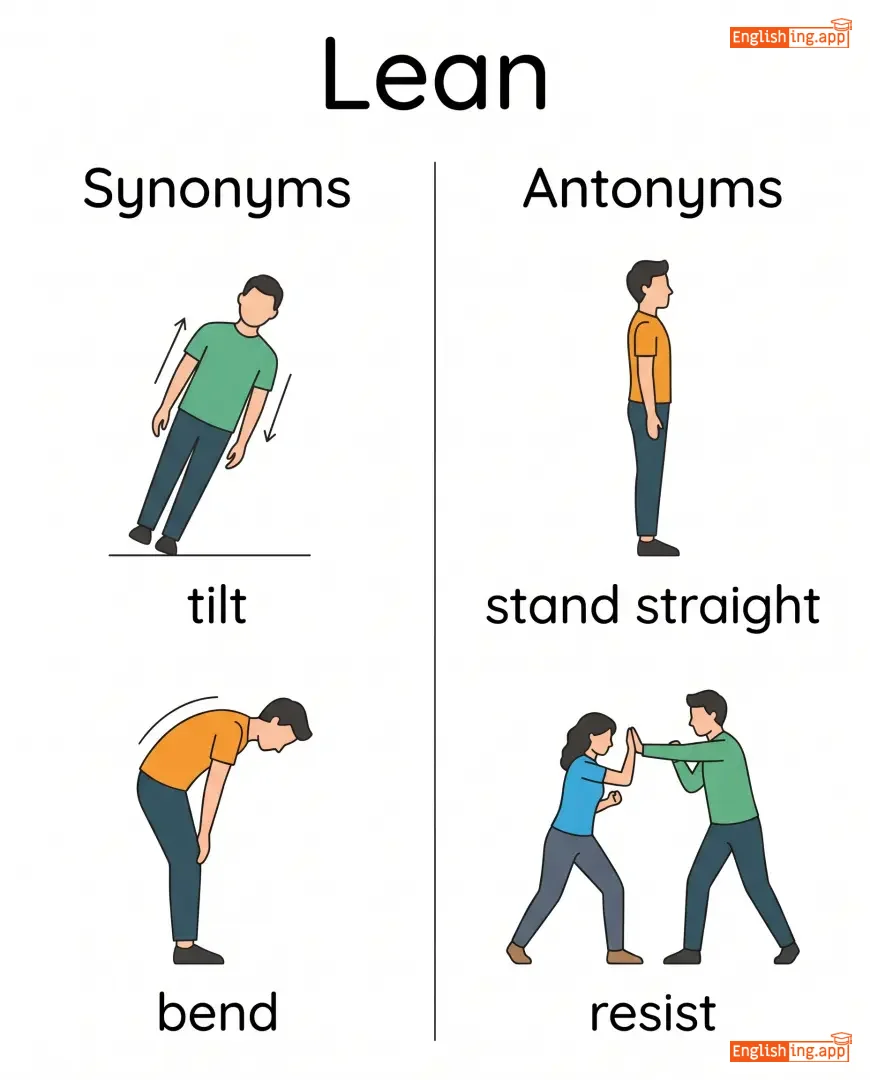
tilt, bend, rest, incline
••••••
|
stand straight, resist
••••••
|
lean forward, lean back, lean against, lean towards
••••••
|
倾斜意味着依赖,在考试中倾斜时你必须依赖别人。
••••••
|
|
🏃♂️
••••••
|
/liːp/
verb
(líp)
••••••
|
|
跳跃
tiaoyue
••••••
|
leapt
lept
••••••
|
leapt
lept
••••••
|
leaps
lips
••••••
|
leaping
lípíng
••••••
|
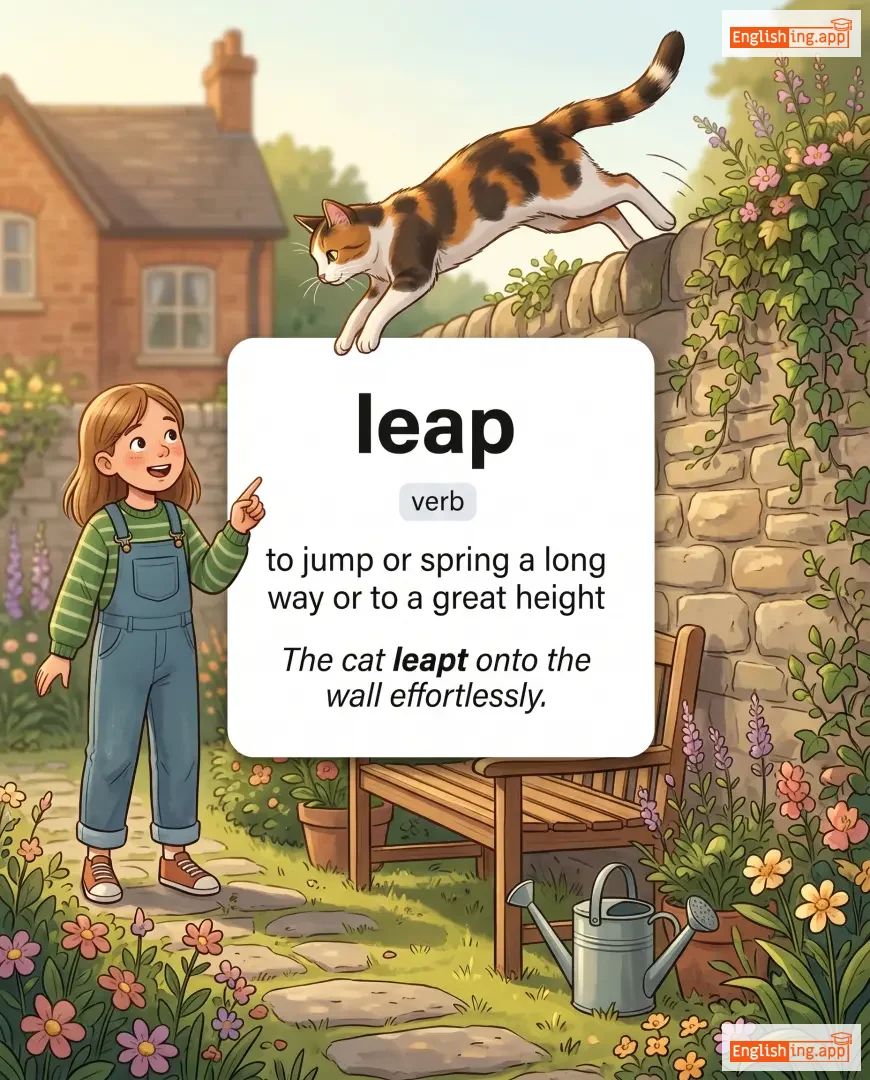
to jump or spring a long way or to a great height
••••••
|
The cat leapt onto the wall effortlessly.
猫毫不费力地跳到墙上。
••••••
|
猫毫不费力地跳到墙上。
Mao hao bu feili de tiaodao qiang shang.
••••••
|
leap of faith
Leap of faith
••••••
|
an act of believing in something uncertain
••••••
|
信念的跳跃
xinnian de tiaoyue
••••••
|
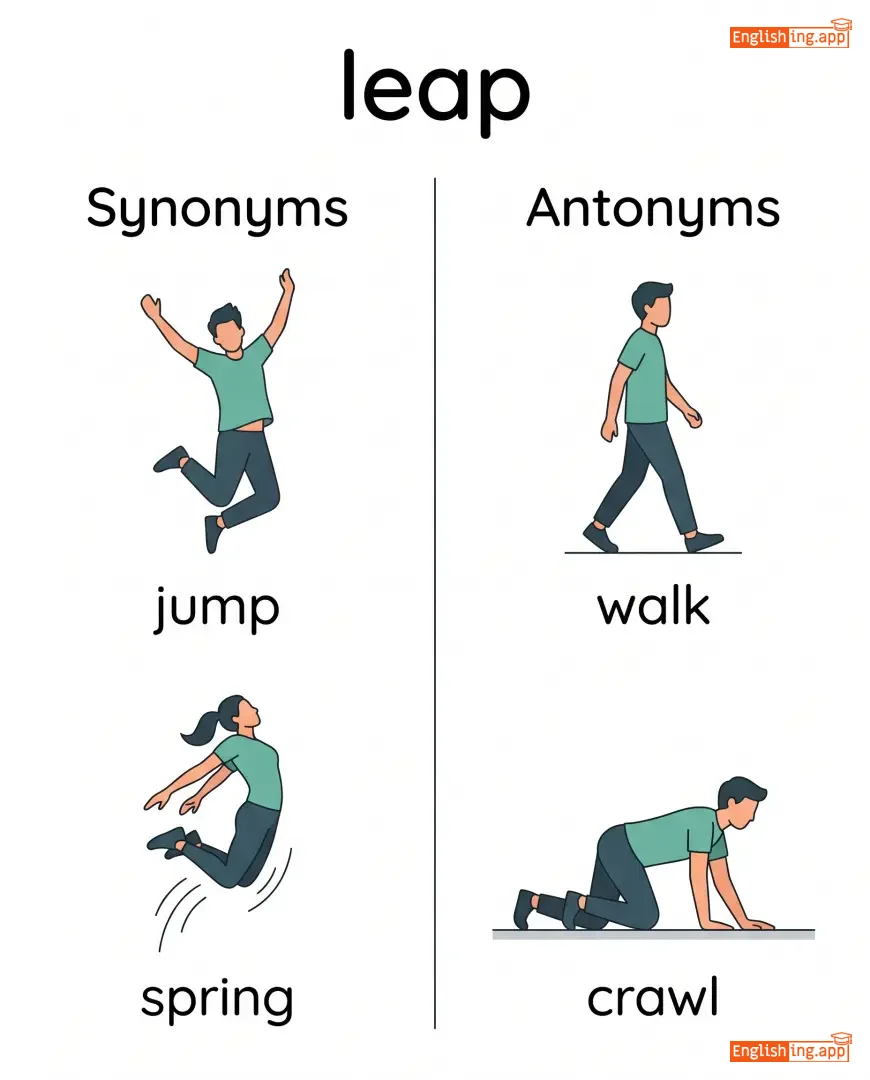
jump, spring, bound, hop, vault
••••••
|
walk, crawl, step
••••••
|
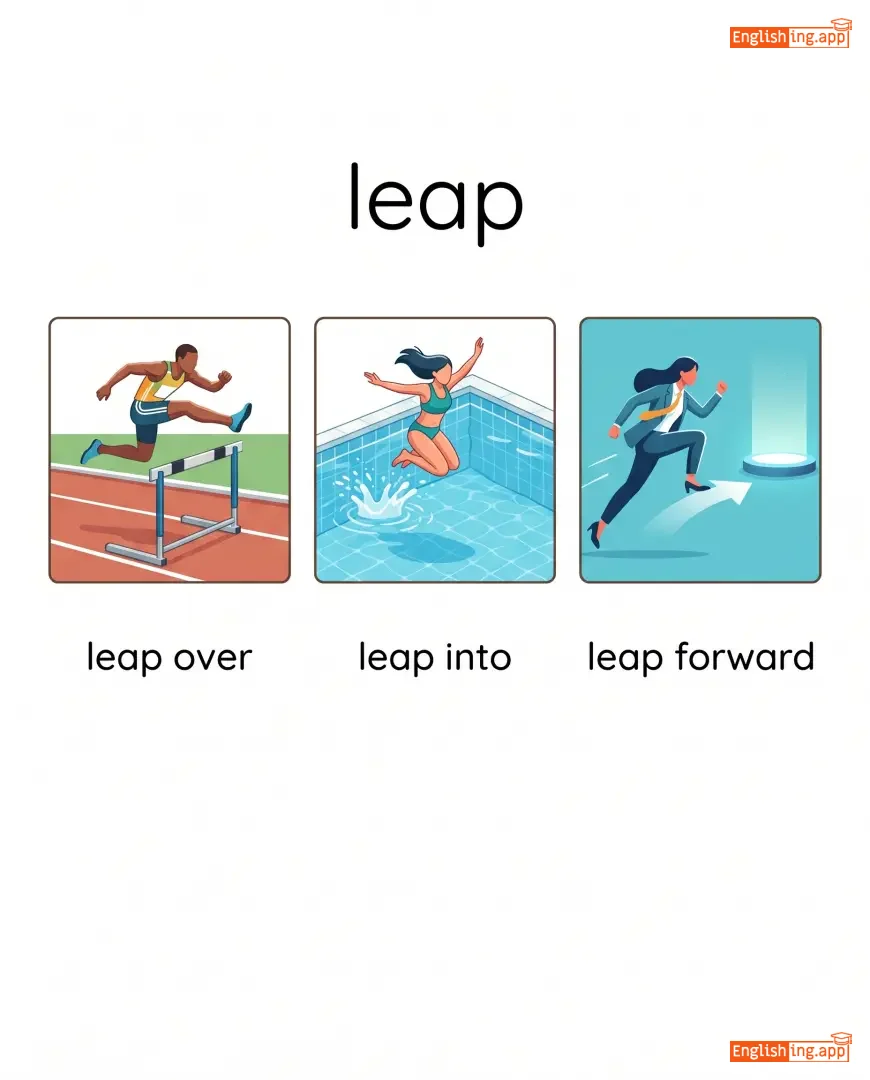
leap over, leap into, leap forward, leap of joy
••••••
|
Leap意味着跳跃 — 跳跃并向前 leap!
••••••
|
|
📘
••••••
|
/lɜːrn/
verb
(lè'ěrné)
••••••
|
|
学习
xuéxí
••••••
|
learned
lè'ěrnd
••••••
|
learned
lè'ěrnd
••••••
|
learns
lè'ěrns
••••••
|
learning
lè'ěrníng
••••••
|
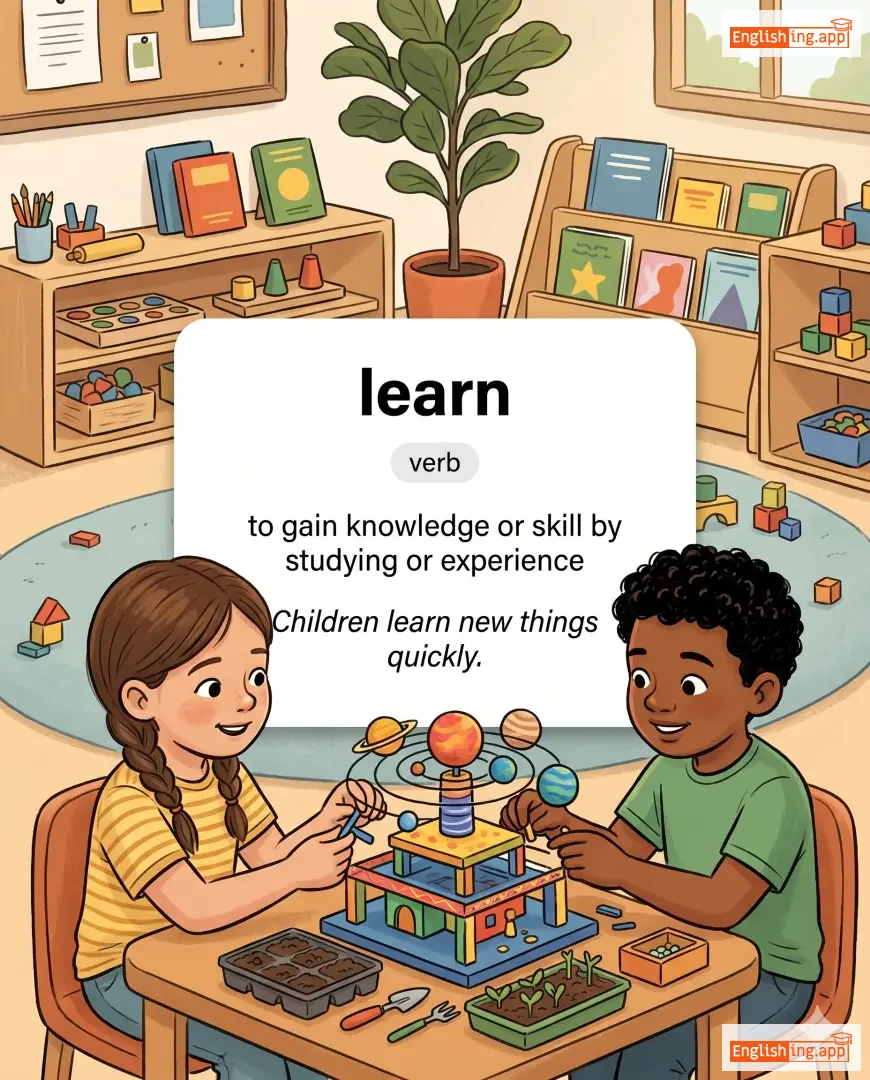
to gain knowledge or skill by studying or experience
••••••
|
Children learn new things quickly.
孩子们很快就学会了新事物。
••••••
|
孩子们很快就学会了新事物。
Háizimen hěn kuài jiù xuéhuìle xīn shìwù.
••••••
|
live and learn
活到老学到老
••••••
|
to learn from life experiences, often mistakes
••••••
|
活到老学到老
huó dào lǎo xué dào lǎo
••••••
|
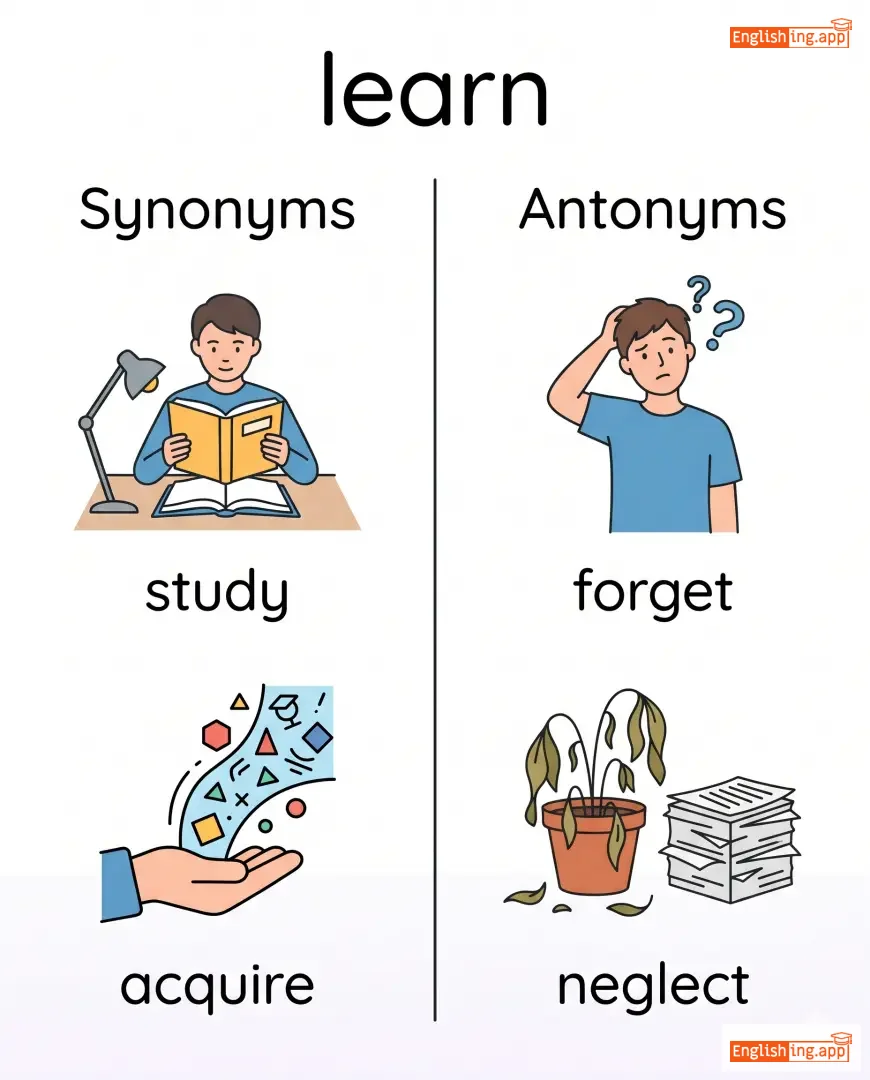
study, acquire, master, understand, grasp
••••••
|
forget, neglect, ignore
••••••
|
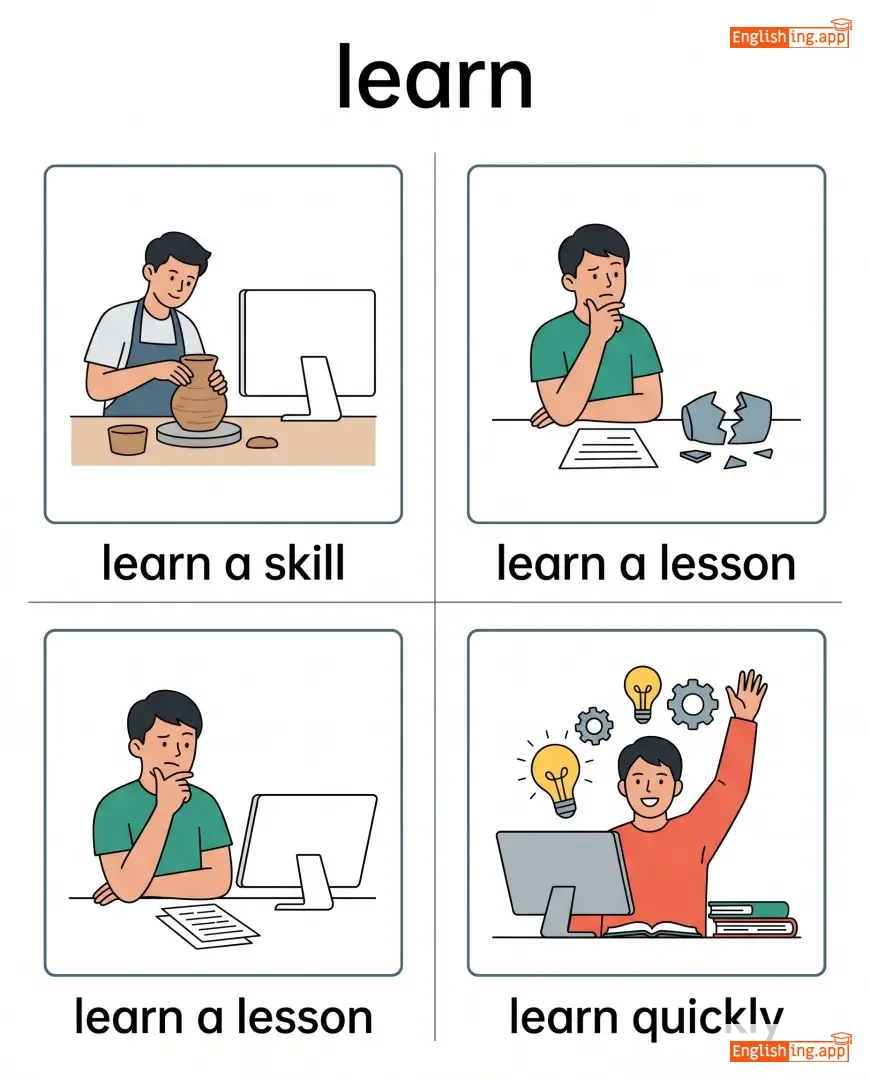
learn a skill, learn a lesson, learn quickly, learn about
••••••
|
Learn 就是学习,像用灯笼学习新知识。
••••••
|
|
📚
••••••
|
/lɜːrnd/
adjective; verb (past and past participle)
(勒恩德)
••••••
|
- •••••• |
博学的
boxuede
••••••
|
learned
勒恩德
••••••
|
learned
勒恩德
••••••
|
learns
勒恩兹
••••••
|
learning
勒恩宁
••••••
|
having acquired much knowledge through study; gained knowledge or skill through experience or teaching
••••••
|
She is a learned scholar with deep knowledge of history.
希 伊兹 阿 勒恩德 斯科勒 威兹 迪普 诺利基 奥夫 历史
••••••
|
她是一位对历史有深厚了解的博学学者。
ta shi yi wei dui lishi you shenhou liaojie de boxue xuezhe
••••••
|
learned the hard way
勒恩德 德 哈德 韦
••••••
|
to gain knowledge through difficult or painful experience
••••••
|
吃一堑长一智
chi yi qian zhang yi zhi
••••••
|
educated, knowledgeable, scholarly, erudite, informed
••••••
|
ignorant, uneducated, illiterate
••••••
|
learned scholar, learned behavior, learned response, learned opinion
••••••
|
Learned = 博学的, learn 很多就博学
••••••
|
|
📘
••••••
|
/ˈlɜːrnər/
noun
(勒尔纳)
••••••
|
- •••••• |
学习者
xuexizhe
••••••
|
- •••••• | - •••••• | - •••••• | - •••••• |
a person who is acquiring knowledge or skill through study or experience
••••••
|
She is a fast learner.
she yi zi a fast learner
••••••
|
她学得很快。
ta xue de hen kuai
••••••
|
- •••••• | - •••••• | - •••••• |
student, pupil, trainee, apprentice, novice
••••••
|
teacher, instructor, expert
••••••
|
fast learner, quick learner, slow learner, eager learner
••••••
|
xuexi 是学习—学习者就是 learner
••••••
|
|
📚
••••••
|
/ˈlɜrnɪŋ/
noun
(lèɚnɪŋ)
••••••
|
- •••••• |
学习
xuéxí
••••••
|
- •••••• | - •••••• | - •••••• | - •••••• |
The process of gaining knowledge or skills through study or experience.
••••••
|
Learning a new language can be exciting.
学习一门新语言可能是令人兴奋的。
••••••
|
学习一门新语言可能是令人兴奋的。
Xuéxí yīmén xīn yǔyán kěnéng shì lìng rén xīngfèn de.
••••••
|
lifelong learning
终身学习
••••••
|
continuous pursuit of knowledge throughout life
••••••
|
终身学习
zhōngshēn xuéxí
••••••
|
education, knowledge, training, study
••••••
|
ignorance, unawareness
••••••
|
learning process, learning skills, online learning, active learning
••••••
|
Learning 学习了新知识,就是在给未来积累能量。
••••••
|
|
⬇️
••••••
|
/liːst/
adjective
(lī sīt)
••••••
|
- •••••• |
最少
zuì shǎo
••••••
|
- •••••• | - •••••• | - •••••• | - •••••• |
smallest in amount, extent, or importance
••••••
|
She showed the least interest in the project. |
她对这个项目表现出最少的兴趣。
Tā duì zhège xiàngmù biǎoxiàn chū zuì shǎo de xìngqù.
••••••
|
at least |
used to indicate the minimum or to emphasize something
••••••
|
至少
zhì shǎo
••••••
|
smallest, minimal, slightest, meager
••••••
|
most, greatest, maximum
••••••
|
at least, least important, least effort, least number
••••••
|
Least代表最少,想象最少的事情总是最小的。
••••••
|
|
👞
••••••
|
/ˈlɛðər/
noun
(莱德)
••••••
|
- •••••• |
皮革
pige
••••••
|
- •••••• | - •••••• | - •••••• | - •••••• |
A material made from the skin of an animal, usually treated and used to make clothing, shoes, or furniture.
••••••
|
He bought a leather jacket for winter. |
他为冬天买了一件皮革夹克。
Ta wei dongtian mai le yijian pige jieke.
••••••
|
tough as leather |
very strong and durable
••••••
|
像皮革一样坚硬
Xiang pige yiyang jianying
••••••
|
hide, skin, suede, material
••••••
|
fabric, cloth
••••••
|
leather jacket, leather shoes, leather bag, leather belt
••••••
|
Leather意味着皮革 – 皮革夹克意味着皮革夹克。
••••••
|
|
🚶♂️
••••••
|
/liːv/
verb
(liv)
••••••
|
|
离开
likai
••••••
|
left
left
••••••
|
left
left
••••••
|
leaves
leaves
••••••
|
leaving
leaving
••••••
|
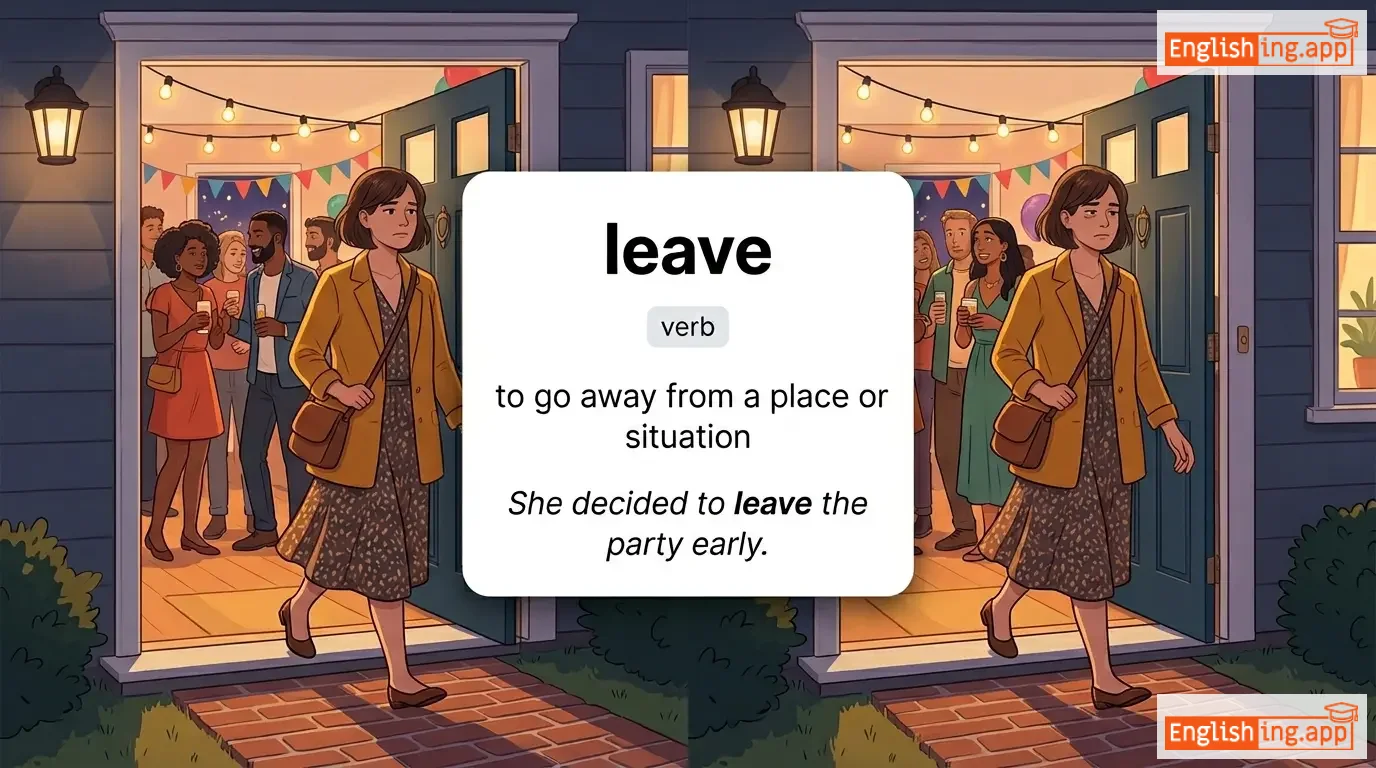
to go away from a place or situation
••••••
|
She decided to leave the party early.
她决定提前离开派对。
••••••
|
她决定提前离开派对。
Ta jueding tiqian likai paidui.
••••••
|
leave no stone unturned
不留一石未翻
••••••
|
to try every possible course of action
••••••
|
不留一石未翻
bu liu yi shi wei fan
••••••
|
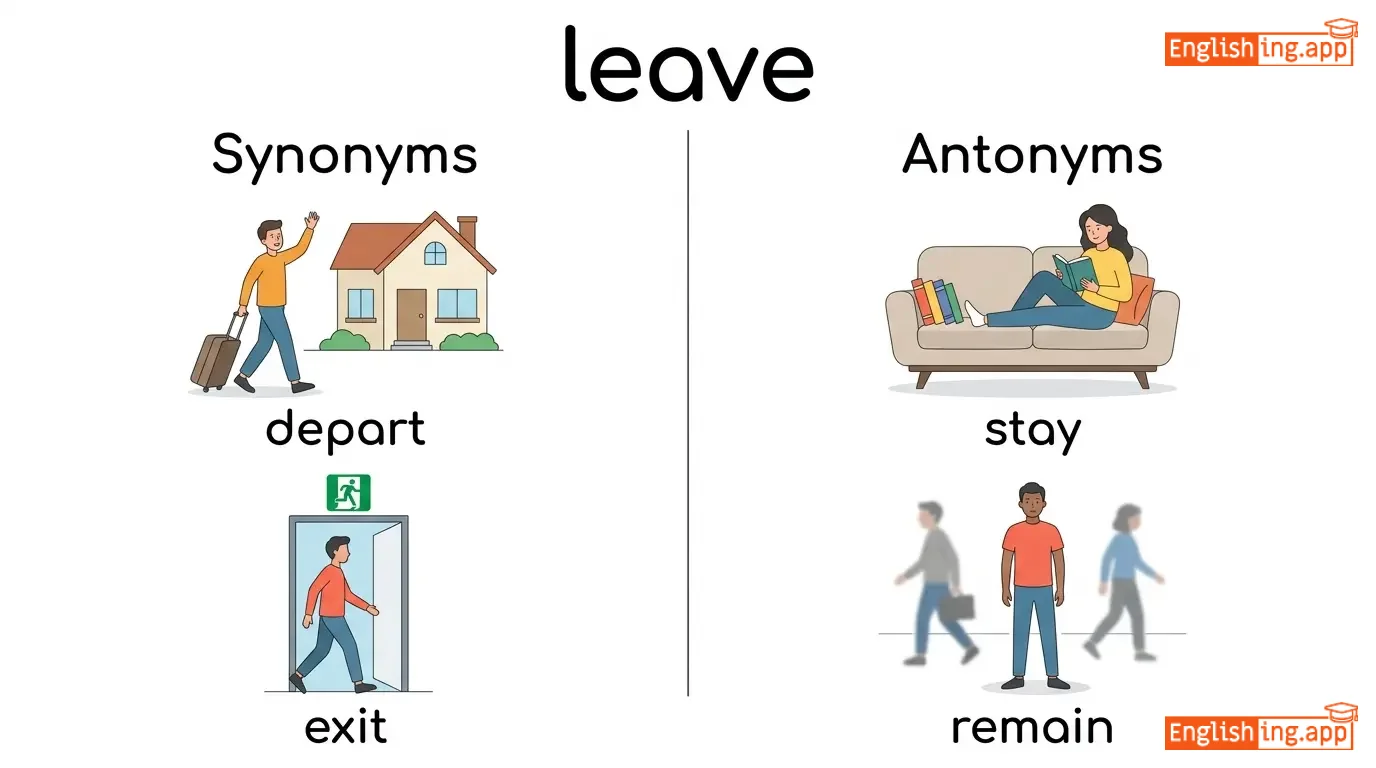
depart, exit, withdraw, quit, abandon
••••••
|
stay, remain, arrive
••••••
|
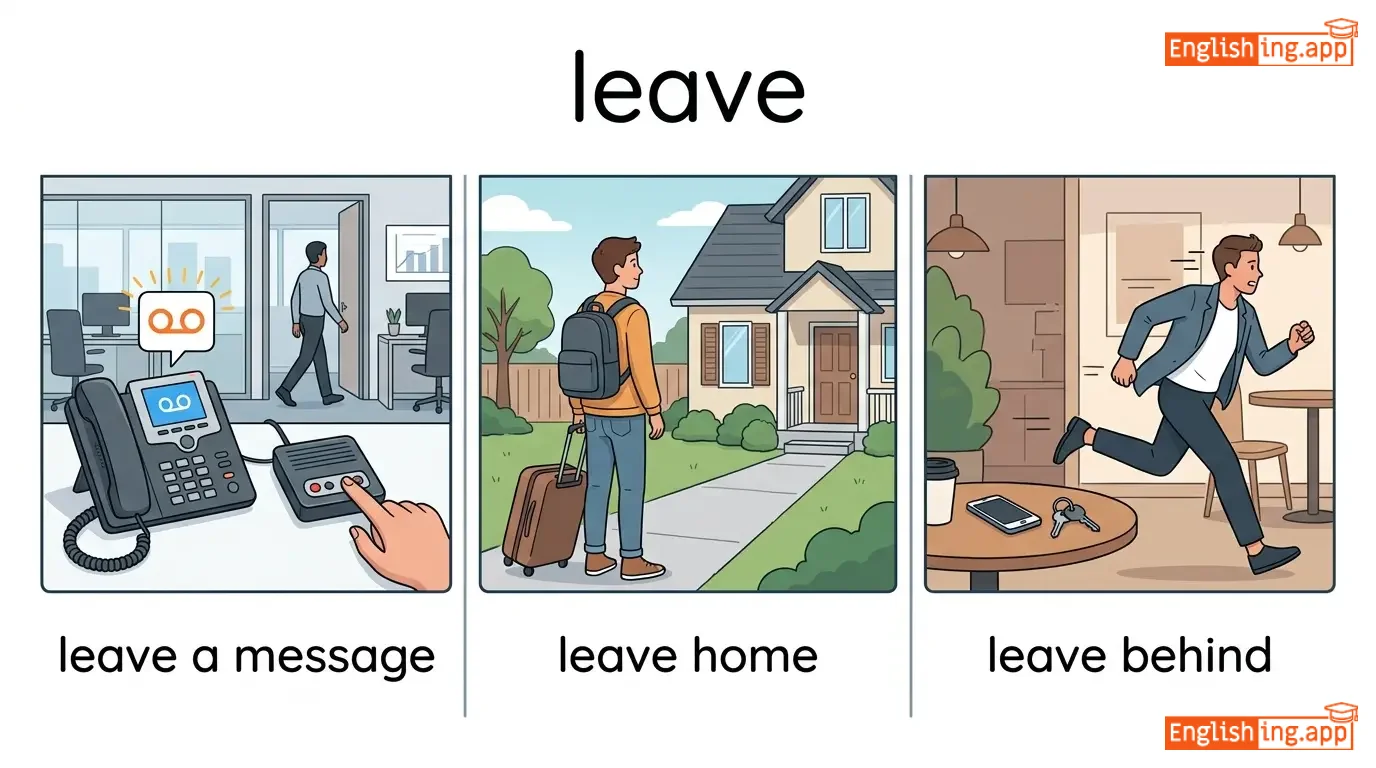
leave a message, leave home, leave behind, leave early
••••••
|
离开和'left'很相似,离开就是向前走,像'left'一样。
••••••
|
|
🎓
••••••
|
/ˈlektʃər/
noun
(lè kè chū)
••••••
|
- •••••• |
讲座
jiangzuo
••••••
|
- •••••• | - •••••• | - •••••• | - •••••• |
a talk given to a group of people to teach them about a subject
••••••
|
The professor gave a lecture on climate change. |
教授就气候变化做了讲座。
Jiaoshou jiu qihou bianhua zuole jiangzuo.
••••••
|
give a lecture |
to deliver a talk or presentation
••••••
|
做讲座
zuo jiangzuo
••••••
|
speech, talk, address, presentation, discourse
••••••
|
silence, quiet, conversation
••••••
|
give a lecture, attend a lecture, lecture hall, public lecture
••••••
|
Lecture 在中文中是讲座 🎤 — 记住:在讲座中学习!
••••••
|
|
🎓
••••••
|
/ˈlɛktʃərər/
noun
(莱克彻勒)
••••••
|
- •••••• |
讲师
jiangshi
••••••
|
- •••••• | - •••••• | - •••••• | - •••••• |
a person who gives lectures, especially at a college or university
••••••
|
The lecturer explained the theory with clear examples.
德 莱克彻勒 解释 了 理论 用 清楚 的 例子。
••••••
|
讲师用清楚的例子解释了理论。
Jiangshi yong qingchu de lizi jieshi le lilun
••••••
|
- •••••• | - •••••• | - •••••• |
teacher, instructor, professor, speaker, academic
••••••
|
student, learner
••••••
|
guest lecturer, university lecturer, senior lecturer, lecture hall
••••••
|
Lecturer 讲 lecture,所以是讲师
••••••
|
|
⬅️
••••••
|
/lɛft/
adjective, noun, adverb, verb (past tense of leave)
(left)
••••••
|
- •••••• |
左
zuo
••••••
|
- •••••• | - •••••• | - •••••• | - •••••• |
on or towards the side of the body that is to the west when facing north
••••••
|
He turned left at the intersection. |
他在交叉口左转。
ta zai jiaochakou zuo zhuan.
••••••
|
out of left field |
something surprising or unexpected
••••••
|
令人惊讶或意外的事情
ling ren jingya huo yiwai de shiqing
••••••
|
port, remaining, gone, departed
••••••
|
right, present
••••••
|
left side, left hand, turn left, left over
••••••
|
左是左,右就是右
••••••
|
|
🦵
••••••
|
/lɛɡ/
noun
(leg)
••••••
|
- •••••• |
腿
tui
••••••
|
- •••••• | - •••••• | - •••••• | - •••••• |
one of the limbs on which a person or animal walks and stands
••••••
|
He injured his leg while playing football.
他在踢足球时伤到了腿。
••••••
|
他在踢足球时伤到了腿。
Ta zai ti zuqiu shi shangdao le tui.
••••••
|
stretch your legs
伸展双腿
••••••
|
to walk around after sitting for a long time
••••••
|
长时间坐着后走动
chang shijian zuozhe hou zoudong
••••••
|
limb, shank, appendage, extremity
••••••
|
arm, wing
••••••
|
leg injury, leg pain, leg muscles, broken leg
••••••
|
Leg 代表腿,在足球中'长腿'是指快速奔跑的能力。
••••••
|
|
🏛️
••••••
|
/ˈlɛɡəsi/
noun
(léi gè xī)
••••••
|

|
遗产
yichan
••••••
|
- •••••• | - •••••• | - •••••• | - •••••• |
Something handed down from the past, such as money, property, or traditions.
••••••
|
Her artistic legacy continues to inspire young painters. |
她的艺术遗产继续激励年轻的画家。
Tā de yìshù yíchǎn jìxù jīlì niánqīng de huàjiā.
••••••
|
leave a legacy |
To create something that outlives you.
••••••
|
留下遗产
Liú xià yíchǎn
••••••
|
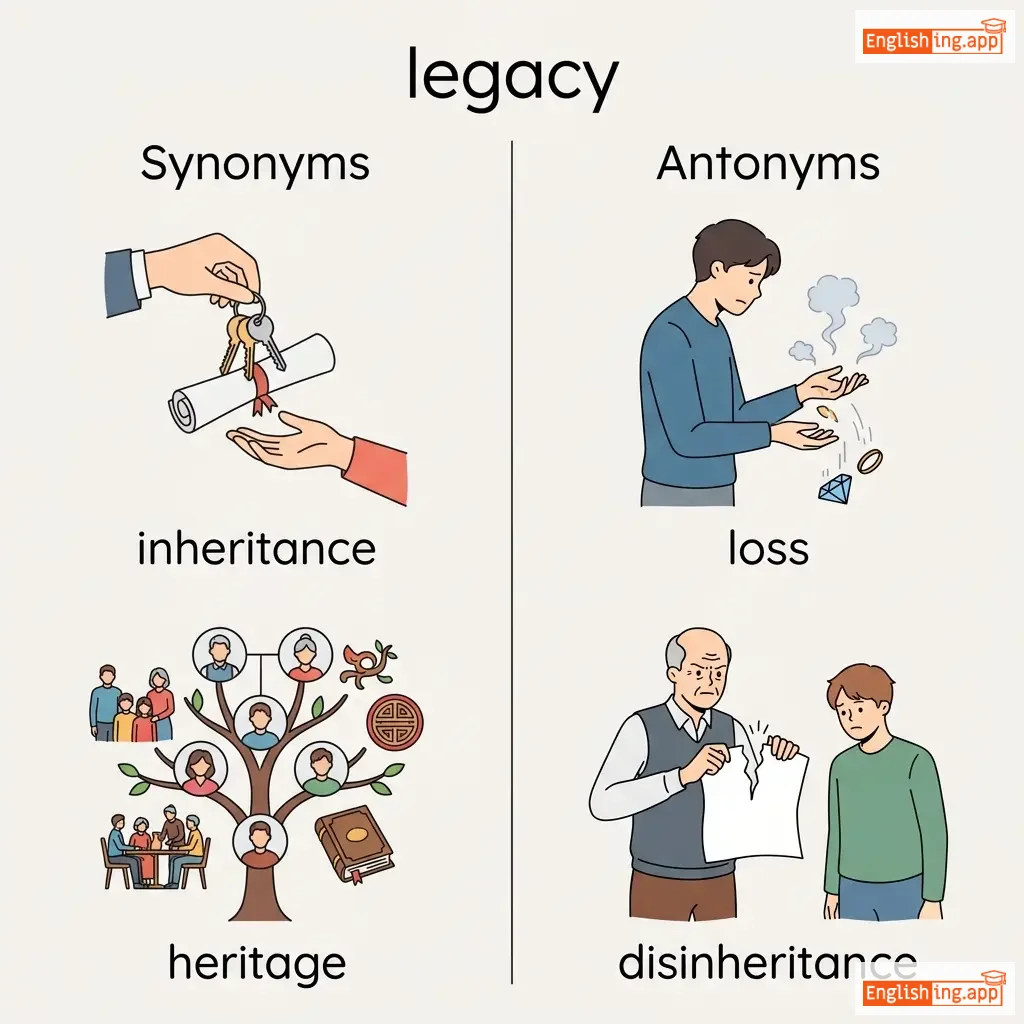
inheritance, heritage, bequest, tradition, gift
••••••
|
loss, disinheritance
••••••
|
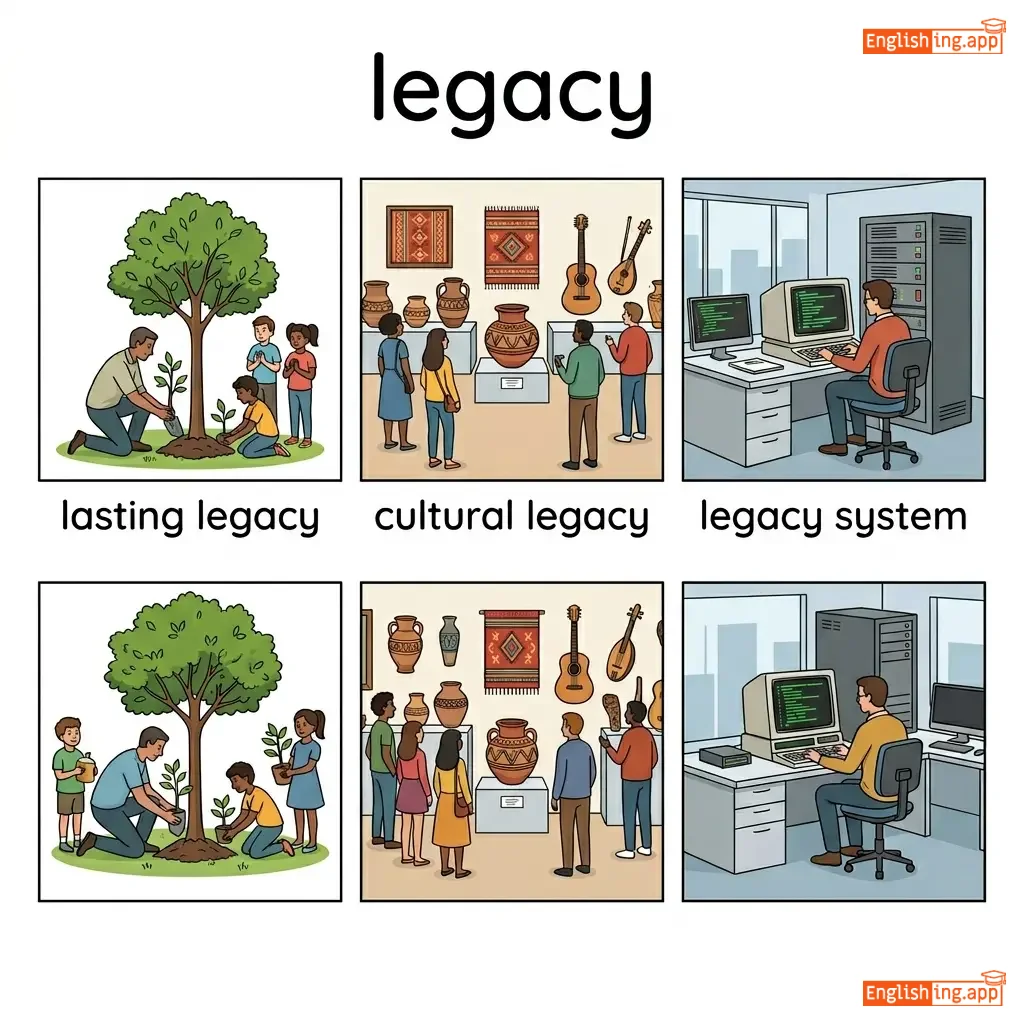
lasting legacy, cultural legacy, legacy system
••••••
|
Legacy 就像遗产一样传承下去,继续启发他人。
••••••
|
|
⚖️
••••••
|
/ˈliːɡəl/
adjective
(合法)
••••••
|

|
合法的
hefa de
••••••
|
- •••••• | - •••••• | - •••••• | - •••••• |
relating to the law
••••••
|
He sought legal advice before signing the contract.
他在签署合同之前寻求法律咨询。
••••••
|
他在签署合同之前寻求法律咨询。
Tā zài qiānshǔ hétong zhīqián xúnqiú fǎlǜ zīxún.
••••••
|
legal loophole
法律漏洞
••••••
|
a gap or ambiguity in the law that allows someone to avoid following it
••••••
|
法律漏洞
fǎlǜ lòudòng
••••••
|
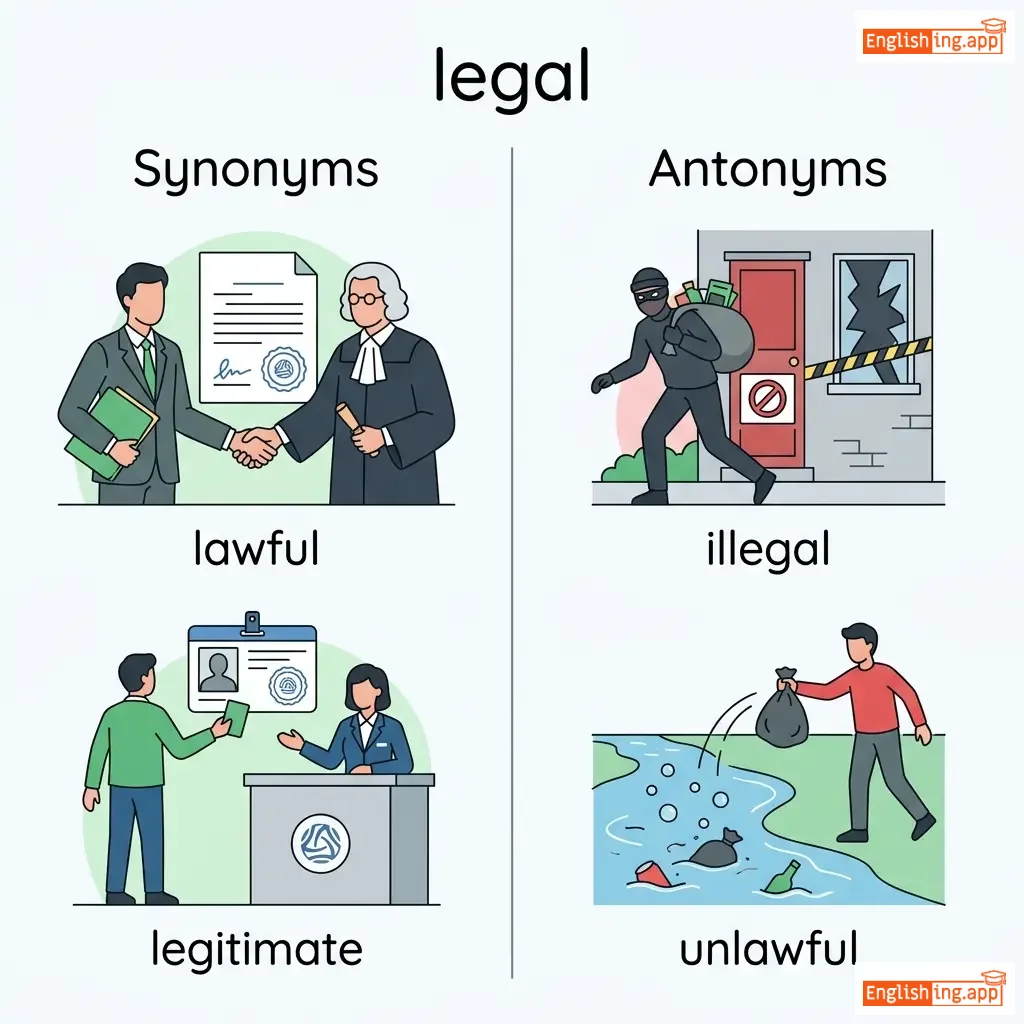
lawful, legitimate, valid, authorized
••••••
|
illegal, unlawful, illicit
••••••
|
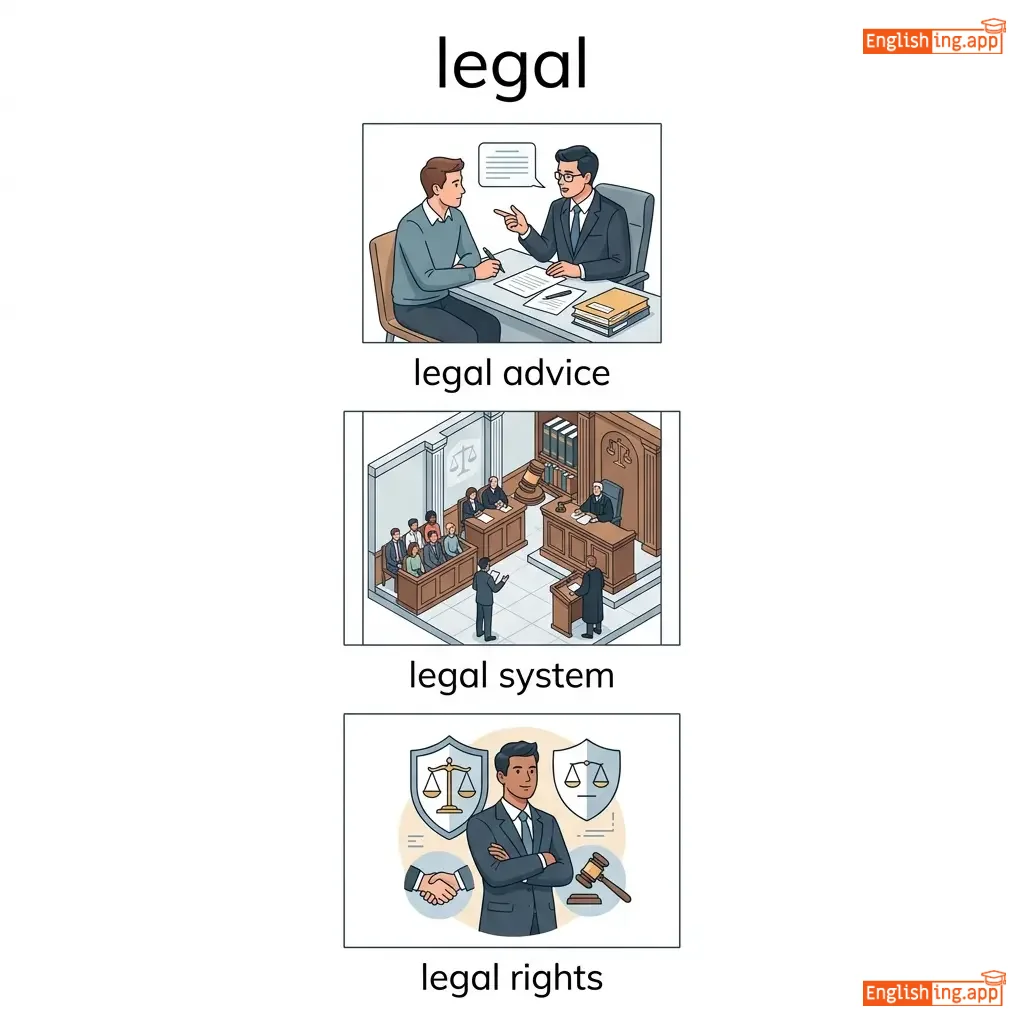
legal advice, legal system, legal rights, legal action
••••••
|
Legal表示合法的,像合法的文件一样有效。
••••••
|
|
🌟
••••••
|
/ˈlɛdʒənd/
noun
(léjéndá)
••••••
|
- •••••• |
传说
chuánshuō
••••••
|
- •••••• | - •••••• | - •••••• | - •••••• |
A traditional story popularly regarded as historical but unauthenticated; also a famous person admired for achievements.
••••••
|
The footballer is considered a legend in his country. |
这位足球运动员在他的国家被视为传奇人物。
Zhè wèi zúqiú yùndòngyuán zài tā de guójiā bèi shì wéi chuánshuō rénwù.
••••••
|
living legend |
A person who is still alive but already regarded as legendary.
••••••
|
活传奇
huó chuánshuō
••••••
|
myth, tale, fable, icon, hero
••••••
|
fact, reality
••••••
|
ancient legend, living legend, sports legend
••••••
|
传说给人传奇般的感觉,像一个永不消失的故事。
••••••
|
|
🌟
••••••
|
/ˈlɛdʒəndɛri/
adjective
••••••
|
- •••••• | - •••••• | - •••••• | - •••••• | - •••••• | - •••••• |
remarkable enough to be famous; often used to describe something that is iconic or widely known
••••••
|
The legendary musician performed in front of a packed stadium. |
- •••••• | - •••••• | - •••••• | - •••••• |
famous, renowned, iconic
••••••
|
obscure, unknown
••••••
|
legendary figure, legendary status, legendary career
••••••
|
No •••••• |
|
⚖️
••••••
|
/ˌledʒɪsˈleɪʃən/
noun
(立法)
••••••
|
- •••••• |
立法
lifa
••••••
|
- •••••• | - •••••• | - •••••• | - •••••• |
laws considered collectively, or the act of making laws
••••••
|
The government passed new legislation to protect the environment. |
政府通过了新的立法来保护环境。
Zhèngfǔ tōngguòle xīn de lifa lái bǎohù huánjìng.
••••••
|
piece of legislation |
a single law or act passed by a legislature
••••••
|
立法的一部分
lifa de yī bùfèn
••••••
|
law, regulation, statute, decree, ordinance
••••••
|
anarchy, lawlessness
••••••
|
pass legislation, new legislation, environmental legislation, draft legislation
••••••
|
立法就像是‘立’法的基础,想象法律是支撑整个社会的框架!
••••••
|
|
🏛️
••••••
|
/ˈlɛdʒɪslətɪv/
adjective
(立法的)
••••••
|
- •••••• |
立法的
lifade
••••••
|
- •••••• | - •••••• | - •••••• | - •••••• |
relating to the making of laws
••••••
|
The legislative body passed the new tax bill. |
立法机构通过了新的税法。
Lifa jīgòu tōngguòle xīn de shuìfǎ.
••••••
|
legislative power |
the authority to make laws
••••••
|
立法权力
lifaquei li
••••••
|
law-making, juridical, parliamentary, statutory
••••••
|
executive, judicial
••••••
|
legislative body, legislative assembly, legislative process, legislative framework
••••••
|
Legislative意味着与制定法律有关——在立法机构,Leg 是积极的。
••••••
|
|
🏛️
••••••
|
/ˈlɛdʒɪsˌleɪtʃər/
noun
(lɛdʒɪsˌleɪtʃər)
••••••
|
|
立法机关
lifǎ jīguān
••••••
|
- •••••• | - •••••• | - •••••• | - •••••• |
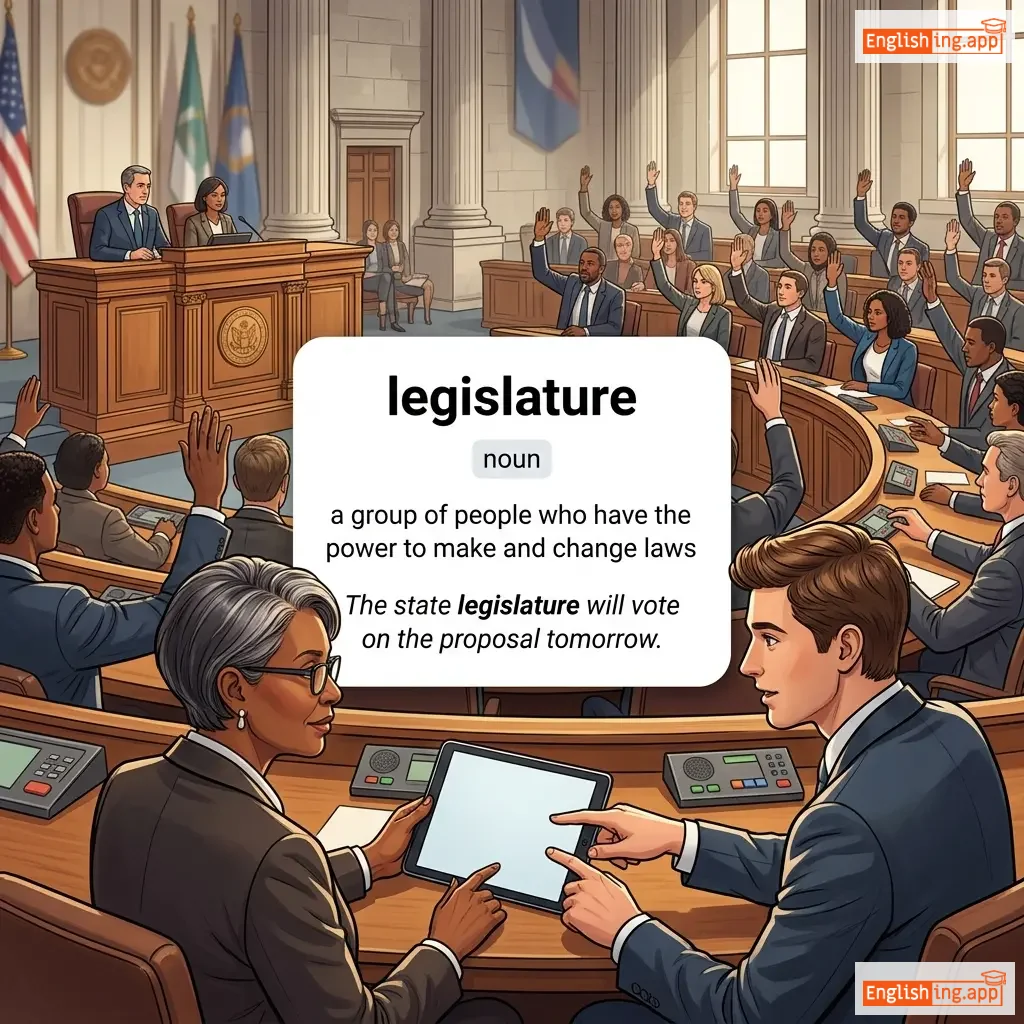
a group of people who have the power to make and change laws
••••••
|
The state legislature will vote on the proposal tomorrow.
州立立法机构明天将对提案进行投票。
••••••
|
州立立法机关明天将对提案进行投票。
Zhōu lì lìfǎ jīguān míngtiān jiāng duì tí'àn jìnxíng tóupiào.
••••••
|
- •••••• | - •••••• | - •••••• |
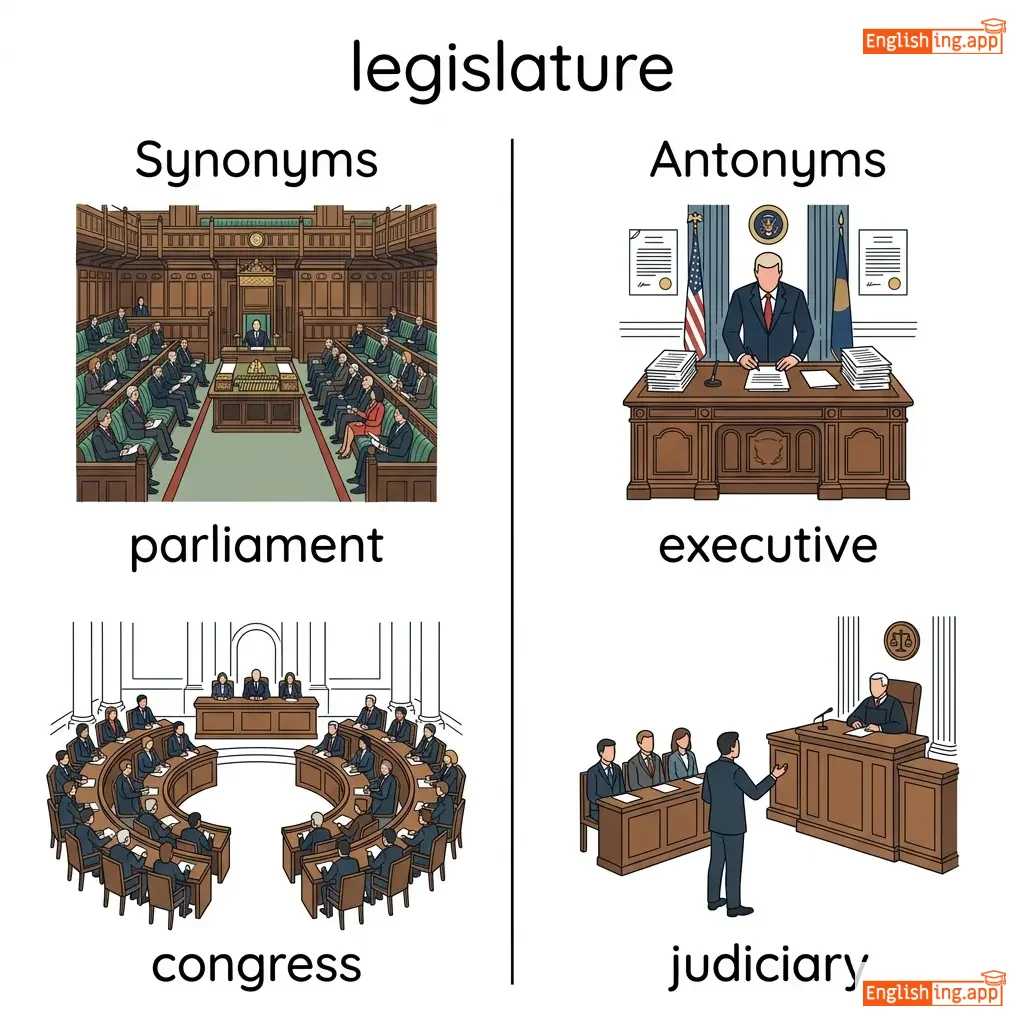
parliament, congress, assembly, senate
••••••
|
executive, judiciary
••••••
|
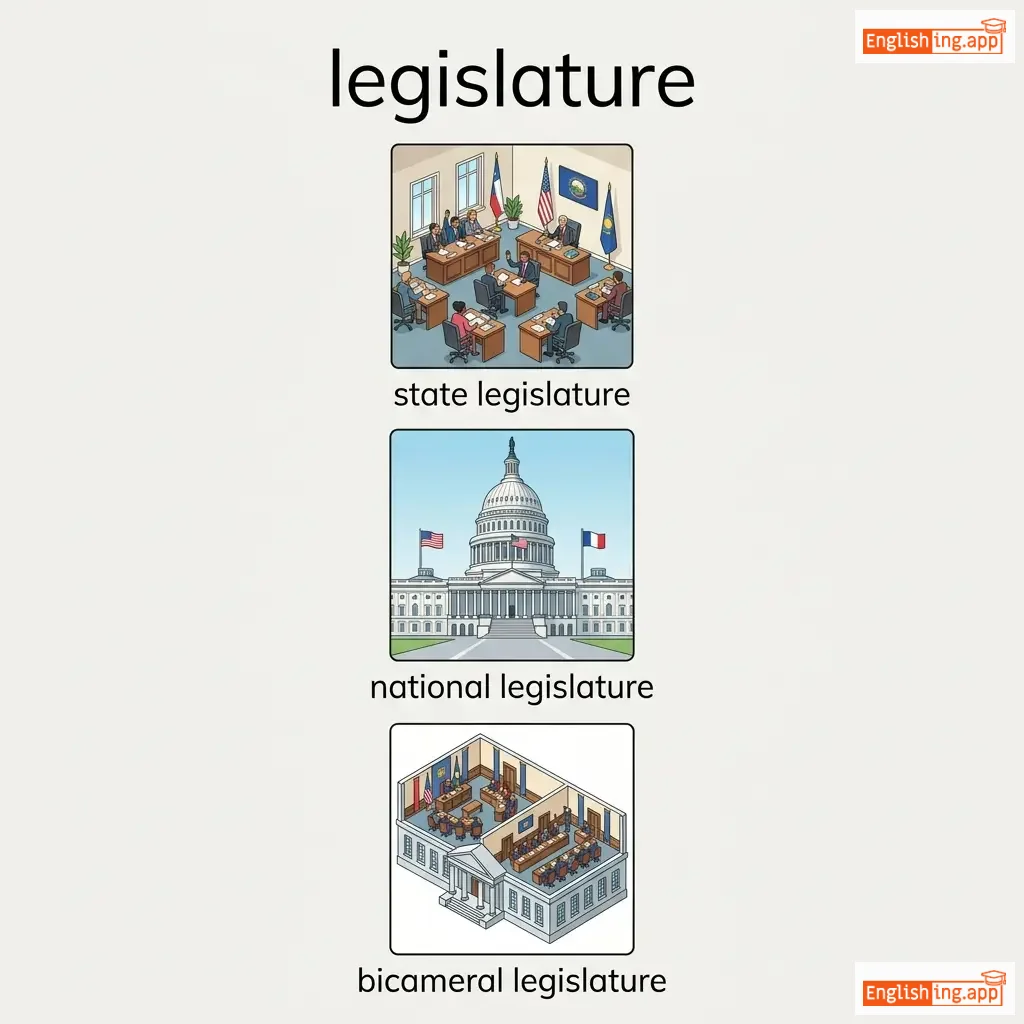
state legislature, national legislature, bicameral legislature
••••••
|
Legislature 意味着立法机关 — 它是制定法律的地方。
••••••
|
|
✅
••••••
|
/lɪˈdʒɪtɪmət/
adjective
(lìjìtìmìt)
••••••
|
- •••••• |
合法
hefa
••••••
|
- •••••• | - •••••• | - •••••• | - •••••• |
Conforming to the law or to rules; valid or acceptable.
••••••
|
She presented a legitimate reason for her absence.
她为她的缺席提出了一个合法的理由。
••••••
|
她为她的缺席提出了一个合法的理由。
Ta wei ta de quexi tichule yige hefa de liyi.
••••••
|
legitimate concerns
合法的担忧
••••••
|
Valid or reasonable worries or issues.
••••••
|
合法的担忧
hefa de danyou
••••••
|
lawful, valid, genuine, proper, authentic
••••••
|
illegal, fake, invalid
••••••
|
legitimate business, legitimate child, legitimate claim, legitimate interest
••••••
|
Legitimate 意味着合法,因此 legitimate = 合法
••••••
|
|
🏖️
••••••
|
/ˈliːʒər/ or /ˈlɛʒər/
noun
(lìʒər)
••••••
|
- •••••• |
闲暇
xianxia
••••••
|
- •••••• | - •••••• | - •••••• | - •••••• |
Free time when one is not working or occupied; time for relaxation.
••••••
|
She spends her leisure reading novels. |
她用闲暇时间阅读小说。
Tā yòng xiánxiá shíjiān yuèdú xiǎoshuō.
••••••
|
at leisure |
Having free time; unhurried.
••••••
|
在闲暇时
zai xianxia shi
••••••
|
free time, relaxation, rest, downtime
••••••
|
work, duty, occupation
••••••
|
leisure time, leisure activities, at leisure, leisure center
••••••
|
Leisure = 闲暇, 就是放松享受的时间。
••••••
|
|
🍋
••••••
|
/ˈlɛmən/
noun
(檸檬)
••••••
|
- •••••• |
柠檬
níngméng
••••••
|
- •••••• | - •••••• | - •••••• | - •••••• |
a yellow citrus fruit with a sour taste
••••••
|
She added lemon to the tea for extra flavor. |
她在茶里加了柠檬以增加风味。
Tā zài chá lǐ jiāle níngméng yǐ zēngjiā fēngwèi.
••••••
|
when life gives you lemons |
make the best out of a bad situation
••••••
|
生活给你柠檬时
shēnghuó gěi nǐ níngméng shí
••••••
|
citrus, lime, fruit, zest
••••••
|
sweet, sugar
••••••
|
lemon juice, lemon tea, lemon slice, fresh lemon
••••••
|
Lemon 代表柠檬,柠檬在茶中使其变酸。
••••••
|
|
💸
••••••
|
/lend/
verb
(幸福)
••••••
|

|
幸福
xingfu
••••••
|
lent
••••••
|
lent
••••••
|
lends
••••••
|
lending
••••••
|
to give something to someone for a period of time, expecting it to be returned
••••••
|
Can you lend me some money?
你可以借我一些钱吗?
••••••
|
你可以借我一些钱吗?
Nǐ kěyǐ jiè wǒ yīxiē qián ma?
••••••
|
lend a hand
伸出援手
••••••
|
to help someone
••••••
|
伸出援手
shēn chū yuán shǒu
••••••
|
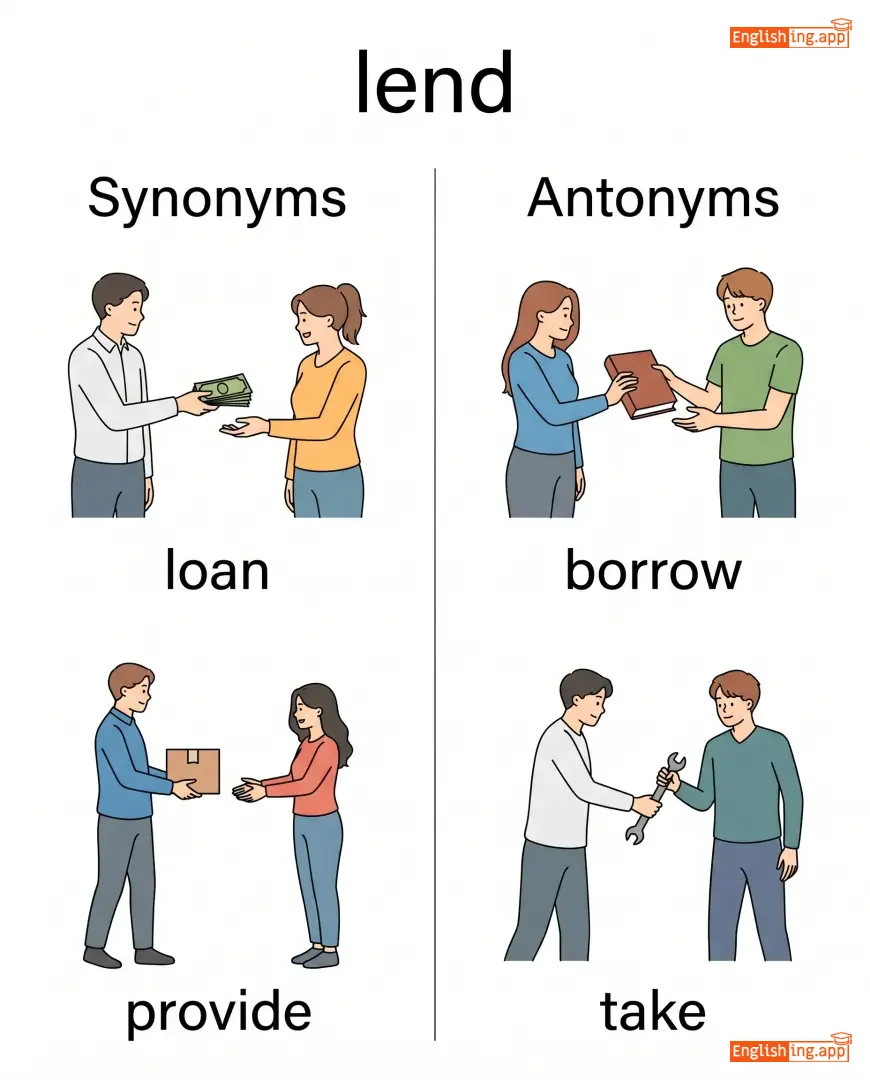
loan, provide, give, supply, contribute
••••••
|
borrow, take
••••••
|
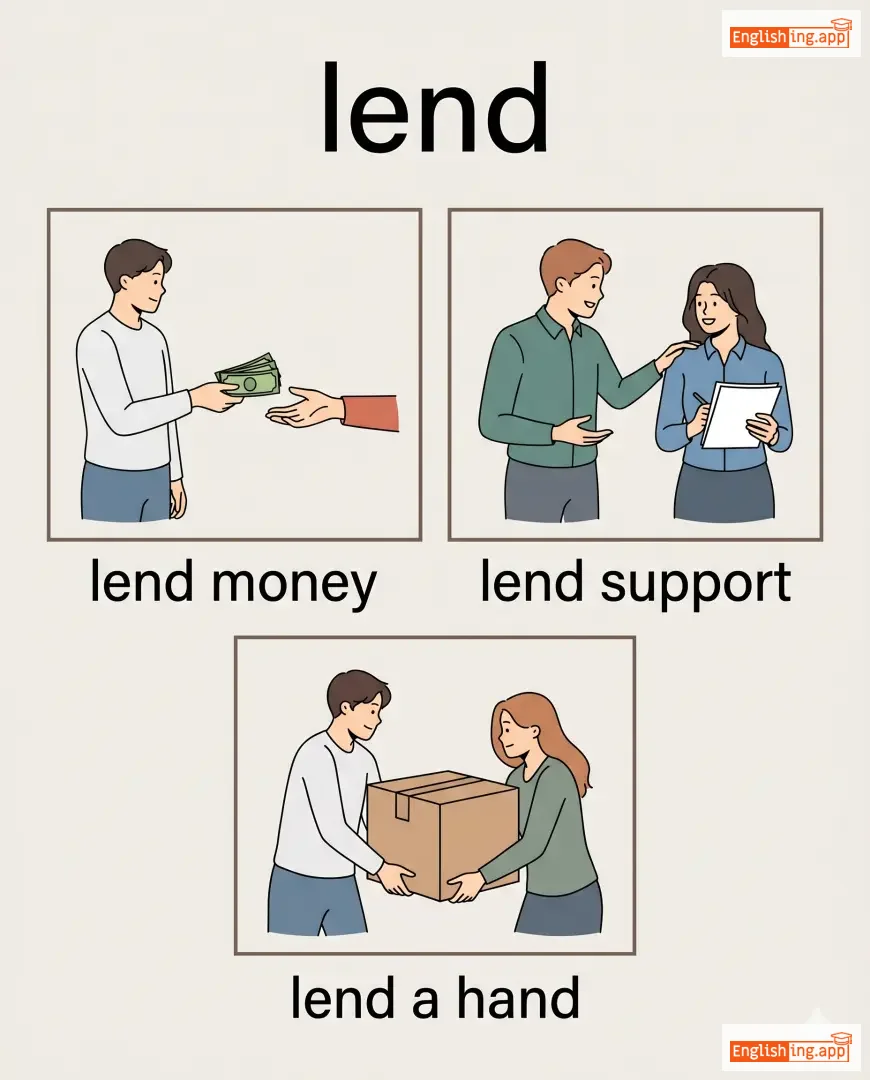
lend money, lend support, lend a hand, lend strength
••••••
|
幸福就是借给别人钱,帮助他们。
••••••
|
|
📏
••••••
|
/lɛŋkθ/
noun
(lɛŋkθ)
••••••
|
- •••••• |
长度
changdu
••••••
|
- •••••• | - •••••• | - •••••• | - •••••• |
The measurement or extent of something from end to end.
••••••
|
The length of the bridge is two kilometers. |
桥的长度是两公里。
Qiao de changdu shi liang gongli.
••••••
|
at length |
in detail; thoroughly
••••••
|
详细地
xiangxi de
••••••
|
extent, distance, measurement, span, stretch
••••••
|
shortness, brevity
••••••
|
length of time, full length, hair length, considerable length
••••••
|
Length意味着长度 — 用长度来衡量某物的长度。
••••••
|
|
⏳
••••••
|
/ˈlɛŋθi/
adjective
(lèngθī)
••••••
|
- •••••• |
漫长
man chang
••••••
|
- •••••• | - •••••• | - •••••• | - •••••• |
long in duration or extent
••••••
|
The meeting was lengthy, lasting over three hours. |
会议很长,持续了三个小时以上。
Huiyi hen chang, chixu le sange xiaoshi yishang.
••••••
|
- •••••• | - •••••• | - •••••• |
long, prolonged, extended, drawn-out
••••••
|
short, brief, quick
••••••
|
lengthy discussion, lengthy process, lengthy delay
••••••
|
漫长 (long) 时间 - Lengthy means long!
••••••
|
|
📷
••••••
|
/lenz/
noun
(lènsī)
••••••
|
- •••••• |
镜头
jingtou
••••••
|
- •••••• | - •••••• | - •••••• | - •••••• |
a curved piece of glass or plastic that makes things look clearer or larger when you look through it
••••••
|
He cleaned the camera lens before taking the picture. |
他在拍照前清洁了相机镜头。
Tā zài pāizhào qián qīngjié le xiàngjī jìngtóu.
••••••
|
through the lens of |
viewed or interpreted from a particular perspective
••••••
|
通过...的镜头
tōngguò ... de jìngtóu
••••••
|
glass, optic, focus, viewpoint, filter
••••••
|
blindspot, obstruction
••••••
|
camera lens, contact lens, wide lens, lens cover
••••••
|
镜头帮助我们清晰地看到世界
••••••
|
|
🌱
••••••
|
/ˈlen.tɪl/
noun
(lèntílì)
••••••
|
- •••••• |
小扁豆
xiǎo biǎn dòu
••••••
|
- •••••• | - •••••• | - •••••• | - •••••• |
a high-protein pulse which is dried and then soaked and cooked prior to eating
••••••
|
She cooked red lentils for dinner tonight. |
她今晚做了红扁豆作为晚餐。
tā jīn wǎn zuò le hóng biǎn dòu zuò wǎn cān
••••••
|
- •••••• | - •••••• | - •••••• |
pulse, legume, dal
••••••
|
meat, grain
••••••
|
red lentils, green lentils, lentil soup
••••••
|
像小扁豆一样,小而充满能量!
••••••
|
|
🏳️🌈
••••••
|
/ˈlɛzbiən/
noun/adjective
(lèisībiān)
••••••
|
- •••••• |
女同性恋
nǚ tóngxìngliàn
••••••
|
- •••••• | - •••••• | - •••••• | - •••••• |
a woman who is romantically or sexually attracted to other women
••••••
|
She is a proud lesbian and advocates for equal rights. |
她是一个自豪的女同性恋,支持平等权利。
Tā shì yí gè zìháo de nǚ tóngxìngliàn, zhīchí píngděng quánlì.
••••••
|
- •••••• | - •••••• | - •••••• |
gay woman, queer woman
••••••
|
heterosexual woman, straight woman
••••••
|
lesbian rights, lesbian community, lesbian couple
••••••
|
女同性恋意味着喜欢女性的女性 - Lesbian means woman-loving!
••••••
|
|
➖
••••••
|
/lɛs/
adjective/adverb
(les)
••••••
|
- •••••• |
更少
gèng shǎo
••••••
|
- •••••• | - •••••• | - •••••• | - •••••• |
A smaller amount; not as much.
••••••
|
She spends less money than her brother. |
她花的钱比她哥哥少。
Tā huā de qián bǐ tā gēge shǎo.
••••••
|
less is more |
simplicity is more effective than complexity
••••••
|
少即是多
shǎo jí shì duō
••••••
|
fewer, reduced, diminished, lower
••••••
|
more, greater, higher
••••••
|
less time, less money, less important, less than
••••••
|
LESS意味着更少 — 更少的钱,更多的储蓄。
••••••
|
|
⬇️
••••••
|
/ˈles.ər/
adjective
(莱瑟)
••••••
|
- •••••• |
较小
jiaoxiao
••••••
|
- •••••• | - •••••• | - •••••• | - •••••• |
smaller in amount; of lower importance; inferior
••••••
|
He chose the lesser of two evils when making his decision. |
他在做决定时选择了较小的恶。
Ta zai zuo jueding shi xuanze le jiaoxiao de e.
••••••
|
- •••••• | - •••••• | - •••••• |
smaller, minor, inferior, reduced, diminished
••••••
|
greater, larger, superior, major, increased
••••••
|
lesser extent, lesser degree, lesser evil, lesser known
••••••
|
选择较小的恶,像在两个选项中选择较少的坏处
••••••
|
|
📚
••••••
|
/ˈlɛsən/
noun
(lèxùn)
••••••
|
- •••••• |
课
ke
••••••
|
- •••••• | - •••••• | - •••••• | - •••••• |
A unit of teaching or something learned through experience.
••••••
|
The teacher explained the lesson clearly. |
老师清楚地解释了这节课。
Laoshi qingchu de jieshi le zhe jie ke.
••••••
|
learn a lesson |
to gain knowledge or understanding from a mistake or event
••••••
|
学到一课
xue dao yi ke
••••••
|
class, session, lecture, instruction
••••••
|
ignorance, neglect
••••••
|
math lesson, life lesson, teach a lesson, learn a lesson
••••••
|
Lesson意味着课 📚 — 学习一课就是学到新的东西。
••••••
|
|
✅
••••••
|
/lɛt/
verb
(let)
••••••
|

|
让
rang
••••••
|
let
let
••••••
|
let
let
••••••
|
lets
lets
••••••
|
letting
letting
••••••
|
To allow someone to do something; to permit.
••••••
|
She let him borrow her book.
She let him borrow her book.
••••••
|
她让他借了她的书。
Ta rang ta jie le ta de shu.
••••••
|
let it be
let it be
••••••
|
accept a situation without trying to change it
••••••
|
顺其自然
shun qi zi ran
••••••
|
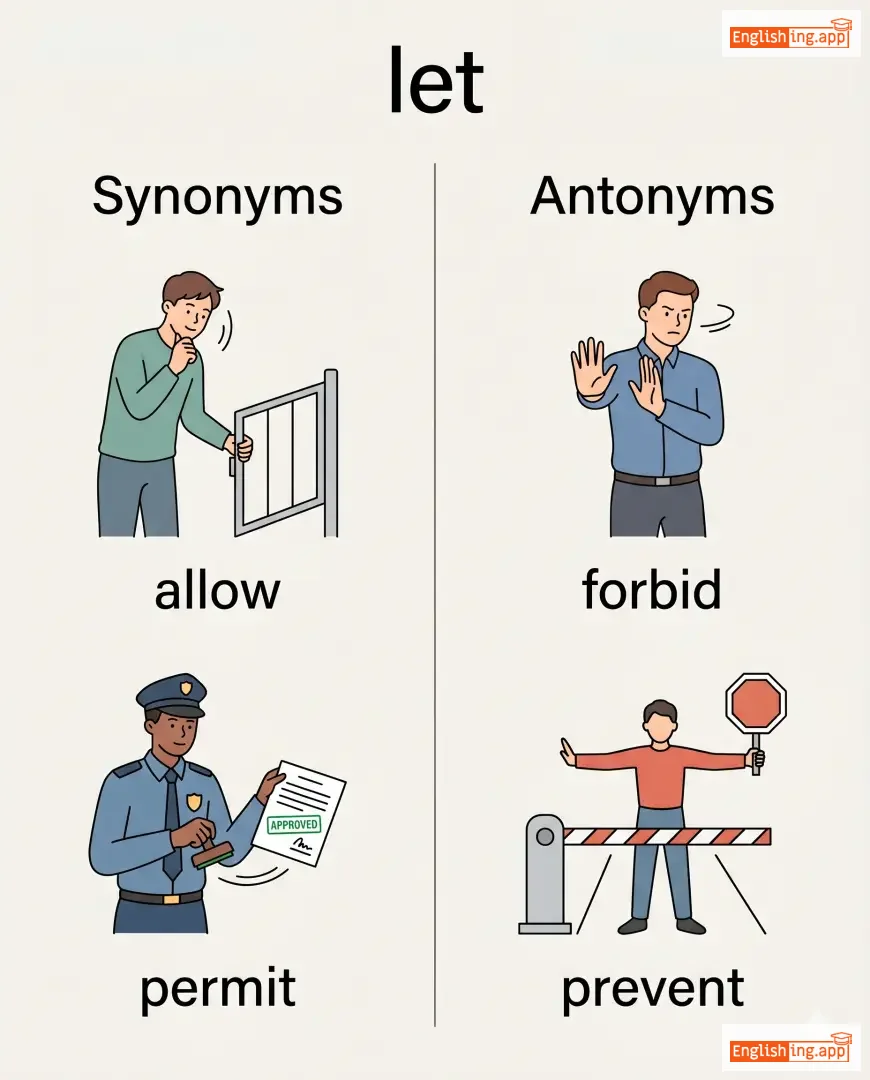
allow, permit, enable, grant
••••••
|
forbid, prevent, refuse
••••••
|
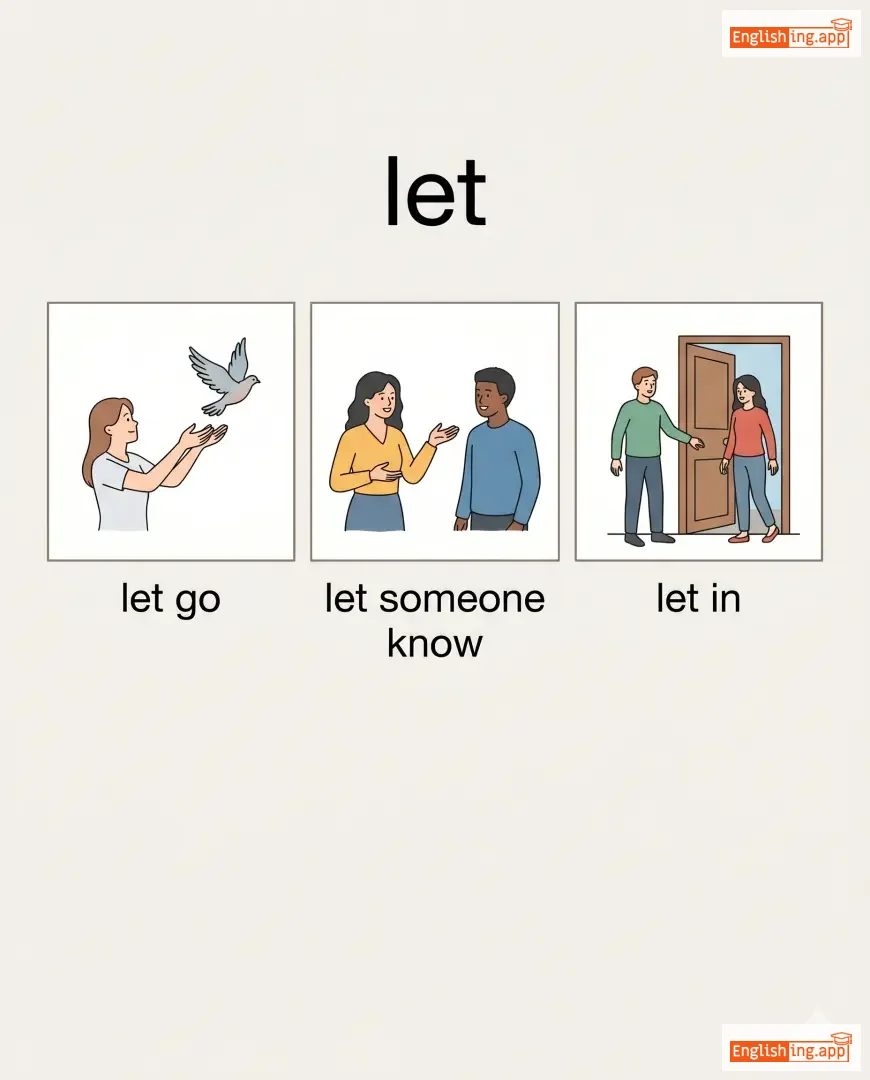
let go, let someone know, let in, let out
••••••
|
LET意味着允许 — 妈妈说LET him go,意思是让他走 ✅
••••••
|
|
☠️
••••••
|
/ˈliːθəl/
adjective
(lìtǎ)
••••••
|
- •••••• |
致命的
zhìmìng de
••••••
|
- •••••• | - •••••• | - •••••• | - •••••• |
Able to cause death; deadly.
••••••
|
The snake's venom is extremely lethal. |
蛇毒是极其致命的。
Shé dú shì jíqí zhìmìng de.
••••••
|
lethal weapon |
a weapon capable of killing
••••••
|
致命武器
zhìmìng wǔqì
••••••
|
deadly, fatal, mortal, poisonous
••••••
|
harmless, safe, nonlethal
••••••
|
lethal weapon, lethal dose, lethal force, lethal injection
••••••
|
Lethal意味着 lethal weapon,意味着致命武器。
••••••
|
|
✉️
••••••
|
/ˈlɛtər/
noun
(lèitè)
••••••
|
- •••••• |
信
xìn
••••••
|
- •••••• | - •••••• | - •••••• | - •••••• |
A written or printed message sent to someone.
••••••
|
He wrote a letter to his friend.
他写了一封信给他的朋友。
••••••
|
他写了一封信给他的朋友。
Tā xiěle yī fēng xìn gěi tā de péngyǒu.
••••••
|
to the letter
按字面意思
••••••
|
exactly as instructed or prescribed
••••••
|
按字面意思
àn zìmiàn yìsi
••••••
|
note, message, mail, correspondence
••••••
|
speech, silence
••••••
|
write a letter, love letter, official letter, letter of recommendation
••••••
|
Letter ✉️ 意味着信 — 邮差送来信件。
••••••
|
|
🥬
••••••
|
/ˈlɛtɪs/
noun
(莱特斯)
••••••
|
- •••••• |
生菜
shengcai
••••••
|
- •••••• | - •••••• | - •••••• | - •••••• |
a leafy green vegetable commonly used in salads and sandwiches
••••••
|
She added fresh lettuce to the sandwich.
她 艾德 德 福瑞什 莱特斯 到 三明治。
••••••
|
她在三明治里加了新鲜的生菜。
ta zai sanmingzhi li jia le xin xian de shengcai
••••••
|
- •••••• | - •••••• | - •••••• |
greens, leaf lettuce, romaine, iceberg
••••••
|
meat, grain
••••••
|
fresh lettuce, chopped lettuce, lettuce leaves, head of lettuce
••••••
|
生菜 SHENGCAI 吃起来 LET us try → lettuce
••••••
|
|
📏
••••••
|
/ˈlɛvəl/
noun, verb, adjective
(léiwēi)
••••••
|

|
水平,阶层
shuǐpíng, jiēcéng
••••••
|
leveled
léiwēid
••••••
|
leveled
léiwēid
••••••
|
levels
léiwēis
••••••
|
leveling
léiwēilíng
••••••
|
a flat or even surface; a stage in scale or rank; to make something flat or equal.
••••••
|
He used a ruler to make sure the picture was level.
他用尺子确保图片水平。
••••••
|
他用尺子确保图片水平。
Tā yòng chǐzi quèbǎo túpiàn shuǐpíng.
••••••
|
on the level
在水平
••••••
|
honest and straightforward
••••••
|
诚实和直率
chéngshí hé zhíshuài
••••••
|
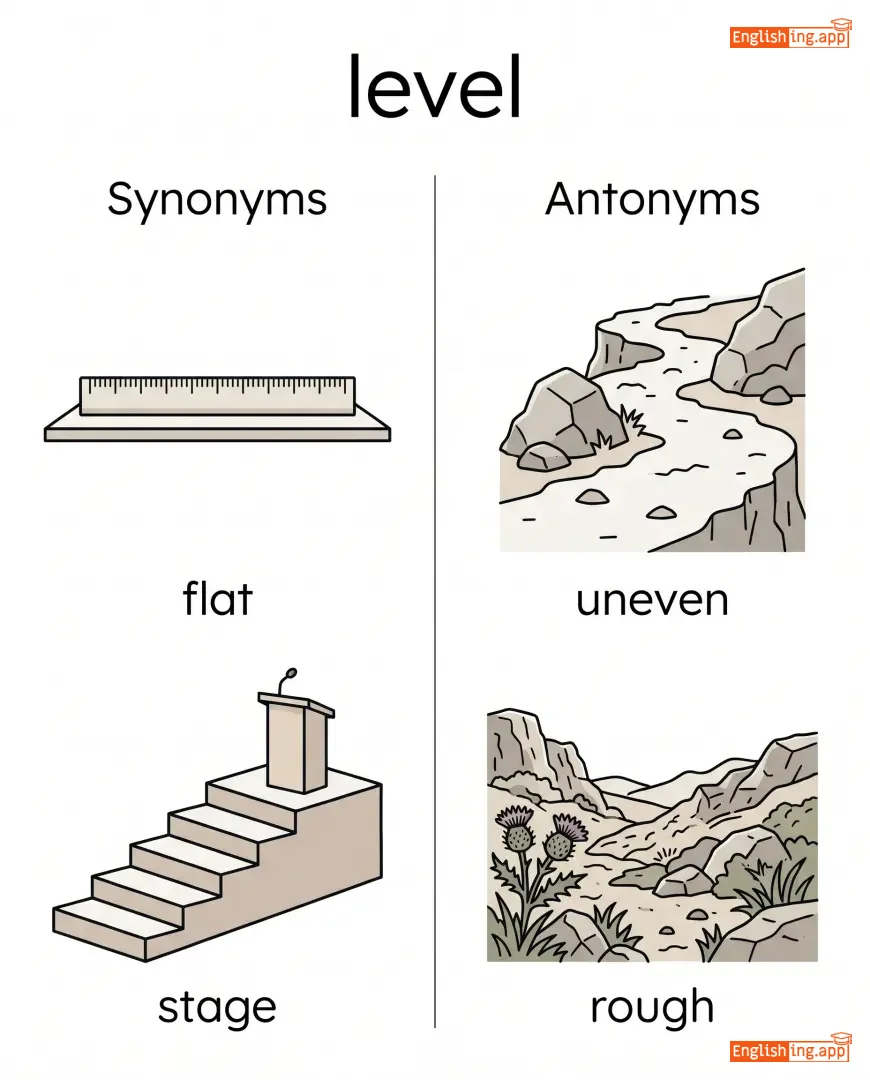
flat, stage, equal, rank, grade
••••••
|
uneven, rough, dishonest
••••••
|
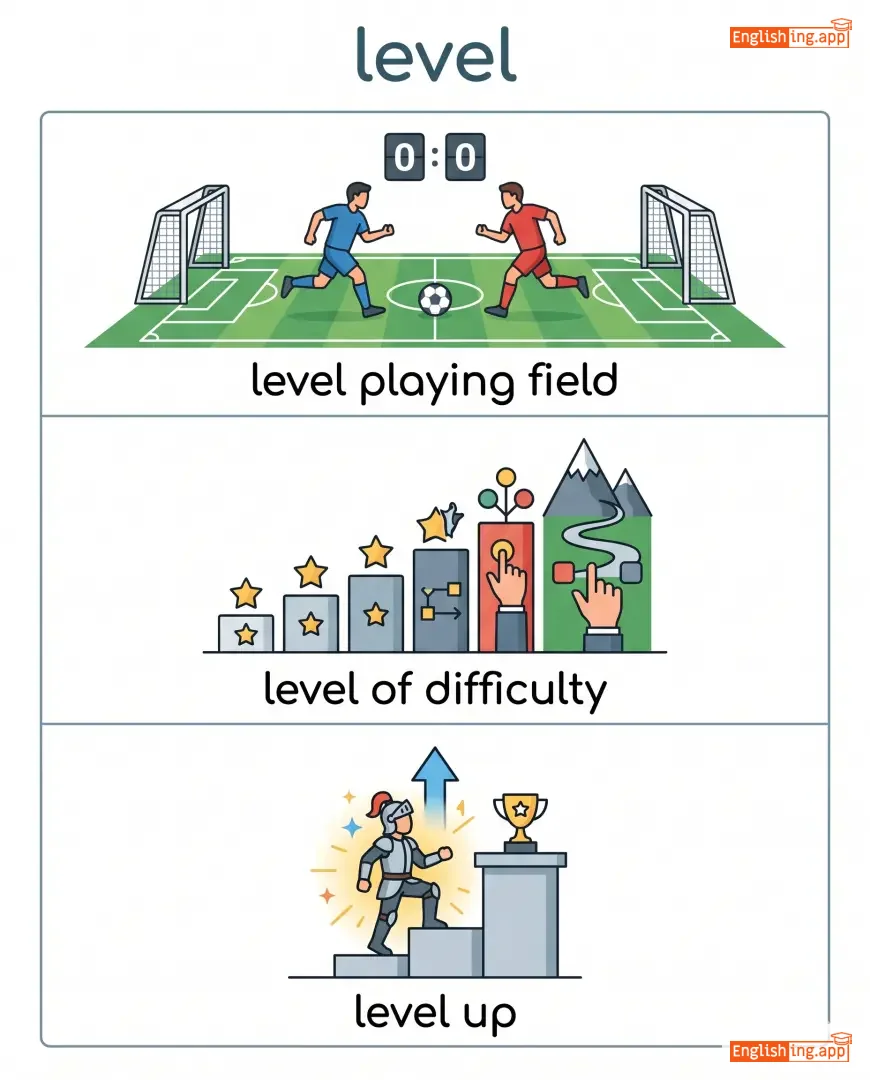
level playing field, level of difficulty, level up, level surface
••••••
|
水平意味着所有东西相等 (水平 = 相等).
••••••
|
|
📜
••••••
|
/ˈlaɪəbl/
adjective
(láiəbl)
••••••
|
- •••••• |
有责任的
yǒu zérèn de
••••••
|
- •••••• | - •••••• | - •••••• | - •••••• |
legally responsible or likely to be affected by something
••••••
|
He is liable to pay damages for the accident. |
他有责任为事故支付赔偿金。
Tā yǒu zérèn wèi shìgù zhīfù péichángjīn.
••••••
|
liable to |
likely to experience or suffer from something
••••••
|
可能的
kěnéng de
••••••
|
responsible, accountable, answerable, bound
••••••
|
immune, exempt
••••••
|
liable for, liable to, held liable, liable party
••••••
|
Liable意味着你可能对某些事情负责或受其影响。
••••••
|
|
🌍
••••••
|
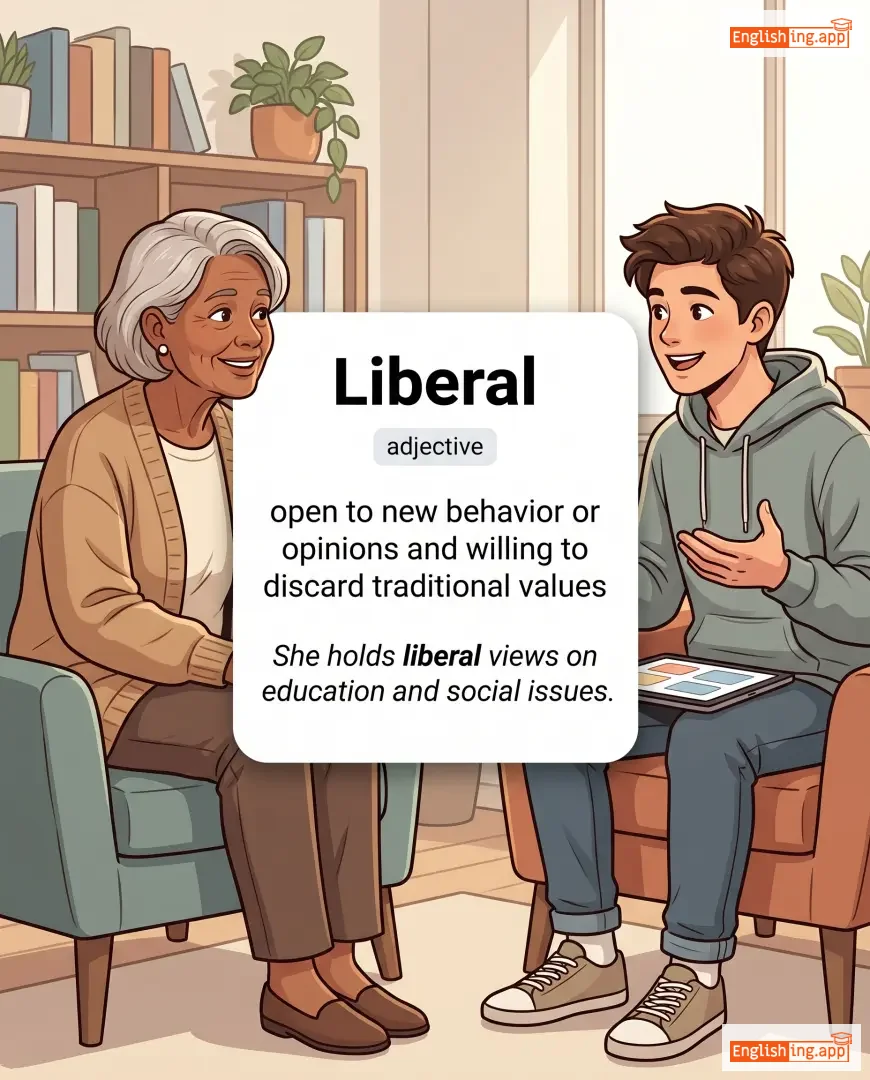
/ˈlɪbərəl/
adjective
(自由主义的)
••••••
|
|
自由主义的
zìyóu zhǔyì de
••••••
|
- •••••• | - •••••• | - •••••• | - •••••• |
open to new behavior or opinions and willing to discard traditional values
••••••
|
She holds liberal views on education and social issues. |
她对教育和社会问题持自由主义观点。
Tā duì jiàoyù hé shèhuì wèntí chí zìyóu zhǔyì guāndiǎn.
••••••
|
liberal arts |
academic studies intended to develop general knowledge and intellectual ability
••••••
|
自由艺术
zìyóu yìshù
••••••
|
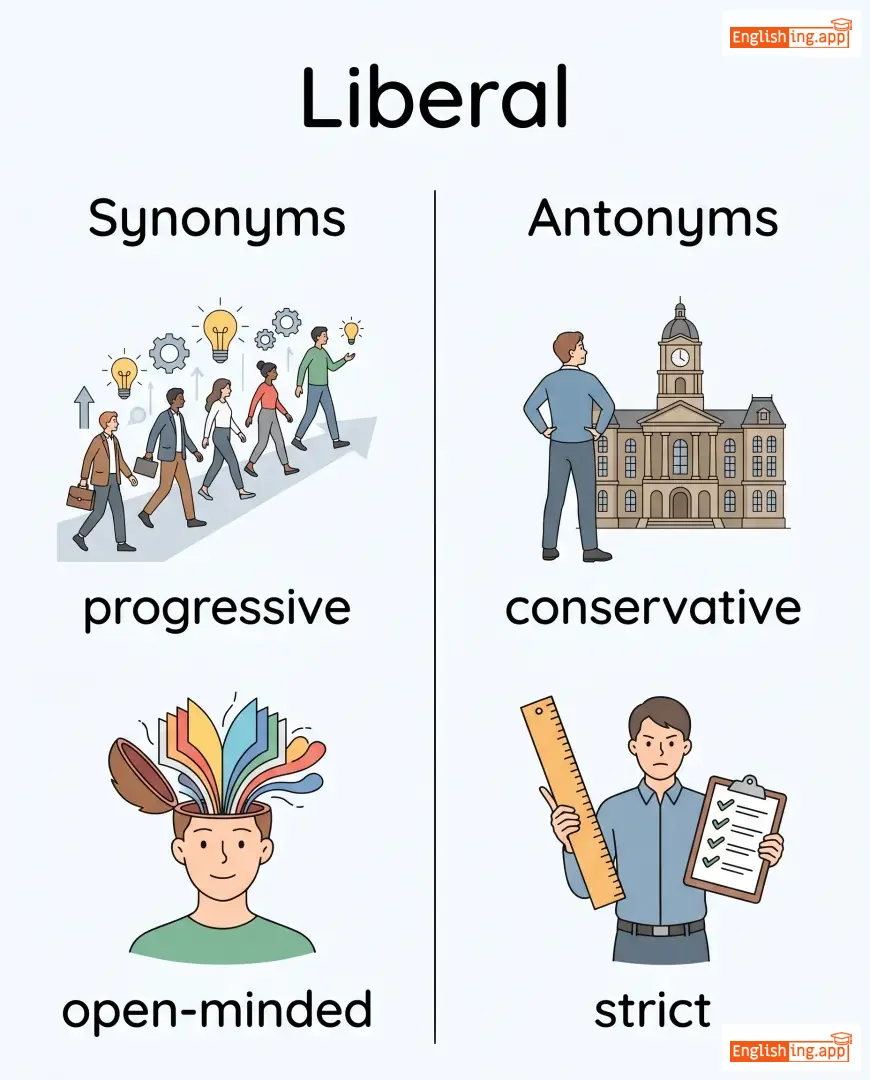
progressive, open-minded, tolerant, generous
••••••
|
conservative, strict, narrow-minded
••••••
|
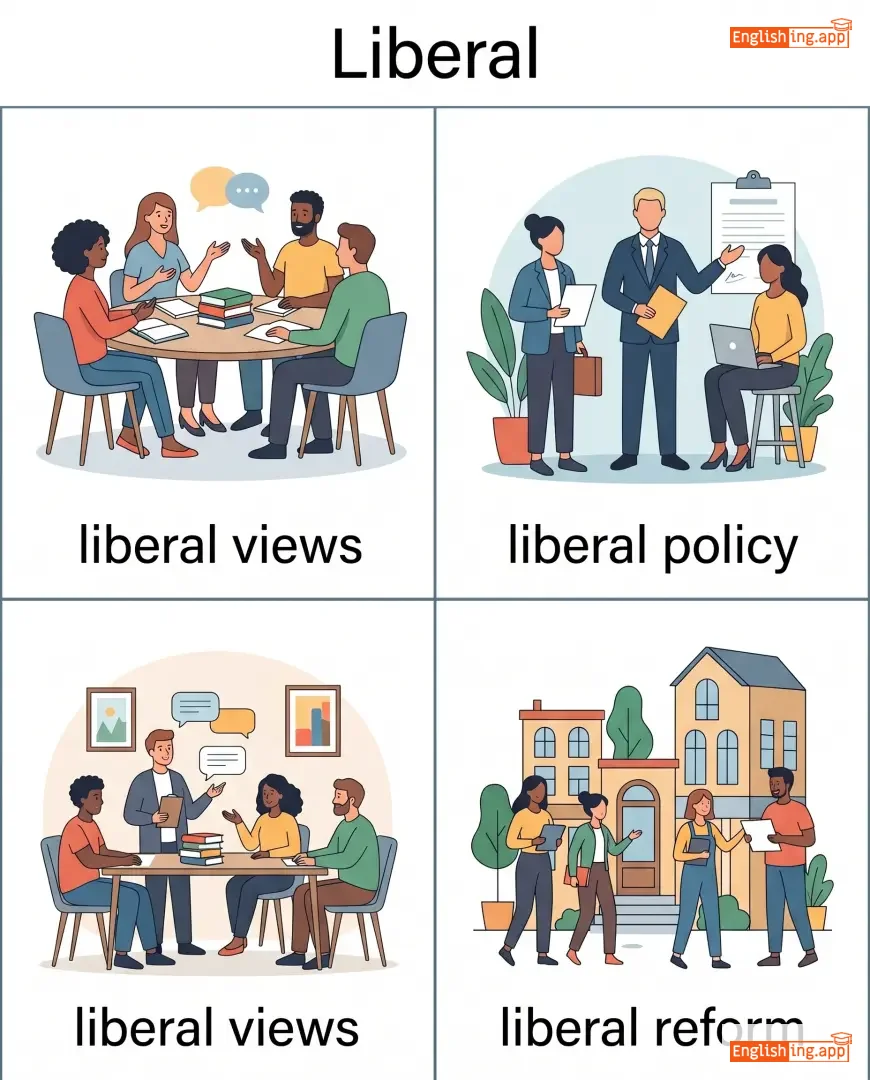
liberal views, liberal policy, liberal reform, liberal democracy
••••••
|
自由主义的思想如同自由的空气,开放而不拘束。
••••••
|
|
🕊️
••••••
|
/ˈlɪbəreɪt/
verb
(解放)
••••••
|
|
解放
jiěfàng
••••••
|
liberated
解放了
••••••
|
liberated
解放了
••••••
|
liberates
解放
••••••
|
liberating
解放中
••••••
|
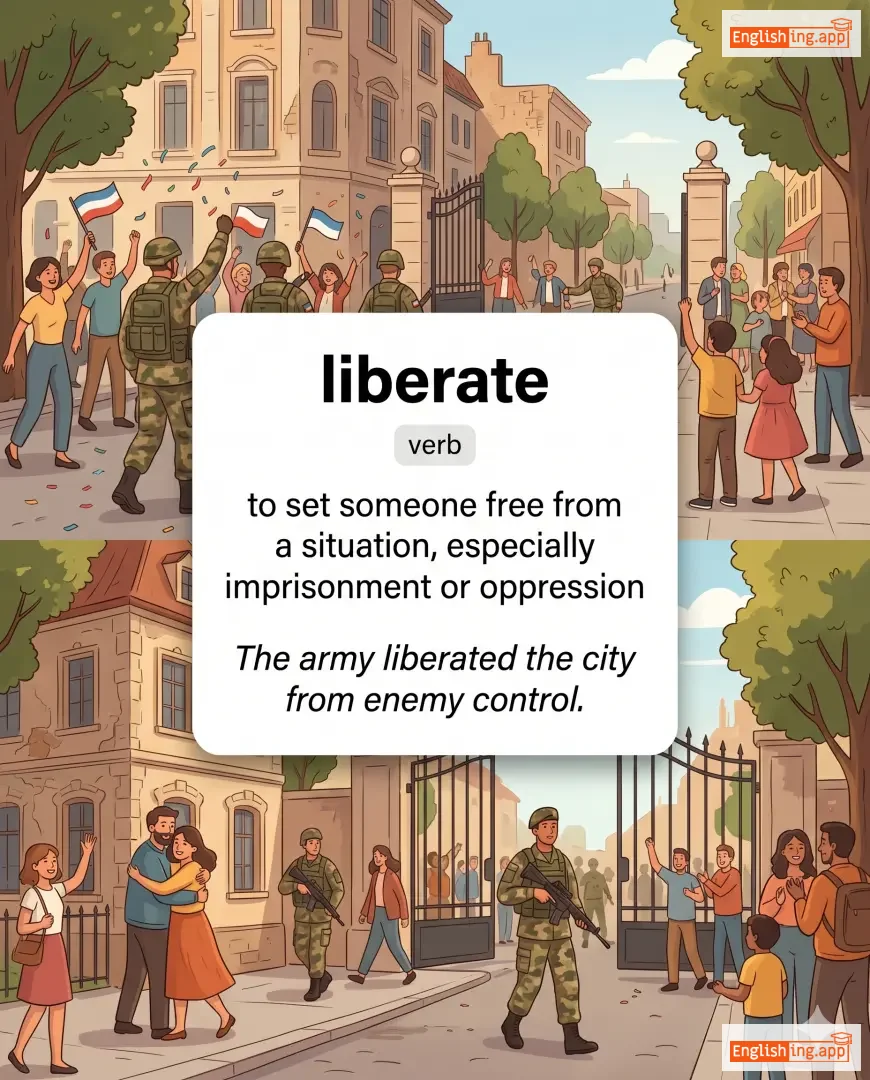
to set someone free from a situation, especially imprisonment or oppression
••••••
|
The army liberated the city from enemy control.
军队解放了这座城市,摆脱了敌人的控制。
••••••
|
军队解放了这座城市,摆脱了敌人的控制。
Jūnduì jiěfàngle zhèzuò chéngshì, bàituōle dírén de kòngzhì.
••••••
|
liberate the mind
解放思想
••••••
|
to free someone from narrow or limiting thinking
••••••
|
解放思想
jiěfàng sīxiǎng
••••••
|
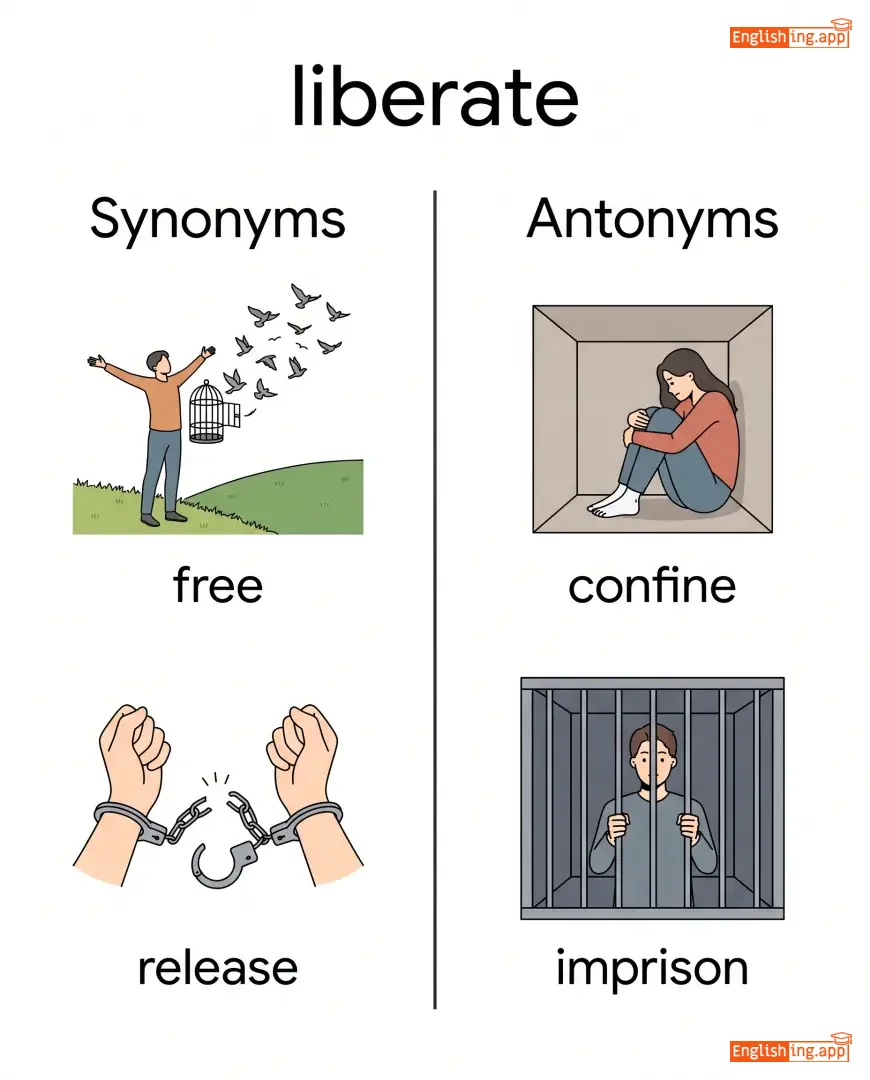
free, release, rescue, emancipate, deliver
••••••
|
confine, imprison, restrain
••••••
|
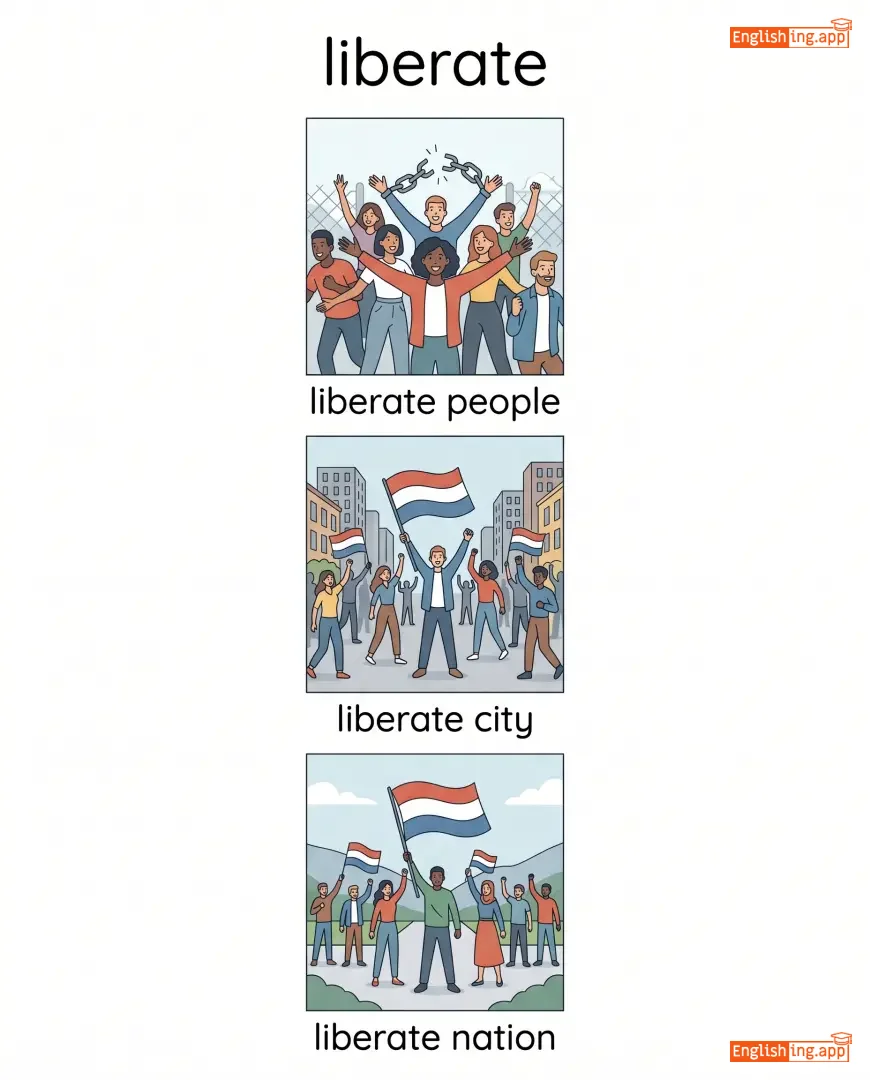
liberate people, liberate city, liberate nation, liberate mind
••••••
|
解放=解 (jie) + 放 (fang) = 放开束缚,解开限制
••••••
|
|
🕓
••••••
|
/ˌlɪb.əˈreɪ.ʃən/
noun
(解放)
••••••
|
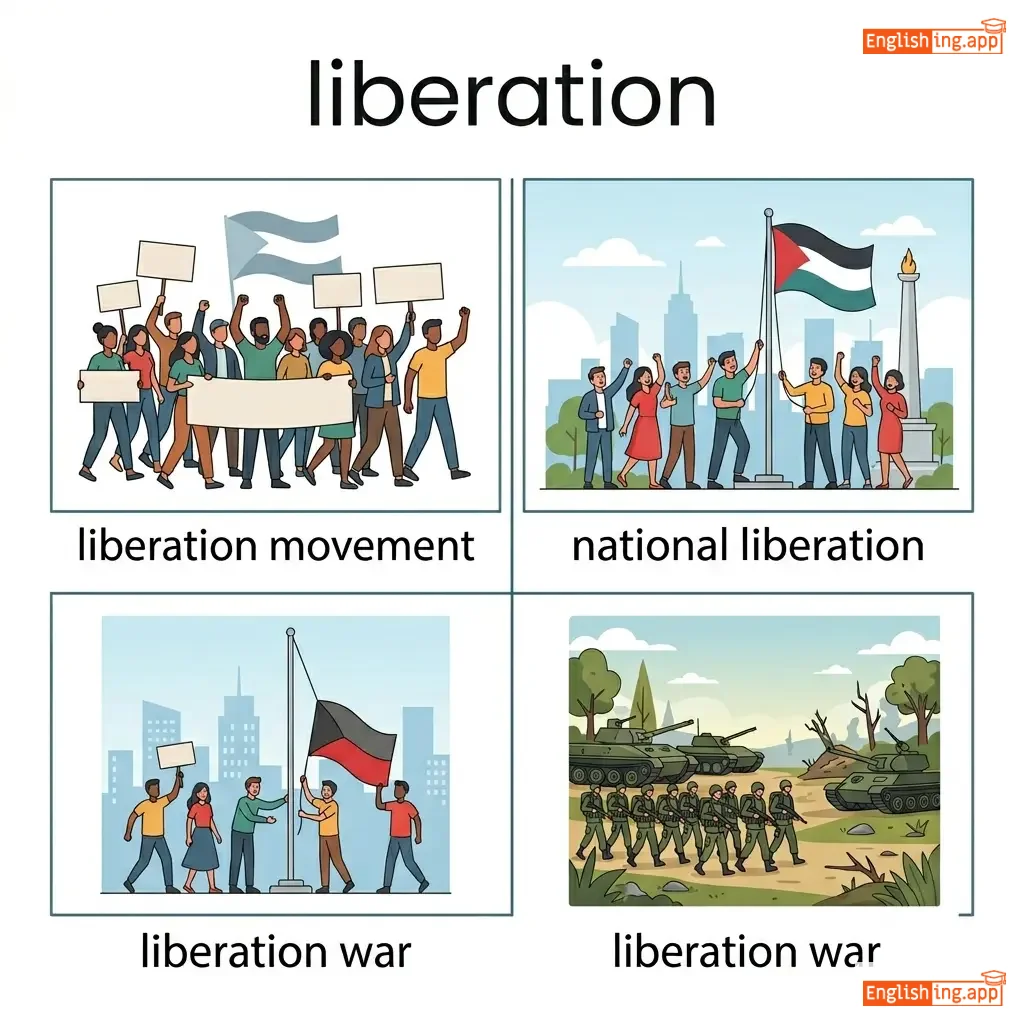
|
解放; 自由;
jiefang
••••••
|
- •••••• | - •••••• | - •••••• | - •••••• |
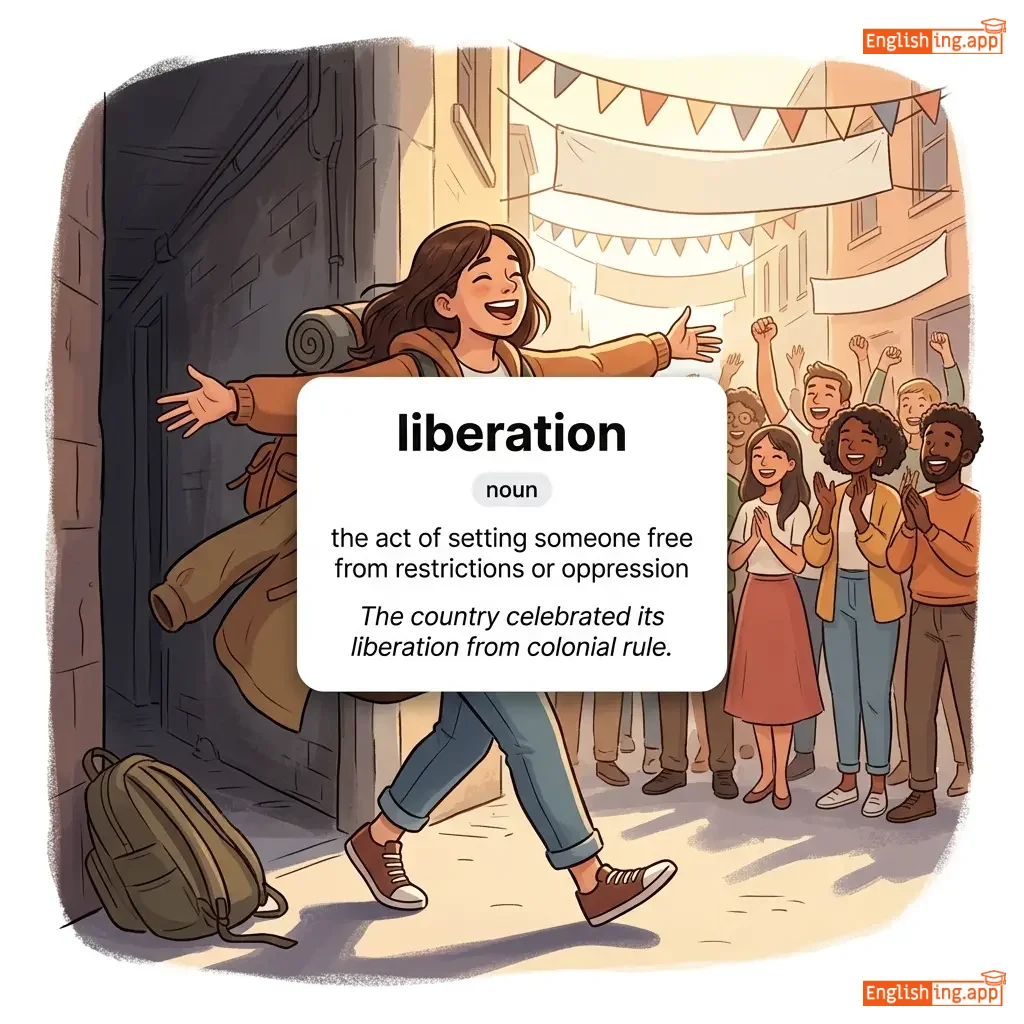
the action of setting someone free from imprisonment, slavery, or oppression; release
••••••
|
The liberation of the country took many years. |
国家的解放花了很多年。
guójiā de jiěfàng huāle hěn duō nián.
••••••
|
- •••••• | - •••••• | - •••••• |
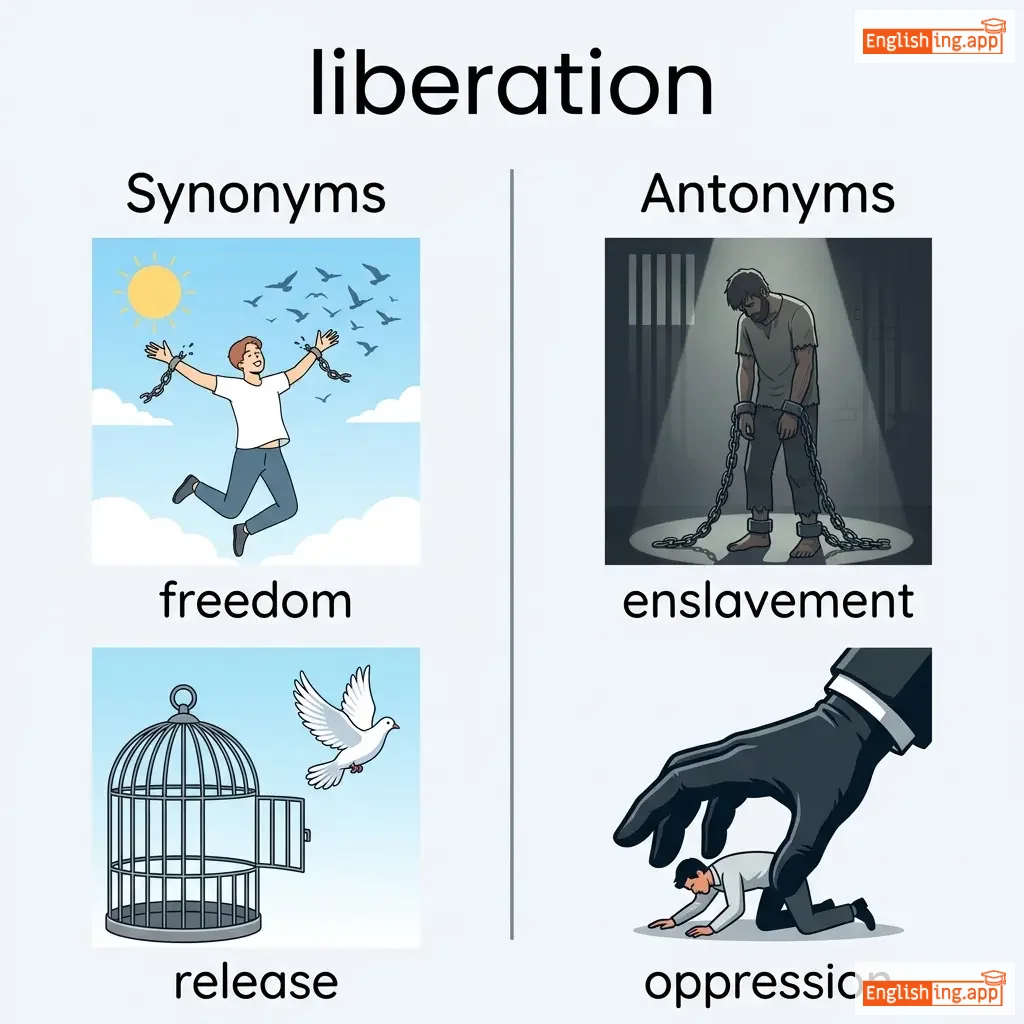
freedom, emancipation, release, independence
••••••
|
oppression, captivity, enslavement
••••••
|
national liberation, women's liberation, liberation movement
••••••
|
In Chinese, '解放' means liberation and '自由' means the freedom it brings.
••••••
|
|
🕊️
••••••
|
/ˌlɪbəˈreɪʃən wɔːr/
noun
(利伯雷申 战争)
••••••
|
- •••••• |
解放战争
jie fang zhan zheng
••••••
|
- •••••• | - •••••• | - •••••• | - •••••• |
a war fought to gain freedom from foreign rule, occupation, or oppression; an armed struggle for national independence
••••••
|
The liberation war reshaped the nation’s history and identity.
利伯雷申 战争 重塑 了 国家 的 历史 和 身份。
••••••
|
解放战争改变了国家的历史和认同。
jie fang zhan zheng gai bian le guo jia de li shi he ren tong
••••••
|
- •••••• | - •••••• | - •••••• |
war of independence, freedom struggle, emancipation war, revolutionary war
••••••
|
occupation, subjugation, enslavement
••••••
|
national liberation war, liberation war veterans, liberation war history, liberation war memorial
••••••
|
解放 = liberation, 战争 = war.
••••••
|
|
🗽
••••••
|
/ˈlɪbərti/
noun
(自由)
••••••
|
- •••••• |
自由
ziyou
••••••
|
- •••••• | - •••••• | - •••••• | - •••••• |
the state of being free within society from oppressive restrictions
••••••
|
Freedom of speech is a basic liberty. |
言论自由是一项基本自由。
yanlun ziyou shi yi xian jiben ziyou.
••••••
|
take the liberty |
to do something without permission
••••••
|
采取自由
caiqu ziyou
••••••
|
freedom, independence, autonomy, right, privilege
••••••
|
slavery, oppression, restraint
••••••
|
personal liberty, civil liberty, liberty rights, at liberty
••••••
|
自由意味着自由 — 自由女神像提醒我们这一点!
••••••
|
|
📚
••••••
|
/laɪˈbrɛəriən/
noun
(莱布雷里安)
••••••
|
- •••••• |
图书管理员
tushu guanliyuan
••••••
|
- •••••• | - •••••• | - •••••• | - •••••• |
a person who manages, organizes, and assists users in a library
••••••
|
The librarian helped me find a rare history book.
莱布雷里安 帮助 我 找到 一本 罕见 的 历史 书。
••••••
|
图书管理员帮我找到了一本罕见的历史书。
tushu guanliyuan bang wo zhaodao le yi ben hanjian de lishi shu
••••••
|
- •••••• | - •••••• | - •••••• |
library worker, archivist, information specialist, bibliothecary
••••••
|
reader, borrower
••••••
|
school librarian, head librarian, public librarian, librarian duties
••••••
|
图书 + 管理员 = librarian
••••••
|

