|
絵文字
|
単語 | Images | 翻訳 | 過去 | 過去分詞 | 三人称単数 | 動名詞 | 意味 | 例文 | 例文の翻訳 | 表現例 | 表現例の意味 | 表現例の翻訳 | 同義語 | 対義語 | コロケーション | ニーモニック |
|---|---|---|---|---|---|---|---|---|---|---|---|---|---|---|---|---|---|
|
⏳
••••••
|
/djʊˈreɪʃən/
noun
(デュレーション)
••••••
|
- •••••• |
期間
kikan
••••••
|
- •••••• | - •••••• | - •••••• | - •••••• |
the length of time that something continues
••••••
|
The meeting lasted for the duration of two hours. |
会議は2時間の期間続きました。
Kaigi wa 2 jikan no kikan tsuzukimashita.
••••••
|
for the duration |
for the whole time that something lasts
••••••
|
全期間中
zen kikan chū
••••••
|
length, span, period, term, extent
••••••
|
end, termination, conclusion
••••••
|
short duration, long duration, duration of action
••••••
|
期間は何かが続く時間、例えば映画の期間。
••••••
|
|
⏳
••••••
|
/ˈdjʊərɪŋ/
preposition
(デュアリング)
••••••
|
- •••••• |
〜の間に
〜no aida ni
••••••
|
- •••••• | - •••••• | - •••••• | - •••••• |
throughout the course of a period of time
••••••
|
I fell asleep during the movie. |
私は映画の間に寝てしまいました。
Watashi wa eiga no aida ni nete shimaimashita.
••••••
|
- •••••• | - •••••• | - •••••• |
throughout, amid, in, over
••••••
|
before, after, beyond
••••••
|
during the day, during the night, during the meeting, during the war
••••••
|
Duringは'〜の間に' (何かが起こっている時間)。
••••••
|
|
🌫️
••••••
|
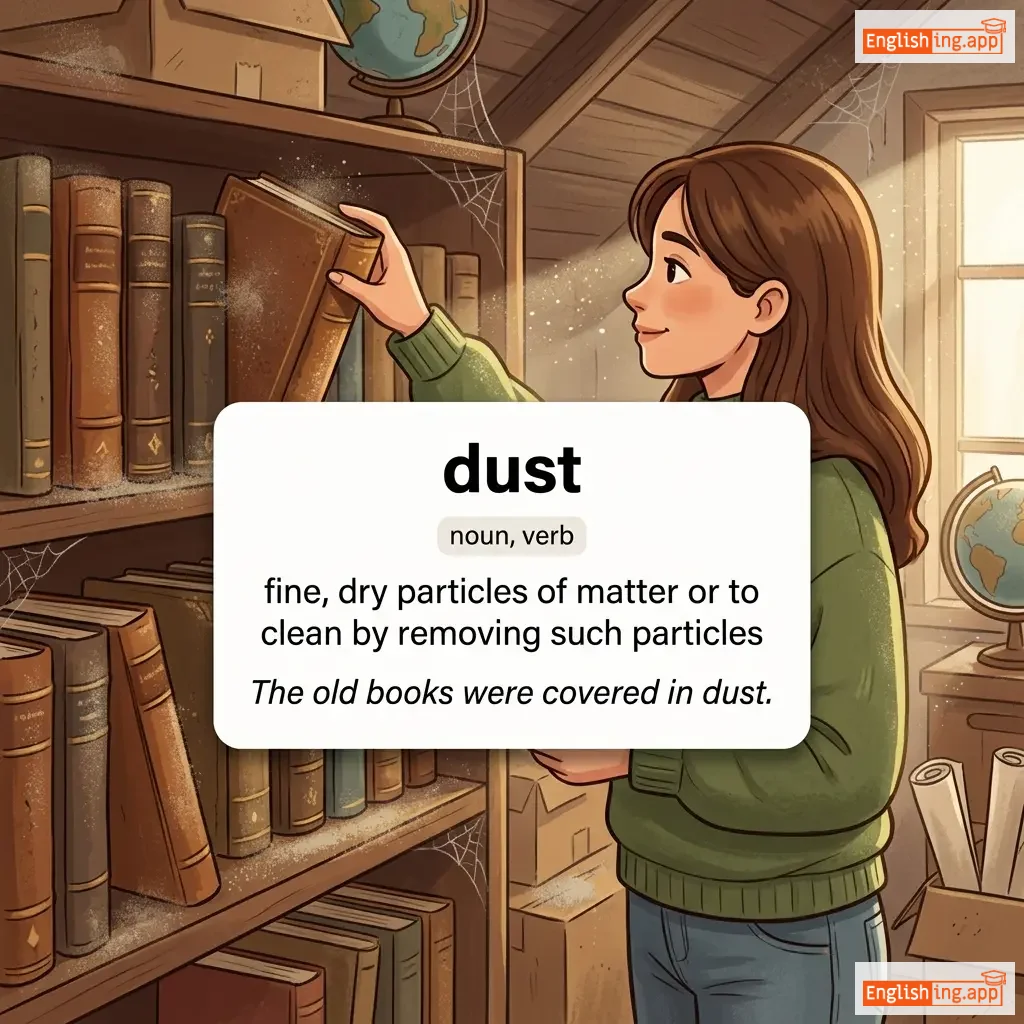
/dʌst/
noun, verb
(ダスト)
••••••
|
|
ほこり
hokori
••••••
|
dusted
ダステッド
••••••
|
dusted
ダステッド
••••••
|
dusts
ダスツ
••••••
|
dusting
ダスティング
••••••
|
fine, dry particles of matter or to clean by removing such particles
••••••
|
The old books were covered in dust.
古い本はほこりに覆われていました。
••••••
|
古い本はほこりに覆われていました。
furui hon wa hokori ni ōwareteimashita.
••••••
|
bite the dust
ダストをかじる
••••••
|
to fail or be defeated
••••••
|
失敗するか、敗北すること
shippai suru ka, haiboku suru koto
••••••
|
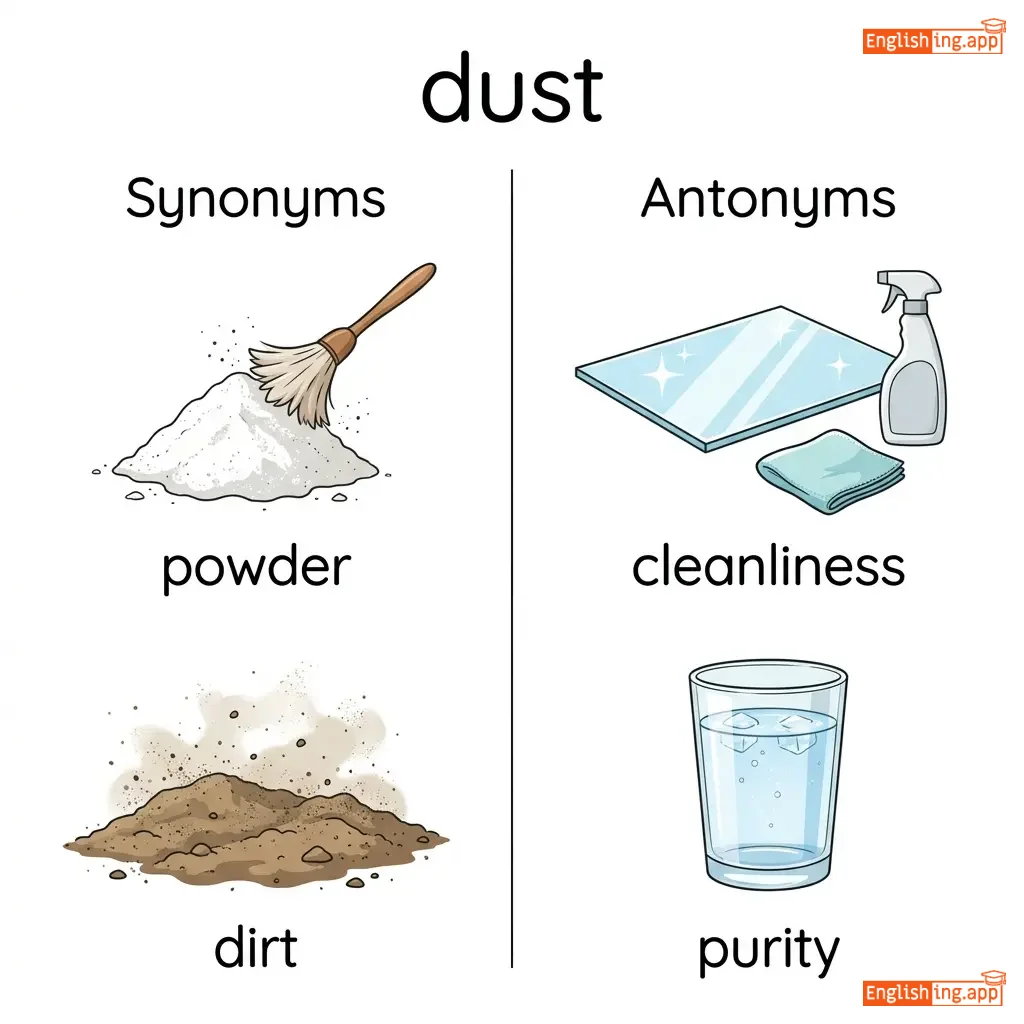
powder, dirt, particles, debris
••••••
|
cleanliness, purity
••••••
|
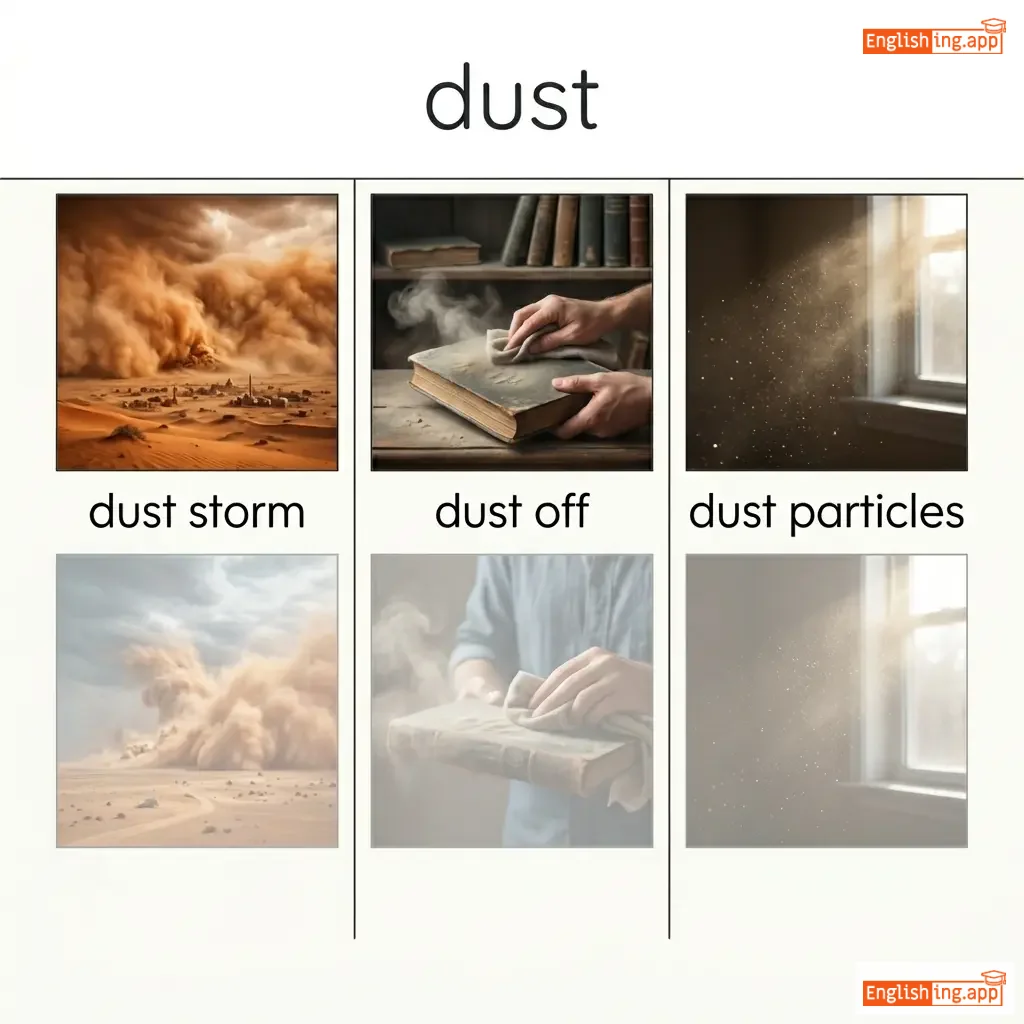
dust storm, dust off, dust particles, dust cloud
••••••
|
Dustはほこりを意味します。'Dust off'はほこりを払うことです。
••••••
|
|
🌫️
••••••
|
/ˈdʌsti/
adjective
(ダスティ)
••••••
|
- •••••• |
ほこりっぽい
hokorippoi
••••••
|
- •••••• | - •••••• | - •••••• | - •••••• |
covered with or full of dust; dry and dull from lack of moisture or use
••••••
|
The old bookshelf was dusty after years of neglect.
ジ オールド ブックシェルフ ワズ ダスティ アフター イヤーズ オブ ネグレクト。
••••••
|
何年も放置された後、その古い本棚はほこりっぽかった。
nannen mo houchi sareta ato, sono furui hondana wa hokorippokatta
••••••
|
dusty old
ダスティ オールド
••••••
|
something outdated, old-fashioned, or long unused
••••••
|
古くてほこりっぽい
furukute hokorippokoi
••••••
|
powdery, grimy, dirty, soiled
••••••
|
clean, spotless, fresh
••••••
|
dusty road, dusty shelf, dusty air, dusty clothes
••••••
|
ほこり(dust)が多い → dusty
••••••
|
|
🙏
••••••
|
/ˈdjuːtɪfəl/
adjective
(デューティフル)
••••••
|
- •••••• |
責任感の強い
sekinin kan no tsuyoi
••••••
|
- •••••• | - •••••• | - •••••• | - •••••• |
Willingly obedient and responsible in performing one's duty.
••••••
|
She is a dutiful daughter who always takes care of her parents.
彼女はいつも両親の面倒を見る、責任感の強い娘です。
••••••
|
彼女はいつも両親の面倒を見る、責任感の強い娘です。
Kanojo wa itsumo ryoushin no mendou o miru, sekinin kan no tsuyoi musume desu.
••••••
|
dutiful son
責任感の強い息子
••••••
|
A son who is obedient and fulfills responsibilities to family.
••••••
|
責任感の強い息子
sekinin kan no tsuyoi musuko
••••••
|
obedient, loyal, devoted, compliant, faithful
••••••
|
neglectful, disobedient, rebellious
••••••
|
dutiful daughter, dutiful son, dutiful servant, dutifully follow
••••••
|
Duty + ful → 責任感を持つ人 = 責任感の強い
••••••
|
|
🛡️
••••••
|
/ˈdjuːti/
noun
(デューティ)
••••••
|
- •••••• |
義務
gimu
••••••
|
- •••••• | - •••••• | - •••••• | - •••••• |
a moral or legal obligation; a responsibility
••••••
|
It is our duty to protect the environment. |
環境を守ることは私たちの義務です。
Kankyō o mamoru koto wa watashitachi no gimu desu.
••••••
|
call of duty |
a responsibility that must be carried out
••••••
|
義務の呼びかけ
gimu no yobikake
••••••
|
responsibility, obligation, task, assignment, commitment
••••••
|
freedom, choice, exemption
••••••
|
duty free, official duty, moral duty, line of duty
••••••
|
Duty は '義務'、警察官が義務を果たすように。
••••••
|
|
🎨
••••••
|
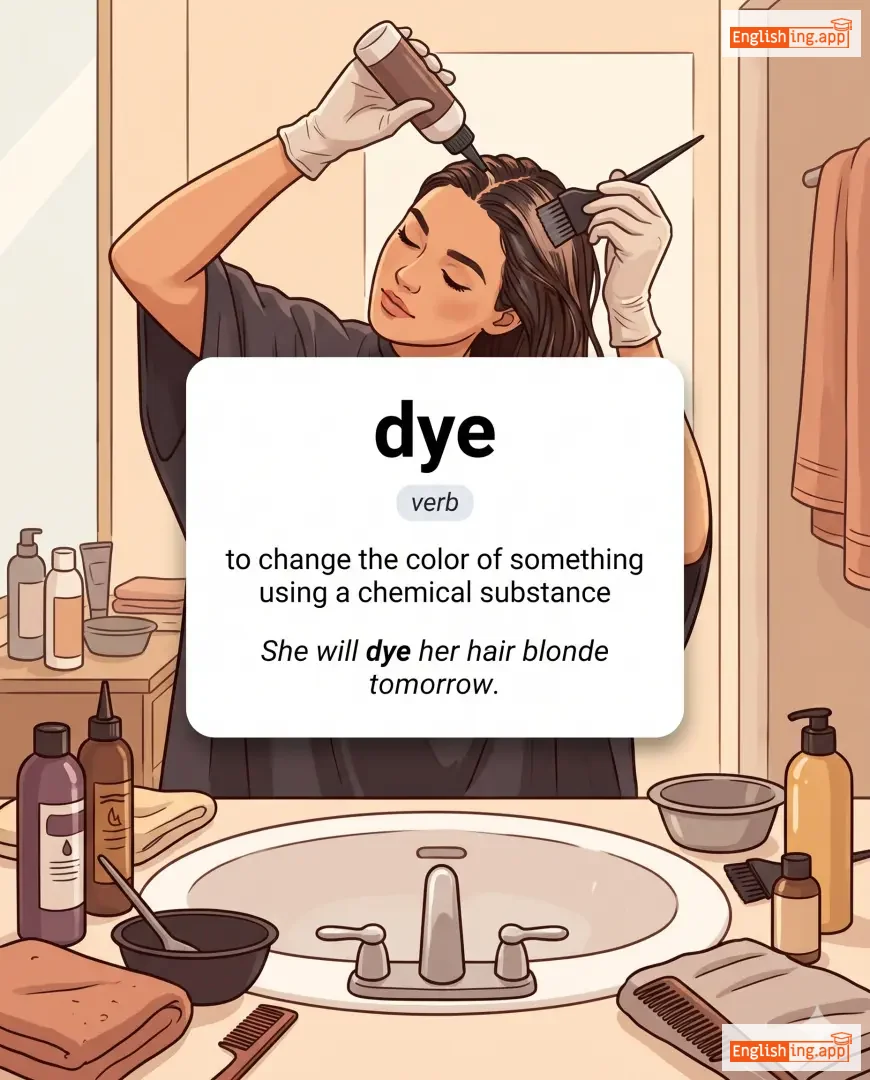
/daɪ/
verb
(ダイ)
••••••
|

|
染める
someru
••••••
|
dyed
ダイド
••••••
|
dyed
ダイド
••••••
|
dyes
ダイス
••••••
|
dyeing
ダイイング
••••••
|
to change the color of something using a chemical substance
••••••
|
She will dye her hair blonde tomorrow.
彼女は明日髪を金髪に染める予定です。
••••••
|
彼女は明日髪を金髪に染める予定です。
Kanojo wa ashita kami o kinpatsu ni someru yotei desu
••••••
|
- •••••• | - •••••• | - •••••• |
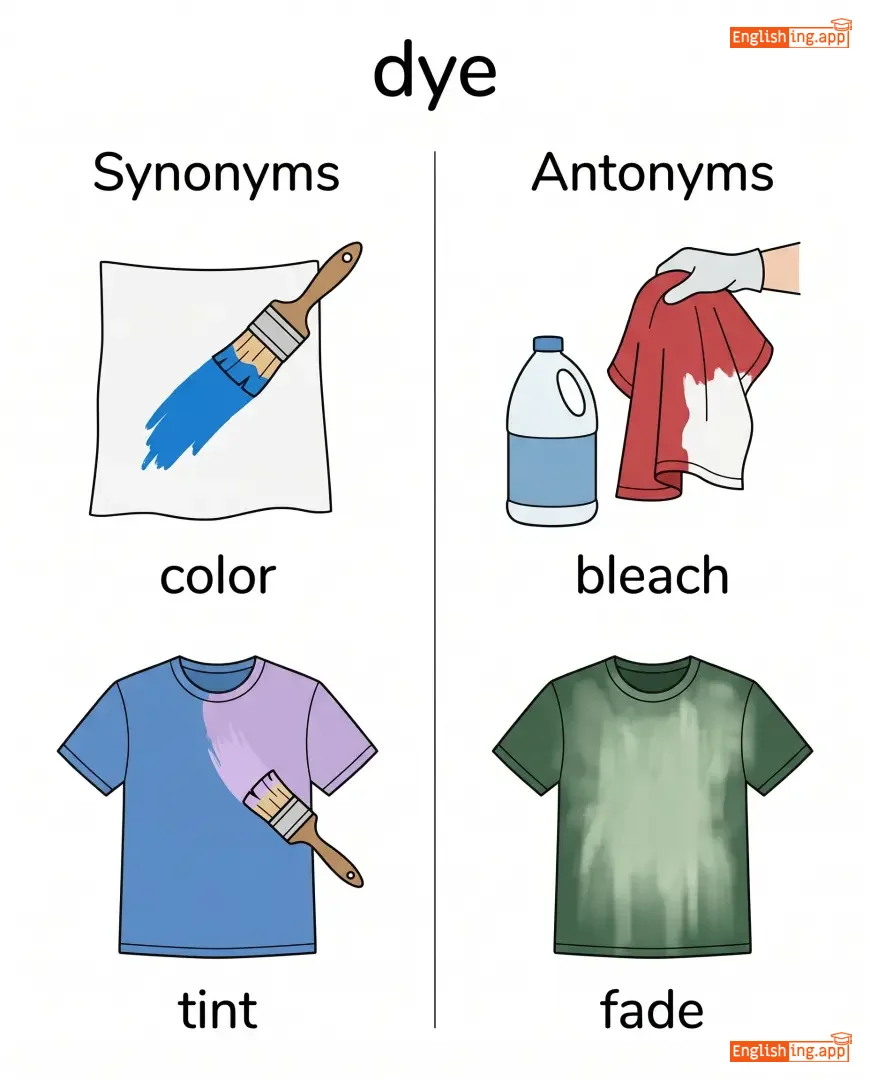
color, tint, stain, pigment
••••••
|
bleach, fade, whiten
••••••
|
dye hair, dye fabric, dye clothes, dye permanently, dye naturally
••••••
|
染めるために髪の色を変える
••••••
|
|
⚡
••••••
|
/daɪˈnæmɪk/
adjective
(ダイナミック)
••••••
|
|
ダイナミック
dainamikku
••••••
|
- •••••• | - •••••• | - •••••• | - •••••• |
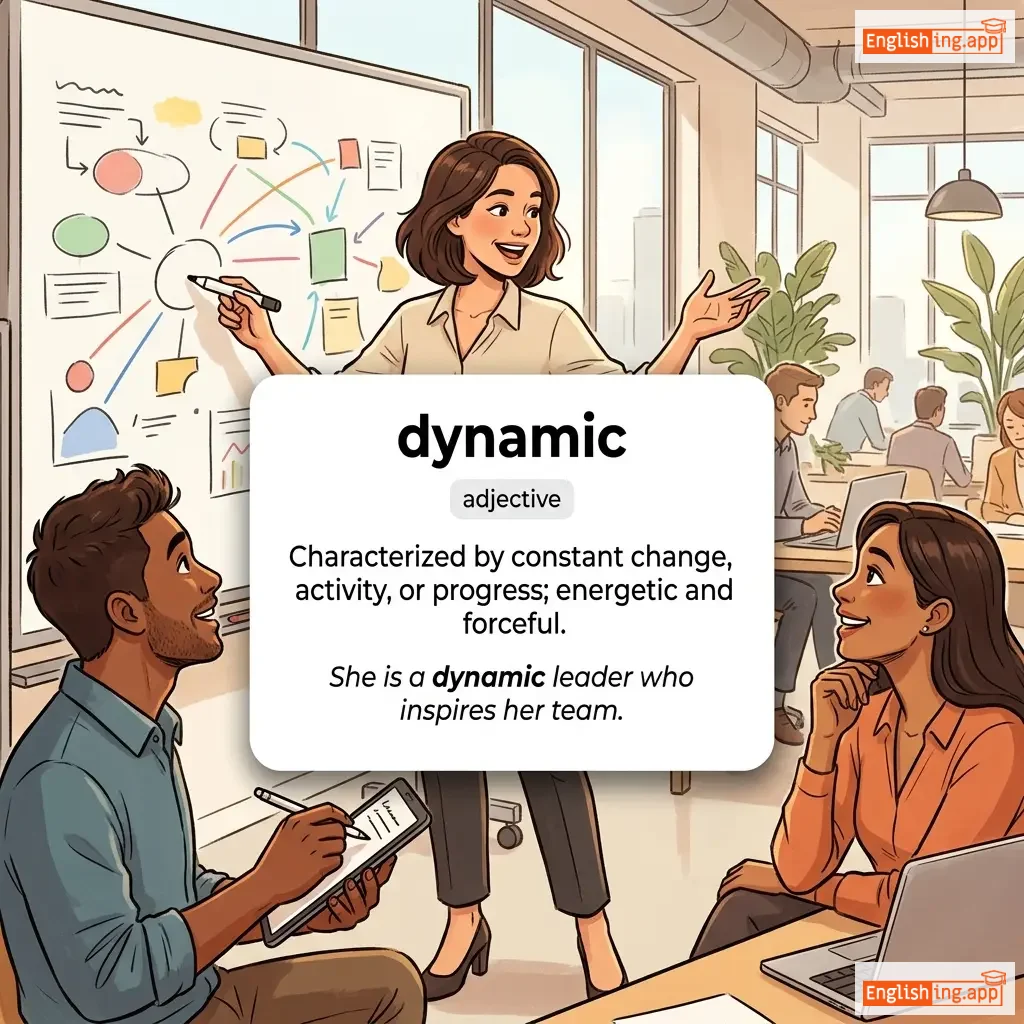
Characterized by constant change, activity, or progress; energetic and forceful.
••••••
|
She is a dynamic leader who inspires her team. |
彼女はチームを鼓舞するダイナミックなリーダーです。
Kanojo wa chīmu o kobu suru dainamikku na rīdā desu.
••••••
|
dynamic duo |
Two people who work together very effectively.
••••••
|
ダイナミックデュオ
dainamikku dyuo
••••••
|
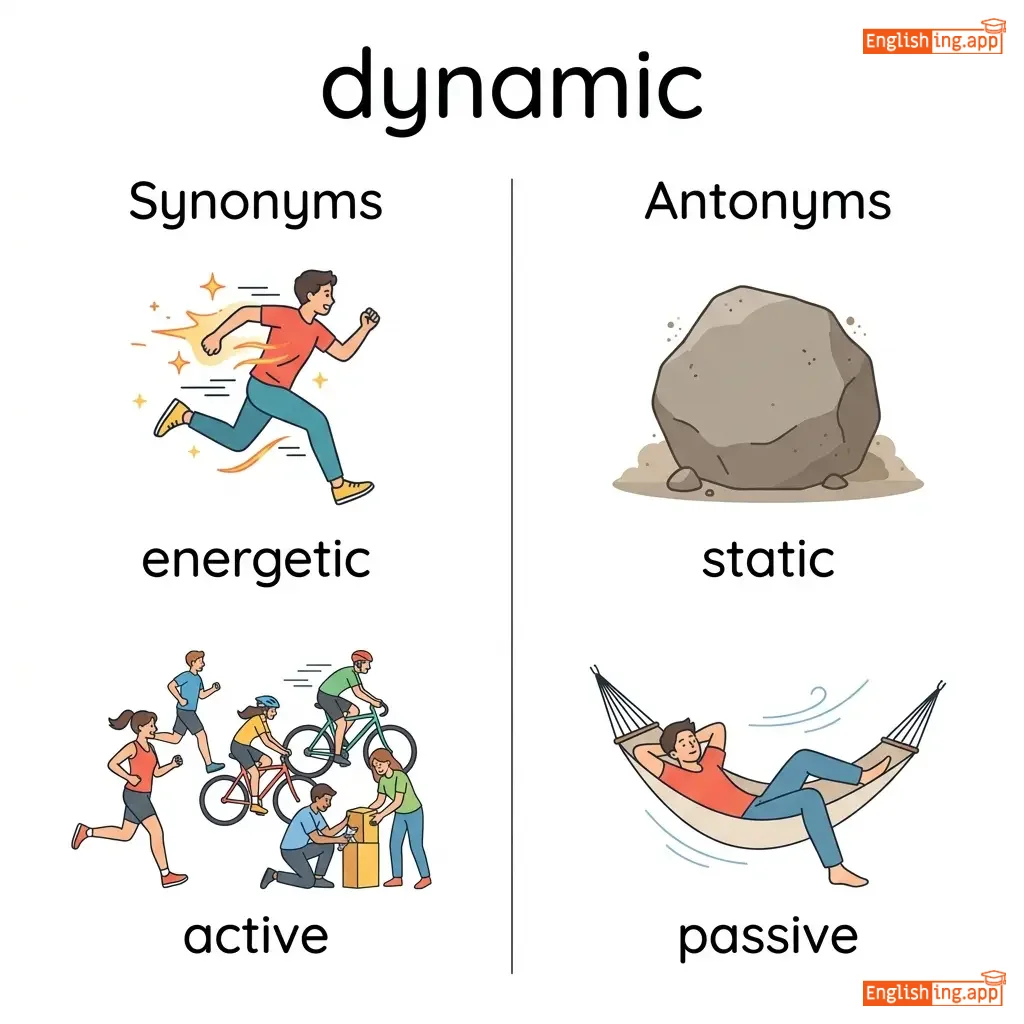
energetic, active, powerful, forceful, lively
••••••
|
static, passive, inactive
••••••
|
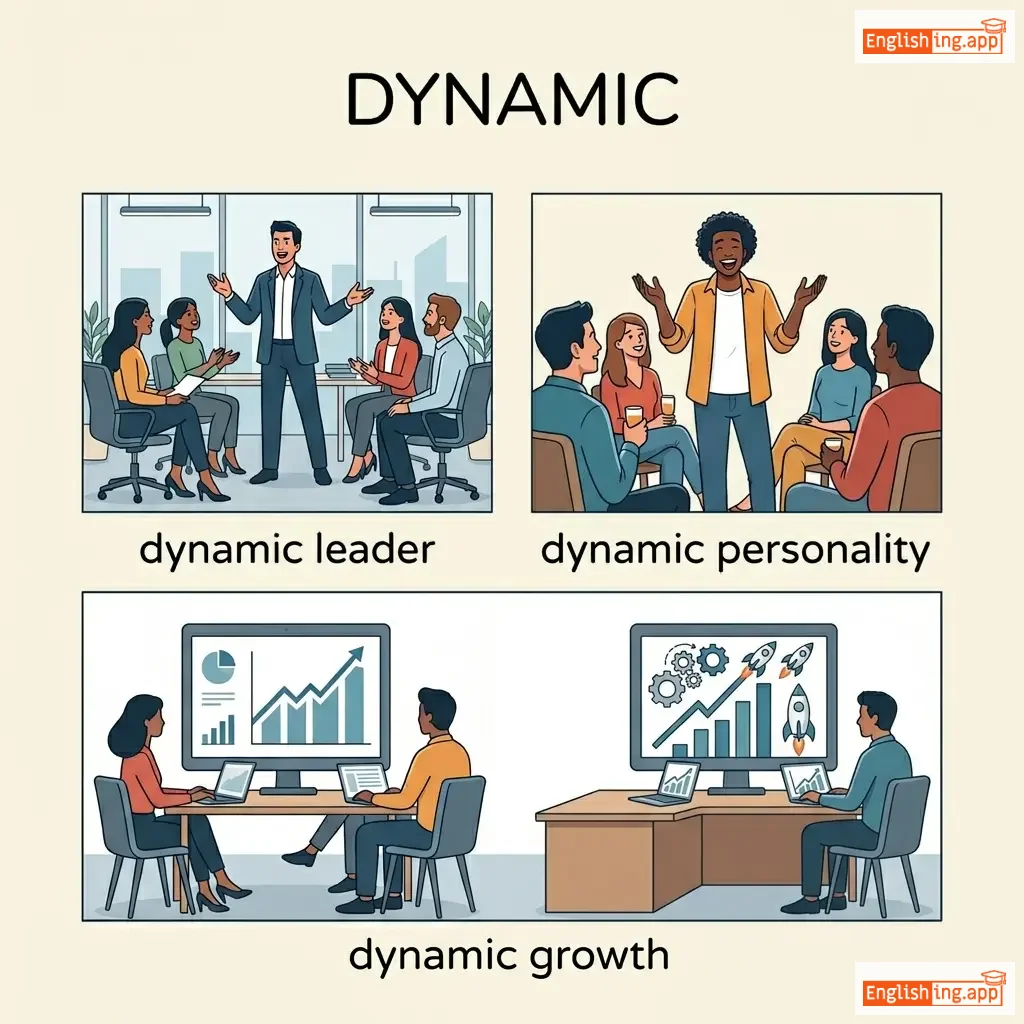
dynamic leader, dynamic personality, dynamic growth, dynamic process
••••••
|
ダイナミック → ダイナモのように強力でダイナミック
••••••
|
|
🔢
••••••
|
/iːtʃ/
determiner/pronoun
(イチ)
••••••
|
- •••••• |
各自
kakujitsu
••••••
|
- •••••• | - •••••• | - •••••• | - •••••• |
every one of two or more people or things considered separately
••••••
|
Each student received a certificate. |
各学生は証明書を受け取りました。
Kaku gakusei wa shoumeisho wo uketorimashita.
••••••
|
each and every |
used for emphasis, meaning all without exception
••••••
|
それぞれとそれぞれ
sorezore to sorezore
••••••
|
every, all, individual, every single
••••••
|
none, zero
••••••
|
each day, each person, each time, each other
••••••
|
各自 (Each) は個別 — それぞれの意味を考えよう。
••••••
|
|
🤩
••••••
|
/ˈiːɡər/
adjective
(イーガー)
••••••
|
- •••••• |
熱心な / 待ち遠しい
nesshin na / machidōshii
••••••
|
- •••••• | - •••••• | - •••••• | - •••••• |
very excited and interested; keen to do something
••••••
|
The children were eager to open their gifts. |
子供たちはプレゼントを開けるのを待ちきれませんでした。
Kodomotachi wa purezento o akeru no o machikiremasen deshita.
••••••
|
eager beaver |
a person who is extremely enthusiastic and hard-working
••••••
|
熱心な人
nesshin na hito
••••••
|
keen, enthusiastic, excited, avid
••••••
|
reluctant, indifferent
••••••
|
eager to learn, eager for success, eager anticipation, eager smile
••••••
|
Eager = 待ち遠しい 🤩— プレゼントを開けるために子供たちはeagerです。
••••••
|
|
😍
••••••
|
/ˈiːɡərli/
adverb
(イーガリー)
••••••
|
- •••••• |
熱心に; 強い欲望を持って
nesshin ni; tsuyoi yokubou wo motte
••••••
|
- •••••• | - •••••• | - •••••• | - •••••• |
with keen interest or enthusiasm; with great desire
••••••
|
The children eagerly waited for the holiday to begin. |
子供たちは休暇が始まるのを熱心に待っていました。
kodomotachi wa kyuuka ga hajimaru no wo nesshin ni matteimashita
••••••
|
- •••••• | - •••••• | - •••••• |
enthusiastically, keenly, anxiously
••••••
|
reluctantly, unwillingly, halfheartedly
••••••
|
eagerly await, eagerly anticipate, eagerly accept
••••••
|
イーガリーのように、熱心に物事を待つことを思い出してください。
••••••
|
|
👂
••••••
|
/ɪə(r)/
noun
(イア)
••••••
|
- •••••• |
耳
mimi
••••••
|
- •••••• | - •••••• | - •••••• | - •••••• |
the organ of hearing and balance in humans and other animals
••••••
|
She whispered something in his ear. |
彼女は彼の耳に何かをささやいた。
Kanojo wa kare no mimi ni nanika o sasayaita.
••••••
|
lend an ear |
to listen carefully and sympathetically
••••••
|
耳を貸す
mimi o kasu
••••••
|
hearing organ, auricle, lobe, auditory organ
••••••
|
deafness, silence
••••••
|
ear pain, sharp ear, ear infection, whisper in ear
••••••
|
Ear は耳の意味です — 耳にイヤホンをしているとよく聞こえる。
••••••
|
|
🐦
••••••
|
/ˈɜːrli/
adjective/adverb
(アーリー)
••••••
|
- •••••• |
早い
hayai
••••••
|
- •••••• | - •••••• | - •••••• | - •••••• |
before the usual or expected time
••••••
|
She arrived early to the meeting.
彼女は会議に早く到着しました。
••••••
|
彼女は会議に早く到着しました。
Kanojo wa kaigi ni hayaku tōchaku shimashita.
••••••
|
early bird
アーリーバード
••••••
|
someone who wakes up or arrives early
••••••
|
早起きする人
hayaoki suru hito
••••••
|
premature, initial, prompt, ahead
••••••
|
late, delayed
••••••
|
early morning, early stage, early development, arrive early
••••••
|
Early bird 🐦 早く起きる— Earlyは早いを意味します。
••••••
|
|
💵
••••••
|
/ɜːrn/
verb
(アーン)
••••••
|

|
稼ぐ
kasegu
••••••
|
earned
アーンド
••••••
|
earned
アーンド
••••••
|
earns
アーンズ
••••••
|
earning
アーニング
••••••
|
To receive money or reward in return for work or service.
••••••
|
She worked hard to earn enough money for college.
彼女は大学のために十分なお金を稼ぐために一生懸命働いた。
••••••
|
彼女は大学のために十分なお金を稼ぐために一生懸命働いた。
Kanojo wa daigaku no tame ni jūbun na okane o kasegu tame ni isshōkenmei hataraita.
••••••
|
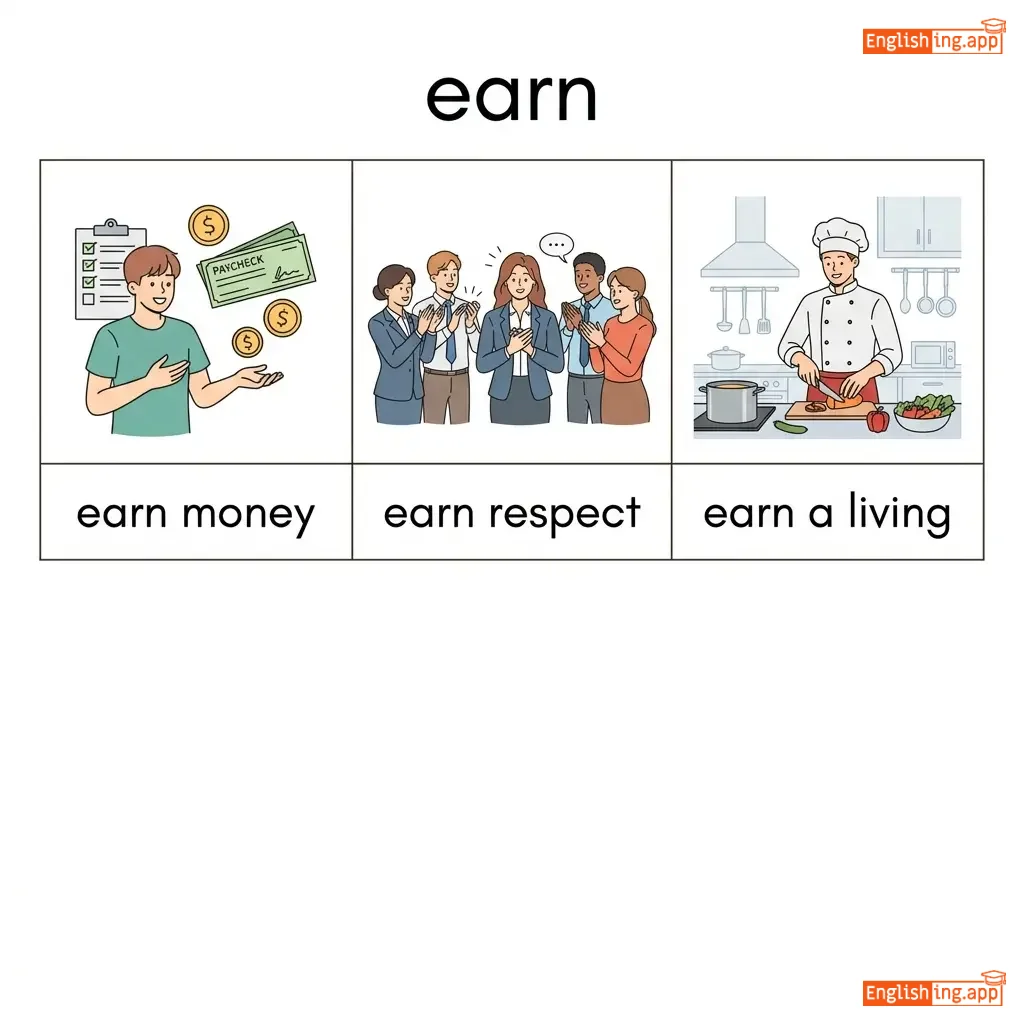
earn a living
生計を立てる
••••••
|
To make enough money to support oneself financially.
••••••
|
生計を立てる
seikei o tateru
••••••
|
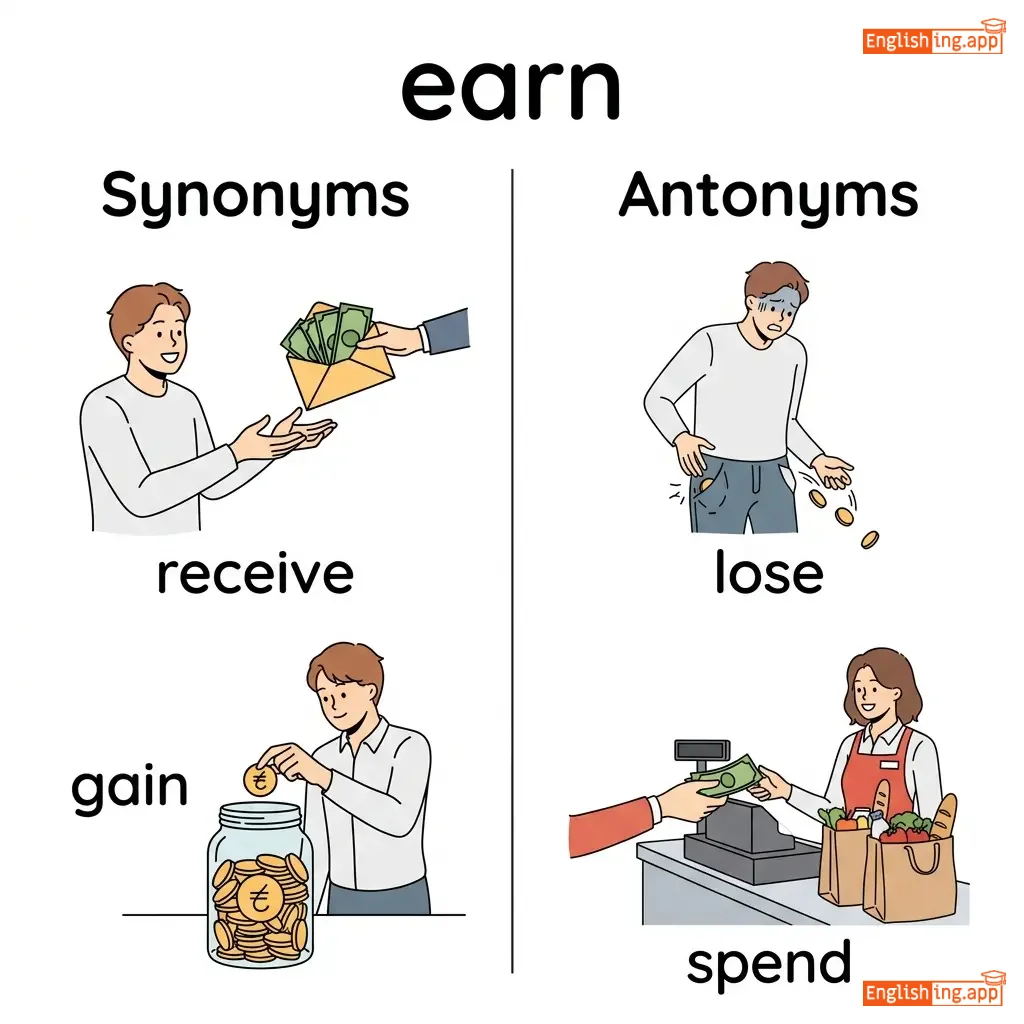
receive, gain, obtain, secure, acquire
••••••
|
lose, spend, forfeit
••••••
|
earn money, earn respect, earn a living, earn interest
••••••
|
Earnは'稼ぐ'という意味 - 一生懸命働いて稼ぐ。
••••••
|
|
💰
••••••
|
/ˈɜːrnər/
noun
(アーナー)
••••••
|
- •••••• |
稼ぐ人
kasegu hito
••••••
|
- •••••• | - •••••• | - •••••• | - •••••• |
A person who earns money through work or business
••••••
|
She is the primary earner in her family.
彼女は家族の主要アーナーです。
••••••
|
彼女は家族の主要な稼ぐ人です。
Kanojo wa kazoku no shuyou na kasegu hito desu.
••••••
|
- •••••• | - •••••• | - •••••• |
income generator, wage earner, breadwinner, salaryman
••••••
|
spender, unemployed
••••••
|
high earner, top earner, regular earner, monthly earner
••••••
|
Picture 'アーナー' as someone who 'kasegu' money.
••••••
|
|
💰
••••••
|
/ˈɜːnɪŋz/
noun
(アーニングス)
••••••
|
- •••••• |
収入
shunyu
••••••
|
- •••••• | - •••••• | - •••••• | - •••••• |
money obtained in return for labor or services
••••••
|
Her monthly earnings are enough to support her family. |
彼女の月収は家族を養うのに十分です。
Kanojo no gesshū wa kazoku o yashinau no ni jūbun desu.
••••••
|
net earnings |
the total profit after deducting expenses
••••••
|
純収入
jun shunyu
••••••
|
income, wages, salary, profit, revenue
••••••
|
loss, debt
••••••
|
monthly earnings, total earnings, net earnings, gross earnings
••••••
|
Earningsは収入を意味します — 収入は働いて得るものです。
••••••
|
|
🌍
••••••
|
/ɜːrθ/
noun
(āsu)
••••••
|
- •••••• |
地球
chikyū
••••••
|
- •••••• | - •••••• | - •••••• | - •••••• |
the planet we live on; soil or ground
••••••
|
The astronauts looked back at the Earth from space. |
宇宙飛行士は宇宙から地球を見ました。
Uchūhikōshi wa uchū kara chikyū o mimashita.
••••••
|
down to earth |
practical, realistic, and sensible
••••••
|
現実的
genjitsuteki
••••••
|
world, globe, planet, ground, soil
••••••
|
sky, heaven
••••••
|
planet Earth, Earth surface, Earth orbit, Earth science
••••••
|
Earthは地球🌍、日本語で'地球'は私たちの住む場所です。
••••••
|
|
🌋
••••••
|
/ˈɜːrθ.kweɪk/
noun
(アースクエイク)
••••••
|

|
地震
jishin
••••••
|
- •••••• | - •••••• | - •••••• | - •••••• |
a sudden shaking of the ground caused by movements within the Earth's crust or volcanic action
••••••
|
A strong earthquake hit the city last night. |
昨夜、大きな地震がその街を揺さぶった。
Sakuya, ōkina jishin ga sono machi o yusabutta.
••••••
|
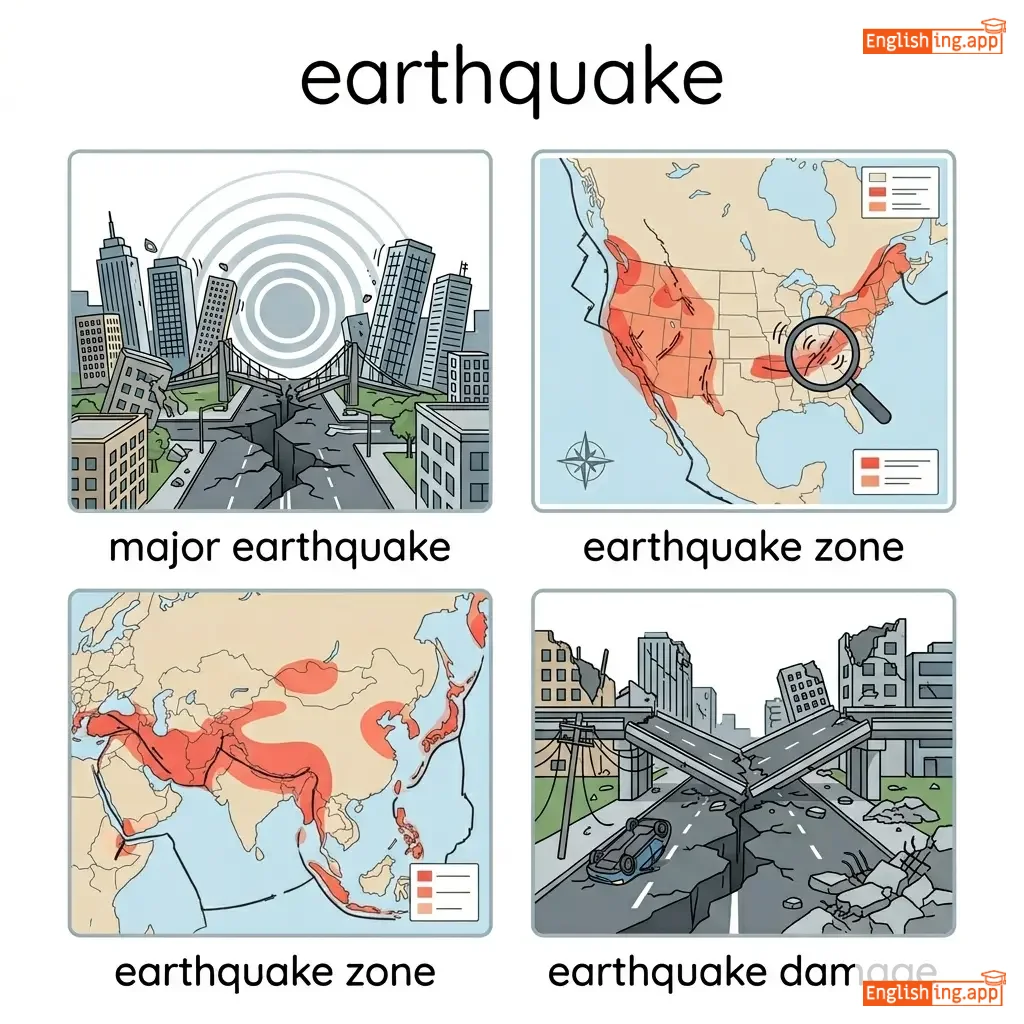
earthquake zone |
an area prone to frequent earthquakes
••••••
|
地震帯
jishin-tai
••••••
|
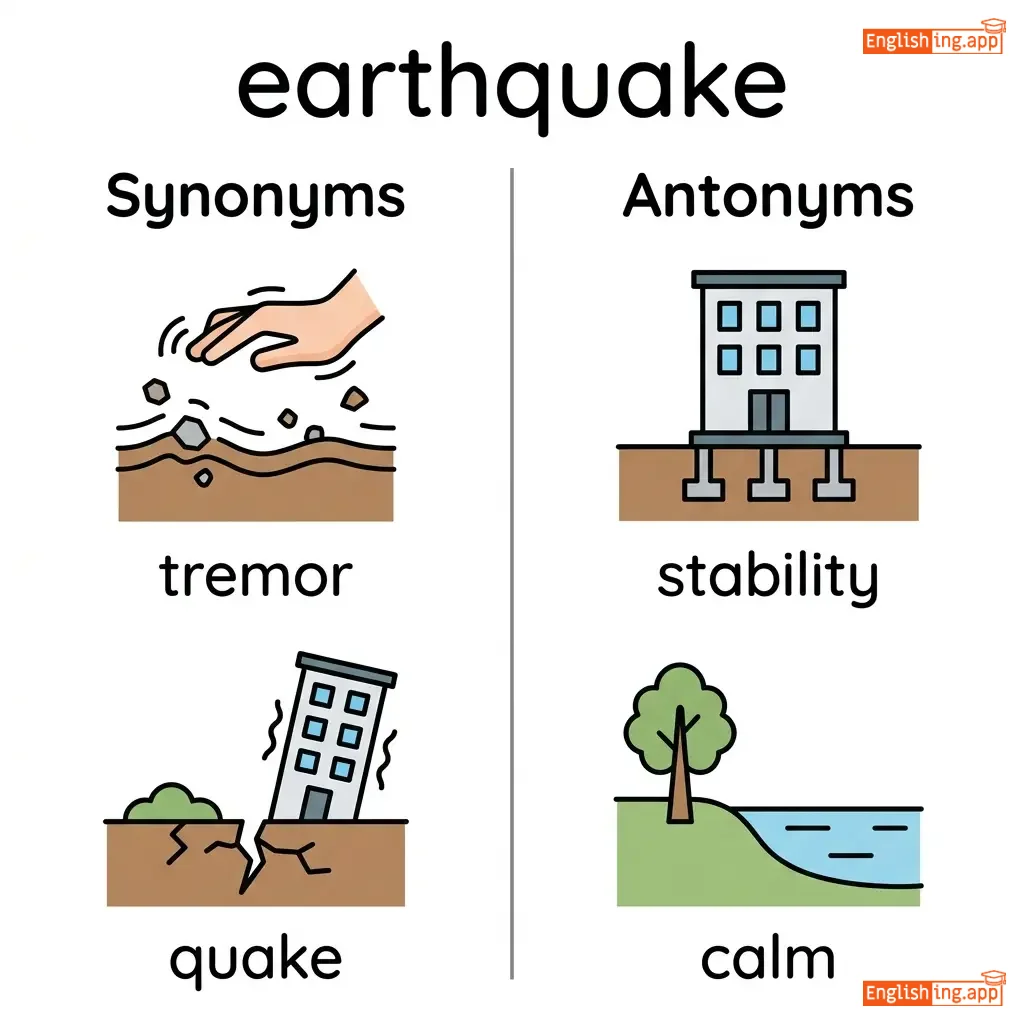
tremor, quake, shock, seismic event
••••••
|
stability, calm
••••••
|
major earthquake, earthquake zone, earthquake damage, earthquake victims
••••••
|
地震 - 地面が揺れるから地震。
••••••
|
|
😌
••••••
|
/iːz/
noun/verb
(イーズ)
••••••
|
- •••••• |
容易さ
yōsai
••••••
|
eased
イーズド
••••••
|
eased
イーズド
••••••
|
eases
イーズズ
••••••
|
easing
イージング
••••••
|
absence of difficulty or effort; to make something less serious or severe
••••••
|
Meditation helps ease stress.
瞑想はストレスを和らげるのに役立ちます。
••••••
|
瞑想はストレスを和らげるのに役立ちます。
Meisō wa sutoresu o yawarageru no ni yakudachimasu.
••••••
|
at ease
リラックス
••••••
|
free from worry or anxiety
••••••
|
リラックス
rirakkusu
••••••
|
comfort, relief, rest, simplicity
••••••
|
difficulty, hardship, discomfort
••••••
|
with ease, ease the pain, ease restrictions, ease pressure
••••••
|
Ease は簡単さを意味します — 簡単なことをするなら、それは簡単になります。
••••••
|
|
👌
••••••
|
/ˈiːzəli/
adverb
(īziri)
••••••
|
- •••••• |
簡単に
kantan ni
••••••
|
- •••••• | - •••••• | - •••••• | - •••••• |
without difficulty or effort
••••••
|
He solved the problem easily.
彼は簡単に問題を解決しました。
••••••
|
彼は簡単に問題を解決しました。
Kare wa kantan ni mondai o kaiketsu shimashita.
••••••
|
take it easy
簡単にやる
••••••
|
to relax and not worry
••••••
|
簡単にやる
kantan ni yaru
••••••
|
effortlessly, readily, smoothly, simply
••••••
|
hardly, with difficulty, painfully
••••••
|
easily accessible, easily understood, easily broken, easily available
••••••
|
Easily という意味は簡単に、努力なしでやることです。
••••••
|
|
🌅
••••••
|
/iːst/
noun
(イースト)
••••••
|
- •••••• |
東
higashi
••••••
|
- •••••• | - •••••• | - •••••• | - •••••• |
The direction from which the sun rises; one of the four cardinal points.
••••••
|
The sun rises in the east. |
太陽は東から昇ります。
Taiyou wa higashi kara noborimasu.
••••••
|
East meets West |
A phrase describing the meeting of Eastern and Western cultures.
••••••
|
東と西が出会う
Higashi to nishi ga deau
••••••
|
orient, sunrise, direction, right-hand side
••••••
|
west, sunset
••••••
|
east side, east wind, east coast, east direction
••••••
|
東 = 太陽が昇る場所 🌅
••••••
|
|
🌅
••••••
|
/ˈiː.stərn/
adjective
(īsutān)
••••••
|
- •••••• |
東洋の
tōyō no
••••••
|
- •••••• | - •••••• | - •••••• | - •••••• |
relating to or situated in the east; from or characteristic of the eastern part of the world
••••••
|
She studied Eastern philosophy at the university.
彼女は大学で東洋哲学を学びました。
••••••
|
彼女は大学で東洋哲学を学びました。
Kanojo wa daigaku de tōyō tetsugaku o manabimashita.
••••••
|
- •••••• | - •••••• | - •••••• |
oriental, Asian, eastward, dawn-side
••••••
|
western, occidental, westward, sunset-side
••••••
|
Eastern culture, Eastern medicine, Eastern philosophy
••••••
|
‘東洋の’ (tōyō no) は‘東’ (higashi) から来ている。
••••••
|
|
😊
••••••
|
/ˈiːzi/
adjective
(イージー)
••••••
|
- •••••• |
簡単
kantan
••••••
|
- •••••• | - •••••• | - •••••• | - •••••• |
not difficult; requiring little effort
••••••
|
The exam was surprisingly easy. |
試験は驚くほど簡単でした。
Shiken wa odoroku hodo kantan deshita.
••••••
|
take it easy |
to relax and not worry
••••••
|
気楽にやる
kiraku ni yaru
••••••
|
simple, effortless, straightforward, uncomplicated
••••••
|
difficult, hard
••••••
|
easy task, easy way, easy solution, easy money
••••••
|
Easyは簡単という意味です😊、日本語では「簡単な仕事」は努力が少ない仕事を意味します。
••••••
|
|
🍽️
••••••
|
/iːt/
verb
(ito)
••••••
|
|
食べる
taberu
••••••
|
ate
eto
••••••
|
eaten
iten
••••••
|
eats
its
••••••
|
eating
iting
••••••
|
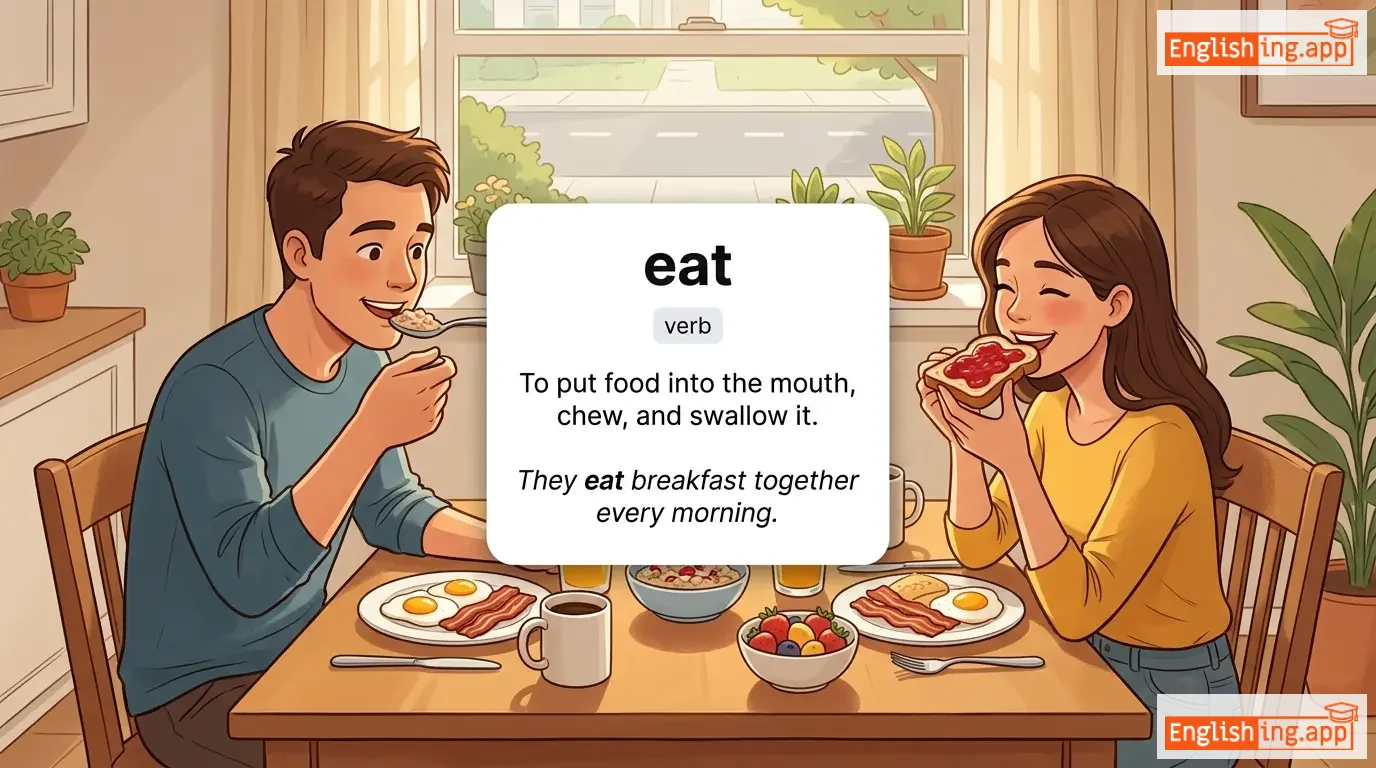
To put food into the mouth, chew, and swallow it.
••••••
|
They eat breakfast together every morning.
彼らは毎朝一緒に朝食を食べます。
••••••
|
彼らは毎朝一緒に朝食を食べます。
Karera wa mai asa issho ni chōshoku o tabemasu.
••••••
|
eat like a horse
馬のように食べる
••••••
|
To eat a lot of food.
••••••
|
馬のように食べる
Uma no yō ni taberu
••••••
|
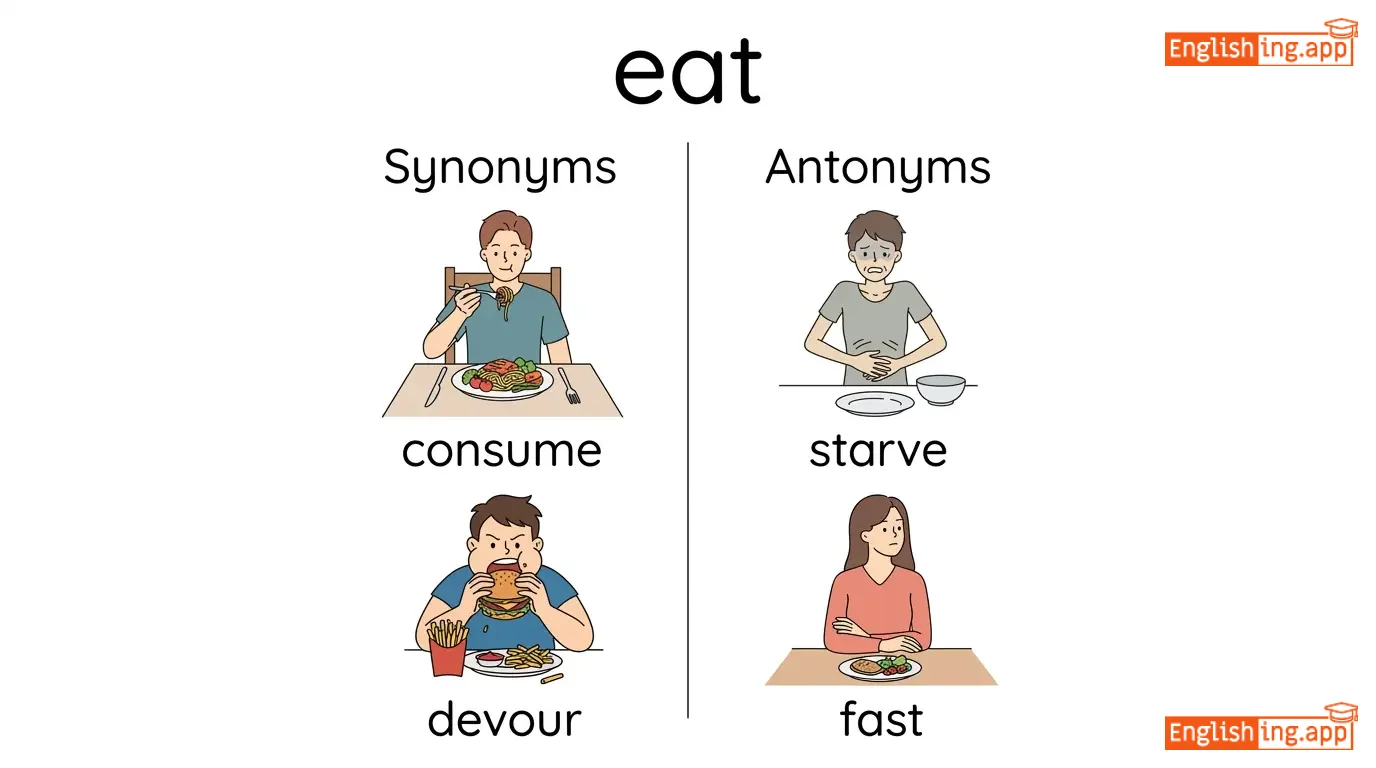
consume, devour, chew, swallow, dine
••••••
|
starve, fast
••••••
|
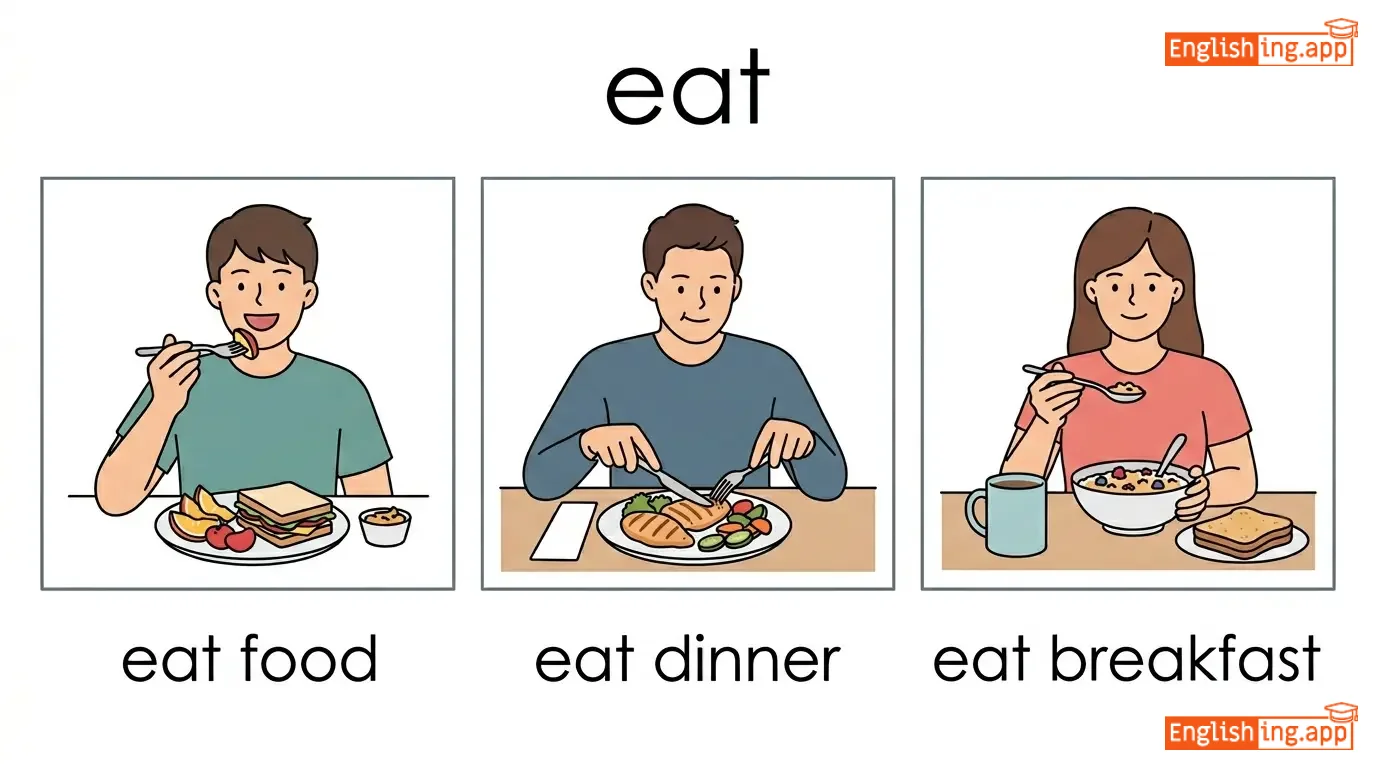
eat food, eat dinner, eat breakfast, eat together
••••••
|
Eatは食べるという意味 - 馬のように食べると満腹になる。
••••••
|
|
🔊
••••••
|
/ˈɛkəʊ/
noun, verb
(ハピネス)
••••••
|
- •••••• |
幸福
kōfuku
••••••
|
echoed
••••••
|
echoed
••••••
|
echoes
••••••
|
echoing
••••••
|
a sound that is reflected off a surface and heard again; to repeat or reflect a sound or idea.
••••••
|
Her laughter echoed through the empty hall. |
賞を受け取ったとき、彼女は自分の幸福を隠せなかった。
shō o uketotta toki, kanojo wa jibun no kōfuku o kakusenakatta.
••••••
|
echo chamber |
an environment where people only encounter information or opinions that reflect and reinforce their own.
••••••
|
幸福の追求
kōfuku no tsuikyū
••••••
|
resound, reverberate, repeat, reflect, resonate
••••••
|
silence, quiet, mute
••••••
|
echo sound, echo chamber, echo through, faint echo, echo of laughter
••••••
|
幸福とは、あなたが追い求めるもの、あなたの人生を満たすためにある!
••••••
|
|
🌱
••••••
|
/ˌiːkəˈlɒdʒɪkəl/
adjective
(エコロジカル)
••••••
|
|
生態学的
seitaigakuteki
••••••
|
- •••••• | - •••••• | - •••••• | - •••••• |
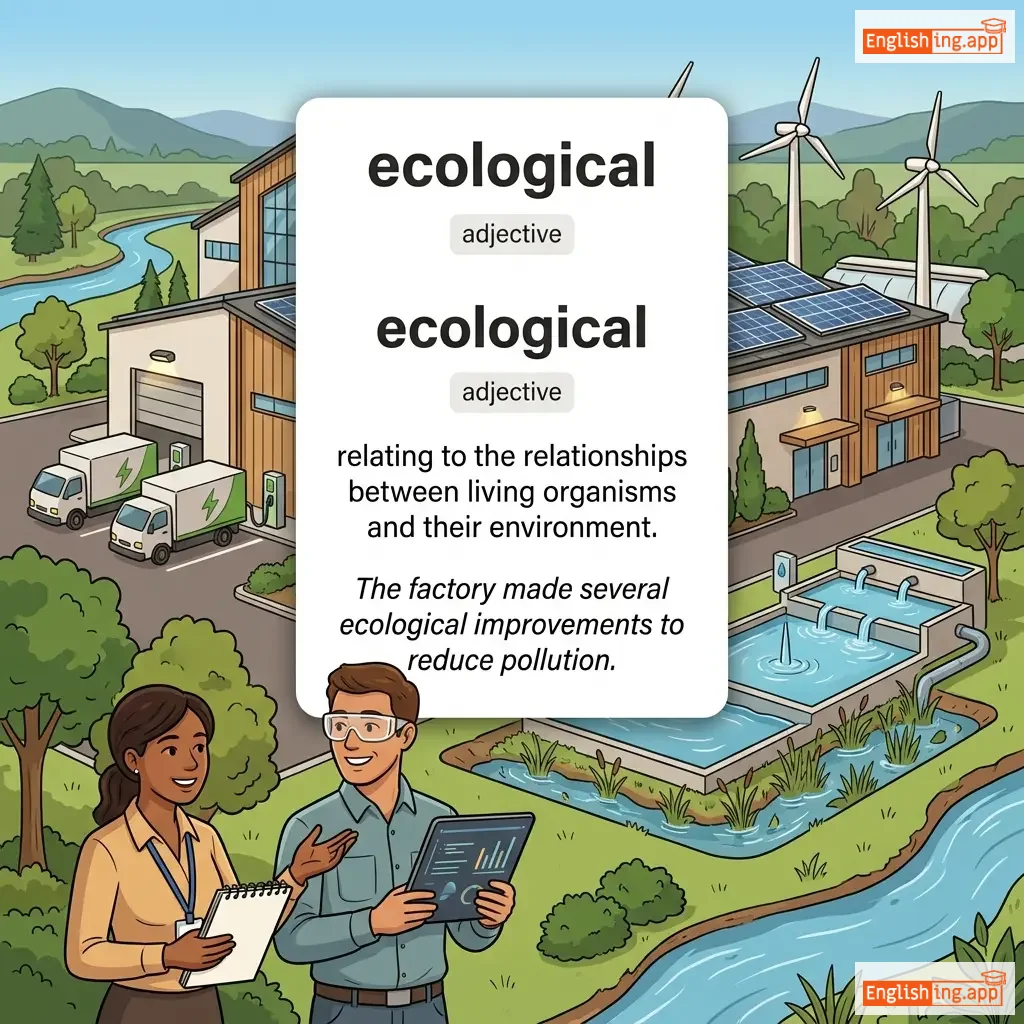
relating to the relationships between living organisms and their environment.
••••••
|
The factory made several ecological improvements to reduce pollution. |
工場は汚染を減らすためにいくつかの生態学的な改善を行いました。
Kōjō wa osen o herasu tame ni ikutsuka no seitai-gakuteki na kaizen o okonai mashita.
••••••
|
- •••••• | - •••••• | - •••••• |
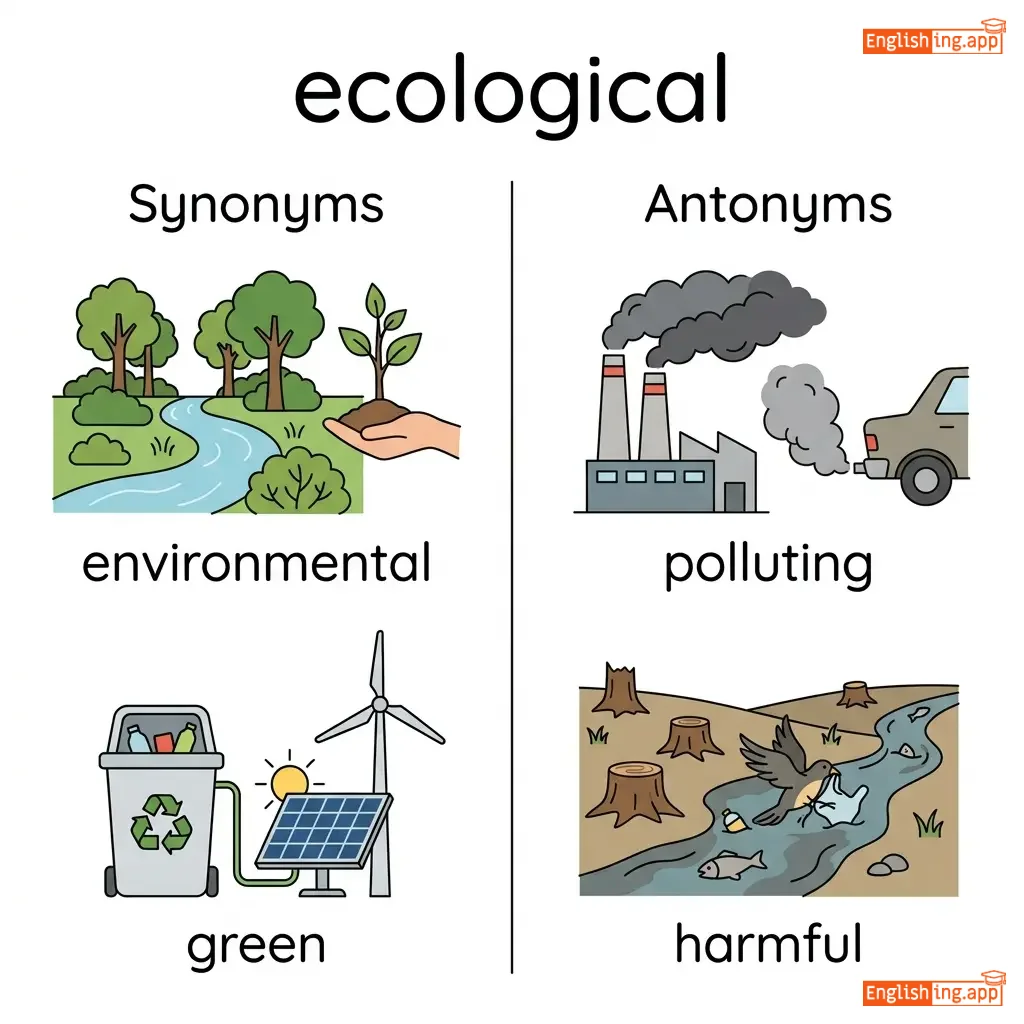
environmental, green, biological, natural, sustainable
••••••
|
polluting, harmful, artificial
••••••
|
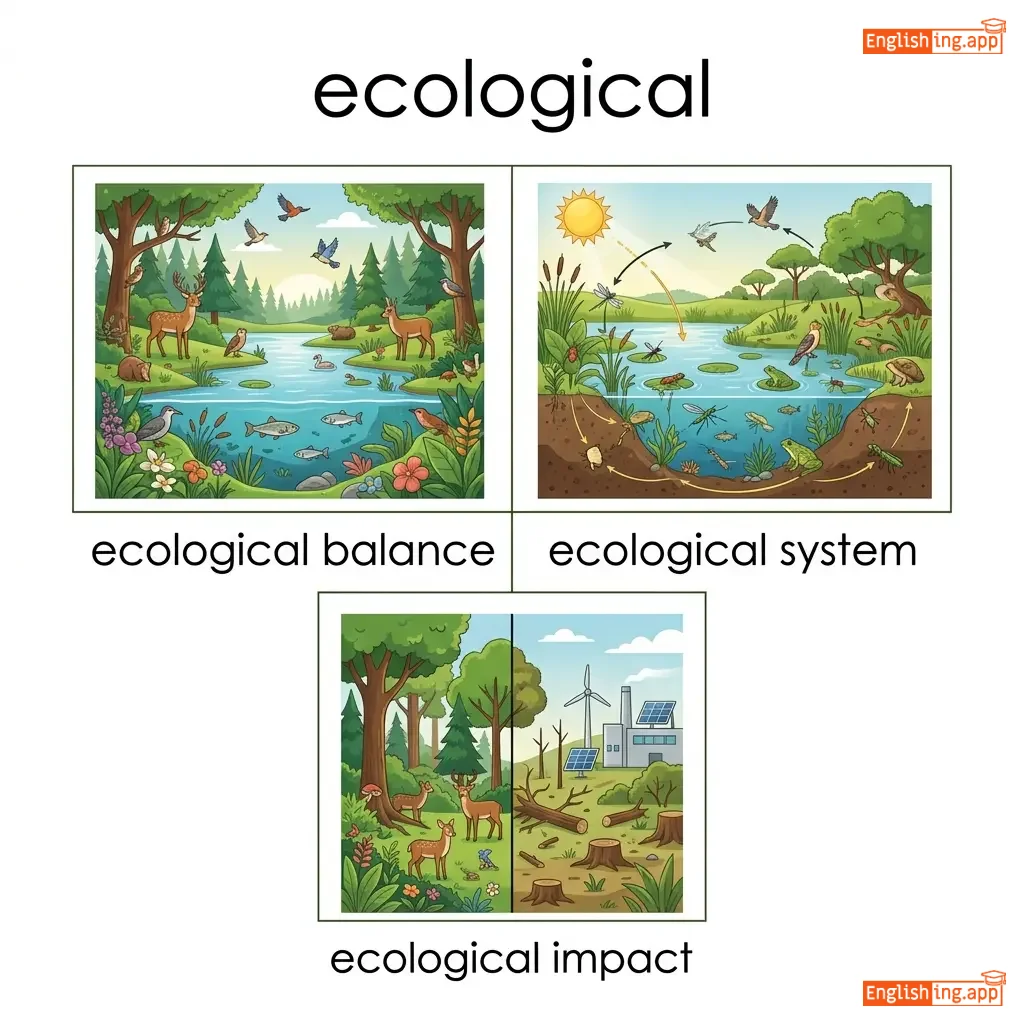
ecological balance, ecological system, ecological impact, ecological disaster
••••••
|
Ecoは環境を意味し、したがってエコロジカルは環境に関連しているという意味です。
••••••
|
|
💰
••••••
|
/ˌiːkəˈnɒmɪk/
adjective
(エコノミック)
••••••
|

|
経済的
keizaiteki
••••••
|
- •••••• | - •••••• | - •••••• | - •••••• |
relating to the economy, trade, or money
••••••
|
The country is facing an economic crisis. |
その国は経済危機に直面しています。
Sono kuni wa keizai kiki ni chokumen shiteimasu.
••••••
|
economic growth |
increase in a country's production and wealth
••••••
|
経済成長
keizai seichou
••••••
|
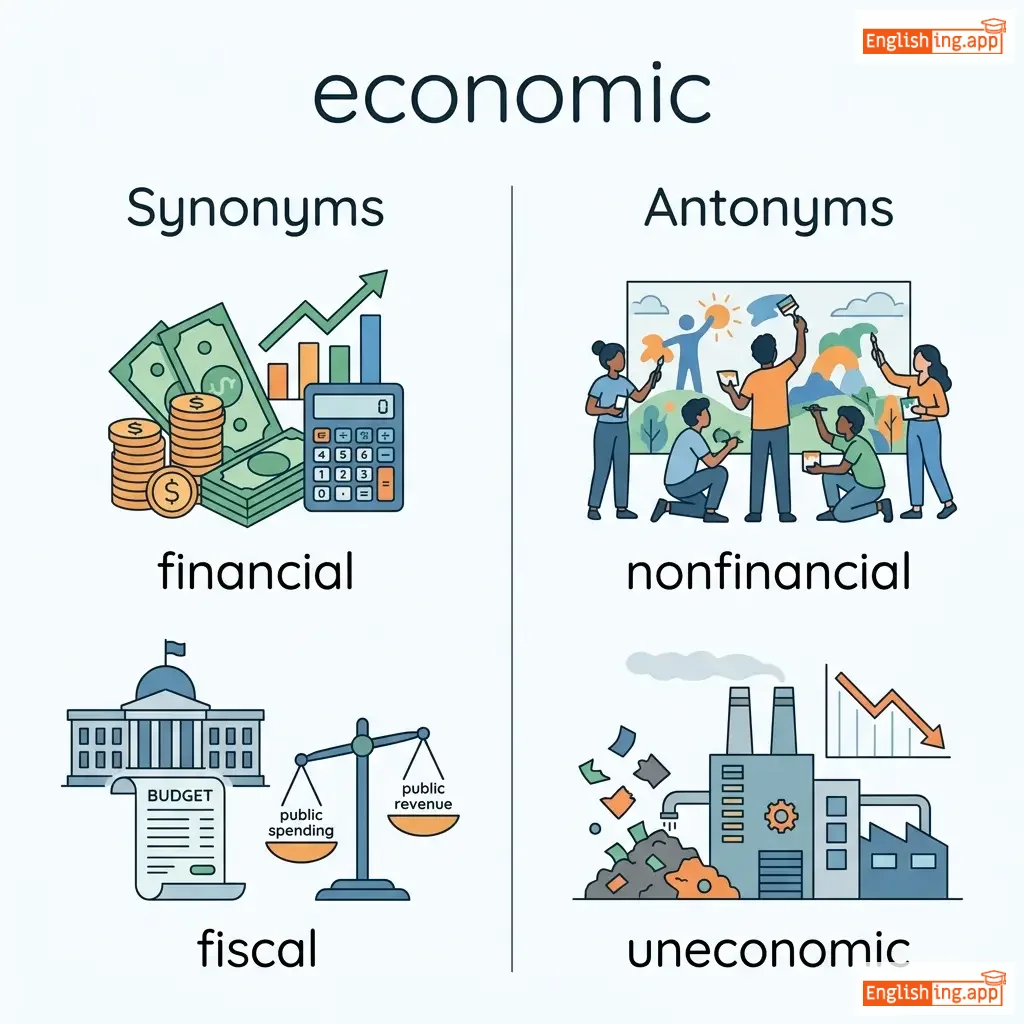
financial, fiscal, commercial, monetary
••••••
|
nonfinancial, uneconomic
••••••
|
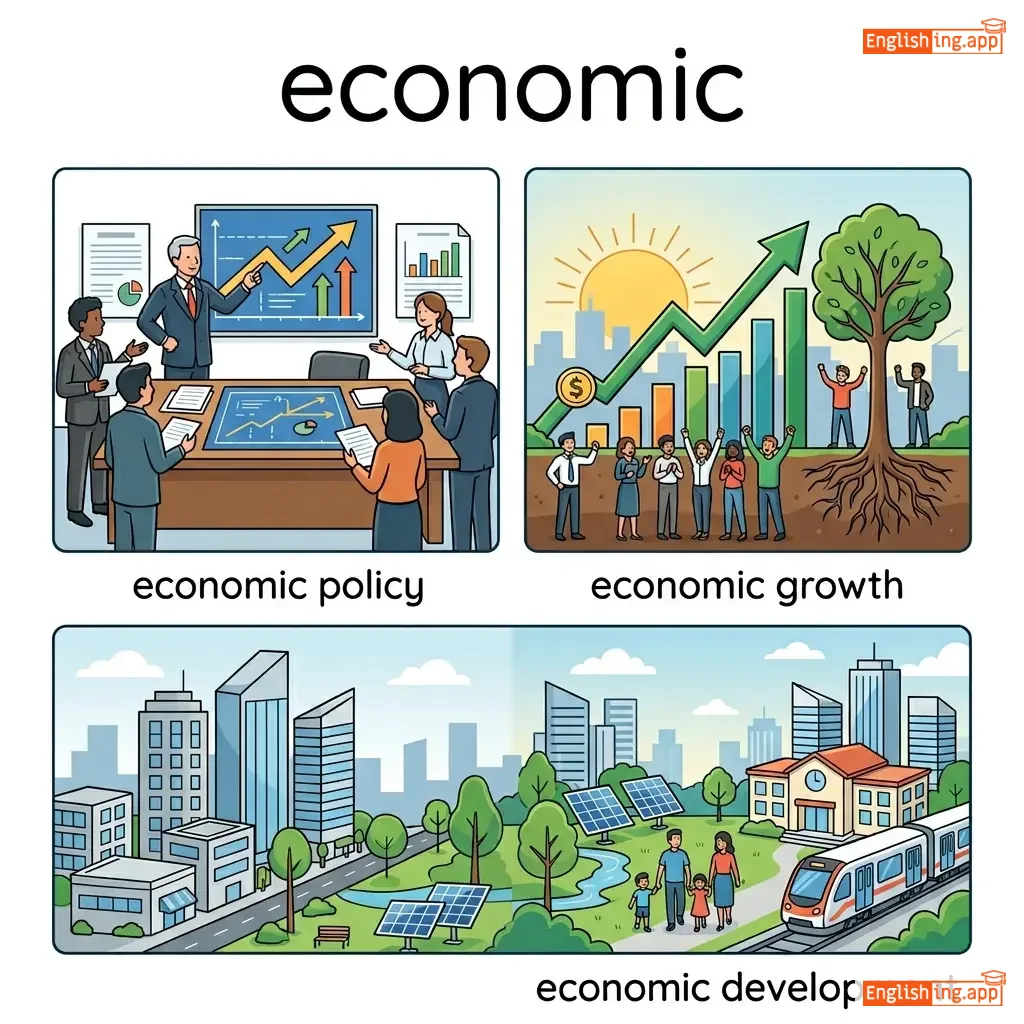
economic policy, economic growth, economic development, economic crisis
••••••
|
Economic = 経済的 💰, '経' は経済、'済' は支援の成長。
••••••
|
|
💰
••••••
|
/ˌiːkəˈnɒmɪkl/
adjective
(エコノミカル)
••••••
|
- •••••• |
経済的
keizaiteki
••••••
|
- •••••• | - •••••• | - •••••• | - •••••• |
Careful in the use of resources; providing good value or efficiency.
••••••
|
Driving a hybrid car is economical in the long run. |
ハイブリッド車を運転することは長期的には経済的です。
Haiburiddo-sha wo unten suru koto wa choukitekini wa keizaiteki desu.
••••••
|
economical with the truth |
A polite way of saying someone is not telling the whole truth.
••••••
|
真実に対して経済的
Shinjitsu ni taishite keizaiteki
••••••
|
thrifty, frugal, efficient, cost-effective, prudent
••••••
|
wasteful, extravagant, lavish
••••••
|
economical choice, economical use, economical car, economical lifestyle
••••••
|
経済的 = 経済 + 的 (節約), つまり経済的
••••••
|
|
📊
••••••
|
/ˌiːkəˈnɒmɪks/ or /ˌɛkəˈnɒmɪks/
noun
(エコノミクス)
••••••
|
- •••••• |
経済学
keizaigaku
••••••
|
- •••••• | - •••••• | - •••••• | - •••••• |
The study of production, consumption, and transfer of wealth.
••••••
|
He is studying economics at university. |
彼は大学で経済学を学んでいます。
Kare wa daigaku de keizaigaku o manandeimasu.
••••••
|
economics of scale |
Cost advantages gained when production increases.
••••••
|
規模の経済
kibo no keizai
••••••
|
finance, commerce, business, trade
••••••
|
non-financial, uncommercial
••••••
|
study economics, economics course, economics department, economics theory
••••••
|
Economicsは経済学 - '経' (経済) と '学' (学問) の組み合わせ。
••••••
|
|
👨🏫
••••••
|
/ɪˈkɒnəmɪst/
noun
(エコノミスト)
••••••
|
- •••••• |
経済学者
keizaigakusha
••••••
|
- •••••• | - •••••• | - •••••• | - •••••• |
A person who studies or is an expert in economics.
••••••
|
The economist predicted a rise in inflation. |
経済学者はインフレの上昇を予測しました。
Keizaigakusha wa infure no joshou o yosoku shimashita.
••••••
|
- •••••• | - •••••• | - •••••• |
analyst, financial expert, researcher, academic
••••••
|
layman, non-specialist
••••••
|
famous economist, government economist, professional economist, research economist
••••••
|
Economist とは経済学者 - お金と経済を理解している専門家。
••••••
|
|
💹
••••••
|
/ɪˈkɒnəmi/
noun
(エコノミー)
••••••
|

|
経済
keizai
••••••
|
- •••••• | - •••••• | - •••••• | - •••••• |
The system of production, distribution, and consumption of goods and services in a society.
••••••
|
The global economy has been affected by rising inflation. |
世界経済はインフレの上昇に影響を受けました。
Sekai keizai wa infure no jōshō ni eikyō o ukemashita.
••••••
|
boost the economy |
to improve the economic condition of a country or region
••••••
|
経済を促進する
Keizai o sokushin suru
••••••
|
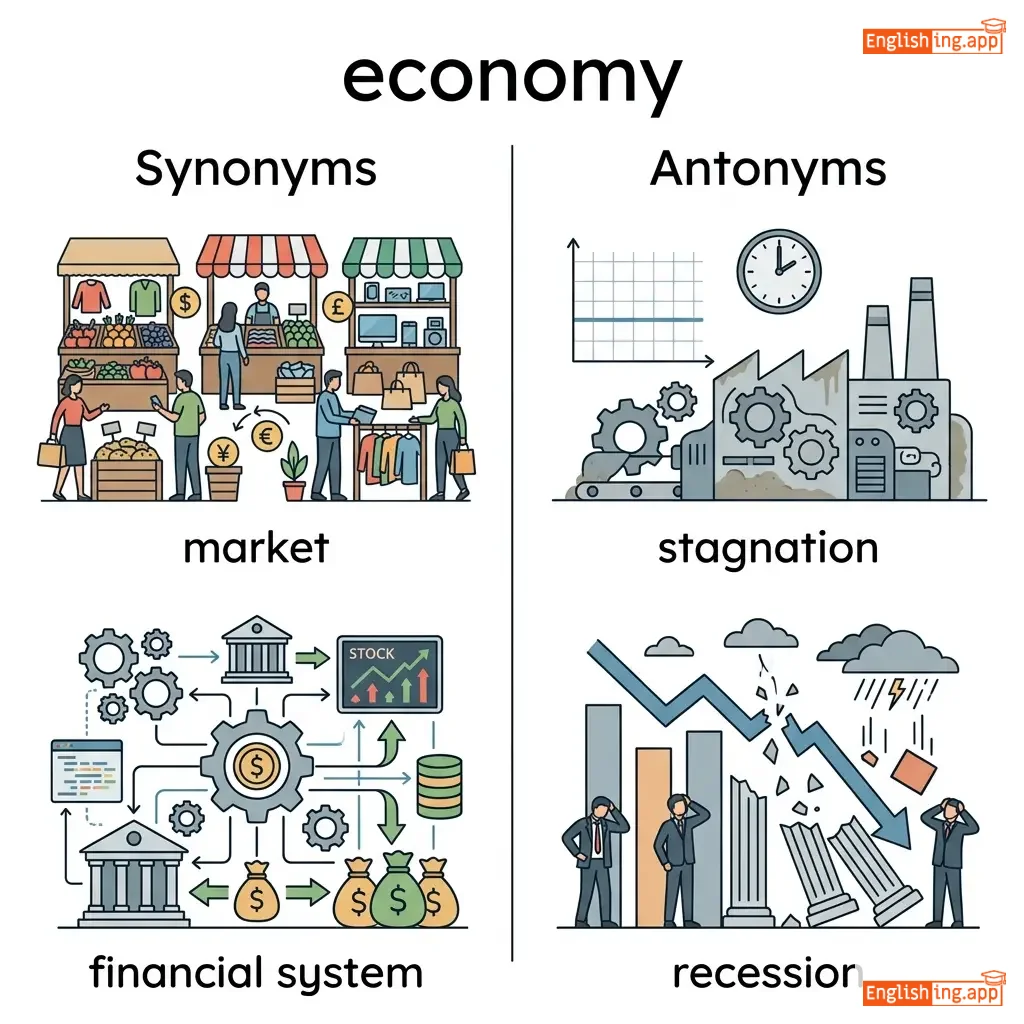
market, financial system, commerce, trade, industry
••••••
|
stagnation, recession, collapse
••••••
|
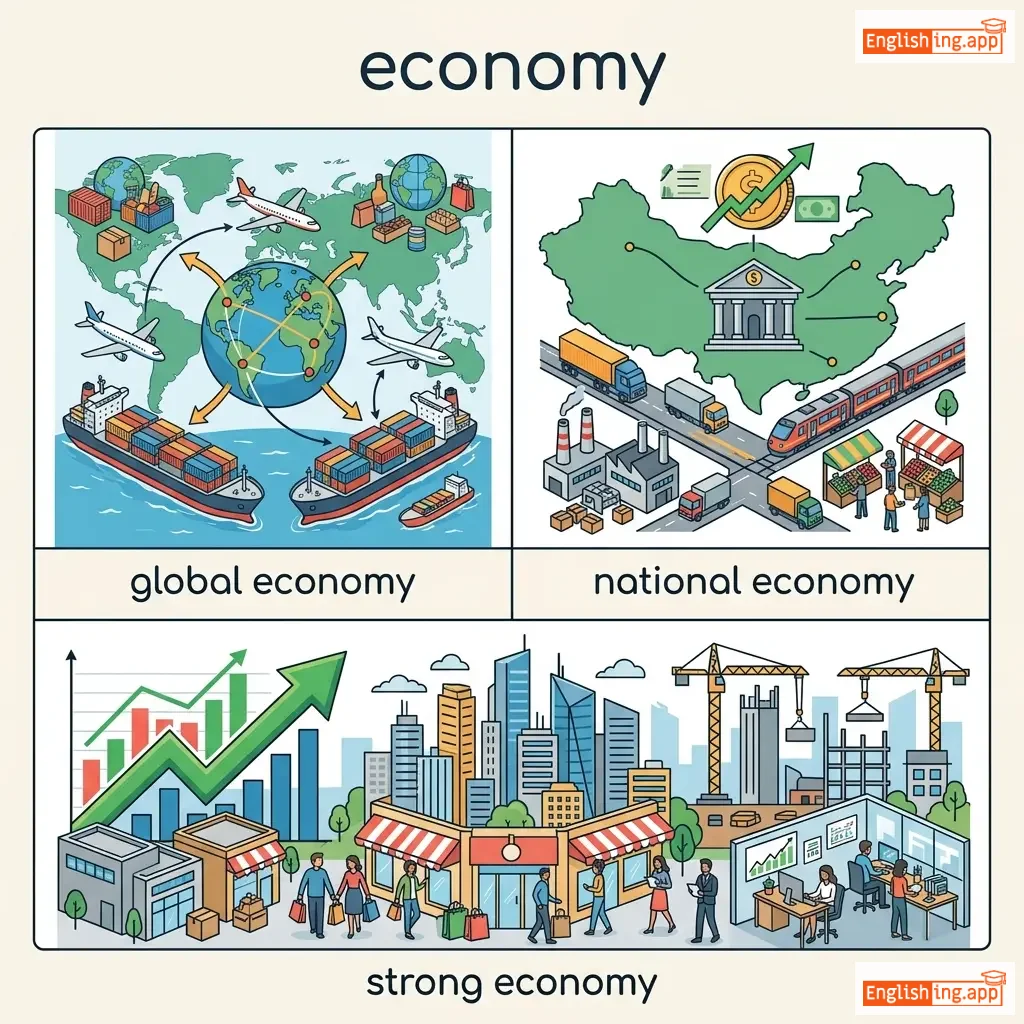
global economy, national economy, strong economy, economy growth, economy policy
••••••
|
経済=経済、全てはお金(経済)を中心に回る。
••••••
|
|
🔪
••••••
|
/ɛdʒ/
noun
(エッジ)
••••••
|
- •••••• |
縁 / 刃
en / ha
••••••
|
- •••••• | - •••••• | - •••••• | - •••••• |
the border or outermost part of something; a sharp side of a blade or tool
••••••
|
He stood on the edge of the cliff. |
彼は崖の縁に立っていた。
Kare wa gake no en ni tatte ita.
••••••
|
on edge |
to be nervous or anxious
••••••
|
神経質 / 緊張
shinkeishitsu / kinchou
••••••
|
border, margin, rim, brink, boundary
••••••
|
center, middle, core
••••••
|
sharp edge, cliff edge, edge of the table, cutting edge
••••••
|
刃の縁が危険を予告している!
••••••
|
|
✏️
••••••
|
/ˈɛdɪt/
verb
(エディット)
••••••
|
|
編集する
henshū suru
••••••
|
edited
••••••
|
edited
••••••
|
edits
••••••
|
editing
••••••
|
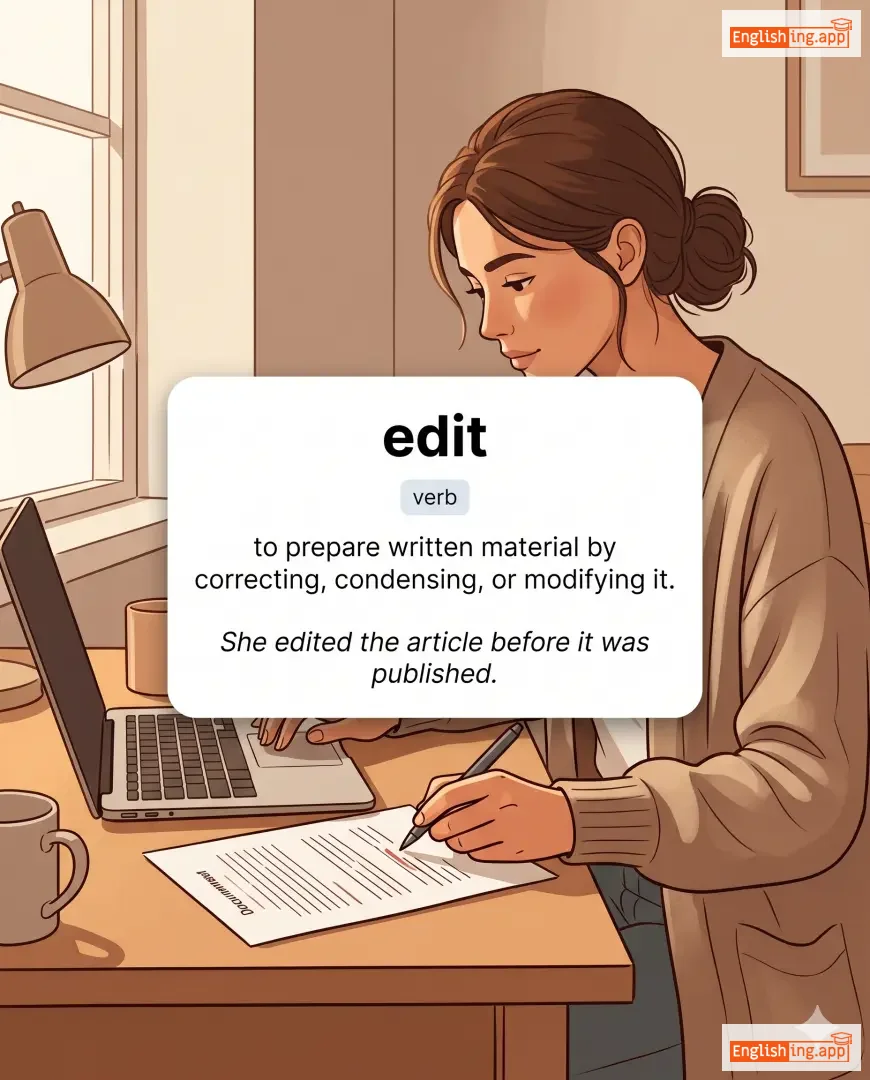
to prepare written material by correcting, condensing, or modifying it.
••••••
|
She edited the article before it was published. |
彼女は記事が公開される前に編集しました。
Kanojo wa kiji ga kōkai sareru mae ni henshū shimashita.
••••••
|
editor's cut |
a version of a film or video edited by its editor rather than the director.
••••••
|
編集者のカット
henshū-sha no katto
••••••
|
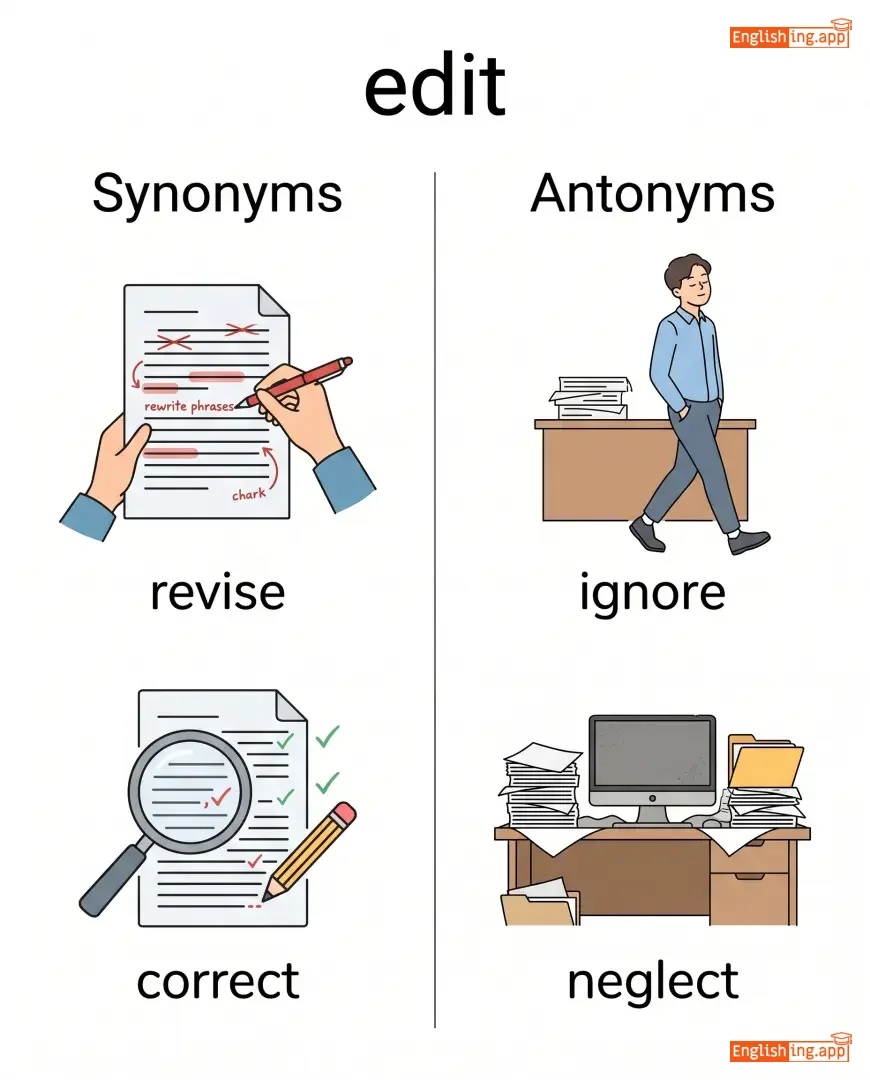
revise, correct, modify, proofread, alter
••••••
|
ignore, neglect, keep unchanged
••••••
|
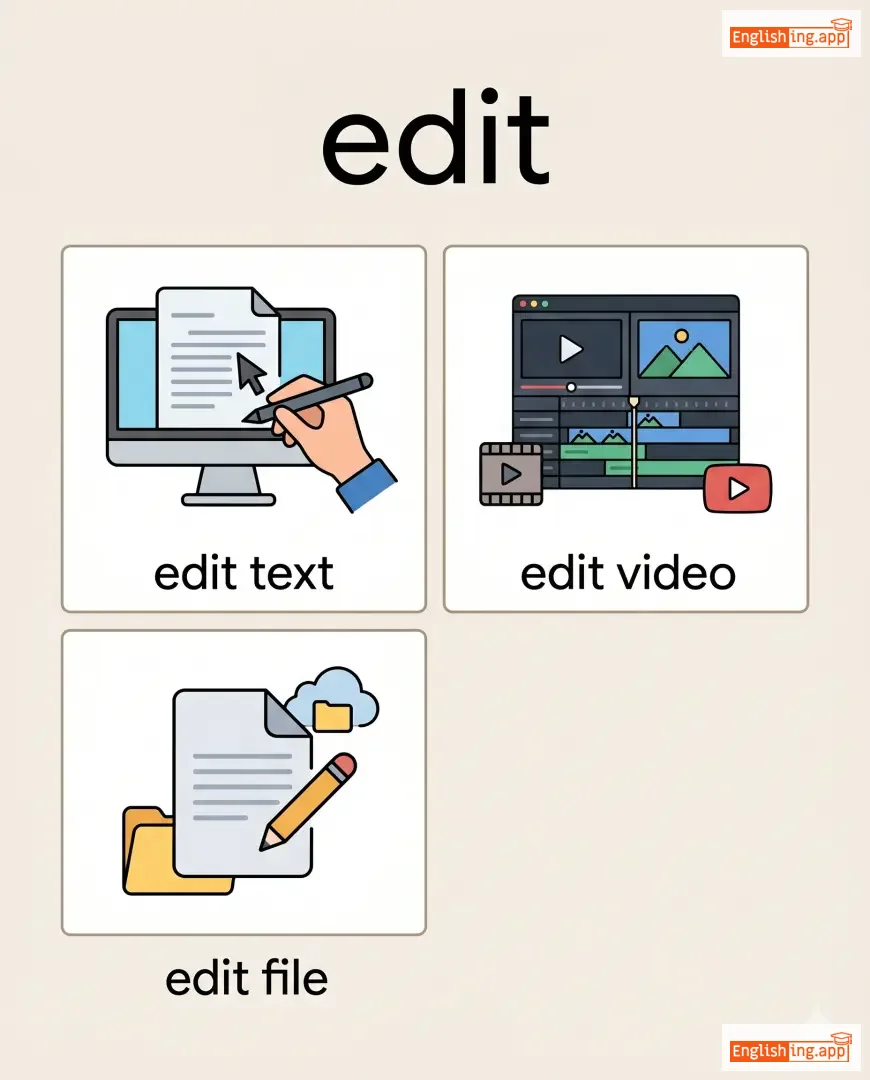
edit text, edit video, edit file, edit content, edit message
••••••
|
編集することは、美しく仕上げること、例えば'編集して、完璧にしよう!' ✏️
••••••
|
|
📚
••••••
|
/ɪˈdɪʃən/
noun
(エディション)
••••••
|
- •••••• |
版
ban
••••••
|
- •••••• | - •••••• | - •••••• | - •••••• |
a particular version or printing of a book, newspaper, or other publication
••••••
|
The latest edition of the magazine sold out quickly. |
雑誌の最新の版はすぐに売り切れました。
Zasshi no saishin no han wa sugu ni urikiremashita.
••••••
|
- •••••• | - •••••• | - •••••• |
version, issue, release, publication
••••••
|
original, draft
••••••
|
latest edition, special edition, first edition, new edition
••••••
|
Editionは日本語で版 - 新しい版は新しいバージョンです。
••••••
|
|
🖊️
••••••
|
/ˈɛdɪtər/
noun
(エディター)
••••••
|
- •••••• |
編集者
henshūsha
••••••
|
- •••••• | - •••••• | - •••••• | - •••••• |
a person responsible for the final content of a newspaper, magazine, or book
••••••
|
The editor approved the article before publication.
エディターは出版前に記事を承認しました。
••••••
|
エディターは出版前に記事を承認しました。
Editā wa shuppan mae ni kiji o shōnin shimashita.
••••••
|
editor-in-chief
編集長
••••••
|
the main editor in charge of a publication
••••••
|
編集長
henshūchō
••••••
|
publisher, reviser, proofreader, compiler
••••••
|
writer, author
••••••
|
newspaper editor, chief editor, film editor, editor’s note
••••••
|
エディターは記事を承認し、出版準備を完了させます。
••••••
|
|
📰
••••••
|
/ˌɛdɪˈtɔːriəl/
noun
(エディトリアル)
••••••
|
- •••••• |
社説
shasetsu
••••••
|
- •••••• | - •••••• | - •••••• | - •••••• |
A newspaper article expressing the opinion of the editor or publisher.
••••••
|
The newspaper published an editorial criticizing government policy. |
新聞は政府の政策を批判する社説を発表しました。
Shinbun wa seifu no seisaku o hihan suru shasetsu o happyō shimashita.
••••••
|
- •••••• | - •••••• | - •••••• |
opinion piece, commentary, article, column
••••••
|
report, fact, news
••••••
|
editorial board, editorial policy, write an editorial
••••••
|
社説は新聞のeditorial 📰
••••••
|
|
🎓
••••••
|
/ˈɛdjʊˌkeɪt/
verb
(エデュケート)
••••••
|
- •••••• |
教育する
kyouiku suru
••••••
|
educated
エデュケイテッド
••••••
|
educated
エデュケイテッド
••••••
|
educates
エデュケイツ
••••••
|
educating
エデュケイティング
••••••
|
to give knowledge, skills, or training to someone; to teach
••••••
|
Parents should educate their children about healthy habits.
親は子供たちに健康的な習慣について教育するべきです。
••••••
|
親は子供たちに健康的な習慣について教育するべきです。
Oya wa kodomotachi ni kenko-teki na shuukan ni tsuite kyouiku suru beki desu.
••••••
|
self-educated
セルフエデュケイテッド
••••••
|
having educated oneself without formal schooling
••••••
|
セルフエデュケイテッド
serufu edyukeiteddo
••••••
|
teach, instruct, train, enlighten, coach
••••••
|
ignore, neglect
••••••
|
educate children, educate people, educate yourself, educate about
••••••
|
エデュケートは教育する意味です - エデュケートという音は教育を連想させます。
••••••
|
|
🎓
••••••
|
/ˈɛd.jʊ.keɪ.tɪd/
adjective
(エデュケイテッド)
••••••
|
- •••••• |
教育を受けた
kyouiku o uketa
••••••
|
- •••••• | - •••••• | - •••••• | - •••••• |
Having received a good level of formal schooling or training; knowledgeable
••••••
|
She is an educated woman who values lifelong learning.
彼女は教育を受けた女性で、生涯学習を重視しています。
••••••
|
彼女は教育を受けた女性で、生涯学習を重視しています。
Kanojo wa kyouiku o uketa josei de, shougai gakushuu o juushi shiteimasu.
••••••
|
- •••••• | - •••••• | - •••••• |
learned, knowledgeable, literate, informed, trained
••••••
|
ignorant, uneducated, illiterate
••••••
|
educated guess, highly educated, well-educated, formally educated
••••••
|
No •••••• |
|
🏫
••••••
|
/ˌɛdʒʊˈkeɪʃən/
noun
(エデュケーション)
••••••
|

|
教育
kyouiku
••••••
|
- •••••• | - •••••• | - •••••• | - •••••• |
the process of receiving or giving systematic instruction, especially at a school or university
••••••
|
Education is the key to success. |
教育は成功の鍵です。
Kyouiku wa seikou no kagi desu.
••••••
|
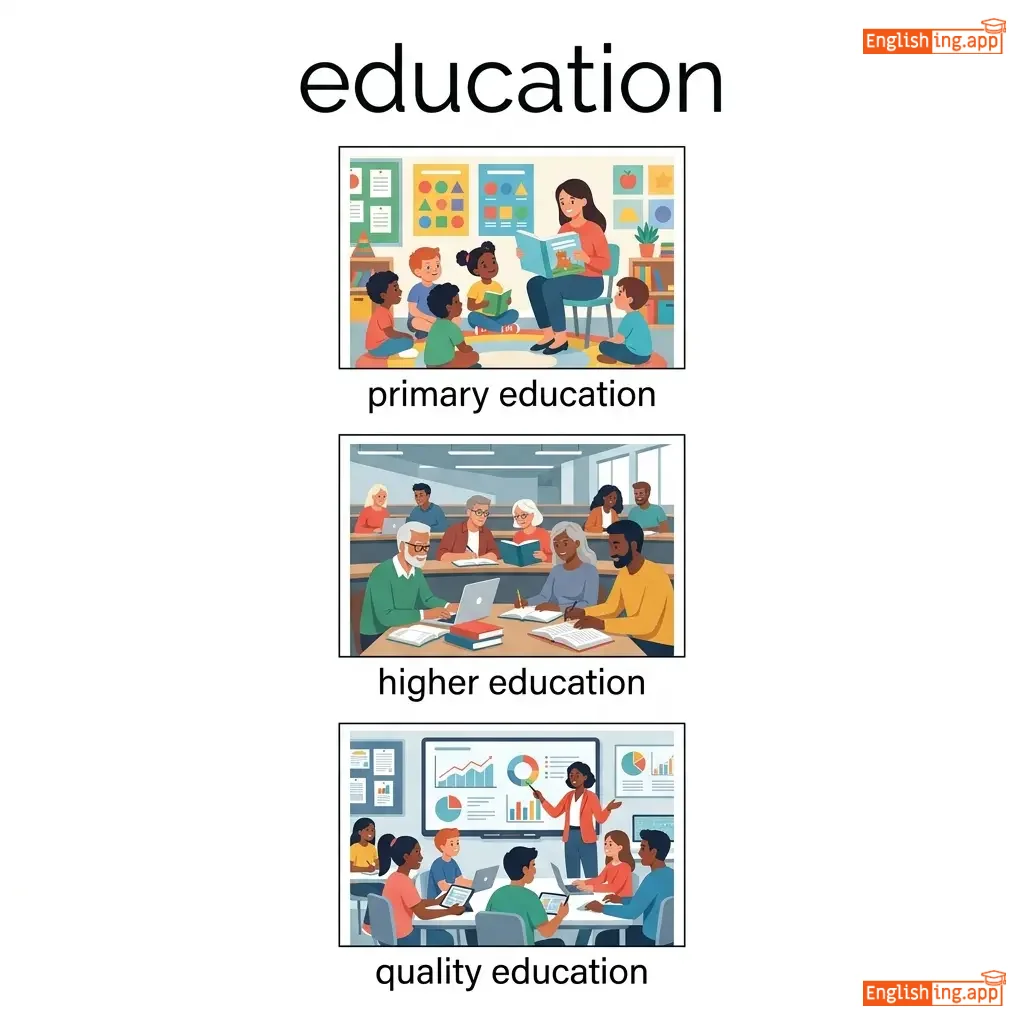
higher education |
education beyond the secondary level, usually at college or university
••••••
|
高等教育
koutou kyouiku
••••••
|
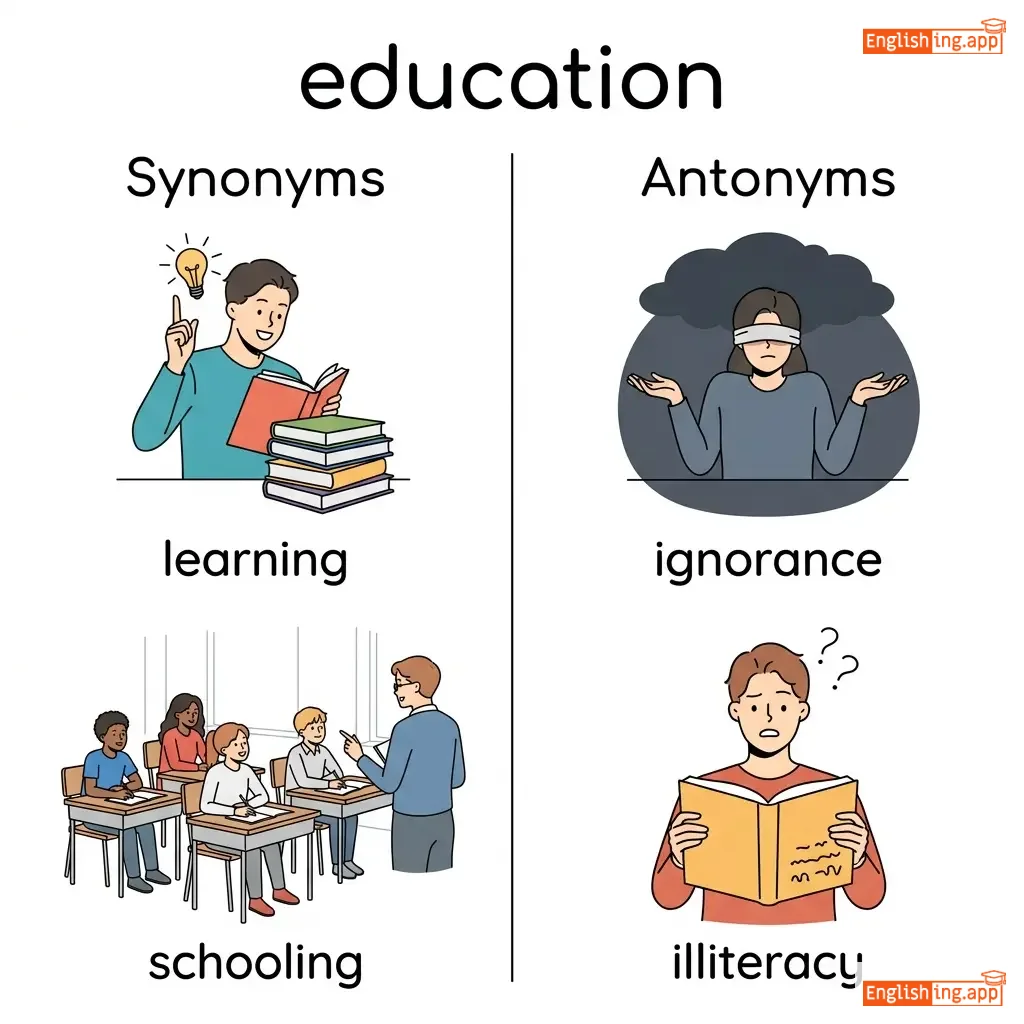
learning, schooling, instruction, teaching, training
••••••
|
ignorance, illiteracy
••••••
|
primary education, higher education, quality education, access to education
••••••
|
Educationは教育 - Edu + Nation = 国家は教育で成長する。
••••••
|
|
📚
••••••
|
/ˌɛdʒuˈkeɪʃənəl/
adjective
(エデュケーショナル)
••••••
|
|
教育的な
kyouikuteki na
••••••
|
- •••••• | - •••••• | - •••••• | - •••••• |
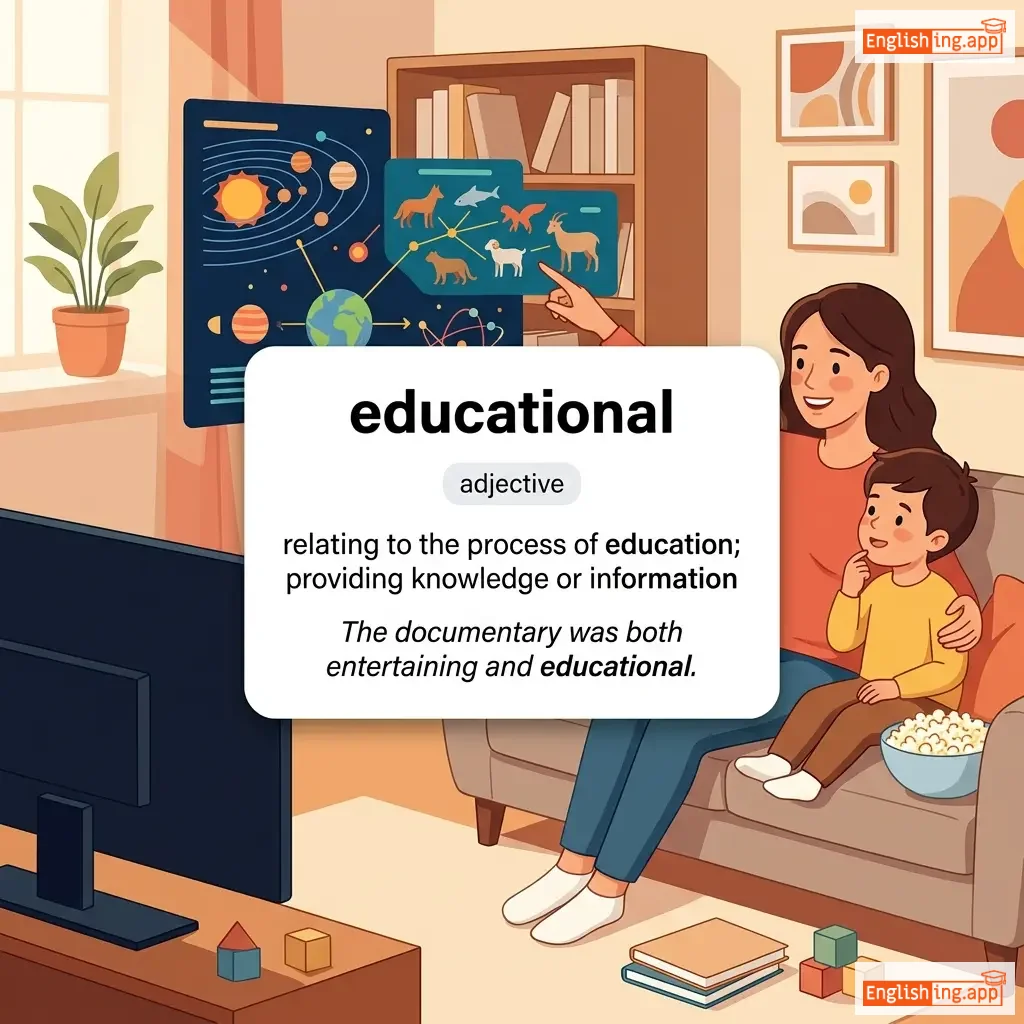
relating to the process of education; providing knowledge or information
••••••
|
The documentary was both entertaining and educational.
そのドキュメンタリーはエンターテイメントと教育的な両方の要素を持っていました。
••••••
|
そのドキュメンタリーはエンターテイメントと教育的な両方の要素を持っていました。
Sono dokyumentarī wa entāteimento to kyōikuteki na ryōhō no yōso o motteimashita.
••••••
|
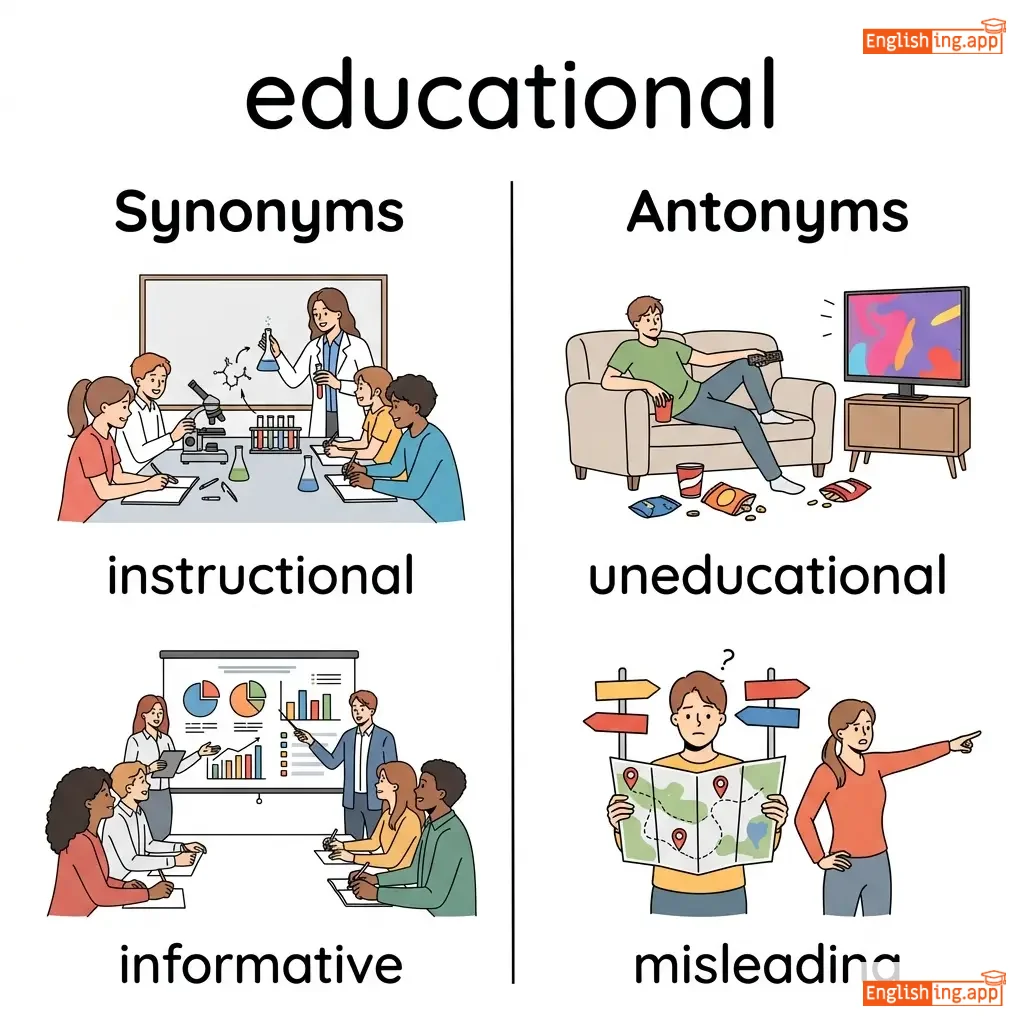
- •••••• | - •••••• | - •••••• |
instructional, informative, enlightening, didactic, academic
••••••
|
uneducational, misleading, uninformative
••••••
|
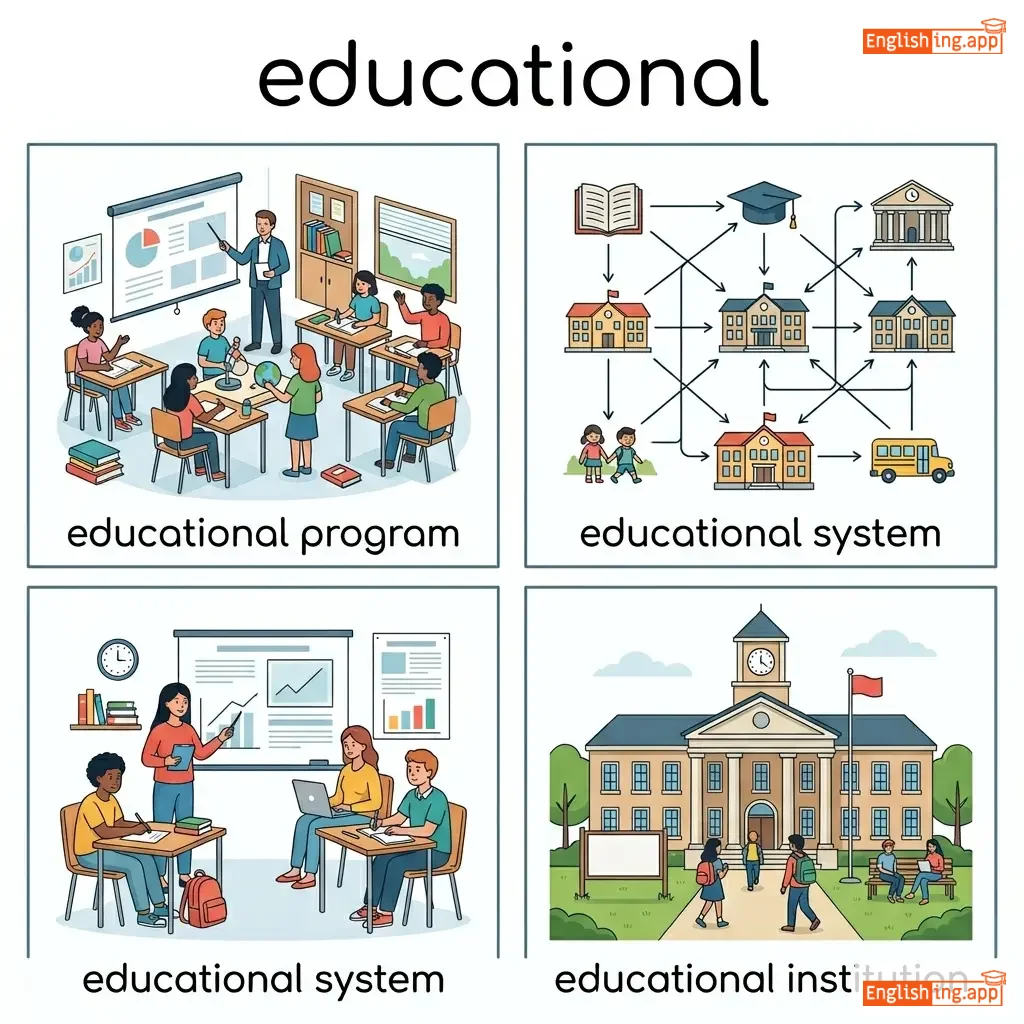
educational program, educational system, educational institution, educational material
••••••
|
Educationalは学びに関連しており、学校で使う教材や資料に似ています。
••••••
|
|
👩🏫
••••••
|
/ˈɛdʒuˌkeɪtər/
noun
(エデュケーター)
••••••
|
- •••••• |
教育者
kyouikusha
••••••
|
- •••••• | - •••••• | - •••••• | - •••••• |
a person who provides education; a teacher or instructor
••••••
|
She is a dedicated educator who inspires her students every day. |
彼女は毎日学生を励ます献身的な教育者です。
Kanojo wa mainichi gakusei wo hagemasu kenshinteki na kyouikusha desu.
••••••
|
- •••••• | - •••••• | - •••••• |
teacher, instructor, mentor, trainer, tutor
••••••
|
student, pupil
••••••
|
professional educator, experienced educator, educator training, role of educator
••••••
|
Educatorは教師👩🏫を意味し、教育するには教育者が必要です。
••••••
|
|
✨
••••••
|
/ɪˈfɛkt/
noun
(イフェクト)
••••••
|
- •••••• |
効果
kouka
••••••
|
- •••••• | - •••••• | - •••••• | - •••••• |
a change that results from a particular action or cause
••••••
|
The new law had a positive effect on public safety. |
新しい法律は公共の安全に良い効果をもたらしました。
Atarashii houritsu wa koukyou no anzen ni yoi kouka o motarashimashita.
••••••
|
take effect |
to begin to apply or produce results
••••••
|
発効する
hakkou suru
••••••
|
result, outcome, consequence, impact, influence
••••••
|
cause, source, origin
••••••
|
positive effect, negative effect, cause and effect, special effect
••••••
|
Effectの日本語での意味は影響。効果は記憶しやすい!
••••••
|
|
✅
••••••
|
/ɪˈfɛktɪv/
adjective
(イフェクティブ)
••••••
|

|
効果的
koukateki
••••••
|
- •••••• | - •••••• | - •••••• | - •••••• |
producing the intended or desired result
••••••
|
This medicine is very effective against headaches. |
この薬は頭痛に非常に効果的です。
Kono kusuri wa zutsū ni hijō ni kōkateki desu.
••••••
|
effective immediately |
starting from now
••••••
|
即時効果
sokujikōka
••••••
|
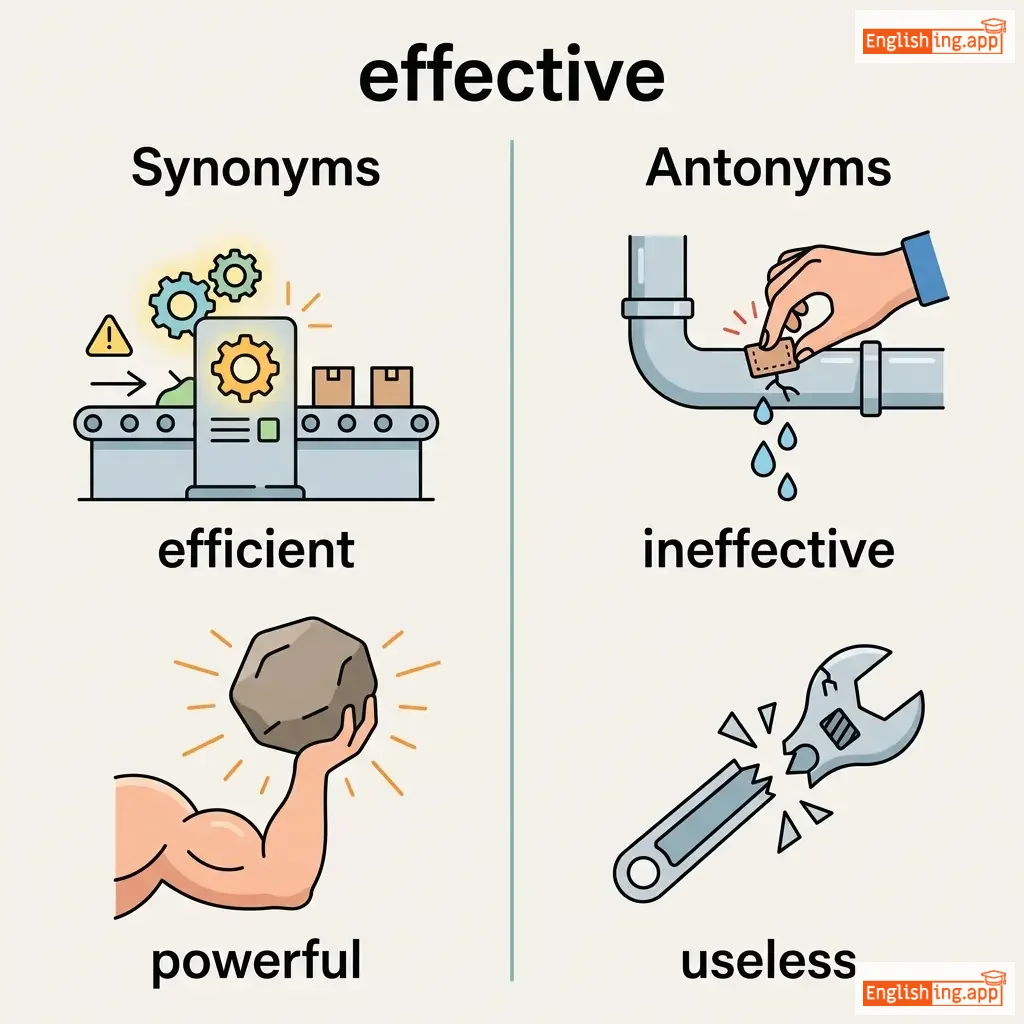
efficient, powerful, useful, successful, strong
••••••
|
ineffective, useless, weak
••••••
|
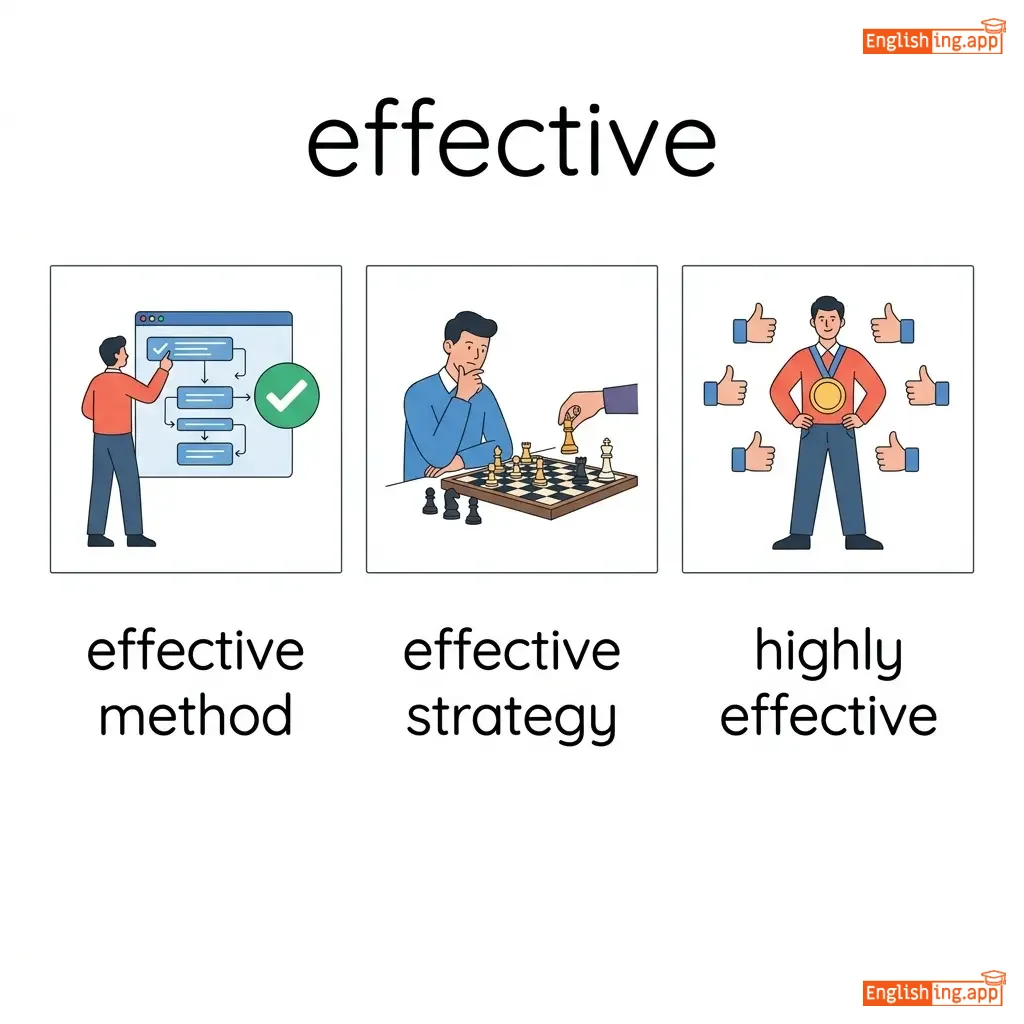
effective method, effective strategy, highly effective, effective communication
••••••
|
効果的とは、効くこと - 効果的な薬で頭痛が治る。
••••••
|
|
✅
••••••
|
/ɪˈfɛktɪvli/
adverb
(efekutivuri)
••••••
|
- •••••• |
効果的に
koukatekini
••••••
|
- •••••• | - •••••• | - •••••• | - •••••• |
in a way that produces the desired result; efficiently and successfully
••••••
|
The team worked together effectively to finish the project on time. |
チームはプロジェクトを時間通りに終わらせるために効果的に一緒に働きました。
Chīmu wa purojekuto wo jikan dōri ni owaraseru tame ni kōkatekini issho ni hatarakimashita.
••••••
|
- •••••• | - •••••• | - •••••• |
efficiently, successfully, productively, powerfully
••••••
|
ineffectively, poorly, weakly
••••••
|
work effectively, communicate effectively, manage effectively, use effectively
••••••
|
Effective は成功を意味し、effectively は ✅ 成功的に作業することを意味します。
••••••
|
|
🎯
••••••
|
/ɪˈfɛktɪvnəs/
noun
(エフェクティブネス)
••••••
|
- •••••• |
効果
kouka
••••••
|
- •••••• | - •••••• | - •••••• | - •••••• |
the degree to which something is successful in producing a desired result.
••••••
|
The effectiveness of the new policy is still being evaluated.
新しい政策の効果はまだ評価中です。
••••••
|
新しい政策の効果はまだ評価中です。
Atarashī seisaku no kōka wa mada hyōkajū desu.
••••••
|
measure effectiveness
効果を測る
••••••
|
to assess how well something achieves its goals.
••••••
|
効果を測る
kōka o hakaru
••••••
|
efficiency, success, productivity, power, capability
••••••
|
ineffectiveness, failure, weakness
••••••
|
test effectiveness, improve effectiveness, measure effectiveness, evaluate effectiveness
••••••
|
Effectiveは「動作する」、effectivenessは「どれだけ動作するか」です!
••••••
|
|
⚙️
••••••
|
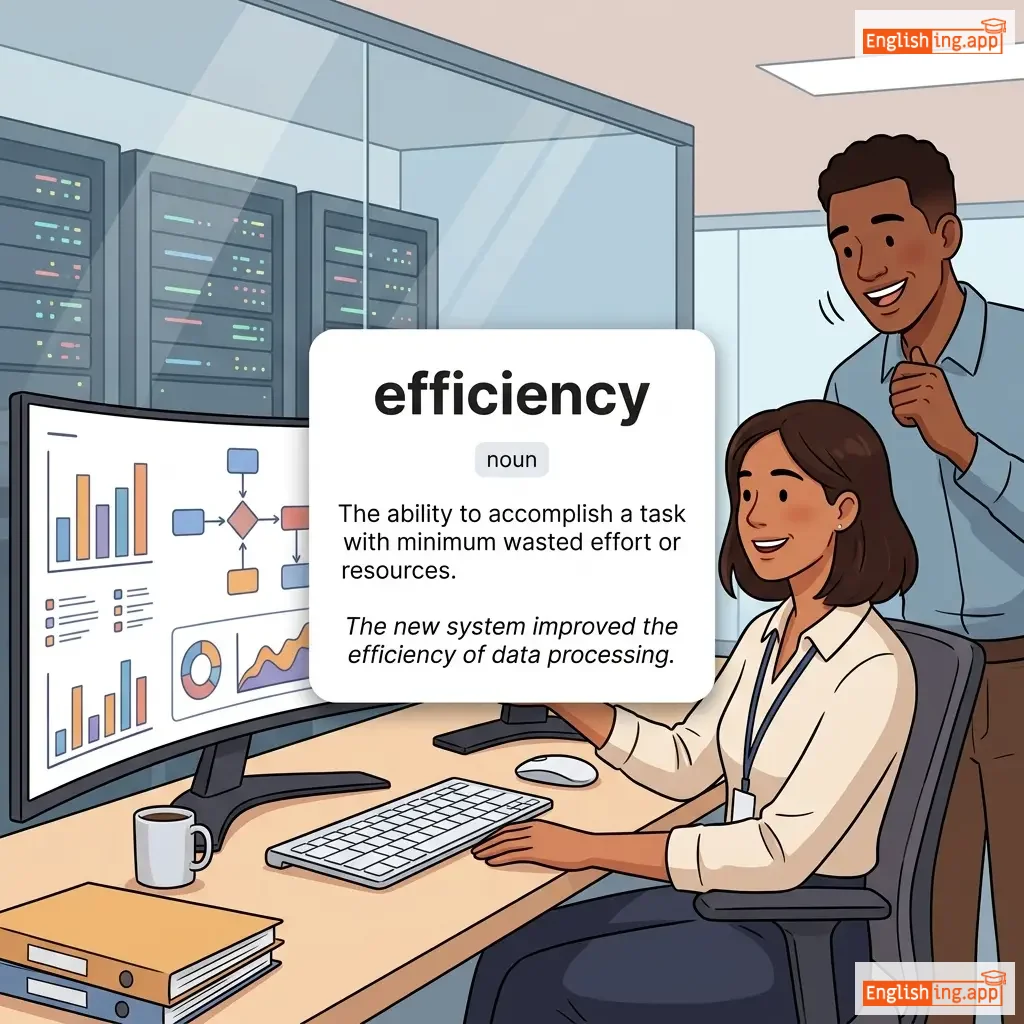
/ɪˈfɪʃ.ən.si/
noun
(エフィシエンシー)
••••••
|
|
効率
kouritsu
••••••
|
- •••••• | - •••••• | - •••••• | - •••••• |
the ability to accomplish something with the least waste of time and effort
••••••
|
The new system improved the efficiency of the entire production process.
新しいシステムは生産プロセス全体の効率を改善しました。
••••••
|
新しいシステムは生産プロセス全体の効率を改善しました。
Atarashii shisutemu wa seisan purosesu zentai no kouritsu o kaizen shimashita.
••••••
|
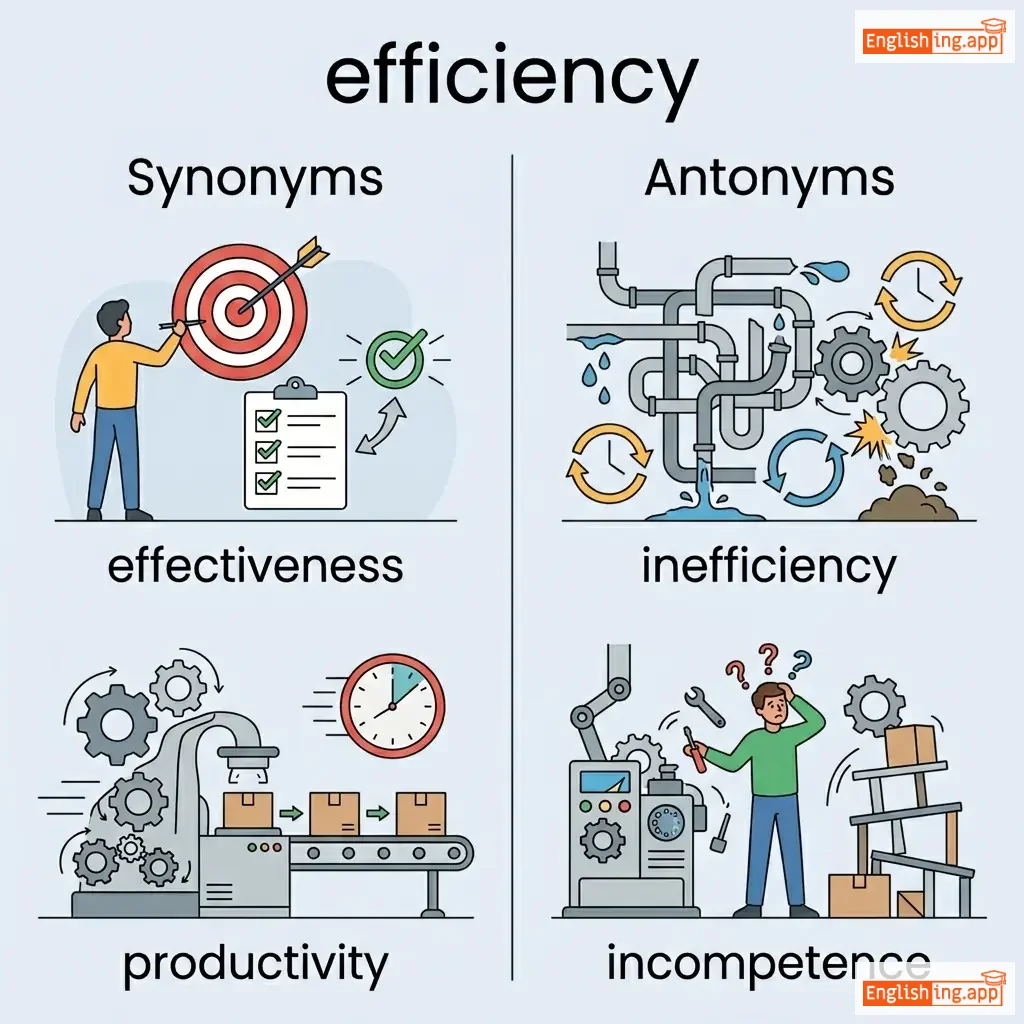
- •••••• | - •••••• | - •••••• |
effectiveness, competence, productivity, capability
••••••
|
inefficiency, incompetence, waste, slowness
••••••
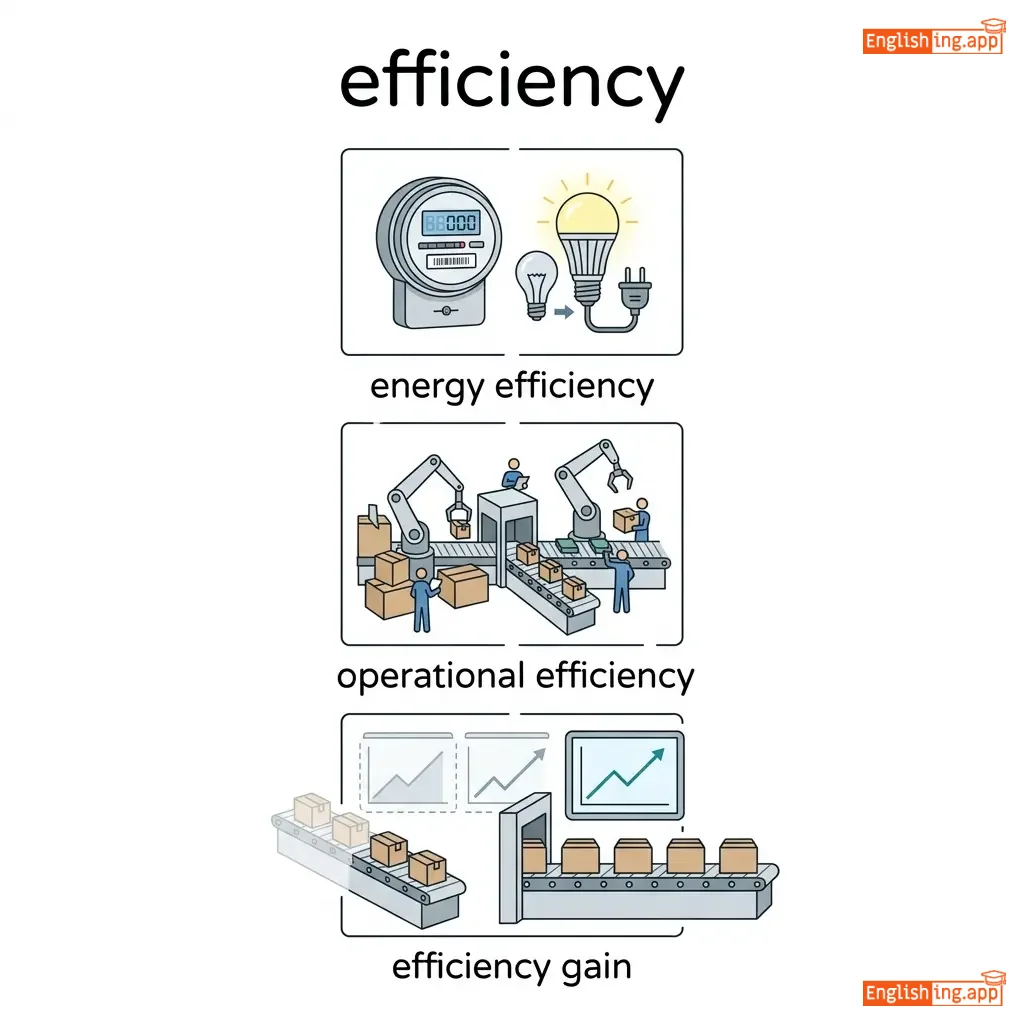
|
energy efficiency, improve efficiency, high efficiency
••••••
|
効率が良ければ、タスクを早く終わらせることができます。
••••••
|
|
⚡
••••••
|
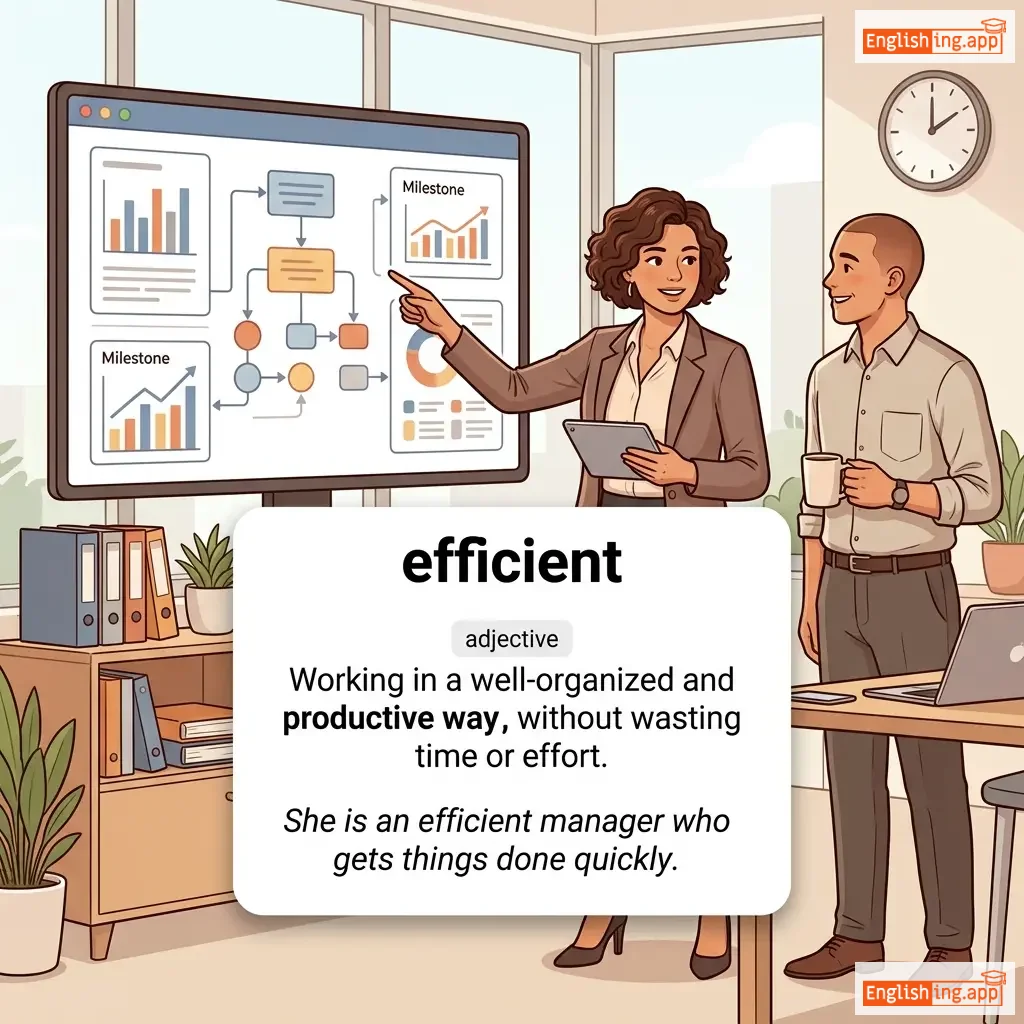
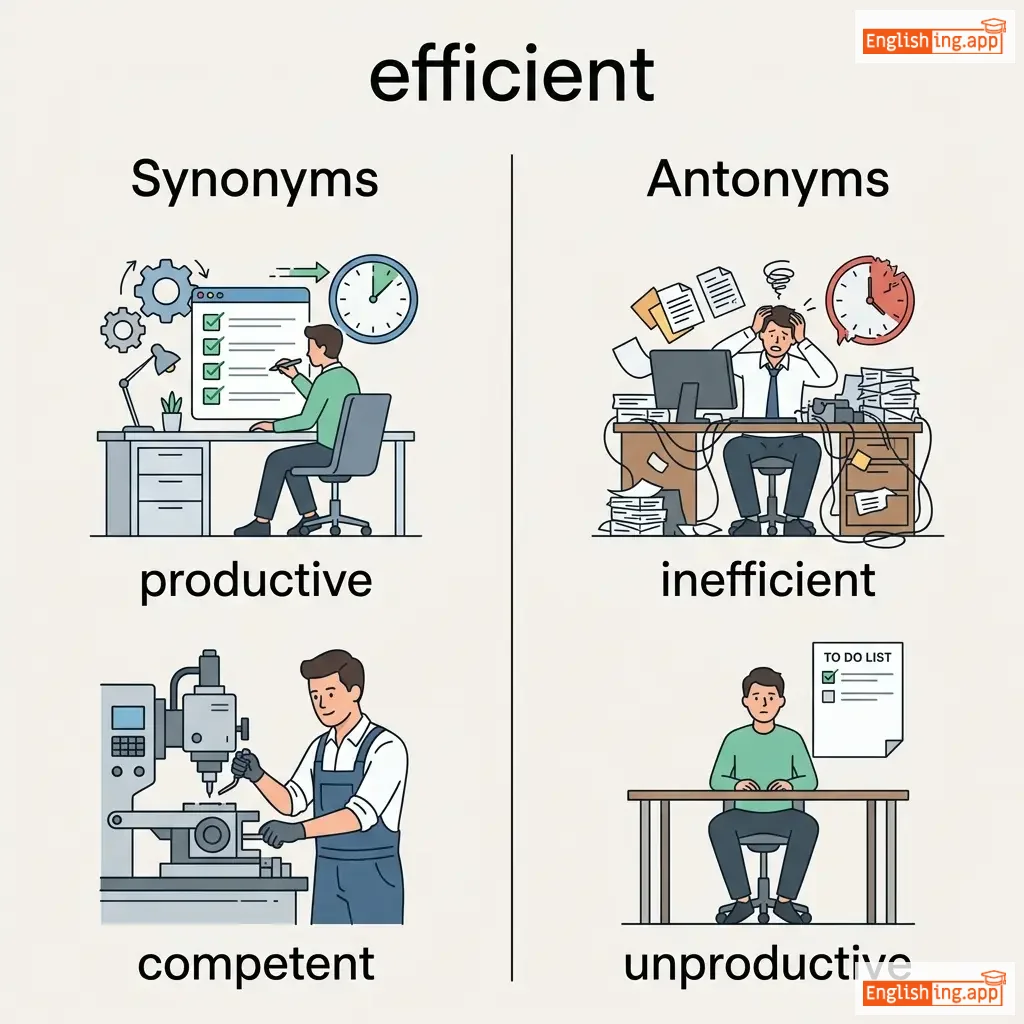
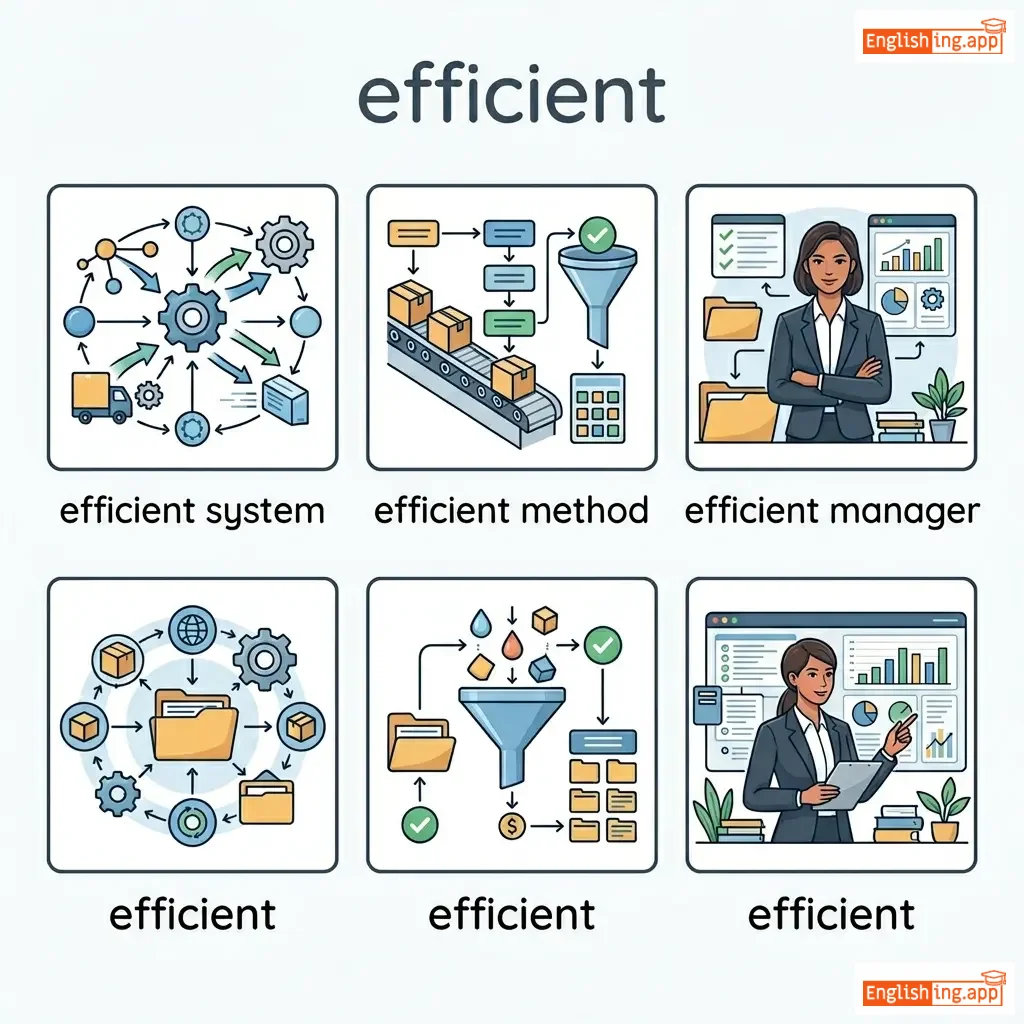
/ɪˈfɪʃ.ənt/
adjective
(ifishiento)
••••••
|
|
効率的; 有能; 生産的
kōritsuteki
••••••
|
- •••••• | - •••••• | - •••••• | - •••••• |
working well without waste; competent; productive
••••••
|
She is very efficient at managing her time.
彼女は時間管理にとても効率的です。
••••••
|
彼女は時間管理にとても効率的です。
Kanojo wa jikan kanri ni totemo kōritsuteki desu.
••••••
|
- •••••• | - •••••• | - •••••• |
competent, capable, skilled
••••••
|
inefficient, incompetent, wasteful
••••••
|
efficient system, efficient worker, efficient use
••••••
|
Being efficient in Japanese is being '効率的' in time management.
••••••
|
|
⚡
••••••
|
/ɪˈfɪʃəntli/
adverb
(エフィシェントリー)
••••••
|
- •••••• |
効率的に
kouritsuteki ni
••••••
|
- •••••• | - •••••• | - •••••• | - •••••• |
in a way that achieves maximum productivity with minimum wasted effort or expense
••••••
|
She managed to complete the task efficiently within the deadline. |
彼女は締め切り内に効率的にタスクを完了させました。
Kanojo wa shimekiri nai ni kouritsuteki ni tasuku wo kanryou sasemashita.
••••••
|
- •••••• | - •••••• | - •••••• |
effectively, productively, competently, resourcefully
••••••
|
inefficiently, ineffectively
••••••
|
work efficiently, run efficiently, manage efficiently
••••••
|
Efficient work saves energy—just like a smoothly running engine!
••••••
|
|
💪
••••••
|
/ˈɛfərt/
noun
(エフォート)
••••••
|
- •••••• |
努力
doryoku
••••••
|
- •••••• | - •••••• | - •••••• | - •••••• |
the use of physical or mental energy to do something; attempt
••••••
|
He made a great effort to improve his English skills. |
彼は英語スキルを向上させるために大きな努力をしました。
Kare wa eigo sukiru o kōjō saseru tame ni ōkina doryoku o shimashita.
••••••
|
make an effort |
to try hard to achieve something
••••••
|
努力する
doryoku suru
••••••
|
attempt, endeavor, exertion, struggle, work
••••••
|
inaction, laziness, neglect
••••••
|
make an effort, huge effort, joint effort, physical effort
••••••
|
Effortは成功を生む、努力 (doryoku) がなければ何も達成できません。
••••••
|
|
🥚
••••••
|
/ɛɡ/
noun
(エッグ)
••••••
|
- •••••• |
卵
tamago
••••••
|
- •••••• | - •••••• | - •••••• | - •••••• |
an oval or round object laid by a female bird, often eaten as food
••••••
|
She had a boiled egg for breakfast. |
彼女は朝食にゆで卵を食べました。
Kanojo wa choushoku ni yude tamago o tabemashita.
••••••
|
put all your eggs in one basket |
to risk everything on a single plan or opportunity
••••••
|
すべての卵を一つのバスケットに入れないで
Subete no tamago o hitotsu no basuketto ni irenaide
••••••
|
ovum, embryo, yolk, shell
••••••
|
sperm, chick
••••••
|
boiled egg, fried egg, egg yolk, egg shell
••••••
|
Egg 🥚 は卵、'朝食に卵'を覚えておこう。
••••••
|

