|
表情符号
|
单词 | Images | 翻译 | 过去时 | 过去分词 | 第三人称单数 | 动名词 | 含义 | 例句 | 例句翻译 | 示例表达 | 示例表达含义 | 示例表达翻译 | 同义词 | 反义词 | 搭配词 | 助记符 |
|---|---|---|---|---|---|---|---|---|---|---|---|---|---|---|---|---|---|
|
⏳
••••••
|
/djʊˈreɪʃən/
noun
(djuˈreɪʃən)
••••••
|
- •••••• |
持续时间
chíxù shíjiān
••••••
|
- •••••• | - •••••• | - •••••• | - •••••• |
the length of time that something continues
••••••
|
The meeting lasted for the duration of two hours. |
会议持续了两个小时。
Huìyì chíxùle liǎng gè xiǎoshí.
••••••
|
for the duration |
for the whole time that something lasts
••••••
|
整个持续时间
zhěnggè chíxù shíjiān
••••••
|
length, span, period, term, extent
••••••
|
end, termination, conclusion
••••••
|
short duration, long duration, duration of action
••••••
|
持续时间就是某事运行的时间长度,比如电影的持续时间。
••••••
|
|
⏳
••••••
|
/ˈdjʊərɪŋ/
preposition
(dyoor-ing)
••••••
|
- •••••• |
期间
qi jian
••••••
|
- •••••• | - •••••• | - •••••• | - •••••• |
throughout the course of a period of time
••••••
|
I fell asleep during the movie. |
我在看电影的时候睡着了。
Wo zai kan dian ying de shi hou shui zhao le.
••••••
|
- •••••• | - •••••• | - •••••• |
throughout, amid, in, over
••••••
|
before, after, beyond
••••••
|
during the day, during the night, during the meeting, during the war
••••••
|
期间意味着'在某段时间' (像是时间中发生的事情)。
••••••
|
|
🌫️
••••••
|
/dʌst/
noun, verb
(dǎsī)
••••••
|
|
灰尘
huīchén
••••••
|
dusted
dǎsī dé
••••••
|
dusted
dǎsī dé
••••••
|
dusts
dǎsī sī
••••••
|
dusting
dǎsī
••••••
|
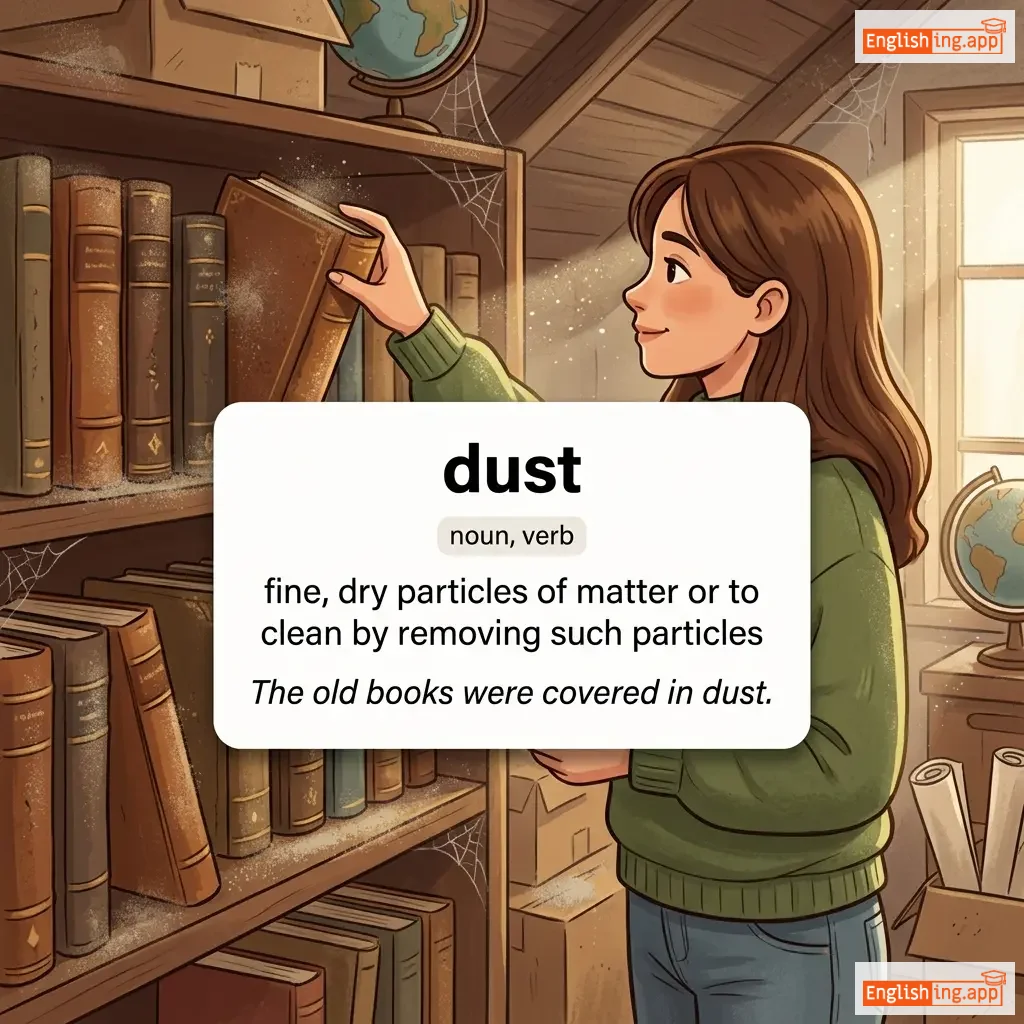
fine, dry particles of matter or to clean by removing such particles
••••••
|
The old books were covered in dust.
老书上覆盖着灰尘。
••••••
|
老书上覆盖着灰尘。
lǎo shū shàng fùgài zhe huīchén.
••••••
|
bite the dust
咬尘土
••••••
|
to fail or be defeated
••••••
|
失败或被击败
shībài huò bèi jíbài
••••••
|
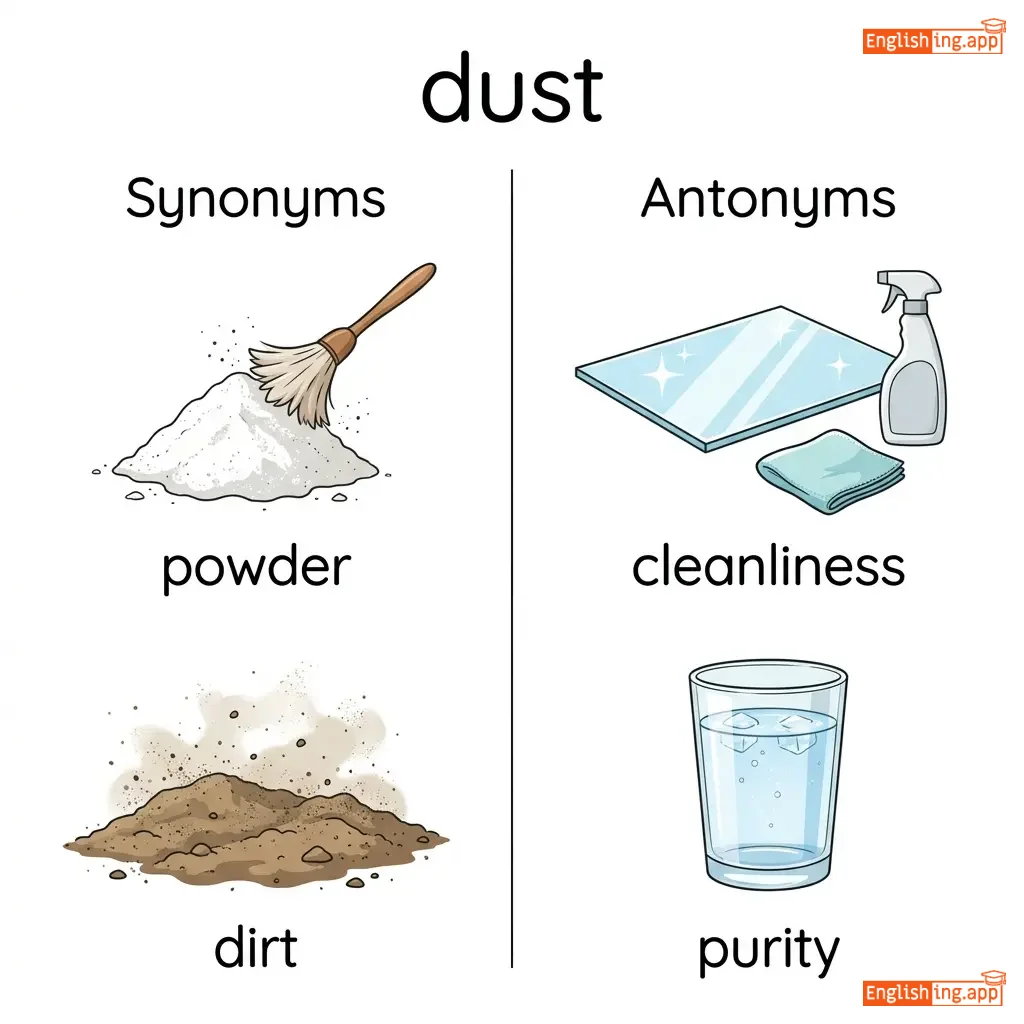
powder, dirt, particles, debris
••••••
|
cleanliness, purity
••••••
|
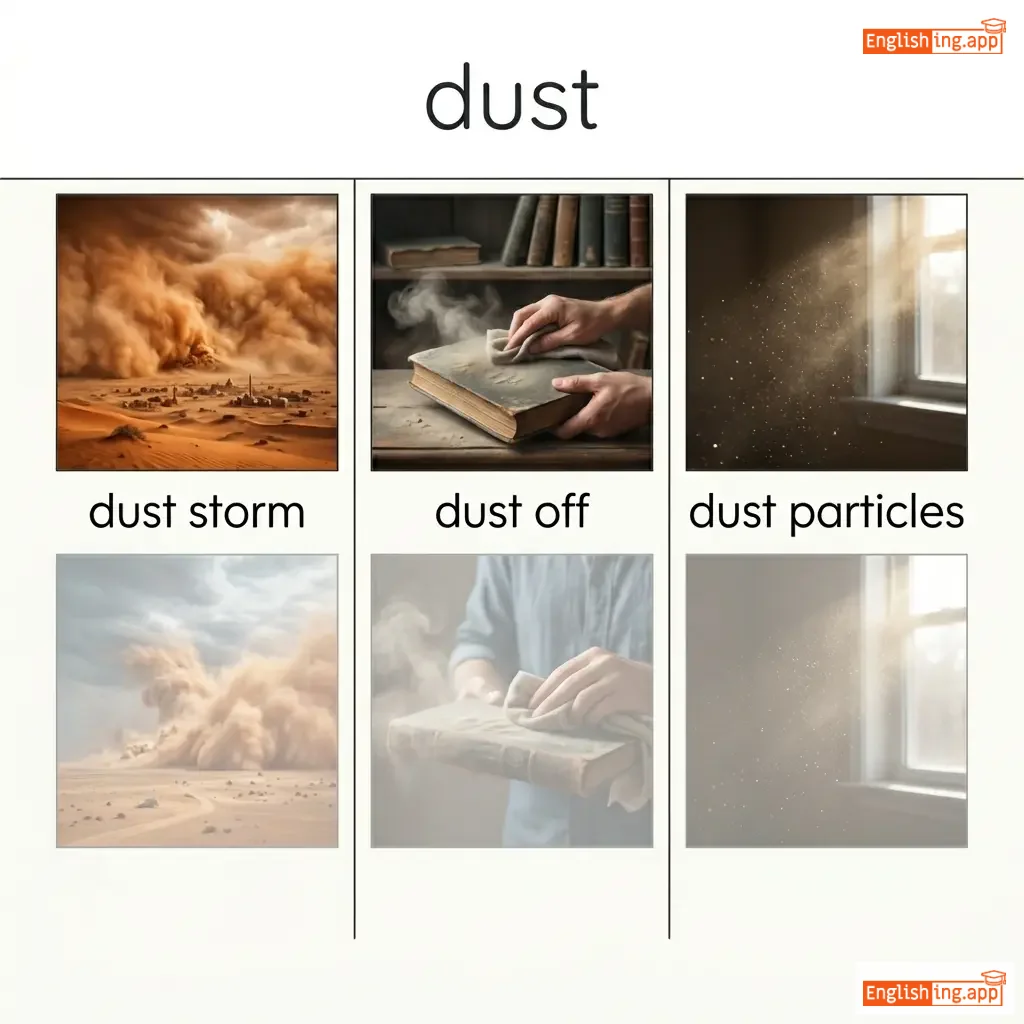
dust storm, dust off, dust particles, dust cloud
••••••
|
Dust 意味着灰尘,记住 'Dust off' 就是去除灰尘。
••••••
|
|
🌫️
••••••
|
/ˈdʌsti/
adjective
(达斯提)
••••••
|
- •••••• |
满是灰尘的
man shi hui chen de
••••••
|
- •••••• | - •••••• | - •••••• | - •••••• |
covered with or full of dust; dry and dull from lack of moisture or use
••••••
|
The old bookshelf was dusty after years of neglect.
泽 欧德 不克谢尔夫 沃兹 达斯提。
••••••
|
多年无人打理后,这个旧书架满是灰尘。
duo nian wu ren da li hou, zhe ge jiu shu jia man shi hui chen
••••••
|
dusty old
达斯提 欧德
••••••
|
something outdated, old-fashioned, or long unused
••••••
|
陈旧落灰的
chen jiu luo hui de
••••••
|
powdery, grimy, dirty, soiled
••••••
|
clean, spotless, fresh
••••••
|
dusty road, dusty shelf, dusty air, dusty clothes
••••••
|
灰尘很多 → dusty
••••••
|
|
🙏
••••••
|
/ˈdjuːtɪfəl/
adjective
(djuːtɪfʊl)
••••••
|
- •••••• |
尽职尽责
jin zhi jin ze
••••••
|
- •••••• | - •••••• | - •••••• | - •••••• |
Willingly obedient and responsible in performing one's duty.
••••••
|
She is a dutiful daughter who always takes care of her parents.
她是一个尽职尽责的女儿,总是照顾她的父母。
••••••
|
她是一个尽职尽责的女儿,总是照顾她的父母。
Ta shi yi ge jin zhi jin ze de nu er, zong shi zhao gu ta de fu mu.
••••••
|
dutiful son
尽职尽责的儿子
••••••
|
A son who is obedient and fulfills responsibilities to family.
••••••
|
尽职尽责的儿子
jin zhi jin ze de er zi
••••••
|
obedient, loyal, devoted, compliant, faithful
••••••
|
neglectful, disobedient, rebellious
••••••
|
dutiful daughter, dutiful son, dutiful servant, dutifully follow
••••••
|
Duty + ful → 尽职尽责 = 尽职尽责
••••••
|
|
🛡️
••••••
|
/ˈdjuːti/
noun
(duty)
••••••
|
- •••••• |
责任
zérèn
••••••
|
- •••••• | - •••••• | - •••••• | - •••••• |
a moral or legal obligation; a responsibility
••••••
|
It is our duty to protect the environment. |
保护环境是我们的责任。
Baohu huanjing shi wode zeren.
••••••
|
call of duty |
a responsibility that must be carried out
••••••
|
责任召唤
zérèn zhàohuàn
••••••
|
responsibility, obligation, task, assignment, commitment
••••••
|
freedom, choice, exemption
••••••
|
duty free, official duty, moral duty, line of duty
••••••
|
Duty 就是 '责任',就像警察履行他们的职责一样。
••••••
|
|
🎨
••••••
|
/daɪ/
verb
(dai)
••••••
|

|
染色
rǎnsè
••••••
|
dyed
daid
••••••
|
dyed
daid
••••••
|
dyes
dais
••••••
|
dyeing
daiing
••••••
|
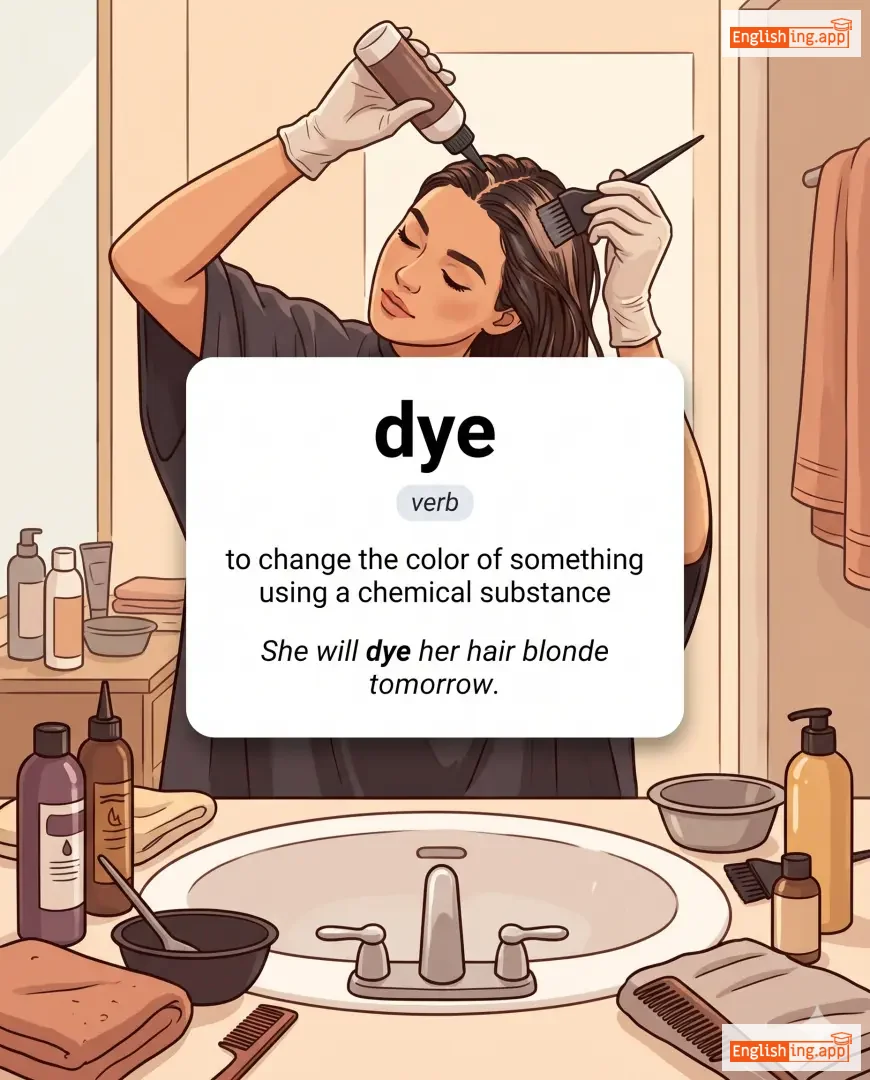
to change the color of something using a chemical substance
••••••
|
She will dye her hair blonde tomorrow.
她明天会把头发染成金色。
••••••
|
她明天会把头发染成金色。
Tā míngtiān huì bǎ tóufǎ rǎnchéng jīnsè
••••••
|
- •••••• | - •••••• | - •••••• |
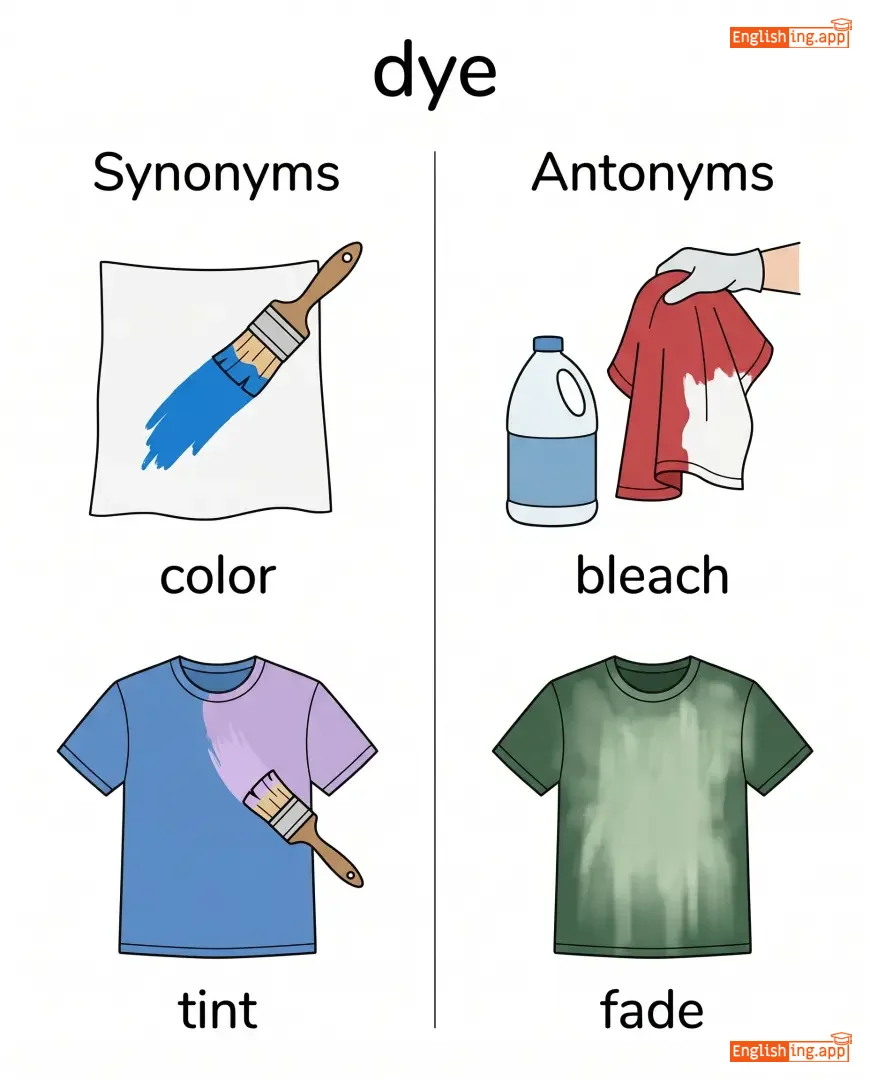
color, tint, stain, pigment
••••••
|
bleach, fade, whiten
••••••
|
dye hair, dye fabric, dye clothes, dye permanently, dye naturally
••••••
|
染色 - 通过化学物质改变颜色
••••••
|
|
⚡
••••••
|
/daɪˈnæmɪk/
adjective
(daiˈnæmɪk)
••••••
|


|
动态
dongtai
••••••
|
- •••••• | - •••••• | - •••••• | - •••••• |
Characterized by constant change, activity, or progress; energetic and forceful.
••••••
|
She is a dynamic leader who inspires her team. |
她是一个充满活力的领导者,激励着她的团队。
Tā shì yīgè chōngmǎn huólì de lǐngdǎo zhě, jīlìzhe tā de tuánduì.
••••••
|
dynamic duo |
Two people who work together very effectively.
••••••
|
动态二人组
dongtai èr rén zǔ
••••••
|
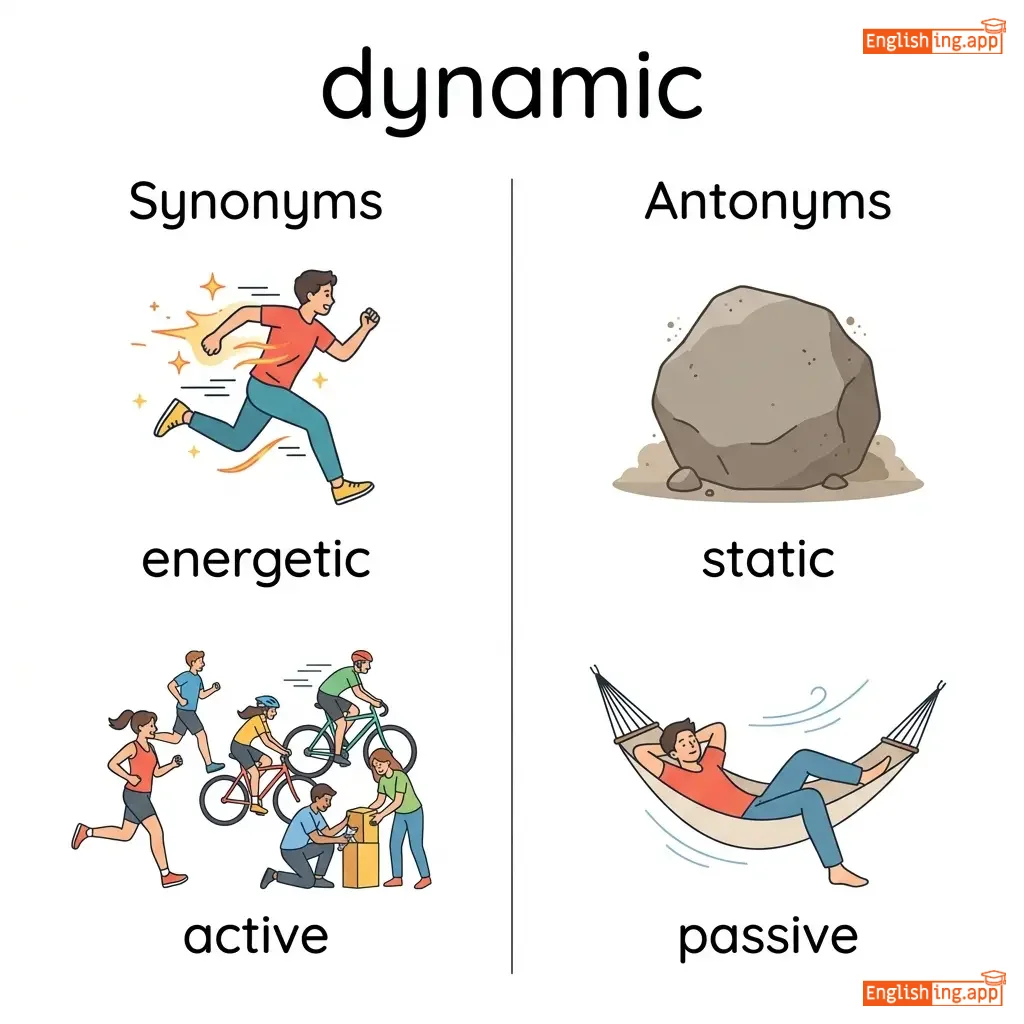
energetic, active, powerful, forceful, lively
••••••
|
static, passive, inactive
••••••
|
dynamic leader, dynamic personality, dynamic growth, dynamic process
••••••
|
动态 → 像发电机一样充满活力和动态
••••••
|
|
🔢
••••••
|
/iːtʃ/
determiner/pronoun
(yiq)
••••••
|
- •••••• |
每个
meige
••••••
|
- •••••• | - •••••• | - •••••• | - •••••• |
every one of two or more people or things considered separately
••••••
|
Each student received a certificate. |
每个学生都收到了证书。
Meige xuesheng dou shou dao le zhengshu.
••••••
|
each and every |
used for emphasis, meaning all without exception
••••••
|
每一个和每一个
mei yige he mei yige
••••••
|
every, all, individual, every single
••••••
|
none, zero
••••••
|
each day, each person, each time, each other
••••••
|
每个 (Each) 意味着每个 — 想象它像'每一位'可以记住的意思.
••••••
|
|
🤩
••••••
|
/ˈiːɡər/
adjective
(伊格尔)
••••••
|
- •••••• |
渴望的 / 急切的
kěwàng de / jíqiè de
••••••
|
- •••••• | - •••••• | - •••••• | - •••••• |
very excited and interested; keen to do something
••••••
|
The children were eager to open their gifts. |
孩子们迫不及待地想打开他们的礼物。
Háizimen pò bù jí dài de xiǎng dǎkāi tāmen de lǐwù.
••••••
|
eager beaver |
a person who is extremely enthusiastic and hard-working
••••••
|
渴望的人
kěwàng de rén
••••••
|
keen, enthusiastic, excited, avid
••••••
|
reluctant, indifferent
••••••
|
eager to learn, eager for success, eager anticipation, eager smile
••••••
|
Eager = 急切的 🤩— 孩子们急切地想打开礼物。
••••••
|
|
😍
••••••
|
/ˈiːɡərli/
adverb
(伊格利)
••••••
|
- •••••• |
急切地; 怀着强烈的愿望
jíqiè de; huáizhe qiángliè de yuànwàng
••••••
|
- •••••• | - •••••• | - •••••• | - •••••• |
with keen interest or enthusiasm; with great desire
••••••
|
The children eagerly waited for the holiday to begin. |
孩子们急切地等待假期的开始。
háizimen jíqiè de děngdài jiàqī de kāishǐ
••••••
|
- •••••• | - •••••• | - •••••• |
enthusiastically, keenly, anxiously
••••••
|
reluctantly, unwillingly, halfheartedly
••••••
|
eagerly await, eagerly anticipate, eagerly accept
••••••
|
伊格利听起来是急切地想要什么,就像他们急切地等待假期的到来。
••••••
|
|
👂
••••••
|
/ɪə(r)/
noun
(ěr)
••••••
|
- •••••• |
耳朵
erduo
••••••
|
- •••••• | - •••••• | - •••••• | - •••••• |
the organ of hearing and balance in humans and other animals
••••••
|
She whispered something in his ear. |
她在他耳边低声说了些什么。
Ta zai ta erbian disheng shuo le xie shenme.
••••••
|
lend an ear |
to listen carefully and sympathetically
••••••
|
倾听
qingting
••••••
|
hearing organ, auricle, lobe, auditory organ
••••••
|
deafness, silence
••••••
|
ear pain, sharp ear, ear infection, whisper in ear
••••••
|
Ear 的意思是耳朵 — 如果耳朵里有耳机,你就能听得更清楚。
••••••
|
|
🐦
••••••
|
/ˈɜːrli/
adjective/adverb
(ˈɜːrli)
••••••
|
- •••••• |
早
zao
••••••
|
- •••••• | - •••••• | - •••••• | - •••••• |
before the usual or expected time
••••••
|
She arrived early to the meeting.
她早早到达了会议。
••••••
|
她早早到达了会议。
Ta zaobao daole huiyi.
••••••
|
early bird
早起的鸟
••••••
|
someone who wakes up or arrives early
••••••
|
早起的人
zao qi de ren
••••••
|
premature, initial, prompt, ahead
••••••
|
late, delayed
••••••
|
early morning, early stage, early development, arrive early
••••••
|
Early bird 🐦 早起— Early意味着早。
••••••
|
|
💵
••••••
|
/ɜːrn/
verb
(ern)
••••••
|

|
赚取
zhuan qu
••••••
|
earned
ern-d
••••••
|
earned
ern-d
••••••
|
earns
ern-s
••••••
|
earning
ern-ing
••••••
|
To receive money or reward in return for work or service.
••••••
|
She worked hard to earn enough money for college.
她努力工作赚取足够的钱上大学。
••••••
|
她努力工作赚取足够的钱上大学。
Ta nuli gongzuo zhuan qu zu gou de qian shang daxue.
••••••
|
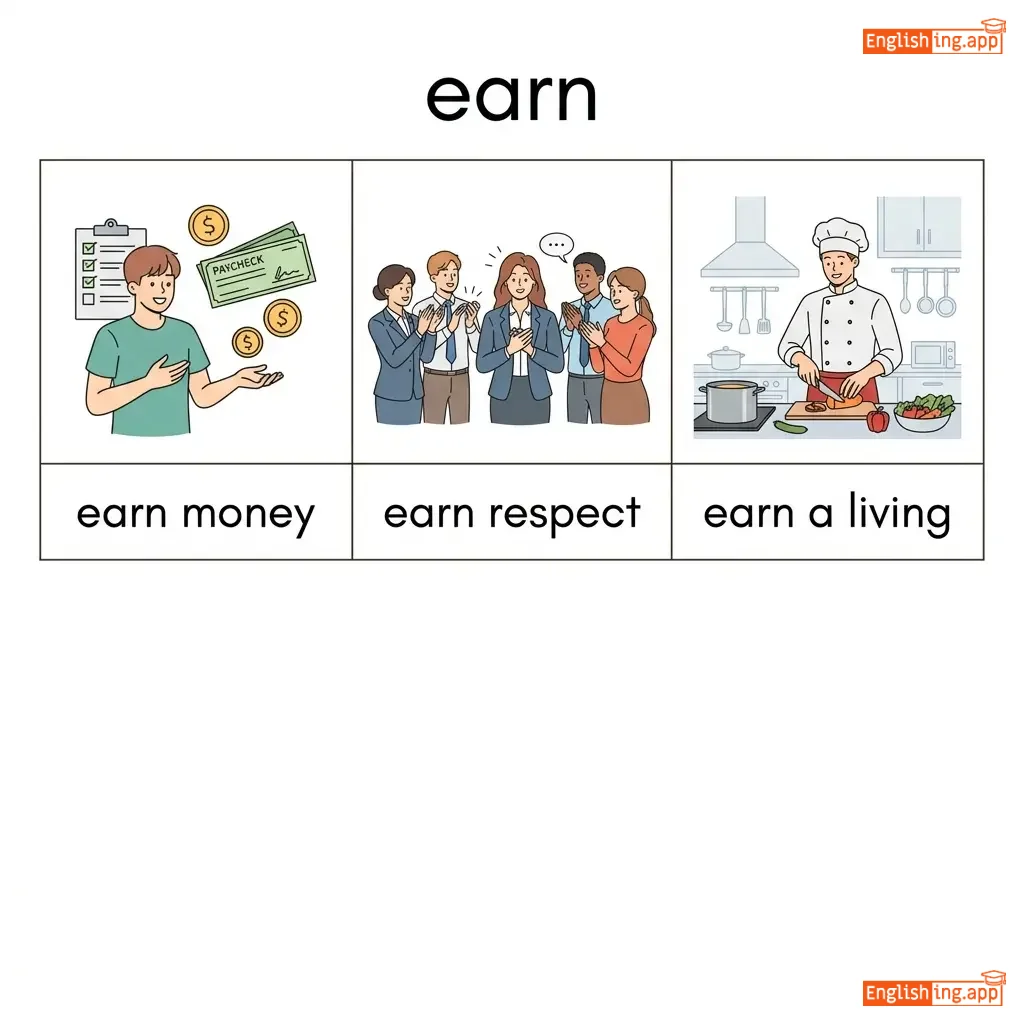
earn a living
谋生
••••••
|
To make enough money to support oneself financially.
••••••
|
谋生
mou sheng
••••••
|
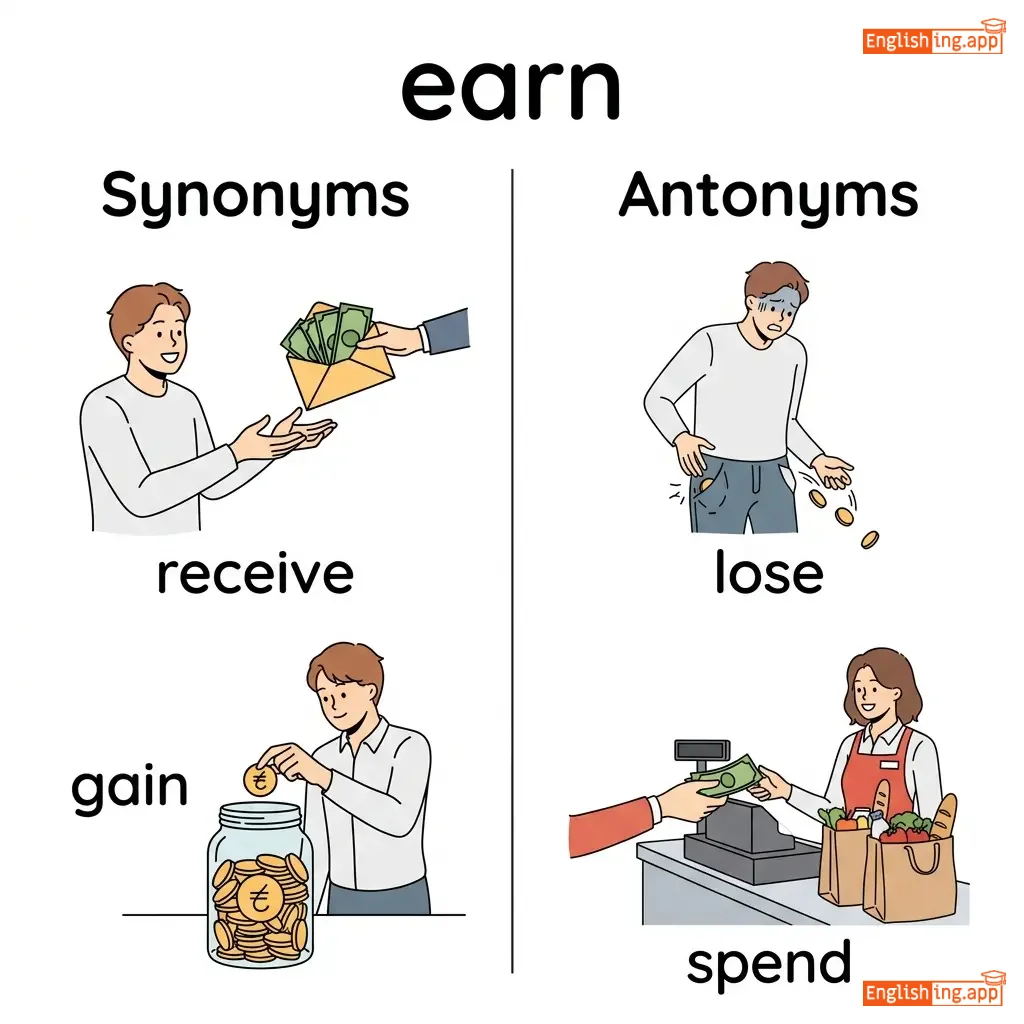
receive, gain, obtain, secure, acquire
••••••
|
lose, spend, forfeit
••••••
|
earn money, earn respect, earn a living, earn interest
••••••
|
Earn意味着'赚取' - 努力工作带来赚钱。
••••••
|
|
💰
••••••
|
/ˈɜːrnər/
noun
(尔纳)
••••••
|
- •••••• |
收入者
shouruzhe
••••••
|
- •••••• | - •••••• | - •••••• | - •••••• |
A person who earns money through work or business
••••••
|
She is the primary earner in her family.
她是家庭中的主要尔纳。
••••••
|
她是家庭中的主要收入者。
Ta shi jiating zhong de zhuyao shouruzhe.
••••••
|
- •••••• | - •••••• | - •••••• |
income generator, wage earner, breadwinner, salaryman
••••••
|
spender, unemployed
••••••
|
high earner, top earner, regular earner, monthly earner
••••••
|
Think of '收入者' as the one who earns shouru (income).
••••••
|
|
💰
••••••
|
/ˈɜːnɪŋz/
noun
(ěrníngs)
••••••
|
- •••••• |
收入
shouru
••••••
|
- •••••• | - •••••• | - •••••• | - •••••• |
money obtained in return for labor or services
••••••
|
Her monthly earnings are enough to support her family. |
她的月收入足以养活她的家人。
Tā de yuè shōurù zúyǐ yǎnghuo tā de jiārén.
••••••
|
net earnings |
the total profit after deducting expenses
••••••
|
净收入
jìng shōurù
••••••
|
income, wages, salary, profit, revenue
••••••
|
loss, debt
••••••
|
monthly earnings, total earnings, net earnings, gross earnings
••••••
|
Earnings就是收入 — 赚得的钱就是收入。
••••••
|
|
🌍
••••••
|
/ɜːrθ/
noun
(ěrth)
••••••
|
- •••••• |
地球
diqiu
••••••
|
- •••••• | - •••••• | - •••••• | - •••••• |
the planet we live on; soil or ground
••••••
|
The astronauts looked back at the Earth from space. |
宇航员从太空回望地球。
Yǔhángyuán cóng tàikōng huí wàng dìqiú.
••••••
|
down to earth |
practical, realistic, and sensible
••••••
|
务实的
wùshí de
••••••
|
world, globe, planet, ground, soil
••••••
|
sky, heaven
••••••
|
planet Earth, Earth surface, Earth orbit, Earth science
••••••
|
Earth意味着地球 🌍,中文中'地球'是我们生活的地方。
••••••
|
|
🌋
••••••
|
/ˈɜːrθ.kweɪk/
noun
(æθ.kweɪk)
••••••
|

|
地震
dizhen
••••••
|
- •••••• | - •••••• | - •••••• | - •••••• |
a sudden shaking of the ground caused by movements within the Earth's crust or volcanic action
••••••
|
A strong earthquake hit the city last night. |
昨晚一场强烈的地震袭击了这座城市。
zuó wǎn yī chǎng qiángliè de dìzhèn xíjí le zhè zuò chéngshì.
••••••
|
earthquake zone |
an area prone to frequent earthquakes
••••••
|
地震带
dizhen dai
••••••
|
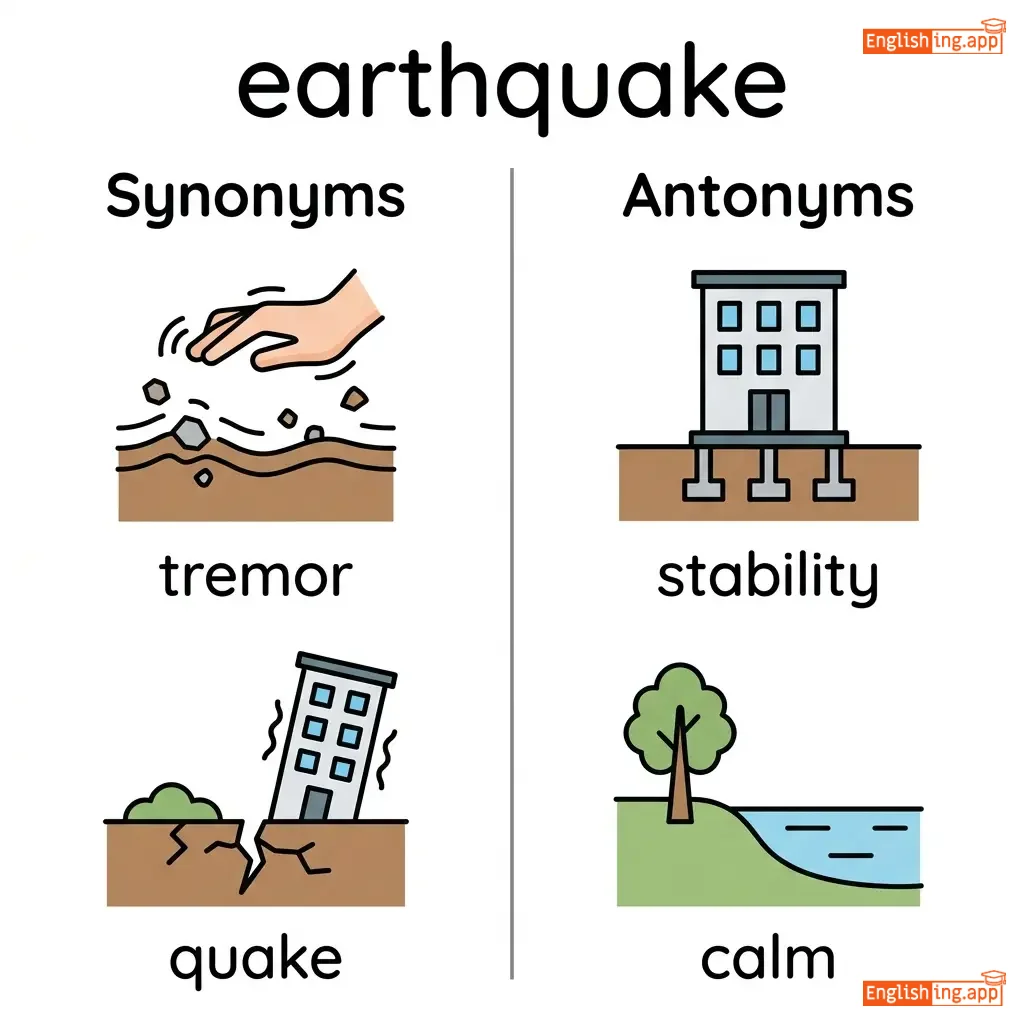
tremor, quake, shock, seismic event
••••••
|
stability, calm
••••••
|
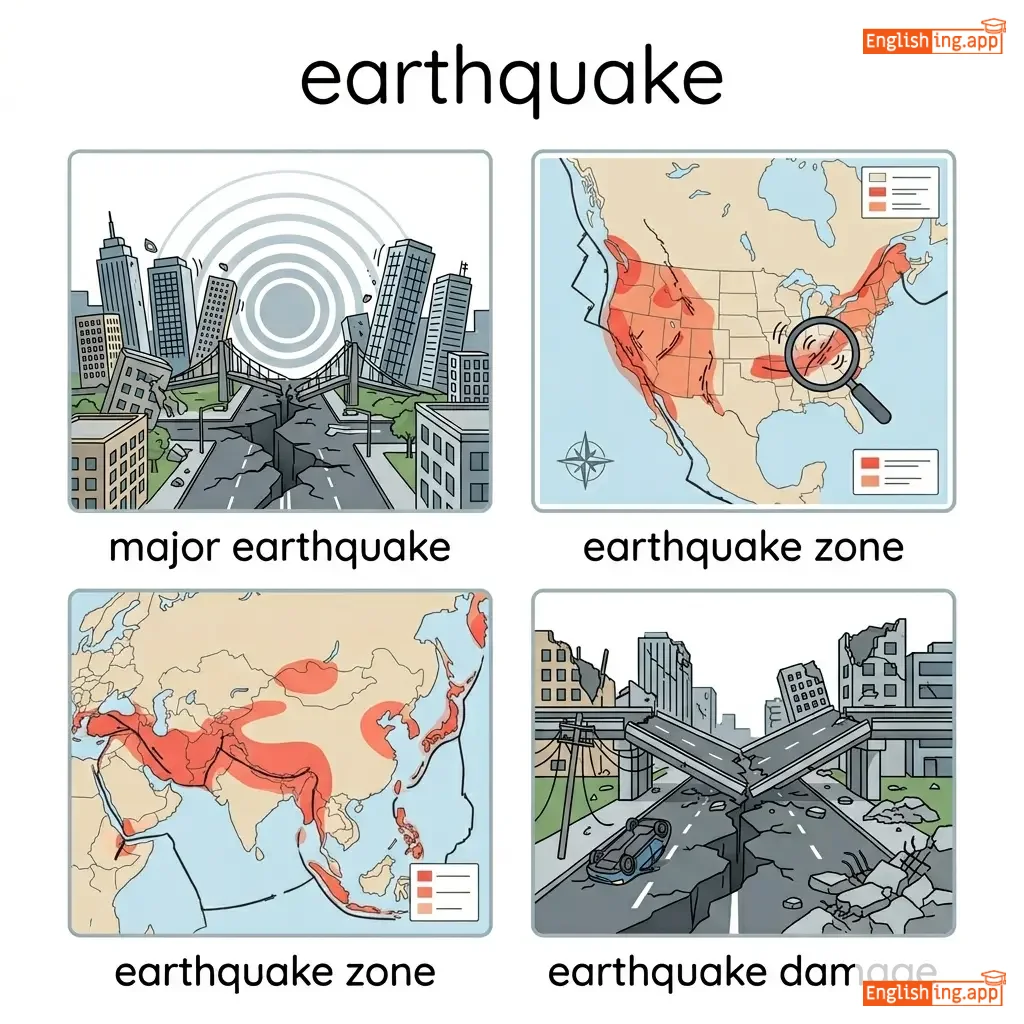
major earthquake, earthquake zone, earthquake damage, earthquake victims
••••••
|
地震 - 地球震动,就成了地震。
••••••
|
|
😌
••••••
|
/iːz/
noun/verb
(易兹)
••••••
|
- •••••• |
轻松
qīngsōng
••••••
|
eased
易兹德
••••••
|
eased
易兹德
••••••
|
eases
易兹斯
••••••
|
easing
易兹英
••••••
|
absence of difficulty or effort; to make something less serious or severe
••••••
|
Meditation helps ease stress.
冥想有助于减轻压力。
••••••
|
冥想有助于减轻压力。
Míngxiǎng yǒu zhù yú jiǎnqīng yālì.
••••••
|
at ease
轻松自在
••••••
|
free from worry or anxiety
••••••
|
轻松自在
qīngsōng zìzài
••••••
|
comfort, relief, rest, simplicity
••••••
|
difficulty, hardship, discomfort
••••••
|
with ease, ease the pain, ease restrictions, ease pressure
••••••
|
Ease 的意思是轻松 — 轻松的事情就会变得简单。
••••••
|
|
👌
••••••
|
/ˈiːzəli/
adverb
(yīzìlì)
••••••
|
- •••••• |
轻松
qīngsōng
••••••
|
- •••••• | - •••••• | - •••••• | - •••••• |
without difficulty or effort
••••••
|
He solved the problem easily.
他轻松地解决了这个问题。
••••••
|
他轻松地解决了这个问题。
Tā qīngsōng de jiějuéle zhège wèntí.
••••••
|
take it easy
轻松处理
••••••
|
to relax and not worry
••••••
|
轻松处理
qīngsōng chǔlǐ
••••••
|
effortlessly, readily, smoothly, simply
••••••
|
hardly, with difficulty, painfully
••••••
|
easily accessible, easily understood, easily broken, easily available
••••••
|
Easily 意味着轻松,就像完成一项没有困难的任务。
••••••
|
|
🌅
••••••
|
/iːst/
noun
(イースト)
••••••
|
- •••••• |
东
dong
••••••
|
- •••••• | - •••••• | - •••••• | - •••••• |
The direction from which the sun rises; one of the four cardinal points.
••••••
|
The sun rises in the east. |
太阳从东方升起。
Taiyang cong dongfang shengqi.
••••••
|
East meets West |
A phrase describing the meeting of Eastern and Western cultures.
••••••
|
东风遇到西风
Dongfeng yudao xifeng
••••••
|
orient, sunrise, direction, right-hand side
••••••
|
west, sunset
••••••
|
east side, east wind, east coast, east direction
••••••
|
东 = 太阳升起的地方 🌅
••••••
|
|
🌅
••••••
|
/ˈiː.stərn/
adjective
(í sī tè ér nì)
••••••
|
- •••••• |
东方的
dongfang de
••••••
|
- •••••• | - •••••• | - •••••• | - •••••• |
relating to or situated in the east; from or characteristic of the eastern part of the world
••••••
|
She studied Eastern philosophy at the university.
她在大学学习东方哲学。
••••••
|
她在大学学习东方哲学。
Tā zài dàxué xuéxí dōngfāng zhèxué.
••••••
|
- •••••• | - •••••• | - •••••• |
oriental, Asian, eastward, dawn-side
••••••
|
western, occidental, westward, sunset-side
••••••
|
Eastern culture, Eastern medicine, Eastern philosophy
••••••
|
记住'东方的'就是'东部' (dongfang).
••••••
|
|
😊
••••••
|
/ˈiːzi/
adjective
(yī zī)
••••••
|
- •••••• |
简单
jiǎn dān
••••••
|
- •••••• | - •••••• | - •••••• | - •••••• |
not difficult; requiring little effort
••••••
|
The exam was surprisingly easy. |
考试出乎意料的简单。
kǎo shì chū hū yì liào de jiǎn dān.
••••••
|
take it easy |
to relax and not worry
••••••
|
放松一点
fàng sōng yī diǎn
••••••
|
simple, effortless, straightforward, uncomplicated
••••••
|
difficult, hard
••••••
|
easy task, easy way, easy solution, easy money
••••••
|
Easy意思是简单 😊, 中文里的'轻松工作'就是不费力的工作。
••••••
|
|
🍽️
••••••
|
/iːt/
verb
(yit)
••••••
|

|
吃
chi
••••••
|
ate
ei
••••••
|
eaten
iten
••••••
|
eats
its
••••••
|
eating
iting
••••••
|
To put food into the mouth, chew, and swallow it.
••••••
|
They eat breakfast together every morning.
他们每天早上一起吃早餐。
••••••
|
他们每天早上一起吃早餐。
Tāmen měitiān zǎoshang yīqǐ chī zǎocān.
••••••
|
eat like a horse
像马一样吃
••••••
|
To eat a lot of food.
••••••
|
像马一样吃
Xiàng mǎ yīyàng chī
••••••
|
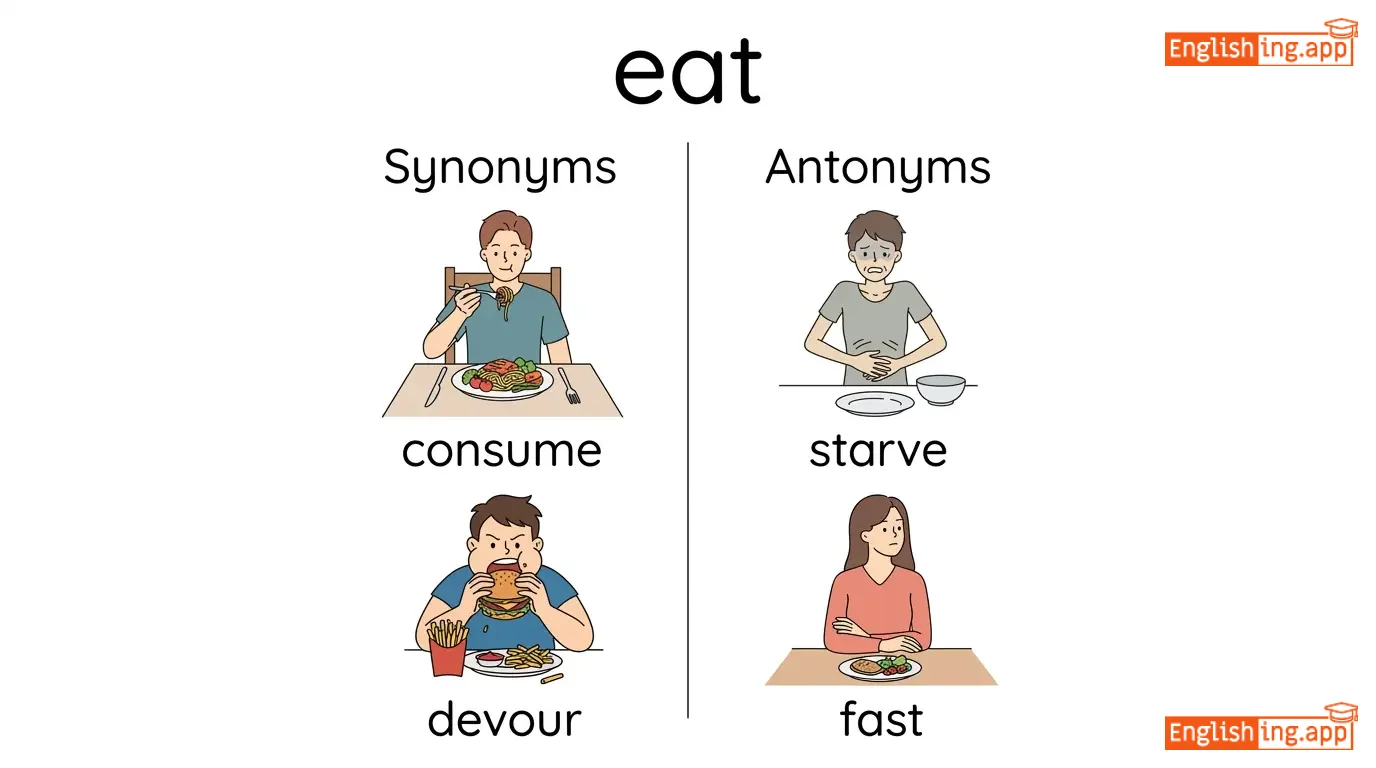
consume, devour, chew, swallow, dine
••••••
|
starve, fast
••••••
|
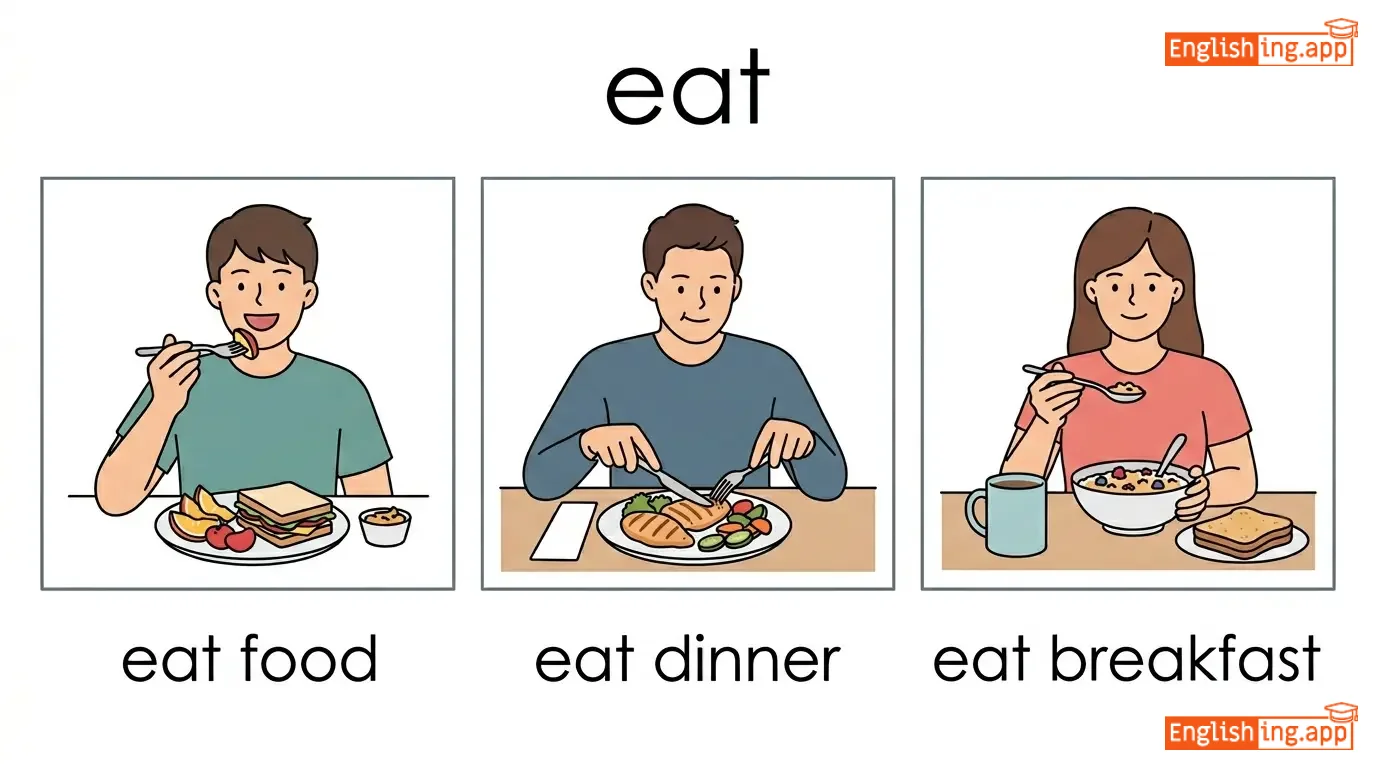
eat food, eat dinner, eat breakfast, eat together
••••••
|
Eat 代表吃 - 吃到像马一样大肚子。
••••••
|
|
🔊
••••••
|
/ˈɛkəʊ/
noun, verb
(happiness)
••••••
|
- •••••• |
幸福
xìngfú
••••••
|
echoed
••••••
|
echoed
••••••
|
echoes
••••••
|
echoing
••••••
|
a sound that is reflected off a surface and heard again; to repeat or reflect a sound or idea.
••••••
|
Her laughter echoed through the empty hall. |
她收到奖项时,无法掩饰自己的幸福。
tā shōudào jiǎngxiàng shí, wúfǎ yǎnshì zìjǐ de xìngfú.
••••••
|
echo chamber |
an environment where people only encounter information or opinions that reflect and reinforce their own.
••••••
|
追求幸福
zhuīqiú xìngfú
••••••
|
resound, reverberate, repeat, reflect, resonate
••••••
|
silence, quiet, mute
••••••
|
echo sound, echo chamber, echo through, faint echo, echo of laughter
••••••
|
幸福是你内心的追求,一旦你找到了,它会充满你整个人生!
••••••
|
|
🌱
••••••
|
/ˌiːkəˈlɒdʒɪkəl/
adjective
(生态的)
••••••
|
|
生态的
shengtai de
••••••
|
- •••••• | - •••••• | - •••••• | - •••••• |
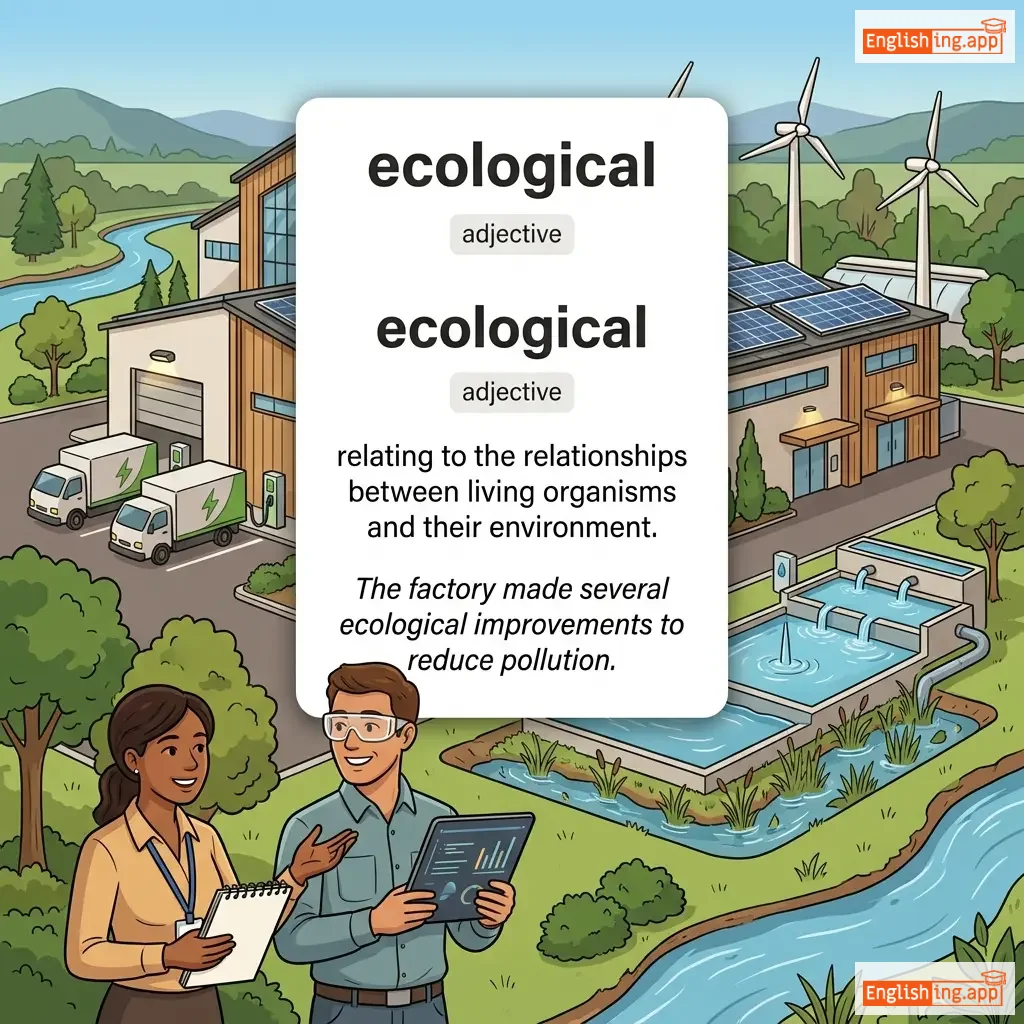
relating to the relationships between living organisms and their environment.
••••••
|
The factory made several ecological improvements to reduce pollution. |
工厂进行了多项生态改进以减少污染。
Gongchang jinxing le duoxiang shengtai gaijin yi jianshao wuran.
••••••
|
- •••••• | - •••••• | - •••••• |
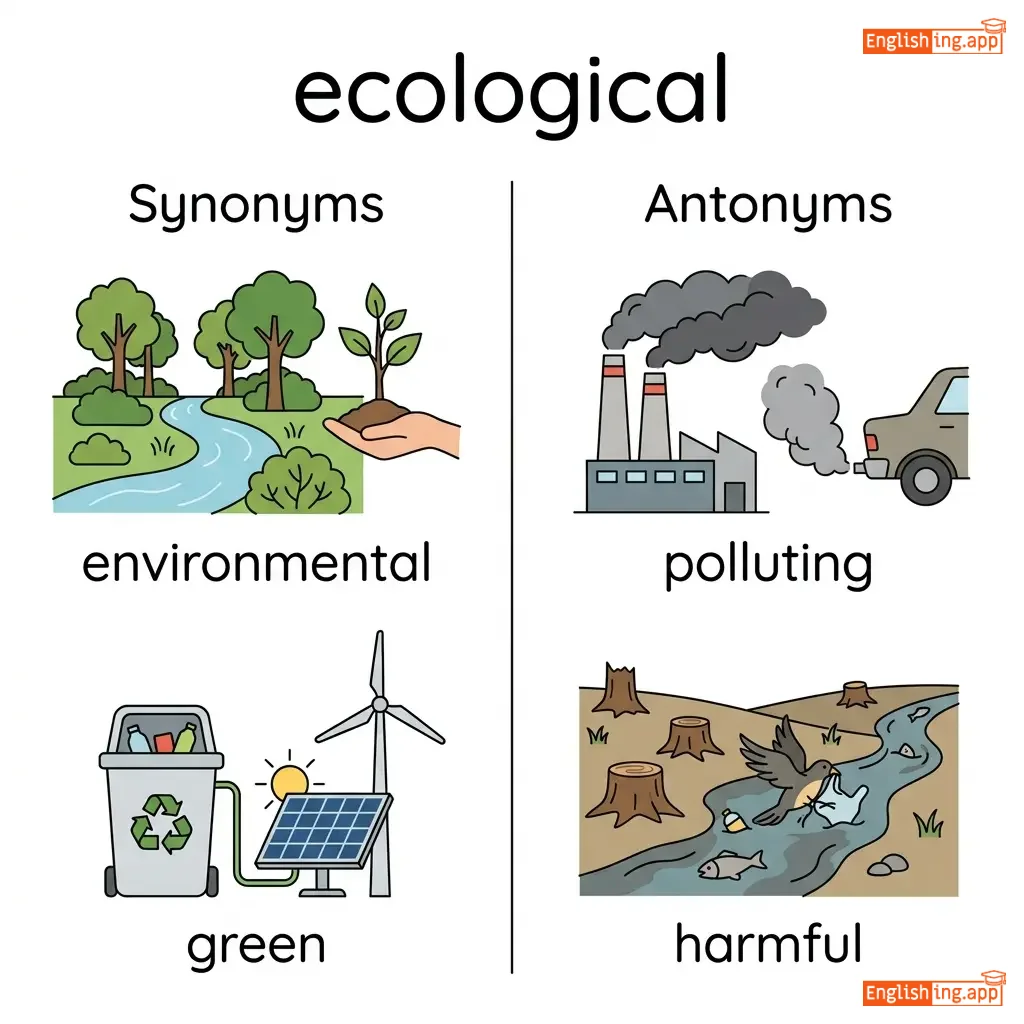
environmental, green, biological, natural, sustainable
••••••
|
polluting, harmful, artificial
••••••
|
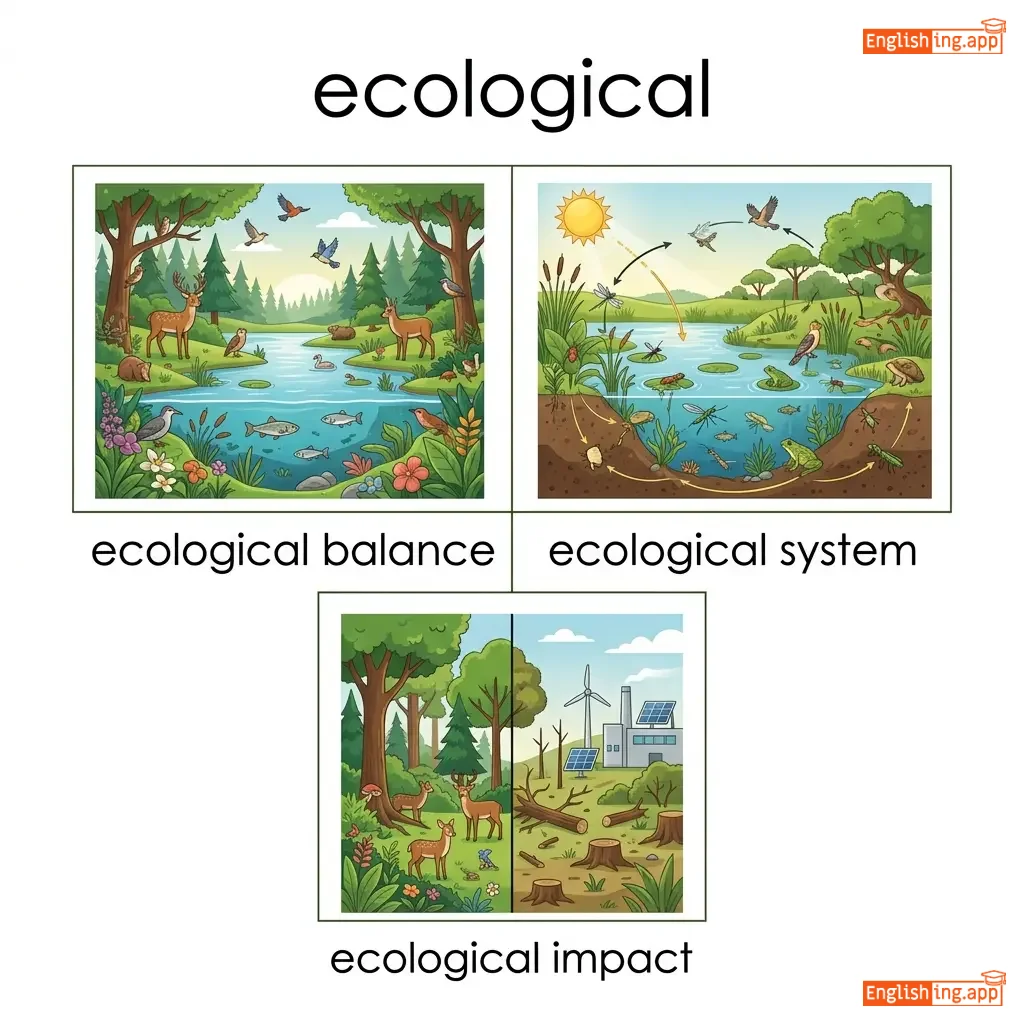
ecological balance, ecological system, ecological impact, ecological disaster
••••••
|
Eco意味着环境,因此生态的意味着与环境相关。
••••••
|
|
💰
••••••
|
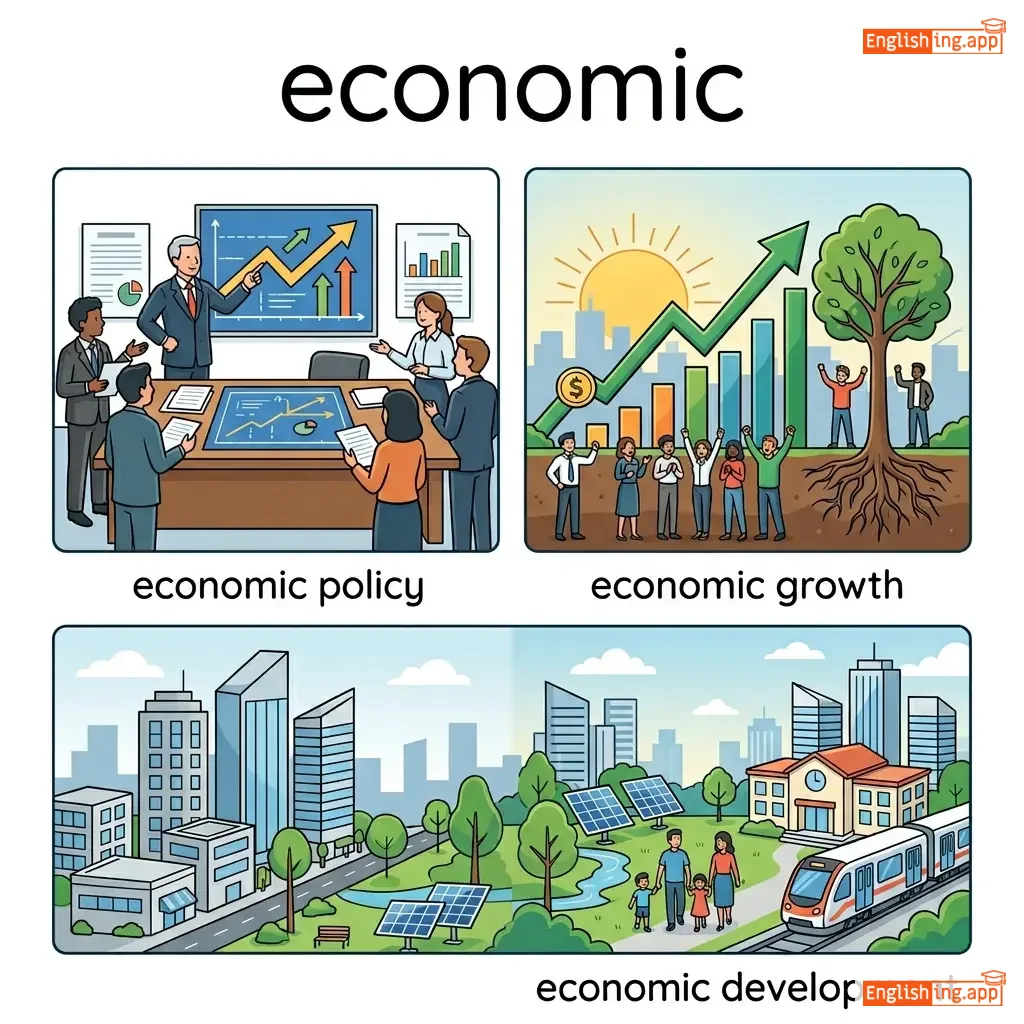
/ˌiːkəˈnɒmɪk/
adjective
(经济的)
••••••
|

|
经济的
jingjide
••••••
|
- •••••• | - •••••• | - •••••• | - •••••• |
relating to the economy, trade, or money
••••••
|
The country is facing an economic crisis. |
这个国家正面临经济危机。
Zhe ge guo jia zheng mian lin jing ji wei ji.
••••••
|
economic growth |
increase in a country's production and wealth
••••••
|
经济增长
jingji zengzhang
••••••
|
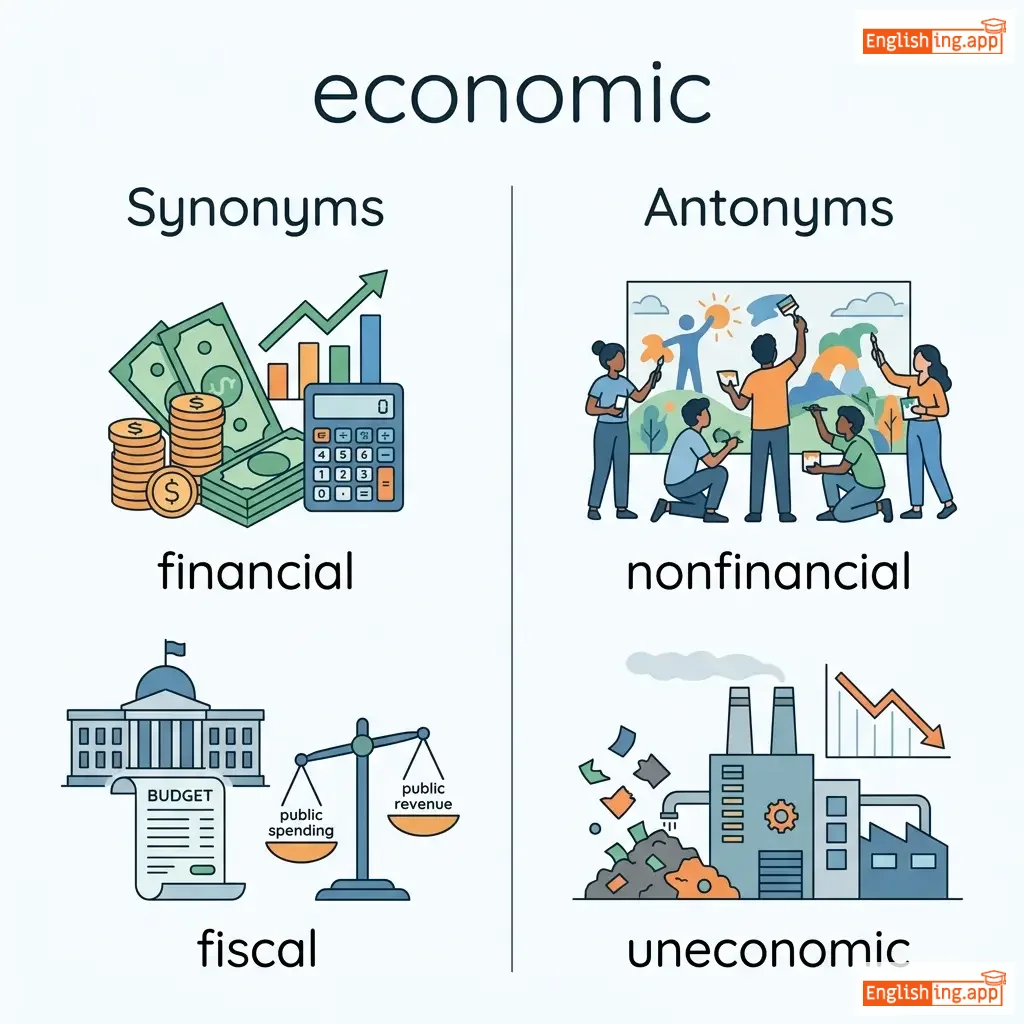
financial, fiscal, commercial, monetary
••••••
|
nonfinancial, uneconomic
••••••
|
economic policy, economic growth, economic development, economic crisis
••••••
|
Economic = 经济的 💰, '经'是经济,'济'是帮助增长。
••••••
|
|
💰
••••••
|
/ˌiːkəˈnɒmɪkl/
adjective
(经济的)
••••••
|
- •••••• |
经济的
jingjide
••••••
|
- •••••• | - •••••• | - •••••• | - •••••• |
Careful in the use of resources; providing good value or efficiency.
••••••
|
Driving a hybrid car is economical in the long run. |
驾驶混合动力车在长期来看是经济的。
Jiàshǐ hùnhé dònglì chē zài chángqī lái kàn shì jīngjì de.
••••••
|
economical with the truth |
A polite way of saying someone is not telling the whole truth.
••••••
|
在真相面前经济
Zài zhēnxiàng miànqián jīngjì
••••••
|
thrifty, frugal, efficient, cost-effective, prudent
••••••
|
wasteful, extravagant, lavish
••••••
|
economical choice, economical use, economical car, economical lifestyle
••••••
|
经济的 = 经济 + 的 (节省), 所以经济的。
••••••
|
|
📊
••••••
|
/ˌiːkəˈnɒmɪks/ or /ˌɛkəˈnɒmɪks/
noun
(经济学)
••••••
|
- •••••• |
经济学
jingjixue
••••••
|
- •••••• | - •••••• | - •••••• | - •••••• |
The study of production, consumption, and transfer of wealth.
••••••
|
He is studying economics at university. |
他在大学学习经济学。
Ta zai daxue xuexi jingjixue.
••••••
|
economics of scale |
Cost advantages gained when production increases.
••••••
|
规模经济
guimo jingji
••••••
|
finance, commerce, business, trade
••••••
|
non-financial, uncommercial
••••••
|
study economics, economics course, economics department, economics theory
••••••
|
Economics 是经济学 - '经' (经济) 和 '学' (学科) 的结合。
••••••
|
|
👨🏫
••••••
|
/ɪˈkɒnəmɪst/
noun
(经济学家)
••••••
|
- •••••• |
经济学家
jingjixuejia
••••••
|
- •••••• | - •••••• | - •••••• | - •••••• |
A person who studies or is an expert in economics.
••••••
|
The economist predicted a rise in inflation. |
经济学家预测了通货膨胀的上升。
Jingjixuejia yuce le tonghuo pengzhang de shangsheng.
••••••
|
- •••••• | - •••••• | - •••••• |
analyst, financial expert, researcher, academic
••••••
|
layman, non-specialist
••••••
|
famous economist, government economist, professional economist, research economist
••••••
|
Economist 就是经济学家 - 精通经济学的专家。
••••••
|
|
💹
••••••
|
/ɪˈkɒnəmi/
noun
(经济)
••••••
|

|
经济
jingji
••••••
|
- •••••• | - •••••• | - •••••• | - •••••• |
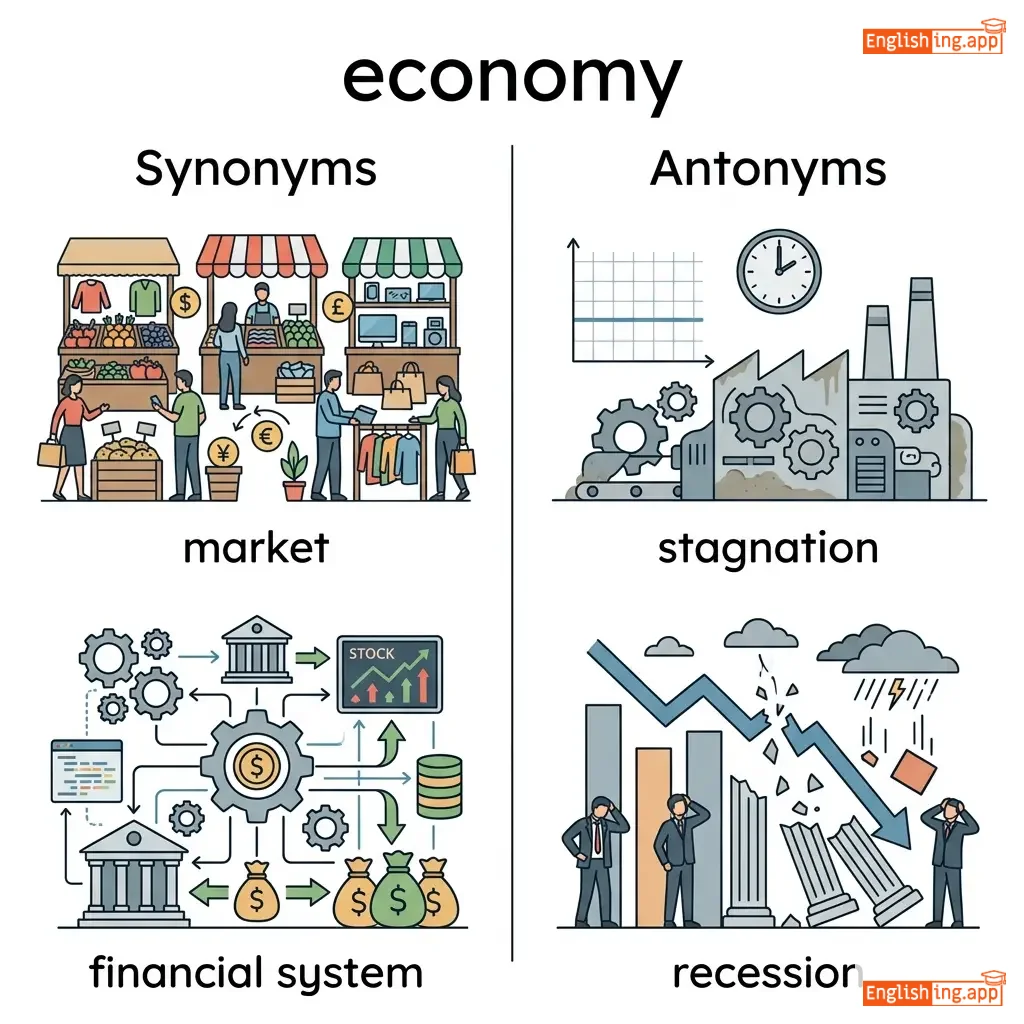
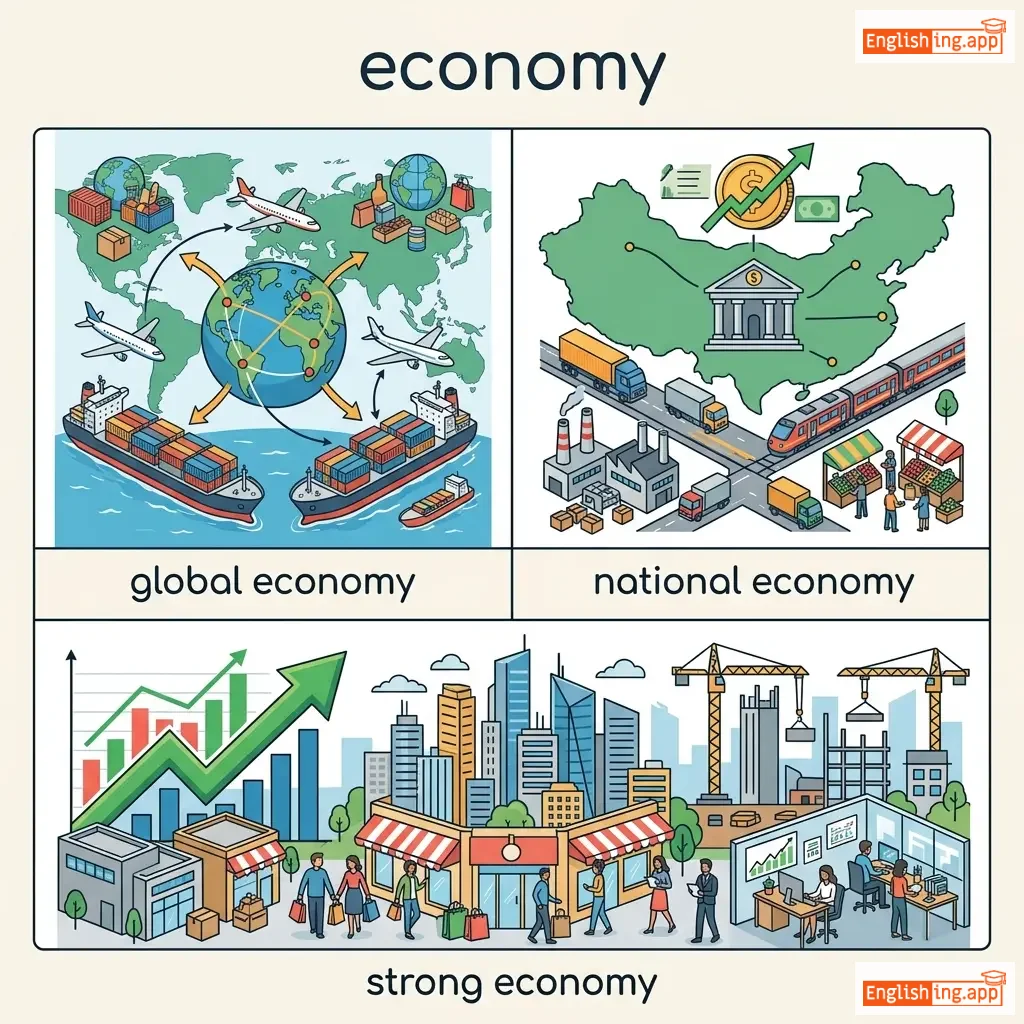
The system of production, distribution, and consumption of goods and services in a society.
••••••
|
The global economy has been affected by rising inflation. |
全球经济已受到上升的通货膨胀的影响。
Quanqiu jingji yi shoudao shangsheng de tonghuo pengzhang de yingxiang.
••••••
|
boost the economy |
to improve the economic condition of a country or region
••••••
|
促进经济
Cujin jingji
••••••
|
market, financial system, commerce, trade, industry
••••••
|
stagnation, recession, collapse
••••••
|
global economy, national economy, strong economy, economy growth, economy policy
••••••
|
经济=经济,一切都围绕着钱(经济)。
••••••
|
|
🔪
••••••
|
/ɛdʒ/
noun
(èj)
••••••
|
- •••••• |
边缘 / 刃
bian yuan / ren
••••••
|
- •••••• | - •••••• | - •••••• | - •••••• |
the border or outermost part of something; a sharp side of a blade or tool
••••••
|
He stood on the edge of the cliff. |
他站在悬崖的边缘。
Ta zhan zai xuan ya de bian yuan.
••••••
|
on edge |
to be nervous or anxious
••••••
|
紧张 / 焦虑
jin zhang / jiao lv
••••••
|
border, margin, rim, brink, boundary
••••••
|
center, middle, core
••••••
|
sharp edge, cliff edge, edge of the table, cutting edge
••••••
|
刀的刃在边缘,危险即将到来!
••••••
|
|
✏️
••••••
|
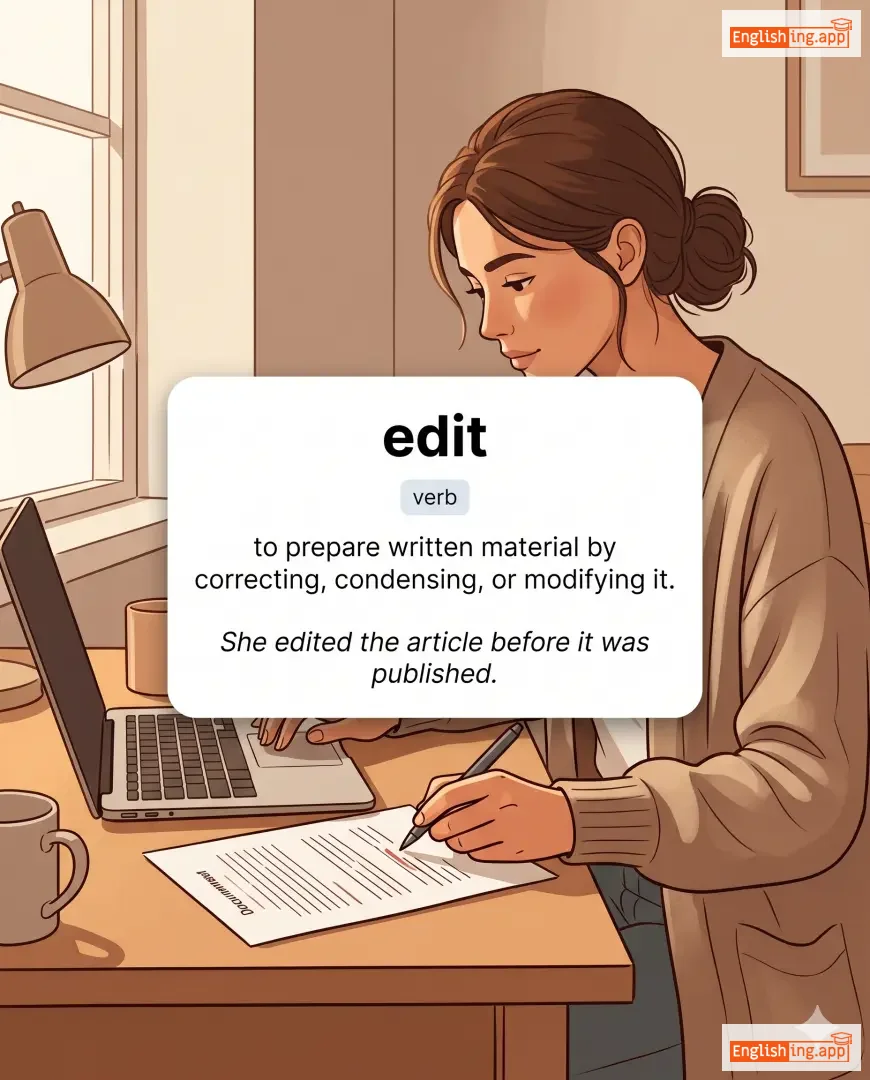
/ˈɛdɪt/
verb
(编辑)
••••••
|
|
编辑
bianji
••••••
|
edited
••••••
|
edited
••••••
|
edits
••••••
|
editing
••••••
|
to prepare written material by correcting, condensing, or modifying it.
••••••
|
She edited the article before it was published. |
她在文章发布前进行了编辑。
tā zài wénzhāng fābù qián jìnxíngle biānjí.
••••••
|
editor's cut |
a version of a film or video edited by its editor rather than the director.
••••••
|
编辑版本
biānjí bǎn běn
••••••
|
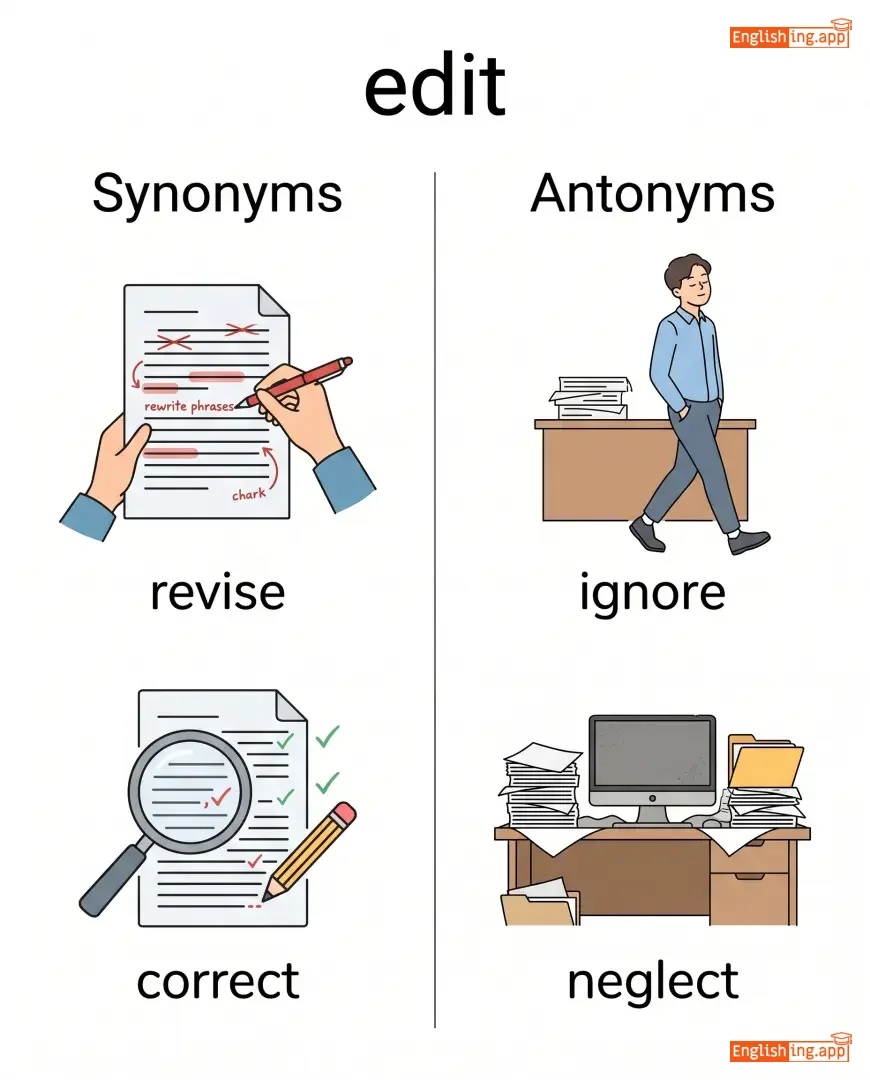
revise, correct, modify, proofread, alter
••••••
|
ignore, neglect, keep unchanged
••••••
|
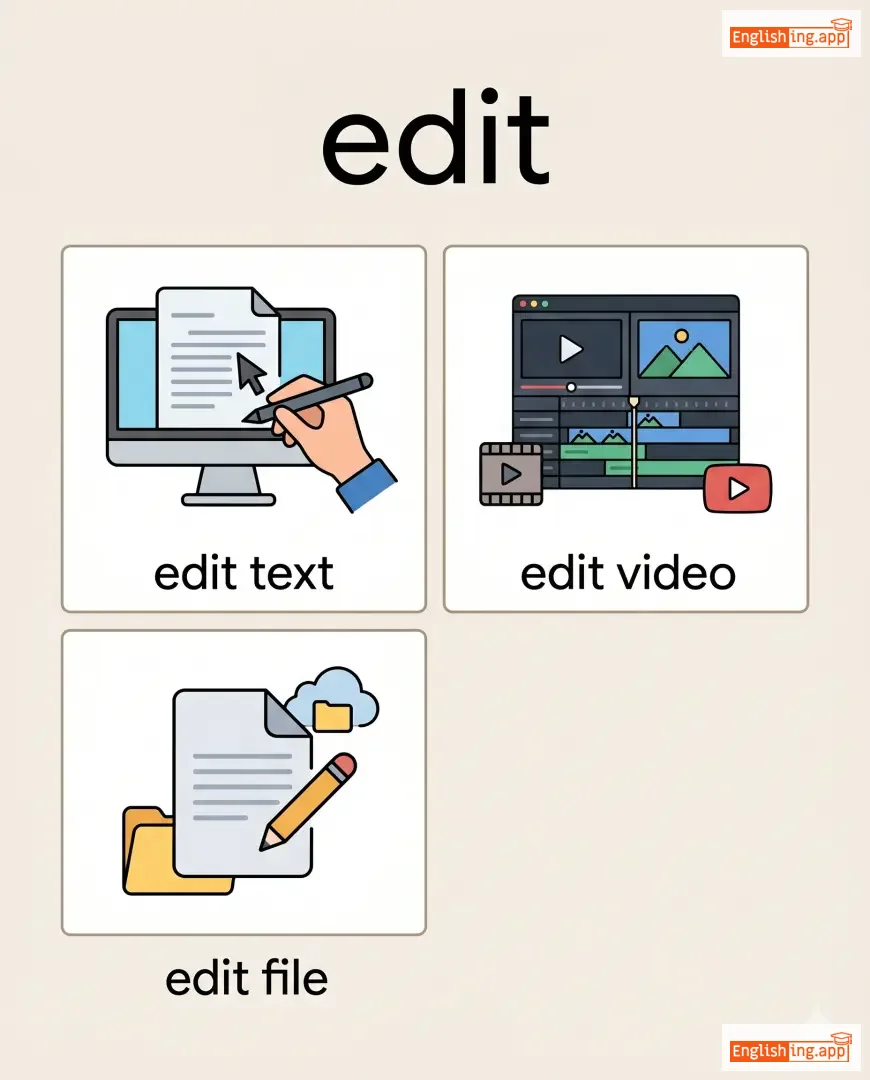
edit text, edit video, edit file, edit content, edit message
••••••
|
编辑就是让它更好,像'编辑它,做得更好!' ✏️
••••••
|
|
📚
••••••
|
/ɪˈdɪʃən/
noun
(版本)
••••••
|
- •••••• |
版本
banben
••••••
|
- •••••• | - •••••• | - •••••• | - •••••• |
a particular version or printing of a book, newspaper, or other publication
••••••
|
The latest edition of the magazine sold out quickly. |
杂志的最新版本很快卖完了。
Zazhi de zuixin banben hen kuai mai wan le.
••••••
|
- •••••• | - •••••• | - •••••• |
version, issue, release, publication
••••••
|
original, draft
••••••
|
latest edition, special edition, first edition, new edition
••••••
|
Edition在中文中是版本 - 新版即是最新的版本。
••••••
|
|
🖊️
••••••
|
/ˈɛdɪtər/
noun
(编辑)
••••••
|
- •••••• |
编辑
bianji
••••••
|
- •••••• | - •••••• | - •••••• | - •••••• |
a person responsible for the final content of a newspaper, magazine, or book
••••••
|
The editor approved the article before publication.
编辑在出版前批准了文章。
••••••
|
编辑在出版前批准了文章。
Bianji zai chuban qian pizhunle wenzhang.
••••••
|
editor-in-chief
主编
••••••
|
the main editor in charge of a publication
••••••
|
主编
zhubian
••••••
|
publisher, reviser, proofreader, compiler
••••••
|
writer, author
••••••
|
newspaper editor, chief editor, film editor, editor’s note
••••••
|
编辑负责所有内容,确保正确无误地发布。
••••••
|
|
📰
••••••
|
/ˌɛdɪˈtɔːriəl/
noun
(社论)
••••••
|
- •••••• |
社论
shèlùn
••••••
|
- •••••• | - •••••• | - •••••• | - •••••• |
A newspaper article expressing the opinion of the editor or publisher.
••••••
|
The newspaper published an editorial criticizing government policy. |
报纸发布了一篇批评政府政策的社论。
Bàozhǐ fābùle yī piān pīpíng zhèngfǔ zhèngcè de shèlùn.
••••••
|
- •••••• | - •••••• | - •••••• |
opinion piece, commentary, article, column
••••••
|
report, fact, news
••••••
|
editorial board, editorial policy, write an editorial
••••••
|
社论就像是报纸的editorial 📰
••••••
|
|
🎓
••••••
|
/ˈɛdjʊˌkeɪt/
verb
(教育)
••••••
|
- •••••• |
教育
jiaoyu
••••••
|
educated
教育过
••••••
|
educated
教育过
••••••
|
educates
教育
••••••
|
educating
教育中
••••••
|
to give knowledge, skills, or training to someone; to teach
••••••
|
Parents should educate their children about healthy habits.
父母应该教育他们的孩子关于健康习惯。
••••••
|
父母应该教育他们的孩子关于健康习惯。
Fumu yinggai jiaoyu tamen de haizi guanyu jiankang xiguan.
••••••
|
self-educated
自学成才
••••••
|
having educated oneself without formal schooling
••••••
|
自学成才
zixue chengcai
••••••
|
teach, instruct, train, enlighten, coach
••••••
|
ignore, neglect
••••••
|
educate children, educate people, educate yourself, educate about
••••••
|
教育代表教学 - '教育'与'学习'联系在一起。
••••••
|
|
🎓
••••••
|
/ˈɛd.jʊ.keɪ.tɪd/
adjective
(艾杜凯特德)
••••••
|
- •••••• |
有教养的
you jiaoyang de
••••••
|
- •••••• | - •••••• | - •••••• | - •••••• |
Having received a good level of formal schooling or training; knowledgeable
••••••
|
She is an educated woman who values lifelong learning.
她是一个受过良好教育的女性,重视终身学习。
••••••
|
她是一个受过良好教育的女性,重视终身学习。
Ta shi yi ge shou guo lianghao jiaoyu de nuxing, zhongshi zhongsheng xuexi.
••••••
|
- •••••• | - •••••• | - •••••• |
learned, knowledgeable, literate, informed, trained
••••••
|
ignorant, uneducated, illiterate
••••••
|
educated guess, highly educated, well-educated, formally educated
••••••
|
No •••••• |
|
🏫
••••••
|
/ˌɛdʒʊˈkeɪʃən/
noun
(教育)
••••••
|

|
教育
jiaoyu
••••••
|
- •••••• | - •••••• | - •••••• | - •••••• |
the process of receiving or giving systematic instruction, especially at a school or university
••••••
|
Education is the key to success. |
教育是成功的关键。
Jiaoyu shi chenggong de guanjian.
••••••
|
higher education |
education beyond the secondary level, usually at college or university
••••••
|
高等教育
gaodeng jiaoyu
••••••
|
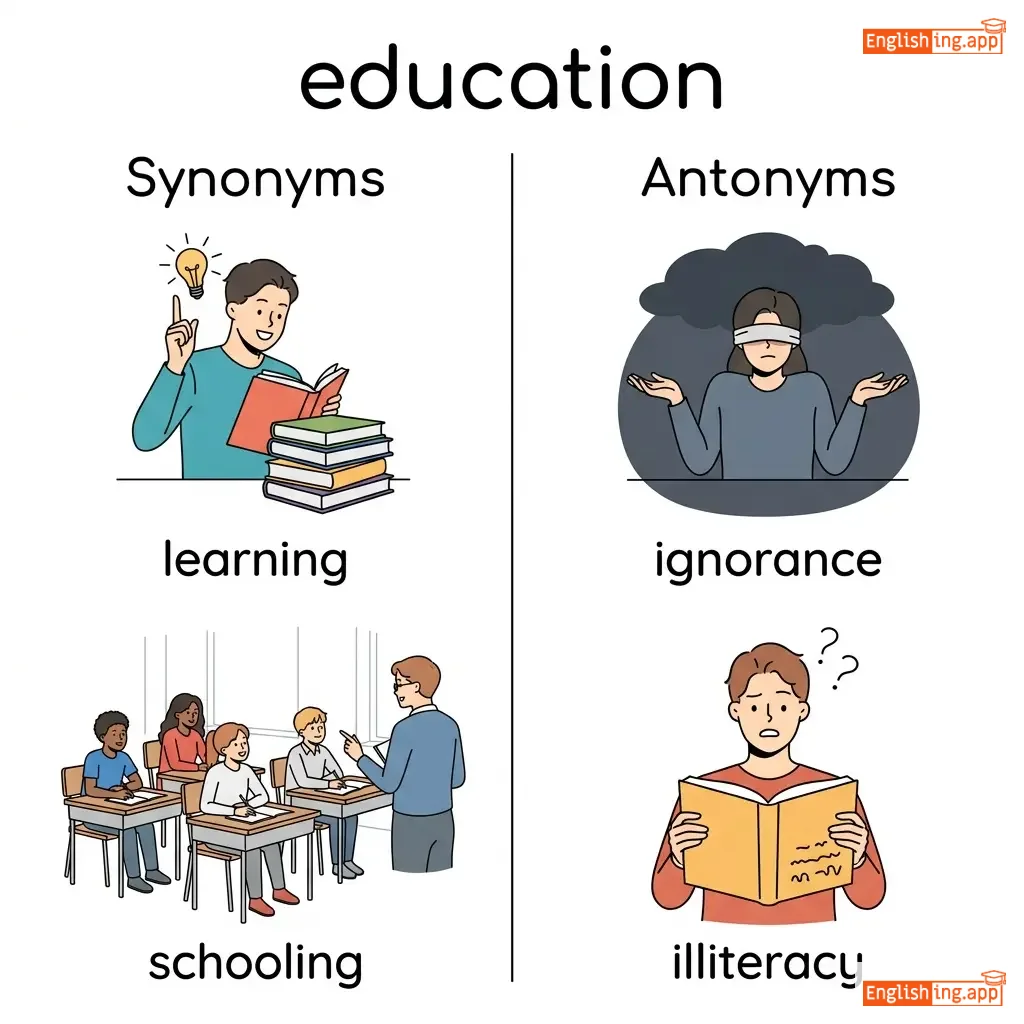
learning, schooling, instruction, teaching, training
••••••
|
ignorance, illiteracy
••••••
|
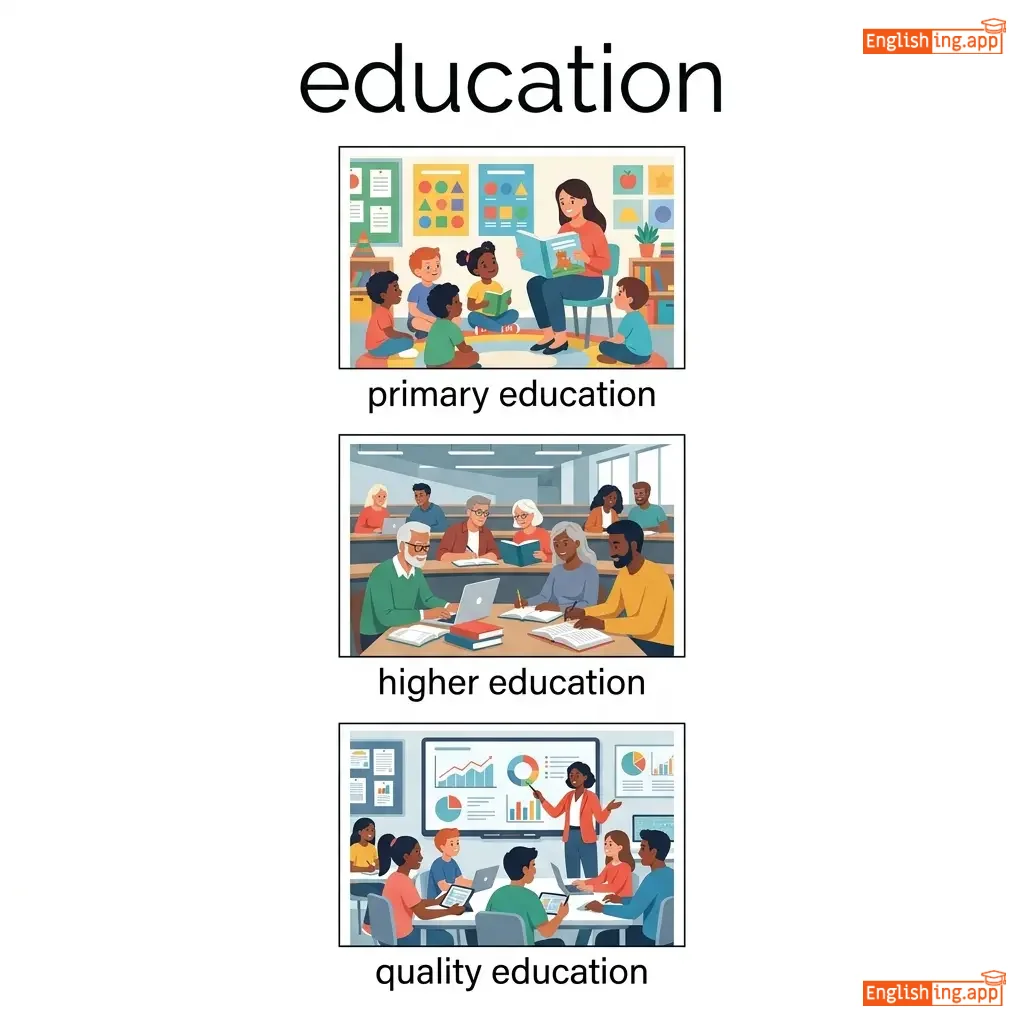
primary education, higher education, quality education, access to education
••••••
|
Education意味着教育 - Edu + Nation = 一个国家通过教育增长。
••••••
|
|
📚
••••••
|
/ˌɛdʒuˈkeɪʃənəl/
adjective
(édukeishénàl)
••••••
|

|
教育的
jiaoyu de
••••••
|
- •••••• | - •••••• | - •••••• | - •••••• |
relating to the process of education; providing knowledge or information
••••••
|
The documentary was both entertaining and educational.
这部纪录片既有娱乐性又具有教育意义。
••••••
|
这部纪录片既有娱乐性又具有教育意义。
Zhe bu jilupian ji you yulexing you juyou jiaoyu yiyi.
••••••
|
- •••••• | - •••••• | - •••••• |
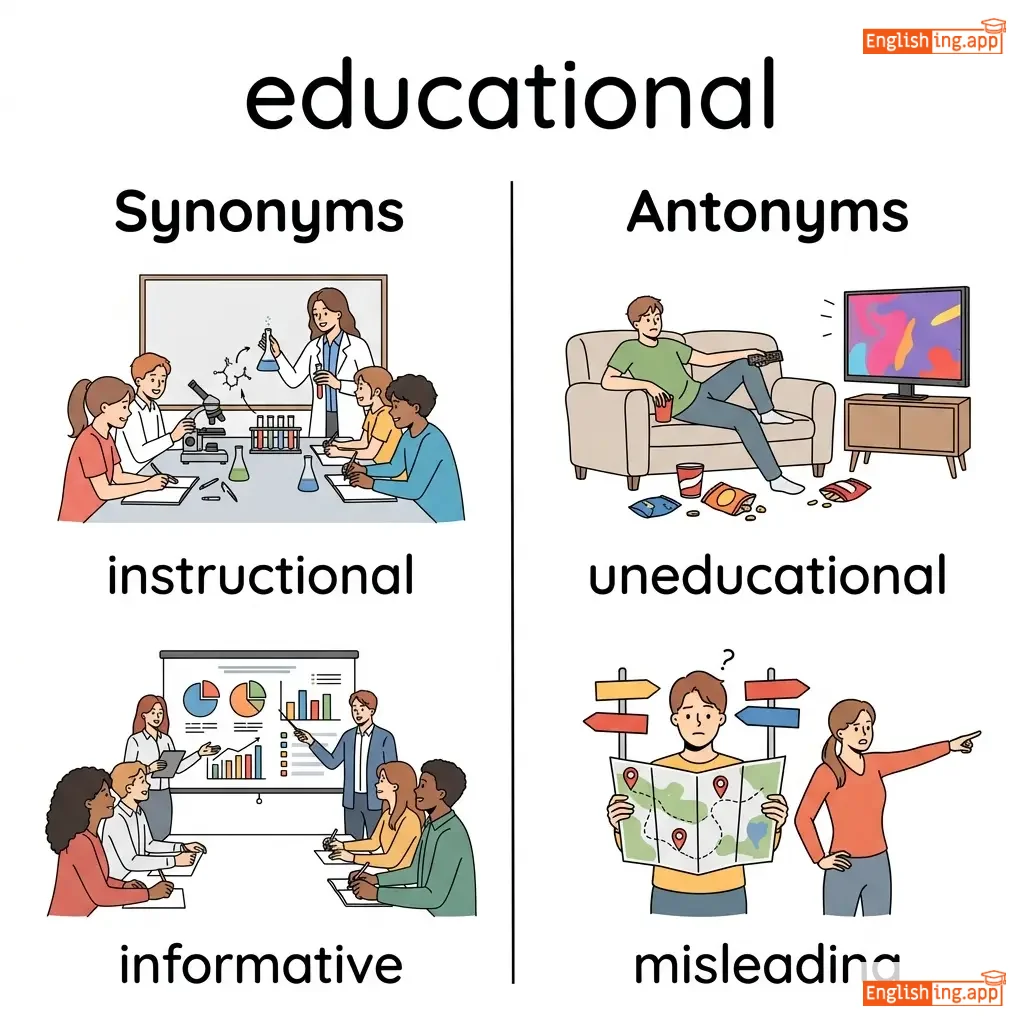
instructional, informative, enlightening, didactic, academic
••••••
|
uneducational, misleading, uninformative
••••••
|
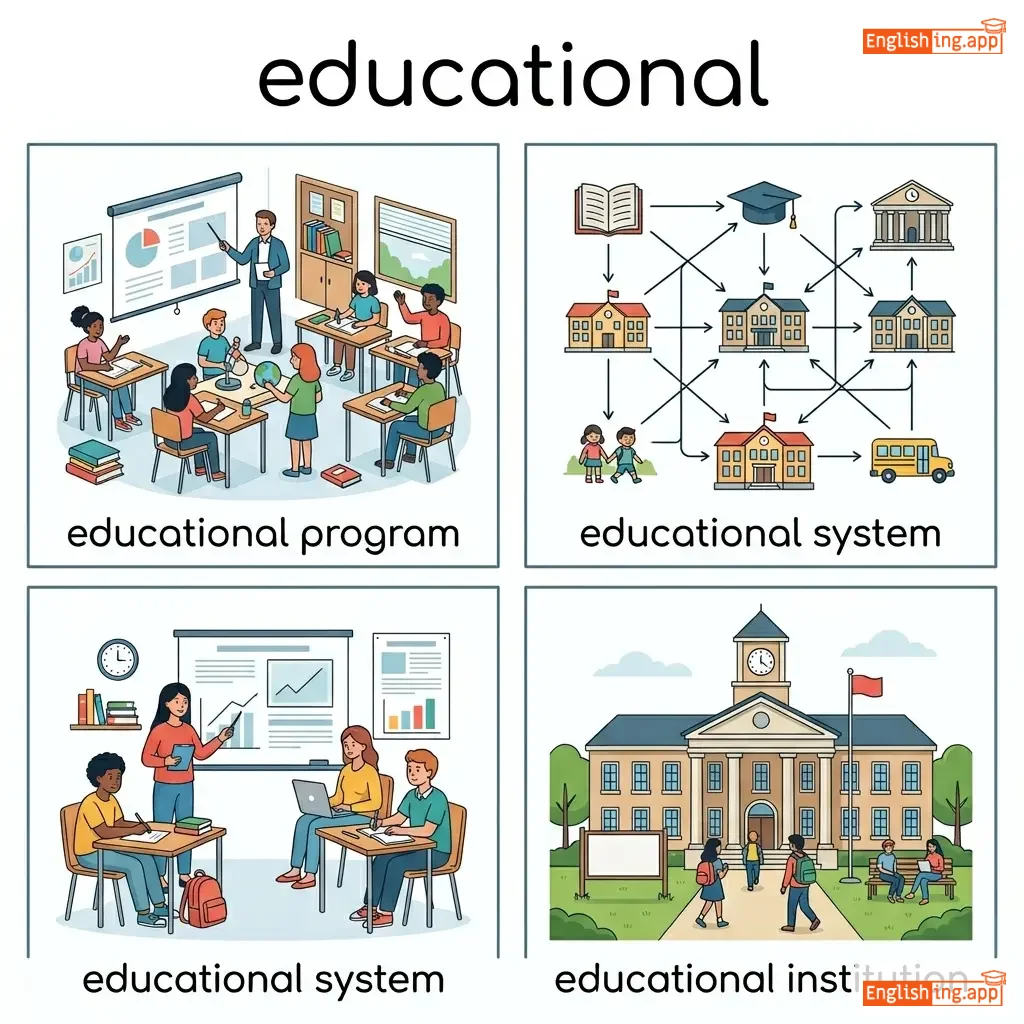
educational program, educational system, educational institution, educational material
••••••
|
Educational意味着与学习相关,就像我们在学校使用的学习资料一样。
••••••
|
|
👩🏫
••••••
|
/ˈɛdʒuˌkeɪtər/
noun
(教育者)
••••••
|
- •••••• |
教育工作者
jiaoyu gongzuozhe
••••••
|
- •••••• | - •••••• | - •••••• | - •••••• |
a person who provides education; a teacher or instructor
••••••
|
She is a dedicated educator who inspires her students every day. |
她是一位献身的教育工作者,每天都在激励她的学生。
Ta shi yi wei xianshen de jiaoyu gongzuozhe, meitian dou zai jili ta de xuesheng.
••••••
|
- •••••• | - •••••• | - •••••• |
teacher, instructor, mentor, trainer, tutor
••••••
|
student, pupil
••••••
|
professional educator, experienced educator, educator training, role of educator
••••••
|
Educator 意味着教师 👩🏫,需要教育工作者来进行教育。
••••••
|
|
✨
••••••
|
/ɪˈfɛkt/
noun
(īfékè)
••••••
|
- •••••• |
效果
xiaoguo
••••••
|
- •••••• | - •••••• | - •••••• | - •••••• |
a change that results from a particular action or cause
••••••
|
The new law had a positive effect on public safety. |
新法律对公共安全产生了积极的效果。
Xin falu dui gonggong anquan chansheng le jiji de xiaoguo.
••••••
|
take effect |
to begin to apply or produce results
••••••
|
生效
shengxiao
••••••
|
result, outcome, consequence, impact, influence
••••••
|
cause, source, origin
••••••
|
positive effect, negative effect, cause and effect, special effect
••••••
|
效果意味着影响,效果的变化很好记住。
••••••
|
|
✅
••••••
|
/ɪˈfɛktɪv/
adjective
(yǐfèi kè tì fū)
••••••
|

|
有效
youxiao
••••••
|
- •••••• | - •••••• | - •••••• | - •••••• |
producing the intended or desired result
••••••
|
This medicine is very effective against headaches. |
这种药物对抗头痛非常有效。
Zhè zhǒng yàowù duìkàng tóutòng fēicháng yǒuxiào.
••••••
|
effective immediately |
starting from now
••••••
|
立即生效
lìjí shēngxiào
••••••
|
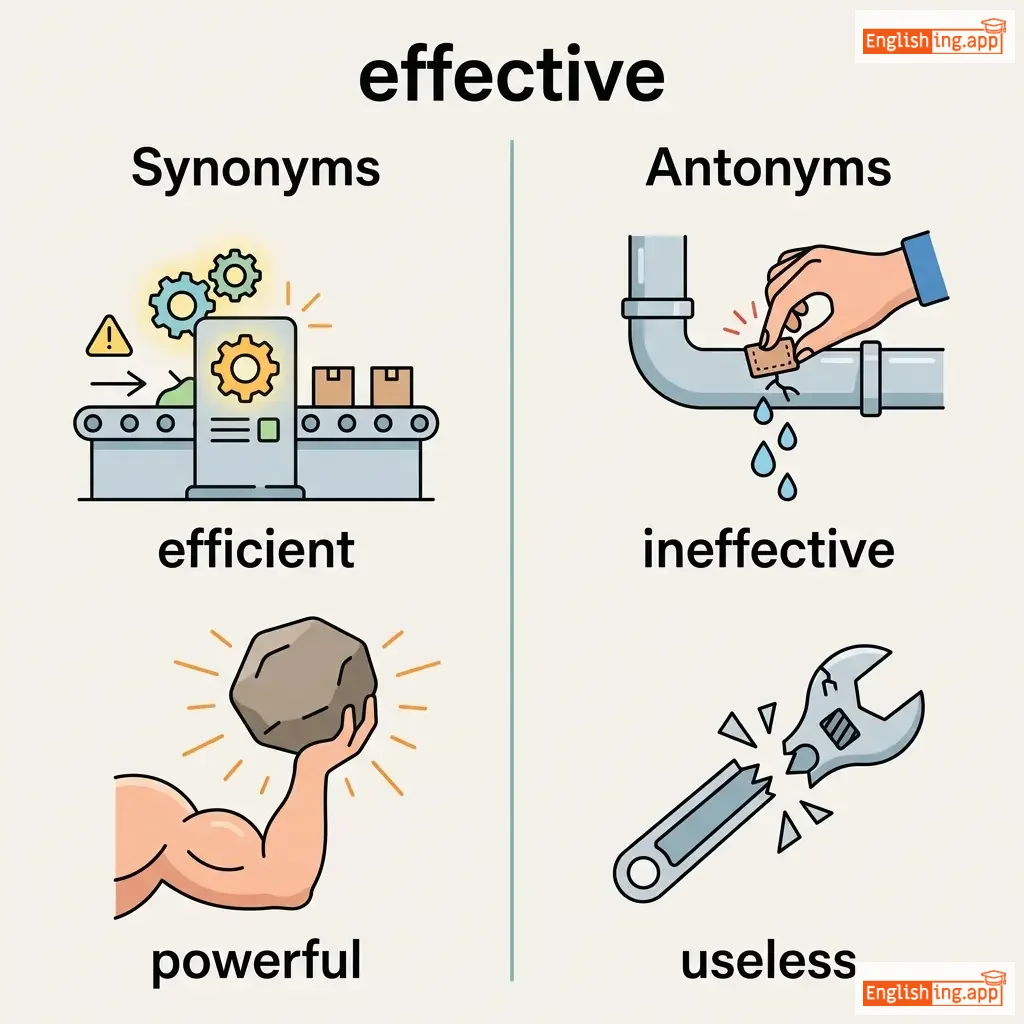
efficient, powerful, useful, successful, strong
••••••
|
ineffective, useless, weak
••••••
|
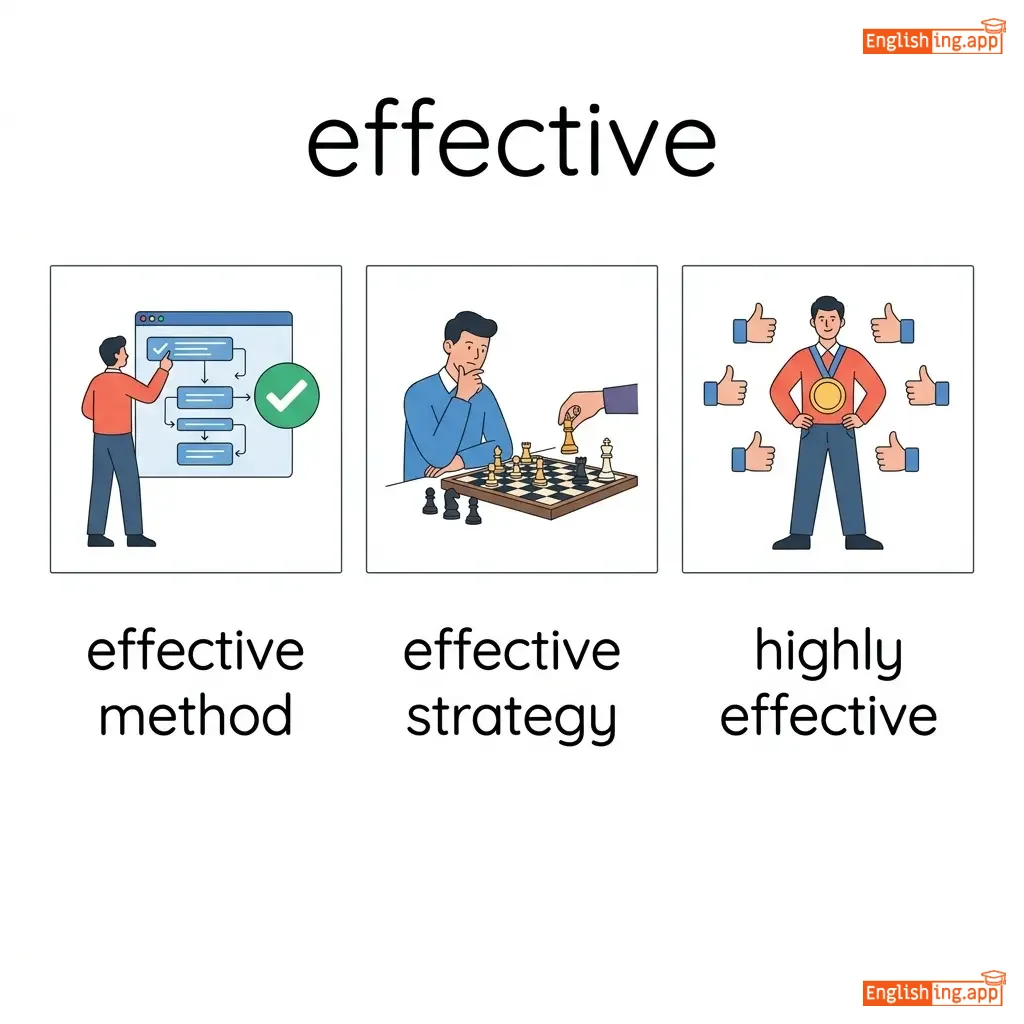
effective method, effective strategy, highly effective, effective communication
••••••
|
有效意味着有效 - 有效的药物能够缓解头痛。
••••••
|
|
✅
••••••
|
/ɪˈfɛktɪvli/
adverb
(yǐxiàoli)
••••••
|
- •••••• |
有效地
youxiao de
••••••
|
- •••••• | - •••••• | - •••••• | - •••••• |
in a way that produces the desired result; efficiently and successfully
••••••
|
The team worked together effectively to finish the project on time. |
团队有效地合作,按时完成了项目。
Tuandui youxiao de hezuo, anshi wancheng le xiangmu.
••••••
|
- •••••• | - •••••• | - •••••• |
efficiently, successfully, productively, powerfully
••••••
|
ineffectively, poorly, weakly
••••••
|
work effectively, communicate effectively, manage effectively, use effectively
••••••
|
Effective 代表成功,而 effectively 代表 ✅ 高效地完成任务。
••••••
|
|
🎯
••••••
|
/ɪˈfɛktɪvnəs/
noun
(效能)
••••••
|
- •••••• |
效能
xiaoneng
••••••
|
- •••••• | - •••••• | - •••••• | - •••••• |
the degree to which something is successful in producing a desired result.
••••••
|
The effectiveness of the new policy is still being evaluated.
新政策的效能仍在评估中。
••••••
|
新政策的效能仍在评估中。
Xīn zhèngcè de xiàonéng réng zài pínggū zhōng.
••••••
|
measure effectiveness
衡量效能
••••••
|
to assess how well something achieves its goals.
••••••
|
衡量效能
héngliáng xiàonéng
••••••
|
efficiency, success, productivity, power, capability
••••••
|
ineffectiveness, failure, weakness
••••••
|
test effectiveness, improve effectiveness, measure effectiveness, evaluate effectiveness
••••••
|
Effective表示工作,effectiveness表示工作得如何!
••••••
|
|
⚙️
••••••
|
/ɪˈfɪʃ.ən.si/
noun
(高效)
••••••
|
|
效率
xiaolü
••••••
|
- •••••• | - •••••• | - •••••• | - •••••• |
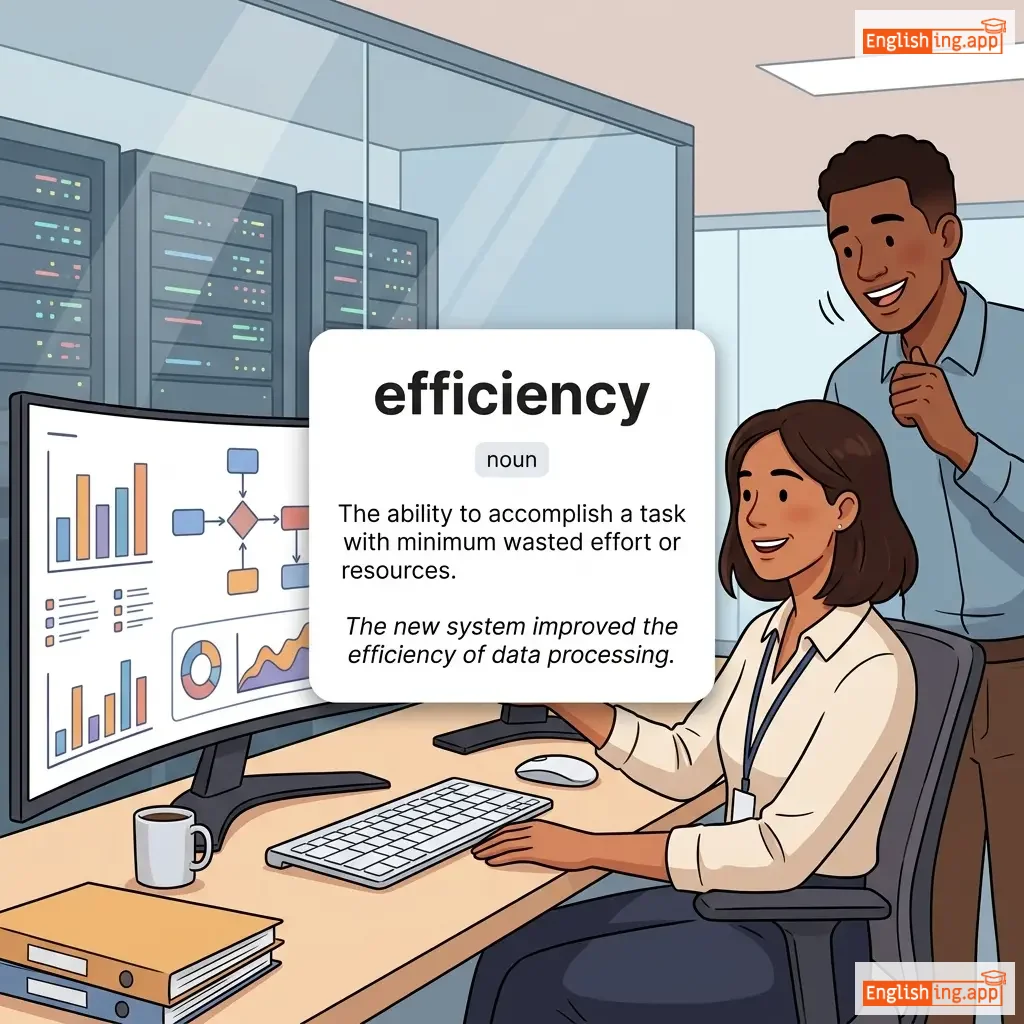
the ability to accomplish something with the least waste of time and effort
••••••
|
The new system improved the efficiency of the entire production process.
新系统提高了整个生产过程的效率。
••••••
|
新系统提高了整个生产过程的效率。
Xin xitong tigao le zhengge shengchan guocheng de xiaolv.
••••••
|
- •••••• | - •••••• | - •••••• |
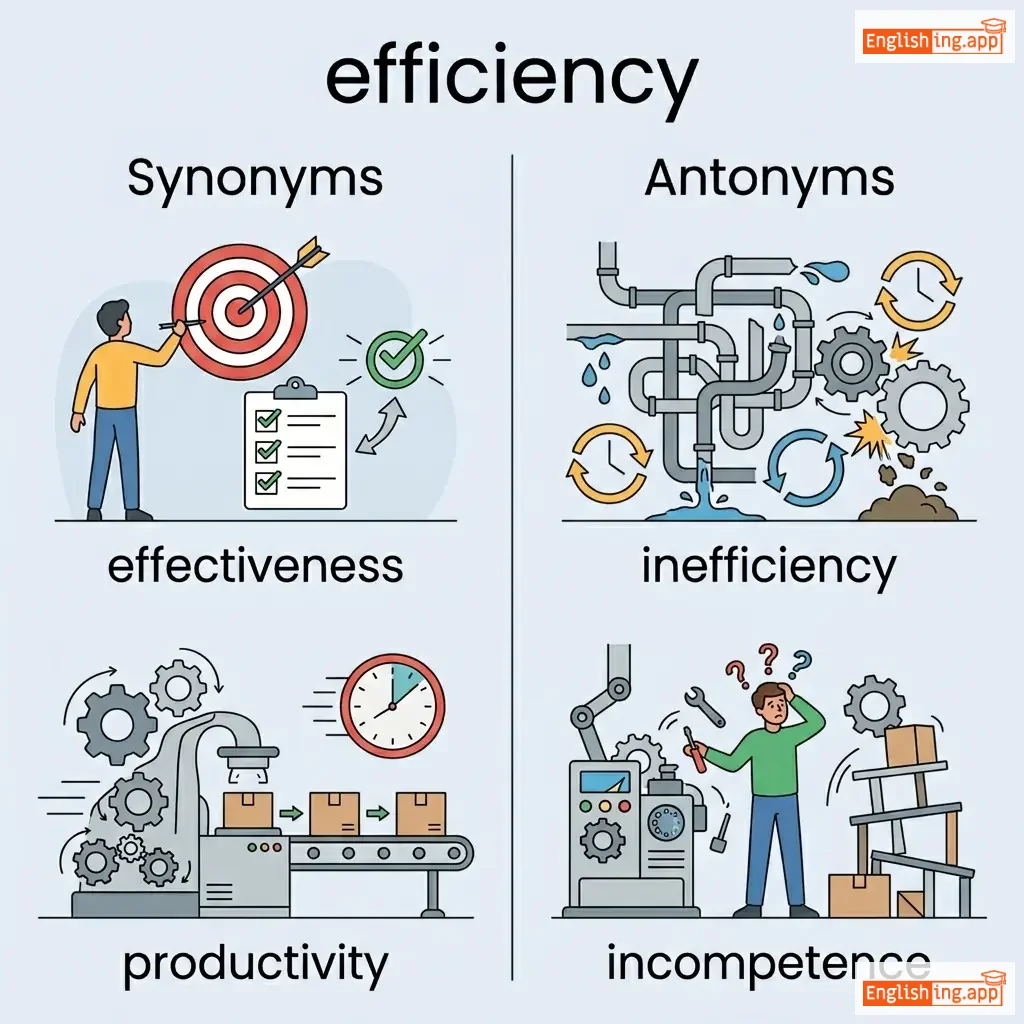
effectiveness, competence, productivity, capability
••••••
|
inefficiency, incompetence, waste, slowness
••••••
|
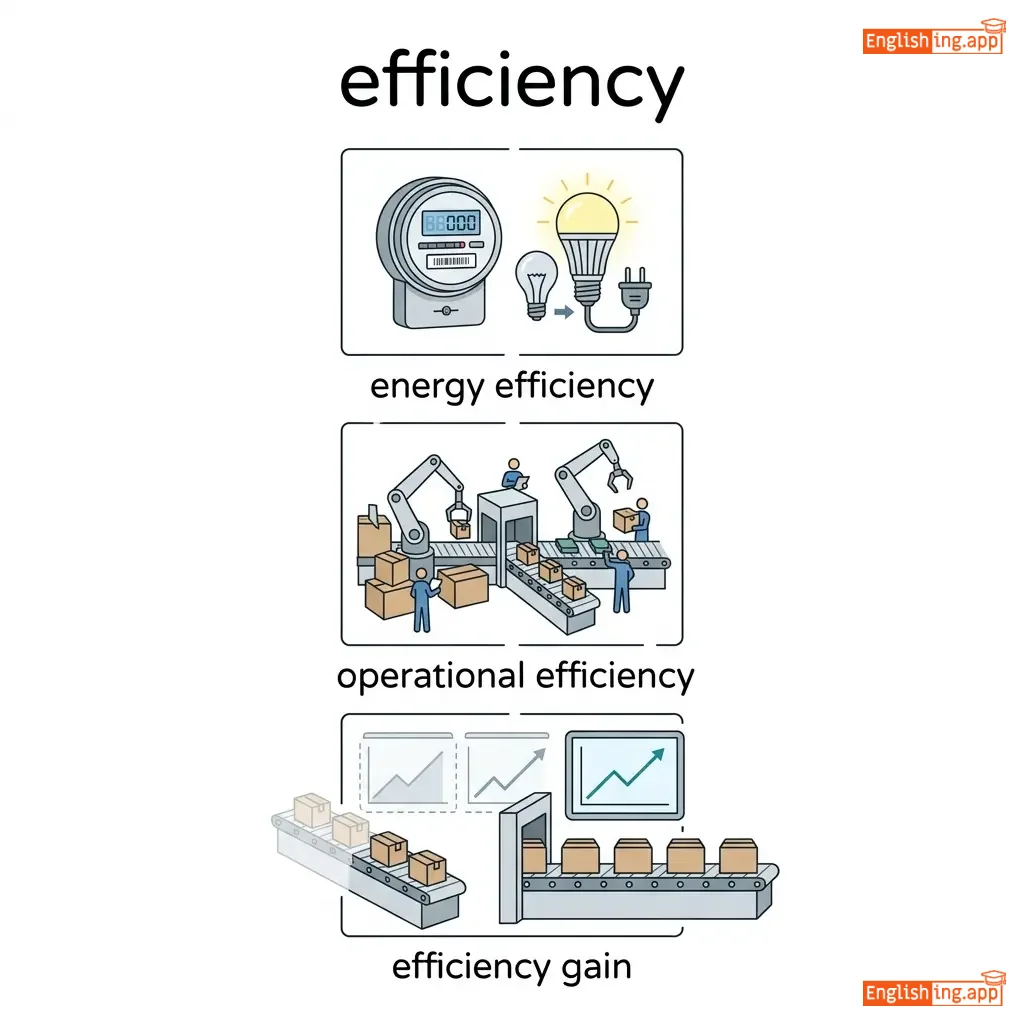
energy efficiency, improve efficiency, high efficiency
••••••
|
高效可以让你以最短的时间完成更多任务。
••••••
|
|
⚡
••••••
|
/ɪˈfɪʃ.ənt/
adjective
(yǐfíxiàn)
••••••
|

|
高效; 能干; 富有成效
gaoxiao
••••••
|
- •••••• | - •••••• | - •••••• | - •••••• |
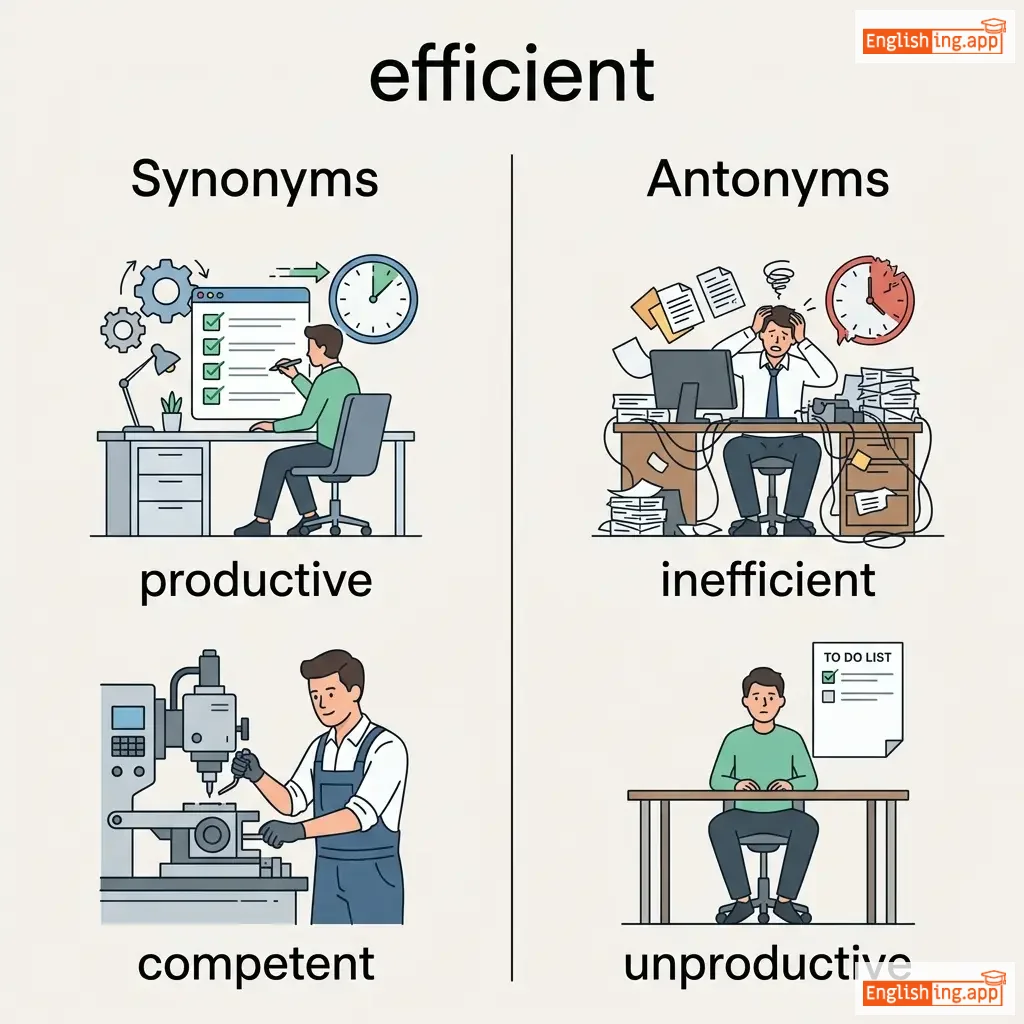
working well without waste; competent; productive
••••••
|
She is very efficient at managing her time.
她在管理时间方面非常高效。
••••••
|
她在管理时间方面非常高效。
Ta zai guanli shijian fangmian feichang gaoxiao.
••••••
|
- •••••• | - •••••• | - •••••• |
competent, capable, skilled
••••••
|
inefficient, incompetent, wasteful
••••••
|
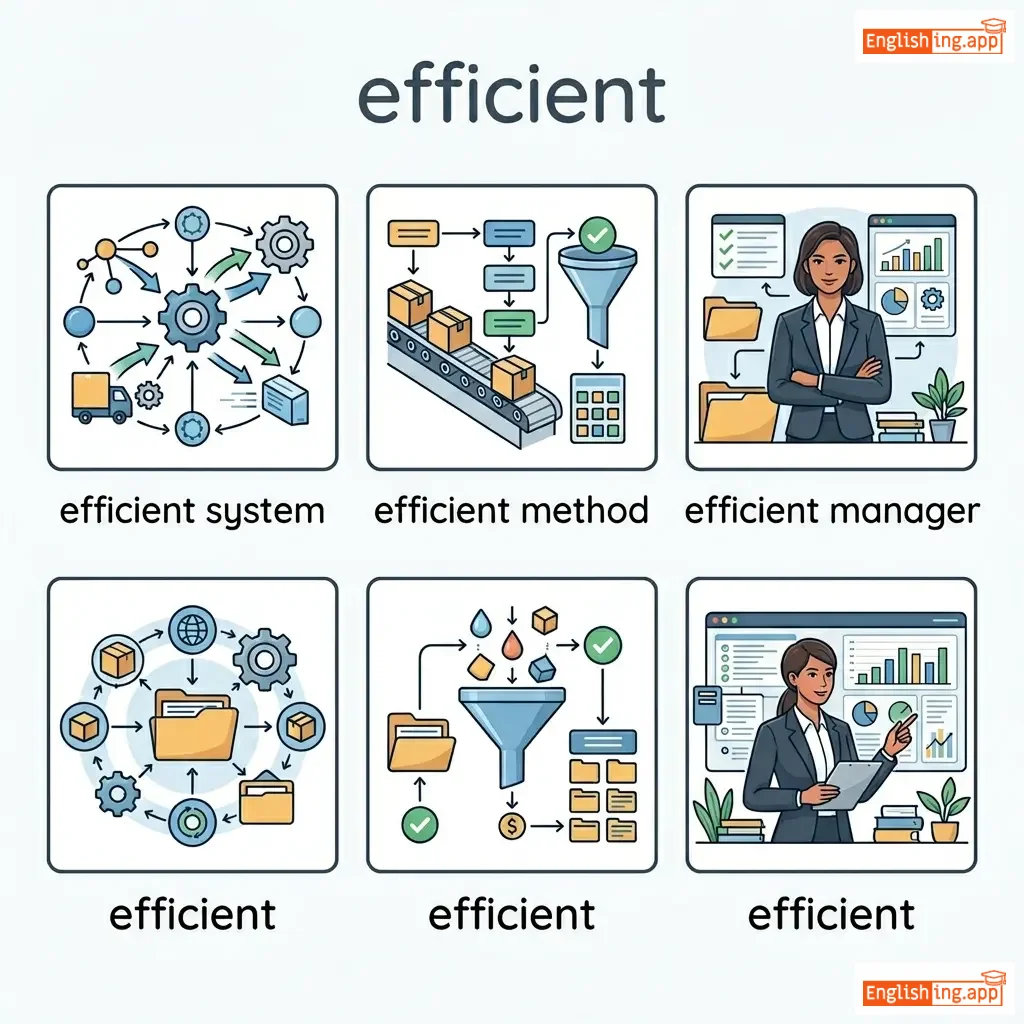
efficient system, efficient worker, efficient use
••••••
|
To be '高效' in Chinese is to work with efficiency.
••••••
|
|
⚡
••••••
|
/ɪˈfɪʃəntli/
adverb
(高效地)
••••••
|
- •••••• |
高效地
gaoxiaode
••••••
|
- •••••• | - •••••• | - •••••• | - •••••• |
in a way that achieves maximum productivity with minimum wasted effort or expense
••••••
|
She managed to complete the task efficiently within the deadline. |
她在最后期限内高效地完成了任务。
Ta zai zuixhou qixian nei gaoxiaode wancheng le renwu.
••••••
|
- •••••• | - •••••• | - •••••• |
effectively, productively, competently, resourcefully
••••••
|
inefficiently, ineffectively
••••••
|
work efficiently, run efficiently, manage efficiently
••••••
|
Efficient work saves energy—just like a smoothly running engine!
••••••
|
|
💪
••••••
|
/ˈɛfərt/
noun
(èfóte)
••••••
|
- •••••• |
努力
nǔlì
••••••
|
- •••••• | - •••••• | - •••••• | - •••••• |
the use of physical or mental energy to do something; attempt
••••••
|
He made a great effort to improve his English skills. |
他付出了巨大的努力来提高他的英语技能。
Tā fùchūle jùdà de nǔlì lái tígāo tā de yīngyǔ jìnéng.
••••••
|
make an effort |
to try hard to achieve something
••••••
|
努力尝试
nǔlì chángshì
••••••
|
attempt, endeavor, exertion, struggle, work
••••••
|
inaction, laziness, neglect
••••••
|
make an effort, huge effort, joint effort, physical effort
••••••
|
Effort带来成功,努力 (nǔlì) 是不可缺少的。
••••••
|
|
🥚
••••••
|
/ɛɡ/
noun
(eg)
••••••
|
- •••••• |
蛋
dan
••••••
|
- •••••• | - •••••• | - •••••• | - •••••• |
an oval or round object laid by a female bird, often eaten as food
••••••
|
She had a boiled egg for breakfast. |
她早餐吃了一个煮鸡蛋。
Ta zao can chi le yi ge zhu ji dan.
••••••
|
put all your eggs in one basket |
to risk everything on a single plan or opportunity
••••••
|
不要把所有的鸡蛋放在一个篮子里
Bu yao ba suo you de ji dan fang zai yi ge lan zi li
••••••
|
ovum, embryo, yolk, shell
••••••
|
sperm, chick
••••••
|
boiled egg, fried egg, egg yolk, egg shell
••••••
|
Egg 🥚 代表蛋,记住'早餐吃蛋'。
••••••
|

