|
絵文字
|
単語 | Images | 翻訳 | 過去 | 過去分詞 | 三人称単数 | 動名詞 | 意味 | 例文 | 例文の翻訳 | 表現例 | 表現例の意味 | 表現例の翻訳 | 同義語 | 対義語 | コロケーション | ニーモニック |
|---|---|---|---|---|---|---|---|---|---|---|---|---|---|---|---|---|---|
|
⬇️
••••••
|
/dɪˈsɛnd/
verb
••••••
|
- •••••• | - •••••• |
descended
••••••
|
descended
••••••
|
descends
••••••
|
descending
••••••
|
To move or fall downward; to come or go down from a higher place.
••••••
|
The hikers descended the steep mountain path. |
- •••••• |
descend into chaos |
To fall into disorder or confusion
••••••
|
- •••••• |
drop, fall, decline, lower, sink
••••••
|
ascend, rise, climb
••••••
|
descend slowly, descend rapidly, descend into
••••••
|
No •••••• |
|
⛰️
••••••
|
/dɪˈsɛnt/
noun
(ディセント)
••••••
|
- •••••• |
降下 / 祖先
kōka / sosen
••••••
|
- •••••• | - •••••• | - •••••• | - •••••• |
the action of moving downward, falling, or dropping; ancestry or origin
••••••
|
The climbers began their descent from the mountain peak. |
登山者は山頂から降下を始めました。
Tōzansha wa sanchō kara kōka o hajimemashita.
••••••
|
descent into chaos |
a situation deteriorating into disorder or confusion
••••••
|
混乱への降下
konran e no kōka
••••••
|
decline, drop, fall, ancestry, lineage
••••••
|
ascent, rise, progress
••••••
|
rapid descent, steep descent, descent into, descent from
••••••
|
Descentは下に行くことを意味します - descent = down sent (下に送る)
••••••
|
|
📝
••••••
|
/dɪˈskraɪb/
verb
(ディスクライブ)
••••••
|
- •••••• |
説明する
setsumei suru
••••••
|
described
ディスクライヴド
••••••
|
described
ディスクライヴド
••••••
|
describes
ディスクライブス
••••••
|
describing
ディスクライビング
••••••
|
to give an account of something in words, including details
••••••
|
She described the scene vividly.
彼女はそのシーンを鮮明に説明した。
••••••
|
彼女はそのシーンを鮮明に説明した。
Kanojo wa sono shīn o senmei ni setsumei shita.
••••••
|
describe in detail
詳細に説明する
••••••
|
to explain with thorough information
••••••
|
詳細に説明する
shōsai ni setsumei suru
••••••
|
explain, portray, depict, illustrate, narrate
••••••
|
confuse, obscure, distort
••••••
|
describe briefly, describe fully, describe process, describe situation
••••••
|
Describeは日本語で'説明する'、詳細にシーンを説明するように考えて。
••••••
|
|
📝
••••••
|
/dɪˈskrɪpʃən/
noun
(ディスクリプション)
••••••
|
|
説明
setsumei
••••••
|
- •••••• | - •••••• | - •••••• | - •••••• |
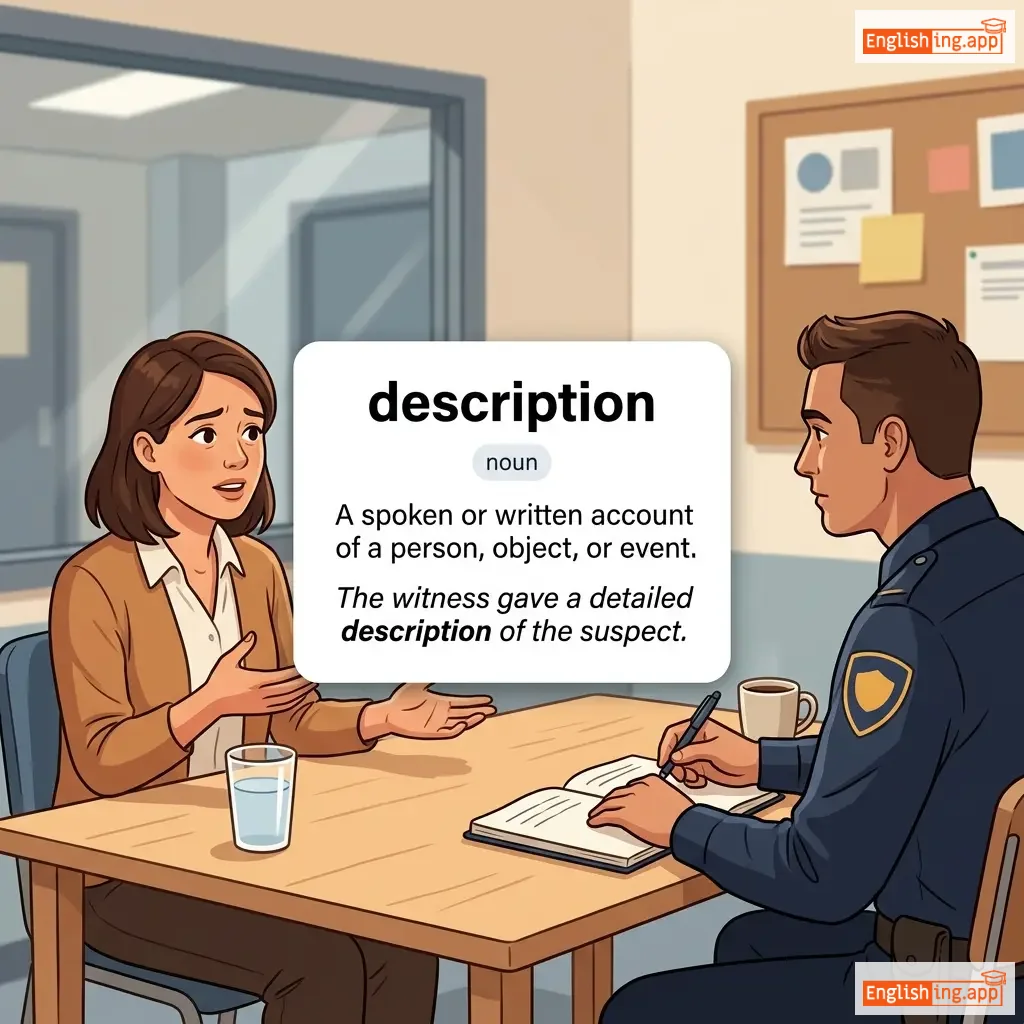
A spoken or written account of a person, object, or event.
••••••
|
The witness gave a detailed description of the suspect. |
証人は容疑者の詳細な説明をしました。
Shōnin wa yōgisha no shōsai na setsumei o shimashita.
••••••
|
beyond description |
Too great or extreme to be described.
••••••
|
言葉では言い表せない
kotoba de wa iarawasenai
••••••
|
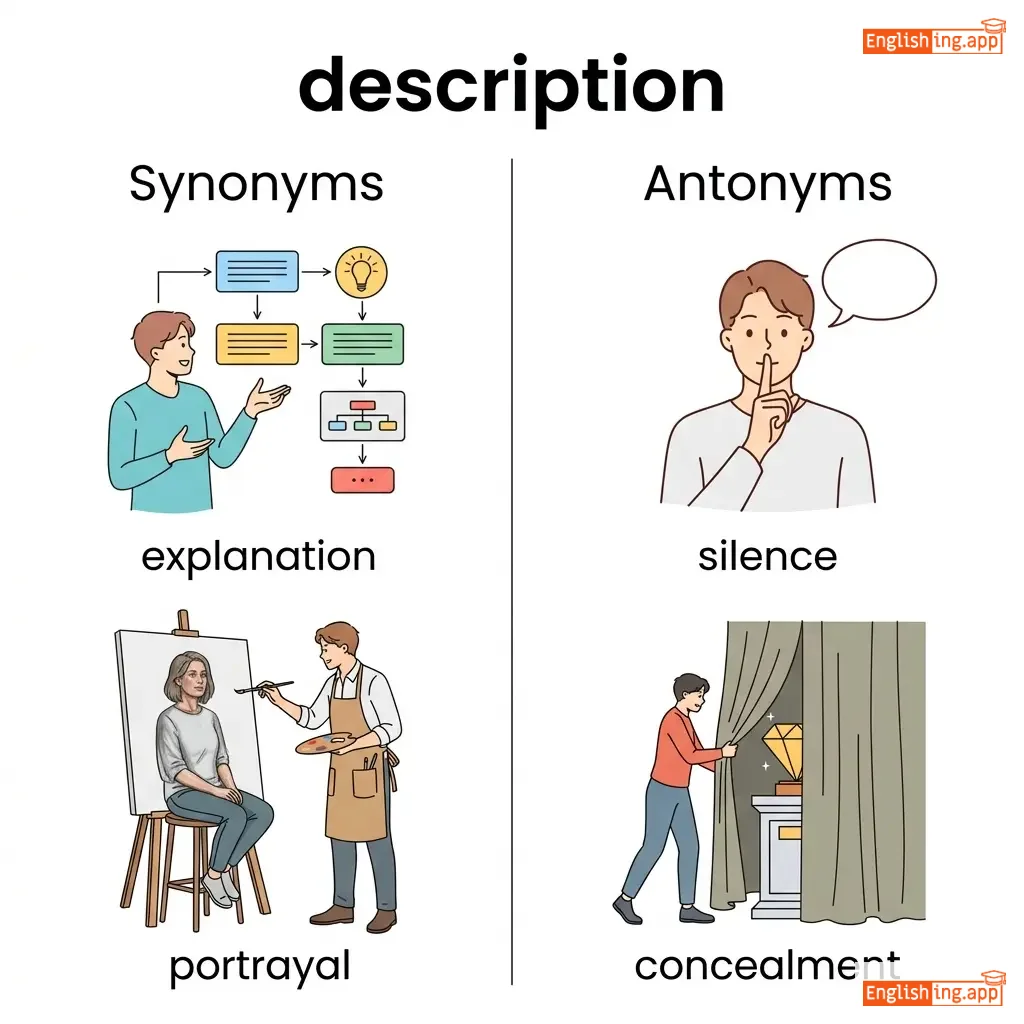
explanation, portrayal, depiction, account, representation
••••••
|
silence, concealment
••••••
|
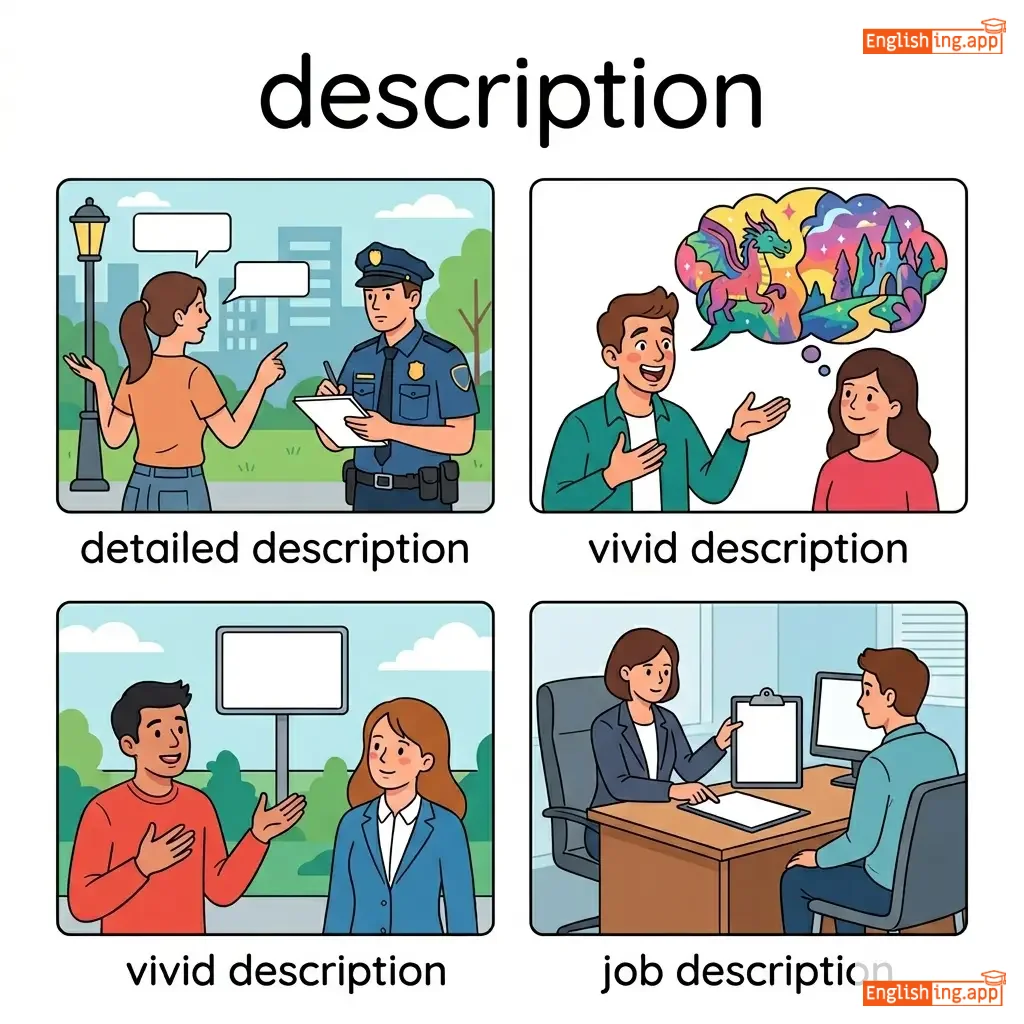
detailed description, vivid description, job description
••••••
|
Descriptionは説明を意味します - 詳細に説明するとき、Descriptionを使います。
••••••
|
|
🏜️
••••••
|
/ˈdez.ɚt/ (noun/adjective), /dɪˈzɜːrt/ (verb)
noun, verb
••••••
|
- •••••• | - •••••• |
deserted
••••••
|
deserted
••••••
|
deserts
••••••
|
deserting
••••••
|
as a noun, a barren sandy region; as a verb, to abandon someone or something
••••••
|
He deserted his friends in their time of need. |
- •••••• |
just deserts |
the punishment or reward that is deserved
••••••
|
- •••••• |
abandon, forsake, leave, wasteland, wilderness
••••••
|
support, stay, assist
••••••
|
desert storm, desert island, deserted place, desert someone
••••••
|
No •••••• |
|
🎨
••••••
|
/dɪˈzaɪn/
verb
••••••
|
- •••••• | - •••••• |
designed
••••••
|
designed
••••••
|
designs
••••••
|
designing
••••••
|
to plan and create something with a particular purpose or look
••••••
|
She will design the new company logo. |
- •••••• |
design a plan |
to create or outline a detailed plan
••••••
|
- •••••• |
plan, create, draft, sketch, outline
••••••
|
destroy, ruin, neglect
••••••
|
design a logo, design a system, design clothes, interior design
••••••
|
No •••••• |
|
📝
••••••
|
/ˈdɛzɪɡneɪt/
verb
(デザインネイト)
••••••
|
- •••••• |
指名する
shimei suru
••••••
|
designated
デザインネイテッド
••••••
|
designated
デザインネイテッド
••••••
|
designates
デザインネイツ
••••••
|
designating
デザインネイティング
••••••
|
to officially assign, appoint, or indicate something or someone
••••••
|
The committee will designate a new chairperson next week.
委員会は来週、新しい会長を指名する予定です。
••••••
|
委員会は来週、新しい会長を指名する予定です。
Iinkai wa raishū, atarashī kaichō o shimei suru yotei desu.
••••••
|
- •••••• | - •••••• | - •••••• |
appoint, assign, nominate, allocate, specify
••••••
|
remove, dismiss
••••••
|
designate a person, designate a role, designate as
••••••
|
Design + gate = 指名する会長を委員会で
••••••
|
|
👗
••••••
|
/dɪˈzaɪnər/
noun
(デザイナー)
••••••
|
- •••••• |
デザイナー
dezainā
••••••
|
- •••••• | - •••••• | - •••••• | - •••••• |
a person who plans and creates the form or structure of something
••••••
|
The fashion designer presented her new collection. |
ファッションデザイナーは新しいコレクションを発表しました。
Fasshion dezainā wa atarashī korekushon o happyō shimashita.
••••••
|
- •••••• | - •••••• | - •••••• |
creator, artist, architect, stylist
••••••
|
user, consumer
••••••
|
fashion designer, interior designer, graphic designer, web designer
••••••
|
デザイナーは'デザイン'から来ている → デザインをする人がデザイナー
••••••
|
|
🏡
••••••
|
/dɪˈzaɪərəbl/
adjective
(ディザイアラブル)
••••••
|
- •••••• |
望ましい
nozomashii
••••••
|
- •••••• | - •••••• | - •••••• | - •••••• |
worth having or wanting; attractive
••••••
|
The location of the house was highly desirable, with great views.
その家の場所は非常に望ましく、素晴らしい景色がありました。
••••••
|
その家の場所は非常に望ましく、素晴らしい景色がありました。
Sono ie no basho wa hijō ni nozomashiku, subarashī keshiki ga arimashita.
••••••
|
- •••••• | - •••••• | - •••••• |
attractive, appealing, wanted, sought-after
••••••
|
undesirable, unappealing, unattractive
••••••
|
desirable features, desirable location, highly desirable
••••••
|
望ましい家 - a desirable house
••••••
|
|
❤️
••••••
|
/dɪˈzaɪər/
noun, verb
(デザイア)
••••••
|
- •••••• |
欲望
yokubou
••••••
|
desired
デザイアード
••••••
|
desired
デザイアード
••••••
|
desires
デザイアーズ
••••••
|
desiring
デザイアリング
••••••
|
a strong feeling of wanting something or wishing for something to happen
••••••
|
He has a strong desire to travel the world.
彼は世界を旅行したいという強い欲望を持っています。
••••••
|
彼は世界を旅行したいという強い欲望を持っています。
Kare wa sekai o ryokou shitai to iu tsuyoi yokubou o motteimasu.
••••••
|
burning desire
燃えるような欲望
••••••
|
an intense longing or wish
••••••
|
燃えるような欲望
moeru you na yokubou
••••••
|
wish, longing, craving, passion, aspiration
••••••
|
aversion, dislike, hatred
••••••
|
express desire, strong desire, desire for success, burning desire
••••••
|
Desire は欲望、燃えるような欲望のように強いです。
••••••
|
|
🖥️
••••••
|
/dɛsk/
noun
(デスク)
••••••
|
- •••••• |
机
tsukue
••••••
|
- •••••• | - •••••• | - •••••• | - •••••• |
a piece of furniture with a flat surface used for writing or working
••••••
|
The books are on the desk. |
本は机の上にあります。
Hon wa tsukue no ue ni arimasu.
••••••
|
front desk |
the main reception area in an office or hotel
••••••
|
フロントデスク
furonto desuku
••••••
|
table, workstation, counter, bureau
••••••
|
floor, ground
••••••
|
office desk, study desk, front desk, wooden desk
••••••
|
机の上で全ての作業を行います
••••••
|
|
💻
••••••
|
/ˈdɛsktɒp/
noun
••••••
|
- •••••• | - •••••• | - •••••• | - •••••• | - •••••• | - •••••• |
a computer designed to be used on a desk, typically with a separate monitor, keyboard, and mouse
••••••
|
I keep my documents on the desktop for easy access. |
- •••••• | - •••••• | - •••••• | - •••••• |
workstation, computer, PC
••••••
|
laptop, mobile
••••••
|
desktop computer, desktop screen, desktop icon, desktop environment
••••••
|
No •••••• |
|
🙏
••••••
|
/ˈdɛspərət/
adjective
(デスぺレート)
••••••
|
- •••••• |
絶望的
zetsubōteki
••••••
|
- •••••• | - •••••• | - •••••• | - •••••• |
Feeling or showing a hopeless sense that a situation is so bad as to be impossible to deal with.
••••••
|
He was desperate to find a job before his savings ran out. |
彼は貯金が尽きる前に仕事を見つけることに必死だった。
Kare wa chokin ga tsukiru mae ni shigoto o mitsukeru koto ni hisshi datta.
••••••
|
desperate measures |
Extreme actions taken as a last resort in a difficult situation.
••••••
|
絶望的な手段
zetsubōteki na shudan
••••••
|
hopeless, despairing, frantic, urgent, reckless
••••••
|
hopeful, calm, confident
••••••
|
desperate attempt, desperate need, desperate cry, desperate situation
••••••
|
Desperate → ZETSU + bō → 絶望的な状況で仕事を必死に探す。
••••••
|
|
😫
••••••
|
/ˈdɛspərətli/
adverb
(デスペレートリー)
••••••
|
- •••••• |
必死に
hisshi ni
••••••
|
- •••••• | - •••••• | - •••••• | - •••••• |
in a way that shows despair or great need
••••••
|
He called for help desperately after the accident. |
事故後、彼は必死に助けを求めた。
Jiko go, kare wa hisshi ni tasuke o motometa.
••••••
|
desperately in need |
to require something urgently
••••••
|
必死に必要
hisshi ni hitsuyō
••••••
|
urgently, hopelessly, frantically, severely, badly
••••••
|
calmly, easily, leisurely
••••••
|
desperately need, desperately want, cry desperately, try desperately
••••••
|
必死に必要な時は必死に行動する。
••••••
|
|
💪
••••••
|
/dɪˈspaɪt/
preposition
(ディスパイト)
••••••
|
- •••••• |
にもかかわらず
nimo kakawarazu
••••••
|
- •••••• | - •••••• | - •••••• | - •••••• |
Without being affected by; in spite of.
••••••
|
He continued his work despite the difficulties. |
困難にもかかわらず、彼は仕事を続けました。
Konnan nimo kakawarazu, kare wa shigoto wo tsuzukemashita.
••••••
|
despite all odds |
Even though there were many challenges.
••••••
|
すべてにもかかわらず
subete nimo kakawarazu
••••••
|
in spite of, regardless of, notwithstanding
••••••
|
because of, due to
••••••
|
despite difficulties, despite opposition, despite criticism
••••••
|
Despite は 'despite fight' の意味で、そして続けて働く。
••••••
|
|
💥
••••••
|
/dɪˈstrɔɪ/
verb
(ディストロイ)
••••••
|
|
破壊する
hakai suru
••••••
|
destroyed
ディストロイド
••••••
|
destroyed
ディストロイド
••••••
|
destroys
ディストロイズ
••••••
|
destroying
ディストロイング
••••••
|
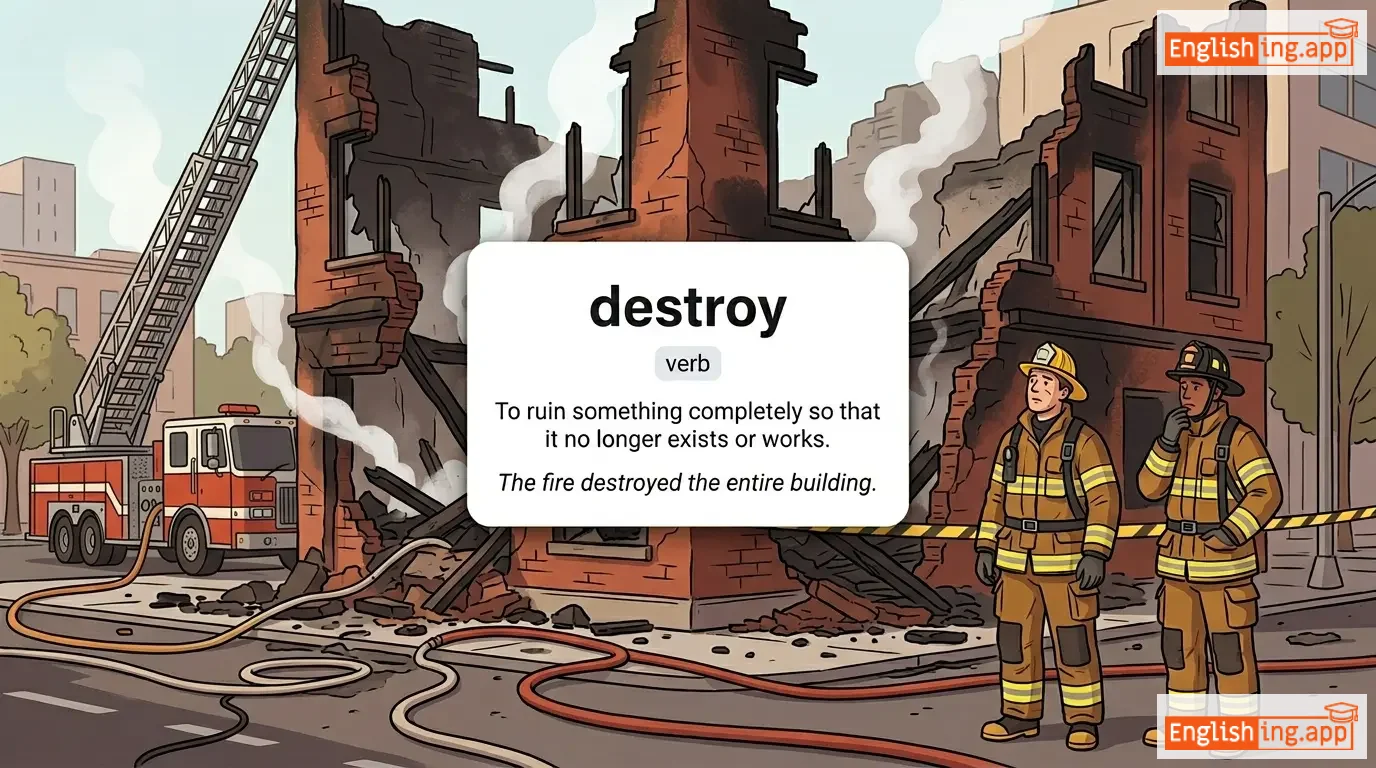
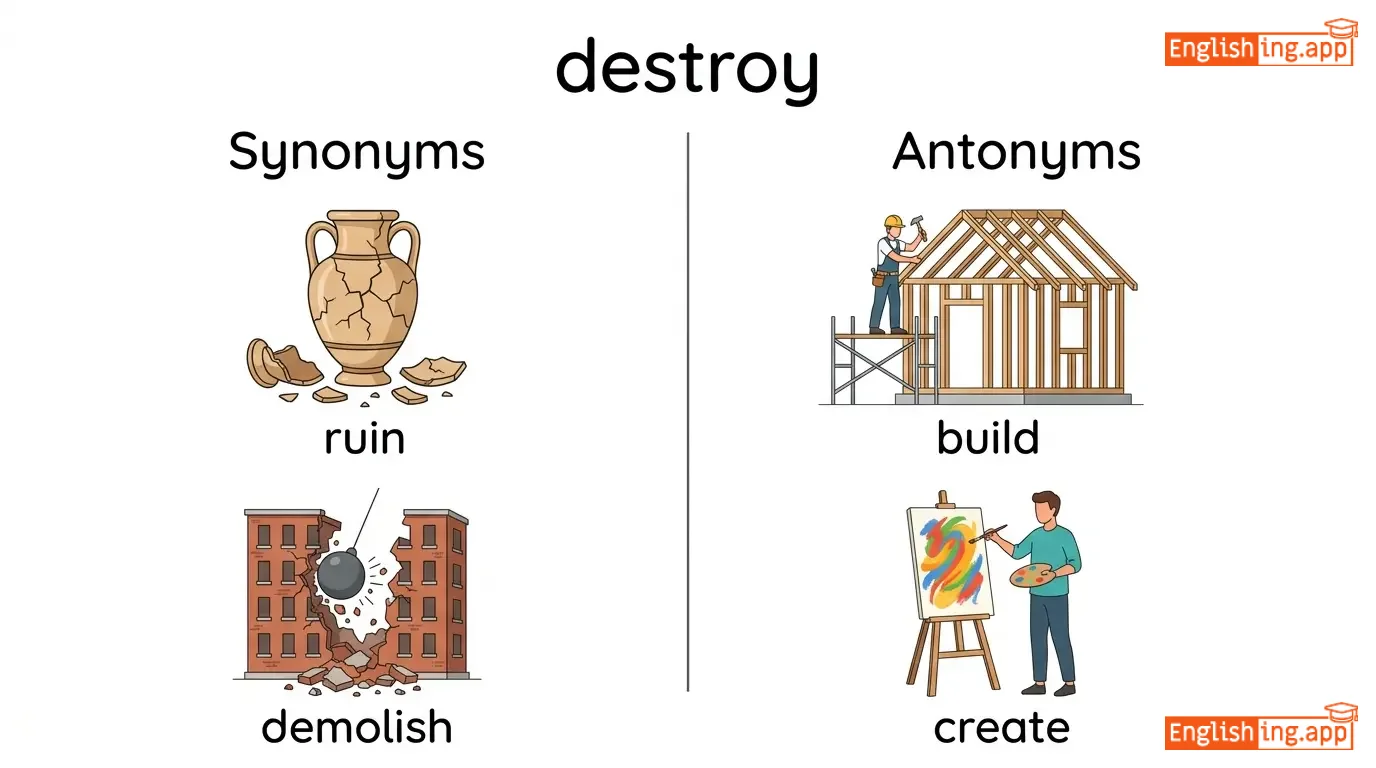
To ruin something completely so that it no longer exists or works.
••••••
|
The fire destroyed the entire building.
火事が建物全体を破壊した。
••••••
|
火事が建物全体を破壊した。
Kaji ga tatemono zentai o hakai shita.
••••••
|
self-destroy
セルフ・デストロイ
••••••
|
To cause one's own ruin.
••••••
|
セルフ・デストロイ
serufu desutoroi
••••••
|
ruin, demolish, wreck, annihilate, obliterate
••••••
|
build, create, repair
••••••
|
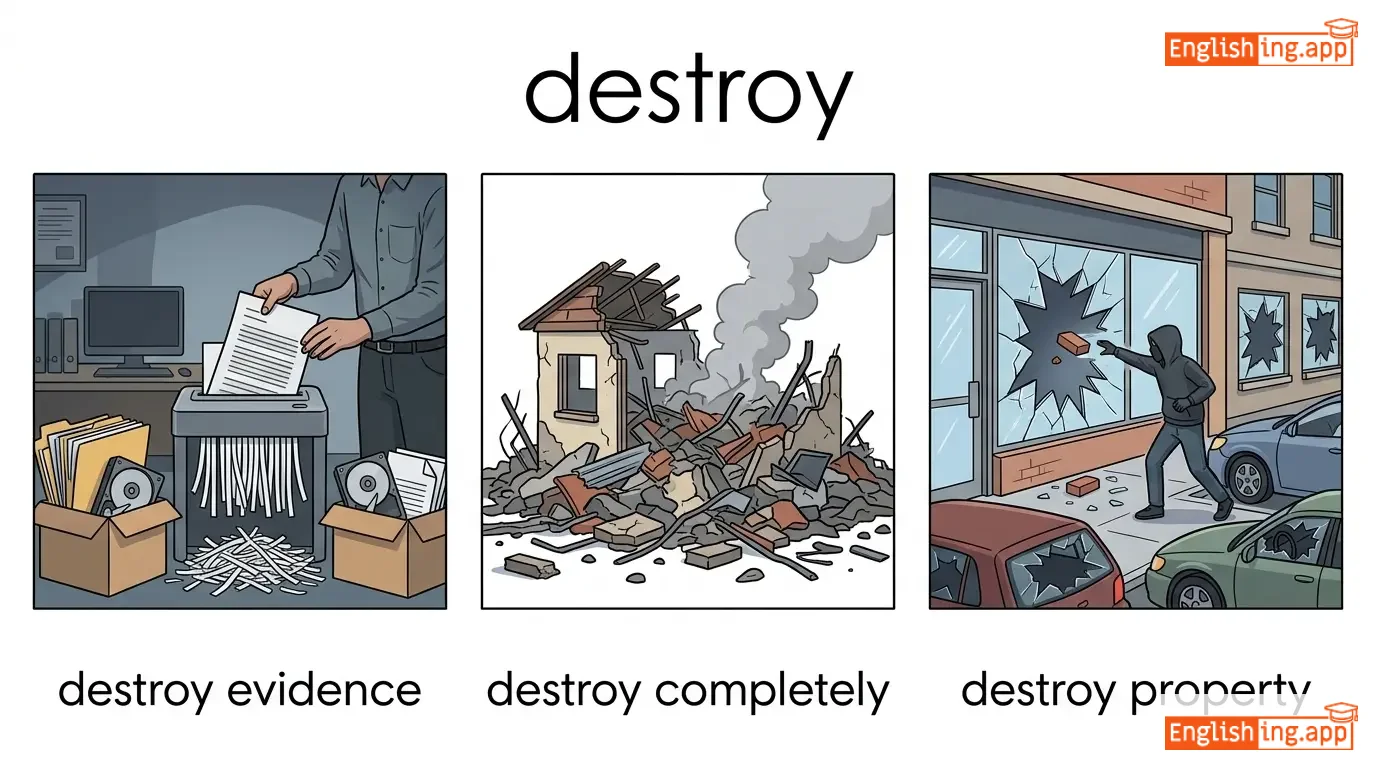
destroy evidence, destroy completely, destroy property, destroy reputation
••••••
|
破壊することはすべてを壊すことであり、火災のように建物を壊すようなものです。
••••••
|
|
💥
••••••
|
/dɪˈstrʌkʃən/
noun
(デストラクション)
••••••
|
- •••••• |
破壊
hakai
••••••
|
- •••••• | - •••••• | - •••••• | - •••••• |
the act of causing so much damage to something that it no longer exists or cannot be repaired
••••••
|
The fire caused the destruction of the building. |
火事は建物の破壊を引き起こしました。
Kaji wa tatemono no hakai o hikiokoshimashita.
••••••
|
path of destruction |
a series of damaged things left behind
••••••
|
破壊の道
hakai no michi
••••••
|
ruin, devastation, demolition, annihilation
••••••
|
creation, construction, repair
••••••
|
cause destruction, widespread destruction, total destruction, massive destruction
••••••
|
Destructionは破壊 - 何かを破壊すると、それは破壊になります
••••••
|
|
🌀
••••••
|
/dɪˈstrʌktɪv/
adjective
(デストラクティブ)
••••••
|
- •••••• |
破壊的な
hakai teki na
••••••
|
- •••••• | - •••••• | - •••••• | - •••••• |
Causing great and irreparable harm or damage.
••••••
|
Hurricanes are often destructive to coastal cities.
ハリケーンは沿岸都市にとってしばしば破壊的です。
••••••
|
ハリケーンは沿岸都市にとってしばしば破壊的です。
Harikēn wa engan toshi ni totte shibashiba hakai-teki desu.
••••••
|
destructive criticism
破壊的批判
••••••
|
Criticism that is harmful rather than helpful.
••••••
|
破壊的批判
hakai-teki hihan
••••••
|
damaging, harmful, devastating, ruinous, catastrophic
••••••
|
constructive, helpful, beneficial
••••••
|
destructive force, destructive behavior, destructive power, destructive effect
••••••
|
Destructiveは破壊することを意味します – 破壊的な。
••••••
|
|
🔍
••••••
|
/ˈdiː.teɪl/
noun
(ディテール)
••••••
|
- •••••• |
詳細
shousai
••••••
|
- •••••• | - •••••• | - •••••• | - •••••• |
An individual feature, fact, or item of information.
••••••
|
She explained the plan in great detail. |
彼女は計画を詳細に説明しました。
Kanojo wa keikaku o shousai ni setsumei shimashita.
••••••
|
the devil is in the details |
Problems and difficulties are hidden in the smaller parts of something.
••••••
|
魔鬼は詳細に隠れている
Makaki wa shousai ni kakurete iru
••••••
|
part, item, element, feature, fact
••••••
|
whole, entirety
••••••
|
in detail, attention to detail, important detail, small detail
••••••
|
詳細 = すべての小さな部分が大切な部分であることを忘れずに。
••••••
|
|
📑
••••••
|
/ˈdiː.teɪld/
adjective
(ディテイルド)
••••••
|
- •••••• |
詳細
shousai
••••••
|
- •••••• | - •••••• | - •••••• | - •••••• |
Having many details; very thorough.
••••••
|
The report provided a detailed analysis of the situation. |
報告書は状況の詳細な分析を提供しました。
Houkokusho wa joukyou no shousaina bunseki o teikyō shimashita.
••••••
|
- •••••• | - •••••• | - •••••• |
thorough, comprehensive, elaborate, full
••••••
|
brief, vague
••••••
|
detailed report, detailed plan, detailed explanation, detailed account
••••••
|
詳細な報告書はすべての詳細を含んでいる
••••••
|
|
🚔
••••••
|
/dɪˈteɪn/
verb
••••••
|
- •••••• | - •••••• |
detained
••••••
|
detained
••••••
|
detains
••••••
|
detaining
••••••
|
to keep someone from proceeding; to hold back, especially by official authority
••••••
|
The police detained the suspect for questioning. |
- •••••• |
detained in custody |
being officially held by the authorities
••••••
|
- •••••• |
arrest, hold, confine, apprehend
••••••
|
release, free, liberate
••••••
|
detain a suspect, detain for questioning, unlawfully detained
••••••
|
No •••••• |
|
🕵️
••••••
|
/dɪˈtɛkt/
verb
(ディテクト)
••••••
|
|
検出する
kenshutsu suru
••••••
|
detected
ディテクテッド
••••••
|
detected
ディテクテッド
••••••
|
detects
ディテクツ
••••••
|
detecting
ディテクティング
••••••
|
To discover or identify the presence of something.
••••••
|
The device can detect smoke in the room.
そのデバイスは部屋の中の煙を検出できます。
••••••
|
そのデバイスは部屋の中の煙を検出できます。
Sono debaisu wa heya no naka no kemuri o kenshutsu dekimasu.
••••••
|
detect a problem
問題を検出する
••••••
|
To notice or discover an issue.
••••••
|
問題を検出する
Mondai o kenshutsu suru
••••••
|
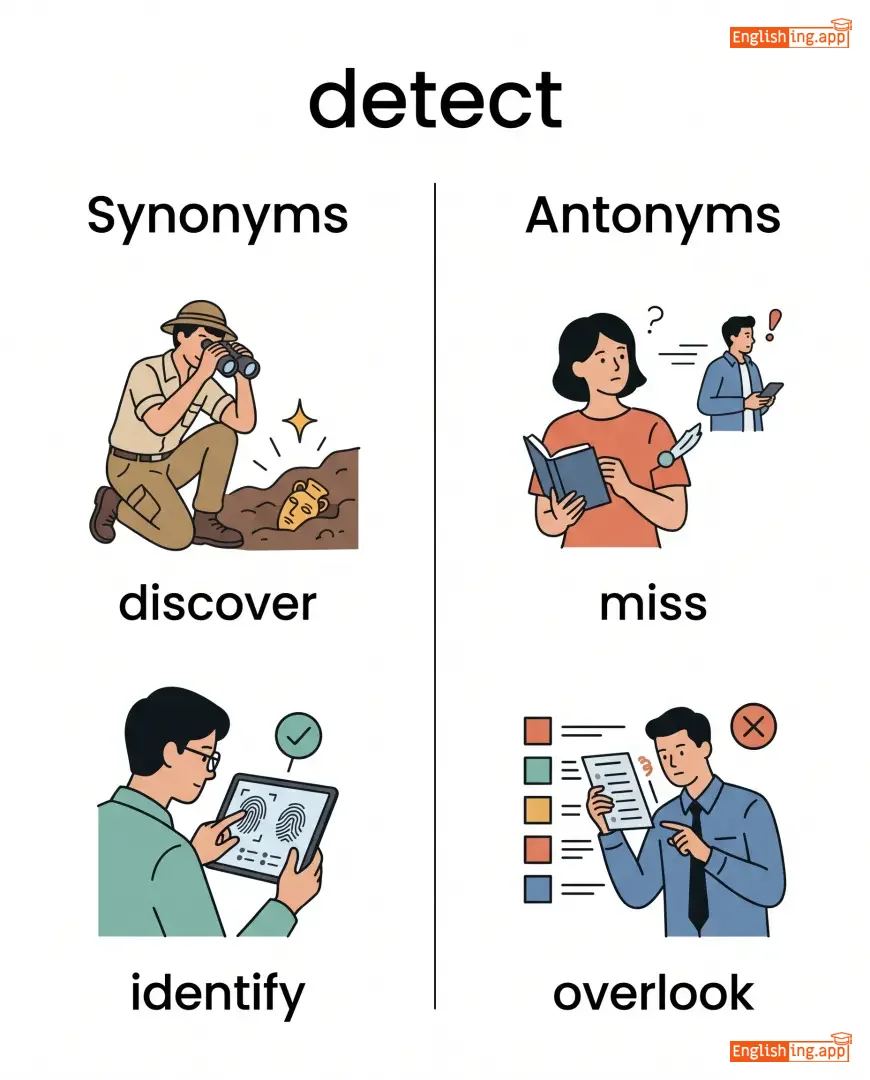
discover, identify, notice, sense, recognize
••••••
|
miss, overlook, ignore
••••••
|
detect a signal, detect movement, detect fraud, detect error
••••••
|
検出するは煙を見つける時にすることです。
••••••
|
|
🔍
••••••
|
/dɪˈtɛkʃən/
noun
(ディテクション)
••••••
|
- •••••• |
検出
kenshutsu
••••••
|
- •••••• | - •••••• | - •••••• | - •••••• |
the action or process of identifying the presence of something
••••••
|
The detection of fraud in the system was swift. |
システム内での詐欺の検出は迅速でした。
Shisutemu-nai de no sagi no kenshutsu wa jinsoku deshita.
••••••
|
- •••••• | - •••••• | - •••••• |
discovery, identification, recognition
••••••
|
ignorance, oversight
••••••
|
detection of error, early detection, fraud detection, signal detection
••••••
|
ディテクション = 検出、何かを検出する
••••••
|
|
🔒
••••••
|
/dɪˈten.ʃən/
noun
(デテンション)
••••••
|
- •••••• |
停学; 拘留
teigaku; koryu
••••••
|
- •••••• | - •••••• | - •••••• | - •••••• |
the action of detaining someone or being detained in official custody
••••••
|
The student received detention for repeatedly disrupting the class.
生徒は繰り返しクラスを乱したため、停学を受けました。
••••••
|
生徒は繰り返しクラスを乱したため、停学を受けました。
Seito wa kurikaeshi kurasu o midashita tame, teigaku o ukemashita.
••••••
|
- •••••• | - •••••• | - •••••• |
custody, confinement, imprisonment, holding
••••••
|
freedom, release, liberation, discharge
••••••
|
police detention, school detention, detention center
••••••
|
停学はクラスで問題を起こした結果としての罰。
••••••
|
|
📉
••••••
|
/dɪˈtɪriəreɪt/
verb
(劣化する)
••••••
|
|
劣化する
rekka suru
••••••
|
deteriorated
劣化した
••••••
|
deteriorated
劣化した
••••••
|
deteriorates
劣化する
••••••
|
deteriorating
劣化している
••••••
|
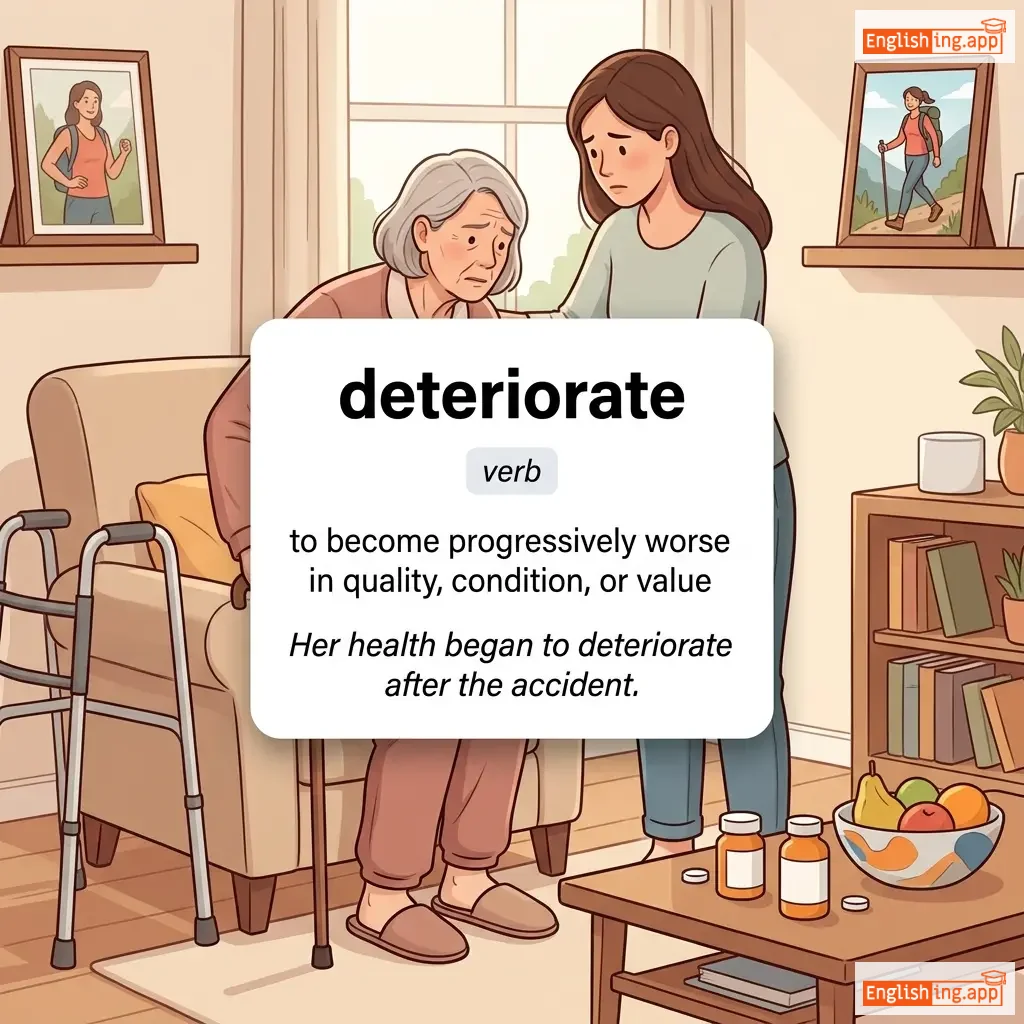
to become progressively worse in quality, condition, or value
••••••
|
Her health began to deteriorate after the accident.
事故後、彼女の健康は劣化し始めた。
••••••
|
事故後、彼女の健康は劣化し始めた。
Jiko go, kanojo no kenkou wa rekka shi hajimeta.
••••••
|
deteriorate with age
年齢とともに劣化する
••••••
|
to get worse as time passes
••••••
|
年齢とともに劣化する
Nenrei to tomoni rekka suru
••••••
|
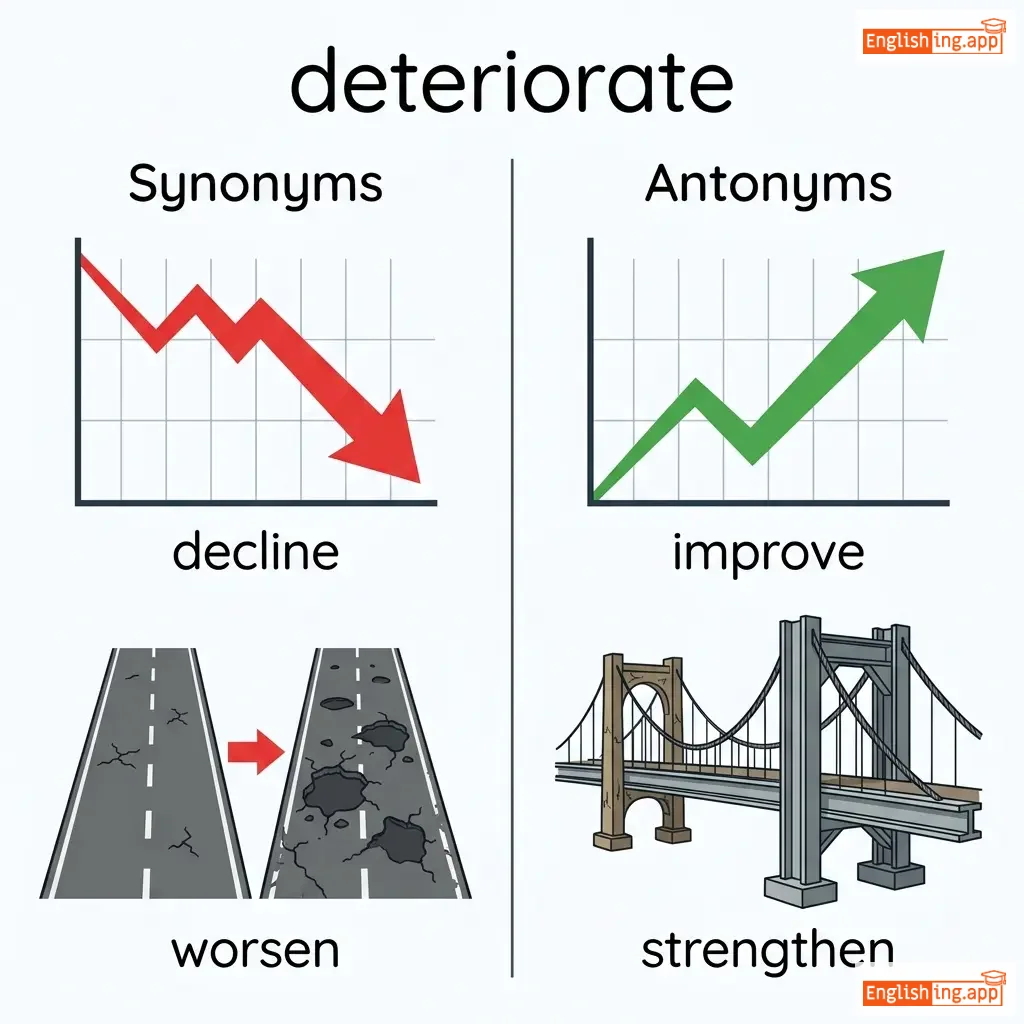
decline, worsen, degenerate, degrade, decay
••••••
|
improve, strengthen, recover
••••••
|
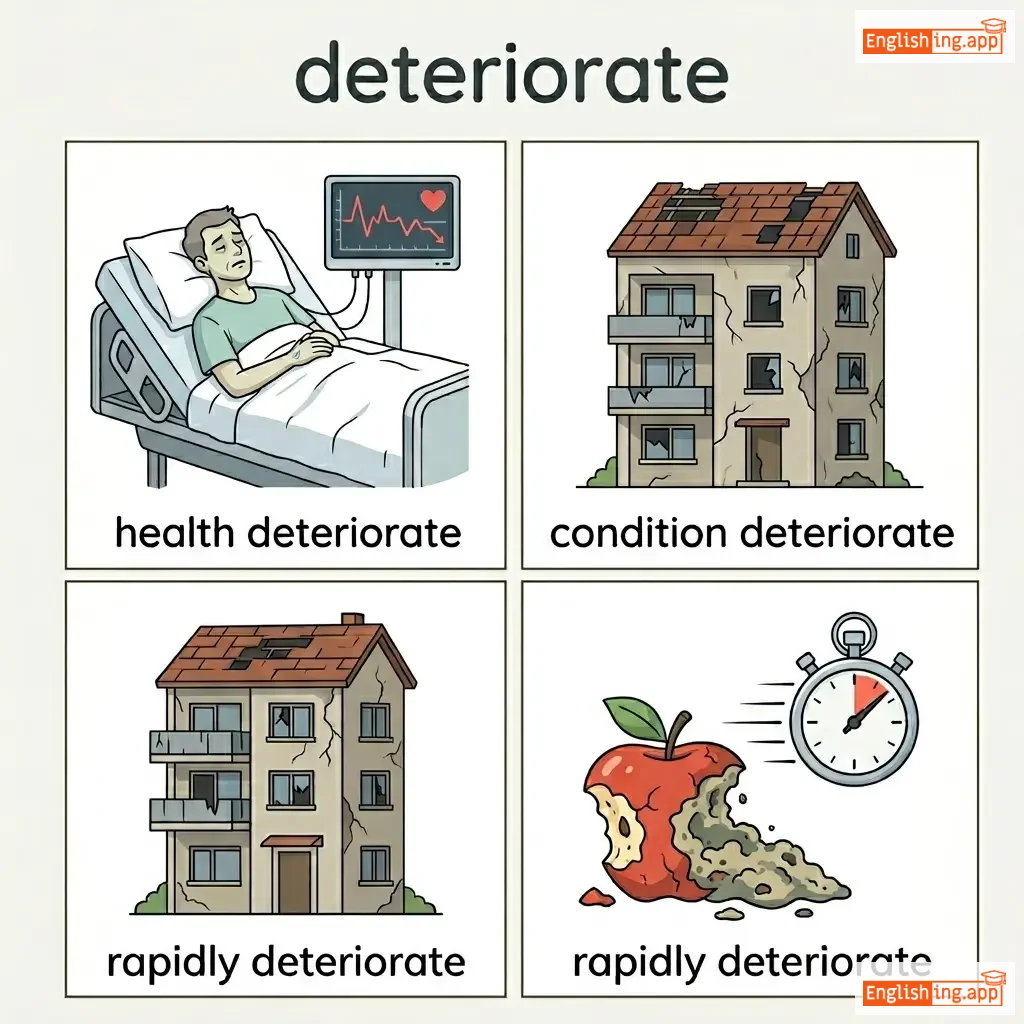
health deteriorate, condition deteriorate, rapidly deteriorate, gradually deteriorate
••••••
|
Deteriorate は '劣化' と同じ意味です。
••••••
|
|
💪
••••••
|
/dɪˌtɜːrmɪˈneɪʃən/
noun
(ディターミネーション)
••••••
|
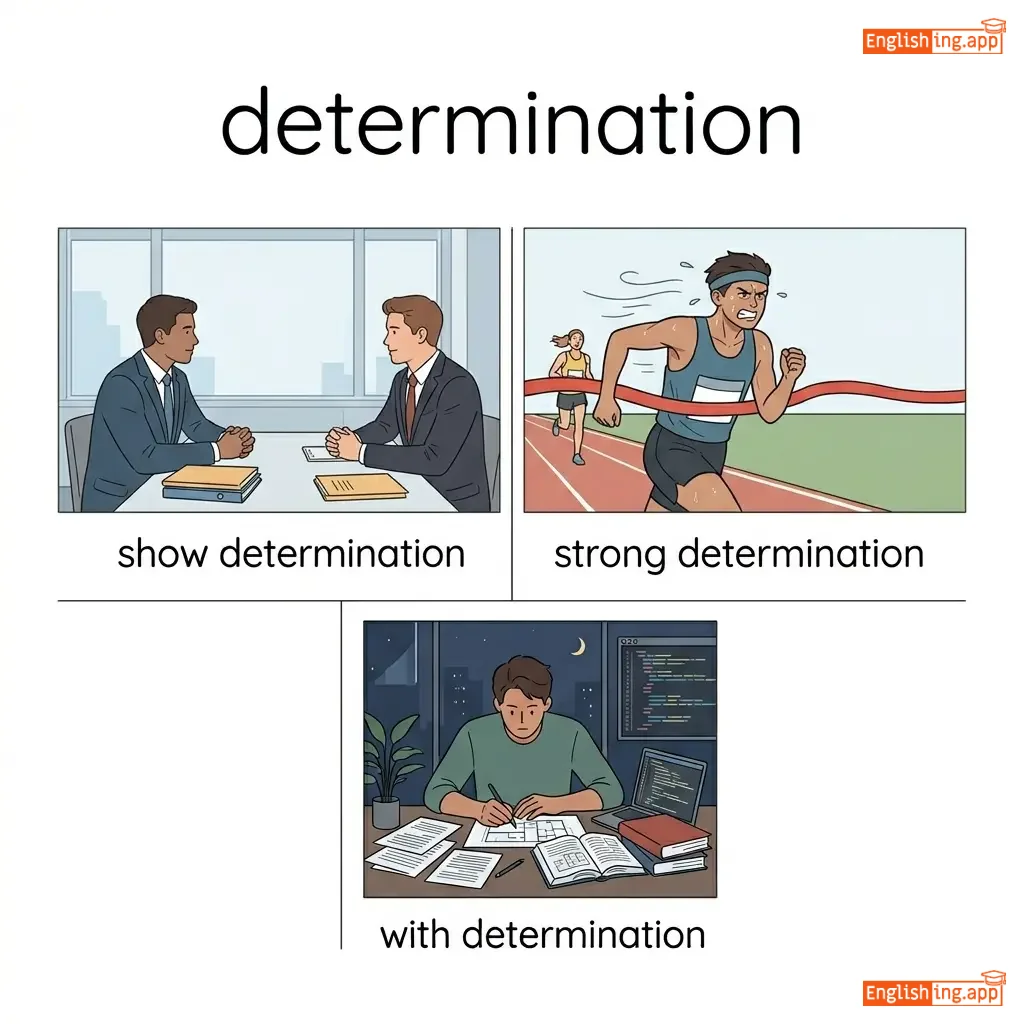
|
決意
ketsui
••••••
|
- •••••• | - •••••• | - •••••• | - •••••• |
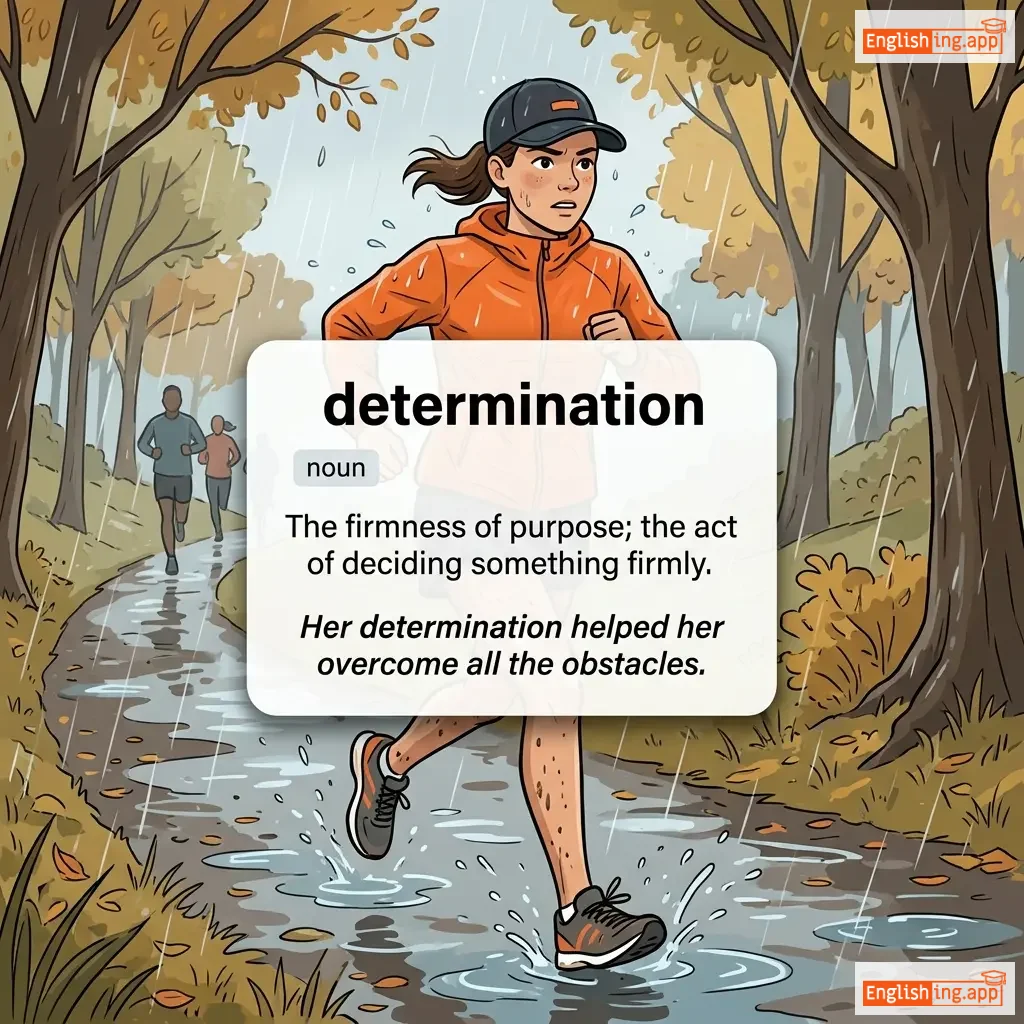
The firmness of purpose; the act of deciding something firmly.
••••••
|
Her determination helped her overcome all the obstacles.
彼女の決意は彼女がすべての障害を克服するのを助けました。
••••••
|
彼女の決意は彼女がすべての障害を克服するのを助けました。
Kanojo no ketsui wa kanojo ga subete no shougai wo kokufuku suru no wo tasukemashita.
••••••
|
with determination
決意を持って
••••••
|
showing firmness of purpose
••••••
|
決意を持って
ketsui wo motte
••••••
|
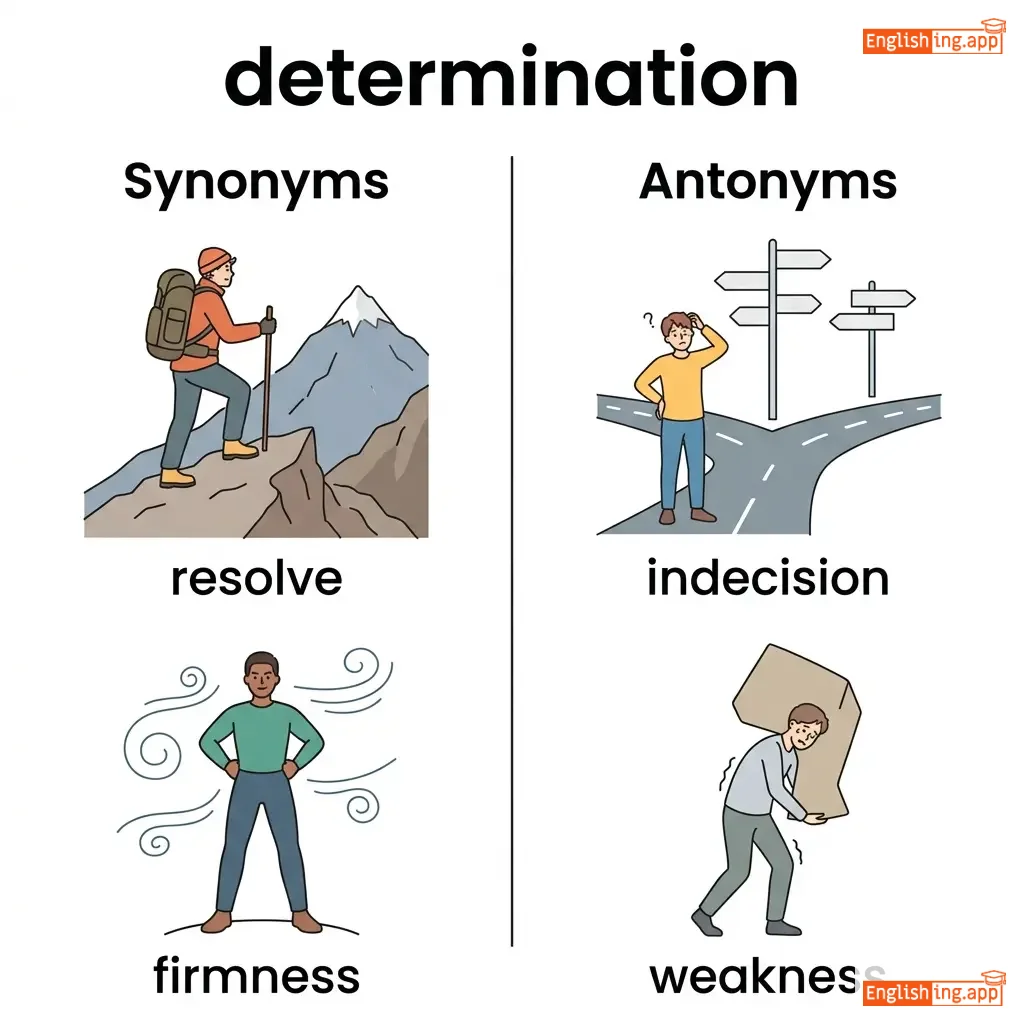
resolve, firmness, perseverance, tenacity, willpower
••••••
|
indecision, weakness, hesitation
••••••
|
strong determination, show determination, with determination, fierce determination
••••••
|
決意はゴールを決めて歩み続ける力です。
••••••
|
|
⚖️
••••••
|
/dɪˈtɜː.mɪn/
verb
(デターミン)
••••••
|
- •••••• |
決定する
kettei suru
••••••
|
determined
デターミンド
••••••
|
determined
デターミンド
••••••
|
determines
デターミンズ
••••••
|
determining
デターミニング
••••••
|
To decide or establish something after consideration.
••••••
|
The jury will determine the outcome of the case.
陪審員は事件の結果を決定します。
••••••
|
陪審員は事件の結果を決定します。
Bishinin wa jiken no kekka o kettei shimasu.
••••••
|
determine the course of action
行動方針を決定する
••••••
|
To decide what should be done.
••••••
|
行動方針を決定する
kōdō hōshin o kettei suru
••••••
|
decide, establish, conclude, define, settle
••••••
|
hesitate, doubt
••••••
|
determine the cause, determine the result, determine the effect, determine value
••••••
|
決定するは決めること、先生が誰が通るか決定するようなものです。
••••••
|
|
💪
••••••
|
/dɪˈtɜːrmɪnd/
adjective
(ディターミンド)
••••••
|
- •••••• |
決心した
kesshin shita
••••••
|
- •••••• | - •••••• | - •••••• | - •••••• |
Having firmly decided to do something and not letting anything stop you.
••••••
|
She was determined to finish her studies despite many obstacles. |
多くの障害があったにもかかわらず、彼女は学業を終わらせる決心をしていた。
Ōku no shōgai ga atta ni mo kakawarazu, kanojo wa gakugyō o owaraseru kesshin o shite ita.
••••••
|
strong-willed |
Having a strong determination to achieve something.
••••••
|
強い意志
tsuyoi ishi
••••••
|
resolute, steadfast, strong-willed, persistent, firm
••••••
|
indecisive, hesitant, weak
••••••
|
determined effort, determined face, determined spirit, determined to succeed
••••••
|
決心は、日本語で「決めた心」で、何事にも動じない強い心を意味します。
••••••
|
|
🌪️
••••••
|
/ˈdɛvəˌsteɪt/
verb
(デヴァステート)
••••••
|
- •••••• |
荒廃させる
kouhai saseru
••••••
|
devastated
デヴァステイテッド
••••••
|
devastated
デヴァステイテッド
••••••
|
devastates
デヴァステイツ
••••••
|
devastating
デヴァステイティング
••••••
|
to cause severe and overwhelming destruction or damage
••••••
|
The hurricane devastated the coastal town.
ハリケーンは沿岸の町を荒廃させた。
••••••
|
ハリケーンは沿岸の町を荒廃させた。
Harikēn wa engan no machi o kōhai saseta.
••••••
|
- •••••• | - •••••• | - •••••• |
destroy, ruin, demolish, wreck
••••••
|
build, create, restore
••••••
|
devastate a city, devastate a region, devastating effects
••••••
|
荒廃させる=devastateの意味
••••••
|
|
🌱
••••••
|
/dɪˈvɛləp/
verb
(デベロップ)
••••••
|

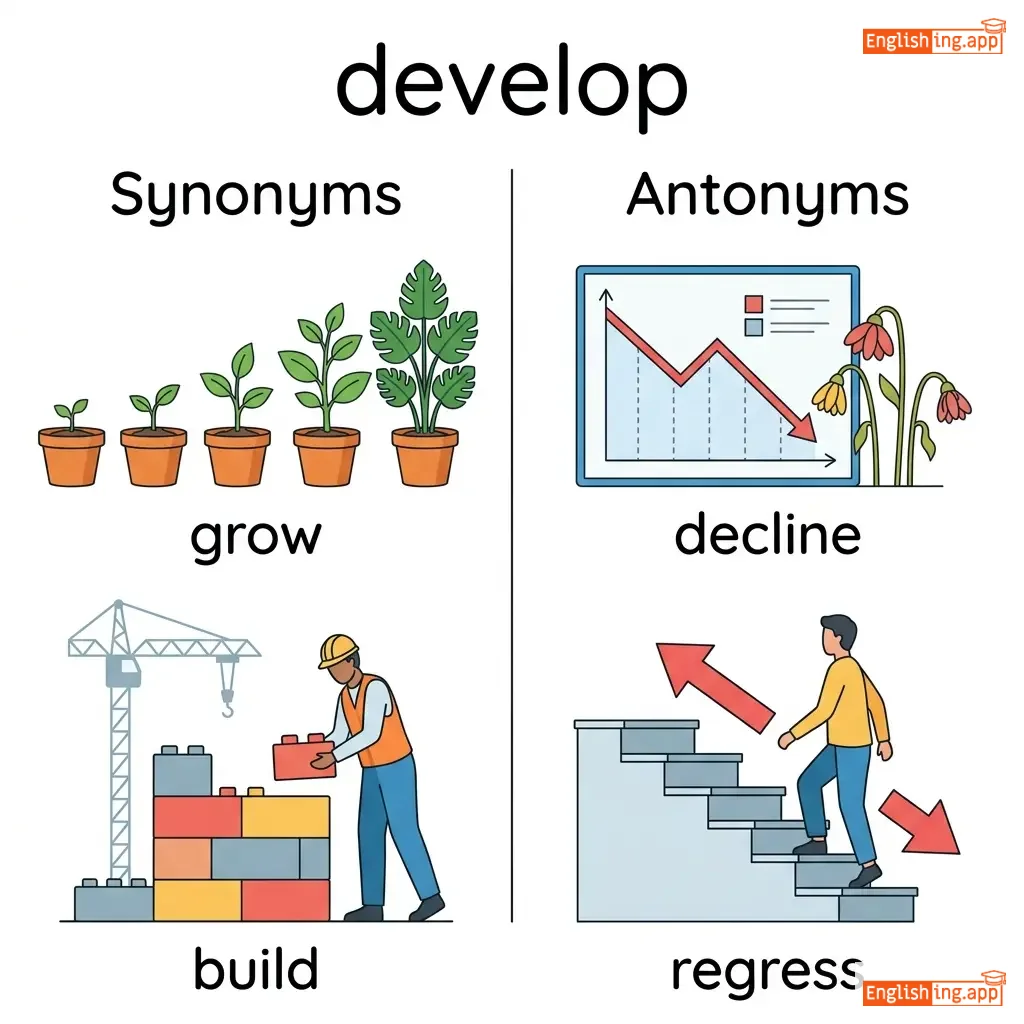
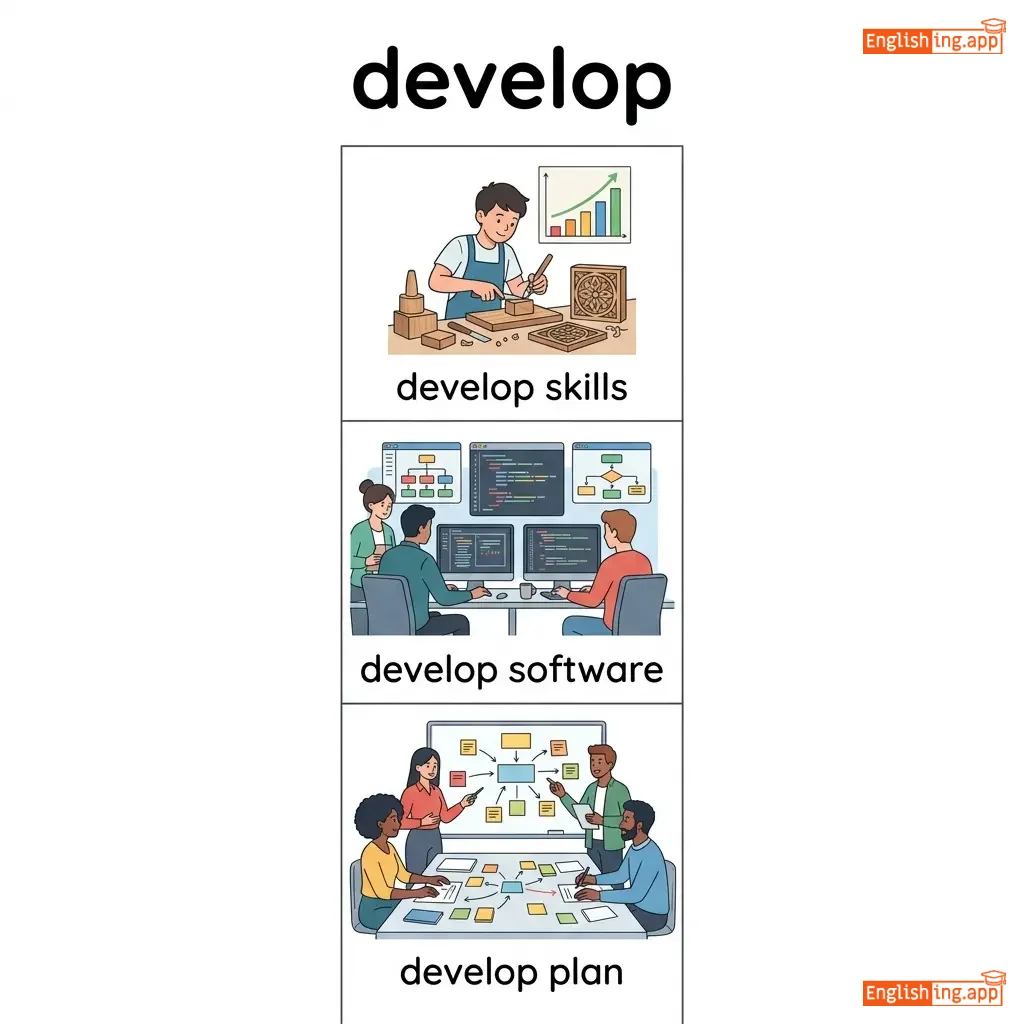
|
開発する
kaihatsu suru
••••••
|
developed
デベロップド
••••••
|
developed
デベロップド
••••••
|
develops
デベロップス
••••••
|
developing
デベロッピング
••••••
|
To grow, advance, or create something over time.
••••••
|
The company aims to develop new software solutions.
その会社は新しいソフトウェアソリューションを開発することを目指しています。
••••••
|
その会社は新しいソフトウェアソリューションを開発することを目指しています。
Sono kaisha wa atarashī sofutowea sorūshon o kaihatsu suru koto o mezashiteimasu.
••••••
|
develop a habit
習慣をデベロップする
••••••
|
To gradually acquire a habit.
••••••
|
習慣を開発する
shūkan o kaihatsu suru
••••••
|
grow, build, progress, create, expand
••••••
|
decline, regress, stop
••••••
|
develop skills, develop software, develop plan, develop relationship
••••••
|
開発するは、木が育つように、時間が必要です 🌳
••••••
|
|
🌱
••••••
|
/dɪˈvɛləpɪŋ/
verb
(デヴェロッピング)
••••••
|
- •••••• |
開発
kaihatsu
••••••
|
- •••••• | - •••••• | - •••••• |
developing
デヴェロッピング
••••••
|
the process of growing, improving, or becoming more advanced
••••••
|
She is developing new skills in programming.
彼女はプログラミングで新しいスキルを開発しています。
••••••
|
彼女はプログラミングで新しいスキルを開発しています。
Kanojo wa puroguramingu de atarashii sukiru o kaihatsu shiteimasu.
••••••
|
developing country
開発途上国
••••••
|
a country that is in the process of becoming more economically and socially advanced
••••••
|
開発途上国
kaihatsu tojoukoku
••••••
|
advancing, progressing, improving, evolving
••••••
|
regressing, declining
••••••
|
developing country, developing skill, developing idea, developing relationship
••••••
|
開発は植物が育つように、国や人々が進歩していくことです。
••••••
|
|
📈
••••••
|
/dɪˈvɛləpmənt/
noun
(デベロップメント)
••••••
|
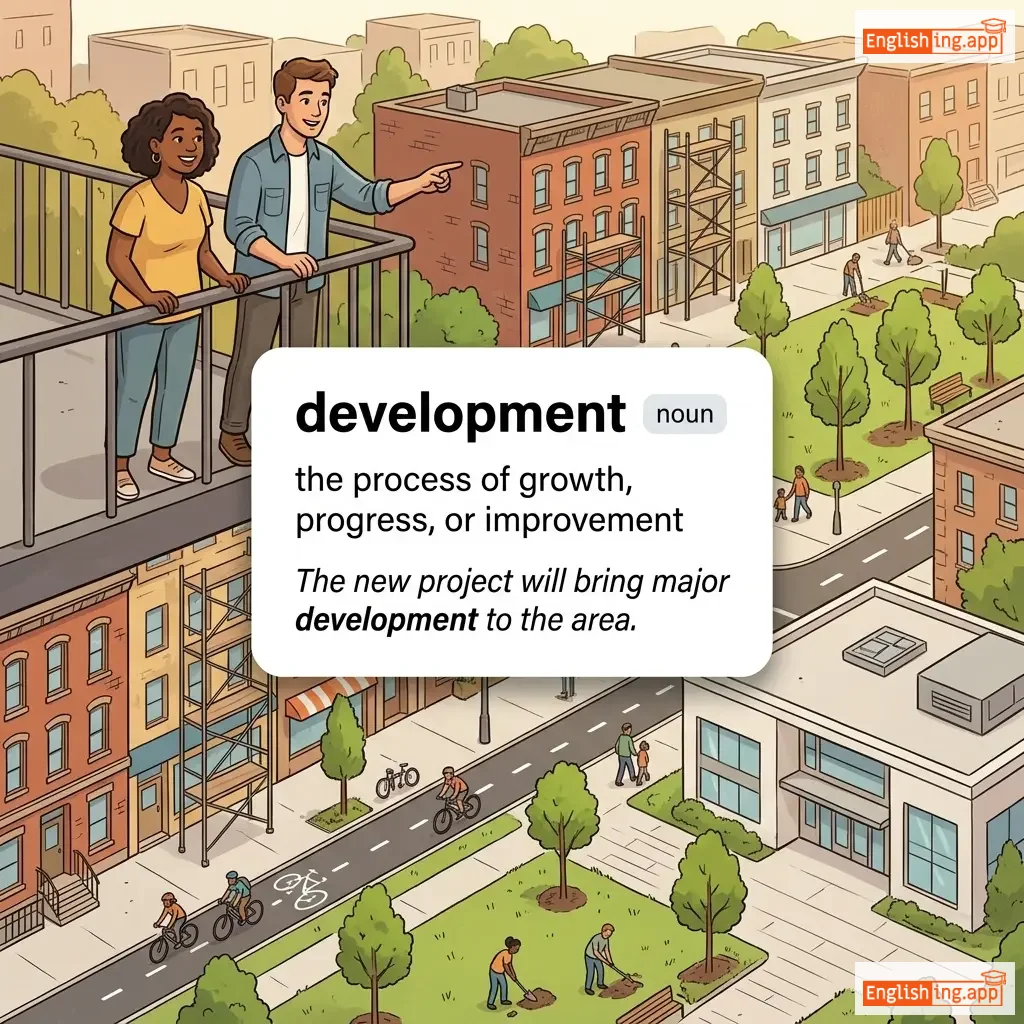
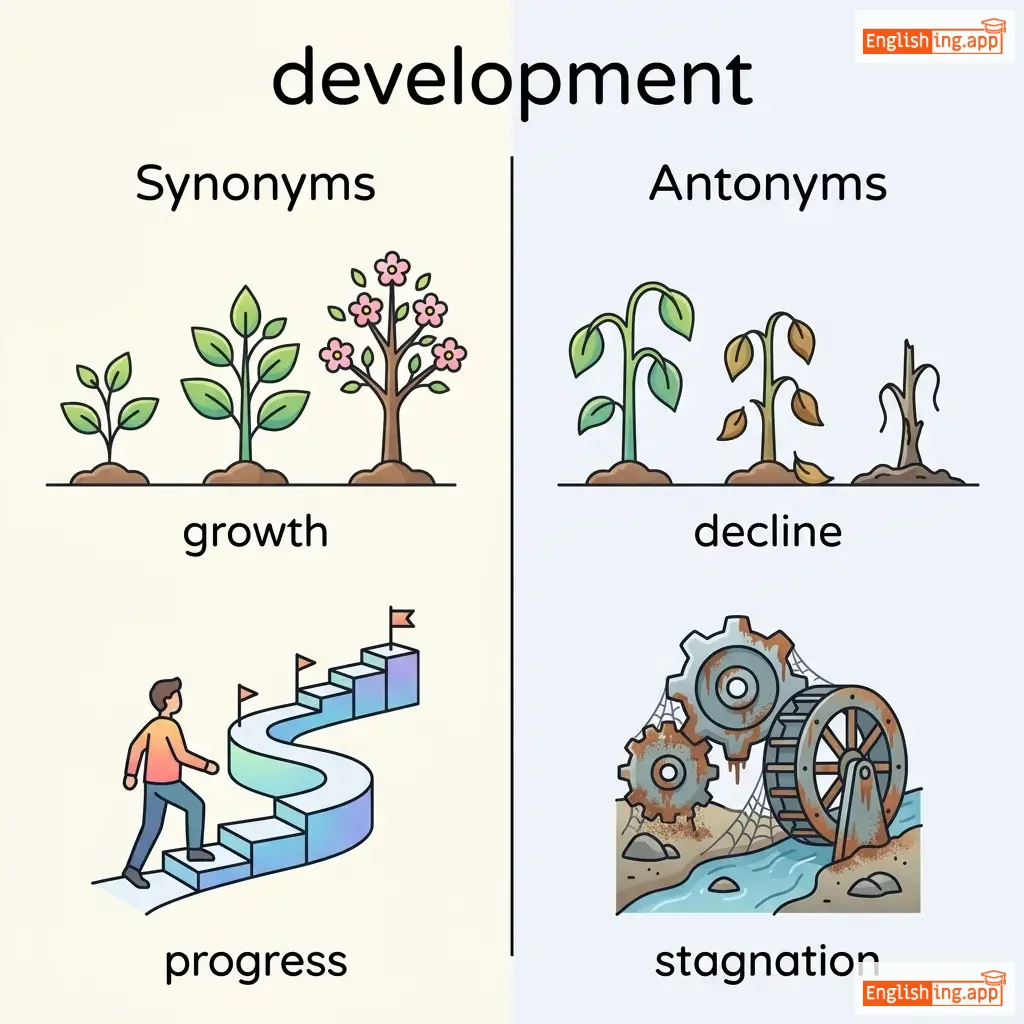
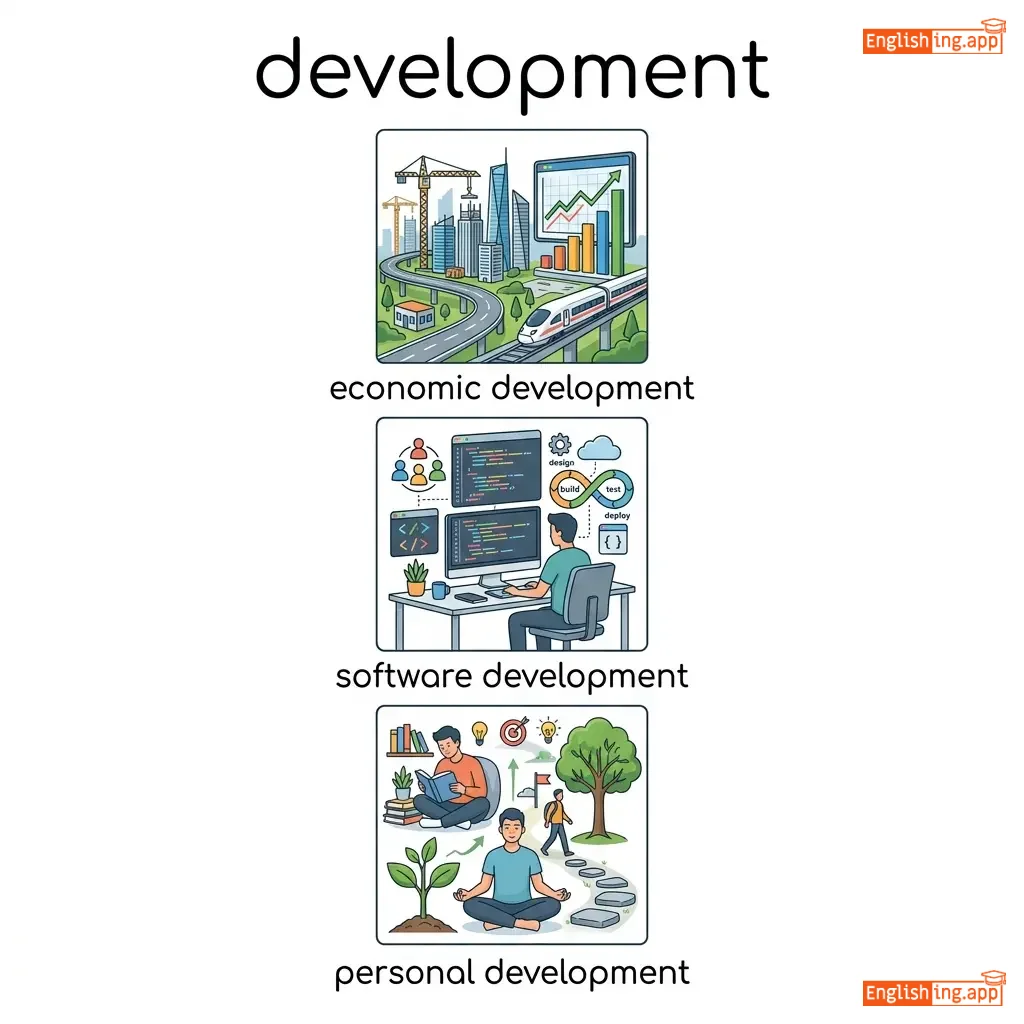
|
開発
kaihatsu
••••••
|
- •••••• | - •••••• | - •••••• | - •••••• |
the process of growth, progress, or improvement
••••••
|
The new project will bring major development to the area. |
新しいプロジェクトはその地域に大きな開発をもたらすでしょう。
Atarashī purojekuto wa sono chiiki ni ōkina kaihatsu o motarasu deshō.
••••••
|
real estate development |
the process of building new properties
••••••
|
不動産開発
fudōsan kaihatsu
••••••
|
growth, progress, advancement, improvement
••••••
|
decline, stagnation
••••••
|
economic development, software development, personal development, development project
••••••
|
Development = 開発は成長 📈 を意味します — 新しいビルが建設中のように。
••••••
|
|
📱
••••••
|
/dɪˈvaɪs/
noun
(デバイス)
••••••
|
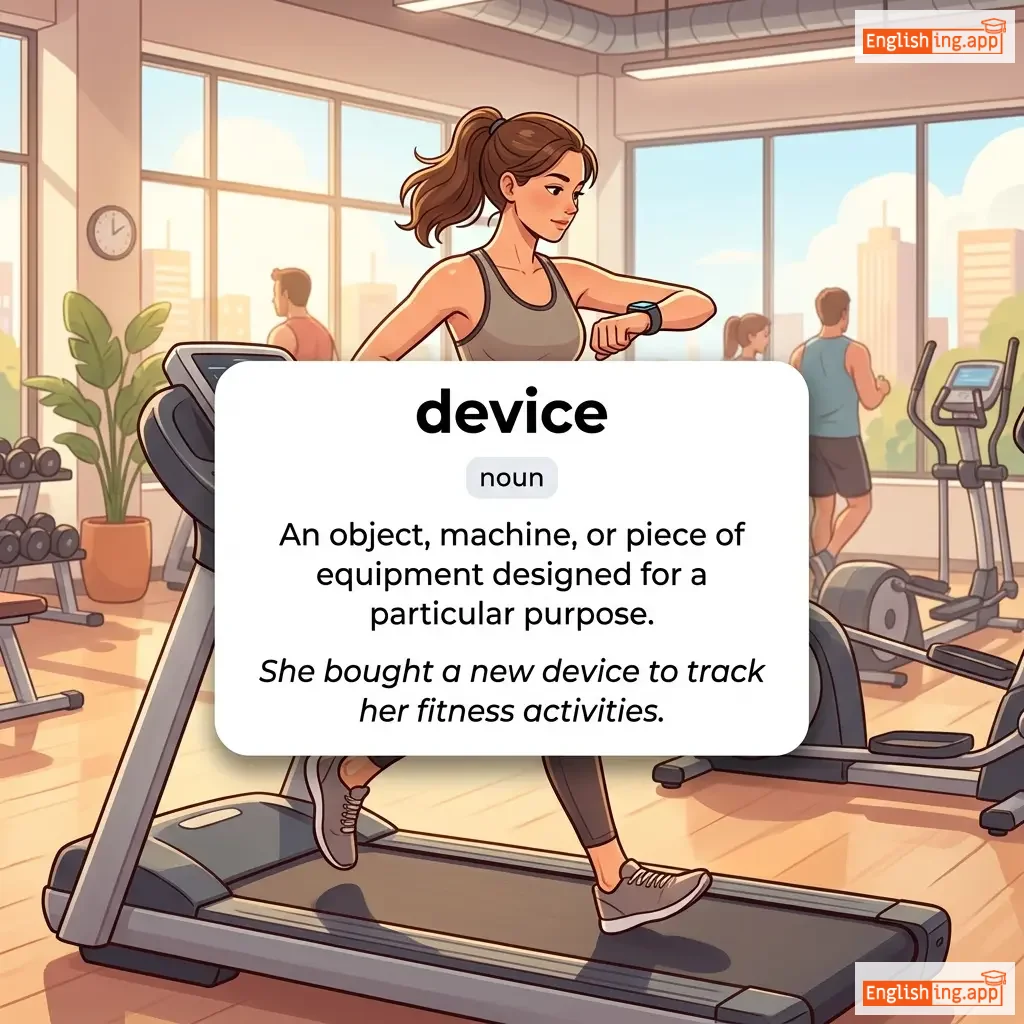
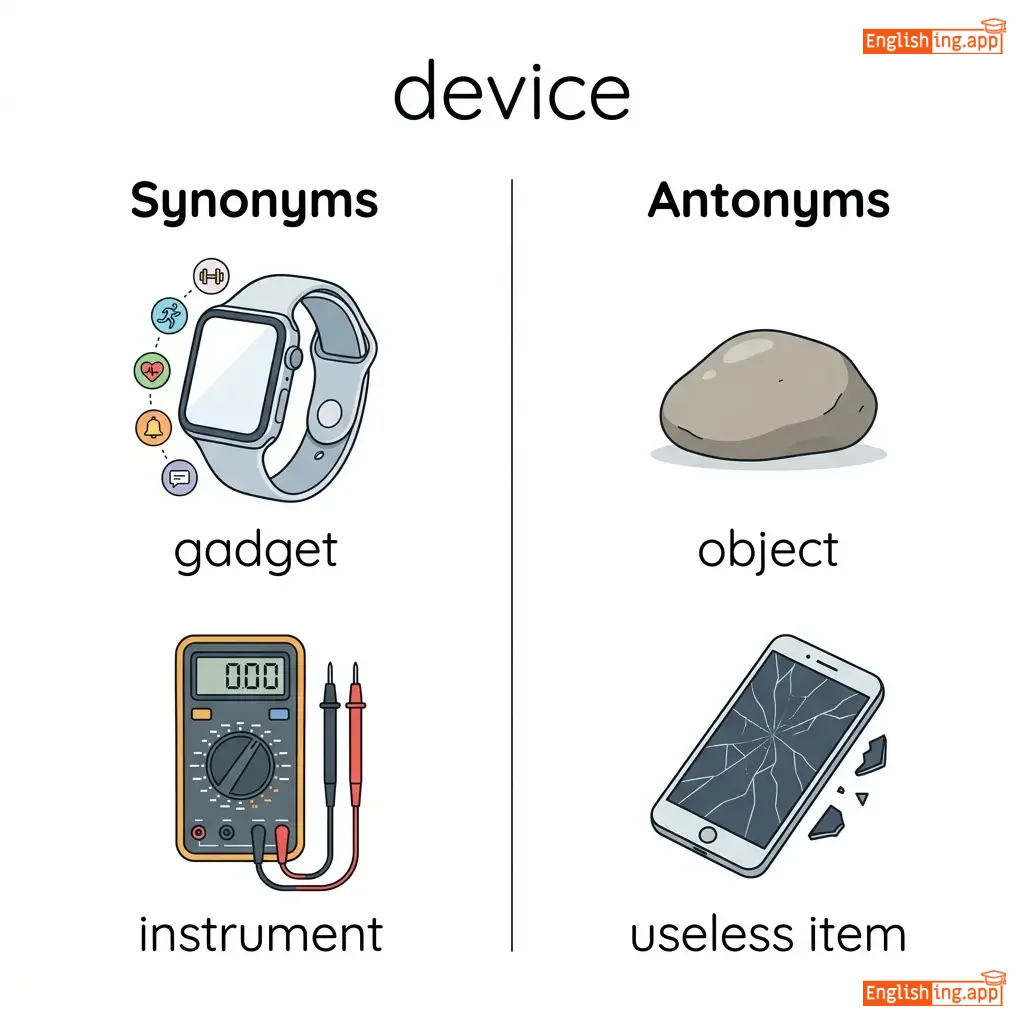
|
装置
souchi
••••••
|
- •••••• | - •••••• | - •••••• | - •••••• |
An object, machine, or piece of equipment designed for a particular purpose.
••••••
|
She bought a new device to track her fitness activities. |
彼女はフィットネス活動を追跡するために新しい装置を買いました。
Kanojo wa fitness katsudou wo tsuiseki suru tame ni atarashii souchi wo kaimashita.
••••••
|
left to your own devices |
to allow someone to do what they want without interfering
••••••
|
自分の思い通りにさせる
jibun no omidōri ni saseru
••••••
|
gadget, instrument, apparatus, tool, appliance
••••••
|
object, useless item
••••••
|
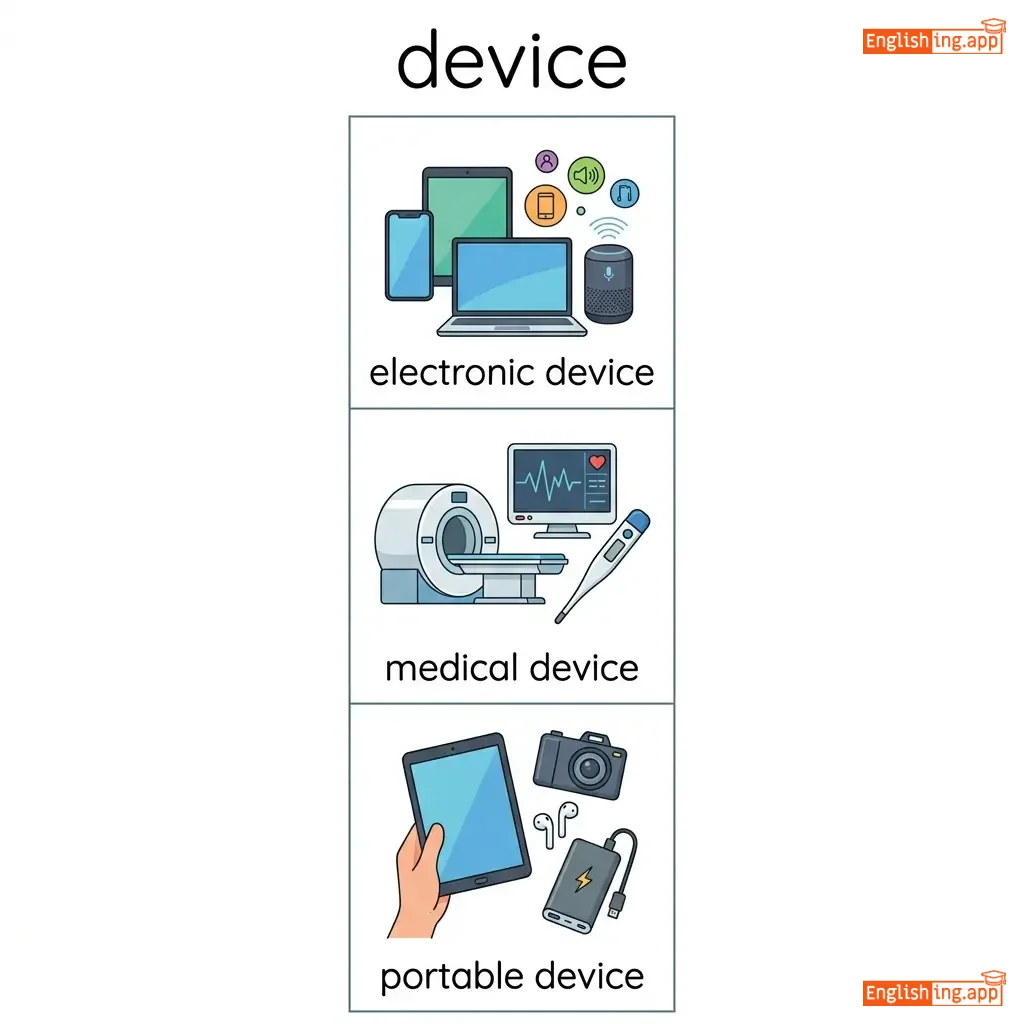
electronic device, medical device, portable device, mobile device
••••••
|
装置 = Device、フィットネスを追跡するための装置。
••••••
|
|
😈
••••••
|
/ˈdɛv.əl/
noun
(デビル)
••••••
|
- •••••• |
悪魔
akuma
••••••
|
- •••••• | - •••••• | - •••••• | - •••••• |
An evil spirit or supernatural being often regarded as the embodiment of wickedness and harm.
••••••
|
The story warned children about making deals with the devil. |
その話は子供たちに悪魔と取引をしないように警告した。
Sono hanashi wa kodomotachi ni akuma to torihiki o shinai yō ni keikoku shita.
••••••
|
speak of the devil |
Used when the person being talked about unexpectedly appears.
••••••
|
悪魔の話をする
Akuma no hanashi o suru
••••••
|
demon, fiend, monster, spirit, satan
••••••
|
angel, saint, god
••••••
|
devil worship, devil figure, fight the devil, devil smile
••••••
|
悪魔 = Devil (デビル) — 悪魔を話すと、いつでもすぐに現れる!
••••••
|
|
📝
••••••
|
/dɪˈvaɪz/
verb
(デヴァイズ)
••••••
|
- •••••• |
考案する
kousuru
••••••
|
devised
デヴァイズド
••••••
|
devised
デヴァイズド
••••••
|
devises
デヴァイズズ
••••••
|
devising
デヴァイズイング
••••••
|
To plan or invent something carefully.
••••••
|
The engineers devised a new method to reduce costs.
エンジニアたちはコスト削減のために新しい方法を考案した。
••••••
|
エンジニアたちはコスト削減のために新しい方法を考案した。
Enjinia-tachi wa kosuto sakugen no tame ni atarashī hōhō o kōan shita.
••••••
|
- •••••• | - •••••• | - •••••• |
invent, plan, create, formulate, design
••••••
|
destroy, neglect
••••••
|
devise a plan, devise a strategy, devise a method
••••••
|
Devise = 何かを考案することは、計画が必要です。
••••••
|
|
🙏
••••••
|
/dɪˈvoʊt/
verb
(デヴォート)
••••••
|
- •••••• |
捧げる
sasageru
••••••
|
devoted
デヴォーテッド
••••••
|
devoted
デヴォーテッド
••••••
|
devotes
デヴォーツ
••••••
|
devoting
デヴォーティング
••••••
|
to give time, effort, or resources to something
••••••
|
She devotes much of her time to helping the poor.
彼女は貧しい人々を助けるために多くの時間を捧げています。
••••••
|
彼女は貧しい人々を助けるために多くの時間を捧げています。
Kanojo wa mazushī hitobito o tasukeru tame ni ōku no jikan o sasageteimasu.
••••••
|
devote oneself to
自分を捧げる
••••••
|
to dedicate oneself fully to something
••••••
|
自分を捧げる
jibun o sasageru
••••••
|
dedicate, commit, allocate, apply
••••••
|
neglect, ignore
••••••
|
devote time, devote energy, devote effort, devote resources
••••••
|
Devote = 捧げる、重要なことに時間を捧げるように 🙏.
••••••
|
|
❤️
••••••
|
/dɪˈvoʊtɪd/
adjective
(デヴォーテッド)
••••••
|
- •••••• |
献身的
kenshin-teki
••••••
|
- •••••• | - •••••• | - •••••• | - •••••• |
Very loving, loyal, or dedicated.
••••••
|
She is a devoted mother who always puts her children first. |
彼女は常に子供たちを最優先にする献身的な母親です。
Kanojo wa tsuneni kodomotachi o sai yūsen ni suru kenshin-teki na hahaoya desu.
••••••
|
- •••••• | - •••••• | - •••••• |
dedicated, loyal, faithful, loving, committed
••••••
|
disloyal, indifferent, neglectful
••••••
|
devoted fan, devoted friend, devoted to work, devoted couple
••••••
|
Devoted = 献身的、献身は全力を尽くすことを意味します。
••••••
|
|
❤️
••••••
|
/dɪˈvoʊ.ʃən/
noun
(デヴォーション)
••••••
|
- •••••• |
献身; 忠誠; 熱意
kenshin, chuusei, netsui
••••••
|
- •••••• | - •••••• | - •••••• | - •••••• |
love, loyalty, or enthusiasm for a person, activity, or cause
••••••
|
Her devotion to helping others made her a beloved figure in the community. |
他人を助けることへの献身が、彼女をコミュニティで愛される存在にしました。
Tanin wo tasukeru koto e no kenshin ga, kanojo wo komyuniti de aisareru sonzai ni shimashita.
••••••
|
- •••••• | - •••••• | - •••••• |
dedication, loyalty, commitment, faithfulness
••••••
|
indifference, neglect, disloyalty, betrayal
••••••
|
religious devotion, unwavering devotion, deep devotion
••••••
|
献身と忠誠が成功の鍵となります。
••••••
|
|
🩺
••••••
|
/ˌdaɪəɡˈnoʊz/
verb
(ダイアグノーズ)
••••••
|
- •••••• |
診断する
shindan suru
••••••
|
diagnosed
ダイアグノーズド
••••••
|
diagnosed
ダイアグノーズド
••••••
|
diagnoses
ダイアグノーズズ
••••••
|
diagnosing
ダイアグノージング
••••••
|
To identify a disease, condition, or problem by examining symptoms.
••••••
|
The doctor diagnosed him with pneumonia.
医者は彼に肺炎と診断しました。
••••••
|
医者は彼に肺炎と診断しました。
Isha wa kare ni haien to shindan shimashita.
••••••
|
diagnose a problem
問題を診断する
••••••
|
To identify the cause of an issue
••••••
|
問題を診断する
Mondai o shindan suru
••••••
|
identify, detect, determine, analyze, recognize
••••••
|
misdiagnose, ignore
••••••
|
diagnose disease, diagnose illness, diagnose condition, diagnose problem
••••••
|
診断は医者が症状を見て病気を突き止めることです。
••••••
|
|
📋
••••••
|
/ˌdaɪəɡˈnoʊsɪs/
noun
••••••
|
- •••••• | - •••••• | - •••••• | - •••••• | - •••••• | - •••••• |
The identification of a disease, condition, or problem through examination of symptoms.
••••••
|
The diagnosis confirmed that she had diabetes. |
- •••••• | - •••••• | - •••••• | - •••••• |
identification, detection, finding, determination
••••••
|
misdiagnosis, guess
••••••
|
medical diagnosis, accurate diagnosis, early diagnosis
••••••
|
No •••••• |
|
📊
••••••
|
/ˈdaɪəɡræm/
noun
(ダイアグラム)
••••••
|
- •••••• |
図表
zuhyo
••••••
|
- •••••• | - •••••• | - •••••• | - •••••• |
a simplified drawing that shows the structure, relationship, or process of something
••••••
|
The teacher explained the system using a clear diagram.
ザ ティーチャー エクスプレインド ザ システム ユージング ア クリア ダイアグラム。
••••••
|
先生は分かりやすい図表を使ってシステムを説明した。
Sensei wa wakariyasui zuhyo o tsukatte shisutemu o setsumei shita
••••••
|
- •••••• | - •••••• | - •••••• |
chart, illustration, figure, schematic, sketch
••••••
|
text, description
••••••
|
flow diagram, labeled diagram, block diagram, draw a diagram
••••••
|
ダイアグラム=図、目で見るgram。
••••••
|
|
🗣️
••••••
|
/ˈdaɪəlɔːɡ/
noun
(ダイアログ)
••••••
|
- •••••• |
対話
taiwa
••••••
|
- •••••• | - •••••• | - •••••• | - •••••• |
A conversation between two or more people, or a discussion aimed at reaching understanding.
••••••
|
The two countries engaged in a dialogue to resolve their differences. |
二国は自国の違いを解決するために対話を行いました。
Nikoku wa jikoku no chigai o kaiketsu suru tame ni taiwa o okonai mashita.
••••••
|
open dialogue |
A transparent and constructive conversation.
••••••
|
開かれた対話
Hirakareta taiwa
••••••
|
conversation, discussion, talk, exchange, communication
••••••
|
silence, monologue
••••••
|
constructive dialogue, political dialogue, open dialogue
••••••
|
ダイアログ = conversation → 日本語で映画のダイアログ = 対話。
••••••
|
|
💎
••••••
|
/ˈdaɪəmənd/
noun
(daɪəmənd)
••••••
|
- •••••• |
ダイヤモンド
daiyamondo
••••••
|
- •••••• | - •••••• | - •••••• | - •••••• |
a precious hard stone, usually clear and colorless, valued as a gemstone
••••••
|
She wore a beautiful diamond necklace at the party. |
彼女はパーティーで美しいダイヤモンドのネックレスを着けていた。
Kanojo wa pāti de utsukushī daiyamondo no nekkuresu o tsukete ita.
••••••
|
diamond in the rough |
a person or thing with potential or talent but lacking polish or refinement
••••••
|
原石のダイヤモンド
genseki no daiyamondo
••••••
|
gem, jewel, crystal, stone, treasure
••••••
|
rock, pebble
••••••
|
diamond ring, diamond necklace, diamond mine, diamond shape
••••••
|
ダイヤモンドは月のように輝く
••••••
|
|
📔
••••••
|
/ˈdaɪəri/
noun
(ダイアリー)
••••••
|
- •••••• |
日記
nikki
••••••
|
- •••••• | - •••••• | - •••••• | - •••••• |
a book in which one keeps a daily record of events and experiences
••••••
|
She wrote about her day in her diary before going to bed. |
彼女は寝る前に日記にその日の出来事を書きました。
Kanojo wa neru mae ni nikki ni sono hi no dekigoto o kakimashita.
••••••
|
- •••••• | - •••••• | - •••••• |
journal, log, notebook, memoir
••••••
|
public record, announcement
••••••
|
keep a diary, personal diary, secret diary, daily diary
••••••
|
日記は毎日を書く — 'diary'から来た'日記'を覚えよう!
••••••
|
|
📜
••••••
|
/dɪkˈteɪt/
verb
(ディクテート)
••••••
|
|
口述する
kōjutsu suru
••••••
|
dictated
ディクテーテッド
••••••
|
dictated
ディクテーテッド
••••••
|
dictates
ディクテーツ
••••••
|
dictating
ディクテイティング
••••••
|
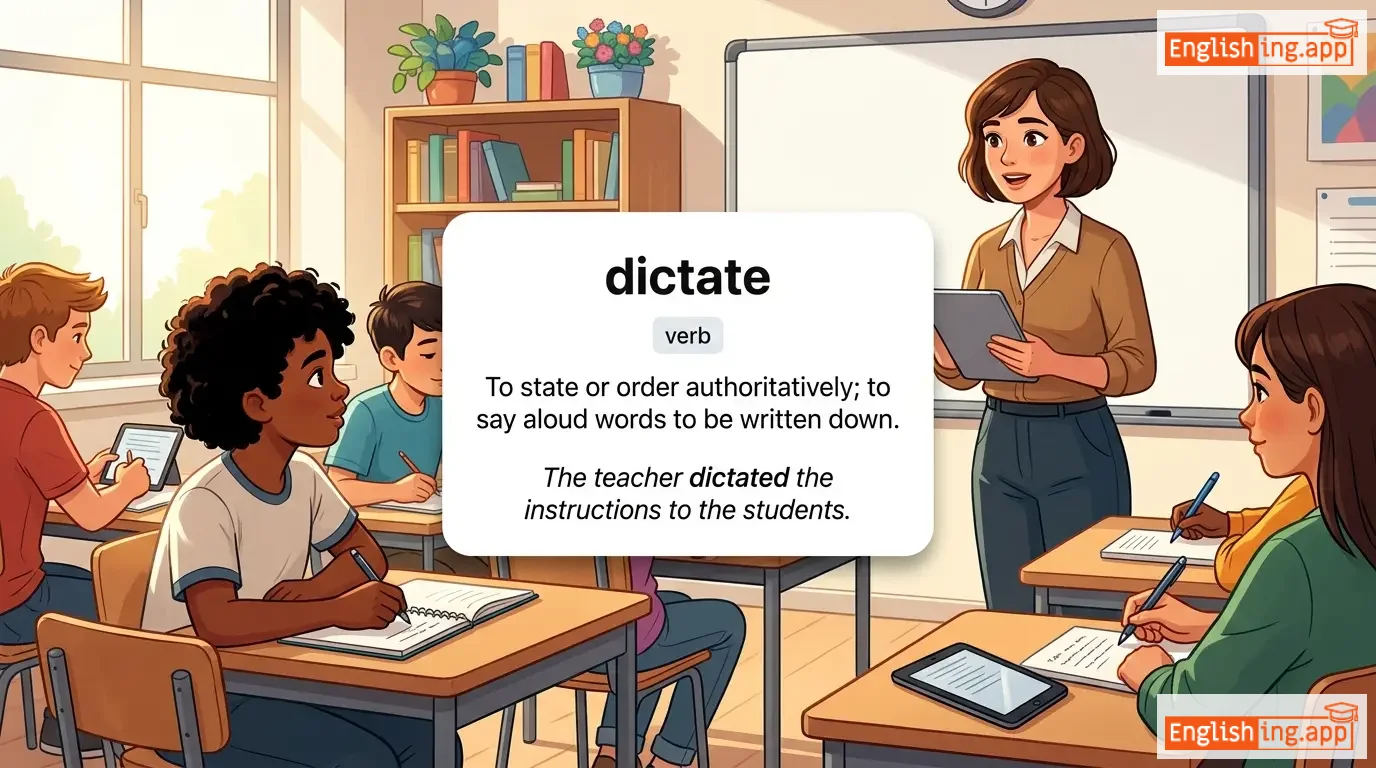
To state or order authoritatively; to say aloud words to be written down.
••••••
|
The teacher dictated the instructions to the students.
先生は学生に指示を口述しました。
••••••
|
先生は学生に指示を口述しました。
Sensei wa gakusei ni shiji o kōjutsu shimashita.
••••••
|
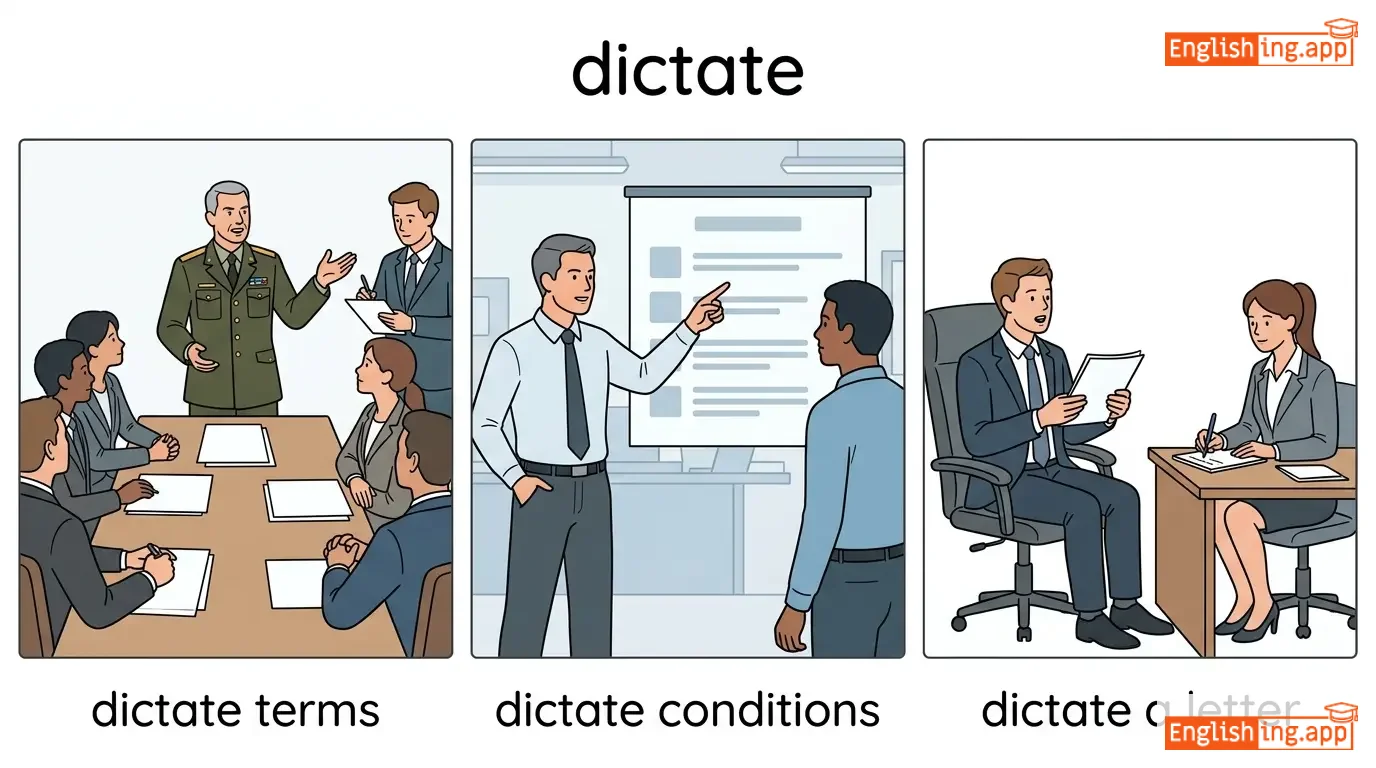
dictate terms
条件を口述する
••••••
|
To impose rules or conditions on others.
••••••
|
条件を口述する
Jōken o kōjutsu suru
••••••
|
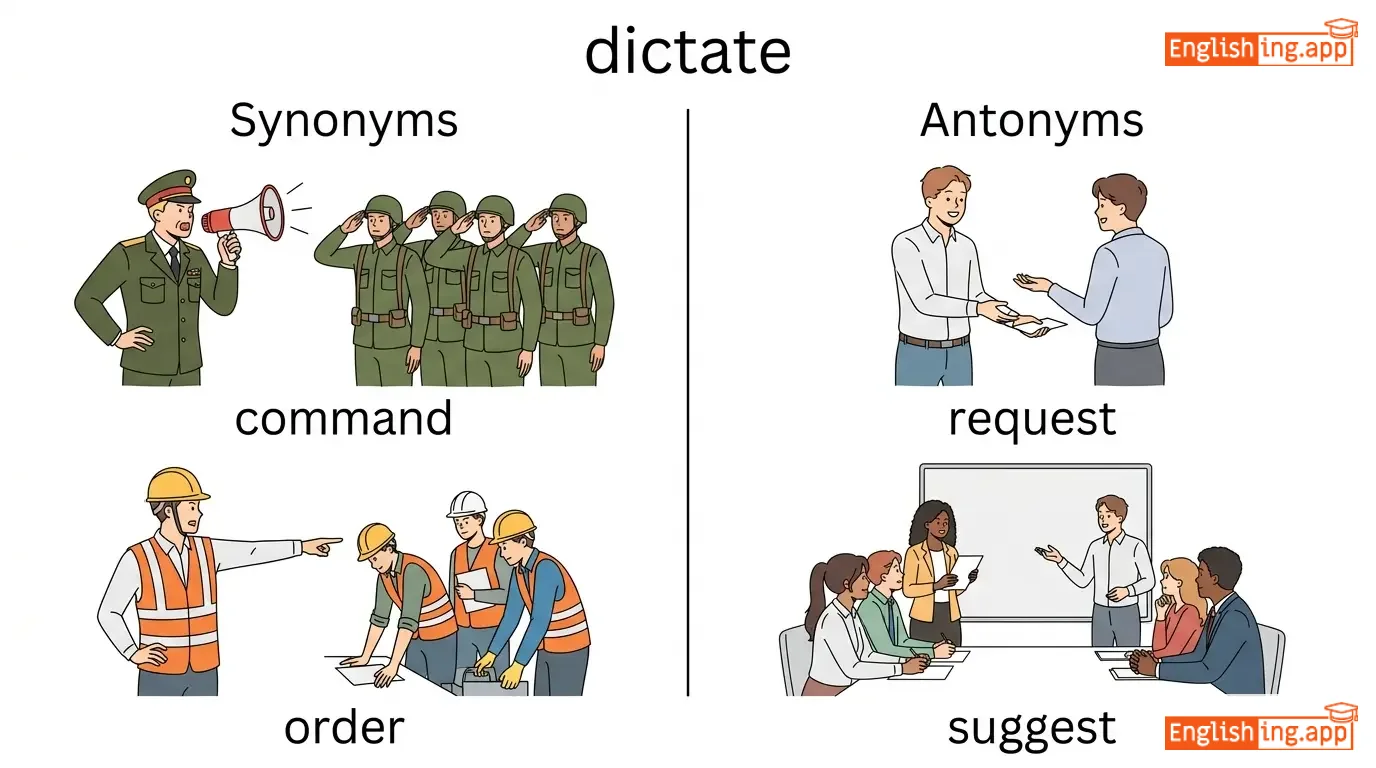
command, order, prescribe, decree
••••••
|
request, suggest
••••••
|
dictate terms, dictate conditions, dictate a letter
••••••
|
口述する = 声に出して書かせる
••••••
|
|
👑
••••••
|
/dɪkˈteɪtə/
noun
(ディクテーター)
••••••
|
- •••••• |
独裁者
dokusaisya
••••••
|
- •••••• | - •••••• | - •••••• | - •••••• |
a ruler with total power over a country, typically one who has obtained control by force
••••••
|
The dictator ruled the country with an iron fist. |
独裁者は鉄の拳で国を支配した。
Dokusaisya wa tetsu no ken de kuni o shihai shita.
••••••
|
- •••••• | - •••••• | - •••••• |
tyrant, despot, autocrat
••••••
|
democrat, leader
••••••
|
dictator's regime, military dictator, cruel dictator
••••••
|
独裁者は強権で国を支配する - Dokusaisya wa kyōken de kuni o shihai suru
••••••
|
|
📖
••••••
|
/ˈdɪkʃəˌnɛri/
noun
(ディクショナリー)
••••••
|
- •••••• |
辞書
jisho
••••••
|
- •••••• | - •••••• | - •••••• | - •••••• |
A reference book or electronic resource containing words, usually arranged alphabetically, with information about their meanings, pronunciations, etymologies, and usage.
••••••
|
I looked up the word in the dictionary to understand its meaning.
意味を理解するために辞書でその単語を調べました。
••••••
|
意味を理解するために辞書でその単語を調べました。
Imi o rikai suru tame ni jisho de sono tango o shirabemashita.
••••••
|
- •••••• | - •••••• | - •••••• |
lexicon, wordbook, glossary, vocabulary
••••••
|
nonsense, gibberish
••••••
|
online dictionary, bilingual dictionary, dictionary entry, dictionary definition
••••••
|
Jisho sounds like 'gi-sho', think of a 'giant book' for words.
••••••
|
|
⚰️
••••••
|
/daɪ/
verb
(ダイ)
••••••
|
|
死ぬ
shinu
••••••
|
died
ダイド
••••••
|
died
ダイド
••••••
|
dies
ダイズ
••••••
|
dying
ダイイング
••••••
|
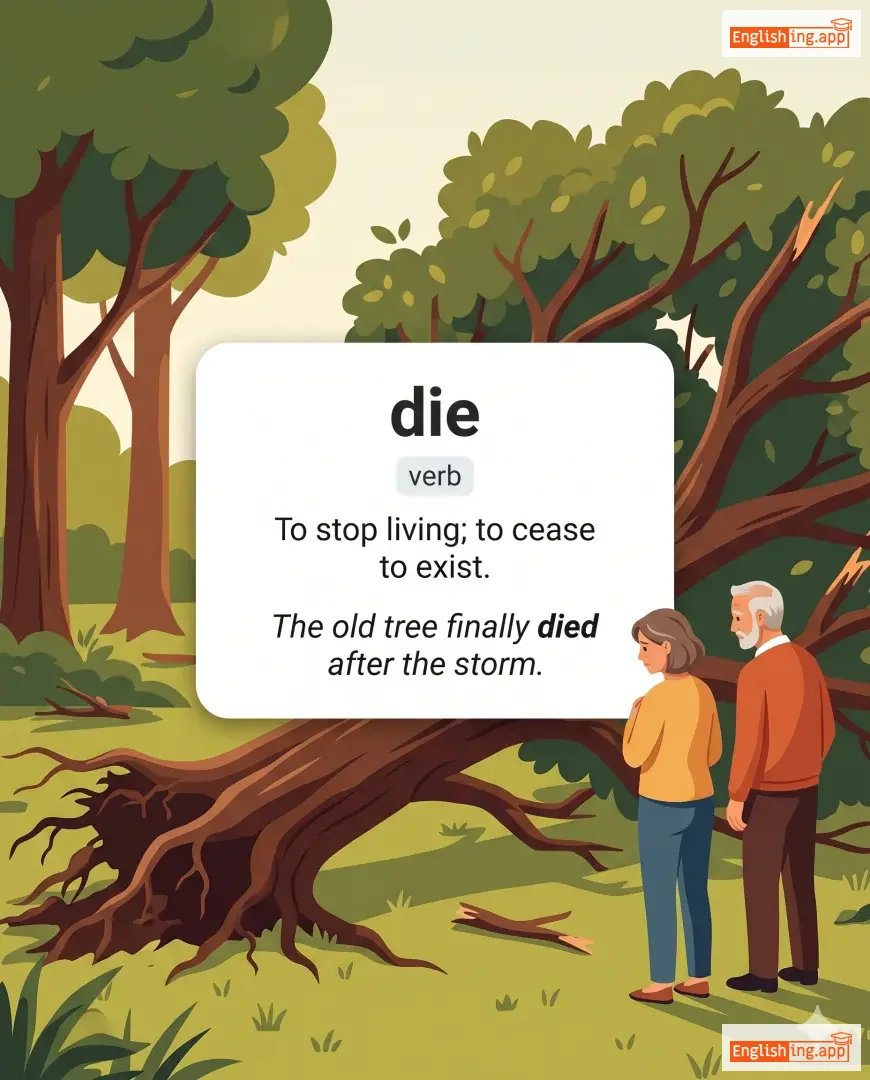
To stop living; to cease to exist.
••••••
|
The old tree finally died after the storm.
ザ・オールド・ツリー・ファイナリー・ダイド・アフター・ザ・ストーム。
••••••
|
古い木は嵐の後、最終的に死にました。
Furui ki wa arashi no ato, saishū-teki ni shinimashita.
••••••
|
die hard
ダイ・ハード
••••••
|
To disappear or change very slowly, if at all
••••••
|
非常にゆっくり変化する
Hijō ni yukkuri henka suru
••••••
|
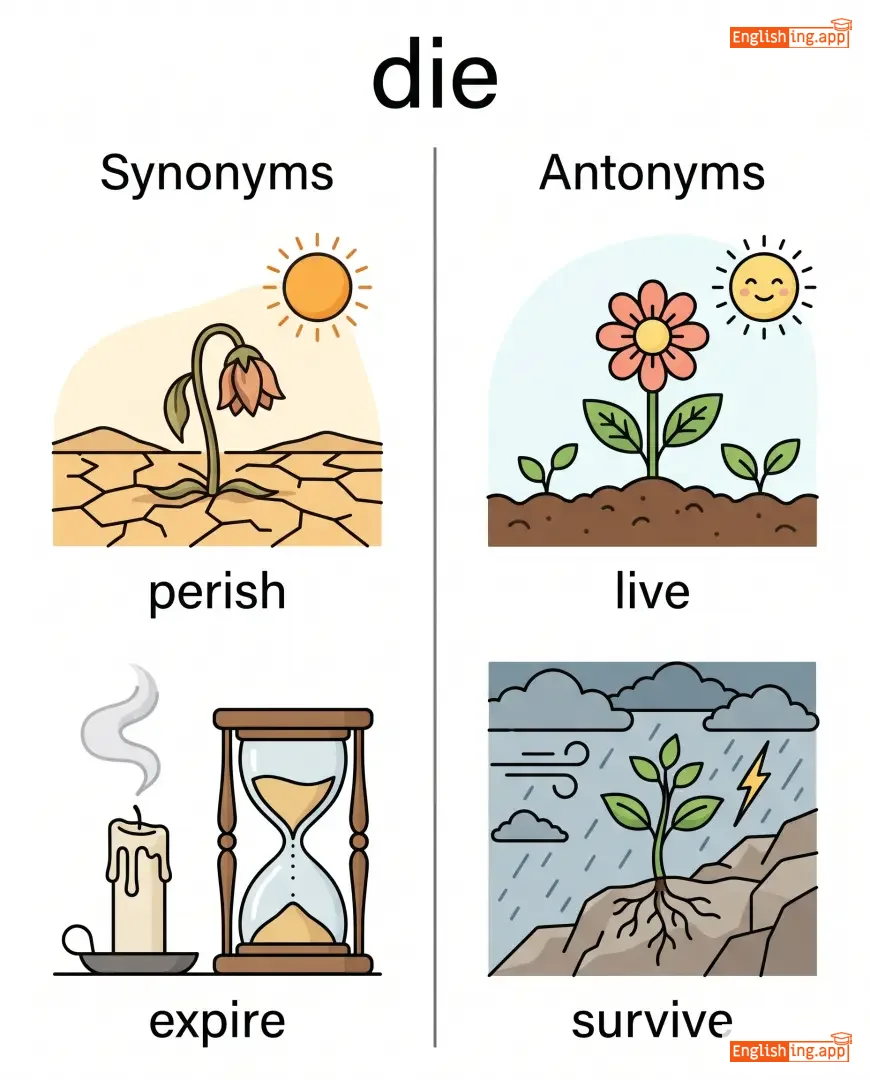
perish, expire, pass away, cease, decease
••••••
|
live, survive, exist
••••••
|
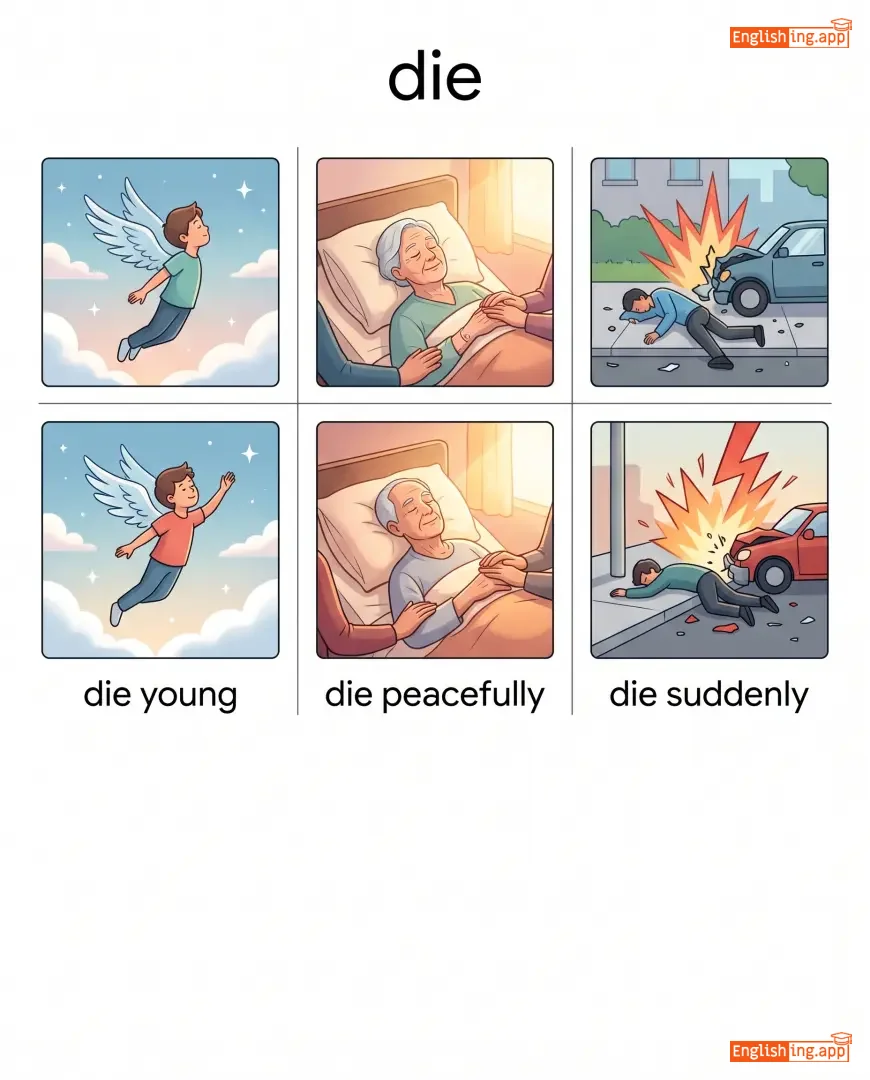
die young, die peacefully, die suddenly, die from
••••••
|
Die は死ぬという意味です、覚えておいて: 'Dieして永遠に生きる'
••••••
|
|
🥗
••••••
|
/ˈdaɪət/
noun
(daietto)
••••••
|
- •••••• |
ダイエット
daietto
••••••
|
- •••••• | - •••••• | - •••••• | - •••••• |
the kinds of food that a person usually eats
••••••
|
He follows a strict vegetarian diet. |
彼は厳格なベジタリアンダイエットを実践しています。
Kare wa genkaku na bejitarian daietto o jissen shiteimasu.
••••••
|
go on a diet |
to start eating less or differently to lose weight
••••••
|
ダイエットを始める
daietto o hajimeru
••••••
|
nutrition, food, meals, regimen
••••••
|
overeating, bingeing
••••••
|
healthy diet, balanced diet, strict diet, special diet
••••••
|
ダイエット = ダンス・アクティブ・インスパイア・エネルギー・ティーム
••••••
|
|
⚖️
••••••
|
/ˈdɪfər/
verb
(ディファー)
••••••
|
- •••••• |
異なる
kotonaru
••••••
|
differed
ディファード
••••••
|
differed
ディファード
••••••
|
differs
ディファーズ
••••••
|
differing
ディファリング
••••••
|
to be unlike or distinct from something else
••••••
|
Opinions differ on this issue.
この問題について意見が異なります。
••••••
|
この問題について意見が異なります。
Kono mondai ni tsuite iken ga kotonarimasu.
••••••
|
agree to differ
異なることに同意する
••••••
|
to accept that people will not agree
••••••
|
異なることに同意する
kotonaru koto ni doui suru
••••••
|
vary, contrast, diverge, disagree
••••••
|
match, agree
••••••
|
differ in opinion, differ from, differ greatly, differ slightly
••••••
|
Differとは⚖️ — 意見が異なるとき、私たちは違う点で合意します。
••••••
|

