|
絵文字
|
単語 | Images | 翻訳 | 過去 | 過去分詞 | 三人称単数 | 動名詞 | 意味 | 例文 | 例文の翻訳 | 表現例 | 表現例の意味 | 表現例の翻訳 | 同義語 | 対義語 | コロケーション | ニーモニック |
|---|---|---|---|---|---|---|---|---|---|---|---|---|---|---|---|---|---|
|
📉
••••••
|
/ˈdɛfɪsɪt/
noun
(デフィシット)
••••••
|
- •••••• |
赤字
akaji
••••••
|
- •••••• | - •••••• | - •••••• | - •••••• |
The amount by which something, especially money, is too small or lacking.
••••••
|
The government is trying to reduce the budget deficit. |
政府は予算赤字を減らそうとしています。
Seifu wa yosan akaji o herasō to shiteimasu.
••••••
|
trade deficit |
The amount by which a country’s imports exceed its exports.
••••••
|
貿易赤字
bōeki akaji
••••••
|
shortfall, shortage, lack, loss, gap
••••••
|
surplus, excess, profit
••••••
|
budget deficit, trade deficit, current deficit
••••••
|
赤字 📉 – 赤字は何かが足りない、例えばお金が足りない時に使われます。
••••••
|
|
📖
••••••
|
/dɪˈfaɪn/
verb
(ディファイン)
••••••
|
- •••••• |
定義する
teigi suru
••••••
|
defined
ディファインド
••••••
|
defined
ディファインド
••••••
|
defines
ディファインズ
••••••
|
defining
ディファイニング
••••••
|
to explain the meaning of a word, phrase, or concept clearly
••••••
|
The teacher asked the student to define the word 'democracy'.
先生は生徒に『民主主義』という言葉を定義するように頼んだ。
••••••
|
先生は生徒に『民主主義』という言葉を定義するように頼んだ。
Sensei wa seito ni 'minshushugi' to iu kotoba o teigi suru you ni tanonda.
••••••
|
define the terms
用語を定義する
••••••
|
to explain or set the exact meaning of words or conditions
••••••
|
用語を定義する
yōgo o teigi suru
••••••
|
explain, describe, clarify, interpret, specify
••••••
|
confuse, obscure
••••••
|
define clearly, define precisely, define role, define meaning
••••••
|
Defineは「定義する」という意味です — 日本語で単語の意味を説明するときに使います。
••••••
|
|
✔️
••••••
|
/ˈdef.ən.ɪt/
adjective
(デフィニット)
••••••
|
- •••••• |
明確
meikaku
••••••
|
- •••••• | - •••••• | - •••••• | - •••••• |
clearly stated or decided; not vague or doubtful
••••••
|
We need a definite plan before starting the project.
プロジェクトを始める前に、明確な計画が必要です。
••••••
|
プロジェクトを始める前に、明確な計画が必要です。
Purojekuto o hajimeru mae ni, meikaku na keikaku ga hitsuyou desu.
••••••
|
definite answer
明確な答え
••••••
|
a clear and certain reply
••••••
|
明確な答え
meikaku na kotae
••••••
|
certain, clear, explicit, precise, fixed
••••••
|
indefinite, vague, uncertain
••••••
|
definite plan, definite answer, definite shape
••••••
|
明確、'決定する'ように、すべてをクリアにするという意味です。
••••••
|
|
✅
••••••
|
/ˈdɛfɪnɪtli/
adverb
(definitli)
••••••
|
- •••••• |
確実に
kakujitsuni
••••••
|
- •••••• | - •••••• | - •••••• | - •••••• |
without any doubt; certainly
••••••
|
I will definitely call you tomorrow. |
私は確実に明日あなたに電話します。
Watashi wa kakujitsuni ashita anata ni denwa shimasu.
••••••
|
most definitely |
used to strongly agree or emphasize certainty
••••••
|
最も確実に
mottomo kakujitsuni
••••••
|
certainly, surely, undoubtedly, clearly, absolutely
••••••
|
doubtfully, uncertainly
••••••
|
definitely true, definitely not, definitely agree, definitely going
••••••
|
Definitively は '疑いなく' という意味です – '確実に行く' のように。
••••••
|
|
📝
••••••
|
/ˌdɛfɪˈnɪʃən/
noun
(ディフィニション)
••••••
|
- •••••• |
定義
teigi
••••••
|
- •••••• | - •••••• | - •••••• | - •••••• |
a statement that explains the meaning of a word or concept
••••••
|
The dictionary gives a clear definition of the word. |
辞書はその言葉の明確な定義を示します。
Jisho wa sono kotoba no meikaku na teigi wo shimeshimasu.
••••••
|
by definition |
something that is true by its very nature or meaning
••••••
|
定義によると
teigi ni yoru to
••••••
|
explanation, description, meaning, interpretation
••••••
|
ambiguity, vagueness
••••••
|
clear definition, dictionary definition, precise definition, definition of success
••••••
|
定義は定義を意味します — 辞書に定義があります。
••••••
|
|
✊
••••••
|
/dɪˈfaɪ/
verb
••••••
|
|
- •••••• |
defied
••••••
|
defied
••••••
|
defies
••••••
|
defying
••••••
|
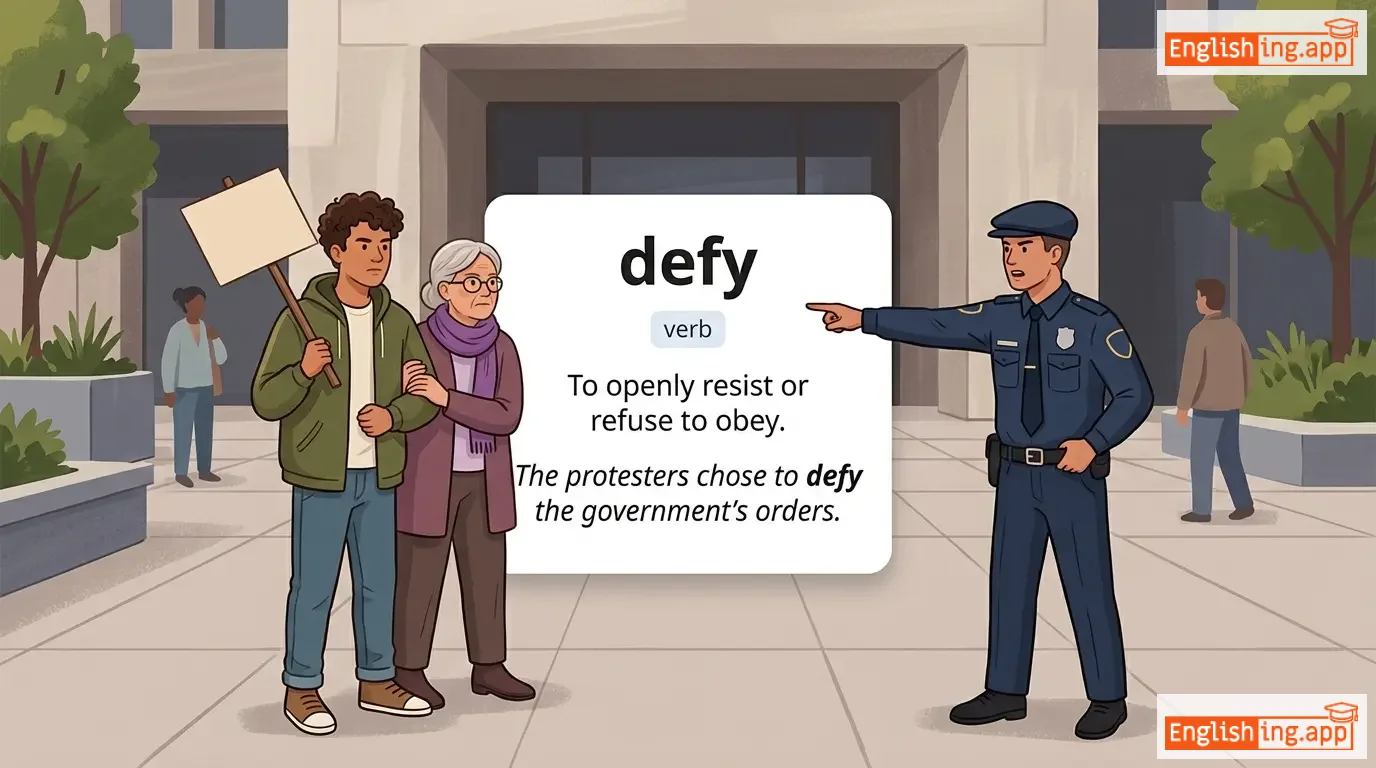
To openly resist or refuse to obey.
••••••
|
The protesters chose to defy the government's orders. |
- •••••• |
defy the odds |
To succeed despite being very unlikely or facing great difficulties.
••••••
|
- •••••• |
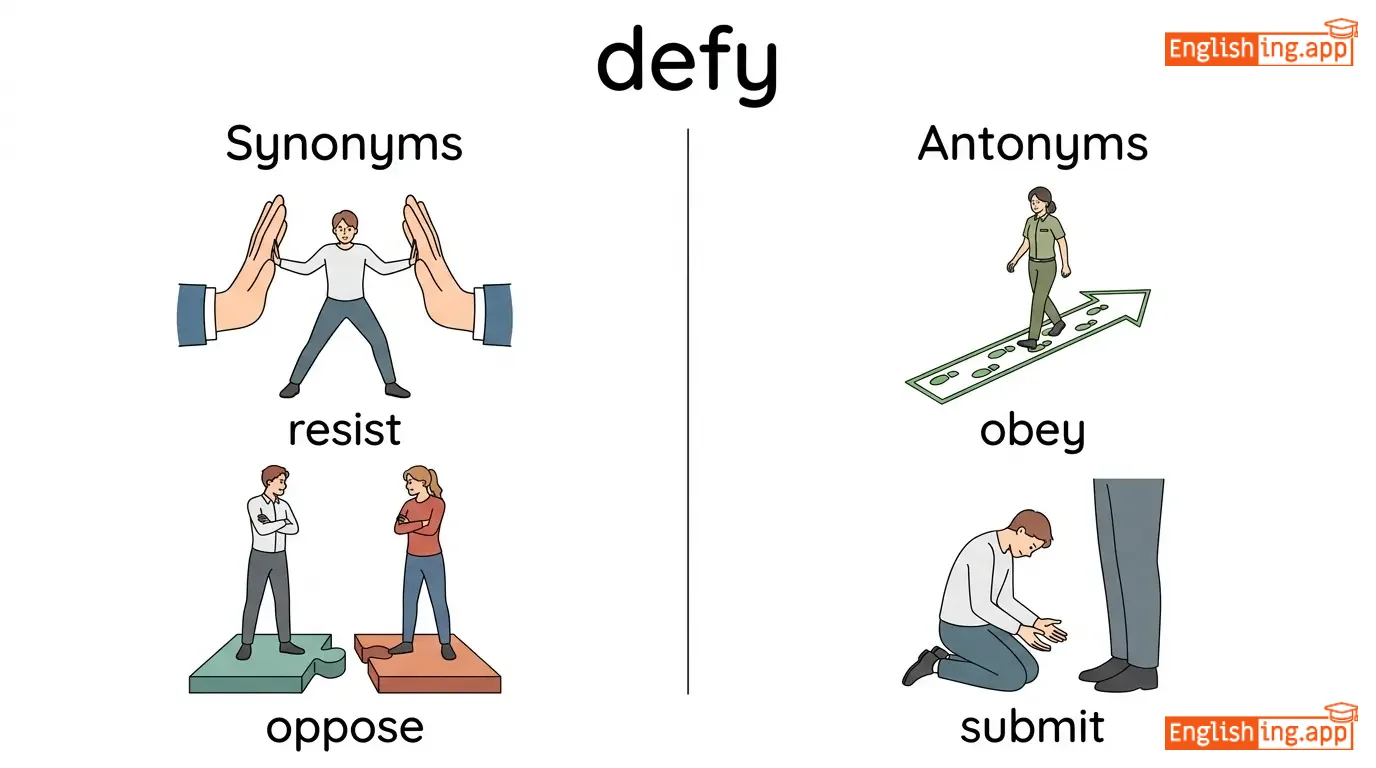
resist, oppose, confront, challenge
••••••
|
obey, submit, yield
••••••
|
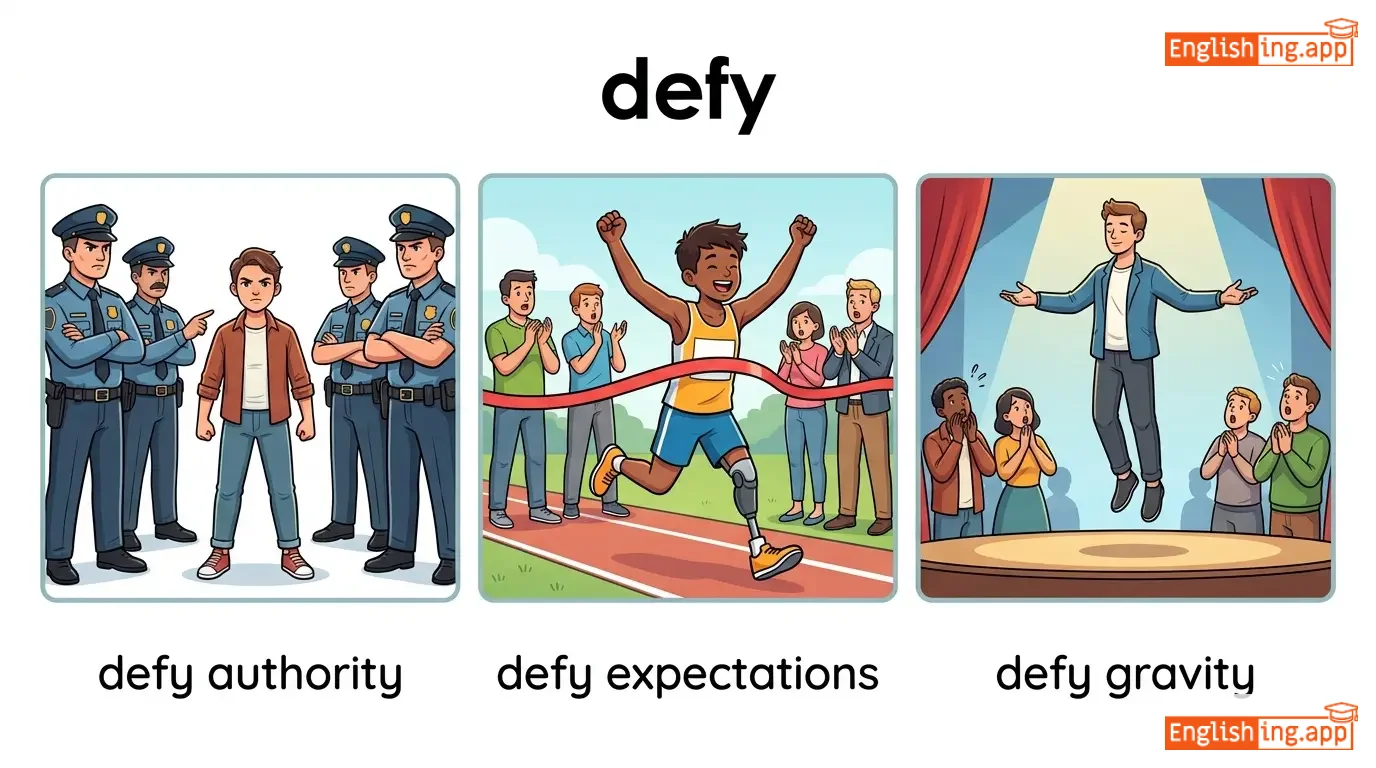
defy authority, defy expectations, defy gravity
••••••
|
No •••••• |
|
🎓
••••••
|
/dɪˈɡriː/
noun
(ディグリー)
••••••
|
- •••••• |
学位 / 程度
gakui / teido
••••••
|
- •••••• | - •••••• | - •••••• | - •••••• |
an amount or level of something; an academic qualification
••••••
|
She earned a degree in engineering. |
彼女は工学の学位を取得しました。
Kanojo wa kōgaku no gakui o shūtoku shimashita.
••••••
|
to some degree |
partly, to a certain extent
••••••
|
ある程度
aru teido
••••••
|
level, extent, rank, diploma, qualification
••••••
|
whole, total
••••••
|
high degree, to a degree, academic degree, temperature degree
••••••
|
学位は学位を意味します—温度の学位と学問の学位のように。
••••••
|
|
⏳
••••••
|
/dɪˈleɪ/
verb
(ディレイ)
••••••
|
- •••••• |
遅延
chien
••••••
|
delayed
ディレイド
••••••
|
delayed
ディレイド
••••••
|
delays
ディレイズ
••••••
|
delaying
ディレイイング
••••••
|
to make something happen later than planned
••••••
|
The flight was delayed due to bad weather.
悪天候のため、飛行機が遅れました。
••••••
|
悪天候のため、飛行機が遅れました。
Akutenkō no tame, hikōki ga okuremashita.
••••••
|
without delay
遅れずに
••••••
|
immediately, without waiting
••••••
|
遅れずに
okurezu ni
••••••
|
postpone, defer, stall, hinder, procrastinate
••••••
|
advance, expedite, hasten
••••••
|
cause delay, long delay, delay in delivery, unexpected delay
••••••
|
Delayは遅延を意味します。飛行機の遅れのように。
••••••
|
|
📋
••••••
|
/ˈdɛlɪɡət/ (noun), /ˈdɛlɪɡeɪt/ (verb)
noun, verb
(デリゲート)
••••••
|
- •••••• |
代理人 / 委任する
dairinin / inin suru
••••••
|
delegated
デリゲートした
••••••
|
delegated
デリゲートした
••••••
|
delegates
デリゲートする
••••••
|
delegating
デリゲートすること
••••••
|
as a noun: a person appointed to represent others; as a verb: to entrust a task or responsibility to another
••••••
|
The manager decided to delegate tasks to his team members.
マネージャーはチームメンバーにタスクを委任することに決めました。
••••••
|
マネージャーはチームメンバーにタスクを委任することに決めました。
Manējā wa chīmu menbā ni tasuku o inin suru koto ni kimemashita.
••••••
|
delegate authority
権限委譲
••••••
|
to give power or responsibility to someone else
••••••
|
権限委譲
kengen inō
••••••
|
assign, entrust, representative, envoy
••••••
|
retain, keep, withhold
••••••
|
delegate responsibility, delegate authority, delegate tasks
••••••
|
Delegate = De + Gate - 任務を委任する
••••••
|
|
👥
••••••
|
/ˌdɛlɪˈɡeɪʃən/
noun
(デリゲーション)
••••••
|

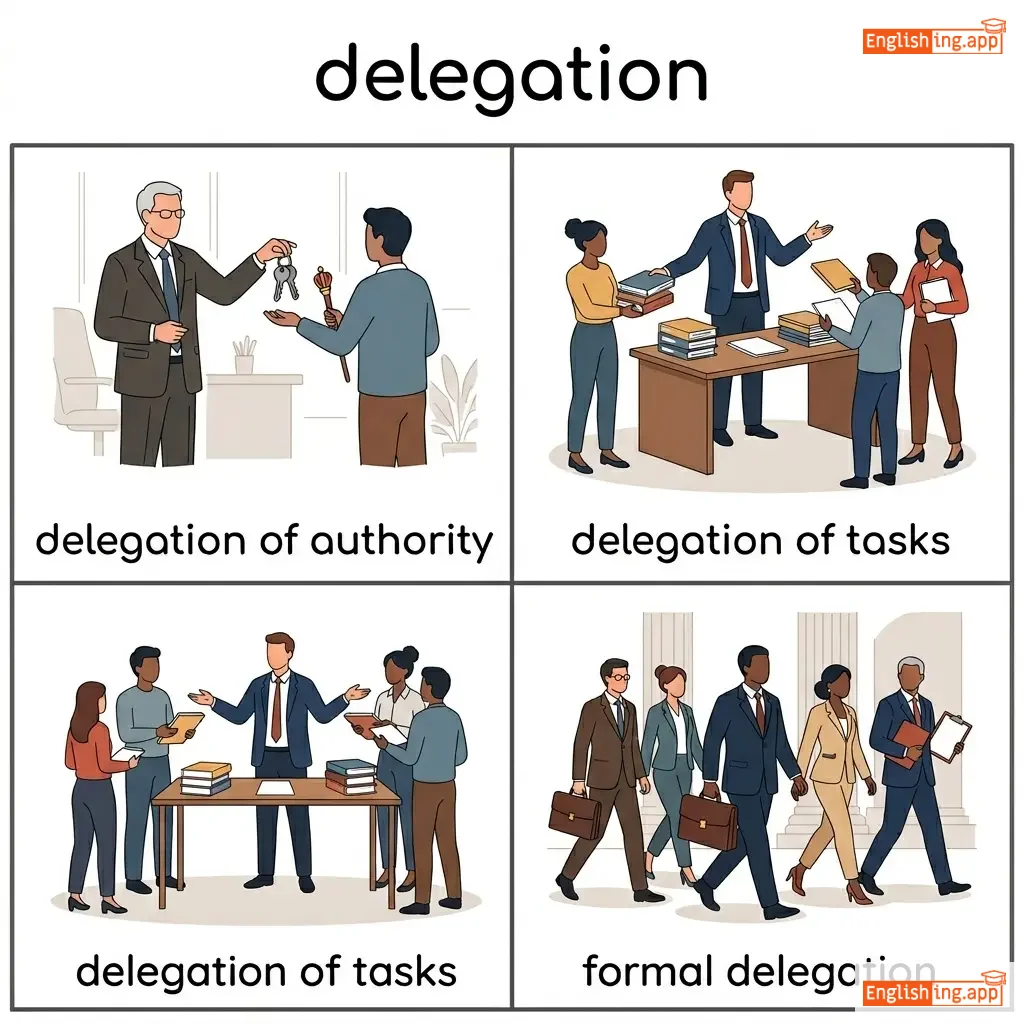
|
委任
inin
••••••
|
- •••••• | - •••••• | - •••••• | - •••••• |
the act of giving someone else responsibility for something
••••••
|
The manager made a delegation of tasks to the team. |
マネージャーはチームにタスクを委任しました。
Manējā wa chīmu ni tasuku o inin shimashita.
••••••
|
- •••••• | - •••••• | - •••••• |
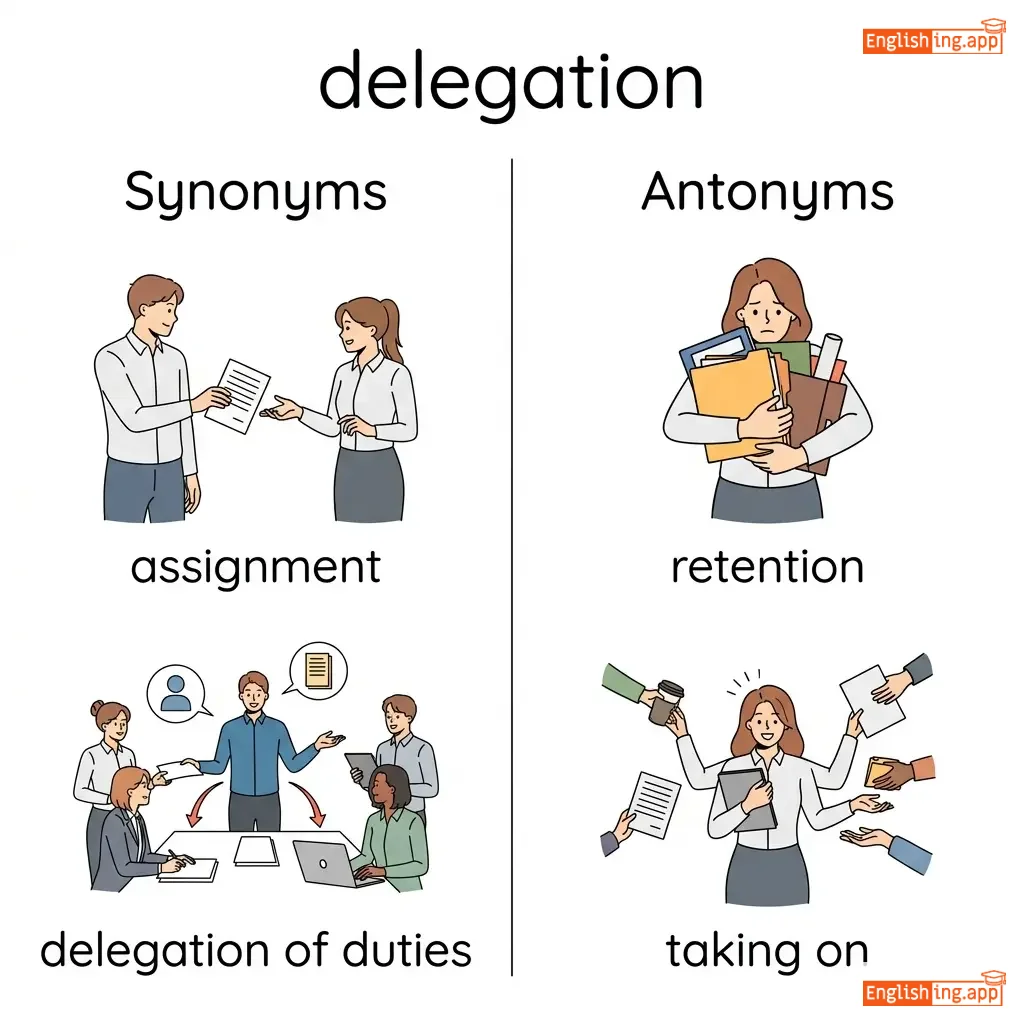
assignment, delegation of duties, responsibility, transfer
••••••
|
retention, taking on, holding
••••••
|
delegation of authority, delegation of tasks, formal delegation
••••••
|
A **デリゲーション (delegation)** is when you **delegate (委任)** tasks to others.
••••••
|
|
🗑️
••••••
|
/dɪˈliːt/
verb
••••••
|
- •••••• | - •••••• |
deleted
••••••
|
deleted
••••••
|
deletes
••••••
|
deleting
••••••
|
to remove or erase something, especially written or recorded information
••••••
|
He accidentally deleted all the files from his computer. |
- •••••• |
delete from memory |
to try to forget something unpleasant or unnecessary
••••••
|
- •••••• |
erase, remove, wipe, cancel, discard
••••••
|
restore, save, keep
••••••
|
delete a file, delete permanently, delete message, delete account
••••••
|
No •••••• |
|
🧠
••••••
|
/dɪˈlɪbərət/ (adj), /dɪˈlɪbəreɪt/ (verb)
adjective, verb
••••••
|

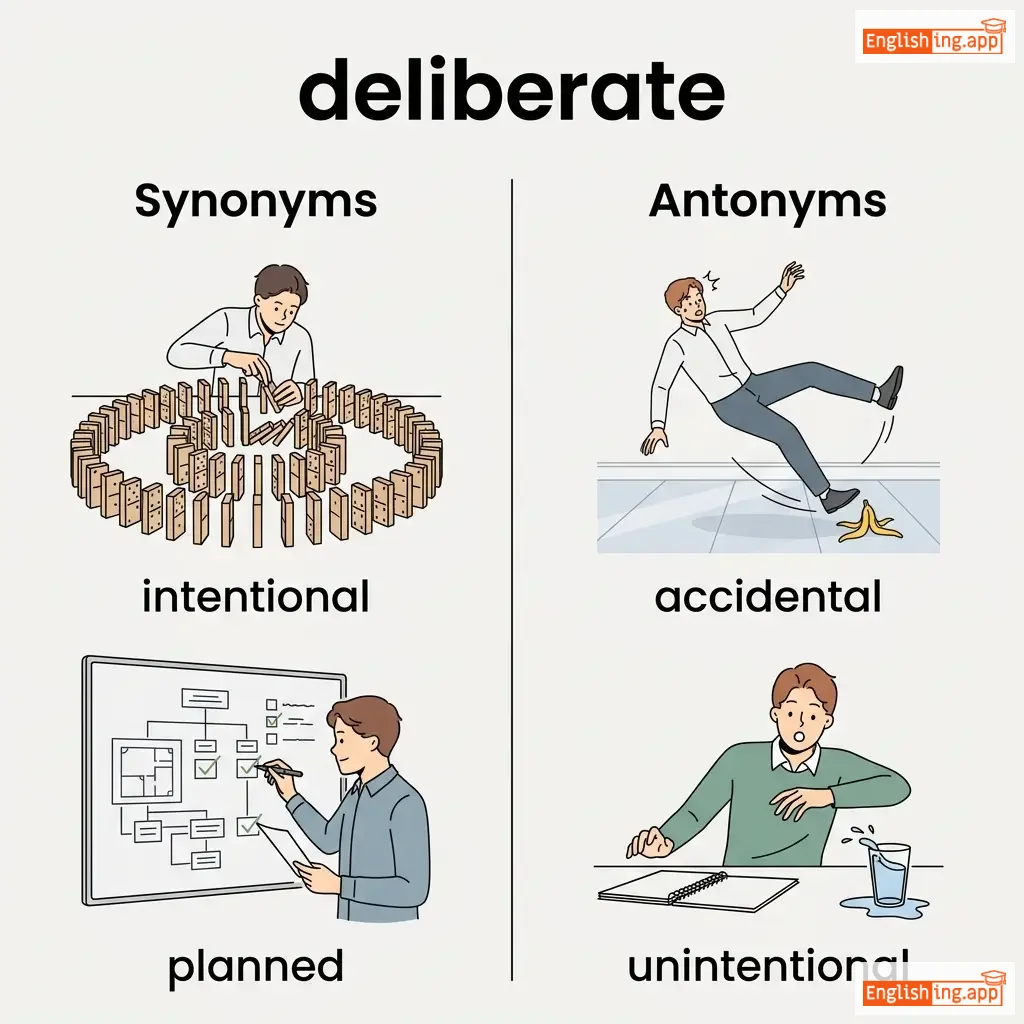
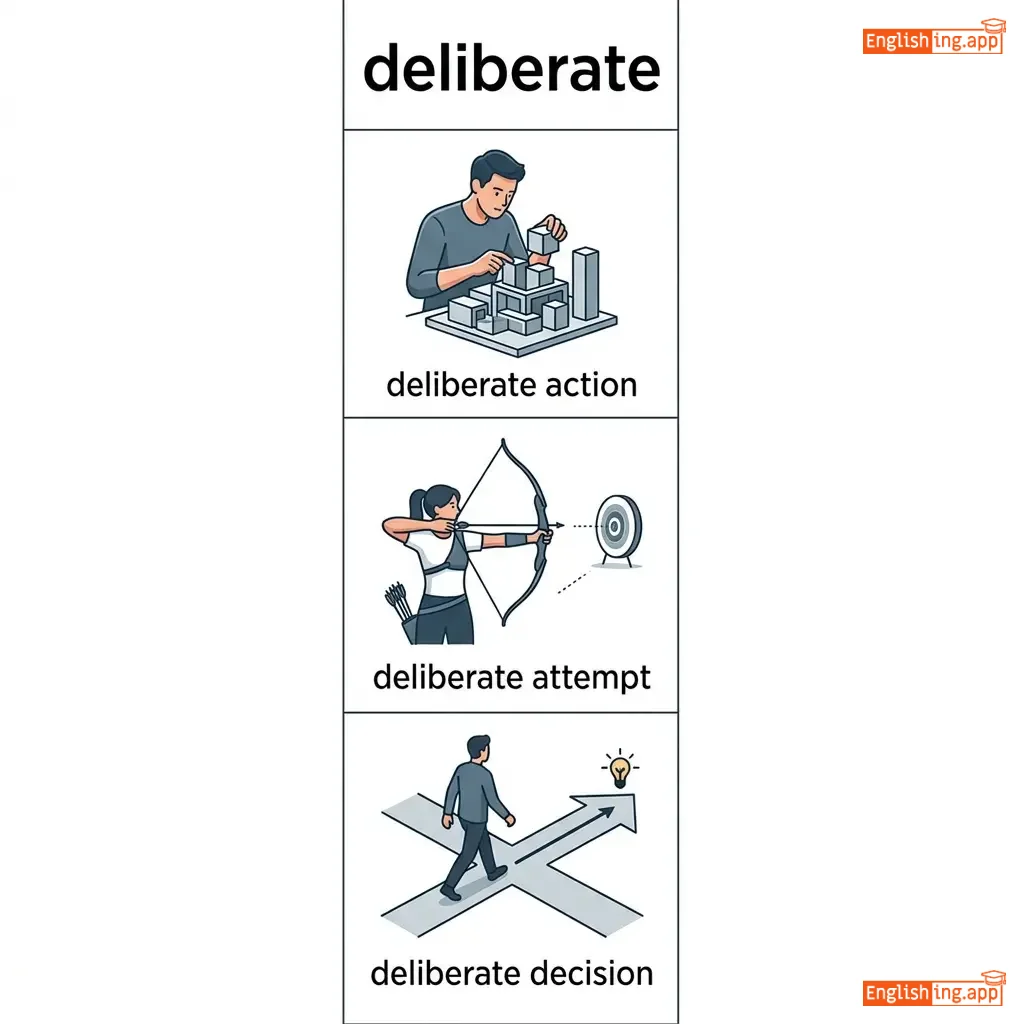
|
- •••••• |
deliberated
••••••
|
deliberated
••••••
|
deliberates
••••••
|
deliberating
••••••
|
done consciously and intentionally; to consider or discuss something carefully
••••••
|
The committee will deliberate on the proposal tomorrow. |
- •••••• |
deliberate attempt |
an intentional or planned effort
••••••
|
- •••••• |
intentional, planned, thoughtful, consider
••••••
|
accidental, unintentional, careless
••••••
|
deliberate action, deliberate attempt, deliberate decision, deliberate over
••••••
|
No •••••• |
|
🎯
••••••
|
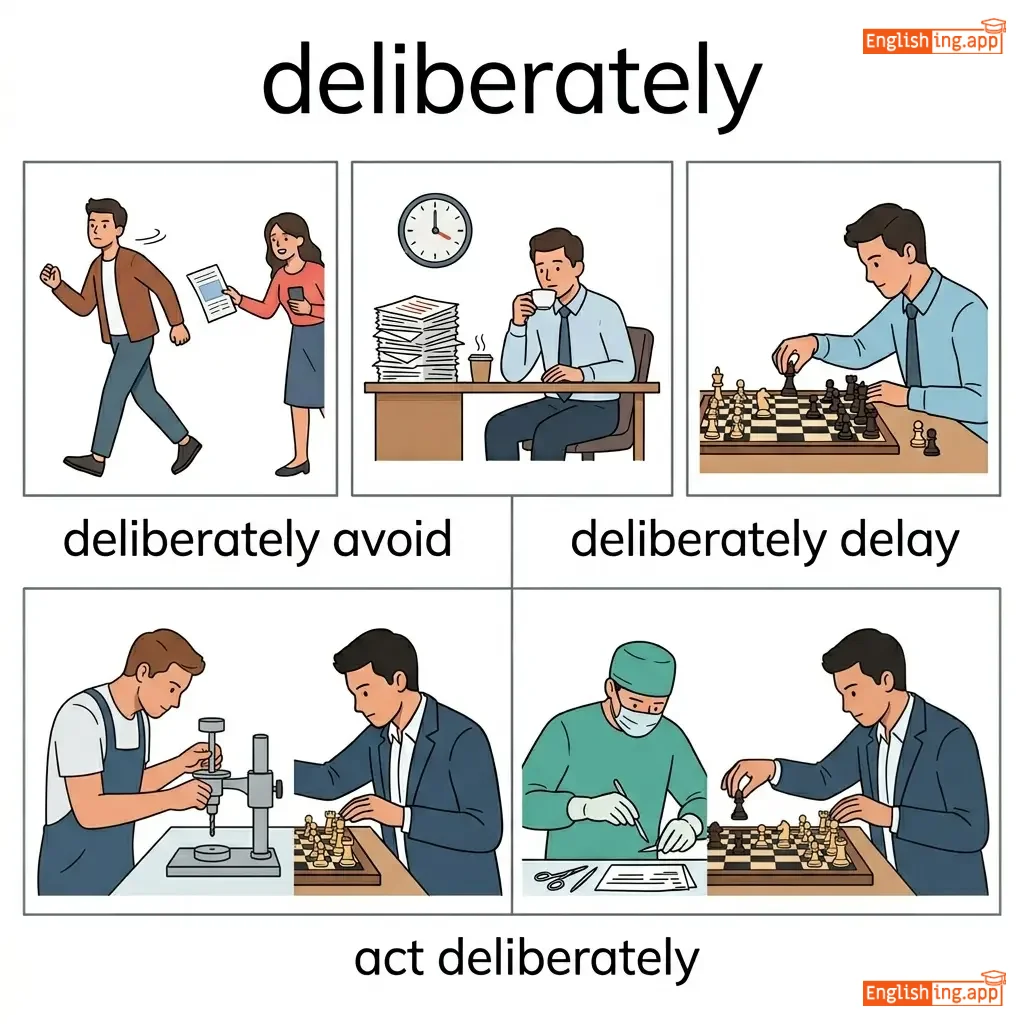
/dɪˈlɪb.ər.ət.li/
adverb
(dɪˈlɪbərətli)
••••••
|

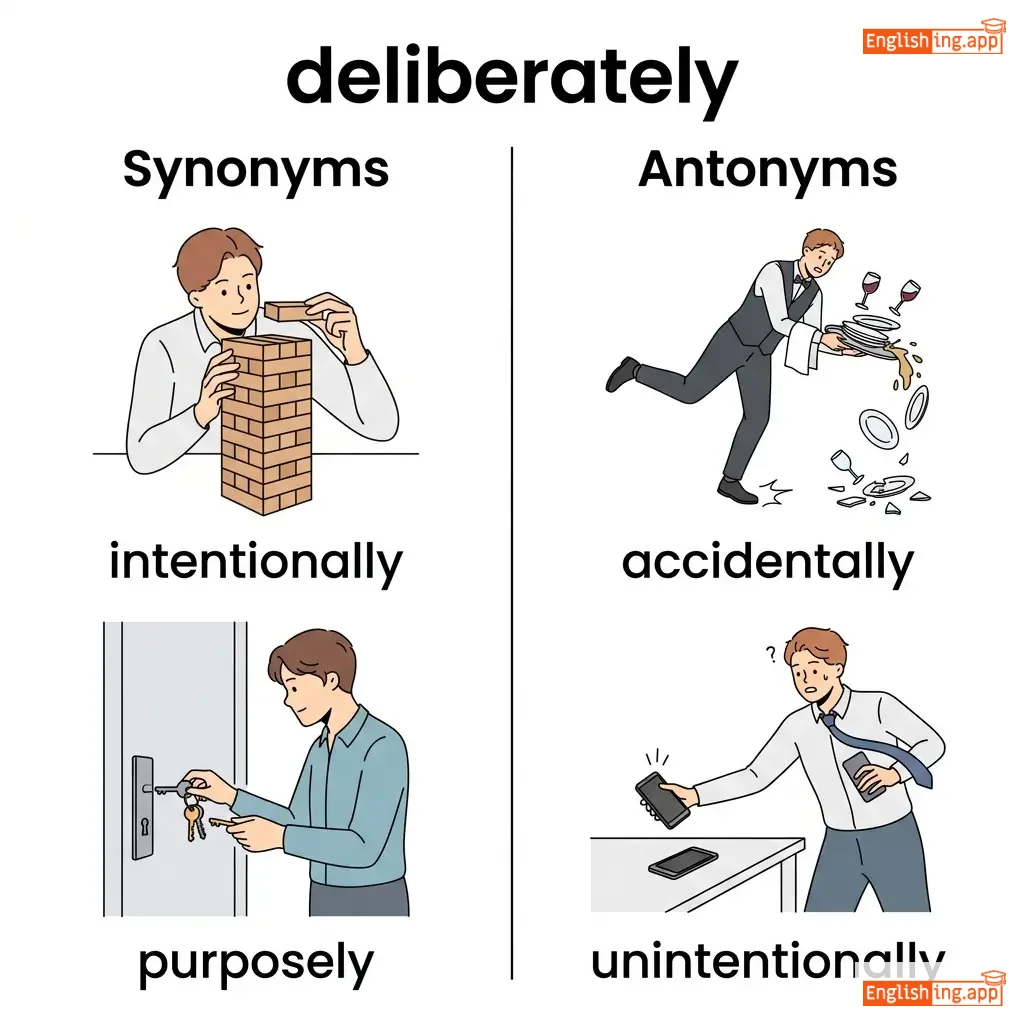
|
意図的に; わざと; 慎重に考えた上で
itotekini; wazato; shinchou ni kangaeta ue de
••••••
|
- •••••• | - •••••• | - •••••• | - •••••• |
intentionally; on purpose; with careful consideration
••••••
|
He deliberately chose not to answer the question.
彼はわざと質問に答えないことを選びました。
••••••
|
彼はわざと質問に答えないことを選びました。
Kare wa wazato shitsumon ni kotaenai koto o erabimashita.
••••••
|
- •••••• | - •••••• | - •••••• |
intentionally, purposely, consciously
••••••
|
accidentally, unintentionally, carelessly
••••••
|
deliberately avoid, deliberately choose, deliberately ignore
••••••
|
意図的に計画することは、カフェで選ぶ時のように慎重であるべきだ。
••••••
|
|
🌸
••••••
|
/ˈdɛlɪkət/
adjective
(デリケート)
••••••
|
- •••••• |
壊れやすい
kowareyasui
••••••
|
- •••••• | - •••••• | - •••••• | - •••••• |
Easily broken or damaged; requiring careful handling.
••••••
|
The vase is very delicate, so handle it with care. |
この花瓶はとても壊れやすいので、注意して扱ってください。
Kono kabin wa totemo kowareyasui node, chūi shite atsukatte kudasai.
••••••
|
delicate balance |
A situation where small changes can cause serious consequences.
••••••
|
壊れやすいバランス
kowareyasui baransu
••••••
|
fragile, fine, sensitive, subtle, tender
••••••
|
strong, tough, durable
••••••
|
delicate issue, delicate flower, delicate situation
••••••
|
Delicate 🌸は壊れやすい – 'Delicate 花'は壊れやすい花を意味します
••••••
|
|
😋
••••••
|
/dɪˈlɪʃəs/
adjective
(happiness)
••••••
|
- •••••• |
幸せ
shiawase
••••••
|
- •••••• | - •••••• | - •••••• | - •••••• |
having a very pleasant taste or smell
••••••
|
The cake was so delicious that everyone asked for a second slice.
彼女は賞を受け取ったとき、喜びを隠すことができませんでした。
••••••
|
彼女は賞を受け取ったとき、喜びを隠すことができませんでした。
Kanojo wa shō o uketotta toki, yorokobi o kakusu koto ga dekimasen deshita.
••••••
|
look delicious
幸せを追い求める
••••••
|
to appear very tasty or appealing
••••••
|
幸せを追い求める
shiawase o oimotomeru
••••••
|
tasty, appetizing, savory, delightful, yummy
••••••
|
bland, tasteless, unappetizing
••••••
|
delicious meal, delicious cake, delicious smell, look delicious
••••••
|
幸せ = 笑顔で幸せを見つける旅
••••••
|
|
😊
••••••
|
/dɪˈlaɪt/
noun, verb
(ハピネス)
••••••
|
- •••••• |
喜び
yorokobi
••••••
|
delighted
ディライテッド
••••••
|
delighted
ディライテッド
••••••
|
delights
ディライツ
••••••
|
delighting
ディライティング
••••••
|
great pleasure or joy; to give someone great pleasure
••••••
|
The children were filled with delight when they saw the gifts.
チルドレンはギフトを見てディライトに満ちていました。
••••••
|
子供たちはプレゼントを見て喜びに満ちていました。
Kodomo-tachi wa purezento o mite yorokobi ni michite imashita.
••••••
|
to one's delight
トゥワンズディライト
••••••
|
to one's great pleasure or happiness
••••••
|
大喜びで
ooyorokobi de
••••••
|
joy, pleasure, happiness, bliss, satisfaction
••••••
|
sorrow, disappointment, sadness
••••••
|
great delight, pure delight, delight in, take delight
••••••
|
Delight は ‘light’ のように心を明るくして喜びをもたらす。
••••••
|
|
📦
••••••
|
/dɪˈlɪvər/
verb
(デリバー)
••••••
|
- •••••• |
届ける
todokeru
••••••
|
delivered
デリバード
••••••
|
delivered
デリバード
••••••
|
delivers
デリバーズ
••••••
|
delivering
デリバーイング
••••••
|
to bring or hand over something to the intended recipient
••••••
|
The courier will deliver the package tomorrow.
宅配便は明日荷物を届けます。
••••••
|
宅配便は明日荷物を届けます。
takuhai-bin wa ashita nimotsu o todokemasu.
••••••
|
deliver the goods
商品を届ける
••••••
|
to do what is promised or expected
••••••
|
約束を守る
yakusoku o mamoru
••••••
|
bring, hand over, distribute, convey, supply
••••••
|
withhold, keep, retain
••••••
|
deliver a package, deliver results, deliver a speech, deliver justice
••••••
|
届けるは物を届けること、配達員がそれを行うように。
••••••
|
|
🚚
••••••
|
/dɪˈlɪvəri/
noun
(デリバリー)
••••••
|
- •••••• |
配達
haitatsu
••••••
|
- •••••• | - •••••• | - •••••• | - •••••• |
the act of taking goods, letters, or packages to people's houses or places of work
••••••
|
The delivery of fresh vegetables arrives every morning. |
新鮮な野菜の配達は毎朝届きます。
Shinsen na yasai no haitatsu wa mai asa todokimasu.
••••••
|
special delivery |
a postal service that ensures faster delivery than usual
••••••
|
特別配達
tokubetsu haitatsu
••••••
|
distribution, dispatch, shipment, transport, conveyance
••••••
|
non-delivery, retention, withholding
••••••
|
fast delivery, food delivery, delivery service, home delivery
••••••
|
デリバリーはすぐに届く - 配達はdeliveryです。
••••••
|
|
📈
••••••
|
/dɪˈmænd/
noun, verb
(demand)
••••••
|
- •••••• |
需要
juyou
••••••
|
demanded
demanded
••••••
|
demanded
demanded
••••••
|
demands
demands
••••••
|
demanding
demanding
••••••
|
to ask for something forcefully; the need or desire for goods or services
••••••
|
Workers demanded better wages from the company.
労働者は会社により良い賃金を要求した。
••••••
|
労働者は会社により良い賃金を要求した。
Rōdōsha wa kaisha ni yori yoi chingin o yōkyū shita.
••••••
|
in demand
需要中
••••••
|
popular or widely desired
••••••
|
需要中
juyōchū
••••••
|
request, ask, require, call for, claim
••••••
|
supply, offer, give
••••••
|
high demand, demand for, meet demand, supply and demand
••••••
|
需要が高いものは価格が上がる
••••••
|
|
🗳️
••••••
|
/dɪˈmɑːkrəsi/
noun
(デモクラシー)
••••••
|
|
民主主義
minshu shugi
••••••
|
- •••••• | - •••••• | - •••••• | - •••••• |
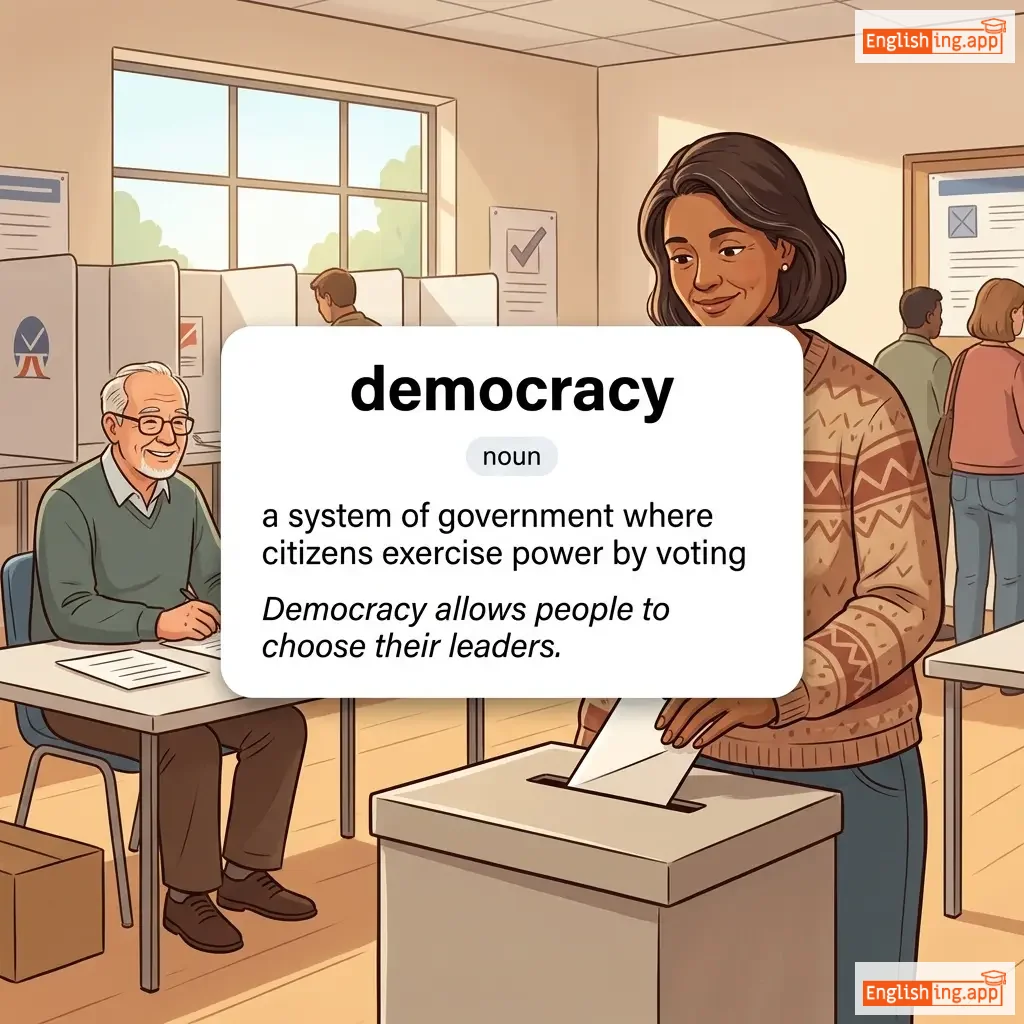
a system of government where citizens exercise power by voting
••••••
|
Democracy allows people to choose their leaders. |
民主主義は人々にリーダーを選ぶ権利を与えます。
Minshu shugi wa hitobito ni rīdā o erabu kenri o ataemasu.
••••••
|
true democracy |
a genuine practice of democratic values
••••••
|
真の民主主義
shin no minshu shugi
••••••
|
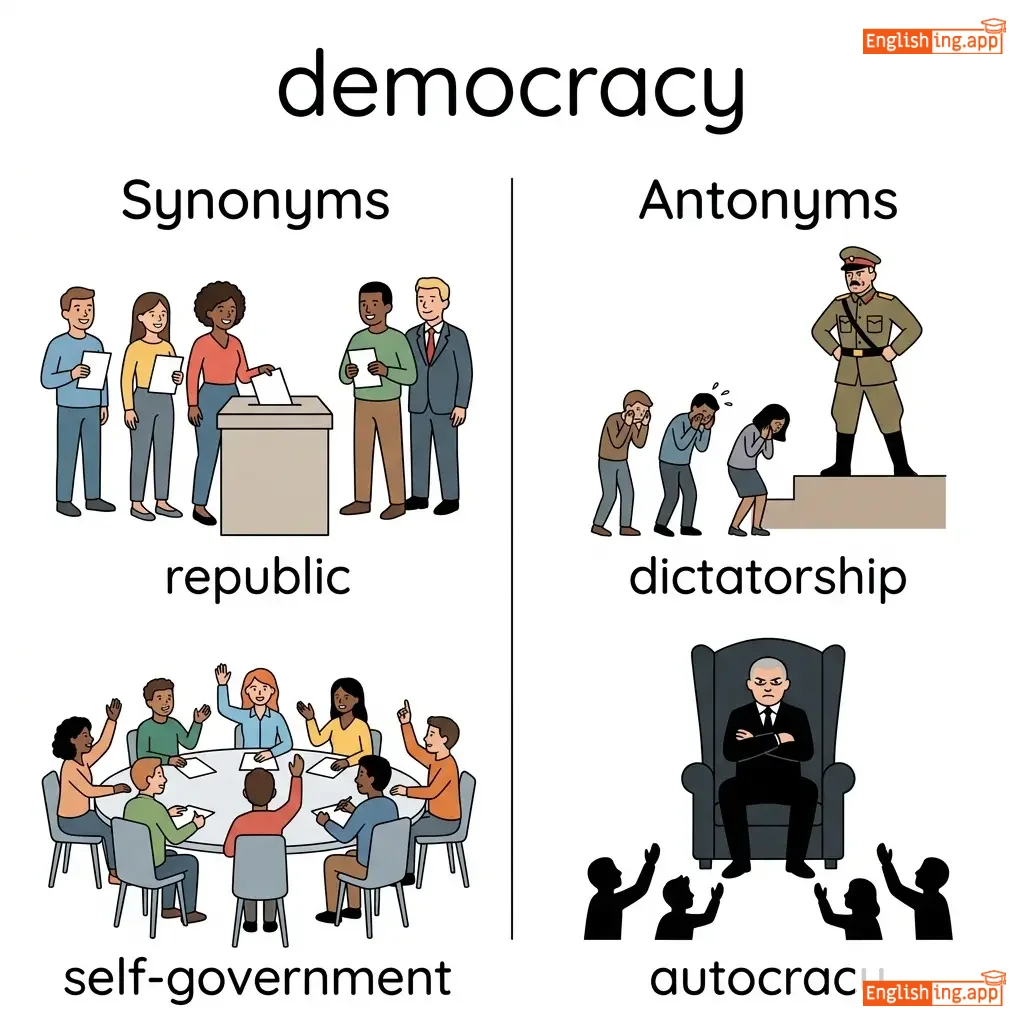
republic, self-government, representative government, popular government
••••••
|
dictatorship, autocracy, monarchy
••••••
|
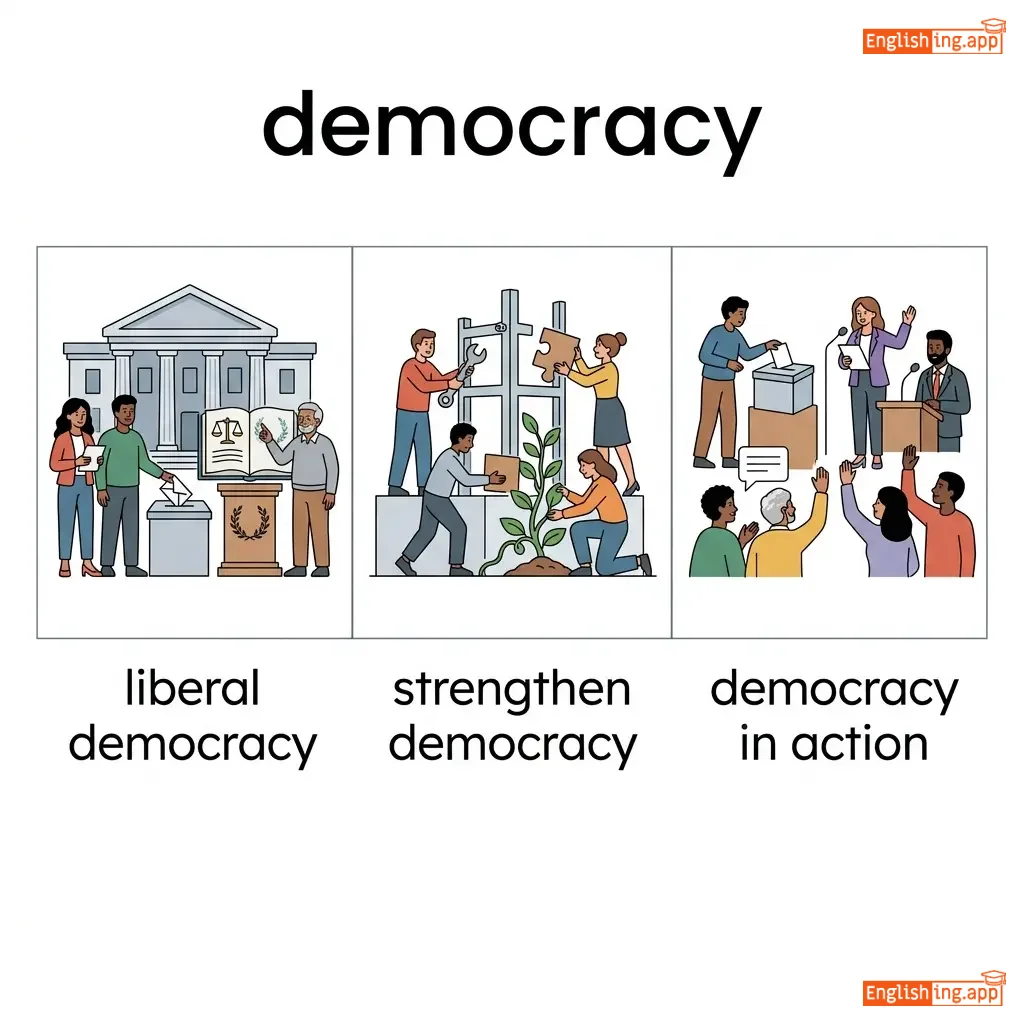
liberal democracy, strengthen democracy, democracy in action, democracy movement
••••••
|
Demoは人々、cracyは支配 - 民主主義 = 人々の支配
••••••
|
|
🕊️
••••••
|
/ˈdɛməˌkræt/
noun
(デモクラット)
••••••
|
- •••••• |
民主主義者
minshu shugi sha
••••••
|
- •••••• | - •••••• | - •••••• | - •••••• |
a supporter of democracy or a member of the Democratic Party in the US
••••••
|
He is a strong democrat who believes in equal rights. |
彼は平等な権利を信じる強い民主主義者です。
Kare wa byoudou na kenri wo shinjiru tsuyoi minshu shugi sha desu.
••••••
|
- •••••• | - •••••• | - •••••• |
supporter, liberal, reformer, egalitarian
••••••
|
dictator, autocrat
••••••
|
loyal democrat, leading democrat, democrat leader, true democrat
••••••
|
Democratは民主主義者の意味
••••••
|
|
🗳️
••••••
|
/ˌdɛməˈkrætɪk/
adjective
(デモクラティック)
••••••
|
|
民主的
minshuteki
••••••
|
- •••••• | - •••••• | - •••••• | - •••••• |
relating to or supporting democracy or its principles; characterized by equality and freedom
••••••
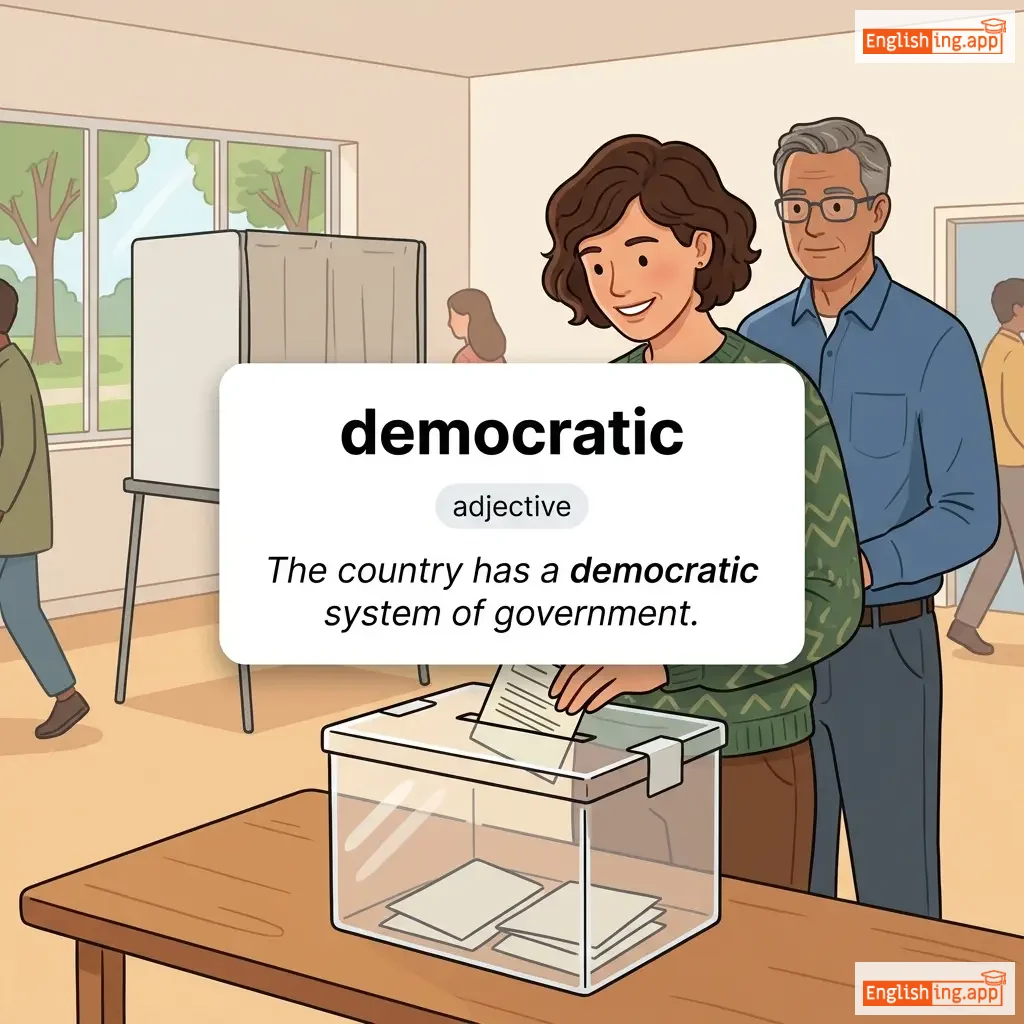
|
The country has a democratic system of government. |
その国は民主的な政府システムを持っています。
Sono kuni wa minshuteki na seifu shisutemu wo motteimasu.
••••••
|
democratic values |
principles of equality, freedom, and representation in governance
••••••
|
民主的価値観
minshuteki kachikan
••••••
|
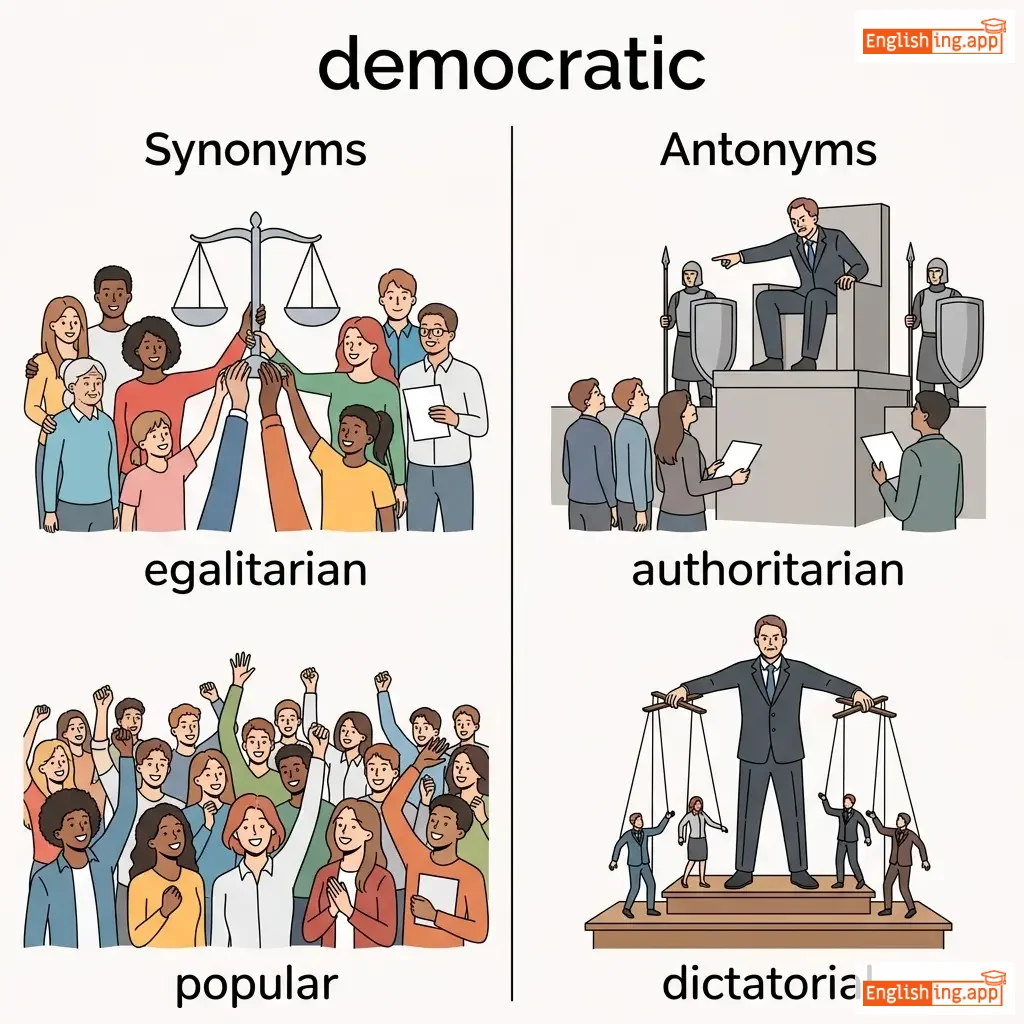
egalitarian, popular, representative, self-governing
••••••
|
authoritarian, dictatorial, autocratic
••••••
|
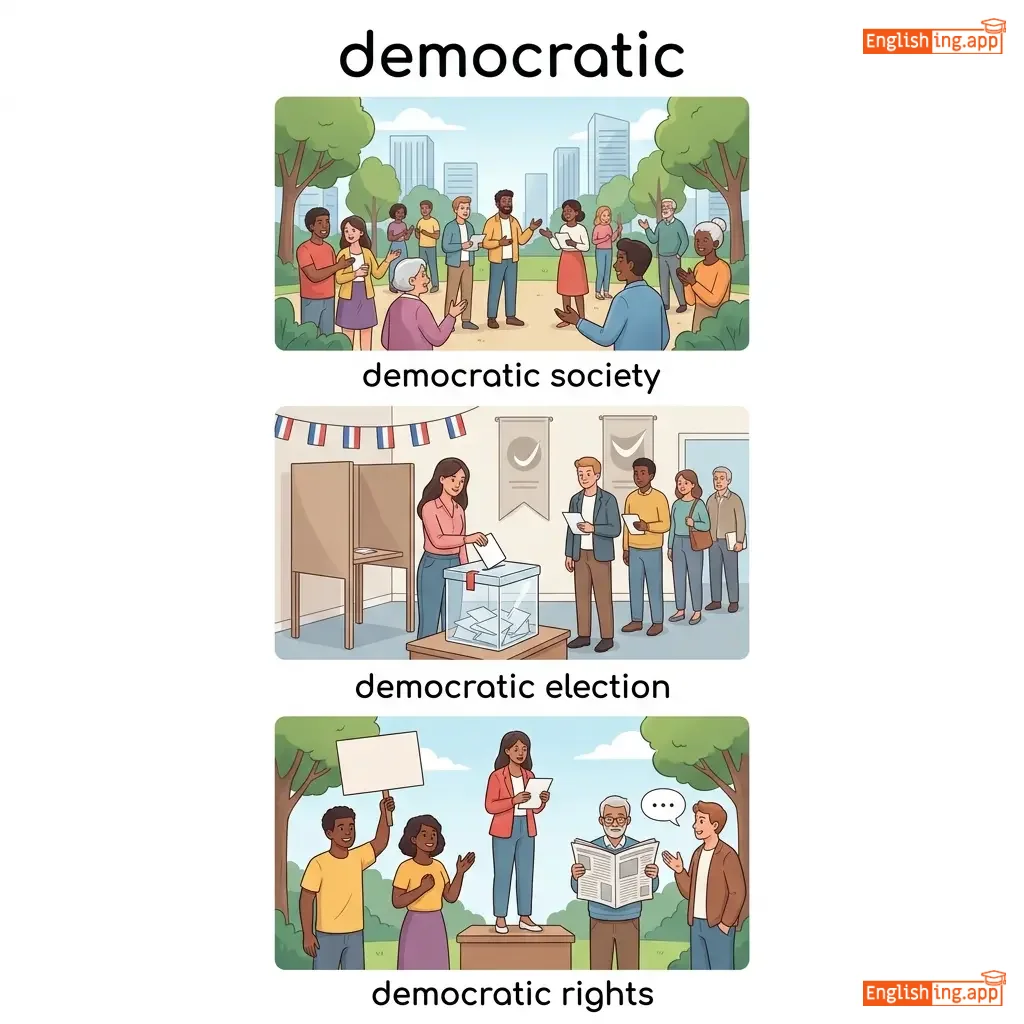
democratic society, democratic election, democratic rights, democratic values
••••••
|
Democratic はデモ (デモ) + クラティック → みんなで投票する民主主義 = 民主的
••••••
|
|
👹
••••••
|
/ˈdiːmən/
noun
(デーモン)
••••••
|
- •••••• |
悪魔
akuma
••••••
|
- •••••• | - •••••• | - •••••• | - •••••• |
an evil spirit or devil
••••••
|
The story was about a demon who haunted the village.
その話は、村を恐怖に陥れたデーモンについてでした。
••••••
|
その話は、村を恐怖に陥れたデーモンについてでした。
Sono hanashi wa, mura o kyōfu ni ochīreta dēmon ni tsuite deshita.
••••••
|
- •••••• | - •••••• | - •••••• |
devil, fiend, evil spirit, monster
••••••
|
angel, saint, good spirit
••••••
|
demon possession, demon spirit, evil demon
••••••
|
デーモン sounds like 'Demon' - evil spirit
••••••
|
|
🧑🏫
••••••
|
/ˈdɛmənˌstreɪt/
verb
(デモンストレート)
••••••
|
- •••••• |
示す
shimesu
••••••
|
demonstrated
デモンストレイテッド
••••••
|
demonstrated
デモンストレイテッド
••••••
|
demonstrates
デモンストレイツ
••••••
|
demonstrating
デモンストレイティング
••••••
|
to clearly show or prove something through evidence, explanation, or action
••••••
|
The teacher demonstrated the experiment to the class.
先生はクラスに実験をデモンストレートしました。
••••••
|
先生はクラスに実験をデモンストレートしました。
Sensei wa kurasu ni jikken o démonsutoreeto shimashita.
••••••
|
demonstrate one's skills
自分のスキルをデモンストレートする
••••••
|
to show one's abilities through action or performance
••••••
|
自分のスキルを示す
jibun no sukiru o shimesu
••••••
|
show, exhibit, display, illustrate, prove
••••••
|
hide, conceal, obscure
••••••
|
demonstrate ability, demonstrate skill, demonstrate interest, demonstrate clearly
••••••
|
デモ (デモンストレーション) + ステート (ステートメント)
••••••
|
|
✊
••••••
|
/ˌdɛmənˈstreɪʃən/
noun
(デモンストレーション)
••••••
|
- •••••• |
デモ, 示威
demo, shii
••••••
|
- •••••• | - •••••• | - •••••• | - •••••• |
the act of showing something clearly, or a public protest
••••••
|
The workers organized a demonstration for better wages. |
労働者たちはより良い賃金のためにデモを組織した。
Rōdō-sha tachi wa yori yoi chingin no tame ni demo o soshiki shita.
••••••
|
peaceful demonstration |
a non-violent public protest
••••••
|
平和的なデモ
heiwa-teki na demo
••••••
|
protest, rally, march, display, presentation
••••••
|
silence, inaction
••••••
|
street demonstration, public demonstration, demonstration of power, demonstration of skills
••••••
|
Demonstrationはデモをすること、または抗議を示すこと
••••••
|
|
🙅♂️
••••••
|
/dɪˈnaɪəl/
noun
(ディナイアル)
••••••
|
- •••••• |
否認
hinin
••••••
|
- •••••• | - •••••• | - •••••• | - •••••• |
a statement that something is not true; the refusal to accept or believe something
••••••
|
His denial of the accusations surprised everyone. |
彼の告発に対する否認は皆を驚かせました。
kare no kokuhatsu ni taisuru hinin wa mina wo odorokasemashita.
••••••
|
in denial |
refusing to accept reality or truth
••••••
|
否認状態
hinin joutai
••••••
|
refusal, rejection, contradiction, repudiation
••••••
|
acceptance, confirmation, admission
••••••
|
strong denial, official denial, denial of reality, denial of responsibility
••••••
|
Denial は '否認' — 'deny' は拒否するという意味、だから 'denial' は拒否の状態です。
••••••
|
|
🔴
••••••
|
/dɪˈnəʊt/
verb
(デノート)
••••••
|
- •••••• |
示す
shimesu
••••••
|
denoted
デノーテッド
••••••
|
denoted
デノーテッド
••••••
|
denotes
デノーツ
••••••
|
denoting
デノーティング
••••••
|
To be a sign of; to indicate or mean something.
••••••
|
A red flag denotes danger.
赤い旗は危険を示しています。
••••••
|
赤い旗は危険を示しています。
Akai hata wa kiken o shimeshiteimasu.
••••••
|
- •••••• | - •••••• | - •••••• |
indicate, signify, represent, express, stand for
••••••
|
conceal, obscure
••••••
|
clearly denote, usually denotes, symbol denotes, denotes importance
••••••
|
示すは何かを示すという意味で、赤い旗は危険を示す。
••••••
|
|
📢
••••••
|
/dɪˈnaʊns/
verb
(ディナウンズ)
••••••
|
- •••••• |
非難する
hinan suru
••••••
|
denounced
ディナウンズド
••••••
|
denounced
ディナウンズド
••••••
|
denounces
ディナウンズセス
••••••
|
denouncing
ディナウンズイング
••••••
|
To publicly declare something to be wrong, evil, or condemn strongly.
••••••
|
The leader denounced corruption in his speech.
リーダーはスピーチで汚職を非難しました。
••••••
|
リーダーはスピーチで汚職を非難しました。
Rīdā wa supīchi de oshoku o hinan shimashita.
••••••
|
denounce in no uncertain terms
明確な言葉で非難する
••••••
|
To condemn very strongly and clearly.
••••••
|
明確な言葉で非難する
Meikaku na kotoba de hinan suru
••••••
|
condemn, criticize, censure, blame, accuse
••••••
|
praise, approve, endorse
••••••
|
publicly denounce, strongly denounce, denounce corruption, denounce violence
••••••
|
Denounceは 'announce'のように聞こえるが、強く公に非難することを意味します。
••••••
|
|
🌲
••••••
|
/dɛns/
adjective
(デンス)
••••••
|
- •••••• |
密な
mitsuna
••••••
|
- •••••• | - •••••• | - •••••• | - •••••• |
Closely compacted in substance; having parts crowded together.
••••••
|
The forest was so dense that little sunlight reached the ground. |
森はとても密で、ほとんど太陽の光が地面に届かなかった。
Mori wa totemo mitsu de, hotondo taiyō no hikari ga jimen ni todokakanakatta.
••••••
|
dense fog |
Thick fog that reduces visibility.
••••••
|
濃霧
nōmu
••••••
|
thick, compact, crowded, heavy, solid
••••••
|
thin, sparse, light
••••••
|
dense forest, dense fog, dense population, dense crowd
••••••
|
Denseは密なという意味 - dense forestは密な森の意味です。
••••••
|
|
⚖️
••••••
|
/ˈdɛnsɪti/
noun
(デンシティ)
••••••
|
- •••••• |
密度
mitsudo
••••••
|
- •••••• | - •••••• | - •••••• | - •••••• |
the degree of compactness or thickness of a substance or object
••••••
|
The density of water is higher than that of air.
水の密度は空気よりも高い。
••••••
|
水の密度は空気よりも高い。
Mizu no mitsudo wa kūki yori mo takai.
••••••
|
population density
人口密度
••••••
|
the number of people living per unit area of land
••••••
|
人口密度
jinkō mitsudo
••••••
|
thickness, concentration, solidity, compactness, mass
••••••
|
thinness, rarity, emptiness
••••••
|
high density, low density, population density, energy density
••••••
|
密度(mitsudo)は、density(デンシティ)と同じです。
••••••
|
|
🦷
••••••
|
/ˈdɛntəl/
adjective
(デンタル)
••••••
|
- •••••• |
歯科の
shika no
••••••
|
- •••••• | - •••••• | - •••••• | - •••••• |
relating to teeth or dentistry
••••••
|
She goes for a dental checkup every six months.
彼女は6か月ごとに歯科検診を受けます。
••••••
|
彼女は6か月ごとに歯科検診を受けます。
kanojo wa rokukagetsu goto ni shika kenshin o ukemasu
••••••
|
- •••••• | - •••••• | - •••••• |
oral, odontic, tooth-related, stomatological
••••••
|
non-dental, general
••••••
|
dental care, dental clinic, dental hygiene, dental surgery, dental checkup
••••••
|
デンタル = 歯科、dentist を思い出す
••••••
|
|
🦷
••••••
|
/ˈden.tɪst/
noun
(デンティスト)
••••••
|
- •••••• |
歯医者
haisha
••••••
|
- •••••• | - •••••• | - •••••• | - •••••• |
a medical professional who treats teeth and oral health
••••••
|
I need to visit the dentist for a regular checkup. |
定期検診のために歯医者に行かなければなりません。
teiki kenshin no tame ni haisha ni ikanakereba narimasen
••••••
|
- •••••• | - •••••• | - •••••• |
dental surgeon, orthodontist, oral surgeon
••••••
|
- •••••• |
visit the dentist, dentist appointment, family dentist, dental clinic
••••••
|
歯医者は歯を治療する専門家
••••••
|
|
🚆
••••••
|
/dɪˈpɑːrt/
verb
••••••
|
- •••••• | - •••••• |
departed
••••••
|
departed
••••••
|
departs
••••••
|
departing
••••••
|
to leave, especially to start a journey
••••••
|
The train will depart at 9 a.m. |
- •••••• |
depart this life |
a formal or euphemistic way to say 'die'
••••••
|
- •••••• |
leave, exit, go, withdraw, set off
••••••
|
arrive, stay, remain
••••••
|
depart early, depart station, flight departs, depart suddenly
••••••
|
No •••••• |
|
🏢
••••••
|
/dɪˈpɑːrtmənt/
noun
(デパートメント)
••••••
|
- •••••• |
部門
bumon
••••••
|
- •••••• | - •••••• | - •••••• | - •••••• |
a division of a large organization such as a government, university, or company
••••••
|
She works in the marketing department. |
彼女はマーケティング部門で働いています。
Kanojo wa maketingu bumon de hataraiteimasu.
••••••
|
department store |
a large retail store selling various goods in separate sections
••••••
|
デパート
depaato
••••••
|
division, section, branch, bureau
••••••
|
whole, entirety
••••••
|
government department, police department, sales department, university department
••••••
|
部門 = 大きな組織の一部
••••••
|
|
✈️
••••••
|
/dɪˈpɑːrtʃər/
noun
(ディパーチャー)
••••••
|
- •••••• |
出発、離脱
shuppatsu, ridatsu
••••••
|
- •••••• | - •••••• | - •••••• | - •••••• |
the act of leaving a place, especially to start a journey
••••••
|
The plane’s departure was delayed due to fog. |
飛行機の出発は霧のため遅れました。
hikōki no shuppatsu wa kiri no tame okuremashita.
••••••
|
a sudden departure |
an unexpected or quick exit
••••••
|
突然の出発
totsuzen no shuppatsu
••••••
|
exit, leave, withdrawal, flight, going
••••••
|
arrival, entry, return
••••••
|
flight departure, departure time, sudden departure, scheduled departure
••••••
|
Departureは出発や離脱の意味。旅を始める時に使われます。
••••••
|
|
🤲
••••••
|
/dɪˈpɛnd/
verb
(デペンド)
••••••
|
|
依存する
izon suru
••••••
|
depended
••••••
|
depended
••••••
|
depends
••••••
|
depending
••••••
|
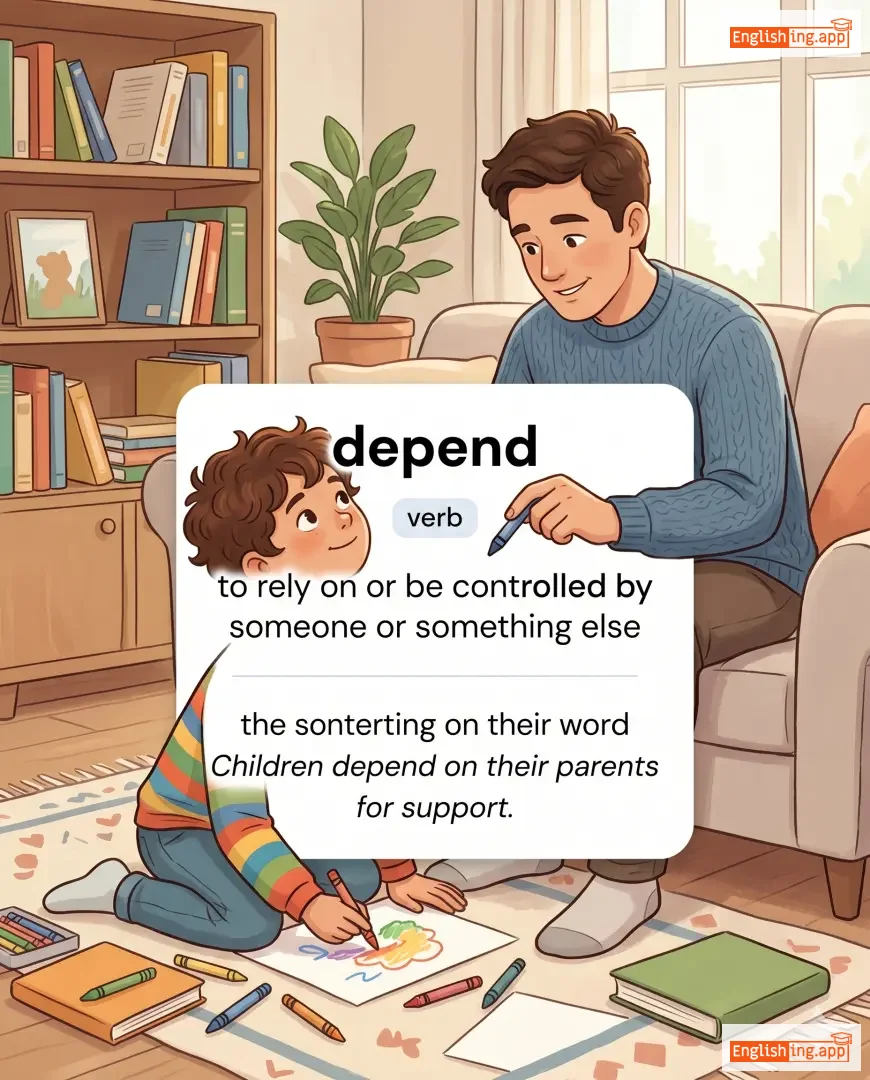
to rely on or be controlled by someone or something else
••••••
|
Children depend on their parents for support.
子供たちは支援のために親に依存しています。
••••••
|
子供たちは支援のために親に依存しています。
Kodomo-tachi wa shien no tame ni oya ni izon shiteimasu.
••••••
|
depend on
依存する
••••••
|
to rely on someone or something
••••••
|
依存する
izon suru
••••••
|
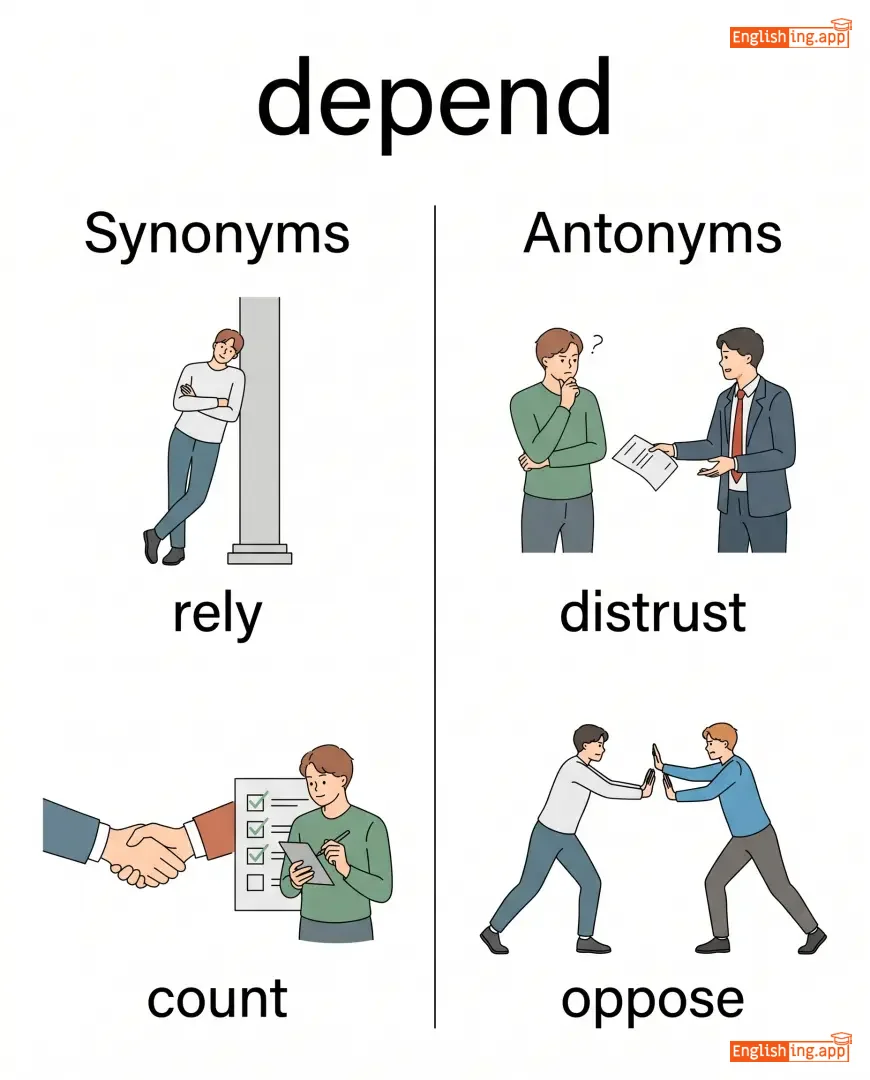
rely, count, trust, hinge
••••••
|
distrust, oppose
••••••
|
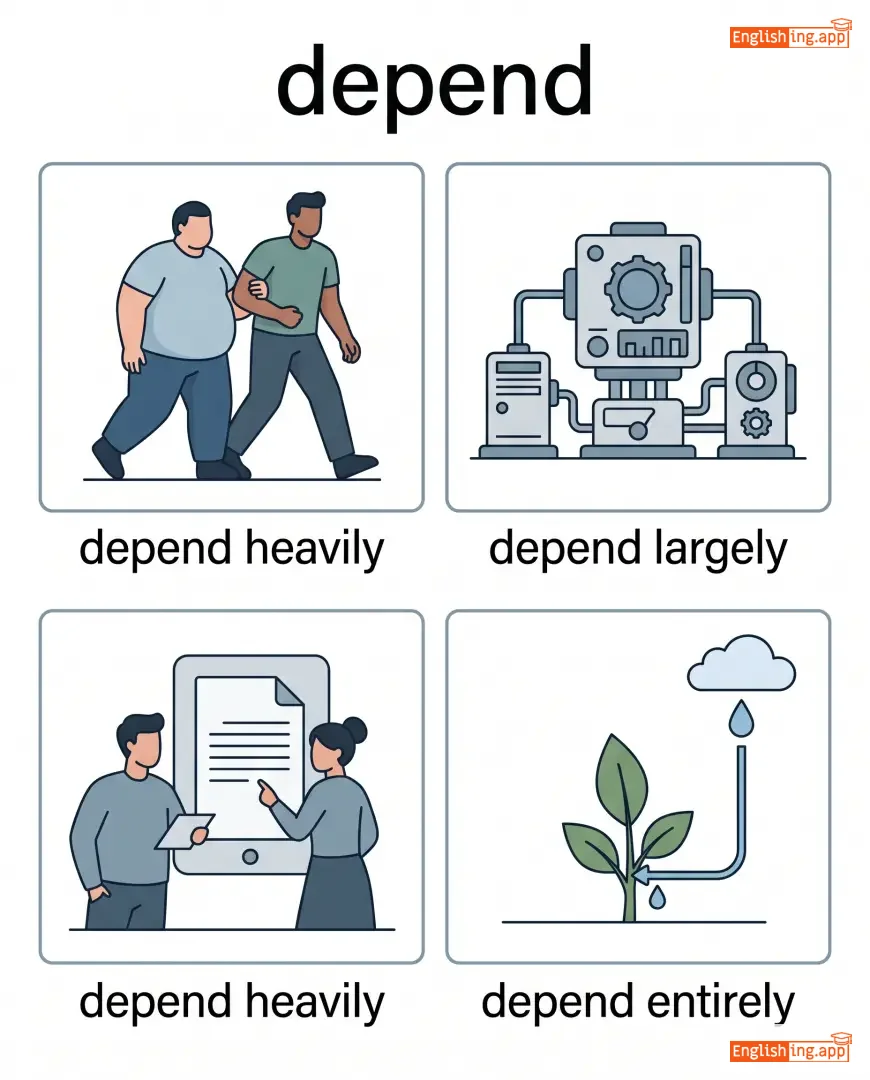
depend heavily, depend largely, depend entirely, depend directly
••••••
|
Depend = De (デ) + pend (ペンド) → あなたに依存しています。
••••••
|
|
🛡️
••••••
|
/dɪˈpɛndəbl/
adjective
(ディペンダブル)
••••••
|
- •••••• |
信頼できる
shinrai dekiru
••••••
|
- •••••• | - •••••• | - •••••• | - •••••• |
able to be trusted or relied on; consistently reliable
••••••
|
She is a dependable colleague who always meets deadlines.
シー イズ ア ディペンダブル コリーグ フー オールウェイズ ミーツ デッドラインズ。
••••••
|
彼女はいつも締め切りを守る信頼できる同僚です。
kanojo wa itsumo shimekiri o mamoru shinrai dekiru douryou desu
••••••
|
dependable as clockwork
ディペンダブル アズ クロックワーク
••••••
|
extremely reliable and punctual
••••••
|
時計のように信頼できる
tokei no you ni shinrai dekiru
••••••
|
reliable, trustworthy, consistent, steady, faithful
••••••
|
unreliable, untrustworthy, inconsistent
••••••
|
dependable person, dependable service, dependable source, dependable worker
••••••
|
Dependable = ディペン + できる = 信頼できる
••••••
|
|
🤝
••••••
|
/dɪˈpen.dəns/
noun
(ディペンデンス)
••••••
|
- •••••• |
依存
izon
••••••
|
- •••••• | - •••••• | - •••••• | - •••••• |
the state of relying on or needing someone or something for support; addiction
••••••
|
His dependence on technology made it difficult for him to work without internet. |
テクノロジーへの依存がインターネットなしでは仕事を困難にした。
Tekunorojī e no izon ga intānetto nashi dewa shigoto o konnan ni shita.
••••••
|
- •••••• | - •••••• | - •••••• |
reliance, addiction, need, dependency
••••••
|
independence, self-reliance, autonomy
••••••
|
drug dependence, economic dependence, complete dependence
••••••
|
依存は自分を束縛する
••••••
|
|
🧒
••••••
|
/dɪˈpɛndənt/
adjective
(ディペンデント)
••••••
|
- •••••• |
依存
izon
••••••
|
- •••••• | - •••••• | - •••••• | - •••••• |
Relying on someone or something else for support or help.
••••••
|
Children are dependent on their parents for care. |
子供たちは両親にケアを依存しています。
Kodomotachi wa ryōshin ni kea o izon shiteimasu.
••••••
|
dependent on |
Relying on someone or something.
••••••
|
依存する
izon suru
••••••
|
reliant, needy, subordinate, conditional, subject
••••••
|
independent, self-sufficient, autonomous
••••••
|
dependent on, financially dependent, emotionally dependent
••••••
|
依存は頼ることです - 子供たちは両親に依存しています。
••••••
|
|
🎨
••••••
|
/dɪˈpɪkt/
verb
••••••
|
- •••••• | - •••••• |
depicted
••••••
|
depicted
••••••
|
depicts
••••••
|
depicting
••••••
|
to represent or show something in a picture, story, or other art form
••••••
|
The painting depicts a beautiful sunset over the sea. |
- •••••• |
depict in a bad light |
to represent someone or something negatively
••••••
|
- •••••• |
portray, illustrate, describe, represent, delineate
••••••
|
conceal, hide, distort
••••••
|
depict accurately, depict vividly, depict clearly, depict scene
••••••
|
No •••••• |
|
🎖️
••••••
|
/dɪˈplɔɪ/
verb
(ディプロイ)
••••••
|
|
配備する
haibi suru
••••••
|
deployed
ディプロイド
••••••
|
deployed
ディプロイド
••••••
|
deploys
ディプロイズ
••••••
|
deploying
ディプロイング
••••••
|
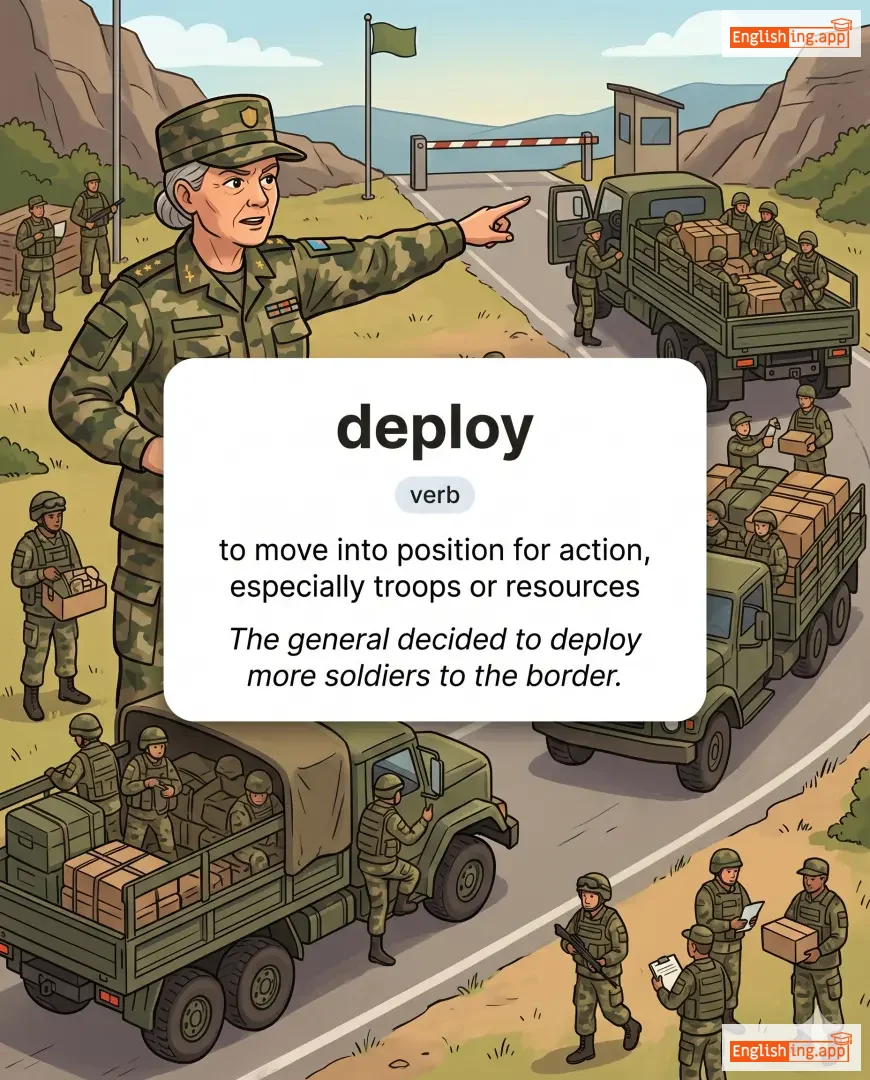
to move into position for action, especially troops or resources
••••••
|
The general decided to deploy more soldiers to the border.
将軍は国境にもっと兵士を配備することを決定しました。
••••••
|
将軍は国境にもっと兵士を配備することを決定しました。
Shōgun wa kokkyō ni motto heishi o haibi suru koto o kettei shimashita.
••••••
|
deploy resources
リソースを配備する
••••••
|
to effectively use available resources
••••••
|
リソースを配備する
risōsu o haibi suru
••••••
|
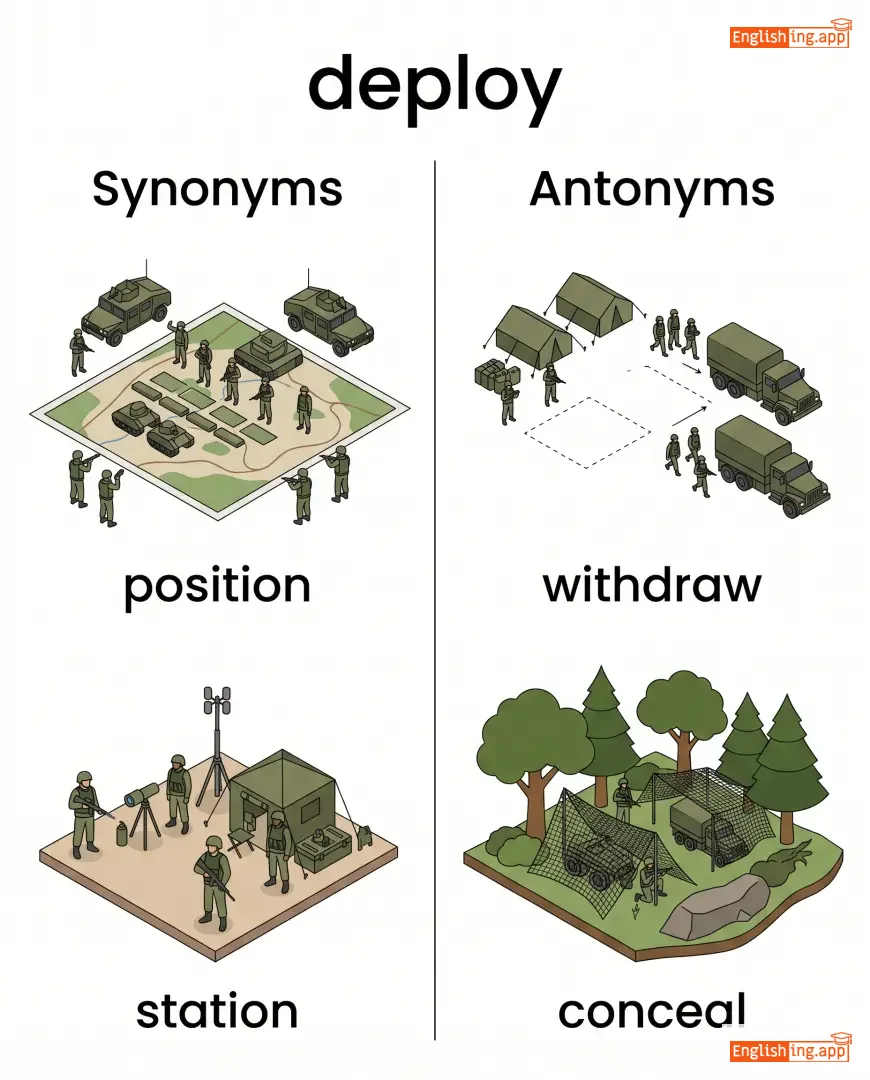
position, station, utilize, employ, arrange
••••••
|
withdraw, conceal
••••••
|
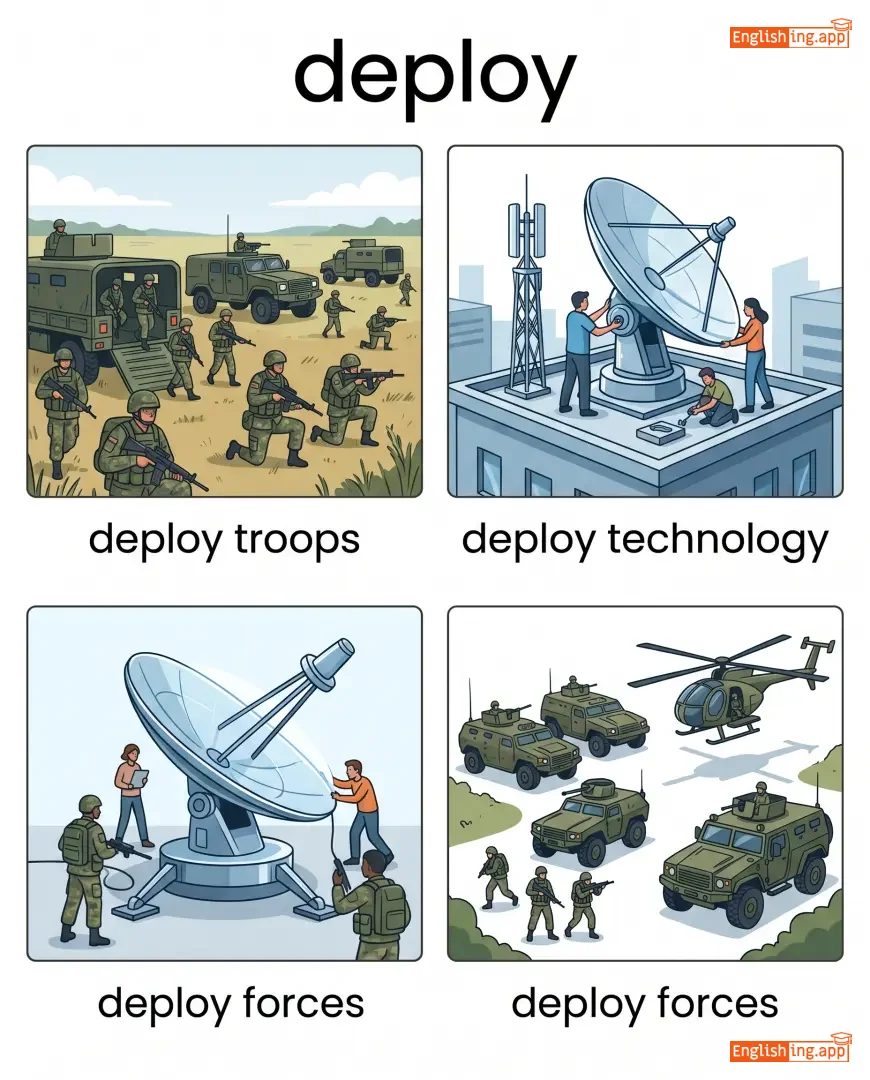
deploy troops, deploy technology, deploy forces, deploy strategy
••••••
|
Deployは軍隊を配置すること、リソースを配置することと似ています。
••••••
|
|
📦
••••••
|
/dɪˈplɔɪmənt/
noun
(dɪˈplɔɪmənt)
••••••
|

|
展開
tenkai
••••••
|
- •••••• | - •••••• | - •••••• | - •••••• |
the action of moving or positioning something into place for use
••••••
|
The deployment of the new software was completed successfully. |
新しいソフトウェアの展開は成功裏に完了しました。
Atarashī sofutowea no tenkai wa seikōri ni kanryō shimashita.
••••••
|
- •••••• | - •••••• | - •••••• |
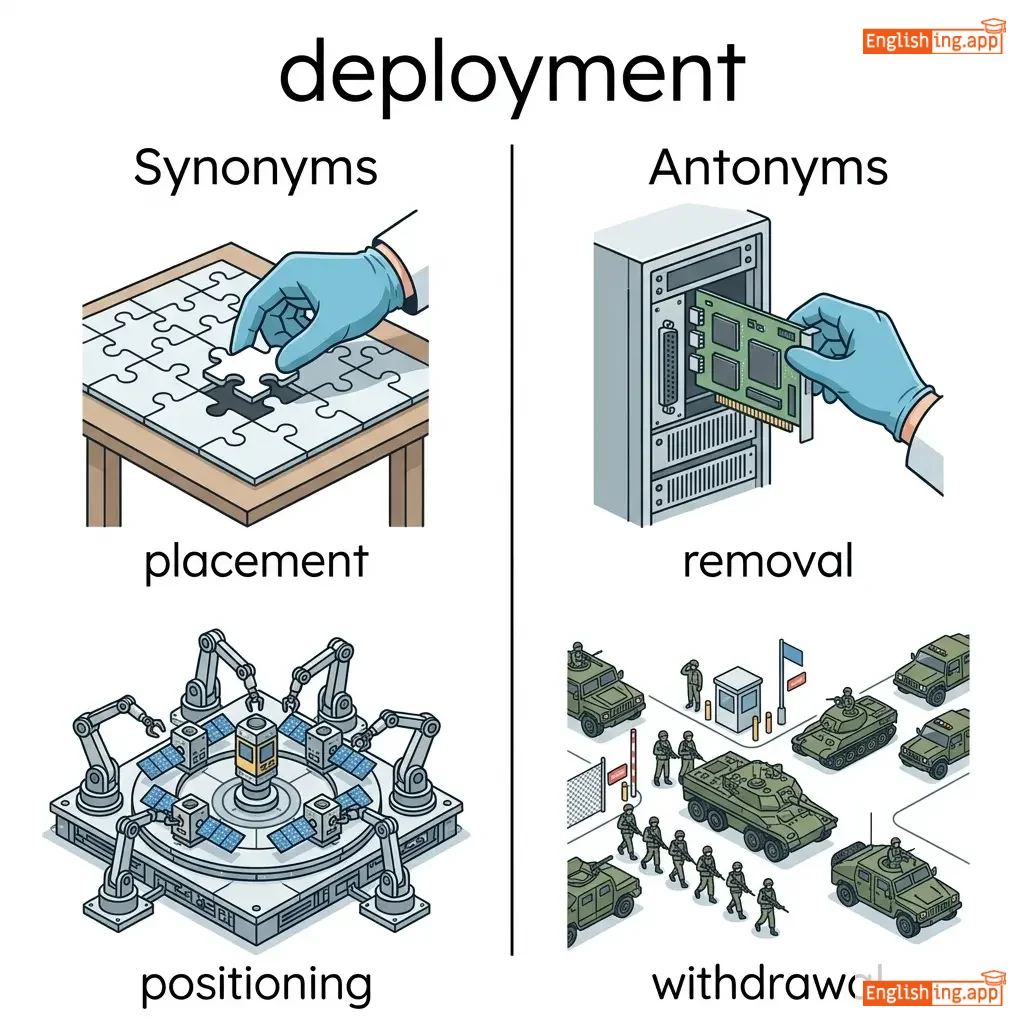
placement, positioning, arrangement, setup
••••••
|
removal, withdrawal
••••••
|
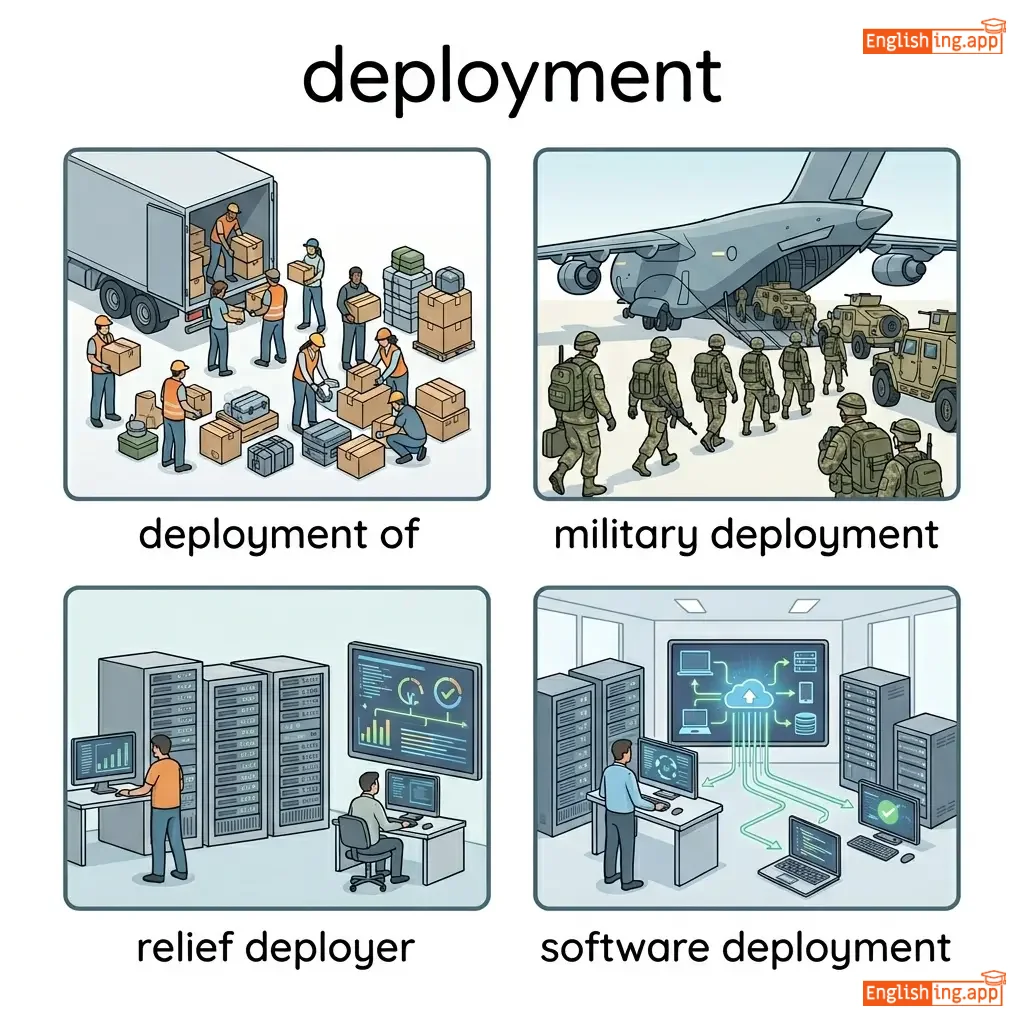
deployment of, military deployment, software deployment
••••••
|
新しい技術の設定 (deployment)
••••••
|
|
🏦
••••••
|
/dɪˈpɑːzɪt/
noun/verb
(デポジット)
••••••
|
- •••••• |
預金, 手付金
yokin, tetsukekin
••••••
|
deposited
デポジットした
••••••
|
deposited
デポジットした
••••••
|
deposits
デポジットする
••••••
|
depositing
デポジットする
••••••
|
to place money in a bank account, or a sum paid in advance as security; a layer of material left naturally
••••••
|
She deposited $500 into her savings account.
彼女は貯金口座に500ドルを預けました。
••••••
|
彼女は貯金口座に500ドルを預けました。
Kanojo wa chokin kouza ni 500 doru wo azukemashita.
••••••
|
security deposit
保証金
••••••
|
a sum of money held as a guarantee against damage or loss
••••••
|
保証金
hoshōkin
••••••
|
payment, down payment, savings, pledge, lodgment
••••••
|
withdrawal, debt
••••••
|
make a deposit, deposit money, deposit account, security deposit
••••••
|
Depositは銀行にお金を預けること、手付金や保証金として使います
••••••
|
|
😞
••••••
|
/dɪˈprɛs/
verb
(デプレス)
••••••
|
- •••••• |
落ち込ませる
ochikomaseru
••••••
|
depressed
デプレスト
••••••
|
depressed
デプレスト
••••••
|
depresses
デプレッシズ
••••••
|
depressing
デプレッシング
••••••
|
To make someone feel sad or without hope; to reduce the level or strength of something.
••••••
|
The gloomy weather tends to depress people.
陰鬱な天気は人々を落ち込ませる傾向がある。
••••••
|
陰鬱な天気は人々を落ち込ませる傾向がある。
In'utsu na tenki wa hitobito o ochikomaseru keikou ga aru.
••••••
|
press down
押し下げる
••••••
|
To push something down physically or emotionally.
••••••
|
押し下げる
oshisageru
••••••
|
sadden, discourage, lower, weaken, deject
••••••
|
encourage, uplift, inspire
••••••
|
depress the economy, depress the price, deeply depress, depress mood
••••••
|
Depressは押し下げるという意味 - 落ち込ませるも気分を押し下げる。
••••••
|
|
😔
••••••
|
/dɪˈprɛst/
adjective
(ディプレスド)
••••••
|
- •••••• |
落ち込んでいる
ochikondeiru
••••••
|
- •••••• | - •••••• | - •••••• | - •••••• |
Feeling very sad and without hope; in a state of unhappiness.
••••••
|
She felt depressed after losing her job. |
彼女は仕事を失った後、落ち込んでいました。
Kanojo wa shigoto o ushinatta ato, ochikondeimashita.
••••••
|
feeling blue |
Feeling sad or unhappy.
••••••
|
ブルーな気分
burū na kibun
••••••
|
sad, downcast, gloomy, unhappy, melancholic
••••••
|
happy, cheerful, joyful
••••••
|
deeply depressed, clinically depressed, depressed mood
••••••
|
落ち込んでいるのは仕事を失った後、ブルーな気分になるからです。
••••••
|
|
😔
••••••
|
/dɪˈprɛʃən/
noun
(デプレッション)
••••••
|
- •••••• |
デプレッション
depresshon
••••••
|
- •••••• | - •••••• | - •••••• | - •••••• |
A state of severe sadness or hopelessness; also a prolonged downturn in economic activity.
••••••
|
She has been battling depression for several months. |
彼女は数ヶ月間、デプレッションと戦っています。
Kanojo wa suukagetsu kan, depresshon to tatakatteimasu.
••••••
|
economic depression |
A long-term downturn in economic activity.
••••••
|
経済的なデプレッション
keizaiteki na depresshon
••••••
|
melancholy, sadness, gloom, slump, recession
••••••
|
happiness, joy, boom
••••••
|
suffer from depression, clinical depression, deep depression, economic depression
••••••
|
デプレッション = deep + pressure = 心の深い圧力感。
••••••
|
|
🚫
••••••
|
/dɪˈpraɪv/
verb
••••••
|
- •••••• | - •••••• |
deprived
••••••
|
deprived
••••••
|
deprives
••••••
|
depriving
••••••
|
to take something away from someone, or prevent them from having it
••••••
|
The new law may deprive people of their rights. |
- •••••• |
sleep-deprived |
lacking enough sleep
••••••
|
- •••••• |
deny, strip, remove, dispossess, rob
••••••
|
grant, give, provide
••••••
|
deprive of rights, deprive someone of, deprive freedom, sleep deprived
••••••
|
No •••••• |
|
🌊
••••••
|
/dɛpθ/
noun
(デプス)
••••••
|
- •••••• |
深さ
fukasa
••••••
|
- •••••• | - •••••• | - •••••• | - •••••• |
The distance from the top to the bottom of something; the intensity or complexity of a subject.
••••••
|
The diver measured the depth of the ocean trench. |
ダイバーは海洋の溝の深さを測定した。
Daibā wa kaiyō no mizu no fukasa o sokutei shita.
••••••
|
in depth |
In great detail or thoroughly.
••••••
|
深く
fukaku
••••••
|
deepness, intensity, profoundness, extent, complexity
••••••
|
shallowness, surface, height
••••••
|
great depth, depth of knowledge, emotional depth, depth perception
••••••
|
Depth = 深さ = 深いところへ進む。
••••••
|
|
👮
••••••
|
/ˈdɛpjʊti/
noun
(デピュティ)
••••••
|
- •••••• |
代理
dairi
••••••
|
- •••••• | - •••••• | - •••••• | - •••••• |
A person appointed as a substitute with power to act.
••••••
|
The deputy will lead the meeting in the manager’s absence.
デピュティはマネージャー不在時に会議を主導します。
••••••
|
代理はマネージャー不在時に会議を主導します。
Dairi wa manējā fuzai-ji ni kaigi o shudō shimasu.
••••••
|
- •••••• | - •••••• | - •••••• |
assistant, representative, delegate, subordinate, second-in-command
••••••
|
chief, leader, head
••••••
|
deputy manager, deputy minister, deputy director
••••••
|
Deputyは代理を意味します。たとえばDeputy Director(代理部長)。
••••••
|
|
📜
••••••
|
/dɪˈraɪv/
verb
(デリヴ)
••••••
|
- •••••• |
導き出す
michibikidasu
••••••
|
derived
デリヴド
••••••
|
derived
デリヴド
••••••
|
derives
デリヴス
••••••
|
deriving
デリヴィング
••••••
|
To obtain something from a source.
••••••
|
Many English words derive from Latin.
メニー・イングリッシュ・ワーズ・デリヴ・フロム・ラテン。
••••••
|
多くの英語の単語はラテン語から導き出される。
ooku no eigo no tango wa raten-go kara michibikidasareru.
••••••
|
derive benefit
デリヴ・ベネフィット
••••••
|
to gain an advantage from something
••••••
|
利益を得る
rieki o eru
••••••
|
obtain, acquire, originate, extract, gain
••••••
|
lose, give, surrender
••••••
|
derive from, derive meaning, derive benefit
••••••
|
Deriveは何かを源から得ること — '導き出す'として覚えよう。
••••••
|

