|
絵文字
|
単語 | Images | 翻訳 | 過去 | 過去分詞 | 三人称単数 | 動名詞 | 意味 | 例文 | 例文の翻訳 | 表現例 | 表現例の意味 | 表現例の翻訳 | 同義語 | 対義語 | コロケーション | ニーモニック |
|---|---|---|---|---|---|---|---|---|---|---|---|---|---|---|---|---|---|
|
👍
••••••
|
/əkˈsɛptəbəl/
adjective
(akuseptāberu)
••••••
|
- •••••• |
受け入れ可能な
ukeire kanōna
••••••
|
- •••••• | - •••••• | - •••••• | - •••••• |
able to be agreed upon; satisfactory or suitable
••••••
|
Your proposal is acceptable to the committee. |
あなたの提案は委員会に受け入れ可能です。
Anata no teian wa iinkai ni ukeire kanō desu.
••••••
|
socially acceptable |
considered appropriate by society
••••••
|
社会的に受け入れ可能な
shakai-teki ni ukeire kanō na
••••••
|
satisfactory, adequate, tolerable, suitable, agreeable
••••••
|
unacceptable, unsuitable, improper
••••••
|
acceptable level, acceptable standard, acceptable behavior, socially acceptable
••••••
|
Acceptableは受け入れ可能なことを意味し、覚えやすいです。
••••••
|
|
🤲
••••••
|
/əkˈsɛptəns/
noun
(akusetansu)
••••••
|
- •••••• |
受け入れ
ukeire
••••••
|
- •••••• | - •••••• | - •••••• | - •••••• |
the act of agreeing to receive or undertake something offered
••••••
|
Her acceptance of the award was met with applause. |
賞を受け入れる彼女は拍手で迎えられました。
Shou o ukeireru kanojo wa hakushu de mukaeraremashita.
••••••
|
acceptance speech |
a speech given when accepting an award or honor
••••••
|
受け入れスピーチ
ukeire supiichi
••••••
|
approval, agreement, consent, recognition
••••••
|
rejection, refusal, denial
••••••
|
letter of acceptance, acceptance speech, acceptance of offer, gain acceptance
••••••
|
Acceptance: 受け入れたら拍手でお祝いしよう!
••••••
|
|
🔑
••••••
|
/ˈæksɛs/
noun/verb
(アクセス)
••••••
|
- •••••• |
アクセス
akusesu
••••••
|
accessed
アクセスト
••••••
|
accessed
アクセスト
••••••
|
accesses
アクセセス
••••••
|
accessing
アクセシング
••••••
|
the ability to enter or use something; to reach or use something
••••••
|
Students have free access to the library.
学生は図書館への無料アクセスがあります。
••••••
|
学生は図書館への無料アクセスがあります。
Gakusei wa toshokan e no muryou akusesu ga arimasu.
••••••
|
gain access
アクセスを得る
••••••
|
to succeed in entering or using something
••••••
|
アクセスを得る
akusesu o eru
••••••
|
entry, approach, admission, connection
••••••
|
denial, exclusion
••••••
|
have access, provide access, gain access, limited access
••••••
|
アクセスは知識の扉を開ける鍵 🔑 です。
••••••
|
|
🚪
••••••
|
/əkˈsɛsəbl/
adjective
(akuseshiburu)
••••••
|
- •••••• |
アクセス可能
akusesu kanou
••••••
|
- •••••• | - •••••• | - •••••• | - •••••• |
easy to reach, use, or understand
••••••
|
The museum is easily accessible by public transport. |
その博物館は公共交通機関で簡単にアクセス可能です。
Sono hakubutsukan wa kōkyō kōtsū kikan de kantan ni akusesu kanō desu.
••••••
|
- •••••• | - •••••• | - •••••• |
approachable, reachable, available, attainable
••••••
|
inaccessible, unreachable
••••••
|
easily accessible, accessible information, accessible location, accessible resources
••••••
|
Accessibleは、ドアを開けるように簡単にアクセス可能です。
••••••
|
|
🚑
••••••
|
/ˈæksɪdənt/
noun
(akkusidento)
••••••
|
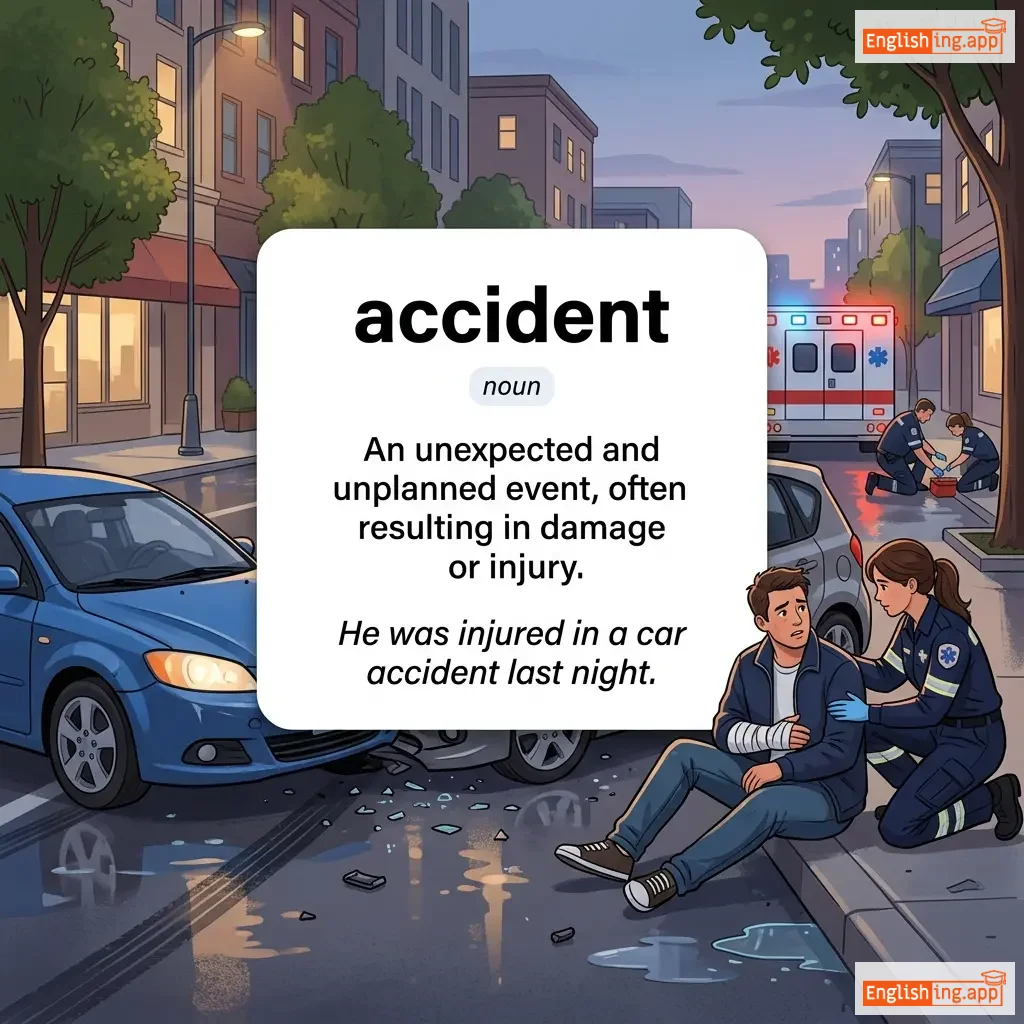
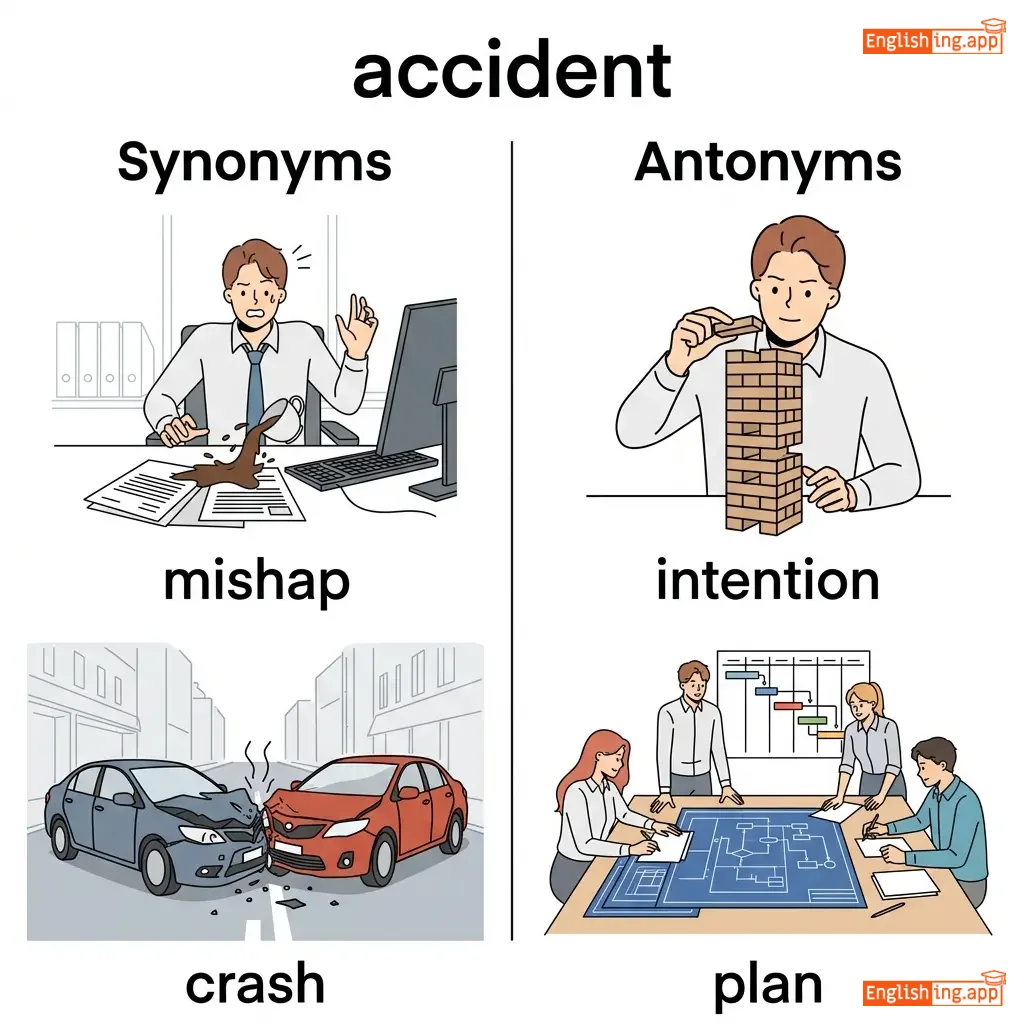
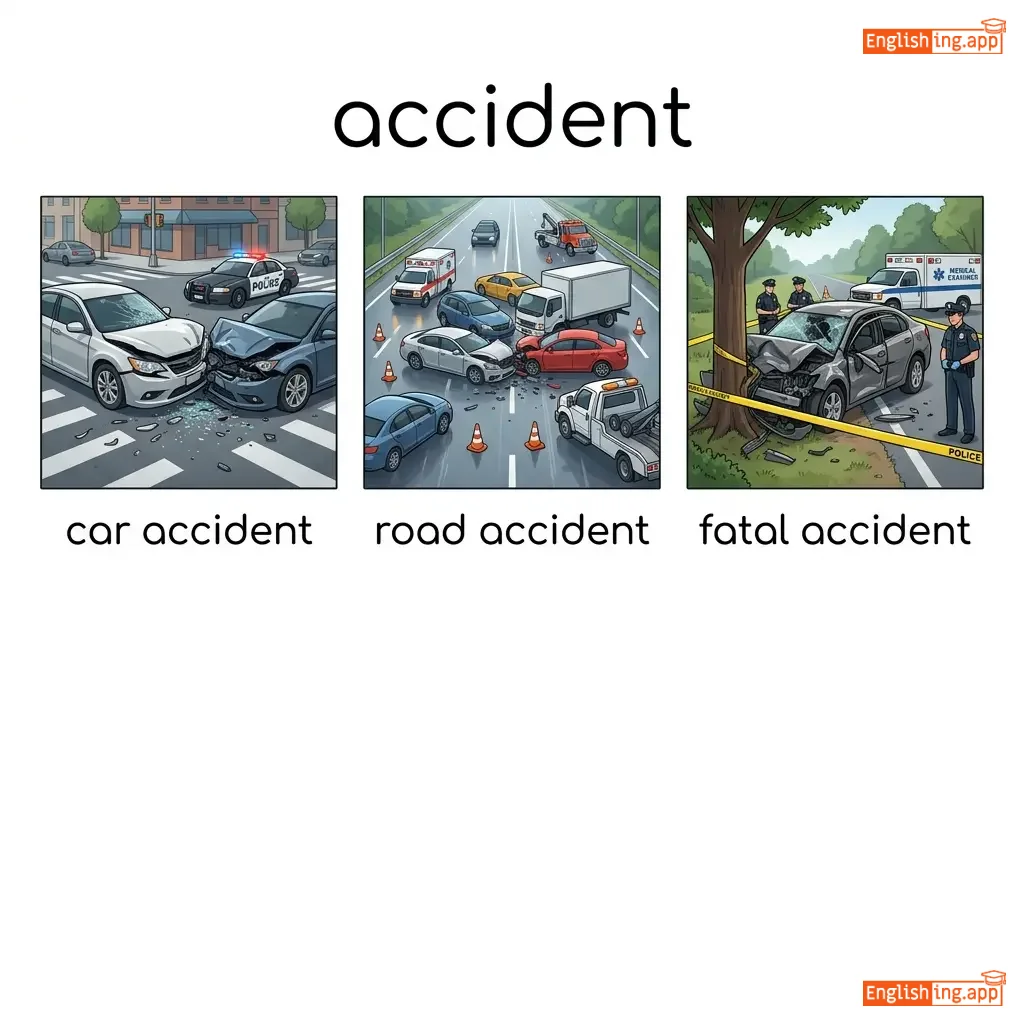
|
事故
jiko
••••••
|
- •••••• | - •••••• | - •••••• | - •••••• |
An unexpected and unplanned event, often resulting in damage or injury.
••••••
|
He was injured in a car accident last night. |
彼は昨晩の車の事故で怪我をしました。
Kare wa sakuban no kuruma no jiko de kega o shimashita.
••••••
|
by accident |
Something done unintentionally.
••••••
|
うっかり
ukkari
••••••
|
mishap, crash, disaster, incident
••••••
|
intention, plan
••••••
|
car accident, road accident, fatal accident, happen by accident
••••••
|
事故は事故を意味します — 車の事故が起こると、🚑 救急車が来ます。
••••••
|
|
⚠️
••••••
|
/ˌæksɪˈdɛntl/
adjective
(akkusidɛntaru)
••••••
|
- •••••• |
偶然の
gūzen no
••••••
|
- •••••• | - •••••• | - •••••• | - •••••• |
happening by chance, unintentionally
••••••
|
The fire was caused by an accidental spark. |
火事は偶然の火花によって引き起こされました。
Kaji wa gūzen no hibana ni yotte hikiokosaremashita.
••••••
|
accidental discovery |
a useful finding that happens unexpectedly
••••••
|
偶然の発見
gūzen no hakken
••••••
|
unintended, chance, inadvertent, fortuitous, coincidental
••••••
|
deliberate, intentional, planned
••••••
|
accidental damage, accidental fire, accidental meeting
••••••
|
偶然の: 予期しない出来事が発生すること。
••••••
|
|
⚠️
••••••
|
/ˌæksɪˈdɛntəli/
adverb
(akushidentarī)
••••••
|
- •••••• |
偶然に
gūzen ni
••••••
|
- •••••• | - •••••• | - •••••• | - •••••• |
happening by chance or unexpectedly
••••••
|
He accidentally dropped the glass. |
彼はうっかりグラスを落としてしまった。
Kare wa ukkari gurasu o otoshite shimatta.
••••••
|
- •••••• | - •••••• | - •••••• |
unintentionally, mistakenly, by accident, fortuitously
••••••
|
intentionally, deliberately
••••••
|
accidentally break, accidentally discover, accidentally fall
••••••
|
偶然に = Imagine dropping something and say 'gūzen ni'.
••••••
|
|
🏨
••••••
|
/əˈkɒmədeɪt/
verb
(アコモデート)
••••••
|
- •••••• |
収容する
shūyō suru
••••••
|
accommodated
アコモデーテッド
••••••
|
accommodated
アコモデーテッド
••••••
|
accommodates
アコモデーツ
••••••
|
accommodating
アコモデーティング
••••••
|
To provide lodging, space, or meet the needs of someone.
••••••
|
The hotel can accommodate up to 200 guests.
ホテルは最大200人を収容できます。
••••••
|
ホテルは最大200人を収容できます。
hoteru wa saidai 200 nin o shūyō dekimasu.
••••••
|
accommodate needs
ニーズを満たす
••••••
|
to fulfill or provide for requirements
••••••
|
ニーズを満たす
nīzu o mitasu
••••••
|
house, lodge, contain, serve, assist
••••••
|
reject, refuse, turn away
••••••
|
accommodate guests, accommodate needs, accommodate changes
••••••
|
Accommodateはゲストのために部屋を収容することを意味します
••••••
|
|
🚶♂️
••••••
|
/əˈkʌmpəni/
verb
(アカンパニー)
••••••
|
- •••••• |
同行する
dōkō suru
••••••
|
accompanied
アカンパニード
••••••
|
accompanied
アカンパニード
••••••
|
accompanies
アカンパニーズ
••••••
|
accompanying
アカンパニーイング
••••••
|
to go somewhere with someone as a companion or escort
••••••
|
She asked her friend to accompany her to the concert.
彼女は友達にコンサートに一緒に行ってほしいと頼んだ。
••••••
|
彼女は友達にコンサートに一緒に行ってほしいと頼んだ。
Kanojo wa tomodachi ni konsāto ni issho ni itte hoshī to tanonda.
••••••
|
accompany someone on
誰かと一緒に行く
••••••
|
to go with someone to a specific event or place
••••••
|
誰かとイベントに同行する
dareka to ibento ni dōkō suru
••••••
|
escort, attend, join, follow, guide
••••••
|
leave, abandon
••••••
|
accompany someone, accompany music, accompany a guest, accompany a speech
••••••
|
同行するは‘company’みたいに一緒に行くこと。
••••••
|
|
✅
••••••
|
/əˈkʌmplɪʃ/
verb
(akômplish)
••••••
|
- •••••• |
達成する
tassei suru
••••••
|
accomplished
akômplisht
••••••
|
accomplished
akômplisht
••••••
|
accomplishes
akômplishes
••••••
|
accomplishing
akômplishing
••••••
|
to achieve or complete successfully
••••••
|
She managed to accomplish all her goals for the year.
彼女はその年の目標をすべて達成することができました。
••••••
|
彼女はその年の目標をすべて達成することができました。
Kanojo wa sono toshi no mokuhyō o subete tassei suru koto ga dekimashita.
••••••
|
mission accomplished
ミッション完了
••••••
|
used to say a task has been successfully completed
••••••
|
ミッション完了
Misshon kanryō
••••••
|
achieve, complete, finish, attain, fulfill
••••••
|
fail, abandon
••••••
|
accomplish a goal, accomplish a task, accomplish objectives
••••••
|
Accomplishは目標達成を意味します。例: 'ミッション完了'
••••••
|
|
🏆
••••••
|
/əˈkʌmplɪʃmənt/
noun
(アクンプリッシュメント)
••••••
|
- •••••• |
達成
tassei
••••••
|
- •••••• | - •••••• | - •••••• | - •••••• |
something that has been achieved successfully
••••••
|
Graduating from university was a major accomplishment for him. |
大学を卒業することは彼にとって大きな達成でした。
Daigaku o sotsugyō suru koto wa kare ni totte ōkina tassei deshita.
••••••
|
sense of accomplishment |
a feeling of pride and satisfaction from achieving something
••••••
|
達成感
tassei kan
••••••
|
achievement, success, fulfillment, attainment
••••••
|
failure, defeat
••••••
|
great accomplishment, remarkable accomplishment, personal accomplishment, sense of accomplishment
••••••
|
Accomplishment はミッション完了の達成感 — ミッション完了=成功!
••••••
|
|
📜
••••••
|
/əˈkɔːrdəns/
noun
(アコーダンス)
••••••
|
- •••••• |
一致
icchi
••••••
|
- •••••• | - •••••• | - •••••• | - •••••• |
agreement or harmony with something; compliance with rules, laws, or wishes
••••••
|
The policy was implemented in accordance with international law.
ザ ポリシー ワズ インプリメンテッド イン アコーダンス ウィズ インターナショナル ロー
••••••
|
その方針は国際法に従って実施された。
sono houshin wa kokusaihou ni shitagatte jisshi sareta
••••••
|
in accordance with
イン アコーダンス ウィズ
••••••
|
in agreement or compliance with something
••••••
|
〜に従って
ni shitagatte
••••••
|
agreement, conformity, compliance, harmony, consistency
••••••
|
conflict, disagreement, opposition
••••••
|
in accordance with law, in accordance with rules, act in accordance, accordance to standards
••••••
|
accordance は一致—日本語の一致と同じ感覚。
••••••
|
|
📑
••••••
|
/əˈkɔːrdɪŋ/
preposition/adverb
(アコーディング)
••••••
|
- •••••• |
によると
niyoruto
••••••
|
- •••••• | - •••••• | - •••••• | - •••••• |
As stated by or in agreement with.
••••••
|
According to the report, sales increased last quarter. |
報告書によると、売上は前四半期に増加しました。
Houkokusho niyoruto, uriage wa zenshihanki ni zouka shimashita.
••••••
|
according to plan |
Happening as it was intended or arranged.
••••••
|
計画によると
Keikaku niyoruto
••••••
|
as stated, as reported, in line with, consistent with
••••••
|
contrary to, against
••••••
|
according to law, according to rules, according to tradition
••••••
|
According はによると、報告書に基づいてすべてが進む。
••••••
|
|
➡️
••••••
|
/əˈkɔːr.dɪŋ.li/
adverb
(アコーディングリー)
••••••
|
- •••••• |
したがって; このように; 状況に応じて
shitagatte; kono yō ni; jōkyō ni ōjite
••••••
|
- •••••• | - •••••• | - •••••• | - •••••• |
in a way that is appropriate to the particular circumstances; therefore; consequently
••••••
|
The weather was bad, so the event was cancelled accordingly. |
天気が悪かったので、イベントはそのようにキャンセルされました。
Tenki ga warukatta node, ibento wa sono yō ni kyansuru sare mashita.
••••••
|
- •••••• | - •••••• | - •••••• |
therefore, consequently, thus, hence
••••••
|
inappropriately, unsuitably
••••••
|
act accordingly, respond accordingly, plan accordingly
••••••
|
‘accordingly’は状況に合わせて結果を出すものだと覚えておきましょう。
••••••
|
|
🚶♂️
••••••
|
/əˈkɒst/
verb
(アコスト)
••••••
|
- •••••• |
強引に話しかける
gōin ni hanashikakeru
••••••
|
accosted
アコステッド
••••••
|
accosted
アコステッド
••••••
|
accosts
アコスツ
••••••
|
accosting
アコスティング
••••••
|
to approach and speak to someone boldly or aggressively
••••••
|
The reporter was accosted by protesters outside the courthouse.
報道陣は裁判所の外で抗議者にアコストされた。
••••••
|
報道陣は裁判所の外で抗議者にアコストされた。
Hōdōjin wa saibansho no soto de kōgisha ni akosuto sareta.
••••••
|
- •••••• | - •••••• | - •••••• |
confront, approach, address, hail, stop
••••••
|
avoid, ignore, evade
••••••
|
accost someone, accost on the street, suddenly accost, accosted by
••••••
|
Accostは、誰かに突然強引に話しかけること
••••••
|
|
📒
••••••
|
/əˈkaʊnt/
noun
••••••
|
- •••••• | - •••••• | - •••••• | - •••••• | - •••••• | - •••••• |
a record or statement of financial expenditure or receipts; a report or description of an event or experience
••••••
|
She opened a new bank account to save for her studies. |
- •••••• |
on account of |
because of
••••••
|
- •••••• |
record, report, explanation, statement, description
••••••
|
disregard, ignorance
••••••
|
bank account, on account of, account for, savings account
••••••
|
No •••••• |
|
📋
••••••
|
/əˌkaʊntəˈbɪlɪti/
noun
(アカウンタビリティ)
••••••
|
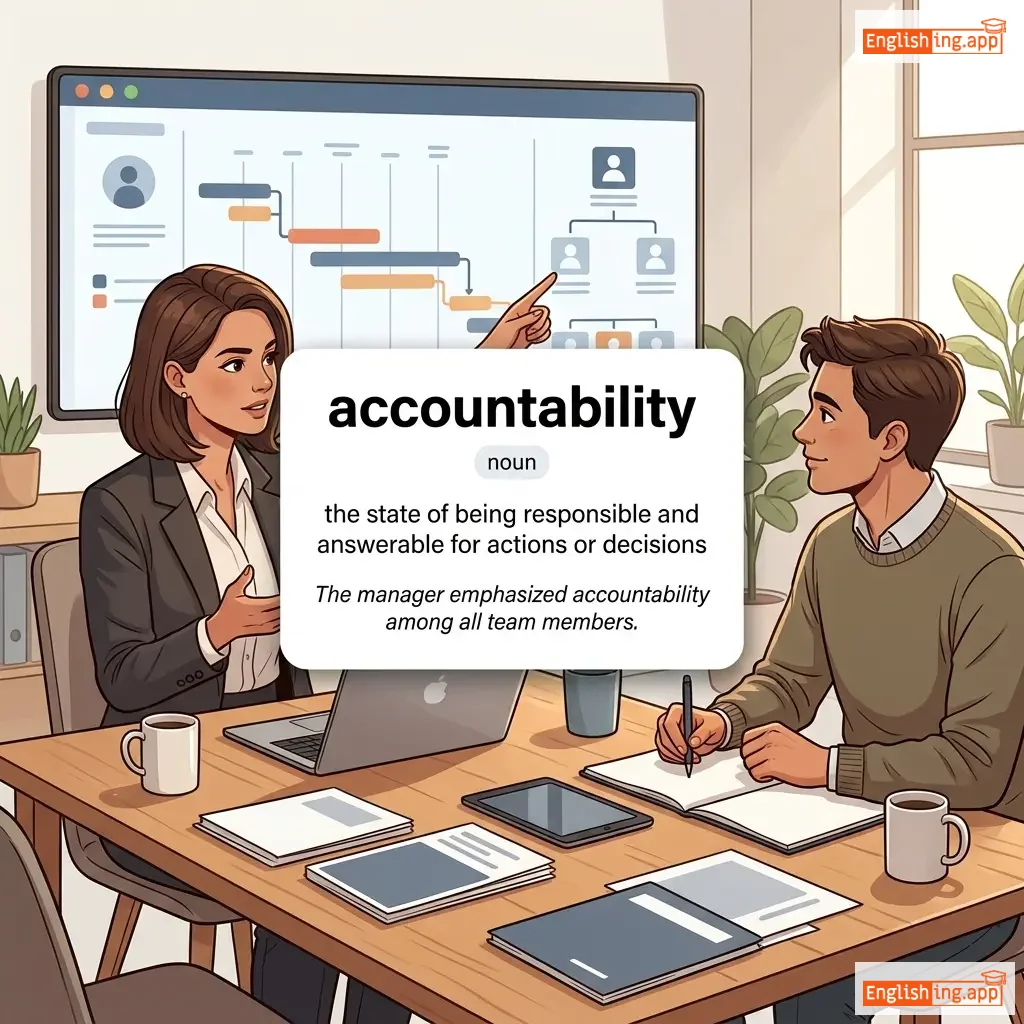
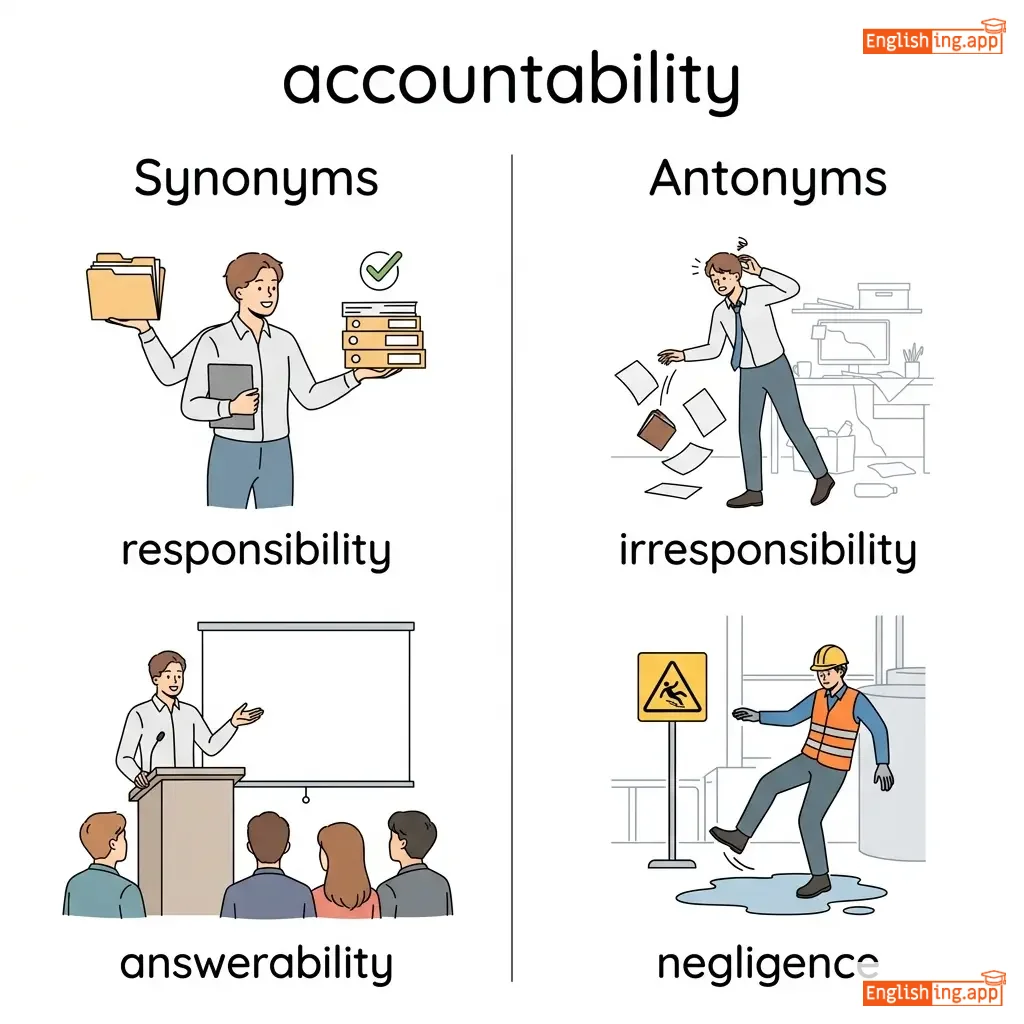
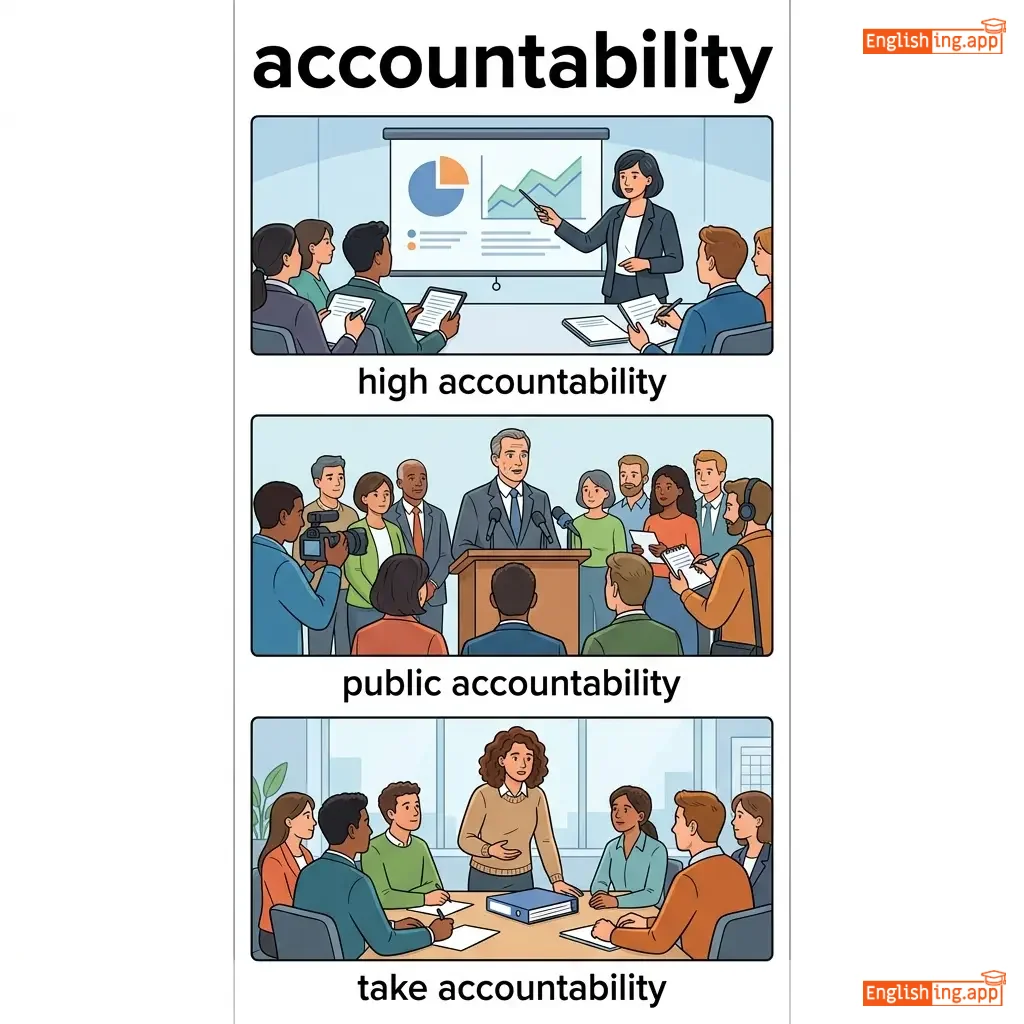
|
責任
sekinin
••••••
|
- •••••• | - •••••• | - •••••• | - •••••• |
the state of being responsible and answerable for actions or decisions
••••••
|
The manager emphasized accountability among all team members. |
マネージャーはチームメンバー全員に責任を強調しました。
Manējā wa chīmu menbā zen'in ni sekinin o kyōchō shimashita.
••••••
|
take accountability |
to accept responsibility for one’s actions
••••••
|
責任を負う
sekinin o ou
••••••
|
responsibility, answerability, liability, obligation
••••••
|
irresponsibility, negligence
••••••
|
high accountability, public accountability, take accountability, ensure accountability
••••••
|
責任とは自分の行動に答えること — まさに答えを出すこと!
••••••
|
|
⚖️
••••••
|
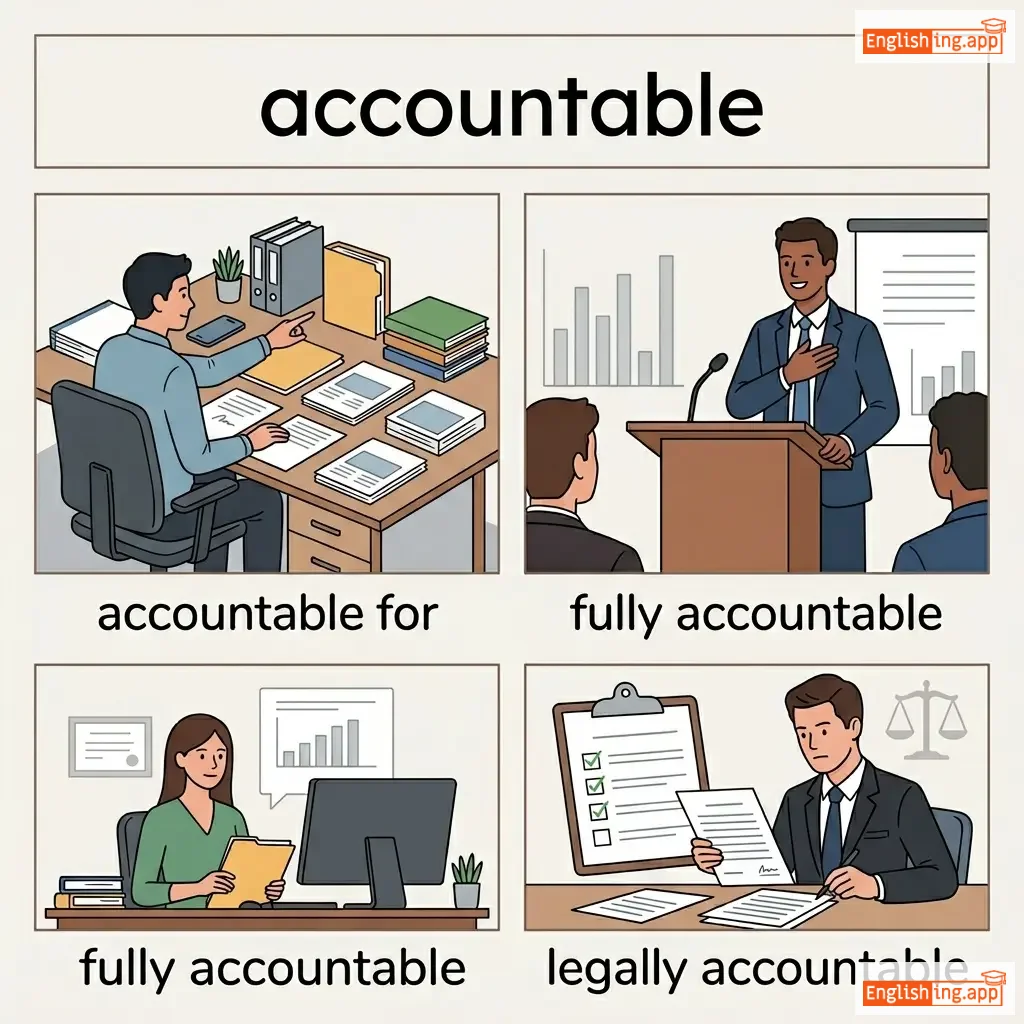
/əˈkaʊn.tə.bəl/
adjective
(アカウンタブル)
••••••
|
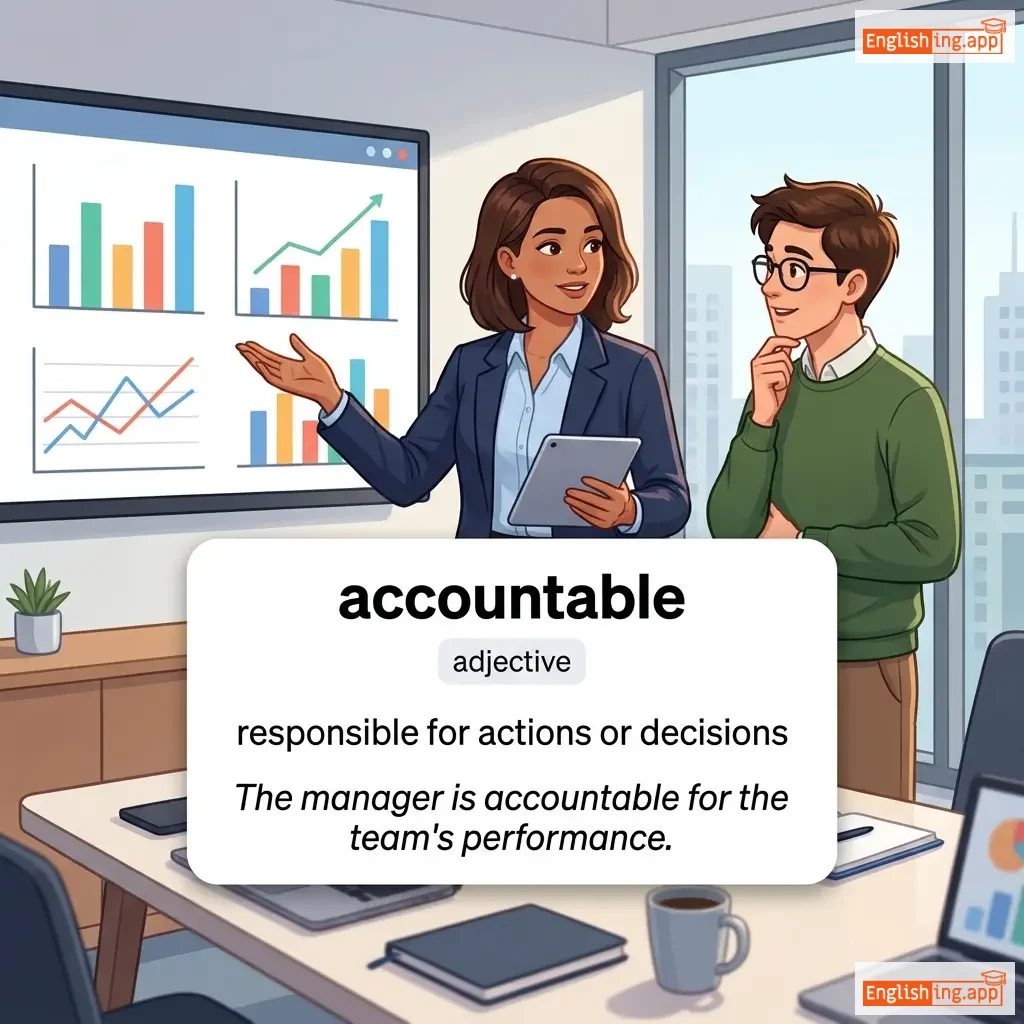
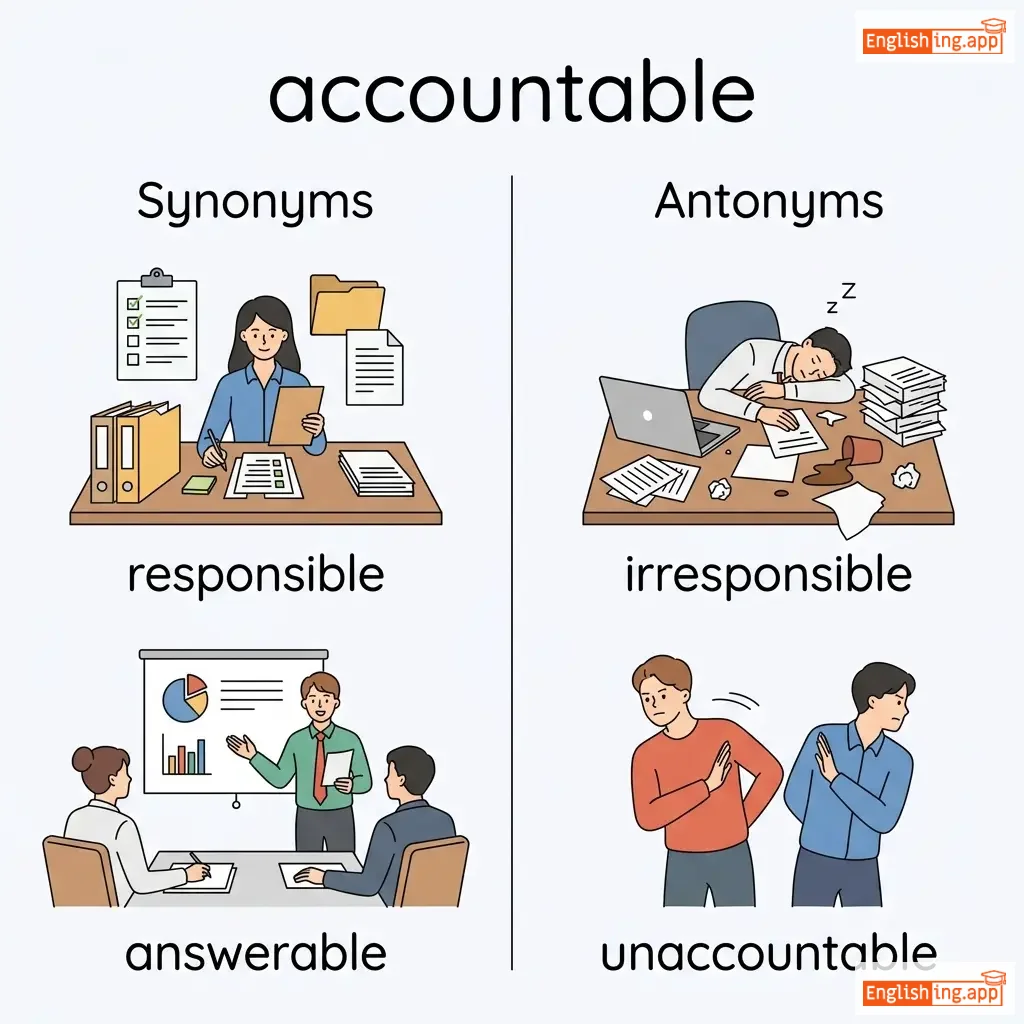
|
責任がある; 責任を負う
sekinin ga aru; sekinin o ou
••••••
|
- •••••• | - •••••• | - •••••• | - •••••• |
responsible for your decisions or actions and expected to explain them when you are asked
••••••
|
The government should be held accountable for its policies.
政府はその政策に対して責任を持つべきです。
••••••
|
政府はその政策に対して責任を持つべきです。
Seifu wa sono seisaku ni taishite sekinin o motsu beki desu.
••••••
|
- •••••• | - •••••• | - •••••• |
responsible, answerable, liable, culpable
••••••
|
unaccountable, irresponsible, exempt
••••••
|
held accountable, accountable for, accountable to
••••••
|
Accountable means being responsible, just like the government being accountable for its actions.
••••••
|
|
💼
••••••
|
/əˈkaʊntənt/
noun
(アカウンタント)
••••••
|
- •••••• |
会計士
kaikeishi
••••••
|
- •••••• | - •••••• | - •••••• | - •••••• |
a person whose job is to keep or check financial accounts
••••••
|
The accountant prepared the financial reports for the company.
会計士は会社の財務報告書を準備しました。
••••••
|
会計士は会社の財務報告書を準備しました。
Kaikeishi wa kaisha no zaimu hōkokusho o junbi shimashita.
••••••
|
- •••••• | - •••••• | - •••••• |
bookkeeper, auditor, financial officer
••••••
|
client, consumer
••••••
|
hire an accountant, experienced accountant, qualified accountant
••••••
|
会計士は帳簿を作る (kaikeishi wa chōbo o tsukuru)
••••••
|
|
📚
••••••
|
/əˈkjuːmjəleɪt/
verb
(アキュムレート)
••••••
|
- •••••• |
蓄積する
chikuseki suru
••••••
|
accumulated
アキュムレーテッド
••••••
|
accumulated
アキュムレーテッド
••••••
|
accumulates
アキュムレーツ
••••••
|
accumulating
アキュムレーティング
••••••
|
to gather or collect things gradually over time
••••••
|
She managed to accumulate a small fortune through wise investments.
彼女は賢明な投資を通じて少しの富を積み上げることができました。
••••••
|
彼女は賢明な投資を通じて少しの富を積み上げることができました。
Kanojo wa kenmei na tōshi o tōjite sukoshi no tomi o tsumiageru koto ga dekimashita.
••••••
|
- •••••• | - •••••• | - •••••• |
amass, collect, gather, pile up, hoard
••••••
|
spend, scatter, disperse
••••••
|
accumulate wealth, accumulate knowledge, accumulate experience, gradually accumulate
••••••
|
Accumulate → AC+マユが物を集める → 蓄積する
••••••
|
|
📚
••••••
|
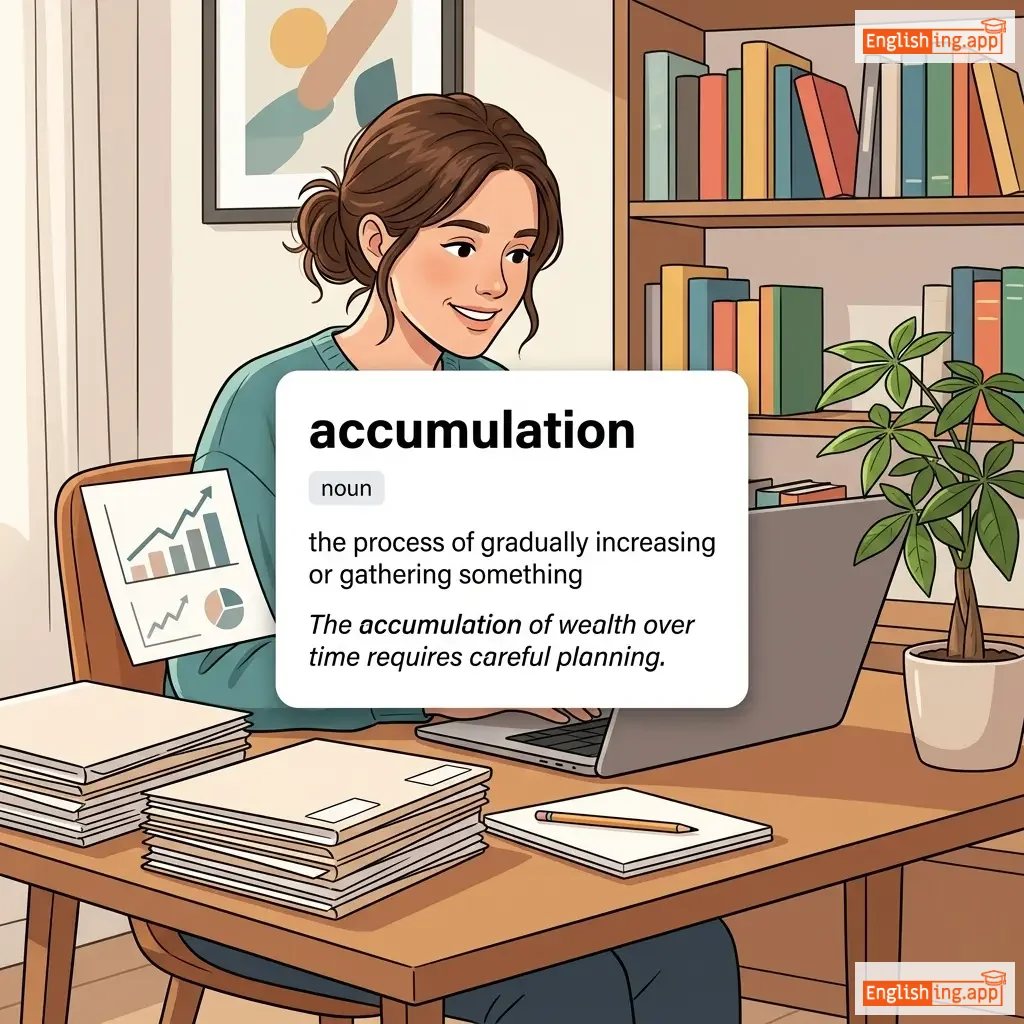
/əˌkjuːmjʊˈleɪʃən/
noun
(アキュムレーション)
••••••
|
|
蓄積
chikuseki
••••••
|
- •••••• | - •••••• | - •••••• | - •••••• |
the process of gradually increasing or gathering something
••••••
|
The accumulation of wealth over time requires careful planning.
時間の経過とともに富の蓄積には慎重な計画が必要です。
••••••
|
時間の経過とともに富の蓄積には慎重な計画が必要です。
Jikan no keika to tomo ni tomi no chikuseki ni wa shinchou na keikaku ga hitsuyou desu.
••••••
|
- •••••• | - •••••• | - •••••• |
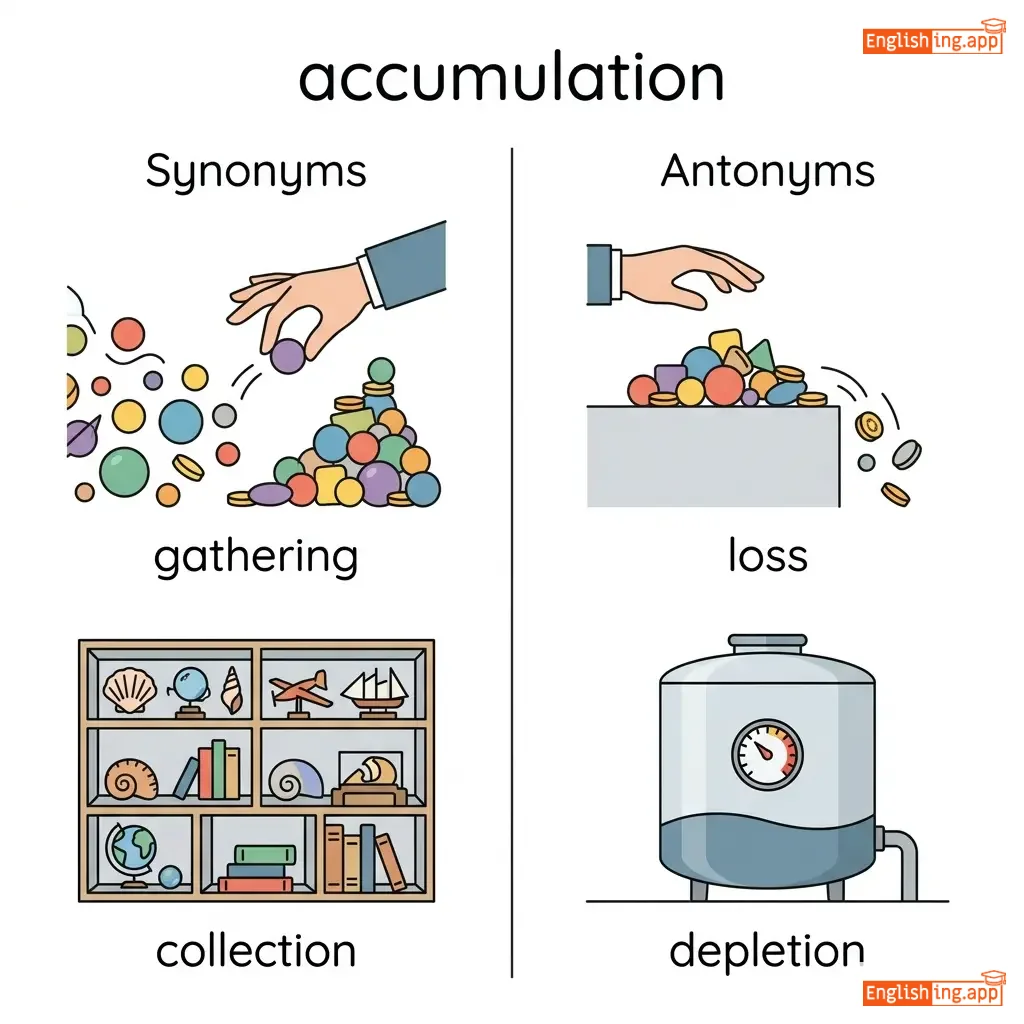
gathering, collection, buildup
••••••
|
loss, depletion
••••••
|
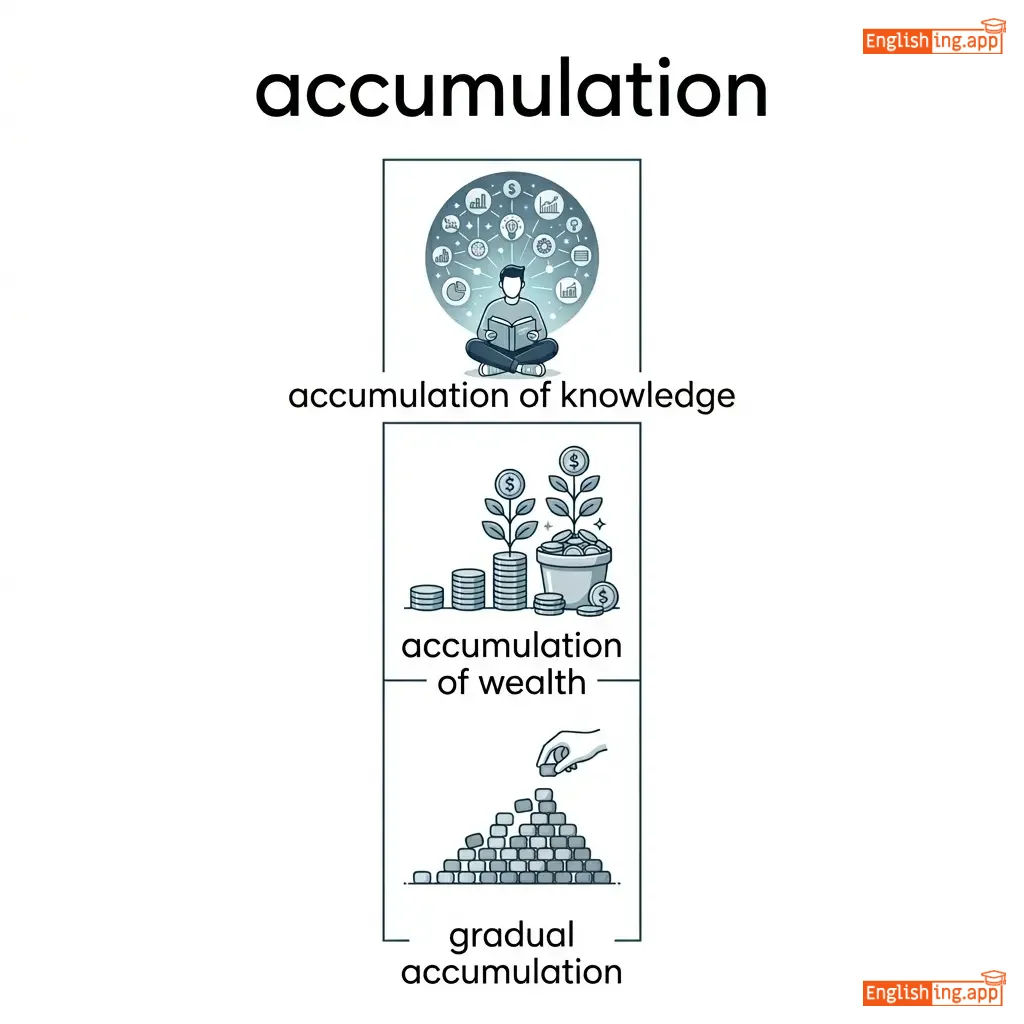
accumulation of knowledge, accumulation of wealth, gradual accumulation
••••••
|
蓄積 - 少しずつ集める。
••••••
|
|
🎯
••••••
|
/ˈækjərəsi/
noun
(akiyureshi)
••••••
|
- •••••• |
精度
seido
••••••
|
- •••••• | - •••••• | - •••••• | - •••••• |
the quality or state of being correct or precise
••••••
|
The accuracy of the report was confirmed by experts. |
報告書の精度は専門家によって確認されました。
hōkokusho no seido wa senmonka ni yotte kakunin saremashita.
••••••
|
pinpoint accuracy |
extremely precise or exact
••••••
|
精密な精度
seimitsuna seido
••••••
|
precision, exactness, correctness, validity, trueness
••••••
|
inaccuracy, error, mistake
••••••
|
accuracy of data, accuracy in measurement, high accuracy, ensure accuracy
••••••
|
精度 = 🎯 完璧なターゲットヒット
••••••
|
|
🎯
••••••
|
/ˈæk.jʊ.rət/
adjective
(ākyuret)
••••••
|
- •••••• |
正確
seikaku
••••••
|
- •••••• | - •••••• | - •••••• | - •••••• |
Free from errors; correct and precise.
••••••
|
The information provided in the report was accurate. |
レポートに提供された情報は正確でした。
Repōto ni teikyō sareta jōhō wa seikaku deshita.
••••••
|
accurate to a fault |
So precise that it might even be excessive.
••••••
|
過剰なほど正確
kajō na hodo seikaku
••••••
|
correct, precise, exact, true, right
••••••
|
inaccurate, wrong, false
••••••
|
accurate information, accurate measurement, accurate data, accurate results
••••••
|
正確は完璧、誤りは一切ない。
••••••
|
|
🎯
••••••
|
/ˈæk.jə.rət.li/
adverb
(アキュレートリー)
••••••
|
- •••••• |
正確に、間違いなく、適切に
seikaku ni, machigainaku, tekisetsu ni
••••••
|
- •••••• | - •••••• | - •••••• | - •••••• |
in an exact way, without any mistakes; precisely; correctly
••••••
|
She accurately predicted the outcome of the election. |
彼女は選挙結果を正確に予測した。
kanojo wa senkyo kekka o seikaku ni yosoku shita
••••••
|
- •••••• | - •••••• | - •••••• |
precisely, exactly, correctly, perfectly
••••••
|
inaccurately, wrongly, incorrectly
••••••
|
accurately describe, accurately measure, accurately predict
••••••
|
Japanese '正確' for accurate, English 'correctly' – '正確に、間違いなく'.
••••••
|
|
☝️
••••••
|
/ˌæk.jʊˈzeɪ.ʃən/
noun
(アクザセーション)
••••••
|
- •••••• |
告発
kokuhatsu
••••••
|
- •••••• | - •••••• | - •••••• | - •••••• |
A statement that someone has done something wrong or illegal.
••••••
|
She made an accusation of theft against her colleague.
彼女は同僚に対して窃盗の告発を行いました。
••••••
|
彼女は同僚に対して窃盗の告発を行いました。
Kanojo wa dōryō ni taishite settō no kokuhatsu o okonai mashita.
••••••
|
false accusation
虚偽の告発
••••••
|
An untrue claim blaming someone.
••••••
|
虚偽の告発
kyogi no kokuhatsu
••••••
|
allegation, charge, complaint, blame
••••••
|
praise, acquittal
••••••
|
serious accusation, false accusation, accusation of theft
••••••
|
告発はaccusationの日本語、誰かを告発するのは告発です。
••••••
|
|
👉
••••••
|
/əˈkjuːz/
verb
••••••
|

|
- •••••• |
accused
••••••
|
accused
••••••
|
accuses
••••••
|
accusing
••••••
|
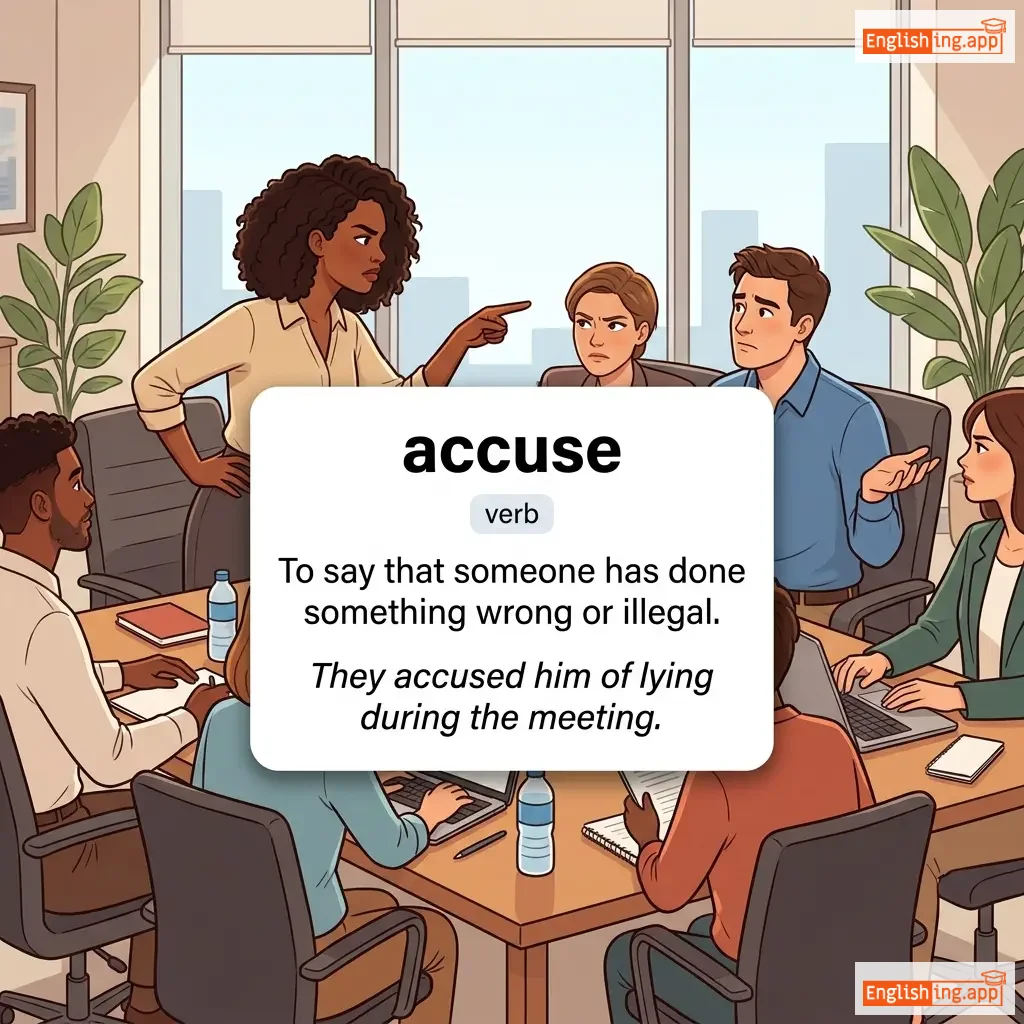
To say that someone has done something wrong or illegal.
••••••
|
They accused him of lying during the meeting. |
- •••••• |
accuse someone falsely |
Blame someone without evidence.
••••••
|
- •••••• |
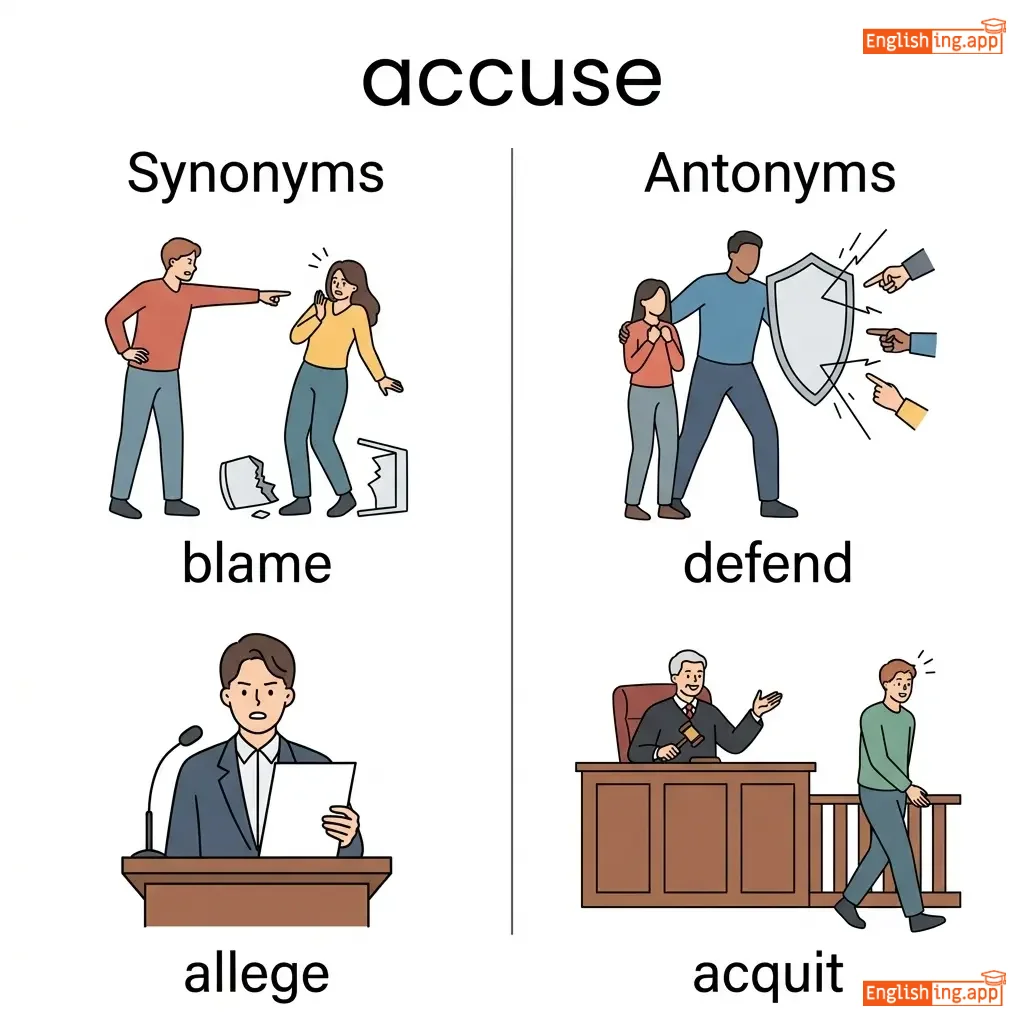
blame, allege, charge, indict
••••••
|
defend, acquit
••••••
|
accuse of crime, accuse falsely, accuse publicly
••••••
|
No •••••• |
|
⚖️
••••••
|
/əˈkjuːzd/
noun
(アキューズド)
••••••
|
- •••••• |
被告
hikoku
••••••
|
- •••••• | - •••••• | - •••••• | - •••••• |
a person who has been charged with a crime
••••••
|
The accused pleaded not guilty in court.
被告人は法廷で無罪を主張しました。
••••••
|
被告人は法廷で無罪を主張しました。
Hikokunin wa houtei de muzai o shuchou shimashita.
••••••
|
- •••••• | - •••••• | - •••••• |
defendant, suspect, offender
••••••
|
victim, plaintiff
••••••
|
accused of theft, accused person, wrongly accused
••••••
|
被告 - 告発 (hikoku - kokuhatsu) 彼は無罪を主張した
••••••
|
|
🤕
••••••
|
/eɪk/
verb
(エイチ)
••••••
|
- •••••• |
痛み
itami
••••••
|
ached
エイチド
••••••
|
ached
エイチド
••••••
|
aches
エイチェス
••••••
|
aching
エイチング
••••••
|
to suffer a continuous dull pain
••••••
|
Her back ached after sitting for so long.
長時間座っていた後、背中が痛くなった。
••••••
|
長時間座っていた後、背中が痛くなった。
Chōjikan suwatte ita ato, senaka ga itaku natta.
••••••
|
heartache
ハートエイク
••••••
|
emotional pain or grief
••••••
|
心の痛み
kokoro no itami
••••••
|
hurt, pain, throb, suffer
••••••
|
comfort, relief
••••••
|
stomach ache, back ache, head ache, dull ache
••••••
|
Ache は痛みを意味します、痛い時は ‘ache’ と言ってみましょう
••••••
|
|
🏆
••••••
|
/əˈtʃiːv/
verb
(アチーブ)
••••••
|
- •••••• |
達成する
tassei suru
••••••
|
achieved
アチーブド
••••••
|
achieved
アチーブド
••••••
|
achieves
アチーブス
••••••
|
achieving
アチービング
••••••
|
to successfully bring about or reach a desired goal or result
••••••
|
She worked hard to achieve her dream of becoming a doctor.
彼女は医者になるという夢を達成するために一生懸命働いた。
••••••
|
彼女は医者になるという夢を達成するために一生懸命働いた。
Kanojo wa isha ni naru to iu yume o tassei suru tame ni isshoukenmei hataraita.
••••••
|
achieve success
成功を収める
••••••
|
to become successful
••••••
|
成功を収める
seikou o osameru
••••••
|
accomplish, attain, realize, fulfill, complete
••••••
|
fail, lose, abandon
••••••
|
achieve goal, achieve success, achieve results, achieve excellence
••••••
|
Achieveは達成するという意味です — 成功を収めるためには、目標を達成しなければなりません。
••••••
|
|
🏆
••••••
|
/əˈtʃiːvmənt/
noun
(アチーブメント)
••••••
|
- •••••• |
達成
tassei
••••••
|
- •••••• | - •••••• | - •••••• | - •••••• |
Something that has been successfully completed or accomplished through effort or skill.
••••••
|
Graduating from university was her greatest achievement. |
大学を卒業することは彼女の最大の達成でした。
Daigaku o sotsugyō suru koto wa kanojo no saidai no tassei deshita.
••••••
|
a sense of achievement |
a feeling of pride in accomplishing something
••••••
|
達成感
tasseikan
••••••
|
accomplishment, success, triumph, attainment, feat
••••••
|
failure, defeat
••••••
|
great achievement, outstanding achievement, sense of achievement, academic achievement
••••••
|
Achievementは達成; 試験に合格すると達成感が得られる。
••••••
|
|
🍋
••••••
|
/ˈæsɪd/
noun
(酸)
••••••
|
- •••••• |
酸
san
••••••
|
- •••••• | - •••••• | - •••••• | - •••••• |
a chemical substance that reacts with bases and has a sour taste
••••••
|
Lemons contain citric acid.
レモンにはクエン酸が含まれています。
••••••
|
レモンにはクエン酸が含まれています。
remon ni wa kuensan ga fukumareteimasu.
••••••
|
acid test
酸テスト
••••••
|
a decisive test to prove effectiveness
••••••
|
酸テスト
san tesuto
••••••
|
sour, sharp, biting, corrosive
••••••
|
alkaline, basic
••••••
|
acid rain, citric acid, hydrochloric acid, acid test
••••••
|
酸は酸っぱい - レモンにクエン酸が含まれています
••••••
|
|
🍋
••••••
|
/əˈsɪdɪk/
adjective
(アシディック)
••••••
|
- •••••• |
酸性の
sansei no
••••••
|
- •••••• | - •••••• | - •••••• | - •••••• |
containing acid; having a sour taste; sharp or biting in tone
••••••
|
The lemon has an acidic taste that makes your mouth pucker.
レモンはとてもアシディックな味がする。
••••••
|
レモンはとても酸っぱい味がする。
remon wa totemo suppai aji ga suru
••••••
|
acidic remark
酸辣な発言
••••••
|
a sharp or sarcastic comment
••••••
|
辛辣な発言
shinratsu na hatsugen
••••••
|
sour, tart, sharp, biting, caustic
••••••
|
alkaline, mild, sweet
••••••
|
acidic taste, acidic solution, acidic soil, acidic comment
••••••
|
酸性の(sansei)=acidic、レモンを思い出す。
••••••
|
|
🧪
••••••
|
/əˈsɪdɪti/
noun
(アシディティ)
••••••
|
- •••••• |
酸性度
sanseido
••••••
|
- •••••• | - •••••• | - •••••• | - •••••• |
the quality or degree of being acidic; the amount of acid present in a substance
••••••
|
The acidity of the soil affects how well crops grow.
ジ アシディティ オブ ザ ソイル アフェクツ ハウ ウェル クロップス グロウ。
••••••
|
土壌の酸性度は作物の成長に影響する。
dojo no sanseido wa sakumotsu no seicho ni eikyo suru
••••••
|
- •••••• | - •••••• | - •••••• |
acidness, sourness, sharpness, tartness
••••••
|
alkalinity, sweetness
••••••
|
soil acidity, acidity level, gastric acidity, high acidity
••••••
|
Acid = サン(酸)→ acidity = 酸性度
••••••
|
|
🙏
••••••
|
/əkˈnɒlɪdʒ/
verb
(ak-norijji)
••••••
|
- •••••• |
認める
mitomeru
••••••
|
acknowledged
ak-norijiddo
••••••
|
acknowledged
ak-norijiddo
••••••
|
acknowledges
ak-norijizu
••••••
|
acknowledging
ak-norijingu
••••••
|
to accept, admit, or recognize the truth or existence of something
••••••
|
She refused to acknowledge her mistake.
彼女は自分の間違いを認めようとしなかった。
••••••
|
彼女は自分の間違いを認めようとしなかった。
Kanojo wa jibun no machigai o mitomeyou to shinakatta.
••••••
|
acknowledge receipt
受け取りの確認
••••••
|
to confirm that something has been received
••••••
|
受け取りの確認
uketori no kakunin
••••••
|
admit, accept, recognize, concede, confirm
••••••
|
deny, ignore, reject
••••••
|
acknowledge mistake, acknowledge receipt, acknowledge contribution, acknowledge truth
••••••
|
Acknowledge = 知識を認めること
••••••
|
|
📩
••••••
|
/əkˈnɒlɪdʒmənt/
noun
(アクノレッジメント)
••••••
|
- •••••• |
承認
shonin
••••••
|
- •••••• | - •••••• | - •••••• | - •••••• |
the act of recognizing or accepting something as true or valid; an expression of gratitude or recognition
••••••
|
She received an acknowledgement for her contribution to the project.
シー リシーブド アン アクノレッジメント フォー ハー コントリビューション。
••••••
|
彼女はプロジェクトへの貢献に対して承認を受けた。
kanojo wa purojekuto e no koken ni taishite shonin o uketa
••••••
|
acknowledgement of receipt
アクノレッジメント オブ レシート
••••••
|
formal confirmation that something has been received
••••••
|
受領確認
juryo kakunin
••••••
|
recognition, admission, confirmation, appreciation, acceptance
••••••
|
denial, rejection, disregard
••••••
|
formal acknowledgement, written acknowledgement, public acknowledgement, acknowledgement letter
••••••
|
acknowledge = 認める → 承認
••••••
|
|
📘
••••••
|
/əˈkweɪnt/
verb
(アクウェイント)
••••••
|
- •••••• |
親しくする
shiritashiku suru
••••••
|
acquainted
アクウェイントッド
••••••
|
acquainted
アクウェイントッド
••••••
|
acquaints
アクウェイントス
••••••
|
acquainting
アクウェイントイング
••••••
|
to make someone familiar with something; to inform or introduce
••••••
|
Please acquaint yourself with the safety guidelines before operating the machine.
機械を操作する前に、安全ガイドラインを確認してください。
••••••
|
機械を操作する前に、安全ガイドラインを確認してください。
Kikai o sōsa suru mae ni, anzen gaidorain o kakunin shite kudasai.
••••••
|
get acquainted with
親しくなる
••••••
|
to become familiar with someone or something
••••••
|
親しくなる
shiritashiku naru
••••••
|
familiarize, inform, introduce, brief, apprise
••••••
|
ignore, misinform, confuse
••••••
|
acquaint oneself with, acquaint someone with, fully acquainted, acquaint new staff, acquaint readers with
••••••
|
Acquaint = ‘アクウェイント’—速やかに親しくなる!
••••••
|
|
📦
••••••
|
/əˈkwaɪər/
verb
(アクワイア)
••••••
|

|
獲得する
kakutoku suru
••••••
|
acquired
アクワイアード
••••••
|
acquired
アクワイアード
••••••
|
acquires
アクワイアーズ
••••••
|
acquiring
アクワイアリング
••••••
|
to obtain or gain possession of something
••••••
|
She managed to acquire a rare painting at the auction.
彼女はオークションで珍しい絵画を獲得することに成功しました。
••••••
|
彼女はオークションで珍しい絵画を獲得することに成功しました。
Kanojo wa ōkushon de mezurashī kaiga o kakutoku suru koto ni seikō shimashita.
••••••
|
acquire knowledge
知識を得る
••••••
|
to learn or gain understanding
••••••
|
知識を得る
chishiki o eru
••••••
|
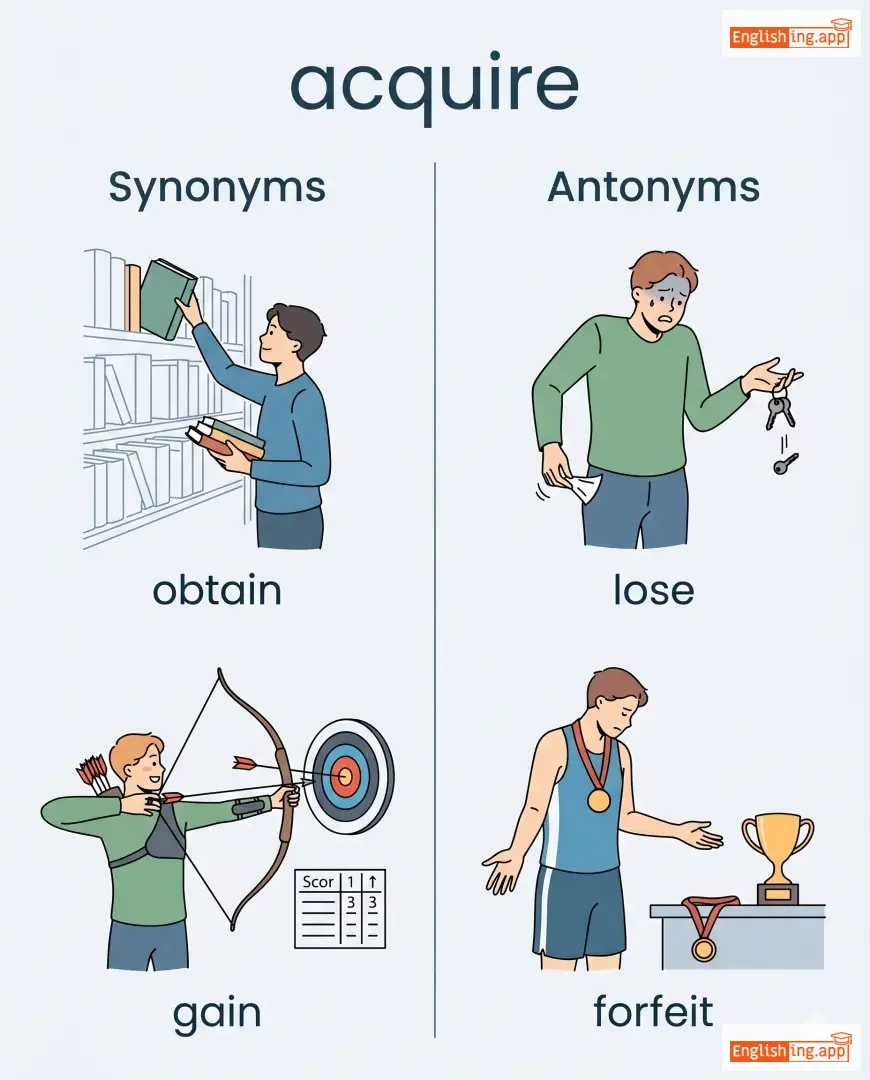
obtain, gain, receive, procure, secure
••••••
|
lose, forfeit, give up
••••••
|
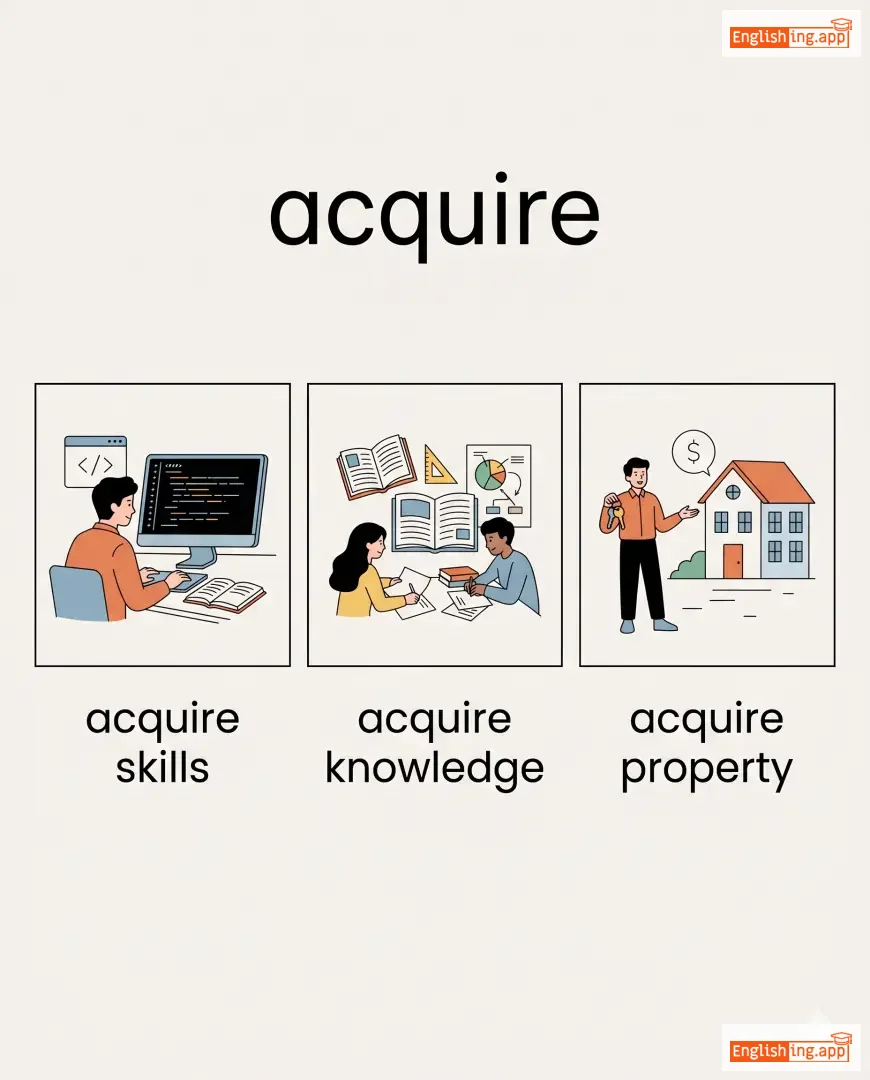
acquire skills, acquire knowledge, acquire property, acquire habit
••••••
|
獲得は何かを得ることです、オークションで絵画を獲得するように。
••••••
|
|
📚
••••••
|
/əˈkwaɪərmənt/
noun
(アクワイアメント)
••••••
|
- •••••• |
取得; 習得
shutoku; shitoku
••••••
|
- •••••• | - •••••• | - •••••• | - •••••• |
the act of acquiring something; something that has been acquired, especially a skill or possession
••••••
|
Language proficiency is an important acquirement for global careers.
ランゲージ プロフィシェンシー イズ アン インポータント アクワイアメント フォー グローバル キャリアーズ。
••••••
|
語学力はグローバルなキャリアにとって重要な取得です。
Gogakuryoku wa gurobaru na kyaria ni totte juuyou na shutoku desu
••••••
|
- •••••• | - •••••• | - •••••• |
acquisition, attainment, gain, procurement, possession
••••••
|
loss, forfeiture, relinquishment
••••••
|
valuable acquirement, skill acquirement, knowledge acquirement, cultural acquirement
••••••
|
アクワイアメント = 取得、acquireすること
••••••
|
|
🏢
••••••
|
/ˌækwɪˈzɪʃən/
noun
••••••
|


|
- •••••• | - •••••• | - •••••• | - •••••• | - •••••• |
the act of obtaining or gaining something, often knowledge, skills, or property
••••••
|
The company announced the acquisition of a smaller competitor. |
- •••••• |
language acquisition |
the process of learning a language naturally
••••••
|
- •••••• |
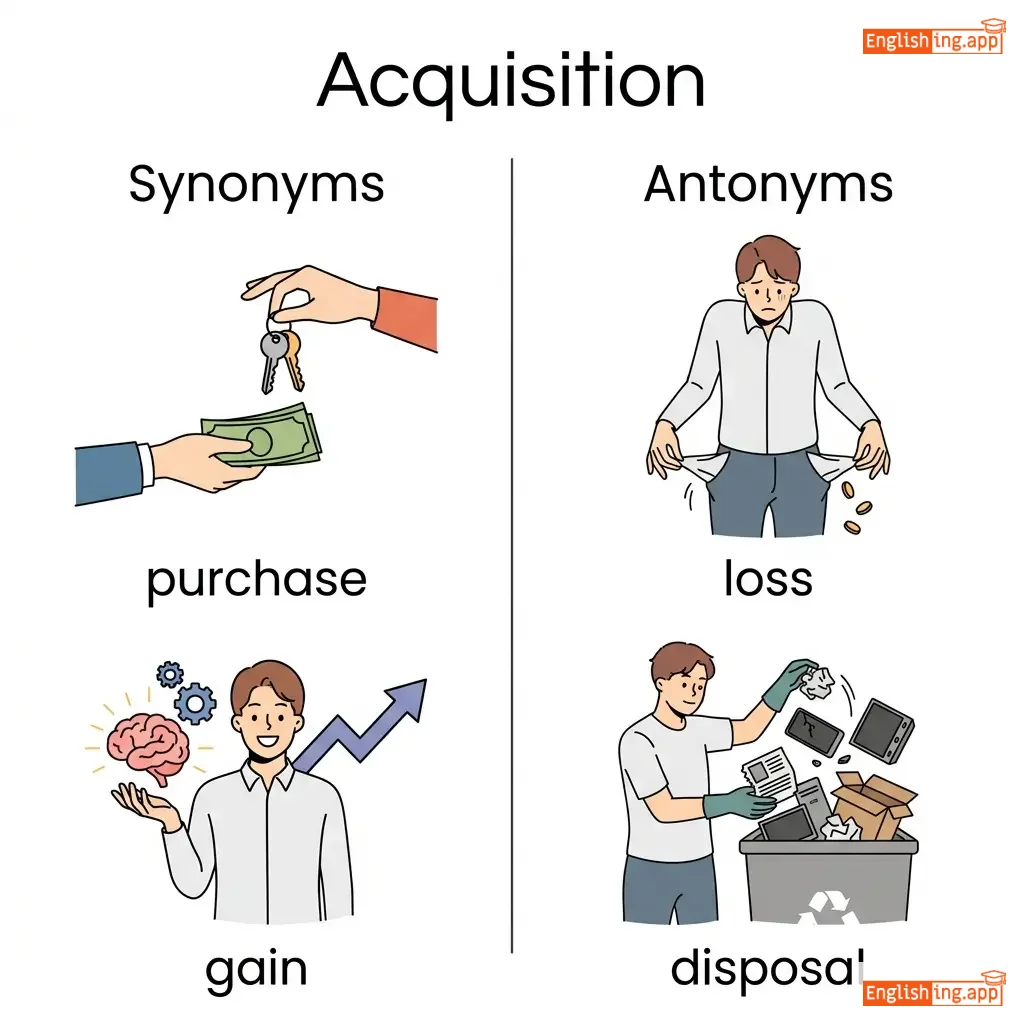
purchase, gain, procurement, attainment
••••••
|
loss, disposal, forfeit
••••••
|
business acquisition, acquisition cost, acquisition strategy, language acquisition
••••••
|
No •••••• |
|
🌾
••••••
|
/ˈeɪkər/
noun
••••••
|
- •••••• | - •••••• | - •••••• | - •••••• | - •••••• | - •••••• |
a unit of land area equal to 4,840 square yards (about 4,047 square meters)
••••••
|
The farmer owns five acres of fertile land. |
- •••••• | - •••••• | - •••••• | - •••••• |
land, plot, field, farmland
••••••
|
null
••••••
|
acre of land, farm acres, acre property
••••••
|
No •••••• |
|
➡️
••••••
|
/əˈkrɒs/
preposition/adverb
(アクロス)
••••••
|
- •••••• |
横断する
oudan suru
••••••
|
- •••••• | - •••••• | - •••••• | - •••••• |
From one side to the other side of something.
••••••
|
He ran across the street to catch the bus. |
彼はバスに乗るために通りを横断した。
Kare wa basu ni noru tame ni toori o oudanshita.
••••••
|
across the board |
affecting everyone or everything equally
••••••
|
全体にわたって
zentai ni watatte
••••••
|
over, through, beyond, opposite
••••••
|
along, within
••••••
|
run across, go across, look across, spread across
••••••
|
Acrossは横断すること。道路を横断するのは、片側からもう片側へ行くこと。
••••••
|
|
🎭
••••••
|
/ækt/
verb/noun
••••••
|
|
- •••••• |
acted
••••••
|
acted
••••••
|
acts
••••••
|
acting
••••••
|
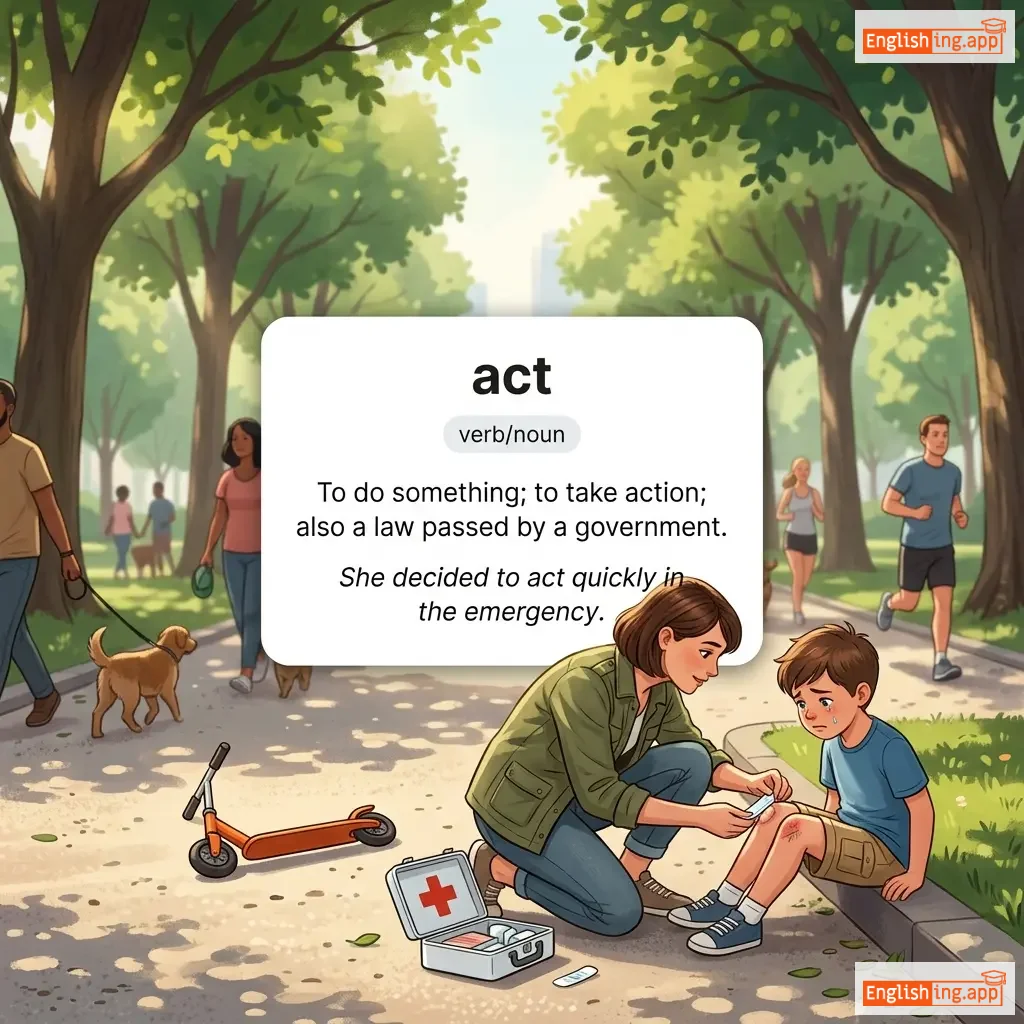
To do something; to take action; also a law passed by a government.
••••••
|
She decided to act quickly in the emergency. |
- •••••• |
act of kindness |
a good or helpful action
••••••
|
- •••••• |
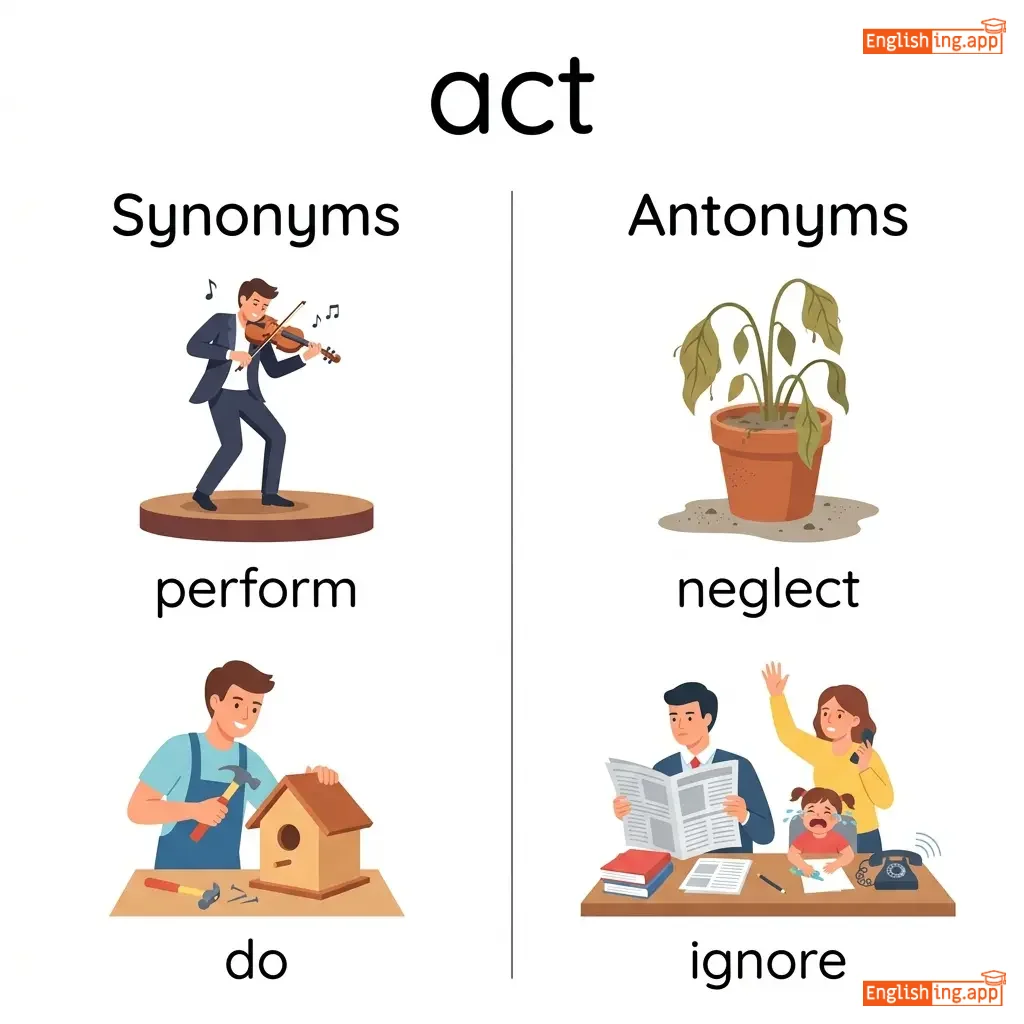
perform, do, operate, behave, enact
••••••
|
neglect, ignore
••••••
|
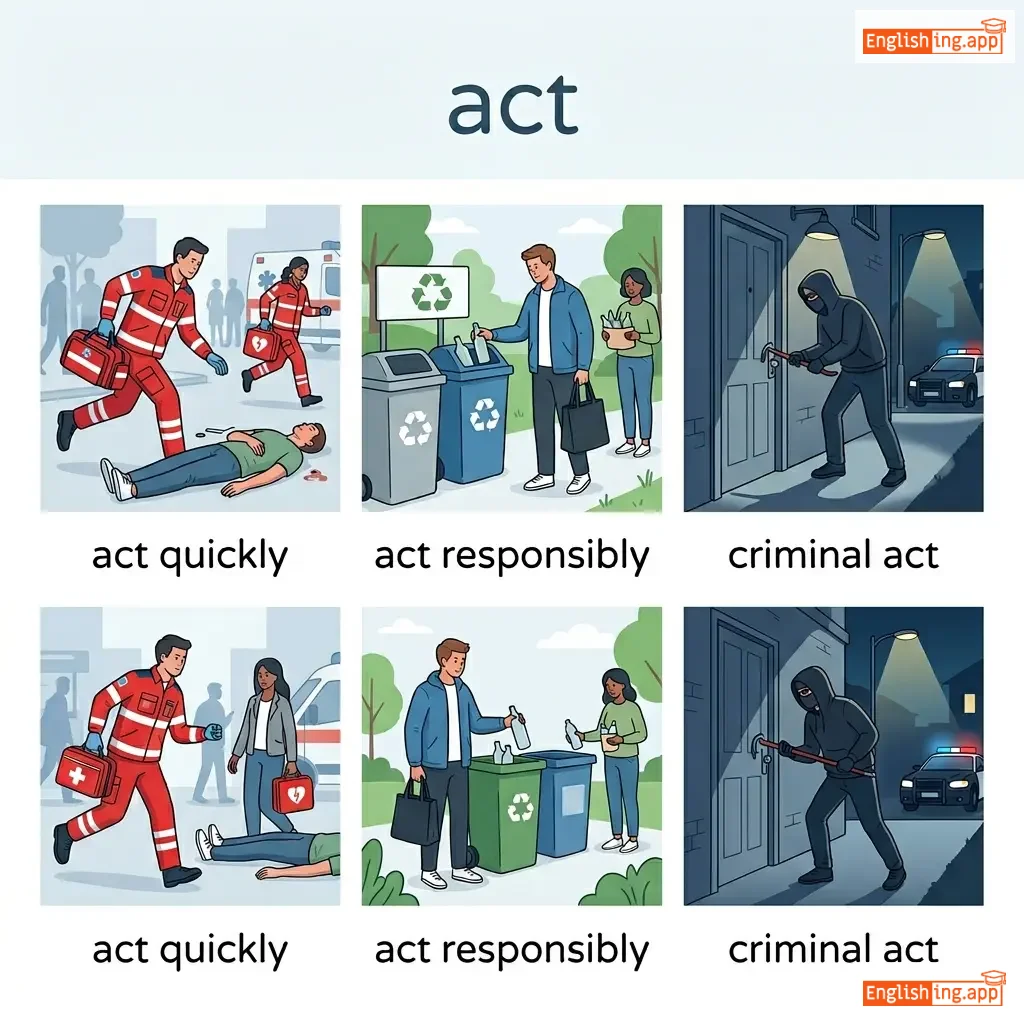
act quickly, act responsibly, criminal act, act of kindness
••••••
|
No •••••• |
|
🎭
••••••
|
/ˈæk.tɪŋ/
noun, adjective, gerund
(アクティング)
••••••
|
- •••••• |
演技
engi
••••••
|
- •••••• | - •••••• | - •••••• |
acting
アクティング
••••••
|
the art or profession of performing in plays, films, or television; temporary performance of duties; the process of performing an action
••••••
|
She is studying acting to become a professional actress.
彼女はプロの女優になるために演技を勉強しています。
••••••
|
彼女はプロの女優になるために演技を勉強しています。
kanojo wa puro no joyu ni naru tame ni engi o benkyo shiteimasu
••••••
|
acting out
アクティング・アウト
••••••
|
to behave disruptively or express emotions through actions
••••••
|
問題行動をとる
mondai kodo o toru
••••••
|
performance, drama, portrayal, playacting, role-playing
••••••
|
inaction, reality
••••••
|
acting career, acting skills, acting role, acting class, acting ability
••••••
|
演技=アクティング
••••••
|
|
⚡
••••••
|
/ˈækʃən/
noun
(アクション)
••••••
|
- •••••• |
アクション
akushon
••••••
|
- •••••• | - •••••• | - •••••• | - •••••• |
The process of doing something, typically to achieve a goal.
••••••
|
The government took immediate action to control inflation. |
政府はインフレーションを抑制するために迅速に行動を起こした。
Seifu wa infurēshon o yokusei suru tame ni jinsoku ni kōdō o okoshita.
••••••
|
take action |
to do something to achieve an effect
••••••
|
行動を起こす
kōdō o okosu
••••••
|
deed, operation, measure, step, effort
••••••
|
inaction, rest
••••••
|
take action, legal action, direct action, military action
••••••
|
アクションは何かをすること、アクション映画のヒーローのように。
••••••
|
|
⚡
••••••
|
/ˈæktɪveɪt/
verb
(アクティベート)
••••••
|
- •••••• |
アクティベート
akutibēto
••••••
|
activated
アクティベイテッド
••••••
|
activated
アクティベイテッド
••••••
|
activates
アクティベイツ
••••••
|
activating
アクティベイティング
••••••
|
to make something start or function
••••••
|
She pressed the button to activate the machine.
彼女は機械を起動するためにボタンを押しました。
••••••
|
彼女は機械を起動するためにボタンを押しました。
Kanojo wa kikai o kidō suru tame ni botan o oshimashita.
••••••
|
- •••••• | - •••••• | - •••••• |
start, initiate, trigger, turn on
••••••
|
deactivate, stop, turn off
••••••
|
activate the system, activate the process, activate the device
••••••
|
Press the button to activate the machine - ボタンを押して機械を起動!
••••••
|
|
🔓
••••••
|
/ˌæktɪˈveɪʃən/
noun
(アクティベーション)
••••••
|
- •••••• |
アクティベーション
akutibēshon
••••••
|
- •••••• | - •••••• | - •••••• | - •••••• |
the act of making something start functioning
••••••
|
The activation of the system took longer than expected. |
システムのアクティベーションは予想よりも時間がかかりました。
Shisutemu no akutibēshon wa yosō yori mo jikan ga kakarimashita.
••••••
|
- •••••• | - •••••• | - •••••• |
initiation, triggering, launching, starting
••••••
|
deactivation, stoppage, termination
••••••
|
system activation, activation process, activation code
••••••
|
システムのアクティベーションは新しい冒険を始めるようなものです!
••••••
|
|
🏃
••••••
|
/ˈæktɪv/
adjective
(アクティブ)
••••••
|
|
アクティブな
akutibu na
••••••
|
- •••••• | - •••••• | - •••••• | - •••••• |
Engaging or ready to engage in physically energetic pursuits; taking action rather than being passive.
••••••
|
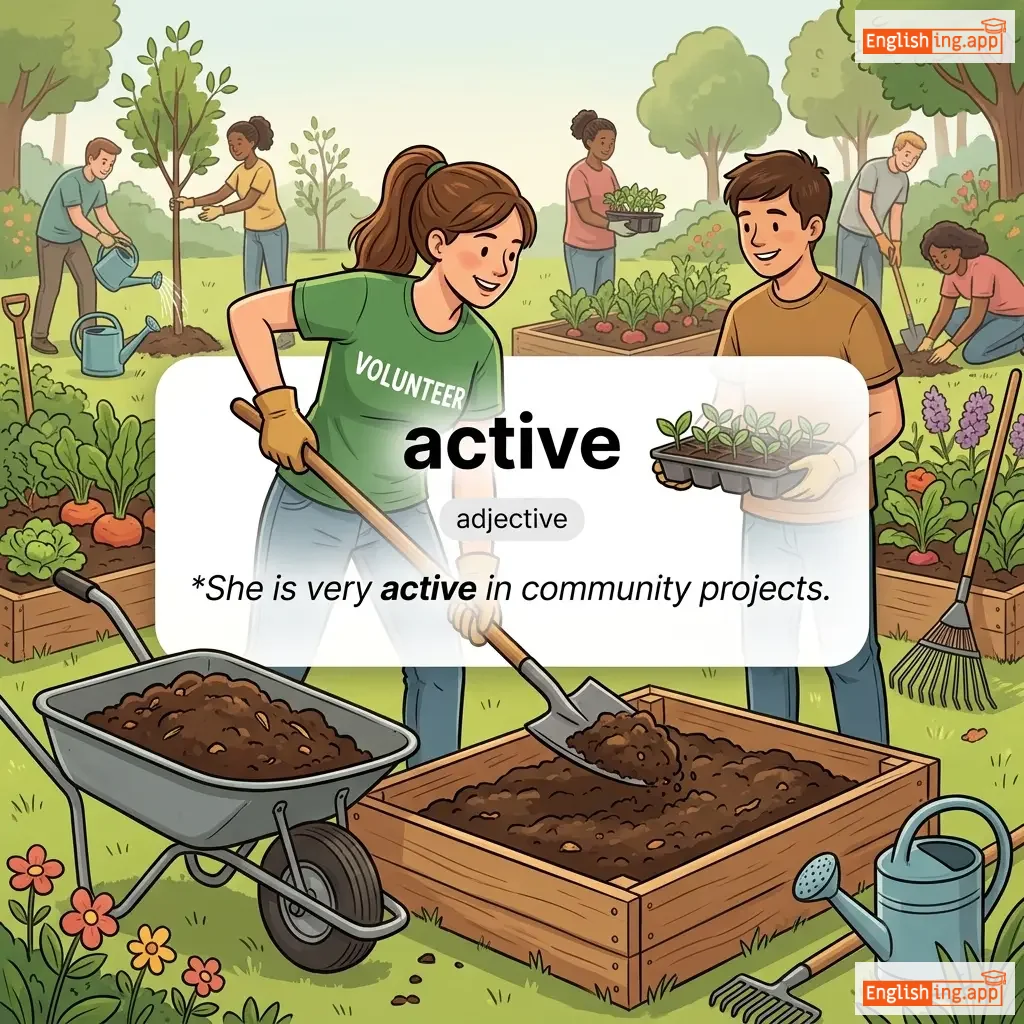
She is very active in community projects. |
彼女はコミュニティプロジェクトに非常にアクティブです。
Kanojo wa komyuniti purojekuto ni hijō ni akutibu desu.
••••••
|
active duty |
A period of full-time military service.
••••••
|
アクティブな義務
akutibu na gimu
••••••
|
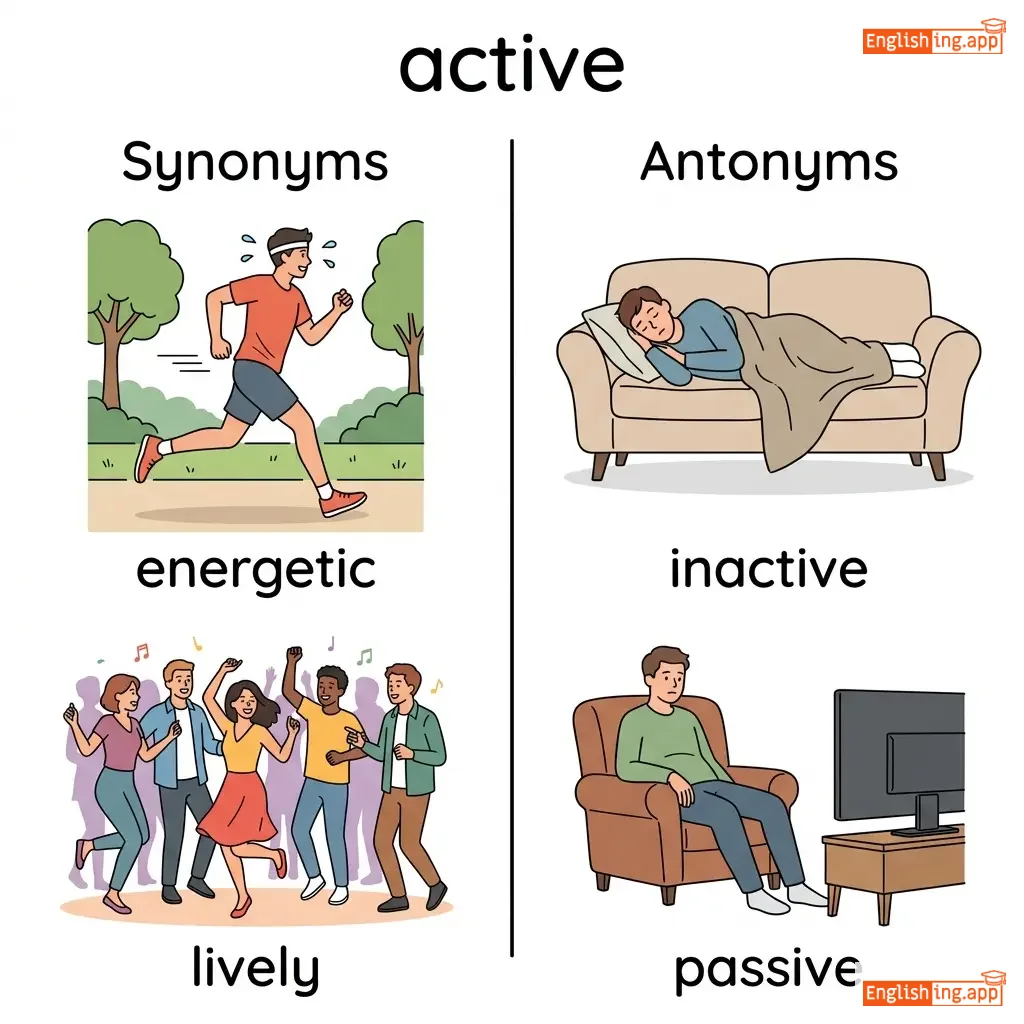
energetic, lively, dynamic, vigorous, busy
••••••
|
inactive, passive, idle
••••••
|
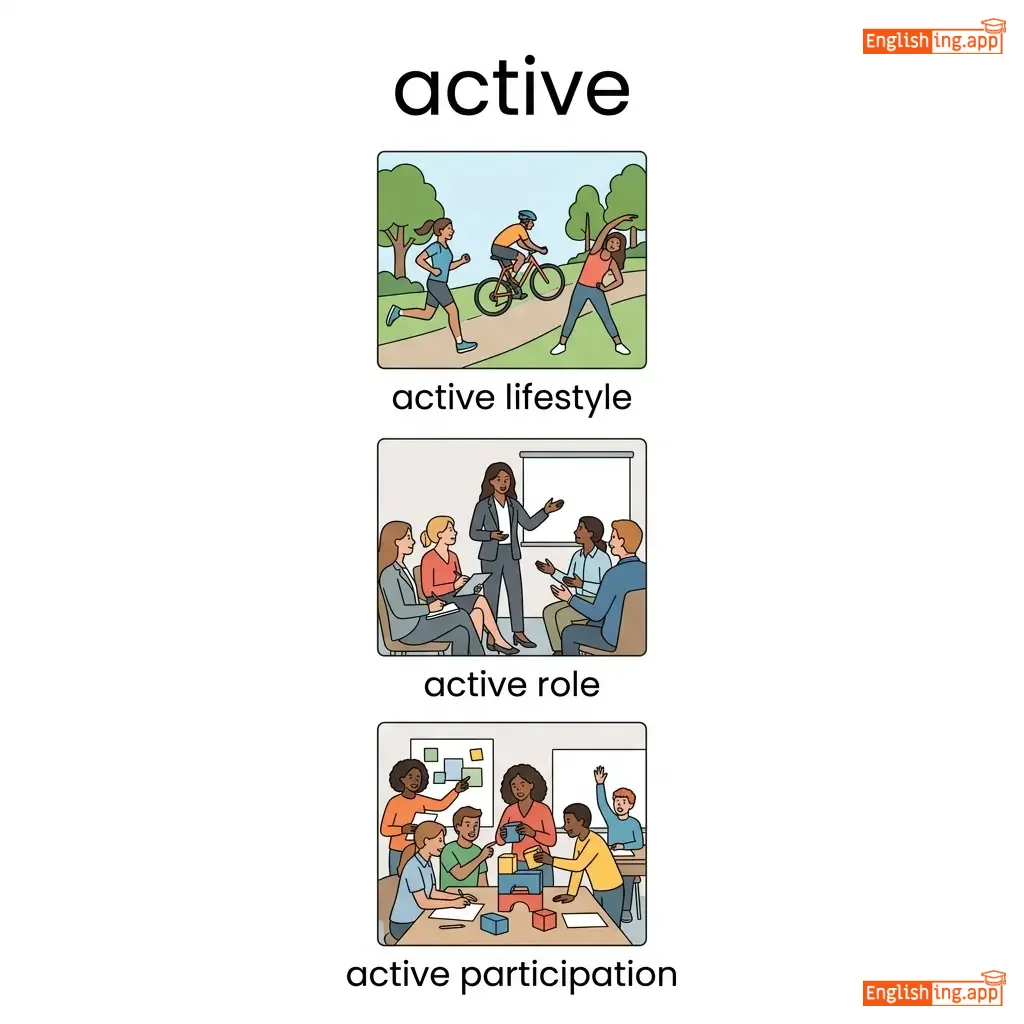
active lifestyle, active role, active participation, active engagement
••••••
|
Activeはアクティブを意味し、Facebookでアクティブであれば、誰でもオンラインだと知っているのと同じです。
••••••
|
|
💪
••••••
|
/ˈæktɪvli/
adverb
(æktɪvli)
••••••
|
- •••••• |
積極的に
sekkyokuteki ni
••••••
|
- •••••• | - •••••• | - •••••• | - •••••• |
in a way that involves energetic participation or effort
••••••
|
He is actively involved in community service.
彼は地域社会サービスに積極的に参加しています。
••••••
|
彼は地域社会サービスに積極的に参加しています。
Kare wa chiiki shakai sābisu ni sekkyokuteki ni sanka shiteimasu.
••••••
|
- •••••• | - •••••• | - •••••• |
energetically, dynamically, vigorously, busily
••••••
|
passively, lazily, idly
••••••
|
actively participate, actively support, actively engage, actively promote
••••••
|
積極的ということは行動すること、だから積極的にということはエネルギーを持って行動すること!
••••••
|
|
🎭
••••••
|
/ˈæktər/
noun
(アクター)
••••••
|
- •••••• |
俳優
haiyū
••••••
|
- •••••• | - •••••• | - •••••• | - •••••• |
a person who performs in plays, movies, or television
••••••
|
The actor received an award for his performance. |
その俳優はパフォーマンスで賞を受け取った。
sono haiyū wa pafōmansu de shō o uketotta.
••••••
|
leading actor |
the main performer in a play or movie
••••••
|
主役
shuyaku
••••••
|
performer, artist, star, entertainer
••••••
|
audience, spectator
••••••
|
famous actor, stage actor, Hollywood actor, professional actor
••••••
|
Actor は俳優を意味します—映画のヒーローでも、サイドアクターでも、すべてが俳優です。
••••••
|
|
🌟
••••••
|
/ˈæktrəs/
noun
(ˈæktrəs)
••••••
|
- •••••• |
女優
joyū
••••••
|
- •••••• | - •••••• | - •••••• | - •••••• |
a female performer in plays, movies, or television
••••••
|
The actress looked stunning on the red carpet. |
その女優は赤い絨毯の上で素晴らしく見えました。
Sono joyū wa akai jūtantan no ue de subarashiku miemashita.
••••••
|
famous actress |
a well-known female performer
••••••
|
有名な女優
yūmei na joyū
••••••
|
performer, artist, star, entertainer
••••••
|
audience, spectator
••••••
|
film actress, stage actress, award-winning actress, leading actress
••••••
|
女優はactress。映画やテレビで有名な女優のように。
••••••
|

