|
表情符号
|
单词 | Images | 翻译 | 过去时 | 过去分词 | 第三人称单数 | 动名词 | 含义 | 例句 | 例句翻译 | 示例表达 | 示例表达含义 | 示例表达翻译 | 同义词 | 反义词 | 搭配词 | 助记符 |
|---|---|---|---|---|---|---|---|---|---|---|---|---|---|---|---|---|---|
|
👍
••••••
|
/əkˈsɛptəbəl/
adjective
(akseptable)
••••••
|
- •••••• |
可接受的
ke jieshou de
••••••
|
- •••••• | - •••••• | - •••••• | - •••••• |
able to be agreed upon; satisfactory or suitable
••••••
|
Your proposal is acceptable to the committee. |
你的提议对委员会是可接受的。
Nide tiyi dui weiyuanhui shi ke jieshou de.
••••••
|
socially acceptable |
considered appropriate by society
••••••
|
社会上可接受的
shehui shang ke jieshou de
••••••
|
satisfactory, adequate, tolerable, suitable, agreeable
••••••
|
unacceptable, unsuitable, improper
••••••
|
acceptable level, acceptable standard, acceptable behavior, socially acceptable
••••••
|
Acceptable 是可以接受的,容易记住。
••••••
|
|
🤲
••••••
|
/əkˈsɛptəns/
noun
(akseptans)
••••••
|
- •••••• |
接受
jie shou
••••••
|
- •••••• | - •••••• | - •••••• | - •••••• |
the act of agreeing to receive or undertake something offered
••••••
|
Her acceptance of the award was met with applause. |
她接受奖项时,掌声四起。
Ta jie shou jiang xiang shi, zhang sheng si qi.
••••••
|
acceptance speech |
a speech given when accepting an award or honor
••••••
|
接受演讲
jie shou yan jiang
••••••
|
approval, agreement, consent, recognition
••••••
|
rejection, refusal, denial
••••••
|
letter of acceptance, acceptance speech, acceptance of offer, gain acceptance
••••••
|
Acceptance: 接受后获得掌声!
••••••
|
|
🔑
••••••
|
/ˈæksɛs/
noun/verb
(áksès)
••••••
|
- •••••• |
访问
fǎngwèn
••••••
|
accessed
áksèssèd
••••••
|
accessed
áksèssèd
••••••
|
accesses
áksèssès
••••••
|
accessing
áksèssing
••••••
|
the ability to enter or use something; to reach or use something
••••••
|
Students have free access to the library.
学生可以免费访问图书馆。
••••••
|
学生可以免费访问图书馆。
Xuéshēng kěyǐ miǎnfèi fǎngwèn túshūguǎn.
••••••
|
gain access
获得访问权限
••••••
|
to succeed in entering or using something
••••••
|
获得访问权限
huòdé fǎngwèn quánxiàn
••••••
|
entry, approach, admission, connection
••••••
|
denial, exclusion
••••••
|
have access, provide access, gain access, limited access
••••••
|
访问是钥匙 🔑 通向知识的门。
••••••
|
|
🚪
••••••
|
/əkˈsɛsəbl/
adjective
(ākèxīsībù)
••••••
|
- •••••• |
可达的
kedade
••••••
|
- •••••• | - •••••• | - •••••• | - •••••• |
easy to reach, use, or understand
••••••
|
The museum is easily accessible by public transport. |
博物馆可以通过公共交通轻松到达。
Bowuguan keyi tongguo gonggong jiaotong qingsong daoda.
••••••
|
- •••••• | - •••••• | - •••••• |
approachable, reachable, available, attainable
••••••
|
inaccessible, unreachable
••••••
|
easily accessible, accessible information, accessible location, accessible resources
••••••
|
Accessible 意味着像打开门一样容易到达和理解。
••••••
|
|
🚑
••••••
|
/ˈæksɪdənt/
noun
(āksīdiènt)
••••••
|
|
事故
shìgù
••••••
|
- •••••• | - •••••• | - •••••• | - •••••• |
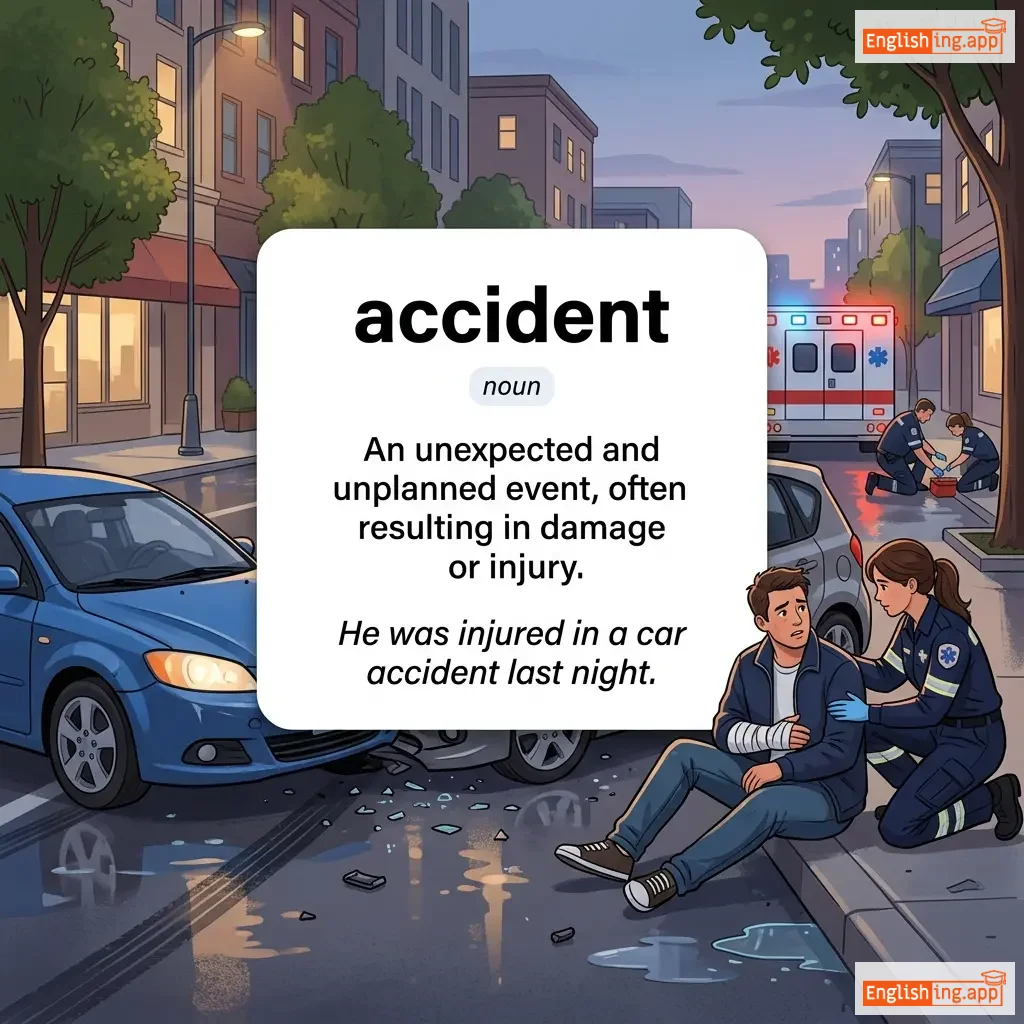
An unexpected and unplanned event, often resulting in damage or injury.
••••••
|
He was injured in a car accident last night. |
他在昨晚的车祸中受伤。
Tā zài zuówǎn de chēhuò zhōng shòushāng.
••••••
|
by accident |
Something done unintentionally.
••••••
|
不小心
bù xiǎoxīn
••••••
|
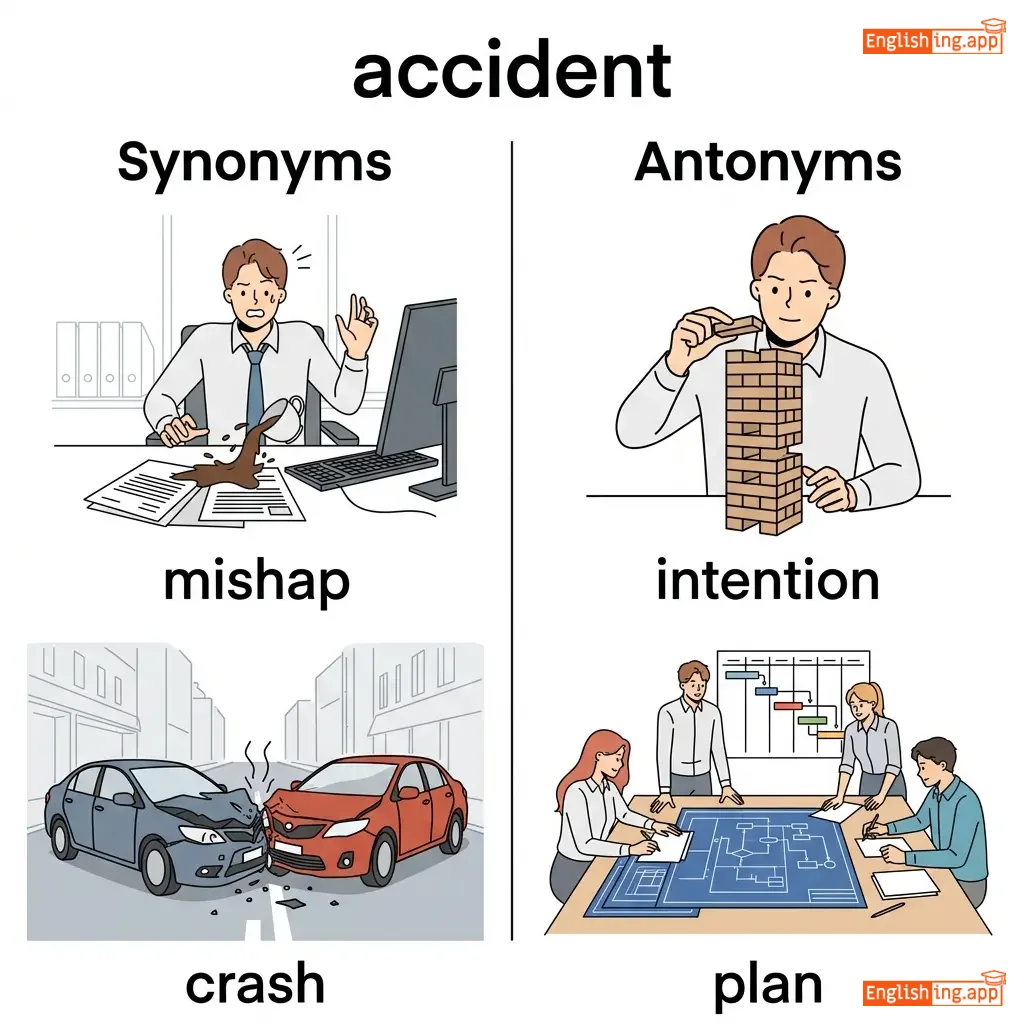
mishap, crash, disaster, incident
••••••
|
intention, plan
••••••
|
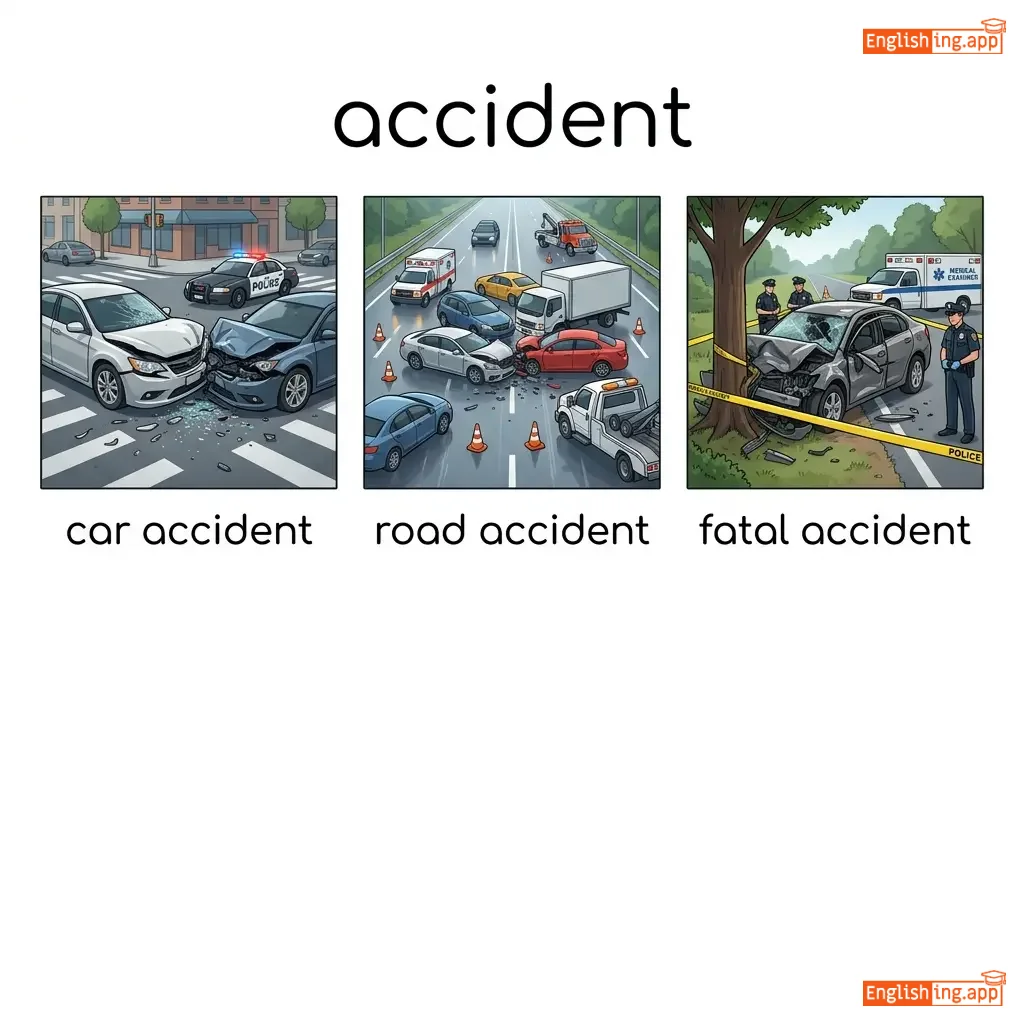
car accident, road accident, fatal accident, happen by accident
••••••
|
事故意味着事故 — 如果发生车祸,🚑 救护车就会到。
••••••
|
|
⚠️
••••••
|
/ˌæksɪˈdɛntl/
adjective
(akˈsɪdɛntəl)
••••••
|
- •••••• |
偶然的
ǒurán de
••••••
|
- •••••• | - •••••• | - •••••• | - •••••• |
happening by chance, unintentionally
••••••
|
The fire was caused by an accidental spark. |
火灾是由偶然的火花引起的。
Huǒzāi shì yóu ǒurán de huǒhuā yǐnqǐ de.
••••••
|
accidental discovery |
a useful finding that happens unexpectedly
••••••
|
偶然发现
ǒurán fāxiàn
••••••
|
unintended, chance, inadvertent, fortuitous, coincidental
••••••
|
deliberate, intentional, planned
••••••
|
accidental damage, accidental fire, accidental meeting
••••••
|
偶然的: 从偶然发生的事件中得到启发。
••••••
|
|
⚠️
••••••
|
/ˌæksɪˈdɛntəli/
adverb
(āksìdiàntè lì)
••••••
|
- •••••• |
偶然地
ǒurán de
••••••
|
- •••••• | - •••••• | - •••••• | - •••••• |
happening by chance or unexpectedly
••••••
|
He accidentally dropped the glass. |
他不小心把玻璃杯打翻了。
Tā bù xiǎoxīn bǎ bōlí bēi dǎ fānle.
••••••
|
- •••••• | - •••••• | - •••••• |
unintentionally, mistakenly, by accident, fortuitously
••••••
|
intentionally, deliberately
••••••
|
accidentally break, accidentally discover, accidentally fall
••••••
|
偶然地 = Imagine dropping a glass, it's 'ǒurán de'.
••••••
|
|
🏨
••••••
|
/əˈkɒmədeɪt/
verb
(阿科莫代特)
••••••
|
- •••••• |
容纳
róngnà
••••••
|
accommodated
阿科莫代特德
••••••
|
accommodated
阿科莫代特德
••••••
|
accommodates
阿科莫代特斯
••••••
|
accommodating
阿科莫代特英
••••••
|
To provide lodging, space, or meet the needs of someone.
••••••
|
The hotel can accommodate up to 200 guests.
酒店可以容纳最多200位客人。
••••••
|
酒店可以容纳最多200位客人。
jiǔdiàn kěyǐ róngnà zuìduō 200 wèi kèrén.
••••••
|
accommodate needs
满足需求
••••••
|
to fulfill or provide for requirements
••••••
|
满足需求
mǎnzú xūqiú
••••••
|
house, lodge, contain, serve, assist
••••••
|
reject, refuse, turn away
••••••
|
accommodate guests, accommodate needs, accommodate changes
••••••
|
Accommodate的意思是提供空间容纳客人
••••••
|
|
🚶♂️
••••••
|
/əˈkʌmpəni/
verb
(ā kěn pā ní)
••••••
|
- •••••• |
陪伴
péi bàn
••••••
|
accompanied
ā kěn pā nì
••••••
|
accompanied
ā kěn pā nì
••••••
|
accompanies
ā kěn pā nǐ sī
••••••
|
accompanying
ā kěn pā níng
••••••
|
to go somewhere with someone as a companion or escort
••••••
|
She asked her friend to accompany her to the concert.
她请她的朋友陪她一起去音乐会。
••••••
|
她请她的朋友陪她一起去音乐会。
Tā qǐng tā de péngyǒu péi tā yīqǐ qù yīnyuè huì.
••••••
|
accompany someone on
陪某人去
••••••
|
to go with someone to a specific event or place
••••••
|
陪某人参加活动
péi mǒu rén cānjiā huódòng
••••••
|
escort, attend, join, follow, guide
••••••
|
leave, abandon
••••••
|
accompany someone, accompany music, accompany a guest, accompany a speech
••••••
|
陪伴就像是一起去参加活动,像‘公司’一样。
••••••
|
|
✅
••••••
|
/əˈkʌmplɪʃ/
verb
(èikǎmplìsh)
••••••
|
- •••••• |
完成
wánchéng
••••••
|
accomplished
èikǎmplìshd
••••••
|
accomplished
èikǎmplìshd
••••••
|
accomplishes
èikǎmplìshes
••••••
|
accomplishing
èikǎmplìshìng
••••••
|
to achieve or complete successfully
••••••
|
She managed to accomplish all her goals for the year.
她成功地完成了今年的所有目标。
••••••
|
她成功地完成了今年的所有目标。
Tā chénggōng de wánchéngle jīnnián de suǒyǒu mùbiāo.
••••••
|
mission accomplished
任务完成
••••••
|
used to say a task has been successfully completed
••••••
|
任务完成
Rènwù wánchéng
••••••
|
achieve, complete, finish, attain, fulfill
••••••
|
fail, abandon
••••••
|
accomplish a goal, accomplish a task, accomplish objectives
••••••
|
Accomplish 意味着完成目标,就像'任务完成'一样。
••••••
|
|
🏆
••••••
|
/əˈkʌmplɪʃmənt/
noun
(成就)
••••••
|
- •••••• |
成就
chéngjiù
••••••
|
- •••••• | - •••••• | - •••••• | - •••••• |
something that has been achieved successfully
••••••
|
Graduating from university was a major accomplishment for him. |
大学毕业对他来说是一个重大的成就。
Dàxué bìyè duì tā lái shuō shì yīgè zhòngdà de chéngjiù.
••••••
|
sense of accomplishment |
a feeling of pride and satisfaction from achieving something
••••••
|
成就感
chéngjiù gǎn
••••••
|
achievement, success, fulfillment, attainment
••••••
|
failure, defeat
••••••
|
great accomplishment, remarkable accomplishment, personal accomplishment, sense of accomplishment
••••••
|
Accomplishment 就是完成任务的成就感 — 完成任务意味着成功!
••••••
|
|
📜
••••••
|
/əˈkɔːrdəns/
noun
(阿科丹斯)
••••••
|
- •••••• |
一致
yizhi
••••••
|
- •••••• | - •••••• | - •••••• | - •••••• |
agreement or harmony with something; compliance with rules, laws, or wishes
••••••
|
The policy was implemented in accordance with international law.
The policy was implemented in accordance with international law
••••••
|
该政策是按照国际法实施的。
gai zhengce shi anzhao guoji fa shishi de
••••••
|
in accordance with
in accordance with
••••••
|
in agreement or compliance with something
••••••
|
按照
anzhao
••••••
|
agreement, conformity, compliance, harmony, consistency
••••••
|
conflict, disagreement, opposition
••••••
|
in accordance with law, in accordance with rules, act in accordance, accordance to standards
••••••
|
accordance = 一致—都表示对齐规则。
••••••
|
|
📑
••••••
|
/əˈkɔːrdɪŋ/
preposition/adverb
(啊科尔丁)
••••••
|
- •••••• |
根据
genju
••••••
|
- •••••• | - •••••• | - •••••• | - •••••• |
As stated by or in agreement with.
••••••
|
According to the report, sales increased last quarter. |
根据报告,销售在上个季度增长了。
Genju baogao, xiaoshou zai shang ge jidu zengzhang le.
••••••
|
according to plan |
Happening as it was intended or arranged.
••••••
|
根据计划
Genju jihua
••••••
|
as stated, as reported, in line with, consistent with
••••••
|
contrary to, against
••••••
|
according to law, according to rules, according to tradition
••••••
|
According 就是根据,报告里的一切根据计划。
••••••
|
|
➡️
••••••
|
/əˈkɔːr.dɪŋ.li/
adverb
(əˈkɔr.dɪŋ.li)
••••••
|
- •••••• |
因此; 所以; 根据情况
yīncǐ; suǒyǐ; gēnjù qíngkuàng
••••••
|
- •••••• | - •••••• | - •••••• | - •••••• |
in a way that is appropriate to the particular circumstances; therefore; consequently
••••••
|
The weather was bad, so the event was cancelled accordingly. |
天气不好,所以活动因此被取消。
Tiānmù bù hǎo, suǒyǐ huódòng yīncǐ bèi qǔxiāo.
••••••
|
- •••••• | - •••••• | - •••••• |
therefore, consequently, thus, hence
••••••
|
inappropriately, unsuitably
••••••
|
act accordingly, respond accordingly, plan accordingly
••••••
|
记住:'accordingly' 表示随着情况而改变的结果。
••••••
|
|
🚶♂️
••••••
|
/əˈkɒst/
verb
(āˈkɔst)
••••••
|
- •••••• |
突然接近并与某人交谈
tūrán jiējìn bìng yǔ mǒurén jiāotán
••••••
|
accosted
āˈkɔstɛd
••••••
|
accosted
āˈkɔstɛd
••••••
|
accosts
āˈkosts
••••••
|
accosting
āˈkostɪŋ
••••••
|
to approach and speak to someone boldly or aggressively
••••••
|
The reporter was accosted by protesters outside the courthouse.
记者在法院外被抗议者突然围住。
••••••
|
记者在法院外被抗议者突然围住。
Jìzhě zài fǎyuàn wài bèi kàngyì zhě túrán wéizhù.
••••••
|
- •••••• | - •••••• | - •••••• |
confront, approach, address, hail, stop
••••••
|
avoid, ignore, evade
••••••
|
accost someone, accost on the street, suddenly accost, accosted by
••••••
|
Accost 就是突然接近并与某人交谈
••••••
|
|
📒
••••••
|
/əˈkaʊnt/
noun
••••••
|
- •••••• | - •••••• | - •••••• | - •••••• | - •••••• | - •••••• |
a record or statement of financial expenditure or receipts; a report or description of an event or experience
••••••
|
She opened a new bank account to save for her studies. |
- •••••• |
on account of |
because of
••••••
|
- •••••• |
record, report, explanation, statement, description
••••••
|
disregard, ignorance
••••••
|
bank account, on account of, account for, savings account
••••••
|
No •••••• |
|
📋
••••••
|
/əˌkaʊntəˈbɪlɪti/
noun
(àikàobìlìtì)
••••••
|

|
责任
zérèn
••••••
|
- •••••• | - •••••• | - •••••• | - •••••• |
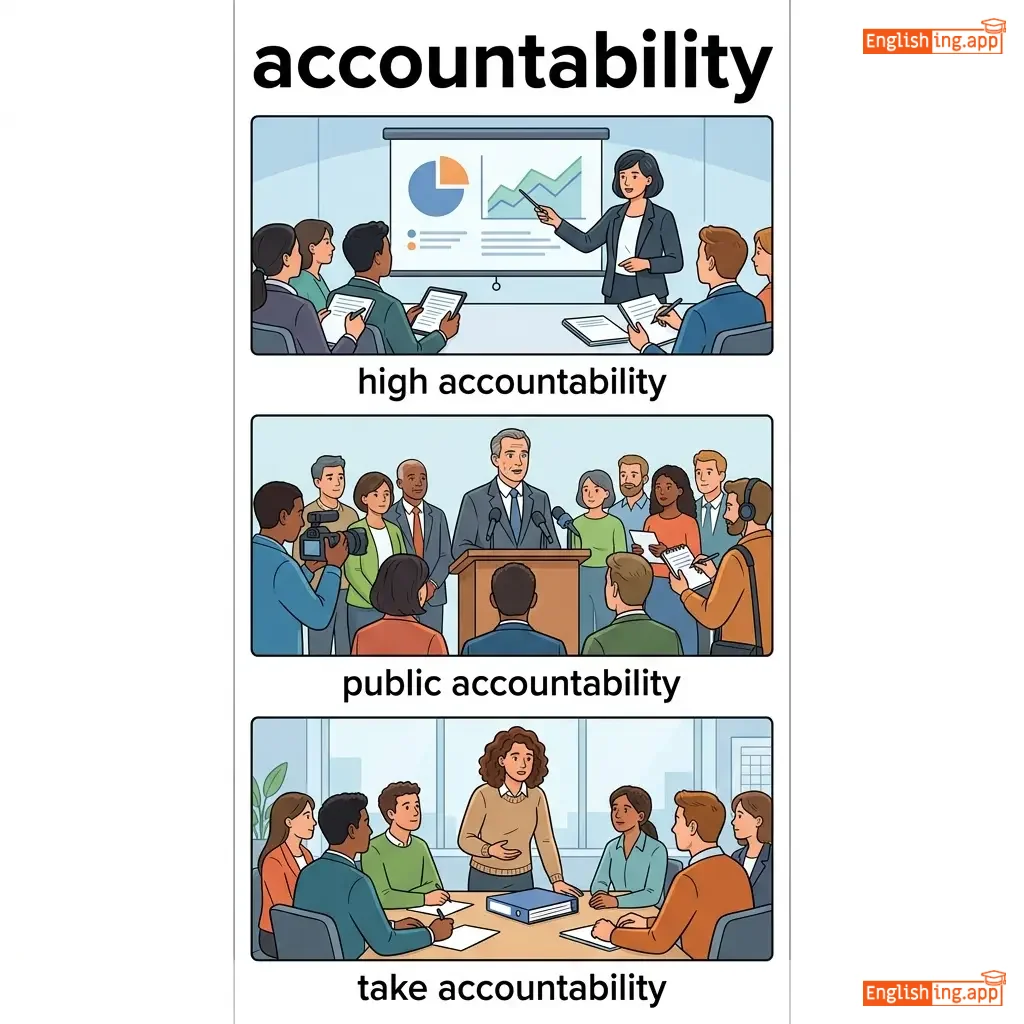
the state of being responsible and answerable for actions or decisions
••••••
|
The manager emphasized accountability among all team members. |
经理强调了团队成员之间的责任。
Jīnglǐ qiángdiàole tuánduì chéngyuán zhījiān de zérèn.
••••••
|
take accountability |
to accept responsibility for one’s actions
••••••
|
承担责任
chéngdān zérèn
••••••
|
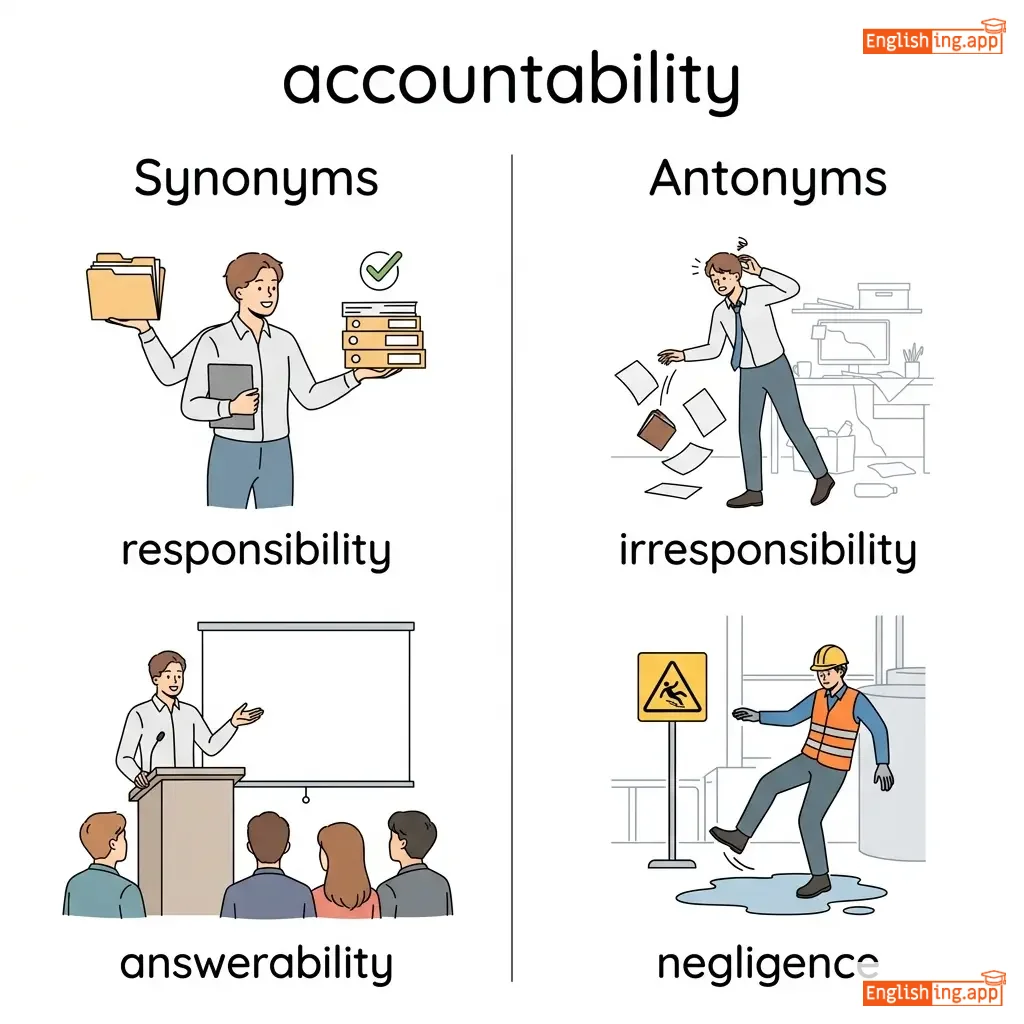
responsibility, answerability, liability, obligation
••••••
|
irresponsibility, negligence
••••••
|
high accountability, public accountability, take accountability, ensure accountability
••••••
|
责任就是要对自己的行为给出‘答案’ — 就像‘答复’!
••••••
|
|
⚖️
••••••
|
/əˈkaʊn.tə.bəl/
adjective
(ˈækəʊntəbəl)
••••••
|


|
负责的; 有责任的
fùzérèn de; yǒu zérèn de
••••••
|
- •••••• | - •••••• | - •••••• | - •••••• |
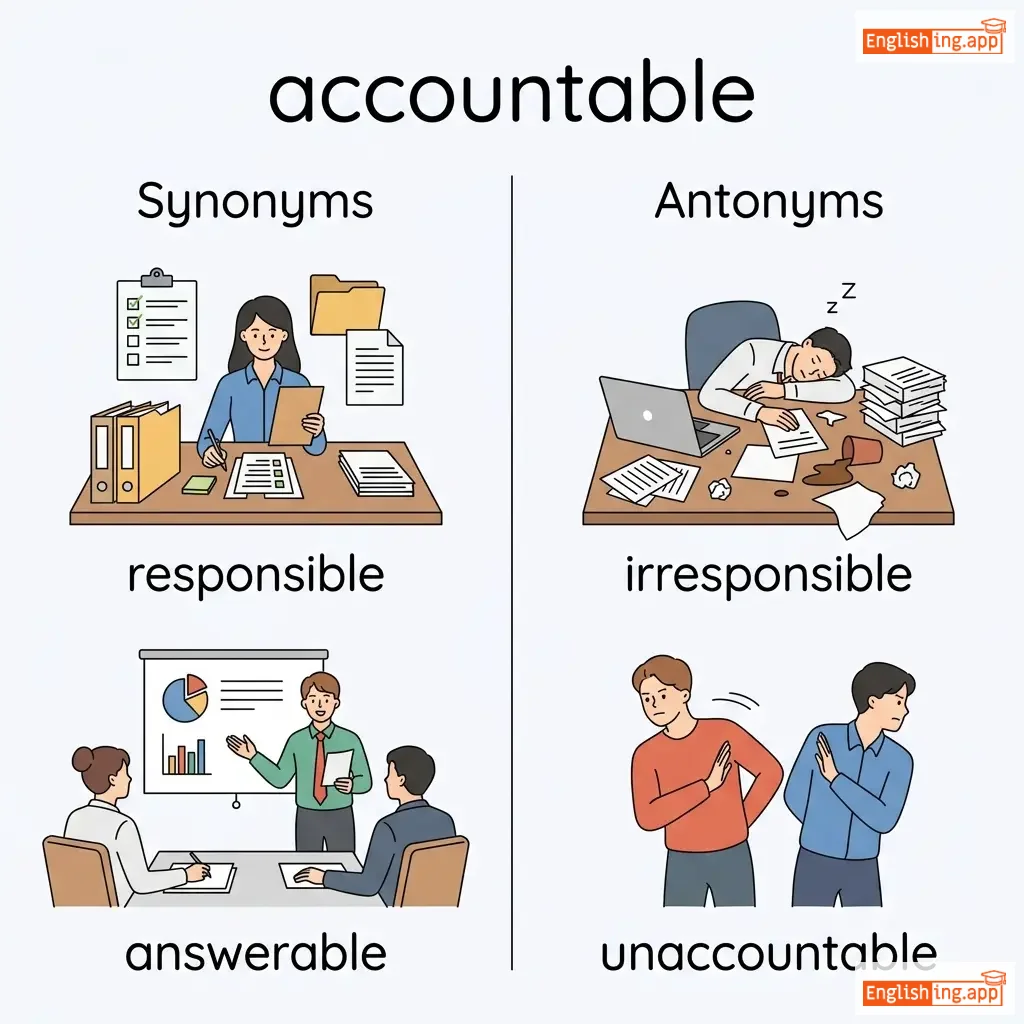
responsible for your decisions or actions and expected to explain them when you are asked
••••••
|
The government should be held accountable for its policies.
政府应该为其政策负责。
••••••
|
政府应该为其政策负责。
Zhèngfǔ yīnggāi wèi qí zhèngcè fùzérèn.
••••••
|
- •••••• | - •••••• | - •••••• |
responsible, answerable, liable, culpable
••••••
|
unaccountable, irresponsible, exempt
••••••
|
held accountable, accountable for, accountable to
••••••
|
Accountable means responsible, like the government being accountable for its policies.
••••••
|
|
💼
••••••
|
/əˈkaʊntənt/
noun
(akàntènt)
••••••
|
- •••••• |
会计
kuàijì
••••••
|
- •••••• | - •••••• | - •••••• | - •••••• |
a person whose job is to keep or check financial accounts
••••••
|
The accountant prepared the financial reports for the company.
会计为公司准备了财务报告。
••••••
|
会计为公司准备了财务报告。
Kuàijì wèi gōngsī zhǔnbèi le cáiwù bàogào.
••••••
|
- •••••• | - •••••• | - •••••• |
bookkeeper, auditor, financial officer
••••••
|
client, consumer
••••••
|
hire an accountant, experienced accountant, qualified accountant
••••••
|
会计帮助管理账务 (kuàijì bāngzhù guǎnlǐ zhàngwù)
••••••
|
|
📚
••••••
|
/əˈkjuːmjəleɪt/
verb
(积累)
••••••
|
- •••••• |
积累
jīlěi
••••••
|
accumulated
积累了
••••••
|
accumulated
积累了
••••••
|
accumulates
积累
••••••
|
accumulating
积累
••••••
|
to gather or collect things gradually over time
••••••
|
She managed to accumulate a small fortune through wise investments.
她通过聪明的投资成功地积累了财富。
••••••
|
她通过聪明的投资成功地积累了财富。
Tā tōngguò cōngmíng de tóuzī chénggōng de jīlěile cáifù.
••••••
|
- •••••• | - •••••• | - •••••• |
amass, collect, gather, pile up, hoard
••••••
|
spend, scatter, disperse
••••••
|
accumulate wealth, accumulate knowledge, accumulate experience, gradually accumulate
••••••
|
Accumulate → AC+骡子逐渐收集 → 积累
••••••
|
|
📚
••••••
|
/əˌkjuːmjʊˈleɪʃən/
noun
(积累)
••••••
|
|
积累
jīlěi
••••••
|
- •••••• | - •••••• | - •••••• | - •••••• |
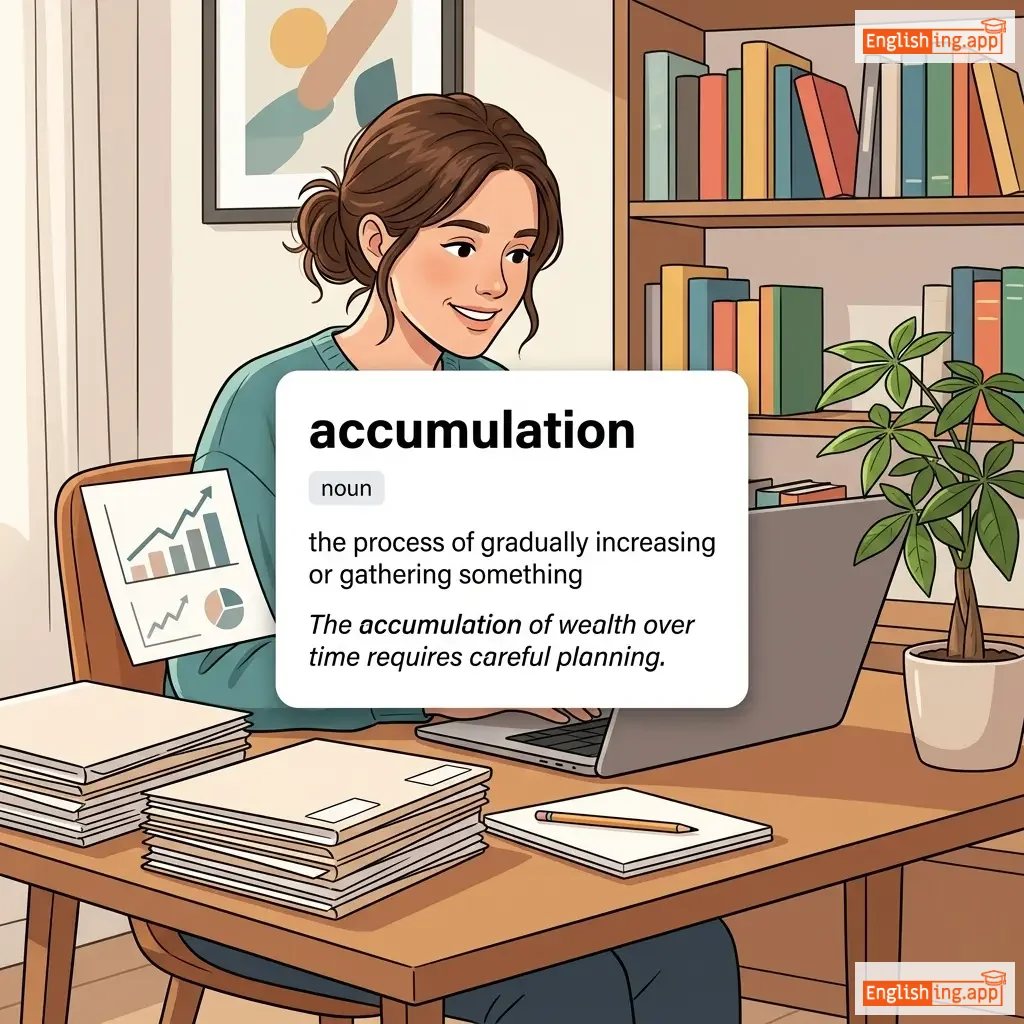
the process of gradually increasing or gathering something
••••••
|
The accumulation of wealth over time requires careful planning.
财富的积累随着时间的推移需要仔细的规划。
••••••
|
财富的积累随着时间的推移需要仔细的规划。
Cáifù de jīlěi suízhe shíjiān de tuīyí xūyào zǐxì de guīhuà.
••••••
|
- •••••• | - •••••• | - •••••• |
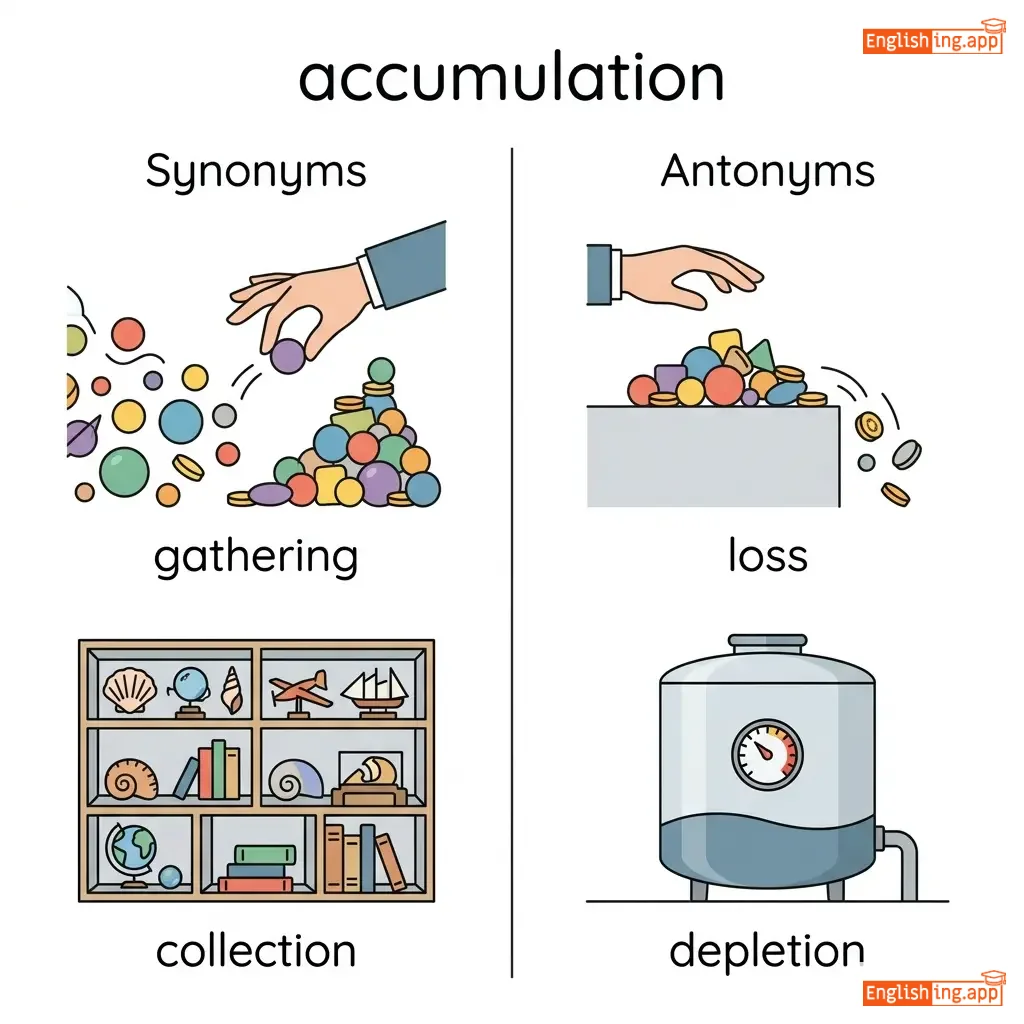
gathering, collection, buildup
••••••
|
loss, depletion
••••••
|
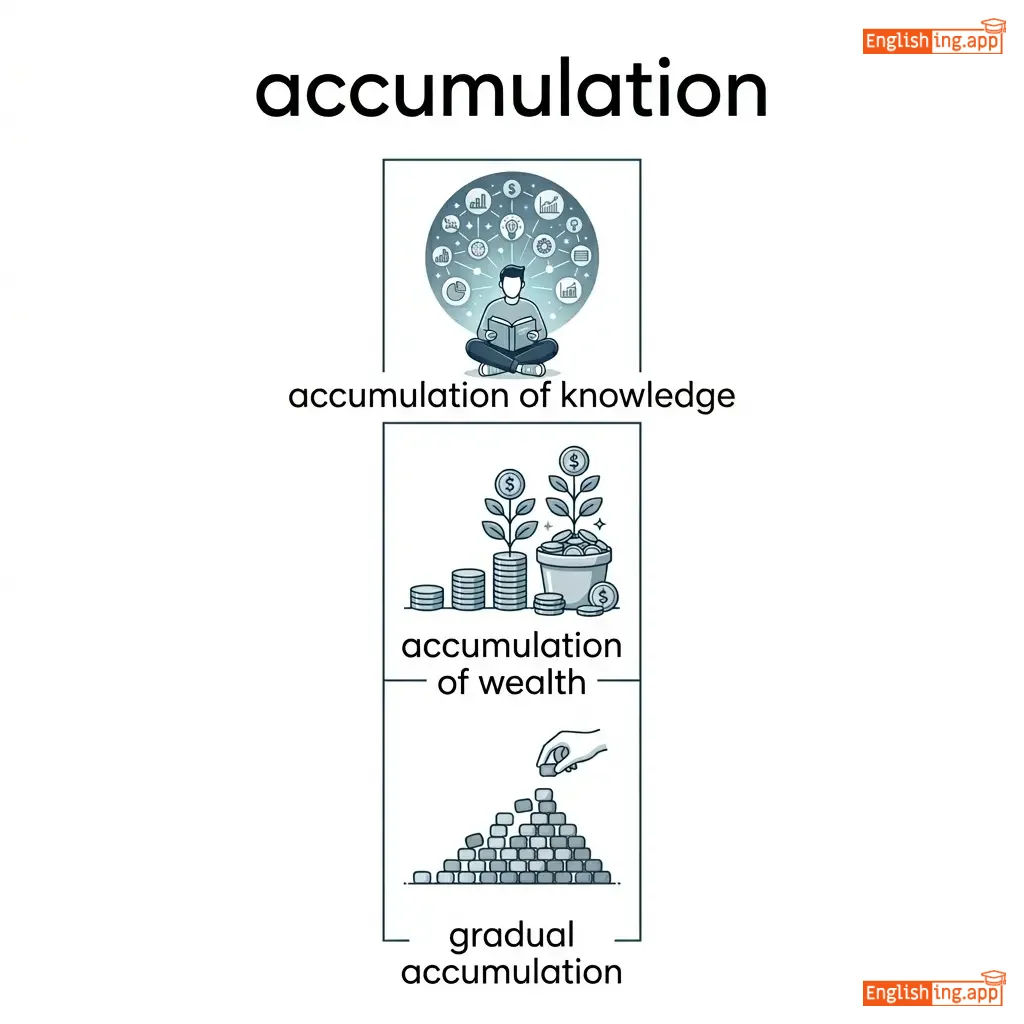
accumulation of knowledge, accumulation of wealth, gradual accumulation
••••••
|
积累 - 一步一步地收集起来。
••••••
|
|
🎯
••••••
|
/ˈækjərəsi/
noun
(ā kè yù ěr è sī)
••••••
|
- •••••• |
准确性
zhunquexing
••••••
|
- •••••• | - •••••• | - •••••• | - •••••• |
the quality or state of being correct or precise
••••••
|
The accuracy of the report was confirmed by experts. |
报告的准确性已得到专家确认。
bàogào de zhùnquèxìng yǐ dédào zhuānjiā quèrèn.
••••••
|
pinpoint accuracy |
extremely precise or exact
••••••
|
精准准确度
jīngzhǔn zhùnquèdù
••••••
|
precision, exactness, correctness, validity, trueness
••••••
|
inaccuracy, error, mistake
••••••
|
accuracy of data, accuracy in measurement, high accuracy, ensure accuracy
••••••
|
准确性 = 🎯 精准打击目标
••••••
|
|
🎯
••••••
|
/ˈæk.jʊ.rət/
adjective
(àikèyuèrt)
••••••
|
- •••••• |
准确
zhǔnquè
••••••
|
- •••••• | - •••••• | - •••••• | - •••••• |
Free from errors; correct and precise.
••••••
|
The information provided in the report was accurate. |
报告中提供的信息是准确的。
Bàogào zhōng tígōng de xìnxī shì zhǔnquè de.
••••••
|
accurate to a fault |
So precise that it might even be excessive.
••••••
|
准确得有些过头
zhǔnquè de yǒuxiē guòtóu
••••••
|
correct, precise, exact, true, right
••••••
|
inaccurate, wrong, false
••••••
|
accurate information, accurate measurement, accurate data, accurate results
••••••
|
准确就是没有错误,一切都完美无缺。
••••••
|
|
🎯
••••••
|
/ˈæk.jə.rət.li/
adverb
(艾库瑞特利)
••••••
|
- •••••• |
准确地,毫无错误地,正确地
zhunque de, haowu cuowu de, zhengque de
••••••
|
- •••••• | - •••••• | - •••••• | - •••••• |
in an exact way, without any mistakes; precisely; correctly
••••••
|
She accurately predicted the outcome of the election. |
她准确地预测了选举结果。
ta zhunque de yuce le xuanju jieguo
••••••
|
- •••••• | - •••••• | - •••••• |
precisely, exactly, correctly, perfectly
••••••
|
inaccurately, wrongly, incorrectly
••••••
|
accurately describe, accurately measure, accurately predict
••••••
|
Chinese '准确' for accurate, English 'correctly' – '准确地,毫无错误地'.
••••••
|
|
☝️
••••••
|
/ˌæk.jʊˈzeɪ.ʃən/
noun
(指控)
••••••
|
- •••••• |
指控
zhǐkòng
••••••
|
- •••••• | - •••••• | - •••••• | - •••••• |
A statement that someone has done something wrong or illegal.
••••••
|
She made an accusation of theft against her colleague.
她对她的同事提出了盗窃指控。
••••••
|
她对她的同事提出了盗窃指控。
Tā duì tā de tóngshì tíchūle dàoqiè zhǐkòng.
••••••
|
false accusation
虚假指控
••••••
|
An untrue claim blaming someone.
••••••
|
虚假指控
xūjiǎ zhǐkòng
••••••
|
allegation, charge, complaint, blame
••••••
|
praise, acquittal
••••••
|
serious accusation, false accusation, accusation of theft
••••••
|
指控就是accusation,指控就是指责别人。
••••••
|
|
👉
••••••
|
/əˈkjuːz/
verb
••••••
|


|
- •••••• |
accused
••••••
|
accused
••••••
|
accuses
••••••
|
accusing
••••••
|
To say that someone has done something wrong or illegal.
••••••
|
They accused him of lying during the meeting. |
- •••••• |
accuse someone falsely |
Blame someone without evidence.
••••••
|
- •••••• |
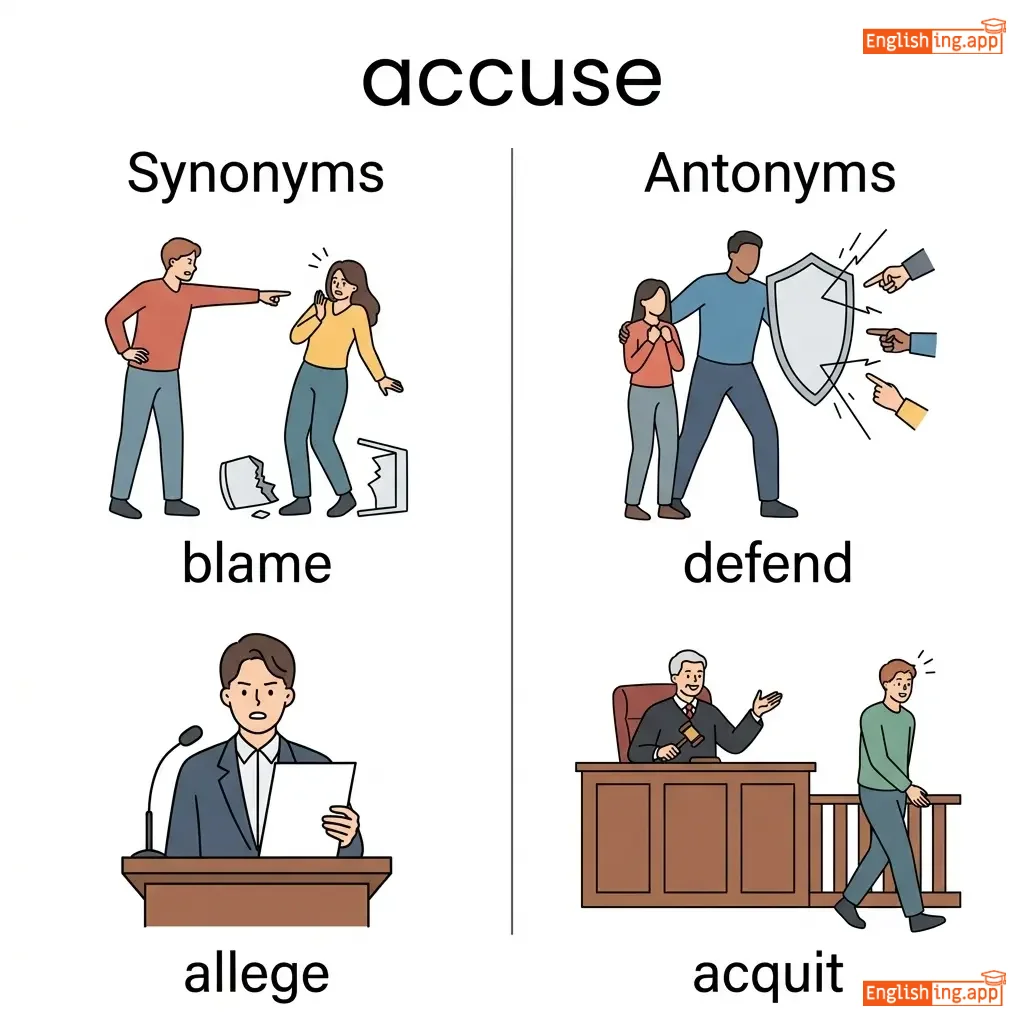
blame, allege, charge, indict
••••••
|
defend, acquit
••••••
|
accuse of crime, accuse falsely, accuse publicly
••••••
|
No •••••• |
|
⚖️
••••••
|
/əˈkjuːzd/
noun
(ækjuzd)
••••••
|
- •••••• |
被告
beigao
••••••
|
- •••••• | - •••••• | - •••••• | - •••••• |
a person who has been charged with a crime
••••••
|
The accused pleaded not guilty in court.
被告在法庭上不认罪。
••••••
|
被告在法庭上表示无罪。
Beigao zai fating shang biaoshi wuzui.
••••••
|
- •••••• | - •••••• | - •••••• |
defendant, suspect, offender
••••••
|
victim, plaintiff
••••••
|
accused of theft, accused person, wrongly accused
••••••
|
被告 - 被指控 (beigao - beizhikong) 他在法庭上表示无罪
••••••
|
|
🤕
••••••
|
/eɪk/
verb
(èich)
••••••
|
- •••••• |
疼痛
téngtòng
••••••
|
ached
èichd
••••••
|
ached
èichd
••••••
|
aches
èichés
••••••
|
aching
èiching
••••••
|
to suffer a continuous dull pain
••••••
|
Her back ached after sitting for so long.
她坐了这么久后,背部感到疼痛。
••••••
|
她坐了这么久后,背部感到疼痛。
Tā zuòle zhème jiǔ hòu, bèibù gǎndào téngtòng.
••••••
|
heartache
心痛
••••••
|
emotional pain or grief
••••••
|
心痛
xīntòng
••••••
|
hurt, pain, throb, suffer
••••••
|
comfort, relief
••••••
|
stomach ache, back ache, head ache, dull ache
••••••
|
Ache 代表疼痛,如果感到疼痛,说‘ache’
••••••
|
|
🏆
••••••
|
/əˈtʃiːv/
verb
(āqív)
••••••
|
- •••••• |
实现
shixian
••••••
|
achieved
āqívd
••••••
|
achieved
āqívd
••••••
|
achieves
āqívs
••••••
|
achieving
āqívíng
••••••
|
to successfully bring about or reach a desired goal or result
••••••
|
She worked hard to achieve her dream of becoming a doctor.
她为实现成为医生的梦想而努力工作。
••••••
|
她为实现成为医生的梦想而努力工作。
Ta wei shixian chengwei yisheng de mengxiang er nuli gongzuo.
••••••
|
achieve success
取得成功
••••••
|
to become successful
••••••
|
取得成功
qude chenggong
••••••
|
accomplish, attain, realize, fulfill, complete
••••••
|
fail, lose, abandon
••••••
|
achieve goal, achieve success, achieve results, achieve excellence
••••••
|
Achieve意味着实现 — 要取得成功,你必须实现目标。
••••••
|
|
🏆
••••••
|
/əˈtʃiːvmənt/
noun
(achīvmènt)
••••••
|
- •••••• |
成就
chéngjiù
••••••
|
- •••••• | - •••••• | - •••••• | - •••••• |
Something that has been successfully completed or accomplished through effort or skill.
••••••
|
Graduating from university was her greatest achievement. |
大学毕业是她最大的成就。
Dàxué bìyè shì tā zuìdà de chéngjiù.
••••••
|
a sense of achievement |
a feeling of pride in accomplishing something
••••••
|
成就感
chéngjiù gǎn
••••••
|
accomplishment, success, triumph, attainment, feat
••••••
|
failure, defeat
••••••
|
great achievement, outstanding achievement, sense of achievement, academic achievement
••••••
|
Achievement就是成就;考试通过就是成就。
••••••
|
|
🍋
••••••
|
/ˈæsɪd/
noun
(酸)
••••••
|
- •••••• |
酸
suan
••••••
|
- •••••• | - •••••• | - •••••• | - •••••• |
a chemical substance that reacts with bases and has a sour taste
••••••
|
Lemons contain citric acid.
柠檬含有柠檬酸。
••••••
|
柠檬含有柠檬酸。
níngméng hányǒu níngméngsuān.
••••••
|
acid test
酸性测试
••••••
|
a decisive test to prove effectiveness
••••••
|
酸性测试
suānxìng cèshì
••••••
|
sour, sharp, biting, corrosive
••••••
|
alkaline, basic
••••••
|
acid rain, citric acid, hydrochloric acid, acid test
••••••
|
酸是酸味的 - 柠檬中含有柠檬酸
••••••
|
|
🍋
••••••
|
/əˈsɪdɪk/
adjective
(阿西迪克)
••••••
|
- •••••• |
酸性的
suanxing de
••••••
|
- •••••• | - •••••• | - •••••• | - •••••• |
containing acid; having a sour taste; sharp or biting in tone
••••••
|
The lemon has an acidic taste that makes your mouth pucker.
柠檬的味道很阿西迪克。
••••••
|
柠檬的味道很酸。
ningmeng de weidao hen suan
••••••
|
acidic remark
酸刻的评论
••••••
|
a sharp or sarcastic comment
••••••
|
尖刻的评论
jianke de pinglun
••••••
|
sour, tart, sharp, biting, caustic
••••••
|
alkaline, mild, sweet
••••••
|
acidic taste, acidic solution, acidic soil, acidic comment
••••••
|
酸性的 = acidic,想到柠檬。
••••••
|
|
🧪
••••••
|
/əˈsɪdɪti/
noun
(阿西迪提)
••••••
|
- •••••• |
酸度
suan du
••••••
|
- •••••• | - •••••• | - •••••• | - •••••• |
the quality or degree of being acidic; the amount of acid present in a substance
••••••
|
The acidity of the soil affects how well crops grow.
泽 阿西迪提 奥夫 泽 索伊尔 阿菲克次 豪 韦尔 克拉普斯 格罗。
••••••
|
土壤的酸度会影响作物的生长。
tu rang de suan du hui ying xiang zuo wu de sheng zhang
••••••
|
- •••••• | - •••••• | - •••••• |
acidness, sourness, sharpness, tartness
••••••
|
alkalinity, sweetness
••••••
|
soil acidity, acidity level, gastric acidity, high acidity
••••••
|
Acid 听起来像 ‘阿西’ ,记住就是 酸度
••••••
|
|
🙏
••••••
|
/əkˈnɒlɪdʒ/
verb
(ak-nol-ijz)
••••••
|
- •••••• |
承认
chengren
••••••
|
acknowledged
ak-nol-ijzd
••••••
|
acknowledged
ak-nol-ijzd
••••••
|
acknowledges
ak-nol-ijz
••••••
|
acknowledging
ak-nol-ijzing
••••••
|
to accept, admit, or recognize the truth or existence of something
••••••
|
She refused to acknowledge her mistake.
她拒绝承认她的错误。
••••••
|
她拒绝承认她的错误。
Ta jujue chengren ta de cuowu.
••••••
|
acknowledge receipt
确认收到
••••••
|
to confirm that something has been received
••••••
|
确认收到
queren shoudao
••••••
|
admit, accept, recognize, concede, confirm
••••••
|
deny, ignore, reject
••••••
|
acknowledge mistake, acknowledge receipt, acknowledge contribution, acknowledge truth
••••••
|
Acknowledge = 承认错误和知识
••••••
|
|
📩
••••••
|
/əkˈnɒlɪdʒmənt/
noun
(阿克诺里奇门特)
••••••
|
- •••••• |
确认
queren
••••••
|
- •••••• | - •••••• | - •••••• | - •••••• |
the act of recognizing or accepting something as true or valid; an expression of gratitude or recognition
••••••
|
She received an acknowledgement for her contribution to the project.
西 瑞西夫德 安 阿克诺里奇门特 福 赫 贡献。
••••••
|
她因对该项目的贡献而获得确认。
ta yin dui gai xiangmu de gongxian er huode queren
••••••
|
acknowledgement of receipt
acknowledgement of receipt
••••••
|
formal confirmation that something has been received
••••••
|
收讫确认
shouqi queren
••••••
|
recognition, admission, confirmation, appreciation, acceptance
••••••
|
denial, rejection, disregard
••••••
|
formal acknowledgement, written acknowledgement, public acknowledgement, acknowledgement letter
••••••
|
acknowledge 就是 确认,acknowledgement 就是 确认书
••••••
|
|
📘
••••••
|
/əˈkweɪnt/
verb
(阿奎恩特)
••••••
|
- •••••• |
使熟悉
shi shuxi
••••••
|
acquainted
阿奎恩特德
••••••
|
acquainted
阿奎恩特德
••••••
|
acquaints
阿奎恩特斯
••••••
|
acquainting
阿奎恩特英
••••••
|
to make someone familiar with something; to inform or introduce
••••••
|
Please acquaint yourself with the safety guidelines before operating the machine.
请在操作机器前,熟悉安全指导原则。
••••••
|
请在操作机器前,熟悉安全指导原则。
Qǐng zài cāozuò jīqì qián, shúxī ānquán zhǐdǎo yuánzé.
••••••
|
get acquainted with
了解熟悉
••••••
|
to become familiar with someone or something
••••••
|
了解熟悉
liǎojiě shúxī
••••••
|
familiarize, inform, introduce, brief, apprise
••••••
|
ignore, misinform, confuse
••••••
|
acquaint oneself with, acquaint someone with, fully acquainted, acquaint new staff, acquaint readers with
••••••
|
Acquaint = ‘阿奎恩特’—快速熟悉!
••••••
|
|
📦
••••••
|
/əˈkwaɪər/
verb
(äkuīr)
••••••
|


|
获得
huòdé
••••••
|
acquired
äkuīrd
••••••
|
acquired
äkuīrd
••••••
|
acquires
äkwaiers
••••••
|
acquiring
äkwaiərīng
••••••
|
to obtain or gain possession of something
••••••
|
She managed to acquire a rare painting at the auction.
她成功地在拍卖会上获得了一幅稀有的画作。
••••••
|
她成功地在拍卖会上获得了一幅稀有的画作。
Tā chénggōng de zài pāimài huì shàng huòdéle yī fú xīyǒu de huàzuò.
••••••
|
acquire knowledge
获得知识
••••••
|
to learn or gain understanding
••••••
|
获得知识
huòdé zhīshi
••••••
|
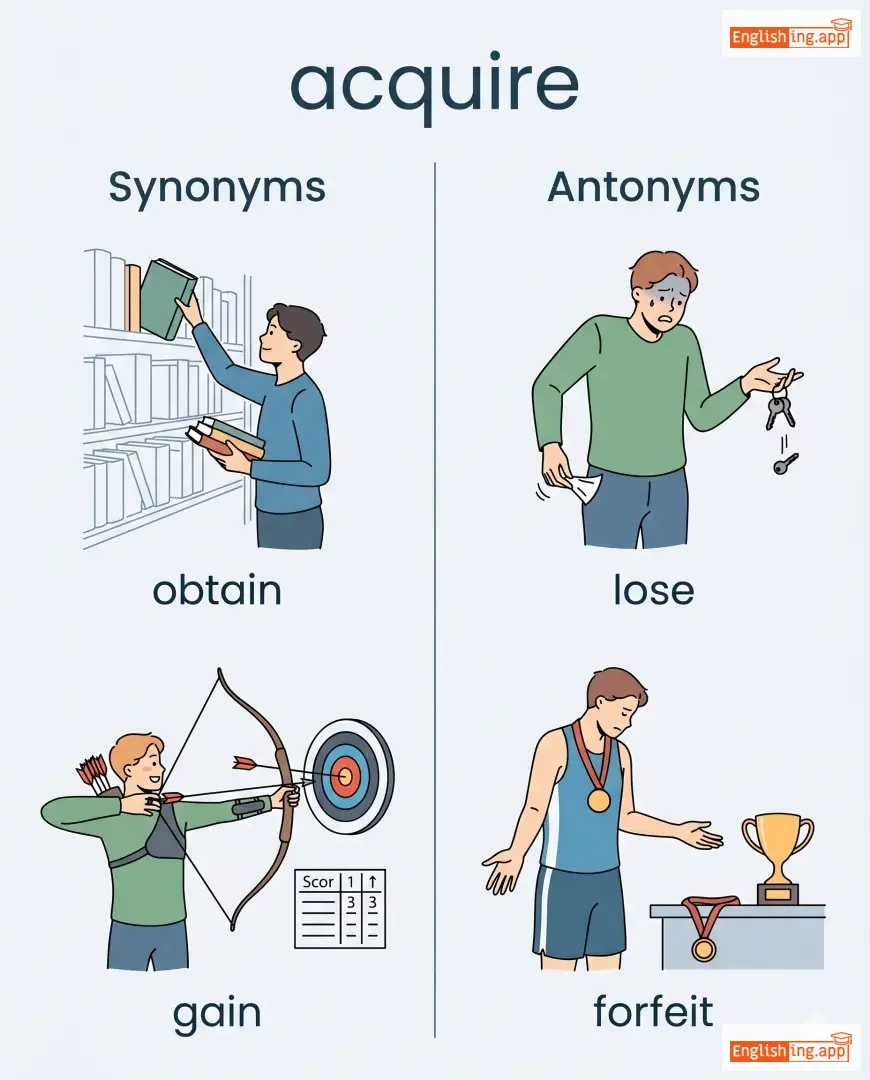
obtain, gain, receive, procure, secure
••••••
|
lose, forfeit, give up
••••••
|
acquire skills, acquire knowledge, acquire property, acquire habit
••••••
|
获得就像在拍卖会上获得稀有画作一样。
••••••
|
|
📚
••••••
|
/əˈkwaɪərmənt/
noun
(阿夸尔门特)
••••••
|
- •••••• |
获得;习得的能力
huode; xide de nengli
••••••
|
- •••••• | - •••••• | - •••••• | - •••••• |
the act of acquiring something; something that has been acquired, especially a skill or possession
••••••
|
Language proficiency is an important acquirement for global careers.
朗格维奇 普罗菲先西 伊兹 安 因波坦特 阿夸尔门特 福尔 格罗博 卡瑞尔斯。
••••••
|
语言能力是全球职业中的一项重要获得。
Yuyan nengli shi quanqiu zhiye zhong de yi xiang zhongyao huode
••••••
|
- •••••• | - •••••• | - •••••• |
acquisition, attainment, gain, procurement, possession
••••••
|
loss, forfeiture, relinquishment
••••••
|
valuable acquirement, skill acquirement, knowledge acquirement, cultural acquirement
••••••
|
Acquirement 就是 获得,记住 acquire=获得
••••••
|
|
🏢
••••••
|
/ˌækwɪˈzɪʃən/
noun
••••••
|


|
- •••••• | - •••••• | - •••••• | - •••••• | - •••••• |
the act of obtaining or gaining something, often knowledge, skills, or property
••••••
|
The company announced the acquisition of a smaller competitor. |
- •••••• |
language acquisition |
the process of learning a language naturally
••••••
|
- •••••• |
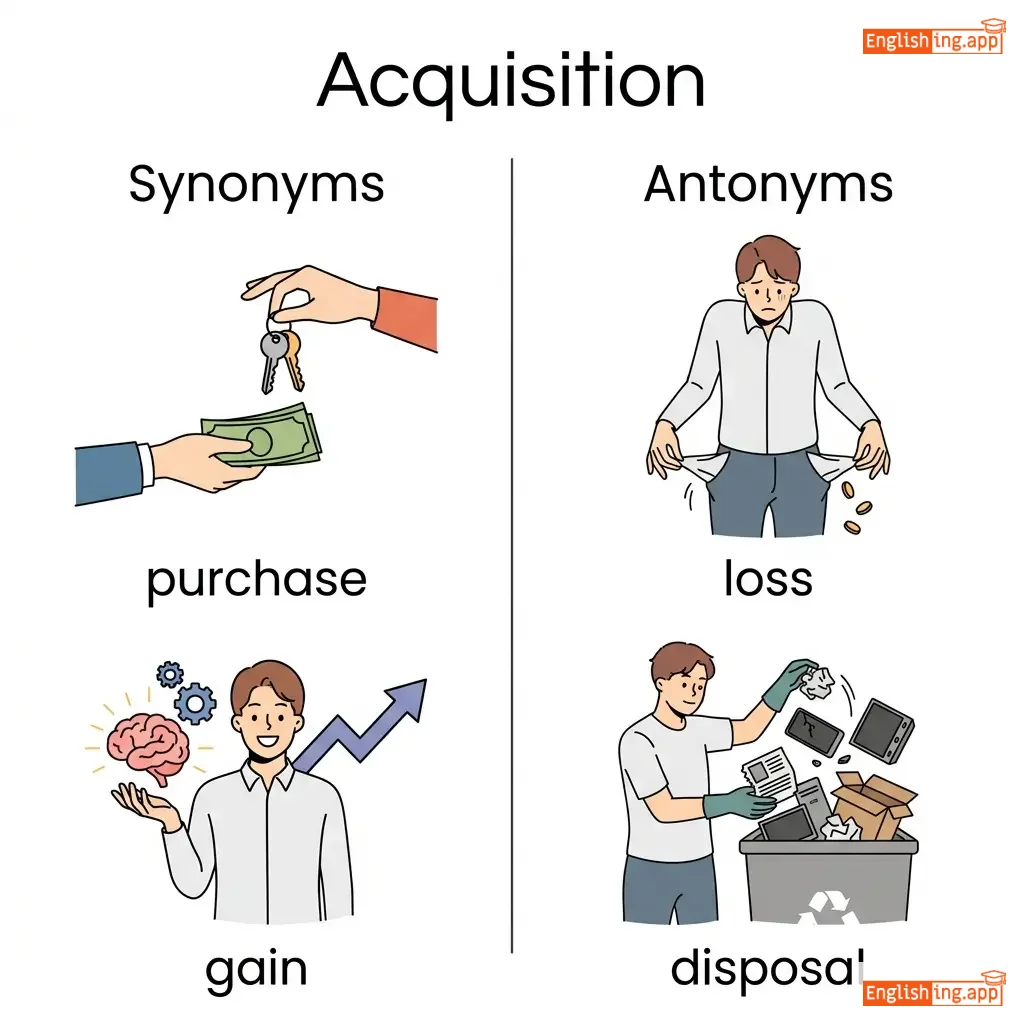
purchase, gain, procurement, attainment
••••••
|
loss, disposal, forfeit
••••••
|
business acquisition, acquisition cost, acquisition strategy, language acquisition
••••••
|
No •••••• |
|
🌾
••••••
|
/ˈeɪkər/
noun
••••••
|
- •••••• | - •••••• | - •••••• | - •••••• | - •••••• | - •••••• |
a unit of land area equal to 4,840 square yards (about 4,047 square meters)
••••••
|
The farmer owns five acres of fertile land. |
- •••••• | - •••••• | - •••••• | - •••••• |
land, plot, field, farmland
••••••
|
null
••••••
|
acre of land, farm acres, acre property
••••••
|
No •••••• |
|
➡️
••••••
|
/əˈkrɒs/
preposition/adverb
(əˈkɹɒs)
••••••
|
- •••••• |
穿越
chuan yue
••••••
|
- •••••• | - •••••• | - •••••• | - •••••• |
From one side to the other side of something.
••••••
|
He ran across the street to catch the bus. |
他跑过马路去赶公交车。
Ta pao guo malu qu gan gongjiaoche.
••••••
|
across the board |
affecting everyone or everything equally
••••••
|
全面
quan mian
••••••
|
over, through, beyond, opposite
••••••
|
along, within
••••••
|
run across, go across, look across, spread across
••••••
|
Across 就是穿越,从一边跑到另一边。
••••••
|
|
🎭
••••••
|
/ækt/
verb/noun
••••••
|
|
- •••••• |
acted
••••••
|
acted
••••••
|
acts
••••••
|
acting
••••••
|
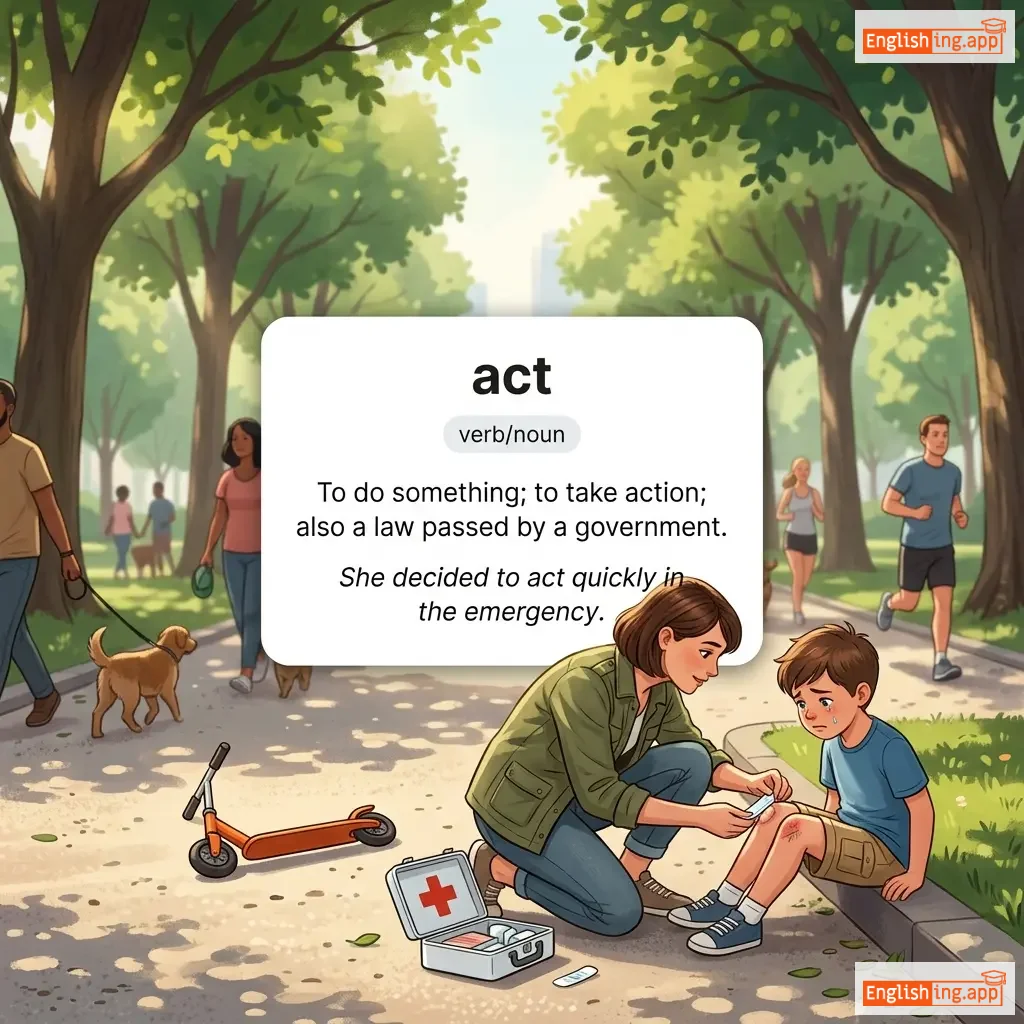
To do something; to take action; also a law passed by a government.
••••••
|
She decided to act quickly in the emergency. |
- •••••• |
act of kindness |
a good or helpful action
••••••
|
- •••••• |
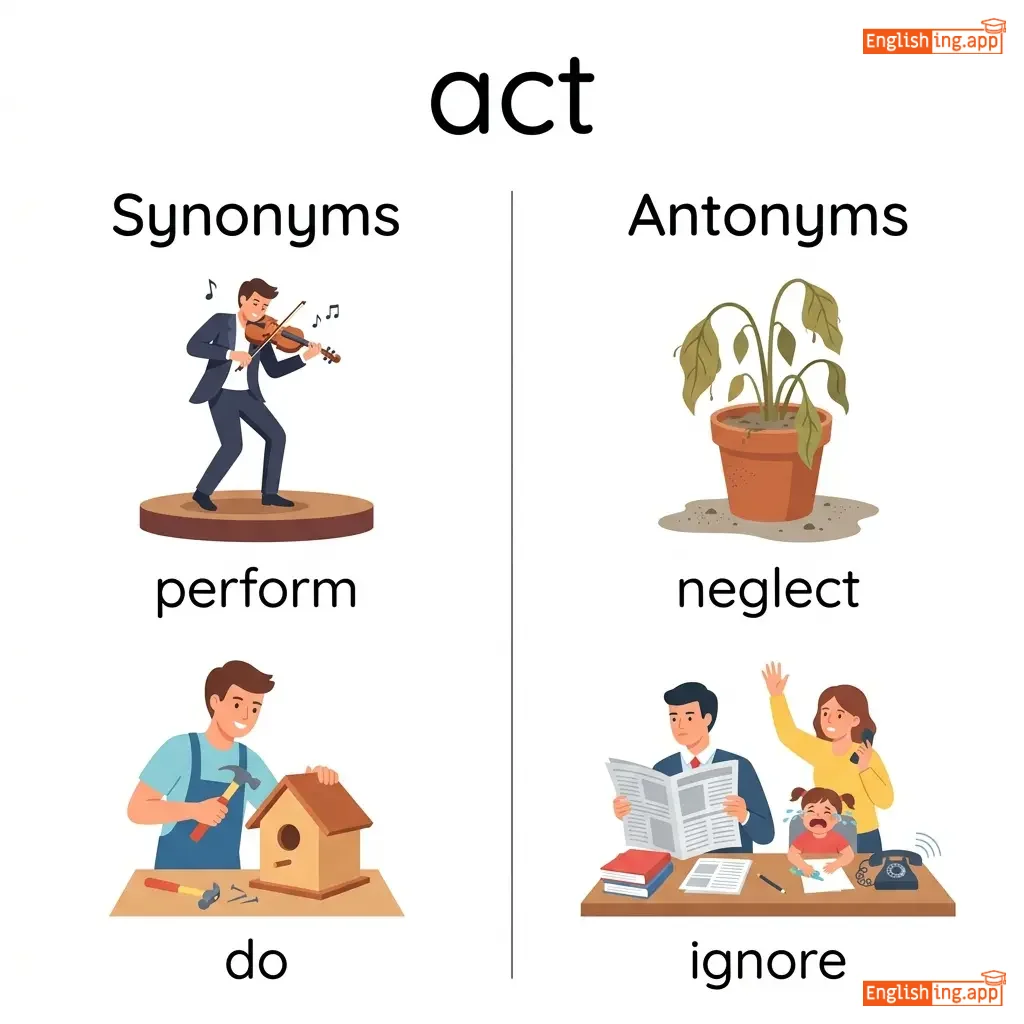
perform, do, operate, behave, enact
••••••
|
neglect, ignore
••••••
|
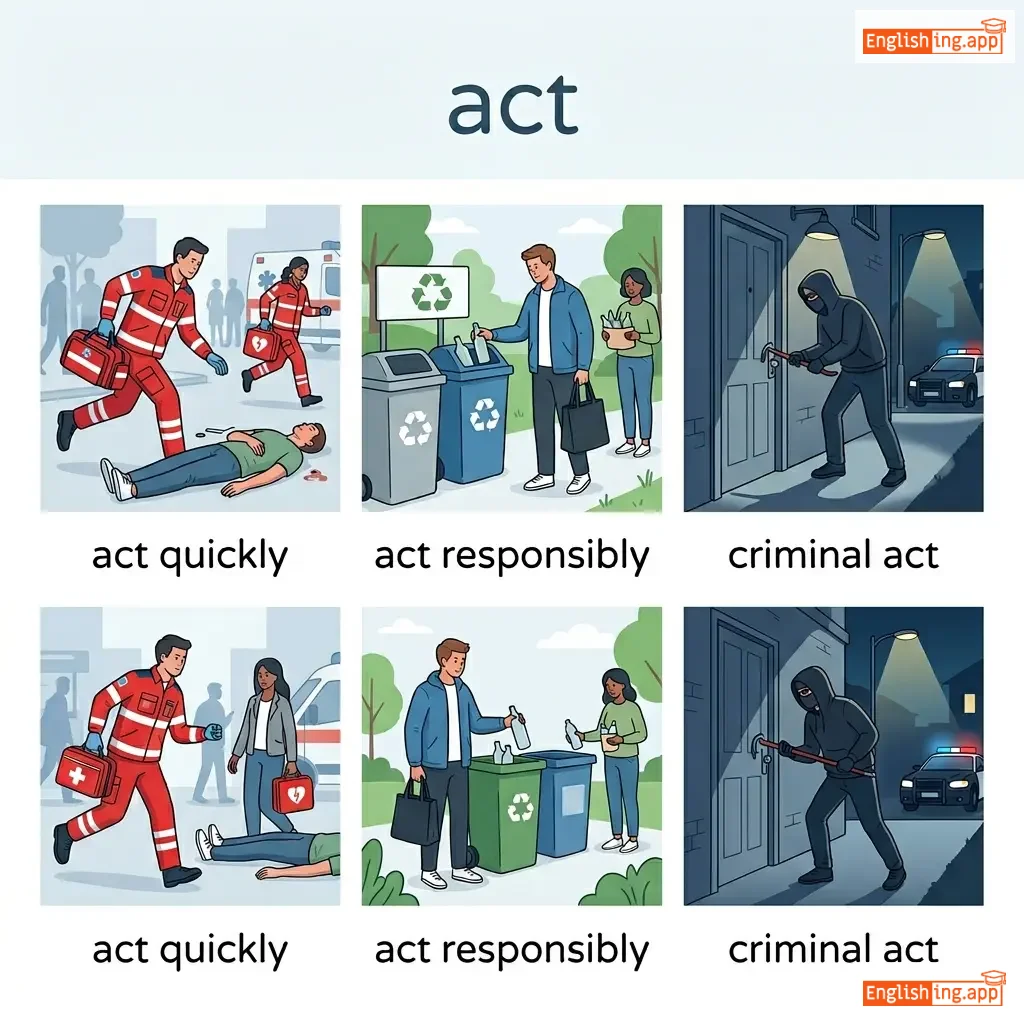
act quickly, act responsibly, criminal act, act of kindness
••••••
|
No •••••• |
|
🎭
••••••
|
/ˈæk.tɪŋ/
noun, adjective, gerund
(艾克廷)
••••••
|
- •••••• |
表演
biaoyan
••••••
|
- •••••• | - •••••• | - •••••• |
acting
艾克廷
••••••
|
the art or profession of performing in plays, films, or television; temporary performance of duties; the process of performing an action
••••••
|
She is studying acting to become a professional actress.
她正在学习表演,想成为一名专业演员。
••••••
|
她正在学习表演,想成为一名专业演员。
ta zhengzai xuexi biaoyan xiang chengwei yi ming zhuanye yanyuan
••••••
|
acting out
acting out
••••••
|
to behave disruptively or express emotions through actions
••••••
|
捣乱行为
daoluan xingwei
••••••
|
performance, drama, portrayal, playacting, role-playing
••••••
|
inaction, reality
••••••
|
acting career, acting skills, acting role, acting class, acting ability
••••••
|
表演就是 acting
••••••
|
|
⚡
••••••
|
/ˈækʃən/
noun
(行动)
••••••
|
- •••••• |
行动
xingdong
••••••
|
- •••••• | - •••••• | - •••••• | - •••••• |
The process of doing something, typically to achieve a goal.
••••••
|
The government took immediate action to control inflation. |
政府采取了立即行动以控制通货膨胀。
Zhengfu caiqu le lijixingdong yi kongzhi tonghuopengzhang.
••••••
|
take action |
to do something to achieve an effect
••••••
|
采取行动
caiqu xingdong
••••••
|
deed, operation, measure, step, effort
••••••
|
inaction, rest
••••••
|
take action, legal action, direct action, military action
••••••
|
行动就是做事,像动作电影中的英雄一样。
••••••
|
|
⚡
••••••
|
/ˈæktɪveɪt/
verb
(激活)
••••••
|
- •••••• |
激活
jīhuó
••••••
|
activated
激活了
••••••
|
activated
激活了
••••••
|
activates
激活
••••••
|
activating
激活中
••••••
|
to make something start or function
••••••
|
She pressed the button to activate the machine.
她按下按钮以激活机器。
••••••
|
她按下按钮以激活机器。
Tā àn xià ànniǔ yǐ jīhuó jīqì.
••••••
|
- •••••• | - •••••• | - •••••• |
start, initiate, trigger, turn on
••••••
|
deactivate, stop, turn off
••••••
|
activate the system, activate the process, activate the device
••••••
|
Press the button to activate the machine - 按下按钮激活机器
••••••
|
|
🔓
••••••
|
/ˌæktɪˈveɪʃən/
noun
(激活)
••••••
|
- •••••• |
激活
jī huó
••••••
|
- •••••• | - •••••• | - •••••• | - •••••• |
the act of making something start functioning
••••••
|
The activation of the system took longer than expected. |
系统的激活比预期的时间更长。
Xìtǒng de jīhuó bǐ yùqī de shíjiān gèng cháng.
••••••
|
- •••••• | - •••••• | - •••••• |
initiation, triggering, launching, starting
••••••
|
deactivation, stoppage, termination
••••••
|
system activation, activation process, activation code
••••••
|
激活一个系统就像按下生命的开始按钮!
••••••
|
|
🏃
••••••
|
/ˈæktɪv/
adjective
(积极)
••••••
|
|
积极的
jī jí de
••••••
|
- •••••• | - •••••• | - •••••• | - •••••• |
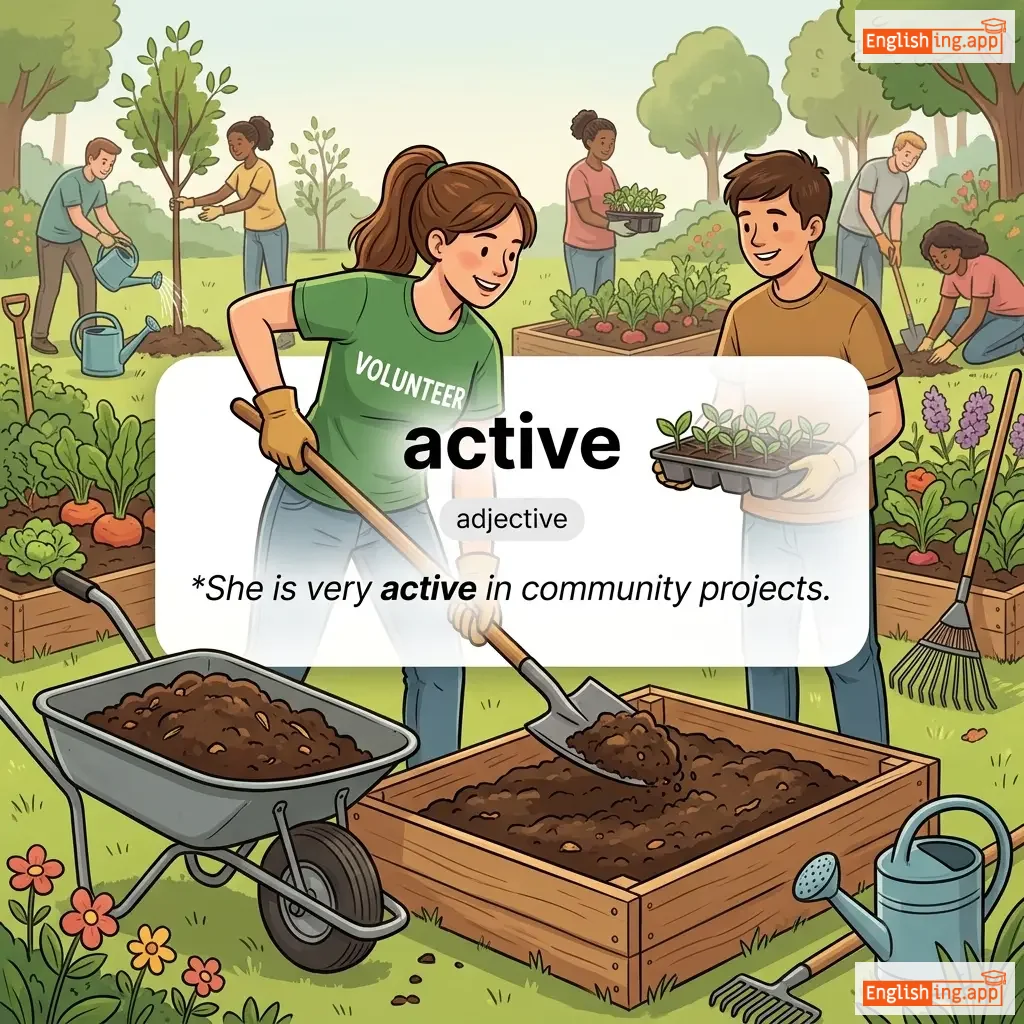
Engaging or ready to engage in physically energetic pursuits; taking action rather than being passive.
••••••
|
She is very active in community projects. |
她在社区项目中非常积极。
Tā zài shèqū xiàngmù zhōng fēicháng jījí.
••••••
|
active duty |
A period of full-time military service.
••••••
|
服役期间
fúyì qījiān
••••••
|
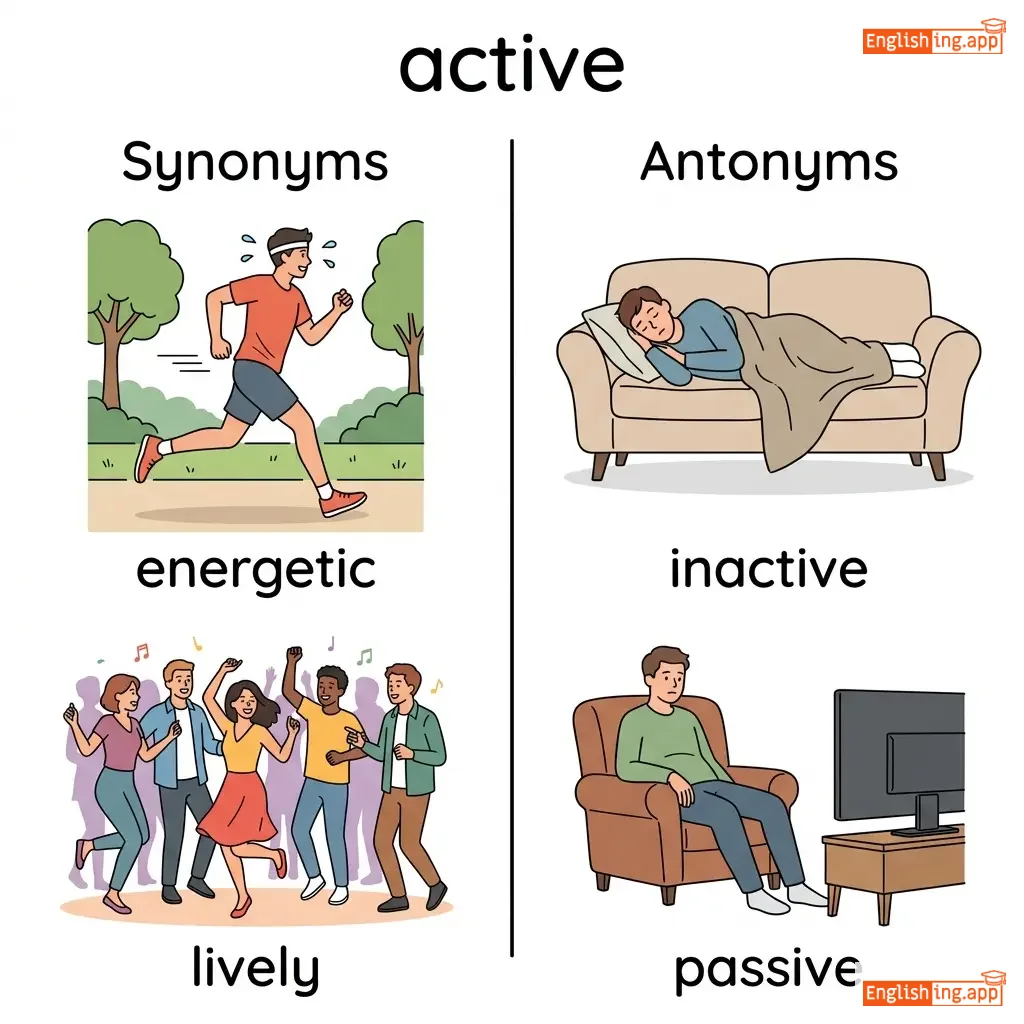
energetic, lively, dynamic, vigorous, busy
••••••
|
inactive, passive, idle
••••••
|
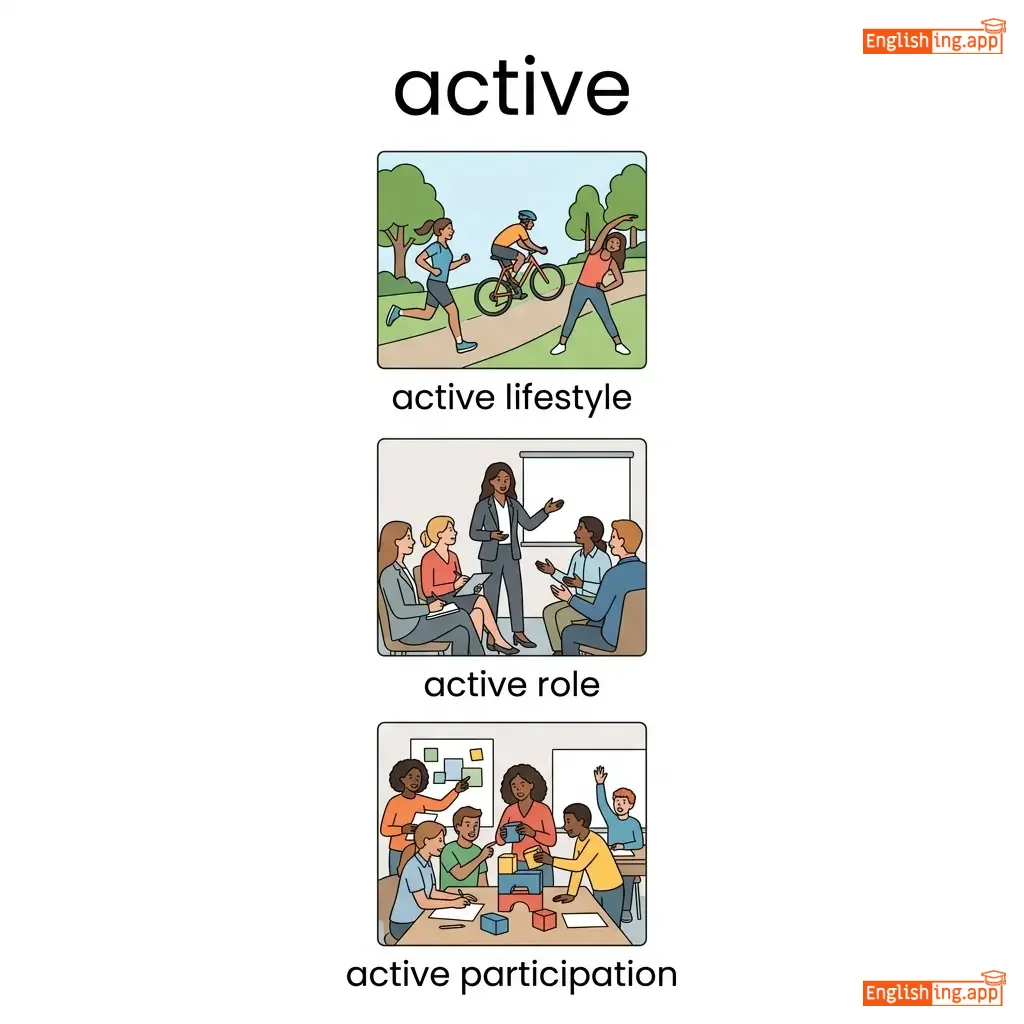
active lifestyle, active role, active participation, active engagement
••••••
|
Active意味着积极的,就像你在社交媒体上活跃时,每个人都知道你在线。
••••••
|
|
💪
••••••
|
/ˈæktɪvli/
adverb
(æktɪvli)
••••••
|
- •••••• |
积极地
jījí de
••••••
|
- •••••• | - •••••• | - •••••• | - •••••• |
in a way that involves energetic participation or effort
••••••
|
He is actively involved in community service.
他积极参与社区服务。
••••••
|
他积极参与社区服务。
Tā jījí cānyù shèqū fúwù.
••••••
|
- •••••• | - •••••• | - •••••• |
energetically, dynamically, vigorously, busily
••••••
|
passively, lazily, idly
••••••
|
actively participate, actively support, actively engage, actively promote
••••••
|
积极表示投入,所以积极地意味着全力以赴!
••••••
|
|
🎭
••••••
|
/ˈæktər/
noun
(ˈæktɔr)
••••••
|
- •••••• |
演员
yǎnyuán
••••••
|
- •••••• | - •••••• | - •••••• | - •••••• |
a person who performs in plays, movies, or television
••••••
|
The actor received an award for his performance. |
演员因他的表演获得了奖项。
yǎnyuán yīn tā de biǎoyǎn huòdé le jiǎngxiàng.
••••••
|
leading actor |
the main performer in a play or movie
••••••
|
主角
zhǔjiǎo
••••••
|
performer, artist, star, entertainer
••••••
|
audience, spectator
••••••
|
famous actor, stage actor, Hollywood actor, professional actor
••••••
|
Actor 意味着演员——无论是主角还是配角,所有人都是演员。
••••••
|
|
🌟
••••••
|
/ˈæktrəs/
noun
(ˈæktrəs)
••••••
|
- •••••• |
女演员
nǚ yǎnyuán
••••••
|
- •••••• | - •••••• | - •••••• | - •••••• |
a female performer in plays, movies, or television
••••••
|
The actress looked stunning on the red carpet. |
那位女演员在红地毯上看起来令人惊艳。
Nà wèi nǚ yǎnyuán zài hóng dìtǎn shàng kàn qǐlái lìng rén jīngyàn.
••••••
|
famous actress |
a well-known female performer
••••••
|
著名女演员
zhùmíng nǚ yǎnyuán
••••••
|
performer, artist, star, entertainer
••••••
|
audience, spectator
••••••
|
film actress, stage actress, award-winning actress, leading actress
••••••
|
女演员就是actress,像在电影中的女演员一样。
••••••
|

